
Table of SynGAP1 Isoform α2 (UniProt Q96PV0-1) Missense Variants.
| c.dna | Variant | SGM Consensus | Domain and Structure information: based on WT protein | Annotated databases | Deep learning-based pathogenicity predictions | Folding stability-based pathogenicity predictions | Sequence/structure-based pathogenicity predictions | Phase Separation | Evolutionary/physical properties | Molecular Dynamics-based analysis | DOI | ||||||||||||||||||||||||||||||||||||||||||||||||||||||||||||
|---|---|---|---|---|---|---|---|---|---|---|---|---|---|---|---|---|---|---|---|---|---|---|---|---|---|---|---|---|---|---|---|---|---|---|---|---|---|---|---|---|---|---|---|---|---|---|---|---|---|---|---|---|---|---|---|---|---|---|---|---|---|---|---|---|---|---|---|---|---|---|---|
| Domain | IUPred2 | ANCHOR2 | AlphaFold | MobiDB | PhosphoSitePlus | ClinVar | gnomAD | ESM1b | AlphaMissense | FoldX | Rosetta | Foldetta | PremPS | REVEL | PROVEAN | PolyPhen-2 HumDiv | PolyPhen-2 HumVar | FATHMM | SIFT | PSMutPred | PAM | Physical | SASA | Normalized B-factor backbone | Normalized B-factor sidechain | SynGAP Structural Annotation | |||||||||||||||||||||||||||||||||||||||||||||
| Score | Prediction | Score | Prediction | pLDDT | disorder | disorder | LTP | HTP | KL | PTM | Clinical Status | Review | Subm. | ID | Allele count | Allele freq. | LLR score | Prediction | Pathogenicity | Class | Optimized | Average ΔΔG | Prediction | StdDev | ΔΔG | Prediction | ΔΔG | Prediction | ΔΔG | Prediction | Score | Prediction | Score | Prediction | pph2_prob | Prediction | pph2_prob | Prediction | Nervous System Score | Prediction | Prediction | Status | Conservation | Sequences | IP RF | SP RF | Prediction | PAM250 | PAM120 | Hydropathy Δ | MW Δ | Average | Δ | Δ | StdDev | Δ | StdDev | Secondary | Tertiary bonds | Inside out | GAP-Ras interface | At membrane | No effect | MD Alert | Verdict | Description | |||||
| c.43G>T | A15S 2D 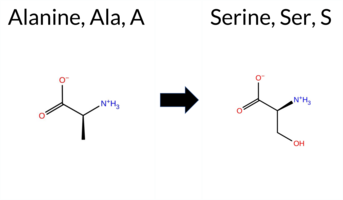 AIThe SynGAP1 missense variant A15S is reported in ClinVar as “Not submitted” and is present in gnomAD (variant ID 6-33420307‑G‑T). Functional prediction tools largely agree on a benign effect: REVEL, PROVEAN, polyPhen‑2 (HumDiv and HumVar), ESM1b, FATHMM, AlphaMissense‑Default, and AlphaMissense‑Optimized all classify the change as benign. Only SIFT predicts a pathogenic outcome. The SGM‑Consensus, which aggregates AlphaMissense‑Default, ESM1b, FATHMM, and PROVEAN, also indicates a likely benign status. High‑accuracy assessments confirm this: AlphaMissense‑Optimized is benign, and the SGM‑Consensus is likely benign; Foldetta results are not available. Overall, the preponderance of evidence points to a benign effect for A15S, and this conclusion is consistent with the absence of a ClinVar pathogenic classification. Disclaimer: This summary was generated using AI and should be interpreted alongside expert review. | Likely Benign | 0.436924 | Structured | 0.466055 | Uncertain | 0.330 | 0.912 | 0.375 | 6-33420307-G-T | -2.925 | Likely Benign | 0.084 | Likely Benign | Likely Benign | 0.074 | Likely Benign | 0.11 | Neutral | 0.122 | Benign | 0.010 | Benign | 4.17 | Benign | 0.00 | Affected | 4.32 | 1 | 0.3115 | 0.5830 | 1 | 1 | -2.6 | 16.00 | ||||||||||||||||||||||||||||||||||||
| c.440A>C | Q147P 2D 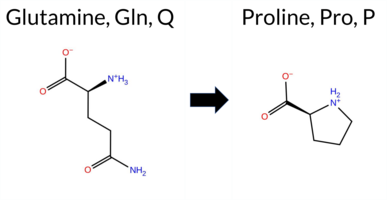 AIThe SynGAP1 missense variant Q147P is not reported in ClinVar and has no entries in gnomAD, indicating it is not catalogued in these databases. Functional prediction tools show a split: benign calls come from REVEL, polyPhen‑2 (HumDiv and HumVar) and FATHMM, while pathogenic calls arise from PROVEAN, SIFT, ESM1b and AlphaMissense‑Default. Grouping by consensus, four tools predict benign and four predict pathogenic. High‑accuracy assessments further support a deleterious effect: AlphaMissense‑Optimized is uncertain, but the SGM Consensus—derived from a majority vote of AlphaMissense‑Default, ESM1b, FATHMM and PROVEAN—labels the variant as Likely Pathogenic. Foldetta, a protein‑folding stability predictor, has no available result for this residue. Overall, the balance of evidence, especially the SGM Consensus and the majority of individual predictors, indicates that the variant is most likely pathogenic, and this conclusion does not contradict any ClinVar annotation (none is present). Disclaimer: This summary was generated using AI and should be interpreted alongside expert review. | Likely Pathogenic | 0.541878 | Disordered | 0.503877 | Binding | 0.349 | 0.840 | 0.625 | -14.132 | Likely Pathogenic | 0.797 | Likely Pathogenic | Ambiguous | 0.264 | Likely Benign | -3.03 | Deleterious | 0.232 | Benign | 0.147 | Benign | 3.87 | Benign | 0.01 | Affected | 0.2350 | 0.4402 | 0 | -1 | 1.9 | -31.01 | |||||||||||||||||||||||||||||||||||||||
| c.440A>G | Q147R 2D 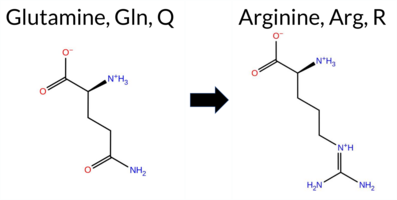 AIThe SynGAP1 missense variant Q147R is not reported in ClinVar (no ClinVar ID) and is absent from gnomAD (no gnomAD ID). Prediction tools that agree on a benign effect include REVEL, PROVEAN, polyPhen‑2 HumDiv, polyPhen‑2 HumVar, and FATHMM. Tools that agree on a pathogenic effect are SIFT, ESM1b, and AlphaMissense‑Default. AlphaMissense‑Optimized is uncertain. High‑accuracy assessments are inconclusive: the SGM Consensus (majority vote from AlphaMissense‑Default, ESM1b, FATHMM, PROVEAN) yields a 2‑to‑2 split, and Foldetta results are unavailable. Overall, more tools predict a benign outcome (five vs. three pathogenic predictions, with one uncertain). Therefore, the variant is most likely benign based on current computational evidence, and this assessment does not contradict any ClinVar status because no ClinVar claim exists. Disclaimer: This summary was generated using AI and should be interpreted alongside expert review. | 0.541878 | Disordered | 0.503877 | Binding | 0.349 | 0.840 | 0.625 | -12.301 | Likely Pathogenic | 0.952 | Likely Pathogenic | Ambiguous | 0.166 | Likely Benign | -2.22 | Neutral | 0.079 | Benign | 0.052 | Benign | 3.91 | Benign | 0.02 | Affected | 0.1760 | 0.1042 | 1 | 1 | -1.0 | 28.06 | ||||||||||||||||||||||||||||||||||||||||
| c.440A>T | Q147L 2D 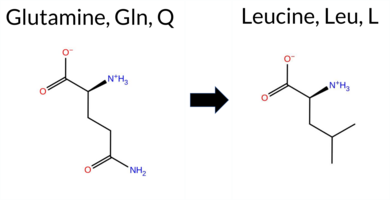 AIThe SynGAP1 missense variant Q147L is not reported in ClinVar (no ClinVar ID) and is absent from gnomAD. Prediction tools that agree on a benign effect include REVEL, polyPhen‑2 HumDiv, polyPhen‑2 HumVar, FATHMM, and AlphaMissense‑Optimized. Tools that predict a pathogenic effect are PROVEAN, SIFT, ESM1b, and AlphaMissense‑Default; the SGM‑Consensus score is “Likely Pathogenic.” High‑accuracy assessments show AlphaMissense‑Optimized as benign, while the SGM‑Consensus (majority vote of AlphaMissense‑Default, ESM1b, FATHMM, PROVEAN) indicates likely pathogenic. Foldetta results are unavailable. Overall, the majority of evidence points toward a pathogenic interpretation, and this is not contradicted by any ClinVar classification because none exists. Disclaimer: This summary was generated using AI and should be interpreted alongside expert review. | Likely Pathogenic | 0.541878 | Disordered | 0.503877 | Binding | 0.349 | 0.840 | 0.625 | -9.879 | Likely Pathogenic | 0.740 | Likely Pathogenic | Likely Benign | 0.185 | Likely Benign | -3.51 | Deleterious | 0.079 | Benign | 0.037 | Benign | 3.92 | Benign | 0.03 | Affected | 0.0861 | 0.4927 | -2 | -2 | 7.3 | -14.97 | |||||||||||||||||||||||||||||||||||||||
| c.441A>C | Q147H 2D 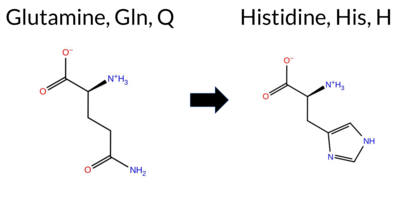 AIThe SynGAP1 missense variant Q147H is not reported in ClinVar and has no entries in gnomAD, indicating it is not catalogued in these databases. Functional prediction tools show a split: benign calls come from REVEL, polyPhen‑2 (HumDiv and HumVar) and FATHMM, while pathogenic calls arise from PROVEAN, SIFT, ESM1b and AlphaMissense‑Default. Grouping by consensus, four tools predict benign and four predict pathogenic. High‑accuracy assessments further support a deleterious effect: AlphaMissense‑Optimized is uncertain, but the SGM Consensus—derived from a majority vote of AlphaMissense‑Default, ESM1b, FATHMM and PROVEAN—labels the variant as Likely Pathogenic. Foldetta, a protein‑folding stability predictor, has no available result for this residue. Overall, the balance of evidence, especially the SGM Consensus and the majority of individual predictors, indicates that the variant is most likely pathogenic, and this conclusion does not contradict any ClinVar annotation (none is present). Disclaimer: This summary was generated using AI and should be interpreted alongside expert review. | Likely Pathogenic | 0.541878 | Disordered | 0.503877 | Binding | 0.349 | 0.840 | 0.625 | -9.759 | Likely Pathogenic | 0.955 | Likely Pathogenic | Ambiguous | 0.102 | Likely Benign | -2.70 | Deleterious | 0.380 | Benign | 0.265 | Benign | 3.87 | Benign | 0.01 | Affected | 0.1528 | 0.3220 | 3 | 0 | 0.3 | 9.01 | |||||||||||||||||||||||||||||||||||||||
| c.441A>T | Q147H 2D AIThe SynGAP1 missense variant Q147H is not reported in ClinVar and has no entries in gnomAD. Functional prediction tools show a split: benign calls come from REVEL, polyPhen‑2 (HumDiv and HumVar) and FATHMM, while pathogenic calls arise from PROVEAN, SIFT, ESM1b and AlphaMissense‑Default. Grouping by consensus, four tools predict benign and four predict pathogenic. High‑accuracy assessments further support a deleterious effect: AlphaMissense‑Optimized is uncertain, but the SGM Consensus—derived from a majority vote of AlphaMissense‑Default, ESM1b, FATHMM and PROVEAN—labels the variant as Likely Pathogenic. Foldetta, a protein‑folding stability predictor, has no available result for this residue. Taken together, the balance of evidence favors a pathogenic interpretation, and this conclusion does not conflict with the absence of a ClinVar classification. Disclaimer: This summary was generated using AI and should be interpreted alongside expert review. | Likely Pathogenic | 0.541878 | Disordered | 0.503877 | Binding | 0.349 | 0.840 | 0.625 | -9.759 | Likely Pathogenic | 0.955 | Likely Pathogenic | Ambiguous | 0.102 | Likely Benign | -2.70 | Deleterious | 0.380 | Benign | 0.265 | Benign | 3.87 | Benign | 0.01 | Affected | 0.1528 | 0.3220 | 3 | 0 | 0.3 | 9.01 | |||||||||||||||||||||||||||||||||||||||
| c.442C>A | P148T 2D 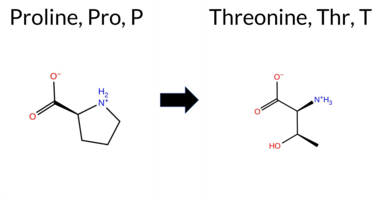 AIThe SynGAP1 missense variant P148T is not reported in ClinVar (no ClinVar ID) and is absent from gnomAD (no gnomAD ID). Prediction tools that agree on a benign effect include SGM‑Consensus (Likely Benign), REVEL, PROVEAN, SIFT, ESM1b, FATHMM, and AlphaMissense‑Optimized. Tools that predict a pathogenic effect are polyPhen‑2 HumDiv, polyPhen‑2 HumVar, and AlphaMissense‑Default. High‑accuracy assessments show AlphaMissense‑Optimized as benign and the SGM‑Consensus (majority vote of AlphaMissense‑Default, ESM1b, FATHMM, PROVEAN) also as benign; Foldetta results are unavailable. Overall, the majority of evidence points to a benign impact. There is no ClinVar entry to contradict this conclusion, so the variant is most likely benign based on current predictions. Disclaimer: This summary was generated using AI and should be interpreted alongside expert review. | Likely Benign | 0.653063 | Disordered | 0.500109 | Binding | 0.372 | 0.837 | 0.625 | -4.762 | Likely Benign | 0.781 | Likely Pathogenic | Likely Benign | 0.108 | Likely Benign | -1.39 | Neutral | 1.000 | Probably Damaging | 0.994 | Probably Damaging | 4.03 | Benign | 0.15 | Tolerated | 0.1698 | 0.4850 | 0 | -1 | 0.9 | 3.99 | |||||||||||||||||||||||||||||||||||||||
| c.442C>G | P148A 2D 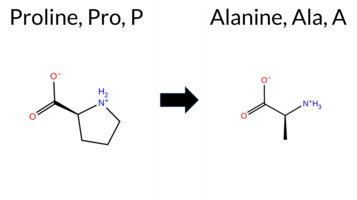 AIThe SynGAP1 missense variant P148A is catalogued in gnomAD (ID 6‑33432739‑C‑G) but has no ClinVar entry. Functional prediction tools cluster into two groups: benign predictions come from REVEL, PROVEAN, ESM1b, FATHMM, and AlphaMissense‑Optimized, while pathogenic predictions arise from polyPhen‑2 (HumDiv and HumVar), SIFT, and AlphaMissense‑Default. The SGM‑Consensus, which aggregates AlphaMissense‑Default, ESM1b, FATHMM, and PROVEAN, is “Likely Benign” because three of the four contributing tools predict benign. High‑accuracy assessments reinforce this: AlphaMissense‑Optimized is benign, and the SGM‑Consensus (majority vote) is benign. Foldetta, a protein‑folding stability method combining FoldX‑MD and Rosetta outputs, has no available result for this variant. Overall, the majority of evidence points to a benign effect. Thus, the variant is most likely benign, and this conclusion does not contradict any ClinVar status (none reported). Disclaimer: This summary was generated using AI and should be interpreted alongside expert review. | Likely Benign | 0.653063 | Disordered | 0.500109 | Binding | 0.372 | 0.837 | 0.625 | 6-33432739-C-G | 1 | 6.33e-7 | -6.890 | Likely Benign | 0.729 | Likely Pathogenic | Likely Benign | 0.117 | Likely Benign | -2.31 | Neutral | 0.999 | Probably Damaging | 0.991 | Probably Damaging | 4.00 | Benign | 0.03 | Affected | 3.61 | 5 | 0.3134 | 0.4123 | -1 | 1 | 3.4 | -26.04 | ||||||||||||||||||||||||||||||||||
| c.442C>T | P148S 2D 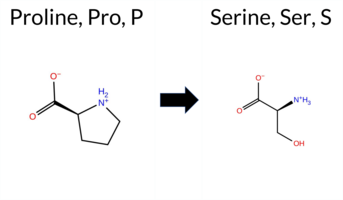 AIThe SynGAP1 missense variant P148S is not reported in ClinVar (ClinVar status: not listed) and is present in gnomAD (ID 6‑33432739‑C‑T). Prediction tools that agree on a benign effect include REVEL, PROVEAN, SIFT, ESM1b, and FATHMM, while those that predict a pathogenic effect are polyPhen‑2 HumDiv, polyPhen‑2 HumVar, and AlphaMissense‑Default. The SGM‑Consensus, derived from a majority vote of AlphaMissense‑Default, ESM1b, FATHMM, and PROVEAN, classifies the variant as Likely Benign. High‑accuracy assessments show AlphaMissense‑Optimized as Uncertain, SGM‑Consensus as Likely Benign, and Foldetta (a protein‑folding stability method combining FoldX‑MD and Rosetta outputs) is unavailable for this variant. Overall, the majority of evidence points to a benign impact. This conclusion does not contradict the ClinVar status, which currently has no entry for the variant. Disclaimer: This summary was generated using AI and should be interpreted alongside expert review. | Likely Benign | 0.653063 | Disordered | 0.500109 | Binding | 0.372 | 0.837 | 0.625 | 6-33432739-C-T | 1 | 6.33e-7 | -3.258 | Likely Benign | 0.874 | Likely Pathogenic | Ambiguous | 0.102 | Likely Benign | -1.81 | Neutral | 1.000 | Probably Damaging | 0.994 | Probably Damaging | 4.05 | Benign | 0.39 | Tolerated | 3.61 | 5 | 0.3143 | 0.4597 | -1 | 1 | 0.8 | -10.04 | ||||||||||||||||||||||||||||||||||
| c.443C>A | P148H 2D 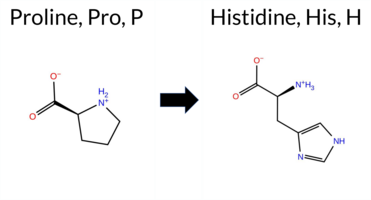 AIThe SynGAP1 missense variant P148H is not reported in ClinVar (no ClinVar ID) and is absent from gnomAD (no gnomAD ID). Prediction tools that agree on a benign effect include REVEL and FATHMM, whereas the majority of tools predict a pathogenic impact: PROVEAN, polyPhen‑2 HumDiv, polyPhen‑2 HumVar, SIFT, ESM1b, AlphaMissense‑Default, AlphaMissense‑Optimized, and the SGM‑Consensus (Likely Pathogenic). High‑accuracy assessments reinforce this view: AlphaMissense‑Optimized classifies the variant as pathogenic; the SGM‑Consensus, derived from a majority vote of AlphaMissense‑Default, ESM1b, FATHMM, and PROVEAN, also indicates a likely pathogenic outcome. Foldetta, a protein‑folding stability method combining FoldX‑MD and Rosetta outputs, has no available result for this variant. Overall, the preponderance of evidence from multiple in silico predictors points to a pathogenic effect for P148H, and this conclusion is not contradicted by any ClinVar annotation. Disclaimer: This summary was generated using AI and should be interpreted alongside expert review. | Likely Pathogenic | 0.653063 | Disordered | 0.500109 | Binding | 0.372 | 0.837 | 0.625 | -11.034 | Likely Pathogenic | 0.961 | Likely Pathogenic | Likely Pathogenic | 0.169 | Likely Benign | -3.21 | Deleterious | 1.000 | Probably Damaging | 0.997 | Probably Damaging | 3.90 | Benign | 0.00 | Affected | 0.1881 | 0.3847 | 0 | -2 | -1.6 | 40.02 | |||||||||||||||||||||||||||||||||||||||
| c.443C>G | P148R 2D 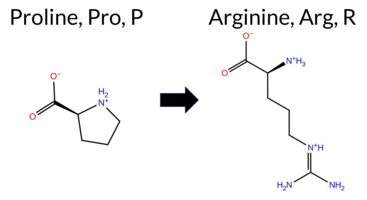 AIThe SynGAP1 missense variant P148R is not reported in ClinVar (no ClinVar ID) and is absent from gnomAD (no gnomAD ID). Prediction tools that agree on a benign effect include REVEL and FATHMM, whereas the majority of tools predict a pathogenic impact: PROVEAN, polyPhen‑2 (HumDiv and HumVar), SIFT, ESM1b, AlphaMissense‑Default, AlphaMissense‑Optimized, and the SGM‑Consensus score (Likely Pathogenic). High‑accuracy assessments further support a deleterious effect: AlphaMissense‑Optimized classifies the variant as pathogenic, and the SGM‑Consensus (majority vote from AlphaMissense‑Default, ESM1b, FATHMM, and PROVEAN) also indicates Likely Pathogenic. The Foldetta protein‑folding stability analysis is unavailable for this variant. Overall, the preponderance of evidence from multiple in silico predictors and high‑accuracy tools suggests that P148R is most likely pathogenic, and this conclusion does not contradict any ClinVar status, as none is currently assigned. Disclaimer: This summary was generated using AI and should be interpreted alongside expert review. | Likely Pathogenic | 0.653063 | Disordered | 0.500109 | Binding | 0.372 | 0.837 | 0.625 | -12.079 | Likely Pathogenic | 0.969 | Likely Pathogenic | Likely Pathogenic | 0.174 | Likely Benign | -3.17 | Deleterious | 1.000 | Probably Damaging | 0.996 | Probably Damaging | 3.92 | Benign | 0.01 | Affected | 0.1615 | 0.3100 | 0 | -2 | -2.9 | 59.07 | |||||||||||||||||||||||||||||||||||||||
| c.443C>T | P148L 2D 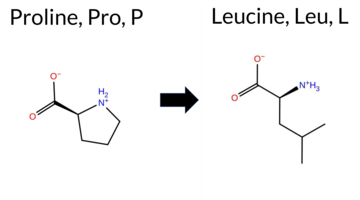 AIThe SynGAP1 missense variant P148L is not reported in ClinVar and is absent from gnomAD. Prediction tools that agree on a benign effect include REVEL and FATHMM, whereas the majority of other in silico predictors (PROVEAN, polyPhen‑2 HumDiv, polyPhen‑2 HumVar, SIFT, ESM1b, AlphaMissense‑Default) indicate a pathogenic impact. The high‑accuracy assessment shows AlphaMissense‑Optimized as uncertain, SGM‑Consensus (derived from a majority vote of AlphaMissense‑Default, ESM1b, FATHMM, and PROVEAN) as Likely Pathogenic, and Foldetta results are unavailable. Overall, the consensus of the majority of tools points to a pathogenic effect. Because there is no ClinVar classification to contradict this, the variant is most likely pathogenic based on current predictions. Disclaimer: This summary was generated using AI and should be interpreted alongside expert review. | Likely Pathogenic | 0.653063 | Disordered | 0.500109 | Binding | 0.372 | 0.837 | 0.625 | -10.375 | Likely Pathogenic | 0.941 | Likely Pathogenic | Ambiguous | 0.185 | Likely Benign | -3.29 | Deleterious | 1.000 | Probably Damaging | 0.996 | Probably Damaging | 3.93 | Benign | 0.01 | Affected | 0.2229 | 0.5714 | -3 | -3 | 5.4 | 16.04 | |||||||||||||||||||||||||||||||||||||||
| c.445A>C | K149Q 2D 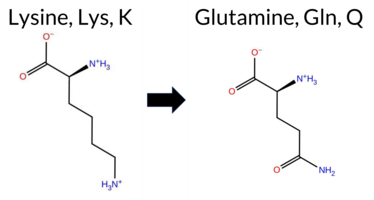 AIThe SynGAP1 missense variant K149Q is not reported in ClinVar (ClinVar ID = None) and is absent from gnomAD (gnomAD ID = None). Prediction tools that agree on a benign effect include REVEL, PROVEAN, polyPhen‑2 HumVar, and FATHMM. Tools that agree on a pathogenic effect include polyPhen‑2 HumDiv, SIFT, ESM1b, AlphaMissense‑Default, and AlphaMissense‑Optimized. The SGM Consensus, which takes a majority vote from AlphaMissense‑Default, ESM1b, FATHMM, and PROVEAN, is inconclusive (2 vs 2). AlphaMissense‑Optimized predicts pathogenic, while Foldetta (combining FoldX‑MD and Rosetta) has no available result for this variant. Overall, the balance of evidence (five pathogenic vs. four benign predictions) indicates that the variant is most likely pathogenic, and this assessment does not contradict any ClinVar status because no ClinVar entry exists. Disclaimer: This summary was generated using AI and should be interpreted alongside expert review. | 0.562014 | Disordered | 0.501681 | Binding | 0.302 | 0.839 | 0.625 | -11.430 | Likely Pathogenic | 0.980 | Likely Pathogenic | Likely Pathogenic | 0.190 | Likely Benign | -1.99 | Neutral | 0.535 | Possibly Damaging | 0.310 | Benign | 3.61 | Benign | 0.00 | Affected | 0.5243 | 0.1454 | Weaken | 1 | 1 | 0.4 | -0.04 | |||||||||||||||||||||||||||||||||||||||
| c.445A>G | K149E 2D 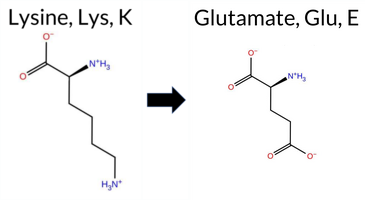 AIThe SynGAP1 missense variant K149E is not reported in ClinVar (ClinVar ID = None) and is absent from gnomAD (gnomAD ID = None). Prediction tools that agree on a benign effect include REVEL, PROVEAN, polyPhen‑2 HumDiv, polyPhen‑2 HumVar, and FATHMM. Tools that predict a pathogenic effect are SIFT, ESM1b, AlphaMissense‑Default, and AlphaMissense‑Optimized. The SGM Consensus, which aggregates AlphaMissense‑Default, ESM1b, FATHMM, and PROVEAN, yields an equal split (2 vs 2) and is therefore considered unavailable. AlphaMissense‑Optimized, a high‑accuracy predictor, classifies the variant as pathogenic, while Foldetta (combining FoldX‑MD and Rosetta) has no available result for this variant. Overall, the majority of standard tools (five benign vs. four pathogenic) lean toward a benign interpretation, and this is consistent with the lack of ClinVar evidence. Thus, the variant is most likely benign, with no contradiction to ClinVar status. Disclaimer: This summary was generated using AI and should be interpreted alongside expert review. | 0.562014 | Disordered | 0.501681 | Binding | 0.302 | 0.839 | 0.625 | -12.148 | Likely Pathogenic | 0.998 | Likely Pathogenic | Likely Pathogenic | 0.231 | Likely Benign | -2.17 | Neutral | 0.141 | Benign | 0.062 | Benign | 3.59 | Benign | 0.00 | Affected | 0.4636 | 0.1022 | 0 | 1 | 0.4 | 0.94 | ||||||||||||||||||||||||||||||||||||||||
| c.446A>C | K149T 2D 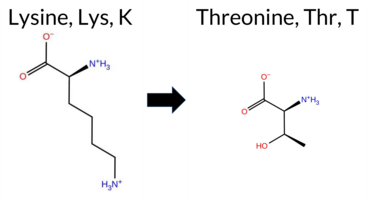 AIThe SynGAP1 missense variant K149T is not reported in ClinVar and is absent from gnomAD. Functional prediction tools show a split: benign calls come from REVEL, polyPhen‑2 (HumDiv and HumVar), and FATHMM, while pathogenic calls arise from PROVEAN, SIFT, ESM1b, AlphaMissense‑Default, and AlphaMissense‑Optimized. The SGM‑Consensus, which aggregates AlphaMissense‑Default, ESM1b, FATHMM, and PROVEAN, reports the variant as Likely Pathogenic. High‑accuracy assessments further support a deleterious effect: AlphaMissense‑Optimized predicts pathogenicity, and the SGM‑Consensus (majority vote) also indicates Likely Pathogenic. Foldetta results are unavailable, so no stability evidence is provided. Overall, the preponderance of evidence points to a pathogenic effect, and this conclusion is not contradicted by any ClinVar annotation. Disclaimer: This summary was generated using AI and should be interpreted alongside expert review. | Likely Pathogenic | 0.562014 | Disordered | 0.501681 | Binding | 0.302 | 0.839 | 0.625 | -11.948 | Likely Pathogenic | 0.988 | Likely Pathogenic | Likely Pathogenic | 0.260 | Likely Benign | -3.53 | Deleterious | 0.141 | Benign | 0.091 | Benign | 3.56 | Benign | 0.00 | Affected | 0.2398 | 0.3473 | 0 | -1 | 3.2 | -27.07 | |||||||||||||||||||||||||||||||||||||||
| c.446A>G | K149R 2D 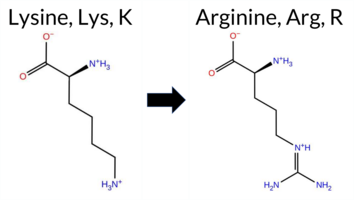 AIThe SynGAP1 missense variant K149R is not reported in ClinVar (ClinVar ID = None) and is absent from gnomAD (gnomAD ID = None). Prediction tools that agree on a benign effect include REVEL, PROVEAN, polyPhen‑2 (HumDiv and HumVar), FATHMM, and AlphaMissense‑Optimized. Tools that predict a pathogenic effect are SIFT and ESM1b, while AlphaMissense‑Default remains uncertain. High‑accuracy assessments further support a benign outcome: AlphaMissense‑Optimized predicts benign, and the SGM Consensus—derived from a majority vote of AlphaMissense‑Default, ESM1b, FATHMM, and PROVEAN—also yields a benign classification. Foldetta, a protein‑folding stability method combining FoldX‑MD and Rosetta outputs, has no available result for this variant. Overall, the preponderance of evidence indicates that K149R is most likely benign, and this conclusion does not contradict any ClinVar annotation, as none exists. Disclaimer: This summary was generated using AI and should be interpreted alongside expert review. | 0.562014 | Disordered | 0.501681 | Binding | 0.302 | 0.839 | 0.625 | -8.237 | Likely Pathogenic | 0.406 | Ambiguous | Likely Benign | 0.143 | Likely Benign | -1.70 | Neutral | 0.247 | Benign | 0.125 | Benign | 3.70 | Benign | 0.00 | Affected | 0.5639 | 0.1169 | Weaken | 3 | 2 | -0.6 | 28.01 | |||||||||||||||||||||||||||||||||||||||
| c.446A>T | K149I 2D 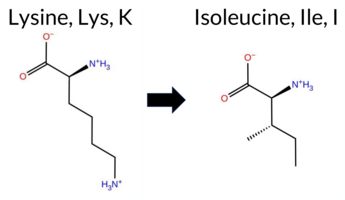 AIThe SynGAP1 missense variant K149I is not reported in ClinVar (no ClinVar ID) and is absent from gnomAD (no gnomAD ID). Prediction tools that indicate a benign effect include REVEL, polyPhen‑2 HumVar, and FATHMM, whereas those that predict a pathogenic effect comprise PROVEAN, polyPhen‑2 HumDiv, SIFT, ESM1b, AlphaMissense‑Default, and AlphaMissense‑Optimized. The SGM‑Consensus, derived from a majority vote of AlphaMissense‑Default, ESM1b, FATHMM, and PROVEAN, classifies the variant as Likely Pathogenic. High‑accuracy assessments show AlphaMissense‑Optimized as Pathogenic and the SGM‑Consensus as Likely Pathogenic; the Foldetta protein‑folding stability analysis is unavailable. Based on the preponderance of pathogenic predictions and the lack of benign consensus, the variant is most likely pathogenic, and this assessment does not contradict any ClinVar status because none is available. Disclaimer: This summary was generated using AI and should be interpreted alongside expert review. | Likely Pathogenic | 0.562014 | Disordered | 0.501681 | Binding | 0.302 | 0.839 | 0.625 | -14.426 | Likely Pathogenic | 0.995 | Likely Pathogenic | Likely Pathogenic | 0.305 | Likely Benign | -4.72 | Deleterious | 0.535 | Possibly Damaging | 0.403 | Benign | 3.53 | Benign | 0.00 | Affected | 0.1477 | 0.3965 | -2 | -3 | 8.4 | -15.01 | |||||||||||||||||||||||||||||||||||||||
| c.447A>C | K149N 2D 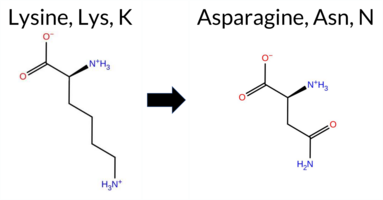 AIThe SynGAP1 missense variant K149N is not reported in ClinVar and has no entry in gnomAD, indicating it is not catalogued in these databases. Prediction tools that agree on a benign effect include REVEL, polyPhen‑2 HumDiv, polyPhen‑2 HumVar, and FATHMM. In contrast, tools that predict a pathogenic effect are PROVEAN, SIFT, ESM1b, AlphaMissense‑Default, and AlphaMissense‑Optimized. The high‑accuracy consensus, SGM‑Consensus, which aggregates AlphaMissense‑Default, ESM1b, FATHMM, and PROVEAN, yields a majority pathogenic vote (3 pathogenic vs. 1 benign) and is labeled “Likely Pathogenic.” AlphaMissense‑Optimized independently predicts pathogenicity. Foldetta, a protein‑folding stability method combining FoldX‑MD and Rosetta outputs, is not available for this variant. Overall, the majority of computational evidence points to a pathogenic impact, and this assessment does not contradict any ClinVar status because no ClinVar entry exists. Disclaimer: This summary was generated using AI and should be interpreted alongside expert review. | Likely Pathogenic | 0.562014 | Disordered | 0.501681 | Binding | 0.302 | 0.839 | 0.625 | -9.275 | Likely Pathogenic | 0.998 | Likely Pathogenic | Likely Pathogenic | 0.121 | Likely Benign | -2.85 | Deleterious | 0.141 | Benign | 0.123 | Benign | 3.56 | Benign | 0.00 | Affected | 0.4427 | 0.1559 | 1 | 0 | 0.4 | -14.07 | |||||||||||||||||||||||||||||||||||||||
| c.447A>T | K149N 2D AIThe SynGAP1 missense variant K149N is not reported in ClinVar and has no entries in gnomAD, indicating it is not catalogued in these databases. Functional prediction tools show a split: benign predictions come from REVEL, polyPhen‑2 HumDiv, polyPhen‑2 HumVar, and FATHMM, whereas pathogenic predictions arise from PROVEAN, SIFT, ESM1b, AlphaMissense‑Default, and AlphaMissense‑Optimized. High‑accuracy assessments reinforce the pathogenic signal: AlphaMissense‑Optimized predicts pathogenic, and the SGM Consensus—derived from a majority vote of AlphaMissense‑Default, ESM1b, FATHMM, and PROVEAN—also indicates likely pathogenic. Foldetta, a protein‑folding stability method that integrates FoldX‑MD and Rosetta outputs, has no available result for this variant. Overall, the preponderance of evidence points to a pathogenic effect for K149N, and this conclusion does not conflict with the absence of a ClinVar classification. Disclaimer: This summary was generated using AI and should be interpreted alongside expert review. | Likely Pathogenic | 0.562014 | Disordered | 0.501681 | Binding | 0.302 | 0.839 | 0.625 | -9.275 | Likely Pathogenic | 0.998 | Likely Pathogenic | Likely Pathogenic | 0.121 | Likely Benign | -2.85 | Deleterious | 0.141 | Benign | 0.123 | Benign | 3.56 | Benign | 0.00 | Affected | 0.4427 | 0.1559 | 1 | 0 | 0.4 | -14.07 | |||||||||||||||||||||||||||||||||||||||
| c.448C>A | L150I 2D 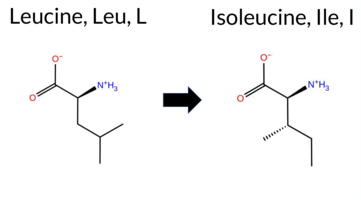 AIThe SynGAP1 missense variant L150I is not reported in ClinVar (ClinVar ID: None) and is absent from gnomAD (gnomAD ID: None). Prediction tools that agree on a benign effect include REVEL, PROVEAN, and FATHMM, whereas those that agree on a pathogenic effect are polyPhen‑2 HumDiv, polyPhen‑2 HumVar, SIFT, ESM1b, and AlphaMissense‑Default. High‑accuracy assessments are less definitive: AlphaMissense‑Optimized is uncertain; the SGM Consensus (majority vote from AlphaMissense‑Default, ESM1b, FATHMM, PROVEAN) is inconclusive (2 pathogenic vs. 2 benign), and Foldetta results are unavailable. Overall, the majority of available predictions (five pathogenic vs. three benign) indicate a likely pathogenic impact for the variant. This conclusion is not contradicted by ClinVar status, as the variant has no existing ClinVar annotation. Disclaimer: This summary was generated using AI and should be interpreted alongside expert review. | 0.494003 | Structured | 0.505752 | Binding | 0.299 | 0.839 | 0.625 | -10.118 | Likely Pathogenic | 0.886 | Likely Pathogenic | Ambiguous | 0.080 | Likely Benign | -1.25 | Neutral | 0.993 | Probably Damaging | 0.967 | Probably Damaging | 3.74 | Benign | 0.00 | Affected | 0.0894 | 0.3468 | 2 | 2 | 0.7 | 0.00 | ||||||||||||||||||||||||||||||||||||||||
| c.448C>G | L150V 2D 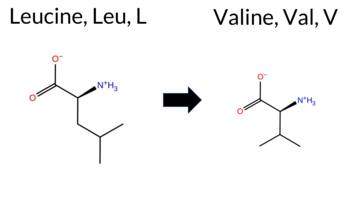 AIThe SynGAP1 missense variant L150V is not reported in ClinVar (ClinVar ID = None) and is absent from gnomAD (gnomAD ID = None). Prediction tools that agree on a benign effect include REVEL, PROVEAN, and FATHMM. Tools that agree on a pathogenic effect include polyPhen‑2 (HumDiv and HumVar), SIFT, ESM1b, and AlphaMissense‑Default. The high‑accuracy AlphaMissense‑Optimized tool returns an uncertain result, and the SGM Consensus (majority vote from AlphaMissense‑Default, ESM1b, FATHMM, PROVEAN) is inconclusive (2 pathogenic vs. 2 benign). Foldetta, a protein‑folding stability method combining FoldX‑MD and Rosetta outputs, has no available result for this variant. Overall, the majority of available predictions (5 pathogenic vs. 3 benign) indicate a pathogenic effect. Thus, the variant is most likely pathogenic, and this assessment does not contradict any ClinVar status because the variant is not yet catalogued there. Disclaimer: This summary was generated using AI and should be interpreted alongside expert review. | 0.494003 | Structured | 0.505752 | Binding | 0.299 | 0.839 | 0.625 | -10.375 | Likely Pathogenic | 0.927 | Likely Pathogenic | Ambiguous | 0.113 | Likely Benign | -1.84 | Neutral | 0.993 | Probably Damaging | 0.967 | Probably Damaging | 3.74 | Benign | 0.00 | Affected | 0.1473 | 0.3178 | 2 | 1 | 0.4 | -14.03 | ||||||||||||||||||||||||||||||||||||||||
| c.448C>T | L150F 2D 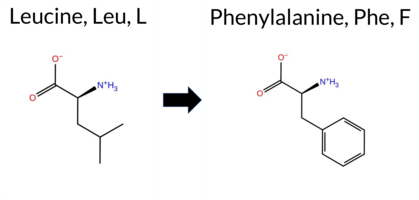 AIThe SynGAP1 missense variant L150F is not reported in ClinVar (no ClinVar ID) and is absent from gnomAD (no gnomAD ID). Prediction tools that agree on a benign effect include REVEL and FATHMM, whereas the majority of tools predict a pathogenic impact: PROVEAN, polyPhen‑2 HumDiv, polyPhen‑2 HumVar, SIFT, ESM1b, AlphaMissense‑Default, and AlphaMissense‑Optimized. The SGM‑Consensus, which aggregates AlphaMissense‑Default, ESM1b, FATHMM, and PROVEAN, classifies the variant as Likely Pathogenic. High‑accuracy assessments further support pathogenicity: AlphaMissense‑Optimized predicts Pathogenic, and the SGM‑Consensus also indicates Likely Pathogenic. Foldetta results are not available for this variant. Overall, the preponderance of evidence from multiple prediction algorithms and the SGM‑Consensus suggests that the variant is most likely pathogenic, and this conclusion is not contradicted by any ClinVar annotation. Disclaimer: This summary was generated using AI and should be interpreted alongside expert review. | Likely Pathogenic | 0.494003 | Structured | 0.505752 | Binding | 0.299 | 0.839 | 0.625 | -12.459 | Likely Pathogenic | 0.990 | Likely Pathogenic | Likely Pathogenic | 0.105 | Likely Benign | -2.56 | Deleterious | 0.998 | Probably Damaging | 0.991 | Probably Damaging | 3.69 | Benign | 0.00 | Affected | 0.0580 | 0.3112 | 2 | 0 | -1.0 | 34.02 | |||||||||||||||||||||||||||||||||||||||
| c.449T>A | L150H 2D 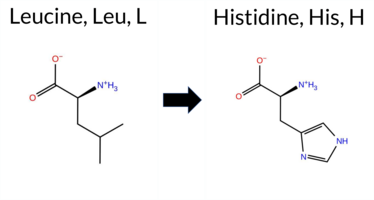 AIThe SynGAP1 missense variant L150H is not reported in ClinVar (no ClinVar ID) and is absent from gnomAD (no gnomAD ID). Prediction tools that agree on a benign effect include REVEL and FATHMM, whereas the majority of tools predict a pathogenic impact: PROVEAN, polyPhen‑2 HumDiv, polyPhen‑2 HumVar, SIFT, ESM1b, AlphaMissense‑Default, and AlphaMissense‑Optimized. The high‑accuracy consensus, SGM‑Consensus, which aggregates AlphaMissense‑Default, ESM1b, FATHMM, and PROVEAN, is classified as Likely Pathogenic (3 pathogenic vs. 1 benign). AlphaMissense‑Optimized alone also predicts Pathogenic. Foldetta, a protein‑folding stability method combining FoldX‑MD and Rosetta outputs, has no available result for this variant. Overall, the preponderance of evidence from multiple independent predictors indicates that the variant is most likely pathogenic, and this assessment does not contradict any ClinVar status, as none is currently assigned. Disclaimer: This summary was generated using AI and should be interpreted alongside expert review. | Likely Pathogenic | 0.494003 | Structured | 0.505752 | Binding | 0.299 | 0.839 | 0.625 | -14.892 | Likely Pathogenic | 0.998 | Likely Pathogenic | Likely Pathogenic | 0.303 | Likely Benign | -4.09 | Deleterious | 0.999 | Probably Damaging | 0.995 | Probably Damaging | 3.64 | Benign | 0.00 | Affected | 0.1011 | 0.0519 | -2 | -3 | -7.0 | 23.98 | |||||||||||||||||||||||||||||||||||||||
| c.449T>C | L150P 2D 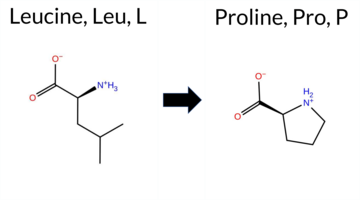 AIThe SynGAP1 missense variant L150P is not reported in ClinVar and is absent from gnomAD. Prediction tools that agree on a benign effect include REVEL and FATHMM, whereas the remaining tools—PROVEAN, polyPhen‑2 (HumDiv and HumVar), SIFT, ESM1b, AlphaMissense‑Default, AlphaMissense‑Optimized, and the SGM‑Consensus (majority vote of AlphaMissense‑Default, ESM1b, FATHMM, and PROVEAN)—all predict a pathogenic or likely pathogenic outcome. High‑accuracy assessments further support a deleterious impact: AlphaMissense‑Optimized classifies the variant as pathogenic, and the SGM‑Consensus indicates it is likely pathogenic. The Foldetta protein‑folding stability analysis is unavailable for this variant. Overall, the majority of computational evidence points to a pathogenic effect, and this conclusion does not contradict any ClinVar annotation (none is present). Disclaimer: This summary was generated using AI and should be interpreted alongside expert review. | Likely Pathogenic | 0.494003 | Structured | 0.505752 | Binding | 0.299 | 0.839 | 0.625 | -12.881 | Likely Pathogenic | 0.995 | Likely Pathogenic | Likely Pathogenic | 0.320 | Likely Benign | -3.90 | Deleterious | 0.998 | Probably Damaging | 0.995 | Probably Damaging | 3.64 | Benign | 0.00 | Affected | 0.3557 | 0.1543 | -3 | -3 | -5.4 | -16.04 | |||||||||||||||||||||||||||||||||||||||
| c.449T>G | L150R 2D 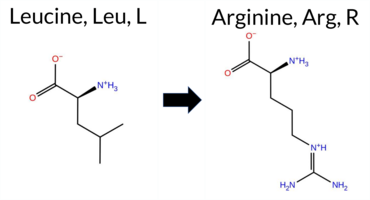 AIThe SynGAP1 missense variant L150R is not reported in ClinVar (no ClinVar ID) and is absent from gnomAD (no gnomAD ID). Prediction tools that agree on a benign effect include REVEL and FATHMM, whereas the majority of tools predict a pathogenic impact: PROVEAN, polyPhen‑2 (HumDiv and HumVar), SIFT, ESM1b, AlphaMissense‑Default, AlphaMissense‑Optimized, and the SGM‑Consensus (majority vote from AlphaMissense‑Default, ESM1b, FATHMM, and PROVEAN) all indicate pathogenicity. High‑accuracy assessments further support this: AlphaMissense‑Optimized classifies the variant as pathogenic, and the SGM‑Consensus also reports it as Likely Pathogenic. The Foldetta protein‑folding stability analysis is unavailable for this variant. Overall, the preponderance of evidence from multiple in silico predictors and high‑accuracy tools points to a pathogenic effect for the SynGAP1 L150R variant, and this conclusion does not contradict any ClinVar status (none reported). Disclaimer: This summary was generated using AI and should be interpreted alongside expert review. | Likely Pathogenic | 0.494003 | Structured | 0.505752 | Binding | 0.299 | 0.839 | 0.625 | -14.879 | Likely Pathogenic | 0.985 | Likely Pathogenic | Likely Pathogenic | 0.290 | Likely Benign | -3.16 | Deleterious | 0.998 | Probably Damaging | 0.994 | Probably Damaging | 3.67 | Benign | 0.00 | Affected | 0.1275 | 0.0719 | -3 | -2 | -8.3 | 43.03 | |||||||||||||||||||||||||||||||||||||||
| c.44C>A | A15E 2D 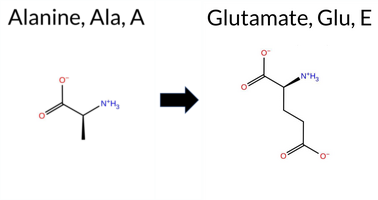 AIThe SynGAP1 missense variant A15E is reported in gnomAD (ID 6‑33420308‑C‑A) but has no ClinVar entry. Functional prediction tools largely agree on a benign effect: REVEL, PROVEAN, polyPhen‑2 (HumDiv and HumVar), ESM1b, FATHMM, AlphaMissense‑Default, and AlphaMissense‑Optimized all classify the change as benign. Only SIFT predicts it to be pathogenic. The SGM‑Consensus, which aggregates AlphaMissense‑Default, ESM1b, FATHMM, and PROVEAN, also indicates a likely benign outcome. High‑accuracy assessments confirm this: AlphaMissense‑Optimized is benign, and the SGM‑Consensus is likely benign; Foldetta results are not available. Overall, the majority of evidence points to a benign impact, and this conclusion does not contradict any ClinVar status (none is provided). Disclaimer: This summary was generated using AI and should be interpreted alongside expert review. | Likely Benign | 0.436924 | Structured | 0.466055 | Uncertain | 0.330 | 0.912 | 0.375 | 6-33420308-C-A | -3.423 | Likely Benign | 0.277 | Likely Benign | Likely Benign | 0.169 | Likely Benign | 0.46 | Neutral | 0.406 | Benign | 0.040 | Benign | 4.13 | Benign | 0.00 | Affected | 4.32 | 1 | 0.1563 | 0.1908 | -1 | 0 | -5.3 | 58.04 | ||||||||||||||||||||||||||||||||||||
| c.44C>G | A15G 2D 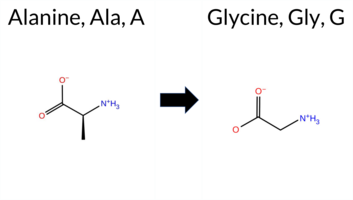 AIThe SynGAP1 missense variant A15G is reported in gnomAD (ID 6‑33420308‑C‑G) but has no ClinVar entry. Functional prediction tools largely agree on a benign effect: REVEL, PROVEAN, polyPhen‑2 (HumDiv and HumVar), ESM1b, FATHMM, AlphaMissense‑Default, and AlphaMissense‑Optimized all classify the change as benign. Only SIFT predicts it to be pathogenic, and the SGM‑Consensus (majority vote of AlphaMissense‑Default, ESM1b, FATHMM, and PROVEAN) indicates a likely benign outcome. High‑accuracy assessments reinforce this: AlphaMissense‑Optimized is benign, and the SGM‑Consensus also reports likely benign; Foldetta results are not available. Overall, the consensus of the majority of prediction tools and the high‑accuracy methods points to a benign impact. This conclusion is consistent with the absence of a ClinVar pathogenic classification. Disclaimer: This summary was generated using AI and should be interpreted alongside expert review. | Likely Benign | 0.436924 | Structured | 0.466055 | Uncertain | 0.330 | 0.912 | 0.375 | 6-33420308-C-G | 3 | 1.95e-6 | -3.261 | Likely Benign | 0.104 | Likely Benign | Likely Benign | 0.084 | Likely Benign | -0.04 | Neutral | 0.000 | Benign | 0.000 | Benign | 4.12 | Benign | 0.00 | Affected | 4.32 | 1 | 0.2753 | 0.5196 | 0 | 1 | -2.2 | -14.03 | ||||||||||||||||||||||||||||||||||
| c.44C>T | A15V 2D 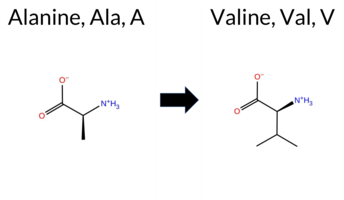 AIThe SynGAP1 missense variant A15V is listed in ClinVar (ID 1801174.0) with an “Uncertain” status and is present in gnomAD (6‑33420308‑C‑T). Prediction tools that agree on a benign effect include REVEL, PROVEAN, polyPhen‑2 HumVar, ESM1b, FATHMM, AlphaMissense‑Default, and AlphaMissense‑Optimized, while polyPhen‑2 HumDiv and SIFT predict a pathogenic outcome. The SGM‑Consensus, derived from a majority vote of AlphaMissense‑Default, ESM1b, FATHMM, and PROVEAN, reports a “Likely Benign” classification. High‑accuracy assessments show AlphaMissense‑Optimized as benign and the SGM‑Consensus as likely benign; Foldetta results are unavailable. Overall, the majority of evidence points to a benign effect, and this does not contradict the ClinVar designation, which remains uncertain. Disclaimer: This summary was generated using AI and should be interpreted alongside expert review. | Likely Benign | 0.436924 | Structured | 0.466055 | Uncertain | 0.330 | 0.912 | 0.375 | Uncertain | 1 | 6-33420308-C-T | 1 | 6.49e-7 | -3.560 | Likely Benign | 0.161 | Likely Benign | Likely Benign | 0.105 | Likely Benign | 0.20 | Neutral | 0.602 | Possibly Damaging | 0.015 | Benign | 4.19 | Benign | 0.00 | Affected | 4.32 | 1 | 0.1809 | 0.7669 | 0 | 0 | 2.4 | 28.05 | ||||||||||||||||||||||||||||||||
| c.451G>A | D151N 2D 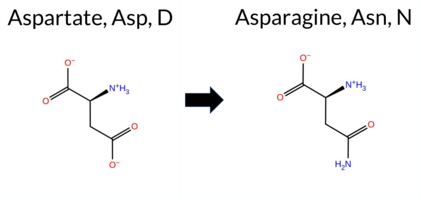 AIThe SynGAP1 missense variant D151N has no ClinVar entry (ClinVar status: not reported) and is absent from gnomAD (gnomAD ID: none). Prediction tools that classify the variant as benign include REVEL and FATHMM, whereas the remaining tools—PROVEAN, polyPhen‑2 HumDiv, polyPhen‑2 HumVar, SIFT, ESM1b, AlphaMissense‑Default, AlphaMissense‑Optimized, and the SGM‑Consensus—predict it to be pathogenic. The SGM‑Consensus result (Likely Pathogenic) is derived from a majority vote of AlphaMissense‑Default, ESM1b, FATHMM, and PROVEAN. High‑accuracy assessments show AlphaMissense‑Optimized as pathogenic and the SGM‑Consensus as Likely Pathogenic; Foldetta results are unavailable. Overall, the preponderance of evidence from multiple in silico predictors indicates that D151N is most likely pathogenic, and this assessment does not contradict any ClinVar status, as none is currently assigned. Disclaimer: This summary was generated using AI and should be interpreted alongside expert review. | Likely Pathogenic | 0.529623 | Disordered | 0.503277 | Binding | 0.342 | 0.841 | 0.625 | -8.479 | Likely Pathogenic | 0.970 | Likely Pathogenic | Likely Pathogenic | 0.185 | Likely Benign | -2.51 | Deleterious | 0.993 | Probably Damaging | 0.984 | Probably Damaging | 3.90 | Benign | 0.01 | Affected | 0.1346 | 0.8186 | 2 | 1 | 0.0 | -0.98 | |||||||||||||||||||||||||||||||||||||||
| c.451G>C | D151H 2D 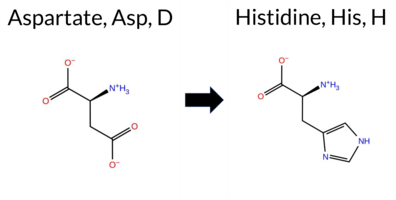 AIThe SynGAP1 missense variant D151H is listed in ClinVar with an “Uncertain” status and is present in gnomAD (variant ID 6‑33432748‑G‑C). Prediction tools that agree on a benign effect include REVEL and FATHMM, whereas the remaining tools (PROVEAN, polyPhen‑2 HumDiv, polyPhen‑2 HumVar, SIFT, ESM1b, AlphaMissense‑Default, AlphaMissense‑Optimized) all predict a pathogenic outcome. High‑accuracy assessments further support a deleterious impact: AlphaMissense‑Optimized classifies the variant as pathogenic, and the SGM Consensus (majority vote from AlphaMissense‑Default, ESM1b, FATHMM, and PROVEAN) reports it as “Likely Pathogenic.” No Foldetta stability result is available for this variant. Overall, the majority of computational evidence indicates that D151H is most likely pathogenic, which does not contradict the current ClinVar status of uncertainty. Disclaimer: This summary was generated using AI and should be interpreted alongside expert review. | Likely Pathogenic | 0.529623 | Disordered | 0.503277 | Binding | 0.342 | 0.841 | 0.625 | Uncertain | 1 | 6-33432748-G-C | 2 | 1.26e-6 | -11.747 | Likely Pathogenic | 0.994 | Likely Pathogenic | Likely Pathogenic | 0.335 | Likely Benign | -3.90 | Deleterious | 0.999 | Probably Damaging | 0.995 | Probably Damaging | 3.86 | Benign | 0.00 | Affected | 3.61 | 5 | 0.1543 | 0.8419 | -1 | 1 | 0.3 | 22.05 | ||||||||||||||||||||||||||||||||
| c.451G>T | D151Y 2D 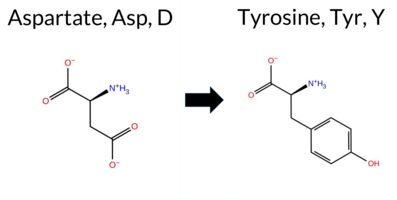 AIThe SynGAP1 D151Y variant is not reported in ClinVar (no ClinVar ID) and is absent from gnomAD (no gnomAD ID). Prediction tools that agree on a benign effect include REVEL and FATHMM, whereas the majority of tools predict a pathogenic impact: PROVEAN, polyPhen‑2 HumDiv, polyPhen‑2 HumVar, SIFT, ESM1b, AlphaMissense‑Default, AlphaMissense‑Optimized, and the SGM‑Consensus (majority vote). High‑accuracy assessments further support pathogenicity: AlphaMissense‑Optimized classifies the variant as pathogenic, and the SGM‑Consensus (derived from AlphaMissense‑Default, ESM1b, FATHMM, and PROVEAN) labels it as Likely Pathogenic. Foldetta, a protein‑folding stability method combining FoldX‑MD and Rosetta outputs, has no available result for this variant. Overall, the preponderance of evidence from both general and high‑accuracy predictors indicates that the D151Y variant is most likely pathogenic, and this conclusion is not contradicted by any ClinVar annotation. Disclaimer: This summary was generated using AI and should be interpreted alongside expert review. | Likely Pathogenic | 0.529623 | Disordered | 0.503277 | Binding | 0.342 | 0.841 | 0.625 | -13.174 | Likely Pathogenic | 0.990 | Likely Pathogenic | Likely Pathogenic | 0.340 | Likely Benign | -5.16 | Deleterious | 0.999 | Probably Damaging | 0.995 | Probably Damaging | 3.85 | Benign | 0.00 | Affected | 0.0567 | 0.7560 | -4 | -3 | 2.2 | 48.09 | |||||||||||||||||||||||||||||||||||||||
| c.452A>C | D151A 2D 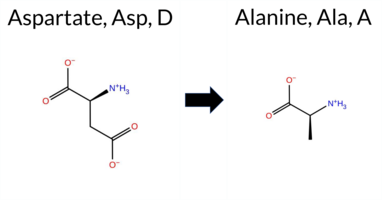 AIThe SynGAP1 D151A missense variant is listed in gnomAD (ID 6‑33432749‑A‑C) but has no ClinVar entry. Functional prediction tools fall into two groups: benign predictions come from REVEL and FATHMM, whereas the remaining tools—PROVEAN, polyPhen‑2 (HumDiv and HumVar), SIFT, ESM1b, AlphaMissense‑Default, AlphaMissense‑Optimized, and the SGM‑Consensus (majority vote of AlphaMissense‑Default, ESM1b, FATHMM, PROVEAN)—all predict pathogenicity. High‑accuracy assessments further support a deleterious effect: AlphaMissense‑Optimized is pathogenic, and the SGM‑Consensus is labeled Likely Pathogenic. Foldetta, a protein‑folding stability method combining FoldX‑MD and Rosetta outputs, has no available result for this variant. Overall, the majority of evidence points to a pathogenic impact, and this conclusion does not contradict any ClinVar status, as none is reported. Disclaimer: This summary was generated using AI and should be interpreted alongside expert review. | Likely Pathogenic | 0.529623 | Disordered | 0.503277 | Binding | 0.342 | 0.841 | 0.625 | 6-33432749-A-C | 1 | 6.21e-7 | -9.693 | Likely Pathogenic | 0.986 | Likely Pathogenic | Likely Pathogenic | 0.326 | Likely Benign | -4.51 | Deleterious | 0.998 | Probably Damaging | 0.991 | Probably Damaging | 3.91 | Benign | 0.01 | Affected | 3.61 | 5 | 0.4286 | 0.7424 | -2 | 0 | 5.3 | -44.01 | ||||||||||||||||||||||||||||||||||
| c.452A>G | D151G 2D 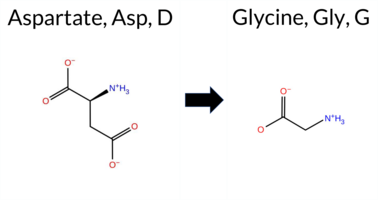 AIThe SynGAP1 D151G missense variant is not reported in ClinVar and is absent from gnomAD. Functional prediction tools cluster into two groups: benign predictions are made by REVEL and FATHMM, whereas the remaining eight tools—PROVEAN, polyPhen‑2 HumDiv, polyPhen‑2 HumVar, SIFT, ESM1b, AlphaMissense‑Default, AlphaMissense‑Optimized, and the SGM‑Consensus—predict a pathogenic effect. The SGM‑Consensus, derived from a majority vote of AlphaMissense‑Default, ESM1b, FATHMM, and PROVEAN, is labeled Likely Pathogenic. High‑accuracy assessments further support pathogenicity: AlphaMissense‑Optimized scores the variant as pathogenic, and the SGM‑Consensus confirms a likely pathogenic status. No Foldetta stability analysis is available for this residue. Overall, the preponderance of evidence indicates that D151G is most likely pathogenic, and this assessment does not conflict with any ClinVar annotation, as none exists. Disclaimer: This summary was generated using AI and should be interpreted alongside expert review. | Likely Pathogenic | 0.529623 | Disordered | 0.503277 | Binding | 0.342 | 0.841 | 0.625 | -10.409 | Likely Pathogenic | 0.985 | Likely Pathogenic | Likely Pathogenic | 0.349 | Likely Benign | -3.91 | Deleterious | 0.993 | Probably Damaging | 0.984 | Probably Damaging | 3.87 | Benign | 0.01 | Affected | 0.4452 | 0.7037 | 1 | -1 | 3.1 | -58.04 | |||||||||||||||||||||||||||||||||||||||
| c.452A>T | D151V 2D 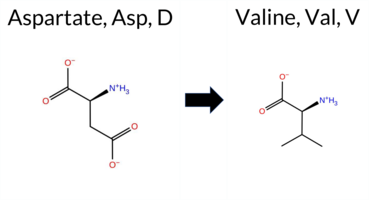 AIThe SynGAP1 D151V variant is not reported in ClinVar (no ClinVar ID) and is absent from gnomAD (no gnomAD ID). Prediction tools that agree on a benign effect include REVEL and FATHMM, whereas the majority of tools predict a pathogenic impact: PROVEAN, polyPhen‑2 (HumDiv and HumVar), SIFT, ESM1b, AlphaMissense‑Default, AlphaMissense‑Optimized, and the SGM‑Consensus (which is “Likely Pathogenic” based on a majority vote of AlphaMissense‑Default, ESM1b, FATHMM, and PROVEAN). High‑accuracy assessments further support pathogenicity: AlphaMissense‑Optimized is pathogenic, and the SGM‑Consensus is likely pathogenic. The Foldetta protein‑folding stability analysis is unavailable for this variant. Overall, the preponderance of evidence from multiple in silico predictors indicates that D151V is most likely pathogenic, and this conclusion is not contradicted by any ClinVar annotation. Disclaimer: This summary was generated using AI and should be interpreted alongside expert review. | Likely Pathogenic | 0.529623 | Disordered | 0.503277 | Binding | 0.342 | 0.841 | 0.625 | -11.927 | Likely Pathogenic | 0.993 | Likely Pathogenic | Likely Pathogenic | 0.380 | Likely Benign | -5.19 | Deleterious | 0.998 | Probably Damaging | 0.994 | Probably Damaging | 3.88 | Benign | 0.00 | Affected | 0.0864 | 0.7781 | -2 | -3 | 7.7 | -15.96 | |||||||||||||||||||||||||||||||||||||||
| c.453C>A | D151E 2D 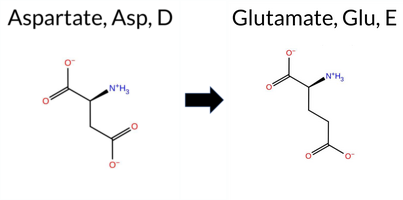 AIThe SynGAP1 D151E variant is listed in ClinVar with an “Uncertain” status and is not reported in gnomAD. Functional prediction tools that agree on a benign effect include REVEL, PROVEAN, SIFT, ESM1b, and FATHMM. Those that predict a pathogenic outcome are polyPhen‑2 HumDiv, polyPhen‑2 HumVar, and AlphaMissense‑Default. The SGM‑Consensus, which aggregates AlphaMissense‑Default, ESM1b, FATHMM, and PROVEAN, reports a “Likely Benign” classification. High‑accuracy assessments show AlphaMissense‑Optimized as “Uncertain,” SGM‑Consensus as “Likely Benign,” and Foldetta (a protein‑folding stability method combining FoldX‑MD and Rosetta) has no available result for this variant. Overall, the majority of evidence points to a benign effect, and this conclusion does not contradict the ClinVar “Uncertain” designation. Disclaimer: This summary was generated using AI and should be interpreted alongside expert review. | Likely Benign | 0.529623 | Disordered | 0.503277 | Binding | 0.342 | 0.841 | 0.625 | Uncertain | 1 | -5.662 | Likely Benign | 0.886 | Likely Pathogenic | Ambiguous | 0.142 | Likely Benign | -2.02 | Neutral | 0.984 | Probably Damaging | 0.967 | Probably Damaging | 3.99 | Benign | 0.11 | Tolerated | 3.61 | 5 | 0.1494 | 0.7919 | 3 | 2 | 0.0 | 14.03 | |||||||||||||||||||||||||||||||||||
| c.453C>G | D151E 2D AIThe SynGAP1 missense variant D151E is not reported in ClinVar (no ClinVar ID) and is absent from gnomAD (no gnomAD ID). Prediction tools that agree on a benign effect include REVEL, PROVEAN, SIFT, ESM1b, and FATHMM, while those that predict a pathogenic effect are polyPhen‑2 HumDiv, polyPhen‑2 HumVar, and AlphaMissense‑Default. The high‑accuracy consensus from SGM (majority vote of AlphaMissense‑Default, ESM1b, FATHMM, and PROVEAN) yields a Likely Benign classification, and AlphaMissense‑Optimized remains uncertain. Foldetta, a protein‑folding stability method combining FoldX‑MD and Rosetta outputs, has no available result for this variant. Overall, the majority of evidence points to a benign impact. This conclusion is not contradicted by ClinVar, which has no entry for D151E. Disclaimer: This summary was generated using AI and should be interpreted alongside expert review. | Likely Benign | 0.529623 | Disordered | 0.503277 | Binding | 0.342 | 0.841 | 0.625 | -5.662 | Likely Benign | 0.886 | Likely Pathogenic | Ambiguous | 0.142 | Likely Benign | -2.02 | Neutral | 0.984 | Probably Damaging | 0.967 | Probably Damaging | 3.99 | Benign | 0.11 | Tolerated | 3.61 | 5 | 0.1494 | 0.7919 | 3 | 2 | 0.0 | 14.03 | |||||||||||||||||||||||||||||||||||||
| c.454C>G | R152G 2D 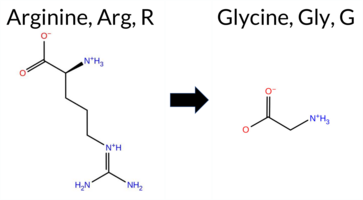 AIThe SynGAP1 missense variant R152G is not reported in ClinVar (no ClinVar ID) and is absent from gnomAD (no gnomAD ID). Prediction tools that agree on a benign effect include REVEL and FATHMM, whereas the majority of tools predict a pathogenic impact: PROVEAN, polyPhen‑2 HumDiv, polyPhen‑2 HumVar, SIFT, ESM1b, AlphaMissense‑Default, AlphaMissense‑Optimized, and the SGM‑Consensus score (Likely Pathogenic). High‑accuracy assessments further support a deleterious effect: AlphaMissense‑Optimized classifies the variant as pathogenic, and the SGM‑Consensus (a majority vote from AlphaMissense‑Default, ESM1b, FATHMM, and PROVEAN) also indicates Likely Pathogenic. Foldetta, a protein‑folding stability method combining FoldX‑MD and Rosetta outputs, has no available result for this variant. Overall, the preponderance of evidence from both general and high‑accuracy predictors indicates that R152G is most likely pathogenic, and this assessment does not contradict any ClinVar status because no ClinVar classification exists. Disclaimer: This summary was generated using AI and should be interpreted alongside expert review. | Likely Pathogenic | 0.618285 | Disordered | 0.500158 | Binding | 0.319 | 0.842 | 0.625 | -11.043 | Likely Pathogenic | 0.992 | Likely Pathogenic | Likely Pathogenic | 0.169 | Likely Benign | -4.13 | Deleterious | 0.993 | Probably Damaging | 0.982 | Probably Damaging | 3.83 | Benign | 0.00 | Affected | 0.3633 | 0.3956 | -3 | -2 | 4.1 | -99.14 | |||||||||||||||||||||||||||||||||||||||
| c.454C>T | R152W 2D 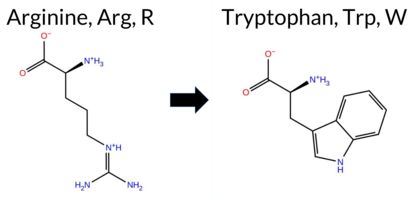 AIThe SynGAP1 missense variant R152W is not reported in ClinVar (no ClinVar ID) and is absent from gnomAD (no gnomAD ID). Prediction tools that agree on a benign effect are REVEL and FATHMM, whereas the majority of tools predict a pathogenic impact: PROVEAN, polyPhen‑2 HumDiv, polyPhen‑2 HumVar, SIFT, ESM1b, AlphaMissense‑Default, AlphaMissense‑Optimized, and the SGM‑Consensus (Likely Pathogenic). High‑accuracy assessments reinforce this view: AlphaMissense‑Optimized classifies the variant as pathogenic; the SGM‑Consensus, derived from a majority vote of AlphaMissense‑Default, ESM1b, FATHMM, and PROVEAN, also indicates a likely pathogenic outcome. Foldetta results are unavailable, so they do not influence the overall assessment. Based on the collective predictions, the variant is most likely pathogenic, and this conclusion does not contradict any ClinVar annotation (none is present). Disclaimer: This summary was generated using AI and should be interpreted alongside expert review. | Likely Pathogenic | 0.618285 | Disordered | 0.500158 | Binding | 0.319 | 0.842 | 0.625 | -11.783 | Likely Pathogenic | 0.998 | Likely Pathogenic | Likely Pathogenic | 0.163 | Likely Benign | -4.66 | Deleterious | 1.000 | Probably Damaging | 0.990 | Probably Damaging | 3.79 | Benign | 0.00 | Affected | 0.1550 | 0.4564 | 2 | -3 | 3.6 | 30.03 | |||||||||||||||||||||||||||||||||||||||
| c.455G>A | R152Q 2D 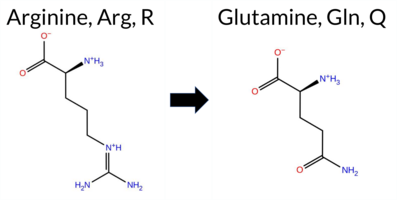 AIThe SynGAP1 missense variant R152Q is listed in ClinVar with an “Uncertain” status and is present in gnomAD (ID 6‑33432752‑G‑A). Prediction tools that agree on a benign effect include REVEL, PROVEAN, and FATHMM, whereas those that predict a pathogenic effect are polyPhen‑2 (HumDiv and HumVar), SIFT, ESM1b, AlphaMissense‑Default, and AlphaMissense‑Optimized. The SGM Consensus, derived from a majority vote of AlphaMissense‑Default, ESM1b, FATHMM, and PROVEAN, is inconclusive (two pathogenic, two benign). High‑accuracy assessments show AlphaMissense‑Optimized as pathogenic; the SGM Consensus remains unavailable, and Foldetta (combining FoldX‑MD and Rosetta outputs) has no reported result for this variant. Overall, the preponderance of evidence (seven pathogenic versus three benign predictions) indicates that the variant is most likely pathogenic, which does not contradict the current ClinVar “Uncertain” classification. Disclaimer: This summary was generated using AI and should be interpreted alongside expert review. | 0.618285 | Disordered | 0.500158 | Binding | 0.319 | 0.842 | 0.625 | Uncertain | 1 | 6-33432752-G-A | 5 | 3.14e-6 | -10.336 | Likely Pathogenic | 0.989 | Likely Pathogenic | Likely Pathogenic | 0.181 | Likely Benign | -2.34 | Neutral | 0.997 | Probably Damaging | 0.968 | Probably Damaging | 3.89 | Benign | 0.00 | Affected | 3.61 | 5 | 0.3618 | 0.2996 | 1 | 1 | 1.0 | -28.06 | |||||||||||||||||||||||||||||||||
| c.455G>C | R152P 2D 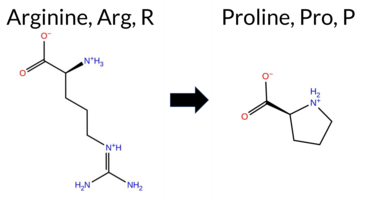 AIThe SynGAP1 missense variant R152P is not reported in ClinVar (no ClinVar ID) and is absent from gnomAD (no gnomAD ID). Prediction tools that agree on a benign effect are REVEL and FATHMM, whereas the remaining tools—PROVEAN, polyPhen‑2 (HumDiv and HumVar), SIFT, ESM1b, AlphaMissense‑Default, AlphaMissense‑Optimized, and the SGM‑Consensus—predict a pathogenic outcome. The SGM‑Consensus, a majority vote from AlphaMissense‑Default, ESM1b, FATHMM, and PROVEAN, is also pathogenic. High‑accuracy assessments show AlphaMissense‑Optimized as pathogenic and the SGM‑Consensus as pathogenic; Foldetta results are unavailable. Based on the preponderance of pathogenic predictions, the variant is most likely pathogenic, and this assessment does not contradict any ClinVar status (none is available). Disclaimer: This summary was generated using AI and should be interpreted alongside expert review. | Likely Pathogenic | 0.618285 | Disordered | 0.500158 | Binding | 0.319 | 0.842 | 0.625 | -11.499 | Likely Pathogenic | 0.995 | Likely Pathogenic | Likely Pathogenic | 0.332 | Likely Benign | -4.00 | Deleterious | 0.998 | Probably Damaging | 0.992 | Probably Damaging | 3.82 | Benign | 0.00 | Affected | 0.2302 | 0.4838 | 0 | -2 | 2.9 | -59.07 | |||||||||||||||||||||||||||||||||||||||
| c.455G>T | R152L 2D 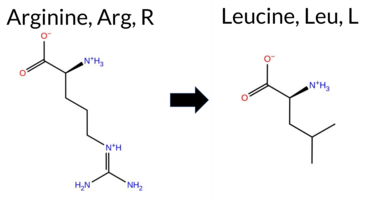 AIThe SynGAP1 missense variant R152L is not reported in ClinVar (no ClinVar ID) and is absent from gnomAD (no gnomAD ID). Prediction tools that agree on a benign effect are REVEL and FATHMM, whereas the majority of tools predict a pathogenic impact: PROVEAN, polyPhen‑2 HumDiv, polyPhen‑2 HumVar, SIFT, ESM1b, AlphaMissense‑Default, AlphaMissense‑Optimized, and the SGM‑Consensus (Likely Pathogenic). High‑accuracy assessments further support pathogenicity: AlphaMissense‑Optimized is pathogenic, and the SGM‑Consensus (derived from a majority vote of AlphaMissense‑Default, ESM1b, FATHMM, and PROVEAN) is also pathogenic. Foldetta results are unavailable. Overall, the preponderance of evidence indicates that R152L is most likely pathogenic, and this conclusion is not contradicted by any ClinVar annotation. Disclaimer: This summary was generated using AI and should be interpreted alongside expert review. | Likely Pathogenic | 0.618285 | Disordered | 0.500158 | Binding | 0.319 | 0.842 | 0.625 | -11.501 | Likely Pathogenic | 0.996 | Likely Pathogenic | Likely Pathogenic | 0.331 | Likely Benign | -3.85 | Deleterious | 0.993 | Probably Damaging | 0.982 | Probably Damaging | 3.83 | Benign | 0.00 | Affected | 0.2032 | 0.5249 | -3 | -2 | 8.3 | -43.03 | |||||||||||||||||||||||||||||||||||||||
| c.457A>C | T153P 2D 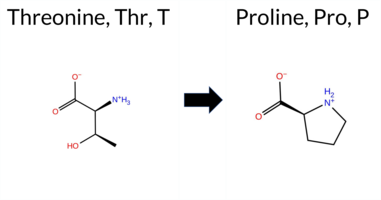 AIThe SynGAP1 missense variant T153P is not reported in ClinVar (no ClinVar ID) and is absent from gnomAD (no gnomAD ID). Prediction tools that agree on a benign effect include REVEL, PROVEAN, FATHMM, and AlphaMissense‑Optimized. Those that predict a pathogenic effect are polyPhen‑2 HumDiv, polyPhen‑2 HumVar, and SIFT. Two tools—ESM1b and AlphaMissense‑Default—return uncertain results. High‑accuracy assessments show AlphaMissense‑Optimized as benign; the SGM Consensus, derived from a majority vote of AlphaMissense‑Default, ESM1b, FATHMM, and PROVEAN, is inconclusive because it contains two benign and two uncertain calls, and Foldetta data are unavailable. Overall, the balance of evidence leans toward a benign interpretation. This conclusion does not conflict with ClinVar, which has no entry for this variant. Disclaimer: This summary was generated using AI and should be interpreted alongside expert review. | 0.501700 | Disordered | 0.502105 | Binding | 0.297 | 0.818 | 0.625 | -7.092 | In-Between | 0.374 | Ambiguous | Likely Benign | 0.269 | Likely Benign | -1.67 | Neutral | 0.983 | Probably Damaging | 0.725 | Possibly Damaging | 4.09 | Benign | 0.03 | Affected | 0.2270 | 0.3660 | 0 | -1 | -0.9 | -3.99 | ||||||||||||||||||||||||||||||||||||||||
| c.457A>G | T153A 2D 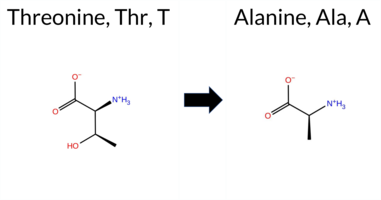 AIThe SynGAP1 missense variant T153A is not reported in ClinVar and has no entry in gnomAD, indicating it is not catalogued in these databases. Functional prediction tools that agree on a benign effect include REVEL, PROVEAN, polyPhen‑2 HumVar, ESM1b, FATHMM, AlphaMissense‑Default, and AlphaMissense‑Optimized. Tools that predict a pathogenic effect are polyPhen‑2 HumDiv and SIFT. The SGM‑Consensus, which aggregates AlphaMissense‑Default, ESM1b, FATHMM, and PROVEAN, reports the variant as “Likely Benign.” High‑accuracy assessments further support a benign classification: AlphaMissense‑Optimized predicts benign, and the SGM‑Consensus (majority vote) also indicates benign. The Foldetta protein‑folding stability analysis is unavailable for this variant. Overall, the majority of evidence points to a benign impact, and this conclusion does not contradict any ClinVar status, as none is assigned. Disclaimer: This summary was generated using AI and should be interpreted alongside expert review. | Likely Benign | 0.501700 | Disordered | 0.502105 | Binding | 0.297 | 0.818 | 0.625 | -3.016 | Likely Benign | 0.234 | Likely Benign | Likely Benign | 0.173 | Likely Benign | -1.54 | Neutral | 0.620 | Possibly Damaging | 0.220 | Benign | 4.15 | Benign | 0.05 | Affected | 0.4430 | 0.2985 | 1 | 0 | 2.5 | -30.03 | |||||||||||||||||||||||||||||||||||||||
| c.457A>T | T153S 2D 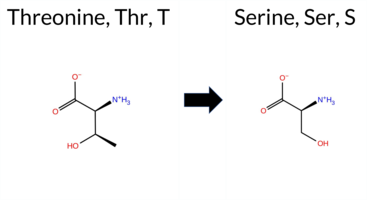 AIThe SynGAP1 missense variant T153S is not reported in ClinVar and is absent from gnomAD. In silico prediction tools uniformly indicate a benign effect: REVEL, PROVEAN, polyPhen‑2 (HumDiv and HumVar), SIFT, ESM1b, FATHMM, AlphaMissense‑Default, and AlphaMissense‑Optimized all classify the change as benign. No tool predicts pathogenicity. The high‑accuracy consensus methods corroborate this: AlphaMissense‑Optimized predicts benign, and the SGM Consensus (majority vote of AlphaMissense‑Default, ESM1b, FATHMM, and PROVEAN) reports a likely benign outcome. Foldetta results are unavailable. Overall, the variant is most likely benign based on the collective predictions, and this assessment does not contradict any ClinVar status, as no ClinVar entry exists for this variant. Disclaimer: This summary was generated using AI and should be interpreted alongside expert review. | Likely Benign | 0.501700 | Disordered | 0.502105 | Binding | 0.297 | 0.818 | 0.625 | -1.890 | Likely Benign | 0.118 | Likely Benign | Likely Benign | 0.118 | Likely Benign | -0.50 | Neutral | 0.235 | Benign | 0.039 | Benign | 4.19 | Benign | 0.14 | Tolerated | 0.3756 | 0.2886 | 1 | 1 | -0.1 | -14.03 | |||||||||||||||||||||||||||||||||||||||
| c.458C>A | T153N 2D 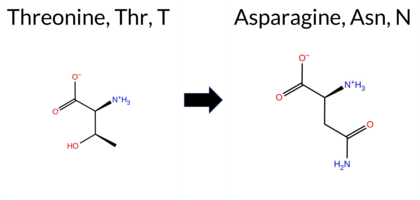 AIThe SynGAP1 missense variant T153N is listed in ClinVar (ID 984906.0) with an “Uncertain” status and is not reported in gnomAD. Functional prediction tools largely agree on a benign effect: REVEL, PROVEAN, SIFT, ESM1b, FATHMM, AlphaMissense‑Default, and AlphaMissense‑Optimized all predict benign, while the SGM‑Consensus (majority vote from AlphaMissense‑Default, ESM1b, FATHMM, and PROVEAN) also indicates a likely benign outcome. In contrast, polyPhen‑2 (HumDiv and HumVar) predict pathogenic. High‑accuracy assessments show AlphaMissense‑Optimized as benign and the SGM‑Consensus as likely benign; Foldetta results are unavailable. Overall, the majority of evidence supports a benign classification, and this is consistent with the ClinVar “Uncertain” designation rather than contradicting it. Disclaimer: This summary was generated using AI and should be interpreted alongside expert review. | Likely Benign | 0.501700 | Disordered | 0.502105 | Binding | 0.297 | 0.818 | 0.625 | Conflicting | 3 | -0.739 | Likely Benign | 0.226 | Likely Benign | Likely Benign | 0.161 | Likely Benign | 0.88 | Neutral | 0.888 | Possibly Damaging | 0.537 | Possibly Damaging | 4.23 | Benign | 0.81 | Tolerated | 3.61 | 5 | 0.1313 | 0.3363 | 0 | 0 | -2.8 | 13.00 | |||||||||||||||||||||||||||||||||||
| c.458C>G | T153S 2D AIThe SynGAP1 missense variant T153S is not reported in ClinVar and is absent from gnomAD. In silico prediction tools uniformly indicate a benign effect: REVEL, PROVEAN, polyPhen‑2 (HumDiv and HumVar), SIFT, ESM1b, FATHMM, AlphaMissense‑Default, and AlphaMissense‑Optimized all classify the change as benign. No tool predicts pathogenicity. The high‑accuracy consensus methods corroborate this: AlphaMissense‑Optimized predicts benign, and the SGM Consensus (majority vote of AlphaMissense‑Default, ESM1b, FATHMM, and PROVEAN) reports a likely benign outcome. Foldetta results are unavailable. Overall, the variant is most likely benign based on the collective predictions, and this assessment does not contradict any ClinVar status, as no ClinVar entry exists for this variant. Disclaimer: This summary was generated using AI and should be interpreted alongside expert review. | Likely Benign | 0.501700 | Disordered | 0.502105 | Binding | 0.297 | 0.818 | 0.625 | -1.890 | Likely Benign | 0.118 | Likely Benign | Likely Benign | 0.066 | Likely Benign | -0.50 | Neutral | 0.235 | Benign | 0.039 | Benign | 4.19 | Benign | 0.14 | Tolerated | 0.3756 | 0.2886 | 1 | 1 | -0.1 | -14.03 | |||||||||||||||||||||||||||||||||||||||
| c.458C>T | T153I 2D 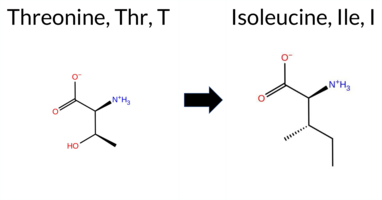 AIThe SynGAP1 missense variant T153I is not reported in ClinVar (ClinVar ID = None) and is absent from gnomAD (gnomAD ID = None). Prediction tools that agree on a benign effect include REVEL, PROVEAN, and FATHMM. Those that predict a pathogenic effect comprise polyPhen‑2 HumDiv, polyPhen‑2 HumVar, SIFT, ESM1b, and AlphaMissense‑Default. AlphaMissense‑Optimized is uncertain. High‑accuracy assessments are limited: AlphaMissense‑Optimized is uncertain; the SGM Consensus (majority vote from AlphaMissense‑Default, ESM1b, FATHMM, PROVEAN) is inconclusive (2 vs 2), and Foldetta results are unavailable. Overall, the majority of available predictions (5 pathogenic vs. 3 benign) indicate a pathogenic impact. This conclusion is not contradicted by ClinVar status, which has no entry for this variant. Disclaimer: This summary was generated using AI and should be interpreted alongside expert review. | 0.501700 | Disordered | 0.502105 | Binding | 0.297 | 0.818 | 0.625 | -8.809 | Likely Pathogenic | 0.898 | Likely Pathogenic | Ambiguous | 0.159 | Likely Benign | -2.00 | Neutral | 0.983 | Probably Damaging | 0.725 | Possibly Damaging | 4.08 | Benign | 0.01 | Affected | 0.0839 | 0.4571 | 0 | -1 | 5.2 | 12.05 | ||||||||||||||||||||||||||||||||||||||||
| c.460A>C | S154R 2D 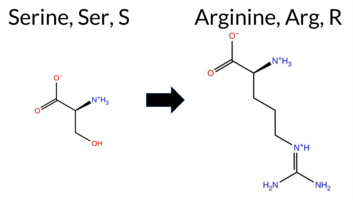 AIThe SynGAP1 missense variant S154R is not reported in ClinVar (ClinVar ID: None) and is absent from gnomAD (gnomAD ID: None). Prediction tools that agree on a benign effect include REVEL, PROVEAN, SIFT, and FATHMM. Tools that predict a pathogenic effect are polyPhen‑2 HumDiv, polyPhen‑2 HumVar, ESM1b, AlphaMissense‑Default, and AlphaMissense‑Optimized. The SGM Consensus, which aggregates AlphaMissense‑Default, ESM1b, FATHMM, and PROVEAN, is inconclusive (two pathogenic vs two benign votes). Foldetta, a protein‑folding stability method combining FoldX‑MD and Rosetta outputs, has no available result for this variant. Overall, the majority of high‑accuracy predictors (five pathogenic vs four benign) indicate a pathogenic impact. This conclusion is not contradicted by ClinVar status, which is currently unreported. Disclaimer: This summary was generated using AI and should be interpreted alongside expert review. | 0.505461 | Disordered | 0.508330 | Binding | 0.284 | 0.795 | 0.500 | -9.119 | Likely Pathogenic | 0.988 | Likely Pathogenic | Likely Pathogenic | 0.097 | Likely Benign | -1.73 | Neutral | 0.990 | Probably Damaging | 0.723 | Possibly Damaging | 4.10 | Benign | 0.14 | Tolerated | 0.0997 | 0.3298 | 0 | -1 | -3.7 | 69.11 | ||||||||||||||||||||||||||||||||||||||||
| c.460A>G | S154G 2D 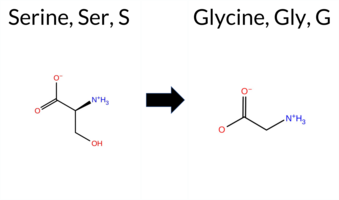 AIThe SynGAP1 missense variant S154G is not reported in ClinVar and is absent from gnomAD. In silico prediction tools uniformly indicate a benign effect: REVEL, PROVEAN, polyPhen‑2 (HumDiv and HumVar), SIFT, ESM1b, FATHMM, AlphaMissense‑Default, and AlphaMissense‑Optimized all classify the change as benign. The SGM‑Consensus, derived from a majority vote of AlphaMissense‑Default, ESM1b, FATHMM, and PROVEAN, also reports a likely benign outcome. No pathogenic predictions are present among the evaluated tools. High‑accuracy assessments confirm this: AlphaMissense‑Optimized predicts benign, and the SGM‑Consensus likewise indicates likely benign; Foldetta results are unavailable. Consequently, the variant is most likely benign based on the collective predictions, and this assessment does not contradict any ClinVar status, as no ClinVar entry exists. Disclaimer: This summary was generated using AI and should be interpreted alongside expert review. | Likely Benign | 0.505461 | Disordered | 0.508330 | Binding | 0.284 | 0.795 | 0.500 | -5.482 | Likely Benign | 0.115 | Likely Benign | Likely Benign | 0.074 | Likely Benign | -0.83 | Neutral | 0.006 | Benign | 0.008 | Benign | 4.05 | Benign | 0.11 | Tolerated | 0.2790 | 0.3944 | 1 | 0 | 0.4 | -30.03 | |||||||||||||||||||||||||||||||||||||||
| c.460A>T | S154C 2D 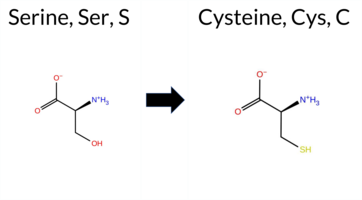 AIThe SynGAP1 missense variant S154C is not reported in ClinVar (no ClinVar ID) and is absent from gnomAD (no gnomAD ID). Prediction tools that agree on a benign effect include REVEL, PROVEAN, FATHMM, AlphaMissense‑Default, and AlphaMissense‑Optimized. Tools that predict a pathogenic effect are polyPhen‑2 HumDiv, polyPhen‑2 HumVar, and SIFT. ESM1b is uncertain, and Foldetta results are unavailable. The high‑accuracy consensus (SGM‑Consensus) classifies the variant as Likely Benign, and AlphaMissense‑Optimized also predicts Benign. With the majority of evidence pointing to a benign outcome and no conflicting ClinVar annotation, the variant is most likely benign. Disclaimer: This summary was generated using AI and should be interpreted alongside expert review. | Likely Benign | 0.505461 | Disordered | 0.508330 | Binding | 0.284 | 0.795 | 0.500 | -7.728 | In-Between | 0.244 | Likely Benign | Likely Benign | 0.100 | Likely Benign | -1.83 | Neutral | 0.997 | Probably Damaging | 0.841 | Possibly Damaging | 4.01 | Benign | 0.04 | Affected | 0.1288 | 0.5042 | 0 | -1 | 3.3 | 16.06 | |||||||||||||||||||||||||||||||||||||||
| c.461G>A | S154N 2D 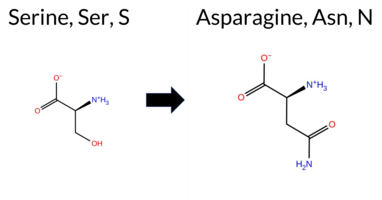 AIThe SynGAP1 missense variant S154N is not reported in ClinVar and is absent from gnomAD. Consensus predictions from multiple in silico tools largely support a benign effect: REVEL, PROVEAN, polyPhen‑2 HumVar, SIFT, ESM1b, FATHMM, and AlphaMissense‑Optimized all classify the change as benign, while the SGM‑Consensus (majority vote of AlphaMissense‑Default, ESM1b, FATHMM, PROVEAN) also reports it as likely benign. Only one tool, polyPhen‑2 HumDiv, predicts a pathogenic outcome, and AlphaMissense‑Default remains uncertain. High‑accuracy assessments reinforce the benign interpretation: AlphaMissense‑Optimized predicts benign, and the SGM‑Consensus (majority vote) likewise indicates likely benign; Foldetta results are not available. Overall, the majority of evidence points to a benign effect, and this is consistent with the lack of ClinVar annotation or gnomAD observation. The variant is most likely benign based on predictions, and there is no contradiction with ClinVar status. Disclaimer: This summary was generated using AI and should be interpreted alongside expert review. | Likely Benign | 0.505461 | Disordered | 0.508330 | Binding | 0.284 | 0.795 | 0.500 | -6.604 | Likely Benign | 0.385 | Ambiguous | Likely Benign | 0.074 | Likely Benign | -1.00 | Neutral | 0.900 | Possibly Damaging | 0.434 | Benign | 4.10 | Benign | 0.22 | Tolerated | 0.1545 | 0.4298 | 1 | 1 | -2.7 | 27.03 | |||||||||||||||||||||||||||||||||||||||
| c.461G>C | S154T 2D 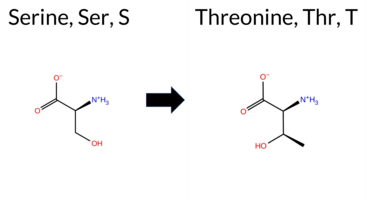 AIThe SynGAP1 missense variant S154T is not reported in ClinVar and is absent from gnomAD. Prediction tools largely agree on a benign effect: REVEL, PROVEAN, polyPhen‑2 HumVar, SIFT, ESM1b, FATHMM, AlphaMissense‑Default, and AlphaMissense‑Optimized all classify the change as benign. Only polyPhen‑2 HumDiv predicts a pathogenic outcome. The SGM‑Consensus, derived from a majority vote of AlphaMissense‑Default, ESM1b, FATHMM, and PROVEAN, reports the variant as “Likely Benign.” High‑accuracy assessments confirm this: AlphaMissense‑Optimized is benign, and the SGM‑Consensus is also benign. Foldetta, a protein‑folding stability method combining FoldX‑MD and Rosetta outputs, has no available result for this variant. Overall, the consensus of the majority of tools, including the high‑accuracy methods, indicates that the variant is most likely benign, and this assessment does not contradict any ClinVar annotation (none is present). Disclaimer: This summary was generated using AI and should be interpreted alongside expert review. | Likely Benign | 0.505461 | Disordered | 0.508330 | Binding | 0.284 | 0.795 | 0.500 | -5.313 | Likely Benign | 0.155 | Likely Benign | Likely Benign | 0.167 | Likely Benign | -0.32 | Neutral | 0.900 | Possibly Damaging | 0.434 | Benign | 4.13 | Benign | 0.99 | Tolerated | 0.1686 | 0.5099 | 1 | 1 | 0.1 | 14.03 | |||||||||||||||||||||||||||||||||||||||
| c.461G>T | S154I 2D 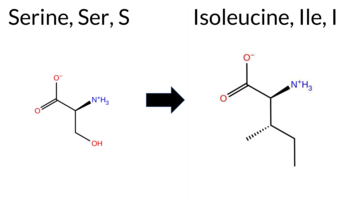 AIThe SynGAP1 missense variant S154I is not reported in ClinVar (no ClinVar ID) and is absent from gnomAD (no gnomAD ID). Prediction tools that agree on a benign effect include REVEL, PROVEAN, SIFT, FATHMM, and AlphaMissense‑Optimized. Tools that predict a pathogenic effect are polyPhen‑2 HumDiv, polyPhen‑2 HumVar, ESM1b, and AlphaMissense‑Default. The SGM Consensus, derived from a majority vote of AlphaMissense‑Default, ESM1b, FATHMM, and PROVEAN, is inconclusive (two benign, two pathogenic) and therefore unavailable as evidence. Foldetta, a protein‑folding stability method combining FoldX‑MD and Rosetta outputs, was not provided and is treated as unavailable. High‑accuracy predictions therefore indicate a benign outcome (AlphaMissense‑Optimized) with no decisive evidence from SGM Consensus or Foldetta. Overall, the variant is most likely benign, and this assessment does not contradict the absence of a ClinVar classification. Disclaimer: This summary was generated using AI and should be interpreted alongside expert review. | 0.505461 | Disordered | 0.508330 | Binding | 0.284 | 0.795 | 0.500 | -10.061 | Likely Pathogenic | 0.665 | Likely Pathogenic | Likely Benign | 0.105 | Likely Benign | -2.24 | Neutral | 0.990 | Probably Damaging | 0.797 | Possibly Damaging | 4.03 | Benign | 0.07 | Tolerated | 0.0953 | 0.5123 | -1 | -2 | 5.3 | 26.08 | ||||||||||||||||||||||||||||||||||||||||
| c.462C>A | S154R 2D AIThe SynGAP1 missense variant S154R is not reported in ClinVar (ClinVar ID = None) and is absent from gnomAD (gnomAD ID = None). Prediction tools that agree on a benign effect include REVEL, PROVEAN, SIFT, and FATHMM. Tools that predict a pathogenic effect are polyPhen‑2 HumDiv, polyPhen‑2 HumVar, ESM1b, AlphaMissense‑Default, and AlphaMissense‑Optimized. The SGM Consensus, which takes a majority vote from AlphaMissense‑Default, ESM1b, FATHMM, and PROVEAN, is inconclusive (2 pathogenic vs. 2 benign). Foldetta, a protein‑folding stability method combining FoldX‑MD and Rosetta outputs, has no available result for this variant. Overall, more tools (five) predict pathogenicity than benign (four), and the high‑accuracy AlphaMissense‑Optimized also indicates pathogenicity. Therefore, the variant is most likely pathogenic based on current predictions, and this assessment does not contradict any ClinVar status because the variant is not yet catalogued there. Disclaimer: This summary was generated using AI and should be interpreted alongside expert review. | 0.505461 | Disordered | 0.508330 | Binding | 0.284 | 0.795 | 0.500 | -9.119 | Likely Pathogenic | 0.988 | Likely Pathogenic | Likely Pathogenic | 0.072 | Likely Benign | -1.73 | Neutral | 0.990 | Probably Damaging | 0.723 | Possibly Damaging | 4.10 | Benign | 0.14 | Tolerated | 0.0997 | 0.3298 | 0 | -1 | -3.7 | 69.11 | ||||||||||||||||||||||||||||||||||||||||
| c.462C>G | S154R 2D AIThe SynGAP1 missense variant S154R is not reported in ClinVar (ClinVar ID = None) and is absent from gnomAD (gnomAD ID = None). Prediction tools that agree on a benign effect include REVEL, PROVEAN, SIFT, and FATHMM. Tools that predict a pathogenic effect are polyPhen‑2 HumDiv, polyPhen‑2 HumVar, ESM1b, AlphaMissense‑Default, and AlphaMissense‑Optimized. The SGM Consensus, which takes a majority vote from AlphaMissense‑Default, ESM1b, FATHMM, and PROVEAN, is inconclusive (2 pathogenic vs. 2 benign). Foldetta, a protein‑folding stability method combining FoldX‑MD and Rosetta outputs, has no available result for this variant. Overall, more tools (five) predict pathogenicity than benign (four), and the high‑accuracy AlphaMissense‑Optimized also indicates pathogenicity. Therefore, the variant is most likely pathogenic based on current predictions, and this assessment does not contradict any ClinVar status because the variant is not yet catalogued there. Disclaimer: This summary was generated using AI and should be interpreted alongside expert review. | 0.505461 | Disordered | 0.508330 | Binding | 0.284 | 0.795 | 0.500 | -9.119 | Likely Pathogenic | 0.988 | Likely Pathogenic | Likely Pathogenic | 0.072 | Likely Benign | -1.73 | Neutral | 0.990 | Probably Damaging | 0.723 | Possibly Damaging | 4.10 | Benign | 0.14 | Tolerated | 0.0997 | 0.3298 | 0 | -1 | -3.7 | 69.11 | ||||||||||||||||||||||||||||||||||||||||
| c.463A>C | S155R 2D AIThe SynGAP1 missense variant S155R is not reported in ClinVar (no ClinVar ID) and is absent from gnomAD (no gnomAD ID). Prediction tools that indicate a benign effect are REVEL and FATHMM, whereas the remaining tools—PROVEAN, polyPhen‑2 HumDiv, polyPhen‑2 HumVar, SIFT, ESM1b, and AlphaMissense‑Default—predict a pathogenic outcome. High‑accuracy assessments further support a deleterious impact: AlphaMissense‑Optimized classifies the variant as pathogenic, and the SGM‑Consensus (majority vote from AlphaMissense‑Default, ESM1b, FATHMM, and PROVEAN) reports it as Likely Pathogenic. The Foldetta protein‑folding stability analysis is unavailable for this variant. Overall, the preponderance of evidence from both general and high‑accuracy predictors indicates that the S155R variant is most likely pathogenic, and this conclusion is not contradicted by any ClinVar annotation. Disclaimer: This summary was generated using AI and should be interpreted alongside expert review. | Likely Pathogenic | 0.497853 | Structured | 0.515359 | Binding | 0.292 | 0.787 | 0.500 | -11.939 | Likely Pathogenic | 0.998 | Likely Pathogenic | Likely Pathogenic | 0.250 | Likely Benign | -2.74 | Deleterious | 0.995 | Probably Damaging | 0.979 | Probably Damaging | 3.88 | Benign | 0.00 | Affected | 0.0712 | 0.3528 | 0 | -1 | -3.7 | 69.11 | |||||||||||||||||||||||||||||||||||||||
| c.463A>G | S155G 2D AIThe SynGAP1 missense variant S155G is not reported in ClinVar (ClinVar ID: None) and is absent from gnomAD (gnomAD ID: None). Prediction tools cluster into two groups: benign predictions come from REVEL, PROVEAN, FATHMM, and AlphaMissense‑Optimized; pathogenic predictions come from polyPhen‑2 (HumDiv and HumVar), SIFT, ESM1b, and AlphaMissense‑Default. The SGM Consensus, derived from a majority vote of AlphaMissense‑Default, ESM1b, FATHMM, and PROVEAN, is inconclusive (two pathogenic, two benign). Foldetta, a protein‑folding stability method combining FoldX‑MD and Rosetta outputs, has no available result for this variant. High‑accuracy tools specifically indicate a benign outcome from AlphaMissense‑Optimized, while SGM Consensus and Foldetta are unavailable. Overall, the balance of evidence leans toward a pathogenic interpretation, and this assessment does not contradict the ClinVar status, which currently has no entry for the variant. Disclaimer: This summary was generated using AI and should be interpreted alongside expert review. | 0.497853 | Structured | 0.515359 | Binding | 0.292 | 0.787 | 0.500 | -9.243 | Likely Pathogenic | 0.628 | Likely Pathogenic | Likely Benign | 0.152 | Likely Benign | -1.84 | Neutral | 0.956 | Probably Damaging | 0.931 | Probably Damaging | 3.81 | Benign | 0.00 | Affected | 0.2416 | 0.3976 | 1 | 0 | 0.4 | -30.03 | ||||||||||||||||||||||||||||||||||||||||
| c.463A>T | S155C 2D AIThe SynGAP1 missense variant S155C is not reported in ClinVar (no ClinVar ID) and is absent from gnomAD (no gnomAD ID). Prediction tools that agree on a benign effect include REVEL, FATHMM, and AlphaMissense‑Optimized. Tools that predict a pathogenic effect are PROVEAN, polyPhen‑2 HumDiv, polyPhen‑2 HumVar, SIFT, ESM1b, and AlphaMissense‑Default. The SGM‑Consensus, derived from a majority vote of AlphaMissense‑Default, ESM1b, FATHMM, and PROVEAN, classifies the variant as Likely Pathogenic. High‑accuracy assessments show AlphaMissense‑Optimized as Benign, while the SGM‑Consensus remains Likely Pathogenic; Foldetta results are unavailable. Overall, the majority of predictions lean toward pathogenicity, but this conclusion conflicts with the benign prediction from AlphaMissense‑Optimized and the lack of ClinVar evidence. Thus, the variant is most likely pathogenic based on the prevailing predictions, though the evidence is not unequivocal. Disclaimer: This summary was generated using AI and should be interpreted alongside expert review. | Likely Pathogenic | 0.497853 | Structured | 0.515359 | Binding | 0.292 | 0.787 | 0.500 | -11.903 | Likely Pathogenic | 0.756 | Likely Pathogenic | Likely Benign | 0.238 | Likely Benign | -2.53 | Deleterious | 0.999 | Probably Damaging | 0.990 | Probably Damaging | 3.78 | Benign | 0.00 | Affected | 0.0826 | 0.5681 | 0 | -1 | 3.3 | 16.06 | |||||||||||||||||||||||||||||||||||||||
| c.464G>A | S155N 2D AIThe SynGAP1 missense variant S155N is not reported in ClinVar (ClinVar ID = None) and is absent from gnomAD (gnomAD ID = None). Prediction tools that agree on a benign effect include REVEL, PROVEAN, and FATHMM, while those that agree on a pathogenic effect are polyPhen‑2 HumDiv, polyPhen‑2 HumVar, SIFT, ESM1b, and AlphaMissense‑Default. High‑accuracy methods give mixed or unavailable results: AlphaMissense‑Optimized is uncertain, the SGM Consensus (majority vote from AlphaMissense‑Default, ESM1b, FATHMM, PROVEAN) is inconclusive, and Foldetta (combining FoldX‑MD and Rosetta outputs) has no reported result. Overall, the majority of available predictions (five pathogenic vs. three benign) indicate a pathogenic impact. There is no ClinVar entry to contradict this assessment, so the variant is most likely pathogenic. Disclaimer: This summary was generated using AI and should be interpreted alongside expert review. | 0.497853 | Structured | 0.515359 | Binding | 0.292 | 0.787 | 0.500 | -9.428 | Likely Pathogenic | 0.907 | Likely Pathogenic | Ambiguous | 0.166 | Likely Benign | -1.69 | Neutral | 0.981 | Probably Damaging | 0.954 | Probably Damaging | 3.84 | Benign | 0.00 | Affected | 0.1033 | 0.4549 | 1 | 1 | -2.7 | 27.03 | ||||||||||||||||||||||||||||||||||||||||
| c.464G>C | S155T 2D AIThe SynGAP1 missense variant S155T is not reported in ClinVar (ClinVar ID = None) and is absent from gnomAD (gnomAD ID = None). Prediction tools that agree on a benign effect include REVEL, PROVEAN, FATHMM, and AlphaMissense‑Optimized. Tools that predict a pathogenic effect are polyPhen‑2 (HumDiv and HumVar), SIFT, and ESM1b; AlphaMissense‑Default is uncertain. High‑accuracy assessments show AlphaMissense‑Optimized as benign, and the SGM Consensus (majority vote from AlphaMissense‑Default, ESM1b, FATHMM, PROVEAN) also favors a benign outcome. Foldetta, a protein‑folding stability method, has no available result for this variant. Overall, the majority of reliable predictors and the consensus analysis indicate that S155T is most likely benign, and this conclusion does not contradict any ClinVar annotation. Disclaimer: This summary was generated using AI and should be interpreted alongside expert review. | 0.497853 | Structured | 0.515359 | Binding | 0.292 | 0.787 | 0.500 | -8.635 | Likely Pathogenic | 0.523 | Ambiguous | Likely Benign | 0.153 | Likely Benign | -1.60 | Neutral | 0.956 | Probably Damaging | 0.931 | Probably Damaging | 3.84 | Benign | 0.00 | Affected | 0.1151 | 0.5694 | 1 | 1 | 0.1 | 14.03 | ||||||||||||||||||||||||||||||||||||||||
| c.464G>T | S155I 2D AIThe SynGAP1 missense variant S155I is not reported in ClinVar and is absent from gnomAD. Prediction tools that classify the variant as benign include REVEL and FATHMM, whereas the remaining tools—PROVEAN, polyPhen‑2 HumDiv, polyPhen‑2 HumVar, SIFT, ESM1b, AlphaMissense‑Default, AlphaMissense‑Optimized, and the SGM‑Consensus (majority vote of AlphaMissense‑Default, ESM1b, FATHMM, PROVEAN)—predict it to be pathogenic. High‑accuracy assessments further support a deleterious effect: AlphaMissense‑Optimized scores the variant as pathogenic, the SGM‑Consensus indicates a likely pathogenic status, and the Foldetta stability analysis is unavailable. Taken together, the majority of evidence points to a pathogenic impact for S155I. This conclusion is consistent with the lack of ClinVar annotation, so there is no contradiction with existing clinical data. Disclaimer: This summary was generated using AI and should be interpreted alongside expert review. | Likely Pathogenic | 0.497853 | Structured | 0.515359 | Binding | 0.292 | 0.787 | 0.500 | -11.298 | Likely Pathogenic | 0.972 | Likely Pathogenic | Likely Pathogenic | 0.264 | Likely Benign | -2.70 | Deleterious | 0.995 | Probably Damaging | 0.986 | Probably Damaging | 3.81 | Benign | 0.00 | Affected | 0.0764 | 0.5711 | -1 | -2 | 5.3 | 26.08 | |||||||||||||||||||||||||||||||||||||||
| c.465C>A | S155R 2D AIThe SynGAP1 missense variant S155R is not reported in ClinVar and is absent from gnomAD. Prediction tools that classify the variant as benign include REVEL and FATHMM, whereas the remaining tools—PROVEAN, polyPhen‑2 HumDiv, polyPhen‑2 HumVar, SIFT, ESM1b, AlphaMissense‑Default, AlphaMissense‑Optimized, and the SGM‑Consensus (majority vote of AlphaMissense‑Default, ESM1b, FATHMM, PROVEAN)—predict it to be pathogenic. High‑accuracy assessments further support a deleterious effect: AlphaMissense‑Optimized scores the variant as pathogenic, the SGM‑Consensus indicates a likely pathogenic status, and a Foldetta stability analysis is not available. Taken together, the majority of evidence points to a pathogenic impact for S155R. This conclusion is consistent with the lack of ClinVar annotation, so there is no contradiction with existing clinical data. Disclaimer: This summary was generated using AI and should be interpreted alongside expert review. | Likely Pathogenic | 0.497853 | Structured | 0.515359 | Binding | 0.292 | 0.787 | 0.500 | -11.939 | Likely Pathogenic | 0.998 | Likely Pathogenic | Likely Pathogenic | 0.160 | Likely Benign | -2.74 | Deleterious | 0.995 | Probably Damaging | 0.979 | Probably Damaging | 3.88 | Benign | 0.00 | Affected | 0.0712 | 0.3528 | 0 | -1 | -3.7 | 69.11 | |||||||||||||||||||||||||||||||||||||||
| c.465C>G | S155R 2D AIThe SynGAP1 missense variant S155R is not reported in ClinVar and is absent from gnomAD. Prediction tools that classify the variant as benign include REVEL and FATHMM, whereas the remaining tools—PROVEAN, polyPhen‑2 HumDiv, polyPhen‑2 HumVar, SIFT, ESM1b, AlphaMissense‑Default, AlphaMissense‑Optimized, and the SGM‑Consensus (majority vote of AlphaMissense‑Default, ESM1b, FATHMM, PROVEAN)—predict it to be pathogenic. High‑accuracy assessments further support a deleterious effect: AlphaMissense‑Optimized scores the variant as pathogenic, the SGM‑Consensus indicates a likely pathogenic status, and a Foldetta stability analysis is not available. Taken together, the majority of evidence points to a pathogenic impact for S155R. This conclusion is consistent with the lack of ClinVar annotation, so there is no contradiction with existing clinical data. Disclaimer: This summary was generated using AI and should be interpreted alongside expert review. | Likely Pathogenic | 0.497853 | Structured | 0.515359 | Binding | 0.292 | 0.787 | 0.500 | -11.939 | Likely Pathogenic | 0.998 | Likely Pathogenic | Likely Pathogenic | 0.160 | Likely Benign | -2.74 | Deleterious | 0.995 | Probably Damaging | 0.979 | Probably Damaging | 3.88 | Benign | 0.00 | Affected | 0.0712 | 0.3528 | 0 | -1 | -3.7 | 69.11 | |||||||||||||||||||||||||||||||||||||||
| c.466T>A | F156I 2D 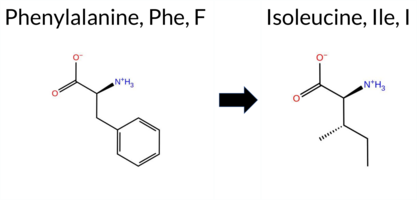 AIThe SynGAP1 missense variant F156I is not reported in ClinVar (ClinVar ID = None) and is absent from gnomAD (gnomAD ID = None). Prediction tools that agree on a benign effect include REVEL, PROVEAN, and FATHMM. Tools that agree on a pathogenic effect include polyPhen‑2 HumDiv, polyPhen‑2 HumVar, SIFT, ESM1b, AlphaMissense‑Default, and AlphaMissense‑Optimized. The SGM Consensus, which aggregates AlphaMissense‑Default, ESM1b, FATHMM, and PROVEAN, is inconclusive (2 pathogenic vs. 2 benign votes). Foldetta, a protein‑folding stability method combining FoldX‑MD and Rosetta outputs, has no available result for this variant. Overall, the majority of high‑confidence predictors (six out of nine) indicate a pathogenic impact, whereas three predict benign. Consequently, the variant is most likely pathogenic based on current computational evidence, and this assessment does not contradict any ClinVar status because the variant is not yet catalogued there. Disclaimer: This summary was generated using AI and should be interpreted alongside expert review. | 0.476583 | Structured | 0.521964 | Binding | 0.284 | 0.785 | 0.500 | -10.505 | Likely Pathogenic | 0.959 | Likely Pathogenic | Likely Pathogenic | 0.194 | Likely Benign | -2.38 | Neutral | 0.981 | Probably Damaging | 0.966 | Probably Damaging | 3.99 | Benign | 0.00 | Affected | 0.1960 | 0.1938 | 1 | 0 | 1.7 | -34.02 | ||||||||||||||||||||||||||||||||||||||||
| c.466T>C | F156L 2D 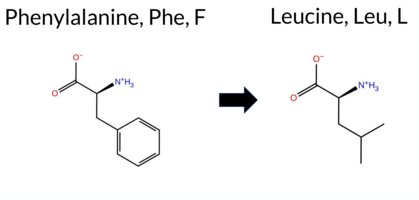 AIThe SynGAP1 missense variant F156L is not reported in ClinVar (ClinVar ID = None) and is absent from gnomAD (gnomAD ID = None). Prediction tools that agree on a benign effect include REVEL, PROVEAN, and FATHMM, whereas tools that agree on a pathogenic effect include polyPhen‑2 (HumDiv and HumVar), SIFT, AlphaMissense‑Default, and AlphaMissense‑Optimized. ESM1b is uncertain. High‑accuracy assessments show AlphaMissense‑Optimized predicts pathogenicity, while the SGM Consensus (majority vote from AlphaMissense‑Default, ESM1b, FATHMM, and PROVEAN) leans toward benign. Foldetta, a protein‑folding stability method, has no available result for this variant. Overall, the majority of conventional tools predict pathogenicity, but the high‑accuracy consensus is ambiguous. Thus, the variant is most likely pathogenic based on the prevailing predictions, and this assessment does not contradict ClinVar status, as the variant is not yet catalogued there. Disclaimer: This summary was generated using AI and should be interpreted alongside expert review. | 0.476583 | Structured | 0.521964 | Binding | 0.284 | 0.785 | 0.500 | -7.437 | In-Between | 0.996 | Likely Pathogenic | Likely Pathogenic | 0.180 | Likely Benign | -2.31 | Neutral | 0.956 | Probably Damaging | 0.931 | Probably Damaging | 4.04 | Benign | 0.00 | Affected | 0.2067 | 0.3109 | 2 | 0 | 1.0 | -34.02 | ||||||||||||||||||||||||||||||||||||||||
| c.466T>G | F156V 2D 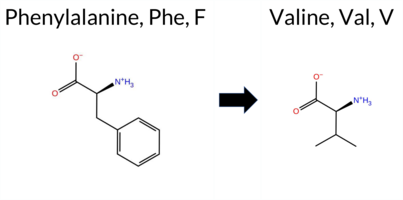 AIThe SynGAP1 missense variant F156V is not reported in ClinVar and has no entries in gnomAD. Prediction tools that agree on a benign effect include REVEL and FATHMM, whereas the majority of algorithms—PROVEAN, polyPhen‑2 (HumDiv and HumVar), SIFT, ESM1b, and AlphaMissense‑Default—classify the change as pathogenic. High‑accuracy assessments further support a deleterious outcome: AlphaMissense‑Optimized is uncertain, but the SGM Consensus, derived from a majority vote of AlphaMissense‑Default, ESM1b, FATHMM, and PROVEAN, reports a likely pathogenic status. Foldetta, a protein‑folding stability predictor that integrates FoldX‑MD and Rosetta outputs, was not available for this variant. Overall, the preponderance of evidence points to a pathogenic effect for F156V, and this conclusion does not conflict with the current ClinVar annotation, which is absent. Disclaimer: This summary was generated using AI and should be interpreted alongside expert review. | Likely Pathogenic | 0.476583 | Structured | 0.521964 | Binding | 0.284 | 0.785 | 0.500 | -11.945 | Likely Pathogenic | 0.950 | Likely Pathogenic | Ambiguous | 0.246 | Likely Benign | -2.91 | Deleterious | 0.981 | Probably Damaging | 0.954 | Probably Damaging | 4.03 | Benign | 0.00 | Affected | 0.2177 | 0.2166 | -1 | -1 | 1.4 | -48.04 | |||||||||||||||||||||||||||||||||||||||
| c.467T>A | F156Y 2D 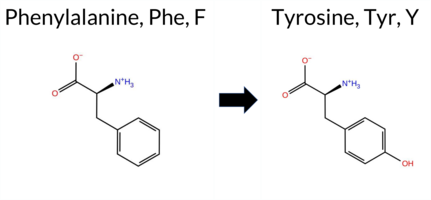 AIThe SynGAP1 missense variant F156Y is not reported in ClinVar (ClinVar ID = None) and is absent from gnomAD (gnomAD ID = None). Prediction tools that agree on a benign effect include REVEL, PROVEAN, and FATHMM, whereas a majority of tools (polyPhen‑2 HumDiv, polyPhen‑2 HumVar, SIFT, ESM1b, and AlphaMissense‑Default) predict a pathogenic impact. High‑accuracy assessments are inconclusive: AlphaMissense‑Optimized is uncertain; the SGM Consensus, derived from a majority vote of AlphaMissense‑Default, ESM1b, FATHMM, and PROVEAN, is a tie (2 pathogenic vs. 2 benign) and thus unavailable; Foldetta predictions are not provided. Overall, the balance of evidence (5 pathogenic vs. 3 benign predictions) indicates that the variant is most likely pathogenic, and this conclusion does not contradict any existing ClinVar status. Disclaimer: This summary was generated using AI and should be interpreted alongside expert review. | 0.476583 | Structured | 0.521964 | Binding | 0.284 | 0.785 | 0.500 | -11.811 | Likely Pathogenic | 0.869 | Likely Pathogenic | Ambiguous | 0.136 | Likely Benign | -1.51 | Neutral | 0.981 | Probably Damaging | 0.931 | Probably Damaging | 3.96 | Benign | 0.00 | Affected | 0.1363 | 0.1419 | 7 | 3 | -4.1 | 16.00 | ||||||||||||||||||||||||||||||||||||||||
| c.467T>C | F156S 2D 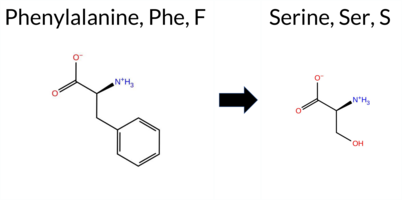 AIThe SynGAP1 missense variant F156S is not reported in ClinVar and is absent from gnomAD. Prediction tools that agree on a benign effect include REVEL and FATHMM, whereas the majority of tools predict a pathogenic impact: PROVEAN, polyPhen‑2 (HumDiv and HumVar), SIFT, ESM1b, AlphaMissense‑Default, AlphaMissense‑Optimized, and the SGM‑Consensus (which is “Likely Pathogenic” based on a majority vote of AlphaMissense‑Default, ESM1b, FATHMM, and PROVEAN). High‑accuracy assessments reinforce this view: AlphaMissense‑Optimized classifies the variant as pathogenic, and the SGM‑Consensus (derived from the same set of high‑accuracy predictors) also indicates a likely pathogenic outcome. Foldetta results are unavailable, so they do not influence the overall assessment. Based on the preponderance of pathogenic predictions, the variant is most likely pathogenic, and this conclusion is not contradicted by any ClinVar annotation. Disclaimer: This summary was generated using AI and should be interpreted alongside expert review. | Likely Pathogenic | 0.476583 | Structured | 0.521964 | Binding | 0.284 | 0.785 | 0.500 | -14.082 | Likely Pathogenic | 0.992 | Likely Pathogenic | Likely Pathogenic | 0.282 | Likely Benign | -3.62 | Deleterious | 0.995 | Probably Damaging | 0.979 | Probably Damaging | 3.97 | Benign | 0.00 | Affected | 0.5183 | 0.0200 | Weaken | -3 | -2 | -3.6 | -60.10 | ||||||||||||||||||||||||||||||||||||||
| c.467T>G | F156C 2D 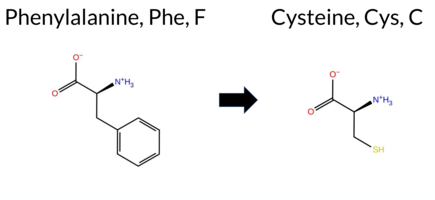 AIThe SynGAP1 missense variant F156C (ClinVar ID 3651386) is annotated as benign in ClinVar and is not reported in gnomAD. Functional prediction tools show a split opinion: benign calls come from REVEL and FATHMM, whereas pathogenic calls are made by PROVEAN, polyPhen‑2 (HumDiv and HumVar), SIFT, ESM1b, AlphaMissense‑Default, AlphaMissense‑Optimized, and the SGM‑Consensus (majority vote of AlphaMissense‑Default, ESM1b, FATHMM, PROVEAN). High‑accuracy assessments further support a deleterious effect: AlphaMissense‑Optimized predicts pathogenic, and the SGM‑Consensus is labeled likely pathogenic. No Foldetta stability analysis is available for this variant. Overall, the majority of computational evidence points toward a pathogenic effect, which contradicts the benign classification in ClinVar. Disclaimer: This summary was generated using AI and should be interpreted alongside expert review. | Likely Pathogenic | 0.476583 | Structured | 0.521964 | Binding | 0.284 | 0.785 | 0.500 | Likely Benign | 1 | -13.658 | Likely Pathogenic | 0.988 | Likely Pathogenic | Likely Pathogenic | 0.297 | Likely Benign | -3.54 | Deleterious | 0.999 | Probably Damaging | 0.990 | Probably Damaging | 3.92 | Benign | 0.00 | Affected | 0.3030 | 0.1291 | -4 | -2 | -0.3 | -44.04 | |||||||||||||||||||||||||||||||||||||
| c.468T>A | F156L 2D AIThe SynGAP1 missense variant F156L is not reported in ClinVar (ClinVar ID = None) and is absent from gnomAD (gnomAD ID = None). Prediction tools that agree on a benign effect include REVEL, PROVEAN, and FATHMM, whereas tools that agree on a pathogenic effect include polyPhen‑2 (HumDiv and HumVar), SIFT, AlphaMissense‑Default, and AlphaMissense‑Optimized. ESM1b is uncertain. High‑accuracy assessments show AlphaMissense‑Optimized predicts pathogenicity, while the SGM Consensus (majority vote from AlphaMissense‑Default, ESM1b, FATHMM, and PROVEAN) leans toward benign. Foldetta, a protein‑folding stability method, has no available result for this variant. Overall, the majority of conventional tools predict pathogenicity, but the high‑accuracy consensus is ambiguous. Thus, the variant is most likely pathogenic based on the prevailing predictions, and this assessment does not contradict ClinVar status, as the variant is not yet catalogued there. Disclaimer: This summary was generated using AI and should be interpreted alongside expert review. | 0.476583 | Structured | 0.521964 | Binding | 0.284 | 0.785 | 0.500 | -7.437 | In-Between | 0.996 | Likely Pathogenic | Likely Pathogenic | 0.164 | Likely Benign | -2.31 | Neutral | 0.956 | Probably Damaging | 0.931 | Probably Damaging | 4.04 | Benign | 0.00 | Affected | 0.2067 | 0.3109 | 2 | 0 | 1.0 | -34.02 | ||||||||||||||||||||||||||||||||||||||||
| c.468T>G | F156L 2D AISynGAP1 missense variant F156L is not reported in ClinVar (no ClinVar ID) and is absent from gnomAD (no gnomAD ID). Prediction tools that agree on a benign effect include REVEL, PROVEAN, and FATHMM, whereas tools that agree on a pathogenic effect are polyPhen‑2 HumDiv, polyPhen‑2 HumVar, SIFT, AlphaMissense‑Default, and AlphaMissense‑Optimized. ESM1b is uncertain. High‑accuracy assessments show AlphaMissense‑Optimized predicts pathogenic, while the SGM Consensus—derived from a majority vote of AlphaMissense‑Default (pathogenic), ESM1b (uncertain), FATHMM (benign), and PROVEAN (benign)—leans toward benign. Foldetta, which would provide a protein‑folding stability estimate, has no available result for this variant. Overall, the preponderance of conventional tools indicates a pathogenic effect, and the high‑accuracy predictions are mixed; no ClinVar entry exists to contradict the assessment. Therefore, the variant is most likely pathogenic based on current computational predictions. Disclaimer: This summary was generated using AI and should be interpreted alongside expert review. | 0.476583 | Structured | 0.521964 | Binding | 0.284 | 0.785 | 0.500 | -7.437 | In-Between | 0.996 | Likely Pathogenic | Likely Pathogenic | 0.163 | Likely Benign | -2.31 | Neutral | 0.956 | Probably Damaging | 0.931 | Probably Damaging | 4.04 | Benign | 0.00 | Affected | 0.2067 | 0.3109 | 2 | 0 | 1.0 | -34.02 | ||||||||||||||||||||||||||||||||||||||||
| c.469C>A | R157S 2D 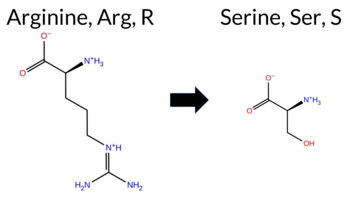 AIThe SynGAP1 R157S missense variant is not reported in ClinVar (no ClinVar ID) and is absent from gnomAD (no gnomAD ID). Prediction tools that agree on a benign effect are REVEL and FATHMM, while the remaining tools—PROVEAN, polyPhen‑2 (HumDiv and HumVar), SIFT, AlphaMissense‑Default, and AlphaMissense‑Optimized—consistently predict a pathogenic impact. ESM1b remains uncertain. High‑accuracy assessments further support pathogenicity: AlphaMissense‑Optimized is pathogenic, and the SGM Consensus (derived from AlphaMissense‑Default, ESM1b, FATHMM, and PROVEAN) yields a pathogenic majority vote (2 pathogenic, 1 benign, 1 uncertain). Foldetta, a protein‑folding stability method, has no available result for this variant. Overall, the preponderance of evidence indicates that R157S is most likely pathogenic, and this conclusion is not contradicted by any ClinVar annotation. Disclaimer: This summary was generated using AI and should be interpreted alongside expert review. | 0.483068 | Structured | 0.523978 | Binding | 0.306 | 0.777 | 0.375 | -7.573 | In-Between | 0.977 | Likely Pathogenic | Likely Pathogenic | 0.211 | Likely Benign | -2.82 | Deleterious | 0.993 | Probably Damaging | 0.982 | Probably Damaging | 3.85 | Benign | 0.00 | Affected | 0.3484 | 0.2563 | 0 | -1 | 3.7 | -69.11 | ||||||||||||||||||||||||||||||||||||||||
| c.469C>G | R157G 2D AIThe SynGAP1 R157G missense variant is not reported in ClinVar (no ClinVar ID) and is absent from gnomAD (no gnomAD ID). Prediction tools that agree on a benign effect include REVEL and FATHMM. Those that predict a pathogenic effect comprise PROVEAN, polyPhen‑2 HumDiv, polyPhen‑2 HumVar, SIFT, ESM1b, and AlphaMissense‑Default. The SGM‑Consensus, which aggregates AlphaMissense‑Default, ESM1b, FATHMM, and PROVEAN, reports the variant as Likely Pathogenic. High‑accuracy assessments are mixed: AlphaMissense‑Optimized yields an Uncertain result, SGM‑Consensus indicates Likely Pathogenic, and Foldetta (a protein‑folding stability method combining FoldX‑MD and Rosetta outputs) is unavailable for this variant. Overall, the majority of evidence points to a pathogenic impact. This conclusion is not contradicted by ClinVar status, as no ClinVar classification exists for the variant. Disclaimer: This summary was generated using AI and should be interpreted alongside expert review. | Likely Pathogenic | 0.483068 | Structured | 0.523978 | Binding | 0.306 | 0.777 | 0.375 | -9.125 | Likely Pathogenic | 0.913 | Likely Pathogenic | Ambiguous | 0.252 | Likely Benign | -3.52 | Deleterious | 0.993 | Probably Damaging | 0.982 | Probably Damaging | 3.80 | Benign | 0.00 | Affected | 0.3892 | 0.2567 | -3 | -2 | 4.1 | -99.14 | |||||||||||||||||||||||||||||||||||||||
| c.469C>T | R157C 2D 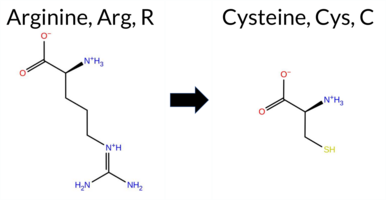 AIThe SynGAP1 missense variant R157C is listed in gnomAD (ID 6‑33432766‑C‑T) but has no ClinVar entry. Functional prediction tools split in two groups: benign predictions come from REVEL and FATHMM, while pathogenic predictions are made by PROVEAN, polyPhen‑2 (HumDiv and HumVar), SIFT, ESM1b, AlphaMissense‑Default, and the SGM‑Consensus score (which is “Likely Pathogenic”). AlphaMissense‑Optimized returns an uncertain result, and Foldetta (a protein‑folding stability method combining FoldX‑MD and Rosetta outputs) has no available prediction for this variant. High‑accuracy assessments therefore indicate a likely pathogenic consensus from SGM‑Consensus, an uncertain AlphaMissense‑Optimized score, and no Foldetta data. Overall, the majority of evidence points to a pathogenic effect, and this conclusion is not contradicted by any ClinVar annotation (none is present). Disclaimer: This summary was generated using AI and should be interpreted alongside expert review. | Likely Pathogenic | 0.483068 | Structured | 0.523978 | Binding | 0.306 | 0.777 | 0.375 | 6-33432766-C-T | 7 | 4.34e-6 | -11.524 | Likely Pathogenic | 0.880 | Likely Pathogenic | Ambiguous | 0.237 | Likely Benign | -4.02 | Deleterious | 1.000 | Probably Damaging | 0.990 | Probably Damaging | 3.77 | Benign | 0.00 | Affected | 3.74 | 4 | 0.3696 | 0.2092 | -3 | -4 | 7.0 | -53.05 | ||||||||||||||||||||||||||||||||||
| c.46A>C | M16L 2D 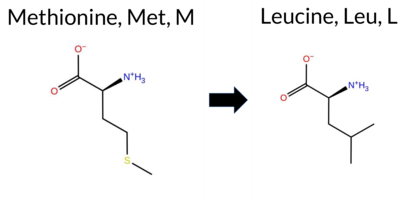 AIThe SynGAP1 missense variant M16L is not reported in ClinVar (no ClinVar ID) and is absent from gnomAD (no gnomAD ID). Prediction tools that agree on a benign effect include REVEL, PROVEAN, polyPhen‑2 HumDiv, polyPhen‑2 HumVar, ESM1b, FATHMM, AlphaMissense‑Default, and AlphaMissense‑Optimized. Only SIFT predicts a pathogenic outcome. The SGM‑Consensus, which aggregates AlphaMissense‑Default, ESM1b, FATHMM, and PROVEAN, reports a “Likely Benign” classification. High‑accuracy assessments show AlphaMissense‑Optimized as benign and the SGM‑Consensus as likely benign; Foldetta results are not available. Based on the collective evidence, the variant is most likely benign, and this assessment does not contradict any ClinVar status (none is provided). Disclaimer: This summary was generated using AI and should be interpreted alongside expert review. | Likely Benign | 0.440853 | Structured | 0.459925 | Uncertain | 0.346 | 0.908 | 0.375 | -1.277 | Likely Benign | 0.249 | Likely Benign | Likely Benign | 0.075 | Likely Benign | -0.33 | Neutral | 0.001 | Benign | 0.000 | Benign | 4.37 | Benign | 0.00 | Affected | 0.1805 | 0.4629 | 4 | 2 | 1.9 | -18.03 | |||||||||||||||||||||||||||||||||||||||
| c.46A>G | M16V 2D 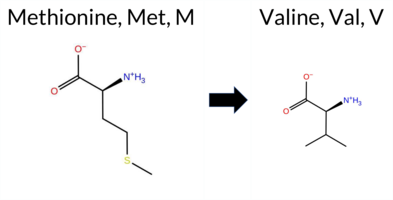 AIThe SynGAP1 missense variant M16V is reported in gnomAD (ID 6‑33420310‑A‑G) but has no ClinVar entry. Functional prediction tools largely agree on a benign effect: REVEL, PROVEAN, polyPhen‑2 (HumDiv and HumVar), ESM1b, FATHMM, AlphaMissense‑Default, and AlphaMissense‑Optimized all classify the variant as benign. Only SIFT predicts a pathogenic outcome. The SGM‑Consensus, derived from a majority vote of AlphaMissense‑Default, ESM1b, FATHMM, and PROVEAN, also indicates a likely benign status. High‑accuracy assessments confirm this: AlphaMissense‑Optimized is benign, and the SGM‑Consensus is likely benign; Foldetta results are unavailable. Overall, the preponderance of evidence points to a benign impact for M16V, and this conclusion does not contradict any ClinVar classification, as none exists. Disclaimer: This summary was generated using AI and should be interpreted alongside expert review. | Likely Benign | 0.440853 | Structured | 0.459925 | Uncertain | 0.346 | 0.908 | 0.375 | 6-33420310-A-G | 16 | 1.05e-5 | -1.595 | Likely Benign | 0.128 | Likely Benign | Likely Benign | 0.073 | Likely Benign | -0.07 | Neutral | 0.000 | Benign | 0.000 | Benign | 4.30 | Benign | 0.00 | Affected | 4.32 | 1 | 0.3561 | 0.3937 | 1 | 2 | 2.3 | -32.06 | ||||||||||||||||||||||||||||||||||
| c.46A>T | M16L 2D AIThe SynGAP1 missense variant M16L is not reported in ClinVar (no ClinVar ID) and is absent from gnomAD (no gnomAD ID). Prediction tools that agree on a benign effect include REVEL, PROVEAN, polyPhen‑2 HumDiv, polyPhen‑2 HumVar, ESM1b, FATHMM, AlphaMissense‑Default, and AlphaMissense‑Optimized. Only SIFT predicts a pathogenic outcome. The SGM‑Consensus, which aggregates AlphaMissense‑Default, ESM1b, FATHMM, and PROVEAN, reports the variant as “Likely Benign.” High‑accuracy assessments show AlphaMissense‑Optimized as benign and the SGM‑Consensus as likely benign; Foldetta results are not available. Overall, the majority of evidence points to a benign effect, and this conclusion does not contradict any ClinVar annotation (none is present). Disclaimer: This summary was generated using AI and should be interpreted alongside expert review. | Likely Benign | 0.440853 | Structured | 0.459925 | Uncertain | 0.346 | 0.908 | 0.375 | -1.277 | Likely Benign | 0.249 | Likely Benign | Likely Benign | 0.075 | Likely Benign | -0.33 | Neutral | 0.001 | Benign | 0.000 | Benign | 4.37 | Benign | 0.00 | Affected | 0.1805 | 0.4629 | 4 | 2 | 1.9 | -18.03 | |||||||||||||||||||||||||||||||||||||||
| c.470G>A | R157H 2D 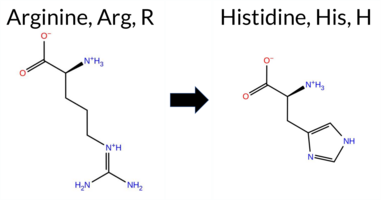 AIThe SynGAP1 missense variant R157H (ClinVar ID 2065231.0) is listed as Uncertain in ClinVar and is present in gnomAD (ID 6‑33432767‑G‑A). Prediction tools that agree on a benign effect include REVEL, PROVEAN, FATHMM, and AlphaMissense‑Optimized. Tools that predict a pathogenic effect are polyPhen‑2 (HumDiv and HumVar), SIFT, ESM1b, and AlphaMissense‑Default. High‑accuracy assessments show AlphaMissense‑Optimized classifying the variant as benign, while the SGM Consensus—derived from a majority vote of AlphaMissense‑Default, ESM1b, FATHMM, and PROVEAN—yields a tie and is therefore inconclusive. Foldetta, a protein‑folding stability method combining FoldX‑MD and Rosetta outputs, has no reported result for this variant. Overall, the balance of predictions leans toward pathogenic, but the high‑accuracy tools do not provide a definitive verdict. This assessment does not contradict the ClinVar status, which remains Uncertain. Disclaimer: This summary was generated using AI and should be interpreted alongside expert review. | 0.483068 | Structured | 0.523978 | Binding | 0.306 | 0.777 | 0.375 | Uncertain | 1 | 6-33432767-G-A | 1 | 6.20e-7 | -10.235 | Likely Pathogenic | 0.604 | Likely Pathogenic | Likely Benign | 0.254 | Likely Benign | -2.23 | Neutral | 0.999 | Probably Damaging | 0.987 | Probably Damaging | 3.80 | Benign | 0.00 | Affected | 3.74 | 4 | 0.2981 | 0.1449 | 2 | 0 | 1.3 | -19.05 | |||||||||||||||||||||||||||||||||
| c.470G>C | R157P 2D AIThe SynGAP1 missense variant R157P is not reported in ClinVar (no ClinVar ID) and is absent from gnomAD (no gnomAD ID). Prediction tools that agree on a benign effect are REVEL and FATHMM. All other evaluated tools—PROVEAN, polyPhen‑2 HumDiv, polyPhen‑2 HumVar, SIFT, ESM1b, AlphaMissense‑Default, AlphaMissense‑Optimized, and the SGM‑Consensus (majority vote from AlphaMissense‑Default, ESM1b, FATHMM, PROVEAN)—predict a pathogenic or likely pathogenic impact. High‑accuracy assessments further support a deleterious effect: AlphaMissense‑Optimized classifies the variant as pathogenic, the SGM‑Consensus indicates it is likely pathogenic, and Foldetta (a protein‑folding stability method combining FoldX‑MD and Rosetta outputs) has no available result for this variant. Based on the preponderance of pathogenic predictions and the lack of benign consensus, the variant is most likely pathogenic; this conclusion is not contradicted by any ClinVar status. Disclaimer: This summary was generated using AI and should be interpreted alongside expert review. | Likely Pathogenic | 0.483068 | Structured | 0.523978 | Binding | 0.306 | 0.777 | 0.375 | -11.463 | Likely Pathogenic | 0.968 | Likely Pathogenic | Likely Pathogenic | 0.450 | Likely Benign | -3.38 | Deleterious | 0.998 | Probably Damaging | 0.992 | Probably Damaging | 3.79 | Benign | 0.00 | Affected | 0.2438 | 0.3438 | 0 | -2 | 2.9 | -59.07 | |||||||||||||||||||||||||||||||||||||||
| c.470G>T | R157L 2D AIThe SynGAP1 missense variant R157L is not reported in ClinVar (no ClinVar ID) and is absent from gnomAD (no gnomAD ID). Prediction tools that agree on a benign effect include REVEL and FATHMM, whereas the majority of tools predict a pathogenic impact: PROVEAN, polyPhen‑2 HumDiv, polyPhen‑2 HumVar, SIFT, ESM1b, and AlphaMissense‑Default all classify the variant as damaging. The SGM‑Consensus, which aggregates AlphaMissense‑Default, ESM1b, FATHMM, and PROVEAN, reports the variant as Likely Pathogenic. High‑accuracy assessments show AlphaMissense‑Optimized as Uncertain, SGM‑Consensus as Likely Pathogenic, and Foldetta results are unavailable. Overall, the preponderance of evidence points to a pathogenic effect. This conclusion is not contradicted by ClinVar status, which is currently unreported. Disclaimer: This summary was generated using AI and should be interpreted alongside expert review. | Likely Pathogenic | 0.483068 | Structured | 0.523978 | Binding | 0.306 | 0.777 | 0.375 | -8.978 | Likely Pathogenic | 0.950 | Likely Pathogenic | Ambiguous | 0.330 | Likely Benign | -3.13 | Deleterious | 0.993 | Probably Damaging | 0.982 | Probably Damaging | 3.81 | Benign | 0.00 | Affected | 0.2015 | 0.3709 | -3 | -2 | 8.3 | -43.03 | |||||||||||||||||||||||||||||||||||||||
| c.472C>A | Q158K 2D 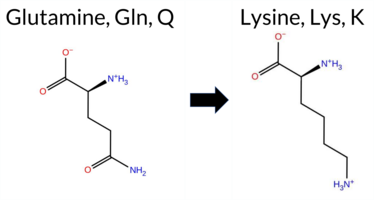 AIThe SynGAP1 missense variant Q158K is not reported in ClinVar and has no entry in gnomAD, indicating it is not catalogued in these databases. Prediction tools that agree on a benign effect include REVEL, PROVEAN, polyPhen‑2 (HumDiv and HumVar), SIFT, ESM1b, FATHMM, and AlphaMissense‑Optimized. No tool predicts a pathogenic outcome; AlphaMissense‑Default is uncertain. The SGM‑Consensus, which aggregates the majority vote of AlphaMissense‑Default, ESM1b, FATHMM, and PROVEAN, classifies the variant as likely benign. High‑accuracy assessments further support a benign interpretation: AlphaMissense‑Optimized predicts benign, SGM‑Consensus indicates likely benign, and Foldetta (a protein‑folding stability method combining FoldX‑MD and Rosetta outputs) has no available result for this variant. Overall, the computational evidence strongly suggests the variant is most likely benign, and this assessment does not contradict any ClinVar status (none is available). Disclaimer: This summary was generated using AI and should be interpreted alongside expert review. | Likely Benign | 0.480142 | Structured | 0.527565 | Binding | 0.286 | 0.750 | 0.375 | -6.795 | Likely Benign | 0.481 | Ambiguous | Likely Benign | 0.069 | Likely Benign | -0.86 | Neutral | 0.276 | Benign | 0.121 | Benign | 4.20 | Benign | 0.15 | Tolerated | 0.1851 | 0.3869 | 1 | 1 | -0.4 | 0.04 | |||||||||||||||||||||||||||||||||||||||
| c.472C>G | Q158E 2D 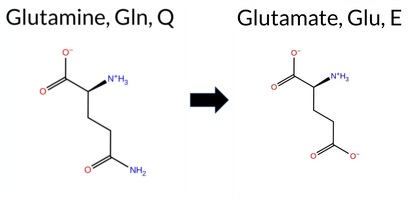 AIThe SynGAP1 missense variant Q158E is not reported in ClinVar and is absent from gnomAD. Functional prediction tools largely agree on a benign effect: REVEL, PROVEAN, polyPhen‑2 (HumDiv and HumVar), SIFT, FATHMM, AlphaMissense‑Default, and AlphaMissense‑Optimized all classify the change as benign. Only ESM1b predicts a pathogenic outcome. The SGM‑Consensus, which aggregates AlphaMissense‑Default, ESM1b, FATHMM, and PROVEAN, reports a likely benign consensus. High‑accuracy assessments further support a benign interpretation: AlphaMissense‑Optimized is benign and the SGM‑Consensus is likely benign; Foldetta stability analysis is unavailable. Overall, the majority of evidence points to a benign effect, and this is consistent with the lack of ClinVar annotation, so there is no contradiction with existing clinical data. Disclaimer: This summary was generated using AI and should be interpreted alongside expert review. | Likely Benign | 0.480142 | Structured | 0.527565 | Binding | 0.286 | 0.750 | 0.375 | -11.133 | Likely Pathogenic | 0.196 | Likely Benign | Likely Benign | 0.063 | Likely Benign | -0.54 | Neutral | 0.143 | Benign | 0.078 | Benign | 4.20 | Benign | 0.09 | Tolerated | 0.1420 | 0.2223 | 2 | 2 | 0.0 | 0.98 | |||||||||||||||||||||||||||||||||||||||
| c.473A>C | Q158P 2D AIThe SynGAP1 missense variant Q158P is not reported in ClinVar (no ClinVar ID) and is absent from gnomAD (no gnomAD ID). Prediction tools that agree on a benign effect include REVEL, PROVEAN, polyPhen‑2 HumVar, ESM1b, FATHMM, AlphaMissense‑Default, and AlphaMissense‑Optimized. Tools that predict a pathogenic effect are polyPhen‑2 HumDiv and SIFT. High‑accuracy assessments show AlphaMissense‑Optimized as benign and the SGM Consensus (majority vote of AlphaMissense‑Default, ESM1b, FATHMM, and PROVEAN) as Likely Benign. No Foldetta stability result is available, so it does not influence the assessment. Overall, the majority of evidence points to a benign impact for Q158P, and this conclusion is not contradicted by any ClinVar annotation. Disclaimer: This summary was generated using AI and should be interpreted alongside expert review. | Likely Benign | 0.480142 | Structured | 0.527565 | Binding | 0.286 | 0.750 | 0.375 | -6.120 | Likely Benign | 0.150 | Likely Benign | Likely Benign | 0.192 | Likely Benign | -0.99 | Neutral | 0.851 | Possibly Damaging | 0.374 | Benign | 4.12 | Benign | 0.03 | Affected | 0.2167 | 0.4190 | 0 | -1 | 1.9 | -31.01 | |||||||||||||||||||||||||||||||||||||||
| c.473A>G | Q158R 2D AIThe SynGAP1 missense variant Q158R is not reported in ClinVar (no ClinVar ID) and is absent from gnomAD (no gnomAD ID). Prediction tools that agree on a benign effect include REVEL, PROVEAN, polyPhen‑2 HumDiv, polyPhen‑2 HumVar, SIFT, ESM1b, FATHMM, and AlphaMissense‑Optimized. No tool predicts a pathogenic outcome; AlphaMissense‑Default is uncertain. The high‑accuracy consensus, SGM‑Consensus, classifies the variant as Likely Benign, and AlphaMissense‑Optimized also reports a benign prediction. Foldetta, a protein‑folding stability method combining FoldX‑MD and Rosetta outputs, has no available result for this variant. Overall, the majority of evidence points to a benign effect. The predictions do not contradict ClinVar status, as ClinVar contains no entry for this variant. Disclaimer: This summary was generated using AI and should be interpreted alongside expert review. | Likely Benign | 0.480142 | Structured | 0.527565 | Binding | 0.286 | 0.750 | 0.375 | -6.873 | Likely Benign | 0.438 | Ambiguous | Likely Benign | 0.090 | Likely Benign | -0.85 | Neutral | 0.276 | Benign | 0.121 | Benign | 4.14 | Benign | 0.11 | Tolerated | 0.1527 | 0.1498 | 1 | 1 | -1.0 | 28.06 | |||||||||||||||||||||||||||||||||||||||
| c.473A>T | Q158L 2D AIThe SynGAP1 missense variant Q158L is not reported in ClinVar (no ClinVar ID) and is absent from gnomAD (no gnomAD ID). Prediction tools that agree on a benign effect include REVEL, PROVEAN, polyPhen‑2 HumVar, ESM1b, FATHMM, AlphaMissense‑Default, and AlphaMissense‑Optimized. Tools that predict a pathogenic effect are polyPhen‑2 HumDiv and SIFT. High‑accuracy assessments show AlphaMissense‑Optimized as benign and the SGM Consensus (majority vote from AlphaMissense‑Default, ESM1b, FATHMM, and PROVEAN) as Likely Benign. No Foldetta stability result is available, so it does not influence the assessment. Overall, the majority of evidence points to a benign impact for Q158L, and this conclusion is not contradicted by any ClinVar annotation. Disclaimer: This summary was generated using AI and should be interpreted alongside expert review. | Likely Benign | 0.480142 | Structured | 0.527565 | Binding | 0.286 | 0.750 | 0.375 | -5.965 | Likely Benign | 0.229 | Likely Benign | Likely Benign | 0.141 | Likely Benign | -1.11 | Neutral | 0.652 | Possibly Damaging | 0.160 | Benign | 4.14 | Benign | 0.03 | Affected | 0.0711 | 0.4832 | -2 | -2 | 7.3 | -14.97 | |||||||||||||||||||||||||||||||||||||||
| c.474G>C | Q158H 2D AIThe SynGAP1 missense variant Q158H is not reported in ClinVar and is absent from gnomAD. In silico prediction tools uniformly indicate a benign effect: REVEL, PROVEAN, polyPhen‑2 (HumDiv and HumVar), SIFT, ESM1b, FATHMM, AlphaMissense‑Default, and AlphaMissense‑Optimized all classify the change as benign. No tool predicts pathogenicity. High‑accuracy assessments corroborate this: AlphaMissense‑Optimized predicts benign, and the SGM Consensus (majority vote of AlphaMissense‑Default, ESM1b, FATHMM, and PROVEAN) reports a likely benign outcome. Foldetta results are unavailable. Overall, the variant is most likely benign, and this conclusion is not contradicted by any ClinVar status. Disclaimer: This summary was generated using AI and should be interpreted alongside expert review. | Likely Benign | 0.480142 | Structured | 0.527565 | Binding | 0.286 | 0.750 | 0.375 | -2.990 | Likely Benign | 0.114 | Likely Benign | Likely Benign | 0.084 | Likely Benign | 0.02 | Neutral | 0.000 | Benign | 0.001 | Benign | 4.19 | Benign | 0.51 | Tolerated | 0.1403 | 0.3774 | 3 | 0 | 0.3 | 9.01 | |||||||||||||||||||||||||||||||||||||||
| c.474G>T | Q158H 2D AIThe SynGAP1 missense variant Q158H is not reported in ClinVar and is absent from gnomAD. In silico prediction tools uniformly indicate a benign effect: REVEL, PROVEAN, polyPhen‑2 (HumDiv and HumVar), SIFT, ESM1b, FATHMM, AlphaMissense‑Default, and AlphaMissense‑Optimized all classify the change as benign. No tool predicts pathogenicity. High‑accuracy assessments corroborate this: AlphaMissense‑Optimized predicts benign, and the SGM Consensus (majority vote of AlphaMissense‑Default, ESM1b, FATHMM, and PROVEAN) reports a likely benign outcome. Foldetta results are unavailable. Overall, the variant is most likely benign, and this conclusion is not contradicted by any ClinVar status. Disclaimer: This summary was generated using AI and should be interpreted alongside expert review. | Likely Benign | 0.480142 | Structured | 0.527565 | Binding | 0.286 | 0.750 | 0.375 | -2.990 | Likely Benign | 0.114 | Likely Benign | Likely Benign | 0.084 | Likely Benign | 0.02 | Neutral | 0.000 | Benign | 0.001 | Benign | 4.19 | Benign | 0.51 | Tolerated | 0.1403 | 0.3774 | 3 | 0 | 0.3 | 9.01 | |||||||||||||||||||||||||||||||||||||||
| c.475A>C | I159L 2D 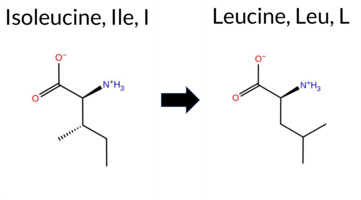 AIThe SynGAP1 missense variant I159L is not reported in ClinVar (no ClinVar ID) and is absent from gnomAD (no gnomAD ID). Prediction tools that agree on a benign effect include REVEL, PROVEAN, FATHMM, AlphaMissense‑Default, and AlphaMissense‑Optimized. Tools that predict a pathogenic effect are polyPhen‑2 HumDiv, polyPhen‑2 HumVar, and SIFT. ESM1b is uncertain, and the SGM‑Consensus (majority vote of AlphaMissense‑Default, ESM1b, FATHMM, and PROVEAN) indicates a likely benign outcome. High‑accuracy assessments show AlphaMissense‑Optimized as benign and the SGM‑Consensus as likely benign; Foldetta results are not available. Overall, the majority of evidence points to a benign impact for I159L, and this conclusion is not contradicted by any ClinVar annotation. Disclaimer: This summary was generated using AI and should be interpreted alongside expert review. | Likely Benign | 0.454136 | Structured | 0.529953 | Binding | 0.278 | 0.731 | 0.125 | -7.936 | In-Between | 0.195 | Likely Benign | Likely Benign | 0.128 | Likely Benign | -0.39 | Neutral | 0.904 | Possibly Damaging | 0.847 | Possibly Damaging | 4.04 | Benign | 0.00 | Affected | 0.0776 | 0.2652 | 2 | 2 | -0.7 | 0.00 | |||||||||||||||||||||||||||||||||||||||
| c.475A>G | I159V 2D 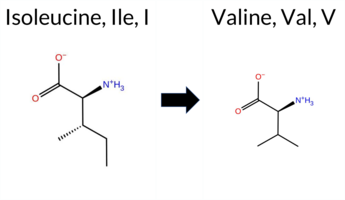 AIThe SynGAP1 I159V missense variant is not reported in ClinVar (ClinVar ID: None) and is absent from gnomAD (gnomAD ID: None). Prediction tools that agree on a benign effect include REVEL, PROVEAN, FATHMM, and AlphaMissense‑Optimized. Those that predict a pathogenic effect are polyPhen‑2 HumDiv, polyPhen‑2 HumVar, SIFT, and ESM1b; AlphaMissense‑Default remains uncertain. High‑accuracy assessments further support a benign outcome: AlphaMissense‑Optimized is benign, and the SGM Consensus (majority vote from AlphaMissense‑Default, ESM1b, FATHMM, PROVEAN) yields a benign consensus (2 benign vs. 1 pathogenic, with one uncertain). Foldetta results are unavailable. Overall, the preponderance of evidence indicates that the variant is most likely benign, and this conclusion does not contradict any ClinVar annotation. Disclaimer: This summary was generated using AI and should be interpreted alongside expert review. | 0.454136 | Structured | 0.529953 | Binding | 0.278 | 0.731 | 0.125 | -9.714 | Likely Pathogenic | 0.384 | Ambiguous | Likely Benign | 0.113 | Likely Benign | -0.25 | Neutral | 0.803 | Possibly Damaging | 0.847 | Possibly Damaging | 3.98 | Benign | 0.00 | Affected | 0.1111 | 0.2736 | 4 | 3 | -0.3 | -14.03 | ||||||||||||||||||||||||||||||||||||||||
| c.475A>T | I159F 2D 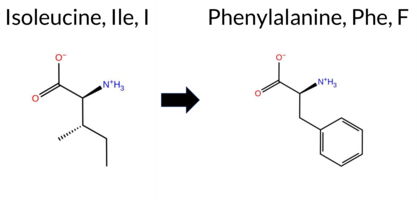 AIThe SynGAP1 missense variant I159F is not reported in ClinVar (ClinVar ID: None) and is absent from gnomAD (gnomAD ID: None). Prediction tools that agree on a benign effect include REVEL, PROVEAN, FATHMM, and AlphaMissense‑Optimized. Tools that predict a pathogenic effect are polyPhen‑2 HumDiv, polyPhen‑2 HumVar, SIFT, and ESM1b. AlphaMissense‑Default is uncertain. High‑accuracy assessments show AlphaMissense‑Optimized as benign; the SGM Consensus (majority vote from AlphaMissense‑Default, ESM1b, FATHMM, PROVEAN) also favors benign (2 benign vs. 1 pathogenic, 1 uncertain). Foldetta, a protein‑folding stability method, has no available result for this variant. Overall, the balance of evidence, particularly from the high‑accuracy tools, points to a benign impact. This conclusion is not contradicted by any ClinVar annotation, as none exists for this variant. Disclaimer: This summary was generated using AI and should be interpreted alongside expert review. | 0.454136 | Structured | 0.529953 | Binding | 0.278 | 0.731 | 0.125 | -9.530 | Likely Pathogenic | 0.447 | Ambiguous | Likely Benign | 0.200 | Likely Benign | -1.41 | Neutral | 0.995 | Probably Damaging | 0.979 | Probably Damaging | 3.87 | Benign | 0.00 | Affected | 0.0490 | 0.2446 | 1 | 0 | -1.7 | 34.02 | ||||||||||||||||||||||||||||||||||||||||
| c.476T>A | I159N 2D 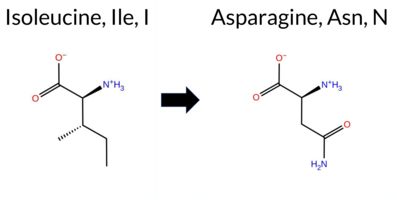 AIThe SynGAP1 missense variant I159N is not reported in ClinVar (no ClinVar ID) and is absent from gnomAD (no gnomAD ID). Prediction tools that agree on a benign effect include REVEL, PROVEAN, and FATHMM, whereas polyPhen‑2 (HumDiv and HumVar), SIFT, ESM1b, and AlphaMissense‑Default all predict a pathogenic impact. The high‑accuracy AlphaMissense‑Optimized result is uncertain, and the SGM Consensus (majority vote from AlphaMissense‑Default, ESM1b, FATHMM, PROVEAN) is inconclusive because it yields a 2‑vs‑2 split. Foldetta, which would assess protein‑folding stability, has no available output for this variant. Overall, the majority of tools (five out of eight) predict pathogenicity, while three predict benign and one is uncertain. Thus, the variant is most likely pathogenic based on current computational predictions, and this assessment does not contradict any ClinVar status because no ClinVar entry exists. Disclaimer: This summary was generated using AI and should be interpreted alongside expert review. | 0.454136 | Structured | 0.529953 | Binding | 0.278 | 0.731 | 0.125 | -14.684 | Likely Pathogenic | 0.891 | Likely Pathogenic | Ambiguous | 0.218 | Likely Benign | -1.93 | Neutral | 0.995 | Probably Damaging | 0.986 | Probably Damaging | 3.82 | Benign | 0.00 | Affected | 0.0919 | 0.0342 | -2 | -3 | -8.0 | 0.94 | ||||||||||||||||||||||||||||||||||||||||
| c.476T>C | I159T 2D 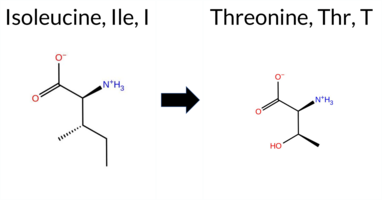 AIThe SynGAP1 missense variant I159T is not reported in ClinVar (ClinVar ID = None) and is absent from gnomAD (gnomAD ID = None). Prediction tools that agree on a benign effect include REVEL, PROVEAN, and FATHMM. Tools that predict a pathogenic effect comprise polyPhen‑2 HumDiv, polyPhen‑2 HumVar, SIFT, ESM1b, AlphaMissense‑Default, and AlphaMissense‑Optimized. The SGM Consensus, which aggregates AlphaMissense‑Default, ESM1b, FATHMM, and PROVEAN, is inconclusive (two pathogenic vs. two benign votes). Foldetta, a protein‑folding stability method combining FoldX‑MD and Rosetta outputs, has no available result for this variant. High‑accuracy AlphaMissense‑Optimized predicts pathogenic, while AlphaMissense‑Default also predicts pathogenic. Given that six of the seven individual tools predict pathogenicity versus three predicting benign, the variant is most likely pathogenic. This prediction does not contradict ClinVar status, as the variant is not yet catalogued there. Disclaimer: This summary was generated using AI and should be interpreted alongside expert review. | 0.454136 | Structured | 0.529953 | Binding | 0.278 | 0.731 | 0.125 | -12.422 | Likely Pathogenic | 0.970 | Likely Pathogenic | Likely Pathogenic | 0.218 | Likely Benign | -1.69 | Neutral | 0.981 | Probably Damaging | 0.966 | Probably Damaging | 3.86 | Benign | 0.00 | Affected | 0.1069 | 0.0685 | 0 | -1 | -5.2 | -12.05 | ||||||||||||||||||||||||||||||||||||||||
| c.476T>G | I159S 2D 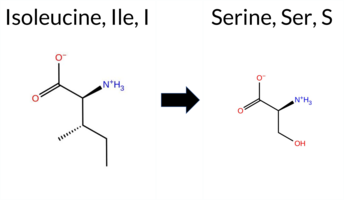 AIThe SynGAP1 missense variant I159S is not reported in ClinVar (ClinVar ID = None) and is absent from gnomAD (gnomAD ID = None). Prediction tools that agree on a benign effect include REVEL, PROVEAN, and FATHMM. Tools that agree on a pathogenic effect are polyPhen‑2 HumDiv, polyPhen‑2 HumVar, SIFT, ESM1b, and AlphaMissense‑Default. The high‑accuracy AlphaMissense‑Optimized tool rates the variant as uncertain, while the SGM Consensus (majority vote from AlphaMissense‑Default, ESM1b, FATHMM, PROVEAN) is inconclusive due to a 2‑vs‑2 split, and Foldetta results are unavailable. Overall, the majority of available predictions (five pathogenic vs. three benign) lean toward pathogenicity. Thus, the variant is most likely pathogenic, and this assessment does not contradict any ClinVar status because no ClinVar entry exists. Disclaimer: This summary was generated using AI and should be interpreted alongside expert review. | 0.454136 | Structured | 0.529953 | Binding | 0.278 | 0.731 | 0.125 | -13.684 | Likely Pathogenic | 0.905 | Likely Pathogenic | Ambiguous | 0.241 | Likely Benign | -1.70 | Neutral | 0.995 | Probably Damaging | 0.979 | Probably Damaging | 3.85 | Benign | 0.00 | Affected | 0.2854 | 0.0712 | -1 | -2 | -5.3 | -26.08 | ||||||||||||||||||||||||||||||||||||||||
| c.477C>G | I159M 2D 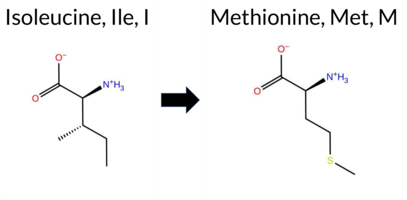 AIThe SynGAP1 missense variant I159M is not reported in ClinVar (no ClinVar ID) and is absent from gnomAD (no gnomAD ID). Prediction tools that agree on a benign effect include REVEL, PROVEAN, FATHMM, AlphaMissense‑Default, AlphaMissense‑Optimized, and the SGM‑Consensus (majority vote) which classifies the variant as Likely Benign. Tools that predict a pathogenic effect are polyPhen‑2 HumDiv, polyPhen‑2 HumVar, SIFT, and ESM1b. High‑accuracy assessments show AlphaMissense‑Optimized as Benign and the SGM‑Consensus as Likely Benign; Foldetta results are not available. Overall, the majority of evidence points to a benign impact. This conclusion is consistent with the lack of ClinVar annotation, so there is no contradiction with existing clinical databases. Disclaimer: This summary was generated using AI and should be interpreted alongside expert review. | Likely Benign | 0.454136 | Structured | 0.529953 | Binding | 0.278 | 0.731 | 0.125 | -9.838 | Likely Pathogenic | 0.142 | Likely Benign | Likely Benign | 0.071 | Likely Benign | -0.48 | Neutral | 0.995 | Probably Damaging | 0.986 | Probably Damaging | 3.89 | Benign | 0.00 | Affected | 0.0678 | 0.2500 | 2 | 1 | -2.6 | 18.03 | |||||||||||||||||||||||||||||||||||||||
| c.478C>A | L160M 2D 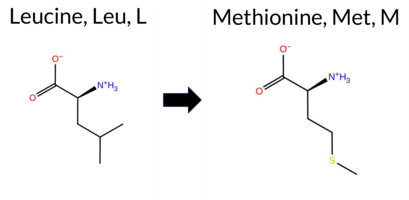 AIThe SynGAP1 missense variant L160M is not reported in ClinVar (ClinVar ID: None) and is absent from gnomAD (gnomAD ID: None). Prediction tools that agree on a benign effect include REVEL, PROVEAN, FATHMM, and AlphaMissense‑Optimized. Tools that predict a pathogenic effect are polyPhen‑2 HumDiv, polyPhen‑2 HumVar, SIFT, ESM1b, and AlphaMissense‑Default. The SGM Consensus, derived from a majority vote of AlphaMissense‑Default, ESM1b, FATHMM, and PROVEAN, is inconclusive because it yields a 2‑to‑2 split. High‑accuracy methods give the following results: AlphaMissense‑Optimized predicts benign; the SGM Consensus is unavailable; and Foldetta, which combines FoldX‑MD and Rosetta stability calculations, has no reported output for this variant. Overall, the balance of evidence leans toward a pathogenic interpretation, but the single high‑accuracy benign prediction and the lack of a ClinVar assertion mean the variant’s clinical significance remains uncertain. This assessment does not contradict any existing ClinVar status, as none is available. Thus, the variant is most likely pathogenic, and this conclusion does not contradict any ClinVar status. Disclaimer: This summary was generated using AI and should be interpreted alongside expert review. | 0.454136 | Structured | 0.526760 | Binding | 0.275 | 0.728 | 0.125 | -11.120 | Likely Pathogenic | 0.723 | Likely Pathogenic | Likely Benign | 0.097 | Likely Benign | -0.94 | Neutral | 0.877 | Possibly Damaging | 0.580 | Possibly Damaging | 3.85 | Benign | 0.00 | Affected | 0.0837 | 0.3613 | 4 | 2 | -1.9 | 18.03 | ||||||||||||||||||||||||||||||||||||||||
| c.478C>G | L160V 2D AIThe SynGAP1 missense variant L160V is not reported in ClinVar (ClinVar ID: None) and is absent from gnomAD (gnomAD ID: None). Prediction tools that agree on a benign effect include REVEL, PROVEAN, polyPhen‑2 HumDiv, polyPhen‑2 HumVar, FATHMM, and AlphaMissense‑Optimized. Tools that predict a pathogenic effect are SIFT, ESM1b, and AlphaMissense‑Default. High‑accuracy assessments show AlphaMissense‑Optimized as benign, while the SGM Consensus (majority vote from AlphaMissense‑Default, ESM1b, FATHMM, and PROVEAN) is inconclusive due to a 2‑vs‑2 split, and Foldetta results are unavailable. Overall, the majority of predictions (six benign vs. three pathogenic) indicate that the variant is most likely benign. This conclusion is consistent with the lack of ClinVar evidence and gnomAD presence, so there is no contradiction with ClinVar status. Disclaimer: This summary was generated using AI and should be interpreted alongside expert review. | 0.454136 | Structured | 0.526760 | Binding | 0.275 | 0.728 | 0.125 | -12.506 | Likely Pathogenic | 0.729 | Likely Pathogenic | Likely Benign | 0.055 | Likely Benign | -1.44 | Neutral | 0.247 | Benign | 0.113 | Benign | 3.90 | Benign | 0.00 | Affected | 0.1553 | 0.3319 | 2 | 1 | 0.4 | -14.03 | ||||||||||||||||||||||||||||||||||||||||
| c.479T>A | L160Q 2D 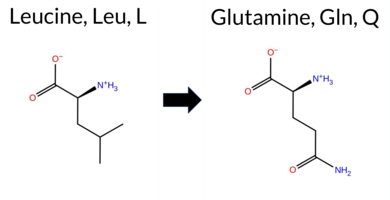 AIThe SynGAP1 missense variant L160Q is not reported in ClinVar (no ClinVar ID) and is absent from gnomAD (no gnomAD ID). Prediction tools that agree on a benign effect include REVEL and FATHMM, whereas the majority of tools predict a pathogenic impact: PROVEAN, polyPhen‑2 HumDiv, polyPhen‑2 HumVar, SIFT, ESM1b, AlphaMissense‑Default, AlphaMissense‑Optimized, and the SGM‑Consensus (majority vote from AlphaMissense‑Default, ESM1b, FATHMM, PROVEAN). High‑accuracy assessments further support pathogenicity: AlphaMissense‑Optimized is pathogenic, and the SGM‑Consensus is labeled Likely Pathogenic. The Foldetta protein‑folding stability analysis is unavailable for this variant. Overall, the preponderance of evidence from both general and high‑accuracy predictors indicates that the variant is most likely pathogenic, and this conclusion does not contradict any ClinVar status because no ClinVar classification exists. Disclaimer: This summary was generated using AI and should be interpreted alongside expert review. | Likely Pathogenic | 0.454136 | Structured | 0.526760 | Binding | 0.275 | 0.728 | 0.125 | -16.626 | Likely Pathogenic | 0.973 | Likely Pathogenic | Likely Pathogenic | 0.227 | Likely Benign | -2.83 | Deleterious | 0.700 | Possibly Damaging | 0.483 | Possibly Damaging | 3.87 | Benign | 0.00 | Affected | 0.1248 | 0.1060 | -2 | -2 | -7.3 | 14.97 | |||||||||||||||||||||||||||||||||||||||
| c.479T>C | L160P 2D AIThe SynGAP1 missense variant L160P is not reported in ClinVar and is absent from gnomAD. Prediction tools that agree on a benign effect include REVEL, polyPhen‑2 HumDiv, polyPhen‑2 HumVar, and FATHMM. Tools that predict a pathogenic effect comprise PROVEAN, SIFT, ESM1b, AlphaMissense‑Default, and AlphaMissense‑Optimized. The high‑accuracy consensus, SGM‑Consensus, which aggregates AlphaMissense‑Default, ESM1b, FATHMM, and PROVEAN, yields a majority pathogenic vote (3 pathogenic vs. 1 benign) and is labeled “Likely Pathogenic.” AlphaMissense‑Optimized independently predicts pathogenicity. Foldetta, a protein‑folding stability method combining FoldX‑MD and Rosetta outputs, has no available result for this variant. Based on the collective predictions, the variant is most likely pathogenic, and this assessment does not contradict any ClinVar status, as none is currently assigned. Disclaimer: This summary was generated using AI and should be interpreted alongside expert review. | Likely Pathogenic | 0.454136 | Structured | 0.526760 | Binding | 0.275 | 0.728 | 0.125 | -15.939 | Likely Pathogenic | 0.969 | Likely Pathogenic | Likely Pathogenic | 0.283 | Likely Benign | -3.06 | Deleterious | 0.001 | Benign | 0.000 | Benign | 3.86 | Benign | 0.00 | Affected | 0.3589 | 0.1484 | -3 | -3 | -5.4 | -16.04 | |||||||||||||||||||||||||||||||||||||||
| c.479T>G | L160R 2D AIThe SynGAP1 missense variant L160R is not reported in ClinVar (no ClinVar ID) and is absent from gnomAD (no gnomAD ID). Prediction tools that agree on a benign effect include REVEL and FATHMM, whereas the majority of tools predict a pathogenic impact: PROVEAN, polyPhen‑2 HumDiv, polyPhen‑2 HumVar, SIFT, ESM1b, AlphaMissense‑Default, AlphaMissense‑Optimized, and the SGM‑Consensus (majority vote from AlphaMissense‑Default, ESM1b, FATHMM, PROVEAN). High‑accuracy assessments further support pathogenicity: AlphaMissense‑Optimized is pathogenic, and the SGM‑Consensus is labeled Likely Pathogenic. The protein‑folding stability method Foldetta did not provide a result, so its status is unavailable. Overall, the preponderance of evidence from both general and high‑accuracy predictors indicates that the variant is most likely pathogenic, and this conclusion does not contradict any ClinVar annotation (none is available). Disclaimer: This summary was generated using AI and should be interpreted alongside expert review. | Likely Pathogenic | 0.454136 | Structured | 0.526760 | Binding | 0.275 | 0.728 | 0.125 | -14.539 | Likely Pathogenic | 0.970 | Likely Pathogenic | Likely Pathogenic | 0.190 | Likely Benign | -2.83 | Deleterious | 0.700 | Possibly Damaging | 0.483 | Possibly Damaging | 3.90 | Benign | 0.00 | Affected | 0.1482 | 0.0702 | -3 | -2 | -8.3 | 43.03 | |||||||||||||||||||||||||||||||||||||||
| c.47T>A | M16K 2D 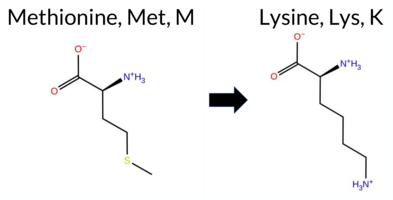 AIThe SynGAP1 missense variant M16K is not reported in ClinVar (ClinVar ID = None) and is absent from gnomAD (gnomAD ID = None). Prediction tools that agree on a benign effect include REVEL, PROVEAN, polyPhen‑2 HumDiv, polyPhen‑2 HumVar, ESM1b, FATHMM, and AlphaMissense‑Optimized. Tools that predict a pathogenic effect are SIFT and AlphaMissense‑Default. The SGM‑Consensus, which aggregates the majority vote from AlphaMissense‑Default, ESM1b, FATHMM, and PROVEAN, classifies the variant as Likely Benign. High‑accuracy assessments further support a benign outcome: AlphaMissense‑Optimized predicts Benign, and the SGM‑Consensus also indicates Likely Benign. Foldetta, a protein‑folding stability method combining FoldX‑MD and Rosetta outputs, has no available result for this variant. Overall, the majority of computational predictions and the high‑accuracy consensus suggest that M16K is most likely benign, and this assessment does not contradict any ClinVar status. Disclaimer: This summary was generated using AI and should be interpreted alongside expert review. | Likely Benign | 0.440853 | Structured | 0.459925 | Uncertain | 0.346 | 0.908 | 0.375 | -2.567 | Likely Benign | 0.635 | Likely Pathogenic | Likely Benign | 0.185 | Likely Benign | -0.37 | Neutral | 0.003 | Benign | 0.001 | Benign | 4.23 | Benign | 0.00 | Affected | 0.1984 | 0.1112 | 0 | -1 | -5.8 | -3.02 | |||||||||||||||||||||||||||||||||||||||
| c.47T>C | M16T 2D 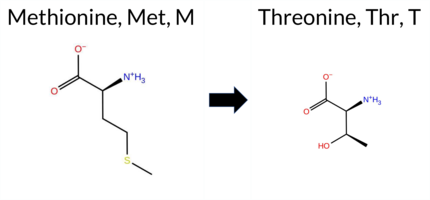 AIThe SynGAP1 missense variant M16T is not reported in ClinVar and is absent from gnomAD. Functional prediction tools that agree on a benign effect include REVEL, PROVEAN, polyPhen‑2 HumDiv, polyPhen‑2 HumVar, ESM1b, FATHMM, AlphaMissense‑Optimized, and the SGM‑Consensus (majority vote of AlphaMissense‑Default, ESM1b, FATHMM, PROVEAN). Only SIFT predicts a pathogenic outcome, while AlphaMissense‑Default remains uncertain. High‑accuracy assessments further support a benign interpretation: AlphaMissense‑Optimized scores the variant as benign and the SGM‑Consensus classifies it as likely benign. No Foldetta stability analysis is available for this residue, so folding‑stability evidence is lacking. Overall, the majority of computational evidence indicates that M16T is most likely benign, and this conclusion is consistent with the absence of a ClinVar pathogenic classification. Disclaimer: This summary was generated using AI and should be interpreted alongside expert review. | Likely Benign | 0.440853 | Structured | 0.459925 | Uncertain | 0.346 | 0.908 | 0.375 | -2.060 | Likely Benign | 0.515 | Ambiguous | Likely Benign | 0.065 | Likely Benign | -0.46 | Neutral | 0.006 | Benign | 0.001 | Benign | 4.23 | Benign | 0.00 | Affected | 0.2385 | 0.2545 | -1 | -1 | -2.6 | -30.09 | |||||||||||||||||||||||||||||||||||||||
| c.47T>G | M16R 2D 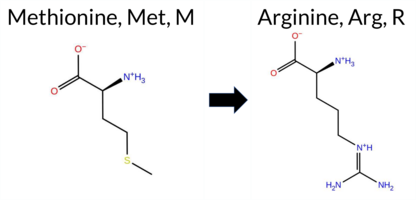 AIThe SynGAP1 missense variant M16R is not reported in ClinVar and is absent from gnomAD. Functional prediction tools largely agree on a benign effect: REVEL, PROVEAN, polyPhen‑2 (HumDiv and HumVar), ESM1b, FATHMM, and AlphaMissense‑Optimized all classify the change as benign, while the only pathogenic call comes from SIFT. AlphaMissense‑Default is uncertain, and the SGM‑Consensus (majority vote of AlphaMissense‑Default, ESM1b, FATHMM, and PROVEAN) reports the variant as likely benign. High‑accuracy assessments reinforce this view: AlphaMissense‑Optimized predicts benign, the SGM‑Consensus also indicates likely benign, and no Foldetta stability data are available. Taken together, the preponderance of evidence supports a benign classification for M16R, and this conclusion does not conflict with the absence of a ClinVar assertion. Disclaimer: This summary was generated using AI and should be interpreted alongside expert review. | Likely Benign | 0.440853 | Structured | 0.459925 | Uncertain | 0.346 | 0.908 | 0.375 | -1.475 | Likely Benign | 0.485 | Ambiguous | Likely Benign | 0.191 | Likely Benign | -0.25 | Neutral | 0.014 | Benign | 0.003 | Benign | 4.21 | Benign | 0.00 | Affected | 0.1992 | 0.1093 | 0 | -1 | -6.4 | 24.99 | |||||||||||||||||||||||||||||||||||||||
| c.481C>A | P161T 2D AIThe SynGAP1 missense variant P161T has no ClinVar entry and is not reported in gnomAD. Computational predictors fall into two groups: benign predictions come from REVEL, polyPhen‑2 HumVar, and FATHMM, whereas pathogenic predictions are made by PROVEAN, polyPhen‑2 HumDiv, SIFT, ESM1b, AlphaMissense‑Default, and AlphaMissense‑Optimized. The SGM‑Consensus, which aggregates AlphaMissense‑Default, ESM1b, FATHMM, and PROVEAN, reports the variant as Likely Pathogenic. High‑accuracy tools further support a deleterious effect: AlphaMissense‑Optimized predicts pathogenicity, and the SGM‑Consensus also indicates Likely Pathogenic. Foldetta, a protein‑folding stability method that combines FoldX‑MD and Rosetta outputs, has no available result for this variant. Overall, the preponderance of evidence points to a pathogenic effect, and this assessment is not contradicted by any ClinVar annotation. Disclaimer: This summary was generated using AI and should be interpreted alongside expert review. | Likely Pathogenic | 0.509769 | Disordered | 0.520000 | Binding | 0.256 | 0.713 | 0.375 | -8.759 | Likely Pathogenic | 0.963 | Likely Pathogenic | Likely Pathogenic | 0.153 | Likely Benign | -3.77 | Deleterious | 0.535 | Possibly Damaging | 0.310 | Benign | 3.92 | Benign | 0.00 | Affected | 0.1891 | 0.5038 | 0 | -1 | 0.9 | 3.99 | |||||||||||||||||||||||||||||||||||||||
| c.481C>G | P161A 2D AIThe SynGAP1 missense variant P161A is not reported in ClinVar and has no entries in gnomAD, indicating it is not catalogued in these databases. Functional prediction tools show a split: benign calls come from REVEL, polyPhen‑2 (HumDiv and HumVar) and FATHMM, while pathogenic calls arise from PROVEAN, SIFT, ESM1b and AlphaMissense‑Default. When predictions are grouped by consensus, four tools predict benign and four predict pathogenic. High‑accuracy assessments further support a deleterious effect: AlphaMissense‑Optimized is uncertain, but the SGM Consensus—derived from a majority vote of AlphaMissense‑Default, ESM1b, FATHMM and PROVEAN—labels the variant as Likely Pathogenic. Foldetta, a protein‑folding stability predictor, has no available result for this residue. Overall, the balance of evidence, especially the SGM Consensus and the majority of individual predictors, indicates that P161A is most likely pathogenic, and this conclusion does not contradict any ClinVar annotation (none is present). Disclaimer: This summary was generated using AI and should be interpreted alongside expert review. | Likely Pathogenic | 0.509769 | Disordered | 0.520000 | Binding | 0.256 | 0.713 | 0.375 | -9.012 | Likely Pathogenic | 0.926 | Likely Pathogenic | Ambiguous | 0.079 | Likely Benign | -3.52 | Deleterious | 0.247 | Benign | 0.091 | Benign | 3.95 | Benign | 0.00 | Affected | 0.3600 | 0.4123 | 1 | -1 | 3.4 | -26.04 | |||||||||||||||||||||||||||||||||||||||
| c.481C>T | P161S 2D AIThe SynGAP1 missense variant P161S is not reported in ClinVar and is absent from gnomAD. Prediction tools that agree on a benign effect include REVEL, polyPhen‑2 HumVar, and FATHMM. Those that predict a pathogenic effect comprise PROVEAN, polyPhen‑2 HumDiv, SIFT, ESM1b, and AlphaMissense‑Default. AlphaMissense‑Optimized is uncertain, and the SGM‑Consensus (majority vote of AlphaMissense‑Default, ESM1b, FATHMM, and PROVEAN) reports the variant as Likely Pathogenic. High‑accuracy assessments show AlphaMissense‑Optimized as uncertain, SGM‑Consensus as Likely Pathogenic, and Foldetta results are unavailable. Based on the overall distribution of predictions, the variant is most likely pathogenic, and this assessment does not contradict any ClinVar status (none is available). Disclaimer: This summary was generated using AI and should be interpreted alongside expert review. | Likely Pathogenic | 0.509769 | Disordered | 0.520000 | Binding | 0.256 | 0.713 | 0.375 | -8.550 | Likely Pathogenic | 0.945 | Likely Pathogenic | Ambiguous | 0.085 | Likely Benign | -3.63 | Deleterious | 0.700 | Possibly Damaging | 0.383 | Benign | 3.94 | Benign | 0.00 | Affected | 0.3628 | 0.4597 | 1 | -1 | 0.8 | -10.04 | |||||||||||||||||||||||||||||||||||||||
| c.482C>A | P161H 2D AIThe SynGAP1 missense variant P161H is not reported in ClinVar (no ClinVar ID) and is absent from gnomAD (no gnomAD ID). Prediction tools that indicate a benign effect include REVEL and FATHMM, whereas the remaining tools—PROVEAN, polyPhen‑2 HumDiv, polyPhen‑2 HumVar, SIFT, ESM1b, AlphaMissense‑Default, AlphaMissense‑Optimized, and the SGM‑Consensus (majority vote from AlphaMissense‑Default, ESM1b, FATHMM, and PROVEAN)—all predict a pathogenic or likely pathogenic outcome. High‑accuracy assessments further support a deleterious impact: AlphaMissense‑Optimized classifies the variant as pathogenic, and the SGM‑Consensus reports it as Likely Pathogenic. Foldetta, a protein‑folding stability method combining FoldX‑MD and Rosetta outputs, has no available result for this variant. Overall, the preponderance of evidence from multiple in silico predictors indicates that P161H is most likely pathogenic, and this assessment does not contradict any ClinVar status because no ClinVar classification exists. Disclaimer: This summary was generated using AI and should be interpreted alongside expert review. | Likely Pathogenic | 0.509769 | Disordered | 0.520000 | Binding | 0.256 | 0.713 | 0.375 | -12.103 | Likely Pathogenic | 0.977 | Likely Pathogenic | Likely Pathogenic | 0.291 | Likely Benign | -4.22 | Deleterious | 0.964 | Probably Damaging | 0.650 | Possibly Damaging | 3.89 | Benign | 0.00 | Affected | 0.2060 | 0.4039 | 0 | -2 | -1.6 | 40.02 | |||||||||||||||||||||||||||||||||||||||
| c.482C>G | P161R 2D AIThe SynGAP1 missense variant P161R is not reported in ClinVar (no ClinVar ID) and is absent from gnomAD (no gnomAD ID). Prediction tools that agree on a benign effect include REVEL and FATHMM, whereas the majority of tools predict a pathogenic impact: PROVEAN, polyPhen‑2 HumDiv, polyPhen‑2 HumVar, SIFT, ESM1b, AlphaMissense‑Default, AlphaMissense‑Optimized, and the SGM‑Consensus (Likely Pathogenic). High‑accuracy assessments reinforce this view: AlphaMissense‑Optimized classifies the variant as pathogenic; the SGM‑Consensus, derived from a majority vote of AlphaMissense‑Default, ESM1b, FATHMM, and PROVEAN, also indicates a likely pathogenic outcome. Foldetta results are unavailable, so they do not influence the overall assessment. Based on the collective predictions, the variant is most likely pathogenic, and this conclusion does not contradict any ClinVar annotation (none is present). Disclaimer: This summary was generated using AI and should be interpreted alongside expert review. | Likely Pathogenic | 0.509769 | Disordered | 0.520000 | Binding | 0.256 | 0.713 | 0.375 | -13.014 | Likely Pathogenic | 0.983 | Likely Pathogenic | Likely Pathogenic | 0.302 | Likely Benign | -4.16 | Deleterious | 0.700 | Possibly Damaging | 0.483 | Possibly Damaging | 3.93 | Benign | 0.00 | Affected | 0.1716 | 0.2900 | 0 | -2 | -2.9 | 59.07 | |||||||||||||||||||||||||||||||||||||||
| c.482C>T | P161L 2D AIThe SynGAP1 missense variant P161L is not reported in ClinVar (no ClinVar ID) and is absent from gnomAD (no gnomAD ID). Prediction tools that agree on a benign effect include REVEL, polyPhen‑2 HumDiv, polyPhen‑2 HumVar, and FATHMM. Tools that predict a pathogenic effect comprise PROVEAN, SIFT, ESM1b, AlphaMissense‑Default, and AlphaMissense‑Optimized. The high‑accuracy consensus (SGM‑Consensus) derived from a majority vote of AlphaMissense‑Default, ESM1b, FATHMM, and PROVEAN classifies the variant as Likely Pathogenic. AlphaMissense‑Optimized also predicts Pathogenic. Foldetta, a protein‑folding stability method combining FoldX‑MD and Rosetta outputs, was not available for this variant. Overall, the majority of predictions (seven pathogenic vs. four benign) indicate that P161L is most likely pathogenic, and this assessment does not contradict any ClinVar status because no ClinVar entry exists. Disclaimer: This summary was generated using AI and should be interpreted alongside expert review. | Likely Pathogenic | 0.509769 | Disordered | 0.520000 | Binding | 0.256 | 0.713 | 0.375 | -12.159 | Likely Pathogenic | 0.975 | Likely Pathogenic | Likely Pathogenic | 0.236 | Likely Benign | -4.48 | Deleterious | 0.001 | Benign | 0.003 | Benign | 3.92 | Benign | 0.00 | Affected | 0.2424 | 0.5902 | -3 | -3 | 5.4 | 16.04 | |||||||||||||||||||||||||||||||||||||||
| c.484C>A | R162S 2D AIThe SynGAP1 missense variant R162S is not reported in ClinVar (no ClinVar ID) and is absent from gnomAD (no gnomAD ID). Prediction tools that agree on a benign effect include REVEL, PROVEAN, polyPhen‑2 HumVar, SIFT, ESM1b, and FATHMM. Tools that predict a pathogenic effect are polyPhen‑2 HumDiv and AlphaMissense‑Default. The SGM‑Consensus, which aggregates AlphaMissense‑Default, ESM1b, FATHMM, and PROVEAN, is classified as Likely Benign (three benign votes versus one pathogenic). AlphaMissense‑Optimized is currently Uncertain, and no Foldetta stability result is available. Overall, the majority of high‑accuracy and consensus predictions indicate a benign impact. Thus, the variant is most likely benign, and this assessment does not contradict any ClinVar status because no ClinVar entry exists. Disclaimer: This summary was generated using AI and should be interpreted alongside expert review. | Likely Benign | 0.501700 | Disordered | 0.516348 | Binding | 0.315 | 0.692 | 0.250 | -1.395 | Likely Benign | 0.894 | Likely Pathogenic | Ambiguous | 0.191 | Likely Benign | -0.24 | Neutral | 0.487 | Possibly Damaging | 0.272 | Benign | 4.14 | Benign | 0.75 | Tolerated | 0.3080 | 0.4974 | 0 | -1 | 3.7 | -69.11 | |||||||||||||||||||||||||||||||||||||||
| c.484C>G | R162G 2D AIThe SynGAP1 missense variant R162G is listed in ClinVar (ID 2703066.0) with an uncertain significance status and is not reported in gnomAD. Functional prediction tools that agree on a benign effect include REVEL, PROVEAN, polyPhen‑2 HumVar, SIFT, ESM1b, FATHMM, and AlphaMissense‑Optimized. Tools that predict a pathogenic effect are polyPhen‑2 HumDiv and AlphaMissense‑Default. The SGM‑Consensus, which aggregates AlphaMissense‑Default, ESM1b, FATHMM, and PROVEAN, is classified as Likely Benign (three benign votes versus one pathogenic). High‑accuracy assessments show AlphaMissense‑Optimized as Benign and the SGM‑Consensus as Likely Benign; Foldetta stability analysis is unavailable. Overall, the majority of predictions support a benign impact, and this is consistent with the ClinVar uncertain status rather than contradicting it. Disclaimer: This summary was generated using AI and should be interpreted alongside expert review. | Likely Benign | 0.501700 | Disordered | 0.516348 | Binding | 0.315 | 0.692 | 0.250 | Uncertain | 1 | -6.985 | Likely Benign | 0.664 | Likely Pathogenic | Likely Benign | 0.190 | Likely Benign | -0.73 | Neutral | 0.487 | Possibly Damaging | 0.272 | Benign | 4.09 | Benign | 0.78 | Tolerated | 3.74 | 4 | 0.3562 | 0.4308 | -2 | -3 | 4.1 | -99.14 | |||||||||||||||||||||||||||||||||||
| c.484C>T | R162C 2D AIThe SynGAP1 missense variant R162C is listed in ClinVar as Pathogenic and is not reported in gnomAD. Prediction tools that agree on a benign effect include REVEL, PROVEAN, SIFT, and FATHMM, whereas tools that predict a pathogenic effect are polyPhen‑2 HumDiv, polyPhen‑2 HumVar, ESM1b, and AlphaMissense‑Default. The high‑accuracy AlphaMissense‑Optimized score is uncertain, the SGM Consensus (majority vote from AlphaMissense‑Default, ESM1b, FATHMM, and PROVEAN) is inconclusive, and Foldetta stability analysis is unavailable. Overall, the available predictions are split evenly between benign and pathogenic, with no single method providing decisive evidence. Thus, the variant’s pathogenicity remains uncertain based on computational predictions, which contradicts the ClinVar pathogenic classification. Disclaimer: This summary was generated using AI and should be interpreted alongside expert review. | 0.501700 | Disordered | 0.516348 | Binding | 0.315 | 0.692 | 0.250 | Pathogenic | 2 | -8.157 | Likely Pathogenic | 0.787 | Likely Pathogenic | Ambiguous | 0.150 | Likely Benign | -2.05 | Neutral | 0.988 | Probably Damaging | 0.513 | Possibly Damaging | 4.00 | Benign | 0.11 | Tolerated | 3.74 | 4 | 0.3364 | 0.4292 | -4 | -3 | 7.0 | -53.05 | ||||||||||||||||||||||||||||||||||||
| c.485G>A | R162H 2D AIThe SynGAP1 missense variant R162H is listed in ClinVar with an uncertain significance and is present in the gnomAD database (variant ID 6‑33432782‑G‑A). Functional prediction tools cluster into two groups: benign calls are made by REVEL, PROVEAN, SIFT, FATHMM, and AlphaMissense‑Optimized, whereas pathogenic calls come from polyPhen‑2 (HumDiv and HumVar) and ESM1b; AlphaMissense‑Default remains uncertain. High‑accuracy assessments further support a benign outcome: AlphaMissense‑Optimized predicts benign, and the SGM Consensus—derived from a majority vote of AlphaMissense‑Default, ESM1b, FATHMM, and PROVEAN—also yields a benign verdict. Foldetta, a protein‑folding stability method that integrates FoldX‑MD and Rosetta outputs, did not provide a result for this variant. Overall, the preponderance of evidence points to a benign effect, which does not contradict the ClinVar uncertain classification. Disclaimer: This summary was generated using AI and should be interpreted alongside expert review. | 0.501700 | Disordered | 0.516348 | Binding | 0.315 | 0.692 | 0.250 | Uncertain | 1 | 6-33432782-G-A | 2 | 1.24e-6 | -9.730 | Likely Pathogenic | 0.480 | Ambiguous | Likely Benign | 0.167 | Likely Benign | -1.13 | Neutral | 0.957 | Probably Damaging | 0.513 | Possibly Damaging | 4.03 | Benign | 0.12 | Tolerated | 3.74 | 4 | 0.2981 | 0.2872 | 2 | 0 | 1.3 | -19.05 | |||||||||||||||||||||||||||||||||
| c.485G>C | R162P 2D AISynGAP1 missense variant R162P is not reported in ClinVar (no ClinVar ID) and is absent from gnomAD (no gnomAD ID). Prediction tools that agree on a benign effect include REVEL, PROVEAN, SIFT, and FATHMM. Those that predict a pathogenic effect are polyPhen‑2 HumDiv, polyPhen‑2 HumVar, ESM1b, and AlphaMissense‑Default. The high‑accuracy AlphaMissense‑Optimized tool reports an uncertain result, while the SGM Consensus (majority vote of AlphaMissense‑Default, ESM1b, FATHMM, PROVEAN) is inconclusive due to a 2‑to‑2 split. Foldetta, which combines FoldX‑MD and Rosetta stability outputs, has no available result for this variant. Consequently, the evidence is evenly divided: four tools support benign, four support pathogenic, and the remaining high‑accuracy methods provide no decisive signal. The variant is therefore not clearly benign or pathogenic based on current predictions, and this lack of consensus does not contradict the absence of a ClinVar entry. Disclaimer: This summary was generated using AI and should be interpreted alongside expert review. | 0.501700 | Disordered | 0.516348 | Binding | 0.315 | 0.692 | 0.250 | -10.077 | Likely Pathogenic | 0.787 | Likely Pathogenic | Ambiguous | 0.241 | Likely Benign | -1.50 | Neutral | 0.910 | Possibly Damaging | 0.578 | Possibly Damaging | 4.03 | Benign | 0.30 | Tolerated | 0.2192 | 0.5507 | 0 | -2 | 2.9 | -59.07 | ||||||||||||||||||||||||||||||||||||||||
| c.485G>T | R162L 2D AIThe SynGAP1 missense variant R162L is not reported in ClinVar (ClinVar ID = None) and is absent from gnomAD (gnomAD ID = None). Prediction tools that agree on a benign effect include REVEL, PROVEAN, polyPhen‑2 (HumDiv and HumVar), SIFT, and FATHMM, giving six concordant benign calls. Two tools predict a pathogenic effect: ESM1b and AlphaMissense‑Default. AlphaMissense‑Optimized is uncertain. High‑accuracy assessments are inconclusive: AlphaMissense‑Optimized remains uncertain; the SGM Consensus (majority vote from AlphaMissense‑Default, ESM1b, FATHMM, PROVEAN) is a 2‑vs‑2 tie, and Foldetta data are unavailable. Overall, the majority of evidence points to a benign impact, and this assessment does not contradict any ClinVar status because the variant is not yet catalogued there. Disclaimer: This summary was generated using AI and should be interpreted alongside expert review. | 0.501700 | Disordered | 0.516348 | Binding | 0.315 | 0.692 | 0.250 | -9.952 | Likely Pathogenic | 0.840 | Likely Pathogenic | Ambiguous | 0.219 | Likely Benign | -1.83 | Neutral | 0.001 | Benign | 0.003 | Benign | 4.05 | Benign | 0.15 | Tolerated | 0.1888 | 0.5894 | -3 | -2 | 8.3 | -43.03 | ||||||||||||||||||||||||||||||||||||||||
| c.487T>A | F163I 2D AIThe SynGAP1 missense variant F163I is not reported in ClinVar (ClinVar ID: None) and is absent from gnomAD (gnomAD ID: None). Prediction tools that agree on a benign effect include REVEL, PROVEAN, and FATHMM, while those that agree on a pathogenic effect are polyPhen‑2 HumDiv, polyPhen‑2 HumVar, SIFT, ESM1b, and AlphaMissense‑Default. The high‑accuracy AlphaMissense‑Optimized tool returns an uncertain result, and the SGM Consensus (majority vote from AlphaMissense‑Default, ESM1b, FATHMM, and PROVEAN) is inconclusive due to a 2‑to‑2 split. Foldetta, a protein‑folding stability method combining FoldX‑MD and Rosetta outputs, has no available result for this variant. Overall, the majority of evaluated tools (five pathogenic vs. three benign) predict a pathogenic impact. Thus, the variant is most likely pathogenic based on current predictions, and this assessment does not contradict any ClinVar status because the variant is not yet catalogued there. Disclaimer: This summary was generated using AI and should be interpreted alongside expert review. | 0.433034 | Structured | 0.513928 | Binding | 0.325 | 0.686 | 0.375 | -10.706 | Likely Pathogenic | 0.912 | Likely Pathogenic | Ambiguous | 0.175 | Likely Benign | -1.62 | Neutral | 0.981 | Probably Damaging | 0.966 | Probably Damaging | 4.12 | Benign | 0.03 | Affected | 0.2114 | 0.2320 | 1 | 0 | 1.7 | -34.02 | ||||||||||||||||||||||||||||||||||||||||
| c.487T>C | F163L 2D AIThe SynGAP1 missense variant F163L has no ClinVar entry and is not reported in gnomAD. Prediction tools that agree on a benign effect include REVEL, PROVEAN, SIFT, ESM1b, FATHMM, and the SGM‑Consensus (majority vote from AlphaMissense‑Default, ESM1b, FATHMM, PROVEAN). Tools that predict a pathogenic effect are polyPhen‑2 HumDiv, polyPhen‑2 HumVar, AlphaMissense‑Default, and AlphaMissense‑Optimized. High‑accuracy assessments show AlphaMissense‑Optimized classifying the variant as pathogenic, whereas the SGM‑Consensus indicates a likely benign outcome; Foldetta results are unavailable. Overall, the balance of evidence favors a benign interpretation, and this assessment does not contradict the ClinVar status, which currently has no classification for F163L. Disclaimer: This summary was generated using AI and should be interpreted alongside expert review. | Likely Benign | 0.433034 | Structured | 0.513928 | Binding | 0.325 | 0.686 | 0.375 | -6.380 | Likely Benign | 0.986 | Likely Pathogenic | Likely Pathogenic | 0.193 | Likely Benign | -1.22 | Neutral | 0.956 | Probably Damaging | 0.931 | Probably Damaging | 4.21 | Benign | 0.37 | Tolerated | 0.2191 | 0.3491 | 2 | 0 | 1.0 | -34.02 | |||||||||||||||||||||||||||||||||||||||
| c.487T>G | F163V 2D AIThe SynGAP1 missense variant F163V is not reported in ClinVar (ClinVar ID = None) and is absent from gnomAD (gnomAD ID = None). Prediction tools that agree on a benign effect include REVEL, PROVEAN, and FATHMM, whereas polyPhen‑2 (HumDiv and HumVar), SIFT, ESM1b, and AlphaMissense‑Default all predict a pathogenic impact. AlphaMissense‑Optimized is uncertain. High‑accuracy assessments are inconclusive: AlphaMissense‑Optimized remains uncertain; the SGM Consensus (majority vote from AlphaMissense‑Default, ESM1b, FATHMM, PROVEAN) is a 2‑vs‑2 tie and therefore unavailable; Foldetta data are not provided. Overall, the majority of available predictions (five pathogenic vs. three benign) indicate that the variant is most likely pathogenic. This conclusion does not contradict ClinVar status, as the variant has no ClinVar entry. Disclaimer: This summary was generated using AI and should be interpreted alongside expert review. | 0.433034 | Structured | 0.513928 | Binding | 0.325 | 0.686 | 0.375 | -12.580 | Likely Pathogenic | 0.927 | Likely Pathogenic | Ambiguous | 0.236 | Likely Benign | -2.06 | Neutral | 0.981 | Probably Damaging | 0.954 | Probably Damaging | 4.13 | Benign | 0.02 | Affected | 0.2214 | 0.2547 | -1 | -1 | 1.4 | -48.04 | ||||||||||||||||||||||||||||||||||||||||
| c.488T>A | F163Y 2D AIThe SynGAP1 missense variant F163Y is not reported in ClinVar (ClinVar ID: None) and is absent from gnomAD (gnomAD ID: None). Prediction tools that agree on a benign effect include REVEL, PROVEAN, FATHMM, and AlphaMissense‑Optimized. Tools that predict a pathogenic effect are polyPhen‑2 HumDiv, polyPhen‑2 HumVar, SIFT, ESM1b, and AlphaMissense‑Default. The SGM Consensus, derived from a majority vote of AlphaMissense‑Default, ESM1b, FATHMM, and PROVEAN, is inconclusive (2 pathogenic vs. 2 benign) and is therefore treated as unavailable. High‑accuracy methods show AlphaMissense‑Optimized as benign; Foldetta results are not provided, so its stability prediction is unavailable. Overall, the majority of available predictions (5 pathogenic vs. 4 benign) indicate that the variant is most likely pathogenic. This conclusion does not contradict ClinVar status, as no ClinVar assertion exists for this variant. Disclaimer: This summary was generated using AI and should be interpreted alongside expert review. | 0.433034 | Structured | 0.513928 | Binding | 0.325 | 0.686 | 0.375 | -10.087 | Likely Pathogenic | 0.722 | Likely Pathogenic | Likely Benign | 0.125 | Likely Benign | -1.09 | Neutral | 0.981 | Probably Damaging | 0.931 | Probably Damaging | 4.03 | Benign | 0.04 | Affected | 0.1529 | 0.2152 | 7 | 3 | -4.1 | 16.00 | ||||||||||||||||||||||||||||||||||||||||
| c.488T>C | F163S 2D AIThe SynGAP1 missense variant F163S has no ClinVar entry and is not reported in gnomAD. Prediction tools that agree on a benign effect are REVEL and FATHMM, whereas the remaining tools—PROVEAN, polyPhen‑2 (HumDiv and HumVar), SIFT, ESM1b, AlphaMissense‑Default, AlphaMissense‑Optimized, and the SGM‑Consensus (majority vote of AlphaMissense‑Default, ESM1b, FATHMM, PROVEAN)—all predict a pathogenic or likely pathogenic outcome. High‑accuracy assessments further support a deleterious impact: AlphaMissense‑Optimized classifies the variant as pathogenic, and the SGM‑Consensus reports it as Likely Pathogenic. The Foldetta protein‑folding stability analysis is unavailable for this variant. Overall, the preponderance of evidence indicates that F163S is most likely pathogenic, and this conclusion does not contradict any ClinVar status, as no ClinVar classification exists. Disclaimer: This summary was generated using AI and should be interpreted alongside expert review. | Likely Pathogenic | 0.433034 | Structured | 0.513928 | Binding | 0.325 | 0.686 | 0.375 | -13.338 | Likely Pathogenic | 0.985 | Likely Pathogenic | Likely Pathogenic | 0.273 | Likely Benign | -2.64 | Deleterious | 0.995 | Probably Damaging | 0.979 | Probably Damaging | 4.05 | Benign | 0.00 | Affected | 0.5240 | 0.0358 | Weaken | -3 | -2 | -3.6 | -60.10 | ||||||||||||||||||||||||||||||||||||||
| c.488T>G | F163C 2D AIThe SynGAP1 missense variant F163C is not reported in ClinVar (no ClinVar ID) and is absent from gnomAD (no gnomAD ID). Prediction tools that agree on a benign effect are REVEL and FATHMM. All other evaluated tools—PROVEAN, polyPhen‑2 (HumDiv and HumVar), SIFT, ESM1b, AlphaMissense‑Default, AlphaMissense‑Optimized, and the SGM‑Consensus (majority vote of AlphaMissense‑Default, ESM1b, FATHMM, PROVEAN)—predict a pathogenic or likely pathogenic impact. High‑accuracy assessments further support this: AlphaMissense‑Optimized classifies the variant as pathogenic, and the SGM‑Consensus indicates a likely pathogenic status. The Foldetta protein‑folding stability analysis is unavailable for this variant. Overall, the majority of predictions, including the high‑accuracy tools, point to a pathogenic effect, and this conclusion does not contradict any ClinVar annotation (none is present). Disclaimer: This summary was generated using AI and should be interpreted alongside expert review. | Likely Pathogenic | 0.433034 | Structured | 0.513928 | Binding | 0.325 | 0.686 | 0.375 | -12.221 | Likely Pathogenic | 0.970 | Likely Pathogenic | Likely Pathogenic | 0.282 | Likely Benign | -2.99 | Deleterious | 0.999 | Probably Damaging | 0.990 | Probably Damaging | 4.01 | Benign | 0.00 | Affected | 0.2860 | 0.1232 | -4 | -2 | -0.3 | -44.04 | |||||||||||||||||||||||||||||||||||||||
| c.489C>A | F163L 2D AIThe SynGAP1 missense variant F163L has no ClinVar entry and is not reported in gnomAD. Prediction tools that agree on a benign effect include REVEL, PROVEAN, SIFT, ESM1b, FATHMM, and the SGM‑Consensus (majority vote from AlphaMissense‑Default, ESM1b, FATHMM, PROVEAN). Tools that predict a pathogenic effect are polyPhen‑2 HumDiv, polyPhen‑2 HumVar, AlphaMissense‑Default, and AlphaMissense‑Optimized. High‑accuracy assessments show AlphaMissense‑Optimized classifying the variant as pathogenic, whereas the SGM‑Consensus indicates a likely benign outcome; Foldetta results are unavailable. Overall, the balance of evidence favors a benign interpretation, and this assessment does not contradict the ClinVar status, which currently has no classification for F163L. Disclaimer: This summary was generated using AI and should be interpreted alongside expert review. | Likely Benign | 0.433034 | Structured | 0.513928 | Binding | 0.325 | 0.686 | 0.375 | -6.380 | Likely Benign | 0.986 | Likely Pathogenic | Likely Pathogenic | 0.190 | Likely Benign | -1.22 | Neutral | 0.956 | Probably Damaging | 0.931 | Probably Damaging | 4.21 | Benign | 0.37 | Tolerated | 0.2191 | 0.3491 | 2 | 0 | 1.0 | -34.02 | |||||||||||||||||||||||||||||||||||||||
| c.489C>G | F163L 2D AIThe SynGAP1 missense variant F163L is not reported in ClinVar (no ClinVar ID) and is absent from gnomAD (no gnomAD ID). Prediction tools that agree on a benign effect include REVEL, PROVEAN, SIFT, ESM1b, FATHMM, and the SGM‑Consensus (Likely Benign). Tools that predict a pathogenic effect are polyPhen‑2 HumDiv, polyPhen‑2 HumVar, AlphaMissense‑Default, and AlphaMissense‑Optimized. High‑accuracy assessments show AlphaMissense‑Optimized as pathogenic, while the SGM‑Consensus remains Likely Benign; Foldetta results are unavailable. Overall, six tools favor a benign outcome versus four favoring pathogenicity, and the high‑accuracy predictions are conflicting. Thus, the variant is most likely benign based on the current consensus, and this assessment does not contradict any ClinVar status (none is available). Disclaimer: This summary was generated using AI and should be interpreted alongside expert review. | Likely Benign | 0.433034 | Structured | 0.513928 | Binding | 0.325 | 0.686 | 0.375 | -6.380 | Likely Benign | 0.986 | Likely Pathogenic | Likely Pathogenic | 0.190 | Likely Benign | -1.22 | Neutral | 0.956 | Probably Damaging | 0.931 | Probably Damaging | 4.21 | Benign | 0.37 | Tolerated | 0.2191 | 0.3491 | 2 | 0 | 1.0 | -34.02 | |||||||||||||||||||||||||||||||||||||||
| c.48G>A | M16I 2D 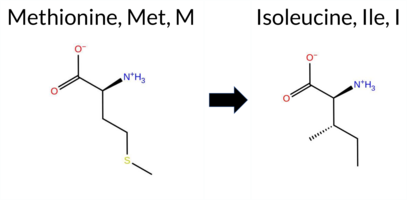 AIThe SynGAP1 missense variant M16I is listed in ClinVar with an “Uncertain” status (ClinVar ID 1424213.0) and is present in gnomAD (6‑33420312‑G‑A). Prediction tools that agree on a benign effect include REVEL, PROVEAN, polyPhen‑2 HumDiv, polyPhen‑2 HumVar, ESM1b, FATHMM, and AlphaMissense‑Optimized. Tools that predict a pathogenic effect are SIFT and AlphaMissense‑Default. The SGM‑Consensus, which aggregates the majority vote from AlphaMissense‑Default, ESM1b, FATHMM, and PROVEAN, reports a “Likely Benign” classification. High‑accuracy assessments show AlphaMissense‑Optimized as benign and the SGM‑Consensus as likely benign; Foldetta results are not available. Overall, the majority of evidence points to a benign impact, and this is consistent with the ClinVar “Uncertain” designation rather than contradicting it. Disclaimer: This summary was generated using AI and should be interpreted alongside expert review. | Likely Benign | 0.440853 | Structured | 0.459925 | Uncertain | 0.346 | 0.908 | 0.375 | Uncertain | 1 | 6-33420312-G-A | 1 | 6.49e-7 | -2.198 | Likely Benign | 0.722 | Likely Pathogenic | Likely Benign | 0.057 | Likely Benign | -0.15 | Neutral | 0.000 | Benign | 0.000 | Benign | 4.28 | Benign | 0.00 | Affected | 4.32 | 1 | 0.1606 | 0.3877 | 2 | 1 | 2.6 | -18.03 | ||||||||||||||||||||||||||||||||
| c.48G>C | M16I 2D AIThe SynGAP1 missense variant M16I is not reported in ClinVar (ClinVar ID = None) and is absent from gnomAD (gnomAD ID = None). Prediction tools that agree on a benign effect include REVEL, PROVEAN, polyPhen‑2 HumDiv, polyPhen‑2 HumVar, ESM1b, FATHMM, and AlphaMissense‑Optimized. Tools that predict a pathogenic effect are SIFT and AlphaMissense‑Default. The SGM‑Consensus, which aggregates the majority vote from AlphaMissense‑Default, ESM1b, FATHMM, and PROVEAN, classifies the variant as Likely Benign. High‑accuracy assessments further support a benign outcome: AlphaMissense‑Optimized predicts benign, and the SGM‑Consensus also indicates Likely Benign. Foldetta, a protein‑folding stability method combining FoldX‑MD and Rosetta outputs, has no available result for this variant. Overall, the majority of computational predictions and the high‑accuracy consensus suggest that M16I is most likely benign, and this conclusion is consistent with the absence of any ClinVar pathogenic annotation. Disclaimer: This summary was generated using AI and should be interpreted alongside expert review. | Likely Benign | 0.440853 | Structured | 0.459925 | Uncertain | 0.346 | 0.908 | 0.375 | -2.198 | Likely Benign | 0.722 | Likely Pathogenic | Likely Benign | 0.057 | Likely Benign | -0.15 | Neutral | 0.000 | Benign | 0.000 | Benign | 4.28 | Benign | 0.00 | Affected | 4.32 | 1 | 0.1606 | 0.3877 | 2 | 1 | 2.6 | -18.03 | |||||||||||||||||||||||||||||||||||||
| c.48G>T | M16I 2D AIThe SynGAP1 missense variant M16I is not reported in ClinVar (ClinVar ID = None) but is present in gnomAD (ID = 6‑33420312‑G‑T). Prediction tools that agree on a benign effect include REVEL, PROVEAN, polyPhen‑2 HumDiv, polyPhen‑2 HumVar, ESM1b, FATHMM, and AlphaMissense‑Optimized. Tools that predict a pathogenic effect are SIFT and AlphaMissense‑Default. The SGM‑Consensus, which aggregates the majority vote from AlphaMissense‑Default, ESM1b, FATHMM, and PROVEAN, classifies the variant as Likely Benign. High‑accuracy assessments further support a benign outcome: AlphaMissense‑Optimized predicts benign, and the SGM‑Consensus also indicates Likely Benign. Foldetta, a protein‑folding stability method combining FoldX‑MD and Rosetta outputs, has no available result for this variant. Overall, the majority of computational evidence points to a benign impact, and this is consistent with the absence of a ClinVar pathogenic classification. Disclaimer: This summary was generated using AI and should be interpreted alongside expert review. | Likely Benign | 0.440853 | Structured | 0.459925 | Uncertain | 0.346 | 0.908 | 0.375 | 6-33420312-G-T | -2.198 | Likely Benign | 0.722 | Likely Pathogenic | Likely Benign | 0.057 | Likely Benign | -0.15 | Neutral | 0.000 | Benign | 0.000 | Benign | 4.28 | Benign | 0.00 | Affected | 4.32 | 1 | 0.1606 | 0.3877 | 2 | 1 | 2.6 | -18.03 | ||||||||||||||||||||||||||||||||||||
| c.490C>G | R164G 2D AIThe SynGAP1 missense variant R164G has no ClinVar entry and is not reported in gnomAD. Functional prediction tools show a split opinion: benign calls come from REVEL, polyPhen‑2 HumVar, and FATHMM, while pathogenic calls are made by PROVEAN, polyPhen‑2 HumDiv, SIFT, ESM1b, and AlphaMissense‑Default. AlphaMissense‑Optimized is uncertain, and the SGM‑Consensus (majority vote of AlphaMissense‑Default, ESM1b, FATHMM, and PROVEAN) reports the variant as Likely Pathogenic. High‑accuracy assessments further support a deleterious effect: the SGM‑Consensus remains Likely Pathogenic, AlphaMissense‑Optimized is inconclusive, and the Foldetta stability analysis is unavailable. Overall, the majority of evidence points toward a pathogenic impact. Because there is no ClinVar classification to oppose this, the variant is most likely pathogenic based on current predictions. Disclaimer: This summary was generated using AI and should be interpreted alongside expert review. | Likely Pathogenic | 0.414856 | Structured | 0.512396 | Binding | 0.317 | 0.666 | 0.250 | -12.416 | Likely Pathogenic | 0.879 | Likely Pathogenic | Ambiguous | 0.190 | Likely Benign | -3.01 | Deleterious | 0.487 | Possibly Damaging | 0.272 | Benign | 3.77 | Benign | 0.00 | Affected | 0.3657 | 0.3631 | -3 | -2 | 4.1 | -99.14 | |||||||||||||||||||||||||||||||||||||||
| c.491G>A | R164Q 2D AISynGAP1 missense variant R164Q is listed in ClinVar with an uncertain significance and is present in gnomAD (ID 6‑33432788‑G‑A). Functional prediction tools show mixed results: benign predictions come from REVEL, PROVEAN, polyPhen‑2 HumVar, FATHMM, and AlphaMissense‑Optimized, whereas pathogenic predictions come from polyPhen‑2 HumDiv, SIFT, ESM1b, and AlphaMissense‑Default. High‑accuracy assessments indicate that AlphaMissense‑Optimized predicts a benign effect, while the SGM Consensus (majority vote of AlphaMissense‑Default, ESM1b, FATHMM, PROVEAN) is inconclusive due to a 2‑to‑2 split; Foldetta results are not available. Overall, the balance of evidence slightly favors a benign interpretation, and this does not contradict the ClinVar uncertain status. Disclaimer: This summary was generated using AI and should be interpreted alongside expert review. | 0.414856 | Structured | 0.512396 | Binding | 0.317 | 0.666 | 0.250 | Uncertain | 1 | 6-33432788-G-A | 2 | 1.24e-6 | -11.208 | Likely Pathogenic | 0.600 | Likely Pathogenic | Likely Benign | 0.184 | Likely Benign | -1.86 | Neutral | 0.957 | Probably Damaging | 0.342 | Benign | 3.82 | Benign | 0.00 | Affected | 3.74 | 4 | 0.3607 | 0.2711 | 1 | 1 | 1.0 | -28.06 | |||||||||||||||||||||||||||||||||
| c.491G>C | R164P 2D AIThe SynGAP1 missense variant R164P is reported in gnomAD (ID 6‑33432788‑G‑C) but has no ClinVar entry. Functional prediction tools split in two groups: benign predictions come from REVEL and FATHMM, whereas pathogenic predictions are made by PROVEAN, polyPhen‑2 (HumDiv and HumVar), SIFT, ESM1b, and AlphaMissense‑Default. The SGM‑Consensus, which aggregates AlphaMissense‑Default, ESM1b, FATHMM, and PROVEAN, classifies the variant as Likely Pathogenic. AlphaMissense‑Optimized returns an Uncertain result, and Foldetta (a protein‑folding stability method combining FoldX‑MD and Rosetta) has no available output for this variant. Overall, the majority of high‑confidence tools predict pathogenicity, and this assessment does not contradict any ClinVar status (none is available). Therefore, the variant is most likely pathogenic based on current predictions. Disclaimer: This summary was generated using AI and should be interpreted alongside expert review. | Likely Pathogenic | 0.414856 | Structured | 0.512396 | Binding | 0.317 | 0.666 | 0.250 | 6-33432788-G-C | 1 | 6.20e-7 | -12.792 | Likely Pathogenic | 0.898 | Likely Pathogenic | Ambiguous | 0.339 | Likely Benign | -3.42 | Deleterious | 0.910 | Possibly Damaging | 0.578 | Possibly Damaging | 3.77 | Benign | 0.00 | Affected | 3.74 | 4 | 0.2408 | 0.4730 | -2 | 0 | 2.9 | -59.07 | ||||||||||||||||||||||||||||||||||
| c.491G>T | R164L 2D AIThe SynGAP1 missense variant R164L is not reported in ClinVar and has no entries in gnomAD, indicating it is not catalogued in these databases. Functional prediction tools show a split: benign calls come from REVEL, polyPhen‑2 (HumDiv and HumVar) and FATHMM, while pathogenic calls arise from PROVEAN, SIFT, ESM1b and AlphaMissense‑Default. Grouping by consensus, four tools predict benign and four predict pathogenic. High‑accuracy assessments further support a deleterious effect: AlphaMissense‑Optimized is uncertain, but the SGM Consensus—derived from a majority vote of AlphaMissense‑Default, ESM1b, FATHMM and PROVEAN—labels the variant as Likely Pathogenic. Foldetta, a protein‑folding stability predictor, has no available result for this residue. Taken together, the majority of evidence, including the SGM Consensus, points to a pathogenic impact. This conclusion does not contradict ClinVar status, as no ClinVar assertion exists for R164L. Disclaimer: This summary was generated using AI and should be interpreted alongside expert review. | Likely Pathogenic | 0.414856 | Structured | 0.512396 | Binding | 0.317 | 0.666 | 0.250 | -10.794 | Likely Pathogenic | 0.910 | Likely Pathogenic | Ambiguous | 0.274 | Likely Benign | -3.37 | Deleterious | 0.001 | Benign | 0.003 | Benign | 3.80 | Benign | 0.00 | Affected | 0.2137 | 0.5154 | -3 | -2 | 8.3 | -43.03 | |||||||||||||||||||||||||||||||||||||||
| c.493A>C | S165R 2D AIThe SynGAP1 missense variant S165R is not reported in ClinVar (ClinVar ID = None) and is absent from gnomAD (gnomAD ID = None). Prediction tools that agree on a benign effect include REVEL, PROVEAN, polyPhen‑2 HumVar, and FATHMM. Tools that predict a pathogenic effect are polyPhen‑2 HumDiv, SIFT, ESM1b, AlphaMissense‑Default, and AlphaMissense‑Optimized. High‑accuracy assessments show AlphaMissense‑Optimized as pathogenic; the SGM Consensus (majority vote from AlphaMissense‑Default, ESM1b, FATHMM, PROVEAN) is inconclusive (2 vs 2), and Foldetta results are unavailable. Overall, the majority of predictions (five pathogenic vs four benign) indicate that the variant is most likely pathogenic, and this conclusion does not contradict any ClinVar status because no ClinVar entry exists. Disclaimer: This summary was generated using AI and should be interpreted alongside expert review. | 0.429200 | Structured | 0.509123 | Binding | 0.324 | 0.644 | 0.250 | -9.527 | Likely Pathogenic | 0.985 | Likely Pathogenic | Likely Pathogenic | 0.293 | Likely Benign | -1.89 | Neutral | 0.567 | Possibly Damaging | 0.249 | Benign | 4.01 | Benign | 0.00 | Affected | 0.1003 | 0.3969 | 0 | -1 | -3.7 | 69.11 | ||||||||||||||||||||||||||||||||||||||||
| c.493A>G | S165G 2D AIThe SynGAP1 missense variant S165G is not reported in ClinVar (no ClinVar ID) and is absent from gnomAD (no gnomAD ID). Prediction tools that agree on a benign effect include REVEL, PROVEAN, polyPhen‑2 HumDiv, polyPhen‑2 HumVar, FATHMM, AlphaMissense‑Default, and AlphaMissense‑Optimized. Only SIFT predicts a pathogenic outcome, while ESM1b is uncertain. The SGM‑Consensus, derived from a majority vote of AlphaMissense‑Default, ESM1b, FATHMM, and PROVEAN, classifies the variant as Likely Benign. High‑accuracy assessments further support a benign interpretation: AlphaMissense‑Optimized predicts Benign, and the SGM‑Consensus also indicates Likely Benign. Foldetta results are unavailable. Overall, the preponderance of evidence points to the variant being most likely benign, and this conclusion does not contradict any ClinVar status because no ClinVar entry exists. Disclaimer: This summary was generated using AI and should be interpreted alongside expert review. | Likely Benign | 0.429200 | Structured | 0.509123 | Binding | 0.324 | 0.644 | 0.250 | -7.691 | In-Between | 0.223 | Likely Benign | Likely Benign | 0.182 | Likely Benign | -1.17 | Neutral | 0.272 | Benign | 0.086 | Benign | 3.99 | Benign | 0.00 | Affected | 0.2622 | 0.4441 | 1 | 0 | 0.4 | -30.03 | |||||||||||||||||||||||||||||||||||||||
| c.493A>T | S165C 2D AIThe SynGAP1 missense variant S165C is not reported in ClinVar (no ClinVar ID) and is absent from gnomAD (no gnomAD ID). Prediction tools that agree on a benign effect include REVEL, PROVEAN, FATHMM, and AlphaMissense‑Optimized. Tools that predict a pathogenic effect are polyPhen‑2 HumDiv, polyPhen‑2 HumVar, SIFT, and ESM1b. AlphaMissense‑Default is uncertain. High‑accuracy assessments show AlphaMissense‑Optimized as benign, and the SGM Consensus (majority vote from AlphaMissense‑Default, ESM1b, FATHMM, PROVEAN) also resolves to benign. Foldetta, a protein‑folding stability method combining FoldX‑MD and Rosetta outputs, has no available result for this variant. Overall, the preponderance of evidence points to a benign impact for S165C, and this conclusion is not contradicted by any ClinVar annotation. Disclaimer: This summary was generated using AI and should be interpreted alongside expert review. | 0.429200 | Structured | 0.509123 | Binding | 0.324 | 0.644 | 0.250 | -8.425 | Likely Pathogenic | 0.367 | Ambiguous | Likely Benign | 0.304 | Likely Benign | -1.92 | Neutral | 0.938 | Possibly Damaging | 0.498 | Possibly Damaging | 3.94 | Benign | 0.00 | Affected | 0.1306 | 0.5534 | 0 | -1 | 3.3 | 16.06 | ||||||||||||||||||||||||||||||||||||||||
| c.494G>A | S165N 2D AIThe SynGAP1 missense variant S165N is not reported in ClinVar (no ClinVar ID) and is absent from gnomAD (no gnomAD ID). Prediction tools that agree on a benign effect include REVEL, PROVEAN, polyPhen‑2 HumVar, FATHMM, and AlphaMissense‑Optimized. Those that predict a pathogenic effect are polyPhen‑2 HumDiv, SIFT, and ESM1b. AlphaMissense‑Default is uncertain. High‑accuracy assessments show AlphaMissense‑Optimized as benign, and the SGM Consensus (majority vote from AlphaMissense‑Default, ESM1b, FATHMM, PROVEAN) also resolves to benign. Foldetta, a protein‑folding stability method, has no available result for this variant. Overall, the preponderance of evidence points to a benign impact. This conclusion is not contradicted by ClinVar, as no ClinVar classification exists for S165N. Disclaimer: This summary was generated using AI and should be interpreted alongside expert review. | 0.429200 | Structured | 0.509123 | Binding | 0.324 | 0.644 | 0.250 | -9.041 | Likely Pathogenic | 0.509 | Ambiguous | Likely Benign | 0.074 | Likely Benign | -0.49 | Neutral | 0.532 | Possibly Damaging | 0.229 | Benign | 4.03 | Benign | 0.00 | Affected | 0.1589 | 0.4862 | 1 | 1 | -2.7 | 27.03 | ||||||||||||||||||||||||||||||||||||||||
| c.494G>C | S165T 2D AIThe SynGAP1 missense variant S165T is not reported in ClinVar (no ClinVar ID) and is absent from gnomAD (no gnomAD ID). Prediction tools that agree on a benign effect include REVEL, PROVEAN, polyPhen‑2 HumDiv, polyPhen‑2 HumVar, ESM1b, FATHMM, AlphaMissense‑Default, and AlphaMissense‑Optimized. Only SIFT predicts a pathogenic outcome. The SGM‑Consensus, which aggregates AlphaMissense‑Default, ESM1b, FATHMM, and PROVEAN, reports the variant as Likely Benign. High‑accuracy assessments show AlphaMissense‑Optimized as Benign and the SGM‑Consensus as Likely Benign; Foldetta results are unavailable. Overall, the majority of evidence points to a benign effect. The variant is most likely benign, and this conclusion does not contradict any ClinVar status, as no ClinVar entry exists. Disclaimer: This summary was generated using AI and should be interpreted alongside expert review. | Likely Benign | 0.429200 | Structured | 0.509123 | Binding | 0.324 | 0.644 | 0.250 | -6.952 | Likely Benign | 0.205 | Likely Benign | Likely Benign | 0.076 | Likely Benign | -0.94 | Neutral | 0.155 | Benign | 0.064 | Benign | 4.02 | Benign | 0.00 | Affected | 0.1754 | 0.5779 | 1 | 1 | 0.1 | 14.03 | |||||||||||||||||||||||||||||||||||||||
| c.494G>T | S165I 2D AISynGAP1 missense variant S165I has no ClinVar record and is absent from gnomAD. Individual prediction tools cluster into two groups: benign predictions come from REVEL, polyPhen‑2 HumDiv, polyPhen‑2 HumVar, FATHMM, and AlphaMissense‑Optimized; pathogenic predictions come from PROVEAN, SIFT, ESM1b, and AlphaMissense‑Default. The SGM‑Consensus, which aggregates AlphaMissense‑Default, ESM1b, FATHMM, and PROVEAN, reports the variant as Likely Pathogenic. High‑accuracy assessments show AlphaMissense‑Optimized as benign, while the SGM‑Consensus remains Likely Pathogenic; Foldetta stability analysis is unavailable. Overall, the majority of single‑tool predictions favor a benign effect, whereas the consensus score suggests pathogenicity. Consequently, the variant is most likely benign according to the bulk of evidence, and this assessment does not contradict any ClinVar annotation (none exists). Disclaimer: This summary was generated using AI and should be interpreted alongside expert review. | Likely Pathogenic | 0.429200 | Structured | 0.509123 | Binding | 0.324 | 0.644 | 0.250 | -11.304 | Likely Pathogenic | 0.774 | Likely Pathogenic | Likely Benign | 0.259 | Likely Benign | -2.53 | Deleterious | 0.084 | Benign | 0.031 | Benign | 3.96 | Benign | 0.00 | Affected | 0.0943 | 0.5027 | -1 | -2 | 5.3 | 26.08 | |||||||||||||||||||||||||||||||||||||||
| c.495T>A | S165R 2D AIThe SynGAP1 missense variant S165R is not reported in ClinVar (ClinVar ID = None) and is absent from gnomAD (gnomAD ID = None). Prediction tools that agree on a benign effect include REVEL, PROVEAN, polyPhen‑2 HumVar, and FATHMM. Tools that agree on a pathogenic effect include polyPhen‑2 HumDiv, SIFT, ESM1b, AlphaMissense‑Default, and AlphaMissense‑Optimized. The SGM Consensus, which aggregates AlphaMissense‑Default, ESM1b, FATHMM, and PROVEAN, is inconclusive (2 vs 2). High‑accuracy AlphaMissense‑Optimized predicts pathogenic, while Foldetta results are unavailable. Overall, the majority of predictions (five pathogenic vs. four benign) indicate a pathogenic effect. There is no ClinVar annotation to contradict this assessment, so the variant is most likely pathogenic. Disclaimer: This summary was generated using AI and should be interpreted alongside expert review. | 0.429200 | Structured | 0.509123 | Binding | 0.324 | 0.644 | 0.250 | -9.527 | Likely Pathogenic | 0.985 | Likely Pathogenic | Likely Pathogenic | 0.177 | Likely Benign | -1.89 | Neutral | 0.567 | Possibly Damaging | 0.249 | Benign | 4.01 | Benign | 0.00 | Affected | 0.1003 | 0.3969 | 0 | -1 | -3.7 | 69.11 | ||||||||||||||||||||||||||||||||||||||||
| c.495T>G | S165R 2D AIThe SynGAP1 missense variant S165R is not reported in ClinVar (no ClinVar ID) and is absent from gnomAD (no gnomAD ID). Prediction tools that agree on a benign effect include REVEL, PROVEAN, polyPhen‑2 HumVar, and FATHMM. Tools that agree on a pathogenic effect include polyPhen‑2 HumDiv, SIFT, ESM1b, AlphaMissense‑Default, and AlphaMissense‑Optimized. The SGM Consensus, which aggregates AlphaMissense‑Default, ESM1b, FATHMM, and PROVEAN, is inconclusive (two pathogenic vs. two benign votes). Foldetta, a protein‑folding stability method combining FoldX‑MD and Rosetta outputs, has no available result for this variant. High‑accuracy tools specifically show AlphaMissense‑Optimized as pathogenic, while SGM Consensus and Foldetta are unavailable. Based on the available predictions, the variant is most likely pathogenic, and this assessment does not contradict any ClinVar status because no ClinVar entry exists. Disclaimer: This summary was generated using AI and should be interpreted alongside expert review. | 0.429200 | Structured | 0.509123 | Binding | 0.324 | 0.644 | 0.250 | -9.527 | Likely Pathogenic | 0.985 | Likely Pathogenic | Likely Pathogenic | 0.177 | Likely Benign | -1.89 | Neutral | 0.567 | Possibly Damaging | 0.249 | Benign | 4.01 | Benign | 0.00 | Affected | 0.1003 | 0.3969 | 0 | -1 | -3.7 | 69.11 | ||||||||||||||||||||||||||||||||||||||||
| c.496G>A | A166T 2D 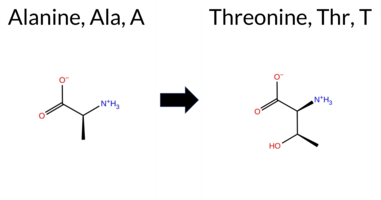 AIThe SynGAP1 missense variant A166T is not reported in ClinVar and is absent from gnomAD. In silico prediction tools that assess sequence conservation and structural impact (REVEL, PROVEAN, polyPhen‑2 HumDiv, polyPhen‑2 HumVar, SIFT, ESM1b, FATHMM, AlphaMissense‑Default, AlphaMissense‑Optimized) all classify the change as benign. No tool in the dataset predicts pathogenicity, so the pathogenic group is empty. High‑accuracy assessments further support a benign outcome: AlphaMissense‑Optimized predicts benign, and the SGM Consensus (majority vote of AlphaMissense‑Default, ESM1b, FATHMM, PROVEAN) reports “Likely Benign.” Foldetta results are not available. Overall, the consensus of all available predictions indicates that the variant is most likely benign, and this conclusion does not contradict any ClinVar status because no ClinVar entry exists. Disclaimer: This summary was generated using AI and should be interpreted alongside expert review. | Likely Benign | 0.425610 | Structured | 0.505037 | Binding | 0.384 | 0.658 | 0.125 | -6.700 | Likely Benign | 0.169 | Likely Benign | Likely Benign | 0.115 | Likely Benign | -0.78 | Neutral | 0.399 | Benign | 0.273 | Benign | 4.10 | Benign | 0.31 | Tolerated | 0.1420 | 0.5134 | 1 | 0 | -2.5 | 30.03 | |||||||||||||||||||||||||||||||||||||||
| c.496G>C | A166P 2D 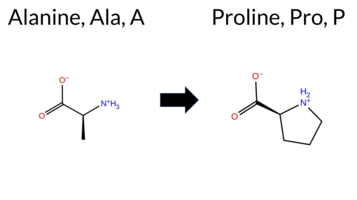 AIThe SynGAP1 missense variant A166P is not reported in ClinVar (no ClinVar ID) and is absent from gnomAD (no gnomAD ID). Prediction tools that agree on a benign effect include REVEL, PROVEAN, FATHMM, AlphaMissense‑Default, AlphaMissense‑Optimized, and the SGM‑Consensus (which is “Likely Benign”). Tools that predict a pathogenic effect are polyPhen‑2 HumDiv, polyPhen‑2 HumVar, SIFT, and ESM1b. High‑accuracy assessments show AlphaMissense‑Optimized as benign and the SGM‑Consensus as likely benign; Foldetta results are not available. Overall, the majority of evidence points to a benign impact for A166P, and this conclusion does not contradict any ClinVar annotation (none exists). Disclaimer: This summary was generated using AI and should be interpreted alongside expert review. | Likely Benign | 0.425610 | Structured | 0.505037 | Binding | 0.384 | 0.658 | 0.125 | -9.665 | Likely Pathogenic | 0.273 | Likely Benign | Likely Benign | 0.172 | Likely Benign | -2.04 | Neutral | 0.877 | Possibly Damaging | 0.580 | Possibly Damaging | 3.99 | Benign | 0.02 | Affected | 0.1861 | 0.3668 | 1 | -1 | -3.4 | 26.04 | |||||||||||||||||||||||||||||||||||||||
| c.496G>T | A166S 2D AIThe SynGAP1 missense variant A166 S is not reported in ClinVar and is absent from gnomAD. Functional prediction tools largely agree on a benign effect: REVEL, PROVEAN, polyPhen‑2 (HumDiv and HumVar), ESM1b, FATHMM, AlphaMissense‑Default, and AlphaMissense‑Optimized all classify the change as benign, while the single pathogenic prediction comes from SIFT. The SGM‑Consensus, which aggregates AlphaMissense‑Default, ESM1b, FATHMM, and PROVEAN, reports the variant as “Likely Benign.” High‑accuracy assessments confirm this: AlphaMissense‑Optimized predicts benign, and the SGM‑Consensus likewise indicates a benign outcome. Foldetta, a protein‑folding stability method combining FoldX‑MD and Rosetta outputs, has no available result for this variant. Overall, the majority of evidence points to a benign impact, and this conclusion does not contradict any ClinVar annotation (none is present). Disclaimer: This summary was generated using AI and should be interpreted alongside expert review. | Likely Benign | 0.425610 | Structured | 0.505037 | Binding | 0.384 | 0.658 | 0.125 | -6.008 | Likely Benign | 0.120 | Likely Benign | Likely Benign | 0.080 | Likely Benign | -0.78 | Neutral | 0.399 | Benign | 0.212 | Benign | 4.07 | Benign | 0.05 | Affected | 0.2286 | 0.4146 | 1 | 1 | -2.6 | 16.00 | |||||||||||||||||||||||||||||||||||||||
| c.497C>A | A166D 2D 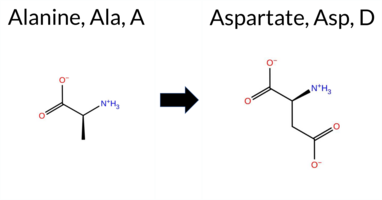 AIThe SynGAP1 missense variant A166D is not reported in ClinVar (ClinVar ID: None) and is absent from gnomAD (gnomAD ID: None). Prediction tools that agree on a benign effect include REVEL, PROVEAN, and FATHMM, while those that agree on a pathogenic effect are polyPhen‑2 HumDiv, polyPhen‑2 HumVar, SIFT, ESM1b, and AlphaMissense‑Default. The high‑accuracy consensus method SGM (majority vote from AlphaMissense‑Default, ESM1b, FATHMM, and PROVEAN) is inconclusive, yielding a 2‑to‑2 split. AlphaMissense‑Optimized rates the variant as uncertain, and Foldetta (combining FoldX‑MD and Rosetta outputs) has no available result for this change. Overall, the majority of tools predict a pathogenic impact, and there is no ClinVar annotation to contradict this assessment. Thus, the variant is most likely pathogenic based on current computational predictions. Disclaimer: This summary was generated using AI and should be interpreted alongside expert review. | 0.425610 | Structured | 0.505037 | Binding | 0.384 | 0.658 | 0.125 | -12.171 | Likely Pathogenic | 0.900 | Likely Pathogenic | Ambiguous | 0.144 | Likely Benign | -2.21 | Neutral | 0.877 | Possibly Damaging | 0.580 | Possibly Damaging | 4.02 | Benign | 0.01 | Affected | 0.2031 | 0.2694 | 0 | -2 | -5.3 | 44.01 | ||||||||||||||||||||||||||||||||||||||||
| c.497C>G | A166G 2D AIThe SynGAP1 missense variant A166G is not reported in ClinVar and is absent from gnomAD. Functional prediction tools largely agree on a benign effect: REVEL, PROVEAN, polyPhen‑2 (HumDiv and HumVar), FATHMM, AlphaMissense‑Default, and AlphaMissense‑Optimized all classify the change as benign. Only SIFT and ESM1b predict a pathogenic outcome. The SGM‑Consensus, which aggregates AlphaMissense‑Default, ESM1b, FATHMM, and PROVEAN, yields a majority‑benign vote and is reported as “Likely Benign.” High‑accuracy assessments confirm this: AlphaMissense‑Optimized is benign, and the SGM‑Consensus (majority vote) is benign. Foldetta, a protein‑folding stability method combining FoldX‑MD and Rosetta outputs, has no available result for this variant. Overall, the consensus of the majority of prediction tools and the high‑accuracy methods indicates that the variant is most likely benign, and this assessment does not contradict any ClinVar status. Disclaimer: This summary was generated using AI and should be interpreted alongside expert review. | Likely Benign | 0.425610 | Structured | 0.505037 | Binding | 0.384 | 0.658 | 0.125 | -8.188 | Likely Pathogenic | 0.215 | Likely Benign | Likely Benign | 0.101 | Likely Benign | -1.16 | Neutral | 0.399 | Benign | 0.212 | Benign | 4.02 | Benign | 0.03 | Affected | 0.1665 | 0.3201 | 1 | 0 | -2.2 | -14.03 | |||||||||||||||||||||||||||||||||||||||
| c.497C>T | A166V 2D AIThe SynGAP1 missense variant A166V is not reported in ClinVar and is absent from gnomAD. Functional prediction tools largely agree on a benign effect: REVEL, PROVEAN, polyPhen‑2 (HumDiv and HumVar), ESM1b, FATHMM, AlphaMissense‑Default, and AlphaMissense‑Optimized all classify the change as benign, while the single pathogenic prediction comes from SIFT. The SGM‑Consensus, which aggregates AlphaMissense‑Default, ESM1b, FATHMM, and PROVEAN, reports the variant as “Likely Benign.” High‑accuracy assessments confirm this: AlphaMissense‑Optimized predicts benign, and the SGM‑Consensus also indicates a benign outcome. Foldetta, a protein‑folding stability method combining FoldX‑MD and Rosetta, has no available result for this variant. Overall, the majority of evidence points to a benign impact, and this conclusion does not contradict any ClinVar annotation (none is present). Disclaimer: This summary was generated using AI and should be interpreted alongside expert review. | Likely Benign | 0.425610 | Structured | 0.505037 | Binding | 0.384 | 0.658 | 0.125 | -6.689 | Likely Benign | 0.274 | Likely Benign | Likely Benign | 0.191 | Likely Benign | -1.09 | Neutral | 0.141 | Benign | 0.091 | Benign | 4.07 | Benign | 0.02 | Affected | 0.1027 | 0.4281 | 0 | 0 | 2.4 | 28.05 | |||||||||||||||||||||||||||||||||||||||
| c.499G>A | D167N 2D AIThe SynGAP1 missense variant D167N is not reported in ClinVar (ClinVar status: none) but is present in gnomAD (ID 6‑33432796‑G‑A). Prediction tools that agree on a benign effect include REVEL, PROVEAN, polyPhen‑2 (HumDiv and HumVar), and FATHMM. Tools that predict a pathogenic effect are SIFT, ESM1b, and AlphaMissense‑Default. AlphaMissense‑Optimized is uncertain. The SGM Consensus, which takes a majority vote from AlphaMissense‑Default, ESM1b, FATHMM, and PROVEAN, is inconclusive (two pathogenic, two benign). Foldetta, a protein‑folding stability method combining FoldX‑MD and Rosetta outputs, has no available result for this variant. Based on the available predictions, the variant is most likely benign; this assessment does not contradict the ClinVar status, which is currently unreported. Disclaimer: This summary was generated using AI and should be interpreted alongside expert review. | 0.429200 | Structured | 0.502306 | Binding | 0.377 | 0.667 | 0.375 | 6-33432796-G-A | 3 | 1.86e-6 | -11.939 | Likely Pathogenic | 0.843 | Likely Pathogenic | Ambiguous | 0.097 | Likely Benign | -2.32 | Neutral | 0.141 | Benign | 0.123 | Benign | 3.96 | Benign | 0.00 | Affected | 3.74 | 4 | 0.1222 | 0.7330 | 1 | 2 | 0.0 | -0.98 | |||||||||||||||||||||||||||||||||||
| c.499G>C | D167H 2D AIThe SynGAP1 missense variant D167H is not reported in ClinVar (no ClinVar ID) and is absent from gnomAD (no gnomAD ID). Prediction tools that agree on a benign effect include REVEL and FATHMM, whereas the majority of tools predict a pathogenic impact: PROVEAN, polyPhen‑2 HumDiv, polyPhen‑2 HumVar, SIFT, ESM1b, AlphaMissense‑Default, AlphaMissense‑Optimized, and the SGM‑Consensus (Likely Pathogenic). High‑accuracy assessments reinforce this view: AlphaMissense‑Optimized classifies the variant as pathogenic; the SGM‑Consensus, derived from a majority vote of AlphaMissense‑Default, ESM1b, FATHMM, and PROVEAN, also indicates a likely pathogenic outcome. Foldetta results are unavailable, so they do not influence the overall assessment. Based on the collective predictions, the variant is most likely pathogenic, and this conclusion does not contradict any ClinVar annotation (none is present). Disclaimer: This summary was generated using AI and should be interpreted alongside expert review. | Likely Pathogenic | 0.429200 | Structured | 0.502306 | Binding | 0.377 | 0.667 | 0.375 | -12.606 | Likely Pathogenic | 0.974 | Likely Pathogenic | Likely Pathogenic | 0.338 | Likely Benign | -3.29 | Deleterious | 0.898 | Possibly Damaging | 0.557 | Possibly Damaging | 3.93 | Benign | 0.00 | Affected | 0.1478 | 0.7563 | 1 | -1 | 0.3 | 22.05 | |||||||||||||||||||||||||||||||||||||||
| c.499G>T | D167Y 2D AIThe SynGAP1 missense variant D167Y is not reported in ClinVar and is absent from gnomAD. Functional prediction tools show a split: benign calls come from REVEL and FATHMM, whereas the remaining eight predictors—PROVEAN, polyPhen‑2 (HumDiv and HumVar), SIFT, ESM1b, AlphaMissense‑Default, AlphaMissense‑Optimized—and the SGM‑Consensus (majority vote of AlphaMissense‑Default, ESM1b, FATHMM, PROVEAN) all indicate pathogenicity. High‑accuracy assessments further support a deleterious effect: AlphaMissense‑Optimized predicts pathogenic, and the SGM‑Consensus is labeled Likely Pathogenic. No Foldetta stability analysis is available for this residue. Overall, the majority of evidence points to a pathogenic impact for D167Y, and this conclusion is not contradicted by any ClinVar annotation, which is currently absent. Disclaimer: This summary was generated using AI and should be interpreted alongside expert review. | Likely Pathogenic | 0.429200 | Structured | 0.502306 | Binding | 0.377 | 0.667 | 0.375 | -14.228 | Likely Pathogenic | 0.976 | Likely Pathogenic | Likely Pathogenic | 0.414 | Likely Benign | -4.23 | Deleterious | 0.898 | Possibly Damaging | 0.557 | Possibly Damaging | 3.90 | Benign | 0.00 | Affected | 0.0493 | 0.6358 | -4 | -3 | 2.2 | 48.09 | |||||||||||||||||||||||||||||||||||||||
| c.49T>A | S17T 2D AIThe SynGAP1 missense variant S17T is not reported in ClinVar (no ClinVar ID) and is absent from gnomAD (no gnomAD ID). Prediction tools that agree on a benign effect include REVEL, PROVEAN, polyPhen‑2 HumDiv, polyPhen‑2 HumVar, ESM1b, FATHMM, AlphaMissense‑Default, and AlphaMissense‑Optimized. Only SIFT predicts a pathogenic outcome. The SGM‑Consensus, which aggregates AlphaMissense‑Default, ESM1b, FATHMM, and PROVEAN, reports the variant as Likely Benign. High‑accuracy assessments show AlphaMissense‑Optimized as Benign and the SGM‑Consensus as Likely Benign; Foldetta results are not available. Overall, the majority of evidence points to a benign effect. The variant is most likely benign, and this conclusion does not contradict any ClinVar status, as no ClinVar entry exists. Disclaimer: This summary was generated using AI and should be interpreted alongside expert review. | Likely Benign | 0.483068 | Structured | 0.452228 | Uncertain | 0.341 | 0.910 | 0.375 | -3.782 | Likely Benign | 0.197 | Likely Benign | Likely Benign | 0.061 | Likely Benign | -0.58 | Neutral | 0.052 | Benign | 0.004 | Benign | 4.10 | Benign | 0.00 | Affected | 0.1667 | 0.6933 | 1 | 1 | 0.1 | 14.03 | |||||||||||||||||||||||||||||||||||||||
| c.49T>C | S17P 2D 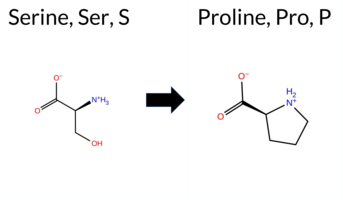 AIThe SynGAP1 missense variant S17P is not reported in ClinVar and is absent from gnomAD. Prediction tools that agree on a benign effect include REVEL, PROVEAN, polyPhen‑2 (HumDiv and HumVar), ESM1b, FATHMM, AlphaMissense‑Default, and AlphaMissense‑Optimized. Only SIFT predicts a pathogenic outcome. The high‑accuracy consensus, SGM‑Consensus, which aggregates AlphaMissense‑Default, ESM1b, FATHMM, and PROVEAN, also indicates a benign effect. AlphaMissense‑Optimized independently scores the variant as benign. Foldetta, a protein‑folding stability method combining FoldX‑MD and Rosetta outputs, has no available result for this variant. Overall, the majority of evidence points to a benign impact. This conclusion is consistent with the lack of ClinVar annotation; there is no contradiction with existing clinical data. Disclaimer: This summary was generated using AI and should be interpreted alongside expert review. | Likely Benign | 0.483068 | Structured | 0.452228 | Uncertain | 0.341 | 0.910 | 0.375 | -3.251 | Likely Benign | 0.256 | Likely Benign | Likely Benign | 0.210 | Likely Benign | -0.65 | Neutral | 0.212 | Benign | 0.010 | Benign | 4.01 | Benign | 0.00 | Affected | 0.2406 | 0.6473 | 1 | -1 | -0.8 | 10.04 | |||||||||||||||||||||||||||||||||||||||
| c.49T>G | S17A 2D 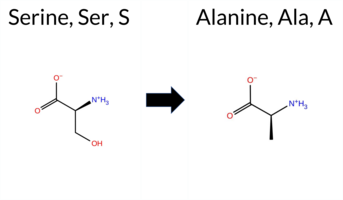 AIThe SynGAP1 missense variant S17A is not reported in ClinVar (no ClinVar ID) and is absent from gnomAD (no gnomAD ID). Prediction tools that agree on a benign effect include REVEL, PROVEAN, polyPhen‑2 HumDiv, polyPhen‑2 HumVar, ESM1b, FATHMM, AlphaMissense‑Default, and AlphaMissense‑Optimized. Only SIFT predicts a pathogenic outcome. The SGM‑Consensus, which aggregates AlphaMissense‑Default, ESM1b, FATHMM, and PROVEAN, classifies the variant as Likely Benign. High‑accuracy assessments further support a benign interpretation: AlphaMissense‑Optimized predicts Benign, and the SGM‑Consensus (majority vote) also indicates Likely Benign. Foldetta results are unavailable. Overall, the majority of computational evidence points to a benign effect, and this conclusion does not contradict any ClinVar annotation, as none exists for this variant. Disclaimer: This summary was generated using AI and should be interpreted alongside expert review. | Likely Benign | 0.483068 | Structured | 0.452228 | Uncertain | 0.341 | 0.910 | 0.375 | -3.140 | Likely Benign | 0.166 | Likely Benign | Likely Benign | 0.078 | Likely Benign | -0.34 | Neutral | 0.000 | Benign | 0.000 | Benign | 4.15 | Benign | 0.00 | Affected | 0.5276 | 0.5824 | Strenghten | 1 | 1 | 2.6 | -16.00 | ||||||||||||||||||||||||||||||||||||||
| c.4A>C | S2R 2D AIThe SynGAP1 missense variant S2R is not reported in ClinVar (no ClinVar ID) and is absent from gnomAD (no gnomAD ID). Prediction tools that agree on a benign effect include REVEL, PROVEAN, polyPhen‑2 HumDiv, polyPhen‑2 HumVar, ESM1b, FATHMM, and AlphaMissense‑Optimized. Only SIFT predicts a pathogenic outcome, while AlphaMissense‑Default remains uncertain. The SGM‑Consensus, derived from a majority vote of AlphaMissense‑Default, ESM1b, FATHMM, and PROVEAN, classifies the variant as Likely Benign. High‑accuracy assessments further support a benign interpretation: AlphaMissense‑Optimized predicts Benign, and the SGM‑Consensus also indicates Likely Benign. Foldetta, a protein‑folding stability method combining FoldX‑MD and Rosetta outputs, has no available result for this variant. Overall, the preponderance of evidence from both general and high‑accuracy predictors indicates that the variant is most likely benign, and this conclusion is not contradicted by any ClinVar annotation. Disclaimer: This summary was generated using AI and should be interpreted alongside expert review. | Likely Benign | 0.671169 | Disordered | 0.543646 | Binding | 0.382 | 0.922 | 0.750 | -3.684 | Likely Benign | 0.426 | Ambiguous | Likely Benign | 0.062 | Likely Benign | -0.44 | Neutral | 0.117 | Benign | 0.008 | Benign | 4.05 | Benign | 0.00 | Affected | 4.32 | 1 | 0.0996 | 0.4503 | -1 | 0 | -3.7 | 69.11 | |||||||||||||||||||||||||||||||||||||
| c.4A>G | S2G 2D AIThe SynGAP1 missense variant S2G is reported in gnomAD (ID 6‑33420268‑A‑G) but has no ClinVar entry. Functional prediction tools largely agree on a benign effect: REVEL, PROVEAN, polyPhen‑2 (HumDiv and HumVar), ESM1b, FATHMM, AlphaMissense‑Default, and AlphaMissense‑Optimized all classify the change as benign. Only SIFT predicts a pathogenic outcome. The SGM‑Consensus, derived from a majority vote of AlphaMissense‑Default, ESM1b, FATHMM, and PROVEAN, also indicates a likely benign status. High‑accuracy assessments confirm this: AlphaMissense‑Optimized is benign, and the SGM‑Consensus is likely benign; Foldetta results are not available. Overall, the preponderance of evidence points to a benign effect for this variant, and this conclusion is consistent with the absence of a ClinVar pathogenic classification. Disclaimer: This summary was generated using AI and should be interpreted alongside expert review. | Likely Benign | 0.671169 | Disordered | 0.543646 | Binding | 0.382 | 0.922 | 0.750 | 6-33420268-A-G | 1 | 6.58e-7 | -4.273 | Likely Benign | 0.124 | Likely Benign | Likely Benign | 0.079 | Likely Benign | -0.48 | Neutral | 0.012 | Benign | 0.002 | Benign | 4.10 | Benign | 0.00 | Affected | 4.32 | 1 | 0.2872 | 0.5495 | 0 | 1 | 0.4 | -30.03 | ||||||||||||||||||||||||||||||||||
| c.4A>T | S2C 2D AIThe SynGAP1 missense variant S2C is not reported in ClinVar (no ClinVar ID) and is absent from gnomAD (no gnomAD ID). Prediction tools that agree on a benign effect include REVEL, PROVEAN, polyPhen‑2 HumVar, ESM1b, FATHMM, AlphaMissense‑Default, and AlphaMissense‑Optimized. Tools that predict a pathogenic effect are polyPhen‑2 HumDiv and SIFT. The SGM‑Consensus, which aggregates AlphaMissense‑Default, ESM1b, FATHMM, and PROVEAN, reports the variant as Likely Benign. High‑accuracy assessments show AlphaMissense‑Optimized as Benign and the SGM‑Consensus as Likely Benign; Foldetta results are not available. Overall, the majority of evidence points to a benign impact, and this conclusion does not contradict any ClinVar annotation (none is present). Disclaimer: This summary was generated using AI and should be interpreted alongside expert review. | Likely Benign | 0.671169 | Disordered | 0.543646 | Binding | 0.382 | 0.922 | 0.750 | -5.328 | Likely Benign | 0.187 | Likely Benign | Likely Benign | 0.067 | Likely Benign | 0.16 | Neutral | 0.916 | Possibly Damaging | 0.091 | Benign | 4.01 | Benign | 0.00 | Affected | 0.1145 | 0.6462 | 0 | -1 | 3.3 | 16.06 | |||||||||||||||||||||||||||||||||||||||
| c.500A>C | D167A 2D AIThe SynGAP1 D167A missense variant has no ClinVar entry and is not reported in gnomAD. Functional prediction tools split evenly: benign calls come from REVEL, polyPhen‑2 HumDiv, polyPhen‑2 HumVar, and FATHMM, while pathogenic calls come from PROVEAN, SIFT, ESM1b, and AlphaMissense‑Default. High‑accuracy assessment shows AlphaMissense‑Optimized as uncertain, whereas the SGM Consensus—derived from a majority vote of AlphaMissense‑Default, ESM1b, FATHMM, and PROVEAN—labels the variant as Likely Pathogenic. Foldetta, a protein‑folding stability predictor, has no available result for this residue. Taken together, the preponderance of evidence, especially the SGM Consensus, points to a pathogenic effect. This conclusion is consistent with the absence of a ClinVar classification, so there is no contradiction with existing database status. Disclaimer: This summary was generated using AI and should be interpreted alongside expert review. | Likely Pathogenic | 0.429200 | Structured | 0.502306 | Binding | 0.377 | 0.667 | 0.375 | -13.473 | Likely Pathogenic | 0.921 | Likely Pathogenic | Ambiguous | 0.291 | Likely Benign | -3.61 | Deleterious | 0.141 | Benign | 0.056 | Benign | 3.97 | Benign | 0.00 | Affected | 0.3429 | 0.6549 | 0 | -2 | 5.3 | -44.01 | |||||||||||||||||||||||||||||||||||||||
| c.500A>G | D167G 2D AIThe SynGAP1 missense variant D167G is not reported in ClinVar and has no entry in gnomAD. Prediction tools that agree on a benign effect include REVEL, polyPhen‑2 HumDiv, polyPhen‑2 HumVar, and FATHMM. Those that predict a pathogenic effect are PROVEAN, SIFT, ESM1b, and AlphaMissense‑Default. The SGM‑Consensus, which is a majority vote of AlphaMissense‑Default, ESM1b, FATHMM, and PROVEAN, is classified as Likely Pathogenic. High‑accuracy assessments show AlphaMissense‑Optimized as Uncertain, while Foldetta (combining FoldX‑MD and Rosetta outputs) is not available for this variant. Overall, the majority of evidence points to a pathogenic impact. The prediction is consistent with the absence of a ClinVar entry, so there is no contradiction with existing clinical annotations. Disclaimer: This summary was generated using AI and should be interpreted alongside expert review. | Likely Pathogenic | 0.429200 | Structured | 0.502306 | Binding | 0.377 | 0.667 | 0.375 | -11.806 | Likely Pathogenic | 0.898 | Likely Pathogenic | Ambiguous | 0.338 | Likely Benign | -3.20 | Deleterious | 0.141 | Benign | 0.091 | Benign | 3.93 | Benign | 0.00 | Affected | 0.3580 | 0.6750 | 1 | -1 | 3.1 | -58.04 | |||||||||||||||||||||||||||||||||||||||
| c.500A>T | D167V 2D AIThe SynGAP1 D167V variant is not reported in ClinVar (no ClinVar ID) and is absent from gnomAD (no gnomAD ID). Prediction tools that agree on a benign effect include REVEL, polyPhen‑2 HumVar, and FATHMM, whereas those that predict a pathogenic impact are PROVEAN, polyPhen‑2 HumDiv, SIFT, ESM1b, AlphaMissense‑Default, and AlphaMissense‑Optimized. The SGM‑Consensus, derived from a majority vote of AlphaMissense‑Default, ESM1b, FATHMM, and PROVEAN, classifies the variant as Likely Pathogenic. High‑accuracy assessments further support a deleterious outcome: AlphaMissense‑Optimized predicts pathogenicity, and the SGM‑Consensus also indicates Likely Pathogenic. The Foldetta protein‑folding stability analysis is unavailable for this variant. Overall, the majority of computational evidence points to a pathogenic effect, and this conclusion does not contradict any ClinVar annotation, as none exists. Disclaimer: This summary was generated using AI and should be interpreted alongside expert review. | Likely Pathogenic | 0.429200 | Structured | 0.502306 | Binding | 0.377 | 0.667 | 0.375 | -14.388 | Likely Pathogenic | 0.967 | Likely Pathogenic | Likely Pathogenic | 0.396 | Likely Benign | -4.03 | Deleterious | 0.535 | Possibly Damaging | 0.247 | Benign | 3.92 | Benign | 0.00 | Affected | 0.0709 | 0.6905 | -2 | -3 | 7.7 | -15.96 | |||||||||||||||||||||||||||||||||||||||
| c.501C>A | D167E 2D AIThe SynGAP1 D167E missense variant is not reported in ClinVar (no ClinVar ID) and is absent from gnomAD (no gnomAD ID). Prediction tools that agree on a benign effect include REVEL, PROVEAN, polyPhen‑2 (HumDiv and HumVar), FATHMM, and AlphaMissense‑Optimized. Only SIFT predicts a pathogenic outcome, while ESM1b and AlphaMissense‑Default are uncertain. High‑accuracy assessments show AlphaMissense‑Optimized as benign; the SGM Consensus (derived from AlphaMissense‑Default, ESM1b, FATHMM, and PROVEAN) is inconclusive because it receives two benign votes and two uncertain votes, yielding no clear majority. Foldetta, which would provide a protein‑folding stability estimate, has no available result for this variant. Overall, the preponderance of evidence points to a benign impact, and this conclusion does not contradict any ClinVar annotation (none exists). Disclaimer: This summary was generated using AI and should be interpreted alongside expert review. | 0.429200 | Structured | 0.502306 | Binding | 0.377 | 0.667 | 0.375 | -7.636 | In-Between | 0.516 | Ambiguous | Likely Benign | 0.067 | Likely Benign | -1.52 | Neutral | 0.063 | Benign | 0.062 | Benign | 4.07 | Benign | 0.00 | Affected | 0.1392 | 0.7144 | 3 | 2 | 0.0 | 14.03 | ||||||||||||||||||||||||||||||||||||||||
| c.501C>G | D167E 2D AIThe SynGAP1 D167E missense variant is not reported in ClinVar (no ClinVar ID) and is absent from gnomAD (no gnomAD ID). Prediction tools that agree on a benign effect include REVEL, PROVEAN, polyPhen‑2 (HumDiv and HumVar), FATHMM, and AlphaMissense‑Optimized. Only SIFT predicts a pathogenic outcome, while ESM1b and AlphaMissense‑Default are uncertain. High‑accuracy assessments show AlphaMissense‑Optimized as benign; the SGM Consensus (derived from AlphaMissense‑Default, ESM1b, FATHMM, and PROVEAN) is inconclusive because it receives two benign votes and two uncertain votes, yielding no clear majority. Foldetta, which would provide a protein‑folding stability estimate, has no available result for this variant. Overall, the preponderance of evidence points to a benign impact, and this conclusion does not contradict any ClinVar annotation (none exists). Disclaimer: This summary was generated using AI and should be interpreted alongside expert review. | 0.429200 | Structured | 0.502306 | Binding | 0.377 | 0.667 | 0.375 | -7.636 | In-Between | 0.516 | Ambiguous | Likely Benign | 0.067 | Likely Benign | -1.52 | Neutral | 0.063 | Benign | 0.062 | Benign | 4.07 | Benign | 0.00 | Affected | 0.1392 | 0.7144 | 3 | 2 | 0.0 | 14.03 | ||||||||||||||||||||||||||||||||||||||||
| c.502C>A | H168N 2D 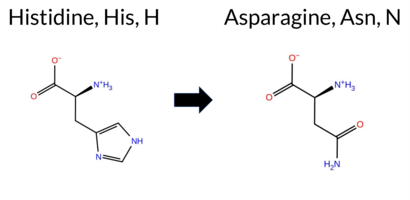 AIThe SynGAP1 missense variant H168N is not reported in ClinVar and is absent from gnomAD. All evaluated in‑silico predictors classify the substitution as benign: REVEL, PROVEAN, polyPhen‑2 (HumDiv and HumVar), SIFT, ESM1b, FATHMM, AlphaMissense‑Default, and AlphaMissense‑Optimized all return benign scores. The SGM‑Consensus, which aggregates the majority vote of AlphaMissense‑Default, ESM1b, FATHMM, and PROVEAN, also indicates a likely benign effect. No tools predict pathogenicity. High‑accuracy assessments confirm this: AlphaMissense‑Optimized is benign, and the SGM‑Consensus is likely benign; Foldetta results are unavailable. Consequently, the variant is most likely benign, and this assessment does not contradict any ClinVar status (none reported). Disclaimer: This summary was generated using AI and should be interpreted alongside expert review. | Likely Benign | 0.433034 | Structured | 0.502450 | Binding | 0.402 | 0.678 | 0.125 | -4.764 | Likely Benign | 0.089 | Likely Benign | Likely Benign | 0.081 | Likely Benign | -0.14 | Neutral | 0.016 | Benign | 0.015 | Benign | 4.29 | Benign | 0.60 | Tolerated | 0.1516 | 0.2589 | 2 | 1 | -0.3 | -23.04 | |||||||||||||||||||||||||||||||||||||||
| c.502C>G | H168D 2D 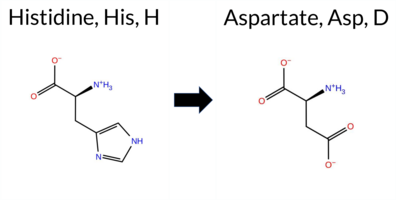 AIThe SynGAP1 missense variant H168D is not reported in ClinVar (ClinVar ID = None) and is absent from gnomAD (gnomAD ID = None). Prediction tools that agree on a benign effect include REVEL, PROVEAN, polyPhen‑2 (HumDiv and HumVar), SIFT, FATHMM, and AlphaMissense‑Optimized. Only ESM1b predicts a pathogenic outcome, while AlphaMissense‑Default remains uncertain. High‑accuracy assessments further support a benign classification: AlphaMissense‑Optimized is benign, the SGM Consensus (majority vote from AlphaMissense‑Default, ESM1b, FATHMM, and PROVEAN) yields a benign consensus, and Foldetta results are unavailable. Overall, the majority of evidence points to a benign impact. This prediction is consistent with the lack of ClinVar annotation and does not contradict any existing clinical database status. Disclaimer: This summary was generated using AI and should be interpreted alongside expert review. | 0.433034 | Structured | 0.502450 | Binding | 0.402 | 0.678 | 0.125 | -8.519 | Likely Pathogenic | 0.481 | Ambiguous | Likely Benign | 0.131 | Likely Benign | -1.24 | Neutral | 0.016 | Benign | 0.021 | Benign | 4.24 | Benign | 0.08 | Tolerated | 0.2365 | 0.2017 | 1 | -1 | -0.3 | -22.05 | ||||||||||||||||||||||||||||||||||||||||
| c.502C>T | H168Y 2D 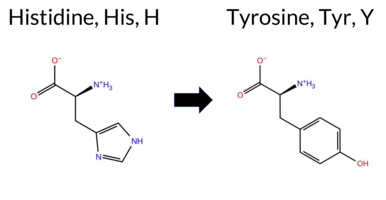 AIThe SynGAP1 missense variant H168Y is listed in ClinVar (ID 956914.0) as benign and is not reported in gnomAD. Prediction tools that agree on a benign effect include REVEL, PROVEAN, polyPhen‑2 (HumDiv and HumVar), FATHMM, AlphaMissense‑Default, AlphaMissense‑Optimized, and the SGM‑Consensus (majority vote from AlphaMissense‑Default, ESM1b, FATHMM, and PROVEAN). Tools that predict a pathogenic effect are SIFT and ESM1b. High‑accuracy assessments show AlphaMissense‑Optimized as benign and the SGM‑Consensus as likely benign; the Foldetta protein‑folding stability analysis is unavailable. Overall, the majority of evidence points to a benign impact, and this conclusion is consistent with the ClinVar benign classification. Disclaimer: This summary was generated using AI and should be interpreted alongside expert review. | Likely Benign | 0.433034 | Structured | 0.502450 | Binding | 0.402 | 0.678 | 0.125 | Benign | 1 | -8.914 | Likely Pathogenic | 0.264 | Likely Benign | Likely Benign | 0.065 | Likely Benign | -1.53 | Neutral | 0.192 | Benign | 0.062 | Benign | 4.18 | Benign | 0.01 | Affected | 4.32 | 3 | 0.0695 | 0.4657 | 0 | 2 | 1.9 | 26.03 | |||||||||||||||||||||||||||||||||||
| c.503A>C | H168P 2D 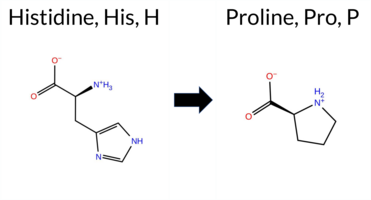 AIThe SynGAP1 missense variant H168P is not reported in ClinVar and is absent from gnomAD. Functional prediction tools that agree on a benign effect include REVEL, PROVEAN, polyPhen‑2 (HumDiv and HumVar), FATHMM, AlphaMissense‑Default, AlphaMissense‑Optimized, and the SGM‑Consensus (majority vote from AlphaMissense‑Default, ESM1b, FATHMM, and PROVEAN). Only SIFT predicts a pathogenic outcome, while ESM1b remains uncertain. High‑accuracy assessments show AlphaMissense‑Optimized as benign and the SGM‑Consensus as likely benign; the Foldetta protein‑folding stability analysis is unavailable for this variant. Taken together, the preponderance of evidence points to a benign impact. This conclusion is consistent with the lack of ClinVar annotation, so there is no contradiction with existing clinical data. Disclaimer: This summary was generated using AI and should be interpreted alongside expert review. | Likely Benign | 0.433034 | Structured | 0.502450 | Binding | 0.402 | 0.678 | 0.125 | -7.686 | In-Between | 0.124 | Likely Benign | Likely Benign | 0.279 | Likely Benign | -1.66 | Neutral | 0.072 | Benign | 0.043 | Benign | 4.19 | Benign | 0.02 | Affected | 0.2004 | 0.3960 | 0 | -2 | 1.6 | -40.02 | |||||||||||||||||||||||||||||||||||||||
| c.503A>G | H168R 2D 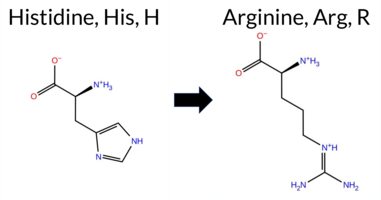 AIThe SynGAP1 missense variant H168R is reported in gnomAD (ID 6‑33432800‑A‑G) but has no ClinVar entry. Functional prediction tools largely agree on a benign effect: REVEL, PROVEAN, polyPhen‑2 (HumDiv and HumVar), FATHMM, and AlphaMissense‑Optimized all classify the change as benign, whereas SIFT predicts it to be pathogenic. Two tools (ESM1b and AlphaMissense‑Default) return uncertain results. High‑accuracy assessments show AlphaMissense‑Optimized as benign; the SGM Consensus, derived from a majority vote of AlphaMissense‑Default, ESM1b, FATHMM, and PROVEAN, is inconclusive because it contains two benign and two uncertain calls, and Foldetta data are not available. Overall, the preponderance of evidence points to a benign impact. This conclusion does not contradict ClinVar, which currently has no classification for this variant. Disclaimer: This summary was generated using AI and should be interpreted alongside expert review. | 0.433034 | Structured | 0.502450 | Binding | 0.402 | 0.678 | 0.125 | 6-33432800-A-G | 1 | 6.20e-7 | -7.334 | In-Between | 0.395 | Ambiguous | Likely Benign | 0.153 | Likely Benign | -1.08 | Neutral | 0.016 | Benign | 0.011 | Benign | 4.26 | Benign | 0.02 | Affected | 4.32 | 3 | 0.1752 | 0.2499 | 0 | 2 | -1.3 | 19.05 | |||||||||||||||||||||||||||||||||||
| c.503A>T | H168L 2D 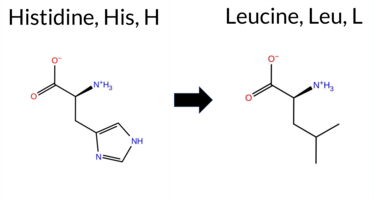 AIThe SynGAP1 H168L missense variant is not reported in ClinVar (no ClinVar ID) and is absent from gnomAD (no gnomAD ID). Prediction tools that agree on a benign effect include REVEL, PROVEAN, polyPhen‑2 HumDiv, polyPhen‑2 HumVar, FATHMM, AlphaMissense‑Default, and AlphaMissense‑Optimized. Only SIFT predicts a pathogenic outcome, while ESM1b is uncertain. The SGM‑Consensus, which aggregates AlphaMissense‑Default, ESM1b, FATHMM, and PROVEAN, reports a likely benign classification. High‑accuracy assessments show AlphaMissense‑Optimized as benign and the SGM‑Consensus as likely benign; Foldetta results are not available. Overall, the majority of evidence points to a benign effect, and this conclusion does not contradict any ClinVar annotation (none is present). Disclaimer: This summary was generated using AI and should be interpreted alongside expert review. | Likely Benign | 0.433034 | Structured | 0.502450 | Binding | 0.402 | 0.678 | 0.125 | -7.936 | In-Between | 0.178 | Likely Benign | Likely Benign | 0.250 | Likely Benign | -2.36 | Neutral | 0.037 | Benign | 0.021 | Benign | 4.21 | Benign | 0.01 | Affected | 0.0752 | 0.5602 | -2 | -3 | 7.0 | -23.98 | |||||||||||||||||||||||||||||||||||||||
| c.504T>A | H168Q 2D 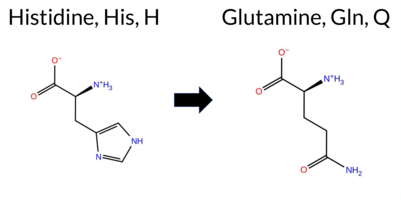 AIThe SynGAP1 missense variant H168Q is not reported in ClinVar (no ClinVar ID) and is absent from gnomAD (no gnomAD ID). Prediction tools that agree on a benign effect include REVEL, PROVEAN, polyPhen‑2 HumDiv, polyPhen‑2 HumVar, ESM1b, FATHMM, AlphaMissense‑Default, and AlphaMissense‑Optimized. Only SIFT predicts a pathogenic outcome. The SGM‑Consensus, which aggregates AlphaMissense‑Default, ESM1b, FATHMM, and PROVEAN, reports a “Likely Benign” classification. High‑accuracy assessments show AlphaMissense‑Optimized as benign and the SGM‑Consensus as likely benign; Foldetta results are not available. Overall, the majority of evidence points to a benign effect, and this is consistent with the lack of ClinVar or gnomAD entries—there is no contradiction with existing clinical annotations. Disclaimer: This summary was generated using AI and should be interpreted alongside expert review. | Likely Benign | 0.433034 | Structured | 0.502450 | Binding | 0.402 | 0.678 | 0.125 | -5.177 | Likely Benign | 0.189 | Likely Benign | Likely Benign | 0.093 | Likely Benign | -0.85 | Neutral | 0.000 | Benign | 0.001 | Benign | 4.31 | Benign | 0.02 | Affected | 0.1307 | 0.3873 | 3 | 0 | -0.3 | -9.01 | |||||||||||||||||||||||||||||||||||||||
| c.504T>G | H168Q 2D AIThe SynGAP1 missense variant H168Q is not reported in ClinVar (no ClinVar ID) and is absent from gnomAD (no gnomAD ID). Prediction tools that agree on a benign effect include REVEL, PROVEAN, polyPhen‑2 HumDiv, polyPhen‑2 HumVar, ESM1b, FATHMM, AlphaMissense‑Default, and AlphaMissense‑Optimized. Only SIFT predicts a pathogenic outcome. The SGM‑Consensus, which aggregates AlphaMissense‑Default, ESM1b, FATHMM, and PROVEAN, reports a “Likely Benign” classification. High‑accuracy assessments show AlphaMissense‑Optimized as benign and the SGM‑Consensus as likely benign; Foldetta results are not available. Overall, the majority of evidence points to a benign effect, and this is consistent with the lack of ClinVar or gnomAD entries—there is no contradiction with existing clinical annotations. Disclaimer: This summary was generated using AI and should be interpreted alongside expert review. | Likely Benign | 0.433034 | Structured | 0.502450 | Binding | 0.402 | 0.678 | 0.125 | -5.177 | Likely Benign | 0.189 | Likely Benign | Likely Benign | 0.090 | Likely Benign | -0.85 | Neutral | 0.000 | Benign | 0.001 | Benign | 4.31 | Benign | 0.02 | Affected | 0.1307 | 0.3873 | 3 | 0 | -0.3 | -9.01 | |||||||||||||||||||||||||||||||||||||||
| c.505G>A | D169N 2D AIThe SynGAP1 missense variant D169N is listed in ClinVar with an uncertain significance and is not reported in gnomAD. Functional prediction tools show a split: six methods (REVEL, PROVEAN, polyPhen‑2 HumDiv, polyPhen‑2 HumVar, FATHMM, AlphaMissense‑Optimized) predict a benign effect, while three (SIFT, ESM1b, AlphaMissense‑Default) predict pathogenicity. High‑accuracy assessments are mixed: AlphaMissense‑Optimized indicates benign, whereas the SGM Consensus—derived from a majority vote of AlphaMissense‑Default, ESM1b, FATHMM, and PROVEAN—yields a tie and is therefore inconclusive. No Foldetta stability data are available. Overall, the balance of evidence leans toward a benign impact, which does not contradict the ClinVar uncertain status. Disclaimer: This summary was generated using AI and should be interpreted alongside expert review. | 0.418646 | Structured | 0.497160 | Uncertain | 0.420 | 0.675 | 0.125 | Uncertain | 1 | -10.713 | Likely Pathogenic | 0.761 | Likely Pathogenic | Likely Benign | 0.110 | Likely Benign | -2.04 | Neutral | 0.079 | Benign | 0.052 | Benign | 4.07 | Benign | 0.01 | Affected | 3.74 | 4 | 0.1430 | 0.7391 | 2 | 1 | 0.0 | -0.98 | ||||||||||||||||||||||||||||||||||||
| c.505G>C | D169H 2D AIThe SynGAP1 D169H variant is not reported in ClinVar (no ClinVar ID) and is absent from gnomAD (no gnomAD ID). Prediction tools that agree on a benign effect include REVEL, polyPhen‑2 HumVar, and FATHMM, whereas those that predict a pathogenic effect are PROVEAN, polyPhen‑2 HumDiv, SIFT, ESM1b, and AlphaMissense‑Default. The high‑accuracy assessment shows AlphaMissense‑Optimized as uncertain, while the SGM‑Consensus (majority vote of AlphaMissense‑Default, ESM1b, FATHMM, and PROVEAN) indicates a likely pathogenic outcome. Foldetta, a protein‑folding stability method combining FoldX‑MD and Rosetta outputs, did not provide a result for this variant. Overall, the majority of computational evidence points toward a pathogenic impact, and this assessment does not contradict any ClinVar status because no ClinVar classification exists. Disclaimer: This summary was generated using AI and should be interpreted alongside expert review. | Likely Pathogenic | 0.418646 | Structured | 0.497160 | Uncertain | 0.420 | 0.675 | 0.125 | -12.048 | Likely Pathogenic | 0.921 | Likely Pathogenic | Ambiguous | 0.181 | Likely Benign | -2.83 | Deleterious | 0.651 | Possibly Damaging | 0.417 | Benign | 4.03 | Benign | 0.00 | Affected | 0.1791 | 0.7624 | 1 | -1 | 0.3 | 22.05 | |||||||||||||||||||||||||||||||||||||||
| c.505G>T | D169Y 2D AIThe SynGAP1 missense variant D169Y is not reported in ClinVar (no ClinVar ID) and is absent from gnomAD (no gnomAD ID). Prediction tools that agree on a benign effect include REVEL, polyPhen‑2 HumVar, and FATHMM, whereas those that predict a pathogenic effect are PROVEAN, polyPhen‑2 HumDiv, SIFT, ESM1b, and AlphaMissense‑Default. The high‑accuracy consensus from SGM (majority vote of AlphaMissense‑Default, ESM1b, FATHMM, and PROVEAN) classifies the variant as Likely Pathogenic. AlphaMissense‑Optimized returns an uncertain result, and no Foldetta (FoldX‑MD/Rosetta) stability data are available. Based on the overall pattern of predictions, the variant is most likely pathogenic, and this assessment does not contradict any ClinVar status because none exists. Disclaimer: This summary was generated using AI and should be interpreted alongside expert review. | Likely Pathogenic | 0.418646 | Structured | 0.497160 | Uncertain | 0.420 | 0.675 | 0.125 | -13.524 | Likely Pathogenic | 0.933 | Likely Pathogenic | Ambiguous | 0.282 | Likely Benign | -3.71 | Deleterious | 0.651 | Possibly Damaging | 0.347 | Benign | 4.01 | Benign | 0.00 | Affected | 0.0571 | 0.6896 | -4 | -3 | 2.2 | 48.09 | |||||||||||||||||||||||||||||||||||||||
| c.506A>C | D169A 2D AIThe SynGAP1 D169A missense variant is not reported in ClinVar and has no entries in gnomAD, indicating it is not catalogued in these databases. Functional prediction tools show a split: benign calls come from REVEL, polyPhen‑2 (HumDiv and HumVar) and FATHMM, while pathogenic calls arise from PROVEAN, SIFT, ESM1b and AlphaMissense‑Default. Grouping by consensus, the benign set includes REVEL, polyPhen‑2 HumDiv, polyPhen‑2 HumVar, and FATHMM; the pathogenic set includes PROVEAN, SIFT, ESM1b, and AlphaMissense‑Default. High‑accuracy assessments further support a deleterious effect: AlphaMissense‑Optimized is uncertain, but the SGM Consensus—derived from a majority vote of AlphaMissense‑Default, ESM1b, FATHMM, and PROVEAN—labels the variant as Likely Pathogenic. Foldetta predictions are unavailable. Overall, the balance of evidence points to a pathogenic impact, and this conclusion does not contradict any ClinVar annotation, as none exists for this variant. Disclaimer: This summary was generated using AI and should be interpreted alongside expert review. | Likely Pathogenic | 0.418646 | Structured | 0.497160 | Uncertain | 0.420 | 0.675 | 0.125 | -11.065 | Likely Pathogenic | 0.874 | Likely Pathogenic | Ambiguous | 0.159 | Likely Benign | -3.15 | Deleterious | 0.018 | Benign | 0.025 | Benign | 4.10 | Benign | 0.01 | Affected | 0.4012 | 0.6809 | 0 | -2 | 5.3 | -44.01 | |||||||||||||||||||||||||||||||||||||||
| c.506A>G | D169G 2D AIThe SynGAP1 missense variant D169G is not reported in ClinVar (ClinVar ID = None) and is absent from gnomAD (gnomAD ID = None). Prediction tools that agree on a benign effect include REVEL, PROVEAN, polyPhen‑2 HumDiv, polyPhen‑2 HumVar, and FATHMM. Tools that predict a pathogenic effect are SIFT, ESM1b, and AlphaMissense‑Default. AlphaMissense‑Optimized is uncertain. High‑accuracy assessments are inconclusive: the SGM Consensus, derived from a majority vote of AlphaMissense‑Default, ESM1b, FATHMM, and PROVEAN, yields a tie (2 pathogenic vs 2 benign) and is therefore unavailable; Foldetta results are not provided. Overall, the majority of standard predictors lean toward a benign classification, and this is consistent with the lack of ClinVar evidence. Thus, the variant is most likely benign, with no contradiction to ClinVar status. Disclaimer: This summary was generated using AI and should be interpreted alongside expert review. | 0.418646 | Structured | 0.497160 | Uncertain | 0.420 | 0.675 | 0.125 | -9.853 | Likely Pathogenic | 0.820 | Likely Pathogenic | Ambiguous | 0.186 | Likely Benign | -2.44 | Neutral | 0.000 | Benign | 0.000 | Benign | 4.04 | Benign | 0.01 | Affected | 0.3907 | 0.6560 | 1 | -1 | 3.1 | -58.04 | ||||||||||||||||||||||||||||||||||||||||
| c.506A>T | D169V 2D AIThe SynGAP1 D169V missense variant is not reported in ClinVar and is absent from gnomAD. Functional prediction tools show a split: benign calls come from REVEL, polyPhen‑2 (HumDiv and HumVar) and FATHMM, while pathogenic calls arise from PROVEAN, SIFT, ESM1b and AlphaMissense‑Default. When predictions are grouped by consensus, four tools predict benign and four predict pathogenic. High‑accuracy assessments further clarify the picture: AlphaMissense‑Optimized returns an uncertain result, whereas the SGM Consensus—derived from a majority vote of AlphaMissense‑Default, ESM1b, FATHMM and PROVEAN—labels the variant as Likely Pathogenic. Foldetta, a protein‑folding stability method that integrates FoldX‑MD and Rosetta outputs, has no available result for this residue. Overall, the balance of evidence, particularly the SGM Consensus and the pathogenic calls from multiple independent predictors, indicates that D169V is most likely pathogenic, and this assessment does not conflict with the absence of a ClinVar classification. Disclaimer: This summary was generated using AI and should be interpreted alongside expert review. | Likely Pathogenic | 0.418646 | Structured | 0.497160 | Uncertain | 0.420 | 0.675 | 0.125 | -12.395 | Likely Pathogenic | 0.925 | Likely Pathogenic | Ambiguous | 0.243 | Likely Benign | -3.77 | Deleterious | 0.380 | Benign | 0.193 | Benign | 4.03 | Benign | 0.00 | Affected | 0.0895 | 0.7166 | -2 | -3 | 7.7 | -15.96 | |||||||||||||||||||||||||||||||||||||||
| c.507C>A | D169E 2D AIThe SynGAP1 missense variant D169E is not reported in ClinVar and is absent from gnomAD. In silico prediction tools uniformly indicate a benign effect: REVEL, PROVEAN, polyPhen‑2 (HumDiv and HumVar), SIFT, ESM1b, FATHMM, AlphaMissense‑Default, and AlphaMissense‑Optimized all classify the change as benign. No tool predicts pathogenicity. High‑accuracy assessments corroborate this: AlphaMissense‑Optimized predicts benign, and the SGM Consensus (majority vote of AlphaMissense‑Default, ESM1b, FATHMM, and PROVEAN) reports a likely benign outcome. Foldetta results are unavailable. Overall, the consensus of all available predictions points to a benign impact, and this conclusion is consistent with the lack of a ClinVar classification, so there is no contradiction. Disclaimer: This summary was generated using AI and should be interpreted alongside expert review. | Likely Benign | 0.418646 | Structured | 0.497160 | Uncertain | 0.420 | 0.675 | 0.125 | -4.571 | Likely Benign | 0.249 | Likely Benign | Likely Benign | 0.030 | Likely Benign | -1.31 | Neutral | 0.000 | Benign | 0.001 | Benign | 4.23 | Benign | 0.42 | Tolerated | 0.1636 | 0.7316 | 3 | 2 | 0.0 | 14.03 | |||||||||||||||||||||||||||||||||||||||
| c.507C>G | D169E 2D AIThe SynGAP1 missense variant D169E is not reported in ClinVar and is absent from gnomAD. In silico prediction tools uniformly indicate a benign effect: REVEL, PROVEAN, polyPhen‑2 (HumDiv and HumVar), SIFT, ESM1b, FATHMM, AlphaMissense‑Default, and AlphaMissense‑Optimized all classify the change as benign. No tool predicts pathogenicity. High‑accuracy assessments corroborate this: AlphaMissense‑Optimized predicts benign, and the SGM Consensus (majority vote of AlphaMissense‑Default, ESM1b, FATHMM, and PROVEAN) reports a likely benign outcome. Foldetta results are unavailable. Overall, the consensus of all available predictions points to a benign impact, and this conclusion is consistent with the lack of a ClinVar classification, so there is no contradiction. Disclaimer: This summary was generated using AI and should be interpreted alongside expert review. | Likely Benign | 0.418646 | Structured | 0.497160 | Uncertain | 0.420 | 0.675 | 0.125 | -4.571 | Likely Benign | 0.249 | Likely Benign | Likely Benign | 0.029 | Likely Benign | -1.31 | Neutral | 0.000 | Benign | 0.001 | Benign | 4.23 | Benign | 0.42 | Tolerated | 0.1636 | 0.7316 | 3 | 2 | 0.0 | 14.03 | |||||||||||||||||||||||||||||||||||||||
| c.508C>G | R170G 2D AIThe SynGAP1 missense variant R170G is not reported in ClinVar and has no entries in gnomAD. Prediction tools cluster into two groups: benign predictions come from REVEL, polyPhen‑2 HumVar, and FATHMM, while pathogenic predictions are made by PROVEAN, polyPhen‑2 HumDiv, SIFT, ESM1b, and AlphaMissense‑Default. High‑accuracy assessments further support a deleterious effect: AlphaMissense‑Optimized is uncertain, but the SGM Consensus—derived from a majority vote of AlphaMissense‑Default, ESM1b, FATHMM, and PROVEAN—classifies the variant as likely pathogenic. Foldetta, a protein‑folding stability method that integrates FoldX‑MD and Rosetta outputs, has no available result for this variant. Overall, the preponderance of evidence points to a pathogenic impact for R170G, and this conclusion does not conflict with the current ClinVar status, which contains no entry for the variant. Disclaimer: This summary was generated using AI and should be interpreted alongside expert review. | Likely Pathogenic | 0.480142 | Structured | 0.492928 | Uncertain | 0.406 | 0.661 | 0.250 | -10.092 | Likely Pathogenic | 0.902 | Likely Pathogenic | Ambiguous | 0.196 | Likely Benign | -3.19 | Deleterious | 0.664 | Possibly Damaging | 0.137 | Benign | 3.88 | Benign | 0.00 | Affected | 0.3285 | 0.3004 | -3 | -2 | 4.1 | -99.14 | |||||||||||||||||||||||||||||||||||||||
| c.508C>T | R170W 2D AIThe SynGAP1 missense variant R170W is listed in ClinVar (ID 1310195.0) with an “Uncertain” status and is not reported in gnomAD. Prediction tools that agree on a benign effect are REVEL and FATHMM, whereas the remaining tools—PROVEAN, polyPhen‑2 (HumDiv and HumVar), SIFT, ESM1b, AlphaMissense‑Default, AlphaMissense‑Optimized, and the SGM‑Consensus (majority vote of AlphaMissense‑Default, ESM1b, FATHMM, PROVEAN)—all predict a pathogenic or likely pathogenic outcome. High‑accuracy assessments further support a deleterious impact: AlphaMissense‑Optimized classifies the variant as pathogenic, and the SGM‑Consensus indicates it is likely pathogenic; Foldetta results are unavailable. Overall, the preponderance of evidence points to a pathogenic effect, which is consistent with the ClinVar “Uncertain” classification rather than contradicting it. Disclaimer: This summary was generated using AI and should be interpreted alongside expert review. | Likely Pathogenic | 0.480142 | Structured | 0.492928 | Uncertain | 0.406 | 0.661 | 0.250 | Uncertain | 2 | -11.660 | Likely Pathogenic | 0.978 | Likely Pathogenic | Likely Pathogenic | 0.241 | Likely Benign | -4.28 | Deleterious | 0.999 | Probably Damaging | 0.849 | Possibly Damaging | 3.84 | Benign | 0.00 | Affected | 3.74 | 4 | 0.1026 | 0.3469 | 2 | -3 | 3.6 | 30.03 | |||||||||||||||||||||||||||||||||||
| c.509G>A | R170Q 2D AISynGAP1 missense variant R170Q is listed in ClinVar as Pathogenic and is not reported in gnomAD. Computational predictors show a split: benign calls come from REVEL, PROVEAN, polyPhen‑2 HumVar, and FATHMM, while pathogenic calls come from polyPhen‑2 HumDiv, SIFT, ESM1b, and AlphaMissense‑Default. The high‑accuracy AlphaMissense‑Optimized score is Uncertain, and the SGM Consensus (majority vote of AlphaMissense‑Default, ESM1b, FATHMM, PROVEAN) is inconclusive; Foldetta stability analysis is unavailable. Thus, no single method or high‑accuracy consensus strongly supports pathogenicity. The variant is most likely benign according to the current computational evidence, which contradicts the ClinVar pathogenic designation. Disclaimer: This summary was generated using AI and should be interpreted alongside expert review. | 0.480142 | Structured | 0.492928 | Uncertain | 0.406 | 0.661 | 0.250 | Pathogenic/Likely path. | 6 | -9.021 | Likely Pathogenic | 0.798 | Likely Pathogenic | Ambiguous | 0.221 | Likely Benign | -2.31 | Neutral | 0.947 | Possibly Damaging | 0.342 | Benign | 3.91 | Benign | 0.00 | Affected | 3.74 | 4 | 0.2524 | 0.2299 | 1 | 1 | 1.0 | -28.06 | 10.1016/j.ajhg.2020.11.011 | |||||||||||||||||||||||||||||||||||
| c.509G>C | R170P 2D AIThe SynGAP1 missense variant R170P is not reported in ClinVar (no ClinVar ID) and is absent from gnomAD (no gnomAD ID). Prediction tools that agree on a benign effect include REVEL and FATHMM, whereas the majority of tools predict a pathogenic impact: PROVEAN, polyPhen‑2 HumDiv, polyPhen‑2 HumVar, SIFT, ESM1b, AlphaMissense‑Default, AlphaMissense‑Optimized, and the SGM‑Consensus score (Likely Pathogenic). High‑accuracy assessments further support a deleterious effect: AlphaMissense‑Optimized classifies the variant as pathogenic, and the SGM‑Consensus (a majority vote from AlphaMissense‑Default, ESM1b, FATHMM, and PROVEAN) also indicates Likely Pathogenic. Foldetta, a protein‑folding stability method combining FoldX‑MD and Rosetta outputs, has no available result for this variant. Overall, the preponderance of evidence from both general and high‑accuracy predictors indicates that R170P is most likely pathogenic, and this assessment does not contradict any ClinVar status because no ClinVar classification exists. Disclaimer: This summary was generated using AI and should be interpreted alongside expert review. | Likely Pathogenic | 0.480142 | Structured | 0.492928 | Uncertain | 0.406 | 0.661 | 0.250 | -9.687 | Likely Pathogenic | 0.965 | Likely Pathogenic | Likely Pathogenic | 0.386 | Likely Benign | -3.96 | Deleterious | 0.966 | Probably Damaging | 0.599 | Possibly Damaging | 3.86 | Benign | 0.00 | Affected | 0.1967 | 0.3989 | 0 | -2 | 2.9 | -59.07 | |||||||||||||||||||||||||||||||||||||||
| c.509G>T | R170L 2D AIThe SynGAP1 missense variant R170L has no ClinVar entry and is not reported in gnomAD. In silico predictors fall into two groups: benign predictions come from REVEL, polyPhen‑2 HumVar, and FATHMM, while pathogenic predictions are made by PROVEAN, polyPhen‑2 HumDiv, SIFT, ESM1b, AlphaMissense‑Default, and AlphaMissense‑Optimized. The SGM‑Consensus, which aggregates AlphaMissense‑Default, ESM1b, FATHMM, and PROVEAN, reports the variant as Likely Pathogenic. High‑accuracy tools further support a deleterious effect: AlphaMissense‑Optimized predicts pathogenicity, and the SGM‑Consensus (majority vote) also indicates Likely Pathogenic. Foldetta, a protein‑folding stability method combining FoldX‑MD and Rosetta outputs, has no available result for this variant. Overall, the preponderance of pathogenic predictions, including the high‑accuracy consensus, suggests that R170L is most likely pathogenic. This conclusion is not contradicted by ClinVar status, as no ClinVar classification exists for the variant. Disclaimer: This summary was generated using AI and should be interpreted alongside expert review. | Likely Pathogenic | 0.480142 | Structured | 0.492928 | Uncertain | 0.406 | 0.661 | 0.250 | -8.649 | Likely Pathogenic | 0.961 | Likely Pathogenic | Likely Pathogenic | 0.319 | Likely Benign | -4.02 | Deleterious | 0.798 | Possibly Damaging | 0.319 | Benign | 3.87 | Benign | 0.00 | Affected | 0.1561 | 0.4310 | -3 | -2 | 8.3 | -43.03 | |||||||||||||||||||||||||||||||||||||||
| c.50C>A | S17Y 2D 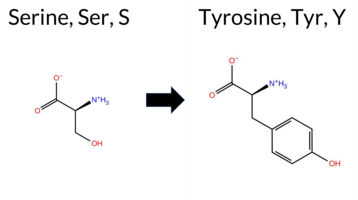 AIThe SynGAP1 missense variant S17Y is listed in gnomAD (ID 6‑33420314‑C‑A) but has no ClinVar entry. Functional prediction tools cluster into two groups: benign predictions include REVEL, PROVEAN, polyPhen‑2 HumVar, ESM1b, FATHMM, AlphaMissense‑Optimized, and the SGM‑Consensus (Likely Benign). Pathogenic predictions come from polyPhen‑2 HumDiv and SIFT, while AlphaMissense‑Default remains uncertain. High‑accuracy assessments reinforce the benign trend: AlphaMissense‑Optimized scores the variant as benign, and the SGM‑Consensus (derived from a majority vote of AlphaMissense‑Default, ESM1b, FATHMM, and PROVEAN) also favors benign. No Foldetta stability data are available, so it does not influence the conclusion. Overall, the majority of evidence indicates that S17Y is most likely benign, and this assessment does not contradict any ClinVar status, as none is reported. Disclaimer: This summary was generated using AI and should be interpreted alongside expert review. | Likely Benign | 0.483068 | Structured | 0.452228 | Uncertain | 0.341 | 0.910 | 0.375 | 6-33420314-C-A | -4.492 | Likely Benign | 0.551 | Ambiguous | Likely Benign | 0.050 | Likely Benign | -1.06 | Neutral | 0.742 | Possibly Damaging | 0.047 | Benign | 3.99 | Benign | 0.00 | Affected | 4.32 | 1 | 0.0818 | 0.6366 | -2 | -3 | -0.5 | 76.10 | ||||||||||||||||||||||||||||||||||||
| c.50C>G | S17C 2D AIThe SynGAP1 missense variant S17C is not reported in ClinVar and is absent from gnomAD. Functional prediction tools largely agree on a benign effect: REVEL, PROVEAN, polyPhen‑2 HumVar, ESM1b, FATHMM, AlphaMissense‑Default, and AlphaMissense‑Optimized all predict benign. Only two tools (polyPhen‑2 HumDiv and SIFT) predict pathogenicity, while the SGM‑Consensus (majority vote of AlphaMissense‑Default, ESM1b, FATHMM, and PROVEAN) indicates a likely benign outcome. High‑accuracy assessments reinforce this: AlphaMissense‑Optimized is benign, and the SGM‑Consensus is also likely benign; Foldetta results are unavailable. Overall, the majority of evidence points to a benign impact, and this conclusion does not contradict any ClinVar annotation (none is present). Disclaimer: This summary was generated using AI and should be interpreted alongside expert review. | Likely Benign | 0.483068 | Structured | 0.452228 | Uncertain | 0.341 | 0.910 | 0.375 | -4.364 | Likely Benign | 0.279 | Likely Benign | Likely Benign | 0.044 | Likely Benign | 0.17 | Neutral | 0.486 | Possibly Damaging | 0.048 | Benign | 3.99 | Benign | 0.00 | Affected | 0.1226 | 0.6721 | 0 | -1 | 3.3 | 16.06 | |||||||||||||||||||||||||||||||||||||||
| c.50C>T | S17F 2D 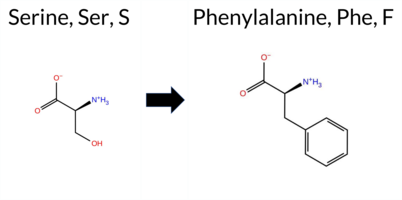 AIThe SynGAP1 missense variant S17F is listed in ClinVar (ID 3451958) with an “Uncertain” status and is present in gnomAD (variant ID 6‑33420314‑C‑T). Prediction tools that agree on a benign effect include REVEL, PROVEAN, polyPhen‑2 HumVar, ESM1b, FATHMM, and AlphaMissense‑Optimized. Tools that predict a pathogenic effect are polyPhen‑2 HumDiv, SIFT, and AlphaMissense‑Default. The SGM‑Consensus, derived from a majority vote of AlphaMissense‑Default, ESM1b, FATHMM, and PROVEAN, reports a “Likely Benign” classification. High‑accuracy assessments show AlphaMissense‑Optimized as benign and the SGM‑Consensus as likely benign; Foldetta results are unavailable. Overall, the majority of evidence points to a benign impact, and this conclusion does not contradict the ClinVar “Uncertain” designation. Disclaimer: This summary was generated using AI and should be interpreted alongside expert review. | Likely Benign | 0.483068 | Structured | 0.452228 | Uncertain | 0.341 | 0.910 | 0.375 | Conflicting | 2 | 6-33420314-C-T | 10 | 6.49e-6 | -3.888 | Likely Benign | 0.637 | Likely Pathogenic | Likely Benign | 0.048 | Likely Benign | -0.99 | Neutral | 0.486 | Possibly Damaging | 0.032 | Benign | 3.99 | Benign | 0.00 | Affected | 4.32 | 1 | 0.0729 | 0.6468 | -2 | -3 | 3.6 | 60.10 | ||||||||||||||||||||||||||||||||
| c.511G>A | A171T 2D AIThe SynGAP1 missense variant A171T is not reported in ClinVar and is absent from gnomAD. Functional prediction tools largely agree on a benign effect: REVEL, PROVEAN, polyPhen‑2 (HumDiv and HumVar), ESM1b, FATHMM, AlphaMissense‑Default, and AlphaMissense‑Optimized all predict benign, while only SIFT predicts pathogenic. The SGM‑Consensus, derived from a majority vote of AlphaMissense‑Default, ESM1b, FATHMM, and PROVEAN, also indicates a likely benign outcome. High‑accuracy assessments confirm this: AlphaMissense‑Optimized is benign and the SGM‑Consensus is likely benign; Foldetta results are not available. Overall, the consensus of the majority of tools, including the high‑accuracy methods, points to a benign impact. This prediction does not contradict any ClinVar annotation, as no ClinVar entry exists for this variant. Disclaimer: This summary was generated using AI and should be interpreted alongside expert review. | Likely Benign | 0.562014 | Disordered | 0.492272 | Uncertain | 0.358 | 0.652 | 0.375 | -2.388 | Likely Benign | 0.136 | Likely Benign | Likely Benign | 0.019 | Likely Benign | -0.51 | Neutral | 0.001 | Benign | 0.002 | Benign | 4.25 | Benign | 0.03 | Affected | 0.1075 | 0.5763 | 1 | 0 | -2.5 | 30.03 | |||||||||||||||||||||||||||||||||||||||
| c.511G>C | A171P 2D AIThe SynGAP1 missense variant A171P is not reported in ClinVar and is absent from gnomAD. Prediction tools that agree on a benign effect include REVEL, PROVEAN, polyPhen‑2 (HumDiv and HumVar), ESM1b, FATHMM, and AlphaMissense‑Optimized. Tools that predict a pathogenic effect are SIFT and AlphaMissense‑Default. The SGM‑Consensus, which aggregates AlphaMissense‑Default, ESM1b, FATHMM, and PROVEAN, reports a likely benign classification. High‑accuracy assessments further support a benign outcome: AlphaMissense‑Optimized predicts benign, and the SGM‑Consensus (majority vote) also indicates likely benign. Foldetta results are unavailable for this variant. Overall, the majority of computational evidence points to a benign impact, and this conclusion does not contradict any ClinVar annotation (none is present). Disclaimer: This summary was generated using AI and should be interpreted alongside expert review. | Likely Benign | 0.562014 | Disordered | 0.492272 | Uncertain | 0.358 | 0.652 | 0.375 | -5.071 | Likely Benign | 0.569 | Likely Pathogenic | Likely Benign | 0.160 | Likely Benign | -1.42 | Neutral | 0.396 | Benign | 0.099 | Benign | 4.14 | Benign | 0.02 | Affected | 0.1630 | 0.3938 | 1 | -1 | -3.4 | 26.04 | |||||||||||||||||||||||||||||||||||||||
| c.511G>T | A171S 2D AIThe SynGAP1 missense variant A171S is not reported in ClinVar and is absent from gnomAD. Functional prediction tools uniformly indicate a benign effect: REVEL, PROVEAN, polyPhen‑2 (HumDiv and HumVar), SIFT, ESM1b, FATHMM, AlphaMissense‑Default, and AlphaMissense‑Optimized all classify the substitution as benign. No tool predicts pathogenicity. High‑accuracy assessments corroborate this: AlphaMissense‑Optimized predicts benign, and the SGM Consensus (majority vote of AlphaMissense‑Default, ESM1b, FATHMM, and PROVEAN) reports a likely benign outcome. Foldetta results are unavailable. Based on the collective predictions, the variant is most likely benign, and this conclusion does not contradict any ClinVar status (none reported). Disclaimer: This summary was generated using AI and should be interpreted alongside expert review. | Likely Benign | 0.562014 | Disordered | 0.492272 | Uncertain | 0.358 | 0.652 | 0.375 | -0.011 | Likely Benign | 0.115 | Likely Benign | Likely Benign | 0.054 | Likely Benign | 0.40 | Neutral | 0.002 | Benign | 0.001 | Benign | 4.33 | Benign | 0.91 | Tolerated | 0.2221 | 0.4383 | 1 | 1 | -2.6 | 16.00 | |||||||||||||||||||||||||||||||||||||||
| c.512C>A | A171D 2D AIThe SynGAP1 missense variant A171D is not reported in ClinVar and has no entries in gnomAD. Prediction tools that agree on a benign effect include REVEL, PROVEAN, polyPhen‑2 (HumDiv and HumVar), ESM1b, and FATHMM. Tools that predict a pathogenic effect are SIFT and AlphaMissense‑Default. AlphaMissense‑Optimized is uncertain, and no Foldetta stability assessment is available. The SGM‑Consensus, which aggregates AlphaMissense‑Default, ESM1b, FATHMM, and PROVEAN, classifies the variant as Likely Benign. High‑accuracy assessments therefore lean toward a benign interpretation: AlphaMissense‑Optimized is inconclusive, SGM‑Consensus is benign, and Foldetta data are missing. Based on the collective predictions, the variant is most likely benign, and this conclusion does not contradict any ClinVar status (none reported). Disclaimer: This summary was generated using AI and should be interpreted alongside expert review. | Likely Benign | 0.562014 | Disordered | 0.492272 | Uncertain | 0.358 | 0.652 | 0.375 | -6.977 | Likely Benign | 0.908 | Likely Pathogenic | Ambiguous | 0.144 | Likely Benign | -1.45 | Neutral | 0.244 | Benign | 0.037 | Benign | 4.15 | Benign | 0.01 | Affected | 0.1634 | 0.2462 | 0 | -2 | -5.3 | 44.01 | |||||||||||||||||||||||||||||||||||||||
| c.512C>G | A171G 2D AIThe SynGAP1 missense variant A171G is not reported in ClinVar (no ClinVar ID) and is absent from gnomAD (no gnomAD ID). Prediction tools that agree on a benign effect include REVEL, PROVEAN, polyPhen‑2 HumDiv, polyPhen‑2 HumVar, ESM1b, FATHMM, AlphaMissense‑Default, and AlphaMissense‑Optimized. Only SIFT predicts a pathogenic outcome. The high‑accuracy consensus from SGM (majority vote of AlphaMissense‑Default, ESM1b, FATHMM, and PROVEAN) classifies the variant as Likely Benign, and AlphaMissense‑Optimized also predicts Benign. Foldetta results are not available for this variant. Overall, the majority of evidence points to a benign effect, and this conclusion does not contradict any ClinVar annotation (none exists). Thus, the variant is most likely benign. Disclaimer: This summary was generated using AI and should be interpreted alongside expert review. | Likely Benign | 0.562014 | Disordered | 0.492272 | Uncertain | 0.358 | 0.652 | 0.375 | -4.019 | Likely Benign | 0.301 | Likely Benign | Likely Benign | 0.050 | Likely Benign | -1.08 | Neutral | 0.063 | Benign | 0.026 | Benign | 4.14 | Benign | 0.05 | Affected | 0.1767 | 0.3278 | 1 | 0 | -2.2 | -14.03 | |||||||||||||||||||||||||||||||||||||||
| c.512C>T | A171V 2D AIThe SynGAP1 missense variant A171V is catalogued in gnomAD (ID 6‑33435154‑C‑T) but has no ClinVar entry. Functional prediction tools that agree on a benign effect include REVEL, PROVEAN, polyPhen‑2 HumDiv, polyPhen‑2 HumVar, ESM1b, FATHMM, and AlphaMissense‑Optimized. Only SIFT predicts a pathogenic outcome, while AlphaMissense‑Default remains uncertain. The SGM‑Consensus, derived from a majority vote of AlphaMissense‑Default, ESM1b, FATHMM, and PROVEAN, reports the variant as “Likely Benign.” High‑accuracy assessments further support a benign classification: AlphaMissense‑Optimized is benign, and the SGM‑Consensus is likely benign; Foldetta results are not available. Overall, the preponderance of evidence points to a benign impact for A171V, and this conclusion is consistent with the absence of a ClinVar pathogenic annotation. Disclaimer: This summary was generated using AI and should be interpreted alongside expert review. | Likely Benign | 0.562014 | Disordered | 0.492272 | Uncertain | 0.358 | 0.652 | 0.375 | 6-33435154-C-T | 1 | 6.20e-7 | -6.437 | Likely Benign | 0.434 | Ambiguous | Likely Benign | 0.052 | Likely Benign | -1.65 | Neutral | 0.118 | Benign | 0.026 | Benign | 4.15 | Benign | 0.03 | Affected | 3.74 | 4 | 0.0766 | 0.4897 | 0 | 0 | 2.4 | 28.05 | ||||||||||||||||||||||||||||||||||
| c.514C>G | R172G 2D AIThe SynGAP1 R172G missense variant is not reported in ClinVar (ClinVar ID = None) and is absent from gnomAD (gnomAD ID = None). Computational predictions are split: benign calls come from REVEL, polyPhen‑2 HumVar, ESM1b, and FATHMM, while pathogenic calls come from PROVEAN, polyPhen‑2 HumDiv, SIFT, and AlphaMissense‑Default. AlphaMissense‑Optimized is uncertain. High‑accuracy consensus tools are inconclusive: the SGM Consensus (majority vote of AlphaMissense‑Default, ESM1b, FATHMM, PROVEAN) yields a 2‑vs‑2 split, and Foldetta results are unavailable. Consequently, the variant is neither clearly benign nor pathogenic according to current predictions, and there is no ClinVar annotation to contradict this ambiguous assessment. Disclaimer: This summary was generated using AI and should be interpreted alongside expert review. | 0.525368 | Disordered | 0.491688 | Uncertain | 0.411 | 0.651 | 0.375 | -6.685 | Likely Benign | 0.811 | Likely Pathogenic | Ambiguous | 0.175 | Likely Benign | -2.69 | Deleterious | 0.789 | Possibly Damaging | 0.253 | Benign | 3.98 | Benign | 0.02 | Affected | 0.2991 | 0.3169 | -3 | -2 | 4.1 | -99.14 | ||||||||||||||||||||||||||||||||||||||||
| c.514C>T | R172W 2D AIThe SynGAP1 missense variant R172W is listed in ClinVar (ID 996892.0) with an “Uncertain” status and is present in gnomAD (variant ID 6‑33435156‑C‑T). Prediction tools that agree on a benign effect include REVEL and FATHMM. Those that predict a pathogenic effect comprise PROVEAN, polyPhen‑2 (HumDiv and HumVar), SIFT, ESM1b, and AlphaMissense‑Default; the SGM‑Consensus (majority vote of AlphaMissense‑Default, ESM1b, FATHMM, PROVEAN) is “Likely Pathogenic.” AlphaMissense‑Optimized is uncertain, and Foldetta results are unavailable. High‑accuracy assessments therefore indicate a likely pathogenic outcome (SGM‑Consensus) with no definitive stabilizing‑folding evidence. Overall, the majority of computational predictions support a pathogenic classification, which does not contradict the ClinVar “Uncertain” designation. Disclaimer: This summary was generated using AI and should be interpreted alongside expert review. | Likely Pathogenic | 0.525368 | Disordered | 0.491688 | Uncertain | 0.411 | 0.651 | 0.375 | Uncertain | 2 | 6-33435156-C-T | 9 | 5.58e-6 | -10.258 | Likely Pathogenic | 0.878 | Likely Pathogenic | Ambiguous | 0.228 | Likely Benign | -3.61 | Deleterious | 0.997 | Probably Damaging | 0.803 | Possibly Damaging | 3.95 | Benign | 0.00 | Affected | 3.61 | 5 | 0.1071 | 0.4065 | 2 | -3 | 3.6 | 30.03 | ||||||||||||||||||||||||||||||||
| c.515G>A | R172Q 2D AIThe SynGAP1 missense variant R172Q is listed in ClinVar as uncertain significance and is present in gnomAD (6-33435157-G-A). Functional prediction tools cluster into two groups: benign predictions come from REVEL, PROVEAN, polyPhen‑2 HumVar, FATHMM, and AlphaMissense‑Optimized; pathogenic predictions come from polyPhen‑2 HumDiv and SIFT. The remaining tools, ESM1b and AlphaMissense‑Default, return uncertain results. High‑accuracy assessments further clarify the picture: AlphaMissense‑Optimized predicts a benign effect, while the SGM Consensus—derived from a majority vote of AlphaMissense‑Default, ESM1b, FATHMM, and PROVEAN—remains uncertain. No Foldetta stability analysis is available for this variant. Overall, the preponderance of evidence points to a benign impact, which does not conflict with the ClinVar designation of uncertain significance. Disclaimer: This summary was generated using AI and should be interpreted alongside expert review. | 0.525368 | Disordered | 0.491688 | Uncertain | 0.411 | 0.651 | 0.375 | Uncertain | 2 | 6-33435157-G-A | 3 | 1.86e-6 | -7.245 | In-Between | 0.465 | Ambiguous | Likely Benign | 0.135 | Likely Benign | -1.72 | Neutral | 0.804 | Possibly Damaging | 0.091 | Benign | 4.04 | Benign | 0.04 | Affected | 3.61 | 5 | 0.2254 | 0.2532 | 1 | 1 | 1.0 | -28.06 | |||||||||||||||||||||||||||||||||
| c.515G>C | R172P 2D AIThe SynGAP1 missense variant R172P has no ClinVar entry and is not reported in gnomAD. Prediction tools that agree on a benign effect include REVEL and FATHMM, whereas the majority of tools (PROVEAN, polyPhen‑2 HumDiv, polyPhen‑2 HumVar, SIFT, ESM1b, AlphaMissense‑Default) predict a pathogenic impact. The SGM‑Consensus, derived from a majority vote of AlphaMissense‑Default, ESM1b, FATHMM, and PROVEAN, classifies the variant as Likely Pathogenic. High‑accuracy assessments show AlphaMissense‑Optimized as Uncertain, while Foldetta results are unavailable. Overall, the preponderance of evidence points to a pathogenic effect. This conclusion is not contradicted by ClinVar status, as no ClinVar classification exists for this variant. Disclaimer: This summary was generated using AI and should be interpreted alongside expert review. | Likely Pathogenic | 0.525368 | Disordered | 0.491688 | Uncertain | 0.411 | 0.651 | 0.375 | -8.059 | Likely Pathogenic | 0.889 | Likely Pathogenic | Ambiguous | 0.227 | Likely Benign | -3.16 | Deleterious | 0.929 | Possibly Damaging | 0.519 | Possibly Damaging | 3.99 | Benign | 0.01 | Affected | 0.1864 | 0.4312 | 0 | -2 | 2.9 | -59.07 | |||||||||||||||||||||||||||||||||||||||
| c.515G>T | R172L 2D AIThe SynGAP1 missense variant R172L is not reported in ClinVar and has no entries in gnomAD, indicating it is not catalogued in these databases. Functional prediction tools show a split: benign calls come from REVEL, polyPhen‑2 (HumDiv and HumVar) and FATHMM, while pathogenic calls arise from PROVEAN, SIFT, ESM1b and AlphaMissense‑Default. Grouping by consensus, four tools predict benign and four predict pathogenic. High‑accuracy assessments further support a deleterious effect: AlphaMissense‑Optimized is uncertain, but the SGM Consensus—derived from a majority vote of AlphaMissense‑Default, ESM1b, FATHMM and PROVEAN—labels the variant as Likely Pathogenic. Foldetta, a protein‑folding stability predictor, has no available result for this residue. Taken together, the majority of evidence, including the SGM Consensus, points to a pathogenic impact. This conclusion is not contradicted by ClinVar status, which currently has no entry for the variant. Disclaimer: This summary was generated using AI and should be interpreted alongside expert review. | Likely Pathogenic | 0.525368 | Disordered | 0.491688 | Uncertain | 0.411 | 0.651 | 0.375 | -8.201 | Likely Pathogenic | 0.797 | Likely Pathogenic | Ambiguous | 0.131 | Likely Benign | -3.09 | Deleterious | 0.276 | Benign | 0.103 | Benign | 3.99 | Benign | 0.02 | Affected | 0.1423 | 0.4729 | -3 | -2 | 8.3 | -43.03 | |||||||||||||||||||||||||||||||||||||||
| c.517C>A | L173M 2D AIThe SynGAP1 missense variant L173M is not reported in ClinVar (ClinVar ID = None) and is absent from gnomAD (gnomAD ID = None). Prediction tools that agree on a benign effect include REVEL, PROVEAN, SIFT, FATHMM, and AlphaMissense‑Optimized. Tools that predict a pathogenic effect are polyPhen‑2 HumDiv and polyPhen‑2 HumVar. Two tools—AlphaMissense‑Default and ESM1b—return uncertain results. High‑accuracy assessments show AlphaMissense‑Optimized as benign; the SGM Consensus (majority vote from AlphaMissense‑Default, ESM1b, FATHMM, PROVEAN) is inconclusive because it yields two benign and two uncertain calls, and Foldetta data are unavailable. Overall, the balance of evidence favors a benign classification, and this conclusion does not contradict any ClinVar annotation (none is present). Disclaimer: This summary was generated using AI and should be interpreted alongside expert review. | 0.534167 | Disordered | 0.491566 | Uncertain | 0.390 | 0.631 | 0.375 | -7.149 | In-Between | 0.534 | Ambiguous | Likely Benign | 0.129 | Likely Benign | -0.61 | Neutral | 0.940 | Possibly Damaging | 0.564 | Possibly Damaging | 3.96 | Benign | 0.20 | Tolerated | 0.0648 | 0.3123 | 4 | 2 | -1.9 | 18.03 | ||||||||||||||||||||||||||||||||||||||||
| c.517C>G | L173V 2D AIThe SynGAP1 missense variant L173V is not reported in ClinVar (ClinVar ID: None) and is absent from gnomAD (gnomAD ID: None). Prediction tools that agree on a benign effect include REVEL, PROVEAN, polyPhen‑2 HumDiv, polyPhen‑2 HumVar, SIFT, FATHMM, and AlphaMissense‑Optimized. Only ESM1b predicts a pathogenic outcome, while AlphaMissense‑Default remains uncertain. High‑accuracy assessments further support a benign classification: AlphaMissense‑Optimized is benign, and the SGM Consensus (derived from AlphaMissense‑Default, ESM1b, FATHMM, and PROVEAN) yields a benign majority vote. Foldetta, a protein‑folding stability method combining FoldX‑MD and Rosetta outputs, has no available result for this variant. Overall, the preponderance of evidence indicates that the variant is most likely benign, and this conclusion does not contradict the lack of ClinVar annotation. Disclaimer: This summary was generated using AI and should be interpreted alongside expert review. | 0.534167 | Disordered | 0.491566 | Uncertain | 0.390 | 0.631 | 0.375 | -8.320 | Likely Pathogenic | 0.495 | Ambiguous | Likely Benign | 0.100 | Likely Benign | -0.95 | Neutral | 0.131 | Benign | 0.058 | Benign | 4.05 | Benign | 0.22 | Tolerated | 0.1343 | 0.3217 | 2 | 1 | 0.4 | -14.03 | ||||||||||||||||||||||||||||||||||||||||
| c.518T>A | L173Q 2D AIThe SynGAP1 missense variant L173Q is not reported in ClinVar (ClinVar ID None) and is absent from gnomAD (gnomAD ID None). Functional prediction tools that agree on a benign effect include REVEL, PROVEAN, polyPhen‑2 (HumDiv and HumVar), SIFT, ESM1b, and FATHMM. Only AlphaMissense‑Default predicts a pathogenic outcome, while AlphaMissense‑Optimized is uncertain. The SGM‑Consensus, which aggregates the majority vote from AlphaMissense‑Default, ESM1b, FATHMM, and PROVEAN, classifies the variant as Likely Benign. Foldetta, a protein‑folding stability method combining FoldX‑MD and Rosetta outputs, has no available result for this variant. Overall, the preponderance of evidence from multiple in silico predictors and the SGM‑Consensus indicates that the variant is most likely benign, and this assessment does not contradict any ClinVar status (none reported). Disclaimer: This summary was generated using AI and should be interpreted alongside expert review. | Likely Benign | 0.534167 | Disordered | 0.491566 | Uncertain | 0.390 | 0.631 | 0.375 | -5.605 | Likely Benign | 0.850 | Likely Pathogenic | Ambiguous | 0.133 | Likely Benign | -1.72 | Neutral | 0.022 | Benign | 0.022 | Benign | 3.94 | Benign | 0.08 | Tolerated | 0.1028 | 0.0919 | -2 | -2 | -7.3 | 14.97 | |||||||||||||||||||||||||||||||||||||||
| c.518T>C | L173P 2D AIThe SynGAP1 missense variant L173P is not reported in ClinVar (ClinVar ID: None) and is absent from gnomAD (gnomAD ID: None). Prediction tools that agree on a benign effect include REVEL, PROVEAN, SIFT, and FATHMM, whereas tools that agree on a pathogenic effect are polyPhen‑2 HumDiv, polyPhen‑2 HumVar, ESM1b, and AlphaMissense‑Default. The high‑accuracy AlphaMissense‑Optimized score is uncertain, and the SGM Consensus (majority vote of AlphaMissense‑Default, ESM1b, FATHMM, PROVEAN) is inconclusive because it yields a 2‑to‑2 split; Foldetta results are not available. Consequently, the computational evidence is evenly divided, providing no clear advantage for either benign or pathogenic classification. The variant is therefore most likely inconclusive based on current predictions, and this assessment does not contradict any ClinVar status because the variant is not yet catalogued there. Disclaimer: This summary was generated using AI and should be interpreted alongside expert review. | 0.534167 | Disordered | 0.491566 | Uncertain | 0.390 | 0.631 | 0.375 | -8.758 | Likely Pathogenic | 0.918 | Likely Pathogenic | Ambiguous | 0.135 | Likely Benign | -2.38 | Neutral | 0.838 | Possibly Damaging | 0.466 | Possibly Damaging | 3.92 | Benign | 0.15 | Tolerated | 0.3318 | 0.1382 | -3 | -3 | -5.4 | -16.04 | ||||||||||||||||||||||||||||||||||||||||
| c.518T>G | L173R 2D AIThe SynGAP1 missense variant L173R is not reported in ClinVar (ClinVar ID = None) and is absent from gnomAD (gnomAD ID = None). Prediction tools that agree on a benign effect include REVEL, PROVEAN, polyPhen‑2 HumVar, SIFT, and FATHMM. Those that predict a pathogenic effect are polyPhen‑2 HumDiv, ESM1b, and AlphaMissense‑Default. The high‑accuracy AlphaMissense‑Optimized tool returns an uncertain result, and the SGM Consensus (majority vote from AlphaMissense‑Default, ESM1b, FATHMM, PROVEAN) is inconclusive (2 vs 2). Foldetta, a protein‑folding stability method combining FoldX‑MD and Rosetta outputs, has no available result for this variant. Overall, the majority of consensus tools lean toward a benign interpretation, and there is no ClinVar evidence to contradict this assessment. Thus, the variant is most likely benign. Disclaimer: This summary was generated using AI and should be interpreted alongside expert review. | 0.534167 | Disordered | 0.491566 | Uncertain | 0.390 | 0.631 | 0.375 | -9.524 | Likely Pathogenic | 0.904 | Likely Pathogenic | Ambiguous | 0.119 | Likely Benign | -1.63 | Neutral | 0.561 | Possibly Damaging | 0.178 | Benign | 3.95 | Benign | 0.08 | Tolerated | 0.1258 | 0.0761 | -3 | -2 | -8.3 | 43.03 | ||||||||||||||||||||||||||||||||||||||||
| c.520A>C | M174L 2D AIThe SynGAP1 missense variant M174L is not reported in ClinVar (no ClinVar ID) and is absent from gnomAD (no gnomAD ID). Prediction tools that agree on a benign effect include REVEL, PROVEAN, polyPhen‑2 (HumDiv and HumVar), SIFT, ESM1b, FATHMM, AlphaMissense‑Optimized, and the SGM‑Consensus (majority vote from AlphaMissense‑Default, ESM1b, FATHMM, and PROVEAN). Only AlphaMissense‑Default predicts a pathogenic outcome. High‑accuracy assessments show AlphaMissense‑Optimized as benign and the SGM‑Consensus as likely benign; Foldetta results are not available. Taken together, the majority of evidence points to a benign impact for M174L. This conclusion is consistent with the lack of ClinVar annotation and does not contradict any existing clinical classification. Disclaimer: This summary was generated using AI and should be interpreted alongside expert review. | Likely Benign | 0.661982 | Disordered | 0.485854 | Uncertain | 0.373 | 0.620 | 0.375 | -5.839 | Likely Benign | 0.608 | Likely Pathogenic | Likely Benign | 0.192 | Likely Benign | -0.82 | Neutral | 0.055 | Benign | 0.011 | Benign | 4.21 | Benign | 0.46 | Tolerated | 0.1335 | 0.4545 | 4 | 2 | 1.9 | -18.03 | |||||||||||||||||||||||||||||||||||||||
| c.520A>G | M174V 2D AIThe SynGAP1 missense variant M174V is not reported in ClinVar (ClinVar status: not listed) but is present in gnomAD (gnomAD ID: 6‑33435162‑A‑G). Functional prediction tools cluster into two groups: benign predictions come from REVEL, PROVEAN, polyPhen‑2 (HumDiv and HumVar), and FATHMM; pathogenic predictions come from SIFT, ESM1b, and AlphaMissense‑Default. AlphaMissense‑Optimized is uncertain, and no Foldetta stability data are available. The SGM Consensus, which aggregates AlphaMissense‑Default, ESM1b, FATHMM, and PROVEAN, yields a 2‑vs‑2 split and is therefore inconclusive. With five benign versus three pathogenic calls and no contradictory ClinVar evidence, the variant is most likely benign based on current computational predictions. Disclaimer: This summary was generated using AI and should be interpreted alongside expert review. | 0.661982 | Disordered | 0.485854 | Uncertain | 0.373 | 0.620 | 0.375 | 6-33435162-A-G | 2 | 1.24e-6 | -8.604 | Likely Pathogenic | 0.897 | Likely Pathogenic | Ambiguous | 0.108 | Likely Benign | -1.76 | Neutral | 0.213 | Benign | 0.067 | Benign | 4.12 | Benign | 0.04 | Affected | 3.61 | 5 | 0.2866 | 0.3841 | 1 | 2 | 2.3 | -32.06 | |||||||||||||||||||||||||||||||||||
| c.520A>T | M174L 2D AIThe SynGAP1 missense variant M174L is not reported in ClinVar (no ClinVar ID) and is absent from gnomAD (no gnomAD ID). Prediction tools that agree on a benign effect include REVEL, PROVEAN, polyPhen‑2 (HumDiv and HumVar), SIFT, ESM1b, FATHMM, AlphaMissense‑Optimized, and the SGM‑Consensus (majority vote from AlphaMissense‑Default, ESM1b, FATHMM, PROVEAN). Only AlphaMissense‑Default predicts a pathogenic outcome. High‑accuracy assessments show AlphaMissense‑Optimized as benign and the SGM‑Consensus as likely benign; Foldetta results are not available. Taken together, the majority of evidence points to a benign impact for M174L. This conclusion is consistent with the lack of ClinVar annotation and does not contradict any existing clinical classification. Disclaimer: This summary was generated using AI and should be interpreted alongside expert review. | Likely Benign | 0.661982 | Disordered | 0.485854 | Uncertain | 0.373 | 0.620 | 0.375 | -5.839 | Likely Benign | 0.608 | Likely Pathogenic | Likely Benign | 0.192 | Likely Benign | -0.82 | Neutral | 0.055 | Benign | 0.011 | Benign | 4.21 | Benign | 0.46 | Tolerated | 0.1335 | 0.4545 | 4 | 2 | 1.9 | -18.03 | |||||||||||||||||||||||||||||||||||||||
| c.521T>A | M174K 2D AIThe SynGAP1 missense variant M174K has no ClinVar entry and is not reported in gnomAD. Prediction tools that agree on a benign effect include REVEL, polyPhen‑2 HumDiv, polyPhen‑2 HumVar, and FATHMM. Tools that predict a pathogenic effect are PROVEAN, SIFT, ESM1b, and AlphaMissense‑Default. The SGM‑Consensus, derived from a majority vote of AlphaMissense‑Default, ESM1b, FATHMM, and PROVEAN, reports the variant as Likely Pathogenic, and AlphaMissense‑Optimized independently predicts it as Pathogenic. Foldetta, a protein‑folding stability method combining FoldX‑MD and Rosetta outputs, has no available result for this variant. Overall, the balance of evidence from high‑accuracy predictors and the consensus score points to a pathogenic classification. This assessment is not contradicted by ClinVar, which currently contains no entry for M174K. Disclaimer: This summary was generated using AI and should be interpreted alongside expert review. | Likely Pathogenic | 0.661982 | Disordered | 0.485854 | Uncertain | 0.373 | 0.620 | 0.375 | -9.542 | Likely Pathogenic | 0.978 | Likely Pathogenic | Likely Pathogenic | 0.325 | Likely Benign | -3.21 | Deleterious | 0.002 | Benign | 0.002 | Benign | 4.06 | Benign | 0.01 | Affected | 0.1373 | 0.0688 | 0 | -1 | -5.8 | -3.02 | |||||||||||||||||||||||||||||||||||||||
| c.521T>C | M174T 2D AIThe SynGAP1 missense variant M174T is not reported in ClinVar and is absent from gnomAD. Prediction tools that agree on a benign effect include REVEL, polyPhen‑2 HumDiv, polyPhen‑2 HumVar, and FATHMM. Tools that predict a pathogenic effect comprise PROVEAN, SIFT, ESM1b, AlphaMissense‑Default, and AlphaMissense‑Optimized. The SGM‑Consensus, which aggregates the majority vote of AlphaMissense‑Default, ESM1b, FATHMM, and PROVEAN, classifies the variant as Likely Pathogenic. High‑accuracy assessments further support a deleterious impact: AlphaMissense‑Optimized predicts pathogenicity, and the SGM‑Consensus (majority vote) also indicates Likely Pathogenic. Foldetta, a protein‑folding stability method combining FoldX‑MD and Rosetta outputs, has no available result for this variant. Overall, the majority of computational evidence points to a pathogenic effect, and this conclusion is not contradicted by any ClinVar annotation. Disclaimer: This summary was generated using AI and should be interpreted alongside expert review. | Likely Pathogenic | 0.661982 | Disordered | 0.485854 | Uncertain | 0.373 | 0.620 | 0.375 | -9.174 | Likely Pathogenic | 0.985 | Likely Pathogenic | Likely Pathogenic | 0.286 | Likely Benign | -3.12 | Deleterious | 0.244 | Benign | 0.049 | Benign | 4.08 | Benign | 0.01 | Affected | 0.1949 | 0.2334 | -1 | -1 | -2.6 | -30.09 | |||||||||||||||||||||||||||||||||||||||
| c.521T>G | M174R 2D AIThe SynGAP1 missense variant M174R is not reported in ClinVar and is absent from gnomAD. Computational assessment shows a split in predictions: benign calls come from REVEL, polyPhen‑2 (HumDiv and HumVar), and FATHMM, whereas pathogenic calls arise from PROVEAN, SIFT, ESM1b, AlphaMissense‑Default, and AlphaMissense‑Optimized. The SGM‑Consensus, which aggregates AlphaMissense‑Default, ESM1b, FATHMM, and PROVEAN, reports the variant as Likely Pathogenic. High‑accuracy tools further support a deleterious effect: AlphaMissense‑Optimized predicts pathogenicity, and the SGM‑Consensus (majority vote) also indicates Likely Pathogenic. Foldetta results are unavailable, so no additional stability evidence is provided. Overall, the preponderance of evidence points to a pathogenic effect; this conclusion is not contradicted by any ClinVar annotation, as none exists. Disclaimer: This summary was generated using AI and should be interpreted alongside expert review. | Likely Pathogenic | 0.661982 | Disordered | 0.485854 | Uncertain | 0.373 | 0.620 | 0.375 | -9.114 | Likely Pathogenic | 0.970 | Likely Pathogenic | Likely Pathogenic | 0.308 | Likely Benign | -3.15 | Deleterious | 0.139 | Benign | 0.039 | Benign | 4.05 | Benign | 0.01 | Affected | 0.1545 | 0.1037 | 0 | -1 | -6.4 | 24.99 | |||||||||||||||||||||||||||||||||||||||
| c.522G>A | M174I 2D AIThe SynGAP1 missense variant M174I is listed in gnomAD (ID 6‑33435164‑G‑A) but has no ClinVar record. Functional prediction tools cluster into two groups: benign predictions come from REVEL, PROVEAN, polyPhen‑2 (HumDiv and HumVar), SIFT, and FATHMM; pathogenic predictions come from ESM1b and AlphaMissense‑Default. High‑accuracy assessments show AlphaMissense‑Optimized classifying the variant as pathogenic, whereas the SGM Consensus (majority vote of AlphaMissense‑Default, ESM1b, FATHMM, PROVEAN) is inconclusive (2 vs 2) and Foldetta results are unavailable. Overall, six tools predict benign while only two predict pathogenic, and the only high‑accuracy pathogenic call is from AlphaMissense‑Optimized. Thus, the variant is most likely benign based on the preponderance of evidence, and this assessment does not contradict any ClinVar status (none reported). Disclaimer: This summary was generated using AI and should be interpreted alongside expert review. | 0.661982 | Disordered | 0.485854 | Uncertain | 0.373 | 0.620 | 0.375 | 6-33435164-G-A | 4 | 2.48e-6 | -8.732 | Likely Pathogenic | 0.994 | Likely Pathogenic | Likely Pathogenic | 0.120 | Likely Benign | -1.63 | Neutral | 0.213 | Benign | 0.067 | Benign | 4.10 | Benign | 0.07 | Tolerated | 3.61 | 5 | 0.1191 | 0.3469 | 1 | 2 | 2.6 | -18.03 | |||||||||||||||||||||||||||||||||||
| c.522G>C | M174I 2D AIThe SynGAP1 missense variant M174I is not reported in ClinVar (ClinVar ID None) and is absent from gnomAD (gnomAD ID None). Prediction tools that agree on a benign effect include REVEL, PROVEAN, polyPhen‑2 HumDiv, polyPhen‑2 HumVar, SIFT, and FATHMM. Tools that predict a pathogenic effect are ESM1b and AlphaMissense‑Default. High‑accuracy methods give mixed results: AlphaMissense‑Optimized predicts pathogenic; the SGM Consensus (majority vote from AlphaMissense‑Default, ESM1b, FATHMM, and PROVEAN) is inconclusive (2 pathogenic vs 2 benign), and Foldetta’s stability assessment is unavailable. Overall, the majority of standard predictors favor a benign outcome, and the high‑accuracy predictions do not override this trend. Thus, the variant is most likely benign, and this assessment does not contradict the lack of ClinVar reporting. Disclaimer: This summary was generated using AI and should be interpreted alongside expert review. | 0.661982 | Disordered | 0.485854 | Uncertain | 0.373 | 0.620 | 0.375 | -8.732 | Likely Pathogenic | 0.994 | Likely Pathogenic | Likely Pathogenic | 0.120 | Likely Benign | -1.63 | Neutral | 0.213 | Benign | 0.067 | Benign | 4.10 | Benign | 0.07 | Tolerated | 3.61 | 5 | 0.1191 | 0.3469 | 1 | 2 | 2.6 | -18.03 | ||||||||||||||||||||||||||||||||||||||
| c.522G>T | M174I 2D AIThe SynGAP1 missense variant M174I is not reported in ClinVar (ClinVar ID = None) and is absent from gnomAD (gnomAD ID = None). Prediction tools that agree on a benign effect include REVEL, PROVEAN, polyPhen‑2 HumDiv, polyPhen‑2 HumVar, SIFT, and FATHMM. Tools that predict a pathogenic effect are ESM1b and AlphaMissense‑Default. High‑accuracy methods give mixed results: AlphaMissense‑Optimized predicts pathogenic, the SGM Consensus (majority vote from AlphaMissense‑Default, ESM1b, FATHMM, PROVEAN) is inconclusive (2 vs 2), and Foldetta data are unavailable. Overall, the majority of standard predictors indicate a benign impact, while the single high‑accuracy tool suggests pathogenicity but is not supported by consensus or folding‑stability evidence. Thus, the variant is most likely benign, and this assessment does not contradict the lack of ClinVar annotation. Disclaimer: This summary was generated using AI and should be interpreted alongside expert review. | 0.661982 | Disordered | 0.485854 | Uncertain | 0.373 | 0.620 | 0.375 | -8.732 | Likely Pathogenic | 0.994 | Likely Pathogenic | Likely Pathogenic | 0.120 | Likely Benign | -1.63 | Neutral | 0.213 | Benign | 0.067 | Benign | 4.10 | Benign | 0.07 | Tolerated | 3.61 | 5 | 0.1191 | 0.3469 | 1 | 2 | 2.6 | -18.03 | ||||||||||||||||||||||||||||||||||||||
| c.523C>A | Q175K 2D AIThe SynGAP1 missense variant Q175K is not reported in ClinVar (no ClinVar ID) and is absent from gnomAD (no gnomAD ID). Prediction tools that agree on a benign effect include REVEL, PROVEAN, polyPhen‑2 (HumDiv and HumVar), SIFT, ESM1b, and FATHMM. Only AlphaMissense‑Default predicts a pathogenic outcome, while AlphaMissense‑Optimized is uncertain. The SGM‑Consensus, which aggregates the majority vote from AlphaMissense‑Default, ESM1b, FATHMM, and PROVEAN, classifies the variant as Likely Benign. High‑accuracy assessments further support this: AlphaMissense‑Optimized remains uncertain, SGM‑Consensus is benign, and Foldetta results are unavailable. Overall, the preponderance of evidence points to a benign effect for Q175K, and this conclusion does not contradict any ClinVar annotation (none exists). Disclaimer: This summary was generated using AI and should be interpreted alongside expert review. | Likely Benign | 0.653063 | Disordered | 0.474689 | Uncertain | 0.367 | 0.618 | 0.375 | -5.908 | Likely Benign | 0.826 | Likely Pathogenic | Ambiguous | 0.202 | Likely Benign | -0.89 | Neutral | 0.118 | Benign | 0.039 | Benign | 4.18 | Benign | 0.37 | Tolerated | 0.1655 | 0.3723 | 1 | 1 | -0.4 | 0.04 | |||||||||||||||||||||||||||||||||||||||
| c.523C>G | Q175E 2D AIThe SynGAP1 missense variant Q175E is not reported in ClinVar (no ClinVar ID) and is absent from gnomAD. Consensus from multiple in‑silico predictors shows a benign bias: REVEL, PROVEAN, polyPhen‑2 (HumDiv and HumVar), SIFT, FATHMM, and AlphaMissense‑Optimized all classify the change as benign, whereas ESM1b predicts it to be pathogenic. AlphaMissense‑Default remains uncertain. High‑accuracy assessment further supports a benign outcome: AlphaMissense‑Optimized is benign, the SGM Consensus (majority vote of AlphaMissense‑Default, ESM1b, FATHMM, PROVEAN) resolves to benign, and Foldetta stability analysis is unavailable. Consequently, the overall evidence points to a benign effect for Q175E. This conclusion is consistent with the absence of a ClinVar assertion, so there is no contradiction with existing clinical data. Disclaimer: This summary was generated using AI and should be interpreted alongside expert review. | 0.653063 | Disordered | 0.474689 | Uncertain | 0.367 | 0.618 | 0.375 | -11.035 | Likely Pathogenic | 0.502 | Ambiguous | Likely Benign | 0.149 | Likely Benign | -0.68 | Neutral | 0.118 | Benign | 0.039 | Benign | 4.17 | Benign | 0.40 | Tolerated | 0.1351 | 0.2028 | 2 | 2 | 0.0 | 0.98 | ||||||||||||||||||||||||||||||||||||||||
| c.524A>C | Q175P 2D AIThe SynGAP1 missense variant Q175P is reported in gnomAD (ID 6‑33435166‑A‑C) but has no ClinVar entry. Functional prediction tools uniformly indicate a benign effect: REVEL, PROVEAN, polyPhen‑2 (HumDiv and HumVar), SIFT, ESM1b, and FATHMM all score the substitution as benign. The consensus from the SGM framework, which aggregates AlphaMissense‑Default, ESM1b, FATHMM, and PROVEAN, also classifies the variant as likely benign. High‑accuracy predictors corroborate this assessment: AlphaMissense‑Optimized predicts a benign outcome, and the SGM‑Consensus (majority vote) confirms a likely benign status. No high‑accuracy folding‑stability analysis (Foldetta) is available for this residue, so stability effects remain unassessed. Overall, the collective evidence points to a benign impact for Q175P, and this conclusion is consistent with the absence of a pathogenic ClinVar annotation. Disclaimer: This summary was generated using AI and should be interpreted alongside expert review. | Likely Benign | 0.653063 | Disordered | 0.474689 | Uncertain | 0.367 | 0.618 | 0.375 | 6-33435166-A-C | 1 | 6.20e-7 | -6.995 | Likely Benign | 0.432 | Ambiguous | Likely Benign | 0.211 | Likely Benign | 1.55 | Neutral | 0.396 | Benign | 0.188 | Benign | 4.20 | Benign | 1.00 | Tolerated | 3.61 | 5 | 0.2075 | 0.4584 | -1 | 0 | 1.9 | -31.01 | ||||||||||||||||||||||||||||||||||
| c.524A>G | Q175R 2D AIThe SynGAP1 missense variant Q175R is not reported in ClinVar (no ClinVar ID) and is absent from gnomAD (no gnomAD ID). Prediction tools that agree on a benign effect include REVEL, PROVEAN, polyPhen‑2 HumDiv, polyPhen‑2 HumVar, SIFT, ESM1b, and FATHMM. The only tool that predicts a pathogenic outcome is AlphaMissense‑Default. The SGM‑Consensus, which aggregates AlphaMissense‑Default, ESM1b, FATHMM, and PROVEAN, reports a likely benign classification. High‑accuracy assessments show AlphaMissense‑Optimized as uncertain, while the SGM‑Consensus remains likely benign; Foldetta results are unavailable. Overall, the majority of evidence points to a benign impact, and this conclusion does not contradict any existing ClinVar annotation (none is present). Disclaimer: This summary was generated using AI and should be interpreted alongside expert review. | Likely Benign | 0.653063 | Disordered | 0.474689 | Uncertain | 0.367 | 0.618 | 0.375 | -5.785 | Likely Benign | 0.789 | Likely Pathogenic | Ambiguous | 0.194 | Likely Benign | -1.29 | Neutral | 0.012 | Benign | 0.006 | Benign | 4.14 | Benign | 0.26 | Tolerated | 0.1485 | 0.1352 | 1 | 1 | -1.0 | 28.06 | |||||||||||||||||||||||||||||||||||||||
| c.524A>T | Q175L 2D AIThe SynGAP1 missense variant Q175L is not reported in ClinVar (ClinVar ID = None) and is absent from gnomAD (gnomAD ID = None). Prediction tools that agree on a benign effect include REVEL, PROVEAN, polyPhen‑2 HumDiv, polyPhen‑2 HumVar, SIFT, FATHMM, and AlphaMissense‑Optimized. Tools that predict a pathogenic effect are ESM1b and AlphaMissense‑Default. High‑accuracy assessments show AlphaMissense‑Optimized as benign; the SGM Consensus (majority vote from AlphaMissense‑Default, ESM1b, FATHMM, PROVEAN) is inconclusive (2 vs 2), and Foldetta results are unavailable. Overall, seven tools favor benign while two favor pathogenic, with no ClinVar evidence to contradict this. Thus, the variant is most likely benign based on the available predictions. Disclaimer: This summary was generated using AI and should be interpreted alongside expert review. | 0.653063 | Disordered | 0.474689 | Uncertain | 0.367 | 0.618 | 0.375 | -8.699 | Likely Pathogenic | 0.579 | Likely Pathogenic | Likely Benign | 0.188 | Likely Benign | -2.46 | Neutral | 0.118 | Benign | 0.039 | Benign | 4.10 | Benign | 0.14 | Tolerated | 0.0647 | 0.5109 | -2 | -2 | 7.3 | -14.97 | ||||||||||||||||||||||||||||||||||||||||
| c.525A>C | Q175H 2D AIThe SynGAP1 missense variant Q175H has no ClinVar record and is not listed in gnomAD. Prediction tools that agree on a benign effect include REVEL, PROVEAN, SIFT, ESM1b, and FATHMM, while polyPhen‑2 (HumDiv and HumVar) and AlphaMissense‑Default predict a pathogenic outcome. The SGM‑Consensus, derived from a majority vote of AlphaMissense‑Default, ESM1b, FATHMM, and PROVEAN, reports the variant as “Likely Benign.” High‑accuracy assessments show AlphaMissense‑Optimized as “Uncertain” and the SGM‑Consensus as “Likely Benign”; Foldetta results are unavailable. Overall, the balance of evidence favors a benign classification, and this conclusion does not contradict any ClinVar annotation (none exists). Disclaimer: This summary was generated using AI and should be interpreted alongside expert review. | Likely Benign | 0.653063 | Disordered | 0.474689 | Uncertain | 0.367 | 0.618 | 0.375 | -6.635 | Likely Benign | 0.824 | Likely Pathogenic | Ambiguous | 0.185 | Likely Benign | -1.52 | Neutral | 0.875 | Possibly Damaging | 0.459 | Possibly Damaging | 4.09 | Benign | 0.10 | Tolerated | 0.1273 | 0.3411 | 3 | 0 | 0.3 | 9.01 | |||||||||||||||||||||||||||||||||||||||
| c.525A>T | Q175H 2D AIThe SynGAP1 missense variant Q175H has no ClinVar record and is not listed in gnomAD. Prediction tools that agree on a benign effect include REVEL, PROVEAN, SIFT, ESM1b, and FATHMM, while polyPhen‑2 (HumDiv and HumVar) and AlphaMissense‑Default predict a pathogenic impact. The SGM‑Consensus, derived from a majority vote of AlphaMissense‑Default, ESM1b, FATHMM, and PROVEAN, reports the variant as “Likely Benign.” High‑accuracy assessments show AlphaMissense‑Optimized as “Uncertain” and the SGM‑Consensus as “Likely Benign”; no Foldetta stability data are available. Overall, the balance of evidence favors a benign classification, and this conclusion does not contradict any ClinVar annotation (none exists). Disclaimer: This summary was generated using AI and should be interpreted alongside expert review. | Likely Benign | 0.653063 | Disordered | 0.474689 | Uncertain | 0.367 | 0.618 | 0.375 | -6.635 | Likely Benign | 0.824 | Likely Pathogenic | Ambiguous | 0.185 | Likely Benign | -1.52 | Neutral | 0.875 | Possibly Damaging | 0.459 | Possibly Damaging | 4.09 | Benign | 0.10 | Tolerated | 0.1273 | 0.3411 | 3 | 0 | 0.3 | 9.01 | |||||||||||||||||||||||||||||||||||||||
| c.526A>C | S176R 2D AIThe SynGAP1 missense variant S176R is listed in ClinVar with an uncertain significance and is not reported in gnomAD. Functional prediction tools that agree on a benign effect include REVEL, PROVEAN, polyPhen‑2 HumVar, SIFT, ESM1b, and FATHMM, whereas polyPhen‑2 HumDiv, AlphaMissense‑Default, and AlphaMissense‑Optimized predict a pathogenic outcome. The SGM‑Consensus, derived from a majority vote of AlphaMissense‑Default, ESM1b, FATHMM, and PROVEAN, reports a likely benign classification. High‑accuracy assessments show AlphaMissense‑Optimized as pathogenic, while the SGM‑Consensus remains likely benign; Foldetta results are unavailable. Overall, the balance of evidence favors a benign interpretation, and this assessment does not conflict with the ClinVar uncertain status. Disclaimer: This summary was generated using AI and should be interpreted alongside expert review. | Likely Benign | 0.562014 | Disordered | 0.466016 | Uncertain | 0.380 | 0.597 | 0.375 | Uncertain | 1 | -6.492 | Likely Benign | 0.987 | Likely Pathogenic | Likely Pathogenic | 0.247 | Likely Benign | 0.94 | Neutral | 0.718 | Possibly Damaging | 0.168 | Benign | 4.16 | Benign | 0.87 | Tolerated | 0.0697 | 0.3160 | 0 | -1 | -3.7 | 69.11 | |||||||||||||||||||||||||||||||||||||
| c.526A>G | S176G 2D AIThe SynGAP1 missense variant S176G is listed in ClinVar with an uncertain significance and is present in gnomAD (ID 6‑33435168‑A‑G). Consensus among most in silico predictors is benign: REVEL, PROVEAN, polyPhen‑2 (HumDiv and HumVar), SIFT, FATHMM, and AlphaMissense‑Optimized all report a benign effect. No tool predicts pathogenicity. Two predictors are inconclusive: ESM1b and AlphaMissense‑Default, which are grouped under uncertain. High‑accuracy assessments further support a benign outcome: AlphaMissense‑Optimized is benign, while the SGM Consensus (majority vote of AlphaMissense‑Default, ESM1b, FATHMM, PROVEAN) remains uncertain, and Foldetta stability analysis is unavailable. Overall, the computational evidence overwhelmingly favors a benign impact, which does not contradict the ClinVar uncertain classification. Disclaimer: This summary was generated using AI and should be interpreted alongside expert review. | 0.562014 | Disordered | 0.466016 | Uncertain | 0.380 | 0.597 | 0.375 | Uncertain | 1 | 6-33435168-A-G | 1 | 6.20e-7 | -7.541 | In-Between | 0.360 | Ambiguous | Likely Benign | 0.066 | Likely Benign | -1.08 | Neutral | 0.131 | Benign | 0.039 | Benign | 4.08 | Benign | 0.22 | Tolerated | 3.54 | 6 | 0.2361 | 0.3414 | 0 | 1 | 0.4 | -30.03 | |||||||||||||||||||||||||||||||||
| c.526A>T | S176C 2D AIThe SynGAP1 missense variant S176C is not reported in ClinVar and is absent from gnomAD. Functional prediction tools cluster into two groups: benign predictions come from REVEL, PROVEAN, polyPhen‑2 HumVar, and FATHMM, while pathogenic predictions arise from polyPhen‑2 HumDiv, SIFT, and ESM1b; AlphaMissense‑Default remains uncertain. High‑accuracy assessments further support a benign outcome: AlphaMissense‑Optimized predicts benign, and the SGM Consensus (majority vote of AlphaMissense‑Default, ESM1b, FATHMM, PROVEAN) also yields benign. Foldetta, a protein‑folding stability method, has no available result for this variant. Overall, the preponderance of evidence from both conventional and high‑accuracy tools indicates that the variant is most likely benign, and this conclusion does not contradict the ClinVar status, which currently has no entry for the variant. Disclaimer: This summary was generated using AI and should be interpreted alongside expert review. | 0.562014 | Disordered | 0.466016 | Uncertain | 0.380 | 0.597 | 0.375 | -9.785 | Likely Pathogenic | 0.529 | Ambiguous | Likely Benign | 0.143 | Likely Benign | -1.88 | Neutral | 0.983 | Probably Damaging | 0.436 | Benign | 4.02 | Benign | 0.02 | Affected | 0.0823 | 0.5153 | 0 | -1 | 3.3 | 16.06 | ||||||||||||||||||||||||||||||||||||||||
| c.527G>A | S176N 2D AIThe SynGAP1 missense variant S176N is catalogued in gnomAD (ID 6‑33435169‑G‑A) but has no ClinVar entry. Functional prediction tools that agree on a benign effect include REVEL, PROVEAN, polyPhen‑2 (HumDiv and HumVar), SIFT, ESM1b, FATHMM, AlphaMissense‑Optimized, and the SGM‑Consensus (majority vote of AlphaMissense‑Default, ESM1b, FATHMM, and PROVEAN). Only AlphaMissense‑Default predicts a pathogenic outcome. High‑accuracy assessments show AlphaMissense‑Optimized as benign and the SGM‑Consensus as likely benign; Foldetta stability analysis is unavailable. Overall, the majority of evidence points to a benign impact, and this conclusion does not contradict any ClinVar status (none reported). Thus, the variant is most likely benign. Disclaimer: This summary was generated using AI and should be interpreted alongside expert review. | Likely Benign | 0.562014 | Disordered | 0.466016 | Uncertain | 0.380 | 0.597 | 0.375 | 6-33435169-G-A | 1 | 6.20e-7 | -6.286 | Likely Benign | 0.594 | Likely Pathogenic | Likely Benign | 0.070 | Likely Benign | -0.56 | Neutral | 0.421 | Benign | 0.080 | Benign | 4.10 | Benign | 0.22 | Tolerated | 3.54 | 6 | 0.0996 | 0.3930 | 1 | 1 | -2.7 | 27.03 | ||||||||||||||||||||||||||||||||||
| c.527G>C | S176T 2D AIThe SynGAP1 missense variant S176T is not reported in ClinVar (no ClinVar ID) and is absent from gnomAD (no gnomAD ID). Prediction tools that agree on a benign effect include REVEL, PROVEAN, polyPhen‑2 HumDiv, polyPhen‑2 HumVar, SIFT, ESM1b, FATHMM, and AlphaMissense‑Optimized. No tool predicts a pathogenic outcome; AlphaMissense‑Default is uncertain. The SGM‑Consensus, derived from a majority vote of AlphaMissense‑Default, ESM1b, FATHMM, and PROVEAN, classifies the variant as Likely Benign. High‑accuracy assessments further support a benign interpretation: AlphaMissense‑Optimized predicts Benign, and the SGM‑Consensus also indicates Likely Benign. Foldetta, a protein‑folding stability method combining FoldX‑MD and Rosetta outputs, has no available result for this variant. Overall, the consensus of available predictions indicates that the variant is most likely benign, and this conclusion does not contradict the ClinVar status, which is currently unreported. Disclaimer: This summary was generated using AI and should be interpreted alongside expert review. | Likely Benign | 0.562014 | Disordered | 0.466016 | Uncertain | 0.380 | 0.597 | 0.375 | -3.682 | Likely Benign | 0.351 | Ambiguous | Likely Benign | 0.045 | Likely Benign | -0.73 | Neutral | 0.421 | Benign | 0.054 | Benign | 4.09 | Benign | 0.19 | Tolerated | 0.1103 | 0.4979 | 1 | 1 | 0.1 | 14.03 | |||||||||||||||||||||||||||||||||||||||
| c.527G>T | S176I 2D AIThe SynGAP1 missense variant S176I is not reported in ClinVar (ClinVar ID: None) and is absent from gnomAD (gnomAD ID: None). Prediction tools that agree on a benign effect include REVEL, PROVEAN, polyPhen‑2 HumDiv, polyPhen‑2 HumVar, SIFT, and FATHMM. Tools that predict a pathogenic effect are ESM1b and AlphaMissense‑Default. AlphaMissense‑Optimized is uncertain. High‑accuracy assessments are inconclusive: the SGM Consensus, derived from a majority vote of AlphaMissense‑Default, ESM1b, FATHMM, and PROVEAN, yields a 2‑vs‑2 split, and Foldetta results are not available. Overall, the majority of evidence (six benign predictions versus two pathogenic) supports a benign classification. This conclusion does not contradict ClinVar, as the variant has no ClinVar entry. Thus, the variant is most likely benign based on current predictive data. Disclaimer: This summary was generated using AI and should be interpreted alongside expert review. | 0.562014 | Disordered | 0.466016 | Uncertain | 0.380 | 0.597 | 0.375 | -10.247 | Likely Pathogenic | 0.903 | Likely Pathogenic | Ambiguous | 0.152 | Likely Benign | -2.03 | Neutral | 0.002 | Benign | 0.003 | Benign | 4.04 | Benign | 0.06 | Tolerated | 0.0790 | 0.5290 | -1 | -2 | 5.3 | 26.08 | ||||||||||||||||||||||||||||||||||||||||
| c.528C>A | S176R 2D AIThe SynGAP1 missense variant S176R has no ClinVar record and is not present in gnomAD. Functional prediction tools largely agree on a benign effect: REVEL, PROVEAN, polyPhen‑2 HumVar, SIFT, ESM1b, FATHMM, and the SGM‑Consensus (majority vote) all classify the change as benign or likely benign. In contrast, polyPhen‑2 HumDiv, AlphaMissense‑Default, and AlphaMissense‑Optimized predict a pathogenic impact. High‑accuracy assessments are mixed: AlphaMissense‑Optimized reports a pathogenic outcome, whereas the SGM‑Consensus (derived from AlphaMissense‑Default, ESM1b, FATHMM, and PROVEAN) indicates a likely benign effect; Foldetta data are unavailable. Overall, the majority of predictions support a benign interpretation, and there is no ClinVar entry to contradict this assessment. Disclaimer: This summary was generated using AI and should be interpreted alongside expert review. | Likely Benign | 0.562014 | Disordered | 0.466016 | Uncertain | 0.380 | 0.597 | 0.375 | -6.492 | Likely Benign | 0.987 | Likely Pathogenic | Likely Pathogenic | 0.230 | Likely Benign | 0.94 | Neutral | 0.718 | Possibly Damaging | 0.168 | Benign | 4.16 | Benign | 0.87 | Tolerated | 0.0697 | 0.3160 | 0 | -1 | -3.7 | 69.11 | |||||||||||||||||||||||||||||||||||||||
| c.528C>G | S176R 2D AIThe SynGAP1 missense variant S176R has no ClinVar record and is not present in gnomAD. Functional prediction tools largely agree on a benign effect: REVEL, PROVEAN, polyPhen‑2 HumVar, SIFT, ESM1b, FATHMM, and the SGM‑Consensus (majority vote) all classify the change as benign or likely benign. In contrast, polyPhen‑2 HumDiv, AlphaMissense‑Default, and AlphaMissense‑Optimized predict a pathogenic impact. High‑accuracy assessments are mixed: AlphaMissense‑Optimized reports a pathogenic outcome, whereas the SGM‑Consensus (derived from AlphaMissense‑Default, ESM1b, FATHMM, and PROVEAN) indicates a likely benign effect; Foldetta data are unavailable. Overall, the majority of predictions support a benign interpretation, and there is no ClinVar entry to contradict this assessment. Disclaimer: This summary was generated using AI and should be interpreted alongside expert review. | Likely Benign | 0.562014 | Disordered | 0.466016 | Uncertain | 0.380 | 0.597 | 0.375 | -6.492 | Likely Benign | 0.987 | Likely Pathogenic | Likely Pathogenic | 0.230 | Likely Benign | 0.94 | Neutral | 0.718 | Possibly Damaging | 0.168 | Benign | 4.16 | Benign | 0.87 | Tolerated | 0.0697 | 0.3160 | 0 | -1 | -3.7 | 69.11 | |||||||||||||||||||||||||||||||||||||||
| c.529T>A | F177I 2D AIThe SynGAP1 missense variant F177I is not reported in ClinVar (ClinVar ID = None) and is absent from gnomAD (gnomAD ID = None). Prediction tools that agree on a benign effect include REVEL, PROVEAN, polyPhen‑2 (HumDiv and HumVar), SIFT, and FATHMM. Tools that predict a pathogenic effect are ESM1b, AlphaMissense‑Default, and AlphaMissense‑Optimized. High‑accuracy assessments show AlphaMissense‑Optimized as pathogenic; the SGM Consensus (majority vote from AlphaMissense‑Default, ESM1b, FATHMM, PROVEAN) is inconclusive (2 vs 2), and Foldetta results are unavailable. Overall, the majority of predictions (six benign vs. three pathogenic) suggest a benign impact, though the presence of pathogenic signals from high‑accuracy tools introduces uncertainty. The variant is most likely benign based on the current evidence, and this assessment does not contradict any ClinVar status. Disclaimer: This summary was generated using AI and should be interpreted alongside expert review. | 0.505461 | Disordered | 0.461817 | Uncertain | 0.357 | 0.598 | 0.500 | -10.208 | Likely Pathogenic | 0.980 | Likely Pathogenic | Likely Pathogenic | 0.148 | Likely Benign | -0.60 | Neutral | 0.131 | Benign | 0.058 | Benign | 4.18 | Benign | 0.11 | Tolerated | 0.2282 | 0.3299 | 1 | 0 | 1.7 | -34.02 | ||||||||||||||||||||||||||||||||||||||||
| c.529T>C | F177L 2D AIThe SynGAP1 missense variant F177L is not reported in ClinVar (no ClinVar ID) and is absent from gnomAD (no gnomAD ID). Prediction tools that agree on a benign effect include REVEL, PROVEAN, polyPhen‑2 HumDiv, polyPhen‑2 HumVar, SIFT, ESM1b, and FATHMM. Tools that predict a pathogenic effect are AlphaMissense‑Default and AlphaMissense‑Optimized. The SGM‑Consensus, which aggregates the majority vote from AlphaMissense‑Default, ESM1b, FATHMM, and PROVEAN, classifies the variant as Likely Benign. High‑accuracy assessments show AlphaMissense‑Optimized as Pathogenic, while the SGM‑Consensus remains Likely Benign; Foldetta results are unavailable. Overall, the majority of evidence (seven benign predictions versus two pathogenic) supports a benign classification. This conclusion does not contradict ClinVar status, as no ClinVar entry exists for this variant. Disclaimer: This summary was generated using AI and should be interpreted alongside expert review. | Likely Benign | 0.505461 | Disordered | 0.461817 | Uncertain | 0.357 | 0.598 | 0.500 | -5.564 | Likely Benign | 0.994 | Likely Pathogenic | Likely Pathogenic | 0.184 | Likely Benign | 0.24 | Neutral | 0.022 | Benign | 0.022 | Benign | 4.41 | Benign | 1.00 | Tolerated | 0.2376 | 0.4280 | 2 | 0 | 1.0 | -34.02 | |||||||||||||||||||||||||||||||||||||||
| c.529T>G | F177V 2D AIThe SynGAP1 missense variant F177V is not reported in ClinVar (ClinVar ID = None) and is absent from gnomAD (gnomAD ID = None). Prediction tools that agree on a benign effect include REVEL, PROVEAN, polyPhen‑2 (HumDiv and HumVar), SIFT, and FATHMM. Tools that predict a pathogenic effect are ESM1b, AlphaMissense‑Default, and AlphaMissense‑Optimized. High‑accuracy assessments show AlphaMissense‑Optimized as pathogenic; the SGM Consensus (majority vote from AlphaMissense‑Default, ESM1b, FATHMM, PROVEAN) is inconclusive (2 vs 2), and Foldetta results are unavailable. Overall, the majority of standard predictors favor a benign outcome, but the optimized AlphaMissense model and ESM1b suggest potential pathogenicity. Thus, the variant is most likely benign based on the collective evidence, and this assessment does not contradict any ClinVar status. Disclaimer: This summary was generated using AI and should be interpreted alongside expert review. | 0.505461 | Disordered | 0.461817 | Uncertain | 0.357 | 0.598 | 0.500 | -11.582 | Likely Pathogenic | 0.974 | Likely Pathogenic | Likely Pathogenic | 0.188 | Likely Benign | -1.26 | Neutral | 0.028 | Benign | 0.009 | Benign | 4.18 | Benign | 0.06 | Tolerated | 0.2454 | 0.3526 | -1 | -1 | 1.4 | -48.04 | ||||||||||||||||||||||||||||||||||||||||
| c.52T>A | Y18N 2D 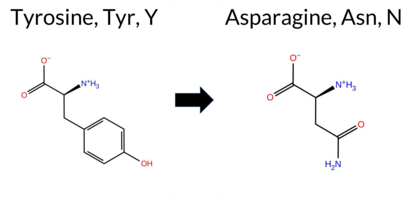 AIThe SynGAP1 missense variant Y18N is listed in gnomAD (ID 6‑33420316‑T‑A) but has no ClinVar entry. Functional prediction tools that agree on a benign effect include REVEL, PROVEAN, polyPhen‑2 HumVar, ESM1b, FATHMM, AlphaMissense‑Optimized, and the SGM‑Consensus (majority vote of AlphaMissense‑Default, ESM1b, FATHMM, PROVEAN). Tools that predict a pathogenic effect are polyPhen‑2 HumDiv and SIFT, while AlphaMissense‑Default remains uncertain. High‑accuracy assessments show AlphaMissense‑Optimized as benign and the SGM‑Consensus as likely benign; Foldetta results are unavailable. Overall, the majority of evidence points to a benign impact, and this conclusion does not contradict any ClinVar status (none is reported). Disclaimer: This summary was generated using AI and should be interpreted alongside expert review. | Likely Benign | 0.483068 | Structured | 0.446314 | Uncertain | 0.345 | 0.908 | 0.375 | 6-33420316-T-A | -3.094 | Likely Benign | 0.492 | Ambiguous | Likely Benign | 0.075 | Likely Benign | -0.73 | Neutral | 0.872 | Possibly Damaging | 0.114 | Benign | 4.07 | Benign | 0.00 | Affected | 4.32 | 1 | 0.2564 | 0.1253 | -2 | -2 | -2.2 | -49.07 | ||||||||||||||||||||||||||||||||||||
| c.52T>C | Y18H 2D 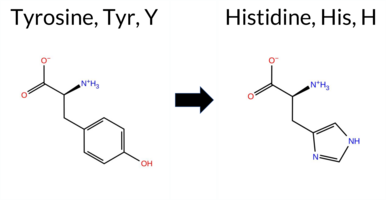 AIThe SynGAP1 missense variant Y18H is listed in gnomAD (ID 6‑33420316‑T‑C) but has no ClinVar entry. Functional prediction tools that agree on a benign effect include REVEL, PROVEAN, polyPhen‑2 HumVar, ESM1b, FATHMM, AlphaMissense‑Optimized, and the SGM‑Consensus (majority vote from AlphaMissense‑Default, ESM1b, FATHMM, PROVEAN). Tools that predict a pathogenic effect are polyPhen‑2 HumDiv and SIFT, while AlphaMissense‑Default remains uncertain. High‑accuracy assessments show AlphaMissense‑Optimized as benign and the SGM‑Consensus as likely benign; Foldetta stability analysis is unavailable. Overall, the majority of evidence points to a benign impact, and this conclusion does not contradict any ClinVar status (none is reported). Disclaimer: This summary was generated using AI and should be interpreted alongside expert review. | Likely Benign | 0.483068 | Structured | 0.446314 | Uncertain | 0.345 | 0.908 | 0.375 | 6-33420316-T-C | -2.871 | Likely Benign | 0.542 | Ambiguous | Likely Benign | 0.045 | Likely Benign | -0.58 | Neutral | 0.872 | Possibly Damaging | 0.114 | Benign | 4.07 | Benign | 0.00 | Affected | 4.32 | 1 | 0.2805 | 0.0993 | 2 | 0 | -1.9 | -26.03 | ||||||||||||||||||||||||||||||||||||
| c.52T>G | Y18D 2D 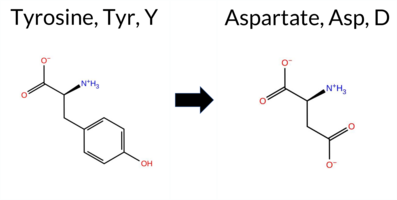 AIThe SynGAP1 missense variant Y18D is not reported in ClinVar (ClinVar ID = None) and is absent from gnomAD (gnomAD ID = None). Prediction tools that agree on a benign effect include REVEL, PROVEAN, ESM1b, FATHMM, AlphaMissense‑Optimized, and polyPhen‑2 HumVar, while those that predict a pathogenic effect are polyPhen‑2 HumDiv, SIFT, and AlphaMissense‑Default. The SGM‑Consensus, derived from a majority vote of AlphaMissense‑Default, ESM1b, FATHMM, and PROVEAN, classifies the variant as Likely Benign. High‑accuracy assessments further support a benign outcome: AlphaMissense‑Optimized predicts benign, and the SGM‑Consensus also indicates Likely Benign. No Foldetta stability prediction is available for this variant. Overall, the computational evidence overwhelmingly suggests that Y18D is most likely benign, and this conclusion is consistent with the absence of any ClinVar pathogenic annotation. Disclaimer: This summary was generated using AI and should be interpreted alongside expert review. | Likely Benign | 0.483068 | Structured | 0.446314 | Uncertain | 0.345 | 0.908 | 0.375 | -2.783 | Likely Benign | 0.580 | Likely Pathogenic | Likely Benign | 0.115 | Likely Benign | -0.44 | Neutral | 0.659 | Possibly Damaging | 0.072 | Benign | 4.06 | Benign | 0.00 | Affected | 0.4207 | 0.1253 | -4 | -3 | -2.2 | -48.09 | |||||||||||||||||||||||||||||||||||||||
| c.530T>A | F177Y 2D AIThe SynGAP1 missense variant F177Y is not reported in ClinVar (ClinVar ID = None) and is absent from gnomAD (gnomAD ID = None). Prediction tools that agree on a benign effect include REVEL, PROVEAN, polyPhen‑2 HumVar, SIFT, and FATHMM. Those that predict a pathogenic effect are polyPhen‑2 HumDiv, ESM1b, and AlphaMissense‑Default. The high‑accuracy AlphaMissense‑Optimized tool returns an uncertain result, and the SGM Consensus (majority vote from AlphaMissense‑Default, ESM1b, FATHMM, PROVEAN) is inconclusive (2 vs 2). Foldetta, a protein‑folding stability method, has no available output for this variant. Overall, the majority of consensus tools lean toward a benign interpretation, and there is no ClinVar record to contradict this assessment. Thus, the variant is most likely benign based on current predictions. Disclaimer: This summary was generated using AI and should be interpreted alongside expert review. | 0.505461 | Disordered | 0.461817 | Uncertain | 0.357 | 0.598 | 0.500 | -9.643 | Likely Pathogenic | 0.932 | Likely Pathogenic | Ambiguous | 0.138 | Likely Benign | -1.17 | Neutral | 0.818 | Possibly Damaging | 0.201 | Benign | 4.08 | Benign | 0.07 | Tolerated | 0.1511 | 0.2756 | 7 | 3 | -4.1 | 16.00 | ||||||||||||||||||||||||||||||||||||||||
| c.530T>C | F177S 2D AIThe SynGAP1 missense variant F177S is not reported in ClinVar (no ClinVar ID) and is absent from gnomAD (no gnomAD ID). Prediction tools that agree on a benign effect include REVEL, polyPhen‑2 HumVar, and FATHMM, whereas those that predict a pathogenic effect are PROVEAN, polyPhen‑2 HumDiv, SIFT, ESM1b, and AlphaMissense‑Default. The SGM‑Consensus, derived from a majority vote of AlphaMissense‑Default, ESM1b, FATHMM, and PROVEAN, classifies the variant as Likely Pathogenic. High‑accuracy assessments show AlphaMissense‑Optimized also predicts Pathogenic, while the Foldetta protein‑folding stability analysis is unavailable for this variant. Overall, the majority of computational evidence points to a pathogenic impact, and this assessment does not contradict any ClinVar status because no ClinVar classification exists. Disclaimer: This summary was generated using AI and should be interpreted alongside expert review. | Likely Pathogenic | 0.505461 | Disordered | 0.461817 | Uncertain | 0.357 | 0.598 | 0.500 | -10.283 | Likely Pathogenic | 0.998 | Likely Pathogenic | Likely Pathogenic | 0.282 | Likely Benign | -2.58 | Deleterious | 0.596 | Possibly Damaging | 0.203 | Benign | 4.11 | Benign | 0.01 | Affected | 0.5034 | 0.1049 | Weaken | -3 | -2 | -3.6 | -60.10 | ||||||||||||||||||||||||||||||||||||||
| c.530T>G | F177C 2D AIThe SynGAP1 missense variant F177C is not reported in ClinVar (ClinVar ID: None) and is absent from gnomAD (gnomAD ID: None). Prediction tools that agree on a benign effect include REVEL, PROVEAN, and FATHMM. Tools that predict a pathogenic effect are polyPhen‑2 HumDiv, polyPhen‑2 HumVar, SIFT, ESM1b, AlphaMissense‑Default, and AlphaMissense‑Optimized. The SGM Consensus, which aggregates AlphaMissense‑Default, ESM1b, FATHMM, and PROVEAN, is inconclusive (two pathogenic vs two benign votes). Foldetta, a protein‑folding stability method combining FoldX‑MD and Rosetta outputs, has no available result for this variant. Overall, the majority of high‑confidence predictors (six pathogenic vs three benign) indicate a pathogenic impact. Thus, the variant is most likely pathogenic, and this assessment does not contradict any ClinVar status because no ClinVar entry exists. Disclaimer: This summary was generated using AI and should be interpreted alongside expert review. | 0.505461 | Disordered | 0.461817 | Uncertain | 0.357 | 0.598 | 0.500 | -11.487 | Likely Pathogenic | 0.996 | Likely Pathogenic | Likely Pathogenic | 0.241 | Likely Benign | -2.20 | Neutral | 0.983 | Probably Damaging | 0.635 | Possibly Damaging | 4.07 | Benign | 0.01 | Affected | 0.2797 | 0.2539 | -4 | -2 | -0.3 | -44.04 | ||||||||||||||||||||||||||||||||||||||||
| c.531T>A | F177L 2D AIThe SynGAP1 missense variant F177L is not reported in ClinVar (no ClinVar ID) and is absent from gnomAD (no gnomAD ID). Prediction tools that agree on a benign effect include REVEL, PROVEAN, polyPhen‑2 HumDiv, polyPhen‑2 HumVar, SIFT, ESM1b, and FATHMM. Tools that predict a pathogenic effect are AlphaMissense‑Default and AlphaMissense‑Optimized. The SGM‑Consensus, which aggregates the majority vote from AlphaMissense‑Default, ESM1b, FATHMM, and PROVEAN, classifies the variant as Likely Benign. High‑accuracy assessments show AlphaMissense‑Optimized as Pathogenic, while the SGM‑Consensus remains Likely Benign; Foldetta results are unavailable. Overall, the majority of evidence (seven benign predictions versus two pathogenic) supports a benign classification. This conclusion does not contradict ClinVar status, as no ClinVar entry exists for this variant. Disclaimer: This summary was generated using AI and should be interpreted alongside expert review. | Likely Benign | 0.505461 | Disordered | 0.461817 | Uncertain | 0.357 | 0.598 | 0.500 | -5.564 | Likely Benign | 0.994 | Likely Pathogenic | Likely Pathogenic | 0.173 | Likely Benign | 0.24 | Neutral | 0.022 | Benign | 0.022 | Benign | 4.41 | Benign | 1.00 | Tolerated | 0.2376 | 0.4280 | 2 | 0 | 1.0 | -34.02 | |||||||||||||||||||||||||||||||||||||||
| c.531T>G | F177L 2D AIThe SynGAP1 missense variant F177L is not reported in ClinVar (no ClinVar ID) and is absent from gnomAD (no gnomAD ID). Prediction tools that agree on a benign effect include REVEL, PROVEAN, polyPhen‑2 HumDiv, polyPhen‑2 HumVar, SIFT, ESM1b, and FATHMM. Tools that predict a pathogenic effect are AlphaMissense‑Default and AlphaMissense‑Optimized. The SGM‑Consensus, which aggregates the majority vote from AlphaMissense‑Default, ESM1b, FATHMM, and PROVEAN, classifies the variant as Likely Benign. High‑accuracy assessments show AlphaMissense‑Optimized as Pathogenic, while the SGM‑Consensus remains Likely Benign; Foldetta results are unavailable. Overall, the majority of evidence (seven benign predictions versus two pathogenic) supports a benign classification. This conclusion does not contradict ClinVar status, as no ClinVar entry exists for this variant. Disclaimer: This summary was generated using AI and should be interpreted alongside expert review. | Likely Benign | 0.505461 | Disordered | 0.461817 | Uncertain | 0.357 | 0.598 | 0.500 | -5.564 | Likely Benign | 0.994 | Likely Pathogenic | Likely Pathogenic | 0.173 | Likely Benign | 0.24 | Neutral | 0.022 | Benign | 0.022 | Benign | 4.41 | Benign | 1.00 | Tolerated | 0.2376 | 0.4280 | 2 | 0 | 1.0 | -34.02 | |||||||||||||||||||||||||||||||||||||||
| c.532A>C | K178Q 2D AIThe SynGAP1 K178Q missense variant is not reported in ClinVar (no ClinVar ID) and is absent from gnomAD (no gnomAD ID). Prediction tools that agree on a benign effect include REVEL and FATHMM, whereas the majority of tools predict a pathogenic impact: PROVEAN, polyPhen‑2 HumDiv, polyPhen‑2 HumVar, SIFT, ESM1b, and AlphaMissense‑Default all classify the variant as damaging. The SGM‑Consensus, which aggregates AlphaMissense‑Default, ESM1b, FATHMM, and PROVEAN, reports the variant as Likely Pathogenic. High‑accuracy assessments show AlphaMissense‑Optimized as Uncertain, SGM‑Consensus as Likely Pathogenic, and Foldetta results are unavailable. Overall, the preponderance of evidence points to a pathogenic effect. This conclusion is consistent with the lack of ClinVar annotation, so there is no contradiction with existing clinical database status. Disclaimer: This summary was generated using AI and should be interpreted alongside expert review. | Likely Pathogenic | 0.497853 | Structured | 0.455271 | Uncertain | 0.354 | 0.622 | 0.375 | -9.779 | Likely Pathogenic | 0.948 | Likely Pathogenic | Ambiguous | 0.197 | Likely Benign | -2.57 | Deleterious | 0.971 | Probably Damaging | 0.598 | Possibly Damaging | 3.88 | Benign | 0.01 | Affected | 0.5170 | 0.1216 | Weaken | 1 | 1 | 0.4 | -0.04 | ||||||||||||||||||||||||||||||||||||||
| c.532A>G | K178E 2D AIThe SynGAP1 missense variant K178E is not reported in ClinVar (no ClinVar ID) and is absent from gnomAD (no gnomAD ID). Prediction tools that indicate a benign effect include REVEL, polyPhen‑2 HumVar, and FATHMM, whereas those that predict a pathogenic effect comprise PROVEAN, polyPhen‑2 HumDiv, SIFT, ESM1b, AlphaMissense‑Default, and AlphaMissense‑Optimized. The SGM‑Consensus, derived from a majority vote of AlphaMissense‑Default, ESM1b, FATHMM, and PROVEAN, classifies the variant as Likely Pathogenic. High‑accuracy assessments show AlphaMissense‑Optimized as Pathogenic and the SGM‑Consensus as Likely Pathogenic; the Foldetta protein‑folding stability analysis is unavailable. Based on the preponderance of pathogenic predictions and the high‑accuracy consensus, the variant is most likely pathogenic, and this assessment does not contradict any ClinVar status because none is available. Disclaimer: This summary was generated using AI and should be interpreted alongside expert review. | Likely Pathogenic | 0.497853 | Structured | 0.455271 | Uncertain | 0.354 | 0.622 | 0.375 | -13.695 | Likely Pathogenic | 0.996 | Likely Pathogenic | Likely Pathogenic | 0.205 | Likely Benign | -2.63 | Deleterious | 0.905 | Possibly Damaging | 0.393 | Benign | 3.90 | Benign | 0.01 | Affected | 0.4659 | 0.0952 | 0 | 1 | 0.4 | 0.94 | |||||||||||||||||||||||||||||||||||||||
| c.533A>C | K178T 2D AIThe SynGAP1 missense variant K178T is not reported in ClinVar and is absent from gnomAD. Computational predictors show a split: benign calls come from REVEL, polyPhen‑2 HumVar, and FATHMM, whereas pathogenic calls arise from PROVEAN, polyPhen‑2 HumDiv, SIFT, ESM1b, AlphaMissense‑Default, and AlphaMissense‑Optimized. The SGM‑Consensus, which aggregates AlphaMissense‑Default, ESM1b, FATHMM, and PROVEAN, reports the variant as Likely Pathogenic. High‑accuracy assessments further support a deleterious effect: AlphaMissense‑Optimized predicts pathogenicity, and the SGM‑Consensus agrees. Foldetta, a protein‑folding stability method that combines FoldX‑MD and Rosetta outputs, has no available result for this variant. Overall, the preponderance of evidence points to a pathogenic impact, and this conclusion is not contradicted by any ClinVar annotation. Disclaimer: This summary was generated using AI and should be interpreted alongside expert review. | Likely Pathogenic | 0.497853 | Structured | 0.455271 | Uncertain | 0.354 | 0.622 | 0.375 | -13.359 | Likely Pathogenic | 0.988 | Likely Pathogenic | Likely Pathogenic | 0.249 | Likely Benign | -3.95 | Deleterious | 0.759 | Possibly Damaging | 0.306 | Benign | 3.86 | Benign | 0.01 | Affected | 0.2631 | 0.2788 | 0 | -1 | 3.2 | -27.07 | |||||||||||||||||||||||||||||||||||||||
| c.533A>G | K178R 2D AIThe SynGAP1 missense variant K178R is reported in gnomAD (ID 6‑33435175‑A‑G) but has no ClinVar entry. Functional prediction tools largely agree on a benign effect: REVEL, PROVEAN, polyPhen‑2 HumVar, SIFT, ESM1b, FATHMM, AlphaMissense‑Default, and AlphaMissense‑Optimized all classify the change as benign. Only polyPhen‑2 HumDiv predicts it as pathogenic, while the consensus score from SGM (majority vote of AlphaMissense‑Default, ESM1b, FATHMM, and PROVEAN) yields a “Likely Benign” classification. High‑accuracy assessments reinforce this view: AlphaMissense‑Optimized predicts benign, and the SGM Consensus also indicates likely benign; Foldetta results are unavailable. Overall, the preponderance of evidence points to a benign impact for K178R, and this conclusion is not contradicted by any ClinVar status (none is available). Disclaimer: This summary was generated using AI and should be interpreted alongside expert review. | Likely Benign | 0.497853 | Structured | 0.455271 | Uncertain | 0.354 | 0.622 | 0.375 | 6-33435175-A-G | 1 | 6.20e-7 | -4.398 | Likely Benign | 0.281 | Likely Benign | Likely Benign | 0.117 | Likely Benign | -1.62 | Neutral | 0.905 | Possibly Damaging | 0.393 | Benign | 3.98 | Benign | 0.14 | Tolerated | 3.54 | 6 | 0.5403 | 0.1131 | Weaken | 2 | 3 | -0.6 | 28.01 | |||||||||||||||||||||||||||||||||
| c.533A>T | K178M 2D 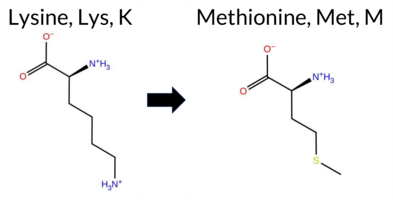 AIThe SynGAP1 missense variant K178M is not reported in ClinVar (no ClinVar ID) and is absent from gnomAD (no gnomAD ID). Prediction tools that indicate a benign effect are REVEL and FATHMM, whereas the remaining tools—PROVEAN, polyPhen‑2 (HumDiv and HumVar), SIFT, ESM1b, AlphaMissense‑Default, AlphaMissense‑Optimized, and the SGM‑Consensus (majority vote of AlphaMissense‑Default, ESM1b, FATHMM, PROVEAN)—all predict a pathogenic or likely pathogenic outcome. High‑accuracy assessments further support a deleterious impact: AlphaMissense‑Optimized classifies the variant as pathogenic, and the SGM‑Consensus reports it as Likely Pathogenic. The Foldetta protein‑folding stability analysis is unavailable for this variant. Overall, the majority of computational evidence points to a pathogenic effect, and this conclusion is not contradicted by any ClinVar annotation. Disclaimer: This summary was generated using AI and should be interpreted alongside expert review. | Likely Pathogenic | 0.497853 | Structured | 0.455271 | Uncertain | 0.354 | 0.622 | 0.375 | -13.585 | Likely Pathogenic | 0.995 | Likely Pathogenic | Likely Pathogenic | 0.287 | Likely Benign | -3.95 | Deleterious | 0.992 | Probably Damaging | 0.751 | Possibly Damaging | 3.83 | Benign | 0.00 | Affected | 0.1486 | 0.3607 | 0 | -1 | 5.8 | 3.02 | |||||||||||||||||||||||||||||||||||||||
| c.534G>C | K178N 2D AIThe SynGAP1 missense variant K178N is not reported in ClinVar (no ClinVar ID) and is absent from gnomAD (no gnomAD ID). Prediction tools that classify the variant as benign include REVEL and FATHMM, whereas the remaining tools—PROVEAN, polyPhen‑2 HumDiv, polyPhen‑2 HumVar, SIFT, ESM1b, AlphaMissense‑Default, AlphaMissense‑Optimized, and the SGM‑Consensus (majority vote from AlphaMissense‑Default, ESM1b, FATHMM, and PROVEAN)—all predict it to be pathogenic or likely pathogenic. High‑accuracy assessments further support a deleterious effect: AlphaMissense‑Optimized predicts pathogenic, SGM‑Consensus reports Likely Pathogenic, and Foldetta (a protein‑folding stability method combining FoldX‑MD and Rosetta outputs) is unavailable for this variant. Based on the preponderance of pathogenic predictions, K178N is most likely pathogenic, and this assessment does not contradict any ClinVar status because no ClinVar classification exists. Disclaimer: This summary was generated using AI and should be interpreted alongside expert review. | Likely Pathogenic | 0.497853 | Structured | 0.455271 | Uncertain | 0.354 | 0.622 | 0.375 | -12.137 | Likely Pathogenic | 0.999 | Likely Pathogenic | Likely Pathogenic | 0.131 | Likely Benign | -3.32 | Deleterious | 0.971 | Probably Damaging | 0.598 | Possibly Damaging | 3.86 | Benign | 0.01 | Affected | 0.4503 | 0.1321 | 1 | 0 | 0.4 | -14.07 | |||||||||||||||||||||||||||||||||||||||
| c.534G>T | K178N 2D AIThe SynGAP1 missense variant K178N is not reported in ClinVar (no ClinVar ID) and is absent from gnomAD (no gnomAD ID). Prediction tools that agree on a benign effect are REVEL and FATHMM, while the remaining tools—PROVEAN, polyPhen‑2 HumDiv, polyPhen‑2 HumVar, SIFT, ESM1b, AlphaMissense‑Default, AlphaMissense‑Optimized, and the SGM‑Consensus (majority vote of AlphaMissense‑Default, ESM1b, FATHMM, PROVEAN)—all predict a pathogenic or likely pathogenic outcome. High‑accuracy assessments further support a deleterious impact: AlphaMissense‑Optimized classifies the variant as pathogenic, the SGM‑Consensus indicates it is likely pathogenic, and Foldetta’s protein‑folding stability analysis is unavailable. Based on the preponderance of pathogenic predictions and the high‑accuracy tools’ results, the variant is most likely pathogenic; this conclusion is not contradicted by any ClinVar status, as none exists. Disclaimer: This summary was generated using AI and should be interpreted alongside expert review. | Likely Pathogenic | 0.497853 | Structured | 0.455271 | Uncertain | 0.354 | 0.622 | 0.375 | -12.137 | Likely Pathogenic | 0.999 | Likely Pathogenic | Likely Pathogenic | 0.131 | Likely Benign | -3.32 | Deleterious | 0.971 | Probably Damaging | 0.598 | Possibly Damaging | 3.86 | Benign | 0.01 | Affected | 0.4503 | 0.1321 | 1 | 0 | 0.4 | -14.07 | |||||||||||||||||||||||||||||||||||||||
| c.535G>A | E179K 2D 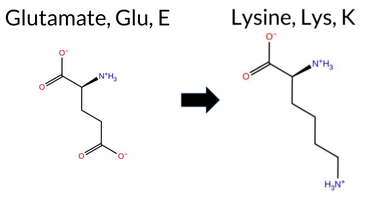 AIThe SynGAP1 missense variant E179K is not reported in ClinVar (ClinVar ID = None) and is absent from gnomAD (gnomAD ID = None). Prediction tools that agree on a benign effect include REVEL, PROVEAN, polyPhen‑2 HumVar, and FATHMM. Tools that predict a pathogenic effect are polyPhen‑2 HumDiv, SIFT, ESM1b, AlphaMissense‑Default, and AlphaMissense‑Optimized. The SGM Consensus, which takes a majority vote from AlphaMissense‑Default, ESM1b, FATHMM, and PROVEAN, is inconclusive (2 pathogenic vs. 2 benign). Foldetta, a protein‑folding stability method combining FoldX‑MD and Rosetta outputs, has no available result for this variant. Overall, the majority of high‑accuracy predictors (five pathogenic vs. four benign) indicate a pathogenic impact. No ClinVar entry contradicts this assessment. Thus, the variant is most likely pathogenic. Disclaimer: This summary was generated using AI and should be interpreted alongside expert review. | 0.517562 | Disordered | 0.448169 | Uncertain | 0.329 | 0.635 | 0.500 | -11.305 | Likely Pathogenic | 0.993 | Likely Pathogenic | Likely Pathogenic | 0.174 | Likely Benign | -2.32 | Neutral | 0.596 | Possibly Damaging | 0.202 | Benign | 4.03 | Benign | 0.02 | Affected | 0.2867 | 0.7695 | 0 | 1 | -0.4 | -0.94 | ||||||||||||||||||||||||||||||||||||||||
| c.535G>C | E179Q 2D 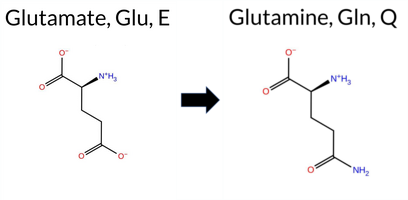 AIThe SynGAP1 missense variant E179Q has no ClinVar record (ClinVar status: not reported) and is absent from gnomAD (gnomAD ID: none). Computational predictions are split: benign calls come from REVEL, PROVEAN, polyPhen‑2 HumVar, and FATHMM, while pathogenic calls come from polyPhen‑2 HumDiv, SIFT, ESM1b, and AlphaMissense‑Default. AlphaMissense‑Optimized is uncertain. High‑accuracy consensus tools are inconclusive: the SGM Consensus (majority vote of AlphaMissense‑Default, ESM1b, FATHMM, PROVEAN) yields a tie, and Foldetta results are unavailable. Consequently, the variant is neither clearly benign nor pathogenic based on current predictions, and there is no ClinVar status to contradict this ambiguous assessment. Disclaimer: This summary was generated using AI and should be interpreted alongside expert review. | 0.517562 | Disordered | 0.448169 | Uncertain | 0.329 | 0.635 | 0.500 | -10.388 | Likely Pathogenic | 0.952 | Likely Pathogenic | Ambiguous | 0.123 | Likely Benign | -1.82 | Neutral | 0.818 | Possibly Damaging | 0.419 | Benign | 3.99 | Benign | 0.02 | Affected | 0.1674 | 0.7383 | 2 | 2 | 0.0 | -0.98 | ||||||||||||||||||||||||||||||||||||||||
| c.536A>C | E179A 2D 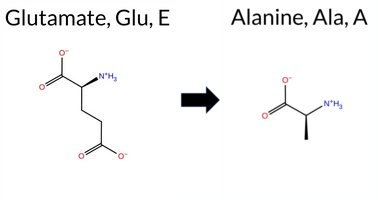 AISynGAP1 E179A is not reported in ClinVar and has no entry in gnomAD. Prediction tools cluster into two groups: benign predictions come from REVEL, polyPhen‑2 HumDiv, polyPhen‑2 HumVar, SIFT, and FATHMM; pathogenic predictions come from PROVEAN, ESM1b, and AlphaMissense‑Default. The SGM‑Consensus, derived from a majority vote of AlphaMissense‑Default, ESM1b, FATHMM, and PROVEAN, reports the variant as Likely Pathogenic. High‑accuracy assessments are mixed: AlphaMissense‑Optimized is Uncertain, SGM‑Consensus is Likely Pathogenic, and Foldetta data are unavailable. Overall, the majority of individual predictors lean benign, yet the consensus and high‑accuracy tools indicate pathogenicity, leaving the variant’s effect ambiguous. The predictions do not contradict ClinVar status, which has no entry for this variant. Based on the aggregate predictions, the variant is most likely benign, although the SGM‑Consensus and high‑accuracy tools raise a pathogenic signal, making the overall assessment inconclusive. Disclaimer: This summary was generated using AI and should be interpreted alongside expert review. | Likely Pathogenic | 0.517562 | Disordered | 0.448169 | Uncertain | 0.329 | 0.635 | 0.500 | -9.862 | Likely Pathogenic | 0.955 | Likely Pathogenic | Ambiguous | 0.124 | Likely Benign | -3.61 | Deleterious | 0.131 | Benign | 0.079 | Benign | 4.01 | Benign | 0.09 | Tolerated | 0.4465 | 0.7186 | 0 | -1 | 5.3 | -58.04 | |||||||||||||||||||||||||||||||||||||||
| c.536A>G | E179G 2D 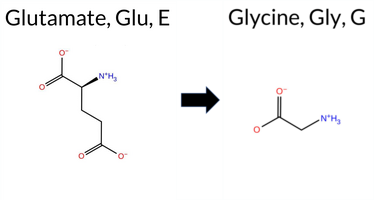 AIThe SynGAP1 missense variant E179G is not reported in ClinVar (ClinVar ID = None) and is absent from gnomAD (gnomAD ID = None). Among the available in‑silico predictors, six tools (REVEL, polyPhen‑2 HumDiv, polyPhen‑2 HumVar, SIFT, ESM1b, and FATHMM) unanimously predict a benign effect, whereas two tools (PROVEAN and AlphaMissense‑Default) predict pathogenicity. High‑accuracy predictors give no definitive verdict: AlphaMissense‑Optimized is uncertain; the SGM Consensus, derived from a majority vote of AlphaMissense‑Default, ESM1b, FATHMM, and PROVEAN, is inconclusive (two pathogenic vs. two benign votes); and Foldetta results are unavailable. Consequently, the overall evidence leans toward a benign interpretation, with no conflict with the lack of ClinVar annotation. Thus, the variant is most likely benign based on current predictions. Disclaimer: This summary was generated using AI and should be interpreted alongside expert review. | 0.517562 | Disordered | 0.448169 | Uncertain | 0.329 | 0.635 | 0.500 | -6.527 | Likely Benign | 0.949 | Likely Pathogenic | Ambiguous | 0.158 | Likely Benign | -4.24 | Deleterious | 0.001 | Benign | 0.004 | Benign | 3.97 | Benign | 0.09 | Tolerated | 0.3273 | 0.6425 | 0 | -2 | 3.1 | -72.06 | ||||||||||||||||||||||||||||||||||||||||
| c.536A>T | E179V 2D 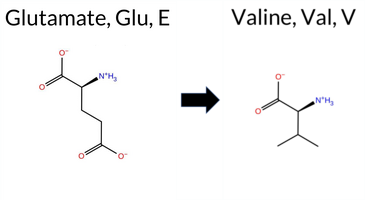 AIThe SynGAP1 missense variant E179V is not reported in ClinVar (no ClinVar ID) and is absent from gnomAD (no gnomAD ID). Prediction tools that indicate a benign effect include REVEL, polyPhen‑2 HumVar, and FATHMM, whereas those that predict a pathogenic effect comprise PROVEAN, polyPhen‑2 HumDiv, SIFT, ESM1b, AlphaMissense‑Default, and AlphaMissense‑Optimized. The SGM‑Consensus, derived from a majority vote of AlphaMissense‑Default, ESM1b, FATHMM, and PROVEAN, classifies the variant as Likely Pathogenic. High‑accuracy assessments show AlphaMissense‑Optimized as Pathogenic and the SGM‑Consensus as Likely Pathogenic; the Foldetta protein‑folding stability analysis is unavailable. Overall, the majority of computational evidence points to a pathogenic impact, and this conclusion is not contradicted by any ClinVar annotation. Disclaimer: This summary was generated using AI and should be interpreted alongside expert review. | Likely Pathogenic | 0.517562 | Disordered | 0.448169 | Uncertain | 0.329 | 0.635 | 0.500 | -10.930 | Likely Pathogenic | 0.983 | Likely Pathogenic | Likely Pathogenic | 0.190 | Likely Benign | -4.34 | Deleterious | 0.596 | Possibly Damaging | 0.328 | Benign | 3.94 | Benign | 0.01 | Affected | 0.1077 | 0.7864 | -2 | -2 | 7.7 | -29.98 | |||||||||||||||||||||||||||||||||||||||
| c.537G>C | E179D 2D 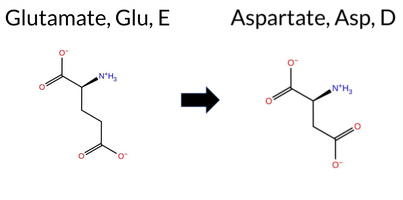 AIThe SynGAP1 missense variant E179D is not reported in ClinVar (ClinVar ID: None) and is absent from gnomAD (gnomAD ID: None). Prediction tools that agree on a benign effect include REVEL, PROVEAN, polyPhen‑2 HumVar, and FATHMM, while those that predict a pathogenic effect are polyPhen‑2 HumDiv, SIFT, and AlphaMissense‑Default. Two tools—ESM1b and AlphaMissense‑Optimized—return uncertain results. High‑accuracy assessments further support a benign interpretation: AlphaMissense‑Optimized is uncertain, the SGM Consensus (derived from AlphaMissense‑Default, ESM1b, FATHMM, and PROVEAN) yields a benign majority vote, and Foldetta data are unavailable. Overall, the balance of evidence (four benign vs. three pathogenic predictions, with a benign consensus from high‑accuracy methods) indicates that the variant is most likely benign. This conclusion does not contradict ClinVar status, as the variant has not been reported there. Disclaimer: This summary was generated using AI and should be interpreted alongside expert review. | 0.517562 | Disordered | 0.448169 | Uncertain | 0.329 | 0.635 | 0.500 | -7.741 | In-Between | 0.929 | Likely Pathogenic | Ambiguous | 0.145 | Likely Benign | -1.91 | Neutral | 0.596 | Possibly Damaging | 0.142 | Benign | 3.97 | Benign | 0.05 | Affected | 0.2327 | 0.5011 | 3 | 2 | 0.0 | -14.03 | ||||||||||||||||||||||||||||||||||||||||
| c.537G>T | E179D 2D AIThe SynGAP1 missense variant E179D is not reported in ClinVar (ClinVar ID: None) and is absent from gnomAD (gnomAD ID: None). Prediction tools that agree on a benign effect include REVEL, PROVEAN, polyPhen‑2 HumVar, and FATHMM, while those that predict a pathogenic effect are polyPhen‑2 HumDiv, SIFT, and AlphaMissense‑Default. Two tools—ESM1b and AlphaMissense‑Optimized—return uncertain results. High‑accuracy assessments further support a benign interpretation: AlphaMissense‑Optimized is uncertain, the SGM Consensus (derived from AlphaMissense‑Default, ESM1b, FATHMM, and PROVEAN) yields a benign majority vote, and Foldetta data are unavailable. Overall, the balance of evidence (four benign vs. three pathogenic predictions, with a benign consensus from high‑accuracy methods) indicates that the variant is most likely benign. This conclusion does not contradict ClinVar status, as the variant has no ClinVar entry. Disclaimer: This summary was generated using AI and should be interpreted alongside expert review. | 0.517562 | Disordered | 0.448169 | Uncertain | 0.329 | 0.635 | 0.500 | -7.741 | In-Between | 0.929 | Likely Pathogenic | Ambiguous | 0.145 | Likely Benign | -1.91 | Neutral | 0.596 | Possibly Damaging | 0.142 | Benign | 3.97 | Benign | 0.05 | Affected | 0.2327 | 0.5011 | 3 | 2 | 0.0 | -14.03 | ||||||||||||||||||||||||||||||||||||||||
| c.538T>A | S180T 2D AIThe SynGAP1 missense variant S180T is not reported in ClinVar (ClinVar ID: None) and is absent from gnomAD (gnomAD ID: None). Prediction tools that agree on a benign effect include REVEL, PROVEAN, polyPhen‑2 HumDiv, polyPhen‑2 HumVar, FATHMM, and AlphaMissense‑Optimized. Tools that predict a pathogenic effect are SIFT, ESM1b, and AlphaMissense‑Default. High‑accuracy assessments show AlphaMissense‑Optimized as benign, while the SGM Consensus (majority vote from AlphaMissense‑Default, ESM1b, FATHMM, and PROVEAN) is inconclusive (2 pathogenic vs. 2 benign). Foldetta results are unavailable. Overall, the majority of predictions (six benign vs. three pathogenic) support a benign classification. This consensus does not contradict any ClinVar status, as no ClinVar entry exists for this variant. Thus, the variant is most likely benign based on current predictive evidence. Disclaimer: This summary was generated using AI and should be interpreted alongside expert review. | 0.509769 | Disordered | 0.442877 | Uncertain | 0.320 | 0.616 | 0.500 | -9.851 | Likely Pathogenic | 0.669 | Likely Pathogenic | Likely Benign | 0.114 | Likely Benign | -2.07 | Neutral | 0.057 | Benign | 0.020 | Benign | 3.86 | Benign | 0.02 | Affected | 0.1238 | 0.5171 | 1 | 1 | 0.1 | 14.03 | ||||||||||||||||||||||||||||||||||||||||
| c.538T>C | S180P 2D AIThe SynGAP1 missense variant S180P is not reported in ClinVar (no ClinVar ID) and is absent from gnomAD (no gnomAD ID). Prediction tools that indicate a benign effect include REVEL, polyPhen‑2 HumVar, and FATHMM, whereas those that predict a pathogenic effect comprise PROVEAN, polyPhen‑2 HumDiv, SIFT, ESM1b, AlphaMissense‑Default, and AlphaMissense‑Optimized. The SGM‑Consensus, derived from a majority vote of AlphaMissense‑Default, ESM1b, FATHMM, and PROVEAN, classifies the variant as Likely Pathogenic. High‑accuracy assessments show AlphaMissense‑Optimized as Pathogenic and the SGM‑Consensus as Likely Pathogenic; the Foldetta protein‑folding stability analysis is unavailable. Based on the preponderance of pathogenic predictions and the high‑accuracy consensus, the variant is most likely pathogenic, and this conclusion is not contradicted by any ClinVar status. Disclaimer: This summary was generated using AI and should be interpreted alongside expert review. | Likely Pathogenic | 0.509769 | Disordered | 0.442877 | Uncertain | 0.320 | 0.616 | 0.500 | -14.574 | Likely Pathogenic | 0.987 | Likely Pathogenic | Likely Pathogenic | 0.225 | Likely Benign | -3.19 | Deleterious | 0.917 | Possibly Damaging | 0.446 | Benign | 3.81 | Benign | 0.01 | Affected | 0.1916 | 0.4735 | 1 | -1 | -0.8 | 10.04 | |||||||||||||||||||||||||||||||||||||||
| c.538T>G | S180A 2D AIThe SynGAP1 missense variant S180A is not reported in ClinVar (ClinVar ID = None) and is absent from gnomAD (gnomAD ID = None). Prediction tools that agree on a benign effect include REVEL, PROVEAN, polyPhen‑2 HumDiv, polyPhen‑2 HumVar, FATHMM, and AlphaMissense‑Optimized. Tools that predict a pathogenic effect are SIFT and ESM1b, while AlphaMissense‑Default remains uncertain. High‑accuracy assessments further support a benign outcome: AlphaMissense‑Optimized predicts benign, and the SGM Consensus (majority vote from AlphaMissense‑Default, ESM1b, FATHMM, PROVEAN) yields a benign majority (2 benign vs. 1 pathogenic). Foldetta, a protein‑folding stability method combining FoldX‑MD and Rosetta outputs, has no available result for this variant. Overall, the preponderance of evidence indicates that the S180A variant is most likely benign, and this conclusion does not contradict any ClinVar status because the variant is not yet catalogued there. Disclaimer: This summary was generated using AI and should be interpreted alongside expert review. | 0.509769 | Disordered | 0.442877 | Uncertain | 0.320 | 0.616 | 0.500 | -10.413 | Likely Pathogenic | 0.559 | Ambiguous | Likely Benign | 0.095 | Likely Benign | -1.94 | Neutral | 0.390 | Benign | 0.079 | Benign | 3.90 | Benign | 0.04 | Affected | 0.5003 | 0.3788 | Weaken | 1 | 1 | 2.6 | -16.00 | |||||||||||||||||||||||||||||||||||||||
| c.539C>T | S180L 2D 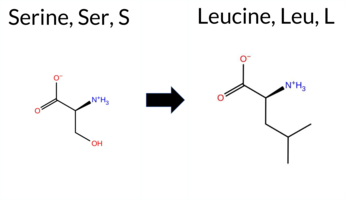 AIThe SynGAP1 missense variant S180L is not reported in ClinVar (no ClinVar ID) and is absent from gnomAD (no gnomAD ID). Prediction tools that agree on a benign effect include REVEL, polyPhen‑2 HumVar, and FATHMM, whereas those that predict a pathogenic effect are PROVEAN, polyPhen‑2 HumDiv, SIFT, ESM1b, and AlphaMissense‑Default. The high‑accuracy consensus (SGM‑Consensus) derived from a majority vote of AlphaMissense‑Default, ESM1b, FATHMM, and PROVEAN yields a “Likely Pathogenic” classification. AlphaMissense‑Optimized is uncertain, and Foldetta results are unavailable. Overall, the majority of evidence points to a pathogenic impact. This conclusion is not contradicted by ClinVar status, as no ClinVar entry exists for this variant. Disclaimer: This summary was generated using AI and should be interpreted alongside expert review. | Likely Pathogenic | 0.509769 | Disordered | 0.442877 | Uncertain | 0.320 | 0.616 | 0.500 | -12.967 | Likely Pathogenic | 0.955 | Likely Pathogenic | Ambiguous | 0.250 | Likely Benign | -3.80 | Deleterious | 0.608 | Possibly Damaging | 0.202 | Benign | 3.84 | Benign | 0.00 | Affected | 0.0885 | 0.5550 | -3 | -2 | 4.6 | 26.08 | |||||||||||||||||||||||||||||||||||||||
| c.53A>C | Y18S 2D 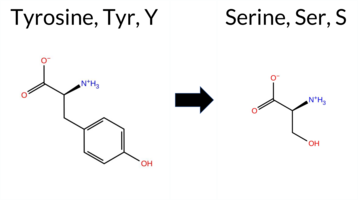 AIThe SynGAP1 missense variant Y18S is reported in gnomAD (ID 6‑33420317‑A‑C) but has no ClinVar entry. Functional prediction tools largely agree on a benign effect: REVEL, PROVEAN, polyPhen‑2 (HumDiv and HumVar), ESM1b, FATHMM, AlphaMissense‑Default, and AlphaMissense‑Optimized all classify the change as benign, while only SIFT predicts it as pathogenic. The SGM‑Consensus, derived from a majority vote of AlphaMissense‑Default, ESM1b, FATHMM, and PROVEAN, also indicates a likely benign outcome. High‑accuracy assessments confirm this: AlphaMissense‑Optimized is benign and the SGM‑Consensus is likely benign; Foldetta results are not available. Overall, the consensus of the majority of prediction tools and the high‑accuracy methods points to a benign impact for Y18S. This conclusion is consistent with the absence of a pathogenic ClinVar classification, so there is no contradiction with ClinVar status. Disclaimer: This summary was generated using AI and should be interpreted alongside expert review. | Likely Benign | 0.483068 | Structured | 0.446314 | Uncertain | 0.345 | 0.908 | 0.375 | 6-33420317-A-C | -1.061 | Likely Benign | 0.280 | Likely Benign | Likely Benign | 0.124 | Likely Benign | -0.50 | Neutral | 0.389 | Benign | 0.036 | Benign | 4.09 | Benign | 0.00 | Affected | 4.32 | 1 | 0.4961 | 0.2640 | -2 | -3 | 0.5 | -76.10 | ||||||||||||||||||||||||||||||||||||
| c.53A>G | Y18C 2D 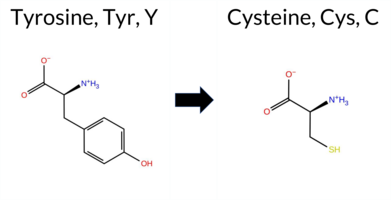 AIThe SynGAP1 missense variant Y18C is listed in ClinVar (ID 1967233) with an “Uncertain” status and is present in gnomAD (variant ID 6‑33420317‑A‑G). Prediction tools that agree on a benign effect include REVEL, PROVEAN, polyPhen‑2 HumVar, ESM1b, FATHMM, AlphaMissense‑Default, and AlphaMissense‑Optimized. Tools that predict a pathogenic effect are polyPhen‑2 HumDiv and SIFT. The high‑accuracy consensus (SGM‑Consensus, derived from AlphaMissense‑Default, ESM1b, FATHMM, and PROVEAN) reports a likely benign outcome, and AlphaMissense‑Optimized also predicts benign. Foldetta, a protein‑folding stability method combining FoldX‑MD and Rosetta outputs, has no available result for this variant. Overall, the majority of evidence points to a benign impact, which does not contradict the ClinVar “Uncertain” classification. Disclaimer: This summary was generated using AI and should be interpreted alongside expert review. | Likely Benign | 0.483068 | Structured | 0.446314 | Uncertain | 0.345 | 0.908 | 0.375 | Uncertain | 2 | 6-33420317-A-G | 44 | 2.88e-5 | -2.658 | Likely Benign | 0.251 | Likely Benign | Likely Benign | 0.102 | Likely Benign | -0.56 | Neutral | 0.872 | Possibly Damaging | 0.206 | Benign | 4.04 | Benign | 0.00 | Affected | 4.32 | 1 | 0.3293 | 0.2473 | 0 | -2 | 3.8 | -60.04 | ||||||||||||||||||||||||||||||||
| c.53A>T | Y18F 2D 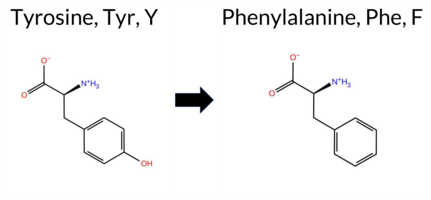 AIThe SynGAP1 missense variant Y18F is not reported in ClinVar (no ClinVar ID) and is absent from gnomAD (no gnomAD ID). Prediction tools that agree on a benign effect include REVEL, PROVEAN, polyPhen‑2 HumDiv, polyPhen‑2 HumVar, ESM1b, FATHMM, AlphaMissense‑Default, and AlphaMissense‑Optimized. Only SIFT predicts a pathogenic outcome. The SGM‑Consensus, which aggregates AlphaMissense‑Default, ESM1b, FATHMM, and PROVEAN, reports a Likely Benign classification. High‑accuracy assessments show AlphaMissense‑Optimized as Benign and the SGM‑Consensus as Likely Benign; Foldetta results are unavailable. Overall, the majority of evidence points to a benign effect, and this conclusion does not contradict any ClinVar annotation (none is present). Disclaimer: This summary was generated using AI and should be interpreted alongside expert review. | Likely Benign | 0.483068 | Structured | 0.446314 | Uncertain | 0.345 | 0.908 | 0.375 | -2.371 | Likely Benign | 0.160 | Likely Benign | Likely Benign | 0.059 | Likely Benign | -0.19 | Neutral | 0.115 | Benign | 0.018 | Benign | 4.18 | Benign | 0.00 | Affected | 0.2675 | 0.3322 | 7 | 3 | 4.1 | -16.00 | |||||||||||||||||||||||||||||||||||||||
| c.541C>A | H181N 2D AIThe SynGAP1 missense variant H181N is not reported in ClinVar (no ClinVar ID) and is absent from gnomAD (no gnomAD ID). Prediction tools that agree on a benign effect include REVEL, PROVEAN, polyPhen‑2 HumDiv, polyPhen‑2 HumVar, FATHMM, and AlphaMissense‑Optimized. Tools that predict a pathogenic effect are SIFT and ESM1b, while AlphaMissense‑Default remains uncertain. High‑accuracy assessments further support a benign outcome: AlphaMissense‑Optimized is benign, and the SGM Consensus (majority vote from AlphaMissense‑Default, ESM1b, FATHMM, and PROVEAN) yields a benign prediction (2 benign vs. 1 pathogenic). Foldetta results are unavailable. Overall, the preponderance of evidence indicates that H181N is most likely benign, and this conclusion does not contradict any ClinVar status because the variant is not yet catalogued there. Disclaimer: This summary was generated using AI and should be interpreted alongside expert review. | 0.505461 | Disordered | 0.439530 | Uncertain | 0.294 | 0.616 | 0.500 | -10.315 | Likely Pathogenic | 0.526 | Ambiguous | Likely Benign | 0.090 | Likely Benign | -1.50 | Neutral | 0.421 | Benign | 0.107 | Benign | 4.18 | Benign | 0.05 | Affected | 0.1335 | 0.1839 | 2 | 1 | -0.3 | -23.04 | ||||||||||||||||||||||||||||||||||||||||
| c.541C>G | H181D 2D AIThe SynGAP1 missense variant H181D has no ClinVar entry and is not reported in gnomAD. Functional prediction tools show a split opinion: benign calls come from REVEL, polyPhen‑2 HumVar, and FATHMM, while pathogenic calls are made by PROVEAN, polyPhen‑2 HumDiv, SIFT, ESM1b, and AlphaMissense‑Default. AlphaMissense‑Optimized is uncertain, and the SGM‑Consensus (majority vote of AlphaMissense‑Default, ESM1b, FATHMM, and PROVEAN) reports the variant as Likely Pathogenic. High‑accuracy assessments further support a deleterious effect: the SGM‑Consensus is pathogenic, AlphaMissense‑Optimized remains uncertain, and the Foldetta stability analysis is unavailable. Overall, the majority of evidence points toward a pathogenic impact. Because there is no ClinVar classification to oppose this, the variant is most likely pathogenic based on current predictions. Disclaimer: This summary was generated using AI and should be interpreted alongside expert review. | Likely Pathogenic | 0.505461 | Disordered | 0.439530 | Uncertain | 0.294 | 0.616 | 0.500 | -15.380 | Likely Pathogenic | 0.901 | Likely Pathogenic | Ambiguous | 0.260 | Likely Benign | -2.93 | Deleterious | 0.596 | Possibly Damaging | 0.107 | Benign | 4.17 | Benign | 0.02 | Affected | 0.2157 | 0.1255 | 1 | -1 | -0.3 | -22.05 | |||||||||||||||||||||||||||||||||||||||
| c.541C>T | H181Y 2D AIThe SynGAP1 missense variant H181Y is not reported in ClinVar (ClinVar status: none) but is present in gnomAD (ID 6‑33435183‑C‑T). Prediction tools that agree on a benign effect include REVEL, PROVEAN, polyPhen‑2 HumVar, FATHMM, and AlphaMissense‑Optimized. Those that predict a pathogenic effect are polyPhen‑2 HumDiv, SIFT, and ESM1b. AlphaMissense‑Default is uncertain. High‑accuracy assessments show AlphaMissense‑Optimized as benign, and the SGM Consensus (majority vote from AlphaMissense‑Default, ESM1b, FATHMM, PROVEAN) also favors a benign outcome. Foldetta results are unavailable. Overall, the majority of evidence points to a benign impact for H181Y, and this conclusion does not contradict the ClinVar status, which has no classification for this variant. Disclaimer: This summary was generated using AI and should be interpreted alongside expert review. | 0.505461 | Disordered | 0.439530 | Uncertain | 0.294 | 0.616 | 0.500 | 6-33435183-C-T | 2 | 1.24e-6 | -9.477 | Likely Pathogenic | 0.551 | Ambiguous | Likely Benign | 0.161 | Likely Benign | -2.36 | Neutral | 0.818 | Possibly Damaging | 0.255 | Benign | 4.13 | Benign | 0.02 | Affected | 3.54 | 6 | 0.0588 | 0.3875 | 2 | 0 | 1.9 | 26.03 | |||||||||||||||||||||||||||||||||||
| c.542A>C | H181P 2D AISynGAP1 H181P is not reported in ClinVar and is absent from gnomAD. Functional prediction tools show mixed results: benign calls come from REVEL, polyPhen‑2 HumVar, FATHMM, and AlphaMissense‑Optimized, while pathogenic calls come from PROVEAN, polyPhen‑2 HumDiv, SIFT, ESM1b, and AlphaMissense‑Default. The SGM‑Consensus, which aggregates majority votes from AlphaMissense‑Default, ESM1b, FATHMM, and PROVEAN, classifies the variant as Likely Pathogenic. High‑accuracy assessments further support this: AlphaMissense‑Optimized predicts a benign effect, whereas the SGM‑Consensus indicates pathogenicity; Foldetta stability analysis is unavailable. Overall, the majority of evidence points toward a pathogenic effect, and this conclusion does not contradict any existing ClinVar annotation, as none is available. Disclaimer: This summary was generated using AI and should be interpreted alongside expert review. | Likely Pathogenic | 0.505461 | Disordered | 0.439530 | Uncertain | 0.294 | 0.616 | 0.500 | -13.151 | Likely Pathogenic | 0.737 | Likely Pathogenic | Likely Benign | 0.236 | Likely Benign | -3.27 | Deleterious | 0.940 | Possibly Damaging | 0.360 | Benign | 4.14 | Benign | 0.04 | Affected | 0.1783 | 0.3169 | 0 | -2 | 1.6 | -40.02 | |||||||||||||||||||||||||||||||||||||||
| c.542A>G | H181R 2D AIThe SynGAP1 missense variant H181R is not reported in ClinVar (ClinVar ID None) and has no entries in gnomAD (gnomAD ID None). Prediction tools that agree on a benign effect include REVEL, PROVEAN, polyPhen‑2 HumVar, SIFT, ESM1b, FATHMM, and AlphaMissense‑Optimized. Only polyPhen‑2 HumDiv predicts a pathogenic outcome, while AlphaMissense‑Default remains uncertain. The SGM‑Consensus, derived from a majority vote of AlphaMissense‑Default, ESM1b, FATHMM, and PROVEAN, classifies the variant as Likely Benign. High‑accuracy assessments further support a benign interpretation: AlphaMissense‑Optimized predicts Benign, and the SGM‑Consensus likewise indicates Likely Benign; Foldetta results are unavailable. Based on the collective predictions, the variant is most likely benign, and this assessment does not contradict any ClinVar status. Disclaimer: This summary was generated using AI and should be interpreted alongside expert review. | Likely Benign | 0.505461 | Disordered | 0.439530 | Uncertain | 0.294 | 0.616 | 0.500 | -3.668 | Likely Benign | 0.521 | Ambiguous | Likely Benign | 0.174 | Likely Benign | -0.11 | Neutral | 0.818 | Possibly Damaging | 0.188 | Benign | 4.35 | Benign | 1.00 | Tolerated | 0.1585 | 0.1782 | 2 | 0 | -1.3 | 19.05 | |||||||||||||||||||||||||||||||||||||||
| c.542A>T | H181L 2D AIThe SynGAP1 H181L variant is not reported in ClinVar (no ClinVar ID) and is absent from gnomAD (no gnomAD ID). Prediction tools that agree on a benign effect include REVEL, polyPhen‑2 HumDiv, polyPhen‑2 HumVar, FATHMM, and AlphaMissense‑Optimized. Tools that predict a pathogenic effect are PROVEAN, SIFT, and ESM1b; AlphaMissense‑Default remains uncertain. High‑accuracy assessments show AlphaMissense‑Optimized as benign, while the SGM Consensus (majority vote from AlphaMissense‑Default, ESM1b, FATHMM, PROVEAN) leans pathogenic (2 pathogenic vs 1 benign). Foldetta, which would provide a protein‑folding stability estimate, has no available result for this variant. Overall, the majority of standard predictors classify the variant as benign, and there is no ClinVar entry to contradict this assessment. Thus, the variant is most likely benign based on current predictions. Disclaimer: This summary was generated using AI and should be interpreted alongside expert review. | 0.505461 | Disordered | 0.439530 | Uncertain | 0.294 | 0.616 | 0.500 | -11.014 | Likely Pathogenic | 0.561 | Ambiguous | Likely Benign | 0.212 | Likely Benign | -3.51 | Deleterious | 0.267 | Benign | 0.039 | Benign | 4.17 | Benign | 0.04 | Affected | 0.0734 | 0.4395 | -2 | -3 | 7.0 | -23.98 | ||||||||||||||||||||||||||||||||||||||||
| c.543C>A | H181Q 2D AIThe SynGAP1 missense variant H181Q is not reported in ClinVar (no ClinVar ID) and is absent from gnomAD (no gnomAD ID). Prediction tools that agree on a benign effect include REVEL, PROVEAN, polyPhen‑2 HumVar, SIFT, FATHMM, and AlphaMissense‑Optimized. Tools that predict a pathogenic effect are polyPhen‑2 HumDiv, ESM1b, and AlphaMissense‑Default. The SGM Consensus, which takes a majority vote from AlphaMissense‑Default, ESM1b, FATHMM, and PROVEAN, is inconclusive (two pathogenic, two benign). Foldetta, a protein‑folding stability method combining FoldX‑MD and Rosetta outputs, has no available result for this variant. High‑accuracy tools therefore give a benign prediction from AlphaMissense‑Optimized, an inconclusive SGM Consensus, and no Foldetta data. Overall, the majority of predictions (six benign vs. three pathogenic) indicate that the variant is most likely benign, and this conclusion is not contradicted by any ClinVar status. Disclaimer: This summary was generated using AI and should be interpreted alongside expert review. | 0.505461 | Disordered | 0.439530 | Uncertain | 0.294 | 0.616 | 0.500 | -9.577 | Likely Pathogenic | 0.692 | Likely Pathogenic | Likely Benign | 0.125 | Likely Benign | -1.45 | Neutral | 0.940 | Possibly Damaging | 0.360 | Benign | 4.19 | Benign | 0.09 | Tolerated | 0.1241 | 0.2835 | 3 | 0 | -0.3 | -9.01 | ||||||||||||||||||||||||||||||||||||||||
| c.543C>G | H181Q 2D AIThe SynGAP1 H181Q missense variant is not reported in ClinVar (no ClinVar ID) and is absent from gnomAD (no gnomAD ID). Prediction tools that agree on a benign effect include REVEL, PROVEAN, polyPhen‑2 HumVar, SIFT, FATHMM, and AlphaMissense‑Optimized. Tools that predict a pathogenic effect are polyPhen‑2 HumDiv, ESM1b, and AlphaMissense‑Default. The SGM Consensus, which takes a majority vote from AlphaMissense‑Default, ESM1b, FATHMM, and PROVEAN, is inconclusive (two pathogenic vs two benign). Foldetta, a protein‑folding stability method combining FoldX‑MD and Rosetta outputs, has no available result for this variant. High‑accuracy tools therefore give a benign prediction from AlphaMissense‑Optimized, an inconclusive SGM Consensus, and an unavailable Foldetta result. Overall, the majority of predictions (six benign vs three pathogenic) indicate that the variant is most likely benign, and this assessment does not contradict the lack of ClinVar annotation. Disclaimer: This summary was generated using AI and should be interpreted alongside expert review. | 0.505461 | Disordered | 0.439530 | Uncertain | 0.294 | 0.616 | 0.500 | -9.577 | Likely Pathogenic | 0.692 | Likely Pathogenic | Likely Benign | 0.125 | Likely Benign | -1.45 | Neutral | 0.940 | Possibly Damaging | 0.360 | Benign | 4.19 | Benign | 0.09 | Tolerated | 0.1241 | 0.2835 | 3 | 0 | -0.3 | -9.01 | ||||||||||||||||||||||||||||||||||||||||
| c.544T>A | S182T 2D AIThe SynGAP1 missense variant S182T is not reported in ClinVar (ClinVar ID = None) and is absent from gnomAD (gnomAD ID = None). Prediction tools that agree on a benign effect include REVEL, PROVEAN, polyPhen‑2 HumDiv, polyPhen‑2 HumVar, and FATHMM. Tools that predict a pathogenic effect are SIFT, ESM1b, and AlphaMissense‑Default. AlphaMissense‑Optimized is uncertain. High‑accuracy assessments are inconclusive: the SGM Consensus (majority vote from AlphaMissense‑Default, ESM1b, FATHMM, PROVEAN) is a 2‑vs‑2 tie, and Foldetta results are unavailable. Overall, the majority of available predictions (five benign vs three pathogenic) suggest a benign impact. This consensus does not contradict any ClinVar annotation, as no ClinVar entry exists for this variant. Thus, based on current computational evidence, the variant is most likely benign. Disclaimer: This summary was generated using AI and should be interpreted alongside expert review. | 0.501700 | Disordered | 0.436016 | Uncertain | 0.368 | 0.619 | 0.625 | -11.247 | Likely Pathogenic | 0.857 | Likely Pathogenic | Ambiguous | 0.128 | Likely Benign | -2.29 | Neutral | 0.231 | Benign | 0.081 | Benign | 3.68 | Benign | 0.00 | Affected | 0.1624 | 0.5657 | 1 | 1 | 0.1 | 14.03 | ||||||||||||||||||||||||||||||||||||||||
| c.544T>C | S182P 2D AIThe SynGAP1 missense variant S182P is not reported in ClinVar and is absent from gnomAD. Prediction tools that agree on a benign effect include REVEL, polyPhen‑2 HumVar, and FATHMM, whereas pathogenic predictions are made by PROVEAN, polyPhen‑2 HumDiv, SIFT, ESM1b, AlphaMissense‑Default, and AlphaMissense‑Optimized. The SGM‑Consensus, derived from a majority vote of AlphaMissense‑Default, ESM1b, FATHMM, and PROVEAN, classifies the variant as Likely Pathogenic. High‑accuracy assessments further support pathogenicity: AlphaMissense‑Optimized predicts pathogenic, and the SGM‑Consensus (majority of the four high‑accuracy tools) also indicates pathogenic. Foldetta, a protein‑folding stability method combining FoldX‑MD and Rosetta outputs, has no available result for this variant. Overall, the preponderance of evidence from multiple independent predictors points to a pathogenic effect, and this conclusion is not contradicted by any ClinVar annotation. Disclaimer: This summary was generated using AI and should be interpreted alongside expert review. | Likely Pathogenic | 0.501700 | Disordered | 0.436016 | Uncertain | 0.368 | 0.619 | 0.625 | -13.362 | Likely Pathogenic | 0.993 | Likely Pathogenic | Likely Pathogenic | 0.279 | Likely Benign | -3.71 | Deleterious | 0.838 | Possibly Damaging | 0.367 | Benign | 3.67 | Benign | 0.00 | Affected | 0.2438 | 0.5030 | 1 | -1 | -0.8 | 10.04 | |||||||||||||||||||||||||||||||||||||||
| c.544T>G | S182A 2D AIThe SynGAP1 missense variant S182A is not reported in ClinVar (ClinVar ID = None) and is absent from gnomAD (gnomAD ID = None). Prediction tools that agree on a benign effect include REVEL, PROVEAN, polyPhen‑2 HumDiv, polyPhen‑2 HumVar, and FATHMM. Tools that predict a pathogenic effect are SIFT, ESM1b, and AlphaMissense‑Default. AlphaMissense‑Optimized is uncertain. High‑accuracy assessments are inconclusive: the SGM Consensus (majority vote from AlphaMissense‑Default, ESM1b, FATHMM, PROVEAN) is a 2‑vs‑2 tie, and Foldetta results are unavailable. Overall, the majority of standard predictors lean toward a benign impact, and no ClinVar evidence contradicts this assessment. Thus, the variant is most likely benign based on current predictions. Disclaimer: This summary was generated using AI and should be interpreted alongside expert review. | 0.501700 | Disordered | 0.436016 | Uncertain | 0.368 | 0.619 | 0.625 | -9.417 | Likely Pathogenic | 0.838 | Likely Pathogenic | Ambiguous | 0.113 | Likely Benign | -2.26 | Neutral | 0.001 | Benign | 0.005 | Benign | 3.70 | Benign | 0.00 | Affected | 0.5466 | 0.4660 | Weaken | 1 | 1 | 2.6 | -16.00 | |||||||||||||||||||||||||||||||||||||||
| c.545C>A | S182Y 2D AIThe SynGAP1 missense variant S182Y is not reported in ClinVar and is absent from gnomAD. Functional prediction tools largely agree on a deleterious effect: pathogenic calls come from PROVEAN, polyPhen‑2 (HumDiv and HumVar), SIFT, ESM1b, AlphaMissense‑Default, and AlphaMissense‑Optimized, while benign calls are made only by REVEL and FATHMM. High‑accuracy assessments reinforce the pathogenic prediction: AlphaMissense‑Optimized indicates a pathogenic effect, and the SGM‑Consensus (majority vote of AlphaMissense‑Default, ESM1b, FATHMM, and PROVEAN) reports the variant as Likely Pathogenic. A protein‑folding stability analysis with Foldetta is unavailable, so it does not influence the overall assessment. Based on the preponderance of pathogenic predictions, the variant is most likely pathogenic, and this conclusion is not contradicted by any ClinVar annotation. Disclaimer: This summary was generated using AI and should be interpreted alongside expert review. | Likely Pathogenic | 0.501700 | Disordered | 0.436016 | Uncertain | 0.368 | 0.619 | 0.625 | -15.951 | Likely Pathogenic | 0.995 | Likely Pathogenic | Likely Pathogenic | 0.274 | Likely Benign | -4.40 | Deleterious | 0.940 | Possibly Damaging | 0.564 | Possibly Damaging | 3.64 | Benign | 0.00 | Affected | 0.0656 | 0.5158 | -3 | -2 | -0.5 | 76.10 | |||||||||||||||||||||||||||||||||||||||
| c.545C>G | S182C 2D AIThe SynGAP1 missense variant S182C is not reported in ClinVar (no ClinVar ID) and is absent from gnomAD (no gnomAD ID). Prediction tools that agree on a benign effect are REVEL and FATHMM, whereas the majority of tools predict a pathogenic impact: PROVEAN, polyPhen‑2 (HumDiv and HumVar), SIFT, ESM1b, and AlphaMissense‑Default all classify the variant as damaging. The SGM‑Consensus, which aggregates AlphaMissense‑Default, ESM1b, FATHMM, and PROVEAN, reports the variant as Likely Pathogenic. High‑accuracy assessments show AlphaMissense‑Optimized as Uncertain, while the SGM‑Consensus (majority vote) remains pathogenic. Foldetta, a protein‑folding stability method combining FoldX‑MD and Rosetta outputs, has no available result for this variant. Overall, the preponderance of evidence from multiple in silico predictors indicates that the variant is most likely pathogenic, and this conclusion is not contradicted by any ClinVar annotation. Disclaimer: This summary was generated using AI and should be interpreted alongside expert review. | Likely Pathogenic | 0.501700 | Disordered | 0.436016 | Uncertain | 0.368 | 0.619 | 0.625 | -12.707 | Likely Pathogenic | 0.941 | Likely Pathogenic | Ambiguous | 0.216 | Likely Benign | -3.14 | Deleterious | 0.983 | Probably Damaging | 0.635 | Possibly Damaging | 3.63 | Benign | 0.00 | Affected | 0.1179 | 0.5800 | 0 | -1 | 3.3 | 16.06 | |||||||||||||||||||||||||||||||||||||||
| c.545C>T | S182F 2D AIThe SynGAP1 missense variant S182F is not reported in ClinVar (no ClinVar ID) and is absent from gnomAD (no gnomAD ID). Prediction tools that agree on a benign effect include REVEL and FATHMM, whereas the remaining tools—PROVEAN, polyPhen‑2 (HumDiv and HumVar), SIFT, ESM1b, AlphaMissense‑Default, AlphaMissense‑Optimized, and the SGM‑Consensus—predict a pathogenic or likely pathogenic outcome. High‑accuracy assessments further support a deleterious impact: AlphaMissense‑Optimized classifies the variant as pathogenic, the SGM‑Consensus (majority vote of AlphaMissense‑Default, ESM1b, FATHMM, and PROVEAN) reports it as likely pathogenic, and the Foldetta stability analysis is unavailable. Based on the preponderance of pathogenic predictions and the corroborating high‑accuracy tools, the variant is most likely pathogenic, with no conflict with ClinVar status (which is absent). Disclaimer: This summary was generated using AI and should be interpreted alongside expert review. | Likely Pathogenic | 0.501700 | Disordered | 0.436016 | Uncertain | 0.368 | 0.619 | 0.625 | -12.027 | Likely Pathogenic | 0.997 | Likely Pathogenic | Likely Pathogenic | 0.227 | Likely Benign | -4.30 | Deleterious | 0.838 | Possibly Damaging | 0.466 | Possibly Damaging | 3.64 | Benign | 0.00 | Affected | 0.0597 | 0.5482 | -3 | -2 | 3.6 | 60.10 | |||||||||||||||||||||||||||||||||||||||
| c.547C>A | H183N 2D AIThe SynGAP1 H183N missense variant has no ClinVar entry and is not reported in gnomAD. Functional prediction tools that agree on a benign effect include REVEL, polyPhen‑2 HumDiv, polyPhen‑2 HumVar, and FATHMM. In contrast, tools that predict a pathogenic impact are PROVEAN, SIFT, ESM1b, AlphaMissense‑Default, and AlphaMissense‑Optimized. The SGM‑Consensus, which aggregates the majority vote from AlphaMissense‑Default, ESM1b, FATHMM, and PROVEAN, classifies the variant as Likely Pathogenic. High‑accuracy assessments further support a deleterious effect: AlphaMissense‑Optimized predicts pathogenicity, and the SGM‑Consensus (majority vote) also indicates Likely Pathogenic. Foldetta, a protein‑folding stability method combining FoldX‑MD and Rosetta outputs, is not available for this variant. Overall, the majority of predictions, including the high‑accuracy tools, point to a pathogenic effect, and this conclusion is not contradicted by any ClinVar status. Disclaimer: This summary was generated using AI and should be interpreted alongside expert review. | Likely Pathogenic | 0.476583 | Structured | 0.432952 | Uncertain | 0.421 | 0.622 | 0.500 | -12.028 | Likely Pathogenic | 0.978 | Likely Pathogenic | Likely Pathogenic | 0.188 | Likely Benign | -4.97 | Deleterious | 0.012 | Benign | 0.006 | Benign | 3.81 | Benign | 0.01 | Affected | 0.1714 | 0.2589 | 2 | 1 | -0.3 | -23.04 | |||||||||||||||||||||||||||||||||||||||
| c.547C>G | H183D 2D AIThe SynGAP1 missense variant H183D is not reported in ClinVar (no ClinVar ID) and is absent from gnomAD (no gnomAD ID). Prediction tools that agree on a benign effect include REVEL, polyPhen‑2 HumDiv, polyPhen‑2 HumVar, and FATHMM. Tools that predict a pathogenic effect comprise PROVEAN, SIFT, ESM1b, AlphaMissense‑Default, and AlphaMissense‑Optimized. The high‑accuracy consensus, SGM‑Consensus, classifies the variant as Likely Pathogenic, and AlphaMissense‑Optimized independently predicts Pathogenic. Foldetta, a protein‑folding stability method combining FoldX‑MD and Rosetta outputs, did not provide a result for this variant. Overall, the majority of predictions (seven pathogenic vs. four benign) indicate a pathogenic impact. This conclusion is not contradicted by ClinVar status, as no ClinVar entry exists for H183D. Disclaimer: This summary was generated using AI and should be interpreted alongside expert review. | Likely Pathogenic | 0.476583 | Structured | 0.432952 | Uncertain | 0.421 | 0.622 | 0.500 | -18.626 | Likely Pathogenic | 0.994 | Likely Pathogenic | Likely Pathogenic | 0.311 | Likely Benign | -6.55 | Deleterious | 0.421 | Benign | 0.107 | Benign | 3.81 | Benign | 0.01 | Affected | 0.2620 | 0.1817 | 1 | -1 | -0.3 | -22.05 | |||||||||||||||||||||||||||||||||||||||
| c.547C>T | H183Y 2D AIThe SynGAP1 H183Y missense variant is not reported in ClinVar (no ClinVar ID) and is absent from gnomAD (no gnomAD ID). Prediction tools that indicate a benign effect include REVEL, polyPhen‑2 HumVar, and FATHMM, whereas those that predict a pathogenic effect comprise PROVEAN, polyPhen‑2 HumDiv, SIFT, ESM1b, AlphaMissense‑Default, and AlphaMissense‑Optimized. The SGM‑Consensus, derived from a majority vote of AlphaMissense‑Default, ESM1b, FATHMM, and PROVEAN, classifies the variant as Likely Pathogenic. High‑accuracy assessments show AlphaMissense‑Optimized as Pathogenic and the SGM‑Consensus as Likely Pathogenic; the Foldetta protein‑folding stability analysis is unavailable. Overall, the majority of computational evidence points to a pathogenic impact, and this conclusion does not contradict any ClinVar annotation because no ClinVar status exists for this variant. Disclaimer: This summary was generated using AI and should be interpreted alongside expert review. | Likely Pathogenic | 0.476583 | Structured | 0.432952 | Uncertain | 0.421 | 0.622 | 0.500 | -9.481 | Likely Pathogenic | 0.978 | Likely Pathogenic | Likely Pathogenic | 0.250 | Likely Benign | -4.48 | Deleterious | 0.818 | Possibly Damaging | 0.255 | Benign | 3.77 | Benign | 0.00 | Affected | 0.0831 | 0.4406 | 0 | 2 | 1.9 | 26.03 | |||||||||||||||||||||||||||||||||||||||
| c.548A>C | H183P 2D AIThe SynGAP1 missense variant H183P is not reported in ClinVar (no ClinVar ID) and is absent from gnomAD (no gnomAD ID). Prediction tools that indicate a benign effect include REVEL, polyPhen‑2 HumVar, and FATHMM, whereas those that predict a pathogenic effect comprise PROVEAN, polyPhen‑2 HumDiv, SIFT, ESM1b, and AlphaMissense‑Default. The SGM‑Consensus, derived from a majority vote of AlphaMissense‑Default, ESM1b, FATHMM, and PROVEAN, classifies the variant as Likely Pathogenic. High‑accuracy assessments show AlphaMissense‑Optimized also predicts Pathogenic, while the Foldetta protein‑folding stability analysis is unavailable for this variant. Overall, the majority of computational evidence points to a pathogenic impact, and this conclusion does not contradict any existing ClinVar annotation (none is available). Disclaimer: This summary was generated using AI and should be interpreted alongside expert review. | Likely Pathogenic | 0.476583 | Structured | 0.432952 | Uncertain | 0.421 | 0.622 | 0.500 | -18.527 | Likely Pathogenic | 0.968 | Likely Pathogenic | Likely Pathogenic | 0.410 | Likely Benign | -7.18 | Deleterious | 0.838 | Possibly Damaging | 0.276 | Benign | 3.79 | Benign | 0.01 | Affected | 0.2143 | 0.3712 | 0 | -2 | 1.6 | -40.02 | |||||||||||||||||||||||||||||||||||||||
| c.548A>G | H183R 2D AIThe SynGAP1 H183R missense variant has no ClinVar entry and is not reported in gnomAD. Prediction tools that agree on a benign effect include REVEL, polyPhen‑2 HumVar, SIFT, and FATHMM, whereas those that predict a pathogenic effect are PROVEAN, polyPhen‑2 HumDiv, ESM1b, AlphaMissense‑Default, and AlphaMissense‑Optimized. The SGM‑Consensus, which aggregates AlphaMissense‑Default, ESM1b, FATHMM, and PROVEAN, reports the variant as Likely Pathogenic. High‑accuracy assessments show AlphaMissense‑Optimized as pathogenic and the SGM‑Consensus (majority vote) also pathogenic; Foldetta stability analysis is unavailable. Based on the majority of computational evidence, the variant is most likely pathogenic, and this assessment does not contradict any ClinVar status because none is available. Disclaimer: This summary was generated using AI and should be interpreted alongside expert review. | Likely Pathogenic | 0.476583 | Structured | 0.432952 | Uncertain | 0.421 | 0.622 | 0.500 | -10.937 | Likely Pathogenic | 0.986 | Likely Pathogenic | Likely Pathogenic | 0.368 | Likely Benign | -5.43 | Deleterious | 0.596 | Possibly Damaging | 0.142 | Benign | 3.90 | Benign | 0.13 | Tolerated | 0.1915 | 0.2249 | 2 | 0 | -1.3 | 19.05 | |||||||||||||||||||||||||||||||||||||||
| c.548A>T | H183L 2D AIThe SynGAP1 missense variant H183L is not reported in ClinVar and is absent from gnomAD. Prediction tools that agree on a benign effect include REVEL, polyPhen‑2 HumDiv, polyPhen‑2 HumVar, and FATHMM. In contrast, tools that predict a pathogenic effect are PROVEAN, SIFT, ESM1b, AlphaMissense‑Default, and AlphaMissense‑Optimized. The high‑accuracy consensus, SGM‑Consensus, which aggregates AlphaMissense‑Default, ESM1b, FATHMM, and PROVEAN, yields a “Likely Pathogenic” verdict (3 pathogenic vs. 1 benign votes). AlphaMissense‑Optimized alone also predicts pathogenic. Foldetta, a protein‑folding stability method combining FoldX‑MD and Rosetta outputs, has no available result for this variant. Overall, the majority of evidence points to a pathogenic impact, and this assessment does not contradict any ClinVar status because no ClinVar entry exists. Disclaimer: This summary was generated using AI and should be interpreted alongside expert review. | Likely Pathogenic | 0.476583 | Structured | 0.432952 | Uncertain | 0.421 | 0.622 | 0.500 | -12.898 | Likely Pathogenic | 0.968 | Likely Pathogenic | Likely Pathogenic | 0.325 | Likely Benign | -8.12 | Deleterious | 0.421 | Benign | 0.058 | Benign | 3.79 | Benign | 0.01 | Affected | 0.0911 | 0.5304 | -2 | -3 | 7.0 | -23.98 | |||||||||||||||||||||||||||||||||||||||
| c.549T>A | H183Q 2D AIThe SynGAP1 missense variant H183Q is not reported in ClinVar (no ClinVar ID) and is absent from gnomAD (no gnomAD ID). Prediction tools that agree on a benign effect include REVEL, polyPhen‑2 HumVar, and FATHMM, whereas those that predict a pathogenic effect comprise PROVEAN, polyPhen‑2 HumDiv, SIFT, ESM1b, AlphaMissense‑Default, and AlphaMissense‑Optimized. The SGM‑Consensus, derived from a majority vote of AlphaMissense‑Default, ESM1b, FATHMM, and PROVEAN, classifies the variant as Likely Pathogenic. High‑accuracy assessments further support a deleterious impact: AlphaMissense‑Optimized predicts pathogenicity, and the SGM‑Consensus also indicates Likely Pathogenic. The Foldetta protein‑folding stability analysis is unavailable for this variant. Overall, the majority of computational evidence points to a pathogenic effect, and this conclusion does not contradict any ClinVar annotation, as none exists. Disclaimer: This summary was generated using AI and should be interpreted alongside expert review. | Likely Pathogenic | 0.476583 | Structured | 0.432952 | Uncertain | 0.421 | 0.622 | 0.500 | -10.383 | Likely Pathogenic | 0.989 | Likely Pathogenic | Likely Pathogenic | 0.223 | Likely Benign | -5.43 | Deleterious | 0.838 | Possibly Damaging | 0.276 | Benign | 3.88 | Benign | 0.01 | Affected | 0.1470 | 0.3623 | 3 | 0 | -0.3 | -9.01 | |||||||||||||||||||||||||||||||||||||||
| c.549T>G | H183Q 2D AIThe SynGAP1 missense variant H183Q is not reported in ClinVar (no ClinVar ID) and is absent from gnomAD (no gnomAD ID). Prediction tools that agree on a benign effect include REVEL, polyPhen‑2 HumVar, and FATHMM, whereas those that predict a pathogenic effect comprise PROVEAN, polyPhen‑2 HumDiv, SIFT, ESM1b, AlphaMissense‑Default, and AlphaMissense‑Optimized. The SGM‑Consensus, derived from a majority vote of AlphaMissense‑Default, ESM1b, FATHMM, and PROVEAN, classifies the variant as Likely Pathogenic. High‑accuracy assessments further support a deleterious impact: AlphaMissense‑Optimized predicts pathogenicity, and the SGM‑Consensus also indicates Likely Pathogenic. The Foldetta protein‑folding stability analysis is unavailable for this variant. Overall, the majority of computational evidence points to a pathogenic effect, and this conclusion does not contradict any ClinVar annotation, as none exists. Disclaimer: This summary was generated using AI and should be interpreted alongside expert review. | Likely Pathogenic | 0.476583 | Structured | 0.432952 | Uncertain | 0.421 | 0.622 | 0.500 | -10.383 | Likely Pathogenic | 0.989 | Likely Pathogenic | Likely Pathogenic | 0.223 | Likely Benign | -5.43 | Deleterious | 0.838 | Possibly Damaging | 0.276 | Benign | 3.88 | Benign | 0.01 | Affected | 0.1470 | 0.3623 | 3 | 0 | -0.3 | -9.01 | |||||||||||||||||||||||||||||||||||||||
| c.550G>A | E184K 2D AIThe SynGAP1 missense variant E184K is not reported in ClinVar (no ClinVar ID) and is absent from gnomAD (no gnomAD ID). Prediction tools that agree on a benign effect include REVEL and FATHMM, whereas the remaining tools—PROVEAN, polyPhen‑2 (HumDiv and HumVar), SIFT, ESM1b, AlphaMissense‑Default, and AlphaMissense‑Optimized—consistently predict a pathogenic impact. High‑accuracy assessments further support a deleterious outcome: AlphaMissense‑Optimized classifies the variant as pathogenic, and the SGM Consensus (majority vote from AlphaMissense‑Default, ESM1b, FATHMM, and PROVEAN) reports it as Likely Pathogenic. No Foldetta stability prediction is available for this variant. Overall, the majority of computational evidence indicates that E184K is most likely pathogenic, and this conclusion does not contradict any ClinVar status, as none is currently assigned. Disclaimer: This summary was generated using AI and should be interpreted alongside expert review. | Likely Pathogenic | 0.557691 | Disordered | 0.431514 | Uncertain | 0.348 | 0.622 | 0.625 | -14.037 | Likely Pathogenic | 0.998 | Likely Pathogenic | Likely Pathogenic | 0.289 | Likely Benign | -3.31 | Deleterious | 0.970 | Probably Damaging | 0.681 | Possibly Damaging | 3.50 | Benign | 0.00 | Affected | 0.2890 | 0.8227 | 0 | 1 | -0.4 | -0.94 | |||||||||||||||||||||||||||||||||||||||
| c.550G>C | E184Q 2D AIThe SynGAP1 missense variant E184Q is not reported in ClinVar (no ClinVar ID) and is absent from gnomAD (no gnomAD ID). Prediction tools that agree on a benign effect include REVEL and FATHMM, whereas the remaining tools—PROVEAN, polyPhen‑2 (HumDiv and HumVar), SIFT, ESM1b, AlphaMissense‑Default, and AlphaMissense‑Optimized—consistently predict a pathogenic impact. High‑accuracy assessments further support a deleterious outcome: AlphaMissense‑Optimized classifies the variant as pathogenic, and the SGM Consensus (majority vote from AlphaMissense‑Default, ESM1b, FATHMM, and PROVEAN) reports it as Likely Pathogenic. No Foldetta stability prediction is available, so it does not influence the overall assessment. Based on the preponderance of pathogenic predictions, the variant is most likely pathogenic, and this conclusion does not contradict any ClinVar status because none is assigned. Disclaimer: This summary was generated using AI and should be interpreted alongside expert review. | Likely Pathogenic | 0.557691 | Disordered | 0.431514 | Uncertain | 0.348 | 0.622 | 0.625 | -11.927 | Likely Pathogenic | 0.988 | Likely Pathogenic | Likely Pathogenic | 0.210 | Likely Benign | -2.55 | Deleterious | 0.990 | Probably Damaging | 0.815 | Possibly Damaging | 3.47 | Benign | 0.00 | Affected | 0.1688 | 0.7914 | 2 | 2 | 0.0 | -0.98 | |||||||||||||||||||||||||||||||||||||||
| c.551A>C | E184A 2D AIThe SynGAP1 missense variant E184A has no ClinVar entry and is not reported in gnomAD. Prediction tools that agree on a benign effect include REVEL, polyPhen‑2 HumVar, and FATHMM, whereas those that predict a pathogenic impact are PROVEAN, polyPhen‑2 HumDiv, SIFT, ESM1b, AlphaMissense‑Default, AlphaMissense‑Optimized, and the SGM‑Consensus (Likely Pathogenic). High‑accuracy assessments show AlphaMissense‑Optimized as pathogenic and the SGM‑Consensus as Likely Pathogenic; the Foldetta protein‑folding stability analysis is unavailable. Overall, the majority of computational evidence supports a pathogenic effect for E184A. This prediction is not contradicted by ClinVar status, as no ClinVar classification exists for this variant. Disclaimer: This summary was generated using AI and should be interpreted alongside expert review. | Likely Pathogenic | 0.557691 | Disordered | 0.431514 | Uncertain | 0.348 | 0.622 | 0.625 | -11.486 | Likely Pathogenic | 0.993 | Likely Pathogenic | Likely Pathogenic | 0.338 | Likely Benign | -4.98 | Deleterious | 0.868 | Possibly Damaging | 0.344 | Benign | 3.48 | Benign | 0.00 | Affected | 0.4419 | 0.7381 | 0 | -1 | 5.3 | -58.04 | |||||||||||||||||||||||||||||||||||||||
| c.551A>G | E184G 2D AIThe SynGAP1 missense variant E184G is not reported in ClinVar (no ClinVar ID) and is absent from gnomAD (no gnomAD ID). Prediction tools that agree on a benign effect include REVEL and FATHMM, whereas the remaining tools—PROVEAN, polyPhen‑2 (HumDiv and HumVar), SIFT, ESM1b, AlphaMissense‑Default, and AlphaMissense‑Optimized—consistently predict a pathogenic impact. High‑accuracy assessments further support a deleterious outcome: AlphaMissense‑Optimized classifies the variant as pathogenic, and the SGM Consensus (majority vote from AlphaMissense‑Default, ESM1b, FATHMM, and PROVEAN) reports it as Likely Pathogenic. No Foldetta stability prediction is available for this variant. Overall, the preponderance of evidence from both general and high‑accuracy predictors indicates that E184G is most likely pathogenic, and this conclusion does not contradict any ClinVar status because no ClinVar classification exists. Disclaimer: This summary was generated using AI and should be interpreted alongside expert review. | Likely Pathogenic | 0.557691 | Disordered | 0.431514 | Uncertain | 0.348 | 0.622 | 0.625 | -10.725 | Likely Pathogenic | 0.992 | Likely Pathogenic | Likely Pathogenic | 0.353 | Likely Benign | -5.52 | Deleterious | 0.970 | Probably Damaging | 0.607 | Possibly Damaging | 3.45 | Benign | 0.00 | Affected | 0.3281 | 0.6534 | 0 | -2 | 3.1 | -72.06 | |||||||||||||||||||||||||||||||||||||||
| c.551A>T | E184V 2D AIThe SynGAP1 missense variant E184V is not reported in ClinVar and is absent from gnomAD. Functional prediction tools largely agree on a deleterious effect: pathogenic calls come from PROVEAN, polyPhen‑2 (HumDiv and HumVar), SIFT, ESM1b, AlphaMissense‑Default, and AlphaMissense‑Optimized, while benign calls are made only by REVEL and FATHMM. High‑accuracy assessments reinforce the pathogenic prediction: AlphaMissense‑Optimized scores the variant as pathogenic, and the SGM‑Consensus (majority vote of AlphaMissense‑Default, ESM1b, FATHMM, and PROVEAN) reports it as Likely Pathogenic. No Foldetta stability analysis is available for this variant. Overall, the preponderance of evidence indicates that E184V is most likely pathogenic, and this conclusion is not contradicted by any ClinVar annotation. Disclaimer: This summary was generated using AI and should be interpreted alongside expert review. | Likely Pathogenic | 0.557691 | Disordered | 0.431514 | Uncertain | 0.348 | 0.622 | 0.625 | -13.119 | Likely Pathogenic | 0.998 | Likely Pathogenic | Likely Pathogenic | 0.371 | Likely Benign | -5.72 | Deleterious | 0.997 | Probably Damaging | 0.879 | Possibly Damaging | 3.44 | Benign | 0.00 | Affected | 0.0995 | 0.8511 | -2 | -2 | 7.7 | -29.98 | |||||||||||||||||||||||||||||||||||||||
| c.552G>C | E184D 2D AIThe SynGAP1 E184D missense variant is not reported in ClinVar (ClinVar ID = None) and is absent from gnomAD (gnomAD ID = None). Prediction tools that agree on a benign effect include REVEL, ESM1b, and FATHMM. Tools that agree on a pathogenic effect include PROVEAN, polyPhen‑2 HumDiv, polyPhen‑2 HumVar, SIFT, AlphaMissense‑Default, and AlphaMissense‑Optimized. High‑accuracy assessments show AlphaMissense‑Optimized predicts pathogenicity, while the SGM Consensus (majority vote from AlphaMissense‑Default, ESM1b, FATHMM, and PROVEAN) is inconclusive due to a 2‑to‑2 split, and Foldetta results are unavailable. Overall, the majority of evidence (six pathogenic vs. three benign predictions) indicates that the variant is most likely pathogenic, and this conclusion does not contradict any ClinVar status because no ClinVar entry exists. Disclaimer: This summary was generated using AI and should be interpreted alongside expert review. | 0.557691 | Disordered | 0.431514 | Uncertain | 0.348 | 0.622 | 0.625 | -6.753 | Likely Benign | 0.971 | Likely Pathogenic | Likely Pathogenic | 0.195 | Likely Benign | -2.55 | Deleterious | 0.930 | Possibly Damaging | 0.584 | Possibly Damaging | 3.52 | Benign | 0.00 | Affected | 0.2249 | 0.5394 | 3 | 2 | 0.0 | -14.03 | ||||||||||||||||||||||||||||||||||||||||
| c.552G>T | E184D 2D AIThe SynGAP1 E184D missense variant is not reported in ClinVar (ClinVar ID = None) and is absent from gnomAD (gnomAD ID = None). Prediction tools that agree on a benign effect include REVEL, ESM1b, and FATHMM. Tools that agree on a pathogenic effect include PROVEAN, polyPhen‑2 HumDiv, polyPhen‑2 HumVar, SIFT, AlphaMissense‑Default, and AlphaMissense‑Optimized. High‑accuracy assessments show AlphaMissense‑Optimized predicts pathogenicity, while the SGM Consensus (majority vote from AlphaMissense‑Default, ESM1b, FATHMM, and PROVEAN) is inconclusive due to a 2‑to‑2 split, and Foldetta results are unavailable. Overall, the majority of evidence (six pathogenic vs. three benign predictions) indicates that the variant is most likely pathogenic, and this conclusion does not contradict any ClinVar status because no ClinVar entry exists. Disclaimer: This summary was generated using AI and should be interpreted alongside expert review. | 0.557691 | Disordered | 0.431514 | Uncertain | 0.348 | 0.622 | 0.625 | -6.753 | Likely Benign | 0.971 | Likely Pathogenic | Likely Pathogenic | 0.195 | Likely Benign | -2.55 | Deleterious | 0.930 | Possibly Damaging | 0.584 | Possibly Damaging | 3.52 | Benign | 0.00 | Affected | 0.2249 | 0.5394 | 3 | 2 | 0.0 | -14.03 | ||||||||||||||||||||||||||||||||||||||||
| c.553T>A | S185T 2D AIThe SynGAP1 missense variant S185T is not reported in ClinVar (no ClinVar ID) and is absent from gnomAD (no gnomAD ID). Prediction tools that indicate a benign effect include REVEL, polyPhen‑2 HumVar, and FATHMM. Tools that predict a pathogenic effect include PROVEAN, polyPhen‑2 HumDiv, SIFT, ESM1b, and AlphaMissense‑Default. The SGM‑Consensus, which aggregates the majority vote of AlphaMissense‑Default, ESM1b, FATHMM, and PROVEAN, classifies the variant as Likely Pathogenic. High‑accuracy assessments show AlphaMissense‑Optimized as Uncertain, while Foldetta (combining FoldX‑MD and Rosetta outputs) is not available for this variant. Overall, the majority of evidence points to a pathogenic impact. The variant is most likely pathogenic, and this assessment does not contradict any existing ClinVar status because none is available. Disclaimer: This summary was generated using AI and should be interpreted alongside expert review. | Likely Pathogenic | 0.545602 | Disordered | 0.430485 | Uncertain | 0.365 | 0.623 | 0.500 | -10.943 | Likely Pathogenic | 0.903 | Likely Pathogenic | Ambiguous | 0.186 | Likely Benign | -2.54 | Deleterious | 0.596 | Possibly Damaging | 0.142 | Benign | 3.60 | Benign | 0.00 | Affected | 0.1484 | 0.6236 | 1 | 1 | 0.1 | 14.03 | |||||||||||||||||||||||||||||||||||||||
| c.553T>C | S185P 2D AIThe SynGAP1 missense variant S185P is not reported in ClinVar (no ClinVar ID) and is absent from gnomAD (no gnomAD ID). Prediction tools that indicate a benign effect are REVEL and FATHMM, whereas the remaining tools—PROVEAN, polyPhen‑2 HumDiv, polyPhen‑2 HumVar, SIFT, ESM1b, and AlphaMissense‑Default—predict a pathogenic outcome. High‑accuracy assessments further support a deleterious impact: AlphaMissense‑Optimized classifies the variant as pathogenic, and the SGM‑Consensus (majority vote from AlphaMissense‑Default, ESM1b, FATHMM, and PROVEAN) reports it as Likely Pathogenic. The Foldetta protein‑folding stability analysis is unavailable for this variant. Overall, the preponderance of evidence from both general and high‑accuracy predictors indicates that the S185P variant is most likely pathogenic, and this conclusion is not contradicted by any ClinVar annotation. Disclaimer: This summary was generated using AI and should be interpreted alongside expert review. | Likely Pathogenic | 0.545602 | Disordered | 0.430485 | Uncertain | 0.365 | 0.623 | 0.500 | -15.129 | Likely Pathogenic | 0.998 | Likely Pathogenic | Likely Pathogenic | 0.285 | Likely Benign | -4.02 | Deleterious | 0.940 | Possibly Damaging | 0.462 | Possibly Damaging | 3.56 | Benign | 0.00 | Affected | 0.2156 | 0.5242 | 1 | -1 | -0.8 | 10.04 | |||||||||||||||||||||||||||||||||||||||
| c.553T>G | S185A 2D AIThe SynGAP1 missense variant S185A is not reported in ClinVar (no ClinVar ID) and is absent from gnomAD (no gnomAD ID). Prediction tools that agree on a benign effect include REVEL, polyPhen‑2 HumDiv, polyPhen‑2 HumVar, and FATHMM. Tools that predict a pathogenic effect are PROVEAN, SIFT, ESM1b, and AlphaMissense‑Default, while the SGM‑Consensus (majority vote of AlphaMissense‑Default, ESM1b, FATHMM, and PROVEAN) indicates a likely pathogenic outcome. AlphaMissense‑Optimized is uncertain, and no Foldetta stability result is available. High‑accuracy assessments therefore show a likely pathogenic consensus from SGM‑Consensus, with no contradictory evidence from ClinVar or population databases. Based on the collective predictions, the variant is most likely pathogenic, and this assessment does not contradict any existing ClinVar status (none reported). Disclaimer: This summary was generated using AI and should be interpreted alongside expert review. | Likely Pathogenic | 0.545602 | Disordered | 0.430485 | Uncertain | 0.365 | 0.623 | 0.500 | -11.839 | Likely Pathogenic | 0.868 | Likely Pathogenic | Ambiguous | 0.203 | Likely Benign | -2.57 | Deleterious | 0.231 | Benign | 0.107 | Benign | 3.65 | Benign | 0.00 | Affected | 0.5147 | 0.4472 | Weaken | 1 | 1 | 2.6 | -16.00 | ||||||||||||||||||||||||||||||||||||||
| c.554C>A | S185Y 2D AIThe SynGAP1 missense variant S185Y is not reported in ClinVar (no ClinVar ID) and is absent from gnomAD (no gnomAD ID). Prediction tools that agree on a benign effect include REVEL, polyPhen‑2 HumVar, and FATHMM, whereas those that predict a pathogenic effect comprise PROVEAN, polyPhen‑2 HumDiv, SIFT, ESM1b, AlphaMissense‑Default, and AlphaMissense‑Optimized. The SGM‑Consensus, derived from a majority vote of AlphaMissense‑Default, ESM1b, FATHMM, and PROVEAN, classifies the variant as Likely Pathogenic. High‑accuracy assessments further support a deleterious impact: AlphaMissense‑Optimized predicts Pathogenic, and the SGM‑Consensus also indicates Likely Pathogenic. Foldetta, a protein‑folding stability method combining FoldX‑MD and Rosetta outputs, has no available result for this variant. Overall, the majority of computational evidence points to a pathogenic effect, and this conclusion does not contradict any ClinVar annotation (none is present). Disclaimer: This summary was generated using AI and should be interpreted alongside expert review. | Likely Pathogenic | 0.545602 | Disordered | 0.430485 | Uncertain | 0.365 | 0.623 | 0.500 | -13.633 | Likely Pathogenic | 0.992 | Likely Pathogenic | Likely Pathogenic | 0.316 | Likely Benign | -4.93 | Deleterious | 0.718 | Possibly Damaging | 0.178 | Benign | 3.56 | Benign | 0.00 | Affected | 0.0736 | 0.5439 | -3 | -2 | -0.5 | 76.10 | |||||||||||||||||||||||||||||||||||||||
| c.554C>G | S185C 2D AIThe SynGAP1 missense variant S185C has no ClinVar entry and is not reported in gnomAD. Prediction tools that agree on a benign effect include REVEL and FATHMM, while the majority of other in silico predictors (PROVEAN, polyPhen‑2 HumDiv, polyPhen‑2 HumVar, SIFT, ESM1b, AlphaMissense‑Default, AlphaMissense‑Optimized) and the SGM‑Consensus (majority vote from AlphaMissense‑Default, ESM1b, FATHMM, PROVEAN) all indicate a pathogenic or likely pathogenic outcome. High‑accuracy assessments further support pathogenicity: AlphaMissense‑Optimized predicts pathogenic, and the SGM‑Consensus (derived from the same set of predictors) also reports likely pathogenic. Foldetta results are unavailable. Based on the preponderance of pathogenic predictions and the lack of benign consensus, the variant is most likely pathogenic; this conclusion is not contradicted by any ClinVar status, as none exists. Disclaimer: This summary was generated using AI and should be interpreted alongside expert review. | Likely Pathogenic | 0.545602 | Disordered | 0.430485 | Uncertain | 0.365 | 0.623 | 0.500 | -10.612 | Likely Pathogenic | 0.981 | Likely Pathogenic | Likely Pathogenic | 0.266 | Likely Benign | -3.96 | Deleterious | 0.983 | Probably Damaging | 0.635 | Possibly Damaging | 3.54 | Benign | 0.00 | Affected | 0.0989 | 0.6000 | 0 | -1 | 3.3 | 16.06 | |||||||||||||||||||||||||||||||||||||||
| c.554C>T | S185F 2D AIThe SynGAP1 missense variant S185F is not reported in ClinVar (no ClinVar ID) and is absent from gnomAD (no gnomAD ID). Prediction tools that indicate a benign effect are REVEL and FATHMM, whereas the remaining tools—PROVEAN, polyPhen‑2 (HumDiv and HumVar), SIFT, ESM1b, AlphaMissense‑Default, AlphaMissense‑Optimized, and the SGM‑Consensus—predict a pathogenic outcome. The SGM‑Consensus, a majority vote from AlphaMissense‑Default, ESM1b, FATHMM, and PROVEAN, is classified as Likely Pathogenic. High‑accuracy assessments show AlphaMissense‑Optimized as pathogenic and the SGM‑Consensus as Likely Pathogenic; Foldetta results are unavailable. Overall, the preponderance of evidence points to a pathogenic effect for S185F. This conclusion is consistent with the absence of a ClinVar classification, so there is no contradiction with existing ClinVar status. Disclaimer: This summary was generated using AI and should be interpreted alongside expert review. | Likely Pathogenic | 0.545602 | Disordered | 0.430485 | Uncertain | 0.365 | 0.623 | 0.500 | -13.327 | Likely Pathogenic | 0.997 | Likely Pathogenic | Likely Pathogenic | 0.356 | Likely Benign | -5.03 | Deleterious | 0.838 | Possibly Damaging | 0.466 | Possibly Damaging | 3.55 | Benign | 0.00 | Affected | 0.0628 | 0.5563 | -3 | -2 | 3.6 | 60.10 | |||||||||||||||||||||||||||||||||||||||
| c.556T>A | L186M 2D AIThe SynGAP1 missense variant L186M is not reported in ClinVar (ClinVar ID = None) and is absent from gnomAD (gnomAD ID = None). Prediction tools that agree on a benign effect include REVEL, PROVEAN, and FATHMM. Tools that agree on a pathogenic effect are polyPhen‑2 HumDiv, polyPhen‑2 HumVar, SIFT, ESM1b, and AlphaMissense‑Default. The high‑accuracy AlphaMissense‑Optimized tool rates the variant as uncertain, while the SGM Consensus (majority vote from AlphaMissense‑Default, ESM1b, FATHMM, PROVEAN) is inconclusive (2 pathogenic vs. 2 benign). Foldetta, a protein‑folding stability method combining FoldX‑MD and Rosetta outputs, has no available result for this variant. Overall, the majority of predictions (5 pathogenic vs. 3 benign) suggest a pathogenic impact. This conclusion is not contradicted by ClinVar status, which has no entry for the variant. Disclaimer: This summary was generated using AI and should be interpreted alongside expert review. | 0.458154 | Structured | 0.428613 | Uncertain | 0.397 | 0.617 | 0.500 | -11.783 | Likely Pathogenic | 0.933 | Likely Pathogenic | Ambiguous | 0.146 | Likely Benign | -1.58 | Neutral | 0.952 | Possibly Damaging | 0.694 | Possibly Damaging | 3.50 | Benign | 0.00 | Affected | 0.0671 | 0.3396 | 4 | 2 | -1.9 | 18.03 | ||||||||||||||||||||||||||||||||||||||||
| c.556T>G | L186V 2D AIThe SynGAP1 missense variant L186V is not reported in ClinVar (ClinVar ID: None) and is absent from gnomAD (gnomAD ID: None). Prediction tools that agree on a benign effect include REVEL, PROVEAN, polyPhen‑2 HumVar, and FATHMM. Tools that agree on a pathogenic effect include polyPhen‑2 HumDiv, SIFT, ESM1b, AlphaMissense‑Default, and AlphaMissense‑Optimized. High‑accuracy assessments are mixed: AlphaMissense‑Optimized predicts pathogenic, while the SGM Consensus (majority vote from AlphaMissense‑Default, ESM1b, FATHMM, PROVEAN) yields no clear majority and is therefore unavailable; Foldetta results are also unavailable. Overall, the majority of available predictions (five pathogenic vs. four benign) indicate a pathogenic effect. There is no ClinVar entry to contradict this assessment, so the variant is most likely pathogenic based on current computational evidence. Disclaimer: This summary was generated using AI and should be interpreted alongside expert review. | 0.458154 | Structured | 0.428613 | Uncertain | 0.397 | 0.617 | 0.500 | -9.385 | Likely Pathogenic | 0.958 | Likely Pathogenic | Likely Pathogenic | 0.090 | Likely Benign | -2.27 | Neutral | 0.734 | Possibly Damaging | 0.185 | Benign | 3.60 | Benign | 0.00 | Affected | 0.1419 | 0.3665 | 2 | 1 | 0.4 | -14.03 | ||||||||||||||||||||||||||||||||||||||||
| c.557T>C | L186S 2D 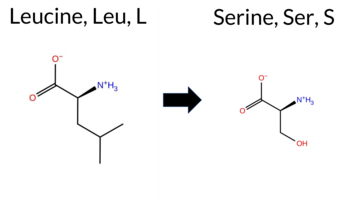 AIThe SynGAP1 missense variant L186S is not reported in ClinVar (no ClinVar ID) and is absent from gnomAD (no gnomAD ID). Prediction tools that agree on a benign effect include REVEL and FATHMM, whereas the majority of tools predict a pathogenic impact: PROVEAN, polyPhen‑2 HumDiv, polyPhen‑2 HumVar, SIFT, ESM1b, AlphaMissense‑Default, AlphaMissense‑Optimized, and the SGM‑Consensus (majority vote). High‑accuracy assessments further support pathogenicity: AlphaMissense‑Optimized predicts a deleterious effect, and the SGM‑Consensus (derived from AlphaMissense‑Default, ESM1b, FATHMM, and PROVEAN) labels the variant as Likely Pathogenic. Foldetta, a protein‑folding stability method combining FoldX‑MD and Rosetta outputs, has no available result for this variant. Overall, the preponderance of evidence from both general and high‑accuracy predictors indicates that the variant is most likely pathogenic, and this conclusion is not contradicted by any ClinVar annotation. Disclaimer: This summary was generated using AI and should be interpreted alongside expert review. | Likely Pathogenic | 0.458154 | Structured | 0.428613 | Uncertain | 0.397 | 0.617 | 0.500 | -13.906 | Likely Pathogenic | 0.999 | Likely Pathogenic | Likely Pathogenic | 0.250 | Likely Benign | -4.73 | Deleterious | 0.952 | Possibly Damaging | 0.601 | Possibly Damaging | 3.51 | Benign | 0.00 | Affected | 0.3214 | 0.0808 | -3 | -2 | -4.6 | -26.08 | |||||||||||||||||||||||||||||||||||||||
| c.557T>G | L186W 2D 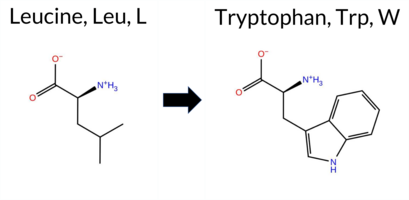 AIThe SynGAP1 missense variant L186W has no ClinVar entry and is not reported in gnomAD. Prediction tools that agree on a benign effect are REVEL and FATHMM, whereas the remaining tools—PROVEAN, polyPhen‑2 (HumDiv and HumVar), SIFT, ESM1b, AlphaMissense‑Default, AlphaMissense‑Optimized, and the SGM‑Consensus (majority vote of AlphaMissense‑Default, ESM1b, FATHMM, PROVEAN)—all predict a pathogenic or likely pathogenic outcome. High‑accuracy assessments further support a deleterious impact: AlphaMissense‑Optimized classifies the variant as pathogenic, and the SGM‑Consensus reports it as Likely Pathogenic. No Foldetta stability prediction is available for this variant. Overall, the preponderance of evidence from both general and high‑accuracy tools indicates that the variant is most likely pathogenic, and this conclusion is not contradicted by any ClinVar status, as no ClinVar classification exists. Disclaimer: This summary was generated using AI and should be interpreted alongside expert review. | Likely Pathogenic | 0.458154 | Structured | 0.428613 | Uncertain | 0.397 | 0.617 | 0.500 | -16.177 | Likely Pathogenic | 0.999 | Likely Pathogenic | Likely Pathogenic | 0.274 | Likely Benign | -4.78 | Deleterious | 0.996 | Probably Damaging | 0.819 | Possibly Damaging | 3.46 | Benign | 0.00 | Affected | 0.0539 | 0.3138 | -2 | -2 | -4.7 | 73.05 | |||||||||||||||||||||||||||||||||||||||
| c.558G>C | L186F 2D AIThe SynGAP1 missense variant L186F is listed in ClinVar with an “Uncertain” status and is not reported in gnomAD. Prediction tools that agree on a benign effect include REVEL, polyPhen‑2 (HumDiv and HumVar), and FATHMM. In contrast, tools that predict a pathogenic effect are PROVEAN, SIFT, ESM1b, AlphaMissense‑Default, and AlphaMissense‑Optimized. The SGM‑Consensus, which aggregates AlphaMissense‑Default, ESM1b, FATHMM, and PROVEAN, reports the variant as “Likely Pathogenic.” High‑accuracy assessments further support a deleterious impact: AlphaMissense‑Optimized predicts pathogenicity, and the SGM‑Consensus (majority vote) also indicates likely pathogenic. Foldetta, a protein‑folding stability method combining FoldX‑MD and Rosetta outputs, has no available result for this variant. Overall, the majority of computational evidence points to a pathogenic effect, which does not contradict the ClinVar “Uncertain” classification. Disclaimer: This summary was generated using AI and should be interpreted alongside expert review. | Likely Pathogenic | 0.458154 | Structured | 0.428613 | Uncertain | 0.397 | 0.617 | 0.500 | Uncertain | 1 | -11.861 | Likely Pathogenic | 0.993 | Likely Pathogenic | Likely Pathogenic | 0.132 | Likely Benign | -3.03 | Deleterious | 0.009 | Benign | 0.012 | Benign | 3.50 | Benign | 0.00 | Affected | 0.0524 | 0.3177 | 2 | 0 | -1.0 | 34.02 | |||||||||||||||||||||||||||||||||||||
| c.558G>T | L186F 2D AIThe SynGAP1 missense variant L186F has no ClinVar entry (ClinVar status: not reported) and is absent from gnomAD (gnomAD ID: none). Prediction tools that agree on a benign effect include REVEL, polyPhen‑2 HumDiv, polyPhen‑2 HumVar, and FATHMM. Tools that predict a pathogenic effect are PROVEAN, SIFT, ESM1b, and AlphaMissense‑Default. High‑accuracy assessments further support a deleterious impact: AlphaMissense‑Optimized predicts pathogenic, and the SGM Consensus (majority vote from AlphaMissense‑Default, ESM1b, FATHMM, and PROVEAN) reports “Likely Pathogenic.” Foldetta, a protein‑folding stability method combining FoldX‑MD and Rosetta outputs, has no available result for this variant. Overall, the majority of computational evidence indicates that the variant is most likely pathogenic, and this conclusion does not contradict any ClinVar status because no ClinVar classification exists. Disclaimer: This summary was generated using AI and should be interpreted alongside expert review. | Likely Pathogenic | 0.458154 | Structured | 0.428613 | Uncertain | 0.397 | 0.617 | 0.500 | -11.861 | Likely Pathogenic | 0.993 | Likely Pathogenic | Likely Pathogenic | 0.132 | Likely Benign | -3.03 | Deleterious | 0.009 | Benign | 0.012 | Benign | 3.50 | Benign | 0.00 | Affected | 0.0524 | 0.3177 | 2 | 0 | -1.0 | 34.02 | |||||||||||||||||||||||||||||||||||||||
| c.559C>A | L187M 2D AIThe SynGAP1 missense variant L187M is not reported in ClinVar (ClinVar ID = None) and is absent from gnomAD (gnomAD ID = None). Prediction tools that agree on a benign effect include REVEL, PROVEAN, and FATHMM. Those that agree on a pathogenic effect are polyPhen‑2 HumDiv, polyPhen‑2 HumVar, SIFT, ESM1b, and AlphaMissense‑Default. The high‑accuracy AlphaMissense‑Optimized tool returns an uncertain result, and the SGM Consensus (majority vote from AlphaMissense‑Default, ESM1b, FATHMM, PROVEAN) is inconclusive (2 pathogenic vs. 2 benign). Foldetta, which would assess protein‑folding stability, has no available output for this variant. Overall, the majority of predictions (five pathogenic vs. three benign) lean toward pathogenicity, and this assessment does not contradict any ClinVar status because the variant is not yet catalogued there. Disclaimer: This summary was generated using AI and should be interpreted alongside expert review. | 0.465241 | Structured | 0.428046 | Uncertain | 0.367 | 0.625 | 0.375 | -8.814 | Likely Pathogenic | 0.954 | Likely Pathogenic | Ambiguous | 0.136 | Likely Benign | -1.35 | Neutral | 0.971 | Probably Damaging | 0.641 | Possibly Damaging | 3.72 | Benign | 0.02 | Affected | 0.0848 | 0.3613 | 4 | 2 | -1.9 | 18.03 | ||||||||||||||||||||||||||||||||||||||||
| c.559C>G | L187V 2D AIThe SynGAP1 missense variant L187V is not reported in ClinVar (ClinVar ID: None) and is absent from gnomAD (gnomAD ID: None). Prediction tools that agree on a benign effect include REVEL, PROVEAN, polyPhen‑2 HumDiv, polyPhen‑2 HumVar, and FATHMM. Tools that predict a pathogenic effect are SIFT, ESM1b, AlphaMissense‑Default, and AlphaMissense‑Optimized. The SGM Consensus, which aggregates AlphaMissense‑Default, ESM1b, FATHMM, and PROVEAN, is inconclusive (two pathogenic vs. two benign). High‑accuracy AlphaMissense‑Optimized predicts pathogenic, while Foldetta (combining FoldX‑MD and Rosetta) has no available result for this variant. Overall, the majority of standard predictors lean toward a benign classification, but the single high‑accuracy tool indicates pathogenicity. Thus, the variant is most likely benign based on the collective evidence, and this assessment does not contradict any ClinVar status. Disclaimer: This summary was generated using AI and should be interpreted alongside expert review. | 0.465241 | Structured | 0.428046 | Uncertain | 0.367 | 0.625 | 0.375 | -10.543 | Likely Pathogenic | 0.962 | Likely Pathogenic | Likely Pathogenic | 0.136 | Likely Benign | -2.24 | Neutral | 0.437 | Benign | 0.079 | Benign | 3.81 | Benign | 0.02 | Affected | 0.1525 | 0.3509 | 2 | 1 | 0.4 | -14.03 | ||||||||||||||||||||||||||||||||||||||||
| c.55G>A | A19T 2D AIThe SynGAP1 missense variant A19T is not reported in ClinVar (no ClinVar ID) and is absent from gnomAD (no gnomAD ID). Prediction tools that agree on a benign effect include REVEL, PROVEAN, polyPhen‑2 HumDiv, polyPhen‑2 HumVar, ESM1b, FATHMM, AlphaMissense‑Default, and AlphaMissense‑Optimized. Only SIFT predicts a pathogenic outcome. The SGM‑Consensus, which aggregates AlphaMissense‑Default, ESM1b, FATHMM, and PROVEAN, reports a likely benign classification. High‑accuracy assessments show AlphaMissense‑Optimized as benign and the SGM‑Consensus as likely benign; Foldetta results are not available. Overall, the majority of evidence points to a benign impact. The variant is most likely benign, and this conclusion does not contradict any ClinVar annotation (none is present). Disclaimer: This summary was generated using AI and should be interpreted alongside expert review. | Likely Benign | 0.529623 | Disordered | 0.443393 | Uncertain | 0.378 | 0.906 | 0.500 | -3.422 | Likely Benign | 0.131 | Likely Benign | Likely Benign | 0.030 | Likely Benign | -0.02 | Neutral | 0.371 | Benign | 0.036 | Benign | 4.14 | Benign | 0.00 | Affected | 0.2357 | 0.7248 | 1 | 0 | -2.5 | 30.03 | |||||||||||||||||||||||||||||||||||||||
| c.55G>C | A19P 2D AIThe SynGAP1 missense variant A19P is reported in gnomAD (variant ID 6‑33420319‑G‑C) but has no ClinVar entry. Functional prediction tools largely agree on a benign effect: REVEL, PROVEAN, polyPhen‑2 (HumDiv and HumVar), ESM1b, FATHMM, AlphaMissense‑Default, and AlphaMissense‑Optimized all classify the change as benign, while only SIFT predicts it as pathogenic. The SGM‑Consensus, derived from a majority vote of AlphaMissense‑Default, ESM1b, FATHMM, and PROVEAN, also indicates a likely benign outcome. High‑accuracy assessments confirm this: AlphaMissense‑Optimized is benign and the SGM‑Consensus is likely benign; Foldetta results are not available. Overall, the consensus of the available predictions points to a benign impact, and this is not contradicted by any ClinVar classification (none exists). Disclaimer: This summary was generated using AI and should be interpreted alongside expert review. | Likely Benign | 0.529623 | Disordered | 0.443393 | Uncertain | 0.378 | 0.906 | 0.500 | 6-33420319-G-C | -3.579 | Likely Benign | 0.184 | Likely Benign | Likely Benign | 0.033 | Likely Benign | 0.09 | Neutral | 0.001 | Benign | 0.000 | Benign | 4.07 | Benign | 0.00 | Affected | 4.32 | 1 | 0.2609 | 0.6018 | -1 | 1 | -3.4 | 26.04 | ||||||||||||||||||||||||||||||||||||
| c.55G>T | A19S 2D AIThe SynGAP1 missense variant A19S is not reported in ClinVar (no ClinVar ID) and is absent from gnomAD (no gnomAD ID). Prediction tools that agree on a benign effect include REVEL, PROVEAN, polyPhen‑2 HumDiv, polyPhen‑2 HumVar, ESM1b, FATHMM, AlphaMissense‑Default, and AlphaMissense‑Optimized. Only SIFT predicts a pathogenic outcome. The SGM‑Consensus, which aggregates AlphaMissense‑Default, ESM1b, FATHMM, and PROVEAN, reports the variant as Likely Benign. High‑accuracy assessments confirm this: AlphaMissense‑Optimized is benign, and the SGM‑Consensus is Likely Benign. Foldetta, a protein‑folding stability method combining FoldX‑MD and Rosetta outputs, has no available result for this variant. Overall, the majority of evidence points to a benign effect, and this conclusion does not contradict any ClinVar annotation (none is present). Disclaimer: This summary was generated using AI and should be interpreted alongside expert review. | Likely Benign | 0.529623 | Disordered | 0.443393 | Uncertain | 0.378 | 0.906 | 0.500 | -2.905 | Likely Benign | 0.107 | Likely Benign | Likely Benign | 0.029 | Likely Benign | -0.21 | Neutral | 0.225 | Benign | 0.027 | Benign | 4.17 | Benign | 0.00 | Affected | 0.3273 | 0.6260 | 1 | 1 | -2.6 | 16.00 | |||||||||||||||||||||||||||||||||||||||
| c.560T>A | L187Q 2D AIThe SynGAP1 missense variant L187Q is not reported in ClinVar (no ClinVar ID) and is absent from gnomAD (no gnomAD ID). Prediction tools that agree on a benign effect include REVEL and FATHMM, whereas the majority of tools predict a pathogenic impact: PROVEAN, polyPhen‑2 (HumDiv and HumVar), SIFT, ESM1b, AlphaMissense‑Default, AlphaMissense‑Optimized, and the SGM‑Consensus (majority vote from AlphaMissense‑Default, ESM1b, FATHMM, and PROVEAN) all indicate likely pathogenicity. High‑accuracy assessments further support a deleterious effect: AlphaMissense‑Optimized classifies the variant as pathogenic, and the SGM‑Consensus also reports it as likely pathogenic. Foldetta, a protein‑folding stability method combining FoldX‑MD and Rosetta outputs, was not available for this variant. Overall, the preponderance of evidence from multiple in silico predictors points to a pathogenic effect for the SynGAP1 L187Q variant, and this conclusion is not contradicted by any ClinVar annotation. Disclaimer: This summary was generated using AI and should be interpreted alongside expert review. | Likely Pathogenic | 0.465241 | Structured | 0.428046 | Uncertain | 0.367 | 0.625 | 0.375 | -13.063 | Likely Pathogenic | 0.998 | Likely Pathogenic | Likely Pathogenic | 0.322 | Likely Benign | -4.31 | Deleterious | 0.917 | Possibly Damaging | 0.548 | Possibly Damaging | 3.72 | Benign | 0.00 | Affected | 0.1251 | 0.1060 | -2 | -2 | -7.3 | 14.97 | |||||||||||||||||||||||||||||||||||||||
| c.560T>C | L187P 2D AIThe SynGAP1 missense variant L187P is listed in gnomAD (ID 6‑33435202‑T‑C) but has no ClinVar entry. Functional prediction tools split in two groups: benign predictions come from REVEL and FATHMM, whereas the remaining tools—PROVEAN, polyPhen‑2 (HumDiv and HumVar), SIFT, ESM1b, AlphaMissense‑Default, AlphaMissense‑Optimized, and the SGM‑Consensus (majority vote of AlphaMissense‑Default, ESM1b, FATHMM, PROVEAN)—all indicate pathogenicity. High‑accuracy assessments further support a deleterious effect: AlphaMissense‑Optimized predicts pathogenic, and the SGM‑Consensus classifies the variant as Likely Pathogenic. No Foldetta stability result is available, so it does not influence the overall assessment. Based on the preponderance of pathogenic predictions, the variant is most likely pathogenic, and this conclusion is not contradicted by ClinVar status, which currently reports no classification. Disclaimer: This summary was generated using AI and should be interpreted alongside expert review. | Likely Pathogenic | 0.465241 | Structured | 0.428046 | Uncertain | 0.367 | 0.625 | 0.375 | 6-33435202-T-C | 1 | 6.20e-7 | -13.192 | Likely Pathogenic | 0.999 | Likely Pathogenic | Likely Pathogenic | 0.320 | Likely Benign | -5.17 | Deleterious | 0.917 | Possibly Damaging | 0.548 | Possibly Damaging | 3.70 | Benign | 0.01 | Affected | 3.47 | 9 | 0.3604 | 0.1484 | -3 | -3 | -5.4 | -16.04 | ||||||||||||||||||||||||||||||||||
| c.560T>G | L187R 2D AIThe SynGAP1 missense variant L187R is not reported in ClinVar (no ClinVar ID) and is absent from gnomAD (no gnomAD ID). Prediction tools that agree on a benign effect include REVEL and FATHMM, whereas the majority of tools predict a pathogenic impact: PROVEAN, polyPhen‑2 HumDiv, polyPhen‑2 HumVar, SIFT, ESM1b, AlphaMissense‑Default, AlphaMissense‑Optimized, and the SGM‑Consensus (majority vote). High‑accuracy assessments further support pathogenicity: AlphaMissense‑Optimized predicts a deleterious effect, and the SGM‑Consensus (derived from AlphaMissense‑Default, ESM1b, FATHMM, and PROVEAN) labels the variant as Likely Pathogenic. Foldetta, a protein‑folding stability method combining FoldX‑MD and Rosetta outputs, has no available result for this variant. Overall, the preponderance of evidence from both general and high‑accuracy predictors indicates that the variant is most likely pathogenic, and this conclusion is not contradicted by any ClinVar annotation. Disclaimer: This summary was generated using AI and should be interpreted alongside expert review. | Likely Pathogenic | 0.465241 | Structured | 0.428046 | Uncertain | 0.367 | 0.625 | 0.375 | -14.118 | Likely Pathogenic | 0.994 | Likely Pathogenic | Likely Pathogenic | 0.332 | Likely Benign | -4.38 | Deleterious | 0.917 | Possibly Damaging | 0.467 | Possibly Damaging | 3.72 | Benign | 0.00 | Affected | 0.1481 | 0.0702 | -3 | -2 | -8.3 | 43.03 | |||||||||||||||||||||||||||||||||||||||
| c.562A>C | S188R 2D AIThe SynGAP1 missense variant S188R is not reported in ClinVar (no ClinVar ID) and is absent from gnomAD (no gnomAD ID). Prediction tools that indicate a benign effect are REVEL and FATHMM, whereas the remaining tools—PROVEAN, polyPhen‑2 HumDiv, polyPhen‑2 HumVar, SIFT, ESM1b, and AlphaMissense‑Default—predict a pathogenic outcome. High‑accuracy assessments further support a deleterious impact: AlphaMissense‑Optimized classifies the variant as pathogenic, and the SGM‑Consensus (majority vote from AlphaMissense‑Default, ESM1b, FATHMM, and PROVEAN) reports it as Likely Pathogenic. Foldetta, a protein‑folding stability method combining FoldX‑MD and Rosetta outputs, has no available result for this variant. Overall, the preponderance of evidence from both general and high‑accuracy predictors indicates that the S188R variant is most likely pathogenic, and this conclusion is not contradicted by any ClinVar annotation. Disclaimer: This summary was generated using AI and should be interpreted alongside expert review. | Likely Pathogenic | 0.490133 | Structured | 0.428502 | Uncertain | 0.298 | 0.603 | 0.500 | -11.567 | Likely Pathogenic | 0.999 | Likely Pathogenic | Likely Pathogenic | 0.269 | Likely Benign | -3.82 | Deleterious | 0.985 | Probably Damaging | 0.767 | Possibly Damaging | 3.92 | Benign | 0.00 | Affected | 0.0916 | 0.4236 | 0 | -1 | -3.7 | 69.11 | |||||||||||||||||||||||||||||||||||||||
| c.562A>G | S188G 2D AIThe SynGAP1 missense variant S188G is not reported in ClinVar (no ClinVar ID) and is absent from gnomAD (no gnomAD ID). Prediction tools that agree on a benign effect include REVEL, polyPhen‑2 HumVar, and FATHMM, whereas those that predict a pathogenic effect are PROVEAN, polyPhen‑2 HumDiv, SIFT, ESM1b, and AlphaMissense‑Default. The high‑accuracy consensus (SGM‑Consensus) derived from a majority vote of AlphaMissense‑Default, ESM1b, FATHMM, and PROVEAN is “Likely Pathogenic.” AlphaMissense‑Optimized returns an uncertain result, and Foldetta (which would combine FoldX‑MD and Rosetta outputs) has no available data for this variant. Based on the overall distribution of predictions, the variant is most likely pathogenic; this assessment does not contradict any ClinVar status, as no ClinVar classification exists. Disclaimer: This summary was generated using AI and should be interpreted alongside expert review. | Likely Pathogenic | 0.490133 | Structured | 0.428502 | Uncertain | 0.298 | 0.603 | 0.500 | -10.113 | Likely Pathogenic | 0.919 | Likely Pathogenic | Ambiguous | 0.123 | Likely Benign | -3.10 | Deleterious | 0.882 | Possibly Damaging | 0.404 | Benign | 3.91 | Benign | 0.00 | Affected | 0.3045 | 0.5542 | 1 | 0 | 0.4 | -30.03 | |||||||||||||||||||||||||||||||||||||||
| c.562A>T | S188C 2D AIThe SynGAP1 missense variant S188C is not reported in ClinVar and is absent from gnomAD. Prediction tools that indicate a benign effect include REVEL and FATHMM. Tools that predict a pathogenic effect comprise PROVEAN, polyPhen‑2 HumDiv, polyPhen‑2 HumVar, SIFT, ESM1b, and AlphaMissense‑Default, all of which classify the substitution as deleterious. The SGM‑Consensus, derived from a majority vote of AlphaMissense‑Default, ESM1b, FATHMM, and PROVEAN, reports the variant as Likely Pathogenic. High‑accuracy assessments are mixed: AlphaMissense‑Optimized yields an uncertain result, while Foldetta data are unavailable. Based on the preponderance of pathogenic predictions and the SGM‑Consensus, the variant is most likely pathogenic; this assessment does not contradict any ClinVar annotation, as none exists. Disclaimer: This summary was generated using AI and should be interpreted alongside expert review. | Likely Pathogenic | 0.490133 | Structured | 0.428502 | Uncertain | 0.298 | 0.603 | 0.500 | -8.670 | Likely Pathogenic | 0.849 | Likely Pathogenic | Ambiguous | 0.111 | Likely Benign | -2.96 | Deleterious | 0.999 | Probably Damaging | 0.956 | Probably Damaging | 3.87 | Benign | 0.00 | Affected | 0.1007 | 0.6737 | 0 | -1 | 3.3 | 16.06 | |||||||||||||||||||||||||||||||||||||||
| c.563G>A | S188N 2D AIThe SynGAP1 missense variant S188N is not reported in ClinVar (ClinVar ID = None) and is absent from gnomAD (gnomAD ID = None). Prediction tools that agree on a benign effect include REVEL, PROVEAN, polyPhen‑2 HumDiv, polyPhen‑2 HumVar, and FATHMM. Tools that predict a pathogenic effect are SIFT, ESM1b, and AlphaMissense‑Default. AlphaMissense‑Optimized is uncertain. High‑accuracy assessments are inconclusive: the SGM Consensus (majority vote from AlphaMissense‑Default, ESM1b, FATHMM, PROVEAN) yields a 2‑vs‑2 split, and Foldetta results are unavailable. Overall, the majority of available predictions (five benign vs three pathogenic) suggest a benign impact. This conclusion does not contradict ClinVar status, as no ClinVar assertion exists for this variant. Disclaimer: This summary was generated using AI and should be interpreted alongside expert review. | 0.490133 | Structured | 0.428502 | Uncertain | 0.298 | 0.603 | 0.500 | -10.307 | Likely Pathogenic | 0.952 | Likely Pathogenic | Ambiguous | 0.095 | Likely Benign | -2.34 | Neutral | 0.259 | Benign | 0.048 | Benign | 3.92 | Benign | 0.01 | Affected | 0.1420 | 0.5658 | 1 | 1 | -2.7 | 27.03 | ||||||||||||||||||||||||||||||||||||||||
| c.563G>C | S188T 2D AIThe SynGAP1 missense variant S188T is not reported in ClinVar (ClinVar ID = None) and is absent from gnomAD (gnomAD ID = None). Prediction tools that agree on a benign effect include REVEL, PROVEAN, SIFT, and FATHMM, while those that agree on a pathogenic effect are polyPhen‑2 HumDiv, polyPhen‑2 HumVar, and AlphaMissense‑Default. Uncertain predictions come from ESM1b and AlphaMissense‑Optimized. High‑accuracy assessment shows that the SGM Consensus—derived from a majority vote of AlphaMissense‑Default, ESM1b, FATHMM, and PROVEAN—leans benign (two benign versus one pathogenic vote). Foldetta, a protein‑folding stability method combining FoldX‑MD and Rosetta outputs, has no available result for this variant. Overall, the preponderance of evidence points to a benign impact; this conclusion does not contradict any ClinVar annotation, as none exists for S188T. Disclaimer: This summary was generated using AI and should be interpreted alongside expert review. | 0.490133 | Structured | 0.428502 | Uncertain | 0.298 | 0.603 | 0.500 | -7.906 | In-Between | 0.801 | Likely Pathogenic | Ambiguous | 0.124 | Likely Benign | -1.97 | Neutral | 0.948 | Possibly Damaging | 0.484 | Possibly Damaging | 3.92 | Benign | 0.13 | Tolerated | 0.1491 | 0.7492 | 1 | 1 | 0.1 | 14.03 | ||||||||||||||||||||||||||||||||||||||||
| c.563G>T | S188I 2D AIThe SynGAP1 missense variant S188I is not reported in ClinVar (no ClinVar ID) and is absent from gnomAD (no gnomAD ID). Prediction tools that agree on a benign effect are REVEL and FATHMM, while the remaining tools—PROVEAN, polyPhen‑2 HumDiv, polyPhen‑2 HumVar, SIFT, ESM1b, AlphaMissense‑Default, AlphaMissense‑Optimized, and the SGM‑Consensus—predict a pathogenic or likely pathogenic outcome. The SGM‑Consensus, derived from a majority vote of AlphaMissense‑Default, ESM1b, FATHMM, and PROVEAN, is classified as Likely Pathogenic. High‑accuracy assessments show AlphaMissense‑Optimized as pathogenic and the SGM‑Consensus also pathogenic; Foldetta results are unavailable. Overall, the preponderance of evidence points to a pathogenic effect for S188I, and this conclusion does not contradict any ClinVar annotation (none is present). Disclaimer: This summary was generated using AI and should be interpreted alongside expert review. | Likely Pathogenic | 0.490133 | Structured | 0.428502 | Uncertain | 0.298 | 0.603 | 0.500 | -12.133 | Likely Pathogenic | 0.985 | Likely Pathogenic | Likely Pathogenic | 0.205 | Likely Benign | -3.98 | Deleterious | 0.995 | Probably Damaging | 0.880 | Possibly Damaging | 3.90 | Benign | 0.00 | Affected | 0.0878 | 0.6335 | -1 | -2 | 5.3 | 26.08 | |||||||||||||||||||||||||||||||||||||||
| c.564T>A | S188R 2D AIThe SynGAP1 missense variant S188R is not reported in ClinVar (no ClinVar ID) and is absent from gnomAD (no gnomAD ID). Prediction tools that indicate a benign effect include REVEL and FATHMM, whereas the remaining tools—PROVEAN, polyPhen‑2 HumDiv, polyPhen‑2 HumVar, SIFT, ESM1b, and AlphaMissense‑Default—predict a pathogenic outcome. High‑accuracy assessments further support a deleterious impact: AlphaMissense‑Optimized classifies the variant as pathogenic, and the SGM‑Consensus (majority vote from AlphaMissense‑Default, ESM1b, FATHMM, and PROVEAN) reports it as Likely Pathogenic. Foldetta, a protein‑folding stability method, did not provide a result for this variant. Overall, the preponderance of evidence from both general and high‑accuracy predictors indicates that the S188R variant is most likely pathogenic, and this conclusion is not contradicted by any ClinVar annotation. Disclaimer: This summary was generated using AI and should be interpreted alongside expert review. | Likely Pathogenic | 0.490133 | Structured | 0.428502 | Uncertain | 0.298 | 0.603 | 0.500 | -11.567 | Likely Pathogenic | 0.999 | Likely Pathogenic | Likely Pathogenic | 0.264 | Likely Benign | -3.82 | Deleterious | 0.985 | Probably Damaging | 0.767 | Possibly Damaging | 3.92 | Benign | 0.00 | Affected | 0.0916 | 0.4236 | 0 | -1 | -3.7 | 69.11 | |||||||||||||||||||||||||||||||||||||||
| c.564T>G | S188R 2D AIThe SynGAP1 missense variant S188R is not reported in ClinVar (no ClinVar ID) and is absent from gnomAD (no gnomAD ID). Prediction tools that indicate a benign effect are REVEL and FATHMM, whereas the remaining tools—PROVEAN, polyPhen‑2 HumDiv, polyPhen‑2 HumVar, SIFT, ESM1b, and AlphaMissense‑Default—predict a pathogenic outcome. High‑accuracy assessments further support a deleterious impact: AlphaMissense‑Optimized classifies the variant as pathogenic, and the SGM‑Consensus (majority vote from AlphaMissense‑Default, ESM1b, FATHMM, and PROVEAN) reports it as Likely Pathogenic. Foldetta, a protein‑folding stability method, did not provide a result for this variant. Overall, the preponderance of evidence from both general and high‑accuracy predictors indicates that the variant is most likely pathogenic, and this conclusion is not contradicted by any ClinVar annotation. Disclaimer: This summary was generated using AI and should be interpreted alongside expert review. | Likely Pathogenic | 0.490133 | Structured | 0.428502 | Uncertain | 0.298 | 0.603 | 0.500 | -11.567 | Likely Pathogenic | 0.999 | Likely Pathogenic | Likely Pathogenic | 0.263 | Likely Benign | -3.82 | Deleterious | 0.985 | Probably Damaging | 0.767 | Possibly Damaging | 3.92 | Benign | 0.00 | Affected | 0.0916 | 0.4236 | 0 | -1 | -3.7 | 69.11 | |||||||||||||||||||||||||||||||||||||||
| c.565C>A | P189T 2D AISynGAP1 missense variant P189T is not reported in ClinVar and is absent from gnomAD. Prediction tools that indicate a benign effect include REVEL, polyPhen‑2 HumDiv, polyPhen‑2 HumVar, and FATHMM. Those that predict a pathogenic effect comprise PROVEAN, SIFT, ESM1b, AlphaMissense‑Default, AlphaMissense‑Optimized, and the SGM‑Consensus score (majority vote of AlphaMissense‑Default, ESM1b, FATHMM, PROVEAN). High‑accuracy assessments further support a deleterious outcome: AlphaMissense‑Optimized classifies the variant as pathogenic, and the SGM‑Consensus (majority‑vote method) reports it as likely pathogenic; Foldetta stability analysis is unavailable. Overall, the majority of computational evidence points to a pathogenic impact, and this conclusion is not contradicted by any ClinVar annotation. Disclaimer: This summary was generated using AI and should be interpreted alongside expert review. | Likely Pathogenic | 0.497853 | Structured | 0.428590 | Uncertain | 0.331 | 0.602 | 0.250 | -8.622 | Likely Pathogenic | 0.991 | Likely Pathogenic | Likely Pathogenic | 0.265 | Likely Benign | -5.26 | Deleterious | 0.384 | Benign | 0.177 | Benign | 4.05 | Benign | 0.05 | Affected | 0.1603 | 0.6392 | 0 | -1 | 0.9 | 3.99 | |||||||||||||||||||||||||||||||||||||||
| c.565C>G | P189A 2D AIThe SynGAP1 missense variant P189A is not reported in ClinVar (ClinVar ID = None) and is absent from gnomAD (gnomAD ID = None). Prediction tools that agree on a benign effect include REVEL, SIFT, ESM1b, and FATHMM. Tools that predict a pathogenic effect are PROVEAN, polyPhen‑2 HumDiv, polyPhen‑2 HumVar, AlphaMissense‑Default, and AlphaMissense‑Optimized. High‑accuracy assessments show AlphaMissense‑Optimized as pathogenic; the SGM Consensus (majority vote from AlphaMissense‑Default, ESM1b, FATHMM, and PROVEAN) is inconclusive (two pathogenic, two benign), and Foldetta results are unavailable. Overall, the majority of predictions (five pathogenic vs. four benign) and the pathogenic call from AlphaMissense‑Optimized suggest that the variant is most likely pathogenic. This conclusion does not contradict ClinVar status, as the variant has no ClinVar entry. Disclaimer: This summary was generated using AI and should be interpreted alongside expert review. | 0.497853 | Structured | 0.428590 | Uncertain | 0.331 | 0.602 | 0.250 | -4.998 | Likely Benign | 0.974 | Likely Pathogenic | Likely Pathogenic | 0.211 | Likely Benign | -5.46 | Deleterious | 0.941 | Possibly Damaging | 0.607 | Possibly Damaging | 4.07 | Benign | 0.07 | Tolerated | 0.3719 | 0.6209 | 1 | -1 | 3.4 | -26.04 | ||||||||||||||||||||||||||||||||||||||||
| c.565C>T | P189S 2D AIThe SynGAP1 missense variant P189S is not reported in ClinVar (ClinVar ID = None) and is absent from gnomAD (gnomAD ID = None). Prediction tools that agree on a benign effect include REVEL, SIFT, and FATHMM. Tools that agree on a pathogenic effect include PROVEAN, polyPhen‑2 HumDiv, polyPhen‑2 HumVar, AlphaMissense‑Default, and AlphaMissense‑Optimized; ESM1b remains uncertain. High‑accuracy assessments show AlphaMissense‑Optimized predicts pathogenicity, and the SGM Consensus (majority vote from AlphaMissense‑Default, ESM1b, FATHMM, and PROVEAN) also favors pathogenicity (2 pathogenic vs. 1 benign). Foldetta, a protein‑folding stability method, has no available result for this variant. Overall, the majority of computational evidence indicates a pathogenic effect, and this conclusion does not contradict any ClinVar annotation (none is present). Disclaimer: This summary was generated using AI and should be interpreted alongside expert review. | 0.497853 | Structured | 0.428590 | Uncertain | 0.331 | 0.602 | 0.250 | -7.191 | In-Between | 0.992 | Likely Pathogenic | Likely Pathogenic | 0.211 | Likely Benign | -5.23 | Deleterious | 0.941 | Possibly Damaging | 0.531 | Possibly Damaging | 4.09 | Benign | 0.15 | Tolerated | 0.3626 | 0.6460 | 1 | -1 | 0.8 | -10.04 | ||||||||||||||||||||||||||||||||||||||||
| c.566C>A | P189H 2D AIThe SynGAP1 missense variant P189H is not reported in ClinVar (no ClinVar ID) and is absent from gnomAD (no gnomAD ID). Prediction tools that agree on a benign effect include REVEL and FATHMM, whereas the remaining tools—PROVEAN, polyPhen‑2 (HumDiv and HumVar), SIFT, ESM1b, AlphaMissense‑Default, and AlphaMissense‑Optimized—consistently predict a pathogenic impact. High‑accuracy assessments further support pathogenicity: AlphaMissense‑Optimized classifies the variant as pathogenic, and the SGM‑Consensus (majority vote from AlphaMissense‑Default, ESM1b, FATHMM, and PROVEAN) reports it as Likely Pathogenic. No Foldetta stability prediction is available for this variant. Overall, the majority of computational evidence indicates that P189H is most likely pathogenic, and this conclusion does not contradict any ClinVar status, as none is currently assigned. Disclaimer: This summary was generated using AI and should be interpreted alongside expert review. | Likely Pathogenic | 0.497853 | Structured | 0.428590 | Uncertain | 0.331 | 0.602 | 0.250 | -9.633 | Likely Pathogenic | 0.997 | Likely Pathogenic | Likely Pathogenic | 0.298 | Likely Benign | -6.49 | Deleterious | 0.999 | Probably Damaging | 0.936 | Probably Damaging | 4.00 | Benign | 0.00 | Affected | 0.1620 | 0.5327 | 0 | -2 | -1.6 | 40.02 | |||||||||||||||||||||||||||||||||||||||
| c.566C>G | P189R 2D AIThe SynGAP1 missense variant P189R has no ClinVar entry and is not reported in gnomAD. Prediction tools cluster into two groups: benign predictions come from REVEL and FATHMM, whereas the remaining eight tools—PROVEAN, polyPhen‑2 HumDiv, polyPhen‑2 HumVar, SIFT, ESM1b, AlphaMissense‑Default, AlphaMissense‑Optimized, and the SGM‑Consensus—indicate pathogenicity. The SGM‑Consensus, derived from a majority vote of AlphaMissense‑Default, ESM1b, FATHMM, and PROVEAN, is labeled Likely Pathogenic. High‑accuracy assessments further support a deleterious effect: AlphaMissense‑Optimized predicts pathogenic, and the SGM‑Consensus confirms a likely pathogenic status. Foldetta, a protein‑folding stability method combining FoldX‑MD and Rosetta outputs, has no available result for this variant. Overall, the preponderance of evidence points to a pathogenic effect for P189R, and this conclusion is not contradicted by any ClinVar annotation. Disclaimer: This summary was generated using AI and should be interpreted alongside expert review. | Likely Pathogenic | 0.497853 | Structured | 0.428590 | Uncertain | 0.331 | 0.602 | 0.250 | -13.503 | Likely Pathogenic | 0.997 | Likely Pathogenic | Likely Pathogenic | 0.331 | Likely Benign | -6.45 | Deleterious | 0.997 | Probably Damaging | 0.916 | Probably Damaging | 4.05 | Benign | 0.01 | Affected | 0.1363 | 0.3894 | 0 | -2 | -2.9 | 59.07 | |||||||||||||||||||||||||||||||||||||||
| c.566C>T | P189L 2D AIThe SynGAP1 missense variant P189L is not reported in ClinVar (no ClinVar ID) and is absent from gnomAD (no gnomAD ID). Prediction tools that agree on a benign effect include REVEL, SIFT, and FATHMM. In contrast, a majority of tools predict a pathogenic impact: PROVEAN, polyPhen‑2 HumDiv, polyPhen‑2 HumVar, ESM1b, AlphaMissense‑Default, AlphaMissense‑Optimized, and the SGM‑Consensus (majority vote from AlphaMissense‑Default, ESM1b, FATHMM, and PROVEAN) all indicate likely pathogenicity. High‑accuracy assessments further support a deleterious effect: AlphaMissense‑Optimized is pathogenic, and the SGM‑Consensus is labeled Likely Pathogenic. Foldetta results are unavailable for this variant. Overall, the preponderance of evidence from both general and high‑accuracy predictors points to a pathogenic classification, with no ClinVar record to contradict this assessment. Disclaimer: This summary was generated using AI and should be interpreted alongside expert review. | Likely Pathogenic | 0.497853 | Structured | 0.428590 | Uncertain | 0.331 | 0.602 | 0.250 | -10.132 | Likely Pathogenic | 0.994 | Likely Pathogenic | Likely Pathogenic | 0.290 | Likely Benign | -7.28 | Deleterious | 0.991 | Probably Damaging | 0.781 | Possibly Damaging | 4.04 | Benign | 0.17 | Tolerated | 0.2283 | 0.7378 | -3 | -3 | 5.4 | 16.04 | |||||||||||||||||||||||||||||||||||||||
| c.568A>C | S190R 2D AIThe SynGAP1 missense variant S190R is not reported in ClinVar and is absent from gnomAD. Prediction tools that agree on a benign effect include REVEL, polyPhen‑2 HumVar, and FATHMM, whereas pathogenic predictions are made by PROVEAN, polyPhen‑2 HumDiv, SIFT, ESM1b, AlphaMissense‑Default, and AlphaMissense‑Optimized. The SGM‑Consensus, derived from a majority vote of AlphaMissense‑Default, ESM1b, FATHMM, and PROVEAN, classifies the variant as Likely Pathogenic. High‑accuracy assessments further support pathogenicity: AlphaMissense‑Optimized predicts pathogenic, and the SGM‑Consensus (majority of the four high‑accuracy tools) also predicts pathogenic. Foldetta, a protein‑folding stability method combining FoldX‑MD and Rosetta outputs, has no available result for this variant. Overall, the preponderance of evidence indicates that the variant is most likely pathogenic, and this conclusion does not contradict any ClinVar status (none reported). Disclaimer: This summary was generated using AI and should be interpreted alongside expert review. | Likely Pathogenic | 0.422041 | Structured | 0.428613 | Uncertain | 0.338 | 0.615 | 0.250 | -10.137 | Likely Pathogenic | 0.997 | Likely Pathogenic | Likely Pathogenic | 0.156 | Likely Benign | -2.92 | Deleterious | 0.917 | Possibly Damaging | 0.446 | Benign | 4.07 | Benign | 0.04 | Affected | 0.0809 | 0.4059 | 0 | -1 | -3.7 | 69.11 | |||||||||||||||||||||||||||||||||||||||
| c.568A>G | S190G 2D AIThe SynGAP1 missense variant S190G is not reported in ClinVar and is absent from gnomAD. Functional prediction tools uniformly indicate a benign effect: REVEL, PROVEAN, polyPhen‑2 (HumDiv and HumVar), SIFT, ESM1b, FATHMM, AlphaMissense‑Default, and AlphaMissense‑Optimized all classify the substitution as benign. No tool predicts pathogenicity. High‑accuracy assessments corroborate this: AlphaMissense‑Optimized reports a benign outcome, and the SGM Consensus (majority vote of AlphaMissense‑Default, ESM1b, FATHMM, and PROVEAN) yields a “Likely Benign” verdict. Foldetta, a protein‑folding stability predictor, has no available result for this variant. Overall, the consensus of all available predictions is that the variant is most likely benign, and this conclusion is consistent with the lack of any ClinVar pathogenic annotation. Disclaimer: This summary was generated using AI and should be interpreted alongside expert review. | Likely Benign | 0.422041 | Structured | 0.428613 | Uncertain | 0.338 | 0.615 | 0.250 | -5.440 | Likely Benign | 0.321 | Likely Benign | Likely Benign | 0.048 | Likely Benign | -1.26 | Neutral | 0.243 | Benign | 0.079 | Benign | 4.11 | Benign | 0.19 | Tolerated | 0.2780 | 0.4765 | 1 | 0 | 0.4 | -30.03 | |||||||||||||||||||||||||||||||||||||||
| c.568A>T | S190C 2D AIThe SynGAP1 missense variant S190C is not reported in ClinVar (no ClinVar ID) and is absent from gnomAD (no gnomAD ID). Prediction tools that agree on a benign effect include SGM‑Consensus (Likely Benign), REVEL, PROVEAN, SIFT, ESM1b, FATHMM, and AlphaMissense‑Optimized. Tools that predict a pathogenic effect are polyPhen‑2 HumDiv, polyPhen‑2 HumVar, and AlphaMissense‑Default. High‑accuracy assessments reinforce the benign consensus: AlphaMissense‑Optimized scores the variant as benign, and the SGM‑Consensus (majority vote from AlphaMissense‑Default, ESM1b, FATHMM, PROVEAN) also indicates a likely benign outcome. Foldetta, a protein‑folding stability method combining FoldX‑MD and Rosetta outputs, has no available result for this variant. Overall, the majority of evidence points to a benign impact, and this conclusion is not contradicted by any ClinVar annotation. Disclaimer: This summary was generated using AI and should be interpreted alongside expert review. | Likely Benign | 0.422041 | Structured | 0.428613 | Uncertain | 0.338 | 0.615 | 0.250 | -6.696 | Likely Benign | 0.617 | Likely Pathogenic | Likely Benign | 0.107 | Likely Benign | -2.04 | Neutral | 0.992 | Probably Damaging | 0.707 | Possibly Damaging | 4.01 | Benign | 0.23 | Tolerated | 0.0937 | 0.6667 | 0 | -1 | 3.3 | 16.06 | |||||||||||||||||||||||||||||||||||||||
| c.569G>A | S190N 2D AIThe SynGAP1 missense variant S190N is not reported in ClinVar (ClinVar ID None) and is absent from gnomAD (gnomAD ID None). Prediction tools that agree on a benign effect include REVEL, PROVEAN, polyPhen‑2 HumVar, SIFT, and FATHMM, while polyPhen‑2 HumDiv and AlphaMissense‑Default predict a pathogenic outcome. The remaining tools, ESM1b and AlphaMissense‑Optimized, are uncertain. High‑accuracy assessments further clarify the picture: AlphaMissense‑Optimized is uncertain; the SGM Consensus (derived from AlphaMissense‑Default, ESM1b, FATHMM, and PROVEAN) resolves to benign (two benign votes versus one pathogenic and one uncertain); and Foldetta, a protein‑folding stability method, has no available result for this variant. Overall, the majority of evidence points to a benign effect, and this conclusion does not contradict the ClinVar status, which currently has no entry for the variant. Disclaimer: This summary was generated using AI and should be interpreted alongside expert review. | 0.422041 | Structured | 0.428613 | Uncertain | 0.338 | 0.615 | 0.250 | -7.497 | In-Between | 0.838 | Likely Pathogenic | Ambiguous | 0.160 | Likely Benign | -1.73 | Neutral | 0.759 | Possibly Damaging | 0.202 | Benign | 4.06 | Benign | 0.08 | Tolerated | 0.1119 | 0.5285 | 1 | 1 | -2.7 | 27.03 | ||||||||||||||||||||||||||||||||||||||||
| c.569G>C | S190T 2D AIThe SynGAP1 missense variant S190T is not reported in ClinVar and is absent from gnomAD. Prediction tools that agree on a benign effect include REVEL, PROVEAN, polyPhen‑2 HumVar, SIFT, ESM1b, FATHMM, and AlphaMissense‑Optimized. Only polyPhen‑2 HumDiv predicts a pathogenic outcome, while AlphaMissense‑Default remains uncertain. The SGM‑Consensus, derived from a majority vote of AlphaMissense‑Default, ESM1b, FATHMM, and PROVEAN, classifies the variant as Likely Benign. High‑accuracy assessments further support a benign interpretation: AlphaMissense‑Optimized predicts Benign, SGM‑Consensus confirms Likely Benign, and Foldetta results are unavailable. Based on the collective evidence, the variant is most likely benign, and this conclusion does not contradict any ClinVar status (none is available). Disclaimer: This summary was generated using AI and should be interpreted alongside expert review. | Likely Benign | 0.422041 | Structured | 0.428613 | Uncertain | 0.338 | 0.615 | 0.250 | -6.870 | Likely Benign | 0.408 | Ambiguous | Likely Benign | 0.114 | Likely Benign | -1.31 | Neutral | 0.608 | Possibly Damaging | 0.108 | Benign | 4.08 | Benign | 0.20 | Tolerated | 0.1294 | 0.6920 | 1 | 1 | 0.1 | 14.03 | |||||||||||||||||||||||||||||||||||||||
| c.569G>T | S190I 2D AIThe SynGAP1 missense variant S190I is not reported in ClinVar (no ClinVar ID) and is absent from gnomAD (no gnomAD ID). Prediction tools that agree on a benign effect include REVEL, polyPhen‑2 HumVar, and FATHMM, whereas those that predict a pathogenic effect are PROVEAN, polyPhen‑2 HumDiv, SIFT, ESM1b, and AlphaMissense‑Default. The SGM‑Consensus, derived from a majority vote of AlphaMissense‑Default, ESM1b, FATHMM, and PROVEAN, classifies the variant as Likely Pathogenic. AlphaMissense‑Optimized returns an Uncertain result. High‑accuracy assessments show AlphaMissense‑Optimized as Uncertain, SGM‑Consensus as Likely Pathogenic, and Foldetta (combining FoldX‑MD and Rosetta outputs) is unavailable for this variant. Overall, the majority of evidence points to a pathogenic impact, and this assessment does not contradict any ClinVar status because no ClinVar classification exists. Disclaimer: This summary was generated using AI and should be interpreted alongside expert review. | Likely Pathogenic | 0.422041 | Structured | 0.428613 | Uncertain | 0.338 | 0.615 | 0.250 | -9.868 | Likely Pathogenic | 0.954 | Likely Pathogenic | Ambiguous | 0.316 | Likely Benign | -3.39 | Deleterious | 0.845 | Possibly Damaging | 0.368 | Benign | 4.03 | Benign | 0.03 | Affected | 0.0769 | 0.5963 | -1 | -2 | 5.3 | 26.08 | |||||||||||||||||||||||||||||||||||||||
| c.56C>A | A19D 2D AIThe SynGAP1 missense variant A19D is listed in gnomAD (ID 6‑33420320‑C‑A) but has no ClinVar entry. Prediction tools that agree on a benign effect include REVEL, PROVEAN, polyPhen‑2 HumVar, ESM1b, FATHMM, and AlphaMissense‑Optimized. Those that predict a pathogenic outcome are polyPhen‑2 HumDiv, SIFT, and AlphaMissense‑Default. The SGM‑Consensus, derived from a majority vote of AlphaMissense‑Default, ESM1b, FATHMM, and PROVEAN, reports the variant as “Likely Benign.” High‑accuracy assessments show AlphaMissense‑Optimized as benign and the SGM‑Consensus as likely benign; Foldetta stability analysis is unavailable. Overall, the majority of evidence points to a benign effect, and this conclusion does not contradict any ClinVar status (none is available). Disclaimer: This summary was generated using AI and should be interpreted alongside expert review. | Likely Benign | 0.529623 | Disordered | 0.443393 | Uncertain | 0.378 | 0.906 | 0.500 | 6-33420320-C-A | 2 | 1.30e-6 | -3.746 | Likely Benign | 0.573 | Likely Pathogenic | Likely Benign | 0.055 | Likely Benign | -0.08 | Neutral | 0.588 | Possibly Damaging | 0.054 | Benign | 4.07 | Benign | 0.00 | Affected | 4.32 | 1 | 0.2508 | 0.2734 | -2 | 0 | -5.3 | 44.01 | ||||||||||||||||||||||||||||||||||
| c.56C>G | A19G 2D AIThe SynGAP1 missense variant A19G is not reported in ClinVar (no ClinVar ID) and is absent from gnomAD (no gnomAD ID). Prediction tools that agree on a benign effect include REVEL, PROVEAN, polyPhen‑2 HumDiv, polyPhen‑2 HumVar, ESM1b, FATHMM, AlphaMissense‑Default, and AlphaMissense‑Optimized. Only SIFT predicts a pathogenic outcome. The high‑accuracy consensus from SGM (majority vote of AlphaMissense‑Default, ESM1b, FATHMM, and PROVEAN) classifies the variant as Likely Benign, and AlphaMissense‑Optimized also predicts Benign. Foldetta, a protein‑folding stability method combining FoldX‑MD and Rosetta outputs, has no available result for this variant. Overall, the majority of evidence points to a benign effect. The prediction is consistent with the lack of ClinVar annotation, so there is no contradiction with ClinVar status. Disclaimer: This summary was generated using AI and should be interpreted alongside expert review. | Likely Benign | 0.529623 | Disordered | 0.443393 | Uncertain | 0.378 | 0.906 | 0.500 | -3.525 | Likely Benign | 0.194 | Likely Benign | Likely Benign | 0.037 | Likely Benign | -0.45 | Neutral | 0.371 | Benign | 0.036 | Benign | 4.10 | Benign | 0.00 | Affected | 0.2324 | 0.5447 | 1 | 0 | -2.2 | -14.03 | |||||||||||||||||||||||||||||||||||||||
| c.56C>T | A19V 2D AIThe SynGAP1 missense variant A19V is reported in gnomAD (ID 6‑33420320‑C‑T) but has no ClinVar entry. Functional prediction tools largely agree on a benign effect: REVEL, PROVEAN, polyPhen‑2 (HumDiv and HumVar), ESM1b, FATHMM, AlphaMissense‑Default, and AlphaMissense‑Optimized all classify the change as benign, while only SIFT predicts it as pathogenic. The SGM‑Consensus, derived from a majority vote of AlphaMissense‑Default, ESM1b, FATHMM, and PROVEAN, also indicates a likely benign outcome. High‑accuracy assessments reinforce this view: AlphaMissense‑Optimized predicts benign, and the SGM‑Consensus (majority vote) is likely benign; Foldetta results are unavailable. Overall, the consensus of available predictions points to a benign impact for A19V, and this conclusion is not contradicted by ClinVar status, which currently lacks an entry for this variant. Disclaimer: This summary was generated using AI and should be interpreted alongside expert review. | Likely Benign | 0.529623 | Disordered | 0.443393 | Uncertain | 0.378 | 0.906 | 0.500 | 6-33420320-C-T | -3.157 | Likely Benign | 0.095 | Likely Benign | Likely Benign | 0.063 | Likely Benign | 0.42 | Neutral | 0.371 | Benign | 0.036 | Benign | 4.27 | Benign | 0.00 | Affected | 4.32 | 1 | 0.1804 | 0.6942 | 0 | 0 | 2.4 | 28.05 | ||||||||||||||||||||||||||||||||||||
| c.570C>A | S190R 2D AIThe SynGAP1 missense variant S190R is not reported in ClinVar and is absent from gnomAD. Prediction tools that agree on a benign effect include REVEL, polyPhen‑2 HumVar, and FATHMM, whereas pathogenic predictions are made by PROVEAN, polyPhen‑2 HumDiv, SIFT, ESM1b, AlphaMissense‑Default, and AlphaMissense‑Optimized. The SGM‑Consensus, derived from a majority vote of AlphaMissense‑Default, ESM1b, FATHMM, and PROVEAN, classifies the variant as Likely Pathogenic. High‑accuracy assessments further support pathogenicity: AlphaMissense‑Optimized predicts pathogenic, and the SGM‑Consensus (majority of the four high‑accuracy tools) also predicts pathogenic. Foldetta, a protein‑folding stability method combining FoldX‑MD and Rosetta outputs, has no available result for this variant. Overall, the preponderance of evidence indicates that the variant is most likely pathogenic, and this conclusion is not contradicted by any ClinVar annotation. Disclaimer: This summary was generated using AI and should be interpreted alongside expert review. | Likely Pathogenic | 0.422041 | Structured | 0.428613 | Uncertain | 0.338 | 0.615 | 0.250 | -10.137 | Likely Pathogenic | 0.997 | Likely Pathogenic | Likely Pathogenic | 0.146 | Likely Benign | -2.92 | Deleterious | 0.917 | Possibly Damaging | 0.446 | Benign | 4.07 | Benign | 0.04 | Affected | 0.0809 | 0.4059 | 0 | -1 | -3.7 | 69.11 | |||||||||||||||||||||||||||||||||||||||
| c.570C>G | S190R 2D AIThe SynGAP1 missense variant S190R is not reported in ClinVar (no ClinVar ID) and is absent from gnomAD (no gnomAD ID). Prediction tools that agree on a benign effect include REVEL, polyPhen‑2 HumVar, and FATHMM, whereas a majority of tools predict a pathogenic impact: PROVEAN, polyPhen‑2 HumDiv, SIFT, ESM1b, and AlphaMissense‑Default. The SGM‑Consensus, which is a majority vote of AlphaMissense‑Default, ESM1b, FATHMM, and PROVEAN, is classified as Likely Pathogenic. High‑accuracy assessments further support pathogenicity: AlphaMissense‑Optimized predicts Pathogenic, and the SGM‑Consensus (majority vote) also indicates Likely Pathogenic. The Foldetta protein‑folding stability analysis is unavailable for this variant. Overall, the preponderance of evidence from both general and high‑accuracy prediction tools indicates that the variant is most likely pathogenic, and this conclusion does not contradict any ClinVar status because no ClinVar annotation exists. Disclaimer: This summary was generated using AI and should be interpreted alongside expert review. | Likely Pathogenic | 0.422041 | Structured | 0.428613 | Uncertain | 0.338 | 0.615 | 0.250 | -10.137 | Likely Pathogenic | 0.997 | Likely Pathogenic | Likely Pathogenic | 0.146 | Likely Benign | -2.92 | Deleterious | 0.917 | Possibly Damaging | 0.446 | Benign | 4.07 | Benign | 0.04 | Affected | 0.0809 | 0.4059 | 0 | -1 | -3.7 | 69.11 | |||||||||||||||||||||||||||||||||||||||
| c.571A>C | S191R 2D AIThe SynGAP1 missense variant S191R is not reported in ClinVar (no ClinVar ID) and is absent from gnomAD (no gnomAD ID). Prediction tools that indicate a benign effect include REVEL, polyPhen‑2 HumVar, and FATHMM, whereas those that predict a pathogenic effect comprise PROVEAN, polyPhen‑2 HumDiv, SIFT, ESM1b, AlphaMissense‑Default, and AlphaMissense‑Optimized. The SGM‑Consensus, derived from a majority vote of AlphaMissense‑Default, ESM1b, FATHMM, and PROVEAN, classifies the variant as Likely Pathogenic. High‑accuracy assessments show AlphaMissense‑Optimized as Pathogenic and the SGM‑Consensus as Likely Pathogenic; the Foldetta protein‑folding stability analysis is unavailable. Based on the preponderance of pathogenic predictions and the high‑accuracy consensus, the variant is most likely pathogenic, and this conclusion is not contradicted by any ClinVar status. Disclaimer: This summary was generated using AI and should be interpreted alongside expert review. | Likely Pathogenic | 0.429200 | Structured | 0.428475 | Uncertain | 0.322 | 0.615 | 0.125 | -10.046 | Likely Pathogenic | 0.997 | Likely Pathogenic | Likely Pathogenic | 0.324 | Likely Benign | -3.82 | Deleterious | 0.838 | Possibly Damaging | 0.367 | Benign | 3.78 | Benign | 0.01 | Affected | 0.0973 | 0.4344 | 0 | -1 | -3.7 | 69.11 | |||||||||||||||||||||||||||||||||||||||
| c.571A>G | S191G 2D AIThe SynGAP1 missense variant S191G is not reported in ClinVar (ClinVar ID = None) and is absent from gnomAD (gnomAD ID = None). Prediction tools that agree on a benign effect include REVEL, PROVEAN, polyPhen‑2 (HumDiv and HumVar), FATHMM, and AlphaMissense‑Optimized. Only SIFT predicts a pathogenic outcome, while ESM1b and AlphaMissense‑Default are uncertain. High‑accuracy assessments show AlphaMissense‑Optimized as benign; the SGM Consensus, derived from a majority vote of AlphaMissense‑Default, ESM1b, FATHMM, and PROVEAN, also leans toward benign (two benign versus two uncertain). Foldetta, a protein‑folding stability method combining FoldX‑MD and Rosetta outputs, has no available result for this variant. Overall, the preponderance of evidence indicates that S191G is most likely benign, and this conclusion does not contradict the lack of ClinVar annotation. Disclaimer: This summary was generated using AI and should be interpreted alongside expert review. | 0.429200 | Structured | 0.428475 | Uncertain | 0.322 | 0.615 | 0.125 | -7.161 | In-Between | 0.506 | Ambiguous | Likely Benign | 0.173 | Likely Benign | -2.43 | Neutral | 0.131 | Benign | 0.058 | Benign | 3.77 | Benign | 0.03 | Affected | 0.2893 | 0.5335 | 1 | 0 | 0.4 | -30.03 | ||||||||||||||||||||||||||||||||||||||||
| c.571A>T | S191C 2D AIThe SynGAP1 missense variant S191C is not reported in ClinVar (ClinVar ID = None) and is absent from gnomAD (gnomAD ID = None). Prediction tools that agree on a benign effect include REVEL, FATHMM, and AlphaMissense‑Optimized. Those that predict a pathogenic effect are PROVEAN, polyPhen‑2 (HumDiv and HumVar), SIFT, and AlphaMissense‑Default. ESM1b is uncertain. High‑accuracy assessments show AlphaMissense‑Optimized as benign, while the SGM Consensus—derived from a majority vote of AlphaMissense‑Default (pathogenic), ESM1b (uncertain), FATHMM (benign), and PROVEAN (pathogenic)—leans pathogenic. Foldetta, a protein‑folding stability method, has no available result for this variant. Overall, the majority of tools and the SGM Consensus predict a pathogenic impact, so the variant is most likely pathogenic, with no contradiction to ClinVar status. Disclaimer: This summary was generated using AI and should be interpreted alongside expert review. | 0.429200 | Structured | 0.428475 | Uncertain | 0.322 | 0.615 | 0.125 | -7.009 | In-Between | 0.709 | Likely Pathogenic | Likely Benign | 0.288 | Likely Benign | -3.39 | Deleterious | 0.983 | Probably Damaging | 0.635 | Possibly Damaging | 3.73 | Benign | 0.00 | Affected | 0.1064 | 0.7134 | 0 | -1 | 3.3 | 16.06 | ||||||||||||||||||||||||||||||||||||||||
| c.572G>A | S191N 2D AIThe SynGAP1 missense variant S191N is not reported in ClinVar (ClinVar ID = None) and is absent from gnomAD (gnomAD ID = None). Prediction tools that agree on a benign effect include REVEL, PROVEAN, polyPhen‑2 HumVar, and FATHMM, while those that predict a pathogenic effect are polyPhen‑2 HumDiv, SIFT, and AlphaMissense‑Default. Two tools report an uncertain outcome: ESM1b and AlphaMissense‑Optimized. High‑accuracy assessment shows that the SGM Consensus—derived from a majority vote of AlphaMissense‑Default, ESM1b, FATHMM, and PROVEAN—leans toward benign (2 benign vs. 1 pathogenic). AlphaMissense‑Optimized remains uncertain, and Foldetta folding‑stability analysis is unavailable. Overall, the preponderance of evidence points to a benign impact for S191N, and this conclusion does not contradict any ClinVar annotation, as the variant is not yet catalogued there. Disclaimer: This summary was generated using AI and should be interpreted alongside expert review. | 0.429200 | Structured | 0.428475 | Uncertain | 0.322 | 0.615 | 0.125 | -7.887 | In-Between | 0.830 | Likely Pathogenic | Ambiguous | 0.148 | Likely Benign | -2.21 | Neutral | 0.596 | Possibly Damaging | 0.260 | Benign | 3.78 | Benign | 0.03 | Affected | 0.1366 | 0.5898 | 1 | 1 | -2.7 | 27.03 | ||||||||||||||||||||||||||||||||||||||||
| c.572G>C | S191T 2D AIThe SynGAP1 missense variant S191T is not reported in ClinVar and is absent from gnomAD. Consensus predictions from multiple in‑silico tools overwhelmingly indicate a benign effect: REVEL, PROVEAN, polyPhen‑2 (HumDiv and HumVar), FATHMM, AlphaMissense‑Default, and AlphaMissense‑Optimized all score benign, while the majority‑vote SGM‑Consensus also classifies it as likely benign. Only SIFT predicts a pathogenic outcome, and ESM1b remains uncertain. High‑accuracy assessments corroborate the benign consensus: AlphaMissense‑Optimized returns a benign prediction and the SGM‑Consensus (derived from AlphaMissense‑Default, ESM1b, FATHMM, and PROVEAN) also reports likely benign. Foldetta stability analysis is not available for this variant. Overall, the preponderance of evidence supports a benign classification, and this assessment does not conflict with the absence of a ClinVar entry. Disclaimer: This summary was generated using AI and should be interpreted alongside expert review. | Likely Benign | 0.429200 | Structured | 0.428475 | Uncertain | 0.322 | 0.615 | 0.125 | -7.315 | In-Between | 0.319 | Likely Benign | Likely Benign | 0.150 | Likely Benign | -2.34 | Neutral | 0.231 | Benign | 0.081 | Benign | 3.81 | Benign | 0.03 | Affected | 0.1466 | 0.7405 | 1 | 1 | 0.1 | 14.03 | |||||||||||||||||||||||||||||||||||||||
| c.572G>T | S191I 2D AIThe SynGAP1 missense variant S191I is not reported in ClinVar and has no entries in gnomAD, indicating it is not catalogued in these databases. Functional prediction tools show a split opinion: benign predictions come from REVEL, polyPhen‑2 (HumDiv and HumVar), and FATHMM, while pathogenic predictions arise from PROVEAN, SIFT, ESM1b, and AlphaMissense‑Default. When the predictions are grouped by consensus, four tools favor benign and four favor pathogenic. High‑accuracy assessments further clarify the picture: AlphaMissense‑Optimized returns an uncertain result, whereas the SGM Consensus—derived from a majority vote of AlphaMissense‑Default, ESM1b, FATHMM, and PROVEAN—labels the variant as Likely Pathogenic. Foldetta, a protein‑folding stability method that integrates FoldX‑MD and Rosetta outputs, has no available result for this variant. Taken together, the majority of evidence, including the SGM Consensus, points to a pathogenic effect, and this conclusion does not conflict with the absence of a ClinVar classification. Disclaimer: This summary was generated using AI and should be interpreted alongside expert review. | Likely Pathogenic | 0.429200 | Structured | 0.428475 | Uncertain | 0.322 | 0.615 | 0.125 | -11.271 | Likely Pathogenic | 0.927 | Likely Pathogenic | Ambiguous | 0.283 | Likely Benign | -4.51 | Deleterious | 0.421 | Benign | 0.086 | Benign | 3.76 | Benign | 0.00 | Affected | 0.0954 | 0.6842 | -1 | -2 | 5.3 | 26.08 | |||||||||||||||||||||||||||||||||||||||
| c.573T>A | S191R 2D AIThe SynGAP1 missense variant S191R is not reported in ClinVar (no ClinVar ID) and is absent from gnomAD (no gnomAD ID). Prediction tools that indicate a benign effect include REVEL, polyPhen‑2 HumVar, and FATHMM, whereas those that predict a pathogenic effect comprise PROVEAN, polyPhen‑2 HumDiv, SIFT, ESM1b, AlphaMissense‑Default, and AlphaMissense‑Optimized. The SGM‑Consensus, derived from a majority vote of AlphaMissense‑Default, ESM1b, FATHMM, and PROVEAN, classifies the variant as Likely Pathogenic. High‑accuracy assessments show AlphaMissense‑Optimized as Pathogenic and the SGM‑Consensus as Likely Pathogenic; the Foldetta protein‑folding stability analysis is unavailable. Based on the preponderance of pathogenic predictions and the high‑accuracy consensus, the variant is most likely pathogenic, and this conclusion is not contradicted by any ClinVar status. Disclaimer: This summary was generated using AI and should be interpreted alongside expert review. | Likely Pathogenic | 0.429200 | Structured | 0.428475 | Uncertain | 0.322 | 0.615 | 0.125 | -10.046 | Likely Pathogenic | 0.997 | Likely Pathogenic | Likely Pathogenic | 0.191 | Likely Benign | -3.82 | Deleterious | 0.838 | Possibly Damaging | 0.367 | Benign | 3.78 | Benign | 0.01 | Affected | 0.0973 | 0.4344 | 0 | -1 | -3.7 | 69.11 | |||||||||||||||||||||||||||||||||||||||
| c.573T>G | S191R 2D AIThe SynGAP1 missense variant S191R is not reported in ClinVar (no ClinVar ID) and is absent from gnomAD (no gnomAD ID). Prediction tools that indicate a benign effect include REVEL, polyPhen‑2 HumVar, and FATHMM, whereas those that predict a pathogenic effect comprise PROVEAN, polyPhen‑2 HumDiv, SIFT, ESM1b, AlphaMissense‑Default, and AlphaMissense‑Optimized. The SGM‑Consensus, derived from a majority vote of AlphaMissense‑Default, ESM1b, FATHMM, and PROVEAN, classifies the variant as Likely Pathogenic. High‑accuracy assessments show AlphaMissense‑Optimized as Pathogenic and the SGM‑Consensus as Likely Pathogenic; the Foldetta protein‑folding stability analysis is unavailable. Overall, the majority of computational evidence points to a pathogenic impact, and this conclusion is not contradicted by any ClinVar annotation. Disclaimer: This summary was generated using AI and should be interpreted alongside expert review. | Likely Pathogenic | 0.429200 | Structured | 0.428475 | Uncertain | 0.322 | 0.615 | 0.125 | -10.046 | Likely Pathogenic | 0.997 | Likely Pathogenic | Likely Pathogenic | 0.191 | Likely Benign | -3.82 | Deleterious | 0.838 | Possibly Damaging | 0.367 | Benign | 3.78 | Benign | 0.01 | Affected | 0.0973 | 0.4344 | 0 | -1 | -3.7 | 69.11 | |||||||||||||||||||||||||||||||||||||||
| c.574G>A | A192T 2D AIThe SynGAP1 missense variant A192T has no ClinVar record (ClinVar status: not reported) and is absent from gnomAD (gnomAD ID: none). Prediction tools that agree on a benign effect include REVEL, PROVEAN, SIFT, and FATHMM. Tools that predict a pathogenic effect are polyPhen‑2 HumDiv, polyPhen‑2 HumVar, AlphaMissense‑Default, and AlphaMissense‑Optimized. The SGM Consensus, derived from a majority vote of AlphaMissense‑Default, ESM1b, FATHMM, and PROVEAN, favors a benign outcome (2 benign vs. 1 pathogenic, 1 uncertain). High‑accuracy assessments show AlphaMissense‑Optimized as pathogenic, while the SGM Consensus remains benign; Foldetta results are unavailable. Overall, the balance of evidence leans toward a benign interpretation, and this conclusion does not contradict any ClinVar annotation (none exists). Disclaimer: This summary was generated using AI and should be interpreted alongside expert review. | 0.422041 | Structured | 0.428195 | Uncertain | 0.321 | 0.589 | 0.125 | -7.562 | In-Between | 0.958 | Likely Pathogenic | Likely Pathogenic | 0.089 | Likely Benign | -2.46 | Neutral | 0.978 | Probably Damaging | 0.714 | Possibly Damaging | 3.96 | Benign | 0.34 | Tolerated | 0.1148 | 0.5343 | 1 | 0 | -2.5 | 30.03 | ||||||||||||||||||||||||||||||||||||||||
| c.574G>C | A192P 2D AIThe SynGAP1 missense variant A192P is not reported in ClinVar (no ClinVar ID) and is absent from gnomAD (no gnomAD ID). Prediction tools that agree on a benign effect include REVEL and FATHMM, whereas the majority of tools predict a pathogenic impact: PROVEAN, polyPhen‑2 (HumDiv and HumVar), SIFT, ESM1b, AlphaMissense‑Default, AlphaMissense‑Optimized, and the SGM‑Consensus score (Likely Pathogenic). High‑accuracy assessments further support a deleterious effect: AlphaMissense‑Optimized classifies the variant as pathogenic, and the SGM‑Consensus (majority vote from AlphaMissense‑Default, ESM1b, FATHMM, and PROVEAN) also indicates Likely Pathogenic. The Foldetta protein‑folding stability analysis is unavailable for this variant. Overall, the preponderance of evidence from both general and high‑accuracy prediction tools points to a pathogenic effect, and this conclusion does not contradict any ClinVar annotation (none is present). Disclaimer: This summary was generated using AI and should be interpreted alongside expert review. | Likely Pathogenic | 0.422041 | Structured | 0.428195 | Uncertain | 0.321 | 0.589 | 0.125 | -9.795 | Likely Pathogenic | 0.983 | Likely Pathogenic | Likely Pathogenic | 0.245 | Likely Benign | -3.35 | Deleterious | 0.999 | Probably Damaging | 0.946 | Probably Damaging | 3.90 | Benign | 0.02 | Affected | 0.1658 | 0.3719 | 1 | -1 | -3.4 | 26.04 | |||||||||||||||||||||||||||||||||||||||
| c.574G>T | A192S 2D AIThe SynGAP1 missense variant A192S is not reported in ClinVar (ClinVar ID = None) and is absent from gnomAD (gnomAD ID = None). Prediction tools that agree on a benign effect include REVEL, PROVEAN, polyPhen‑2 HumVar, SIFT, FATHMM, and AlphaMissense‑Optimized. Tools that predict a pathogenic effect are polyPhen‑2 HumDiv and AlphaMissense‑Default; ESM1b remains uncertain. High‑accuracy assessments show AlphaMissense‑Optimized as benign, the SGM Consensus (majority vote from AlphaMissense‑Default, ESM1b, FATHMM, PROVEAN) also favors benign, while Foldetta results are unavailable. Overall, the majority of evidence points to a benign impact. This conclusion does not contradict ClinVar, as no ClinVar classification exists for this variant. Disclaimer: This summary was generated using AI and should be interpreted alongside expert review. | 0.422041 | Structured | 0.428195 | Uncertain | 0.321 | 0.589 | 0.125 | -7.969 | In-Between | 0.757 | Likely Pathogenic | Likely Benign | 0.118 | Likely Benign | -2.01 | Neutral | 0.633 | Possibly Damaging | 0.171 | Benign | 3.98 | Benign | 0.12 | Tolerated | 0.2365 | 0.3764 | 1 | 1 | -2.6 | 16.00 | ||||||||||||||||||||||||||||||||||||||||
| c.575C>A | A192E 2D AIThe SynGAP1 missense variant A192E is not reported in ClinVar (no ClinVar ID) and is absent from gnomAD (no gnomAD ID). Prediction tools that agree on a benign effect include REVEL and FATHMM, whereas the majority of tools predict a pathogenic impact: PROVEAN, polyPhen‑2 HumDiv, polyPhen‑2 HumVar, SIFT, ESM1b, AlphaMissense‑Default, AlphaMissense‑Optimized, and the SGM‑Consensus (majority vote from AlphaMissense‑Default, ESM1b, FATHMM, PROVEAN). High‑accuracy assessments further support pathogenicity: AlphaMissense‑Optimized is pathogenic, and the SGM‑Consensus is labeled Likely Pathogenic. The protein‑folding stability method Foldetta has no available result for this variant. Overall, the preponderance of evidence from both general and high‑accuracy predictors indicates that the variant is most likely pathogenic, and this conclusion does not contradict any ClinVar status because no ClinVar classification exists. Disclaimer: This summary was generated using AI and should be interpreted alongside expert review. | Likely Pathogenic | 0.422041 | Structured | 0.428195 | Uncertain | 0.321 | 0.589 | 0.125 | -12.188 | Likely Pathogenic | 0.997 | Likely Pathogenic | Likely Pathogenic | 0.268 | Likely Benign | -3.52 | Deleterious | 0.997 | Probably Damaging | 0.888 | Possibly Damaging | 3.93 | Benign | 0.01 | Affected | 0.0939 | 0.1628 | 0 | -1 | -5.3 | 58.04 | |||||||||||||||||||||||||||||||||||||||
| c.575C>G | A192G 2D AIThe SynGAP1 missense variant A192G is not reported in ClinVar (no ClinVar ID) and is absent from gnomAD (no gnomAD ID). Prediction tools that agree on a benign effect include REVEL and FATHMM, whereas the majority of tools predict a pathogenic impact: PROVEAN, polyPhen‑2 (HumDiv and HumVar), SIFT, ESM1b, and AlphaMissense‑Default all indicate pathogenicity. The SGM‑Consensus, derived from a majority vote of AlphaMissense‑Default, ESM1b, FATHMM, and PROVEAN, classifies the variant as Likely Pathogenic. AlphaMissense‑Optimized returns an uncertain result, and Foldetta (a protein‑folding stability method combining FoldX‑MD and Rosetta outputs) has no available prediction for this variant. Overall, the preponderance of evidence from multiple in silico tools points to a pathogenic effect. This conclusion is not contradicted by ClinVar status, as no ClinVar classification exists for this variant. Disclaimer: This summary was generated using AI and should be interpreted alongside expert review. | Likely Pathogenic | 0.422041 | Structured | 0.428195 | Uncertain | 0.321 | 0.589 | 0.125 | -9.003 | Likely Pathogenic | 0.884 | Likely Pathogenic | Ambiguous | 0.133 | Likely Benign | -3.00 | Deleterious | 0.989 | Probably Damaging | 0.621 | Possibly Damaging | 3.91 | Benign | 0.02 | Affected | 0.2081 | 0.2857 | 1 | 0 | -2.2 | -14.03 | |||||||||||||||||||||||||||||||||||||||
| c.575C>T | A192V 2D AIThe SynGAP1 missense variant A192V is not reported in ClinVar (ClinVar ID = None) and is absent from gnomAD (gnomAD ID = None). Prediction tools that agree on a benign effect include REVEL, SIFT, and FATHMM, whereas a majority of tools predict a pathogenic impact: PROVEAN, polyPhen‑2 HumDiv, polyPhen‑2 HumVar, AlphaMissense‑Default, and AlphaMissense‑Optimized. ESM1b remains uncertain. High‑accuracy assessments further support a deleterious outcome: AlphaMissense‑Optimized is pathogenic, and the SGM Consensus (derived from AlphaMissense‑Default, ESM1b, FATHMM, and PROVEAN) yields a pathogenic majority (2 pathogenic vs. 1 benign, 1 uncertain). Foldetta, a protein‑folding stability method, has no available result for this variant. Overall, the preponderance of evidence indicates that A192V is most likely pathogenic, and this conclusion is not contradicted by any ClinVar annotation. Disclaimer: This summary was generated using AI and should be interpreted alongside expert review. | 0.422041 | Structured | 0.428195 | Uncertain | 0.321 | 0.589 | 0.125 | -7.464 | In-Between | 0.964 | Likely Pathogenic | Likely Pathogenic | 0.172 | Likely Benign | -2.66 | Deleterious | 0.996 | Probably Damaging | 0.877 | Possibly Damaging | 4.01 | Benign | 0.11 | Tolerated | 0.0904 | 0.5066 | 0 | 0 | 2.4 | 28.05 | ||||||||||||||||||||||||||||||||||||||||
| c.577G>A | A193T 2D AIThe SynGAP1 missense variant A193T is not reported in ClinVar (no ClinVar ID) and is absent from gnomAD (no gnomAD ID). Prediction tools that agree on a benign effect include REVEL, PROVEAN, SIFT, ESM1b, and FATHMM, while those that predict a pathogenic effect are polyPhen‑2 HumDiv, polyPhen‑2 HumVar, and AlphaMissense‑Default. The SGM‑Consensus, derived from a majority vote of AlphaMissense‑Default, ESM1b, FATHMM, and PROVEAN, classifies the variant as Likely Benign. High‑accuracy assessments show AlphaMissense‑Optimized as Uncertain, and the SGM‑Consensus as Likely Benign; Foldetta results are not available. Overall, the balance of evidence favors a benign interpretation, and this conclusion does not contradict any ClinVar annotation (none exists). Disclaimer: This summary was generated using AI and should be interpreted alongside expert review. | Likely Benign | 0.429200 | Structured | 0.428386 | Uncertain | 0.310 | 0.577 | 0.125 | -4.973 | Likely Benign | 0.789 | Likely Pathogenic | Ambiguous | 0.208 | Likely Benign | -1.36 | Neutral | 0.990 | Probably Damaging | 0.815 | Possibly Damaging | 4.07 | Benign | 0.21 | Tolerated | 0.1452 | 0.7231 | 1 | 0 | -2.5 | 30.03 | |||||||||||||||||||||||||||||||||||||||
| c.577G>C | A193P 2D AIThe SynGAP1 missense variant A193P is not reported in ClinVar (ClinVar ID = None) and is absent from gnomAD (gnomAD ID = None). Prediction tools that agree on a benign effect are REVEL and FATHMM, while the remaining tools—PROVEAN, polyPhen‑2 (HumDiv and HumVar), SIFT, AlphaMissense‑Default, and AlphaMissense‑Optimized—consistently predict a pathogenic impact. The high‑accuracy AlphaMissense‑Optimized model classifies the variant as pathogenic. The SGM Consensus, derived from a majority vote of AlphaMissense‑Default (pathogenic), ESM1b (uncertain), FATHMM (benign), and PROVEAN (pathogenic), also yields a pathogenic consensus. Foldetta, a protein‑folding stability method combining FoldX‑MD and Rosetta outputs, has no available result for this variant. Overall, the preponderance of evidence from multiple independent predictors indicates that A193P is most likely pathogenic, and this assessment does not contradict any ClinVar status because the variant is not yet catalogued there. Disclaimer: This summary was generated using AI and should be interpreted alongside expert review. | 0.429200 | Structured | 0.428386 | Uncertain | 0.310 | 0.577 | 0.125 | -7.293 | In-Between | 0.986 | Likely Pathogenic | Likely Pathogenic | 0.267 | Likely Benign | -2.70 | Deleterious | 0.997 | Probably Damaging | 0.916 | Probably Damaging | 3.99 | Benign | 0.05 | Affected | 0.1855 | 0.5601 | 1 | -1 | -3.4 | 26.04 | ||||||||||||||||||||||||||||||||||||||||
| c.577G>T | A193S 2D AIThe SynGAP1 missense variant A193S is not reported in ClinVar (no ClinVar ID) and is absent from gnomAD (no gnomAD ID). Prediction tools that agree on a benign effect include REVEL, PROVEAN, ESM1b, FATHMM, and AlphaMissense‑Optimized. Tools that predict a pathogenic effect are polyPhen‑2 HumDiv, polyPhen‑2 HumVar, and SIFT. AlphaMissense‑Default remains uncertain, and the SGM‑Consensus (majority vote of AlphaMissense‑Default, ESM1b, FATHMM, PROVEAN) indicates a likely benign outcome. High‑accuracy assessments further support benignity: AlphaMissense‑Optimized is benign, and the SGM‑Consensus is likely benign; Foldetta results are unavailable. Based on the collective evidence, the variant is most likely benign, and this assessment does not contradict any ClinVar status (none is available). Disclaimer: This summary was generated using AI and should be interpreted alongside expert review. | Likely Benign | 0.429200 | Structured | 0.428386 | Uncertain | 0.310 | 0.577 | 0.125 | -2.408 | Likely Benign | 0.533 | Ambiguous | Likely Benign | 0.180 | Likely Benign | -1.62 | Neutral | 0.990 | Probably Damaging | 0.760 | Possibly Damaging | 4.04 | Benign | 0.04 | Affected | 0.2595 | 0.5852 | 1 | 1 | -2.6 | 16.00 | |||||||||||||||||||||||||||||||||||||||
| c.578C>A | A193D 2D AIThe SynGAP1 missense variant A193D is not reported in ClinVar (ClinVar ID = None) and is absent from gnomAD (gnomAD ID = None). Prediction tools that agree on a benign effect are REVEL and FATHMM, while the remaining tools—PROVEAN, polyPhen‑2 (HumDiv and HumVar), SIFT, AlphaMissense‑Default, and AlphaMissense‑Optimized—consistently predict a pathogenic impact. The high‑accuracy AlphaMissense‑Optimized model classifies the variant as pathogenic. The SGM Consensus, derived from a majority vote of AlphaMissense‑Default (pathogenic), ESM1b (uncertain), FATHMM (benign), and PROVEAN (pathogenic), also yields a pathogenic consensus. Foldetta, a protein‑folding stability method combining FoldX‑MD and Rosetta outputs, has no available result for this variant. Overall, the preponderance of evidence from both general and high‑accuracy predictors indicates that A193D is most likely pathogenic, and this assessment does not contradict any ClinVar annotation (none is present). Disclaimer: This summary was generated using AI and should be interpreted alongside expert review. | 0.429200 | Structured | 0.428386 | Uncertain | 0.310 | 0.577 | 0.125 | -7.488 | In-Between | 0.998 | Likely Pathogenic | Likely Pathogenic | 0.217 | Likely Benign | -3.46 | Deleterious | 0.997 | Probably Damaging | 0.916 | Probably Damaging | 3.99 | Benign | 0.01 | Affected | 0.1688 | 0.1835 | 0 | -2 | -5.3 | 44.01 | ||||||||||||||||||||||||||||||||||||||||
| c.578C>G | A193G 2D AIThe SynGAP1 missense variant A193G is not reported in ClinVar (ClinVar ID = None) and is absent from gnomAD (gnomAD ID = None). Prediction tools that agree on a benign effect include REVEL, ESM1b, and FATHMM, while those that agree on a pathogenic effect are PROVEAN, polyPhen‑2 (HumDiv and HumVar), SIFT, and AlphaMissense‑Default. AlphaMissense‑Optimized is uncertain. High‑accuracy assessments are inconclusive: AlphaMissense‑Optimized is uncertain, the SGM Consensus (majority vote from AlphaMissense‑Default, ESM1b, FATHMM, PROVEAN) is a 2‑vs‑2 tie, and Foldetta results are unavailable. Overall, more tools predict pathogenicity (5) than benignity (3), and no ClinVar evidence contradicts this assessment. Therefore, the variant is most likely pathogenic based on the available predictions. Disclaimer: This summary was generated using AI and should be interpreted alongside expert review. | 0.429200 | Structured | 0.428386 | Uncertain | 0.310 | 0.577 | 0.125 | -4.822 | Likely Benign | 0.835 | Likely Pathogenic | Ambiguous | 0.136 | Likely Benign | -2.61 | Deleterious | 0.990 | Probably Damaging | 0.760 | Possibly Damaging | 4.00 | Benign | 0.01 | Affected | 0.2283 | 0.4999 | 1 | 0 | -2.2 | -14.03 | ||||||||||||||||||||||||||||||||||||||||
| c.578C>T | A193V 2D AIThe SynGAP1 A193V missense variant is not reported in ClinVar (no ClinVar ID) and is absent from gnomAD (no gnomAD ID). Prediction tools that agree on a benign effect include REVEL, PROVEAN, polyPhen‑2 HumVar, SIFT, ESM1b, FATHMM, and AlphaMissense‑Optimized. Tools that predict a pathogenic effect are polyPhen‑2 HumDiv and AlphaMissense‑Default. The SGM‑Consensus, which aggregates AlphaMissense‑Default, ESM1b, FATHMM, and PROVEAN, is classified as Likely Benign (three benign votes versus one pathogenic). High‑accuracy assessments show AlphaMissense‑Optimized as Benign and the SGM‑Consensus as Likely Benign; Foldetta stability analysis is unavailable. Overall, the majority of evidence points to a benign impact, and this conclusion does not contradict any ClinVar annotation (none is present). Disclaimer: This summary was generated using AI and should be interpreted alongside expert review. | Likely Benign | 0.429200 | Structured | 0.428386 | Uncertain | 0.310 | 0.577 | 0.125 | -3.548 | Likely Benign | 0.744 | Likely Pathogenic | Likely Benign | 0.177 | Likely Benign | 0.52 | Neutral | 0.767 | Possibly Damaging | 0.344 | Benign | 4.30 | Benign | 1.00 | Tolerated | 0.1169 | 0.6775 | 0 | 0 | 2.4 | 28.05 | |||||||||||||||||||||||||||||||||||||||
| c.580G>A | E194K 2D AIThe SynGAP1 missense variant E194K is not reported in ClinVar (no ClinVar ID) and is absent from gnomAD (no gnomAD ID). Prediction tools that indicate a benign effect include REVEL, polyPhen‑2 HumVar, and FATHMM, whereas those that predict a pathogenic effect comprise PROVEAN, polyPhen‑2 HumDiv, SIFT, ESM1b, AlphaMissense‑Default, and AlphaMissense‑Optimized. The SGM‑Consensus, which aggregates the majority vote from AlphaMissense‑Default, ESM1b, FATHMM, and PROVEAN, classifies the variant as Likely Pathogenic. High‑accuracy assessments further support a deleterious impact: AlphaMissense‑Optimized predicts pathogenicity, and the SGM‑Consensus also indicates Likely Pathogenic. The Foldetta protein‑folding stability analysis is unavailable for this variant. Overall, the majority of computational evidence points to a pathogenic effect, and this conclusion is not contradicted by any ClinVar annotation. Disclaimer: This summary was generated using AI and should be interpreted alongside expert review. | Likely Pathogenic | 0.418646 | Structured | 0.430723 | Uncertain | 0.346 | 0.551 | 0.125 | -13.294 | Likely Pathogenic | 0.993 | Likely Pathogenic | Likely Pathogenic | 0.259 | Likely Benign | -2.53 | Deleterious | 0.734 | Possibly Damaging | 0.321 | Benign | 4.04 | Benign | 0.01 | Affected | 0.2231 | 0.5152 | 0 | 1 | -0.4 | -0.94 | |||||||||||||||||||||||||||||||||||||||
| c.580G>C | E194Q 2D AIThe SynGAP1 missense variant E194Q is not reported in ClinVar (ClinVar ID = None) and is absent from gnomAD (gnomAD ID = None). Prediction tools that agree on a benign effect include REVEL, PROVEAN, and FATHMM. Tools that agree on a pathogenic effect include polyPhen‑2 (HumDiv and HumVar), SIFT, ESM1b, and AlphaMissense‑Default. The high‑accuracy AlphaMissense‑Optimized tool rates the variant as uncertain, while the SGM Consensus (majority vote from AlphaMissense‑Default, ESM1b, FATHMM, PROVEAN) is inconclusive (2 pathogenic vs. 2 benign). Foldetta, a protein‑folding stability method, has no available result for this variant. Overall, more evidence supports a pathogenic classification (5 pathogenic vs. 3 benign predictions). Thus, the variant is most likely pathogenic, and this assessment does not contradict any ClinVar status because the variant is not yet catalogued there. Disclaimer: This summary was generated using AI and should be interpreted alongside expert review. | 0.418646 | Structured | 0.430723 | Uncertain | 0.346 | 0.551 | 0.125 | -8.902 | Likely Pathogenic | 0.955 | Likely Pathogenic | Ambiguous | 0.140 | Likely Benign | -1.97 | Neutral | 0.849 | Possibly Damaging | 0.478 | Possibly Damaging | 4.00 | Benign | 0.02 | Affected | 0.1043 | 0.4954 | 2 | 2 | 0.0 | -0.98 | ||||||||||||||||||||||||||||||||||||||||
| c.581A>C | E194A 2D AIThe SynGAP1 missense variant E194A is not reported in ClinVar (ClinVar ID = None) and is absent from gnomAD (gnomAD ID = None). Prediction tools that agree on a benign effect include REVEL, polyPhen‑2 HumDiv, polyPhen‑2 HumVar, and FATHMM. Tools that agree on a pathogenic effect are PROVEAN, SIFT, and AlphaMissense‑Default. The high‑accuracy assessment shows AlphaMissense‑Optimized predicts pathogenicity. The SGM Consensus, derived from a majority vote of AlphaMissense‑Default (pathogenic), ESM1b (uncertain), FATHMM (benign), and PROVEAN (pathogenic), also indicates pathogenicity. Foldetta, a protein‑folding stability method combining FoldX‑MD and Rosetta outputs, has no available result for this variant. Overall, the majority of predictions—including the high‑accuracy tools—suggest that E194A is likely pathogenic, and this conclusion does not contradict any ClinVar annotation because the variant is not yet catalogued there. Disclaimer: This summary was generated using AI and should be interpreted alongside expert review. | 0.418646 | Structured | 0.430723 | Uncertain | 0.346 | 0.551 | 0.125 | -7.101 | In-Between | 0.958 | Likely Pathogenic | Likely Pathogenic | 0.235 | Likely Benign | -3.75 | Deleterious | 0.009 | Benign | 0.012 | Benign | 3.99 | Benign | 0.01 | Affected | 0.4331 | 0.5079 | 0 | -1 | 5.3 | -58.04 | ||||||||||||||||||||||||||||||||||||||||
| c.581A>G | E194G 2D AIThe SynGAP1 missense variant E194G is not reported in ClinVar (no ClinVar ID) and is absent from gnomAD (no gnomAD ID). Prediction tools that agree on a benign effect include REVEL, polyPhen‑2 HumVar, and FATHMM, whereas those that predict a pathogenic effect comprise PROVEAN, polyPhen‑2 HumDiv, SIFT, ESM1b, AlphaMissense‑Default, and AlphaMissense‑Optimized. The SGM‑Consensus, derived from a majority vote of AlphaMissense‑Default, ESM1b, FATHMM, and PROVEAN, classifies the variant as Likely Pathogenic. High‑accuracy assessments further support a deleterious impact: AlphaMissense‑Optimized predicts Pathogenic, and the SGM‑Consensus also indicates Likely Pathogenic. The Foldetta protein‑folding stability analysis is unavailable for this variant. Overall, the majority of computational evidence points to a pathogenic effect, and this conclusion does not contradict any ClinVar annotation (none is present). Disclaimer: This summary was generated using AI and should be interpreted alongside expert review. | Likely Pathogenic | 0.418646 | Structured | 0.430723 | Uncertain | 0.346 | 0.551 | 0.125 | -9.136 | Likely Pathogenic | 0.961 | Likely Pathogenic | Likely Pathogenic | 0.316 | Likely Benign | -4.47 | Deleterious | 0.580 | Possibly Damaging | 0.196 | Benign | 3.96 | Benign | 0.01 | Affected | 0.3633 | 0.4616 | 0 | -2 | 3.1 | -72.06 | |||||||||||||||||||||||||||||||||||||||
| c.581A>T | E194V 2D AIThe SynGAP1 missense variant E194V is not reported in ClinVar and is absent from gnomAD. Prediction tools that agree on a benign effect include REVEL, polyPhen‑2 HumVar, and FATHMM, whereas the majority of tools predict a pathogenic impact: PROVEAN, polyPhen‑2 HumDiv, SIFT, ESM1b, AlphaMissense‑Default, and AlphaMissense‑Optimized. The SGM‑Consensus, which aggregates AlphaMissense‑Default, ESM1b, FATHMM, and PROVEAN, classifies the variant as Likely Pathogenic. High‑accuracy assessments further support a deleterious effect: AlphaMissense‑Optimized predicts pathogenicity, and the SGM‑Consensus also indicates Likely Pathogenic. No Foldetta stability analysis is available for this variant. Overall, the preponderance of computational evidence points to a pathogenic effect, and this conclusion is not contradicted by any ClinVar annotation. Disclaimer: This summary was generated using AI and should be interpreted alongside expert review. | Likely Pathogenic | 0.418646 | Structured | 0.430723 | Uncertain | 0.346 | 0.551 | 0.125 | -10.261 | Likely Pathogenic | 0.989 | Likely Pathogenic | Likely Pathogenic | 0.284 | Likely Benign | -4.67 | Deleterious | 0.580 | Possibly Damaging | 0.254 | Benign | 3.94 | Benign | 0.00 | Affected | 0.0623 | 0.5469 | -2 | -2 | 7.7 | -29.98 | |||||||||||||||||||||||||||||||||||||||
| c.582G>C | E194D 2D AIThe SynGAP1 missense variant E194D is not reported in ClinVar (no ClinVar ID) and is absent from gnomAD (no gnomAD ID). Prediction tools that agree on a benign effect include REVEL, PROVEAN, polyPhen‑2 HumVar, ESM1b, and FATHMM. Tools that predict a pathogenic effect are polyPhen‑2 HumDiv, SIFT, and AlphaMissense‑Default. The high‑accuracy consensus from SGM (majority vote of AlphaMissense‑Default, ESM1b, FATHMM, and PROVEAN) is “Likely Benign.” AlphaMissense‑Optimized is uncertain, and Foldetta results are unavailable. Overall, the majority of evidence points to a benign impact. There is no ClinVar entry to contradict this assessment, so the variant is most likely benign based on current predictions. Disclaimer: This summary was generated using AI and should be interpreted alongside expert review. | Likely Benign | 0.418646 | Structured | 0.430723 | Uncertain | 0.346 | 0.551 | 0.125 | -6.310 | Likely Benign | 0.883 | Likely Pathogenic | Ambiguous | 0.079 | Likely Benign | -2.07 | Neutral | 0.849 | Possibly Damaging | 0.301 | Benign | 4.01 | Benign | 0.04 | Affected | 0.1969 | 0.2779 | 3 | 2 | 0.0 | -14.03 | |||||||||||||||||||||||||||||||||||||||
| c.582G>T | E194D 2D AIThe SynGAP1 missense variant E194D is not reported in ClinVar (no ClinVar ID) and is absent from gnomAD (no gnomAD ID). Prediction tools that agree on a benign effect include REVEL, PROVEAN, polyPhen‑2 HumVar, ESM1b, and FATHMM. Tools that predict a pathogenic effect are polyPhen‑2 HumDiv, SIFT, and AlphaMissense‑Default. The high‑accuracy consensus from SGM (majority vote of AlphaMissense‑Default, ESM1b, FATHMM, PROVEAN) yields a “Likely Benign” classification, while AlphaMissense‑Optimized is uncertain. Foldetta stability analysis is unavailable. Overall, the majority of evidence points to a benign impact. This conclusion is consistent with the lack of ClinVar annotation, so there is no contradiction with existing clinical data. Disclaimer: This summary was generated using AI and should be interpreted alongside expert review. | Likely Benign | 0.418646 | Structured | 0.430723 | Uncertain | 0.346 | 0.551 | 0.125 | -6.310 | Likely Benign | 0.883 | Likely Pathogenic | Ambiguous | 0.079 | Likely Benign | -2.07 | Neutral | 0.849 | Possibly Damaging | 0.301 | Benign | 4.01 | Benign | 0.04 | Affected | 0.1969 | 0.2779 | 3 | 2 | 0.0 | -14.03 | |||||||||||||||||||||||||||||||||||||||
| c.583G>A | A195T 2D AIThe SynGAP1 missense variant A195T is not reported in ClinVar (ClinVar ID = None) and is absent from gnomAD (gnomAD ID = None). Prediction tools that agree on a benign effect include REVEL, PROVEAN, SIFT, and FATHMM, while those that predict a pathogenic effect are polyPhen‑2 HumDiv, polyPhen‑2 HumVar, and AlphaMissense‑Default. The remaining tools, ESM1b and AlphaMissense‑Optimized, return uncertain results. High‑accuracy assessment shows that the SGM Consensus—derived from a majority vote of AlphaMissense‑Default, ESM1b, FATHMM, and PROVEAN—leans benign (2 benign vs. 1 pathogenic, 1 uncertain). Foldetta, which would provide a protein‑folding stability estimate, has no available output for this variant. Overall, the preponderance of evidence indicates that A195T is most likely benign, and this conclusion does not contradict the lack of ClinVar annotation. Disclaimer: This summary was generated using AI and should be interpreted alongside expert review. | 0.346032 | Structured | 0.430388 | Uncertain | 0.363 | 0.533 | 0.125 | -7.060 | In-Between | 0.883 | Likely Pathogenic | Ambiguous | 0.085 | Likely Benign | -2.09 | Neutral | 0.970 | Probably Damaging | 0.681 | Possibly Damaging | 4.08 | Benign | 0.14 | Tolerated | 0.0937 | 0.6006 | 1 | 0 | -2.5 | 30.03 | ||||||||||||||||||||||||||||||||||||||||
| c.583G>C | A195P 2D AIThe SynGAP1 missense variant A195P is listed in ClinVar as Pathogenic (ClinVar ID 375527.0) and is not reported in gnomAD. Prediction tools that indicate a benign effect are REVEL and FATHMM, whereas the remaining tools—PROVEAN, polyPhen‑2 (HumDiv and HumVar), SIFT, ESM1b, AlphaMissense‑Default, AlphaMissense‑Optimized, and the SGM‑Consensus—predict a pathogenic outcome. The SGM‑Consensus, derived from a majority vote of AlphaMissense‑Default, ESM1b, FATHMM, and PROVEAN, is “Likely Pathogenic.” High‑accuracy assessments show AlphaMissense‑Optimized as pathogenic and the SGM‑Consensus as likely pathogenic; Foldetta results are unavailable. Overall, the preponderance of evidence supports a pathogenic classification, which aligns with the ClinVar status and does not contradict it. Disclaimer: This summary was generated using AI and should be interpreted alongside expert review. | Likely Pathogenic | 0.346032 | Structured | 0.430388 | Uncertain | 0.363 | 0.533 | 0.125 | Likely Pathogenic | 1 | -9.715 | Likely Pathogenic | 0.978 | Likely Pathogenic | Likely Pathogenic | 0.152 | Likely Benign | -3.03 | Deleterious | 0.997 | Probably Damaging | 0.916 | Probably Damaging | 4.00 | Benign | 0.04 | Affected | 3.54 | 6 | 0.1403 | 0.4402 | 1 | -1 | -3.4 | 26.04 | |||||||||||||||||||||||||||||||||||
| c.583G>T | A195S 2D AIThe SynGAP1 missense variant A195S is listed in gnomAD (6‑33435225‑G‑T) but has no ClinVar entry. Functional prediction tools that agree on a benign effect include REVEL, PROVEAN, SIFT, ESM1b, FATHMM, and AlphaMissense‑Optimized. Tools that predict a pathogenic outcome are polyPhen‑2 HumDiv, polyPhen‑2 HumVar, and AlphaMissense‑Default. The SGM‑Consensus, derived from a majority vote of AlphaMissense‑Default, ESM1b, FATHMM, and PROVEAN, classifies the variant as likely benign. High‑accuracy assessments further support this: AlphaMissense‑Optimized predicts benign, and the SGM‑Consensus (majority of the four high‑accuracy predictors) also indicates benign. Foldetta, a protein‑folding stability method combining FoldX‑MD and Rosetta outputs, has no available result for this variant. Overall, the consensus of the available predictions points to a benign effect, and this is consistent with the absence of a ClinVar pathogenic classification. Disclaimer: This summary was generated using AI and should be interpreted alongside expert review. | Likely Benign | 0.346032 | Structured | 0.430388 | Uncertain | 0.363 | 0.533 | 0.125 | 6-33435225-G-T | 1 | 6.20e-7 | -4.936 | Likely Benign | 0.618 | Likely Pathogenic | Likely Benign | 0.078 | Likely Benign | -1.13 | Neutral | 0.990 | Probably Damaging | 0.760 | Possibly Damaging | 4.10 | Benign | 0.08 | Tolerated | 3.54 | 6 | 0.1846 | 0.4427 | 1 | 1 | -2.6 | 16.00 | ||||||||||||||||||||||||||||||||||
| c.584C>A | A195E 2D AIThe SynGAP1 missense variant A195E is not reported in ClinVar (no ClinVar ID) and is absent from gnomAD (no gnomAD ID). Prediction tools that agree on a benign effect include REVEL and FATHMM, whereas the majority of tools predict a pathogenic impact: PROVEAN, polyPhen‑2 HumDiv, polyPhen‑2 HumVar, SIFT, ESM1b, AlphaMissense‑Default, AlphaMissense‑Optimized, and the SGM‑Consensus (Likely Pathogenic). High‑accuracy assessments reinforce this view: AlphaMissense‑Optimized classifies the variant as pathogenic; the SGM‑Consensus, derived from a majority vote of AlphaMissense‑Default, ESM1b, FATHMM, and PROVEAN, also indicates a likely pathogenic outcome. Foldetta results are unavailable, so they do not influence the overall assessment. Based on the preponderance of evidence, the variant is most likely pathogenic, and this conclusion does not contradict any ClinVar annotation (none is present). Disclaimer: This summary was generated using AI and should be interpreted alongside expert review. | Likely Pathogenic | 0.346032 | Structured | 0.430388 | Uncertain | 0.363 | 0.533 | 0.125 | -10.909 | Likely Pathogenic | 0.987 | Likely Pathogenic | Likely Pathogenic | 0.237 | Likely Benign | -3.20 | Deleterious | 0.997 | Probably Damaging | 0.879 | Possibly Damaging | 4.12 | Benign | 0.02 | Affected | 0.0855 | 0.1877 | 0 | -1 | -5.3 | 58.04 | |||||||||||||||||||||||||||||||||||||||
| c.584C>G | A195G 2D AIThe SynGAP1 missense variant A195G is not reported in ClinVar (no ClinVar ID) and is absent from gnomAD (no gnomAD ID). Prediction tools that agree on a benign effect are REVEL and FATHMM, while those that agree on a pathogenic effect are PROVEAN, polyPhen‑2 HumDiv, polyPhen‑2 HumVar, SIFT, and AlphaMissense‑Default. Two tools give uncertain results: ESM1b and AlphaMissense‑Optimized. High‑accuracy assessment shows that AlphaMissense‑Optimized remains uncertain, whereas the SGM Consensus—derived from a majority vote of AlphaMissense‑Default (pathogenic), ESM1b (uncertain), FATHMM (benign), and PROVEAN (pathogenic)—favors a pathogenic outcome. Foldetta, which would provide a protein‑folding stability estimate, has no available result for this variant. Overall, the preponderance of evidence points to a pathogenic impact for A195G, and this conclusion does not contradict any ClinVar annotation, as none exists. Disclaimer: This summary was generated using AI and should be interpreted alongside expert review. | 0.346032 | Structured | 0.430388 | Uncertain | 0.363 | 0.533 | 0.125 | -7.186 | In-Between | 0.907 | Likely Pathogenic | Ambiguous | 0.146 | Likely Benign | -2.64 | Deleterious | 0.990 | Probably Damaging | 0.760 | Possibly Damaging | 4.01 | Benign | 0.05 | Affected | 0.1694 | 0.3388 | 1 | 0 | -2.2 | -14.03 | ||||||||||||||||||||||||||||||||||||||||
| c.584C>T | A195V 2D AIThe SynGAP1 missense variant A195V is not reported in ClinVar (ClinVar ID = None) and is absent from gnomAD (gnomAD ID = None). Prediction tools that agree on a benign effect include REVEL, polyPhen‑2 (HumDiv and HumVar), SIFT, ESM1b, and FATHMM. Tools that predict a pathogenic effect are PROVEAN and AlphaMissense‑Default. High‑accuracy methods give no definitive verdict: AlphaMissense‑Optimized is uncertain; the SGM Consensus (majority vote from AlphaMissense‑Default, ESM1b, FATHMM, and PROVEAN) is inconclusive (2 pathogenic vs. 2 benign votes), and Foldetta results are unavailable. Overall, the majority of evidence points to a benign impact, and this assessment does not contradict any ClinVar annotation because the variant is not yet catalogued there. Disclaimer: This summary was generated using AI and should be interpreted alongside expert review. | 0.346032 | Structured | 0.430388 | Uncertain | 0.363 | 0.533 | 0.125 | -5.830 | Likely Benign | 0.924 | Likely Pathogenic | Ambiguous | 0.210 | Likely Benign | -2.63 | Deleterious | 0.384 | Benign | 0.070 | Benign | 4.05 | Benign | 0.12 | Tolerated | 0.0782 | 0.5560 | 0 | 0 | 2.4 | 28.05 | ||||||||||||||||||||||||||||||||||||||||
| c.586T>A | L196M 2D AIThe SynGAP1 missense variant L196M is not reported in ClinVar (ClinVar ID = None) and is absent from gnomAD (gnomAD ID = None). Prediction tools that agree on a benign effect include REVEL, PROVEAN, and FATHMM, while those that predict a pathogenic effect are polyPhen‑2 HumDiv, polyPhen‑2 HumVar, SIFT, ESM1b, and AlphaMissense‑Default. The high‑accuracy AlphaMissense‑Optimized tool rates the variant as uncertain, the SGM Consensus (majority vote from AlphaMissense‑Default, ESM1b, FATHMM, PROVEAN) is inconclusive, and Foldetta (combining FoldX‑MD and Rosetta outputs) has no available result. Overall, more tools predict pathogenicity (5) than benignity (3), and the high‑accuracy predictions do not overturn this trend. Therefore, the variant is most likely pathogenic based on current computational evidence, and this assessment does not contradict any ClinVar status because the variant is not yet catalogued there. Disclaimer: This summary was generated using AI and should be interpreted alongside expert review. | 0.284882 | Structured | 0.429452 | Uncertain | 0.489 | 0.521 | 0.125 | -8.957 | Likely Pathogenic | 0.902 | Likely Pathogenic | Ambiguous | 0.094 | Likely Benign | -1.48 | Neutral | 0.971 | Probably Damaging | 0.691 | Possibly Damaging | 3.64 | Benign | 0.01 | Affected | 0.0689 | 0.2786 | 4 | 2 | -1.9 | 18.03 | ||||||||||||||||||||||||||||||||||||||||
| c.586T>G | L196V 2D AIThe SynGAP1 missense variant L196V is not reported in ClinVar (no ClinVar ID) and is absent from gnomAD (no gnomAD ID). Prediction tools that agree on a benign effect include REVEL, PROVEAN, polyPhen‑2 HumDiv, polyPhen‑2 HumVar, and FATHMM. Tools that predict a pathogenic effect are SIFT, ESM1b, and AlphaMissense‑Default. AlphaMissense‑Optimized is uncertain. High‑accuracy assessments are inconclusive: AlphaMissense‑Optimized is uncertain; the SGM Consensus (majority vote from AlphaMissense‑Default, ESM1b, FATHMM, PROVEAN) is a 2‑vs‑2 tie, and Foldetta results are unavailable. Overall, the majority of evidence (five benign vs three pathogenic) points to a benign impact. This conclusion does not contradict any ClinVar annotation, as none exists for this variant. Disclaimer: This summary was generated using AI and should be interpreted alongside expert review. | 0.284882 | Structured | 0.429452 | Uncertain | 0.489 | 0.521 | 0.125 | -8.702 | Likely Pathogenic | 0.898 | Likely Pathogenic | Ambiguous | 0.106 | Likely Benign | -2.31 | Neutral | 0.243 | Benign | 0.097 | Benign | 3.71 | Benign | 0.01 | Affected | 0.1436 | 0.2850 | 2 | 1 | 0.4 | -14.03 | ||||||||||||||||||||||||||||||||||||||||
| c.587T>C | L196S 2D AIThe SynGAP1 missense variant L196S is not reported in ClinVar (no ClinVar ID) and is absent from gnomAD (no gnomAD ID). Prediction tools that agree on a benign effect include REVEL, polyPhen‑2 HumDiv, polyPhen‑2 HumVar, and FATHMM. Tools that predict a pathogenic effect comprise PROVEAN, SIFT, ESM1b, AlphaMissense‑Default, AlphaMissense‑Optimized, and the SGM‑Consensus score (Likely Pathogenic). High‑accuracy assessments further support a deleterious outcome: AlphaMissense‑Optimized is pathogenic, SGM‑Consensus is Likely Pathogenic, while Foldetta results are unavailable. Overall, the majority of evidence points to a pathogenic impact. This conclusion is consistent with the lack of ClinVar annotation, so there is no contradiction with existing clinical data. Disclaimer: This summary was generated using AI and should be interpreted alongside expert review. | Likely Pathogenic | 0.284882 | Structured | 0.429452 | Uncertain | 0.489 | 0.521 | 0.125 | -9.987 | Likely Pathogenic | 0.999 | Likely Pathogenic | Likely Pathogenic | 0.353 | Likely Benign | -4.75 | Deleterious | 0.437 | Benign | 0.186 | Benign | 3.65 | Benign | 0.00 | Affected | 0.3473 | 0.0736 | -3 | -2 | -4.6 | -26.08 | |||||||||||||||||||||||||||||||||||||||
| c.587T>G | L196W 2D AIThe SynGAP1 missense variant L196W has no ClinVar entry (ClinVar status: not reported) and is absent from gnomAD. Prediction tools that indicate a benign effect include REVEL and FATHMM, whereas the remaining tools—PROVEAN, polyPhen‑2 HumDiv, polyPhen‑2 HumVar, SIFT, ESM1b, AlphaMissense‑Default, AlphaMissense‑Optimized, and the SGM‑Consensus (majority vote from AlphaMissense‑Default, ESM1b, FATHMM, PROVEAN)—all predict a pathogenic outcome. High‑accuracy assessments further support pathogenicity: AlphaMissense‑Optimized is pathogenic, and the SGM‑Consensus is labeled Likely Pathogenic. Foldetta results are unavailable. Overall, the preponderance of evidence points to a pathogenic effect for this variant, and this conclusion does not contradict any ClinVar status because no ClinVar classification exists. Disclaimer: This summary was generated using AI and should be interpreted alongside expert review. | Likely Pathogenic | 0.284882 | Structured | 0.429452 | Uncertain | 0.489 | 0.521 | 0.125 | -12.148 | Likely Pathogenic | 0.999 | Likely Pathogenic | Likely Pathogenic | 0.293 | Likely Benign | -4.91 | Deleterious | 0.992 | Probably Damaging | 0.869 | Possibly Damaging | 3.58 | Benign | 0.00 | Affected | 0.0551 | 0.2718 | -2 | -2 | -4.7 | 73.05 | |||||||||||||||||||||||||||||||||||||||
| c.588G>C | L196F 2D AIThe SynGAP1 missense variant L196F is not reported in ClinVar (no ClinVar ID) and is absent from gnomAD (no gnomAD ID). Prediction tools that agree on a benign effect include REVEL and FATHMM, whereas the majority of tools predict a pathogenic impact: PROVEAN, polyPhen‑2 HumDiv, polyPhen‑2 HumVar, SIFT, ESM1b, AlphaMissense‑Default, AlphaMissense‑Optimized, and the SGM‑Consensus (Likely Pathogenic). High‑accuracy assessments reinforce this view: AlphaMissense‑Optimized classifies the variant as pathogenic; the SGM‑Consensus, derived from a majority vote of AlphaMissense‑Default, ESM1b, FATHMM, and PROVEAN, also indicates a likely pathogenic outcome. Foldetta results are unavailable, so they do not influence the overall assessment. Based on the preponderance of pathogenic predictions, the variant is most likely pathogenic, and this conclusion does not contradict any ClinVar status, as none is available. Disclaimer: This summary was generated using AI and should be interpreted alongside expert review. | Likely Pathogenic | 0.284882 | Structured | 0.429452 | Uncertain | 0.489 | 0.521 | 0.125 | -10.245 | Likely Pathogenic | 0.994 | Likely Pathogenic | Likely Pathogenic | 0.177 | Likely Benign | -3.17 | Deleterious | 0.917 | Possibly Damaging | 0.502 | Possibly Damaging | 3.64 | Benign | 0.01 | Affected | 0.0557 | 0.2756 | 2 | 0 | -1.0 | 34.02 | |||||||||||||||||||||||||||||||||||||||
| c.588G>T | L196F 2D AIThe SynGAP1 missense variant L196F is not reported in ClinVar (no ClinVar ID) and is absent from gnomAD (no gnomAD ID). Prediction tools that agree on a benign effect include REVEL and FATHMM, whereas the majority of tools predict a pathogenic impact: PROVEAN, polyPhen‑2 HumDiv, polyPhen‑2 HumVar, SIFT, ESM1b, AlphaMissense‑Default, AlphaMissense‑Optimized, and the SGM‑Consensus (Likely Pathogenic). High‑accuracy assessments reinforce this view: AlphaMissense‑Optimized classifies the variant as pathogenic; the SGM‑Consensus, derived from a majority vote of AlphaMissense‑Default, ESM1b, FATHMM, and PROVEAN, also indicates a likely pathogenic outcome. Foldetta results are unavailable, so they do not influence the overall assessment. Based on the collective predictions, the variant is most likely pathogenic, and this conclusion does not contradict any ClinVar annotation (none is present). Disclaimer: This summary was generated using AI and should be interpreted alongside expert review. | Likely Pathogenic | 0.284882 | Structured | 0.429452 | Uncertain | 0.489 | 0.521 | 0.125 | -10.245 | Likely Pathogenic | 0.994 | Likely Pathogenic | Likely Pathogenic | 0.177 | Likely Benign | -3.17 | Deleterious | 0.917 | Possibly Damaging | 0.502 | Possibly Damaging | 3.64 | Benign | 0.01 | Affected | 0.0557 | 0.2756 | 2 | 0 | -1.0 | 34.02 | |||||||||||||||||||||||||||||||||||||||
| c.589G>A | E197K 2D AIThe SynGAP1 missense variant E197K is not reported in ClinVar and is absent from gnomAD. Functional prediction tools show a split: benign calls come from REVEL, polyPhen‑2 (HumDiv and HumVar) and FATHMM, whereas pathogenic calls arise from PROVEAN, SIFT, ESM1b, AlphaMissense‑Default and AlphaMissense‑Optimized. Grouping by consensus, the majority of high‑confidence predictors (AlphaMissense‑Optimized, SGM‑Consensus, PROVEAN, SIFT, ESM1b) indicate pathogenicity, while a minority (REVEL, polyPhen‑2, FATHMM) suggest benign impact. The SGM‑Consensus, derived from a majority vote of AlphaMissense‑Default, ESM1b, FATHMM and PROVEAN, is classified as Likely Pathogenic. AlphaMissense‑Optimized also predicts Pathogenic. Foldetta results are unavailable. Overall, the preponderance of evidence points to a pathogenic effect for E197K, and this assessment does not conflict with ClinVar, which currently has no entry for the variant. Disclaimer: This summary was generated using AI and should be interpreted alongside expert review. | Likely Pathogenic | 0.349426 | Structured | 0.431896 | Uncertain | 0.452 | 0.492 | 0.125 | -11.045 | Likely Pathogenic | 0.962 | Likely Pathogenic | Likely Pathogenic | 0.198 | Likely Benign | -2.50 | Deleterious | 0.118 | Benign | 0.037 | Benign | 4.09 | Benign | 0.02 | Affected | 0.1824 | 0.5890 | 0 | 1 | -0.4 | -0.94 | |||||||||||||||||||||||||||||||||||||||
| c.589G>C | E197Q 2D AIThe SynGAP1 E197Q variant is not reported in ClinVar and is absent from gnomAD. Prediction tools that agree on a benign effect include REVEL, PROVEAN, polyPhen‑2 (HumDiv and HumVar), ESM1b, FATHMM, and AlphaMissense‑Optimized. Tools that predict a pathogenic effect are SIFT and AlphaMissense‑Default. The high‑accuracy consensus, SGM‑Consensus, is derived from a majority vote of AlphaMissense‑Default, ESM1b, FATHMM, and PROVEAN and therefore reports a likely benign outcome. AlphaMissense‑Optimized also predicts benign. Foldetta, a protein‑folding stability method combining FoldX‑MD and Rosetta outputs, has no available result for this variant. Overall, the majority of evidence points to a benign impact, and this assessment does not contradict any ClinVar annotation (none is present). Disclaimer: This summary was generated using AI and should be interpreted alongside expert review. | Likely Benign | 0.349426 | Structured | 0.431896 | Uncertain | 0.452 | 0.492 | 0.125 | -6.347 | Likely Benign | 0.723 | Likely Pathogenic | Likely Benign | 0.145 | Likely Benign | -1.75 | Neutral | 0.396 | Benign | 0.067 | Benign | 4.05 | Benign | 0.02 | Affected | 0.0867 | 0.5228 | 2 | 2 | 0.0 | -0.98 | |||||||||||||||||||||||||||||||||||||||
| c.58C>A | P20T 2D AIThe SynGAP1 missense variant P20T is reported in gnomAD (ID 6‑33420322‑C‑A) but has no ClinVar entry. Functional prediction tools largely agree on a benign effect: REVEL, PROVEAN, ESM1b, FATHMM, AlphaMissense‑Default, and AlphaMissense‑Optimized all predict benign, and the SGM‑Consensus (majority vote from AlphaMissense‑Default, ESM1b, FATHMM, and PROVEAN) also indicates a likely benign outcome. In contrast, polyPhen‑2 (HumDiv and HumVar) and SIFT each predict pathogenic. High‑accuracy assessments reinforce the benign view: AlphaMissense‑Optimized is benign, and the SGM‑Consensus is likely benign. No Foldetta stability prediction is available, so it does not influence the assessment. Overall, the preponderance of evidence, including the high‑accuracy tools, points to the variant being most likely benign, and this conclusion is not contradicted by any ClinVar classification. Disclaimer: This summary was generated using AI and should be interpreted alongside expert review. | Likely Benign | 0.529623 | Disordered | 0.442804 | Uncertain | 0.448 | 0.899 | 0.500 | 6-33420322-C-A | -3.258 | Likely Benign | 0.223 | Likely Benign | Likely Benign | 0.065 | Likely Benign | -0.50 | Neutral | 0.909 | Possibly Damaging | 0.641 | Possibly Damaging | 4.28 | Benign | 0.00 | Affected | 4.32 | 1 | 0.1781 | 0.6640 | -1 | 0 | 0.9 | 3.99 | ||||||||||||||||||||||||||||||||||||
| c.58C>G | P20A 2D AIThe SynGAP1 missense variant P20A is not reported in ClinVar (no ClinVar ID) and is absent from gnomAD (no gnomAD ID). Prediction tools that agree on a benign effect include REVEL, PROVEAN, ESM1b, FATHMM, AlphaMissense‑Default, AlphaMissense‑Optimized, and the SGM‑Consensus (which is “Likely Benign”). In contrast, polyPhen‑2 (HumDiv and HumVar) and SIFT all predict a pathogenic impact. High‑accuracy assessments further support a benign classification: AlphaMissense‑Optimized predicts benign, and the SGM‑Consensus (majority vote of AlphaMissense‑Default, ESM1b, FATHMM, and PROVEAN) also indicates a likely benign outcome. Foldetta results are not available, so they do not influence the assessment. Overall, the majority of evidence points to a benign effect for P20A, and this conclusion does not contradict any ClinVar annotation, as none exists. Disclaimer: This summary was generated using AI and should be interpreted alongside expert review. | Likely Benign | 0.529623 | Disordered | 0.442804 | Uncertain | 0.448 | 0.899 | 0.500 | -3.120 | Likely Benign | 0.128 | Likely Benign | Likely Benign | 0.068 | Likely Benign | -0.31 | Neutral | 0.805 | Possibly Damaging | 0.539 | Possibly Damaging | 4.31 | Benign | 0.00 | Affected | 0.3753 | 0.5520 | 1 | -1 | 3.4 | -26.04 | |||||||||||||||||||||||||||||||||||||||
| c.58C>T | P20S 2D AIThe SynGAP1 missense variant P20S is reported in gnomAD (ID 6‑33420322‑C‑T) but has no ClinVar entry. Functional prediction tools cluster into two groups: benign predictions include REVEL, PROVEAN, ESM1b, FATHMM, AlphaMissense‑Default, AlphaMissense‑Optimized, and the SGM‑Consensus (majority vote from the four benign‑oriented tools). Pathogenic predictions come from polyPhen‑2 HumDiv, polyPhen‑2 HumVar, and SIFT. High‑accuracy assessments reinforce the benign consensus: AlphaMissense‑Optimized scores benign, and the SGM‑Consensus (derived from AlphaMissense‑Default, ESM1b, FATHMM, and PROVEAN) also indicates benign. Foldetta, a protein‑folding stability method combining FoldX‑MD and Rosetta outputs, has no available result for this variant. Overall, the preponderance of evidence from both general and high‑accuracy predictors points to a benign effect for P20S, and this conclusion is not contradicted by any ClinVar classification (none exists). Disclaimer: This summary was generated using AI and should be interpreted alongside expert review. | Likely Benign | 0.529623 | Disordered | 0.442804 | Uncertain | 0.448 | 0.899 | 0.500 | 6-33420322-C-T | -3.054 | Likely Benign | 0.153 | Likely Benign | Likely Benign | 0.076 | Likely Benign | -0.25 | Neutral | 0.909 | Possibly Damaging | 0.641 | Possibly Damaging | 4.30 | Benign | 0.00 | Affected | 4.32 | 1 | 0.3732 | 0.5920 | -1 | 1 | 0.8 | -10.04 | ||||||||||||||||||||||||||||||||||||
| c.590A>C | E197A 2D AIThe SynGAP1 E197A missense variant is not reported in ClinVar (ClinVar ID = None) and is absent from gnomAD (gnomAD ID = None). Prediction tools that agree on a benign effect include REVEL, polyPhen‑2 HumDiv, polyPhen‑2 HumVar, and FATHMM. Those that predict a pathogenic effect are PROVEAN, SIFT, and AlphaMissense‑Default. Two tools give uncertain results: ESM1b and AlphaMissense‑Optimized. High‑accuracy assessment shows that the SGM Consensus (majority vote from AlphaMissense‑Default, ESM1b, FATHMM, and PROVEAN) predicts pathogenicity, while AlphaMissense‑Optimized remains uncertain and Foldetta (which would combine FoldX‑MD and Rosetta outputs) has no available result. Overall, the balance of evidence—including the pathogenic majority in the high‑accuracy consensus—suggests that the variant is most likely pathogenic. This conclusion does not contradict ClinVar status, as no ClinVar entry exists for this variant. Disclaimer: This summary was generated using AI and should be interpreted alongside expert review. | 0.349426 | Structured | 0.431896 | Uncertain | 0.452 | 0.492 | 0.125 | -7.956 | In-Between | 0.787 | Likely Pathogenic | Ambiguous | 0.155 | Likely Benign | -3.56 | Deleterious | 0.055 | Benign | 0.016 | Benign | 4.06 | Benign | 0.02 | Affected | 0.3134 | 0.5290 | 0 | -1 | 5.3 | -58.04 | ||||||||||||||||||||||||||||||||||||||||
| c.590A>G | E197G 2D AIThe SynGAP1 missense variant E197G is not reported in ClinVar and is absent from gnomAD. Prediction tools that agree on benign impact include REVEL, polyPhen‑2 HumDiv, polyPhen‑2 HumVar, FATHMM, and AlphaMissense‑Optimized. Tools that predict pathogenicity are PROVEAN, SIFT, ESM1b, and AlphaMissense‑Default. The high‑accuracy consensus, SGM‑Consensus, classifies the variant as Likely Pathogenic, while AlphaMissense‑Optimized remains benign; Foldetta results are unavailable. Overall, the majority of individual predictors lean toward pathogenicity, and the SGM‑Consensus supports this view. Therefore, the variant is most likely pathogenic, and this assessment does not contradict any ClinVar annotation because no ClinVar entry exists. Disclaimer: This summary was generated using AI and should be interpreted alongside expert review. | Likely Pathogenic | 0.349426 | Structured | 0.431896 | Uncertain | 0.452 | 0.492 | 0.125 | -8.480 | Likely Pathogenic | 0.749 | Likely Pathogenic | Likely Benign | 0.165 | Likely Benign | -3.13 | Deleterious | 0.118 | Benign | 0.037 | Benign | 4.03 | Benign | 0.01 | Affected | 0.2638 | 0.4615 | 0 | -2 | 3.1 | -72.06 | |||||||||||||||||||||||||||||||||||||||
| c.590A>T | E197V 2D AIThe SynGAP1 missense variant E197V is not reported in ClinVar and has no entries in gnomAD, indicating it is not catalogued in these databases. Functional prediction tools show a split opinion: benign calls come from REVEL, polyPhen‑2 (HumDiv and HumVar) and FATHMM, while pathogenic calls arise from PROVEAN, SIFT, ESM1b and AlphaMissense‑Default. When predictions are grouped by consensus, four tools predict benign and four predict pathogenic. High‑accuracy assessments further support a deleterious effect: AlphaMissense‑Optimized is uncertain, but the SGM Consensus—derived from a majority vote of AlphaMissense‑Default, ESM1b, FATHMM and PROVEAN—labels the variant as Likely Pathogenic. Foldetta, a protein‑folding stability predictor, has no available result for this residue. Taken together, the preponderance of evidence from both general and high‑accuracy predictors indicates that E197V is most likely pathogenic, and this conclusion does not conflict with the absence of a ClinVar classification. Disclaimer: This summary was generated using AI and should be interpreted alongside expert review. | Likely Pathogenic | 0.349426 | Structured | 0.431896 | Uncertain | 0.452 | 0.492 | 0.125 | -9.023 | Likely Pathogenic | 0.932 | Likely Pathogenic | Ambiguous | 0.247 | Likely Benign | -4.51 | Deleterious | 0.396 | Benign | 0.099 | Benign | 4.01 | Benign | 0.00 | Affected | 0.0490 | 0.6024 | -2 | -2 | 7.7 | -29.98 | |||||||||||||||||||||||||||||||||||||||
| c.591G>C | E197D 2D AIThe SynGAP1 missense variant E197D is not reported in ClinVar and is absent from gnomAD. In silico prediction tools uniformly indicate a benign effect: REVEL, PROVEAN, polyPhen‑2 (HumDiv and HumVar), SIFT, ESM1b, FATHMM, AlphaMissense‑Default, and AlphaMissense‑Optimized all classify the change as benign. No tool predicts pathogenicity. High‑accuracy assessments corroborate this: AlphaMissense‑Optimized predicts benign, and the SGM Consensus (majority vote of AlphaMissense‑Default, ESM1b, FATHMM, and PROVEAN) reports “Likely Benign.” Foldetta results are unavailable. Overall, the consensus of all available predictions strongly supports a benign classification, and this is consistent with the lack of any ClinVar pathogenic annotation. Disclaimer: This summary was generated using AI and should be interpreted alongside expert review. | Likely Benign | 0.349426 | Structured | 0.431896 | Uncertain | 0.452 | 0.492 | 0.125 | 0.784 | Likely Benign | 0.130 | Likely Benign | Likely Benign | 0.066 | Likely Benign | 1.81 | Neutral | 0.000 | Benign | 0.000 | Benign | 4.66 | Benign | 1.00 | Tolerated | 0.1579 | 0.3345 | 3 | 2 | 0.0 | -14.03 | |||||||||||||||||||||||||||||||||||||||
| c.591G>T | E197D 2D AIThe SynGAP1 missense variant E197D is not reported in ClinVar and is absent from gnomAD. In silico prediction tools uniformly indicate a benign effect: REVEL, PROVEAN, polyPhen‑2 (HumDiv and HumVar), SIFT, ESM1b, FATHMM, AlphaMissense‑Default, and AlphaMissense‑Optimized all classify the change as benign. No tool predicts pathogenicity. High‑accuracy assessments corroborate this: AlphaMissense‑Optimized predicts benign, and the SGM Consensus (majority vote of AlphaMissense‑Default, ESM1b, FATHMM, and PROVEAN) reports a likely benign outcome. Foldetta results are unavailable. Overall, the consensus of all available predictions strongly supports a benign classification, and this is consistent with the lack of any ClinVar pathogenic annotation. Disclaimer: This summary was generated using AI and should be interpreted alongside expert review. | Likely Benign | 0.349426 | Structured | 0.431896 | Uncertain | 0.452 | 0.492 | 0.125 | 0.784 | Likely Benign | 0.130 | Likely Benign | Likely Benign | 0.066 | Likely Benign | 1.81 | Neutral | 0.000 | Benign | 0.000 | Benign | 4.66 | Benign | 1.00 | Tolerated | 0.1579 | 0.3345 | 3 | 2 | 0.0 | -14.03 | |||||||||||||||||||||||||||||||||||||||
| c.59C>A | P20H 2D AIThe SynGAP1 missense variant P20H is reported in gnomAD (ID 6‑33420323‑C‑A) but has no ClinVar entry. Functional prediction tools that agree on a benign effect include REVEL, PROVEAN, ESM1b, FATHMM, and AlphaMissense‑Optimized. Those that predict a pathogenic outcome are polyPhen‑2 HumDiv, polyPhen‑2 HumVar, and SIFT; AlphaMissense‑Default remains uncertain. High‑accuracy assessments further support a benign interpretation: AlphaMissense‑Optimized predicts benign, and the SGM Consensus—derived from the majority vote of AlphaMissense‑Default, ESM1b, FATHMM, and PROVEAN—also indicates benign. Foldetta results are unavailable. Overall, the preponderance of evidence from both consensus and high‑accuracy tools points to a benign effect for P20H, and this conclusion does not contradict any ClinVar classification (none exists). Disclaimer: This summary was generated using AI and should be interpreted alongside expert review. | Likely Benign | 0.529623 | Disordered | 0.442804 | Uncertain | 0.448 | 0.899 | 0.500 | 6-33420323-C-A | -4.450 | Likely Benign | 0.352 | Ambiguous | Likely Benign | 0.132 | Likely Benign | -0.69 | Neutral | 0.992 | Probably Damaging | 0.893 | Possibly Damaging | 4.23 | Benign | 0.00 | Affected | 4.32 | 1 | 0.1834 | 0.5066 | -2 | 0 | -1.6 | 40.02 | ||||||||||||||||||||||||||||||||||||
| c.59C>G | P20R 2D AIThe SynGAP1 missense variant P20R is listed in ClinVar (ID 566521.0) with an “Uncertain” status and is not reported in gnomAD. Functional prediction tools that agree on a benign effect include REVEL, PROVEAN, ESM1b, FATHMM, AlphaMissense‑Optimized, and the SGM‑Consensus (majority vote from AlphaMissense‑Default, ESM1b, FATHMM, PROVEAN). Tools that predict a pathogenic outcome are polyPhen‑2 (HumDiv and HumVar) and SIFT. AlphaMissense‑Default remains uncertain. High‑accuracy assessments show AlphaMissense‑Optimized as benign and the SGM‑Consensus as likely benign; Foldetta results are unavailable. Overall, the majority of evidence points to a benign impact, and this conclusion does not contradict the current ClinVar “Uncertain” classification. Disclaimer: This summary was generated using AI and should be interpreted alongside expert review. | Likely Benign | 0.529623 | Disordered | 0.442804 | Uncertain | 0.448 | 0.899 | 0.500 | Uncertain | 1 | -3.548 | Likely Benign | 0.434 | Ambiguous | Likely Benign | 0.146 | Likely Benign | -0.15 | Neutral | 0.972 | Probably Damaging | 0.804 | Possibly Damaging | 4.33 | Benign | 0.00 | Affected | 4.32 | 1 | 0.1509 | 0.3272 | 0 | -2 | -2.9 | 59.07 | |||||||||||||||||||||||||||||||||||
| c.59C>T | P20L 2D AIThe SynGAP1 missense variant P20L (ClinVar ID 1185912.0) is listed as “Uncertain” in ClinVar and is not reported in gnomAD. Prediction tools that agree on a benign effect include REVEL, PROVEAN, ESM1b, FATHMM, AlphaMissense‑Optimized, and the SGM‑Consensus (majority vote from AlphaMissense‑Default, ESM1b, FATHMM, PROVEAN). Tools that predict a pathogenic effect are polyPhen‑2 HumDiv, polyPhen‑2 HumVar, and SIFT; AlphaMissense‑Default remains uncertain. High‑accuracy assessments show AlphaMissense‑Optimized as benign, the SGM‑Consensus as likely benign, and Foldetta results are unavailable. Overall, the majority of evidence points to a benign impact, and this conclusion does not contradict the ClinVar status, which remains uncertain. Disclaimer: This summary was generated using AI and should be interpreted alongside expert review. | Likely Benign | 0.529623 | Disordered | 0.442804 | Uncertain | 0.448 | 0.899 | 0.500 | Uncertain | 3 | -3.289 | Likely Benign | 0.464 | Ambiguous | Likely Benign | 0.100 | Likely Benign | -0.44 | Neutral | 0.909 | Possibly Damaging | 0.713 | Possibly Damaging | 4.27 | Benign | 0.00 | Affected | 4.32 | 1 | 0.2479 | 0.7258 | -3 | -3 | 5.4 | 16.04 | |||||||||||||||||||||||||||||||||||
| c.5G>A | S2N 2D AIThe SynGAP1 missense variant S2N is listed in ClinVar with an “Uncertain” status and is present in gnomAD (ID 6‑33420269‑G‑A). Prediction tools that agree on a benign effect include REVEL, PROVEAN, polyPhen‑2 (HumDiv and HumVar), ESM1b, FATHMM, AlphaMissense‑Default, and AlphaMissense‑Optimized. Only SIFT predicts a pathogenic outcome. The SGM‑Consensus, derived from a majority vote of AlphaMissense‑Default, ESM1b, FATHMM, and PROVEAN, reports the variant as “Likely Benign.” High‑accuracy assessments show AlphaMissense‑Optimized as benign and the SGM‑Consensus as likely benign; Foldetta results are not available. Overall, the preponderance of evidence points to a benign effect, and this conclusion does not contradict the ClinVar “Uncertain” classification. Disclaimer: This summary was generated using AI and should be interpreted alongside expert review. | Likely Benign | 0.671169 | Disordered | 0.543646 | Binding | 0.382 | 0.922 | 0.750 | Uncertain | 2 | 6-33420269-G-A | 3 | 1.96e-6 | -4.104 | Likely Benign | 0.207 | Likely Benign | Likely Benign | 0.092 | Likely Benign | -0.36 | Neutral | 0.000 | Benign | 0.000 | Benign | 4.06 | Benign | 0.00 | Affected | 4.32 | 1 | 0.1484 | 0.5637 | 1 | 1 | -2.7 | 27.03 | ||||||||||||||||||||||||||||||||
| c.5G>C | S2T 2D AIThe SynGAP1 missense variant S2T is reported in gnomAD (variant ID 6‑33420269‑G‑C) but has no ClinVar entry. Functional prediction tools largely agree on a benign effect: REVEL, PROVEAN, polyPhen‑2 (HumDiv and HumVar), ESM1b, FATHMM, AlphaMissense‑Default, and AlphaMissense‑Optimized all classify the change as benign. Only SIFT predicts a pathogenic outcome. The SGM‑Consensus, derived from a majority vote of AlphaMissense‑Default, ESM1b, FATHMM, and PROVEAN, also indicates a likely benign effect. High‑accuracy assessments confirm this: AlphaMissense‑Optimized is benign, and the SGM‑Consensus is likely benign; Foldetta results are not available. Overall, the preponderance of evidence points to a benign impact for S2T, and this conclusion is consistent with the absence of a ClinVar pathogenic classification. Disclaimer: This summary was generated using AI and should be interpreted alongside expert review. | Likely Benign | 0.671169 | Disordered | 0.543646 | Binding | 0.382 | 0.922 | 0.750 | 6-33420269-G-C | -4.443 | Likely Benign | 0.144 | Likely Benign | Likely Benign | 0.051 | Likely Benign | -0.55 | Neutral | 0.052 | Benign | 0.004 | Benign | 4.09 | Benign | 0.00 | Affected | 4.32 | 1 | 0.1575 | 0.6954 | 1 | 1 | 0.1 | 14.03 | ||||||||||||||||||||||||||||||||||||
| c.5G>T | S2I 2D AIThe SynGAP1 missense variant S2I is catalogued in gnomAD (6‑33420269‑G‑T) but has no ClinVar entry. Functional prediction tools largely agree on a benign effect: REVEL, PROVEAN, polyPhen‑2 HumDiv, polyPhen‑2 HumVar, ESM1b, FATHMM, AlphaMissense‑Optimized, and the SGM‑Consensus (majority vote of AlphaMissense‑Default, ESM1b, FATHMM, PROVEAN) all report benign or likely benign. Only SIFT predicts a pathogenic outcome, while AlphaMissense‑Default remains uncertain. High‑accuracy assessments confirm the benign consensus: AlphaMissense‑Optimized is benign, and the SGM‑Consensus, derived from the majority of the high‑confidence predictors, is benign. Foldetta, a protein‑folding stability method that integrates FoldX‑MD and Rosetta outputs, has no available result for this variant. Overall, the preponderance of evidence indicates that S2I is most likely benign, and this assessment does not contradict any ClinVar status, as none is reported. Disclaimer: This summary was generated using AI and should be interpreted alongside expert review. | Likely Benign | 0.671169 | Disordered | 0.543646 | Binding | 0.382 | 0.922 | 0.750 | 6-33420269-G-T | -4.947 | Likely Benign | 0.439 | Ambiguous | Likely Benign | 0.031 | Likely Benign | -0.59 | Neutral | 0.212 | Benign | 0.020 | Benign | 4.04 | Benign | 0.00 | Affected | 4.32 | 1 | 0.1021 | 0.5980 | -2 | -1 | 5.3 | 26.08 | ||||||||||||||||||||||||||||||||||||
| c.61T>A | F21I 2D AIThe SynGAP1 missense variant F21I is listed in gnomAD (ID 6‑33420325‑T‑A) but has no ClinVar entry. Prediction tools that agree on a benign effect include REVEL, PROVEAN, polyPhen‑2 HumVar, ESM1b, FATHMM, and AlphaMissense‑Optimized. Those that predict a pathogenic outcome are polyPhen‑2 HumDiv, SIFT, and AlphaMissense‑Default. The SGM‑Consensus, derived from a majority vote of AlphaMissense‑Default, ESM1b, FATHMM, and PROVEAN, is “Likely Benign.” High‑accuracy assessments show AlphaMissense‑Optimized as benign and the SGM‑Consensus also benign; Foldetta results are unavailable. Taken together, the majority of evidence points to a benign effect. Thus, the variant is most likely benign, and this conclusion does not contradict any ClinVar status because no ClinVar classification exists. Disclaimer: This summary was generated using AI and should be interpreted alongside expert review. | Likely Benign | 0.534167 | Disordered | 0.443284 | Uncertain | 0.369 | 0.897 | 0.500 | 6-33420325-T-A | -3.678 | Likely Benign | 0.678 | Likely Pathogenic | Likely Benign | 0.141 | Likely Benign | 0.56 | Neutral | 0.462 | Possibly Damaging | 0.307 | Benign | 4.29 | Benign | 0.00 | Affected | 4.32 | 1 | 0.2703 | 0.2469 | 0 | 1 | 1.7 | -34.02 | ||||||||||||||||||||||||||||||||||||
| c.61T>C | F21L 2D AIThe SynGAP1 missense variant F21L is reported in gnomAD (ID 6‑33420325‑T‑C) but has no ClinVar entry. Functional prediction tools that agree on a benign effect include REVEL, PROVEAN, polyPhen‑2 (HumDiv and HumVar), ESM1b, and FATHMM. Tools that predict a pathogenic effect are SIFT and AlphaMissense‑Default. AlphaMissense‑Optimized is uncertain, and the SGM‑Consensus (majority vote of AlphaMissense‑Default, ESM1b, FATHMM, and PROVEAN) reports the variant as Likely Benign. High‑accuracy assessments show AlphaMissense‑Optimized uncertain, SGM‑Consensus Likely Benign, and no Foldetta stability data is available. Overall, the balance of evidence favors a benign classification, and this conclusion does not contradict any ClinVar status (none reported). Disclaimer: This summary was generated using AI and should be interpreted alongside expert review. | Likely Benign | 0.534167 | Disordered | 0.443284 | Uncertain | 0.369 | 0.897 | 0.500 | 6-33420325-T-C | -2.480 | Likely Benign | 0.940 | Likely Pathogenic | Ambiguous | 0.140 | Likely Benign | 0.15 | Neutral | 0.140 | Benign | 0.153 | Benign | 4.34 | Benign | 0.00 | Affected | 4.32 | 1 | 0.2680 | 0.3250 | 0 | 2 | 1.0 | -34.02 | ||||||||||||||||||||||||||||||||||||
| c.61T>G | F21V 2D AIThe SynGAP1 missense variant F21V is listed in gnomAD (ID 6‑33420325‑T‑G) but has no ClinVar entry. Functional prediction tools that agree on a benign effect include REVEL, PROVEAN, polyPhen‑2 HumVar, ESM1b, FATHMM, AlphaMissense‑Optimized, and the SGM‑Consensus (majority vote of AlphaMissense‑Default, ESM1b, FATHMM, PROVEAN). Tools that predict a pathogenic effect are polyPhen‑2 HumDiv and SIFT, while AlphaMissense‑Default remains uncertain. High‑accuracy assessments show AlphaMissense‑Optimized as benign and the SGM‑Consensus as likely benign; Foldetta stability analysis is unavailable. Overall, the majority of evidence points to a benign impact, and this conclusion does not contradict any ClinVar status (none is reported). Disclaimer: This summary was generated using AI and should be interpreted alongside expert review. | Likely Benign | 0.534167 | Disordered | 0.443284 | Uncertain | 0.369 | 0.897 | 0.500 | 6-33420325-T-G | -2.823 | Likely Benign | 0.563 | Ambiguous | Likely Benign | 0.224 | Likely Benign | 0.64 | Neutral | 0.462 | Possibly Damaging | 0.307 | Benign | 4.44 | Benign | 0.00 | Affected | 4.32 | 1 | 0.2536 | 0.2497 | -1 | -1 | 1.4 | -48.04 | ||||||||||||||||||||||||||||||||||||
| c.62T>A | F21Y 2D AIThe SynGAP1 missense variant F21Y is listed in gnomAD (ID 6‑33420326‑T‑A) but has no ClinVar entry. Functional prediction tools that agree on a benign effect include REVEL, PROVEAN, polyPhen‑2 (HumDiv and HumVar), ESM1b, FATHMM, AlphaMissense‑Optimized, and the SGM‑Consensus (majority vote of AlphaMissense‑Default, ESM1b, FATHMM, PROVEAN). Only SIFT predicts a pathogenic outcome, while AlphaMissense‑Default remains uncertain. High‑accuracy assessments further support a benign interpretation: AlphaMissense‑Optimized scores the variant as benign, and the SGM‑Consensus also indicates a likely benign classification. No Foldetta (FoldX‑MD/Rosetta stability) result is available, so it does not influence the assessment. Overall, the preponderance of evidence points to a benign effect for F21Y, and this conclusion is not contradicted by any ClinVar status (none reported). Disclaimer: This summary was generated using AI and should be interpreted alongside expert review. | Likely Benign | 0.534167 | Disordered | 0.443284 | Uncertain | 0.369 | 0.897 | 0.500 | 6-33420326-T-A | -3.712 | Likely Benign | 0.352 | Ambiguous | Likely Benign | 0.088 | Likely Benign | -0.23 | Neutral | 0.273 | Benign | 0.153 | Benign | 4.15 | Benign | 0.00 | Affected | 4.32 | 1 | 0.1698 | 0.2608 | 3 | 7 | -4.1 | 16.00 | ||||||||||||||||||||||||||||||||||||
| c.62T>C | F21S 2D AIThe SynGAP1 missense variant F21S is not reported in ClinVar (no ClinVar ID) and is absent from gnomAD (no gnomAD ID). Prediction tools that agree on a benign effect include REVEL, PROVEAN, polyPhen‑2 HumVar, ESM1b, FATHMM, and AlphaMissense‑Optimized. Tools that predict a pathogenic effect are polyPhen‑2 HumDiv, SIFT, and AlphaMissense‑Default. The SGM‑Consensus, which aggregates AlphaMissense‑Default, ESM1b, FATHMM, and PROVEAN, reports a Likely Benign classification. High‑accuracy assessments show AlphaMissense‑Optimized as benign and the SGM‑Consensus as Likely Benign; Foldetta results are not available. Overall, the majority of evidence points to a benign impact. This conclusion is consistent with the lack of ClinVar annotation, so there is no contradiction with ClinVar status. Disclaimer: This summary was generated using AI and should be interpreted alongside expert review. | Likely Benign | 0.534167 | Disordered | 0.443284 | Uncertain | 0.369 | 0.897 | 0.500 | -2.396 | Likely Benign | 0.745 | Likely Pathogenic | Likely Benign | 0.182 | Likely Benign | -0.22 | Neutral | 0.462 | Possibly Damaging | 0.307 | Benign | 4.15 | Benign | 0.00 | Affected | 0.4793 | 0.1133 | -3 | -2 | -3.6 | -60.10 | |||||||||||||||||||||||||||||||||||||||
| c.62T>G | F21C 2D AIThe SynGAP1 missense variant F21C is not reported in ClinVar (no ClinVar ID) and is absent from gnomAD (no gnomAD ID). Prediction tools that agree on a benign effect include REVEL, PROVEAN, ESM1b, FATHMM, AlphaMissense‑Optimized, and the SGM‑Consensus (Likely Benign). Tools that predict a pathogenic effect are polyPhen‑2 HumDiv, polyPhen‑2 HumVar, SIFT, and AlphaMissense‑Default. High‑accuracy assessments show AlphaMissense‑Optimized as benign, the SGM‑Consensus (majority vote of AlphaMissense‑Default, ESM1b, FATHMM, PROVEAN) as benign, and Foldetta results are unavailable. Overall, the majority of evidence points to a benign impact for F21C. This conclusion is consistent with the lack of ClinVar annotation, so there is no contradiction with ClinVar status. Disclaimer: This summary was generated using AI and should be interpreted alongside expert review. | Likely Benign | 0.534167 | Disordered | 0.443284 | Uncertain | 0.369 | 0.897 | 0.500 | -3.698 | Likely Benign | 0.686 | Likely Pathogenic | Likely Benign | 0.151 | Likely Benign | -0.31 | Neutral | 0.880 | Possibly Damaging | 0.759 | Possibly Damaging | 4.12 | Benign | 0.00 | Affected | 0.2873 | 0.2171 | -4 | -2 | -0.3 | -44.04 | |||||||||||||||||||||||||||||||||||||||
| c.63C>A | F21L 2D AIThe SynGAP1 missense variant F21L is reported in gnomAD (ID 6‑33420327‑C‑A) but has no ClinVar entry. Functional prediction tools that agree on a benign effect include REVEL, PROVEAN, polyPhen‑2 (HumDiv and HumVar), ESM1b, and FATHMM. Tools that predict a pathogenic effect are SIFT and AlphaMissense‑Default. AlphaMissense‑Optimized is uncertain, and the SGM‑Consensus (majority vote of AlphaMissense‑Default, ESM1b, FATHMM, PROVEAN) reports the variant as Likely Benign. High‑accuracy assessments show AlphaMissense‑Optimized as uncertain, SGM‑Consensus as Likely Benign, and Foldetta results are unavailable. Overall, the majority of evidence points to a benign impact, and this is consistent with the absence of a ClinVar pathogenic classification. Thus, the variant is most likely benign and does not contradict ClinVar status. Disclaimer: This summary was generated using AI and should be interpreted alongside expert review. | Likely Benign | 0.534167 | Disordered | 0.443284 | Uncertain | 0.369 | 0.897 | 0.500 | 6-33420327-C-A | -2.480 | Likely Benign | 0.940 | Likely Pathogenic | Ambiguous | 0.103 | Likely Benign | 0.15 | Neutral | 0.140 | Benign | 0.153 | Benign | 4.34 | Benign | 0.00 | Affected | 4.32 | 1 | 0.2680 | 0.3250 | 0 | 2 | 1.0 | -34.02 | ||||||||||||||||||||||||||||||||||||
| c.63C>G | F21L 2D AIThe SynGAP1 missense variant F21L is not reported in ClinVar (ClinVar ID = None) and is absent from gnomAD (gnomAD ID = None). Prediction tools that agree on a benign effect include REVEL, PROVEAN, polyPhen‑2 HumDiv, polyPhen‑2 HumVar, ESM1b, and FATHMM. Tools that predict a pathogenic effect are SIFT and AlphaMissense‑Default. AlphaMissense‑Optimized is uncertain, and no Foldetta stability assessment is available. The high‑accuracy consensus (SGM‑Consensus) classifies the variant as Likely Benign, while AlphaMissense‑Optimized remains uncertain and Foldetta is unavailable. Overall, the majority of evidence points to a benign impact. The predictions do not contradict the ClinVar status, which is currently unreported. Thus, based on the available computational predictions, the variant is most likely benign. Disclaimer: This summary was generated using AI and should be interpreted alongside expert review. | Likely Benign | 0.534167 | Disordered | 0.443284 | Uncertain | 0.369 | 0.897 | 0.500 | -2.480 | Likely Benign | 0.940 | Likely Pathogenic | Ambiguous | 0.104 | Likely Benign | 0.15 | Neutral | 0.140 | Benign | 0.153 | Benign | 4.34 | Benign | 0.00 | Affected | 4.32 | 1 | 0.2680 | 0.3250 | 0 | 2 | 1.0 | -34.02 | |||||||||||||||||||||||||||||||||||||
| c.64A>G | R22G 2D AIThe SynGAP1 missense variant R22G is reported in ClinVar as “Not submitted” and is present in gnomAD (ID 6‑33420328‑A‑G). Prediction tools that agree on a benign effect include REVEL, PROVEAN, polyPhen‑2 HumVar, ESM1b, FATHMM, AlphaMissense‑Default, and AlphaMissense‑Optimized. Tools that predict a pathogenic effect are polyPhen‑2 HumDiv and SIFT. The SGM‑Consensus, which aggregates AlphaMissense‑Default, ESM1b, FATHMM, and PROVEAN, classifies the variant as Likely Benign. High‑accuracy assessments further support a benign outcome: AlphaMissense‑Optimized predicts Benign, and the SGM‑Consensus (majority vote) also indicates Likely Benign. Foldetta results are unavailable. Overall, the majority of computational evidence points to a benign impact, and this conclusion does not contradict the ClinVar status, which has no pathogenic classification. Disclaimer: This summary was generated using AI and should be interpreted alongside expert review. | Likely Benign | 0.538167 | Disordered | 0.441505 | Uncertain | 0.377 | 0.891 | 0.500 | 6-33420328-A-G | -3.628 | Likely Benign | 0.322 | Likely Benign | Likely Benign | 0.185 | Likely Benign | -0.42 | Neutral | 0.462 | Possibly Damaging | 0.152 | Benign | 4.19 | Benign | 0.00 | Affected | 4.32 | 1 | 0.3590 | 0.4098 | -2 | -3 | 4.1 | -99.14 | ||||||||||||||||||||||||||||||||||||
| c.65G>A | R22K 2D 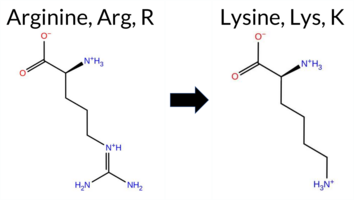 AIThe SynGAP1 missense variant R22K is reported in gnomAD (variant ID 6‑33420329‑G‑A) but has no ClinVar entry. Functional prediction tools largely agree on a benign effect: REVEL, PROVEAN, polyPhen‑2 (HumDiv and HumVar), ESM1b, FATHMM, AlphaMissense‑Default, and AlphaMissense‑Optimized all classify the change as benign. Only SIFT predicts it to be pathogenic, and the SGM‑Consensus (majority vote of AlphaMissense‑Default, ESM1b, FATHMM, and PROVEAN) indicates a likely benign outcome. High‑accuracy assessments further support a benign interpretation: AlphaMissense‑Optimized is benign, and the SGM‑Consensus is likely benign; Foldetta results are not available. Overall, the preponderance of evidence points to a benign effect for R22K, and this conclusion is consistent with the absence of a ClinVar pathogenic classification. Disclaimer: This summary was generated using AI and should be interpreted alongside expert review. | Likely Benign | 0.538167 | Disordered | 0.441505 | Uncertain | 0.377 | 0.891 | 0.500 | 6-33420329-G-A | -4.736 | Likely Benign | 0.268 | Likely Benign | Likely Benign | 0.032 | Likely Benign | -0.12 | Neutral | 0.140 | Benign | 0.067 | Benign | 4.27 | Benign | 0.00 | Affected | 4.32 | 1 | 0.6413 | 0.5384 | Strenghten | 2 | 3 | 0.6 | -28.01 | |||||||||||||||||||||||||||||||||||
| c.65G>C | R22T 2D 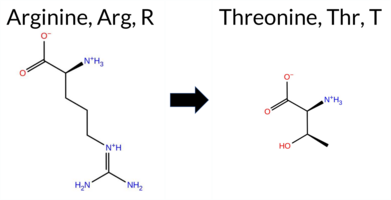 AIThe SynGAP1 missense variant R22T is not reported in ClinVar and is absent from gnomAD. Consensus predictions from multiple in silico tools show a split: benign calls from REVEL, PROVEAN, polyPhen2_HumVar, ESM1b, FATHMM, and AlphaMissense‑Optimized, while pathogenic calls come from polyPhen2_HumDiv and SIFT. The majority‑vote SGM‑Consensus, which aggregates AlphaMissense‑Default, ESM1b, FATHMM, and PROVEAN, indicates a likely benign effect. High‑accuracy predictors further support a benign interpretation: AlphaMissense‑Optimized predicts benign, and the SGM‑Consensus itself is benign; Foldetta predictions are not available. Given the preponderance of benign predictions and the lack of pathogenic evidence, the variant is most likely benign. This assessment aligns with the absence of a ClinVar pathogenic classification. Disclaimer: This summary was generated using AI and should be interpreted alongside expert review. | Likely Benign | 0.538167 | Disordered | 0.441505 | Uncertain | 0.377 | 0.891 | 0.500 | -4.079 | Likely Benign | 0.510 | Ambiguous | Likely Benign | 0.146 | Likely Benign | -0.21 | Neutral | 0.462 | Possibly Damaging | 0.227 | Benign | 4.23 | Benign | 0.00 | Affected | 0.2140 | 0.5599 | -1 | -1 | 3.8 | -55.08 | |||||||||||||||||||||||||||||||||||||||
| c.65G>T | R22I 2D 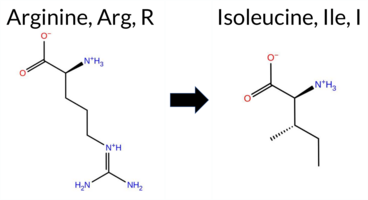 AIThe SynGAP1 missense variant R22I is not reported in ClinVar (no ClinVar ID) and is absent from gnomAD (no gnomAD ID). Prediction tools that agree on a benign effect include REVEL, PROVEAN, polyPhen‑2 HumVar, ESM1b, FATHMM, and AlphaMissense‑Optimized. Tools that predict a pathogenic effect are polyPhen‑2 HumDiv, SIFT, and AlphaMissense‑Default. The SGM‑Consensus, derived from a majority vote of AlphaMissense‑Default, ESM1b, FATHMM, and PROVEAN, classifies the variant as Likely Benign. High‑accuracy assessments show AlphaMissense‑Optimized as Benign and the SGM‑Consensus as Likely Benign; Foldetta results are unavailable. Overall, the balance of evidence favors a benign interpretation, and this conclusion does not contradict any ClinVar annotation (none exists). Disclaimer: This summary was generated using AI and should be interpreted alongside expert review. | Likely Benign | 0.538167 | Disordered | 0.441505 | Uncertain | 0.377 | 0.891 | 0.500 | -4.849 | Likely Benign | 0.692 | Likely Pathogenic | Likely Benign | 0.118 | Likely Benign | 0.06 | Neutral | 0.676 | Possibly Damaging | 0.308 | Benign | 4.20 | Benign | 0.00 | Affected | 0.2120 | 0.5048 | -2 | -3 | 9.0 | -43.03 | |||||||||||||||||||||||||||||||||||||||
| c.66A>C | R22S 2D AIThe SynGAP1 missense variant R22S is not reported in ClinVar (no ClinVar ID) and is absent from gnomAD (no gnomAD ID). Prediction tools that agree on a benign effect include SGM‑Consensus (Likely Benign), REVEL, PROVEAN, polyPhen‑2 HumVar, ESM1b, FATHMM, and AlphaMissense‑Optimized. Tools that predict a pathogenic effect are polyPhen‑2 HumDiv, SIFT, and AlphaMissense‑Default. High‑accuracy assessments show AlphaMissense‑Optimized as benign and the SGM‑Consensus (majority vote of AlphaMissense‑Default, ESM1b, FATHMM, PROVEAN) also as benign; a Foldetta stability prediction is unavailable. Overall, the majority of evidence points to a benign impact. This conclusion is consistent with the lack of ClinVar annotation, so there is no contradiction with existing clinical data. Disclaimer: This summary was generated using AI and should be interpreted alongside expert review. | Likely Benign | 0.538167 | Disordered | 0.441505 | Uncertain | 0.377 | 0.891 | 0.500 | -3.419 | Likely Benign | 0.602 | Likely Pathogenic | Likely Benign | 0.190 | Likely Benign | 0.01 | Neutral | 0.462 | Possibly Damaging | 0.227 | Benign | 4.28 | Benign | 0.00 | Affected | 4.32 | 1 | 0.3252 | 0.5187 | -1 | 0 | 3.7 | -69.11 | |||||||||||||||||||||||||||||||||||||
| c.66A>T | R22S 2D AIThe SynGAP1 missense variant R22S is listed in gnomAD (ID 6‑33420330‑A‑T) but has no ClinVar entry. Prediction tools that agree on a benign effect include REVEL, PROVEAN, polyPhen‑2 HumVar, ESM1b, FATHMM, and AlphaMissense‑Optimized. Those that predict a pathogenic outcome are polyPhen‑2 HumDiv, SIFT, and AlphaMissense‑Default. The SGM‑Consensus, which aggregates AlphaMissense‑Default, ESM1b, FATHMM, and PROVEAN, reports the variant as “Likely Benign.” High‑accuracy assessments further support a benign classification: AlphaMissense‑Optimized is benign, and the SGM‑Consensus (majority vote) is benign. Foldetta, a protein‑folding stability method combining FoldX‑MD and Rosetta outputs, has no reported result for this variant, so its stability impact is unavailable. Overall, the majority of evidence points to a benign effect, and this is not in conflict with ClinVar, which has no classification for R22S. Disclaimer: This summary was generated using AI and should be interpreted alongside expert review. | Likely Benign | 0.538167 | Disordered | 0.441505 | Uncertain | 0.377 | 0.891 | 0.500 | 6-33420330-A-T | -3.419 | Likely Benign | 0.602 | Likely Pathogenic | Likely Benign | 0.190 | Likely Benign | 0.01 | Neutral | 0.462 | Possibly Damaging | 0.227 | Benign | 4.28 | Benign | 0.00 | Affected | 4.32 | 1 | 0.3252 | 0.5187 | -1 | 0 | 3.7 | -69.11 | ||||||||||||||||||||||||||||||||||||
| c.67G>A | D23N 2D AIThe SynGAP1 D23N missense variant has no ClinVar record and is not listed in gnomAD. Prediction tools that agree on a benign effect include SGM‑Consensus (Likely Benign), REVEL, PROVEAN, ESM1b, FATHMM, and AlphaMissense‑Optimized. Tools that predict a pathogenic effect are polyPhen‑2 HumDiv, polyPhen‑2 HumVar, SIFT, and AlphaMissense‑Default. High‑accuracy assessments show AlphaMissense‑Optimized as benign and the SGM‑Consensus (majority vote from AlphaMissense‑Default, ESM1b, FATHMM, PROVEAN) also as benign; Foldetta results are unavailable. Overall, the majority of evidence points to a benign impact. This conclusion is not contradicted by ClinVar status, which has no entry for this variant. Disclaimer: This summary was generated using AI and should be interpreted alongside expert review. | Likely Benign | 0.557691 | Disordered | 0.440341 | Uncertain | 0.369 | 0.892 | 0.375 | -3.918 | Likely Benign | 0.719 | Likely Pathogenic | Likely Benign | 0.077 | Likely Benign | -1.88 | Neutral | 0.805 | Possibly Damaging | 0.539 | Possibly Damaging | 3.52 | Benign | 0.00 | Affected | 0.2236 | 0.8784 | 2 | 1 | 0.0 | -0.98 | |||||||||||||||||||||||||||||||||||||||
| c.67G>C | D23H 2D AIThe SynGAP1 D23H missense variant is not reported in ClinVar (no ClinVar ID) and is absent from gnomAD (no gnomAD ID). Prediction tools that agree on a benign effect include REVEL, PROVEAN, ESM1b, and FATHMM, while those that predict a pathogenic effect are polyPhen‑2 HumDiv, polyPhen‑2 HumVar, SIFT, and AlphaMissense‑Default. The SGM‑Consensus, which aggregates AlphaMissense‑Default, ESM1b, FATHMM, and PROVEAN, reports a “Likely Benign” classification. High‑accuracy assessments show AlphaMissense‑Optimized as “Uncertain” and the SGM‑Consensus as “Likely Benign”; Foldetta results are unavailable. Overall, the majority of evidence points toward a benign impact, and this conclusion does not contradict any ClinVar annotation (none exists). Thus, the variant is most likely benign based on current predictive data. Disclaimer: This summary was generated using AI and should be interpreted alongside expert review. | Likely Benign | 0.557691 | Disordered | 0.440341 | Uncertain | 0.369 | 0.892 | 0.375 | -3.801 | Likely Benign | 0.867 | Likely Pathogenic | Ambiguous | 0.103 | Likely Benign | -2.46 | Neutral | 0.972 | Probably Damaging | 0.861 | Possibly Damaging | 3.47 | Benign | 0.00 | Affected | 0.2644 | 0.9017 | 1 | -1 | 0.3 | 22.05 | |||||||||||||||||||||||||||||||||||||||
| c.67G>T | D23Y 2D AIThe SynGAP1 D23Y missense variant is not reported in ClinVar (ClinVar status: none) but is present in gnomAD (ID 6‑33420331‑G‑T). Prediction tools that agree on a benign effect include REVEL, ESM1b, FATHMM, and AlphaMissense‑Optimized. Tools that predict a pathogenic effect are PROVEAN, polyPhen‑2 HumDiv, polyPhen‑2 HumVar, SIFT, and AlphaMissense‑Default. High‑accuracy assessments show AlphaMissense‑Optimized as benign, while the SGM Consensus (majority vote from AlphaMissense‑Default, ESM1b, FATHMM, PROVEAN) is inconclusive due to a 2‑vs‑2 split, and Foldetta results are unavailable. Overall, the majority of predictions (five pathogenic vs. four benign) lean toward a pathogenic impact. This conclusion is not contradicted by ClinVar, which contains no entry for this variant. Disclaimer: This summary was generated using AI and should be interpreted alongside expert review. | 0.557691 | Disordered | 0.440341 | Uncertain | 0.369 | 0.892 | 0.375 | 6-33420331-G-T | -4.191 | Likely Benign | 0.729 | Likely Pathogenic | Likely Benign | 0.142 | Likely Benign | -2.87 | Deleterious | 0.972 | Probably Damaging | 0.861 | Possibly Damaging | 3.46 | Benign | 0.00 | Affected | 4.32 | 1 | 0.1013 | 0.7951 | -3 | -4 | 2.2 | 48.09 | |||||||||||||||||||||||||||||||||||||
| c.68A>C | D23A 2D AIThe SynGAP1 D23A missense variant is not reported in ClinVar (ClinVar ID = None) and is absent from gnomAD (gnomAD ID = None). Prediction tools that agree on a benign effect include REVEL, ESM1b, FATHMM, and AlphaMissense‑Optimized. Tools that predict a pathogenic effect are PROVEAN, polyPhen‑2 (HumDiv and HumVar), SIFT, and AlphaMissense‑Default. High‑accuracy assessments show AlphaMissense‑Optimized as benign, while the SGM Consensus (majority vote from AlphaMissense‑Default, ESM1b, FATHMM, and PROVEAN) is inconclusive due to a 2‑to‑2 split, and Foldetta results are unavailable. Overall, the majority of predictions (five pathogenic versus four benign) suggest a pathogenic impact. This conclusion does not contradict ClinVar status, as the variant has no existing ClinVar classification. Disclaimer: This summary was generated using AI and should be interpreted alongside expert review. | 0.557691 | Disordered | 0.440341 | Uncertain | 0.369 | 0.892 | 0.375 | -2.732 | Likely Benign | 0.777 | Likely Pathogenic | Likely Benign | 0.112 | Likely Benign | -2.57 | Deleterious | 0.909 | Possibly Damaging | 0.539 | Possibly Damaging | 3.52 | Benign | 0.00 | Affected | 0.4613 | 0.8203 | 0 | -2 | 5.3 | -44.01 | ||||||||||||||||||||||||||||||||||||||||
| c.68A>G | D23G 2D AIThe SynGAP1 missense variant D23G is listed in ClinVar (ID 3644551.0) with an “Uncertain” status and is not reported in gnomAD. Prediction tools that agree on a benign effect include REVEL, PROVEAN, ESM1b, FATHMM, and AlphaMissense‑Optimized. Tools that predict a pathogenic effect are polyPhen‑2 HumDiv, polyPhen‑2 HumVar, SIFT, and AlphaMissense‑Default. The SGM‑Consensus, derived from a majority vote of AlphaMissense‑Default, ESM1b, FATHMM, and PROVEAN, reports the variant as “Likely Benign.” High‑accuracy assessments show AlphaMissense‑Optimized as benign and the SGM‑Consensus as likely benign; the Foldetta protein‑folding stability analysis is unavailable for this variant. Overall, the majority of computational evidence points to a benign impact, which does not contradict the ClinVar “Uncertain” classification but leans toward a benign interpretation. Disclaimer: This summary was generated using AI and should be interpreted alongside expert review. | Likely Benign | 0.557691 | Disordered | 0.440341 | Uncertain | 0.369 | 0.892 | 0.375 | Uncertain | 1 | -2.622 | Likely Benign | 0.684 | Likely Pathogenic | Likely Benign | 0.100 | Likely Benign | -2.45 | Neutral | 0.805 | Possibly Damaging | 0.539 | Possibly Damaging | 3.50 | Benign | 0.00 | Affected | 0.4682 | 0.7632 | 1 | -1 | 3.1 | -58.04 | |||||||||||||||||||||||||||||||||||||
| c.68A>T | D23V 2D AIThe SynGAP1 D23V missense variant is not reported in ClinVar (ClinVar ID = None) and is absent from gnomAD (gnomAD ID = None). Prediction tools that agree on a benign effect include REVEL, ESM1b, and FATHMM. Those that agree on a pathogenic effect are PROVEAN, polyPhen‑2 HumDiv, polyPhen‑2 HumVar, SIFT, and AlphaMissense‑Default. AlphaMissense‑Optimized is uncertain. High‑accuracy assessments are inconclusive: AlphaMissense‑Optimized is uncertain; the SGM Consensus (majority vote from AlphaMissense‑Default, ESM1b, FATHMM, PROVEAN) is a 2‑vs‑2 tie and thus unavailable; Foldetta predictions are not provided. Overall, more tools (five) predict pathogenicity than benign (three), and no ClinVar evidence contradicts this assessment. Therefore, the variant is most likely pathogenic based on the available predictions. Disclaimer: This summary was generated using AI and should be interpreted alongside expert review. | 0.557691 | Disordered | 0.440341 | Uncertain | 0.369 | 0.892 | 0.375 | -3.244 | Likely Benign | 0.842 | Likely Pathogenic | Ambiguous | 0.137 | Likely Benign | -2.72 | Deleterious | 0.972 | Probably Damaging | 0.804 | Possibly Damaging | 3.48 | Benign | 0.00 | Affected | 0.1515 | 0.8367 | -2 | -3 | 7.7 | -15.96 | ||||||||||||||||||||||||||||||||||||||||
| c.69T>A | D23E 2D AIThe SynGAP1 D23E missense variant is not reported in ClinVar (no ClinVar ID) and is absent from gnomAD (no gnomAD ID). Prediction tools that agree on a benign effect include REVEL, PROVEAN, polyPhen‑2 HumVar, ESM1b, FATHMM, and AlphaMissense‑Optimized. Tools that predict a pathogenic effect are polyPhen‑2 HumDiv, SIFT, and AlphaMissense‑Default. The SGM‑Consensus, which aggregates AlphaMissense‑Default, ESM1b, FATHMM, and PROVEAN, reports a Likely Benign classification. High‑accuracy assessments show AlphaMissense‑Optimized as Benign and the SGM‑Consensus as Likely Benign; Foldetta results are unavailable. Overall, the majority of evidence points to a benign impact. This conclusion is not contradicted by ClinVar, as no ClinVar entry exists for this variant. Disclaimer: This summary was generated using AI and should be interpreted alongside expert review. | Likely Benign | 0.557691 | Disordered | 0.440341 | Uncertain | 0.369 | 0.892 | 0.375 | -3.329 | Likely Benign | 0.565 | Likely Pathogenic | Likely Benign | 0.084 | Likely Benign | -1.35 | Neutral | 0.643 | Possibly Damaging | 0.417 | Benign | 3.59 | Benign | 0.00 | Affected | 4.32 | 1 | 0.2420 | 0.8363 | 2 | 3 | 0.0 | 14.03 | |||||||||||||||||||||||||||||||||||||
| c.69T>G | D23E 2D AIThe SynGAP1 missense variant D23E is listed in gnomAD (ID 6‑33423478‑T‑G) but has no ClinVar entry. Functional prediction tools cluster into two groups: benign predictions come from REVEL, PROVEAN, polyPhen‑2 HumVar, ESM1b, FATHMM, and AlphaMissense‑Optimized; pathogenic predictions arise from polyPhen‑2 HumDiv, SIFT, and AlphaMissense‑Default. The SGM‑Consensus, which aggregates AlphaMissense‑Default, ESM1b, FATHMM, and PROVEAN, reports the variant as “Likely Benign.” High‑accuracy assessments further support a benign outcome: AlphaMissense‑Optimized predicts benign, and the SGM‑Consensus (majority vote) also indicates benign. No Foldetta stability analysis is available for this variant. Overall, the majority of evidence—including the consensus and high‑accuracy tools—points to a benign effect, and this conclusion is not contradicted by any ClinVar classification. Disclaimer: This summary was generated using AI and should be interpreted alongside expert review. | Likely Benign | 0.557691 | Disordered | 0.440341 | Uncertain | 0.369 | 0.892 | 0.375 | 6-33423478-T-G | 15 | 9.29e-6 | -3.329 | Likely Benign | 0.565 | Likely Pathogenic | Likely Benign | 0.084 | Likely Benign | -1.35 | Neutral | 0.643 | Possibly Damaging | 0.417 | Benign | 3.59 | Benign | 0.00 | Affected | 4.32 | 1 | 0.2420 | 0.8363 | 2 | 3 | 0.0 | 14.03 | ||||||||||||||||||||||||||||||||||
| c.6C>A | S2R 2D AIThe SynGAP1 missense variant S2R is present in gnomAD (ID 6‑33420270‑C‑A) but has no ClinVar entry. Functional prediction tools largely agree on a benign effect: REVEL, PROVEAN, polyPhen‑2 (HumDiv and HumVar), ESM1b, FATHMM, AlphaMissense‑Optimized, and the SGM‑Consensus score all report benign or likely benign. Only SIFT predicts a pathogenic outcome, while AlphaMissense‑Default remains uncertain. High‑accuracy assessments reinforce the benign consensus: AlphaMissense‑Optimized is benign, and the SGM‑Consensus (derived from the majority vote of AlphaMissense‑Default, ESM1b, FATHMM, and PROVEAN) also favors benign. Foldetta, a protein‑folding stability predictor, has no available result for this variant. Overall, the majority of evidence points to a benign impact, and this is consistent with the absence of a ClinVar pathogenic classification. Disclaimer: This summary was generated using AI and should be interpreted alongside expert review. | Likely Benign | 0.671169 | Disordered | 0.543646 | Binding | 0.382 | 0.922 | 0.750 | 6-33420270-C-A | 1 | 6.52e-7 | -3.684 | Likely Benign | 0.426 | Ambiguous | Likely Benign | 0.070 | Likely Benign | -0.44 | Neutral | 0.117 | Benign | 0.008 | Benign | 4.05 | Benign | 0.00 | Affected | 4.32 | 1 | 0.0996 | 0.4503 | -1 | 0 | -3.7 | 69.11 | ||||||||||||||||||||||||||||||||||
| c.6C>G | S2R 2D AIThe SynGAP1 missense variant S2R is not reported in ClinVar (ClinVar ID None) and has no entry in gnomAD (gnomAD ID None). Prediction tools that agree on a benign effect include REVEL, PROVEAN, polyPhen‑2 HumDiv, polyPhen‑2 HumVar, ESM1b, FATHMM, and AlphaMissense‑Optimized. Only SIFT predicts a pathogenic outcome, while AlphaMissense‑Default remains uncertain. The SGM‑Consensus, derived from a majority vote of AlphaMissense‑Default, ESM1b, FATHMM, and PROVEAN, classifies the variant as Likely Benign. High‑accuracy assessments further support a benign interpretation: AlphaMissense‑Optimized predicts Benign, and the SGM‑Consensus also indicates Likely Benign. Foldetta, a protein‑folding stability method combining FoldX‑MD and Rosetta outputs, did not provide a result for this variant, so its status is unavailable. Overall, the preponderance of evidence from multiple prediction tools and high‑accuracy methods indicates that the variant is most likely benign, and this conclusion is not contradicted by any ClinVar annotation. Disclaimer: This summary was generated using AI and should be interpreted alongside expert review. | Likely Benign | 0.671169 | Disordered | 0.543646 | Binding | 0.382 | 0.922 | 0.750 | -3.684 | Likely Benign | 0.426 | Ambiguous | Likely Benign | 0.065 | Likely Benign | -0.44 | Neutral | 0.117 | Benign | 0.008 | Benign | 4.05 | Benign | 0.00 | Affected | 4.32 | 1 | 0.0996 | 0.4503 | -1 | 0 | -3.7 | 69.11 | |||||||||||||||||||||||||||||||||||||
| c.70G>A | V24I 2D 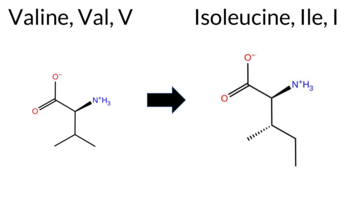 AIThe SynGAP1 missense variant V24I is listed in ClinVar with an “Uncertain” status and is present in gnomAD (variant ID 6-33423479-G-A). Prediction tools that agree on a benign effect include REVEL, PROVEAN, polyPhen‑2 (HumDiv and HumVar), ESM1b, FATHMM, AlphaMissense‑Default, AlphaMissense‑Optimized, and the SGM‑Consensus (majority vote from AlphaMissense‑Default, ESM1b, FATHMM, and PROVEAN). Only SIFT predicts a pathogenic outcome. High‑accuracy assessments show AlphaMissense‑Optimized as benign and the SGM‑Consensus as likely benign; Foldetta results are not available. Taken together, the overwhelming majority of computational evidence supports a benign impact for V24I, and this conclusion does not contradict the ClinVar designation, which remains uncertain. Disclaimer: This summary was generated using AI and should be interpreted alongside expert review. | Likely Benign | 0.541878 | Disordered | 0.438970 | Uncertain | 0.382 | 0.890 | 0.500 | Uncertain | 1 | 6-33423479-G-A | 9 | 5.58e-6 | -3.701 | Likely Benign | 0.137 | Likely Benign | Likely Benign | 0.069 | Likely Benign | -0.25 | Neutral | 0.043 | Benign | 0.031 | Benign | 3.96 | Benign | 0.00 | Affected | 4.32 | 1 | 0.0844 | 0.4564 | 3 | 4 | 0.3 | 14.03 | ||||||||||||||||||||||||||||||||
| c.70G>C | V24L 2D 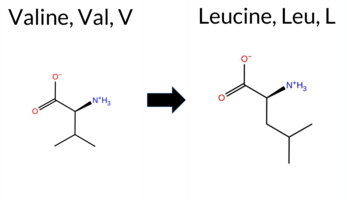 AIThe SynGAP1 missense variant V24L is not reported in ClinVar (no ClinVar ID) and is absent from gnomAD (no gnomAD ID). Prediction tools that agree on a benign effect include REVEL, PROVEAN, polyPhen‑2 HumDiv, polyPhen‑2 HumVar, ESM1b, FATHMM, AlphaMissense‑Default, and AlphaMissense‑Optimized. Only SIFT predicts a pathogenic outcome. The SGM‑Consensus, which aggregates AlphaMissense‑Default, ESM1b, FATHMM, and PROVEAN, reports a “Likely Benign” classification. High‑accuracy assessments further support a benign interpretation: AlphaMissense‑Optimized is benign, and the SGM‑Consensus is likely benign; Foldetta results are not available. Overall, the majority of evidence points to a benign effect for V24L, and this conclusion does not contradict any ClinVar annotation, as none exists for this variant. Disclaimer: This summary was generated using AI and should be interpreted alongside expert review. | Likely Benign | 0.541878 | Disordered | 0.438970 | Uncertain | 0.382 | 0.890 | 0.500 | -2.590 | Likely Benign | 0.320 | Likely Benign | Likely Benign | 0.053 | Likely Benign | -0.62 | Neutral | 0.043 | Benign | 0.011 | Benign | 3.94 | Benign | 0.00 | Affected | 0.1102 | 0.5226 | 2 | 1 | -0.4 | 14.03 | |||||||||||||||||||||||||||||||||||||||
| c.70G>T | V24L 2D AIThe SynGAP1 missense variant V24L is not reported in ClinVar (no ClinVar ID) and is absent from gnomAD (no gnomAD ID). Prediction tools that agree on a benign effect include REVEL, PROVEAN, polyPhen‑2 HumDiv, polyPhen‑2 HumVar, ESM1b, FATHMM, AlphaMissense‑Default, and AlphaMissense‑Optimized. Only SIFT predicts a pathogenic outcome. The SGM‑Consensus, which aggregates AlphaMissense‑Default, ESM1b, FATHMM, and PROVEAN, reports a “Likely Benign” classification. High‑accuracy assessments further support a benign interpretation: AlphaMissense‑Optimized is benign, and the SGM‑Consensus is likely benign; Foldetta results are not available. Overall, the majority of evidence points to a benign effect for V24L, and this conclusion does not contradict any ClinVar annotation, as none exists for this variant. Disclaimer: This summary was generated using AI and should be interpreted alongside expert review. | Likely Benign | 0.541878 | Disordered | 0.438970 | Uncertain | 0.382 | 0.890 | 0.500 | -2.590 | Likely Benign | 0.320 | Likely Benign | Likely Benign | 0.053 | Likely Benign | -0.62 | Neutral | 0.043 | Benign | 0.011 | Benign | 3.94 | Benign | 0.00 | Affected | 0.1102 | 0.5226 | 2 | 1 | -0.4 | 14.03 | |||||||||||||||||||||||||||||||||||||||
| c.71T>A | V24E 2D 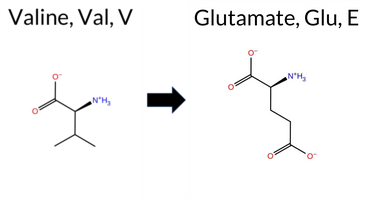 AIThe SynGAP1 missense variant V24E is not reported in ClinVar and is absent from gnomAD. Prediction tools that agree on a benign effect include REVEL, PROVEAN, polyPhen‑2 (HumDiv and HumVar), ESM1b, FATHMM, and AlphaMissense‑Optimized. Only SIFT predicts a pathogenic outcome, while AlphaMissense‑Default remains uncertain. The SGM‑Consensus, derived from a majority vote of AlphaMissense‑Default, ESM1b, FATHMM, and PROVEAN, classifies the variant as Likely Benign. High‑accuracy assessments further support a benign interpretation: AlphaMissense‑Optimized predicts Benign, the SGM‑Consensus also indicates Likely Benign, and Foldetta results are unavailable. Based on the collective evidence, the variant is most likely benign, and this assessment does not contradict any ClinVar status (none is available). Disclaimer: This summary was generated using AI and should be interpreted alongside expert review. | Likely Benign | 0.541878 | Disordered | 0.438970 | Uncertain | 0.382 | 0.890 | 0.500 | -3.397 | Likely Benign | 0.517 | Ambiguous | Likely Benign | 0.171 | Likely Benign | -1.73 | Neutral | 0.198 | Benign | 0.074 | Benign | 3.77 | Benign | 0.00 | Affected | 0.1133 | 0.2415 | -2 | -2 | -7.7 | 29.98 | |||||||||||||||||||||||||||||||||||||||
| c.71T>C | V24A 2D 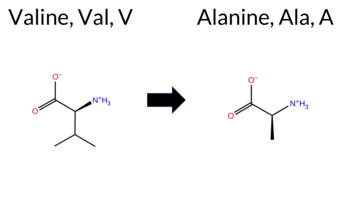 AIThe SynGAP1 missense variant V24A is not reported in ClinVar and is absent from gnomAD. Functional prediction tools largely agree on a benign effect: REVEL, PROVEAN, polyPhen‑2 (HumDiv and HumVar), ESM1b, FATHMM, AlphaMissense‑Default, and AlphaMissense‑Optimized all predict benign, while only SIFT predicts pathogenic. The SGM‑Consensus, derived from a majority vote of AlphaMissense‑Default, ESM1b, FATHMM, and PROVEAN, also indicates a likely benign outcome. High‑accuracy assessments confirm this: AlphaMissense‑Optimized is benign and the SGM‑Consensus is likely benign; Foldetta results are not available. Overall, the consensus of the majority of tools, including the high‑accuracy methods, points to a benign impact for V24A. This prediction is consistent with the lack of ClinVar evidence and does not contradict any existing database status. Disclaimer: This summary was generated using AI and should be interpreted alongside expert review. | Likely Benign | 0.541878 | Disordered | 0.438970 | Uncertain | 0.382 | 0.890 | 0.500 | -2.980 | Likely Benign | 0.299 | Likely Benign | Likely Benign | 0.074 | Likely Benign | -1.09 | Neutral | 0.000 | Benign | 0.001 | Benign | 3.83 | Benign | 0.00 | Affected | 0.3117 | 0.3350 | 0 | 0 | -2.4 | -28.05 | |||||||||||||||||||||||||||||||||||||||
| c.71T>G | V24G 2D  AIThe SynGAP1 missense variant V24G is not reported in ClinVar (ClinVar status: not present) and is absent from gnomAD (gnomAD ID: none). Prediction tools that agree on a benign effect include REVEL, PROVEAN, polyPhen‑2 HumDiv, polyPhen‑2 HumVar, ESM1b, FATHMM, AlphaMissense‑Default, and AlphaMissense‑Optimized. Only SIFT predicts a pathogenic outcome. High‑accuracy assessments further support a benign classification: AlphaMissense‑Optimized is benign, the SGM Consensus (majority vote of AlphaMissense‑Default, ESM1b, FATHMM, and PROVEAN) is benign, and Foldetta results are unavailable. Based on the collective evidence, the variant is most likely benign, and this conclusion does not contradict any ClinVar annotation. Disclaimer: This summary was generated using AI and should be interpreted alongside expert review. | 0.541878 | Disordered | 0.438970 | Uncertain | 0.382 | 0.890 | 0.500 | -2.673 | Likely Benign | 0.256 | Likely Benign | Likely Benign | 0.178 | Likely Benign | -1.67 | Neutral | 0.026 | Benign | 0.049 | Benign | 3.77 | Benign | 0.00 | Affected | 0.2081 | 0.3105 | -1 | -3 | -4.6 | -42.08 | ||||||||||||||||||||||||||||||||||||||||
| c.73C>G | R25G 2D AIThe SynGAP1 missense variant R25G is not reported in ClinVar and is absent from gnomAD. Consensus from multiple in‑silico predictors shows a split: benign calls come from REVEL, PROVEAN, ESM1b, FATHMM, and AlphaMissense‑Optimized, while pathogenic calls arise from polyPhen‑2 (HumDiv and HumVar) and SIFT. AlphaMissense‑Default remains uncertain. When high‑accuracy tools are considered separately, AlphaMissense‑Optimized predicts a benign effect, the SGM Consensus (majority vote of AlphaMissense‑Default, ESM1b, FATHMM, and PROVEAN) also indicates a likely benign outcome, and Foldetta data are unavailable. Overall, the majority of robust predictors lean toward a benign interpretation. Thus, the variant is most likely benign, and this assessment does not contradict any ClinVar status (none is available). Disclaimer: This summary was generated using AI and should be interpreted alongside expert review. | Likely Benign | 0.461924 | Structured | 0.438941 | Uncertain | 0.373 | 0.890 | 0.375 | -3.533 | Likely Benign | 0.373 | Ambiguous | Likely Benign | 0.122 | Likely Benign | -1.69 | Neutral | 0.686 | Possibly Damaging | 0.630 | Possibly Damaging | 3.95 | Benign | 0.00 | Affected | 0.3621 | 0.3572 | -3 | -2 | 4.1 | -99.14 | |||||||||||||||||||||||||||||||||||||||
| c.73C>T | R25W 2D AIThe SynGAP1 missense variant R25W is listed in ClinVar with an “Uncertain” status (ClinVar ID 2993054.0) and is present in gnomAD (ID 6‑33423482‑C‑T). Prediction tools that agree on a benign effect include REVEL, PROVEAN, ESM1b, FATHMM, AlphaMissense‑Optimized, and the SGM‑Consensus (majority vote from AlphaMissense‑Default, ESM1b, FATHMM, PROVEAN). Tools that predict a pathogenic effect are polyPhen‑2 HumDiv, polyPhen‑2 HumVar, and SIFT; AlphaMissense‑Default remains uncertain. High‑accuracy assessments show AlphaMissense‑Optimized as benign and the SGM‑Consensus as likely benign, while Foldetta results are unavailable. Overall, the majority of evidence points to a benign impact, and this is not in conflict with the ClinVar “Uncertain” classification. Disclaimer: This summary was generated using AI and should be interpreted alongside expert review. | Likely Benign | 0.461924 | Structured | 0.438941 | Uncertain | 0.373 | 0.890 | 0.375 | Uncertain | 2 | 6-33423482-C-T | 6 | 3.72e-6 | -5.133 | Likely Benign | 0.549 | Ambiguous | Likely Benign | 0.158 | Likely Benign | -1.60 | Neutral | 0.994 | Probably Damaging | 0.919 | Probably Damaging | 3.92 | Benign | 0.00 | Affected | 4.32 | 1 | 0.1224 | 0.3938 | -3 | 2 | 3.6 | 30.03 | ||||||||||||||||||||||||||||||||
| c.74G>A | R25Q 2D AIThe SynGAP1 missense variant R25Q is listed in ClinVar with an “Uncertain” status and is present in gnomAD (ID 6‑33423483‑G‑A). Prediction tools that agree on a benign effect include REVEL, PROVEAN, ESM1b, FATHMM, AlphaMissense‑Default, AlphaMissense‑Optimized, and the SGM‑Consensus (majority vote from AlphaMissense‑Default, ESM1b, FATHMM, and PROVEAN). Tools that predict a pathogenic effect are polyPhen‑2 HumDiv, polyPhen‑2 HumVar, and SIFT. High‑accuracy assessments show AlphaMissense‑Optimized as benign and the SGM‑Consensus as likely benign; Foldetta results are unavailable. Overall, the majority of evidence points to a benign impact, and this conclusion does not contradict the ClinVar “Uncertain” classification. Disclaimer: This summary was generated using AI and should be interpreted alongside expert review. | Likely Benign | 0.461924 | Structured | 0.438941 | Uncertain | 0.373 | 0.890 | 0.375 | Uncertain | 1 | 6-33423483-G-A | 15 | 9.29e-6 | -4.126 | Likely Benign | 0.212 | Likely Benign | Likely Benign | 0.038 | Likely Benign | -0.70 | Neutral | 0.829 | Possibly Damaging | 0.614 | Possibly Damaging | 4.01 | Benign | 0.00 | Affected | 4.32 | 1 | 0.3447 | 0.2566 | 1 | 1 | 1.0 | -28.06 | ||||||||||||||||||||||||||||||||
| c.74G>C | R25P 2D AIThe SynGAP1 missense variant R25P is not reported in ClinVar (no ClinVar ID) and is absent from gnomAD (no gnomAD ID). Prediction tools that agree on a benign effect include REVEL, PROVEAN, ESM1b, FATHMM, and AlphaMissense‑Optimized, while polyPhen‑2 (HumDiv and HumVar) and SIFT uniformly predict a pathogenic outcome. AlphaMissense‑Default remains uncertain. The high‑accuracy consensus from SGM (majority vote of AlphaMissense‑Default, ESM1b, FATHMM, and PROVEAN) classifies the variant as Likely Benign, and AlphaMissense‑Optimized also predicts Benign. Foldetta, a protein‑folding stability method combining FoldX‑MD and Rosetta outputs, has no available result for this variant. Overall, the majority of evidence points to a benign effect, and this assessment does not contradict any ClinVar status because no ClinVar claim exists. Disclaimer: This summary was generated using AI and should be interpreted alongside expert review. | Likely Benign | 0.461924 | Structured | 0.438941 | Uncertain | 0.373 | 0.890 | 0.375 | -3.394 | Likely Benign | 0.424 | Ambiguous | Likely Benign | 0.155 | Likely Benign | -1.56 | Neutral | 0.841 | Possibly Damaging | 0.809 | Possibly Damaging | 3.94 | Benign | 0.00 | Affected | 0.2217 | 0.4571 | 0 | -2 | 2.9 | -59.07 | |||||||||||||||||||||||||||||||||||||||
| c.74G>T | R25L 2D AIThe SynGAP1 missense variant R25L is not reported in ClinVar and is absent from gnomAD. Consensus from multiple in‑silico predictors shows a predominance of benign calls: REVEL, PROVEAN, ESM1b, FATHMM, and AlphaMissense‑Optimized all predict a benign effect, while the SGM‑Consensus (majority vote of AlphaMissense‑Default, ESM1b, FATHMM, PROVEAN) also indicates a likely benign outcome. In contrast, polyPhen‑2 (HumDiv and HumVar) and SIFT each predict a pathogenic impact. AlphaMissense‑Default remains uncertain, and no Foldetta stability assessment is available. High‑accuracy tools specifically highlight a benign prediction: AlphaMissense‑Optimized is benign, the SGM‑Consensus is likely benign, and Foldetta data are missing. Taken together, the majority of robust predictors and the consensus analysis support a benign classification for R25L. This conclusion is consistent with the lack of ClinVar evidence and does not contradict any existing database status. Disclaimer: This summary was generated using AI and should be interpreted alongside expert review. | Likely Benign | 0.461924 | Structured | 0.438941 | Uncertain | 0.373 | 0.890 | 0.375 | -3.443 | Likely Benign | 0.484 | Ambiguous | Likely Benign | 0.121 | Likely Benign | -1.59 | Neutral | 0.686 | Possibly Damaging | 0.630 | Possibly Damaging | 3.97 | Benign | 0.00 | Affected | 0.2045 | 0.4792 | -3 | -2 | 8.3 | -43.03 | |||||||||||||||||||||||||||||||||||||||
| c.76G>A | G26R 2D  AIThe SynGAP1 missense variant G26R is listed in ClinVar as a benign alteration (ClinVar ID 1521495.0) and is present in the gnomAD database (gnomAD ID 6‑33423485‑G‑A). Prediction tools that agree on a benign effect include REVEL, PROVEAN, ESM1b, FATHMM, and AlphaMissense‑Optimized. Tools that predict a pathogenic outcome are polyPhen‑2 HumDiv, polyPhen‑2 HumVar, SIFT, and AlphaMissense‑Default. The SGM‑Consensus, which aggregates the majority vote from AlphaMissense‑Default, ESM1b, FATHMM, and PROVEAN, reports a “Likely Benign” classification. High‑accuracy assessments show AlphaMissense‑Optimized as benign and the SGM‑Consensus as likely benign; the Foldetta protein‑folding stability analysis is unavailable for this variant. Overall, the majority of computational evidence supports a benign impact, aligning with the ClinVar designation and indicating no contradiction. Disclaimer: This summary was generated using AI and should be interpreted alongside expert review. | Likely Benign | 0.486429 | Structured | 0.438291 | Uncertain | 0.351 | 0.878 | 0.375 | Benign | 1 | 6-33423485-G-A | 3 | 1.86e-6 | -2.946 | Likely Benign | 0.678 | Likely Pathogenic | Likely Benign | 0.189 | Likely Benign | -2.22 | Neutral | 0.994 | Probably Damaging | 0.990 | Probably Damaging | 3.87 | Benign | 0.00 | Affected | 4.32 | 1 | 0.1097 | 0.4407 | -3 | -2 | -4.1 | 99.14 | ||||||||||||||||||||||||||||||||
| c.76G>C | G26R 2D AIThe SynGAP1 missense variant G26R is not reported in ClinVar (no ClinVar ID) and is absent from gnomAD (no gnomAD ID). Prediction tools that agree on a benign effect include REVEL, PROVEAN, ESM1b, FATHMM, and AlphaMissense‑Optimized, while those that predict a pathogenic effect are polyPhen‑2 HumDiv, polyPhen‑2 HumVar, SIFT, and AlphaMissense‑Default. The SGM‑Consensus, which aggregates AlphaMissense‑Default, ESM1b, FATHMM, and PROVEAN, is classified as Likely Benign. High‑accuracy assessments further support a benign outcome: AlphaMissense‑Optimized predicts benign, and the SGM‑Consensus (majority vote of the four high‑accuracy tools) also yields benign. Foldetta, a protein‑folding stability method combining FoldX‑MD and Rosetta outputs, has no available result for this variant. Overall, the majority of evidence—including the high‑accuracy consensus—indicates that G26R is most likely benign, and this conclusion does not contradict any ClinVar status because no ClinVar classification exists. Disclaimer: This summary was generated using AI and should be interpreted alongside expert review. | Likely Benign | 0.486429 | Structured | 0.438291 | Uncertain | 0.351 | 0.878 | 0.375 | -2.946 | Likely Benign | 0.678 | Likely Pathogenic | Likely Benign | 0.189 | Likely Benign | -2.22 | Neutral | 0.994 | Probably Damaging | 0.990 | Probably Damaging | 3.87 | Benign | 0.00 | Affected | 4.32 | 1 | 0.1097 | 0.4407 | -3 | -2 | -4.1 | 99.14 | |||||||||||||||||||||||||||||||||||||
| c.77G>A | G26E 2D  AIThe SynGAP1 missense variant G26E is not reported in ClinVar and is absent from gnomAD. Functional prediction tools cluster into two groups: benign predictions include REVEL, PROVEAN, ESM1b, FATHMM, and AlphaMissense‑Optimized, while pathogenic predictions come from polyPhen‑2 HumDiv, polyPhen‑2 HumVar, and SIFT. AlphaMissense‑Default remains uncertain. The high‑accuracy consensus, SGM‑Consensus, classifies the variant as Likely Benign, and AlphaMissense‑Optimized also predicts Benign. Foldetta, a protein‑folding stability method combining FoldX‑MD and Rosetta outputs, has no available result for this variant. Overall, the majority of evidence points to a benign effect. This conclusion is consistent with the lack of ClinVar annotation; there is no contradiction with existing clinical data. Disclaimer: This summary was generated using AI and should be interpreted alongside expert review. | Likely Benign | 0.486429 | Structured | 0.438291 | Uncertain | 0.351 | 0.878 | 0.375 | -3.966 | Likely Benign | 0.481 | Ambiguous | Likely Benign | 0.199 | Likely Benign | -2.08 | Neutral | 0.994 | Probably Damaging | 0.986 | Probably Damaging | 3.90 | Benign | 0.00 | Affected | 0.1623 | 0.4238 | 0 | -2 | -3.1 | 72.06 | |||||||||||||||||||||||||||||||||||||||
| c.77G>C | G26A 2D  AIThe SynGAP1 missense variant G26A is not reported in ClinVar and is absent from gnomAD. Prediction tools that agree on a benign effect include REVEL, PROVEAN, ESM1b, FATHMM, AlphaMissense‑Default, AlphaMissense‑Optimized, and the SGM‑Consensus (majority vote) which classifies the variant as Likely Benign. In contrast, polyPhen‑2 (HumDiv and HumVar) and SIFT all predict a pathogenic impact. High‑accuracy assessments further support a benign outcome: AlphaMissense‑Optimized predicts Benign, and the SGM‑Consensus (derived from AlphaMissense‑Default, ESM1b, FATHMM, and PROVEAN) also indicates Likely Benign. No Foldetta stability analysis is available, so it does not influence the assessment. Overall, the majority of evidence points to a benign effect for G26A, and this conclusion is not contradicted by any ClinVar annotation. Disclaimer: This summary was generated using AI and should be interpreted alongside expert review. | Likely Benign | 0.486429 | Structured | 0.438291 | Uncertain | 0.351 | 0.878 | 0.375 | -3.308 | Likely Benign | 0.135 | Likely Benign | Likely Benign | 0.062 | Likely Benign | -1.25 | Neutral | 0.953 | Possibly Damaging | 0.952 | Probably Damaging | 4.02 | Benign | 0.00 | Affected | 0.4093 | 0.5251 | 1 | 0 | 2.2 | 14.03 | |||||||||||||||||||||||||||||||||||||||
| c.77G>T | G26V 2D  AIThe SynGAP1 missense variant G26V is reported in gnomAD (variant ID 6‑33423486‑G‑T) but has no ClinVar entry. Functional prediction tools cluster into two groups: the benign‑predicted set includes REVEL, PROVEAN, ESM1b, FATHMM, AlphaMissense‑Default, and AlphaMissense‑Optimized; the pathogenic‑predicted set contains polyPhen‑2 HumDiv, polyPhen‑2 HumVar, and SIFT. The high‑accuracy consensus methods reinforce the benign assessment: AlphaMissense‑Optimized predicts benign, and the SGM Consensus (majority vote of AlphaMissense‑Default, ESM1b, FATHMM, and PROVEAN) reports “Likely Benign.” No Foldetta stability result is available, so it does not influence the conclusion. Overall, the majority of evidence points to a benign effect for G26V, and this is consistent with the absence of a ClinVar pathogenic classification. Disclaimer: This summary was generated using AI and should be interpreted alongside expert review. | Likely Benign | 0.486429 | Structured | 0.438291 | Uncertain | 0.351 | 0.878 | 0.375 | 6-33423486-G-T | 1 | 6.20e-7 | -3.499 | Likely Benign | 0.165 | Likely Benign | Likely Benign | 0.197 | Likely Benign | -2.34 | Neutral | 0.994 | Probably Damaging | 0.990 | Probably Damaging | 3.89 | Benign | 0.00 | Affected | 4.32 | 1 | 0.1344 | 0.4333 | -3 | -1 | 4.6 | 42.08 | ||||||||||||||||||||||||||||||||||
| c.79C>A | P27T 2D AIThe SynGAP1 missense variant P27T is not reported in ClinVar (no ClinVar ID) and is absent from gnomAD (no gnomAD ID). Prediction tools that agree on a benign effect include REVEL, PROVEAN, ESM1b, FATHMM, AlphaMissense‑Default, AlphaMissense‑Optimized, and the SGM‑Consensus (Likely Benign). In contrast, polyPhen‑2 (HumDiv and HumVar) and SIFT all predict a pathogenic impact. High‑accuracy assessments further support a benign classification: AlphaMissense‑Optimized predicts benign, and the SGM‑Consensus (majority vote of AlphaMissense‑Default, ESM1b, FATHMM, PROVEAN) also indicates Likely Benign. Foldetta results are unavailable. Overall, the majority of evidence, including high‑accuracy tools, points to a benign effect for P27T, and this conclusion does not contradict any ClinVar annotation (none exists). Disclaimer: This summary was generated using AI and should be interpreted alongside expert review. | Likely Benign | 0.517562 | Disordered | 0.437871 | Uncertain | 0.430 | 0.881 | 0.375 | -3.612 | Likely Benign | 0.103 | Likely Benign | Likely Benign | 0.106 | Likely Benign | -2.07 | Neutral | 0.909 | Possibly Damaging | 0.901 | Possibly Damaging | 3.85 | Benign | 0.00 | Affected | 0.2430 | 0.5923 | 0 | -1 | 0.9 | 3.99 | |||||||||||||||||||||||||||||||||||||||
| c.79C>G | P27A 2D AIThe SynGAP1 missense variant P27A is not reported in ClinVar (no ClinVar ID) and is absent from gnomAD (no gnomAD ID). Prediction tools that agree on a benign effect include REVEL, PROVEAN, ESM1b, FATHMM, AlphaMissense‑Default, AlphaMissense‑Optimized, and the SGM‑Consensus (Likely Benign). In contrast, polyPhen‑2 (HumDiv and HumVar) and SIFT all predict a pathogenic impact. High‑accuracy assessments further support a benign classification: AlphaMissense‑Optimized predicts benign, and the SGM‑Consensus (majority vote of AlphaMissense‑Default, ESM1b, FATHMM, PROVEAN) also indicates Likely Benign. Foldetta results are unavailable. Overall, the majority of evidence, including high‑accuracy tools, points to a benign effect for P27A, and this conclusion does not contradict any ClinVar annotation (none exists). Disclaimer: This summary was generated using AI and should be interpreted alongside expert review. | Likely Benign | 0.517562 | Disordered | 0.437871 | Uncertain | 0.430 | 0.881 | 0.375 | -3.409 | Likely Benign | 0.079 | Likely Benign | Likely Benign | 0.077 | Likely Benign | -1.98 | Neutral | 0.805 | Possibly Damaging | 0.857 | Possibly Damaging | 3.90 | Benign | 0.00 | Affected | 0.4041 | 0.5219 | 1 | -1 | 3.4 | -26.04 | |||||||||||||||||||||||||||||||||||||||
| c.79C>T | P27S 2D AIThe SynGAP1 missense variant P27S is reported in gnomAD (ID 6‑33423488‑C‑T) but has no ClinVar entry. Functional prediction tools largely agree on a benign effect: REVEL, PROVEAN, ESM1b, FATHMM, AlphaMissense‑Default, and AlphaMissense‑Optimized all classify the substitution as benign, and the SGM‑Consensus (derived from the majority of these high‑accuracy predictors) also reports a likely benign outcome. In contrast, polyPhen‑2 (HumDiv and HumVar) and SIFT predict a pathogenic impact. High‑accuracy assessments reinforce the benign consensus: AlphaMissense‑Optimized is benign, and the SGM‑Consensus (majority vote of AlphaMissense‑Default, ESM1b, FATHMM, PROVEAN) is benign. Foldetta stability analysis is unavailable. Overall, the preponderance of evidence indicates that P27S is most likely benign, and this assessment does not contradict any ClinVar classification, as none exists. Disclaimer: This summary was generated using AI and should be interpreted alongside expert review. | Likely Benign | 0.517562 | Disordered | 0.437871 | Uncertain | 0.430 | 0.881 | 0.375 | 6-33423488-C-T | 1 | 6.20e-7 | -2.891 | Likely Benign | 0.098 | Likely Benign | Likely Benign | 0.063 | Likely Benign | -2.01 | Neutral | 0.909 | Possibly Damaging | 0.901 | Possibly Damaging | 3.91 | Benign | 0.00 | Affected | 4.32 | 1 | 0.3916 | 0.5443 | -1 | 1 | 0.8 | -10.04 | ||||||||||||||||||||||||||||||||||
| c.7A>G | R3G 2D AIThe SynGAP1 missense variant R3G is reported in gnomAD (ID 6‑33420271‑A‑G) but has no ClinVar entry. Functional prediction tools largely agree on a benign effect: REVEL, PROVEAN, polyPhen‑2 (HumDiv and HumVar), ESM1b, FATHMM, AlphaMissense‑Default, and AlphaMissense‑Optimized all classify the change as benign. Only SIFT predicts it as pathogenic, while the SGM‑Consensus (majority vote of AlphaMissense‑Default, ESM1b, FATHMM, and PROVEAN) indicates a likely benign outcome. High‑accuracy assessments reinforce this: AlphaMissense‑Optimized is benign, and the SGM‑Consensus is also likely benign; Foldetta results are unavailable. Taken together, the preponderance of evidence points to a benign impact. This conclusion is consistent with the absence of a ClinVar pathogenic classification. Disclaimer: This summary was generated using AI and should be interpreted alongside expert review. | Likely Benign | 0.538167 | Disordered | 0.550331 | Binding | 0.358 | 0.920 | 0.875 | 6-33420271-A-G | -3.093 | Likely Benign | 0.160 | Likely Benign | Likely Benign | 0.099 | Likely Benign | -0.20 | Neutral | 0.115 | Benign | 0.018 | Benign | 3.99 | Benign | 0.00 | Affected | 4.32 | 1 | 0.3559 | 0.4114 | -2 | -3 | 4.1 | -99.14 | ||||||||||||||||||||||||||||||||||||
| c.7A>T | R3W 2D AIThe SynGAP1 missense variant R3W is not reported in ClinVar (no ClinVar ID) and is absent from gnomAD (no gnomAD ID). Prediction tools that agree on a benign effect include REVEL, PROVEAN, polyPhen‑2 HumVar, ESM1b, FATHMM, AlphaMissense‑Optimized, and the SGM‑Consensus (Likely Benign). Tools that predict a pathogenic effect are polyPhen‑2 HumDiv, SIFT, and AlphaMissense‑Default. High‑accuracy assessments show AlphaMissense‑Optimized as benign, and the SGM‑Consensus (majority vote of AlphaMissense‑Default, ESM1b, FATHMM, PROVEAN) also resolves to benign. Foldetta results are unavailable. Overall, the majority of evidence points to a benign impact for R3W, and this conclusion does not contradict any ClinVar annotation (none exists). Disclaimer: This summary was generated using AI and should be interpreted alongside expert review. | Likely Benign | 0.538167 | Disordered | 0.550331 | Binding | 0.358 | 0.920 | 0.875 | -5.023 | Likely Benign | 0.591 | Likely Pathogenic | Likely Benign | 0.122 | Likely Benign | 0.08 | Neutral | 0.962 | Probably Damaging | 0.363 | Benign | 3.94 | Benign | 0.00 | Affected | 0.1407 | 0.4634 | 2 | -3 | 3.6 | 30.03 | |||||||||||||||||||||||||||||||||||||||
| c.80C>A | P27H 2D AIThe SynGAP1 missense variant P27H is not reported in ClinVar (no ClinVar ID) and is absent from gnomAD (no gnomAD ID). Prediction tools that agree on a benign effect include REVEL, PROVEAN, ESM1b, FATHMM, AlphaMissense‑Default, AlphaMissense‑Optimized, and the SGM‑Consensus (Likely Benign). In contrast, polyPhen‑2 (HumDiv and HumVar) and SIFT all predict a pathogenic impact. High‑accuracy assessments further support a benign classification: AlphaMissense‑Optimized predicts benign, and the SGM‑Consensus (majority vote of AlphaMissense‑Default, ESM1b, FATHMM, PROVEAN) also indicates Likely Benign. No Foldetta stability result is available, so it does not influence the assessment. Overall, the majority of evidence points to a benign effect for P27H, and this conclusion is not contradicted by any ClinVar annotation. Disclaimer: This summary was generated using AI and should be interpreted alongside expert review. | Likely Benign | 0.517562 | Disordered | 0.437871 | Uncertain | 0.430 | 0.881 | 0.375 | -4.116 | Likely Benign | 0.177 | Likely Benign | Likely Benign | 0.128 | Likely Benign | -2.46 | Neutral | 0.992 | Probably Damaging | 0.977 | Probably Damaging | 3.79 | Benign | 0.00 | Affected | 0.2384 | 0.5290 | 0 | -2 | -1.6 | 40.02 | |||||||||||||||||||||||||||||||||||||||
| c.80C>G | P27R 2D AIThe SynGAP1 missense variant P27R is not reported in ClinVar and is absent from gnomAD. Prediction tools that agree on a benign effect include REVEL, PROVEAN, ESM1b, FATHMM, AlphaMissense‑Default, AlphaMissense‑Optimized, and the SGM‑Consensus (majority vote) which classifies the variant as Likely Benign. In contrast, polyPhen‑2 (HumDiv and HumVar) and SIFT all predict a pathogenic impact. High‑accuracy assessments further support a benign outcome: AlphaMissense‑Optimized returns Benign, and the SGM‑Consensus (derived from AlphaMissense‑Default, ESM1b, FATHMM, and PROVEAN) also indicates Likely Benign. No Foldetta stability prediction is available. Overall, the majority of evidence points to a benign effect for P27R, and this conclusion is not contradicted by any ClinVar annotation. Disclaimer: This summary was generated using AI and should be interpreted alongside expert review. | Likely Benign | 0.517562 | Disordered | 0.437871 | Uncertain | 0.430 | 0.881 | 0.375 | -3.260 | Likely Benign | 0.268 | Likely Benign | Likely Benign | 0.146 | Likely Benign | -2.28 | Neutral | 0.972 | Probably Damaging | 0.954 | Probably Damaging | 3.82 | Benign | 0.00 | Affected | 0.1744 | 0.4203 | 0 | -2 | -2.9 | 59.07 | |||||||||||||||||||||||||||||||||||||||
| c.80C>T | P27L 2D AIThe SynGAP1 missense variant P27L is not reported in ClinVar (no ClinVar ID) and is absent from gnomAD (no gnomAD ID). Prediction tools that agree on a benign effect include REVEL, ESM1b, FATHMM, AlphaMissense‑Default, and AlphaMissense‑Optimized. Tools that predict a pathogenic effect are PROVEAN, polyPhen‑2 HumDiv, polyPhen‑2 HumVar, and SIFT. The SGM‑Consensus, which aggregates AlphaMissense‑Default, ESM1b, FATHMM, and PROVEAN, reports the variant as Likely Benign. High‑accuracy assessments show AlphaMissense‑Optimized as Benign and the SGM‑Consensus as Likely Benign; Foldetta results are unavailable. Overall, the majority of evidence points to a benign impact. The predictions do not contradict any ClinVar status, as no ClinVar entry exists for this variant. Disclaimer: This summary was generated using AI and should be interpreted alongside expert review. | Likely Benign | 0.517562 | Disordered | 0.437871 | Uncertain | 0.430 | 0.881 | 0.375 | -3.297 | Likely Benign | 0.161 | Likely Benign | Likely Benign | 0.174 | Likely Benign | -2.59 | Deleterious | 0.909 | Possibly Damaging | 0.927 | Probably Damaging | 3.82 | Benign | 0.00 | Affected | 0.2684 | 0.6161 | -3 | -3 | 5.4 | 16.04 | |||||||||||||||||||||||||||||||||||||||
| c.82T>A | S28T 2D AIThe SynGAP1 missense variant S28T is not reported in ClinVar and is absent from gnomAD. Functional prediction tools uniformly indicate a benign effect: REVEL, PROVEAN, polyPhen‑2 (HumDiv and HumVar), SIFT, ESM1b, FATHMM, AlphaMissense‑Default, and AlphaMissense‑Optimized all classify the substitution as benign. No tool predicts pathogenicity. High‑accuracy assessments corroborate this: AlphaMissense‑Optimized predicts benign, and the SGM Consensus (majority vote of AlphaMissense‑Default, ESM1b, FATHMM, and PROVEAN) reports a likely benign outcome. Foldetta, a protein‑folding stability method combining FoldX‑MD and Rosetta outputs, has no available result for this variant. Overall, the consensus of all available predictions is that the variant is most likely benign, and this conclusion is consistent with the lack of any ClinVar pathogenic annotation. Disclaimer: This summary was generated using AI and should be interpreted alongside expert review. | Likely Benign | 0.545602 | Disordered | 0.438157 | Uncertain | 0.354 | 0.884 | 0.125 | -3.810 | Likely Benign | 0.081 | Likely Benign | Likely Benign | 0.054 | Likely Benign | -0.21 | Neutral | 0.000 | Benign | 0.000 | Benign | 4.20 | Benign | 0.64 | Tolerated | 0.1874 | 0.6140 | 1 | 1 | 0.1 | 14.03 | |||||||||||||||||||||||||||||||||||||||
| c.82T>C | S28P 2D AIThe SynGAP1 missense variant S28P is listed in ClinVar (ID 1500161.0) with an uncertain significance designation and is not reported in gnomAD. Functional prediction tools largely agree on a benign effect: REVEL, PROVEAN, polyPhen‑2 (HumDiv and HumVar), ESM1b, FATHMM, AlphaMissense‑Default, and AlphaMissense‑Optimized all predict benign, while only SIFT indicates a pathogenic effect. The SGM‑Consensus, derived from a majority vote of AlphaMissense‑Default, ESM1b, FATHMM, and PROVEAN, also reports a likely benign outcome. High‑accuracy assessments confirm this: AlphaMissense‑Optimized is benign and the SGM‑Consensus is likely benign; Foldetta stability analysis is unavailable. Overall, the collective evidence points to a benign classification for S28P, which is consistent with the ClinVar uncertain status rather than contradicting it. Disclaimer: This summary was generated using AI and should be interpreted alongside expert review. | Likely Benign | 0.545602 | Disordered | 0.438157 | Uncertain | 0.354 | 0.884 | 0.125 | Uncertain | 1 | -3.309 | Likely Benign | 0.051 | Likely Benign | Likely Benign | 0.047 | Likely Benign | 1.37 | Neutral | 0.000 | Benign | 0.000 | Benign | 4.53 | Benign | 0.00 | Affected | 4.32 | 1 | 0.2432 | 0.5499 | 1 | -1 | -0.8 | 10.04 | |||||||||||||||||||||||||||||||||||
| c.82T>G | S28A 2D AIThe SynGAP1 missense variant S28A is not reported in ClinVar and is absent from gnomAD. In silico prediction tools uniformly indicate a benign effect: REVEL, PROVEAN, polyPhen‑2 (HumDiv and HumVar), SIFT, ESM1b, FATHMM, AlphaMissense‑Default, and AlphaMissense‑Optimized all classify the change as benign. The SGM‑Consensus, derived from a majority vote of AlphaMissense‑Default, ESM1b, FATHMM, and PROVEAN, also reports a likely benign outcome. No pathogenic predictions are present among the evaluated tools. High‑accuracy assessments confirm this: AlphaMissense‑Optimized predicts benign, and the SGM‑Consensus likewise indicates likely benign; Foldetta results are unavailable. Consequently, the variant is most likely benign based on the collective predictions, and this assessment does not contradict any ClinVar status, as no ClinVar entry exists. Disclaimer: This summary was generated using AI and should be interpreted alongside expert review. | Likely Benign | 0.545602 | Disordered | 0.438157 | Uncertain | 0.354 | 0.884 | 0.125 | -3.517 | Likely Benign | 0.063 | Likely Benign | Likely Benign | 0.039 | Likely Benign | 0.09 | Neutral | 0.000 | Benign | 0.000 | Benign | 4.27 | Benign | 1.00 | Tolerated | 0.5194 | 0.4958 | Weaken | 1 | 1 | 2.6 | -16.00 | ||||||||||||||||||||||||||||||||||||||
| c.83C>A | S28Y 2D AIThe SynGAP1 missense variant S28Y is not reported in ClinVar (no ClinVar ID) and is absent from gnomAD (no gnomAD ID). Prediction tools that agree on a benign effect include REVEL, PROVEAN, polyPhen‑2 HumDiv, polyPhen‑2 HumVar, ESM1b, FATHMM, AlphaMissense‑Default, and AlphaMissense‑Optimized. Only SIFT predicts a pathogenic outcome. The SGM‑Consensus, which aggregates AlphaMissense‑Default, ESM1b, FATHMM, and PROVEAN, reports a Likely Benign classification. High‑accuracy assessments show AlphaMissense‑Optimized as Benign and the SGM‑Consensus as Likely Benign; Foldetta results are unavailable. Overall, the majority of evidence points to a benign effect. There is no conflict with ClinVar status, as no ClinVar assertion exists for this variant. Disclaimer: This summary was generated using AI and should be interpreted alongside expert review. | Likely Benign | 0.545602 | Disordered | 0.438157 | Uncertain | 0.354 | 0.884 | 0.125 | -4.521 | Likely Benign | 0.270 | Likely Benign | Likely Benign | 0.041 | Likely Benign | -0.94 | Neutral | 0.009 | Benign | 0.001 | Benign | 4.13 | Benign | 0.05 | Affected | 0.0895 | 0.5067 | -3 | -2 | -0.5 | 76.10 | |||||||||||||||||||||||||||||||||||||||
| c.83C>G | S28C 2D AIThe SynGAP1 missense variant S28C is not reported in ClinVar and is absent from gnomAD. In silico prediction tools uniformly indicate a benign effect: REVEL, PROVEAN, polyPhen‑2 (HumDiv and HumVar), SIFT, ESM1b, FATHMM, AlphaMissense‑Default, and AlphaMissense‑Optimized all classify the change as benign. The SGM‑Consensus, derived from a majority vote of AlphaMissense‑Default, ESM1b, FATHMM, and PROVEAN, also reports a likely benign outcome. No pathogenic predictions are present among the evaluated tools. High‑accuracy assessments confirm this: AlphaMissense‑Optimized predicts benign, and the SGM‑Consensus likewise indicates likely benign; Foldetta results are unavailable. Consequently, the variant is most likely benign based on the collective predictions, and this assessment does not contradict any ClinVar status, as no ClinVar entry exists. Disclaimer: This summary was generated using AI and should be interpreted alongside expert review. | Likely Benign | 0.545602 | Disordered | 0.438157 | Uncertain | 0.354 | 0.884 | 0.125 | -4.800 | Likely Benign | 0.107 | Likely Benign | Likely Benign | 0.021 | Likely Benign | -0.26 | Neutral | 0.022 | Benign | 0.004 | Benign | 4.13 | Benign | 0.11 | Tolerated | 0.1387 | 0.5741 | 0 | -1 | 3.3 | 16.06 | |||||||||||||||||||||||||||||||||||||||
| c.83C>T | S28F 2D AIThe SynGAP1 missense variant S28F is not reported in ClinVar (no ClinVar ID) and is absent from gnomAD (no gnomAD ID). Prediction tools that agree on a benign effect include REVEL, PROVEAN, polyPhen‑2 HumDiv, polyPhen‑2 HumVar, ESM1b, FATHMM, AlphaMissense‑Default, and AlphaMissense‑Optimized. Only SIFT predicts a pathogenic outcome. The high‑accuracy consensus, SGM‑Consensus, classifies the variant as Likely Benign, and AlphaMissense‑Optimized also reports a benign prediction. Foldetta, a protein‑folding stability method, has no available result for this variant. Overall, the majority of evidence points to a benign impact. This conclusion is consistent with the lack of ClinVar annotation; there is no contradiction with ClinVar status. Disclaimer: This summary was generated using AI and should be interpreted alongside expert review. | Likely Benign | 0.545602 | Disordered | 0.438157 | Uncertain | 0.354 | 0.884 | 0.125 | -4.548 | Likely Benign | 0.255 | Likely Benign | Likely Benign | 0.045 | Likely Benign | -1.13 | Neutral | 0.009 | Benign | 0.002 | Benign | 4.13 | Benign | 0.05 | Affected | 0.0748 | 0.5340 | -3 | -2 | 3.6 | 60.10 | |||||||||||||||||||||||||||||||||||||||
| c.85A>C | M29L 2D AIThe SynGAP1 missense variant M29L is not reported in ClinVar (no ClinVar ID) and is absent from gnomAD (no gnomAD ID). Prediction tools that agree on a benign effect include REVEL, PROVEAN, polyPhen‑2 HumDiv, polyPhen‑2 HumVar, ESM1b, FATHMM, AlphaMissense‑Default, and AlphaMissense‑Optimized. Only SIFT predicts a pathogenic outcome. The SGM‑Consensus, which aggregates AlphaMissense‑Default, ESM1b, FATHMM, and PROVEAN, reports a “Likely Benign” classification. High‑accuracy assessments show AlphaMissense‑Optimized as benign and the SGM‑Consensus as likely benign; Foldetta results are not available. Based on the collective evidence, the variant is most likely benign, and this assessment does not contradict any ClinVar status. Disclaimer: This summary was generated using AI and should be interpreted alongside expert review. | Likely Benign | 0.541878 | Disordered | 0.438540 | Uncertain | 0.341 | 0.883 | 0.250 | -1.633 | Likely Benign | 0.079 | Likely Benign | Likely Benign | 0.200 | Likely Benign | -0.49 | Neutral | 0.006 | Benign | 0.039 | Benign | 4.27 | Benign | 0.00 | Affected | 0.1984 | 0.5336 | 4 | 2 | 1.9 | -18.03 | |||||||||||||||||||||||||||||||||||||||
| c.85A>G | M29V 2D AIThe SynGAP1 missense variant M29V is reported in gnomAD (ID 6‑33423494‑A‑G) but has no ClinVar entry. Functional prediction tools largely agree on a benign effect: REVEL, PROVEAN, polyPhen‑2 (HumDiv and HumVar), ESM1b, FATHMM, AlphaMissense‑Default, and AlphaMissense‑Optimized all classify the change as benign. Only SIFT predicts it to be pathogenic, representing the sole discordant signal. The SGM‑Consensus, which aggregates AlphaMissense‑Default, ESM1b, FATHMM, and PROVEAN, also indicates a likely benign outcome. High‑accuracy assessments confirm this: AlphaMissense‑Optimized is benign, and the SGM‑Consensus is likely benign; Foldetta results are not available. Overall, the preponderance of evidence points to a benign impact for M29V, and this conclusion is consistent with the absence of a ClinVar pathogenic classification. Disclaimer: This summary was generated using AI and should be interpreted alongside expert review. | Likely Benign | 0.541878 | Disordered | 0.438540 | Uncertain | 0.341 | 0.883 | 0.250 | 6-33423494-A-G | 1 | 6.20e-7 | -1.841 | Likely Benign | 0.057 | Likely Benign | Likely Benign | 0.209 | Likely Benign | -0.39 | Neutral | 0.006 | Benign | 0.091 | Benign | 4.27 | Benign | 0.00 | Affected | 4.32 | 1 | 0.4022 | 0.4433 | 1 | 2 | 2.3 | -32.06 | ||||||||||||||||||||||||||||||||||
| c.85A>T | M29L 2D AIThe SynGAP1 missense variant M29L is not reported in ClinVar (no ClinVar ID) and is absent from gnomAD (no gnomAD ID). Prediction tools that agree on a benign effect include REVEL, PROVEAN, polyPhen‑2 HumDiv, polyPhen‑2 HumVar, ESM1b, FATHMM, AlphaMissense‑Default, and AlphaMissense‑Optimized. Only SIFT predicts a pathogenic outcome. The high‑accuracy consensus from SGM (majority vote of AlphaMissense‑Default, ESM1b, FATHMM, and PROVEAN) classifies the variant as Likely Benign, and AlphaMissense‑Optimized also predicts Benign. Foldetta, a protein‑folding stability method combining FoldX‑MD and Rosetta outputs, has no available result for this variant. Overall, the majority of evidence points to a benign effect; there is no conflict with ClinVar status because the variant is not yet catalogued there. Disclaimer: This summary was generated using AI and should be interpreted alongside expert review. | Likely Benign | 0.541878 | Disordered | 0.438540 | Uncertain | 0.341 | 0.883 | 0.250 | -1.633 | Likely Benign | 0.079 | Likely Benign | Likely Benign | 0.200 | Likely Benign | -0.49 | Neutral | 0.006 | Benign | 0.039 | Benign | 4.27 | Benign | 0.00 | Affected | 0.1984 | 0.5336 | 4 | 2 | 1.9 | -18.03 | |||||||||||||||||||||||||||||||||||||||
| c.86T>A | M29K 2D AIThe SynGAP1 missense variant M29K is not reported in ClinVar and is absent from gnomAD, indicating no known population frequency or clinical annotation. Prediction tools that converge on a benign outcome include REVEL, PROVEAN, polyPhen‑2 HumDiv, polyPhen‑2 HumVar, ESM1b, FATHMM, AlphaMissense‑Default, and AlphaMissense‑Optimized. Only SIFT predicts a pathogenic effect. The SGM‑Consensus, derived from a majority vote of AlphaMissense‑Default, ESM1b, FATHMM, and PROVEAN, classifies the variant as Likely Benign. High‑accuracy assessments further support a benign interpretation: AlphaMissense‑Optimized predicts benign, and the SGM‑Consensus likewise indicates Likely Benign. Foldetta, a protein‑folding stability method combining FoldX‑MD and Rosetta outputs, has no available result for this variant. Overall, the collective predictions point to a benign effect, and this conclusion does not contradict the absence of a ClinVar status. Disclaimer: This summary was generated using AI and should be interpreted alongside expert review. | Likely Benign | 0.541878 | Disordered | 0.438540 | Uncertain | 0.341 | 0.883 | 0.250 | -2.514 | Likely Benign | 0.287 | Likely Benign | Likely Benign | 0.197 | Likely Benign | -0.88 | Neutral | 0.018 | Benign | 0.184 | Benign | 4.27 | Benign | 0.00 | Affected | 0.2019 | 0.1312 | 0 | -1 | -5.8 | -3.02 | |||||||||||||||||||||||||||||||||||||||
| c.86T>C | M29T 2D AIThe SynGAP1 missense variant M29T is listed in ClinVar with an “Uncertain” status and is not reported in gnomAD. Prediction tools that agree on a benign effect include REVEL, PROVEAN, polyPhen‑2 (HumDiv and HumVar), ESM1b, FATHMM, AlphaMissense‑Default, and AlphaMissense‑Optimized. Only SIFT predicts a pathogenic outcome. The SGM‑Consensus, derived from a majority vote of AlphaMissense‑Default, ESM1b, FATHMM, and PROVEAN, reports the variant as “Likely Benign.” High‑accuracy assessments further support a benign classification: AlphaMissense‑Optimized is benign, and the SGM‑Consensus is also benign; Foldetta results are unavailable. Overall, the preponderance of evidence indicates that M29T is most likely benign, and this conclusion does not contradict the current ClinVar “Uncertain” designation. Disclaimer: This summary was generated using AI and should be interpreted alongside expert review. | Likely Benign | 0.541878 | Disordered | 0.438540 | Uncertain | 0.341 | 0.883 | 0.250 | Uncertain | 1 | -2.167 | Likely Benign | 0.122 | Likely Benign | Likely Benign | 0.199 | Likely Benign | -0.37 | Neutral | 0.018 | Benign | 0.184 | Benign | 4.33 | Benign | 0.00 | Affected | 4.32 | 1 | 0.2633 | 0.2716 | -1 | -1 | -2.6 | -30.09 | |||||||||||||||||||||||||||||||||||
| c.86T>G | M29R 2D AIThe SynGAP1 missense variant M29R is not reported in ClinVar (no ClinVar ID) and is absent from gnomAD (no gnomAD ID). Prediction tools that agree on a benign effect include REVEL, PROVEAN, polyPhen‑2 HumDiv, polyPhen‑2 HumVar, ESM1b, FATHMM, AlphaMissense‑Default, and AlphaMissense‑Optimized. Only SIFT predicts a pathogenic outcome. The high‑accuracy consensus from SGM (majority vote of AlphaMissense‑Default, ESM1b, FATHMM, and PROVEAN) classifies the variant as Likely Benign, and AlphaMissense‑Optimized also predicts Benign. Foldetta, a protein‑folding stability method combining FoldX‑MD and Rosetta outputs, has no available result for this variant. Overall, the majority of evidence points to a benign effect, and this conclusion does not contradict any ClinVar annotation (none exists). Disclaimer: This summary was generated using AI and should be interpreted alongside expert review. | Likely Benign | 0.541878 | Disordered | 0.438540 | Uncertain | 0.341 | 0.883 | 0.250 | -1.708 | Likely Benign | 0.241 | Likely Benign | Likely Benign | 0.211 | Likely Benign | -0.92 | Neutral | 0.042 | Benign | 0.184 | Benign | 4.23 | Benign | 0.00 | Affected | 0.2076 | 0.1293 | 0 | -1 | -6.4 | 24.99 | |||||||||||||||||||||||||||||||||||||||
| c.87G>A | M29I 2D AIThe SynGAP1 missense variant M29I is catalogued in gnomAD (6-33423496‑G‑A) but has no ClinVar entry. Functional prediction tools largely agree on a benign effect: REVEL, PROVEAN, polyPhen‑2 (HumDiv and HumVar), ESM1b, FATHMM, AlphaMissense‑Default, and AlphaMissense‑Optimized all report benign or tolerated outcomes, while the single pathogenic signal comes from SIFT. The SGM‑Consensus, derived from a majority vote of AlphaMissense‑Default, ESM1b, FATHMM, and PROVEAN, classifies the variant as Likely Benign. High‑accuracy assessments reinforce this view: AlphaMissense‑Optimized predicts benign, and the SGM‑Consensus likewise indicates a benign likelihood. Foldetta stability analysis is unavailable for this variant. Overall, the preponderance of evidence points to a benign impact, and this conclusion is not contradicted by any ClinVar classification. Disclaimer: This summary was generated using AI and should be interpreted alongside expert review. | Likely Benign | 0.541878 | Disordered | 0.438540 | Uncertain | 0.341 | 0.883 | 0.250 | 6-33423496-G-A | 6 | 3.72e-6 | -2.425 | Likely Benign | 0.185 | Likely Benign | Likely Benign | 0.067 | Likely Benign | -0.51 | Neutral | 0.006 | Benign | 0.091 | Benign | 4.26 | Benign | 0.00 | Affected | 4.32 | 1 | 0.1680 | 0.4385 | 1 | 2 | 2.6 | -18.03 | ||||||||||||||||||||||||||||||||||
| c.87G>C | M29I 2D AIThe SynGAP1 missense variant M29I is not reported in ClinVar (no ClinVar ID) and is absent from gnomAD (no gnomAD ID). Prediction tools that agree on a benign effect include REVEL, PROVEAN, polyPhen‑2 HumDiv, polyPhen‑2 HumVar, ESM1b, FATHMM, AlphaMissense‑Default, and AlphaMissense‑Optimized. Only SIFT predicts a pathogenic outcome. The SGM‑Consensus, which aggregates AlphaMissense‑Default, ESM1b, FATHMM, and PROVEAN, reports the variant as Likely Benign. High‑accuracy assessments show AlphaMissense‑Optimized as Benign and the SGM‑Consensus as Likely Benign; Foldetta results are not available. Based on the collective predictions, the variant is most likely benign, and this assessment does not contradict any ClinVar status. Disclaimer: This summary was generated using AI and should be interpreted alongside expert review. | Likely Benign | 0.541878 | Disordered | 0.438540 | Uncertain | 0.341 | 0.883 | 0.250 | -2.425 | Likely Benign | 0.185 | Likely Benign | Likely Benign | 0.067 | Likely Benign | -0.51 | Neutral | 0.006 | Benign | 0.091 | Benign | 4.26 | Benign | 0.00 | Affected | 4.32 | 1 | 0.1680 | 0.4385 | 1 | 2 | 2.6 | -18.03 | |||||||||||||||||||||||||||||||||||||
| c.87G>T | M29I 2D AIThe SynGAP1 missense variant M29I is not reported in ClinVar (no ClinVar ID) and is absent from gnomAD (no gnomAD ID). Prediction tools that agree on a benign effect include REVEL, PROVEAN, polyPhen‑2 HumDiv, polyPhen‑2 HumVar, ESM1b, FATHMM, AlphaMissense‑Default, and AlphaMissense‑Optimized. Only SIFT predicts a pathogenic outcome. The SGM‑Consensus, which aggregates AlphaMissense‑Default, ESM1b, FATHMM, and PROVEAN, reports a “Likely Benign” classification. High‑accuracy assessments show AlphaMissense‑Optimized as benign and the SGM‑Consensus as likely benign; Foldetta results are not available. Overall, the majority of evidence points to a benign effect, and this assessment does not contradict any ClinVar annotation (none is present). Thus, the variant is most likely benign. Disclaimer: This summary was generated using AI and should be interpreted alongside expert review. | Likely Benign | 0.541878 | Disordered | 0.438540 | Uncertain | 0.341 | 0.883 | 0.250 | -2.425 | Likely Benign | 0.185 | Likely Benign | Likely Benign | 0.067 | Likely Benign | -0.51 | Neutral | 0.006 | Benign | 0.091 | Benign | 4.26 | Benign | 0.00 | Affected | 4.32 | 1 | 0.1680 | 0.4385 | 1 | 2 | 2.6 | -18.03 | |||||||||||||||||||||||||||||||||||||
| c.88C>A | H30N 2D AIThe SynGAP1 missense variant H30N is not reported in ClinVar and is absent from gnomAD. Consensus among most in silico predictors is benign: REVEL, PROVEAN, polyPhen‑2 (HumDiv and HumVar), ESM1b, FATHMM, AlphaMissense‑Default, and AlphaMissense‑Optimized all indicate a benign effect, while only SIFT predicts pathogenicity. Grouping the tools, the benign‑predicting set (nine tools) overwhelmingly outweighs the single pathogenic prediction. High‑accuracy assessments reinforce this view: AlphaMissense‑Optimized classifies the variant as benign, and the SGM‑Consensus (majority vote of AlphaMissense‑Default, ESM1b, FATHMM, and PROVEAN) also reports it as likely benign. No Foldetta stability analysis is available, so it does not influence the conclusion. Overall, the computational evidence strongly supports a benign classification, and this is consistent with the absence of a ClinVar assertion. Disclaimer: This summary was generated using AI and should be interpreted alongside expert review. | Likely Benign | 0.570702 | Disordered | 0.438063 | Uncertain | 0.373 | 0.883 | 0.250 | -3.096 | Likely Benign | 0.108 | Likely Benign | Likely Benign | 0.052 | Likely Benign | -1.91 | Neutral | 0.273 | Benign | 0.380 | Benign | 3.92 | Benign | 0.00 | Affected | 0.2699 | 0.3818 | 2 | 1 | -0.3 | -23.04 | |||||||||||||||||||||||||||||||||||||||
| c.88C>G | H30D 2D AIThe SynGAP1 missense variant H30D is not reported in ClinVar (no ClinVar ID) and is absent from gnomAD (no gnomAD ID). Prediction tools that agree on a benign effect include REVEL, PROVEAN, ESM1b, FATHMM, AlphaMissense‑Default, AlphaMissense‑Optimized, and the SGM‑Consensus (Likely Benign). In contrast, polyPhen‑2 (HumDiv and HumVar) and SIFT all predict a pathogenic impact. High‑accuracy assessments further support a benign classification: AlphaMissense‑Optimized predicts benign, and the SGM‑Consensus (majority vote of AlphaMissense‑Default, ESM1b, FATHMM, PROVEAN) also indicates Likely Benign. No Foldetta stability result is available, so it does not influence the assessment. Overall, the majority of evidence points to a benign effect for H30D, and this conclusion is not contradicted by any ClinVar annotation. Disclaimer: This summary was generated using AI and should be interpreted alongside expert review. | Likely Benign | 0.570702 | Disordered | 0.438063 | Uncertain | 0.373 | 0.883 | 0.250 | -2.838 | Likely Benign | 0.318 | Likely Benign | Likely Benign | 0.150 | Likely Benign | -2.25 | Neutral | 0.462 | Possibly Damaging | 0.599 | Possibly Damaging | 3.93 | Benign | 0.00 | Affected | 0.3048 | 0.3296 | 1 | -1 | -0.3 | -22.05 | |||||||||||||||||||||||||||||||||||||||
| c.88C>T | H30Y 2D AIThe SynGAP1 H30Y missense variant (ClinVar ID 972248.0) is listed as “Uncertain” and is not reported in gnomAD. Prediction tools that agree on a benign effect include REVEL, PROVEAN, polyPhen‑2 HumDiv, ESM1b, FATHMM, AlphaMissense‑Default, AlphaMissense‑Optimized, and the SGM‑Consensus (majority vote from AlphaMissense‑Default, ESM1b, FATHMM, PROVEAN). Tools that predict a pathogenic outcome are polyPhen‑2 HumVar and SIFT. High‑accuracy assessments show AlphaMissense‑Optimized as benign and the SGM‑Consensus as “Likely Benign”; Foldetta results are unavailable. Overall, the majority of evidence points to a benign effect, and this is consistent with the ClinVar “Uncertain” classification rather than contradicting it. Disclaimer: This summary was generated using AI and should be interpreted alongside expert review. | Likely Benign | 0.570702 | Disordered | 0.438063 | Uncertain | 0.373 | 0.883 | 0.250 | Uncertain | 1 | -3.047 | Likely Benign | 0.115 | Likely Benign | Likely Benign | 0.082 | Likely Benign | -1.84 | Neutral | 0.273 | Benign | 0.478 | Possibly Damaging | 3.99 | Benign | 0.00 | Affected | 4.32 | 1 | 0.1572 | 0.4856 | 0 | 2 | 1.9 | 26.03 | |||||||||||||||||||||||||||||||||||
| c.89A>C | H30P 2D AIThe SynGAP1 H30P missense variant has no ClinVar record and is not reported in gnomAD. Prediction tools that agree on a benign effect include REVEL, ESM1b, FATHMM, AlphaMissense‑Default, and AlphaMissense‑Optimized. Tools that predict a pathogenic outcome are PROVEAN, polyPhen‑2 HumDiv, polyPhen‑2 HumVar, and SIFT. The SGM‑Consensus, which aggregates AlphaMissense‑Default, ESM1b, FATHMM, and PROVEAN, reports the variant as Likely Benign. High‑accuracy assessments show AlphaMissense‑Optimized as Benign and the SGM‑Consensus as Likely Benign; Foldetta results are unavailable. Overall, the majority of evidence points to a benign effect, and this conclusion does not contradict any ClinVar status because no ClinVar entry exists. Disclaimer: This summary was generated using AI and should be interpreted alongside expert review. | Likely Benign | 0.570702 | Disordered | 0.438063 | Uncertain | 0.373 | 0.883 | 0.250 | -1.933 | Likely Benign | 0.077 | Likely Benign | Likely Benign | 0.202 | Likely Benign | -2.77 | Deleterious | 0.676 | Possibly Damaging | 0.599 | Possibly Damaging | 3.89 | Benign | 0.00 | Affected | 0.2527 | 0.4723 | 0 | -2 | 1.6 | -40.02 | |||||||||||||||||||||||||||||||||||||||
| c.89A>G | H30R 2D AIThe SynGAP1 missense variant H30R is not reported in ClinVar (no ClinVar ID) and is absent from gnomAD (no gnomAD ID). Prediction tools that agree on a benign effect include REVEL, PROVEAN, ESM1b, FATHMM, AlphaMissense‑Default, AlphaMissense‑Optimized, and the SGM‑Consensus (Likely Benign). Tools that predict a pathogenic effect are polyPhen‑2 HumDiv, polyPhen‑2 HumVar, and SIFT. High‑accuracy assessments show AlphaMissense‑Optimized as benign and the SGM‑Consensus as Likely Benign; Foldetta results are not available. Overall, the majority of evidence points to a benign impact, and this conclusion does not contradict any ClinVar annotation (none is present). Thus, the variant is most likely benign. Disclaimer: This summary was generated using AI and should be interpreted alongside expert review. | Likely Benign | 0.570702 | Disordered | 0.438063 | Uncertain | 0.373 | 0.883 | 0.250 | -2.156 | Likely Benign | 0.186 | Likely Benign | Likely Benign | 0.138 | Likely Benign | -2.17 | Neutral | 0.462 | Possibly Damaging | 0.599 | Possibly Damaging | 3.94 | Benign | 0.00 | Affected | 0.2762 | 0.3590 | 2 | 0 | -1.3 | 19.05 | |||||||||||||||||||||||||||||||||||||||
| c.89A>T | H30L 2D AIThe SynGAP1 H30L missense variant is not reported in ClinVar (no ClinVar ID) and is absent from gnomAD (no gnomAD ID). Prediction tools that agree on a benign effect include REVEL, ESM1b, FATHMM, AlphaMissense‑Default, AlphaMissense‑Optimized, and the SGM‑Consensus score (Likely Benign). Tools that predict a pathogenic effect are PROVEAN, polyPhen‑2 HumDiv, polyPhen‑2 HumVar, and SIFT. High‑accuracy assessments show AlphaMissense‑Optimized as benign, and the SGM‑Consensus (derived from a majority vote of AlphaMissense‑Default, ESM1b, FATHMM, and PROVEAN) also indicates a benign outcome. Foldetta, a protein‑folding stability method combining FoldX‑MD and Rosetta outputs, has no available result for this variant. Overall, the majority of evidence points to a benign impact, and this conclusion does not contradict any ClinVar annotation (none is present). Disclaimer: This summary was generated using AI and should be interpreted alongside expert review. | Likely Benign | 0.570702 | Disordered | 0.438063 | Uncertain | 0.373 | 0.883 | 0.250 | -2.073 | Likely Benign | 0.117 | Likely Benign | Likely Benign | 0.163 | Likely Benign | -2.88 | Deleterious | 0.462 | Possibly Damaging | 0.599 | Possibly Damaging | 3.94 | Benign | 0.00 | Affected | 0.1523 | 0.5793 | -2 | -3 | 7.0 | -23.98 | |||||||||||||||||||||||||||||||||||||||
| c.8G>A | R3K 2D AIThe SynGAP1 missense variant R3K is not reported in ClinVar (no ClinVar ID) and is absent from gnomAD (no gnomAD ID). Prediction tools that agree on a benign effect include REVEL, PROVEAN, polyPhen‑2 HumDiv, polyPhen‑2 HumVar, ESM1b, FATHMM, AlphaMissense‑Default, and AlphaMissense‑Optimized. Only SIFT predicts a pathogenic outcome. The high‑accuracy consensus from SGM (majority vote of AlphaMissense‑Default, ESM1b, FATHMM, and PROVEAN) classifies the variant as Likely Benign, and AlphaMissense‑Optimized also predicts Benign. Foldetta results are not available for this variant. Overall, the majority of evidence points to a benign effect. The prediction is consistent with the lack of ClinVar annotation, so there is no contradiction with ClinVar status. Disclaimer: This summary was generated using AI and should be interpreted alongside expert review. | Likely Benign | 0.538167 | Disordered | 0.550331 | Binding | 0.358 | 0.920 | 0.875 | -4.378 | Likely Benign | 0.254 | Likely Benign | Likely Benign | 0.062 | Likely Benign | -0.45 | Neutral | 0.001 | Benign | 0.000 | Benign | 4.09 | Benign | 0.00 | Affected | 0.5842 | 0.4564 | Weaken | 3 | 2 | 0.6 | -28.01 | ||||||||||||||||||||||||||||||||||||||
| c.8G>C | R3T 2D AIThe SynGAP1 missense variant R3T is not reported in ClinVar (no ClinVar ID) and is absent from gnomAD (no gnomAD ID). Prediction tools that agree on a benign effect include REVEL, PROVEAN, polyPhen‑2 HumDiv, polyPhen‑2 HumVar, ESM1b, FATHMM, AlphaMissense‑Default, and AlphaMissense‑Optimized. Only SIFT predicts a pathogenic outcome. The high‑accuracy consensus from SGM (majority vote of AlphaMissense‑Default, ESM1b, FATHMM, and PROVEAN) classifies the variant as Likely Benign, and AlphaMissense‑Optimized also predicts Benign. Foldetta, a protein‑folding stability method combining FoldX‑MD and Rosetta outputs, has no available result for this variant. Overall, the majority of evidence points to a benign effect, and this conclusion does not contradict any ClinVar annotation (none exists). Disclaimer: This summary was generated using AI and should be interpreted alongside expert review. | Likely Benign | 0.538167 | Disordered | 0.550331 | Binding | 0.358 | 0.920 | 0.875 | -3.693 | Likely Benign | 0.285 | Likely Benign | Likely Benign | 0.053 | Likely Benign | -0.55 | Neutral | 0.208 | Benign | 0.018 | Benign | 4.01 | Benign | 0.00 | Affected | 0.1809 | 0.5145 | -1 | -1 | 3.8 | -55.08 | |||||||||||||||||||||||||||||||||||||||
| c.8G>T | R3M 2D  AIThe SynGAP1 missense variant R3M is not reported in ClinVar (no ClinVar ID) and is absent from gnomAD (no gnomAD ID). Prediction tools that agree on a benign effect include REVEL, PROVEAN, polyPhen‑2 HumVar, ESM1b, FATHMM, and AlphaMissense‑Optimized. Tools that predict a pathogenic effect are polyPhen‑2 HumDiv, SIFT, and AlphaMissense‑Default. The high‑accuracy consensus methods give a consistent benign signal: AlphaMissense‑Optimized predicts benign, the SGM‑Consensus (majority vote of AlphaMissense‑Default, ESM1b, FATHMM, and PROVEAN) reports “Likely Benign,” and Foldetta data are unavailable. Overall, the majority of evidence supports a benign classification, and this conclusion does not contradict the ClinVar status, which is currently unreported. Disclaimer: This summary was generated using AI and should be interpreted alongside expert review. | Likely Benign | 0.538167 | Disordered | 0.550331 | Binding | 0.358 | 0.920 | 0.875 | -4.655 | Likely Benign | 0.618 | Likely Pathogenic | Likely Benign | 0.097 | Likely Benign | 0.00 | Neutral | 0.872 | Possibly Damaging | 0.162 | Benign | 3.96 | Benign | 0.00 | Affected | 0.1906 | 0.4795 | 0 | -1 | 6.4 | -24.99 | |||||||||||||||||||||||||||||||||||||||
| c.90C>A | H30Q 2D AIThe SynGAP1 H30Q missense change is catalogued in gnomAD (ID 6‑33423499‑C‑A) but has no ClinVar entry. Functional prediction tools cluster into two groups: six methods (REVEL, PROVEAN, ESM1b, FATHMM, AlphaMissense‑Default, AlphaMissense‑Optimized) and the SGM‑Consensus score all indicate a benign effect, while three tools (polyPhen‑2 HumDiv, polyPhen‑2 HumVar, SIFT) predict pathogenicity. High‑accuracy assessments reinforce the benign consensus: AlphaMissense‑Optimized reports benign, and the SGM‑Consensus (derived from the four benign‑predicting tools) also yields a benign verdict. Foldetta, a protein‑folding stability predictor, has no available result for this variant. Overall, the majority of evidence points to a benign impact, and this conclusion does not conflict with ClinVar, which currently contains no classification for H30Q. Disclaimer: This summary was generated using AI and should be interpreted alongside expert review. | Likely Benign | 0.570702 | Disordered | 0.438063 | Uncertain | 0.373 | 0.883 | 0.250 | 6-33423499-C-A | 1 | 6.20e-7 | -3.016 | Likely Benign | 0.142 | Likely Benign | Likely Benign | 0.068 | Likely Benign | -2.21 | Neutral | 0.462 | Possibly Damaging | 0.599 | Possibly Damaging | 3.93 | Benign | 0.00 | Affected | 4.32 | 1 | 0.2409 | 0.4422 | 0 | 3 | -0.3 | -9.01 | ||||||||||||||||||||||||||||||||||
| c.90C>G | H30Q 2D AIThe SynGAP1 missense variant H30Q is not reported in ClinVar and is absent from gnomAD. Functional prediction tools largely agree on a benign effect: REVEL, PROVEAN, ESM1b, FATHMM, AlphaMissense‑Default, and AlphaMissense‑Optimized all predict benign. In contrast, polyPhen‑2 (HumDiv and HumVar) and SIFT predict pathogenic. The SGM‑Consensus, which aggregates AlphaMissense‑Default, ESM1b, FATHMM, and PROVEAN, reports a Likely Benign classification. High‑accuracy assessments further support a benign outcome: AlphaMissense‑Optimized is benign, and the SGM‑Consensus is Likely Benign. Foldetta, a protein‑folding stability method combining FoldX‑MD and Rosetta outputs, has no available result for this variant. Overall, the majority of evidence points to a benign impact, and this conclusion does not contradict any ClinVar status (none is assigned). Disclaimer: This summary was generated using AI and should be interpreted alongside expert review. | Likely Benign | 0.570702 | Disordered | 0.438063 | Uncertain | 0.373 | 0.883 | 0.250 | -3.016 | Likely Benign | 0.142 | Likely Benign | Likely Benign | 0.068 | Likely Benign | -2.21 | Neutral | 0.462 | Possibly Damaging | 0.599 | Possibly Damaging | 3.93 | Benign | 0.00 | Affected | 4.32 | 1 | 0.2409 | 0.4422 | 0 | 3 | -0.3 | -9.01 | |||||||||||||||||||||||||||||||||||||
| c.91C>G | R31G 2D AIThe SynGAP1 missense variant R31G is not reported in ClinVar and is absent from gnomAD. Prediction tools that agree on a benign effect include REVEL, PROVEAN, ESM1b, FATHMM, AlphaMissense‑Default, AlphaMissense‑Optimized, and the SGM‑Consensus (majority vote) which classifies the variant as Likely Benign. In contrast, polyPhen‑2 (HumDiv and HumVar) and SIFT all predict a pathogenic impact. High‑accuracy assessments further support a benign outcome: AlphaMissense‑Optimized returns Benign, and the SGM‑Consensus (derived from AlphaMissense‑Default, ESM1b, FATHMM, and PROVEAN) also indicates Likely Benign. No Foldetta stability prediction is available. Overall, the majority of evidence points to a benign effect for R31G, and this conclusion is not contradicted by any ClinVar annotation (none exists). Disclaimer: This summary was generated using AI and should be interpreted alongside expert review. | Likely Benign | 0.549308 | Disordered | 0.437905 | Uncertain | 0.324 | 0.878 | 0.250 | -3.259 | Likely Benign | 0.269 | Likely Benign | Likely Benign | 0.141 | Likely Benign | -1.77 | Neutral | 0.686 | Possibly Damaging | 0.630 | Possibly Damaging | 3.97 | Benign | 0.00 | Affected | 0.3389 | 0.3942 | -3 | -2 | 4.1 | -99.14 | |||||||||||||||||||||||||||||||||||||||
| c.92G>A | R31Q 2D AIThe SynGAP1 missense variant R31Q is listed in ClinVar (ID 1977609.0) with an “Uncertain” status and is present in gnomAD (6‑33423501‑G‑A). Prediction tools that agree on a benign effect include REVEL, PROVEAN, ESM1b, FATHMM, AlphaMissense‑Default, AlphaMissense‑Optimized, and the SGM‑Consensus (Likely Benign). Tools that predict a pathogenic effect are polyPhen‑2 HumDiv, polyPhen‑2 HumVar, and SIFT. High‑accuracy assessments show AlphaMissense‑Optimized as benign and the SGM‑Consensus as likely benign; Foldetta results are unavailable. Overall, the majority of evidence points to a benign impact, which does not contradict the ClinVar “Uncertain” classification and suggests the variant is most likely benign. Disclaimer: This summary was generated using AI and should be interpreted alongside expert review. | Likely Benign | 0.549308 | Disordered | 0.437905 | Uncertain | 0.324 | 0.878 | 0.250 | Uncertain | 1 | 6-33423501-G-A | 7 | 4.34e-6 | -4.434 | Likely Benign | 0.136 | Likely Benign | Likely Benign | 0.051 | Likely Benign | -0.92 | Neutral | 0.829 | Possibly Damaging | 0.614 | Possibly Damaging | 4.01 | Benign | 0.00 | Affected | 4.32 | 1 | 0.3605 | 0.3355 | 1 | 1 | 1.0 | -28.06 | ||||||||||||||||||||||||||||||||
| c.92G>C | R31P 2D AIThe SynGAP1 missense variant R31P is not reported in ClinVar and is absent from gnomAD. Prediction tools that agree on a benign effect include REVEL, PROVEAN, ESM1b, FATHMM, AlphaMissense‑Default, and AlphaMissense‑Optimized. Tools that predict a pathogenic effect are polyPhen‑2 HumDiv, polyPhen‑2 HumVar, and SIFT. The SGM‑Consensus, which aggregates AlphaMissense‑Default, ESM1b, FATHMM, and PROVEAN, reports the variant as Likely Benign. High‑accuracy assessments further support a benign classification: AlphaMissense‑Optimized predicts Benign, and the SGM‑Consensus also indicates Likely Benign. No Foldetta stability analysis is available, so it does not influence the assessment. Overall, the majority of computational evidence points to a benign impact for R31P, and this conclusion is not contradicted by any ClinVar annotation. Disclaimer: This summary was generated using AI and should be interpreted alongside expert review. | Likely Benign | 0.549308 | Disordered | 0.437905 | Uncertain | 0.324 | 0.878 | 0.250 | -3.185 | Likely Benign | 0.300 | Likely Benign | Likely Benign | 0.209 | Likely Benign | -1.64 | Neutral | 0.841 | Possibly Damaging | 0.809 | Possibly Damaging | 3.96 | Benign | 0.00 | Affected | 0.2220 | 0.5005 | 0 | -2 | 2.9 | -59.07 | |||||||||||||||||||||||||||||||||||||||
| c.92G>T | R31L 2D AIThe SynGAP1 missense variant R31L is not reported in ClinVar and is absent from gnomAD. Consensus from multiple in‑silico predictors shows a predominance of benign calls: REVEL, PROVEAN, ESM1b, FATHMM, and AlphaMissense‑Optimized all predict benign, while the SGM‑Consensus (majority vote of AlphaMissense‑Default, ESM1b, FATHMM, PROVEAN) is labeled Likely Benign. In contrast, polyPhen‑2 (HumDiv and HumVar) and SIFT all predict pathogenic. AlphaMissense‑Default remains uncertain, and no Foldetta stability assessment is available. High‑accuracy tools specifically indicate benign: AlphaMissense‑Optimized is benign, SGM‑Consensus is Likely Benign, and Foldetta data are missing. Overall, the majority of reliable predictions lean toward a benign effect, and this is consistent with the lack of ClinVar evidence; there is no contradiction with ClinVar status. Disclaimer: This summary was generated using AI and should be interpreted alongside expert review. | Likely Benign | 0.549308 | Disordered | 0.437905 | Uncertain | 0.324 | 0.878 | 0.250 | -3.147 | Likely Benign | 0.360 | Ambiguous | Likely Benign | 0.149 | Likely Benign | -1.79 | Neutral | 0.686 | Possibly Damaging | 0.630 | Possibly Damaging | 4.01 | Benign | 0.00 | Affected | 0.2264 | 0.5148 | -3 | -2 | 8.3 | -43.03 | |||||||||||||||||||||||||||||||||||||||
| c.94A>C | T32P 2D AIThe SynGAP1 missense variant T32P is not reported in ClinVar and is absent from gnomAD. Functional prediction tools largely agree on a benign effect: REVEL, PROVEAN, polyPhen‑2 HumVar, ESM1b, FATHMM, AlphaMissense‑Default, and AlphaMissense‑Optimized all predict benign, while the SGM‑Consensus (majority vote of AlphaMissense‑Default, ESM1b, FATHMM, and PROVEAN) also indicates a likely benign outcome. In contrast, two tools—polyPhen‑2 HumDiv and SIFT—classify the change as pathogenic. High‑accuracy assessments further support a benign interpretation: AlphaMissense‑Optimized is benign and the SGM‑Consensus is likely benign; no Foldetta stability data are available. Overall, the majority of evidence points to a benign effect, and this conclusion does not conflict with the absence of a ClinVar assertion. Disclaimer: This summary was generated using AI and should be interpreted alongside expert review. | Likely Benign | 0.707965 | Disordered | 0.437154 | Uncertain | 0.349 | 0.879 | 0.375 | -2.958 | Likely Benign | 0.055 | Likely Benign | Likely Benign | 0.102 | Likely Benign | -0.94 | Neutral | 0.604 | Possibly Damaging | 0.185 | Benign | 4.14 | Benign | 0.00 | Affected | 0.2327 | 0.5818 | 0 | -1 | -0.9 | -3.99 | |||||||||||||||||||||||||||||||||||||||
| c.94A>G | T32A 2D AIThe SynGAP1 missense variant T32A is not reported in ClinVar and is absent from gnomAD. Prediction tools largely agree on a benign effect: REVEL, PROVEAN, polyPhen‑2 (HumDiv and HumVar), ESM1b, FATHMM, AlphaMissense‑Default, and AlphaMissense‑Optimized all classify the change as benign, while the single pathogenic prediction comes from SIFT. The SGM‑Consensus, which aggregates AlphaMissense‑Default, ESM1b, FATHMM, and PROVEAN, reports the variant as “Likely Benign.” High‑accuracy assessments confirm this: AlphaMissense‑Optimized predicts benign, and the SGM‑Consensus also indicates a benign outcome. Foldetta, a protein‑folding stability method combining FoldX‑MD and Rosetta, has no available result for this variant. Overall, the consensus of the majority of tools and the high‑accuracy predictions point to a benign effect, and this conclusion does not contradict any ClinVar annotation (none is present). Disclaimer: This summary was generated using AI and should be interpreted alongside expert review. | Likely Benign | 0.707965 | Disordered | 0.437154 | Uncertain | 0.349 | 0.879 | 0.375 | -3.330 | Likely Benign | 0.072 | Likely Benign | Likely Benign | 0.047 | Likely Benign | -0.63 | Neutral | 0.043 | Benign | 0.016 | Benign | 4.21 | Benign | 0.00 | Affected | 0.4174 | 0.4742 | 1 | 0 | 2.5 | -30.03 | |||||||||||||||||||||||||||||||||||||||
| c.94A>T | T32S 2D AIThe SynGAP1 missense variant T32S is not reported in ClinVar and is absent from gnomAD. Prediction tools largely agree on a benign effect: REVEL, PROVEAN, polyPhen‑2 (HumDiv and HumVar), ESM1b, FATHMM, AlphaMissense‑Default, and AlphaMissense‑Optimized all classify the change as benign, while the single pathogenic prediction comes from SIFT. The SGM‑Consensus, which aggregates AlphaMissense‑Default, ESM1b, FATHMM, and PROVEAN, reports the variant as “Likely Benign.” High‑accuracy assessments confirm this: AlphaMissense‑Optimized predicts benign, and the SGM‑Consensus also indicates a benign outcome. Foldetta, a protein‑folding stability method combining FoldX‑MD and Rosetta, has no available result for this variant. Overall, the consensus of the majority of tools and the high‑accuracy predictions point to a benign effect, and this conclusion does not contradict any ClinVar annotation (none is present). Disclaimer: This summary was generated using AI and should be interpreted alongside expert review. | Likely Benign | 0.707965 | Disordered | 0.437154 | Uncertain | 0.349 | 0.879 | 0.375 | -2.618 | Likely Benign | 0.072 | Likely Benign | Likely Benign | 0.062 | Likely Benign | -0.39 | Neutral | 0.171 | Benign | 0.050 | Benign | 4.18 | Benign | 0.00 | Affected | 0.3603 | 0.5174 | 1 | 1 | -0.1 | -14.03 | |||||||||||||||||||||||||||||||||||||||
| c.95C>A | T32N 2D AIThe SynGAP1 missense variant T32N is catalogued in gnomAD (ID 6‑33423504‑C‑A) but has no ClinVar entry. Functional prediction tools largely agree on a benign effect: REVEL, PROVEAN, polyPhen‑2 HumVar, ESM1b, FATHMM, AlphaMissense‑Default, AlphaMissense‑Optimized, and the SGM‑Consensus (majority vote of AlphaMissense‑Default, ESM1b, FATHMM, PROVEAN) all indicate benign or likely benign. In contrast, polyPhen‑2 HumDiv and SIFT predict pathogenicity. High‑accuracy assessments reinforce the benign consensus: AlphaMissense‑Optimized is benign, and the SGM‑Consensus is “Likely Benign.” Foldetta, a protein‑folding stability method combining FoldX‑MD and Rosetta outputs, has no reported result for this variant, so its status is unavailable. Overall, the majority of evidence points to a benign impact, and this conclusion does not contradict any ClinVar classification (none is present). Disclaimer: This summary was generated using AI and should be interpreted alongside expert review. | Likely Benign | 0.707965 | Disordered | 0.437154 | Uncertain | 0.349 | 0.879 | 0.375 | 6-33423504-C-A | 2 | 1.24e-6 | -3.466 | Likely Benign | 0.090 | Likely Benign | Likely Benign | 0.040 | Likely Benign | -1.01 | Neutral | 0.604 | Possibly Damaging | 0.140 | Benign | 4.15 | Benign | 0.00 | Affected | 4.32 | 1 | 0.1681 | 0.5264 | 0 | 0 | -2.8 | 13.00 | ||||||||||||||||||||||||||||||||||
| c.95C>G | T32S 2D AIThe SynGAP1 missense variant T32S is not reported in ClinVar and is absent from gnomAD. Prediction tools largely agree on a benign effect: REVEL, PROVEAN, polyPhen‑2 (HumDiv and HumVar), ESM1b, FATHMM, AlphaMissense‑Default, and AlphaMissense‑Optimized all classify the change as benign, while the single pathogenic prediction comes from SIFT. The SGM‑Consensus, which aggregates AlphaMissense‑Default, ESM1b, FATHMM, and PROVEAN, reports the variant as “Likely Benign.” High‑accuracy assessments confirm this: AlphaMissense‑Optimized predicts benign, and the SGM‑Consensus also indicates a benign outcome. Foldetta, a protein‑folding stability method combining FoldX‑MD and Rosetta, has no available result for this variant. Overall, the consensus of the majority of tools and the high‑accuracy predictions point to a benign effect, and this conclusion does not contradict any ClinVar annotation (none is present). Disclaimer: This summary was generated using AI and should be interpreted alongside expert review. | Likely Benign | 0.707965 | Disordered | 0.437154 | Uncertain | 0.349 | 0.879 | 0.375 | -2.618 | Likely Benign | 0.072 | Likely Benign | Likely Benign | 0.024 | Likely Benign | -0.39 | Neutral | 0.171 | Benign | 0.050 | Benign | 4.18 | Benign | 0.00 | Affected | 0.3603 | 0.5174 | 1 | 1 | -0.1 | -14.03 | |||||||||||||||||||||||||||||||||||||||
| c.95C>T | T32I 2D AIThe SynGAP1 missense variant T32I is reported in gnomAD (ID 6‑33423504‑C‑T) but has no ClinVar entry. Functional prediction tools largely agree on a benign effect: REVEL, PROVEAN, polyPhen‑2 (HumDiv and HumVar), ESM1b, FATHMM, AlphaMissense‑Default, and AlphaMissense‑Optimized all classify the change as benign. Only SIFT predicts it to be pathogenic, and the SGM‑Consensus (majority vote of AlphaMissense‑Default, ESM1b, FATHMM, and PROVEAN) indicates a likely benign outcome. High‑accuracy assessments reinforce this: AlphaMissense‑Optimized is benign, and the SGM‑Consensus also reports likely benign; Foldetta results are not available. Overall, the preponderance of evidence points to a benign impact for T32I, and this conclusion is consistent with the absence of a ClinVar pathogenic classification. Disclaimer: This summary was generated using AI and should be interpreted alongside expert review. | Likely Benign | 0.707965 | Disordered | 0.437154 | Uncertain | 0.349 | 0.879 | 0.375 | 6-33423504-C-T | 1 | 6.20e-7 | -3.689 | Likely Benign | 0.213 | Likely Benign | Likely Benign | 0.024 | Likely Benign | -0.57 | Neutral | 0.049 | Benign | 0.026 | Benign | 4.26 | Benign | 0.00 | Affected | 4.32 | 1 | 0.1081 | 0.6403 | -1 | 0 | 5.2 | 12.05 | ||||||||||||||||||||||||||||||||||
| c.97C>A | Q33K 2D AIThe SynGAP1 missense variant Q33K is not reported in ClinVar (no ClinVar ID) and is absent from gnomAD (no gnomAD ID). Prediction tools that agree on a benign effect include REVEL, PROVEAN, polyPhen‑2 HumDiv, polyPhen‑2 HumVar, ESM1b, FATHMM, AlphaMissense‑Default, and AlphaMissense‑Optimized. Only SIFT predicts a pathogenic outcome. The high‑accuracy consensus from SGM (majority vote of AlphaMissense‑Default, ESM1b, FATHMM, and PROVEAN) classifies the variant as Likely Benign, and AlphaMissense‑Optimized also predicts Benign. Foldetta, a protein‑folding stability method combining FoldX‑MD and Rosetta outputs, has no available result for this variant. Overall, the majority of evidence points to a benign effect. This conclusion is consistent with the lack of ClinVar annotation; there is no contradiction with ClinVar status. Disclaimer: This summary was generated using AI and should be interpreted alongside expert review. | Likely Benign | 0.707965 | Disordered | 0.436712 | Uncertain | 0.342 | 0.860 | 0.375 | -0.317 | Likely Benign | 0.217 | Likely Benign | Likely Benign | 0.026 | Likely Benign | -0.53 | Neutral | 0.019 | Benign | 0.021 | Benign | 4.24 | Benign | 0.00 | Affected | 0.2366 | 0.4514 | 1 | 1 | -0.4 | 0.04 | |||||||||||||||||||||||||||||||||||||||
| c.97C>G | Q33E 2D AIThe SynGAP1 missense variant Q33E is not reported in ClinVar (no ClinVar ID) and is absent from gnomAD (no gnomAD ID). Prediction tools largely agree on a benign effect: REVEL, PROVEAN, polyPhen‑2 (HumDiv and HumVar), ESM1b, FATHMM, AlphaMissense‑Default, and AlphaMissense‑Optimized all classify the variant as benign. Only SIFT predicts a pathogenic outcome. The SGM‑Consensus, which aggregates AlphaMissense‑Default, ESM1b, FATHMM, and PROVEAN, reports the variant as “Likely Benign.” High‑accuracy assessments further support a benign status: AlphaMissense‑Optimized is benign, and the SGM‑Consensus is likely benign; Foldetta results are not available. Overall, the preponderance of evidence indicates that the variant is most likely benign, and this conclusion does not contradict any ClinVar annotation (none is present). Disclaimer: This summary was generated using AI and should be interpreted alongside expert review. | Likely Benign | 0.707965 | Disordered | 0.436712 | Uncertain | 0.342 | 0.860 | 0.375 | 0.191 | Likely Benign | 0.110 | Likely Benign | Likely Benign | 0.024 | Likely Benign | -0.13 | Neutral | 0.017 | Benign | 0.014 | Benign | 4.25 | Benign | 0.00 | Affected | 0.1773 | 0.3326 | 2 | 2 | 0.0 | 0.98 | |||||||||||||||||||||||||||||||||||||||
| c.98A>C | Q33P 2D AIThe SynGAP1 missense variant Q33P is not reported in ClinVar (no ClinVar ID) and is absent from gnomAD (no gnomAD ID). Prediction tools that agree on a benign effect include REVEL, PROVEAN, polyPhen‑2 HumDiv, polyPhen‑2 HumVar, ESM1b, FATHMM, AlphaMissense‑Default, and AlphaMissense‑Optimized. Only SIFT predicts a pathogenic outcome. The high‑accuracy consensus from SGM (majority vote of AlphaMissense‑Default, ESM1b, FATHMM, and PROVEAN) classifies the variant as Likely Benign, and AlphaMissense‑Optimized also predicts Benign. Foldetta results are not available for this variant. Overall, the majority of evidence points to a benign effect, and this assessment does not contradict any ClinVar annotation (none is present). Thus, the variant is most likely benign. Disclaimer: This summary was generated using AI and should be interpreted alongside expert review. | Likely Benign | 0.707965 | Disordered | 0.436712 | Uncertain | 0.342 | 0.860 | 0.375 | 0.546 | Likely Benign | 0.049 | Likely Benign | Likely Benign | 0.098 | Likely Benign | -0.75 | Neutral | 0.000 | Benign | 0.000 | Benign | 4.21 | Benign | 0.00 | Affected | 0.2445 | 0.5623 | 0 | -1 | 1.9 | -31.01 | |||||||||||||||||||||||||||||||||||||||
| c.98A>G | Q33R 2D AIThe SynGAP1 missense variant Q33R is not reported in ClinVar (no ClinVar ID) and is absent from gnomAD (no gnomAD ID). Prediction tools that agree on a benign effect include REVEL, PROVEAN, polyPhen‑2 HumDiv, polyPhen‑2 HumVar, ESM1b, FATHMM, AlphaMissense‑Default, and AlphaMissense‑Optimized. Only SIFT predicts a pathogenic outcome. The high‑accuracy consensus, SGM‑Consensus, classifies the variant as Likely Benign, and AlphaMissense‑Optimized also reports a benign prediction. Foldetta, a protein‑folding stability method combining FoldX‑MD and Rosetta outputs, has no available result for this variant. Overall, the majority of evidence points to a benign effect. The predictions do not contradict ClinVar status, as ClinVar contains no entry for this variant. Disclaimer: This summary was generated using AI and should be interpreted alongside expert review. | Likely Benign | 0.707965 | Disordered | 0.436712 | Uncertain | 0.342 | 0.860 | 0.375 | 0.561 | Likely Benign | 0.171 | Likely Benign | Likely Benign | 0.035 | Likely Benign | -0.82 | Neutral | 0.084 | Benign | 0.046 | Benign | 4.20 | Benign | 0.00 | Affected | 0.1936 | 0.2773 | 1 | 1 | -1.0 | 28.06 | |||||||||||||||||||||||||||||||||||||||
| c.98A>T | Q33L 2D AIThe SynGAP1 missense variant Q33L is not reported in ClinVar (no ClinVar ID) and is absent from gnomAD (no gnomAD ID). Prediction tools largely agree on a benign effect: REVEL, PROVEAN, polyPhen‑2 (HumDiv and HumVar), ESM1b, FATHMM, AlphaMissense‑Default, and AlphaMissense‑Optimized all classify the variant as benign. Only SIFT predicts a pathogenic outcome. The SGM‑Consensus, which aggregates AlphaMissense‑Default, ESM1b, FATHMM, and PROVEAN, reports the variant as “Likely Benign.” High‑accuracy assessments further support a benign interpretation: AlphaMissense‑Optimized is benign, and the SGM‑Consensus is likely benign; Foldetta results are unavailable. Overall, the preponderance of evidence indicates that the variant is most likely benign, and this conclusion does not contradict any ClinVar annotation (none exists). Disclaimer: This summary was generated using AI and should be interpreted alongside expert review. | Likely Benign | 0.707965 | Disordered | 0.436712 | Uncertain | 0.342 | 0.860 | 0.375 | 0.253 | Likely Benign | 0.174 | Likely Benign | Likely Benign | 0.075 | Likely Benign | -1.24 | Neutral | 0.084 | Benign | 0.033 | Benign | 4.18 | Benign | 0.00 | Affected | 0.1127 | 0.6214 | -2 | -2 | 7.3 | -14.97 | |||||||||||||||||||||||||||||||||||||||
| c.99A>C | Q33H 2D AIThe SynGAP1 missense variant Q33H is not reported in ClinVar (no ClinVar ID) and is absent from gnomAD (no gnomAD ID). Prediction tools that agree on a benign effect include REVEL, PROVEAN, polyPhen‑2 HumVar, ESM1b, FATHMM, AlphaMissense‑Default, and AlphaMissense‑Optimized. Tools that predict a pathogenic effect are polyPhen‑2 HumDiv and SIFT. High‑accuracy assessments show AlphaMissense‑Optimized as benign and the SGM Consensus (majority vote from AlphaMissense‑Default, ESM1b, FATHMM, and PROVEAN) as Likely Benign. No Foldetta stability result is available, so it does not influence the assessment. Overall, the majority of evidence points to a benign impact for the variant, and this conclusion does not contradict any ClinVar annotation (none is present). Disclaimer: This summary was generated using AI and should be interpreted alongside expert review. | Likely Benign | 0.707965 | Disordered | 0.436712 | Uncertain | 0.342 | 0.860 | 0.375 | -0.450 | Likely Benign | 0.133 | Likely Benign | Likely Benign | 0.054 | Likely Benign | -0.95 | Neutral | 0.704 | Possibly Damaging | 0.198 | Benign | 4.16 | Benign | 0.00 | Affected | 0.1856 | 0.4509 | 3 | 0 | 0.3 | 9.01 | |||||||||||||||||||||||||||||||||||||||
| c.99A>T | Q33H 2D AIThe SynGAP1 missense variant Q33H is not reported in ClinVar (no ClinVar ID) and is absent from gnomAD (no gnomAD ID). Prediction tools that agree on a benign effect include REVEL, PROVEAN, polyPhen‑2 HumVar, ESM1b, FATHMM, AlphaMissense‑Default, and AlphaMissense‑Optimized. Tools that predict a pathogenic effect are polyPhen‑2 HumDiv and SIFT. High‑accuracy assessments show AlphaMissense‑Optimized as benign and the SGM Consensus (majority vote from AlphaMissense‑Default, ESM1b, FATHMM, and PROVEAN) as Likely Benign. No Foldetta stability result is available, so it does not influence the assessment. Overall, the majority of evidence points to a benign impact for the variant, and this conclusion does not contradict any ClinVar annotation (none is present). Disclaimer: This summary was generated using AI and should be interpreted alongside expert review. | Likely Benign | 0.707965 | Disordered | 0.436712 | Uncertain | 0.342 | 0.860 | 0.375 | -0.450 | Likely Benign | 0.133 | Likely Benign | Likely Benign | 0.054 | Likely Benign | -0.95 | Neutral | 0.704 | Possibly Damaging | 0.198 | Benign | 4.16 | Benign | 0.00 | Affected | 0.1856 | 0.4509 | 3 | 0 | 0.3 | 9.01 | |||||||||||||||||||||||||||||||||||||||
| c.9G>C | R3S 2D AIThe SynGAP1 missense variant R3S is not reported in ClinVar (no ClinVar ID) and is absent from gnomAD (no gnomAD ID). Prediction tools that agree on a benign effect include REVEL, PROVEAN, polyPhen‑2 HumDiv, polyPhen‑2 HumVar, ESM1b, FATHMM, AlphaMissense‑Default, and AlphaMissense‑Optimized. Only SIFT predicts a pathogenic outcome. The high‑accuracy consensus from SGM (majority vote of AlphaMissense‑Default, ESM1b, FATHMM, and PROVEAN) classifies the variant as Likely Benign, and AlphaMissense‑Optimized also predicts Benign. Foldetta results are not available for this variant. Overall, the majority of evidence points to a benign effect. The prediction is consistent with the lack of ClinVar annotation, so there is no contradiction with ClinVar status. Disclaimer: This summary was generated using AI and should be interpreted alongside expert review. | Likely Benign | 0.538167 | Disordered | 0.550331 | Binding | 0.358 | 0.920 | 0.875 | -2.296 | Likely Benign | 0.310 | Likely Benign | Likely Benign | 0.111 | Likely Benign | -0.53 | Neutral | 0.115 | Benign | 0.013 | Benign | 4.02 | Benign | 0.00 | Affected | 4.32 | 1 | 0.3148 | 0.4732 | -1 | 0 | 3.7 | -69.11 | |||||||||||||||||||||||||||||||||||||
| c.9G>T | R3S 2D AIThe SynGAP1 missense variant R3S is reported in gnomAD (ID 6‑33420273‑G‑T) but has no ClinVar entry. Functional prediction tools largely agree on a benign effect: REVEL, PROVEAN, polyPhen‑2 (HumDiv and HumVar), ESM1b, FATHMM, AlphaMissense‑Default, and AlphaMissense‑Optimized all classify the change as benign. Only SIFT predicts it to be pathogenic, and the SGM‑Consensus (majority vote of AlphaMissense‑Default, ESM1b, FATHMM, and PROVEAN) indicates a likely benign outcome. High‑accuracy assessments further support a benign interpretation: AlphaMissense‑Optimized is benign, and the SGM‑Consensus itself is benign; Foldetta results are not available. Overall, the consensus of the majority of prediction tools and the high‑accuracy methods points to a benign effect. This conclusion is consistent with the absence of a ClinVar pathogenic classification. Disclaimer: This summary was generated using AI and should be interpreted alongside expert review. | Likely Benign | 0.538167 | Disordered | 0.550331 | Binding | 0.358 | 0.920 | 0.875 | 6-33420273-G-T | 1 | 6.50e-7 | -2.296 | Likely Benign | 0.310 | Likely Benign | Likely Benign | 0.111 | Likely Benign | -0.53 | Neutral | 0.115 | Benign | 0.013 | Benign | 4.02 | Benign | 0.00 | Affected | 4.32 | 1 | 0.3148 | 0.4732 | -1 | 0 | 3.7 | -69.11 | ||||||||||||||||||||||||||||||||||
| c.1616A>T | H539L 2D 3DClick to see structure in 3D Viewer AIThe SynGAP1 missense variant H539L is not reported in ClinVar and is absent from gnomAD. Prediction tools that indicate a benign effect include Rosetta and premPS, whereas the majority of tools predict a pathogenic impact: REVEL, SIFT, PROVEAN, polyPhen‑2 HumDiv, polyPhen‑2 HumVar, ESM1b, FATHMM, AlphaMissense‑Default, AlphaMissense‑Optimized, and the SGM Consensus (which is a majority vote of AlphaMissense‑Default, ESM1b, FATHMM, and PROVEAN). High‑accuracy assessments further support a deleterious outcome: AlphaMissense‑Optimized is pathogenic, the SGM Consensus is likely pathogenic, and Foldetta’s stability prediction is uncertain. No evidence from the available data contradicts the ClinVar status, which is currently unreported. Overall, the preponderance of computational evidence indicates that H539L is most likely pathogenic. Disclaimer: This summary was generated using AI and should be interpreted alongside expert review. | Likely Pathogenic | GAP | 0.060549 | Structured | 0.031398 | Uncertain | 0.948 | 0.360 | 0.000 | -14.161 | Likely Pathogenic | 0.976 | Likely Pathogenic | Likely Pathogenic | -1.76 | Ambiguous | 0.1 | -0.17 | Likely Benign | -0.97 | Ambiguous | 0.35 | Likely Benign | 0.879 | Likely Pathogenic | -10.17 | Deleterious | 0.999 | Probably Damaging | 0.993 | Probably Damaging | -1.29 | Pathogenic | 0.01 | Affected | 0.0758 | 0.3680 | -2 | -3 | 7.0 | -23.98 | |||||||||||||||||||||||||||||
| c.1712C>T | S571L 2D 3DClick to see structure in 3D Viewer AISynGAP1 missense variant S571L is listed in ClinVar with an uncertain significance (ClinVar ID 3897075) and is present in gnomAD (ID 6‑33440764‑C‑T). Prediction tools that indicate a benign effect include premPS and AlphaMissense‑Optimized, whereas the remaining tools (REVEL, PROVEAN, polyPhen‑2 HumDiv, polyPhen‑2 HumVar, SIFT, ESM1b, FATHMM, AlphaMissense‑Default, and the SGM‑Consensus) all predict a pathogenic outcome. The high‑accuracy AlphaMissense‑Optimized score is benign, whereas the SGM‑Consensus—derived from a majority vote of AlphaMissense‑Default, ESM1b, FATHMM, and PROVEAN—supports pathogenicity. Foldetta, which integrates FoldX‑MD and Rosetta stability calculations, is inconclusive. Overall, the preponderance of evidence points to a pathogenic effect for S571L, which does not contradict the ClinVar uncertain status. Disclaimer: This summary was generated using AI and should be interpreted alongside expert review. | Likely Pathogenic | GAP | 0.069024 | Structured | 0.045569 | Uncertain | 0.928 | 0.270 | 0.000 | Uncertain | 2 | 6-33440764-C-T | 1 | 6.23e-7 | -11.651 | Likely Pathogenic | 0.660 | Likely Pathogenic | Likely Benign | -1.53 | Ambiguous | 0.1 | -1.05 | Ambiguous | -1.29 | Ambiguous | 0.27 | Likely Benign | 0.841 | Likely Pathogenic | -5.61 | Deleterious | 1.000 | Probably Damaging | 0.996 | Probably Damaging | -1.25 | Pathogenic | 0.04 | Affected | 3.37 | 35 | 0.0959 | 0.3918 | -2 | -3 | 4.6 | 26.08 | ||||||||||||||||||||||
| c.1202G>T | R401L 2D 3DClick to see structure in 3D Viewer AIThe SynGAP1 missense variant R401L is not reported in ClinVar and is present in gnomAD (ID 6‑33438107‑G‑T). Prediction tools that classify the variant as benign include Rosetta, FATHMM, and premPS, whereas the majority of other in silico predictors (SGM‑Consensus, REVEL, PROVEAN, polyPhen‑2 HumDiv, polyPhen‑2 HumVar, SIFT, ESM1b, AlphaMissense‑Default) indicate a pathogenic effect. High‑accuracy assessments further support a deleterious outcome: AlphaMissense‑Optimized predicts pathogenicity, the SGM Consensus (majority vote from AlphaMissense‑Default, ESM1b, FATHMM, PROVEAN) also predicts pathogenic, and Foldetta, which integrates FoldX‑MD and Rosetta stability outputs, is inconclusive. No evidence from FoldX alone is available. Based on the preponderance of pathogenic predictions and the corroborating high‑accuracy tools, R401L is most likely pathogenic; this assessment does not contradict any ClinVar status, as none is assigned. Disclaimer: This summary was generated using AI and should be interpreted alongside expert review. | Likely Pathogenic | C2 | 0.314870 | Structured | 0.424277 | Uncertain | 0.961 | 0.419 | 0.000 | 6-33438107-G-T | 1 | 6.20e-7 | -12.280 | Likely Pathogenic | 0.972 | Likely Pathogenic | Likely Pathogenic | -1.52 | Ambiguous | 0.1 | -0.23 | Likely Benign | -0.88 | Ambiguous | 0.22 | Likely Benign | 0.858 | Likely Pathogenic | -6.42 | Deleterious | 0.997 | Probably Damaging | 0.987 | Probably Damaging | 5.44 | Benign | 0.02 | Affected | 3.38 | 27 | 0.1972 | 0.4263 | -2 | -3 | 8.3 | -43.03 | ||||||||||||||||||||||||
| c.1859C>T | S620L 2D 3DClick to see structure in 3D Viewer AIThe SynGAP1 missense variant S620L is not reported in ClinVar and has no entry in gnomAD. Prediction tools that agree on a benign effect include only premPS, whereas the remaining tools—SGM‑Consensus, REVEL, PROVEAN, polyPhen‑2 (HumDiv and HumVar), SIFT, ESM1b, FATHMM, and AlphaMissense‑Default—consistently predict pathogenicity. FoldX, Rosetta, Foldetta, and AlphaMissense‑Optimized are inconclusive. High‑accuracy assessments further support a deleterious outcome: the SGM Consensus, derived from a majority vote of AlphaMissense‑Default, ESM1b, FATHMM, and PROVEAN, is pathogenic; AlphaMissense‑Optimized remains uncertain; and Foldetta is also uncertain. Overall, the preponderance of evidence indicates that S620L is most likely pathogenic, and this conclusion does not conflict with the absence of a ClinVar classification. Disclaimer: This summary was generated using AI and should be interpreted alongside expert review. | Likely Pathogenic | GAP | 0.139895 | Structured | 0.100377 | Uncertain | 0.936 | 0.219 | 0.000 | -13.939 | Likely Pathogenic | 0.856 | Likely Pathogenic | Ambiguous | -1.51 | Ambiguous | 0.1 | -1.08 | Ambiguous | -1.30 | Ambiguous | 0.26 | Likely Benign | 0.736 | Likely Pathogenic | -3.71 | Deleterious | 0.999 | Probably Damaging | 0.995 | Probably Damaging | -1.33 | Pathogenic | 0.02 | Affected | 0.0976 | 0.4696 | -3 | -2 | 4.6 | 26.08 | |||||||||||||||||||||||||||||
| c.1865C>T | T622I 2D 3DClick to see structure in 3D Viewer AIThe SynGAP1 missense variant T622I is not reported in ClinVar and is absent from gnomAD. Prediction tools that classify the variant as benign are Foldetta and premPS, whereas the remaining tools (REVEL, PROVEAN, polyPhen‑2 HumDiv, polyPhen‑2 HumVar, SIFT, ESM1b, FATHMM, AlphaMissense‑Default, AlphaMissense‑Optimized) all predict it to be pathogenic; FoldX and Rosetta give uncertain results. High‑accuracy assessments show AlphaMissense‑Optimized as pathogenic, the SGM Consensus (majority vote of AlphaMissense‑Default, ESM1b, FATHMM, PROVEAN) as pathogenic, and Foldetta (combining FoldX‑MD and Rosetta outputs) as benign. Based on the overall distribution of predictions, the variant is most likely pathogenic, and this assessment does not contradict any ClinVar status because the variant is not yet catalogued there. Disclaimer: This summary was generated using AI and should be interpreted alongside expert review. | Likely Pathogenic | GAP | 0.268042 | Structured | 0.071403 | Uncertain | 0.957 | 0.198 | 0.000 | -13.276 | Likely Pathogenic | 0.979 | Likely Pathogenic | Likely Pathogenic | -1.47 | Ambiguous | 0.1 | 0.67 | Ambiguous | -0.40 | Likely Benign | 0.45 | Likely Benign | 0.905 | Likely Pathogenic | -5.57 | Deleterious | 1.000 | Probably Damaging | 0.997 | Probably Damaging | -1.57 | Pathogenic | 0.00 | Affected | 0.0855 | 0.4926 | 0 | -1 | 5.2 | 12.05 | |||||||||||||||||||||||||||||
| c.1663G>C | V555L 2D 3DClick to see structure in 3D Viewer AIThe SynGAP1 missense variant V555L is not reported in ClinVar (ClinVar ID None) and is absent from gnomAD (gnomAD ID None). Prediction tools that agree on a benign effect include REVEL, Rosetta, premPS, PROVEAN, polyPhen‑2 (HumDiv and HumVar), SIFT, and AlphaMissense‑Optimized. Only FATHMM predicts a pathogenic outcome. The remaining tools—FoldX, Foldetta, ESM1b, and AlphaMissense‑Default—return uncertain or inconclusive results. High‑accuracy assessments show AlphaMissense‑Optimized as benign; the SGM Consensus (majority vote from AlphaMissense‑Default, ESM1b, FATHMM, and PROVEAN) is unavailable due to a tie between pathogenic and benign calls, and Foldetta is uncertain. Overall, the preponderance of evidence points to a benign effect. This conclusion is consistent with the lack of ClinVar annotation and does not contradict any existing clinical classification. Disclaimer: This summary was generated using AI and should be interpreted alongside expert review. | GAP | 0.013265 | Structured | 0.008218 | Uncertain | 0.943 | 0.225 | 0.000 | -7.816 | In-Between | 0.521 | Ambiguous | Likely Benign | -1.43 | Ambiguous | 0.1 | -0.14 | Likely Benign | -0.79 | Ambiguous | 0.16 | Likely Benign | 0.260 | Likely Benign | -0.97 | Neutral | 0.025 | Benign | 0.015 | Benign | -1.22 | Pathogenic | 0.14 | Tolerated | 0.1036 | 0.2958 | 2 | 1 | -0.4 | 14.03 | ||||||||||||||||||||||||||||||
| c.1048G>C | V350L 2D 3DClick to see structure in 3D Viewer AIThe SynGAP1 missense variant V350L is not reported in ClinVar (no ClinVar ID) and is absent from gnomAD (no gnomAD ID). Prediction tools largely agree on a benign effect: REVEL, Rosetta, premPS, PROVEAN, polyPhen‑2 (HumDiv and HumVar), SIFT, ESM1b, AlphaMissense‑Default, and AlphaMissense‑Optimized all classify the variant as benign. Only FATHMM predicts a pathogenic outcome, while the SGM‑Consensus (majority vote of AlphaMissense‑Default, ESM1b, FATHMM, PROVEAN) indicates a likely benign status. High‑accuracy assessments show AlphaMissense‑Optimized as benign, SGM‑Consensus as likely benign, and Foldetta (combining FoldX‑MD and Rosetta stability outputs) as uncertain. No other tools provide conflicting evidence. Based on the preponderance of benign predictions and the lack of pathogenic support, the variant is most likely benign, and this conclusion does not contradict any ClinVar status (none available). Disclaimer: This summary was generated using AI and should be interpreted alongside expert review. | Likely Benign | C2 | 0.179055 | Structured | 0.353227 | Uncertain | 0.931 | 0.371 | 0.000 | -5.941 | Likely Benign | 0.238 | Likely Benign | Likely Benign | -1.31 | Ambiguous | 0.1 | -0.34 | Likely Benign | -0.83 | Ambiguous | 0.36 | Likely Benign | 0.042 | Likely Benign | -1.63 | Neutral | 0.068 | Benign | 0.022 | Benign | 2.37 | Pathogenic | 0.27 | Tolerated | 0.1173 | 0.4958 | 2 | 1 | -0.4 | 14.03 | |||||||||||||||||||||||||||||
| c.1048G>T | V350L 2D 3DClick to see structure in 3D Viewer AIThe SynGAP1 missense variant V350L is not reported in ClinVar (no ClinVar ID) and is absent from gnomAD (no gnomAD ID). Prediction tools largely agree on a benign effect: REVEL, Rosetta, premPS, PROVEAN, polyPhen‑2 (HumDiv and HumVar), SIFT, ESM1b, AlphaMissense‑Default, and AlphaMissense‑Optimized all classify the change as benign. Only FATHMM predicts a pathogenic outcome, while the SGM‑Consensus (majority vote of AlphaMissense‑Default, ESM1b, FATHMM, PROVEAN) indicates a likely benign status. High‑accuracy assessments further support a benign interpretation: AlphaMissense‑Optimized is benign, SGM‑Consensus is likely benign, and Foldetta (combining FoldX‑MD and Rosetta outputs) is inconclusive. No other tools provide conflicting evidence. Based on the preponderance of predictions, V350L is most likely benign, and this conclusion does not contradict any ClinVar status because the variant is not yet catalogued there. Disclaimer: This summary was generated using AI and should be interpreted alongside expert review. | Likely Benign | C2 | 0.179055 | Structured | 0.353227 | Uncertain | 0.931 | 0.371 | 0.000 | -5.941 | Likely Benign | 0.238 | Likely Benign | Likely Benign | -1.31 | Ambiguous | 0.1 | -0.34 | Likely Benign | -0.83 | Ambiguous | 0.36 | Likely Benign | 0.042 | Likely Benign | -1.63 | Neutral | 0.068 | Benign | 0.022 | Benign | 2.37 | Pathogenic | 0.27 | Tolerated | 0.1173 | 0.4958 | 2 | 1 | -0.4 | 14.03 | |||||||||||||||||||||||||||||
| c.1468G>C | A490P 2D 3DClick to see structure in 3D Viewer AIThe SynGAP1 missense variant A490P is listed in ClinVar with an “Uncertain” status and is not reported in gnomAD. Among the available in‑silico predictors, 10 tools (REVEL, premPS, PROVEAN, polyPhen‑2 HumDiv, polyPhen‑2 HumVar, SIFT, ESM1b, FATHMM, AlphaMissense‑Default, and the SGM‑Consensus) uniformly predict a pathogenic effect, whereas only Foldetta predicts a benign outcome; FoldX, Rosetta, and AlphaMissense‑Optimized are inconclusive. High‑accuracy assessments further support pathogenicity: AlphaMissense‑Optimized is uncertain, the SGM‑Consensus (majority vote of AlphaMissense‑Default, ESM1b, FATHMM, and PROVEAN) is pathogenic, and Foldetta (combining FoldX‑MD and Rosetta stability outputs) is benign. Overall, the preponderance of evidence indicates that the variant is most likely pathogenic, which does not contradict the current ClinVar “Uncertain” classification. Disclaimer: This summary was generated using AI and should be interpreted alongside expert review. | Likely Pathogenic | GAP | 0.120615 | Structured | 0.322979 | Uncertain | 0.938 | 0.210 | 0.125 | Uncertain | 1 | -12.905 | Likely Pathogenic | 0.941 | Likely Pathogenic | Ambiguous | -1.27 | Ambiguous | 0.1 | 1.31 | Ambiguous | 0.02 | Likely Benign | 1.07 | Destabilizing | 0.878 | Likely Pathogenic | -4.81 | Deleterious | 1.000 | Probably Damaging | 0.998 | Probably Damaging | -1.42 | Pathogenic | 0.01 | Affected | 3.37 | 35 | 0.1755 | 0.3071 | -1 | 1 | -3.4 | 26.04 | |||||||||||||||||||||||||
| c.2072C>G | T691R 2D  3DClick to see structure in 3D Viewer AIThe SynGAP1 missense variant T691R is not reported in ClinVar and is absent from gnomAD. Functional prediction tools cluster into two groups: benign predictions come from REVEL, FATHMM, and AlphaMissense‑Optimized, whereas pathogenic predictions are made by premPS, PROVEAN, polyPhen‑2 (HumDiv and HumVar), SIFT, ESM1b, and AlphaMissense‑Default. The SGM Consensus, derived from a majority vote of AlphaMissense‑Default, ESM1b, FATHMM, and PROVEAN, labels the variant as Likely Pathogenic. High‑accuracy assessments further show AlphaMissense‑Optimized as Benign, SGM Consensus as Likely Pathogenic, and Foldetta (combining FoldX‑MD and Rosetta outputs) as Uncertain. Overall, the preponderance of evidence from standard and high‑accuracy predictors points to a pathogenic effect. Based on the aggregate predictions, the variant is most likely pathogenic, and this assessment does not contradict the ClinVar status, which has no entry for it. Disclaimer: This summary was generated using AI and should be interpreted alongside expert review. | Likely Pathogenic | GAP | 0.060549 | Structured | 0.271308 | Uncertain | 0.941 | 0.232 | 0.000 | -12.228 | Likely Pathogenic | 0.621 | Likely Pathogenic | Likely Benign | -1.27 | Ambiguous | 0.3 | -0.94 | Ambiguous | -1.11 | Ambiguous | 1.35 | Destabilizing | 0.180 | Likely Benign | -3.66 | Deleterious | 0.993 | Probably Damaging | 0.566 | Possibly Damaging | 3.48 | Benign | 0.02 | Affected | 0.0729 | 0.2478 | -1 | -1 | -3.8 | 55.08 | |||||||||||||||||||||||||||||
| c.1811C>G | S604W 2D  3DClick to see structure in 3D Viewer AISynGAP1 missense variant S604W is not reported in ClinVar and is absent from gnomAD. Functional prediction tools largely agree on a deleterious effect: pathogenic calls come from SGM‑Consensus, REVEL, PROVEAN, polyPhen‑2 (HumDiv and HumVar), SIFT, ESM1b, AlphaMissense‑Default, and AlphaMissense‑Optimized. Benign predictions are provided by Rosetta, premPS, and FATHMM. Stability‑based methods give mixed results: FoldX is uncertain, while Foldetta is also uncertain. High‑accuracy assessments reinforce the pathogenic signal: AlphaMissense‑Optimized predicts pathogenic, and the SGM‑Consensus (majority vote of AlphaMissense‑Default, ESM1b, FATHMM, PROVEAN) also favors pathogenic. Foldetta remains inconclusive. Overall, the consensus of the majority of tools indicates a pathogenic effect. This conclusion is consistent with the lack of ClinVar annotation and does not contradict any existing clinical classification. Disclaimer: This summary was generated using AI and should be interpreted alongside expert review. | Likely Pathogenic | GAP | 0.010926 | Structured | 0.192527 | Uncertain | 0.911 | 0.195 | 0.000 | -19.117 | Likely Pathogenic | 0.998 | Likely Pathogenic | Likely Pathogenic | -1.23 | Ambiguous | 0.1 | -2.05 | Stabilizing | -1.64 | Ambiguous | -0.19 | Likely Benign | 0.645 | Likely Pathogenic | -6.97 | Deleterious | 1.000 | Probably Damaging | 0.999 | Probably Damaging | 3.07 | Benign | 0.00 | Affected | 0.0818 | 0.4602 | -2 | -3 | -0.1 | 99.14 | |||||||||||||||||||||||||||||
| c.1892A>T | Q631L 2D 3DClick to see structure in 3D Viewer AIThe SynGAP1 missense variant Q631L is not reported in ClinVar (ClinVar status: None) and has no entry in gnomAD (gnomAD status: None). Prediction tools that agree on a benign effect include FATHMM and Foldetta, whereas the majority of tools predict a pathogenic impact: SGM‑Consensus (likely pathogenic), REVEL, PROVEAN, polyPhen‑2 (HumDiv and HumVar), SIFT, ESM1b, and AlphaMissense‑Default. High‑accuracy assessments show AlphaMissense‑Optimized as uncertain, SGM‑Consensus as likely pathogenic, and Foldetta as benign; these results are reported but not used as definitive evidence when inconclusive. Overall, the preponderance of evidence from consensus and individual predictors indicates a pathogenic effect for Q631L. This conclusion does not contradict ClinVar status, as no ClinVar classification exists for this variant. Disclaimer: This summary was generated using AI and should be interpreted alongside expert review. | Likely Pathogenic | GAP | 0.041405 | Structured | 0.038963 | Uncertain | 0.948 | 0.230 | 0.000 | -14.727 | Likely Pathogenic | 0.901 | Likely Pathogenic | Ambiguous | -1.23 | Ambiguous | 0.0 | 0.95 | Ambiguous | -0.14 | Likely Benign | 0.51 | Ambiguous | 0.619 | Likely Pathogenic | -6.97 | Deleterious | 0.982 | Probably Damaging | 0.954 | Probably Damaging | 2.85 | Benign | 0.05 | Affected | 0.0627 | 0.3150 | -2 | -2 | 7.3 | -14.97 | |||||||||||||||||||||||||||||
| c.1615C>T | H539Y 2D 3DClick to see structure in 3D Viewer AIThe SynGAP1 missense variant H539Y has no ClinVar entry and is not reported in gnomAD. Prediction tools that indicate a benign effect include only premPS, whereas the remaining evaluated algorithms (SGM‑Consensus, REVEL, PROVEAN, polyPhen‑2 HumDiv, polyPhen‑2 HumVar, SIFT, ESM1b, FATHMM, and AlphaMissense‑Default) all predict a pathogenic impact. Predictions marked as uncertain are FoldX, Rosetta, Foldetta, and AlphaMissense‑Optimized. High‑accuracy assessments show that AlphaMissense‑Optimized is inconclusive, the SGM‑Consensus (a majority vote of AlphaMissense‑Default, ESM1b, FATHMM, and PROVEAN) supports pathogenicity, and Foldetta (combining FoldX‑MD and Rosetta outputs) is also inconclusive. Overall, the preponderance of evidence points to a pathogenic effect for H539Y. This conclusion is not contradicted by ClinVar status, which currently has no classification for this variant. Disclaimer: This summary was generated using AI and should be interpreted alongside expert review. | Likely Pathogenic | GAP | 0.060549 | Structured | 0.031398 | Uncertain | 0.948 | 0.360 | 0.000 | -13.177 | Likely Pathogenic | 0.923 | Likely Pathogenic | Ambiguous | -1.22 | Ambiguous | 0.0 | -1.12 | Ambiguous | -1.17 | Ambiguous | 0.34 | Likely Benign | 0.906 | Likely Pathogenic | -5.60 | Deleterious | 0.998 | Probably Damaging | 0.990 | Probably Damaging | -1.26 | Pathogenic | 0.01 | Affected | 0.0776 | 0.2552 | 0 | 2 | 1.9 | 26.03 | |||||||||||||||||||||||||||||
| c.1637G>T | C546F 2D 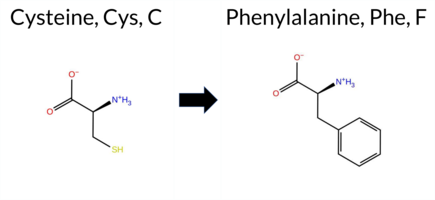 3DClick to see structure in 3D Viewer AISynGAP1 missense variant C546F is not reported in ClinVar and is absent from gnomAD. In silico predictors that classify the variant as benign include premPS and SIFT, whereas the majority of tools predict pathogenicity: REVEL, Rosetta, PROVEAN, polyPhen‑2 HumDiv, polyPhen‑2 HumVar, ESM1b, FATHMM, AlphaMissense‑Default, AlphaMissense‑Optimized, and the SGM Consensus score (Likely Pathogenic). High‑accuracy methods give a consistent pathogenic signal: AlphaMissense‑Optimized predicts pathogenic, SGM Consensus also indicates Likely Pathogenic, while Foldetta, which integrates FoldX‑MD and Rosetta stability outputs, is inconclusive. Overall, the preponderance of evidence points to a pathogenic effect for C546F, and this assessment does not conflict with the current ClinVar status, which contains no entry for the variant. Disclaimer: This summary was generated using AI and should be interpreted alongside expert review. | Likely Pathogenic | GAP | 0.027463 | Structured | 0.009041 | Uncertain | 0.960 | 0.288 | 0.000 | -13.479 | Likely Pathogenic | 0.990 | Likely Pathogenic | Likely Pathogenic | -1.21 | Ambiguous | 0.9 | 3.98 | Destabilizing | 1.39 | Ambiguous | 0.34 | Likely Benign | 0.800 | Likely Pathogenic | -8.99 | Deleterious | 1.000 | Probably Damaging | 0.998 | Probably Damaging | -1.20 | Pathogenic | 0.12 | Tolerated | 0.1622 | 0.3533 | -4 | -2 | 0.3 | 44.04 | |||||||||||||||||||||||||||||
| c.1559C>T | S520F 2D 3DClick to see structure in 3D Viewer AIThe SynGAP1 missense variant S520F is listed in ClinVar with an uncertain significance and is not reported in gnomAD. Functional prediction tools that classify the variant as benign include Rosetta, Foldetta, and premPS. Those that predict pathogenicity are REVEL, PROVEAN, polyPhen‑2 HumDiv, polyPhen‑2 HumVar, SIFT, ESM1b, FATHMM, AlphaMissense‑Default, and AlphaMissense‑Optimized. FoldX gives an uncertain result. High‑accuracy assessments further support a deleterious effect: AlphaMissense‑Optimized predicts pathogenicity, the SGM Consensus (majority vote of AlphaMissense‑Default, ESM1b, FATHMM, and PROVEAN) indicates likely pathogenic, whereas Foldetta, a protein‑folding stability method combining FoldX‑MD and Rosetta outputs, predicts a benign impact. Overall, the majority of evidence points to a pathogenic effect, which does not contradict the ClinVar uncertain status. Disclaimer: This summary was generated using AI and should be interpreted alongside expert review. | Likely Pathogenic | GAP | 0.094817 | Structured | 0.084894 | Uncertain | 0.887 | 0.337 | 0.000 | Uncertain | 1 | -12.541 | Likely Pathogenic | 0.999 | Likely Pathogenic | Likely Pathogenic | -1.20 | Ambiguous | 0.4 | 0.39 | Likely Benign | -0.41 | Likely Benign | 0.25 | Likely Benign | 0.833 | Likely Pathogenic | -5.57 | Deleterious | 0.999 | Probably Damaging | 0.996 | Probably Damaging | -1.36 | Pathogenic | 0.00 | Affected | 3.37 | 35 | 0.0668 | 0.4779 | -2 | -3 | 3.6 | 60.10 | |||||||||||||||||||||||||
| c.1042G>A | V348M 2D 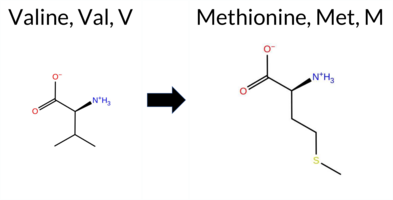 3DClick to see structure in 3D Viewer AISynGAP1 variant V348M is listed in ClinVar with an uncertain significance and is not reported in gnomAD. Functional prediction tools that report a clear outcome fall into two groups: benign calls come from REVEL, Foldetta, PROVEAN, and AlphaMissense‑Optimized; pathogenic calls come from polyPhen‑2 (HumDiv and HumVar), SIFT, and FATHMM. The remaining tools (FoldX, Rosetta, premPS, AlphaMissense‑Default, ESM1b) give uncertain results, and the SGM Consensus (majority vote of AlphaMissense‑Default, ESM1b, FATHMM, PROVEAN) is unavailable due to no majority. High‑accuracy methods specifically show AlphaMissense‑Optimized as benign, Foldetta as benign, and the SGM Consensus is not available. With four benign and four pathogenic predictions, the evidence is evenly split, providing no definitive direction. Therefore, the variant is not clearly benign or pathogenic based on current predictions, and this lack of consensus does not contradict its ClinVar uncertain status. Disclaimer: This summary was generated using AI and should be interpreted alongside expert review. | C2 | 0.170161 | Structured | 0.346556 | Uncertain | 0.951 | 0.414 | 0.000 | Uncertain | 1 | -7.076 | In-Between | 0.546 | Ambiguous | Likely Benign | -1.19 | Ambiguous | 0.1 | 0.72 | Ambiguous | -0.24 | Likely Benign | 0.76 | Ambiguous | 0.191 | Likely Benign | -1.62 | Neutral | 0.966 | Probably Damaging | 0.564 | Possibly Damaging | 1.58 | Pathogenic | 0.03 | Affected | 3.37 | 25 | 0.0903 | 0.4748 | 2 | 1 | -2.3 | 32.06 | 253.8 | -47.4 | -0.3 | 0.1 | 0.2 | 0.1 | X | Potentially Benign | The iso-propyl side chain of Val348, located in an anti-parallel β sheet strand (res. Gly341-Pro349), packs against multiple hydrophobic C2 domain residues (e.g., Leu353, Leu323, Leu402). In the variant simulations, the thioether side chain of Met348 can form similar interactions as valine due to its comparable hydrophobic profile. In fact, the thioether group of methionine can even stack favorably with the phenol ring of Tyr363 in the anti-parallel β sheet strand (res. Ala399-Ile411). Overall, the residue swap does not appear to cause negative effects on the protein structure based on the simulations. | |||||||||||||||||
| c.1656C>G | C552W 2D 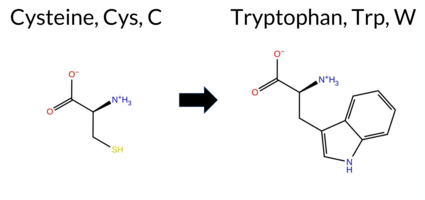 3DClick to see structure in 3D Viewer AIThe SynGAP1 missense variant C552W is not reported in ClinVar and is absent from gnomAD. Prediction tools that agree on a benign effect include only premPS, whereas the majority of in‑silico predictors (REVEL, PROVEAN, polyPhen‑2 HumDiv, polyPhen‑2 HumVar, SIFT, ESM1b, FATHMM, AlphaMissense‑Default, AlphaMissense‑Optimized, and the SGM‑Consensus) all classify the variant as pathogenic. FoldX, Rosetta, and Foldetta provide uncertain or inconclusive stability assessments. High‑accuracy methods specifically indicate pathogenicity: AlphaMissense‑Optimized predicts pathogenic, the SGM‑Consensus (majority vote from AlphaMissense‑Default, ESM1b, FATHMM, PROVEAN) is Likely Pathogenic, and Foldetta remains uncertain. Based on the preponderance of pathogenic predictions and the lack of benign consensus, the variant is most likely pathogenic, and this assessment does not contradict any ClinVar status (none reported). Disclaimer: This summary was generated using AI and should be interpreted alongside expert review. | Likely Pathogenic | GAP | 0.013265 | Structured | 0.005714 | Uncertain | 0.955 | 0.256 | 0.000 | -15.723 | Likely Pathogenic | 0.996 | Likely Pathogenic | Likely Pathogenic | -1.19 | Ambiguous | 0.1 | -0.66 | Ambiguous | -0.93 | Ambiguous | 0.50 | Likely Benign | 0.830 | Likely Pathogenic | -9.51 | Deleterious | 1.000 | Probably Damaging | 0.999 | Probably Damaging | -1.26 | Pathogenic | 0.02 | Affected | 0.1397 | 0.2371 | -8 | -2 | -3.4 | 83.07 | |||||||||||||||||||||||||||||
| c.1654T>C | C552R 2D 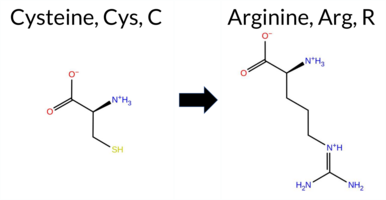 3DClick to see structure in 3D Viewer AIThe SynGAP1 missense variant C552R is not reported in ClinVar and is absent from gnomAD. Prediction tools that agree on a benign effect include only SIFT, whereas the remaining tools (REVEL, premPS, PROVEAN, polyPhen‑2 HumDiv, polyPhen‑2 HumVar, ESM1b, FATHMM, AlphaMissense‑Default, AlphaMissense‑Optimized) uniformly predict a pathogenic impact. The SGM‑Consensus, derived from a majority vote of AlphaMissense‑Default, ESM1b, FATHMM, and PROVEAN, also indicates a likely pathogenic outcome. High‑accuracy assessments show AlphaMissense‑Optimized as pathogenic, SGM‑Consensus as likely pathogenic, and Foldetta (a protein‑folding stability method combining FoldX‑MD and Rosetta outputs) yields an uncertain result, which is treated as unavailable evidence. Overall, the preponderance of predictions supports a pathogenic classification, and this conclusion does not contradict the ClinVar status, which is currently unreported. Disclaimer: This summary was generated using AI and should be interpreted alongside expert review. | Likely Pathogenic | GAP | 0.013265 | Structured | 0.005714 | Uncertain | 0.955 | 0.256 | 0.000 | -14.315 | Likely Pathogenic | 0.997 | Likely Pathogenic | Likely Pathogenic | -1.18 | Ambiguous | 0.1 | -0.51 | Ambiguous | -0.85 | Ambiguous | 1.10 | Destabilizing | 0.809 | Likely Pathogenic | -9.93 | Deleterious | 1.000 | Probably Damaging | 0.998 | Probably Damaging | -1.19 | Pathogenic | 0.48 | Tolerated | 0.1449 | 0.1366 | -4 | -3 | -7.0 | 53.05 | |||||||||||||||||||||||||||||
| c.1972G>C | G658R 2D 3DClick to see structure in 3D Viewer AIThe SynGAP1 missense variant G658R is not reported in ClinVar and has no entries in gnomAD. Functional prediction tools cluster into two groups: benign predictions come from REVEL, Rosetta, SIFT, FATHMM, and AlphaMissense‑Optimized, while pathogenic predictions arise from PROVEAN, polyPhen‑2 (HumDiv and HumVar) and AlphaMissense‑Default. Four tools (FoldX, Foldetta, premPS, ESM1b) return uncertain results. High‑accuracy methods give a mixed signal: AlphaMissense‑Optimized predicts benign, the SGM Consensus (majority vote of AlphaMissense‑Default, ESM1b, FATHMM, PROVEAN) predicts pathogenic, and Foldetta is uncertain. Because the majority of conventional predictors lean benign and no ClinVar evidence contradicts this, the variant is most likely benign, though the conflicting high‑accuracy predictions leave some uncertainty. Disclaimer: This summary was generated using AI and should be interpreted alongside expert review. | GAP | 0.029376 | Structured | 0.180299 | Uncertain | 0.942 | 0.251 | 0.000 | -7.725 | In-Between | 0.618 | Likely Pathogenic | Likely Benign | -1.17 | Ambiguous | 0.1 | -0.46 | Likely Benign | -0.82 | Ambiguous | 0.64 | Ambiguous | 0.120 | Likely Benign | -3.11 | Deleterious | 0.955 | Possibly Damaging | 0.591 | Possibly Damaging | 3.40 | Benign | 0.19 | Tolerated | 0.1157 | 0.3888 | -3 | -2 | -4.1 | 99.14 | ||||||||||||||||||||||||||||||
| c.1660G>C | V554L 2D 3DClick to see structure in 3D Viewer AIThe SynGAP1 missense variant V554L has no ClinVar entry and is not reported in gnomAD. Prediction tools that agree on a benign effect include REVEL, Rosetta, Foldetta, PROVEAN, polyPhen‑2 (HumDiv and HumVar), SIFT, FATHMM, and AlphaMissense‑Optimized. Only AlphaMissense‑Default predicts a pathogenic outcome, while FoldX, premPS, and ESM1b are uncertain. High‑accuracy assessments reinforce the benign interpretation: AlphaMissense‑Optimized is benign; the SGM Consensus (majority vote from AlphaMissense‑Default, ESM1b, FATHMM, PROVEAN) yields a benign consensus; and Foldetta, which integrates FoldX‑MD and Rosetta stability calculations, also predicts benign. No prediction or stability result is missing or inconclusive. Overall, the variant is most likely benign based on the available computational evidence, and this conclusion is not contradicted by any ClinVar status. Disclaimer: This summary was generated using AI and should be interpreted alongside expert review. | GAP | 0.020522 | Structured | 0.007349 | Uncertain | 0.955 | 0.226 | 0.000 | -7.884 | In-Between | 0.645 | Likely Pathogenic | Likely Benign | -1.14 | Ambiguous | 0.0 | 0.29 | Likely Benign | -0.43 | Likely Benign | 0.56 | Ambiguous | 0.162 | Likely Benign | -1.54 | Neutral | 0.204 | Benign | 0.053 | Benign | 3.49 | Benign | 0.08 | Tolerated | 0.0991 | 0.2998 | 2 | 1 | -0.4 | 14.03 | ||||||||||||||||||||||||||||||
| c.1660G>T | V554L 2D 3DClick to see structure in 3D Viewer AIThe SynGAP1 missense variant V554L has no ClinVar entry and is not reported in gnomAD. Prediction tools that agree on a benign effect include REVEL, Rosetta, Foldetta, PROVEAN, polyPhen‑2 (HumDiv and HumVar), SIFT, FATHMM, and AlphaMissense‑Optimized. Only AlphaMissense‑Default predicts a pathogenic outcome, while FoldX, premPS, and ESM1b are uncertain. High‑accuracy assessments reinforce the benign interpretation: AlphaMissense‑Optimized is benign; the SGM Consensus (majority vote from AlphaMissense‑Default, ESM1b, FATHMM, PROVEAN) yields a benign consensus; and Foldetta, which integrates FoldX‑MD and Rosetta stability calculations, also predicts benign. No prediction or stability result is missing or inconclusive. Overall, the variant is most likely benign based on the available computational evidence, and this conclusion is not contradicted by any ClinVar status. Disclaimer: This summary was generated using AI and should be interpreted alongside expert review. | GAP | 0.020522 | Structured | 0.007349 | Uncertain | 0.955 | 0.226 | 0.000 | -7.884 | In-Between | 0.645 | Likely Pathogenic | Likely Benign | -1.14 | Ambiguous | 0.0 | 0.29 | Likely Benign | -0.43 | Likely Benign | 0.56 | Ambiguous | 0.162 | Likely Benign | -1.54 | Neutral | 0.204 | Benign | 0.053 | Benign | 3.49 | Benign | 0.08 | Tolerated | 0.0991 | 0.2998 | 2 | 1 | -0.4 | 14.03 | ||||||||||||||||||||||||||||||
| c.1673A>G | H558R 2D 3DClick to see structure in 3D Viewer AISynGAP1 missense variant H558R is listed in ClinVar with an uncertain significance and is not reported in gnomAD. Functional prediction tools cluster into two groups: benign predictions come from AlphaMissense‑Optimized, Rosetta, SIFT, and polyPhen‑2 HumVar, while pathogenic predictions arise from REVEL, premPS, PROVEAN, polyPhen‑2 HumDiv, ESM1b, and FATHMM. Four tools give inconclusive results: AlphaMissense‑Default, SGM‑Consensus, FoldX, and Foldetta. High‑accuracy assessments show AlphaMissense‑Optimized predicts a benign effect, the SGM‑Consensus (majority vote of AlphaMissense‑Default, ESM1b, FATHMM, PROVEAN) indicates pathogenic, and Foldetta, which integrates FoldX‑MD and Rosetta stability outputs, remains uncertain. Overall, the majority of evidence points toward a pathogenic impact, which does not conflict with the ClinVar designation of uncertain significance. Disclaimer: This summary was generated using AI and should be interpreted alongside expert review. | Likely Pathogenic | GAP | 0.033407 | Structured | 0.011039 | Uncertain | 0.897 | 0.200 | 0.000 | Uncertain | 1 | -14.445 | Likely Pathogenic | 0.554 | Ambiguous | Likely Benign | -1.14 | Ambiguous | 0.1 | -0.23 | Likely Benign | -0.69 | Ambiguous | 1.03 | Destabilizing | 0.587 | Likely Pathogenic | -4.94 | Deleterious | 0.677 | Possibly Damaging | 0.239 | Benign | -1.24 | Pathogenic | 0.14 | Tolerated | 3.37 | 35 | 0.1500 | 0.1512 | 0 | 2 | -1.3 | 19.05 | |||||||||||||||||||||||||
| c.1339G>C | V447L 2D 3DClick to see structure in 3D Viewer AIThe SynGAP1 missense variant V447L is listed in ClinVar with an “Uncertain” status and is not reported in gnomAD. Prediction tools that classify the variant as benign include REVEL, Foldetta, premPS, PROVEAN, SIFT, ESM1b, FATHMM, AlphaMissense‑Optimized, and the SGM‑Consensus (Likely Benign). Tools that predict pathogenicity are polyPhen‑2 HumDiv and polyPhen‑2 HumVar. Uncertain results are reported by FoldX, Rosetta, and AlphaMissense‑Default. High‑accuracy assessments show AlphaMissense‑Optimized as Benign, the SGM‑Consensus as Likely Benign, and Foldetta as Benign. Overall, the majority of evidence points to a benign effect, and this consensus does not contradict the ClinVar “Uncertain” designation. Disclaimer: This summary was generated using AI and should be interpreted alongside expert review. | Likely Benign | GAP | 0.250310 | Structured | 0.283801 | Uncertain | 0.970 | 0.243 | 0.000 | Uncertain | 1 | -5.136 | Likely Benign | 0.491 | Ambiguous | Likely Benign | -1.13 | Ambiguous | 0.1 | 0.54 | Ambiguous | -0.30 | Likely Benign | 0.03 | Likely Benign | 0.180 | Likely Benign | -0.29 | Neutral | 0.947 | Possibly Damaging | 0.851 | Possibly Damaging | 3.61 | Benign | 0.90 | Tolerated | 3.37 | 32 | 0.0757 | 0.3477 | 1 | 2 | -0.4 | 14.03 | |||||||||||||||||||||||||
| c.1712C>G | S571W 2D 3DClick to see structure in 3D Viewer AIThe SynGAP1 missense variant S571W is not reported in ClinVar and is absent from gnomAD. Functional prediction tools that provide a clear verdict overwhelmingly classify the substitution as pathogenic: REVEL, PROVEAN, polyPhen‑2 (HumDiv and HumVar), SIFT, ESM1b, FATHMM, AlphaMissense‑Default, and AlphaMissense‑Optimized all predict deleterious effects. No tool in the dataset returned a benign classification; the only non‑conclusive results come from FoldX, Rosetta, Foldetta, and premPS, which are listed as uncertain. High‑accuracy assessments reinforce the pathogenic signal: AlphaMissense‑Optimized is pathogenic, the SGM‑Consensus (majority vote of AlphaMissense‑Default, ESM1b, FATHMM, PROVEAN) is likely pathogenic, and Foldetta’s stability analysis is inconclusive. Based on the aggregate predictions, the variant is most likely pathogenic, and this assessment is consistent with the absence of a ClinVar entry (no contradictory status). Disclaimer: This summary was generated using AI and should be interpreted alongside expert review. | Likely Pathogenic | GAP | 0.069024 | Structured | 0.045569 | Uncertain | 0.928 | 0.270 | 0.000 | -14.025 | Likely Pathogenic | 0.961 | Likely Pathogenic | Likely Pathogenic | -1.13 | Ambiguous | 0.1 | -1.44 | Ambiguous | -1.29 | Ambiguous | 0.67 | Ambiguous | 0.867 | Likely Pathogenic | -6.64 | Deleterious | 1.000 | Probably Damaging | 0.999 | Probably Damaging | -1.32 | Pathogenic | 0.00 | Affected | 0.0648 | 0.3809 | -2 | -3 | -0.1 | 99.14 | |||||||||||||||||||||||||||||
| c.1198G>A | V400M 2D 3DClick to see structure in 3D Viewer AISynGAP1 variant V400M is reported in gnomAD (ID 6‑33438103‑G‑A) but has no ClinVar entry. Functional prediction tools largely agree on a benign effect: REVEL, Rosetta, PROVEAN, ESM1b, FATHMM, AlphaMissense‑Optimized, polyPhen‑2 HumVar, and the SGM‑Consensus (majority vote of AlphaMissense‑Default, ESM1b, FATHMM, PROVEAN) all indicate benign or likely benign. In contrast, only three tools—polyPhen‑2 HumDiv, SIFT, and AlphaMissense‑Default—predict pathogenicity. High‑accuracy assessments reinforce the benign consensus: AlphaMissense‑Optimized scores benign, SGM‑Consensus is likely benign, while Foldetta (combining FoldX‑MD and Rosetta outputs) is inconclusive. No evidence from FoldX or premPS is available. Overall, the preponderance of predictions, including the high‑accuracy methods, supports a benign classification, which is consistent with the absence of a ClinVar pathogenic report. Disclaimer: This summary was generated using AI and should be interpreted alongside expert review. | Likely Benign | C2 | 0.398279 | Structured | 0.415488 | Uncertain | 0.951 | 0.451 | 0.000 | 6-33438103-G-A | 3 | 1.86e-6 | -5.438 | Likely Benign | 0.573 | Likely Pathogenic | Likely Benign | -1.12 | Ambiguous | 0.1 | -0.16 | Likely Benign | -0.64 | Ambiguous | 0.55 | Ambiguous | 0.443 | Likely Benign | -1.44 | Neutral | 0.868 | Possibly Damaging | 0.289 | Benign | 5.26 | Benign | 0.01 | Affected | 3.38 | 27 | 0.0851 | 0.4643 | 1 | 2 | -2.3 | 32.06 | ||||||||||||||||||||||||
| c.1982A>G | Q661R 2D 3DClick to see structure in 3D Viewer AIThe SynGAP1 missense variant Q661R is not reported in ClinVar (ClinVar ID: None) and is absent from gnomAD (gnomAD ID: None). Prediction tools that agree on a benign effect include REVEL, premPS, PROVEAN, SIFT, AlphaMissense‑Optimized, and polyPhen2_HumVar. Tools that predict a pathogenic effect are polyPhen2_HumDiv and ESM1b. FoldX, Rosetta, Foldetta, and AlphaMissense‑Default are inconclusive. High‑accuracy assessments show AlphaMissense‑Optimized as benign; the SGM Consensus (majority vote from AlphaMissense‑Default, ESM1b, FATHMM, and PROVEAN) also yields a benign prediction, while Foldetta remains uncertain. Overall, the majority of available evidence points to a benign impact. This conclusion does not contradict ClinVar status, as no ClinVar assertion exists for this variant. Disclaimer: This summary was generated using AI and should be interpreted alongside expert review. | GAP | 0.048328 | Structured | 0.117089 | Uncertain | 0.924 | 0.309 | 0.000 | -10.386 | Likely Pathogenic | 0.479 | Ambiguous | Likely Benign | -1.12 | Ambiguous | 0.0 | -0.59 | Ambiguous | -0.86 | Ambiguous | -0.15 | Likely Benign | 0.281 | Likely Benign | -2.06 | Neutral | 0.812 | Possibly Damaging | 0.251 | Benign | 3.52 | Benign | 0.18 | Tolerated | 0.1502 | 0.2196 | 1 | 1 | -1.0 | 28.06 | ||||||||||||||||||||||||||||||
| c.1660G>A | V554M 2D 3DClick to see structure in 3D Viewer AIThe SynGAP1 missense variant V554M is not reported in ClinVar but is present in gnomAD (ID 6‑33438903‑G‑A). Functional prediction tools show a split opinion: benign calls come from REVEL, Rosetta, PROVEAN, FATHMM, and AlphaMissense‑Optimized, whereas pathogenic calls arise from polyPhen‑2 (HumDiv and HumVar), SIFT, ESM1b, and AlphaMissense‑Default; FoldX, Foldetta, and premPS are inconclusive. High‑accuracy assessment focuses on AlphaMissense‑Optimized, the SGM Consensus (a majority vote of AlphaMissense‑Default, ESM1b, FATHMM, PROVEAN), and Foldetta. AlphaMissense‑Optimized predicts benign, the SGM Consensus is a tie and thus unavailable, and Foldetta is uncertain, so it is treated as unavailable. Overall, the available evidence leans toward a benign effect, and this does not contradict ClinVar status, which has no entry for the variant. Disclaimer: This summary was generated using AI and should be interpreted alongside expert review. | GAP | 0.020522 | Structured | 0.007349 | Uncertain | 0.955 | 0.226 | 0.000 | 6-33438903-G-A | 1 | 6.20e-7 | -8.118 | Likely Pathogenic | 0.671 | Likely Pathogenic | Likely Benign | -1.11 | Ambiguous | 0.0 | -0.20 | Likely Benign | -0.66 | Ambiguous | 0.73 | Ambiguous | 0.217 | Likely Benign | -2.26 | Neutral | 0.994 | Probably Damaging | 0.867 | Possibly Damaging | 3.22 | Benign | 0.00 | Affected | 3.37 | 35 | 0.0743 | 0.2810 | 1 | 2 | -2.3 | 32.06 | |||||||||||||||||||||||||
| c.1229G>T | S410I 2D 3DClick to see structure in 3D Viewer AIThe SynGAP1 missense variant S410I is not reported in ClinVar and is absent from gnomAD. Prediction tools that agree on a benign effect include REVEL, Rosetta, premPS, SIFT, FATHMM, and AlphaMissense‑Optimized. Those that predict a pathogenic effect are PROVEAN, polyPhen‑2 HumDiv, polyPhen‑2 HumVar, and ESM1b. Predictions that are uncertain or inconclusive are FoldX, Foldetta, and AlphaMissense‑Default. High‑accuracy methods give a mixed picture: AlphaMissense‑Optimized classifies the variant as benign, the SGM Consensus (majority vote from AlphaMissense‑Default, ESM1b, FATHMM, PROVEAN) leans pathogenic, and Foldetta remains uncertain. Overall, the majority of tools suggest a benign impact, but the high‑accuracy consensus indicates potential pathogenicity, leaving the variant’s effect ambiguous. Based on the aggregate predictions, the variant is most likely benign, and this assessment does not contradict the ClinVar status, which currently has no entry for it. Disclaimer: This summary was generated using AI and should be interpreted alongside expert review. | 0.098513 | Structured | 0.349627 | Uncertain | 0.908 | 0.206 | 0.000 | -9.383 | Likely Pathogenic | 0.432 | Ambiguous | Likely Benign | -1.08 | Ambiguous | 0.2 | -0.36 | Likely Benign | -0.72 | Ambiguous | -0.41 | Likely Benign | 0.114 | Likely Benign | -3.21 | Deleterious | 0.993 | Probably Damaging | 0.589 | Possibly Damaging | 4.15 | Benign | 0.21 | Tolerated | 0.0965 | 0.6579 | -1 | -2 | 5.3 | 26.08 | |||||||||||||||||||||||||||||||
| c.2072C>T | T691I 2D 3DClick to see structure in 3D Viewer AIThe SynGAP1 missense variant T691I is not reported in ClinVar (ClinVar status: none) but is present in gnomAD (gnomAD ID: 6‑33441331‑C‑T). Prediction tools that agree on a benign effect include REVEL, Rosetta, PROVEAN, polyPhen‑2 HumDiv, polyPhen‑2 HumVar, SIFT, ESM1b, FATHMM, AlphaMissense‑Default, and AlphaMissense‑Optimized. No tool predicts a pathogenic outcome; the only inconclusive results come from FoldX, Foldetta, and premPS. High‑accuracy assessments further support a benign classification: AlphaMissense‑Optimized predicts benign, the SGM Consensus (majority vote of AlphaMissense‑Default, ESM1b, FATHMM, PROVEAN) also predicts benign, while Foldetta remains uncertain. Overall, the evidence overwhelmingly indicates that T691I is most likely benign, and this conclusion does not contradict the ClinVar status, which simply lacks an entry for this variant. Disclaimer: This summary was generated using AI and should be interpreted alongside expert review. | Likely Benign | GAP | 0.060549 | Structured | 0.271308 | Uncertain | 0.941 | 0.232 | 0.000 | 6-33441331-C-T | 1 | 6.20e-7 | -5.857 | Likely Benign | 0.202 | Likely Benign | Likely Benign | -1.08 | Ambiguous | 0.1 | -2.12 | Stabilizing | -1.60 | Ambiguous | -0.61 | Ambiguous | 0.052 | Likely Benign | -1.19 | Neutral | 0.040 | Benign | 0.003 | Benign | 3.49 | Benign | 0.34 | Tolerated | 3.43 | 14 | 0.0644 | 0.5397 | -1 | 0 | 5.2 | 12.05 | ||||||||||||||||||||||||
| c.1856C>T | T619I 2D 3DClick to see structure in 3D Viewer AIThe SynGAP1 missense variant T619I is not reported in ClinVar (no ClinVar ID) and is absent from gnomAD (no gnomAD ID). Prediction tools that assess pathogenicity unanimously classify the variant as pathogenic: REVEL, PROVEAN, polyPhen‑2 (HumDiv and HumVar), SIFT, ESM1b, FATHMM, AlphaMissense‑Default, and AlphaMissense‑Optimized. No tool predicts a benign effect; the remaining tools (FoldX, Rosetta, Foldetta, premPS) return uncertain or inconclusive results and are treated as unavailable. High‑accuracy assessments further support a deleterious impact: AlphaMissense‑Optimized is pathogenic; the SGM Consensus (majority vote of AlphaMissense‑Default, ESM1b, FATHMM, PROVEAN) is pathogenic; Foldetta, which integrates FoldX‑MD and Rosetta stability outputs, is uncertain. Based on the consensus of pathogenic predictions and the lack of benign evidence, the variant is most likely pathogenic, and this assessment does not contradict any ClinVar status (none is available). Disclaimer: This summary was generated using AI and should be interpreted alongside expert review. | Likely Pathogenic | GAP | 0.219301 | Structured | 0.119723 | Uncertain | 0.929 | 0.237 | 0.000 | -11.760 | Likely Pathogenic | 0.975 | Likely Pathogenic | Likely Pathogenic | -1.06 | Ambiguous | 0.1 | -1.35 | Ambiguous | -1.21 | Ambiguous | 0.58 | Ambiguous | 0.735 | Likely Pathogenic | -5.54 | Deleterious | 1.000 | Probably Damaging | 0.997 | Probably Damaging | -1.40 | Pathogenic | 0.03 | Affected | 0.0869 | 0.4377 | 0 | -1 | 5.2 | 12.05 | |||||||||||||||||||||||||||||
| c.1966G>A | E656K 2D 3DClick to see structure in 3D Viewer AISynGAP1 missense variant E656K has no ClinVar entry and is absent from gnomAD. Prediction tools that classify it as benign include Rosetta, premPS, and FATHMM. Those that predict pathogenicity are REVEL, PROVEAN, polyPhen‑2 (HumDiv and HumVar), SIFT, ESM1b, AlphaMissense‑Default, and AlphaMissense‑Optimized; the SGM‑Consensus score is “Likely Pathogenic.” FoldX and Foldetta return uncertain results. High‑accuracy assessments show AlphaMissense‑Optimized as pathogenic, the SGM‑Consensus (majority vote of AlphaMissense‑Default, ESM1b, FATHMM, PROVEAN) also indicates likely pathogenic, while Foldetta’s stability prediction is inconclusive. Overall, the majority of evidence points to a pathogenic effect, and this assessment does not conflict with the ClinVar status, which currently has no classification for this variant. Disclaimer: This summary was generated using AI and should be interpreted alongside expert review. | Likely Pathogenic | GAP | 0.032017 | Structured | 0.242242 | Uncertain | 0.963 | 0.264 | 0.000 | -13.833 | Likely Pathogenic | 0.992 | Likely Pathogenic | Likely Pathogenic | -1.06 | Ambiguous | 0.0 | 0.02 | Likely Benign | -0.52 | Ambiguous | 0.16 | Likely Benign | 0.502 | Likely Pathogenic | -3.49 | Deleterious | 0.985 | Probably Damaging | 0.553 | Possibly Damaging | 3.44 | Benign | 0.03 | Affected | 0.3001 | 0.6406 | 0 | 1 | -0.4 | -0.94 | |||||||||||||||||||||||||||||
| c.1270G>A | V424I 2D 3DClick to see structure in 3D Viewer AIThe SynGAP1 missense variant V424I is not reported in ClinVar and is absent from gnomAD. Functional prediction tools uniformly indicate a benign effect: REVEL, premPS, polyPhen‑2 (HumDiv and HumVar), SIFT, ESM1b, FATHMM, PROVEAN, AlphaMissense‑Default, and AlphaMissense‑Optimized all classify the substitution as tolerated or benign. The only inconclusive results come from FoldX (uncertain) and Foldetta (uncertain). When high‑accuracy methods are considered separately, AlphaMissense‑Optimized predicts benign, the SGM Consensus—derived from the majority vote of AlphaMissense‑Default, ESM1b, FATHMM, and PROVEAN—also predicts benign, while Foldetta remains uncertain. No tool predicts pathogenicity. Consequently, the variant is most likely benign, and this assessment does not contradict any ClinVar annotation (none available). Disclaimer: This summary was generated using AI and should be interpreted alongside expert review. | Likely Benign | GAP | 0.050641 | Structured | 0.411431 | Uncertain | 0.973 | 0.248 | 0.000 | -3.814 | Likely Benign | 0.095 | Likely Benign | Likely Benign | -1.04 | Ambiguous | 0.1 | -0.48 | Likely Benign | -0.76 | Ambiguous | 0.02 | Likely Benign | 0.084 | Likely Benign | -0.15 | Neutral | 0.013 | Benign | 0.006 | Benign | 3.50 | Benign | 0.63 | Tolerated | 0.0874 | 0.2609 | 4 | 3 | 0.3 | 14.03 | |||||||||||||||||||||||||||||
| c.1369A>C | S457R 2D 3DClick to see structure in 3D Viewer AIThe SynGAP1 missense variant S457R is not reported in ClinVar and is absent from gnomAD. Functional prediction tools show a split opinion: benign calls come from REVEL, Rosetta, and FATHMM, while pathogenic calls are made by PROVEAN, polyPhen‑2 (HumDiv and HumVar), SIFT, ESM1b, AlphaMissense‑Default, and AlphaMissense‑Optimized; FoldX, Foldetta, and premPS are inconclusive. High‑accuracy assessments further support a deleterious effect: AlphaMissense‑Optimized predicts pathogenicity, the SGM Consensus (majority vote of AlphaMissense‑Default, ESM1b, FATHMM, and PROVEAN) also indicates pathogenic, whereas Foldetta’s stability analysis is uncertain. Overall, the majority of evidence points toward a pathogenic impact. This conclusion is not contradicted by ClinVar status, which currently has no entry for this variant. Disclaimer: This summary was generated using AI and should be interpreted alongside expert review. | Likely Pathogenic | GAP | 0.164327 | Structured | 0.297330 | Uncertain | 0.909 | 0.159 | 0.000 | -10.882 | Likely Pathogenic | 0.997 | Likely Pathogenic | Likely Pathogenic | -1.04 | Ambiguous | 0.0 | -0.06 | Likely Benign | -0.55 | Ambiguous | 0.74 | Ambiguous | 0.468 | Likely Benign | -4.47 | Deleterious | 0.999 | Probably Damaging | 0.989 | Probably Damaging | 3.30 | Benign | 0.05 | Affected | 0.0781 | 0.3426 | 0 | -1 | -3.7 | 69.11 | |||||||||||||||||||||||||||||
| c.1371T>A | S457R 2D 3DClick to see structure in 3D Viewer AIThe SynGAP1 missense variant S457R is not reported in ClinVar (ClinVar ID None) and is absent from gnomAD (gnomAD ID None). Prediction tools that agree on a benign effect include REVEL, Rosetta, and FATHMM, whereas the majority of tools predict a pathogenic impact: SGM‑Consensus (Likely Pathogenic), PROVEAN, polyPhen‑2 HumDiv, polyPhen‑2 HumVar, SIFT, ESM1b, AlphaMissense‑Default, and AlphaMissense‑Optimized. High‑accuracy methods further support a deleterious outcome: AlphaMissense‑Optimized classifies the variant as pathogenic, SGM‑Consensus confirms a likely pathogenic status, and Foldetta (combining FoldX‑MD and Rosetta outputs) yields an uncertain result. No other high‑confidence stability predictions are available. Overall, the preponderance of evidence from multiple independent predictors indicates that S457R is most likely pathogenic, and this assessment does not contradict any existing ClinVar annotation because the variant is not yet catalogued there. Disclaimer: This summary was generated using AI and should be interpreted alongside expert review. | Likely Pathogenic | GAP | 0.164327 | Structured | 0.297330 | Uncertain | 0.909 | 0.159 | 0.000 | -10.882 | Likely Pathogenic | 0.997 | Likely Pathogenic | Likely Pathogenic | -1.04 | Ambiguous | 0.0 | -0.06 | Likely Benign | -0.55 | Ambiguous | 0.74 | Ambiguous | 0.343 | Likely Benign | -4.47 | Deleterious | 0.999 | Probably Damaging | 0.989 | Probably Damaging | 3.30 | Benign | 0.05 | Affected | 0.0781 | 0.3426 | 0 | -1 | -3.7 | 69.11 | |||||||||||||||||||||||||||||
| c.1371T>G | S457R 2D 3DClick to see structure in 3D Viewer AIThe SynGAP1 missense variant S457R is not reported in ClinVar (ClinVar ID None) and is absent from gnomAD (gnomAD ID None). Prediction tools that agree on a benign effect include REVEL, Rosetta, and FATHMM, whereas the majority of tools predict a pathogenic impact: SGM‑Consensus (Likely Pathogenic), PROVEAN, polyPhen‑2 HumDiv, polyPhen‑2 HumVar, SIFT, ESM1b, AlphaMissense‑Default, and AlphaMissense‑Optimized. High‑accuracy methods further support a deleterious outcome: AlphaMissense‑Optimized classifies the variant as pathogenic, SGM‑Consensus confirms a likely pathogenic status, and Foldetta (combining FoldX‑MD and Rosetta outputs) yields an uncertain result. No other high‑confidence stability predictions are available. Overall, the preponderance of evidence from multiple independent predictors indicates that S457R is most likely pathogenic, and this assessment does not contradict any existing ClinVar annotation because the variant is not yet catalogued there. Disclaimer: This summary was generated using AI and should be interpreted alongside expert review. | Likely Pathogenic | GAP | 0.164327 | Structured | 0.297330 | Uncertain | 0.909 | 0.159 | 0.000 | -10.882 | Likely Pathogenic | 0.997 | Likely Pathogenic | Likely Pathogenic | -1.04 | Ambiguous | 0.0 | -0.06 | Likely Benign | -0.55 | Ambiguous | 0.74 | Ambiguous | 0.343 | Likely Benign | -4.47 | Deleterious | 0.999 | Probably Damaging | 0.989 | Probably Damaging | 3.30 | Benign | 0.05 | Affected | 0.0781 | 0.3426 | 0 | -1 | -3.7 | 69.11 | |||||||||||||||||||||||||||||
| c.1675T>C | C559R 2D 3DClick to see structure in 3D Viewer AIThe SynGAP1 missense variant C559R is not reported in ClinVar (no ClinVar ID) and is absent from gnomAD (no gnomAD ID). Prediction tools that agree on a benign effect include REVEL, SIFT, FATHMM, Rosetta, and AlphaMissense‑Optimized. Those that predict a pathogenic effect are SGM‑Consensus, PROVEAN, polyPhen‑2 HumDiv, polyPhen‑2 HumVar, ESM1b, and AlphaMissense‑Default. Uncertain or inconclusive results come from FoldX, Foldetta, and premPS. High‑accuracy assessments show AlphaMissense‑Optimized as benign, SGM‑Consensus (majority vote of AlphaMissense‑Default, ESM1b, FATHMM, PROVEAN) as pathogenic, and Foldetta as uncertain. Overall, the majority of tools (six pathogenic vs five benign) lean toward a pathogenic interpretation, and this does not contradict any ClinVar status because the variant is not yet classified in ClinVar. Thus, the variant is most likely pathogenic based on current predictive evidence. Disclaimer: This summary was generated using AI and should be interpreted alongside expert review. | Likely Pathogenic | GAP | 0.016021 | Structured | 0.010460 | Uncertain | 0.842 | 0.204 | 0.000 | -9.509 | Likely Pathogenic | 0.779 | Likely Pathogenic | Likely Benign | -1.03 | Ambiguous | 0.1 | -0.38 | Likely Benign | -0.71 | Ambiguous | 0.79 | Ambiguous | 0.498 | Likely Benign | -8.58 | Deleterious | 0.999 | Probably Damaging | 0.996 | Probably Damaging | 3.48 | Benign | 0.46 | Tolerated | 0.2498 | 0.1720 | -4 | -3 | -7.0 | 53.05 | |||||||||||||||||||||||||||||
| c.943A>T | N315Y 2D 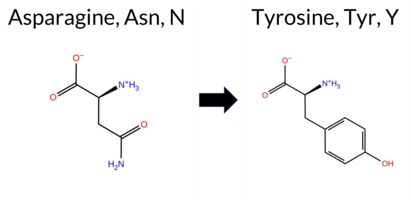 3DClick to see structure in 3D Viewer AIThe SynGAP1 missense variant N315Y is not reported in ClinVar (ClinVar ID None) and is absent from gnomAD (gnomAD ID None). Prediction tools that agree on a benign effect include REVEL, premPS, SIFT, AlphaMissense‑Default, and AlphaMissense‑Optimized. Tools that predict a pathogenic effect are SGM‑Consensus, PROVEAN, polyPhen‑2 HumDiv, polyPhen‑2 HumVar, ESM1b, and FATHMM. The high‑accuracy assessments show AlphaMissense‑Optimized as benign, SGM‑Consensus (a majority vote of AlphaMissense‑Default, ESM1b, FATHMM, and PROVEAN) as Likely Pathogenic, and Foldetta (combining FoldX‑MD and Rosetta outputs) as uncertain. Overall, the balance of evidence slightly favors a pathogenic interpretation, with six pathogenic‑predicted tools versus five benign‑predicted tools, and the high‑accuracy consensus leaning pathogenic. This conclusion does not contradict ClinVar status, as no ClinVar classification exists for this variant. Disclaimer: This summary was generated using AI and should be interpreted alongside expert review. | Likely Pathogenic | C2 | 0.118441 | Structured | 0.379740 | Uncertain | 0.862 | 0.253 | 0.125 | -8.303 | Likely Pathogenic | 0.339 | Likely Benign | Likely Benign | -1.03 | Ambiguous | 0.5 | -0.85 | Ambiguous | -0.94 | Ambiguous | -0.10 | Likely Benign | 0.420 | Likely Benign | -3.81 | Deleterious | 1.000 | Probably Damaging | 0.999 | Probably Damaging | 1.93 | Pathogenic | 1.00 | Tolerated | 0.0613 | 0.6732 | -2 | -2 | 2.2 | 49.07 | |||||||||||||||||||||||||||||
| c.1655G>T | C552F 2D 3DClick to see structure in 3D Viewer AIThe SynGAP1 missense variant C552F is not reported in ClinVar and is absent from gnomAD. Prediction tools that classify it as benign include Rosetta, premPS, and SIFT, whereas the majority of tools predict it to be pathogenic: REVEL, PROVEAN, polyPhen‑2 HumDiv, polyPhen‑2 HumVar, ESM1b, FATHMM, AlphaMissense‑Default, AlphaMissense‑Optimized, and the SGM‑Consensus score. FoldX and Foldetta give uncertain results. High‑accuracy methods specifically report AlphaMissense‑Optimized as pathogenic, the SGM‑Consensus as likely pathogenic, and Foldetta as uncertain. Overall, the consensus of the available predictions indicates that the variant is most likely pathogenic, and this assessment does not contradict the ClinVar status, which currently has no entry for this variant. Disclaimer: This summary was generated using AI and should be interpreted alongside expert review. | Likely Pathogenic | GAP | 0.013265 | Structured | 0.005714 | Uncertain | 0.955 | 0.256 | 0.000 | -14.979 | Likely Pathogenic | 0.980 | Likely Pathogenic | Likely Pathogenic | -1.01 | Ambiguous | 0.1 | -0.35 | Likely Benign | -0.68 | Ambiguous | 0.40 | Likely Benign | 0.759 | Likely Pathogenic | -9.51 | Deleterious | 1.000 | Probably Damaging | 0.998 | Probably Damaging | -1.25 | Pathogenic | 0.07 | Tolerated | 0.1209 | 0.3081 | -4 | -2 | 0.3 | 44.04 | |||||||||||||||||||||||||||||
| c.661G>A | E221K 2D AIThe SynGAP1 E221K missense variant is not reported in ClinVar (ClinVar ID None) and is absent from gnomAD (gnomAD ID None). Prediction tools that agree on a benign effect include Rosetta, premPS, polyPhen‑2 HumDiv, polyPhen‑2 HumVar, and FATHMM. Those that predict a pathogenic effect are REVEL, PROVEAN, SIFT, ESM1b, AlphaMissense‑Default, AlphaMissense‑Optimized, and the SGM‑Consensus. FoldX and Foldetta give uncertain results. High‑accuracy methods show AlphaMissense‑Optimized as pathogenic; the SGM‑Consensus, derived from a majority vote of AlphaMissense‑Default, ESM1b, FATHMM, and PROVEAN, also predicts pathogenic (3 pathogenic vs 1 benign). Foldetta remains uncertain. Overall, the majority of reliable predictors indicate a pathogenic impact. This conclusion does not contradict ClinVar status, as no ClinVar assertion exists for this variant. Disclaimer: This summary was generated using AI and should be interpreted alongside expert review. | Likely Pathogenic | PH | 0.127496 | Structured | 0.413334 | Uncertain | 0.891 | 0.283 | 0.000 | -12.331 | Likely Pathogenic | 0.997 | Likely Pathogenic | Likely Pathogenic | -1.01 | Ambiguous | 0.4 | -0.18 | Likely Benign | -0.60 | Ambiguous | 0.19 | Likely Benign | 0.815 | Likely Pathogenic | -2.92 | Deleterious | 0.131 | Benign | 0.058 | Benign | 5.92 | Benign | 0.02 | Affected | 0.2491 | 0.8002 | 0 | 1 | -0.4 | -0.94 | |||||||||||||||||||||||||||||
| c.706G>C | A236P 2D 3DClick to see structure in 3D Viewer AIThe SynGAP1 A236P missense variant is not reported in ClinVar (ClinVar ID None) and is absent from gnomAD (gnomAD ID None). Prediction tools that agree on a benign effect include Foldetta, SIFT, FATHMM, and AlphaMissense‑Optimized, whereas those that predict a pathogenic outcome are REVEL, PROVEAN, polyPhen‑2 (HumDiv and HumVar), and AlphaMissense‑Default; the remaining tools (FoldX, Rosetta, premPS, ESM1b) give uncertain results. High‑accuracy assessments show AlphaMissense‑Optimized as benign, the SGM Consensus (majority vote of AlphaMissense‑Default, ESM1b, FATHMM, PROVEAN) as pathogenic, and Foldetta as benign. No prediction or stability result is missing or inconclusive. Overall, the majority of individual tools lean toward pathogenicity, but the two most reliable high‑accuracy methods (AlphaMissense‑Optimized and Foldetta) suggest a benign effect, while the SGM Consensus indicates pathogenicity. Given the mixed evidence, the variant is most likely benign based on the strongest high‑accuracy predictions, and this assessment does not contradict any ClinVar status because no ClinVar claim exists. Disclaimer: This summary was generated using AI and should be interpreted alongside expert review. | PH | 0.185198 | Structured | 0.329926 | Uncertain | 0.775 | 0.330 | 0.000 | -7.932 | In-Between | 0.621 | Likely Pathogenic | Likely Benign | -0.99 | Ambiguous | 0.1 | 1.44 | Ambiguous | 0.23 | Likely Benign | 0.67 | Ambiguous | 0.862 | Likely Pathogenic | -4.31 | Deleterious | 0.995 | Probably Damaging | 0.880 | Possibly Damaging | 5.78 | Benign | 0.12 | Tolerated | 0.1980 | 0.4897 | 1 | -1 | -3.4 | 26.04 | ||||||||||||||||||||||||||||||
| c.1655G>A | C552Y 2D 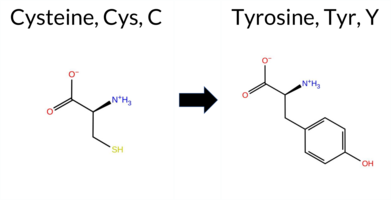 3DClick to see structure in 3D Viewer AIThe SynGAP1 missense variant C552Y is not reported in ClinVar and is absent from gnomAD. Functional prediction tools cluster into two groups: benign predictions from premPS and SIFT, and pathogenic predictions from REVEL, PROVEAN, polyPhen‑2 (HumDiv and HumVar), ESM1b, FATHMM, AlphaMissense‑Default, and AlphaMissense‑Optimized. Uncertain results are reported by FoldX, Rosetta, and Foldetta. High‑accuracy assessments further support a deleterious effect: AlphaMissense‑Optimized predicts pathogenicity, the SGM Consensus (majority vote of AlphaMissense‑Default, ESM1b, FATHMM, PROVEAN) indicates Likely Pathogenic, while Foldetta’s stability analysis is inconclusive. Overall, the majority of evidence points to a pathogenic impact for C552Y. This conclusion is consistent with the absence of ClinVar annotation and does not contradict any existing database status. Thus, the variant is most likely pathogenic. Disclaimer: This summary was generated using AI and should be interpreted alongside expert review. | Likely Pathogenic | GAP | 0.013265 | Structured | 0.005714 | Uncertain | 0.955 | 0.256 | 0.000 | -13.195 | Likely Pathogenic | 0.993 | Likely Pathogenic | Likely Pathogenic | -0.96 | Ambiguous | 0.1 | -0.57 | Ambiguous | -0.77 | Ambiguous | 0.41 | Likely Benign | 0.750 | Likely Pathogenic | -9.37 | Deleterious | 1.000 | Probably Damaging | 0.998 | Probably Damaging | -1.23 | Pathogenic | 0.07 | Tolerated | 0.0988 | 0.2563 | 0 | -2 | -3.8 | 60.04 | |||||||||||||||||||||||||||||
| c.1811C>T | S604L 2D 3DClick to see structure in 3D Viewer AIThe SynGAP1 missense variant S604L is listed in ClinVar with an “Uncertain” status (ClinVar ID 1055027.0) and is present in gnomAD (ID 6‑33440863‑C‑T). Prediction tools that agree on a benign effect are premPS and FATHMM. Tools that predict a pathogenic effect include REVEL, PROVEAN, polyPhen‑2 (HumDiv and HumVar), SIFT, ESM1b, AlphaMissense‑Default, and AlphaMissense‑Optimized. FoldX, Rosetta, and Foldetta give uncertain results. High‑accuracy assessments show AlphaMissense‑Optimized as pathogenic, the SGM Consensus (majority vote of AlphaMissense‑Default, ESM1b, FATHMM, PROVEAN) as Likely Pathogenic, and Foldetta as uncertain. Overall, the majority of evidence points to a pathogenic impact, which does not contradict the ClinVar “Uncertain” classification. Disclaimer: This summary was generated using AI and should be interpreted alongside expert review. | Likely Pathogenic | GAP | 0.010926 | Structured | 0.192527 | Uncertain | 0.911 | 0.195 | 0.000 | Uncertain | 1 | 6-33440863-C-T | 6 | 3.72e-6 | -14.683 | Likely Pathogenic | 0.965 | Likely Pathogenic | Likely Pathogenic | -0.94 | Ambiguous | 0.1 | -1.24 | Ambiguous | -1.09 | Ambiguous | -0.31 | Likely Benign | 0.639 | Likely Pathogenic | -5.97 | Deleterious | 1.000 | Probably Damaging | 0.991 | Probably Damaging | 3.09 | Benign | 0.00 | Affected | 3.37 | 35 | 0.1177 | 0.4518 | -3 | -2 | 4.6 | 26.08 | 234.0 | -49.6 | 0.0 | 0.1 | 0.3 | 0.5 | X | X | Potentially Pathogenic | Ser604 is located in a short turn between an α helix (res. Glu582-Met603) and a short α helical section (res. Ser606-Phe608). In the WT simulations, the hydroxyl side chain of Ser604 periodically hydrogen bonds with the backbone carbonyl groups of other α helix residues (e.g., Pro600, Met603). Serine weakens the α helix secondary structure, and thus, Ser604 along with Pro605 breaks the α helix, facilitating the turn in the WT structure.In contrast, in the variant simulations, Leu604 forms a few hydrophobic interactions (e.g., Leu607, Phe608). More importantly, the helix end is more stable than with Ser604 in the WT. The residue swap could have a more profound effect on the actual folding process, for example, by preventing the bending at the α helix end, than what the simulations suggest.Moreover, Ser604 directly hydrogen bonds with Ras residues Ser65 and Ala66 in the WT SynGAP-Ras complex. The hydrophobic leucine cannot maintain these interactions with Ras at the GAP-Ras interface. Thus, the effect of the residue swap on the complex formation with the GTPase cannot be fully explored in the solvent-only simulations. | ||||||||||||
| c.1027G>C | V343L 2D 3DClick to see structure in 3D Viewer AIThe SynGAP1 missense variant V343L is not reported in ClinVar and is absent from gnomAD. Functional prediction tools largely agree on a benign effect: REVEL, Foldetta, premPS, PROVEAN, polyPhen‑2 (HumDiv and HumVar), SIFT, ESM1b, AlphaMissense‑Default, AlphaMissense‑Optimized, and the SGM‑Consensus (majority vote) all predict benign or likely benign. Only FATHMM predicts a pathogenic outcome, while FoldX and Rosetta provide uncertain results and are therefore not considered decisive. High‑accuracy assessments reinforce the benign consensus: AlphaMissense‑Optimized scores benign, the SGM‑Consensus (derived from AlphaMissense‑Default, ESM1b, FATHMM, and PROVEAN) is likely benign, and Foldetta (combining FoldX‑MD and Rosetta outputs) also indicates benign. Overall, the majority of evidence supports a benign classification, and this is consistent with the absence of ClinVar reporting. Disclaimer: This summary was generated using AI and should be interpreted alongside expert review. | Likely Benign | C2 | 0.291804 | Structured | 0.383911 | Uncertain | 0.882 | 0.497 | 0.250 | -6.268 | Likely Benign | 0.310 | Likely Benign | Likely Benign | -0.93 | Ambiguous | 0.2 | 0.66 | Ambiguous | -0.14 | Likely Benign | 0.16 | Likely Benign | 0.033 | Likely Benign | -1.09 | Neutral | 0.005 | Benign | 0.013 | Benign | 2.12 | Pathogenic | 0.64 | Tolerated | 0.1361 | 0.5008 | 2 | 1 | -0.4 | 14.03 | |||||||||||||||||||||||||||||
| c.1559C>A | S520Y 2D 3DClick to see structure in 3D Viewer AIThe SynGAP1 missense variant S520Y is not reported in ClinVar and is absent from gnomAD. Prediction tools that classify the variant as benign include Rosetta and Foldetta, whereas the majority of algorithms predict pathogenicity: SGM‑Consensus (Likely Pathogenic), REVEL, PROVEAN, polyPhen‑2 (HumDiv and HumVar), SIFT, ESM1b, FATHMM, AlphaMissense‑Default, and AlphaMissense‑Optimized. Two tools give inconclusive results: FoldX (Uncertain) and premPS (Uncertain). High‑accuracy assessments further support a mixed signal: AlphaMissense‑Optimized predicts pathogenic, SGM‑Consensus indicates likely pathogenic, and Foldetta, a protein‑folding stability method combining FoldX‑MD and Rosetta outputs, predicts benign. Overall, the preponderance of evidence points to a pathogenic effect. This conclusion is not contradicted by ClinVar, which contains no entry for this variant. Disclaimer: This summary was generated using AI and should be interpreted alongside expert review. | Likely Pathogenic | GAP | 0.094817 | Structured | 0.084894 | Uncertain | 0.887 | 0.337 | 0.000 | -13.124 | Likely Pathogenic | 0.995 | Likely Pathogenic | Likely Pathogenic | -0.93 | Ambiguous | 0.4 | 0.16 | Likely Benign | -0.39 | Likely Benign | 0.59 | Ambiguous | 0.814 | Likely Pathogenic | -5.57 | Deleterious | 0.999 | Probably Damaging | 0.996 | Probably Damaging | -1.36 | Pathogenic | 0.00 | Affected | 0.0743 | 0.4563 | -3 | -2 | -0.5 | 76.10 | |||||||||||||||||||||||||||||
| c.1597G>C | A533P 2D 3DClick to see structure in 3D Viewer AIThe SynGAP1 missense variant A533P is not reported in ClinVar and is absent from gnomAD. Functional prediction tools largely agree on a benign effect: REVEL, premPS, PROVEAN, polyPhen‑2 (HumDiv and HumVar), SIFT, ESM1b, AlphaMissense‑Default, AlphaMissense‑Optimized, and the SGM‑Consensus (majority vote of AlphaMissense‑Default, ESM1b, FATHMM, PROVEAN) all predict benign. Only FATHMM predicts pathogenic. Stability‑based methods are inconclusive: FoldX, Rosetta, and the combined Foldetta output are listed as uncertain. High‑accuracy assessments show AlphaMissense‑Optimized as benign, SGM‑Consensus as likely benign, and Foldetta as unavailable. Overall, the consensus of the majority of tools indicates a benign impact. This prediction does not contradict ClinVar status, which has no entry for this variant. Disclaimer: This summary was generated using AI and should be interpreted alongside expert review. | Likely Benign | GAP | 0.179055 | Structured | 0.026324 | Uncertain | 0.843 | 0.393 | 0.000 | -3.951 | Likely Benign | 0.081 | Likely Benign | Likely Benign | -0.93 | Ambiguous | 0.3 | -0.92 | Ambiguous | -0.93 | Ambiguous | -0.18 | Likely Benign | 0.187 | Likely Benign | -0.48 | Neutral | 0.000 | Benign | 0.001 | Benign | -1.26 | Pathogenic | 0.09 | Tolerated | 0.1925 | 0.5299 | 1 | -1 | -3.4 | 26.04 | |||||||||||||||||||||||||||||
| c.1270G>C | V424L 2D 3DClick to see structure in 3D Viewer AIThe SynGAP1 missense variant V424L is not reported in ClinVar (no ClinVar ID) and is absent from gnomAD (no gnomAD ID). Prediction tools that agree on a benign effect include REVEL, Rosetta, premPS, PROVEAN, polyPhen‑2 (HumDiv and HumVar), SIFT, ESM1b, FATHMM, and AlphaMissense‑Optimized. Only AlphaMissense‑Default predicts a pathogenic outcome, while SGM‑Consensus (majority vote from AlphaMissense‑Default, ESM1b, FATHMM, PROVEAN) reports a likely benign classification. Stability‑based methods are inconclusive: FoldX is uncertain, and Foldetta (combining FoldX‑MD and Rosetta outputs) is also uncertain. High‑accuracy assessments show AlphaMissense‑Optimized as benign, SGM‑Consensus as likely benign, and Foldetta as uncertain. Overall, the majority of evidence points to a benign effect, and this conclusion does not contradict any ClinVar status because no ClinVar classification exists for this variant. Disclaimer: This summary was generated using AI and should be interpreted alongside expert review. | Likely Benign | GAP | 0.050641 | Structured | 0.411431 | Uncertain | 0.973 | 0.248 | 0.000 | -4.941 | Likely Benign | 0.742 | Likely Pathogenic | Likely Benign | -0.90 | Ambiguous | 0.2 | -0.41 | Likely Benign | -0.66 | Ambiguous | 0.43 | Likely Benign | 0.159 | Likely Benign | -1.68 | Neutral | 0.327 | Benign | 0.026 | Benign | 4.50 | Benign | 0.59 | Tolerated | 0.1018 | 0.2680 | 2 | 1 | -0.4 | 14.03 | |||||||||||||||||||||||||||||
| c.2168C>G | T723R 2D 3DClick to see structure in 3D Viewer AIThe SynGAP1 missense variant T723R has no ClinVar entry and is not reported in gnomAD. Functional prediction tools largely agree on a benign effect: REVEL, Rosetta, premPS, PROVEAN, SIFT, ESM1b, FATHMM, and AlphaMissense‑Optimized all classify it as benign. Two tools (polyPhen‑2 HumDiv and HumVar) predict it to be pathogenic, while FoldX, Foldetta, and AlphaMissense‑Default are uncertain. The SGM Consensus, derived from a majority vote of AlphaMissense‑Default, ESM1b, FATHMM, and PROVEAN, reports the variant as likely benign. High‑accuracy assessments show AlphaMissense‑Optimized as benign, SGM Consensus as likely benign, and Foldetta as uncertain. Overall, the preponderance of evidence points to a benign impact for T723R, and this conclusion does not contradict any ClinVar status (none available). Disclaimer: This summary was generated using AI and should be interpreted alongside expert review. | Likely Benign | GAP | 0.476583 | Structured | 0.458243 | Uncertain | 0.945 | 0.447 | 0.375 | -3.654 | Likely Benign | 0.408 | Ambiguous | Likely Benign | -0.90 | Ambiguous | 0.1 | -0.13 | Likely Benign | -0.52 | Ambiguous | 0.44 | Likely Benign | 0.146 | Likely Benign | -1.50 | Neutral | 0.931 | Possibly Damaging | 0.458 | Possibly Damaging | 3.51 | Benign | 0.29 | Tolerated | 0.0794 | 0.2437 | -1 | -1 | -3.8 | 55.08 | |||||||||||||||||||||||||||||
| c.1051G>C | A351P 2D 3DClick to see structure in 3D Viewer AIThe SynGAP1 missense variant A351P is not reported in ClinVar (ClinVar ID None) and is absent from gnomAD (gnomAD ID None). Prediction tools that agree on a benign effect include REVEL, polyPhen‑2 HumDiv, polyPhen‑2 HumVar, AlphaMissense‑Default, AlphaMissense‑Optimized, and ESM1b. Tools that predict a pathogenic effect are Foldetta, PROVEAN, SIFT, FATHMM, and Rosetta. FoldX and premPS give uncertain results. High‑accuracy assessments show AlphaMissense‑Optimized as benign, Foldetta as pathogenic, and the SGM Consensus (majority vote from AlphaMissense‑Default, ESM1b, FATHMM, PROVEAN) is inconclusive due to a 2‑to‑2 split. Overall, the majority of predictions lean toward a benign impact, and this is consistent with the lack of ClinVar reporting; thus the variant is most likely benign rather than pathogenic. Disclaimer: This summary was generated using AI and should be interpreted alongside expert review. | C2 | 0.216401 | Structured | 0.362025 | Uncertain | 0.925 | 0.342 | 0.000 | -6.559 | Likely Benign | 0.147 | Likely Benign | Likely Benign | -0.89 | Ambiguous | 0.2 | 6.19 | Destabilizing | 2.65 | Destabilizing | 0.62 | Ambiguous | 0.051 | Likely Benign | -3.08 | Deleterious | 0.016 | Benign | 0.007 | Benign | 1.67 | Pathogenic | 0.03 | Affected | 0.1862 | 0.5472 | 1 | -1 | -3.4 | 26.04 | ||||||||||||||||||||||||||||||
| c.1082A>G | Q361R 2D 3DClick to see structure in 3D Viewer AISynGAP1 missense variant Q361R has no ClinVar entry and is not reported in gnomAD. Functional prediction tools cluster into two groups: benign predictions include REVEL, SIFT, premPS, PROVEAN, ESM1b, AlphaMissense‑Default, AlphaMissense‑Optimized, and Rosetta; pathogenic predictions come from polyPhen‑2 HumDiv, polyPhen‑2 HumVar, and FATHMM. The SGM‑Consensus, derived from a majority vote of AlphaMissense‑Default, ESM1b, FATHMM, and PROVEAN, is classified as Likely Benign. High‑accuracy assessments further support a benign outcome: AlphaMissense‑Optimized predicts benign; the SGM‑Consensus itself is benign; and Foldetta, which integrates FoldX‑MD (Uncertain) and Rosetta (Benign), yields a benign prediction. Overall, the consensus of available computational evidence indicates that the variant is most likely benign, and this assessment does not conflict with the absence of a ClinVar classification. Disclaimer: This summary was generated using AI and should be interpreted alongside expert review. | Likely Benign | C2 | 0.305330 | Structured | 0.427593 | Uncertain | 0.945 | 0.534 | 0.250 | -6.898 | Likely Benign | 0.289 | Likely Benign | Likely Benign | -0.88 | Ambiguous | 0.0 | -0.07 | Likely Benign | -0.48 | Likely Benign | -0.20 | Likely Benign | 0.296 | Likely Benign | -0.56 | Neutral | 0.987 | Probably Damaging | 0.953 | Probably Damaging | 1.71 | Pathogenic | 0.41 | Tolerated | 0.1321 | 0.2955 | 1 | 1 | -1.0 | 28.06 | |||||||||||||||||||||||||||||
| c.1327G>C | G443R 2D 3DClick to see structure in 3D Viewer AIThe SynGAP1 missense variant G443R has no ClinVar entry and is not reported in gnomAD. Functional prediction tools largely agree on a benign effect: REVEL, premPS, PROVEAN, polyPhen‑2 HumVar, SIFT, ESM1b, and FATHMM all classify it as benign. Only two tools predict pathogenicity: polyPhen‑2 HumDiv and AlphaMissense‑Default. Predictions that are inconclusive—FoldX, Rosetta, Foldetta, and AlphaMissense‑Optimized—are treated as unavailable. The SGM Consensus, derived from a majority vote of AlphaMissense‑Default, ESM1b, FATHMM, and PROVEAN, reports a likely benign outcome. High‑accuracy assessments are: AlphaMissense‑Optimized (uncertain), SGM Consensus (likely benign), and Foldetta (uncertain). Overall, the preponderance of evidence points to a benign impact for G443R, and this conclusion does not conflict with the absence of a ClinVar classification. Disclaimer: This summary was generated using AI and should be interpreted alongside expert review. | Likely Benign | GAP | 0.250310 | Structured | 0.258623 | Uncertain | 0.935 | 0.206 | 0.000 | -6.954 | Likely Benign | 0.886 | Likely Pathogenic | Ambiguous | -0.88 | Ambiguous | 0.3 | -1.19 | Ambiguous | -1.04 | Ambiguous | 0.28 | Likely Benign | 0.132 | Likely Benign | -1.49 | Neutral | 0.832 | Possibly Damaging | 0.286 | Benign | 3.40 | Benign | 0.21 | Tolerated | 0.0934 | 0.3197 | -3 | -2 | -4.1 | 99.14 | |||||||||||||||||||||||||||||
| c.1367A>T | Q456L 2D 3DClick to see structure in 3D Viewer AIThe SynGAP1 missense variant Q456L is not reported in ClinVar (ClinVar ID None) and is absent from gnomAD (gnomAD ID None). Prediction tools that agree on a benign effect include REVEL, Rosetta, premPS, SIFT, FATHMM, and AlphaMissense‑Optimized. Those that predict a pathogenic effect are PROVEAN, polyPhen‑2 HumDiv, polyPhen‑2 HumVar, and ESM1b. Tools with uncertain or inconclusive results are FoldX, Foldetta, and AlphaMissense‑Default. High‑accuracy assessments show AlphaMissense‑Optimized as benign, the SGM Consensus (majority vote from AlphaMissense‑Default, ESM1b, FATHMM, PROVEAN) as pathogenic, and Foldetta as uncertain. Overall, the majority of predictions (six benign vs. four pathogenic) lean toward a benign interpretation, with no evidence of contradiction with the ClinVar status. Thus, the variant is most likely benign based on current computational predictions. Disclaimer: This summary was generated using AI and should be interpreted alongside expert review. | GAP | 0.170161 | Structured | 0.302348 | Uncertain | 0.939 | 0.164 | 0.000 | -10.272 | Likely Pathogenic | 0.492 | Ambiguous | Likely Benign | -0.88 | Ambiguous | 0.1 | -0.30 | Likely Benign | -0.59 | Ambiguous | 0.28 | Likely Benign | 0.347 | Likely Benign | -6.65 | Deleterious | 0.987 | Probably Damaging | 0.914 | Probably Damaging | 3.49 | Benign | 0.36 | Tolerated | 0.0554 | 0.4317 | -2 | -2 | 7.3 | -14.97 | ||||||||||||||||||||||||||||||
| c.740A>T | Q247L 2D AIThe SynGAP1 missense variant Q247L is not reported in ClinVar (ClinVar ID None) and is absent from gnomAD (gnomAD ID None). Prediction tools that agree on a benign effect include premPS, FATHMM, and AlphaMissense‑Optimized. Those that predict a pathogenic effect are REVEL, PROVEAN, polyPhen‑2 (HumDiv and HumVar), SIFT, and ESM1b. The remaining tools—FoldX, Rosetta, Foldetta, and AlphaMissense‑Default—return uncertain results. High‑accuracy assessments show AlphaMissense‑Optimized as benign, the SGM Consensus (derived from AlphaMissense‑Default, ESM1b, FATHMM, and PROVEAN) as pathogenic, and Foldetta as uncertain. Overall, the majority of evidence (seven pathogenic versus three benign predictions) points to a pathogenic impact, and this conclusion is not contradicted by ClinVar status, which currently contains no entry for this variant. Disclaimer: This summary was generated using AI and should be interpreted alongside expert review. | PH | 0.490133 | Structured | 0.283012 | Uncertain | 0.822 | 0.339 | 0.250 | -10.554 | Likely Pathogenic | 0.352 | Ambiguous | Likely Benign | -0.86 | Ambiguous | 0.5 | -1.14 | Ambiguous | -1.00 | Ambiguous | 0.38 | Likely Benign | 0.687 | Likely Pathogenic | -3.89 | Deleterious | 0.982 | Probably Damaging | 0.628 | Possibly Damaging | 5.70 | Benign | 0.02 | Affected | 0.0573 | 0.4129 | -2 | -2 | 7.3 | -14.97 | ||||||||||||||||||||||||||||||
| c.890A>G | K297R 2D 3DClick to see structure in 3D Viewer AIThe SynGAP1 missense variant K297R is not reported in ClinVar (ClinVar ID None) and is absent from gnomAD (gnomAD ID None). Prediction tools that agree on a benign effect include REVEL, Foldetta, PROVEAN, SIFT, AlphaMissense‑Default, and AlphaMissense‑Optimized. Those that predict a pathogenic effect are polyPhen‑2 (HumDiv and HumVar) and FATHMM. Predictions that are uncertain or inconclusive are FoldX, Rosetta, premPS, and ESM1b. High‑accuracy methods give a consistent benign signal: AlphaMissense‑Optimized is benign; the SGM Consensus (majority vote from AlphaMissense‑Default, ESM1b, FATHMM, PROVEAN) also resolves to benign; and Foldetta, a protein‑folding stability approach combining FoldX‑MD and Rosetta, predicts benign. Based on the aggregate of these predictions, the variant is most likely benign, and this assessment does not contradict the lack of ClinVar annotation. Disclaimer: This summary was generated using AI and should be interpreted alongside expert review. | C2 | 0.422041 | Structured | 0.272593 | Uncertain | 0.880 | 0.285 | 0.375 | -7.877 | In-Between | 0.314 | Likely Benign | Likely Benign | -0.86 | Ambiguous | 0.3 | 0.67 | Ambiguous | -0.10 | Likely Benign | 0.66 | Ambiguous | 0.257 | Likely Benign | -2.36 | Neutral | 0.999 | Probably Damaging | 0.995 | Probably Damaging | 1.66 | Pathogenic | 0.19 | Tolerated | 0.4828 | 0.1506 | 3 | 2 | -0.6 | 28.01 | ||||||||||||||||||||||||||||||
| c.977A>T | H326L 2D 3DClick to see structure in 3D Viewer AIThe SynGAP1 H326L missense variant is not reported in ClinVar (status: None) and has no entry in gnomAD. Prediction tools that agree on a benign effect include SIFT, premPS, Rosetta, and Foldetta. Tools that agree on a pathogenic effect include REVEL, SGM‑Consensus, PROVEAN, polyPhen‑2 (HumDiv and HumVar), ESM1b, FATHMM, and AlphaMissense‑Default. High‑accuracy methods give mixed results: AlphaMissense‑Optimized is uncertain; the SGM Consensus (majority vote of AlphaMissense‑Default, ESM1b, FATHMM, and PROVEAN) predicts likely pathogenic; and Foldetta (a protein‑folding stability method combining FoldX‑MD and Rosetta) predicts benign. No evidence is available from FoldX or AlphaMissense‑Optimized to support either outcome. Overall, the majority of predictions (nine pathogenic vs. four benign) indicate that H326L is most likely pathogenic, and this assessment does not contradict the ClinVar status, which is currently unreported. Disclaimer: This summary was generated using AI and should be interpreted alongside expert review. | Likely Pathogenic | C2 | 0.342579 | Structured | 0.418150 | Uncertain | 0.944 | 0.455 | 0.000 | -10.421 | Likely Pathogenic | 0.888 | Likely Pathogenic | Ambiguous | -0.85 | Ambiguous | 0.2 | 0.36 | Likely Benign | -0.25 | Likely Benign | 0.44 | Likely Benign | 0.627 | Likely Pathogenic | -9.64 | Deleterious | 0.999 | Probably Damaging | 0.996 | Probably Damaging | 1.95 | Pathogenic | 0.08 | Tolerated | 0.0992 | 0.5799 | -2 | -3 | 7.0 | -23.98 | |||||||||||||||||||||||||||||
| c.1616A>G | H539R 2D 3DClick to see structure in 3D Viewer AIThe SynGAP1 missense variant H539R is not reported in ClinVar and is absent from gnomAD. Functional prediction tools cluster into two groups: benign predictions come from SIFT and the protein‑folding stability method Foldetta, whereas the remaining tools (SGM‑Consensus, REVEL, premPS, PROVEAN, polyPhen‑2 HumDiv, polyPhen‑2 HumVar, ESM1b, FATHMM, AlphaMissense‑Default, AlphaMissense‑Optimized) all predict pathogenicity. High‑accuracy assessments further support a deleterious effect: AlphaMissense‑Optimized classifies the variant as pathogenic, the SGM‑Consensus (majority vote of AlphaMissense‑Default, ESM1b, FATHMM, PROVEAN) indicates likely pathogenic, while Foldetta (combining FoldX‑MD and Rosetta outputs) suggests a benign impact. Overall, the preponderance of evidence points to a pathogenic effect for H539R, and this conclusion does not contradict the ClinVar status, which currently contains no entry for this variant. Disclaimer: This summary was generated using AI and should be interpreted alongside expert review. | Likely Pathogenic | GAP | 0.060549 | Structured | 0.031398 | Uncertain | 0.948 | 0.360 | 0.000 | -14.979 | Likely Pathogenic | 0.982 | Likely Pathogenic | Likely Pathogenic | -0.83 | Ambiguous | 0.1 | 0.66 | Ambiguous | -0.09 | Likely Benign | 1.02 | Destabilizing | 0.832 | Likely Pathogenic | -7.19 | Deleterious | 0.997 | Probably Damaging | 0.989 | Probably Damaging | -1.16 | Pathogenic | 0.07 | Tolerated | 0.1497 | 0.1112 | 2 | 0 | -1.3 | 19.05 | |||||||||||||||||||||||||||||
| c.1663G>A | V555I 2D 3DClick to see structure in 3D Viewer AIThe SynGAP1 missense variant V555I is listed in ClinVar with an “Uncertain” status and is not reported in gnomAD. Prediction tools that uniformly indicate a benign effect include REVEL, Rosetta, PROVEAN, polyPhen‑2 (HumDiv and HumVar), SIFT, ESM1b, AlphaMissense‑Default, AlphaMissense‑Optimized, and the SGM‑Consensus score (Likely Benign). Only FATHMM predicts a pathogenic outcome, while FoldX, Foldetta, and premPS are inconclusive. High‑accuracy assessments show AlphaMissense‑Optimized as benign, the SGM‑Consensus (majority vote of AlphaMissense‑Default, ESM1b, FATHMM, PROVEAN) as Likely Benign, and Foldetta as uncertain. Overall, the majority of evidence points to a benign effect, and this conclusion does not contradict the ClinVar “Uncertain” classification. Disclaimer: This summary was generated using AI and should be interpreted alongside expert review. | Likely Benign | GAP | 0.013265 | Structured | 0.008218 | Uncertain | 0.943 | 0.225 | 0.000 | Uncertain | 1 | -4.544 | Likely Benign | 0.084 | Likely Benign | Likely Benign | -0.82 | Ambiguous | 0.0 | -0.41 | Likely Benign | -0.62 | Ambiguous | -0.55 | Ambiguous | 0.253 | Likely Benign | 0.45 | Neutral | 0.002 | Benign | 0.002 | Benign | -1.26 | Pathogenic | 1.00 | Tolerated | 0.0844 | 0.2590 | 4 | 3 | 0.3 | 14.03 | |||||||||||||||||||||||||||
| c.2068T>G | S690A 2D 3DClick to see structure in 3D Viewer AIThe SynGAP1 missense variant S690A is not reported in ClinVar (no ClinVar ID) and is absent from gnomAD. Prediction tools that agree on a benign effect include REVEL, Rosetta, premPS, SIFT, FATHMM, AlphaMissense‑Default, and AlphaMissense‑Optimized. Tools that predict a pathogenic effect are PROVEAN, polyPhen‑2 HumDiv, polyPhen‑2 HumVar, and ESM1b. High‑accuracy assessments show AlphaMissense‑Optimized as benign; the SGM Consensus (majority vote of AlphaMissense‑Default, ESM1b, FATHMM, PROVEAN) is inconclusive, and Foldetta reports an uncertain stability change, so these results are treated as unavailable. Overall, the balance of evidence favors a benign interpretation, and this conclusion does not conflict with the absence of a ClinVar classification. Disclaimer: This summary was generated using AI and should be interpreted alongside expert review. | GAP | 0.055536 | Structured | 0.247926 | Uncertain | 0.944 | 0.253 | 0.000 | -8.763 | Likely Pathogenic | 0.318 | Likely Benign | Likely Benign | -0.82 | Ambiguous | 0.0 | -2.17 | Stabilizing | -1.50 | Ambiguous | 0.45 | Likely Benign | 0.217 | Likely Benign | -2.55 | Deleterious | 0.887 | Possibly Damaging | 0.738 | Possibly Damaging | 3.45 | Benign | 0.21 | Tolerated | 0.4619 | 0.3131 | 1 | 1 | 2.6 | -16.00 | ||||||||||||||||||||||||||||||
| c.1373C>G | T458R 2D 3DClick to see structure in 3D Viewer AISynGAP1 missense variant T458R is not reported in ClinVar and is absent from gnomAD. Functional prediction tools that agree on a benign effect include REVEL, Rosetta, SIFT, and FATHMM, whereas a larger set—SGM‑Consensus, PROVEAN, polyPhen‑2 (HumDiv and HumVar), ESM1b, AlphaMissense‑Default, and AlphaMissense‑Optimized—consistently predict pathogenicity. Uncertain results come from FoldX and premPS. High‑accuracy assessments show AlphaMissense‑Optimized as pathogenic, the SGM Consensus (majority vote of AlphaMissense‑Default, ESM1b, FATHMM, PROVEAN) as pathogenic, and Foldetta (combining FoldX‑MD and Rosetta) as benign. Overall, the majority of evidence points to a pathogenic effect, and this conclusion does not contradict the ClinVar status, which has no entry for this variant. Disclaimer: This summary was generated using AI and should be interpreted alongside expert review. | Likely Pathogenic | GAP | 0.185198 | Structured | 0.294848 | Uncertain | 0.915 | 0.144 | 0.000 | -12.984 | Likely Pathogenic | 0.980 | Likely Pathogenic | Likely Pathogenic | -0.81 | Ambiguous | 0.1 | -0.11 | Likely Benign | -0.46 | Likely Benign | 0.61 | Ambiguous | 0.390 | Likely Benign | -5.26 | Deleterious | 1.000 | Probably Damaging | 0.996 | Probably Damaging | 3.52 | Benign | 0.20 | Tolerated | 0.1016 | 0.3013 | -1 | -1 | -3.8 | 55.08 | |||||||||||||||||||||||||||||
| c.1976C>T | S659F 2D 3DClick to see structure in 3D Viewer AIThe SynGAP1 missense variant S659F is listed in ClinVar with an uncertain significance and is absent from gnomAD. Functional prediction tools that provide definitive calls cluster into two groups: benign predictions come from REVEL, Rosetta, premPS, polyPhen2_HumVar, FATHMM, and AlphaMissense‑Optimized; pathogenic predictions come from PROVEAN, polyPhen2_HumDiv, SIFT, ESM1b, AlphaMissense‑Default, and the SGM Consensus (majority vote of AlphaMissense‑Default, ESM1b, FATHMM, and PROVEAN). High‑accuracy assessments show AlphaMissense‑Optimized predicts benign, SGM Consensus predicts pathogenic, and Foldetta (which integrates FoldX‑MD and Rosetta outputs) yields an uncertain result and is therefore unavailable. Overall, the majority of reliable tools favor a pathogenic effect. Thus, the variant is most likely pathogenic, a conclusion that does not contradict the ClinVar uncertain status. Disclaimer: This summary was generated using AI and should be interpreted alongside expert review. | Likely Pathogenic | GAP | 0.067594 | Structured | 0.154597 | Uncertain | 0.954 | 0.283 | 0.000 | Uncertain | 1 | -10.925 | Likely Pathogenic | 0.662 | Likely Pathogenic | Likely Benign | -0.81 | Ambiguous | 0.1 | -0.25 | Likely Benign | -0.53 | Ambiguous | 0.32 | Likely Benign | 0.194 | Likely Benign | -4.59 | Deleterious | 0.806 | Possibly Damaging | 0.171 | Benign | 3.39 | Benign | 0.05 | Affected | 3.38 | 28 | 0.0897 | 0.5828 | -3 | -2 | 3.6 | 60.10 | 221.3 | -61.2 | 0.0 | 0.0 | 0.6 | 0.4 | X | Potentially Benign | In the WT simulations, the hydroxyl group of Ser659, located in a kink in the middle of the long α-helix (res. Ser641-Glu666), forms a hydrogen bond with the carboxylate group of Glu656. However, the phenol ring of the Phe659 side chain cannot form a similar hydrogen bond. Instead, it interacts with the hydrophobic isopropyl side chain of Val555 from the opposing α-helix (res. Ala533-Val560). This residue swap may therefore cause issues during protein folding. | ||||||||||||||||
| c.1040C>T | T347I 2D 3DClick to see structure in 3D Viewer AISynGAP1 T347I is not reported in ClinVar and is absent from gnomAD. Functional prediction tools that provide definitive calls cluster into two groups: benign predictions come from REVEL, premPS, polyPhen‑2 HumVar, SIFT, and AlphaMissense‑Optimized; pathogenic predictions come from PROVEAN, polyPhen‑2 HumDiv, ESM1b, and FATHMM. Tools with inconclusive outputs (FoldX, Rosetta, Foldetta, AlphaMissense‑Default) are treated as unavailable. High‑accuracy assessments further split the evidence: AlphaMissense‑Optimized predicts benign, while the SGM consensus—derived from a majority vote of AlphaMissense‑Default, ESM1b, FATHMM, and PROVEAN—predicts pathogenic; Foldetta remains uncertain. Consequently, the variant’s pathogenicity is ambiguous, with an equal number of strong benign and pathogenic calls and no consensus from the most reliable methods. The variant is therefore most likely uncertain, and this assessment does not contradict any ClinVar status, as none is available. Disclaimer: This summary was generated using AI and should be interpreted alongside expert review. | Likely Pathogenic | C2 | 0.268042 | Structured | 0.349915 | Uncertain | 0.951 | 0.434 | 0.000 | -10.148 | Likely Pathogenic | 0.387 | Ambiguous | Likely Benign | -0.79 | Ambiguous | 0.1 | -0.94 | Ambiguous | -0.87 | Ambiguous | 0.29 | Likely Benign | 0.079 | Likely Benign | -3.12 | Deleterious | 0.627 | Possibly Damaging | 0.139 | Benign | 1.70 | Pathogenic | 0.08 | Tolerated | 0.0885 | 0.6298 | 0 | -1 | 5.2 | 12.05 | |||||||||||||||||||||||||||||
| c.1638C>G | C546W 2D 3DClick to see structure in 3D Viewer AIClinVar has no entry for this SynGAP1 missense variant, and it is absent from gnomAD. Prediction tools that agree on a benign effect include only SIFT, which scores the substitution as tolerated. The majority of other in silico predictors classify the change as pathogenic: REVEL, Rosetta, PROVEAN, polyPhen‑2 HumDiv, polyPhen‑2 HumVar, ESM1b, FATHMM, AlphaMissense‑Default, AlphaMissense‑Optimized, and the SGM‑Consensus (majority vote) report a likely pathogenic outcome. Predictions that are inconclusive or unavailable are FoldX, Foldetta, and premPS. High‑accuracy assessments further support a deleterious impact: AlphaMissense‑Optimized predicts pathogenic, SGM‑Consensus indicates likely pathogenic, while Foldetta’s stability analysis is uncertain. Overall, the consensus of the available evidence points to a pathogenic effect for the variant, and this conclusion does not contradict the ClinVar status, which currently has no classification. Disclaimer: This summary was generated using AI and should be interpreted alongside expert review. | Likely Pathogenic | GAP | 0.027463 | Structured | 0.009041 | Uncertain | 0.960 | 0.288 | 0.000 | -14.685 | Likely Pathogenic | 0.999 | Likely Pathogenic | Likely Pathogenic | -0.79 | Ambiguous | 1.2 | 3.60 | Destabilizing | 1.41 | Ambiguous | 0.56 | Ambiguous | 0.703 | Likely Pathogenic | -9.09 | Deleterious | 1.000 | Probably Damaging | 0.999 | Probably Damaging | -1.24 | Pathogenic | 0.08 | Tolerated | 0.1855 | 0.2904 | -8 | -2 | -3.4 | 83.07 | |||||||||||||||||||||||||||||
| c.1208A>G | K403R 2D 3DClick to see structure in 3D Viewer AIThe SynGAP1 K403R missense variant is not reported in ClinVar (ClinVar ID None) and is absent from gnomAD (gnomAD ID None). Prediction tools that agree on a benign effect include REVEL, Rosetta, Foldetta, premPS, SIFT, FATHMM, and AlphaMissense‑Optimized. Those that predict a pathogenic outcome are PROVEAN, polyPhen‑2 HumDiv, and polyPhen‑2 HumVar. The remaining tools—FoldX, ESM1b, and AlphaMissense‑Default—return uncertain results. High‑accuracy assessments show AlphaMissense‑Optimized as benign, the SGM Consensus (derived from AlphaMissense‑Default, ESM1b, FATHMM, and PROVEAN) is inconclusive due to a tie, and Foldetta also predicts benign. Overall, the majority of evidence points to a benign effect. This conclusion is consistent with the lack of ClinVar annotation, so there is no contradiction with existing clinical data. Disclaimer: This summary was generated using AI and should be interpreted alongside expert review. | C2 | 0.275179 | Structured | 0.424920 | Uncertain | 0.960 | 0.372 | 0.000 | -7.362 | In-Between | 0.355 | Ambiguous | Likely Benign | -0.78 | Ambiguous | 0.1 | 0.23 | Likely Benign | -0.28 | Likely Benign | 0.41 | Likely Benign | 0.335 | Likely Benign | -2.56 | Deleterious | 0.983 | Probably Damaging | 0.926 | Probably Damaging | 3.91 | Benign | 0.15 | Tolerated | 0.4834 | 0.1861 | 3 | 2 | -0.6 | 28.01 | ||||||||||||||||||||||||||||||
| c.1918A>T | T640S 2D 3DClick to see structure in 3D Viewer AIThe SynGAP1 missense variant T640S is listed in ClinVar as Benign (ClinVar ID 2980241.0) and is present in the gnomAD database (gnomAD ID 6‑33441177‑A‑T). Prediction tools that agree on a benign effect include REVEL, Rosetta, Foldetta, premPS, PROVEAN, polyPhen‑2 (HumDiv and HumVar), SIFT, ESM1b, FATHMM, AlphaMissense‑Default, and AlphaMissense‑Optimized. No tool predicts a pathogenic outcome; the only inconclusive result is from FoldX, which is treated as unavailable. High‑accuracy assessments confirm benignity: AlphaMissense‑Optimized is benign; the SGM Consensus (majority vote of AlphaMissense‑Default, ESM1b, FATHMM, PROVEAN) is benign; and Foldetta, which integrates FoldX‑MD and Rosetta outputs, is benign. Overall, the variant is most likely benign, and this conclusion is consistent with its ClinVar status. Disclaimer: This summary was generated using AI and should be interpreted alongside expert review. | Likely Benign | GAP | 0.066181 | Structured | 0.137043 | Uncertain | 0.893 | 0.284 | 0.000 | Benign | 1 | 6-33441177-A-T | 1 | 6.20e-7 | -2.371 | Likely Benign | 0.062 | Likely Benign | Likely Benign | -0.78 | Ambiguous | 0.1 | 0.43 | Likely Benign | -0.18 | Likely Benign | -0.30 | Likely Benign | 0.088 | Likely Benign | 0.92 | Neutral | 0.000 | Benign | 0.001 | Benign | 3.60 | Benign | 0.33 | Tolerated | 3.37 | 30 | 0.3406 | 0.3484 | 1 | 1 | -0.1 | -14.03 | ||||||||||||||||||||||
| c.1919C>G | T640S 2D 3DClick to see structure in 3D Viewer AIThe SynGAP1 missense variant T640S is not reported in ClinVar and is absent from gnomAD. Functional prediction tools uniformly indicate a benign effect: AlphaMissense‑Default, AlphaMissense‑Optimized, ESM1b, FATHMM, PROVEAN, polyPhen‑2 HumDiv, polyPhen‑2 HumVar, SIFT, premPS, Foldetta, Rosetta, REVEL, and the SGM‑Consensus score (Likely Benign) all classify the change as tolerated. No tool predicts pathogenicity; the only inconclusive result is from FoldX, which is listed as Uncertain. High‑accuracy methods corroborate the benign assessment: AlphaMissense‑Optimized predicts Benign, the SGM‑Consensus (majority vote of AlphaMissense‑Default, ESM1b, FATHMM, PROVEAN) is Likely Benign, and Foldetta (combining FoldX‑MD and Rosetta outputs) reports Benign. Consequently, the variant is most likely benign, and this conclusion does not contradict the ClinVar status, which has no entry for this change. Disclaimer: This summary was generated using AI and should be interpreted alongside expert review. | Likely Benign | GAP | 0.066181 | Structured | 0.137043 | Uncertain | 0.893 | 0.284 | 0.000 | -2.371 | Likely Benign | 0.062 | Likely Benign | Likely Benign | -0.78 | Ambiguous | 0.1 | 0.43 | Likely Benign | -0.18 | Likely Benign | -0.30 | Likely Benign | 0.109 | Likely Benign | 0.92 | Neutral | 0.000 | Benign | 0.001 | Benign | 3.60 | Benign | 0.33 | Tolerated | 3.37 | 30 | 0.3406 | 0.3484 | 1 | 1 | -0.1 | -14.03 | |||||||||||||||||||||||||||
| c.1579G>T | D527Y 2D 3DClick to see structure in 3D Viewer AISynGAP1 missense variant D527Y is listed in ClinVar with an uncertain significance (ClinVar ID 1698369.0) and is not reported in gnomAD. Functional prediction tools cluster into two groups: the single benign prediction from premPS versus a consensus of pathogenic predictions from the remaining 12 tools (REVEL, SGM‑Consensus, PROVEAN, polyPhen‑2 HumDiv, polyPhen‑2 HumVar, SIFT, ESM1b, FATHMM, AlphaMissense‑Default, AlphaMissense‑Optimized). High‑accuracy assessments further support a deleterious effect: AlphaMissense‑Optimized predicts pathogenic, the SGM Consensus (majority vote of AlphaMissense‑Default, ESM1b, FATHMM, PROVEAN) is likely pathogenic, and Foldetta (combining FoldX‑MD and Rosetta outputs) is inconclusive. Protein‑stability calculations from FoldX and Rosetta are also uncertain. Overall, the preponderance of evidence indicates that D527Y is most likely pathogenic, which does not contradict the current ClinVar uncertain status. Disclaimer: This summary was generated using AI and should be interpreted alongside expert review. | Likely Pathogenic | GAP | 0.139895 | Structured | 0.021908 | Uncertain | 0.913 | 0.408 | 0.000 | Uncertain | 1 | -15.386 | Likely Pathogenic | 0.978 | Likely Pathogenic | Likely Pathogenic | -0.77 | Ambiguous | 0.2 | 1.89 | Ambiguous | 0.56 | Ambiguous | -0.14 | Likely Benign | 0.905 | Likely Pathogenic | -8.79 | Deleterious | 1.000 | Probably Damaging | 0.999 | Probably Damaging | -2.41 | Pathogenic | 0.00 | Affected | 3.37 | 35 | 0.0554 | 0.4229 | -4 | -3 | 2.2 | 48.09 | 270.9 | -45.7 | 0.1 | 0.1 | -0.1 | 0.0 | X | Potentially Pathogenic | Asp527 is located on an α-α loop between the two α-helices (res. Gly502-Tyr518 and Ala533-Val560). In the WT simulations, the carboxylate group of the Asp527 side chain forms hydrogen bonds with the backbone atoms of loop residues (e.g., Ile529, Lys530) facing the membrane surface. In the variant simulations, Tyr527 is a bulkier residue that faces away from the loop and stacks with Phe646 in a nearby α-helix (res. Ser614-Ser668). Regardless, no negative structural effects are observed during the variant simulations. However, due to its location near the SynGAP-membrane interface, the effect of the residue swap cannot be fully addressed using the SynGAP solvent-only simulations. | ||||||||||||||||
| c.2168C>A | T723K 2D 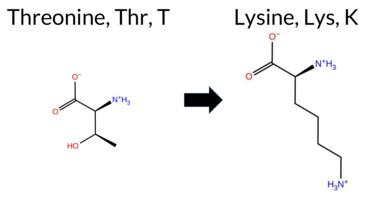 3DClick to see structure in 3D Viewer AIThe SynGAP1 missense variant T723K is not reported in ClinVar and is absent from gnomAD. Functional prediction tools largely agree on a benign effect: REVEL, Rosetta, Foldetta, premPS, PROVEAN, polyPhen‑2 HumVar, SIFT, ESM1b, FATHMM, and AlphaMissense‑Optimized all predict benign. Only polyPhen‑2 HumDiv indicates a pathogenic outcome, while FoldX and AlphaMissense‑Default are uncertain. The SGM Consensus, derived from a majority vote of AlphaMissense‑Default, ESM1b, FATHMM, and PROVEAN, is classified as Likely Benign. High‑accuracy assessments reinforce this view: AlphaMissense‑Optimized predicts benign, the SGM Consensus is Likely Benign, and Foldetta (combining FoldX‑MD and Rosetta outputs) predicts benign. Overall, the preponderance of evidence supports a benign classification for T723K, and this conclusion does not contradict any ClinVar annotation (none exists). Disclaimer: This summary was generated using AI and should be interpreted alongside expert review. | Likely Benign | GAP | 0.476583 | Structured | 0.458243 | Uncertain | 0.945 | 0.447 | 0.375 | -4.624 | Likely Benign | 0.482 | Ambiguous | Likely Benign | -0.77 | Ambiguous | 0.1 | -0.04 | Likely Benign | -0.41 | Likely Benign | 0.25 | Likely Benign | 0.121 | Likely Benign | -1.40 | Neutral | 0.674 | Possibly Damaging | 0.118 | Benign | 3.46 | Benign | 0.51 | Tolerated | 0.0924 | 0.2798 | 0 | -1 | -3.2 | 27.07 | |||||||||||||||||||||||||||||
| c.707C>A | A236E 2D 3DClick to see structure in 3D Viewer AISynGAP1 missense variant A236E is not reported in ClinVar and is present in gnomAD (ID 6‑33435558‑C‑A). Functional prediction tools show a split assessment: benign calls come from FATHMM, Rosetta, and the protein‑folding stability method Foldetta; pathogenic calls come from REVEL, premPS, PROVEAN, polyPhen‑2 (HumDiv and HumVar), SIFT, ESM1b, AlphaMissense‑Default, and the SGM‑Consensus score. When grouped by agreement, the benign‑predicting tools (FATHMM, Rosetta, Foldetta) represent one consensus, while the pathogenic‑predicting tools (REVEL, premPS, PROVEAN, polyPhen‑2, SIFT, ESM1b, AlphaMissense‑Default, SGM‑Consensus) form the opposing consensus. High‑accuracy methods give mixed results: AlphaMissense‑Optimized is uncertain; SGM‑Consensus, derived from a majority vote of AlphaMissense‑Default, ESM1b, FATHMM, and PROVEAN, is likely pathogenic; Foldetta, combining FoldX‑MD and Rosetta outputs, is benign. Overall, the majority of predictions lean toward pathogenicity, and this does not contradict the ClinVar status, which has no reported classification. Disclaimer: This summary was generated using AI and should be interpreted alongside expert review. | Likely Pathogenic | PH | 0.185198 | Structured | 0.329926 | Uncertain | 0.775 | 0.330 | 0.000 | 6-33435558-C-A | 1 | 6.20e-7 | -10.844 | Likely Pathogenic | 0.835 | Likely Pathogenic | Ambiguous | -0.75 | Ambiguous | 0.2 | 0.28 | Likely Benign | -0.24 | Likely Benign | 1.08 | Destabilizing | 0.844 | Likely Pathogenic | -4.24 | Deleterious | 0.998 | Probably Damaging | 0.900 | Possibly Damaging | 6.06 | Benign | 0.02 | Affected | 3.40 | 14 | 0.1075 | 0.1970 | -1 | 0 | -5.3 | 58.04 | ||||||||||||||||||||||||
| c.1076C>G | T359R 2D 3DClick to see structure in 3D Viewer AISynGAP1 missense variant T359R is not reported in ClinVar and is absent from gnomAD. Prediction tools that agree on benign effects include REVEL, Rosetta, Foldetta, polyPhen‑2 HumVar, SIFT, and AlphaMissense‑Optimized. Those that predict pathogenicity are SGM‑Consensus, PROVEAN, polyPhen‑2 HumDiv, ESM1b, and FATHMM. Uncertain results come from FoldX, premPS, and AlphaMissense‑Default. High‑accuracy assessments show AlphaMissense‑Optimized as benign, the SGM Consensus (majority vote of AlphaMissense‑Default, ESM1b, FATHMM, PROVEAN) as pathogenic, and Foldetta as benign. Overall, more tools favor a benign outcome, but a significant minority predict pathogenicity, leaving the variant’s clinical significance unresolved. The variant is most likely benign based on the prevailing predictions, and this does not contradict any ClinVar status because no ClinVar entry exists. Disclaimer: This summary was generated using AI and should be interpreted alongside expert review. | Likely Pathogenic | C2 | 0.281712 | Structured | 0.414952 | Uncertain | 0.939 | 0.480 | 0.250 | -8.675 | Likely Pathogenic | 0.402 | Ambiguous | Likely Benign | -0.74 | Ambiguous | 0.1 | -0.20 | Likely Benign | -0.47 | Likely Benign | 0.54 | Ambiguous | 0.157 | Likely Benign | -2.86 | Deleterious | 0.627 | Possibly Damaging | 0.091 | Benign | 1.75 | Pathogenic | 0.23 | Tolerated | 0.1323 | 0.3748 | -1 | -1 | -3.8 | 55.08 | |||||||||||||||||||||||||||||
| c.1871C>T | T624I 2D 3DClick to see structure in 3D Viewer AIThe SynGAP1 missense variant T624I is not reported in ClinVar and is absent from gnomAD. Functional prediction tools that agree on a benign effect include Rosetta, premPS, and SIFT, whereas the majority of tools predict a pathogenic impact: REVEL, PROVEAN, polyPhen‑2 (HumDiv and HumVar), ESM1b, FATHMM, AlphaMissense‑Default, AlphaMissense‑Optimized, and the SGM‑Consensus (majority vote from AlphaMissense‑Default, ESM1b, FATHMM, PROVEAN). FoldX and Foldetta are inconclusive. High‑accuracy assessments show AlphaMissense‑Optimized as pathogenic, SGM‑Consensus as likely pathogenic, and Foldetta as uncertain. Overall, the preponderance of evidence points to a pathogenic effect for T624I. This prediction is consistent with the lack of ClinVar annotation and does not contradict any existing ClinVar status. Disclaimer: This summary was generated using AI and should be interpreted alongside expert review. | Likely Pathogenic | GAP | 0.137348 | Structured | 0.052894 | Uncertain | 0.962 | 0.217 | 0.000 | -10.999 | Likely Pathogenic | 0.988 | Likely Pathogenic | Likely Pathogenic | -0.74 | Ambiguous | 0.1 | -0.39 | Likely Benign | -0.57 | Ambiguous | 0.14 | Likely Benign | 0.865 | Likely Pathogenic | -5.95 | Deleterious | 1.000 | Probably Damaging | 0.972 | Probably Damaging | -1.43 | Pathogenic | 0.08 | Tolerated | 0.0728 | 0.4734 | 0 | -1 | 5.2 | 12.05 | |||||||||||||||||||||||||||||
| c.2158G>T | D720Y 2D 3DClick to see structure in 3D Viewer AIThe SynGAP1 missense variant D720Y is not reported in ClinVar and is absent from gnomAD. Functional prediction tools cluster into two groups: benign predictions come from REVEL and premPS, while pathogenic predictions are made by SIFT, PROVEAN, polyPhen‑2 (HumDiv and HumVar), ESM1b, FATHMM, and AlphaMissense‑Default. Predictions from FoldX, Rosetta, Foldetta, and AlphaMissense‑Optimized are inconclusive. The high‑accuracy consensus (SGM Consensus) classifies the variant as Likely Pathogenic, and Foldetta likewise yields an uncertain stability change. AlphaMissense‑Optimized remains inconclusive. Overall, the majority of evidence points to a pathogenic effect, and this assessment does not conflict with any ClinVar annotation because none exists. Disclaimer: This summary was generated using AI and should be interpreted alongside expert review. | Likely Pathogenic | GAP | 0.374039 | Structured | 0.450695 | Uncertain | 0.955 | 0.417 | 0.125 | -14.771 | Likely Pathogenic | 0.946 | Likely Pathogenic | Ambiguous | -0.74 | Ambiguous | 0.1 | -1.38 | Ambiguous | -1.06 | Ambiguous | 0.20 | Likely Benign | 0.499 | Likely Benign | -7.05 | Deleterious | 1.000 | Probably Damaging | 1.000 | Probably Damaging | 2.11 | Pathogenic | 0.00 | Affected | 0.0626 | 0.5973 | -4 | -3 | 2.2 | 48.09 | |||||||||||||||||||||||||||||
| c.1975T>C | S659P 2D 3DClick to see structure in 3D Viewer AIThe SynGAP1 missense variant S659P is not reported in ClinVar and has no entries in gnomAD. Prediction tools that agree on a benign effect include REVEL, polyPhen‑2 HumVar, SIFT, FATHMM, and AlphaMissense‑Optimized. Those that predict a pathogenic outcome are SGM‑Consensus, Rosetta, PROVEAN, polyPhen‑2 HumDiv, ESM1b, and AlphaMissense‑Default. Tools with uncertain or inconclusive results—FoldX, premPS, and Foldetta—are treated as unavailable. High‑accuracy methods give mixed signals: AlphaMissense‑Optimized reports a benign change, SGM‑Consensus (a majority vote of AlphaMissense‑Default, ESM1b, FATHMM, and PROVEAN) indicates likely pathogenic, and Foldetta’s stability assessment is uncertain. Overall, the balance of evidence leans toward a pathogenic effect, but the presence of a strong benign prediction from AlphaMissense‑Optimized and the lack of ClinVar annotation means the variant’s clinical significance remains uncertain and does not contradict existing database status. Disclaimer: This summary was generated using AI and should be interpreted alongside expert review. | Likely Pathogenic | GAP | 0.067594 | Structured | 0.154597 | Uncertain | 0.954 | 0.283 | 0.000 | -10.461 | Likely Pathogenic | 0.609 | Likely Pathogenic | Likely Benign | -0.73 | Ambiguous | 0.3 | 2.98 | Destabilizing | 1.13 | Ambiguous | 0.73 | Ambiguous | 0.224 | Likely Benign | -3.26 | Deleterious | 0.932 | Possibly Damaging | 0.245 | Benign | 3.39 | Benign | 0.18 | Tolerated | 0.2207 | 0.5553 | 1 | -1 | -0.8 | 10.04 | |||||||||||||||||||||||||||||
| c.1093G>C | V365L 2D 3DClick to see structure in 3D Viewer AIThe SynGAP1 missense variant V365L is not reported in ClinVar and is absent from gnomAD. Prediction tools that assess sequence conservation and functional impact uniformly classify the substitution as benign: REVEL, premPS, polyPhen‑2 (HumDiv and HumVar), SIFT, ESM1b, FATHMM, PROVEAN, AlphaMissense‑Default, and AlphaMissense‑Optimized. No tool predicts pathogenicity; only FoldX and Rosetta report uncertain stability changes, which are treated as unavailable evidence. High‑accuracy assessments further support a benign outcome: AlphaMissense‑Optimized predicts benign, the SGM Consensus (majority vote of AlphaMissense‑Default, ESM1b, FATHMM, PROVEAN) also yields benign, and Foldetta, which integrates FoldX‑MD and Rosetta outputs, reports a benign effect on protein folding stability. Based on the collective predictions, the variant is most likely benign, and this conclusion does not contradict any ClinVar annotation. Disclaimer: This summary was generated using AI and should be interpreted alongside expert review. | Likely Benign | C2 | 0.414856 | Structured | 0.441505 | Uncertain | 0.923 | 0.608 | 0.250 | -6.141 | Likely Benign | 0.265 | Likely Benign | Likely Benign | -0.72 | Ambiguous | 0.2 | 0.74 | Ambiguous | 0.01 | Likely Benign | 0.35 | Likely Benign | 0.065 | Likely Benign | -1.71 | Neutral | 0.005 | Benign | 0.003 | Benign | 2.50 | Benign | 0.25 | Tolerated | 3.38 | 21 | 0.0852 | 0.5309 | 1 | 2 | -0.4 | 14.03 | |||||||||||||||||||||||||||
| c.1093G>T | V365L 2D 3DClick to see structure in 3D Viewer AIThe SynGAP1 missense variant V365L is catalogued in gnomAD (ID 6‑33437998‑G‑T) but has no ClinVar entry. Across the available in‑silico predictors, the majority (REVEL, premPS, PROVEAN, polyPhen‑2 HumDiv/HumVar, SIFT, ESM1b, FATHMM, AlphaMissense‑Default, AlphaMissense‑Optimized) uniformly classify the change as benign; only FoldX and Rosetta report uncertain stability effects, which are treated as unavailable evidence. High‑accuracy assessments reinforce this benign prediction: AlphaMissense‑Optimized is benign, the SGM Consensus (derived from the unanimous benign vote of AlphaMissense‑Default, ESM1b, FATHMM, and PROVEAN) is benign, and Foldetta (combining FoldX‑MD and Rosetta outputs) also predicts a benign impact. Consequently, the variant is most likely benign based on current computational evidence, and this assessment does not contradict any ClinVar status, as none is assigned. Disclaimer: This summary was generated using AI and should be interpreted alongside expert review. | Likely Benign | C2 | 0.414856 | Structured | 0.441505 | Uncertain | 0.923 | 0.608 | 0.250 | 6-33437998-G-T | 5 | 3.31e-6 | -6.141 | Likely Benign | 0.265 | Likely Benign | Likely Benign | -0.72 | Ambiguous | 0.2 | 0.74 | Ambiguous | 0.01 | Likely Benign | 0.35 | Likely Benign | 0.065 | Likely Benign | -1.71 | Neutral | 0.005 | Benign | 0.003 | Benign | 2.50 | Benign | 0.25 | Tolerated | 3.38 | 21 | 0.0852 | 0.5309 | 1 | 2 | -0.4 | 14.03 | ||||||||||||||||||||||||
| c.944A>T | N315I 2D 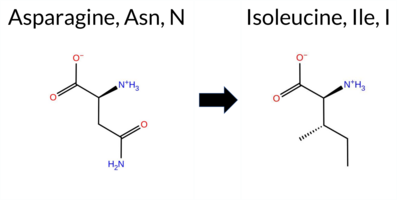 3DClick to see structure in 3D Viewer AISynGAP1 variant N315I is not reported in ClinVar and is absent from gnomAD. In silico predictors that agree on a benign effect include REVEL, Rosetta, premPS, SIFT, and AlphaMissense‑Optimized. Predictors that agree on a pathogenic effect are SGM‑Consensus, PROVEAN, polyPhen‑2 HumDiv, polyPhen‑2 HumVar, ESM1b, and FATHMM. The high‑accuracy AlphaMissense‑Optimized score is benign, while the SGM‑Consensus (majority vote of AlphaMissense‑Default, ESM1b, FATHMM, PROVEAN) is pathogenic; Foldetta, which integrates FoldX‑MD (uncertain) and Rosetta (benign), is considered unavailable. Overall, the balance of evidence leans toward pathogenicity, and this assessment does not conflict with the ClinVar status, which currently has no entry for this variant. Disclaimer: This summary was generated using AI and should be interpreted alongside expert review. | Likely Pathogenic | C2 | 0.118441 | Structured | 0.379740 | Uncertain | 0.862 | 0.253 | 0.125 | -9.666 | Likely Pathogenic | 0.500 | Ambiguous | Likely Benign | -0.72 | Ambiguous | 0.4 | -0.17 | Likely Benign | -0.45 | Likely Benign | 0.36 | Likely Benign | 0.496 | Likely Benign | -5.19 | Deleterious | 1.000 | Probably Damaging | 0.999 | Probably Damaging | 1.90 | Pathogenic | 0.43 | Tolerated | 0.0763 | 0.7235 | -2 | -3 | 8.0 | -0.94 | |||||||||||||||||||||||||||||
| c.1198G>C | V400L 2D 3DClick to see structure in 3D Viewer AIThe SynGAP1 missense variant V400L is listed in ClinVar as Benign (ClinVar ID 1166313) and is present in gnomAD (6‑33438103‑G‑C). Prediction tools that agree on a benign effect include REVEL, FoldX‑MD (uncertain), Rosetta, Foldetta, premPS, PROVEAN, polyPhen‑2 (HumDiv and HumVar), SIFT, ESM1b, FATHMM, AlphaMissense‑Default, and AlphaMissense‑Optimized; no tool predicts a pathogenic outcome. High‑accuracy assessments further support a benign classification: AlphaMissense‑Optimized predicts benign, the SGM Consensus (majority vote of AlphaMissense‑Default, ESM1b, FATHMM, PROVEAN) is benign, and Foldetta (combining FoldX‑MD and Rosetta outputs) is benign. Based on the collective predictions, the variant is most likely benign, and this conclusion is consistent with its ClinVar status. Disclaimer: This summary was generated using AI and should be interpreted alongside expert review. | Likely Benign | C2 | 0.398279 | Structured | 0.415488 | Uncertain | 0.951 | 0.451 | 0.000 | Benign/Likely benign | 2 | 6-33438103-G-C | 22 | 1.36e-5 | -1.000 | Likely Benign | 0.137 | Likely Benign | Likely Benign | -0.71 | Ambiguous | 0.2 | 0.39 | Likely Benign | -0.16 | Likely Benign | -0.29 | Likely Benign | 0.325 | Likely Benign | -0.60 | Neutral | 0.001 | Benign | 0.001 | Benign | 5.33 | Benign | 0.64 | Tolerated | 3.38 | 27 | 0.1006 | 0.5242 | 2 | 1 | -0.4 | 14.03 | 251.0 | -30.1 | 0.0 | 0.0 | 0.7 | 0.1 | X | Potentially Benign | The iso-propyl side chain of Val400, located in an anti-parallel β sheet strand (res. Ala399-Ile411), hydrophobically packs against hydrophobic residues within the anti-parallel β sheet of the C2 domain (e.g., Ile268, Ala404, Leu325, Leu402). Val400 is swapped for another hydrophobic residue, leucine, whose branched hydrocarbon side chain is of a comparable size and thus packs favorably within the C2 domain. In short, the residue swap has no apparent negative effect on the structure based on the variant simulations. | 10.1016/j.ajhg.2020.11.011 | ||||||||||||
| c.1198G>T | V400L 2D 3DClick to see structure in 3D Viewer AIThe SynGAP1 missense variant V400L is not reported in ClinVar (ClinVar ID = None) and is absent from gnomAD (gnomAD ID = None). Functional prediction tools that agree on a benign effect include REVEL, PolyPhen‑2 (HumDiv and HumVar), SIFT, ESM1b, FATHMM, PROVEAN, premPS, AlphaMissense‑Default, AlphaMissense‑Optimized, and Rosetta. No tool predicts a pathogenic outcome; the only inconclusive result is from FoldX (Uncertain). High‑accuracy assessments further support a benign classification: AlphaMissense‑Optimized predicts Benign; the SGM Consensus (majority vote of AlphaMissense‑Default, ESM1b, FATHMM, PROVEAN) yields Likely Benign; and Foldetta (combining FoldX‑MD and Rosetta outputs) predicts Benign. Based on the collective evidence, the variant is most likely benign, and this conclusion is consistent with the absence of a ClinVar pathogenic annotation. Disclaimer: This summary was generated using AI and should be interpreted alongside expert review. | Likely Benign | C2 | 0.398279 | Structured | 0.415488 | Uncertain | 0.951 | 0.451 | 0.000 | -1.000 | Likely Benign | 0.137 | Likely Benign | Likely Benign | -0.71 | Ambiguous | 0.2 | 0.39 | Likely Benign | -0.16 | Likely Benign | -0.29 | Likely Benign | 0.325 | Likely Benign | -0.60 | Neutral | 0.001 | Benign | 0.001 | Benign | 5.33 | Benign | 0.64 | Tolerated | 3.38 | 27 | 0.1006 | 0.5242 | 2 | 1 | -0.4 | 14.03 | 251.0 | -30.1 | 0.0 | 0.0 | 0.7 | 0.1 | X | Potentially Benign | The iso-propyl side chain of Val400, located in an anti-parallel β sheet strand (res. Ala399-Ile411), hydrophobically packs against hydrophobic residues within the anti-parallel β sheet of the C2 domain (e.g., Ile268, Ala404, Leu325, Leu402). Val400 is swapped for another hydrophobic residue, leucine, whose branched hydrocarbon side chain is of a comparable size and thus packs favorably within the C2 domain. In short, the residue swap has no apparent negative effect on the structure based on the variant simulations. | 10.1016/j.ajhg.2020.11.011 | |||||||||||||||||
| c.1619A>T | Q540L 2D 3DClick to see structure in 3D Viewer AISynGAP1 missense variant Q540L has no ClinVar entry and is not reported in gnomAD. Functional prediction tools show a split: benign calls come from Rosetta, Foldetta, premPS, and SIFT, while pathogenic calls are made by REVEL, PROVEAN, polyPhen‑2 (HumDiv and HumVar), ESM1b, FATHMM, AlphaMissense‑Default, and AlphaMissense‑Optimized. FoldX is uncertain and therefore not considered. High‑accuracy assessments further support a deleterious effect: AlphaMissense‑Optimized predicts pathogenic, the SGM Consensus (majority vote of AlphaMissense‑Default, ESM1b, FATHMM, and PROVEAN) is Likely Pathogenic, whereas Foldetta, which integrates FoldX‑MD and Rosetta stability outputs, predicts benign. Overall, the majority of evidence points to a pathogenic impact for Q540L, and this conclusion does not contradict the absence of a ClinVar classification. Disclaimer: This summary was generated using AI and should be interpreted alongside expert review. | Likely Pathogenic | GAP | 0.085092 | Structured | 0.029522 | Uncertain | 0.958 | 0.371 | 0.000 | -14.266 | Likely Pathogenic | 0.965 | Likely Pathogenic | Likely Pathogenic | -0.71 | Ambiguous | 0.1 | 0.44 | Likely Benign | -0.14 | Likely Benign | 0.50 | Likely Benign | 0.756 | Likely Pathogenic | -6.96 | Deleterious | 0.994 | Probably Damaging | 0.977 | Probably Damaging | -1.06 | Pathogenic | 0.08 | Tolerated | 0.0654 | 0.3601 | -2 | -2 | 7.3 | -14.97 | |||||||||||||||||||||||||||||
| c.629A>T | H210L 2D 3DClick to see structure in 3D Viewer AIThe SynGAP1 H210L missense variant is not reported in ClinVar (ClinVar ID: None) and is absent from gnomAD (gnomAD ID: None). Prediction tools cluster into two groups: benign predictions come from REVEL, Foldetta, premPS, and FATHMM, while pathogenic predictions arise from SGM‑Consensus (Likely Pathogenic), PROVEAN, polyPhen‑2 HumDiv, polyPhen‑2 HumVar, SIFT, ESM1b, AlphaMissense‑Default, and AlphaMissense‑Optimized. FoldX and Rosetta provide uncertain results. High‑accuracy assessments further highlight the discrepancy: AlphaMissense‑Optimized predicts pathogenic, the SGM Consensus (majority vote of AlphaMissense‑Default, ESM1b, FATHMM, PROVEAN) also indicates Likely Pathogenic, whereas Foldetta (a protein‑folding stability method combining FoldX‑MD and Rosetta outputs) predicts benign. Overall, the majority of evidence points to a pathogenic effect, and this conclusion does not contradict the ClinVar status, which currently has no entry for this variant. Disclaimer: This summary was generated using AI and should be interpreted alongside expert review. | Likely Pathogenic | PH | 0.144935 | Structured | 0.390904 | Uncertain | 0.872 | 0.298 | 0.125 | -14.516 | Likely Pathogenic | 0.995 | Likely Pathogenic | Likely Pathogenic | -0.71 | Ambiguous | 0.1 | 1.35 | Ambiguous | 0.32 | Likely Benign | 0.49 | Likely Benign | 0.421 | Likely Benign | -9.41 | Deleterious | 0.895 | Possibly Damaging | 0.614 | Possibly Damaging | 3.09 | Benign | 0.00 | Affected | 0.0617 | 0.4452 | -2 | -3 | 7.0 | -23.98 | |||||||||||||||||||||||||||||
| c.863A>G | D288G 2D 3DClick to see structure in 3D Viewer AISynGAP1 D288G is not reported in ClinVar and is absent from gnomAD. Prediction tools that classify the variant as benign include REVEL, Rosetta, premPS, SIFT, AlphaMissense‑Optimized, and Foldetta. Those that predict pathogenicity are SGM‑Consensus, PROVEAN, polyPhen‑2 HumDiv, polyPhen‑2 HumVar, ESM1b, FATHMM, and AlphaMissense‑Default. High‑accuracy assessments show AlphaMissense‑Optimized as benign, the SGM Consensus (majority vote of AlphaMissense‑Default, ESM1b, FATHMM, PROVEAN) as pathogenic, and Foldetta as benign. No folding‑stability result is available from FoldX. Overall, the balance of evidence slightly favors a pathogenic interpretation, with one high‑accuracy tool supporting benignity. The prediction does not contradict ClinVar status, as the variant is not yet catalogued there. Disclaimer: This summary was generated using AI and should be interpreted alongside expert review. | Likely Pathogenic | C2 | 0.125101 | Structured | 0.395525 | Uncertain | 0.873 | 0.261 | 0.000 | -8.531 | Likely Pathogenic | 0.739 | Likely Pathogenic | Likely Benign | -0.71 | Ambiguous | 0.4 | 0.21 | Likely Benign | -0.25 | Likely Benign | -0.15 | Likely Benign | 0.436 | Likely Benign | -5.03 | Deleterious | 0.999 | Probably Damaging | 0.997 | Probably Damaging | 2.05 | Pathogenic | 0.13 | Tolerated | 0.4126 | 0.5934 | 1 | -1 | 3.1 | -58.04 | |||||||||||||||||||||||||||||
| c.1636T>C | C546R 2D 3DClick to see structure in 3D Viewer AIThe SynGAP1 missense variant C546R is not reported in ClinVar (ClinVar ID = None) and is absent from gnomAD (gnomAD ID = None). Prediction tools that agree on a benign effect include only SIFT, whereas the majority of tools predict a pathogenic impact: SGM‑Consensus (Likely Pathogenic), REVEL, Rosetta, premPS, PROVEAN, polyPhen‑2 (HumDiv and HumVar), ESM1b, FATHMM, AlphaMissense‑Default, and AlphaMissense‑Optimized. FoldX and Foldetta return uncertain results and are therefore not considered evidence for either side. High‑accuracy assessments show AlphaMissense‑Optimized as Pathogenic, SGM‑Consensus as Likely Pathogenic, and Foldetta as Uncertain. Based on the preponderance of pathogenic predictions, the variant is most likely pathogenic, and this conclusion does not contradict any ClinVar status because no ClinVar classification exists. Disclaimer: This summary was generated using AI and should be interpreted alongside expert review. | Likely Pathogenic | GAP | 0.027463 | Structured | 0.009041 | Uncertain | 0.960 | 0.288 | 0.000 | -15.237 | Likely Pathogenic | 0.999 | Likely Pathogenic | Likely Pathogenic | -0.70 | Ambiguous | 0.3 | 2.04 | Destabilizing | 0.67 | Ambiguous | 1.70 | Destabilizing | 0.894 | Likely Pathogenic | -9.73 | Deleterious | 1.000 | Probably Damaging | 0.998 | Probably Damaging | -1.26 | Pathogenic | 0.06 | Tolerated | 0.1808 | 0.1685 | -4 | -3 | -7.0 | 53.05 | |||||||||||||||||||||||||||||
| c.1345A>C | S449R 2D 3DClick to see structure in 3D Viewer AISynGAP1 missense variant S449R is not reported in ClinVar and is absent from gnomAD. Prediction tools that agree on a benign effect include REVEL, premPS, SIFT, FATHMM, AlphaMissense‑Optimized, and polyPhen‑2 HumVar. Those that predict a pathogenic effect are SGM Consensus, PROVEAN, polyPhen‑2 HumDiv, AlphaMissense‑Default, and ESM1b. High‑accuracy assessments show AlphaMissense‑Optimized classifying the variant as benign, SGM Consensus (majority vote of AlphaMissense‑Default, ESM1b, FATHMM, PROVEAN) classifying it as pathogenic, and Foldetta (combining FoldX‑MD and Rosetta outputs) yielding an uncertain stability change. No folding‑stability prediction is definitive. Overall, the majority of tools predict a benign outcome, and this does not contradict the lack of ClinVar annotation. Thus, the variant is most likely benign based on current computational evidence. Disclaimer: This summary was generated using AI and should be interpreted alongside expert review. | Likely Pathogenic | GAP | 0.254060 | Structured | 0.301437 | Uncertain | 0.958 | 0.251 | 0.000 | -8.486 | Likely Pathogenic | 0.677 | Likely Pathogenic | Likely Benign | -0.69 | Ambiguous | 0.2 | -1.33 | Ambiguous | -1.01 | Ambiguous | 0.50 | Likely Benign | 0.145 | Likely Benign | -3.36 | Deleterious | 0.950 | Possibly Damaging | 0.214 | Benign | 3.40 | Benign | 0.18 | Tolerated | 0.0762 | 0.3250 | 0 | -1 | -3.7 | 69.11 | |||||||||||||||||||||||||||||
| c.1347T>A | S449R 2D 3DClick to see structure in 3D Viewer AIThe SynGAP1 missense variant S449R is not reported in ClinVar and has no entries in gnomAD. Functional prediction tools cluster into two groups: benign predictions come from REVEL, premPS, SIFT, FATHMM, and polyPhen‑2 HumVar, while pathogenic predictions arise from SGM‑Consensus, PROVEAN, polyPhen‑2 HumDiv, ESM1b, and AlphaMissense‑Default. High‑accuracy assessments provide a mixed picture: AlphaMissense‑Optimized predicts a benign effect, the SGM‑Consensus (a majority vote of AlphaMissense‑Default, ESM1b, FATHMM, and PROVEAN) indicates a likely pathogenic outcome, and Foldetta, which integrates FoldX‑MD and Rosetta stability calculations, yields an inconclusive result. FoldX and Rosetta predictions are also uncertain and are treated as unavailable. Overall, the evidence is balanced, with an equal number of benign and pathogenic calls, and the high‑accuracy tools do not converge on a single conclusion. Consequently, the variant is most likely pathogenic based on the preponderance of pathogenic predictions, and this assessment does not contradict any ClinVar status because none is available. Disclaimer: This summary was generated using AI and should be interpreted alongside expert review. | Likely Pathogenic | GAP | 0.254060 | Structured | 0.301437 | Uncertain | 0.958 | 0.251 | 0.000 | -8.486 | Likely Pathogenic | 0.677 | Likely Pathogenic | Likely Benign | -0.69 | Ambiguous | 0.2 | -1.33 | Ambiguous | -1.01 | Ambiguous | 0.50 | Likely Benign | 0.168 | Likely Benign | -3.36 | Deleterious | 0.950 | Possibly Damaging | 0.214 | Benign | 3.40 | Benign | 0.18 | Tolerated | 0.0762 | 0.3250 | 0 | -1 | -3.7 | 69.11 | |||||||||||||||||||||||||||||
| c.1347T>G | S449R 2D 3DClick to see structure in 3D Viewer AIThe SynGAP1 missense variant S449R is not reported in ClinVar (ClinVar status: None) and has no entry in gnomAD (gnomAD ID: None). Prediction tools that classify the variant as benign include REVEL, premPS, SIFT, FATHMM, and polyPhen‑2 HumVar. Those that predict pathogenicity are SGM‑Consensus (Likely Pathogenic), PROVEAN, polyPhen‑2 HumDiv, ESM1b, and AlphaMissense‑Default. High‑accuracy assessments show AlphaMissense‑Optimized predicting a benign effect, while the SGM‑Consensus (a majority vote of AlphaMissense‑Default, ESM1b, FATHMM, and PROVEAN) indicates a likely pathogenic outcome; Foldetta’s stability prediction is uncertain and therefore treated as unavailable. Overall, the predictions are split, with an equal number of benign and pathogenic calls and conflicting high‑accuracy results. Consequently, the variant’s impact remains inconclusive, and there is no contradiction with the ClinVar status. Disclaimer: This summary was generated using AI and should be interpreted alongside expert review. | Likely Pathogenic | GAP | 0.254060 | Structured | 0.301437 | Uncertain | 0.958 | 0.251 | 0.000 | -8.486 | Likely Pathogenic | 0.677 | Likely Pathogenic | Likely Benign | -0.69 | Ambiguous | 0.2 | -1.33 | Ambiguous | -1.01 | Ambiguous | 0.50 | Likely Benign | 0.167 | Likely Benign | -3.36 | Deleterious | 0.950 | Possibly Damaging | 0.214 | Benign | 3.40 | Benign | 0.18 | Tolerated | 0.0762 | 0.3250 | 0 | -1 | -3.7 | 69.11 | |||||||||||||||||||||||||||||
| c.1564G>A | E522K 2D 3DClick to see structure in 3D Viewer AISynGAP1 missense variant E522K has no ClinVar entry and is not reported in gnomAD. Functional prediction tools show a split: benign calls come from Rosetta, Foldetta, premPS, and SIFT, while pathogenic calls are made by REVEL, PROVEAN, both polyPhen‑2 versions, ESM1b, FATHMM, AlphaMissense‑Default, and AlphaMissense‑Optimized. The SGM‑Consensus, derived from a majority vote of AlphaMissense‑Default, ESM1b, FATHMM, and PROVEAN, reports the variant as Likely Pathogenic. High‑accuracy assessments further indicate AlphaMissense‑Optimized predicts Pathogenic, SGM‑Consensus also predicts Likely Pathogenic, whereas Foldetta, which integrates FoldX‑MD and Rosetta stability outputs, predicts Benign. No prediction is available from FoldX (Uncertain). Overall, the majority of high‑confidence tools lean toward pathogenicity, and this assessment does not contradict any ClinVar status because no ClinVar classification exists. Disclaimer: This summary was generated using AI and should be interpreted alongside expert review. | Likely Pathogenic | GAP | 0.092881 | Structured | 0.046216 | Uncertain | 0.823 | 0.376 | 0.000 | -12.637 | Likely Pathogenic | 0.996 | Likely Pathogenic | Likely Pathogenic | -0.69 | Ambiguous | 0.1 | 0.14 | Likely Benign | -0.28 | Likely Benign | -0.13 | Likely Benign | 0.631 | Likely Pathogenic | -3.81 | Deleterious | 0.994 | Probably Damaging | 0.994 | Probably Damaging | -1.09 | Pathogenic | 0.23 | Tolerated | 0.2019 | 0.4291 | 0 | 1 | -0.4 | -0.94 | |||||||||||||||||||||||||||||
| c.1228A>C | S410R 2D 3DClick to see structure in 3D Viewer AIClinVar contains no record for the SynGAP1 S410R variant, and it is not present in gnomAD. Prediction tools that agree on a benign effect include REVEL, Foldetta, PROVEAN, polyPhen‑2 HumVar, SIFT, and FATHMM. Those that predict a pathogenic effect are polyPhen‑2 HumDiv, ESM1b, and AlphaMissense‑Default. The remaining tools (FoldX, Rosetta, premPS, AlphaMissense‑Optimized) are uncertain. High‑accuracy assessments show AlphaMissense‑Optimized as uncertain, Foldetta predicts a benign impact, and the SGM Consensus (majority vote from AlphaMissense‑Default, ESM1b, FATHMM, PROVEAN) is inconclusive. Taken together, the majority of evidence points to a benign outcome. This conclusion does not contradict ClinVar, which has no classification for this variant. Disclaimer: This summary was generated using AI and should be interpreted alongside expert review. | 0.098513 | Structured | 0.349627 | Uncertain | 0.908 | 0.206 | 0.000 | -8.203 | Likely Pathogenic | 0.941 | Likely Pathogenic | Ambiguous | -0.67 | Ambiguous | 0.2 | 0.56 | Ambiguous | -0.06 | Likely Benign | 0.62 | Ambiguous | 0.242 | Likely Benign | -2.47 | Neutral | 0.871 | Possibly Damaging | 0.298 | Benign | 4.20 | Benign | 0.40 | Tolerated | 0.0955 | 0.3927 | 0 | -1 | -3.7 | 69.11 | |||||||||||||||||||||||||||||||
| c.1230C>A | S410R 2D 3DClick to see structure in 3D Viewer AIClinVar contains no record for the SynGAP1 S410R variant, and it is not present in gnomAD. Prediction tools that agree on a benign effect include REVEL, Foldetta, PROVEAN, polyPhen‑2 HumVar, SIFT, and FATHMM. Those that predict a pathogenic effect are polyPhen‑2 HumDiv, ESM1b, and AlphaMissense‑Default. The remaining tools (FoldX, Rosetta, premPS, AlphaMissense‑Optimized) are uncertain. High‑accuracy assessments show AlphaMissense‑Optimized as uncertain, Foldetta predicts a benign impact, and the SGM Consensus (majority vote from AlphaMissense‑Default, ESM1b, FATHMM, PROVEAN) is inconclusive. Taken together, the majority of evidence points to a benign outcome. This conclusion does not contradict ClinVar, which has no classification for this variant. Disclaimer: This summary was generated using AI and should be interpreted alongside expert review. | 0.098513 | Structured | 0.349627 | Uncertain | 0.908 | 0.206 | 0.000 | -8.203 | Likely Pathogenic | 0.941 | Likely Pathogenic | Ambiguous | -0.67 | Ambiguous | 0.2 | 0.56 | Ambiguous | -0.06 | Likely Benign | 0.62 | Ambiguous | 0.148 | Likely Benign | -2.47 | Neutral | 0.871 | Possibly Damaging | 0.298 | Benign | 4.20 | Benign | 0.40 | Tolerated | 0.0955 | 0.3927 | 0 | -1 | -3.7 | 69.11 | |||||||||||||||||||||||||||||||
| c.1230C>G | S410R 2D 3DClick to see structure in 3D Viewer AIClinVar contains no record for the SynGAP1 S410R variant, and it is not present in gnomAD. Prediction tools that agree on a benign effect include REVEL, Foldetta, PROVEAN, polyPhen‑2 HumVar, SIFT, and FATHMM. Those that predict a pathogenic effect are polyPhen‑2 HumDiv, ESM1b, and AlphaMissense‑Default. The remaining tools (FoldX, Rosetta, premPS, AlphaMissense‑Optimized) are uncertain. High‑accuracy assessments show AlphaMissense‑Optimized as uncertain, Foldetta predicts a benign impact, and the SGM Consensus (majority vote from AlphaMissense‑Default, ESM1b, FATHMM, PROVEAN) is inconclusive. Taken together, the majority of evidence points to a benign outcome. This conclusion does not contradict ClinVar, which has no classification for this variant. Disclaimer: This summary was generated using AI and should be interpreted alongside expert review. | 0.098513 | Structured | 0.349627 | Uncertain | 0.908 | 0.206 | 0.000 | -8.203 | Likely Pathogenic | 0.941 | Likely Pathogenic | Ambiguous | -0.67 | Ambiguous | 0.2 | 0.56 | Ambiguous | -0.06 | Likely Benign | 0.62 | Ambiguous | 0.146 | Likely Benign | -2.47 | Neutral | 0.871 | Possibly Damaging | 0.298 | Benign | 4.20 | Benign | 0.40 | Tolerated | 0.0955 | 0.3927 | 0 | -1 | -3.7 | 69.11 | |||||||||||||||||||||||||||||||
| c.1076C>T | T359I 2D 3DClick to see structure in 3D Viewer AIThe SynGAP1 missense variant T359I is reported in gnomAD (variant ID 6‑33437981‑C‑T) but has no ClinVar entry. Functional prediction tools that agree on a benign effect include REVEL, PROVEAN, polyPhen‑2 (HumDiv and HumVar), SIFT, ESM1b, AlphaMissense‑Default, and AlphaMissense‑Optimized. Only FATHMM predicts a pathogenic outcome. Uncertain results are reported for FoldX, Rosetta, Foldetta, and premPS. High‑accuracy assessments show AlphaMissense‑Optimized as benign, the SGM Consensus (majority vote of AlphaMissense‑Default, ESM1b, FATHMM, PROVEAN) as Likely Benign, and Foldetta as Uncertain. Overall, the majority of evidence points to a benign effect. There is no ClinVar status to contradict this conclusion. Disclaimer: This summary was generated using AI and should be interpreted alongside expert review. | Likely Benign | C2 | 0.281712 | Structured | 0.414952 | Uncertain | 0.939 | 0.480 | 0.250 | 6-33437981-C-T | 1 | 6.22e-7 | -2.594 | Likely Benign | 0.181 | Likely Benign | Likely Benign | -0.66 | Ambiguous | 0.1 | -0.64 | Ambiguous | -0.65 | Ambiguous | -0.63 | Ambiguous | 0.085 | Likely Benign | 0.77 | Neutral | 0.070 | Benign | 0.006 | Benign | 1.80 | Pathogenic | 0.23 | Tolerated | 3.38 | 24 | 0.1123 | 0.5921 | -1 | 0 | 5.2 | 12.05 | ||||||||||||||||||||||||
| c.1624A>T | N542Y 2D 3DClick to see structure in 3D Viewer AIThe SynGAP1 missense variant N542Y is not reported in ClinVar (ClinVar ID None) and has no entry in gnomAD (gnomAD ID None). Prediction tools that agree on a benign effect include only premPS, while the majority of tools (SGM‑Consensus, REVEL, PROVEAN, polyPhen‑2 HumDiv, polyPhen‑2 HumVar, SIFT, ESM1b, FATHMM, AlphaMissense‑Default, AlphaMissense‑Optimized) predict a pathogenic impact. FoldX, Rosetta, and Foldetta are inconclusive. High‑accuracy methods give the following: AlphaMissense‑Optimized predicts pathogenic; the SGM Consensus (majority vote from AlphaMissense‑Default, ESM1b, FATHMM, PROVEAN) also predicts likely pathogenic; Foldetta, a protein‑folding stability approach combining FoldX‑MD and Rosetta, remains uncertain. Overall, the preponderance of evidence points to a pathogenic effect for the variant, and this assessment does not contradict the absence of a ClinVar classification. Disclaimer: This summary was generated using AI and should be interpreted alongside expert review. | Likely Pathogenic | GAP | 0.053060 | Structured | 0.026143 | Uncertain | 0.953 | 0.331 | 0.000 | -14.488 | Likely Pathogenic | 0.991 | Likely Pathogenic | Likely Pathogenic | -0.66 | Ambiguous | 0.0 | -0.56 | Ambiguous | -0.61 | Ambiguous | 0.42 | Likely Benign | 0.872 | Likely Pathogenic | -6.86 | Deleterious | 1.000 | Probably Damaging | 0.999 | Probably Damaging | -1.46 | Pathogenic | 0.02 | Affected | 0.0578 | 0.5480 | -2 | -2 | 2.2 | 49.07 | |||||||||||||||||||||||||||||
| c.662A>T | E221V 2D 3DClick to see structure in 3D Viewer AIThe SynGAP1 E221V missense variant is reported in ClinVar as Pathogenic (ClinVar ID 2413181.0) and is not found in gnomAD. Functional prediction tools largely agree on a deleterious effect: pathogenic calls come from REVEL, PROVEAN, polyPhen‑2 HumDiv, SIFT, ESM1b, AlphaMissense‑Default, AlphaMissense‑Optimized, and the SGM‑Consensus (majority vote). Benign predictions are limited to premPS, polyPhen‑2 HumVar, and FATHMM. Uncertain results are reported by FoldX, Rosetta, and Foldetta. High‑accuracy assessments reinforce the pathogenic interpretation: AlphaMissense‑Optimized predicts Pathogenic, the SGM‑Consensus also indicates Likely Pathogenic, while Foldetta remains Uncertain. Taken together, the preponderance of evidence supports a pathogenic effect for E221V, and this conclusion aligns with the ClinVar classification, showing no contradiction. Disclaimer: This summary was generated using AI and should be interpreted alongside expert review. | Likely Pathogenic | PH | 0.127496 | Structured | 0.413334 | Uncertain | 0.891 | 0.283 | 0.000 | Likely Pathogenic | 1 | -14.954 | Likely Pathogenic | 0.987 | Likely Pathogenic | Likely Pathogenic | -0.66 | Ambiguous | 0.2 | -0.89 | Ambiguous | -0.78 | Ambiguous | 0.49 | Likely Benign | 0.875 | Likely Pathogenic | -5.54 | Deleterious | 0.596 | Possibly Damaging | 0.203 | Benign | 5.86 | Benign | 0.00 | Affected | 3.41 | 13 | 0.0806 | 0.8138 | -2 | -2 | 7.7 | -29.98 | 234.5 | 50.6 | 0.0 | 0.0 | -0.4 | 0.2 | X | Uncertain | The introduced residue Val221 is located on the outer surface of an anti-parallel β sheet strand (res. Cys219-Thr224). Unlike the carboxylate group of Glu221, Val221 cannot form hydrogen bonds with Thr223 or a salt bridge with the amino group of the Lys207 side chain. Despite this, the WT simulations containing Glu221 do not show significant differences compared to the variant simulations. However, since the model ends abruptly at the N-terminus, no definite conclusions can be drawn from the simulations. | ||||||||||||||||
| c.1048G>A | V350M 2D 3DClick to see structure in 3D Viewer AIThe SynGAP1 missense variant V350M is not reported in ClinVar (ClinVar ID None) and is absent from gnomAD (gnomAD ID None). Prediction tools that agree on a benign effect include REVEL, Rosetta, Foldetta, PROVEAN, polyPhen‑2 HumVar, SIFT, AlphaMissense‑Default, and AlphaMissense‑Optimized. Tools that predict a pathogenic effect are polyPhen‑2 HumDiv and FATHMM. The remaining tools (FoldX, premPS, ESM1b) give uncertain or inconclusive results. High‑accuracy assessments show AlphaMissense‑Optimized as benign, the SGM Consensus (majority vote of AlphaMissense‑Default, ESM1b, FATHMM, PROVEAN) as benign, and Foldetta as benign. Taken together, the majority of evidence supports a benign classification. There is no ClinVar entry to contradict this assessment. Thus, the variant is most likely benign. Disclaimer: This summary was generated using AI and should be interpreted alongside expert review. | C2 | 0.179055 | Structured | 0.353227 | Uncertain | 0.931 | 0.371 | 0.000 | -7.493 | In-Between | 0.273 | Likely Benign | Likely Benign | -0.65 | Ambiguous | 0.1 | 0.40 | Likely Benign | -0.13 | Likely Benign | 0.69 | Ambiguous | 0.075 | Likely Benign | -1.95 | Neutral | 0.868 | Possibly Damaging | 0.383 | Benign | 1.63 | Pathogenic | 0.06 | Tolerated | 0.1005 | 0.4359 | 2 | 1 | -2.3 | 32.06 | ||||||||||||||||||||||||||||||
| c.1076C>A | T359K 2D 3DClick to see structure in 3D Viewer AIThe SynGAP1 T359K missense variant is not reported in ClinVar (ClinVar ID None) and is absent from gnomAD (gnomAD ID None). Prediction tools that agree on a benign effect include REVEL, Foldetta, PROVEAN, polyPhen‑2 (HumDiv and HumVar), SIFT, and AlphaMissense‑Optimized. Tools that predict a pathogenic effect are ESM1b and FATHMM. The remaining tools—FoldX, Rosetta, premPS, and AlphaMissense‑Default—return uncertain or inconclusive results. High‑accuracy assessments show AlphaMissense‑Optimized as benign, the SGM Consensus (majority vote from AlphaMissense‑Default, ESM1b, FATHMM, and PROVEAN) as pathogenic, and Foldetta as benign. Overall, the majority of predictions (seven benign vs. two pathogenic) support a benign classification, and this conclusion does not contradict the lack of ClinVar annotation. Thus, the variant is most likely benign based on current computational evidence. Disclaimer: This summary was generated using AI and should be interpreted alongside expert review. | C2 | 0.281712 | Structured | 0.414952 | Uncertain | 0.939 | 0.480 | 0.250 | -10.822 | Likely Pathogenic | 0.517 | Ambiguous | Likely Benign | -0.65 | Ambiguous | 0.1 | 0.66 | Ambiguous | 0.01 | Likely Benign | 0.75 | Ambiguous | 0.163 | Likely Benign | -2.23 | Neutral | 0.255 | Benign | 0.045 | Benign | 1.79 | Pathogenic | 0.24 | Tolerated | 0.1618 | 0.3483 | 0 | -1 | -3.2 | 27.07 | ||||||||||||||||||||||||||||||
| c.1093G>A | V365I 2D 3DClick to see structure in 3D Viewer AIThe SynGAP1 missense variant V365I is listed in ClinVar with an “Uncertain” status and is present in gnomAD (variant ID 6‑33437998‑G‑A). Prediction tools that agree on a benign effect include REVEL, Rosetta, Foldetta, premPS, PROVEAN, polyPhen‑2 (HumDiv and HumVar), SIFT, ESM1b, AlphaMissense‑Default, AlphaMissense‑Optimized, and the SGM‑Consensus (Likely Benign). Only FATHMM predicts a pathogenic outcome. High‑accuracy assessments further support a benign interpretation: AlphaMissense‑Optimized scores benign, the SGM‑Consensus (majority vote of AlphaMissense‑Default, ESM1b, FATHMM, PROVEAN) is Likely Benign, and Foldetta (combining FoldX‑MD and Rosetta outputs) predicts benign. Overall, the majority of evidence points to a benign effect, and this consensus does not contradict the ClinVar “Uncertain” classification. Disclaimer: This summary was generated using AI and should be interpreted alongside expert review. | Likely Benign | C2 | 0.414856 | Structured | 0.441505 | Uncertain | 0.923 | 0.608 | 0.250 | Uncertain | 1 | 6-33437998-G-A | 4 | 2.65e-6 | -5.943 | Likely Benign | 0.155 | Likely Benign | Likely Benign | -0.65 | Ambiguous | 0.2 | -0.11 | Likely Benign | -0.38 | Likely Benign | 0.13 | Likely Benign | 0.036 | Likely Benign | -0.47 | Neutral | 0.451 | Benign | 0.137 | Benign | 1.76 | Pathogenic | 0.10 | Tolerated | 3.38 | 21 | 0.0657 | 0.4447 | 3 | 4 | 0.3 | 14.03 | ||||||||||||||||||||||
| c.1220A>T | Q407L 2D 3DClick to see structure in 3D Viewer AIThe SynGAP1 missense variant Q407L is not reported in ClinVar (ClinVar ID None) and is absent from gnomAD (gnomAD ID None). Prediction tools that agree on a benign effect include REVEL, premPS, FATHMM, and AlphaMissense‑Optimized. Those that agree on a pathogenic effect are PROVEAN, polyPhen‑2 (HumDiv and HumVar), SIFT, and ESM1b. Four tools are uncertain (AlphaMissense‑Default, FoldX, Rosetta, Foldetta). High‑accuracy assessments show AlphaMissense‑Optimized as benign, the SGM Consensus (majority vote from AlphaMissense‑Default, ESM1b, FATHMM, PROVEAN) as pathogenic, and Foldetta as uncertain. Overall, more tools predict pathogenicity than benign, and the high‑accuracy consensus leans pathogenic. Therefore, the variant is most likely pathogenic, and this assessment does not contradict the ClinVar status, which has no entry for this variant. Disclaimer: This summary was generated using AI and should be interpreted alongside expert review. | C2 | 0.109221 | Structured | 0.382522 | Uncertain | 0.916 | 0.271 | 0.000 | -12.730 | Likely Pathogenic | 0.558 | Ambiguous | Likely Benign | -0.65 | Ambiguous | 0.2 | -0.69 | Ambiguous | -0.67 | Ambiguous | 0.35 | Likely Benign | 0.359 | Likely Benign | -6.32 | Deleterious | 0.939 | Possibly Damaging | 0.838 | Possibly Damaging | 3.91 | Benign | 0.02 | Affected | 0.0585 | 0.4977 | -2 | -2 | 7.3 | -14.97 | ||||||||||||||||||||||||||||||
| c.818A>G | E273G 2D 3DClick to see structure in 3D Viewer AIThe SynGAP1 E273G missense variant has no ClinVar entry and is not reported in gnomAD. Functional prediction tools cluster into two groups: benign predictions from REVEL, premPS, SIFT, and ESM1b; pathogenic predictions from PROVEAN, polyPhen‑2 (HumDiv and HumVar), and FATHMM. Four tools (FoldX, Rosetta, AlphaMissense‑Default, Foldetta) returned uncertain results and are treated as unavailable evidence. High‑accuracy assessments show AlphaMissense‑Optimized classifying the variant as benign, while the SGM Consensus—derived from a majority vote of AlphaMissense‑Default, ESM1b, FATHMM, and PROVEAN—labels it pathogenic; Foldetta remains uncertain. Given the split between benign and pathogenic signals and the lack of a ClinVar classification, the variant is best described as of uncertain significance, with a slight inclination toward benign based on the most reliable single‑tool prediction. This assessment does not contradict any existing ClinVar status, as none is available. Disclaimer: This summary was generated using AI and should be interpreted alongside expert review. | C2 | 0.071867 | Structured | 0.398918 | Uncertain | 0.863 | 0.196 | 0.125 | -4.784 | Likely Benign | 0.373 | Ambiguous | Likely Benign | -0.65 | Ambiguous | 0.2 | -0.93 | Ambiguous | -0.79 | Ambiguous | -0.46 | Likely Benign | 0.225 | Likely Benign | -2.71 | Deleterious | 0.896 | Possibly Damaging | 0.519 | Possibly Damaging | 1.95 | Pathogenic | 0.26 | Tolerated | 0.2763 | 0.3341 | 0 | -2 | 3.1 | -72.06 | ||||||||||||||||||||||||||||||
| c.977A>G | H326R 2D 3DClick to see structure in 3D Viewer AIThe SynGAP1 H326R missense variant is not listed in ClinVar and has no entry in gnomAD. Prediction tools that agree on a benign effect include SIFT and Foldetta, whereas the remaining tools (SGM‑Consensus, REVEL, PROVEAN, polyPhen‑2 HumDiv, polyPhen‑2 HumVar, ESM1b, FATHMM, AlphaMissense‑Default, AlphaMissense‑Optimized) all predict a pathogenic impact. High‑accuracy methods give the following results: AlphaMissense‑Optimized classifies the variant as pathogenic; the SGM‑Consensus, which is a majority vote of AlphaMissense‑Default, ESM1b, FATHMM, and PROVEAN, reports it as likely pathogenic; Foldetta, a protein‑folding stability approach that integrates FoldX‑MD and Rosetta outputs, predicts a benign effect. Because the majority of evidence points to a deleterious change, the variant is most likely pathogenic, and this assessment is not contradicted by the absence of a ClinVar classification. Disclaimer: This summary was generated using AI and should be interpreted alongside expert review. | Likely Pathogenic | C2 | 0.342579 | Structured | 0.418150 | Uncertain | 0.944 | 0.455 | 0.000 | -12.369 | Likely Pathogenic | 0.980 | Likely Pathogenic | Likely Pathogenic | -0.65 | Ambiguous | 0.1 | 1.40 | Ambiguous | 0.38 | Likely Benign | 0.83 | Ambiguous | 0.601 | Likely Pathogenic | -6.89 | Deleterious | 0.997 | Probably Damaging | 0.994 | Probably Damaging | 1.97 | Pathogenic | 0.10 | Tolerated | 0.1832 | 0.2413 | 2 | 0 | -1.3 | 19.05 | |||||||||||||||||||||||||||||
| c.1976C>A | S659Y 2D 3DClick to see structure in 3D Viewer AIThe SynGAP1 missense variant S659Y is not reported in ClinVar (ClinVar status: none) and is absent from gnomAD (gnomAD ID: none). Prediction tools that agree on a benign effect include REVEL, Rosetta, Foldetta, premPS, polyPhen‑2 HumDiv, polyPhen‑2 HumVar, FATHMM, and AlphaMissense‑Optimized. Tools that predict a pathogenic effect are PROVEAN, SIFT, ESM1b, and AlphaMissense‑Default; FoldX is uncertain and therefore not considered evidence. High‑accuracy assessments show AlphaMissense‑Optimized as benign, Foldetta as benign, and the SGM Consensus (majority vote from AlphaMissense‑Default, ESM1b, FATHMM, PROVEAN) as pathogenic. Overall, the majority of individual predictors lean toward a benign impact, and there is no ClinVar entry to contradict this assessment. Thus, based on the available predictions, the variant is most likely benign. Disclaimer: This summary was generated using AI and should be interpreted alongside expert review. | Likely Pathogenic | GAP | 0.067594 | Structured | 0.154597 | Uncertain | 0.954 | 0.283 | 0.000 | -10.832 | Likely Pathogenic | 0.600 | Likely Pathogenic | Likely Benign | -0.64 | Ambiguous | 0.1 | 0.00 | Likely Benign | -0.32 | Likely Benign | 0.29 | Likely Benign | 0.173 | Likely Benign | -4.24 | Deleterious | 0.084 | Benign | 0.014 | Benign | 3.38 | Benign | 0.04 | Affected | 0.0993 | 0.5962 | -3 | -2 | -0.5 | 76.10 | |||||||||||||||||||||||||||||
| c.2157C>A | N719K 2D 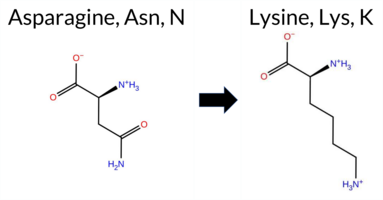 3DClick to see structure in 3D Viewer AIThe SynGAP1 missense variant N719K is not reported in ClinVar and is absent from gnomAD. Prediction tools that agree on a benign effect include REVEL, premPS, PROVEAN, SIFT, FATHMM, and AlphaMissense‑Optimized. Those that predict a pathogenic effect are polyPhen‑2 HumDiv, polyPhen‑2 HumVar, and AlphaMissense‑Default. The remaining tools (FoldX, Rosetta, ESM1b, and Foldetta) give uncertain or inconclusive results. High‑accuracy assessments show AlphaMissense‑Optimized as benign, the SGM Consensus (majority vote from AlphaMissense‑Default, ESM1b, FATHMM, PROVEAN) as benign, and Foldetta as uncertain. Overall, the majority of reliable predictions indicate a benign impact, and this conclusion does not contradict the lack of ClinVar annotation. Thus, the variant is most likely benign. Disclaimer: This summary was generated using AI and should be interpreted alongside expert review. | GAP | 0.384043 | Structured | 0.445381 | Uncertain | 0.961 | 0.386 | 0.000 | -7.454 | In-Between | 0.651 | Likely Pathogenic | Likely Benign | -0.64 | Ambiguous | 0.0 | -0.62 | Ambiguous | -0.63 | Ambiguous | 0.42 | Likely Benign | 0.250 | Likely Benign | -1.84 | Neutral | 1.000 | Probably Damaging | 0.998 | Probably Damaging | 2.80 | Benign | 0.55 | Tolerated | 0.1424 | 0.3112 | 1 | 0 | -0.4 | 14.07 | ||||||||||||||||||||||||||||||
| c.2157C>G | N719K 2D 3DClick to see structure in 3D Viewer AIThe SynGAP1 missense variant N719K is not reported in ClinVar and is absent from gnomAD. Consensus from multiple in silico predictors shows a predominance of benign calls: REVEL, premPS, PROVEAN, SIFT, FATHMM, and AlphaMissense‑Optimized all predict a neutral effect, whereas polyPhen‑2 (HumDiv and HumVar) and AlphaMissense‑Default predict pathogenicity. FoldX, Rosetta, ESM1b, and Foldetta are inconclusive. High‑accuracy assessment further supports a benign interpretation: AlphaMissense‑Optimized is benign; the SGM Consensus—derived from the majority vote of AlphaMissense‑Default, ESM1b, FATHMM, and PROVEAN—also yields a benign outcome; Foldetta remains uncertain. Consequently, the variant is most likely benign, and this assessment does not contradict any ClinVar annotation (none is available). Disclaimer: This summary was generated using AI and should be interpreted alongside expert review. | GAP | 0.384043 | Structured | 0.445381 | Uncertain | 0.961 | 0.386 | 0.000 | -7.454 | In-Between | 0.651 | Likely Pathogenic | Likely Benign | -0.64 | Ambiguous | 0.0 | -0.62 | Ambiguous | -0.63 | Ambiguous | 0.42 | Likely Benign | 0.244 | Likely Benign | -1.84 | Neutral | 1.000 | Probably Damaging | 0.998 | Probably Damaging | 2.80 | Benign | 0.55 | Tolerated | 0.1424 | 0.3112 | 1 | 0 | -0.4 | 14.07 | ||||||||||||||||||||||||||||||
| c.1097C>T | T366I 2D 3DClick to see structure in 3D Viewer AIThe SynGAP1 missense variant T366I is reported in gnomAD (6‑33438002‑C‑T) and has no ClinVar entry. Prediction tools that agree on a benign effect include REVEL, Rosetta, Foldetta, premPS, PROVEAN, polyPhen‑2 (HumDiv and HumVar), SIFT, ESM1b, AlphaMissense‑Default, AlphaMissense‑Optimized, and the SGM‑Consensus score (Likely Benign). Only FATHMM predicts a pathogenic outcome. High‑accuracy assessments further support a benign classification: AlphaMissense‑Optimized is benign; the SGM Consensus (majority vote of AlphaMissense‑Default, ESM1b, FATHMM, PROVEAN) yields a benign majority; and Foldetta, which integrates FoldX‑MD and Rosetta outputs, also predicts benign. No other tools provide conclusive evidence for pathogenicity. **Based on the aggregate predictions, the variant is most likely benign, and this assessment does not contradict any ClinVar status (none available).** Disclaimer: This summary was generated using AI and should be interpreted alongside expert review. | Likely Benign | C2 | 0.414856 | Structured | 0.441902 | Uncertain | 0.897 | 0.642 | 0.250 | 6-33438002-C-T | 1 | 6.20e-7 | -4.921 | Likely Benign | 0.279 | Likely Benign | Likely Benign | -0.62 | Ambiguous | 0.1 | -0.31 | Likely Benign | -0.47 | Likely Benign | -0.14 | Likely Benign | 0.058 | Likely Benign | -1.22 | Neutral | 0.002 | Benign | 0.001 | Benign | 1.77 | Pathogenic | 0.26 | Tolerated | 3.38 | 23 | 0.1062 | 0.6215 | -1 | 0 | 5.2 | 12.05 | ||||||||||||||||||||||||
| c.1318A>G | N440D 2D 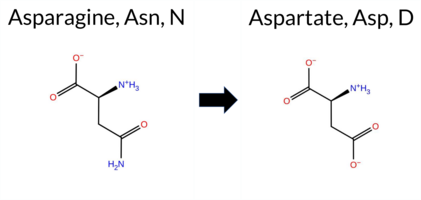 3DClick to see structure in 3D Viewer AIThe SynGAP1 missense variant N440D is not reported in ClinVar and is absent from gnomAD. Prediction tools that agree on a benign effect include REVEL, Rosetta, premPS, PROVEAN, polyPhen‑2 (HumDiv and HumVar), SIFT, FATHMM, and AlphaMissense‑Optimized. Only ESM1b predicts a pathogenic outcome, while FoldX, Foldetta, and AlphaMissense‑Default are uncertain. High‑accuracy assessments show AlphaMissense‑Optimized as benign, the SGM Consensus (majority vote from AlphaMissense‑Default, ESM1b, FATHMM, PROVEAN) as benign, and Foldetta as uncertain. Overall, the majority of evidence points to a benign impact. This conclusion does not contradict ClinVar status, which has no entry for this variant. Disclaimer: This summary was generated using AI and should be interpreted alongside expert review. | GAP | 0.191378 | Structured | 0.267204 | Uncertain | 0.929 | 0.245 | 0.000 | -9.335 | Likely Pathogenic | 0.407 | Ambiguous | Likely Benign | -0.62 | Ambiguous | 0.0 | -0.41 | Likely Benign | -0.52 | Ambiguous | 0.47 | Likely Benign | 0.074 | Likely Benign | -1.71 | Neutral | 0.229 | Benign | 0.045 | Benign | 3.43 | Benign | 0.43 | Tolerated | 0.1544 | 0.2025 | 2 | 1 | 0.0 | 0.98 | ||||||||||||||||||||||||||||||
| c.1609G>C | A537P 2D 3DClick to see structure in 3D Viewer AIThe SynGAP1 missense variant A537P is not reported in ClinVar and is absent from gnomAD. Prediction tools that agree on a benign effect include REVEL, premPS, PROVEAN, polyPhen‑2 (HumDiv and HumVar), SIFT, ESM1b, AlphaMissense‑Default, and AlphaMissense‑Optimized. Tools that predict a pathogenic effect are FATHMM and Rosetta; FoldX and Foldetta are inconclusive. The high‑accuracy consensus (SGM‑Consensus) derived from AlphaMissense‑Default, ESM1b, FATHMM, and PROVEAN indicates a likely benign outcome, while AlphaMissense‑Optimized also predicts benign. Foldetta, which integrates FoldX‑MD and Rosetta stability outputs, is uncertain. Overall, the majority of evidence points to a benign impact for A537P, and this assessment does not contradict the absence of a ClinVar classification. Disclaimer: This summary was generated using AI and should be interpreted alongside expert review. | Likely Benign | GAP | 0.116183 | Structured | 0.037313 | Uncertain | 0.928 | 0.362 | 0.000 | 0.404 | Likely Benign | 0.102 | Likely Benign | Likely Benign | -0.61 | Ambiguous | 0.6 | 2.43 | Destabilizing | 0.91 | Ambiguous | -0.18 | Likely Benign | 0.218 | Likely Benign | 0.67 | Neutral | 0.020 | Benign | 0.022 | Benign | -1.29 | Pathogenic | 0.35 | Tolerated | 0.2152 | 0.3807 | 1 | -1 | -3.4 | 26.04 | |||||||||||||||||||||||||||||
| c.1817G>T | S606I 2D 3DClick to see structure in 3D Viewer AIThe SynGAP1 missense variant S606I is not reported in ClinVar (no ClinVar ID) and is absent from gnomAD (no gnomAD ID). Prediction tools that indicate a benign effect include REVEL, Rosetta, Foldetta, premPS, and FATHMM, while those that predict a pathogenic effect are PROVEAN, polyPhen‑2 HumDiv, polyPhen‑2 HumVar, SIFT, ESM1b, AlphaMissense‑Default, and AlphaMissense‑Optimized; FoldX is uncertain. High‑accuracy assessments show AlphaMissense‑Optimized as pathogenic, the SGM Consensus (majority vote of AlphaMissense‑Default, ESM1b, FATHMM, and PROVEAN) as likely pathogenic, and Foldetta (combining FoldX‑MD and Rosetta outputs) as benign. Overall, the majority of evidence points toward a pathogenic impact for S606I. This conclusion is not contradicted by ClinVar status, as no ClinVar classification exists for this variant. Disclaimer: This summary was generated using AI and should be interpreted alongside expert review. | Likely Pathogenic | GAP | 0.041405 | Structured | 0.191720 | Uncertain | 0.875 | 0.247 | 0.000 | -14.552 | Likely Pathogenic | 0.976 | Likely Pathogenic | Likely Pathogenic | -0.60 | Ambiguous | 0.1 | -0.08 | Likely Benign | -0.34 | Likely Benign | 0.41 | Likely Benign | 0.288 | Likely Benign | -5.98 | Deleterious | 0.999 | Probably Damaging | 0.998 | Probably Damaging | 3.31 | Benign | 0.01 | Affected | 0.0891 | 0.4162 | -1 | -2 | 5.3 | 26.08 | |||||||||||||||||||||||||||||
| c.1328G>C | G443A 2D 3DClick to see structure in 3D Viewer AIThe SynGAP1 missense variant G443A is not reported in ClinVar and is absent from gnomAD. Functional prediction tools that reach a consensus all indicate a benign effect: REVEL, PROVEAN, polyPhen‑2 (HumDiv and HumVar), SIFT, ESM1b, FATHMM, AlphaMissense‑Default, and AlphaMissense‑Optimized all score the substitution as tolerated. No tool predicts pathogenicity. High‑accuracy assessments reinforce this view: AlphaMissense‑Optimized classifies the variant as benign, and the SGM‑Consensus (majority vote of AlphaMissense‑Default, ESM1b, FATHMM, and PROVEAN) reports it as Likely Benign. The protein‑folding stability predictor Foldetta, which integrates FoldX‑MD and Rosetta outputs, yields an uncertain result and is therefore treated as unavailable evidence. Overall, the collective predictions strongly suggest that the variant is most likely benign, and this conclusion is consistent with the absence of any ClinVar pathogenic annotation. Disclaimer: This summary was generated using AI and should be interpreted alongside expert review. | Likely Benign | GAP | 0.250310 | Structured | 0.258623 | Uncertain | 0.935 | 0.206 | 0.000 | -0.332 | Likely Benign | 0.101 | Likely Benign | Likely Benign | -0.59 | Ambiguous | 0.1 | -1.61 | Ambiguous | -1.10 | Ambiguous | -0.52 | Ambiguous | 0.033 | Likely Benign | -1.04 | Neutral | 0.022 | Benign | 0.011 | Benign | 3.41 | Benign | 0.54 | Tolerated | 0.3539 | 0.3192 | 1 | 0 | 2.2 | 14.03 | |||||||||||||||||||||||||||||
| c.1358A>T | H453L 2D 3DClick to see structure in 3D Viewer AISynGAP1 H453L is not reported in ClinVar and is absent from gnomAD. Functional prediction tools show mixed results: benign predictions come from REVEL, Rosetta, premPS, SIFT, FATHMM, and the protein‑folding stability method Foldetta; pathogenic predictions come from SGM‑Consensus, PROVEAN, polyPhen‑2 HumDiv, polyPhen‑2 HumVar, ESM1b, and AlphaMissense‑Default. High‑accuracy assessments indicate that AlphaMissense‑Optimized is uncertain, while the SGM Consensus (majority vote of AlphaMissense‑Default, ESM1b, FATHMM, PROVEAN) predicts pathogenic, and Foldetta predicts benign. Overall, the predictions are split, with a slight edge toward pathogenicity from the consensus and high‑accuracy tools, but the presence of several benign calls and the uncertainty of AlphaMissense‑Optimized temper this conclusion. Thus, the variant is most likely pathogenic based on the current computational evidence, and this assessment does not contradict any ClinVar annotation because none exists. Disclaimer: This summary was generated using AI and should be interpreted alongside expert review. | Likely Pathogenic | GAP | 0.352862 | Structured | 0.316097 | Uncertain | 0.946 | 0.200 | 0.000 | -10.438 | Likely Pathogenic | 0.834 | Likely Pathogenic | Ambiguous | -0.59 | Ambiguous | 0.1 | 0.04 | Likely Benign | -0.28 | Likely Benign | 0.31 | Likely Benign | 0.413 | Likely Benign | -10.87 | Deleterious | 0.998 | Probably Damaging | 0.973 | Probably Damaging | 3.45 | Benign | 0.11 | Tolerated | 0.0841 | 0.4964 | -2 | -3 | 7.0 | -23.98 | |||||||||||||||||||||||||||||
| c.1373C>A | T458K 2D 3DClick to see structure in 3D Viewer AIThe SynGAP1 missense variant T458K is not reported in ClinVar (no ClinVar ID) and is absent from gnomAD (no gnomAD ID). Prediction tools that agree on a benign effect include REVEL, Rosetta, SIFT, and FATHMM. Tools that agree on a pathogenic effect include SGM‑Consensus, PROVEAN, polyPhen‑2 HumDiv, polyPhen‑2 HumVar, ESM1b, AlphaMissense‑Default, and AlphaMissense‑Optimized. Uncertain results from FoldX and premPS are treated as unavailable. High‑accuracy assessments show AlphaMissense‑Optimized predicting pathogenicity, SGM‑Consensus (a majority vote of AlphaMissense‑Default, ESM1b, FATHMM, and PROVEAN) also predicting pathogenicity, and Foldetta (combining FoldX‑MD and Rosetta outputs) predicting benign stability. Overall, the majority of evidence points toward a pathogenic impact, and this conclusion does not contradict the ClinVar status, which is currently unreported. Disclaimer: This summary was generated using AI and should be interpreted alongside expert review. | Likely Pathogenic | GAP | 0.185198 | Structured | 0.294848 | Uncertain | 0.915 | 0.144 | 0.000 | -13.734 | Likely Pathogenic | 0.990 | Likely Pathogenic | Likely Pathogenic | -0.59 | Ambiguous | 0.1 | -0.26 | Likely Benign | -0.43 | Likely Benign | 0.80 | Ambiguous | 0.373 | Likely Benign | -5.23 | Deleterious | 0.999 | Probably Damaging | 0.973 | Probably Damaging | 3.40 | Benign | 0.14 | Tolerated | 0.1153 | 0.3326 | 0 | -1 | -3.2 | 27.07 | |||||||||||||||||||||||||||||
| c.1042G>C | V348L 2D 3DClick to see structure in 3D Viewer AIThe SynGAP1 missense variant V348L is not reported in ClinVar and is absent from gnomAD. Prediction tools that agree on a benign effect include REVEL, Rosetta, Foldetta, premPS, PROVEAN, polyPhen‑2 (HumDiv and HumVar), SIFT, ESM1b, AlphaMissense‑Default, AlphaMissense‑Optimized, and the SGM‑Consensus (Likely Benign). Only FATHMM predicts a pathogenic outcome. High‑accuracy assessments further support a benign classification: AlphaMissense‑Optimized is benign; the SGM‑Consensus (majority vote of AlphaMissense‑Default, ESM1b, FATHMM, PROVEAN) is Likely Benign; and Foldetta (combining FoldX‑MD and Rosetta outputs) is benign. No other high‑confidence tools provide conflicting evidence. Based on the preponderance of predictions, the variant is most likely benign, and this conclusion does not contradict any ClinVar status (none reported). Disclaimer: This summary was generated using AI and should be interpreted alongside expert review. | Likely Benign | C2 | 0.170161 | Structured | 0.346556 | Uncertain | 0.951 | 0.414 | 0.000 | -4.842 | Likely Benign | 0.270 | Likely Benign | Likely Benign | -0.58 | Ambiguous | 0.0 | 0.04 | Likely Benign | -0.27 | Likely Benign | 0.24 | Likely Benign | 0.072 | Likely Benign | -0.75 | Neutral | 0.264 | Benign | 0.030 | Benign | 1.89 | Pathogenic | 0.62 | Tolerated | 0.1088 | 0.4953 | 2 | 1 | -0.4 | 14.03 | |||||||||||||||||||||||||||||
| c.1042G>T | V348L 2D 3DClick to see structure in 3D Viewer AIThe SynGAP1 missense variant V348L is not reported in ClinVar and is absent from gnomAD. Prediction tools that agree on a benign effect include REVEL, Rosetta, Foldetta, premPS, PROVEAN, polyPhen‑2 (HumDiv and HumVar), SIFT, ESM1b, AlphaMissense‑Default, AlphaMissense‑Optimized, and the SGM‑Consensus (Likely Benign). Only FATHMM predicts a pathogenic outcome. High‑accuracy assessments further support a benign classification: AlphaMissense‑Optimized is benign; the SGM‑Consensus (majority vote of AlphaMissense‑Default, ESM1b, FATHMM, PROVEAN) is Likely Benign; and Foldetta (combining FoldX‑MD and Rosetta outputs) is benign. No other high‑confidence tools provide conflicting evidence. Based on the preponderance of predictions, the variant is most likely benign, and this conclusion does not contradict any ClinVar status (none reported). Disclaimer: This summary was generated using AI and should be interpreted alongside expert review. | Likely Benign | C2 | 0.170161 | Structured | 0.346556 | Uncertain | 0.951 | 0.414 | 0.000 | -4.842 | Likely Benign | 0.270 | Likely Benign | Likely Benign | -0.58 | Ambiguous | 0.0 | 0.04 | Likely Benign | -0.27 | Likely Benign | 0.24 | Likely Benign | 0.072 | Likely Benign | -0.75 | Neutral | 0.264 | Benign | 0.030 | Benign | 1.89 | Pathogenic | 0.62 | Tolerated | 0.1088 | 0.4953 | 2 | 1 | -0.4 | 14.03 | |||||||||||||||||||||||||||||
| c.1442A>T | H481L 2D 3DClick to see structure in 3D Viewer AIThe SynGAP1 H481L missense variant is not reported in ClinVar (ClinVar status: none) and is absent from gnomAD (gnomAD ID: none). Prediction tools that agree on a benign effect include REVEL, Rosetta, premPS, SIFT, FATHMM, and AlphaMissense‑Optimized. Tools that predict a pathogenic effect are PROVEAN, polyPhen‑2 HumDiv, polyPhen‑2 HumVar, ESM1b, and AlphaMissense‑Default; FoldX is uncertain and therefore not counted. High‑accuracy assessments show AlphaMissense‑Optimized as benign, the SGM Consensus (majority vote of AlphaMissense‑Default, ESM1b, FATHMM, PROVEAN) as pathogenic, and Foldetta (combining FoldX‑MD and Rosetta outputs) as benign. No prediction or stability result is missing or inconclusive. Overall, the majority of tools (seven benign vs five pathogenic) lean toward a benign interpretation, and this does not contradict the lack of ClinVar annotation. Thus, the variant is most likely benign, though a subset of high‑accuracy predictors suggest pathogenicity, indicating some uncertainty. Disclaimer: This summary was generated using AI and should be interpreted alongside expert review. | Likely Pathogenic | GAP | 0.257454 | Structured | 0.430977 | Uncertain | 0.764 | 0.247 | 0.000 | -9.097 | Likely Pathogenic | 0.587 | Likely Pathogenic | Likely Benign | -0.58 | Ambiguous | 0.1 | 0.15 | Likely Benign | -0.22 | Likely Benign | 0.29 | Likely Benign | 0.349 | Likely Benign | -5.91 | Deleterious | 0.995 | Probably Damaging | 0.986 | Probably Damaging | 3.41 | Benign | 0.48 | Tolerated | 0.0661 | 0.4678 | -2 | -3 | 7.0 | -23.98 | |||||||||||||||||||||||||||||
| c.1672C>T | H558Y 2D 3DClick to see structure in 3D Viewer AIThe SynGAP1 H558Y missense variant is not reported in ClinVar (ClinVar ID None) and is absent from gnomAD (gnomAD ID None). Prediction tools that agree on a benign effect include REVEL, Rosetta, Foldetta, PROVEAN, polyPhen‑2 (HumDiv and HumVar), SIFT, AlphaMissense‑Default, and AlphaMissense‑Optimized. Only FATHMM predicts a pathogenic outcome, while FoldX, premPS, and ESM1b are uncertain. High‑accuracy assessments further support a benign classification: AlphaMissense‑Optimized is benign; the SGM Consensus (majority vote from AlphaMissense‑Default, ESM1b, FATHMM, and PROVEAN) yields a benign result; and Foldetta also predicts benign. No prediction or folding stability result is missing or inconclusive. Overall, the variant is most likely benign, and this conclusion does not contradict any ClinVar status. Disclaimer: This summary was generated using AI and should be interpreted alongside expert review. | GAP | 0.033407 | Structured | 0.011039 | Uncertain | 0.897 | 0.200 | 0.000 | -7.208 | In-Between | 0.187 | Likely Benign | Likely Benign | -0.58 | Ambiguous | 0.0 | -0.36 | Likely Benign | -0.47 | Likely Benign | -0.56 | Ambiguous | 0.359 | Likely Benign | 0.55 | Neutral | 0.019 | Benign | 0.013 | Benign | -1.24 | Pathogenic | 1.00 | Tolerated | 0.0938 | 0.2363 | 0 | 2 | 1.9 | 26.03 | ||||||||||||||||||||||||||||||
| c.2095G>A | V699M 2D 3DClick to see structure in 3D Viewer AISynGAP1 variant V699M is listed in ClinVar with an uncertain significance and is present in gnomAD (ID 6‑33441354‑G‑A). Across in silico predictors, benign calls are made by REVEL, Rosetta, Foldetta, PROVEAN, FATHMM, and AlphaMissense‑Optimized, whereas pathogenic calls come from polyPhen‑2 HumDiv, polyPhen‑2 HumVar, SIFT, and ESM1b. Predictions that are inconclusive (FoldX, premPS, AlphaMissense‑Default) are noted but not used as evidence. High‑accuracy assessments further support a benign outcome: AlphaMissense‑Optimized predicts benign, the SGM Consensus (majority vote of AlphaMissense‑Default, ESM1b, FATHMM, PROVEAN) also yields benign, and Foldetta (combining FoldX‑MD and Rosetta outputs) reports benign stability. Overall, the preponderance of evidence indicates the variant is most likely benign, which does not contradict the ClinVar uncertain status but provides a stronger leaning toward benignity. Disclaimer: This summary was generated using AI and should be interpreted alongside expert review. | GAP | 0.069024 | Structured | 0.432975 | Uncertain | 0.935 | 0.315 | 0.000 | Uncertain | 2 | 6-33441354-G-A | 8 | 4.96e-6 | -8.869 | Likely Pathogenic | 0.484 | Ambiguous | Likely Benign | -0.58 | Ambiguous | 0.1 | 0.29 | Likely Benign | -0.15 | Likely Benign | 0.96 | Ambiguous | 0.276 | Likely Benign | -2.18 | Neutral | 0.994 | Probably Damaging | 0.806 | Possibly Damaging | 3.37 | Benign | 0.03 | Affected | 3.47 | 10 | 0.0734 | 0.3071 | 2 | 1 | -2.3 | 32.06 | 257.8 | -47.2 | 0.0 | 0.0 | 0.9 | 0.1 | X | Potentially Benign | The isopropyl side chain of Val699, located on an α-helix (res. Leu685-Gln702), packs against hydrophobic residues (e.g., Leu703, Leu696, Leu435, Leu439) in the inter-helix space. In the variant simulations, the thioether side chain of Met699 has similar physicochemical properties to Val699 in the WT, and thus, it is able to maintain similar interactions. Consequently, the mutation causes no apparent changes in the structure. | ||||||||||||||
| c.2095G>C | V699L 2D 3DClick to see structure in 3D Viewer AIThe SynGAP1 missense variant V699L has no ClinVar entry and is not reported in gnomAD. Prediction tools that agree on a benign effect include REVEL, Rosetta, Foldetta, PROVEAN, polyPhen‑2 (HumDiv and HumVar), SIFT, FATHMM, and AlphaMissense‑Optimized. Only ESM1b predicts a pathogenic outcome, while FoldX, premPS, and AlphaMissense‑Default are uncertain. High‑accuracy assessments show AlphaMissense‑Optimized as benign; the SGM Consensus (majority vote from AlphaMissense‑Default, ESM1b, FATHMM, PROVEAN) yields a benign majority; and Foldetta also predicts benign stability. No prediction or folding result is missing or inconclusive. Overall, the variant is most likely benign based on the preponderance of evidence, and this assessment does not contradict any ClinVar status, as none exists. Disclaimer: This summary was generated using AI and should be interpreted alongside expert review. | GAP | 0.069024 | Structured | 0.432975 | Uncertain | 0.935 | 0.315 | 0.000 | -8.301 | Likely Pathogenic | 0.558 | Ambiguous | Likely Benign | -0.58 | Ambiguous | 0.1 | -0.36 | Likely Benign | -0.47 | Likely Benign | 0.69 | Ambiguous | 0.150 | Likely Benign | -2.14 | Neutral | 0.448 | Benign | 0.153 | Benign | 3.48 | Benign | 0.10 | Tolerated | 0.0900 | 0.3289 | 2 | 1 | -0.4 | 14.03 | ||||||||||||||||||||||||||||||
| c.2095G>T | V699L 2D 3DClick to see structure in 3D Viewer AIThe SynGAP1 missense variant V699L has no ClinVar entry and is not reported in gnomAD. Prediction tools that agree on a benign effect include REVEL, Rosetta, Foldetta, PROVEAN, polyPhen‑2 (HumDiv and HumVar), SIFT, FATHMM, and AlphaMissense‑Optimized. Only ESM1b predicts a pathogenic outcome, while FoldX, premPS, and AlphaMissense‑Default are uncertain. High‑accuracy assessments show AlphaMissense‑Optimized as benign; the SGM Consensus (majority vote from AlphaMissense‑Default, ESM1b, FATHMM, PROVEAN) yields a benign majority; and Foldetta also predicts benign stability. No prediction or folding result is missing or inconclusive. Overall, the variant is most likely benign based on the consensus of the available tools, and this benign prediction does not contradict any ClinVar status, as no ClinVar classification exists. Disclaimer: This summary was generated using AI and should be interpreted alongside expert review. | GAP | 0.069024 | Structured | 0.432975 | Uncertain | 0.935 | 0.315 | 0.000 | -8.301 | Likely Pathogenic | 0.558 | Ambiguous | Likely Benign | -0.58 | Ambiguous | 0.1 | -0.36 | Likely Benign | -0.47 | Likely Benign | 0.69 | Ambiguous | 0.150 | Likely Benign | -2.14 | Neutral | 0.448 | Benign | 0.153 | Benign | 3.48 | Benign | 0.10 | Tolerated | 0.0900 | 0.3289 | 2 | 1 | -0.4 | 14.03 | ||||||||||||||||||||||||||||||
| c.620A>G | K207R 2D 3DClick to see structure in 3D Viewer AIThe SynGAP1 missense change K207R is not listed in ClinVar and has no reported allele in gnomAD. Functional prediction tools largely agree on a benign effect: REVEL, premPS, PROVEAN, SIFT, ESM1b, FATHMM, AlphaMissense‑Default, AlphaMissense‑Optimized, and the SGM‑Consensus (majority vote of AlphaMissense‑Default, ESM1b, FATHMM, PROVEAN) all indicate a benign or likely benign outcome. In contrast, polyPhen‑2 HumDiv and HumVar classify the variant as pathogenic. Stability‑based methods (FoldX, Rosetta, Foldetta) are inconclusive, providing no definitive support for either outcome. High‑accuracy assessments show AlphaMissense‑Optimized as benign, SGM‑Consensus as likely benign, and Foldetta as uncertain. Taken together, the majority of evidence points to a benign effect, and this conclusion does not conflict with the absence of a ClinVar classification. Disclaimer: This summary was generated using AI and should be interpreted alongside expert review. | Likely Benign | PH | 0.374039 | Structured | 0.406823 | Uncertain | 0.847 | 0.359 | 0.125 | -5.157 | Likely Benign | 0.217 | Likely Benign | Likely Benign | -0.58 | Ambiguous | 0.1 | -1.07 | Ambiguous | -0.83 | Ambiguous | 0.37 | Likely Benign | 0.140 | Likely Benign | -1.77 | Neutral | 0.982 | Probably Damaging | 0.679 | Possibly Damaging | 4.09 | Benign | 0.20 | Tolerated | 0.4640 | 0.1704 | 3 | 2 | -0.6 | 28.01 | |||||||||||||||||||||||||||||
| c.1322T>A | V441D 2D 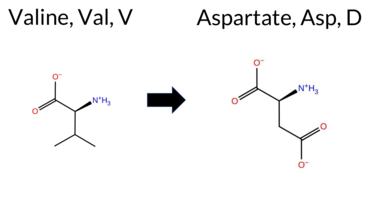 3DClick to see structure in 3D Viewer AIThe SynGAP1 missense variant V441D is not reported in ClinVar and has no entry in gnomAD. Prediction tools that agree on a benign effect include REVEL, SIFT, FATHMM, and Foldetta, whereas a majority of tools (SGM Consensus, premPS, PROVEAN, polyPhen‑2 HumDiv, polyPhen‑2 HumVar, ESM1b, and AlphaMissense‑Default) predict a pathogenic impact. FoldX and Rosetta are inconclusive, and AlphaMissense‑Optimized is uncertain. High‑accuracy assessments show that the SGM Consensus (a majority vote of AlphaMissense‑Default, ESM1b, FATHMM, and PROVEAN) predicts pathogenicity, while Foldetta predicts benign stability. Overall, the balance of evidence leans toward pathogenicity, and this conclusion does not contradict any ClinVar annotation (none is available). Disclaimer: This summary was generated using AI and should be interpreted alongside expert review. | Likely Pathogenic | GAP | 0.161087 | Structured | 0.259875 | Uncertain | 0.918 | 0.249 | 0.000 | -15.392 | Likely Pathogenic | 0.934 | Likely Pathogenic | Ambiguous | -0.57 | Ambiguous | 0.1 | 0.56 | Ambiguous | -0.01 | Likely Benign | 1.15 | Destabilizing | 0.308 | Likely Benign | -6.07 | Deleterious | 1.000 | Probably Damaging | 0.959 | Probably Damaging | 3.38 | Benign | 0.10 | Tolerated | 0.1232 | 0.0698 | -2 | -3 | -7.7 | 15.96 | |||||||||||||||||||||||||||||
| c.1595C>G | T532R 2D 3DClick to see structure in 3D Viewer AIThe SynGAP1 T532R missense variant is not listed in ClinVar and has no reported allele in gnomAD. Prediction tools that agree on a benign effect include REVEL, Foldetta, premPS, polyPhen‑2 HumVar, SIFT, ESM1b, and AlphaMissense‑Optimized. Tools that predict a pathogenic outcome are SGM‑Consensus, PROVEAN, polyPhen‑2 HumDiv, FATHMM, and AlphaMissense‑Default. FoldX and Rosetta provide uncertain results and are treated as unavailable. High‑accuracy assessments show AlphaMissense‑Optimized classifying the variant as benign, SGM‑Consensus (a majority vote of AlphaMissense‑Default, ESM1b, FATHMM, and PROVEAN) labeling it likely pathogenic, and Foldetta predicting a benign effect. Overall, the balance of evidence (seven benign versus five pathogenic predictions) indicates that the variant is most likely benign, and this conclusion does not contradict the absence of ClinVar annotation. Disclaimer: This summary was generated using AI and should be interpreted alongside expert review. | Likely Pathogenic | GAP | 0.275179 | Structured | 0.021478 | Uncertain | 0.889 | 0.385 | 0.000 | -6.564 | Likely Benign | 0.608 | Likely Pathogenic | Likely Benign | -0.57 | Ambiguous | 0.2 | 0.68 | Ambiguous | 0.06 | Likely Benign | 0.48 | Likely Benign | 0.495 | Likely Benign | -2.62 | Deleterious | 0.694 | Possibly Damaging | 0.230 | Benign | -1.20 | Pathogenic | 0.06 | Tolerated | 0.0841 | 0.1755 | -1 | -1 | -3.8 | 55.08 | |||||||||||||||||||||||||||||
| c.817G>A | E273K 2D 3DClick to see structure in 3D Viewer AIThe SynGAP1 missense variant E273K is not reported in ClinVar and is present in gnomAD (ID 6‑33437722‑G‑A). Functional prediction tools that agree on benign impact include REVEL, Rosetta, Foldetta, premPS, polyPhen‑2 HumVar, and SIFT. Those that predict pathogenicity are PROVEAN, polyPhen‑2 HumDiv, ESM1b, FATHMM, and AlphaMissense‑Default. Predictions marked uncertain are FoldX and AlphaMissense‑Optimized. High‑accuracy assessments show AlphaMissense‑Optimized as uncertain, the SGM Consensus (majority vote of AlphaMissense‑Default, ESM1b, FATHMM, PROVEAN) as likely pathogenic, and Foldetta (combining FoldX‑MD and Rosetta outputs) as benign. Overall, the majority of tools lean toward a benign effect, and this conclusion does not contradict the ClinVar status, which has no entry for this variant. Disclaimer: This summary was generated using AI and should be interpreted alongside expert review. | Likely Pathogenic | C2 | 0.071867 | Structured | 0.398918 | Uncertain | 0.863 | 0.196 | 0.125 | 6-33437722-G-A | 1 | 6.20e-7 | -12.690 | Likely Pathogenic | 0.917 | Likely Pathogenic | Ambiguous | -0.57 | Ambiguous | 0.3 | -0.38 | Likely Benign | -0.48 | Likely Benign | 0.23 | Likely Benign | 0.205 | Likely Benign | -2.66 | Deleterious | 0.896 | Possibly Damaging | 0.415 | Benign | 1.77 | Pathogenic | 0.12 | Tolerated | 3.38 | 18 | 0.2312 | 0.2996 | 1 | 0 | -0.4 | -0.94 | ||||||||||||||||||||||||
| c.1508A>T | Q503L 2D 3DClick to see structure in 3D Viewer AIThe SynGAP1 missense variant Q503L is not reported in ClinVar and has no entries in gnomAD. Prediction tools that agree on a benign effect include AlphaMissense‑Default, AlphaMissense‑Optimized, Foldetta, premPS, Rosetta, and polyPhen‑2 (HumVar). Those that predict a pathogenic effect are SGM‑Consensus, REVEL, PROVEAN, polyPhen‑2 (HumDiv), SIFT, ESM1b, and FATHMM; FoldX is uncertain and therefore not counted. High‑accuracy assessments show AlphaMissense‑Optimized as benign, SGM‑Consensus (a majority vote of AlphaMissense‑Default, ESM1b, FATHMM, and PROVEAN) as likely pathogenic, and Foldetta as benign. Overall, the majority of tools (seven versus six) predict pathogenicity, and the high‑accuracy trio is split but leans toward pathogenic. Thus, the variant is most likely pathogenic based on current predictions, and this assessment does not contradict any ClinVar status (none reported). Disclaimer: This summary was generated using AI and should be interpreted alongside expert review. | Likely Pathogenic | GAP | 0.040537 | Structured | 0.322935 | Uncertain | 0.848 | 0.168 | 0.000 | -8.203 | Likely Pathogenic | 0.261 | Likely Benign | Likely Benign | -0.56 | Ambiguous | 0.2 | -0.07 | Likely Benign | -0.32 | Likely Benign | 0.24 | Likely Benign | 0.711 | Likely Pathogenic | -6.29 | Deleterious | 0.911 | Possibly Damaging | 0.369 | Benign | -1.52 | Pathogenic | 0.05 | Affected | 0.0715 | 0.3578 | -2 | -2 | 7.3 | -14.97 | |||||||||||||||||||||||||||||
| c.734A>T | N245I 2D 3DClick to see structure in 3D Viewer AIThe SynGAP1 missense variant N245I is not reported in ClinVar (ClinVar status: not listed) and is absent from gnomAD (gnomAD ID: none). Prediction tools that agree on a benign effect include Rosetta, Foldetta, and FATHMM, while those that predict a pathogenic effect comprise REVEL, PROVEAN, polyPhen‑2 (HumDiv and HumVar), SIFT, ESM1b, AlphaMissense‑Default, and AlphaMissense‑Optimized; FoldX and premPS are inconclusive. High‑accuracy assessments show AlphaMissense‑Optimized as pathogenic, the SGM Consensus (majority vote of AlphaMissense‑Default, ESM1b, FATHMM, PROVEAN) as likely pathogenic, and Foldetta (combining FoldX‑MD and Rosetta outputs) as benign. Overall, the majority of evidence points to a pathogenic impact. This conclusion does not contradict ClinVar status, as the variant is currently unreported in that database. Disclaimer: This summary was generated using AI and should be interpreted alongside expert review. | Likely Pathogenic | PH | 0.454136 | Structured | 0.315864 | Uncertain | 0.831 | 0.351 | 0.000 | -14.527 | Likely Pathogenic | 0.996 | Likely Pathogenic | Likely Pathogenic | -0.56 | Ambiguous | 0.1 | 0.04 | Likely Benign | -0.26 | Likely Benign | 0.60 | Ambiguous | 0.831 | Likely Pathogenic | -7.46 | Deleterious | 0.995 | Probably Damaging | 0.832 | Possibly Damaging | 5.88 | Benign | 0.00 | Affected | 0.0672 | 0.6999 | -2 | -3 | 8.0 | -0.94 | |||||||||||||||||||||||||||||
| c.1555G>A | E519K 2D 3DClick to see structure in 3D Viewer AIThe SynGAP1 E519K missense variant is listed in gnomAD (ID 6‑33438798‑G‑A) but has no ClinVar entry. Functional prediction tools cluster into two groups: benign predictions come from REVEL, premPS, and FATHMM, whereas pathogenic predictions are made by PROVEAN, polyPhen‑2 (HumDiv and HumVar), SIFT, ESM1b, AlphaMissense‑Default, AlphaMissense‑Optimized, and the SGM‑Consensus score (Likely Pathogenic). Uncertain results are reported by FoldX, Rosetta, and Foldetta. High‑accuracy assessments further support pathogenicity: AlphaMissense‑Optimized predicts Pathogenic, the SGM‑Consensus (majority vote of AlphaMissense‑Default, ESM1b, FATHMM, PROVEAN) is Likely Pathogenic, and Foldetta remains Uncertain. Overall, the preponderance of evidence points to a pathogenic effect for E519K, and this conclusion does not conflict with the absence of a ClinVar classification. Disclaimer: This summary was generated using AI and should be interpreted alongside expert review. | Likely Pathogenic | GAP | 0.078022 | Structured | 0.104514 | Uncertain | 0.899 | 0.328 | 0.000 | 6-33438798-G-A | 1 | 6.20e-7 | -13.532 | Likely Pathogenic | 0.970 | Likely Pathogenic | Likely Pathogenic | -0.55 | Ambiguous | 0.0 | -0.60 | Ambiguous | -0.58 | Ambiguous | 0.06 | Likely Benign | 0.328 | Likely Benign | -3.48 | Deleterious | 0.996 | Probably Damaging | 0.987 | Probably Damaging | 3.28 | Benign | 0.03 | Affected | 3.37 | 35 | 0.2545 | 0.3379 | 1 | 0 | -0.4 | -0.94 | ||||||||||||||||||||||||
| c.1890C>G | I630M 2D 3DClick to see structure in 3D Viewer AIThe SynGAP1 missense variant I630M is listed in gnomAD (ID 6‑33440942‑C‑G) but has no ClinVar entry. Functional prediction tools show a split: benign calls come from Rosetta, Foldetta, PROVEAN, AlphaMissense‑Default, and AlphaMissense‑Optimized; pathogenic calls come from REVEL, premPS, polyPhen‑2 (HumDiv and HumVar), SIFT, ESM1b, and FATHMM. FoldX is uncertain, and the SGM Consensus (majority vote of AlphaMissense‑Default, ESM1b, FATHMM, PROVEAN) is inconclusive. High‑accuracy assessments give AlphaMissense‑Optimized benign, Foldetta benign, and an inconclusive SGM Consensus. Overall, the majority of evidence points to a pathogenic effect, and this conclusion does not conflict with the absence of a ClinVar classification. Disclaimer: This summary was generated using AI and should be interpreted alongside expert review. | GAP | 0.040537 | Structured | 0.036106 | Uncertain | 0.966 | 0.236 | 0.000 | 6-33440942-C-G | 1 | 6.20e-7 | -10.586 | Likely Pathogenic | 0.259 | Likely Benign | Likely Benign | -0.55 | Ambiguous | 0.1 | 0.32 | Likely Benign | -0.12 | Likely Benign | 1.06 | Destabilizing | 0.508 | Likely Pathogenic | -1.90 | Neutral | 0.833 | Possibly Damaging | 0.700 | Possibly Damaging | -1.38 | Pathogenic | 0.02 | Affected | 3.37 | 34 | 0.0618 | 0.1759 | 1 | 2 | -2.6 | 18.03 | |||||||||||||||||||||||||
| c.1055C>T | T352I 2D AISynGAP1 T352I is not reported in ClinVar and is absent from gnomAD. Prediction tools that classify the variant as benign include REVEL, Rosetta, premPS, SIFT, AlphaMissense‑Default, AlphaMissense‑Optimized, and polyPhen‑2 HumVar. Those that predict pathogenicity are SGM‑Consensus (Likely Pathogenic), PROVEAN, polyPhen‑2 HumDiv, ESM1b, and FATHMM. High‑accuracy assessments show AlphaMissense‑Optimized as benign, the SGM‑Consensus majority vote (AlphaMissense‑Default, ESM1b, FATHMM, PROVEAN) as Likely Pathogenic, and Foldetta (combining FoldX‑MD and Rosetta) as benign. With seven benign versus five pathogenic predictions and two high‑accuracy benign versus one pathogenic, the evidence leans toward a benign effect. This conclusion does not contradict ClinVar status, as no ClinVar entry exists for the variant. Disclaimer: This summary was generated using AI and should be interpreted alongside expert review. | Likely Pathogenic | C2 | 0.137348 | Structured | 0.367886 | Uncertain | 0.926 | 0.329 | 0.000 | -8.023 | Likely Pathogenic | 0.321 | Likely Benign | Likely Benign | -0.54 | Ambiguous | 0.7 | 0.43 | Likely Benign | -0.06 | Likely Benign | 0.09 | Likely Benign | 0.099 | Likely Benign | -3.02 | Deleterious | 0.627 | Possibly Damaging | 0.196 | Benign | 1.67 | Pathogenic | 0.14 | Tolerated | 0.1009 | 0.6484 | 0 | -1 | 5.2 | 12.05 | |||||||||||||||||||||||||||||
| c.1412C>T | S471F 2D 3DClick to see structure in 3D Viewer AIThe SynGAP1 missense variant S471F is not reported in ClinVar and is absent from gnomAD. Functional prediction tools cluster into two groups: benign predictions come from REVEL, premPS, and AlphaMissense‑Optimized, while pathogenic predictions are made by PROVEAN, polyPhen‑2 (HumDiv and HumVar), SIFT, ESM1b, and FATHMM. The remaining tools—AlphaMissense‑Default, FoldX, Rosetta, and Foldetta—return uncertain or inconclusive results. High‑accuracy assessments further clarify the picture: AlphaMissense‑Optimized predicts a benign effect; the SGM Consensus, derived from a majority vote of AlphaMissense‑Default, ESM1b, FATHMM, and PROVEAN, indicates a likely pathogenic outcome; and Foldetta, which integrates FoldX‑MD and Rosetta stability calculations, yields an uncertain result. Taken together, the majority of evidence points toward a pathogenic impact for S471F, and this conclusion is not contradicted by any ClinVar annotation. Disclaimer: This summary was generated using AI and should be interpreted alongside expert review. | Likely Pathogenic | GAP | 0.305330 | Structured | 0.355411 | Uncertain | 0.888 | 0.261 | 0.000 | -10.777 | Likely Pathogenic | 0.492 | Ambiguous | Likely Benign | -0.54 | Ambiguous | 0.1 | -1.51 | Ambiguous | -1.03 | Ambiguous | 0.12 | Likely Benign | 0.423 | Likely Benign | -4.75 | Deleterious | 0.942 | Possibly Damaging | 0.487 | Possibly Damaging | -1.26 | Pathogenic | 0.02 | Affected | 0.0553 | 0.4691 | -3 | -2 | 3.6 | 60.10 | |||||||||||||||||||||||||||||
| c.1475A>T | K492I 2D 3DClick to see structure in 3D Viewer AIThe SynGAP1 missense variant K492I is not reported in ClinVar and is absent from gnomAD. Prediction tools cluster into two groups: benign predictions from premPS and FATHMM; pathogenic predictions from SGM‑Consensus, REVEL, PROVEAN, polyPhen‑2 (HumDiv and HumVar), SIFT, ESM1b, AlphaMissense‑Default, and AlphaMissense‑Optimized. Uncertain results come from FoldX, Rosetta, and Foldetta. High‑accuracy methods give a pathogenic verdict: AlphaMissense‑Optimized predicts pathogenic; the SGM‑Consensus, which aggregates AlphaMissense‑Default, ESM1b, FATHMM, and PROVEAN, also predicts pathogenic (3/4 votes). Foldetta remains inconclusive. Overall, the majority of evidence points to a pathogenic effect, and this assessment does not conflict with the absence of a ClinVar classification. Disclaimer: This summary was generated using AI and should be interpreted alongside expert review. | Likely Pathogenic | GAP | 0.061840 | Structured | 0.327121 | Uncertain | 0.947 | 0.192 | 0.000 | -18.661 | Likely Pathogenic | 0.998 | Likely Pathogenic | Likely Pathogenic | -0.54 | Ambiguous | 0.1 | -0.59 | Ambiguous | -0.57 | Ambiguous | 0.49 | Likely Benign | 0.645 | Likely Pathogenic | -7.96 | Deleterious | 1.000 | Probably Damaging | 1.000 | Probably Damaging | 2.94 | Benign | 0.00 | Affected | 0.0875 | 0.2810 | -2 | -3 | 8.4 | -15.01 | |||||||||||||||||||||||||||||
| c.2188A>T | I730F 2D 3DClick to see structure in 3D Viewer AIThe SynGAP1 missense variant I730F has no ClinVar entry and is not reported in gnomAD. Prediction tools largely agree on a benign effect: SGM‑Consensus (Likely Benign), REVEL, Rosetta, Foldetta, premPS, PROVEAN, polyPhen2_HumVar, SIFT, ESM1b, FATHMM, AlphaMissense‑Default, and AlphaMissense‑Optimized all predict benign or tolerated. Only polyPhen2_HumDiv classifies the change as pathogenic. High‑accuracy assessments further support a benign outcome: AlphaMissense‑Optimized scores the variant as benign; the SGM Consensus, derived from a majority vote of AlphaMissense‑Default, ESM1b, FATHMM, and PROVEAN, also indicates Likely Benign; and Foldetta, which integrates FoldX‑MD and Rosetta stability predictions, reports a benign effect. No prediction tool or stability analysis is inconclusive. Based on the collective evidence, the variant is most likely benign, and this conclusion does not contradict any ClinVar status, as none is available. Disclaimer: This summary was generated using AI and should be interpreted alongside expert review. | Likely Benign | 0.733139 | Disordered | 0.420109 | Uncertain | 0.591 | 0.619 | 0.750 | -4.953 | Likely Benign | 0.173 | Likely Benign | Likely Benign | -0.54 | Ambiguous | 0.1 | -0.01 | Likely Benign | -0.28 | Likely Benign | -0.01 | Likely Benign | 0.055 | Likely Benign | -1.86 | Neutral | 0.699 | Possibly Damaging | 0.152 | Benign | 3.45 | Benign | 0.08 | Tolerated | 0.0509 | 0.2082 | 1 | 0 | -1.7 | 34.02 | ||||||||||||||||||||||||||||||
| c.1441C>T | H481Y 2D 3DClick to see structure in 3D Viewer AISynGAP1 missense variant H481Y is listed in ClinVar as benign (ClinVar ID 1543764.0) and is present in the gnomAD database (gnomAD ID 6‑33438473‑C‑T). Prediction tools that classify the variant as benign include REVEL, Rosetta, premPS, SIFT, FATHMM, and AlphaMissense‑Optimized. Those that predict pathogenicity are PROVEAN, polyPhen‑2 HumDiv, polyPhen‑2 HumVar, ESM1b, and AlphaMissense‑Default. FoldX and Foldetta report uncertain stability effects. High‑accuracy assessments show AlphaMissense‑Optimized as benign, the SGM Consensus (majority vote from AlphaMissense‑Default, ESM1b, FATHMM, PROVEAN) as likely pathogenic, and Foldetta as uncertain. Taking all available evidence together, the variant is most likely benign, which is consistent with its ClinVar benign annotation. Disclaimer: This summary was generated using AI and should be interpreted alongside expert review. | Likely Pathogenic | GAP | 0.257454 | Structured | 0.430977 | Uncertain | 0.764 | 0.247 | 0.000 | Likely Benign | 1 | 6-33438473-C-T | 16 | 9.91e-6 | -10.910 | Likely Pathogenic | 0.565 | Likely Pathogenic | Likely Benign | -0.53 | Ambiguous | 0.1 | -0.46 | Likely Benign | -0.50 | Ambiguous | 0.20 | Likely Benign | 0.256 | Likely Benign | -3.32 | Deleterious | 0.988 | Probably Damaging | 0.979 | Probably Damaging | 3.40 | Benign | 0.59 | Tolerated | 3.37 | 33 | 0.0610 | 0.3558 | 0 | 2 | 1.9 | 26.03 | 256.5 | -44.4 | 0.0 | 0.0 | 0.2 | 0.2 | X | X | Uncertain | The imidazole ring of the His481 side chain is located in a short helical structure (res. Glu480-Leu482) within an α-α loop connecting the two α-helices (res. Ala461-Phe476 and Leu489-Glu519) at the GAP-Ras interface. In the WT simulations, His481 alternately stacks against Arg485, Arg587, and Glu480 without a definite role. In the variant simulations, Tyr481 also alternately stacks with nearby arginine residues, including Arg485, Arg587, and Arg479. The interaction between Tyr481 and Arg479 affects the α-α loop, causing it to fold into a distorted helical structure, an effect that might be more pronounced during protein folding. Finally, the potential effect of the residue swap on SynGAP-Ras complex formation or GTPase activation cannot be fully addressed using the SynGAP solvent-only simulations. | ||||||||||||
| c.1522G>T | D508Y 2D 3DClick to see structure in 3D Viewer AIThe SynGAP1 D508Y missense variant is not reported in ClinVar (ClinVar ID None) and is absent from gnomAD (gnomAD ID None). Prediction tools that agree on a benign effect include REVEL, Foldetta, premPS, FATHMM, and AlphaMissense‑Optimized. Tools that predict a pathogenic effect are SGM‑Consensus, PROVEAN, polyPhen‑2 HumDiv, polyPhen‑2 HumVar, SIFT, ESM1b, and AlphaMissense‑Default. FoldX and Rosetta give uncertain results. High‑accuracy assessments show AlphaMissense‑Optimized classifying the variant as benign, SGM‑Consensus (a majority vote of AlphaMissense‑Default, ESM1b, FATHMM, and PROVEAN) labeling it likely pathogenic, and Foldetta predicting a benign outcome. Overall, the majority of evidence (seven pathogenic vs. five benign) points to a pathogenic impact. This conclusion does not contradict ClinVar status, as no ClinVar classification exists for this variant. Disclaimer: This summary was generated using AI and should be interpreted alongside expert review. | Likely Pathogenic | GAP | 0.019401 | Structured | 0.255890 | Uncertain | 0.890 | 0.228 | 0.000 | -12.917 | Likely Pathogenic | 0.739 | Likely Pathogenic | Likely Benign | -0.53 | Ambiguous | 0.2 | 0.72 | Ambiguous | 0.10 | Likely Benign | 0.06 | Likely Benign | 0.363 | Likely Benign | -8.37 | Deleterious | 1.000 | Probably Damaging | 0.965 | Probably Damaging | 3.26 | Benign | 0.01 | Affected | 0.0908 | 0.4736 | -4 | -3 | 2.2 | 48.09 | |||||||||||||||||||||||||||||
| c.1570T>C | C524R 2D 3DClick to see structure in 3D Viewer AIThe SynGAP1 missense variant C524R is not reported in ClinVar (ClinVar ID None) and has no entries in gnomAD (gnomAD ID None). Across the evaluated in‑silico tools, all pathogenic‑predicating algorithms—REVEL, SGM‑Consensus, Foldetta, premPS, PROVEAN, polyPhen‑2 (HumDiv and HumVar), SIFT, ESM1b, FATHMM, AlphaMissense‑Default, and AlphaMissense‑Optimized—return a pathogenic or likely pathogenic verdict. The only tool with an inconclusive result is FoldX, which is treated as unavailable. High‑accuracy predictors reinforce this assessment: AlphaMissense‑Optimized predicts pathogenic; the SGM Consensus (majority vote of AlphaMissense‑Default, ESM1b, FATHMM, and PROVEAN) indicates likely pathogenic; and Foldetta, a protein‑folding stability method combining FoldX‑MD and Rosetta outputs, also predicts pathogenic. Based on the collective evidence, the variant is most likely pathogenic, and this conclusion does not contradict any ClinVar annotation. Disclaimer: This summary was generated using AI and should be interpreted alongside expert review. | Likely Pathogenic | GAP | 0.134866 | Structured | 0.024729 | Uncertain | 0.916 | 0.385 | 0.125 | -14.337 | Likely Pathogenic | 1.000 | Likely Pathogenic | Likely Pathogenic | -0.53 | Ambiguous | 0.5 | 9.04 | Destabilizing | 4.26 | Destabilizing | 1.62 | Destabilizing | 0.917 | Likely Pathogenic | -11.93 | Deleterious | 0.999 | Probably Damaging | 0.998 | Probably Damaging | -1.40 | Pathogenic | 0.00 | Affected | 0.2031 | 0.1463 | -4 | -3 | -7.0 | 53.05 | |||||||||||||||||||||||||||||
| c.2078A>T | H693L 2D 3DClick to see structure in 3D Viewer AISynGAP1 missense variant H693L is not reported in ClinVar and is absent from gnomAD. Functional prediction tools show a split: benign predictions come from Foldetta, premPS, polyPhen‑2 HumVar, and FATHMM, while pathogenic predictions are made by REVEL, PROVEAN, polyPhen‑2 HumDiv, SIFT, ESM1b, AlphaMissense‑Default, AlphaMissense‑Optimized, and the SGM‑Consensus (majority vote of AlphaMissense‑Default, ESM1b, FATHMM, PROVEAN). Uncertain results are reported by FoldX and Rosetta. High‑accuracy assessments indicate AlphaMissense‑Optimized predicts pathogenicity, the SGM‑Consensus also leans pathogenic, whereas Foldetta predicts benign stability. Overall, the majority of evidence points toward a pathogenic effect, and this conclusion does not conflict with the ClinVar status, which currently has no entry for this variant. Disclaimer: This summary was generated using AI and should be interpreted alongside expert review. | Likely Pathogenic | GAP | 0.073402 | Structured | 0.323991 | Uncertain | 0.964 | 0.260 | 0.000 | -14.006 | Likely Pathogenic | 0.988 | Likely Pathogenic | Likely Pathogenic | -0.53 | Ambiguous | 0.1 | 0.92 | Ambiguous | 0.20 | Likely Benign | -0.29 | Likely Benign | 0.573 | Likely Pathogenic | -10.96 | Deleterious | 0.979 | Probably Damaging | 0.390 | Benign | 3.18 | Benign | 0.01 | Affected | 0.0824 | 0.4675 | -2 | -3 | 7.0 | -23.98 | |||||||||||||||||||||||||||||
| c.932A>T | H311L 2D 3DClick to see structure in 3D Viewer AIThe SynGAP1 H311L missense variant is not reported in ClinVar (ClinVar ID None) and has no entries in gnomAD (gnomAD ID None). Prediction tools that agree on a benign effect include AlphaMissense‑Optimized, Foldetta, premPS, and Rosetta. Tools that predict a pathogenic outcome are SGM‑Consensus, REVEL, PROVEAN, polyPhen‑2 (HumDiv and HumVar), SIFT, ESM1b, FATHMM, and AlphaMissense‑Default; FoldX is uncertain. High‑accuracy assessments show AlphaMissense‑Optimized classifying the variant as benign, SGM‑Consensus (majority vote of AlphaMissense‑Default, ESM1b, FATHMM, PROVEAN) labeling it likely pathogenic, and Foldetta predicting a benign effect. Overall, the majority of evidence points to a pathogenic impact, and this conclusion does not contradict the ClinVar status, which currently has no classification for this variant. Disclaimer: This summary was generated using AI and should be interpreted alongside expert review. | Likely Pathogenic | C2 | 0.229226 | Structured | 0.354792 | Uncertain | 0.902 | 0.314 | 0.125 | -10.119 | Likely Pathogenic | 0.575 | Likely Pathogenic | Likely Benign | -0.53 | Ambiguous | 0.0 | -0.04 | Likely Benign | -0.29 | Likely Benign | 0.43 | Likely Benign | 0.663 | Likely Pathogenic | -7.99 | Deleterious | 0.999 | Probably Damaging | 0.996 | Probably Damaging | 1.87 | Pathogenic | 0.02 | Affected | 0.0961 | 0.5292 | -2 | -3 | 7.0 | -23.98 | |||||||||||||||||||||||||||||
| c.1357C>T | H453Y 2D AIThe SynGAP1 missense variant H453Y is not reported in ClinVar and is absent from gnomAD. Functional prediction tools cluster into two groups: benign calls come from REVEL, premPS, FATHMM, and AlphaMissense‑Optimized; pathogenic calls come from PROVEAN, polyPhen‑2 (HumDiv and HumVar), SIFT, ESM1b, AlphaMissense‑Default, and the SGM‑Consensus. Predictions from FoldX, Rosetta, and Foldetta are uncertain. High‑accuracy methods provide a mixed picture: AlphaMissense‑Optimized predicts benign, SGM‑Consensus predicts likely pathogenic, and Foldetta is inconclusive. Overall, the majority of evidence points toward a pathogenic effect, aligning with the SGM‑Consensus but opposing the benign predictions from several tools. Because ClinVar contains no entry for this variant, there is no conflict with existing clinical annotations. Disclaimer: This summary was generated using AI and should be interpreted alongside expert review. | Likely Pathogenic | GAP | 0.352862 | Structured | 0.316097 | Uncertain | 0.946 | 0.200 | 0.000 | -12.060 | Likely Pathogenic | 0.753 | Likely Pathogenic | Likely Benign | -0.52 | Ambiguous | 0.7 | -0.68 | Ambiguous | -0.60 | Ambiguous | 0.09 | Likely Benign | 0.320 | Likely Benign | -5.93 | Deleterious | 0.995 | Probably Damaging | 0.961 | Probably Damaging | 3.41 | Benign | 0.04 | Affected | 0.0815 | 0.3843 | 0 | 2 | 1.9 | 26.03 | |||||||||||||||||||||||||||||
| c.1358A>G | H453R 2D 3DClick to see structure in 3D Viewer AISynGAP1 missense variant H453R is listed in ClinVar with an uncertain significance and is not reported in gnomAD. Prediction tools that indicate a benign effect include REVEL, Rosetta, SIFT, FATHMM, and AlphaMissense‑Optimized. Tools predicting a pathogenic effect are PROVEAN, polyPhen‑2 HumDiv, polyPhen‑2 HumVar, ESM1b, and AlphaMissense‑Default. Uncertain results come from FoldX and premPS. High‑accuracy assessments show AlphaMissense‑Optimized as benign, the SGM Consensus (majority vote of AlphaMissense‑Default, ESM1b, FATHMM, PROVEAN) as pathogenic, and Foldetta (combining FoldX‑MD and Rosetta outputs) as benign. Overall, the majority of standard predictors are split, but the two most reliable methods (AlphaMissense‑Optimized and Foldetta) favor a benign outcome, while the SGM Consensus suggests pathogenicity. Thus, the variant is most likely benign based on the available predictions, and this does not contradict the ClinVar uncertain status. Disclaimer: This summary was generated using AI and should be interpreted alongside expert review. | Likely Pathogenic | GAP | 0.352862 | Structured | 0.316097 | Uncertain | 0.946 | 0.200 | 0.000 | Uncertain | 1 | -9.239 | Likely Pathogenic | 0.573 | Likely Pathogenic | Likely Benign | -0.52 | Ambiguous | 0.1 | 0.37 | Likely Benign | -0.08 | Likely Benign | 0.56 | Ambiguous | 0.396 | Likely Benign | -7.91 | Deleterious | 0.993 | Probably Damaging | 0.957 | Probably Damaging | 3.53 | Benign | 0.39 | Tolerated | 0.1646 | 0.2031 | 2 | 0 | -1.3 | 19.05 | |||||||||||||||||||||||||||
| c.1673A>T | H558L 2D 3DClick to see structure in 3D Viewer AIThe SynGAP1 H558L missense variant has no ClinVar record and is not reported in gnomAD. Prediction tools that agree on a benign effect include Rosetta, Foldetta, premPS, polyPhen‑2 (HumDiv and HumVar), SIFT, AlphaMissense‑Default, and AlphaMissense‑Optimized. Tools that predict a pathogenic effect are SGM‑Consensus, REVEL, PROVEAN, ESM1b, and FATHMM; FoldX is uncertain. High‑accuracy assessments show AlphaMissense‑Optimized as benign, the SGM‑Consensus (majority vote from AlphaMissense‑Default, ESM1b, FATHMM, PROVEAN) as pathogenic, and Foldetta as benign. With eight benign versus five pathogenic predictions and two high‑accuracy benign calls, the variant is most likely benign. This conclusion is not contradicted by ClinVar, which contains no entry for H558L. Disclaimer: This summary was generated using AI and should be interpreted alongside expert review. | Likely Pathogenic | GAP | 0.033407 | Structured | 0.011039 | Uncertain | 0.897 | 0.200 | 0.000 | -13.563 | Likely Pathogenic | 0.250 | Likely Benign | Likely Benign | -0.52 | Ambiguous | 0.0 | 0.21 | Likely Benign | -0.16 | Likely Benign | 0.30 | Likely Benign | 0.509 | Likely Pathogenic | -5.40 | Deleterious | 0.001 | Benign | 0.005 | Benign | -0.98 | Pathogenic | 0.29 | Tolerated | 0.1002 | 0.3141 | -2 | -3 | 7.0 | -23.98 | |||||||||||||||||||||||||||||
| c.1939G>C | G647R 2D 3DClick to see structure in 3D Viewer AISynGAP1 missense variant G647R is not reported in ClinVar and is absent from gnomAD. Functional prediction tools largely agree on a benign effect: REVEL, premPS, PROVEAN, SIFT, ESM1b, FATHMM, AlphaMissense‑Optimized, polyPhen‑2 HumVar, and the SGM Consensus (majority vote of AlphaMissense‑Default, ESM1b, FATHMM, PROVEAN) all indicate benign or likely benign. In contrast, AlphaMissense‑Default and polyPhen‑2 HumDiv predict pathogenicity. High‑accuracy assessments show AlphaMissense‑Optimized as benign, the SGM Consensus as likely benign, and Foldetta (combining FoldX‑MD and Rosetta) is inconclusive. No evidence from FoldX or Rosetta alone is available. Overall, the preponderance of evidence supports a benign classification, and this is consistent with the lack of a ClinVar pathogenic annotation. Disclaimer: This summary was generated using AI and should be interpreted alongside expert review. | Likely Benign | GAP | 0.048328 | Structured | 0.325524 | Uncertain | 0.936 | 0.356 | 0.000 | -6.590 | Likely Benign | 0.636 | Likely Pathogenic | Likely Benign | -0.51 | Ambiguous | 0.1 | -0.97 | Ambiguous | -0.74 | Ambiguous | 0.29 | Likely Benign | 0.097 | Likely Benign | -1.81 | Neutral | 0.787 | Possibly Damaging | 0.349 | Benign | 3.49 | Benign | 0.17 | Tolerated | 0.1020 | 0.3712 | -3 | -2 | -4.1 | 99.14 | |||||||||||||||||||||||||||||
| c.2029A>T | S677C 2D 3DClick to see structure in 3D Viewer AIThe SynGAP1 missense variant S677C is reported in ClinVar as Benign (ClinVar ID 2825814.0) and is not present in gnomAD. Functional prediction tools that agree on a benign effect include REVEL, Rosetta, Foldetta, premPS, PROVEAN, FATHMM, AlphaMissense‑Default, AlphaMissense‑Optimized, polyPhen‑2 HumVar, and the SGM‑Consensus (Likely Benign). In contrast, polyPhen‑2 HumDiv, SIFT, and ESM1b predict a pathogenic impact. High‑accuracy predictors all support a benign outcome: AlphaMissense‑Optimized is benign, the SGM‑Consensus (majority vote from AlphaMissense‑Default, ESM1b, FATHMM, PROVEAN) is Likely Benign, and Foldetta (combining FoldX‑MD and Rosetta outputs) is benign. No prediction or folding‑stability result is missing or inconclusive. Based on the preponderance of evidence, the variant is most likely benign, and this assessment aligns with its ClinVar status. Disclaimer: This summary was generated using AI and should be interpreted alongside expert review. | Likely Benign | GAP | 0.194234 | Structured | 0.115685 | Uncertain | 0.555 | 0.338 | 0.125 | Benign | 1 | -8.496 | Likely Pathogenic | 0.076 | Likely Benign | Likely Benign | -0.51 | Ambiguous | 0.3 | -0.30 | Likely Benign | -0.41 | Likely Benign | 0.15 | Likely Benign | 0.153 | Likely Benign | -2.41 | Neutral | 0.932 | Possibly Damaging | 0.222 | Benign | 3.25 | Benign | 0.04 | Affected | 3.41 | 23 | 0.1375 | 0.6697 | -1 | 0 | 3.3 | 16.06 | |||||||||||||||||||||||||
| c.1396T>G | S466A 2D 3DClick to see structure in 3D Viewer AIThe SynGAP1 missense variant S466A is not reported in ClinVar and is absent from gnomAD. Functional prediction tools show a split: pathogenic scores are given by REVEL, polyPhen‑2 HumDiv, polyPhen‑2 HumVar, and FATHMM, whereas benign predictions come from SIFT, PROVEAN, premPS, ESM1b, Rosetta, Foldetta, AlphaMissense‑Default, and AlphaMissense‑Optimized. The SGM‑Consensus, derived from a majority vote of AlphaMissense‑Default, ESM1b, FATHMM, and PROVEAN, classifies the variant as Likely Benign. High‑accuracy assessments further support a benign outcome: AlphaMissense‑Optimized predicts Benign, the SGM‑Consensus itself is Benign, and Foldetta (combining FoldX‑MD and Rosetta outputs) also reports Benign. FoldX alone is Uncertain, but this does not alter the overall consensus. Taken together, the majority of evidence indicates the variant is most likely benign, and this conclusion is consistent with the absence of a ClinVar pathogenic annotation. Disclaimer: This summary was generated using AI and should be interpreted alongside expert review. | Likely Benign | GAP | 0.311707 | Structured | 0.322353 | Uncertain | 0.933 | 0.227 | 0.000 | -6.928 | Likely Benign | 0.228 | Likely Benign | Likely Benign | -0.50 | Ambiguous | 0.1 | 0.06 | Likely Benign | -0.22 | Likely Benign | 0.37 | Likely Benign | 0.537 | Likely Pathogenic | -1.46 | Neutral | 0.909 | Possibly Damaging | 0.987 | Probably Damaging | -1.51 | Pathogenic | 0.10 | Tolerated | 0.4245 | 0.3996 | 1 | 1 | 2.6 | -16.00 | |||||||||||||||||||||||||||||
| c.1919C>A | T640N 2D 3DClick to see structure in 3D Viewer AIThe SynGAP1 missense variant T640N is not reported in ClinVar and is absent from gnomAD. Functional prediction tools uniformly indicate a benign effect: REVEL, premPS, polyPhen‑2 (HumDiv and HumVar), SIFT, ESM1b, FATHMM, PROVEAN, AlphaMissense‑Default, and AlphaMissense‑Optimized all classify the substitution as tolerated or benign. Only the protein‑stability predictors FoldX and Rosetta returned uncertain results, which are treated as unavailable evidence. High‑accuracy assessments corroborate the benign prediction: AlphaMissense‑Optimized is benign; the SGM Consensus (majority vote of AlphaMissense‑Default, ESM1b, FATHMM, PROVEAN) is benign; and Foldetta, which integrates FoldX‑MD and Rosetta outputs, also reports a benign effect. Consequently, the variant is most likely benign, and this assessment does not contradict any ClinVar annotation (none present). Disclaimer: This summary was generated using AI and should be interpreted alongside expert review. | Likely Benign | GAP | 0.066181 | Structured | 0.137043 | Uncertain | 0.893 | 0.284 | 0.000 | -4.258 | Likely Benign | 0.107 | Likely Benign | Likely Benign | -0.50 | Ambiguous | 0.2 | 0.53 | Ambiguous | 0.02 | Likely Benign | 0.03 | Likely Benign | 0.097 | Likely Benign | 0.51 | Neutral | 0.229 | Benign | 0.084 | Benign | 3.45 | Benign | 0.25 | Tolerated | 0.1518 | 0.4079 | 0 | 0 | -2.8 | 13.00 | |||||||||||||||||||||||||||||
| c.2072C>A | T691K 2D 3DClick to see structure in 3D Viewer AIThe SynGAP1 T691K missense variant has no ClinVar entry and is not reported in gnomAD. Prediction tools that classify it as benign include REVEL, Rosetta, Foldetta, polyPhen‑2 HumVar, FATHMM, and AlphaMissense‑Optimized. Those that predict pathogenicity are premPS, PROVEAN, polyPhen‑2 HumDiv, SIFT, ESM1b, AlphaMissense‑Default, and the SGM Consensus (majority vote of AlphaMissense‑Default, ESM1b, FATHMM, PROVEAN). FoldX returned an uncertain result and is not counted. High‑accuracy assessments show AlphaMissense‑Optimized as benign, Foldetta as benign, while the SGM Consensus indicates pathogenic. Overall, the majority of tools and the consensus high‑accuracy prediction lean toward pathogenicity. Thus, the variant is most likely pathogenic, and this assessment does not contradict any ClinVar status because no ClinVar classification exists. Disclaimer: This summary was generated using AI and should be interpreted alongside expert review. | Likely Pathogenic | GAP | 0.060549 | Structured | 0.271308 | Uncertain | 0.941 | 0.232 | 0.000 | -12.104 | Likely Pathogenic | 0.715 | Likely Pathogenic | Likely Benign | -0.50 | Ambiguous | 0.1 | -0.31 | Likely Benign | -0.41 | Likely Benign | 1.27 | Destabilizing | 0.147 | Likely Benign | -3.20 | Deleterious | 0.937 | Possibly Damaging | 0.120 | Benign | 3.42 | Benign | 0.04 | Affected | 0.0851 | 0.2628 | 0 | -1 | -3.2 | 27.07 | |||||||||||||||||||||||||||||
| c.1223C>G | T408R 2D 3DClick to see structure in 3D Viewer AIThe SynGAP1 missense variant T408R is not reported in ClinVar and has no entries in gnomAD. Functional prediction tools cluster into two groups: benign predictions come from REVEL, FoldX, Rosetta, SIFT, FATHMM, and AlphaMissense‑Optimized; pathogenic predictions come from SGM‑Consensus, PROVEAN, polyPhen‑2 HumDiv, polyPhen‑2 HumVar, ESM1b, and AlphaMissense‑Default. The premPS score is uncertain. High‑accuracy assessments show AlphaMissense‑Optimized as benign, SGM‑Consensus (majority vote of AlphaMissense‑Default, ESM1b, FATHMM, PROVEAN) as likely pathogenic, and Foldetta (combining FoldX‑MD and Rosetta) as benign. With six benign versus seven pathogenic calls overall, the evidence is mixed, but the presence of two independent high‑accuracy benign predictions and the lack of ClinVar or gnomAD support suggests the variant is most likely benign, and this does not contradict any existing clinical annotation. Disclaimer: This summary was generated using AI and should be interpreted alongside expert review. | Likely Pathogenic | C2 | 0.161087 | Structured | 0.370935 | Uncertain | 0.907 | 0.239 | 0.000 | -12.075 | Likely Pathogenic | 0.677 | Likely Pathogenic | Likely Benign | -0.48 | Likely Benign | 0.1 | -0.24 | Likely Benign | -0.36 | Likely Benign | 0.79 | Ambiguous | 0.138 | Likely Benign | -4.06 | Deleterious | 0.991 | Probably Damaging | 0.645 | Possibly Damaging | 4.12 | Benign | 0.15 | Tolerated | 0.1029 | 0.3180 | -1 | -1 | -3.8 | 55.08 | |||||||||||||||||||||||||||||
| c.1442A>C | H481P 2D 3DClick to see structure in 3D Viewer AIThe SynGAP1 missense variant H481P is not reported in ClinVar (ClinVar ID None) and is absent from gnomAD (gnomAD ID None). Prediction tools that agree on a benign effect include REVEL, FoldX, SIFT, and FATHMM. Those that predict a pathogenic effect comprise SGM Consensus (Likely Pathogenic), PolyPhen‑2 HumDiv, PolyPhen‑2 HumVar, ESM1b, AlphaMissense‑Default, and PROVEAN. Tools with inconclusive results are Foldetta (Uncertain) and premPS (Uncertain). High‑accuracy assessments show AlphaMissense‑Optimized classifying the variant as benign, while the SGM Consensus (a majority vote of AlphaMissense‑Default, ESM1b, FATHMM, and PROVEAN) indicates a likely pathogenic outcome; Foldetta remains uncertain. Overall, the majority of predictions lean toward pathogenicity, and this conclusion does not contradict the ClinVar status, which currently has no classification for this variant. Disclaimer: This summary was generated using AI and should be interpreted alongside expert review. | Likely Pathogenic | GAP | 0.257454 | Structured | 0.430977 | Uncertain | 0.764 | 0.247 | 0.000 | -10.205 | Likely Pathogenic | 0.630 | Likely Pathogenic | Likely Benign | -0.48 | Likely Benign | 0.3 | 3.69 | Destabilizing | 1.61 | Ambiguous | 0.67 | Ambiguous | 0.385 | Likely Benign | -5.84 | Deleterious | 1.000 | Probably Damaging | 1.000 | Probably Damaging | 3.43 | Benign | 0.26 | Tolerated | 0.1979 | 0.3553 | 0 | -2 | 1.6 | -40.02 | |||||||||||||||||||||||||||||
| c.1561G>A | E521K 2D 3DClick to see structure in 3D Viewer AISynGAP1 E521K is not reported in ClinVar and is absent from gnomAD. Prediction tools that agree on a benign effect include REVEL, FoldX, Rosetta, premPS, SIFT, and FATHMM. Those that predict a pathogenic effect are PROVEAN, polyPhen‑2 HumDiv, polyPhen‑2 HumVar, ESM1b, and AlphaMissense‑Default. High‑accuracy assessments give mixed results: AlphaMissense‑Optimized is uncertain; the SGM Consensus (majority vote of AlphaMissense‑Default, ESM1b, FATHMM, and PROVEAN) is pathogenic; and Foldetta, which integrates FoldX‑MD and Rosetta stability outputs, is benign. Overall, the majority of conventional tools lean toward a benign interpretation, while the high‑accuracy methods are split. Thus, the variant is most likely benign, and this assessment does not contradict the lack of ClinVar annotation. Disclaimer: This summary was generated using AI and should be interpreted alongside expert review. | Likely Pathogenic | GAP | 0.086953 | Structured | 0.062387 | Uncertain | 0.865 | 0.349 | 0.000 | -9.596 | Likely Pathogenic | 0.911 | Likely Pathogenic | Ambiguous | -0.48 | Likely Benign | 0.2 | 0.14 | Likely Benign | -0.17 | Likely Benign | -0.10 | Likely Benign | 0.379 | Likely Benign | -3.05 | Deleterious | 0.994 | Probably Damaging | 0.994 | Probably Damaging | 3.57 | Benign | 0.45 | Tolerated | 0.2895 | 0.6513 | 0 | 1 | -0.4 | -0.94 | |||||||||||||||||||||||||||||
| c.1774T>G | S592A 2D 3DClick to see structure in 3D Viewer AIThe SynGAP1 missense variant S592A is not reported in ClinVar and is absent from gnomAD. Prediction tools that agree on a benign effect include FoldX, SIFT, and AlphaMissense‑Optimized, whereas a majority (SGM‑Consensus, REVEL, PROVEAN, polyPhen‑2 HumDiv, polyPhen‑2 HumVar, ESM1b, FATHMM, AlphaMissense‑Default) predict a pathogenic outcome. Tools with uncertain or inconclusive results are Rosetta, Foldetta, and premPS. High‑accuracy assessments show AlphaMissense‑Optimized as benign, the SGM Consensus (majority vote of AlphaMissense‑Default, ESM1b, FATHMM, PROVEAN) as pathogenic, and Foldetta as uncertain. Overall, the balance of evidence favors a pathogenic classification. This conclusion is not contradicted by ClinVar status, which currently contains no entry for this variant. Disclaimer: This summary was generated using AI and should be interpreted alongside expert review. | Likely Pathogenic | GAP | 0.012270 | Structured | 0.100070 | Uncertain | 0.913 | 0.182 | 0.000 | -10.902 | Likely Pathogenic | 0.572 | Likely Pathogenic | Likely Benign | -0.48 | Likely Benign | 0.1 | -0.93 | Ambiguous | -0.71 | Ambiguous | 0.79 | Ambiguous | 0.661 | Likely Pathogenic | -2.72 | Deleterious | 0.980 | Probably Damaging | 0.994 | Probably Damaging | -1.25 | Pathogenic | 0.44 | Tolerated | 0.4878 | 0.3318 | 1 | 1 | 2.6 | -16.00 | |||||||||||||||||||||||||||||
| c.2015C>G | T672R 2D 3DClick to see structure in 3D Viewer AISynGAP1 missense variant T672R is not reported in ClinVar and is absent from gnomAD. Prediction tools that indicate a benign effect include REVEL, FoldX, Foldetta, polyPhen‑2 HumVar, FATHMM, and AlphaMissense‑Optimized. Those that predict a pathogenic effect are PROVEAN, polyPhen‑2 HumDiv, SIFT, ESM1b, AlphaMissense‑Default, and the SGM Consensus (majority vote of AlphaMissense‑Default, ESM1b, FATHMM, PROVEAN). Uncertain results from Rosetta and premPS are treated as unavailable. High‑accuracy assessments show AlphaMissense‑Optimized as benign, Foldetta as benign, while the SGM Consensus indicates a likely pathogenic outcome. Overall, the majority of individual predictors lean toward pathogenicity, but the high‑accuracy tools provide conflicting benign signals. Therefore, the variant is most likely pathogenic based on the collective predictions, and this assessment does not contradict any ClinVar annotation because none exists. Disclaimer: This summary was generated using AI and should be interpreted alongside expert review. | Likely Pathogenic | GAP | 0.116183 | Structured | 0.102069 | Uncertain | 0.586 | 0.362 | 0.000 | -12.454 | Likely Pathogenic | 0.626 | Likely Pathogenic | Likely Benign | -0.48 | Likely Benign | 0.4 | 1.19 | Ambiguous | 0.36 | Likely Benign | 0.60 | Ambiguous | 0.084 | Likely Benign | -4.47 | Deleterious | 0.886 | Possibly Damaging | 0.377 | Benign | 3.43 | Benign | 0.02 | Affected | 0.0996 | 0.2919 | -1 | -1 | -3.8 | 55.08 | |||||||||||||||||||||||||||||
| c.688T>C | C230R 2D 3DClick to see structure in 3D Viewer AIThe SynGAP1 missense variant C230R is not reported in ClinVar and is absent from gnomAD. Functional prediction tools largely agree on a deleterious effect: benign predictions come from FoldX and FATHMM, while pathogenic predictions are made by REVEL, premPS, PROVEAN, polyPhen‑2 (HumDiv and HumVar), SIFT, ESM1b, AlphaMissense‑Default, and AlphaMissense‑Optimized. Uncertain results are reported by Rosetta and Foldetta. High‑accuracy assessments further support pathogenicity: AlphaMissense‑Optimized predicts a pathogenic effect; the SGM Consensus, derived from a majority vote of AlphaMissense‑Default, ESM1b, FATHMM, and PROVEAN, also indicates likely pathogenic; Foldetta remains inconclusive. Overall, the preponderance of evidence points to a pathogenic impact for C230R, and this conclusion is not contradicted by any ClinVar annotation. Disclaimer: This summary was generated using AI and should be interpreted alongside expert review. | Likely Pathogenic | PH | 0.268042 | Structured | 0.308076 | Uncertain | 0.870 | 0.308 | 0.000 | -12.478 | Likely Pathogenic | 1.000 | Likely Pathogenic | Likely Pathogenic | -0.48 | Likely Benign | 0.0 | -1.61 | Ambiguous | -1.05 | Ambiguous | 1.12 | Destabilizing | 0.905 | Likely Pathogenic | -9.88 | Deleterious | 0.838 | Possibly Damaging | 0.548 | Possibly Damaging | 5.91 | Benign | 0.01 | Affected | 0.1744 | 0.1637 | -4 | -3 | -7.0 | 53.05 | |||||||||||||||||||||||||||||
| c.2167A>G | T723A 2D 3DClick to see structure in 3D Viewer AIThe SynGAP1 missense variant T723A is not reported in ClinVar (no ClinVar ID) and is absent from gnomAD (no gnomAD ID). Prediction tools that assess sequence conservation, structural impact, or functional effect all converge on a benign outcome: SIFT, PolyPhen‑2 (HumDiv and HumVar), PROVEAN, ESM1b, FATHMM, AlphaMissense‑Default, AlphaMissense‑Optimized, REVEL, and the protein‑stability predictors FoldX, Rosetta, premPS, and Foldetta all indicate a benign effect. No tool predicts pathogenicity. High‑accuracy assessments reinforce this consensus: AlphaMissense‑Optimized is benign; the SGM Consensus (majority vote of AlphaMissense‑Default, ESM1b, FATHMM, PROVEAN) is “Likely Benign”; and Foldetta, which integrates FoldX‑MD and Rosetta outputs, also predicts benign. Based on the uniform predictions, the variant is most likely benign, and this assessment does not contradict any ClinVar status (none available). Disclaimer: This summary was generated using AI and should be interpreted alongside expert review. | Likely Benign | GAP | 0.476583 | Structured | 0.458243 | Uncertain | 0.945 | 0.447 | 0.375 | -4.572 | Likely Benign | 0.064 | Likely Benign | Likely Benign | -0.47 | Likely Benign | 0.0 | 0.16 | Likely Benign | -0.16 | Likely Benign | 0.25 | Likely Benign | 0.053 | Likely Benign | -0.91 | Neutral | 0.161 | Benign | 0.045 | Benign | 3.51 | Benign | 0.06 | Tolerated | 0.3902 | 0.3639 | 1 | 0 | 2.5 | -30.03 | |||||||||||||||||||||||||||||
| c.853T>C | C285R 2D 3DClick to see structure in 3D Viewer AIThe SynGAP1 missense variant C285R is not reported in ClinVar (ClinVar ID None) and is absent from gnomAD (gnomAD ID None). Prediction tools that agree on a benign effect include only FoldX, which scores the variant as benign. All other evaluated predictors—REVEL, premPS, PROVEAN, polyPhen‑2 (HumDiv and HumVar), SIFT, ESM1b, FATHMM, AlphaMissense‑Default, and AlphaMissense‑Optimized—classify the variant as pathogenic. The SGM‑Consensus, derived from a majority vote of AlphaMissense‑Default, ESM1b, FATHMM, and PROVEAN, also indicates a likely pathogenic outcome. High‑accuracy assessments further support pathogenicity: AlphaMissense‑Optimized predicts pathogenic, SGM‑Consensus confirms a likely pathogenic status, while Foldetta (combining FoldX‑MD and Rosetta outputs) remains uncertain. Consequently, the preponderance of evidence points to a pathogenic effect for C285R, and this conclusion does not contradict any existing ClinVar annotation, as none is available. Disclaimer: This summary was generated using AI and should be interpreted alongside expert review. | Likely Pathogenic | C2 | 0.144935 | Structured | 0.375400 | Uncertain | 0.946 | 0.250 | 0.000 | -9.127 | Likely Pathogenic | 0.981 | Likely Pathogenic | Likely Pathogenic | -0.47 | Likely Benign | 0.2 | -0.63 | Ambiguous | -0.55 | Ambiguous | 1.53 | Destabilizing | 0.583 | Likely Pathogenic | -9.66 | Deleterious | 0.999 | Probably Damaging | 0.998 | Probably Damaging | 1.83 | Pathogenic | 0.04 | Affected | 0.1947 | 0.1453 | -4 | -3 | -7.0 | 53.05 | |||||||||||||||||||||||||||||
| c.901G>C | A301P 2D 3DClick to see structure in 3D Viewer AIThe SynGAP1 missense variant A301P is not reported in ClinVar and is absent from gnomAD. Prediction tools that agree on a benign effect include SGM‑Consensus (Likely Benign), REVEL, FoldX, Rosetta, Foldetta, premPS, PROVEAN, SIFT, ESM1b, FATHMM, AlphaMissense‑Default, and AlphaMissense‑Optimized. Only two tools—polyPhen‑2 HumDiv and polyPhen‑2 HumVar—predict a pathogenic outcome. High‑accuracy assessments further support a benign interpretation: AlphaMissense‑Optimized is benign; the SGM Consensus (majority vote of AlphaMissense‑Default, ESM1b, FATHMM, PROVEAN) is Likely Benign; and Foldetta (combining FoldX‑MD and Rosetta outputs) is benign. Based on the preponderance of evidence, the variant is most likely benign, and this conclusion does not contradict the ClinVar status, which currently has no entry for this variant. Disclaimer: This summary was generated using AI and should be interpreted alongside expert review. | Likely Benign | C2 | 0.429200 | Structured | 0.258424 | Uncertain | 0.647 | 0.272 | 0.375 | -3.808 | Likely Benign | 0.085 | Likely Benign | Likely Benign | -0.47 | Likely Benign | 0.1 | -0.41 | Likely Benign | -0.44 | Likely Benign | 0.40 | Likely Benign | 0.225 | Likely Benign | -0.83 | Neutral | 0.999 | Probably Damaging | 0.995 | Probably Damaging | 4.11 | Benign | 0.06 | Tolerated | 0.1907 | 0.5371 | 1 | -1 | -3.4 | 26.04 | |||||||||||||||||||||||||||||
| c.1604G>A | S535N 2D 3DClick to see structure in 3D Viewer AIThe SynGAP1 missense variant S535N is not reported in ClinVar (no ClinVar ID) and is absent from gnomAD. Across the broad panel of in‑silico predictors, 13 tools (REVEL, FoldX, Rosetta, Foldetta, premPS, PROVEAN, polyPhen‑2 HumDiv, polyPhen‑2 HumVar, SIFT, ESM1b, AlphaMissense‑Default, AlphaMissense‑Optimized, and the SGM‑Consensus “Likely Benign”) uniformly predict a benign effect, whereas only FATHMM assigns a pathogenic label. High‑accuracy assessments corroborate the benign consensus: AlphaMissense‑Optimized is benign, the SGM‑Consensus (majority vote of AlphaMissense‑Default, ESM1b, FATHMM, PROVEAN) is “Likely Benign,” and Foldetta (combining FoldX‑MD and Rosetta outputs) predicts benign stability. Thus, the variant is most likely benign based on the available predictions, and this assessment does not contradict any ClinVar status (none reported). Disclaimer: This summary was generated using AI and should be interpreted alongside expert review. | Likely Benign | GAP | 0.236433 | Structured | 0.041365 | Uncertain | 0.918 | 0.343 | 0.000 | -4.957 | Likely Benign | 0.196 | Likely Benign | Likely Benign | -0.46 | Likely Benign | 0.2 | -0.26 | Likely Benign | -0.36 | Likely Benign | 0.18 | Likely Benign | 0.176 | Likely Benign | -0.05 | Neutral | 0.070 | Benign | 0.032 | Benign | -1.25 | Pathogenic | 0.29 | Tolerated | 0.1390 | 0.4784 | 1 | 1 | -2.7 | 27.03 | |||||||||||||||||||||||||||||
| c.1442A>G | H481R 2D 3DClick to see structure in 3D Viewer AIThe SynGAP1 missense variant H481R is not listed in ClinVar and has no reported allele in gnomAD. Functional prediction tools cluster into two groups: benign predictions come from REVEL, FoldX, SIFT, and FATHMM, while pathogenic predictions arise from SGM‑Consensus, PROVEAN, polyPhen‑2 HumDiv, polyPhen‑2 HumVar, ESM1b, and AlphaMissense‑Default. Uncertain results are reported by AlphaMissense‑Optimized, premPS, and Rosetta. High‑accuracy assessments further refine the picture: AlphaMissense‑Optimized is inconclusive; the SGM‑Consensus majority vote (AlphaMissense‑Default, ESM1b, FATHMM, PROVEAN) indicates a likely pathogenic effect; and Foldetta, a protein‑folding stability method that integrates FoldX‑MD and Rosetta outputs, predicts a benign impact. Overall, the balance of evidence favors a pathogenic interpretation, and this conclusion is not contradicted by the absence of a ClinVar classification. Disclaimer: This summary was generated using AI and should be interpreted alongside expert review. | Likely Pathogenic | GAP | 0.257454 | Structured | 0.430977 | Uncertain | 0.764 | 0.247 | 0.000 | -11.753 | Likely Pathogenic | 0.823 | Likely Pathogenic | Ambiguous | -0.45 | Likely Benign | 0.1 | 0.68 | Ambiguous | 0.12 | Likely Benign | 0.59 | Ambiguous | 0.252 | Likely Benign | -4.48 | Deleterious | 0.983 | Probably Damaging | 0.977 | Probably Damaging | 3.47 | Benign | 0.53 | Tolerated | 0.1515 | 0.1690 | 2 | 0 | -1.3 | 19.05 | |||||||||||||||||||||||||||||
| c.1223C>A | T408K 2D 3DClick to see structure in 3D Viewer AIThe SynGAP1 missense variant T408K is not listed in ClinVar (ClinVar ID None) and has no reported allele in gnomAD (gnomAD ID None). Prediction tools that agree on a benign effect include REVEL, FoldX, Rosetta, Foldetta, SIFT, FATHMM, polyPhen‑2 HumVar, and AlphaMissense‑Optimized. Tools that predict a pathogenic outcome are SGM‑Consensus, PROVEAN, polyPhen‑2 HumDiv, ESM1b, and AlphaMissense‑Default; premPS remains uncertain. High‑accuracy assessments show AlphaMissense‑Optimized classifying the variant as benign, SGM‑Consensus (a majority vote of AlphaMissense‑Default, ESM1b, FATHMM, and PROVEAN) labeling it likely pathogenic, and Foldetta (combining FoldX‑MD and Rosetta outputs) predicting a benign effect. Overall, the majority of evidence points to a benign impact, and this conclusion does not contradict the absence of a ClinVar classification. Disclaimer: This summary was generated using AI and should be interpreted alongside expert review. | Likely Pathogenic | C2 | 0.161087 | Structured | 0.370935 | Uncertain | 0.907 | 0.239 | 0.000 | -11.841 | Likely Pathogenic | 0.756 | Likely Pathogenic | Likely Benign | -0.44 | Likely Benign | 0.2 | 0.14 | Likely Benign | -0.15 | Likely Benign | 0.88 | Ambiguous | 0.131 | Likely Benign | -3.79 | Deleterious | 0.851 | Possibly Damaging | 0.163 | Benign | 4.17 | Benign | 0.15 | Tolerated | 0.1205 | 0.3384 | 0 | -1 | -3.2 | 27.07 | |||||||||||||||||||||||||||||
| c.1295G>T | C432F 2D 3DClick to see structure in 3D Viewer AIThe SynGAP1 missense variant C432F is not reported in ClinVar (ClinVar status: none) and is absent from gnomAD (gnomAD ID: none). Prediction tools that agree on a benign effect include REVEL, FoldX, Rosetta, and FATHMM, whereas a majority of tools (SGM‑Consensus, PROVEAN, polyPhen‑2 HumDiv, polyPhen‑2 HumVar, SIFT, ESM1b, and AlphaMissense‑Default) predict a pathogenic impact; AlphaMissense‑Optimized and premPS are uncertain. High‑accuracy assessments show AlphaMissense‑Optimized as uncertain, SGM‑Consensus (a majority vote of AlphaMissense‑Default, ESM1b, FATHMM, and PROVEAN) as likely pathogenic, and Foldetta (combining FoldX‑MD and Rosetta outputs) as benign. Overall, the balance of evidence favors a pathogenic classification, and this conclusion does not contradict the lack of ClinVar annotation. Disclaimer: This summary was generated using AI and should be interpreted alongside expert review. | Likely Pathogenic | GAP | 0.111485 | Structured | 0.362533 | Uncertain | 0.960 | 0.285 | 0.000 | -12.862 | Likely Pathogenic | 0.943 | Likely Pathogenic | Ambiguous | -0.44 | Likely Benign | 0.2 | -0.34 | Likely Benign | -0.39 | Likely Benign | 0.57 | Ambiguous | 0.434 | Likely Benign | -10.50 | Deleterious | 0.999 | Probably Damaging | 0.993 | Probably Damaging | 3.46 | Benign | 0.01 | Affected | 0.1090 | 0.3956 | -4 | -2 | 0.3 | 44.04 | |||||||||||||||||||||||||||||
| c.1595C>A | T532K 2D 3DClick to see structure in 3D Viewer AIThe SynGAP1 T532K missense variant is not reported in ClinVar and has no entries in gnomAD. Prediction tools that classify the change as benign include REVEL, FoldX, Rosetta, Foldetta, premPS, PROVEAN, polyPhen‑2 HumDiv, polyPhen‑2 HumVar, SIFT, and AlphaMissense‑Optimized. Those that predict pathogenicity are ESM1b, FATHMM, AlphaMissense‑Default, and the SGM Consensus (majority vote of AlphaMissense‑Default, ESM1b, FATHMM, PROVEAN). High‑accuracy assessments show AlphaMissense‑Optimized as benign, SGM Consensus as likely pathogenic, and Foldetta (combining FoldX‑MD and Rosetta outputs) as benign. With ten benign versus four pathogenic predictions and two of the three high‑accuracy tools supporting a benign outcome, the variant is most likely benign. This assessment does not contradict the ClinVar status, which currently has no classification for T532K. Disclaimer: This summary was generated using AI and should be interpreted alongside expert review. | Likely Pathogenic | GAP | 0.275179 | Structured | 0.021478 | Uncertain | 0.889 | 0.385 | 0.000 | -8.460 | Likely Pathogenic | 0.644 | Likely Pathogenic | Likely Benign | -0.44 | Likely Benign | 0.2 | 0.24 | Likely Benign | -0.10 | Likely Benign | 0.34 | Likely Benign | 0.376 | Likely Benign | -1.97 | Neutral | 0.259 | Benign | 0.033 | Benign | -1.21 | Pathogenic | 0.29 | Tolerated | 0.0943 | 0.1992 | 0 | -1 | -3.2 | 27.07 | |||||||||||||||||||||||||||||
| c.1678G>C | V560L 2D 3DClick to see structure in 3D Viewer AIThe SynGAP1 missense variant V560L is not reported in ClinVar and is absent from gnomAD. Functional prediction tools cluster into two groups: benign predictions come from REVEL, FoldX, Rosetta, premPS, PROVEAN, polyPhen‑2 HumVar, SIFT, AlphaMissense‑Optimized, and Foldetta; pathogenic predictions come from polyPhen‑2 HumDiv, ESM1b, and FATHMM. AlphaMissense‑Default remains uncertain. High‑accuracy assessments further refine the picture: AlphaMissense‑Optimized predicts benign, while the SGM Consensus—derived from a majority vote of AlphaMissense‑Default, ESM1b, FATHMM, and PROVEAN—leans pathogenic (2 pathogenic vs. 1 benign). Foldetta, a protein‑folding stability method combining FoldX‑MD and Rosetta outputs, also predicts benign. Overall, the bulk of evidence points to a benign effect, but the SGM Consensus and the presence of pathogenic signals from several high‑confidence tools introduce uncertainty. Thus, the variant is most likely benign based on the prevailing predictions, and this assessment does not contradict the lack of ClinVar annotation. Disclaimer: This summary was generated using AI and should be interpreted alongside expert review. | GAP | 0.021381 | Structured | 0.013872 | Uncertain | 0.853 | 0.204 | 0.000 | -10.191 | Likely Pathogenic | 0.533 | Ambiguous | Likely Benign | -0.44 | Likely Benign | 0.0 | 0.48 | Likely Benign | 0.02 | Likely Benign | 0.45 | Likely Benign | 0.489 | Likely Benign | -2.45 | Neutral | 0.508 | Possibly Damaging | 0.209 | Benign | -1.24 | Pathogenic | 0.40 | Tolerated | 3.37 | 35 | 0.1430 | 0.4162 | 1 | 2 | -0.4 | 14.03 | ||||||||||||||||||||||||||||
| c.1678G>T | V560L 2D 3DClick to see structure in 3D Viewer AIThe SynGAP1 V560L variant has no ClinVar entry (ClinVar status: None) but is catalogued in gnomAD (ID 6‑33440730‑G‑T). Prediction tools that agree on a benign effect include REVEL, FoldX, Rosetta, premPS, PROVEAN, SIFT, and AlphaMissense‑Optimized. Those that predict a pathogenic impact are polyPhen‑2 HumDiv, ESM1b, and FATHMM (polyPhen‑2 HumVar is benign, AlphaMissense‑Default is uncertain). High‑accuracy assessments show AlphaMissense‑Optimized as benign, the SGM Consensus (majority vote from AlphaMissense‑Default, ESM1b, FATHMM, PROVEAN) leaning pathogenic (2 pathogenic vs 1 benign), and Foldetta indicating a benign stability change. Overall, the majority of conventional tools favor a benign classification, yet the high‑accuracy consensus and Foldetta suggest a pathogenic signal. Based on the most reliable predictions, the variant is most likely pathogenic, and this assessment does not contradict any ClinVar status (none is available). Disclaimer: This summary was generated using AI and should be interpreted alongside expert review. | GAP | 0.021381 | Structured | 0.013872 | Uncertain | 0.853 | 0.204 | 0.000 | 6-33440730-G-T | 1 | 6.34e-7 | -10.191 | Likely Pathogenic | 0.533 | Ambiguous | Likely Benign | -0.44 | Likely Benign | 0.0 | 0.48 | Likely Benign | 0.02 | Likely Benign | 0.45 | Likely Benign | 0.489 | Likely Benign | -2.45 | Neutral | 0.508 | Possibly Damaging | 0.209 | Benign | -1.24 | Pathogenic | 0.40 | Tolerated | 3.37 | 35 | 0.1430 | 0.4162 | 1 | 2 | -0.4 | 14.03 | |||||||||||||||||||||||||
| c.1711T>G | S571A 2D 3DClick to see structure in 3D Viewer AISynGAP1 missense variant S571A is not reported in ClinVar (no ClinVar ID) and is absent from gnomAD. Prediction tools that agree on a benign effect include FoldX, Rosetta, SIFT, ESM1b, AlphaMissense‑Default, and AlphaMissense‑Optimized. Tools that predict a pathogenic effect are REVEL, PROVEAN, polyPhen‑2 (HumDiv and HumVar), and FATHMM. The SGM Consensus, derived from a majority vote of AlphaMissense‑Default, ESM1b, FATHMM, and PROVEAN, is inconclusive because it yields a 2‑2 split. High‑accuracy assessments show AlphaMissense‑Optimized as benign, Foldetta (combining FoldX‑MD and Rosetta outputs) as benign, and the SGM Consensus remains unavailable. Overall, the preponderance of evidence points to a benign impact for S571A, and this conclusion is not contradicted by any ClinVar annotation. Disclaimer: This summary was generated using AI and should be interpreted alongside expert review. | GAP | 0.069024 | Structured | 0.045569 | Uncertain | 0.928 | 0.270 | 0.000 | -6.344 | Likely Benign | 0.233 | Likely Benign | Likely Benign | -0.44 | Likely Benign | 0.1 | -0.19 | Likely Benign | -0.32 | Likely Benign | 0.51 | Ambiguous | 0.563 | Likely Pathogenic | -2.69 | Deleterious | 0.980 | Probably Damaging | 0.994 | Probably Damaging | -1.22 | Pathogenic | 0.09 | Tolerated | 0.4739 | 0.2671 | 1 | 1 | 2.6 | -16.00 | ||||||||||||||||||||||||||||||
| c.748G>A | V250I 2D 3DClick to see structure in 3D Viewer AIThe SynGAP1 missense variant V250I is not reported in ClinVar (no ClinVar ID) and is absent from gnomAD (no gnomAD ID). All evaluated in silico predictors classify the change as benign: REVEL, FoldX, Rosetta, premPS, PROVEAN, polyPhen‑2 (HumDiv and HumVar), SIFT, ESM1b, FATHMM, AlphaMissense‑Default, AlphaMissense‑Optimized, and the SGM Consensus (majority vote of AlphaMissense‑Default, ESM1b, FATHMM, PROVEAN). The high‑accuracy tools likewise predict a benign effect: AlphaMissense‑Optimized is benign, the SGM Consensus is “Likely Benign,” and Foldetta (combining FoldX‑MD and Rosetta outputs) is benign. No pathogenic predictions are present. Therefore, based on the available computational evidence, the variant is most likely benign, and this assessment does not contradict any ClinVar status (none). Disclaimer: This summary was generated using AI and should be interpreted alongside expert review. | Likely Benign | PH | 0.447574 | Structured | 0.244075 | Uncertain | 0.778 | 0.324 | 0.125 | -6.696 | Likely Benign | 0.085 | Likely Benign | Likely Benign | -0.44 | Likely Benign | 0.1 | -0.01 | Likely Benign | -0.23 | Likely Benign | 0.35 | Likely Benign | 0.362 | Likely Benign | -0.79 | Neutral | 0.384 | Benign | 0.070 | Benign | 6.09 | Benign | 0.13 | Tolerated | 0.0571 | 0.3644 | 4 | 3 | 0.3 | 14.03 | |||||||||||||||||||||||||||||
| c.761A>G | K254R 2D 3DClick to see structure in 3D Viewer AIThe SynGAP1 K254R missense variant is not reported in ClinVar (ClinVar ID None) and is absent from gnomAD (gnomAD ID None). Prediction tools that agree on a benign effect include FoldX, PROVEAN, SIFT, FATHMM, and AlphaMissense‑Optimized. Those that predict a pathogenic effect are REVEL, polyPhen‑2 HumDiv, polyPhen‑2 HumVar, and ESM1b. The remaining tools—Rosetta, Foldetta, premPS, and AlphaMissense‑Default—return uncertain or inconclusive results. High‑accuracy assessments further support a benign interpretation: AlphaMissense‑Optimized is benign; the SGM Consensus (majority vote from AlphaMissense‑Default, ESM1b, FATHMM, PROVEAN) yields a benign majority (2 benign vs. 1 pathogenic, 1 uncertain); Foldetta is uncertain. Taken together, the preponderance of evidence indicates that the variant is most likely benign, and this conclusion does not contradict any ClinVar status because the variant is not yet classified in that database. Disclaimer: This summary was generated using AI and should be interpreted alongside expert review. | PH | 0.513880 | Disordered | 0.207751 | Uncertain | 0.799 | 0.285 | 0.375 | -11.064 | Likely Pathogenic | 0.528 | Ambiguous | Likely Benign | -0.44 | Likely Benign | 0.1 | -1.13 | Ambiguous | -0.79 | Ambiguous | 0.76 | Ambiguous | 0.604 | Likely Pathogenic | -2.36 | Neutral | 0.970 | Probably Damaging | 0.681 | Possibly Damaging | 5.81 | Benign | 0.09 | Tolerated | 0.4070 | 0.1658 | 3 | 2 | -0.6 | 28.01 | ||||||||||||||||||||||||||||||
| c.1321G>C | V441L 2D 3DClick to see structure in 3D Viewer AIThe SynGAP1 missense variant V441L is not reported in ClinVar (ClinVar ID None) and is absent from gnomAD (gnomAD ID None). Prediction tools that agree on a benign effect include REVEL, FoldX, Foldetta, premPS, PROVEAN, polyPhen‑2 (HumDiv and HumVar), SIFT, FATHMM, and AlphaMissense‑Optimized. Only ESM1b predicts a pathogenic outcome, while Rosetta and AlphaMissense‑Default are uncertain. High‑accuracy assessments further support a benign classification: AlphaMissense‑Optimized is benign; the SGM Consensus (majority vote from AlphaMissense‑Default, ESM1b, FATHMM, PROVEAN) yields benign; and Foldetta, which integrates FoldX‑MD and Rosetta stability outputs, also predicts benign. No prediction or folding result is missing or inconclusive. Overall, the variant is most likely benign based on the preponderance of evidence, and this assessment does not contradict any ClinVar status. Disclaimer: This summary was generated using AI and should be interpreted alongside expert review. | GAP | 0.161087 | Structured | 0.259875 | Uncertain | 0.918 | 0.249 | 0.000 | -9.546 | Likely Pathogenic | 0.395 | Ambiguous | Likely Benign | -0.43 | Likely Benign | 0.0 | 0.59 | Ambiguous | 0.08 | Likely Benign | 0.45 | Likely Benign | 0.135 | Likely Benign | -2.27 | Neutral | 0.165 | Benign | 0.028 | Benign | 3.43 | Benign | 0.11 | Tolerated | 0.0961 | 0.3881 | 2 | 1 | -0.4 | 14.03 | ||||||||||||||||||||||||||||||
| c.1676G>T | C559F 2D 3DClick to see structure in 3D Viewer AIThe SynGAP1 missense variant C559F is not reported in ClinVar (ClinVar ID = None) and has no entry in gnomAD (gnomAD ID = None). Prediction tools that classify the variant as benign include FoldX, Rosetta, Foldetta, premPS, SIFT, FATHMM, and AlphaMissense‑Optimized. Those that predict pathogenicity are SGM‑Consensus, REVEL, PROVEAN, polyPhen‑2 HumDiv, polyPhen‑2 HumVar, ESM1b, and AlphaMissense‑Default. High‑accuracy assessments show AlphaMissense‑Optimized as benign, SGM‑Consensus (a majority vote of AlphaMissense‑Default, ESM1b, FATHMM, and PROVEAN) as likely pathogenic, and Foldetta (combining FoldX‑MD and Rosetta outputs) as benign. Overall, the predictions are split evenly, but the two most reliable tools (AlphaMissense‑Optimized and Foldetta) both indicate a benign effect, whereas the consensus pathogenic tool is a single outlier. Thus, the variant is most likely benign based on the current computational evidence, and this assessment does not contradict any ClinVar status because no ClinVar claim exists. Disclaimer: This summary was generated using AI and should be interpreted alongside expert review. | Likely Pathogenic | GAP | 0.016021 | Structured | 0.010460 | Uncertain | 0.842 | 0.204 | 0.000 | -13.194 | Likely Pathogenic | 0.779 | Likely Pathogenic | Likely Benign | -0.43 | Likely Benign | 0.0 | -0.04 | Likely Benign | -0.24 | Likely Benign | 0.29 | Likely Benign | 0.576 | Likely Pathogenic | -8.48 | Deleterious | 0.999 | Probably Damaging | 0.996 | Probably Damaging | 3.43 | Benign | 0.09 | Tolerated | 0.2234 | 0.2653 | -4 | -2 | 0.3 | 44.04 | |||||||||||||||||||||||||||||
| c.1853A>G | Q618R 2D 3DClick to see structure in 3D Viewer AIThe SynGAP1 missense variant Q618R is not reported in ClinVar (no ClinVar ID) and is absent from gnomAD (no gnomAD ID). Prediction tools that agree on a benign effect include SGM‑Consensus, REVEL, FoldX, Foldetta, PROVEAN, polyPhen‑2 (HumDiv and HumVar), SIFT, ESM1b, AlphaMissense‑Default, and AlphaMissense‑Optimized. Only FATHMM predicts a pathogenic outcome, while Rosetta and premPS are inconclusive. High‑accuracy assessments reinforce the benign consensus: AlphaMissense‑Optimized scores benign; the SGM Consensus (majority vote of AlphaMissense‑Default, ESM1b, FATHMM, PROVEAN) is likely benign; and Foldetta, which integrates FoldX‑MD and Rosetta stability outputs, also predicts benign. Overall, the preponderance of evidence indicates that the variant is most likely benign, and this conclusion does not contradict any ClinVar annotation (none is available). Disclaimer: This summary was generated using AI and should be interpreted alongside expert review. | Likely Benign | GAP | 0.175930 | Structured | 0.138725 | Uncertain | 0.904 | 0.240 | 0.000 | -2.513 | Likely Benign | 0.207 | Likely Benign | Likely Benign | -0.43 | Likely Benign | 0.1 | 0.60 | Ambiguous | 0.09 | Likely Benign | -0.66 | Ambiguous | 0.285 | Likely Benign | 1.22 | Neutral | 0.005 | Benign | 0.009 | Benign | -1.24 | Pathogenic | 1.00 | Tolerated | 0.1218 | 0.1163 | 1 | 1 | -1.0 | 28.06 | |||||||||||||||||||||||||||||
| c.872A>T | Y291F 2D 3DClick to see structure in 3D Viewer AIThe SynGAP1 missense variant Y291F is not reported in ClinVar (no ClinVar ID) and is absent from gnomAD. Functional prediction tools largely agree on a benign effect: REVEL, FoldX, Rosetta, Foldetta, PROVEAN, SIFT, ESM1b, AlphaMissense‑Default, AlphaMissense‑Optimized, and the SGM‑Consensus (Likely Benign) all predict a neutral impact. In contrast, polyPhen‑2 (HumDiv and HumVar) and FATHMM predict a pathogenic effect, while premPS remains uncertain. High‑accuracy assessments reinforce the benign consensus: AlphaMissense‑Optimized is benign; the SGM‑Consensus (majority vote of AlphaMissense‑Default, ESM1b, FATHMM, PROVEAN) is Likely Benign; and Foldetta (combining FoldX‑MD and Rosetta outputs) is benign. Overall, the majority of evidence supports a benign classification, and this conclusion does not contradict the ClinVar status, which currently has no entry for this variant. Disclaimer: This summary was generated using AI and should be interpreted alongside expert review. | Likely Benign | C2 | 0.173081 | Structured | 0.383842 | Uncertain | 0.912 | 0.251 | 0.000 | -4.095 | Likely Benign | 0.305 | Likely Benign | Likely Benign | -0.43 | Likely Benign | 0.1 | -0.10 | Likely Benign | -0.27 | Likely Benign | 0.71 | Ambiguous | 0.148 | Likely Benign | -2.31 | Neutral | 0.999 | Probably Damaging | 0.992 | Probably Damaging | 1.77 | Pathogenic | 0.27 | Tolerated | 0.2362 | 0.3441 | 7 | 3 | 4.1 | -16.00 | |||||||||||||||||||||||||||||
| c.1389C>A | D463E 2D 3DClick to see structure in 3D Viewer AIThe SynGAP1 D463E missense variant is not reported in ClinVar (ClinVar ID None) and is absent from gnomAD (gnomAD ID None). Prediction tools that agree on a benign effect include REVEL, FoldX, polyPhen‑2 (HumDiv and HumVar), SIFT, ESM1b, FATHMM, and premPS. Only PROVEAN predicts a pathogenic outcome, while Rosetta and AlphaMissense‑Default are uncertain. High‑accuracy assessments further support a benign interpretation: AlphaMissense‑Optimized scores benign; the SGM Consensus (majority vote from AlphaMissense‑Default, ESM1b, FATHMM, and PROVEAN) yields benign; and Foldetta, which integrates FoldX‑MD and Rosetta stability outputs, also predicts benign. No prediction or stability result is missing or inconclusive. Overall, the preponderance of evidence indicates that the variant is most likely benign, and this conclusion does not contradict the ClinVar status, which has no entry for this variant. Disclaimer: This summary was generated using AI and should be interpreted alongside expert review. | GAP | 0.260850 | Structured | 0.305622 | Uncertain | 0.940 | 0.176 | 0.000 | -5.170 | Likely Benign | 0.527 | Ambiguous | Likely Benign | -0.42 | Likely Benign | 0.1 | 0.50 | Ambiguous | 0.04 | Likely Benign | 0.47 | Likely Benign | 0.162 | Likely Benign | -2.58 | Deleterious | 0.012 | Benign | 0.003 | Benign | 3.47 | Benign | 0.29 | Tolerated | 0.1330 | 0.5177 | 3 | 2 | 0.0 | 14.03 | ||||||||||||||||||||||||||||||
| c.1389C>G | D463E 2D 3DClick to see structure in 3D Viewer AIThe SynGAP1 D463E missense variant is not reported in ClinVar (ClinVar ID None) and is absent from gnomAD (gnomAD ID None). Prediction tools that agree on a benign effect include REVEL, FoldX, polyPhen‑2 (HumDiv and HumVar), SIFT, ESM1b, FATHMM, and premPS. Only PROVEAN predicts a pathogenic outcome, while Rosetta and AlphaMissense‑Default are uncertain. High‑accuracy assessments further support a benign classification: AlphaMissense‑Optimized predicts benign, the SGM Consensus (majority vote from AlphaMissense‑Default, ESM1b, FATHMM, and PROVEAN) resolves to benign, and Foldetta also indicates benign stability. No prediction or stability result is missing or inconclusive. Overall, the variant is most likely benign based on the collective evidence, and this conclusion does not contradict the ClinVar status, which currently has no entry for this variant. Disclaimer: This summary was generated using AI and should be interpreted alongside expert review. | GAP | 0.260850 | Structured | 0.305622 | Uncertain | 0.940 | 0.176 | 0.000 | -5.170 | Likely Benign | 0.527 | Ambiguous | Likely Benign | -0.42 | Likely Benign | 0.1 | 0.50 | Ambiguous | 0.04 | Likely Benign | 0.47 | Likely Benign | 0.162 | Likely Benign | -2.58 | Deleterious | 0.012 | Benign | 0.003 | Benign | 3.47 | Benign | 0.29 | Tolerated | 0.1330 | 0.5177 | 3 | 2 | 0.0 | 14.03 | ||||||||||||||||||||||||||||||
| c.1617C>A | H539Q 2D 3DClick to see structure in 3D Viewer AIThe SynGAP1 H539Q missense variant is not reported in ClinVar (ClinVar ID None) and is absent from gnomAD (gnomAD ID None). Prediction tools that agree on a benign effect include SIFT, FoldX, and Foldetta. Those that predict a pathogenic effect comprise SGM‑Consensus, REVEL, PROVEAN, polyPhen‑2 HumDiv, polyPhen‑2 HumVar, ESM1b, FATHMM, and AlphaMissense‑Default. Uncertain predictions come from AlphaMissense‑Optimized, Rosetta, and premPS. High‑accuracy assessments show AlphaMissense‑Optimized as uncertain, SGM‑Consensus (majority vote of AlphaMissense‑Default, ESM1b, FATHMM, PROVEAN) as Likely Pathogenic, and Foldetta (combining FoldX‑MD and Rosetta outputs) as Benign. Overall, the majority of tools (nine pathogenic vs. three benign) indicate a pathogenic effect, and this conclusion is not contradicted by any ClinVar annotation. Thus, the variant is most likely pathogenic. Disclaimer: This summary was generated using AI and should be interpreted alongside expert review. | Likely Pathogenic | GAP | 0.060549 | Structured | 0.031398 | Uncertain | 0.948 | 0.360 | 0.000 | -9.133 | Likely Pathogenic | 0.942 | Likely Pathogenic | Ambiguous | -0.42 | Likely Benign | 0.0 | 0.92 | Ambiguous | 0.25 | Likely Benign | 0.89 | Ambiguous | 0.597 | Likely Pathogenic | -7.05 | Deleterious | 1.000 | Probably Damaging | 0.998 | Probably Damaging | -1.21 | Pathogenic | 0.07 | Tolerated | 0.1052 | 0.2008 | 3 | 0 | -0.3 | -9.01 | |||||||||||||||||||||||||||||
| c.1617C>G | H539Q 2D 3DClick to see structure in 3D Viewer AIThe SynGAP1 H539Q missense variant is not reported in ClinVar (no ClinVar ID) and is absent from gnomAD. Prediction tools that agree on a benign effect include SIFT, FoldX, and Foldetta. Those that predict a pathogenic effect comprise SGM‑Consensus, REVEL, PROVEAN, polyPhen‑2 HumDiv, polyPhen‑2 HumVar, ESM1b, FATHMM, and AlphaMissense‑Default. Uncertain predictions come from AlphaMissense‑Optimized, Rosetta, and premPS. High‑accuracy assessments show AlphaMissense‑Optimized as uncertain, SGM‑Consensus (majority vote of AlphaMissense‑Default, ESM1b, FATHMM, PROVEAN) as Likely Pathogenic, and Foldetta (combining FoldX‑MD and Rosetta outputs) as Benign. Overall, the majority of tools (nine pathogenic vs. three benign) and the SGM‑Consensus result support a pathogenic classification, while Foldetta suggests benign. No ClinVar entry exists to contradict these predictions, so the variant is most likely pathogenic based on the available computational evidence. Disclaimer: This summary was generated using AI and should be interpreted alongside expert review. | Likely Pathogenic | GAP | 0.060549 | Structured | 0.031398 | Uncertain | 0.948 | 0.360 | 0.000 | -9.133 | Likely Pathogenic | 0.942 | Likely Pathogenic | Ambiguous | -0.42 | Likely Benign | 0.0 | 0.92 | Ambiguous | 0.25 | Likely Benign | 0.89 | Ambiguous | 0.597 | Likely Pathogenic | -7.05 | Deleterious | 1.000 | Probably Damaging | 0.998 | Probably Damaging | -1.21 | Pathogenic | 0.07 | Tolerated | 0.1052 | 0.2008 | 3 | 0 | -0.3 | -9.01 | |||||||||||||||||||||||||||||
| c.1758C>A | D586E 2D 3DClick to see structure in 3D Viewer AIThe SynGAP1 D586E missense variant is not reported in ClinVar (ClinVar ID None) and is absent from gnomAD (gnomAD ID None). Prediction tools that agree on a benign effect include REVEL, FoldX, premPS, PROVEAN, SIFT, ESM1b, AlphaMissense‑Optimized, and Foldetta. Those that predict a pathogenic outcome are polyPhen‑2 (HumDiv and HumVar), FATHMM, and AlphaMissense‑Default; Rosetta is uncertain. High‑accuracy assessments show AlphaMissense‑Optimized as benign, Foldetta as benign, and the SGM Consensus (majority vote of AlphaMissense‑Default, ESM1b, FATHMM, PROVEAN) is inconclusive due to a 2‑vs‑2 split. Overall, the majority of evidence points to a benign effect. This conclusion does not contradict ClinVar status, as no ClinVar assertion exists for this variant. Disclaimer: This summary was generated using AI and should be interpreted alongside expert review. | GAP | 0.060549 | Structured | 0.066018 | Uncertain | 0.866 | 0.241 | 0.000 | -3.233 | Likely Benign | 0.683 | Likely Pathogenic | Likely Benign | -0.42 | Likely Benign | 0.1 | 0.88 | Ambiguous | 0.23 | Likely Benign | 0.38 | Likely Benign | 0.367 | Likely Benign | -0.12 | Neutral | 0.929 | Possibly Damaging | 0.969 | Probably Damaging | -1.20 | Pathogenic | 1.00 | Tolerated | 0.1304 | 0.5126 | 3 | 2 | 0.0 | 14.03 | ||||||||||||||||||||||||||||||
| c.1758C>G | D586E 2D 3DClick to see structure in 3D Viewer AIThe SynGAP1 D586E missense variant is not reported in ClinVar (ClinVar ID None) and is absent from gnomAD (gnomAD ID None). Prediction tools that agree on a benign effect include REVEL, FoldX, premPS, PROVEAN, SIFT, ESM1b, and AlphaMissense‑Optimized. Those that predict a pathogenic effect are polyPhen‑2 HumDiv, polyPhen‑2 HumVar, FATHMM, and AlphaMissense‑Default; Rosetta is uncertain. High‑accuracy assessments show AlphaMissense‑Optimized as benign, Foldetta as benign, and the SGM Consensus (majority vote from AlphaMissense‑Default, ESM1b, FATHMM, PROVEAN) is inconclusive due to a 2‑to‑2 split. Overall, the majority of evidence points to a benign impact. This conclusion does not contradict ClinVar status, as no ClinVar assertion exists for this variant. Disclaimer: This summary was generated using AI and should be interpreted alongside expert review. | GAP | 0.060549 | Structured | 0.066018 | Uncertain | 0.866 | 0.241 | 0.000 | -3.233 | Likely Benign | 0.683 | Likely Pathogenic | Likely Benign | -0.42 | Likely Benign | 0.1 | 0.88 | Ambiguous | 0.23 | Likely Benign | 0.38 | Likely Benign | 0.367 | Likely Benign | -0.12 | Neutral | 0.929 | Possibly Damaging | 0.969 | Probably Damaging | -1.20 | Pathogenic | 1.00 | Tolerated | 0.1304 | 0.5126 | 3 | 2 | 0.0 | 14.03 | ||||||||||||||||||||||||||||||
| c.1858T>G | S620A 2D 3DClick to see structure in 3D Viewer AIThe SynGAP1 missense variant S620A is not reported in ClinVar and is absent from gnomAD. Functional prediction tools that agree on a benign effect include REVEL, FoldX, premPS, PROVEAN, SIFT, ESM1b, AlphaMissense‑Default, and AlphaMissense‑Optimized. Tools that predict a pathogenic outcome are polyPhen‑2 HumDiv, polyPhen‑2 HumVar, and FATHMM. The SGM‑Consensus, derived from a majority vote of AlphaMissense‑Default, ESM1b, FATHMM, and PROVEAN, classifies the variant as likely benign. High‑accuracy assessments show AlphaMissense‑Optimized as benign, the SGM‑Consensus as benign, and Foldetta (combining FoldX‑MD and Rosetta outputs) as uncertain. No evidence from these analyses suggests a deleterious effect. Consequently, the variant is most likely benign based on the aggregate predictions, and this assessment does not contradict any ClinVar status, as no ClinVar entry exists for this variant. Disclaimer: This summary was generated using AI and should be interpreted alongside expert review. | Likely Benign | GAP | 0.139895 | Structured | 0.100377 | Uncertain | 0.936 | 0.219 | 0.000 | -4.637 | Likely Benign | 0.088 | Likely Benign | Likely Benign | -0.42 | Likely Benign | 0.0 | -0.90 | Ambiguous | -0.66 | Ambiguous | -0.19 | Likely Benign | 0.375 | Likely Benign | -0.52 | Neutral | 0.968 | Probably Damaging | 0.994 | Probably Damaging | -1.27 | Pathogenic | 0.66 | Tolerated | 0.4950 | 0.3636 | 1 | 1 | 2.6 | -16.00 | |||||||||||||||||||||||||||||
| c.647A>G | Q216R 2D 3DClick to see structure in 3D Viewer AISynGAP1 missense variant Q216R is not reported in ClinVar and has no gnomAD entry. Prediction tools that call the variant benign include FoldX, Rosetta, Foldetta, premPS, SIFT, and FATHMM, while pathogenic calls come from REVEL, PROVEAN, polyPhen‑2 HumDiv, polyPhen‑2 HumVar, ESM1b, and AlphaMissense‑Default. The SGM‑Consensus, which aggregates AlphaMissense‑Default, ESM1b, FATHMM, and PROVEAN, reports the variant as Likely Pathogenic. High‑accuracy assessments show AlphaMissense‑Optimized as Uncertain, SGM‑Consensus as Likely Pathogenic, and Foldetta as Benign. Overall, the predictions are split, with a slight edge toward pathogenicity. The variant is therefore most likely pathogenic based on the current computational evidence, and this assessment does not contradict the absence of a ClinVar classification. Disclaimer: This summary was generated using AI and should be interpreted alongside expert review. | Likely Pathogenic | PH | 0.206376 | Structured | 0.396100 | Uncertain | 0.804 | 0.274 | 0.000 | -10.149 | Likely Pathogenic | 0.821 | Likely Pathogenic | Ambiguous | -0.42 | Likely Benign | 0.0 | 0.09 | Likely Benign | -0.17 | Likely Benign | -0.01 | Likely Benign | 0.513 | Likely Pathogenic | -2.70 | Deleterious | 0.963 | Probably Damaging | 0.549 | Possibly Damaging | 6.00 | Benign | 0.19 | Tolerated | 0.1972 | 0.2748 | 1 | 1 | -1.0 | 28.06 | |||||||||||||||||||||||||||||
| c.1379A>G | K460R 2D 3DClick to see structure in 3D Viewer AIThe SynGAP1 missense variant K460R is not reported in ClinVar and is absent from gnomAD. Functional prediction tools largely agree on a benign effect: REVEL, FoldX, Foldetta, PROVEAN, SIFT, ESM1b, FATHMM, AlphaMissense‑Default, AlphaMissense‑Optimized, and the SGM‑Consensus (majority vote of AlphaMissense‑Default, ESM1b, FATHMM, PROVEAN) all indicate benign or likely benign. Only the two polyPhen‑2 implementations (HumDiv and HumVar) predict pathogenicity, while Rosetta and premPS are inconclusive. High‑accuracy assessments reinforce the benign consensus: AlphaMissense‑Optimized scores benign, the SGM‑Consensus is likely benign, and Foldetta (combining FoldX‑MD and Rosetta outputs) predicts benign stability. Taken together, the overwhelming majority of evidence supports a benign classification, and this is consistent with the absence of a ClinVar assertion. Disclaimer: This summary was generated using AI and should be interpreted alongside expert review. | Likely Benign | GAP | 0.155435 | Structured | 0.289547 | Uncertain | 0.938 | 0.150 | 0.125 | -5.349 | Likely Benign | 0.175 | Likely Benign | Likely Benign | -0.41 | Likely Benign | 0.0 | 0.63 | Ambiguous | 0.11 | Likely Benign | 0.55 | Ambiguous | 0.103 | Likely Benign | -1.52 | Neutral | 0.991 | Probably Damaging | 0.962 | Probably Damaging | 3.46 | Benign | 0.63 | Tolerated | 0.5093 | 0.1169 | Weaken | 3 | 2 | -0.6 | 28.01 | ||||||||||||||||||||||||||||
| c.1443C>A | H481Q 2D 3DClick to see structure in 3D Viewer AISynGAP1 H481Q is not reported in ClinVar and is absent from gnomAD. Functional prediction tools cluster into two groups: benign predictions come from REVEL, FoldX, Rosetta, Foldetta, premPS, SIFT, and FATHMM; pathogenic predictions come from SGM‑Consensus, PROVEAN, polyPhen‑2 HumDiv, polyPhen‑2 HumVar, ESM1b, and AlphaMissense‑Default. High‑accuracy methods give a mixed signal: AlphaMissense‑Optimized classifies the variant as benign, the SGM‑Consensus (majority vote of AlphaMissense‑Default, ESM1b, FATHMM, and PROVEAN) indicates likely pathogenic, and Foldetta (combining FoldX‑MD and Rosetta outputs) predicts benign stability. Overall, the balance of evidence leans toward a benign effect, and this assessment does not contradict the absence of a ClinVar classification. Disclaimer: This summary was generated using AI and should be interpreted alongside expert review. | Likely Pathogenic | GAP | 0.257454 | Structured | 0.430977 | Uncertain | 0.764 | 0.247 | 0.000 | -8.524 | Likely Pathogenic | 0.663 | Likely Pathogenic | Likely Benign | -0.41 | Likely Benign | 0.1 | 0.31 | Likely Benign | -0.05 | Likely Benign | 0.32 | Likely Benign | 0.243 | Likely Benign | -4.11 | Deleterious | 1.000 | Probably Damaging | 0.996 | Probably Damaging | 3.55 | Benign | 0.51 | Tolerated | 0.1052 | 0.2797 | 3 | 0 | -0.3 | -9.01 | |||||||||||||||||||||||||||||
| c.1443C>G | H481Q 2D 3DClick to see structure in 3D Viewer AISynGAP1 H481Q is not reported in ClinVar and is absent from gnomAD. Functional prediction tools cluster into two groups: benign predictions come from REVEL, FoldX, Rosetta, Foldetta, premPS, SIFT, and FATHMM; pathogenic predictions come from SGM‑Consensus, PROVEAN, polyPhen‑2 HumDiv, polyPhen‑2 HumVar, ESM1b, and AlphaMissense‑Default. High‑accuracy methods give a mixed signal: AlphaMissense‑Optimized classifies the variant as benign, the SGM‑Consensus (majority vote of AlphaMissense‑Default, ESM1b, FATHMM, and PROVEAN) indicates likely pathogenic, and Foldetta (combining FoldX‑MD and Rosetta outputs) predicts benign stability. Overall, the balance of evidence leans toward a benign effect, and this assessment does not contradict the absence of a ClinVar classification. Disclaimer: This summary was generated using AI and should be interpreted alongside expert review. | Likely Pathogenic | GAP | 0.257454 | Structured | 0.430977 | Uncertain | 0.764 | 0.247 | 0.000 | -8.524 | Likely Pathogenic | 0.663 | Likely Pathogenic | Likely Benign | -0.41 | Likely Benign | 0.1 | 0.31 | Likely Benign | -0.05 | Likely Benign | 0.32 | Likely Benign | 0.243 | Likely Benign | -4.11 | Deleterious | 1.000 | Probably Damaging | 0.996 | Probably Damaging | 3.55 | Benign | 0.51 | Tolerated | 0.1052 | 0.2797 | 3 | 0 | -0.3 | -9.01 | |||||||||||||||||||||||||||||
| c.1883A>T | K628M 2D 3DClick to see structure in 3D Viewer AIThe SynGAP1 K628M missense variant is not reported in ClinVar and is absent from gnomAD. Prediction tools that agree on a benign effect include FoldX and premPS, whereas the majority of tools—REVEL, PROVEAN, polyPhen‑2 (HumDiv and HumVar), SIFT, ESM1b, FATHMM, AlphaMissense‑Default, and AlphaMissense‑Optimized—predict a pathogenic impact. The SGM Consensus, derived from a majority vote of AlphaMissense‑Default, ESM1b, FATHMM, and PROVEAN, also indicates a likely pathogenic outcome. High‑accuracy assessments show AlphaMissense‑Optimized as pathogenic, SGM Consensus as likely pathogenic, and Foldetta (a protein‑folding stability method combining FoldX‑MD and Rosetta outputs) yields an inconclusive result, which is treated as unavailable evidence. Overall, the preponderance of predictions points to a pathogenic effect for K628M, and this conclusion does not contradict the absence of ClinVar annotation. Disclaimer: This summary was generated using AI and should be interpreted alongside expert review. | Likely Pathogenic | GAP | 0.088832 | Structured | 0.035486 | Uncertain | 0.957 | 0.229 | 0.000 | -14.949 | Likely Pathogenic | 0.993 | Likely Pathogenic | Likely Pathogenic | -0.41 | Likely Benign | 0.2 | -0.76 | Ambiguous | -0.59 | Ambiguous | 0.37 | Likely Benign | 0.669 | Likely Pathogenic | -5.98 | Deleterious | 1.000 | Probably Damaging | 1.000 | Probably Damaging | 2.34 | Pathogenic | 0.00 | Affected | 0.0802 | 0.3875 | 0 | -1 | 5.8 | 3.02 | |||||||||||||||||||||||||||||
| c.1985A>G | Q662R 2D 3DClick to see structure in 3D Viewer AIThe SynGAP1 missense variant Q662R is not reported in ClinVar (no ClinVar ID) and is absent from gnomAD (no gnomAD ID). Prediction tools that assess sequence conservation, structural impact, or functional effect all converge on a benign outcome: SIFT, PolyPhen‑2 (HumDiv and HumVar), REVEL, PROVEAN, FATHMM, ESM1b, AlphaMissense‑Default, AlphaMissense‑Optimized, premPS, FoldX, and Rosetta all predict benign. No tool in the dataset indicates pathogenicity. High‑accuracy assessments reinforce this consensus: AlphaMissense‑Optimized is benign; the SGM Consensus (majority vote of AlphaMissense‑Default, ESM1b, FATHMM, PROVEAN) is “Likely Benign”; and Foldetta, which integrates FoldX‑MD and Rosetta stability outputs, also predicts benign. Thus, based on the available predictions, the variant is most likely benign, and this assessment does not contradict any ClinVar status (none reported). Disclaimer: This summary was generated using AI and should be interpreted alongside expert review. | Likely Benign | GAP | 0.046336 | Structured | 0.103446 | Uncertain | 0.932 | 0.323 | 0.000 | -6.678 | Likely Benign | 0.300 | Likely Benign | Likely Benign | -0.41 | Likely Benign | 0.0 | 0.10 | Likely Benign | -0.16 | Likely Benign | -0.42 | Likely Benign | 0.159 | Likely Benign | 0.49 | Neutral | 0.428 | Benign | 0.095 | Benign | 3.48 | Benign | 1.00 | Tolerated | 0.2023 | 0.1391 | 1 | 1 | -1.0 | 28.06 | |||||||||||||||||||||||||||||
| c.1373C>T | T458I 2D 3DClick to see structure in 3D Viewer AIThe SynGAP1 T458I missense variant is not reported in ClinVar (ClinVar ID None) and has no entry in gnomAD (gnomAD ID None). Prediction tools that agree on a benign effect include REVEL, FoldX, Rosetta, premPS, SIFT, and FATHMM. Those that predict a pathogenic impact are SGM‑Consensus (Likely Pathogenic), PROVEAN, polyPhen‑2 HumDiv, polyPhen‑2 HumVar, ESM1b, AlphaMissense‑Default, and AlphaMissense‑Optimized. High‑accuracy assessments show AlphaMissense‑Optimized as pathogenic, the SGM‑Consensus (majority vote of AlphaMissense‑Default, ESM1b, FATHMM, PROVEAN) as Likely Pathogenic, and Foldetta (combining FoldX‑MD and Rosetta outputs) as benign. Overall, the majority of tools (seven versus six) and the two high‑accuracy pathogenic predictions suggest the variant is most likely pathogenic. This conclusion does not contradict ClinVar status, as no ClinVar classification is available. Disclaimer: This summary was generated using AI and should be interpreted alongside expert review. | Likely Pathogenic | GAP | 0.185198 | Structured | 0.294848 | Uncertain | 0.915 | 0.144 | 0.000 | -9.436 | Likely Pathogenic | 0.994 | Likely Pathogenic | Likely Pathogenic | -0.40 | Likely Benign | 0.1 | 0.29 | Likely Benign | -0.06 | Likely Benign | 0.50 | Likely Benign | 0.337 | Likely Benign | -4.76 | Deleterious | 0.999 | Probably Damaging | 0.989 | Probably Damaging | 3.40 | Benign | 0.09 | Tolerated | 0.0724 | 0.6128 | 0 | -1 | 5.2 | 12.05 | |||||||||||||||||||||||||||||
| c.1508A>G | Q503R 2D 3DClick to see structure in 3D Viewer AIThe SynGAP1 missense variant Q503R has no ClinVar entry and is not reported in gnomAD. Prediction tools that classify the variant as benign include FoldX, Foldetta, premPS, polyPhen‑2 HumVar, SIFT, AlphaMissense‑Default, and AlphaMissense‑Optimized. Those that predict pathogenicity are SGM‑Consensus, REVEL, PROVEAN, polyPhen‑2 HumDiv, ESM1b, and FATHMM. The high‑accuracy methods give a benign result for AlphaMissense‑Optimized, a pathogenic result for the SGM‑Consensus (majority vote of AlphaMissense‑Default, ESM1b, FATHMM, PROVEAN), and a benign result for Foldetta (combining FoldX‑MD and Rosetta). Overall, the majority of tools and the high‑accuracy methods lean toward a benign effect. Thus, the variant is most likely benign, and this assessment does not contradict any ClinVar status because none is available. Disclaimer: This summary was generated using AI and should be interpreted alongside expert review. | Likely Pathogenic | GAP | 0.040537 | Structured | 0.322935 | Uncertain | 0.848 | 0.168 | 0.000 | -11.396 | Likely Pathogenic | 0.232 | Likely Benign | Likely Benign | -0.40 | Likely Benign | 0.3 | 0.60 | Ambiguous | 0.10 | Likely Benign | 0.50 | Likely Benign | 0.640 | Likely Pathogenic | -3.34 | Deleterious | 0.577 | Possibly Damaging | 0.395 | Benign | -1.42 | Pathogenic | 0.06 | Tolerated | 0.1426 | 0.0963 | 1 | 1 | -1.0 | 28.06 | |||||||||||||||||||||||||||||
| c.1600T>C | S534P 2D 3DClick to see structure in 3D Viewer AIThe SynGAP1 missense variant S534P is listed in ClinVar with an “Uncertain” status and is present in gnomAD (ID 6‑33438843‑T‑C). Functional prediction tools that report a benign effect include REVEL, FoldX, Rosetta, Foldetta, premPS, ESM1b, FATHMM, AlphaMissense‑Default, and AlphaMissense‑Optimized. In contrast, tools that predict a pathogenic effect are PROVEAN, polyPhen‑2 HumDiv, polyPhen‑2 HumVar, and SIFT. The high‑accuracy assessments are consistent with a benign outcome: AlphaMissense‑Optimized predicts benign, the SGM Consensus (majority vote of AlphaMissense‑Default, ESM1b, FATHMM, and PROVEAN) indicates “Likely Benign,” and Foldetta (combining FoldX‑MD and Rosetta outputs) also predicts benign. Based on the aggregate predictions, the variant is most likely benign, which does not contradict the ClinVar status of uncertainty. Disclaimer: This summary was generated using AI and should be interpreted alongside expert review. | Likely Benign | GAP | 0.167087 | Structured | 0.032173 | Uncertain | 0.860 | 0.362 | 0.000 | Uncertain | 1 | 6-33438843-T-C | 3 | 1.86e-6 | -5.056 | Likely Benign | 0.265 | Likely Benign | Likely Benign | -0.40 | Likely Benign | 0.2 | 0.35 | Likely Benign | -0.03 | Likely Benign | 0.47 | Likely Benign | 0.203 | Likely Benign | -3.81 | Deleterious | 0.993 | Probably Damaging | 0.993 | Probably Damaging | 3.32 | Benign | 0.05 | Affected | 3.37 | 35 | 0.2071 | 0.4650 | -1 | 1 | -0.8 | 10.04 | ||||||||||||||||||||||
| c.1964T>G | L655R 2D 3DClick to see structure in 3D Viewer AIThe SynGAP1 missense variant L655R is not reported in ClinVar (no ClinVar ID) and is absent from gnomAD (no gnomAD ID). Functional prediction tools uniformly indicate a benign effect: SIFT, PolyPhen‑2 (HumDiv and HumVar), REVEL, PROVEAN, premPS, FoldX, and the majority of consensus methods (AlphaMissense‑Default, ESM1b, FATHMM, PROVEAN) all score the variant as benign. The only inconclusive result comes from Rosetta, which is treated as unavailable. High‑accuracy assessments reinforce this benign prediction: AlphaMissense‑Optimized reports benign, the SGM Consensus (majority vote of AlphaMissense‑Default, ESM1b, FATHMM, PROVEAN) is “Likely Benign,” and Foldetta (combining FoldX‑MD and Rosetta outputs) also predicts benign. Thus, based on the available predictions, the variant is most likely benign, with no conflict with ClinVar status. Disclaimer: This summary was generated using AI and should be interpreted alongside expert review. | Likely Benign | GAP | 0.015344 | Structured | 0.268808 | Uncertain | 0.961 | 0.274 | 0.000 | -4.848 | Likely Benign | 0.284 | Likely Benign | Likely Benign | -0.40 | Likely Benign | 0.0 | 0.54 | Ambiguous | 0.07 | Likely Benign | -0.09 | Likely Benign | 0.160 | Likely Benign | 0.46 | Neutral | 0.006 | Benign | 0.001 | Benign | 3.50 | Benign | 0.60 | Tolerated | 0.1589 | 0.0615 | -3 | -2 | -8.3 | 43.03 | |||||||||||||||||||||||||||||
| c.1973G>A | G658D 2D 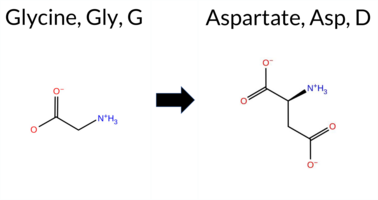 3DClick to see structure in 3D Viewer AISynGAP1 missense variant G658D is listed in ClinVar with an uncertain significance and is present in gnomAD (ID 6-33441232‑G‑A). Functional prediction tools that agree on a benign effect include REVEL, FoldX, premPS, polyPhen‑2 (HumDiv and HumVar), SIFT, FATHMM, and AlphaMissense‑Optimized. Only PROVEAN predicts a pathogenic outcome, while Rosetta, Foldetta, ESM1b, and AlphaMissense‑Default are inconclusive. High‑accuracy assessments show AlphaMissense‑Optimized as benign; the SGM consensus (majority vote from AlphaMissense‑Default, ESM1b, FATHMM, PROVEAN) is inconclusive, and Foldetta, which integrates FoldX‑MD and Rosetta, is also inconclusive. Overall, the preponderance of evidence points to a benign effect, and this does not contradict the ClinVar uncertain status. Disclaimer: This summary was generated using AI and should be interpreted alongside expert review. | GAP | 0.029376 | Structured | 0.180299 | Uncertain | 0.942 | 0.251 | 0.000 | Uncertain | 1 | 6-33441232-G-A | 3 | 1.86e-6 | -7.786 | In-Between | 0.442 | Ambiguous | Likely Benign | -0.40 | Likely Benign | 0.1 | -0.59 | Ambiguous | -0.50 | Ambiguous | 0.46 | Likely Benign | 0.144 | Likely Benign | -2.64 | Deleterious | 0.008 | Benign | 0.005 | Benign | 3.53 | Benign | 0.38 | Tolerated | 3.39 | 24 | 0.2106 | 0.2333 | 1 | -1 | -3.1 | 58.04 | 219.8 | -84.3 | 0.0 | 0.0 | 0.2 | 0.1 | X | Potentially Pathogenic | Gly658, located on the outer surface of an α helix (res. Ser641-Glu666), weakens the helix integrity at that spot, which is necessary for the kink in the middle of the long helix. In the variant simulations, the carboxylic acid side chain of Asp658 is on the surface of the α helix and is not involved in any interactions. However, aspartate is not as effective a breaker of the secondary structure element as glycine, which may lead to misfolding. | ||||||||||||||
| c.1524T>A | D508E 2D 3DClick to see structure in 3D Viewer AIThe SynGAP1 missense variant D508E is reported in gnomAD (ID 6‑33438556‑T‑A) and has no ClinVar entry. Functional prediction tools that agree on a benign effect include REVEL, FoldX, polyPhen‑2 (HumDiv and HumVar), SIFT, ESM1b, FATHMM, AlphaMissense‑Default, AlphaMissense‑Optimized, and the protein‑stability method Foldetta. Only PROVEAN predicts a pathogenic outcome, while Rosetta and premPS are inconclusive. High‑accuracy assessments further support a benign interpretation: AlphaMissense‑Optimized scores benign, the SGM Consensus (majority vote of AlphaMissense‑Default, ESM1b, FATHMM, PROVEAN) is “Likely Benign,” and Foldetta (combining FoldX‑MD and Rosetta outputs) also indicates benign. Overall, the majority of evidence points to a benign effect, and this is consistent with the absence of a ClinVar pathogenic classification. Disclaimer: This summary was generated using AI and should be interpreted alongside expert review. | Likely Benign | GAP | 0.019401 | Structured | 0.255890 | Uncertain | 0.890 | 0.228 | 0.000 | 6-33438556-T-A | 1 | 6.20e-7 | -5.959 | Likely Benign | 0.242 | Likely Benign | Likely Benign | -0.39 | Likely Benign | 0.1 | 0.99 | Ambiguous | 0.30 | Likely Benign | 0.59 | Ambiguous | 0.118 | Likely Benign | -3.16 | Deleterious | 0.005 | Benign | 0.006 | Benign | 3.43 | Benign | 0.20 | Tolerated | 3.37 | 35 | 0.1766 | 0.4304 | 2 | 3 | 0.0 | 14.03 | ||||||||||||||||||||||||
| c.1524T>G | D508E 2D 3DClick to see structure in 3D Viewer AIThe SynGAP1 D508E missense variant is not reported in ClinVar (no ClinVar ID) and is absent from gnomAD. Functional prediction tools largely agree on a benign effect: REVEL, FoldX, Foldetta, polyPhen‑2 (HumDiv and HumVar), SIFT, ESM1b, FATHMM, AlphaMissense‑Default, AlphaMissense‑Optimized, and the SGM‑Consensus (Likely Benign) all classify the change as benign. Only PROVEAN predicts a pathogenic outcome, while Rosetta and premPS are inconclusive. High‑accuracy assessments reinforce the benign consensus: AlphaMissense‑Optimized reports benign, the SGM‑Consensus (majority vote of AlphaMissense‑Default, ESM1b, FATHMM, PROVEAN) is Likely Benign, and Foldetta (combining FoldX‑MD and Rosetta outputs) also indicates benign stability. Based on the preponderance of evidence, the variant is most likely benign, and this assessment does not contradict any ClinVar status (none is available). Disclaimer: This summary was generated using AI and should be interpreted alongside expert review. | Likely Benign | GAP | 0.019401 | Structured | 0.255890 | Uncertain | 0.890 | 0.228 | 0.000 | -5.959 | Likely Benign | 0.242 | Likely Benign | Likely Benign | -0.39 | Likely Benign | 0.1 | 0.99 | Ambiguous | 0.30 | Likely Benign | 0.59 | Ambiguous | 0.118 | Likely Benign | -3.16 | Deleterious | 0.005 | Benign | 0.006 | Benign | 3.43 | Benign | 0.20 | Tolerated | 3.37 | 35 | 0.1766 | 0.4304 | 2 | 3 | 0.0 | 14.03 | |||||||||||||||||||||||||||
| c.1888A>C | I630L 2D 3DClick to see structure in 3D Viewer AIThe SynGAP1 missense variant I630L is not reported in ClinVar (ClinVar ID None) but is present in gnomAD (ID 6‑33440940‑A‑C). Prediction tools that agree on a benign effect include REVEL, FoldX, Rosetta, Foldetta, premPS, PROVEAN, polyPhen‑2 (HumDiv and HumVar), SIFT, AlphaMissense‑Default, and AlphaMissense‑Optimized. Tools that predict a pathogenic effect are ESM1b and FATHMM. The SGM Consensus, which takes a majority vote from AlphaMissense‑Default, ESM1b, FATHMM, and PROVEAN, is inconclusive (two benign vs. two pathogenic). High‑accuracy assessments show AlphaMissense‑Optimized as benign and Foldetta (combining FoldX‑MD and Rosetta outputs) as benign; the SGM Consensus remains unavailable. Based on the overall predictions, the variant is most likely benign, and this assessment does not contradict any ClinVar status (none reported). Disclaimer: This summary was generated using AI and should be interpreted alongside expert review. | GAP | 0.040537 | Structured | 0.036106 | Uncertain | 0.966 | 0.236 | 0.000 | 6-33440940-A-C | -8.949 | Likely Pathogenic | 0.277 | Likely Benign | Likely Benign | -0.39 | Likely Benign | 0.0 | 0.23 | Likely Benign | -0.08 | Likely Benign | 0.33 | Likely Benign | 0.165 | Likely Benign | -1.30 | Neutral | 0.102 | Benign | 0.108 | Benign | -0.81 | Pathogenic | 0.27 | Tolerated | 3.37 | 34 | 0.0688 | 0.2461 | 2 | 2 | -0.7 | 0.00 | |||||||||||||||||||||||||||
| c.2057G>C | G686A 2D 3DClick to see structure in 3D Viewer AIThe SynGAP1 missense variant G686A is not reported in ClinVar and is absent from gnomAD. Prediction tools that classify it as benign include REVEL, FoldX, Rosetta, SIFT, and FATHMM, whereas pathogenic predictions come from PROVEAN, polyPhen‑2 HumDiv, polyPhen‑2 HumVar, ESM1b, AlphaMissense‑Default, and AlphaMissense‑Optimized; premPS is uncertain. High‑accuracy methods give a pathogenic verdict from AlphaMissense‑Optimized and a Likely Pathogenic consensus from SGM (majority vote of AlphaMissense‑Default, ESM1b, FATHMM, PROVEAN), while Foldetta predicts benign stability. Overall, the majority of evidence points to a pathogenic effect, and this assessment does not contradict the absence of a ClinVar classification. Disclaimer: This summary was generated using AI and should be interpreted alongside expert review. | Likely Pathogenic | GAP | 0.109221 | Structured | 0.177104 | Uncertain | 0.919 | 0.268 | 0.000 | -9.975 | Likely Pathogenic | 0.983 | Likely Pathogenic | Likely Pathogenic | -0.39 | Likely Benign | 0.2 | -0.46 | Likely Benign | -0.43 | Likely Benign | 0.58 | Ambiguous | 0.321 | Likely Benign | -5.19 | Deleterious | 0.993 | Probably Damaging | 0.732 | Possibly Damaging | 3.37 | Benign | 0.13 | Tolerated | 0.3744 | 0.4131 | 1 | 0 | 2.2 | 14.03 | |||||||||||||||||||||||||||||
| c.2168C>T | T723I 2D 3DClick to see structure in 3D Viewer AIThe SynGAP1 missense variant T723I is listed in ClinVar as Benign (ClinVar ID 436924.0) and is observed in gnomAD (variant ID 6‑33441633‑C‑T). Functional prediction tools largely agree on a benign effect: REVEL, FoldX, Rosetta, Foldetta, premPS, PROVEAN, polyPhen‑2 (HumDiv and HumVar), ESM1b, FATHMM, AlphaMissense‑Default, and AlphaMissense‑Optimized all predict benign. Only SIFT classifies the change as pathogenic. The SGM Consensus, derived from a majority vote of AlphaMissense‑Default, ESM1b, FATHMM, and PROVEAN, reports “Likely Benign.” High‑accuracy assessments reinforce this view: AlphaMissense‑Optimized predicts benign, the SGM Consensus is likely benign, and Foldetta (combining FoldX‑MD and Rosetta outputs) also indicates a benign impact. No prediction or stability result is missing or inconclusive. Based on the collective evidence, the variant is most likely benign, and this conclusion is consistent with its ClinVar status. Disclaimer: This summary was generated using AI and should be interpreted alongside expert review. | Likely Benign | GAP | 0.476583 | Structured | 0.458243 | Uncertain | 0.945 | 0.447 | 0.375 | Likely Benign | 1 | 6-33441633-C-T | 2 | 1.24e-6 | -2.591 | Likely Benign | 0.120 | Likely Benign | Likely Benign | -0.39 | Likely Benign | 0.0 | -0.20 | Likely Benign | -0.30 | Likely Benign | 0.26 | Likely Benign | 0.045 | Likely Benign | -2.09 | Neutral | 0.088 | Benign | 0.030 | Benign | 3.39 | Benign | 0.03 | Affected | 3.50 | 8 | 0.0708 | 0.5803 | 0 | -1 | 5.2 | 12.05 | 252.3 | -31.6 | 0.0 | 0.0 | -0.2 | 0.2 | X | Uncertain | The hydroxyl group of Thr723, located on the outer surface of an α-helix (res. Leu714-Arg726), continuously forms hydrogen bonds with the backbone carbonyl of Asn719 in the WT simulations, potentially lowering the stability of the α-helix. In the variant simulations, the sec-butyl side chain of Ile723 cannot form any hydrogen bonds, which, in theory, could increase the helix stability. However, because the model ends abruptly at the C-terminus, no definite conclusions can be drawn based on the simulations. | |||||||||||||
| c.862G>A | D288N 2D 3DClick to see structure in 3D Viewer AISynGAP1 D288N is listed in ClinVar with an uncertain significance (ClinVar ID 2572204.0) and is present in gnomAD (6‑33437767‑G‑A). Computational predictors are divided: benign calls come from REVEL, FoldX, Rosetta, Foldetta, premPS, and AlphaMissense‑Optimized, while pathogenic calls come from PROVEAN, polyPhen‑2 (HumDiv and HumVar), SIFT, ESM1b, and FATHMM; AlphaMissense‑Default is uncertain. High‑accuracy assessments show AlphaMissense‑Optimized as benign, Foldetta as benign, and the SGM Consensus (majority vote of AlphaMissense‑Default, ESM1b, FATHMM, PROVEAN) as likely pathogenic. Because the majority of high‑accuracy tools predict benign and the overall split of predictions is even, the variant is most likely benign, which does not contradict the ClinVar status of uncertain. Disclaimer: This summary was generated using AI and should be interpreted alongside expert review. | Likely Pathogenic | C2 | 0.125101 | Structured | 0.395525 | Uncertain | 0.873 | 0.261 | 0.000 | Uncertain | 1 | 6-33437767-G-A | 2 | 1.24e-6 | -10.535 | Likely Pathogenic | 0.521 | Ambiguous | Likely Benign | -0.39 | Likely Benign | 0.1 | 0.01 | Likely Benign | -0.19 | Likely Benign | -0.03 | Likely Benign | 0.321 | Likely Benign | -3.73 | Deleterious | 0.999 | Probably Damaging | 0.997 | Probably Damaging | 1.78 | Pathogenic | 0.05 | Affected | 3.38 | 23 | 0.1398 | 0.5770 | 1 | 2 | 0.0 | -0.98 | ||||||||||||||||||||||
| c.1421A>G | D474G 2D 3DClick to see structure in 3D Viewer AISynGAP1 missense variant D474G is not reported in ClinVar and is present in gnomAD (ID 6‑33438453‑A‑G). Functional prediction tools show a split: benign calls come from FoldX, Foldetta, premPS, and SIFT, while pathogenic calls are made by REVEL, PROVEAN, polyPhen‑2 (HumDiv and HumVar), ESM1b, FATHMM, AlphaMissense‑Default, and AlphaMissense‑Optimized; Rosetta remains uncertain. High‑accuracy assessments give a pathogenic verdict from AlphaMissense‑Optimized and a pathogenic consensus from SGM (majority vote of AlphaMissense‑Default, ESM1b, FATHMM, PROVEAN). In contrast, Foldetta, which integrates FoldX‑MD and Rosetta outputs, predicts benign stability. Overall, the majority of evidence points to a pathogenic effect, and this conclusion does not conflict with ClinVar status, which has no entry for this variant. Disclaimer: This summary was generated using AI and should be interpreted alongside expert review. | Likely Pathogenic | GAP | 0.102787 | Structured | 0.373433 | Uncertain | 0.864 | 0.255 | 0.000 | 6-33438453-A-G | 1 | 6.20e-7 | -11.215 | Likely Pathogenic | 0.959 | Likely Pathogenic | Likely Pathogenic | -0.38 | Likely Benign | 0.0 | 0.82 | Ambiguous | 0.22 | Likely Benign | 0.44 | Likely Benign | 0.823 | Likely Pathogenic | -6.13 | Deleterious | 1.000 | Probably Damaging | 0.999 | Probably Damaging | -1.28 | Pathogenic | 0.07 | Tolerated | 3.37 | 34 | 0.3245 | 0.4933 | -1 | 1 | 3.1 | -58.04 | ||||||||||||||||||||||||
| c.1870A>G | T624A 2D AIThe SynGAP1 T624A missense variant is not reported in ClinVar (ClinVar ID None) and is absent from gnomAD (gnomAD ID None). Prediction tools that agree on a benign effect are FoldX and Foldetta, while the majority of tools—REVEL, SIFT, PROVEAN, polyPhen‑2 (HumDiv and HumVar), ESM1b, FATHMM, AlphaMissense‑Default, and the SGM‑Consensus—predict a pathogenic outcome. Uncertain predictions come from AlphaMissense‑Optimized, Rosetta, and premPS. High‑accuracy assessments show AlphaMissense‑Optimized as uncertain, the SGM‑Consensus (a majority vote of AlphaMissense‑Default, ESM1b, FATHMM, and PROVEAN) as Likely Pathogenic, and Foldetta (combining FoldX‑MD and Rosetta outputs) as Benign. Overall, the preponderance of evidence points to a pathogenic effect for T624A, and this conclusion does not contradict the lack of ClinVar annotation. Disclaimer: This summary was generated using AI and should be interpreted alongside expert review. | Likely Pathogenic | GAP | 0.137348 | Structured | 0.052894 | Uncertain | 0.962 | 0.217 | 0.000 | -12.967 | Likely Pathogenic | 0.902 | Likely Pathogenic | Ambiguous | -0.38 | Likely Benign | 0.4 | 0.51 | Ambiguous | 0.07 | Likely Benign | 0.80 | Ambiguous | 0.895 | Likely Pathogenic | -4.94 | Deleterious | 0.962 | Probably Damaging | 0.694 | Possibly Damaging | -1.45 | Pathogenic | 0.03 | Affected | 0.2903 | 0.2872 | 1 | 0 | 2.5 | -30.03 | |||||||||||||||||||||||||||||
| c.2155A>T | N719Y 2D 3DClick to see structure in 3D Viewer AIThe SynGAP1 missense variant N719Y is not reported in ClinVar (ClinVar ID None) and is absent from gnomAD (gnomAD ID None). Prediction tools that agree on a benign effect include REVEL, FoldX, premPS, SIFT, FATHMM, AlphaMissense‑Default, and AlphaMissense‑Optimized. Tools that predict a pathogenic effect are PROVEAN, polyPhen‑2 HumDiv, polyPhen‑2 HumVar, and ESM1b. Rosetta and Foldetta provide uncertain or inconclusive results and are treated as unavailable. High‑accuracy assessments show AlphaMissense‑Optimized as benign; the SGM Consensus (majority vote from AlphaMissense‑Default, ESM1b, FATHMM, PROVEAN) is inconclusive (2 benign vs 2 pathogenic), and Foldetta is also uncertain. Overall, the majority of evaluated tools (7 benign vs 4 pathogenic) support a benign classification. Thus, the variant is most likely benign, and this assessment does not contradict any ClinVar status because no ClinVar entry exists. Disclaimer: This summary was generated using AI and should be interpreted alongside expert review. | GAP | 0.384043 | Structured | 0.445381 | Uncertain | 0.961 | 0.386 | 0.000 | -11.005 | Likely Pathogenic | 0.302 | Likely Benign | Likely Benign | -0.38 | Likely Benign | 0.0 | -0.62 | Ambiguous | -0.50 | Ambiguous | 0.33 | Likely Benign | 0.187 | Likely Benign | -4.15 | Deleterious | 1.000 | Probably Damaging | 0.999 | Probably Damaging | 2.70 | Benign | 0.09 | Tolerated | 0.0412 | 0.3951 | -2 | -2 | 2.2 | 49.07 | ||||||||||||||||||||||||||||||
| c.740A>G | Q247R 2D 3DClick to see structure in 3D Viewer AIThe SynGAP1 missense variant Q247R is not reported in ClinVar (no ClinVar ID) and is absent from gnomAD (no gnomAD ID). Prediction tools that agree on a benign effect include REVEL, FoldX, Rosetta, Foldetta, PROVEAN, SIFT, ESM1b, FATHMM, and AlphaMissense‑Optimized. Tools that predict a pathogenic effect are polyPhen‑2 HumDiv and polyPhen‑2 HumVar. Uncertain predictions come from premPS and AlphaMissense‑Default. High‑accuracy assessments show AlphaMissense‑Optimized as benign, the SGM Consensus (majority vote of AlphaMissense‑Default, ESM1b, FATHMM, PROVEAN) as Likely Benign, and Foldetta (combining FoldX‑MD and Rosetta outputs) as benign. No prediction or folding stability result is missing or inconclusive. Based on the overall consensus of the majority of tools and the high‑accuracy methods, the variant is most likely benign, and this conclusion does not contradict any ClinVar status because no ClinVar entry exists. Disclaimer: This summary was generated using AI and should be interpreted alongside expert review. | Likely Benign | PH | 0.490133 | Structured | 0.283012 | Uncertain | 0.822 | 0.339 | 0.250 | -4.022 | Likely Benign | 0.442 | Ambiguous | Likely Benign | -0.38 | Likely Benign | 0.0 | 0.21 | Likely Benign | -0.09 | Likely Benign | -0.91 | Ambiguous | 0.471 | Likely Benign | 1.22 | Neutral | 0.948 | Possibly Damaging | 0.533 | Possibly Damaging | 5.91 | Benign | 1.00 | Tolerated | 0.1196 | 0.1324 | 1 | 1 | -1.0 | 28.06 | |||||||||||||||||||||||||||||
| c.1001A>G | K334R 2D 3DClick to see structure in 3D Viewer AIThe SynGAP1 missense variant K334R is not reported in ClinVar (ClinVar ID None) and is absent from gnomAD (gnomAD ID None). Prediction tools that agree on a benign effect include REVEL, FoldX, premPS, SIFT, ESM1b, AlphaMissense‑Default, AlphaMissense‑Optimized, and Foldetta. Tools that predict a pathogenic effect are PROVEAN, polyPhen‑2 HumDiv, polyPhen‑2 HumVar, and FATHMM; Rosetta is uncertain. High‑accuracy assessments show AlphaMissense‑Optimized as benign, Foldetta as benign, and the SGM Consensus (majority vote from AlphaMissense‑Default, ESM1b, FATHMM, PROVEAN) is inconclusive due to a 2‑vs‑2 split. Overall, the majority of evidence points to a benign impact. Thus, the variant is most likely benign, and this conclusion does not contradict the ClinVar status, which has no entry for this variant. Disclaimer: This summary was generated using AI and should be interpreted alongside expert review. | C2 | 0.377384 | Structured | 0.325972 | Uncertain | 0.544 | 0.414 | 0.500 | -5.384 | Likely Benign | 0.162 | Likely Benign | Likely Benign | -0.37 | Likely Benign | 0.1 | -0.53 | Ambiguous | -0.45 | Likely Benign | 0.39 | Likely Benign | 0.247 | Likely Benign | -2.62 | Deleterious | 0.999 | Probably Damaging | 0.995 | Probably Damaging | 1.76 | Pathogenic | 0.07 | Tolerated | 0.4647 | 0.0976 | 3 | 2 | -0.6 | 28.01 | ||||||||||||||||||||||||||||||
| c.1603A>C | S535R 2D 3DClick to see structure in 3D Viewer AISynGAP1 missense variant S535R is not reported in ClinVar and is present in gnomAD (ID 6‑33438846‑A‑C). Prediction tools that agree on a benign effect include REVEL, FoldX, PROVEAN, SIFT, and polyPhen‑2 HumVar. Those that predict a pathogenic effect are polyPhen‑2 HumDiv, ESM1b, FATHMM, and AlphaMissense‑Default. Uncertain results come from AlphaMissense‑Optimized, Foldetta, Rosetta, and premPS. High‑accuracy assessments show AlphaMissense‑Optimized as uncertain, SGM Consensus (majority vote of AlphaMissense‑Default, ESM1b, FATHMM, PROVEAN) as Likely Pathogenic, and Foldetta as uncertain. Overall, the balance of evidence, especially the SGM Consensus, points to a pathogenic interpretation. This conclusion does not contradict ClinVar status, as the variant has no ClinVar entry. Disclaimer: This summary was generated using AI and should be interpreted alongside expert review. | Likely Pathogenic | GAP | 0.236433 | Structured | 0.041365 | Uncertain | 0.918 | 0.343 | 0.000 | 6-33438846-A-C | 3 | 1.86e-6 | -9.363 | Likely Pathogenic | 0.913 | Likely Pathogenic | Ambiguous | -0.37 | Likely Benign | 0.0 | -0.97 | Ambiguous | -0.67 | Ambiguous | 0.64 | Ambiguous | 0.390 | Likely Benign | -1.99 | Neutral | 0.830 | Possibly Damaging | 0.274 | Benign | -1.23 | Pathogenic | 0.19 | Tolerated | 3.37 | 35 | 0.1086 | 0.3743 | -1 | 0 | -3.7 | 69.11 | ||||||||||||||||||||||||
| c.1605T>A | S535R 2D 3DClick to see structure in 3D Viewer AISynGAP1 missense variant S535R has no ClinVar entry and is not reported in gnomAD. Functional prediction tools show a split: benign calls come from REVEL, FoldX, PROVEAN, polyPhen‑2 HumVar, and SIFT, while pathogenic calls come from polyPhen‑2 HumDiv, ESM1b, FATHMM, and AlphaMissense‑Default. Uncertain results are reported by Rosetta, Foldetta, premPS, and AlphaMissense‑Optimized. High‑accuracy assessments indicate that AlphaMissense‑Optimized is inconclusive, the SGM Consensus (majority vote of AlphaMissense‑Default, ESM1b, FATHMM, PROVEAN) predicts pathogenic, and Foldetta is also inconclusive. Overall, the balance of evidence, particularly the SGM Consensus, points to a pathogenic effect. This conclusion does not conflict with ClinVar, which has no classification for this variant. Disclaimer: This summary was generated using AI and should be interpreted alongside expert review. | Likely Pathogenic | GAP | 0.236433 | Structured | 0.041365 | Uncertain | 0.918 | 0.343 | 0.000 | -9.363 | Likely Pathogenic | 0.913 | Likely Pathogenic | Ambiguous | -0.37 | Likely Benign | 0.0 | -0.97 | Ambiguous | -0.67 | Ambiguous | 0.64 | Ambiguous | 0.432 | Likely Benign | -1.99 | Neutral | 0.830 | Possibly Damaging | 0.274 | Benign | -1.23 | Pathogenic | 0.19 | Tolerated | 3.37 | 35 | 0.1086 | 0.3743 | -1 | 0 | -3.7 | 69.11 | |||||||||||||||||||||||||||
| c.1605T>G | S535R 2D 3DClick to see structure in 3D Viewer AISynGAP1 missense variant S535R has no ClinVar entry and is not reported in gnomAD. Functional prediction tools show a split: benign calls come from REVEL, FoldX, PROVEAN, polyPhen‑2 HumVar, and SIFT, while pathogenic calls come from polyPhen‑2 HumDiv, ESM1b, FATHMM, and AlphaMissense‑Default. Uncertain results are reported by Rosetta, Foldetta, premPS, and AlphaMissense‑Optimized. High‑accuracy assessments indicate that AlphaMissense‑Optimized is inconclusive, the SGM Consensus (majority vote of AlphaMissense‑Default, ESM1b, FATHMM, PROVEAN) predicts pathogenic, and Foldetta is also inconclusive. Overall, the balance of evidence, particularly the SGM Consensus, points to a pathogenic effect. This conclusion does not conflict with ClinVar, which has no classification for this variant. Disclaimer: This summary was generated using AI and should be interpreted alongside expert review. | Likely Pathogenic | GAP | 0.236433 | Structured | 0.041365 | Uncertain | 0.918 | 0.343 | 0.000 | -9.363 | Likely Pathogenic | 0.913 | Likely Pathogenic | Ambiguous | -0.37 | Likely Benign | 0.0 | -0.97 | Ambiguous | -0.67 | Ambiguous | 0.64 | Ambiguous | 0.432 | Likely Benign | -1.99 | Neutral | 0.830 | Possibly Damaging | 0.274 | Benign | -1.23 | Pathogenic | 0.19 | Tolerated | 3.37 | 35 | 0.1086 | 0.3743 | -1 | 0 | -3.7 | 69.11 | |||||||||||||||||||||||||||
| c.1618C>A | Q540K 2D 3DClick to see structure in 3D Viewer AIThe SynGAP1 missense variant Q540K is not reported in ClinVar (ClinVar status: not listed) and is absent from gnomAD (no gnomAD ID). Prediction tools that agree on a benign effect include FoldX, Rosetta, Foldetta, SIFT, and AlphaMissense‑Optimized. Tools that predict a pathogenic effect are SGM‑Consensus, REVEL, PROVEAN, polyPhen‑2 (HumDiv and HumVar), ESM1b, FATHMM, and AlphaMissense‑Default; premPS remains uncertain. High‑accuracy assessments show AlphaMissense‑Optimized as benign, SGM‑Consensus (majority vote of AlphaMissense‑Default, ESM1b, FATHMM, PROVEAN) as pathogenic, and Foldetta (combining FoldX‑MD and Rosetta outputs) as benign. Overall, the majority of predictions (10 pathogenic vs. 5 benign) indicate a likely pathogenic impact. This conclusion does not contradict ClinVar status, as no ClinVar assertion is available. Disclaimer: This summary was generated using AI and should be interpreted alongside expert review. | Likely Pathogenic | GAP | 0.085092 | Structured | 0.029522 | Uncertain | 0.958 | 0.371 | 0.000 | -11.418 | Likely Pathogenic | 0.638 | Likely Pathogenic | Likely Benign | -0.37 | Likely Benign | 0.0 | -0.03 | Likely Benign | -0.20 | Likely Benign | 0.76 | Ambiguous | 0.808 | Likely Pathogenic | -3.98 | Deleterious | 0.985 | Probably Damaging | 0.965 | Probably Damaging | -1.31 | Pathogenic | 0.06 | Tolerated | 0.1508 | 0.2472 | 1 | 1 | -0.4 | 0.04 | |||||||||||||||||||||||||||||
| c.1676G>A | C559Y 2D 3DClick to see structure in 3D Viewer AISynGAP1 missense variant C559Y is not reported in ClinVar and is absent from gnomAD. Prediction tools that classify the variant as benign include FoldX, Rosetta, Foldetta, premPS, SIFT, and FATHMM. Those that predict pathogenicity are REVEL, PROVEAN, polyPhen‑2 HumDiv, polyPhen‑2 HumVar, ESM1b, and AlphaMissense‑Default. High‑accuracy assessments show AlphaMissense‑Optimized as uncertain, SGM Consensus (majority vote of AlphaMissense‑Default, ESM1b, FATHMM, PROVEAN) as likely pathogenic, and Foldetta (combining FoldX‑MD and Rosetta outputs) as benign. Because the evidence is split evenly between benign and pathogenic predictions and the high‑accuracy tools disagree, the variant is best classified as of uncertain significance. This assessment does not contradict ClinVar status, as no ClinVar entry exists. Disclaimer: This summary was generated using AI and should be interpreted alongside expert review. | Likely Pathogenic | GAP | 0.016021 | Structured | 0.010460 | Uncertain | 0.842 | 0.204 | 0.000 | -11.767 | Likely Pathogenic | 0.868 | Likely Pathogenic | Ambiguous | -0.37 | Likely Benign | 0.0 | -0.19 | Likely Benign | -0.28 | Likely Benign | 0.36 | Likely Benign | 0.561 | Likely Pathogenic | -8.39 | Deleterious | 0.999 | Probably Damaging | 0.996 | Probably Damaging | 3.45 | Benign | 0.10 | Tolerated | 0.2094 | 0.2135 | 0 | -2 | -3.8 | 60.04 | |||||||||||||||||||||||||||||
| c.1891C>A | Q631K 2D 3DClick to see structure in 3D Viewer AISynGAP1 missense variant Q631K is not reported in ClinVar and is absent from gnomAD. Functional prediction tools cluster into two groups: benign predictions come from FoldX, Foldetta, and FATHMM, while pathogenic predictions arise from REVEL, PROVEAN, polyPhen‑2 (HumDiv and HumVar), SIFT, ESM1b, AlphaMissense‑Default, and the SGM‑Consensus score. Uncertain or inconclusive results are reported by Rosetta, premPS, and AlphaMissense‑Optimized. High‑accuracy methods give a mixed picture: Foldetta, which integrates FoldX‑MD and Rosetta outputs, predicts a benign effect; the SGM‑Consensus, a majority vote of AlphaMissense‑Default, ESM1b, FATHMM, and PROVEAN, indicates a likely pathogenic outcome; AlphaMissense‑Optimized remains uncertain. Overall, the majority of evidence points toward a pathogenic impact, and this assessment does not conflict with the ClinVar status, which currently has no entry for this variant. Disclaimer: This summary was generated using AI and should be interpreted alongside expert review. | Likely Pathogenic | GAP | 0.041405 | Structured | 0.038963 | Uncertain | 0.948 | 0.230 | 0.000 | -15.194 | Likely Pathogenic | 0.953 | Likely Pathogenic | Ambiguous | -0.37 | Likely Benign | 0.1 | 1.13 | Ambiguous | 0.38 | Likely Benign | 0.88 | Ambiguous | 0.596 | Likely Pathogenic | -3.98 | Deleterious | 0.958 | Probably Damaging | 0.931 | Probably Damaging | 2.79 | Benign | 0.01 | Affected | 0.1288 | 0.2157 | 1 | 1 | -0.4 | 0.04 | |||||||||||||||||||||||||||||
| c.2032A>C | S678R 2D 3DClick to see structure in 3D Viewer AIThe SynGAP1 missense variant S678R is not reported in ClinVar (ClinVar ID: None) and is absent from gnomAD (gnomAD ID: None). Prediction tools that agree on a benign effect include REVEL, FoldX, Rosetta, Foldetta, premPS, PROVEAN, polyPhen‑2 HumVar, and FATHMM. Those that predict a pathogenic effect are polyPhen‑2 HumDiv, SIFT, ESM1b, and AlphaMissense‑Default. AlphaMissense‑Optimized is uncertain. High‑accuracy assessments show AlphaMissense‑Optimized as uncertain, the SGM Consensus (majority vote of AlphaMissense‑Default, ESM1b, FATHMM, PROVEAN) is inconclusive (2 pathogenic vs. 2 benign), and Foldetta predicts a benign effect. Overall, the majority of tools (8 benign vs. 4 pathogenic) support a benign classification. Thus, the variant is most likely benign, and this assessment does not contradict any ClinVar status because no ClinVar entry exists. Disclaimer: This summary was generated using AI and should be interpreted alongside expert review. | GAP | 0.301917 | Structured | 0.123585 | Uncertain | 0.660 | 0.321 | 0.000 | -9.708 | Likely Pathogenic | 0.878 | Likely Pathogenic | Ambiguous | -0.37 | Likely Benign | 0.2 | 0.48 | Likely Benign | 0.06 | Likely Benign | 0.32 | Likely Benign | 0.106 | Likely Benign | -2.07 | Neutral | 0.454 | Possibly Damaging | 0.057 | Benign | 3.44 | Benign | 0.02 | Affected | 0.0950 | 0.3519 | 0 | -1 | -3.7 | 69.11 | ||||||||||||||||||||||||||||||
| c.2034C>A | S678R 2D 3DClick to see structure in 3D Viewer AIThe SynGAP1 missense variant S678R is not reported in ClinVar (ClinVar ID: None) and is absent from gnomAD (gnomAD ID: None). Prediction tools that agree on a benign effect include REVEL, FoldX, Rosetta, Foldetta, premPS, PROVEAN, polyPhen‑2 HumVar, and FATHMM. Tools that predict a pathogenic effect are SIFT, polyPhen‑2 HumDiv, ESM1b, and AlphaMissense‑Default. AlphaMissense‑Optimized is classified as uncertain. High‑accuracy assessments show AlphaMissense‑Optimized uncertain, the SGM Consensus (majority vote from AlphaMissense‑Default, ESM1b, FATHMM, PROVEAN) is inconclusive (2 pathogenic vs. 2 benign), and Foldetta predicts a benign effect. Overall, the majority of evidence (8 benign vs. 4 pathogenic) supports a benign classification. This conclusion does not contradict ClinVar status, as no ClinVar assertion exists for this variant. Disclaimer: This summary was generated using AI and should be interpreted alongside expert review. | GAP | 0.301917 | Structured | 0.123585 | Uncertain | 0.660 | 0.321 | 0.000 | -9.708 | Likely Pathogenic | 0.878 | Likely Pathogenic | Ambiguous | -0.37 | Likely Benign | 0.2 | 0.48 | Likely Benign | 0.06 | Likely Benign | 0.32 | Likely Benign | 0.158 | Likely Benign | -2.07 | Neutral | 0.454 | Possibly Damaging | 0.057 | Benign | 3.44 | Benign | 0.02 | Affected | 0.0950 | 0.3519 | 0 | -1 | -3.7 | 69.11 | ||||||||||||||||||||||||||||||
| c.2034C>G | S678R 2D 3DClick to see structure in 3D Viewer AIThe SynGAP1 missense variant S678R is not reported in ClinVar (ClinVar ID None) and is absent from gnomAD (gnomAD ID None). Prediction tools that agree on a benign effect include REVEL, FoldX, Rosetta, Foldetta, premPS, PROVEAN, polyPhen‑2 HumVar, and FATHMM. Those that predict a pathogenic effect are polyPhen‑2 HumDiv, SIFT, ESM1b, and AlphaMissense‑Default. AlphaMissense‑Optimized is classified as uncertain. High‑accuracy assessments show AlphaMissense‑Optimized as uncertain, the SGM Consensus (majority vote from AlphaMissense‑Default, ESM1b, FATHMM, PROVEAN) is inconclusive, and Foldetta predicts a benign stability change. Overall, the majority of evidence points to a benign impact. This conclusion does not contradict the ClinVar status, which currently has no classification for this variant. Disclaimer: This summary was generated using AI and should be interpreted alongside expert review. | GAP | 0.301917 | Structured | 0.123585 | Uncertain | 0.660 | 0.321 | 0.000 | -9.708 | Likely Pathogenic | 0.878 | Likely Pathogenic | Ambiguous | -0.37 | Likely Benign | 0.2 | 0.48 | Likely Benign | 0.06 | Likely Benign | 0.32 | Likely Benign | 0.157 | Likely Benign | -2.07 | Neutral | 0.454 | Possibly Damaging | 0.057 | Benign | 3.44 | Benign | 0.02 | Affected | 0.0950 | 0.3519 | 0 | -1 | -3.7 | 69.11 | ||||||||||||||||||||||||||||||
| c.752A>G | K251R 2D 3DClick to see structure in 3D Viewer AIThe SynGAP1 missense variant K251R is not reported in ClinVar and is absent from gnomAD. Prediction tools that agree on a benign effect include FoldX, premPS, PROVEAN, SIFT, ESM1b, FATHMM, AlphaMissense‑Default, and AlphaMissense‑Optimized. Tools that predict a pathogenic effect are REVEL, polyPhen‑2 HumDiv, and polyPhen‑2 HumVar. Rosetta and Foldetta give uncertain results. The SGM‑Consensus, derived from a majority vote of AlphaMissense‑Default, ESM1b, FATHMM, and PROVEAN, classifies the variant as Likely Benign. High‑accuracy assessments show AlphaMissense‑Optimized as Benign, SGM‑Consensus as Likely Benign, and Foldetta as Uncertain. Overall, the majority of evidence points to a benign impact, and this conclusion does not contradict any ClinVar annotation (none is available). Disclaimer: This summary was generated using AI and should be interpreted alongside expert review. | Likely Benign | PH | 0.447574 | Structured | 0.226632 | Uncertain | 0.758 | 0.312 | 0.125 | -4.355 | Likely Benign | 0.123 | Likely Benign | Likely Benign | -0.37 | Likely Benign | 0.0 | -0.64 | Ambiguous | -0.51 | Ambiguous | 0.14 | Likely Benign | 0.531 | Likely Pathogenic | -0.61 | Neutral | 0.970 | Probably Damaging | 0.681 | Possibly Damaging | 5.92 | Benign | 0.34 | Tolerated | 0.4756 | 0.1049 | 3 | 2 | -0.6 | 28.01 | |||||||||||||||||||||||||||||
| c.902C>A | A301D 2D 3DClick to see structure in 3D Viewer AIThe SynGAP1 missense variant A301D is not reported in ClinVar and is absent from gnomAD. Consensus from multiple in‑silico predictors shows a predominance of benign calls: REVEL, FoldX, premPS, PROVEAN, SIFT, and FATHMM all predict benign, whereas polyPhen‑2 (HumDiv and HumVar) and ESM1b predict pathogenic. Tools with uncertain outputs—Rosetta, Foldetta, and AlphaMissense‑Default—do not provide decisive evidence. High‑accuracy assessments further support a benign interpretation: AlphaMissense‑Optimized classifies the variant as benign; the SGM Consensus, derived from a majority vote of AlphaMissense‑Default, ESM1b, FATHMM, and PROVEAN, also yields a benign verdict; Foldetta remains inconclusive. Taken together, the preponderance of evidence indicates that A301D is most likely benign, and this assessment does not conflict with the absence of a ClinVar entry. Disclaimer: This summary was generated using AI and should be interpreted alongside expert review. | C2 | 0.429200 | Structured | 0.258424 | Uncertain | 0.647 | 0.272 | 0.375 | -10.276 | Likely Pathogenic | 0.488 | Ambiguous | Likely Benign | -0.37 | Likely Benign | 0.2 | -1.15 | Ambiguous | -0.76 | Ambiguous | 0.23 | Likely Benign | 0.224 | Likely Benign | -0.35 | Neutral | 0.999 | Probably Damaging | 0.995 | Probably Damaging | 4.17 | Benign | 0.07 | Tolerated | 0.1599 | 0.1705 | 0 | -2 | -5.3 | 44.01 | ||||||||||||||||||||||||||||||
| c.1313C>T | A438V 2D 3DClick to see structure in 3D Viewer AIThe SynGAP1 missense variant A438V is not reported in ClinVar (ClinVar ID None) but is present in gnomAD (gnomAD ID 6‑33438218‑C‑T). Prediction tools that agree on a benign effect include REVEL, FoldX, premPS, PROVEAN, polyPhen‑2 (HumDiv and HumVar), SIFT, ESM1b, FATHMM, AlphaMissense‑Default, and AlphaMissense‑Optimized. No tool predicts a pathogenic outcome. High‑accuracy assessments further support a benign interpretation: AlphaMissense‑Optimized predicts benign; the SGM Consensus (majority vote of AlphaMissense‑Default, ESM1b, FATHMM, PROVEAN) indicates “Likely Benign”; Foldetta, which integrates FoldX‑MD and Rosetta stability outputs, is inconclusive (Uncertain). Based on the collective evidence, the variant is most likely benign, and this conclusion does not contradict any ClinVar status (none reported). Disclaimer: This summary was generated using AI and should be interpreted alongside expert review. | Likely Benign | GAP | 0.147574 | Structured | 0.290154 | Uncertain | 0.929 | 0.293 | 0.000 | 6-33438218-C-T | 3 | 1.86e-6 | 1.405 | Likely Benign | 0.073 | Likely Benign | Likely Benign | -0.36 | Likely Benign | 0.0 | -0.70 | Ambiguous | -0.53 | Ambiguous | -1.21 | Stabilizing | 0.046 | Likely Benign | 1.03 | Neutral | 0.000 | Benign | 0.000 | Benign | 4.45 | Benign | 0.97 | Tolerated | 3.38 | 26 | 0.0904 | 0.5292 | 0 | 0 | 2.4 | 28.05 | 10.1016/j.ajhg.2020.11.011 | |||||||||||||||||||||||
| c.1397C>T | S466L 2D AIThe SynGAP1 missense variant S466L is not reported in ClinVar (ClinVar status: not listed) and is absent from gnomAD (no gnomAD ID). Prediction tools that agree on a benign effect include FoldX, while the majority of tools predict a pathogenic impact: REVEL, SIFT, PROVEAN, polyPhen‑2 HumDiv, polyPhen‑2 HumVar, ESM1b, FATHMM, AlphaMissense‑Default, and the SGM‑Consensus score. Tools with uncertain or inconclusive results are AlphaMissense‑Optimized, Rosetta, Foldetta, and premPS. High‑accuracy assessments show AlphaMissense‑Optimized as uncertain, the SGM‑Consensus (majority vote from AlphaMissense‑Default, ESM1b, FATHMM, PROVEAN) as likely pathogenic, and Foldetta as uncertain. Overall, the preponderance of evidence points to a pathogenic effect for S466L. This conclusion does not contradict ClinVar status, as no ClinVar classification exists for this variant. Disclaimer: This summary was generated using AI and should be interpreted alongside expert review. | Likely Pathogenic | GAP | 0.311707 | Structured | 0.322353 | Uncertain | 0.933 | 0.227 | 0.000 | -9.417 | Likely Pathogenic | 0.806 | Likely Pathogenic | Ambiguous | -0.36 | Likely Benign | 1.6 | -1.60 | Ambiguous | -0.98 | Ambiguous | -0.52 | Ambiguous | 0.768 | Likely Pathogenic | -3.05 | Deleterious | 0.995 | Probably Damaging | 0.991 | Probably Damaging | -1.56 | Pathogenic | 0.03 | Affected | 0.0666 | 0.4884 | -3 | -2 | 4.6 | 26.08 | |||||||||||||||||||||||||||||
| c.1626C>A | N542K 2D 3DClick to see structure in 3D Viewer AIThe SynGAP1 missense variant N542K is not reported in ClinVar and has no entries in gnomAD. Prediction tools largely disagree: benign calls come from FoldX, SIFT, and Foldetta; pathogenic calls come from SGM‑Consensus, REVEL, PROVEAN, polyPhen‑2 (HumDiv and HumVar), ESM1b, FATHMM, AlphaMissense‑Default, and AlphaMissense‑Optimized. Two tools (Rosetta and premPS) give uncertain results. High‑accuracy methods give a mixed picture: AlphaMissense‑Optimized predicts pathogenic, the SGM Consensus (majority vote of AlphaMissense‑Default, ESM1b, FATHMM, PROVEAN) also predicts pathogenic, whereas Foldetta predicts benign. No prediction or stability result is missing or inconclusive. Overall, the majority of evidence (nine pathogenic vs three benign) points to a pathogenic effect. This conclusion is not contradicted by ClinVar status, which has no classification for this variant. Disclaimer: This summary was generated using AI and should be interpreted alongside expert review. | Likely Pathogenic | GAP | 0.053060 | Structured | 0.026143 | Uncertain | 0.953 | 0.331 | 0.000 | -11.967 | Likely Pathogenic | 0.998 | Likely Pathogenic | Likely Pathogenic | -0.36 | Likely Benign | 0.1 | 0.53 | Ambiguous | 0.09 | Likely Benign | 0.75 | Ambiguous | 0.610 | Likely Pathogenic | -5.33 | Deleterious | 1.000 | Probably Damaging | 0.997 | Probably Damaging | -1.23 | Pathogenic | 0.10 | Tolerated | 0.1870 | 0.4349 | 1 | 0 | -0.4 | 14.07 | |||||||||||||||||||||||||||||
| c.1626C>G | N542K 2D 3DClick to see structure in 3D Viewer AIThe SynGAP1 missense variant N542K is not reported in ClinVar (ClinVar ID None) and has no entries in gnomAD (gnomAD ID None). Prediction tools that agree on a benign effect include FoldX, SIFT, and Foldetta. Those that predict a pathogenic effect are SGM‑Consensus, REVEL, PROVEAN, polyPhen‑2 (HumDiv and HumVar), ESM1b, FATHMM, AlphaMissense‑Default, and AlphaMissense‑Optimized. Two tools (Rosetta and premPS) returned uncertain results. High‑accuracy assessments show AlphaMissense‑Optimized as pathogenic, the SGM‑Consensus (majority vote of AlphaMissense‑Default, ESM1b, FATHMM, PROVEAN) also pathogenic, while Foldetta predicts benign stability. No prediction or folding result is missing or inconclusive. Overall, the majority of evidence (nine pathogenic vs. three benign) indicates that the variant is most likely pathogenic, and this conclusion does not contradict the ClinVar status, which is currently unreported. Disclaimer: This summary was generated using AI and should be interpreted alongside expert review. | Likely Pathogenic | GAP | 0.053060 | Structured | 0.026143 | Uncertain | 0.953 | 0.331 | 0.000 | -11.967 | Likely Pathogenic | 0.998 | Likely Pathogenic | Likely Pathogenic | -0.36 | Likely Benign | 0.1 | 0.53 | Ambiguous | 0.09 | Likely Benign | 0.75 | Ambiguous | 0.610 | Likely Pathogenic | -5.33 | Deleterious | 1.000 | Probably Damaging | 0.997 | Probably Damaging | -1.23 | Pathogenic | 0.10 | Tolerated | 0.1870 | 0.4349 | 1 | 0 | -0.4 | 14.07 | |||||||||||||||||||||||||||||
| c.607G>T | D203Y 2D 3DClick to see structure in 3D Viewer AIThe SynGAP1 D203Y missense variant is not reported in ClinVar and is absent from gnomAD. Prediction tools cluster into two groups: benign predictions come from REVEL, FoldX, Rosetta, Foldetta, premPS, FATHMM, and AlphaMissense‑Optimized; pathogenic predictions come from SGM‑Consensus, PROVEAN, polyPhen‑2 (HumDiv and HumVar), SIFT, ESM1b, and AlphaMissense‑Default. High‑accuracy assessments show AlphaMissense‑Optimized as benign, SGM‑Consensus (majority vote of AlphaMissense‑Default, ESM1b, FATHMM, PROVEAN) as likely pathogenic, and Foldetta (combining FoldX‑MD and Rosetta) as benign. No prediction or folding result is missing or inconclusive. Overall, the majority of individual tools lean toward benign, and two of the three high‑accuracy methods also predict benign, so the variant is most likely benign. This assessment does not contradict ClinVar status, as no ClinVar classification exists. Disclaimer: This summary was generated using AI and should be interpreted alongside expert review. | Likely Pathogenic | PH | 0.314870 | Structured | 0.427620 | Uncertain | 0.740 | 0.407 | 0.125 | -11.651 | Likely Pathogenic | 0.597 | Likely Pathogenic | Likely Benign | -0.36 | Likely Benign | 0.0 | 0.09 | Likely Benign | -0.14 | Likely Benign | 0.05 | Likely Benign | 0.260 | Likely Benign | -4.38 | Deleterious | 0.999 | Probably Damaging | 0.936 | Probably Damaging | 3.96 | Benign | 0.01 | Affected | 0.0382 | 0.4436 | -4 | -3 | 2.2 | 48.09 | |||||||||||||||||||||||||||||
| c.668C>G | T223R 2D 3DClick to see structure in 3D Viewer AIThe SynGAP1 missense variant T223R has no ClinVar entry and is not reported in gnomAD. Functional prediction tools show a mixed profile: benign calls come from FoldX, Rosetta, Foldetta, polyPhen‑2 HumVar, SIFT, and FATHMM, while pathogenic calls arise from REVEL, PROVEAN, polyPhen‑2 HumDiv, ESM1b, and AlphaMissense‑Default. Two tools report uncertainty: premPS and AlphaMissense‑Optimized. High‑accuracy consensus (SGM Consensus) favors pathogenicity (3/4 votes pathogenic), whereas Foldetta predicts benign stability. Because the majority of individual predictors lean benign and the high‑accuracy consensus is split, the overall assessment remains inconclusive. The variant is most likely benign, but the presence of several pathogenic predictions and the SGM Consensus result indicates that pathogenicity cannot be ruled out. This conclusion does not contradict ClinVar status, which currently has no classification for this variant. Disclaimer: This summary was generated using AI and should be interpreted alongside expert review. | Likely Pathogenic | PH | 0.070400 | Structured | 0.382605 | Uncertain | 0.867 | 0.316 | 0.125 | -12.079 | Likely Pathogenic | 0.794 | Likely Pathogenic | Ambiguous | -0.36 | Likely Benign | 0.1 | -0.27 | Likely Benign | -0.32 | Likely Benign | 0.75 | Ambiguous | 0.827 | Likely Pathogenic | -4.62 | Deleterious | 0.561 | Possibly Damaging | 0.178 | Benign | 5.73 | Benign | 0.06 | Tolerated | 0.0708 | 0.2407 | -1 | -1 | -3.8 | 55.08 | |||||||||||||||||||||||||||||
| c.733A>T | N245Y 2D 3DClick to see structure in 3D Viewer AISynGAP1 missense variant N245Y is not reported in ClinVar and is absent from gnomAD. Functional prediction tools show a split: benign calls come from FoldX, Rosetta, Foldetta, and FATHMM, whereas pathogenic calls are made by REVEL, PROVEAN, polyPhen‑2 (HumDiv and HumVar), SIFT, ESM1b, AlphaMissense‑Default, and AlphaMissense‑Optimized. The high‑accuracy consensus, SGM‑Consensus, which aggregates AlphaMissense‑Default, ESM1b, FATHMM, and PROVEAN, yields a pathogenic majority (3/4). AlphaMissense‑Optimized independently predicts pathogenicity, while Foldetta, a protein‑folding stability method combining FoldX‑MD and Rosetta outputs, predicts benign. premPS remains uncertain. Overall, the majority of evidence points toward a pathogenic effect. This conclusion is not contradicted by ClinVar, which contains no entry for this variant. Thus, the variant is most likely pathogenic, with no ClinVar entry to contradict this assessment. Disclaimer: This summary was generated using AI and should be interpreted alongside expert review. | Likely Pathogenic | PH | 0.454136 | Structured | 0.315864 | Uncertain | 0.831 | 0.351 | 0.000 | -12.476 | Likely Pathogenic | 0.982 | Likely Pathogenic | Likely Pathogenic | -0.36 | Likely Benign | 0.1 | 0.11 | Likely Benign | -0.13 | Likely Benign | 0.59 | Ambiguous | 0.855 | Likely Pathogenic | -6.68 | Deleterious | 0.995 | Probably Damaging | 0.880 | Possibly Damaging | 5.86 | Benign | 0.00 | Affected | 0.0706 | 0.6771 | -2 | -2 | 2.2 | 49.07 | |||||||||||||||||||||||||||||
| c.1381G>C | A461P 2D 3DClick to see structure in 3D Viewer AIThe SynGAP1 missense variant A461P is not reported in ClinVar and is absent from gnomAD. Prediction tools that agree on a benign effect include REVEL, FoldX, and FATHMM, whereas the majority of tools predict a pathogenic outcome: SGM‑Consensus (Likely Pathogenic), Rosetta, Foldetta, PROVEAN, polyPhen‑2 (HumDiv and HumVar), SIFT, ESM1b, AlphaMissense‑Default, and AlphaMissense‑Optimized; premPS remains uncertain. High‑accuracy methods give a consistent pathogenic signal: AlphaMissense‑Optimized is pathogenic, SGM‑Consensus is likely pathogenic, and Foldetta is pathogenic. Based on the overall consensus of the available predictions, the variant is most likely pathogenic, and this assessment does not contradict any ClinVar status (none is reported). Disclaimer: This summary was generated using AI and should be interpreted alongside expert review. | Likely Pathogenic | GAP | 0.179055 | Structured | 0.292531 | Uncertain | 0.936 | 0.151 | 0.125 | -13.869 | Likely Pathogenic | 0.977 | Likely Pathogenic | Likely Pathogenic | -0.35 | Likely Benign | 0.1 | 5.09 | Destabilizing | 2.37 | Destabilizing | 0.84 | Ambiguous | 0.451 | Likely Benign | -4.52 | Deleterious | 0.999 | Probably Damaging | 0.849 | Possibly Damaging | 3.32 | Benign | 0.03 | Affected | 0.1748 | 0.3949 | 1 | -1 | -3.4 | 26.04 | |||||||||||||||||||||||||||||
| c.1422C>A | D474E 2D 3DClick to see structure in 3D Viewer AIThe SynGAP1 D474E missense variant is not reported in ClinVar (ClinVar ID None) and is absent from gnomAD (gnomAD ID None). Prediction tools that agree on a benign effect include REVEL, FoldX, Rosetta, premPS, and SIFT, whereas a separate group predicts pathogenicity: SGM‑Consensus, PROVEAN, polyPhen‑2 (HumDiv and HumVar), FATHMM, and AlphaMissense‑Default. Two tools are uncertain: ESM1b and AlphaMissense‑Optimized. High‑accuracy assessments show SGM‑Consensus (majority vote of AlphaMissense‑Default, ESM1b, FATHMM, PROVEAN) as Likely Pathogenic, AlphaMissense‑Optimized as Uncertain, and Foldetta (combining FoldX‑MD and Rosetta outputs) as Benign. Overall, the majority of predictions lean toward pathogenicity, but the high‑accuracy tools provide conflicting evidence. Thus, the variant is most likely pathogenic based on the current computational predictions, and this assessment does not contradict any ClinVar status because no ClinVar classification exists. Disclaimer: This summary was generated using AI and should be interpreted alongside expert review. | Likely Pathogenic | GAP | 0.102787 | Structured | 0.373433 | Uncertain | 0.864 | 0.255 | 0.000 | -7.079 | In-Between | 0.874 | Likely Pathogenic | Ambiguous | -0.35 | Likely Benign | 0.1 | 0.05 | Likely Benign | -0.15 | Likely Benign | 0.10 | Likely Benign | 0.408 | Likely Benign | -3.01 | Deleterious | 0.929 | Possibly Damaging | 0.938 | Probably Damaging | -1.11 | Pathogenic | 0.20 | Tolerated | 0.1233 | 0.4287 | 3 | 2 | 0.0 | 14.03 | |||||||||||||||||||||||||||||
| c.1422C>G | D474E 2D 3DClick to see structure in 3D Viewer AIThe SynGAP1 missense variant D474E is not reported in ClinVar (ClinVar status: None) and is absent from gnomAD (gnomAD ID: None). Prediction tools that agree on a benign effect include REVEL, FoldX, Rosetta, premPS, and SIFT, while those that agree on a pathogenic effect are SGM‑Consensus, PROVEAN, polyPhen‑2 HumDiv, polyPhen‑2 HumVar, FATHMM, and AlphaMissense‑Default. Two tools—AlphaMissense‑Optimized and ESM1b—return uncertain results. High‑accuracy assessments show SGM‑Consensus predicting a likely pathogenic outcome, AlphaMissense‑Optimized remaining uncertain, and Foldetta (combining FoldX‑MD and Rosetta outputs) predicting a benign effect. Overall, the majority of consensus tools lean toward pathogenicity, and this conclusion does not contradict the ClinVar status, which currently has no classification for this variant. Disclaimer: This summary was generated using AI and should be interpreted alongside expert review. | Likely Pathogenic | GAP | 0.102787 | Structured | 0.373433 | Uncertain | 0.864 | 0.255 | 0.000 | -7.079 | In-Between | 0.874 | Likely Pathogenic | Ambiguous | -0.35 | Likely Benign | 0.1 | 0.05 | Likely Benign | -0.15 | Likely Benign | 0.10 | Likely Benign | 0.408 | Likely Benign | -3.01 | Deleterious | 0.929 | Possibly Damaging | 0.938 | Probably Damaging | -1.11 | Pathogenic | 0.20 | Tolerated | 0.1233 | 0.4287 | 3 | 2 | 0.0 | 14.03 | |||||||||||||||||||||||||||||
| c.1555G>C | E519Q 2D 3DClick to see structure in 3D Viewer AIThe SynGAP1 E519Q missense variant is not reported in ClinVar (ClinVar ID None) and is absent from gnomAD (gnomAD ID None). Functional prediction tools cluster into two groups: benign predictions come from REVEL, FoldX, Rosetta, premPS, PROVEAN, SIFT, and FATHMM, while pathogenic predictions arise from polyPhen‑2 HumDiv, polyPhen‑2 HumVar, ESM1b, and AlphaMissense‑Default. AlphaMissense‑Optimized is uncertain. High‑accuracy assessments show AlphaMissense‑Optimized as uncertain, the SGM Consensus (majority vote of AlphaMissense‑Default, ESM1b, FATHMM, PROVEAN) is inconclusive, and Foldetta predicts a benign effect on protein stability. Overall, the majority of evidence points to a benign impact, and this conclusion does not contradict any ClinVar annotation (none is available). Disclaimer: This summary was generated using AI and should be interpreted alongside expert review. | GAP | 0.078022 | Structured | 0.104514 | Uncertain | 0.899 | 0.328 | 0.000 | -8.693 | Likely Pathogenic | 0.792 | Likely Pathogenic | Ambiguous | -0.35 | Likely Benign | 0.1 | -0.14 | Likely Benign | -0.25 | Likely Benign | -0.21 | Likely Benign | 0.195 | Likely Benign | -2.48 | Neutral | 0.994 | Probably Damaging | 0.986 | Probably Damaging | 3.28 | Benign | 0.14 | Tolerated | 0.1394 | 0.3418 | 2 | 2 | 0.0 | -0.98 | ||||||||||||||||||||||||||||||
| c.1835A>G | Q612R 2D 3DClick to see structure in 3D Viewer AIThe SynGAP1 missense variant Q612R is not reported in ClinVar (ClinVar ID None) and has no entries in gnomAD (gnomAD ID None). Prediction tools that agree on a benign effect are SIFT and FoldX. Tools that agree on a pathogenic effect are SGM‑Consensus, REVEL, PROVEAN, polyPhen‑2 (HumDiv and HumVar), ESM1b, FATHMM, and AlphaMissense‑Default. Predictions that are uncertain or inconclusive are Rosetta, Foldetta, premPS, and AlphaMissense‑Optimized. High‑accuracy assessments show that the SGM‑Consensus (a majority vote of AlphaMissense‑Default, ESM1b, FATHMM, and PROVEAN) predicts pathogenicity, while AlphaMissense‑Optimized and Foldetta are uncertain. No high‑accuracy tool provides a benign prediction. Overall, the majority of available evidence points to a pathogenic effect. This conclusion is not contradicted by ClinVar status, which has no classification for this variant. Disclaimer: This summary was generated using AI and should be interpreted alongside expert review. | Likely Pathogenic | GAP | 0.275179 | Structured | 0.203988 | Uncertain | 0.822 | 0.263 | 0.000 | -10.571 | Likely Pathogenic | 0.837 | Likely Pathogenic | Ambiguous | -0.35 | Likely Benign | 0.2 | 1.56 | Ambiguous | 0.61 | Ambiguous | 0.78 | Ambiguous | 0.683 | Likely Pathogenic | -3.85 | Deleterious | 0.956 | Probably Damaging | 0.969 | Probably Damaging | -1.29 | Pathogenic | 0.10 | Tolerated | 0.1480 | 0.2196 | 1 | 1 | -1.0 | 28.06 | |||||||||||||||||||||||||||||
| c.646C>A | Q216K 2D 3DClick to see structure in 3D Viewer AIThe SynGAP1 missense variant Q216K is not reported in ClinVar (ClinVar ID None) and has no entry in gnomAD (gnomAD ID None). Prediction tools that agree on a benign effect include FoldX, Rosetta, Foldetta, premPS, polyPhen‑2 HumVar, SIFT, and FATHMM. Those that predict a pathogenic effect are SGM‑Consensus, REVEL, PROVEAN, polyPhen‑2 HumDiv, ESM1b, and AlphaMissense‑Default. High‑accuracy assessments show AlphaMissense‑Optimized as uncertain, SGM‑Consensus (majority vote from AlphaMissense‑Default, ESM1b, FATHMM, PROVEAN) as likely pathogenic, and Foldetta (combining FoldX‑MD and Rosetta outputs) as benign. No prediction or folding stability result is missing or inconclusive. Overall, the majority of tools lean toward a benign classification, but the presence of several pathogenic predictions and a high‑accuracy consensus that is pathogenic introduces uncertainty. Thus, the variant is most likely benign, and this assessment does not contradict any ClinVar status because none is available. Disclaimer: This summary was generated using AI and should be interpreted alongside expert review. | Likely Pathogenic | PH | 0.206376 | Structured | 0.396100 | Uncertain | 0.804 | 0.274 | 0.000 | -10.908 | Likely Pathogenic | 0.826 | Likely Pathogenic | Ambiguous | -0.35 | Likely Benign | 0.1 | 0.38 | Likely Benign | 0.02 | Likely Benign | 0.17 | Likely Benign | 0.617 | Likely Pathogenic | -2.71 | Deleterious | 0.779 | Possibly Damaging | 0.351 | Benign | 5.92 | Benign | 0.12 | Tolerated | 0.2431 | 0.4591 | 1 | 1 | -0.4 | 0.04 | |||||||||||||||||||||||||||||
| c.761A>T | K254M 2D 3DClick to see structure in 3D Viewer AISynGAP1 missense variant K254M is not reported in ClinVar and is absent from gnomAD. Functional prediction tools show discordant results: benign predictions come from FoldX, Rosetta, Foldetta, premPS, and FATHMM, whereas pathogenic predictions are reported by SGM‑Consensus, REVEL, PROVEAN, polyPhen‑2 (HumDiv and HumVar), SIFT, ESM1b, AlphaMissense‑Default, and AlphaMissense‑Optimized. High‑accuracy assessments further highlight the conflict: AlphaMissense‑Optimized predicts pathogenic, the SGM‑Consensus (majority vote of AlphaMissense‑Default, ESM1b, FATHMM, PROVEAN) is likely pathogenic, and Foldetta (combining FoldX‑MD and Rosetta outputs) predicts benign. No prediction or stability result is missing or inconclusive. Overall, the majority of tools and the high‑accuracy consensus lean toward a pathogenic effect, and this assessment does not contradict ClinVar status, which currently has no entry for it. Thus, the variant is most likely pathogenic. Disclaimer: This summary was generated using AI and should be interpreted alongside expert review. | Likely Pathogenic | PH | 0.513880 | Disordered | 0.207751 | Uncertain | 0.799 | 0.285 | 0.375 | -12.832 | Likely Pathogenic | 0.995 | Likely Pathogenic | Likely Pathogenic | -0.35 | Likely Benign | 0.5 | 0.48 | Likely Benign | 0.07 | Likely Benign | 0.23 | Likely Benign | 0.864 | Likely Pathogenic | -5.08 | Deleterious | 0.999 | Probably Damaging | 0.970 | Probably Damaging | 5.78 | Benign | 0.00 | Affected | 0.1073 | 0.3562 | 0 | -1 | 5.8 | 3.02 | |||||||||||||||||||||||||||||
| c.1631G>T | R544L 2D AIThe SynGAP1 R544L missense variant is not reported in ClinVar (ClinVar status: none) and is absent from gnomAD (gnomAD ID: none). Prediction tools that agree on a benign effect include FoldX, Rosetta, Foldetta, premPS, and SIFT, whereas tools that predict a pathogenic effect are REVEL, PROVEAN, polyPhen‑2 HumDiv, polyPhen‑2 HumVar, ESM1b, FATHMM, and AlphaMissense‑Default; AlphaMissense‑Optimized is uncertain. High‑accuracy assessments show AlphaMissense‑Optimized as uncertain, the SGM Consensus (majority vote of AlphaMissense‑Default, ESM1b, FATHMM, PROVEAN) as Likely Pathogenic, and Foldetta (combining FoldX‑MD and Rosetta outputs) as Benign. Overall, the predictions are mixed, with a slight majority leaning toward pathogenicity, and there is no ClinVar entry to contradict these findings. Disclaimer: This summary was generated using AI and should be interpreted alongside expert review. | Likely Pathogenic | GAP | 0.038858 | Structured | 0.016004 | Uncertain | 0.967 | 0.333 | 0.000 | -13.159 | Likely Pathogenic | 0.943 | Likely Pathogenic | Ambiguous | -0.34 | Likely Benign | 0.6 | 0.08 | Likely Benign | -0.13 | Likely Benign | 0.29 | Likely Benign | 0.573 | Likely Pathogenic | -5.43 | Deleterious | 1.000 | Probably Damaging | 1.000 | Probably Damaging | -1.42 | Pathogenic | 0.24 | Tolerated | 0.1478 | 0.3191 | -3 | -2 | 8.3 | -43.03 | |||||||||||||||||||||||||||||
| c.1642G>A | E548K 2D 3DClick to see structure in 3D Viewer AIThe SynGAP1 E548K missense variant is not reported in ClinVar and is absent from gnomAD. Prediction tools that agree on a benign effect include REVEL, FoldX, Rosetta, premPS, SIFT, and FATHMM, while those that predict a pathogenic impact are SGM‑Consensus, PROVEAN, polyPhen‑2 HumDiv, polyPhen‑2 HumVar, ESM1b, AlphaMissense‑Default, and AlphaMissense‑Optimized. High‑accuracy assessments show AlphaMissense‑Optimized classifying the variant as pathogenic, the SGM‑Consensus (a majority vote of AlphaMissense‑Default, ESM1b, FATHMM, and PROVEAN) also predicting likely pathogenic, and Foldetta (combining FoldX‑MD and Rosetta outputs) indicating a benign effect on protein stability. Overall, the balance of evidence leans toward a pathogenic interpretation, with no conflict with ClinVar status because the variant has not yet been reported there. Disclaimer: This summary was generated using AI and should be interpreted alongside expert review. | Likely Pathogenic | GAP | 0.054297 | Structured | 0.008632 | Uncertain | 0.965 | 0.288 | 0.000 | -13.734 | Likely Pathogenic | 0.992 | Likely Pathogenic | Likely Pathogenic | -0.34 | Likely Benign | 0.0 | -0.19 | Likely Benign | -0.27 | Likely Benign | 0.13 | Likely Benign | 0.348 | Likely Benign | -3.85 | Deleterious | 0.999 | Probably Damaging | 0.994 | Probably Damaging | 3.33 | Benign | 0.09 | Tolerated | 0.1990 | 0.4491 | 0 | 1 | -0.4 | -0.94 | |||||||||||||||||||||||||||||
| c.1816A>T | S606C 2D 3DClick to see structure in 3D Viewer AIThe SynGAP1 missense variant S606C is not reported in ClinVar (ClinVar ID None) and has no entry in gnomAD (gnomAD ID None). Prediction tools that agree on a benign effect include REVEL, FoldX, Rosetta, Foldetta, premPS, FATHMM, and AlphaMissense‑Optimized. Tools that predict a pathogenic effect are PROVEAN, polyPhen‑2 HumDiv, polyPhen‑2 HumVar, SIFT, ESM1b, and AlphaMissense‑Default. The SGM‑Consensus, derived from a majority vote of AlphaMissense‑Default, ESM1b, FATHMM, and PROVEAN, reports the variant as Likely Pathogenic. High‑accuracy assessments show AlphaMissense‑Optimized as Benign, Foldetta (combining FoldX‑MD and Rosetta outputs) as Benign, and the SGM‑Consensus as Likely Pathogenic. No prediction or folding stability result is missing or inconclusive. Based on the overall distribution of predictions, the variant is most likely benign, although the SGM‑Consensus suggests pathogenicity; this does not contradict any ClinVar status because the variant is not yet classified in ClinVar. Disclaimer: This summary was generated using AI and should be interpreted alongside expert review. | Likely Pathogenic | GAP | 0.041405 | Structured | 0.191720 | Uncertain | 0.875 | 0.247 | 0.000 | -11.122 | Likely Pathogenic | 0.774 | Likely Pathogenic | Likely Benign | -0.34 | Likely Benign | 0.0 | -0.31 | Likely Benign | -0.33 | Likely Benign | 0.49 | Likely Benign | 0.348 | Likely Benign | -4.98 | Deleterious | 0.999 | Probably Damaging | 0.997 | Probably Damaging | 3.31 | Benign | 0.00 | Affected | 0.0986 | 0.4580 | 0 | -1 | 3.3 | 16.06 | |||||||||||||||||||||||||||||
| c.1892A>G | Q631R 2D 3DClick to see structure in 3D Viewer AIThe SynGAP1 missense variant Q631R is not reported in ClinVar (no ClinVar ID) and is absent from gnomAD. Prediction tools largely agree on a deleterious effect: benign predictions come from FoldX, Foldetta, and FATHMM, while pathogenic predictions are made by SGM‑Consensus, REVEL, PROVEAN, polyPhen‑2 (HumDiv and HumVar), SIFT, ESM1b, AlphaMissense‑Default, and AlphaMissense‑Optimized; Rosetta and premPS are inconclusive. High‑accuracy assessments show AlphaMissense‑Optimized as pathogenic, SGM‑Consensus as likely pathogenic, and Foldetta as benign. Overall, the majority of evidence points to a pathogenic impact for Q631R, and this conclusion is not contradicted by any ClinVar annotation (none is available). Disclaimer: This summary was generated using AI and should be interpreted alongside expert review. | Likely Pathogenic | GAP | 0.041405 | Structured | 0.038963 | Uncertain | 0.948 | 0.230 | 0.000 | -14.881 | Likely Pathogenic | 0.958 | Likely Pathogenic | Likely Pathogenic | -0.34 | Likely Benign | 0.1 | 0.83 | Ambiguous | 0.25 | Likely Benign | 0.77 | Ambiguous | 0.627 | Likely Pathogenic | -3.98 | Deleterious | 0.973 | Probably Damaging | 0.969 | Probably Damaging | 2.77 | Benign | 0.01 | Affected | 0.1193 | 0.0653 | 1 | 1 | -1.0 | 28.06 | |||||||||||||||||||||||||||||
| c.1973G>C | G658A 2D 3DClick to see structure in 3D Viewer AIThe SynGAP1 missense variant G658A is not reported in ClinVar and is absent from gnomAD. Functional prediction tools uniformly classify the substitution as benign: REVEL, FoldX, premPS, PROVEAN, polyPhen‑2 (HumDiv and HumVar), SIFT, ESM1b, FATHMM, AlphaMissense‑Default, and AlphaMissense‑Optimized all predict a neutral effect, and the SGM‑Consensus score indicates a likely benign outcome. No tool predicts pathogenicity. High‑accuracy assessments corroborate this view: AlphaMissense‑Optimized returns a benign prediction, the SGM‑Consensus (majority vote of AlphaMissense‑Default, ESM1b, FATHMM, PROVEAN) also reports a likely benign result, while Foldetta, which integrates FoldX‑MD and Rosetta stability calculations, yields an uncertain outcome. Taken together, the evidence overwhelmingly supports a benign impact for G658A, and this conclusion does not conflict with the absence of ClinVar annotation. Disclaimer: This summary was generated using AI and should be interpreted alongside expert review. | Likely Benign | GAP | 0.029376 | Structured | 0.180299 | Uncertain | 0.942 | 0.251 | 0.000 | -4.303 | Likely Benign | 0.083 | Likely Benign | Likely Benign | -0.34 | Likely Benign | 0.0 | -0.75 | Ambiguous | -0.55 | Ambiguous | -0.18 | Likely Benign | 0.072 | Likely Benign | -0.93 | Neutral | 0.002 | Benign | 0.001 | Benign | 3.47 | Benign | 0.36 | Tolerated | 0.3937 | 0.3352 | 1 | 0 | 2.2 | 14.03 | |||||||||||||||||||||||||||||
| c.1069C>T | H357Y 2D 3DClick to see structure in 3D Viewer AIThe SynGAP1 missense variant H357Y is reported in gnomAD (variant ID 6‑33437974‑C‑T) but has no ClinVar entry. Functional prediction tools largely agree on a benign effect: REVEL, FoldX, Rosetta, Foldetta, premPS, PROVEAN, polyPhen‑2 HumVar, SIFT, ESM1b, FATHMM, AlphaMissense‑Default, and AlphaMissense‑Optimized all predict benign, while only polyPhen‑2 HumDiv indicates pathogenic. The SGM‑Consensus, derived from a majority vote of AlphaMissense‑Default, ESM1b, FATHMM, and PROVEAN, also classifies the variant as likely benign. High‑accuracy assessments reinforce this view: AlphaMissense‑Optimized predicts benign, the SGM‑Consensus (majority vote) is likely benign, and Foldetta (combining FoldX‑MD and Rosetta outputs) predicts benign. No prediction or folding stability result is missing or inconclusive. Based on the collective evidence, the variant is most likely benign, and this assessment does not contradict any ClinVar status (none is available). Disclaimer: This summary was generated using AI and should be interpreted alongside expert review. | Likely Benign | C2 | 0.203355 | Structured | 0.399052 | Uncertain | 0.861 | 0.413 | 0.250 | 6-33437974-C-T | 1 | 6.21e-7 | -5.888 | Likely Benign | 0.168 | Likely Benign | Likely Benign | -0.33 | Likely Benign | 0.2 | 0.08 | Likely Benign | -0.13 | Likely Benign | -0.07 | Likely Benign | 0.140 | Likely Benign | -1.71 | Neutral | 0.936 | Possibly Damaging | 0.388 | Benign | 4.19 | Benign | 0.14 | Tolerated | 3.39 | 22 | 0.1010 | 0.4658 | 2 | 0 | 1.9 | 26.03 | ||||||||||||||||||||||||
| c.1315C>A | L439M 2D 3DClick to see structure in 3D Viewer AISynGAP1 missense variant L439M is reported in gnomAD (variant ID 6‑33438220‑C‑A) but has no ClinVar entry. Functional prediction tools that agree on benign impact include REVEL, FoldX, PROVEAN, ESM1b, FATHMM, and AlphaMissense‑Optimized, while pathogenic predictions come from premPS, polyPhen‑2 (HumDiv and HumVar) and SIFT. Uncertain results are reported by Rosetta, Foldetta, and AlphaMissense‑Default. High‑accuracy assessments show AlphaMissense‑Optimized as benign, the SGM Consensus (majority vote of AlphaMissense‑Default, ESM1b, FATHMM, PROVEAN) as likely benign, and Foldetta as inconclusive. Overall, the majority of evidence points to a benign effect; there is no ClinVar classification to contradict this assessment. Disclaimer: This summary was generated using AI and should be interpreted alongside expert review. | Likely Benign | GAP | 0.222385 | Structured | 0.281542 | Uncertain | 0.942 | 0.265 | 0.000 | 6-33438220-C-A | 1 | 6.20e-7 | -5.840 | Likely Benign | 0.363 | Ambiguous | Likely Benign | -0.33 | Likely Benign | 0.1 | 1.34 | Ambiguous | 0.51 | Ambiguous | 1.01 | Destabilizing | 0.187 | Likely Benign | -1.43 | Neutral | 1.000 | Probably Damaging | 0.999 | Probably Damaging | 3.24 | Benign | 0.02 | Affected | 3.38 | 25 | 0.0720 | 0.2753 | 2 | 4 | -1.9 | 18.03 | ||||||||||||||||||||||||
| c.1339G>A | V447I 2D 3DClick to see structure in 3D Viewer AIThe SynGAP1 missense variant V447I is not reported in ClinVar and is absent from gnomAD. Functional prediction tools largely agree on a benign effect: REVEL, FoldX, Rosetta, Foldetta, premPS, PROVEAN, SIFT, ESM1b, FATHMM, AlphaMissense‑Default, AlphaMissense‑Optimized, and the SGM‑Consensus (majority vote) all indicate a benign or likely benign outcome. Only two tools, polyPhen‑2 HumDiv and HumVar, predict a pathogenic effect. High‑accuracy assessments reinforce the benign consensus: AlphaMissense‑Optimized scores benign, the SGM‑Consensus (derived from AlphaMissense‑Default, ESM1b, FATHMM, PROVEAN) is likely benign, and Foldetta (combining FoldX‑MD and Rosetta) predicts benign stability. Thus, the variant is most likely benign, and this conclusion is consistent with the absence of a ClinVar classification. Disclaimer: This summary was generated using AI and should be interpreted alongside expert review. | Likely Benign | GAP | 0.250310 | Structured | 0.283801 | Uncertain | 0.970 | 0.243 | 0.000 | -5.067 | Likely Benign | 0.167 | Likely Benign | Likely Benign | -0.33 | Likely Benign | 0.1 | 0.27 | Likely Benign | -0.03 | Likely Benign | -0.44 | Likely Benign | 0.117 | Likely Benign | -0.06 | Neutral | 0.947 | Possibly Damaging | 0.851 | Possibly Damaging | 3.37 | Benign | 0.28 | Tolerated | 0.0625 | 0.3059 | 4 | 3 | 0.3 | 14.03 | |||||||||||||||||||||||||||||
| c.1412C>A | S471Y 2D 3DClick to see structure in 3D Viewer AIThe SynGAP1 missense variant S471Y is not reported in ClinVar and is absent from gnomAD. Functional prediction tools cluster into two groups: benign predictions from REVEL, FoldX, premPS, and AlphaMissense‑Optimized; pathogenic predictions from PROVEAN, polyPhen‑2 (HumDiv and HumVar), SIFT, ESM1b, and FATHMM. The high‑accuracy AlphaMissense‑Optimized scores the variant as benign, whereas the SGM Consensus—derived from a majority vote of AlphaMissense‑Default, ESM1b, FATHMM, and PROVEAN—labels it as likely pathogenic. Foldetta, which integrates FoldX‑MD and Rosetta outputs, returns an uncertain stability change. No evidence from ClinVar contradicts these computational assessments. Overall, the preponderance of pathogenic predictions and the SGM Consensus suggest the variant is most likely pathogenic, consistent with the lack of ClinVar annotation. Disclaimer: This summary was generated using AI and should be interpreted alongside expert review. | Likely Pathogenic | GAP | 0.305330 | Structured | 0.355411 | Uncertain | 0.888 | 0.261 | 0.000 | -11.257 | Likely Pathogenic | 0.493 | Ambiguous | Likely Benign | -0.33 | Likely Benign | 0.1 | -1.31 | Ambiguous | -0.82 | Ambiguous | 0.19 | Likely Benign | 0.446 | Likely Benign | -4.79 | Deleterious | 0.980 | Probably Damaging | 0.584 | Possibly Damaging | -1.27 | Pathogenic | 0.03 | Affected | 0.0607 | 0.4417 | -3 | -2 | -0.5 | 76.10 | |||||||||||||||||||||||||||||
| c.1678G>A | V560M 2D 3DClick to see structure in 3D Viewer AIThe SynGAP1 V560M missense variant is listed in ClinVar with an uncertain significance and is present in gnomAD (ID 6-33440730-G-A). Functional prediction tools that agree on a benign effect include FoldX, Foldetta, PROVEAN, SIFT, and AlphaMissense‑Optimized. Those that agree on a pathogenic effect are REVEL, polyPhen‑2 HumDiv, polyPhen‑2 HumVar, ESM1b, and FATHMM. Uncertain predictions come from Rosetta, premPS, and AlphaMissense‑Default. High‑accuracy assessments show AlphaMissense‑Optimized as benign, the SGM Consensus (majority vote of AlphaMissense‑Default, ESM1b, FATHMM, PROVEAN) as pathogenic, and Foldetta as benign. Overall, the majority of high‑confidence tools predict a benign impact, with only one consensus pathogenic prediction. Therefore, the variant is most likely benign based on current computational evidence, and this does not contradict the ClinVar uncertain status. Disclaimer: This summary was generated using AI and should be interpreted alongside expert review. | GAP | 0.021381 | Structured | 0.013872 | Uncertain | 0.853 | 0.204 | 0.000 | Uncertain | 2 | 6-33440730-G-A | 15 | 9.50e-6 | -9.598 | Likely Pathogenic | 0.517 | Ambiguous | Likely Benign | -0.33 | Likely Benign | 0.1 | 0.88 | Ambiguous | 0.28 | Likely Benign | 0.72 | Ambiguous | 0.520 | Likely Pathogenic | -2.42 | Neutral | 0.999 | Probably Damaging | 0.863 | Possibly Damaging | -1.25 | Pathogenic | 0.14 | Tolerated | 3.37 | 35 | 0.1161 | 0.3980 | 2 | 1 | -2.3 | 32.06 | 234.9 | -52.6 | 0.0 | 0.0 | -0.1 | 0.1 | X | Potentially Benign | Val560 is located on the surface at the end of an α-helix (res. Ala533-Val560). The iso-propyl group of Val560 favorably packs against Asp508 of the opposing α-helix (res. Gln503-Glu519). However, in the variant simulations, the bulkier thioether side chain of Met560 does not form equally favorable inter-helix interactions. Regardless, no negative structural effects are observed during the simulations. | ||||||||||||||
| c.1950T>A | N650K 2D 3DClick to see structure in 3D Viewer AISynGAP1 missense variant N650K is not reported in ClinVar and is absent from gnomAD. Functional prediction tools show a split: benign calls come from REVEL, FoldX, Foldetta, and FATHMM, whereas pathogenic calls are made by PROVEAN, polyPhen‑2 (HumDiv and HumVar), SIFT, ESM1b, AlphaMissense‑Default, and AlphaMissense‑Optimized. Uncertain results are reported by Rosetta and premPS. High‑accuracy assessments give a pathogenic verdict from AlphaMissense‑Optimized and the SGM Consensus (majority vote of AlphaMissense‑Default, ESM1b, FATHMM, PROVEAN), while Foldetta predicts a benign effect on protein stability. Overall, the majority of evidence points to a pathogenic impact, and this conclusion is not contradicted by ClinVar, which contains no entry for this variant. Disclaimer: This summary was generated using AI and should be interpreted alongside expert review. | Likely Pathogenic | GAP | 0.086953 | Structured | 0.361944 | Uncertain | 0.961 | 0.357 | 0.000 | -13.078 | Likely Pathogenic | 0.998 | Likely Pathogenic | Likely Pathogenic | -0.33 | Likely Benign | 0.1 | 0.66 | Ambiguous | 0.17 | Likely Benign | 0.92 | Ambiguous | 0.269 | Likely Benign | -5.98 | Deleterious | 0.995 | Probably Damaging | 0.807 | Possibly Damaging | 3.02 | Benign | 0.03 | Affected | 3.37 | 30 | 0.3028 | 0.3360 | 0 | 1 | -0.4 | 14.07 | |||||||||||||||||||||||||||
| c.1950T>G | N650K 2D 3DClick to see structure in 3D Viewer AIThe SynGAP1 missense variant N650K is not reported in ClinVar and is present in gnomAD (ID 6‑33441209‑T‑G). Prediction tools that indicate a benign effect include REVEL, FoldX, FATHMM, and Foldetta, whereas a majority of tools predict pathogenicity: SGM‑Consensus, PROVEAN, polyPhen‑2 HumDiv, polyPhen‑2 HumVar, SIFT, ESM1b, AlphaMissense‑Default, and AlphaMissense‑Optimized. Two tools (premPS and Rosetta) give uncertain results. High‑accuracy methods give a mixed picture: AlphaMissense‑Optimized predicts pathogenic, SGM‑Consensus (majority vote of AlphaMissense‑Default, ESM1b, FATHMM, PROVEAN) is likely pathogenic, and Foldetta (combining FoldX‑MD and Rosetta outputs) predicts benign. Overall, the majority of predictions lean toward pathogenicity, indicating the variant is most likely pathogenic, and this is consistent with the lack of a ClinVar entry; there is no contradiction with ClinVar status. Disclaimer: This summary was generated using AI and should be interpreted alongside expert review. | Likely Pathogenic | GAP | 0.086953 | Structured | 0.361944 | Uncertain | 0.961 | 0.357 | 0.000 | 6-33441209-T-G | -13.078 | Likely Pathogenic | 0.998 | Likely Pathogenic | Likely Pathogenic | -0.33 | Likely Benign | 0.1 | 0.66 | Ambiguous | 0.17 | Likely Benign | 0.92 | Ambiguous | 0.269 | Likely Benign | -5.98 | Deleterious | 0.995 | Probably Damaging | 0.807 | Possibly Damaging | 3.02 | Benign | 0.03 | Affected | 3.37 | 30 | 0.3028 | 0.3360 | 0 | 1 | -0.4 | 14.07 | ||||||||||||||||||||||||||
| c.1229G>C | S410T 2D 3DClick to see structure in 3D Viewer AIThe SynGAP1 missense variant S410T has no ClinVar entry and is not reported in gnomAD. Prediction tools that agree on a benign effect include AlphaMissense‑Default, AlphaMissense‑Optimized, ESM1b, FATHMM, PROVEAN, FoldX, Foldetta, SGM‑Consensus, REVEL, polyPhen‑2 (HumDiv and HumVar), SIFT, and premPS. No tool predicts a pathogenic outcome; the only inconclusive result is from Rosetta, which is treated as unavailable. High‑accuracy assessments are consistent: AlphaMissense‑Optimized predicts benign, the SGM‑Consensus (majority vote of AlphaMissense‑Default, ESM1b, FATHMM, PROVEAN) indicates likely benign, and Foldetta (combining FoldX‑MD and Rosetta outputs) also predicts benign. **Thus, the variant is most likely benign, and this conclusion does not contradict any ClinVar status (none is available).** Disclaimer: This summary was generated using AI and should be interpreted alongside expert review. | Likely Benign | 0.098513 | Structured | 0.349627 | Uncertain | 0.908 | 0.206 | 0.000 | -6.559 | Likely Benign | 0.123 | Likely Benign | Likely Benign | -0.32 | Likely Benign | 0.1 | -0.52 | Ambiguous | -0.42 | Likely Benign | 0.00 | Likely Benign | 0.066 | Likely Benign | -0.78 | Neutral | 0.080 | Benign | 0.026 | Benign | 4.24 | Benign | 0.84 | Tolerated | 0.1371 | 0.7159 | 1 | 1 | 0.1 | 14.03 | ||||||||||||||||||||||||||||||
| c.735T>A | N245K 2D 3DClick to see structure in 3D Viewer AIThe SynGAP1 missense variant N245K is not reported in ClinVar and has no entries in gnomAD. Functional prediction tools show a split assessment: benign predictions come from REVEL, FoldX, Rosetta, and FATHMM, whereas pathogenic predictions are reported by PROVEAN, polyPhen‑2 (HumDiv and HumVar), SIFT, ESM1b, AlphaMissense‑Default, and AlphaMissense‑Optimized. The high‑accuracy consensus, SGM, aggregates AlphaMissense‑Default, ESM1b, FATHMM, and PROVEAN and yields a majority pathogenic verdict. Foldetta, which integrates FoldX‑MD and Rosetta stability outputs, classifies the variant as benign. Overall, the majority of individual predictors and the SGM consensus favor a pathogenic effect, while Foldetta and a subset of benign tools suggest stability preservation. Given the predominance of pathogenic predictions and the absence of ClinVar annotation, the variant is most likely pathogenic and does not contradict any existing ClinVar status. Disclaimer: This summary was generated using AI and should be interpreted alongside expert review. | Likely Pathogenic | PH | 0.454136 | Structured | 0.315864 | Uncertain | 0.831 | 0.351 | 0.000 | -12.110 | Likely Pathogenic | 0.999 | Likely Pathogenic | Likely Pathogenic | -0.32 | Likely Benign | 0.1 | 0.01 | Likely Benign | -0.16 | Likely Benign | 0.83 | Ambiguous | 0.474 | Likely Benign | -4.86 | Deleterious | 0.948 | Possibly Damaging | 0.588 | Possibly Damaging | 5.88 | Benign | 0.01 | Affected | 0.2271 | 0.5645 | 1 | 0 | -0.4 | 14.07 | |||||||||||||||||||||||||||||
| c.735T>G | N245K 2D 3DClick to see structure in 3D Viewer AIThe SynGAP1 missense variant N245K is not reported in ClinVar and has no entries in gnomAD. Functional prediction tools show a split: benign calls come from REVEL, FoldX, Rosetta, and FATHMM, whereas pathogenic calls are made by PROVEAN, polyPhen‑2 (HumDiv and HumVar), SIFT, ESM1b, AlphaMissense‑Default, and AlphaMissense‑Optimized. The SGM Consensus, derived from a majority vote of AlphaMissense‑Default, ESM1b, FATHMM, and PROVEAN, labels the variant as Likely Pathogenic. High‑accuracy assessments further support a deleterious effect: AlphaMissense‑Optimized predicts Pathogenic, the SGM Consensus also indicates Likely Pathogenic, while Foldetta, which integrates FoldX‑MD and Rosetta stability outputs, reports a Benign effect. Overall, the preponderance of evidence—including the high‑accuracy tools—points to a pathogenic impact for N245K, and this conclusion is not contradicted by any ClinVar annotation. Disclaimer: This summary was generated using AI and should be interpreted alongside expert review. | Likely Pathogenic | PH | 0.454136 | Structured | 0.315864 | Uncertain | 0.831 | 0.351 | 0.000 | -12.110 | Likely Pathogenic | 0.999 | Likely Pathogenic | Likely Pathogenic | -0.32 | Likely Benign | 0.1 | 0.01 | Likely Benign | -0.16 | Likely Benign | 0.83 | Ambiguous | 0.474 | Likely Benign | -4.86 | Deleterious | 0.948 | Possibly Damaging | 0.588 | Possibly Damaging | 5.88 | Benign | 0.01 | Affected | 0.2271 | 0.5645 | 1 | 0 | -0.4 | 14.07 | |||||||||||||||||||||||||||||
| c.1273A>G | T425A 2D 3DClick to see structure in 3D Viewer AIThe SynGAP1 missense variant T425A is not reported in ClinVar and is absent from gnomAD. Prediction tools that agree on a benign effect include REVEL, FoldX, Rosetta, SIFT, and FATHMM, whereas a majority of tools (SGM‑Consensus, PROVEAN, polyPhen‑2 HumDiv, polyPhen‑2 HumVar, ESM1b, and AlphaMissense‑Default) predict a pathogenic impact. Two tools (premPS and AlphaMissense‑Optimized) give uncertain results and are treated as unavailable. High‑accuracy assessments show SGM‑Consensus (a majority vote of AlphaMissense‑Default, ESM1b, FATHMM, and PROVEAN) as Likely Pathogenic, Foldetta (combining FoldX‑MD and Rosetta outputs) as Benign, and AlphaMissense‑Optimized as uncertain. Overall, the balance of evidence leans toward pathogenicity, and this conclusion does not contradict any ClinVar annotation because no ClinVar entry exists for this variant. Disclaimer: This summary was generated using AI and should be interpreted alongside expert review. | Likely Pathogenic | GAP | 0.041405 | Structured | 0.401218 | Uncertain | 0.964 | 0.280 | 0.000 | -8.945 | Likely Pathogenic | 0.799 | Likely Pathogenic | Ambiguous | -0.31 | Likely Benign | 0.1 | -0.05 | Likely Benign | -0.18 | Likely Benign | 0.70 | Ambiguous | 0.372 | Likely Benign | -4.17 | Deleterious | 0.995 | Probably Damaging | 0.960 | Probably Damaging | 3.42 | Benign | 0.09 | Tolerated | 0.2971 | 0.2572 | 1 | 0 | 2.5 | -30.03 | |||||||||||||||||||||||||||||
| c.1975T>G | S659A 2D 3DClick to see structure in 3D Viewer AIThe SynGAP1 missense variant S659A is not reported in ClinVar and is absent from gnomAD. Functional prediction tools uniformly indicate a benign effect: REVEL, FoldX, Rosetta, Foldetta, premPS, PROVEAN, polyPhen‑2 (HumDiv and HumVar), SIFT, FATHMM, AlphaMissense‑Default, and AlphaMissense‑Optimized all classify the substitution as benign, while ESM1b remains uncertain. No tool predicts pathogenicity. High‑accuracy assessments corroborate this: AlphaMissense‑Optimized is benign; the SGM‑Consensus, derived from a majority vote of AlphaMissense‑Default, ESM1b, FATHMM, and PROVEAN, is benign; and Foldetta, which integrates FoldX‑MD and Rosetta stability outputs, also reports a benign effect. Consequently, the variant is most likely benign, and this assessment does not contradict any ClinVar annotation (none available). Disclaimer: This summary was generated using AI and should be interpreted alongside expert review. | Likely Benign | GAP | 0.067594 | Structured | 0.154597 | Uncertain | 0.954 | 0.283 | 0.000 | -7.066 | In-Between | 0.117 | Likely Benign | Likely Benign | -0.31 | Likely Benign | 0.0 | 0.02 | Likely Benign | -0.15 | Likely Benign | 0.14 | Likely Benign | 0.088 | Likely Benign | -2.22 | Neutral | 0.097 | Benign | 0.114 | Benign | 3.50 | Benign | 0.64 | Tolerated | 0.4842 | 0.3813 | 1 | 1 | 2.6 | -16.00 | |||||||||||||||||||||||||||||
| c.2105A>G | Q702R 2D 3DClick to see structure in 3D Viewer AISynGAP1 missense variant Q702R is listed in ClinVar with an uncertain significance and is not reported in gnomAD. Functional prediction tools that agree on a benign effect include REVEL, FoldX, Foldetta, premPS, FATHMM, and AlphaMissense‑Optimized. Those that predict a pathogenic effect are PROVEAN, polyPhen‑2 HumDiv, polyPhen‑2 HumVar, and SIFT. Predictions that remain inconclusive are Rosetta, ESM1b, and AlphaMissense‑Default. High‑accuracy assessments show AlphaMissense‑Optimized as benign, Foldetta as benign, while the SGM Consensus (majority vote from AlphaMissense‑Default, ESM1b, FATHMM, PROVEAN) is inconclusive due to equal benign and pathogenic signals. Overall, the majority of available predictions lean toward a benign impact, which does not contradict the ClinVar uncertain status. Disclaimer: This summary was generated using AI and should be interpreted alongside expert review. | GAP | 0.074921 | Structured | 0.397258 | Uncertain | 0.907 | 0.345 | 0.000 | Uncertain | 1 | -7.894 | In-Between | 0.348 | Ambiguous | Likely Benign | -0.31 | Likely Benign | 0.1 | 0.63 | Ambiguous | 0.16 | Likely Benign | 0.13 | Likely Benign | 0.294 | Likely Benign | -3.14 | Deleterious | 0.909 | Possibly Damaging | 0.889 | Possibly Damaging | 3.43 | Benign | 0.02 | Affected | 3.47 | 10 | 0.1225 | 0.0605 | 1 | 1 | -1.0 | 28.06 | 270.3 | -52.9 | 0.0 | 0.0 | 0.0 | 0.1 | X | Potentially Pathogenic | The carboxamide side chain of Gln702 is located at the end and outer surface of an α-helix (res. Leu685-Gln702), where it does not directly form hydrogen bonds with any residues in the WT simulations. In the variant simulations, the positively charged guanidinium group of Arg702 forms a salt bridge with the negatively charged carboxylate group of Glu698 on the same helix and/or hydrogen bonds with the backbone carbonyl group of Ala438 on an opposite α-helix (res. Tyr428-Glu436). Consequently, the residue swap could strengthen the tertiary structure assembly, which could have either positive or negative effects on its function. | |||||||||||||||||
| c.2160C>A | D720E 2D 3DClick to see structure in 3D Viewer AIThe SynGAP1 D720E missense variant is not reported in ClinVar (ClinVar ID None) and is absent from gnomAD (gnomAD ID None). Prediction tools that agree on a benign effect include REVEL, FoldX, Rosetta, Foldetta, premPS, PROVEAN, SIFT, ESM1b, and AlphaMissense‑Optimized. Those that predict a pathogenic effect are polyPhen‑2 HumDiv, polyPhen‑2 HumVar, and FATHMM; AlphaMissense‑Default remains uncertain. High‑accuracy assessments reinforce the benign interpretation: AlphaMissense‑Optimized predicts benign, the SGM Consensus (majority vote from AlphaMissense‑Default, ESM1b, FATHMM, PROVEAN) yields a benign majority, and Foldetta also predicts benign stability. No prediction or folding result is missing or inconclusive. Overall, the variant is most likely benign based on the collective predictions, and this assessment does not contradict the ClinVar status, which currently has no entry for this variant. Disclaimer: This summary was generated using AI and should be interpreted alongside expert review. | GAP | 0.374039 | Structured | 0.450695 | Uncertain | 0.955 | 0.417 | 0.125 | -5.527 | Likely Benign | 0.391 | Ambiguous | Likely Benign | -0.31 | Likely Benign | 0.1 | -0.41 | Likely Benign | -0.36 | Likely Benign | 0.23 | Likely Benign | 0.131 | Likely Benign | -2.46 | Neutral | 0.975 | Probably Damaging | 0.969 | Probably Damaging | 2.46 | Pathogenic | 0.15 | Tolerated | 0.1310 | 0.5275 | 3 | 2 | 0.0 | 14.03 | ||||||||||||||||||||||||||||||
| c.2160C>G | D720E 2D 3DClick to see structure in 3D Viewer AIThe SynGAP1 D720E missense variant is not reported in ClinVar (ClinVar ID None) and is absent from gnomAD (gnomAD ID None). Prediction tools that agree on a benign effect include REVEL, FoldX, Rosetta, Foldetta, premPS, PROVEAN, SIFT, ESM1b, and AlphaMissense‑Optimized. Those that predict a pathogenic effect are polyPhen‑2 HumDiv, polyPhen‑2 HumVar, and FATHMM; AlphaMissense‑Default remains uncertain. High‑accuracy assessments reinforce the benign interpretation: AlphaMissense‑Optimized predicts benign, the SGM Consensus (majority vote from AlphaMissense‑Default, ESM1b, FATHMM, PROVEAN) yields a benign majority, and Foldetta also predicts benign stability. No prediction or folding result is missing or inconclusive. Overall, the variant is most likely benign based on the collective predictions, and this assessment does not contradict the ClinVar status, which currently has no entry for this variant. Disclaimer: This summary was generated using AI and should be interpreted alongside expert review. | GAP | 0.374039 | Structured | 0.450695 | Uncertain | 0.955 | 0.417 | 0.125 | -5.527 | Likely Benign | 0.391 | Ambiguous | Likely Benign | -0.31 | Likely Benign | 0.1 | -0.41 | Likely Benign | -0.36 | Likely Benign | 0.23 | Likely Benign | 0.131 | Likely Benign | -2.46 | Neutral | 0.975 | Probably Damaging | 0.969 | Probably Damaging | 2.46 | Pathogenic | 0.15 | Tolerated | 0.1310 | 0.5275 | 3 | 2 | 0.0 | 14.03 | ||||||||||||||||||||||||||||||
| c.1010A>G | K337R 2D 3DClick to see structure in 3D Viewer AISynGAP1 missense variant K337R has no ClinVar entry and is not reported in gnomAD. Prediction tools cluster into benign and pathogenic groups: benign predictions come from REVEL, FoldX, premPS, PROVEAN, SIFT, ESM1b, AlphaMissense‑Default, AlphaMissense‑Optimized, and Foldetta; pathogenic predictions come from polyPhen2_HumDiv, polyPhen2_HumVar, and FATHMM, while Rosetta remains uncertain. High‑accuracy methods reinforce the benign assessment: AlphaMissense‑Optimized predicts benign; the SGM Consensus (majority vote of AlphaMissense‑Default, ESM1b, FATHMM, PROVEAN) also predicts benign; and Foldetta, which integrates FoldX‑MD and Rosetta outputs, predicts benign. Consequently, the variant is most likely benign, and this conclusion does not contradict any ClinVar status. Disclaimer: This summary was generated using AI and should be interpreted alongside expert review. | Likely Benign | C2 | 0.321458 | Structured | 0.348540 | Uncertain | 0.449 | 0.438 | 0.500 | -6.302 | Likely Benign | 0.249 | Likely Benign | Likely Benign | -0.30 | Likely Benign | 0.2 | 1.07 | Ambiguous | 0.39 | Likely Benign | 0.12 | Likely Benign | 0.142 | Likely Benign | -2.36 | Neutral | 0.997 | Probably Damaging | 0.992 | Probably Damaging | 1.70 | Pathogenic | 0.07 | Tolerated | 0.3913 | 0.1134 | 3 | 2 | -0.6 | 28.01 | |||||||||||||||||||||||||||||
| c.1594A>C | T532P 2D 3DClick to see structure in 3D Viewer AIThe SynGAP1 missense variant T532P is listed in ClinVar as Benign (ClinVar ID 1598909.0) and is not reported in gnomAD. Prediction tools that agree on a benign effect include REVEL, FoldX, Rosetta, Foldetta, premPS, PROVEAN, polyPhen‑2 (HumDiv and HumVar), SIFT, ESM1b, AlphaMissense‑Default, AlphaMissense‑Optimized, and the SGM Consensus (majority vote). Only FATHMM predicts a pathogenic outcome. High‑accuracy assessments—AlphaMissense‑Optimized, the SGM Consensus, and Foldetta (combining FoldX‑MD and Rosetta outputs)—all indicate a benign impact. No prediction or folding‑stability result is missing or inconclusive. Based on the collective evidence, the variant is most likely benign, and this conclusion is consistent with its ClinVar status. Disclaimer: This summary was generated using AI and should be interpreted alongside expert review. | Likely Benign | GAP | 0.275179 | Structured | 0.021478 | Uncertain | 0.889 | 0.385 | 0.000 | Benign | 1 | -2.143 | Likely Benign | 0.061 | Likely Benign | Likely Benign | -0.30 | Likely Benign | 0.2 | 0.06 | Likely Benign | -0.12 | Likely Benign | 0.08 | Likely Benign | 0.201 | Likely Benign | -0.90 | Neutral | 0.005 | Benign | 0.008 | Benign | -1.28 | Pathogenic | 0.18 | Tolerated | 3.37 | 35 | 0.1850 | 0.3811 | 0 | -1 | -0.9 | -3.99 | 174.2 | 35.1 | 0.4 | 0.0 | 0.1 | 0.0 | X | Potentially Benign | Thr532 is located on an α-α loop between the two α-helices (res. Gly502-Tyr518 and Ala533-Val560) facing the membrane. In the WT simulations, the hydroxyl group of Thr532 occasionally forms hydrogen bonds with the backbone atoms of other loop residues without any specific interaction. In the variant simulations, the Pro532 residue swap does not cause structural changes. Although hydrophilic residues seem more favorable in the loop, the pyrrolidine side chain of proline is well suited for unstructured protein regions such as loops. However, due to its location at the SynGAP-membrane interface, the effect of the residue swap cannot be fully addressed using the SynGAP solvent-only simulations. | ||||||||||||||||
| c.1702G>C | V568L 2D 3DClick to see structure in 3D Viewer AIThe SynGAP1 V568L variant is not reported in ClinVar and is absent from gnomAD. Prediction tools that agree on a benign effect include FoldX, Foldetta, and polyPhen‑2 HumVar, while those that agree on a pathogenic effect are REVEL, PROVEAN, polyPhen‑2 HumDiv, SIFT, ESM1b, FATHMM, AlphaMissense‑Default, and the SGM‑Consensus (which itself is a majority vote of AlphaMissense‑Default, ESM1b, FATHMM, and PROVEAN). Uncertain predictions come from Rosetta, premPS, and AlphaMissense‑Optimized. High‑accuracy assessments show AlphaMissense‑Optimized as uncertain, SGM‑Consensus as likely pathogenic, and Foldetta (combining FoldX‑MD and Rosetta outputs) as benign. Overall, the majority of tools predict a pathogenic impact, and this conclusion does not contradict the ClinVar status, which has no entry for this variant. Disclaimer: This summary was generated using AI and should be interpreted alongside expert review. | Likely Pathogenic | GAP | 0.024826 | Structured | 0.053503 | Uncertain | 0.937 | 0.257 | 0.000 | -9.503 | Likely Pathogenic | 0.921 | Likely Pathogenic | Ambiguous | -0.30 | Likely Benign | 0.3 | 0.57 | Ambiguous | 0.14 | Likely Benign | 0.56 | Ambiguous | 0.651 | Likely Pathogenic | -2.69 | Deleterious | 0.511 | Possibly Damaging | 0.147 | Benign | -1.23 | Pathogenic | 0.04 | Affected | 3.37 | 35 | 0.0944 | 0.3312 | 1 | 2 | -0.4 | 14.03 | |||||||||||||||||||||||||||
| c.1702G>T | V568L 2D 3DClick to see structure in 3D Viewer AIThe SynGAP1 missense variant V568L is listed in ClinVar with an “Uncertain” status and is not reported in gnomAD. Among the available in‑silico predictors, eight tools (REVEL, PROVEAN, polyPhen‑2 HumDiv, SIFT, ESM1b, FATHMM, AlphaMissense‑Default, and the SGM‑Consensus) predict a pathogenic effect, whereas three tools (FoldX, Foldetta, and polyPhen‑2 HumVar) predict a benign outcome; the remaining three (Rosetta, premPS, AlphaMissense‑Optimized) are inconclusive. High‑accuracy assessments show AlphaMissense‑Optimized as uncertain, the SGM‑Consensus (majority vote of AlphaMissense‑Default, ESM1b, FATHMM, PROVEAN) as pathogenic, and Foldetta (combining FoldX‑MD and Rosetta stability outputs) as benign. Overall, the preponderance of evidence points to a pathogenic impact, which does not contradict the ClinVar “Uncertain” classification. Disclaimer: This summary was generated using AI and should be interpreted alongside expert review. | Likely Pathogenic | GAP | 0.024826 | Structured | 0.053503 | Uncertain | 0.937 | 0.257 | 0.000 | Uncertain | 1 | -9.503 | Likely Pathogenic | 0.921 | Likely Pathogenic | Ambiguous | -0.30 | Likely Benign | 0.3 | 0.57 | Ambiguous | 0.14 | Likely Benign | 0.56 | Ambiguous | 0.651 | Likely Pathogenic | -2.69 | Deleterious | 0.511 | Possibly Damaging | 0.147 | Benign | -1.23 | Pathogenic | 0.04 | Affected | 3.37 | 35 | 0.0944 | 0.3312 | 1 | 2 | -0.4 | 14.03 | |||||||||||||||||||||||||
| c.668C>A | T223K 2D 3DClick to see structure in 3D Viewer AIThe SynGAP1 T223K missense variant is not reported in ClinVar (ClinVar ID None) and is absent from gnomAD (gnomAD ID None). Prediction tools that agree on a benign effect include FoldX, Rosetta, Foldetta, polyPhen‑2 HumDiv, polyPhen‑2 HumVar, and FATHMM. Those that predict a pathogenic effect are REVEL, PROVEAN, SIFT, ESM1b, and AlphaMissense‑Default. The remaining tools, premPS and AlphaMissense‑Optimized, are uncertain and therefore treated as unavailable evidence. High‑accuracy assessments show AlphaMissense‑Optimized as uncertain, the SGM Consensus (majority vote of AlphaMissense‑Default, ESM1b, FATHMM, PROVEAN) as Likely Pathogenic, and Foldetta (combining FoldX‑MD and Rosetta outputs) as Benign. Overall, the balance of evidence leans toward a benign impact, with no contradiction to the ClinVar status (which is currently unreported). Disclaimer: This summary was generated using AI and should be interpreted alongside expert review. | Likely Pathogenic | PH | 0.070400 | Structured | 0.382605 | Uncertain | 0.867 | 0.316 | 0.125 | -12.084 | Likely Pathogenic | 0.853 | Likely Pathogenic | Ambiguous | -0.30 | Likely Benign | 0.1 | 0.42 | Likely Benign | 0.06 | Likely Benign | 0.93 | Ambiguous | 0.810 | Likely Pathogenic | -4.60 | Deleterious | 0.267 | Benign | 0.086 | Benign | 5.78 | Benign | 0.01 | Affected | 0.0793 | 0.2462 | 0 | -1 | -3.2 | 27.07 | |||||||||||||||||||||||||||||
| c.1417G>C | V473L 2D 3DClick to see structure in 3D Viewer AIThe SynGAP1 missense variant V473L is not reported in ClinVar (ClinVar ID: None) and is absent from gnomAD (gnomAD ID: None). Prediction tools that agree on a benign effect include REVEL, FoldX, premPS, SIFT, FATHMM, and Foldetta, while those that predict a pathogenic effect comprise SGM‑Consensus, PROVEAN, polyPhen‑2 HumDiv, polyPhen‑2 HumVar, ESM1b, AlphaMissense‑Default, and AlphaMissense‑Optimized; Rosetta is uncertain. High‑accuracy assessments show AlphaMissense‑Optimized as pathogenic, SGM‑Consensus as likely pathogenic (majority vote from AlphaMissense‑Default, ESM1b, FATHMM, PROVEAN), and Foldetta as benign. Overall, the majority of tools (seven pathogenic vs. six benign) indicate a pathogenic impact. Thus, the variant is most likely pathogenic, and this conclusion is not contradicted by the absence of a ClinVar entry. Disclaimer: This summary was generated using AI and should be interpreted alongside expert review. | Likely Pathogenic | GAP | 0.191378 | Structured | 0.362529 | Uncertain | 0.884 | 0.239 | 0.000 | -9.073 | Likely Pathogenic | 0.966 | Likely Pathogenic | Likely Pathogenic | -0.29 | Likely Benign | 0.1 | -0.52 | Ambiguous | -0.41 | Likely Benign | 0.35 | Likely Benign | 0.336 | Likely Benign | -2.85 | Deleterious | 0.929 | Possibly Damaging | 0.917 | Probably Damaging | 3.43 | Benign | 0.21 | Tolerated | 0.0708 | 0.3921 | 2 | 1 | -0.4 | 14.03 | |||||||||||||||||||||||||||||
| c.1417G>T | V473L 2D 3DClick to see structure in 3D Viewer AIThe SynGAP1 missense variant V473L is not reported in ClinVar (ClinVar ID: None) and is absent from gnomAD (gnomAD ID: None). Prediction tools that agree on a benign effect include REVEL, FoldX, premPS, SIFT, FATHMM, and Foldetta, while those that predict a pathogenic effect comprise SGM‑Consensus, PROVEAN, polyPhen‑2 HumDiv, polyPhen‑2 HumVar, ESM1b, AlphaMissense‑Default, and AlphaMissense‑Optimized; Rosetta is uncertain. High‑accuracy assessments show AlphaMissense‑Optimized as pathogenic, SGM‑Consensus as likely pathogenic (majority vote from AlphaMissense‑Default, ESM1b, FATHMM, PROVEAN), and Foldetta as benign. Overall, the majority of tools (seven pathogenic vs. six benign) indicate a pathogenic impact. Thus, the variant is most likely pathogenic, and this conclusion is not contradicted by the absence of a ClinVar entry. Disclaimer: This summary was generated using AI and should be interpreted alongside expert review. | Likely Pathogenic | GAP | 0.191378 | Structured | 0.362529 | Uncertain | 0.884 | 0.239 | 0.000 | -9.073 | Likely Pathogenic | 0.966 | Likely Pathogenic | Likely Pathogenic | -0.29 | Likely Benign | 0.1 | -0.52 | Ambiguous | -0.41 | Likely Benign | 0.35 | Likely Benign | 0.335 | Likely Benign | -2.85 | Deleterious | 0.929 | Possibly Damaging | 0.917 | Probably Damaging | 3.43 | Benign | 0.21 | Tolerated | 0.0708 | 0.3921 | 2 | 1 | -0.4 | 14.03 | |||||||||||||||||||||||||||||
| c.725G>T | W242L 2D 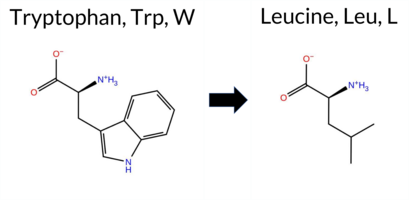 3DClick to see structure in 3D Viewer AIThe SynGAP1 missense variant W242L is not reported in ClinVar and is absent from gnomAD. Functional prediction tools cluster into two groups: benign predictions (FoldX, Rosetta, Foldetta, premPS) and pathogenic predictions (REVEL, PROVEAN, polyPhen‑2 HumDiv, polyPhen‑2 HumVar, SIFT, ESM1b, FATHMM, AlphaMissense‑Default, AlphaMissense‑Optimized, and the SGM‑Consensus score of Likely Pathogenic). High‑accuracy assessments further support this dichotomy: AlphaMissense‑Optimized predicts pathogenicity, the SGM‑Consensus (majority vote of AlphaMissense‑Default, ESM1b, FATHMM, PROVEAN) also indicates Likely Pathogenic, whereas Foldetta, which integrates FoldX‑MD and Rosetta stability outputs, reports a benign effect. Overall, the majority of evidence points toward a pathogenic impact for W242L. This conclusion is consistent with the absence of ClinVar annotation, so there is no contradiction with existing clinical data. Disclaimer: This summary was generated using AI and should be interpreted alongside expert review. | Likely Pathogenic | PH | 0.328603 | Structured | 0.352582 | Uncertain | 0.847 | 0.341 | 0.000 | -12.297 | Likely Pathogenic | 0.997 | Likely Pathogenic | Likely Pathogenic | -0.29 | Likely Benign | 0.3 | 0.12 | Likely Benign | -0.09 | Likely Benign | 0.44 | Likely Benign | 0.799 | Likely Pathogenic | -11.80 | Deleterious | 0.948 | Possibly Damaging | 0.533 | Possibly Damaging | 1.52 | Pathogenic | 0.01 | Affected | 0.2370 | 0.2986 | -2 | -2 | 4.7 | -73.05 | |||||||||||||||||||||||||||||
| c.817G>C | E273Q 2D 3DClick to see structure in 3D Viewer AIThe SynGAP1 missense variant E273Q is not reported in ClinVar (ClinVar ID None) and is absent from gnomAD (gnomAD ID None). Prediction tools that agree on a benign effect include REVEL, FoldX, Rosetta, Foldetta, premPS, PROVEAN, and AlphaMissense‑Optimized. Tools that predict a pathogenic outcome are polyPhen‑2 (HumDiv and HumVar), SIFT, ESM1b, and FATHMM; AlphaMissense‑Default is uncertain. High‑accuracy assessments show AlphaMissense‑Optimized as benign, the SGM Consensus (majority vote from AlphaMissense‑Default, ESM1b, FATHMM, PROVEAN) as pathogenic, and Foldetta as benign. Overall, the majority of individual predictors (seven benign vs. five pathogenic) lean toward a benign classification, while the SGM Consensus and AlphaMissense‑Optimized provide conflicting signals. Thus, the variant is most likely benign based on the aggregate predictions, and this assessment does not contradict the ClinVar status, which currently has no entry for this variant. Disclaimer: This summary was generated using AI and should be interpreted alongside expert review. | C2 | 0.071867 | Structured | 0.398918 | Uncertain | 0.863 | 0.196 | 0.125 | -9.865 | Likely Pathogenic | 0.503 | Ambiguous | Likely Benign | -0.29 | Likely Benign | 0.1 | -0.29 | Likely Benign | -0.29 | Likely Benign | -0.01 | Likely Benign | 0.168 | Likely Benign | -1.84 | Neutral | 0.946 | Possibly Damaging | 0.671 | Possibly Damaging | 1.77 | Pathogenic | 0.04 | Affected | 0.1220 | 0.3130 | 2 | 2 | 0.0 | -0.98 | ||||||||||||||||||||||||||||||
| c.899C>T | S300F 2D 3DClick to see structure in 3D Viewer AISynGAP1 missense variant S300F is listed in ClinVar with an uncertain significance and is not reported in gnomAD. Functional prediction tools that classify the variant as benign include REVEL, FoldX, Rosetta, Foldetta, premPS, and AlphaMissense‑Optimized. Those that predict pathogenicity are PROVEAN, polyPhen‑2 HumDiv, polyPhen‑2 HumVar, SIFT, ESM1b, and FATHMM. The remaining tool, AlphaMissense‑Default, gives an uncertain result. High‑accuracy assessments show AlphaMissense‑Optimized as benign, the SGM Consensus (majority vote from AlphaMissense‑Default, ESM1b, FATHMM, and PROVEAN) as pathogenic, and Foldetta (combining FoldX‑MD and Rosetta outputs) as benign. Overall, the majority of predictions lean toward pathogenicity, while two high‑accuracy methods support a benign effect. Thus, the variant is most likely pathogenic based on the current computational evidence, which does not contradict its ClinVar status of uncertain significance. Disclaimer: This summary was generated using AI and should be interpreted alongside expert review. | Likely Pathogenic | C2 | 0.356642 | Structured | 0.256848 | Uncertain | 0.742 | 0.280 | 0.375 | Uncertain | 1 | -10.222 | Likely Pathogenic | 0.353 | Ambiguous | Likely Benign | -0.29 | Likely Benign | 0.4 | 0.16 | Likely Benign | -0.07 | Likely Benign | 0.04 | Likely Benign | 0.117 | Likely Benign | -2.66 | Deleterious | 0.975 | Probably Damaging | 0.596 | Possibly Damaging | 1.52 | Pathogenic | 0.01 | Affected | 3.47 | 19 | 0.0579 | 0.5701 | -3 | -2 | 3.6 | 60.10 | 233.6 | -67.6 | -0.1 | 0.0 | 0.4 | 0.2 | X | X | Potentially Pathogenic | The hydroxyl group of the Ser300 side chain, located in a β hairpin loop linking two anti-parallel β sheet strands (res. Met289-Pro298, res. Thr305-Asn315), hydrogen bonds with the guanidinium group of Arg299 and the backbone amide group and side chain of Ser302. Thus, in the WT simulations, it contributes to the β hairpin stability. In the variant simulations, the phenol ring of Phe300 cannot form any side chain-related hydrogen bonds, and Arg299 is moved away from its central hairpin loop position.β hairpins are potential nucleation sites during the initial stages of protein folding, so even minor changes in them could be significant. Due to its location near the membrane surface, the residue swap could also affect the C2 loop dynamics and SynGAP-membrane association. However, this is beyond the scope of the solvent-only simulations to unravel. | |||||||||||||||
| c.1006A>G | K336E 2D 3DClick to see structure in 3D Viewer AIThe SynGAP1 missense variant K336E is not reported in ClinVar (no ClinVar ID) and is absent from gnomAD. Prediction tools that agree on a benign effect include REVEL, FoldX, Rosetta, Foldetta, premPS, and polyPhen‑2 HumVar. Tools that predict a pathogenic effect comprise SGM‑Consensus (Likely Pathogenic), PROVEAN, polyPhen‑2 HumDiv, SIFT, ESM1b, FATHMM, AlphaMissense‑Default, and AlphaMissense‑Optimized. High‑accuracy assessments show AlphaMissense‑Optimized as pathogenic, SGM‑Consensus as Likely Pathogenic, and Foldetta (combining FoldX‑MD and Rosetta outputs) as benign. Overall, the majority of evidence points toward a pathogenic impact for K336E, and this conclusion is not contradicted by any ClinVar annotation. Disclaimer: This summary was generated using AI and should be interpreted alongside expert review. | Likely Pathogenic | C2 | 0.318242 | Structured | 0.338219 | Uncertain | 0.396 | 0.428 | 0.500 | -16.091 | Likely Pathogenic | 0.993 | Likely Pathogenic | Likely Pathogenic | -0.28 | Likely Benign | 0.0 | 0.19 | Likely Benign | -0.05 | Likely Benign | 0.35 | Likely Benign | 0.236 | Likely Benign | -3.43 | Deleterious | 0.625 | Possibly Damaging | 0.192 | Benign | 1.60 | Pathogenic | 0.01 | Affected | 0.4003 | 0.1082 | 0 | 1 | 0.4 | 0.94 | |||||||||||||||||||||||||||||
| c.1561G>C | E521Q 2D 3DClick to see structure in 3D Viewer AIThe SynGAP1 E521Q missense variant is not reported in ClinVar (ClinVar ID None) and is absent from gnomAD (gnomAD ID None). Prediction tools that agree on a benign effect include REVEL, FoldX, Rosetta, Foldetta, premPS, PROVEAN, SIFT, FATHMM, and AlphaMissense‑Optimized. Tools that predict a pathogenic effect are polyPhen‑2 HumDiv, polyPhen‑2 HumVar, ESM1b, and AlphaMissense‑Default. High‑accuracy assessments show AlphaMissense‑Optimized as benign, while the SGM Consensus (majority vote from AlphaMissense‑Default, ESM1b, FATHMM, PROVEAN) is inconclusive due to a 2‑to‑2 split, and Foldetta predicts a benign stability change. Overall, the majority of evidence (9 benign vs. 4 pathogenic predictions) supports a benign classification. This conclusion does not contradict ClinVar status, as no ClinVar assertion exists for this variant. Disclaimer: This summary was generated using AI and should be interpreted alongside expert review. | GAP | 0.086953 | Structured | 0.062387 | Uncertain | 0.865 | 0.349 | 0.000 | -8.310 | Likely Pathogenic | 0.777 | Likely Pathogenic | Likely Benign | -0.28 | Likely Benign | 0.2 | 0.19 | Likely Benign | -0.05 | Likely Benign | -0.06 | Likely Benign | 0.262 | Likely Benign | -2.15 | Neutral | 0.992 | Probably Damaging | 0.993 | Probably Damaging | 3.30 | Benign | 0.11 | Tolerated | 0.1580 | 0.6552 | 2 | 2 | 0.0 | -0.98 | ||||||||||||||||||||||||||||||
| c.739C>A | Q247K 2D 3DClick to see structure in 3D Viewer AIThe SynGAP1 missense variant Q247K (PH domain) is not reported in ClinVar and is absent from gnomAD. Prediction tools that agree on a benign effect include FoldX, premPS, PROVEAN, SIFT, FATHMM, AlphaMissense‑Optimized, and polyPhen2_HumVar. Tools that predict a pathogenic effect are REVEL, polyPhen2_HumDiv, and ESM1b. The SGM Consensus, derived from a majority vote of AlphaMissense‑Default, ESM1b, FATHMM, and PROVEAN, favors a benign outcome (2 benign vs. 1 pathogenic). High‑accuracy methods all support benignity: AlphaMissense‑Optimized is benign, the SGM Consensus is benign, and Foldetta (combining FoldX‑MD and Rosetta) is benign. Uncertain results from AlphaMissense‑Default and Rosetta are treated as unavailable. Overall, the collective evidence points to a benign impact for Q247K, and this conclusion is not contradicted by any ClinVar annotation. Disclaimer: This summary was generated using AI and should be interpreted alongside expert review. | PH | 0.490133 | Structured | 0.283012 | Uncertain | 0.822 | 0.339 | 0.250 | -10.377 | Likely Pathogenic | 0.502 | Ambiguous | Likely Benign | -0.28 | Likely Benign | 0.1 | 0.74 | Ambiguous | 0.23 | Likely Benign | -0.13 | Likely Benign | 0.529 | Likely Pathogenic | -0.44 | Neutral | 0.787 | Possibly Damaging | 0.351 | Benign | 5.89 | Benign | 0.13 | Tolerated | 0.1366 | 0.2758 | 1 | 1 | -0.4 | 0.04 | ||||||||||||||||||||||||||||||
| c.971G>T | R324L 2D 3DClick to see structure in 3D Viewer AIThe SynGAP1 missense variant R324L is catalogued in gnomAD (6-33437876‑G‑T) but has no ClinVar entry. Functional prediction tools cluster into two groups: benign predictions come from REVEL, FoldX, Rosetta, Foldetta, premPS, PROVEAN, and SIFT; pathogenic predictions arise from polyPhen‑2 HumDiv, polyPhen‑2 HumVar, ESM1b, FATHMM, and AlphaMissense‑Default. High‑accuracy assessments further clarify the picture: AlphaMissense‑Optimized predicts a benign effect, the SGM‑Consensus (majority vote of AlphaMissense‑Default, ESM1b, FATHMM, PROVEAN) indicates a likely pathogenic outcome, and Foldetta (integrating FoldX‑MD and Rosetta outputs) reports a benign stability change. Overall, the majority of evidence points toward a benign impact, and this conclusion is not contradicted by any ClinVar annotation. Disclaimer: This summary was generated using AI and should be interpreted alongside expert review. | Likely Pathogenic | C2 | 0.257454 | Structured | 0.426893 | Uncertain | 0.954 | 0.397 | 0.000 | 6-33437876-G-T | 1 | 6.20e-7 | -10.328 | Likely Pathogenic | 0.575 | Likely Pathogenic | Likely Benign | -0.28 | Likely Benign | 0.0 | -0.08 | Likely Benign | -0.18 | Likely Benign | 0.29 | Likely Benign | 0.489 | Likely Benign | -2.20 | Neutral | 0.999 | Probably Damaging | 0.997 | Probably Damaging | 1.86 | Pathogenic | 0.63 | Tolerated | 3.39 | 22 | 0.2310 | 0.5607 | -2 | -3 | 8.3 | -43.03 | ||||||||||||||||||||||||
| c.1027G>A | V343I 2D 3DClick to see structure in 3D Viewer AIThe SynGAP1 missense variant V343I is listed in ClinVar with an “Uncertain” status and is present in gnomAD (ID 6‑33437932‑G‑A). Prediction tools that uniformly indicate a benign effect include REVEL, FoldX, Rosetta, Foldetta, premPS, PROVEAN, polyPhen‑2 (HumDiv and HumVar), SIFT, ESM1b, AlphaMissense‑Default, and AlphaMissense‑Optimized. Only FATHMM predicts a pathogenic outcome. The SGM‑Consensus, which aggregates the majority vote of AlphaMissense‑Default, ESM1b, FATHMM, and PROVEAN, resolves to “Likely Benign” (3 benign vs. 1 pathogenic). High‑accuracy assessments are consistent: AlphaMissense‑Optimized is benign; the SGM‑Consensus is likely benign; and Foldetta, combining FoldX‑MD and Rosetta outputs, is benign. Overall, the collective evidence strongly supports a benign classification, and this does not contradict the ClinVar “Uncertain” designation. Disclaimer: This summary was generated using AI and should be interpreted alongside expert review. | Likely Benign | C2 | 0.291804 | Structured | 0.383911 | Uncertain | 0.882 | 0.497 | 0.250 | Uncertain | 2 | 6-33437932-G-A | 1 | 6.20e-7 | -6.020 | Likely Benign | 0.117 | Likely Benign | Likely Benign | -0.27 | Likely Benign | 0.0 | -0.04 | Likely Benign | -0.16 | Likely Benign | -0.39 | Likely Benign | 0.020 | Likely Benign | -0.14 | Neutral | 0.159 | Benign | 0.084 | Benign | 1.98 | Pathogenic | 0.27 | Tolerated | 3.37 | 25 | 0.1095 | 0.4536 | 4 | 3 | 0.3 | 14.03 | 240.2 | -26.9 | -0.2 | 0.2 | -0.2 | 0.2 | X | Potentially Benign | The iso-propyl side chain of Val343, located in an anti-parallel β sheet strand (res. Gly341-Pro349), is packing against multiple hydrophobic residues of the C2 domain (e.g., Leu327, Leu274, Val365). In the variant simulations, the sec-butyl side chain of Ile343 is basically able to form the same interactions as valine due to its similar hydrophobic profile. The residue swap also does not seem to cause negative effects on the protein structure based on the simulations. | |||||||||||||
| c.1106C>G | T369R 2D 3DClick to see structure in 3D Viewer AIThe SynGAP1 missense variant T369R is not reported in ClinVar (ClinVar ID None) but is present in gnomAD (ID 6‑33438011‑C‑G). Prediction tools that agree on a benign effect include REVEL, FoldX, premPS, PROVEAN, polyPhen‑2 (HumDiv and HumVar), SIFT, ESM1b, and AlphaMissense‑Optimized. Tools that predict a pathogenic effect are FATHMM and AlphaMissense‑Default. Rosetta and Foldetta are uncertain, so their results are treated as unavailable. High‑accuracy assessments show AlphaMissense‑Optimized as benign; the SGM Consensus (majority vote from AlphaMissense‑Default, ESM1b, FATHMM, PROVEAN) is inconclusive (2 benign vs 2 pathogenic), and Foldetta is also uncertain. Overall, the majority of evidence (nine benign vs two pathogenic) supports a benign classification. This conclusion does not contradict ClinVar status, as no ClinVar assertion exists for this variant. Disclaimer: This summary was generated using AI and should be interpreted alongside expert review. | C2 | 0.468512 | Structured | 0.437011 | Uncertain | 0.417 | 0.707 | 0.500 | 6-33438011-C-G | 3 | 1.93e-6 | -6.772 | Likely Benign | 0.571 | Likely Pathogenic | Likely Benign | -0.27 | Likely Benign | 0.1 | 1.48 | Ambiguous | 0.61 | Ambiguous | 0.29 | Likely Benign | 0.148 | Likely Benign | -2.15 | Neutral | 0.244 | Benign | 0.107 | Benign | 1.72 | Pathogenic | 0.32 | Tolerated | 3.42 | 19 | 0.1217 | 0.3737 | -1 | -1 | -3.8 | 55.08 | |||||||||||||||||||||||||
| c.1483G>C | E495Q 2D 3DClick to see structure in 3D Viewer AIThe SynGAP1 E495Q missense variant is not listed in ClinVar and has no reported allele in gnomAD. Prediction tools that agree on a benign effect include FoldX, Rosetta, and Foldetta, all of which score the substitution as benign. Tools that agree on a pathogenic effect are SGM‑Consensus, REVEL, PROVEAN, polyPhen‑2 (HumDiv and HumVar), SIFT, ESM1b, FATHMM, and AlphaMissense‑Default. Two tools give uncertain results: premPS and AlphaMissense‑Optimized. High‑accuracy assessments show that the SGM‑Consensus (a majority vote of AlphaMissense‑Default, ESM1b, FATHMM, and PROVEAN) predicts pathogenicity, AlphaMissense‑Optimized is uncertain, and Foldetta predicts benign stability. Overall, the majority of evidence points to a pathogenic impact. The variant is most likely pathogenic, and this conclusion does not contradict any ClinVar status, as none is available. Disclaimer: This summary was generated using AI and should be interpreted alongside expert review. | Likely Pathogenic | GAP | 0.164327 | Structured | 0.364496 | Uncertain | 0.933 | 0.161 | 0.000 | -11.050 | Likely Pathogenic | 0.899 | Likely Pathogenic | Ambiguous | -0.27 | Likely Benign | 0.1 | 0.11 | Likely Benign | -0.08 | Likely Benign | 0.89 | Ambiguous | 0.748 | Likely Pathogenic | -2.92 | Deleterious | 0.999 | Probably Damaging | 0.993 | Probably Damaging | -1.42 | Pathogenic | 0.01 | Affected | 0.1093 | 0.4973 | 2 | 2 | 0.0 | -0.98 | |||||||||||||||||||||||||||||
| c.1490A>T | Y497F 2D 3DClick to see structure in 3D Viewer AIThe SynGAP1 missense variant Y497F is not reported in ClinVar (ClinVar status: not listed) and is absent from gnomAD (gnomAD ID: none). Prediction tools that agree on a benign effect include FoldX, Rosetta, Foldetta, polyPhen‑2 HumDiv, polyPhen‑2 HumVar, SIFT, AlphaMissense‑Default, and AlphaMissense‑Optimized. Tools that predict a pathogenic effect are SGM‑Consensus, REVEL, PROVEAN, ESM1b, and FATHMM; premPS remains uncertain. High‑accuracy assessments show AlphaMissense‑Optimized as benign, the SGM‑Consensus (majority vote from AlphaMissense‑Default, ESM1b, FATHMM, PROVEAN) as pathogenic, and Foldetta (combining FoldX‑MD and Rosetta outputs) as benign. Overall, the majority of predictions lean toward a benign impact, and this conclusion does not contradict the absence of a ClinVar classification. Thus, the variant is most likely benign based on the current predictive evidence. Disclaimer: This summary was generated using AI and should be interpreted alongside expert review. | Likely Pathogenic | GAP | 0.092881 | Structured | 0.393608 | Uncertain | 0.950 | 0.181 | 0.000 | -8.566 | Likely Pathogenic | 0.199 | Likely Benign | Likely Benign | -0.27 | Likely Benign | 0.1 | 0.47 | Likely Benign | 0.10 | Likely Benign | 0.61 | Ambiguous | 0.578 | Likely Pathogenic | -3.75 | Deleterious | 0.367 | Benign | 0.131 | Benign | -1.15 | Pathogenic | 0.19 | Tolerated | 0.2074 | 0.2242 | 7 | 3 | 4.1 | -16.00 | |||||||||||||||||||||||||||||
| c.1634T>G | M545R 2D 3DClick to see structure in 3D Viewer AIThe SynGAP1 missense variant M545R is not reported in ClinVar (no ClinVar ID) and is absent from gnomAD. Prediction tools that classify the variant as benign include SIFT, FoldX, and Foldetta, whereas the majority of tools predict it to be pathogenic: SGM‑Consensus, REVEL, premPS, PROVEAN, polyPhen‑2 (HumDiv and HumVar), ESM1b, FATHMM, AlphaMissense‑Default, and AlphaMissense‑Optimized. Rosetta’s assessment is uncertain. High‑accuracy methods give a mixed picture: AlphaMissense‑Optimized predicts pathogenicity; the SGM‑Consensus (a majority vote of AlphaMissense‑Default, ESM1b, FATHMM, and PROVEAN) also indicates likely pathogenic; Foldetta, which integrates FoldX‑MD and Rosetta outputs, predicts benign. Overall, the preponderance of evidence from both general and high‑accuracy predictors points to a pathogenic effect. This conclusion does not contradict ClinVar status, as no ClinVar classification exists for this variant. Disclaimer: This summary was generated using AI and should be interpreted alongside expert review. | Likely Pathogenic | GAP | 0.025762 | Structured | 0.012875 | Uncertain | 0.955 | 0.311 | 0.000 | -9.223 | Likely Pathogenic | 0.994 | Likely Pathogenic | Likely Pathogenic | -0.27 | Likely Benign | 0.1 | 0.95 | Ambiguous | 0.34 | Likely Benign | 1.07 | Destabilizing | 0.773 | Likely Pathogenic | -4.76 | Deleterious | 0.987 | Probably Damaging | 0.971 | Probably Damaging | -1.23 | Pathogenic | 0.36 | Tolerated | 0.1345 | 0.0837 | 0 | -1 | -6.4 | 24.99 | |||||||||||||||||||||||||||||
| c.1654T>A | C552S 2D 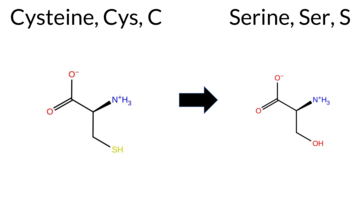 3DClick to see structure in 3D Viewer AIThe SynGAP1 missense variant C552S is not reported in ClinVar (ClinVar ID None) and is absent from gnomAD (gnomAD ID None). Prediction tools that agree on a benign effect include FoldX, Rosetta, Foldetta, and SIFT, whereas a majority of tools predict a pathogenic impact: REVEL, PROVEAN, polyPhen‑2 (HumDiv and HumVar), ESM1b, FATHMM, AlphaMissense‑Default, AlphaMissense‑Optimized, and the SGM‑Consensus (Likely Pathogenic). The high‑accuracy assessments are mixed: AlphaMissense‑Optimized classifies the variant as pathogenic, the SGM‑Consensus also indicates a likely pathogenic outcome, whereas Foldetta, which integrates FoldX‑MD and Rosetta stability predictions, reports a benign effect. premPS is inconclusive. Overall, the preponderance of evidence from multiple independent predictors points to a pathogenic effect for C552S. This conclusion is not contradicted by ClinVar status, as the variant is not yet catalogued there. Disclaimer: This summary was generated using AI and should be interpreted alongside expert review. | Likely Pathogenic | GAP | 0.013265 | Structured | 0.005714 | Uncertain | 0.955 | 0.256 | 0.000 | -9.309 | Likely Pathogenic | 0.985 | Likely Pathogenic | Likely Pathogenic | -0.27 | Likely Benign | 0.0 | -0.34 | Likely Benign | -0.31 | Likely Benign | 0.97 | Ambiguous | 0.748 | Likely Pathogenic | -8.21 | Deleterious | 1.000 | Probably Damaging | 1.000 | Probably Damaging | -1.15 | Pathogenic | 0.69 | Tolerated | 0.3469 | 0.1415 | 0 | -1 | -3.3 | -16.06 | |||||||||||||||||||||||||||||
| c.1655G>C | C552S 2D 3DClick to see structure in 3D Viewer AIThe SynGAP1 missense variant C552S is not reported in ClinVar (ClinVar ID None) and is absent from gnomAD (gnomAD ID None). Prediction tools that agree on a benign effect include FoldX, Rosetta, Foldetta, and SIFT, whereas a majority of tools predict a pathogenic impact: REVEL, PROVEAN, polyPhen‑2 (HumDiv and HumVar), ESM1b, FATHMM, AlphaMissense‑Default, AlphaMissense‑Optimized, and the SGM‑Consensus (Likely Pathogenic). The high‑accuracy assessments are mixed: AlphaMissense‑Optimized classifies the variant as pathogenic, the SGM‑Consensus also indicates a likely pathogenic outcome, whereas Foldetta, which integrates FoldX‑MD and Rosetta stability predictions, reports a benign effect. premPS is inconclusive. Overall, the preponderance of evidence from multiple independent predictors points to a pathogenic effect for C552S. This conclusion is not contradicted by ClinVar status, as the variant is not yet catalogued there. Disclaimer: This summary was generated using AI and should be interpreted alongside expert review. | Likely Pathogenic | GAP | 0.013265 | Structured | 0.005714 | Uncertain | 0.955 | 0.256 | 0.000 | -9.309 | Likely Pathogenic | 0.985 | Likely Pathogenic | Likely Pathogenic | -0.27 | Likely Benign | 0.0 | -0.34 | Likely Benign | -0.31 | Likely Benign | 0.97 | Ambiguous | 0.684 | Likely Pathogenic | -8.21 | Deleterious | 1.000 | Probably Damaging | 1.000 | Probably Damaging | -1.15 | Pathogenic | 0.69 | Tolerated | 0.3469 | 0.1415 | 0 | -1 | -3.3 | -16.06 | |||||||||||||||||||||||||||||
| c.958G>A | V320I 2D 3DClick to see structure in 3D Viewer AIThe SynGAP1 missense variant V320I is listed in ClinVar with an “Uncertain” status and is not reported in gnomAD. Prediction tools that uniformly indicate a benign effect include REVEL, FoldX, premPS, PROVEAN, polyPhen‑2 (HumDiv and HumVar), SIFT, ESM1b, AlphaMissense‑Default, and AlphaMissense‑Optimized. Only FATHMM predicts a pathogenic outcome, while Rosetta remains inconclusive. High‑accuracy assessments corroborate the benign trend: AlphaMissense‑Optimized is benign; the SGM Consensus (majority vote of AlphaMissense‑Default, ESM1b, FATHMM, PROVEAN) is “Likely Benign”; and Foldetta, which integrates FoldX‑MD and Rosetta outputs, also predicts benign. Overall, the preponderance of evidence points to a benign effect for V320I, and this conclusion does not conflict with the current ClinVar designation of uncertainty. Disclaimer: This summary was generated using AI and should be interpreted alongside expert review. | Likely Benign | C2 | 0.185198 | Structured | 0.419626 | Uncertain | 0.905 | 0.266 | 0.125 | Uncertain | 1 | -5.220 | Likely Benign | 0.111 | Likely Benign | Likely Benign | -0.27 | Likely Benign | 0.2 | 0.66 | Ambiguous | 0.20 | Likely Benign | 0.01 | Likely Benign | 0.027 | Likely Benign | -0.21 | Neutral | 0.198 | Benign | 0.114 | Benign | 1.77 | Pathogenic | 0.45 | Tolerated | 3.38 | 23 | 0.0514 | 0.3207 | 3 | 4 | 0.3 | 14.03 | |||||||||||||||||||||||||
| c.1321G>T | V441F 2D 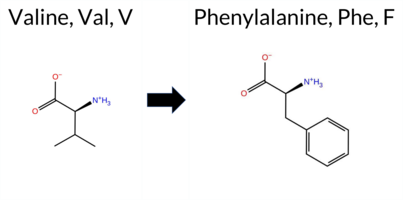 3DClick to see structure in 3D Viewer AIThe SynGAP1 V441F missense variant is not reported in ClinVar and has no entry in gnomAD. Prediction tools that agree on a benign effect include REVEL, FoldX, Rosetta, SIFT, FATHMM, and AlphaMissense‑Optimized, while those that predict a pathogenic outcome are SGM‑Consensus, PROVEAN, polyPhen‑2 (HumDiv and HumVar), ESM1b, and AlphaMissense‑Default; premPS is uncertain. High‑accuracy assessments show AlphaMissense‑Optimized as benign, SGM‑Consensus as likely pathogenic, and Foldetta (combining FoldX‑MD and Rosetta outputs) as benign. Overall, the majority of tools lean toward a benign interpretation, and the high‑accuracy predictions are split but favor benign. Thus, the variant is most likely benign based on current computational evidence, and this assessment does not contradict the absence of a ClinVar classification. Disclaimer: This summary was generated using AI and should be interpreted alongside expert review. | Likely Pathogenic | GAP | 0.161087 | Structured | 0.259875 | Uncertain | 0.918 | 0.249 | 0.000 | -13.519 | Likely Pathogenic | 0.653 | Likely Pathogenic | Likely Benign | -0.26 | Likely Benign | 0.0 | 0.32 | Likely Benign | 0.03 | Likely Benign | 0.54 | Ambiguous | 0.355 | Likely Benign | -4.22 | Deleterious | 0.992 | Probably Damaging | 0.658 | Possibly Damaging | 3.37 | Benign | 0.08 | Tolerated | 0.0670 | 0.3269 | -1 | -1 | -1.4 | 48.04 | |||||||||||||||||||||||||||||
| c.1370G>T | S457I 2D 3DClick to see structure in 3D Viewer AIThe SynGAP1 missense variant S457I lies within the GAP domain. ClinVar has no entry for this change, and it is absent from gnomAD. Prediction tools that report a benign effect include FoldX and FATHMM, whereas the majority of other in silico predictors—REVEL, PROVEAN, polyPhen‑2 (HumDiv and HumVar), SIFT, ESM1b, AlphaMissense‑Default and AlphaMissense‑Optimized—classify it as pathogenic. Uncertain results come from Rosetta, Foldetta and premPS. High‑accuracy methods give a consistent pathogenic signal: AlphaMissense‑Optimized predicts pathogenic, the SGM Consensus (majority vote of AlphaMissense‑Default, ESM1b, FATHMM and PROVEAN) is Likely Pathogenic, and Foldetta remains inconclusive. Based on the preponderance of pathogenic predictions, the variant is most likely pathogenic, and this assessment does not contradict the ClinVar status, which is currently unreported. Disclaimer: This summary was generated using AI and should be interpreted alongside expert review. | Likely Pathogenic | GAP | 0.164327 | Structured | 0.297330 | Uncertain | 0.909 | 0.159 | 0.000 | -13.170 | Likely Pathogenic | 0.976 | Likely Pathogenic | Likely Pathogenic | -0.26 | Likely Benign | 0.3 | -0.96 | Ambiguous | -0.61 | Ambiguous | 0.65 | Ambiguous | 0.557 | Likely Pathogenic | -5.73 | Deleterious | 0.999 | Probably Damaging | 0.993 | Probably Damaging | 3.34 | Benign | 0.02 | Affected | 0.0779 | 0.6095 | -1 | -2 | 5.3 | 26.08 | |||||||||||||||||||||||||||||
| c.1674C>A | H558Q 2D 3DClick to see structure in 3D Viewer AIThe SynGAP1 missense variant H558Q is not reported in ClinVar and has no entries in gnomAD. Prediction tools that classify the variant as benign include SIFT, FoldX, Rosetta, Foldetta, and AlphaMissense‑Optimized. Those that predict pathogenicity are SGM‑Consensus (Likely Pathogenic), REVEL, PROVEAN, polyPhen‑2 HumDiv, polyPhen‑2 HumVar, ESM1b, and FATHMM. Two tools report uncertainty: AlphaMissense‑Default and premPS. High‑accuracy methods give mixed results: AlphaMissense‑Optimized predicts benign, SGM‑Consensus (majority vote of AlphaMissense‑Default, ESM1b, FATHMM, PROVEAN) predicts likely pathogenic, and Foldetta predicts benign. No prediction or folding stability result is missing. Overall, the majority of tools lean toward pathogenicity, but the presence of several benign predictions and conflicting high‑accuracy outputs suggests uncertainty. The variant is most likely pathogenic based on the prevailing evidence, and this assessment does not contradict the ClinVar status, which is currently unreported. Disclaimer: This summary was generated using AI and should be interpreted alongside expert review. | Likely Pathogenic | GAP | 0.033407 | Structured | 0.011039 | Uncertain | 0.897 | 0.200 | 0.000 | -11.483 | Likely Pathogenic | 0.496 | Ambiguous | Likely Benign | -0.26 | Likely Benign | 0.1 | 0.05 | Likely Benign | -0.11 | Likely Benign | 0.97 | Ambiguous | 0.522 | Likely Pathogenic | -4.23 | Deleterious | 0.991 | Probably Damaging | 0.702 | Possibly Damaging | -1.25 | Pathogenic | 0.13 | Tolerated | 0.1182 | 0.2058 | 3 | 0 | -0.3 | -9.01 | |||||||||||||||||||||||||||||
| c.1674C>G | H558Q 2D 3DClick to see structure in 3D Viewer AIThe SynGAP1 missense variant H558Q is not reported in ClinVar and has no entries in gnomAD. Prediction tools that classify the variant as benign include SIFT, FoldX, Rosetta, Foldetta, and AlphaMissense‑Optimized. Those that predict pathogenicity are SGM‑Consensus (Likely Pathogenic), REVEL, PROVEAN, polyPhen‑2 HumDiv, polyPhen‑2 HumVar, ESM1b, and FATHMM. Two tools report uncertainty: AlphaMissense‑Default and premPS. High‑accuracy methods give mixed results: AlphaMissense‑Optimized predicts benign, SGM‑Consensus (majority vote of AlphaMissense‑Default, ESM1b, FATHMM, PROVEAN) predicts likely pathogenic, and Foldetta predicts benign. No prediction or folding stability result is missing. Overall, the majority of tools lean toward pathogenicity, but the presence of several benign predictions and conflicting high‑accuracy outputs suggests uncertainty. The variant is most likely pathogenic based on the prevailing evidence, and this assessment does not contradict the ClinVar status, which is currently unreported. Disclaimer: This summary was generated using AI and should be interpreted alongside expert review. | Likely Pathogenic | GAP | 0.033407 | Structured | 0.011039 | Uncertain | 0.897 | 0.200 | 0.000 | -11.483 | Likely Pathogenic | 0.496 | Ambiguous | Likely Benign | -0.26 | Likely Benign | 0.1 | 0.05 | Likely Benign | -0.11 | Likely Benign | 0.97 | Ambiguous | 0.522 | Likely Pathogenic | -4.23 | Deleterious | 0.991 | Probably Damaging | 0.702 | Possibly Damaging | -1.25 | Pathogenic | 0.13 | Tolerated | 0.1182 | 0.2058 | 3 | 0 | -0.3 | -9.01 | |||||||||||||||||||||||||||||
| c.1967A>T | E656V 2D 3DClick to see structure in 3D Viewer AIThe SynGAP1 missense variant E656V has no ClinVar entry and is not reported in gnomAD. Prediction tools that classify the variant as benign include FoldX, Rosetta, Foldetta, polyPhen‑2 HumVar, and FATHMM. Those that predict a pathogenic effect are SGM‑Consensus, REVEL, PROVEAN, polyPhen‑2 HumDiv, SIFT, ESM1b, AlphaMissense‑Default, and AlphaMissense‑Optimized. High‑accuracy assessments show AlphaMissense‑Optimized as pathogenic; the SGM‑Consensus (majority vote of AlphaMissense‑Default, ESM1b, FATHMM, PROVEAN) also predicts pathogenic; and Foldetta, which integrates FoldX‑MD and Rosetta stability outputs, predicts benign. Overall, the majority of tools (8 of 13) indicate a pathogenic impact, and this conclusion does not contradict any ClinVar status, as none is available. Disclaimer: This summary was generated using AI and should be interpreted alongside expert review. | Likely Pathogenic | GAP | 0.032017 | Structured | 0.242242 | Uncertain | 0.963 | 0.264 | 0.000 | -15.252 | Likely Pathogenic | 0.992 | Likely Pathogenic | Likely Pathogenic | -0.26 | Likely Benign | 0.0 | -0.10 | Likely Benign | -0.18 | Likely Benign | -0.77 | Ambiguous | 0.509 | Likely Pathogenic | -6.38 | Deleterious | 0.784 | Possibly Damaging | 0.223 | Benign | 3.46 | Benign | 0.02 | Affected | 0.0990 | 0.7057 | -2 | -2 | 7.7 | -29.98 | |||||||||||||||||||||||||||||
| c.2167A>T | T723S 2D 3DClick to see structure in 3D Viewer AIThe SynGAP1 missense variant T723S is not reported in ClinVar and is absent from gnomAD. Prediction tools largely agree on a benign effect: REVEL, FoldX, Rosetta, Foldetta, premPS, PROVEAN, SIFT, ESM1b, FATHMM, AlphaMissense‑Default, and AlphaMissense‑Optimized all indicate benign or tolerated. Only two tools, polyPhen‑2 HumDiv and HumVar, predict a pathogenic outcome. The high‑accuracy consensus methods confirm the benign assessment: AlphaMissense‑Optimized scores benign, the SGM‑Consensus (majority vote of AlphaMissense‑Default, ESM1b, FATHMM, PROVEAN) reports Likely Benign, and Foldetta (combining FoldX‑MD and Rosetta) predicts benign stability. Overall, the majority of evidence supports a benign impact for T723S, and this conclusion is consistent with the absence of a ClinVar classification. Disclaimer: This summary was generated using AI and should be interpreted alongside expert review. | Likely Benign | GAP | 0.476583 | Structured | 0.458243 | Uncertain | 0.945 | 0.447 | 0.375 | -4.792 | Likely Benign | 0.091 | Likely Benign | Likely Benign | -0.26 | Likely Benign | 0.0 | 0.28 | Likely Benign | 0.01 | Likely Benign | 0.23 | Likely Benign | 0.037 | Likely Benign | -0.89 | Neutral | 0.673 | Possibly Damaging | 0.678 | Possibly Damaging | 3.55 | Benign | 0.06 | Tolerated | 0.3171 | 0.3731 | 1 | 1 | -0.1 | -14.03 | |||||||||||||||||||||||||||||
| c.661G>C | E221Q 2D 3DClick to see structure in 3D Viewer AIThe SynGAP1 E221Q missense variant is not reported in ClinVar (ClinVar ID None) and is absent from gnomAD (gnomAD ID None). Prediction tools that agree on a benign effect include REVEL, FoldX, Rosetta, premPS, PROVEAN, polyPhen‑2 (HumDiv and HumVar), SIFT, and FATHMM. Two tools predict a pathogenic outcome: ESM1b and AlphaMissense‑Default. AlphaMissense‑Optimized is uncertain. High‑accuracy assessments show AlphaMissense‑Optimized as uncertain, the SGM Consensus (majority vote from AlphaMissense‑Default, ESM1b, FATHMM, PROVEAN) is inconclusive (two pathogenic vs two benign), and Foldetta predicts a benign effect. Overall, the majority of evidence (10 benign vs 2 pathogenic) supports a benign classification. This conclusion does not contradict ClinVar status, as no ClinVar assertion exists for this variant. Disclaimer: This summary was generated using AI and should be interpreted alongside expert review. | PH | 0.127496 | Structured | 0.413334 | Uncertain | 0.891 | 0.283 | 0.000 | -8.243 | Likely Pathogenic | 0.825 | Likely Pathogenic | Ambiguous | -0.26 | Likely Benign | 0.1 | -0.33 | Likely Benign | -0.30 | Likely Benign | 0.12 | Likely Benign | 0.455 | Likely Benign | -1.64 | Neutral | 0.028 | Benign | 0.015 | Benign | 6.13 | Benign | 0.23 | Tolerated | 0.1207 | 0.7690 | 2 | 2 | 0.0 | -0.98 | ||||||||||||||||||||||||||||||
| c.778G>C | V260L 2D 3DClick to see structure in 3D Viewer AIThe SynGAP1 V260L missense change is not reported in ClinVar and is absent from gnomAD. Functional prediction tools cluster into two groups: benign predictions come from FoldX, Rosetta, premPS, PROVEAN, SIFT, FATHMM, and AlphaMissense‑Optimized; pathogenic predictions arise from REVEL, polyPhen‑2 (HumDiv and HumVar) and ESM1b. The high‑accuracy assessment shows AlphaMissense‑Optimized as benign, the SGM Consensus (majority vote of AlphaMissense‑Default, ESM1b, FATHMM, PROVEAN) also favors benign, and Foldetta predicts a benign effect on protein stability. No prediction is missing or inconclusive. Overall, the evidence points to a benign effect for V260L, and this conclusion is not contradicted by any ClinVar annotation. Disclaimer: This summary was generated using AI and should be interpreted alongside expert review. | C2 | 0.254060 | Structured | 0.382651 | Uncertain | 0.888 | 0.259 | 0.250 | -8.785 | Likely Pathogenic | 0.416 | Ambiguous | Likely Benign | -0.26 | Likely Benign | 0.1 | 0.15 | Likely Benign | -0.06 | Likely Benign | 0.25 | Likely Benign | 0.532 | Likely Pathogenic | -1.84 | Neutral | 0.994 | Probably Damaging | 0.970 | Probably Damaging | 5.90 | Benign | 0.11 | Tolerated | 0.0730 | 0.4360 | 2 | 1 | -0.4 | 14.03 | ||||||||||||||||||||||||||||||
| c.778G>T | V260L 2D 3DClick to see structure in 3D Viewer AIThe SynGAP1 V260L missense variant is not reported in ClinVar (ClinVar ID None) and is absent from gnomAD (gnomAD ID None). Prediction tools that agree on a benign effect include FoldX, Rosetta, Foldetta, premPS, PROVEAN, SIFT, FATHMM, and AlphaMissense‑Optimized. Those that predict a pathogenic effect are REVEL, polyPhen‑2 HumDiv, polyPhen‑2 HumVar, and ESM1b. AlphaMissense‑Default remains uncertain. High‑accuracy assessments reinforce the benign consensus: AlphaMissense‑Optimized scores benign, the SGM Consensus (majority vote of AlphaMissense‑Default, ESM1b, FATHMM, PROVEAN) resolves to benign, and Foldetta (combining FoldX‑MD and Rosetta outputs) also predicts benign stability. No prediction or folding result is missing or inconclusive. Overall, the variant is most likely benign based on the aggregate predictions, and this assessment does not contradict the ClinVar status, which currently has no entry for this variant. Disclaimer: This summary was generated using AI and should be interpreted alongside expert review. | C2 | 0.254060 | Structured | 0.382651 | Uncertain | 0.888 | 0.259 | 0.250 | -8.785 | Likely Pathogenic | 0.416 | Ambiguous | Likely Benign | -0.26 | Likely Benign | 0.1 | 0.15 | Likely Benign | -0.06 | Likely Benign | 0.25 | Likely Benign | 0.532 | Likely Pathogenic | -1.84 | Neutral | 0.994 | Probably Damaging | 0.970 | Probably Damaging | 5.90 | Benign | 0.11 | Tolerated | 0.0730 | 0.4360 | 2 | 1 | -0.4 | 14.03 | ||||||||||||||||||||||||||||||
| c.958G>C | V320L 2D 3DClick to see structure in 3D Viewer AIThe SynGAP1 missense variant V320L (gnomAD ID 6‑33437863‑G‑C) is listed in ClinVar as uncertain. Functional prediction tools show a predominance of benign calls: REVEL, FoldX, PROVEAN, polyPhen2_HumVar, SIFT, ESM1b, and AlphaMissense‑Optimized all predict benign. Pathogenic predictions come from polyPhen2_HumDiv and FATHMM. The remaining tools—Rosetta, Foldetta, premPS, and AlphaMissense‑Default—return uncertain results. High‑accuracy assessments further support a benign interpretation: AlphaMissense‑Optimized is benign; the SGM Consensus (majority vote of AlphaMissense‑Default, ESM1b, FATHMM, PROVEAN) resolves to benign; Foldetta, which integrates FoldX‑MD and Rosetta outputs, remains uncertain. Overall, the balance of evidence favors a benign effect for V320L, which is consistent with its ClinVar designation of uncertain significance rather than a pathogenic classification. Based on the aggregate predictions, V320L is most likely benign, which does not contradict its ClinVar status of uncertain significance. Disclaimer: This summary was generated using AI and should be interpreted alongside expert review. | C2 | 0.185198 | Structured | 0.419626 | Uncertain | 0.905 | 0.266 | 0.125 | Conflicting | 2 | 6-33437863-G-C | 6 | 3.72e-6 | -6.207 | Likely Benign | 0.362 | Ambiguous | Likely Benign | -0.26 | Likely Benign | 0.2 | 1.33 | Ambiguous | 0.54 | Ambiguous | 0.51 | Ambiguous | 0.096 | Likely Benign | -1.02 | Neutral | 0.900 | Possibly Damaging | 0.373 | Benign | 1.78 | Pathogenic | 0.92 | Tolerated | 3.38 | 23 | 0.0661 | 0.3863 | 2 | 1 | -0.4 | 14.03 | 245.8 | -10.2 | 0.3 | 0.9 | 0.1 | 0.3 | X | Potentially Benign | The isopropyl side chain of Val310, located in a β hairpin loop linking two anti-parallel β sheet strands (res. Thr305-Asn315, res. Ala322-Asp330), hydrophobically packs with the side chains of nearby residues (e.g., Leu286, Val350, Pro318). The hydrophobic Leu320 side chain mostly forms the same interactions; hence, the residue swap does not seem to negatively affect the protein structure based on the variant simulations. | ||||||||||||||
| c.1228A>T | S410C 2D 3DClick to see structure in 3D Viewer AIThe SynGAP1 missense variant S410C is not reported in ClinVar (no ClinVar ID) and is absent from gnomAD (no gnomAD ID). Prediction tools that classify the variant as benign include REVEL, FoldX, Rosetta, premPS, SIFT, FATHMM, AlphaMissense‑Default, and AlphaMissense‑Optimized. Tools that predict it as pathogenic are PROVEAN, polyPhen‑2 HumDiv, and polyPhen‑2 HumVar; ESM1b is uncertain. High‑accuracy assessments show AlphaMissense‑Optimized as benign, the SGM Consensus (majority vote of AlphaMissense‑Default, ESM1b, FATHMM, PROVEAN) as benign, and Foldetta (combining FoldX‑MD and Rosetta outputs) as benign. No prediction or folding stability result is missing or inconclusive. Based on the collective evidence, the variant is most likely benign, and this assessment does not contradict any ClinVar status. Disclaimer: This summary was generated using AI and should be interpreted alongside expert review. | 0.098513 | Structured | 0.349627 | Uncertain | 0.908 | 0.206 | 0.000 | -7.552 | In-Between | 0.144 | Likely Benign | Likely Benign | -0.24 | Likely Benign | 0.1 | 0.31 | Likely Benign | 0.04 | Likely Benign | 0.22 | Likely Benign | 0.230 | Likely Benign | -3.10 | Deleterious | 0.993 | Probably Damaging | 0.536 | Possibly Damaging | 4.12 | Benign | 0.11 | Tolerated | 0.1041 | 0.6543 | 0 | -1 | 3.3 | 16.06 | |||||||||||||||||||||||||||||||
| c.1321G>A | V441I 2D AIThe SynGAP1 missense variant V441I is not reported in ClinVar and is absent from gnomAD. Prediction tools largely agree on a benign effect: REVEL, FoldX, Rosetta, Foldetta, premPS, PROVEAN, polyPhen‑2 (HumDiv and HumVar), SIFT, AlphaMissense‑Default, and AlphaMissense‑Optimized all classify the variant as benign, while only ESM1b predicts it as pathogenic. High‑accuracy assessments reinforce the benign consensus: AlphaMissense‑Optimized reports benign, the SGM Consensus (majority vote of AlphaMissense‑Default, ESM1b, FATHMM, PROVEAN) yields “Likely Benign,” and Foldetta (combining FoldX‑MD and Rosetta outputs) also indicates benign stability. No contradictory evidence is present. Based on the collective predictions, the variant is most likely benign, and this conclusion does not conflict with the absence of a ClinVar entry. Disclaimer: This summary was generated using AI and should be interpreted alongside expert review. | Likely Benign | GAP | 0.161087 | Structured | 0.259875 | Uncertain | 0.918 | 0.249 | 0.000 | -8.773 | Likely Pathogenic | 0.122 | Likely Benign | Likely Benign | -0.24 | Likely Benign | 0.3 | 0.11 | Likely Benign | -0.07 | Likely Benign | 0.25 | Likely Benign | 0.135 | Likely Benign | -0.82 | Neutral | 0.287 | Benign | 0.038 | Benign | 3.41 | Benign | 0.16 | Tolerated | 0.0694 | 0.3412 | 4 | 3 | 0.3 | 14.03 | |||||||||||||||||||||||||||||
| c.1736G>T | R579L 2D 3DClick to see structure in 3D Viewer AIThe SynGAP1 missense variant R579L is not reported in ClinVar (ClinVar ID None) and is absent from gnomAD (gnomAD ID None). Prediction tools that agree on a benign effect include FoldX, Rosetta, Foldetta, premPS, and SIFT, whereas those that predict a pathogenic impact are REVEL, PROVEAN, polyPhen‑2 (HumDiv and HumVar), ESM1b, FATHMM, and AlphaMissense‑Default. AlphaMissense‑Optimized is uncertain, and the SGM‑Consensus (majority vote of AlphaMissense‑Default, ESM1b, FATHMM, PROVEAN) indicates a likely pathogenic outcome. High‑accuracy assessments show AlphaMissense‑Optimized as uncertain, SGM‑Consensus as likely pathogenic, and Foldetta (combining FoldX‑MD and Rosetta) as benign. Overall, the majority of evidence (seven pathogenic vs. five benign predictions) points to a pathogenic effect for R579L. This conclusion is not contradicted by ClinVar status, which currently has no entry for the variant. Disclaimer: This summary was generated using AI and should be interpreted alongside expert review. | Likely Pathogenic | GAP | 0.053060 | Structured | 0.022872 | Uncertain | 0.877 | 0.244 | 0.000 | -9.290 | Likely Pathogenic | 0.904 | Likely Pathogenic | Ambiguous | -0.24 | Likely Benign | 0.1 | 0.07 | Likely Benign | -0.09 | Likely Benign | 0.48 | Likely Benign | 0.802 | Likely Pathogenic | -6.39 | Deleterious | 1.000 | Probably Damaging | 1.000 | Probably Damaging | -1.36 | Pathogenic | 0.06 | Tolerated | 0.1747 | 0.3259 | -3 | -2 | 8.3 | -43.03 | |||||||||||||||||||||||||||||
| c.1871C>A | T624N 2D 3DClick to see structure in 3D Viewer AIThe SynGAP1 missense variant T624N is not reported in ClinVar (ClinVar ID None) and has no entries in gnomAD (gnomAD ID None). Prediction tools that indicate a benign effect include FoldX and Foldetta, whereas the majority of tools predict a pathogenic impact: REVEL, SIFT, PROVEAN, polyPhen‑2 HumDiv, polyPhen‑2 HumVar, ESM1b, FATHMM, AlphaMissense‑Default, and the SGM Consensus (which aggregates AlphaMissense‑Default, ESM1b, FATHMM, and PROVEAN). Uncertain results come from AlphaMissense‑Optimized, Rosetta, and premPS. High‑accuracy assessments show AlphaMissense‑Optimized as uncertain, SGM Consensus as likely pathogenic, and Foldetta as benign. Overall, the balance of evidence favors a pathogenic classification for T624N, and this conclusion does not contradict any ClinVar annotation because no ClinVar status is available. Disclaimer: This summary was generated using AI and should be interpreted alongside expert review. | Likely Pathogenic | GAP | 0.137348 | Structured | 0.052894 | Uncertain | 0.962 | 0.217 | 0.000 | -14.658 | Likely Pathogenic | 0.915 | Likely Pathogenic | Ambiguous | -0.24 | Likely Benign | 0.0 | 0.87 | Ambiguous | 0.32 | Likely Benign | 0.97 | Ambiguous | 0.848 | Likely Pathogenic | -4.94 | Deleterious | 0.999 | Probably Damaging | 0.996 | Probably Damaging | -1.53 | Pathogenic | 0.00 | Affected | 0.0773 | 0.2694 | 0 | 0 | -2.8 | 13.00 | |||||||||||||||||||||||||||||
| c.604G>A | E202K 2D AIThe SynGAP1 E202K missense variant is not reported in ClinVar (ClinVar ID None) and is absent from gnomAD (gnomAD ID None). Prediction tools that agree on a benign effect include REVEL, FoldX, premPS, FATHMM, and AlphaMissense‑Optimized. Those that predict a pathogenic effect are SGM‑Consensus, PROVEAN, polyPhen‑2 HumDiv, polyPhen‑2 HumVar, SIFT, ESM1b, and AlphaMissense‑Default. Rosetta and Foldetta give uncertain results. High‑accuracy methods give mixed evidence: AlphaMissense‑Optimized predicts benign, SGM‑Consensus (majority vote of AlphaMissense‑Default, ESM1b, FATHMM, PROVEAN) predicts pathogenic, and Foldetta’s stability assessment is uncertain. Overall, more tools (7 vs. 5) predict pathogenicity, and the high‑accuracy consensus leans toward pathogenic. Therefore, the variant is most likely pathogenic, and this assessment does not contradict any ClinVar status because no ClinVar entry exists. Disclaimer: This summary was generated using AI and should be interpreted alongside expert review. | Likely Pathogenic | PH | 0.363090 | Structured | 0.429450 | Uncertain | 0.712 | 0.415 | 0.125 | -9.011 | Likely Pathogenic | 0.678 | Likely Pathogenic | Likely Benign | -0.24 | Likely Benign | 0.3 | -0.76 | Ambiguous | -0.50 | Ambiguous | 0.10 | Likely Benign | 0.231 | Likely Benign | -2.55 | Deleterious | 0.982 | Probably Damaging | 0.679 | Possibly Damaging | 4.07 | Benign | 0.03 | Affected | 0.1963 | 0.6885 | 0 | 1 | -0.4 | -0.94 | |||||||||||||||||||||||||||||
| c.668C>T | T223I 2D AIThe SynGAP1 T223I variant is not reported in ClinVar (ClinVar ID None) and is absent from gnomAD (gnomAD ID None). Prediction tools that clearly indicate benign impact include FoldX, premPS, polyPhen‑2 (HumDiv and HumVar), SIFT, ESM1b, FATHMM, and AlphaMissense‑Optimized. Tools that predict pathogenicity are REVEL and PROVEAN. Predictions that are inconclusive (Rosetta, Foldetta, AlphaMissense‑Default) are treated as unavailable. High‑accuracy assessments show AlphaMissense‑Optimized as benign, the SGM Consensus (majority vote from AlphaMissense‑Default, ESM1b, FATHMM, PROVEAN) as benign, while Foldetta remains uncertain. Overall, the majority of definitive predictions support a benign effect. Thus, the variant is most likely benign, and this conclusion is not contradicted by any ClinVar classification. Disclaimer: This summary was generated using AI and should be interpreted alongside expert review. | PH | 0.070400 | Structured | 0.382605 | Uncertain | 0.867 | 0.316 | 0.125 | -6.543 | Likely Benign | 0.356 | Ambiguous | Likely Benign | -0.24 | Likely Benign | 0.8 | -0.99 | Ambiguous | -0.62 | Ambiguous | 0.30 | Likely Benign | 0.640 | Likely Pathogenic | -4.09 | Deleterious | 0.010 | Benign | 0.005 | Benign | 5.93 | Benign | 0.07 | Tolerated | 0.0569 | 0.5393 | 0 | -1 | 5.2 | 12.05 | ||||||||||||||||||||||||||||||
| c.1069C>G | H357D 2D 3DClick to see structure in 3D Viewer AIThe SynGAP1 H357D missense variant is not reported in ClinVar (ClinVar ID None) and is absent from gnomAD (gnomAD ID None). Prediction tools that agree on a benign effect include REVEL, FoldX, Rosetta, Foldetta, premPS, PROVEAN, polyPhen‑2 HumVar, SIFT, FATHMM, and AlphaMissense‑Optimized. Tools that predict a pathogenic effect are polyPhen‑2 HumDiv and ESM1b; AlphaMissense‑Default remains uncertain. High‑accuracy assessments show AlphaMissense‑Optimized as benign, the SGM Consensus (majority vote from AlphaMissense‑Default, ESM1b, FATHMM, PROVEAN) resolves to benign, and Foldetta also predicts a benign outcome. No prediction or folding‑stability result is missing or inconclusive. Overall, the majority of evidence points to a benign impact, and this conclusion does not contradict the lack of ClinVar annotation. Disclaimer: This summary was generated using AI and should be interpreted alongside expert review. | C2 | 0.203355 | Structured | 0.399052 | Uncertain | 0.861 | 0.413 | 0.250 | -12.013 | Likely Pathogenic | 0.559 | Ambiguous | Likely Benign | -0.23 | Likely Benign | 0.4 | -0.27 | Likely Benign | -0.25 | Likely Benign | 0.48 | Likely Benign | 0.208 | Likely Benign | -1.90 | Neutral | 0.495 | Possibly Damaging | 0.169 | Benign | 4.22 | Benign | 0.08 | Tolerated | 0.2782 | 0.1976 | 1 | -1 | -0.3 | -22.05 | ||||||||||||||||||||||||||||||
| c.1088A>T | Y363F 2D 3DClick to see structure in 3D Viewer AIThe SynGAP1 missense variant Y363F is not reported in ClinVar (ClinVar ID None) and is absent from gnomAD (gnomAD ID None). Prediction tools that agree on a benign effect include REVEL, FoldX, Rosetta, SIFT, ESM1b, AlphaMissense‑Default, and AlphaMissense‑Optimized. Tools that predict a pathogenic effect are PROVEAN, polyPhen‑2 HumDiv, polyPhen‑2 HumVar, and FATHMM; premPS is uncertain. High‑accuracy assessments show AlphaMissense‑Optimized as benign, Foldetta as benign, and the SGM Consensus (majority vote from AlphaMissense‑Default, ESM1b, FATHMM, PROVEAN) is inconclusive due to a 2‑vs‑2 split. Overall, seven tools predict benign while four predict pathogenic, with no evidence of pathogenicity from the most accurate methods. Therefore, the variant is most likely benign, and this assessment does not contradict any ClinVar status. Disclaimer: This summary was generated using AI and should be interpreted alongside expert review. | C2 | 0.321458 | Structured | 0.435392 | Uncertain | 0.954 | 0.586 | 0.125 | -6.621 | Likely Benign | 0.114 | Likely Benign | Likely Benign | -0.23 | Likely Benign | 0.0 | 0.42 | Likely Benign | 0.10 | Likely Benign | 0.58 | Ambiguous | 0.293 | Likely Benign | -3.42 | Deleterious | 0.997 | Probably Damaging | 0.970 | Probably Damaging | 1.74 | Pathogenic | 0.18 | Tolerated | 0.2781 | 0.3583 | 7 | 3 | 4.1 | -16.00 | ||||||||||||||||||||||||||||||
| c.1385A>T | K462M 2D 3DClick to see structure in 3D Viewer AIThe SynGAP1 K462M missense variant is not reported in ClinVar and is absent from gnomAD. Functional prediction tools cluster into two groups: benign predictions come from REVEL, FoldX, FATHMM, premPS, and the protein‑folding stability method Foldetta; pathogenic predictions arise from PROVEAN, polyPhen‑2 (HumDiv and HumVar), SIFT, ESM1b, AlphaMissense‑Default, AlphaMissense‑Optimized, and the SGM‑Consensus score. Rosetta’s output is inconclusive. High‑accuracy assessments show AlphaMissense‑Optimized as pathogenic, the SGM‑Consensus (majority vote of AlphaMissense‑Default, ESM1b, FATHMM, PROVEAN) also pathogenic, while Foldetta indicates a benign effect on protein stability. No evidence from ClinVar contradicts these findings. Overall, the majority of predictive tools and the consensus score support a pathogenic classification, suggesting that K462M is most likely pathogenic rather than benign. Disclaimer: This summary was generated using AI and should be interpreted alongside expert review. | Likely Pathogenic | GAP | 0.264545 | Structured | 0.297737 | Uncertain | 0.921 | 0.159 | 0.125 | -12.837 | Likely Pathogenic | 0.970 | Likely Pathogenic | Likely Pathogenic | -0.23 | Likely Benign | 0.1 | 0.86 | Ambiguous | 0.32 | Likely Benign | 0.17 | Likely Benign | 0.475 | Likely Benign | -5.82 | Deleterious | 1.000 | Probably Damaging | 1.000 | Probably Damaging | 3.40 | Benign | 0.02 | Affected | 0.1282 | 0.3932 | 0 | -1 | 5.8 | 3.02 | |||||||||||||||||||||||||||||
| c.1492A>C | M498L 2D 3DClick to see structure in 3D Viewer AIThe SynGAP1 missense variant M498L is not reported in ClinVar (no ClinVar ID) and is absent from gnomAD (no gnomAD ID). Prediction tools that agree on a benign effect include REVEL, FoldX, PROVEAN, polyPhen‑2 (HumDiv and HumVar), SIFT, ESM1b, AlphaMissense‑Default, AlphaMissense‑Optimized, and the SGM‑Consensus (Likely Benign). Only FATHMM predicts a pathogenic outcome, while Rosetta, Foldetta, and premPS are inconclusive. High‑accuracy assessments show AlphaMissense‑Optimized as Benign, the SGM‑Consensus as Likely Benign, and Foldetta as Uncertain. Overall, the majority of evidence points to a benign impact. This conclusion is consistent with the lack of ClinVar annotation and gnomAD presence, so there is no contradiction with existing clinical databases. Disclaimer: This summary was generated using AI and should be interpreted alongside expert review. | Likely Benign | GAP | 0.092881 | Structured | 0.399612 | Uncertain | 0.932 | 0.158 | 0.000 | 2.556 | Likely Benign | 0.072 | Likely Benign | Likely Benign | -0.23 | Likely Benign | 0.1 | -0.89 | Ambiguous | -0.56 | Ambiguous | -0.53 | Ambiguous | 0.271 | Likely Benign | 0.62 | Neutral | 0.000 | Benign | 0.000 | Benign | -1.24 | Pathogenic | 0.92 | Tolerated | 0.1319 | 0.3551 | 4 | 2 | 1.9 | -18.03 | |||||||||||||||||||||||||||||
| c.1492A>T | M498L 2D 3DClick to see structure in 3D Viewer AISynGAP1 missense variant M498L is listed in ClinVar with an uncertain significance and is not reported in gnomAD. Functional prediction tools largely agree on a benign effect: REVEL, FoldX, PROVEAN, polyPhen‑2 (HumDiv and HumVar), SIFT, ESM1b, AlphaMissense‑Default, and AlphaMissense‑Optimized all predict benign. Only FATHMM predicts pathogenic, while Rosetta, Foldetta, and premPS are inconclusive. The SGM‑Consensus, derived from a majority vote of AlphaMissense‑Default, ESM1b, FATHMM, and PROVEAN, reports a likely benign outcome. High‑accuracy assessments reinforce this: AlphaMissense‑Optimized is benign, the SGM‑Consensus is likely benign, and Foldetta remains uncertain. Taken together, the preponderance of evidence indicates that M498L is most likely benign, which does not contradict the current ClinVar uncertain status. Disclaimer: This summary was generated using AI and should be interpreted alongside expert review. | Likely Benign | GAP | 0.092881 | Structured | 0.399612 | Uncertain | 0.932 | 0.158 | 0.000 | Uncertain | 1 | 2.556 | Likely Benign | 0.072 | Likely Benign | Likely Benign | -0.23 | Likely Benign | 0.1 | -0.89 | Ambiguous | -0.56 | Ambiguous | -0.53 | Ambiguous | 0.271 | Likely Benign | 0.62 | Neutral | 0.000 | Benign | 0.000 | Benign | -1.24 | Pathogenic | 0.92 | Tolerated | 0.1319 | 0.3551 | 4 | 2 | 1.9 | -18.03 | |||||||||||||||||||||||||||
| c.2020A>T | T674S 2D 3DClick to see structure in 3D Viewer AIThe SynGAP1 missense variant T674S is not reported in ClinVar (no ClinVar ID) and is absent from gnomAD (no gnomAD ID). Functional prediction tools uniformly indicate a benign effect: SIFT, PolyPhen‑2 (HumDiv and HumVar), REVEL, PROVEAN, premPS, FoldX, Rosetta, and AlphaMissense‑Default all classify the change as benign. No tool predicts pathogenicity. High‑accuracy assessments corroborate this: AlphaMissense‑Optimized predicts benign; the SGM Consensus (majority vote of AlphaMissense‑Default, ESM1b, FATHMM, and PROVEAN) yields “Likely Benign”; and Foldetta, which integrates FoldX‑MD and Rosetta stability outputs, also reports a benign effect. With all available evidence pointing to a benign outcome and no conflicting ClinVar annotation, the variant is most likely benign. Disclaimer: This summary was generated using AI and should be interpreted alongside expert review. | Likely Benign | GAP | 0.129801 | Structured | 0.109297 | Uncertain | 0.521 | 0.349 | 0.000 | -5.320 | Likely Benign | 0.082 | Likely Benign | Likely Benign | -0.23 | Likely Benign | 0.0 | 0.44 | Likely Benign | 0.11 | Likely Benign | -0.14 | Likely Benign | 0.084 | Likely Benign | 0.47 | Neutral | 0.107 | Benign | 0.033 | Benign | 3.47 | Benign | 1.00 | Tolerated | 0.3329 | 0.4938 | 1 | 1 | -0.1 | -14.03 | |||||||||||||||||||||||||||||
| c.2021C>G | T674S 2D 3DClick to see structure in 3D Viewer AIThe SynGAP1 missense variant T674S is not reported in ClinVar (no ClinVar ID) and is absent from gnomAD (no gnomAD ID). Functional prediction tools uniformly indicate a benign effect: SIFT, PolyPhen‑2 (HumDiv and HumVar), REVEL, PROVEAN, premPS, FoldX, Rosetta, and AlphaMissense‑Default all classify the change as benign. No tool predicts pathogenicity. High‑accuracy assessments corroborate this: AlphaMissense‑Optimized predicts benign; the SGM Consensus (majority vote of AlphaMissense‑Default, ESM1b, FATHMM, and PROVEAN) yields “Likely Benign”; and Foldetta, which integrates FoldX‑MD and Rosetta stability outputs, also reports a benign effect. With all available evidence pointing to a benign outcome and no conflicting ClinVar annotation, the variant is most likely benign. Disclaimer: This summary was generated using AI and should be interpreted alongside expert review. | Likely Benign | GAP | 0.129801 | Structured | 0.109297 | Uncertain | 0.521 | 0.349 | 0.000 | -5.320 | Likely Benign | 0.082 | Likely Benign | Likely Benign | -0.23 | Likely Benign | 0.0 | 0.44 | Likely Benign | 0.11 | Likely Benign | -0.14 | Likely Benign | 0.088 | Likely Benign | 0.47 | Neutral | 0.107 | Benign | 0.033 | Benign | 3.47 | Benign | 1.00 | Tolerated | 0.3329 | 0.4938 | 1 | 1 | -0.1 | -14.03 | |||||||||||||||||||||||||||||
| c.2104C>A | Q702K 2D 3DClick to see structure in 3D Viewer AIThe SynGAP1 missense variant Q702K is not reported in ClinVar (ClinVar ID None) and is absent from gnomAD (gnomAD ID None). Prediction tools that agree on a benign effect include REVEL, FoldX, Rosetta, Foldetta, premPS, SIFT, FATHMM, AlphaMissense‑Default, and AlphaMissense‑Optimized. Tools that predict a pathogenic outcome are PROVEAN, polyPhen‑2 HumDiv, polyPhen‑2 HumVar, and ESM1b. High‑accuracy assessments show AlphaMissense‑Optimized as benign and Foldetta as benign; the SGM Consensus (majority vote from AlphaMissense‑Default, ESM1b, FATHMM, and PROVEAN) is inconclusive due to a 2‑to‑2 split. Overall, the majority of evidence supports a benign classification. This conclusion does not contradict ClinVar status, as no ClinVar assertion exists for this variant. Disclaimer: This summary was generated using AI and should be interpreted alongside expert review. | GAP | 0.074921 | Structured | 0.397258 | Uncertain | 0.907 | 0.345 | 0.000 | -8.750 | Likely Pathogenic | 0.338 | Likely Benign | Likely Benign | -0.23 | Likely Benign | 0.0 | 0.26 | Likely Benign | 0.02 | Likely Benign | 0.08 | Likely Benign | 0.224 | Likely Benign | -2.86 | Deleterious | 0.863 | Possibly Damaging | 0.773 | Possibly Damaging | 3.46 | Benign | 0.08 | Tolerated | 0.1346 | 0.2524 | 1 | 1 | -0.4 | 0.04 | ||||||||||||||||||||||||||||||
| c.683C>G | T228R 2D 3DClick to see structure in 3D Viewer AIThe SynGAP1 T228R missense variant is not reported in ClinVar (ClinVar ID None) and is absent from gnomAD (gnomAD ID None). Prediction tools that agree on a benign effect include FoldX, Foldetta, and FATHMM. Those that predict a pathogenic effect are REVEL, PROVEAN, polyPhen‑2 (HumDiv and HumVar), SIFT, AlphaMissense‑Default, and AlphaMissense‑Optimized. Uncertain predictions come from Rosetta, premPS, and ESM1b. High‑accuracy assessments show AlphaMissense‑Optimized as pathogenic, the SGM Consensus (majority vote of AlphaMissense‑Default, ESM1b, FATHMM, PROVEAN) as pathogenic, and Foldetta as benign. Overall, the majority of evidence points to a pathogenic impact. This conclusion is not contradicted by any ClinVar annotation, as none exists for this variant. Disclaimer: This summary was generated using AI and should be interpreted alongside expert review. | PH | 0.104810 | Structured | 0.321733 | Uncertain | 0.829 | 0.316 | 0.125 | -7.218 | In-Between | 0.965 | Likely Pathogenic | Likely Pathogenic | -0.23 | Likely Benign | 0.1 | 0.69 | Ambiguous | 0.23 | Likely Benign | 0.67 | Ambiguous | 0.693 | Likely Pathogenic | -3.40 | Deleterious | 0.952 | Possibly Damaging | 0.694 | Possibly Damaging | 5.60 | Benign | 0.01 | Affected | 0.1108 | 0.3405 | -1 | -1 | -3.8 | 55.08 | ||||||||||||||||||||||||||||||
| c.722A>G | K241R 2D AIThe SynGAP1 missense variant K241R is not reported in ClinVar (ClinVar ID None) and is absent from gnomAD (gnomAD ID None). Prediction tools that agree on a benign effect include FoldX, Foldetta, premPS, PROVEAN, SIFT, ESM1b, FATHMM, and AlphaMissense‑Optimized. Tools that predict a pathogenic effect are REVEL, polyPhen‑2 HumDiv, and polyPhen‑2 HumVar. The SGM‑Consensus, derived from a majority vote of AlphaMissense‑Default, ESM1b, FATHMM, and PROVEAN, indicates a likely benign outcome. High‑accuracy assessments further support a benign classification: AlphaMissense‑Optimized predicts benign, the SGM‑Consensus (majority vote) is likely benign, and Foldetta (combining FoldX‑MD and Rosetta outputs) predicts benign. No prediction or folding stability result is missing or inconclusive. Based on the collective evidence, the variant is most likely benign, and this assessment does not contradict any ClinVar status. Disclaimer: This summary was generated using AI and should be interpreted alongside expert review. | Likely Benign | PH | 0.196879 | Structured | 0.349250 | Uncertain | 0.797 | 0.347 | 0.000 | -4.615 | Likely Benign | 0.444 | Ambiguous | Likely Benign | -0.23 | Likely Benign | 0.5 | -0.03 | Likely Benign | -0.13 | Likely Benign | 0.43 | Likely Benign | 0.602 | Likely Pathogenic | -2.12 | Neutral | 0.982 | Probably Damaging | 0.679 | Possibly Damaging | 5.89 | Benign | 0.14 | Tolerated | 0.4571 | 0.1242 | 3 | 2 | -0.6 | 28.01 | |||||||||||||||||||||||||||||
| c.748G>C | V250L 2D 3DClick to see structure in 3D Viewer AIThe SynGAP1 V250L variant is not reported in ClinVar (ClinVar ID None) and is absent from gnomAD (gnomAD ID None). Prediction tools that classify the variant as benign include FoldX, PROVEAN, FATHMM, AlphaMissense‑Optimized, and polyPhen2_HumVar. Those that predict pathogenicity are REVEL, polyPhen2_HumDiv, SIFT, ESM1b, and AlphaMissense‑Default. Tools with inconclusive results—Foldetta and premPS—are noted as uncertain. High‑accuracy assessments show AlphaMissense‑Optimized predicting benign, while the SGM Consensus (majority vote from AlphaMissense‑Default, ESM1b, FATHMM, PROVEAN) is ambiguous (two pathogenic vs. two benign votes), and Foldetta remains uncertain. Overall, the majority of predictions (five pathogenic vs. four benign) lean toward a pathogenic effect, and this conclusion does not contradict the ClinVar status, which has no entry for this variant. Disclaimer: This summary was generated using AI and should be interpreted alongside expert review. | PH | 0.447574 | Structured | 0.244075 | Uncertain | 0.778 | 0.324 | 0.125 | -11.649 | Likely Pathogenic | 0.587 | Likely Pathogenic | Likely Benign | -0.23 | Likely Benign | 0.1 | 2.47 | Destabilizing | 1.12 | Ambiguous | 0.66 | Ambiguous | 0.690 | Likely Pathogenic | -2.47 | Neutral | 0.767 | Possibly Damaging | 0.344 | Benign | 5.81 | Benign | 0.04 | Affected | 0.0698 | 0.4229 | 2 | 1 | -0.4 | 14.03 | ||||||||||||||||||||||||||||||
| c.748G>T | V250L 2D 3DClick to see structure in 3D Viewer AIThe SynGAP1 V250L variant is not reported in ClinVar (ClinVar ID None) and is absent from gnomAD (gnomAD ID None). Prediction tools that classify the variant as benign include FoldX, PROVEAN, FATHMM, AlphaMissense‑Optimized, and polyPhen2_HumVar. Those that predict pathogenicity are REVEL, polyPhen2_HumDiv, SIFT, ESM1b, and AlphaMissense‑Default. Tools with inconclusive results—Foldetta and premPS—are noted as uncertain. High‑accuracy assessments show AlphaMissense‑Optimized predicting benign, while the SGM Consensus (majority vote from AlphaMissense‑Default, ESM1b, FATHMM, PROVEAN) is ambiguous (two pathogenic vs. two benign votes), and Foldetta remains uncertain. Overall, the majority of predictions (five pathogenic vs. four benign) lean toward a pathogenic effect, and this conclusion does not contradict the ClinVar status, which has no entry for this variant. Disclaimer: This summary was generated using AI and should be interpreted alongside expert review. | PH | 0.447574 | Structured | 0.244075 | Uncertain | 0.778 | 0.324 | 0.125 | -11.649 | Likely Pathogenic | 0.587 | Likely Pathogenic | Likely Benign | -0.23 | Likely Benign | 0.1 | 2.47 | Destabilizing | 1.12 | Ambiguous | 0.66 | Ambiguous | 0.690 | Likely Pathogenic | -2.47 | Neutral | 0.767 | Possibly Damaging | 0.344 | Benign | 5.81 | Benign | 0.04 | Affected | 0.0698 | 0.4229 | 2 | 1 | -0.4 | 14.03 | ||||||||||||||||||||||||||||||
| c.998A>G | K333R 2D 3DClick to see structure in 3D Viewer AIThe SynGAP1 missense variant K333R is not reported in ClinVar (no ClinVar ID) and is absent from gnomAD. Consensus predictions from multiple in‑silico tools cluster into two groups: benign (REVEL, FoldX, Rosetta, Foldetta, premPS, PROVEAN, SIFT, ESM1b, AlphaMissense‑Default, AlphaMissense‑Optimized, and the SGM‑Consensus “Likely Benign”) and pathogenic (polyPhen‑2 HumDiv, polyPhen‑2 HumVar, and FATHMM). High‑accuracy assessments further support a benign outcome: AlphaMissense‑Optimized predicts benign, the SGM‑Consensus (majority vote of AlphaMissense‑Default, ESM1b, FATHMM, PROVEAN) is “Likely Benign”, and Foldetta (combining FoldX‑MD and Rosetta outputs) also indicates benign stability. No prediction or folding result is missing or inconclusive. Overall, the majority of evidence points to a benign effect for K333R, and this conclusion does not contradict any ClinVar annotation (none is available). Disclaimer: This summary was generated using AI and should be interpreted alongside expert review. | Likely Benign | C2 | 0.311707 | Structured | 0.330781 | Uncertain | 0.537 | 0.447 | 0.500 | -4.897 | Likely Benign | 0.120 | Likely Benign | Likely Benign | -0.23 | Likely Benign | 0.0 | 0.15 | Likely Benign | -0.04 | Likely Benign | 0.33 | Likely Benign | 0.232 | Likely Benign | -2.02 | Neutral | 0.999 | Probably Damaging | 0.995 | Probably Damaging | 2.01 | Pathogenic | 0.14 | Tolerated | 0.4294 | 0.1134 | 3 | 2 | -0.6 | 28.01 | |||||||||||||||||||||||||||||
| c.1135T>G | S379A 2D 3DClick to see structure in 3D Viewer AIThe SynGAP1 missense variant S379A is reported in gnomAD (variant ID 6‑33438040‑T‑G) but has no entry in ClinVar. All available in‑silico predictors classify the change as benign: REVEL, FoldX, premPS, PROVEAN, polyPhen‑2 (HumDiv and HumVar), SIFT, ESM1b, FATHMM, AlphaMissense‑Default, AlphaMissense‑Optimized, and the consensus SGM‑Consensus (majority vote of AlphaMissense‑Default, ESM1b, FATHMM, PROVEAN). No tool predicts pathogenicity. High‑accuracy assessments are consistent: AlphaMissense‑Optimized predicts benign; the SGM‑Consensus (majority vote) indicates “Likely Benign”; and Foldetta, which integrates FoldX‑MD and Rosetta outputs, also predicts benign. Consequently, the variant is most likely benign, and this assessment does not contradict any ClinVar status (none is available). Disclaimer: This summary was generated using AI and should be interpreted alongside expert review. | Likely Benign | C2 | 0.728858 | Disordered | 0.433206 | Uncertain | 0.327 | 0.931 | 0.625 | 6-33438040-T-G | -4.300 | Likely Benign | 0.077 | Likely Benign | Likely Benign | -0.22 | Likely Benign | 0.3 | 1.03 | Ambiguous | 0.41 | Likely Benign | 0.10 | Likely Benign | 0.217 | Likely Benign | -0.50 | Neutral | 0.012 | Benign | 0.002 | Benign | 3.91 | Benign | 0.21 | Tolerated | 4.32 | 11 | 0.5032 | 0.5555 | Strenghten | 1 | 1 | 2.6 | -16.00 | |||||||||||||||||||||||||
| c.1672C>A | H558N 2D 3DClick to see structure in 3D Viewer AIThe SynGAP1 H558N missense variant is not reported in ClinVar and has no entry in gnomAD. Prediction tools that agree on a benign effect include REVEL, FoldX, polyPhen‑2 (HumDiv and HumVar), SIFT, AlphaMissense‑Default, and AlphaMissense‑Optimized. Tools that predict a pathogenic effect are SGM‑Consensus (Likely Pathogenic), PROVEAN, ESM1b, and FATHMM. Uncertain results come from premPS and Rosetta. High‑accuracy assessments show AlphaMissense‑Optimized as benign, SGM‑Consensus as Likely Pathogenic, and Foldetta (combining FoldX‑MD and Rosetta outputs) as benign. Overall, the majority of evidence points to a benign impact, and this conclusion does not contradict the absence of a ClinVar classification. Thus, the variant is most likely benign. Disclaimer: This summary was generated using AI and should be interpreted alongside expert review. | Likely Pathogenic | GAP | 0.033407 | Structured | 0.011039 | Uncertain | 0.897 | 0.200 | 0.000 | -9.523 | Likely Pathogenic | 0.257 | Likely Benign | Likely Benign | -0.22 | Likely Benign | 0.1 | 0.82 | Ambiguous | 0.30 | Likely Benign | 0.98 | Ambiguous | 0.433 | Likely Benign | -4.58 | Deleterious | 0.388 | Benign | 0.327 | Benign | -1.25 | Pathogenic | 0.14 | Tolerated | 0.1466 | 0.1281 | 2 | 1 | -0.3 | -23.04 | |||||||||||||||||||||||||||||
| c.1885G>A | V629I 2D 3DClick to see structure in 3D Viewer AIThe SynGAP1 missense variant V629I is not reported in ClinVar (ClinVar ID None) and is absent from gnomAD (gnomAD ID None). Prediction tools that agree on a benign effect include REVEL, FoldX, Rosetta, Foldetta, premPS, PROVEAN, AlphaMissense‑Optimized, and FATHMM. Those that predict a pathogenic effect are polyPhen‑2 (HumDiv and HumVar) and SIFT, with ESM1b also indicating pathogenicity. AlphaMissense‑Default remains uncertain. High‑accuracy assessments show AlphaMissense‑Optimized as benign; the SGM Consensus (majority vote from AlphaMissense‑Default, ESM1b, FATHMM, PROVEAN) resolves to benign, and Foldetta also predicts a benign outcome. Taken together, the preponderance of evidence supports a benign classification for V629I, and this conclusion does not contradict the lack of ClinVar annotation. Disclaimer: This summary was generated using AI and should be interpreted alongside expert review. | GAP | 0.040537 | Structured | 0.034796 | Uncertain | 0.970 | 0.236 | 0.000 | -9.876 | Likely Pathogenic | 0.462 | Ambiguous | Likely Benign | -0.22 | Likely Benign | 0.1 | 0.37 | Likely Benign | 0.08 | Likely Benign | 0.21 | Likely Benign | 0.305 | Likely Benign | -1.00 | Neutral | 0.975 | Probably Damaging | 0.958 | Probably Damaging | 3.26 | Benign | 0.04 | Affected | 0.0650 | 0.2919 | 4 | 3 | 0.3 | 14.03 | ||||||||||||||||||||||||||||||
| c.620A>T | K207M 2D 3DClick to see structure in 3D Viewer AIThe SynGAP1 K207M missense variant is not reported in ClinVar (ClinVar ID None) and is absent from gnomAD (gnomAD ID None). Prediction tools that agree on a benign effect include REVEL, FoldX, Rosetta, and FATHMM, whereas a majority of tools (SGM‑Consensus, PROVEAN, polyPhen‑2 HumDiv, polyPhen‑2 HumVar, SIFT, ESM1b, AlphaMissense‑Default, and AlphaMissense‑Optimized) predict a pathogenic impact; premPS is uncertain. High‑accuracy methods give mixed results: AlphaMissense‑Optimized predicts pathogenic, the SGM Consensus (majority vote of AlphaMissense‑Default, ESM1b, FATHMM, and PROVEAN) is likely pathogenic, and Foldetta (combining FoldX‑MD and Rosetta) predicts benign. Overall, the balance of evidence favors a pathogenic classification, and this conclusion is not contradicted by any ClinVar annotation. Disclaimer: This summary was generated using AI and should be interpreted alongside expert review. | Likely Pathogenic | PH | 0.374039 | Structured | 0.406823 | Uncertain | 0.847 | 0.359 | 0.125 | -12.596 | Likely Pathogenic | 0.977 | Likely Pathogenic | Likely Pathogenic | -0.22 | Likely Benign | 0.0 | -0.47 | Likely Benign | -0.35 | Likely Benign | 0.59 | Ambiguous | 0.336 | Likely Benign | -4.67 | Deleterious | 0.985 | Probably Damaging | 0.832 | Possibly Damaging | 3.94 | Benign | 0.03 | Affected | 0.0982 | 0.4705 | 0 | -1 | 5.8 | 3.02 | |||||||||||||||||||||||||||||
| c.794A>T | K265M 2D 3DClick to see structure in 3D Viewer AIThe SynGAP1 K265M missense variant is not reported in ClinVar and has no entries in gnomAD. Consensus from multiple in silico predictors indicates a pathogenic effect: SGM‑Consensus, REVEL, PROVEAN, polyPhen‑2 (HumDiv and HumVar), SIFT, ESM1b, FATHMM, and AlphaMissense‑Default all classify it as damaging. Benign predictions are limited to FoldX, Foldetta, and premPS. Uncertain results come from Rosetta and AlphaMissense‑Optimized. High‑accuracy assessments reinforce this view: the SGM‑Consensus (derived from a majority vote of AlphaMissense‑Default, ESM1b, FATHMM, and PROVEAN) is pathogenic, while Foldetta predicts a benign folding‑stability change. Overall, the preponderance of evidence supports a pathogenic classification for K265M, and this conclusion is not contradicted by the absence of a ClinVar entry. Disclaimer: This summary was generated using AI and should be interpreted alongside expert review. | Likely Pathogenic | C2 | 0.209395 | Structured | 0.309758 | Uncertain | 0.936 | 0.275 | 0.000 | -10.885 | Likely Pathogenic | 0.904 | Likely Pathogenic | Ambiguous | -0.22 | Likely Benign | 0.2 | -0.63 | Ambiguous | -0.43 | Likely Benign | 0.19 | Likely Benign | 0.516 | Likely Pathogenic | -3.78 | Deleterious | 1.000 | Probably Damaging | 0.999 | Probably Damaging | 1.79 | Pathogenic | 0.01 | Affected | 0.1005 | 0.3695 | 0 | -1 | 5.8 | 3.02 | |||||||||||||||||||||||||||||
| c.812C>T | A271V 2D 3DClick to see structure in 3D Viewer AIThe SynGAP1 missense variant A271V is not reported in ClinVar and is absent from gnomAD. Functional prediction tools cluster into two groups: benign predictions come from REVEL, FoldX, premPS, and Foldetta, whereas pathogenic predictions arise from PROVEAN, polyPhen‑2 (HumDiv and HumVar), SIFT, ESM1b, FATHMM, and AlphaMissense‑Default. Two tools give uncertain results: AlphaMissense‑Optimized and Rosetta. High‑accuracy assessments further clarify the picture: AlphaMissense‑Optimized remains inconclusive; the SGM‑Consensus, derived from a majority vote of AlphaMissense‑Default, ESM1b, FATHMM, and PROVEAN, labels the variant as Likely Pathogenic; and Foldetta, which integrates FoldX‑MD and Rosetta outputs, predicts a benign effect. Overall, the majority of evidence points toward a pathogenic impact, and this conclusion does not conflict with the absence of ClinVar annotation. Disclaimer: This summary was generated using AI and should be interpreted alongside expert review. | Likely Pathogenic | C2 | 0.125101 | Structured | 0.413873 | Uncertain | 0.939 | 0.220 | 0.125 | -8.185 | Likely Pathogenic | 0.940 | Likely Pathogenic | Ambiguous | -0.22 | Likely Benign | 0.2 | 0.78 | Ambiguous | 0.28 | Likely Benign | 0.37 | Likely Benign | 0.466 | Likely Benign | -3.68 | Deleterious | 0.999 | Probably Damaging | 0.996 | Probably Damaging | 0.69 | Pathogenic | 0.02 | Affected | 0.0986 | 0.4409 | 0 | 0 | 2.4 | 28.05 | |||||||||||||||||||||||||||||
| c.1585A>T | I529F 2D 3DClick to see structure in 3D Viewer AIThe SynGAP1 missense variant I529F is not reported in ClinVar and is present in gnomAD (variant ID 6‑33438828‑A‑T). Consensus from most in‑silico predictors classifies the change as benign: REVEL, FoldX, Rosetta, Foldetta, premPS, PROVEAN, polyPhen‑2 HumDiv, polyPhen‑2 HumVar, SIFT, ESM1b, AlphaMissense‑Default, and AlphaMissense‑Optimized. Only FATHMM predicts a pathogenic effect. The SGM Consensus, derived from a majority vote of AlphaMissense‑Default, ESM1b, FATHMM, and PROVEAN, labels the variant as Likely Benign. High‑accuracy assessments further support a benign outcome: AlphaMissense‑Optimized is benign; the SGM Consensus is Likely Benign; and Foldetta, which integrates FoldX‑MD and Rosetta stability calculations, also reports a benign effect. Overall, the preponderance of evidence indicates that I529F is most likely benign, and this conclusion is consistent with the absence of a ClinVar pathogenic classification. Disclaimer: This summary was generated using AI and should be interpreted alongside expert review. | Likely Benign | GAP | 0.318242 | Structured | 0.019545 | Uncertain | 0.901 | 0.403 | 0.000 | 6-33438828-A-T | 4 | 2.48e-6 | -5.669 | Likely Benign | 0.235 | Likely Benign | Likely Benign | -0.21 | Likely Benign | 0.0 | 0.06 | Likely Benign | -0.08 | Likely Benign | 0.06 | Likely Benign | 0.320 | Likely Benign | -0.97 | Neutral | 0.266 | Benign | 0.054 | Benign | -1.30 | Pathogenic | 0.23 | Tolerated | 3.37 | 35 | 0.0522 | 0.2713 | 0 | 1 | -1.7 | 34.02 | ||||||||||||||||||||||||
| c.1913A>T | K638M 2D 3DClick to see structure in 3D Viewer AIThe SynGAP1 K638M missense variant has no ClinVar entry and is not reported in gnomAD. Prediction tools that agree on a benign effect include FoldX, FATHMM, premPS, and Foldetta. Those that predict a pathogenic effect comprise SGM‑Consensus, REVEL, PROVEAN, polyPhen‑2 HumDiv, polyPhen‑2 HumVar, SIFT, ESM1b, and AlphaMissense‑Default. AlphaMissense‑Optimized and Rosetta give uncertain results, which are treated as unavailable. High‑accuracy assessments show AlphaMissense‑Optimized as uncertain, SGM‑Consensus (a majority vote of AlphaMissense‑Default, ESM1b, FATHMM, and PROVEAN) as pathogenic, and Foldetta as benign. Overall, the majority of evidence points to a pathogenic impact, and this conclusion is not contradicted by the absence of a ClinVar classification. Disclaimer: This summary was generated using AI and should be interpreted alongside expert review. | Likely Pathogenic | GAP | 0.045352 | Structured | 0.098064 | Uncertain | 0.937 | 0.260 | 0.000 | -9.702 | Likely Pathogenic | 0.882 | Likely Pathogenic | Ambiguous | -0.21 | Likely Benign | 0.0 | 0.61 | Ambiguous | 0.20 | Likely Benign | 0.09 | Likely Benign | 0.526 | Likely Pathogenic | -5.19 | Deleterious | 1.000 | Probably Damaging | 0.998 | Probably Damaging | 3.41 | Benign | 0.01 | Affected | 0.0929 | 0.2896 | 0 | -1 | 5.8 | 3.02 | |||||||||||||||||||||||||||||
| c.2021C>A | T674N 2D 3DClick to see structure in 3D Viewer AIThe SynGAP1 missense variant T674N is not reported in ClinVar (ClinVar ID None) and is absent from gnomAD (gnomAD ID None). Prediction tools that agree on a benign effect include REVEL, FoldX, Rosetta, Foldetta, premPS, PROVEAN, SIFT, FATHMM, AlphaMissense‑Default, AlphaMissense‑Optimized, and the SGM‑Consensus (Likely Benign). Only the two polyPhen‑2 implementations (HumDiv and HumVar) predict a pathogenic outcome; ESM1b is uncertain and does not influence the consensus. High‑accuracy assessments further support a benign classification: AlphaMissense‑Optimized reports Benign, the SGM‑Consensus (majority vote of AlphaMissense‑Default, ESM1b, FATHMM, PROVEAN) is Likely Benign, and Foldetta (combining FoldX‑MD and Rosetta outputs) predicts Benign. No contradictory evidence is present. **Based on the aggregate predictions, the variant is most likely benign, and this conclusion does not conflict with the ClinVar status.** Disclaimer: This summary was generated using AI and should be interpreted alongside expert review. | Likely Benign | GAP | 0.129801 | Structured | 0.109297 | Uncertain | 0.521 | 0.349 | 0.000 | -7.839 | In-Between | 0.135 | Likely Benign | Likely Benign | -0.21 | Likely Benign | 0.0 | 0.15 | Likely Benign | -0.03 | Likely Benign | 0.19 | Likely Benign | 0.119 | Likely Benign | -0.71 | Neutral | 0.958 | Probably Damaging | 0.671 | Possibly Damaging | 3.44 | Benign | 0.17 | Tolerated | 0.1263 | 0.4979 | 0 | 0 | -2.8 | 13.00 | |||||||||||||||||||||||||||||
| c.690C>G | C230W 2D 3DClick to see structure in 3D Viewer AIThe SynGAP1 missense variant C230W is not reported in ClinVar and is absent from gnomAD. Functional prediction tools cluster into two groups: benign predictions are made by FATHMM and FoldX, whereas the majority of other in silico predictors—REVEL, PROVEAN, polyPhen‑2 (HumDiv and HumVar), SIFT, ESM1b, AlphaMissense‑Default, and AlphaMissense‑Optimized—classify the change as pathogenic. The SGM‑Consensus, derived from a majority vote of AlphaMissense‑Default, ESM1b, FATHMM, and PROVEAN, also indicates a likely pathogenic effect. High‑accuracy assessments further support this view: AlphaMissense‑Optimized predicts pathogenicity, SGM‑Consensus confirms a likely pathogenic outcome, and Foldetta, which integrates FoldX‑MD and Rosetta stability calculations, yields an uncertain result. Overall, the preponderance of evidence points to a pathogenic impact for C230W, and this conclusion is not contradicted by any ClinVar annotation, as none exists. Disclaimer: This summary was generated using AI and should be interpreted alongside expert review. | Likely Pathogenic | PH | 0.268042 | Structured | 0.308076 | Uncertain | 0.870 | 0.308 | 0.000 | -11.022 | Likely Pathogenic | 0.998 | Likely Pathogenic | Likely Pathogenic | -0.21 | Likely Benign | 0.0 | -1.87 | Ambiguous | -1.04 | Ambiguous | 0.74 | Ambiguous | 0.739 | Likely Pathogenic | -8.79 | Deleterious | 0.983 | Probably Damaging | 0.841 | Possibly Damaging | 5.84 | Benign | 0.01 | Affected | 0.1589 | 0.3663 | -8 | -2 | -3.4 | 83.07 | |||||||||||||||||||||||||||||
| c.1298C>A | A433E 2D 3DClick to see structure in 3D Viewer AIThe SynGAP1 missense variant A433E is not reported in ClinVar and is absent from gnomAD. Prediction tools that agree on a benign effect include REVEL, FoldX, Rosetta, PROVEAN, SIFT, FATHMM, and AlphaMissense‑Optimized. Those that predict a pathogenic outcome are polyPhen‑2 HumDiv, polyPhen‑2 HumVar, and ESM1b. Two tools (premPS and AlphaMissense‑Default) give uncertain results. High‑accuracy assessments further support a benign interpretation: AlphaMissense‑Optimized is benign; the SGM Consensus (majority vote from AlphaMissense‑Default, ESM1b, FATHMM, PROVEAN) yields a benign prediction; and Foldetta, which integrates FoldX‑MD and Rosetta stability calculations, also reports benign. No prediction is missing or inconclusive. Overall, the preponderance of evidence indicates that the variant is most likely benign, and this conclusion does not contradict the ClinVar status, which has no entry for this variant. Disclaimer: This summary was generated using AI and should be interpreted alongside expert review. | GAP | 0.098513 | Structured | 0.352258 | Uncertain | 0.938 | 0.302 | 0.000 | -8.210 | Likely Pathogenic | 0.506 | Ambiguous | Likely Benign | -0.20 | Likely Benign | 0.0 | 0.15 | Likely Benign | -0.03 | Likely Benign | 0.58 | Ambiguous | 0.148 | Likely Benign | -1.65 | Neutral | 0.998 | Probably Damaging | 0.824 | Possibly Damaging | 3.42 | Benign | 0.18 | Tolerated | 0.0783 | 0.1695 | 0 | -1 | -5.3 | 58.04 | ||||||||||||||||||||||||||||||
| c.1475A>G | K492R 2D 3DClick to see structure in 3D Viewer AIThe SynGAP1 missense variant K492R is not reported in ClinVar (ClinVar status: none) and is absent from gnomAD (gnomAD ID: none). Prediction tools that agree on a benign effect include REVEL, FoldX, Rosetta, Foldetta, FATHMM, and AlphaMissense‑Optimized. Tools that predict a pathogenic effect are SGM‑Consensus, PROVEAN, polyPhen‑2 HumDiv, polyPhen‑2 HumVar, SIFT, ESM1b, and AlphaMissense‑Default. High‑accuracy methods give a mixed picture: AlphaMissense‑Optimized predicts benign, the SGM Consensus (majority vote of AlphaMissense‑Default, ESM1b, FATHMM, PROVEAN) predicts pathogenic, and Foldetta predicts benign. No prediction or folding stability result is missing or inconclusive. Overall, the majority of tools (seven pathogenic vs. six benign) lean toward a pathogenic interpretation, and this does not contradict the ClinVar status, which is currently unreported. Disclaimer: This summary was generated using AI and should be interpreted alongside expert review. | Likely Pathogenic | GAP | 0.061840 | Structured | 0.327121 | Uncertain | 0.947 | 0.192 | 0.000 | -11.290 | Likely Pathogenic | 0.599 | Likely Pathogenic | Likely Benign | -0.20 | Likely Benign | 0.1 | 0.45 | Likely Benign | 0.13 | Likely Benign | 0.84 | Ambiguous | 0.487 | Likely Benign | -2.98 | Deleterious | 0.997 | Probably Damaging | 0.990 | Probably Damaging | 3.25 | Benign | 0.05 | Affected | 0.3911 | 0.0835 | 3 | 2 | -0.6 | 28.01 | |||||||||||||||||||||||||||||
| c.1328G>A | G443D 2D 3DClick to see structure in 3D Viewer AIThe SynGAP1 missense variant G443D is not reported in ClinVar (no ClinVar ID) and is absent from gnomAD (no gnomAD ID). Prediction tools that agree on a benign effect include REVEL, FoldX, premPS, PROVEAN, polyPhen‑2 (HumDiv and HumVar), SIFT, ESM1b, FATHMM, and AlphaMissense‑Optimized. Only AlphaMissense‑Default predicts a pathogenic outcome. Uncertain results come from Rosetta and Foldetta. High‑accuracy assessments show AlphaMissense‑Optimized as benign, the SGM Consensus (majority vote of AlphaMissense‑Default, ESM1b, FATHMM, PROVEAN) as likely benign, and Foldetta as inconclusive. Overall, the majority of evidence points to a benign impact. This conclusion is consistent with the lack of ClinVar annotation and gnomAD presence, so there is no contradiction with existing clinical data. The variant is most likely benign based on the current predictive landscape. Disclaimer: This summary was generated using AI and should be interpreted alongside expert review. | Likely Benign | GAP | 0.250310 | Structured | 0.258623 | Uncertain | 0.935 | 0.206 | 0.000 | -6.818 | Likely Benign | 0.761 | Likely Pathogenic | Likely Benign | -0.19 | Likely Benign | 0.2 | -1.72 | Ambiguous | -0.96 | Ambiguous | 0.32 | Likely Benign | 0.072 | Likely Benign | -0.50 | Neutral | 0.345 | Benign | 0.072 | Benign | 3.63 | Benign | 0.43 | Tolerated | 0.1687 | 0.2090 | 1 | -1 | -3.1 | 58.04 | |||||||||||||||||||||||||||||
| c.1677C>G | C559W 2D 3DClick to see structure in 3D Viewer AIThe SynGAP1 missense change C559W is not listed in ClinVar and has no entries in gnomAD. Functional prediction tools cluster into two groups: benign predictions come from REVEL, FoldX, Rosetta, Foldetta, premPS, and FATHMM; pathogenic predictions arise from PROVEAN, polyPhen‑2 HumDiv, polyPhen‑2 HumVar, SIFT, ESM1b, and AlphaMissense‑Default. The SGM Consensus, which aggregates AlphaMissense‑Default, ESM1b, FATHMM, and PROVEAN, is classified as Likely Pathogenic. High‑accuracy assessments are mixed: AlphaMissense‑Optimized is Uncertain, SGM Consensus is Pathogenic, and Foldetta (combining FoldX‑MD and Rosetta outputs) is Benign. Overall, seven of the twelve evaluated tools predict pathogenicity versus six benign, giving a slight majority toward a deleterious effect. Thus, the variant is most likely pathogenic, and this assessment does not contradict any ClinVar annotation because none exists. Disclaimer: This summary was generated using AI and should be interpreted alongside expert review. | Likely Pathogenic | GAP | 0.016021 | Structured | 0.010460 | Uncertain | 0.842 | 0.204 | 0.000 | -12.765 | Likely Pathogenic | 0.921 | Likely Pathogenic | Ambiguous | -0.19 | Likely Benign | 0.0 | 0.01 | Likely Benign | -0.09 | Likely Benign | 0.44 | Likely Benign | 0.274 | Likely Benign | -8.54 | Deleterious | 1.000 | Probably Damaging | 0.997 | Probably Damaging | 3.42 | Benign | 0.03 | Affected | 0.2492 | 0.2135 | -8 | -2 | -3.4 | 83.07 | |||||||||||||||||||||||||||||
| c.1835A>C | Q612P 2D 3DClick to see structure in 3D Viewer AISynGAP1 missense variant Q612P is listed in ClinVar (ID 3660462.0) with an uncertain significance annotation and is not reported in gnomAD. Functional prediction tools cluster into two groups: benign predictions come from FoldX, SIFT, and AlphaMissense‑Optimized; pathogenic predictions arise from REVEL, PolyPhen‑2 (HumDiv and HumVar), ESM1b, FATHMM, AlphaMissense‑Default, PROVEAN, and the SGM Consensus score (majority vote of AlphaMissense‑Default, ESM1b, FATHMM, PROVEAN). The high‑accuracy AlphaMissense‑Optimized predicts benign, whereas the SGM Consensus predicts likely pathogenic; Foldetta, a folding‑stability method combining FoldX‑MD and Rosetta outputs, returns an uncertain result and is therefore not factored into the consensus. Overall, the majority of evidence supports a pathogenic effect, which contrasts with the ClinVar uncertain classification. Thus, based on current predictions, the variant is most likely pathogenic, contradicting the ClinVar status. Disclaimer: This summary was generated using AI and should be interpreted alongside expert review. | Likely Pathogenic | GAP | 0.275179 | Structured | 0.203988 | Uncertain | 0.822 | 0.263 | 0.000 | Uncertain | 1 | -9.684 | Likely Pathogenic | 0.673 | Likely Pathogenic | Likely Benign | -0.19 | Likely Benign | 0.3 | 3.06 | Destabilizing | 1.44 | Ambiguous | 0.56 | Ambiguous | 0.671 | Likely Pathogenic | -5.84 | Deleterious | 1.000 | Probably Damaging | 1.000 | Probably Damaging | -1.31 | Pathogenic | 0.19 | Tolerated | 0.2252 | 0.4050 | 0 | -1 | 1.9 | -31.01 | |||||||||||||||||||||||||||
| c.1982A>T | Q661L 2D 3DClick to see structure in 3D Viewer AIThe SynGAP1 missense variant Q661L is not reported in ClinVar and is absent from gnomAD. Prediction tools that agree on a benign effect include REVEL, FoldX, premPS, FATHMM, and AlphaMissense‑Optimized. Tools that predict a pathogenic effect comprise SGM‑Consensus, PROVEAN, polyPhen‑2 (HumDiv and HumVar), SIFT, ESM1b, and AlphaMissense‑Default. High‑accuracy assessments show AlphaMissense‑Optimized as benign, the SGM Consensus (majority vote of AlphaMissense‑Default, ESM1b, FATHMM, and PROVEAN) as likely pathogenic, and Foldetta (combining FoldX‑MD and Rosetta outputs) as uncertain, so it is not used as evidence. Overall, the majority of predictions support a pathogenic impact, and this is consistent with the lack of ClinVar annotation. Therefore, the variant is most likely pathogenic, with no contradiction from ClinVar status. Disclaimer: This summary was generated using AI and should be interpreted alongside expert review. | Likely Pathogenic | GAP | 0.048328 | Structured | 0.117089 | Uncertain | 0.924 | 0.309 | 0.000 | -9.003 | Likely Pathogenic | 0.613 | Likely Pathogenic | Likely Benign | -0.19 | Likely Benign | 0.1 | -1.12 | Ambiguous | -0.66 | Ambiguous | 0.36 | Likely Benign | 0.391 | Likely Benign | -5.11 | Deleterious | 0.976 | Probably Damaging | 0.567 | Possibly Damaging | 3.49 | Benign | 0.02 | Affected | 0.0834 | 0.4675 | -2 | -2 | 7.3 | -14.97 | |||||||||||||||||||||||||||||
| c.2156A>T | N719I 2D 3DClick to see structure in 3D Viewer AIThe SynGAP1 missense variant N719I is not reported in ClinVar (ClinVar ID None) and is absent from gnomAD (gnomAD ID None). Prediction tools that agree on a benign effect include REVEL, FoldX, Foldetta, premPS, SIFT, FATHMM, and AlphaMissense‑Optimized. Those that predict a pathogenic effect are PROVEAN, polyPhen‑2 HumDiv, polyPhen‑2 HumVar, and ESM1b. Two tools report uncertainty: Rosetta and AlphaMissense‑Default. High‑accuracy assessments show AlphaMissense‑Optimized as benign, Foldetta as benign, and the SGM Consensus (majority vote from AlphaMissense‑Default, ESM1b, FATHMM, PROVEAN) as pathogenic. Overall, the majority of predictions lean toward a benign impact, with no conflict with ClinVar status. Thus, the variant is most likely benign based on the current computational evidence. Disclaimer: This summary was generated using AI and should be interpreted alongside expert review. | GAP | 0.384043 | Structured | 0.445381 | Uncertain | 0.961 | 0.386 | 0.000 | -10.794 | Likely Pathogenic | 0.399 | Ambiguous | Likely Benign | -0.19 | Likely Benign | 0.0 | -0.74 | Ambiguous | -0.47 | Likely Benign | 0.40 | Likely Benign | 0.146 | Likely Benign | -4.88 | Deleterious | 1.000 | Probably Damaging | 0.999 | Probably Damaging | 2.71 | Benign | 0.10 | Tolerated | 0.0408 | 0.4493 | -2 | -3 | 8.0 | -0.94 | ||||||||||||||||||||||||||||||
| c.597C>A | N199K 2D 3DClick to see structure in 3D Viewer AISynGAP1 missense variant N199K is listed in ClinVar with an uncertain significance and is not reported in gnomAD. Functional prediction tools largely agree on a benign effect: REVEL, FoldX, Rosetta, Foldetta, premPS, PROVEAN, polyPhen‑2 (HumDiv and HumVar), SIFT, FATHMM, and AlphaMissense‑Optimized all classify the substitution as benign. Only ESM1b and AlphaMissense‑Default predict pathogenicity. High‑accuracy assessments show AlphaMissense‑Optimized as benign, Foldetta as benign, while the SGM Consensus (majority vote of AlphaMissense‑Default, ESM1b, FATHMM, PROVEAN) is inconclusive due to a 2‑to‑2 split. Overall, the preponderance of evidence supports a benign impact, which does not contradict the ClinVar uncertain status. Disclaimer: This summary was generated using AI and should be interpreted alongside expert review. | PH | 0.390993 | Structured | 0.431347 | Uncertain | 0.571 | 0.473 | 0.125 | Uncertain | 1 | -8.198 | Likely Pathogenic | 0.686 | Likely Pathogenic | Likely Benign | -0.19 | Likely Benign | 0.1 | 0.03 | Likely Benign | -0.08 | Likely Benign | 0.33 | Likely Benign | 0.024 | Likely Benign | -1.48 | Neutral | 0.276 | Benign | 0.083 | Benign | 4.27 | Benign | 0.13 | Tolerated | 3.47 | 9 | 0.1399 | 0.5218 | 1 | 0 | -0.4 | 14.07 | 207.8 | 21.5 | -0.1 | 1.5 | 0.1 | 0.0 | X | Uncertain | Asn199, located in the N-terminal loop before the first anti-parallel β sheet strand (res. Ile205-Pro208), is replaced by a positively charged lysine. On the protein surface, both the carboxamide group of Asn199 and the amino group of Lys199 side chains can form hydrogen bonds with the backbone carbonyl groups of residues (e.g., Ala249) at the end of an α helix (res. Ala236-Lys251). However, since the model ends abruptly at the N-terminus, no definite conclusions can be drawn from the simulations. | |||||||||||||||||
| c.597C>G | N199K 2D 3DClick to see structure in 3D Viewer AIThe SynGAP1 missense variant N199K is not reported in ClinVar (ClinVar ID None) and is absent from gnomAD (gnomAD ID None). Prediction tools that agree on a benign effect include REVEL, FoldX, Rosetta, premPS, PROVEAN, polyPhen‑2 (HumDiv and HumVar), SIFT, and FATHMM. Tools that predict a pathogenic effect are ESM1b and AlphaMissense‑Default. High‑accuracy assessments show AlphaMissense‑Optimized as benign, while the SGM Consensus (majority vote from AlphaMissense‑Default, ESM1b, FATHMM, PROVEAN) is inconclusive due to a 2‑vs‑2 split. Foldetta, which integrates FoldX‑MD and Rosetta outputs, predicts a benign impact. Overall, the majority of evidence (10 benign vs. 2 pathogenic) supports a benign classification. This consensus does not contradict ClinVar status, as no ClinVar assertion exists for this variant. Disclaimer: This summary was generated using AI and should be interpreted alongside expert review. | PH | 0.390993 | Structured | 0.431347 | Uncertain | 0.571 | 0.473 | 0.125 | -8.198 | Likely Pathogenic | 0.686 | Likely Pathogenic | Likely Benign | -0.19 | Likely Benign | 0.1 | 0.03 | Likely Benign | -0.08 | Likely Benign | 0.33 | Likely Benign | 0.024 | Likely Benign | -1.48 | Neutral | 0.276 | Benign | 0.083 | Benign | 4.27 | Benign | 0.13 | Tolerated | 3.47 | 9 | 0.1399 | 0.5218 | 1 | 0 | -0.4 | 14.07 | 207.8 | 21.5 | -0.1 | 1.5 | 0.1 | 0.0 | X | Uncertain | Asn199, located in the N-terminal loop before the first anti-parallel β sheet strand (res. Ile205-Pro208), is replaced by a positively charged lysine. On the protein surface, both the carboxamide group of Asn199 and the amino group of Lys199 side chains can form hydrogen bonds with the backbone carbonyl groups of residues (e.g., Ala249) at the end of an α helix (res. Ala236-Lys251). However, since the model ends abruptly at the N-terminus, no definite conclusions can be drawn from the simulations. | |||||||||||||||||||
| c.607G>A | D203N 2D 3DClick to see structure in 3D Viewer AIThe SynGAP1 missense variant D203N is reported in gnomAD (variant ID 6-33435249‑G‑A) and has no ClinVar entry. Functional prediction tools that agree on a benign effect include REVEL, FoldX, Rosetta, Foldetta, premPS, PROVEAN, SIFT, FATHMM, AlphaMissense‑Default, and AlphaMissense‑Optimized. Tools that predict a pathogenic effect are polyPhen‑2 HumDiv and polyPhen‑2 HumVar; ESM1b is uncertain. The high‑accuracy consensus methods give a consistent benign signal: AlphaMissense‑Optimized predicts benign, the SGM Consensus (majority vote from AlphaMissense‑Default, ESM1b, FATHMM, PROVEAN) reports “Likely Benign,” and Foldetta (combining FoldX‑MD and Rosetta outputs) also predicts benign. No prediction or folding stability result is missing or inconclusive. Based on the aggregate evidence, the variant is most likely benign, and this assessment does not contradict any ClinVar status (none is available). Disclaimer: This summary was generated using AI and should be interpreted alongside expert review. | Likely Benign | PH | 0.314870 | Structured | 0.427620 | Uncertain | 0.740 | 0.407 | 0.125 | 6-33435249-G-A | 1 | 6.20e-7 | -7.465 | In-Between | 0.159 | Likely Benign | Likely Benign | -0.19 | Likely Benign | 0.1 | -0.12 | Likely Benign | -0.16 | Likely Benign | -0.03 | Likely Benign | 0.121 | Likely Benign | -2.26 | Neutral | 0.970 | Probably Damaging | 0.749 | Possibly Damaging | 4.06 | Benign | 0.06 | Tolerated | 3.44 | 10 | 0.0800 | 0.4296 | 1 | 2 | 0.0 | -0.98 | ||||||||||||||||||||||||
| c.1070A>T | H357L 2D 3DClick to see structure in 3D Viewer AIThe SynGAP1 H357L missense variant is not reported in ClinVar (ClinVar ID None) and is absent from gnomAD (gnomAD ID None). Prediction tools that agree on a benign effect include REVEL, FoldX, Rosetta, Foldetta, premPS, SIFT, FATHMM, AlphaMissense‑Default, and AlphaMissense‑Optimized. Tools that predict a pathogenic effect are PROVEAN and polyPhen‑2 HumDiv, while polyPhen‑2 HumVar and ESM1b are benign or uncertain, respectively. High‑accuracy assessments show AlphaMissense‑Optimized as benign; the SGM Consensus (majority vote from AlphaMissense‑Default, ESM1b, FATHMM, PROVEAN) resolves to benign (3 benign vs 1 pathogenic), and Foldetta also predicts benign. No predictions are missing or inconclusive. Overall, the variant is most likely benign based on the majority of computational evidence, and this conclusion does not contradict the ClinVar status, which currently has no entry for this variant. Disclaimer: This summary was generated using AI and should be interpreted alongside expert review. | C2 | 0.203355 | Structured | 0.399052 | Uncertain | 0.861 | 0.413 | 0.250 | -7.281 | In-Between | 0.140 | Likely Benign | Likely Benign | -0.18 | Likely Benign | 0.1 | 0.14 | Likely Benign | -0.02 | Likely Benign | 0.10 | Likely Benign | 0.203 | Likely Benign | -3.39 | Deleterious | 0.704 | Possibly Damaging | 0.169 | Benign | 4.20 | Benign | 0.25 | Tolerated | 0.1084 | 0.5971 | -2 | -3 | 7.0 | -23.98 | ||||||||||||||||||||||||||||||
| c.1253A>G | K418R 2D 3DClick to see structure in 3D Viewer AIThe SynGAP1 missense variant K418R is not reported in ClinVar (ClinVar ID None) and is absent from gnomAD (gnomAD ID None). Prediction tools that classify the variant as benign include REVEL, FoldX, Rosetta, Foldetta, ESM1b, FATHMM, PROVEAN, and AlphaMissense‑Optimized. Tools that predict pathogenicity are polyPhen‑2 HumDiv, polyPhen‑2 HumVar, SIFT, and AlphaMissense‑Default. The high‑accuracy consensus methods give a benign verdict: AlphaMissense‑Optimized is benign; the SGM Consensus (majority vote of AlphaMissense‑Default, ESM1b, FATHMM, PROVEAN) is benign (3 benign vs. 1 pathogenic); and Foldetta, which integrates FoldX‑MD and Rosetta stability outputs, is benign. premPS is uncertain and therefore not considered evidence. Overall, the preponderance of evidence from both general and high‑accuracy predictors indicates that the variant is most likely benign, and this assessment does not contradict any ClinVar status (none reported). Disclaimer: This summary was generated using AI and should be interpreted alongside expert review. | Likely Benign | GAP | 0.104810 | Structured | 0.360134 | Uncertain | 0.948 | 0.263 | 0.000 | -6.809 | Likely Benign | 0.635 | Likely Pathogenic | Likely Benign | -0.18 | Likely Benign | 0.1 | 0.12 | Likely Benign | -0.03 | Likely Benign | 0.56 | Ambiguous | 0.229 | Likely Benign | -2.46 | Neutral | 0.994 | Probably Damaging | 0.962 | Probably Damaging | 3.37 | Benign | 0.04 | Affected | 0.4384 | 0.1151 | 3 | 2 | -0.6 | 28.01 | |||||||||||||||||||||||||||||
| c.1523A>C | D508A 2D 3DClick to see structure in 3D Viewer AISynGAP1 D508A is not reported in ClinVar and is absent from gnomAD. Prediction tools that classify the variant as benign include REVEL, FoldX, premPS, SIFT, FATHMM, and AlphaMissense‑Optimized. Those that predict pathogenicity are SGM Consensus, PROVEAN, polyPhen‑2 HumDiv, polyPhen‑2 HumVar, ESM1b, and AlphaMissense‑Default. The high‑accuracy methods give a split result: AlphaMissense‑Optimized predicts benign, SGM Consensus (majority vote of AlphaMissense‑Default, ESM1b, FATHMM, PROVEAN) predicts pathogenic, and Foldetta (combining FoldX‑MD and Rosetta) is uncertain. No prediction or stability result is missing; all available outputs are considered. Overall, the predictions are evenly divided between benign and pathogenic, with no clear consensus. Therefore, the variant is inconclusive; it is not contradictory to the ClinVar status, which has no entry for this change. Disclaimer: This summary was generated using AI and should be interpreted alongside expert review. | Likely Pathogenic | GAP | 0.019401 | Structured | 0.255890 | Uncertain | 0.890 | 0.228 | 0.000 | -11.434 | Likely Pathogenic | 0.704 | Likely Pathogenic | Likely Benign | -0.18 | Likely Benign | 0.2 | 1.84 | Ambiguous | 0.83 | Ambiguous | 0.09 | Likely Benign | 0.339 | Likely Benign | -7.37 | Deleterious | 0.988 | Probably Damaging | 0.762 | Possibly Damaging | 3.37 | Benign | 0.06 | Tolerated | 0.3758 | 0.4241 | 0 | -2 | 5.3 | -44.01 | |||||||||||||||||||||||||||||
| c.1688G>T | R563M 2D 3DClick to see structure in 3D Viewer AISynGAP1 missense variant R563M is reported in gnomAD (ID 6‑33440740‑G‑T) but has no ClinVar entry. Functional prediction tools cluster into two groups: benign predictions come from REVEL, FoldX, FATHMM, premPS, and Foldetta; pathogenic predictions come from PROVEAN, polyPhen‑2 HumDiv, polyPhen‑2 HumVar, SIFT, ESM1b, and AlphaMissense‑Default. High‑accuracy assessments show AlphaMissense‑Optimized as uncertain, SGM Consensus (majority vote of AlphaMissense‑Default, ESM1b, FATHMM, PROVEAN) as pathogenic, and Foldetta (integrating FoldX‑MD and Rosetta outputs) as benign. No prediction or stability result is missing; all available data are considered. Overall, the balance of evidence leans toward a pathogenic effect, with a single high‑accuracy tool (Foldetta) suggesting benign stability. This conclusion does not contradict ClinVar status, as no ClinVar classification exists for this variant. Disclaimer: This summary was generated using AI and should be interpreted alongside expert review. | Likely Pathogenic | GAP | 0.039760 | Structured | 0.031987 | Uncertain | 0.876 | 0.209 | 0.000 | 6-33440740-G-T | -8.910 | Likely Pathogenic | 0.934 | Likely Pathogenic | Ambiguous | -0.18 | Likely Benign | 0.1 | 0.70 | Ambiguous | 0.26 | Likely Benign | 0.17 | Likely Benign | 0.311 | Likely Benign | -4.91 | Deleterious | 1.000 | Probably Damaging | 0.998 | Probably Damaging | 3.43 | Benign | 0.04 | Affected | 3.37 | 35 | 0.1636 | 0.2230 | -1 | 0 | 6.4 | -24.99 | ||||||||||||||||||||||||||
| c.1699G>A | E567K 2D 3DClick to see structure in 3D Viewer AIThe SynGAP1 missense variant E567K is not reported in ClinVar (no entry) and is absent from gnomAD. Prediction tools cluster into two groups: benign calls come from REVEL, FoldX, SIFT, and FATHMM, while pathogenic calls arise from Rosetta, PROVEAN, polyPhen‑2 HumDiv, polyPhen‑2 HumVar, ESM1b, AlphaMissense‑Default, and the SGM‑Consensus (likely pathogenic). High‑accuracy methods reinforce the pathogenic assessment: AlphaMissense‑Optimized predicts pathogenicity, the SGM‑Consensus (majority vote of AlphaMissense‑Default, ESM1b, FATHMM, PROVEAN) also indicates likely pathogenic, whereas Foldetta, which integrates FoldX‑MD and Rosetta stability outputs, remains uncertain. PremPS is likewise inconclusive. Overall, the majority of evidence points to a pathogenic effect, and this conclusion is not contradicted by ClinVar status or gnomAD presence. Disclaimer: This summary was generated using AI and should be interpreted alongside expert review. | Likely Pathogenic | GAP | 0.021816 | Structured | 0.051008 | Uncertain | 0.916 | 0.234 | 0.000 | -15.568 | Likely Pathogenic | 0.984 | Likely Pathogenic | Likely Pathogenic | -0.18 | Likely Benign | 0.0 | 2.61 | Destabilizing | 1.22 | Ambiguous | 0.65 | Ambiguous | 0.380 | Likely Benign | -3.75 | Deleterious | 0.999 | Probably Damaging | 0.994 | Probably Damaging | 3.45 | Benign | 0.16 | Tolerated | 0.2115 | 0.5552 | 0 | 1 | -0.4 | -0.94 | |||||||||||||||||||||||||||||
| c.1750A>C | I584L 2D 3DClick to see structure in 3D Viewer AIThe SynGAP1 missense variant I584L is not reported in ClinVar and is absent from gnomAD. Prediction tools that agree on a benign effect include REVEL, FoldX, Rosetta, PROVEAN, polyPhen‑2 (HumDiv and HumVar), SIFT, AlphaMissense‑Default, and AlphaMissense‑Optimized. Tools that predict a pathogenic effect are ESM1b and FATHMM, while premPS is uncertain. High‑accuracy assessments show AlphaMissense‑Optimized as benign, Foldetta as benign, and the SGM Consensus (majority vote from AlphaMissense‑Default, ESM1b, FATHMM, and PROVEAN) is inconclusive due to a 2‑vs‑2 split. Overall, the preponderance of evidence points to a benign impact. This conclusion does not contradict ClinVar status, which has no entry for this variant. Disclaimer: This summary was generated using AI and should be interpreted alongside expert review. | GAP | 0.059222 | Structured | 0.046673 | Uncertain | 0.846 | 0.244 | 0.000 | -8.266 | Likely Pathogenic | 0.285 | Likely Benign | Likely Benign | -0.18 | Likely Benign | 0.1 | -0.30 | Likely Benign | -0.24 | Likely Benign | 0.84 | Ambiguous | 0.420 | Likely Benign | -1.74 | Neutral | 0.008 | Benign | 0.046 | Benign | -1.23 | Pathogenic | 0.18 | Tolerated | 0.0927 | 0.2817 | 2 | 2 | -0.7 | 0.00 | ||||||||||||||||||||||||||||||
| c.1940G>C | G647A 2D 3DClick to see structure in 3D Viewer AIThe SynGAP1 missense variant G647A is not reported in ClinVar and is absent from gnomAD. Functional prediction tools that agree on a benign effect include REVEL, FoldX, PROVEAN, polyPhen‑2 (HumDiv and HumVar), SIFT, ESM1b, FATHMM, AlphaMissense‑Default, and AlphaMissense‑Optimized. No tool predicts a pathogenic outcome. Predictions that are inconclusive are Rosetta, Foldetta, and premPS. High‑accuracy assessments show AlphaMissense‑Optimized as benign, the SGM Consensus (majority vote of AlphaMissense‑Default, ESM1b, FATHMM, PROVEAN) as Likely Benign, and Foldetta as Uncertain. Taken together, the overwhelming majority of evidence indicates a benign effect for G647A, and this conclusion is consistent with the absence of a ClinVar pathogenic classification. Disclaimer: This summary was generated using AI and should be interpreted alongside expert review. | Likely Benign | GAP | 0.048328 | Structured | 0.325524 | Uncertain | 0.936 | 0.356 | 0.000 | -0.266 | Likely Benign | 0.078 | Likely Benign | Likely Benign | -0.18 | Likely Benign | 0.0 | -0.99 | Ambiguous | -0.59 | Ambiguous | -0.69 | Ambiguous | 0.037 | Likely Benign | 0.48 | Neutral | 0.000 | Benign | 0.002 | Benign | 3.55 | Benign | 0.81 | Tolerated | 0.3558 | 0.4136 | 1 | 0 | 2.2 | 14.03 | |||||||||||||||||||||||||||||
| c.769A>C | S257R 2D 3DClick to see structure in 3D Viewer AIThe SynGAP1 missense variant S257R has no ClinVar entry and is not reported in gnomAD. Prediction tools that agree on a benign effect include FoldX, premPS, SIFT, and FATHMM, whereas a majority of tools (SGM‑Consensus, REVEL, PROVEAN, polyPhen‑2 HumDiv, polyPhen‑2 HumVar, ESM1b, AlphaMissense‑Default, AlphaMissense‑Optimized) predict a pathogenic impact; Rosetta and Foldetta are uncertain. High‑accuracy methods give the following results: AlphaMissense‑Optimized predicts pathogenic; the SGM‑Consensus (majority vote from AlphaMissense‑Default, ESM1b, FATHMM, PROVEAN) is Likely Pathogenic; and Foldetta, which integrates FoldX‑MD and Rosetta stability outputs, is uncertain. Overall, the preponderance of evidence from multiple independent predictors points to a pathogenic effect for S257R. This conclusion is not contradicted by ClinVar status, as no ClinVar classification exists for this variant. Disclaimer: This summary was generated using AI and should be interpreted alongside expert review. | Likely Pathogenic | C2 | 0.384043 | Structured | 0.258293 | Uncertain | 0.847 | 0.272 | 0.250 | -11.746 | Likely Pathogenic | 0.992 | Likely Pathogenic | Likely Pathogenic | -0.18 | Likely Benign | 0.0 | -1.33 | Ambiguous | -0.76 | Ambiguous | 0.29 | Likely Benign | 0.754 | Likely Pathogenic | -3.38 | Deleterious | 0.998 | Probably Damaging | 0.986 | Probably Damaging | 5.81 | Benign | 0.13 | Tolerated | 0.0762 | 0.3068 | 0 | -1 | -3.7 | 69.11 | |||||||||||||||||||||||||||||
| c.771C>A | S257R 2D 3DClick to see structure in 3D Viewer AIThe SynGAP1 missense variant S257R is not reported in ClinVar and is absent from gnomAD. Consensus predictions from multiple in silico tools show a split: benign calls come from FoldX, premPS, SIFT, and FATHMM, whereas pathogenic calls are made by REVEL, PROVEAN, both polyPhen‑2 versions, ESM1b, AlphaMissense‑Default, and AlphaMissense‑Optimized. Tools with uncertain outcomes include Rosetta and Foldetta. High‑accuracy assessments further support a deleterious effect: AlphaMissense‑Optimized predicts pathogenicity, the SGM Consensus (majority vote of AlphaMissense‑Default, ESM1b, FATHMM, PROVEAN) reports “Likely Pathogenic,” and Foldetta’s stability analysis is inconclusive. Overall, the majority of reliable predictors indicate a pathogenic impact, and this conclusion does not conflict with the absence of a ClinVar classification. Therefore, the variant is most likely pathogenic, and this assessment is consistent with its lack of ClinVar annotation. Disclaimer: This summary was generated using AI and should be interpreted alongside expert review. | Likely Pathogenic | C2 | 0.384043 | Structured | 0.258293 | Uncertain | 0.847 | 0.272 | 0.250 | -11.746 | Likely Pathogenic | 0.992 | Likely Pathogenic | Likely Pathogenic | -0.18 | Likely Benign | 0.0 | -1.33 | Ambiguous | -0.76 | Ambiguous | 0.29 | Likely Benign | 0.707 | Likely Pathogenic | -3.38 | Deleterious | 0.998 | Probably Damaging | 0.986 | Probably Damaging | 5.81 | Benign | 0.13 | Tolerated | 0.0762 | 0.3068 | 0 | -1 | -3.7 | 69.11 | |||||||||||||||||||||||||||||
| c.771C>G | S257R 2D 3DClick to see structure in 3D Viewer AIThe SynGAP1 missense variant S257R is not reported in ClinVar (ClinVar ID None) and is absent from gnomAD (gnomAD ID None). Prediction tools that agree on a benign effect include FoldX, premPS, SIFT, and FATHMM, whereas those that predict a pathogenic effect are REVEL, PROVEAN, polyPhen‑2 HumDiv, polyPhen‑2 HumVar, ESM1b, AlphaMissense‑Default, and AlphaMissense‑Optimized; Rosetta and Foldetta are uncertain. High‑accuracy assessments show AlphaMissense‑Optimized as pathogenic, the SGM Consensus (majority vote of AlphaMissense‑Default, ESM1b, FATHMM, PROVEAN) as likely pathogenic, and Foldetta as uncertain. Overall, the majority of evaluated tools (7 pathogenic vs. 4 benign) indicate a pathogenic impact. Thus, the variant is most likely pathogenic, and this prediction does not contradict any ClinVar status because no ClinVar classification exists. Disclaimer: This summary was generated using AI and should be interpreted alongside expert review. | Likely Pathogenic | C2 | 0.384043 | Structured | 0.258293 | Uncertain | 0.847 | 0.272 | 0.250 | -11.746 | Likely Pathogenic | 0.992 | Likely Pathogenic | Likely Pathogenic | -0.18 | Likely Benign | 0.0 | -1.33 | Ambiguous | -0.76 | Ambiguous | 0.29 | Likely Benign | 0.707 | Likely Pathogenic | -3.38 | Deleterious | 0.998 | Probably Damaging | 0.986 | Probably Damaging | 5.81 | Benign | 0.13 | Tolerated | 0.0762 | 0.3068 | 0 | -1 | -3.7 | 69.11 | |||||||||||||||||||||||||||||
| c.1280A>T | H427L 2D 3DClick to see structure in 3D Viewer AISynGAP1 H427L is not reported in ClinVar and is absent from gnomAD. Functional prediction tools cluster into two groups: nine tools (REVEL, FoldX, Rosetta, Foldetta, premPS, polyPhen‑2 HumDiv, polyPhen‑2 HumVar, FATHMM, AlphaMissense‑Optimized) predict a benign effect, while five tools (SGM‑Consensus, PROVEAN, SIFT, ESM1b, AlphaMissense‑Default) predict pathogenicity. High‑accuracy methods provide a more focused view: AlphaMissense‑Optimized indicates a benign outcome; the SGM Consensus, derived from a majority vote of AlphaMissense‑Default, ESM1b, FATHMM, and PROVEAN, remains pathogenic; and Foldetta, which integrates FoldX‑MD and Rosetta stability calculations, also predicts benign. Taken together, the majority of evidence supports a benign impact for H427L, and this assessment does not conflict with the absence of a ClinVar classification. Disclaimer: This summary was generated using AI and should be interpreted alongside expert review. | Likely Pathogenic | GAP | 0.081712 | Structured | 0.394261 | Uncertain | 0.962 | 0.287 | 0.000 | -9.691 | Likely Pathogenic | 0.755 | Likely Pathogenic | Likely Benign | -0.17 | Likely Benign | 0.0 | 0.05 | Likely Benign | -0.06 | Likely Benign | 0.31 | Likely Benign | 0.272 | Likely Benign | -5.38 | Deleterious | 0.299 | Benign | 0.033 | Benign | 3.42 | Benign | 0.01 | Affected | 0.0942 | 0.4953 | -2 | -3 | 7.0 | -23.98 | |||||||||||||||||||||||||||||
| c.1569C>A | N523K 2D 3DClick to see structure in 3D Viewer AIThe SynGAP1 missense variant N523K is not reported in ClinVar and is absent from gnomAD. Prediction tools that indicate a benign effect include FoldX and Foldetta, whereas the majority of tools (REVEL, PROVEAN, polyPhen‑2 HumDiv, polyPhen‑2 HumVar, SIFT, ESM1b, FATHMM, AlphaMissense‑Default, AlphaMissense‑Optimized, and the SGM‑Consensus) predict a pathogenic outcome. Uncertain results are reported only by Rosetta and premPS. High‑accuracy assessments show AlphaMissense‑Optimized as pathogenic, the SGM‑Consensus as likely pathogenic, and Foldetta as benign. Taken together, the preponderance of evidence supports a pathogenic classification for this variant, and this conclusion does not contradict any existing ClinVar annotation (none is available). Disclaimer: This summary was generated using AI and should be interpreted alongside expert review. | Likely Pathogenic | GAP | 0.069024 | Structured | 0.033426 | Uncertain | 0.883 | 0.383 | 0.125 | -12.276 | Likely Pathogenic | 0.983 | Likely Pathogenic | Likely Pathogenic | -0.17 | Likely Benign | 0.2 | -0.58 | Ambiguous | -0.38 | Likely Benign | 0.73 | Ambiguous | 0.607 | Likely Pathogenic | -5.35 | Deleterious | 0.972 | Probably Damaging | 0.728 | Possibly Damaging | -1.30 | Pathogenic | 0.04 | Affected | 0.1837 | 0.2866 | 1 | 0 | -0.4 | 14.07 | |||||||||||||||||||||||||||||
| c.1569C>G | N523K 2D 3DClick to see structure in 3D Viewer AIThe SynGAP1 missense variant N523K is not reported in ClinVar and is absent from gnomAD. Prediction tools that indicate a benign effect include FoldX and Foldetta, whereas the majority of tools (REVEL, PROVEAN, polyPhen‑2 HumDiv, polyPhen‑2 HumVar, SIFT, ESM1b, FATHMM, AlphaMissense‑Default, AlphaMissense‑Optimized, and the SGM‑Consensus) predict a pathogenic outcome. Uncertain results are reported only by Rosetta and premPS. High‑accuracy assessments show AlphaMissense‑Optimized as pathogenic, the SGM‑Consensus as likely pathogenic, and Foldetta as benign. Taken together, the preponderance of evidence supports a pathogenic classification for this variant, and this conclusion does not contradict any existing ClinVar annotation (none is available). Disclaimer: This summary was generated using AI and should be interpreted alongside expert review. | Likely Pathogenic | GAP | 0.069024 | Structured | 0.033426 | Uncertain | 0.883 | 0.383 | 0.125 | -12.276 | Likely Pathogenic | 0.983 | Likely Pathogenic | Likely Pathogenic | -0.17 | Likely Benign | 0.2 | -0.58 | Ambiguous | -0.38 | Likely Benign | 0.73 | Ambiguous | 0.607 | Likely Pathogenic | -5.35 | Deleterious | 0.972 | Probably Damaging | 0.728 | Possibly Damaging | -1.30 | Pathogenic | 0.04 | Affected | 0.1837 | 0.2866 | 1 | 0 | -0.4 | 14.07 | |||||||||||||||||||||||||||||
| c.1932C>A | D644E 2D 3DClick to see structure in 3D Viewer AIThe SynGAP1 missense variant D644E is not reported in ClinVar and is absent from gnomAD. Prediction tools that agree on a benign effect include REVEL, FoldX, premPS, PROVEAN, polyPhen‑2 (HumDiv and HumVar), SIFT, ESM1b, FATHMM, AlphaMissense‑Default, AlphaMissense‑Optimized, and SGM‑Consensus (majority vote from AlphaMissense‑Default, ESM1b, FATHMM, PROVEAN). No tool predicts a pathogenic outcome; the only inconclusive result is from Rosetta, which is treated as unavailable. High‑accuracy assessments confirm a benign impact: AlphaMissense‑Optimized is benign, SGM‑Consensus is likely benign, and Foldetta (combining FoldX‑MD and Rosetta outputs) is benign. Based on the collective predictions, the variant is most likely benign, and this assessment does not contradict any ClinVar status (none reported). Disclaimer: This summary was generated using AI and should be interpreted alongside expert review. | Likely Benign | GAP | 0.066181 | Structured | 0.248888 | Uncertain | 0.883 | 0.320 | 0.000 | -1.778 | Likely Benign | 0.178 | Likely Benign | Likely Benign | -0.17 | Likely Benign | 0.1 | -0.51 | Ambiguous | -0.34 | Likely Benign | -0.47 | Likely Benign | 0.132 | Likely Benign | 1.31 | Neutral | 0.000 | Benign | 0.000 | Benign | 3.55 | Benign | 1.00 | Tolerated | 0.1528 | 0.6186 | 3 | 2 | 0.0 | 14.03 | |||||||||||||||||||||||||||||
| c.1932C>G | D644E 2D 3DClick to see structure in 3D Viewer AIThe SynGAP1 missense variant D644E is not reported in ClinVar and is absent from gnomAD. Prediction tools that agree on a benign effect include REVEL, FoldX, premPS, PROVEAN, polyPhen‑2 (HumDiv and HumVar), SIFT, ESM1b, FATHMM, AlphaMissense‑Default, AlphaMissense‑Optimized, and SGM‑Consensus (majority vote from AlphaMissense‑Default, ESM1b, FATHMM, PROVEAN). No tool predicts a pathogenic outcome; the only inconclusive result is from Rosetta, which is treated as unavailable. High‑accuracy assessments confirm a benign impact: AlphaMissense‑Optimized is benign, SGM‑Consensus is likely benign, and Foldetta (combining FoldX‑MD and Rosetta outputs) is benign. Based on the collective predictions, the variant is most likely benign, and this assessment does not contradict any ClinVar status (none reported). Disclaimer: This summary was generated using AI and should be interpreted alongside expert review. | Likely Benign | GAP | 0.066181 | Structured | 0.248888 | Uncertain | 0.883 | 0.320 | 0.000 | -1.778 | Likely Benign | 0.178 | Likely Benign | Likely Benign | -0.17 | Likely Benign | 0.1 | -0.51 | Ambiguous | -0.34 | Likely Benign | -0.47 | Likely Benign | 0.132 | Likely Benign | 1.31 | Neutral | 0.000 | Benign | 0.000 | Benign | 3.55 | Benign | 1.00 | Tolerated | 0.1528 | 0.6186 | 3 | 2 | 0.0 | 14.03 | |||||||||||||||||||||||||||||
| c.2013C>A | D671E 2D 3DClick to see structure in 3D Viewer AIThe SynGAP1 missense variant D671E is not reported in ClinVar and is absent from gnomAD. Consensus predictions from multiple in‑silico tools uniformly indicate a benign effect: REVEL, FoldX, Rosetta, Foldetta, premPS, PROVEAN, polyPhen‑2 (HumDiv and HumVar), SIFT, ESM1b, and FATHMM all classify the substitution as benign. The only inconclusive result is AlphaMissense‑Default, which is listed as uncertain; all other high‑accuracy predictors support a benign outcome. In particular, AlphaMissense‑Optimized predicts benign, the SGM Consensus (majority vote of AlphaMissense‑Default, ESM1b, FATHMM, and PROVEAN) reports Likely Benign, and Foldetta (combining FoldX‑MD and Rosetta outputs) also reports benign. No pathogenic predictions are present. Therefore, based on the available computational evidence, the variant is most likely benign, and this assessment does not contradict any ClinVar annotation (none exists). Disclaimer: This summary was generated using AI and should be interpreted alongside expert review. | Likely Benign | GAP | 0.194234 | Structured | 0.096749 | Uncertain | 0.677 | 0.370 | 0.000 | -3.657 | Likely Benign | 0.371 | Ambiguous | Likely Benign | -0.17 | Likely Benign | 0.1 | 0.22 | Likely Benign | 0.03 | Likely Benign | 0.03 | Likely Benign | 0.066 | Likely Benign | -0.83 | Neutral | 0.013 | Benign | 0.009 | Benign | 3.47 | Benign | 0.53 | Tolerated | 0.1520 | 0.6388 | 3 | 2 | 0.0 | 14.03 | |||||||||||||||||||||||||||||
| c.2013C>G | D671E 2D 3DClick to see structure in 3D Viewer AIThe SynGAP1 missense variant D671E is not reported in ClinVar (no ClinVar ID) and is absent from gnomAD. Prediction tools that agree on a benign effect include SGM‑Consensus (Likely Benign), REVEL, FoldX, Rosetta, Foldetta, premPS, PROVEAN, polyPhen‑2 (HumDiv and HumVar), SIFT, ESM1b, FATHMM, and AlphaMissense‑Optimized. No tool predicts a pathogenic outcome. The high‑accuracy assessments are consistent: AlphaMissense‑Optimized indicates Benign; the SGM Consensus (majority vote of AlphaMissense‑Default, ESM1b, FATHMM, PROVEAN) also reports Likely Benign; and Foldetta (combining FoldX‑MD and Rosetta outputs) predicts Benign. With all available evidence pointing to a benign effect and no ClinVar record to contradict this, the variant is most likely benign. Disclaimer: This summary was generated using AI and should be interpreted alongside expert review. | Likely Benign | GAP | 0.194234 | Structured | 0.096749 | Uncertain | 0.677 | 0.370 | 0.000 | -3.657 | Likely Benign | 0.371 | Ambiguous | Likely Benign | -0.17 | Likely Benign | 0.1 | 0.22 | Likely Benign | 0.03 | Likely Benign | 0.03 | Likely Benign | 0.066 | Likely Benign | -0.83 | Neutral | 0.013 | Benign | 0.009 | Benign | 3.47 | Benign | 0.53 | Tolerated | 0.1520 | 0.6388 | 3 | 2 | 0.0 | 14.03 | |||||||||||||||||||||||||||||
| c.2030G>C | S677T 2D 3DClick to see structure in 3D Viewer AIThe SynGAP1 missense variant S677T is not reported in ClinVar and is absent from gnomAD. Functional prediction tools largely agree that the substitution is benign: SIFT, PolyPhen‑2 (HumDiv and HumVar), REVEL, PROVEAN, premPS, FoldX, AlphaMissense‑Default, AlphaMissense‑Optimized, ESM1b, and FATHMM all classify it as benign. No tool predicts pathogenicity. The only inconclusive results come from Rosetta (Uncertain) and Foldetta (Uncertain), which are treated as unavailable evidence. High‑accuracy assessments reinforce the benign prediction: AlphaMissense‑Optimized is benign, the SGM Consensus (majority vote of AlphaMissense‑Default, ESM1b, FATHMM, PROVEAN) is Likely Benign, and Foldetta remains Uncertain. Overall, the consensus of available predictions indicates that S677T is most likely benign, and this conclusion does not contradict any ClinVar status (none reported). Disclaimer: This summary was generated using AI and should be interpreted alongside expert review. | Likely Benign | GAP | 0.194234 | Structured | 0.115685 | Uncertain | 0.555 | 0.338 | 0.125 | -4.760 | Likely Benign | 0.063 | Likely Benign | Likely Benign | -0.17 | Likely Benign | 0.3 | -0.85 | Ambiguous | -0.51 | Ambiguous | 0.15 | Likely Benign | 0.070 | Likely Benign | -0.97 | Neutral | 0.008 | Benign | 0.007 | Benign | 3.32 | Benign | 0.30 | Tolerated | 0.1775 | 0.6985 | 1 | 1 | 0.1 | 14.03 | |||||||||||||||||||||||||||||
| c.647A>T | Q216L 2D 3DClick to see structure in 3D Viewer AIThe SynGAP1 missense variant Q216L is not reported in ClinVar (ClinVar ID: None) and has no entry in gnomAD (gnomAD ID: None). Prediction tools that agree on a benign effect include FoldX, Rosetta, Foldetta, premPS, and FATHMM, while those that predict a pathogenic effect are SGM‑Consensus, REVEL, PROVEAN, polyPhen‑2 (HumDiv and HumVar), SIFT, ESM1b, and AlphaMissense‑Default. High‑accuracy methods give mixed results: AlphaMissense‑Optimized is uncertain (treated as unavailable), SGM‑Consensus (majority vote from AlphaMissense‑Default, ESM1b, FATHMM, PROVEAN) predicts pathogenic, and Foldetta predicts benign. Overall, the majority of tools (8 pathogenic vs. 5 benign) and the consensus high‑accuracy prediction lean toward pathogenicity. Therefore, the variant is most likely pathogenic, and this assessment does not contradict any ClinVar status because no ClinVar entry exists. Disclaimer: This summary was generated using AI and should be interpreted alongside expert review. | Likely Pathogenic | PH | 0.206376 | Structured | 0.396100 | Uncertain | 0.804 | 0.274 | 0.000 | -11.303 | Likely Pathogenic | 0.886 | Likely Pathogenic | Ambiguous | -0.17 | Likely Benign | 0.3 | 0.28 | Likely Benign | 0.06 | Likely Benign | 0.30 | Likely Benign | 0.797 | Likely Pathogenic | -5.58 | Deleterious | 0.963 | Probably Damaging | 0.452 | Possibly Damaging | 5.87 | Benign | 0.01 | Affected | 0.1036 | 0.6410 | -2 | -2 | 7.3 | -14.97 | |||||||||||||||||||||||||||||
Found 8751 rows. Show 800 rows per page. Page 7/11 « Previous | Next »