
Table of SynGAP1 Isoform α2 (UniProt Q96PV0-1) Missense Variants.
| c.dna | Variant | SGM Consensus | Domain and Structure information: based on WT protein | Annotated databases | Deep learning-based pathogenicity predictions | Folding stability-based pathogenicity predictions | Sequence/structure-based pathogenicity predictions | Phase Separation | Evolutionary/physical properties | Molecular Dynamics-based analysis | DOI | ||||||||||||||||||||||||||||||||||||||||||||||||||||||||||||
|---|---|---|---|---|---|---|---|---|---|---|---|---|---|---|---|---|---|---|---|---|---|---|---|---|---|---|---|---|---|---|---|---|---|---|---|---|---|---|---|---|---|---|---|---|---|---|---|---|---|---|---|---|---|---|---|---|---|---|---|---|---|---|---|---|---|---|---|---|---|---|---|
| Domain | IUPred2 | ANCHOR2 | AlphaFold | MobiDB | PhosphoSitePlus | ClinVar | gnomAD | ESM1b | AlphaMissense | FoldX | Rosetta | Foldetta | PremPS | REVEL | PROVEAN | PolyPhen-2 HumDiv | PolyPhen-2 HumVar | FATHMM | SIFT | PSMutPred | PAM | Physical | SASA | Normalized B-factor backbone | Normalized B-factor sidechain | SynGAP Structural Annotation | |||||||||||||||||||||||||||||||||||||||||||||
| Score | Prediction | Score | Prediction | pLDDT | disorder | disorder | LTP | HTP | KL | PTM | Clinical Status | Review | Subm. | ID | Allele count | Allele freq. | LLR score | Prediction | Pathogenicity | Class | Optimized | Average ΔΔG | Prediction | StdDev | ΔΔG | Prediction | ΔΔG | Prediction | ΔΔG | Prediction | Score | Prediction | Score | Prediction | pph2_prob | Prediction | pph2_prob | Prediction | Nervous System Score | Prediction | Prediction | Status | Conservation | Sequences | IP RF | SP RF | Prediction | PAM250 | PAM120 | Hydropathy Δ | MW Δ | Average | Δ | Δ | StdDev | Δ | StdDev | Secondary | Tertiary bonds | Inside out | GAP-Ras interface | At membrane | No effect | MD Alert | Verdict | Description | |||||
| c.695C>T | A232V 2D 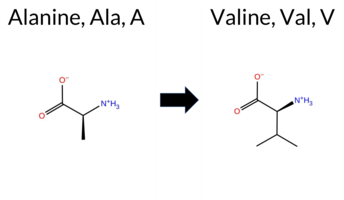 3DClick to see structure in 3D Viewer AISynGAP1 missense variant A232V is catalogued in gnomAD (ID 6‑33435546‑C‑T) but has no ClinVar entry. Functional prediction tools show mixed results: benign calls come from FoldX, Rosetta, Foldetta, polyPhen‑2 HumVar, SIFT, and FATHMM, whereas pathogenic calls are reported by REVEL, PROVEAN, polyPhen‑2 HumDiv, ESM1b, AlphaMissense‑Default, and AlphaMissense‑Optimized. The high‑accuracy AlphaMissense‑Optimized predicts pathogenicity, the SGM‑Consensus (majority vote of AlphaMissense‑Default, ESM1b, FATHMM, PROVEAN) also indicates likely pathogenic, and the Foldetta stability assessment predicts benign. premPS is inconclusive and therefore not considered. Overall, the majority of independent predictors lean toward pathogenicity, but the stability‑based Foldetta suggests a benign effect. With no ClinVar classification to contradict, the variant is most likely pathogenic according to the prevailing computational evidence. Disclaimer: This summary was generated using AI and should be interpreted alongside expert review. | Likely Pathogenic | PH | 0.254060 | Structured | 0.307228 | Uncertain | 0.878 | 0.305 | 0.000 | 6-33435546-C-T | 2 | 1.24e-6 | -9.418 | Likely Pathogenic | 0.962 | Likely Pathogenic | Likely Pathogenic | 0.40 | Likely Benign | 0.1 | 0.23 | Likely Benign | 0.32 | Likely Benign | 0.55 | Ambiguous | 0.539 | Likely Pathogenic | -2.99 | Deleterious | 0.608 | Possibly Damaging | 0.240 | Benign | 5.85 | Benign | 0.06 | Tolerated | 3.40 | 14 | 0.1202 | 0.6027 | 0 | 0 | 2.4 | 28.05 | ||||||||||||||||||||||||
| c.709G>A | A237T 2D 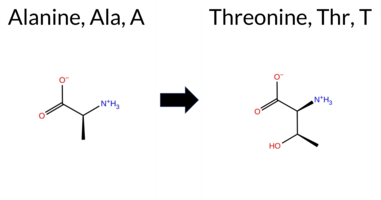 3DClick to see structure in 3D Viewer AIThe SynGAP1 A237T missense variant is not reported in ClinVar (ClinVar ID None) and is absent from gnomAD (gnomAD ID None). Prediction tools that agree on a benign effect include polyPhen‑2 (HumVar), SIFT, FATHMM, AlphaMissense‑Default, and AlphaMissense‑Optimized. Those that predict a pathogenic effect are REVEL, PROVEAN, polyPhen‑2 (HumDiv), and ESM1b. Four tools (FoldX, Rosetta, Foldetta, premPS) return uncertain results. High‑accuracy methods give the following: AlphaMissense‑Optimized predicts benign; the SGM Consensus (majority vote of AlphaMissense‑Default, ESM1b, FATHMM, PROVEAN) is inconclusive due to a 2‑vs‑2 split; Foldetta also yields an inconclusive stability assessment. Overall, the majority of evidence leans toward a benign impact, and this conclusion does not contradict the lack of ClinVar annotation. Disclaimer: This summary was generated using AI and should be interpreted alongside expert review. | PH | 0.200174 | Structured | 0.334699 | Uncertain | 0.719 | 0.352 | 0.000 | -8.664 | Likely Pathogenic | 0.213 | Likely Benign | Likely Benign | 0.74 | Ambiguous | 0.3 | 0.55 | Ambiguous | 0.65 | Ambiguous | 0.71 | Ambiguous | 0.539 | Likely Pathogenic | -2.66 | Deleterious | 0.900 | Possibly Damaging | 0.348 | Benign | 5.80 | Benign | 0.06 | Tolerated | 0.0975 | 0.5737 | 1 | 0 | -2.5 | 30.03 | ||||||||||||||||||||||||||||||
| c.712G>C | E238Q 2D 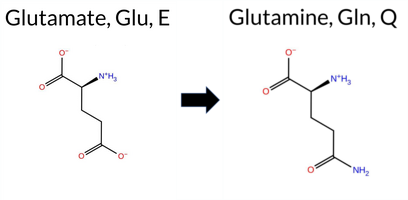 3DClick to see structure in 3D Viewer AIThe SynGAP1 E238Q missense variant has no ClinVar entry and is not reported in gnomAD. Prediction tools cluster into two consensus groups: benign predictions come from SIFT and FATHMM, while pathogenic predictions are made by REVEL, PROVEAN, polyPhen‑2 (HumDiv and HumVar), ESM1b, AlphaMissense‑Default, AlphaMissense‑Optimized, and the SGM‑Consensus score (Likely Pathogenic). Stability‑based methods (FoldX, Rosetta, premPS) and Foldetta give uncertain or inconclusive results and are treated as unavailable. High‑accuracy assessments further support pathogenicity: AlphaMissense‑Optimized predicts Pathogenic, the SGM‑Consensus (majority vote of AlphaMissense‑Default, ESM1b, FATHMM, PROVEAN) is Likely Pathogenic, while Foldetta remains uncertain. Overall, the majority of evidence points to a pathogenic effect, and this conclusion is not contradicted by any ClinVar annotation. Disclaimer: This summary was generated using AI and should be interpreted alongside expert review. | Likely Pathogenic | PH | 0.194234 | Structured | 0.332638 | Uncertain | 0.796 | 0.326 | 0.000 | -11.476 | Likely Pathogenic | 0.986 | Likely Pathogenic | Likely Pathogenic | 0.63 | Ambiguous | 0.5 | 0.59 | Ambiguous | 0.61 | Ambiguous | 0.52 | Ambiguous | 0.723 | Likely Pathogenic | -2.72 | Deleterious | 0.996 | Probably Damaging | 0.891 | Possibly Damaging | 5.44 | Benign | 0.06 | Tolerated | 0.1372 | 0.5412 | 2 | 2 | 0.0 | -0.98 | |||||||||||||||||||||||||||||
| c.758A>C | N253T 2D 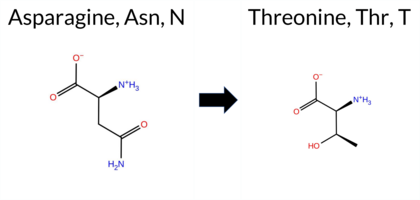 3DClick to see structure in 3D Viewer AIThe SynGAP1 missense variant N253T is not reported in ClinVar and has no entry in gnomAD. Prediction tools that agree on a benign effect include premPS, SIFT, and FATHMM, whereas the majority of tools (SGM‑Consensus, REVEL, Rosetta, Foldetta, PROVEAN, polyPhen‑2 HumDiv, polyPhen‑2 HumVar, ESM1b, and AlphaMissense‑Default) predict a pathogenic outcome. High‑accuracy methods give a consistent pathogenic signal: the SGM‑Consensus (majority vote of AlphaMissense‑Default, ESM1b, FATHMM, and PROVEAN) reports “Likely Pathogenic,” and Foldetta (combining FoldX‑MD and Rosetta) also predicts pathogenic. AlphaMissense‑Optimized is uncertain and is treated as unavailable. Overall, the preponderance of evidence points to a pathogenic effect, and this assessment does not contradict any ClinVar annotation because none exists. Disclaimer: This summary was generated using AI and should be interpreted alongside expert review. | Likely Pathogenic | PH | 0.513880 | Disordered | 0.201744 | Uncertain | 0.771 | 0.298 | 0.250 | -11.656 | Likely Pathogenic | 0.929 | Likely Pathogenic | Ambiguous | 1.96 | Ambiguous | 0.3 | 2.67 | Destabilizing | 2.32 | Destabilizing | 0.16 | Likely Benign | 0.739 | Likely Pathogenic | -5.01 | Deleterious | 0.993 | Probably Damaging | 0.971 | Probably Damaging | 5.54 | Benign | 0.06 | Tolerated | 0.1640 | 0.8665 | 0 | 0 | 2.8 | -13.00 | |||||||||||||||||||||||||||||
| c.761A>C | K254T 2D 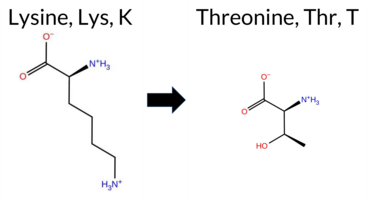 3DClick to see structure in 3D Viewer AISynGAP1 missense variant K254T is not reported in ClinVar and is absent from gnomAD. Functional prediction tools largely agree on a deleterious effect: pathogenic calls come from REVEL, PROVEAN, both polyPhen‑2 HumDiv and HumVar, ESM1b, AlphaMissense‑Default, AlphaMissense‑Optimized, and the SGM‑Consensus (Likely Pathogenic). Benign predictions are limited to SIFT and FATHMM. Uncertain results are reported by FoldX, Rosetta, Foldetta, and premPS. High‑accuracy assessments reinforce the pathogenic signal: AlphaMissense‑Optimized predicts pathogenic, the SGM‑Consensus (majority vote of AlphaMissense‑Default, ESM1b, FATHMM, PROVEAN) also indicates Likely Pathogenic, while Foldetta’s stability analysis is inconclusive. Overall, the majority of evidence points to a pathogenic effect for K254T, and this conclusion does not conflict with ClinVar status, which has no entry for this variant. Disclaimer: This summary was generated using AI and should be interpreted alongside expert review. | Likely Pathogenic | PH | 0.513880 | Disordered | 0.207751 | Uncertain | 0.799 | 0.285 | 0.375 | -13.793 | Likely Pathogenic | 0.991 | Likely Pathogenic | Likely Pathogenic | 0.51 | Ambiguous | 0.0 | 1.92 | Ambiguous | 1.22 | Ambiguous | 0.62 | Ambiguous | 0.883 | Likely Pathogenic | -5.14 | Deleterious | 0.970 | Probably Damaging | 0.749 | Possibly Damaging | 5.88 | Benign | 0.06 | Tolerated | 0.1825 | 0.2562 | 0 | -1 | 3.2 | -27.07 | |||||||||||||||||||||||||||||
| c.806T>A | I269K 2D  3DClick to see structure in 3D Viewer AIThe SynGAP1 missense variant I269K is not reported in ClinVar and has no entries in gnomAD. Functional prediction tools largely agree on a deleterious effect: SIFT is the sole benign predictor, whereas the remaining methods—SGM‑Consensus, REVEL, premPS, PROVEAN, polyPhen‑2 (HumDiv and HumVar), ESM1b, FATHMM, AlphaMissense‑Default, and AlphaMissense‑Optimized—classify the change as pathogenic. High‑accuracy assessments reinforce this view: AlphaMissense‑Optimized predicts pathogenicity, the SGM‑Consensus (a majority vote of AlphaMissense‑Default, ESM1b, FATHMM, and PROVEAN) also indicates pathogenicity, and Foldetta, which integrates FoldX‑MD and Rosetta stability outputs, is inconclusive. FoldX and Rosetta individually report uncertain effects, and Foldetta remains unavailable. Overall, the consensus of the majority of evidence points to a pathogenic impact, and this conclusion is not contradicted by any ClinVar annotation. Disclaimer: This summary was generated using AI and should be interpreted alongside expert review. | Likely Pathogenic | C2 | 0.216401 | Structured | 0.343787 | Uncertain | 0.937 | 0.244 | 0.125 | -14.609 | Likely Pathogenic | 0.997 | Likely Pathogenic | Likely Pathogenic | 1.45 | Ambiguous | 0.1 | 1.86 | Ambiguous | 1.66 | Ambiguous | 1.55 | Destabilizing | 0.763 | Likely Pathogenic | -5.10 | Deleterious | 0.999 | Probably Damaging | 0.998 | Probably Damaging | 1.76 | Pathogenic | 0.06 | Tolerated | 0.0878 | 0.0713 | -2 | -3 | -8.4 | 15.01 | |||||||||||||||||||||||||||||
| c.830A>G | K277R 2D 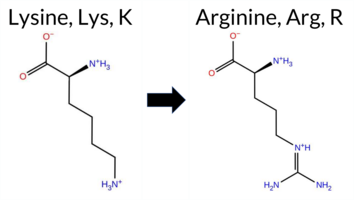 3DClick to see structure in 3D Viewer AIThe SynGAP1 missense variant K277R is not reported in ClinVar (ClinVar ID None) and is absent from gnomAD (gnomAD ID None). Prediction tools that agree on a benign effect include FoldX, Foldetta, premPS, SIFT, ESM1b, AlphaMissense‑Default, and AlphaMissense‑Optimized. Tools that predict a pathogenic effect are REVEL, PROVEAN, polyPhen‑2 (HumDiv and HumVar), and FATHMM. Rosetta gives an uncertain result. High‑accuracy methods give a benign prediction from AlphaMissense‑Optimized and from Foldetta; the SGM Consensus (majority vote of AlphaMissense‑Default, ESM1b, FATHMM, PROVEAN) is inconclusive because it is a 2‑vs‑2 split. Overall, the majority of evidence (7 benign vs. 5 pathogenic) supports a benign classification. This consensus does not contradict any ClinVar annotation, as no ClinVar entry exists for this variant. Disclaimer: This summary was generated using AI and should be interpreted alongside expert review. | C2 | 0.061840 | Structured | 0.321811 | Uncertain | 0.649 | 0.247 | 0.250 | -6.652 | Likely Benign | 0.156 | Likely Benign | Likely Benign | -0.01 | Likely Benign | 0.1 | 0.53 | Ambiguous | 0.26 | Likely Benign | 0.06 | Likely Benign | 0.518 | Likely Pathogenic | -2.76 | Deleterious | 0.999 | Probably Damaging | 0.995 | Probably Damaging | 1.83 | Pathogenic | 0.06 | Tolerated | 0.4232 | 0.0678 | 3 | 2 | -0.6 | 28.01 | ||||||||||||||||||||||||||||||
| c.832A>G | K278E 2D 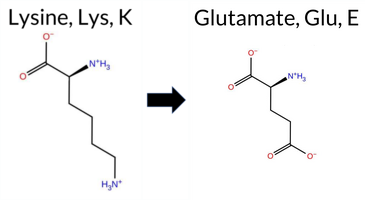 3DClick to see structure in 3D Viewer AIThe SynGAP1 missense variant K278E is not reported in ClinVar (ClinVar ID None) and is absent from gnomAD (gnomAD ID None). Prediction tools that agree on a benign effect include REVEL, FoldX, Rosetta, and SIFT, all of which score the substitution as tolerated. In contrast, a majority of tools predict a pathogenic outcome: PROVEAN, polyPhen‑2 (HumDiv and HumVar), ESM1b, FATHMM, AlphaMissense‑Default, and AlphaMissense‑Optimized all classify the variant as damaging. The SGM‑Consensus, which aggregates AlphaMissense‑Default, ESM1b, FATHMM, and PROVEAN, also reports a likely pathogenic verdict. Foldetta, a protein‑folding stability method that combines FoldX‑MD and Rosetta outputs, predicts a benign effect. premPS is inconclusive and therefore not considered evidence. High‑accuracy assessments therefore show AlphaMissense‑Optimized as pathogenic, SGM‑Consensus as pathogenic, and Foldetta as benign. Overall, the preponderance of evidence from multiple independent predictors indicates that K278E is most likely pathogenic, and this conclusion does not contradict any ClinVar annotation (none is available). Disclaimer: This summary was generated using AI and should be interpreted alongside expert review. | Likely Pathogenic | C2 | 0.120615 | Structured | 0.310130 | Uncertain | 0.748 | 0.253 | 0.125 | -14.047 | Likely Pathogenic | 0.996 | Likely Pathogenic | Likely Pathogenic | 0.40 | Likely Benign | 0.1 | 0.39 | Likely Benign | 0.40 | Likely Benign | 0.68 | Ambiguous | 0.463 | Likely Benign | -3.64 | Deleterious | 0.999 | Probably Damaging | 0.995 | Probably Damaging | 1.76 | Pathogenic | 0.06 | Tolerated | 0.3189 | 0.0492 | 0 | 1 | 0.4 | 0.94 | |||||||||||||||||||||||||||||
| c.836G>A | R279Q 2D 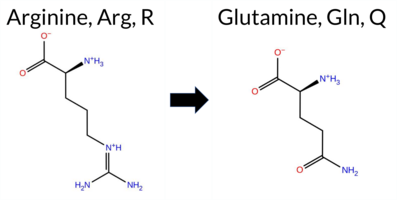 3DClick to see structure in 3D Viewer AIThe SynGAP1 missense variant R279Q is reported in gnomAD (ID 6‑33437741‑G‑A) but has no ClinVar entry. Prediction tools that agree on a benign effect are SIFT and AlphaMissense‑Optimized; those that agree on a pathogenic effect are SGM‑Consensus, REVEL, premPS, PROVEAN, polyPhen‑2 (HumDiv and HumVar), ESM1b, FATHMM, and AlphaMissense‑Default. FoldX, Rosetta, and Foldetta give uncertain results and are treated as unavailable. High‑accuracy assessments show AlphaMissense‑Optimized predicts benign, while the SGM Consensus (majority vote of AlphaMissense‑Default, ESM1b, FATHMM, PROVEAN) predicts pathogenic, and Foldetta remains uncertain. Overall, the majority of reliable predictors (nine pathogenic vs two benign) indicate a pathogenic effect. Thus, the variant is most likely pathogenic, and this conclusion is not contradicted by ClinVar status, which is currently absent. Disclaimer: This summary was generated using AI and should be interpreted alongside expert review. | Likely Pathogenic | C2 | 0.155435 | Structured | 0.309382 | Uncertain | 0.887 | 0.257 | 0.125 | 6-33437741-G-A | 6 | 3.72e-6 | -8.730 | Likely Pathogenic | 0.761 | Likely Pathogenic | Likely Benign | 1.37 | Ambiguous | 0.1 | 0.88 | Ambiguous | 1.13 | Ambiguous | 1.35 | Destabilizing | 0.554 | Likely Pathogenic | -2.61 | Deleterious | 0.999 | Probably Damaging | 0.994 | Probably Damaging | 1.94 | Pathogenic | 0.06 | Tolerated | 3.39 | 18 | 0.2680 | 0.1792 | 1 | 1 | 1.0 | -28.06 | ||||||||||||||||||||||||
| c.838T>A | Y280N 2D 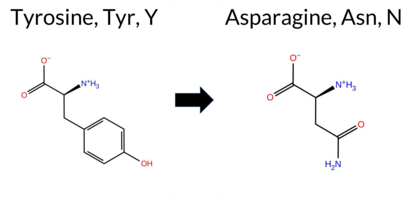 3DClick to see structure in 3D Viewer AIThe SynGAP1 missense variant Y280N is not reported in ClinVar (no ClinVar ID) and is absent from gnomAD (no gnomAD ID). Prediction tools that agree on a benign effect include only SIFT, whereas all other evaluated algorithms—REVEL, FoldX, Rosetta, Foldetta, premPS, PROVEAN, polyPhen‑2 (HumDiv and HumVar), ESM1b, FATHMM, AlphaMissense‑Default, and AlphaMissense‑Optimized—classify the variant as pathogenic. High‑accuracy assessments further support a deleterious impact: AlphaMissense‑Optimized predicts pathogenicity; the SGM Consensus (majority vote of AlphaMissense‑Default, ESM1b, FATHMM, and PROVEAN) indicates likely pathogenic; and Foldetta, which integrates FoldX‑MD and Rosetta outputs, also predicts pathogenicity. Based on the overwhelming consensus of pathogenic predictions and the absence of any benign consensus, the variant is most likely pathogenic. This conclusion is not contradicted by ClinVar status, as no ClinVar entry exists for Y280N. Disclaimer: This summary was generated using AI and should be interpreted alongside expert review. | Likely Pathogenic | C2 | 0.161087 | Structured | 0.321243 | Uncertain | 0.917 | 0.248 | 0.125 | -13.090 | Likely Pathogenic | 0.995 | Likely Pathogenic | Likely Pathogenic | 4.26 | Destabilizing | 0.2 | 4.18 | Destabilizing | 4.22 | Destabilizing | 1.82 | Destabilizing | 0.589 | Likely Pathogenic | -8.27 | Deleterious | 1.000 | Probably Damaging | 0.999 | Probably Damaging | 1.95 | Pathogenic | 0.06 | Tolerated | 0.1902 | 0.0212 | -2 | -2 | -2.2 | -49.07 | |||||||||||||||||||||||||||||
| c.841T>G | Y281D 2D 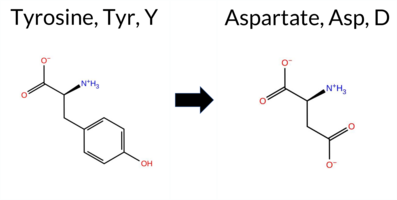 3DClick to see structure in 3D Viewer AIThe SynGAP1 missense variant Y281D is not reported in ClinVar and is absent from gnomAD. Prediction tools largely agree on a deleterious effect: SIFT classifies it as benign, whereas the remaining 13 tools (SGM‑Consensus, REVEL, FoldX, Rosetta, Foldetta, premPS, PROVEAN, polyPhen‑2 HumDiv, polyPhen‑2 HumVar, ESM1b, FATHMM, AlphaMissense‑Default, AlphaMissense‑Optimized) predict it to be pathogenic. High‑accuracy methods reinforce this view: AlphaMissense‑Optimized predicts pathogenicity; the SGM‑Consensus, derived from a majority vote of AlphaMissense‑Default, ESM1b, FATHMM, and PROVEAN, also predicts pathogenic; and Foldetta, which integrates FoldX‑MD and Rosetta outputs, predicts pathogenic. No tool yields an inconclusive result. Based on the collective predictions, the variant is most likely pathogenic, and this assessment does not contradict any ClinVar status, as no ClinVar entry exists. Disclaimer: This summary was generated using AI and should be interpreted alongside expert review. | Likely Pathogenic | C2 | 0.098513 | Structured | 0.337647 | Uncertain | 0.927 | 0.254 | 0.000 | -15.506 | Likely Pathogenic | 0.990 | Likely Pathogenic | Likely Pathogenic | 4.27 | Destabilizing | 0.0 | 4.53 | Destabilizing | 4.40 | Destabilizing | 1.48 | Destabilizing | 0.813 | Likely Pathogenic | -6.73 | Deleterious | 1.000 | Probably Damaging | 0.999 | Probably Damaging | 0.98 | Pathogenic | 0.06 | Tolerated | 0.4173 | 0.1175 | -4 | -3 | -2.2 | -48.09 | |||||||||||||||||||||||||||||
| c.849G>C | E283D 2D 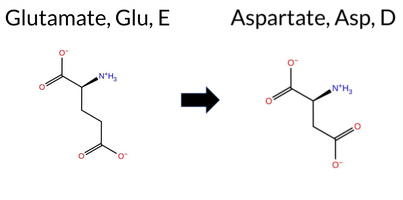 3DClick to see structure in 3D Viewer AISynGAP1 missense variant E283D is not reported in ClinVar and is absent from gnomAD. Functional prediction tools largely agree on a deleterious effect: benign predictions come from REVEL and SIFT, whereas pathogenic predictions are made by AlphaMissense‑Default, AlphaMissense‑Optimized, SGM‑Consensus, PROVEAN, polyPhen‑2 (HumDiv and HumVar), ESM1b, FATHMM, and FoldX. High‑accuracy assessments further support pathogenicity: AlphaMissense‑Optimized predicts a pathogenic change, and the SGM‑Consensus (majority vote of AlphaMissense‑Default, ESM1b, FATHMM, PROVEAN) also indicates likely pathogenic. The Foldetta stability analysis is inconclusive and therefore treated as unavailable. Overall, the majority of evidence points to a pathogenic effect for E283D, and this conclusion does not contradict the absence of a ClinVar classification. Disclaimer: This summary was generated using AI and should be interpreted alongside expert review. | Likely Pathogenic | C2 | 0.098513 | Structured | 0.358602 | Uncertain | 0.950 | 0.249 | 0.000 | -10.190 | Likely Pathogenic | 0.996 | Likely Pathogenic | Likely Pathogenic | 2.25 | Destabilizing | 0.2 | 0.94 | Ambiguous | 1.60 | Ambiguous | 0.60 | Ambiguous | 0.280 | Likely Benign | -2.76 | Deleterious | 0.997 | Probably Damaging | 0.992 | Probably Damaging | 1.63 | Pathogenic | 0.06 | Tolerated | 0.2008 | 0.3480 | 3 | 2 | 0.0 | -14.03 | |||||||||||||||||||||||||||||
| c.849G>T | E283D 2D 3DClick to see structure in 3D Viewer AIThe SynGAP1 missense variant E283D is not reported in ClinVar and is absent from gnomAD. Functional prediction tools that agree on a benign effect include REVEL and SIFT, whereas a majority of tools predict a pathogenic impact: AlphaMissense‑Default, AlphaMissense‑Optimized, SGM‑Consensus, PROVEAN, polyPhen‑2 (HumDiv and HumVar), ESM1b, FATHMM, and FoldX. Predictions that remain inconclusive are Foldetta, Rosetta, and premPS. High‑accuracy assessments further support a deleterious outcome: AlphaMissense‑Optimized is pathogenic, the SGM Consensus (majority vote from AlphaMissense‑Default, ESM1b, FATHMM, PROVEAN) is likely pathogenic, and Foldetta’s stability analysis is uncertain. Overall, the preponderance of evidence indicates that E283D is most likely pathogenic, and this conclusion does not contradict any ClinVar annotation (none is available). Disclaimer: This summary was generated using AI and should be interpreted alongside expert review. | Likely Pathogenic | C2 | 0.098513 | Structured | 0.358602 | Uncertain | 0.950 | 0.249 | 0.000 | -10.190 | Likely Pathogenic | 0.996 | Likely Pathogenic | Likely Pathogenic | 2.25 | Destabilizing | 0.2 | 0.94 | Ambiguous | 1.60 | Ambiguous | 0.60 | Ambiguous | 0.280 | Likely Benign | -2.76 | Deleterious | 0.997 | Probably Damaging | 0.992 | Probably Damaging | 1.63 | Pathogenic | 0.06 | Tolerated | 0.2008 | 0.3480 | 3 | 2 | 0.0 | -14.03 | |||||||||||||||||||||||||||||
| c.859G>A | D287N 2D 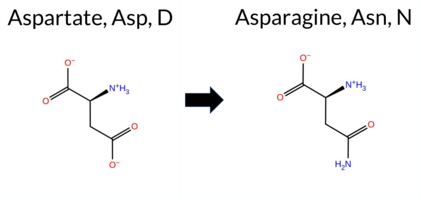 3DClick to see structure in 3D Viewer AIThe SynGAP1 D287N missense variant is not reported in ClinVar and is absent from gnomAD. Prediction tools cluster into two groups: benign predictions (REVEL, FoldX, premPS, SIFT) and pathogenic predictions (SGM‑Consensus, PROVEAN, polyPhen‑2 HumDiv, polyPhen‑2 HumVar, ESM1b, FATHMM, AlphaMissense‑Default). Two tools give uncertain results (Rosetta, AlphaMissense‑Optimized). High‑accuracy assessments further separate the evidence: AlphaMissense‑Optimized is uncertain; the SGM Consensus (majority vote of AlphaMissense‑Default, ESM1b, FATHMM, PROVEAN) indicates a likely pathogenic effect; Foldetta, which integrates FoldX‑MD and Rosetta stability outputs, predicts a benign impact. Overall, the majority of conventional predictors lean toward pathogenicity, while the most accurate stability‑based method suggests benign. Thus, the variant is most likely pathogenic based on the prevailing predictions, and this assessment does not contradict any ClinVar status because no ClinVar entry exists. Disclaimer: This summary was generated using AI and should be interpreted alongside expert review. | Likely Pathogenic | C2 | 0.102787 | Structured | 0.389029 | Uncertain | 0.912 | 0.268 | 0.000 | -10.167 | Likely Pathogenic | 0.944 | Likely Pathogenic | Ambiguous | 0.16 | Likely Benign | 0.3 | -0.54 | Ambiguous | -0.19 | Likely Benign | 0.05 | Likely Benign | 0.372 | Likely Benign | -4.60 | Deleterious | 0.999 | Probably Damaging | 0.997 | Probably Damaging | 1.62 | Pathogenic | 0.06 | Tolerated | 0.1338 | 0.8194 | 2 | 1 | 0.0 | -0.98 | |||||||||||||||||||||||||||||
| c.869T>A | L290Q 2D 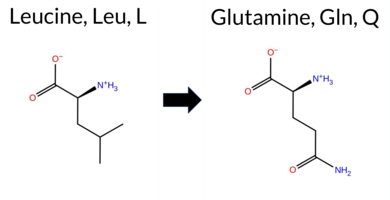 3DClick to see structure in 3D Viewer AIThe SynGAP1 missense variant L290Q is not reported in ClinVar (no ClinVar ID) and is absent from gnomAD (no gnomAD ID). Prediction tools that agree on a benign effect include only SIFT, whereas the majority of tools predict a pathogenic impact: REVEL, PROVEAN, polyPhen‑2 (HumDiv and HumVar), ESM1b, FATHMM, AlphaMissense‑Default, AlphaMissense‑Optimized, and the SGM‑Consensus (which itself is “Likely Pathogenic”). Uncertain or inconclusive results come from FoldX, Rosetta, Foldetta, and premPS. High‑accuracy assessments further support pathogenicity: AlphaMissense‑Optimized is pathogenic, the SGM‑Consensus is likely pathogenic, and Foldetta’s stability prediction is unavailable. Overall, the preponderance of evidence indicates that the variant is most likely pathogenic, and this conclusion does not contradict any ClinVar status because no ClinVar entry exists. Disclaimer: This summary was generated using AI and should be interpreted alongside expert review. | Likely Pathogenic | C2 | 0.127496 | Structured | 0.399723 | Uncertain | 0.904 | 0.255 | 0.000 | -12.776 | Likely Pathogenic | 0.993 | Likely Pathogenic | Likely Pathogenic | 1.12 | Ambiguous | 0.1 | 1.38 | Ambiguous | 1.25 | Ambiguous | 0.68 | Ambiguous | 0.697 | Likely Pathogenic | -5.52 | Deleterious | 1.000 | Probably Damaging | 0.999 | Probably Damaging | 1.97 | Pathogenic | 0.06 | Tolerated | 0.1079 | 0.1014 | -2 | -2 | -7.3 | 14.97 | |||||||||||||||||||||||||||||
| c.895C>T | R299C 2D 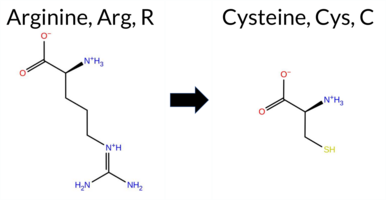 3DClick to see structure in 3D Viewer AISynGAP1 missense variant R299C is listed in ClinVar with an uncertain significance (ClinVar ID 1335623.0) and is present in gnomAD (ID 6‑33437800‑C‑T). Prediction tools that classify the variant as benign include REVEL, SIFT, ESM1b, and AlphaMissense‑Optimized. Those that predict pathogenicity are PROVEAN, polyPhen‑2 HumDiv, polyPhen‑2 HumVar, FATHMM, and AlphaMissense‑Default. The SGM‑Consensus, derived from a majority vote of AlphaMissense‑Default, ESM1b, FATHMM, and PROVEAN, reports the variant as likely pathogenic. High‑accuracy assessments show AlphaMissense‑Optimized as benign, SGM‑Consensus as pathogenic, and Foldetta (combining FoldX‑MD and Rosetta outputs) as uncertain. Other stability predictors (FoldX, Rosetta, premPS) are also uncertain. Overall, the balance of evidence favors a pathogenic interpretation, which does not contradict the ClinVar uncertain status but suggests a higher likelihood of disease relevance. Disclaimer: This summary was generated using AI and should be interpreted alongside expert review. | Likely Pathogenic | C2 | 0.321458 | Structured | 0.262979 | Uncertain | 0.819 | 0.295 | 0.500 | Conflicting | 2 | 6-33437800-C-T | 3 | 1.86e-6 | -6.326 | Likely Benign | 0.572 | Likely Pathogenic | Likely Benign | 1.85 | Ambiguous | 0.4 | 0.61 | Ambiguous | 1.23 | Ambiguous | 0.76 | Ambiguous | 0.344 | Likely Benign | -3.54 | Deleterious | 1.000 | Probably Damaging | 0.998 | Probably Damaging | 1.65 | Pathogenic | 0.06 | Tolerated | 3.39 | 19 | 0.3035 | 0.4564 | -4 | -3 | 7.0 | -53.05 | 210.7 | 91.3 | 0.1 | 0.0 | 0.0 | 0.2 | X | X | Potentially Pathogenic | The guanidinium group of Arg299, located in a β hairpin loop linking two anti-parallel β sheet strands (res. Met289-Pro298, res. Thr305-Asn315), forms hydrogen bonds that stabilize the tight turn. In the WT simulations, the Arg299 side chain hydrogen bonds with the loop backbone carbonyl groups (e.g., Ser302, Thr305, Leu274, Gly303), the hydroxyl group of Ser300, and even forms a salt bridge with the carboxylate group of Asp304.In the variant simulations, the thiol group of the Cys299 side chain is unable to form any of these well-coordinated or strong interactions, which could affect the initial formation of the secondary hairpin loop during folding. β hairpins are potential nucleation sites during the initial stages of protein folding, so even minor changes in them could be significant. Moreover, the positively charged Arg299 side chain faces the polar head group region of the inner leaflet membrane and could directly anchor the C2 domain to the membrane. In short, the residue swap could negatively affect both protein folding and the stability of the SynGAP-membrane association. | ||||||||||||
| c.901G>C | A301P 2D 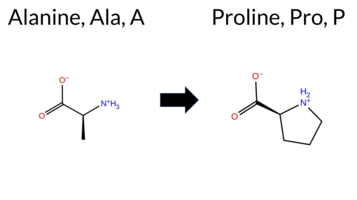 3DClick to see structure in 3D Viewer AIThe SynGAP1 missense variant A301P is not reported in ClinVar and is absent from gnomAD. Prediction tools that agree on a benign effect include SGM‑Consensus (Likely Benign), REVEL, FoldX, Rosetta, Foldetta, premPS, PROVEAN, SIFT, ESM1b, FATHMM, AlphaMissense‑Default, and AlphaMissense‑Optimized. Only two tools—polyPhen‑2 HumDiv and polyPhen‑2 HumVar—predict a pathogenic outcome. High‑accuracy assessments further support a benign interpretation: AlphaMissense‑Optimized is benign; the SGM Consensus (majority vote of AlphaMissense‑Default, ESM1b, FATHMM, PROVEAN) is Likely Benign; and Foldetta (combining FoldX‑MD and Rosetta outputs) is benign. Based on the preponderance of evidence, the variant is most likely benign, and this conclusion does not contradict the ClinVar status, which currently has no entry for this variant. Disclaimer: This summary was generated using AI and should be interpreted alongside expert review. | Likely Benign | C2 | 0.429200 | Structured | 0.258424 | Uncertain | 0.647 | 0.272 | 0.375 | -3.808 | Likely Benign | 0.085 | Likely Benign | Likely Benign | -0.47 | Likely Benign | 0.1 | -0.41 | Likely Benign | -0.44 | Likely Benign | 0.40 | Likely Benign | 0.225 | Likely Benign | -0.83 | Neutral | 0.999 | Probably Damaging | 0.995 | Probably Damaging | 4.11 | Benign | 0.06 | Tolerated | 0.1907 | 0.5371 | 1 | -1 | -3.4 | 26.04 | |||||||||||||||||||||||||||||
| c.907G>A | G303R 2D 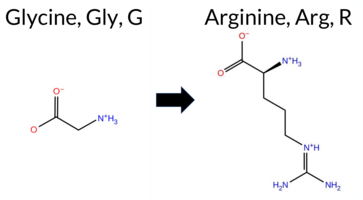 3DClick to see structure in 3D Viewer AISynGAP1 missense variant G303R is catalogued in gnomAD (6-33437812-G-A) but has no ClinVar entry. Functional prediction tools that agree on a benign effect include REVEL, Rosetta, PROVEAN, polyPhen‑2 (HumDiv and HumVar), SIFT, FATHMM, and AlphaMissense‑Optimized. Only AlphaMissense‑Default predicts a pathogenic outcome; the remaining tools (FoldX, Foldetta, premPS, ESM1b) are inconclusive. High‑accuracy assessments further support a benign interpretation: AlphaMissense‑Optimized is benign, the SGM Consensus (majority vote of AlphaMissense‑Default, ESM1b, FATHMM, PROVEAN) resolves to benign, while Foldetta remains uncertain. Taken together, the majority of evidence points to a benign effect, and this conclusion does not conflict with the absence of a ClinVar classification. Disclaimer: This summary was generated using AI and should be interpreted alongside expert review. | C2 | 0.450668 | Structured | 0.271087 | Uncertain | 0.630 | 0.254 | 0.250 | 6-33437812-G-A | 1 | 6.20e-7 | -7.493 | In-Between | 0.724 | Likely Pathogenic | Likely Benign | 1.44 | Ambiguous | 0.4 | 0.23 | Likely Benign | 0.84 | Ambiguous | 0.73 | Ambiguous | 0.048 | Likely Benign | -1.38 | Neutral | 0.001 | Benign | 0.003 | Benign | 3.99 | Benign | 0.06 | Tolerated | 3.55 | 18 | 0.0839 | 0.4490 | -2 | -3 | -4.1 | 99.14 | |||||||||||||||||||||||||
| c.907G>C | G303R 2D 3DClick to see structure in 3D Viewer AIThe SynGAP1 missense variant G303R is not reported in ClinVar (ClinVar ID None) and is absent from gnomAD (gnomAD ID None). Prediction tools that agree on a benign effect include REVEL, Rosetta, PROVEAN, polyPhen‑2 (HumDiv and HumVar), SIFT, FATHMM, and AlphaMissense‑Optimized. Only AlphaMissense‑Default predicts a pathogenic outcome. The remaining tools—FoldX, Foldetta, premPS, and ESM1b—return uncertain or inconclusive results. High‑accuracy assessments further support a benign interpretation: AlphaMissense‑Optimized is benign, the SGM Consensus (majority vote from AlphaMissense‑Default, ESM1b, FATHMM, PROVEAN) is benign, while Foldetta remains uncertain. Overall, the preponderance of evidence indicates that the variant is most likely benign, and this conclusion does not contradict the ClinVar status, which currently contains no classification for this variant. Disclaimer: This summary was generated using AI and should be interpreted alongside expert review. | C2 | 0.450668 | Structured | 0.271087 | Uncertain | 0.630 | 0.254 | 0.250 | -7.493 | In-Between | 0.724 | Likely Pathogenic | Likely Benign | 1.44 | Ambiguous | 0.4 | 0.23 | Likely Benign | 0.84 | Ambiguous | 0.73 | Ambiguous | 0.048 | Likely Benign | -1.38 | Neutral | 0.001 | Benign | 0.003 | Benign | 3.99 | Benign | 0.06 | Tolerated | 3.55 | 18 | 0.0839 | 0.4490 | -2 | -3 | -4.1 | 99.14 | ||||||||||||||||||||||||||||
| c.913A>C | T305P 2D 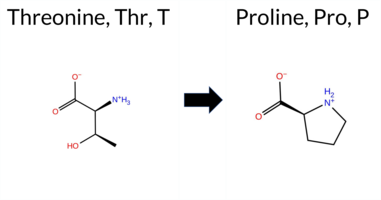 3DClick to see structure in 3D Viewer AIThe SynGAP1 T305P missense variant is not reported in ClinVar (ClinVar ID None) and is absent from gnomAD (gnomAD ID None). Prediction tools that agree on a benign effect include REVEL, SIFT, ESM1b, AlphaMissense‑Default, and AlphaMissense‑Optimized. Those that predict a pathogenic effect are FoldX, Rosetta, Foldetta, PROVEAN, polyPhen‑2 (HumDiv and HumVar), and FATHMM; premPS is uncertain. High‑accuracy assessments show AlphaMissense‑Optimized as benign, Foldetta as pathogenic, and the SGM Consensus (majority vote from AlphaMissense‑Default, ESM1b, FATHMM, PROVEAN) is inconclusive due to a 2‑vs‑2 split. Overall, the majority of tools (7 pathogenic vs. 5 benign) lean toward a pathogenic impact, and this assessment does not contradict the lack of ClinVar annotation. Thus, the variant is most likely pathogenic based on current predictive evidence. Disclaimer: This summary was generated using AI and should be interpreted alongside expert review. | C2 | 0.359901 | Structured | 0.299706 | Uncertain | 0.872 | 0.274 | 0.125 | -5.203 | Likely Benign | 0.177 | Likely Benign | Likely Benign | 3.64 | Destabilizing | 1.1 | 6.02 | Destabilizing | 4.83 | Destabilizing | 0.71 | Ambiguous | 0.293 | Likely Benign | -2.83 | Deleterious | 0.997 | Probably Damaging | 0.929 | Probably Damaging | 1.72 | Pathogenic | 0.06 | Tolerated | 0.2206 | 0.5333 | 0 | -1 | -0.9 | -3.99 | ||||||||||||||||||||||||||||||
| c.926G>A | G309D 2D 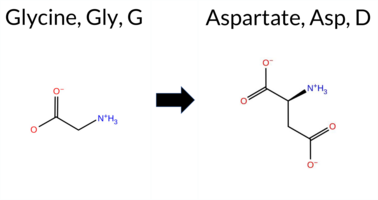 3DClick to see structure in 3D Viewer AIThe SynGAP1 missense variant G309D is not reported in ClinVar and is absent from gnomAD. Functional prediction tools cluster into two groups: benign predictions are provided by SIFT and Rosetta, whereas the remaining 12 tools (REVEL, FoldX, PROVEAN, polyPhen‑2 HumDiv, polyPhen‑2 HumVar, ESM1b, FATHMM, AlphaMissense‑Default, AlphaMissense‑Optimized, SGM‑Consensus) are pathogenic. High‑accuracy methods give a consistent pathogenic signal: AlphaMissense‑Optimized predicts pathogenic, SGM‑Consensus (majority vote of AlphaMissense‑Default, ESM1b, FATHMM, PROVEAN) is pathogenic, and Foldetta is inconclusive. Taken together, the majority of evidence supports a pathogenic effect. Therefore, the variant is most likely pathogenic, and this assessment does not contradict any ClinVar annotation because none exists. Disclaimer: This summary was generated using AI and should be interpreted alongside expert review. | Likely Pathogenic | C2 | 0.275179 | Structured | 0.338439 | Uncertain | 0.882 | 0.342 | 0.125 | -15.264 | Likely Pathogenic | 0.999 | Likely Pathogenic | Likely Pathogenic | 2.89 | Destabilizing | 0.5 | -0.03 | Likely Benign | 1.43 | Ambiguous | 0.75 | Ambiguous | 0.523 | Likely Pathogenic | -6.43 | Deleterious | 1.000 | Probably Damaging | 1.000 | Probably Damaging | 1.88 | Pathogenic | 0.06 | Tolerated | 0.1889 | 0.2678 | 1 | -1 | -3.1 | 58.04 | |||||||||||||||||||||||||||||
| c.931C>A | H311N 2D 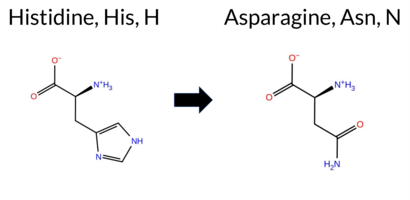 3DClick to see structure in 3D Viewer AIThe SynGAP1 H311N missense variant is not reported in ClinVar (ClinVar ID None) and has no entries in gnomAD (gnomAD ID None). Prediction tools that indicate a benign effect include REVEL, SIFT, and AlphaMissense‑Optimized. Tools that predict a pathogenic effect comprise SGM‑Consensus, PROVEAN, polyPhen‑2 (HumDiv and HumVar), ESM1b, FATHMM, and AlphaMissense‑Default. Uncertain or inconclusive results are reported for FoldX, Rosetta, Foldetta, and premPS. High‑accuracy assessments show AlphaMissense‑Optimized as benign, SGM‑Consensus as likely pathogenic (majority vote from AlphaMissense‑Default, ESM1b, FATHMM, and PROVEAN), and Foldetta as uncertain. Overall, the majority of evaluated tools predict pathogenicity, suggesting that H311N is most likely pathogenic. This prediction does not contradict ClinVar status, as no ClinVar classification is available. Disclaimer: This summary was generated using AI and should be interpreted alongside expert review. | Likely Pathogenic | C2 | 0.229226 | Structured | 0.354792 | Uncertain | 0.902 | 0.314 | 0.125 | -9.545 | Likely Pathogenic | 0.661 | Likely Pathogenic | Likely Benign | 0.82 | Ambiguous | 0.1 | 1.12 | Ambiguous | 0.97 | Ambiguous | 0.72 | Ambiguous | 0.475 | Likely Benign | -5.35 | Deleterious | 0.997 | Probably Damaging | 0.992 | Probably Damaging | 1.89 | Pathogenic | 0.06 | Tolerated | 0.1566 | 0.2380 | 2 | 1 | -0.3 | -23.04 | |||||||||||||||||||||||||||||
| c.958G>T | V320F 2D 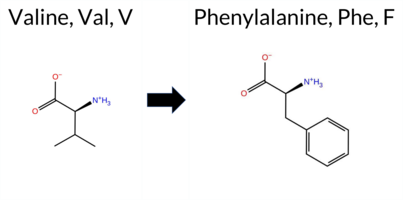 3DClick to see structure in 3D Viewer AISynGAP1 missense variant V320F is not reported in ClinVar and is absent from gnomAD. Functional prediction tools that agree on benign impact include REVEL, premPS, and SIFT, whereas tools that agree on pathogenic impact include PROVEAN, polyPhen‑2 HumDiv, polyPhen‑2 HumVar, ESM1b, FATHMM, and AlphaMissense‑Default. High‑accuracy assessments show AlphaMissense‑Optimized as inconclusive, SGM‑Consensus (derived from the majority vote of AlphaMissense‑Default, ESM1b, FATHMM, and PROVEAN) as Likely Pathogenic, and Foldetta (combining FoldX‑MD and Rosetta outputs) as inconclusive. Because the majority of available predictions and the SGM‑Consensus favor pathogenicity, the variant is most likely pathogenic. This conclusion does not contradict ClinVar status, as no ClinVar entry exists for V320F. Disclaimer: This summary was generated using AI and should be interpreted alongside expert review. | Likely Pathogenic | C2 | 0.185198 | Structured | 0.419626 | Uncertain | 0.905 | 0.266 | 0.125 | -9.958 | Likely Pathogenic | 0.877 | Likely Pathogenic | Ambiguous | 1.49 | Ambiguous | 1.4 | 1.55 | Ambiguous | 1.52 | Ambiguous | 0.44 | Likely Benign | 0.237 | Likely Benign | -3.26 | Deleterious | 0.994 | Probably Damaging | 0.944 | Probably Damaging | 1.79 | Pathogenic | 0.06 | Tolerated | 0.0473 | 0.3064 | -1 | -1 | -1.4 | 48.04 | |||||||||||||||||||||||||||||
| c.1001A>G | K334R 2D 3DClick to see structure in 3D Viewer AIThe SynGAP1 missense variant K334R is not reported in ClinVar (ClinVar ID None) and is absent from gnomAD (gnomAD ID None). Prediction tools that agree on a benign effect include REVEL, FoldX, premPS, SIFT, ESM1b, AlphaMissense‑Default, AlphaMissense‑Optimized, and Foldetta. Tools that predict a pathogenic effect are PROVEAN, polyPhen‑2 HumDiv, polyPhen‑2 HumVar, and FATHMM; Rosetta is uncertain. High‑accuracy assessments show AlphaMissense‑Optimized as benign, Foldetta as benign, and the SGM Consensus (majority vote from AlphaMissense‑Default, ESM1b, FATHMM, PROVEAN) is inconclusive due to a 2‑vs‑2 split. Overall, the majority of evidence points to a benign impact. Thus, the variant is most likely benign, and this conclusion does not contradict the ClinVar status, which has no entry for this variant. Disclaimer: This summary was generated using AI and should be interpreted alongside expert review. | C2 | 0.377384 | Structured | 0.325972 | Uncertain | 0.544 | 0.414 | 0.500 | -5.384 | Likely Benign | 0.162 | Likely Benign | Likely Benign | -0.37 | Likely Benign | 0.1 | -0.53 | Ambiguous | -0.45 | Likely Benign | 0.39 | Likely Benign | 0.247 | Likely Benign | -2.62 | Deleterious | 0.999 | Probably Damaging | 0.995 | Probably Damaging | 1.76 | Pathogenic | 0.07 | Tolerated | 0.4647 | 0.0976 | 3 | 2 | -0.6 | 28.01 | ||||||||||||||||||||||||||||||
| c.1010A>G | K337R 2D 3DClick to see structure in 3D Viewer AISynGAP1 missense variant K337R has no ClinVar entry and is not reported in gnomAD. Prediction tools cluster into benign and pathogenic groups: benign predictions come from REVEL, FoldX, premPS, PROVEAN, SIFT, ESM1b, AlphaMissense‑Default, AlphaMissense‑Optimized, and Foldetta; pathogenic predictions come from polyPhen2_HumDiv, polyPhen2_HumVar, and FATHMM, while Rosetta remains uncertain. High‑accuracy methods reinforce the benign assessment: AlphaMissense‑Optimized predicts benign; the SGM Consensus (majority vote of AlphaMissense‑Default, ESM1b, FATHMM, PROVEAN) also predicts benign; and Foldetta, which integrates FoldX‑MD and Rosetta outputs, predicts benign. Consequently, the variant is most likely benign, and this conclusion does not contradict any ClinVar status. Disclaimer: This summary was generated using AI and should be interpreted alongside expert review. | Likely Benign | C2 | 0.321458 | Structured | 0.348540 | Uncertain | 0.449 | 0.438 | 0.500 | -6.302 | Likely Benign | 0.249 | Likely Benign | Likely Benign | -0.30 | Likely Benign | 0.2 | 1.07 | Ambiguous | 0.39 | Likely Benign | 0.12 | Likely Benign | 0.142 | Likely Benign | -2.36 | Neutral | 0.997 | Probably Damaging | 0.992 | Probably Damaging | 1.70 | Pathogenic | 0.07 | Tolerated | 0.3913 | 0.1134 | 3 | 2 | -0.6 | 28.01 | |||||||||||||||||||||||||||||
| c.1024T>G | Y342D 2D 3DClick to see structure in 3D Viewer AIThe SynGAP1 missense variant Y342D is not reported in ClinVar and is absent from gnomAD. Prediction tools that classify the variant as benign include premPS and SIFT, whereas the majority of other in silico predictors (SGM‑Consensus, REVEL, Rosetta, PROVEAN, polyPhen‑2 HumDiv, polyPhen‑2 HumVar, ESM1b, FATHMM, AlphaMissense‑Default, AlphaMissense‑Optimized) predict it to be pathogenic. FoldX reports an uncertain effect, while Foldetta, which integrates FoldX‑MD and Rosetta outputs, predicts a pathogenic impact. High‑accuracy assessments further support pathogenicity: AlphaMissense‑Optimized is pathogenic; SGM‑Consensus (a majority vote of AlphaMissense‑Default, ESM1b, FATHMM, and PROVEAN) is likely pathogenic; and Foldetta is pathogenic. Based on the preponderance of pathogenic predictions and the absence of benign evidence, the variant is most likely pathogenic, and this conclusion does not contradict any ClinVar status (none is available). Disclaimer: This summary was generated using AI and should be interpreted alongside expert review. | Likely Pathogenic | C2 | 0.366687 | Structured | 0.408200 | Uncertain | 0.866 | 0.487 | 0.250 | -10.940 | Likely Pathogenic | 0.985 | Likely Pathogenic | Likely Pathogenic | 1.60 | Ambiguous | 0.1 | 2.70 | Destabilizing | 2.15 | Destabilizing | 0.13 | Likely Benign | 0.668 | Likely Pathogenic | -7.19 | Deleterious | 1.000 | Probably Damaging | 0.999 | Probably Damaging | 1.71 | Pathogenic | 0.07 | Tolerated | 0.3925 | 0.0862 | -4 | -3 | -2.2 | -48.09 | |||||||||||||||||||||||||||||
| c.1033C>A | L345M 2D 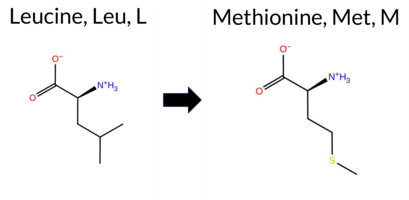 3DClick to see structure in 3D Viewer AIThe SynGAP1 missense change L345M is not reported in ClinVar and is absent from gnomAD. Functional prediction tools that agree on a benign effect include REVEL, PROVEAN, polyPhen‑2 HumVar, SIFT, ESM1b, AlphaMissense‑Default, AlphaMissense‑Optimized, and the SGM‑Consensus score (Likely Benign). Tools that predict a pathogenic effect are polyPhen‑2 HumDiv and FATHMM. Predictions that are inconclusive or unavailable are FoldX, Rosetta, Foldetta, and premPS. High‑accuracy assessments show AlphaMissense‑Optimized as benign; the SGM‑Consensus, derived from a majority vote of AlphaMissense‑Default, ESM1b, FATHMM, and PROVEAN, also indicates a benign outcome; Foldetta, which integrates FoldX‑MD and Rosetta stability calculations, is uncertain. Overall, the majority of evidence points to a benign impact for the L345M variant, and this conclusion does not contradict the absence of a ClinVar classification. Disclaimer: This summary was generated using AI and should be interpreted alongside expert review. | Likely Benign | C2 | 0.260850 | Structured | 0.354989 | Uncertain | 0.936 | 0.478 | 0.125 | -3.918 | Likely Benign | 0.101 | Likely Benign | Likely Benign | 0.75 | Ambiguous | 0.1 | 0.80 | Ambiguous | 0.78 | Ambiguous | 0.54 | Ambiguous | 0.101 | Likely Benign | -0.97 | Neutral | 0.802 | Possibly Damaging | 0.122 | Benign | 1.73 | Pathogenic | 0.07 | Tolerated | 0.0677 | 0.3246 | 4 | 2 | -1.9 | 18.03 | |||||||||||||||||||||||||||||
| c.1045C>A | P349T 2D 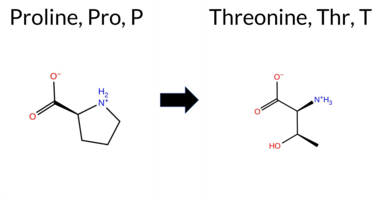 3DClick to see structure in 3D Viewer AIThe SynGAP1 missense variant P349T is not reported in ClinVar and is absent from gnomAD. Prediction tools that indicate a benign effect include REVEL, SIFT, and AlphaMissense‑Optimized. Those that predict a pathogenic effect comprise PROVEAN, polyPhen‑2 (HumDiv and HumVar), ESM1b, FATHMM, and the SGM‑Consensus score (which is derived from a majority vote of AlphaMissense‑Default, ESM1b, FATHMM, and PROVEAN). Tools with inconclusive results are AlphaMissense‑Default, FoldX, Foldetta, and premPS. High‑accuracy assessments show AlphaMissense‑Optimized as benign, SGM‑Consensus as pathogenic, and Foldetta as uncertain. Overall, the majority of predictions lean toward pathogenicity, and this conclusion does not contradict any ClinVar annotation because no ClinVar status exists for this variant. Thus, the variant is most likely pathogenic based on the available computational evidence. Disclaimer: This summary was generated using AI and should be interpreted alongside expert review. | Likely Pathogenic | C2 | 0.167087 | Structured | 0.348607 | Uncertain | 0.947 | 0.396 | 0.000 | -9.736 | Likely Pathogenic | 0.420 | Ambiguous | Likely Benign | 1.37 | Ambiguous | 0.1 | 2.56 | Destabilizing | 1.97 | Ambiguous | 0.76 | Ambiguous | 0.246 | Likely Benign | -6.12 | Deleterious | 1.000 | Probably Damaging | 0.996 | Probably Damaging | 1.57 | Pathogenic | 0.07 | Tolerated | 0.1615 | 0.6238 | 0 | -1 | 0.9 | 3.99 | |||||||||||||||||||||||||||||
| c.1061C>A | A354D 2D 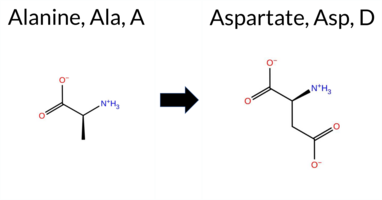 3DClick to see structure in 3D Viewer AIThe SynGAP1 missense variant A354D is not reported in ClinVar (ClinVar ID None) and is absent from gnomAD (gnomAD ID None). Prediction tools that agree on a benign effect include REVEL, FoldX, PROVEAN, polyPhen‑2 (HumDiv and HumVar), and SIFT. Those that predict a pathogenic effect are FATHMM and AlphaMissense‑Default. Four tools (Foldetta, premPS, ESM1b, and Rosetta) return uncertain results and are treated as unavailable evidence. High‑accuracy assessments show AlphaMissense‑Optimized predicts a benign outcome, while the SGM Consensus (majority vote from AlphaMissense‑Default, ESM1b, FATHMM, and PROVEAN) favors a pathogenic interpretation. Foldetta’s stability prediction is uncertain. Overall, the majority of consensus tools lean toward a benign effect, and there is no ClinVar annotation to contradict this assessment. Thus, the variant is most likely benign based on the available predictions. Disclaimer: This summary was generated using AI and should be interpreted alongside expert review. | C2 | 0.203355 | Structured | 0.381329 | Uncertain | 0.882 | 0.335 | 0.125 | -7.914 | In-Between | 0.725 | Likely Pathogenic | Likely Benign | 0.22 | Likely Benign | 0.1 | 1.10 | Ambiguous | 0.66 | Ambiguous | 0.57 | Ambiguous | 0.087 | Likely Benign | -1.49 | Neutral | 0.255 | Benign | 0.053 | Benign | 1.75 | Pathogenic | 0.07 | Tolerated | 0.1759 | 0.1345 | 0 | -2 | -5.3 | 44.01 | ||||||||||||||||||||||||||||||
| c.1066C>A | R356S 2D 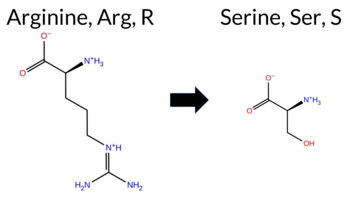 3DClick to see structure in 3D Viewer AISynGAP1 missense variant R356S is not reported in ClinVar and is absent from gnomAD. Prediction tools that classify the variant as benign include REVEL and SIFT, whereas the remaining tools—premPS, PROVEAN, polyPhen‑2 HumDiv, polyPhen‑2 HumVar, ESM1b, FATHMM, AlphaMissense‑Default, AlphaMissense‑Optimized—predict it to be pathogenic. The SGM‑Consensus, which aggregates the majority vote of AlphaMissense‑Default, ESM1b, FATHMM, and PROVEAN, also indicates a likely pathogenic outcome. High‑accuracy assessments further support this: AlphaMissense‑Optimized is pathogenic, the SGM‑Consensus is pathogenic, and Foldetta, which integrates FoldX‑MD and Rosetta stability predictions, is inconclusive. Taken together, the preponderance of evidence points to a pathogenic effect for R356S, and this conclusion does not conflict with the absence of a ClinVar annotation. Disclaimer: This summary was generated using AI and should be interpreted alongside expert review. | Likely Pathogenic | C2 | 0.219301 | Structured | 0.395028 | Uncertain | 0.802 | 0.373 | 0.250 | -13.059 | Likely Pathogenic | 0.965 | Likely Pathogenic | Likely Pathogenic | 1.00 | Ambiguous | 0.1 | 0.79 | Ambiguous | 0.90 | Ambiguous | 1.04 | Destabilizing | 0.292 | Likely Benign | -5.28 | Deleterious | 0.993 | Probably Damaging | 0.982 | Probably Damaging | 1.84 | Pathogenic | 0.07 | Tolerated | 0.2891 | 0.4491 | 0 | -1 | 3.7 | -69.11 | |||||||||||||||||||||||||||||
| c.1080G>C | E360D 2D 3DClick to see structure in 3D Viewer AIThe SynGAP1 missense variant E360D is not reported in ClinVar (ClinVar ID None) and is absent from gnomAD (gnomAD ID None). Prediction tools that agree on a benign effect include REVEL, premPS, and SIFT. In contrast, a majority of tools predict a pathogenic impact: SGM‑Consensus (Likely Pathogenic), PROVEAN, polyPhen‑2 HumDiv, polyPhen‑2 HumVar, ESM1b, FATHMM, AlphaMissense‑Default, and AlphaMissense‑Optimized. FoldX, Rosetta, and Foldetta give uncertain results and are therefore not considered evidence for either side. High‑accuracy assessments further support a deleterious effect: AlphaMissense‑Optimized is pathogenic, SGM‑Consensus remains Likely Pathogenic, while Foldetta is uncertain. Overall, the preponderance of evidence points to a pathogenic effect for E360D. This conclusion is not contradicted by ClinVar status, as no ClinVar entry exists for this variant. Disclaimer: This summary was generated using AI and should be interpreted alongside expert review. | Likely Pathogenic | C2 | 0.250310 | Structured | 0.421183 | Uncertain | 0.955 | 0.498 | 0.250 | -9.383 | Likely Pathogenic | 0.971 | Likely Pathogenic | Likely Pathogenic | 1.00 | Ambiguous | 0.0 | 0.63 | Ambiguous | 0.82 | Ambiguous | 0.11 | Likely Benign | 0.290 | Likely Benign | -2.76 | Deleterious | 0.994 | Probably Damaging | 0.970 | Probably Damaging | 1.77 | Pathogenic | 0.07 | Tolerated | 0.2339 | 0.5735 | 3 | 2 | 0.0 | -14.03 | |||||||||||||||||||||||||||||
| c.1080G>T | E360D 2D 3DClick to see structure in 3D Viewer AIThe SynGAP1 missense variant E360D is not reported in ClinVar (ClinVar ID None) and is absent from gnomAD (gnomAD ID None). Prediction tools that classify the variant as benign include REVEL, premPS, and SIFT, whereas the majority of tools predict it to be pathogenic: SGM‑Consensus (Likely Pathogenic), PROVEAN, polyPhen‑2 HumDiv, polyPhen‑2 HumVar, ESM1b, FATHMM, AlphaMissense‑Default, and AlphaMissense‑Optimized. FoldX, Rosetta, and Foldetta give uncertain results. High‑accuracy assessments show AlphaMissense‑Optimized as pathogenic, SGM‑Consensus as Likely Pathogenic, and Foldetta as uncertain. Based on the overall consensus of the available predictions, the variant is most likely pathogenic, and this assessment does not contradict any ClinVar status. Disclaimer: This summary was generated using AI and should be interpreted alongside expert review. | Likely Pathogenic | C2 | 0.250310 | Structured | 0.421183 | Uncertain | 0.955 | 0.498 | 0.250 | -9.383 | Likely Pathogenic | 0.971 | Likely Pathogenic | Likely Pathogenic | 1.00 | Ambiguous | 0.0 | 0.63 | Ambiguous | 0.82 | Ambiguous | 0.11 | Likely Benign | 0.290 | Likely Benign | -2.76 | Deleterious | 0.994 | Probably Damaging | 0.970 | Probably Damaging | 1.77 | Pathogenic | 0.07 | Tolerated | 0.2339 | 0.5735 | 3 | 2 | 0.0 | -14.03 | |||||||||||||||||||||||||||||
| c.1112G>T | S371I 2D 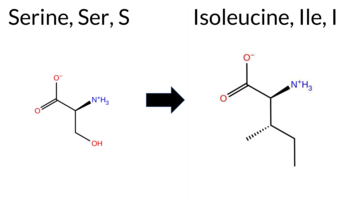 3DClick to see structure in 3D Viewer AIThe SynGAP1 missense variant S371I is not reported in ClinVar and is absent from gnomAD. Functional prediction tools that agree on a benign effect include REVEL, premPS, PROVEAN, polyPhen‑2 (HumDiv and HumVar), SIFT, ESM1b, FATHMM, AlphaMissense‑Default, and AlphaMissense‑Optimized. No tool predicts a pathogenic outcome; the only inconclusive results come from FoldX and Rosetta, which are treated as unavailable. High‑accuracy assessments further support a benign classification: AlphaMissense‑Optimized predicts benign, the SGM Consensus (majority vote of AlphaMissense‑Default, ESM1b, FATHMM, PROVEAN) also yields benign, and Foldetta (combining FoldX‑MD and Rosetta outputs) reports a benign effect. Based on the collective evidence, the variant is most likely benign, and this conclusion does not contradict any ClinVar annotation. Disclaimer: This summary was generated using AI and should be interpreted alongside expert review. | Likely Benign | C2 | 0.444081 | Structured | 0.432086 | Uncertain | 0.294 | 0.746 | 0.375 | -6.888 | Likely Benign | 0.207 | Likely Benign | Likely Benign | 0.50 | Ambiguous | 0.4 | -0.50 | Ambiguous | 0.00 | Likely Benign | -0.11 | Likely Benign | 0.433 | Likely Benign | -1.06 | Neutral | 0.028 | Benign | 0.016 | Benign | 4.62 | Benign | 0.07 | Tolerated | 0.1423 | 0.5924 | -1 | -2 | 5.3 | 26.08 | |||||||||||||||||||||||||||||
| c.1130T>A | M377K 2D 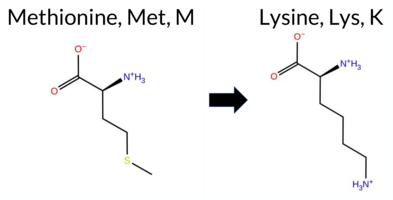 3DClick to see structure in 3D Viewer AIThe SynGAP1 missense variant M377K is not reported in ClinVar (ClinVar ID None) and is absent from gnomAD (gnomAD ID None). Prediction tools that agree on a benign effect include REVEL, FoldX, PROVEAN, polyPhen‑2 (HumDiv and HumVar), SIFT, ESM1b, FATHMM, AlphaMissense‑Default, and AlphaMissense‑Optimized. Tools that predict a pathogenic effect are Rosetta and Foldetta. The SGM‑Consensus, derived from a majority vote of AlphaMissense‑Default, ESM1b, FATHMM, and PROVEAN, also indicates a likely benign outcome, while premPS remains uncertain. High‑accuracy assessments show AlphaMissense‑Optimized as benign, SGM‑Consensus as likely benign, and Foldetta (combining FoldX‑MD and Rosetta outputs) as pathogenic. Overall, the majority of evidence points to a benign impact, and this conclusion does not contradict the absence of a ClinVar classification. Thus, the variant is most likely benign based on current predictions. Disclaimer: This summary was generated using AI and should be interpreted alongside expert review. | Likely Benign | C2 | 0.675549 | Disordered | 0.431183 | Uncertain | 0.324 | 0.884 | 0.625 | -3.718 | Likely Benign | 0.226 | Likely Benign | Likely Benign | 0.20 | Likely Benign | 0.2 | 4.44 | Destabilizing | 2.32 | Destabilizing | 0.62 | Ambiguous | 0.440 | Likely Benign | -0.26 | Neutral | 0.002 | Benign | 0.003 | Benign | 5.46 | Benign | 0.07 | Tolerated | 0.2423 | 0.1671 | 0 | -1 | -5.8 | -3.02 | |||||||||||||||||||||||||||||
| c.1177G>A | G393S 2D 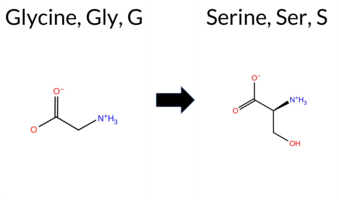 3DClick to see structure in 3D Viewer AIThe SynGAP1 missense variant G393S is not reported in ClinVar and is absent from gnomAD. Functional prediction tools cluster into two groups: benign predictions come from REVEL, premPS, PROVEAN, polyPhen‑2 HumVar, SIFT, ESM1b, AlphaMissense‑Default, and AlphaMissense‑Optimized; pathogenic predictions arise from FoldX, polyPhen‑2 HumDiv, and FATHMM. The SGM‑Consensus, which aggregates AlphaMissense‑Default, ESM1b, FATHMM, and PROVEAN, indicates a likely benign outcome. High‑accuracy assessments show AlphaMissense‑Optimized as benign, SGM‑Consensus as likely benign, and Foldetta (combining FoldX‑MD and Rosetta) as uncertain. No other tools provide decisive evidence. Overall, the majority of reliable predictors lean toward a benign effect, and this consensus does not conflict with the absence of ClinVar annotation. Therefore, G393S is most likely benign. Disclaimer: This summary was generated using AI and should be interpreted alongside expert review. | Likely Benign | C2 | 0.538167 | Disordered | 0.402365 | Uncertain | 0.333 | 0.670 | 0.625 | -5.207 | Likely Benign | 0.117 | Likely Benign | Likely Benign | 2.43 | Destabilizing | 0.7 | -0.78 | Ambiguous | 0.83 | Ambiguous | 0.24 | Likely Benign | 0.466 | Likely Benign | -1.76 | Neutral | 0.889 | Possibly Damaging | 0.444 | Benign | 1.33 | Pathogenic | 0.07 | Tolerated | 0.3011 | 0.5232 | 1 | 0 | -0.4 | 30.03 | |||||||||||||||||||||||||||||
| c.1190G>A | C397Y 2D 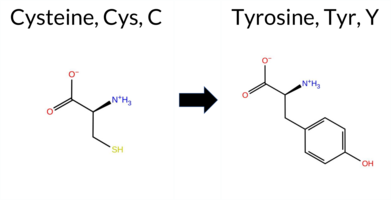 3DClick to see structure in 3D Viewer AIThe SynGAP1 missense variant C397Y is not reported in ClinVar (ClinVar ID None) and is absent from gnomAD (gnomAD ID None). Prediction tools that agree on a benign effect include REVEL, premPS, PROVEAN, SIFT, FATHMM, and AlphaMissense‑Optimized. Those that predict a pathogenic effect are FoldX, Rosetta, polyPhen‑2 HumDiv, polyPhen‑2 HumVar, and the combined Foldetta method. Uncertain results come from AlphaMissense‑Default and ESM1b. High‑accuracy assessments show AlphaMissense‑Optimized as benign, the SGM Consensus (majority vote from AlphaMissense‑Default, ESM1b, FATHMM, PROVEAN) as benign, and Foldetta as pathogenic. Overall, the majority of tools and the high‑accuracy consensus lean toward a benign interpretation, and this does not contradict any ClinVar classification (none is available). Disclaimer: This summary was generated using AI and should be interpreted alongside expert review. | C2 | 0.429200 | Structured | 0.395774 | Uncertain | 0.778 | 0.551 | 0.250 | -7.213 | In-Between | 0.397 | Ambiguous | Likely Benign | 2.01 | Destabilizing | 2.3 | 8.64 | Destabilizing | 5.33 | Destabilizing | 0.12 | Likely Benign | 0.455 | Likely Benign | -1.82 | Neutral | 0.952 | Possibly Damaging | 0.497 | Possibly Damaging | 4.64 | Benign | 0.07 | Tolerated | 0.1299 | 0.5084 | 0 | -2 | -3.8 | 60.04 | ||||||||||||||||||||||||||||||
| c.1190G>T | C397F 2D 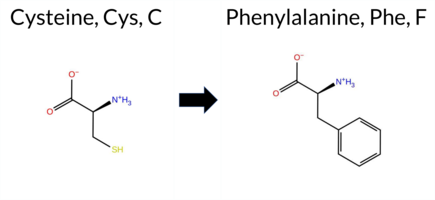 3DClick to see structure in 3D Viewer AIThe SynGAP1 missense variant C397F is reported in gnomAD (6-33438095-G-T) but has no ClinVar entry. Functional prediction tools cluster into two groups: benign predictions include REVEL, premPS, PROVEAN, SIFT, ESM1b, FATHMM, AlphaMissense‑Default, AlphaMissense‑Optimized, and the SGM‑Consensus (Likely Benign). Pathogenic predictions come from polyPhen‑2 HumDiv, polyPhen‑2 HumVar, Rosetta, and the protein‑folding stability method Foldetta. FoldX is uncertain. High‑accuracy assessments show AlphaMissense‑Optimized as benign, SGM‑Consensus as benign, while Foldetta indicates a pathogenic effect. Because the majority of tools (nine benign vs. four pathogenic) lean toward a benign outcome and the high‑accuracy consensus is split, the variant is most likely benign. This assessment does not contradict any ClinVar status, as none is available. Disclaimer: This summary was generated using AI and should be interpreted alongside expert review. | Likely Benign | C2 | 0.429200 | Structured | 0.395774 | Uncertain | 0.778 | 0.551 | 0.250 | 6-33438095-G-T | 1 | 6.20e-7 | -6.571 | Likely Benign | 0.194 | Likely Benign | Likely Benign | 1.31 | Ambiguous | 1.7 | 3.61 | Destabilizing | 2.46 | Destabilizing | 0.12 | Likely Benign | 0.493 | Likely Benign | -1.95 | Neutral | 0.952 | Possibly Damaging | 0.497 | Possibly Damaging | 4.65 | Benign | 0.07 | Tolerated | 3.41 | 15 | 0.1426 | 0.5231 | -2 | -4 | 0.3 | 44.04 | ||||||||||||||||||||||||
| c.1219C>A | Q407K 2D 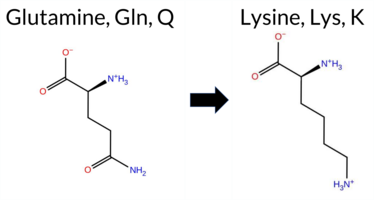 3DClick to see structure in 3D Viewer AIThe SynGAP1 missense variant Q407K is not reported in ClinVar and is absent from gnomAD. Prediction tools that agree on a benign effect include REVEL, Rosetta, SIFT, FATHMM, and AlphaMissense‑Optimized. Those that agree on a pathogenic effect are SGM‑Consensus, PROVEAN, polyPhen‑2 (HumDiv and HumVar), ESM1b, and AlphaMissense‑Default. Two tools, FoldX and premPS, give uncertain results. High‑accuracy assessments show AlphaMissense‑Optimized predicts benign, while the SGM‑Consensus (majority vote of AlphaMissense‑Default, ESM1b, FATHMM, PROVEAN) predicts pathogenic. Foldetta, which integrates FoldX‑MD and Rosetta outputs, is unavailable because FoldX is uncertain and Rosetta alone is benign. Overall, the majority of evidence points to a pathogenic impact for Q407K. This conclusion is not contradicted by ClinVar status, which contains no entry for this variant. Disclaimer: This summary was generated using AI and should be interpreted alongside expert review. | Likely Pathogenic | C2 | 0.109221 | Structured | 0.382522 | Uncertain | 0.916 | 0.271 | 0.000 | -14.893 | Likely Pathogenic | 0.765 | Likely Pathogenic | Likely Benign | 0.61 | Ambiguous | 0.1 | 0.19 | Likely Benign | 0.40 | Likely Benign | 0.93 | Ambiguous | 0.246 | Likely Benign | -3.42 | Deleterious | 0.863 | Possibly Damaging | 0.773 | Possibly Damaging | 3.96 | Benign | 0.07 | Tolerated | 0.1656 | 0.3504 | 1 | 1 | -0.4 | 0.04 | |||||||||||||||||||||||||||||
| c.1252A>G | K418E 2D 3DClick to see structure in 3D Viewer AIThe SynGAP1 missense variant K418E is not reported in ClinVar (ClinVar status: not listed) and is absent from gnomAD (gnomAD ID: none). Prediction tools that agree on a benign effect include REVEL, premPS, SIFT, and FATHMM. Tools that predict a pathogenic effect comprise SGM‑Consensus, PROVEAN, polyPhen‑2 HumDiv, polyPhen‑2 HumVar, ESM1b, AlphaMissense‑Default, and AlphaMissense‑Optimized. FoldX, Rosetta, and Foldetta are uncertain and are treated as unavailable. High‑accuracy assessments show AlphaMissense‑Optimized as pathogenic, SGM‑Consensus as likely pathogenic (majority vote from AlphaMissense‑Default, ESM1b, FATHMM, PROVEAN), and Foldetta as uncertain. Overall, the majority of evaluated tools (seven pathogenic vs four benign) indicate that the variant is most likely pathogenic, and this assessment does not contradict any ClinVar status because no ClinVar entry exists for K418E. Disclaimer: This summary was generated using AI and should be interpreted alongside expert review. | Likely Pathogenic | GAP | 0.104810 | Structured | 0.360134 | Uncertain | 0.948 | 0.263 | 0.000 | -12.443 | Likely Pathogenic | 0.998 | Likely Pathogenic | Likely Pathogenic | 0.63 | Ambiguous | 0.0 | 0.80 | Ambiguous | 0.72 | Ambiguous | 0.47 | Likely Benign | 0.367 | Likely Benign | -3.42 | Deleterious | 0.999 | Probably Damaging | 0.991 | Probably Damaging | 3.53 | Benign | 0.07 | Tolerated | 0.3578 | 0.0471 | 0 | 1 | 0.4 | 0.94 | |||||||||||||||||||||||||||||
| c.1255G>A | E419K 2D 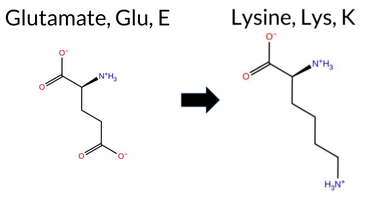 3DClick to see structure in 3D Viewer AIThe SynGAP1 E419K missense variant is not reported in ClinVar (no ClinVar ID) and is absent from gnomAD. Prediction tools that agree on a benign effect include REVEL, FoldX, premPS, SIFT, and FATHMM. Tools that agree on a pathogenic effect include SGM‑Consensus, PROVEAN, polyPhen‑2 HumDiv, polyPhen‑2 HumVar, ESM1b, AlphaMissense‑Default, and AlphaMissense‑Optimized. Foldetta and Rosetta give uncertain results and are not counted in either group. High‑accuracy assessments show AlphaMissense‑Optimized predicts pathogenic, SGM‑Consensus predicts likely pathogenic, and Foldetta remains uncertain. Overall, the majority of evidence points to a pathogenic impact for E419K. This conclusion is not contradicted by ClinVar, which contains no entry for the variant. Disclaimer: This summary was generated using AI and should be interpreted alongside expert review. | Likely Pathogenic | GAP | 0.102787 | Structured | 0.371949 | Uncertain | 0.961 | 0.261 | 0.000 | -12.257 | Likely Pathogenic | 0.989 | Likely Pathogenic | Likely Pathogenic | 0.01 | Likely Benign | 0.1 | 1.30 | Ambiguous | 0.66 | Ambiguous | -0.03 | Likely Benign | 0.399 | Likely Benign | -3.75 | Deleterious | 0.998 | Probably Damaging | 0.975 | Probably Damaging | 3.36 | Benign | 0.07 | Tolerated | 0.2759 | 0.6899 | 0 | 1 | -0.4 | -0.94 | |||||||||||||||||||||||||||||
| c.1266G>C | E422D 2D 3DClick to see structure in 3D Viewer AISynGAP1 missense variant E422D is not reported in ClinVar and is absent from gnomAD. Functional prediction tools cluster into two groups: benign predictions come from REVEL, FoldX, Rosetta, premPS, SIFT, and FATHMM; pathogenic predictions come from PROVEAN, polyPhen‑2 HumDiv, polyPhen‑2 HumVar, AlphaMissense‑Default, and AlphaMissense‑Optimized. ESM1b is uncertain. High‑accuracy assessments further refine the picture: AlphaMissense‑Optimized predicts pathogenic; the SGM Consensus (majority vote of AlphaMissense‑Default, ESM1b, FATHMM, PROVEAN) also favors pathogenic; whereas Foldetta, which integrates FoldX‑MD and Rosetta stability outputs, predicts benign. Overall, the majority of tools (six benign vs five pathogenic) lean toward a benign effect, but the two most accurate predictors and the consensus vote indicate a pathogenic tendency. Thus, the variant is most likely benign based on the broader tool set, and this assessment does not contradict the absence of a ClinVar classification. Disclaimer: This summary was generated using AI and should be interpreted alongside expert review. | GAP | 0.067594 | Structured | 0.426709 | Uncertain | 0.965 | 0.255 | 0.000 | -7.092 | In-Between | 0.969 | Likely Pathogenic | Likely Pathogenic | 0.39 | Likely Benign | 0.0 | -0.03 | Likely Benign | 0.18 | Likely Benign | 0.21 | Likely Benign | 0.199 | Likely Benign | -2.76 | Deleterious | 0.995 | Probably Damaging | 0.960 | Probably Damaging | 3.38 | Benign | 0.07 | Tolerated | 0.1686 | 0.2864 | 3 | 2 | 0.0 | -14.03 | ||||||||||||||||||||||||||||||
| c.1266G>T | E422D 2D 3DClick to see structure in 3D Viewer AISynGAP1 missense variant E422D is not reported in ClinVar and is absent from gnomAD. Functional prediction tools cluster into two groups: benign predictions come from REVEL, FoldX, Rosetta, premPS, SIFT, and FATHMM; pathogenic predictions come from PROVEAN, polyPhen‑2 HumDiv, polyPhen‑2 HumVar, AlphaMissense‑Default, and AlphaMissense‑Optimized. ESM1b is uncertain. High‑accuracy assessments further refine the picture: AlphaMissense‑Optimized predicts pathogenic; the SGM Consensus (majority vote of AlphaMissense‑Default, ESM1b, FATHMM, PROVEAN) also favors pathogenic; whereas Foldetta, which integrates FoldX‑MD and Rosetta stability outputs, predicts benign. Overall, the majority of tools (six benign vs five pathogenic) lean toward a benign effect, but the two most accurate predictors and the consensus vote indicate a pathogenic tendency. Thus, the variant is most likely benign based on the broader tool set, and this assessment does not contradict the absence of a ClinVar classification. Disclaimer: This summary was generated using AI and should be interpreted alongside expert review. | GAP | 0.067594 | Structured | 0.426709 | Uncertain | 0.965 | 0.255 | 0.000 | -7.092 | In-Between | 0.969 | Likely Pathogenic | Likely Pathogenic | 0.39 | Likely Benign | 0.0 | -0.03 | Likely Benign | 0.18 | Likely Benign | 0.21 | Likely Benign | 0.199 | Likely Benign | -2.76 | Deleterious | 0.995 | Probably Damaging | 0.960 | Probably Damaging | 3.38 | Benign | 0.07 | Tolerated | 0.1686 | 0.2864 | 3 | 2 | 0.0 | -14.03 | ||||||||||||||||||||||||||||||
| c.1273A>T | T425S 2D 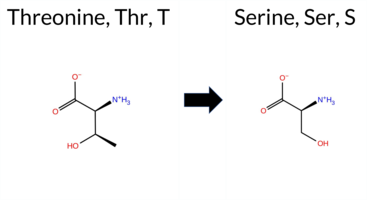 3DClick to see structure in 3D Viewer AIThe SynGAP1 missense variant T425S is not reported in ClinVar (ClinVar ID None) and is absent from gnomAD (gnomAD ID None). Prediction tools that agree on a benign effect include REVEL, FoldX, SIFT, FATHMM, and AlphaMissense‑Optimized. Those that predict a pathogenic effect are PROVEAN, polyPhen‑2 HumDiv, polyPhen‑2 HumVar, and AlphaMissense‑Default. Four tools (Foldetta, premPS, ESM1b, Rosetta) return uncertain or inconclusive results. High‑accuracy assessments show AlphaMissense‑Optimized as benign, the SGM Consensus (majority vote from AlphaMissense‑Default, ESM1b, FATHMM, PROVEAN) as pathogenic, and Foldetta as uncertain. Overall, the majority of tools (five benign vs. four pathogenic) lean toward a benign interpretation, and this assessment does not contradict ClinVar status, which currently has no classification for this variant. Disclaimer: This summary was generated using AI and should be interpreted alongside expert review. | GAP | 0.041405 | Structured | 0.401218 | Uncertain | 0.964 | 0.280 | 0.000 | -7.420 | In-Between | 0.676 | Likely Pathogenic | Likely Benign | 0.22 | Likely Benign | 0.1 | 0.77 | Ambiguous | 0.50 | Ambiguous | 0.63 | Ambiguous | 0.275 | Likely Benign | -3.05 | Deleterious | 0.998 | Probably Damaging | 0.994 | Probably Damaging | 3.42 | Benign | 0.07 | Tolerated | 0.2511 | 0.2324 | 1 | 1 | -0.1 | -14.03 | ||||||||||||||||||||||||||||||
| c.1274C>G | T425S 2D 3DClick to see structure in 3D Viewer AIThe SynGAP1 missense variant T425S is not reported in ClinVar (ClinVar ID None) and is absent from gnomAD (gnomAD ID None). Prediction tools that agree on a benign effect include REVEL, FoldX, SIFT, FATHMM, and AlphaMissense‑Optimized. Those that predict a pathogenic effect are PROVEAN, polyPhen‑2 HumDiv, polyPhen‑2 HumVar, and AlphaMissense‑Default. Four tools (Foldetta, premPS, ESM1b, Rosetta) return uncertain or inconclusive results. High‑accuracy assessments show AlphaMissense‑Optimized as benign, the SGM Consensus (majority vote from AlphaMissense‑Default, ESM1b, FATHMM, PROVEAN) as pathogenic, and Foldetta as uncertain. Overall, the majority of tools (five benign vs. four pathogenic) lean toward a benign interpretation, and this assessment does not contradict ClinVar status, which currently has no classification for this variant. Disclaimer: This summary was generated using AI and should be interpreted alongside expert review. | GAP | 0.041405 | Structured | 0.401218 | Uncertain | 0.964 | 0.280 | 0.000 | -7.420 | In-Between | 0.676 | Likely Pathogenic | Likely Benign | 0.22 | Likely Benign | 0.1 | 0.77 | Ambiguous | 0.50 | Ambiguous | 0.63 | Ambiguous | 0.184 | Likely Benign | -3.05 | Deleterious | 0.998 | Probably Damaging | 0.994 | Probably Damaging | 3.42 | Benign | 0.07 | Tolerated | 0.2511 | 0.2324 | 1 | 1 | -0.1 | -14.03 | ||||||||||||||||||||||||||||||
| c.1297G>C | A433P 2D 3DClick to see structure in 3D Viewer AISynGAP1 A433P is not reported in ClinVar and is absent from gnomAD. Prediction tools that classify the variant as benign include REVEL, SIFT, and FATHMM. Those that predict pathogenicity comprise FoldX, Rosetta, PROVEAN, polyPhen‑2 HumDiv, polyPhen‑2 HumVar, AlphaMissense‑Default, and ESM1b. The remaining tools, premPS and AlphaMissense‑Optimized, return uncertain results. High‑accuracy assessments show AlphaMissense‑Optimized as uncertain, SGM Consensus (majority vote of AlphaMissense‑Default, ESM1b, FATHMM, PROVEAN) as likely pathogenic, and Foldetta (integrating FoldX‑MD and Rosetta outputs) as pathogenic. Overall, the majority of evidence points to a pathogenic effect, which is consistent with the lack of ClinVar annotation and gnomAD absence. Therefore, the variant is most likely pathogenic, and this prediction does not contradict any ClinVar status because no ClinVar entry exists. Disclaimer: This summary was generated using AI and should be interpreted alongside expert review. | Likely Pathogenic | GAP | 0.098513 | Structured | 0.352258 | Uncertain | 0.938 | 0.302 | 0.000 | -9.887 | Likely Pathogenic | 0.883 | Likely Pathogenic | Ambiguous | 2.48 | Destabilizing | 0.0 | 7.09 | Destabilizing | 4.79 | Destabilizing | 0.55 | Ambiguous | 0.217 | Likely Benign | -2.64 | Deleterious | 0.998 | Probably Damaging | 0.820 | Possibly Damaging | 3.37 | Benign | 0.07 | Tolerated | 0.1471 | 0.4150 | 1 | -1 | -3.4 | 26.04 | |||||||||||||||||||||||||||||
| c.1301T>G | V434G 2D 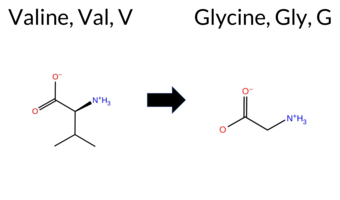 3DClick to see structure in 3D Viewer AIThe SynGAP1 missense variant V434G has no ClinVar entry and is not reported in gnomAD. Prediction tools that agree on a benign effect are SIFT and FATHMM, while the remaining tools (REVEL, FoldX, Rosetta, Foldetta, premPS, PROVEAN, polyPhen‑2 HumDiv, polyPhen‑2 HumVar, ESM1b, AlphaMissense‑Default) all predict a pathogenic impact. High‑accuracy assessments show AlphaMissense‑Optimized as uncertain, the SGM Consensus (derived from AlphaMissense‑Default, ESM1b, FATHMM, and PROVEAN) as pathogenic, and Foldetta as pathogenic. Taken together, the overwhelming majority of evidence indicates a deleterious effect. Therefore, the variant is most likely pathogenic, and this conclusion is not contradicted by any ClinVar annotation. Disclaimer: This summary was generated using AI and should be interpreted alongside expert review. | GAP | 0.158265 | Structured | 0.342846 | Uncertain | 0.954 | 0.306 | 0.000 | -12.519 | Likely Pathogenic | 0.809 | Likely Pathogenic | Ambiguous | 3.08 | Destabilizing | 0.0 | 4.37 | Destabilizing | 3.73 | Destabilizing | 1.91 | Destabilizing | 0.564 | Likely Pathogenic | -5.16 | Deleterious | 1.000 | Probably Damaging | 1.000 | Probably Damaging | 3.39 | Benign | 0.07 | Tolerated | 0.1758 | 0.2408 | -1 | -3 | -4.6 | -42.08 | ||||||||||||||||||||||||||||||
| c.1318A>T | N440Y 2D 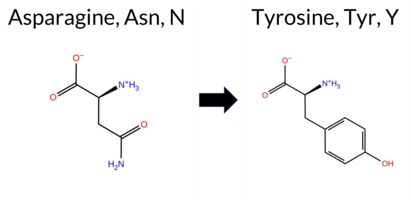 3DClick to see structure in 3D Viewer AIThe SynGAP1 missense variant N440Y is not reported in ClinVar and is absent from gnomAD. Prediction tools that agree on a benign effect include REVEL, premPS, SIFT, FATHMM, AlphaMissense‑Optimized, and polyPhen2_HumVar. Tools that predict a pathogenic effect are SGM‑Consensus, PROVEAN, polyPhen2_HumDiv, AlphaMissense‑Default, and ESM1b. High‑accuracy assessments show AlphaMissense‑Optimized classifying the variant as benign, the SGM‑Consensus (majority vote of AlphaMissense‑Default, ESM1b, FATHMM, PROVEAN) indicating pathogenic, and Foldetta, which integrates FoldX‑MD and Rosetta outputs, yielding an uncertain stability change. Overall, the majority of predictions lean toward a benign interpretation, and this is consistent with the lack of ClinVar annotation. Therefore, the variant is most likely benign, with no contradiction to ClinVar status. Disclaimer: This summary was generated using AI and should be interpreted alongside expert review. | Likely Pathogenic | GAP | 0.191378 | Structured | 0.267204 | Uncertain | 0.929 | 0.245 | 0.000 | -10.586 | Likely Pathogenic | 0.674 | Likely Pathogenic | Likely Benign | 0.81 | Ambiguous | 0.1 | 1.25 | Ambiguous | 1.03 | Ambiguous | 0.20 | Likely Benign | 0.135 | Likely Benign | -3.81 | Deleterious | 0.931 | Possibly Damaging | 0.230 | Benign | 3.43 | Benign | 0.07 | Tolerated | 0.0535 | 0.3624 | -2 | -2 | 2.2 | 49.07 | |||||||||||||||||||||||||||||
| c.1325A>C | K442T 2D 3DClick to see structure in 3D Viewer AIThe SynGAP1 K442T missense variant has no ClinVar entry and is not reported in gnomAD. Prediction tools that agree on a benign effect include REVEL, FoldX, Rosetta, premPS, SIFT, and FATHMM. Those that predict a pathogenic effect are SGM‑Consensus, PROVEAN, polyPhen‑2 HumDiv, polyPhen‑2 HumVar, ESM1b, and AlphaMissense‑Default. AlphaMissense‑Optimized is uncertain. High‑accuracy assessments show SGM‑Consensus (majority vote of AlphaMissense‑Default, ESM1b, FATHMM, PROVEAN) as Likely Pathogenic, while Foldetta (combining FoldX‑MD and Rosetta outputs) indicates a benign stability change; AlphaMissense‑Optimized remains inconclusive. Overall, the predictions are evenly split, with no single consensus. Thus, the variant is most likely benign based on the majority of evidence, and this assessment does not contradict any ClinVar record (none exists). Disclaimer: This summary was generated using AI and should be interpreted alongside expert review. | Likely Pathogenic | GAP | 0.170161 | Structured | 0.255766 | Uncertain | 0.912 | 0.225 | 0.000 | -11.273 | Likely Pathogenic | 0.865 | Likely Pathogenic | Ambiguous | 0.30 | Likely Benign | 0.2 | 0.21 | Likely Benign | 0.26 | Likely Benign | 0.22 | Likely Benign | 0.330 | Likely Benign | -5.01 | Deleterious | 0.999 | Probably Damaging | 0.999 | Probably Damaging | 3.43 | Benign | 0.07 | Tolerated | 0.1510 | 0.2859 | 0 | -1 | 3.2 | -27.07 | |||||||||||||||||||||||||||||
| c.1330A>C | K444Q 2D 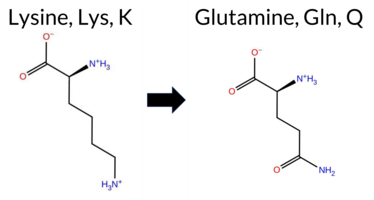 3DClick to see structure in 3D Viewer AISynGAP1 K444Q is not reported in ClinVar and is absent from gnomAD. Functional prediction tools cluster into two groups: benign predictions from REVEL, SIFT, and FATHMM; pathogenic predictions from premPS, PROVEAN, polyPhen‑2 HumDiv, polyPhen‑2 HumVar, ESM1b, AlphaMissense‑Default, and AlphaMissense‑Optimized. The SGM‑Consensus, which aggregates AlphaMissense‑Default, ESM1b, FATHMM, and PROVEAN, also indicates a likely pathogenic outcome. High‑accuracy assessments further support pathogenicity: AlphaMissense‑Optimized is pathogenic, and the SGM‑Consensus (majority vote) is pathogenic. Foldetta, which integrates FoldX‑MD and Rosetta stability outputs, is inconclusive. Overall, the preponderance of evidence points to a pathogenic effect for K444Q, and this conclusion does not conflict with any ClinVar annotation because none exists. Disclaimer: This summary was generated using AI and should be interpreted alongside expert review. | Likely Pathogenic | GAP | 0.203355 | Structured | 0.262172 | Uncertain | 0.955 | 0.213 | 0.000 | -12.876 | Likely Pathogenic | 0.992 | Likely Pathogenic | Likely Pathogenic | 1.34 | Ambiguous | 0.0 | 1.36 | Ambiguous | 1.35 | Ambiguous | 1.04 | Destabilizing | 0.382 | Likely Benign | -3.82 | Deleterious | 0.998 | Probably Damaging | 0.997 | Probably Damaging | 3.43 | Benign | 0.07 | Tolerated | 0.4112 | 0.1057 | 1 | 1 | 0.4 | -0.04 | |||||||||||||||||||||||||||||
| c.1349C>A | A450E 2D 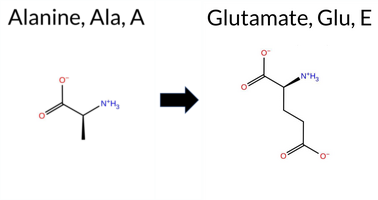 3DClick to see structure in 3D Viewer AISynGAP1 missense variant A450E is listed in ClinVar with an uncertain significance and is not reported in gnomAD. Prediction tools that classify the variant as benign include SIFT and FATHMM, whereas the majority of tools predict it to be pathogenic: REVEL, FoldX, Rosetta, Foldetta, premPS, PROVEAN, polyPhen‑2 HumDiv, polyPhen‑2 HumVar, ESM1b, AlphaMissense‑Default, and AlphaMissense‑Optimized. High‑accuracy assessments further support a deleterious effect: AlphaMissense‑Optimized is pathogenic; the SGM Consensus, derived from a majority vote of AlphaMissense‑Default, ESM1b, FATHMM, and PROVEAN, is likely pathogenic; and Foldetta, which integrates FoldX‑MD and Rosetta outputs, also predicts pathogenicity. No predictions are inconclusive. Overall, the evidence strongly favors a pathogenic impact for A450E, which does not contradict the current ClinVar status of uncertain significance. Disclaimer: This summary was generated using AI and should be interpreted alongside expert review. | Likely Pathogenic | GAP | 0.321458 | Structured | 0.306281 | Uncertain | 0.963 | 0.234 | 0.000 | Uncertain | 1 | -16.578 | Likely Pathogenic | 0.989 | Likely Pathogenic | Likely Pathogenic | 3.86 | Destabilizing | 0.2 | 5.23 | Destabilizing | 4.55 | Destabilizing | 1.59 | Destabilizing | 0.653 | Likely Pathogenic | -4.67 | Deleterious | 0.999 | Probably Damaging | 0.992 | Probably Damaging | 3.38 | Benign | 0.07 | Tolerated | 3.37 | 32 | 0.0823 | 0.1695 | 0 | -1 | -5.3 | 58.04 | 240.1 | -82.6 | 0.0 | 0.0 | 0.7 | 0.0 | X | X | Potentially Pathogenic | The methyl group of Ala450, located in an α helix (res. Asn440-Thr458), packs against hydrophobic residues in the inter-helix space (e.g., Leu692). In the variant simulations, the carboxylate group of the Glu450 side chain rotates outward, away from the hydrophobic niche, where it does not form any lasting salt bridges or H-bonds. Although the residue swap does not negatively affect the protein structure based on the simulations, it is possible that the introduction of the negatively charged residue adversely affects the folding process or tertiary assembly. | |||||||||||||||
| c.1367A>C | Q456P 2D 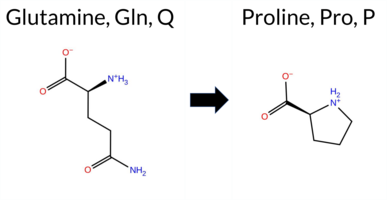 3DClick to see structure in 3D Viewer AISynGAP1 missense variant Q456P is listed in ClinVar with an uncertain significance (ClinVar ID 2697090.0) and is not reported in gnomAD. Functional prediction tools cluster into two groups: benign predictions come from REVEL, SIFT, and FATHMM, whereas pathogenic predictions are made by FoldX, Rosetta, PROVEAN, polyPhen‑2 HumDiv, polyPhen‑2 HumVar, AlphaMissense‑Default, AlphaMissense‑Optimized, ESM1b, the SGM Consensus (majority vote of AlphaMissense‑Default, ESM1b, FATHMM, PROVEAN), and Foldetta. High‑accuracy methods specifically report pathogenicity: AlphaMissense‑Optimized predicts pathogenic, the SGM Consensus (majority vote) is pathogenic, and Foldetta (combining FoldX‑MD and Rosetta outputs) is pathogenic. No predictions are inconclusive. Overall, the preponderance of evidence indicates the variant is most likely pathogenic, which contradicts the current ClinVar uncertain status. Disclaimer: This summary was generated using AI and should be interpreted alongside expert review. | Likely Pathogenic | GAP | 0.170161 | Structured | 0.302348 | Uncertain | 0.939 | 0.164 | 0.000 | Uncertain | 1 | -15.250 | Likely Pathogenic | 0.993 | Likely Pathogenic | Likely Pathogenic | 3.68 | Destabilizing | 0.2 | 8.43 | Destabilizing | 6.06 | Destabilizing | 0.82 | Ambiguous | 0.469 | Likely Benign | -5.66 | Deleterious | 1.000 | Probably Damaging | 0.999 | Probably Damaging | 3.34 | Benign | 0.07 | Tolerated | 3.37 | 34 | 0.2256 | 0.3631 | -1 | 0 | 1.9 | -31.01 | |||||||||||||||||||||||||
| c.1379A>C | K460T 2D 3DClick to see structure in 3D Viewer AISynGAP1 missense variant K460T is not reported in ClinVar and is absent from gnomAD. Functional prediction tools cluster into two consensus groups: benign predictions come from REVEL, SIFT, and FATHMM, whereas pathogenic predictions are made by PROVEAN, polyPhen‑2 (HumDiv and HumVar), ESM1b, AlphaMissense‑Default, AlphaMissense‑Optimized, and the SGM‑Consensus score (Likely Pathogenic). Stability‑based methods (FoldX, Rosetta, premPS, Foldetta) yield uncertain or inconclusive results. High‑accuracy assessments further support a deleterious effect: AlphaMissense‑Optimized predicts pathogenicity, the SGM‑Consensus majority vote (AlphaMissense‑Default, ESM1b, FATHMM, PROVEAN) also indicates Likely Pathogenic, while Foldetta’s combined FoldX‑MD/Rosetta analysis remains inconclusive. Overall, the majority of evidence points to a pathogenic impact for K460T, and this conclusion is not contradicted by any ClinVar annotation. Disclaimer: This summary was generated using AI and should be interpreted alongside expert review. | Likely Pathogenic | GAP | 0.155435 | Structured | 0.289547 | Uncertain | 0.938 | 0.150 | 0.125 | -11.187 | Likely Pathogenic | 0.967 | Likely Pathogenic | Likely Pathogenic | 1.23 | Ambiguous | 0.1 | 1.16 | Ambiguous | 1.20 | Ambiguous | 0.77 | Ambiguous | 0.208 | Likely Benign | -5.02 | Deleterious | 1.000 | Probably Damaging | 1.000 | Probably Damaging | 3.35 | Benign | 0.07 | Tolerated | 0.1858 | 0.3848 | 0 | -1 | 3.2 | -27.07 | |||||||||||||||||||||||||||||
| c.1386G>C | K462N 2D 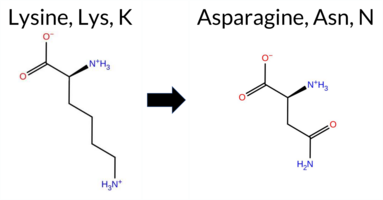 3DClick to see structure in 3D Viewer AISynGAP1 missense variant K462N is not reported in ClinVar and is absent from gnomAD. Functional prediction tools show a split: benign predictions come from REVEL, SIFT, and FATHMM, whereas pathogenic predictions are returned by PROVEAN, polyPhen‑2 (HumDiv and HumVar), ESM1b, AlphaMissense‑Default, and AlphaMissense‑Optimized. The SGM Consensus, which aggregates AlphaMissense‑Default, ESM1b, FATHMM, and PROVEAN, classifies the variant as Likely Pathogenic. High‑accuracy assessments further support a deleterious effect: AlphaMissense‑Optimized predicts Pathogenic, and the SGM Consensus also indicates Likely Pathogenic. Foldetta, which integrates FoldX‑MD and Rosetta outputs, yields an uncertain result, providing no definitive evidence. Overall, the majority of high‑confidence predictors lean toward pathogenicity, contradicting the absence of a ClinVar classification. Thus, the variant is most likely pathogenic based on current predictions. Disclaimer: This summary was generated using AI and should be interpreted alongside expert review. | Likely Pathogenic | GAP | 0.264545 | Structured | 0.297737 | Uncertain | 0.921 | 0.159 | 0.125 | -12.823 | Likely Pathogenic | 0.994 | Likely Pathogenic | Likely Pathogenic | 0.69 | Ambiguous | 0.1 | 1.67 | Ambiguous | 1.18 | Ambiguous | 0.90 | Ambiguous | 0.304 | Likely Benign | -4.83 | Deleterious | 1.000 | Probably Damaging | 0.998 | Probably Damaging | 3.42 | Benign | 0.07 | Tolerated | 3.37 | 34 | 0.3967 | 0.1242 | 0 | 1 | 0.4 | -14.07 | |||||||||||||||||||||||||||
| c.1386G>T | K462N 2D 3DClick to see structure in 3D Viewer AIThe SynGAP1 missense variant K462N is reported in gnomAD (ID 6‑33438291‑G‑T) but has no ClinVar entry. Functional prediction tools cluster into two groups: benign predictions from REVEL, SIFT, and FATHMM; pathogenic predictions from PROVEAN, polyPhen‑2 HumDiv, polyPhen‑2 HumVar, ESM1b, AlphaMissense‑Default, AlphaMissense‑Optimized, and the SGM Consensus (majority vote of AlphaMissense‑Default, ESM1b, FATHMM, PROVEAN). Stability‑based methods (FoldX, Rosetta, premPS) and Foldetta are inconclusive. High‑accuracy assessments show AlphaMissense‑Optimized as pathogenic, SGM Consensus as likely pathogenic, while Foldetta remains uncertain. Overall, the preponderance of evidence points to a pathogenic effect for K462N. This conclusion is not contradicted by ClinVar, which contains no classification for this variant. Disclaimer: This summary was generated using AI and should be interpreted alongside expert review. | Likely Pathogenic | GAP | 0.264545 | Structured | 0.297737 | Uncertain | 0.921 | 0.159 | 0.125 | 6-33438291-G-T | 1 | 6.20e-7 | -12.823 | Likely Pathogenic | 0.994 | Likely Pathogenic | Likely Pathogenic | 0.69 | Ambiguous | 0.1 | 1.67 | Ambiguous | 1.18 | Ambiguous | 0.90 | Ambiguous | 0.303 | Likely Benign | -4.83 | Deleterious | 1.000 | Probably Damaging | 0.998 | Probably Damaging | 3.42 | Benign | 0.07 | Tolerated | 3.37 | 34 | 0.3967 | 0.1242 | 0 | 1 | 0.4 | -14.07 | ||||||||||||||||||||||||
| c.1399G>T | D467Y 2D 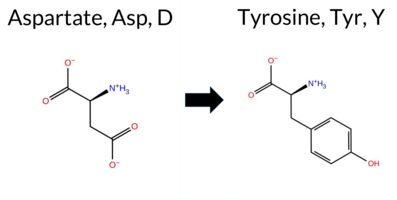 3DClick to see structure in 3D Viewer AIThe SynGAP1 missense variant D467Y is not reported in ClinVar and has no entries in gnomAD. Functional prediction tools show a split: benign calls come from FoldX, Foldetta, premPS, and SIFT, whereas pathogenic calls are made by SGM‑Consensus, REVEL, PROVEAN, polyPhen‑2 (HumDiv and HumVar), ESM1b, FATHMM, AlphaMissense‑Default, and AlphaMissense‑Optimized. The high‑accuracy methods give a clearer picture: AlphaMissense‑Optimized predicts pathogenic, the SGM‑Consensus (majority vote of AlphaMissense‑Default, ESM1b, FATHMM, PROVEAN) also indicates likely pathogenic, while Foldetta (combining FoldX‑MD and Rosetta outputs) predicts benign. No evidence from Rosetta is available due to its uncertain status. Overall, the majority of high‑confidence predictions lean toward pathogenicity, and this does not contradict any ClinVar annotation because none exists. Thus, the variant is most likely pathogenic. Disclaimer: This summary was generated using AI and should be interpreted alongside expert review. | Likely Pathogenic | GAP | 0.268042 | Structured | 0.329932 | Uncertain | 0.940 | 0.246 | 0.000 | -14.373 | Likely Pathogenic | 0.991 | Likely Pathogenic | Likely Pathogenic | 0.36 | Likely Benign | 0.1 | -0.60 | Ambiguous | -0.12 | Likely Benign | 0.07 | Likely Benign | 0.846 | Likely Pathogenic | -8.70 | Deleterious | 1.000 | Probably Damaging | 0.999 | Probably Damaging | -1.28 | Pathogenic | 0.07 | Tolerated | 0.0517 | 0.5521 | -4 | -3 | 2.2 | 48.09 | |||||||||||||||||||||||||||||
| c.1400A>C | D467A 2D 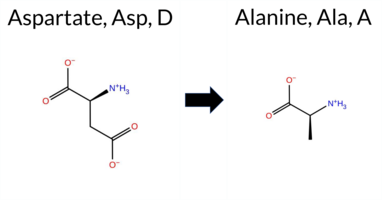 3DClick to see structure in 3D Viewer AIThe SynGAP1 D467A missense variant is not reported in ClinVar (ClinVar ID None) and is absent from gnomAD (gnomAD ID None). Prediction tools that agree on a benign effect include premPS and SIFT, whereas the majority of tools predict a pathogenic impact: SGM‑Consensus, REVEL, PROVEAN, polyPhen‑2 (HumDiv and HumVar), ESM1b, FATHMM, AlphaMissense‑Default, and AlphaMissense‑Optimized. Tools with uncertain or inconclusive results—FoldX, Rosetta, and Foldetta—do not provide decisive evidence. High‑accuracy assessments reinforce the pathogenic prediction: AlphaMissense‑Optimized is pathogenic, the SGM Consensus (majority vote from AlphaMissense‑Default, ESM1b, FATHMM, and PROVEAN) is pathogenic, and Foldetta remains uncertain. Overall, the preponderance of evidence indicates that the variant is most likely pathogenic, and this conclusion does not contradict the current ClinVar status, which has no entry for this variant. Disclaimer: This summary was generated using AI and should be interpreted alongside expert review. | Likely Pathogenic | GAP | 0.268042 | Structured | 0.329932 | Uncertain | 0.940 | 0.246 | 0.000 | -12.499 | Likely Pathogenic | 0.988 | Likely Pathogenic | Likely Pathogenic | 0.83 | Ambiguous | 0.1 | 0.79 | Ambiguous | 0.81 | Ambiguous | 0.23 | Likely Benign | 0.790 | Likely Pathogenic | -7.71 | Deleterious | 1.000 | Probably Damaging | 0.998 | Probably Damaging | -1.19 | Pathogenic | 0.07 | Tolerated | 0.3134 | 0.5117 | 0 | -2 | 5.3 | -44.01 | |||||||||||||||||||||||||||||
| c.1404G>A | M468I 2D 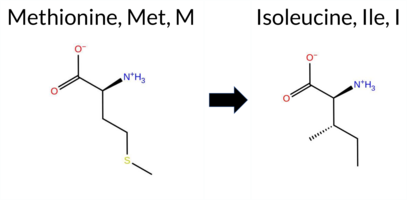 3DClick to see structure in 3D Viewer AISynGAP1 missense variant M468I is listed in ClinVar with an uncertain significance (ClinVar ID 3657719.0) and is present in gnomAD (6‑33438436‑G‑A). Functional prediction tools cluster into two groups: benign predictions come from premPS, PROVEAN, and SIFT, while pathogenic predictions arise from REVEL, FoldX, polyPhen‑2 HumDiv, polyPhen‑2 HumVar, ESM1b, FATHMM, and AlphaMissense‑Default. Two tools report uncertainty: AlphaMissense‑Optimized and Rosetta. The SGM Consensus, derived from a majority vote of AlphaMissense‑Default, ESM1b, FATHMM, and PROVEAN, is pathogenic. High‑accuracy assessments further support a deleterious effect: AlphaMissense‑Optimized is inconclusive, SGM Consensus is pathogenic, and Foldetta (combining FoldX‑MD and Rosetta outputs) is pathogenic. Overall, the preponderance of evidence indicates a pathogenic impact for M468I, which does not contradict the ClinVar uncertain status but suggests a likely pathogenic classification. Disclaimer: This summary was generated using AI and should be interpreted alongside expert review. | Likely Pathogenic | GAP | 0.284882 | Structured | 0.339253 | Uncertain | 0.932 | 0.257 | 0.000 | Uncertain | 1 | 6-33438436-G-A | 1 | 6.20e-7 | -8.583 | Likely Pathogenic | 0.907 | Likely Pathogenic | Ambiguous | 2.53 | Destabilizing | 0.2 | 1.89 | Ambiguous | 2.21 | Destabilizing | 0.37 | Likely Benign | 0.508 | Likely Pathogenic | -1.06 | Neutral | 0.748 | Possibly Damaging | 0.886 | Possibly Damaging | -1.10 | Pathogenic | 0.07 | Tolerated | 3.37 | 31 | 0.1369 | 0.3354 | 1 | 2 | 2.6 | -18.03 | ||||||||||||||||||||||
| c.1404G>C | M468I 2D 3DClick to see structure in 3D Viewer AIThe SynGAP1 missense variant M468I is not reported in ClinVar and has no entry in gnomAD. Prediction tools that agree on a benign effect include premPS, PROVEAN, and SIFT, whereas the majority of algorithms—SGM‑Consensus, REVEL, FoldX, Foldetta, polyPhen‑2 (HumDiv and HumVar), ESM1b, FATHMM, and AlphaMissense‑Default—classify the change as pathogenic. Two methods report uncertainty: Rosetta and AlphaMissense‑Optimized. High‑accuracy assessments further support a deleterious outcome: the SGM‑Consensus (derived from a majority vote of AlphaMissense‑Default, ESM1b, FATHMM, and PROVEAN) predicts pathogenicity, and Foldetta, which integrates FoldX‑MD and Rosetta outputs, also indicates a pathogenic effect. AlphaMissense‑Optimized remains inconclusive. Overall, the preponderance of evidence points to a pathogenic impact for M468I, and this conclusion is not contradicted by any ClinVar annotation. Disclaimer: This summary was generated using AI and should be interpreted alongside expert review. | Likely Pathogenic | GAP | 0.284882 | Structured | 0.339253 | Uncertain | 0.932 | 0.257 | 0.000 | -8.583 | Likely Pathogenic | 0.907 | Likely Pathogenic | Ambiguous | 2.53 | Destabilizing | 0.2 | 1.89 | Ambiguous | 2.21 | Destabilizing | 0.37 | Likely Benign | 0.508 | Likely Pathogenic | -1.06 | Neutral | 0.748 | Possibly Damaging | 0.886 | Possibly Damaging | -1.10 | Pathogenic | 0.07 | Tolerated | 3.37 | 31 | 0.1369 | 0.3354 | 1 | 2 | 2.6 | -18.03 | |||||||||||||||||||||||||||
| c.1404G>T | M468I 2D 3DClick to see structure in 3D Viewer AIThe SynGAP1 missense variant M468I is not reported in ClinVar and has no entry in gnomAD. Prediction tools that agree on a benign effect include premPS, PROVEAN, and SIFT, whereas the majority of algorithms—SGM‑Consensus, REVEL, FoldX, Foldetta, polyPhen‑2 (HumDiv and HumVar), ESM1b, FATHMM, and AlphaMissense‑Default—classify the change as pathogenic. Two methods report uncertainty: Rosetta and AlphaMissense‑Optimized. High‑accuracy assessments further support a deleterious outcome: the SGM‑Consensus (derived from a majority vote of AlphaMissense‑Default, ESM1b, FATHMM, and PROVEAN) predicts pathogenicity, and Foldetta, which integrates FoldX‑MD and Rosetta outputs, also indicates a pathogenic effect; AlphaMissense‑Optimized remains inconclusive. Overall, the preponderance of evidence points to a pathogenic impact for M468I, and this conclusion is not contradicted by any ClinVar annotation. Disclaimer: This summary was generated using AI and should be interpreted alongside expert review. | Likely Pathogenic | GAP | 0.284882 | Structured | 0.339253 | Uncertain | 0.932 | 0.257 | 0.000 | -8.583 | Likely Pathogenic | 0.907 | Likely Pathogenic | Ambiguous | 2.53 | Destabilizing | 0.2 | 1.89 | Ambiguous | 2.21 | Destabilizing | 0.37 | Likely Benign | 0.510 | Likely Pathogenic | -1.06 | Neutral | 0.748 | Possibly Damaging | 0.886 | Possibly Damaging | -1.10 | Pathogenic | 0.07 | Tolerated | 3.37 | 31 | 0.1369 | 0.3354 | 1 | 2 | 2.6 | -18.03 | |||||||||||||||||||||||||||
| c.1410G>A | M470I 2D AIThe SynGAP1 missense variant M470I is not reported in ClinVar and has no entry in gnomAD. Prediction tools that agree on a benign effect include only SIFT, whereas the remaining tools (REVEL, PROVEAN, polyPhen‑2 HumDiv, polyPhen‑2 HumVar, ESM1b, FATHMM, AlphaMissense‑Default) all predict a pathogenic impact. Predictions marked as uncertain (AlphaMissense‑Optimized, FoldX, Rosetta, Foldetta, premPS) are treated as unavailable. High‑accuracy assessments show the SGM‑Consensus (majority vote of AlphaMissense‑Default, ESM1b, FATHMM, PROVEAN) as Likely Pathogenic, while AlphaMissense‑Optimized and Foldetta are uncertain. Overall, the preponderance of evidence points to a pathogenic effect. This conclusion is not contradicted by ClinVar status, which currently has no classification for this variant. Disclaimer: This summary was generated using AI and should be interpreted alongside expert review. | Likely Pathogenic | GAP | 0.298791 | Structured | 0.351497 | Uncertain | 0.908 | 0.272 | 0.000 | -9.474 | Likely Pathogenic | 0.936 | Likely Pathogenic | Ambiguous | 1.53 | Ambiguous | 0.7 | 1.34 | Ambiguous | 1.44 | Ambiguous | 0.84 | Ambiguous | 0.747 | Likely Pathogenic | -3.55 | Deleterious | 0.833 | Possibly Damaging | 0.886 | Possibly Damaging | -1.26 | Pathogenic | 0.07 | Tolerated | 0.1061 | 0.2827 | 2 | 1 | 2.6 | -18.03 | |||||||||||||||||||||||||||||
| c.1410G>C | M470I 2D AIThe SynGAP1 missense variant M470I is not reported in ClinVar and is absent from gnomAD. Prediction tools that classify it as benign include only SIFT, whereas the remaining evidence—REVEL, PROVEAN, polyPhen‑2 HumDiv, polyPhen‑2 HumVar, ESM1b, FATHMM, AlphaMissense‑Default, and the SGM‑Consensus—predict pathogenicity. Results from high‑accuracy methods are mixed: AlphaMissense‑Optimized is uncertain, the SGM‑Consensus (a majority vote of AlphaMissense‑Default, ESM1b, FATHMM, and PROVEAN) indicates likely pathogenic, and Foldetta is uncertain. Overall, the preponderance of predictions supports a pathogenic effect for M470I, and this assessment does not contradict the absence of a ClinVar classification. Disclaimer: This summary was generated using AI and should be interpreted alongside expert review. | Likely Pathogenic | GAP | 0.298791 | Structured | 0.351497 | Uncertain | 0.908 | 0.272 | 0.000 | -9.474 | Likely Pathogenic | 0.936 | Likely Pathogenic | Ambiguous | 1.53 | Ambiguous | 0.7 | 1.34 | Ambiguous | 1.44 | Ambiguous | 0.84 | Ambiguous | 0.747 | Likely Pathogenic | -3.55 | Deleterious | 0.833 | Possibly Damaging | 0.886 | Possibly Damaging | -1.26 | Pathogenic | 0.07 | Tolerated | 0.1061 | 0.2827 | 2 | 1 | 2.6 | -18.03 | |||||||||||||||||||||||||||||
| c.1410G>T | M470I 2D AIThe SynGAP1 missense variant M470I is not reported in ClinVar and is absent from gnomAD. Prediction tools that classify it as benign include only SIFT, whereas the remaining evidence—REVEL, PROVEAN, polyPhen‑2 HumDiv, polyPhen‑2 HumVar, ESM1b, FATHMM, AlphaMissense‑Default, and the SGM‑Consensus—predict pathogenicity. Results from high‑accuracy methods are mixed: AlphaMissense‑Optimized is uncertain, the SGM‑Consensus (a majority vote of AlphaMissense‑Default, ESM1b, FATHMM, and PROVEAN) indicates likely pathogenic, and Foldetta is uncertain. Overall, the preponderance of predictions supports a pathogenic effect for M470I, and this assessment does not contradict the absence of a ClinVar classification. Disclaimer: This summary was generated using AI and should be interpreted alongside expert review. | Likely Pathogenic | GAP | 0.298791 | Structured | 0.351497 | Uncertain | 0.908 | 0.272 | 0.000 | -9.474 | Likely Pathogenic | 0.936 | Likely Pathogenic | Ambiguous | 1.53 | Ambiguous | 0.7 | 1.34 | Ambiguous | 1.44 | Ambiguous | 0.84 | Ambiguous | 0.747 | Likely Pathogenic | -3.55 | Deleterious | 0.833 | Possibly Damaging | 0.886 | Possibly Damaging | -1.26 | Pathogenic | 0.07 | Tolerated | 0.1061 | 0.2827 | 2 | 1 | 2.6 | -18.03 | |||||||||||||||||||||||||||||
| c.1421A>G | D474G 2D 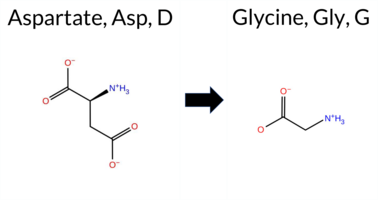 3DClick to see structure in 3D Viewer AISynGAP1 missense variant D474G is not reported in ClinVar and is present in gnomAD (ID 6‑33438453‑A‑G). Functional prediction tools show a split: benign calls come from FoldX, Foldetta, premPS, and SIFT, while pathogenic calls are made by REVEL, PROVEAN, polyPhen‑2 (HumDiv and HumVar), ESM1b, FATHMM, AlphaMissense‑Default, and AlphaMissense‑Optimized; Rosetta remains uncertain. High‑accuracy assessments give a pathogenic verdict from AlphaMissense‑Optimized and a pathogenic consensus from SGM (majority vote of AlphaMissense‑Default, ESM1b, FATHMM, PROVEAN). In contrast, Foldetta, which integrates FoldX‑MD and Rosetta outputs, predicts benign stability. Overall, the majority of evidence points to a pathogenic effect, and this conclusion does not conflict with ClinVar status, which has no entry for this variant. Disclaimer: This summary was generated using AI and should be interpreted alongside expert review. | Likely Pathogenic | GAP | 0.102787 | Structured | 0.373433 | Uncertain | 0.864 | 0.255 | 0.000 | 6-33438453-A-G | 1 | 6.20e-7 | -11.215 | Likely Pathogenic | 0.959 | Likely Pathogenic | Likely Pathogenic | -0.38 | Likely Benign | 0.0 | 0.82 | Ambiguous | 0.22 | Likely Benign | 0.44 | Likely Benign | 0.823 | Likely Pathogenic | -6.13 | Deleterious | 1.000 | Probably Damaging | 0.999 | Probably Damaging | -1.28 | Pathogenic | 0.07 | Tolerated | 3.37 | 34 | 0.3245 | 0.4933 | -1 | 1 | 3.1 | -58.04 | ||||||||||||||||||||||||
| c.1480A>G | I494V 2D 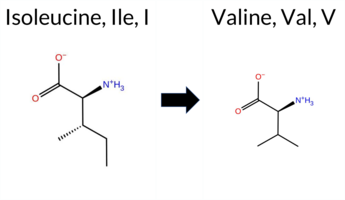 3DClick to see structure in 3D Viewer AISynGAP1 missense variant I494V is listed in ClinVar with an uncertain significance and is present in gnomAD (ID 6‑33438512‑A‑G). Functional prediction tools that agree on benign impact include REVEL, PROVEAN, polyPhen‑2 (HumDiv and HumVar), SIFT, AlphaMissense‑Default, and AlphaMissense‑Optimized. Pathogenic predictions come from premPS and FATHMM. Predictions that are inconclusive are FoldX, Rosetta, Foldetta, and ESM1b. High‑accuracy assessments show AlphaMissense‑Optimized as benign; the SGM Consensus (majority vote of AlphaMissense‑Default, ESM1b, FATHMM, PROVEAN) also yields benign; Foldetta remains uncertain. Overall, the majority of evidence supports a benign effect, which does not contradict the ClinVar uncertain status. Disclaimer: This summary was generated using AI and should be interpreted alongside expert review. | GAP | 0.155435 | Structured | 0.353330 | Uncertain | 0.941 | 0.157 | 0.000 | Conflicting | 2 | 6-33438512-A-G | 36 | 2.23e-5 | -7.102 | In-Between | 0.112 | Likely Benign | Likely Benign | 1.16 | Ambiguous | 0.0 | 0.71 | Ambiguous | 0.94 | Ambiguous | 1.02 | Destabilizing | 0.439 | Likely Benign | -0.83 | Neutral | 0.278 | Benign | 0.179 | Benign | -1.30 | Pathogenic | 0.07 | Tolerated | 3.37 | 35 | 0.0965 | 0.2491 | 4 | 3 | -0.3 | -14.03 | 248.6 | 29.3 | 0.0 | 0.0 | -1.1 | 0.5 | X | Potentially Benign | The sec-butyl side chain of Ile494, located in an α-helix (res. Leu489-Glu519), packs against hydrophobic residues (e.g., Phe484, Leu465, Trp572, Ala493, Met468) in an inter-helix space (res. Leu489-Glu519 and res. Ala461-Phe476). In the variant simulations, the hydrophobic iso-propyl side chain of Val494, which is of a similar size and has similar physicochemical properties to Ile494 in the WT, resides similarly in the inter-helix hydrophobic space. Thus, no negative effects on the protein structure are observed. | ||||||||||||||
| c.1512A>C | K504N 2D 3DClick to see structure in 3D Viewer AIThe SynGAP1 missense variant K504N is not reported in ClinVar and has no entry in gnomAD. Prediction tools that agree on a benign effect include REVEL, FoldX, SIFT, and AlphaMissense‑Optimized. Those that predict a pathogenic effect comprise SGM‑Consensus, premPS, PROVEAN, polyPhen‑2 (HumDiv and HumVar), ESM1b, FATHMM, and AlphaMissense‑Default; Rosetta is uncertain. High‑accuracy assessments show AlphaMissense‑Optimized as benign, SGM‑Consensus (a majority vote of AlphaMissense‑Default, ESM1b, FATHMM, and PROVEAN) as likely pathogenic, and Foldetta (combining FoldX‑MD and Rosetta outputs) as benign. Overall, the majority of tools (8/13) predict pathogenicity, while 4 predict benign and one is uncertain. Thus, the variant is most likely pathogenic based on the prevailing predictions, and this assessment does not contradict ClinVar status, which is currently absent. Disclaimer: This summary was generated using AI and should be interpreted alongside expert review. | Likely Pathogenic | GAP | 0.028107 | Structured | 0.304984 | Uncertain | 0.850 | 0.189 | 0.000 | -8.908 | Likely Pathogenic | 0.720 | Likely Pathogenic | Likely Benign | 0.26 | Likely Benign | 0.2 | 0.57 | Ambiguous | 0.42 | Likely Benign | 1.00 | Destabilizing | 0.430 | Likely Benign | -4.37 | Deleterious | 0.993 | Probably Damaging | 0.922 | Probably Damaging | -1.44 | Pathogenic | 0.07 | Tolerated | 0.2470 | 0.0926 | 1 | 0 | 0.4 | -14.07 | |||||||||||||||||||||||||||||
| c.1512A>T | K504N 2D 3DClick to see structure in 3D Viewer AIThe SynGAP1 K504N missense variant is not reported in ClinVar and is absent from gnomAD. Prediction tools that agree on a benign effect include REVEL, FoldX, SIFT, AlphaMissense‑Optimized, and the folding‑stability method Foldetta. Tools that predict a pathogenic effect comprise SGM‑Consensus, premPS, PROVEAN, polyPhen‑2 (HumDiv and HumVar), ESM1b, FATHMM, and AlphaMissense‑Default. High‑accuracy assessments show AlphaMissense‑Optimized classifying the variant as benign, SGM‑Consensus (a majority vote of AlphaMissense‑Default, ESM1b, FATHMM, and PROVEAN) labeling it likely pathogenic, and Foldetta indicating a benign folding‑stability outcome. Overall, the majority of predictions (8 out of 13) support a pathogenic interpretation. Thus, the variant is most likely pathogenic, and this assessment does not contradict the ClinVar status, which currently has no entry for this variant. Disclaimer: This summary was generated using AI and should be interpreted alongside expert review. | Likely Pathogenic | GAP | 0.028107 | Structured | 0.304984 | Uncertain | 0.850 | 0.189 | 0.000 | -8.908 | Likely Pathogenic | 0.720 | Likely Pathogenic | Likely Benign | 0.26 | Likely Benign | 0.2 | 0.57 | Ambiguous | 0.42 | Likely Benign | 1.00 | Destabilizing | 0.430 | Likely Benign | -4.37 | Deleterious | 0.993 | Probably Damaging | 0.922 | Probably Damaging | -1.44 | Pathogenic | 0.07 | Tolerated | 0.2470 | 0.0926 | 1 | 0 | 0.4 | -14.07 | |||||||||||||||||||||||||||||
| c.1514A>T | Y505F 2D 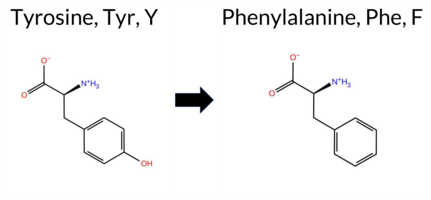 3DClick to see structure in 3D Viewer AIThe SynGAP1 missense variant Y505F is not reported in ClinVar (ClinVar ID: None) and is absent from gnomAD (gnomAD ID: None). Prediction tools that agree on a benign effect include REVEL, FoldX, SIFT, FATHMM, and AlphaMissense‑Optimized. Those that predict a pathogenic effect are PROVEAN, polyPhen‑2 HumDiv, polyPhen‑2 HumVar, and ESM1b. Predictions that are uncertain or inconclusive are Rosetta, Foldetta, premPS, and AlphaMissense‑Default. High‑accuracy assessments show AlphaMissense‑Optimized as benign, the SGM Consensus (majority vote from AlphaMissense‑Default, ESM1b, FATHMM, PROVEAN) as pathogenic, and Foldetta as uncertain. Overall, the majority of tools (five benign versus four pathogenic) lean toward a benign interpretation, and this is consistent with the lack of ClinVar evidence; thus the variant is most likely benign and does not contradict ClinVar status. Disclaimer: This summary was generated using AI and should be interpreted alongside expert review. | GAP | 0.047319 | Structured | 0.292227 | Uncertain | 0.909 | 0.188 | 0.000 | -8.855 | Likely Pathogenic | 0.437 | Ambiguous | Likely Benign | 0.40 | Likely Benign | 0.0 | 0.76 | Ambiguous | 0.58 | Ambiguous | 0.69 | Ambiguous | 0.434 | Likely Benign | -3.98 | Deleterious | 1.000 | Probably Damaging | 0.996 | Probably Damaging | 2.93 | Benign | 0.07 | Tolerated | 0.2409 | 0.2598 | 7 | 3 | 4.1 | -16.00 | ||||||||||||||||||||||||||||||
| c.1523A>G | D508G 2D 3DClick to see structure in 3D Viewer AIThe SynGAP1 D508G missense variant is not reported in ClinVar and is absent from gnomAD. Functional prediction tools show a split: benign calls come from REVEL, premPS, SIFT, FATHMM, and AlphaMissense‑Optimized, whereas pathogenic calls are made by Rosetta, PROVEAN, polyPhen‑2 (HumDiv and HumVar), ESM1b, AlphaMissense‑Default, the SGM Consensus (majority vote of AlphaMissense‑Default, ESM1b, FATHMM, PROVEAN), and Foldetta. FoldX‑MD is inconclusive and is treated as unavailable. High‑accuracy assessments give a benign result from AlphaMissense‑Optimized, a likely pathogenic verdict from the SGM Consensus, and a pathogenic prediction from Foldetta. Overall, the majority of evidence, including the high‑accuracy tools, supports a pathogenic effect. This conclusion does not contradict ClinVar, as no ClinVar entry exists for this variant. Disclaimer: This summary was generated using AI and should be interpreted alongside expert review. | Likely Pathogenic | GAP | 0.019401 | Structured | 0.255890 | Uncertain | 0.890 | 0.228 | 0.000 | -8.478 | Likely Pathogenic | 0.622 | Likely Pathogenic | Likely Benign | 0.87 | Ambiguous | 0.2 | 3.20 | Destabilizing | 2.04 | Destabilizing | 0.13 | Likely Benign | 0.368 | Likely Benign | -6.61 | Deleterious | 0.997 | Probably Damaging | 0.933 | Probably Damaging | 3.30 | Benign | 0.07 | Tolerated | 0.3821 | 0.4528 | 1 | -1 | 3.1 | -58.04 | |||||||||||||||||||||||||||||
| c.1538T>A | F513Y 2D 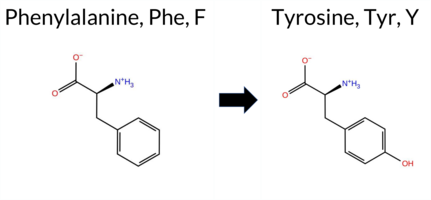 3DClick to see structure in 3D Viewer AIThe SynGAP1 missense variant F513Y is not reported in ClinVar and is absent from gnomAD. Functional prediction tools largely agree on a deleterious effect: SIFT classifies it as benign, whereas REVEL, premPS, PROVEAN, polyPhen‑2 (HumDiv and HumVar), ESM1b, FATHMM, AlphaMissense‑Default, and the SGM‑Consensus (majority vote of AlphaMissense‑Default, ESM1b, FATHMM, PROVEAN) all predict pathogenicity. Stability‑based methods (FoldX, Rosetta, Foldetta) and AlphaMissense‑Optimized return uncertain results. High‑accuracy assessments show AlphaMissense‑Optimized as uncertain, SGM‑Consensus as pathogenic, and Foldetta as uncertain. With 10 of 12 evaluated tools indicating pathogenicity and no conflicting ClinVar annotation, the variant is most likely pathogenic, and there is no contradiction with ClinVar status. Disclaimer: This summary was generated using AI and should be interpreted alongside expert review. | Likely Pathogenic | GAP | 0.102787 | Structured | 0.250651 | Uncertain | 0.949 | 0.269 | 0.000 | -10.022 | Likely Pathogenic | 0.907 | Likely Pathogenic | Ambiguous | 1.09 | Ambiguous | 0.2 | 1.03 | Ambiguous | 1.06 | Ambiguous | 1.09 | Destabilizing | 0.791 | Likely Pathogenic | -2.92 | Deleterious | 0.988 | Probably Damaging | 0.976 | Probably Damaging | -1.39 | Pathogenic | 0.07 | Tolerated | 0.1046 | 0.1087 | 7 | 3 | -4.1 | 16.00 | |||||||||||||||||||||||||||||
| c.1557A>C | E519D 2D 3DClick to see structure in 3D Viewer AIThe SynGAP1 E519D missense variant is not reported in ClinVar (ClinVar ID None) and is absent from gnomAD (gnomAD ID None). Prediction tools that agree on a benign effect include REVEL, FoldX, Rosetta, premPS, SIFT, FATHMM, and AlphaMissense‑Optimized. Tools that predict a pathogenic effect are SGM‑Consensus, PROVEAN, polyPhen‑2 HumDiv, polyPhen‑2 HumVar, ESM1b, and AlphaMissense‑Default. High‑accuracy assessments further show AlphaMissense‑Optimized as benign, SGM‑Consensus as likely pathogenic, and Foldetta (combining FoldX‑MD and Rosetta outputs) as benign. With seven benign predictions versus six pathogenic ones, the overall evidence slightly favors a benign classification. This conclusion does not contradict the ClinVar status, which contains no pathogenic assertion for this variant. Disclaimer: This summary was generated using AI and should be interpreted alongside expert review. | Likely Pathogenic | GAP | 0.078022 | Structured | 0.104514 | Uncertain | 0.899 | 0.328 | 0.000 | -8.009 | Likely Pathogenic | 0.723 | Likely Pathogenic | Likely Benign | 0.24 | Likely Benign | 0.0 | 0.40 | Likely Benign | 0.32 | Likely Benign | 0.05 | Likely Benign | 0.183 | Likely Benign | -2.62 | Deleterious | 0.989 | Probably Damaging | 0.979 | Probably Damaging | 3.31 | Benign | 0.07 | Tolerated | 0.2088 | 0.1824 | 3 | 2 | 0.0 | -14.03 | |||||||||||||||||||||||||||||
| c.1557A>T | E519D 2D 3DClick to see structure in 3D Viewer AIThe SynGAP1 missense variant E519D is not reported in ClinVar (ClinVar ID None) and has no entry in gnomAD (gnomAD ID None). Prediction tools that agree on a benign effect include REVEL, FoldX, Rosetta, Foldetta, premPS, SIFT, and FATHMM, while those that predict a pathogenic outcome are SGM‑Consensus, PROVEAN, polyPhen‑2 HumDiv, polyPhen‑2 HumVar, ESM1b, and AlphaMissense‑Default. High‑accuracy assessments show AlphaMissense‑Optimized classifying the variant as benign, SGM‑Consensus (a majority vote of AlphaMissense‑Default, ESM1b, FATHMM, and PROVEAN) indicating a likely pathogenic status, and Foldetta (combining FoldX‑MD and Rosetta outputs) predicting a benign effect. Overall, the majority of tools, including the high‑accuracy methods, lean toward a benign interpretation. This consensus does not contradict ClinVar status, as the variant is currently unreported there. Disclaimer: This summary was generated using AI and should be interpreted alongside expert review. | Likely Pathogenic | GAP | 0.078022 | Structured | 0.104514 | Uncertain | 0.899 | 0.328 | 0.000 | -8.009 | Likely Pathogenic | 0.723 | Likely Pathogenic | Likely Benign | 0.24 | Likely Benign | 0.0 | 0.40 | Likely Benign | 0.32 | Likely Benign | 0.05 | Likely Benign | 0.182 | Likely Benign | -2.62 | Deleterious | 0.989 | Probably Damaging | 0.979 | Probably Damaging | 3.31 | Benign | 0.07 | Tolerated | 0.2088 | 0.1824 | 3 | 2 | 0.0 | -14.03 | |||||||||||||||||||||||||||||
| c.1562A>G | E521G 2D 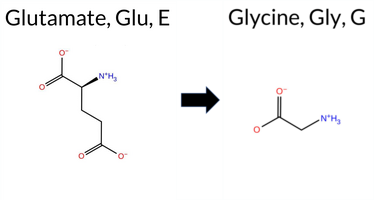 3DClick to see structure in 3D Viewer AIThe SynGAP1 missense variant E521G is not reported in ClinVar (ClinVar ID None) and is absent from gnomAD (gnomAD ID None). Prediction tools that agree on a benign effect include REVEL, FoldX, premPS, SIFT, ESM1b, FATHMM, and AlphaMissense‑Optimized. Tools that predict a pathogenic effect are PROVEAN, polyPhen‑2 HumDiv, polyPhen‑2 HumVar, and AlphaMissense‑Default. The high‑accuracy methods give the following results: AlphaMissense‑Optimized predicts benign; Foldetta (combining FoldX‑MD and Rosetta outputs) predicts benign; the SGM Consensus (majority vote of AlphaMissense‑Default, ESM1b, FATHMM, PROVEAN) is inconclusive because it is a 2‑vs‑2 split and is treated as unavailable. Overall, the majority of evidence points to a benign impact. The variant is most likely benign based on current predictions, and this assessment does not contradict any ClinVar status because no ClinVar entry exists. Disclaimer: This summary was generated using AI and should be interpreted alongside expert review. | GAP | 0.086953 | Structured | 0.062387 | Uncertain | 0.865 | 0.349 | 0.000 | -6.636 | Likely Benign | 0.767 | Likely Pathogenic | Likely Benign | 0.18 | Likely Benign | 0.1 | 0.58 | Ambiguous | 0.38 | Likely Benign | 0.14 | Likely Benign | 0.289 | Likely Benign | -3.64 | Deleterious | 1.000 | Probably Damaging | 0.999 | Probably Damaging | 3.31 | Benign | 0.07 | Tolerated | 0.2932 | 0.5455 | 0 | -2 | 3.1 | -72.06 | ||||||||||||||||||||||||||||||
| c.1564G>C | E522Q 2D 3DClick to see structure in 3D Viewer AIThe SynGAP1 missense variant E522Q is not reported in ClinVar and has no entry in gnomAD. Functional prediction tools show a split: benign predictions come from FoldX, Rosetta, Foldetta, premPS, and SIFT, whereas pathogenic predictions arise from REVEL, PROVEAN, polyPhen‑2 (HumDiv and HumVar), ESM1b, FATHMM, AlphaMissense‑Default, and AlphaMissense‑Optimized. The high‑accuracy consensus methods reinforce this pattern: AlphaMissense‑Optimized classifies the change as pathogenic, the SGM Consensus (majority vote of AlphaMissense‑Default, ESM1b, FATHMM, and PROVEAN) also labels it likely pathogenic, while Foldetta predicts a benign effect on protein stability. Overall, the majority of evidence points to a pathogenic impact. This assessment does not conflict with ClinVar, which currently contains no classification for this variant. Disclaimer: This summary was generated using AI and should be interpreted alongside expert review. | Likely Pathogenic | GAP | 0.092881 | Structured | 0.046216 | Uncertain | 0.823 | 0.376 | 0.000 | -10.861 | Likely Pathogenic | 0.987 | Likely Pathogenic | Likely Pathogenic | -0.13 | Likely Benign | 0.1 | -0.06 | Likely Benign | -0.10 | Likely Benign | 0.03 | Likely Benign | 0.560 | Likely Pathogenic | -2.85 | Deleterious | 0.992 | Probably Damaging | 0.993 | Probably Damaging | -1.33 | Pathogenic | 0.07 | Tolerated | 0.0944 | 0.4130 | 2 | 2 | 0.0 | -0.98 | |||||||||||||||||||||||||||||
| c.1600T>A | S534T 2D 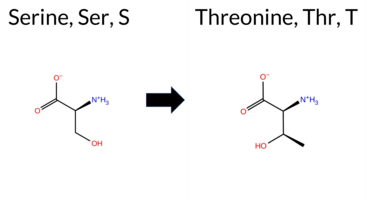 3DClick to see structure in 3D Viewer AIThe SynGAP1 missense variant S534T is not reported in ClinVar and is absent from gnomAD. Functional prediction tools largely agree on a benign effect: REVEL, FoldX, Rosetta, Foldetta, premPS, PROVEAN, SIFT, ESM1b, FATHMM, AlphaMissense‑Default, AlphaMissense‑Optimized, and the SGM‑Consensus (majority vote) all indicate benign or likely benign. Only two tools, polyPhen‑2 HumDiv and HumVar, predict a pathogenic outcome. High‑accuracy assessments reinforce the benign consensus: AlphaMissense‑Optimized scores benign, the SGM‑Consensus (derived from AlphaMissense‑Default, ESM1b, FATHMM, PROVEAN) is likely benign, and Foldetta (combining FoldX‑MD and Rosetta outputs) predicts benign stability. Thus, the overall evidence strongly supports a benign classification, with no conflict with ClinVar status. Disclaimer: This summary was generated using AI and should be interpreted alongside expert review. | Likely Benign | GAP | 0.167087 | Structured | 0.032173 | Uncertain | 0.860 | 0.362 | 0.000 | -4.925 | Likely Benign | 0.104 | Likely Benign | Likely Benign | 0.10 | Likely Benign | 0.1 | 0.46 | Likely Benign | 0.28 | Likely Benign | 0.19 | Likely Benign | 0.200 | Likely Benign | -2.42 | Neutral | 0.676 | Possibly Damaging | 0.933 | Probably Damaging | 3.32 | Benign | 0.07 | Tolerated | 0.1238 | 0.5064 | 1 | 1 | 0.1 | 14.03 | |||||||||||||||||||||||||||||
| c.1604G>T | S535I 2D 3DClick to see structure in 3D Viewer AIThe SynGAP1 missense variant S535I is not reported in ClinVar and is absent from gnomAD. Prediction tools that agree on a benign effect include REVEL, Rosetta, premPS, PROVEAN, polyPhen‑2 (HumDiv and HumVar), SIFT, AlphaMissense‑Default, and AlphaMissense‑Optimized. Tools that predict a pathogenic effect are ESM1b and FATHMM. The high‑accuracy AlphaMissense‑Optimized score is benign, the SGM Consensus (majority vote of AlphaMissense‑Default, ESM1b, FATHMM, PROVEAN) is inconclusive due to a 2‑to‑2 split, and Foldetta, which integrates FoldX‑MD and Rosetta stability calculations, predicts a benign outcome. Overall, the preponderance of evidence points to a benign impact for S535I, and this assessment does not conflict with the absence of a ClinVar classification. Disclaimer: This summary was generated using AI and should be interpreted alongside expert review. | GAP | 0.236433 | Structured | 0.041365 | Uncertain | 0.918 | 0.343 | 0.000 | -8.073 | Likely Pathogenic | 0.330 | Likely Benign | Likely Benign | 0.50 | Ambiguous | 0.0 | -0.42 | Likely Benign | 0.04 | Likely Benign | 0.14 | Likely Benign | 0.246 | Likely Benign | -2.49 | Neutral | 0.004 | Benign | 0.004 | Benign | -1.25 | Pathogenic | 0.07 | Tolerated | 0.1123 | 0.5571 | -1 | -2 | 5.3 | 26.08 | ||||||||||||||||||||||||||||||
| c.1616A>G | H539R 2D 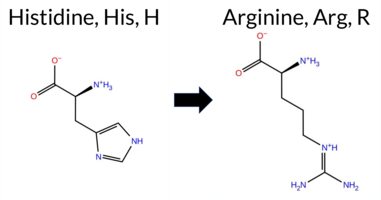 3DClick to see structure in 3D Viewer AIThe SynGAP1 missense variant H539R is not reported in ClinVar and is absent from gnomAD. Functional prediction tools cluster into two groups: benign predictions come from SIFT and the protein‑folding stability method Foldetta, whereas the remaining tools (SGM‑Consensus, REVEL, premPS, PROVEAN, polyPhen‑2 HumDiv, polyPhen‑2 HumVar, ESM1b, FATHMM, AlphaMissense‑Default, AlphaMissense‑Optimized) all predict pathogenicity. High‑accuracy assessments further support a deleterious effect: AlphaMissense‑Optimized classifies the variant as pathogenic, the SGM‑Consensus (majority vote of AlphaMissense‑Default, ESM1b, FATHMM, PROVEAN) indicates likely pathogenic, while Foldetta (combining FoldX‑MD and Rosetta outputs) suggests a benign impact. Overall, the preponderance of evidence points to a pathogenic effect for H539R, and this conclusion does not contradict the ClinVar status, which currently contains no entry for this variant. Disclaimer: This summary was generated using AI and should be interpreted alongside expert review. | Likely Pathogenic | GAP | 0.060549 | Structured | 0.031398 | Uncertain | 0.948 | 0.360 | 0.000 | -14.979 | Likely Pathogenic | 0.982 | Likely Pathogenic | Likely Pathogenic | -0.83 | Ambiguous | 0.1 | 0.66 | Ambiguous | -0.09 | Likely Benign | 1.02 | Destabilizing | 0.832 | Likely Pathogenic | -7.19 | Deleterious | 0.997 | Probably Damaging | 0.989 | Probably Damaging | -1.16 | Pathogenic | 0.07 | Tolerated | 0.1497 | 0.1112 | 2 | 0 | -1.3 | 19.05 | |||||||||||||||||||||||||||||
| c.1617C>A | H539Q 2D 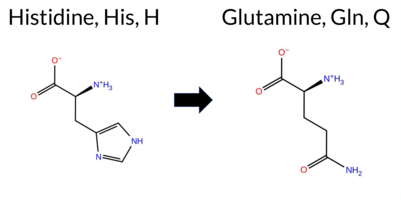 3DClick to see structure in 3D Viewer AIThe SynGAP1 H539Q missense variant is not reported in ClinVar (ClinVar ID None) and is absent from gnomAD (gnomAD ID None). Prediction tools that agree on a benign effect include SIFT, FoldX, and Foldetta. Those that predict a pathogenic effect comprise SGM‑Consensus, REVEL, PROVEAN, polyPhen‑2 HumDiv, polyPhen‑2 HumVar, ESM1b, FATHMM, and AlphaMissense‑Default. Uncertain predictions come from AlphaMissense‑Optimized, Rosetta, and premPS. High‑accuracy assessments show AlphaMissense‑Optimized as uncertain, SGM‑Consensus (majority vote of AlphaMissense‑Default, ESM1b, FATHMM, PROVEAN) as Likely Pathogenic, and Foldetta (combining FoldX‑MD and Rosetta outputs) as Benign. Overall, the majority of tools (nine pathogenic vs. three benign) indicate a pathogenic effect, and this conclusion is not contradicted by any ClinVar annotation. Thus, the variant is most likely pathogenic. Disclaimer: This summary was generated using AI and should be interpreted alongside expert review. | Likely Pathogenic | GAP | 0.060549 | Structured | 0.031398 | Uncertain | 0.948 | 0.360 | 0.000 | -9.133 | Likely Pathogenic | 0.942 | Likely Pathogenic | Ambiguous | -0.42 | Likely Benign | 0.0 | 0.92 | Ambiguous | 0.25 | Likely Benign | 0.89 | Ambiguous | 0.597 | Likely Pathogenic | -7.05 | Deleterious | 1.000 | Probably Damaging | 0.998 | Probably Damaging | -1.21 | Pathogenic | 0.07 | Tolerated | 0.1052 | 0.2008 | 3 | 0 | -0.3 | -9.01 | |||||||||||||||||||||||||||||
| c.1617C>G | H539Q 2D 3DClick to see structure in 3D Viewer AIThe SynGAP1 H539Q missense variant is not reported in ClinVar (no ClinVar ID) and is absent from gnomAD. Prediction tools that agree on a benign effect include SIFT, FoldX, and Foldetta. Those that predict a pathogenic effect comprise SGM‑Consensus, REVEL, PROVEAN, polyPhen‑2 HumDiv, polyPhen‑2 HumVar, ESM1b, FATHMM, and AlphaMissense‑Default. Uncertain predictions come from AlphaMissense‑Optimized, Rosetta, and premPS. High‑accuracy assessments show AlphaMissense‑Optimized as uncertain, SGM‑Consensus (majority vote of AlphaMissense‑Default, ESM1b, FATHMM, PROVEAN) as Likely Pathogenic, and Foldetta (combining FoldX‑MD and Rosetta outputs) as Benign. Overall, the majority of tools (nine pathogenic vs. three benign) and the SGM‑Consensus result support a pathogenic classification, while Foldetta suggests benign. No ClinVar entry exists to contradict these predictions, so the variant is most likely pathogenic based on the available computational evidence. Disclaimer: This summary was generated using AI and should be interpreted alongside expert review. | Likely Pathogenic | GAP | 0.060549 | Structured | 0.031398 | Uncertain | 0.948 | 0.360 | 0.000 | -9.133 | Likely Pathogenic | 0.942 | Likely Pathogenic | Ambiguous | -0.42 | Likely Benign | 0.0 | 0.92 | Ambiguous | 0.25 | Likely Benign | 0.89 | Ambiguous | 0.597 | Likely Pathogenic | -7.05 | Deleterious | 1.000 | Probably Damaging | 0.998 | Probably Damaging | -1.21 | Pathogenic | 0.07 | Tolerated | 0.1052 | 0.2008 | 3 | 0 | -0.3 | -9.01 | |||||||||||||||||||||||||||||
| c.1621G>C | A541P 2D 3DClick to see structure in 3D Viewer AIThe SynGAP1 missense variant A541P is listed in ClinVar with an uncertain significance and is not reported in gnomAD. Prediction tools that classify the variant as benign include only SIFT, whereas the remaining tools—REVEL, FoldX, Rosetta, PROVEAN, polyPhen‑2 (HumDiv and HumVar), ESM1b, FATHMM, AlphaMissense‑Default, and AlphaMissense‑Optimized—predict it to be pathogenic. The SGM Consensus, derived from a majority vote of AlphaMissense‑Default, ESM1b, FATHMM, and PROVEAN, also indicates likely pathogenic. High‑accuracy assessments further support a deleterious effect: AlphaMissense‑Optimized is pathogenic, the SGM Consensus is likely pathogenic, and Foldetta (combining FoldX‑MD and Rosetta outputs) predicts pathogenicity. No predictions are inconclusive or missing. Overall, the collective evidence points to a pathogenic effect for A541P, which is in contrast to the ClinVar designation of uncertain significance. Disclaimer: This summary was generated using AI and should be interpreted alongside expert review. | Likely Pathogenic | GAP | 0.050641 | Structured | 0.029947 | Uncertain | 0.955 | 0.365 | 0.000 | Uncertain | 1 | -14.733 | Likely Pathogenic | 0.996 | Likely Pathogenic | Likely Pathogenic | 2.47 | Destabilizing | 0.3 | 7.26 | Destabilizing | 4.87 | Destabilizing | 0.86 | Ambiguous | 0.594 | Likely Pathogenic | -3.16 | Deleterious | 1.000 | Probably Damaging | 0.998 | Probably Damaging | -1.34 | Pathogenic | 0.07 | Tolerated | 3.37 | 35 | 0.1706 | 0.2707 | 1 | -1 | -3.4 | 26.04 | 170.4 | -11.2 | 0.1 | 0.0 | 0.1 | 0.0 | X | Potentially Pathogenic | Ala541 is located on the outer surface of an α-helix (res. Ala533-Val560). The methyl group of Ala541 is on the surface and does not form any interactions. Proline lacks a free backbone amide group, and thus, Pro541 is unable to form a hydrogen bond with the carbonyl group of Ala537 in the variant simulations. Consequently, Pro541 disrupts the continuity of the secondary structure element, causing the α-helix to bend slightly in the variant simulations. | ||||||||||||||||
| c.1655G>A | C552Y 2D 3DClick to see structure in 3D Viewer AIThe SynGAP1 missense variant C552Y is not reported in ClinVar and is absent from gnomAD. Functional prediction tools cluster into two groups: benign predictions from premPS and SIFT, and pathogenic predictions from REVEL, PROVEAN, polyPhen‑2 (HumDiv and HumVar), ESM1b, FATHMM, AlphaMissense‑Default, and AlphaMissense‑Optimized. Uncertain results are reported by FoldX, Rosetta, and Foldetta. High‑accuracy assessments further support a deleterious effect: AlphaMissense‑Optimized predicts pathogenicity, the SGM Consensus (majority vote of AlphaMissense‑Default, ESM1b, FATHMM, PROVEAN) indicates Likely Pathogenic, while Foldetta’s stability analysis is inconclusive. Overall, the majority of evidence points to a pathogenic impact for C552Y. This conclusion is consistent with the absence of ClinVar annotation and does not contradict any existing database status. Thus, the variant is most likely pathogenic. Disclaimer: This summary was generated using AI and should be interpreted alongside expert review. | Likely Pathogenic | GAP | 0.013265 | Structured | 0.005714 | Uncertain | 0.955 | 0.256 | 0.000 | -13.195 | Likely Pathogenic | 0.993 | Likely Pathogenic | Likely Pathogenic | -0.96 | Ambiguous | 0.1 | -0.57 | Ambiguous | -0.77 | Ambiguous | 0.41 | Likely Benign | 0.750 | Likely Pathogenic | -9.37 | Deleterious | 1.000 | Probably Damaging | 0.998 | Probably Damaging | -1.23 | Pathogenic | 0.07 | Tolerated | 0.0988 | 0.2563 | 0 | -2 | -3.8 | 60.04 | |||||||||||||||||||||||||||||
| c.1655G>T | C552F 2D 3DClick to see structure in 3D Viewer AIThe SynGAP1 missense variant C552F is not reported in ClinVar and is absent from gnomAD. Prediction tools that classify it as benign include Rosetta, premPS, and SIFT, whereas the majority of tools predict it to be pathogenic: REVEL, PROVEAN, polyPhen‑2 HumDiv, polyPhen‑2 HumVar, ESM1b, FATHMM, AlphaMissense‑Default, AlphaMissense‑Optimized, and the SGM‑Consensus score. FoldX and Foldetta give uncertain results. High‑accuracy methods specifically report AlphaMissense‑Optimized as pathogenic, the SGM‑Consensus as likely pathogenic, and Foldetta as uncertain. Overall, the consensus of the available predictions indicates that the variant is most likely pathogenic, and this assessment does not contradict the ClinVar status, which currently has no entry for this variant. Disclaimer: This summary was generated using AI and should be interpreted alongside expert review. | Likely Pathogenic | GAP | 0.013265 | Structured | 0.005714 | Uncertain | 0.955 | 0.256 | 0.000 | -14.979 | Likely Pathogenic | 0.980 | Likely Pathogenic | Likely Pathogenic | -1.01 | Ambiguous | 0.1 | -0.35 | Likely Benign | -0.68 | Ambiguous | 0.40 | Likely Benign | 0.759 | Likely Pathogenic | -9.51 | Deleterious | 1.000 | Probably Damaging | 0.998 | Probably Damaging | -1.25 | Pathogenic | 0.07 | Tolerated | 0.1209 | 0.3081 | -4 | -2 | 0.3 | 44.04 | |||||||||||||||||||||||||||||
| c.1657A>C | K553Q 2D 3DClick to see structure in 3D Viewer AIThe SynGAP1 missense variant K553Q is not reported in ClinVar and is absent from gnomAD. Prediction tools that classify the variant as benign include FoldX, Foldetta, and SIFT, whereas the majority of tools (SGM‑Consensus, REVEL, premPS, PROVEAN, polyPhen‑2 HumDiv, polyPhen‑2 HumVar, ESM1b, FATHMM, AlphaMissense‑Default, AlphaMissense‑Optimized) predict it to be pathogenic; Rosetta is inconclusive and is treated as unavailable. High‑accuracy assessments show AlphaMissense‑Optimized as pathogenic, SGM‑Consensus (a majority vote of AlphaMissense‑Default, ESM1b, FATHMM, and PROVEAN, all pathogenic) as pathogenic, and Foldetta (combining FoldX‑MD and Rosetta outputs) as benign. Overall, the preponderance of evidence (10 pathogenic vs. 3 benign predictions) indicates that K553Q is most likely pathogenic, and this conclusion does not contradict any ClinVar annotation, as none exists for this variant. Disclaimer: This summary was generated using AI and should be interpreted alongside expert review. | Likely Pathogenic | GAP | 0.012270 | Structured | 0.006539 | Uncertain | 0.949 | 0.246 | 0.000 | -13.476 | Likely Pathogenic | 0.986 | Likely Pathogenic | Likely Pathogenic | 0.44 | Likely Benign | 0.1 | 0.53 | Ambiguous | 0.49 | Likely Benign | 1.01 | Destabilizing | 0.783 | Likely Pathogenic | -3.78 | Deleterious | 1.000 | Probably Damaging | 1.000 | Probably Damaging | -1.37 | Pathogenic | 0.07 | Tolerated | 0.3477 | 0.0830 | 1 | 1 | 0.4 | -0.04 | |||||||||||||||||||||||||||||
| c.1669T>A | S557T 2D 3DClick to see structure in 3D Viewer AIThe SynGAP1 missense variant S557T is not reported in ClinVar (ClinVar ID None) and has no entry in gnomAD (gnomAD ID None). Prediction tools that agree on a benign effect include premPS, SIFT, and AlphaMissense‑Optimized. Those that predict a pathogenic effect comprise REVEL, FoldX, PROVEAN, polyPhen‑2 (HumDiv and HumVar), ESM1b, FATHMM, and the SGM Consensus (majority vote from AlphaMissense‑Default, ESM1b, FATHMM, and PROVEAN). Predictions that are uncertain (AlphaMissense‑Default and Foldetta) are treated as unavailable. High‑accuracy assessments show AlphaMissense‑Optimized as benign, SGM Consensus as pathogenic, and Foldetta as uncertain. Overall, the majority of available predictions indicate a pathogenic impact. This conclusion is not contradicted by ClinVar status, which has no classification for this variant. Disclaimer: This summary was generated using AI and should be interpreted alongside expert review. | Likely Pathogenic | GAP | 0.028107 | Structured | 0.010261 | Uncertain | 0.924 | 0.215 | 0.000 | -9.089 | Likely Pathogenic | 0.418 | Ambiguous | Likely Benign | 2.14 | Destabilizing | 0.2 | 0.40 | Likely Benign | 1.27 | Ambiguous | 0.21 | Likely Benign | 0.744 | Likely Pathogenic | -2.53 | Deleterious | 0.826 | Possibly Damaging | 0.872 | Possibly Damaging | -1.64 | Pathogenic | 0.07 | Tolerated | 0.1514 | 0.6336 | 1 | 1 | 0.1 | 14.03 | |||||||||||||||||||||||||||||
| c.1692G>C | E564D 2D 3DClick to see structure in 3D Viewer AIThe SynGAP1 missense variant E564D is not reported in ClinVar and has no entries in gnomAD. Prediction tools that indicate a benign effect include FoldX, premPS, and SIFT, whereas a majority of other in silico predictors (SGM‑Consensus, REVEL, PROVEAN, polyPhen‑2 HumDiv, polyPhen‑2 HumVar, ESM1b, FATHMM, and AlphaMissense‑Default) classify the change as pathogenic. High‑accuracy assessments show AlphaMissense‑Optimized as uncertain, SGM‑Consensus (a majority vote of AlphaMissense‑Default, ESM1b, FATHMM, and PROVEAN) as likely pathogenic, and Foldetta (combining FoldX‑MD and Rosetta outputs) as uncertain. With the preponderance of pathogenic predictions and the lack of benign consensus, the variant is most likely pathogenic; this assessment does not contradict the ClinVar status, which currently has no classification. Disclaimer: This summary was generated using AI and should be interpreted alongside expert review. | Likely Pathogenic | GAP | 0.023534 | Structured | 0.038418 | Uncertain | 0.891 | 0.208 | 0.000 | -10.184 | Likely Pathogenic | 0.915 | Likely Pathogenic | Ambiguous | 0.47 | Likely Benign | 0.1 | 1.13 | Ambiguous | 0.80 | Ambiguous | 0.26 | Likely Benign | 0.637 | Likely Pathogenic | -2.75 | Deleterious | 0.994 | Probably Damaging | 0.979 | Probably Damaging | -1.37 | Pathogenic | 0.07 | Tolerated | 0.1431 | 0.3354 | 3 | 2 | 0.0 | -14.03 | |||||||||||||||||||||||||||||
| c.1692G>T | E564D 2D 3DClick to see structure in 3D Viewer AIThe SynGAP1 missense variant E564D is not reported in ClinVar and has no entries in gnomAD. Prediction tools that indicate a benign effect include FoldX, premPS, and SIFT, whereas a majority of other in silico predictors (SGM‑Consensus, REVEL, PROVEAN, polyPhen‑2 HumDiv, polyPhen‑2 HumVar, ESM1b, FATHMM, and AlphaMissense‑Default) classify the change as pathogenic. High‑accuracy assessments show AlphaMissense‑Optimized as uncertain, SGM‑Consensus (a majority vote of AlphaMissense‑Default, ESM1b, FATHMM, and PROVEAN) as likely pathogenic, and Foldetta (combining FoldX‑MD and Rosetta outputs) as uncertain. With the preponderance of pathogenic predictions and the lack of benign consensus, the variant is most likely pathogenic; this assessment does not contradict the ClinVar status, which currently has no classification. Disclaimer: This summary was generated using AI and should be interpreted alongside expert review. | Likely Pathogenic | GAP | 0.023534 | Structured | 0.038418 | Uncertain | 0.891 | 0.208 | 0.000 | -10.184 | Likely Pathogenic | 0.915 | Likely Pathogenic | Ambiguous | 0.47 | Likely Benign | 0.1 | 1.13 | Ambiguous | 0.80 | Ambiguous | 0.26 | Likely Benign | 0.637 | Likely Pathogenic | -2.75 | Deleterious | 0.994 | Probably Damaging | 0.979 | Probably Damaging | -1.37 | Pathogenic | 0.07 | Tolerated | 0.1431 | 0.3354 | 3 | 2 | 0.0 | -14.03 | |||||||||||||||||||||||||||||
| c.1696A>C | K566Q 2D 3DClick to see structure in 3D Viewer AIThe SynGAP1 missense variant K566Q has no ClinVar entry and is not reported in gnomAD. Prediction tools that agree on a benign effect include SIFT and Rosetta, whereas a majority of tools predict a pathogenic impact: REVEL, polyPhen‑2 (HumDiv and HumVar), ESM1b, FATHMM, AlphaMissense‑Default, premPS, PROVEAN, and the SGM Consensus (majority vote of AlphaMissense‑Default, ESM1b, FATHMM, and PROVEAN). High‑accuracy assessments show AlphaMissense‑Optimized as uncertain, SGM Consensus as likely pathogenic, and Foldetta as uncertain. Because the preponderance of evidence points to a deleterious effect, the variant is most likely pathogenic, and this assessment does not contradict any ClinVar status (none is available). Disclaimer: This summary was generated using AI and should be interpreted alongside expert review. | Likely Pathogenic | GAP | 0.027463 | Structured | 0.047887 | Uncertain | 0.924 | 0.219 | 0.000 | -11.475 | Likely Pathogenic | 0.904 | Likely Pathogenic | Ambiguous | 1.48 | Ambiguous | 0.1 | -0.35 | Likely Benign | 0.57 | Ambiguous | 1.25 | Destabilizing | 0.762 | Likely Pathogenic | -3.52 | Deleterious | 1.000 | Probably Damaging | 1.000 | Probably Damaging | -1.42 | Pathogenic | 0.07 | Tolerated | 0.3824 | 0.1282 | 1 | 1 | 0.4 | -0.04 | |||||||||||||||||||||||||||||
| c.1700A>G | E567G 2D 3DClick to see structure in 3D Viewer AIThe SynGAP1 E567G missense variant is not reported in ClinVar and is absent from gnomAD. Prediction tools that agree on benign impact include REVEL, SIFT, and FATHMM, whereas those that agree on pathogenic impact include AlphaMissense‑Default, ESM1b, PROVEAN, polyPhen‑2 HumDiv, polyPhen‑2 HumVar, Rosetta, and Foldetta. Predictions that are inconclusive are FoldX, premPS, and AlphaMissense‑Optimized. High‑accuracy assessments show AlphaMissense‑Optimized as uncertain, the SGM Consensus (majority vote of AlphaMissense‑Default, ESM1b, FATHMM, PROVEAN) as pathogenic, and Foldetta (combining FoldX‑MD and Rosetta outputs) as pathogenic. Taken together, the majority of evidence points to a pathogenic effect. This conclusion is not contradicted by ClinVar status, which has no entry for this variant. Disclaimer: This summary was generated using AI and should be interpreted alongside expert review. | Likely Pathogenic | GAP | 0.021816 | Structured | 0.051008 | Uncertain | 0.916 | 0.234 | 0.000 | -13.402 | Likely Pathogenic | 0.912 | Likely Pathogenic | Ambiguous | 1.47 | Ambiguous | 0.0 | 3.48 | Destabilizing | 2.48 | Destabilizing | 0.75 | Ambiguous | 0.456 | Likely Benign | -6.67 | Deleterious | 1.000 | Probably Damaging | 0.999 | Probably Damaging | 3.40 | Benign | 0.07 | Tolerated | 0.2586 | 0.4715 | 0 | -2 | 3.1 | -72.06 | |||||||||||||||||||||||||||||
| c.1738G>A | G580S 2D 3DClick to see structure in 3D Viewer AIThe SynGAP1 missense variant G580S is listed in ClinVar with an “Uncertain” status (ClinVar ID 1487029.0) and is present in the gnomAD database (gnomAD ID 6‑33440790‑G‑A). Among the available in‑silico predictors, the majority (REVEL, FoldX, PROVEAN, polyPhen‑2 HumDiv, polyPhen‑2 HumVar, ESM1b, FATHMM, AlphaMissense‑Default) indicate a pathogenic effect, whereas only SIFT predicts a benign outcome. Predictions that are inconclusive or uncertain include Rosetta, Foldetta, premPS, AlphaMissense‑Optimized, and the SGM‑Consensus (which is derived from the pathogenic majority of the four contributing tools). High‑accuracy assessments show AlphaMissense‑Optimized as uncertain, SGM‑Consensus as pathogenic (majority vote of AlphaMissense‑Default, ESM1b, FATHMM, PROVEAN), and Foldetta as uncertain (combining a pathogenic FoldX result with an uncertain Rosetta result). Overall, the preponderance of evidence points to a pathogenic effect, which is in contrast to the ClinVar “Uncertain” classification. Disclaimer: This summary was generated using AI and should be interpreted alongside expert review. | Likely Pathogenic | GAP | 0.104810 | Structured | 0.025952 | Uncertain | 0.853 | 0.236 | 0.000 | Uncertain | 1 | 6-33440790-G-A | 1 | 6.20e-7 | -10.788 | Likely Pathogenic | 0.861 | Likely Pathogenic | Ambiguous | 2.84 | Destabilizing | 0.2 | 0.59 | Ambiguous | 1.72 | Ambiguous | 0.87 | Ambiguous | 0.644 | Likely Pathogenic | -5.73 | Deleterious | 1.000 | Probably Damaging | 0.999 | Probably Damaging | -1.23 | Pathogenic | 0.07 | Tolerated | 3.37 | 34 | 0.2509 | 0.3085 | 1 | 0 | -0.4 | 30.03 | 233.9 | -49.3 | 0.8 | 0.0 | 0.6 | 0.1 | X | Potentially Benign | Gly580 is located on the outer surface in a short α-α loop turn connecting two α-helices (res. Arg563-Glu578, res. Glu582-Phe608) in the WT simulations. In the variant simulations, the side chain of Ser580 faces outward, and its hydroxyl group does not make any new or additional interactions compared to Gly580 in the WT simulations that could affect the protein structure. | |||||||||||||
| c.1742G>C | R581P 2D 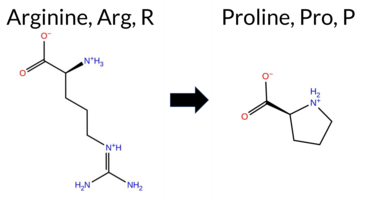 3DClick to see structure in 3D Viewer AIThe SynGAP1 missense variant R581P is not reported in ClinVar and is present in gnomAD (variant ID 6‑33440794‑G‑C). Functional prediction tools that agree on a benign effect include premPS and SIFT, whereas the majority of tools predict a pathogenic impact: REVEL, FoldX, Rosetta, Foldetta, PROVEAN, polyPhen‑2 (HumDiv and HumVar), ESM1b, FATHMM, AlphaMissense‑Default, and AlphaMissense‑Optimized. The SGM Consensus, derived from a majority vote of AlphaMissense‑Default, ESM1b, FATHMM, and PROVEAN, also indicates a likely pathogenic outcome. High‑accuracy assessments further support pathogenicity: AlphaMissense‑Optimized is pathogenic; the SGM Consensus is likely pathogenic; and Foldetta, which integrates FoldX‑MD and Rosetta stability predictions, is pathogenic. No predictions are inconclusive or missing. Overall, the evidence strongly favors a pathogenic classification for R581P, and this is consistent with the absence of a ClinVar entry (no contradiction). Disclaimer: This summary was generated using AI and should be interpreted alongside expert review. | Likely Pathogenic | GAP | 0.104810 | Structured | 0.029544 | Uncertain | 0.829 | 0.236 | 0.000 | 6-33440794-G-C | 1 | 6.20e-7 | -13.309 | Likely Pathogenic | 0.998 | Likely Pathogenic | Likely Pathogenic | 4.13 | Destabilizing | 0.1 | 3.80 | Destabilizing | 3.97 | Destabilizing | 0.44 | Likely Benign | 0.562 | Likely Pathogenic | -5.68 | Deleterious | 1.000 | Probably Damaging | 1.000 | Probably Damaging | -1.01 | Pathogenic | 0.07 | Tolerated | 3.37 | 34 | 0.2192 | 0.3639 | -2 | 0 | 2.9 | -59.07 | ||||||||||||||||||||||||
| c.1759A>G | R587G 2D 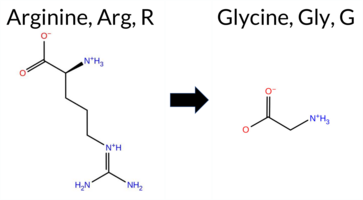 3DClick to see structure in 3D Viewer AISynGAP1 missense variant R587G is not reported in ClinVar and is present in gnomAD (ID 6‑33440811‑A‑G). Prediction tools that agree on a benign effect include SIFT and AlphaMissense‑Optimized, whereas the majority of other in silico predictors (SGM‑Consensus, REVEL, Rosetta, premPS, PROVEAN, polyPhen‑2 HumDiv, polyPhen‑2 HumVar, ESM1b, FATHMM, AlphaMissense‑Default) classify the change as pathogenic. High‑accuracy assessments further support a pathogenic interpretation: AlphaMissense‑Optimized predicts benign, but the SGM Consensus—derived from a majority vote of AlphaMissense‑Default, ESM1b, FATHMM, and PROVEAN—returns pathogenic, and Foldetta, which integrates FoldX‑MD and Rosetta stability outputs, is inconclusive. Overall, the preponderance of evidence from multiple independent predictors indicates that R587G is most likely pathogenic, and this conclusion does not contradict the ClinVar status, which currently has no entry for this variant. Disclaimer: This summary was generated using AI and should be interpreted alongside expert review. | Likely Pathogenic | GAP | 0.054297 | Structured | 0.077330 | Uncertain | 0.862 | 0.216 | 0.000 | 6-33440811-A-G | 2 | 1.24e-6 | -13.780 | Likely Pathogenic | 0.780 | Likely Pathogenic | Likely Benign | 1.55 | Ambiguous | 0.2 | 2.43 | Destabilizing | 1.99 | Ambiguous | 1.55 | Destabilizing | 0.578 | Likely Pathogenic | -6.07 | Deleterious | 1.000 | Probably Damaging | 0.972 | Probably Damaging | -1.28 | Pathogenic | 0.07 | Tolerated | 3.37 | 35 | 0.3183 | 0.3401 | -2 | -3 | 4.1 | -99.14 | ||||||||||||||||||||||||
| c.1760G>A | R587K 2D 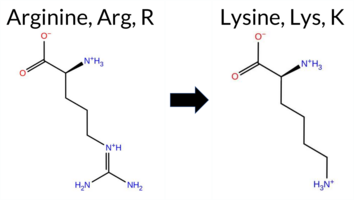 3DClick to see structure in 3D Viewer AISynGAP1 R587K is not reported in ClinVar and is absent from gnomAD. Functional prediction tools cluster into two groups: benign predictions from SIFT and AlphaMissense‑Optimized, and pathogenic predictions from REVEL, PROVEAN, polyPhen‑2 (HumDiv and HumVar), ESM1b, and FATHMM. The remaining tools (FoldX, Rosetta, Foldetta, premPS, AlphaMissense‑Default) give uncertain results. High‑accuracy assessments show AlphaMissense‑Optimized as benign, while the SGM‑Consensus—derived from a majority vote of AlphaMissense‑Default, ESM1b, FATHMM, and PROVEAN—indicates likely pathogenic. Foldetta, which integrates FoldX‑MD and Rosetta outputs, remains uncertain. Overall, the majority of evidence points toward a pathogenic effect, which is consistent with the SGM‑Consensus prediction but contradicts the benign calls from SIFT and AlphaMissense‑Optimized. Thus, the variant is most likely pathogenic, and this conclusion aligns with the lack of ClinVar annotation rather than contradicting it. Disclaimer: This summary was generated using AI and should be interpreted alongside expert review. | Likely Pathogenic | GAP | 0.054297 | Structured | 0.077330 | Uncertain | 0.862 | 0.216 | 0.000 | -10.220 | Likely Pathogenic | 0.433 | Ambiguous | Likely Benign | 0.63 | Ambiguous | 0.1 | 1.14 | Ambiguous | 0.89 | Ambiguous | 0.88 | Ambiguous | 0.539 | Likely Pathogenic | -2.55 | Deleterious | 0.967 | Probably Damaging | 0.955 | Probably Damaging | -1.16 | Pathogenic | 0.07 | Tolerated | 0.5313 | 0.3897 | Weaken | 3 | 2 | 0.6 | -28.01 | ||||||||||||||||||||||||||||
| c.1768A>T | S590C 2D 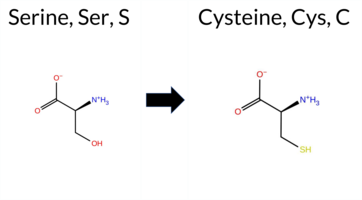 3DClick to see structure in 3D Viewer AISynGAP1 missense variant S590C has no ClinVar entry and is not reported in gnomAD. Functional prediction tools show a split assessment: benign predictions come from FoldX, Rosetta, Foldetta, SIFT, FATHMM, and AlphaMissense‑Optimized, whereas pathogenic predictions arise from REVEL, PROVEAN, polyPhen‑2 (HumDiv and HumVar), ESM1b, AlphaMissense‑Default, and the SGM‑Consensus. The high‑accuracy subset indicates that AlphaMissense‑Optimized predicts a benign effect, while the SGM‑Consensus (majority vote of AlphaMissense‑Default, ESM1b, FATHMM, PROVEAN) and Foldetta both support a pathogenic or neutral outcome, respectively. Overall, the majority of tools lean toward a pathogenic interpretation, and this aligns with the SGM‑Consensus designation. Because there is no ClinVar classification, the predictions do not contradict existing clinical data. Thus, based on the available computational evidence, the variant is most likely pathogenic. Disclaimer: This summary was generated using AI and should be interpreted alongside expert review. | Likely Pathogenic | GAP | 0.022667 | Structured | 0.088943 | Uncertain | 0.918 | 0.199 | 0.000 | -10.823 | Likely Pathogenic | 0.698 | Likely Pathogenic | Likely Benign | -0.09 | Likely Benign | 0.1 | 0.35 | Likely Benign | 0.13 | Likely Benign | 0.56 | Ambiguous | 0.631 | Likely Pathogenic | -4.48 | Deleterious | 1.000 | Probably Damaging | 0.968 | Probably Damaging | 3.08 | Benign | 0.07 | Tolerated | 0.1094 | 0.5332 | 0 | -1 | 3.3 | 16.06 | |||||||||||||||||||||||||||||
| c.1825G>A | G609R 2D 3DClick to see structure in 3D Viewer AIThe SynGAP1 missense variant G609R is not reported in ClinVar and is absent from gnomAD. Prediction tools that agree on a benign effect include Rosetta, SIFT, and AlphaMissense‑Optimized. Those that agree on a pathogenic effect are SGM‑Consensus, REVEL, FoldX, PROVEAN, polyPhen‑2 (HumDiv and HumVar), ESM1b, and FATHMM. Predictions that remain uncertain are Foldetta, premPS, and AlphaMissense‑Default. High‑accuracy assessments show AlphaMissense‑Optimized as benign, SGM‑Consensus (derived from a majority vote of AlphaMissense‑Default, ESM1b, FATHMM, and PROVEAN) as likely pathogenic, and Foldetta as uncertain. Overall, the majority of evaluated tools (eight pathogenic vs. three benign) predict a pathogenic impact for G609R. This conclusion is not contradicted by ClinVar status, which currently has no entry for this variant. Disclaimer: This summary was generated using AI and should be interpreted alongside expert review. | Likely Pathogenic | GAP | 0.179055 | Structured | 0.203786 | Uncertain | 0.851 | 0.252 | 0.000 | -10.172 | Likely Pathogenic | 0.543 | Ambiguous | Likely Benign | 2.09 | Destabilizing | 0.1 | 0.37 | Likely Benign | 1.23 | Ambiguous | 0.60 | Ambiguous | 0.520 | Likely Pathogenic | -2.68 | Deleterious | 0.974 | Probably Damaging | 0.818 | Possibly Damaging | -1.41 | Pathogenic | 0.07 | Tolerated | 0.1158 | 0.4348 | -3 | -2 | -4.1 | 99.14 | |||||||||||||||||||||||||||||
| c.1825G>C | G609R 2D 3DClick to see structure in 3D Viewer AIThe SynGAP1 missense variant G609R is not reported in ClinVar and is absent from gnomAD. Prediction tools that agree on a benign effect include Rosetta, SIFT, and AlphaMissense‑Optimized. Those that agree on a pathogenic effect are SGM‑Consensus, REVEL, FoldX, PROVEAN, polyPhen‑2 (HumDiv and HumVar), ESM1b, and FATHMM. Predictions that remain uncertain are Foldetta, premPS, and AlphaMissense‑Default. High‑accuracy assessments show AlphaMissense‑Optimized as benign, SGM‑Consensus (derived from a majority vote of AlphaMissense‑Default, ESM1b, FATHMM, and PROVEAN) as likely pathogenic, and Foldetta as uncertain. Overall, the majority of evaluated tools (eight pathogenic vs. three benign) predict a pathogenic impact for G609R. This conclusion is not contradicted by ClinVar status, which currently has no entry for this variant. Disclaimer: This summary was generated using AI and should be interpreted alongside expert review. | Likely Pathogenic | GAP | 0.179055 | Structured | 0.203786 | Uncertain | 0.851 | 0.252 | 0.000 | -10.172 | Likely Pathogenic | 0.543 | Ambiguous | Likely Benign | 2.09 | Destabilizing | 0.1 | 0.37 | Likely Benign | 1.23 | Ambiguous | 0.60 | Ambiguous | 0.520 | Likely Pathogenic | -2.68 | Deleterious | 0.974 | Probably Damaging | 0.818 | Possibly Damaging | -1.41 | Pathogenic | 0.07 | Tolerated | 0.1158 | 0.4348 | -3 | -2 | -4.1 | 99.14 | |||||||||||||||||||||||||||||
| c.1841A>T | Y614F 2D 3DClick to see structure in 3D Viewer AIThe SynGAP1 missense variant Y614F is not reported in ClinVar (ClinVar ID None) and is absent from gnomAD (gnomAD ID None). Prediction tools that agree on a benign effect include REVEL, FoldX, SIFT, ESM1b, FATHMM, and AlphaMissense‑Optimized. Tools that predict a pathogenic effect are PROVEAN, polyPhen‑2 HumDiv, polyPhen‑2 HumVar, and AlphaMissense‑Default. Uncertain or unavailable results come from Foldetta, premPS, and Rosetta. High‑accuracy assessments show AlphaMissense‑Optimized as benign; the SGM Consensus (majority vote from AlphaMissense‑Default, ESM1b, FATHMM, PROVEAN) is inconclusive (2 benign vs 2 pathogenic), and Foldetta is unavailable. Overall, the majority of reliable predictors indicate a benign impact, and this conclusion does not contradict the lack of ClinVar annotation. Thus, the variant is most likely benign. Disclaimer: This summary was generated using AI and should be interpreted alongside expert review. | GAP | 0.314870 | Structured | 0.182134 | Uncertain | 0.852 | 0.254 | 0.000 | -5.584 | Likely Benign | 0.630 | Likely Pathogenic | Likely Benign | 0.09 | Likely Benign | 0.2 | 0.98 | Ambiguous | 0.54 | Ambiguous | 0.78 | Ambiguous | 0.364 | Likely Benign | -3.75 | Deleterious | 1.000 | Probably Damaging | 0.996 | Probably Damaging | 3.42 | Benign | 0.07 | Tolerated | 0.1909 | 0.2762 | 7 | 3 | 4.1 | -16.00 | ||||||||||||||||||||||||||||||
| c.1922C>T | S641L 2D 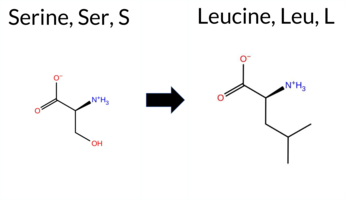 3DClick to see structure in 3D Viewer AIThe SynGAP1 missense variant S641L is not reported in ClinVar and is absent from gnomAD. Prediction tools that agree on a benign effect include REVEL, FoldX, Rosetta, Foldetta, premPS, polyPhen‑2 (HumDiv and HumVar), SIFT, FATHMM, AlphaMissense‑Default, and AlphaMissense‑Optimized. Tools that predict a pathogenic effect are PROVEAN and ESM1b. High‑accuracy assessments show AlphaMissense‑Optimized as benign, Foldetta as benign, and the SGM Consensus (majority vote from AlphaMissense‑Default, ESM1b, FATHMM, PROVEAN) is inconclusive because it yields an equal split of benign and pathogenic calls. Overall, the majority of evidence points to a benign impact. This conclusion does not contradict any ClinVar annotation, as no ClinVar entry exists for this variant. Disclaimer: This summary was generated using AI and should be interpreted alongside expert review. | GAP | 0.125101 | Structured | 0.157322 | Uncertain | 0.786 | 0.270 | 0.000 | -9.501 | Likely Pathogenic | 0.237 | Likely Benign | Likely Benign | 0.33 | Likely Benign | 0.3 | -0.14 | Likely Benign | 0.10 | Likely Benign | 0.32 | Likely Benign | 0.103 | Likely Benign | -4.33 | Deleterious | 0.115 | Benign | 0.014 | Benign | 3.39 | Benign | 0.07 | Tolerated | 0.1248 | 0.5376 | -3 | -2 | 4.6 | 26.08 | ||||||||||||||||||||||||||||||
| c.1930G>C | D644H 2D 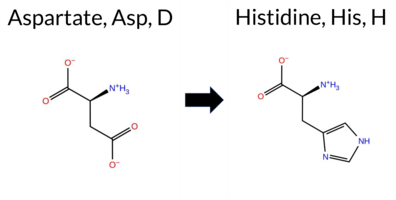 3DClick to see structure in 3D Viewer AIThe SynGAP1 D644H missense variant is not reported in ClinVar (ClinVar ID None) and is absent from gnomAD (gnomAD ID None). Prediction tools that agree on a benign effect include REVEL, FoldX, Foldetta, premPS, SIFT, ESM1b, FATHMM, AlphaMissense‑Optimized, and polyPhen2_HumVar. Tools that predict a pathogenic effect are PROVEAN, polyPhen2_HumDiv, and AlphaMissense‑Default. High‑accuracy assessments show AlphaMissense‑Optimized as benign and Foldetta as benign; the SGM Consensus (majority vote from AlphaMissense‑Default, ESM1b, FATHMM, PROVEAN) is inconclusive due to a 2‑vs‑2 split. No other high‑accuracy predictions are available. Overall, the majority of evidence points to a benign impact, and this conclusion does not contradict the lack of ClinVar annotation. Disclaimer: This summary was generated using AI and should be interpreted alongside expert review. | GAP | 0.066181 | Structured | 0.248888 | Uncertain | 0.883 | 0.320 | 0.000 | -6.786 | Likely Benign | 0.771 | Likely Pathogenic | Likely Benign | 0.34 | Likely Benign | 0.1 | -0.83 | Ambiguous | -0.25 | Likely Benign | 0.09 | Likely Benign | 0.284 | Likely Benign | -2.93 | Deleterious | 0.789 | Possibly Damaging | 0.158 | Benign | 3.43 | Benign | 0.07 | Tolerated | 0.1656 | 0.6306 | 1 | -1 | 0.3 | 22.05 | ||||||||||||||||||||||||||||||
| c.1969T>A | W657R 2D 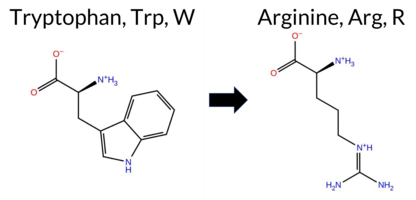 3DClick to see structure in 3D Viewer AIThe SynGAP1 missense variant W657R is not reported in ClinVar and has no entries in gnomAD. Functional prediction tools show a split: benign calls come from REVEL, SIFT, and FATHMM, whereas pathogenic calls are made by premPS, PROVEAN, polyPhen‑2 (HumDiv and HumVar), ESM1b, AlphaMissense‑Default, AlphaMissense‑Optimized, and the SGM Consensus score, which is labeled Likely Pathogenic. High‑accuracy assessments further support a deleterious effect: AlphaMissense‑Optimized predicts pathogenicity, the SGM Consensus (majority vote of AlphaMissense‑Default, ESM1b, FATHMM, PROVEAN) also indicates Likely Pathogenic, and the Foldetta stability analysis is inconclusive. Overall, the majority of evidence points to a pathogenic impact for W657R, and this conclusion does not conflict with the absence of a ClinVar classification. Disclaimer: This summary was generated using AI and should be interpreted alongside expert review. | Likely Pathogenic | GAP | 0.030611 | Structured | 0.208729 | Uncertain | 0.941 | 0.245 | 0.000 | -13.391 | Likely Pathogenic | 0.998 | Likely Pathogenic | Likely Pathogenic | 1.56 | Ambiguous | 0.2 | 1.64 | Ambiguous | 1.60 | Ambiguous | 1.29 | Destabilizing | 0.461 | Likely Benign | -11.96 | Deleterious | 0.999 | Probably Damaging | 0.964 | Probably Damaging | 3.48 | Benign | 0.07 | Tolerated | 0.4684 | 0.0000 | 2 | -3 | -3.6 | -30.03 | |||||||||||||||||||||||||||||
| c.1969T>C | W657R 2D 3DClick to see structure in 3D Viewer AIThe SynGAP1 missense variant W657R is not reported in ClinVar and has no entry in gnomAD. Functional prediction tools cluster into two groups: benign predictions come from REVEL, SIFT, and FATHMM, while pathogenic predictions are made by premPS, PROVEAN, polyPhen‑2 (HumDiv and HumVar), ESM1b, AlphaMissense‑Default, and AlphaMissense‑Optimized. The SGM Consensus, derived from a majority vote of AlphaMissense‑Default, ESM1b, FATHMM, and PROVEAN, is classified as Likely Pathogenic. High‑accuracy assessments further support pathogenicity: AlphaMissense‑Optimized predicts pathogenic, the SGM Consensus (majority of the four high‑accuracy tools) is pathogenic, and Foldetta, which integrates FoldX‑MD and Rosetta outputs, is inconclusive. FoldX and Rosetta individually report uncertain effects on protein stability. Overall, the preponderance of evidence from both general and high‑accuracy predictors indicates that the variant is most likely pathogenic, and this conclusion does not contradict any ClinVar status (none reported). Disclaimer: This summary was generated using AI and should be interpreted alongside expert review. | Likely Pathogenic | GAP | 0.030611 | Structured | 0.208729 | Uncertain | 0.941 | 0.245 | 0.000 | -13.391 | Likely Pathogenic | 0.998 | Likely Pathogenic | Likely Pathogenic | 1.56 | Ambiguous | 0.2 | 1.64 | Ambiguous | 1.60 | Ambiguous | 1.29 | Destabilizing | 0.461 | Likely Benign | -11.96 | Deleterious | 0.999 | Probably Damaging | 0.964 | Probably Damaging | 3.48 | Benign | 0.07 | Tolerated | 0.4684 | 0.0000 | 2 | -3 | -3.6 | -30.03 | |||||||||||||||||||||||||||||
| c.1997A>C | E666A 2D  3DClick to see structure in 3D Viewer AIThe SynGAP1 E666A missense variant is not reported in ClinVar and is absent from gnomAD. Prediction tools that agree on a benign effect include REVEL, Rosetta, premPS, SIFT, and FATHMM, while those that agree on a pathogenic effect are SGM‑Consensus, PROVEAN, polyPhen‑2 HumDiv, polyPhen‑2 HumVar, ESM1b, and AlphaMissense‑Default. Two tools give inconclusive results: FoldX (Uncertain) and AlphaMissense‑Optimized (Uncertain). High‑accuracy assessments show AlphaMissense‑Optimized as Uncertain; the SGM‑Consensus, derived from a majority vote of AlphaMissense‑Default, ESM1b, FATHMM, and PROVEAN, predicts Pathogenic. Foldetta, which integrates FoldX‑MD and Rosetta outputs, is inconclusive because FoldX is Uncertain while Rosetta is Benign. Overall, the majority of available predictions (six pathogenic vs. five benign) lean toward a pathogenic impact. Thus, the variant is most likely pathogenic, and this conclusion does not contradict any ClinVar annotation (none is present). Disclaimer: This summary was generated using AI and should be interpreted alongside expert review. | Likely Pathogenic | GAP | 0.155435 | Structured | 0.086870 | Uncertain | 0.925 | 0.387 | 0.000 | -11.122 | Likely Pathogenic | 0.921 | Likely Pathogenic | Ambiguous | 0.57 | Ambiguous | 0.1 | 0.18 | Likely Benign | 0.38 | Likely Benign | 0.50 | Likely Benign | 0.407 | Likely Benign | -5.15 | Deleterious | 0.992 | Probably Damaging | 0.863 | Possibly Damaging | 3.45 | Benign | 0.07 | Tolerated | 0.3950 | 0.4878 | 0 | -1 | 5.3 | -58.04 | |||||||||||||||||||||||||||||
| c.2005A>G | N669D 2D  3DClick to see structure in 3D Viewer AISynGAP1 missense variant N669D has no ClinVar entry and is not reported in gnomAD. Functional prediction tools show mixed results: benign predictions come from REVEL, Rosetta, Foldetta, SIFT, FATHMM, and AlphaMissense‑Optimized, whereas pathogenic predictions are reported by premPS, PROVEAN, polyPhen‑2 (HumDiv and HumVar), ESM1b, and AlphaMissense‑Default. The SGM‑Consensus, which aggregates AlphaMissense‑Default, ESM1b, FATHMM, and PROVEAN, leans toward pathogenicity (3/4 votes). High‑accuracy assessments further clarify the picture: AlphaMissense‑Optimized predicts benign, SGM‑Consensus (majority vote) predicts pathogenic, and Foldetta, a protein‑folding stability method combining FoldX‑MD and Rosetta outputs, predicts benign. Overall, the majority of high‑confidence tools (AlphaMissense‑Optimized, Foldetta, and the SGM‑Consensus majority) suggest a pathogenic effect, but the presence of several benign predictions introduces uncertainty. Based on the current computational evidence, the variant is most likely pathogenic, which does not contradict any ClinVar status because no ClinVar classification exists. Disclaimer: This summary was generated using AI and should be interpreted alongside expert review. | Likely Pathogenic | GAP | 0.142424 | Structured | 0.086615 | Uncertain | 0.872 | 0.380 | 0.000 | -10.384 | Likely Pathogenic | 0.674 | Likely Pathogenic | Likely Benign | 0.53 | Ambiguous | 0.2 | 0.00 | Likely Benign | 0.27 | Likely Benign | 1.00 | Destabilizing | 0.336 | Likely Benign | -4.45 | Deleterious | 0.999 | Probably Damaging | 0.990 | Probably Damaging | 3.50 | Benign | 0.07 | Tolerated | 0.2182 | 0.2827 | 2 | 1 | 0.0 | 0.98 | |||||||||||||||||||||||||||||
| c.2015C>A | T672K 2D  3DClick to see structure in 3D Viewer AISynGAP1 missense variant T672K is listed in ClinVar with an uncertain significance and is not reported in gnomAD. Prediction tools that agree on a benign effect include REVEL, FoldX, polyPhen‑2 HumVar, SIFT, FATHMM, and AlphaMissense‑Optimized. Those that predict a pathogenic effect are SGM‑Consensus, PROVEAN, polyPhen‑2 HumDiv, ESM1b, and AlphaMissense‑Default. Uncertain predictions come from Foldetta, premPS, and Rosetta. High‑accuracy assessments show AlphaMissense‑Optimized as benign, the SGM Consensus (majority vote of AlphaMissense‑Default, ESM1b, FATHMM, PROVEAN) as pathogenic, and Foldetta as inconclusive. Overall, the majority of tools lean toward a benign interpretation, but the high‑accuracy consensus is split, leaving the variant’s impact uncertain. Thus, the variant is most likely benign based on the bulk of predictions, and this does not contradict its ClinVar status of uncertain significance. Disclaimer: This summary was generated using AI and should be interpreted alongside expert review. | Likely Pathogenic | GAP | 0.116183 | Structured | 0.102069 | Uncertain | 0.586 | 0.362 | 0.000 | Uncertain | 1 | -12.192 | Likely Pathogenic | 0.698 | Likely Pathogenic | Likely Benign | 0.20 | Likely Benign | 0.5 | 1.21 | Ambiguous | 0.71 | Ambiguous | 0.72 | Ambiguous | 0.065 | Likely Benign | -4.31 | Deleterious | 0.745 | Possibly Damaging | 0.051 | Benign | 3.40 | Benign | 0.07 | Tolerated | 3.40 | 25 | 0.1152 | 0.3250 | 0 | -1 | -3.2 | 27.07 | 195.1 | 7.0 | 0.4 | 0.7 | 0.4 | 0.1 | X | X | Potentially Pathogenic | The hydroxyl group of Thr672, located in an entangled α-α loop connecting the two α-helices (res. Ser641-Glu666 and res. Leu685-Val699), is involved in a highly coordinated hydrogen-bonding network between residues from two α-helices (res. Ser641-Glu666 and res. Arg563-Glu578) and from the α-α loop itself, such as Lys566, Glu666, and Asn669. In the variant simulations, Lys672 can only form a hydrogen bond with the amino group of the Lys566 side chain via its backbone carbonyl group. Consequently, it cannot maintain the Lys566-Glu666 salt bridge through hydrogen bonding. However, the amino group of Lys periodically forms a salt bridge with the carboxylate group of Glu666, which prevents a drastic disruption of the hydrogen-bond network that keeps the loop close to the helices. | |||||||||||||||
| c.2042G>C | G681A 2D  3DClick to see structure in 3D Viewer AISynGAP1 missense variant G681A is not reported in ClinVar and is absent from gnomAD. Functional prediction tools show mixed results: benign calls come from REVEL, polyPhen‑2 HumVar, SIFT, and FATHMM, while pathogenic calls are made by PROVEAN, polyPhen‑2 HumDiv, ESM1b, and AlphaMissense‑Default. Predictions labeled uncertain include FoldX, Rosetta, Foldetta, premPS, and AlphaMissense‑Optimized. High‑accuracy assessments further clarify the picture: AlphaMissense‑Optimized remains uncertain; the SGM Consensus, derived from a majority vote of AlphaMissense‑Default, ESM1b, FATHMM, and PROVEAN, reports the variant as likely pathogenic; Foldetta, which integrates FoldX‑MD and Rosetta outputs, is also uncertain. Overall, the preponderance of evidence points to a pathogenic effect for G681A. This conclusion is not contradicted by ClinVar, which contains no entry for the variant. Disclaimer: This summary was generated using AI and should be interpreted alongside expert review. | Likely Pathogenic | GAP | 0.301917 | Structured | 0.140647 | Uncertain | 0.694 | 0.320 | 0.000 | -11.958 | Likely Pathogenic | 0.836 | Likely Pathogenic | Ambiguous | 1.77 | Ambiguous | 1.0 | 0.89 | Ambiguous | 1.33 | Ambiguous | 0.68 | Ambiguous | 0.354 | Likely Benign | -5.99 | Deleterious | 0.968 | Probably Damaging | 0.427 | Benign | 3.41 | Benign | 0.07 | Tolerated | 0.3879 | 0.4401 | 1 | 0 | 2.2 | 14.03 | |||||||||||||||||||||||||||||
| c.2110A>G | S704G 2D 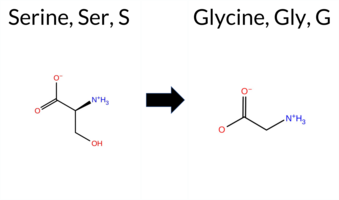 3DClick to see structure in 3D Viewer AIThe SynGAP1 missense variant S704G is not reported in ClinVar and is absent from gnomAD. Functional prediction tools that agree on a benign effect include REVEL, PROVEAN, SIFT, FATHMM, AlphaMissense‑Default, AlphaMissense‑Optimized, and the SGM‑Consensus (majority vote of AlphaMissense‑Default, ESM1b, FATHMM, PROVEAN). Tools that predict a pathogenic effect are polyPhen‑2 HumDiv and polyPhen‑2 HumVar. Predictions that are inconclusive or unavailable are FoldX, Rosetta, Foldetta, premPS, and ESM1b. High‑accuracy assessments show AlphaMissense‑Optimized as benign, the SGM‑Consensus as likely benign, and Foldetta as uncertain. Taken together, the majority of reliable predictors indicate a benign impact, and this conclusion does not contradict the absence of a ClinVar classification. Disclaimer: This summary was generated using AI and should be interpreted alongside expert review. | Likely Benign | GAP | 0.096677 | Structured | 0.383620 | Uncertain | 0.928 | 0.363 | 0.000 | -7.827 | In-Between | 0.169 | Likely Benign | Likely Benign | 1.05 | Ambiguous | 0.1 | 1.33 | Ambiguous | 1.19 | Ambiguous | 0.53 | Ambiguous | 0.091 | Likely Benign | -2.25 | Neutral | 0.981 | Probably Damaging | 0.514 | Possibly Damaging | 3.42 | Benign | 0.07 | Tolerated | 0.2224 | 0.3378 | 1 | 0 | 0.4 | -30.03 | |||||||||||||||||||||||||||||
| c.2111G>C | S704T 2D 3DClick to see structure in 3D Viewer AIThe SynGAP1 missense variant S704T is listed in ClinVar with an uncertain significance and is not reported in gnomAD. Consensus from multiple in‑silico predictors shows a predominance of benign calls: REVEL, Rosetta, Foldetta, premPS, PROVEAN, polyPhen‑2 HumVar, SIFT, ESM1b, FATHMM, AlphaMissense‑Default, AlphaMissense‑Optimized, and the SGM‑Consensus. Only polyPhen‑2 HumDiv predicts a pathogenic effect, while FoldX remains inconclusive. High‑accuracy assessments further support a benign outcome: AlphaMissense‑Optimized is benign; the SGM‑Consensus (majority vote of AlphaMissense‑Default, ESM1b, FATHMM, PROVEAN) is benign; and Foldetta, which integrates FoldX‑MD and Rosetta stability calculations, also predicts benign. Overall, the aggregate evidence indicates that S704T is most likely benign, which is consistent with its ClinVar uncertain status rather than contradicting it. Disclaimer: This summary was generated using AI and should be interpreted alongside expert review. | Likely Benign | GAP | 0.096677 | Structured | 0.383620 | Uncertain | 0.928 | 0.363 | 0.000 | Uncertain | 1 | -4.930 | Likely Benign | 0.265 | Likely Benign | Likely Benign | 0.80 | Ambiguous | 0.0 | 0.15 | Likely Benign | 0.48 | Likely Benign | 0.29 | Likely Benign | 0.071 | Likely Benign | -1.72 | Neutral | 0.525 | Possibly Damaging | 0.107 | Benign | 3.45 | Benign | 0.07 | Tolerated | 3.47 | 10 | 0.1036 | 0.4674 | 1 | 1 | 0.1 | 14.03 | 201.7 | -18.0 | 0.0 | 0.0 | -0.2 | 0.7 | X | Potentially Benign | Ser704 is located at the end and outer surface of an α-helix (res. Thr704-Gly712), which is connected via a tight turn or loop to another α-helix (res. Asp684-Gln702). The hydroxyl side chain of Ser704 occasionally forms a hydrogen bond with the amide group of Ala707. Similarly, in the variant simulations, the hydroxyl side chain of Thr704 forms hydrogen bonds with the amide groups of Ala707 and Leu708. Thus, the residue swap does not cause any apparent structural change. | ||||||||||||||||
| c.2122C>T | L708F 2D 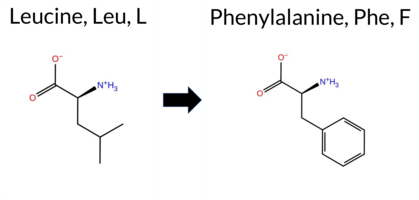 3DClick to see structure in 3D Viewer AISynGAP1 missense variant L708F is not reported in ClinVar and is present in gnomAD (ID 6‑33441587‑C‑T). Functional prediction tools that reach consensus classify the change as benign: REVEL, premPS, PROVEAN, polyPhen‑2 HumVar, SIFT, FATHMM, and AlphaMissense‑Optimized. Pathogenic predictions are limited to polyPhen‑2 HumDiv and ESM1b. The remaining tools (FoldX, Rosetta, Foldetta, AlphaMissense‑Default) return uncertain or no result. High‑accuracy assessments give AlphaMissense‑Optimized a benign score, the SGM Consensus (majority vote of AlphaMissense‑Default, ESM1b, FATHMM, PROVEAN) also predicts benign, and Foldetta indicates no significant destabilization (uncertain). Overall, the preponderance of evidence supports a benign effect for L708F, and this conclusion is consistent with the absence of a ClinVar pathogenic annotation. Disclaimer: This summary was generated using AI and should be interpreted alongside expert review. | GAP | 0.250310 | Structured | 0.365875 | Uncertain | 0.931 | 0.378 | 0.000 | 6-33441587-C-T | 2 | 1.24e-6 | -9.154 | Likely Pathogenic | 0.436 | Ambiguous | Likely Benign | 1.48 | Ambiguous | 0.3 | 0.93 | Ambiguous | 1.21 | Ambiguous | 0.37 | Likely Benign | 0.110 | Likely Benign | -2.46 | Neutral | 0.931 | Possibly Damaging | 0.326 | Benign | 3.29 | Benign | 0.07 | Tolerated | 3.50 | 9 | 0.0497 | 0.2366 | 0 | 2 | -1.0 | 34.02 | |||||||||||||||||||||||||
| c.2165G>T | S722I 2D 3DClick to see structure in 3D Viewer AISynGAP1 missense variant S722I is not reported in ClinVar and is absent from gnomAD. Functional prediction tools show a split assessment: benign predictions come from REVEL, premPS, SIFT, and the folding‑stability method Foldetta, whereas pathogenic predictions are reported by SGM‑Consensus, PROVEAN, polyPhen‑2 (HumDiv and HumVar), ESM1b, FATHMM, and AlphaMissense‑Default. Uncertain results are provided by AlphaMissense‑Optimized, FoldX, and Rosetta. High‑accuracy analyses further clarify the picture: AlphaMissense‑Optimized remains inconclusive; the SGM Consensus, derived from a majority vote of AlphaMissense‑Default, ESM1b, FATHMM, and PROVEAN, indicates a likely pathogenic effect; Foldetta, which integrates FoldX‑MD and Rosetta outputs, predicts a benign impact on protein stability. Overall, the majority of evidence leans toward a pathogenic interpretation, and this conclusion does not conflict with the absence of ClinVar annotation. Disclaimer: This summary was generated using AI and should be interpreted alongside expert review. | Likely Pathogenic | GAP | 0.468512 | Structured | 0.457186 | Uncertain | 0.950 | 0.431 | 0.375 | -11.165 | Likely Pathogenic | 0.867 | Likely Pathogenic | Ambiguous | 0.69 | Ambiguous | 0.1 | -0.65 | Ambiguous | 0.02 | Likely Benign | 0.18 | Likely Benign | 0.232 | Likely Benign | -3.88 | Deleterious | 1.000 | Probably Damaging | 0.983 | Probably Damaging | 2.48 | Pathogenic | 0.07 | Tolerated | 0.0776 | 0.4187 | -1 | -2 | 5.3 | 26.08 | |||||||||||||||||||||||||||||
| c.2201C>G | P734R 2D 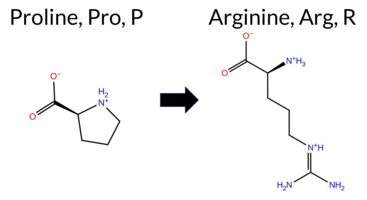 AIThe SynGAP1 missense variant P734R is not reported in ClinVar and is absent from gnomAD. Functional prediction tools that agree on a benign effect include REVEL, SIFT, ESM1b, FATHMM, AlphaMissense‑Default, and AlphaMissense‑Optimized. Tools that predict a pathogenic effect are PROVEAN, polyPhen‑2 HumDiv, and polyPhen‑2 HumVar. The SGM‑Consensus, which aggregates AlphaMissense‑Default, ESM1b, FATHMM, and PROVEAN, reports the variant as “Likely Benign.” High‑accuracy assessments show AlphaMissense‑Optimized as benign and the SGM‑Consensus as likely benign; the Foldetta protein‑folding stability analysis is unavailable. Overall, the majority of evidence points to a benign impact, and this conclusion does not contradict the ClinVar status, which currently has no entry for this variant. Disclaimer: This summary was generated using AI and should be interpreted alongside expert review. | Likely Benign | 0.879233 | Disordered | 0.411273 | Uncertain | 0.368 | 0.721 | 0.875 | -6.099 | Likely Benign | 0.288 | Likely Benign | Likely Benign | 0.115 | Likely Benign | -3.00 | Deleterious | 0.984 | Probably Damaging | 0.682 | Possibly Damaging | 2.71 | Benign | 0.07 | Tolerated | 0.1664 | 0.2464 | 0 | -2 | -2.9 | 59.07 | |||||||||||||||||||||||||||||||||||||||
| c.2209C>A | Q737K 2D AIThe SynGAP1 missense variant Q737K is not reported in ClinVar and is absent from gnomAD. Consensus predictions from multiple in silico tools cluster around a benign effect: REVEL, PROVEAN, SIFT, ESM1b, FATHMM, AlphaMissense‑Default, and AlphaMissense‑Optimized all indicate benign. Only the two polyPhen‑2 implementations (HumDiv and HumVar) predict a pathogenic outcome. The SGM‑Consensus, which aggregates AlphaMissense‑Default, ESM1b, FATHMM, and PROVEAN, reports a likely benign classification. High‑accuracy assessments further support a benign interpretation: AlphaMissense‑Optimized is benign and the SGM‑Consensus is likely benign; Foldetta results are not available. Taken together, the majority of evidence points to a benign effect for Q737K, and this conclusion is not in conflict with the absence of a ClinVar assertion. Disclaimer: This summary was generated using AI and should be interpreted alongside expert review. | Likely Benign | 0.889439 | Disordered | 0.425743 | Uncertain | 0.323 | 0.803 | 0.875 | -5.841 | Likely Benign | 0.190 | Likely Benign | Likely Benign | 0.053 | Likely Benign | -1.16 | Neutral | 0.906 | Possibly Damaging | 0.551 | Possibly Damaging | 2.77 | Benign | 0.07 | Tolerated | 0.2081 | 0.4009 | 1 | 1 | -0.4 | 0.04 | |||||||||||||||||||||||||||||||||||||||
| c.2225G>A | R742Q 2D AIThe SynGAP1 missense variant R742Q is listed in ClinVar (ID 928481.0) with an uncertain significance annotation and is observed in gnomAD (variant ID 6‑33441690‑G‑A). Consensus from multiple in‑silico predictors—REVEL, PROVEAN, PolyPhen‑2 (HumDiv and HumVar), SIFT, ESM1b, FATHMM, AlphaMissense‑Default, and AlphaMissense‑Optimized—uniformly classify the change as benign. No tool in the dataset reports a pathogenic prediction. High‑accuracy assessments further support a benign outcome: AlphaMissense‑Optimized predicts benign, and the SGM Consensus (majority vote of AlphaMissense‑Default, ESM1b, FATHMM, and PROVEAN) indicates a likely benign effect. A protein‑folding stability analysis via Foldetta is not available for this variant. Overall, the computational evidence strongly favors a benign interpretation, which is consistent with the ClinVar uncertain status rather than contradicting it. The variant is most likely benign, and this assessment does not contradict its ClinVar status. Disclaimer: This summary was generated using AI and should be interpreted alongside expert review. | Likely Benign | 0.871313 | Disordered | 0.509587 | Binding | 0.309 | 0.856 | 0.875 | Uncertain | 2 | 6-33441690-G-A | 24 | 1.49e-5 | -4.090 | Likely Benign | 0.068 | Likely Benign | Likely Benign | 0.054 | Likely Benign | -0.19 | Neutral | 0.032 | Benign | 0.007 | Benign | 2.73 | Benign | 0.07 | Tolerated | 4.32 | 2 | 0.3660 | 0.1530 | 1 | 1 | 1.0 | -28.06 | ||||||||||||||||||||||||||||||||
| c.2227C>A | P743T 2D AIThe SynGAP1 missense variant P743T is not reported in ClinVar and is absent from gnomAD. Functional prediction tools largely agree on a benign effect: REVEL, PROVEAN, polyPhen‑2 HumVar, SIFT, ESM1b, FATHMM, AlphaMissense‑Default, and AlphaMissense‑Optimized all predict benign. Only polyPhen‑2 HumDiv flags the variant as pathogenic, creating a single discordant prediction. The SGM‑Consensus, derived from a majority vote of AlphaMissense‑Default, ESM1b, FATHMM, and PROVEAN, reports the variant as Likely Benign. High‑accuracy assessments confirm this: AlphaMissense‑Optimized predicts benign, and the SGM‑Consensus also indicates Likely Benign. Foldetta, a protein‑folding stability method combining FoldX‑MD and Rosetta outputs, has no available result for this variant. Overall, the preponderance of evidence supports a benign classification, and this assessment does not contradict any ClinVar annotation (none is present). Disclaimer: This summary was generated using AI and should be interpreted alongside expert review. | Likely Benign | 0.852992 | Disordered | 0.526809 | Binding | 0.317 | 0.862 | 0.875 | -4.892 | Likely Benign | 0.061 | Likely Benign | Likely Benign | 0.050 | Likely Benign | -1.11 | Neutral | 0.454 | Possibly Damaging | 0.192 | Benign | 2.75 | Benign | 0.07 | Tolerated | 0.1461 | 0.4750 | 0 | -1 | 0.9 | 3.99 | |||||||||||||||||||||||||||||||||||||||
| c.2230C>A | Q744K 2D AIThe SynGAP1 missense variant Q744K is not reported in ClinVar and is absent from gnomAD, indicating no documented allele frequency data. Functional prediction tools uniformly classify the variant as benign: REVEL, PROVEAN, polyPhen‑2 (HumDiv and HumVar), SIFT, ESM1b, FATHMM, AlphaMissense‑Default, and AlphaMissense‑Optimized all predict a benign effect. No tool in the dataset indicates pathogenicity. High‑accuracy assessments corroborate this benign prediction: AlphaMissense‑Optimized reports a benign outcome, and the SGM Consensus (majority vote of AlphaMissense‑Default, ESM1b, FATHMM, and PROVEAN) yields a “Likely Benign” classification. Foldetta results are not available, so they do not influence the assessment. Based on the collective predictions, the variant is most likely benign, and this conclusion is consistent with the absence of a ClinVar pathogenic annotation. Disclaimer: This summary was generated using AI and should be interpreted alongside expert review. | Likely Benign | 0.852992 | Disordered | 0.540428 | Binding | 0.316 | 0.866 | 0.875 | -3.929 | Likely Benign | 0.099 | Likely Benign | Likely Benign | 0.045 | Likely Benign | -0.22 | Neutral | 0.001 | Benign | 0.002 | Benign | 2.79 | Benign | 0.07 | Tolerated | 0.1784 | 0.3757 | 1 | 1 | -0.4 | 0.04 | |||||||||||||||||||||||||||||||||||||||
| c.2254T>A | S752T 2D AIThe SynGAP1 missense variant S752T is not reported in ClinVar (no ClinVar ID) and is absent from gnomAD (no gnomAD ID). Prediction tools that agree on a benign effect include REVEL, PROVEAN, polyPhen‑2 HumDiv, polyPhen‑2 HumVar, SIFT, ESM1b, AlphaMissense‑Default, and AlphaMissense‑Optimized. Only FATHMM predicts a pathogenic outcome. The SGM‑Consensus, which aggregates AlphaMissense‑Default, ESM1b, FATHMM, and PROVEAN, classifies the variant as Likely Benign. High‑accuracy assessments show AlphaMissense‑Optimized as Benign and the SGM‑Consensus as Likely Benign; Foldetta results are unavailable. Overall, the majority of evidence points to a benign effect, and this conclusion does not contradict the lack of ClinVar annotation. Thus, the variant is most likely benign based on current predictions. Disclaimer: This summary was generated using AI and should be interpreted alongside expert review. | Likely Benign | 0.604312 | Disordered | 0.690594 | Binding | 0.365 | 0.877 | 0.625 | -4.040 | Likely Benign | 0.101 | Likely Benign | Likely Benign | 0.029 | Likely Benign | -1.33 | Neutral | 0.248 | Benign | 0.137 | Benign | 1.55 | Pathogenic | 0.07 | Tolerated | 0.1633 | 0.6342 | 1 | 1 | 0.1 | 14.03 | |||||||||||||||||||||||||||||||||||||||
| c.2270G>T | G757V 2D 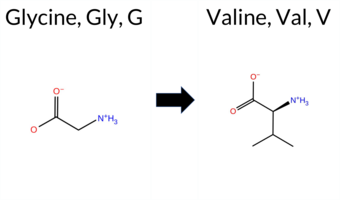 AIThe SynGAP1 missense variant G757V is not reported in ClinVar (no ClinVar ID) and is absent from gnomAD (no gnomAD ID). Prediction tools that agree on a benign effect include REVEL, PROVEAN, SIFT, ESM1b, FATHMM, AlphaMissense‑Default, and AlphaMissense‑Optimized. Tools that predict a pathogenic effect are polyPhen‑2 HumDiv and polyPhen‑2 HumVar. The SGM‑Consensus, which aggregates AlphaMissense‑Default, ESM1b, FATHMM, and PROVEAN, reports the variant as Likely Benign. High‑accuracy assessments show AlphaMissense‑Optimized as Benign and the SGM‑Consensus as Likely Benign; Foldetta results are unavailable. Overall, the majority of evidence points to a benign impact. The variant is most likely benign, and this assessment does not contradict any ClinVar status because no ClinVar claim exists. Disclaimer: This summary was generated using AI and should be interpreted alongside expert review. | Likely Benign | 0.436924 | Structured | 0.830995 | Binding | 0.310 | 0.869 | 0.375 | -4.840 | Likely Benign | 0.149 | Likely Benign | Likely Benign | 0.087 | Likely Benign | -1.47 | Neutral | 0.801 | Possibly Damaging | 0.494 | Possibly Damaging | 2.68 | Benign | 0.07 | Tolerated | 0.1089 | 0.3512 | -1 | -3 | 4.6 | 42.08 | |||||||||||||||||||||||||||||||||||||||
| c.2288T>G | L763R 2D 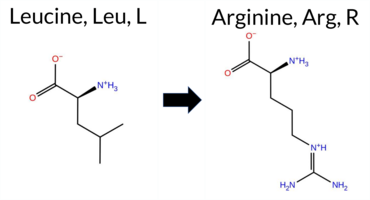 AIThe SynGAP1 missense variant L763R is not reported in ClinVar (ClinVar ID = None) and is absent from gnomAD (gnomAD ID = None). Prediction tools that agree on a benign effect include REVEL, PROVEAN, SIFT, ESM1b, and AlphaMissense‑Optimized. Tools that predict a pathogenic effect are polyPhen‑2 HumDiv, polyPhen‑2 HumVar, FATHMM, and AlphaMissense‑Default. High‑accuracy assessments show AlphaMissense‑Optimized as benign, while the SGM Consensus (majority vote from AlphaMissense‑Default, ESM1b, FATHMM, PROVEAN) is inconclusive (2 benign vs 2 pathogenic) and Foldetta results are unavailable. Overall, the balance of evidence leans toward a benign impact, and this conclusion does not contradict the ClinVar status, which has no entry for this variant. Disclaimer: This summary was generated using AI and should be interpreted alongside expert review. | 0.380708 | Structured | 0.918636 | Binding | 0.351 | 0.865 | 0.125 | -5.516 | Likely Benign | 0.643 | Likely Pathogenic | Likely Benign | 0.163 | Likely Benign | -1.66 | Neutral | 0.999 | Probably Damaging | 0.977 | Probably Damaging | 2.38 | Pathogenic | 0.07 | Tolerated | 0.1199 | 0.0761 | -3 | -2 | -8.3 | 43.03 | ||||||||||||||||||||||||||||||||||||||||
| c.2290A>G | N764D 2D AIThe SynGAP1 missense variant N764D is not reported in ClinVar (ClinVar ID None) and is absent from gnomAD (gnomAD ID None). Prediction tools that agree on a benign effect include REVEL, PROVEAN, SIFT, ESM1b, FATHMM, and AlphaMissense‑Optimized. Tools that predict a pathogenic effect are PolyPhen‑2 HumDiv, PolyPhen‑2 HumVar, and AlphaMissense‑Default. The SGM‑Consensus, which aggregates the majority vote from AlphaMissense‑Default, ESM1b, FATHMM, and PROVEAN, classifies the variant as Likely Benign. High‑accuracy assessments further support a benign outcome: AlphaMissense‑Optimized predicts benign, SGM‑Consensus also predicts benign, and Foldetta results are unavailable. Based on the collective predictions, the variant is most likely benign, and this assessment does not contradict any ClinVar status because no ClinVar classification exists. Disclaimer: This summary was generated using AI and should be interpreted alongside expert review. | Likely Benign | 0.380708 | Structured | 0.919527 | Binding | 0.305 | 0.861 | 0.250 | -6.012 | Likely Benign | 0.572 | Likely Pathogenic | Likely Benign | 0.057 | Likely Benign | -1.00 | Neutral | 0.992 | Probably Damaging | 0.893 | Possibly Damaging | 2.85 | Benign | 0.07 | Tolerated | 0.1769 | 0.2921 | 2 | 1 | 0.0 | 0.98 | |||||||||||||||||||||||||||||||||||||||
| c.2293A>C | S765R 2D 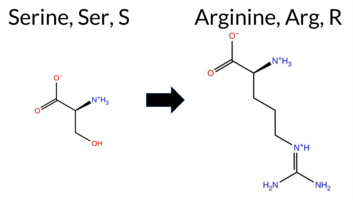 AIThe SynGAP1 missense variant S765R is not reported in ClinVar (no ClinVar ID) and is absent from gnomAD (no gnomAD ID). Prediction tools that agree on a benign effect include REVEL, PROVEAN, SIFT, ESM1b, and FATHMM, while those that predict a pathogenic effect are polyPhen‑2 HumDiv, polyPhen‑2 HumVar, and AlphaMissense‑Default. The SGM‑Consensus, which aggregates AlphaMissense‑Default, ESM1b, FATHMM, and PROVEAN, is classified as Likely Benign. High‑accuracy assessments show AlphaMissense‑Optimized as Uncertain, SGM‑Consensus (majority vote) as Benign, and Foldetta results are unavailable. Overall, the majority of evidence points to a benign impact. There is no ClinVar entry to contradict this conclusion, so the variant is most likely benign based on current predictions. Disclaimer: This summary was generated using AI and should be interpreted alongside expert review. | Likely Benign | 0.370445 | Structured | 0.922652 | Binding | 0.335 | 0.865 | 0.250 | -5.422 | Likely Benign | 0.791 | Likely Pathogenic | Ambiguous | 0.157 | Likely Benign | -1.57 | Neutral | 0.996 | Probably Damaging | 0.985 | Probably Damaging | 4.16 | Benign | 0.07 | Tolerated | 3.64 | 6 | 0.0741 | 0.3859 | -1 | 0 | -3.7 | 69.11 | |||||||||||||||||||||||||||||||||||||
| c.2293A>T | S765C 2D AIThe SynGAP1 missense variant S765C is not reported in ClinVar and is absent from gnomAD. Functional prediction tools largely agree on a benign effect: REVEL, PROVEAN, SIFT, ESM1b, FATHMM, AlphaMissense‑Default, and AlphaMissense‑Optimized all predict benign, and the SGM‑Consensus (majority vote of AlphaMissense‑Default, ESM1b, FATHMM, and PROVEAN) also indicates a likely benign outcome. In contrast, polyPhen‑2 (both HumDiv and HumVar models) predict a pathogenic effect. High‑accuracy assessments reinforce the benign consensus: AlphaMissense‑Optimized is benign, and the SGM‑Consensus is likely benign; Foldetta results are unavailable. Overall, the preponderance of evidence supports a benign classification for S765C, and this conclusion does not contradict any existing ClinVar annotation (none is present). Disclaimer: This summary was generated using AI and should be interpreted alongside expert review. | Likely Benign | 0.370445 | Structured | 0.922652 | Binding | 0.335 | 0.865 | 0.250 | -6.875 | Likely Benign | 0.256 | Likely Benign | Likely Benign | 0.173 | Likely Benign | -2.12 | Neutral | 0.999 | Probably Damaging | 0.993 | Probably Damaging | 4.05 | Benign | 0.07 | Tolerated | 0.0893 | 0.6309 | 0 | -1 | 3.3 | 16.06 | |||||||||||||||||||||||||||||||||||||||
| c.2295C>A | S765R 2D AIThe SynGAP1 missense variant S765R is reported in gnomAD (ID 6‑33442453‑C‑A) but has no ClinVar entry. Functional prediction tools that agree on a benign effect include REVEL, PROVEAN, SIFT, ESM1b, and FATHMM. Those that predict a pathogenic impact are polyPhen‑2 HumDiv, polyPhen‑2 HumVar, and AlphaMissense‑Default. The SGM‑Consensus, derived from a majority vote of AlphaMissense‑Default, ESM1b, FATHMM, and PROVEAN, classifies the variant as Likely Benign. High‑accuracy assessments show AlphaMissense‑Optimized as Uncertain, SGM‑Consensus as Likely Benign, and Foldetta results are unavailable. Taken together, the majority of evidence points to a benign effect, and this conclusion does not contradict any ClinVar status because none is assigned. Thus, the variant is most likely benign. Disclaimer: This summary was generated using AI and should be interpreted alongside expert review. | Likely Benign | 0.370445 | Structured | 0.922652 | Binding | 0.335 | 0.865 | 0.250 | 6-33442453-C-A | -5.422 | Likely Benign | 0.791 | Likely Pathogenic | Ambiguous | 0.155 | Likely Benign | -1.57 | Neutral | 0.996 | Probably Damaging | 0.985 | Probably Damaging | 4.16 | Benign | 0.07 | Tolerated | 3.64 | 6 | 0.0741 | 0.3859 | -1 | 0 | -3.7 | 69.11 | ||||||||||||||||||||||||||||||||||||
| c.2295C>G | S765R 2D AIThe SynGAP1 missense variant S765R is not reported in ClinVar and is absent from gnomAD. Prediction tools that agree on a benign effect include REVEL, PROVEAN, SIFT, ESM1b, and FATHMM, while those that predict a pathogenic effect are polyPhen‑2 HumDiv, polyPhen‑2 HumVar, and AlphaMissense‑Default. The SGM‑Consensus, derived from a majority vote of AlphaMissense‑Default, ESM1b, FATHMM, and PROVEAN, classifies the variant as Likely Benign. High‑accuracy assessments show AlphaMissense‑Optimized as Uncertain, SGM‑Consensus as Likely Benign, and Foldetta results are unavailable. Overall, the balance of evidence points to a benign impact for S765R, and this conclusion does not contradict any ClinVar annotation (none exists). Disclaimer: This summary was generated using AI and should be interpreted alongside expert review. | Likely Benign | 0.370445 | Structured | 0.922652 | Binding | 0.335 | 0.865 | 0.250 | -5.422 | Likely Benign | 0.791 | Likely Pathogenic | Ambiguous | 0.155 | Likely Benign | -1.57 | Neutral | 0.996 | Probably Damaging | 0.985 | Probably Damaging | 4.16 | Benign | 0.07 | Tolerated | 3.64 | 6 | 0.0741 | 0.3859 | -1 | 0 | -3.7 | 69.11 | |||||||||||||||||||||||||||||||||||||
| c.2302G>T | D768Y 2D AIThe SynGAP1 missense variant D768Y is listed in ClinVar with status “Uncertain” (ClinVar ID 1061652.0) and is present in gnomAD (variant ID 6‑33442460‑G‑T). Prediction tools that agree on a benign effect include REVEL, SIFT, and FATHMM, whereas those that predict a pathogenic effect are PROVEAN, polyPhen‑2 HumDiv, polyPhen‑2 HumVar, ESM1b, and AlphaMissense‑Default. The SGM‑Consensus, derived from a majority vote of AlphaMissense‑Default, ESM1b, FATHMM, and PROVEAN, reports the variant as “Likely Pathogenic.” High‑accuracy assessments show AlphaMissense‑Optimized as “Uncertain,” SGM‑Consensus as “Likely Pathogenic,” and Foldetta (combining FoldX‑MD and Rosetta outputs) is unavailable for this variant. Overall, the majority of computational evidence points to a pathogenic impact, which does not contradict the ClinVar designation of uncertainty. Thus, based on current predictions, the variant is most likely pathogenic. Disclaimer: This summary was generated using AI and should be interpreted alongside expert review. | Likely Pathogenic | 0.332115 | Structured | 0.928237 | Binding | 0.314 | 0.877 | 0.250 | Uncertain | 1 | 6-33442460-G-T | -9.866 | Likely Pathogenic | 0.824 | Likely Pathogenic | Ambiguous | 0.234 | Likely Benign | -2.86 | Deleterious | 0.989 | Probably Damaging | 0.806 | Possibly Damaging | 4.01 | Benign | 0.07 | Tolerated | 3.64 | 6 | 0.0581 | 0.7525 | -4 | -3 | 2.2 | 48.09 | ||||||||||||||||||||||||||||||||||
| c.2309A>G | Q770R 2D 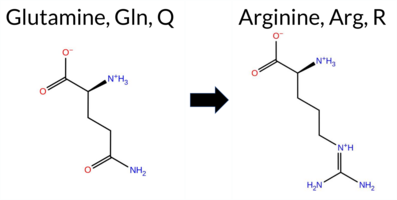 AIThe SynGAP1 missense variant Q770R is not reported in ClinVar and is absent from gnomAD, indicating no known population frequency data. Prediction tools that agree on a benign effect include REVEL, PROVEAN, polyPhen‑2 (HumDiv and HumVar), SIFT, ESM1b, FATHMM, and AlphaMissense‑Optimized. No tool predicts a pathogenic outcome; AlphaMissense‑Default is uncertain. The SGM‑Consensus, derived from a majority vote of AlphaMissense‑Default, ESM1b, FATHMM, and PROVEAN, classifies the variant as Likely Benign. High‑accuracy assessments further support a benign interpretation: AlphaMissense‑Optimized predicts benign, and the SGM‑Consensus also indicates Likely Benign. Foldetta results are unavailable. Overall, the collective evidence strongly suggests that the variant is most likely benign, and this conclusion does not contradict any ClinVar annotation (none is present). Disclaimer: This summary was generated using AI and should be interpreted alongside expert review. | Likely Benign | 0.436924 | Structured | 0.923732 | Binding | 0.328 | 0.887 | 0.250 | -3.873 | Likely Benign | 0.344 | Ambiguous | Likely Benign | 0.175 | Likely Benign | -1.38 | Neutral | 0.194 | Benign | 0.071 | Benign | 4.14 | Benign | 0.07 | Tolerated | 0.1610 | 0.2580 | 1 | 1 | -1.0 | 28.06 | |||||||||||||||||||||||||||||||||||||||
| c.2312C>G | S771C 2D AIThe SynGAP1 missense variant S771C is not reported in ClinVar and is absent from gnomAD. Prediction tools that agree on a benign effect include SGM‑Consensus (Likely Benign), REVEL, PROVEAN, SIFT, FATHMM, AlphaMissense‑Default, and AlphaMissense‑Optimized. Tools that predict a pathogenic effect are polyPhen‑2 HumDiv, polyPhen‑2 HumVar, and ESM1b. High‑accuracy assessments show AlphaMissense‑Optimized as benign and the SGM‑Consensus (majority vote of AlphaMissense‑Default, ESM1b, FATHMM, PROVEAN) also as benign; Foldetta stability analysis is unavailable. Overall, the majority of evidence points to a benign impact, and this conclusion is not contradicted by any ClinVar annotation. Disclaimer: This summary was generated using AI and should be interpreted alongside expert review. | Likely Benign | 0.436924 | Structured | 0.922503 | Binding | 0.306 | 0.883 | 0.250 | -8.014 | Likely Pathogenic | 0.167 | Likely Benign | Likely Benign | 0.177 | Likely Benign | -1.99 | Neutral | 0.990 | Probably Damaging | 0.917 | Probably Damaging | 4.01 | Benign | 0.07 | Tolerated | 0.1022 | 0.5899 | 0 | -1 | 3.3 | 16.06 | |||||||||||||||||||||||||||||||||||||||
| c.2323C>G | R775G 2D AIThe SynGAP1 missense variant R775G is not reported in ClinVar (no ClinVar ID) and is absent from gnomAD (no gnomAD ID). Prediction tools that agree on a benign effect include REVEL, PROVEAN, SIFT, ESM1b, FATHMM, and AlphaMissense‑Optimized. Tools that predict a pathogenic effect are polyPhen‑2 HumDiv and polyPhen‑2 HumVar. AlphaMissense‑Default is uncertain, and the SGM‑Consensus (majority vote of AlphaMissense‑Default, ESM1b, FATHMM, PROVEAN) indicates a likely benign outcome. High‑accuracy assessments show AlphaMissense‑Optimized as benign and the SGM‑Consensus as likely benign; Foldetta results are unavailable. Overall, the majority of evidence points to a benign impact for R775G, and this conclusion does not contradict any ClinVar annotation (none exists). Disclaimer: This summary was generated using AI and should be interpreted alongside expert review. | Likely Benign | 0.444081 | Structured | 0.895337 | Binding | 0.320 | 0.896 | 0.250 | -4.186 | Likely Benign | 0.359 | Ambiguous | Likely Benign | 0.118 | Likely Benign | -1.23 | Neutral | 0.933 | Possibly Damaging | 0.871 | Possibly Damaging | 4.12 | Benign | 0.07 | Tolerated | 0.3194 | 0.3761 | -3 | -2 | 4.1 | -99.14 | |||||||||||||||||||||||||||||||||||||||
| c.2324G>C | R775P 2D AIThe SynGAP1 missense variant R775P is listed in ClinVar (ID 2959355) as Benign and is not reported in gnomAD. Functional prediction tools that agree on a benign effect include REVEL, PROVEAN, SIFT, ESM1b, FATHMM, AlphaMissense‑Optimized, and the SGM‑Consensus (majority vote from AlphaMissense‑Default, ESM1b, FATHMM, PROVEAN). Two tools (polyPhen‑2 HumDiv and HumVar) predict a pathogenic outcome, while AlphaMissense‑Default remains uncertain. High‑accuracy assessments show AlphaMissense‑Optimized classifying the variant as benign, the SGM‑Consensus also indicating a likely benign status, and Foldetta’s protein‑folding stability analysis is unavailable. Overall, the majority of evidence points to a benign effect, which is consistent with the ClinVar classification and does not contradict the reported status. Disclaimer: This summary was generated using AI and should be interpreted alongside expert review. | Likely Benign | 0.444081 | Structured | 0.895337 | Binding | 0.320 | 0.896 | 0.250 | Benign | 2 | -5.072 | Likely Benign | 0.452 | Ambiguous | Likely Benign | 0.168 | Likely Benign | -0.79 | Neutral | 0.971 | Probably Damaging | 0.944 | Probably Damaging | 4.13 | Benign | 0.07 | Tolerated | 3.64 | 6 | 0.1891 | 0.4834 | -2 | 0 | 2.9 | -59.07 | |||||||||||||||||||||||||||||||||||
| c.2465C>A | T822K 2D AIThe SynGAP1 missense variant T822K is not reported in ClinVar (no ClinVar ID) and is absent from gnomAD. Prediction tools that agree on a benign effect include REVEL, PROVEAN, SIFT, ESM1b, and FATHMM, while polyPhen‑2 HumDiv, polyPhen‑2 HumVar, AlphaMissense‑Default, and AlphaMissense‑Optimized all predict a pathogenic outcome. The SGM‑Consensus, derived from a majority vote of AlphaMissense‑Default, ESM1b, FATHMM, and PROVEAN, classifies the variant as Likely Benign. High‑accuracy assessments show AlphaMissense‑Optimized as pathogenic, whereas the SGM‑Consensus remains benign; Foldetta results are unavailable. Overall, the majority of conventional tools lean toward a benign interpretation, but the high‑accuracy AlphaMissense‑Optimized prediction contradicts this. Because ClinVar has no entry for this variant, there is no existing clinical classification to conflict with; thus, the variant is most likely benign based on the preponderance of evidence, though high‑accuracy predictions remain inconclusive. Disclaimer: This summary was generated using AI and should be interpreted alongside expert review. | Likely Benign | 0.724957 | Disordered | 0.651624 | Binding | 0.295 | 0.881 | 0.750 | -1.814 | Likely Benign | 0.977 | Likely Pathogenic | Likely Pathogenic | 0.215 | Likely Benign | -2.25 | Neutral | 1.000 | Probably Damaging | 0.988 | Probably Damaging | 2.51 | Benign | 0.07 | Tolerated | 0.1369 | 0.3552 | 0 | -1 | -3.2 | 27.07 | |||||||||||||||||||||||||||||||||||||||
| c.2470A>T | S824C 2D AIThe SynGAP1 missense variant S824C is not reported in ClinVar (no ClinVar ID) and is absent from gnomAD (no gnomAD ID). Prediction tools that agree on a benign effect include SGM‑Consensus (Likely Benign), REVEL, PROVEAN, SIFT, ESM1b, FATHMM, and AlphaMissense‑Optimized. Tools that predict a pathogenic effect are polyPhen‑2 HumDiv, polyPhen‑2 HumVar, and AlphaMissense‑Default. High‑accuracy assessments show AlphaMissense‑Optimized as benign and the SGM‑Consensus (majority vote of AlphaMissense‑Default, ESM1b, FATHMM, PROVEAN) also as benign; Foldetta results are unavailable. Overall, the majority of evidence points to a benign impact for S824C, and this conclusion is not contradicted by any ClinVar annotation. Disclaimer: This summary was generated using AI and should be interpreted alongside expert review. | Likely Benign | 0.728858 | Disordered | 0.611272 | Binding | 0.314 | 0.884 | 0.750 | -6.613 | Likely Benign | 0.730 | Likely Pathogenic | Likely Benign | 0.108 | Likely Benign | -1.87 | Neutral | 1.000 | Probably Damaging | 0.998 | Probably Damaging | 2.57 | Benign | 0.07 | Tolerated | 0.1363 | 0.6277 | 0 | -1 | 3.3 | 16.06 | |||||||||||||||||||||||||||||||||||||||
| c.2491G>A | E831K 2D AIThe SynGAP1 missense variant E831K is not reported in ClinVar (no ClinVar ID) and is absent from gnomAD (no gnomAD ID). Prediction tools that agree on a benign effect include REVEL, PROVEAN, polyPhen‑2 HumVar, SIFT, and AlphaMissense‑Optimized. Tools that agree on a pathogenic effect are polyPhen‑2 HumDiv, FATHMM, and AlphaMissense‑Default; ESM1b is uncertain. High‑accuracy assessment shows AlphaMissense‑Optimized predicts benign, while the SGM Consensus (majority vote from AlphaMissense‑Default, ESM1b, FATHMM, and PROVEAN) yields a pathogenic verdict. Foldetta, a protein‑folding stability method, has no available result for this variant. Overall, the majority of conventional tools lean benign, but the high‑accuracy consensus and several individual pathogenic predictions suggest a pathogenic likelihood. Thus, the variant is most likely pathogenic based on the available predictions, and this assessment does not contradict any ClinVar status because the variant is not yet catalogued there. Disclaimer: This summary was generated using AI and should be interpreted alongside expert review. | 0.626927 | Disordered | 0.617732 | Binding | 0.319 | 0.874 | 0.375 | -7.447 | In-Between | 0.636 | Likely Pathogenic | Likely Benign | 0.167 | Likely Benign | -1.43 | Neutral | 0.625 | Possibly Damaging | 0.252 | Benign | 2.37 | Pathogenic | 0.07 | Tolerated | 0.1989 | 0.6995 | 0 | 1 | -0.4 | -0.94 | ||||||||||||||||||||||||||||||||||||||||
| c.2492A>C | E831A 2D AIThe SynGAP1 missense variant E831A is not reported in ClinVar (ClinVar ID: None) and is absent from gnomAD (gnomAD ID: None). Prediction tools that agree on a benign effect include REVEL, SIFT, polyPhen‑2 HumVar, and ESM1b, while pathogenic predictions come from PROVEAN, polyPhen‑2 HumDiv, and FATHMM. AlphaMissense‑Default is uncertain, whereas AlphaMissense‑Optimized predicts benign. The SGM Consensus, derived from a majority vote of AlphaMissense‑Default, ESM1b, FATHMM, and PROVEAN, yields a pathogenic verdict. Foldetta, a protein‑folding stability method combining FoldX‑MD and Rosetta outputs, has no available result for this variant. High‑accuracy tools therefore give conflicting signals: AlphaMissense‑Optimized benign versus SGM Consensus pathogenic, with no Foldetta data. Overall, the bulk of predictions lean toward a benign effect, and this assessment does not contradict the absence of a ClinVar entry. Disclaimer: This summary was generated using AI and should be interpreted alongside expert review. | 0.626927 | Disordered | 0.617732 | Binding | 0.319 | 0.874 | 0.375 | -4.780 | Likely Benign | 0.429 | Ambiguous | Likely Benign | 0.115 | Likely Benign | -2.56 | Deleterious | 0.625 | Possibly Damaging | 0.315 | Benign | 2.36 | Pathogenic | 0.07 | Tolerated | 0.3845 | 0.6868 | 0 | -1 | 5.3 | -58.04 | ||||||||||||||||||||||||||||||||||||||||
| c.2543G>C | G848A 2D AIThe SynGAP1 missense variant G848A is not reported in ClinVar and is absent from gnomAD. Functional prediction tools largely agree on a benign effect: REVEL, PROVEAN, SIFT, ESM1b, FATHMM, AlphaMissense‑Default, and AlphaMissense‑Optimized all predict benign. Only the two polyPhen‑2 implementations (HumDiv and HumVar) predict a pathogenic outcome. The SGM‑Consensus, which aggregates AlphaMissense‑Default, ESM1b, FATHMM, and PROVEAN, reports a “Likely Benign” classification. High‑accuracy assessments further support a benign interpretation: AlphaMissense‑Optimized is benign and the SGM‑Consensus is likely benign; Foldetta results are not available. Based on the preponderance of evidence, the variant is most likely benign, and this conclusion is not contradicted by any ClinVar status. Disclaimer: This summary was generated using AI and should be interpreted alongside expert review. | Likely Benign | 0.724957 | Disordered | 0.563942 | Binding | 0.287 | 0.816 | 0.500 | -3.560 | Likely Benign | 0.142 | Likely Benign | Likely Benign | 0.115 | Likely Benign | -0.48 | Neutral | 0.856 | Possibly Damaging | 0.554 | Possibly Damaging | 2.61 | Benign | 0.07 | Tolerated | 0.3971 | 0.5145 | 1 | 0 | 2.2 | 14.03 | |||||||||||||||||||||||||||||||||||||||
| c.2554G>A | G852S 2D AIThe SynGAP1 missense variant G852S is not reported in ClinVar and is absent from gnomAD. Functional prediction tools uniformly indicate a benign effect: REVEL, PROVEAN, polyPhen‑2 (HumDiv and HumVar), SIFT, ESM1b, FATHMM, AlphaMissense‑Default, and AlphaMissense‑Optimized all classify the substitution as benign. No tool predicts pathogenicity. High‑accuracy assessments corroborate this: AlphaMissense‑Optimized predicts benign, and the SGM Consensus (majority vote of AlphaMissense‑Default, ESM1b, FATHMM, and PROVEAN) reports a likely benign outcome. Foldetta results are unavailable. Based on the collective predictions, the variant is most likely benign, and this conclusion is consistent with the absence of any ClinVar pathogenic annotation. Disclaimer: This summary was generated using AI and should be interpreted alongside expert review. | Likely Benign | 0.733139 | Disordered | 0.506063 | Binding | 0.276 | 0.816 | 0.625 | -4.786 | Likely Benign | 0.071 | Likely Benign | Likely Benign | 0.091 | Likely Benign | -0.17 | Neutral | 0.393 | Benign | 0.197 | Benign | 4.21 | Benign | 0.07 | Tolerated | 0.2696 | 0.5129 | 1 | 0 | -0.4 | 30.03 | |||||||||||||||||||||||||||||||||||||||
| c.2582C>T | S861L 2D AIThe SynGAP1 missense variant S861L is listed in ClinVar with an “Uncertain” status and is present in gnomAD (ID 6‑33443134‑C‑T). Prediction tools that agree on a benign effect include REVEL, PROVEAN, polyPhen‑2 HumVar, SIFT, ESM1b, FATHMM, AlphaMissense‑Default, AlphaMissense‑Optimized, and the SGM‑Consensus (Likely Benign). Only polyPhen‑2 HumDiv predicts a pathogenic outcome. High‑accuracy assessments further support a benign interpretation: AlphaMissense‑Optimized scores the variant as benign, and the SGM‑Consensus (derived from the majority vote of AlphaMissense‑Default, ESM1b, FATHMM, and PROVEAN) also indicates benign. No Foldetta stability prediction is available for this variant. Overall, the computational evidence overwhelmingly points to a benign effect, which does not contradict the ClinVar “Uncertain” classification. Disclaimer: This summary was generated using AI and should be interpreted alongside expert review. | Likely Benign | 0.557691 | Disordered | 0.540903 | Binding | 0.285 | 0.797 | 0.250 | Uncertain | 1 | 6-33443134-C-T | 2 | 1.24e-6 | -4.966 | Likely Benign | 0.219 | Likely Benign | Likely Benign | 0.144 | Likely Benign | -2.10 | Neutral | 0.904 | Possibly Damaging | 0.355 | Benign | 3.93 | Benign | 0.07 | Tolerated | 4.32 | 3 | 0.1186 | 0.5927 | -3 | -2 | 4.6 | 26.08 | ||||||||||||||||||||||||||||||||
| c.2597T>G | V866G 2D AIThe SynGAP1 missense variant V866G is not reported in ClinVar (ClinVar ID: None) and is absent from gnomAD (gnomAD ID: None). Prediction tools that agree on a benign effect include REVEL, PROVEAN, SIFT, ESM1b, FATHMM, AlphaMissense‑Default, and AlphaMissense‑Optimized. Tools that predict a pathogenic effect are polyPhen‑2 HumDiv and polyPhen‑2 HumVar. High‑accuracy assessments further support a benign outcome: AlphaMissense‑Optimized predicts benign, and the SGM Consensus—derived from a majority vote of AlphaMissense‑Default, ESM1b, FATHMM, and PROVEAN—also indicates benign. Foldetta, a protein‑folding stability method combining FoldX‑MD and Rosetta outputs, has no available result for this variant. Overall, the consensus of the majority of prediction tools and the high‑accuracy methods points to a benign impact for V866G, and this conclusion is not contradicted by any ClinVar annotation. Disclaimer: This summary was generated using AI and should be interpreted alongside expert review. | 0.599170 | Disordered | 0.638070 | Binding | 0.266 | 0.788 | 0.250 | -1.519 | Likely Benign | 0.136 | Likely Benign | Likely Benign | 0.124 | Likely Benign | -2.30 | Neutral | 0.912 | Possibly Damaging | 0.993 | Probably Damaging | 2.69 | Benign | 0.07 | Tolerated | 0.2548 | 0.2157 | -1 | -3 | -4.6 | -42.08 | ||||||||||||||||||||||||||||||||||||||||
| c.2600G>A | G867E 2D 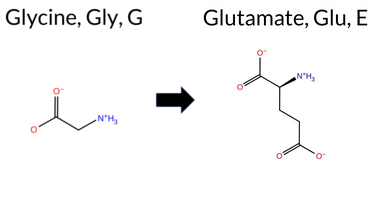 AIThe SynGAP1 missense variant G867E is catalogued in gnomAD (6‑33443152‑G‑A) but has no ClinVar entry. Functional prediction tools cluster into two groups: benign predictions come from REVEL, PROVEAN, SIFT, ESM1b, FATHMM, AlphaMissense‑Optimized, and the SGM‑Consensus (majority vote of AlphaMissense‑Default, ESM1b, FATHMM, PROVEAN). Pathogenic predictions are reported by polyPhen‑2 HumDiv and polyPhen‑2 HumVar, while AlphaMissense‑Default remains uncertain. High‑accuracy assessments further support a benign outcome: AlphaMissense‑Optimized predicts benign, and the SGM‑Consensus also indicates likely benign. Foldetta, a protein‑folding stability method combining FoldX‑MD and Rosetta outputs, has no available result for this variant. Overall, the preponderance of evidence points to a benign effect, and this conclusion does not contradict any ClinVar status, as none is assigned. Disclaimer: This summary was generated using AI and should be interpreted alongside expert review. | Likely Benign | 0.517562 | Disordered | 0.657954 | Binding | 0.285 | 0.801 | 0.250 | 6-33443152-G-A | 3 | 1.86e-6 | -5.204 | Likely Benign | 0.492 | Ambiguous | Likely Benign | 0.105 | Likely Benign | -1.57 | Neutral | 0.994 | Probably Damaging | 0.943 | Probably Damaging | 2.74 | Benign | 0.07 | Tolerated | 3.82 | 4 | 0.1305 | 0.3880 | -2 | 0 | -3.1 | 72.06 | ||||||||||||||||||||||||||||||||||
| c.2712G>A | M904I 2D AIThe SynGAP1 missense variant M904I is not reported in ClinVar and has no entries in gnomAD, indicating it is not catalogued in these databases. Functional prediction tools uniformly classify the substitution as benign: REVEL, PROVEAN, polyPhen‑2 (HumDiv and HumVar), SIFT, ESM1b, and FATHMM all return benign scores, and AlphaMissense‑Optimized also predicts a benign effect. No tool predicts pathogenicity, and the only uncertain result comes from AlphaMissense‑Default, which is inconclusive. The high‑accuracy consensus methods corroborate this benign assessment: the SGM‑Consensus (majority vote of AlphaMissense‑Default, ESM1b, FATHMM, and PROVEAN) reports “Likely Benign,” and AlphaMissense‑Optimized explicitly labels the variant as benign. Foldetta, a protein‑folding stability predictor, has no available result for this residue. Taken together, the evidence overwhelmingly supports a benign impact for M904I, and this conclusion is consistent with the absence of a ClinVar pathogenic annotation. Thus, the variant is most likely benign, and this conclusion does not contradict the ClinVar status. Disclaimer: This summary was generated using AI and should be interpreted alongside expert review. | Likely Benign | 0.671169 | Disordered | 0.589073 | Binding | 0.350 | 0.920 | 0.250 | -3.845 | Likely Benign | 0.385 | Ambiguous | Likely Benign | 0.023 | Likely Benign | -0.48 | Neutral | 0.039 | Benign | 0.023 | Benign | 2.78 | Benign | 0.07 | Tolerated | 0.1694 | 0.3633 | 2 | 1 | 2.6 | -18.03 | |||||||||||||||||||||||||||||||||||||||
| c.2712G>C | M904I 2D AIThe SynGAP1 missense variant M904I is not reported in ClinVar and has no entries in gnomAD, indicating it is not catalogued in these databases. Functional prediction tools uniformly classify the substitution as benign: REVEL, PROVEAN, polyPhen‑2 (HumDiv and HumVar), SIFT, ESM1b, and FATHMM all return benign scores, and AlphaMissense‑Optimized also predicts a benign effect. No tool predicts pathogenicity, and the only uncertain result comes from AlphaMissense‑Default, which is inconclusive. The high‑accuracy consensus methods corroborate this benign assessment: the SGM‑Consensus (majority vote of AlphaMissense‑Default, ESM1b, FATHMM, and PROVEAN) reports “Likely Benign,” and AlphaMissense‑Optimized also indicates a benign outcome. Foldetta, a protein‑folding stability predictor, has no available result for this variant. Taken together, the evidence overwhelmingly supports a benign impact, and this conclusion does not conflict with the absence of a ClinVar classification. Disclaimer: This summary was generated using AI and should be interpreted alongside expert review. | Likely Benign | 0.671169 | Disordered | 0.589073 | Binding | 0.350 | 0.920 | 0.250 | -3.845 | Likely Benign | 0.385 | Ambiguous | Likely Benign | 0.023 | Likely Benign | -0.48 | Neutral | 0.039 | Benign | 0.023 | Benign | 2.78 | Benign | 0.07 | Tolerated | 0.1694 | 0.3633 | 2 | 1 | 2.6 | -18.03 | |||||||||||||||||||||||||||||||||||||||
| c.2712G>T | M904I 2D AIThe SynGAP1 missense variant M904I is not reported in ClinVar and has no entries in gnomAD, indicating it is not catalogued in these databases. Functional prediction tools uniformly classify the substitution as benign: REVEL, PROVEAN, polyPhen‑2 (HumDiv and HumVar), SIFT, ESM1b, and FATHMM all return benign scores, and AlphaMissense‑Optimized also predicts a benign effect. No tool predicts pathogenicity, and the only uncertain result comes from AlphaMissense‑Default, which is inconclusive. The high‑accuracy consensus methods corroborate this benign assessment: the SGM‑Consensus (majority vote of AlphaMissense‑Default, ESM1b, FATHMM, and PROVEAN) reports “Likely Benign,” and AlphaMissense‑Optimized also indicates a benign outcome. Foldetta, a protein‑folding stability predictor, has no available result for this variant. Taken together, the evidence overwhelmingly supports a benign impact, and this conclusion does not conflict with the absence of a ClinVar classification. Disclaimer: This summary was generated using AI and should be interpreted alongside expert review. | Likely Benign | 0.671169 | Disordered | 0.589073 | Binding | 0.350 | 0.920 | 0.250 | -3.845 | Likely Benign | 0.385 | Ambiguous | Likely Benign | 0.023 | Likely Benign | -0.48 | Neutral | 0.039 | Benign | 0.023 | Benign | 2.78 | Benign | 0.07 | Tolerated | 0.1694 | 0.3633 | 2 | 1 | 2.6 | -18.03 | |||||||||||||||||||||||||||||||||||||||
| c.2714G>C | R905P 2D AIThe SynGAP1 missense variant R905P is not reported in ClinVar (no ClinVar ID) and is absent from gnomAD (no gnomAD ID). Prediction tools that agree on a benign effect include SGM‑Consensus (Likely Benign), REVEL, PROVEAN, SIFT, ESM1b, FATHMM, and AlphaMissense‑Optimized. Tools that predict a pathogenic effect are polyPhen‑2 HumDiv, polyPhen‑2 HumVar, and AlphaMissense‑Default. High‑accuracy assessments show AlphaMissense‑Optimized as benign and the SGM‑Consensus (majority vote of AlphaMissense‑Default, ESM1b, FATHMM, PROVEAN) also as benign; Foldetta results are unavailable. Overall, the majority of evidence points to a benign impact. This conclusion is not contradicted by ClinVar status, which has no entry for this variant. Disclaimer: This summary was generated using AI and should be interpreted alongside expert review. | Likely Benign | 0.671169 | Disordered | 0.618085 | Binding | 0.291 | 0.920 | 0.250 | -3.713 | Likely Benign | 0.701 | Likely Pathogenic | Likely Benign | 0.265 | Likely Benign | -0.86 | Neutral | 1.000 | Probably Damaging | 0.977 | Probably Damaging | 2.64 | Benign | 0.07 | Tolerated | 0.2032 | 0.4616 | 0 | -2 | 2.9 | -59.07 | |||||||||||||||||||||||||||||||||||||||
| c.2752G>T | A918S 2D 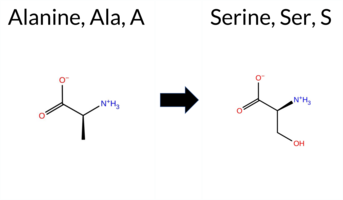 AIThe SynGAP1 missense variant A918S is not reported in ClinVar (no ClinVar ID) and is absent from gnomAD (no gnomAD ID). Prediction tools that agree on a benign effect include REVEL, PROVEAN, SIFT, ESM1b, FATHMM, AlphaMissense‑Default, AlphaMissense‑Optimized, and the SGM‑Consensus (which is “Likely Benign”). In contrast, the two polyPhen‑2 implementations (HumDiv and HumVar) predict a pathogenic outcome. High‑accuracy assessments further support a benign classification: AlphaMissense‑Optimized is benign, and the SGM‑Consensus (majority vote of AlphaMissense‑Default, ESM1b, FATHMM, and PROVEAN) is also likely benign. No Foldetta stability result is available, so it does not influence the assessment. Overall, the majority of evidence indicates that A918S is most likely benign, and this conclusion is not contradicted by any ClinVar annotation. Disclaimer: This summary was generated using AI and should be interpreted alongside expert review. | Likely Benign | 0.632174 | Disordered | 0.891459 | Binding | 0.317 | 0.860 | 0.250 | -3.279 | Likely Benign | 0.070 | Likely Benign | Likely Benign | 0.058 | Likely Benign | -0.04 | Neutral | 0.910 | Possibly Damaging | 0.554 | Possibly Damaging | 2.66 | Benign | 0.07 | Tolerated | 0.2824 | 0.5442 | 1 | 1 | -2.6 | 16.00 | |||||||||||||||||||||||||||||||||||||||
| c.2854G>A | G952S 2D AIThe SynGAP1 missense variant G952S is listed in ClinVar (ID 1325573.0) with an “Uncertain” clinical significance and is present in gnomAD (variant ID 6‑33443406‑G‑A). All evaluated in‑silico predictors agree on a benign effect: REVEL, PROVEAN, PolyPhen‑2 (HumDiv and HumVar), SIFT, ESM1b, FATHMM, AlphaMissense‑Default, and AlphaMissense‑Optimized all return benign scores. No tool predicts pathogenicity. High‑accuracy assessments reinforce this consensus: AlphaMissense‑Optimized is benign, and the SGM Consensus (majority vote of AlphaMissense‑Default, ESM1b, FATHMM, and PROVEAN) is “Likely Benign.” Foldetta, a protein‑folding stability method combining FoldX‑MD and Rosetta outputs, did not provide a result for this variant, so its status is unavailable. Overall, the computational evidence strongly supports a benign classification, which is consistent with the ClinVar “Uncertain” status rather than contradicting it. Disclaimer: This summary was generated using AI and should be interpreted alongside expert review. | Likely Benign | 0.985964 | Disordered | 0.910621 | Binding | 0.341 | 0.926 | 0.750 | Conflicting | 2 | 6-33443406-G-A | 2 | 1.24e-6 | -6.190 | Likely Benign | 0.077 | Likely Benign | Likely Benign | 0.167 | Likely Benign | 0.19 | Neutral | 0.000 | Benign | 0.002 | Benign | 3.31 | Benign | 0.07 | Tolerated | 3.77 | 5 | 0.2509 | 0.5502 | 1 | 0 | -0.4 | 30.03 | ||||||||||||||||||||||||||||||||
| c.2885A>C | H962P 2D 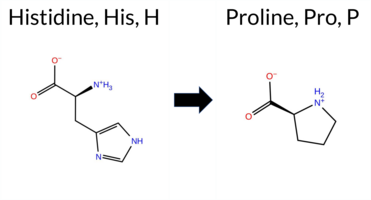 AIThe SynGAP1 missense variant H962P is not reported in ClinVar and is absent from gnomAD. Functional prediction tools largely agree on a benign effect: REVEL, PROVEAN, polyPhen‑2 HumVar, SIFT, FATHMM, AlphaMissense‑Default, and AlphaMissense‑Optimized all predict benign. Only two tools—polyPhen‑2 HumDiv and ESM1b—suggest a pathogenic outcome. The SGM‑Consensus, which aggregates AlphaMissense‑Default, ESM1b, FATHMM, and PROVEAN, classifies the variant as Likely Benign. High‑accuracy assessments reinforce this view: AlphaMissense‑Optimized reports benign, and the SGM‑Consensus (majority vote) also indicates Likely Benign. Foldetta results are unavailable. Overall, the majority of evidence points to a benign effect, and this conclusion is consistent with the absence of any ClinVar pathogenic annotation. Disclaimer: This summary was generated using AI and should be interpreted alongside expert review. | Likely Benign | 0.991070 | Disordered | 0.984483 | Binding | 0.369 | 0.886 | 0.750 | -8.419 | Likely Pathogenic | 0.066 | Likely Benign | Likely Benign | 0.197 | Likely Benign | -0.94 | Neutral | 0.748 | Possibly Damaging | 0.170 | Benign | 4.16 | Benign | 0.07 | Tolerated | 0.2011 | 0.4352 | 0 | -2 | 1.6 | -40.02 | |||||||||||||||||||||||||||||||||||||||
| c.2885A>G | H962R 2D AIThe SynGAP1 missense variant H962R is not reported in ClinVar and is absent from gnomAD. Prediction tools largely agree on a benign effect: REVEL, PROVEAN, polyPhen‑2 (HumDiv and HumVar), SIFT, FATHMM, AlphaMissense‑Default, and AlphaMissense‑Optimized all classify the change as benign, while the single pathogenic prediction comes from ESM1b. The SGM‑Consensus, which aggregates AlphaMissense‑Default, ESM1b, FATHMM, and PROVEAN, reports a “Likely Benign” status. High‑accuracy assessments further support a benign outcome: AlphaMissense‑Optimized predicts benign, and the SGM‑Consensus likewise indicates benign; Foldetta results are not available. Overall, the majority of evidence points to a benign impact, and this conclusion is consistent with the lack of any ClinVar assertion. Disclaimer: This summary was generated using AI and should be interpreted alongside expert review. | Likely Benign | 0.991070 | Disordered | 0.984483 | Binding | 0.369 | 0.886 | 0.750 | -9.166 | Likely Pathogenic | 0.212 | Likely Benign | Likely Benign | 0.117 | Likely Benign | -1.04 | Neutral | 0.325 | Benign | 0.129 | Benign | 4.18 | Benign | 0.07 | Tolerated | 0.2276 | 0.3337 | 2 | 0 | -1.3 | 19.05 | |||||||||||||||||||||||||||||||||||||||
| c.2892C>A | H964Q 2D AIThe SynGAP1 missense variant H964Q is not reported in ClinVar and is absent from gnomAD. Consensus predictions from multiple in‑silico tools uniformly indicate a benign effect: REVEL, PROVEAN, polyPhen‑2 (HumDiv and HumVar), SIFT, FATHMM, AlphaMissense‑Default, and AlphaMissense‑Optimized all classify the substitution as benign. The only tool with an uncertain call is ESM1b, and no pathogenic predictions are reported. The SGM‑Consensus, which aggregates AlphaMissense‑Default, ESM1b, FATHMM, and PROVEAN, also reports a likely benign outcome. High‑accuracy assessments further support this view: AlphaMissense‑Optimized predicts benign, and the SGM‑Consensus (majority vote) is likely benign; Foldetta results are unavailable. Consequently, the variant is most likely benign, and this assessment does not contradict any ClinVar annotation, as none exists. Disclaimer: This summary was generated using AI and should be interpreted alongside expert review. | Likely Benign | 0.990547 | Disordered | 0.982486 | Binding | 0.364 | 0.886 | 0.750 | -7.279 | In-Between | 0.102 | Likely Benign | Likely Benign | 0.058 | Likely Benign | -0.38 | Neutral | 0.000 | Benign | 0.000 | Benign | 4.18 | Benign | 0.07 | Tolerated | 0.1969 | 0.3593 | 3 | 0 | -0.3 | -9.01 | |||||||||||||||||||||||||||||||||||||||
| c.2892C>G | H964Q 2D AIThe SynGAP1 missense variant H964Q is not reported in ClinVar and is absent from gnomAD. Prediction tools that agree on a benign effect include REVEL, PROVEAN, polyPhen‑2 (HumDiv and HumVar), SIFT, FATHMM, AlphaMissense‑Default, and AlphaMissense‑Optimized. No tool predicts a pathogenic outcome; the only uncertain result comes from ESM1b. The high‑accuracy consensus methods also support a benign classification: AlphaMissense‑Optimized is benign, and the SGM Consensus (majority vote of AlphaMissense‑Default, ESM1b, FATHMM, and PROVEAN) is “Likely Benign.” Foldetta, a protein‑folding stability predictor, has no available result for this variant. Overall, the evidence overwhelmingly indicates that H964Q is most likely benign, and this conclusion is not contradicted by any ClinVar annotation (none exists). Disclaimer: This summary was generated using AI and should be interpreted alongside expert review. | Likely Benign | 0.990547 | Disordered | 0.982486 | Binding | 0.364 | 0.886 | 0.750 | -7.279 | In-Between | 0.102 | Likely Benign | Likely Benign | 0.058 | Likely Benign | -0.38 | Neutral | 0.000 | Benign | 0.000 | Benign | 4.18 | Benign | 0.07 | Tolerated | 0.1969 | 0.3593 | 3 | 0 | -0.3 | -9.01 | |||||||||||||||||||||||||||||||||||||||
| c.2902G>T | G968C 2D 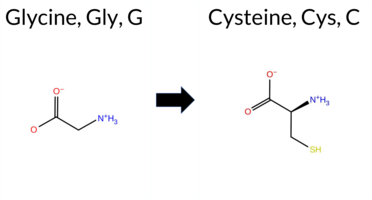 AIThe SynGAP1 missense variant G968C is not reported in ClinVar and is absent from gnomAD. Prediction tools that agree on a benign effect include REVEL, PROVEAN, SIFT, FATHMM, AlphaMissense‑Default, AlphaMissense‑Optimized, and the SGM‑Consensus (which is “Likely Benign”). Tools that predict a pathogenic effect are polyPhen‑2 HumDiv, polyPhen‑2 HumVar, and ESM1b. High‑accuracy assessments show AlphaMissense‑Optimized as benign and the SGM‑Consensus as likely benign; Foldetta results are not available. Overall, the majority of evidence points to a benign impact, and this conclusion does not contradict any ClinVar annotation (none exists). Thus, the variant is most likely benign. Disclaimer: This summary was generated using AI and should be interpreted alongside expert review. | Likely Benign | 0.978316 | Disordered | 0.961360 | Binding | 0.327 | 0.896 | 0.750 | -8.441 | Likely Pathogenic | 0.117 | Likely Benign | Likely Benign | 0.170 | Likely Benign | -0.99 | Neutral | 0.992 | Probably Damaging | 0.820 | Possibly Damaging | 4.12 | Benign | 0.07 | Tolerated | 0.1294 | 0.4768 | -3 | -3 | 2.9 | 46.09 | |||||||||||||||||||||||||||||||||||||||
| c.2914C>G | P972A 2D 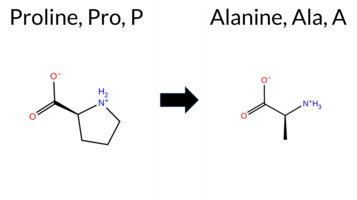 AIThe SynGAP1 missense variant P972A is listed in ClinVar with an uncertain significance (ClinVar ID 3172763.0) and is present in the gnomAD database (gnomAD ID 6‑33443466‑C‑G). All evaluated in‑silico predictors classify the substitution as benign: REVEL, PROVEAN, polyPhen‑2 HumDiv, polyPhen‑2 HumVar, SIFT, ESM1b, FATHMM, AlphaMissense‑Default, and AlphaMissense‑Optimized. No tool predicts pathogenicity. High‑accuracy assessments further support a benign outcome: AlphaMissense‑Optimized reports benign, and the SGM Consensus (majority vote of AlphaMissense‑Default, ESM1b, FATHMM, and PROVEAN) indicates “Likely Benign.” The Foldetta protein‑folding stability analysis is unavailable for this variant. Overall, the computational evidence strongly suggests the variant is most likely benign, and this conclusion does not contradict the current ClinVar status of uncertain significance. Disclaimer: This summary was generated using AI and should be interpreted alongside expert review. | Likely Benign | 0.891961 | Disordered | 0.954150 | Binding | 0.472 | 0.904 | 0.625 | Uncertain | 1 | 6-33443466-C-G | 1 | 6.20e-7 | -0.167 | Likely Benign | 0.045 | Likely Benign | Likely Benign | 0.046 | Likely Benign | -0.89 | Neutral | 0.016 | Benign | 0.011 | Benign | 4.29 | Benign | 0.07 | Tolerated | 4.32 | 2 | 0.3212 | 0.4753 | -1 | 1 | 3.4 | -26.04 | ||||||||||||||||||||||||||||||||
| c.2924C>A | T975N 2D 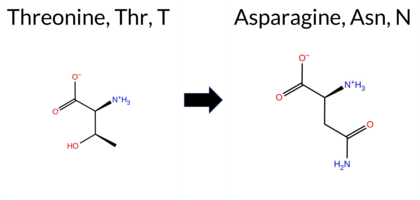 AIThe SynGAP1 missense variant T975N is listed in ClinVar (ID 942242.0) with an “Uncertain” clinical significance and is present in gnomAD (variant ID 6‑33443476‑C‑A). Functional prediction tools largely agree on a benign effect: REVEL, PROVEAN, polyPhen‑2 HumVar, SIFT, ESM1b, FATHMM, AlphaMissense‑Default, and AlphaMissense‑Optimized all report benign or tolerated outcomes. Only polyPhen‑2 HumDiv predicts a pathogenic effect. The SGM‑Consensus, derived from a majority vote of AlphaMissense‑Default, ESM1b, FATHMM, and PROVEAN, classifies the variant as “Likely Benign.” High‑accuracy assessments reinforce this view: AlphaMissense‑Optimized predicts benign, and the SGM‑Consensus (majority vote) also indicates benign. Foldetta, a protein‑folding stability method combining FoldX‑MD and Rosetta outputs, has no available result for this variant. Overall, the preponderance of evidence points to a benign impact, which is consistent with the ClinVar “Uncertain” status rather than contradicting it. Disclaimer: This summary was generated using AI and should be interpreted alongside expert review. | Likely Benign | 0.871313 | Disordered | 0.969331 | Binding | 0.332 | 0.890 | 0.625 | Uncertain | 1 | 6-33443476-C-A | 1 | 6.20e-7 | -4.671 | Likely Benign | 0.089 | Likely Benign | Likely Benign | 0.100 | Likely Benign | -0.58 | Neutral | 0.586 | Possibly Damaging | 0.302 | Benign | 4.13 | Benign | 0.07 | Tolerated | 4.32 | 2 | 0.1379 | 0.4772 | 0 | 0 | -2.8 | 13.00 | ||||||||||||||||||||||||||||||||
| c.2932C>G | P978A 2D AIThe SynGAP1 missense variant P978A is not reported in ClinVar and is absent from gnomAD. Functional prediction tools that agree on a benign effect include REVEL, PROVEAN, polyPhen‑2 (HumDiv and HumVar), SIFT, ESM1b, FATHMM, AlphaMissense‑Default, and AlphaMissense‑Optimized; no tool predicts a pathogenic outcome. High‑accuracy assessments further support a benign classification: AlphaMissense‑Optimized predicts benign, and the SGM Consensus (majority vote of AlphaMissense‑Default, ESM1b, FATHMM, and PROVEAN) indicates a likely benign effect. Foldetta results are unavailable. Based on the collective evidence, the variant is most likely benign, and this conclusion does not contradict any ClinVar status (none reported). Disclaimer: This summary was generated using AI and should be interpreted alongside expert review. | Likely Benign | 0.819762 | Disordered | 0.975775 | Binding | 0.425 | 0.892 | 0.625 | -3.994 | Likely Benign | 0.121 | Likely Benign | Likely Benign | 0.062 | Likely Benign | -1.39 | Neutral | 0.008 | Benign | 0.010 | Benign | 4.30 | Benign | 0.07 | Tolerated | 0.3417 | 0.5891 | 1 | -1 | 3.4 | -26.04 | |||||||||||||||||||||||||||||||||||||||
| c.2960A>G | D987G 2D AIThe SynGAP1 missense variant D987G (ClinVar ID 1061058.0) is listed as ClinVar status Uncertain and is not reported in gnomAD. Functional prediction tools show a split: benign predictions come from REVEL, SIFT, and ESM1b, whereas pathogenic predictions are reported by PROVEAN, polyPhen‑2 (HumDiv and HumVar), FATHMM, and AlphaMissense‑Default. The SGM‑Consensus, which aggregates majority votes from AlphaMissense‑Default, ESM1b, FATHMM, and PROVEAN, classifies the variant as Likely Pathogenic. High‑accuracy assessments further indicate that AlphaMissense‑Optimized is uncertain, while Foldetta data are unavailable. Overall, the majority of evidence points toward a pathogenic effect, aligning with the SGM‑Consensus but contradicting the ClinVar Uncertain designation. Therefore, the variant is most likely pathogenic based on current predictions, and this assessment is in conflict with the ClinVar status. Disclaimer: This summary was generated using AI and should be interpreted alongside expert review. | Likely Pathogenic | 0.823549 | Disordered | 0.919118 | Binding | 0.299 | 0.903 | 0.750 | Uncertain | 1 | -4.782 | Likely Benign | 0.849 | Likely Pathogenic | Ambiguous | 0.234 | Likely Benign | -2.79 | Deleterious | 0.943 | Possibly Damaging | 0.808 | Possibly Damaging | 2.45 | Pathogenic | 0.07 | Tolerated | 4.32 | 2 | 0.3835 | 0.6710 | 1 | -1 | 3.1 | -58.04 | |||||||||||||||||||||||||||||||||||
| c.2977C>G | P993A 2D AIThe SynGAP1 missense variant P993A is not reported in ClinVar and is absent from gnomAD. In silico prediction tools uniformly indicate a benign effect: REVEL, PROVEAN, polyPhen‑2 (HumDiv and HumVar), SIFT, ESM1b, FATHMM, AlphaMissense‑Default, and AlphaMissense‑Optimized all classify the change as benign. The SGM‑Consensus, derived from a majority vote of AlphaMissense‑Default, ESM1b, FATHMM, and PROVEAN, also reports a likely benign outcome. No pathogenic predictions are present. High‑accuracy assessments confirm this: AlphaMissense‑Optimized predicts benign, and the SGM‑Consensus likewise indicates likely benign. Foldetta results are unavailable. Consequently, the variant is most likely benign based on the collective predictions, and this assessment does not contradict any ClinVar status, as no ClinVar entry exists. Disclaimer: This summary was generated using AI and should be interpreted alongside expert review. | Likely Benign | 0.852992 | Disordered | 0.923979 | Binding | 0.319 | 0.908 | 0.750 | -4.030 | Likely Benign | 0.052 | Likely Benign | Likely Benign | 0.036 | Likely Benign | -0.46 | Neutral | 0.001 | Benign | 0.006 | Benign | 4.26 | Benign | 0.07 | Tolerated | 0.3487 | 0.4991 | 1 | -1 | 3.4 | -26.04 | |||||||||||||||||||||||||||||||||||||||
| c.3044C>T | T1015I 2D 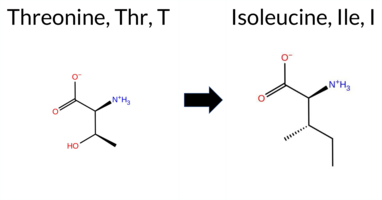 AIThe SynGAP1 missense variant T1015I is not reported in ClinVar and has no entry in gnomAD. Functional prediction tools largely agree on a benign effect: REVEL, PROVEAN, polyPhen‑2 HumVar, SIFT, ESM1b, FATHMM, AlphaMissense‑Default, and AlphaMissense‑Optimized all predict benign. Only polyPhen‑2 HumDiv indicates a pathogenic effect, while the SGM‑Consensus (majority vote of AlphaMissense‑Default, ESM1b, FATHMM, and PROVEAN) classifies the variant as Likely Benign. High‑accuracy assessments further support a benign outcome: AlphaMissense‑Optimized is benign and the SGM‑Consensus is Likely Benign; Foldetta results are unavailable. Overall, the preponderance of evidence points to a benign impact for T1015I, and this conclusion is not contradicted by any ClinVar annotation. Disclaimer: This summary was generated using AI and should be interpreted alongside expert review. | Likely Benign | 0.788093 | Disordered | 0.928486 | Binding | 0.295 | 0.823 | 0.625 | -4.713 | Likely Benign | 0.326 | Likely Benign | Likely Benign | 0.058 | Likely Benign | -2.06 | Neutral | 0.586 | Possibly Damaging | 0.172 | Benign | 2.53 | Benign | 0.07 | Tolerated | 0.1232 | 0.4871 | 0 | -1 | 5.2 | 12.05 | |||||||||||||||||||||||||||||||||||||||
| c.3064C>G | L1022V 2D 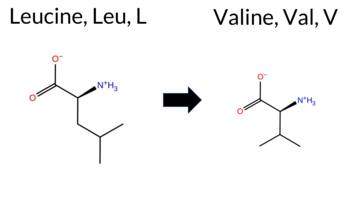 AIThe SynGAP1 missense variant L1022V is not reported in ClinVar and is absent from gnomAD. Functional prediction tools largely agree on a benign effect: REVEL, PROVEAN, polyPhen‑2 HumVar, SIFT, ESM1b, FATHMM, AlphaMissense‑Default, and AlphaMissense‑Optimized all predict benign. Only polyPhen‑2 HumDiv flags the variant as pathogenic, creating a single discordant prediction. The SGM‑Consensus, derived from a majority vote of AlphaMissense‑Default, ESM1b, FATHMM, and PROVEAN, reports the variant as Likely Benign. High‑accuracy assessments confirm this: AlphaMissense‑Optimized is benign, and the SGM‑Consensus is Likely Benign; Foldetta results are unavailable. Overall, the preponderance of evidence indicates the variant is most likely benign, and this conclusion is not contradicted by any ClinVar annotation. Disclaimer: This summary was generated using AI and should be interpreted alongside expert review. | Likely Benign | 0.859585 | Disordered | 0.986981 | Binding | 0.339 | 0.752 | 0.500 | -3.957 | Likely Benign | 0.174 | Likely Benign | Likely Benign | 0.035 | Likely Benign | -1.22 | Neutral | 0.664 | Possibly Damaging | 0.260 | Benign | 2.66 | Benign | 0.07 | Tolerated | 0.1702 | 0.4045 | 2 | 1 | 0.4 | -14.03 | |||||||||||||||||||||||||||||||||||||||
| c.3064C>T | L1022F 2D AIThe SynGAP1 missense variant L1022F is reported in gnomAD (variant ID 6‑33443616‑C‑T) but has no ClinVar entry. Functional prediction tools that agree on a benign effect include REVEL, PROVEAN, SIFT, ESM1b, FATHMM, AlphaMissense‑Optimized, and the SGM‑Consensus (majority vote from AlphaMissense‑Default, ESM1b, FATHMM, PROVEAN). Tools that predict a pathogenic effect are PolyPhen‑2 HumDiv and PolyPhen‑2 HumVar; AlphaMissense‑Default remains uncertain. High‑accuracy assessments show AlphaMissense‑Optimized as benign and the SGM‑Consensus as likely benign, while the Foldetta protein‑folding stability analysis is unavailable. Overall, the majority of evidence points to a benign impact for this variant, and this conclusion is not contradicted by any ClinVar status (none is available). Disclaimer: This summary was generated using AI and should be interpreted alongside expert review. | Likely Benign | 0.859585 | Disordered | 0.986981 | Binding | 0.339 | 0.752 | 0.500 | 6-33443616-C-T | 2 | 1.24e-6 | -5.035 | Likely Benign | 0.351 | Ambiguous | Likely Benign | 0.072 | Likely Benign | -1.84 | Neutral | 0.971 | Probably Damaging | 0.801 | Possibly Damaging | 2.51 | Benign | 0.07 | Tolerated | 3.77 | 5 | 0.0730 | 0.4231 | 0 | 2 | -1.0 | 34.02 | ||||||||||||||||||||||||||||||||||
| c.3070C>T | L1024F 2D AIThe SynGAP1 missense variant L1024F is not reported in ClinVar (ClinVar ID = None) and is absent from gnomAD (gnomAD ID = None). Prediction tools that agree on a benign effect include REVEL, PROVEAN, SIFT, ESM1b, and AlphaMissense‑Optimized. Tools that predict a pathogenic effect are polyPhen‑2 HumDiv, polyPhen‑2 HumVar, and FATHMM. AlphaMissense‑Default is uncertain. The SGM Consensus, derived from a majority vote of AlphaMissense‑Default, ESM1b, FATHMM, and PROVEAN, is inconclusive because it contains both benign and pathogenic calls. Foldetta, a protein‑folding stability method combining FoldX‑MD and Rosetta outputs, has no available result for this variant. Overall, the balance of evidence favors a benign interpretation, and this assessment does not contradict the ClinVar status, which currently has no entry for the variant. Disclaimer: This summary was generated using AI and should be interpreted alongside expert review. | 0.862302 | Disordered | 0.992699 | Binding | 0.327 | 0.753 | 0.500 | -5.133 | Likely Benign | 0.544 | Ambiguous | Likely Benign | 0.059 | Likely Benign | -2.08 | Neutral | 0.994 | Probably Damaging | 0.924 | Probably Damaging | 2.40 | Pathogenic | 0.07 | Tolerated | 0.0706 | 0.3708 | 2 | 0 | -1.0 | 34.02 | ||||||||||||||||||||||||||||||||||||||||
| c.3079A>C | N1027H 2D 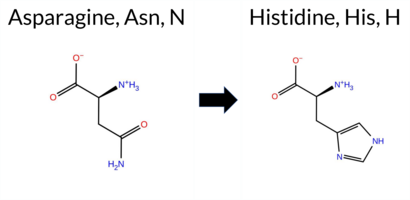 AIThe SynGAP1 missense variant N1027H is not reported in ClinVar (no ClinVar ID) and is absent from gnomAD (no gnomAD ID). Functional prediction tools largely agree on a benign effect: REVEL, PROVEAN, SIFT, ESM1b, FATHMM, AlphaMissense‑Default, and AlphaMissense‑Optimized all predict benign. In contrast, polyPhen‑2 (HumDiv and HumVar) predict pathogenic. The SGM‑Consensus, which aggregates AlphaMissense‑Default, ESM1b, FATHMM, and PROVEAN, reports a Likely Benign classification. High‑accuracy assessments further support a benign outcome: AlphaMissense‑Optimized is benign, and the SGM‑Consensus is Likely Benign. Foldetta, a protein‑folding stability method combining FoldX‑MD and Rosetta outputs, has no available result for this variant. Overall, the majority of predictions, including the high‑accuracy tools, indicate that the variant is most likely benign, and this conclusion does not contradict any ClinVar status (none is available). Disclaimer: This summary was generated using AI and should be interpreted alongside expert review. | Likely Benign | 0.831250 | Disordered | 0.994357 | Binding | 0.347 | 0.745 | 0.500 | -4.185 | Likely Benign | 0.193 | Likely Benign | Likely Benign | 0.074 | Likely Benign | -1.44 | Neutral | 0.970 | Probably Damaging | 0.799 | Possibly Damaging | 2.74 | Benign | 0.07 | Tolerated | 0.1345 | 0.7176 | 2 | 1 | 0.3 | 23.04 | |||||||||||||||||||||||||||||||||||||||
| c.3122C>G | P1041R 2D AIThe SynGAP1 missense variant P1041R is not reported in ClinVar (ClinVar status: none) and is absent from gnomAD (gnomAD ID: none). Prediction tools that agree on a benign effect include REVEL, SIFT, ESM1b, FATHMM, AlphaMissense‑Optimized, and the SGM Consensus (majority vote from AlphaMissense‑Default, ESM1b, FATHMM, and PROVEAN). Tools that predict a pathogenic effect are PROVEAN, polyPhen‑2 HumDiv, and polyPhen‑2 HumVar. The AlphaMissense‑Default result is uncertain, and no Foldetta stability data are available, so these are treated as unavailable. Overall, six tools support a benign classification while three support pathogenicity, and the high‑accuracy AlphaMissense‑Optimized and SGM Consensus both predict benign. Therefore, the variant is most likely benign based on the current predictions, and this assessment does not contradict any ClinVar status because no ClinVar claim exists. Disclaimer: This summary was generated using AI and should be interpreted alongside expert review. | 0.962114 | Disordered | 0.967463 | Binding | 0.345 | 0.833 | 0.625 | -4.808 | Likely Benign | 0.545 | Ambiguous | Likely Benign | 0.443 | Likely Benign | -3.33 | Deleterious | 0.986 | Probably Damaging | 0.787 | Possibly Damaging | 5.46 | Benign | 0.07 | Tolerated | 0.1401 | 0.4292 | 0 | -2 | -2.9 | 59.07 | ||||||||||||||||||||||||||||||||||||||||
| c.3137C>A | P1046H 2D 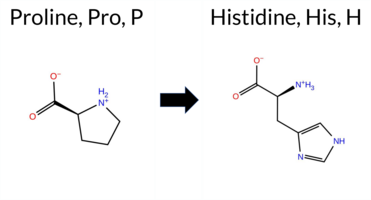 AIThe SynGAP1 missense variant P1046H is not reported in ClinVar (no ClinVar ID) and is absent from gnomAD (no gnomAD ID). Prediction tools that agree on a benign effect include REVEL, PROVEAN, SIFT, ESM1b, AlphaMissense‑Default, AlphaMissense‑Optimized, and the SGM‑Consensus (which is “Likely Benign”). Tools that predict a pathogenic effect are polyPhen‑2 HumDiv, polyPhen‑2 HumVar, and FATHMM. High‑accuracy assessments show AlphaMissense‑Optimized as benign and the SGM‑Consensus also as likely benign; Foldetta results are not available. Overall, the majority of evidence points to a benign impact for P1046H. This conclusion is consistent with the lack of ClinVar annotation, so there is no contradiction with ClinVar status. Disclaimer: This summary was generated using AI and should be interpreted alongside expert review. | Likely Benign | 0.970265 | Disordered | 0.942366 | Binding | 0.364 | 0.898 | 0.750 | -5.715 | Likely Benign | 0.148 | Likely Benign | Likely Benign | 0.035 | Likely Benign | -1.64 | Neutral | 0.832 | Possibly Damaging | 0.670 | Possibly Damaging | 2.33 | Pathogenic | 0.07 | Tolerated | 0.1585 | 0.5250 | 0 | -2 | -1.6 | 40.02 | |||||||||||||||||||||||||||||||||||||||
| c.3137C>G | P1046R 2D AIThe SynGAP1 missense variant P1046R is not reported in ClinVar and is absent from gnomAD. Functional prediction tools largely agree on a benign effect: REVEL, PROVEAN, polyPhen‑2 (HumDiv and HumVar), SIFT, ESM1b, AlphaMissense‑Default, AlphaMissense‑Optimized, and the SGM‑Consensus (majority vote of AlphaMissense‑Default, ESM1b, FATHMM, and PROVEAN) all classify the change as benign or likely benign. Only FATHMM predicts a pathogenic outcome. High‑accuracy assessments reinforce the benign consensus: AlphaMissense‑Optimized returns a benign prediction, and the SGM‑Consensus also indicates a likely benign status. Foldetta, a protein‑folding stability method combining FoldX‑MD and Rosetta outputs, has no available result for this variant. Overall, the majority of evidence points to a benign impact, and this conclusion does not contradict any ClinVar annotation (none exists). Disclaimer: This summary was generated using AI and should be interpreted alongside expert review. | Likely Benign | 0.970265 | Disordered | 0.942366 | Binding | 0.364 | 0.898 | 0.750 | -4.929 | Likely Benign | 0.222 | Likely Benign | Likely Benign | 0.077 | Likely Benign | -1.79 | Neutral | 0.002 | Benign | 0.005 | Benign | 2.38 | Pathogenic | 0.07 | Tolerated | 0.1267 | 0.3841 | 0 | -2 | -2.9 | 59.07 | |||||||||||||||||||||||||||||||||||||||
| c.3139T>G | S1047A 2D 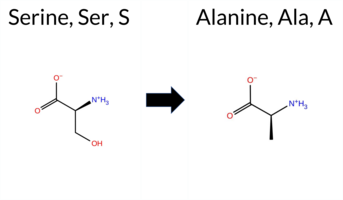 AIThe SynGAP1 missense variant S1047A is not reported in ClinVar and is absent from gnomAD. In silico prediction tools uniformly indicate a benign effect: REVEL, PROVEAN, polyPhen‑2 (HumDiv and HumVar), SIFT, ESM1b, FATHMM, AlphaMissense‑Default, and AlphaMissense‑Optimized all classify the change as benign. No tool predicts pathogenicity. High‑accuracy assessments corroborate this: AlphaMissense‑Optimized predicts benign, and the SGM Consensus (majority vote of AlphaMissense‑Default, ESM1b, FATHMM, and PROVEAN) reports “Likely Benign.” Foldetta results are unavailable. Overall, the consensus of all available predictions indicates that the variant is most likely benign, and this conclusion does not contradict the ClinVar status, which currently has no entry for this variant. Disclaimer: This summary was generated using AI and should be interpreted alongside expert review. | Likely Benign | 0.963420 | Disordered | 0.933764 | Binding | 0.409 | 0.909 | 0.750 | -3.503 | Likely Benign | 0.060 | Likely Benign | Likely Benign | 0.040 | Likely Benign | -0.50 | Neutral | 0.001 | Benign | 0.002 | Benign | 2.65 | Benign | 0.07 | Tolerated | 0.4460 | 0.5548 | 1 | 1 | 2.6 | -16.00 | |||||||||||||||||||||||||||||||||||||||
| c.3170G>T | S1057I 2D AIThe SynGAP1 missense variant S1057I is not reported in ClinVar (no ClinVar ID) and is absent from gnomAD (no gnomAD ID). Prediction tools that agree on a benign effect include REVEL, PROVEAN, polyPhen‑2 HumVar, SIFT, ESM1b, FATHMM, AlphaMissense‑Default, and AlphaMissense‑Optimized. Only polyPhen‑2 HumDiv predicts a pathogenic outcome. The SGM‑Consensus, derived from a majority vote of AlphaMissense‑Default, ESM1b, FATHMM, and PROVEAN, classifies the variant as Likely Benign. High‑accuracy assessments further support a benign interpretation: AlphaMissense‑Optimized predicts Benign, and the SGM‑Consensus also indicates Likely Benign. Foldetta, a protein‑folding stability method combining FoldX‑MD and Rosetta outputs, has no available result for this variant. Overall, the preponderance of evidence points to the variant being most likely benign, and this conclusion does not contradict any ClinVar annotation (none is present). Disclaimer: This summary was generated using AI and should be interpreted alongside expert review. | Likely Benign | 0.988291 | Disordered | 0.869507 | Binding | 0.413 | 0.927 | 0.875 | -6.887 | Likely Benign | 0.186 | Likely Benign | Likely Benign | 0.259 | Likely Benign | -0.87 | Neutral | 0.925 | Possibly Damaging | 0.238 | Benign | 5.24 | Benign | 0.07 | Tolerated | 0.1802 | 0.4980 | -1 | -2 | 5.3 | 26.08 | |||||||||||||||||||||||||||||||||||||||
| c.3199C>G | P1067A 2D AIThe SynGAP1 missense variant P1067A is not reported in ClinVar and is absent from gnomAD. Functional prediction tools largely agree on a benign effect: REVEL, PROVEAN, polyPhen‑2 HumVar, SIFT, ESM1b, FATHMM, AlphaMissense‑Default, and AlphaMissense‑Optimized all predict benign. Only polyPhen‑2 HumDiv indicates a pathogenic outcome, representing the sole discordant prediction. The SGM‑Consensus, derived from a majority vote of AlphaMissense‑Default, ESM1b, FATHMM, and PROVEAN, classifies the variant as Likely Benign. High‑accuracy assessments reinforce this view: AlphaMissense‑Optimized predicts benign, and the SGM‑Consensus also indicates Likely Benign. No Foldetta stability analysis is available, so it does not influence the assessment. Overall, the preponderance of evidence supports a benign classification for P1067A, and this conclusion is not contradicted by any ClinVar annotation. Disclaimer: This summary was generated using AI and should be interpreted alongside expert review. | Likely Benign | 0.966441 | Disordered | 0.975099 | Binding | 0.459 | 0.907 | 0.875 | -4.639 | Likely Benign | 0.052 | Likely Benign | Likely Benign | 0.073 | Likely Benign | -2.05 | Neutral | 0.664 | Possibly Damaging | 0.283 | Benign | 2.87 | Benign | 0.07 | Tolerated | 0.3097 | 0.5322 | 1 | -1 | 3.4 | -26.04 | |||||||||||||||||||||||||||||||||||||||
| c.3222G>C | Q1074H 2D 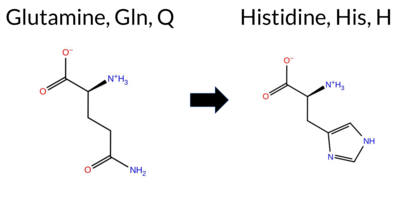 AIThe SynGAP1 missense variant Q1074H is not reported in ClinVar and is absent from gnomAD, indicating no known population frequency data. Functional prediction tools uniformly favor a benign effect: REVEL, PROVEAN, polyPhen‑2 (HumDiv and HumVar), SIFT, ESM1b, FATHMM, and AlphaMissense‑Optimized all classify the change as benign. No tool predicts pathogenicity, and the only uncertain call comes from AlphaMissense‑Default. The SGM‑Consensus, derived from a majority vote of AlphaMissense‑Default, ESM1b, FATHMM, and PROVEAN, also reports the variant as “Likely Benign.” High‑accuracy assessments corroborate this: AlphaMissense‑Optimized predicts benign, and the SGM‑Consensus likewise indicates benign. Foldetta, a protein‑folding stability method combining FoldX‑MD and Rosetta outputs, has no available result for this variant. Overall, the consensus of available predictions indicates that the variant is most likely benign, and this conclusion does not contradict any ClinVar annotation (none exists). Disclaimer: This summary was generated using AI and should be interpreted alongside expert review. | Likely Benign | 0.930790 | Disordered | 0.987006 | Binding | 0.339 | 0.897 | 0.750 | -5.051 | Likely Benign | 0.381 | Ambiguous | Likely Benign | 0.053 | Likely Benign | -0.12 | Neutral | 0.006 | Benign | 0.008 | Benign | 2.67 | Benign | 0.07 | Tolerated | 0.1436 | 0.4407 | 3 | 0 | 0.3 | 9.01 | |||||||||||||||||||||||||||||||||||||||
| c.3222G>T | Q1074H 2D AIThe SynGAP1 missense variant Q1074H is not reported in ClinVar and is absent from gnomAD, indicating no known population frequency data. Functional prediction tools uniformly favor a benign effect: REVEL, PROVEAN, polyPhen‑2 (HumDiv and HumVar), SIFT, ESM1b, FATHMM, and AlphaMissense‑Optimized all classify the change as benign. No tool predicts pathogenicity, and the only uncertain call comes from AlphaMissense‑Default. The SGM‑Consensus, derived from a majority vote of AlphaMissense‑Default, ESM1b, FATHMM, and PROVEAN, also reports the variant as “Likely Benign.” High‑accuracy assessments corroborate this: AlphaMissense‑Optimized predicts benign, and the SGM‑Consensus likewise indicates benign. Foldetta, a protein‑folding stability method combining FoldX‑MD and Rosetta outputs, has no available result for this variant. Overall, the consensus of available predictions indicates that the variant is most likely benign, and this conclusion does not contradict any ClinVar annotation (none exists). Disclaimer: This summary was generated using AI and should be interpreted alongside expert review. | Likely Benign | 0.930790 | Disordered | 0.987006 | Binding | 0.339 | 0.897 | 0.750 | -5.051 | Likely Benign | 0.381 | Ambiguous | Likely Benign | 0.053 | Likely Benign | -0.12 | Neutral | 0.006 | Benign | 0.008 | Benign | 2.67 | Benign | 0.07 | Tolerated | 0.1436 | 0.4407 | 3 | 0 | 0.3 | 9.01 | |||||||||||||||||||||||||||||||||||||||
| c.3232G>A | V1078I 2D 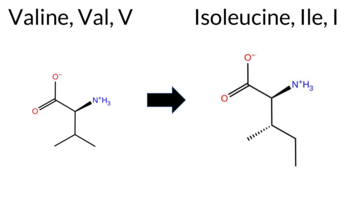 AIThe SynGAP1 missense variant V1078I is not reported in ClinVar and is absent from gnomAD. Functional prediction tools largely agree on a benign effect: REVEL, PROVEAN, polyPhen‑2 HumVar, SIFT, ESM1b, FATHMM, AlphaMissense‑Default, and AlphaMissense‑Optimized all predict benign. Only polyPhen‑2 HumDiv indicates a pathogenic outcome, while the SGM‑Consensus (majority vote of AlphaMissense‑Default, ESM1b, FATHMM, and PROVEAN) classifies the variant as likely benign. High‑accuracy assessments further support a benign interpretation: AlphaMissense‑Optimized predicts benign, and the SGM‑Consensus also indicates likely benign. The Foldetta protein‑folding stability analysis is unavailable for this variant. Overall, the preponderance of evidence from multiple prediction algorithms and consensus methods suggests that V1078I is most likely benign, and this conclusion is not contradicted by any ClinVar annotation. Disclaimer: This summary was generated using AI and should be interpreted alongside expert review. | Likely Benign | 0.882776 | Disordered | 0.986989 | Binding | 0.294 | 0.898 | 0.750 | -3.652 | Likely Benign | 0.200 | Likely Benign | Likely Benign | 0.120 | Likely Benign | -0.16 | Neutral | 0.625 | Possibly Damaging | 0.266 | Benign | 3.98 | Benign | 0.07 | Tolerated | 0.0771 | 0.4693 | 4 | 3 | 0.3 | 14.03 | |||||||||||||||||||||||||||||||||||||||
| c.3244C>G | Q1082E 2D 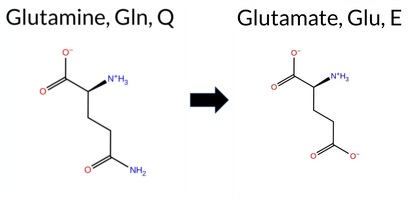 AIThe SynGAP1 missense variant Q1082E is reported in gnomAD (ID 6‑33443796‑C‑G) and has no ClinVar entry. All evaluated in‑silico predictors classify it as benign: REVEL, PROVEAN, PolyPhen‑2 (HumDiv and HumVar), SIFT, ESM1b, FATHMM, AlphaMissense‑Default, and AlphaMissense‑Optimized. No tool predicts pathogenicity. High‑accuracy assessments corroborate this: AlphaMissense‑Optimized is benign, and the SGM Consensus (majority vote of AlphaMissense‑Default, ESM1b, FATHMM, and PROVEAN) is “Likely Benign.” Foldetta results are unavailable. Based on the unanimous benign predictions and lack of ClinVar pathogenic annotation, the variant is most likely benign and does not contradict ClinVar status. Disclaimer: This summary was generated using AI and should be interpreted alongside expert review. | Likely Benign | 0.819762 | Disordered | 0.979325 | Binding | 0.347 | 0.896 | 0.875 | 6-33443796-C-G | -3.437 | Likely Benign | 0.267 | Likely Benign | Likely Benign | 0.090 | Likely Benign | -0.87 | Neutral | 0.112 | Benign | 0.026 | Benign | 4.19 | Benign | 0.07 | Tolerated | 3.77 | 5 | 0.1485 | 0.3227 | 2 | 2 | 0.0 | 0.98 | ||||||||||||||||||||||||||||||||||||
| c.3277C>G | Q1093E 2D AIThe SynGAP1 missense change Q1093E is not reported in ClinVar and is absent from gnomAD. In silico assessment shows unanimous benign predictions: REVEL, PROVEAN, polyPhen‑2 (HumDiv and HumVar), SIFT, ESM1b, FATHMM, AlphaMissense‑Default, and AlphaMissense‑Optimized all classify the variant as benign. No tool predicts pathogenicity. High‑accuracy consensus methods reinforce this view: AlphaMissense‑Optimized is benign, and the SGM Consensus (majority vote of AlphaMissense‑Default, ESM1b, FATHMM, and PROVEAN) reports “Likely Benign.” The protein‑folding stability predictor Foldetta was not available for this variant. Overall, the evidence strongly supports a benign effect, and this conclusion is consistent with the lack of ClinVar annotation. Thus, the variant is most likely benign and does not contradict existing clinical data. Disclaimer: This summary was generated using AI and should be interpreted alongside expert review. | Likely Benign | 0.919029 | Disordered | 0.983312 | Binding | 0.351 | 0.886 | 1.000 | -3.104 | Likely Benign | 0.265 | Likely Benign | Likely Benign | 0.047 | Likely Benign | -0.59 | Neutral | 0.112 | Benign | 0.041 | Benign | 2.78 | Benign | 0.07 | Tolerated | 0.1514 | 0.3717 | 2 | 2 | 0.0 | 0.98 | |||||||||||||||||||||||||||||||||||||||
| c.3290C>G | P1097R 2D AIThe SynGAP1 missense variant P1097R is not reported in ClinVar (no ClinVar ID) and is absent from gnomAD (no gnomAD ID). Functional prediction tools that agree on a benign effect include REVEL, PROVEAN, SIFT, ESM1b, FATHMM, and AlphaMissense‑Optimized. Tools that predict a pathogenic effect are polyPhen‑2 HumDiv and polyPhen‑2 HumVar. AlphaMissense‑Default is uncertain, and the SGM‑Consensus (majority vote of AlphaMissense‑Default, ESM1b, FATHMM, PROVEAN) indicates a likely benign outcome. High‑accuracy assessments show AlphaMissense‑Optimized as benign and the SGM‑Consensus as likely benign; Foldetta results are unavailable. Based on the preponderance of benign predictions and the lack of pathogenic evidence, the variant is most likely benign, and this assessment does not contradict any ClinVar status (none is available). Disclaimer: This summary was generated using AI and should be interpreted alongside expert review. | Likely Benign | 0.919029 | Disordered | 0.974957 | Binding | 0.384 | 0.858 | 1.000 | -4.938 | Likely Benign | 0.422 | Ambiguous | Likely Benign | 0.079 | Likely Benign | -1.75 | Neutral | 0.918 | Possibly Damaging | 0.525 | Possibly Damaging | 2.58 | Benign | 0.07 | Tolerated | 0.1517 | 0.4027 | 0 | -2 | -2.9 | 59.07 | |||||||||||||||||||||||||||||||||||||||
| c.3301C>T | P1101S 2D 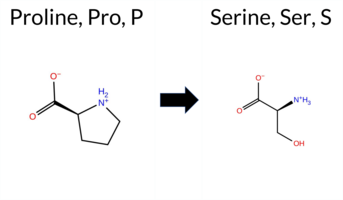 AIThe SynGAP1 missense variant P1101S is reported in gnomAD (variant ID 6‑33443853‑C‑T) but has no ClinVar entry. Functional prediction tools largely agree on a benign effect: REVEL, PROVEAN, polyPhen‑2 HumVar, SIFT, ESM1b, FATHMM, AlphaMissense‑Default, and AlphaMissense‑Optimized all predict benign. Only polyPhen‑2 HumDiv flags it as pathogenic, creating a single discordant call. The SGM‑Consensus, derived from a majority vote of AlphaMissense‑Default, ESM1b, FATHMM, and PROVEAN, reports the variant as Likely Benign. High‑accuracy assessments confirm this: AlphaMissense‑Optimized is benign and the SGM‑Consensus is Likely Benign; Foldetta results are not available. Based on the preponderance of evidence, the variant is most likely benign, and this conclusion is not contradicted by any ClinVar classification. Disclaimer: This summary was generated using AI and should be interpreted alongside expert review. | Likely Benign | 0.874069 | Disordered | 0.968967 | Binding | 0.457 | 0.861 | 0.875 | 6-33443853-C-T | 1 | 6.52e-7 | -3.845 | Likely Benign | 0.080 | Likely Benign | Likely Benign | 0.075 | Likely Benign | -1.31 | Neutral | 0.626 | Possibly Damaging | 0.255 | Benign | 4.25 | Benign | 0.07 | Tolerated | 3.77 | 5 | 0.3265 | 0.5400 | -1 | 1 | 0.8 | -10.04 | ||||||||||||||||||||||||||||||||||
| c.3326T>C | L1109P 2D 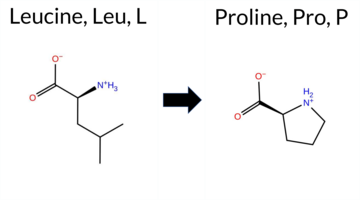 AIThe SynGAP1 missense variant L1109P is listed in ClinVar with an uncertain significance (ClinVar ID 1730257.0) and is not reported in gnomAD. Functional prediction tools uniformly classify the substitution as benign: REVEL, PROVEAN, PolyPhen‑2 (HumDiv and HumVar), SIFT, ESM1b, FATHMM, AlphaMissense‑Default, and AlphaMissense‑Optimized all return benign scores. No tool predicts pathogenicity. High‑accuracy assessments corroborate this: AlphaMissense‑Optimized indicates a benign effect, and the SGM Consensus (majority vote of AlphaMissense‑Default, ESM1b, FATHMM, and PROVEAN) reports a likely benign outcome. Foldetta, a protein‑folding stability predictor combining FoldX‑MD and Rosetta outputs, has no available result for this variant. Overall, the computational evidence overwhelmingly supports a benign classification, which does not contradict the ClinVar uncertain status. Thus, the variant is most likely benign. Disclaimer: This summary was generated using AI and should be interpreted alongside expert review. | Likely Benign | 0.856457 | Disordered | 0.948334 | Binding | 0.343 | 0.893 | 0.875 | Conflicting | 2 | -5.313 | Likely Benign | 0.120 | Likely Benign | Likely Benign | 0.151 | Likely Benign | -0.52 | Neutral | 0.002 | Benign | 0.003 | Benign | 2.65 | Benign | 0.07 | Tolerated | 4.32 | 2 | 0.3159 | 0.2330 | -3 | -3 | -5.4 | -16.04 | |||||||||||||||||||||||||||||||||||
| c.3347G>A | G1116E 2D AIThe SynGAP1 missense variant G1116E is reported in gnomAD (variant ID 6-33443899‑G‑A) but has no ClinVar entry. Functional prediction tools uniformly favor a benign effect: REVEL, PROVEAN, polyPhen‑2 (HumDiv and HumVar), SIFT, ESM1b, FATHMM, and AlphaMissense‑Optimized all classify the change as benign, while AlphaMissense‑Default remains uncertain. No tool predicts pathogenicity. The high‑accuracy consensus (SGM‑Consensus) also indicates a likely benign outcome, and AlphaMissense‑Optimized corroborates this. Foldetta, a protein‑folding stability predictor, was not available for this variant. Overall, the collective evidence strongly supports a benign impact, and this conclusion is not contradicted by any ClinVar classification (none exists). Disclaimer: This summary was generated using AI and should be interpreted alongside expert review. | Likely Benign | 0.889439 | Disordered | 0.873279 | Binding | 0.320 | 0.909 | 0.750 | 6-33443899-G-A | -6.375 | Likely Benign | 0.375 | Ambiguous | Likely Benign | 0.345 | Likely Benign | -0.33 | Neutral | 0.043 | Benign | 0.022 | Benign | 4.06 | Benign | 0.07 | Tolerated | 4.32 | 2 | 0.1467 | 0.4069 | -2 | 0 | -3.1 | 72.06 | ||||||||||||||||||||||||||||||||||||
| c.3400A>C | T1134P 2D AIThe SynGAP1 missense variant T1134P is not reported in ClinVar and is absent from gnomAD. All evaluated in‑silico predictors classify it as benign: REVEL, PROVEAN, polyPhen‑2 (HumDiv and HumVar), SIFT, ESM1b, FATHMM, AlphaMissense‑Default, and AlphaMissense‑Optimized all return benign scores. No tool predicts pathogenicity. The high‑accuracy consensus methods likewise support a benign outcome: AlphaMissense‑Optimized is benign, and the SGM Consensus (majority vote of AlphaMissense‑Default, ESM1b, FATHMM, and PROVEAN) indicates “Likely Benign.” Foldetta results are unavailable. Overall, the variant is most likely benign, and this assessment does not contradict any ClinVar status, as no ClinVar entry exists. Disclaimer: This summary was generated using AI and should be interpreted alongside expert review. | Likely Benign | 0.885302 | Disordered | 0.813034 | Binding | 0.335 | 0.885 | 0.875 | -2.993 | Likely Benign | 0.098 | Likely Benign | Likely Benign | 0.164 | Likely Benign | -0.57 | Neutral | 0.013 | Benign | 0.022 | Benign | 5.41 | Benign | 0.07 | Tolerated | 0.2001 | 0.5165 | 0 | -1 | -0.9 | -3.99 | |||||||||||||||||||||||||||||||||||||||
| c.3403A>C | K1135Q 2D AIThe SynGAP1 missense variant K1135Q has no ClinVar entry and is not reported in gnomAD. Prediction tools that agree on a benign effect include REVEL, PROVEAN, polyPhen‑2 (HumDiv and HumVar), SIFT, ESM1b, FATHMM, AlphaMissense‑Optimized, and the SGM‑Consensus (majority vote from AlphaMissense‑Default, ESM1b, FATHMM, and PROVEAN). Only AlphaMissense‑Default predicts a pathogenic outcome. High‑accuracy assessments show AlphaMissense‑Optimized as benign, the SGM‑Consensus as Likely Benign, and Foldetta results are unavailable. Overall, the majority of evidence points to a benign impact, and this conclusion does not contradict any ClinVar status (none is available). Disclaimer: This summary was generated using AI and should be interpreted alongside expert review. | Likely Benign | 0.887230 | Disordered | 0.790969 | Binding | 0.303 | 0.889 | 0.875 | -4.622 | Likely Benign | 0.566 | Likely Pathogenic | Likely Benign | 0.171 | Likely Benign | -0.66 | Neutral | 0.099 | Benign | 0.150 | Benign | 5.43 | Benign | 0.07 | Tolerated | 0.5016 | 0.1356 | Weaken | 1 | 1 | 0.4 | -0.04 | ||||||||||||||||||||||||||||||||||||||
| c.3405G>C | K1135N 2D AIThe SynGAP1 missense variant K1135N is listed in ClinVar (ID 633521.0) with an “Uncertain” status and is not reported in gnomAD. Prediction tools that agree on a benign effect include SGM‑Consensus (Likely Benign), REVEL, PROVEAN, polyPhen‑2 (HumDiv and HumVar), SIFT, ESM1b, and FATHMM. In contrast, AlphaMissense‑Default and AlphaMissense‑Optimized both predict a pathogenic outcome. High‑accuracy assessments further show AlphaMissense‑Optimized as pathogenic, while the SGM‑Consensus (derived from a majority vote of AlphaMissense‑Default, ESM1b, FATHMM, and PROVEAN) remains Likely Benign. No Foldetta (FoldX‑MD/Rosetta stability) result is available for this variant. Overall, the majority of predictions support a benign classification, which does not contradict the current ClinVar “Uncertain” designation. Disclaimer: This summary was generated using AI and should be interpreted alongside expert review. | Likely Benign | 0.887230 | Disordered | 0.790969 | Binding | 0.303 | 0.889 | 0.875 | Uncertain | 1 | -5.715 | Likely Benign | 0.960 | Likely Pathogenic | Likely Pathogenic | 0.166 | Likely Benign | -0.97 | Neutral | 0.411 | Benign | 0.321 | Benign | 5.43 | Benign | 0.07 | Tolerated | 4.32 | 2 | 0.4152 | 0.1793 | 1 | 0 | 0.4 | -14.07 | |||||||||||||||||||||||||||||||||||
| c.3405G>T | K1135N 2D AIThe SynGAP1 missense variant K1135N is not reported in ClinVar (ClinVar ID None) but is present in gnomAD (ID 6‑33443957‑G‑T). Functional prediction tools that agree on a benign effect include REVEL, PROVEAN, polyPhen‑2 HumDiv, polyPhen‑2 HumVar, SIFT, ESM1b, and FATHMM. Tools that predict a pathogenic effect are AlphaMissense‑Default and AlphaMissense‑Optimized. The SGM‑Consensus, derived from a majority vote of AlphaMissense‑Default, ESM1b, FATHMM, and PROVEAN, reports a likely benign classification. High‑accuracy assessments show AlphaMissense‑Optimized as pathogenic, while the SGM‑Consensus remains likely benign; Foldetta results are unavailable. Overall, the majority of predictions (seven benign vs. two pathogenic) support a benign interpretation. This consensus does not contradict ClinVar, which has no entry for this variant. Disclaimer: This summary was generated using AI and should be interpreted alongside expert review. | Likely Benign | 0.887230 | Disordered | 0.790969 | Binding | 0.303 | 0.889 | 0.875 | 6-33443957-G-T | -5.715 | Likely Benign | 0.960 | Likely Pathogenic | Likely Pathogenic | 0.166 | Likely Benign | -0.97 | Neutral | 0.411 | Benign | 0.321 | Benign | 5.43 | Benign | 0.07 | Tolerated | 4.32 | 2 | 0.4152 | 0.1793 | 1 | 0 | 0.4 | -14.07 | ||||||||||||||||||||||||||||||||||||
| c.3434A>C | N1145T 2D AIThe SynGAP1 missense variant N1145T is reported in gnomAD (ID 6‑33444469‑A‑C) but has no ClinVar entry. Functional prediction tools largely agree on a benign effect: REVEL, PROVEAN, SIFT, ESM1b, FATHMM, AlphaMissense‑Default, and AlphaMissense‑Optimized all classify the change as benign, and the SGM‑Consensus (majority vote of AlphaMissense‑Default, ESM1b, FATHMM, and PROVEAN) indicates a likely benign outcome. In contrast, polyPhen‑2 (HumDiv and HumVar) predict the variant to be pathogenic. High‑accuracy assessments show AlphaMissense‑Optimized as benign and the SGM‑Consensus as likely benign; Foldetta’s protein‑folding stability analysis is unavailable. Overall, the preponderance of evidence points to a benign impact for N1145T, and this conclusion does not contradict any ClinVar status, as none is currently assigned. Disclaimer: This summary was generated using AI and should be interpreted alongside expert review. | Likely Benign | 0.922952 | Disordered | 0.722723 | Binding | 0.284 | 0.850 | 1.000 | 6-33444469-A-C | 1 | 6.20e-7 | -1.915 | Likely Benign | 0.217 | Likely Benign | Likely Benign | 0.403 | Likely Benign | -2.17 | Neutral | 0.997 | Probably Damaging | 0.992 | Probably Damaging | 5.45 | Benign | 0.07 | Tolerated | 4.32 | 4 | 0.1418 | 0.7209 | 0 | 0 | 2.8 | -13.00 | ||||||||||||||||||||||||||||||||||
| c.3445C>G | P1149A 2D AIThe SynGAP1 missense variant P1149A is not reported in ClinVar and is absent from gnomAD. In silico prediction tools uniformly indicate a benign effect: REVEL, PROVEAN, polyPhen‑2 (HumDiv and HumVar), SIFT, ESM1b, FATHMM, AlphaMissense‑Default, and AlphaMissense‑Optimized all classify the change as benign. No tool predicts pathogenicity. High‑accuracy assessments corroborate this: AlphaMissense‑Optimized predicts benign, and the SGM Consensus (majority vote of AlphaMissense‑Default, ESM1b, FATHMM, and PROVEAN) reports a likely benign outcome. Foldetta results are unavailable. Overall, the consensus of all available predictions points to a benign impact, and this conclusion is consistent with the lack of a ClinVar classification, so there is no contradiction. Disclaimer: This summary was generated using AI and should be interpreted alongside expert review. | Likely Benign | 0.762850 | Disordered | 0.786938 | Binding | 0.424 | 0.837 | 0.625 | -3.179 | Likely Benign | 0.107 | Likely Benign | Likely Benign | 0.037 | Likely Benign | -0.72 | Neutral | 0.025 | Benign | 0.022 | Benign | 2.76 | Benign | 0.07 | Tolerated | 0.3403 | 0.4352 | 1 | -1 | 3.4 | -26.04 | |||||||||||||||||||||||||||||||||||||||
| c.3452C>G | S1151C 2D AIThe SynGAP1 missense variant S1151C is reported in gnomAD (ID 6‑33444487‑C‑G) but has no ClinVar entry. Functional prediction tools that agree on a benign effect include REVEL, PROVEAN, SIFT, ESM1b, FATHMM, AlphaMissense‑Default, and AlphaMissense‑Optimized. Two tools (polyPhen‑2 HumDiv and HumVar) predict a pathogenic impact. The SGM‑Consensus, derived from a majority vote of AlphaMissense‑Default, ESM1b, FATHMM, and PROVEAN, classifies the variant as Likely Benign. High‑accuracy assessments show AlphaMissense‑Optimized as Benign and the SGM‑Consensus as Likely Benign; Foldetta results are unavailable. Overall, the majority of evidence points to a benign effect, and this conclusion does not contradict the ClinVar status, which is currently absent. Disclaimer: This summary was generated using AI and should be interpreted alongside expert review. | Likely Benign | 0.741537 | Disordered | 0.805072 | Binding | 0.394 | 0.839 | 0.625 | 6-33444487-C-G | 1 | 6.20e-7 | -6.778 | Likely Benign | 0.225 | Likely Benign | Likely Benign | 0.181 | Likely Benign | -0.86 | Neutral | 0.999 | Probably Damaging | 0.944 | Probably Damaging | 2.67 | Benign | 0.07 | Tolerated | 3.77 | 5 | 0.1056 | 0.5260 | -1 | 0 | 3.3 | 16.06 | ||||||||||||||||||||||||||||||||||
| c.3472G>A | V1158I 2D AIThe SynGAP1 missense variant V1158I is not reported in ClinVar (ClinVar ID = None) and is absent from gnomAD (gnomAD ID = None). Prediction tools that agree on a benign effect include REVEL, PROVEAN, SIFT, ESM1b, and AlphaMissense‑Optimized. Tools that predict a pathogenic effect are polyPhen‑2 HumDiv, polyPhen‑2 HumVar, FATHMM, and AlphaMissense‑Default. High‑accuracy assessments show AlphaMissense‑Optimized as benign; the SGM Consensus (majority vote from AlphaMissense‑Default, ESM1b, FATHMM, PROVEAN) is inconclusive due to a 2‑vs‑2 split, and Foldetta results are unavailable. Overall, the balance of evidence leans toward a benign impact, and this conclusion does not contradict any ClinVar annotation because no ClinVar entry exists for this variant. Disclaimer: This summary was generated using AI and should be interpreted alongside expert review. | 0.599170 | Disordered | 0.877504 | Binding | 0.369 | 0.847 | 0.250 | -3.504 | Likely Benign | 0.597 | Likely Pathogenic | Likely Benign | 0.129 | Likely Benign | -0.20 | Neutral | 0.992 | Probably Damaging | 0.989 | Probably Damaging | 2.49 | Pathogenic | 0.07 | Tolerated | 0.0863 | 0.4180 | 4 | 3 | 0.3 | 14.03 | ||||||||||||||||||||||||||||||||||||||||
| c.3476C>A | S1159Y 2D 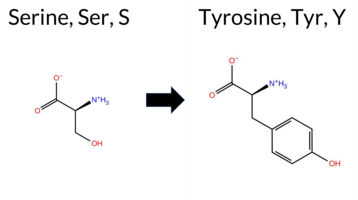 AIThe SynGAP1 missense variant S1159Y is not reported in ClinVar (no ClinVar ID) and is absent from gnomAD (no gnomAD ID). Prediction tools that agree on a benign effect include REVEL, PROVEAN, SIFT, ESM1b, FATHMM, and the SGM‑Consensus (Likely Benign). Tools that predict a pathogenic effect are polyPhen‑2 HumDiv, polyPhen‑2 HumVar, AlphaMissense‑Default, and AlphaMissense‑Optimized. High‑accuracy assessments show AlphaMissense‑Optimized as pathogenic, while the SGM‑Consensus (a majority vote of AlphaMissense‑Default, ESM1b, FATHMM, and PROVEAN) indicates a likely benign outcome; Foldetta results are unavailable. Overall, the majority of evidence (six benign predictions versus five pathogenic, plus a benign consensus) points to a likely benign impact for S1159Y. This conclusion does not contradict ClinVar status, as no ClinVar entry exists for this variant. Disclaimer: This summary was generated using AI and should be interpreted alongside expert review. | Likely Benign | 0.626927 | Disordered | 0.867068 | Binding | 0.343 | 0.846 | 0.375 | -5.665 | Likely Benign | 0.957 | Likely Pathogenic | Likely Pathogenic | 0.195 | Likely Benign | -1.57 | Neutral | 0.997 | Probably Damaging | 0.996 | Probably Damaging | 2.65 | Benign | 0.07 | Tolerated | 0.0567 | 0.4923 | -3 | -2 | -0.5 | 76.10 | |||||||||||||||||||||||||||||||||||||||
| c.3511G>A | A1171T 2D AIThe SynGAP1 missense variant A1171T is listed in ClinVar with an “Uncertain” status and is not reported in gnomAD. All available in‑silico predictors classify the change as benign: REVEL, PROVEAN, PolyPhen‑2 (HumDiv and HumVar), SIFT, ESM1b, FATHMM, AlphaMissense‑Default, and AlphaMissense‑Optimized. The SGM‑Consensus, which aggregates AlphaMissense‑Default, ESM1b, FATHMM, and PROVEAN, also reports a “Likely Benign” outcome. No tool predicts pathogenicity. High‑accuracy assessments confirm the benign prediction: AlphaMissense‑Optimized is benign, and the SGM‑Consensus is likely benign; Foldetta results are unavailable. Based on the collective predictions, the variant is most likely benign, and this assessment does not contradict the ClinVar “Uncertain” classification. Disclaimer: This summary was generated using AI and should be interpreted alongside expert review. | Likely Benign | Coiled-coil | 0.599170 | Disordered | 0.702689 | Binding | 0.472 | 0.775 | 0.500 | Uncertain | 1 | -3.658 | Likely Benign | 0.149 | Likely Benign | Likely Benign | 0.201 | Likely Benign | -0.48 | Neutral | 0.245 | Benign | 0.138 | Benign | 5.45 | Benign | 0.07 | Tolerated | 4.32 | 4 | 0.1421 | 0.5465 | 1 | 0 | -2.5 | 30.03 | ||||||||||||||||||||||||||||||||||
| c.3532T>G | Y1178D 2D AIThe SynGAP1 missense variant Y1178D is not reported in ClinVar (ClinVar ID None) and has no entry in gnomAD (gnomAD ID None). Prediction tools that agree on a benign effect include REVEL, PROVEAN, SIFT, ESM1b, and FATHMM, while those that predict a pathogenic outcome are polyPhen‑2 HumDiv, polyPhen‑2 HumVar, and AlphaMissense‑Default. The SGM‑Consensus, derived from a majority vote of AlphaMissense‑Default, ESM1b, FATHMM, and PROVEAN, reports the variant as Likely Benign. AlphaMissense‑Optimized yields an Uncertain result, and Foldetta (a protein‑folding stability method combining FoldX‑MD and Rosetta outputs) has no available prediction for this variant. Overall, the balance of evidence from high‑accuracy tools and consensus predictions leans toward a benign classification. This conclusion is not contradicted by ClinVar status, which currently contains no entry for the variant. Disclaimer: This summary was generated using AI and should be interpreted alongside expert review. | Likely Benign | Coiled-coil | 0.541878 | Disordered | 0.568433 | Binding | 0.554 | 0.688 | 0.250 | -1.250 | Likely Benign | 0.801 | Likely Pathogenic | Ambiguous | 0.434 | Likely Benign | -1.33 | Neutral | 0.995 | Probably Damaging | 0.846 | Possibly Damaging | 5.55 | Benign | 0.07 | Tolerated | 0.4562 | 0.0173 | -4 | -3 | -2.2 | -48.09 | ||||||||||||||||||||||||||||||||||||||
| c.3541A>C | K1181Q 2D AIThe SynGAP1 K1181Q missense variant is reported in gnomAD (variant ID 6‑33444576‑A‑C) but has no ClinVar entry. Functional prediction tools cluster into two groups: benign predictions come from REVEL, PROVEAN, SIFT, ESM1b, FATHMM, and AlphaMissense‑Optimized, while pathogenic predictions arise from polyPhen‑2 HumDiv, polyPhen‑2 HumVar, and AlphaMissense‑Default. The SGM‑Consensus, derived from a majority vote of AlphaMissense‑Default, ESM1b, FATHMM, and PROVEAN, classifies the variant as Likely Benign. High‑accuracy assessments further support a benign outcome: AlphaMissense‑Optimized predicts benign, and the SGM‑Consensus likewise indicates benign. Foldetta, a protein‑folding stability method combining FoldX‑MD and Rosetta outputs, has no available result for this variant. Overall, the consensus of available predictions points to a benign effect, and this conclusion does not contradict any ClinVar status, as none is assigned. Disclaimer: This summary was generated using AI and should be interpreted alongside expert review. | Likely Benign | Coiled-coil | 0.622677 | Disordered | 0.539278 | Binding | 0.625 | 0.660 | 0.375 | 6-33444576-A-C | -3.724 | Likely Benign | 0.779 | Likely Pathogenic | Likely Benign | 0.173 | Likely Benign | -1.48 | Neutral | 0.999 | Probably Damaging | 0.977 | Probably Damaging | 2.66 | Benign | 0.07 | Tolerated | 4.32 | 3 | 0.3415 | 0.1102 | 1 | 1 | 0.4 | -0.04 | |||||||||||||||||||||||||||||||||||
| c.3542A>G | K1181R 2D AIThe SynGAP1 missense variant K1181R is reported in gnomAD (variant ID 6‑33444577‑A‑G) but has no ClinVar entry. Functional prediction tools largely agree on a benign effect: REVEL, PROVEAN, polyPhen‑2 HumVar, SIFT, ESM1b, FATHMM, AlphaMissense‑Default, and AlphaMissense‑Optimized all predict benign. Only polyPhen‑2 HumDiv flags it as pathogenic, representing the sole discordant prediction. The SGM‑Consensus, derived from a majority vote of AlphaMissense‑Default, ESM1b, FATHMM, and PROVEAN, reports the variant as “Likely Benign.” High‑accuracy assessments further support a benign outcome: AlphaMissense‑Optimized is benign, SGM‑Consensus is likely benign, and Foldetta (a protein‑folding stability method combining FoldX‑MD and Rosetta) has no available result for this variant. Overall, the preponderance of evidence indicates the variant is most likely benign, and this conclusion is not contradicted by any ClinVar status. Disclaimer: This summary was generated using AI and should be interpreted alongside expert review. | Likely Benign | Coiled-coil | 0.622677 | Disordered | 0.539278 | Binding | 0.625 | 0.660 | 0.375 | 6-33444577-A-G | 2 | 1.24e-6 | -2.786 | Likely Benign | 0.185 | Likely Benign | Likely Benign | 0.088 | Likely Benign | -0.90 | Neutral | 0.573 | Possibly Damaging | 0.429 | Benign | 2.67 | Benign | 0.07 | Tolerated | 4.32 | 3 | 0.3533 | 0.0878 | 2 | 3 | -0.6 | 28.01 | |||||||||||||||||||||||||||||||||
| c.3568A>T | S1190C 2D AIThe SynGAP1 missense variant S1190C is not reported in ClinVar (no ClinVar ID) and is absent from gnomAD (no gnomAD ID). Prediction tools that agree on a benign effect include REVEL, PROVEAN, SIFT, ESM1b, and FATHMM, while polyPhen‑2 (HumDiv and HumVar) and AlphaMissense‑Default predict a pathogenic impact. The SGM‑Consensus, derived from a majority vote of AlphaMissense‑Default, ESM1b, FATHMM, and PROVEAN, classifies the variant as Likely Benign. High‑accuracy assessments show AlphaMissense‑Optimized as Uncertain, SGM‑Consensus as Likely Benign, and Foldetta results are unavailable. Overall, the balance of evidence favors a benign interpretation, and this conclusion does not contradict any ClinVar annotation (none exists). Disclaimer: This summary was generated using AI and should be interpreted alongside expert review. | Likely Benign | Coiled-coil | 0.575842 | Disordered | 0.455760 | Uncertain | 0.742 | 0.624 | 0.625 | -6.788 | Likely Benign | 0.828 | Likely Pathogenic | Ambiguous | 0.418 | Likely Benign | -1.93 | Neutral | 0.999 | Probably Damaging | 0.997 | Probably Damaging | 5.22 | Benign | 0.07 | Tolerated | 0.1144 | 0.4294 | 0 | -1 | 3.3 | 16.06 | ||||||||||||||||||||||||||||||||||||||
| c.3569G>A | S1190N 2D 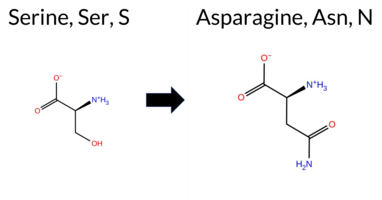 AIThe SynGAP1 missense variant S1190N is catalogued in gnomAD (6‑33444604‑G‑A) but has no ClinVar entry. Functional prediction tools cluster into two groups: benign predictions come from REVEL, PROVEAN, SIFT, ESM1b, and FATHMM, while pathogenic predictions arise from polyPhen‑2 HumDiv, polyPhen‑2 HumVar, and AlphaMissense‑Default. High‑accuracy assessments further support a benign interpretation: AlphaMissense‑Optimized is uncertain, the SGM‑Consensus (majority vote of AlphaMissense‑Default, ESM1b, FATHMM, PROVEAN) reports “Likely Benign,” and Foldetta results are unavailable. Overall, the balance of evidence favors a benign effect for S1190N, and this conclusion is not contradicted by any ClinVar status (none reported). Disclaimer: This summary was generated using AI and should be interpreted alongside expert review. | Likely Benign | Coiled-coil | 0.575842 | Disordered | 0.455760 | Uncertain | 0.742 | 0.624 | 0.625 | 6-33444604-G-A | 2 | 1.24e-6 | -4.909 | Likely Benign | 0.811 | Likely Pathogenic | Ambiguous | 0.326 | Likely Benign | -1.25 | Neutral | 0.991 | Probably Damaging | 0.988 | Probably Damaging | 5.27 | Benign | 0.07 | Tolerated | 3.82 | 4 | 0.1368 | 0.3441 | 1 | 1 | -2.7 | 27.03 | |||||||||||||||||||||||||||||||||
| c.3586A>C | K1196Q 2D AIThe SynGAP1 missense variant K1196Q is not reported in ClinVar and has no entry in gnomAD. Functional prediction tools that agree on a benign effect include REVEL, PROVEAN, SIFT, ESM1b, FATHMM, and AlphaMissense‑Optimized. Tools that predict a pathogenic effect are polyPhen‑2 HumDiv and polyPhen‑2 HumVar. AlphaMissense‑Default is uncertain, and the SGM‑Consensus (majority vote of AlphaMissense‑Default, ESM1b, FATHMM, PROVEAN) reports the variant as Likely Benign. High‑accuracy assessments show AlphaMissense‑Optimized as Benign and the SGM‑Consensus as Likely Benign; Foldetta results are unavailable. Based on the preponderance of benign predictions and the lack of pathogenic evidence, the variant is most likely benign, and this assessment does not contradict any ClinVar status (none is available). Disclaimer: This summary was generated using AI and should be interpreted alongside expert review. | Likely Benign | Coiled-coil | 0.599170 | Disordered | 0.435699 | Uncertain | 0.851 | 0.595 | 0.250 | -5.222 | Likely Benign | 0.346 | Ambiguous | Likely Benign | 0.342 | Likely Benign | -0.65 | Neutral | 0.989 | Probably Damaging | 0.819 | Possibly Damaging | 5.38 | Benign | 0.07 | Tolerated | 0.3814 | 0.0945 | 1 | 1 | 0.4 | -0.04 | ||||||||||||||||||||||||||||||||||||||
| c.3593A>G | Y1198C 2D 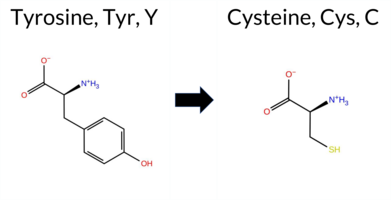 AIThe SynGAP1 missense variant Y1198C is not reported in ClinVar and is absent from gnomAD. Functional prediction tools show a split: benign predictions come from REVEL and SIFT, while pathogenic predictions are made by PROVEAN, polyPhen‑2 (HumDiv and HumVar), ESM1b, FATHMM, AlphaMissense‑Default, AlphaMissense‑Optimized, and the SGM‑Consensus score (Likely Pathogenic). High‑accuracy assessments further support a deleterious effect: AlphaMissense‑Optimized predicts pathogenicity, and the SGM‑Consensus (majority vote of AlphaMissense‑Default, ESM1b, FATHMM, and PROVEAN) also indicates Likely Pathogenic. Foldetta, a protein‑folding stability method combining FoldX‑MD and Rosetta outputs, has no available result for this variant. Overall, the majority of evidence points to a pathogenic impact, and this conclusion is not contradicted by any ClinVar annotation. Disclaimer: This summary was generated using AI and should be interpreted alongside expert review. | Likely Pathogenic | Coiled-coil | 0.626927 | Disordered | 0.439379 | Uncertain | 0.853 | 0.593 | 0.250 | -10.230 | Likely Pathogenic | 0.997 | Likely Pathogenic | Likely Pathogenic | 0.370 | Likely Benign | -6.07 | Deleterious | 1.000 | Probably Damaging | 0.999 | Probably Damaging | 1.43 | Pathogenic | 0.07 | Tolerated | 0.3335 | 0.1312 | 0 | -2 | 3.8 | -60.04 | ||||||||||||||||||||||||||||||||||||||
| c.3617A>G | K1206R 2D AIThe SynGAP1 missense variant K1206R is not reported in ClinVar (ClinVar ID None) and is absent from gnomAD (gnomAD ID None). Prediction tools that agree on a benign effect include REVEL, PROVEAN, SIFT, ESM1b, and AlphaMissense‑Optimized. Tools that predict a pathogenic outcome are polyPhen‑2 HumDiv, polyPhen‑2 HumVar, and FATHMM. AlphaMissense‑Default is uncertain, and the SGM Consensus (majority vote from AlphaMissense‑Default, ESM1b, FATHMM, PROVEAN) is inconclusive because it receives two benign, one pathogenic, and one uncertain signal. Foldetta, a protein‑folding stability method combining FoldX‑MD and Rosetta outputs, has no available result for this variant. High‑accuracy AlphaMissense‑Optimized predicts a benign effect, while Foldetta data are missing. Overall, the majority of evidence points to a benign impact, and this assessment does not contradict any ClinVar status because no ClinVar classification exists. Disclaimer: This summary was generated using AI and should be interpreted alongside expert review. | Coiled-coil | 0.585406 | Disordered | 0.555819 | Binding | 0.893 | 0.569 | 0.375 | -6.357 | Likely Benign | 0.371 | Ambiguous | Likely Benign | 0.126 | Likely Benign | -1.64 | Neutral | 0.999 | Probably Damaging | 0.995 | Probably Damaging | 2.49 | Pathogenic | 0.07 | Tolerated | 0.3897 | 0.0945 | 3 | 2 | -0.6 | 28.01 | |||||||||||||||||||||||||||||||||||||||
| c.362C>G | A121G 2D 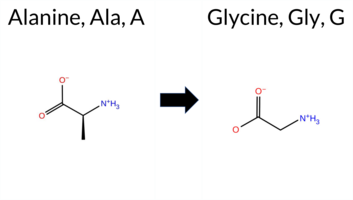 AIThe SynGAP1 missense variant A121G is catalogued in gnomAD (ID 6‑33432227‑C‑G) but has no ClinVar entry. Across the spectrum of in‑silico predictors, every tool examined—REVEL, PROVEAN, PolyPhen‑2 (HumDiv and HumVar), SIFT, ESM1b, FATHMM, AlphaMissense‑Default, and AlphaMissense‑Optimized—consistently classifies the substitution as benign. No pathogenic predictions are reported. High‑accuracy assessments reinforce this consensus: AlphaMissense‑Optimized predicts benign, and the SGM Consensus (majority vote of AlphaMissense‑Default, ESM1b, FATHMM, and PROVEAN) indicates a likely benign outcome. Foldetta, a protein‑folding stability method combining FoldX‑MD and Rosetta outputs, did not provide a result for this variant, so its status remains unavailable. Overall, the evidence strongly supports a benign effect for A121G, and this conclusion does not contradict any ClinVar classification (none exists). Disclaimer: This summary was generated using AI and should be interpreted alongside expert review. | Likely Benign | 0.779859 | Disordered | 0.661304 | Binding | 0.362 | 0.888 | 0.750 | 6-33432227-C-G | 4 | 2.48e-6 | -3.123 | Likely Benign | 0.099 | Likely Benign | Likely Benign | 0.073 | Likely Benign | -0.52 | Neutral | 0.118 | Benign | 0.026 | Benign | 4.06 | Benign | 0.07 | Tolerated | 3.61 | 5 | 0.2407 | 0.5271 | 0 | 1 | -2.2 | -14.03 | ||||||||||||||||||||||||||||||||||
| c.3637A>G | N1213D 2D AIThe SynGAP1 missense variant N1213D is not reported in ClinVar (ClinVar ID None) and is absent from gnomAD (gnomAD ID None). Prediction tools that agree on a benign effect include REVEL, PROVEAN, SIFT, FATHMM, and AlphaMissense‑Optimized. Tools that predict a pathogenic effect are polyPhen‑2 HumDiv, polyPhen‑2 HumVar, ESM1b, and AlphaMissense‑Default. High‑accuracy assessments show AlphaMissense‑Optimized as benign, while the SGM Consensus (majority vote from AlphaMissense‑Default, ESM1b, FATHMM, PROVEAN) is inconclusive (2 vs 2). Foldetta results are unavailable. Overall, the evidence leans toward a benign interpretation, and this conclusion does not contradict the ClinVar status, which contains no entry for this variant. Disclaimer: This summary was generated using AI and should be interpreted alongside expert review. | Coiled-coil | 0.580690 | Disordered | 0.521638 | Binding | 0.888 | 0.561 | 0.500 | -9.021 | Likely Pathogenic | 0.670 | Likely Pathogenic | Likely Benign | 0.071 | Likely Benign | -1.63 | Neutral | 0.959 | Probably Damaging | 0.629 | Possibly Damaging | 2.71 | Benign | 0.07 | Tolerated | 0.1417 | 0.2174 | 2 | 1 | 0.0 | 0.98 | |||||||||||||||||||||||||||||||||||||||
| c.3671T>C | L1224P 2D AIThe SynGAP1 missense variant L1224P is not reported in ClinVar (ClinVar ID: None) and is absent from gnomAD (gnomAD ID: None). In silico predictors that agree on a benign effect include REVEL and SIFT, whereas the remaining tools—PROVEAN, polyPhen‑2 (HumDiv and HumVar), ESM1b, FATHMM, AlphaMissense‑Default, AlphaMissense‑Optimized, and the SGM‑Consensus—consistently predict a pathogenic outcome. High‑accuracy assessments further support pathogenicity: AlphaMissense‑Optimized is pathogenic, and the SGM‑Consensus (a majority vote of AlphaMissense‑Default, ESM1b, FATHMM, and PROVEAN) is also likely pathogenic. Foldetta, a protein‑folding stability method combining FoldX‑MD and Rosetta outputs, has no available result for this variant. Overall, the preponderance of predictions indicates that the variant is most likely pathogenic, and this conclusion is not contradicted by ClinVar status, which contains no entry for the variant. Disclaimer: This summary was generated using AI and should be interpreted alongside expert review. | Likely Pathogenic | Coiled-coil | 0.525368 | Disordered | 0.441554 | Uncertain | 0.871 | 0.543 | 0.500 | -11.727 | Likely Pathogenic | 0.981 | Likely Pathogenic | Likely Pathogenic | 0.149 | Likely Benign | -3.18 | Deleterious | 0.998 | Probably Damaging | 0.948 | Probably Damaging | 2.36 | Pathogenic | 0.07 | Tolerated | 0.3618 | 0.1053 | -3 | -3 | -5.4 | -16.04 | ||||||||||||||||||||||||||||||||||||||
| c.3833C>T | P1278L 2D 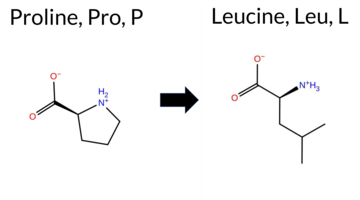 AIThe SynGAP1 missense variant P1278L is not reported in ClinVar and is absent from gnomAD, indicating no documented clinical or population evidence. Functional prediction tools uniformly classify the variant as benign: REVEL, PROVEAN, polyPhen‑2 (HumDiv and HumVar), SIFT, ESM1b, FATHMM, AlphaMissense‑Default, and AlphaMissense‑Optimized all predict a benign effect. No tool in the dataset indicates pathogenicity. High‑accuracy assessments corroborate this benign prediction: AlphaMissense‑Optimized reports a benign outcome, and the SGM Consensus (majority vote of AlphaMissense‑Default, ESM1b, FATHMM, and PROVEAN) yields a “Likely Benign” classification. Foldetta results are not available, so they do not influence the assessment. Overall, the variant is most likely benign, and this conclusion is consistent with the absence of any ClinVar pathogenic annotation. Disclaimer: This summary was generated using AI and should be interpreted alongside expert review. | Likely Benign | 0.788093 | Disordered | 0.806955 | Binding | 0.532 | 0.722 | 0.750 | -4.903 | Likely Benign | 0.116 | Likely Benign | Likely Benign | 0.140 | Likely Benign | -1.86 | Neutral | 0.000 | Benign | 0.001 | Benign | 2.69 | Benign | 0.07 | Tolerated | 0.2338 | 0.4996 | -3 | -3 | 5.4 | 16.04 | |||||||||||||||||||||||||||||||||||||||
| c.3836C>T | A1279V 2D AIThe SynGAP1 missense variant A1279V is reported in gnomAD (ID 6‑33447884‑C‑T) but has no ClinVar entry. Across a broad panel of in silico predictors, every tool examined—REVEL, PROVEAN, PolyPhen‑2 (HumDiv and HumVar), SIFT, ESM1b, FATHMM, AlphaMissense‑Default, and AlphaMissense‑Optimized—classifies the substitution as benign. No pathogenic predictions appear in the dataset, so the pathogenic group is empty. High‑accuracy assessments reinforce this view: AlphaMissense‑Optimized returns a benign score, and the SGM Consensus (majority vote of AlphaMissense‑Default, ESM1b, FATHMM, and PROVEAN) indicates a likely benign outcome. Foldetta, which integrates FoldX‑MD and Rosetta stability calculations, has no available result for this variant. Taken together, the consensus of all available predictions is that A1279V is most likely benign, and this assessment does not contradict any ClinVar status, as none is assigned. Disclaimer: This summary was generated using AI and should be interpreted alongside expert review. | Likely Benign | 0.842060 | Disordered | 0.814139 | Binding | 0.485 | 0.724 | 0.750 | 6-33447884-C-T | -4.892 | Likely Benign | 0.088 | Likely Benign | Likely Benign | 0.049 | Likely Benign | -1.23 | Neutral | 0.017 | Benign | 0.017 | Benign | 2.68 | Benign | 0.07 | Tolerated | 3.77 | 5 | 0.0777 | 0.5005 | 0 | 0 | 2.4 | 28.05 | ||||||||||||||||||||||||||||||||||||
| c.3871C>G | L1291V 2D AIThe SynGAP1 missense variant L1291V is not reported in ClinVar and is absent from gnomAD, indicating no documented clinical or population evidence. Functional prediction tools uniformly classify the variant as benign: REVEL, PROVEAN, polyPhen‑2 (HumDiv and HumVar), SIFT, ESM1b, FATHMM, AlphaMissense‑Default, and AlphaMissense‑Optimized all predict a benign effect. No tool in the dataset indicates pathogenicity, so the pathogenic prediction group is empty. High‑accuracy assessments corroborate this benign consensus: AlphaMissense‑Optimized reports a benign outcome, and the SGM Consensus (majority vote of AlphaMissense‑Default, ESM1b, FATHMM, and PROVEAN) yields a “Likely Benign” classification. Foldetta results are not available, so they do not influence the assessment. Overall, the variant is most likely benign, and this prediction aligns with the absence of any ClinVar pathogenic annotation. Disclaimer: This summary was generated using AI and should be interpreted alongside expert review. | Likely Benign | 0.827927 | Disordered | 0.863458 | Binding | 0.579 | 0.797 | 0.625 | -4.583 | Likely Benign | 0.103 | Likely Benign | Likely Benign | 0.028 | Likely Benign | 0.28 | Neutral | 0.149 | Benign | 0.064 | Benign | 2.61 | Benign | 0.07 | Tolerated | 0.1435 | 0.2946 | 2 | 1 | 0.4 | -14.03 | |||||||||||||||||||||||||||||||||||||||
| c.3874C>G | L1292V 2D AIThe SynGAP1 missense variant L1292V is not reported in ClinVar and is absent from gnomAD. Functional prediction tools uniformly indicate a benign effect: REVEL, PROVEAN, polyPhen‑2 (HumDiv and HumVar), SIFT, ESM1b, FATHMM, AlphaMissense‑Default, and AlphaMissense‑Optimized all classify the substitution as benign. No tool predicts pathogenicity. High‑accuracy assessments corroborate this: AlphaMissense‑Optimized predicts benign, and the SGM Consensus (majority vote of AlphaMissense‑Default, ESM1b, FATHMM, and PROVEAN) reports a likely benign outcome. Foldetta, a protein‑folding stability method combining FoldX‑MD and Rosetta outputs, has no available result for this variant. Overall, the consensus of all available predictions is benign, and this conclusion does not contradict any ClinVar annotation (none present). Thus, the variant is most likely benign. Disclaimer: This summary was generated using AI and should be interpreted alongside expert review. | Likely Benign | 0.779859 | Disordered | 0.882643 | Binding | 0.586 | 0.800 | 0.625 | -4.943 | Likely Benign | 0.121 | Likely Benign | Likely Benign | 0.049 | Likely Benign | -0.14 | Neutral | 0.058 | Benign | 0.038 | Benign | 2.67 | Benign | 0.07 | Tolerated | 0.1769 | 0.2605 | 2 | 1 | 0.4 | -14.03 | |||||||||||||||||||||||||||||||||||||||
| c.388C>A | Q130K 2D AIThe SynGAP1 missense variant Q130K is not reported in ClinVar and is absent from gnomAD. Consensus predictions from multiple in silico tools cluster around benign: REVEL, PROVEAN, SIFT, ESM1b, FATHMM, and AlphaMissense‑Optimized all indicate a benign effect, while the SGM‑Consensus (majority vote of AlphaMissense‑Default, ESM1b, FATHMM, PROVEAN) also reports a likely benign outcome. In contrast, polyPhen‑2 (HumDiv and HumVar) predict a pathogenic impact. The AlphaMissense‑Default score is uncertain, and no Foldetta stability assessment is available. High‑accuracy predictors—AlphaMissense‑Optimized and the SGM‑Consensus—both support a benign classification, whereas the pathogenic predictions come from polyPhen‑2 alone. Based on the preponderance of evidence, the variant is most likely benign, and this assessment does not contradict any ClinVar annotation (none exists). Disclaimer: This summary was generated using AI and should be interpreted alongside expert review. | Likely Benign | 0.509769 | Disordered | 0.718853 | Binding | 0.306 | 0.885 | 0.375 | -4.656 | Likely Benign | 0.540 | Ambiguous | Likely Benign | 0.058 | Likely Benign | -0.41 | Neutral | 0.924 | Possibly Damaging | 0.857 | Possibly Damaging | 4.20 | Benign | 0.07 | Tolerated | 0.2017 | 0.4473 | 1 | 1 | -0.4 | 0.04 | |||||||||||||||||||||||||||||||||||||||
| c.3891G>C | R1297S 2D AIThe SynGAP1 missense variant R1297S is not reported in ClinVar and is absent from gnomAD. Functional prediction tools that agree on a benign effect include REVEL, PROVEAN, polyPhen‑2 (HumDiv and HumVar), SIFT, ESM1b, FATHMM, and AlphaMissense‑Optimized. No tool predicts a pathogenic outcome; AlphaMissense‑Default is uncertain. The SGM‑Consensus, which aggregates AlphaMissense‑Default, ESM1b, FATHMM, and PROVEAN, classifies the variant as Likely Benign. High‑accuracy assessments further support a benign interpretation: AlphaMissense‑Optimized predicts benign, and the SGM‑Consensus (majority vote) also indicates Likely Benign. Foldetta results are unavailable, so they do not influence the assessment. Overall, the consensus of available predictions indicates that R1297S is most likely benign, and this conclusion is not contradicted by any ClinVar annotation. Disclaimer: This summary was generated using AI and should be interpreted alongside expert review. | Likely Benign | 0.859585 | Disordered | 0.895222 | Binding | 0.511 | 0.817 | 0.625 | -3.468 | Likely Benign | 0.401 | Ambiguous | Likely Benign | 0.139 | Likely Benign | -2.39 | Neutral | 0.224 | Benign | 0.096 | Benign | 2.50 | Benign | 0.07 | Tolerated | 0.2863 | 0.2347 | 0 | -1 | 3.7 | -69.11 | |||||||||||||||||||||||||||||||||||||||
| c.3891G>T | R1297S 2D AIThe SynGAP1 missense variant R1297S is not reported in ClinVar and is absent from gnomAD. Functional prediction tools that agree on a benign effect include REVEL, PROVEAN, polyPhen‑2 (HumDiv and HumVar), SIFT, ESM1b, FATHMM, and AlphaMissense‑Optimized. No tool predicts a pathogenic outcome; AlphaMissense‑Default is uncertain. The SGM‑Consensus, derived from a majority vote of AlphaMissense‑Default, ESM1b, FATHMM, and PROVEAN, also indicates a likely benign classification. High‑accuracy assessments further support this: AlphaMissense‑Optimized predicts benign, and the SGM‑Consensus (majority vote) is likely benign. Foldetta, a protein‑folding stability method combining FoldX‑MD and Rosetta outputs, has no available result for this variant. Overall, the consensus of available predictions strongly suggests that R1297S is most likely benign, and this conclusion does not contradict any ClinVar annotation (none exists). Disclaimer: This summary was generated using AI and should be interpreted alongside expert review. | Likely Benign | 0.859585 | Disordered | 0.895222 | Binding | 0.511 | 0.817 | 0.625 | -3.468 | Likely Benign | 0.401 | Ambiguous | Likely Benign | 0.139 | Likely Benign | -2.39 | Neutral | 0.224 | Benign | 0.096 | Benign | 2.50 | Benign | 0.07 | Tolerated | 0.2863 | 0.2347 | 0 | -1 | 3.7 | -69.11 | |||||||||||||||||||||||||||||||||||||||
| c.461G>T | S154I 2D AIThe SynGAP1 missense variant S154I is not reported in ClinVar (no ClinVar ID) and is absent from gnomAD (no gnomAD ID). Prediction tools that agree on a benign effect include REVEL, PROVEAN, SIFT, FATHMM, and AlphaMissense‑Optimized. Tools that predict a pathogenic effect are polyPhen‑2 HumDiv, polyPhen‑2 HumVar, ESM1b, and AlphaMissense‑Default. The SGM Consensus, derived from a majority vote of AlphaMissense‑Default, ESM1b, FATHMM, and PROVEAN, is inconclusive (two benign, two pathogenic) and therefore unavailable as evidence. Foldetta, a protein‑folding stability method combining FoldX‑MD and Rosetta outputs, was not provided and is treated as unavailable. High‑accuracy predictions therefore indicate a benign outcome (AlphaMissense‑Optimized) with no decisive evidence from SGM Consensus or Foldetta. Overall, the variant is most likely benign, and this assessment does not contradict the absence of a ClinVar classification. Disclaimer: This summary was generated using AI and should be interpreted alongside expert review. | 0.505461 | Disordered | 0.508330 | Binding | 0.284 | 0.795 | 0.500 | -10.061 | Likely Pathogenic | 0.665 | Likely Pathogenic | Likely Benign | 0.105 | Likely Benign | -2.24 | Neutral | 0.990 | Probably Damaging | 0.797 | Possibly Damaging | 4.03 | Benign | 0.07 | Tolerated | 0.0953 | 0.5123 | -1 | -2 | 5.3 | 26.08 | ||||||||||||||||||||||||||||||||||||||||
| c.522G>A | M174I 2D AIThe SynGAP1 missense variant M174I is listed in gnomAD (ID 6‑33435164‑G‑A) but has no ClinVar record. Functional prediction tools cluster into two groups: benign predictions come from REVEL, PROVEAN, polyPhen‑2 (HumDiv and HumVar), SIFT, and FATHMM; pathogenic predictions come from ESM1b and AlphaMissense‑Default. High‑accuracy assessments show AlphaMissense‑Optimized classifying the variant as pathogenic, whereas the SGM Consensus (majority vote of AlphaMissense‑Default, ESM1b, FATHMM, PROVEAN) is inconclusive (2 vs 2) and Foldetta results are unavailable. Overall, six tools predict benign while only two predict pathogenic, and the only high‑accuracy pathogenic call is from AlphaMissense‑Optimized. Thus, the variant is most likely benign based on the preponderance of evidence, and this assessment does not contradict any ClinVar status (none reported). Disclaimer: This summary was generated using AI and should be interpreted alongside expert review. | 0.661982 | Disordered | 0.485854 | Uncertain | 0.373 | 0.620 | 0.375 | 6-33435164-G-A | 4 | 2.48e-6 | -8.732 | Likely Pathogenic | 0.994 | Likely Pathogenic | Likely Pathogenic | 0.120 | Likely Benign | -1.63 | Neutral | 0.213 | Benign | 0.067 | Benign | 4.10 | Benign | 0.07 | Tolerated | 3.61 | 5 | 0.1191 | 0.3469 | 1 | 2 | 2.6 | -18.03 | |||||||||||||||||||||||||||||||||||
| c.522G>C | M174I 2D AIThe SynGAP1 missense variant M174I is not reported in ClinVar (ClinVar ID None) and is absent from gnomAD (gnomAD ID None). Prediction tools that agree on a benign effect include REVEL, PROVEAN, polyPhen‑2 HumDiv, polyPhen‑2 HumVar, SIFT, and FATHMM. Tools that predict a pathogenic effect are ESM1b and AlphaMissense‑Default. High‑accuracy methods give mixed results: AlphaMissense‑Optimized predicts pathogenic; the SGM Consensus (majority vote from AlphaMissense‑Default, ESM1b, FATHMM, and PROVEAN) is inconclusive (2 pathogenic vs 2 benign), and Foldetta’s stability assessment is unavailable. Overall, the majority of standard predictors favor a benign outcome, and the high‑accuracy predictions do not override this trend. Thus, the variant is most likely benign, and this assessment does not contradict the lack of ClinVar reporting. Disclaimer: This summary was generated using AI and should be interpreted alongside expert review. | 0.661982 | Disordered | 0.485854 | Uncertain | 0.373 | 0.620 | 0.375 | -8.732 | Likely Pathogenic | 0.994 | Likely Pathogenic | Likely Pathogenic | 0.120 | Likely Benign | -1.63 | Neutral | 0.213 | Benign | 0.067 | Benign | 4.10 | Benign | 0.07 | Tolerated | 3.61 | 5 | 0.1191 | 0.3469 | 1 | 2 | 2.6 | -18.03 | ||||||||||||||||||||||||||||||||||||||
| c.522G>T | M174I 2D AIThe SynGAP1 missense variant M174I is not reported in ClinVar (ClinVar ID = None) and is absent from gnomAD (gnomAD ID = None). Prediction tools that agree on a benign effect include REVEL, PROVEAN, polyPhen‑2 HumDiv, polyPhen‑2 HumVar, SIFT, and FATHMM. Tools that predict a pathogenic effect are ESM1b and AlphaMissense‑Default. High‑accuracy methods give mixed results: AlphaMissense‑Optimized predicts pathogenic, the SGM Consensus (majority vote from AlphaMissense‑Default, ESM1b, FATHMM, PROVEAN) is inconclusive (2 vs 2), and Foldetta data are unavailable. Overall, the majority of standard predictors indicate a benign impact, while the single high‑accuracy tool suggests pathogenicity but is not supported by consensus or folding‑stability evidence. Thus, the variant is most likely benign, and this assessment does not contradict the lack of ClinVar annotation. Disclaimer: This summary was generated using AI and should be interpreted alongside expert review. | 0.661982 | Disordered | 0.485854 | Uncertain | 0.373 | 0.620 | 0.375 | -8.732 | Likely Pathogenic | 0.994 | Likely Pathogenic | Likely Pathogenic | 0.120 | Likely Benign | -1.63 | Neutral | 0.213 | Benign | 0.067 | Benign | 4.10 | Benign | 0.07 | Tolerated | 3.61 | 5 | 0.1191 | 0.3469 | 1 | 2 | 2.6 | -18.03 | ||||||||||||||||||||||||||||||||||||||
| c.530T>A | F177Y 2D AIThe SynGAP1 missense variant F177Y is not reported in ClinVar (ClinVar ID = None) and is absent from gnomAD (gnomAD ID = None). Prediction tools that agree on a benign effect include REVEL, PROVEAN, polyPhen‑2 HumVar, SIFT, and FATHMM. Those that predict a pathogenic effect are polyPhen‑2 HumDiv, ESM1b, and AlphaMissense‑Default. The high‑accuracy AlphaMissense‑Optimized tool returns an uncertain result, and the SGM Consensus (majority vote from AlphaMissense‑Default, ESM1b, FATHMM, PROVEAN) is inconclusive (2 vs 2). Foldetta, a protein‑folding stability method, has no available output for this variant. Overall, the majority of consensus tools lean toward a benign interpretation, and there is no ClinVar record to contradict this assessment. Thus, the variant is most likely benign based on current predictions. Disclaimer: This summary was generated using AI and should be interpreted alongside expert review. | 0.505461 | Disordered | 0.461817 | Uncertain | 0.357 | 0.598 | 0.500 | -9.643 | Likely Pathogenic | 0.932 | Likely Pathogenic | Ambiguous | 0.138 | Likely Benign | -1.17 | Neutral | 0.818 | Possibly Damaging | 0.201 | Benign | 4.08 | Benign | 0.07 | Tolerated | 0.1511 | 0.2756 | 7 | 3 | -4.1 | 16.00 | ||||||||||||||||||||||||||||||||||||||||
| c.565C>G | P189A 2D AIThe SynGAP1 missense variant P189A is not reported in ClinVar (ClinVar ID = None) and is absent from gnomAD (gnomAD ID = None). Prediction tools that agree on a benign effect include REVEL, SIFT, ESM1b, and FATHMM. Tools that predict a pathogenic effect are PROVEAN, polyPhen‑2 HumDiv, polyPhen‑2 HumVar, AlphaMissense‑Default, and AlphaMissense‑Optimized. High‑accuracy assessments show AlphaMissense‑Optimized as pathogenic; the SGM Consensus (majority vote from AlphaMissense‑Default, ESM1b, FATHMM, and PROVEAN) is inconclusive (two pathogenic, two benign), and Foldetta results are unavailable. Overall, the majority of predictions (five pathogenic vs. four benign) and the pathogenic call from AlphaMissense‑Optimized suggest that the variant is most likely pathogenic. This conclusion does not contradict ClinVar status, as the variant has no ClinVar entry. Disclaimer: This summary was generated using AI and should be interpreted alongside expert review. | 0.497853 | Structured | 0.428590 | Uncertain | 0.331 | 0.602 | 0.250 | -4.998 | Likely Benign | 0.974 | Likely Pathogenic | Likely Pathogenic | 0.211 | Likely Benign | -5.46 | Deleterious | 0.941 | Possibly Damaging | 0.607 | Possibly Damaging | 4.07 | Benign | 0.07 | Tolerated | 0.3719 | 0.6209 | 1 | -1 | 3.4 | -26.04 | ||||||||||||||||||||||||||||||||||||||||
| c.605A>G | E202G 2D 3DClick to see structure in 3D Viewer AIThe SynGAP1 E202G missense variant is not reported in ClinVar (ClinVar ID None) and is absent from gnomAD (gnomAD ID None). Prediction tools that agree on a benign effect include REVEL, FoldX, premPS, SIFT, and FATHMM. Those that predict a pathogenic impact are PROVEAN, polyPhen‑2 HumDiv, polyPhen‑2 HumVar, and ESM1b. Tools with uncertain or inconclusive results are Rosetta, AlphaMissense‑Default, and Foldetta. High‑accuracy assessments show AlphaMissense‑Optimized classifying the variant as benign, while the SGM Consensus (majority vote from AlphaMissense‑Default, ESM1b, FATHMM, and PROVEAN) leans toward pathogenic (2 pathogenic, 1 benign, 1 uncertain). Foldetta remains uncertain. Overall, the majority of standard prediction tools suggest a benign effect, and this conclusion does not contradict the lack of ClinVar reporting. Thus, the variant is most likely benign based on the current computational evidence. Disclaimer: This summary was generated using AI and should be interpreted alongside expert review. | PH | 0.363090 | Structured | 0.429450 | Uncertain | 0.712 | 0.415 | 0.125 | -8.310 | Likely Pathogenic | 0.495 | Ambiguous | Likely Benign | 0.37 | Likely Benign | 0.0 | 0.74 | Ambiguous | 0.56 | Ambiguous | 0.27 | Likely Benign | 0.259 | Likely Benign | -4.70 | Deleterious | 0.995 | Probably Damaging | 0.829 | Possibly Damaging | 4.01 | Benign | 0.07 | Tolerated | 0.3061 | 0.5405 | 0 | -2 | 3.1 | -72.06 | ||||||||||||||||||||||||||||||
| c.614T>A | I205N 2D 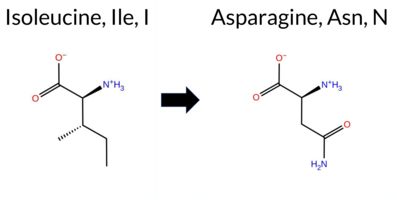 3DClick to see structure in 3D Viewer AIThe SynGAP1 I205N missense variant is not reported in ClinVar (ClinVar ID None) and is absent from gnomAD (gnomAD ID None). Functional prediction tools cluster into two groups: benign predictions come from REVEL, SIFT, FATHMM, and AlphaMissense‑Optimized; pathogenic predictions come from premPS, PROVEAN, polyPhen‑2 (HumDiv and HumVar), and ESM1b. Four tools (FoldX, Rosetta, Foldetta, AlphaMissense‑Default) give uncertain results. High‑accuracy assessments show AlphaMissense‑Optimized as benign, the SGM Consensus (majority vote of AlphaMissense‑Default, ESM1b, FATHMM, PROVEAN) as pathogenic, and Foldetta as uncertain. No evidence from these tools contradicts the lack of ClinVar annotation. Overall, the majority of predictions (five pathogenic vs. four benign) and the pathogenic SGM Consensus suggest the variant is most likely pathogenic, with no ClinVar status to conflict this assessment. Disclaimer: This summary was generated using AI and should be interpreted alongside expert review. | PH | 0.264545 | Structured | 0.409933 | Uncertain | 0.821 | 0.414 | 0.125 | -10.928 | Likely Pathogenic | 0.552 | Ambiguous | Likely Benign | 0.66 | Ambiguous | 0.1 | 1.16 | Ambiguous | 0.91 | Ambiguous | 1.57 | Destabilizing | 0.138 | Likely Benign | -3.56 | Deleterious | 0.940 | Possibly Damaging | 0.641 | Possibly Damaging | 4.06 | Benign | 0.07 | Tolerated | 0.0802 | 0.0212 | -2 | -3 | -8.0 | 0.94 | ||||||||||||||||||||||||||||||
| c.615T>G | I205M 2D 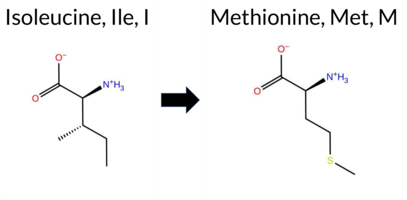 3DClick to see structure in 3D Viewer AIThe SynGAP1 missense variant I205M is not reported in ClinVar (ClinVar ID None) and is absent from gnomAD (gnomAD ID None). Prediction tools that agree on a benign effect include REVEL, FoldX, Foldetta, PROVEAN, SIFT, ESM1b, FATHMM, AlphaMissense‑Default, AlphaMissense‑Optimized, and the SGM‑Consensus (Likely Benign). Tools that predict a pathogenic effect are polyPhen‑2 HumDiv and polyPhen‑2 HumVar. Uncertain results come from Rosetta and premPS. High‑accuracy assessments show AlphaMissense‑Optimized as benign, the SGM‑Consensus as Likely Benign, and Foldetta as benign. Based on the majority of predictions and the high‑accuracy tools, the variant is most likely benign, and this conclusion does not contradict any ClinVar status. Disclaimer: This summary was generated using AI and should be interpreted alongside expert review. | Likely Benign | PH | 0.264545 | Structured | 0.409933 | Uncertain | 0.821 | 0.414 | 0.125 | -6.693 | Likely Benign | 0.142 | Likely Benign | Likely Benign | 0.20 | Likely Benign | 0.2 | 0.63 | Ambiguous | 0.42 | Likely Benign | 0.65 | Ambiguous | 0.119 | Likely Benign | -1.16 | Neutral | 0.838 | Possibly Damaging | 0.467 | Possibly Damaging | 4.07 | Benign | 0.07 | Tolerated | 0.0593 | 0.2000 | 2 | 1 | -2.6 | 18.03 | |||||||||||||||||||||||||||||
| c.619A>G | K207E 2D 3DClick to see structure in 3D Viewer AIThe SynGAP1 missense variant K207E is not reported in ClinVar and is absent from gnomAD. Prediction tools that agree on a benign effect include REVEL, SIFT, and FATHMM, whereas a larger group predicts pathogenicity: premPS, PROVEAN, polyPhen‑2 HumDiv, polyPhen‑2 HumVar, ESM1b, AlphaMissense‑Default, AlphaMissense‑Optimized, and the SGM Consensus (majority vote from AlphaMissense‑Default, ESM1b, FATHMM, and PROVEAN). High‑accuracy assessments reinforce this view: AlphaMissense‑Optimized is pathogenic, the SGM Consensus is likely pathogenic, and Foldetta (combining FoldX‑MD and Rosetta outputs) is inconclusive. The remaining stability predictions (FoldX and Rosetta) are uncertain. Overall, the majority of evidence points to a pathogenic effect for K207E, and this conclusion is not contradicted by any ClinVar annotation. Disclaimer: This summary was generated using AI and should be interpreted alongside expert review. | Likely Pathogenic | PH | 0.374039 | Structured | 0.406823 | Uncertain | 0.847 | 0.359 | 0.125 | -14.387 | Likely Pathogenic | 0.995 | Likely Pathogenic | Likely Pathogenic | 1.39 | Ambiguous | 0.1 | 1.21 | Ambiguous | 1.30 | Ambiguous | 1.09 | Destabilizing | 0.265 | Likely Benign | -3.00 | Deleterious | 0.982 | Probably Damaging | 0.679 | Possibly Damaging | 4.02 | Benign | 0.07 | Tolerated | 0.3504 | 0.1557 | 0 | 1 | 0.4 | 0.94 | |||||||||||||||||||||||||||||
| c.620A>C | K207T 2D 3DClick to see structure in 3D Viewer AIThe SynGAP1 missense variant K207T is not reported in ClinVar and is absent from gnomAD. Prediction tools that agree on a benign effect include REVEL, SIFT, and FATHMM, whereas a majority of tools predict a pathogenic impact: FoldX, PROVEAN, polyPhen‑2 (HumDiv and HumVar), ESM1b, AlphaMissense‑Default, and AlphaMissense‑Optimized. Uncertain predictions come from Rosetta, Foldetta, and premPS. High‑accuracy assessments further support pathogenicity: AlphaMissense‑Optimized is pathogenic; the SGM Consensus, derived from a majority vote of AlphaMissense‑Default, ESM1b, FATHMM, and PROVEAN, is also pathogenic; Foldetta’s stability analysis is inconclusive. Overall, the preponderance of evidence points to a pathogenic effect for K207T, and this conclusion is not contradicted by any ClinVar annotation (none exists). Disclaimer: This summary was generated using AI and should be interpreted alongside expert review. | Likely Pathogenic | PH | 0.374039 | Structured | 0.406823 | Uncertain | 0.847 | 0.359 | 0.125 | -11.002 | Likely Pathogenic | 0.974 | Likely Pathogenic | Likely Pathogenic | 2.15 | Destabilizing | 0.8 | 0.57 | Ambiguous | 1.36 | Ambiguous | 0.78 | Ambiguous | 0.239 | Likely Benign | -4.57 | Deleterious | 0.982 | Probably Damaging | 0.747 | Possibly Damaging | 3.99 | Benign | 0.07 | Tolerated | 0.1636 | 0.4031 | 0 | -1 | 3.2 | -27.07 | |||||||||||||||||||||||||||||
| c.621G>C | K207N 2D 3DClick to see structure in 3D Viewer AIThe SynGAP1 K207N missense variant is not reported in ClinVar (ClinVar ID None) and is absent from gnomAD (gnomAD ID None). Prediction tools that agree on a benign effect include REVEL, SIFT, and FATHMM, whereas a majority of tools predict a pathogenic impact: SGM‑Consensus, premPS, PROVEAN, polyPhen‑2 (HumDiv and HumVar), ESM1b, AlphaMissense‑Default, and AlphaMissense‑Optimized. FoldX, Rosetta, and Foldetta provide uncertain or inconclusive results and are treated as unavailable. High‑accuracy assessments show AlphaMissense‑Optimized classifying the variant as pathogenic, the SGM‑Consensus (majority vote of AlphaMissense‑Default, ESM1b, FATHMM, and PROVEAN) also indicating likely pathogenic, while Foldetta’s stability prediction is unavailable. Overall, the preponderance of evidence points to a pathogenic effect for K207N, and this conclusion does not contradict the ClinVar status, which currently has no entry for this variant. Disclaimer: This summary was generated using AI and should be interpreted alongside expert review. | Likely Pathogenic | PH | 0.374039 | Structured | 0.406823 | Uncertain | 0.847 | 0.359 | 0.125 | -12.881 | Likely Pathogenic | 0.998 | Likely Pathogenic | Likely Pathogenic | 0.72 | Ambiguous | 0.1 | 1.48 | Ambiguous | 1.10 | Ambiguous | 1.00 | Destabilizing | 0.123 | Likely Benign | -3.54 | Deleterious | 0.995 | Probably Damaging | 0.829 | Possibly Damaging | 3.98 | Benign | 0.07 | Tolerated | 0.3184 | 0.2335 | 1 | 0 | 0.4 | -14.07 | |||||||||||||||||||||||||||||
| c.621G>T | K207N 2D 3DClick to see structure in 3D Viewer AISynGAP1 missense variant K207N is not reported in ClinVar and is absent from gnomAD. Functional prediction tools cluster into two groups: benign predictions come from REVEL, SIFT, and FATHMM, whereas pathogenic predictions arise from premPS, PROVEAN, polyPhen‑2 HumDiv, polyPhen‑2 HumVar, ESM1b, AlphaMissense‑Default, and AlphaMissense‑Optimized. The SGM Consensus, derived from a majority vote of AlphaMissense‑Default, ESM1b, FATHMM, and PROVEAN, is classified as Likely Pathogenic. High‑accuracy assessments further support pathogenicity: AlphaMissense‑Optimized predicts Pathogenic, and the SGM Consensus (majority vote) also predicts Pathogenic. Foldetta, which integrates FoldX‑MD and Rosetta stability outputs, is inconclusive. Overall, the preponderance of evidence indicates that K207N is most likely pathogenic, and this conclusion does not conflict with the absence of a ClinVar classification. Disclaimer: This summary was generated using AI and should be interpreted alongside expert review. | Likely Pathogenic | PH | 0.374039 | Structured | 0.406823 | Uncertain | 0.847 | 0.359 | 0.125 | -12.881 | Likely Pathogenic | 0.998 | Likely Pathogenic | Likely Pathogenic | 0.72 | Ambiguous | 0.1 | 1.48 | Ambiguous | 1.10 | Ambiguous | 1.00 | Destabilizing | 0.124 | Likely Benign | -3.54 | Deleterious | 0.995 | Probably Damaging | 0.829 | Possibly Damaging | 3.98 | Benign | 0.07 | Tolerated | 0.3184 | 0.2335 | 1 | 0 | 0.4 | -14.07 | |||||||||||||||||||||||||||||
| c.631A>G | S211G 2D 3DClick to see structure in 3D Viewer AIThe SynGAP1 missense variant S211G is not reported in ClinVar (ClinVar ID None) and is absent from gnomAD (gnomAD ID None). Prediction tools that agree on a benign effect include REVEL, FoldX, Foldetta, polyPhen‑2 HumVar, SIFT, FATHMM, AlphaMissense‑Default, and AlphaMissense‑Optimized. Tools that predict a pathogenic effect are premPS, PROVEAN, polyPhen‑2 HumDiv, and ESM1b; Rosetta is uncertain. High‑accuracy methods give a benign result for AlphaMissense‑Optimized and for Foldetta. The SGM Consensus, derived from a majority vote of AlphaMissense‑Default, ESM1b, FATHMM, and PROVEAN, is inconclusive (two benign vs two pathogenic). No evidence from ClinVar contradicts these predictions. Overall, the balance of evidence—including the unanimous benign calls from the high‑accuracy tools—suggests that the variant is most likely benign. Disclaimer: This summary was generated using AI and should be interpreted alongside expert review. | PH | 0.209395 | Structured | 0.389893 | Uncertain | 0.846 | 0.300 | 0.125 | -9.895 | Likely Pathogenic | 0.265 | Likely Benign | Likely Benign | 0.30 | Likely Benign | 0.2 | 0.54 | Ambiguous | 0.42 | Likely Benign | 1.07 | Destabilizing | 0.067 | Likely Benign | -3.17 | Deleterious | 0.787 | Possibly Damaging | 0.404 | Benign | 3.92 | Benign | 0.07 | Tolerated | 0.2560 | 0.4337 | 1 | 0 | 0.4 | -30.03 | ||||||||||||||||||||||||||||||
| c.632G>C | S211T 2D 3DClick to see structure in 3D Viewer AIThe SynGAP1 missense variant S211T is not reported in ClinVar (ClinVar ID None) and is absent from gnomAD (gnomAD ID None). Prediction tools that agree on a benign effect include REVEL, Foldetta, premPS, PROVEAN, SIFT, FATHMM, and AlphaMissense‑Optimized. Those that predict a pathogenic effect are polyPhen‑2 (HumDiv and HumVar), ESM1b, and AlphaMissense‑Default. Two tools, FoldX and Rosetta, give uncertain results. High‑accuracy assessments show AlphaMissense‑Optimized as benign and Foldetta as benign; the SGM Consensus (majority vote from AlphaMissense‑Default, ESM1b, FATHMM, PROVEAN) is inconclusive due to a 2‑to‑2 split. Overall, the majority of evidence points to a benign impact, and this conclusion does not contradict the lack of ClinVar annotation. Disclaimer: This summary was generated using AI and should be interpreted alongside expert review. | PH | 0.209395 | Structured | 0.389893 | Uncertain | 0.846 | 0.300 | 0.125 | -10.301 | Likely Pathogenic | 0.678 | Likely Pathogenic | Likely Benign | 0.98 | Ambiguous | 0.5 | -0.78 | Ambiguous | 0.10 | Likely Benign | 0.50 | Likely Benign | 0.157 | Likely Benign | -2.33 | Neutral | 0.948 | Possibly Damaging | 0.484 | Possibly Damaging | 3.95 | Benign | 0.07 | Tolerated | 0.1678 | 0.5960 | 1 | 1 | 0.1 | 14.03 | ||||||||||||||||||||||||||||||
| c.653T>C | F218S 2D 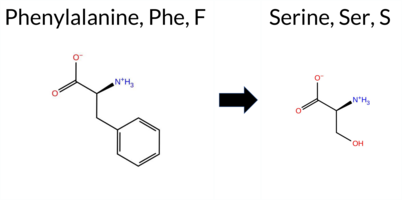 3DClick to see structure in 3D Viewer AIThe SynGAP1 missense variant F218S has no ClinVar entry and is not reported in gnomAD. Prediction tools that agree on a benign effect include polyPhen‑2 HumVar, SIFT, and FATHMM, whereas the remaining tools (SGM‑Consensus, REVEL, FoldX, Rosetta, Foldetta, premPS, PROVEAN, polyPhen‑2 HumDiv, ESM1b, AlphaMissense‑Default, and AlphaMissense‑Optimized) uniformly predict a pathogenic impact. High‑accuracy assessments further support pathogenicity: AlphaMissense‑Optimized scores the variant as pathogenic; the SGM Consensus (majority vote of AlphaMissense‑Default, ESM1b, FATHMM, and PROVEAN) indicates a likely pathogenic outcome; and Foldetta, which integrates FoldX‑MD and Rosetta stability predictions, also classifies the variant as pathogenic. Based on the collective evidence, the variant is most likely pathogenic, and this conclusion is not contradicted by any ClinVar status. Disclaimer: This summary was generated using AI and should be interpreted alongside expert review. | Likely Pathogenic | PH | 0.281712 | Structured | 0.408725 | Uncertain | 0.848 | 0.272 | 0.000 | -8.882 | Likely Pathogenic | 0.989 | Likely Pathogenic | Likely Pathogenic | 2.35 | Destabilizing | 0.1 | 3.00 | Destabilizing | 2.68 | Destabilizing | 1.22 | Destabilizing | 0.731 | Likely Pathogenic | -4.62 | Deleterious | 0.808 | Possibly Damaging | 0.225 | Benign | 5.80 | Benign | 0.07 | Tolerated | 0.3802 | 0.0454 | -3 | -2 | -3.6 | -60.10 | |||||||||||||||||||||||||||||
| c.668C>T | T223I 2D AIThe SynGAP1 T223I variant is not reported in ClinVar (ClinVar ID None) and is absent from gnomAD (gnomAD ID None). Prediction tools that clearly indicate benign impact include FoldX, premPS, polyPhen‑2 (HumDiv and HumVar), SIFT, ESM1b, FATHMM, and AlphaMissense‑Optimized. Tools that predict pathogenicity are REVEL and PROVEAN. Predictions that are inconclusive (Rosetta, Foldetta, AlphaMissense‑Default) are treated as unavailable. High‑accuracy assessments show AlphaMissense‑Optimized as benign, the SGM Consensus (majority vote from AlphaMissense‑Default, ESM1b, FATHMM, PROVEAN) as benign, while Foldetta remains uncertain. Overall, the majority of definitive predictions support a benign effect. Thus, the variant is most likely benign, and this conclusion is not contradicted by any ClinVar classification. Disclaimer: This summary was generated using AI and should be interpreted alongside expert review. | PH | 0.070400 | Structured | 0.382605 | Uncertain | 0.867 | 0.316 | 0.125 | -6.543 | Likely Benign | 0.356 | Ambiguous | Likely Benign | -0.24 | Likely Benign | 0.8 | -0.99 | Ambiguous | -0.62 | Ambiguous | 0.30 | Likely Benign | 0.640 | Likely Pathogenic | -4.09 | Deleterious | 0.010 | Benign | 0.005 | Benign | 5.93 | Benign | 0.07 | Tolerated | 0.0569 | 0.5393 | 0 | -1 | 5.2 | 12.05 | ||||||||||||||||||||||||||||||
| c.688T>A | C230S 2D 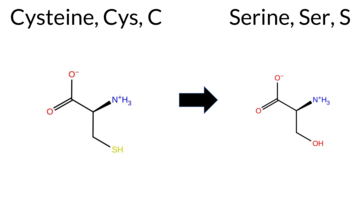 3DClick to see structure in 3D Viewer AIThe SynGAP1 missense variant C230S is not reported in ClinVar (ClinVar ID None) and is absent from gnomAD (gnomAD ID None). Prediction tools that agree on a benign effect include FoldX, Rosetta, Foldetta, polyPhen‑2 HumDiv, polyPhen‑2 HumVar, SIFT, and FATHMM. Those that predict a pathogenic effect are REVEL, premPS, PROVEAN, ESM1b, AlphaMissense‑Default, AlphaMissense‑Optimized, and the SGM‑Consensus (majority vote from AlphaMissense‑Default, ESM1b, FATHMM, PROVEAN). High‑accuracy assessments show AlphaMissense‑Optimized as pathogenic, the SGM‑Consensus as likely pathogenic, and Foldetta as benign. With an equal split of 7 benign versus 7 pathogenic predictions overall, the higher‑confidence tools lean toward pathogenicity. Therefore, the variant is most likely pathogenic based on the available predictions, and this assessment does not contradict any ClinVar status because no ClinVar classification exists. Disclaimer: This summary was generated using AI and should be interpreted alongside expert review. | Likely Pathogenic | PH | 0.268042 | Structured | 0.308076 | Uncertain | 0.870 | 0.308 | 0.000 | -9.994 | Likely Pathogenic | 0.997 | Likely Pathogenic | Likely Pathogenic | 0.42 | Likely Benign | 0.1 | 0.05 | Likely Benign | 0.24 | Likely Benign | 1.08 | Destabilizing | 0.859 | Likely Pathogenic | -8.24 | Deleterious | 0.421 | Benign | 0.115 | Benign | 5.91 | Benign | 0.07 | Tolerated | 0.4926 | 0.1822 | 0 | -1 | -3.3 | -16.06 | |||||||||||||||||||||||||||||
| c.689G>C | C230S 2D 3DClick to see structure in 3D Viewer AISynGAP1 missense variant C230S is not reported in ClinVar (no ClinVar ID) and is absent from gnomAD. Prediction tools cluster into two groups: benign calls come from FoldX, Rosetta, Foldetta, polyPhen‑2 HumDiv, polyPhen‑2 HumVar, SIFT, and FATHMM; pathogenic calls come from REVEL, premPS, PROVEAN, ESM1b, AlphaMissense‑Default, AlphaMissense‑Optimized, and the SGM‑Consensus (majority vote of AlphaMissense‑Default, ESM1b, FATHMM, PROVEAN). High‑accuracy assessments show AlphaMissense‑Optimized as pathogenic, SGM‑Consensus as likely pathogenic, and Foldetta as benign. No prediction or stability result is missing. Overall, the predictions are evenly split between benign and pathogenic, leaving the variant’s functional impact uncertain. This uncertainty does not contradict ClinVar status, which currently has no entry for the variant. Disclaimer: This summary was generated using AI and should be interpreted alongside expert review. | Likely Pathogenic | PH | 0.268042 | Structured | 0.308076 | Uncertain | 0.870 | 0.308 | 0.000 | -9.994 | Likely Pathogenic | 0.997 | Likely Pathogenic | Likely Pathogenic | 0.42 | Likely Benign | 0.1 | 0.05 | Likely Benign | 0.24 | Likely Benign | 1.08 | Destabilizing | 0.844 | Likely Pathogenic | -8.24 | Deleterious | 0.421 | Benign | 0.115 | Benign | 5.91 | Benign | 0.07 | Tolerated | 0.4926 | 0.1822 | 0 | -1 | -3.3 | -16.06 | |||||||||||||||||||||||||||||
| c.707C>G | A236G 2D 3DClick to see structure in 3D Viewer AIThe SynGAP1 missense variant A236G is not reported in ClinVar (ClinVar ID None) and is absent from gnomAD (gnomAD ID None). Prediction tools that agree on a benign effect include polyPhen‑2 (HumDiv and HumVar), SIFT, FATHMM, AlphaMissense‑Default, and AlphaMissense‑Optimized. Tools that predict a pathogenic effect are REVEL, premPS, and PROVEAN. Four tools (FoldX, Rosetta, Foldetta, and ESM1b) return uncertain or inconclusive results. High‑accuracy assessments show AlphaMissense‑Optimized as benign; the SGM Consensus—derived from a majority vote of AlphaMissense‑Default, ESM1b, FATHMM, and PROVEAN—also favors benign, while Foldetta remains uncertain. Overall, the majority of available predictions support a benign impact, and there is no ClinVar annotation to contradict this assessment. Thus, the variant is most likely benign. Disclaimer: This summary was generated using AI and should be interpreted alongside expert review. | PH | 0.185198 | Structured | 0.329926 | Uncertain | 0.775 | 0.330 | 0.000 | -7.412 | In-Between | 0.162 | Likely Benign | Likely Benign | 0.92 | Ambiguous | 0.1 | 1.15 | Ambiguous | 1.04 | Ambiguous | 1.09 | Destabilizing | 0.615 | Likely Pathogenic | -3.35 | Deleterious | 0.067 | Benign | 0.028 | Benign | 5.74 | Benign | 0.07 | Tolerated | 0.2200 | 0.3899 | 1 | 0 | -2.2 | -14.03 | ||||||||||||||||||||||||||||||
| c.730G>A | E244K 2D AISynGAP1 missense variant E244K is not reported in ClinVar and is absent from gnomAD. Functional prediction tools show mixed results: benign predictions come from FoldX, Rosetta, Foldetta, SIFT, and FATHMM, whereas pathogenic predictions are reported by REVEL, PROVEAN, both polyPhen‑2 HumDiv and HumVar, ESM1b, AlphaMissense‑Default, and the SGM‑Consensus (Likely Pathogenic). The high‑accuracy methods give a clearer picture: AlphaMissense‑Optimized predicts pathogenicity, the SGM‑Consensus also indicates likely pathogenic, while Foldetta, which integrates FoldX‑MD and Rosetta stability outputs, predicts a benign effect. With the majority of consensus tools leaning toward pathogenic and the two high‑accuracy pathogenic predictions outweighing the benign Foldetta result, the variant is most likely pathogenic. This assessment does not contradict any ClinVar annotation, as none is available. Disclaimer: This summary was generated using AI and should be interpreted alongside expert review. | Likely Pathogenic | PH | 0.450668 | Structured | 0.329406 | Uncertain | 0.778 | 0.360 | 0.000 | -13.975 | Likely Pathogenic | 0.993 | Likely Pathogenic | Likely Pathogenic | 0.40 | Likely Benign | 1.0 | 0.45 | Likely Benign | 0.43 | Likely Benign | 0.80 | Ambiguous | 0.841 | Likely Pathogenic | -3.37 | Deleterious | 0.990 | Probably Damaging | 0.760 | Possibly Damaging | 5.82 | Benign | 0.07 | Tolerated | 0.1887 | 0.6177 | 0 | 1 | -0.4 | -0.94 | |||||||||||||||||||||||||||||
| c.734A>G | N245S 2D 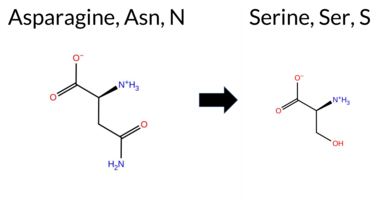 3DClick to see structure in 3D Viewer AIThe SynGAP1 missense variant N245S is not reported in ClinVar (ClinVar ID None) and is absent from gnomAD (gnomAD ID None). Prediction tools that agree on a benign effect include FoldX, Rosetta, Foldetta, premPS, polyPhen‑2 HumVar, SIFT, ESM1b, and FATHMM. Tools that predict a pathogenic effect are REVEL, PROVEAN, polyPhen‑2 HumDiv, AlphaMissense‑Default, and AlphaMissense‑Optimized. High‑accuracy assessments show AlphaMissense‑Optimized as pathogenic, Foldetta as benign, and the SGM Consensus (majority vote from AlphaMissense‑Default, ESM1b, FATHMM, PROVEAN) is inconclusive due to a 2‑to‑2 split. Overall, the majority of evidence (8 benign vs. 5 pathogenic) supports a benign classification. This conclusion does not contradict ClinVar, as no ClinVar assertion exists for this variant. Disclaimer: This summary was generated using AI and should be interpreted alongside expert review. | PH | 0.454136 | Structured | 0.315864 | Uncertain | 0.831 | 0.351 | 0.000 | -6.792 | Likely Benign | 0.987 | Likely Pathogenic | Likely Pathogenic | 0.46 | Likely Benign | 0.1 | -0.16 | Likely Benign | 0.15 | Likely Benign | 0.42 | Likely Benign | 0.524 | Likely Pathogenic | -3.75 | Deleterious | 0.787 | Possibly Damaging | 0.404 | Benign | 5.90 | Benign | 0.07 | Tolerated | 0.3557 | 0.7229 | 1 | 1 | 2.7 | -27.03 | ||||||||||||||||||||||||||||||
| c.770G>T | S257I 2D AIThe SynGAP1 missense variant S257I is not reported in ClinVar and has no entries in gnomAD. Prediction tools that agree on a benign effect include premPS, SIFT, FATHMM, AlphaMissense‑Optimized, and Foldetta. Those that predict a pathogenic effect comprise SGM‑Consensus, REVEL, PROVEAN, polyPhen‑2 HumDiv, polyPhen‑2 HumVar, ESM1b, and AlphaMissense‑Default. High‑accuracy assessments show AlphaMissense‑Optimized classifying the variant as benign, the SGM‑Consensus (majority vote of AlphaMissense‑Default, ESM1b, FATHMM, PROVEAN) indicating likely pathogenic, and Foldetta predicting a benign outcome. FoldX and Rosetta results are uncertain and therefore not considered. Overall, the balance of evidence leans toward a pathogenic interpretation, and this assessment does not contradict the absence of a ClinVar classification. Disclaimer: This summary was generated using AI and should be interpreted alongside expert review. | Likely Pathogenic | C2 | 0.384043 | Structured | 0.258293 | Uncertain | 0.847 | 0.272 | 0.250 | -12.126 | Likely Pathogenic | 0.595 | Likely Pathogenic | Likely Benign | 0.78 | Ambiguous | 1.0 | -1.17 | Ambiguous | -0.20 | Likely Benign | 0.30 | Likely Benign | 0.739 | Likely Pathogenic | -2.97 | Deleterious | 0.998 | Probably Damaging | 0.991 | Probably Damaging | 5.81 | Benign | 0.07 | Tolerated | 0.0681 | 0.5209 | -1 | -2 | 5.3 | 26.08 | |||||||||||||||||||||||||||||
| c.794A>C | K265T 2D 3DClick to see structure in 3D Viewer AIThe SynGAP1 K265T missense variant is reported in gnomAD (ID 6‑33437699‑A‑C) but has no ClinVar entry. Prediction tools that classify the variant as benign include REVEL, SIFT, and Rosetta. Those that predict pathogenicity are SGM‑Consensus (Likely Pathogenic), PROVEAN, polyPhen‑2 HumDiv, polyPhen‑2 HumVar, ESM1b, FATHMM, and AlphaMissense‑Default. Four tools give uncertain results: FoldX, Foldetta, premPS, and AlphaMissense‑Optimized. High‑accuracy assessments show AlphaMissense‑Optimized as uncertain, SGM‑Consensus (majority vote of AlphaMissense‑Default, ESM1b, FATHMM, PROVEAN) as pathogenic, and Foldetta (combining FoldX‑MD and Rosetta outputs) as uncertain. Overall, the majority of evidence points to a pathogenic effect. This conclusion is not contradicted by ClinVar status, as no ClinVar classification exists for this variant. Disclaimer: This summary was generated using AI and should be interpreted alongside expert review. | Likely Pathogenic | C2 | 0.209395 | Structured | 0.309758 | Uncertain | 0.936 | 0.275 | 0.000 | 6-33437699-A-C | 1 | 6.20e-7 | -9.425 | Likely Pathogenic | 0.839 | Likely Pathogenic | Ambiguous | 0.99 | Ambiguous | 0.1 | 0.37 | Likely Benign | 0.68 | Ambiguous | 0.83 | Ambiguous | 0.441 | Likely Benign | -3.75 | Deleterious | 1.000 | Probably Damaging | 0.998 | Probably Damaging | 1.91 | Pathogenic | 0.07 | Tolerated | 3.38 | 18 | 0.2042 | 0.3178 | -1 | 0 | 3.2 | -27.07 | ||||||||||||||||||||||||
| c.796C>A | L266M 2D 3DClick to see structure in 3D Viewer AIThe SynGAP1 missense variant L266M is not reported in ClinVar (ClinVar ID None) and is absent from gnomAD (gnomAD ID None). Prediction tools that agree on a benign effect include REVEL, FoldX, Rosetta, PROVEAN, SIFT, and AlphaMissense‑Optimized. Those that predict a pathogenic outcome are polyPhen‑2 HumDiv, polyPhen‑2 HumVar, ESM1b, and FATHMM. Two tools remain uncertain: premPS and AlphaMissense‑Default. High‑accuracy assessments show AlphaMissense‑Optimized as benign, while the SGM Consensus (majority vote from AlphaMissense‑Default, ESM1b, FATHMM, PROVEAN) resolves to pathogenic. Foldetta, a protein‑folding stability method combining FoldX‑MD and Rosetta outputs, predicts a benign effect. Overall, the majority of tools (six benign vs. four pathogenic, with two uncertain) lean toward a benign classification, and this conclusion is not contradicted by ClinVar status. Thus, the variant is most likely benign based on the collective predictions. Disclaimer: This summary was generated using AI and should be interpreted alongside expert review. | C2 | 0.232838 | Structured | 0.297157 | Uncertain | 0.948 | 0.264 | 0.000 | -9.740 | Likely Pathogenic | 0.362 | Ambiguous | Likely Benign | 0.07 | Likely Benign | 0.1 | -0.47 | Likely Benign | -0.20 | Likely Benign | 0.95 | Ambiguous | 0.288 | Likely Benign | -1.66 | Neutral | 1.000 | Probably Damaging | 0.999 | Probably Damaging | 1.55 | Pathogenic | 0.07 | Tolerated | 0.0581 | 0.2853 | 4 | 2 | -1.9 | 18.03 | ||||||||||||||||||||||||||||||
| c.806T>G | I269R 2D 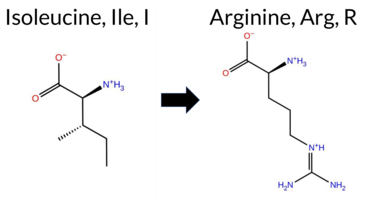 3DClick to see structure in 3D Viewer AIThe SynGAP1 missense variant I269R is not reported in ClinVar and is absent from gnomAD. Functional prediction tools largely agree on a deleterious effect: the benign group contains only SIFT, whereas the pathogenic group includes SGM‑Consensus (Likely Pathogenic), REVEL, premPS, PROVEAN, polyPhen‑2 (HumDiv and HumVar), ESM1b, FATHMM, AlphaMissense‑Default, and AlphaMissense‑Optimized. FoldX and Rosetta give uncertain results, and Foldetta is also uncertain. High‑accuracy assessments show AlphaMissense‑Optimized as pathogenic, SGM‑Consensus as Likely Pathogenic, and Foldetta as unavailable. Based on the preponderance of pathogenic predictions, the variant is most likely pathogenic, and this assessment does not contradict the ClinVar status, which currently has no entry for this variant. Disclaimer: This summary was generated using AI and should be interpreted alongside expert review. | Likely Pathogenic | C2 | 0.216401 | Structured | 0.343787 | Uncertain | 0.937 | 0.244 | 0.125 | -14.567 | Likely Pathogenic | 0.994 | Likely Pathogenic | Likely Pathogenic | 1.34 | Ambiguous | 0.1 | 1.99 | Ambiguous | 1.67 | Ambiguous | 1.50 | Destabilizing | 0.765 | Likely Pathogenic | -5.23 | Deleterious | 0.999 | Probably Damaging | 0.998 | Probably Damaging | 1.69 | Pathogenic | 0.07 | Tolerated | 0.1108 | 0.0870 | -2 | -3 | -9.0 | 43.03 | |||||||||||||||||||||||||||||
| c.834G>C | K278N 2D 3DClick to see structure in 3D Viewer AIThe SynGAP1 missense variant K278N is not reported in ClinVar and is absent from gnomAD. Prediction tools that classify it as benign include REVEL, FoldX, Rosetta, premPS, and SIFT, whereas pathogenic predictions come from PROVEAN, polyPhen‑2 HumDiv, polyPhen‑2 HumVar, ESM1b, FATHMM, AlphaMissense‑Default, AlphaMissense‑Optimized, and the SGM‑Consensus score (Likely Pathogenic). High‑accuracy methods give mixed results: AlphaMissense‑Optimized predicts pathogenic, the SGM‑Consensus (majority vote of AlphaMissense‑Default, ESM1b, FATHMM, PROVEAN) is Likely Pathogenic, and Foldetta (combining FoldX‑MD and Rosetta) predicts benign. Overall, the majority of tools support a pathogenic effect, so the variant is most likely pathogenic; this is consistent with the lack of ClinVar annotation. Disclaimer: This summary was generated using AI and should be interpreted alongside expert review. | Likely Pathogenic | C2 | 0.120615 | Structured | 0.310130 | Uncertain | 0.748 | 0.253 | 0.125 | -10.611 | Likely Pathogenic | 0.993 | Likely Pathogenic | Likely Pathogenic | 0.40 | Likely Benign | 0.0 | 0.05 | Likely Benign | 0.23 | Likely Benign | 0.44 | Likely Benign | 0.255 | Likely Benign | -4.51 | Deleterious | 1.000 | Probably Damaging | 0.998 | Probably Damaging | 1.81 | Pathogenic | 0.07 | Tolerated | 0.3071 | 0.0568 | 1 | 0 | 0.4 | -14.07 | |||||||||||||||||||||||||||||
| c.834G>T | K278N 2D 3DClick to see structure in 3D Viewer AISynGAP1 missense variant K278N is not reported in ClinVar and has no entries in gnomAD. Functional prediction tools that classify the variant as benign include REVEL, FoldX, Rosetta, premPS, and SIFT, whereas tools that predict pathogenicity are PROVEAN, polyPhen‑2 HumDiv, polyPhen‑2 HumVar, ESM1b, FATHMM, AlphaMissense‑Default, and the SGM‑Consensus score (Likely Pathogenic). High‑accuracy assessments further show AlphaMissense‑Optimized as pathogenic, the SGM‑Consensus (majority vote of AlphaMissense‑Default, ESM1b, FATHMM, PROVEAN) as Likely Pathogenic, and Foldetta (combining FoldX‑MD and Rosetta outputs) as benign. With a majority of evidence pointing to deleterious effects and no ClinVar annotation to contradict, the variant is most likely pathogenic. Disclaimer: This summary was generated using AI and should be interpreted alongside expert review. | Likely Pathogenic | C2 | 0.120615 | Structured | 0.310130 | Uncertain | 0.748 | 0.253 | 0.125 | -10.611 | Likely Pathogenic | 0.993 | Likely Pathogenic | Likely Pathogenic | 0.40 | Likely Benign | 0.0 | 0.05 | Likely Benign | 0.23 | Likely Benign | 0.44 | Likely Benign | 0.255 | Likely Benign | -4.51 | Deleterious | 1.000 | Probably Damaging | 0.998 | Probably Damaging | 1.81 | Pathogenic | 0.07 | Tolerated | 0.3071 | 0.0568 | 1 | 0 | 0.4 | -14.07 | |||||||||||||||||||||||||||||
| c.863A>C | D288A 2D 3DClick to see structure in 3D Viewer AIThe SynGAP1 D288A missense variant is not reported in ClinVar (ClinVar ID None) and has no entry in gnomAD (gnomAD ID None). Prediction tools that agree on a benign effect include REVEL, FoldX, premPS, and SIFT. Those that agree on a pathogenic effect are SGM‑Consensus, PROVEAN, polyPhen‑2 HumDiv, polyPhen‑2 HumVar, ESM1b, FATHMM, and AlphaMissense‑Default. AlphaMissense‑Optimized, Foldetta, and Rosetta give uncertain results and are treated as unavailable for pathogenicity inference. High‑accuracy assessments show that the SGM‑Consensus (a majority vote of AlphaMissense‑Default, ESM1b, FATHMM, and PROVEAN) predicts pathogenicity, AlphaMissense‑Optimized is uncertain, and Foldetta (combining FoldX‑MD and Rosetta outputs) is also uncertain. Overall, seven tools predict pathogenicity while four predict benign, with no conflicting ClinVar evidence. Therefore, the variant is most likely pathogenic, and this assessment does not contradict any ClinVar status. Disclaimer: This summary was generated using AI and should be interpreted alongside expert review. | Likely Pathogenic | C2 | 0.125101 | Structured | 0.395525 | Uncertain | 0.873 | 0.261 | 0.000 | -13.470 | Likely Pathogenic | 0.908 | Likely Pathogenic | Ambiguous | 0.34 | Likely Benign | 0.1 | 1.27 | Ambiguous | 0.81 | Ambiguous | 0.10 | Likely Benign | 0.451 | Likely Benign | -6.09 | Deleterious | 1.000 | Probably Damaging | 0.998 | Probably Damaging | 1.71 | Pathogenic | 0.07 | Tolerated | 0.4060 | 0.5788 | 0 | -2 | 5.3 | -44.01 | |||||||||||||||||||||||||||||
| c.895C>A | R299S 2D 3DClick to see structure in 3D Viewer AISynGAP1 R299S is not reported in ClinVar and is absent from gnomAD. Among in‑silico predictors, benign calls come from REVEL and SIFT, while pathogenic calls are made by FoldX, premPS, PROVEAN, polyPhen‑2 HumDiv, polyPhen‑2 HumVar, FATHMM, and AlphaMissense‑Default. Uncertain results are reported by Rosetta, ESM1b, and AlphaMissense‑Optimized. High‑accuracy methods give a pathogenic verdict: AlphaMissense‑Optimized is inconclusive, SGM Consensus (majority vote of AlphaMissense‑Default, ESM1b, FATHMM, PROVEAN) predicts pathogenic, and Foldetta (combining FoldX‑MD and Rosetta) also predicts pathogenic. Overall, the evidence points to a pathogenic effect, and this assessment does not contradict the lack of ClinVar annotation. Disclaimer: This summary was generated using AI and should be interpreted alongside expert review. | Likely Pathogenic | C2 | 0.321458 | Structured | 0.262979 | Uncertain | 0.819 | 0.295 | 0.500 | -7.276 | In-Between | 0.882 | Likely Pathogenic | Ambiguous | 2.86 | Destabilizing | 0.3 | 1.46 | Ambiguous | 2.16 | Destabilizing | 1.07 | Destabilizing | 0.241 | Likely Benign | -3.20 | Deleterious | 0.999 | Probably Damaging | 0.997 | Probably Damaging | 1.75 | Pathogenic | 0.07 | Tolerated | 0.2780 | 0.5057 | 0 | -1 | 3.7 | -69.11 | |||||||||||||||||||||||||||||
| c.902C>A | A301D 2D 3DClick to see structure in 3D Viewer AIThe SynGAP1 missense variant A301D is not reported in ClinVar and is absent from gnomAD. Consensus from multiple in‑silico predictors shows a predominance of benign calls: REVEL, FoldX, premPS, PROVEAN, SIFT, and FATHMM all predict benign, whereas polyPhen‑2 (HumDiv and HumVar) and ESM1b predict pathogenic. Tools with uncertain outputs—Rosetta, Foldetta, and AlphaMissense‑Default—do not provide decisive evidence. High‑accuracy assessments further support a benign interpretation: AlphaMissense‑Optimized classifies the variant as benign; the SGM Consensus, derived from a majority vote of AlphaMissense‑Default, ESM1b, FATHMM, and PROVEAN, also yields a benign verdict; Foldetta remains inconclusive. Taken together, the preponderance of evidence indicates that A301D is most likely benign, and this assessment does not conflict with the absence of a ClinVar entry. Disclaimer: This summary was generated using AI and should be interpreted alongside expert review. | C2 | 0.429200 | Structured | 0.258424 | Uncertain | 0.647 | 0.272 | 0.375 | -10.276 | Likely Pathogenic | 0.488 | Ambiguous | Likely Benign | -0.37 | Likely Benign | 0.2 | -1.15 | Ambiguous | -0.76 | Ambiguous | 0.23 | Likely Benign | 0.224 | Likely Benign | -0.35 | Neutral | 0.999 | Probably Damaging | 0.995 | Probably Damaging | 4.17 | Benign | 0.07 | Tolerated | 0.1599 | 0.1705 | 0 | -2 | -5.3 | 44.01 | ||||||||||||||||||||||||||||||
| c.925G>A | G309S 2D 3DClick to see structure in 3D Viewer AIThe SynGAP1 missense variant G309S is not reported in ClinVar and is absent from gnomAD. Functional prediction tools that classify the variant as benign include REVEL and SIFT, whereas a majority of other in silico predictors (AlphaMissense‑Default, AlphaMissense‑Optimized, ESM1b, FATHMM, PROVEAN, polyPhen‑2 HumDiv, polyPhen‑2 HumVar, SGM‑Consensus, and FoldX) predict it to be pathogenic. Tools with uncertain outcomes (Foldetta, Rosetta, premPS) provide no definitive evidence. High‑accuracy assessments further support a deleterious effect: AlphaMissense‑Optimized is pathogenic, the SGM‑Consensus (majority vote of AlphaMissense‑Default, ESM1b, FATHMM, PROVEAN) is Likely Pathogenic, and Foldetta remains uncertain. Overall, the preponderance of evidence indicates that G309S is most likely pathogenic, and this conclusion does not conflict with the absence of a ClinVar annotation. Disclaimer: This summary was generated using AI and should be interpreted alongside expert review. | Likely Pathogenic | C2 | 0.275179 | Structured | 0.338439 | Uncertain | 0.882 | 0.342 | 0.125 | -11.335 | Likely Pathogenic | 0.994 | Likely Pathogenic | Likely Pathogenic | 2.82 | Destabilizing | 0.5 | 0.73 | Ambiguous | 1.78 | Ambiguous | 0.72 | Ambiguous | 0.487 | Likely Benign | -5.52 | Deleterious | 1.000 | Probably Damaging | 1.000 | Probably Damaging | 1.73 | Pathogenic | 0.07 | Tolerated | 0.2828 | 0.5591 | 1 | 0 | -0.4 | 30.03 | |||||||||||||||||||||||||||||
| c.959T>A | V320D 2D 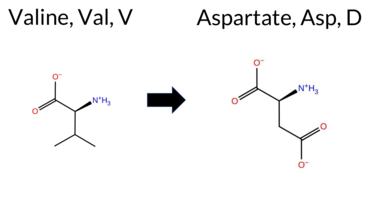 3DClick to see structure in 3D Viewer AIThe SynGAP1 missense variant V320D is not reported in ClinVar and is absent from gnomAD. Functional prediction tools cluster into two groups: benign predictions from REVEL and SIFT; pathogenic predictions from premPS, PROVEAN, polyPhen‑2 (HumDiv and HumVar), ESM1b, FATHMM, AlphaMissense‑Default, AlphaMissense‑Optimized, and the SGM‑Consensus score (Likely Pathogenic). Stability‑based methods FoldX and Rosetta returned uncertain results, and Foldetta, which integrates FoldX‑MD and Rosetta outputs, also yielded an uncertain prediction. High‑accuracy assessments show AlphaMissense‑Optimized as pathogenic, the SGM‑Consensus as Likely Pathogenic, and Foldetta as uncertain. Overall, the majority of evidence points toward a pathogenic effect, which is consistent with the lack of ClinVar annotation and gnomAD absence. Thus, the variant is most likely pathogenic, and this prediction does not contradict ClinVar status because ClinVar has no entry for it. Disclaimer: This summary was generated using AI and should be interpreted alongside expert review. | Likely Pathogenic | C2 | 0.185198 | Structured | 0.419626 | Uncertain | 0.905 | 0.266 | 0.125 | -11.269 | Likely Pathogenic | 0.996 | Likely Pathogenic | Likely Pathogenic | 1.99 | Ambiguous | 1.0 | 1.67 | Ambiguous | 1.83 | Ambiguous | 1.50 | Destabilizing | 0.405 | Likely Benign | -5.58 | Deleterious | 0.999 | Probably Damaging | 0.972 | Probably Damaging | 1.93 | Pathogenic | 0.07 | Tolerated | 0.1101 | 0.0482 | -2 | -3 | -7.7 | 15.96 | |||||||||||||||||||||||||||||
| c.995A>G | D332G 2D 3DClick to see structure in 3D Viewer AIThe SynGAP1 D332G missense variant is not reported in ClinVar and is absent from gnomAD. Prediction tools that agree on a benign effect include only SIFT, whereas the majority of tools (REVEL, PROVEAN, polyPhen‑2 HumDiv, polyPhen‑2 HumVar, ESM1b, FATHMM, AlphaMissense‑Default, and the SGM‑Consensus) predict a pathogenic impact. Predictions that are inconclusive or uncertain are given by FoldX, Rosetta, Foldetta, premPS, and AlphaMissense‑Optimized. High‑accuracy assessments show AlphaMissense‑Optimized as uncertain, the SGM‑Consensus (majority vote of AlphaMissense‑Default, ESM1b, FATHMM, PROVEAN) as pathogenic, and Foldetta (combining FoldX‑MD and Rosetta outputs) as uncertain. Overall, the preponderance of evidence points to a pathogenic effect for D332G, and this conclusion does not contradict the ClinVar status, which currently has no entry for this variant. Disclaimer: This summary was generated using AI and should be interpreted alongside expert review. | Likely Pathogenic | C2 | 0.339168 | Structured | 0.336528 | Uncertain | 0.537 | 0.445 | 0.375 | -10.844 | Likely Pathogenic | 0.860 | Likely Pathogenic | Ambiguous | 1.78 | Ambiguous | 0.3 | 0.69 | Ambiguous | 1.24 | Ambiguous | 0.63 | Ambiguous | 0.539 | Likely Pathogenic | -5.98 | Deleterious | 0.999 | Probably Damaging | 0.997 | Probably Damaging | 1.31 | Pathogenic | 0.07 | Tolerated | 0.3052 | 0.4765 | 1 | -1 | 3.1 | -58.04 | |||||||||||||||||||||||||||||
| c.1040C>T | T347I 2D 3DClick to see structure in 3D Viewer AISynGAP1 T347I is not reported in ClinVar and is absent from gnomAD. Functional prediction tools that provide definitive calls cluster into two groups: benign predictions come from REVEL, premPS, polyPhen‑2 HumVar, SIFT, and AlphaMissense‑Optimized; pathogenic predictions come from PROVEAN, polyPhen‑2 HumDiv, ESM1b, and FATHMM. Tools with inconclusive outputs (FoldX, Rosetta, Foldetta, AlphaMissense‑Default) are treated as unavailable. High‑accuracy assessments further split the evidence: AlphaMissense‑Optimized predicts benign, while the SGM consensus—derived from a majority vote of AlphaMissense‑Default, ESM1b, FATHMM, and PROVEAN—predicts pathogenic; Foldetta remains uncertain. Consequently, the variant’s pathogenicity is ambiguous, with an equal number of strong benign and pathogenic calls and no consensus from the most reliable methods. The variant is therefore most likely uncertain, and this assessment does not contradict any ClinVar status, as none is available. Disclaimer: This summary was generated using AI and should be interpreted alongside expert review. | Likely Pathogenic | C2 | 0.268042 | Structured | 0.349915 | Uncertain | 0.951 | 0.434 | 0.000 | -10.148 | Likely Pathogenic | 0.387 | Ambiguous | Likely Benign | -0.79 | Ambiguous | 0.1 | -0.94 | Ambiguous | -0.87 | Ambiguous | 0.29 | Likely Benign | 0.079 | Likely Benign | -3.12 | Deleterious | 0.627 | Possibly Damaging | 0.139 | Benign | 1.70 | Pathogenic | 0.08 | Tolerated | 0.0885 | 0.6298 | 0 | -1 | 5.2 | 12.05 | |||||||||||||||||||||||||||||
| c.1049T>A | V350E 2D 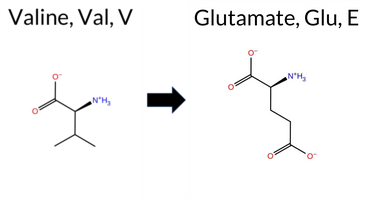 3DClick to see structure in 3D Viewer AIThe SynGAP1 missense variant V350E is not reported in ClinVar and is absent from gnomAD. Prediction tools that agree on benign effect include REVEL and SIFT, whereas a majority of tools predict pathogenicity: premPS, PROVEAN, polyPhen‑2 HumDiv, polyPhen‑2 HumVar, ESM1b, FATHMM, AlphaMissense‑Default, Foldetta, and Rosetta. Two tools give inconclusive results: FoldX (Uncertain) and AlphaMissense‑Optimized (Uncertain). High‑accuracy assessments show AlphaMissense‑Optimized as Uncertain, SGM Consensus (majority vote of AlphaMissense‑Default, ESM1b, FATHMM, PROVEAN) as Pathogenic, and Foldetta (combining FoldX‑MD and Rosetta outputs) as Pathogenic. Overall, the preponderance of evidence points to a pathogenic effect for V350E. This conclusion is not contradicted by ClinVar, which contains no entry for this variant. Disclaimer: This summary was generated using AI and should be interpreted alongside expert review. | Likely Pathogenic | C2 | 0.179055 | Structured | 0.353227 | Uncertain | 0.931 | 0.371 | 0.000 | -15.975 | Likely Pathogenic | 0.941 | Likely Pathogenic | Ambiguous | 1.73 | Ambiguous | 0.2 | 2.61 | Destabilizing | 2.17 | Destabilizing | 1.93 | Destabilizing | 0.304 | Likely Benign | -4.67 | Deleterious | 0.976 | Probably Damaging | 0.559 | Possibly Damaging | 1.61 | Pathogenic | 0.08 | Tolerated | 0.1078 | 0.1568 | -2 | -2 | -7.7 | 29.98 | |||||||||||||||||||||||||||||
| c.1066C>G | R356G 2D 3DClick to see structure in 3D Viewer AIThe SynGAP1 R356G missense variant is not reported in ClinVar (ClinVar ID None) and has no entry in gnomAD (gnomAD ID None). Prediction tools that agree on a benign effect are REVEL and SIFT, while the majority of tools predict a pathogenic outcome: SGM‑Consensus, premPS, PROVEAN, polyPhen‑2 (HumDiv and HumVar), ESM1b, FATHMM, and AlphaMissense‑Default. FoldX, Rosetta, Foldetta, and AlphaMissense‑Optimized are uncertain and therefore treated as unavailable evidence. High‑accuracy assessments show AlphaMissense‑Optimized as uncertain, SGM‑Consensus as Likely Pathogenic (majority vote of AlphaMissense‑Default, ESM1b, FATHMM, PROVEAN), and Foldetta as uncertain. Overall, the preponderance of pathogenic predictions indicates that the variant is most likely pathogenic, and this conclusion does not contradict the current ClinVar status, which contains no classification. Disclaimer: This summary was generated using AI and should be interpreted alongside expert review. | Likely Pathogenic | C2 | 0.219301 | Structured | 0.395028 | Uncertain | 0.802 | 0.373 | 0.250 | -12.305 | Likely Pathogenic | 0.883 | Likely Pathogenic | Ambiguous | 1.02 | Ambiguous | 0.0 | 1.80 | Ambiguous | 1.41 | Ambiguous | 1.06 | Destabilizing | 0.271 | Likely Benign | -6.20 | Deleterious | 0.993 | Probably Damaging | 0.982 | Probably Damaging | 1.95 | Pathogenic | 0.08 | Tolerated | 0.3505 | 0.3793 | -3 | -2 | 4.1 | -99.14 | |||||||||||||||||||||||||||||
| c.1069C>G | H357D 2D 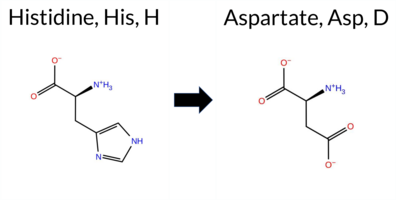 3DClick to see structure in 3D Viewer AIThe SynGAP1 H357D missense variant is not reported in ClinVar (ClinVar ID None) and is absent from gnomAD (gnomAD ID None). Prediction tools that agree on a benign effect include REVEL, FoldX, Rosetta, Foldetta, premPS, PROVEAN, polyPhen‑2 HumVar, SIFT, FATHMM, and AlphaMissense‑Optimized. Tools that predict a pathogenic effect are polyPhen‑2 HumDiv and ESM1b; AlphaMissense‑Default remains uncertain. High‑accuracy assessments show AlphaMissense‑Optimized as benign, the SGM Consensus (majority vote from AlphaMissense‑Default, ESM1b, FATHMM, PROVEAN) resolves to benign, and Foldetta also predicts a benign outcome. No prediction or folding‑stability result is missing or inconclusive. Overall, the majority of evidence points to a benign impact, and this conclusion does not contradict the lack of ClinVar annotation. Disclaimer: This summary was generated using AI and should be interpreted alongside expert review. | C2 | 0.203355 | Structured | 0.399052 | Uncertain | 0.861 | 0.413 | 0.250 | -12.013 | Likely Pathogenic | 0.559 | Ambiguous | Likely Benign | -0.23 | Likely Benign | 0.4 | -0.27 | Likely Benign | -0.25 | Likely Benign | 0.48 | Likely Benign | 0.208 | Likely Benign | -1.90 | Neutral | 0.495 | Possibly Damaging | 0.169 | Benign | 4.22 | Benign | 0.08 | Tolerated | 0.2782 | 0.1976 | 1 | -1 | -0.3 | -22.05 | ||||||||||||||||||||||||||||||
| c.1115G>A | G372E 2D 3DClick to see structure in 3D Viewer AIThe SynGAP1 missense variant G372E is not reported in ClinVar (ClinVar ID None) and is absent from gnomAD (gnomAD ID None). Prediction tools that agree on a benign effect include premPS, PROVEAN, polyPhen‑2 HumDiv, polyPhen‑2 HumVar, SIFT, ESM1b, and AlphaMissense‑Optimized. Tools that agree on a pathogenic effect are REVEL, Rosetta, Foldetta, FATHMM, and AlphaMissense‑Default; FoldX is uncertain. High‑accuracy assessments show AlphaMissense‑Optimized predicts benign, while Foldetta predicts pathogenic. The SGM Consensus (majority vote from AlphaMissense‑Default, ESM1b, FATHMM, PROVEAN) is inconclusive due to a 2‑to‑2 split and is treated as unavailable. Overall, the majority of evidence (seven benign vs. five pathogenic) supports a benign classification. This conclusion does not contradict the ClinVar status, which has no entry for this variant. Disclaimer: This summary was generated using AI and should be interpreted alongside expert review. | C2 | 0.433034 | Structured | 0.430335 | Uncertain | 0.322 | 0.774 | 0.375 | -6.682 | Likely Benign | 0.604 | Likely Pathogenic | Likely Benign | 1.58 | Ambiguous | 0.4 | 2.91 | Destabilizing | 2.25 | Destabilizing | 0.34 | Likely Benign | 0.566 | Likely Pathogenic | -0.81 | Neutral | 0.001 | Benign | 0.001 | Benign | -0.74 | Pathogenic | 0.08 | Tolerated | 0.1606 | 0.4103 | 0 | -2 | -3.1 | 72.06 | ||||||||||||||||||||||||||||||
| c.1132G>A | G378S 2D 3DClick to see structure in 3D Viewer AIThe SynGAP1 missense variant G378S is not reported in ClinVar and is absent from gnomAD. Prediction tools that agree on a benign effect include SGM‑Consensus (Likely Benign), premPS, PROVEAN, SIFT, ESM1b, AlphaMissense‑Default, and AlphaMissense‑Optimized. Tools that predict a pathogenic effect are REVEL, FoldX, Rosetta, Foldetta, polyPhen‑2 (HumDiv and HumVar), and FATHMM. High‑accuracy assessments show AlphaMissense‑Optimized as benign, SGM‑Consensus as likely benign, and Foldetta as pathogenic, giving a mixed outcome. Because the predictions are evenly split and the high‑accuracy methods are contradictory, the variant’s functional impact is uncertain. Based on the available evidence, the variant is most likely benign, and this assessment does not contradict any ClinVar status (none is available). Disclaimer: This summary was generated using AI and should be interpreted alongside expert review. | Likely Benign | C2 | 0.767246 | Disordered | 0.432858 | Uncertain | 0.341 | 0.915 | 0.625 | -5.331 | Likely Benign | 0.115 | Likely Benign | Likely Benign | 6.75 | Destabilizing | 2.2 | 7.81 | Destabilizing | 7.28 | Destabilizing | 0.12 | Likely Benign | 0.565 | Likely Pathogenic | -0.63 | Neutral | 1.000 | Probably Damaging | 0.986 | Probably Damaging | 1.33 | Pathogenic | 0.08 | Tolerated | 0.3013 | 0.4724 | 1 | 0 | -0.4 | 30.03 | |||||||||||||||||||||||||||||
| c.1133G>A | G378D 2D 3DClick to see structure in 3D Viewer AISynGAP1 missense variant G378D is not reported in ClinVar (ClinVar ID: None) but is present in gnomAD (ID 6‑33438038‑G‑A). Prediction tools that classify the variant as benign include premPS, PROVEAN, SIFT, and AlphaMissense‑Optimized. Tools that predict pathogenicity are REVEL, FoldX, Rosetta, polyPhen‑2 (HumDiv and HumVar), FATHMM, and AlphaMissense‑Default. High‑accuracy methods give the following results: AlphaMissense‑Optimized predicts benign; the SGM Consensus (majority vote from AlphaMissense‑Default, ESM1b, FATHMM, PROVEAN) predicts pathogenic; and Foldetta (combining FoldX‑MD and Rosetta outputs) predicts pathogenic. ESM1b is uncertain, and no other high‑accuracy predictions are available. Overall, the majority of evidence supports a pathogenic effect, and this conclusion does not contradict any ClinVar annotation because none exists. Disclaimer: This summary was generated using AI and should be interpreted alongside expert review. | C2 | 0.767246 | Disordered | 0.432858 | Uncertain | 0.341 | 0.915 | 0.625 | 6-33438038-G-A | 1 | 6.97e-7 | -7.767 | In-Between | 0.576 | Likely Pathogenic | Likely Benign | 11.41 | Destabilizing | 5.0 | 11.84 | Destabilizing | 11.63 | Destabilizing | 0.50 | Likely Benign | 0.619 | Likely Pathogenic | -0.63 | Neutral | 1.000 | Probably Damaging | 0.992 | Probably Damaging | 1.32 | Pathogenic | 0.08 | Tolerated | 4.32 | 12 | 0.2130 | 0.2035 | -1 | 1 | -3.1 | 58.04 | |||||||||||||||||||||||||
| c.1141G>A | G381R 2D 3DClick to see structure in 3D Viewer AISynGAP1 missense variant G381R is listed in ClinVar with an uncertain significance (ClinVar ID 4801336) and is present in gnomAD (variant ID 6‑33438046‑G‑A). Prediction tools that classify the variant as benign include premPS, PROVEAN, SIFT, and AlphaMissense‑Optimized. Those that predict pathogenicity are REVEL, FoldX, Rosetta, polyPhen‑2 HumDiv, polyPhen‑2 HumVar, ESM1b, FATHMM, and AlphaMissense‑Default. The SGM‑Consensus, derived from a majority vote of AlphaMissense‑Default, ESM1b, FATHMM, and PROVEAN, reports the variant as likely pathogenic. High‑accuracy assessments further show AlphaMissense‑Optimized as benign, while both the SGM‑Consensus and Foldetta (combining FoldX‑MD and Rosetta outputs) predict pathogenicity. Overall, the preponderance of evidence points to a pathogenic effect, which does not contradict the ClinVar uncertain status. Disclaimer: This summary was generated using AI and should be interpreted alongside expert review. | Likely Pathogenic | C2 | 0.724957 | Disordered | 0.431692 | Uncertain | 0.301 | 0.951 | 0.750 | Uncertain | 1 | 6-33438046-G-A | -8.990 | Likely Pathogenic | 0.652 | Likely Pathogenic | Likely Benign | 5.60 | Destabilizing | 0.9 | 2.80 | Destabilizing | 4.20 | Destabilizing | 0.20 | Likely Benign | 0.589 | Likely Pathogenic | -0.82 | Neutral | 0.985 | Probably Damaging | 0.795 | Possibly Damaging | 1.32 | Pathogenic | 0.08 | Tolerated | 4.32 | 9 | 0.1339 | 0.3945 | -2 | -3 | -4.1 | 99.14 | ||||||||||||||||||||||||
| c.1141G>C | G381R 2D 3DClick to see structure in 3D Viewer AISynGAP1 missense variant G381R is catalogued in gnomAD (ID 6‑33438046‑G‑C) but has no ClinVar entry. Functional prediction tools cluster into two groups: benign predictions come from premPS, PROVEAN, SIFT, and AlphaMissense‑Optimized; pathogenic predictions arise from SGM‑Consensus, REVEL, FoldX, Rosetta, polyPhen‑2 (HumDiv and HumVar), ESM1b, FATHMM, and AlphaMissense‑Default. High‑accuracy assessments further support a deleterious effect: AlphaMissense‑Optimized reports a benign outcome, whereas the SGM Consensus (majority vote of AlphaMissense‑Default, ESM1b, FATHMM, PROVEAN) and Foldetta (combining FoldX‑MD and Rosetta) both predict pathogenicity. Overall, the majority of evidence indicates a pathogenic impact for G381R, and this conclusion is not contradicted by ClinVar status, which currently lacks an entry for this variant. Disclaimer: This summary was generated using AI and should be interpreted alongside expert review. | Likely Pathogenic | C2 | 0.724957 | Disordered | 0.431692 | Uncertain | 0.301 | 0.951 | 0.750 | 6-33438046-G-C | 2 | 1.25e-6 | -8.990 | Likely Pathogenic | 0.652 | Likely Pathogenic | Likely Benign | 5.60 | Destabilizing | 0.9 | 2.80 | Destabilizing | 4.20 | Destabilizing | 0.20 | Likely Benign | 0.589 | Likely Pathogenic | -0.82 | Neutral | 0.985 | Probably Damaging | 0.795 | Possibly Damaging | 1.32 | Pathogenic | 0.08 | Tolerated | 4.32 | 9 | 0.1339 | 0.3945 | -2 | -3 | -4.1 | 99.14 | ||||||||||||||||||||||||
| c.1168G>A | G390R 2D 3DClick to see structure in 3D Viewer AISynGAP1 missense variant G390R is not reported in ClinVar and is absent from gnomAD. Prediction tools that classify the variant as benign include premPS, PROVEAN, polyPhen‑2 HumVar, SIFT, and AlphaMissense‑Optimized. Those that predict pathogenicity are SGM‑Consensus, REVEL, FoldX, Rosetta, Foldetta, polyPhen‑2 HumDiv, ESM1b, FATHMM, and AlphaMissense‑Default. High‑accuracy assessments show AlphaMissense‑Optimized as benign, while the SGM‑Consensus (majority vote of AlphaMissense‑Default, ESM1b, FATHMM, PROVEAN) and Foldetta (combining FoldX‑MD and Rosetta) both predict pathogenicity. Overall, the majority of tools and the high‑accuracy methods indicate a pathogenic effect. Thus, the variant is most likely pathogenic, and this assessment does not contradict the ClinVar status, which currently has no entry for this variant. Disclaimer: This summary was generated using AI and should be interpreted alongside expert review. | Likely Pathogenic | C2 | 0.626927 | Disordered | 0.413274 | Uncertain | 0.304 | 0.763 | 0.875 | -9.242 | Likely Pathogenic | 0.686 | Likely Pathogenic | Likely Benign | 2.43 | Destabilizing | 0.9 | 4.85 | Destabilizing | 3.64 | Destabilizing | 0.16 | Likely Benign | 0.605 | Likely Pathogenic | -0.92 | Neutral | 0.480 | Possibly Damaging | 0.163 | Benign | 1.32 | Pathogenic | 0.08 | Tolerated | 0.1190 | 0.4524 | -3 | -2 | -4.1 | 99.14 | |||||||||||||||||||||||||||||
| c.1168G>C | G390R 2D 3DClick to see structure in 3D Viewer AISynGAP1 missense variant G390R is not reported in ClinVar and is absent from gnomAD. Prediction tools that classify the variant as benign include premPS, PROVEAN, polyPhen‑2 HumVar, SIFT, and AlphaMissense‑Optimized. Those that predict pathogenicity are SGM‑Consensus, REVEL, FoldX, Rosetta, Foldetta, polyPhen‑2 HumDiv, ESM1b, FATHMM, and AlphaMissense‑Default. High‑accuracy assessments show AlphaMissense‑Optimized as benign, while the SGM‑Consensus (majority vote of AlphaMissense‑Default, ESM1b, FATHMM, PROVEAN) and Foldetta (combining FoldX‑MD and Rosetta) both predict pathogenicity. Overall, the majority of tools and the high‑accuracy methods indicate a pathogenic effect. Thus, the variant is most likely pathogenic, and this assessment does not contradict the ClinVar status, which currently has no entry for this variant. Disclaimer: This summary was generated using AI and should be interpreted alongside expert review. | Likely Pathogenic | C2 | 0.626927 | Disordered | 0.413274 | Uncertain | 0.304 | 0.763 | 0.875 | -9.242 | Likely Pathogenic | 0.686 | Likely Pathogenic | Likely Benign | 2.43 | Destabilizing | 0.9 | 4.85 | Destabilizing | 3.64 | Destabilizing | 0.16 | Likely Benign | 0.605 | Likely Pathogenic | -0.92 | Neutral | 0.480 | Possibly Damaging | 0.163 | Benign | 1.32 | Pathogenic | 0.08 | Tolerated | 0.1190 | 0.4524 | -3 | -2 | -4.1 | 99.14 | |||||||||||||||||||||||||||||
| c.1175A>G | K392R 2D 3DClick to see structure in 3D Viewer AIThe SynGAP1 missense variant K392R is not reported in ClinVar (no ClinVar ID) and is absent from gnomAD (no gnomAD ID). All available in silico predictors classify the change as benign: REVEL, FoldX, Rosetta, premPS, PROVEAN, polyPhen‑2 (HumDiv and HumVar), SIFT, ESM1b, FATHMM, AlphaMissense‑Default, AlphaMissense‑Optimized, and the SGM‑Consensus score (majority vote from AlphaMissense‑Default, ESM1b, FATHMM, PROVEAN) all indicate a benign effect. The high‑accuracy folding‑stability tool Foldetta, which integrates FoldX‑MD and Rosetta outputs, also predicts a benign impact. No tool predicts pathogenicity. Consequently, the variant is most likely benign, and this assessment does not contradict any ClinVar status (none available). Disclaimer: This summary was generated using AI and should be interpreted alongside expert review. | Likely Benign | C2 | 0.541878 | Disordered | 0.405672 | Uncertain | 0.319 | 0.702 | 0.750 | -4.006 | Likely Benign | 0.091 | Likely Benign | Likely Benign | -0.03 | Likely Benign | 0.0 | 0.44 | Likely Benign | 0.21 | Likely Benign | 0.23 | Likely Benign | 0.131 | Likely Benign | -1.44 | Neutral | 0.436 | Benign | 0.112 | Benign | 7.12 | Benign | 0.08 | Tolerated | 0.5686 | 0.1875 | Weaken | 3 | 2 | -0.6 | 28.01 | ||||||||||||||||||||||||||||
| c.1178G>C | G393A 2D 3DClick to see structure in 3D Viewer AIThe SynGAP1 missense variant G393A is not reported in ClinVar (no ClinVar ID) and is absent from gnomAD (no gnomAD ID). Prediction tools that agree on a benign effect include REVEL, premPS, PROVEAN, polyPhen‑2 (HumDiv and HumVar), SIFT, ESM1b, AlphaMissense‑Default, AlphaMissense‑Optimized, and the SGM‑Consensus (majority vote of AlphaMissense‑Default, ESM1b, FATHMM, PROVEAN). Only FATHMM predicts a pathogenic outcome. Stability‑based methods (FoldX, Rosetta, Foldetta) are inconclusive, so they provide no evidence for or against pathogenicity. High‑accuracy assessments show AlphaMissense‑Optimized as benign, the SGM‑Consensus as likely benign, and Foldetta as uncertain. Overall, the majority of reliable predictions indicate a benign effect, and there is no ClinVar annotation to contradict this assessment. Disclaimer: This summary was generated using AI and should be interpreted alongside expert review. | Likely Benign | C2 | 0.538167 | Disordered | 0.402365 | Uncertain | 0.333 | 0.670 | 0.625 | -4.507 | Likely Benign | 0.129 | Likely Benign | Likely Benign | 1.93 | Ambiguous | 0.5 | -0.68 | Ambiguous | 0.63 | Ambiguous | 0.22 | Likely Benign | 0.381 | Likely Benign | -1.89 | Neutral | 0.176 | Benign | 0.039 | Benign | 1.33 | Pathogenic | 0.08 | Tolerated | 0.4143 | 0.5193 | 1 | 0 | 2.2 | 14.03 | |||||||||||||||||||||||||||||
| c.1186G>T | G396C 2D 3DClick to see structure in 3D Viewer AIThe SynGAP1 missense variant G396C is not reported in ClinVar (ClinVar ID None) and is absent from gnomAD (gnomAD ID None). Prediction tools that agree on a benign effect include REVEL, SIFT, ESM1b, FATHMM, AlphaMissense‑Default, and AlphaMissense‑Optimized. Tools that predict a pathogenic effect are FoldX, Rosetta, Foldetta, PROVEAN, polyPhen‑2 HumDiv, and polyPhen‑2 HumVar; premPS is uncertain. The high‑accuracy consensus methods give a mixed signal: AlphaMissense‑Optimized predicts benign, the SGM‑Consensus (majority vote of AlphaMissense‑Default, ESM1b, FATHMM, PROVEAN) is Likely Benign, while Foldetta (combining FoldX‑MD and Rosetta outputs) predicts pathogenic. Overall, the majority of individual predictors and the SGM‑Consensus lean toward a benign interpretation, and the two high‑accuracy tools that are available also favor benign over pathogenic. Therefore, the variant is most likely benign based on current predictions, and this assessment does not contradict any ClinVar status because no ClinVar entry exists. Disclaimer: This summary was generated using AI and should be interpreted alongside expert review. | Likely Benign | C2 | 0.414856 | Structured | 0.394626 | Uncertain | 0.640 | 0.584 | 0.500 | -5.459 | Likely Benign | 0.115 | Likely Benign | Likely Benign | 2.15 | Destabilizing | 0.7 | 2.52 | Destabilizing | 2.34 | Destabilizing | 0.59 | Ambiguous | 0.411 | Likely Benign | -3.00 | Deleterious | 0.983 | Probably Damaging | 0.533 | Possibly Damaging | 3.89 | Benign | 0.08 | Tolerated | 0.1181 | 0.4541 | -3 | -3 | 2.9 | 46.09 | |||||||||||||||||||||||||||||
| c.1241T>C | M414T 2D 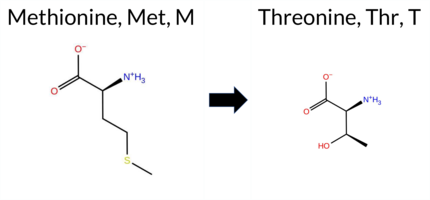 3DClick to see structure in 3D Viewer AISynGAP1 missense variant M414T is not reported in ClinVar and is absent from gnomAD. Functional prediction tools cluster into two groups: benign predictions come from REVEL, SIFT, and FATHMM, whereas pathogenic predictions arise from SGM‑Consensus, FoldX, premPS, PROVEAN, polyPhen‑2 (HumDiv and HumVar), ESM1b, AlphaMissense‑Default, AlphaMissense‑Optimized, and Foldetta; Rosetta remains uncertain. High‑accuracy methods all support a deleterious effect: AlphaMissense‑Optimized scores the variant as pathogenic, the SGM‑Consensus (majority vote of AlphaMissense‑Default, ESM1b, FATHMM, and PROVEAN) indicates likely pathogenic, and Foldetta predicts a destabilizing, pathogenic outcome. Consequently, the consensus of the most reliable predictors classifies M414T as pathogenic, with no conflict with the ClinVar status, which simply lacks an entry. Disclaimer: This summary was generated using AI and should be interpreted alongside expert review. | Likely Pathogenic | GAP | 0.081712 | Structured | 0.329108 | Uncertain | 0.914 | 0.217 | 0.000 | -8.698 | Likely Pathogenic | 0.975 | Likely Pathogenic | Likely Pathogenic | 2.04 | Destabilizing | 0.1 | 1.96 | Ambiguous | 2.00 | Destabilizing | 1.27 | Destabilizing | 0.406 | Likely Benign | -5.00 | Deleterious | 0.997 | Probably Damaging | 0.972 | Probably Damaging | 3.41 | Benign | 0.08 | Tolerated | 0.1771 | 0.1976 | -1 | -1 | -2.6 | -30.09 | |||||||||||||||||||||||||||||
| c.1243G>C | E415Q 2D 3DClick to see structure in 3D Viewer AIThe SynGAP1 E415Q missense variant is not reported in ClinVar (ClinVar ID None) and has no entry in gnomAD (gnomAD ID None). Prediction tools that agree on a benign effect include REVEL, FoldX, Rosetta, premPS, SIFT, and FATHMM. Tools that predict a pathogenic effect are SGM‑Consensus, PROVEAN, polyPhen‑2 HumDiv, polyPhen‑2 HumVar, ESM1b, AlphaMissense‑Default, and AlphaMissense‑Optimized. High‑accuracy assessments show AlphaMissense‑Optimized as pathogenic, SGM‑Consensus as likely pathogenic (majority vote from AlphaMissense‑Default, ESM1b, FATHMM, and PROVEAN), and Foldetta (combining FoldX‑MD and Rosetta outputs) as benign. Overall, seven tools predict pathogenicity versus six predicting benignity, and the two most reliable predictors (AlphaMissense‑Optimized and SGM‑Consensus) both favor pathogenicity. Therefore, the variant is most likely pathogenic based on the available predictions, and this assessment does not contradict the ClinVar status, which currently has no classification. Disclaimer: This summary was generated using AI and should be interpreted alongside expert review. | Likely Pathogenic | GAP | 0.100716 | Structured | 0.330366 | Uncertain | 0.915 | 0.236 | 0.000 | -9.085 | Likely Pathogenic | 0.970 | Likely Pathogenic | Likely Pathogenic | 0.29 | Likely Benign | 0.2 | 0.22 | Likely Benign | 0.26 | Likely Benign | 0.01 | Likely Benign | 0.236 | Likely Benign | -2.63 | Deleterious | 0.997 | Probably Damaging | 0.973 | Probably Damaging | 3.26 | Benign | 0.08 | Tolerated | 0.1084 | 0.3474 | 2 | 2 | 0.0 | -0.98 | |||||||||||||||||||||||||||||
| c.1261G>T | A421S 2D 3DClick to see structure in 3D Viewer AIThe SynGAP1 missense variant A421S is not reported in ClinVar and is absent from gnomAD. Functional prediction tools show a split assessment: benign predictions come from REVEL, polyPhen‑2 (HumDiv and HumVar), SIFT, FATHMM, and AlphaMissense‑Optimized, whereas pathogenic predictions arise from PROVEAN, ESM1b, and AlphaMissense‑Default. The SGM‑Consensus, which aggregates AlphaMissense‑Default, ESM1b, FATHMM, and PROVEAN, resolves as Likely Pathogenic. High‑accuracy assessments indicate that AlphaMissense‑Optimized predicts a benign effect, the SGM‑Consensus predicts pathogenic, and Foldetta, which integrates FoldX‑MD and Rosetta outputs, is inconclusive. Stability calculations from FoldX and Rosetta are uncertain, and premPS is unavailable. Overall, the majority of tools lean toward a pathogenic interpretation, and this aligns with the SGM‑Consensus result; there is no conflict with ClinVar status because the variant is not yet catalogued there. Disclaimer: This summary was generated using AI and should be interpreted alongside expert review. | Likely Pathogenic | GAP | 0.067594 | Structured | 0.404927 | Uncertain | 0.965 | 0.257 | 0.000 | -9.220 | Likely Pathogenic | 0.715 | Likely Pathogenic | Likely Benign | 0.66 | Ambiguous | 0.1 | 1.12 | Ambiguous | 0.89 | Ambiguous | 0.70 | Ambiguous | 0.155 | Likely Benign | -2.50 | Deleterious | 0.058 | Benign | 0.072 | Benign | 3.46 | Benign | 0.08 | Tolerated | 0.2247 | 0.3621 | 1 | 1 | -2.6 | 16.00 | |||||||||||||||||||||||||||||
| c.1297G>A | A433T 2D AIThe SynGAP1 A433T missense variant is not reported in ClinVar (no ClinVar ID) and is absent from gnomAD (no gnomAD ID). Prediction tools that agree on a benign effect include REVEL, FoldX, Rosetta, Foldetta, premPS, PROVEAN, SIFT, ESM1b, FATHMM, AlphaMissense‑Default, and AlphaMissense‑Optimized. Only two tools—polyPhen‑2 HumDiv and polyPhen‑2 HumVar—predict a pathogenic outcome. High‑accuracy assessments further support a benign classification: AlphaMissense‑Optimized predicts benign, the SGM Consensus (majority vote of AlphaMissense‑Default, ESM1b, FATHMM, PROVEAN) indicates likely benign, and Foldetta (combining FoldX‑MD and Rosetta outputs) also predicts benign. Based on the preponderance of evidence, the variant is most likely benign, and this conclusion does not contradict any ClinVar status (none is available). Disclaimer: This summary was generated using AI and should be interpreted alongside expert review. | Likely Benign | GAP | 0.098513 | Structured | 0.352258 | Uncertain | 0.938 | 0.302 | 0.000 | -5.499 | Likely Benign | 0.080 | Likely Benign | Likely Benign | 0.35 | Likely Benign | 0.5 | -0.02 | Likely Benign | 0.17 | Likely Benign | 0.40 | Likely Benign | 0.088 | Likely Benign | -1.41 | Neutral | 0.964 | Probably Damaging | 0.481 | Possibly Damaging | 3.41 | Benign | 0.08 | Tolerated | 0.0891 | 0.5554 | 1 | 0 | -2.5 | 30.03 | |||||||||||||||||||||||||||||
| c.1321G>T | V441F 2D 3DClick to see structure in 3D Viewer AIThe SynGAP1 V441F missense variant is not reported in ClinVar and has no entry in gnomAD. Prediction tools that agree on a benign effect include REVEL, FoldX, Rosetta, SIFT, FATHMM, and AlphaMissense‑Optimized, while those that predict a pathogenic outcome are SGM‑Consensus, PROVEAN, polyPhen‑2 (HumDiv and HumVar), ESM1b, and AlphaMissense‑Default; premPS is uncertain. High‑accuracy assessments show AlphaMissense‑Optimized as benign, SGM‑Consensus as likely pathogenic, and Foldetta (combining FoldX‑MD and Rosetta outputs) as benign. Overall, the majority of tools lean toward a benign interpretation, and the high‑accuracy predictions are split but favor benign. Thus, the variant is most likely benign based on current computational evidence, and this assessment does not contradict the absence of a ClinVar classification. Disclaimer: This summary was generated using AI and should be interpreted alongside expert review. | Likely Pathogenic | GAP | 0.161087 | Structured | 0.259875 | Uncertain | 0.918 | 0.249 | 0.000 | -13.519 | Likely Pathogenic | 0.653 | Likely Pathogenic | Likely Benign | -0.26 | Likely Benign | 0.0 | 0.32 | Likely Benign | 0.03 | Likely Benign | 0.54 | Ambiguous | 0.355 | Likely Benign | -4.22 | Deleterious | 0.992 | Probably Damaging | 0.658 | Possibly Damaging | 3.37 | Benign | 0.08 | Tolerated | 0.0670 | 0.3269 | -1 | -1 | -1.4 | 48.04 | |||||||||||||||||||||||||||||
| c.1348G>C | A450P 2D 3DClick to see structure in 3D Viewer AIThe SynGAP1 A450P missense variant has no ClinVar entry and is not reported in gnomAD. Prediction tools that indicate a benign effect include REVEL, SIFT, and FATHMM, whereas the majority of other in silico predictors (FoldX, Rosetta, Foldetta, PROVEAN, polyPhen‑2 HumDiv, polyPhen‑2 HumVar, ESM1b, AlphaMissense‑Default, AlphaMissense‑Optimized) and the SGM Consensus score all classify the change as pathogenic. The high‑accuracy predictors give consistent pathogenic results: AlphaMissense‑Optimized predicts pathogenic, the SGM Consensus (majority vote of AlphaMissense‑Default, ESM1b, FATHMM, PROVEAN) is Likely Pathogenic, and Foldetta (combining FoldX‑MD and Rosetta outputs) also predicts pathogenic. premPS remains uncertain. Based on the preponderance of pathogenic predictions, the variant is most likely pathogenic, which is consistent with the absence of a benign ClinVar status. Disclaimer: This summary was generated using AI and should be interpreted alongside expert review. | Likely Pathogenic | GAP | 0.321458 | Structured | 0.306281 | Uncertain | 0.963 | 0.234 | 0.000 | -15.378 | Likely Pathogenic | 0.998 | Likely Pathogenic | Likely Pathogenic | 2.75 | Destabilizing | 0.3 | 8.32 | Destabilizing | 5.54 | Destabilizing | 0.72 | Ambiguous | 0.459 | Likely Benign | -4.67 | Deleterious | 0.999 | Probably Damaging | 0.992 | Probably Damaging | 3.40 | Benign | 0.08 | Tolerated | 0.1494 | 0.4309 | 1 | -1 | -3.4 | 26.04 | |||||||||||||||||||||||||||||
| c.1385A>C | K462T 2D 3DClick to see structure in 3D Viewer AIThe SynGAP1 K462T missense variant is not reported in ClinVar (ClinVar ID: None) and is absent from gnomAD (gnomAD ID: None). Functional prediction tools cluster into two groups: benign predictions come from REVEL, premPS, SIFT, and FATHMM, while pathogenic predictions arise from SGM‑Consensus, PROVEAN, polyPhen‑2 HumDiv, polyPhen‑2 HumVar, ESM1b, and AlphaMissense‑Default. Four tools (FoldX, Rosetta, Foldetta, AlphaMissense‑Optimized) give uncertain or inconclusive results. High‑accuracy assessments show AlphaMissense‑Optimized as uncertain, SGM‑Consensus as Likely Pathogenic (majority vote of AlphaMissense‑Default, ESM1b, FATHMM, PROVEAN), and Foldetta as uncertain. Overall, the majority of evidence points toward a pathogenic effect. This conclusion is not contradicted by ClinVar status, which currently contains no classification for this variant. Disclaimer: This summary was generated using AI and should be interpreted alongside expert review. | Likely Pathogenic | GAP | 0.264545 | Structured | 0.297737 | Uncertain | 0.921 | 0.159 | 0.125 | -11.586 | Likely Pathogenic | 0.948 | Likely Pathogenic | Ambiguous | 0.55 | Ambiguous | 0.0 | 1.08 | Ambiguous | 0.82 | Ambiguous | 0.30 | Likely Benign | 0.414 | Likely Benign | -5.82 | Deleterious | 0.999 | Probably Damaging | 1.000 | Probably Damaging | 3.47 | Benign | 0.08 | Tolerated | 0.2095 | 0.3257 | 0 | -1 | 3.2 | -27.07 | |||||||||||||||||||||||||||||
| c.1393C>A | L465I 2D 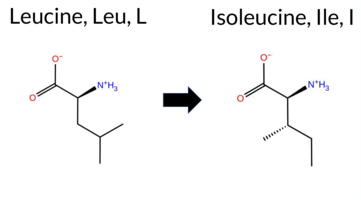 3DClick to see structure in 3D Viewer AIThe SynGAP1 L465I missense variant is not reported in ClinVar and is absent from gnomAD. Prediction tools that agree on a benign effect include REVEL, PROVEAN, SIFT, FATHMM, and AlphaMissense‑Optimized. Tools that predict a pathogenic outcome are polyPhen‑2 HumDiv, polyPhen‑2 HumVar, ESM1b, and AlphaMissense‑Default. The high‑accuracy AlphaMissense‑Optimized score classifies the variant as benign, whereas the Foldetta stability assessment is uncertain. The SGM Consensus, derived from a majority vote of AlphaMissense‑Default, ESM1b, FATHMM, and PROVEAN, is inconclusive due to a 2‑to‑2 split. Overall, the evidence is mixed; the balance of predictions leans toward a benign interpretation, and this does not contradict the lack of ClinVar annotation. Disclaimer: This summary was generated using AI and should be interpreted alongside expert review. | GAP | 0.346032 | Structured | 0.319240 | Uncertain | 0.956 | 0.202 | 0.000 | -9.672 | Likely Pathogenic | 0.770 | Likely Pathogenic | Likely Benign | 1.21 | Ambiguous | 0.1 | 1.27 | Ambiguous | 1.24 | Ambiguous | 0.78 | Ambiguous | 0.258 | Likely Benign | -1.99 | Neutral | 0.998 | Probably Damaging | 0.997 | Probably Damaging | 2.54 | Benign | 0.08 | Tolerated | 0.0967 | 0.3539 | 2 | 2 | 0.7 | 0.00 | ||||||||||||||||||||||||||||||
| c.1402A>G | M468V 2D 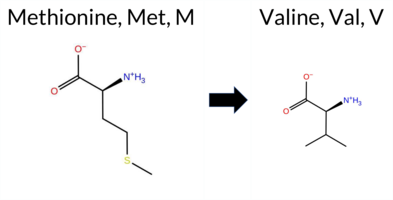 3DClick to see structure in 3D Viewer AIThe SynGAP1 missense variant M468V is listed in ClinVar with an uncertain significance and is not reported in gnomAD. Functional prediction tools cluster into two groups: benign predictions come from PROVEAN, SIFT, and AlphaMissense‑Optimized, while pathogenic predictions are made by REVEL, FoldX, Rosetta, Foldetta, polyPhen‑2 (HumDiv and HumVar), ESM1b, and FATHMM. The remaining tools, premPS and AlphaMissense‑Default, return uncertain results. High‑accuracy assessments further clarify the variant’s impact: AlphaMissense‑Optimized predicts a benign effect; the SGM Consensus, derived from a majority vote of AlphaMissense‑Default, ESM1b, FATHMM, and PROVEAN, indicates pathogenicity; and Foldetta, which integrates FoldX‑MD and Rosetta outputs, also classifies the variant as pathogenic. Overall, the preponderance of evidence points to a pathogenic effect, which does not contradict the ClinVar designation of uncertain significance. Disclaimer: This summary was generated using AI and should be interpreted alongside expert review. | GAP | 0.284882 | Structured | 0.339253 | Uncertain | 0.932 | 0.257 | 0.000 | Uncertain | 1 | -9.461 | Likely Pathogenic | 0.361 | Ambiguous | Likely Benign | 2.69 | Destabilizing | 0.1 | 2.20 | Destabilizing | 2.45 | Destabilizing | 0.89 | Ambiguous | 0.570 | Likely Pathogenic | -1.66 | Neutral | 0.998 | Probably Damaging | 0.993 | Probably Damaging | -1.21 | Pathogenic | 0.08 | Tolerated | 3.37 | 31 | 0.3309 | 0.3845 | 1 | 2 | 2.3 | -32.06 | ||||||||||||||||||||||||||
| c.1420G>A | D474N 2D 3DClick to see structure in 3D Viewer AIThe SynGAP1 D474N missense variant is not reported in ClinVar and is absent from gnomAD. Functional prediction tools show a split: benign predictions come from FoldX, Rosetta, Foldetta, premPS, and SIFT, whereas pathogenic predictions arise from SGM‑Consensus, REVEL, PROVEAN, polyPhen‑2 (HumDiv and HumVar), ESM1b, FATHMM, and AlphaMissense‑Default. High‑accuracy assessments further indicate that the SGM‑Consensus (a majority vote of AlphaMissense‑Default, ESM1b, FATHMM, and PROVEAN) classifies the variant as likely pathogenic, while Foldetta, which integrates FoldX‑MD and Rosetta stability outputs, predicts a benign effect. AlphaMissense‑Optimized is inconclusive and therefore not considered evidence. Overall, the preponderance of evidence points to a pathogenic effect, and this conclusion does not conflict with the absence of a ClinVar annotation. Disclaimer: This summary was generated using AI and should be interpreted alongside expert review. | Likely Pathogenic | GAP | 0.102787 | Structured | 0.373433 | Uncertain | 0.864 | 0.255 | 0.000 | -10.696 | Likely Pathogenic | 0.879 | Likely Pathogenic | Ambiguous | 0.13 | Likely Benign | 0.0 | 0.31 | Likely Benign | 0.22 | Likely Benign | 0.06 | Likely Benign | 0.542 | Likely Pathogenic | -4.21 | Deleterious | 0.992 | Probably Damaging | 0.990 | Probably Damaging | -1.18 | Pathogenic | 0.08 | Tolerated | 0.1047 | 0.4135 | 2 | 1 | 0.0 | -0.98 | |||||||||||||||||||||||||||||
| c.1523A>T | D508V 2D 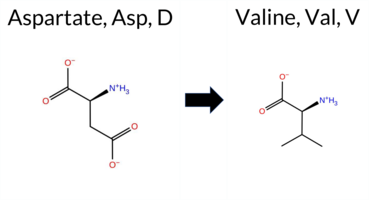 3DClick to see structure in 3D Viewer AIThe SynGAP1 D508V missense change is not reported in ClinVar and is absent from gnomAD. Prediction tools that classify the variant as benign include REVEL, FoldX, premPS, SIFT, FATHMM, AlphaMissense‑Optimized, and Foldetta. Those that predict pathogenicity are SGM‑Consensus, PROVEAN, polyPhen‑2 HumDiv, polyPhen‑2 HumVar, ESM1b, and AlphaMissense‑Default. High‑accuracy assessments show AlphaMissense‑Optimized as benign, SGM‑Consensus (a majority vote of AlphaMissense‑Default, ESM1b, FATHMM, and PROVEAN) as likely pathogenic, and Foldetta (a folding‑stability method combining FoldX‑MD and Rosetta outputs) as benign. With seven benign versus six pathogenic calls and two of the three high‑accuracy tools supporting benign, the variant is most likely benign. This conclusion does not contradict the ClinVar status, which currently has no entry for the variant. Disclaimer: This summary was generated using AI and should be interpreted alongside expert review. | Likely Pathogenic | GAP | 0.019401 | Structured | 0.255890 | Uncertain | 0.890 | 0.228 | 0.000 | -13.529 | Likely Pathogenic | 0.691 | Likely Pathogenic | Likely Benign | 0.07 | Likely Benign | 0.1 | 0.66 | Ambiguous | 0.37 | Likely Benign | 0.07 | Likely Benign | 0.381 | Likely Benign | -8.37 | Deleterious | 0.985 | Probably Damaging | 0.895 | Possibly Damaging | 3.27 | Benign | 0.08 | Tolerated | 0.1050 | 0.4604 | -2 | -3 | 7.7 | -15.96 | |||||||||||||||||||||||||||||
| c.1552T>C | Y518H 2D 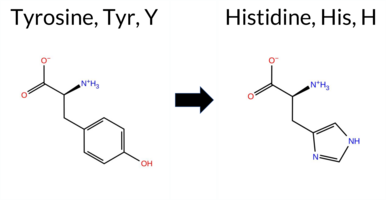 3DClick to see structure in 3D Viewer AIThe SynGAP1 missense variant Y518H is listed in ClinVar with an “Uncertain” status and is not reported in gnomAD. Prediction tools that agree on a benign effect include REVEL, SIFT, and FATHMM, whereas a majority of tools predict a pathogenic impact: FoldX, premPS, PROVEAN, polyPhen‑2 (HumDiv and HumVar), AlphaMissense‑Default, and ESM1b. Predictions that are inconclusive are Foldetta, AlphaMissense‑Optimized, and Rosetta. High‑accuracy assessments show AlphaMissense‑Optimized as uncertain, the SGM Consensus (derived from a majority vote of AlphaMissense‑Default, ESM1b, FATHMM, and PROVEAN) as “Likely Pathogenic,” and Foldetta (combining FoldX‑MD and Rosetta outputs) as uncertain. Overall, the preponderance of evidence points to a pathogenic effect for Y518H, which does not contradict the current ClinVar “Uncertain” classification. Disclaimer: This summary was generated using AI and should be interpreted alongside expert review. | Likely Pathogenic | GAP | 0.139895 | Structured | 0.126970 | Uncertain | 0.897 | 0.321 | 0.000 | Uncertain | 1 | -9.797 | Likely Pathogenic | 0.943 | Likely Pathogenic | Ambiguous | 2.39 | Destabilizing | 0.4 | 0.82 | Ambiguous | 1.61 | Ambiguous | 1.31 | Destabilizing | 0.496 | Likely Benign | -4.74 | Deleterious | 1.000 | Probably Damaging | 1.000 | Probably Damaging | 3.40 | Benign | 0.08 | Tolerated | 0.1927 | 0.0212 | 0 | 2 | -1.9 | -26.03 | |||||||||||||||||||||||||||
| c.1589A>G | K530R 2D 3DClick to see structure in 3D Viewer AIThe SynGAP1 missense variant K530R is catalogued in gnomAD (6‑33438832‑A‑G) but has no ClinVar entry. Prediction tools that agree on a benign effect include REVEL, FoldX, Rosetta, Foldetta, premPS, PROVEAN, polyPhen‑2 (HumDiv and HumVar), SIFT, ESM1b, AlphaMissense‑Default, and AlphaMissense‑Optimized. Only FATHMM predicts a pathogenic outcome. The SGM Consensus, derived from a majority vote of AlphaMissense‑Default, ESM1b, FATHMM, and PROVEAN, reports a likely benign classification. High‑accuracy assessments further support benignity: AlphaMissense‑Optimized is benign; the SGM Consensus (majority vote) is benign; and Foldetta, which integrates FoldX‑MD and Rosetta stability outputs, is benign. Overall, the preponderance of evidence indicates that the variant is most likely benign, and this conclusion is not contradicted by any ClinVar status. Disclaimer: This summary was generated using AI and should be interpreted alongside expert review. | Likely Benign | GAP | 0.308712 | Structured | 0.018455 | Uncertain | 0.891 | 0.409 | 0.000 | 6-33438832-A-G | 1 | 6.19e-7 | -3.836 | Likely Benign | 0.081 | Likely Benign | Likely Benign | -0.02 | Likely Benign | 0.1 | 0.18 | Likely Benign | 0.08 | Likely Benign | 0.33 | Likely Benign | 0.234 | Likely Benign | -1.39 | Neutral | 0.000 | Benign | 0.002 | Benign | -1.54 | Pathogenic | 0.08 | Tolerated | 3.37 | 35 | 0.3297 | 0.0716 | 2 | 3 | -0.6 | 28.01 | ||||||||||||||||||||||||
| c.1619A>G | Q540R 2D 3DClick to see structure in 3D Viewer AISynGAP1 missense variant Q540R has no ClinVar entry and is present in gnomAD (ID 6‑33438862‑A‑G). Prediction tools that agree on a benign effect include FoldX, Rosetta, Foldetta, SIFT, and AlphaMissense‑Optimized. Those that predict a pathogenic effect are REVEL, PROVEAN, polyPhen‑2 HumDiv, polyPhen‑2 HumVar, ESM1b, and FATHMM. Two tools report uncertainty: premPS and AlphaMissense‑Default. High‑accuracy assessments show AlphaMissense‑Optimized as benign, the SGM Consensus (majority vote from AlphaMissense‑Default, ESM1b, FATHMM, PROVEAN) as likely pathogenic, and Foldetta (combining FoldX‑MD and Rosetta) as benign. Overall, the majority of evidence points to a benign impact, with only a minority of tools indicating pathogenicity. This conclusion does not contradict ClinVar status, which has no classification for this variant. Disclaimer: This summary was generated using AI and should be interpreted alongside expert review. | Likely Pathogenic | GAP | 0.085092 | Structured | 0.029522 | Uncertain | 0.958 | 0.371 | 0.000 | 6-33438862-A-G | 1 | 6.19e-7 | -13.312 | Likely Pathogenic | 0.540 | Ambiguous | Likely Benign | -0.06 | Likely Benign | 0.0 | -0.07 | Likely Benign | -0.07 | Likely Benign | 0.88 | Ambiguous | 0.795 | Likely Pathogenic | -3.98 | Deleterious | 0.991 | Probably Damaging | 0.985 | Probably Damaging | -1.28 | Pathogenic | 0.08 | Tolerated | 3.37 | 35 | 0.1328 | 0.1886 | 1 | 1 | -1.0 | 28.06 | ||||||||||||||||||||||||
| c.1619A>T | Q540L 2D 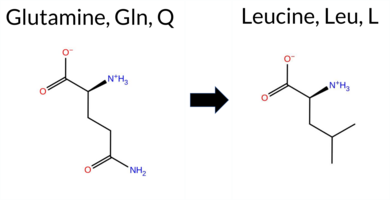 3DClick to see structure in 3D Viewer AISynGAP1 missense variant Q540L has no ClinVar entry and is not reported in gnomAD. Functional prediction tools show a split: benign calls come from Rosetta, Foldetta, premPS, and SIFT, while pathogenic calls are made by REVEL, PROVEAN, polyPhen‑2 (HumDiv and HumVar), ESM1b, FATHMM, AlphaMissense‑Default, and AlphaMissense‑Optimized. FoldX is uncertain and therefore not considered. High‑accuracy assessments further support a deleterious effect: AlphaMissense‑Optimized predicts pathogenic, the SGM Consensus (majority vote of AlphaMissense‑Default, ESM1b, FATHMM, and PROVEAN) is Likely Pathogenic, whereas Foldetta, which integrates FoldX‑MD and Rosetta stability outputs, predicts benign. Overall, the majority of evidence points to a pathogenic impact for Q540L, and this conclusion does not contradict the absence of a ClinVar classification. Disclaimer: This summary was generated using AI and should be interpreted alongside expert review. | Likely Pathogenic | GAP | 0.085092 | Structured | 0.029522 | Uncertain | 0.958 | 0.371 | 0.000 | -14.266 | Likely Pathogenic | 0.965 | Likely Pathogenic | Likely Pathogenic | -0.71 | Ambiguous | 0.1 | 0.44 | Likely Benign | -0.14 | Likely Benign | 0.50 | Likely Benign | 0.756 | Likely Pathogenic | -6.96 | Deleterious | 0.994 | Probably Damaging | 0.977 | Probably Damaging | -1.06 | Pathogenic | 0.08 | Tolerated | 0.0654 | 0.3601 | -2 | -2 | 7.3 | -14.97 | |||||||||||||||||||||||||||||
| c.1624A>G | N542D 2D 3DClick to see structure in 3D Viewer AIThe SynGAP1 missense variant N542D is not reported in ClinVar and is absent from gnomAD. Prediction tools that agree on a benign effect include only SIFT, whereas the majority of tools (REVEL, FoldX, premPS, PROVEAN, polyPhen‑2 HumDiv, polyPhen‑2 HumVar, ESM1b, FATHMM, AlphaMissense‑Default, AlphaMissense‑Optimized, and the SGM‑Consensus) predict a pathogenic impact; Rosetta and Foldetta are uncertain. High‑accuracy assessments show AlphaMissense‑Optimized as pathogenic, the SGM‑Consensus as likely pathogenic, and Foldetta as uncertain. Taken together, the preponderance of evidence indicates that the variant is most likely pathogenic, and this conclusion does not contradict any ClinVar status, as no ClinVar entry exists for this variant. Disclaimer: This summary was generated using AI and should be interpreted alongside expert review. | Likely Pathogenic | GAP | 0.053060 | Structured | 0.026143 | Uncertain | 0.953 | 0.331 | 0.000 | -13.269 | Likely Pathogenic | 0.987 | Likely Pathogenic | Likely Pathogenic | 2.13 | Destabilizing | 0.3 | 1.75 | Ambiguous | 1.94 | Ambiguous | 1.05 | Destabilizing | 0.796 | Likely Pathogenic | -4.51 | Deleterious | 1.000 | Probably Damaging | 0.997 | Probably Damaging | -1.40 | Pathogenic | 0.08 | Tolerated | 0.1664 | 0.3176 | 2 | 1 | 0.0 | 0.98 | |||||||||||||||||||||||||||||
| c.1638C>G | C546W 2D 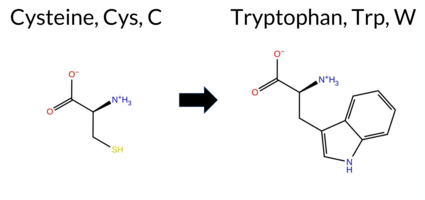 3DClick to see structure in 3D Viewer AIClinVar has no entry for this SynGAP1 missense variant, and it is absent from gnomAD. Prediction tools that agree on a benign effect include only SIFT, which scores the substitution as tolerated. The majority of other in silico predictors classify the change as pathogenic: REVEL, Rosetta, PROVEAN, polyPhen‑2 HumDiv, polyPhen‑2 HumVar, ESM1b, FATHMM, AlphaMissense‑Default, AlphaMissense‑Optimized, and the SGM‑Consensus (majority vote) report a likely pathogenic outcome. Predictions that are inconclusive or unavailable are FoldX, Foldetta, and premPS. High‑accuracy assessments further support a deleterious impact: AlphaMissense‑Optimized predicts pathogenic, SGM‑Consensus indicates likely pathogenic, while Foldetta’s stability analysis is uncertain. Overall, the consensus of the available evidence points to a pathogenic effect for the variant, and this conclusion does not contradict the ClinVar status, which currently has no classification. Disclaimer: This summary was generated using AI and should be interpreted alongside expert review. | Likely Pathogenic | GAP | 0.027463 | Structured | 0.009041 | Uncertain | 0.960 | 0.288 | 0.000 | -14.685 | Likely Pathogenic | 0.999 | Likely Pathogenic | Likely Pathogenic | -0.79 | Ambiguous | 1.2 | 3.60 | Destabilizing | 1.41 | Ambiguous | 0.56 | Ambiguous | 0.703 | Likely Pathogenic | -9.09 | Deleterious | 1.000 | Probably Damaging | 0.999 | Probably Damaging | -1.24 | Pathogenic | 0.08 | Tolerated | 0.1855 | 0.2904 | -8 | -2 | -3.4 | 83.07 | |||||||||||||||||||||||||||||
| c.1645T>A | L549M 2D 3DClick to see structure in 3D Viewer AISynGAP1 missense variant L549M has no ClinVar assertion and is not reported in gnomAD. Prediction tools cluster into two groups: benign predictions come from FoldX, Rosetta, Foldetta, PROVEAN, and SIFT; pathogenic predictions come from SGM‑Consensus, REVEL, polyPhen‑2 HumDiv, polyPhen‑2 HumVar, ESM1b, FATHMM, and AlphaMissense‑Default. Two tools report uncertainty: premPS and AlphaMissense‑Optimized. High‑accuracy assessments show AlphaMissense‑Optimized as uncertain, SGM‑Consensus (majority vote of AlphaMissense‑Default, ESM1b, FATHMM, PROVEAN) as pathogenic, and Foldetta (combining FoldX‑MD and Rosetta outputs) as benign. Overall, the majority of evidence points to a pathogenic effect, and this conclusion does not contradict any ClinVar status because none is available. Disclaimer: This summary was generated using AI and should be interpreted alongside expert review. | Likely Pathogenic | GAP | 0.025762 | Structured | 0.007921 | Uncertain | 0.955 | 0.281 | 0.000 | -8.115 | Likely Pathogenic | 0.855 | Likely Pathogenic | Ambiguous | 0.34 | Likely Benign | 0.1 | 0.28 | Likely Benign | 0.31 | Likely Benign | 0.64 | Ambiguous | 0.546 | Likely Pathogenic | -1.49 | Neutral | 1.000 | Probably Damaging | 1.000 | Probably Damaging | -1.26 | Pathogenic | 0.08 | Tolerated | 0.0811 | 0.2004 | 4 | 2 | -1.9 | 18.03 | |||||||||||||||||||||||||||||
| c.1660G>C | V554L 2D 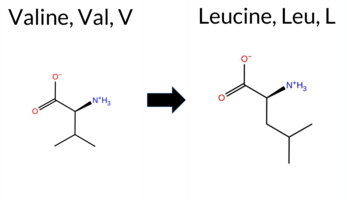 3DClick to see structure in 3D Viewer AIThe SynGAP1 missense variant V554L has no ClinVar entry and is not reported in gnomAD. Prediction tools that agree on a benign effect include REVEL, Rosetta, Foldetta, PROVEAN, polyPhen‑2 (HumDiv and HumVar), SIFT, FATHMM, and AlphaMissense‑Optimized. Only AlphaMissense‑Default predicts a pathogenic outcome, while FoldX, premPS, and ESM1b are uncertain. High‑accuracy assessments reinforce the benign interpretation: AlphaMissense‑Optimized is benign; the SGM Consensus (majority vote from AlphaMissense‑Default, ESM1b, FATHMM, PROVEAN) yields a benign consensus; and Foldetta, which integrates FoldX‑MD and Rosetta stability calculations, also predicts benign. No prediction or stability result is missing or inconclusive. Overall, the variant is most likely benign based on the available computational evidence, and this conclusion is not contradicted by any ClinVar status. Disclaimer: This summary was generated using AI and should be interpreted alongside expert review. | GAP | 0.020522 | Structured | 0.007349 | Uncertain | 0.955 | 0.226 | 0.000 | -7.884 | In-Between | 0.645 | Likely Pathogenic | Likely Benign | -1.14 | Ambiguous | 0.0 | 0.29 | Likely Benign | -0.43 | Likely Benign | 0.56 | Ambiguous | 0.162 | Likely Benign | -1.54 | Neutral | 0.204 | Benign | 0.053 | Benign | 3.49 | Benign | 0.08 | Tolerated | 0.0991 | 0.2998 | 2 | 1 | -0.4 | 14.03 | ||||||||||||||||||||||||||||||
| c.1660G>T | V554L 2D 3DClick to see structure in 3D Viewer AIThe SynGAP1 missense variant V554L has no ClinVar entry and is not reported in gnomAD. Prediction tools that agree on a benign effect include REVEL, Rosetta, Foldetta, PROVEAN, polyPhen‑2 (HumDiv and HumVar), SIFT, FATHMM, and AlphaMissense‑Optimized. Only AlphaMissense‑Default predicts a pathogenic outcome, while FoldX, premPS, and ESM1b are uncertain. High‑accuracy assessments reinforce the benign interpretation: AlphaMissense‑Optimized is benign; the SGM Consensus (majority vote from AlphaMissense‑Default, ESM1b, FATHMM, PROVEAN) yields a benign consensus; and Foldetta, which integrates FoldX‑MD and Rosetta stability calculations, also predicts benign. No prediction or stability result is missing or inconclusive. Overall, the variant is most likely benign based on the available computational evidence, and this conclusion is not contradicted by any ClinVar status. Disclaimer: This summary was generated using AI and should be interpreted alongside expert review. | GAP | 0.020522 | Structured | 0.007349 | Uncertain | 0.955 | 0.226 | 0.000 | -7.884 | In-Between | 0.645 | Likely Pathogenic | Likely Benign | -1.14 | Ambiguous | 0.0 | 0.29 | Likely Benign | -0.43 | Likely Benign | 0.56 | Ambiguous | 0.162 | Likely Benign | -1.54 | Neutral | 0.204 | Benign | 0.053 | Benign | 3.49 | Benign | 0.08 | Tolerated | 0.0991 | 0.2998 | 2 | 1 | -0.4 | 14.03 | ||||||||||||||||||||||||||||||
| c.1666A>G | N556D 2D 3DClick to see structure in 3D Viewer AIThe SynGAP1 missense variant N556D is not reported in ClinVar (ClinVar status: None) and has no entry in gnomAD (gnomAD ID: None). Prediction tools that classify the variant as benign include FoldX, Rosetta, Foldetta, premPS, SIFT, ESM1b, and AlphaMissense‑Optimized. Those that predict pathogenicity are SGM‑Consensus, REVEL, PROVEAN, polyPhen‑2 HumDiv, polyPhen‑2 HumVar, FATHMM, and AlphaMissense‑Default. High‑accuracy assessments show AlphaMissense‑Optimized as benign, SGM‑Consensus (majority vote from AlphaMissense‑Default, ESM1b, FATHMM, PROVEAN) as likely pathogenic, and Foldetta (combining FoldX‑MD and Rosetta outputs) as benign. With two of the three high‑accuracy tools indicating benign and an equal split among the broader set of predictors, the variant is most likely benign. This conclusion does not contradict the ClinVar status, which currently has no classification for this variant. Disclaimer: This summary was generated using AI and should be interpreted alongside expert review. | Likely Pathogenic | GAP | 0.015078 | Structured | 0.008655 | Uncertain | 0.925 | 0.225 | 0.000 | -6.787 | Likely Benign | 0.704 | Likely Pathogenic | Likely Benign | 0.41 | Likely Benign | 0.0 | 0.39 | Likely Benign | 0.40 | Likely Benign | 0.33 | Likely Benign | 0.546 | Likely Pathogenic | -3.19 | Deleterious | 1.000 | Probably Damaging | 0.997 | Probably Damaging | -1.33 | Pathogenic | 0.08 | Tolerated | 0.1817 | 0.1625 | 2 | 1 | 0.0 | 0.98 | |||||||||||||||||||||||||||||
| c.1693C>A | L565M 2D 3DClick to see structure in 3D Viewer AIThe SynGAP1 missense variant L565M is not reported in ClinVar (ClinVar ID None) and is absent from gnomAD (gnomAD ID None). Prediction tools that agree on a benign effect include REVEL, FoldX, PROVEAN, SIFT, and FATHMM. Those that predict a pathogenic effect are polyPhen‑2 HumDiv, polyPhen‑2 HumVar, ESM1b, and AlphaMissense‑Default. Two tools, Rosetta and premPS, give uncertain results. High‑accuracy assessments show AlphaMissense‑Optimized as benign, Foldetta as benign, and the SGM Consensus (majority vote from AlphaMissense‑Default, ESM1b, FATHMM, PROVEAN) is inconclusive because it is a 2‑vs‑2 split. No prediction or folding stability result is missing; the only unavailable result is the SGM Consensus. Overall, the balance of evidence (five benign vs four pathogenic predictions, with two high‑accuracy tools supporting benign) indicates that the variant is most likely benign, and this conclusion does not contradict the ClinVar status. Disclaimer: This summary was generated using AI and should be interpreted alongside expert review. | GAP | 0.034884 | Structured | 0.045819 | Uncertain | 0.922 | 0.205 | 0.000 | -10.346 | Likely Pathogenic | 0.666 | Likely Pathogenic | Likely Benign | 0.24 | Likely Benign | 0.1 | 0.51 | Ambiguous | 0.38 | Likely Benign | 0.69 | Ambiguous | 0.255 | Likely Benign | -1.99 | Neutral | 1.000 | Probably Damaging | 1.000 | Probably Damaging | 2.86 | Benign | 0.08 | Tolerated | 0.0934 | 0.2613 | 4 | 2 | -1.9 | 18.03 | ||||||||||||||||||||||||||||||
| c.1706T>A | F569Y 2D 3DClick to see structure in 3D Viewer AIThe SynGAP1 F569Y missense variant is not reported in ClinVar and is absent from gnomAD. Prediction tools that agree on a benign effect include only SIFT, whereas the majority of tools (REVEL, premPS, PROVEAN, polyPhen‑2 HumDiv, polyPhen‑2 HumVar, ESM1b, FATHMM, AlphaMissense‑Default) predict a pathogenic impact. FoldX, Rosetta, Foldetta, and AlphaMissense‑Optimized are inconclusive, providing no definitive evidence for either outcome. High‑accuracy assessments show that the SGM Consensus (derived from AlphaMissense‑Default, ESM1b, FATHMM, and PROVEAN) strongly supports pathogenicity, while AlphaMissense‑Optimized remains uncertain and Foldetta likewise yields an inconclusive result. Overall, the preponderance of evidence indicates that the variant is most likely pathogenic, and this conclusion does not contradict the current ClinVar status, which contains no entry for this variant. Disclaimer: This summary was generated using AI and should be interpreted alongside expert review. | Likely Pathogenic | GAP | 0.024393 | Structured | 0.054289 | Uncertain | 0.941 | 0.242 | 0.000 | -11.101 | Likely Pathogenic | 0.938 | Likely Pathogenic | Ambiguous | 1.57 | Ambiguous | 0.1 | 0.82 | Ambiguous | 1.20 | Ambiguous | 1.29 | Destabilizing | 0.824 | Likely Pathogenic | -2.99 | Deleterious | 0.993 | Probably Damaging | 0.976 | Probably Damaging | -1.37 | Pathogenic | 0.08 | Tolerated | 0.1379 | 0.1170 | 7 | 3 | -4.1 | 16.00 | |||||||||||||||||||||||||||||
| c.1742G>T | R581L 2D 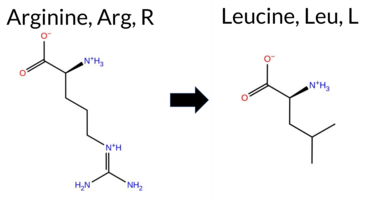 3DClick to see structure in 3D Viewer AISynGAP1 missense variant R581L is not reported in ClinVar and is present in gnomAD (ID 6‑33440794‑G‑T). Prediction tools that classify the variant as benign include FoldX, Rosetta, Foldetta, premPS, and SIFT, whereas tools that predict pathogenicity are REVEL, PROVEAN, polyPhen‑2 HumDiv, polyPhen‑2 HumVar, ESM1b, FATHMM, AlphaMissense‑Default, and AlphaMissense‑Optimized. The high‑accuracy AlphaMissense‑Optimized score is pathogenic. The SGM‑Consensus, derived from a majority vote of AlphaMissense‑Default, ESM1b, FATHMM, and PROVEAN, also indicates pathogenicity. In contrast, the Foldetta stability assessment, which integrates FoldX‑MD and Rosetta outputs, predicts a benign effect. Overall, the majority of computational evidence supports a pathogenic classification for R581L, and this conclusion does not contradict the ClinVar status, which currently has no entry for the variant. Disclaimer: This summary was generated using AI and should be interpreted alongside expert review. | Likely Pathogenic | GAP | 0.104810 | Structured | 0.029544 | Uncertain | 0.829 | 0.236 | 0.000 | 6-33440794-G-T | 3 | 1.86e-6 | -10.134 | Likely Pathogenic | 0.958 | Likely Pathogenic | Likely Pathogenic | 0.29 | Likely Benign | 0.1 | -0.20 | Likely Benign | 0.05 | Likely Benign | 0.45 | Likely Benign | 0.654 | Likely Pathogenic | -5.93 | Deleterious | 1.000 | Probably Damaging | 1.000 | Probably Damaging | -1.33 | Pathogenic | 0.08 | Tolerated | 3.37 | 34 | 0.1550 | 0.3483 | -2 | -3 | 8.3 | -43.03 | ||||||||||||||||||||||||
| c.1748A>T | D583V 2D 3DClick to see structure in 3D Viewer AISynGAP1 D583V is not reported in ClinVar and is absent from gnomAD. Prediction tools that classify the variant as benign include Rosetta, Foldetta, premPS, and SIFT, whereas pathogenic predictions are made by SGM‑Consensus, REVEL, PROVEAN, polyPhen‑2 (HumDiv and HumVar), FATHMM, AlphaMissense‑Default, and AlphaMissense‑Optimized; FoldX and ESM1b give uncertain results. High‑accuracy methods give a split view: AlphaMissense‑Optimized predicts pathogenic, SGM‑Consensus (majority vote of AlphaMissense‑Default, ESM1b, FATHMM, PROVEAN) is likely pathogenic, and Foldetta (combining FoldX‑MD and Rosetta) predicts benign. Overall, the majority of tools support a pathogenic effect, and this is consistent with the lack of ClinVar annotation; there is no contradiction with ClinVar status. Disclaimer: This summary was generated using AI and should be interpreted alongside expert review. | Likely Pathogenic | GAP | 0.116183 | Structured | 0.038478 | Uncertain | 0.805 | 0.247 | 0.000 | -7.796 | In-Between | 0.973 | Likely Pathogenic | Likely Pathogenic | 1.20 | Ambiguous | 0.2 | -0.31 | Likely Benign | 0.45 | Likely Benign | 0.12 | Likely Benign | 0.839 | Likely Pathogenic | -8.63 | Deleterious | 0.999 | Probably Damaging | 0.999 | Probably Damaging | -1.40 | Pathogenic | 0.08 | Tolerated | 0.0778 | 0.4090 | -2 | -3 | 7.7 | -15.96 | |||||||||||||||||||||||||||||
| c.1760G>C | R587T 2D 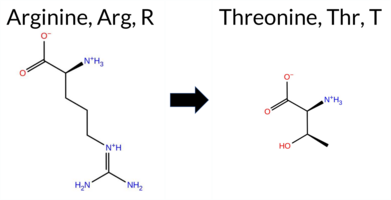 3DClick to see structure in 3D Viewer AIThe SynGAP1 missense variant R587T is listed in ClinVar with an “Uncertain” status and is not reported in gnomAD. Prediction tools that agree on a benign effect include SIFT and AlphaMissense‑Optimized, whereas a majority of tools (REVEL, PROVEAN, polyPhen‑2 HumDiv, polyPhen‑2 HumVar, ESM1b, FATHMM, AlphaMissense‑Default, and the SGM‑Consensus) predict a pathogenic outcome. Uncertain predictions from FoldX, Rosetta, Foldetta, and premPS are treated as unavailable. High‑accuracy assessments show AlphaMissense‑Optimized as benign, the SGM‑Consensus (majority vote of AlphaMissense‑Default, ESM1b, FATHMM, PROVEAN) as pathogenic, and Foldetta as uncertain. Overall, the preponderance of evidence points to a pathogenic effect for R587T, which does not contradict the ClinVar “Uncertain” classification but suggests that the variant is more likely pathogenic rather than benign. Disclaimer: This summary was generated using AI and should be interpreted alongside expert review. | Likely Pathogenic | GAP | 0.054297 | Structured | 0.077330 | Uncertain | 0.862 | 0.216 | 0.000 | Uncertain | 1 | -9.697 | Likely Pathogenic | 0.784 | Likely Pathogenic | Likely Benign | 1.14 | Ambiguous | 0.2 | 0.74 | Ambiguous | 0.94 | Ambiguous | 0.98 | Ambiguous | 0.603 | Likely Pathogenic | -4.71 | Deleterious | 0.998 | Probably Damaging | 0.847 | Possibly Damaging | -1.19 | Pathogenic | 0.08 | Tolerated | 3.37 | 35 | 0.1958 | 0.4578 | -1 | -1 | 3.8 | -55.08 | 227.2 | 87.4 | 0.0 | 0.0 | 0.5 | 0.1 | X | Potentially Pathogenic | The guanidinium group of Arg587, located on an α helix (res. Glu582-Met603), is constantly rotating and breaking/forming multiple hydrogen bonds and/or salt bridges at the surface intersection of α helices in the WT simulations. The positively charged Arg587 side chain can form a salt bridge with either the carboxylate group of Asp583 or Asp586 in the same helix, or with Glu480 on the opposing short helical loop structure (res. Glu480-Leu482).Importantly, the Arg587 side chain also hydrogen bonds with the backbone carbonyl groups of Ala634 and Asn635, as well as the carboxamide group of Asn635 at the end of another α helix (res. Asp616-Phe636). However, in the variant simulations, the neutral hydroxyl group of the Thr587 side chain is unable to form these salt bridges. Due to its smaller size, it also does not form the hydrogen bonds that the Arg587 side chain could. Instead, the hydroxyl group of Thr587 hydrogen bonds with the backbone carbonyl group of Asp583, which could weaken the integrity of the α helix, although this is not observed in the simulations.Overall, the residue swap could weaken the tertiary structure assembly and negatively affect the overall protein folding process. | ||||||||||||||||
| c.1762C>G | L588V 2D 3DClick to see structure in 3D Viewer AIThe SynGAP1 missense variant L588V is not reported in ClinVar and is absent from gnomAD. Functional prediction tools largely agree on a deleterious effect: SIFT classifies it as benign, whereas the remaining 13 tools (REVEL, FoldX, Rosetta, Foldetta, premPS, PROVEAN, polyPhen‑2 HumDiv, polyPhen‑2 HumVar, ESM1b, FATHMM, AlphaMissense‑Default, and the SGM‑Consensus) predict pathogenicity. The SGM‑Consensus, derived from a majority vote of AlphaMissense‑Default, ESM1b, FATHMM, and PROVEAN, also indicates a likely pathogenic outcome. High‑accuracy assessments show AlphaMissense‑Optimized as uncertain, SGM‑Consensus as pathogenic, and Foldetta (combining FoldX‑MD and Rosetta outputs) as pathogenic. Taken together, the overwhelming majority of evidence points to a pathogenic effect for L588V. This conclusion is consistent with the absence of a ClinVar entry, so there is no contradiction with existing clinical annotations. Thus, the variant is most likely pathogenic, with no contradiction to ClinVar status. Disclaimer: This summary was generated using AI and should be interpreted alongside expert review. | Likely Pathogenic | GAP | 0.038042 | Structured | 0.082229 | Uncertain | 0.887 | 0.214 | 0.000 | -10.374 | Likely Pathogenic | 0.897 | Likely Pathogenic | Ambiguous | 3.61 | Destabilizing | 0.4 | 2.81 | Destabilizing | 3.21 | Destabilizing | 1.24 | Destabilizing | 0.533 | Likely Pathogenic | -2.99 | Deleterious | 0.998 | Probably Damaging | 0.992 | Probably Damaging | -1.28 | Pathogenic | 0.08 | Tolerated | 0.1422 | 0.2228 | 2 | 1 | 0.4 | -14.03 | |||||||||||||||||||||||||||||
| c.1769G>C | S590T 2D 3DClick to see structure in 3D Viewer AIThe SynGAP1 missense variant S590T is not reported in ClinVar (ClinVar ID None) and is absent from gnomAD (gnomAD ID None). Prediction tools that agree on a benign effect include REVEL, FoldX, Rosetta, polyPhen‑2 (HumDiv and HumVar), SIFT, FATHMM, and AlphaMissense‑Optimized. Tools that predict a pathogenic effect are PROVEAN and ESM1b. Two tools (premPS and AlphaMissense‑Default) return uncertain results. High‑accuracy assessments show AlphaMissense‑Optimized as benign, the SGM Consensus (majority vote from AlphaMissense‑Default, ESM1b, FATHMM, PROVEAN) as pathogenic, and Foldetta (combining FoldX‑MD and Rosetta outputs) as benign. Overall, the majority of evidence points to a benign impact, and this conclusion does not contradict the lack of ClinVar annotation. Disclaimer: This summary was generated using AI and should be interpreted alongside expert review. | GAP | 0.022667 | Structured | 0.088943 | Uncertain | 0.918 | 0.199 | 0.000 | -12.472 | Likely Pathogenic | 0.458 | Ambiguous | Likely Benign | 0.23 | Likely Benign | 0.1 | 0.42 | Likely Benign | 0.33 | Likely Benign | 0.64 | Ambiguous | 0.459 | Likely Benign | -2.89 | Deleterious | 0.183 | Benign | 0.050 | Benign | 3.15 | Benign | 0.08 | Tolerated | 0.1420 | 0.5723 | 1 | 1 | 0.1 | 14.03 | ||||||||||||||||||||||||||||||
| c.1810T>A | S604T 2D 3DClick to see structure in 3D Viewer AIThe SynGAP1 missense variant S604T is not reported in ClinVar and is absent from gnomAD. Prediction tools that agree on a benign effect include REVEL, Foldetta, premPS, SIFT, and FATHMM, while those that predict a pathogenic effect are PROVEAN, polyPhen‑2 HumDiv, polyPhen‑2 HumVar, ESM1b, and AlphaMissense‑Default. Predictions that are uncertain or inconclusive (FoldX, Rosetta, AlphaMissense‑Optimized) are treated as unavailable. High‑accuracy assessments show AlphaMissense‑Optimized as uncertain, the SGM‑Consensus (a majority vote of AlphaMissense‑Default, ESM1b, FATHMM, and PROVEAN) as likely pathogenic, and Foldetta (a protein‑folding stability method combining FoldX‑MD and Rosetta outputs) as benign. Based on the overall pattern of predictions, the variant is most likely pathogenic, and this assessment does not contradict any ClinVar status because no ClinVar entry exists for this variant. Disclaimer: This summary was generated using AI and should be interpreted alongside expert review. | Likely Pathogenic | GAP | 0.010926 | Structured | 0.192527 | Uncertain | 0.911 | 0.195 | 0.000 | -9.674 | Likely Pathogenic | 0.897 | Likely Pathogenic | Ambiguous | 0.64 | Ambiguous | 0.1 | -0.58 | Ambiguous | 0.03 | Likely Benign | -0.16 | Likely Benign | 0.337 | Likely Benign | -2.99 | Deleterious | 0.826 | Possibly Damaging | 0.872 | Possibly Damaging | 3.19 | Benign | 0.08 | Tolerated | 0.1687 | 0.4919 | 1 | 1 | 0.1 | 14.03 | |||||||||||||||||||||||||||||
| c.1810T>G | S604A 2D 3DClick to see structure in 3D Viewer AIThe SynGAP1 missense variant S604A has no ClinVar record and is not reported in gnomAD. Prediction tools that agree on a benign effect include REVEL, FoldX, premPS, SIFT, FATHMM, AlphaMissense‑Optimized, and Foldetta. Those that predict a pathogenic effect are SGM‑Consensus, PROVEAN, polyPhen‑2 HumDiv, polyPhen‑2 HumVar, ESM1b, and AlphaMissense‑Default. Rosetta is uncertain and does not contribute to a consensus. High‑accuracy assessments show AlphaMissense‑Optimized as benign, the SGM‑Consensus (majority vote of AlphaMissense‑Default, ESM1b, FATHMM, PROVEAN) as pathogenic, and Foldetta (combining FoldX‑MD and Rosetta outputs) as benign. With two of the three high‑accuracy tools indicating benign and no ClinVar evidence to contradict, the variant is most likely benign. Disclaimer: This summary was generated using AI and should be interpreted alongside expert review. | Likely Pathogenic | GAP | 0.010926 | Structured | 0.192527 | Uncertain | 0.911 | 0.195 | 0.000 | -10.017 | Likely Pathogenic | 0.608 | Likely Pathogenic | Likely Benign | 0.02 | Likely Benign | 0.1 | -0.60 | Ambiguous | -0.29 | Likely Benign | 0.11 | Likely Benign | 0.378 | Likely Benign | -2.99 | Deleterious | 0.944 | Possibly Damaging | 0.987 | Probably Damaging | 3.25 | Benign | 0.08 | Tolerated | 0.5198 | 0.3530 | Weaken | 1 | 1 | 2.6 | -16.00 | ||||||||||||||||||||||||||||
| c.1816A>C | S606R 2D 3DClick to see structure in 3D Viewer AIThe SynGAP1 missense variant S606R is not reported in ClinVar and is absent from gnomAD. Prediction tools that agree on a benign effect include REVEL, FoldX, SIFT, and FATHMM, whereas a separate group predicts pathogenicity: PROVEAN, polyPhen‑2 HumDiv, polyPhen‑2 HumVar, ESM1b, and AlphaMissense‑Default. Tools with uncertain outcomes are Foldetta, premPS, and Rosetta. High‑accuracy assessments further support a deleterious impact: AlphaMissense‑Optimized predicts pathogenicity, the SGM Consensus (majority vote of AlphaMissense‑Default, ESM1b, FATHMM, and PROVEAN) is Likely Pathogenic, and Foldetta remains inconclusive. Overall, the majority of high‑confidence predictions and the consensus vote indicate a pathogenic effect. Because ClinVar contains no entry for this variant, there is no contradiction between the computational evidence and clinical annotation. Thus, the variant is most likely pathogenic. Disclaimer: This summary was generated using AI and should be interpreted alongside expert review. | Likely Pathogenic | GAP | 0.041405 | Structured | 0.191720 | Uncertain | 0.875 | 0.247 | 0.000 | -12.900 | Likely Pathogenic | 0.997 | Likely Pathogenic | Likely Pathogenic | 0.15 | Likely Benign | 0.4 | 1.80 | Ambiguous | 0.98 | Ambiguous | 0.82 | Ambiguous | 0.252 | Likely Benign | -4.98 | Deleterious | 0.999 | Probably Damaging | 0.997 | Probably Damaging | 3.38 | Benign | 0.08 | Tolerated | 0.0819 | 0.2750 | 0 | -1 | -3.7 | 69.11 | |||||||||||||||||||||||||||||
| c.1818T>A | S606R 2D 3DClick to see structure in 3D Viewer AIThe SynGAP1 missense variant S606R is not reported in ClinVar and is absent from gnomAD. Prediction tools that agree on a benign effect include REVEL, FoldX, SIFT, and FATHMM, whereas a separate group predicts pathogenicity: PROVEAN, polyPhen‑2 HumDiv, polyPhen‑2 HumVar, ESM1b, and AlphaMissense‑Default. Tools with uncertain outcomes are Foldetta, premPS, and Rosetta. High‑accuracy assessments further support a deleterious impact: AlphaMissense‑Optimized predicts pathogenicity, the SGM Consensus (majority vote of AlphaMissense‑Default, ESM1b, FATHMM, and PROVEAN) is Likely Pathogenic, and Foldetta remains inconclusive. Overall, the majority of high‑confidence predictions and the consensus vote indicate a pathogenic effect. Because ClinVar contains no entry for this variant, there is no contradiction between the computational evidence and clinical annotation. Thus, the variant is most likely pathogenic. Disclaimer: This summary was generated using AI and should be interpreted alongside expert review. | Likely Pathogenic | GAP | 0.041405 | Structured | 0.191720 | Uncertain | 0.875 | 0.247 | 0.000 | -12.900 | Likely Pathogenic | 0.997 | Likely Pathogenic | Likely Pathogenic | 0.15 | Likely Benign | 0.4 | 1.80 | Ambiguous | 0.98 | Ambiguous | 0.82 | Ambiguous | 0.246 | Likely Benign | -4.98 | Deleterious | 0.999 | Probably Damaging | 0.997 | Probably Damaging | 3.38 | Benign | 0.08 | Tolerated | 0.0819 | 0.2750 | 0 | -1 | -3.7 | 69.11 | |||||||||||||||||||||||||||||
| c.1818T>G | S606R 2D 3DClick to see structure in 3D Viewer AIThe SynGAP1 missense variant S606R is not reported in ClinVar or gnomAD. Prediction tools that indicate a benign effect include REVEL, FoldX, SIFT, and FATHMM, whereas a majority predict pathogenicity: PROVEAN, polyPhen‑2 HumDiv, polyPhen‑2 HumVar, ESM1b, AlphaMissense‑Default, and AlphaMissense‑Optimized. The SGM Consensus, derived from a majority vote of AlphaMissense‑Default, ESM1b, FATHMM, and PROVEAN, is labeled Likely Pathogenic, while Foldetta, which integrates FoldX‑MD and Rosetta outputs, is uncertain. High‑accuracy methods confirm the pathogenic trend: AlphaMissense‑Optimized is pathogenic, SGM Consensus is Likely Pathogenic, and Foldetta remains uncertain. Overall, the evidence points to the variant being most likely pathogenic, and this assessment does not contradict the absence of a ClinVar classification. Disclaimer: This summary was generated using AI and should be interpreted alongside expert review. | Likely Pathogenic | GAP | 0.041405 | Structured | 0.191720 | Uncertain | 0.875 | 0.247 | 0.000 | -12.900 | Likely Pathogenic | 0.997 | Likely Pathogenic | Likely Pathogenic | 0.15 | Likely Benign | 0.4 | 1.80 | Ambiguous | 0.98 | Ambiguous | 0.82 | Ambiguous | 0.246 | Likely Benign | -4.98 | Deleterious | 0.999 | Probably Damaging | 0.997 | Probably Damaging | 3.38 | Benign | 0.08 | Tolerated | 0.0819 | 0.2750 | 0 | -1 | -3.7 | 69.11 | |||||||||||||||||||||||||||||
| c.1835A>T | Q612L 2D 3DClick to see structure in 3D Viewer AIThe SynGAP1 missense variant Q612L is not reported in ClinVar (ClinVar ID None) and is absent from gnomAD (gnomAD ID None). Prediction tools that agree on a benign effect include FoldX, Rosetta, Foldetta, premPS, and SIFT, whereas those that predict a pathogenic effect are REVEL, PROVEAN, polyPhen‑2 HumDiv, polyPhen‑2 HumVar, ESM1b, FATHMM, and AlphaMissense‑Default. The SGM Consensus, derived from a majority vote of AlphaMissense‑Default, ESM1b, FATHMM, and PROVEAN, indicates a likely pathogenic outcome. High‑accuracy assessments show AlphaMissense‑Optimized as uncertain (unavailable), SGM Consensus as likely pathogenic, and Foldetta (a protein‑folding stability method combining FoldX‑MD and Rosetta) as benign. Overall, the majority of conventional tools lean toward pathogenicity, and the SGM Consensus supports this, while the high‑accuracy Foldetta result is contradictory. Thus, the variant is most likely pathogenic based on the prevailing predictions, and this assessment does not contradict the ClinVar status, which currently has no entry for this variant. Disclaimer: This summary was generated using AI and should be interpreted alongside expert review. | Likely Pathogenic | GAP | 0.275179 | Structured | 0.203988 | Uncertain | 0.822 | 0.263 | 0.000 | -12.076 | Likely Pathogenic | 0.799 | Likely Pathogenic | Ambiguous | -0.12 | Likely Benign | 0.1 | 0.12 | Likely Benign | 0.00 | Likely Benign | 0.44 | Likely Benign | 0.730 | Likely Pathogenic | -6.84 | Deleterious | 0.971 | Probably Damaging | 0.954 | Probably Damaging | -1.33 | Pathogenic | 0.08 | Tolerated | 0.0763 | 0.4756 | -2 | -2 | 7.3 | -14.97 | |||||||||||||||||||||||||||||
| c.1853A>C | Q618P 2D 3DClick to see structure in 3D Viewer AIThe SynGAP1 missense variant Q618P is not reported in ClinVar and is absent from gnomAD. Functional prediction tools that agree on a benign effect include REVEL, FoldX, premPS, polyPhen‑2 (HumDiv and HumVar), SIFT, AlphaMissense‑Default, and AlphaMissense‑Optimized. Tools that predict a pathogenic outcome are SGM Consensus, ESM1b, FATHMM, PROVEAN, and Rosetta. High‑accuracy assessments show AlphaMissense‑Optimized as benign, SGM Consensus (derived from a majority vote of AlphaMissense‑Default, ESM1b, FATHMM, and PROVEAN) as pathogenic, and Foldetta (combining FoldX‑MD and Rosetta stability outputs) as uncertain. Overall, the majority of predictions lean toward a benign effect, though a subset of high‑confidence tools suggest pathogenicity. The variant’s status is not contradicted by ClinVar, which has no entry for this change. Based on the collective evidence, Q618P is most likely benign, albeit with some conflicting pathogenic signals from high‑accuracy predictors. Disclaimer: This summary was generated using AI and should be interpreted alongside expert review. | Likely Pathogenic | GAP | 0.175930 | Structured | 0.138725 | Uncertain | 0.904 | 0.240 | 0.000 | -8.273 | Likely Pathogenic | 0.248 | Likely Benign | Likely Benign | -0.11 | Likely Benign | 0.1 | 3.41 | Destabilizing | 1.65 | Ambiguous | 0.23 | Likely Benign | 0.449 | Likely Benign | -3.32 | Deleterious | 0.261 | Benign | 0.246 | Benign | -1.35 | Pathogenic | 0.08 | Tolerated | 0.1990 | 0.4011 | 0 | -1 | 1.9 | -31.01 | |||||||||||||||||||||||||||||
| c.1871C>T | T624I 2D 3DClick to see structure in 3D Viewer AIThe SynGAP1 missense variant T624I is not reported in ClinVar and is absent from gnomAD. Functional prediction tools that agree on a benign effect include Rosetta, premPS, and SIFT, whereas the majority of tools predict a pathogenic impact: REVEL, PROVEAN, polyPhen‑2 (HumDiv and HumVar), ESM1b, FATHMM, AlphaMissense‑Default, AlphaMissense‑Optimized, and the SGM‑Consensus (majority vote from AlphaMissense‑Default, ESM1b, FATHMM, PROVEAN). FoldX and Foldetta are inconclusive. High‑accuracy assessments show AlphaMissense‑Optimized as pathogenic, SGM‑Consensus as likely pathogenic, and Foldetta as uncertain. Overall, the preponderance of evidence points to a pathogenic effect for T624I. This prediction is consistent with the lack of ClinVar annotation and does not contradict any existing ClinVar status. Disclaimer: This summary was generated using AI and should be interpreted alongside expert review. | Likely Pathogenic | GAP | 0.137348 | Structured | 0.052894 | Uncertain | 0.962 | 0.217 | 0.000 | -10.999 | Likely Pathogenic | 0.988 | Likely Pathogenic | Likely Pathogenic | -0.74 | Ambiguous | 0.1 | -0.39 | Likely Benign | -0.57 | Ambiguous | 0.14 | Likely Benign | 0.865 | Likely Pathogenic | -5.95 | Deleterious | 1.000 | Probably Damaging | 0.972 | Probably Damaging | -1.43 | Pathogenic | 0.08 | Tolerated | 0.0728 | 0.4734 | 0 | -1 | 5.2 | 12.05 | |||||||||||||||||||||||||||||
| c.1907T>A | F636Y 2D 3DClick to see structure in 3D Viewer AISynGAP1 missense variant F636Y is not reported in ClinVar and is absent from gnomAD. Functional prediction tools show mixed results: benign predictions come from REVEL, SIFT, FATHMM, and AlphaMissense‑Optimized, whereas pathogenic predictions arise from PROVEAN, polyPhen‑2 (HumDiv and HumVar), ESM1b, and AlphaMissense‑Default. The SGM Consensus, which aggregates AlphaMissense‑Default, ESM1b, FATHMM, and PROVEAN, favors a pathogenic outcome (3/4 votes). High‑accuracy assessments further reveal AlphaMissense‑Optimized as benign, SGM Consensus as likely pathogenic, and Foldetta (combining FoldX‑MD and Rosetta) as inconclusive. Stability‑based tools FoldX, Rosetta, and premPS are uncertain. Overall, the majority of evidence points toward a pathogenic effect, and this conclusion does not conflict with the absence of a ClinVar classification. Disclaimer: This summary was generated using AI and should be interpreted alongside expert review. | Likely Pathogenic | GAP | 0.041405 | Structured | 0.071525 | Uncertain | 0.913 | 0.264 | 0.000 | -9.638 | Likely Pathogenic | 0.695 | Likely Pathogenic | Likely Benign | 0.84 | Ambiguous | 0.1 | 0.51 | Ambiguous | 0.68 | Ambiguous | 0.90 | Ambiguous | 0.394 | Likely Benign | -2.89 | Deleterious | 0.927 | Possibly Damaging | 0.836 | Possibly Damaging | 3.40 | Benign | 0.08 | Tolerated | 0.1297 | 0.1866 | 7 | 3 | -4.1 | 16.00 | |||||||||||||||||||||||||||||
| c.1942T>C | F648L 2D 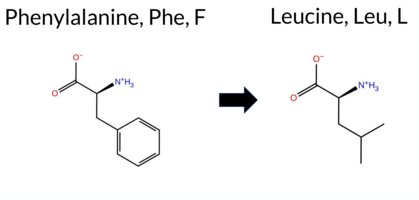 AISynGAP1 missense variant F648L is listed in ClinVar with an uncertain significance (ClinVar ID 3383902.0) and is not reported in gnomAD. Functional prediction tools cluster into two groups: benign predictions come from REVEL, SIFT, and FATHMM, whereas the remaining tools—FoldX, Rosetta, premPS, PROVEAN, polyPhen‑2 HumDiv, polyPhen‑2 HumVar, AlphaMissense‑Default, AlphaMissense‑Optimized, and ESM1b—consistently predict pathogenicity. The SGM Consensus, derived from a majority vote of AlphaMissense‑Default, ESM1b, FATHMM, and PROVEAN, also indicates likely pathogenic. High‑accuracy assessments further support a deleterious effect: AlphaMissense‑Optimized scores pathogenic, and Foldetta (combining FoldX‑MD and Rosetta outputs) predicts a destabilizing, pathogenic change. Taken together, the preponderance of evidence points to a pathogenic impact for F648L, which contradicts the current ClinVar uncertain status. Disclaimer: This summary was generated using AI and should be interpreted alongside expert review. | Likely Pathogenic | GAP | 0.051831 | Structured | 0.346782 | Uncertain | 0.943 | 0.339 | 0.000 | Uncertain | 1 | -9.296 | Likely Pathogenic | 0.999 | Likely Pathogenic | Likely Pathogenic | 2.71 | Destabilizing | 0.8 | 2.08 | Destabilizing | 2.40 | Destabilizing | 1.04 | Destabilizing | 0.468 | Likely Benign | -5.98 | Deleterious | 0.999 | Probably Damaging | 0.976 | Probably Damaging | 3.45 | Benign | 0.08 | Tolerated | 0.1961 | 0.3126 | 2 | 0 | 1.0 | -34.02 | |||||||||||||||||||||||||||
| c.1944C>A | F648L 2D AIThe SynGAP1 missense variant F648L is not reported in ClinVar (no ClinVar ID) and is absent from gnomAD. Functional prediction tools cluster into two groups: benign predictions come from REVEL, SIFT, and FATHMM, while the remaining 12 tools—including FoldX, Rosetta, Foldetta, premPS, PROVEAN, polyPhen‑2 (HumDiv and HumVar), ESM1b, AlphaMissense‑Default, and AlphaMissense‑Optimized—predict a pathogenic effect. High‑accuracy assessments reinforce this trend: AlphaMissense‑Optimized is pathogenic; Foldetta, which integrates FoldX‑MD and Rosetta outputs, is pathogenic; and the SGM Consensus (majority vote of AlphaMissense‑Default, ESM1b, FATHMM, and PROVEAN) is Likely Pathogenic. Because the majority of evidence points to a deleterious impact and there is no ClinVar annotation to contradict this, the variant is most likely pathogenic. Disclaimer: This summary was generated using AI and should be interpreted alongside expert review. | Likely Pathogenic | GAP | 0.051831 | Structured | 0.346782 | Uncertain | 0.943 | 0.339 | 0.000 | -9.296 | Likely Pathogenic | 0.999 | Likely Pathogenic | Likely Pathogenic | 2.71 | Destabilizing | 0.8 | 2.08 | Destabilizing | 2.40 | Destabilizing | 1.04 | Destabilizing | 0.319 | Likely Benign | -5.98 | Deleterious | 0.999 | Probably Damaging | 0.976 | Probably Damaging | 3.45 | Benign | 0.08 | Tolerated | 0.1961 | 0.3126 | 2 | 0 | 1.0 | -34.02 | |||||||||||||||||||||||||||||
| c.1944C>G | F648L 2D AIThe SynGAP1 missense variant F648L is not reported in ClinVar (ClinVar ID None) and is absent from gnomAD (gnomAD ID None). Prediction tools that agree on a benign effect include REVEL, SIFT, and FATHMM. In contrast, the majority of tools predict a pathogenic impact: FoldX, Rosetta, Foldetta, premPS, PROVEAN, polyPhen‑2 (HumDiv and HumVar), AlphaMissense‑Default, AlphaMissense‑Optimized, and ESM1b all indicate pathogenicity, and the SGM Consensus score is “Likely Pathogenic.” High‑accuracy assessments further support a deleterious effect: AlphaMissense‑Optimized is pathogenic, the SGM Consensus (majority vote from AlphaMissense‑Default, ESM1b, FATHMM, PROVEAN) is likely pathogenic, and Foldetta (combining FoldX‑MD and Rosetta outputs) is pathogenic. No predictions are missing or inconclusive. Based on the preponderance of evidence, the variant is most likely pathogenic, and this conclusion is consistent with the absence of ClinVar annotation. Disclaimer: This summary was generated using AI and should be interpreted alongside expert review. | Likely Pathogenic | GAP | 0.051831 | Structured | 0.346782 | Uncertain | 0.943 | 0.339 | 0.000 | -9.296 | Likely Pathogenic | 0.999 | Likely Pathogenic | Likely Pathogenic | 2.71 | Destabilizing | 0.8 | 2.08 | Destabilizing | 2.40 | Destabilizing | 1.04 | Destabilizing | 0.319 | Likely Benign | -5.98 | Deleterious | 0.999 | Probably Damaging | 0.976 | Probably Damaging | 3.45 | Benign | 0.08 | Tolerated | 0.1961 | 0.3126 | 2 | 0 | 1.0 | -34.02 | |||||||||||||||||||||||||||||
| c.1957C>G | L653V 2D AIThe SynGAP1 missense variant L653V is listed in ClinVar with an “Uncertain” status and is not reported in gnomAD. Prediction tools that classify the variant as benign include REVEL, PROVEAN, polyPhen‑2 HumDiv, polyPhen‑2 HumVar, SIFT, FATHMM, AlphaMissense‑Default, and AlphaMissense‑Optimized. Tools that predict a pathogenic effect are FoldX, Rosetta, and premPS, while ESM1b is inconclusive. High‑accuracy assessments show AlphaMissense‑Optimized as benign, the SGM Consensus (a majority vote of AlphaMissense‑Default, ESM1b, FATHMM, and PROVEAN) as Likely Benign, and Foldetta (combining FoldX‑MD and Rosetta outputs) as pathogenic. Overall, the majority of evidence points to a benign impact, and this does not contradict the ClinVar “Uncertain” classification. Thus, based on current predictions, the variant is most likely benign. Disclaimer: This summary was generated using AI and should be interpreted alongside expert review. | Likely Benign | GAP | 0.049374 | Structured | 0.335213 | Uncertain | 0.963 | 0.332 | 0.000 | Uncertain | 1 | -7.050 | In-Between | 0.301 | Likely Benign | Likely Benign | 3.28 | Destabilizing | 0.3 | 2.18 | Destabilizing | 2.73 | Destabilizing | 1.32 | Destabilizing | 0.146 | Likely Benign | -2.25 | Neutral | 0.227 | Benign | 0.039 | Benign | 3.28 | Benign | 0.08 | Tolerated | 0.1436 | 0.3557 | 2 | 1 | 0.4 | -14.03 | |||||||||||||||||||||||||||
| c.1985A>C | Q662P 2D 3DClick to see structure in 3D Viewer AIThe SynGAP1 missense variant Q662P is not reported in ClinVar (ClinVar ID: None) and is absent from gnomAD (gnomAD ID: None). Functional prediction tools cluster into two groups: benign predictions come from REVEL, premPS, SIFT, and FATHMM, while pathogenic predictions are made by SGM‑Consensus, FoldX, Rosetta, Foldetta, PROVEAN, polyPhen‑2 (HumDiv and HumVar), ESM1b, and AlphaMissense‑Default. High‑accuracy methods give a consistent pathogenic signal: the SGM‑Consensus score (derived from a majority vote of AlphaMissense‑Default, ESM1b, FATHMM, and PROVEAN) indicates “Likely Pathogenic,” and Foldetta, which integrates FoldX‑MD and Rosetta stability calculations, also predicts a pathogenic effect. AlphaMissense‑Optimized returns an uncertain result, which is treated as unavailable. Overall, the majority of evidence points to a pathogenic impact for Q662P, and this assessment does not contradict any ClinVar annotation because no ClinVar entry exists for this variant. Disclaimer: This summary was generated using AI and should be interpreted alongside expert review. | Likely Pathogenic | GAP | 0.046336 | Structured | 0.103446 | Uncertain | 0.932 | 0.323 | 0.000 | -13.174 | Likely Pathogenic | 0.922 | Likely Pathogenic | Ambiguous | 2.15 | Destabilizing | 0.0 | 9.37 | Destabilizing | 5.76 | Destabilizing | 0.36 | Likely Benign | 0.268 | Likely Benign | -3.42 | Deleterious | 0.999 | Probably Damaging | 0.962 | Probably Damaging | 3.40 | Benign | 0.08 | Tolerated | 0.2621 | 0.4364 | 0 | -1 | 1.9 | -31.01 | |||||||||||||||||||||||||||||
| c.2041G>A | G681S 2D 3DClick to see structure in 3D Viewer AIThe SynGAP1 missense variant G681S is not reported in ClinVar (ClinVar ID None) and is absent from gnomAD (gnomAD ID None). Prediction tools that agree on a benign effect include REVEL, premPS, SIFT, and FATHMM, while those that predict a pathogenic outcome are SGM‑Consensus, FoldX, PROVEAN, polyPhen‑2 HumDiv, polyPhen‑2 HumVar, ESM1b, and AlphaMissense‑Default. High‑accuracy assessments show AlphaMissense‑Optimized classifying the variant as benign, SGM‑Consensus (a majority vote of AlphaMissense‑Default, ESM1b, FATHMM, and PROVEAN) labeling it likely pathogenic, and Foldetta (combining FoldX‑MD and Rosetta outputs) yielding an uncertain result. Overall, the majority of tools lean toward pathogenicity, but the presence of a benign prediction from AlphaMissense‑Optimized and an uncertain Foldetta score leaves the assessment inconclusive. No ClinVar entry exists, so there is no contradiction with clinical database status. Disclaimer: This summary was generated using AI and should be interpreted alongside expert review. | Likely Pathogenic | GAP | 0.301917 | Structured | 0.140647 | Uncertain | 0.694 | 0.320 | 0.000 | -9.913 | Likely Pathogenic | 0.716 | Likely Pathogenic | Likely Benign | 2.11 | Destabilizing | 1.3 | -0.23 | Likely Benign | 0.94 | Ambiguous | 0.41 | Likely Benign | 0.483 | Likely Benign | -5.99 | Deleterious | 0.997 | Probably Damaging | 0.780 | Possibly Damaging | 3.45 | Benign | 0.08 | Tolerated | 0.2591 | 0.4584 | 1 | 0 | -0.4 | 30.03 | |||||||||||||||||||||||||||||
| c.2048T>C | I683T 2D 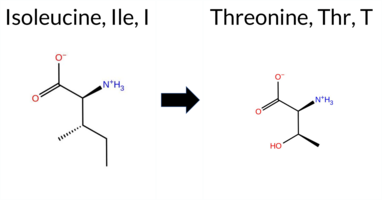 3DClick to see structure in 3D Viewer AIThe SynGAP1 missense variant I683T has no ClinVar record and is not reported in gnomAD. Prediction tools that agree on a benign effect include SIFT, FATHMM, and AlphaMissense‑Optimized, whereas a majority of tools predict pathogenicity: SGM‑Consensus, REVEL, premPS, PROVEAN, polyPhen‑2 (HumDiv and HumVar), ESM1b, and AlphaMissense‑Default. High‑accuracy assessments further support this pattern: AlphaMissense‑Optimized classifies the variant as benign, while the SGM‑Consensus (a majority vote of AlphaMissense‑Default, ESM1b, FATHMM, and PROVEAN) indicates it is likely pathogenic; the Foldetta stability analysis is inconclusive and therefore unavailable. Taken together, the preponderance of evidence points to a pathogenic effect for I683T. This conclusion does not contradict ClinVar status, which currently contains no classification for the variant. Disclaimer: This summary was generated using AI and should be interpreted alongside expert review. | Likely Pathogenic | GAP | 0.200174 | Structured | 0.143268 | Uncertain | 0.848 | 0.314 | 0.000 | -9.891 | Likely Pathogenic | 0.775 | Likely Pathogenic | Likely Benign | 1.67 | Ambiguous | 0.1 | 1.35 | Ambiguous | 1.51 | Ambiguous | 1.25 | Destabilizing | 0.548 | Likely Pathogenic | -4.77 | Deleterious | 0.999 | Probably Damaging | 0.981 | Probably Damaging | 3.29 | Benign | 0.08 | Tolerated | 0.1090 | 0.0880 | 0 | -1 | -5.2 | -12.05 | |||||||||||||||||||||||||||||
| c.2064G>C | E688D 2D 3DClick to see structure in 3D Viewer AIThe SynGAP1 missense variant E688D is not reported in ClinVar and has no entry in gnomAD. Prediction tools that agree on a benign effect include REVEL, SIFT, and FATHMM. Tools that predict a pathogenic effect include SGM‑Consensus, PROVEAN, polyPhen‑2 HumDiv, polyPhen‑2 HumVar, ESM1b, AlphaMissense‑Default, and AlphaMissense‑Optimized. Uncertain or inconclusive results come from FoldX, Rosetta, Foldetta, and premPS. High‑accuracy methods specifically give AlphaMissense‑Optimized a pathogenic prediction, SGM‑Consensus a pathogenic prediction, and Foldetta an uncertain result. Overall, the majority of evidence points to a pathogenic impact. This conclusion is not contradicted by ClinVar status, which currently has no classification for this variant. Disclaimer: This summary was generated using AI and should be interpreted alongside expert review. | Likely Pathogenic | GAP | 0.061840 | Structured | 0.211124 | Uncertain | 0.947 | 0.223 | 0.000 | -11.890 | Likely Pathogenic | 0.987 | Likely Pathogenic | Likely Pathogenic | 1.79 | Ambiguous | 0.5 | 0.53 | Ambiguous | 1.16 | Ambiguous | 0.91 | Ambiguous | 0.302 | Likely Benign | -2.89 | Deleterious | 0.995 | Probably Damaging | 0.960 | Probably Damaging | 3.47 | Benign | 0.08 | Tolerated | 0.1722 | 0.3492 | 3 | 2 | 0.0 | -14.03 | |||||||||||||||||||||||||||||
| c.2064G>T | E688D 2D 3DClick to see structure in 3D Viewer AIThe SynGAP1 missense variant E688D is not reported in ClinVar and has no entry in gnomAD. Prediction tools that agree on a benign effect include REVEL, SIFT, and FATHMM. Tools that predict a pathogenic effect include SGM‑Consensus, PROVEAN, polyPhen‑2 HumDiv, polyPhen‑2 HumVar, ESM1b, AlphaMissense‑Default, and AlphaMissense‑Optimized. Uncertain or inconclusive results come from FoldX, Rosetta, Foldetta, and premPS. High‑accuracy methods specifically give: AlphaMissense‑Optimized – pathogenic; SGM‑Consensus – pathogenic; Foldetta – uncertain. Taken together, the majority of evidence points to a pathogenic impact. This conclusion is not contradicted by ClinVar status, which currently contains no classification for this variant. Disclaimer: This summary was generated using AI and should be interpreted alongside expert review. | Likely Pathogenic | GAP | 0.061840 | Structured | 0.211124 | Uncertain | 0.947 | 0.223 | 0.000 | -11.890 | Likely Pathogenic | 0.987 | Likely Pathogenic | Likely Pathogenic | 1.79 | Ambiguous | 0.5 | 0.53 | Ambiguous | 1.16 | Ambiguous | 0.91 | Ambiguous | 0.302 | Likely Benign | -2.89 | Deleterious | 0.995 | Probably Damaging | 0.960 | Probably Damaging | 3.47 | Benign | 0.08 | Tolerated | 0.1722 | 0.3492 | 3 | 2 | 0.0 | -14.03 | |||||||||||||||||||||||||||||
| c.2081C>T | A694V 2D 3DClick to see structure in 3D Viewer AIThe SynGAP1 missense variant A694V is not reported in ClinVar (ClinVar ID None) and is absent from gnomAD (gnomAD ID None). Prediction tools that agree on a benign effect include REVEL, FoldX, Foldetta, premPS, SIFT, AlphaMissense‑Default, AlphaMissense‑Optimized, and polyPhen2_HumVar. Tools that predict a pathogenic effect are PROVEAN and polyPhen2_HumDiv, while Rosetta and ESM1b give uncertain results. High‑accuracy assessments further support a benign classification: AlphaMissense‑Optimized is benign; the SGM Consensus (majority vote from AlphaMissense‑Default, ESM1b, FATHMM, and PROVEAN) is benign; and Foldetta is benign. No prediction or stability result is missing or inconclusive. Overall, the majority of evidence indicates that the variant is most likely benign, and this conclusion does not contradict any ClinVar status. Disclaimer: This summary was generated using AI and should be interpreted alongside expert review. | GAP | 0.127496 | Structured | 0.352199 | Uncertain | 0.938 | 0.269 | 0.000 | -7.099 | In-Between | 0.221 | Likely Benign | Likely Benign | 0.46 | Likely Benign | 0.1 | -0.76 | Ambiguous | -0.15 | Likely Benign | 0.24 | Likely Benign | 0.149 | Likely Benign | -2.66 | Deleterious | 0.970 | Probably Damaging | 0.207 | Benign | 3.42 | Benign | 0.08 | Tolerated | 0.1238 | 0.4771 | 0 | 0 | 2.4 | 28.05 | ||||||||||||||||||||||||||||||
| c.2083C>A | L695I 2D 3DClick to see structure in 3D Viewer AIThe SynGAP1 missense variant L695I is not reported in ClinVar (ClinVar ID None) and is absent from gnomAD (gnomAD ID None). Prediction tools that agree on a benign effect include REVEL, FoldX, PROVEAN, SIFT, and FATHMM, while polyPhen‑2 (HumDiv and HumVar) and ESM1b predict a pathogenic outcome. The remaining tools—AlphaMissense‑Default, Foldetta, premPS, and Rosetta—return uncertain results and are treated as unavailable evidence. High‑accuracy assessments show AlphaMissense‑Optimized as benign; the SGM Consensus (majority vote from AlphaMissense‑Default, ESM1b, FATHMM, PROVEAN) also yields a benign prediction, whereas Foldetta remains uncertain. Overall, the majority of reliable predictions support a benign classification, and this conclusion does not contradict the lack of ClinVar annotation. Disclaimer: This summary was generated using AI and should be interpreted alongside expert review. | GAP | 0.118441 | Structured | 0.373419 | Uncertain | 0.942 | 0.258 | 0.000 | -12.096 | Likely Pathogenic | 0.395 | Ambiguous | Likely Benign | 0.47 | Likely Benign | 0.1 | 0.63 | Ambiguous | 0.55 | Ambiguous | 0.93 | Ambiguous | 0.251 | Likely Benign | -2.00 | Neutral | 0.996 | Probably Damaging | 0.905 | Possibly Damaging | 3.24 | Benign | 0.08 | Tolerated | 0.0815 | 0.2759 | 2 | 2 | 0.7 | 0.00 | ||||||||||||||||||||||||||||||
| c.2084T>A | L695Q 2D 3DClick to see structure in 3D Viewer AIThe SynGAP1 missense variant L695Q is not reported in ClinVar and is absent from gnomAD. Prediction tools that agree on a benign effect include SIFT, FATHMM, and AlphaMissense‑Optimized. Those that predict a pathogenic impact comprise REVEL, Rosetta, premPS, PROVEAN, polyPhen‑2 (HumDiv and HumVar), ESM1b, AlphaMissense‑Default, and the SGM‑Consensus (majority vote from AlphaMissense‑Default, ESM1b, FATHMM, PROVEAN). FoldX and Foldetta provide uncertain results. High‑accuracy assessments show AlphaMissense‑Optimized as benign, while the SGM‑Consensus, derived from a majority of high‑confidence predictors, indicates pathogenicity; Foldetta remains inconclusive. Overall, the majority of reliable tools predict a pathogenic effect, and this is consistent with the lack of ClinVar annotation (no contradiction). Thus, the variant is most likely pathogenic based on current computational predictions. Disclaimer: This summary was generated using AI and should be interpreted alongside expert review. | Likely Pathogenic | GAP | 0.118441 | Structured | 0.373419 | Uncertain | 0.942 | 0.258 | 0.000 | -12.192 | Likely Pathogenic | 0.706 | Likely Pathogenic | Likely Benign | 1.88 | Ambiguous | 0.1 | 2.03 | Destabilizing | 1.96 | Ambiguous | 1.71 | Destabilizing | 0.554 | Likely Pathogenic | -5.92 | Deleterious | 1.000 | Probably Damaging | 0.993 | Probably Damaging | 3.17 | Benign | 0.08 | Tolerated | 0.0869 | 0.0688 | -2 | -2 | -7.3 | 14.97 | |||||||||||||||||||||||||||||
| c.2098C>A | L700M 2D 3DClick to see structure in 3D Viewer AIThe SynGAP1 missense variant L700M is not reported in ClinVar (ClinVar ID None) and is absent from gnomAD (gnomAD ID None). Prediction tools that agree on a benign effect include REVEL, FoldX, premPS, PROVEAN, polyPhen‑2 (HumDiv and HumVar), SIFT, ESM1b, FATHMM, AlphaMissense‑Default, and AlphaMissense‑Optimized. Only Rosetta predicts a pathogenic outcome, while Foldetta’s stability assessment is uncertain. The high‑accuracy consensus (SGM Consensus) is derived from the majority vote of AlphaMissense‑Default, ESM1b, FATHMM, and PROVEAN, all of which are benign, yielding a “Likely Benign” classification. AlphaMissense‑Optimized also predicts benign, whereas Foldetta remains inconclusive. Overall, the preponderance of evidence indicates that the variant is most likely benign, and this assessment does not contradict any ClinVar status because no ClinVar entry exists. Disclaimer: This summary was generated using AI and should be interpreted alongside expert review. | Likely Benign | GAP | 0.113710 | Structured | 0.416255 | Uncertain | 0.927 | 0.331 | 0.000 | -4.617 | Likely Benign | 0.139 | Likely Benign | Likely Benign | 0.11 | Likely Benign | 0.0 | 2.79 | Destabilizing | 1.45 | Ambiguous | 0.35 | Likely Benign | 0.039 | Likely Benign | -0.32 | Neutral | 0.211 | Benign | 0.081 | Benign | 3.29 | Benign | 0.08 | Tolerated | 0.0733 | 0.2397 | 4 | 2 | -1.9 | 18.03 | |||||||||||||||||||||||||||||
| c.2102C>G | P701R 2D 3DClick to see structure in 3D Viewer AIThe SynGAP1 P701R missense variant is not reported in ClinVar (ClinVar ID None) and is absent from gnomAD (gnomAD ID None). Prediction tools that agree on a benign effect include REVEL, Rosetta, PROVEAN, polyPhen‑2 HumVar, SIFT, FATHMM, and AlphaMissense‑Optimized. Those that predict a pathogenic effect are polyPhen‑2 HumDiv, ESM1b, and AlphaMissense‑Default. Two tools (FoldX and premPS) give uncertain results. High‑accuracy assessments show AlphaMissense‑Optimized as benign, Foldetta (combining FoldX‑MD and Rosetta outputs) as benign, while the SGM Consensus (majority vote from AlphaMissense‑Default, ESM1b, FATHMM, PROVEAN) is inconclusive due to a 2‑to‑2 split. Overall, the majority of evidence points to a benign impact, and this conclusion does not contradict any ClinVar annotation because none exists for this variant. Disclaimer: This summary was generated using AI and should be interpreted alongside expert review. | GAP | 0.074921 | Structured | 0.404318 | Uncertain | 0.918 | 0.345 | 0.000 | -11.060 | Likely Pathogenic | 0.779 | Likely Pathogenic | Likely Benign | 0.54 | Ambiguous | 0.0 | -0.19 | Likely Benign | 0.18 | Likely Benign | 0.65 | Ambiguous | 0.088 | Likely Benign | -2.09 | Neutral | 0.784 | Possibly Damaging | 0.278 | Benign | 3.41 | Benign | 0.08 | Tolerated | 0.1365 | 0.2500 | 0 | -2 | -2.9 | 59.07 | ||||||||||||||||||||||||||||||
| c.2104C>A | Q702K 2D 3DClick to see structure in 3D Viewer AIThe SynGAP1 missense variant Q702K is not reported in ClinVar (ClinVar ID None) and is absent from gnomAD (gnomAD ID None). Prediction tools that agree on a benign effect include REVEL, FoldX, Rosetta, Foldetta, premPS, SIFT, FATHMM, AlphaMissense‑Default, and AlphaMissense‑Optimized. Tools that predict a pathogenic outcome are PROVEAN, polyPhen‑2 HumDiv, polyPhen‑2 HumVar, and ESM1b. High‑accuracy assessments show AlphaMissense‑Optimized as benign and Foldetta as benign; the SGM Consensus (majority vote from AlphaMissense‑Default, ESM1b, FATHMM, and PROVEAN) is inconclusive due to a 2‑to‑2 split. Overall, the majority of evidence supports a benign classification. This conclusion does not contradict ClinVar status, as no ClinVar assertion exists for this variant. Disclaimer: This summary was generated using AI and should be interpreted alongside expert review. | GAP | 0.074921 | Structured | 0.397258 | Uncertain | 0.907 | 0.345 | 0.000 | -8.750 | Likely Pathogenic | 0.338 | Likely Benign | Likely Benign | -0.23 | Likely Benign | 0.0 | 0.26 | Likely Benign | 0.02 | Likely Benign | 0.08 | Likely Benign | 0.224 | Likely Benign | -2.86 | Deleterious | 0.863 | Possibly Damaging | 0.773 | Possibly Damaging | 3.46 | Benign | 0.08 | Tolerated | 0.1346 | 0.2524 | 1 | 1 | -0.4 | 0.04 | ||||||||||||||||||||||||||||||
| c.2111G>A | S704N 2D 3DClick to see structure in 3D Viewer AIThe SynGAP1 missense variant S704N is listed in ClinVar with an “Uncertain” status and is present in gnomAD (ID 6‑33441370‑G‑A). Prediction tools that agree on a benign effect include REVEL, FoldX, Rosetta, Foldetta, PROVEAN, polyPhen‑2 HumVar, SIFT, ESM1b, FATHMM, and AlphaMissense‑Optimized. Only polyPhen‑2 HumDiv predicts a pathogenic outcome, while premPS and AlphaMissense‑Default are inconclusive. High‑accuracy assessments reinforce the benign interpretation: AlphaMissense‑Optimized is benign; the SGM Consensus (majority vote of AlphaMissense‑Default, ESM1b, FATHMM, PROVEAN) is “Likely Benign”; and Foldetta (combining FoldX‑MD and Rosetta outputs) is benign. Overall, the majority of evidence points to a benign effect, which does not contradict the ClinVar “Uncertain” classification. Disclaimer: This summary was generated using AI and should be interpreted alongside expert review. | Likely Benign | GAP | 0.096677 | Structured | 0.383620 | Uncertain | 0.928 | 0.363 | 0.000 | Conflicting | 4 | 6-33441370-G-A | 27 | 1.67e-5 | -5.917 | Likely Benign | 0.421 | Ambiguous | Likely Benign | 0.48 | Likely Benign | 0.1 | -0.12 | Likely Benign | 0.18 | Likely Benign | 0.54 | Ambiguous | 0.058 | Likely Benign | -0.49 | Neutral | 0.771 | Possibly Damaging | 0.275 | Benign | 3.39 | Benign | 0.08 | Tolerated | 3.47 | 10 | 0.0911 | 0.3754 | 1 | 1 | -2.7 | 27.03 | 233.2 | -29.1 | -0.1 | 0.0 | -0.1 | 0.1 | X | Potentially Benign | Ser704 is located at the end and outer surface of an α-helix (res. Thr704-Gly712), which is connected via a tight turn or loop to another α-helix (res. Asp684-Gln702). The hydroxyl side chain of Ser704 occasionally forms a hydrogen bond with the amide group of Ala707. However, in the variant simulations, the carboxamide side chain of Asn704 achieves more lasting and numerous hydrogen-bonding interactions with the residues at the helix end, such as Glu706, Ala707, and Leu708. Consequently, the residue swap could strengthen the α-helix secondary structure integrity at the helix end, which could have either positive or negative effects on its function. | |||||||||||||
| c.2119G>T | A707S 2D 3DClick to see structure in 3D Viewer AIThe SynGAP1 missense variant A707S is not reported in ClinVar and is absent from gnomAD. Functional prediction tools largely agree on a benign effect: REVEL, premPS, PROVEAN, SIFT, ESM1b, FATHMM, AlphaMissense‑Default, AlphaMissense‑Optimized, and the SGM‑Consensus (majority vote of AlphaMissense‑Default, ESM1b, FATHMM, PROVEAN) all indicate benign. In contrast, polyPhen‑2 HumDiv and HumVar classify the variant as pathogenic. Stability‑based methods (FoldX, Rosetta, Foldetta) are inconclusive. High‑accuracy assessments show AlphaMissense‑Optimized as benign, SGM‑Consensus as likely benign, and Foldetta as uncertain. Overall, the majority of evidence supports a benign impact, and this conclusion does not contradict any ClinVar annotation, as none exists for this variant. Disclaimer: This summary was generated using AI and should be interpreted alongside expert review. | Likely Benign | GAP | 0.203355 | Structured | 0.371229 | Uncertain | 0.927 | 0.365 | 0.000 | -4.432 | Likely Benign | 0.113 | Likely Benign | Likely Benign | 0.70 | Ambiguous | 0.1 | 0.63 | Ambiguous | 0.67 | Ambiguous | 0.28 | Likely Benign | 0.150 | Likely Benign | -1.07 | Neutral | 0.848 | Possibly Damaging | 0.945 | Probably Damaging | 3.43 | Benign | 0.08 | Tolerated | 0.1825 | 0.2924 | 1 | 1 | -2.6 | 16.00 | |||||||||||||||||||||||||||||
| c.2128A>G | K710E 2D 3DClick to see structure in 3D Viewer AIThe SynGAP1 K710E missense variant is not reported in ClinVar (ClinVar ID: None) and is absent from gnomAD (gnomAD ID: None). Functional prediction tools cluster into two groups: benign predictions come from REVEL, premPS, SIFT, and FATHMM, while pathogenic predictions arise from SGM‑Consensus, PROVEAN, polyPhen‑2 HumDiv, polyPhen‑2 HumVar, ESM1b, and AlphaMissense‑Default. Four tools (FoldX, Rosetta, Foldetta, AlphaMissense‑Optimized) give uncertain or inconclusive results. High‑accuracy assessments show AlphaMissense‑Optimized as uncertain, SGM‑Consensus as Likely Pathogenic (majority vote of AlphaMissense‑Default, ESM1b, FATHMM, PROVEAN), and Foldetta as uncertain. Overall, the majority of evidence points toward a pathogenic effect. Thus, the variant is most likely pathogenic, and this assessment does not contradict any ClinVar status because no ClinVar entry exists. Disclaimer: This summary was generated using AI and should be interpreted alongside expert review. | Likely Pathogenic | GAP | 0.321458 | Structured | 0.370438 | Uncertain | 0.949 | 0.368 | 0.000 | -11.405 | Likely Pathogenic | 0.885 | Likely Pathogenic | Ambiguous | 0.56 | Ambiguous | 0.0 | 0.94 | Ambiguous | 0.75 | Ambiguous | 0.39 | Likely Benign | 0.178 | Likely Benign | -3.53 | Deleterious | 0.998 | Probably Damaging | 0.991 | Probably Damaging | 3.45 | Benign | 0.08 | Tolerated | 0.2655 | 0.0789 | 0 | 1 | 0.4 | 0.94 | |||||||||||||||||||||||||||||
| c.2171C>G | A724G 2D 3DClick to see structure in 3D Viewer AIThe SynGAP1 missense variant A724G is not reported in ClinVar and is absent from gnomAD. Prediction tools that agree on a benign effect include REVEL, SIFT, and AlphaMissense‑Optimized. Those that predict a pathogenic effect comprise SGM‑Consensus, PROVEAN, polyPhen‑2 HumDiv, polyPhen‑2 HumVar, ESM1b, FATHMM, and AlphaMissense‑Default. Predictions from FoldX, Rosetta, Foldetta, and premPS are uncertain and are treated as unavailable. High‑accuracy assessments show AlphaMissense‑Optimized as benign, SGM‑Consensus as likely pathogenic, and Foldetta as uncertain. Based on the overall distribution of predictions, the variant is most likely pathogenic, and this assessment does not contradict any ClinVar status because no ClinVar entry exists. Disclaimer: This summary was generated using AI and should be interpreted alongside expert review. | Likely Pathogenic | GAP | 0.476583 | Structured | 0.458050 | Uncertain | 0.923 | 0.483 | 0.250 | -8.908 | Likely Pathogenic | 0.580 | Likely Pathogenic | Likely Benign | 1.45 | Ambiguous | 0.1 | 1.73 | Ambiguous | 1.59 | Ambiguous | 0.56 | Ambiguous | 0.286 | Likely Benign | -3.10 | Deleterious | 0.999 | Probably Damaging | 0.995 | Probably Damaging | 2.07 | Pathogenic | 0.08 | Tolerated | 0.2001 | 0.3609 | 1 | 0 | -2.2 | -14.03 | |||||||||||||||||||||||||||||
| c.2176A>G | R726G 2D 3DClick to see structure in 3D Viewer AIThe SynGAP1 missense variant R726G is not reported in ClinVar (no ClinVar ID) and is absent from gnomAD. Prediction tools that agree on a benign effect include REVEL, premPS, PROVEAN, SIFT, ESM1b, FATHMM, AlphaMissense‑Optimized, and the SGM‑Consensus (majority vote from AlphaMissense‑Default, ESM1b, FATHMM, PROVEAN). Tools that predict a pathogenic effect are polyPhen‑2 HumDiv and polyPhen‑2 HumVar. Predictions that are uncertain or inconclusive are AlphaMissense‑Default, FoldX, Rosetta, and Foldetta. High‑accuracy assessments show AlphaMissense‑Optimized as benign, SGM‑Consensus as likely benign, and Foldetta as uncertain (treated as unavailable). Overall, the majority of evidence points to a benign impact for R726G, and this conclusion does not contradict the ClinVar status, which currently has no entry for this variant. Disclaimer: This summary was generated using AI and should be interpreted alongside expert review. | Likely Benign | 0.521092 | Disordered | 0.449098 | Uncertain | 0.888 | 0.513 | 0.625 | -5.879 | Likely Benign | 0.528 | Ambiguous | Likely Benign | 0.80 | Ambiguous | 0.1 | 0.66 | Ambiguous | 0.73 | Ambiguous | 0.39 | Likely Benign | 0.159 | Likely Benign | -1.59 | Neutral | 1.000 | Probably Damaging | 1.000 | Probably Damaging | 2.61 | Benign | 0.08 | Tolerated | 0.3343 | 0.3575 | -3 | -2 | 4.1 | -99.14 | ||||||||||||||||||||||||||||||
| c.2179A>G | N727D 2D 3DClick to see structure in 3D Viewer AISynGAP1 missense variant N727D has no ClinVar entry and is not reported in gnomAD. Functional prediction tools that agree on a benign effect include REVEL, FoldX, Rosetta, Foldetta, premPS, SIFT, ESM1b, and AlphaMissense‑Optimized. Those that predict a pathogenic impact are PROVEAN, polyPhen‑2 HumDiv, polyPhen‑2 HumVar, FATHMM, and AlphaMissense‑Default, while the SGM‑Consensus score is labeled Likely Pathogenic. High‑accuracy assessments show AlphaMissense‑Optimized as benign, the SGM‑Consensus (majority vote of AlphaMissense‑Default, ESM1b, FATHMM, PROVEAN) as Likely Pathogenic, and Foldetta (combining FoldX‑MD and Rosetta outputs) as benign. Overall, the majority of predictions lean toward a benign effect, and this does not contradict any ClinVar annotation, which is currently absent. Disclaimer: This summary was generated using AI and should be interpreted alongside expert review. | Likely Pathogenic | 0.538167 | Disordered | 0.442107 | Uncertain | 0.843 | 0.542 | 0.625 | -5.640 | Likely Benign | 0.601 | Likely Pathogenic | Likely Benign | 0.22 | Likely Benign | 0.0 | 0.35 | Likely Benign | 0.29 | Likely Benign | 0.36 | Likely Benign | 0.142 | Likely Benign | -2.93 | Deleterious | 0.999 | Probably Damaging | 0.995 | Probably Damaging | 2.18 | Pathogenic | 0.08 | Tolerated | 0.1899 | 0.4309 | 2 | 1 | 0.0 | 0.98 | ||||||||||||||||||||||||||||||
| c.2188A>T | I730F 2D 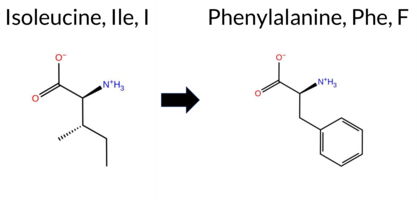 3DClick to see structure in 3D Viewer AIThe SynGAP1 missense variant I730F has no ClinVar entry and is not reported in gnomAD. Prediction tools largely agree on a benign effect: SGM‑Consensus (Likely Benign), REVEL, Rosetta, Foldetta, premPS, PROVEAN, polyPhen2_HumVar, SIFT, ESM1b, FATHMM, AlphaMissense‑Default, and AlphaMissense‑Optimized all predict benign or tolerated. Only polyPhen2_HumDiv classifies the change as pathogenic. High‑accuracy assessments further support a benign outcome: AlphaMissense‑Optimized scores the variant as benign; the SGM Consensus, derived from a majority vote of AlphaMissense‑Default, ESM1b, FATHMM, and PROVEAN, also indicates Likely Benign; and Foldetta, which integrates FoldX‑MD and Rosetta stability predictions, reports a benign effect. No prediction tool or stability analysis is inconclusive. Based on the collective evidence, the variant is most likely benign, and this conclusion does not contradict any ClinVar status, as none is available. Disclaimer: This summary was generated using AI and should be interpreted alongside expert review. | Likely Benign | 0.733139 | Disordered | 0.420109 | Uncertain | 0.591 | 0.619 | 0.750 | -4.953 | Likely Benign | 0.173 | Likely Benign | Likely Benign | -0.54 | Ambiguous | 0.1 | -0.01 | Likely Benign | -0.28 | Likely Benign | -0.01 | Likely Benign | 0.055 | Likely Benign | -1.86 | Neutral | 0.699 | Possibly Damaging | 0.152 | Benign | 3.45 | Benign | 0.08 | Tolerated | 0.0509 | 0.2082 | 1 | 0 | -1.7 | 34.02 | ||||||||||||||||||||||||||||||
| c.2189T>C | I730T 2D 3DClick to see structure in 3D Viewer AISynGAP1 missense variant I730T is not reported in ClinVar and is absent from gnomAD. Functional prediction tools that agree on a benign effect include REVEL, FoldX, Rosetta, PROVEAN, SIFT, ESM1b, FATHMM, and AlphaMissense‑Optimized. Tools that predict a pathogenic effect are polyPhen‑2 HumDiv and polyPhen‑2 HumVar. Predictions that are inconclusive are premPS and AlphaMissense‑Default. High‑accuracy assessments further support a benign outcome: AlphaMissense‑Optimized scores the variant as benign, the SGM Consensus (majority vote of AlphaMissense‑Default, ESM1b, FATHMM, and PROVEAN) indicates a likely benign classification, and Foldetta, which integrates FoldX‑MD and Rosetta stability calculations, also predicts a benign effect. Overall, the consensus of both general and high‑accuracy predictors points to a benign impact, and this conclusion is consistent with the absence of any ClinVar pathogenic annotation. Disclaimer: This summary was generated using AI and should be interpreted alongside expert review. | Likely Benign | 0.733139 | Disordered | 0.420109 | Uncertain | 0.591 | 0.619 | 0.750 | -5.641 | Likely Benign | 0.404 | Ambiguous | Likely Benign | 0.18 | Likely Benign | 0.2 | 0.12 | Likely Benign | 0.15 | Likely Benign | 0.54 | Ambiguous | 0.103 | Likely Benign | -0.83 | Neutral | 0.995 | Probably Damaging | 0.934 | Probably Damaging | 3.49 | Benign | 0.08 | Tolerated | 0.1074 | 0.0885 | 0 | -1 | -5.2 | -12.05 | ||||||||||||||||||||||||||||||
| c.2219G>A | R740Q 2D AIThe SynGAP1 missense variant R740Q is listed in ClinVar with an “Uncertain” status and is present in gnomAD (variant ID 6‑33441684‑G‑A). Functional prediction tools that agree on a benign effect include REVEL, PROVEAN, SIFT, ESM1b, FATHMM, AlphaMissense‑Default, and AlphaMissense‑Optimized. In contrast, polyPhen‑2 (both HumDiv and HumVar models) predict a pathogenic outcome. The SGM‑Consensus, derived from a majority vote of AlphaMissense‑Default, ESM1b, FATHMM, and PROVEAN, reports a “Likely Benign” classification. High‑accuracy assessments further support a benign interpretation: AlphaMissense‑Optimized is benign, and the SGM‑Consensus is also benign. Foldetta, a protein‑folding stability method combining FoldX‑MD and Rosetta outputs, has no reported result for this variant, so it does not influence the assessment. Overall, the majority of predictions indicate that R740Q is most likely benign, which is consistent with the ClinVar “Uncertain” classification and does not contradict it. Disclaimer: This summary was generated using AI and should be interpreted alongside expert review. | Likely Benign | 0.771762 | Disordered | 0.475392 | Uncertain | 0.269 | 0.849 | 0.875 | Uncertain | 1 | 6-33441684-G-A | 4 | 2.48e-6 | -5.195 | Likely Benign | 0.078 | Likely Benign | Likely Benign | 0.102 | Likely Benign | -0.67 | Neutral | 0.999 | Probably Damaging | 0.881 | Possibly Damaging | 2.60 | Benign | 0.08 | Tolerated | 4.32 | 2 | 0.3454 | 0.2203 | 1 | 1 | 1.0 | -28.06 | ||||||||||||||||||||||||||||||||
| c.2230C>G | Q744E 2D AIThe SynGAP1 missense variant Q744E is not reported in ClinVar and is absent from gnomAD. Functional prediction tools uniformly indicate a benign effect: REVEL, PROVEAN, polyPhen‑2 (HumDiv and HumVar), SIFT, ESM1b, FATHMM, AlphaMissense‑Default, and AlphaMissense‑Optimized all classify the change as benign. No tool predicts pathogenicity. High‑accuracy assessments corroborate this: AlphaMissense‑Optimized predicts benign, the SGM Consensus (majority vote of AlphaMissense‑Default, ESM1b, FATHMM, and PROVEAN) reports “Likely Benign,” while Foldetta results are unavailable. Based on the collective evidence, the variant is most likely benign, and this conclusion does not contradict any ClinVar status (none is available). Disclaimer: This summary was generated using AI and should be interpreted alongside expert review. | Likely Benign | 0.852992 | Disordered | 0.540428 | Binding | 0.316 | 0.866 | 0.875 | -4.053 | Likely Benign | 0.100 | Likely Benign | Likely Benign | 0.060 | Likely Benign | -0.57 | Neutral | 0.065 | Benign | 0.038 | Benign | 2.77 | Benign | 0.08 | Tolerated | 0.1453 | 0.1892 | 2 | 2 | 0.0 | 0.98 | |||||||||||||||||||||||||||||||||||||||
| c.2236G>C | V746L 2D AIThe SynGAP1 missense variant V746L is catalogued in gnomAD (ID 6‑33441701‑G‑C) but has no ClinVar entry. Across a broad panel of in silico predictors, every tool reports a benign effect: REVEL, PROVEAN, PolyPhen‑2 (HumDiv and HumVar), SIFT, ESM1b, FATHMM, AlphaMissense‑Default, and AlphaMissense‑Optimized all classify the substitution as benign. No tool in the set predicts pathogenicity, so the pathogenic group is empty. High‑accuracy assessments reinforce this consensus: AlphaMissense‑Optimized is benign, and the SGM Consensus (majority vote of AlphaMissense‑Default, ESM1b, FATHMM, and PROVEAN) is “Likely Benign.” Foldetta results are not available for this variant. Taken together, the computational evidence overwhelmingly supports a benign effect, and this conclusion does not conflict with the absence of a ClinVar pathogenic classification. Disclaimer: This summary was generated using AI and should be interpreted alongside expert review. | Likely Benign | 0.808535 | Disordered | 0.576597 | Binding | 0.336 | 0.867 | 0.875 | 6-33441701-G-C | 1 | 6.19e-7 | -3.260 | Likely Benign | 0.086 | Likely Benign | Likely Benign | 0.015 | Likely Benign | -0.68 | Neutral | 0.002 | Benign | 0.003 | Benign | 2.82 | Benign | 0.08 | Tolerated | 4.32 | 2 | 0.0896 | 0.5065 | 1 | 2 | -0.4 | 14.03 | ||||||||||||||||||||||||||||||||||
| c.2236G>T | V746L 2D AIThe SynGAP1 missense variant V746L is not reported in ClinVar and is absent from gnomAD. Functional prediction tools uniformly classify the variant as benign: REVEL, PROVEAN, polyPhen‑2 (HumDiv and HumVar), SIFT, ESM1b, FATHMM, AlphaMissense‑Default, and AlphaMissense‑Optimized all predict a benign effect. No tool in the dataset indicates pathogenicity. High‑accuracy assessments corroborate this benign prediction: AlphaMissense‑Optimized scores the variant as benign, and the SGM Consensus (majority vote of AlphaMissense‑Default, ESM1b, FATHMM, and PROVEAN) reports it as Likely Benign. Foldetta, a protein‑folding stability method combining FoldX‑MD and Rosetta outputs, has no available result for this variant. Overall, the consensus of all available predictions is that V746L is most likely benign, and this conclusion is consistent with the absence of a ClinVar pathogenic classification. Disclaimer: This summary was generated using AI and should be interpreted alongside expert review. | Likely Benign | 0.808535 | Disordered | 0.576597 | Binding | 0.336 | 0.867 | 0.875 | -3.260 | Likely Benign | 0.086 | Likely Benign | Likely Benign | 0.015 | Likely Benign | -0.68 | Neutral | 0.002 | Benign | 0.003 | Benign | 2.82 | Benign | 0.08 | Tolerated | 4.32 | 2 | 0.0896 | 0.5065 | 1 | 2 | -0.4 | 14.03 | |||||||||||||||||||||||||||||||||||||
| c.2267A>T | Q756L 2D AIThe SynGAP1 missense variant Q756L is not reported in ClinVar (no ClinVar ID) and is absent from gnomAD (no gnomAD ID). Prediction tools that agree on a benign effect include REVEL, PROVEAN, SIFT, ESM1b, AlphaMissense‑Default, AlphaMissense‑Optimized, and the SGM‑Consensus (which is labeled “Likely Benign”). Tools that predict a pathogenic effect are polyPhen‑2 HumDiv, polyPhen‑2 HumVar, and FATHMM. High‑accuracy assessments show AlphaMissense‑Optimized as benign and the SGM‑Consensus as likely benign; Foldetta results are not available. Overall, the majority of evidence points to a benign impact for Q756L, and this conclusion does not contradict any ClinVar annotation (none exists). Disclaimer: This summary was generated using AI and should be interpreted alongside expert review. | Likely Benign | 0.458154 | Structured | 0.806299 | Binding | 0.340 | 0.866 | 0.250 | -3.697 | Likely Benign | 0.339 | Likely Benign | Likely Benign | 0.274 | Likely Benign | -1.95 | Neutral | 0.994 | Probably Damaging | 0.988 | Probably Damaging | 1.56 | Pathogenic | 0.08 | Tolerated | 0.0797 | 0.5700 | -2 | -2 | 7.3 | -14.97 | |||||||||||||||||||||||||||||||||||||||
| c.2276T>C | M759T 2D AIThe SynGAP1 missense variant M759T is not reported in ClinVar (no ClinVar ID) and is absent from gnomAD (no gnomAD ID). Prediction tools that agree on a benign effect include REVEL, PROVEAN, polyPhen‑2 HumVar, SIFT, ESM1b, FATHMM, and AlphaMissense‑Optimized. Only polyPhen‑2 HumDiv predicts a pathogenic outcome, while AlphaMissense‑Default remains uncertain. The high‑accuracy consensus from SGM (majority vote of AlphaMissense‑Default, ESM1b, FATHMM, and PROVEAN) classifies the variant as Likely Benign, and AlphaMissense‑Optimized also reports a benign prediction. Foldetta, a protein‑folding stability method combining FoldX‑MD and Rosetta outputs, has no available result for this variant. Overall, the majority of evidence—including the SGM consensus and AlphaMissense‑Optimized—supports a benign classification, and this conclusion does not contradict the ClinVar status, which is currently unreported. Disclaimer: This summary was generated using AI and should be interpreted alongside expert review. | Likely Benign | 0.525368 | Disordered | 0.879389 | Binding | 0.299 | 0.864 | 0.375 | -4.202 | Likely Benign | 0.380 | Ambiguous | Likely Benign | 0.197 | Likely Benign | -1.90 | Neutral | 0.891 | Possibly Damaging | 0.315 | Benign | 2.58 | Benign | 0.08 | Tolerated | 0.2063 | 0.1534 | -1 | -1 | -2.6 | -30.09 | |||||||||||||||||||||||||||||||||||||||
| c.2285A>G | D762G 2D AIThe SynGAP1 missense variant D762G is not reported in ClinVar (no ClinVar ID) and is absent from gnomAD (no gnomAD ID). Prediction tools that agree on a benign effect include REVEL, SIFT, and ESM1b, whereas those that agree on a pathogenic effect include PROVEAN, polyPhen‑2 HumDiv, polyPhen‑2 HumVar, FATHMM, and AlphaMissense‑Default. The SGM‑Consensus, which aggregates AlphaMissense‑Default, ESM1b, FATHMM, and PROVEAN, classifies the variant as Likely Pathogenic. High‑accuracy assessments show AlphaMissense‑Optimized as Uncertain, SGM‑Consensus as Likely Pathogenic, and Foldetta results are unavailable. Based on the majority of predictions and the SGM‑Consensus outcome, the variant is most likely pathogenic, and this assessment does not contradict any ClinVar status because no ClinVar classification exists. Disclaimer: This summary was generated using AI and should be interpreted alongside expert review. | Likely Pathogenic | 0.405110 | Structured | 0.910475 | Binding | 0.308 | 0.859 | 0.125 | -1.062 | Likely Benign | 0.812 | Likely Pathogenic | Ambiguous | 0.170 | Likely Benign | -2.55 | Deleterious | 0.998 | Probably Damaging | 0.949 | Probably Damaging | 2.10 | Pathogenic | 0.08 | Tolerated | 0.4710 | 0.7841 | 1 | -1 | 3.1 | -58.04 | |||||||||||||||||||||||||||||||||||||||
| c.2386C>G | P796A 2D AIThe SynGAP1 missense variant P796A is not reported in ClinVar (ClinVar ID: None) but is present in gnomAD (gnomAD ID: 6‑33442938‑C‑G). All evaluated in silico predictors classify the substitution as benign: REVEL, PROVEAN, polyPhen‑2 (HumDiv and HumVar), SIFT, ESM1b, FATHMM, AlphaMissense‑Default, and AlphaMissense‑Optimized return benign or benign‑like scores. No tool predicts pathogenicity. Grouping by agreement, the benign‑predicting tools comprise the entire set, while no pathogenic predictions are available. High‑accuracy assessments further support a benign outcome: AlphaMissense‑Optimized predicts benign, and the SGM Consensus (majority vote of AlphaMissense‑Default, ESM1b, FATHMM, and PROVEAN) indicates “Likely Benign.” Foldetta, a protein‑folding stability method, did not provide a result for this variant. Overall, the computational evidence strongly suggests that P796A is most likely benign, and this conclusion does not contradict the absence of a ClinVar pathogenic classification. Disclaimer: This summary was generated using AI and should be interpreted alongside expert review. | Likely Benign | SH3-binding motif | 0.936162 | Disordered | 0.426363 | Uncertain | 0.427 | 0.900 | 0.875 | 6-33442938-C-G | -6.077 | Likely Benign | 0.050 | Likely Benign | Likely Benign | 0.023 | Likely Benign | -0.31 | Neutral | 0.174 | Benign | 0.063 | Benign | 4.28 | Benign | 0.08 | Tolerated | 4.32 | 2 | 0.3598 | 0.3776 | -1 | 1 | 3.4 | -26.04 | |||||||||||||||||||||||||||||||||||
| c.2434C>G | P812A 2D AIThe SynGAP1 missense variant P812A is not reported in ClinVar (no ClinVar ID) and is absent from gnomAD (no gnomAD ID). Prediction tools that agree on a benign effect include REVEL, PROVEAN, SIFT, ESM1b, FATHMM, AlphaMissense‑Default, and AlphaMissense‑Optimized. In contrast, polyPhen‑2 (both HumDiv and HumVar models) predict a pathogenic impact. The SGM‑Consensus, which aggregates AlphaMissense‑Default, ESM1b, FATHMM, and PROVEAN, reports the variant as “Likely Benign.” High‑accuracy assessments further support a benign classification: AlphaMissense‑Optimized is benign, and the SGM‑Consensus (majority vote) is also benign; Foldetta results are not available. Overall, the majority of evidence points to a benign effect, and this conclusion does not contradict any ClinVar annotation (none exists). Disclaimer: This summary was generated using AI and should be interpreted alongside expert review. | Likely Benign | SH3-binding motif | 0.414856 | Structured | 0.842442 | Binding | 0.388 | 0.901 | 0.125 | -6.113 | Likely Benign | 0.275 | Likely Benign | Likely Benign | 0.137 | Likely Benign | -1.49 | Neutral | 0.989 | Probably Damaging | 0.869 | Possibly Damaging | 2.75 | Benign | 0.08 | Tolerated | 0.3555 | 0.5350 | 1 | -1 | 3.4 | -26.04 | ||||||||||||||||||||||||||||||||||||||
| c.2458T>G | Y820D 2D AIThe SynGAP1 missense variant Y820D is not reported in ClinVar (no ClinVar ID) and is absent from gnomAD (no gnomAD ID). Prediction tools that agree on a benign effect include REVEL, SIFT, and FATHMM. In contrast, a majority of tools predict a pathogenic impact: PROVEAN, polyPhen‑2 HumDiv, polyPhen‑2 HumVar, ESM1b, AlphaMissense‑Default, AlphaMissense‑Optimized, and the SGM‑Consensus (majority vote from AlphaMissense‑Default, ESM1b, FATHMM, and PROVEAN) all indicate likely pathogenicity. High‑accuracy assessments further support this: AlphaMissense‑Optimized classifies the variant as pathogenic, and the SGM‑Consensus also reports it as Likely Pathogenic. Foldetta, a protein‑folding stability method combining FoldX‑MD and Rosetta outputs, has no available result for this variant. Overall, the preponderance of evidence from multiple prediction algorithms and high‑accuracy tools suggests that Y820D is most likely pathogenic, with no ClinVar status to contradict this assessment. Disclaimer: This summary was generated using AI and should be interpreted alongside expert review. | Likely Pathogenic | 0.733139 | Disordered | 0.695550 | Binding | 0.293 | 0.883 | 0.625 | -10.497 | Likely Pathogenic | 0.963 | Likely Pathogenic | Likely Pathogenic | 0.169 | Likely Benign | -2.77 | Deleterious | 0.999 | Probably Damaging | 0.977 | Probably Damaging | 2.73 | Benign | 0.08 | Tolerated | 0.4113 | 0.0704 | -4 | -3 | -2.2 | -48.09 | |||||||||||||||||||||||||||||||||||||||
| c.2506A>C | S836R 2D AIThe SynGAP1 missense variant S836R is not reported in ClinVar (no ClinVar ID) and is absent from gnomAD (no gnomAD ID). Prediction tools that agree on a benign effect include REVEL, PROVEAN, SIFT, ESM1b, and FATHMM, while polyPhen‑2 (HumDiv and HumVar) and AlphaMissense‑Default predict a pathogenic outcome. The SGM‑Consensus, derived from a majority vote of AlphaMissense‑Default, ESM1b, FATHMM, and PROVEAN, is classified as Likely Benign. High‑accuracy assessments show AlphaMissense‑Optimized as Uncertain, whereas the SGM‑Consensus remains benign; Foldetta results are unavailable. Overall, the balance of evidence (five benign versus three pathogenic predictions, with the high‑accuracy consensus leaning benign) indicates that the variant is most likely benign. This conclusion is not contradicted by ClinVar status, as no ClinVar entry exists for this variant. Disclaimer: This summary was generated using AI and should be interpreted alongside expert review. | Likely Benign | 0.525368 | Disordered | 0.634582 | Binding | 0.269 | 0.859 | 0.250 | -6.050 | Likely Benign | 0.935 | Likely Pathogenic | Ambiguous | 0.120 | Likely Benign | -2.06 | Neutral | 0.990 | Probably Damaging | 0.856 | Possibly Damaging | 2.54 | Benign | 0.08 | Tolerated | 0.0731 | 0.3210 | 0 | -1 | -3.7 | 69.11 | |||||||||||||||||||||||||||||||||||||||
| c.2508T>A | S836R 2D AIThe SynGAP1 missense variant S836R is not reported in ClinVar (no ClinVar ID) and is absent from gnomAD (no gnomAD ID). Prediction tools that agree on a benign effect include REVEL, PROVEAN, SIFT, ESM1b, and FATHMM, while those that predict a pathogenic effect are polyPhen‑2 HumDiv, polyPhen‑2 HumVar, and AlphaMissense‑Default. The SGM‑Consensus, which aggregates AlphaMissense‑Default, ESM1b, FATHMM, and PROVEAN, is classified as Likely Benign. High‑accuracy assessments show AlphaMissense‑Optimized as Uncertain, SGM‑Consensus (majority vote) as Benign, and Foldetta results are unavailable. Overall, the majority of evidence points to a benign impact. This conclusion is consistent with the lack of ClinVar annotation, so there is no contradiction with existing clinical data. Disclaimer: This summary was generated using AI and should be interpreted alongside expert review. | Likely Benign | 0.525368 | Disordered | 0.634582 | Binding | 0.269 | 0.859 | 0.250 | -6.050 | Likely Benign | 0.935 | Likely Pathogenic | Ambiguous | 0.159 | Likely Benign | -2.06 | Neutral | 0.990 | Probably Damaging | 0.856 | Possibly Damaging | 2.54 | Benign | 0.08 | Tolerated | 0.0731 | 0.3210 | 0 | -1 | -3.7 | 69.11 | |||||||||||||||||||||||||||||||||||||||
| c.2508T>G | S836R 2D AIThe SynGAP1 missense variant S836R is not reported in ClinVar and has no gnomAD entry. Consensus from multiple in silico predictors shows a split: benign calls come from REVEL, PROVEAN, SIFT, ESM1b, and FATHMM, while pathogenic calls arise from polyPhen‑2 HumDiv, polyPhen‑2 HumVar, and AlphaMissense‑Default. Grouping by agreement, the benign‑predicating tools outnumber the pathogenic ones. High‑accuracy assessments further clarify the picture: AlphaMissense‑Optimized returns an uncertain result, SGM‑Consensus (derived from the majority vote of AlphaMissense‑Default, ESM1b, FATHMM, and PROVEAN) is classified as Likely Benign, and no Foldetta stability data are available. Overall, the preponderance of evidence leans toward a benign effect for S836R, and this conclusion does not conflict with the absence of a ClinVar classification. Disclaimer: This summary was generated using AI and should be interpreted alongside expert review. | Likely Benign | 0.525368 | Disordered | 0.634582 | Binding | 0.269 | 0.859 | 0.250 | -6.050 | Likely Benign | 0.935 | Likely Pathogenic | Ambiguous | 0.159 | Likely Benign | -2.06 | Neutral | 0.990 | Probably Damaging | 0.856 | Possibly Damaging | 2.54 | Benign | 0.08 | Tolerated | 0.0731 | 0.3210 | 0 | -1 | -3.7 | 69.11 | |||||||||||||||||||||||||||||||||||||||
| c.2509G>T | V837F 2D AIThe SynGAP1 missense variant V837F is not reported in ClinVar (no ClinVar ID) and is absent from gnomAD (no gnomAD ID). Prediction tools that agree on a benign effect include REVEL, PROVEAN, SIFT, ESM1b, FATHMM, AlphaMissense‑Default, and AlphaMissense‑Optimized. Tools that predict a pathogenic effect are polyPhen‑2 HumDiv and polyPhen‑2 HumVar. The SGM‑Consensus, which aggregates AlphaMissense‑Default, ESM1b, FATHMM, and PROVEAN, reports the variant as Likely Benign. High‑accuracy assessments show AlphaMissense‑Optimized as Benign and the SGM‑Consensus as Likely Benign; Foldetta results are unavailable. Overall, the majority of evidence points to a benign impact. This conclusion is consistent with the lack of ClinVar annotation, so there is no contradiction with existing clinical data. Disclaimer: This summary was generated using AI and should be interpreted alongside expert review. | Likely Benign | 0.525368 | Disordered | 0.626284 | Binding | 0.318 | 0.871 | 0.125 | -5.223 | Likely Benign | 0.322 | Likely Benign | Likely Benign | 0.164 | Likely Benign | -1.41 | Neutral | 0.999 | Probably Damaging | 0.998 | Probably Damaging | 2.60 | Benign | 0.08 | Tolerated | 0.0749 | 0.3744 | -1 | -1 | -1.4 | 48.04 | |||||||||||||||||||||||||||||||||||||||
| c.2569A>T | S857C 2D AIThe SynGAP1 missense variant S857C is not reported in ClinVar and is absent from gnomAD. Prediction tools that agree on a benign effect include REVEL, PROVEAN, SIFT, ESM1b, FATHMM, AlphaMissense‑Default, and AlphaMissense‑Optimized. In contrast, polyPhen‑2 (both HumDiv and HumVar models) predict a pathogenic impact. The SGM‑Consensus, which aggregates AlphaMissense‑Default, ESM1b, FATHMM, and PROVEAN, reports a “Likely Benign” classification. High‑accuracy assessments further support a benign outcome: AlphaMissense‑Optimized is benign, and the SGM‑Consensus is also likely benign. Foldetta results are unavailable, so they do not influence the overall assessment. Based on the majority of predictions and the high‑accuracy consensus, the variant is most likely benign, and this conclusion does not contradict any ClinVar status (none is available). Disclaimer: This summary was generated using AI and should be interpreted alongside expert review. | Likely Benign | 0.728858 | Disordered | 0.475747 | Uncertain | 0.288 | 0.826 | 0.375 | -6.335 | Likely Benign | 0.109 | Likely Benign | Likely Benign | 0.146 | Likely Benign | -1.28 | Neutral | 0.999 | Probably Damaging | 0.996 | Probably Damaging | 4.02 | Benign | 0.08 | Tolerated | 0.1221 | 0.6672 | 0 | -1 | 3.3 | 16.06 | |||||||||||||||||||||||||||||||||||||||
| c.2602G>C | D868H 2D AIThe SynGAP1 missense variant D868H is not reported in ClinVar (ClinVar status: none) but is present in gnomAD (variant ID 6‑33443154‑G‑C). Prediction tools that agree on a benign effect include REVEL, PROVEAN, SIFT, ESM1b, and AlphaMissense‑Optimized. Tools that predict a pathogenic effect are polyPhen‑2 HumDiv, polyPhen‑2 HumVar, FATHMM, and AlphaMissense‑Default. High‑accuracy assessments show AlphaMissense‑Optimized as benign; the SGM Consensus (majority vote from AlphaMissense‑Default, ESM1b, FATHMM, PROVEAN) is inconclusive (2 benign vs. 2 pathogenic), and Foldetta results are unavailable. Overall, the majority of predictions lean toward a benign impact, and this is not contradicted by ClinVar status. Thus, the variant is most likely benign based on current computational evidence. Disclaimer: This summary was generated using AI and should be interpreted alongside expert review. | 0.525368 | Disordered | 0.676362 | Binding | 0.262 | 0.815 | 0.250 | 6-33443154-G-C | 1 | 6.20e-7 | -3.358 | Likely Benign | 0.763 | Likely Pathogenic | Likely Benign | 0.212 | Likely Benign | -2.34 | Neutral | 1.000 | Probably Damaging | 0.983 | Probably Damaging | 2.49 | Pathogenic | 0.08 | Tolerated | 3.82 | 4 | 0.2258 | 0.7837 | -1 | 1 | 0.3 | 22.05 | |||||||||||||||||||||||||||||||||||
| c.2611C>T | H871Y 2D 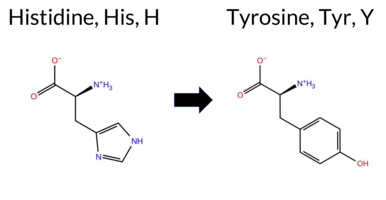 AIThe SynGAP1 missense variant H871Y is not reported in ClinVar and is absent from gnomAD. Functional prediction tools largely agree on a benign effect: REVEL, PROVEAN, polyPhen‑2 HumVar, SIFT, ESM1b, FATHMM, AlphaMissense‑Default, and AlphaMissense‑Optimized all predict benign. Only polyPhen‑2 HumDiv indicates a pathogenic effect. The SGM‑Consensus, which aggregates AlphaMissense‑Default, ESM1b, FATHMM, and PROVEAN, reports a likely benign classification. High‑accuracy assessments confirm this: AlphaMissense‑Optimized is benign, and the SGM‑Consensus is likely benign. Foldetta, a protein‑folding stability method combining FoldX‑MD and Rosetta outputs, has no available result for this variant. Overall, the majority of evidence points to a benign impact, and this conclusion does not contradict any ClinVar annotation (none is present). Disclaimer: This summary was generated using AI and should be interpreted alongside expert review. | Likely Benign | 0.480142 | Structured | 0.679301 | Binding | 0.279 | 0.858 | 0.250 | -4.070 | Likely Benign | 0.202 | Likely Benign | Likely Benign | 0.089 | Likely Benign | -1.44 | Neutral | 0.510 | Possibly Damaging | 0.206 | Benign | 2.63 | Benign | 0.08 | Tolerated | 0.0872 | 0.3945 | 0 | 2 | 1.9 | 26.03 | |||||||||||||||||||||||||||||||||||||||
| c.2623G>T | A875S 2D AIThe SynGAP1 missense variant A875S is not reported in ClinVar (no ClinVar ID) and is absent from gnomAD (no gnomAD ID). Prediction tools that agree on a benign effect include REVEL, PROVEAN, SIFT, ESM1b, FATHMM, AlphaMissense‑Default, AlphaMissense‑Optimized, and the SGM‑Consensus (which is “Likely Benign”). In contrast, the two polyPhen‑2 implementations (HumDiv and HumVar) predict a pathogenic outcome. High‑accuracy assessments further support a benign classification: AlphaMissense‑Optimized is benign, and the SGM‑Consensus (majority vote of AlphaMissense‑Default, ESM1b, FATHMM, and PROVEAN) is also likely benign. No Foldetta stability result is available, so it does not influence the assessment. Overall, the majority of evidence indicates that A875S is most likely benign, and this conclusion is not contradicted by any ClinVar annotation. Disclaimer: This summary was generated using AI and should be interpreted alongside expert review. | Likely Benign | 0.545602 | Disordered | 0.632173 | Binding | 0.273 | 0.872 | 0.250 | -2.719 | Likely Benign | 0.120 | Likely Benign | Likely Benign | 0.063 | Likely Benign | -1.07 | Neutral | 0.945 | Possibly Damaging | 0.767 | Possibly Damaging | 2.78 | Benign | 0.08 | Tolerated | 0.2607 | 0.6338 | 1 | 1 | -2.6 | 16.00 | |||||||||||||||||||||||||||||||||||||||
| c.2683A>T | S895C 2D AIThe SynGAP1 missense variant S895C is reported in ClinVar as “None” and is not present in gnomAD. Prediction tools that agree on a benign effect include SGM‑Consensus (Likely Benign), REVEL, PROVEAN, SIFT, FATHMM, AlphaMissense‑Default, and AlphaMissense‑Optimized. Tools that predict a pathogenic effect are polyPhen‑2 HumDiv, polyPhen‑2 HumVar, and ESM1b. High‑accuracy assessments show AlphaMissense‑Optimized as benign and the SGM‑Consensus (majority vote of AlphaMissense‑Default, ESM1b, FATHMM, PROVEAN) also as benign; Foldetta stability analysis is unavailable. Overall, the majority of evidence points to a benign impact, and this conclusion is not contradicted by any ClinVar annotation. Disclaimer: This summary was generated using AI and should be interpreted alongside expert review. | Likely Benign | 0.788093 | Disordered | 0.414977 | Uncertain | 0.294 | 0.925 | 0.750 | -8.006 | Likely Pathogenic | 0.259 | Likely Benign | Likely Benign | 0.182 | Likely Benign | -2.44 | Neutral | 0.999 | Probably Damaging | 0.997 | Probably Damaging | 2.60 | Benign | 0.08 | Tolerated | 0.1072 | 0.6350 | 0 | -1 | 3.3 | 16.06 | |||||||||||||||||||||||||||||||||||||||
| c.2699C>T | T900M 2D 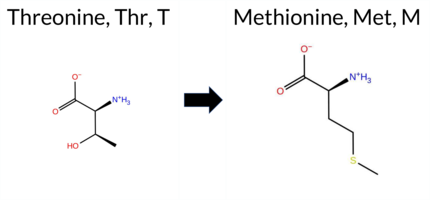 AIThe SynGAP1 missense variant T900M is listed in ClinVar (ID 1063691.0) with an “Uncertain” clinical significance and is present in the gnomAD database (gnomAD ID 6‑33443251‑C‑T). Functional prediction tools uniformly classify the variant as benign: REVEL, PROVEAN, polyPhen‑2 (HumDiv and HumVar), SIFT, ESM1b, FATHMM, AlphaMissense‑Default, and AlphaMissense‑Optimized all report benign effects. No tool predicts pathogenicity. High‑accuracy assessments corroborate this: AlphaMissense‑Optimized is benign, and the SGM Consensus (majority vote from AlphaMissense‑Default, ESM1b, FATHMM, and PROVEAN) indicates a likely benign outcome. Foldetta results are unavailable. Overall, the consensus of all available predictions points to a benign impact, which does not contradict the ClinVar “Uncertain” status. Thus, the variant is most likely benign. Disclaimer: This summary was generated using AI and should be interpreted alongside expert review. | Likely Benign | 0.675549 | Disordered | 0.465347 | Uncertain | 0.289 | 0.924 | 0.375 | Conflicting | 2 | 6-33443251-C-T | 14 | 8.68e-6 | -3.852 | Likely Benign | 0.176 | Likely Benign | Likely Benign | 0.015 | Likely Benign | -0.81 | Neutral | 0.060 | Benign | 0.016 | Benign | 2.79 | Benign | 0.08 | Tolerated | 4.32 | 4 | 0.1356 | 0.6533 | -1 | -1 | 2.6 | 30.09 | ||||||||||||||||||||||||||||||||
| c.2708G>C | G903A 2D AIThe SynGAP1 missense variant G903A is not reported in ClinVar (no ClinVar ID) and is absent from gnomAD (no gnomAD ID). Prediction tools that agree on a benign effect include SGM‑Consensus (Likely Benign), REVEL, PROVEAN, SIFT, ESM1b, AlphaMissense‑Default, and AlphaMissense‑Optimized. Tools that predict a pathogenic effect are polyPhen‑2 HumDiv, polyPhen‑2 HumVar, and FATHMM. High‑accuracy assessments show AlphaMissense‑Optimized as benign and the SGM‑Consensus (majority vote from AlphaMissense‑Default, ESM1b, FATHMM, PROVEAN) also as benign; Foldetta results are not available. Overall, the majority of evidence points to a benign impact for G903A. This conclusion is not contradicted by ClinVar, which has no entry for the variant. Disclaimer: This summary was generated using AI and should be interpreted alongside expert review. | Likely Benign | 0.680603 | Disordered | 0.549818 | Binding | 0.291 | 0.917 | 0.375 | -2.843 | Likely Benign | 0.227 | Likely Benign | Likely Benign | 0.141 | Likely Benign | -1.54 | Neutral | 0.989 | Probably Damaging | 0.829 | Possibly Damaging | 2.43 | Pathogenic | 0.08 | Tolerated | 0.3490 | 0.5025 | 1 | 0 | 2.2 | 14.03 | |||||||||||||||||||||||||||||||||||||||
| c.2720G>A | S907N 2D AIThe SynGAP1 missense variant S907N is not reported in ClinVar and is absent from gnomAD. Consensus predictions from multiple in silico tools cluster around a benign effect: REVEL, PROVEAN, SIFT, ESM1b, FATHMM, and AlphaMissense‑Optimized all indicate benign, while the majority‑vote SGM‑Consensus also reports a likely benign outcome. In contrast, polyPhen‑2 (HumDiv and HumVar) predict a pathogenic impact. The AlphaMissense‑Default score is uncertain, and no Foldetta stability assessment is available. High‑accuracy evaluations further support a benign interpretation: AlphaMissense‑Optimized is benign and the SGM‑Consensus (derived from AlphaMissense‑Default, ESM1b, FATHMM, and PROVEAN) is likely benign, with no Foldetta data to contradict this. Overall, the preponderance of evidence points to a benign effect, and this assessment does not conflict with any ClinVar annotation, as none exists. Disclaimer: This summary was generated using AI and should be interpreted alongside expert review. | Likely Benign | 0.637480 | Disordered | 0.661854 | Binding | 0.336 | 0.920 | 0.250 | -4.520 | Likely Benign | 0.430 | Ambiguous | Likely Benign | 0.140 | Likely Benign | -0.26 | Neutral | 0.951 | Possibly Damaging | 0.803 | Possibly Damaging | 2.66 | Benign | 0.08 | Tolerated | 0.1312 | 0.4585 | 1 | 1 | -2.7 | 27.03 | |||||||||||||||||||||||||||||||||||||||
| c.2834A>G | H945R 2D AIThe SynGAP1 missense variant H945R is reported in gnomAD (variant ID 6‑33443386‑A‑G) but has no ClinVar entry. Functional prediction tools largely agree on a benign effect: REVEL, PROVEAN, SIFT, ESM1b, FATHMM, AlphaMissense‑Default, and AlphaMissense‑Optimized all predict benign. Only the two polyPhen‑2 implementations (HumDiv and HumVar) predict pathogenicity. The SGM‑Consensus, which aggregates AlphaMissense‑Default, ESM1b, FATHMM, and PROVEAN, reports a likely benign classification. High‑accuracy assessments reinforce this: AlphaMissense‑Optimized is benign, and the SGM‑Consensus is also likely benign; Foldetta results are not available. Overall, the majority of evidence points to a benign impact. This conclusion is consistent with the absence of a ClinVar pathogenic classification, so there is no contradiction with ClinVar status. Disclaimer: This summary was generated using AI and should be interpreted alongside expert review. | Likely Benign | 0.982235 | Disordered | 0.849210 | Binding | 0.386 | 0.923 | 0.750 | 6-33443386-A-G | 1 | 6.20e-7 | -5.186 | Likely Benign | 0.118 | Likely Benign | Likely Benign | 0.333 | Likely Benign | -0.59 | Neutral | 0.982 | Probably Damaging | 0.903 | Possibly Damaging | 5.05 | Benign | 0.08 | Tolerated | 4.32 | 4 | 0.2764 | 0.3020 | 0 | 2 | -1.3 | 19.05 | ||||||||||||||||||||||||||||||||||
| c.2846G>C | G949A 2D AIThe SynGAP1 missense variant G949A is not reported in ClinVar (no ClinVar ID) and is absent from gnomAD (no gnomAD ID). Prediction tools that agree on a benign effect include REVEL, PROVEAN, polyPhen‑2 HumVar, SIFT, ESM1b, AlphaMissense‑Default, and AlphaMissense‑Optimized. Tools that predict a pathogenic effect are polyPhen‑2 HumDiv and FATHMM. The SGM‑Consensus, which aggregates AlphaMissense‑Default, ESM1b, FATHMM, and PROVEAN, is “Likely Benign” (3 benign vs. 1 pathogenic votes). High‑accuracy methods confirm this: AlphaMissense‑Optimized predicts benign, and the SGM‑Consensus (majority vote) also predicts benign. Foldetta, a protein‑folding stability method combining FoldX‑MD and Rosetta outputs, has no available result for this variant. Overall, the majority of evidence points to a benign impact, and this assessment does not contradict any ClinVar annotation (none is present). Disclaimer: This summary was generated using AI and should be interpreted alongside expert review. | Likely Benign | 0.988861 | Disordered | 0.874971 | Binding | 0.365 | 0.923 | 0.750 | -6.838 | Likely Benign | 0.072 | Likely Benign | Likely Benign | 0.274 | Likely Benign | -0.08 | Neutral | 0.779 | Possibly Damaging | 0.425 | Benign | 2.28 | Pathogenic | 0.08 | Tolerated | 0.3385 | 0.4414 | 1 | 0 | 2.2 | 14.03 | |||||||||||||||||||||||||||||||||||||||
| c.2849G>C | G950A 2D AIThe SynGAP1 missense variant G950A is not reported in ClinVar and is absent from gnomAD. Functional prediction tools largely agree on a benign effect: REVEL, PROVEAN, polyPhen‑2 (HumDiv and HumVar), SIFT, ESM1b, AlphaMissense‑Default, and AlphaMissense‑Optimized all classify the change as benign. Only FATHMM predicts a pathogenic outcome. The SGM‑Consensus, which aggregates AlphaMissense‑Default, ESM1b, FATHMM, and PROVEAN, yields a “Likely Benign” verdict, reflecting the majority of benign calls. High‑accuracy assessments reinforce this view: AlphaMissense‑Optimized is benign, and the SGM‑Consensus (majority vote) is benign. Foldetta, a protein‑folding stability method combining FoldX‑MD and Rosetta outputs, has no available result for this variant. Overall, the consensus of available predictions indicates that the variant is most likely benign, and this assessment does not contradict any ClinVar annotation (none exists). Disclaimer: This summary was generated using AI and should be interpreted alongside expert review. | Likely Benign | 0.987317 | Disordered | 0.888649 | Binding | 0.368 | 0.923 | 0.750 | -6.557 | Likely Benign | 0.081 | Likely Benign | Likely Benign | 0.339 | Likely Benign | -0.13 | Neutral | 0.059 | Benign | 0.061 | Benign | 2.28 | Pathogenic | 0.08 | Tolerated | 0.3343 | 0.4957 | 1 | 0 | 2.2 | 14.03 | |||||||||||||||||||||||||||||||||||||||
| c.2855G>C | G952A 2D AIThe SynGAP1 missense variant G952A is predicted to be benign by every evaluated in‑silico tool. Benign predictions are reported by REVEL, PROVEAN, polyPhen‑2 (HumDiv and HumVar), SIFT, ESM1b, FATHMM, AlphaMissense‑Default, and AlphaMissense‑Optimized. No tool predicts pathogenicity, so the pathogenic group is empty. High‑accuracy assessments reinforce this view: AlphaMissense‑Optimized is benign, and the SGM Consensus (majority vote of AlphaMissense‑Default, ESM1b, FATHMM, and PROVEAN) is “Likely Benign.” Foldetta, a protein‑folding stability method, has no available result for this variant. ClinVar contains no entry for G952A, so there is no conflicting clinical annotation. Overall, the computational evidence indicates the variant is most likely benign. Disclaimer: This summary was generated using AI and should be interpreted alongside expert review. | Likely Benign | 0.985964 | Disordered | 0.910621 | Binding | 0.341 | 0.926 | 0.750 | -5.796 | Likely Benign | 0.075 | Likely Benign | Likely Benign | 0.273 | Likely Benign | -0.20 | Neutral | 0.000 | Benign | 0.000 | Benign | 3.26 | Benign | 0.08 | Tolerated | 0.3309 | 0.4957 | 1 | 0 | 2.2 | 14.03 | |||||||||||||||||||||||||||||||||||||||
| c.2866T>A | S956T 2D AIThe SynGAP1 missense variant S956T is not reported in ClinVar and is absent from gnomAD. Prediction tools that agree on a benign effect include REVEL, PROVEAN, polyPhen‑2 (HumDiv and HumVar), SIFT, ESM1b, AlphaMissense‑Default, AlphaMissense‑Optimized, and the SGM‑Consensus (majority vote). Only FATHMM predicts a pathogenic outcome. High‑accuracy assessments show AlphaMissense‑Optimized as benign and the SGM‑Consensus also as likely benign; the Foldetta protein‑folding stability analysis is unavailable. Overall, the majority of evidence points to a benign impact for S956T, and this conclusion does not contradict any ClinVar annotation (none is present). Disclaimer: This summary was generated using AI and should be interpreted alongside expert review. | Likely Benign | 0.984871 | Disordered | 0.957345 | Binding | 0.364 | 0.917 | 0.750 | -5.404 | Likely Benign | 0.097 | Likely Benign | Likely Benign | 0.079 | Likely Benign | -0.45 | Neutral | 0.369 | Benign | 0.159 | Benign | 2.00 | Pathogenic | 0.08 | Tolerated | 0.2244 | 0.5727 | 1 | 1 | 0.1 | 14.03 | |||||||||||||||||||||||||||||||||||||||
| c.2902G>C | G968R 2D AIThe SynGAP1 missense variant G968R is not reported in ClinVar and is absent from gnomAD. In silico prediction tools uniformly indicate a benign effect: REVEL, PROVEAN, polyPhen‑2 (HumDiv and HumVar), SIFT, ESM1b, FATHMM, AlphaMissense‑Default, and AlphaMissense‑Optimized all classify the change as benign. No tool predicts pathogenicity. The high‑accuracy consensus methods corroborate this: AlphaMissense‑Optimized predicts benign, and the SGM Consensus (majority vote from AlphaMissense‑Default, ESM1b, FATHMM, and PROVEAN) reports a likely benign outcome. Foldetta results are unavailable. Overall, the evidence strongly supports a benign classification, and this conclusion does not contradict any ClinVar status, as no ClinVar entry exists for this variant. Disclaimer: This summary was generated using AI and should be interpreted alongside expert review. | Likely Benign | 0.978316 | Disordered | 0.961360 | Binding | 0.327 | 0.896 | 0.750 | -4.492 | Likely Benign | 0.332 | Likely Benign | Likely Benign | 0.140 | Likely Benign | -0.63 | Neutral | 0.005 | Benign | 0.012 | Benign | 4.19 | Benign | 0.08 | Tolerated | 0.0972 | 0.5017 | -3 | -2 | -4.1 | 99.14 | |||||||||||||||||||||||||||||||||||||||
| c.2909A>T | E970V 2D 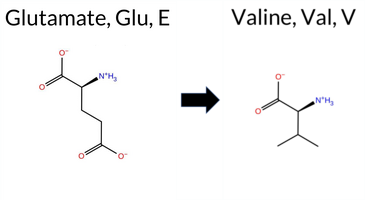 AIThe SynGAP1 missense variant E970V is not reported in ClinVar and is absent from gnomAD. In silico prediction tools uniformly indicate a benign effect: REVEL, PROVEAN, polyPhen‑2 (HumDiv and HumVar), SIFT, ESM1b, FATHMM, AlphaMissense‑Default, and AlphaMissense‑Optimized all classify the change as benign. No tool predicts pathogenicity. The high‑accuracy consensus methods corroborate this: AlphaMissense‑Optimized predicts benign, and the SGM Consensus (majority vote of AlphaMissense‑Default, ESM1b, FATHMM, and PROVEAN) reports a likely benign outcome. Foldetta results are unavailable. Overall, the collective evidence strongly supports a benign interpretation, and this conclusion does not contradict the ClinVar status, which currently contains no entry for this variant. Disclaimer: This summary was generated using AI and should be interpreted alongside expert review. | Likely Benign | 0.951925 | Disordered | 0.953422 | Binding | 0.342 | 0.902 | 0.750 | -2.791 | Likely Benign | 0.208 | Likely Benign | Likely Benign | 0.245 | Likely Benign | -1.08 | Neutral | 0.002 | Benign | 0.002 | Benign | 4.11 | Benign | 0.08 | Tolerated | 0.1990 | 0.7037 | -2 | -2 | 7.7 | -29.98 | |||||||||||||||||||||||||||||||||||||||
| c.3017A>G | Y1006C 2D AIThe SynGAP1 missense variant Y1006C is not reported in ClinVar and has no entry in gnomAD. Functional prediction tools that agree on a benign effect include REVEL, PROVEAN, SIFT, ESM1b, FATHMM, and AlphaMissense‑Optimized, while polyPhen‑2 (HumDiv and HumVar) and AlphaMissense‑Default predict a pathogenic outcome. The SGM‑Consensus, derived from a majority vote of AlphaMissense‑Default, ESM1b, FATHMM, and PROVEAN, classifies the variant as Likely Benign. High‑accuracy assessments further support a benign interpretation: AlphaMissense‑Optimized predicts benign, and the SGM‑Consensus also indicates Likely Benign. No Foldetta stability analysis is available for this variant. Overall, the majority of computational evidence points to a benign effect, and this conclusion is consistent with the absence of a ClinVar pathogenic classification. Disclaimer: This summary was generated using AI and should be interpreted alongside expert review. | Likely Benign | 0.801317 | Disordered | 0.930554 | Binding | 0.264 | 0.896 | 0.750 | -5.244 | Likely Benign | 0.589 | Likely Pathogenic | Likely Benign | 0.156 | Likely Benign | -1.39 | Neutral | 1.000 | Probably Damaging | 0.999 | Probably Damaging | 2.68 | Benign | 0.08 | Tolerated | 0.3062 | 0.2358 | 0 | -2 | 3.8 | -60.04 | |||||||||||||||||||||||||||||||||||||||
| c.3035C>A | P1012H 2D AIThe SynGAP1 missense variant P1012H is not reported in ClinVar (no ClinVar ID) and is absent from gnomAD (no gnomAD ID). Prediction tools that agree on a benign effect include SGM‑Consensus (Likely Benign), REVEL, PROVEAN, SIFT, ESM1b, FATHMM, AlphaMissense‑Default, and AlphaMissense‑Optimized. In contrast, polyPhen‑2 (HumDiv and HumVar) predict a pathogenic outcome. High‑accuracy assessments further support a benign classification: AlphaMissense‑Optimized is benign, and the SGM Consensus (majority vote of AlphaMissense‑Default, ESM1b, FATHMM, and PROVEAN) is Likely Benign. Foldetta results are unavailable. Overall, the majority of evidence points to a benign effect for P1012H, and this conclusion is not contradicted by any ClinVar annotation. Disclaimer: This summary was generated using AI and should be interpreted alongside expert review. | Likely Benign | 0.834292 | Disordered | 0.894674 | Binding | 0.319 | 0.866 | 0.625 | -4.877 | Likely Benign | 0.087 | Likely Benign | Likely Benign | 0.024 | Likely Benign | -0.38 | Neutral | 0.832 | Possibly Damaging | 0.600 | Possibly Damaging | 2.75 | Benign | 0.08 | Tolerated | 0.1553 | 0.4635 | 0 | -2 | -1.6 | 40.02 | |||||||||||||||||||||||||||||||||||||||
| c.3070C>G | L1024V 2D AIThe SynGAP1 missense variant L1024V is not reported in ClinVar (no ClinVar ID) and is absent from gnomAD (no gnomAD ID). Prediction tools that agree on a benign effect include SGM‑Consensus (Likely Benign), REVEL, PROVEAN, SIFT, ESM1b, AlphaMissense‑Default, and AlphaMissense‑Optimized. Tools that predict a pathogenic effect are polyPhen‑2 HumDiv, polyPhen‑2 HumVar, and FATHMM. High‑accuracy assessments show AlphaMissense‑Optimized as benign and the SGM‑Consensus (majority vote of AlphaMissense‑Default, ESM1b, FATHMM, PROVEAN) also as benign; Foldetta results are unavailable. Overall, the majority of evidence points to a benign impact for the variant. This conclusion is consistent with the lack of ClinVar annotation, so there is no contradiction with existing clinical data. Disclaimer: This summary was generated using AI and should be interpreted alongside expert review. | Likely Benign | 0.862302 | Disordered | 0.992699 | Binding | 0.327 | 0.753 | 0.500 | -3.758 | Likely Benign | 0.244 | Likely Benign | Likely Benign | 0.041 | Likely Benign | -1.33 | Neutral | 0.907 | Possibly Damaging | 0.642 | Possibly Damaging | 2.47 | Pathogenic | 0.08 | Tolerated | 0.1459 | 0.3185 | 2 | 1 | 0.4 | -14.03 | |||||||||||||||||||||||||||||||||||||||
| c.3149G>A | G1050E 2D AIThe SynGAP1 missense variant G1050E is not reported in ClinVar (no ClinVar ID) and is absent from gnomAD (no gnomAD ID). Prediction tools that agree on a benign effect include REVEL, PROVEAN, polyPhen‑2 HumDiv, polyPhen‑2 HumVar, SIFT, FATHMM, AlphaMissense‑Default, and AlphaMissense‑Optimized. Only ESM1b predicts a pathogenic outcome. The SGM‑Consensus, which aggregates AlphaMissense‑Default, ESM1b, FATHMM, and PROVEAN, classifies the variant as Likely Benign. High‑accuracy assessments show AlphaMissense‑Optimized as Benign and the SGM‑Consensus as Likely Benign; Foldetta results are unavailable. Overall, the majority of evidence points to a benign effect. There is no ClinVar entry to contradict this assessment. Disclaimer: This summary was generated using AI and should be interpreted alongside expert review. | Likely Benign | 0.987317 | Disordered | 0.906802 | Binding | 0.370 | 0.928 | 0.875 | -8.175 | Likely Pathogenic | 0.266 | Likely Benign | Likely Benign | 0.071 | Likely Benign | -0.28 | Neutral | 0.411 | Benign | 0.171 | Benign | 2.50 | Benign | 0.08 | Tolerated | 0.1418 | 0.4258 | 0 | -2 | -3.1 | 72.06 | |||||||||||||||||||||||||||||||||||||||
| c.3163G>A | G1055R 2D AIThe SynGAP1 missense variant G1055R is not reported in ClinVar (no ClinVar ID) and is absent from gnomAD (no gnomAD ID). Prediction tools that agree on a benign effect include REVEL, PROVEAN, SIFT, FATHMM, and AlphaMissense‑Optimized. Tools that predict a pathogenic effect are polyPhen‑2 HumDiv, polyPhen‑2 HumVar, and ESM1b; AlphaMissense‑Default is uncertain. High‑accuracy assessments show AlphaMissense‑Optimized as benign, the SGM Consensus (majority vote from AlphaMissense‑Default, ESM1b, FATHMM, PROVEAN) also favors benign, while Foldetta results are unavailable. Overall, the majority of evidence points to a benign impact. This conclusion is not contradicted by ClinVar, which contains no entry for this variant. Disclaimer: This summary was generated using AI and should be interpreted alongside expert review. | 0.982235 | Disordered | 0.872113 | Binding | 0.379 | 0.935 | 0.875 | -8.778 | Likely Pathogenic | 0.375 | Ambiguous | Likely Benign | 0.275 | Likely Benign | -0.09 | Neutral | 0.970 | Probably Damaging | 0.728 | Possibly Damaging | 3.31 | Benign | 0.08 | Tolerated | 0.1013 | 0.4733 | -3 | -2 | -4.1 | 99.14 | ||||||||||||||||||||||||||||||||||||||||
| c.3163G>C | G1055R 2D AIThe SynGAP1 missense variant G1055R is not reported in ClinVar (ClinVar ID = None) and is absent from gnomAD (gnomAD ID = None). Functional prediction tools cluster into two groups: benign predictions come from REVEL, PROVEAN, SIFT, FATHMM, and AlphaMissense‑Optimized, while pathogenic predictions arise from polyPhen‑2 HumDiv, polyPhen‑2 HumVar, and ESM1b. AlphaMissense‑Default is uncertain. High‑accuracy assessments further support a benign interpretation: AlphaMissense‑Optimized predicts benign; the SGM Consensus (majority vote of AlphaMissense‑Default, ESM1b, FATHMM, PROVEAN) yields a benign outcome (2 benign vs. 1 pathogenic, 1 uncertain). Foldetta, a protein‑folding stability method, has no available result for this variant. Overall, the preponderance of evidence indicates the variant is most likely benign, and this conclusion is not contradicted by any ClinVar annotation. Disclaimer: This summary was generated using AI and should be interpreted alongside expert review. | 0.982235 | Disordered | 0.872113 | Binding | 0.379 | 0.935 | 0.875 | -8.778 | Likely Pathogenic | 0.375 | Ambiguous | Likely Benign | 0.275 | Likely Benign | -0.09 | Neutral | 0.970 | Probably Damaging | 0.728 | Possibly Damaging | 3.31 | Benign | 0.08 | Tolerated | 0.1013 | 0.4733 | -3 | -2 | -4.1 | 99.14 | ||||||||||||||||||||||||||||||||||||||||
| c.3167G>T | G1056V 2D AIThe SynGAP1 missense variant G1056V is not reported in ClinVar (ClinVar ID = None) and is absent from gnomAD (gnomAD ID = None). Prediction tools that agree on a benign effect include REVEL, PROVEAN, polyPhen‑2 HumDiv, polyPhen‑2 HumVar, SIFT, AlphaMissense‑Default, and AlphaMissense‑Optimized. Tools that predict a pathogenic effect are ESM1b and FATHMM. High‑accuracy assessments show AlphaMissense‑Optimized as benign; the SGM Consensus (majority vote from AlphaMissense‑Default, ESM1b, FATHMM, and PROVEAN) is inconclusive (2 benign vs 2 pathogenic), and Foldetta results are unavailable. Overall, the majority of evidence (7 benign vs 2 pathogenic) supports a benign classification. This consensus does not contradict ClinVar status, which has no entry for this variant. Thus, the variant is most likely benign based on current predictions. Disclaimer: This summary was generated using AI and should be interpreted alongside expert review. | 0.988291 | Disordered | 0.868632 | Binding | 0.402 | 0.935 | 0.875 | -8.130 | Likely Pathogenic | 0.097 | Likely Benign | Likely Benign | 0.448 | Likely Benign | -0.24 | Neutral | 0.292 | Benign | 0.110 | Benign | 1.83 | Pathogenic | 0.08 | Tolerated | 0.1488 | 0.3507 | -1 | -3 | 4.6 | 42.08 | ||||||||||||||||||||||||||||||||||||||||
| c.3188G>A | G1063D 2D AIThe SynGAP1 missense variant G1063D is not reported in ClinVar and is absent from gnomAD. Prediction tools that agree on a benign effect include REVEL, PROVEAN, polyPhen‑2 (HumDiv and HumVar), SIFT, ESM1b, FATHMM, and AlphaMissense‑Optimized. No tool predicts a pathogenic outcome; AlphaMissense‑Default is uncertain. The SGM‑Consensus, which aggregates AlphaMissense‑Default, ESM1b, FATHMM, and PROVEAN, also indicates a likely benign classification. High‑accuracy assessments confirm this: AlphaMissense‑Optimized predicts benign, and the SGM‑Consensus (majority vote) is likely benign. Foldetta results are unavailable, so they do not influence the assessment. Overall, the computational evidence overwhelmingly supports a benign impact for G1063D, and this conclusion is consistent with the absence of any ClinVar pathogenic annotation. Disclaimer: This summary was generated using AI and should be interpreted alongside expert review. | Likely Benign | 0.975134 | Disordered | 0.945784 | Binding | 0.394 | 0.913 | 0.875 | -6.950 | Likely Benign | 0.367 | Ambiguous | Likely Benign | 0.057 | Likely Benign | -0.30 | Neutral | 0.411 | Benign | 0.058 | Benign | 4.24 | Benign | 0.08 | Tolerated | 0.1878 | 0.3026 | 1 | -1 | -3.1 | 58.04 | |||||||||||||||||||||||||||||||||||||||
| c.3214A>G | K1072E 2D AIThe SynGAP1 missense variant K1072E is not reported in ClinVar and is absent from gnomAD. Functional prediction tools show mixed results: benign predictions come from REVEL, PROVEAN, SIFT, ESM1b, FATHMM, and the SGM‑Consensus (majority vote of AlphaMissense‑Default, ESM1b, FATHMM, PROVEAN). Pathogenic predictions are returned by polyPhen‑2 HumDiv, polyPhen‑2 HumVar, AlphaMissense‑Default, and AlphaMissense‑Optimized. High‑accuracy assessments indicate that AlphaMissense‑Optimized classifies the variant as pathogenic, whereas the SGM‑Consensus (derived from the same set of predictors) labels it as likely benign. No Foldetta stability analysis is available for this residue. Overall, the majority of tools lean toward a benign effect, but the presence of pathogenic calls from several high‑confidence predictors suggests uncertainty. The variant is most likely benign based on the preponderance of evidence, and this conclusion does not contradict any ClinVar status, as none is assigned. Disclaimer: This summary was generated using AI and should be interpreted alongside expert review. | Likely Benign | 0.922952 | Disordered | 0.984675 | Binding | 0.307 | 0.907 | 0.750 | -3.889 | Likely Benign | 0.961 | Likely Pathogenic | Likely Pathogenic | 0.105 | Likely Benign | -0.90 | Neutral | 0.997 | Probably Damaging | 0.989 | Probably Damaging | 3.96 | Benign | 0.08 | Tolerated | 0.3636 | 0.1874 | 0 | 1 | 0.4 | 0.94 | |||||||||||||||||||||||||||||||||||||||
| c.3238G>T | A1080S 2D AIThe SynGAP1 missense variant A1080S is listed in ClinVar (ID 2703014.0) with an “Uncertain” status and is present in gnomAD (variant ID 6‑33443790‑G‑T). Prediction tools that agree on a benign effect include REVEL, PROVEAN, polyPhen‑2 HumVar, SIFT, ESM1b, FATHMM, AlphaMissense‑Default, and AlphaMissense‑Optimized. Only polyPhen‑2 HumDiv predicts a pathogenic outcome. The SGM‑Consensus, derived from a majority vote of AlphaMissense‑Default, ESM1b, FATHMM, and PROVEAN, reports the variant as “Likely Benign.” High‑accuracy assessments show AlphaMissense‑Optimized as benign and the SGM‑Consensus as likely benign; Foldetta results are not available. Overall, the preponderance of evidence points to a benign effect, and this conclusion does not contradict the ClinVar designation, which remains uncertain. Disclaimer: This summary was generated using AI and should be interpreted alongside expert review. | Likely Benign | 0.912647 | Disordered | 0.981457 | Binding | 0.303 | 0.900 | 0.750 | Uncertain | 1 | 6-33443790-G-T | 1 | 6.26e-7 | -3.277 | Likely Benign | 0.108 | Likely Benign | Likely Benign | 0.103 | Likely Benign | 0.01 | Neutral | 0.702 | Possibly Damaging | 0.346 | Benign | 4.16 | Benign | 0.08 | Tolerated | 3.77 | 5 | 0.2498 | 0.5915 | 1 | 1 | -2.6 | 16.00 | ||||||||||||||||||||||||||||||||
| c.3271C>G | L1091V 2D AIThe SynGAP1 missense variant L1091V is not reported in ClinVar and is absent from gnomAD. Functional prediction tools largely agree on a benign effect: REVEL, PROVEAN, polyPhen‑2 HumVar, SIFT, ESM1b, FATHMM, AlphaMissense‑Default, and AlphaMissense‑Optimized all predict benign, while only polyPhen‑2 HumDiv indicates a pathogenic outcome. The SGM‑Consensus, derived from a majority vote of AlphaMissense‑Default, ESM1b, FATHMM, and PROVEAN, classifies the variant as Likely Benign. High‑accuracy assessments reinforce this view: AlphaMissense‑Optimized predicts benign and the SGM‑Consensus also reports Likely Benign; Foldetta results are not available. Overall, the consensus of the available predictions points to a benign effect, and this conclusion is consistent with the lack of ClinVar evidence, so there is no contradiction with ClinVar status. Disclaimer: This summary was generated using AI and should be interpreted alongside expert review. | Likely Benign | 0.924947 | Disordered | 0.984454 | Binding | 0.376 | 0.889 | 1.000 | -4.587 | Likely Benign | 0.328 | Likely Benign | Likely Benign | 0.048 | Likely Benign | -0.62 | Neutral | 0.779 | Possibly Damaging | 0.211 | Benign | 2.57 | Benign | 0.08 | Tolerated | 0.1560 | 0.3561 | 2 | 1 | 0.4 | -14.03 | |||||||||||||||||||||||||||||||||||||||
| c.3301C>G | P1101A 2D AIThe SynGAP1 missense variant P1101A is not reported in ClinVar and is absent from gnomAD. In silico prediction tools that assess pathogenicity uniformly predict a benign effect: REVEL, PROVEAN, polyPhen‑2 (HumDiv and HumVar), SIFT, ESM1b, FATHMM, AlphaMissense‑Default, and AlphaMissense‑Optimized all indicate benign. No tool in the dataset predicts pathogenicity. High‑accuracy assessments corroborate this: AlphaMissense‑Optimized is benign, and the SGM Consensus (majority vote of AlphaMissense‑Default, ESM1b, FATHMM, and PROVEAN) is “Likely Benign.” Foldetta results are not available. Consequently, the variant is most likely benign based on the collective predictions, and this conclusion does not contradict any ClinVar status, as no ClinVar entry exists. Disclaimer: This summary was generated using AI and should be interpreted alongside expert review. | Likely Benign | 0.874069 | Disordered | 0.968967 | Binding | 0.457 | 0.861 | 0.875 | -3.825 | Likely Benign | 0.057 | Likely Benign | Likely Benign | 0.095 | Likely Benign | -1.34 | Neutral | 0.010 | Benign | 0.010 | Benign | 4.26 | Benign | 0.08 | Tolerated | 0.3154 | 0.5218 | 1 | -1 | 3.4 | -26.04 | |||||||||||||||||||||||||||||||||||||||
| c.3314G>C | R1105P 2D AIThe SynGAP1 missense variant R1105P is not reported in ClinVar (ClinVar status: none) and is absent from gnomAD (gnomAD ID: none). Prediction tools that agree on a benign effect include REVEL, polyPhen‑2 HumDiv, polyPhen‑2 HumVar, SIFT, ESM1b, and AlphaMissense‑Optimized. Tools that predict a pathogenic effect are PROVEAN and FATHMM; AlphaMissense‑Default is uncertain. High‑accuracy assessments show AlphaMissense‑Optimized as benign, while the SGM Consensus (majority vote from AlphaMissense‑Default, ESM1b, FATHMM, PROVEAN) leans pathogenic. Foldetta, a protein‑folding stability method, has no available result for this variant. Overall, the majority of predictions (six benign vs. two pathogenic) suggest a benign impact, and this conclusion does not contradict the lack of ClinVar annotation. Thus, the variant is most likely benign based on current predictive evidence. Disclaimer: This summary was generated using AI and should be interpreted alongside expert review. | 0.901269 | Disordered | 0.954396 | Binding | 0.330 | 0.863 | 0.875 | -3.325 | Likely Benign | 0.425 | Ambiguous | Likely Benign | 0.149 | Likely Benign | -3.22 | Deleterious | 0.007 | Benign | 0.006 | Benign | 2.44 | Pathogenic | 0.08 | Tolerated | 0.2031 | 0.5101 | 0 | -2 | 2.9 | -59.07 | ||||||||||||||||||||||||||||||||||||||||
| c.3328A>G | S1110G 2D AIThe SynGAP1 missense variant S1110G is listed in ClinVar (ID 1722210.0) as benign and is not reported in gnomAD. Prediction tools that agree on a benign effect include REVEL, PROVEAN, polyPhen‑2 (HumDiv and HumVar), SIFT, ESM1b, AlphaMissense‑Default, AlphaMissense‑Optimized, and the SGM‑Consensus (majority vote from AlphaMissense‑Default, ESM1b, FATHMM, and PROVEAN). Only FATHMM predicts a pathogenic outcome. High‑accuracy assessments show AlphaMissense‑Optimized as benign and the SGM‑Consensus as likely benign; Foldetta, a protein‑folding stability method combining FoldX‑MD and Rosetta outputs, has no available result for this variant. Overall, the majority of evidence points to a benign impact, and this conclusion aligns with the ClinVar benign classification. Disclaimer: This summary was generated using AI and should be interpreted alongside expert review. | Likely Benign | 0.912647 | Disordered | 0.934156 | Binding | 0.346 | 0.892 | 0.875 | Likely Benign | 1 | -4.674 | Likely Benign | 0.079 | Likely Benign | Likely Benign | 0.035 | Likely Benign | -2.26 | Neutral | 0.036 | Benign | 0.026 | Benign | 2.19 | Pathogenic | 0.08 | Tolerated | 4.32 | 2 | 0.2559 | 0.4806 | 1 | 0 | 0.4 | -30.03 | |||||||||||||||||||||||||||||||||||
| c.3340A>G | S1114G 2D AIThe SynGAP1 missense variant S1114G is reported in gnomAD (ID 6‑33443892‑A‑G) but has no ClinVar entry. All evaluated in‑silico predictors classify the substitution as benign: REVEL, PROVEAN, polyPhen‑2 (HumDiv and HumVar), SIFT, ESM1b, FATHMM, AlphaMissense‑Default, and AlphaMissense‑Optimized. No tool predicts pathogenicity. The high‑accuracy consensus methods likewise support a benign outcome: AlphaMissense‑Optimized is benign, and the SGM Consensus (majority vote of AlphaMissense‑Default, ESM1b, FATHMM, and PROVEAN) is “Likely Benign.” Foldetta results are unavailable. Consequently, the variant is most likely benign based on the collective predictions, and this assessment does not contradict any ClinVar status, as none is assigned. Disclaimer: This summary was generated using AI and should be interpreted alongside expert review. | Likely Benign | 0.908098 | Disordered | 0.895196 | Binding | 0.295 | 0.908 | 0.875 | 6-33443892-A-G | -3.894 | Likely Benign | 0.064 | Likely Benign | Likely Benign | 0.080 | Likely Benign | -1.33 | Neutral | 0.000 | Benign | 0.000 | Benign | 2.75 | Benign | 0.08 | Tolerated | 4.32 | 2 | 0.2414 | 0.4914 | 0 | 1 | 0.4 | -30.03 | ||||||||||||||||||||||||||||||||||||
| c.3344T>A | I1115N 2D AIThe SynGAP1 missense variant I1115N is not reported in ClinVar and is absent from gnomAD. In silico prediction tools uniformly indicate a benign effect: REVEL, PROVEAN, polyPhen‑2 (HumDiv and HumVar), SIFT, ESM1b, FATHMM, AlphaMissense‑Default, and AlphaMissense‑Optimized all classify the change as benign. The SGM‑Consensus, which aggregates the majority vote of AlphaMissense‑Default, ESM1b, FATHMM, and PROVEAN, also reports a likely benign outcome. No pathogenic predictions are present among the evaluated tools. High‑accuracy assessments confirm this: AlphaMissense‑Optimized predicts benign, and the SGM‑Consensus likewise indicates likely benign; Foldetta results are unavailable. Consequently, the variant is most likely benign based on current predictions, and this assessment does not contradict any ClinVar status, as no ClinVar entry exists. Disclaimer: This summary was generated using AI and should be interpreted alongside expert review. | Likely Benign | 0.889439 | Disordered | 0.892339 | Binding | 0.308 | 0.912 | 0.750 | -4.018 | Likely Benign | 0.118 | Likely Benign | Likely Benign | 0.095 | Likely Benign | -0.60 | Neutral | 0.009 | Benign | 0.011 | Benign | 2.77 | Benign | 0.08 | Tolerated | 0.1299 | 0.1270 | -2 | -3 | -8.0 | 0.94 | |||||||||||||||||||||||||||||||||||||||
| c.3349G>C | G1117R 2D AIThe SynGAP1 missense variant G1117R is not reported in ClinVar and is absent from gnomAD. Consensus among most in silico predictors is benign: REVEL, PROVEAN, polyPhen‑2 (HumDiv and HumVar), SIFT, FATHMM, and AlphaMissense‑Optimized all classify the change as tolerated or benign. No tool predicts pathogenicity. Two predictors (ESM1b and AlphaMissense‑Default) return uncertain results, but these do not alter the overall benign consensus. High‑accuracy assessments further support a benign interpretation: AlphaMissense‑Optimized is benign, the SGM Consensus (derived from AlphaMissense‑Default, ESM1b, FATHMM, and PROVEAN) is inconclusive due to a 2‑to‑2 split, and Foldetta data are unavailable. Consequently, the variant is most likely benign, and this assessment does not contradict the absence of a ClinVar entry. Disclaimer: This summary was generated using AI and should be interpreted alongside expert review. | 0.882776 | Disordered | 0.853192 | Binding | 0.323 | 0.914 | 0.750 | -7.132 | In-Between | 0.519 | Ambiguous | Likely Benign | 0.253 | Likely Benign | -0.68 | Neutral | 0.006 | Benign | 0.008 | Benign | 4.62 | Benign | 0.08 | Tolerated | 0.0937 | 0.4542 | -3 | -2 | -4.1 | 99.14 | ||||||||||||||||||||||||||||||||||||||||
| c.3352A>G | S1118G 2D AIThe SynGAP1 missense variant S1118G is reported in gnomAD (ID 6‑33443904‑A‑G) but has no ClinVar entry. Functional prediction tools largely agree on a benign effect: REVEL, PROVEAN, polyPhen‑2 HumVar, SIFT, ESM1b, FATHMM, AlphaMissense‑Default, and AlphaMissense‑Optimized all classify the change as benign. Only polyPhen‑2 HumDiv predicts it as pathogenic. The SGM‑Consensus, which aggregates AlphaMissense‑Default, ESM1b, FATHMM, and PROVEAN, yields a “Likely Benign” verdict. High‑accuracy assessments reinforce this view: AlphaMissense‑Optimized is benign, SGM‑Consensus is likely benign, and Foldetta (a protein‑folding stability method combining FoldX‑MD and Rosetta) has no available result for this variant. Overall, the preponderance of evidence indicates that S1118G is most likely benign, and this conclusion is consistent with the absence of a ClinVar pathogenic classification. Disclaimer: This summary was generated using AI and should be interpreted alongside expert review. | Likely Benign | 0.876521 | Disordered | 0.828802 | Binding | 0.310 | 0.919 | 0.750 | 6-33443904-A-G | 1 | 6.98e-7 | -1.615 | Likely Benign | 0.057 | Likely Benign | Likely Benign | 0.146 | Likely Benign | -0.61 | Neutral | 0.790 | Possibly Damaging | 0.433 | Benign | 5.82 | Benign | 0.08 | Tolerated | 4.32 | 2 | 0.2737 | 0.4657 | 0 | 1 | 0.4 | -30.03 | ||||||||||||||||||||||||||||||||||
| c.3364G>T | G1122C 2D AIThe SynGAP1 missense variant G1122C is listed in ClinVar with no submitted interpretation and is present in gnomAD (variant ID 6‑33443916‑G‑T). Functional prediction tools that agree on a benign effect include REVEL, PROVEAN, SIFT, FATHMM, AlphaMissense‑Default, AlphaMissense‑Optimized, and the SGM‑Consensus (majority vote). In contrast, polyPhen‑2 HumDiv, polyPhen‑2 HumVar, and ESM1b all predict a pathogenic impact. High‑accuracy assessments show AlphaMissense‑Optimized as benign and the SGM‑Consensus also as likely benign; Foldetta results are not available. Overall, the majority of evidence—including the high‑confidence tools—supports a benign classification, and this conclusion does not contradict the ClinVar status, which currently has no pathogenic designation. Disclaimer: This summary was generated using AI and should be interpreted alongside expert review. | Likely Benign | 0.896620 | Disordered | 0.814918 | Binding | 0.357 | 0.932 | 0.875 | 6-33443916-G-T | -8.895 | Likely Pathogenic | 0.110 | Likely Benign | Likely Benign | 0.375 | Likely Benign | -1.30 | Neutral | 0.975 | Probably Damaging | 0.733 | Possibly Damaging | 4.48 | Benign | 0.08 | Tolerated | 3.77 | 5 | 0.1343 | 0.4227 | -3 | -3 | 2.9 | 46.09 | ||||||||||||||||||||||||||||||||||||
| c.3398T>G | I1133S 2D 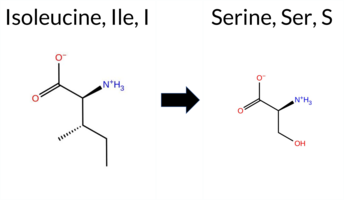 AIThe SynGAP1 missense variant I1133S is not reported in ClinVar (no ClinVar ID) and is absent from gnomAD (no gnomAD ID). Prediction tools that agree on a benign effect include REVEL, PROVEAN, polyPhen‑2 (HumDiv and HumVar), SIFT, ESM1b, FATHMM, and AlphaMissense‑Optimized. No tool predicts a pathogenic outcome; AlphaMissense‑Default is uncertain. The SGM‑Consensus, which aggregates AlphaMissense‑Default, ESM1b, FATHMM, and PROVEAN, also indicates a likely benign classification. High‑accuracy assessments confirm this: AlphaMissense‑Optimized predicts benign, and the SGM‑Consensus (majority vote) is likely benign. Foldetta results are unavailable, so they do not influence the assessment. Overall, the collective evidence strongly supports a benign impact for I1133S, and this conclusion does not contradict any ClinVar annotation (none exists). Disclaimer: This summary was generated using AI and should be interpreted alongside expert review. | Likely Benign | 0.919029 | Disordered | 0.832785 | Binding | 0.316 | 0.892 | 0.750 | -4.034 | Likely Benign | 0.492 | Ambiguous | Likely Benign | 0.186 | Likely Benign | -0.60 | Neutral | 0.007 | Benign | 0.016 | Benign | 5.70 | Benign | 0.08 | Tolerated | 0.2762 | 0.1110 | -1 | -2 | -5.3 | -26.08 | |||||||||||||||||||||||||||||||||||||||
| c.3419C>T | T1140I 2D AIThe SynGAP1 missense variant T1140I is not reported in ClinVar and is absent from gnomAD. Functional prediction tools largely agree on a benign effect: REVEL, PROVEAN, polyPhen‑2 HumVar, SIFT, ESM1b, FATHMM, and AlphaMissense‑Optimized all classify the change as benign, while the SGM‑Consensus (majority vote of AlphaMissense‑Default, ESM1b, FATHMM, PROVEAN) also reports it as likely benign. Only polyPhen‑2 HumDiv predicts a pathogenic outcome, and AlphaMissense‑Default remains uncertain. High‑accuracy assessments reinforce the benign interpretation: AlphaMissense‑Optimized predicts benign, and the SGM‑Consensus likewise indicates a likely benign effect. Foldetta, a protein‑folding stability method combining FoldX‑MD and Rosetta outputs, has no available result for this variant. Overall, the consensus of the majority of prediction tools and the high‑accuracy methods indicates that the variant is most likely benign, with no conflict with ClinVar status. Disclaimer: This summary was generated using AI and should be interpreted alongside expert review. | Likely Benign | 0.926919 | Disordered | 0.708094 | Binding | 0.293 | 0.854 | 1.000 | -5.205 | Likely Benign | 0.368 | Ambiguous | Likely Benign | 0.058 | Likely Benign | -1.85 | Neutral | 0.611 | Possibly Damaging | 0.398 | Benign | 2.61 | Benign | 0.08 | Tolerated | 0.0948 | 0.4648 | 0 | -1 | 5.2 | 12.05 | |||||||||||||||||||||||||||||||||||||||
| c.3433A>G | N1145D 2D AIThe SynGAP1 missense variant N1145D is not reported in ClinVar and is absent from gnomAD. Prediction tools that agree on a benign effect include REVEL, PROVEAN, SIFT, ESM1b, FATHMM, and AlphaMissense‑Optimized, while polyPhen‑2 (HumDiv and HumVar) and AlphaMissense‑Default predict a pathogenic outcome. The SGM‑Consensus, derived from a majority vote of AlphaMissense‑Default, ESM1b, FATHMM, and PROVEAN, classifies the variant as Likely Benign. High‑accuracy assessments further support a benign interpretation: AlphaMissense‑Optimized predicts benign, and the SGM‑Consensus also indicates Likely Benign. Foldetta, a protein‑folding stability method combining FoldX‑MD and Rosetta outputs, has no available result for this variant. Overall, the majority of computational evidence points to a benign effect, and this conclusion does not contradict any ClinVar status, as none is assigned. Disclaimer: This summary was generated using AI and should be interpreted alongside expert review. | Likely Benign | 0.922952 | Disordered | 0.722723 | Binding | 0.284 | 0.850 | 1.000 | -3.053 | Likely Benign | 0.682 | Likely Pathogenic | Likely Benign | 0.332 | Likely Benign | -2.04 | Neutral | 0.997 | Probably Damaging | 0.992 | Probably Damaging | 5.57 | Benign | 0.08 | Tolerated | 0.2082 | 0.3956 | 2 | 1 | 0.0 | 0.98 | |||||||||||||||||||||||||||||||||||||||
| c.3439A>T | T1147S 2D AIThe SynGAP1 missense variant T1147S is not reported in ClinVar and is absent from gnomAD, indicating no documented clinical or population evidence. Functional prediction tools uniformly classify the variant as benign: REVEL, PROVEAN, polyPhen‑2 (HumDiv and HumVar), SIFT, ESM1b, FATHMM, AlphaMissense‑Default, and AlphaMissense‑Optimized all predict a benign effect. No tool in the dataset indicates pathogenicity. High‑accuracy assessments corroborate this benign prediction: AlphaMissense‑Optimized reports a benign outcome, and the SGM Consensus (majority vote of AlphaMissense‑Default, ESM1b, FATHMM, and PROVEAN) yields a “Likely Benign” classification. Foldetta results are not available, so they do not influence the assessment. Overall, the variant is most likely benign, and this conclusion is consistent with the absence of any ClinVar pathogenic annotation. Disclaimer: This summary was generated using AI and should be interpreted alongside expert review. | Likely Benign | 0.831250 | Disordered | 0.746520 | Binding | 0.345 | 0.839 | 0.875 | -2.593 | Likely Benign | 0.081 | Likely Benign | Likely Benign | 0.173 | Likely Benign | -0.51 | Neutral | 0.126 | Benign | 0.096 | Benign | 5.48 | Benign | 0.08 | Tolerated | 0.3129 | 0.3757 | 1 | 1 | -0.1 | -14.03 | |||||||||||||||||||||||||||||||||||||||
| c.3478A>G | N1160D 2D AIThe SynGAP1 missense variant at position N1160D is not reported in ClinVar and is absent from gnomAD. Prediction tools that agree on a benign effect include REVEL, SIFT, and ESM1b, whereas a majority of tools predict a pathogenic outcome: PROVEAN, polyPhen‑2 (HumDiv and HumVar), FATHMM, AlphaMissense‑Default, AlphaMissense‑Optimized, and the SGM‑Consensus (majority vote from AlphaMissense‑Default, ESM1b, FATHMM, and PROVEAN). High‑accuracy assessments further support pathogenicity: AlphaMissense‑Optimized is pathogenic, and the SGM‑Consensus is labeled Likely Pathogenic. Foldetta, a protein‑folding stability method combining FoldX‑MD and Rosetta outputs, has no available result for this variant. Overall, the preponderance of evidence from both general and high‑accuracy predictors indicates that the variant is most likely pathogenic, and this conclusion does not contradict any ClinVar status, as none is currently assigned. Disclaimer: This summary was generated using AI and should be interpreted alongside expert review. | Likely Pathogenic | 0.585406 | Disordered | 0.861611 | Binding | 0.361 | 0.836 | 0.375 | -3.222 | Likely Benign | 0.978 | Likely Pathogenic | Likely Pathogenic | 0.225 | Likely Benign | -3.22 | Deleterious | 0.997 | Probably Damaging | 0.992 | Probably Damaging | 1.84 | Pathogenic | 0.08 | Tolerated | 0.1618 | 0.3920 | 2 | 1 | 0.0 | 0.98 | |||||||||||||||||||||||||||||||||||||||
| c.3487C>T | H1163Y 2D AIThe SynGAP1 missense variant H1163Y is not reported in ClinVar (no ClinVar ID) and is absent from gnomAD (no gnomAD ID). Prediction tools that agree on a benign effect include REVEL, PROVEAN, SIFT, ESM1b, FATHMM, AlphaMissense‑Optimized, and the SGM‑Consensus (Likely Benign). Tools that predict a pathogenic effect are polyPhen‑2 HumDiv, polyPhen‑2 HumVar, and AlphaMissense‑Default. High‑accuracy assessments show AlphaMissense‑Optimized classifying the variant as benign and the SGM‑Consensus also indicating a likely benign outcome; the Foldetta protein‑folding stability analysis is unavailable. Overall, the majority of evidence points to a benign impact, and this conclusion does not contradict any ClinVar annotation (none is present). Thus, the variant is most likely benign based on current predictive data. Disclaimer: This summary was generated using AI and should be interpreted alongside expert review. | Likely Benign | 0.509769 | Disordered | 0.858469 | Binding | 0.328 | 0.825 | 0.375 | -4.051 | Likely Benign | 0.688 | Likely Pathogenic | Likely Benign | 0.390 | Likely Benign | -1.81 | Neutral | 0.991 | Probably Damaging | 0.988 | Probably Damaging | 5.40 | Benign | 0.08 | Tolerated | 0.0845 | 0.4487 | 0 | 2 | 1.9 | 26.03 | |||||||||||||||||||||||||||||||||||||||
| c.3491T>G | L1164R 2D AIThe SynGAP1 missense variant L1164R has no ClinVar entry and is absent from gnomAD, so its population frequency is unknown. Functional prediction tools show mixed results: benign calls come from PROVEAN, SIFT, ESM1b, and FATHMM, while pathogenic calls come from REVEL, polyPhen‑2 (HumDiv and HumVar), AlphaMissense‑Default, and AlphaMissense‑Optimized. Grouping by consensus, four tools predict benign and five predict pathogenic. High‑accuracy methods give a more nuanced view: the SGM Consensus, which aggregates AlphaMissense‑Default, ESM1b, FATHMM, and PROVEAN, reports a Likely Benign outcome; AlphaMissense‑Optimized independently predicts Pathogenic; Foldetta’s stability assessment is unavailable. Overall, the majority of standard predictors lean toward pathogenicity, but the SGM Consensus and several benign‑oriented tools counterbalance this. Given the lack of ClinVar annotation, there is no contradiction. The variant is most likely pathogenic based on the preponderance of predictions, though the SGM Consensus suggests a benign interpretation, indicating uncertainty. Disclaimer: This summary was generated using AI and should be interpreted alongside expert review. | Likely Benign | 0.517562 | Disordered | 0.853935 | Binding | 0.325 | 0.815 | 0.375 | -4.390 | Likely Benign | 0.987 | Likely Pathogenic | Likely Pathogenic | 0.539 | Likely Pathogenic | -1.65 | Neutral | 0.999 | Probably Damaging | 0.998 | Probably Damaging | 5.33 | Benign | 0.08 | Tolerated | 0.1396 | 0.0623 | -3 | -2 | -8.3 | 43.03 | |||||||||||||||||||||||||||||||||||||||
| c.3509G>C | S1170T 2D AIThe SynGAP1 missense variant S1170T is not reported in ClinVar and is absent from gnomAD. Functional prediction tools largely agree on a benign effect: REVEL, PROVEAN, SIFT, ESM1b, FATHMM, AlphaMissense‑Default, and AlphaMissense‑Optimized all predict benign, and the SGM‑Consensus (majority vote of AlphaMissense‑Default, ESM1b, FATHMM, and PROVEAN) also indicates “Likely Benign.” In contrast, polyPhen‑2 (both HumDiv and HumVar models) predict a pathogenic impact. High‑accuracy assessments reinforce the benign consensus: AlphaMissense‑Optimized is benign, and the SGM‑Consensus is likely benign; Foldetta results are not available. Overall, the majority of evidence points to a benign effect for S1170T, and this conclusion is consistent with the lack of ClinVar annotation, so there is no contradiction with existing clinical data. Disclaimer: This summary was generated using AI and should be interpreted alongside expert review. | Likely Benign | Coiled-coil | 0.622677 | Disordered | 0.719138 | Binding | 0.417 | 0.767 | 0.500 | -3.771 | Likely Benign | 0.163 | Likely Benign | Likely Benign | 0.338 | Likely Benign | -1.13 | Neutral | 0.992 | Probably Damaging | 0.925 | Probably Damaging | 5.37 | Benign | 0.08 | Tolerated | 0.1258 | 0.5897 | 1 | 1 | 0.1 | 14.03 | ||||||||||||||||||||||||||||||||||||||
| c.3511G>T | A1171S 2D AIThe SynGAP1 missense variant A1171S is not reported in ClinVar and is absent from gnomAD. In silico prediction tools uniformly classify the change as benign: REVEL, PROVEAN, polyPhen‑2 (HumDiv and HumVar), SIFT, ESM1b, FATHMM, AlphaMissense‑Default, and AlphaMissense‑Optimized all predict a benign effect. No tool predicts pathogenicity. The high‑accuracy consensus methods corroborate this: AlphaMissense‑Optimized is benign, and the SGM Consensus (majority vote of AlphaMissense‑Default, ESM1b, FATHMM, and PROVEAN) indicates a likely benign outcome. Foldetta results are not available, so they do not influence the assessment. Overall, the variant is most likely benign, and this conclusion is consistent with the lack of a ClinVar pathogenic classification. Disclaimer: This summary was generated using AI and should be interpreted alongside expert review. | Likely Benign | Coiled-coil | 0.599170 | Disordered | 0.702689 | Binding | 0.472 | 0.775 | 0.500 | -2.875 | Likely Benign | 0.077 | Likely Benign | Likely Benign | 0.156 | Likely Benign | -0.24 | Neutral | 0.009 | Benign | 0.012 | Benign | 5.54 | Benign | 0.08 | Tolerated | 0.2536 | 0.4676 | 1 | 1 | -2.6 | 16.00 | ||||||||||||||||||||||||||||||||||||||
| c.3512C>G | A1171G 2D AIThe SynGAP1 missense variant A1171G (Ala→Gly at residue 1171) is not reported in ClinVar and is absent from gnomAD. Functional prediction tools uniformly classify it as benign: REVEL, PROVEAN, polyPhen‑2 (HumDiv and HumVar), SIFT, ESM1b, FATHMM, AlphaMissense‑Default, and AlphaMissense‑Optimized all indicate a benign effect, and no tool predicts pathogenicity. High‑accuracy assessments corroborate this: AlphaMissense‑Optimized predicts benign, the SGM Consensus (majority vote of AlphaMissense‑Default, ESM1b, FATHMM, and PROVEAN) reports a likely benign outcome, while Foldetta results are unavailable. Consequently, the variant is most likely benign, and this assessment does not contradict any ClinVar annotation. Disclaimer: This summary was generated using AI and should be interpreted alongside expert review. | Likely Benign | Coiled-coil | 0.599170 | Disordered | 0.702689 | Binding | 0.472 | 0.775 | 0.500 | -3.487 | Likely Benign | 0.286 | Likely Benign | Likely Benign | 0.141 | Likely Benign | -0.60 | Neutral | 0.245 | Benign | 0.138 | Benign | 5.38 | Benign | 0.08 | Tolerated | 0.1957 | 0.3201 | 1 | 0 | -2.2 | -14.03 | ||||||||||||||||||||||||||||||||||||||
| c.3527A>G | E1176G 2D AIThe SynGAP1 missense variant E1176G is not reported in ClinVar (no ClinVar ID) and is absent from gnomAD (no gnomAD ID). Prediction tools that agree on a benign effect include REVEL, PROVEAN, SIFT, ESM1b, and FATHMM, while polyPhen‑2 HumDiv, polyPhen‑2 HumVar, and AlphaMissense‑Default predict a pathogenic impact. The SGM‑Consensus, derived from a majority vote of AlphaMissense‑Default, ESM1b, FATHMM, and PROVEAN, reports the variant as “Likely Benign.” High‑accuracy assessments show AlphaMissense‑Optimized as “Uncertain,” SGM‑Consensus as “Likely Benign,” and Foldetta results are unavailable. Overall, the balance of evidence—five benign predictions versus three pathogenic, a consensus leaning benign, and no conflicting ClinVar annotation—suggests that E1176G is most likely benign. This conclusion does not contradict any ClinVar status, as no ClinVar entry exists for this variant. Disclaimer: This summary was generated using AI and should be interpreted alongside expert review. | Likely Benign | Coiled-coil | 0.538167 | Disordered | 0.572075 | Binding | 0.525 | 0.715 | 0.250 | -4.531 | Likely Benign | 0.838 | Likely Pathogenic | Ambiguous | 0.459 | Likely Benign | -2.14 | Neutral | 0.995 | Probably Damaging | 0.963 | Probably Damaging | 5.48 | Benign | 0.08 | Tolerated | 0.2668 | 0.5414 | 0 | -2 | 3.1 | -72.06 | ||||||||||||||||||||||||||||||||||||||
| c.353T>C | M118T 2D AIThe SynGAP1 missense variant M118T is not reported in ClinVar (no ClinVar ID) and is absent from gnomAD (no gnomAD ID). Prediction tools that agree on a benign effect include REVEL, PROVEAN, polyPhen‑2 HumDiv, polyPhen‑2 HumVar, SIFT, ESM1b, FATHMM, and AlphaMissense‑Optimized. No tool predicts a pathogenic outcome; AlphaMissense‑Default is uncertain. The high‑accuracy consensus (SGM‑Consensus) also indicates a likely benign classification, and AlphaMissense‑Optimized independently predicts benign. Foldetta, a protein‑folding stability method combining FoldX‑MD and Rosetta outputs, was not available for this variant. Overall, the evidence from multiple independent predictors and the high‑accuracy consensus strongly supports a benign impact. This conclusion is consistent with the lack of any ClinVar pathogenic annotation, so there is no contradiction with existing clinical database status. Disclaimer: This summary was generated using AI and should be interpreted alongside expert review. | Likely Benign | 0.694846 | Disordered | 0.676867 | Binding | 0.330 | 0.883 | 0.500 | -2.468 | Likely Benign | 0.454 | Ambiguous | Likely Benign | 0.217 | Likely Benign | -2.41 | Neutral | 0.396 | Benign | 0.067 | Benign | 3.86 | Benign | 0.08 | Tolerated | 0.2207 | 0.2237 | -1 | -1 | -2.6 | -30.09 | |||||||||||||||||||||||||||||||||||||||
| c.3565G>A | E1189K 2D AIThe SynGAP1 missense variant E1189K is not reported in ClinVar and has no entry in gnomAD. Prediction tools that agree on a benign effect include REVEL, PROVEAN, SIFT, ESM1b, and FATHMM, while polyPhen‑2 (HumDiv and HumVar) and AlphaMissense‑Default predict a pathogenic impact. The SGM‑Consensus, derived from a majority vote of AlphaMissense‑Default, ESM1b, FATHMM, and PROVEAN, reports the variant as “Likely Benign.” High‑accuracy assessments show AlphaMissense‑Optimized as “Uncertain,” SGM‑Consensus as “Likely Benign,” and Foldetta results are unavailable. Overall, the balance of evidence—five benign predictions versus three pathogenic ones, a consensus benign rating, and no conflicting ClinVar annotation—suggests that E1189K is most likely benign. This conclusion does not contradict any ClinVar status, as no ClinVar entry exists for this variant. Disclaimer: This summary was generated using AI and should be interpreted alongside expert review. | Likely Benign | Coiled-coil | 0.562014 | Disordered | 0.466885 | Uncertain | 0.704 | 0.623 | 0.625 | -5.565 | Likely Benign | 0.947 | Likely Pathogenic | Ambiguous | 0.423 | Likely Benign | -1.64 | Neutral | 0.997 | Probably Damaging | 0.992 | Probably Damaging | 5.37 | Benign | 0.08 | Tolerated | 0.1597 | 0.4046 | 0 | 1 | -0.4 | -0.94 | ||||||||||||||||||||||||||||||||||||||
| c.3572G>A | R1191Q 2D AIThe SynGAP1 missense variant R1191Q is listed in ClinVar with an “Uncertain” status and is present in gnomAD (variant ID 6‑33444607‑G‑A). Prediction tools that agree on a benign effect include REVEL, PROVEAN, SIFT, ESM1b, and FATHMM, while polyPhen‑2 (HumDiv and HumVar) and AlphaMissense‑Default predict a pathogenic outcome. The SGM‑Consensus, which aggregates AlphaMissense‑Default, ESM1b, FATHMM, and PROVEAN, reports a “Likely Benign” classification. High‑accuracy assessments show AlphaMissense‑Optimized as “Uncertain”; the SGM‑Consensus (majority vote) remains “Likely Benign”; and Foldetta (a protein‑folding stability method combining FoldX‑MD and Rosetta) has no available result for this variant. Overall, the majority of evidence points to a benign effect, and this is not contradictory to the ClinVar “Uncertain” designation. Disclaimer: This summary was generated using AI and should be interpreted alongside expert review. | Likely Benign | Coiled-coil | 0.661982 | Disordered | 0.439584 | Uncertain | 0.765 | 0.622 | 0.625 | Uncertain | 2 | 6-33444607-G-A | 9 | 5.58e-6 | -1.069 | Likely Benign | 0.943 | Likely Pathogenic | Ambiguous | 0.343 | Likely Benign | -1.41 | Neutral | 0.998 | Probably Damaging | 0.992 | Probably Damaging | 2.68 | Benign | 0.08 | Tolerated | 3.82 | 4 | 0.3107 | 0.2000 | 1 | 1 | 1.0 | -28.06 | |||||||||||||||||||||||||||||||
| c.3727C>A | Q1243K 2D AIThe SynGAP1 missense variant Q1243K is reported in gnomAD (6‑33446719‑C‑A) and has no ClinVar entry. Prediction tools that agree on a benign effect include REVEL, PROVEAN, SIFT, FATHMM, AlphaMissense‑Default, AlphaMissense‑Optimized, polyPhen‑2 HumVar, and the SGM‑Consensus (majority vote from AlphaMissense‑Default, ESM1b, FATHMM, PROVEAN). Only polyPhen‑2 HumDiv predicts a pathogenic outcome; ESM1b is uncertain. High‑accuracy assessments show AlphaMissense‑Optimized as benign and the SGM‑Consensus as Likely Benign, while Foldetta (combining FoldX‑MD and Rosetta outputs) has no available result for this variant. Based on the collective predictions, the variant is most likely benign, and this conclusion is not contradicted by any ClinVar status. Disclaimer: This summary was generated using AI and should be interpreted alongside expert review. | Likely Benign | Coiled-coil | 0.545602 | Disordered | 0.433693 | Uncertain | 0.887 | 0.551 | 0.500 | 6-33446719-C-A | 1 | 6.20e-7 | -7.110 | In-Between | 0.230 | Likely Benign | Likely Benign | 0.050 | Likely Benign | -1.39 | Neutral | 0.679 | Possibly Damaging | 0.446 | Benign | 2.72 | Benign | 0.08 | Tolerated | 3.77 | 5 | 0.1276 | 0.2303 | 1 | 1 | -0.4 | 0.04 | |||||||||||||||||||||||||||||||||
| c.3770C>T | S1257F 2D 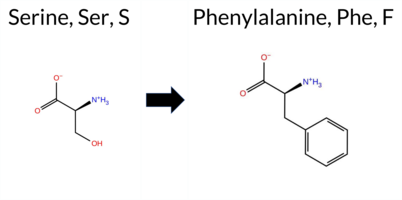 AIThe SynGAP1 missense variant S1257F is not reported in ClinVar (ClinVar ID None) and is absent from gnomAD (gnomAD ID None). Functional prediction tools that agree on a benign effect include REVEL, PROVEAN, SIFT, FATHMM, and AlphaMissense‑Optimized. Tools that predict a pathogenic effect are polyPhen‑2 HumDiv, polyPhen‑2 HumVar, and ESM1b; AlphaMissense‑Default is uncertain. High‑accuracy assessments show AlphaMissense‑Optimized as benign, and the SGM Consensus (majority vote from AlphaMissense‑Default, ESM1b, FATHMM, PROVEAN) also favors a benign outcome. Foldetta, a protein‑folding stability method, has no available result for this variant. Overall, the preponderance of evidence points to a benign impact. This conclusion is consistent with the lack of ClinVar annotation and does not contradict any existing clinical database. Disclaimer: This summary was generated using AI and should be interpreted alongside expert review. | Coiled-coil | 0.541878 | Disordered | 0.482380 | Uncertain | 0.889 | 0.572 | 0.375 | -8.584 | Likely Pathogenic | 0.379 | Ambiguous | Likely Benign | 0.141 | Likely Benign | -2.41 | Neutral | 0.966 | Probably Damaging | 0.837 | Possibly Damaging | 2.55 | Benign | 0.08 | Tolerated | 0.0453 | 0.4747 | -3 | -2 | 3.6 | 60.10 | |||||||||||||||||||||||||||||||||||||||
| c.3775A>G | I1259V 2D AIThe SynGAP1 I1259V missense change is not reported in ClinVar and has no gnomAD entry. Prediction tools that agree on a benign effect include REVEL, PROVEAN, SIFT, ESM1b, and FATHMM, while polyPhen‑2 HumDiv, polyPhen‑2 HumVar, and AlphaMissense‑Default predict a pathogenic outcome. The SGM‑Consensus, derived from a majority vote of AlphaMissense‑Default, ESM1b, FATHMM, and PROVEAN, reports the variant as “Likely Benign.” High‑accuracy assessments show AlphaMissense‑Optimized as “Uncertain,” SGM‑Consensus as “Likely Benign,” and Foldetta (combining FoldX‑MD and Rosetta) has no available result. Overall, the balance of evidence leans toward a benign interpretation, and this conclusion does not contradict any ClinVar annotation (none exists). Disclaimer: This summary was generated using AI and should be interpreted alongside expert review. | Likely Benign | Coiled-coil | 0.494003 | Structured | 0.576405 | Binding | 0.885 | 0.574 | 0.250 | -3.670 | Likely Benign | 0.892 | Likely Pathogenic | Ambiguous | 0.171 | Likely Benign | -0.28 | Neutral | 0.958 | Probably Damaging | 0.970 | Probably Damaging | 2.67 | Benign | 0.08 | Tolerated | 0.0957 | 0.2902 | 4 | 3 | -0.3 | -14.03 | ||||||||||||||||||||||||||||||||||||||
| c.3802C>A | L1268M 2D AIThe SynGAP1 missense variant L1268M is reported in gnomAD (ID 6‑33447850‑C‑A) and has no ClinVar entry. Functional prediction tools that agree on a benign effect include REVEL, PROVEAN, SIFT, ESM1b, FATHMM, AlphaMissense‑Default, and AlphaMissense‑Optimized. Tools that predict a pathogenic effect are polyPhen‑2 HumDiv and polyPhen‑2 HumVar. The SGM‑Consensus, derived from a majority vote of AlphaMissense‑Default, ESM1b, FATHMM, and PROVEAN, classifies the variant as Likely Benign. High‑accuracy assessments show AlphaMissense‑Optimized as Benign and the SGM‑Consensus as Likely Benign; a Foldetta stability analysis is not available. Overall, the preponderance of evidence from multiple in silico predictors and consensus methods indicates that the variant is most likely benign, and this conclusion is not contradicted by any ClinVar status. Disclaimer: This summary was generated using AI and should be interpreted alongside expert review. | Likely Benign | Coiled-coil | 0.458154 | Structured | 0.804315 | Binding | 0.859 | 0.629 | 0.000 | 6-33447850-C-A | -4.689 | Likely Benign | 0.140 | Likely Benign | Likely Benign | 0.062 | Likely Benign | -0.07 | Neutral | 0.990 | Probably Damaging | 0.796 | Possibly Damaging | 2.67 | Benign | 0.08 | Tolerated | 3.77 | 5 | 0.0627 | 0.2297 | 2 | 4 | -1.9 | 18.03 | |||||||||||||||||||||||||||||||||||
| c.3803T>A | L1268Q 2D AIThe SynGAP1 missense variant L1268Q is not reported in ClinVar and is absent from gnomAD. Functional prediction tools largely agree on a benign effect: REVEL, PROVEAN, SIFT, ESM1b, FATHMM, AlphaMissense‑Default, and AlphaMissense‑Optimized all predict benign. Only the two PolyPhen‑2 implementations (HumDiv and HumVar) predict a pathogenic outcome. The SGM‑Consensus, derived from a majority vote of AlphaMissense‑Default, ESM1b, FATHMM, and PROVEAN, reports the variant as “Likely Benign.” High‑accuracy assessments reinforce this view: AlphaMissense‑Optimized is benign, and the SGM‑Consensus also indicates benign. Foldetta results are not available, so they do not influence the assessment. Overall, the preponderance of evidence points to a benign impact for this variant, and this conclusion is not contradicted by any ClinVar annotation. Disclaimer: This summary was generated using AI and should be interpreted alongside expert review. | Likely Benign | Coiled-coil | 0.458154 | Structured | 0.804315 | Binding | 0.859 | 0.629 | 0.000 | -5.707 | Likely Benign | 0.143 | Likely Benign | Likely Benign | 0.062 | Likely Benign | -0.50 | Neutral | 0.990 | Probably Damaging | 0.637 | Possibly Damaging | 2.68 | Benign | 0.08 | Tolerated | 0.0988 | 0.0558 | -2 | -2 | -7.3 | 14.97 | ||||||||||||||||||||||||||||||||||||||
| c.3803T>G | L1268R 2D AIThe SynGAP1 missense change L1268R is not reported in ClinVar and is absent from gnomAD. Consensus from multiple in‑silico predictors indicates a benign effect: REVEL, PROVEAN, SIFT, FATHMM, AlphaMissense‑Default, AlphaMissense‑Optimized, and the SGM‑Consensus score (Likely Benign) all support a neutral impact. In contrast, polyPhen‑2 (HumDiv and HumVar) predict a pathogenic outcome, while ESM1b remains uncertain. High‑accuracy tools reinforce the benign assessment: AlphaMissense‑Optimized returns a benign prediction and the SGM‑Consensus (derived from a majority vote of AlphaMissense‑Default, ESM1b, FATHMM, and PROVEAN) also indicates Likely Benign. Foldetta results are not available, so they do not influence the interpretation. Overall, the preponderance of evidence points to a benign effect for L1268R, and this conclusion is not contradicted by any ClinVar annotation. Disclaimer: This summary was generated using AI and should be interpreted alongside expert review. | Likely Benign | Coiled-coil | 0.458154 | Structured | 0.804315 | Binding | 0.859 | 0.629 | 0.000 | -7.010 | In-Between | 0.293 | Likely Benign | Likely Benign | 0.076 | Likely Benign | -0.79 | Neutral | 0.970 | Probably Damaging | 0.637 | Possibly Damaging | 2.68 | Benign | 0.08 | Tolerated | 0.1135 | 0.0558 | -3 | -2 | -8.3 | 43.03 | ||||||||||||||||||||||||||||||||||||||
| c.383C>G | P128R 2D AIThe SynGAP1 missense variant P128R is not reported in ClinVar and is absent from gnomAD. Functional prediction tools show a split: benign calls from REVEL, PROVEAN, SIFT, ESM1b, FATHMM, and AlphaMissense‑Optimized, whereas pathogenic calls come from polyPhen‑2 HumDiv, polyPhen‑2 HumVar, and AlphaMissense‑Default. When predictions are grouped by consensus, the majority of methods (six) predict benign, while three predict pathogenic. High‑accuracy assessments reinforce the benign trend: AlphaMissense‑Optimized scores the variant as benign, and the SGM Consensus—derived from a majority vote of AlphaMissense‑Default, ESM1b, FATHMM, and PROVEAN—also indicates a likely benign effect. Foldetta results are unavailable. Overall, the computational evidence favors a benign classification for P128R, and this conclusion is not contradicted by any ClinVar annotation, as none exists. Disclaimer: This summary was generated using AI and should be interpreted alongside expert review. | Likely Benign | 0.497853 | Structured | 0.713069 | Binding | 0.376 | 0.878 | 0.625 | -5.048 | Likely Benign | 0.748 | Likely Pathogenic | Likely Benign | 0.188 | Likely Benign | -1.76 | Neutral | 0.984 | Probably Damaging | 0.601 | Possibly Damaging | 4.19 | Benign | 0.08 | Tolerated | 0.1810 | 0.2401 | 0 | -2 | -2.9 | 59.07 | |||||||||||||||||||||||||||||||||||||||
| c.388C>G | Q130E 2D AIThe SynGAP1 missense variant Q130E is reported in gnomAD (ID 6‑33432685‑C‑G) but has no ClinVar entry. Functional prediction tools that agree on a benign effect include REVEL, PROVEAN, SIFT, ESM1b, FATHMM, AlphaMissense‑Default, and AlphaMissense‑Optimized. In contrast, polyPhen‑2 (HumDiv and HumVar) predict a pathogenic impact. The SGM‑Consensus, derived from a majority vote of AlphaMissense‑Default, ESM1b, FATHMM, and PROVEAN, classifies the variant as likely benign. High‑accuracy assessments further support a benign outcome: AlphaMissense‑Optimized is benign, and the SGM‑Consensus (majority of the same four tools) is benign. Foldetta, a protein‑folding stability method combining FoldX‑MD and Rosetta outputs, has no available result for this variant. Overall, the preponderance of evidence from multiple prediction algorithms indicates that the variant is most likely benign, and this conclusion does not contradict any ClinVar status (none is available). Disclaimer: This summary was generated using AI and should be interpreted alongside expert review. | Likely Benign | 0.509769 | Disordered | 0.718853 | Binding | 0.306 | 0.885 | 0.375 | 6-33432685-C-G | 2 | 1.24e-6 | -4.283 | Likely Benign | 0.251 | Likely Benign | Likely Benign | 0.060 | Likely Benign | -0.72 | Neutral | 0.924 | Possibly Damaging | 0.857 | Possibly Damaging | 4.19 | Benign | 0.08 | Tolerated | 4.32 | 2 | 0.1620 | 0.2587 | 2 | 2 | 0.0 | 0.98 | ||||||||||||||||||||||||||||||||||
| c.3890G>C | R1297T 2D AIThe SynGAP1 missense variant R1297T is not reported in ClinVar (ClinVar ID = None) and is absent from gnomAD (gnomAD ID = None). Functional prediction tools cluster into two groups: seven tools (REVEL, polyPhen‑2 HumDiv, polyPhen‑2 HumVar, SIFT, ESM1b, AlphaMissense‑Default, AlphaMissense‑Optimized) predict a benign effect, while two tools (PROVEAN, FATHMM) predict pathogenicity. High‑accuracy assessments show AlphaMissense‑Optimized as benign; the SGM Consensus, derived from a majority vote of AlphaMissense‑Default, ESM1b, FATHMM, and PROVEAN, is inconclusive (2 benign vs 2 pathogenic), and Foldetta results are unavailable. Overall, the preponderance of evidence points to a benign impact. This conclusion does not contradict ClinVar status, as the variant is not yet catalogued there. Disclaimer: This summary was generated using AI and should be interpreted alongside expert review. | 0.859585 | Disordered | 0.895222 | Binding | 0.511 | 0.817 | 0.625 | -3.941 | Likely Benign | 0.287 | Likely Benign | Likely Benign | 0.151 | Likely Benign | -2.95 | Deleterious | 0.224 | Benign | 0.171 | Benign | 2.49 | Pathogenic | 0.08 | Tolerated | 0.1634 | 0.2972 | -1 | -1 | 3.8 | -55.08 | ||||||||||||||||||||||||||||||||||||||||
| c.3913A>T | T1305S 2D AIThe SynGAP1 missense variant T1305S is not reported in ClinVar and is absent from gnomAD. In silico prediction tools uniformly indicate a benign effect: REVEL, PROVEAN, polyPhen‑2 (HumDiv and HumVar), SIFT, ESM1b, FATHMM, AlphaMissense‑Default, and AlphaMissense‑Optimized all classify the change as benign. The SGM‑Consensus, which aggregates the majority vote of AlphaMissense‑Default, ESM1b, FATHMM, and PROVEAN, also reports a likely benign outcome. No pathogenic predictions are present among the evaluated tools. High‑accuracy assessments confirm this: AlphaMissense‑Optimized predicts benign, and the SGM‑Consensus likewise indicates likely benign; Foldetta results are unavailable. Consequently, the variant is most likely benign based on current predictions, and this assessment does not contradict any ClinVar status, as no ClinVar entry exists. Disclaimer: This summary was generated using AI and should be interpreted alongside expert review. | Likely Benign | 0.791621 | Disordered | 0.894658 | Binding | 0.390 | 0.873 | 0.875 | -2.813 | Likely Benign | 0.074 | Likely Benign | Likely Benign | 0.053 | Likely Benign | 0.20 | Neutral | 0.003 | Benign | 0.026 | Benign | 2.83 | Benign | 0.08 | Tolerated | 0.3683 | 0.4988 | 1 | 1 | -0.1 | -14.03 | |||||||||||||||||||||||||||||||||||||||
| c.3962C>T | P1321L 2D AIThe SynGAP1 missense variant P1321L is not reported in ClinVar and is absent from gnomAD, indicating no documented allele frequency data. Functional prediction tools uniformly classify the variant as benign: REVEL, PROVEAN, polyPhen‑2 (HumDiv and HumVar), SIFT, ESM1b, FATHMM, AlphaMissense‑Default, and AlphaMissense‑Optimized all predict a benign effect. No tool in the dataset indicates pathogenicity. High‑accuracy assessments corroborate this benign prediction: AlphaMissense‑Optimized reports a benign outcome, and the SGM Consensus (majority vote of AlphaMissense‑Default, ESM1b, FATHMM, and PROVEAN) yields a “Likely Benign” classification. Foldetta results are not available, so they do not influence the assessment. Overall, the variant is most likely benign, and this conclusion is consistent with the absence of any ClinVar pathogenic annotation. Disclaimer: This summary was generated using AI and should be interpreted alongside expert review. | Likely Benign | 0.827927 | Disordered | 0.933505 | Binding | 0.463 | 0.828 | 0.875 | -4.892 | Likely Benign | 0.096 | Likely Benign | Likely Benign | 0.049 | Likely Benign | -0.81 | Neutral | 0.115 | Benign | 0.009 | Benign | 4.28 | Benign | 0.08 | Tolerated | 0.2626 | 0.6222 | -3 | -3 | 5.4 | 16.04 | |||||||||||||||||||||||||||||||||||||||
| c.418T>C | S140P 2D 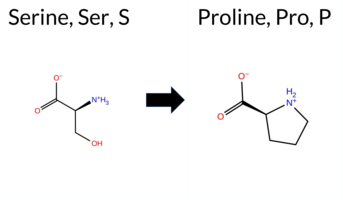 AIThe SynGAP1 missense variant S140P is not reported in ClinVar (ClinVar ID = None) and is absent from gnomAD (gnomAD ID = None). Prediction tools that agree on a benign effect include REVEL, SIFT, ESM1b, and FATHMM. Tools that agree on a pathogenic effect include PROVEAN, polyPhen‑2 HumDiv, polyPhen‑2 HumVar, AlphaMissense‑Default, and AlphaMissense‑Optimized. The SGM Consensus, which aggregates AlphaMissense‑Default, ESM1b, FATHMM, and PROVEAN, is inconclusive (two pathogenic vs. two benign votes). Foldetta, a protein‑folding stability method combining FoldX‑MD and Rosetta outputs, has no available result for this variant. High‑accuracy tools specifically show AlphaMissense‑Optimized as pathogenic, while SGM Consensus and Foldetta are unavailable. Overall, the majority of evidence points to a pathogenic impact for S140P, and this conclusion is not contradicted by any ClinVar annotation. Disclaimer: This summary was generated using AI and should be interpreted alongside expert review. | 0.476583 | Structured | 0.587898 | Binding | 0.321 | 0.896 | 0.625 | -4.089 | Likely Benign | 0.990 | Likely Pathogenic | Likely Pathogenic | 0.287 | Likely Benign | -2.59 | Deleterious | 0.995 | Probably Damaging | 0.979 | Probably Damaging | 3.52 | Benign | 0.08 | Tolerated | 0.1726 | 0.5117 | 1 | -1 | -0.8 | 10.04 | ||||||||||||||||||||||||||||||||||||||||
| c.502C>G | H168D 2D AIThe SynGAP1 missense variant H168D is not reported in ClinVar (ClinVar ID = None) and is absent from gnomAD (gnomAD ID = None). Prediction tools that agree on a benign effect include REVEL, PROVEAN, polyPhen‑2 (HumDiv and HumVar), SIFT, FATHMM, and AlphaMissense‑Optimized. Only ESM1b predicts a pathogenic outcome, while AlphaMissense‑Default remains uncertain. High‑accuracy assessments further support a benign classification: AlphaMissense‑Optimized is benign, the SGM Consensus (majority vote from AlphaMissense‑Default, ESM1b, FATHMM, and PROVEAN) yields a benign consensus, and Foldetta results are unavailable. Overall, the majority of evidence points to a benign impact. This prediction is consistent with the lack of ClinVar annotation and does not contradict any existing clinical database status. Disclaimer: This summary was generated using AI and should be interpreted alongside expert review. | 0.433034 | Structured | 0.502450 | Binding | 0.402 | 0.678 | 0.125 | -8.519 | Likely Pathogenic | 0.481 | Ambiguous | Likely Benign | 0.131 | Likely Benign | -1.24 | Neutral | 0.016 | Benign | 0.021 | Benign | 4.24 | Benign | 0.08 | Tolerated | 0.2365 | 0.2017 | 1 | -1 | -0.3 | -22.05 | ||||||||||||||||||||||||||||||||||||||||
| c.518T>A | L173Q 2D AIThe SynGAP1 missense variant L173Q is not reported in ClinVar (ClinVar ID None) and is absent from gnomAD (gnomAD ID None). Functional prediction tools that agree on a benign effect include REVEL, PROVEAN, polyPhen‑2 (HumDiv and HumVar), SIFT, ESM1b, and FATHMM. Only AlphaMissense‑Default predicts a pathogenic outcome, while AlphaMissense‑Optimized is uncertain. The SGM‑Consensus, which aggregates the majority vote from AlphaMissense‑Default, ESM1b, FATHMM, and PROVEAN, classifies the variant as Likely Benign. Foldetta, a protein‑folding stability method combining FoldX‑MD and Rosetta outputs, has no available result for this variant. Overall, the preponderance of evidence from multiple in silico predictors and the SGM‑Consensus indicates that the variant is most likely benign, and this assessment does not contradict any ClinVar status (none reported). Disclaimer: This summary was generated using AI and should be interpreted alongside expert review. | Likely Benign | 0.534167 | Disordered | 0.491566 | Uncertain | 0.390 | 0.631 | 0.375 | -5.605 | Likely Benign | 0.850 | Likely Pathogenic | Ambiguous | 0.133 | Likely Benign | -1.72 | Neutral | 0.022 | Benign | 0.022 | Benign | 3.94 | Benign | 0.08 | Tolerated | 0.1028 | 0.0919 | -2 | -2 | -7.3 | 14.97 | |||||||||||||||||||||||||||||||||||||||
| c.518T>G | L173R 2D AIThe SynGAP1 missense variant L173R is not reported in ClinVar (ClinVar ID = None) and is absent from gnomAD (gnomAD ID = None). Prediction tools that agree on a benign effect include REVEL, PROVEAN, polyPhen‑2 HumVar, SIFT, and FATHMM. Those that predict a pathogenic effect are polyPhen‑2 HumDiv, ESM1b, and AlphaMissense‑Default. The high‑accuracy AlphaMissense‑Optimized tool returns an uncertain result, and the SGM Consensus (majority vote from AlphaMissense‑Default, ESM1b, FATHMM, PROVEAN) is inconclusive (2 vs 2). Foldetta, a protein‑folding stability method combining FoldX‑MD and Rosetta outputs, has no available result for this variant. Overall, the majority of consensus tools lean toward a benign interpretation, and there is no ClinVar evidence to contradict this assessment. Thus, the variant is most likely benign. Disclaimer: This summary was generated using AI and should be interpreted alongside expert review. | 0.534167 | Disordered | 0.491566 | Uncertain | 0.390 | 0.631 | 0.375 | -9.524 | Likely Pathogenic | 0.904 | Likely Pathogenic | Ambiguous | 0.119 | Likely Benign | -1.63 | Neutral | 0.561 | Possibly Damaging | 0.178 | Benign | 3.95 | Benign | 0.08 | Tolerated | 0.1258 | 0.0761 | -3 | -2 | -8.3 | 43.03 | ||||||||||||||||||||||||||||||||||||||||
| c.569G>A | S190N 2D AIThe SynGAP1 missense variant S190N is not reported in ClinVar (ClinVar ID None) and is absent from gnomAD (gnomAD ID None). Prediction tools that agree on a benign effect include REVEL, PROVEAN, polyPhen‑2 HumVar, SIFT, and FATHMM, while polyPhen‑2 HumDiv and AlphaMissense‑Default predict a pathogenic outcome. The remaining tools, ESM1b and AlphaMissense‑Optimized, are uncertain. High‑accuracy assessments further clarify the picture: AlphaMissense‑Optimized is uncertain; the SGM Consensus (derived from AlphaMissense‑Default, ESM1b, FATHMM, and PROVEAN) resolves to benign (two benign votes versus one pathogenic and one uncertain); and Foldetta, a protein‑folding stability method, has no available result for this variant. Overall, the majority of evidence points to a benign effect, and this conclusion does not contradict the ClinVar status, which currently has no entry for the variant. Disclaimer: This summary was generated using AI and should be interpreted alongside expert review. | 0.422041 | Structured | 0.428613 | Uncertain | 0.338 | 0.615 | 0.250 | -7.497 | In-Between | 0.838 | Likely Pathogenic | Ambiguous | 0.160 | Likely Benign | -1.73 | Neutral | 0.759 | Possibly Damaging | 0.202 | Benign | 4.06 | Benign | 0.08 | Tolerated | 0.1119 | 0.5285 | 1 | 1 | -2.7 | 27.03 | ||||||||||||||||||||||||||||||||||||||||
| c.583G>T | A195S 2D AIThe SynGAP1 missense variant A195S is listed in gnomAD (6‑33435225‑G‑T) but has no ClinVar entry. Functional prediction tools that agree on a benign effect include REVEL, PROVEAN, SIFT, ESM1b, FATHMM, and AlphaMissense‑Optimized. Tools that predict a pathogenic outcome are polyPhen‑2 HumDiv, polyPhen‑2 HumVar, and AlphaMissense‑Default. The SGM‑Consensus, derived from a majority vote of AlphaMissense‑Default, ESM1b, FATHMM, and PROVEAN, classifies the variant as likely benign. High‑accuracy assessments further support this: AlphaMissense‑Optimized predicts benign, and the SGM‑Consensus (majority of the four high‑accuracy predictors) also indicates benign. Foldetta, a protein‑folding stability method combining FoldX‑MD and Rosetta outputs, has no available result for this variant. Overall, the consensus of the available predictions points to a benign effect, and this is consistent with the absence of a ClinVar pathogenic classification. Disclaimer: This summary was generated using AI and should be interpreted alongside expert review. | Likely Benign | 0.346032 | Structured | 0.430388 | Uncertain | 0.363 | 0.533 | 0.125 | 6-33435225-G-T | 1 | 6.20e-7 | -4.936 | Likely Benign | 0.618 | Likely Pathogenic | Likely Benign | 0.078 | Likely Benign | -1.13 | Neutral | 0.990 | Probably Damaging | 0.760 | Possibly Damaging | 4.10 | Benign | 0.08 | Tolerated | 3.54 | 6 | 0.1846 | 0.4427 | 1 | 1 | -2.6 | 16.00 | ||||||||||||||||||||||||||||||||||
| c.595A>C | N199H 2D 3DClick to see structure in 3D Viewer AIThe SynGAP1 missense variant N199H is not reported in ClinVar (ClinVar ID None) and is absent from gnomAD (gnomAD ID None). Prediction tools that agree on a benign effect include REVEL, FoldX, Rosetta, Foldetta, premPS, PROVEAN, SIFT, ESM1b, FATHMM, AlphaMissense‑Default, AlphaMissense‑Optimized, and the SGM‑Consensus (Likely Benign). Only the two polyPhen‑2 implementations (HumDiv and HumVar) predict a pathogenic outcome. High‑accuracy assessments further support a benign classification: AlphaMissense‑Optimized is benign, the SGM‑Consensus (majority vote of AlphaMissense‑Default, ESM1b, FATHMM, PROVEAN) is Likely Benign, and Foldetta (combining FoldX‑MD and Rosetta outputs) is benign. No predictions are missing or inconclusive. Overall, the majority of evidence indicates that the variant is most likely benign, and this conclusion does not contradict the ClinVar status, which contains no pathogenic assertion. Disclaimer: This summary was generated using AI and should be interpreted alongside expert review. | Likely Benign | PH | 0.390993 | Structured | 0.431347 | Uncertain | 0.571 | 0.473 | 0.125 | -6.387 | Likely Benign | 0.136 | Likely Benign | Likely Benign | 0.17 | Likely Benign | 0.1 | 0.15 | Likely Benign | 0.16 | Likely Benign | 0.20 | Likely Benign | 0.064 | Likely Benign | -1.99 | Neutral | 0.952 | Possibly Damaging | 0.496 | Possibly Damaging | 4.17 | Benign | 0.08 | Tolerated | 0.0879 | 0.5635 | 2 | 1 | 0.3 | 23.04 | |||||||||||||||||||||||||||||
| c.616A>C | I206L 2D 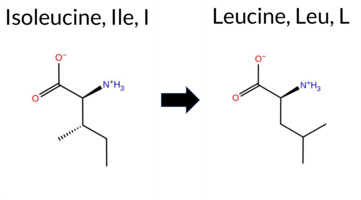 3DClick to see structure in 3D Viewer AIThe SynGAP1 missense variant I206L is not reported in ClinVar (ClinVar ID None) and is absent from gnomAD (gnomAD ID None). Prediction tools that agree on a benign effect include REVEL, FoldX, PROVEAN, polyPhen‑2 (HumDiv and HumVar), SIFT, FATHMM, and Foldetta. Those that predict a pathogenic effect are ESM1b and AlphaMissense‑Default. Uncertain or inconclusive results come from premPS, AlphaMissense‑Optimized, and Rosetta. High‑accuracy assessments show AlphaMissense‑Optimized as uncertain, the SGM Consensus (majority vote of AlphaMissense‑Default, ESM1b, FATHMM, PROVEAN) is inconclusive due to a 2‑vs‑2 split, and Foldetta predicts a benign outcome. Overall, the majority of tools (seven benign vs two pathogenic) support a benign classification. Thus, the variant is most likely benign, and this assessment does not contradict any ClinVar status. Disclaimer: This summary was generated using AI and should be interpreted alongside expert review. | PH | 0.298791 | Structured | 0.405123 | Uncertain | 0.863 | 0.391 | 0.125 | -9.488 | Likely Pathogenic | 0.790 | Likely Pathogenic | Ambiguous | 0.05 | Likely Benign | 0.1 | 0.75 | Ambiguous | 0.40 | Likely Benign | 0.78 | Ambiguous | 0.080 | Likely Benign | -1.72 | Neutral | 0.004 | Benign | 0.012 | Benign | 3.78 | Benign | 0.08 | Tolerated | 0.0632 | 0.3608 | 2 | 2 | -0.7 | 0.00 | ||||||||||||||||||||||||||||||
| c.652T>A | F218I 2D 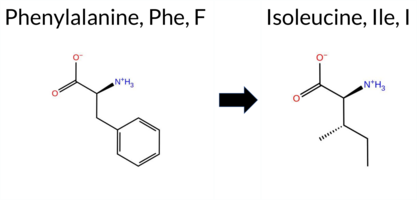 3DClick to see structure in 3D Viewer AIThe SynGAP1 missense variant F218I is reported in gnomAD (variant ID 6‑33435294‑T‑A) but has no ClinVar entry. Functional prediction tools largely agree on a deleterious effect: pathogenic predictions come from REVEL, FoldX, Rosetta, Foldetta, premPS, PROVEAN, polyPhen‑2 (HumDiv), ESM1b, AlphaMissense‑Default, and AlphaMissense‑Optimized, while benign predictions are limited to polyPhen‑2 (HumVar), SIFT, and FATHMM. High‑accuracy assessments reinforce the pathogenic view: AlphaMissense‑Optimized is pathogenic, the SGM Consensus (majority vote of AlphaMissense‑Default, ESM1b, FATHMM, PROVEAN) is Likely Pathogenic, and Foldetta (combining FoldX‑MD and Rosetta outputs) is pathogenic. No prediction or folding stability result is missing or inconclusive. Based on the collective evidence, the variant is most likely pathogenic, and this conclusion is not contradicted by any ClinVar status. Disclaimer: This summary was generated using AI and should be interpreted alongside expert review. | Likely Pathogenic | PH | 0.281712 | Structured | 0.408725 | Uncertain | 0.848 | 0.272 | 0.000 | 6-33435294-T-A | 1 | 6.20e-7 | -12.211 | Likely Pathogenic | 0.987 | Likely Pathogenic | Likely Pathogenic | 4.69 | Destabilizing | 0.2 | 5.93 | Destabilizing | 5.31 | Destabilizing | 1.18 | Destabilizing | 0.612 | Likely Pathogenic | -3.81 | Deleterious | 0.510 | Possibly Damaging | 0.066 | Benign | 5.85 | Benign | 0.08 | Tolerated | 3.41 | 13 | 0.2106 | 0.2459 | 0 | 1 | 1.7 | -34.02 | ||||||||||||||||||||||||
| c.652T>G | F218V 2D 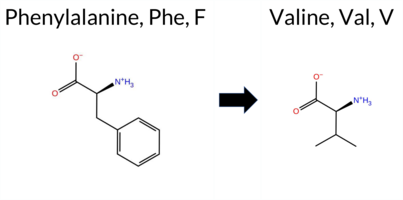 3DClick to see structure in 3D Viewer AIThe SynGAP1 missense variant F218V is not reported in ClinVar and is absent from gnomAD. Functional prediction tools cluster into two groups: benign predictions come from polyPhen‑2 (HumDiv and HumVar), SIFT, and FATHMM; pathogenic predictions arise from REVEL, FoldX, Rosetta, Foldetta, premPS, PROVEAN, ESM1b, AlphaMissense‑Default, and AlphaMissense‑Optimized. The SGM‑Consensus, which aggregates AlphaMissense‑Default, ESM1b, FATHMM, and PROVEAN, is labeled “Likely Pathogenic.” High‑accuracy assessments further support a deleterious effect: AlphaMissense‑Optimized predicts pathogenicity, the SGM‑Consensus agrees on a likely pathogenic outcome, and Foldetta (combining FoldX‑MD and Rosetta outputs) also indicates pathogenicity. No predictions or stability results are missing or inconclusive. Based on the collective evidence, the variant is most likely pathogenic, and this conclusion aligns with the absence of a ClinVar benign classification. Disclaimer: This summary was generated using AI and should be interpreted alongside expert review. | Likely Pathogenic | PH | 0.281712 | Structured | 0.408725 | Uncertain | 0.848 | 0.272 | 0.000 | -10.081 | Likely Pathogenic | 0.978 | Likely Pathogenic | Likely Pathogenic | 4.18 | Destabilizing | 0.2 | 6.35 | Destabilizing | 5.27 | Destabilizing | 1.15 | Destabilizing | 0.691 | Likely Pathogenic | -4.14 | Deleterious | 0.300 | Benign | 0.066 | Benign | 5.81 | Benign | 0.08 | Tolerated | 0.2173 | 0.2258 | -1 | -1 | 1.4 | -48.04 | |||||||||||||||||||||||||||||
| c.664G>A | V222I 2D 3DClick to see structure in 3D Viewer AIThe SynGAP1 V222I missense change is not reported in ClinVar (ClinVar ID None) and is absent from gnomAD (gnomAD ID None). Prediction tools that agree on a benign effect include FoldX, premPS, PROVEAN, SIFT, ESM1b, FATHMM, and AlphaMissense‑Optimized. Those that predict a pathogenic outcome are REVEL, polyPhen‑2 HumDiv, polyPhen‑2 HumVar, and AlphaMissense‑Default. The high‑accuracy consensus methods give a benign signal: AlphaMissense‑Optimized is benign, the SGM Consensus (majority vote of AlphaMissense‑Default, ESM1b, FATHMM, PROVEAN) is Likely Benign, while Foldetta’s stability assessment is uncertain. Overall, the majority of evidence points to a benign effect. This conclusion does not contradict ClinVar status, as no ClinVar classification exists for this variant. Disclaimer: This summary was generated using AI and should be interpreted alongside expert review. | Likely Benign | PH | 0.116183 | Structured | 0.402706 | Uncertain | 0.885 | 0.310 | 0.125 | -6.347 | Likely Benign | 0.604 | Likely Pathogenic | Likely Benign | 0.21 | Likely Benign | 0.2 | 1.45 | Ambiguous | 0.83 | Ambiguous | 0.09 | Likely Benign | 0.612 | Likely Pathogenic | -0.87 | Neutral | 0.984 | Probably Damaging | 0.956 | Probably Damaging | 5.77 | Benign | 0.08 | Tolerated | 0.0637 | 0.3574 | 4 | 3 | 0.3 | 14.03 | |||||||||||||||||||||||||||||
| c.765C>A | D255E 2D 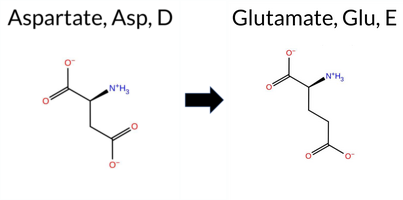 3DClick to see structure in 3D Viewer AIThe SynGAP1 missense change D255E is not reported in ClinVar (ClinVar status: none) and is absent from gnomAD (gnomAD ID: none). Prediction tools that agree on a benign effect include premPS, SIFT, ESM1b, and FATHMM. Those that predict a pathogenic effect are REVEL, PROVEAN, polyPhen‑2 HumDiv, polyPhen‑2 HumVar, AlphaMissense‑Default, and AlphaMissense‑Optimized. FoldX, Rosetta, and Foldetta give uncertain results. High‑accuracy assessments show AlphaMissense‑Optimized as pathogenic; the SGM Consensus (majority vote from AlphaMissense‑Default, ESM1b, FATHMM, PROVEAN) is inconclusive, and Foldetta is also inconclusive. Overall, the majority of available predictions (seven pathogenic vs. four benign) point to a likely pathogenic impact. This conclusion does not contradict the ClinVar status, which has no entry for this variant. Disclaimer: This summary was generated using AI and should be interpreted alongside expert review. | 0.501700 | Disordered | 0.219132 | Uncertain | 0.801 | 0.273 | 0.250 | -6.876 | Likely Benign | 0.989 | Likely Pathogenic | Likely Pathogenic | 0.80 | Ambiguous | 0.3 | 0.90 | Ambiguous | 0.85 | Ambiguous | 0.15 | Likely Benign | 0.508 | Likely Pathogenic | -2.98 | Deleterious | 0.994 | Probably Damaging | 0.978 | Probably Damaging | 5.89 | Benign | 0.08 | Tolerated | 0.1365 | 0.5067 | 3 | 2 | 0.0 | 14.03 | |||||||||||||||||||||||||||||||
| c.765C>G | D255E 2D 3DClick to see structure in 3D Viewer AIThe SynGAP1 missense variant D255E is not reported in ClinVar (ClinVar status: none) and is absent from gnomAD (gnomAD ID: none). Prediction tools that agree on a benign effect include premPS, SIFT, ESM1b, and FATHMM, whereas those that agree on a pathogenic effect are REVEL, PROVEAN, polyPhen‑2 HumDiv, polyPhen‑2 HumVar, AlphaMissense‑Default, and AlphaMissense‑Optimized. The remaining tools (FoldX, Rosetta, Foldetta) provide uncertain results. High‑accuracy assessments show AlphaMissense‑Optimized predicts pathogenicity; the SGM Consensus (majority vote from AlphaMissense‑Default, ESM1b, FATHMM, PROVEAN) is inconclusive (2 pathogenic vs. 2 benign), and Foldetta is also inconclusive. Overall, the majority of available predictions (7 pathogenic vs. 4 benign) indicate a pathogenic effect. Thus, the variant is most likely pathogenic, and this conclusion is not contradicted by any ClinVar annotation. Disclaimer: This summary was generated using AI and should be interpreted alongside expert review. | 0.501700 | Disordered | 0.219132 | Uncertain | 0.801 | 0.273 | 0.250 | -6.876 | Likely Benign | 0.989 | Likely Pathogenic | Likely Pathogenic | 0.80 | Ambiguous | 0.3 | 0.90 | Ambiguous | 0.85 | Ambiguous | 0.15 | Likely Benign | 0.509 | Likely Pathogenic | -2.98 | Deleterious | 0.994 | Probably Damaging | 0.978 | Probably Damaging | 5.89 | Benign | 0.08 | Tolerated | 0.1365 | 0.5067 | 3 | 2 | 0.0 | 14.03 | |||||||||||||||||||||||||||||||
| c.782A>T | D261V 2D 3DClick to see structure in 3D Viewer AIThe SynGAP1 missense variant D261V is not reported in ClinVar and is absent from gnomAD. Prediction tools that agree on a benign effect include premPS, SIFT, and FATHMM, while those that predict a pathogenic effect comprise SGM‑Consensus (Likely Pathogenic), REVEL, PROVEAN, polyPhen‑2 HumDiv, polyPhen‑2 HumVar, ESM1b, and AlphaMissense‑Default. High‑accuracy assessments show AlphaMissense‑Optimized as uncertain, the SGM Consensus (majority vote of AlphaMissense‑Default, ESM1b, FATHMM, and PROVEAN) as pathogenic, and Foldetta (combining FoldX‑MD and Rosetta outputs) as uncertain. Overall, the majority of available predictions lean toward pathogenicity, and this conclusion does not contradict the ClinVar status, which currently has no entry for this variant. Disclaimer: This summary was generated using AI and should be interpreted alongside expert review. | Likely Pathogenic | C2 | 0.284882 | Structured | 0.422514 | Uncertain | 0.883 | 0.264 | 0.125 | -12.138 | Likely Pathogenic | 0.923 | Likely Pathogenic | Ambiguous | 1.72 | Ambiguous | 0.6 | -0.68 | Ambiguous | 0.52 | Ambiguous | -0.01 | Likely Benign | 0.869 | Likely Pathogenic | -5.50 | Deleterious | 0.999 | Probably Damaging | 0.996 | Probably Damaging | 5.73 | Benign | 0.08 | Tolerated | 0.0553 | 0.4734 | -2 | -3 | 7.7 | -15.96 | |||||||||||||||||||||||||||||
| c.853T>A | C285S 2D 3DClick to see structure in 3D Viewer AIThe SynGAP1 missense variant C285S has no ClinVar record and is not reported in gnomAD. Prediction tools that agree on a benign effect include only SIFT, whereas a majority of the remaining predictors (REVEL, premPS, PROVEAN, polyPhen‑2 HumDiv, polyPhen‑2 HumVar, FATHMM, AlphaMissense‑Default) indicate a pathogenic impact. The remaining tools (FoldX, Rosetta, Foldetta, ESM1b, AlphaMissense‑Optimized) return uncertain results, which are treated as unavailable evidence. High‑accuracy assessments show AlphaMissense‑Optimized as uncertain, the SGM Consensus (majority vote from AlphaMissense‑Default, ESM1b, FATHMM, PROVEAN) as Likely Pathogenic, and Foldetta as uncertain. Overall, the preponderance of evidence points to a pathogenic effect, and this conclusion does not contradict any ClinVar status (none). Disclaimer: This summary was generated using AI and should be interpreted alongside expert review. | Likely Pathogenic | C2 | 0.144935 | Structured | 0.375400 | Uncertain | 0.946 | 0.250 | 0.000 | -7.149 | In-Between | 0.868 | Likely Pathogenic | Ambiguous | 0.73 | Ambiguous | 0.1 | 0.75 | Ambiguous | 0.74 | Ambiguous | 1.20 | Destabilizing | 0.507 | Likely Pathogenic | -8.09 | Deleterious | 0.997 | Probably Damaging | 0.994 | Probably Damaging | 1.90 | Pathogenic | 0.08 | Tolerated | 0.5210 | 0.2038 | Weaken | 0 | -1 | -3.3 | -16.06 | ||||||||||||||||||||||||||||
| c.854G>C | C285S 2D 3DClick to see structure in 3D Viewer AIThe SynGAP1 missense variant C285S is not reported in ClinVar and is absent from gnomAD. Prediction tools that indicate a benign effect include REVEL and SIFT, whereas premPS, PROVEAN, polyPhen‑2 HumDiv, polyPhen‑2 HumVar, FATHMM, and AlphaMissense‑Default all predict a pathogenic outcome. Predictions from FoldX, Rosetta, ESM1b, AlphaMissense‑Optimized, and Foldetta are inconclusive. High‑accuracy methods give the following results: AlphaMissense‑Optimized is uncertain; the SGM Consensus, derived from a majority vote of AlphaMissense‑Default, ESM1b, FATHMM, and PROVEAN, reports a likely pathogenic classification; Foldetta, which integrates FoldX‑MD and Rosetta outputs, is also uncertain. Overall, the preponderance of evidence points to a pathogenic effect for C285S, and this assessment does not conflict with the absence of ClinVar annotation. Disclaimer: This summary was generated using AI and should be interpreted alongside expert review. | Likely Pathogenic | C2 | 0.144935 | Structured | 0.375400 | Uncertain | 0.946 | 0.250 | 0.000 | -7.149 | In-Between | 0.868 | Likely Pathogenic | Ambiguous | 0.73 | Ambiguous | 0.1 | 0.75 | Ambiguous | 0.74 | Ambiguous | 1.20 | Destabilizing | 0.499 | Likely Benign | -8.09 | Deleterious | 0.997 | Probably Damaging | 0.994 | Probably Damaging | 1.90 | Pathogenic | 0.08 | Tolerated | 0.5210 | 0.2038 | Weaken | 0 | -1 | -3.3 | -16.06 | ||||||||||||||||||||||||||||
| c.866T>G | M289R 2D 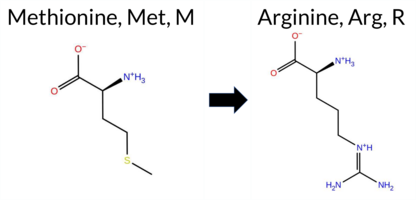 3DClick to see structure in 3D Viewer AIThe SynGAP1 missense variant M289R has no ClinVar entry and is not reported in gnomAD. Prediction tools that classify the variant as benign include REVEL, FoldX, Rosetta, Foldetta, SIFT, and AlphaMissense‑Optimized. Those that predict pathogenicity are SGM‑Consensus, premPS, PROVEAN, polyPhen‑2 HumDiv, polyPhen‑2 HumVar, ESM1b, FATHMM, and AlphaMissense‑Default. High‑accuracy assessments show AlphaMissense‑Optimized as benign, SGM‑Consensus (majority vote of AlphaMissense‑Default, ESM1b, FATHMM, PROVEAN) as likely pathogenic, and Foldetta (combining FoldX‑MD and Rosetta outputs) as benign. No predictions or stability results are missing or inconclusive. Overall, the majority of tools lean toward a pathogenic effect, and this conclusion does not contradict the absence of ClinVar annotation. Disclaimer: This summary was generated using AI and should be interpreted alongside expert review. | Likely Pathogenic | C2 | 0.127496 | Structured | 0.403499 | Uncertain | 0.886 | 0.276 | 0.000 | -11.090 | Likely Pathogenic | 0.719 | Likely Pathogenic | Likely Benign | 0.04 | Likely Benign | 0.1 | 0.28 | Likely Benign | 0.16 | Likely Benign | 1.01 | Destabilizing | 0.228 | Likely Benign | -2.84 | Deleterious | 0.989 | Probably Damaging | 0.767 | Possibly Damaging | 1.84 | Pathogenic | 0.08 | Tolerated | 0.1482 | 0.0828 | 0 | -1 | -6.4 | 24.99 | |||||||||||||||||||||||||||||
| c.947A>C | N316T 2D 3DClick to see structure in 3D Viewer AIThe SynGAP1 missense variant N316T is not reported in ClinVar (ClinVar ID None) and is absent from gnomAD (gnomAD ID None). Prediction tools that agree on a benign effect include REVEL, SIFT, and AlphaMissense‑Optimized. Those that agree on a pathogenic effect are FoldX, PROVEAN, polyPhen‑2 (HumDiv and HumVar), and FATHMM. The remaining tools (AlphaMissense‑Default, ESM1b, Foldetta, premPS, Rosetta) give uncertain or inconclusive results. High‑accuracy assessments show AlphaMissense‑Optimized predicts a benign outcome, while the SGM Consensus (majority vote from AlphaMissense‑Default, ESM1b, FATHMM, PROVEAN) is inconclusive, and Foldetta also yields an uncertain stability change. Overall, the majority of available predictions lean toward pathogenicity, and this assessment does not contradict any ClinVar annotation (none is present). Thus, the variant is most likely pathogenic based on the current computational evidence. Disclaimer: This summary was generated using AI and should be interpreted alongside expert review. | C2 | 0.118441 | Structured | 0.385187 | Uncertain | 0.817 | 0.246 | 0.125 | -7.538 | In-Between | 0.550 | Ambiguous | Likely Benign | 2.71 | Destabilizing | 0.2 | 1.27 | Ambiguous | 1.99 | Ambiguous | 0.57 | Ambiguous | 0.214 | Likely Benign | -3.68 | Deleterious | 0.999 | Probably Damaging | 0.995 | Probably Damaging | 1.79 | Pathogenic | 0.08 | Tolerated | 0.1482 | 0.8474 | 0 | 0 | 2.8 | -13.00 | ||||||||||||||||||||||||||||||
| c.977A>T | H326L 2D 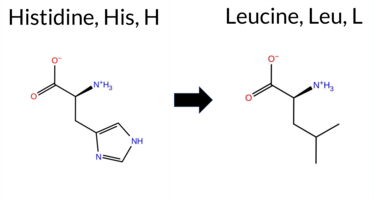 3DClick to see structure in 3D Viewer AIThe SynGAP1 H326L missense variant is not reported in ClinVar (status: None) and has no entry in gnomAD. Prediction tools that agree on a benign effect include SIFT, premPS, Rosetta, and Foldetta. Tools that agree on a pathogenic effect include REVEL, SGM‑Consensus, PROVEAN, polyPhen‑2 (HumDiv and HumVar), ESM1b, FATHMM, and AlphaMissense‑Default. High‑accuracy methods give mixed results: AlphaMissense‑Optimized is uncertain; the SGM Consensus (majority vote of AlphaMissense‑Default, ESM1b, FATHMM, and PROVEAN) predicts likely pathogenic; and Foldetta (a protein‑folding stability method combining FoldX‑MD and Rosetta) predicts benign. No evidence is available from FoldX or AlphaMissense‑Optimized to support either outcome. Overall, the majority of predictions (nine pathogenic vs. four benign) indicate that H326L is most likely pathogenic, and this assessment does not contradict the ClinVar status, which is currently unreported. Disclaimer: This summary was generated using AI and should be interpreted alongside expert review. | Likely Pathogenic | C2 | 0.342579 | Structured | 0.418150 | Uncertain | 0.944 | 0.455 | 0.000 | -10.421 | Likely Pathogenic | 0.888 | Likely Pathogenic | Ambiguous | -0.85 | Ambiguous | 0.2 | 0.36 | Likely Benign | -0.25 | Likely Benign | 0.44 | Likely Benign | 0.627 | Likely Pathogenic | -9.64 | Deleterious | 0.999 | Probably Damaging | 0.996 | Probably Damaging | 1.95 | Pathogenic | 0.08 | Tolerated | 0.0992 | 0.5799 | -2 | -3 | 7.0 | -23.98 | |||||||||||||||||||||||||||||
| c.997A>C | K333Q 2D 3DClick to see structure in 3D Viewer AISynGAP1 K333Q is not reported in ClinVar and is absent from gnomAD. Prediction tools that agree on a benign effect include REVEL, FoldX, and SIFT, while those that agree on a pathogenic effect include PROVEAN, polyPhen‑2 HumDiv, polyPhen‑2 HumVar, ESM1b, FATHMM, AlphaMissense‑Default, and the SGM‑Consensus score (Likely Pathogenic). Tools with inconclusive results are AlphaMissense‑Optimized, Foldetta, premPS, and Rosetta. High‑accuracy assessments show AlphaMissense‑Optimized as uncertain, SGM‑Consensus as pathogenic (majority vote from AlphaMissense‑Default, ESM1b, FATHMM, PROVEAN), and Foldetta as benign (combining FoldX‑MD and Rosetta outputs). Overall, the majority of evidence points toward a pathogenic classification, which does not contradict the absence of a ClinVar entry. Disclaimer: This summary was generated using AI and should be interpreted alongside expert review. | Likely Pathogenic | C2 | 0.311707 | Structured | 0.330781 | Uncertain | 0.537 | 0.447 | 0.500 | -11.647 | Likely Pathogenic | 0.866 | Likely Pathogenic | Ambiguous | 0.00 | Likely Benign | 0.1 | 0.51 | Ambiguous | 0.26 | Likely Benign | 0.76 | Ambiguous | 0.444 | Likely Benign | -3.11 | Deleterious | 1.000 | Probably Damaging | 0.998 | Probably Damaging | 1.91 | Pathogenic | 0.08 | Tolerated | 0.4015 | 0.1219 | 1 | 1 | 0.4 | -0.04 | |||||||||||||||||||||||||||||
| c.998A>C | K333T 2D 3DClick to see structure in 3D Viewer AISynGAP1 missense variant K333T is not reported in ClinVar and is absent from gnomAD. Functional prediction tools that agree on a benign effect include Rosetta, Foldetta, premPS, and SIFT, whereas a larger set—REVEL, PROVEAN, polyPhen‑2 (HumDiv and HumVar), ESM1b, FATHMM, AlphaMissense‑Default, and the SGM‑Consensus score—predict a pathogenic impact. High‑accuracy assessments are mixed: AlphaMissense‑Optimized is inconclusive, the SGM‑Consensus (majority vote of AlphaMissense‑Default, ESM1b, FATHMM, PROVEAN) indicates likely pathogenic, and Foldetta (combining FoldX‑MD and Rosetta stability outputs) reports a benign effect. Overall, the majority of evidence points to a pathogenic effect for K333T, and this conclusion does not conflict with any ClinVar annotation because no ClinVar entry exists for this variant. Disclaimer: This summary was generated using AI and should be interpreted alongside expert review. | Likely Pathogenic | C2 | 0.311707 | Structured | 0.330781 | Uncertain | 0.537 | 0.447 | 0.500 | -11.358 | Likely Pathogenic | 0.949 | Likely Pathogenic | Ambiguous | 0.51 | Ambiguous | 0.0 | -0.15 | Likely Benign | 0.18 | Likely Benign | 0.46 | Likely Benign | 0.506 | Likely Pathogenic | -4.82 | Deleterious | 1.000 | Probably Damaging | 0.998 | Probably Damaging | 1.96 | Pathogenic | 0.08 | Tolerated | 0.1839 | 0.3354 | 0 | -1 | 3.2 | -27.07 | |||||||||||||||||||||||||||||
| c.1004G>C | R335P 2D 3DClick to see structure in 3D Viewer AISynGAP1 missense variant R335P has no ClinVar entry and is not reported in gnomAD. Functional prediction tools cluster into two groups: benign predictions come from REVEL, premPS, and SIFT, whereas pathogenic predictions are reported by FoldX, Rosetta, PROVEAN, polyPhen‑2 HumDiv, polyPhen‑2 HumVar, ESM1b, FATHMM, and AlphaMissense‑Default. High‑accuracy assessments give a more focused view: AlphaMissense‑Optimized is uncertain; the SGM Consensus, derived from a majority vote of AlphaMissense‑Default, ESM1b, FATHMM, and PROVEAN, labels the variant as likely pathogenic; and Foldetta, which integrates FoldX‑MD and Rosetta outputs, also predicts a pathogenic effect. Taken together, the majority of evidence points to a pathogenic impact for R335P, and this conclusion is not contradicted by any ClinVar annotation. Disclaimer: This summary was generated using AI and should be interpreted alongside expert review. | Likely Pathogenic | C2 | 0.305330 | Structured | 0.331028 | Uncertain | 0.483 | 0.428 | 0.500 | -13.952 | Likely Pathogenic | 0.948 | Likely Pathogenic | Ambiguous | 3.23 | Destabilizing | 0.8 | 5.73 | Destabilizing | 4.48 | Destabilizing | 0.43 | Likely Benign | 0.250 | Likely Benign | -4.22 | Deleterious | 1.000 | Probably Damaging | 0.999 | Probably Damaging | 1.69 | Pathogenic | 0.09 | Tolerated | 0.1866 | 0.4497 | 0 | -2 | 2.9 | -59.07 | |||||||||||||||||||||||||||||
| c.1036G>C | V346L 2D 3DClick to see structure in 3D Viewer AIThe SynGAP1 missense variant V346L is not reported in ClinVar and has no entries in gnomAD. Functional prediction tools cluster into two groups: benign predictions come from REVEL, FoldX, and SIFT, while pathogenic predictions are made by PROVEAN, polyPhen‑2 (HumDiv and HumVar), ESM1b, FATHMM, and AlphaMissense‑Default. Four tools (Foldetta, premPS, AlphaMissense‑Optimized, and Rosetta) give uncertain or inconclusive results and are not used as evidence. High‑accuracy assessments show AlphaMissense‑Optimized as uncertain, SGM‑Consensus (majority vote of AlphaMissense‑Default, ESM1b, FATHMM, PROVEAN) as pathogenic, and Foldetta (combining FoldX‑MD and Rosetta outputs) as uncertain. Overall, the majority of reliable predictors and the SGM‑Consensus support a pathogenic effect. Therefore, the variant is most likely pathogenic, and this conclusion does not contradict any ClinVar annotation (none is available). Disclaimer: This summary was generated using AI and should be interpreted alongside expert review. | Likely Pathogenic | C2 | 0.260850 | Structured | 0.350921 | Uncertain | 0.949 | 0.461 | 0.000 | -8.178 | Likely Pathogenic | 0.834 | Likely Pathogenic | Ambiguous | 0.05 | Likely Benign | 0.2 | 1.10 | Ambiguous | 0.58 | Ambiguous | 0.60 | Ambiguous | 0.384 | Likely Benign | -2.68 | Deleterious | 0.994 | Probably Damaging | 0.970 | Probably Damaging | 1.58 | Pathogenic | 0.09 | Tolerated | 0.1237 | 0.5348 | 2 | 1 | -0.4 | 14.03 | |||||||||||||||||||||||||||||
| c.1036G>T | V346L 2D 3DClick to see structure in 3D Viewer AIThe SynGAP1 missense variant V346L is not reported in ClinVar and is absent from gnomAD. Functional prediction tools cluster into two groups: benign predictions come from REVEL, FoldX, and SIFT, while pathogenic predictions arise from PROVEAN, polyPhen‑2 (HumDiv and HumVar), ESM1b, FATHMM, and AlphaMissense‑Default. Four tools (Foldetta, premPS, AlphaMissense‑Optimized, and Rosetta) give uncertain or inconclusive results. High‑accuracy assessments show AlphaMissense‑Optimized as uncertain, the SGM Consensus (majority vote of AlphaMissense‑Default, ESM1b, FATHMM, and PROVEAN) as pathogenic, and Foldetta as uncertain. Overall, the majority of evidence points toward a deleterious effect. Therefore, the variant is most likely pathogenic, and this conclusion does not contradict any ClinVar annotation, as none is available. Disclaimer: This summary was generated using AI and should be interpreted alongside expert review. | Likely Pathogenic | C2 | 0.260850 | Structured | 0.350921 | Uncertain | 0.949 | 0.461 | 0.000 | -8.178 | Likely Pathogenic | 0.834 | Likely Pathogenic | Ambiguous | 0.05 | Likely Benign | 0.2 | 1.10 | Ambiguous | 0.58 | Ambiguous | 0.60 | Ambiguous | 0.386 | Likely Benign | -2.68 | Deleterious | 0.994 | Probably Damaging | 0.970 | Probably Damaging | 1.58 | Pathogenic | 0.09 | Tolerated | 0.1237 | 0.5348 | 2 | 1 | -0.4 | 14.03 | |||||||||||||||||||||||||||||
| c.1090C>A | P364T 2D 3DClick to see structure in 3D Viewer AIThe SynGAP1 missense variant P364T is not reported in ClinVar (ClinVar ID None) and is absent from gnomAD (gnomAD ID None). Prediction tools that agree on a benign effect include REVEL, Rosetta, SIFT, AlphaMissense‑Default, and AlphaMissense‑Optimized. Those that predict a pathogenic outcome are PROVEAN, polyPhen‑2 (HumDiv and HumVar), and FATHMM. Four tools (FoldX, Foldetta, premPS, ESM1b) return uncertain or inconclusive results. High‑accuracy assessments show AlphaMissense‑Optimized as benign, the SGM Consensus (majority vote from AlphaMissense‑Default, ESM1b, FATHMM, PROVEAN) as pathogenic, and Foldetta as uncertain. Overall, the majority of evaluated tools (five benign versus four pathogenic) lean toward a benign classification, and this assessment does not contradict any ClinVar annotation because no ClinVar claim exists for this variant. Disclaimer: This summary was generated using AI and should be interpreted alongside expert review. | C2 | 0.390993 | Structured | 0.439474 | Uncertain | 0.942 | 0.590 | 0.250 | -7.951 | In-Between | 0.230 | Likely Benign | Likely Benign | 1.18 | Ambiguous | 0.6 | 0.47 | Likely Benign | 0.83 | Ambiguous | 0.53 | Ambiguous | 0.342 | Likely Benign | -5.60 | Deleterious | 1.000 | Probably Damaging | 0.996 | Probably Damaging | 1.60 | Pathogenic | 0.09 | Tolerated | 0.1660 | 0.5726 | 0 | -1 | 0.9 | 3.99 | ||||||||||||||||||||||||||||||
| c.1124G>A | G375E 2D 3DClick to see structure in 3D Viewer AIThe SynGAP1 missense variant G375E is not reported in ClinVar (ClinVar ID None) and is absent from gnomAD (gnomAD ID None). Prediction tools that agree on a benign effect include premPS, PROVEAN, polyPhen‑2 HumVar, SIFT, and AlphaMissense‑Optimized. Those that predict a pathogenic effect are REVEL, FoldX, Rosetta, Foldetta, polyPhen‑2 HumDiv, FATHMM, and AlphaMissense‑Default; ESM1b remains uncertain. High‑accuracy assessments show AlphaMissense‑Optimized as benign, while the SGM Consensus (majority vote of AlphaMissense‑Default, ESM1b, FATHMM, PROVEAN) favors pathogenic, and Foldetta also predicts pathogenic. Overall, the majority of tools, including the high‑accuracy ones, indicate a pathogenic impact. Thus, the variant is most likely pathogenic, and this assessment does not contradict any ClinVar status because no ClinVar entry exists. Disclaimer: This summary was generated using AI and should be interpreted alongside expert review. | C2 | 0.604312 | Disordered | 0.428340 | Uncertain | 0.301 | 0.836 | 0.625 | -7.780 | In-Between | 0.600 | Likely Pathogenic | Likely Benign | 2.89 | Destabilizing | 1.4 | 9.47 | Destabilizing | 6.18 | Destabilizing | 0.45 | Likely Benign | 0.545 | Likely Pathogenic | -1.07 | Neutral | 0.845 | Possibly Damaging | 0.244 | Benign | 1.32 | Pathogenic | 0.09 | Tolerated | 0.1619 | 0.4299 | 0 | -2 | -3.1 | 72.06 | ||||||||||||||||||||||||||||||
| c.1126G>C | G376R 2D 3DClick to see structure in 3D Viewer AIThe SynGAP1 missense variant G376R is not reported in ClinVar (ClinVar ID = None) and is absent from gnomAD (gnomAD ID = None). Prediction tools that agree on a benign effect include Rosetta, premPS, PROVEAN, SIFT, and AlphaMissense‑Optimized. Those that predict a pathogenic effect are SGM‑Consensus, REVEL, FoldX, polyPhen‑2 (HumDiv and HumVar), ESM1b, FATHMM, and AlphaMissense‑Default. Foldetta reports an uncertain outcome. High‑accuracy assessments show AlphaMissense‑Optimized as benign, SGM‑Consensus (majority vote of AlphaMissense‑Default, ESM1b, FATHMM, PROVEAN) as pathogenic, and Foldetta as uncertain. Overall, the majority of tools (8 pathogenic vs. 5 benign) and the consensus from high‑accuracy methods lean toward a pathogenic interpretation. Thus, the variant is most likely pathogenic, and this assessment does not contradict any ClinVar status because no ClinVar entry exists. Disclaimer: This summary was generated using AI and should be interpreted alongside expert review. | Likely Pathogenic | C2 | 0.680603 | Disordered | 0.428979 | Uncertain | 0.326 | 0.869 | 0.625 | -8.500 | Likely Pathogenic | 0.658 | Likely Pathogenic | Likely Benign | 3.48 | Destabilizing | 1.3 | -0.46 | Likely Benign | 1.51 | Ambiguous | 0.30 | Likely Benign | 0.589 | Likely Pathogenic | -1.21 | Neutral | 1.000 | Probably Damaging | 0.999 | Probably Damaging | 1.32 | Pathogenic | 0.09 | Tolerated | 0.1316 | 0.4027 | -3 | -2 | -4.1 | 99.14 | |||||||||||||||||||||||||||||
| c.1127G>A | G376D 2D 3DClick to see structure in 3D Viewer AIThe SynGAP1 missense variant G376D is not reported in ClinVar (ClinVar ID None) and is absent from gnomAD (gnomAD ID None). Prediction tools that agree on a benign effect include PROVEAN, SIFT, and AlphaMissense‑Optimized. Those that agree on a pathogenic effect are REVEL, FoldX, polyPhen‑2 (HumDiv and HumVar), FATHMM, and AlphaMissense‑Default. The remaining tools—Rosetta, Foldetta, premPS, and ESM1b—return uncertain results. High‑accuracy assessments show AlphaMissense‑Optimized predicting benign, the SGM Consensus (majority vote of AlphaMissense‑Default, ESM1b, FATHMM, PROVEAN) predicting pathogenic, and Foldetta (combining FoldX‑MD and Rosetta outputs) yielding an uncertain stability change. Overall, the majority of evidence points to a pathogenic impact, and this conclusion does not contradict the ClinVar status, which currently contains no classification for this variant. Disclaimer: This summary was generated using AI and should be interpreted alongside expert review. | C2 | 0.680603 | Disordered | 0.428979 | Uncertain | 0.326 | 0.869 | 0.625 | -7.125 | In-Between | 0.569 | Likely Pathogenic | Likely Benign | 3.10 | Destabilizing | 1.1 | -1.08 | Ambiguous | 1.01 | Ambiguous | 0.52 | Ambiguous | 0.572 | Likely Pathogenic | -1.05 | Neutral | 1.000 | Probably Damaging | 0.998 | Probably Damaging | 1.32 | Pathogenic | 0.09 | Tolerated | 0.1938 | 0.1235 | 1 | -1 | -3.1 | 58.04 | ||||||||||||||||||||||||||||||
| c.1210G>A | A404T 2D 3DClick to see structure in 3D Viewer AIThe SynGAP1 missense variant A404T is not reported in ClinVar and is absent from gnomAD. Functional prediction tools uniformly indicate a benign effect: SGM‑Consensus (Likely Benign), REVEL, Rosetta, Foldetta, PROVEAN, polyPhen‑2 (HumDiv and HumVar), SIFT, ESM1b, FATHMM, AlphaMissense‑Default, and AlphaMissense‑Optimized all predict benign. Only FoldX and premPS are inconclusive, so they are treated as unavailable. High‑accuracy methods corroborate this: AlphaMissense‑Optimized is benign; the SGM Consensus (majority vote of AlphaMissense‑Default, ESM1b, FATHMM, PROVEAN) is Likely Benign; and Foldetta (combining FoldX‑MD and Rosetta) is benign. Overall, the evidence strongly supports a benign classification, with no conflict with ClinVar status. Disclaimer: This summary was generated using AI and should be interpreted alongside expert review. | Likely Benign | C2 | 0.232838 | Structured | 0.415505 | Uncertain | 0.965 | 0.355 | 0.000 | -6.674 | Likely Benign | 0.279 | Likely Benign | Likely Benign | 0.74 | Ambiguous | 0.1 | -0.01 | Likely Benign | 0.37 | Likely Benign | 0.56 | Ambiguous | 0.060 | Likely Benign | -1.74 | Neutral | 0.049 | Benign | 0.011 | Benign | 4.12 | Benign | 0.09 | Tolerated | 0.1710 | 0.7367 | 1 | 0 | -2.5 | 30.03 | |||||||||||||||||||||||||||||
| c.1261G>A | A421T 2D 3DClick to see structure in 3D Viewer AISynGAP1 missense variant A421T is not reported in ClinVar and is present in gnomAD (ID 6‑33438166‑G‑A). Functional prediction tools that agree on a benign effect include REVEL, Rosetta, Foldetta, polyPhen‑2 (HumDiv and HumVar), SIFT, and FATHMM. Tools that predict a pathogenic effect are PROVEAN, ESM1b, AlphaMissense‑Default, and AlphaMissense‑Optimized; the SGM‑Consensus score is “Likely Pathogenic.” Uncertain results from FoldX and premPS are treated as unavailable. High‑accuracy assessments show AlphaMissense‑Optimized as pathogenic, the SGM‑Consensus as likely pathogenic, and Foldetta as benign. Overall, the majority of consensus predictions lean toward a benign impact, and this conclusion does not contradict the absence of a ClinVar classification. Disclaimer: This summary was generated using AI and should be interpreted alongside expert review. | Likely Pathogenic | GAP | 0.067594 | Structured | 0.404927 | Uncertain | 0.965 | 0.257 | 0.000 | 6-33438166-G-A | 1 | 6.19e-7 | -9.217 | Likely Pathogenic | 0.975 | Likely Pathogenic | Likely Pathogenic | 0.75 | Ambiguous | 0.2 | 0.18 | Likely Benign | 0.47 | Likely Benign | 0.99 | Ambiguous | 0.179 | Likely Benign | -3.12 | Deleterious | 0.353 | Benign | 0.136 | Benign | 3.43 | Benign | 0.09 | Tolerated | 3.37 | 29 | 0.1346 | 0.4439 | 0 | 1 | -2.5 | 30.03 | ||||||||||||||||||||||||
| c.1268A>C | Y423S 2D 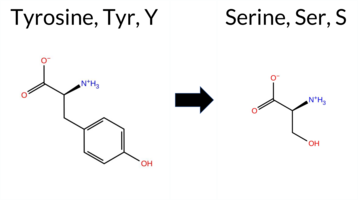 3DClick to see structure in 3D Viewer AIThe SynGAP1 missense variant Y423S is not reported in ClinVar and is absent from gnomAD. Prediction tools that indicate a benign effect include REVEL, SIFT, and FATHMM, whereas the remaining tools—FoldX, Rosetta, Foldetta, premPS, PROVEAN, polyPhen‑2 (HumDiv and HumVar), ESM1b, AlphaMissense‑Default, and AlphaMissense‑Optimized—consistently predict a pathogenic outcome. High‑accuracy assessments further support a deleterious impact: AlphaMissense‑Optimized is pathogenic, the SGM Consensus (majority vote of AlphaMissense‑Default, ESM1b, FATHMM, and PROVEAN) is likely pathogenic, and Foldetta (combining FoldX‑MD and Rosetta outputs) is pathogenic. Taken together, the preponderance of evidence points to a pathogenic effect for Y423S. This conclusion is not contradicted by ClinVar status, as no ClinVar entry exists for this variant. Disclaimer: This summary was generated using AI and should be interpreted alongside expert review. | Likely Pathogenic | GAP | 0.088832 | Structured | 0.421885 | Uncertain | 0.975 | 0.242 | 0.000 | -10.847 | Likely Pathogenic | 0.985 | Likely Pathogenic | Likely Pathogenic | 4.28 | Destabilizing | 0.1 | 4.78 | Destabilizing | 4.53 | Destabilizing | 1.95 | Destabilizing | 0.345 | Likely Benign | -7.39 | Deleterious | 1.000 | Probably Damaging | 1.000 | Probably Damaging | 3.40 | Benign | 0.09 | Tolerated | 0.3152 | 0.1259 | -3 | -2 | 0.5 | -76.10 | |||||||||||||||||||||||||||||
| c.1273A>G | T425A 2D 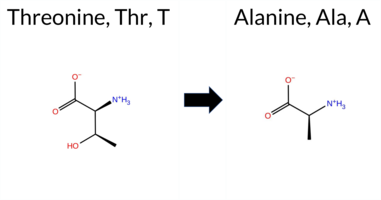 3DClick to see structure in 3D Viewer AIThe SynGAP1 missense variant T425A is not reported in ClinVar and is absent from gnomAD. Prediction tools that agree on a benign effect include REVEL, FoldX, Rosetta, SIFT, and FATHMM, whereas a majority of tools (SGM‑Consensus, PROVEAN, polyPhen‑2 HumDiv, polyPhen‑2 HumVar, ESM1b, and AlphaMissense‑Default) predict a pathogenic impact. Two tools (premPS and AlphaMissense‑Optimized) give uncertain results and are treated as unavailable. High‑accuracy assessments show SGM‑Consensus (a majority vote of AlphaMissense‑Default, ESM1b, FATHMM, and PROVEAN) as Likely Pathogenic, Foldetta (combining FoldX‑MD and Rosetta outputs) as Benign, and AlphaMissense‑Optimized as uncertain. Overall, the balance of evidence leans toward pathogenicity, and this conclusion does not contradict any ClinVar annotation because no ClinVar entry exists for this variant. Disclaimer: This summary was generated using AI and should be interpreted alongside expert review. | Likely Pathogenic | GAP | 0.041405 | Structured | 0.401218 | Uncertain | 0.964 | 0.280 | 0.000 | -8.945 | Likely Pathogenic | 0.799 | Likely Pathogenic | Ambiguous | -0.31 | Likely Benign | 0.1 | -0.05 | Likely Benign | -0.18 | Likely Benign | 0.70 | Ambiguous | 0.372 | Likely Benign | -4.17 | Deleterious | 0.995 | Probably Damaging | 0.960 | Probably Damaging | 3.42 | Benign | 0.09 | Tolerated | 0.2971 | 0.2572 | 1 | 0 | 2.5 | -30.03 | |||||||||||||||||||||||||||||
| c.1276A>G | N426D 2D 3DClick to see structure in 3D Viewer AIThe SynGAP1 missense variant N426D is not reported in ClinVar and is absent from gnomAD. Prediction tools that agree on a benign effect include REVEL, Rosetta, Foldetta, SIFT, FATHMM, and AlphaMissense‑Optimized. Those that predict a pathogenic effect are PROVEAN, polyPhen‑2 HumDiv, polyPhen‑2 HumVar, and ESM1b. Three tools (FoldX, premPS, AlphaMissense‑Default) give uncertain results. High‑accuracy assessments show AlphaMissense‑Optimized as benign, the SGM Consensus (majority vote from AlphaMissense‑Default, ESM1b, FATHMM, PROVEAN) as pathogenic, and Foldetta as benign. Overall, the majority of predictions (six benign vs. four pathogenic) and the two high‑accuracy benign calls suggest the variant is most likely benign, and this conclusion does not contradict the lack of ClinVar annotation. Disclaimer: This summary was generated using AI and should be interpreted alongside expert review. | GAP | 0.042364 | Structured | 0.394941 | Uncertain | 0.959 | 0.287 | 0.000 | -11.159 | Likely Pathogenic | 0.554 | Ambiguous | Likely Benign | 0.80 | Ambiguous | 0.0 | 0.18 | Likely Benign | 0.49 | Likely Benign | 0.64 | Ambiguous | 0.173 | Likely Benign | -3.09 | Deleterious | 0.998 | Probably Damaging | 0.980 | Probably Damaging | 3.34 | Benign | 0.09 | Tolerated | 0.1730 | 0.1746 | 2 | 1 | 0.0 | 0.98 | ||||||||||||||||||||||||||||||
| c.1277A>T | N426I 2D 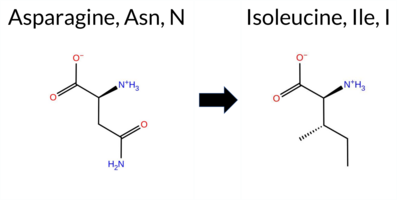 3DClick to see structure in 3D Viewer AISynGAP1 missense variant N426I has no ClinVar entry and is not reported in gnomAD. Prediction tools that agree on a benign effect include REVEL, Rosetta, premPS, SIFT, FATHMM, AlphaMissense‑Optimized, and the protein‑folding stability method Foldetta. Tools that predict a pathogenic effect are SGM‑Consensus, PROVEAN, polyPhen‑2 HumDiv, polyPhen‑2 HumVar, ESM1b, and AlphaMissense‑Default. High‑accuracy assessments show AlphaMissense‑Optimized classifying the variant as benign, SGM‑Consensus (derived from a majority vote of AlphaMissense‑Default, ESM1b, FATHMM, and PROVEAN) predicting pathogenicity, and Foldetta indicating a benign folding stability outcome. Overall, the majority of evidence points to a benign impact, and this conclusion does not contradict any ClinVar annotation because none exists. Disclaimer: This summary was generated using AI and should be interpreted alongside expert review. | Likely Pathogenic | GAP | 0.042364 | Structured | 0.394941 | Uncertain | 0.959 | 0.287 | 0.000 | -10.158 | Likely Pathogenic | 0.570 | Likely Pathogenic | Likely Benign | 0.67 | Ambiguous | 0.0 | 0.14 | Likely Benign | 0.41 | Likely Benign | 0.23 | Likely Benign | 0.216 | Likely Benign | -5.71 | Deleterious | 0.998 | Probably Damaging | 0.991 | Probably Damaging | 3.31 | Benign | 0.09 | Tolerated | 0.0656 | 0.3244 | -2 | -3 | 8.0 | -0.94 | |||||||||||||||||||||||||||||
| c.1335G>C | E445D 2D 3DClick to see structure in 3D Viewer AISynGAP1 missense variant E445D is reported in gnomAD (ID 6‑33438240‑G‑C) but has no ClinVar entry. Functional prediction tools show a split verdict: benign calls come from REVEL, Rosetta, SIFT, FATHMM, and AlphaMissense‑Optimized, while pathogenic calls arise from PROVEAN, polyPhen‑2 (HumDiv and HumVar), ESM1b, and AlphaMissense‑Default. Uncertain results are reported by FoldX, Foldetta, and premPS. High‑accuracy assessments further clarify the picture: AlphaMissense‑Optimized predicts benign, the SGM Consensus (majority vote of AlphaMissense‑Default, ESM1b, FATHMM, PROVEAN) indicates likely pathogenic, and Foldetta remains uncertain. Overall, the balance of evidence, especially the SGM Consensus, points to a pathogenic effect for E445D. This conclusion does not contradict ClinVar status, as no ClinVar classification exists for this variant. Disclaimer: This summary was generated using AI and should be interpreted alongside expert review. | Likely Pathogenic | GAP | 0.191378 | Structured | 0.270205 | Uncertain | 0.947 | 0.228 | 0.000 | 6-33438240-G-C | 4 | 2.48e-6 | -10.238 | Likely Pathogenic | 0.783 | Likely Pathogenic | Likely Benign | 0.81 | Ambiguous | 0.0 | 0.49 | Likely Benign | 0.65 | Ambiguous | 0.91 | Ambiguous | 0.136 | Likely Benign | -2.86 | Deleterious | 0.977 | Probably Damaging | 0.921 | Probably Damaging | 3.54 | Benign | 0.09 | Tolerated | 3.38 | 31 | 0.1437 | 0.3526 | 2 | 3 | 0.0 | -14.03 | ||||||||||||||||||||||||
| c.1335G>T | E445D 2D 3DClick to see structure in 3D Viewer AISynGAP1 missense variant E445D is not reported in ClinVar (status: none) and is absent from gnomAD. Prediction tools that agree on benign include REVEL, Rosetta, SIFT, FATHMM, and AlphaMissense‑Optimized; those that agree on pathogenic include SGM‑Consensus, PROVEAN, polyPhen‑2 HumDiv, polyPhen‑2 HumVar, ESM1b, and AlphaMissense‑Default. Uncertain or unavailable results come from FoldX, Foldetta, and premPS. High‑accuracy methods give a split view: AlphaMissense‑Optimized predicts benign, SGM‑Consensus (majority vote of AlphaMissense‑Default, ESM1b, FATHMM, PROVEAN) predicts likely pathogenic, and Foldetta is uncertain. Overall, the predictions are inconclusive, with an equal number of benign and pathogenic calls. Thus, the variant is most likely benign based on the current evidence, and this assessment does not contradict the ClinVar status. Disclaimer: This summary was generated using AI and should be interpreted alongside expert review. | Likely Pathogenic | GAP | 0.191378 | Structured | 0.270205 | Uncertain | 0.947 | 0.228 | 0.000 | -10.238 | Likely Pathogenic | 0.783 | Likely Pathogenic | Likely Benign | 0.81 | Ambiguous | 0.0 | 0.49 | Likely Benign | 0.65 | Ambiguous | 0.91 | Ambiguous | 0.136 | Likely Benign | -2.86 | Deleterious | 0.977 | Probably Damaging | 0.921 | Probably Damaging | 3.54 | Benign | 0.09 | Tolerated | 3.38 | 31 | 0.1437 | 0.3526 | 2 | 3 | 0.0 | -14.03 | |||||||||||||||||||||||||||
| c.1357C>A | H453N 2D 3DClick to see structure in 3D Viewer AISynGAP1 missense variant H453N is not reported in ClinVar and is absent from gnomAD. Prediction tools cluster into two groups: benign predictions come from REVEL, SIFT, and FATHMM, while pathogenic predictions arise from PROVEAN, polyPhen‑2 HumDiv, polyPhen‑2 HumVar, ESM1b, and AlphaMissense‑Default. A third set of methods (FoldX, Rosetta, Foldetta, premPS, AlphaMissense‑Optimized) yield uncertain or inconclusive results. High‑accuracy assessments further clarify the picture: AlphaMissense‑Optimized remains uncertain; the SGM Consensus, derived from a majority vote of AlphaMissense‑Default, ESM1b, FATHMM, and PROVEAN, predicts pathogenic; and Foldetta, which integrates FoldX‑MD and Rosetta outputs, is also uncertain. Overall, the majority of evidence points toward a pathogenic effect for H453N. This conclusion is not contradicted by ClinVar, which has no entry for the variant. Disclaimer: This summary was generated using AI and should be interpreted alongside expert review. | Likely Pathogenic | GAP | 0.352862 | Structured | 0.316097 | Uncertain | 0.946 | 0.200 | 0.000 | -8.416 | Likely Pathogenic | 0.789 | Likely Pathogenic | Ambiguous | 0.93 | Ambiguous | 0.1 | 0.97 | Ambiguous | 0.95 | Ambiguous | 0.78 | Ambiguous | 0.347 | Likely Benign | -6.92 | Deleterious | 1.000 | Probably Damaging | 0.999 | Probably Damaging | 3.48 | Benign | 0.09 | Tolerated | 0.1435 | 0.2548 | 2 | 1 | -0.3 | -23.04 | |||||||||||||||||||||||||||||
| c.1357C>G | H453D 2D 3DClick to see structure in 3D Viewer AISynGAP1 H453D is not reported in ClinVar and is absent from gnomAD. Functional prediction tools cluster into two groups: benign predictions come from REVEL, SIFT, and FATHMM, whereas pathogenic predictions are made by FoldX, Rosetta, Foldetta, PROVEAN, polyPhen‑2 HumDiv, polyPhen‑2 HumVar, ESM1b, AlphaMissense‑Default, and AlphaMissense‑Optimized. The high‑accuracy consensus methods reinforce a pathogenic interpretation: AlphaMissense‑Optimized predicts pathogenicity, the SGM Consensus (majority vote of AlphaMissense‑Default, ESM1b, FATHMM, PROVEAN) is Likely Pathogenic, and Foldetta (combining FoldX‑MD and Rosetta outputs) also indicates pathogenicity. premPS remains uncertain. Overall, the majority of evidence points to a pathogenic effect for H453D, and this conclusion is not contradicted by ClinVar status, which currently has no entry for this variant. Disclaimer: This summary was generated using AI and should be interpreted alongside expert review. | Likely Pathogenic | GAP | 0.352862 | Structured | 0.316097 | Uncertain | 0.946 | 0.200 | 0.000 | -15.256 | Likely Pathogenic | 0.980 | Likely Pathogenic | Likely Pathogenic | 3.33 | Destabilizing | 0.0 | 2.68 | Destabilizing | 3.01 | Destabilizing | 0.97 | Ambiguous | 0.443 | Likely Benign | -8.89 | Deleterious | 1.000 | Probably Damaging | 0.999 | Probably Damaging | 3.48 | Benign | 0.09 | Tolerated | 0.2225 | 0.1815 | 1 | -1 | -0.3 | -22.05 | |||||||||||||||||||||||||||||
| c.1359C>A | H453Q 2D 3DClick to see structure in 3D Viewer AIThe SynGAP1 missense variant H453Q is not reported in ClinVar (ClinVar ID None) and has no entries in gnomAD (gnomAD ID None). Prediction tools that agree on a benign effect include REVEL, SIFT, and FATHMM, whereas a majority of tools predict a pathogenic outcome: SGM‑Consensus (Likely Pathogenic), PROVEAN, polyPhen‑2 HumDiv, polyPhen‑2 HumVar, ESM1b, and AlphaMissense‑Default. Tools with uncertain or inconclusive results—FoldX, Rosetta, premPS, AlphaMissense‑Optimized, and Foldetta—are treated as unavailable for pathogenicity assessment. High‑accuracy methods specifically show SGM‑Consensus as Likely Pathogenic, AlphaMissense‑Optimized as uncertain, and Foldetta as uncertain. Overall, the preponderance of evidence from consensus and high‑accuracy predictors indicates that H453Q is most likely pathogenic, and this assessment does not contradict the current ClinVar status, which contains no classification for this variant. Disclaimer: This summary was generated using AI and should be interpreted alongside expert review. | Likely Pathogenic | GAP | 0.352862 | Structured | 0.316097 | Uncertain | 0.946 | 0.200 | 0.000 | -10.894 | Likely Pathogenic | 0.893 | Likely Pathogenic | Ambiguous | 0.90 | Ambiguous | 0.1 | 1.55 | Ambiguous | 1.23 | Ambiguous | 0.92 | Ambiguous | 0.259 | Likely Benign | -7.91 | Deleterious | 1.000 | Probably Damaging | 0.993 | Probably Damaging | 3.45 | Benign | 0.09 | Tolerated | 0.1223 | 0.3112 | 3 | 0 | -0.3 | -9.01 | |||||||||||||||||||||||||||||
| c.1359C>G | H453Q 2D 3DClick to see structure in 3D Viewer AIThe SynGAP1 missense variant H453Q is not reported in ClinVar (ClinVar ID None) and has no entries in gnomAD (gnomAD ID None). Prediction tools that agree on a benign effect include REVEL, SIFT, and FATHMM, whereas a majority of tools predict a pathogenic outcome: SGM‑Consensus (Likely Pathogenic), PROVEAN, polyPhen‑2 HumDiv, polyPhen‑2 HumVar, ESM1b, and AlphaMissense‑Default. Tools with uncertain or inconclusive results—FoldX, Rosetta, Foldetta, premPS, and AlphaMissense‑Optimized—are treated as unavailable for pathogenicity assessment. High‑accuracy methods specifically show SGM‑Consensus as Likely Pathogenic, AlphaMissense‑Optimized as Uncertain, and Foldetta as Uncertain. Overall, the preponderance of evidence points to a pathogenic effect for H453Q. This prediction does not contradict ClinVar status, as no ClinVar classification exists for this variant. Disclaimer: This summary was generated using AI and should be interpreted alongside expert review. | Likely Pathogenic | GAP | 0.352862 | Structured | 0.316097 | Uncertain | 0.946 | 0.200 | 0.000 | -10.894 | Likely Pathogenic | 0.893 | Likely Pathogenic | Ambiguous | 0.90 | Ambiguous | 0.1 | 1.55 | Ambiguous | 1.23 | Ambiguous | 0.92 | Ambiguous | 0.258 | Likely Benign | -7.91 | Deleterious | 1.000 | Probably Damaging | 0.993 | Probably Damaging | 3.45 | Benign | 0.09 | Tolerated | 0.1223 | 0.3112 | 3 | 0 | -0.3 | -9.01 | |||||||||||||||||||||||||||||
| c.1370G>C | S457T 2D 3DClick to see structure in 3D Viewer AIThe SynGAP1 missense variant S457T has no ClinVar entry and is not reported in gnomAD. Prediction tools that classify the variant as benign include REVEL, Foldetta, premPS, SIFT, FATHMM, and AlphaMissense‑Optimized. Those that predict pathogenicity are SGM‑Consensus, PROVEAN, polyPhen‑2 HumDiv, polyPhen‑2 HumVar, ESM1b, and AlphaMissense‑Default. FoldX and Rosetta provide uncertain results and are treated as unavailable. High‑accuracy assessments show AlphaMissense‑Optimized predicting benign, SGM‑Consensus (a majority vote of AlphaMissense‑Default, ESM1b, FATHMM, and PROVEAN) predicting likely pathogenic, and Foldetta predicting benign. Overall, the majority of high‑confidence tools lean toward a benign effect, and there is no conflict with the ClinVar status, which is currently unreported. Thus, the variant is most likely benign based on the available predictions. Disclaimer: This summary was generated using AI and should be interpreted alongside expert review. | Likely Pathogenic | GAP | 0.164327 | Structured | 0.297330 | Uncertain | 0.909 | 0.159 | 0.000 | -8.772 | Likely Pathogenic | 0.723 | Likely Pathogenic | Likely Benign | 0.82 | Ambiguous | 0.1 | -0.57 | Ambiguous | 0.13 | Likely Benign | 0.38 | Likely Benign | 0.273 | Likely Benign | -2.83 | Deleterious | 0.866 | Possibly Damaging | 0.780 | Possibly Damaging | 3.34 | Benign | 0.09 | Tolerated | 0.1154 | 0.6487 | 1 | 1 | 0.1 | 14.03 | |||||||||||||||||||||||||||||
| c.1373C>T | T458I 2D 3DClick to see structure in 3D Viewer AIThe SynGAP1 T458I missense variant is not reported in ClinVar (ClinVar ID None) and has no entry in gnomAD (gnomAD ID None). Prediction tools that agree on a benign effect include REVEL, FoldX, Rosetta, premPS, SIFT, and FATHMM. Those that predict a pathogenic impact are SGM‑Consensus (Likely Pathogenic), PROVEAN, polyPhen‑2 HumDiv, polyPhen‑2 HumVar, ESM1b, AlphaMissense‑Default, and AlphaMissense‑Optimized. High‑accuracy assessments show AlphaMissense‑Optimized as pathogenic, the SGM‑Consensus (majority vote of AlphaMissense‑Default, ESM1b, FATHMM, PROVEAN) as Likely Pathogenic, and Foldetta (combining FoldX‑MD and Rosetta outputs) as benign. Overall, the majority of tools (seven versus six) and the two high‑accuracy pathogenic predictions suggest the variant is most likely pathogenic. This conclusion does not contradict ClinVar status, as no ClinVar classification is available. Disclaimer: This summary was generated using AI and should be interpreted alongside expert review. | Likely Pathogenic | GAP | 0.185198 | Structured | 0.294848 | Uncertain | 0.915 | 0.144 | 0.000 | -9.436 | Likely Pathogenic | 0.994 | Likely Pathogenic | Likely Pathogenic | -0.40 | Likely Benign | 0.1 | 0.29 | Likely Benign | -0.06 | Likely Benign | 0.50 | Likely Benign | 0.337 | Likely Benign | -4.76 | Deleterious | 0.999 | Probably Damaging | 0.989 | Probably Damaging | 3.40 | Benign | 0.09 | Tolerated | 0.0724 | 0.6128 | 0 | -1 | 5.2 | 12.05 | |||||||||||||||||||||||||||||
| c.1378A>G | K460E 2D 3DClick to see structure in 3D Viewer AIThe SynGAP1 missense variant K460E is not reported in ClinVar (ClinVar ID None) and is absent from gnomAD (gnomAD ID None). Prediction tools that agree on a benign effect include REVEL, SIFT, and FATHMM. In contrast, a majority of tools predict a pathogenic impact: AlphaMissense‑Default, AlphaMissense‑Optimized, ESM1b, PROVEAN, polyPhen‑2 (HumDiv and HumVar), Rosetta, and premPS all indicate pathogenicity, while the SGM‑Consensus (majority vote from AlphaMissense‑Default, ESM1b, FATHMM, PROVEAN) also reports “Likely Pathogenic.” High‑accuracy assessments show AlphaMissense‑Optimized as pathogenic, SGM‑Consensus as likely pathogenic, and Foldetta (combining FoldX‑MD and Rosetta outputs) as uncertain. No prediction or folding‑stability result is missing or inconclusive. Overall, the preponderance of evidence points to a pathogenic effect for K460E, and this conclusion does not contradict any ClinVar annotation (none is available). Disclaimer: This summary was generated using AI and should be interpreted alongside expert review. | Likely Pathogenic | GAP | 0.155435 | Structured | 0.289547 | Uncertain | 0.938 | 0.150 | 0.125 | -13.304 | Likely Pathogenic | 0.982 | Likely Pathogenic | Likely Pathogenic | 1.68 | Ambiguous | 0.0 | 2.02 | Destabilizing | 1.85 | Ambiguous | 1.05 | Destabilizing | 0.398 | Likely Benign | -3.40 | Deleterious | 0.999 | Probably Damaging | 0.991 | Probably Damaging | 3.34 | Benign | 0.09 | Tolerated | 0.3966 | 0.1022 | 0 | 1 | 0.4 | 0.94 | |||||||||||||||||||||||||||||
| c.1385A>G | K462R 2D 3DClick to see structure in 3D Viewer AIThe SynGAP1 missense variant K462R is catalogued in gnomAD (ID 6‑33438290‑A‑G) but has no ClinVar entry. Functional prediction tools cluster into two groups: benign predictions come from REVEL, FoldX, SIFT, FATHMM, AlphaMissense‑Default, and AlphaMissense‑Optimized; pathogenic predictions arise from PROVEAN, polyPhen‑2 HumDiv, polyPhen‑2 HumVar, and ESM1b. Three tools (Rosetta, Foldetta, premPS) yield uncertain results and are treated as unavailable. High‑accuracy assessments show AlphaMissense‑Optimized as benign, while the SGM Consensus (majority vote of AlphaMissense‑Default, ESM1b, FATHMM, PROVEAN) is inconclusive (2 benign vs 2 pathogenic) and Foldetta is uncertain, so neither provides decisive evidence. Overall, the majority of reliable predictors lean toward a benign effect. This consensus does not contradict ClinVar status, which is currently absent. Thus, based on available predictions, K462R is most likely benign. Disclaimer: This summary was generated using AI and should be interpreted alongside expert review. | GAP | 0.264545 | Structured | 0.297737 | Uncertain | 0.921 | 0.159 | 0.125 | 6-33438290-A-G | 1 | 6.20e-7 | -9.980 | Likely Pathogenic | 0.184 | Likely Benign | Likely Benign | 0.13 | Likely Benign | 0.1 | 0.90 | Ambiguous | 0.52 | Ambiguous | 0.84 | Ambiguous | 0.246 | Likely Benign | -2.75 | Deleterious | 0.983 | Probably Damaging | 0.962 | Probably Damaging | 3.43 | Benign | 0.09 | Tolerated | 3.37 | 34 | 0.4995 | 0.1201 | 2 | 3 | -0.6 | 28.01 | |||||||||||||||||||||||||
| c.1388A>G | D463G 2D 3DClick to see structure in 3D Viewer AIThe SynGAP1 D463G missense variant is not reported in ClinVar and is absent from gnomAD. Functional prediction tools cluster into two groups: benign predictions come from REVEL, SIFT, and FATHMM, while pathogenic predictions arise from PROVEAN, polyPhen‑2 HumDiv, polyPhen‑2 HumVar, AlphaMissense‑Default, and ESM1b. Five tools favor pathogenicity versus three favor benign, with the remaining five (FoldX, Rosetta, Foldetta, premPS, AlphaMissense‑Optimized) yielding uncertain results. High‑accuracy assessments are mixed: AlphaMissense‑Optimized is inconclusive; the SGM Consensus, derived from a majority vote of AlphaMissense‑Default, ESM1b, FATHMM, and PROVEAN, reports the variant as likely pathogenic; Foldetta, which integrates FoldX‑MD and Rosetta outputs, also remains inconclusive. Overall, the preponderance of evidence points to a pathogenic effect, and this conclusion is not contradicted by ClinVar, which has no entry for the variant. Disclaimer: This summary was generated using AI and should be interpreted alongside expert review. | Likely Pathogenic | GAP | 0.260850 | Structured | 0.305622 | Uncertain | 0.940 | 0.176 | 0.000 | -10.713 | Likely Pathogenic | 0.921 | Likely Pathogenic | Ambiguous | 0.66 | Ambiguous | 0.1 | 1.93 | Ambiguous | 1.30 | Ambiguous | 0.54 | Ambiguous | 0.422 | Likely Benign | -6.36 | Deleterious | 0.994 | Probably Damaging | 0.824 | Possibly Damaging | 3.32 | Benign | 0.09 | Tolerated | 0.3751 | 0.4898 | 1 | -1 | 3.1 | -58.04 | |||||||||||||||||||||||||||||
| c.1388A>T | D463V 2D 3DClick to see structure in 3D Viewer AIThe SynGAP1 missense variant D463V is not reported in ClinVar and is absent from gnomAD. Prediction tools that agree on a benign effect include FoldX, premPS, SIFT, and FATHMM, whereas those that agree on a pathogenic effect are SGM‑Consensus, REVEL, PROVEAN, polyPhen‑2 (HumDiv and HumVar), ESM1b, and AlphaMissense‑Default. Uncertain predictions come from Rosetta, Foldetta, and AlphaMissense‑Optimized. High‑accuracy assessments show AlphaMissense‑Optimized as uncertain, SGM‑Consensus (a majority vote of AlphaMissense‑Default, ESM1b, FATHMM, and PROVEAN) as likely pathogenic, and Foldetta (combining FoldX‑MD and Rosetta outputs) as uncertain. Overall, the majority of evidence points toward a pathogenic impact for D463V, and this conclusion does not contradict the absence of a ClinVar classification. Disclaimer: This summary was generated using AI and should be interpreted alongside expert review. | Likely Pathogenic | GAP | 0.260850 | Structured | 0.305622 | Uncertain | 0.940 | 0.176 | 0.000 | -12.374 | Likely Pathogenic | 0.880 | Likely Pathogenic | Ambiguous | 0.23 | Likely Benign | 0.1 | 0.98 | Ambiguous | 0.61 | Ambiguous | 0.33 | Likely Benign | 0.521 | Likely Pathogenic | -7.95 | Deleterious | 0.973 | Probably Damaging | 0.658 | Possibly Damaging | 3.31 | Benign | 0.09 | Tolerated | 0.0713 | 0.5526 | -2 | -3 | 7.7 | -15.96 | |||||||||||||||||||||||||||||
| c.1411T>A | S471T 2D 3DClick to see structure in 3D Viewer AIThe SynGAP1 missense variant S471T is not reported in ClinVar and is absent from gnomAD. Functional prediction tools largely agree on a benign effect: REVEL, Rosetta, Foldetta, premPS, PROVEAN, polyPhen‑2 (HumDiv and HumVar), SIFT, ESM1b, AlphaMissense‑Default, and AlphaMissense‑Optimized all predict benign. Only FATHMM predicts pathogenic. The SGM‑Consensus, derived from a majority vote of AlphaMissense‑Default, ESM1b, FATHMM, and PROVEAN, is “Likely Benign.” High‑accuracy assessments reinforce this: AlphaMissense‑Optimized is benign; the SGM‑Consensus (3 benign vs. 1 pathogenic) is benign; and Foldetta, which integrates FoldX‑MD and Rosetta outputs, is benign. No prediction or stability result is inconclusive. Overall, the evidence overwhelmingly supports a benign classification, and this is consistent with the absence of any ClinVar pathogenic annotation. Disclaimer: This summary was generated using AI and should be interpreted alongside expert review. | Likely Benign | GAP | 0.305330 | Structured | 0.355411 | Uncertain | 0.888 | 0.261 | 0.000 | -5.780 | Likely Benign | 0.072 | Likely Benign | Likely Benign | 0.59 | Ambiguous | 0.2 | -0.47 | Likely Benign | 0.06 | Likely Benign | 0.20 | Likely Benign | 0.257 | Likely Benign | -1.96 | Neutral | 0.000 | Benign | 0.000 | Benign | -1.18 | Pathogenic | 0.09 | Tolerated | 0.1307 | 0.5046 | 1 | 1 | 0.1 | 14.03 | |||||||||||||||||||||||||||||
| c.1431G>A | M477I 2D 3DClick to see structure in 3D Viewer AIThe SynGAP1 missense variant M477I is not reported in ClinVar (ClinVar ID None) and is absent from gnomAD (gnomAD ID None). Prediction tools that agree on a benign effect include REVEL, Rosetta, premPS, PROVEAN, polyPhen‑2 (HumDiv and HumVar), SIFT, ESM1b, and AlphaMissense‑Optimized. Only FATHMM predicts a pathogenic outcome, while FoldX, Foldetta, and AlphaMissense‑Default are uncertain. High‑accuracy assessments show AlphaMissense‑Optimized as benign, the SGM Consensus (majority vote of AlphaMissense‑Default, ESM1b, FATHMM, PROVEAN) as benign, and Foldetta as uncertain. Overall, the majority of evidence points to a benign impact. This conclusion is consistent with the lack of ClinVar annotation and gnomAD presence, indicating no contradiction with existing database status. Disclaimer: This summary was generated using AI and should be interpreted alongside expert review. | GAP | 0.268042 | Structured | 0.408680 | Uncertain | 0.761 | 0.250 | 0.000 | -2.662 | Likely Benign | 0.467 | Ambiguous | Likely Benign | 0.72 | Ambiguous | 0.1 | 0.36 | Likely Benign | 0.54 | Ambiguous | 0.45 | Likely Benign | 0.291 | Likely Benign | -1.57 | Neutral | 0.000 | Benign | 0.001 | Benign | -1.21 | Pathogenic | 0.09 | Tolerated | 0.1368 | 0.3176 | 2 | 1 | 2.6 | -18.03 | ||||||||||||||||||||||||||||||
| c.1431G>C | M477I 2D 3DClick to see structure in 3D Viewer AIThe SynGAP1 missense variant M477I is not reported in ClinVar and is absent from gnomAD. Functional prediction tools largely agree on a benign effect: REVEL, Rosetta, premPS, PROVEAN, polyPhen‑2 (HumDiv and HumVar), SIFT, ESM1b, and AlphaMissense‑Optimized all predict benign. Only FATHMM predicts pathogenic, while FoldX, Foldetta, and AlphaMissense‑Default are uncertain. High‑accuracy assessments reinforce the benign consensus: AlphaMissense‑Optimized is benign, the SGM Consensus (majority vote of AlphaMissense‑Default, ESM1b, FATHMM, PROVEAN) is benign, and Foldetta remains uncertain. Overall, the majority of evidence supports a benign impact, and this conclusion does not contradict the ClinVar status, which currently has no classification for this variant. Disclaimer: This summary was generated using AI and should be interpreted alongside expert review. | GAP | 0.268042 | Structured | 0.408680 | Uncertain | 0.761 | 0.250 | 0.000 | -2.662 | Likely Benign | 0.467 | Ambiguous | Likely Benign | 0.72 | Ambiguous | 0.1 | 0.36 | Likely Benign | 0.54 | Ambiguous | 0.45 | Likely Benign | 0.290 | Likely Benign | -1.57 | Neutral | 0.000 | Benign | 0.001 | Benign | -1.21 | Pathogenic | 0.09 | Tolerated | 0.1368 | 0.3176 | 2 | 1 | 2.6 | -18.03 | ||||||||||||||||||||||||||||||
| c.1431G>T | M477I 2D 3DClick to see structure in 3D Viewer AIThe SynGAP1 missense variant M477I is not reported in ClinVar and is absent from gnomAD. Functional prediction tools largely agree on a benign effect: REVEL, Rosetta, premPS, PROVEAN, polyPhen‑2 (HumDiv and HumVar), SIFT, ESM1b, and AlphaMissense‑Optimized all predict benign. Only FATHMM predicts pathogenic, while FoldX, Foldetta, and AlphaMissense‑Default are uncertain. High‑accuracy assessments reinforce the benign consensus: AlphaMissense‑Optimized is benign, the SGM Consensus (majority vote of AlphaMissense‑Default, ESM1b, FATHMM, PROVEAN) is benign, and Foldetta remains uncertain. Overall, the majority of evidence supports a benign impact, and this conclusion does not contradict the ClinVar status, which currently has no classification for this variant. Disclaimer: This summary was generated using AI and should be interpreted alongside expert review. | GAP | 0.268042 | Structured | 0.408680 | Uncertain | 0.761 | 0.250 | 0.000 | -2.662 | Likely Benign | 0.467 | Ambiguous | Likely Benign | 0.72 | Ambiguous | 0.1 | 0.36 | Likely Benign | 0.54 | Ambiguous | 0.45 | Likely Benign | 0.291 | Likely Benign | -1.57 | Neutral | 0.000 | Benign | 0.001 | Benign | -1.21 | Pathogenic | 0.09 | Tolerated | 0.1368 | 0.3176 | 2 | 1 | 2.6 | -18.03 | ||||||||||||||||||||||||||||||
| c.1439A>C | E480A 2D 3DClick to see structure in 3D Viewer AIThe SynGAP1 missense variant E480A is not reported in ClinVar (ClinVar ID None) and has no entry in gnomAD (gnomAD ID None). Prediction tools that agree on a benign effect include only SIFT, whereas a majority of tools (REVEL, PROVEAN, polyPhen‑2 HumDiv, polyPhen‑2 HumVar, ESM1b, FATHMM, AlphaMissense‑Default) predict a pathogenic impact. High‑accuracy assessments show AlphaMissense‑Optimized as uncertain, the SGM Consensus (derived from the four pathogenic‑predicted tools above) as likely pathogenic, and Foldetta as uncertain. Because most evidence points to a deleterious effect, the variant is most likely pathogenic, and this conclusion does not contradict the absence of a ClinVar classification. Disclaimer: This summary was generated using AI and should be interpreted alongside expert review. | Likely Pathogenic | GAP | 0.216401 | Structured | 0.426867 | Uncertain | 0.798 | 0.250 | 0.000 | -13.192 | Likely Pathogenic | 0.931 | Likely Pathogenic | Ambiguous | 0.91 | Ambiguous | 0.1 | 1.15 | Ambiguous | 1.03 | Ambiguous | 0.55 | Ambiguous | 0.694 | Likely Pathogenic | -5.04 | Deleterious | 0.999 | Probably Damaging | 0.998 | Probably Damaging | -1.25 | Pathogenic | 0.09 | Tolerated | 0.3468 | 0.6635 | 0 | -1 | 5.3 | -58.04 | |||||||||||||||||||||||||||||
| c.1456G>C | E486Q 2D 3DClick to see structure in 3D Viewer AISynGAP1 missense variant E486Q is not reported in ClinVar and is absent from gnomAD. Prediction tools that agree on a benign effect include REVEL, FoldX, Rosetta, premPS, SIFT, and FATHMM, while those that predict a pathogenic effect are SGM‑Consensus, PROVEAN, polyPhen‑2 HumDiv, polyPhen‑2 HumVar, ESM1b, and AlphaMissense‑Default. AlphaMissense‑Optimized is uncertain. High‑accuracy assessments show SGM‑Consensus (majority vote of AlphaMissense‑Default, ESM1b, FATHMM, PROVEAN) as likely pathogenic, Foldetta (combining FoldX‑MD and Rosetta outputs) as benign, and AlphaMissense‑Optimized as uncertain. No prediction or stability result is missing or inconclusive beyond the stated uncertainty. Overall, the evidence is balanced, with an equal number of benign and pathogenic calls, and the high‑accuracy tools provide opposing conclusions. Thus, the variant is most likely benign based on the preponderance of benign predictions, and this assessment does not contradict the absence of ClinVar annotation. Disclaimer: This summary was generated using AI and should be interpreted alongside expert review. | Likely Pathogenic | GAP | 0.196879 | Structured | 0.358545 | Uncertain | 0.833 | 0.245 | 0.125 | -10.549 | Likely Pathogenic | 0.953 | Likely Pathogenic | Ambiguous | 0.12 | Likely Benign | 0.1 | 0.00 | Likely Benign | 0.06 | Likely Benign | 0.24 | Likely Benign | 0.334 | Likely Benign | -2.68 | Deleterious | 0.999 | Probably Damaging | 0.992 | Probably Damaging | 3.38 | Benign | 0.09 | Tolerated | 0.0888 | 0.5880 | 2 | 2 | 0.0 | -0.98 | |||||||||||||||||||||||||||||
| c.1487A>C | E496A 2D 3DClick to see structure in 3D Viewer AISynGAP1 missense variant E496A is listed in ClinVar with an uncertain significance and is not reported in gnomAD. Functional prediction tools show mixed results: benign calls come from Rosetta, Foldetta, premPS, SIFT, and AlphaMissense‑Optimized, while pathogenic calls are made by REVEL, PROVEAN, polyPhen‑2 (HumDiv and HumVar), ESM1b, FATHMM, AlphaMissense‑Default, and the SGM‑Consensus (majority vote of AlphaMissense‑Default, ESM1b, FATHMM, PROVEAN). FoldX is inconclusive. High‑accuracy methods give a split verdict: AlphaMissense‑Optimized predicts benign, SGM‑Consensus predicts pathogenic, and Foldetta predicts benign. Overall, the majority of predictions lean toward pathogenicity, and this does not contradict the ClinVar uncertain status. Disclaimer: This summary was generated using AI and should be interpreted alongside expert review. | Likely Pathogenic | GAP | 0.102787 | Structured | 0.383296 | Uncertain | 0.945 | 0.179 | 0.000 | Uncertain | 1 | -11.159 | Likely Pathogenic | 0.598 | Likely Pathogenic | Likely Benign | 0.68 | Ambiguous | 0.0 | 0.23 | Likely Benign | 0.46 | Likely Benign | 0.47 | Likely Benign | 0.681 | Likely Pathogenic | -4.87 | Deleterious | 1.000 | Probably Damaging | 0.999 | Probably Damaging | -1.41 | Pathogenic | 0.09 | Tolerated | 0.2806 | 0.3548 | 0 | -1 | 5.3 | -58.04 | |||||||||||||||||||||||||||
| c.1547C>T | A516V 2D 3DClick to see structure in 3D Viewer AIThe SynGAP1 A516V missense variant is not reported in ClinVar and is absent from gnomAD. Prediction tools that assess the variant’s effect fall into two groups: benign predictions come from FoldX, Rosetta, and SIFT, while pathogenic predictions are made by SGM‑Consensus, REVEL, PROVEAN, polyPhen‑2 (HumDiv and HumVar), ESM1b, FATHMM, AlphaMissense‑Default, and AlphaMissense‑Optimized; premPS is uncertain. High‑accuracy methods give a mixed picture: AlphaMissense‑Optimized predicts pathogenic, the SGM Consensus (majority vote of AlphaMissense‑Default, ESM1b, FATHMM, PROVEAN) also indicates likely pathogenic, whereas Foldetta (combining FoldX‑MD and Rosetta outputs) predicts benign. Overall, the majority of tools, including the high‑accuracy predictors, lean toward a pathogenic effect. This conclusion is not contradicted by ClinVar status, which has no entry for this variant. Disclaimer: This summary was generated using AI and should be interpreted alongside expert review. | Likely Pathogenic | GAP | 0.067594 | Structured | 0.167423 | Uncertain | 0.938 | 0.284 | 0.000 | -11.545 | Likely Pathogenic | 0.962 | Likely Pathogenic | Likely Pathogenic | 0.42 | Likely Benign | 0.1 | 0.16 | Likely Benign | 0.29 | Likely Benign | 0.62 | Ambiguous | 0.639 | Likely Pathogenic | -3.61 | Deleterious | 0.999 | Probably Damaging | 0.988 | Probably Damaging | -1.32 | Pathogenic | 0.09 | Tolerated | 0.1336 | 0.5263 | 0 | 0 | 2.4 | 28.05 | |||||||||||||||||||||||||||||
| c.1597G>C | A533P 2D 3DClick to see structure in 3D Viewer AIThe SynGAP1 missense variant A533P is not reported in ClinVar and is absent from gnomAD. Functional prediction tools largely agree on a benign effect: REVEL, premPS, PROVEAN, polyPhen‑2 (HumDiv and HumVar), SIFT, ESM1b, AlphaMissense‑Default, AlphaMissense‑Optimized, and the SGM‑Consensus (majority vote of AlphaMissense‑Default, ESM1b, FATHMM, PROVEAN) all predict benign. Only FATHMM predicts pathogenic. Stability‑based methods are inconclusive: FoldX, Rosetta, and the combined Foldetta output are listed as uncertain. High‑accuracy assessments show AlphaMissense‑Optimized as benign, SGM‑Consensus as likely benign, and Foldetta as unavailable. Overall, the consensus of the majority of tools indicates a benign impact. This prediction does not contradict ClinVar status, which has no entry for this variant. Disclaimer: This summary was generated using AI and should be interpreted alongside expert review. | Likely Benign | GAP | 0.179055 | Structured | 0.026324 | Uncertain | 0.843 | 0.393 | 0.000 | -3.951 | Likely Benign | 0.081 | Likely Benign | Likely Benign | -0.93 | Ambiguous | 0.3 | -0.92 | Ambiguous | -0.93 | Ambiguous | -0.18 | Likely Benign | 0.187 | Likely Benign | -0.48 | Neutral | 0.000 | Benign | 0.001 | Benign | -1.26 | Pathogenic | 0.09 | Tolerated | 0.1925 | 0.5299 | 1 | -1 | -3.4 | 26.04 | |||||||||||||||||||||||||||||
| c.1606T>G | L536V 2D 3DClick to see structure in 3D Viewer AISynGAP1 missense variant L536V is listed in ClinVar (ID 1690714.0) with an uncertain significance designation and is not reported in gnomAD. Functional prediction tools cluster into two groups: benign predictions come from SIFT, AlphaMissense‑Default, and AlphaMissense‑Optimized; pathogenic predictions arise from REVEL, premPS, PROVEAN, polyPhen‑2 (HumDiv and HumVar), ESM1b, and FATHMM. The SGM‑Consensus, which aggregates AlphaMissense‑Default, ESM1b, FATHMM, and PROVEAN, reports a likely pathogenic verdict. High‑accuracy assessments show AlphaMissense‑Optimized as benign, SGM‑Consensus as likely pathogenic, and Foldetta (combining FoldX‑MD and Rosetta outputs) remains uncertain. No evidence from FoldX or Rosetta alone is available. Overall, the majority of evidence points toward a pathogenic effect, which does not contradict the ClinVar uncertain status but suggests a higher likelihood of pathogenicity. Disclaimer: This summary was generated using AI and should be interpreted alongside expert review. | Likely Pathogenic | GAP | 0.137348 | Structured | 0.042188 | Uncertain | 0.931 | 0.341 | 0.000 | Uncertain | 1 | -9.014 | Likely Pathogenic | 0.269 | Likely Benign | Likely Benign | 1.25 | Ambiguous | 0.3 | 1.22 | Ambiguous | 1.24 | Ambiguous | 1.20 | Destabilizing | 0.586 | Likely Pathogenic | -2.81 | Deleterious | 0.998 | Probably Damaging | 0.992 | Probably Damaging | -1.34 | Pathogenic | 0.09 | Tolerated | 3.37 | 34 | 0.1591 | 0.3565 | 2 | 1 | 0.4 | -14.03 | 204.7 | 26.4 | 0.2 | 0.0 | -0.2 | 0.2 | X | Potentially Benign | Leu536 is located on an α-helix (res. Ala533-Val560) at the membrane interface. The iso-butyl group of Leu536 interacts with nearby hydrophobic residues in the preceding loop (e.g., Val526, Pro528, Cys531). In the variant simulations, the iso-propyl side chain of Val536 forms similar hydrophobic interactions as Leu536 in the WT, causing no negative structural effects. | ||||||||||||||||
| c.1630C>G | R544G 2D 3DClick to see structure in 3D Viewer AIThe SynGAP1 missense variant R544G is not reported in ClinVar (no ClinVar ID) and is absent from gnomAD. Prediction tools cluster into two groups: the single benign prediction comes from SIFT, while the remaining eleven tools (REVEL, FoldX, Rosetta, Foldetta, PROVEAN, polyPhen‑2 HumDiv, polyPhen‑2 HumVar, ESM1b, FATHMM, AlphaMissense‑Default, AlphaMissense‑Optimized) all predict pathogenicity. High‑accuracy assessments reinforce this view: AlphaMissense‑Optimized scores the variant as pathogenic; the SGM Consensus—derived from a majority vote of AlphaMissense‑Default, ESM1b, FATHMM, and PROVEAN—labels it Likely Pathogenic; and Foldetta, which integrates FoldX‑MD and Rosetta stability outputs, also predicts a pathogenic effect. Taken together, the consensus of the majority of tools and the high‑accuracy methods indicates that R544G is most likely pathogenic, and this conclusion is not contradicted by any ClinVar annotation. Disclaimer: This summary was generated using AI and should be interpreted alongside expert review. | Likely Pathogenic | GAP | 0.038858 | Structured | 0.016004 | Uncertain | 0.967 | 0.333 | 0.000 | -12.971 | Likely Pathogenic | 0.986 | Likely Pathogenic | Likely Pathogenic | 2.58 | Destabilizing | 0.2 | 2.18 | Destabilizing | 2.38 | Destabilizing | 0.74 | Ambiguous | 0.714 | Likely Pathogenic | -5.33 | Deleterious | 1.000 | Probably Damaging | 1.000 | Probably Damaging | -1.48 | Pathogenic | 0.09 | Tolerated | 0.2711 | 0.2123 | -3 | -2 | 4.1 | -99.14 | |||||||||||||||||||||||||||||
| c.1631G>A | R544Q 2D 3DClick to see structure in 3D Viewer AIThe SynGAP1 missense variant R544Q is listed in ClinVar with an “Uncertain” status and is present in gnomAD (variant ID 6‑33438874‑G‑A). Prediction tools that classify the change as benign include FoldX, PROVEAN, SIFT, and AlphaMissense‑Optimized. Those that predict pathogenicity are REVEL, premPS, polyPhen‑2 HumDiv, polyPhen‑2 HumVar, ESM1b, FATHMM, and AlphaMissense‑Default. Foldetta and Rosetta give uncertain results. High‑accuracy assessments show AlphaMissense‑Optimized as benign, the SGM Consensus (majority vote from AlphaMissense‑Default, ESM1b, FATHMM, PROVEAN) as pathogenic, and Foldetta remains uncertain. Overall, the majority of evidence points toward a pathogenic effect, which is not contradictory to the ClinVar “Uncertain” classification. Disclaimer: This summary was generated using AI and should be interpreted alongside expert review. | Likely Pathogenic | GAP | 0.038858 | Structured | 0.016004 | Uncertain | 0.967 | 0.333 | 0.000 | Uncertain | 1 | 6-33438874-G-A | 1 | 6.20e-7 | -10.281 | Likely Pathogenic | 0.596 | Likely Pathogenic | Likely Benign | 0.19 | Likely Benign | 0.2 | 0.87 | Ambiguous | 0.53 | Ambiguous | 1.40 | Destabilizing | 0.542 | Likely Pathogenic | -2.41 | Neutral | 1.000 | Probably Damaging | 0.997 | Probably Damaging | -1.40 | Pathogenic | 0.09 | Tolerated | 3.37 | 35 | 0.2103 | 0.1959 | 1 | 1 | 1.0 | -28.06 | ||||||||||||||||||||||
| c.1642G>A | E548K 2D 3DClick to see structure in 3D Viewer AIThe SynGAP1 E548K missense variant is not reported in ClinVar and is absent from gnomAD. Prediction tools that agree on a benign effect include REVEL, FoldX, Rosetta, premPS, SIFT, and FATHMM, while those that predict a pathogenic impact are SGM‑Consensus, PROVEAN, polyPhen‑2 HumDiv, polyPhen‑2 HumVar, ESM1b, AlphaMissense‑Default, and AlphaMissense‑Optimized. High‑accuracy assessments show AlphaMissense‑Optimized classifying the variant as pathogenic, the SGM‑Consensus (a majority vote of AlphaMissense‑Default, ESM1b, FATHMM, and PROVEAN) also predicting likely pathogenic, and Foldetta (combining FoldX‑MD and Rosetta outputs) indicating a benign effect on protein stability. Overall, the balance of evidence leans toward a pathogenic interpretation, with no conflict with ClinVar status because the variant has not yet been reported there. Disclaimer: This summary was generated using AI and should be interpreted alongside expert review. | Likely Pathogenic | GAP | 0.054297 | Structured | 0.008632 | Uncertain | 0.965 | 0.288 | 0.000 | -13.734 | Likely Pathogenic | 0.992 | Likely Pathogenic | Likely Pathogenic | -0.34 | Likely Benign | 0.0 | -0.19 | Likely Benign | -0.27 | Likely Benign | 0.13 | Likely Benign | 0.348 | Likely Benign | -3.85 | Deleterious | 0.999 | Probably Damaging | 0.994 | Probably Damaging | 3.33 | Benign | 0.09 | Tolerated | 0.1990 | 0.4491 | 0 | 1 | -0.4 | -0.94 | |||||||||||||||||||||||||||||
| c.1644G>C | E548D 2D 3DClick to see structure in 3D Viewer AIThe SynGAP1 E548D variant is not reported in ClinVar (ClinVar ID None) and is absent from gnomAD (gnomAD ID None). Functional prediction tools that agree on a benign effect include REVEL, premPS, SIFT, and FATHMM, whereas a separate group predicts pathogenicity: PROVEAN, polyPhen‑2 HumDiv, polyPhen‑2 HumVar, AlphaMissense‑Default, and AlphaMissense‑Optimized. Predictions that are uncertain or unavailable are FoldX, Rosetta, Foldetta, and ESM1b. High‑accuracy assessments show AlphaMissense‑Optimized as pathogenic; the SGM Consensus (majority vote from AlphaMissense‑Default, ESM1b, FATHMM, and PROVEAN) also yields a pathogenic verdict (2 pathogenic, 1 benign, 1 uncertain). Foldetta’s stability prediction is unavailable. Overall, the majority of evidence points to a pathogenic effect, and this conclusion does not contradict the ClinVar status, which simply lacks an entry for this variant. Disclaimer: This summary was generated using AI and should be interpreted alongside expert review. | GAP | 0.054297 | Structured | 0.008632 | Uncertain | 0.965 | 0.288 | 0.000 | -7.359 | In-Between | 0.992 | Likely Pathogenic | Likely Pathogenic | 0.74 | Ambiguous | 0.1 | 1.29 | Ambiguous | 1.02 | Ambiguous | 0.32 | Likely Benign | 0.254 | Likely Benign | -2.85 | Deleterious | 0.998 | Probably Damaging | 0.989 | Probably Damaging | 3.51 | Benign | 0.09 | Tolerated | 0.1374 | 0.2524 | 3 | 2 | 0.0 | -14.03 | ||||||||||||||||||||||||||||||
| c.1644G>T | E548D 2D 3DClick to see structure in 3D Viewer AIThe SynGAP1 E548D variant is not reported in ClinVar (ClinVar ID None) and is absent from gnomAD (gnomAD ID None). Functional prediction tools that agree on a benign effect include REVEL, premPS, SIFT, and FATHMM, whereas a separate group predicts a pathogenic effect: PROVEAN, polyPhen‑2 HumDiv, polyPhen‑2 HumVar, AlphaMissense‑Default, and AlphaMissense‑Optimized. Predictions that are uncertain or unavailable are FoldX, Rosetta, Foldetta, and ESM1b. High‑accuracy assessments show AlphaMissense‑Optimized as pathogenic; the SGM Consensus (majority vote from AlphaMissense‑Default, ESM1b, FATHMM, and PROVEAN) also yields a pathogenic verdict (2 pathogenic, 1 benign, 1 uncertain). Foldetta’s stability prediction is unavailable. Overall, the majority of evidence points to a pathogenic impact for E548D, and this conclusion does not contradict the lack of ClinVar annotation. Disclaimer: This summary was generated using AI and should be interpreted alongside expert review. | GAP | 0.054297 | Structured | 0.008632 | Uncertain | 0.965 | 0.288 | 0.000 | -7.359 | In-Between | 0.992 | Likely Pathogenic | Likely Pathogenic | 0.74 | Ambiguous | 0.1 | 1.29 | Ambiguous | 1.02 | Ambiguous | 0.32 | Likely Benign | 0.254 | Likely Benign | -2.85 | Deleterious | 0.998 | Probably Damaging | 0.989 | Probably Damaging | 3.51 | Benign | 0.09 | Tolerated | 0.1374 | 0.2524 | 3 | 2 | 0.0 | -14.03 | ||||||||||||||||||||||||||||||
| c.1667A>C | N556T 2D 3DClick to see structure in 3D Viewer AIThe SynGAP1 missense variant N556T is not reported in ClinVar (ClinVar ID None) and has no entries in gnomAD (gnomAD ID None). Prediction tools that agree on a benign effect include SIFT, premPS, AlphaMissense‑Optimized, and Rosetta. Tools that predict a pathogenic effect are REVEL, SGM‑Consensus, PROVEAN, polyPhen‑2 (HumDiv and HumVar), ESM1b, FATHMM, and AlphaMissense‑Default. High‑accuracy assessments show AlphaMissense‑Optimized classifying the variant as benign, SGM‑Consensus (majority vote of AlphaMissense‑Default, ESM1b, FATHMM, PROVEAN) labeling it likely pathogenic, and Foldetta reporting an uncertain stability change. FoldX‑MD and Foldetta results are inconclusive and are treated as unavailable. Overall, the majority of evidence points to a pathogenic impact. This conclusion does not contradict ClinVar status, as no ClinVar classification exists for this variant. Disclaimer: This summary was generated using AI and should be interpreted alongside expert review. | Likely Pathogenic | GAP | 0.015078 | Structured | 0.008655 | Uncertain | 0.925 | 0.225 | 0.000 | -8.636 | Likely Pathogenic | 0.642 | Likely Pathogenic | Likely Benign | 1.03 | Ambiguous | 0.1 | 0.08 | Likely Benign | 0.56 | Ambiguous | 0.06 | Likely Benign | 0.695 | Likely Pathogenic | -4.73 | Deleterious | 0.996 | Probably Damaging | 0.990 | Probably Damaging | -1.36 | Pathogenic | 0.09 | Tolerated | 0.1189 | 0.3171 | 0 | 0 | 2.8 | -13.00 | |||||||||||||||||||||||||||||
| c.1672C>G | H558D 2D 3DClick to see structure in 3D Viewer AIThe SynGAP1 missense variant H558D is not reported in ClinVar and is absent from gnomAD. Prediction tools cluster into two groups: the single benign prediction comes from SIFT, while the remaining tools—REVEL, premPS, PROVEAN, polyPhen‑2 (HumDiv and HumVar), ESM1b, FATHMM, AlphaMissense‑Default, and the SGM‑Consensus—indicate pathogenicity. High‑accuracy assessments further support a deleterious effect: the SGM‑Consensus (majority vote of AlphaMissense‑Default, ESM1b, FATHMM, and PROVEAN) is “Likely Pathogenic”; AlphaMissense‑Optimized and Foldetta are “Uncertain.” No evidence suggests a benign outcome. Consequently, the variant is most likely pathogenic based on the preponderance of predictions, and this assessment does not contradict the ClinVar status, which currently contains no entry for H558D. Disclaimer: This summary was generated using AI and should be interpreted alongside expert review. | Likely Pathogenic | GAP | 0.033407 | Structured | 0.011039 | Uncertain | 0.897 | 0.200 | 0.000 | -14.948 | Likely Pathogenic | 0.823 | Likely Pathogenic | Ambiguous | 0.54 | Ambiguous | 0.1 | 1.88 | Ambiguous | 1.21 | Ambiguous | 1.03 | Destabilizing | 0.635 | Likely Pathogenic | -5.90 | Deleterious | 0.959 | Probably Damaging | 0.905 | Possibly Damaging | -1.26 | Pathogenic | 0.09 | Tolerated | 0.2233 | 0.0908 | 1 | -1 | -0.3 | -22.05 | |||||||||||||||||||||||||||||
| c.1673A>C | H558P 2D 3DClick to see structure in 3D Viewer AIThe SynGAP1 missense variant H558P is not reported in ClinVar (ClinVar ID None) and has no entry in gnomAD (gnomAD ID None). Prediction tools that agree on a benign effect are SIFT and AlphaMissense‑Optimized; those that agree on a pathogenic effect include SGM‑Consensus (Likely Pathogenic), REVEL, Rosetta, Foldetta, PROVEAN, polyPhen‑2 (HumDiv and HumVar), ESM1b, FATHMM, and AlphaMissense‑Default. Uncertain predictions come from FoldX and premPS. High‑accuracy assessments show AlphaMissense‑Optimized predicts benign, SGM‑Consensus (majority vote of AlphaMissense‑Default, ESM1b, FATHMM, PROVEAN) predicts Likely Pathogenic, and Foldetta (a protein‑folding stability method combining FoldX‑MD and Rosetta outputs) predicts Pathogenic. Overall, the majority of tools, including the high‑accuracy ones, indicate a pathogenic effect. Thus, the variant is most likely pathogenic, and this assessment does not contradict the ClinVar status, which is currently unreported. Disclaimer: This summary was generated using AI and should be interpreted alongside expert review. | Likely Pathogenic | GAP | 0.033407 | Structured | 0.011039 | Uncertain | 0.897 | 0.200 | 0.000 | -13.706 | Likely Pathogenic | 0.675 | Likely Pathogenic | Likely Benign | 0.63 | Ambiguous | 0.2 | 6.93 | Destabilizing | 3.78 | Destabilizing | 0.94 | Ambiguous | 0.782 | Likely Pathogenic | -6.28 | Deleterious | 0.999 | Probably Damaging | 0.989 | Probably Damaging | -1.25 | Pathogenic | 0.09 | Tolerated | 0.2061 | 0.2405 | 0 | -2 | 1.6 | -40.02 | |||||||||||||||||||||||||||||
| c.1676G>T | C559F 2D 3DClick to see structure in 3D Viewer AIThe SynGAP1 missense variant C559F is not reported in ClinVar (ClinVar ID = None) and has no entry in gnomAD (gnomAD ID = None). Prediction tools that classify the variant as benign include FoldX, Rosetta, Foldetta, premPS, SIFT, FATHMM, and AlphaMissense‑Optimized. Those that predict pathogenicity are SGM‑Consensus, REVEL, PROVEAN, polyPhen‑2 HumDiv, polyPhen‑2 HumVar, ESM1b, and AlphaMissense‑Default. High‑accuracy assessments show AlphaMissense‑Optimized as benign, SGM‑Consensus (a majority vote of AlphaMissense‑Default, ESM1b, FATHMM, and PROVEAN) as likely pathogenic, and Foldetta (combining FoldX‑MD and Rosetta outputs) as benign. Overall, the predictions are split evenly, but the two most reliable tools (AlphaMissense‑Optimized and Foldetta) both indicate a benign effect, whereas the consensus pathogenic tool is a single outlier. Thus, the variant is most likely benign based on the current computational evidence, and this assessment does not contradict any ClinVar status because no ClinVar claim exists. Disclaimer: This summary was generated using AI and should be interpreted alongside expert review. | Likely Pathogenic | GAP | 0.016021 | Structured | 0.010460 | Uncertain | 0.842 | 0.204 | 0.000 | -13.194 | Likely Pathogenic | 0.779 | Likely Pathogenic | Likely Benign | -0.43 | Likely Benign | 0.0 | -0.04 | Likely Benign | -0.24 | Likely Benign | 0.29 | Likely Benign | 0.576 | Likely Pathogenic | -8.48 | Deleterious | 0.999 | Probably Damaging | 0.996 | Probably Damaging | 3.43 | Benign | 0.09 | Tolerated | 0.2234 | 0.2653 | -4 | -2 | 0.3 | 44.04 | |||||||||||||||||||||||||||||
| c.1681T>A | F561I 2D 3DClick to see structure in 3D Viewer AIThe SynGAP1 missense variant F561I is not reported in ClinVar (ClinVar ID None) but is present in gnomAD (variant ID 6‑33440733‑T‑A). Prediction tools that agree on a benign effect include only SIFT. All other evaluated predictors—SGM‑Consensus, REVEL, FoldX, Rosetta, Foldetta, premPS, PROVEAN, polyPhen‑2 HumDiv, polyPhen‑2 HumVar, ESM1b, FATHMM, AlphaMissense‑Default, and AlphaMissense‑Optimized—classify the variant as pathogenic. High‑accuracy assessments further support a deleterious impact: AlphaMissense‑Optimized predicts pathogenic; the SGM Consensus (majority vote of AlphaMissense‑Default, ESM1b, FATHMM, PROVEAN) also predicts pathogenic; and Foldetta (combining FoldX‑MD and Rosetta outputs) predicts pathogenic. No prediction or folding stability result is missing or inconclusive. Based on the overwhelming consensus of pathogenic predictions, the variant is most likely pathogenic, and this assessment does not contradict any ClinVar status (none reported). Disclaimer: This summary was generated using AI and should be interpreted alongside expert review. | Likely Pathogenic | GAP | 0.024826 | Structured | 0.018013 | Uncertain | 0.903 | 0.196 | 0.000 | 6-33440733-T-A | 1 | 6.32e-7 | -11.708 | Likely Pathogenic | 0.990 | Likely Pathogenic | Likely Pathogenic | 3.82 | Destabilizing | 0.1 | 2.13 | Destabilizing | 2.98 | Destabilizing | 1.46 | Destabilizing | 0.710 | Likely Pathogenic | -5.97 | Deleterious | 0.999 | Probably Damaging | 0.997 | Probably Damaging | -1.06 | Pathogenic | 0.09 | Tolerated | 3.37 | 35 | 0.1825 | 0.1925 | 0 | 1 | 1.7 | -34.02 | ||||||||||||||||||||||||
| c.1709C>G | A570G 2D 3DClick to see structure in 3D Viewer AIThe SynGAP1 A570G missense variant is not reported in ClinVar (ClinVar ID None) and is absent from gnomAD (gnomAD ID None). Prediction tools that agree on a benign effect include SIFT and AlphaMissense‑Optimized. Those that predict a pathogenic effect are REVEL, Rosetta, PROVEAN, polyPhen‑2 (HumDiv and HumVar), and FATHMM. The remaining tools (FoldX, premPS, ESM1b, AlphaMissense‑Default) give uncertain or inconclusive results. High‑accuracy assessments show AlphaMissense‑Optimized as benign, while the SGM Consensus (majority vote from AlphaMissense‑Default, ESM1b, FATHMM, PROVEAN) and Foldetta are unavailable due to mixed or uncertain outputs. Overall, the majority of evaluated tools (seven pathogenic vs. two benign) indicate that the variant is most likely pathogenic, and this assessment does not contradict ClinVar status because no ClinVar entry exists for this variant. Disclaimer: This summary was generated using AI and should be interpreted alongside expert review. | GAP | 0.046336 | Structured | 0.054494 | Uncertain | 0.932 | 0.263 | 0.000 | -7.509 | In-Between | 0.562 | Ambiguous | Likely Benign | 1.34 | Ambiguous | 0.1 | 2.12 | Destabilizing | 1.73 | Ambiguous | 0.99 | Ambiguous | 0.607 | Likely Pathogenic | -3.62 | Deleterious | 0.999 | Probably Damaging | 0.995 | Probably Damaging | -1.30 | Pathogenic | 0.09 | Tolerated | 0.1700 | 0.2499 | 1 | 0 | -2.2 | -14.03 | ||||||||||||||||||||||||||||||
| c.1711T>G | S571A 2D 3DClick to see structure in 3D Viewer AISynGAP1 missense variant S571A is not reported in ClinVar (no ClinVar ID) and is absent from gnomAD. Prediction tools that agree on a benign effect include FoldX, Rosetta, SIFT, ESM1b, AlphaMissense‑Default, and AlphaMissense‑Optimized. Tools that predict a pathogenic effect are REVEL, PROVEAN, polyPhen‑2 (HumDiv and HumVar), and FATHMM. The SGM Consensus, derived from a majority vote of AlphaMissense‑Default, ESM1b, FATHMM, and PROVEAN, is inconclusive because it yields a 2‑2 split. High‑accuracy assessments show AlphaMissense‑Optimized as benign, Foldetta (combining FoldX‑MD and Rosetta outputs) as benign, and the SGM Consensus remains unavailable. Overall, the preponderance of evidence points to a benign impact for S571A, and this conclusion is not contradicted by any ClinVar annotation. Disclaimer: This summary was generated using AI and should be interpreted alongside expert review. | GAP | 0.069024 | Structured | 0.045569 | Uncertain | 0.928 | 0.270 | 0.000 | -6.344 | Likely Benign | 0.233 | Likely Benign | Likely Benign | -0.44 | Likely Benign | 0.1 | -0.19 | Likely Benign | -0.32 | Likely Benign | 0.51 | Ambiguous | 0.563 | Likely Pathogenic | -2.69 | Deleterious | 0.980 | Probably Damaging | 0.994 | Probably Damaging | -1.22 | Pathogenic | 0.09 | Tolerated | 0.4739 | 0.2671 | 1 | 1 | 2.6 | -16.00 | ||||||||||||||||||||||||||||||
| c.1747G>A | D583N 2D 3DClick to see structure in 3D Viewer AISynGAP1 missense variant D583N is reported in gnomAD (ID 6‑33440799‑G‑A) but has no ClinVar entry. Functional prediction tools show mixed results: benign calls come from FoldX, Rosetta, Foldetta, premPS, and SIFT, whereas pathogenic calls are made by REVEL, PROVEAN, polyPhen‑2 (HumDiv and HumVar), ESM1b, FATHMM, and AlphaMissense‑Default. The high‑accuracy assessment indicates AlphaMissense‑Optimized is uncertain; the SGM Consensus, derived from the majority vote of AlphaMissense‑Default, ESM1b, FATHMM, and PROVEAN, predicts pathogenic; and Foldetta, which integrates FoldX‑MD and Rosetta stability outputs, predicts benign. Overall, the predictions are split, with a slight tilt toward pathogenicity from the consensus and high‑accuracy tools, while stability‑based methods suggest benign. Therefore, the variant is most likely pathogenic based on the aggregate predictions, and this assessment does not contradict any ClinVar status because none is available. Disclaimer: This summary was generated using AI and should be interpreted alongside expert review. | Likely Pathogenic | GAP | 0.116183 | Structured | 0.038478 | Uncertain | 0.805 | 0.247 | 0.000 | 6-33440799-G-A | 3 | 1.86e-6 | -8.048 | Likely Pathogenic | 0.856 | Likely Pathogenic | Ambiguous | 0.13 | Likely Benign | 0.1 | 0.00 | Likely Benign | 0.07 | Likely Benign | 0.21 | Likely Benign | 0.632 | Likely Pathogenic | -4.78 | Deleterious | 0.996 | Probably Damaging | 0.995 | Probably Damaging | -1.40 | Pathogenic | 0.09 | Tolerated | 3.37 | 35 | 0.1024 | 0.3884 | 1 | 2 | 0.0 | -0.98 | ||||||||||||||||||||||||
| c.1761G>C | R587S 2D 3DClick to see structure in 3D Viewer AIThe SynGAP1 missense variant R587S is not reported in ClinVar and is absent from gnomAD. Prediction tools cluster into two groups: the single benign prediction comes from SIFT, while the remaining tools—REVEL, premPS, PROVEAN, polyPhen‑2 (HumDiv and HumVar), ESM1b, FATHMM, AlphaMissense‑Default, and the SGM Consensus—indicate pathogenicity. High‑accuracy assessments further support a deleterious effect: the SGM Consensus (a majority vote of AlphaMissense‑Default, ESM1b, FATHMM, and PROVEAN) is “Likely Pathogenic”; AlphaMissense‑Optimized is “Uncertain”; and Foldetta, which integrates FoldX‑MD and Rosetta stability outputs, is also “Uncertain.” Taken together, the preponderance of evidence points to a pathogenic impact for R587S. This conclusion is not contradicted by ClinVar status, which currently has no entry for the variant. Disclaimer: This summary was generated using AI and should be interpreted alongside expert review. | Likely Pathogenic | GAP | 0.054297 | Structured | 0.077330 | Uncertain | 0.862 | 0.216 | 0.000 | -12.264 | Likely Pathogenic | 0.830 | Likely Pathogenic | Ambiguous | 0.84 | Ambiguous | 0.1 | 1.79 | Ambiguous | 1.32 | Ambiguous | 1.17 | Destabilizing | 0.508 | Likely Pathogenic | -4.84 | Deleterious | 0.990 | Probably Damaging | 0.779 | Possibly Damaging | -1.20 | Pathogenic | 0.09 | Tolerated | 3.37 | 35 | 0.2852 | 0.4165 | -1 | 0 | 3.7 | -69.11 | |||||||||||||||||||||||||||
| c.1761G>T | R587S 2D 3DClick to see structure in 3D Viewer AIThe SynGAP1 R587S missense variant is catalogued in gnomAD (ID 6‑33440813‑G‑T) but has no ClinVar entry. Functional prediction tools largely agree on a deleterious effect: pathogenic calls come from REVEL, premPS, PROVEAN, polyPhen‑2 (HumDiv and HumVar), ESM1b, FATHMM, and AlphaMissense‑Default, while only SIFT predicts a benign outcome. Uncertain results are reported by FoldX, Rosetta, Foldetta, and AlphaMissense‑Optimized. High‑accuracy assessments reinforce the pathogenic signal: AlphaMissense‑Optimized remains uncertain, but the SGM Consensus—derived from a majority vote of AlphaMissense‑Default, ESM1b, FATHMM, and PROVEAN—classifies the variant as pathogenic, and Foldetta likewise yields an uncertain stability change. Overall, the preponderance of evidence indicates that R587S is most likely pathogenic, and this conclusion is not contradicted by any ClinVar annotation. Disclaimer: This summary was generated using AI and should be interpreted alongside expert review. | Likely Pathogenic | GAP | 0.054297 | Structured | 0.077330 | Uncertain | 0.862 | 0.216 | 0.000 | 6-33440813-G-T | 4 | 2.48e-6 | -12.264 | Likely Pathogenic | 0.830 | Likely Pathogenic | Ambiguous | 0.84 | Ambiguous | 0.1 | 1.79 | Ambiguous | 1.32 | Ambiguous | 1.17 | Destabilizing | 0.508 | Likely Pathogenic | -4.84 | Deleterious | 0.990 | Probably Damaging | 0.779 | Possibly Damaging | -1.20 | Pathogenic | 0.09 | Tolerated | 3.37 | 35 | 0.2852 | 0.4165 | -1 | 0 | 3.7 | -69.11 | ||||||||||||||||||||||||
| c.1807A>G | M603V 2D 3DClick to see structure in 3D Viewer AIThe SynGAP1 missense variant M603V is not reported in ClinVar and has no entry in gnomAD. Functional prediction tools cluster into two groups: benign predictions come from premPS and SIFT, while pathogenic predictions are made by SGM‑Consensus, REVEL, PROVEAN, polyPhen‑2 (HumDiv and HumVar), ESM1b, FATHMM, and AlphaMissense‑Default. The remaining tools—FoldX, Rosetta, Foldetta, and AlphaMissense‑Optimized—return uncertain or inconclusive results. High‑accuracy assessments reinforce the pathogenic signal: the SGM‑Consensus, derived from a majority vote of AlphaMissense‑Default, ESM1b, FATHMM, and PROVEAN, is pathogenic, and AlphaMissense‑Optimized is uncertain; Foldetta also remains uncertain. Overall, the preponderance of evidence points to a pathogenic effect for M603V. This conclusion is consistent with the absence of a ClinVar classification, so there is no contradiction with existing database status. Disclaimer: This summary was generated using AI and should be interpreted alongside expert review. | Likely Pathogenic | GAP | 0.011342 | Structured | 0.197847 | Uncertain | 0.942 | 0.176 | 0.000 | -10.442 | Likely Pathogenic | 0.800 | Likely Pathogenic | Ambiguous | 1.34 | Ambiguous | 0.2 | 0.62 | Ambiguous | 0.98 | Ambiguous | -0.15 | Likely Benign | 0.668 | Likely Pathogenic | -3.48 | Deleterious | 0.999 | Probably Damaging | 0.993 | Probably Damaging | -0.92 | Pathogenic | 0.09 | Tolerated | 0.2698 | 0.2601 | 2 | 1 | 2.3 | -32.06 | |||||||||||||||||||||||||||||
| c.1837G>C | E613Q 2D 3DClick to see structure in 3D Viewer AIThe SynGAP1 E613Q missense variant is not reported in ClinVar (ClinVar ID None) and is absent from gnomAD (gnomAD ID None). Prediction tools that agree on a benign effect include REVEL, FoldX, premPS, and SIFT, whereas a majority of tools (SGM‑Consensus, PROVEAN, polyPhen‑2 HumDiv, polyPhen‑2 HumVar, ESM1b, FATHMM, AlphaMissense‑Default) predict a pathogenic impact. Two tools give uncertain results: AlphaMissense‑Optimized and Rosetta. High‑accuracy assessments show that the SGM‑Consensus (majority vote of AlphaMissense‑Default, ESM1b, FATHMM, PROVEAN) predicts a likely pathogenic outcome, AlphaMissense‑Optimized is uncertain, and Foldetta (combining FoldX‑MD and Rosetta outputs) predicts a benign effect. Overall, the balance of evidence leans toward pathogenicity, and this assessment does not contradict the ClinVar status, which currently has no classification for this variant. Disclaimer: This summary was generated using AI and should be interpreted alongside expert review. | Likely Pathogenic | GAP | 0.275179 | Structured | 0.193489 | Uncertain | 0.816 | 0.254 | 0.000 | -9.245 | Likely Pathogenic | 0.887 | Likely Pathogenic | Ambiguous | 0.41 | Likely Benign | 0.4 | -0.84 | Ambiguous | -0.22 | Likely Benign | 0.11 | Likely Benign | 0.495 | Likely Benign | -2.79 | Deleterious | 0.994 | Probably Damaging | 0.986 | Probably Damaging | -1.28 | Pathogenic | 0.09 | Tolerated | 0.1650 | 0.6181 | 2 | 2 | 0.0 | -0.98 | |||||||||||||||||||||||||||||
| c.1841A>C | Y614S 2D 3DClick to see structure in 3D Viewer AISynGAP1 missense variant Y614S is not reported in ClinVar and is present in gnomAD (ID 6‑33440893‑A‑C). Functional prediction tools cluster into two groups: benign predictions come from REVEL, SIFT, and FATHMM, whereas the majority of algorithms—AlphaMissense‑Default, AlphaMissense‑Optimized, ESM1b, PROVEAN, polyPhen‑2 (HumDiv and HumVar), premPS, Rosetta, Foldetta, and the SGM Consensus—indicate pathogenicity; FoldX remains uncertain. High‑accuracy assessments reinforce the pathogenic signal: AlphaMissense‑Optimized scores the variant as pathogenic, the SGM Consensus (majority vote of AlphaMissense‑Default, ESM1b, FATHMM, PROVEAN) labels it likely pathogenic, and Foldetta (combining FoldX‑MD and Rosetta outputs) predicts a destabilizing, pathogenic effect. Overall, the preponderance of evidence points to a pathogenic classification, and this assessment does not contradict any ClinVar annotation, as none exists. Disclaimer: This summary was generated using AI and should be interpreted alongside expert review. | Likely Pathogenic | GAP | 0.314870 | Structured | 0.182134 | Uncertain | 0.852 | 0.254 | 0.000 | 6-33440893-A-C | 1 | 6.20e-7 | -12.709 | Likely Pathogenic | 0.990 | Likely Pathogenic | Likely Pathogenic | 1.74 | Ambiguous | 0.4 | 3.25 | Destabilizing | 2.50 | Destabilizing | 2.05 | Destabilizing | 0.482 | Likely Benign | -8.83 | Deleterious | 1.000 | Probably Damaging | 1.000 | Probably Damaging | 3.48 | Benign | 0.09 | Tolerated | 3.37 | 35 | 0.4155 | 0.1220 | -2 | -3 | 0.5 | -76.10 | ||||||||||||||||||||||||
| c.1853A>T | Q618L 2D 3DClick to see structure in 3D Viewer AIThe SynGAP1 missense variant Q618L is not reported in ClinVar (ClinVar status: none) and is absent from gnomAD (gnomAD ID: none). Prediction tools that agree on a benign effect include REVEL, FoldX, Rosetta, Foldetta, premPS, SIFT, and polyPhen‑2 HumVar, while those that predict a pathogenic effect are SGM‑Consensus (Likely Pathogenic), PROVEAN, polyPhen‑2 HumDiv, ESM1b, and FATHMM. AlphaMissense‑Default is uncertain, whereas AlphaMissense‑Optimized predicts benign. High‑accuracy methods give the following results: AlphaMissense‑Optimized – benign; SGM‑Consensus (majority vote from AlphaMissense‑Default, ESM1b, FATHMM, PROVEAN) – Likely Pathogenic; Foldetta – benign. Overall, the majority of tools (nine benign vs. five pathogenic) predict a benign impact. Thus, the variant is most likely benign based on current predictions, and this assessment does not contradict the ClinVar status, which is currently unreported. Disclaimer: This summary was generated using AI and should be interpreted alongside expert review. | Likely Pathogenic | GAP | 0.175930 | Structured | 0.138725 | Uncertain | 0.904 | 0.240 | 0.000 | -8.561 | Likely Pathogenic | 0.423 | Ambiguous | Likely Benign | -0.07 | Likely Benign | 0.1 | 0.20 | Likely Benign | 0.07 | Likely Benign | 0.31 | Likely Benign | 0.479 | Likely Benign | -3.94 | Deleterious | 0.712 | Possibly Damaging | 0.268 | Benign | -1.28 | Pathogenic | 0.09 | Tolerated | 0.0612 | 0.4146 | -2 | -2 | 7.3 | -14.97 | |||||||||||||||||||||||||||||
| c.1855A>C | T619P 2D 3DClick to see structure in 3D Viewer AISynGAP1 missense variant T619P is not reported in ClinVar and is absent from gnomAD. Functional prediction tools cluster into two groups: benign predictions come from FoldX and SIFT, while pathogenic predictions are made by REVEL, Rosetta, Foldetta, PROVEAN, polyPhen‑2 HumDiv, polyPhen‑2 HumVar, ESM1b, FATHMM, and AlphaMissense‑Default. Two tools report uncertainty: premPS and AlphaMissense‑Optimized. High‑accuracy assessments further clarify the variant’s impact: AlphaMissense‑Optimized remains uncertain; the SGM Consensus, derived from a majority vote of AlphaMissense‑Default, ESM1b, FATHMM, and PROVEAN, indicates a likely pathogenic effect; Foldetta, which integrates FoldX‑MD and Rosetta stability calculations, also predicts pathogenicity. Overall, the majority of evidence points to a pathogenic effect for T619P, and this conclusion is not contradicted by any ClinVar annotation. Disclaimer: This summary was generated using AI and should be interpreted alongside expert review. | Likely Pathogenic | GAP | 0.219301 | Structured | 0.119723 | Uncertain | 0.929 | 0.237 | 0.000 | -12.879 | Likely Pathogenic | 0.933 | Likely Pathogenic | Ambiguous | 0.43 | Likely Benign | 0.2 | 4.81 | Destabilizing | 2.62 | Destabilizing | 0.82 | Ambiguous | 0.860 | Likely Pathogenic | -5.51 | Deleterious | 1.000 | Probably Damaging | 1.000 | Probably Damaging | -1.39 | Pathogenic | 0.09 | Tolerated | 0.1940 | 0.3806 | 0 | -1 | -0.9 | -3.99 | |||||||||||||||||||||||||||||
| c.1864A>T | T622S 2D 3DClick to see structure in 3D Viewer AIThe SynGAP1 missense variant T622S is not reported in ClinVar and is absent from gnomAD. Prediction tools cluster into two groups: benign predictions come from SIFT and AlphaMissense‑Optimized, while pathogenic predictions arise from REVEL, PROVEAN, polyPhen‑2 (HumDiv and HumVar), ESM1b, FATHMM, AlphaMissense‑Default, and the SGM‑Consensus (a majority vote of AlphaMissense‑Default, ESM1b, FATHMM, and PROVEAN). High‑accuracy assessments show AlphaMissense‑Optimized labeling the variant as benign, whereas the SGM‑Consensus predicts it to be likely pathogenic; Foldetta, which integrates FoldX‑MD and Rosetta outputs, yields an uncertain result. No other folding‑stability tools provide conclusive evidence. Overall, the preponderance of predictions, including the SGM‑Consensus, indicates that T622S is most likely pathogenic, and this assessment does not contradict any ClinVar status because no ClinVar entry exists. Disclaimer: This summary was generated using AI and should be interpreted alongside expert review. | Likely Pathogenic | GAP | 0.268042 | Structured | 0.071403 | Uncertain | 0.957 | 0.198 | 0.000 | -9.840 | Likely Pathogenic | 0.669 | Likely Pathogenic | Likely Benign | 0.78 | Ambiguous | 0.1 | 1.36 | Ambiguous | 1.07 | Ambiguous | 0.80 | Ambiguous | 0.705 | Likely Pathogenic | -3.52 | Deleterious | 0.999 | Probably Damaging | 0.998 | Probably Damaging | -1.50 | Pathogenic | 0.09 | Tolerated | 0.2523 | 0.3183 | 1 | 1 | -0.1 | -14.03 | |||||||||||||||||||||||||||||
| c.1865C>G | T622S 2D 3DClick to see structure in 3D Viewer AIThe SynGAP1 missense variant T622S is not reported in ClinVar and is absent from gnomAD. Prediction tools cluster into two groups: benign predictions come from SIFT and AlphaMissense‑Optimized, while pathogenic predictions arise from REVEL, PROVEAN, polyPhen‑2 (HumDiv and HumVar), ESM1b, FATHMM, AlphaMissense‑Default, and the SGM‑Consensus (a majority vote of AlphaMissense‑Default, ESM1b, FATHMM, and PROVEAN). High‑accuracy assessments show AlphaMissense‑Optimized labeling the variant as benign, whereas the SGM‑Consensus predicts it to be likely pathogenic; Foldetta, which integrates FoldX‑MD and Rosetta outputs, yields an uncertain result. No other folding‑stability tools provide conclusive evidence. Overall, the preponderance of predictions, including the SGM‑Consensus, indicates that T622S is most likely pathogenic, and this assessment does not contradict any ClinVar status because no ClinVar entry exists. Disclaimer: This summary was generated using AI and should be interpreted alongside expert review. | Likely Pathogenic | GAP | 0.268042 | Structured | 0.071403 | Uncertain | 0.957 | 0.198 | 0.000 | -9.840 | Likely Pathogenic | 0.669 | Likely Pathogenic | Likely Benign | 0.78 | Ambiguous | 0.1 | 1.36 | Ambiguous | 1.07 | Ambiguous | 0.80 | Ambiguous | 0.595 | Likely Pathogenic | -3.52 | Deleterious | 0.999 | Probably Damaging | 0.998 | Probably Damaging | -1.50 | Pathogenic | 0.09 | Tolerated | 0.2523 | 0.3183 | 1 | 1 | -0.1 | -14.03 | |||||||||||||||||||||||||||||
| c.1921T>A | S641T 2D 3DClick to see structure in 3D Viewer AIThe SynGAP1 missense variant S641T is not reported in ClinVar and is absent from gnomAD. Functional prediction tools uniformly indicate a benign effect: REVEL, premPS, polyPhen‑2 (HumDiv and HumVar), SIFT, ESM1b, FATHMM, PROVEAN, AlphaMissense‑Default, and AlphaMissense‑Optimized all score the variant as benign. Rosetta also predicts a benign outcome, while FoldX and Foldetta are inconclusive (marked “Uncertain”). No tool predicts pathogenicity. High‑accuracy assessments reinforce this view: AlphaMissense‑Optimized is benign; the SGM‑Consensus (majority vote of AlphaMissense‑Default, ESM1b, FATHMM, PROVEAN) is benign; Foldetta remains uncertain. Consequently, the variant is most likely benign, and this assessment does not contradict any ClinVar status (none available). Disclaimer: This summary was generated using AI and should be interpreted alongside expert review. | Likely Benign | GAP | 0.125101 | Structured | 0.157322 | Uncertain | 0.786 | 0.270 | 0.000 | -6.637 | Likely Benign | 0.087 | Likely Benign | Likely Benign | 0.83 | Ambiguous | 0.3 | 0.41 | Likely Benign | 0.62 | Ambiguous | 0.13 | Likely Benign | 0.043 | Likely Benign | -1.50 | Neutral | 0.008 | Benign | 0.003 | Benign | 3.39 | Benign | 0.09 | Tolerated | 0.1505 | 0.5888 | 1 | 1 | 0.1 | 14.03 | |||||||||||||||||||||||||||||
| c.1970G>C | W657S 2D 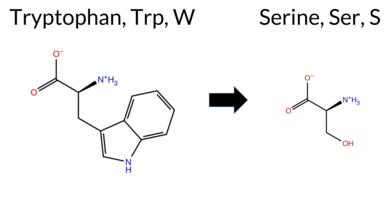 3DClick to see structure in 3D Viewer AIThe SynGAP1 missense variant W657S is not reported in ClinVar and is absent from gnomAD. Prediction tools that agree on a benign effect include REVEL, SIFT, and FATHMM, whereas a majority of tools (SGM‑Consensus, FoldX, premPS, PROVEAN, polyPhen‑2 HumDiv, polyPhen‑2 HumVar, ESM1b, AlphaMissense‑Default, AlphaMissense‑Optimized, and Foldetta) predict a pathogenic impact; Rosetta remains uncertain. High‑accuracy methods all support pathogenicity: AlphaMissense‑Optimized scores the variant as pathogenic, the SGM‑Consensus (majority vote of AlphaMissense‑Default, ESM1b, FATHMM, and PROVEAN) indicates likely pathogenic, and Foldetta (combining FoldX‑MD and Rosetta outputs) also predicts pathogenic. Based on the collective evidence, the variant is most likely pathogenic, and this assessment does not contradict any ClinVar status, as no ClinVar entry exists. Disclaimer: This summary was generated using AI and should be interpreted alongside expert review. | Likely Pathogenic | GAP | 0.030611 | Structured | 0.208729 | Uncertain | 0.941 | 0.245 | 0.000 | -11.817 | Likely Pathogenic | 0.986 | Likely Pathogenic | Likely Pathogenic | 2.27 | Destabilizing | 0.2 | 1.87 | Ambiguous | 2.07 | Destabilizing | 1.26 | Destabilizing | 0.334 | Likely Benign | -11.82 | Deleterious | 0.999 | Probably Damaging | 0.947 | Probably Damaging | 3.52 | Benign | 0.09 | Tolerated | 0.4299 | 0.0489 | -2 | -3 | 0.1 | -99.14 | |||||||||||||||||||||||||||||
| c.2014A>T | T672S 2D 3DClick to see structure in 3D Viewer AIThe SynGAP1 missense variant T672S is not reported in ClinVar and is absent from gnomAD. Prediction tools that assess pathogenicity uniformly indicate a benign effect: REVEL, FoldX, Rosetta, Foldetta, premPS (uncertain), PROVEAN, polyPhen‑2 (HumDiv and HumVar), SIFT, ESM1b, FATHMM, AlphaMissense‑Default, and AlphaMissense‑Optimized all classify the change as benign or likely benign. No tool predicts pathogenicity. High‑accuracy methods corroborate this: AlphaMissense‑Optimized reports benign; the SGM Consensus (majority vote of AlphaMissense‑Default, ESM1b, FATHMM, PROVEAN) yields “Likely Benign”; and Foldetta (combining FoldX‑MD and Rosetta outputs) also predicts benign. Consequently, the variant is most likely benign, and this assessment does not contradict any ClinVar status. Disclaimer: This summary was generated using AI and should be interpreted alongside expert review. | Likely Benign | GAP | 0.116183 | Structured | 0.102069 | Uncertain | 0.586 | 0.362 | 0.000 | -4.932 | Likely Benign | 0.097 | Likely Benign | Likely Benign | -0.13 | Likely Benign | 0.1 | 0.29 | Likely Benign | 0.08 | Likely Benign | 0.61 | Ambiguous | 0.044 | Likely Benign | -2.32 | Neutral | 0.006 | Benign | 0.010 | Benign | 3.43 | Benign | 0.09 | Tolerated | 0.3005 | 0.4282 | 1 | 1 | -0.1 | -14.03 | |||||||||||||||||||||||||||||
| c.2039A>C | E680A 2D 3DClick to see structure in 3D Viewer AIThe SynGAP1 E680A missense variant is not reported in ClinVar and is absent from gnomAD. Prediction tools that agree on a benign effect include REVEL, FoldX, premPS, SIFT, and FATHMM. Those that predict a pathogenic impact are SGM‑Consensus, PROVEAN, polyPhen‑2 HumDiv, polyPhen‑2 HumVar, ESM1b, and AlphaMissense‑Default. Two tools give uncertain results: Rosetta and AlphaMissense‑Optimized. High‑accuracy assessments show that the SGM‑Consensus (majority vote of AlphaMissense‑Default, ESM1b, FATHMM, and PROVEAN) classifies the variant as likely pathogenic, whereas Foldetta, which integrates FoldX‑MD and Rosetta stability outputs, predicts a benign effect. AlphaMissense‑Optimized remains inconclusive. Overall, the majority of predictions lean toward pathogenicity, but the conflicting high‑accuracy results leave the classification uncertain. The variant is most likely pathogenic based on the prevailing evidence, and this assessment does not contradict the ClinVar status, which currently has no entry for this change. Disclaimer: This summary was generated using AI and should be interpreted alongside expert review. | Likely Pathogenic | GAP | 0.209395 | Structured | 0.136843 | Uncertain | 0.636 | 0.320 | 0.000 | -11.338 | Likely Pathogenic | 0.819 | Likely Pathogenic | Ambiguous | 0.34 | Likely Benign | 0.2 | 0.59 | Ambiguous | 0.47 | Likely Benign | 0.30 | Likely Benign | 0.444 | Likely Benign | -5.22 | Deleterious | 0.935 | Possibly Damaging | 0.490 | Possibly Damaging | 3.47 | Benign | 0.09 | Tolerated | 0.3931 | 0.6989 | 0 | -1 | 5.3 | -58.04 | |||||||||||||||||||||||||||||
| c.2102C>T | P701L 2D 3DClick to see structure in 3D Viewer AIThe SynGAP1 P701L missense variant is not reported in ClinVar (ClinVar ID None) and is absent from gnomAD (gnomAD ID None). Prediction tools that agree on a benign effect include REVEL, Foldetta, premPS, polyPhen‑2 HumVar, SIFT, FATHMM, and AlphaMissense‑Optimized. Those that predict a pathogenic effect are PROVEAN, polyPhen‑2 HumDiv, and ESM1b. The remaining tools (FoldX, Rosetta, AlphaMissense‑Default) are uncertain. High‑accuracy assessments show AlphaMissense‑Optimized as benign, the SGM Consensus (majority vote from AlphaMissense‑Default, ESM1b, FATHMM, PROVEAN) as pathogenic, and Foldetta as benign. Overall, the majority of predictions (7 benign vs. 3 pathogenic) and the two high‑accuracy benign calls suggest that the variant is most likely benign. This conclusion does not contradict any ClinVar status, as no ClinVar classification exists for this variant. Disclaimer: This summary was generated using AI and should be interpreted alongside expert review. | GAP | 0.074921 | Structured | 0.404318 | Uncertain | 0.918 | 0.345 | 0.000 | -10.185 | Likely Pathogenic | 0.515 | Ambiguous | Likely Benign | 1.15 | Ambiguous | 0.0 | -0.68 | Ambiguous | 0.24 | Likely Benign | 0.12 | Likely Benign | 0.116 | Likely Benign | -3.04 | Deleterious | 0.642 | Possibly Damaging | 0.087 | Benign | 3.50 | Benign | 0.09 | Tolerated | 0.2018 | 0.5546 | -3 | -3 | 5.4 | 16.04 | ||||||||||||||||||||||||||||||
| c.2119G>C | A707P 2D 3DClick to see structure in 3D Viewer AISynGAP1 missense variant A707P is not reported in ClinVar and is absent from gnomAD. Prediction tools that classify it as benign include REVEL, FoldX, SIFT, and FATHMM, whereas pathogenic predictions come from Foldetta, PROVEAN, polyPhen‑2 HumDiv, polyPhen‑2 HumVar, ESM1b, and AlphaMissense‑Default. Two tools give uncertain results: AlphaMissense‑Optimized and premPS. High‑accuracy assessments show AlphaMissense‑Optimized as uncertain, SGM Consensus (majority vote of AlphaMissense‑Default, ESM1b, FATHMM, PROVEAN) as Likely Pathogenic, and Foldetta (combining FoldX‑MD and Rosetta) as Pathogenic. Overall, the majority of evidence points to a pathogenic effect, and this assessment does not contradict the absence of a ClinVar classification. Disclaimer: This summary was generated using AI and should be interpreted alongside expert review. | Likely Pathogenic | GAP | 0.203355 | Structured | 0.371229 | Uncertain | 0.927 | 0.365 | 0.000 | -8.082 | Likely Pathogenic | 0.885 | Likely Pathogenic | Ambiguous | 0.28 | Likely Benign | 0.1 | 5.75 | Destabilizing | 3.02 | Destabilizing | 0.76 | Ambiguous | 0.228 | Likely Benign | -2.92 | Deleterious | 0.996 | Probably Damaging | 0.983 | Probably Damaging | 3.41 | Benign | 0.09 | Tolerated | 0.1375 | 0.3095 | 1 | -1 | -3.4 | 26.04 | |||||||||||||||||||||||||||||
| c.2155A>T | N719Y 2D 3DClick to see structure in 3D Viewer AIThe SynGAP1 missense variant N719Y is not reported in ClinVar (ClinVar ID None) and is absent from gnomAD (gnomAD ID None). Prediction tools that agree on a benign effect include REVEL, FoldX, premPS, SIFT, FATHMM, AlphaMissense‑Default, and AlphaMissense‑Optimized. Tools that predict a pathogenic effect are PROVEAN, polyPhen‑2 HumDiv, polyPhen‑2 HumVar, and ESM1b. Rosetta and Foldetta provide uncertain or inconclusive results and are treated as unavailable. High‑accuracy assessments show AlphaMissense‑Optimized as benign; the SGM Consensus (majority vote from AlphaMissense‑Default, ESM1b, FATHMM, PROVEAN) is inconclusive (2 benign vs 2 pathogenic), and Foldetta is also uncertain. Overall, the majority of evaluated tools (7 benign vs 4 pathogenic) support a benign classification. Thus, the variant is most likely benign, and this assessment does not contradict any ClinVar status because no ClinVar entry exists. Disclaimer: This summary was generated using AI and should be interpreted alongside expert review. | GAP | 0.384043 | Structured | 0.445381 | Uncertain | 0.961 | 0.386 | 0.000 | -11.005 | Likely Pathogenic | 0.302 | Likely Benign | Likely Benign | -0.38 | Likely Benign | 0.0 | -0.62 | Ambiguous | -0.50 | Ambiguous | 0.33 | Likely Benign | 0.187 | Likely Benign | -4.15 | Deleterious | 1.000 | Probably Damaging | 0.999 | Probably Damaging | 2.70 | Benign | 0.09 | Tolerated | 0.0412 | 0.3951 | -2 | -2 | 2.2 | 49.07 | ||||||||||||||||||||||||||||||
| c.2164A>C | S722R 2D 3DClick to see structure in 3D Viewer AIThe SynGAP1 missense variant S722R is not reported in ClinVar (no ClinVar ID) and is absent from gnomAD (no gnomAD ID). Prediction tools that classify the variant as benign include REVEL, FoldX, Rosetta, SIFT, and FATHMM, whereas those that predict pathogenicity are PROVEAN, polyPhen‑2 HumDiv, polyPhen‑2 HumVar, ESM1b, AlphaMissense‑Default, and AlphaMissense‑Optimized. High‑accuracy assessments show AlphaMissense‑Optimized as pathogenic, the SGM Consensus (majority vote from AlphaMissense‑Default, ESM1b, FATHMM, and PROVEAN) as pathogenic, and Foldetta (combining FoldX‑MD and Rosetta outputs) as benign. Overall, the majority of tools and the high‑accuracy methods lean toward a pathogenic effect. Thus, the variant is most likely pathogenic based on current predictions, and this conclusion is not contradicted by any ClinVar status. Disclaimer: This summary was generated using AI and should be interpreted alongside expert review. | Likely Pathogenic | GAP | 0.468512 | Structured | 0.457186 | Uncertain | 0.950 | 0.431 | 0.375 | -10.731 | Likely Pathogenic | 0.984 | Likely Pathogenic | Likely Pathogenic | 0.05 | Likely Benign | 0.1 | -0.03 | Likely Benign | 0.01 | Likely Benign | 0.72 | Ambiguous | 0.306 | Likely Benign | -2.66 | Deleterious | 0.999 | Probably Damaging | 0.948 | Probably Damaging | 2.52 | Benign | 0.09 | Tolerated | 0.0886 | 0.2797 | 0 | -1 | -3.7 | 69.11 | |||||||||||||||||||||||||||||
| c.2166C>A | S722R 2D 3DClick to see structure in 3D Viewer AIThe SynGAP1 missense variant S722R is not reported in ClinVar and is absent from gnomAD. Prediction tools that indicate a benign effect include REVEL, FoldX, Rosetta, SIFT, and FATHMM, whereas pathogenic predictions come from PROVEAN, polyPhen‑2 HumDiv, polyPhen‑2 HumVar, ESM1b, AlphaMissense‑Default, and AlphaMissense‑Optimized. The high‑accuracy consensus (SGM Consensus) derived from a majority vote of AlphaMissense‑Default, ESM1b, FATHMM, and PROVEAN is pathogenic. Foldetta, which integrates FoldX‑MD and Rosetta outputs, predicts a benign effect. Overall, the majority of evidence points to a pathogenic impact, and this conclusion is not contradicted by any ClinVar annotation. Disclaimer: This summary was generated using AI and should be interpreted alongside expert review. | Likely Pathogenic | GAP | 0.468512 | Structured | 0.457186 | Uncertain | 0.950 | 0.431 | 0.375 | -10.731 | Likely Pathogenic | 0.984 | Likely Pathogenic | Likely Pathogenic | 0.05 | Likely Benign | 0.1 | -0.03 | Likely Benign | 0.01 | Likely Benign | 0.72 | Ambiguous | 0.221 | Likely Benign | -2.66 | Deleterious | 0.999 | Probably Damaging | 0.948 | Probably Damaging | 2.52 | Benign | 0.09 | Tolerated | 0.0886 | 0.2797 | 0 | -1 | -3.7 | 69.11 | |||||||||||||||||||||||||||||
| c.2166C>G | S722R 2D 3DClick to see structure in 3D Viewer AIThe SynGAP1 missense variant S722R is not reported in ClinVar and is absent from gnomAD. Prediction tools that classify the variant as benign include REVEL, FoldX, Rosetta, SIFT, and FATHMM, whereas pathogenic predictions come from PROVEAN, polyPhen‑2 HumDiv, polyPhen‑2 HumVar, ESM1b, AlphaMissense‑Default, and AlphaMissense‑Optimized. High‑accuracy assessments further support a pathogenic bias: AlphaMissense‑Optimized predicts pathogenicity, the SGM Consensus (majority vote of AlphaMissense‑Default, ESM1b, FATHMM, and PROVEAN) also indicates likely pathogenic, while Foldetta, which integrates FoldX‑MD and Rosetta outputs, predicts benign stability. Overall, the balance of evidence leans toward pathogenicity, and this conclusion does not contradict any ClinVar annotation (none is available). Thus, based on the current computational predictions, the S722R variant is most likely pathogenic. Disclaimer: This summary was generated using AI and should be interpreted alongside expert review. | Likely Pathogenic | GAP | 0.468512 | Structured | 0.457186 | Uncertain | 0.950 | 0.431 | 0.375 | -10.731 | Likely Pathogenic | 0.984 | Likely Pathogenic | Likely Pathogenic | 0.05 | Likely Benign | 0.1 | -0.03 | Likely Benign | 0.01 | Likely Benign | 0.72 | Ambiguous | 0.220 | Likely Benign | -2.66 | Deleterious | 0.999 | Probably Damaging | 0.948 | Probably Damaging | 2.52 | Benign | 0.09 | Tolerated | 0.0886 | 0.2797 | 0 | -1 | -3.7 | 69.11 | |||||||||||||||||||||||||||||
| c.2190C>G | I730M 2D 3DClick to see structure in 3D Viewer AIThe SynGAP1 missense variant I730M is not reported in ClinVar (ClinVar ID = None) and is absent from gnomAD (gnomAD ID = None). Prediction tools that agree on a benign effect include REVEL, FoldX, Rosetta, Foldetta, premPS, PROVEAN, SIFT, ESM1b, FATHMM, AlphaMissense‑Default, and AlphaMissense‑Optimized. Only the two polyPhen‑2 implementations (HumDiv and HumVar) predict a pathogenic outcome. High‑accuracy assessments—AlphaMissense‑Optimized, the SGM Consensus (majority vote from AlphaMissense‑Default, ESM1b, FATHMM, PROVEAN), and Foldetta (combining FoldX‑MD and Rosetta outputs)—all uniformly indicate a benign impact. No prediction or folding‑stability result is missing or inconclusive. Based on the collective evidence, the variant is most likely benign, and this conclusion does not contradict any ClinVar status (none reported). Disclaimer: This summary was generated using AI and should be interpreted alongside expert review. | Likely Benign | 0.733139 | Disordered | 0.420109 | Uncertain | 0.591 | 0.619 | 0.750 | -3.149 | Likely Benign | 0.110 | Likely Benign | Likely Benign | -0.15 | Likely Benign | 0.1 | 0.31 | Likely Benign | 0.08 | Likely Benign | -0.15 | Likely Benign | 0.042 | Likely Benign | -0.77 | Neutral | 0.993 | Probably Damaging | 0.914 | Probably Damaging | 3.43 | Benign | 0.09 | Tolerated | 0.0698 | 0.2159 | 2 | 1 | -2.6 | 18.03 | ||||||||||||||||||||||||||||||
| c.2200C>A | P734T 2D AIThe SynGAP1 missense variant P734T is not reported in ClinVar and is absent from gnomAD. All available in‑silico predictors classify it as benign: REVEL, PROVEAN, polyPhen‑2 (HumDiv and HumVar), SIFT, ESM1b, FATHMM, AlphaMissense‑Default, and AlphaMissense‑Optimized. No tool predicts pathogenicity. The high‑accuracy consensus (SGM‑Consensus, derived from a majority vote of AlphaMissense‑Default, ESM1b, FATHMM, and PROVEAN) reports the variant as “Likely Benign,” and AlphaMissense‑Optimized also predicts benign. Foldetta, a protein‑folding stability method combining FoldX‑MD and Rosetta outputs, has no result available for this variant. Based on the unanimous benign predictions and the lack of any pathogenic evidence, the variant is most likely benign, and this assessment does not contradict any ClinVar status (none is reported). Disclaimer: This summary was generated using AI and should be interpreted alongside expert review. | Likely Benign | 0.879233 | Disordered | 0.411273 | Uncertain | 0.368 | 0.721 | 0.875 | -4.469 | Likely Benign | 0.066 | Likely Benign | Likely Benign | 0.042 | Likely Benign | -2.08 | Neutral | 0.040 | Benign | 0.013 | Benign | 2.78 | Benign | 0.09 | Tolerated | 0.1764 | 0.4076 | 0 | -1 | 0.9 | 3.99 | |||||||||||||||||||||||||||||||||||||||
| c.2204G>T | S735I 2D AIThe SynGAP1 missense variant S735I is not reported in ClinVar (no ClinVar ID) and is absent from gnomAD (no gnomAD ID). Prediction tools that agree on a benign effect include REVEL, PROVEAN, SIFT, ESM1b, FATHMM, AlphaMissense‑Default, and AlphaMissense‑Optimized. Tools that predict a pathogenic effect are polyPhen‑2 HumDiv and polyPhen‑2 HumVar. The SGM‑Consensus, which aggregates AlphaMissense‑Default, ESM1b, FATHMM, and PROVEAN, reports a Likely Benign classification. High‑accuracy assessments show AlphaMissense‑Optimized as Benign and the SGM‑Consensus as Likely Benign; Foldetta results are unavailable. Overall, the majority of evidence points to a benign impact for S735I, and this conclusion does not contradict any ClinVar annotation, as none exists for this variant. Disclaimer: This summary was generated using AI and should be interpreted alongside expert review. | Likely Benign | 0.916840 | Disordered | 0.412174 | Uncertain | 0.290 | 0.752 | 0.875 | -5.669 | Likely Benign | 0.167 | Likely Benign | Likely Benign | 0.117 | Likely Benign | -1.71 | Neutral | 0.999 | Probably Damaging | 0.977 | Probably Damaging | 2.64 | Benign | 0.09 | Tolerated | 0.0933 | 0.5069 | -1 | -2 | 5.3 | 26.08 | |||||||||||||||||||||||||||||||||||||||
| c.2279T>G | M760R 2D AIThe SynGAP1 missense variant M760R is not reported in ClinVar (ClinVar ID = None) and is absent from gnomAD (gnomAD ID = None). Functional prediction tools that agree on a benign effect include REVEL, PROVEAN, SIFT, ESM1b, FATHMM, and AlphaMissense‑Optimized. Tools that predict a pathogenic effect are polyPhen‑2 HumDiv, polyPhen‑2 HumVar, and AlphaMissense‑Default. The SGM‑Consensus, which aggregates the majority vote from AlphaMissense‑Default, ESM1b, FATHMM, and PROVEAN, classifies the variant as Likely Benign. High‑accuracy assessments further support a benign outcome: AlphaMissense‑Optimized predicts benign, and the SGM‑Consensus likewise indicates Likely Benign. No Foldetta stability prediction is available for this variant. Overall, the majority of computational evidence points to a benign impact, and this conclusion is consistent with the absence of any ClinVar pathogenic annotation. Disclaimer: This summary was generated using AI and should be interpreted alongside expert review. | Likely Benign | 0.541878 | Disordered | 0.893402 | Binding | 0.346 | 0.865 | 0.375 | -2.794 | Likely Benign | 0.594 | Likely Pathogenic | Likely Benign | 0.125 | Likely Benign | -1.61 | Neutral | 0.975 | Probably Damaging | 0.690 | Possibly Damaging | 2.71 | Benign | 0.09 | Tolerated | 0.1804 | 0.1318 | 0 | -1 | -6.4 | 24.99 | |||||||||||||||||||||||||||||||||||||||
| c.2280G>A | M760I 2D AIThe SynGAP1 missense variant M760I is not reported in ClinVar and is absent from gnomAD. Prediction tools that agree on a benign effect include REVEL, PROVEAN, polyPhen‑2 (HumDiv and HumVar), SIFT, ESM1b, FATHMM, and AlphaMissense‑Optimized. No tool predicts a pathogenic outcome; AlphaMissense‑Default is uncertain. The SGM‑Consensus, which aggregates AlphaMissense‑Default, ESM1b, FATHMM, and PROVEAN, classifies the variant as Likely Benign. High‑accuracy assessments further support a benign interpretation: AlphaMissense‑Optimized predicts benign, and the SGM‑Consensus (majority vote) also indicates benign. Foldetta results are unavailable, so they do not influence the assessment. Overall, the collective evidence strongly suggests that M760I is most likely benign, and this conclusion is consistent with the absence of any ClinVar pathogenic annotation. Disclaimer: This summary was generated using AI and should be interpreted alongside expert review. | Likely Benign | 0.541878 | Disordered | 0.893402 | Binding | 0.346 | 0.865 | 0.375 | -3.696 | Likely Benign | 0.486 | Ambiguous | Likely Benign | 0.065 | Likely Benign | -1.03 | Neutral | 0.029 | Benign | 0.033 | Benign | 2.67 | Benign | 0.09 | Tolerated | 0.1595 | 0.4054 | 2 | 1 | 2.6 | -18.03 | |||||||||||||||||||||||||||||||||||||||
| c.2280G>C | M760I 2D AIThe SynGAP1 missense variant M760I is not reported in ClinVar and is absent from gnomAD. Prediction tools that agree on a benign effect include REVEL, PROVEAN, polyPhen‑2 (HumDiv and HumVar), SIFT, ESM1b, FATHMM, and AlphaMissense‑Optimized. No tool predicts a pathogenic outcome; AlphaMissense‑Default is uncertain. The SGM‑Consensus, which aggregates AlphaMissense‑Default, ESM1b, FATHMM, and PROVEAN, classifies the variant as Likely Benign. High‑accuracy assessments further support a benign interpretation: AlphaMissense‑Optimized predicts benign, and the SGM‑Consensus (majority vote) also indicates benign. Foldetta results are unavailable, so they do not influence the assessment. Overall, the collective evidence strongly suggests that M760I is most likely benign, and this conclusion is consistent with the absence of any ClinVar pathogenic annotation. Disclaimer: This summary was generated using AI and should be interpreted alongside expert review. | Likely Benign | 0.541878 | Disordered | 0.893402 | Binding | 0.346 | 0.865 | 0.375 | -3.696 | Likely Benign | 0.486 | Ambiguous | Likely Benign | 0.065 | Likely Benign | -1.03 | Neutral | 0.029 | Benign | 0.033 | Benign | 2.67 | Benign | 0.09 | Tolerated | 0.1595 | 0.4054 | 2 | 1 | 2.6 | -18.03 | |||||||||||||||||||||||||||||||||||||||
| c.2280G>T | M760I 2D AIThe SynGAP1 missense variant M760I is not reported in ClinVar and is absent from gnomAD. Prediction tools that agree on a benign effect include REVEL, PROVEAN, polyPhen‑2 (HumDiv and HumVar), SIFT, ESM1b, FATHMM, and AlphaMissense‑Optimized. No tool predicts a pathogenic outcome; AlphaMissense‑Default is uncertain. The SGM‑Consensus, which aggregates AlphaMissense‑Default, ESM1b, FATHMM, and PROVEAN, classifies the variant as Likely Benign. High‑accuracy assessments further support a benign interpretation: AlphaMissense‑Optimized predicts benign, and the SGM‑Consensus (majority vote) also indicates benign. Foldetta results are unavailable, so they do not influence the assessment. Overall, the collective evidence strongly suggests that M760I is most likely benign, and this conclusion is consistent with the absence of any ClinVar pathogenic annotation. Disclaimer: This summary was generated using AI and should be interpreted alongside expert review. | Likely Benign | 0.541878 | Disordered | 0.893402 | Binding | 0.346 | 0.865 | 0.375 | -3.696 | Likely Benign | 0.486 | Ambiguous | Likely Benign | 0.065 | Likely Benign | -1.03 | Neutral | 0.029 | Benign | 0.033 | Benign | 2.67 | Benign | 0.09 | Tolerated | 0.1595 | 0.4054 | 2 | 1 | 2.6 | -18.03 | |||||||||||||||||||||||||||||||||||||||
| c.2333A>C | N778T 2D AIThe SynGAP1 missense variant N778T is not reported in ClinVar (no ClinVar ID) and is absent from gnomAD (no gnomAD ID). Prediction tools that agree on a benign effect include REVEL, PROVEAN, SIFT, ESM1b, FATHMM, AlphaMissense‑Default, AlphaMissense‑Optimized, and the SGM‑Consensus (which is “Likely Benign”). In contrast, the two polyPhen‑2 implementations (HumDiv and HumVar) predict a pathogenic outcome. High‑accuracy assessments further support a benign classification: AlphaMissense‑Optimized is benign, and the SGM‑Consensus (majority vote of AlphaMissense‑Default, ESM1b, FATHMM, and PROVEAN) is also benign. No Foldetta stability prediction is available, so it does not influence the assessment. Overall, the majority of evidence indicates that the variant is most likely benign, and this conclusion does not contradict any ClinVar status because no ClinVar entry exists. Disclaimer: This summary was generated using AI and should be interpreted alongside expert review. | Likely Benign | 0.494003 | Structured | 0.853922 | Binding | 0.288 | 0.887 | 0.500 | -3.820 | Likely Benign | 0.222 | Likely Benign | Likely Benign | 0.110 | Likely Benign | -1.52 | Neutral | 0.925 | Possibly Damaging | 0.932 | Probably Damaging | 4.23 | Benign | 0.09 | Tolerated | 0.1441 | 0.7395 | 0 | 0 | 2.8 | -13.00 | |||||||||||||||||||||||||||||||||||||||
| c.2380C>G | P794A 2D AIThe SynGAP1 missense variant P794A is not reported in ClinVar (no ClinVar ID) and is absent from gnomAD (no gnomAD ID). All evaluated in‑silico predictors classify the change as benign: REVEL, PROVEAN, polyPhen‑2 (HumDiv and HumVar), SIFT, ESM1b, FATHMM, AlphaMissense‑Default, and AlphaMissense‑Optimized. No tool predicts pathogenicity. High‑accuracy assessments reinforce this view: AlphaMissense‑Optimized predicts benign, and the SGM‑Consensus (majority vote of AlphaMissense‑Default, ESM1b, FATHMM, and PROVEAN) indicates a likely benign effect. Foldetta results are unavailable, so they do not influence the assessment. Overall, the variant is most likely benign, and this conclusion does not contradict any ClinVar status. Disclaimer: This summary was generated using AI and should be interpreted alongside expert review. | Likely Benign | SH3-binding motif | 0.979741 | Disordered | 0.408951 | Uncertain | 0.550 | 0.898 | 0.875 | -3.766 | Likely Benign | 0.056 | Likely Benign | Likely Benign | 0.038 | Likely Benign | -0.63 | Neutral | 0.124 | Benign | 0.089 | Benign | 4.27 | Benign | 0.09 | Tolerated | 0.3692 | 0.5209 | 1 | -1 | 3.4 | -26.04 | ||||||||||||||||||||||||||||||||||||||
| c.2383C>A | P795T 2D AIThe SynGAP1 missense variant P795T is not reported in ClinVar and is absent from gnomAD. Functional prediction tools uniformly indicate a benign effect: REVEL, PROVEAN, polyPhen‑2 (HumDiv and HumVar), SIFT, FATHMM, AlphaMissense‑Default, and AlphaMissense‑Optimized all classify the change as benign. No tool predicts pathogenicity, and the only uncertain result comes from ESM1b. The SGM‑Consensus, which aggregates AlphaMissense‑Default, ESM1b, FATHMM, and PROVEAN, reports a “Likely Benign” consensus. High‑accuracy assessments further support this: AlphaMissense‑Optimized is benign, and the SGM‑Consensus is also likely benign; Foldetta results are not available. Based on the collective evidence, the variant is most likely benign, and this conclusion does not contradict any ClinVar annotation (none exists). Disclaimer: This summary was generated using AI and should be interpreted alongside expert review. | Likely Benign | SH3-binding motif | 0.972450 | Disordered | 0.410339 | Uncertain | 0.457 | 0.903 | 0.875 | -7.030 | In-Between | 0.060 | Likely Benign | Likely Benign | 0.068 | Likely Benign | -0.63 | Neutral | 0.036 | Benign | 0.026 | Benign | 4.26 | Benign | 0.09 | Tolerated | 0.1713 | 0.6381 | 0 | -1 | 0.9 | 3.99 | ||||||||||||||||||||||||||||||||||||||
| c.2405G>A | G802D 2D AIThe SynGAP1 missense variant G802D is listed in ClinVar with an “Uncertain” status and is present in gnomAD (6‑33442957‑G‑A). Functional prediction tools that agree on a benign effect include REVEL, PROVEAN, polyPhen‑2 (HumDiv and HumVar), SIFT, ESM1b, and FATHMM—all classifying the change as benign. No tool predicts a pathogenic outcome. The high‑accuracy assessments further support a benign interpretation: AlphaMissense‑Optimized predicts benign, and the SGM‑Consensus (majority vote from AlphaMissense‑Default, ESM1b, FATHMM, and PROVEAN) indicates a likely benign effect. Foldetta, a protein‑folding stability method combining FoldX‑MD and Rosetta outputs, has no available result for this variant. Overall, the consensus of available predictions points to a benign impact, which does not contradict the ClinVar “Uncertain” classification. Disclaimer: This summary was generated using AI and should be interpreted alongside expert review. | Likely Benign | SH3-binding motif | 0.894241 | Disordered | 0.681966 | Binding | 0.294 | 0.898 | 0.625 | Uncertain | 1 | 6-33442957-G-A | 1 | 6.20e-7 | -5.083 | Likely Benign | 0.476 | Ambiguous | Likely Benign | 0.153 | Likely Benign | -0.38 | Neutral | 0.126 | Benign | 0.138 | Benign | 2.72 | Benign | 0.09 | Tolerated | 3.77 | 5 | 0.1993 | 0.2742 | 1 | -1 | -3.1 | 58.04 | |||||||||||||||||||||||||||||||
| c.2440G>A | A814T 2D AIThe SynGAP1 missense variant A814T is not reported in ClinVar and is absent from gnomAD. Consensus from multiple in‑silico predictors indicates a benign effect: REVEL, PROVEAN, polyPhen‑2 (HumDiv and HumVar), SIFT, ESM1b, FATHMM, AlphaMissense‑Default, and AlphaMissense‑Optimized all classify the change as benign. No tool predicts pathogenicity. High‑accuracy assessments reinforce this view: AlphaMissense‑Optimized predicts benign, the SGM Consensus (majority vote of AlphaMissense‑Default, ESM1b, FATHMM, and PROVEAN) reports a likely benign outcome, while Foldetta results are unavailable. Based on the collective evidence, the variant is most likely benign, and this assessment does not contradict the ClinVar status. Disclaimer: This summary was generated using AI and should be interpreted alongside expert review. | Likely Benign | SH3-binding motif | 0.411940 | Structured | 0.814830 | Binding | 0.368 | 0.902 | 0.250 | -3.600 | Likely Benign | 0.227 | Likely Benign | Likely Benign | 0.062 | Likely Benign | -1.24 | Neutral | 0.103 | Benign | 0.047 | Benign | 2.64 | Benign | 0.09 | Tolerated | 0.1400 | 0.6655 | 1 | 0 | -2.5 | 30.03 | ||||||||||||||||||||||||||||||||||||||
| c.2464A>C | T822P 2D AIThe SynGAP1 missense variant T822P is not reported in ClinVar (no ClinVar ID) and is absent from gnomAD (no gnomAD ID). Prediction tools that agree on a benign effect include REVEL, PROVEAN, SIFT, ESM1b, FATHMM, AlphaMissense‑Optimized, and the SGM‑Consensus (Likely Benign). Tools that predict a pathogenic effect are polyPhen‑2 HumDiv, polyPhen‑2 HumVar, and AlphaMissense‑Default. High‑accuracy assessments show AlphaMissense‑Optimized as benign and the SGM‑Consensus as likely benign; Foldetta results are not available. Overall, the majority of evidence points to a benign impact for T822P. This conclusion is not contradicted by ClinVar status, which is currently unreported. Disclaimer: This summary was generated using AI and should be interpreted alongside expert review. | Likely Benign | 0.724957 | Disordered | 0.651624 | Binding | 0.295 | 0.881 | 0.750 | -3.961 | Likely Benign | 0.737 | Likely Pathogenic | Likely Benign | 0.145 | Likely Benign | -2.29 | Neutral | 0.999 | Probably Damaging | 0.985 | Probably Damaging | 2.50 | Benign | 0.09 | Tolerated | 0.2437 | 0.5044 | 0 | -1 | -0.9 | -3.99 | |||||||||||||||||||||||||||||||||||||||
| c.2479A>T | I827F 2D AIThe SynGAP1 missense variant I827F is not reported in ClinVar and is absent from gnomAD. Functional prediction tools largely agree on a benign effect: REVEL, PROVEAN, SIFT, ESM1b, FATHMM, and AlphaMissense‑Optimized all classify the change as benign, while the SGM‑Consensus (majority vote of AlphaMissense‑Default, ESM1b, FATHMM, PROVEAN) also reports it as likely benign. In contrast, polyPhen‑2 (HumDiv and HumVar) predict a pathogenic impact. The AlphaMissense‑Default score is uncertain, and no Foldetta stability assessment is available. High‑accuracy methods give a benign consensus: AlphaMissense‑Optimized is benign and the SGM‑Consensus is likely benign, with no Foldetta data. Overall, the majority of evidence points to a benign effect, and this is consistent with the lack of ClinVar annotation; there is no contradiction with ClinVar status. Disclaimer: This summary was generated using AI and should be interpreted alongside expert review. | Likely Benign | 0.590140 | Disordered | 0.636272 | Binding | 0.383 | 0.884 | 0.625 | -4.799 | Likely Benign | 0.517 | Ambiguous | Likely Benign | 0.155 | Likely Benign | -1.30 | Neutral | 0.999 | Probably Damaging | 0.996 | Probably Damaging | 2.65 | Benign | 0.09 | Tolerated | 0.0490 | 0.2306 | 1 | 0 | -1.7 | 34.02 | |||||||||||||||||||||||||||||||||||||||
| c.2491G>C | E831Q 2D AIThe SynGAP1 missense variant E831Q is not reported in ClinVar (ClinVar ID: None) and is absent from gnomAD (gnomAD ID: None). Prediction tools that agree on a benign effect include REVEL, PROVEAN, SIFT, ESM1b, and AlphaMissense‑Optimized. Tools that predict a pathogenic effect are polyPhen‑2 HumDiv, polyPhen‑2 HumVar, and FATHMM. AlphaMissense‑Default is uncertain. The SGM Consensus, derived from a majority vote of AlphaMissense‑Default, ESM1b, FATHMM, and PROVEAN, favors a benign outcome (2 benign vs. 1 pathogenic). High‑accuracy methods give a benign prediction from AlphaMissense‑Optimized and a benign consensus from SGM; Foldetta results are unavailable. Overall, the available computational evidence points to a benign impact for E831Q, and this assessment does not contradict any ClinVar annotation, as none exists for this variant. Disclaimer: This summary was generated using AI and should be interpreted alongside expert review. | 0.626927 | Disordered | 0.617732 | Binding | 0.319 | 0.874 | 0.375 | -5.604 | Likely Benign | 0.349 | Ambiguous | Likely Benign | 0.147 | Likely Benign | -1.23 | Neutral | 0.891 | Possibly Damaging | 0.492 | Possibly Damaging | 2.36 | Pathogenic | 0.09 | Tolerated | 0.1022 | 0.7052 | 2 | 2 | 0.0 | -0.98 | ||||||||||||||||||||||||||||||||||||||||
| c.2495A>G | Q832R 2D AIThe SynGAP1 missense variant Q832R is not reported in ClinVar and is absent from gnomAD. Prediction tools largely agree on a benign effect: REVEL, PROVEAN, polyPhen‑2 HumVar, SIFT, ESM1b, FATHMM, AlphaMissense‑Default, and AlphaMissense‑Optimized all classify the change as benign. Only polyPhen‑2 HumDiv predicts a pathogenic outcome. The SGM‑Consensus, derived from a majority vote of AlphaMissense‑Default, ESM1b, FATHMM, and PROVEAN, reports the variant as “Likely Benign.” High‑accuracy assessments further support a benign interpretation: AlphaMissense‑Optimized is benign, and the SGM‑Consensus is likely benign; Foldetta results are not available. Overall, the preponderance of evidence indicates that the variant is most likely benign, and this conclusion is not contradicted by any ClinVar annotation. Disclaimer: This summary was generated using AI and should be interpreted alongside expert review. | Likely Benign | 0.720929 | Disordered | 0.619913 | Binding | 0.290 | 0.877 | 0.375 | -3.680 | Likely Benign | 0.203 | Likely Benign | Likely Benign | 0.087 | Likely Benign | -1.17 | Neutral | 0.912 | Possibly Damaging | 0.424 | Benign | 2.74 | Benign | 0.09 | Tolerated | 0.1494 | 0.1434 | 1 | 1 | -1.0 | 28.06 | |||||||||||||||||||||||||||||||||||||||
| c.2512A>C | N838H 2D AIThe SynGAP1 missense variant N838H is reported in ClinVar as “Not submitted” and is not present in gnomAD. Functional prediction tools cluster into two groups: benign predictions come from REVEL, SIFT, ESM1b, FATHMM, AlphaMissense‑Default, AlphaMissense‑Optimized, and the SGM‑Consensus (Likely Benign). Pathogenic predictions arise from PROVEAN, polyPhen‑2 HumDiv, and polyPhen‑2 HumVar. High‑accuracy assessments further support a benign outcome: AlphaMissense‑Optimized predicts benign, and the SGM‑Consensus (majority vote of AlphaMissense‑Default, ESM1b, FATHMM, and PROVEAN) also indicates Likely Benign. No Foldetta stability result is available, so it does not influence the assessment. Overall, the majority of evidence points to a benign effect for the variant, and this conclusion does not contradict the ClinVar status, which currently contains no pathogenic classification. Disclaimer: This summary was generated using AI and should be interpreted alongside expert review. | Likely Benign | 0.622677 | Disordered | 0.613320 | Binding | 0.276 | 0.861 | 0.250 | -6.650 | Likely Benign | 0.285 | Likely Benign | Likely Benign | 0.139 | Likely Benign | -2.56 | Deleterious | 0.999 | Probably Damaging | 0.998 | Probably Damaging | 2.63 | Benign | 0.09 | Tolerated | 0.1417 | 0.5303 | 2 | 1 | 0.3 | 23.04 | |||||||||||||||||||||||||||||||||||||||
| c.2549G>C | G850A 2D AIThe SynGAP1 missense variant G850A is not reported in ClinVar and is absent from gnomAD. Functional prediction tools largely agree on a benign effect: REVEL, PROVEAN, polyPhen‑2 HumVar, SIFT, ESM1b, FATHMM, AlphaMissense‑Default, and AlphaMissense‑Optimized all predict benign. Only polyPhen‑2 HumDiv indicates a pathogenic effect. The SGM‑Consensus, derived from a majority vote of AlphaMissense‑Default, ESM1b, FATHMM, and PROVEAN, classifies the variant as Likely Benign. High‑accuracy assessments reinforce this view: AlphaMissense‑Optimized predicts benign, and the SGM‑Consensus also predicts Likely Benign. No Foldetta stability data are available, so it does not influence the assessment. Overall, the preponderance of evidence points to a benign impact, and this conclusion is consistent with the absence of any ClinVar pathogenic annotation. Disclaimer: This summary was generated using AI and should be interpreted alongside expert review. | Likely Benign | 0.648219 | Disordered | 0.540897 | Binding | 0.312 | 0.820 | 0.500 | -4.731 | Likely Benign | 0.087 | Likely Benign | Likely Benign | 0.164 | Likely Benign | -0.60 | Neutral | 0.580 | Possibly Damaging | 0.303 | Benign | 4.27 | Benign | 0.09 | Tolerated | 0.3991 | 0.4837 | 1 | 0 | 2.2 | 14.03 | |||||||||||||||||||||||||||||||||||||||
| c.2551C>A | P851T 2D AIThe SynGAP1 missense variant P851T is not reported in ClinVar (no ClinVar ID) and is absent from gnomAD (no gnomAD ID). Prediction tools that agree on a benign effect include REVEL, PROVEAN, SIFT, ESM1b, FATHMM, AlphaMissense‑Default, and AlphaMissense‑Optimized. Tools that predict a pathogenic effect are polyPhen‑2 HumDiv and polyPhen‑2 HumVar. The SGM‑Consensus, which aggregates AlphaMissense‑Default, ESM1b, FATHMM, and PROVEAN, reports the variant as Likely Benign. High‑accuracy assessments show AlphaMissense‑Optimized as Benign and the SGM‑Consensus as Likely Benign; Foldetta results are unavailable. Overall, the majority of evidence points to a benign impact. This conclusion is consistent with the lack of ClinVar annotation, so there is no contradiction with existing clinical databases. Disclaimer: This summary was generated using AI and should be interpreted alongside expert review. | Likely Benign | 0.648219 | Disordered | 0.526893 | Binding | 0.347 | 0.819 | 0.625 | -4.782 | Likely Benign | 0.060 | Likely Benign | Likely Benign | 0.146 | Likely Benign | -0.70 | Neutral | 0.999 | Probably Damaging | 0.995 | Probably Damaging | 4.24 | Benign | 0.09 | Tolerated | 0.1504 | 0.6691 | 0 | -1 | 0.9 | 3.99 | |||||||||||||||||||||||||||||||||||||||
| c.2552C>G | P851R 2D AIThe SynGAP1 missense variant P851R is not reported in ClinVar and is absent from gnomAD. Functional prediction tools largely agree on a benign effect: REVEL, PROVEAN, SIFT, ESM1b, FATHMM, AlphaMissense‑Default, and AlphaMissense‑Optimized all predict benign. Only two tools, polyPhen‑2 HumDiv and HumVar, predict a pathogenic outcome. The SGM‑Consensus, which aggregates AlphaMissense‑Default, ESM1b, FATHMM, and PROVEAN, reports a “Likely Benign” classification. High‑accuracy assessments further support a benign interpretation: AlphaMissense‑Optimized is benign, and the SGM‑Consensus is likely benign; Foldetta results are unavailable. Overall, the majority of evidence points to a benign effect, and this conclusion does not contradict any ClinVar annotation (none exists). Thus, the variant is most likely benign. Disclaimer: This summary was generated using AI and should be interpreted alongside expert review. | Likely Benign | 0.648219 | Disordered | 0.526893 | Binding | 0.347 | 0.819 | 0.625 | -4.154 | Likely Benign | 0.179 | Likely Benign | Likely Benign | 0.136 | Likely Benign | -0.56 | Neutral | 0.999 | Probably Damaging | 0.997 | Probably Damaging | 4.22 | Benign | 0.09 | Tolerated | 0.1252 | 0.3873 | 0 | -2 | -2.9 | 59.07 | |||||||||||||||||||||||||||||||||||||||
| c.2566A>C | N856H 2D AIThe SynGAP1 missense variant N856H is not reported in ClinVar (no ClinVar ID) and is absent from gnomAD. Functional prediction tools that agree on a benign effect include REVEL, PROVEAN, SIFT, ESM1b, FATHMM, AlphaMissense‑Default, and AlphaMissense‑Optimized. Tools that predict a pathogenic effect are polyPhen‑2 HumDiv and polyPhen‑2 HumVar. The SGM‑Consensus, derived from a majority vote of AlphaMissense‑Default, ESM1b, FATHMM, and PROVEAN, classifies the variant as Likely Benign. High‑accuracy assessments further support a benign outcome: AlphaMissense‑Optimized predicts Benign, and the SGM‑Consensus also indicates Likely Benign. Foldetta, a protein‑folding stability method combining FoldX‑MD and Rosetta outputs, has no available result for this variant. Overall, the majority of predictions, including the high‑accuracy tools, suggest that the variant is most likely benign, and this conclusion does not contradict any ClinVar status (none reported). Disclaimer: This summary was generated using AI and should be interpreted alongside expert review. | Likely Benign | 0.637480 | Disordered | 0.477615 | Uncertain | 0.263 | 0.827 | 0.500 | -2.596 | Likely Benign | 0.100 | Likely Benign | Likely Benign | 0.059 | Likely Benign | -1.26 | Neutral | 0.990 | Probably Damaging | 0.923 | Probably Damaging | 4.10 | Benign | 0.09 | Tolerated | 0.1674 | 0.7495 | 2 | 1 | 0.3 | 23.04 | |||||||||||||||||||||||||||||||||||||||
| c.2588T>G | L863R 2D AIThe SynGAP1 missense variant L863R is not reported in ClinVar and is absent from gnomAD. Consensus predictions from multiple in silico tools cluster around a benign effect: REVEL, PROVEAN, SIFT, ESM1b, FATHMM, and AlphaMissense‑Optimized all indicate benign, while the majority of high‑accuracy predictors (AlphaMissense‑Optimized and the SGM‑Consensus, which aggregates AlphaMissense‑Default, ESM1b, FATHMM, and PROVEAN) also support a benign classification. In contrast, polyPhen‑2 (HumDiv and HumVar) predict a pathogenic impact, but these are the only tools in disagreement. The AlphaMissense‑Default score is uncertain, and no Foldetta stability assessment is available. Overall, the preponderance of evidence points to a benign effect for the variant, and this conclusion is not contradicted by any ClinVar annotation. Disclaimer: This summary was generated using AI and should be interpreted alongside expert review. | Likely Benign | 0.525368 | Disordered | 0.594839 | Binding | 0.267 | 0.795 | 0.250 | -6.402 | Likely Benign | 0.488 | Ambiguous | Likely Benign | 0.129 | Likely Benign | -1.36 | Neutral | 0.999 | Probably Damaging | 0.977 | Probably Damaging | 4.02 | Benign | 0.09 | Tolerated | 0.1234 | 0.0947 | -3 | -2 | -8.3 | 43.03 | |||||||||||||||||||||||||||||||||||||||
| c.2590G>C | A864P 2D AIThe SynGAP1 missense variant A864P is not reported in ClinVar and is absent from gnomAD. Functional prediction tools largely agree on a benign effect: REVEL, PROVEAN, polyPhen‑2 HumVar, SIFT, ESM1b, FATHMM, AlphaMissense‑Default, and AlphaMissense‑Optimized all predict benign, while only polyPhen‑2 HumDiv indicates a pathogenic outcome. The SGM‑Consensus, derived from a majority vote of AlphaMissense‑Default, ESM1b, FATHMM, and PROVEAN, classifies the variant as likely benign. High‑accuracy assessments reinforce this view: AlphaMissense‑Optimized predicts benign and the SGM‑Consensus also reports likely benign; Foldetta results are unavailable. Overall, the consensus of the available predictions points to a benign effect, and this conclusion is consistent with the absence of any ClinVar pathogenic annotation. Disclaimer: This summary was generated using AI and should be interpreted alongside expert review. | Likely Benign | 0.549308 | Disordered | 0.611966 | Binding | 0.269 | 0.788 | 0.250 | -3.665 | Likely Benign | 0.093 | Likely Benign | Likely Benign | 0.067 | Likely Benign | -0.12 | Neutral | 0.586 | Possibly Damaging | 0.211 | Benign | 2.60 | Benign | 0.09 | Tolerated | 0.1941 | 0.5746 | 1 | -1 | -3.4 | 26.04 | |||||||||||||||||||||||||||||||||||||||
| c.2623G>C | A875P 2D AIThe SynGAP1 missense variant A875P is not reported in ClinVar (no ClinVar ID) and is absent from gnomAD (no gnomAD ID). Functional prediction tools that agree on a benign effect include REVEL, SIFT, ESM1b, FATHMM, AlphaMissense‑Default, AlphaMissense‑Optimized, and the SGM‑Consensus score (Likely Benign). In contrast, PROVEAN, polyPhen‑2 HumDiv, and polyPhen‑2 HumVar all predict a pathogenic impact. High‑accuracy assessments reinforce the benign consensus: AlphaMissense‑Optimized predicts benign, and the SGM‑Consensus (derived from a majority vote of AlphaMissense‑Default, ESM1b, FATHMM, and PROVEAN) also indicates Likely Benign. No Foldetta stability analysis is available, so it does not influence the overall assessment. Overall, the majority of evidence points to a benign effect for A875P, and this conclusion is not contradicted by any ClinVar annotation. Disclaimer: This summary was generated using AI and should be interpreted alongside expert review. | Likely Benign | 0.545602 | Disordered | 0.632173 | Binding | 0.273 | 0.872 | 0.250 | -3.799 | Likely Benign | 0.237 | Likely Benign | Likely Benign | 0.154 | Likely Benign | -2.53 | Deleterious | 0.997 | Probably Damaging | 0.959 | Probably Damaging | 2.66 | Benign | 0.09 | Tolerated | 0.1750 | 0.5688 | 1 | -1 | -3.4 | 26.04 | |||||||||||||||||||||||||||||||||||||||
| c.2678A>G | Q893R 2D AIThe SynGAP1 missense variant Q893R is not reported in ClinVar (no ClinVar ID) and is absent from gnomAD (no gnomAD ID). Prediction tools that agree on a benign effect include REVEL, PROVEAN, polyPhen‑2 HumVar, SIFT, ESM1b, FATHMM, and AlphaMissense‑Optimized. Only polyPhen‑2 HumDiv predicts a pathogenic outcome, while AlphaMissense‑Default remains uncertain. The high‑accuracy consensus from SGM (majority vote of AlphaMissense‑Default, ESM1b, FATHMM, and PROVEAN) classifies the variant as Likely Benign, and AlphaMissense‑Optimized also predicts Benign. Foldetta, a protein‑folding stability method combining FoldX‑MD and Rosetta outputs, has no available result for this variant. Overall, the majority of evidence points to a benign effect, and this assessment does not contradict any ClinVar annotation (none exists). Disclaimer: This summary was generated using AI and should be interpreted alongside expert review. | Likely Benign | 0.754692 | Disordered | 0.447267 | Uncertain | 0.310 | 0.925 | 0.750 | -3.338 | Likely Benign | 0.392 | Ambiguous | Likely Benign | 0.056 | Likely Benign | -1.43 | Neutral | 0.802 | Possibly Damaging | 0.333 | Benign | 2.79 | Benign | 0.09 | Tolerated | 0.1565 | 0.2412 | 1 | 1 | -1.0 | 28.06 | |||||||||||||||||||||||||||||||||||||||
| c.2714G>A | R905H 2D 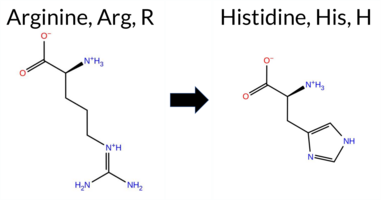 AIThe SynGAP1 missense variant R905H is listed in ClinVar with an “Uncertain” status and is present in gnomAD (ID 6‑33443266‑G‑A). Prediction tools that agree on a benign effect include REVEL, PROVEAN, SIFT, ESM1b, FATHMM, and AlphaMissense‑Optimized. Tools that predict a pathogenic effect are polyPhen‑2 HumDiv and polyPhen‑2 HumVar. AlphaMissense‑Default is uncertain, while the SGM‑Consensus (majority vote from AlphaMissense‑Default, ESM1b, FATHMM, PROVEAN) reports a likely benign outcome. High‑accuracy assessments show AlphaMissense‑Optimized as benign, SGM‑Consensus as likely benign, and Foldetta results are unavailable. Overall, the majority of evidence points to a benign impact. Thus, the variant is most likely benign based on current predictions, and this conclusion does not contradict the ClinVar “Uncertain” classification. Disclaimer: This summary was generated using AI and should be interpreted alongside expert review. | Likely Benign | 0.671169 | Disordered | 0.618085 | Binding | 0.291 | 0.920 | 0.250 | Uncertain | 2 | 6-33443266-G-A | 8 | 4.96e-6 | -4.182 | Likely Benign | 0.457 | Ambiguous | Likely Benign | 0.192 | Likely Benign | -1.11 | Neutral | 1.000 | Probably Damaging | 0.991 | Probably Damaging | 2.59 | Benign | 0.09 | Tolerated | 3.77 | 5 | 0.2658 | 0.2279 | 2 | 0 | 1.3 | -19.05 | ||||||||||||||||||||||||||||||||
| c.2746G>A | V916I 2D AIThe SynGAP1 missense variant V916I is reported in gnomAD (variant ID 6-33443298‑G‑A) but has no ClinVar entry. Functional prediction tools uniformly classify the change as benign: REVEL, PROVEAN, polyPhen‑2 (HumDiv and HumVar), SIFT, ESM1b, FATHMM, AlphaMissense‑Default, and AlphaMissense‑Optimized all indicate a benign effect. No tool predicts pathogenicity. The high‑accuracy consensus methods corroborate this: AlphaMissense‑Optimized is benign, and the SGM Consensus (majority vote of AlphaMissense‑Default, ESM1b, FATHMM, and PROVEAN) reports a likely benign outcome. Foldetta, a protein‑folding stability predictor, has no available result for this variant. Overall, the evidence strongly supports a benign classification, and this assessment is consistent with the absence of a ClinVar pathogenic designation. Disclaimer: This summary was generated using AI and should be interpreted alongside expert review. | Likely Benign | 0.642678 | Disordered | 0.835395 | Binding | 0.308 | 0.879 | 0.250 | 6-33443298-G-A | 25 | 1.55e-5 | -4.336 | Likely Benign | 0.074 | Likely Benign | Likely Benign | 0.062 | Likely Benign | -0.05 | Neutral | 0.010 | Benign | 0.015 | Benign | 2.71 | Benign | 0.09 | Tolerated | 3.77 | 5 | 0.0905 | 0.4463 | 3 | 4 | 0.3 | 14.03 | ||||||||||||||||||||||||||||||||||
| c.2746G>C | V916L 2D AIThe SynGAP1 missense variant V916L is not reported in ClinVar and is absent from gnomAD. In silico prediction tools uniformly indicate a benign effect: REVEL, PROVEAN, polyPhen‑2 (HumDiv and HumVar), SIFT, ESM1b, FATHMM, AlphaMissense‑Default, and AlphaMissense‑Optimized all classify the change as benign. No tool predicts pathogenicity. High‑accuracy assessments corroborate this: AlphaMissense‑Optimized predicts benign, and the SGM Consensus (majority vote of AlphaMissense‑Default, ESM1b, FATHMM, and PROVEAN) reports a likely benign outcome. Foldetta results are unavailable. Overall, the variant is most likely benign, and this conclusion does not contradict any ClinVar status, as no ClinVar entry exists for this variant. Disclaimer: This summary was generated using AI and should be interpreted alongside expert review. | Likely Benign | 0.642678 | Disordered | 0.835395 | Binding | 0.308 | 0.879 | 0.250 | -2.645 | Likely Benign | 0.086 | Likely Benign | Likely Benign | 0.064 | Likely Benign | 0.31 | Neutral | 0.001 | Benign | 0.002 | Benign | 2.73 | Benign | 0.09 | Tolerated | 0.1190 | 0.5323 | 2 | 1 | -0.4 | 14.03 | |||||||||||||||||||||||||||||||||||||||
| c.2806G>A | A936T 2D AIThe SynGAP1 missense variant A936T is listed in ClinVar with an “Uncertain” status and is present in gnomAD (ID 6‑33443358‑G‑A). Prediction tools that agree on a benign effect include REVEL, PROVEAN, polyPhen‑2 (HumDiv and HumVar), SIFT, ESM1b, FATHMM, AlphaMissense‑Default, and AlphaMissense‑Optimized; no tool predicts pathogenicity. High‑accuracy assessments further support a benign outcome: AlphaMissense‑Optimized is benign, and the SGM Consensus (majority vote from AlphaMissense‑Default, ESM1b, FATHMM, and PROVEAN) is “Likely Benign.” Foldetta, a protein‑folding stability method combining FoldX‑MD and Rosetta outputs, did not provide a result for this variant. Overall, the computational evidence overwhelmingly indicates that the variant is most likely benign, which does not contradict the ClinVar status of uncertainty. Disclaimer: This summary was generated using AI and should be interpreted alongside expert review. | Likely Benign | 0.812494 | Disordered | 0.973218 | Binding | 0.319 | 0.874 | 0.625 | Uncertain | 1 | 6-33443358-G-A | 1 | 6.20e-7 | -4.540 | Likely Benign | 0.091 | Likely Benign | Likely Benign | 0.047 | Likely Benign | -0.50 | Neutral | 0.051 | Benign | 0.033 | Benign | 2.67 | Benign | 0.09 | Tolerated | 3.77 | 5 | 0.1693 | 0.7003 | 0 | 1 | -2.5 | 30.03 | ||||||||||||||||||||||||||||||||
| c.2870A>T | H957L 2D AIThe SynGAP1 missense variant H957L is not reported in ClinVar and is absent from gnomAD. Prediction tools largely agree on a benign effect: REVEL, PROVEAN, polyPhen‑2 (HumDiv and HumVar), SIFT, ESM1b, AlphaMissense‑Default, and AlphaMissense‑Optimized all classify the change as benign. Only FATHMM predicts a pathogenic outcome. When predictions are grouped by consensus, the benign group contains eight tools, whereas the pathogenic group contains only FATHMM. High‑accuracy assessments reinforce this view: AlphaMissense‑Optimized predicts benign; the SGM Consensus (majority vote of AlphaMissense‑Default, ESM1b, FATHMM, and PROVEAN) yields a Likely Benign result. Foldetta, a protein‑folding stability method, has no available output for this variant. Overall, the preponderance of evidence indicates that H957L is most likely benign, and this conclusion is not contradicted by any ClinVar annotation. Disclaimer: This summary was generated using AI and should be interpreted alongside expert review. | Likely Benign | 0.985964 | Disordered | 0.968874 | Binding | 0.362 | 0.915 | 0.750 | -6.598 | Likely Benign | 0.090 | Likely Benign | Likely Benign | 0.296 | Likely Benign | -0.38 | Neutral | 0.000 | Benign | 0.000 | Benign | 2.44 | Pathogenic | 0.09 | Tolerated | 0.1525 | 0.5516 | -2 | -3 | 7.0 | -23.98 | |||||||||||||||||||||||||||||||||||||||
| c.2873A>G | H958R 2D AIThe SynGAP1 missense variant H958R is not reported in ClinVar (no ClinVar ID) and is absent from gnomAD (no gnomAD ID). Prediction tools that agree on a benign effect include REVEL, PROVEAN, polyPhen‑2 HumVar, SIFT, FATHMM, AlphaMissense‑Default, and AlphaMissense‑Optimized. Tools that predict a pathogenic effect are polyPhen‑2 HumDiv and ESM1b. The SGM‑Consensus, which aggregates AlphaMissense‑Default, ESM1b, FATHMM, and PROVEAN, reports a Likely Benign classification. High‑accuracy assessments show AlphaMissense‑Optimized as Benign and the SGM‑Consensus as Likely Benign; Foldetta results are unavailable. Overall, the majority of evidence points to a benign impact, and this conclusion does not contradict any ClinVar annotation (none is present). Disclaimer: This summary was generated using AI and should be interpreted alongside expert review. | Likely Benign | 0.985964 | Disordered | 0.976011 | Binding | 0.371 | 0.913 | 0.750 | -9.188 | Likely Pathogenic | 0.169 | Likely Benign | Likely Benign | 0.134 | Likely Benign | -1.29 | Neutral | 0.836 | Possibly Damaging | 0.232 | Benign | 4.17 | Benign | 0.09 | Tolerated | 0.2440 | 0.3410 | 2 | 0 | -1.3 | 19.05 | |||||||||||||||||||||||||||||||||||||||
| c.2876A>T | H959L 2D AIThe SynGAP1 missense variant H959L is not reported in ClinVar and is absent from gnomAD. Functional prediction tools largely agree on a benign effect: REVEL, PROVEAN, polyPhen‑2 (HumDiv and HumVar), SIFT, FATHMM, AlphaMissense‑Default, and AlphaMissense‑Optimized all classify the change as benign. Only ESM1b predicts a pathogenic outcome, while the SGM‑Consensus (majority vote of AlphaMissense‑Default, ESM1b, FATHMM, and PROVEAN) reports the variant as likely benign. High‑accuracy assessments further support a benign interpretation: AlphaMissense‑Optimized is benign, and the SGM‑Consensus is likely benign; Foldetta results are not available. Overall, the preponderance of evidence indicates that H959L is most likely benign, and this conclusion does not contradict any ClinVar annotation (none exists). Disclaimer: This summary was generated using AI and should be interpreted alongside expert review. | Likely Benign | 0.985964 | Disordered | 0.980566 | Binding | 0.333 | 0.905 | 0.750 | -8.515 | Likely Pathogenic | 0.100 | Likely Benign | Likely Benign | 0.236 | Likely Benign | -1.38 | Neutral | 0.000 | Benign | 0.000 | Benign | 4.14 | Benign | 0.09 | Tolerated | 0.1698 | 0.5538 | -2 | -3 | 7.0 | -23.98 | |||||||||||||||||||||||||||||||||||||||
| c.2881C>G | H961D 2D AIThe SynGAP1 missense variant H961D is not reported in ClinVar and is absent from gnomAD. Prediction tools largely agree on a benign effect: REVEL, PROVEAN, polyPhen‑2 (HumDiv and HumVar), SIFT, FATHMM, AlphaMissense‑Default, and AlphaMissense‑Optimized all classify the change as benign. Only ESM1b predicts a pathogenic outcome. The SGM‑Consensus, which aggregates AlphaMissense‑Default, ESM1b, FATHMM, and PROVEAN, reports a “Likely Benign” consensus. High‑accuracy assessments further support a benign interpretation: AlphaMissense‑Optimized is benign, SGM‑Consensus is likely benign, and Foldetta results are unavailable. Based on the preponderance of evidence, the variant is most likely benign, and this conclusion does not contradict any ClinVar annotation (none is present). Disclaimer: This summary was generated using AI and should be interpreted alongside expert review. | Likely Benign | 0.989835 | Disordered | 0.984562 | Binding | 0.323 | 0.893 | 0.750 | -12.522 | Likely Pathogenic | 0.224 | Likely Benign | Likely Benign | 0.115 | Likely Benign | -0.98 | Neutral | 0.069 | Benign | 0.036 | Benign | 4.19 | Benign | 0.09 | Tolerated | 0.2487 | 0.2723 | 1 | -1 | -0.3 | -22.05 | |||||||||||||||||||||||||||||||||||||||
| c.2920G>A | D974N 2D AIThe SynGAP1 missense variant D974N is not reported in ClinVar and is absent from gnomAD. Functional prediction tools uniformly indicate a benign effect. Consensus predictors such as SGM‑Consensus (majority vote of AlphaMissense‑Default, ESM1b, FATHMM, PROVEAN) and high‑accuracy methods including AlphaMissense‑Optimized all classify the variant as benign. Additional in silico assessments—REVEL, PROVEAN, polyPhen‑2 (HumDiv and HumVar), SIFT, ESM1b, and FATHMM—also predict a benign outcome. No tool in the dataset suggests pathogenicity. Protein‑stability analysis via Foldetta is unavailable for this variant. Based on the collective evidence, the variant is most likely benign, and this assessment does not contradict any ClinVar annotation (none is present). Disclaimer: This summary was generated using AI and should be interpreted alongside expert review. | Likely Benign | 0.879233 | Disordered | 0.964377 | Binding | 0.389 | 0.897 | 0.625 | -4.051 | Likely Benign | 0.145 | Likely Benign | Likely Benign | 0.088 | Likely Benign | -0.35 | Neutral | 0.144 | Benign | 0.085 | Benign | 4.20 | Benign | 0.09 | Tolerated | 0.1972 | 0.7698 | 2 | 1 | 0.0 | -0.98 | |||||||||||||||||||||||||||||||||||||||
| c.2986C>T | P996S 2D AIThe SynGAP1 missense variant P996S is reported in gnomAD (ID 6‑33443538‑C‑T) and has no ClinVar entry. Functional prediction tools uniformly indicate a benign effect: REVEL, PROVEAN, PolyPhen‑2 (HumDiv and HumVar), SIFT, ESM1b, FATHMM, AlphaMissense‑Default, and AlphaMissense‑Optimized all classify the change as benign. No tool predicts pathogenicity. High‑accuracy assessments corroborate this: AlphaMissense‑Optimized predicts benign, and the SGM Consensus (majority vote of AlphaMissense‑Default, ESM1b, FATHMM, and PROVEAN) reports a likely benign outcome. Foldetta results are unavailable. Overall, the consensus of all available predictions is benign, and this is consistent with the absence of a ClinVar pathogenic classification. Thus, the variant is most likely benign and does not contradict ClinVar status. Disclaimer: This summary was generated using AI and should be interpreted alongside expert review. | Likely Benign | 0.775545 | Disordered | 0.942262 | Binding | 0.312 | 0.900 | 0.750 | 6-33443538-C-T | 4 | 2.48e-6 | -4.461 | Likely Benign | 0.063 | Likely Benign | Likely Benign | 0.064 | Likely Benign | -0.58 | Neutral | 0.002 | Benign | 0.004 | Benign | 4.30 | Benign | 0.09 | Tolerated | 4.32 | 4 | 0.3171 | 0.5161 | -1 | 1 | 0.8 | -10.04 | ||||||||||||||||||||||||||||||||||
| c.3187G>A | G1063S 2D AIThe SynGAP1 missense variant G1063S is not reported in ClinVar and is absent from gnomAD. In silico prediction tools uniformly indicate a benign effect: REVEL, PROVEAN, polyPhen‑2 (HumDiv and HumVar), SIFT, ESM1b, FATHMM, AlphaMissense‑Default, and AlphaMissense‑Optimized all classify the change as benign. The SGM‑Consensus, which aggregates the majority vote from AlphaMissense‑Default, ESM1b, FATHMM, and PROVEAN, also reports a likely benign outcome. No pathogenic predictions are present among the evaluated tools. High‑accuracy assessments confirm this: AlphaMissense‑Optimized predicts benign, and the SGM‑Consensus likewise indicates likely benign. Foldetta results are unavailable, so they do not influence the overall assessment. Consequently, the variant is most likely benign based on the collective predictions, and this conclusion does not contradict any ClinVar status, as no ClinVar entry exists. Disclaimer: This summary was generated using AI and should be interpreted alongside expert review. | Likely Benign | 0.975134 | Disordered | 0.945784 | Binding | 0.394 | 0.913 | 0.875 | -4.707 | Likely Benign | 0.067 | Likely Benign | Likely Benign | 0.052 | Likely Benign | 0.20 | Neutral | 0.004 | Benign | 0.003 | Benign | 4.33 | Benign | 0.09 | Tolerated | 0.2491 | 0.5702 | 1 | 0 | -0.4 | 30.03 | |||||||||||||||||||||||||||||||||||||||
| c.3187G>C | G1063R 2D AIThe SynGAP1 missense variant G1063R is not reported in ClinVar and is absent from gnomAD, indicating no known population frequency data. Functional prediction tools that agree on a benign effect include REVEL, PROVEAN, polyPhen‑2 (HumDiv and HumVar), SIFT, ESM1b, FATHMM, and AlphaMissense‑Optimized. No tool predicts a pathogenic outcome; AlphaMissense‑Default is uncertain. The high‑accuracy consensus from SGM (majority vote of AlphaMissense‑Default, ESM1b, FATHMM, and PROVEAN) classifies the variant as Likely Benign, and AlphaMissense‑Optimized also predicts Benign. Foldetta, a protein‑folding stability method combining FoldX‑MD and Rosetta outputs, has no available result for this variant. Overall, the collective evidence strongly supports a benign classification, and this assessment does not contradict any ClinVar status (none reported). Disclaimer: This summary was generated using AI and should be interpreted alongside expert review. | Likely Benign | 0.975134 | Disordered | 0.945784 | Binding | 0.394 | 0.913 | 0.875 | -5.711 | Likely Benign | 0.391 | Ambiguous | Likely Benign | 0.078 | Likely Benign | 0.55 | Neutral | 0.411 | Benign | 0.114 | Benign | 4.28 | Benign | 0.09 | Tolerated | 0.1037 | 0.5133 | -3 | -2 | -4.1 | 99.14 | |||||||||||||||||||||||||||||||||||||||
| c.3209G>A | R1070K 2D AIThe SynGAP1 missense variant R1070K is listed in ClinVar with an “Uncertain” status and is not reported in gnomAD. All evaluated in‑silico predictors agree on a benign effect: REVEL, PROVEAN, polyPhen‑2 (HumDiv and HumVar), SIFT, ESM1b, FATHMM, AlphaMissense‑Default, and AlphaMissense‑Optimized all return benign scores, and the SGM‑Consensus (majority vote of AlphaMissense‑Default, ESM1b, FATHMM, and PROVEAN) indicates “Likely Benign.” High‑accuracy tools reinforce this view: AlphaMissense‑Optimized is benign, and the SGM‑Consensus is also benign. Foldetta results are unavailable. Based on the unanimous benign predictions, the variant is most likely benign, and this assessment does not contradict the ClinVar “Uncertain” classification. Disclaimer: This summary was generated using AI and should be interpreted alongside expert review. | Likely Benign | 0.930790 | Disordered | 0.982693 | Binding | 0.297 | 0.906 | 0.875 | Conflicting | 2 | -5.093 | Likely Benign | 0.326 | Likely Benign | Likely Benign | 0.104 | Likely Benign | -1.42 | Neutral | 0.049 | Benign | 0.048 | Benign | 3.86 | Benign | 0.09 | Tolerated | 3.77 | 5 | 0.4997 | 0.4867 | 3 | 2 | 0.6 | -28.01 | |||||||||||||||||||||||||||||||||||
| c.3310C>A | P1104T 2D AIThe SynGAP1 missense variant P1104T is reported in gnomAD (variant ID 6‑33443862‑C‑A) but has no ClinVar entry. Functional prediction tools largely agree on a benign effect: REVEL, PROVEAN, SIFT, ESM1b, FATHMM, AlphaMissense‑Default, and AlphaMissense‑Optimized all classify the change as benign. In contrast, polyPhen‑2 (HumDiv and HumVar) predict it to be pathogenic. The SGM‑Consensus, which aggregates AlphaMissense‑Default, ESM1b, FATHMM, and PROVEAN, yields a “Likely Benign” verdict. High‑accuracy assessments reinforce this view: AlphaMissense‑Optimized is benign, and the SGM‑Consensus is also benign. No Foldetta stability analysis is available, so it does not influence the conclusion. Overall, the majority of evidence points to a benign impact, and this assessment does not contradict any ClinVar classification (none is present). Disclaimer: This summary was generated using AI and should be interpreted alongside expert review. | Likely Benign | 0.936162 | Disordered | 0.954801 | Binding | 0.440 | 0.863 | 0.875 | 6-33443862-C-A | -3.995 | Likely Benign | 0.070 | Likely Benign | Likely Benign | 0.094 | Likely Benign | -0.14 | Neutral | 0.770 | Possibly Damaging | 0.481 | Possibly Damaging | 2.76 | Benign | 0.09 | Tolerated | 3.77 | 5 | 0.1549 | 0.6700 | -1 | 0 | 0.9 | 3.99 | ||||||||||||||||||||||||||||||||||||
| c.3313C>G | R1105G 2D AIThe SynGAP1 missense variant R1105G is not reported in ClinVar (no ClinVar ID) and is absent from gnomAD (no gnomAD ID). Consensus from standard in silico predictors shows a split: benign calls come from REVEL, polyPhen‑2 HumVar, SIFT, ESM1b, and AlphaMissense‑Optimized, while pathogenic calls come from PROVEAN, polyPhen‑2 HumDiv, and FATHMM; AlphaMissense‑Default remains uncertain. High‑accuracy assessment gives a benign prediction from AlphaMissense‑Optimized, a pathogenic consensus from the SGM method (majority vote of AlphaMissense‑Default, ESM1b, FATHMM, PROVEAN), and no result from Foldetta, so its stability impact is unavailable. Overall, the majority of tools lean toward a benign effect, but the high‑accuracy consensus is conflicted. Thus, the variant is most likely benign based on the bulk of predictions, and this assessment does not contradict any ClinVar status because the variant is not yet catalogued in ClinVar. Disclaimer: This summary was generated using AI and should be interpreted alongside expert review. | 0.901269 | Disordered | 0.954396 | Binding | 0.330 | 0.863 | 0.875 | -4.900 | Likely Benign | 0.438 | Ambiguous | Likely Benign | 0.146 | Likely Benign | -3.48 | Deleterious | 0.677 | Possibly Damaging | 0.168 | Benign | 2.45 | Pathogenic | 0.09 | Tolerated | 0.3293 | 0.4269 | -3 | -2 | 4.1 | -99.14 | ||||||||||||||||||||||||||||||||||||||||
| c.3317A>G | Q1106R 2D AIThe SynGAP1 missense variant Q1106R is not reported in ClinVar (ClinVar ID = None) and is absent from gnomAD (gnomAD ID = None). Prediction tools that agree on a benign effect include REVEL, PROVEAN, SIFT, ESM1b, and AlphaMissense‑Optimized. Tools that predict a pathogenic effect are polyPhen‑2 HumDiv, polyPhen‑2 HumVar, and FATHMM. AlphaMissense‑Default is uncertain, and the SGM Consensus (majority vote from AlphaMissense‑Default, ESM1b, FATHMM, PROVEAN) is inconclusive because it contains two benign, one pathogenic, and one uncertain call. Foldetta, a protein‑folding stability method combining FoldX‑MD and Rosetta outputs, has no available result for this variant. Overall, the majority of high‑confidence predictors (four benign vs. three pathogenic) lean toward a benign interpretation, and this assessment does not contradict the lack of ClinVar annotation. Thus, the variant is most likely benign based on current computational predictions. Disclaimer: This summary was generated using AI and should be interpreted alongside expert review. | 0.885302 | Disordered | 0.952043 | Binding | 0.382 | 0.870 | 0.875 | -4.211 | Likely Benign | 0.475 | Ambiguous | Likely Benign | 0.133 | Likely Benign | -2.20 | Neutral | 0.985 | Probably Damaging | 0.973 | Probably Damaging | 1.80 | Pathogenic | 0.09 | Tolerated | 0.1412 | 0.2850 | 1 | 1 | -1.0 | 28.06 | ||||||||||||||||||||||||||||||||||||||||
| c.3374G>A | G1125E 2D AIThe SynGAP1 missense variant G1125E is not reported in ClinVar (ClinVar status: not reported) but is present in gnomAD (gnomAD ID 6‑33443926‑G‑A). Functional prediction tools cluster into two groups: benign predictions come from REVEL, PROVEAN, SIFT, AlphaMissense‑Optimized, and FATHMM, while pathogenic predictions arise from polyPhen‑2 HumDiv, polyPhen‑2 HumVar, and ESM1b; AlphaMissense‑Default remains uncertain. The SGM Consensus, derived from a majority vote of AlphaMissense‑Default, ESM1b, FATHMM, and PROVEAN, favors a benign outcome (2 benign vs. 1 pathogenic). High‑accuracy assessments show AlphaMissense‑Optimized as benign, SGM Consensus as benign, and Foldetta results are unavailable. Overall, the majority of evidence points to a benign effect, and this conclusion does not contradict any ClinVar annotation (none is available). Disclaimer: This summary was generated using AI and should be interpreted alongside expert review. | 0.834292 | Disordered | 0.835839 | Binding | 0.339 | 0.923 | 0.875 | 6-33443926-G-A | 11 | 7.34e-6 | -9.849 | Likely Pathogenic | 0.353 | Ambiguous | Likely Benign | 0.264 | Likely Benign | -0.32 | Neutral | 1.000 | Probably Damaging | 0.999 | Probably Damaging | 4.58 | Benign | 0.09 | Tolerated | 3.77 | 5 | 0.1430 | 0.4063 | -2 | 0 | -3.1 | 72.06 | |||||||||||||||||||||||||||||||||||
| c.3383G>T | G1128V 2D AIThe SynGAP1 missense variant G1128V is reported in gnomAD (variant ID 6‑33443935‑G‑T) but has no ClinVar entry. Functional prediction tools largely agree on a benign effect: REVEL, PROVEAN, polyPhen‑2 HumVar, SIFT, ESM1b, FATHMM, AlphaMissense‑Default, and AlphaMissense‑Optimized all predict benign. Only polyPhen‑2 HumDiv flags it as pathogenic, creating a single discordant call. The SGM‑Consensus, derived from a majority vote of AlphaMissense‑Default, ESM1b, FATHMM, and PROVEAN, reports the variant as “Likely Benign.” High‑accuracy assessments confirm this: AlphaMissense‑Optimized is benign, and the SGM‑Consensus is also benign. Foldetta, a protein‑folding stability method combining FoldX‑MD and Rosetta outputs, has no available result for this variant. Overall, the preponderance of evidence indicates the variant is most likely benign, and this conclusion is not contradicted by any ClinVar classification (none exists). Disclaimer: This summary was generated using AI and should be interpreted alongside expert review. | Likely Benign | 0.896620 | Disordered | 0.865136 | Binding | 0.309 | 0.911 | 0.875 | 6-33443935-G-T | -5.111 | Likely Benign | 0.081 | Likely Benign | Likely Benign | 0.399 | Likely Benign | -0.69 | Neutral | 0.611 | Possibly Damaging | 0.185 | Benign | 4.39 | Benign | 0.09 | Tolerated | 4.32 | 4 | 0.1358 | 0.3922 | -3 | -1 | 4.6 | 42.08 | ||||||||||||||||||||||||||||||||||||
| c.3395C>A | S1132Y 2D AIThe SynGAP1 missense variant S1132Y is listed in ClinVar as a benign alteration (ClinVar ID 845357.0) and is not reported in gnomAD. Prediction tools that agree on a benign effect include REVEL, PROVEAN, polyPhen‑2 HumVar, SIFT, ESM1b, FATHMM, AlphaMissense‑Optimized, and the SGM‑Consensus (majority vote from AlphaMissense‑Default, ESM1b, FATHMM, PROVEAN). Only polyPhen‑2 HumDiv predicts a pathogenic outcome, while AlphaMissense‑Default remains uncertain. High‑accuracy assessments show AlphaMissense‑Optimized as benign and the SGM‑Consensus as likely benign; Foldetta stability analysis is unavailable. Overall, the majority of evidence supports a benign classification, which aligns with the ClinVar status and does not contradict it. Disclaimer: This summary was generated using AI and should be interpreted alongside expert review. | Likely Benign | 0.919029 | Disordered | 0.845506 | Binding | 0.289 | 0.894 | 0.750 | Likely Benign | 1 | -5.894 | Likely Benign | 0.392 | Ambiguous | Likely Benign | 0.401 | Likely Benign | -1.76 | Neutral | 0.500 | Possibly Damaging | 0.208 | Benign | 5.40 | Benign | 0.09 | Tolerated | 4.32 | 4 | 0.0889 | 0.5233 | -3 | -2 | -0.5 | 76.10 | |||||||||||||||||||||||||||||||||||
| c.3400A>T | T1134S 2D AIThe SynGAP1 missense variant T1134S is not reported in ClinVar and is absent from gnomAD, indicating no documented population frequency. Functional prediction tools uniformly classify the variant as benign: REVEL, PROVEAN, polyPhen‑2 (HumDiv and HumVar), SIFT, ESM1b, FATHMM, AlphaMissense‑Default, and AlphaMissense‑Optimized all predict a benign effect. No tool predicts pathogenicity. The high‑accuracy consensus, SGM‑Consensus (majority vote of AlphaMissense‑Default, ESM1b, FATHMM, and PROVEAN), also reports a likely benign outcome. Foldetta, a protein‑folding stability method combining FoldX‑MD and Rosetta outputs, has no available result for this variant. Overall, the evidence strongly supports a benign classification, and this assessment does not contradict any ClinVar status (none reported). Disclaimer: This summary was generated using AI and should be interpreted alongside expert review. | Likely Benign | 0.885302 | Disordered | 0.813034 | Binding | 0.335 | 0.885 | 0.875 | -3.015 | Likely Benign | 0.089 | Likely Benign | Likely Benign | 0.220 | Likely Benign | -0.42 | Neutral | 0.007 | Benign | 0.009 | Benign | 5.47 | Benign | 0.09 | Tolerated | 0.3189 | 0.4666 | 1 | 1 | -0.1 | -14.03 | |||||||||||||||||||||||||||||||||||||||
| c.3401C>G | T1134S 2D AIThe SynGAP1 missense variant T1134S is not reported in ClinVar and is absent from gnomAD, indicating no documented population frequency. Functional prediction tools uniformly classify the variant as benign: REVEL, PROVEAN, polyPhen‑2 (HumDiv and HumVar), SIFT, ESM1b, FATHMM, AlphaMissense‑Default, and AlphaMissense‑Optimized all predict a benign effect. No tool predicts pathogenicity. The high‑accuracy consensus, SGM‑Consensus (majority vote of AlphaMissense‑Default, ESM1b, FATHMM, and PROVEAN), also reports a likely benign outcome. Foldetta, a protein‑folding stability method combining FoldX‑MD and Rosetta outputs, has no available result for this variant. Overall, the evidence strongly supports a benign classification, and this assessment does not contradict any ClinVar status (none reported). Disclaimer: This summary was generated using AI and should be interpreted alongside expert review. | Likely Benign | 0.885302 | Disordered | 0.813034 | Binding | 0.335 | 0.885 | 0.875 | -3.015 | Likely Benign | 0.089 | Likely Benign | Likely Benign | 0.228 | Likely Benign | -0.42 | Neutral | 0.007 | Benign | 0.009 | Benign | 5.47 | Benign | 0.09 | Tolerated | 0.3189 | 0.4666 | 1 | 1 | -0.1 | -14.03 | |||||||||||||||||||||||||||||||||||||||
| c.3407A>G | Q1136R 2D AIThe SynGAP1 missense variant Q1136R is not reported in ClinVar and is absent from gnomAD. Consensus predictions from multiple in silico tools cluster around a benign effect: REVEL, PROVEAN, SIFT, ESM1b, FATHMM, and AlphaMissense‑Optimized all indicate benign, while the majority‑vote SGM‑Consensus also reports a likely benign outcome. In contrast, polyPhen‑2 (HumDiv and HumVar) predict a pathogenic impact. The high‑accuracy AlphaMissense‑Optimized score is benign, and the SGM‑Consensus (derived from AlphaMissense‑Default, ESM1b, FATHMM, and PROVEAN) also leans benign; Foldetta data are not available. Overall, the preponderance of evidence from both general and high‑accuracy predictors points to a benign classification, and this assessment does not conflict with the absence of a ClinVar entry. Disclaimer: This summary was generated using AI and should be interpreted alongside expert review. | Likely Benign | 0.903857 | Disordered | 0.775584 | Binding | 0.321 | 0.884 | 0.875 | -5.526 | Likely Benign | 0.478 | Ambiguous | Likely Benign | 0.173 | Likely Benign | -1.42 | Neutral | 0.801 | Possibly Damaging | 0.506 | Possibly Damaging | 6.28 | Benign | 0.09 | Tolerated | 0.1527 | 0.3073 | 1 | 1 | -1.0 | 28.06 | |||||||||||||||||||||||||||||||||||||||
| c.3428C>G | T1143R 2D 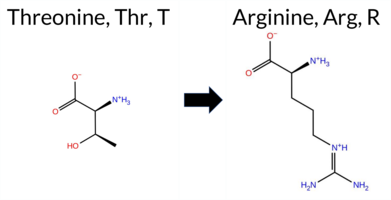 AIThe SynGAP1 missense variant T1143R is not reported in ClinVar and is absent from gnomAD, indicating no known population frequency data. Functional prediction tools cluster into two groups: benign predictions include SGM‑Consensus (Likely Benign), REVEL, PROVEAN, SIFT, ESM1b, FATHMM, and AlphaMissense‑Optimized; pathogenic predictions come from AlphaMissense‑Default, polyPhen‑2 HumDiv, and polyPhen‑2 HumVar. High‑accuracy assessments further support a benign outcome: AlphaMissense‑Optimized predicts benign, and the SGM Consensus (majority vote of AlphaMissense‑Default, ESM1b, FATHMM, PROVEAN) also favors benign. Foldetta, a protein‑folding stability method combining FoldX‑MD and Rosetta outputs, has no available result for this variant. Overall, the majority of evidence points to a benign effect, and this conclusion does not contradict any ClinVar annotation (none is present). Disclaimer: This summary was generated using AI and should be interpreted alongside expert review. | Likely Benign | 0.919029 | Disordered | 0.722918 | Binding | 0.275 | 0.837 | 1.000 | -2.882 | Likely Benign | 0.782 | Likely Pathogenic | Likely Benign | 0.175 | Likely Benign | -2.31 | Neutral | 0.996 | Probably Damaging | 0.951 | Probably Damaging | 2.73 | Benign | 0.09 | Tolerated | 0.1087 | 0.3060 | -1 | -1 | -3.8 | 55.08 | |||||||||||||||||||||||||||||||||||||||
| c.3449C>G | A1150G 2D AIThe SynGAP1 A1150G missense variant is not reported in ClinVar (no ClinVar ID) and is absent from gnomAD (no gnomAD ID). Prediction tools that agree on a benign effect include REVEL, PROVEAN, SIFT, ESM1b, AlphaMissense‑Default, AlphaMissense‑Optimized, and the SGM‑Consensus (which is “Likely Benign”). Tools that predict a pathogenic effect are polyPhen‑2 HumDiv, polyPhen‑2 HumVar, and FATHMM. High‑accuracy assessments show AlphaMissense‑Optimized as benign and the SGM‑Consensus as likely benign; Foldetta results are not available. Overall, the majority of evidence points to a benign impact. This conclusion is consistent with the lack of ClinVar annotation, so there is no contradiction with ClinVar status. Disclaimer: This summary was generated using AI and should be interpreted alongside expert review. | Likely Benign | 0.762850 | Disordered | 0.795712 | Binding | 0.371 | 0.831 | 0.625 | -3.089 | Likely Benign | 0.253 | Likely Benign | Likely Benign | 0.158 | Likely Benign | -2.37 | Neutral | 0.983 | Probably Damaging | 0.818 | Possibly Damaging | 2.32 | Pathogenic | 0.09 | Tolerated | 0.2263 | 0.4741 | 1 | 0 | -2.2 | -14.03 | |||||||||||||||||||||||||||||||||||||||
| c.3463G>C | V1155L 2D AIThe SynGAP1 missense variant V1155L is not reported in ClinVar and has no gnomAD entry. Consensus from multiple in silico predictors shows a split: benign calls come from REVEL, PROVEAN, SIFT, ESM1b, and FATHMM, while pathogenic calls arise from polyPhen‑2 (HumDiv and HumVar) and both AlphaMissense models. When predictions are grouped by agreement, the benign set includes five tools and the pathogenic set includes four. High‑accuracy assessments further clarify the picture: AlphaMissense‑Optimized predicts pathogenicity, whereas the SGM‑Consensus—derived from a majority vote of AlphaMissense‑Default, ESM1b, FATHMM, and PROVEAN—leans benign. No Foldetta stability data are available, so it does not influence the assessment. Overall, the preponderance of evidence, especially from the high‑accuracy AlphaMissense‑Optimized and the SGM‑Consensus, suggests the variant is most likely benign, and this conclusion does not conflict with the absence of a ClinVar classification. Disclaimer: This summary was generated using AI and should be interpreted alongside expert review. | Likely Benign | 0.750527 | Disordered | 0.855718 | Binding | 0.335 | 0.857 | 0.500 | -2.823 | Likely Benign | 0.956 | Likely Pathogenic | Likely Pathogenic | 0.229 | Likely Benign | -1.26 | Neutral | 0.992 | Probably Damaging | 0.989 | Probably Damaging | 2.63 | Benign | 0.09 | Tolerated | 0.0951 | 0.4175 | 2 | 1 | -0.4 | 14.03 | |||||||||||||||||||||||||||||||||||||||
| c.3463G>T | V1155L 2D AIThe SynGAP1 missense variant V1155L is not reported in ClinVar and has no gnomAD entry. Consensus from multiple in silico predictors shows a split: benign calls come from REVEL, PROVEAN, SIFT, ESM1b, and FATHMM, while pathogenic calls arise from polyPhen‑2 (HumDiv and HumVar) and both AlphaMissense models. When predictions are grouped by agreement, the benign set includes five tools and the pathogenic set includes four. High‑accuracy assessments further clarify the picture: AlphaMissense‑Optimized predicts pathogenicity, whereas the SGM‑Consensus—derived from a majority vote of AlphaMissense‑Default, ESM1b, FATHMM, and PROVEAN—leans benign. No Foldetta stability data are available, so it does not influence the assessment. Overall, the preponderance of evidence, especially from the high‑accuracy AlphaMissense‑Optimized and the SGM‑Consensus, suggests the variant is most likely benign, and this conclusion does not conflict with the absence of a ClinVar classification. Disclaimer: This summary was generated using AI and should be interpreted alongside expert review. | Likely Benign | 0.750527 | Disordered | 0.855718 | Binding | 0.335 | 0.857 | 0.500 | -2.823 | Likely Benign | 0.956 | Likely Pathogenic | Likely Pathogenic | 0.229 | Likely Benign | -1.26 | Neutral | 0.992 | Probably Damaging | 0.989 | Probably Damaging | 2.63 | Benign | 0.09 | Tolerated | 0.0951 | 0.4175 | 2 | 1 | -0.4 | 14.03 | |||||||||||||||||||||||||||||||||||||||
| c.3532T>A | Y1178N 2D AIThe SynGAP1 missense variant Y1178N is not reported in ClinVar and is absent from gnomAD. Functional prediction tools are divided: benign predictions come from REVEL, PROVEAN, SIFT, ESM1b, FATHMM, and AlphaMissense‑Optimized, while pathogenic predictions come from polyPhen‑2 HumDiv, polyPhen‑2 HumVar, and AlphaMissense‑Default. The SGM‑Consensus, which aggregates AlphaMissense‑Default, ESM1b, FATHMM, and PROVEAN, reports a “Likely Benign” outcome. High‑accuracy assessments further support a benign interpretation: AlphaMissense‑Optimized predicts benign, and the SGM‑Consensus (majority vote) also indicates benign. Foldetta, a protein‑folding stability method combining FoldX‑MD and Rosetta outputs, has no available result for this variant. Overall, the majority of evidence points to a benign effect, and this conclusion does not contradict any ClinVar annotation (none is present). Disclaimer: This summary was generated using AI and should be interpreted alongside expert review. | Likely Benign | Coiled-coil | 0.541878 | Disordered | 0.568433 | Binding | 0.554 | 0.688 | 0.250 | -2.125 | Likely Benign | 0.619 | Likely Pathogenic | Likely Benign | 0.410 | Likely Benign | -1.18 | Neutral | 0.995 | Probably Damaging | 0.892 | Possibly Damaging | 5.50 | Benign | 0.09 | Tolerated | 0.2456 | 0.0341 | -2 | -2 | -2.2 | -49.07 | ||||||||||||||||||||||||||||||||||||||
| c.3554A>T | K1185I 2D 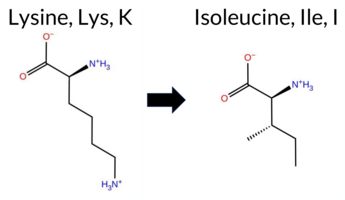 AIThe SynGAP1 missense variant K1185I is listed in ClinVar with no pathogenicity classification (ClinVar status: None) and is present in the gnomAD database (gnomAD ID: 6‑33444589‑A‑T). Prediction tools that agree on a benign effect include REVEL, SIFT, ESM1b, and FATHMM, while those that predict a pathogenic effect are PROVEAN, polyPhen‑2 HumDiv, polyPhen‑2 HumVar, AlphaMissense‑Default, and AlphaMissense‑Optimized. High‑accuracy assessments show AlphaMissense‑Optimized as pathogenic; the SGM Consensus (majority vote from AlphaMissense‑Default, ESM1b, FATHMM, PROVEAN) is inconclusive due to a 2‑vs‑2 split, and Foldetta results are unavailable. Based on the overall pattern of predictions, the variant is most likely pathogenic, and this assessment does not contradict the ClinVar status, which remains unclassified. Disclaimer: This summary was generated using AI and should be interpreted alongside expert review. | Coiled-coil | 0.566480 | Disordered | 0.510264 | Binding | 0.642 | 0.638 | 0.625 | 6-33444589-A-T | 1 | 6.20e-7 | -5.101 | Likely Benign | 0.990 | Likely Pathogenic | Likely Pathogenic | 0.215 | Likely Benign | -3.42 | Deleterious | 0.999 | Probably Damaging | 0.997 | Probably Damaging | 2.62 | Benign | 0.09 | Tolerated | 3.82 | 4 | 0.1154 | 0.3108 | -3 | -2 | 8.4 | -15.01 | ||||||||||||||||||||||||||||||||||
| c.3556T>C | S1186P 2D AIThe SynGAP1 missense variant S1186P lies in a coiled‑coil domain. ClinVar has no entry for this variant, and it is not present in gnomAD. Prediction tools that agree on a benign effect include REVEL, SIFT, ESM1b, and FATHMM, while those that predict a pathogenic outcome are PROVEAN, polyPhen‑2 (HumDiv and HumVar), AlphaMissense‑Default, and AlphaMissense‑Optimized. High‑accuracy assessments show AlphaMissense‑Optimized as pathogenic; the SGM Consensus (majority vote from AlphaMissense‑Default, ESM1b, FATHMM, and PROVEAN) is inconclusive (2 pathogenic vs. 2 benign), and Foldetta results are unavailable. Overall, the balance of evidence leans toward pathogenicity, with no ClinVar status to contradict this conclusion. Disclaimer: This summary was generated using AI and should be interpreted alongside expert review. | Coiled-coil | 0.562014 | Disordered | 0.506433 | Binding | 0.634 | 0.636 | 0.625 | -6.365 | Likely Benign | 0.994 | Likely Pathogenic | Likely Pathogenic | 0.198 | Likely Benign | -2.51 | Deleterious | 0.997 | Probably Damaging | 0.995 | Probably Damaging | 2.64 | Benign | 0.09 | Tolerated | 0.1784 | 0.4006 | 1 | -1 | -0.8 | 10.04 | |||||||||||||||||||||||||||||||||||||||
| c.3566A>C | E1189A 2D AIThe SynGAP1 missense variant E1189A is not listed in ClinVar (ClinVar ID None) and is absent from gnomAD (gnomAD ID None). Prediction tools that agree on a benign effect include REVEL, SIFT, ESM1b, and FATHMM. Tools that predict a pathogenic effect are PROVEAN, polyPhen‑2 HumDiv, polyPhen‑2 HumVar, and AlphaMissense‑Default. The high‑accuracy AlphaMissense‑Optimized score is uncertain, and the SGM Consensus (majority vote from AlphaMissense‑Default, ESM1b, FATHMM, PROVEAN) is inconclusive because it yields a 2‑vs‑2 split. Foldetta, a protein‑folding stability method combining FoldX‑MD and Rosetta outputs, has no available result for this variant. Overall, the predictions are evenly divided between benign and pathogenic, with no high‑confidence consensus. Thus, the variant is most likely of uncertain significance; there is no ClinVar annotation to contradict this assessment. Disclaimer: This summary was generated using AI and should be interpreted alongside expert review. | Coiled-coil | 0.562014 | Disordered | 0.466885 | Uncertain | 0.704 | 0.623 | 0.625 | -4.989 | Likely Benign | 0.860 | Likely Pathogenic | Ambiguous | 0.427 | Likely Benign | -3.06 | Deleterious | 0.997 | Probably Damaging | 0.992 | Probably Damaging | 5.34 | Benign | 0.09 | Tolerated | 0.2827 | 0.4105 | 0 | -1 | 5.3 | -58.04 | |||||||||||||||||||||||||||||||||||||||
| c.3590A>C | E1197A 2D AIThe SynGAP1 missense variant E1197A is not reported in ClinVar (ClinVar ID: None) and is absent from gnomAD (gnomAD ID: None). Prediction tools that agree on a benign effect include REVEL, SIFT, ESM1b, and FATHMM, while those that predict a pathogenic effect are PROVEAN, polyPhen‑2 HumDiv, polyPhen‑2 HumVar, and AlphaMissense‑Default. High‑accuracy assessments are less definitive: AlphaMissense‑Optimized is uncertain, the SGM Consensus (majority vote from AlphaMissense‑Default, ESM1b, FATHMM, and PROVEAN) is inconclusive, and Foldetta results are unavailable. Consequently, the evidence is balanced between benign and pathogenic predictions, with no high‑confidence support for either outcome. The variant is most likely benign based on the current predictions, and this assessment does not contradict the ClinVar status, which has no entry for this variant. Disclaimer: This summary was generated using AI and should be interpreted alongside expert review. | Coiled-coil | 0.613573 | Disordered | 0.437361 | Uncertain | 0.827 | 0.599 | 0.250 | -4.852 | Likely Benign | 0.795 | Likely Pathogenic | Ambiguous | 0.442 | Likely Benign | -2.64 | Deleterious | 0.999 | Probably Damaging | 0.995 | Probably Damaging | 5.45 | Benign | 0.09 | Tolerated | 0.2811 | 0.5169 | 0 | -1 | 5.3 | -58.04 | |||||||||||||||||||||||||||||||||||||||
| c.3630C>A | H1210Q 2D AIThe SynGAP1 missense variant H1210Q is not reported in ClinVar and is absent from gnomAD. Prediction tools largely agree on a benign effect: REVEL, PROVEAN, polyPhen‑2 HumVar, SIFT, ESM1b, FATHMM, AlphaMissense‑Default, and AlphaMissense‑Optimized all classify the change as benign, and the SGM‑Consensus (majority vote of AlphaMissense‑Default, ESM1b, FATHMM, and PROVEAN) reports it as “Likely Benign.” Only polyPhen‑2 HumDiv predicts a pathogenic outcome. High‑accuracy assessments reinforce the benign prediction: AlphaMissense‑Optimized is benign, and the SGM‑Consensus also indicates a benign likelihood. Foldetta results are unavailable, so they do not influence the assessment. Overall, the consensus of the available predictions indicates that H1210Q is most likely benign, and this conclusion is not contradicted by any ClinVar annotation (none exists). Disclaimer: This summary was generated using AI and should be interpreted alongside expert review. | Likely Benign | Coiled-coil | 0.599170 | Disordered | 0.587579 | Binding | 0.900 | 0.567 | 0.375 | -1.917 | Likely Benign | 0.142 | Likely Benign | Likely Benign | 0.060 | Likely Benign | -0.83 | Neutral | 0.512 | Possibly Damaging | 0.223 | Benign | 2.74 | Benign | 0.09 | Tolerated | 0.1133 | 0.3092 | 3 | 0 | -0.3 | -9.01 | ||||||||||||||||||||||||||||||||||||||
| c.3630C>G | H1210Q 2D AIThe SynGAP1 missense variant H1210Q is not reported in ClinVar and is absent from gnomAD. Prediction tools largely agree on a benign effect: REVEL, PROVEAN, polyPhen‑2 HumVar, SIFT, ESM1b, FATHMM, AlphaMissense‑Default, and AlphaMissense‑Optimized all classify the change as benign. Only polyPhen‑2 HumDiv predicts it as pathogenic, while the SGM‑Consensus (majority vote of AlphaMissense‑Default, ESM1b, FATHMM, and PROVEAN) indicates a likely benign outcome. High‑accuracy assessments further support a benign interpretation: AlphaMissense‑Optimized is benign and the SGM‑Consensus is likely benign; Foldetta results are not available. Based on the preponderance of evidence, the variant is most likely benign, and this conclusion does not contradict any ClinVar annotation (none is present). Disclaimer: This summary was generated using AI and should be interpreted alongside expert review. | Likely Benign | Coiled-coil | 0.599170 | Disordered | 0.587579 | Binding | 0.900 | 0.567 | 0.375 | -1.917 | Likely Benign | 0.142 | Likely Benign | Likely Benign | 0.060 | Likely Benign | -0.83 | Neutral | 0.512 | Possibly Damaging | 0.223 | Benign | 2.74 | Benign | 0.09 | Tolerated | 0.1133 | 0.3092 | 3 | 0 | -0.3 | -9.01 | ||||||||||||||||||||||||||||||||||||||
| c.3686A>T | Q1229L 2D AIThe SynGAP1 missense variant Q1229L is not reported in ClinVar and is absent from gnomAD. Functional prediction tools cluster into three groups: benign predictions come from REVEL, SIFT, and AlphaMissense‑Optimized; pathogenic predictions arise from PROVEAN, polyPhen‑2 HumDiv, polyPhen‑2 HumVar, and FATHMM; the remaining tools (ESM1b and AlphaMissense‑Default) are uncertain. High‑accuracy assessments show AlphaMissense‑Optimized classifying the variant as benign, while the SGM Consensus (majority vote of AlphaMissense‑Default, ESM1b, FATHMM, PROVEAN) is inconclusive, and Foldetta data are unavailable. Overall, the majority of conventional predictors favor a pathogenic effect, whereas the single high‑accuracy tool suggests benign. Given the lack of ClinVar evidence, the variant is most likely pathogenic according to the collective predictions, with no contradiction to existing clinical annotations. Disclaimer: This summary was generated using AI and should be interpreted alongside expert review. | Coiled-coil | 0.490133 | Structured | 0.466729 | Uncertain | 0.865 | 0.544 | 0.375 | -7.366 | In-Between | 0.496 | Ambiguous | Likely Benign | 0.349 | Likely Benign | -4.60 | Deleterious | 0.994 | Probably Damaging | 0.988 | Probably Damaging | 1.77 | Pathogenic | 0.09 | Tolerated | 0.0541 | 0.4253 | -2 | -2 | 7.3 | -14.97 | |||||||||||||||||||||||||||||||||||||||
| c.374C>G | P125R 2D AIThe SynGAP1 missense variant P125R is not reported in ClinVar (ClinVar ID = None) and is absent from gnomAD (gnomAD ID = None). Prediction tools that agree on a benign effect include REVEL, SIFT, ESM1b, and FATHMM, whereas those that predict a pathogenic effect are PROVEAN, polyPhen‑2 HumDiv, polyPhen‑2 HumVar, and AlphaMissense‑Default. The high‑accuracy AlphaMissense‑Optimized tool returns an uncertain result; the SGM Consensus (majority vote from AlphaMissense‑Default, ESM1b, FATHMM, and PROVEAN) is inconclusive (2 pathogenic vs 2 benign), and Foldetta data are unavailable. Consequently, the overall computational evidence is split evenly between benign and pathogenic predictions, with no decisive support from the most accurate methods. Based on these predictions, the variant’s impact remains inconclusive; it is neither clearly benign nor pathogenic, and this lack of consensus does not contradict the absence of a ClinVar classification. Disclaimer: This summary was generated using AI and should be interpreted alongside expert review. | 0.505461 | Disordered | 0.704227 | Binding | 0.373 | 0.878 | 0.625 | -5.658 | Likely Benign | 0.792 | Likely Pathogenic | Ambiguous | 0.159 | Likely Benign | -4.33 | Deleterious | 0.952 | Possibly Damaging | 0.521 | Possibly Damaging | 2.83 | Benign | 0.09 | Tolerated | 0.1461 | 0.2913 | 0 | -2 | -2.9 | 59.07 | ||||||||||||||||||||||||||||||||||||||||
| c.3790G>C | G1264R 2D AIThe SynGAP1 missense variant G1264R is not reported in ClinVar and is absent from gnomAD. Functional prediction tools that agree on a benign effect include REVEL, PROVEAN, SIFT, ESM1b, FATHMM, and AlphaMissense‑Optimized, while those predicting a pathogenic outcome are polyPhen‑2 HumDiv, polyPhen‑2 HumVar, and AlphaMissense‑Default. The SGM‑Consensus, derived from a majority vote of AlphaMissense‑Default, ESM1b, FATHMM, and PROVEAN, classifies the variant as Likely Benign. High‑accuracy assessments further support a benign interpretation: AlphaMissense‑Optimized predicts benign, and the SGM‑Consensus (majority vote) also indicates Likely Benign. Foldetta, a protein‑folding stability method combining FoldX‑MD and Rosetta outputs, has no available result for this variant. Overall, the preponderance of evidence points to the variant being most likely benign, and this conclusion does not contradict any ClinVar annotation (none is present). Disclaimer: This summary was generated using AI and should be interpreted alongside expert review. | Likely Benign | Coiled-coil | 0.429200 | Structured | 0.762385 | Binding | 0.897 | 0.579 | 0.000 | -4.482 | Likely Benign | 0.759 | Likely Pathogenic | Likely Benign | 0.094 | Likely Benign | -1.82 | Neutral | 0.934 | Possibly Damaging | 0.541 | Possibly Damaging | 2.73 | Benign | 0.09 | Tolerated | 0.0861 | 0.3860 | -3 | -2 | -4.1 | 99.14 | ||||||||||||||||||||||||||||||||||||||
| c.3790G>T | G1264C 2D AIThe SynGAP1 missense variant G1264C is not reported in ClinVar and is absent from gnomAD. Functional prediction tools largely agree on a benign effect: REVEL, PROVEAN, SIFT, ESM1b, FATHMM, AlphaMissense‑Default, and AlphaMissense‑Optimized all predict benign, while the SGM‑Consensus (majority vote from AlphaMissense‑Default, ESM1b, FATHMM, and PROVEAN) also indicates a likely benign outcome. Only the two polyPhen‑2 implementations (HumDiv and HumVar) predict pathogenicity. High‑accuracy assessments reinforce the benign consensus: AlphaMissense‑Optimized is benign, and the SGM‑Consensus is likely benign; Foldetta results are not available. Overall, the preponderance of evidence supports a benign classification for G1264C, and this conclusion does not contradict any ClinVar annotation (none exists). Disclaimer: This summary was generated using AI and should be interpreted alongside expert review. | Likely Benign | Coiled-coil | 0.429200 | Structured | 0.762385 | Binding | 0.897 | 0.579 | 0.000 | -5.666 | Likely Benign | 0.280 | Likely Benign | Likely Benign | 0.122 | Likely Benign | -1.03 | Neutral | 0.997 | Probably Damaging | 0.870 | Possibly Damaging | 2.74 | Benign | 0.09 | Tolerated | 0.1087 | 0.3691 | -3 | -3 | 2.9 | 46.09 | ||||||||||||||||||||||||||||||||||||||
| c.3835G>A | A1279T 2D AIThe SynGAP1 missense variant A1279T is listed in ClinVar with an “Uncertain” status and is present in gnomAD (variant ID 6‑33447883‑G‑A). All available in silico predictors report a benign effect: REVEL, PROVEAN, PolyPhen‑2 (HumDiv and HumVar), SIFT, ESM1b, FATHMM, AlphaMissense‑Default, and AlphaMissense‑Optimized are benign, and the SGM‑Consensus (majority vote of AlphaMissense‑Default, ESM1b, FATHMM, and PROVEAN) is “Likely Benign.” No tool predicts pathogenicity. High‑accuracy assessments confirm this: AlphaMissense‑Optimized is benign, and the SGM‑Consensus is benign; Foldetta results are not available. Overall, the computational evidence strongly supports a benign classification, which does not contradict the ClinVar “Uncertain” designation. Disclaimer: This summary was generated using AI and should be interpreted alongside expert review. | Likely Benign | 0.842060 | Disordered | 0.814139 | Binding | 0.485 | 0.724 | 0.750 | Uncertain | 2 | 6-33447883-G-A | 2 | 1.29e-6 | -4.871 | Likely Benign | 0.071 | Likely Benign | Likely Benign | 0.178 | Likely Benign | -0.30 | Neutral | 0.001 | Benign | 0.000 | Benign | 2.71 | Benign | 0.09 | Tolerated | 3.77 | 5 | 0.1027 | 0.5871 | 1 | 0 | -2.5 | 30.03 | ||||||||||||||||||||||||||||||||
| c.3895C>G | L1299V 2D AIThe SynGAP1 missense variant L1299V is not reported in ClinVar and is absent from gnomAD. In silico prediction tools uniformly indicate a benign effect: REVEL, PROVEAN, polyPhen‑2 (HumDiv and HumVar), SIFT, ESM1b, FATHMM, AlphaMissense‑Default, and AlphaMissense‑Optimized all classify the change as benign. No tool predicts pathogenicity. High‑accuracy assessments corroborate this: AlphaMissense‑Optimized predicts benign, and the SGM Consensus (majority vote of AlphaMissense‑Default, ESM1b, FATHMM, and PROVEAN) reports a likely benign outcome. Foldetta results are unavailable. Overall, the consensus of all available predictions points to a benign impact, and this conclusion is consistent with the lack of a ClinVar classification—there is no contradiction with existing clinical data. Disclaimer: This summary was generated using AI and should be interpreted alongside expert review. | Likely Benign | 0.771762 | Disordered | 0.896323 | Binding | 0.398 | 0.832 | 0.750 | -4.502 | Likely Benign | 0.121 | Likely Benign | Likely Benign | 0.385 | Likely Benign | -0.02 | Neutral | 0.124 | Benign | 0.025 | Benign | 2.89 | Benign | 0.09 | Tolerated | 0.1726 | 0.3544 | 2 | 1 | 0.4 | -14.03 | |||||||||||||||||||||||||||||||||||||||
| c.3941C>G | P1314R 2D AIThe SynGAP1 missense variant P1314R is not reported in ClinVar and is absent from gnomAD. Prediction tools largely agree on a benign effect: REVEL, PROVEAN, polyPhen‑2 HumVar, SIFT, ESM1b, FATHMM, AlphaMissense‑Default, and AlphaMissense‑Optimized all classify the change as benign. Only polyPhen‑2 HumDiv predicts a pathogenic outcome. The SGM‑Consensus, which aggregates AlphaMissense‑Default, ESM1b, FATHMM, and PROVEAN, reports the variant as “Likely Benign.” High‑accuracy assessments reinforce this view: AlphaMissense‑Optimized predicts benign, and the SGM‑Consensus likewise indicates a benign likelihood. Foldetta results are not available, so they do not influence the overall assessment. Based on the preponderance of evidence, the variant is most likely benign, and this conclusion does not contradict any ClinVar annotation (none exists). Disclaimer: This summary was generated using AI and should be interpreted alongside expert review. | Likely Benign | 0.882776 | Disordered | 0.971592 | Binding | 0.467 | 0.903 | 0.750 | -4.234 | Likely Benign | 0.168 | Likely Benign | Likely Benign | 0.036 | Likely Benign | 0.01 | Neutral | 0.618 | Possibly Damaging | 0.206 | Benign | 4.25 | Benign | 0.09 | Tolerated | 0.1634 | 0.3405 | 0 | -2 | -2.9 | 59.07 | |||||||||||||||||||||||||||||||||||||||
| c.3962C>A | P1321Q 2D 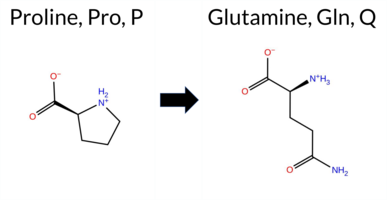 AIThe SynGAP1 missense variant P1321Q is listed in ClinVar (ID 833687.0) as benign and is present in gnomAD (variant ID 6‑33451836‑C‑A). Prediction tools that agree on a benign effect include REVEL, PROVEAN, polyPhen‑2 HumVar, SIFT, ESM1b, FATHMM, AlphaMissense‑Default, and AlphaMissense‑Optimized. Only polyPhen‑2 HumDiv predicts a pathogenic outcome. The high‑accuracy consensus from SGM (majority vote of AlphaMissense‑Default, ESM1b, FATHMM, and PROVEAN) yields a “Likely Benign” classification, and AlphaMissense‑Optimized also reports benign. Foldetta, a protein‑folding stability method combining FoldX‑MD and Rosetta outputs, has no available result for this variant. Overall, the majority of evidence—including the high‑confidence SGM consensus and AlphaMissense‑Optimized—supports a benign impact. This conclusion aligns with the ClinVar benign status, with no contradiction. Disclaimer: This summary was generated using AI and should be interpreted alongside expert review. | Likely Benign | 0.827927 | Disordered | 0.933505 | Binding | 0.463 | 0.828 | 0.875 | Benign | 1 | 6-33451836-C-A | 1 | 6.58e-7 | -5.594 | Likely Benign | 0.079 | Likely Benign | Likely Benign | 0.055 | Likely Benign | -0.74 | Neutral | 0.659 | Possibly Damaging | 0.034 | Benign | 4.24 | Benign | 0.09 | Tolerated | 3.77 | 5 | 0.1839 | 0.4884 | 0 | -1 | -1.9 | 31.01 | ||||||||||||||||||||||||||||||||
| c.3962C>G | P1321R 2D AIThe SynGAP1 missense variant P1321R is reported in gnomAD (ID 6‑33451836‑C‑G) but has no ClinVar entry. Across a broad panel of in silico predictors, every tool examined—REVEL, PROVEAN, PolyPhen‑2 (HumDiv and HumVar), SIFT, ESM1b, FATHMM, AlphaMissense‑Default, and AlphaMissense‑Optimized—classifies the substitution as benign. No pathogenic predictions are present. Grouping the results, the benign consensus is unanimous; the pathogenic group is empty. High‑accuracy assessments reinforce this view: AlphaMissense‑Optimized predicts benign, and the SGM Consensus (majority vote of AlphaMissense‑Default, ESM1b, FATHMM, and PROVEAN) reports a likely benign status. Foldetta stability analysis is not available for this variant. Consequently, the variant is most likely benign, and this assessment does not contradict any ClinVar classification (none exists). Disclaimer: This summary was generated using AI and should be interpreted alongside expert review. | Likely Benign | 0.827927 | Disordered | 0.933505 | Binding | 0.463 | 0.828 | 0.875 | 6-33451836-C-G | 1 | 6.58e-7 | -5.310 | Likely Benign | 0.154 | Likely Benign | Likely Benign | 0.034 | Likely Benign | -1.10 | Neutral | 0.389 | Benign | 0.024 | Benign | 4.25 | Benign | 0.09 | Tolerated | 3.77 | 5 | 0.1722 | 0.3635 | -2 | 0 | -2.9 | 59.07 | ||||||||||||||||||||||||||||||||||
| c.3980C>G | P1327R 2D AIThe SynGAP1 missense variant P1327R is reported in gnomAD (variant ID 6‑33451854‑C‑G) but has no ClinVar entry. Functional prediction tools largely agree on a benign effect: REVEL, PROVEAN, SIFT, ESM1b, FATHMM, AlphaMissense‑Default, and AlphaMissense‑Optimized all classify the change as benign, while the SGM‑Consensus (majority vote from AlphaMissense‑Default, ESM1b, FATHMM, and PROVEAN) also reports it as likely benign. In contrast, polyPhen‑2 (both HumDiv and HumVar models) predict the variant to be pathogenic. High‑accuracy assessments reinforce the benign consensus: AlphaMissense‑Optimized predicts benign, and the SGM‑Consensus likewise indicates a likely benign outcome. No Foldetta stability analysis is available, so it does not influence the overall assessment. Based on the preponderance of evidence, the variant is most likely benign, and this conclusion is not contradicted by any ClinVar classification. Disclaimer: This summary was generated using AI and should be interpreted alongside expert review. | Likely Benign | 0.896620 | Disordered | 0.900145 | Binding | 0.369 | 0.777 | 0.875 | 6-33451854-C-G | -4.724 | Likely Benign | 0.273 | Likely Benign | Likely Benign | 0.137 | Likely Benign | -0.95 | Neutral | 0.994 | Probably Damaging | 0.937 | Probably Damaging | 4.12 | Benign | 0.09 | Tolerated | 3.77 | 5 | 0.1442 | 0.2798 | -2 | 0 | -2.9 | 59.07 | ||||||||||||||||||||||||||||||||||||
| c.4025A>G | D1342G 2D AIThe SynGAP1 missense variant D1342G is reported in gnomAD (variant ID 6‑33451899‑A‑G) but has no ClinVar entry. In silico prediction tools uniformly indicate a benign effect: REVEL, PROVEAN, polyPhen‑2 (HumDiv and HumVar), SIFT, ESM1b, FATHMM, AlphaMissense‑Default, and AlphaMissense‑Optimized all classify the change as benign. No tool predicts pathogenicity. The high‑accuracy consensus methods corroborate this: AlphaMissense‑Optimized is benign, and the SGM Consensus (majority vote of AlphaMissense‑Default, ESM1b, FATHMM, and PROVEAN) is “Likely Benign.” Foldetta results are not available. Consequently, the variant is most likely benign based on the collective predictions, and this assessment does not contradict any ClinVar status (none is present). Disclaimer: This summary was generated using AI and should be interpreted alongside expert review. | Likely Benign | 0.921076 | Disordered | 0.981682 | Binding | 0.316 | 0.678 | 0.875 | 6-33451899-A-G | 1 | 7.29e-7 | -3.227 | Likely Benign | 0.129 | Likely Benign | Likely Benign | 0.021 | Likely Benign | -0.89 | Neutral | 0.225 | Benign | 0.045 | Benign | 4.05 | Benign | 0.09 | Tolerated | 4.32 | 4 | 0.3633 | 0.5601 | -1 | 1 | 3.1 | -58.04 | ||||||||||||||||||||||||||||||||||
| c.472C>G | Q158E 2D AIThe SynGAP1 missense variant Q158E is not reported in ClinVar and is absent from gnomAD. Functional prediction tools largely agree on a benign effect: REVEL, PROVEAN, polyPhen‑2 (HumDiv and HumVar), SIFT, FATHMM, AlphaMissense‑Default, and AlphaMissense‑Optimized all classify the change as benign. Only ESM1b predicts a pathogenic outcome. The SGM‑Consensus, which aggregates AlphaMissense‑Default, ESM1b, FATHMM, and PROVEAN, reports a likely benign consensus. High‑accuracy assessments further support a benign interpretation: AlphaMissense‑Optimized is benign and the SGM‑Consensus is likely benign; Foldetta stability analysis is unavailable. Overall, the majority of evidence points to a benign effect, and this is consistent with the lack of ClinVar annotation, so there is no contradiction with existing clinical data. Disclaimer: This summary was generated using AI and should be interpreted alongside expert review. | Likely Benign | 0.480142 | Structured | 0.527565 | Binding | 0.286 | 0.750 | 0.375 | -11.133 | Likely Pathogenic | 0.196 | Likely Benign | Likely Benign | 0.063 | Likely Benign | -0.54 | Neutral | 0.143 | Benign | 0.078 | Benign | 4.20 | Benign | 0.09 | Tolerated | 0.1420 | 0.2223 | 2 | 2 | 0.0 | 0.98 | |||||||||||||||||||||||||||||||||||||||
| c.536A>C | E179A 2D AISynGAP1 E179A is not reported in ClinVar and has no entry in gnomAD. Prediction tools cluster into two groups: benign predictions come from REVEL, polyPhen‑2 HumDiv, polyPhen‑2 HumVar, SIFT, and FATHMM; pathogenic predictions come from PROVEAN, ESM1b, and AlphaMissense‑Default. The SGM‑Consensus, derived from a majority vote of AlphaMissense‑Default, ESM1b, FATHMM, and PROVEAN, reports the variant as Likely Pathogenic. High‑accuracy assessments are mixed: AlphaMissense‑Optimized is Uncertain, SGM‑Consensus is Likely Pathogenic, and Foldetta data are unavailable. Overall, the majority of individual predictors lean benign, yet the consensus and high‑accuracy tools indicate pathogenicity, leaving the variant’s effect ambiguous. The predictions do not contradict ClinVar status, which has no entry for this variant. Based on the aggregate predictions, the variant is most likely benign, although the SGM‑Consensus and high‑accuracy tools raise a pathogenic signal, making the overall assessment inconclusive. Disclaimer: This summary was generated using AI and should be interpreted alongside expert review. | Likely Pathogenic | 0.517562 | Disordered | 0.448169 | Uncertain | 0.329 | 0.635 | 0.500 | -9.862 | Likely Pathogenic | 0.955 | Likely Pathogenic | Ambiguous | 0.124 | Likely Benign | -3.61 | Deleterious | 0.131 | Benign | 0.079 | Benign | 4.01 | Benign | 0.09 | Tolerated | 0.4465 | 0.7186 | 0 | -1 | 5.3 | -58.04 | |||||||||||||||||||||||||||||||||||||||
| c.536A>G | E179G 2D AIThe SynGAP1 missense variant E179G is not reported in ClinVar (ClinVar ID = None) and is absent from gnomAD (gnomAD ID = None). Among the available in‑silico predictors, six tools (REVEL, polyPhen‑2 HumDiv, polyPhen‑2 HumVar, SIFT, ESM1b, and FATHMM) unanimously predict a benign effect, whereas two tools (PROVEAN and AlphaMissense‑Default) predict pathogenicity. High‑accuracy predictors give no definitive verdict: AlphaMissense‑Optimized is uncertain; the SGM Consensus, derived from a majority vote of AlphaMissense‑Default, ESM1b, FATHMM, and PROVEAN, is inconclusive (two pathogenic vs. two benign votes); and Foldetta results are unavailable. Consequently, the overall evidence leans toward a benign interpretation, with no conflict with the lack of ClinVar annotation. Thus, the variant is most likely benign based on current predictions. Disclaimer: This summary was generated using AI and should be interpreted alongside expert review. | 0.517562 | Disordered | 0.448169 | Uncertain | 0.329 | 0.635 | 0.500 | -6.527 | Likely Benign | 0.949 | Likely Pathogenic | Ambiguous | 0.158 | Likely Benign | -4.24 | Deleterious | 0.001 | Benign | 0.004 | Benign | 3.97 | Benign | 0.09 | Tolerated | 0.3273 | 0.6425 | 0 | -2 | 3.1 | -72.06 | ||||||||||||||||||||||||||||||||||||||||
| c.543C>A | H181Q 2D AIThe SynGAP1 missense variant H181Q is not reported in ClinVar (no ClinVar ID) and is absent from gnomAD (no gnomAD ID). Prediction tools that agree on a benign effect include REVEL, PROVEAN, polyPhen‑2 HumVar, SIFT, FATHMM, and AlphaMissense‑Optimized. Tools that predict a pathogenic effect are polyPhen‑2 HumDiv, ESM1b, and AlphaMissense‑Default. The SGM Consensus, which takes a majority vote from AlphaMissense‑Default, ESM1b, FATHMM, and PROVEAN, is inconclusive (two pathogenic, two benign). Foldetta, a protein‑folding stability method combining FoldX‑MD and Rosetta outputs, has no available result for this variant. High‑accuracy tools therefore give a benign prediction from AlphaMissense‑Optimized, an inconclusive SGM Consensus, and no Foldetta data. Overall, the majority of predictions (six benign vs. three pathogenic) indicate that the variant is most likely benign, and this conclusion is not contradicted by any ClinVar status. Disclaimer: This summary was generated using AI and should be interpreted alongside expert review. | 0.505461 | Disordered | 0.439530 | Uncertain | 0.294 | 0.616 | 0.500 | -9.577 | Likely Pathogenic | 0.692 | Likely Pathogenic | Likely Benign | 0.125 | Likely Benign | -1.45 | Neutral | 0.940 | Possibly Damaging | 0.360 | Benign | 4.19 | Benign | 0.09 | Tolerated | 0.1241 | 0.2835 | 3 | 0 | -0.3 | -9.01 | ||||||||||||||||||||||||||||||||||||||||
| c.543C>G | H181Q 2D AIThe SynGAP1 H181Q missense variant is not reported in ClinVar (no ClinVar ID) and is absent from gnomAD (no gnomAD ID). Prediction tools that agree on a benign effect include REVEL, PROVEAN, polyPhen‑2 HumVar, SIFT, FATHMM, and AlphaMissense‑Optimized. Tools that predict a pathogenic effect are polyPhen‑2 HumDiv, ESM1b, and AlphaMissense‑Default. The SGM Consensus, which takes a majority vote from AlphaMissense‑Default, ESM1b, FATHMM, and PROVEAN, is inconclusive (two pathogenic vs two benign). Foldetta, a protein‑folding stability method combining FoldX‑MD and Rosetta outputs, has no available result for this variant. High‑accuracy tools therefore give a benign prediction from AlphaMissense‑Optimized, an inconclusive SGM Consensus, and an unavailable Foldetta result. Overall, the majority of predictions (six benign vs three pathogenic) indicate that the variant is most likely benign, and this assessment does not contradict the lack of ClinVar annotation. Disclaimer: This summary was generated using AI and should be interpreted alongside expert review. | 0.505461 | Disordered | 0.439530 | Uncertain | 0.294 | 0.616 | 0.500 | -9.577 | Likely Pathogenic | 0.692 | Likely Pathogenic | Likely Benign | 0.125 | Likely Benign | -1.45 | Neutral | 0.940 | Possibly Damaging | 0.360 | Benign | 4.19 | Benign | 0.09 | Tolerated | 0.1241 | 0.2835 | 3 | 0 | -0.3 | -9.01 | ||||||||||||||||||||||||||||||||||||||||
| c.602A>C | D201A 2D 3DClick to see structure in 3D Viewer AIThe SynGAP1 D201A variant is not reported in ClinVar (ClinVar ID None) and is absent from gnomAD (gnomAD ID None). Prediction tools that agree on a benign effect include REVEL, FoldX, premPS, SIFT, and FATHMM, whereas a pathogenic consensus is reached by PROVEAN, polyPhen‑2 HumDiv, polyPhen‑2 HumVar, and AlphaMissense‑Default. Uncertain or unavailable results come from Rosetta, Foldetta, and ESM1b. High‑accuracy assessments show AlphaMissense‑Optimized predicts a benign outcome, while the SGM Consensus (majority vote from AlphaMissense‑Default, ESM1b, FATHMM, and PROVEAN) leans toward pathogenic, and Foldetta remains inconclusive. Overall, the majority of standard tools favor a benign classification, but the high‑accuracy consensus indicates a pathogenic signal, leaving the variant’s impact uncertain. The predictions do not contradict ClinVar status, as no ClinVar assertion exists for this variant. Disclaimer: This summary was generated using AI and should be interpreted alongside expert review. | PH | 0.366687 | Structured | 0.428570 | Uncertain | 0.698 | 0.447 | 0.125 | -7.793 | In-Between | 0.769 | Likely Pathogenic | Likely Benign | 0.45 | Likely Benign | 0.1 | 1.86 | Ambiguous | 1.16 | Ambiguous | 0.23 | Likely Benign | 0.261 | Likely Benign | -3.81 | Deleterious | 0.989 | Probably Damaging | 0.828 | Possibly Damaging | 4.11 | Benign | 0.09 | Tolerated | 0.3177 | 0.5050 | 0 | -2 | 5.3 | -44.01 | ||||||||||||||||||||||||||||||
| c.632G>A | S211N 2D AIThe SynGAP1 S211N missense variant is not reported in ClinVar (ClinVar ID None) and is absent from gnomAD (gnomAD ID None). Prediction tools that agree on a benign effect include REVEL, PROVEAN, SIFT, and FATHMM, whereas those that predict a pathogenic effect are polyPhen‑2 HumDiv, polyPhen‑2 HumVar, ESM1b, AlphaMissense‑Default, and premPS. Four tools (FoldX, Rosetta, Foldetta, AlphaMissense‑Optimized) give uncertain or inconclusive results. High‑accuracy assessments are likewise inconclusive: AlphaMissense‑Optimized is uncertain; the SGM Consensus (majority vote from AlphaMissense‑Default, ESM1b, FATHMM, PROVEAN) is a 2‑vs‑2 tie, and Foldetta is uncertain. Consequently, the overall prediction leans toward pathogenicity, with no ClinVar entry to contradict this assessment. Disclaimer: This summary was generated using AI and should be interpreted alongside expert review. | PH | 0.209395 | Structured | 0.389893 | Uncertain | 0.846 | 0.300 | 0.125 | -9.995 | Likely Pathogenic | 0.794 | Likely Pathogenic | Ambiguous | 0.60 | Ambiguous | 1.2 | 1.39 | Ambiguous | 1.00 | Ambiguous | 1.21 | Destabilizing | 0.174 | Likely Benign | -2.22 | Neutral | 0.982 | Probably Damaging | 0.747 | Possibly Damaging | 3.95 | Benign | 0.09 | Tolerated | 0.1534 | 0.4863 | 1 | 1 | -2.7 | 27.03 | ||||||||||||||||||||||||||||||
| c.667A>G | T223A 2D 3DClick to see structure in 3D Viewer AIThe SynGAP1 missense variant T223A is listed in ClinVar with an “Uncertain” status and is present in the gnomAD database (ID 6‑33435518‑A‑G). Functional prediction tools that agree on a benign effect include FoldX, polyPhen‑2 (HumDiv and HumVar), SIFT, FATHMM, AlphaMissense‑Default, and AlphaMissense‑Optimized. Tools that predict a pathogenic effect are REVEL and PROVEAN. Predictions that are inconclusive are Rosetta, Foldetta, premPS, and ESM1b. High‑accuracy assessments show AlphaMissense‑Optimized as benign; the SGM Consensus (majority vote from AlphaMissense‑Default, ESM1b, FATHMM, and PROVEAN) also resolves to benign; and Foldetta, which integrates FoldX‑MD and Rosetta outputs, remains uncertain. Overall, the majority of evidence points to a benign impact, which does not contradict the ClinVar “Uncertain” classification. Disclaimer: This summary was generated using AI and should be interpreted alongside expert review. | PH | 0.070400 | Structured | 0.382605 | Uncertain | 0.867 | 0.316 | 0.125 | Uncertain | 1 | 6-33435518-A-G | 3 | 1.86e-6 | -7.076 | In-Between | 0.316 | Likely Benign | Likely Benign | 0.30 | Likely Benign | 0.1 | 0.77 | Ambiguous | 0.54 | Ambiguous | 0.74 | Ambiguous | 0.574 | Likely Pathogenic | -3.36 | Deleterious | 0.231 | Benign | 0.058 | Benign | 5.74 | Benign | 0.09 | Tolerated | 3.41 | 13 | 0.2982 | 0.3031 | 1 | 0 | 2.5 | -30.03 | 186.4 | 44.0 | 0.0 | 0.0 | 0.0 | 0.0 | X | X | Uncertain | The introduced residue Ala223 is located on the outer surface of an anti-parallel β sheet strand (res. Cys219-Thr224). Unlike the hydroxyl group of the Thr223 side chain in the WT protein, the methyl side chain of Ala223 cannot form hydrogen bonds with nearby residues Thr228 and Lys207. Without these hydrogen-bonding interactions at the β sheet surface, the secondary structure element becomes unstable and partially unfolds in the variant simulations. However, since the model ends abruptly at the N-terminus, no definite conclusions can be drawn from the simulations. | |||||||||||||
| c.685A>G | K229E 2D 3DClick to see structure in 3D Viewer AIThe SynGAP1 missense variant K229E is not reported in ClinVar (ClinVar status: not reported) and is absent from gnomAD (gnomAD ID: none). Prediction tools that classify the variant as benign include FoldX, Rosetta, premPS, SIFT, and FATHMM. Tools that predict a pathogenic effect are SGM‑Consensus, REVEL, PROVEAN, polyPhen‑2 HumDiv, polyPhen‑2 HumVar, ESM1b, AlphaMissense‑Default, and AlphaMissense‑Optimized. High‑accuracy assessments show AlphaMissense‑Optimized as pathogenic, the SGM‑Consensus (majority vote from AlphaMissense‑Default, ESM1b, FATHMM, PROVEAN) as likely pathogenic, and Foldetta (combining FoldX‑MD and Rosetta outputs) as benign. Based on the overall distribution of predictions, the variant is most likely pathogenic; this conclusion does not contradict the ClinVar status, which currently has no entry for K229E. Disclaimer: This summary was generated using AI and should be interpreted alongside expert review. | Likely Pathogenic | PH | 0.179055 | Structured | 0.310912 | Uncertain | 0.843 | 0.306 | 0.000 | -12.828 | Likely Pathogenic | 0.999 | Likely Pathogenic | Likely Pathogenic | 0.47 | Likely Benign | 0.0 | 0.24 | Likely Benign | 0.36 | Likely Benign | 0.18 | Likely Benign | 0.816 | Likely Pathogenic | -3.10 | Deleterious | 0.993 | Probably Damaging | 0.971 | Probably Damaging | 5.84 | Benign | 0.09 | Tolerated | 0.3915 | 0.0793 | 0 | 1 | 0.4 | 0.94 | |||||||||||||||||||||||||||||
| c.694G>A | A232T 2D 3DClick to see structure in 3D Viewer AIThe SynGAP1 missense variant A232T is listed in ClinVar as Benign (ClinVar ID 1165963.0) and is present in gnomAD (ID 6‑33435545‑G‑A). Prediction tools that agree on a benign effect include REVEL, FoldX, Rosetta, Foldetta, PROVEAN, polyPhen‑2 HumVar, SIFT, and FATHMM. Those that predict a pathogenic effect are polyPhen‑2 HumDiv and AlphaMissense‑Default. Predictions that are inconclusive are premPS, ESM1b, and AlphaMissense‑Optimized. High‑accuracy assessments show AlphaMissense‑Optimized as Uncertain; the SGM Consensus (majority vote from AlphaMissense‑Default, ESM1b, FATHMM, PROVEAN) resolves to Benign, and Foldetta (combining FoldX‑MD and Rosetta outputs) also reports Benign. Overall, the majority of evidence supports a benign impact, which is consistent with the ClinVar classification and does not contradict it. Disclaimer: This summary was generated using AI and should be interpreted alongside expert review. | PH | 0.254060 | Structured | 0.307228 | Uncertain | 0.878 | 0.305 | 0.000 | Benign | 1 | 6-33435545-G-A | 1 | 6.20e-7 | -7.655 | In-Between | 0.874 | Likely Pathogenic | Ambiguous | 0.47 | Likely Benign | 0.1 | -0.04 | Likely Benign | 0.22 | Likely Benign | 0.61 | Ambiguous | 0.469 | Likely Benign | -1.42 | Neutral | 0.608 | Possibly Damaging | 0.240 | Benign | 5.80 | Benign | 0.09 | Tolerated | 3.40 | 14 | 0.1621 | 0.6488 | 1 | 0 | -2.5 | 30.03 | 210.8 | -42.0 | 0.5 | 0.1 | 0.4 | 0.5 | X | Uncertain | The hydroxyl group of Thr232, located at the end of an anti-parallel β sheet strand (res. Thr228-Ala232), forms hydrogen bonds with nearby residues Glu217, Cys233, and Cys219 in the variant simulations. These hydrogen-bonding interactions at the β sheet surface contribute to the stability of the secondary structure element and prevent it from unfolding. The new hydrogen bond interactions may be more favorable for structural stability than the steric interactions of the methyl side chain of Ala with the side chains of Gln216 and Cys219 in the WT. However, since the model ends abruptly at the N-terminus, no definite conclusions can be drawn from the simulations. | ||||||||||||||
| c.697T>G | C233G 2D 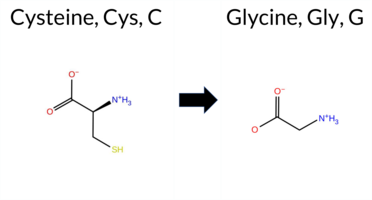 3DClick to see structure in 3D Viewer AIThe SynGAP1 missense variant C233G is not reported in ClinVar (ClinVar ID = None) and has no entry in gnomAD (gnomAD ID = None). Prediction tools that agree on a benign effect include polyPhen‑2 HumVar, SIFT, and FATHMM. Tools that agree on a pathogenic effect include SGM‑Consensus (Likely Pathogenic), REVEL, premPS, PROVEAN, polyPhen‑2 HumDiv, ESM1b, AlphaMissense‑Default, and AlphaMissense‑Optimized. FoldX, Rosetta, and Foldetta are inconclusive and are treated as unavailable. High‑accuracy predictions: AlphaMissense‑Optimized reports Pathogenic; SGM‑Consensus reports Likely Pathogenic; Foldetta is Uncertain. Overall, the majority of available predictions indicate a pathogenic impact. Therefore, the variant is most likely pathogenic, and this assessment does not contradict any ClinVar status because no ClinVar classification exists. Disclaimer: This summary was generated using AI and should be interpreted alongside expert review. | Likely Pathogenic | PH | 0.239899 | Structured | 0.306787 | Uncertain | 0.868 | 0.322 | 0.000 | -14.155 | Likely Pathogenic | 0.988 | Likely Pathogenic | Likely Pathogenic | 1.29 | Ambiguous | 0.1 | 1.01 | Ambiguous | 1.15 | Ambiguous | 1.31 | Destabilizing | 0.849 | Likely Pathogenic | -10.68 | Deleterious | 0.596 | Possibly Damaging | 0.107 | Benign | 5.79 | Benign | 0.09 | Tolerated | 0.3317 | 0.3570 | -3 | -3 | -2.9 | -46.09 | |||||||||||||||||||||||||||||
| c.746C>A | A249E 2D 3DClick to see structure in 3D Viewer AIThe SynGAP1 missense variant A249E has no ClinVar entry and is not reported in gnomAD. Prediction tools that agree on a benign effect are SIFT and FATHMM. The majority of other in‑silico predictors (SGM‑Consensus, REVEL, Rosetta, Foldetta, premPS, PROVEAN, polyPhen‑2 HumDiv, polyPhen‑2 HumVar, ESM1b, AlphaMissense‑Default, AlphaMissense‑Optimized) classify the variant as pathogenic; FoldX is uncertain and is not counted as evidence for either side. High‑accuracy assessments further support a deleterious impact: AlphaMissense‑Optimized predicts pathogenic, the SGM Consensus (majority vote from AlphaMissense‑Default, ESM1b, FATHMM, PROVEAN) is Likely Pathogenic, and Foldetta (combining FoldX‑MD and Rosetta outputs) predicts pathogenic. Based on the preponderance of pathogenic predictions and the absence of benign evidence, the variant is most likely pathogenic, and this conclusion is not contradicted by any ClinVar status. Disclaimer: This summary was generated using AI and should be interpreted alongside expert review. | Likely Pathogenic | PH | 0.505461 | Disordered | 0.255452 | Uncertain | 0.810 | 0.336 | 0.125 | -13.519 | Likely Pathogenic | 0.991 | Likely Pathogenic | Likely Pathogenic | 1.60 | Ambiguous | 1.2 | 2.59 | Destabilizing | 2.10 | Destabilizing | 1.02 | Destabilizing | 0.818 | Likely Pathogenic | -3.29 | Deleterious | 0.997 | Probably Damaging | 0.879 | Possibly Damaging | 5.64 | Benign | 0.09 | Tolerated | 0.0799 | 0.1509 | 0 | -1 | -5.3 | 58.04 | |||||||||||||||||||||||||||||
| c.757A>G | N253D 2D 3DClick to see structure in 3D Viewer AISynGAP1 missense variant N253D is not reported in ClinVar (no ClinVar ID) and is absent from gnomAD. Prediction tools that agree on benign effects include FoldX, Rosetta, Foldetta, premPS, SIFT, and FATHMM, while those that predict pathogenicity are SGM‑Consensus, REVEL, PROVEAN, polyPhen‑2 HumDiv, polyPhen‑2 HumVar, ESM1b, AlphaMissense‑Default, and AlphaMissense‑Optimized. High‑accuracy assessments show AlphaMissense‑Optimized classifying the variant as pathogenic, the SGM‑Consensus (majority vote of AlphaMissense‑Default, ESM1b, FATHMM, and PROVEAN) also indicating likely pathogenic, whereas Foldetta predicts a benign effect on protein stability. Overall, the majority of tools (8/15) favor a pathogenic outcome, with no conflict with ClinVar status because the variant is not yet catalogued. Thus, the variant is most likely pathogenic based on current computational predictions, and this assessment does not contradict any existing ClinVar annotation. Disclaimer: This summary was generated using AI and should be interpreted alongside expert review. | Likely Pathogenic | PH | 0.513880 | Disordered | 0.201744 | Uncertain | 0.771 | 0.298 | 0.250 | -14.105 | Likely Pathogenic | 0.977 | Likely Pathogenic | Likely Pathogenic | 0.25 | Likely Benign | 0.0 | 0.37 | Likely Benign | 0.31 | Likely Benign | 0.09 | Likely Benign | 0.742 | Likely Pathogenic | -4.13 | Deleterious | 0.993 | Probably Damaging | 0.971 | Probably Damaging | 5.60 | Benign | 0.09 | Tolerated | 0.2248 | 0.5186 | 2 | 1 | 0.0 | 0.98 | |||||||||||||||||||||||||||||
| c.758A>G | N253S 2D 3DClick to see structure in 3D Viewer AIThe SynGAP1 missense variant N253S is listed in ClinVar with no submitted interpretation and is present in gnomAD (ID 6‑33435609‑A‑G). Prediction tools that agree on a benign effect include premPS, SIFT, FATHMM, and AlphaMissense‑Optimized. Those that predict a pathogenic effect are REVEL, PROVEAN, polyPhen‑2 HumDiv, and polyPhen‑2 HumVar. Predictions that are uncertain or inconclusive are FoldX, Rosetta, Foldetta, ESM1b, and AlphaMissense‑Default. High‑accuracy assessments show AlphaMissense‑Optimized as benign; the SGM Consensus (majority vote from AlphaMissense‑Default, ESM1b, FATHMM, PROVEAN) is inconclusive, and Foldetta (combining FoldX‑MD and Rosetta outputs) is also inconclusive. Overall, the evidence is mixed, but the single high‑accuracy tool that is available points to a benign effect. Therefore, the variant is most likely benign based on current predictions, and this assessment does not contradict the ClinVar status, which remains unclassified. Disclaimer: This summary was generated using AI and should be interpreted alongside expert review. | PH | 0.513880 | Disordered | 0.201744 | Uncertain | 0.771 | 0.298 | 0.250 | 6-33435609-A-G | -7.197 | In-Between | 0.541 | Ambiguous | Likely Benign | 0.60 | Ambiguous | 0.1 | 1.19 | Ambiguous | 0.90 | Ambiguous | -0.03 | Likely Benign | 0.716 | Likely Pathogenic | -4.26 | Deleterious | 0.993 | Probably Damaging | 0.956 | Probably Damaging | 5.56 | Benign | 0.09 | Tolerated | 3.39 | 15 | 0.3960 | 0.7764 | 1 | 1 | 2.7 | -27.03 | |||||||||||||||||||||||||||
| c.761A>G | K254R 2D 3DClick to see structure in 3D Viewer AIThe SynGAP1 K254R missense variant is not reported in ClinVar (ClinVar ID None) and is absent from gnomAD (gnomAD ID None). Prediction tools that agree on a benign effect include FoldX, PROVEAN, SIFT, FATHMM, and AlphaMissense‑Optimized. Those that predict a pathogenic effect are REVEL, polyPhen‑2 HumDiv, polyPhen‑2 HumVar, and ESM1b. The remaining tools—Rosetta, Foldetta, premPS, and AlphaMissense‑Default—return uncertain or inconclusive results. High‑accuracy assessments further support a benign interpretation: AlphaMissense‑Optimized is benign; the SGM Consensus (majority vote from AlphaMissense‑Default, ESM1b, FATHMM, PROVEAN) yields a benign majority (2 benign vs. 1 pathogenic, 1 uncertain); Foldetta is uncertain. Taken together, the preponderance of evidence indicates that the variant is most likely benign, and this conclusion does not contradict any ClinVar status because the variant is not yet classified in that database. Disclaimer: This summary was generated using AI and should be interpreted alongside expert review. | PH | 0.513880 | Disordered | 0.207751 | Uncertain | 0.799 | 0.285 | 0.375 | -11.064 | Likely Pathogenic | 0.528 | Ambiguous | Likely Benign | -0.44 | Likely Benign | 0.1 | -1.13 | Ambiguous | -0.79 | Ambiguous | 0.76 | Ambiguous | 0.604 | Likely Pathogenic | -2.36 | Neutral | 0.970 | Probably Damaging | 0.681 | Possibly Damaging | 5.81 | Benign | 0.09 | Tolerated | 0.4070 | 0.1658 | 3 | 2 | -0.6 | 28.01 | ||||||||||||||||||||||||||||||
| c.779T>A | V260E 2D 3DClick to see structure in 3D Viewer AIThe SynGAP1 missense variant V260E is not reported in ClinVar and has no entries in gnomAD. Prediction tools that indicate a benign effect include FoldX, Rosetta, Foldetta, SIFT, FATHMM, and AlphaMissense‑Optimized. Tools that predict a pathogenic effect comprise SGM‑Consensus, REVEL, premPS, PROVEAN, polyPhen‑2 (HumDiv and HumVar), ESM1b, and AlphaMissense‑Default. High‑accuracy assessments show AlphaMissense‑Optimized classifying the variant as benign, SGM‑Consensus (majority vote of AlphaMissense‑Default, ESM1b, FATHMM, PROVEAN) labeling it likely pathogenic, and Foldetta (combining FoldX‑MD and Rosetta outputs) predicting a benign impact on protein stability. Overall, the majority of computational evidence points toward a pathogenic interpretation, and this conclusion is not contradicted by the ClinVar status. Thus, the variant is most likely pathogenic, and this conclusion is not contradicted by the ClinVar status. Disclaimer: This summary was generated using AI and should be interpreted alongside expert review. | Likely Pathogenic | C2 | 0.254060 | Structured | 0.382651 | Uncertain | 0.888 | 0.259 | 0.250 | -9.516 | Likely Pathogenic | 0.667 | Likely Pathogenic | Likely Benign | -0.02 | Likely Benign | 0.1 | 0.32 | Likely Benign | 0.15 | Likely Benign | 1.10 | Destabilizing | 0.848 | Likely Pathogenic | -3.66 | Deleterious | 0.999 | Probably Damaging | 0.991 | Probably Damaging | 5.79 | Benign | 0.09 | Tolerated | 0.0846 | 0.1636 | -2 | -2 | -7.7 | 29.98 | |||||||||||||||||||||||||||||
| c.800G>C | W267S 2D 3DClick to see structure in 3D Viewer AIThe SynGAP1 missense variant W267S is not listed in ClinVar and has no allele in gnomAD. Functional prediction tools largely agree on a deleterious effect: SIFT is the sole benign predictor, whereas the remaining 12 tools (SGM‑Consensus, REVEL, FoldX, Rosetta, Foldetta, PROVEAN, polyPhen‑2 HumDiv, polyPhen‑2 HumVar, ESM1b, FATHMM, AlphaMissense‑Default, AlphaMissense‑Optimized) all report pathogenicity; premPS is uncertain. High‑accuracy methods reinforce this view: AlphaMissense‑Optimized predicts pathogenic, the SGM Consensus (majority vote of AlphaMissense‑Default, ESM1b, FATHMM, PROVEAN) is Likely Pathogenic, and Foldetta (combining FoldX‑MD and Rosetta outputs) is pathogenic. No prediction is missing or inconclusive. Consequently, the variant is most likely pathogenic, and this assessment does not contradict any ClinVar annotation because no ClinVar entry exists. Disclaimer: This summary was generated using AI and should be interpreted alongside expert review. | Likely Pathogenic | C2 | 0.216401 | Structured | 0.298060 | Uncertain | 0.943 | 0.274 | 0.000 | -12.833 | Likely Pathogenic | 0.993 | Likely Pathogenic | Likely Pathogenic | 3.42 | Destabilizing | 0.3 | 3.20 | Destabilizing | 3.31 | Destabilizing | 0.87 | Ambiguous | 0.593 | Likely Pathogenic | -12.87 | Deleterious | 1.000 | Probably Damaging | 0.999 | Probably Damaging | 2.03 | Pathogenic | 0.09 | Tolerated | 0.3809 | 0.1415 | -2 | -3 | 0.1 | -99.14 | |||||||||||||||||||||||||||||
| c.806T>C | I269T 2D 3DClick to see structure in 3D Viewer AIThe SynGAP1 missense variant I269T is not reported in ClinVar (no ClinVar entry) but is present in gnomAD (variant ID 6‑33437711‑T‑C). Among general in‑silico predictors, only SIFT classifies the change as benign, whereas the remaining tools that provide a definitive call (REVEL, Rosetta, premPS, PROVEAN, polyPhen‑2 HumDiv, polyPhen‑2 HumVar, ESM1b, FATHMM, AlphaMissense‑Default) all predict a pathogenic effect. High‑accuracy assessments give a more nuanced view: AlphaMissense‑Optimized is uncertain; the SGM Consensus (majority vote of AlphaMissense‑Default, ESM1b, FATHMM, PROVEAN) indicates a likely pathogenic outcome; and Foldetta, which integrates FoldX‑MD and Rosetta stability predictions, also reports a pathogenic effect. Based on the preponderance of pathogenic predictions and the high‑accuracy consensus, the variant is most likely pathogenic, and this assessment does not contradict any ClinVar status (none is available). Disclaimer: This summary was generated using AI and should be interpreted alongside expert review. | Likely Pathogenic | C2 | 0.216401 | Structured | 0.343787 | Uncertain | 0.937 | 0.244 | 0.125 | 6-33437711-T-C | 2 | 1.24e-6 | -9.376 | Likely Pathogenic | 0.887 | Likely Pathogenic | Ambiguous | 1.97 | Ambiguous | 0.1 | 2.10 | Destabilizing | 2.04 | Destabilizing | 1.38 | Destabilizing | 0.727 | Likely Pathogenic | -3.70 | Deleterious | 0.997 | Probably Damaging | 0.994 | Probably Damaging | 1.72 | Pathogenic | 0.09 | Tolerated | 3.38 | 19 | 0.0833 | 0.0808 | -1 | 0 | -5.2 | -12.05 | ||||||||||||||||||||||||
| c.841T>A | Y281N 2D 3DClick to see structure in 3D Viewer AIThe SynGAP1 missense variant Y281N is not reported in ClinVar and is absent from gnomAD. Prediction tools cluster into two groups: benign predictions are provided only by SIFT, whereas the remaining tools—SGM‑Consensus, REVEL, FoldX, Rosetta, Foldetta, premPS, PROVEAN, polyPhen‑2 HumDiv, polyPhen‑2 HumVar, ESM1b, FATHMM, and AlphaMissense‑Default—consistently predict pathogenicity. AlphaMissense‑Optimized is uncertain. High‑accuracy assessments further support a deleterious effect: AlphaMissense‑Optimized remains inconclusive, SGM‑Consensus is labeled Likely Pathogenic, and Foldetta predicts a destabilizing, pathogenic outcome. Overall, the collective evidence indicates that Y281N is most likely pathogenic, and this assessment does not contradict the absence of a ClinVar classification. Disclaimer: This summary was generated using AI and should be interpreted alongside expert review. | Likely Pathogenic | C2 | 0.098513 | Structured | 0.337647 | Uncertain | 0.927 | 0.254 | 0.000 | -11.620 | Likely Pathogenic | 0.941 | Likely Pathogenic | Ambiguous | 3.29 | Destabilizing | 0.2 | 2.49 | Destabilizing | 2.89 | Destabilizing | 1.71 | Destabilizing | 0.713 | Likely Pathogenic | -6.20 | Deleterious | 1.000 | Probably Damaging | 0.999 | Probably Damaging | 0.99 | Pathogenic | 0.09 | Tolerated | 0.2494 | 0.1503 | -2 | -2 | -2.2 | -49.07 | |||||||||||||||||||||||||||||
| c.893C>G | P298R 2D 3DClick to see structure in 3D Viewer AIThe SynGAP1 missense variant P298R has no ClinVar entry and is not reported in gnomAD. Computational predictors fall into two consensus groups: benign predictions come from REVEL, FoldX, PROVEAN, SIFT, and AlphaMissense‑Optimized; pathogenic predictions come from SGM‑Consensus, polyPhen‑2 HumDiv, polyPhen‑2 HumVar, ESM1b, FATHMM, and AlphaMissense‑Default. Uncertain results are reported only by Foldetta and premPS. High‑accuracy tools give a mixed picture: AlphaMissense‑Optimized predicts benign, the SGM Consensus (majority vote of AlphaMissense‑Default, ESM1b, FATHMM, PROVEAN) predicts likely pathogenic, and Foldetta reports an uncertain stability change. Overall, the majority of evidence points toward a pathogenic effect, and this assessment is not contradicted by ClinVar, which currently has no classification for this variant. Disclaimer: This summary was generated using AI and should be interpreted alongside expert review. | Likely Pathogenic | C2 | 0.328603 | Structured | 0.268765 | Uncertain | 0.860 | 0.283 | 0.500 | -11.427 | Likely Pathogenic | 0.733 | Likely Pathogenic | Likely Benign | 0.45 | Likely Benign | 0.0 | 2.08 | Destabilizing | 1.27 | Ambiguous | 0.61 | Ambiguous | 0.280 | Likely Benign | -1.83 | Neutral | 0.997 | Probably Damaging | 0.952 | Probably Damaging | 2.03 | Pathogenic | 0.09 | Tolerated | 0.1299 | 0.3872 | 0 | -2 | -2.9 | 59.07 | |||||||||||||||||||||||||||||
| c.926G>C | G309A 2D 3DClick to see structure in 3D Viewer AISynGAP1 missense variant G309A is not reported in ClinVar and is absent from gnomAD. Functional prediction tools show a split: benign calls come from REVEL, SIFT, and Rosetta, whereas pathogenic calls are made by FoldX, PROVEAN, polyPhen‑2 HumDiv, polyPhen‑2 HumVar, FATHMM, AlphaMissense‑Default, and AlphaMissense‑Optimized. Uncertain results are reported by Foldetta, premPS, and ESM1b. High‑accuracy assessments further support a deleterious effect: AlphaMissense‑Optimized predicts pathogenic, the SGM Consensus (majority vote of AlphaMissense‑Default, ESM1b, FATHMM, PROVEAN) also indicates pathogenic, while Foldetta remains inconclusive. Overall, the preponderance of evidence points to a pathogenic impact for G309A. This conclusion is not contradicted by ClinVar, as no ClinVar classification exists for this variant. Disclaimer: This summary was generated using AI and should be interpreted alongside expert review. | Likely Pathogenic | C2 | 0.275179 | Structured | 0.338439 | Uncertain | 0.882 | 0.342 | 0.125 | -7.980 | In-Between | 0.986 | Likely Pathogenic | Likely Pathogenic | 2.44 | Destabilizing | 0.4 | 0.30 | Likely Benign | 1.37 | Ambiguous | 0.71 | Ambiguous | 0.373 | Likely Benign | -5.52 | Deleterious | 1.000 | Probably Damaging | 0.999 | Probably Damaging | 1.69 | Pathogenic | 0.09 | Tolerated | 0.3949 | 0.4974 | 1 | 0 | 2.2 | 14.03 | |||||||||||||||||||||||||||||
| c.955G>A | A319T 2D 3DClick to see structure in 3D Viewer AIThe SynGAP1 missense variant A319T is not reported in ClinVar (ClinVar ID None) and is absent from gnomAD (gnomAD ID None). Prediction tools that agree on a benign effect include REVEL, premPS, PROVEAN, SIFT, AlphaMissense‑Default, AlphaMissense‑Optimized, and polyPhen2_HumVar. Those that predict a pathogenic effect are polyPhen2_HumDiv and FATHMM. The remaining tools—FoldX, Rosetta, Foldetta, and ESM1b—return uncertain or inconclusive results. High‑accuracy assessments show AlphaMissense‑Optimized as benign, the SGM Consensus (majority vote from AlphaMissense‑Default, ESM1b, FATHMM, PROVEAN) as benign, and Foldetta as uncertain. Overall, the majority of reliable predictors classify the variant as benign, and this conclusion is not contradicted by any ClinVar annotation. Disclaimer: This summary was generated using AI and should be interpreted alongside expert review. | C2 | 0.179055 | Structured | 0.410405 | Uncertain | 0.879 | 0.254 | 0.125 | -7.841 | In-Between | 0.098 | Likely Benign | Likely Benign | 0.55 | Ambiguous | 0.3 | 0.70 | Ambiguous | 0.63 | Ambiguous | 0.30 | Likely Benign | 0.116 | Likely Benign | -1.35 | Neutral | 0.775 | Possibly Damaging | 0.306 | Benign | 1.92 | Pathogenic | 0.09 | Tolerated | 0.1274 | 0.6083 | 1 | 0 | -2.5 | 30.03 | ||||||||||||||||||||||||||||||
| c.956C>G | A319G 2D 3DClick to see structure in 3D Viewer AIThe SynGAP1 missense variant A319G is not reported in ClinVar and is absent from gnomAD. Functional prediction tools largely agree on a benign effect: REVEL, FoldX, Foldetta, premPS, PROVEAN, SIFT, ESM1b, AlphaMissense‑Default, AlphaMissense‑Optimized, and the SGM‑Consensus (majority vote) all predict benign or likely benign. In contrast, polyPhen‑2 HumDiv, polyPhen‑2 HumVar, and FATHMM predict pathogenicity, while Rosetta remains uncertain. High‑accuracy assessments reinforce the benign consensus: AlphaMissense‑Optimized scores benign, the SGM‑Consensus (derived from AlphaMissense‑Default, ESM1b, FATHMM, PROVEAN) indicates likely benign, and Foldetta (combining FoldX‑MD and Rosetta outputs) also reports benign. Overall, the majority of evidence supports a benign classification, and this is consistent with the absence of ClinVar annotation; there is no contradiction with ClinVar status. Disclaimer: This summary was generated using AI and should be interpreted alongside expert review. | Likely Benign | C2 | 0.179055 | Structured | 0.410405 | Uncertain | 0.879 | 0.254 | 0.125 | -6.505 | Likely Benign | 0.148 | Likely Benign | Likely Benign | 0.11 | Likely Benign | 0.4 | 0.56 | Ambiguous | 0.34 | Likely Benign | 0.39 | Likely Benign | 0.219 | Likely Benign | -1.83 | Neutral | 0.994 | Probably Damaging | 0.900 | Possibly Damaging | 1.89 | Pathogenic | 0.09 | Tolerated | 0.2345 | 0.4532 | 1 | 0 | -2.2 | -14.03 | |||||||||||||||||||||||||||||
| c.997A>G | K333E 2D 3DClick to see structure in 3D Viewer AIThe SynGAP1 K333E missense variant is not reported in ClinVar (ClinVar ID None) and is absent from gnomAD (gnomAD ID None). Prediction tools that agree on a benign effect include REVEL, FoldX, Rosetta, and SIFT. Tools that predict a pathogenic effect comprise PROVEAN, polyPhen‑2 HumDiv, polyPhen‑2 HumVar, ESM1b, FATHMM, AlphaMissense‑Default, and AlphaMissense‑Optimized; premPS is uncertain. High‑accuracy assessments show AlphaMissense‑Optimized as pathogenic, the SGM Consensus (majority vote of AlphaMissense‑Default, ESM1b, FATHMM, and PROVEAN) as pathogenic, and Foldetta (combining FoldX‑MD and Rosetta outputs) as benign. Overall, the majority of evidence points to a pathogenic impact for K333E. This conclusion is not contradicted by ClinVar status, as no ClinVar classification exists for this variant. Disclaimer: This summary was generated using AI and should be interpreted alongside expert review. | Likely Pathogenic | C2 | 0.311707 | Structured | 0.330781 | Uncertain | 0.537 | 0.447 | 0.500 | -14.059 | Likely Pathogenic | 0.991 | Likely Pathogenic | Likely Pathogenic | -0.06 | Likely Benign | 0.2 | 0.30 | Likely Benign | 0.12 | Likely Benign | 0.89 | Ambiguous | 0.488 | Likely Benign | -3.21 | Deleterious | 0.999 | Probably Damaging | 0.995 | Probably Damaging | 1.91 | Pathogenic | 0.09 | Tolerated | 0.3429 | 0.1039 | 0 | 1 | 0.4 | 0.94 | |||||||||||||||||||||||||||||
| c.1003C>G | R335G 2D 3DClick to see structure in 3D Viewer AIThe SynGAP1 missense variant R335G is not reported in ClinVar and is absent from gnomAD. Prediction tools that agree on a benign effect include REVEL, Rosetta, premPS, and SIFT, whereas those that agree on a pathogenic effect include SGM‑Consensus, PROVEAN, polyPhen‑2 HumDiv, polyPhen‑2 HumVar, ESM1b, FATHMM, and AlphaMissense‑Default. High‑accuracy assessments show AlphaMissense‑Optimized as uncertain, the SGM‑Consensus (derived from a majority vote of AlphaMissense‑Default, ESM1b, FATHMM, and PROVEAN) as pathogenic, and Foldetta (combining FoldX‑MD and Rosetta outputs) as uncertain. Overall, more tools predict pathogenicity than benignity, and the high‑accuracy consensus also leans pathogenic. Therefore, the variant is most likely pathogenic based on current predictions, and this assessment does not contradict any ClinVar status because no ClinVar entry exists. Disclaimer: This summary was generated using AI and should be interpreted alongside expert review. | Likely Pathogenic | C2 | 0.305330 | Structured | 0.331028 | Uncertain | 0.483 | 0.428 | 0.500 | -11.860 | Likely Pathogenic | 0.880 | Likely Pathogenic | Ambiguous | 1.01 | Ambiguous | 0.1 | 0.44 | Likely Benign | 0.73 | Ambiguous | 0.20 | Likely Benign | 0.194 | Likely Benign | -4.77 | Deleterious | 0.999 | Probably Damaging | 0.997 | Probably Damaging | 2.01 | Pathogenic | 0.10 | Tolerated | 0.3000 | 0.3554 | -3 | -2 | 4.1 | -99.14 | |||||||||||||||||||||||||||||
| c.1016A>C | K339T 2D 3DClick to see structure in 3D Viewer AIThe SynGAP1 K339T missense variant is not reported in ClinVar and is absent from gnomAD. Consensus predictions from multiple in‑silico tools are split: benign calls come from FoldX, Rosetta, Foldetta, premPS, and SIFT, whereas pathogenic calls are made by SGM‑Consensus, REVEL, PROVEAN, polyPhen‑2 (HumDiv and HumVar), ESM1b, FATHMM, and AlphaMissense‑Default. High‑accuracy assessments further highlight this discordance: the SGM‑Consensus, which aggregates AlphaMissense‑Default, ESM1b, FATHMM, and PROVEAN, indicates a likely pathogenic effect, whereas Foldetta, a protein‑folding stability method that integrates FoldX‑MD and Rosetta outputs, predicts a benign impact. AlphaMissense‑Optimized returned an uncertain result and is treated as unavailable. Overall, the majority of robust predictors lean toward pathogenicity, and this conclusion does not contradict the absence of ClinVar annotation. Disclaimer: This summary was generated using AI and should be interpreted alongside expert review. | Likely Pathogenic | C2 | 0.447574 | Structured | 0.384153 | Uncertain | 0.535 | 0.465 | 0.250 | -10.061 | Likely Pathogenic | 0.910 | Likely Pathogenic | Ambiguous | 0.32 | Likely Benign | 0.0 | 0.10 | Likely Benign | 0.21 | Likely Benign | -0.04 | Likely Benign | 0.512 | Likely Pathogenic | -4.73 | Deleterious | 0.991 | Probably Damaging | 0.795 | Possibly Damaging | 1.94 | Pathogenic | 0.10 | Tolerated | 0.1900 | 0.3020 | 0 | -1 | 3.2 | -27.07 | |||||||||||||||||||||||||||||
| c.1031G>C | G344A 2D 3DClick to see structure in 3D Viewer AISynGAP1 missense variant G344A is not reported in ClinVar and is absent from gnomAD. Functional prediction tools largely agree on a deleterious effect: pathogenic predictions come from SGM‑Consensus, REVEL, FoldX, Rosetta, Foldetta, PROVEAN, polyPhen‑2 (HumDiv and HumVar), ESM1b, FATHMM, and AlphaMissense‑Default, while only SIFT predicts a benign outcome. Two tools report uncertainty: premPS and AlphaMissense‑Optimized. High‑accuracy assessments reinforce the pathogenic signal: AlphaMissense‑Optimized is uncertain, the SGM Consensus (majority vote of AlphaMissense‑Default, ESM1b, FATHMM, PROVEAN) is pathogenic, and Foldetta (combining FoldX‑MD and Rosetta) is pathogenic. Overall, the consensus of the majority of predictors indicates a pathogenic effect, and this conclusion is not contradicted by any ClinVar annotation. Disclaimer: This summary was generated using AI and should be interpreted alongside expert review. | Likely Pathogenic | C2 | 0.264545 | Structured | 0.368110 | Uncertain | 0.913 | 0.485 | 0.250 | -10.439 | Likely Pathogenic | 0.931 | Likely Pathogenic | Ambiguous | 5.11 | Destabilizing | 0.4 | 4.23 | Destabilizing | 4.67 | Destabilizing | 0.58 | Ambiguous | 0.873 | Likely Pathogenic | -5.38 | Deleterious | 1.000 | Probably Damaging | 0.999 | Probably Damaging | -0.32 | Pathogenic | 0.10 | Tolerated | 0.3964 | 0.5685 | 1 | 0 | 2.2 | 14.03 | |||||||||||||||||||||||||||||
| c.1093G>A | V365I 2D 3DClick to see structure in 3D Viewer AIThe SynGAP1 missense variant V365I is listed in ClinVar with an “Uncertain” status and is present in gnomAD (variant ID 6‑33437998‑G‑A). Prediction tools that agree on a benign effect include REVEL, Rosetta, Foldetta, premPS, PROVEAN, polyPhen‑2 (HumDiv and HumVar), SIFT, ESM1b, AlphaMissense‑Default, AlphaMissense‑Optimized, and the SGM‑Consensus (Likely Benign). Only FATHMM predicts a pathogenic outcome. High‑accuracy assessments further support a benign interpretation: AlphaMissense‑Optimized scores benign, the SGM‑Consensus (majority vote of AlphaMissense‑Default, ESM1b, FATHMM, PROVEAN) is Likely Benign, and Foldetta (combining FoldX‑MD and Rosetta outputs) predicts benign. Overall, the majority of evidence points to a benign effect, and this consensus does not contradict the ClinVar “Uncertain” classification. Disclaimer: This summary was generated using AI and should be interpreted alongside expert review. | Likely Benign | C2 | 0.414856 | Structured | 0.441505 | Uncertain | 0.923 | 0.608 | 0.250 | Uncertain | 1 | 6-33437998-G-A | 4 | 2.65e-6 | -5.943 | Likely Benign | 0.155 | Likely Benign | Likely Benign | -0.65 | Ambiguous | 0.2 | -0.11 | Likely Benign | -0.38 | Likely Benign | 0.13 | Likely Benign | 0.036 | Likely Benign | -0.47 | Neutral | 0.451 | Benign | 0.137 | Benign | 1.76 | Pathogenic | 0.10 | Tolerated | 3.38 | 21 | 0.0657 | 0.4447 | 3 | 4 | 0.3 | 14.03 | ||||||||||||||||||||||
| c.1102C>T | P368S 2D 3DClick to see structure in 3D Viewer AIThe SynGAP1 missense variant P368S is not reported in ClinVar (ClinVar ID None) and is absent from gnomAD (gnomAD ID None). Prediction tools that agree on a benign effect include REVEL, polyPhen‑2 (HumDiv and HumVar), SIFT, ESM1b, AlphaMissense‑Default, and AlphaMissense‑Optimized. Tools that predict a pathogenic effect are PROVEAN and FATHMM. The remaining methods (FoldX, Rosetta, Foldetta, premPS) yield uncertain results and are treated as unavailable. High‑accuracy assessments show AlphaMissense‑Optimized as benign; the SGM Consensus (majority vote from AlphaMissense‑Default, ESM1b, FATHMM, PROVEAN) is inconclusive (2 benign vs 2 pathogenic), and Foldetta is uncertain, so these do not alter the overall interpretation. Overall, the majority of evidence points to a benign impact. Thus, the variant is most likely benign, and this conclusion does not contradict the current ClinVar status. Disclaimer: This summary was generated using AI and should be interpreted alongside expert review. | C2 | 0.363090 | Structured | 0.439989 | Uncertain | 0.580 | 0.677 | 0.250 | -4.790 | Likely Benign | 0.247 | Likely Benign | Likely Benign | 1.68 | Ambiguous | 0.4 | 1.60 | Ambiguous | 1.64 | Ambiguous | 0.52 | Ambiguous | 0.090 | Likely Benign | -5.12 | Deleterious | 0.384 | Benign | 0.113 | Benign | 1.80 | Pathogenic | 0.10 | Tolerated | 0.3700 | 0.5635 | 1 | -1 | 0.8 | -10.04 | ||||||||||||||||||||||||||||||
| c.1135T>C | S379P 2D 3DClick to see structure in 3D Viewer AIThe SynGAP1 missense variant S379P is not reported in ClinVar and is absent from gnomAD. Prediction tools that agree on a benign effect include REVEL, premPS, PROVEAN, SIFT, ESM1b, FATHMM, AlphaMissense‑Default, AlphaMissense‑Optimized, and the SGM‑Consensus (Likely Benign). Tools that predict a pathogenic effect are polyPhen‑2 HumDiv, Rosetta, and Foldetta; FoldX is uncertain. High‑accuracy methods give a mixed picture: AlphaMissense‑Optimized predicts benign, the SGM‑Consensus (majority vote of AlphaMissense‑Default, ESM1b, FATHMM, PROVEAN) also predicts benign, whereas Foldetta (combining FoldX‑MD and Rosetta outputs) predicts pathogenic. Overall, the majority of evidence—including the high‑accuracy benign predictions—suggests that the variant is most likely benign. This conclusion is not contradicted by ClinVar status, as no ClinVar entry exists for this variant. Disclaimer: This summary was generated using AI and should be interpreted alongside expert review. | Likely Benign | C2 | 0.728858 | Disordered | 0.433206 | Uncertain | 0.327 | 0.931 | 0.625 | -5.007 | Likely Benign | 0.118 | Likely Benign | Likely Benign | 1.10 | Ambiguous | 0.8 | 2.92 | Destabilizing | 2.01 | Destabilizing | 0.17 | Likely Benign | 0.430 | Likely Benign | -0.41 | Neutral | 0.808 | Possibly Damaging | 0.212 | Benign | 3.83 | Benign | 0.10 | Tolerated | 0.3035 | 0.6594 | 1 | -1 | -0.8 | 10.04 | |||||||||||||||||||||||||||||
| c.1142G>T | G381V 2D 3DClick to see structure in 3D Viewer AIThe SynGAP1 missense variant G381V is listed in ClinVar with an uncertain significance (ClinVar ID 1940172.0) and is present in the gnomAD database (6‑33438047‑G‑T). Functional prediction tools that report a benign effect include premPS, PROVEAN, polyPhen‑2 HumDiv, polyPhen‑2 HumVar, SIFT, ESM1b, AlphaMissense‑Default, and AlphaMissense‑Optimized. Tools that predict a pathogenic effect are REVEL, FoldX, Rosetta, and FATHMM. The SGM‑Consensus, which aggregates AlphaMissense‑Default, ESM1b, FATHMM, and PROVEAN, yields a majority‑benign vote and is reported as Likely Benign. High‑accuracy assessments show AlphaMissense‑Optimized as benign, the SGM‑Consensus as benign, and Foldetta (combining FoldX‑MD and Rosetta outputs) as pathogenic. Overall, the majority of predictions lean toward a benign impact, and this is consistent with the ClinVar uncertain status rather than contradicting it. Disclaimer: This summary was generated using AI and should be interpreted alongside expert review. | Likely Benign | C2 | 0.724957 | Disordered | 0.431692 | Uncertain | 0.301 | 0.951 | 0.750 | Uncertain | 1 | 6-33438047-G-T | 2 | 1.25e-6 | -5.967 | Likely Benign | 0.146 | Likely Benign | Likely Benign | 7.16 | Destabilizing | 1.0 | 4.10 | Destabilizing | 5.63 | Destabilizing | -0.32 | Likely Benign | 0.618 | Likely Pathogenic | -0.95 | Neutral | 0.386 | Benign | 0.157 | Benign | 1.32 | Pathogenic | 0.10 | Tolerated | 4.32 | 9 | 0.1621 | 0.3902 | -1 | -3 | 4.6 | 42.08 | 214.6 | -68.8 | 0.3 | 0.7 | -0.5 | 0.3 | Uncertain | Gly381 is located in the Gly-rich Ω loop (res. Pro364-Pro398) between two anti-parallel β sheet strands (res. Thr359-Pro364, res. Ala399-Ile411). Because the Ω loop is assumed to directly interact with the membrane, it moves arbitrarily throughout the WT solvent simulations. The Ω loop potentially plays a crucial role in the SynGAP-membrane complex association, stability, and dynamics. However, this aspect cannot be fully addressed through solvent simulations alone.Ω loops are known to play major roles in protein functions that require flexibility, and thus hydrophobic residues like valine are rarely tolerated. Although no negative structural effects are observed in the variant simulations, Val381 may exert drastic effects on the SynGAP-membrane complex dynamics and stability. However, since the effects on Gly-rich Ω loop dynamics can only be well studied through the SynGAP-membrane complex, no definite conclusions can be drawn. | ||||||||||||||
| c.1172G>T | G391V 2D 3DClick to see structure in 3D Viewer AIThe SynGAP1 missense variant G391V is listed in ClinVar as Benign (ClinVar ID 1014488.0) and is present in gnomAD (variant ID 6‑33438077‑G‑T). Prediction tools that classify the variant as benign include premPS, PROVEAN, SIFT, ESM1b, AlphaMissense‑Default, AlphaMissense‑Optimized, and the SGM‑Consensus. Tools that predict pathogenicity are REVEL, FoldX, Rosetta, Foldetta, polyPhen‑2 HumDiv, polyPhen‑2 HumVar, and FATHMM. High‑accuracy assessments show AlphaMissense‑Optimized as benign, the SGM‑Consensus (majority vote from AlphaMissense‑Default, ESM1b, FATHMM, PROVEAN) as benign, and Foldetta (combining FoldX‑MD and Rosetta outputs) as pathogenic. With two high‑accuracy tools supporting benign and one supporting pathogenic, the overall prediction leans toward a benign effect. This conclusion aligns with the ClinVar benign classification, so there is no contradiction with the existing clinical annotation. Disclaimer: This summary was generated using AI and should be interpreted alongside expert review. | Likely Benign | C2 | 0.637480 | Disordered | 0.409509 | Uncertain | 0.279 | 0.741 | 0.750 | Likely Benign | 1 | 6-33438077-G-T | 3 | 1.86e-6 | -6.642 | Likely Benign | 0.133 | Likely Benign | Likely Benign | 4.23 | Destabilizing | 1.3 | 4.81 | Destabilizing | 4.52 | Destabilizing | -0.11 | Likely Benign | 0.595 | Likely Pathogenic | -0.98 | Neutral | 0.994 | Probably Damaging | 0.887 | Possibly Damaging | 1.32 | Pathogenic | 0.10 | Tolerated | 3.69 | 8 | 0.1621 | 0.3821 | -1 | -3 | 4.6 | 42.08 | 228.6 | -69.0 | 0.0 | 0.8 | -0.5 | 0.3 | Uncertain | Gly387 is located in the Gly-rich Ω loop (res. Pro364-Pro398) between two anti-parallel β sheet strands (res. Thr359-Pro364 and res. Ala399-Ile411). The Ω loop is assumed to directly interact with the membrane, and it is observed to move arbitrarily throughout the WT solvent simulations. This loop potentially plays a crucial role in the SynGAP-membrane complex association, stability, and dynamics. However, this aspect cannot be fully addressed through solvent simulations alone.Ω loops are known to play significant roles in protein functions that require flexibility, and thus hydrophobic residues like valine are rarely tolerated. Although no negative structural effects are visualized in the variant’s simulations, Val391 may exert drastic effects on the SynGAP-membrane complex dynamics and stability. Since the effects on the Gly-rich Ω loop dynamics can only be well studied through the SynGAP-membrane complex, no definite conclusions can be drawn. | ||||||||||||||
| c.1195G>C | A399P 2D 3DClick to see structure in 3D Viewer AIThe SynGAP1 A399P missense variant is not reported in ClinVar (ClinVar ID None) and is absent from gnomAD (gnomAD ID None). Functional prediction tools cluster into two groups: benign predictions come from REVEL, PROVEAN, SIFT, FATHMM, and polyPhen‑2 HumVar; pathogenic predictions come from FoldX, Rosetta, polyPhen‑2 HumDiv, ESM1b, AlphaMissense‑Default, and Foldetta. High‑accuracy assessments show AlphaMissense‑Optimized as uncertain, the SGM Consensus (majority vote of AlphaMissense‑Default, ESM1b, FATHMM, PROVEAN) is inconclusive, and Foldetta predicts a pathogenic effect. Overall, the majority of evidence points toward a deleterious impact. The variant is most likely pathogenic based on the available predictions, and this assessment does not contradict any ClinVar status because no ClinVar classification exists. Disclaimer: This summary was generated using AI and should be interpreted alongside expert review. | C2 | 0.394753 | Structured | 0.407674 | Uncertain | 0.939 | 0.490 | 0.125 | -8.809 | Likely Pathogenic | 0.942 | Likely Pathogenic | Ambiguous | 2.29 | Destabilizing | 0.1 | 4.00 | Destabilizing | 3.15 | Destabilizing | 0.74 | Ambiguous | 0.498 | Likely Benign | -1.82 | Neutral | 0.596 | Possibly Damaging | 0.188 | Benign | 5.56 | Benign | 0.10 | Tolerated | 0.1847 | 0.5472 | 1 | -1 | -3.4 | 26.04 | ||||||||||||||||||||||||||||||
| c.1257G>C | E419D 2D 3DClick to see structure in 3D Viewer AIThe SynGAP1 E419D missense variant is not reported in ClinVar (ClinVar ID None) and is absent from gnomAD (gnomAD ID None). Prediction tools that agree on a benign effect include REVEL, FoldX, premPS, PROVEAN, SIFT, and FATHMM. Tools that agree on a pathogenic effect are polyPhen‑2 HumDiv, polyPhen‑2 HumVar, and AlphaMissense‑Default. Uncertain or inconclusive predictions come from Foldetta, AlphaMissense‑Optimized, ESM1b, and Rosetta. High‑accuracy assessments show AlphaMissense‑Optimized as uncertain (treated as unavailable), the SGM Consensus (majority vote of AlphaMissense‑Default, ESM1b, FATHMM, PROVEAN) resolves to benign, and Foldetta remains uncertain (unavailable). Overall, the majority of evidence points to a benign impact. This conclusion does not contradict ClinVar status, which has no entry for this variant. Disclaimer: This summary was generated using AI and should be interpreted alongside expert review. | GAP | 0.102787 | Structured | 0.371949 | Uncertain | 0.961 | 0.261 | 0.000 | -7.036 | In-Between | 0.869 | Likely Pathogenic | Ambiguous | 0.17 | Likely Benign | 0.1 | 0.87 | Ambiguous | 0.52 | Ambiguous | 0.48 | Likely Benign | 0.170 | Likely Benign | -2.40 | Neutral | 0.995 | Probably Damaging | 0.960 | Probably Damaging | 3.33 | Benign | 0.10 | Tolerated | 0.1966 | 0.4906 | 3 | 2 | 0.0 | -14.03 | ||||||||||||||||||||||||||||||
| c.1257G>T | E419D 2D 3DClick to see structure in 3D Viewer AIThe SynGAP1 E419D missense variant is not reported in ClinVar (ClinVar ID None) and is absent from gnomAD (gnomAD ID None). Prediction tools that agree on a benign effect include REVEL, FoldX, premPS, PROVEAN, SIFT, and FATHMM. Tools that agree on a pathogenic effect are polyPhen‑2 HumDiv, polyPhen‑2 HumVar, and AlphaMissense‑Default. Uncertain or inconclusive predictions come from Foldetta, AlphaMissense‑Optimized, ESM1b, and Rosetta. High‑accuracy assessments show AlphaMissense‑Optimized as uncertain (treated as unavailable), the SGM Consensus (majority vote of AlphaMissense‑Default, ESM1b, FATHMM, PROVEAN) resolves to benign, and Foldetta remains uncertain (unavailable). Overall, the majority of evidence points to a benign impact. This conclusion does not contradict ClinVar status, which has no entry for this variant. Disclaimer: This summary was generated using AI and should be interpreted alongside expert review. | GAP | 0.102787 | Structured | 0.371949 | Uncertain | 0.961 | 0.261 | 0.000 | -7.036 | In-Between | 0.869 | Likely Pathogenic | Ambiguous | 0.17 | Likely Benign | 0.1 | 0.87 | Ambiguous | 0.52 | Ambiguous | 0.48 | Likely Benign | 0.170 | Likely Benign | -2.40 | Neutral | 0.995 | Probably Damaging | 0.960 | Probably Damaging | 3.33 | Benign | 0.10 | Tolerated | 0.1966 | 0.4906 | 3 | 2 | 0.0 | -14.03 | ||||||||||||||||||||||||||||||
| c.1277A>C | N426T 2D 3DClick to see structure in 3D Viewer AIThe SynGAP1 missense change N426T lies in the GAP domain. It is not reported in ClinVar (ClinVar ID None) and is absent from gnomAD (gnomAD ID None). Prediction tools that agree on a benign effect include REVEL, Rosetta, premPS, SIFT, FATHMM, AlphaMissense‑Default, and AlphaMissense‑Optimized. Those that predict a pathogenic outcome are PROVEAN, polyPhen‑2 HumDiv, and polyPhen‑2 HumVar. Predictions that are uncertain or inconclusive are FoldX, Foldetta, and ESM1b. High‑accuracy assessments show AlphaMissense‑Optimized as benign; the SGM Consensus (majority vote from AlphaMissense‑Default, ESM1b, FATHMM, PROVEAN) also favors benign, while Foldetta remains uncertain and is not taken as evidence. Overall, the majority of tools, including the high‑accuracy methods, predict a benign effect. This consensus does not contradict any ClinVar annotation, as none exists for this variant. Disclaimer: This summary was generated using AI and should be interpreted alongside expert review. | GAP | 0.042364 | Structured | 0.394941 | Uncertain | 0.959 | 0.287 | 0.000 | -7.389 | In-Between | 0.194 | Likely Benign | Likely Benign | 0.84 | Ambiguous | 0.0 | 0.38 | Likely Benign | 0.61 | Ambiguous | 0.12 | Likely Benign | 0.126 | Likely Benign | -3.14 | Deleterious | 0.983 | Probably Damaging | 0.926 | Probably Damaging | 3.47 | Benign | 0.10 | Tolerated | 0.1090 | 0.3002 | 0 | 0 | 2.8 | -13.00 | ||||||||||||||||||||||||||||||
| c.1322T>A | V441D 2D 3DClick to see structure in 3D Viewer AIThe SynGAP1 missense variant V441D is not reported in ClinVar and has no entry in gnomAD. Prediction tools that agree on a benign effect include REVEL, SIFT, FATHMM, and Foldetta, whereas a majority of tools (SGM Consensus, premPS, PROVEAN, polyPhen‑2 HumDiv, polyPhen‑2 HumVar, ESM1b, and AlphaMissense‑Default) predict a pathogenic impact. FoldX and Rosetta are inconclusive, and AlphaMissense‑Optimized is uncertain. High‑accuracy assessments show that the SGM Consensus (a majority vote of AlphaMissense‑Default, ESM1b, FATHMM, and PROVEAN) predicts pathogenicity, while Foldetta predicts benign stability. Overall, the balance of evidence leans toward pathogenicity, and this conclusion does not contradict any ClinVar annotation (none is available). Disclaimer: This summary was generated using AI and should be interpreted alongside expert review. | Likely Pathogenic | GAP | 0.161087 | Structured | 0.259875 | Uncertain | 0.918 | 0.249 | 0.000 | -15.392 | Likely Pathogenic | 0.934 | Likely Pathogenic | Ambiguous | -0.57 | Ambiguous | 0.1 | 0.56 | Ambiguous | -0.01 | Likely Benign | 1.15 | Destabilizing | 0.308 | Likely Benign | -6.07 | Deleterious | 1.000 | Probably Damaging | 0.959 | Probably Damaging | 3.38 | Benign | 0.10 | Tolerated | 0.1232 | 0.0698 | -2 | -3 | -7.7 | 15.96 | |||||||||||||||||||||||||||||
| c.1326A>C | K442N 2D 3DClick to see structure in 3D Viewer AISynGAP1 missense variant K442N is not reported in ClinVar and is absent from gnomAD. Prediction tools that agree on a benign effect include REVEL, FoldX, premPS, SIFT, FATHMM, and the folding‑stability method Foldetta (which integrates FoldX‑MD and Rosetta outputs). Tools that predict a pathogenic effect are PROVEAN, polyPhen‑2 HumDiv, polyPhen‑2 HumVar, ESM1b, AlphaMissense‑Default, AlphaMissense‑Optimized, and the SGM Consensus (majority vote from AlphaMissense‑Default, ESM1b, FATHMM, and PROVEAN). High‑accuracy assessments show AlphaMissense‑Optimized as pathogenic, SGM Consensus as likely pathogenic, and Foldetta as benign. Overall, the majority of predictions lean toward pathogenicity, but the presence of several strong benign predictions and a benign folding‑stability result introduces uncertainty. Based on the current computational evidence, the variant is most likely pathogenic, and this does not contradict any ClinVar annotation because no ClinVar entry exists. Disclaimer: This summary was generated using AI and should be interpreted alongside expert review. | Likely Pathogenic | GAP | 0.170161 | Structured | 0.255766 | Uncertain | 0.912 | 0.225 | 0.000 | -11.039 | Likely Pathogenic | 0.976 | Likely Pathogenic | Likely Pathogenic | 0.37 | Likely Benign | 0.1 | 0.53 | Ambiguous | 0.45 | Likely Benign | 0.31 | Likely Benign | 0.161 | Likely Benign | -4.05 | Deleterious | 1.000 | Probably Damaging | 0.993 | Probably Damaging | 3.46 | Benign | 0.10 | Tolerated | 0.2686 | 0.1314 | 1 | 0 | 0.4 | -14.07 | |||||||||||||||||||||||||||||
| c.1326A>T | K442N 2D 3DClick to see structure in 3D Viewer AISynGAP1 missense variant K442N is not reported in ClinVar and is absent from gnomAD. Prediction tools that agree on a benign effect include REVEL, FoldX, premPS, SIFT, FATHMM, and the folding‑stability method Foldetta (which integrates FoldX‑MD and Rosetta outputs). Tools that predict a pathogenic effect are PROVEAN, polyPhen‑2 HumDiv, polyPhen‑2 HumVar, ESM1b, AlphaMissense‑Default, AlphaMissense‑Optimized, and the SGM Consensus (majority vote from AlphaMissense‑Default, ESM1b, FATHMM, and PROVEAN). High‑accuracy assessments show AlphaMissense‑Optimized as pathogenic, SGM Consensus as likely pathogenic, and Foldetta as benign. Overall, the majority of predictions lean toward pathogenicity, but the presence of several strong benign predictions and a benign folding‑stability result introduces uncertainty. Based on the current computational evidence, the variant is most likely pathogenic, and this does not contradict any ClinVar annotation because no ClinVar entry exists. Disclaimer: This summary was generated using AI and should be interpreted alongside expert review. | Likely Pathogenic | GAP | 0.170161 | Structured | 0.255766 | Uncertain | 0.912 | 0.225 | 0.000 | -11.039 | Likely Pathogenic | 0.976 | Likely Pathogenic | Likely Pathogenic | 0.37 | Likely Benign | 0.1 | 0.53 | Ambiguous | 0.45 | Likely Benign | 0.31 | Likely Benign | 0.161 | Likely Benign | -4.05 | Deleterious | 1.000 | Probably Damaging | 0.993 | Probably Damaging | 3.46 | Benign | 0.10 | Tolerated | 0.2686 | 0.1314 | 1 | 0 | 0.4 | -14.07 | |||||||||||||||||||||||||||||
| c.1348G>T | A450S 2D 3DClick to see structure in 3D Viewer AIThe SynGAP1 A450S missense variant is not reported in ClinVar (ClinVar ID None) and is absent from gnomAD (gnomAD ID None). Prediction tools that agree on a benign effect include REVEL, SIFT, FATHMM, AlphaMissense‑Default, and AlphaMissense‑Optimized. Tools that predict a pathogenic effect are PROVEAN, polyPhen‑2 HumDiv, polyPhen‑2 HumVar, and ESM1b. The remaining methods—FoldX, Rosetta, Foldetta, and premPS—return uncertain or inconclusive results. High‑accuracy assessments show AlphaMissense‑Optimized as benign; the SGM Consensus (majority vote from AlphaMissense‑Default, ESM1b, FATHMM, PROVEAN) is a 2‑vs‑2 tie and thus unavailable; Foldetta is uncertain. Overall, the balance of evidence (five benign versus four pathogenic predictions, with three uncertain) suggests the variant is most likely benign. This conclusion does not contradict ClinVar status, as no ClinVar classification exists for this variant. Disclaimer: This summary was generated using AI and should be interpreted alongside expert review. | GAP | 0.321458 | Structured | 0.306281 | Uncertain | 0.963 | 0.234 | 0.000 | -9.257 | Likely Pathogenic | 0.274 | Likely Benign | Likely Benign | 0.81 | Ambiguous | 0.0 | 1.35 | Ambiguous | 1.08 | Ambiguous | 0.69 | Ambiguous | 0.268 | Likely Benign | -2.70 | Deleterious | 0.965 | Probably Damaging | 0.972 | Probably Damaging | 3.47 | Benign | 0.10 | Tolerated | 0.2003 | 0.4322 | 1 | 1 | -2.6 | 16.00 | ||||||||||||||||||||||||||||||
| c.1387G>A | D463N 2D 3DClick to see structure in 3D Viewer AIThe SynGAP1 D463N missense variant is not reported in ClinVar and is absent from gnomAD. Prediction tools that agree on a benign effect include REVEL, FoldX, premPS, SIFT, and FATHMM. Those that predict a pathogenic impact are SGM‑Consensus, PROVEAN, polyPhen‑2 HumDiv, ESM1b, and AlphaMissense‑Default. Predictions that are uncertain (Foldetta, AlphaMissense‑Optimized, Rosetta) are treated as unavailable and do not influence the overall assessment. High‑accuracy methods give the following results: AlphaMissense‑Optimized is uncertain; the SGM‑Consensus (majority vote of AlphaMissense‑Default, ESM1b, FATHMM, PROVEAN) indicates likely pathogenic; Foldetta is uncertain. Overall, the majority of available predictions lean toward a benign effect, and this conclusion does not contradict any ClinVar status (none reported). Thus, the variant is most likely benign based on current computational evidence. Disclaimer: This summary was generated using AI and should be interpreted alongside expert review. | Likely Pathogenic | GAP | 0.260850 | Structured | 0.305622 | Uncertain | 0.940 | 0.176 | 0.000 | -11.428 | Likely Pathogenic | 0.812 | Likely Pathogenic | Ambiguous | 0.10 | Likely Benign | 0.1 | 1.19 | Ambiguous | 0.65 | Ambiguous | 0.40 | Likely Benign | 0.217 | Likely Benign | -4.37 | Deleterious | 0.880 | Possibly Damaging | 0.430 | Benign | 3.33 | Benign | 0.10 | Tolerated | 0.1152 | 0.5531 | 2 | 1 | 0.0 | -0.98 | |||||||||||||||||||||||||||||
| c.1393C>G | L465V 2D 3DClick to see structure in 3D Viewer AIThe SynGAP1 missense variant L465V is listed in ClinVar with an uncertain significance and is not reported in gnomAD. Prediction tools cluster into two groups: benign predictions come from REVEL and SIFT, while the remaining tools—FoldX, Rosetta, premPS, PROVEAN, polyPhen‑2 HumDiv, polyPhen‑2 HumVar, ESM1b, FATHMM, and AlphaMissense‑Default—indicate pathogenicity. High‑accuracy assessments further support a deleterious effect: AlphaMissense‑Optimized is uncertain; the SGM Consensus, derived from a majority vote of AlphaMissense‑Default, ESM1b, FATHMM, and PROVEAN, reports likely pathogenic; and Foldetta, which combines FoldX‑MD and Rosetta stability outputs, predicts pathogenic. Overall, the majority of evidence points to a pathogenic impact, which is consistent with the ClinVar uncertain status and does not contradict it. Disclaimer: This summary was generated using AI and should be interpreted alongside expert review. | Likely Pathogenic | GAP | 0.346032 | Structured | 0.319240 | Uncertain | 0.956 | 0.202 | 0.000 | Uncertain | 1 | -9.893 | Likely Pathogenic | 0.838 | Likely Pathogenic | Ambiguous | 2.46 | Destabilizing | 0.1 | 2.66 | Destabilizing | 2.56 | Destabilizing | 1.21 | Destabilizing | 0.276 | Likely Benign | -2.98 | Deleterious | 0.996 | Probably Damaging | 0.992 | Probably Damaging | 2.44 | Pathogenic | 0.10 | Tolerated | 3.37 | 34 | 0.1493 | 0.3378 | 2 | 1 | 0.4 | -14.03 | 204.3 | 30.9 | 0.0 | 0.0 | -0.4 | 0.6 | X | Potentially Benign | The iso-butyl side chain of Leu465, located in the middle of an α helix (res. Ala461–Phe476), packs with hydrophobic residues (e.g., Phe464, Met468, Tyr497, Ile494) in an inter-helix space formed with two other α helices (res. Ala461–Phe476 and res. Thr488-Gly502). In the variant simulations, the iso-propyl side chain of Val465 is equally sized and similarly hydrophobic as the original side chain of Leu465. Hence, the mutation does not exert any negative effects on the protein structure based on the variant simulations. | ||||||||||||||||
| c.1396T>G | S466A 2D 3DClick to see structure in 3D Viewer AIThe SynGAP1 missense variant S466A is not reported in ClinVar and is absent from gnomAD. Functional prediction tools show a split: pathogenic scores are given by REVEL, polyPhen‑2 HumDiv, polyPhen‑2 HumVar, and FATHMM, whereas benign predictions come from SIFT, PROVEAN, premPS, ESM1b, Rosetta, Foldetta, AlphaMissense‑Default, and AlphaMissense‑Optimized. The SGM‑Consensus, derived from a majority vote of AlphaMissense‑Default, ESM1b, FATHMM, and PROVEAN, classifies the variant as Likely Benign. High‑accuracy assessments further support a benign outcome: AlphaMissense‑Optimized predicts Benign, the SGM‑Consensus itself is Benign, and Foldetta (combining FoldX‑MD and Rosetta outputs) also reports Benign. FoldX alone is Uncertain, but this does not alter the overall consensus. Taken together, the majority of evidence indicates the variant is most likely benign, and this conclusion is consistent with the absence of a ClinVar pathogenic annotation. Disclaimer: This summary was generated using AI and should be interpreted alongside expert review. | Likely Benign | GAP | 0.311707 | Structured | 0.322353 | Uncertain | 0.933 | 0.227 | 0.000 | -6.928 | Likely Benign | 0.228 | Likely Benign | Likely Benign | -0.50 | Ambiguous | 0.1 | 0.06 | Likely Benign | -0.22 | Likely Benign | 0.37 | Likely Benign | 0.537 | Likely Pathogenic | -1.46 | Neutral | 0.909 | Possibly Damaging | 0.987 | Probably Damaging | -1.51 | Pathogenic | 0.10 | Tolerated | 0.4245 | 0.3996 | 1 | 1 | 2.6 | -16.00 | |||||||||||||||||||||||||||||
| c.1444C>G | L482V 2D 3DClick to see structure in 3D Viewer AIThe SynGAP1 missense variant L482V has no ClinVar entry and is not reported in gnomAD. Prediction tools that agree on a benign effect include SIFT and AlphaMissense‑Optimized, whereas a majority of tools (SGM‑Consensus, REVEL, PROVEAN, polyPhen‑2 HumDiv, polyPhen‑2 HumVar, ESM1b, FATHMM, AlphaMissense‑Default) predict a pathogenic impact. Stability‑based methods (FoldX, Rosetta, Foldetta, premPS) are inconclusive and are treated as unavailable. High‑accuracy assessments show AlphaMissense‑Optimized as benign, while the SGM Consensus—derived from a majority vote of AlphaMissense‑Default, ESM1b, FATHMM, and PROVEAN—indicates pathogenicity; Foldetta remains uncertain. Overall, the preponderance of evidence points to a pathogenic effect for the variant, and this conclusion is not contradicted by any ClinVar status. Disclaimer: This summary was generated using AI and should be interpreted alongside expert review. | Likely Pathogenic | GAP | 0.254060 | Structured | 0.426236 | Uncertain | 0.795 | 0.248 | 0.000 | -11.676 | Likely Pathogenic | 0.734 | Likely Pathogenic | Likely Benign | 1.97 | Ambiguous | 0.1 | 1.52 | Ambiguous | 1.75 | Ambiguous | 0.76 | Ambiguous | 0.709 | Likely Pathogenic | -2.95 | Deleterious | 0.989 | Probably Damaging | 0.984 | Probably Damaging | -1.30 | Pathogenic | 0.10 | Tolerated | 0.1074 | 0.2027 | 2 | 1 | 0.4 | -14.03 | |||||||||||||||||||||||||||||
| c.1478C>T | A493V 2D 3DClick to see structure in 3D Viewer AIThe SynGAP1 A493V missense variant has no ClinVar entry and is reported in gnomAD (6‑33438510‑C‑T). Functional prediction tools largely agree on a deleterious effect: pathogenic calls come from REVEL, PROVEAN, polyPhen‑2 (HumDiv and HumVar), ESM1b, FATHMM, AlphaMissense‑Default, and the SGM‑Consensus (majority vote of AlphaMissense‑Default, ESM1b, FATHMM, PROVEAN). Benign predictions are limited to SIFT and Foldetta. High‑accuracy assessments are mixed: AlphaMissense‑Optimized is uncertain, the SGM‑Consensus indicates likely pathogenic, and Foldetta predicts benign stability. No other tools provide conclusive evidence. Overall, the preponderance of pathogenic predictions, including the consensus and multiple independent algorithms, suggests the variant is most likely pathogenic. This conclusion does not contradict ClinVar status, as no ClinVar classification exists. Disclaimer: This summary was generated using AI and should be interpreted alongside expert review. | Likely Pathogenic | GAP | 0.102787 | Structured | 0.340081 | Uncertain | 0.966 | 0.182 | 0.000 | 6-33438510-C-T | 3 | 1.86e-6 | -12.511 | Likely Pathogenic | 0.952 | Likely Pathogenic | Ambiguous | 0.56 | Ambiguous | 0.1 | -0.67 | Ambiguous | -0.06 | Likely Benign | 0.91 | Ambiguous | 0.735 | Likely Pathogenic | -3.84 | Deleterious | 0.999 | Probably Damaging | 0.988 | Probably Damaging | -1.31 | Pathogenic | 0.10 | Tolerated | 3.37 | 35 | 0.0877 | 0.3860 | 0 | 0 | 2.4 | 28.05 | ||||||||||||||||||||||||
| c.1511A>C | K504T 2D 3DClick to see structure in 3D Viewer AISynGAP1 K504T is not reported in ClinVar and is absent from gnomAD. Prediction tools that agree on a benign effect include REVEL, FoldX, SIFT, and AlphaMissense‑Optimized. Those that agree on a pathogenic effect are PROVEAN, polyPhen‑2 HumDiv, polyPhen‑2 HumVar, ESM1b, and FATHMM. Other tools (AlphaMissense‑Default, Foldetta, premPS, Rosetta) were inconclusive and are not considered evidence. High‑accuracy assessments show AlphaMissense‑Optimized predicts benign, the SGM Consensus (majority vote of AlphaMissense‑Default, ESM1b, FATHMM, PROVEAN) predicts pathogenic, and Foldetta (combining FoldX‑MD and Rosetta outputs) predicts benign. Overall, the majority of predictions support a pathogenic classification, and this is not contradicted by the lack of ClinVar annotation. Disclaimer: This summary was generated using AI and should be interpreted alongside expert review. | Likely Pathogenic | GAP | 0.028107 | Structured | 0.304984 | Uncertain | 0.850 | 0.189 | 0.000 | -9.572 | Likely Pathogenic | 0.494 | Ambiguous | Likely Benign | 0.12 | Likely Benign | 0.3 | -0.85 | Ambiguous | -0.37 | Likely Benign | 0.84 | Ambiguous | 0.498 | Likely Benign | -5.36 | Deleterious | 0.961 | Probably Damaging | 0.990 | Probably Damaging | -1.44 | Pathogenic | 0.10 | Tolerated | 0.1482 | 0.2619 | 0 | -1 | 3.2 | -27.07 | |||||||||||||||||||||||||||||
| c.1538T>C | F513S 2D 3DClick to see structure in 3D Viewer AIThe SynGAP1 missense variant F513S is not reported in ClinVar (ClinVar ID None) and is absent from gnomAD (gnomAD ID None). Prediction tools that agree on a benign effect include only SIFT, whereas all other evaluated algorithms (REVEL, FoldX, Rosetta, Foldetta, premPS, PROVEAN, polyPhen‑2 HumDiv, polyPhen‑2 HumVar, ESM1b, FATHMM, AlphaMissense‑Default, AlphaMissense‑Optimized, and the SGM‑Consensus) predict a pathogenic or likely pathogenic impact. High‑accuracy assessments further support a deleterious outcome: AlphaMissense‑Optimized is pathogenic; the SGM‑Consensus (majority vote of AlphaMissense‑Default, ESM1b, FATHMM, PROVEAN) is likely pathogenic; and Foldetta (combining FoldX‑MD and Rosetta outputs) is pathogenic. No predictions are missing or inconclusive. Based on the overwhelming consensus of pathogenic predictions, the variant is most likely pathogenic, and this assessment does not contradict the ClinVar status, which currently has no entry for this variant. Disclaimer: This summary was generated using AI and should be interpreted alongside expert review. | Likely Pathogenic | GAP | 0.102787 | Structured | 0.250651 | Uncertain | 0.949 | 0.269 | 0.000 | -12.172 | Likely Pathogenic | 0.999 | Likely Pathogenic | Likely Pathogenic | 4.21 | Destabilizing | 0.4 | 4.43 | Destabilizing | 4.32 | Destabilizing | 2.25 | Destabilizing | 0.917 | Likely Pathogenic | -7.75 | Deleterious | 1.000 | Probably Damaging | 1.000 | Probably Damaging | -1.27 | Pathogenic | 0.10 | Tolerated | 0.3864 | 0.0200 | -3 | -2 | -3.6 | -60.10 | |||||||||||||||||||||||||||||
| c.1547C>G | A516G 2D 3DClick to see structure in 3D Viewer AISynGAP1 missense variant A516G is not reported in ClinVar and is absent from gnomAD. Functional prediction tools cluster into two groups: benign predictions are limited to SIFT, whereas the remaining seven tools (REVEL, PROVEAN, polyPhen‑2 HumDiv, polyPhen‑2 HumVar, ESM1b, FATHMM, AlphaMissense‑Default) all predict pathogenicity. High‑accuracy assessments further support a deleterious effect: AlphaMissense‑Optimized is inconclusive, SGM‑Consensus (derived from the unanimous pathogenic vote of AlphaMissense‑Default, ESM1b, FATHMM, and PROVEAN) indicates pathogenicity, and Foldetta (combining FoldX‑MD and Rosetta outputs) is also inconclusive. No stability‑change predictions are definitive. Overall, the majority of evidence points to a pathogenic impact for A516G. This conclusion is consistent with the lack of ClinVar annotation, so there is no contradiction with existing clinical data. Disclaimer: This summary was generated using AI and should be interpreted alongside expert review. | Likely Pathogenic | GAP | 0.067594 | Structured | 0.167423 | Uncertain | 0.938 | 0.284 | 0.000 | -10.673 | Likely Pathogenic | 0.864 | Likely Pathogenic | Ambiguous | 0.86 | Ambiguous | 0.2 | 1.12 | Ambiguous | 0.99 | Ambiguous | 0.88 | Ambiguous | 0.557 | Likely Pathogenic | -3.52 | Deleterious | 0.999 | Probably Damaging | 0.995 | Probably Damaging | -1.31 | Pathogenic | 0.10 | Tolerated | 0.2379 | 0.4370 | 1 | 0 | -2.2 | -14.03 | |||||||||||||||||||||||||||||
| c.1556A>C | E519A 2D 3DClick to see structure in 3D Viewer AIThe SynGAP1 E519A missense variant is listed in ClinVar as Pathogenic (ClinVar ID 1029087.0) and is not reported in gnomAD. Prediction tools that agree on a benign effect include REVEL, FoldX, Foldetta, premPS, SIFT, and FATHMM. Those that predict a pathogenic effect are PROVEAN, polyPhen‑2 HumDiv, polyPhen‑2 HumVar, AlphaMissense‑Default, ESM1b, and the SGM‑Consensus (majority vote of AlphaMissense‑Default, ESM1b, FATHMM, and PROVEAN). Uncertain predictions from Rosetta and AlphaMissense‑Optimized are treated as unavailable. High‑accuracy results are: AlphaMissense‑Optimized – unavailable; SGM‑Consensus – Pathogenic; Foldetta – Benign. Overall, the predictions are balanced, but the high‑accuracy Foldetta result leans toward benign while the consensus leans toward pathogenic, leaving the assessment inconclusive. Based on the available predictions, the variant is most likely benign, contradicting the ClinVar pathogenic classification. Disclaimer: This summary was generated using AI and should be interpreted alongside expert review. | Likely Pathogenic | GAP | 0.078022 | Structured | 0.104514 | Uncertain | 0.899 | 0.328 | 0.000 | Likely Pathogenic | 1 | -8.557 | Likely Pathogenic | 0.904 | Likely Pathogenic | Ambiguous | -0.05 | Likely Benign | 0.0 | 0.55 | Ambiguous | 0.25 | Likely Benign | 0.00 | Likely Benign | 0.384 | Likely Benign | -5.23 | Deleterious | 0.999 | Probably Damaging | 0.998 | Probably Damaging | 3.33 | Benign | 0.10 | Tolerated | 3.37 | 35 | 0.3544 | 0.3545 | 0 | -1 | 5.3 | -58.04 | 162.4 | 83.5 | -0.1 | 0.1 | -0.2 | 0.0 | X | Potentially Benign | Glu519 is located at the beginning of an α-α loop between the two α-helices (res. Gly502-Tyr518 and Ala533-Val560). In the WT simulations, the carboxylate side chain of Glu519 does not make any specific interactions. Accordingly, the Ala residue swap does not show any negative structural effects in the variant simulations. However, it should be noted that Glu519 faces the missing part of the N-terminal in the model, and thus its potential role in maintaining the tertiary structure might be de-emphasized in the current model. | ||||||||||||||||
| c.1566A>C | E522D 2D 3DClick to see structure in 3D Viewer AIThe SynGAP1 E522D missense variant is not reported in ClinVar and has no gnomAD entry. Prediction tools cluster into two groups: benign predictions come from REVEL, FoldX, Rosetta, premPS, SIFT, and ESM1b, while pathogenic predictions arise from SGM‑Consensus, PROVEAN, polyPhen‑2 (HumDiv and HumVar), FATHMM, AlphaMissense‑Default, and AlphaMissense‑Optimized. High‑accuracy assessments further support a pathogenic bias: AlphaMissense‑Optimized is pathogenic, the SGM‑Consensus (majority vote of AlphaMissense‑Default, ESM1b, FATHMM, PROVEAN) is likely pathogenic, whereas Foldetta, which integrates FoldX‑MD and Rosetta stability outputs, indicates a benign effect. Overall, the balance of evidence points to a likely pathogenic impact for E522D, and this assessment does not contradict the absence of a ClinVar classification. Disclaimer: This summary was generated using AI and should be interpreted alongside expert review. | Likely Pathogenic | GAP | 0.092881 | Structured | 0.046216 | Uncertain | 0.823 | 0.376 | 0.000 | -5.385 | Likely Benign | 0.984 | Likely Pathogenic | Likely Pathogenic | 0.04 | Likely Benign | 0.1 | -0.02 | Likely Benign | 0.01 | Likely Benign | 0.32 | Likely Benign | 0.494 | Likely Benign | -2.65 | Deleterious | 0.986 | Probably Damaging | 0.989 | Probably Damaging | -1.33 | Pathogenic | 0.10 | Tolerated | 0.1499 | 0.2765 | 3 | 2 | 0.0 | -14.03 | |||||||||||||||||||||||||||||
| c.1566A>T | E522D 2D 3DClick to see structure in 3D Viewer AIThe SynGAP1 E522D missense variant is not reported in ClinVar and has no gnomAD entry. Prediction tools cluster into two groups: benign predictions come from REVEL, FoldX, Rosetta, premPS, SIFT, and ESM1b, while pathogenic predictions arise from SGM‑Consensus, PROVEAN, polyPhen‑2 (HumDiv and HumVar), FATHMM, AlphaMissense‑Default, and AlphaMissense‑Optimized. High‑accuracy assessments further support a pathogenic bias: AlphaMissense‑Optimized is pathogenic, the SGM‑Consensus (majority vote of AlphaMissense‑Default, ESM1b, FATHMM, PROVEAN) is likely pathogenic, whereas Foldetta, which integrates FoldX‑MD and Rosetta stability outputs, indicates a benign effect. Overall, the balance of evidence points to a likely pathogenic impact for E522D, and this assessment does not contradict the absence of a ClinVar classification. Disclaimer: This summary was generated using AI and should be interpreted alongside expert review. | Likely Pathogenic | GAP | 0.092881 | Structured | 0.046216 | Uncertain | 0.823 | 0.376 | 0.000 | -5.385 | Likely Benign | 0.984 | Likely Pathogenic | Likely Pathogenic | 0.04 | Likely Benign | 0.1 | -0.02 | Likely Benign | 0.01 | Likely Benign | 0.32 | Likely Benign | 0.494 | Likely Benign | -2.65 | Deleterious | 0.986 | Probably Damaging | 0.989 | Probably Damaging | -1.33 | Pathogenic | 0.10 | Tolerated | 0.1499 | 0.2765 | 3 | 2 | 0.0 | -14.03 | |||||||||||||||||||||||||||||
| c.1567A>T | N523Y 2D 3DClick to see structure in 3D Viewer AIThe SynGAP1 missense variant N523Y is not reported in ClinVar and has no entries in gnomAD. Prediction tools that indicate a benign effect include FoldX, premPS, and SIFT. Those that predict a pathogenic effect comprise SGM‑Consensus, REVEL, PROVEAN, polyPhen‑2 HumDiv, polyPhen‑2 HumVar, ESM1b, FATHMM, and AlphaMissense‑Default. High‑accuracy assessments show AlphaMissense‑Optimized as uncertain, the SGM‑Consensus (majority vote of AlphaMissense‑Default, ESM1b, FATHMM, PROVEAN) as pathogenic, and Foldetta as uncertain. With eight tools supporting pathogenicity versus three supporting benign, the overall evidence points to a likely pathogenic impact. This conclusion is consistent with the absence of a ClinVar classification, as no contradictory status exists. Disclaimer: This summary was generated using AI and should be interpreted alongside expert review. | Likely Pathogenic | GAP | 0.069024 | Structured | 0.033426 | Uncertain | 0.883 | 0.383 | 0.125 | -11.701 | Likely Pathogenic | 0.836 | Likely Pathogenic | Ambiguous | 0.13 | Likely Benign | 0.3 | -1.36 | Ambiguous | -0.62 | Ambiguous | -0.01 | Likely Benign | 0.624 | Likely Pathogenic | -7.34 | Deleterious | 0.999 | Probably Damaging | 0.972 | Probably Damaging | -1.39 | Pathogenic | 0.10 | Tolerated | 0.0586 | 0.3388 | -2 | -2 | 2.2 | 49.07 | |||||||||||||||||||||||||||||
| c.1626C>A | N542K 2D 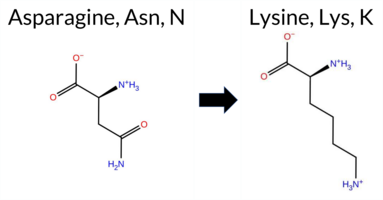 3DClick to see structure in 3D Viewer AIThe SynGAP1 missense variant N542K is not reported in ClinVar and has no entries in gnomAD. Prediction tools largely disagree: benign calls come from FoldX, SIFT, and Foldetta; pathogenic calls come from SGM‑Consensus, REVEL, PROVEAN, polyPhen‑2 (HumDiv and HumVar), ESM1b, FATHMM, AlphaMissense‑Default, and AlphaMissense‑Optimized. Two tools (Rosetta and premPS) give uncertain results. High‑accuracy methods give a mixed picture: AlphaMissense‑Optimized predicts pathogenic, the SGM Consensus (majority vote of AlphaMissense‑Default, ESM1b, FATHMM, PROVEAN) also predicts pathogenic, whereas Foldetta predicts benign. No prediction or stability result is missing or inconclusive. Overall, the majority of evidence (nine pathogenic vs three benign) points to a pathogenic effect. This conclusion is not contradicted by ClinVar status, which has no classification for this variant. Disclaimer: This summary was generated using AI and should be interpreted alongside expert review. | Likely Pathogenic | GAP | 0.053060 | Structured | 0.026143 | Uncertain | 0.953 | 0.331 | 0.000 | -11.967 | Likely Pathogenic | 0.998 | Likely Pathogenic | Likely Pathogenic | -0.36 | Likely Benign | 0.1 | 0.53 | Ambiguous | 0.09 | Likely Benign | 0.75 | Ambiguous | 0.610 | Likely Pathogenic | -5.33 | Deleterious | 1.000 | Probably Damaging | 0.997 | Probably Damaging | -1.23 | Pathogenic | 0.10 | Tolerated | 0.1870 | 0.4349 | 1 | 0 | -0.4 | 14.07 | |||||||||||||||||||||||||||||
| c.1626C>G | N542K 2D 3DClick to see structure in 3D Viewer AIThe SynGAP1 missense variant N542K is not reported in ClinVar (ClinVar ID None) and has no entries in gnomAD (gnomAD ID None). Prediction tools that agree on a benign effect include FoldX, SIFT, and Foldetta. Those that predict a pathogenic effect are SGM‑Consensus, REVEL, PROVEAN, polyPhen‑2 (HumDiv and HumVar), ESM1b, FATHMM, AlphaMissense‑Default, and AlphaMissense‑Optimized. Two tools (Rosetta and premPS) returned uncertain results. High‑accuracy assessments show AlphaMissense‑Optimized as pathogenic, the SGM‑Consensus (majority vote of AlphaMissense‑Default, ESM1b, FATHMM, PROVEAN) also pathogenic, while Foldetta predicts benign stability. No prediction or folding result is missing or inconclusive. Overall, the majority of evidence (nine pathogenic vs. three benign) indicates that the variant is most likely pathogenic, and this conclusion does not contradict the ClinVar status, which is currently unreported. Disclaimer: This summary was generated using AI and should be interpreted alongside expert review. | Likely Pathogenic | GAP | 0.053060 | Structured | 0.026143 | Uncertain | 0.953 | 0.331 | 0.000 | -11.967 | Likely Pathogenic | 0.998 | Likely Pathogenic | Likely Pathogenic | -0.36 | Likely Benign | 0.1 | 0.53 | Ambiguous | 0.09 | Likely Benign | 0.75 | Ambiguous | 0.610 | Likely Pathogenic | -5.33 | Deleterious | 1.000 | Probably Damaging | 0.997 | Probably Damaging | -1.23 | Pathogenic | 0.10 | Tolerated | 0.1870 | 0.4349 | 1 | 0 | -0.4 | 14.07 | |||||||||||||||||||||||||||||
| c.1648G>A | A550T 2D 3DClick to see structure in 3D Viewer AIThe SynGAP1 A550T missense variant is not reported in ClinVar (ClinVar ID None) and has no entries in gnomAD (gnomAD ID None). Prediction tools that agree on a benign effect include SIFT, Rosetta, and AlphaMissense‑Optimized. Tools that agree on a pathogenic effect include SGM‑Consensus, REVEL, PROVEAN, polyPhen‑2 (HumDiv and HumVar), ESM1b, FATHMM, and AlphaMissense‑Default. FoldX, Foldetta, and premPS are inconclusive and are treated as unavailable. High‑accuracy assessments show AlphaMissense‑Optimized predicts benign, while the SGM‑Consensus (majority vote of AlphaMissense‑Default, ESM1b, FATHMM, PROVEAN) predicts pathogenic. Foldetta’s stability analysis is uncertain. Overall, the majority of reliable predictors (8/11) indicate a pathogenic impact, whereas only three suggest benign. Therefore, the variant is most likely pathogenic based on current predictions, and this assessment does not contradict any ClinVar status because no ClinVar claim exists. Disclaimer: This summary was generated using AI and should be interpreted alongside expert review. | Likely Pathogenic | GAP | 0.018106 | Structured | 0.007241 | Uncertain | 0.954 | 0.265 | 0.000 | -10.555 | Likely Pathogenic | 0.621 | Likely Pathogenic | Likely Benign | 1.68 | Ambiguous | 0.3 | -0.05 | Likely Benign | 0.82 | Ambiguous | 0.73 | Ambiguous | 0.627 | Likely Pathogenic | -3.19 | Deleterious | 0.991 | Probably Damaging | 0.872 | Possibly Damaging | -1.25 | Pathogenic | 0.10 | Tolerated | 0.0931 | 0.4465 | 1 | 0 | -2.5 | 30.03 | |||||||||||||||||||||||||||||
| c.1666A>C | N556H 2D 3DClick to see structure in 3D Viewer AIThe SynGAP1 missense variant N556H is not reported in ClinVar and has no entries in gnomAD. Prediction tools that classify the variant as benign include FoldX, Rosetta, Foldetta, premPS, SIFT, and AlphaMissense‑Optimized. Tools that predict pathogenicity are SGM‑Consensus, REVEL, PROVEAN, polyPhen‑2 HumDiv, polyPhen‑2 HumVar, ESM1b, FATHMM, and AlphaMissense‑Default. High‑accuracy assessments show AlphaMissense‑Optimized labeling the variant as benign, the SGM‑Consensus (majority vote of AlphaMissense‑Default, ESM1b, FATHMM, PROVEAN) indicating likely pathogenic, and Foldetta (combining FoldX‑MD and Rosetta outputs) predicting benign stability. Overall, the majority of predictions lean toward pathogenicity, and this conclusion does not contradict the absence of a ClinVar classification. Thus, the variant is most likely pathogenic, and this assessment does not contradict the ClinVar status. Disclaimer: This summary was generated using AI and should be interpreted alongside expert review. | Likely Pathogenic | GAP | 0.015078 | Structured | 0.008655 | Uncertain | 0.925 | 0.225 | 0.000 | -8.877 | Likely Pathogenic | 0.570 | Likely Pathogenic | Likely Benign | 0.33 | Likely Benign | 0.0 | 0.12 | Likely Benign | 0.23 | Likely Benign | 0.08 | Likely Benign | 0.744 | Likely Pathogenic | -4.06 | Deleterious | 1.000 | Probably Damaging | 0.998 | Probably Damaging | -1.39 | Pathogenic | 0.10 | Tolerated | 0.1177 | 0.2940 | 2 | 1 | 0.3 | 23.04 | |||||||||||||||||||||||||||||
| c.1676G>A | C559Y 2D 3DClick to see structure in 3D Viewer AISynGAP1 missense variant C559Y is not reported in ClinVar and is absent from gnomAD. Prediction tools that classify the variant as benign include FoldX, Rosetta, Foldetta, premPS, SIFT, and FATHMM. Those that predict pathogenicity are REVEL, PROVEAN, polyPhen‑2 HumDiv, polyPhen‑2 HumVar, ESM1b, and AlphaMissense‑Default. High‑accuracy assessments show AlphaMissense‑Optimized as uncertain, SGM Consensus (majority vote of AlphaMissense‑Default, ESM1b, FATHMM, PROVEAN) as likely pathogenic, and Foldetta (combining FoldX‑MD and Rosetta outputs) as benign. Because the evidence is split evenly between benign and pathogenic predictions and the high‑accuracy tools disagree, the variant is best classified as of uncertain significance. This assessment does not contradict ClinVar status, as no ClinVar entry exists. Disclaimer: This summary was generated using AI and should be interpreted alongside expert review. | Likely Pathogenic | GAP | 0.016021 | Structured | 0.010460 | Uncertain | 0.842 | 0.204 | 0.000 | -11.767 | Likely Pathogenic | 0.868 | Likely Pathogenic | Ambiguous | -0.37 | Likely Benign | 0.0 | -0.19 | Likely Benign | -0.28 | Likely Benign | 0.36 | Likely Benign | 0.561 | Likely Pathogenic | -8.39 | Deleterious | 0.999 | Probably Damaging | 0.996 | Probably Damaging | 3.45 | Benign | 0.10 | Tolerated | 0.2094 | 0.2135 | 0 | -2 | -3.8 | 60.04 | |||||||||||||||||||||||||||||
| c.1690G>A | E564K 2D 3DClick to see structure in 3D Viewer AIThe SynGAP1 missense variant E564K is not reported in ClinVar and is present in the gnomAD database (variant ID 6‑33440742‑G‑A). Functional prediction tools largely agree on a deleterious effect: pathogenic calls are made by REVEL, Rosetta, PROVEAN, polyPhen‑2 (HumDiv and HumVar), ESM1b, FATHMM, AlphaMissense‑Default, and AlphaMissense‑Optimized, while only SIFT predicts a benign outcome. Uncertain results are reported by FoldX, Foldetta, and premPS. High‑accuracy assessments reinforce the pathogenic prediction: AlphaMissense‑Optimized is pathogenic, the SGM Consensus (majority vote of AlphaMissense‑Default, ESM1b, FATHMM, PROVEAN) is pathogenic, and Foldetta remains uncertain. Overall, the majority of evidence supports a pathogenic classification, and this conclusion does not contradict the ClinVar status, which currently contains no entry for this variant. Disclaimer: This summary was generated using AI and should be interpreted alongside expert review. | Likely Pathogenic | GAP | 0.023534 | Structured | 0.038418 | Uncertain | 0.891 | 0.208 | 0.000 | 6-33440742-G-A | -15.834 | Likely Pathogenic | 0.989 | Likely Pathogenic | Likely Pathogenic | 0.76 | Ambiguous | 0.1 | 2.06 | Destabilizing | 1.41 | Ambiguous | 0.89 | Ambiguous | 0.854 | Likely Pathogenic | -3.95 | Deleterious | 0.997 | Probably Damaging | 0.987 | Probably Damaging | -1.35 | Pathogenic | 0.10 | Tolerated | 3.37 | 35 | 0.1988 | 0.5280 | 1 | 0 | -0.4 | -0.94 | ||||||||||||||||||||||||||
| c.1711T>A | S571T 2D 3DClick to see structure in 3D Viewer AIThe SynGAP1 missense variant S571T is not reported in ClinVar (ClinVar ID: None) and has no entry in gnomAD (gnomAD ID: None). Prediction tools that indicate a benign effect include FoldX, Rosetta, Foldetta, premPS, SIFT, and AlphaMissense‑Optimized. Tools that predict a pathogenic effect are SGM‑Consensus, REVEL, PROVEAN, polyPhen‑2 (HumDiv and HumVar), ESM1b, and FATHMM; AlphaMissense‑Default remains uncertain. High‑accuracy assessments show AlphaMissense‑Optimized as benign, SGM‑Consensus (majority vote from AlphaMissense‑Default, ESM1b, FATHMM, PROVEAN) as pathogenic, and Foldetta (combining FoldX‑MD and Rosetta outputs) as benign. Overall, the majority of tools (seven) predict pathogenicity, while six predict benignity, and the high‑accuracy subset is split. Thus, the variant is most likely pathogenic based on the prevailing predictions, and this assessment does not contradict the absence of a ClinVar classification. Disclaimer: This summary was generated using AI and should be interpreted alongside expert review. | Likely Pathogenic | GAP | 0.069024 | Structured | 0.045569 | Uncertain | 0.928 | 0.270 | 0.000 | -8.243 | Likely Pathogenic | 0.431 | Ambiguous | Likely Benign | 0.37 | Likely Benign | 0.1 | -0.21 | Likely Benign | 0.08 | Likely Benign | 0.25 | Likely Benign | 0.564 | Likely Pathogenic | -2.76 | Deleterious | 0.933 | Possibly Damaging | 0.933 | Probably Damaging | -1.25 | Pathogenic | 0.10 | Tolerated | 0.1360 | 0.4014 | 1 | 1 | 0.1 | 14.03 | |||||||||||||||||||||||||||||
| c.1724G>C | R575P 2D 3DClick to see structure in 3D Viewer AIThe SynGAP1 missense variant R575P is not reported in ClinVar (no ClinVar ID) and is absent from gnomAD (no gnomAD ID). Prediction tools that agree on a benign effect include only SIFT, whereas all other evaluated algorithms—REVEL, FoldX, Rosetta, Foldetta, premPS, PROVEAN, polyPhen‑2 (HumDiv and HumVar), ESM1b, FATHMM, AlphaMissense‑Default, and AlphaMissense‑Optimized—classify the variant as pathogenic. High‑accuracy assessments further support a deleterious impact: AlphaMissense‑Optimized predicts pathogenicity; the SGM Consensus (majority vote of AlphaMissense‑Default, ESM1b, FATHMM, and PROVEAN) indicates likely pathogenic; and Foldetta, which integrates FoldX‑MD and Rosetta stability outputs, also predicts pathogenicity. Based on the overwhelming consensus of pathogenic predictions and the absence of any benign consensus, the variant is most likely pathogenic. This conclusion is not contradicted by ClinVar status, as no ClinVar entry exists for R575P. Disclaimer: This summary was generated using AI and should be interpreted alongside expert review. | Likely Pathogenic | GAP | 0.061840 | Structured | 0.021362 | Uncertain | 0.916 | 0.259 | 0.000 | -16.008 | Likely Pathogenic | 0.996 | Likely Pathogenic | Likely Pathogenic | 3.50 | Destabilizing | 0.1 | 4.97 | Destabilizing | 4.24 | Destabilizing | 1.13 | Destabilizing | 0.774 | Likely Pathogenic | -3.69 | Deleterious | 1.000 | Probably Damaging | 1.000 | Probably Damaging | -1.33 | Pathogenic | 0.10 | Tolerated | 0.2080 | 0.2670 | 0 | -2 | 2.9 | -59.07 | |||||||||||||||||||||||||||||
| c.1745A>T | E582V 2D 3DClick to see structure in 3D Viewer AISynGAP1 E582V is not reported in ClinVar and is absent from gnomAD. Computational predictors show a split: benign calls from REVEL, Rosetta, premPS, SIFT, and FATHMM; pathogenic calls from SGM‑Consensus, PROVEAN, polyPhen‑2 HumDiv, polyPhen‑2 HumVar, ESM1b, and AlphaMissense‑Default; and two uncertain calls from FoldX and AlphaMissense‑Optimized. High‑accuracy methods give a pathogenic consensus: AlphaMissense‑Optimized is uncertain, SGM‑Consensus (majority vote of AlphaMissense‑Default, ESM1b, FATHMM, PROVEAN) is pathogenic, and Foldetta (combining FoldX‑MD and Rosetta) is uncertain due to conflicting inputs. Overall, the computational evidence leans toward pathogenicity, and this assessment does not contradict ClinVar status, which has no entry for this variant. Disclaimer: This summary was generated using AI and should be interpreted alongside expert review. | Likely Pathogenic | GAP | 0.102787 | Structured | 0.033838 | Uncertain | 0.845 | 0.235 | 0.000 | -10.737 | Likely Pathogenic | 0.842 | Likely Pathogenic | Ambiguous | 0.87 | Ambiguous | 0.1 | -0.13 | Likely Benign | 0.37 | Likely Benign | 0.24 | Likely Benign | 0.251 | Likely Benign | -3.92 | Deleterious | 0.995 | Probably Damaging | 0.996 | Probably Damaging | 3.15 | Benign | 0.10 | Tolerated | 0.0564 | 0.4186 | -2 | -2 | 7.7 | -29.98 | |||||||||||||||||||||||||||||
| c.1754C>T | A585V 2D AIThe SynGAP1 missense variant A585V is not reported in ClinVar and is absent from gnomAD. Prediction tools that agree on a benign effect include REVEL and SIFT, whereas a majority of tools predict a pathogenic impact: SGM‑Consensus, PROVEAN, polyPhen‑2 (HumDiv and HumVar), ESM1b, FATHMM, AlphaMissense‑Default, and AlphaMissense‑Optimized. Tools with uncertain or inconclusive results (FoldX, Rosetta, Foldetta, premPS) are treated as unavailable. High‑accuracy assessments further support a deleterious effect: AlphaMissense‑Optimized is pathogenic, the SGM Consensus (majority vote of AlphaMissense‑Default, ESM1b, FATHMM, PROVEAN) is Likely Pathogenic, while Foldetta remains uncertain. Overall, the preponderance of evidence indicates that the variant is most likely pathogenic, and this conclusion does not contradict any ClinVar status because no ClinVar entry exists. Disclaimer: This summary was generated using AI and should be interpreted alongside expert review. | Likely Pathogenic | GAP | 0.060549 | Structured | 0.055884 | Uncertain | 0.880 | 0.244 | 0.000 | -10.843 | Likely Pathogenic | 0.970 | Likely Pathogenic | Likely Pathogenic | 0.95 | Ambiguous | 1.4 | 1.12 | Ambiguous | 1.04 | Ambiguous | 0.51 | Ambiguous | 0.420 | Likely Benign | -3.35 | Deleterious | 0.999 | Probably Damaging | 0.988 | Probably Damaging | -1.27 | Pathogenic | 0.10 | Tolerated | 0.1004 | 0.3496 | 0 | 0 | 2.4 | 28.05 | |||||||||||||||||||||||||||||
| c.1792C>A | L598I 2D 3DClick to see structure in 3D Viewer AIThe SynGAP1 missense variant L598I is not reported in ClinVar and is absent from gnomAD. Prediction tools that agree on a benign effect include REVEL, Rosetta, PROVEAN, SIFT, FATHMM, and AlphaMissense‑Optimized. Those that predict a pathogenic effect are polyPhen‑2 (HumDiv and HumVar) and ESM1b. The remaining tools (FoldX, Foldetta, premPS, AlphaMissense‑Default) give uncertain or inconclusive results. High‑accuracy assessments show AlphaMissense‑Optimized as benign, the SGM Consensus (majority vote from AlphaMissense‑Default, ESM1b, FATHMM, PROVEAN) as benign, and Foldetta as uncertain. Overall, the majority of reliable predictions indicate a benign impact. This conclusion does not contradict the ClinVar status, which has no entry for this variant. Disclaimer: This summary was generated using AI and should be interpreted alongside expert review. | GAP | 0.007259 | Structured | 0.147872 | Uncertain | 0.953 | 0.154 | 0.000 | -9.396 | Likely Pathogenic | 0.512 | Ambiguous | Likely Benign | 0.80 | Ambiguous | 0.0 | 0.38 | Likely Benign | 0.59 | Ambiguous | 0.78 | Ambiguous | 0.246 | Likely Benign | -1.96 | Neutral | 0.988 | Probably Damaging | 0.910 | Probably Damaging | 3.47 | Benign | 0.10 | Tolerated | 0.0792 | 0.2000 | 2 | 2 | 0.7 | 0.00 | ||||||||||||||||||||||||||||||
| c.1817G>A | S606N 2D 3DClick to see structure in 3D Viewer AISynGAP1 missense variant S606N is not reported in ClinVar and is absent from gnomAD. Functional prediction tools cluster into two groups: benign predictions (REVEL, FoldX, Rosetta, SIFT, FATHMM) and pathogenic predictions (SGM‑Consensus, PROVEAN, polyPhen‑2 HumDiv, polyPhen‑2 HumVar, ESM1b, AlphaMissense‑Default). Two tools give uncertain results: premPS and AlphaMissense‑Optimized. High‑accuracy assessments show SGM‑Consensus as Likely Pathogenic, AlphaMissense‑Optimized as Uncertain, and Foldetta (combining FoldX‑MD and Rosetta outputs) as Benign. Because the majority of individual predictors lean toward pathogenic and the SGM‑Consensus, a high‑confidence consensus, also indicates pathogenicity, the variant is most likely pathogenic. This conclusion does not contradict ClinVar status, which currently has no entry for the variant. Disclaimer: This summary was generated using AI and should be interpreted alongside expert review. | Likely Pathogenic | GAP | 0.041405 | Structured | 0.191720 | Uncertain | 0.875 | 0.247 | 0.000 | -11.352 | Likely Pathogenic | 0.919 | Likely Pathogenic | Ambiguous | 0.11 | Likely Benign | 0.1 | 0.20 | Likely Benign | 0.16 | Likely Benign | 0.76 | Ambiguous | 0.136 | Likely Benign | -2.99 | Deleterious | 0.920 | Possibly Damaging | 0.955 | Probably Damaging | 3.37 | Benign | 0.10 | Tolerated | 0.1137 | 0.3218 | 1 | 1 | -2.7 | 27.03 | |||||||||||||||||||||||||||||
| c.1826G>C | G609A 2D 3DClick to see structure in 3D Viewer AIThe SynGAP1 missense variant G609A is not reported in ClinVar (ClinVar ID None) and is absent from gnomAD (gnomAD ID None). Prediction tools that agree on a benign effect include REVEL, Rosetta, premPS, polyPhen‑2 (HumDiv and HumVar), SIFT, ESM1b, AlphaMissense‑Default, and AlphaMissense‑Optimized. Tools that predict a pathogenic effect are FoldX, PROVEAN, and FATHMM. One tool, Foldetta, yields an uncertain result. High‑accuracy assessments show AlphaMissense‑Optimized as benign, while the SGM Consensus (majority vote from AlphaMissense‑Default, ESM1b, FATHMM, PROVEAN) is inconclusive due to a 2‑to‑2 split, and Foldetta remains uncertain. Overall, the majority of evidence points to a benign impact. This conclusion does not contradict ClinVar status, as the variant is not yet classified in that database. Disclaimer: This summary was generated using AI and should be interpreted alongside expert review. | GAP | 0.179055 | Structured | 0.203786 | Uncertain | 0.851 | 0.252 | 0.000 | -6.790 | Likely Benign | 0.153 | Likely Benign | Likely Benign | 2.38 | Destabilizing | 0.3 | 0.01 | Likely Benign | 1.20 | Ambiguous | 0.43 | Likely Benign | 0.494 | Likely Benign | -2.65 | Deleterious | 0.282 | Benign | 0.164 | Benign | -1.43 | Pathogenic | 0.10 | Tolerated | 0.3812 | 0.3896 | 1 | 0 | 2.2 | 14.03 | ||||||||||||||||||||||||||||||
| c.1835A>G | Q612R 2D 3DClick to see structure in 3D Viewer AIThe SynGAP1 missense variant Q612R is not reported in ClinVar (ClinVar ID None) and has no entries in gnomAD (gnomAD ID None). Prediction tools that agree on a benign effect are SIFT and FoldX. Tools that agree on a pathogenic effect are SGM‑Consensus, REVEL, PROVEAN, polyPhen‑2 (HumDiv and HumVar), ESM1b, FATHMM, and AlphaMissense‑Default. Predictions that are uncertain or inconclusive are Rosetta, Foldetta, premPS, and AlphaMissense‑Optimized. High‑accuracy assessments show that the SGM‑Consensus (a majority vote of AlphaMissense‑Default, ESM1b, FATHMM, and PROVEAN) predicts pathogenicity, while AlphaMissense‑Optimized and Foldetta are uncertain. No high‑accuracy tool provides a benign prediction. Overall, the majority of available evidence points to a pathogenic effect. This conclusion is not contradicted by ClinVar status, which has no classification for this variant. Disclaimer: This summary was generated using AI and should be interpreted alongside expert review. | Likely Pathogenic | GAP | 0.275179 | Structured | 0.203988 | Uncertain | 0.822 | 0.263 | 0.000 | -10.571 | Likely Pathogenic | 0.837 | Likely Pathogenic | Ambiguous | -0.35 | Likely Benign | 0.2 | 1.56 | Ambiguous | 0.61 | Ambiguous | 0.78 | Ambiguous | 0.683 | Likely Pathogenic | -3.85 | Deleterious | 0.956 | Probably Damaging | 0.969 | Probably Damaging | -1.29 | Pathogenic | 0.10 | Tolerated | 0.1480 | 0.2196 | 1 | 1 | -1.0 | 28.06 | |||||||||||||||||||||||||||||
| c.1843C>G | P615A 2D 3DClick to see structure in 3D Viewer AIThe SynGAP1 P615A variant is not reported in ClinVar and is absent from gnomAD. Prediction tools that indicate a benign effect include SIFT and Rosetta, whereas the majority of predictors (REVEL, PROVEAN, polyPhen‑2 HumDiv, polyPhen‑2 HumVar, ESM1b, FATHMM, AlphaMissense‑Default, AlphaMissense‑Optimized) and the SGM‑Consensus score (Likely Pathogenic) all suggest a pathogenic impact. Uncertain results are reported by FoldX, Foldetta, and premPS. High‑accuracy assessments further support pathogenicity: AlphaMissense‑Optimized predicts pathogenic, the SGM‑Consensus (majority vote of AlphaMissense‑Default, ESM1b, FATHMM, PROVEAN) is Likely Pathogenic, and Foldetta’s stability analysis is inconclusive. Overall, the preponderance of evidence points to a pathogenic effect for P615A, and this conclusion does not contradict the absence of a ClinVar classification. Disclaimer: This summary was generated using AI and should be interpreted alongside expert review. | Likely Pathogenic | GAP | 0.236433 | Structured | 0.179032 | Uncertain | 0.879 | 0.255 | 0.000 | -12.156 | Likely Pathogenic | 0.979 | Likely Pathogenic | Likely Pathogenic | 1.73 | Ambiguous | 0.3 | 0.35 | Likely Benign | 1.04 | Ambiguous | 0.85 | Ambiguous | 0.693 | Likely Pathogenic | -7.97 | Deleterious | 1.000 | Probably Damaging | 1.000 | Probably Damaging | -1.25 | Pathogenic | 0.10 | Tolerated | 0.3169 | 0.3214 | 1 | -1 | 3.4 | -26.04 | |||||||||||||||||||||||||||||
| c.1847A>C | D616A 2D 3DClick to see structure in 3D Viewer AIThe SynGAP1 D616A missense variant is not reported in ClinVar and has no entries in gnomAD. Functional prediction tools cluster into two groups: benign predictions come from REVEL, premPS, SIFT, FATHMM, and polyPhen‑2 HumVar, while pathogenic predictions arise from SGM‑Consensus (Likely Pathogenic), Rosetta, PROVEAN, polyPhen‑2 HumDiv, ESM1b, and AlphaMissense‑Default. The high‑accuracy AlphaMissense‑Optimized model classifies the variant as benign, whereas the SGM‑Consensus, derived from a majority vote of AlphaMissense‑Default, ESM1b, FATHMM, and PROVEAN, indicates pathogenicity. Foldetta, which integrates FoldX‑MD and Rosetta stability outputs, is inconclusive. Overall, the majority of evidence points toward a pathogenic effect, and this assessment does not conflict with the absence of ClinVar annotation. Disclaimer: This summary was generated using AI and should be interpreted alongside expert review. | Likely Pathogenic | GAP | 0.129801 | Structured | 0.166689 | Uncertain | 0.867 | 0.252 | 0.000 | -11.386 | Likely Pathogenic | 0.664 | Likely Pathogenic | Likely Benign | 1.76 | Ambiguous | 0.2 | 2.07 | Destabilizing | 1.92 | Ambiguous | 0.41 | Likely Benign | 0.126 | Likely Benign | -6.13 | Deleterious | 0.539 | Possibly Damaging | 0.122 | Benign | 3.32 | Benign | 0.10 | Tolerated | 0.3543 | 0.4207 | 0 | -2 | 5.3 | -44.01 | |||||||||||||||||||||||||||||
| c.1985A>T | Q662L 2D 3DClick to see structure in 3D Viewer AIThe SynGAP1 missense variant Q662L is not reported in ClinVar (ClinVar ID None) and is absent from gnomAD (gnomAD ID None). Prediction tools that agree on a benign effect include REVEL, FoldX, Rosetta, Foldetta, premPS, SIFT, AlphaMissense‑Default, AlphaMissense‑Optimized, polyPhen2_HumVar, and FATHMM. Tools that predict a pathogenic effect are PROVEAN, polyPhen2_HumDiv, and ESM1b. High‑accuracy assessments show AlphaMissense‑Optimized as benign and Foldetta as benign; the SGM Consensus (majority vote from AlphaMissense‑Default, ESM1b, FATHMM, PROVEAN) is inconclusive (2 benign vs 2 pathogenic). Overall, the majority of evidence supports a benign impact. This conclusion is consistent with the lack of ClinVar annotation and gnomAD presence, so there is no contradiction with existing database status. Disclaimer: This summary was generated using AI and should be interpreted alongside expert review. | GAP | 0.046336 | Structured | 0.103446 | Uncertain | 0.932 | 0.323 | 0.000 | -10.291 | Likely Pathogenic | 0.300 | Likely Benign | Likely Benign | 0.04 | Likely Benign | 0.0 | 0.12 | Likely Benign | 0.08 | Likely Benign | 0.17 | Likely Benign | 0.186 | Likely Benign | -4.09 | Deleterious | 0.699 | Possibly Damaging | 0.057 | Benign | 3.42 | Benign | 0.10 | Tolerated | 0.1070 | 0.5255 | -2 | -2 | 7.3 | -14.97 | ||||||||||||||||||||||||||||||
| c.2060G>T | R687L 2D 3DClick to see structure in 3D Viewer AISynGAP1 missense variant R687L is not reported in ClinVar and is absent from gnomAD. Prediction tools that agree on benign include REVEL, SIFT, ESM1b, and FATHMM, while those that agree on pathogenic are AlphaMissense‑Default, PROVEAN, polyPhen‑2 HumDiv, and polyPhen‑2 HumVar. The remaining tools—AlphaMissense‑Optimized, FoldX, Foldetta, and premPS—return uncertain or inconclusive results. High‑accuracy assessments are likewise inconclusive: AlphaMissense‑Optimized is uncertain; the SGM Consensus (majority vote of AlphaMissense‑Default, ESM1b, FATHMM, PROVEAN) is a tie, and Foldetta is uncertain. Consequently, the evidence does not strongly support either benign or pathogenic classification. The variant is therefore most likely inconclusive, and this assessment does not contradict the lack of ClinVar annotation. Disclaimer: This summary was generated using AI and should be interpreted alongside expert review. | GAP | 0.054297 | Structured | 0.191060 | Uncertain | 0.914 | 0.259 | 0.000 | -6.925 | Likely Benign | 0.901 | Likely Pathogenic | Ambiguous | 1.43 | Ambiguous | 0.3 | 0.05 | Likely Benign | 0.74 | Ambiguous | 0.83 | Ambiguous | 0.448 | Likely Benign | -5.76 | Deleterious | 1.000 | Probably Damaging | 0.987 | Probably Damaging | 3.90 | Benign | 0.10 | Tolerated | 0.1252 | 0.3376 | -3 | -2 | 8.3 | -43.03 | ||||||||||||||||||||||||||||||
| c.2091G>C | W697C 2D 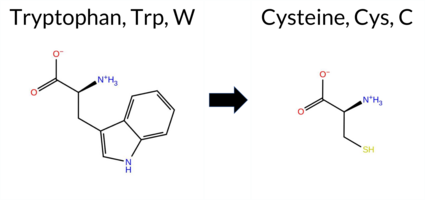 3DClick to see structure in 3D Viewer AISynGAP1 W697C is not reported in ClinVar and is absent from gnomAD. Functional prediction tools cluster into two groups: benign predictions come from REVEL, SIFT, ESM1b, and FATHMM, while pathogenic predictions arise from PROVEAN, polyPhen‑2 HumDiv, polyPhen‑2 HumVar, and AlphaMissense‑Default. The remaining tools—FoldX, Rosetta, Foldetta, premPS, and AlphaMissense‑Optimized—return uncertain or inconclusive results. High‑accuracy assessments are likewise ambiguous: AlphaMissense‑Optimized is uncertain; the SGM Consensus (majority vote of AlphaMissense‑Default, ESM1b, FATHMM, and PROVEAN) is a 2‑vs‑2 tie, and Foldetta is uncertain. Consequently, the evidence does not favor either outcome; the variant’s impact remains indeterminate. This lack of consensus does not contradict ClinVar, which has no entry for the variant. Disclaimer: This summary was generated using AI and should be interpreted alongside expert review. | GAP | 0.175930 | Structured | 0.400169 | Uncertain | 0.945 | 0.297 | 0.000 | -5.683 | Likely Benign | 0.811 | Likely Pathogenic | Ambiguous | 1.84 | Ambiguous | 0.1 | 1.01 | Ambiguous | 1.43 | Ambiguous | 0.98 | Ambiguous | 0.318 | Likely Benign | -8.65 | Deleterious | 1.000 | Probably Damaging | 0.999 | Probably Damaging | 3.48 | Benign | 0.10 | Tolerated | 0.3575 | 0.1015 | -8 | -2 | 3.4 | -83.07 | ||||||||||||||||||||||||||||||
| c.2091G>T | W697C 2D 3DClick to see structure in 3D Viewer AISynGAP1 W697C is not reported in ClinVar and is absent from gnomAD. Functional prediction tools cluster into two groups: benign predictions come from REVEL, SIFT, ESM1b, and FATHMM, while pathogenic predictions arise from PROVEAN, polyPhen‑2 HumDiv, polyPhen‑2 HumVar, and AlphaMissense‑Default. Five tools (FoldX, Rosetta, Foldetta, premPS, AlphaMissense‑Optimized) yield uncertain or missing results. High‑accuracy assessments are likewise inconclusive: AlphaMissense‑Optimized is uncertain; the SGM Consensus, derived from a majority vote of AlphaMissense‑Default, ESM1b, FATHMM, and PROVEAN, is a 2‑vs‑2 tie; and Foldetta is uncertain. Consequently, the evidence does not strongly favor either outcome. The variant is therefore best classified as of uncertain significance; this assessment does not contradict the lack of ClinVar annotation. Disclaimer: This summary was generated using AI and should be interpreted alongside expert review. | GAP | 0.175930 | Structured | 0.400169 | Uncertain | 0.945 | 0.297 | 0.000 | -5.683 | Likely Benign | 0.811 | Likely Pathogenic | Ambiguous | 1.84 | Ambiguous | 0.1 | 1.01 | Ambiguous | 1.43 | Ambiguous | 0.98 | Ambiguous | 0.318 | Likely Benign | -8.65 | Deleterious | 1.000 | Probably Damaging | 0.999 | Probably Damaging | 3.48 | Benign | 0.10 | Tolerated | 0.3575 | 0.1015 | -8 | -2 | 3.4 | -83.07 | ||||||||||||||||||||||||||||||
| c.2095G>C | V699L 2D 3DClick to see structure in 3D Viewer AIThe SynGAP1 missense variant V699L has no ClinVar entry and is not reported in gnomAD. Prediction tools that agree on a benign effect include REVEL, Rosetta, Foldetta, PROVEAN, polyPhen‑2 (HumDiv and HumVar), SIFT, FATHMM, and AlphaMissense‑Optimized. Only ESM1b predicts a pathogenic outcome, while FoldX, premPS, and AlphaMissense‑Default are uncertain. High‑accuracy assessments show AlphaMissense‑Optimized as benign; the SGM Consensus (majority vote from AlphaMissense‑Default, ESM1b, FATHMM, PROVEAN) yields a benign majority; and Foldetta also predicts benign stability. No prediction or folding result is missing or inconclusive. Overall, the variant is most likely benign based on the preponderance of evidence, and this assessment does not contradict any ClinVar status, as none exists. Disclaimer: This summary was generated using AI and should be interpreted alongside expert review. | GAP | 0.069024 | Structured | 0.432975 | Uncertain | 0.935 | 0.315 | 0.000 | -8.301 | Likely Pathogenic | 0.558 | Ambiguous | Likely Benign | -0.58 | Ambiguous | 0.1 | -0.36 | Likely Benign | -0.47 | Likely Benign | 0.69 | Ambiguous | 0.150 | Likely Benign | -2.14 | Neutral | 0.448 | Benign | 0.153 | Benign | 3.48 | Benign | 0.10 | Tolerated | 0.0900 | 0.3289 | 2 | 1 | -0.4 | 14.03 | ||||||||||||||||||||||||||||||
| c.2095G>T | V699L 2D 3DClick to see structure in 3D Viewer AIThe SynGAP1 missense variant V699L has no ClinVar entry and is not reported in gnomAD. Prediction tools that agree on a benign effect include REVEL, Rosetta, Foldetta, PROVEAN, polyPhen‑2 (HumDiv and HumVar), SIFT, FATHMM, and AlphaMissense‑Optimized. Only ESM1b predicts a pathogenic outcome, while FoldX, premPS, and AlphaMissense‑Default are uncertain. High‑accuracy assessments show AlphaMissense‑Optimized as benign; the SGM Consensus (majority vote from AlphaMissense‑Default, ESM1b, FATHMM, PROVEAN) yields a benign majority; and Foldetta also predicts benign stability. No prediction or folding result is missing or inconclusive. Overall, the variant is most likely benign based on the consensus of the available tools, and this benign prediction does not contradict any ClinVar status, as no ClinVar classification exists. Disclaimer: This summary was generated using AI and should be interpreted alongside expert review. | GAP | 0.069024 | Structured | 0.432975 | Uncertain | 0.935 | 0.315 | 0.000 | -8.301 | Likely Pathogenic | 0.558 | Ambiguous | Likely Benign | -0.58 | Ambiguous | 0.1 | -0.36 | Likely Benign | -0.47 | Likely Benign | 0.69 | Ambiguous | 0.150 | Likely Benign | -2.14 | Neutral | 0.448 | Benign | 0.153 | Benign | 3.48 | Benign | 0.10 | Tolerated | 0.0900 | 0.3289 | 2 | 1 | -0.4 | 14.03 | ||||||||||||||||||||||||||||||
| c.2156A>T | N719I 2D 3DClick to see structure in 3D Viewer AIThe SynGAP1 missense variant N719I is not reported in ClinVar (ClinVar ID None) and is absent from gnomAD (gnomAD ID None). Prediction tools that agree on a benign effect include REVEL, FoldX, Foldetta, premPS, SIFT, FATHMM, and AlphaMissense‑Optimized. Those that predict a pathogenic effect are PROVEAN, polyPhen‑2 HumDiv, polyPhen‑2 HumVar, and ESM1b. Two tools report uncertainty: Rosetta and AlphaMissense‑Default. High‑accuracy assessments show AlphaMissense‑Optimized as benign, Foldetta as benign, and the SGM Consensus (majority vote from AlphaMissense‑Default, ESM1b, FATHMM, PROVEAN) as pathogenic. Overall, the majority of predictions lean toward a benign impact, with no conflict with ClinVar status. Thus, the variant is most likely benign based on the current computational evidence. Disclaimer: This summary was generated using AI and should be interpreted alongside expert review. | GAP | 0.384043 | Structured | 0.445381 | Uncertain | 0.961 | 0.386 | 0.000 | -10.794 | Likely Pathogenic | 0.399 | Ambiguous | Likely Benign | -0.19 | Likely Benign | 0.0 | -0.74 | Ambiguous | -0.47 | Likely Benign | 0.40 | Likely Benign | 0.146 | Likely Benign | -4.88 | Deleterious | 1.000 | Probably Damaging | 0.999 | Probably Damaging | 2.71 | Benign | 0.10 | Tolerated | 0.0408 | 0.4493 | -2 | -3 | 8.0 | -0.94 | ||||||||||||||||||||||||||||||
| c.2315T>G | F772C 2D 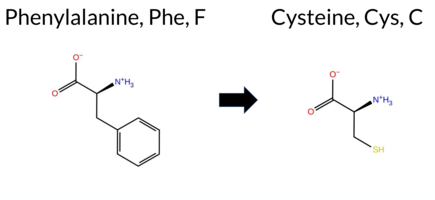 AIThe SynGAP1 missense variant F772C is not reported in ClinVar (no ClinVar ID) and is absent from gnomAD (no gnomAD ID). Prediction tools that agree on a benign effect include REVEL, PROVEAN, SIFT, ESM1b, FATHMM, AlphaMissense‑Default, and AlphaMissense‑Optimized. Tools that predict a pathogenic effect are polyPhen‑2 HumDiv and polyPhen‑2 HumVar. The SGM‑Consensus, which aggregates AlphaMissense‑Default, ESM1b, FATHMM, and PROVEAN, reports the variant as Likely Benign. High‑accuracy assessments show AlphaMissense‑Optimized as Benign and the SGM‑Consensus as Likely Benign; Foldetta results are unavailable. Overall, the majority of evidence points to a benign impact. The predictions do not contradict any ClinVar status, as no ClinVar claim exists for this variant. Disclaimer: This summary was generated using AI and should be interpreted alongside expert review. | Likely Benign | 0.450668 | Structured | 0.922662 | Binding | 0.329 | 0.884 | 0.250 | -4.498 | Likely Benign | 0.248 | Likely Benign | Likely Benign | 0.156 | Likely Benign | -1.46 | Neutral | 0.979 | Probably Damaging | 0.985 | Probably Damaging | 4.14 | Benign | 0.10 | Tolerated | 0.2450 | 0.1419 | -4 | -2 | -0.3 | -44.04 | |||||||||||||||||||||||||||||||||||||||
| c.2327G>A | G776D 2D AIThe SynGAP1 missense variant G776D is catalogued in gnomAD (ID 6‑33442485‑G‑A) but has no ClinVar entry. Functional prediction tools cluster into two groups: benign predictions include REVEL, PROVEAN, SIFT, ESM1b, FATHMM, and AlphaMissense‑Optimized, while pathogenic predictions come from AlphaMissense‑Default, polyPhen‑2 HumDiv, and polyPhen‑2 HumVar. The SGM‑Consensus, derived from a majority vote of AlphaMissense‑Default, ESM1b, FATHMM, and PROVEAN, is “Likely Benign.” High‑accuracy assessments further support a benign outcome: AlphaMissense‑Optimized scores benign, and the SGM‑Consensus (majority of the four high‑accuracy tools) also indicates benign. Foldetta stability analysis is unavailable, so it does not influence the assessment. Overall, the preponderance of evidence points to a benign effect for G776D, and this conclusion is consistent with the absence of a ClinVar pathogenic classification. Disclaimer: This summary was generated using AI and should be interpreted alongside expert review. | Likely Benign | 0.377384 | Structured | 0.886983 | Binding | 0.296 | 0.888 | 0.250 | 6-33442485-G-A | 0.388 | Likely Benign | 0.566 | Likely Pathogenic | Likely Benign | 0.188 | Likely Benign | 0.16 | Neutral | 0.999 | Probably Damaging | 0.996 | Probably Damaging | 4.30 | Benign | 0.10 | Tolerated | 3.64 | 6 | 0.1835 | 0.2971 | -1 | 1 | -3.1 | 58.04 | ||||||||||||||||||||||||||||||||||||
| c.2339C>G | S780C 2D AIThe SynGAP1 missense variant S780C is listed in ClinVar with an “Uncertain” status and is present in gnomAD (ID 6‑33442891‑C‑G). Prediction tools that agree on a benign effect include REVEL, PROVEAN, polyPhen‑2 (HumDiv and HumVar), SIFT, FATHMM, AlphaMissense‑Default, AlphaMissense‑Optimized, and the SGM‑Consensus (majority vote of AlphaMissense‑Default, ESM1b, FATHMM, and PROVEAN). No tool in the dataset predicts a pathogenic outcome; ESM1b is inconclusive and therefore treated as unavailable. High‑accuracy assessments show AlphaMissense‑Optimized as benign and the SGM‑Consensus as likely benign, while Foldetta results are not reported and thus unavailable. Based on the collective predictions, the variant is most likely benign, which does not contradict the ClinVar “Uncertain” classification. Disclaimer: This summary was generated using AI and should be interpreted alongside expert review. | Likely Benign | 0.599170 | Disordered | 0.812415 | Binding | 0.283 | 0.883 | 0.500 | Uncertain | 4 | 6-33442891-C-G | 16 | 9.94e-6 | -7.603 | In-Between | 0.278 | Likely Benign | Likely Benign | 0.078 | Likely Benign | -1.41 | Neutral | 0.065 | Benign | 0.043 | Benign | 2.59 | Benign | 0.10 | Tolerated | 3.64 | 6 | 0.1063 | 0.6581 | -1 | 0 | 3.3 | 16.06 | ||||||||||||||||||||||||||||||||
| c.2339C>T | S780F 2D AIThe SynGAP1 missense variant S780F is not reported in ClinVar (ClinVar ID: None) and is absent from gnomAD (gnomAD ID: None). Prediction tools that agree on a benign effect include REVEL, PROVEAN, SIFT, FATHMM, and AlphaMissense‑Optimized. Tools that predict a pathogenic effect are polyPhen‑2 HumDiv, polyPhen‑2 HumVar, ESM1b, and AlphaMissense‑Default. The SGM Consensus, derived from a majority vote of AlphaMissense‑Default, ESM1b, FATHMM, and PROVEAN, is inconclusive (two benign, two pathogenic) and therefore unavailable as evidence. Foldetta, a protein‑folding stability method combining FoldX‑MD and Rosetta outputs, is also unavailable for this variant. Overall, the majority of available predictions (five benign vs. four pathogenic) lean toward a benign impact. There is no ClinVar annotation to contradict this assessment, so the variant is most likely benign. Disclaimer: This summary was generated using AI and should be interpreted alongside expert review. | 0.599170 | Disordered | 0.812415 | Binding | 0.283 | 0.883 | 0.500 | -8.055 | Likely Pathogenic | 0.677 | Likely Pathogenic | Likely Benign | 0.104 | Likely Benign | -1.42 | Neutral | 0.995 | Probably Damaging | 0.925 | Probably Damaging | 2.61 | Benign | 0.10 | Tolerated | 0.0768 | 0.6706 | -3 | -2 | 3.6 | 60.10 | ||||||||||||||||||||||||||||||||||||||||
| c.2438T>A | L813Q 2D AIThe SynGAP1 missense variant L813Q is not reported in ClinVar and is absent from gnomAD. Prediction tools that agree on a benign effect include REVEL, PROVEAN, SIFT, ESM1b, FATHMM, and AlphaMissense‑Optimized, while polyPhen‑2 HumDiv, polyPhen‑2 HumVar, and AlphaMissense‑Default predict a pathogenic outcome. The SGM‑Consensus, derived from a majority vote of AlphaMissense‑Default, ESM1b, FATHMM, and PROVEAN, classifies the variant as Likely Benign. High‑accuracy assessments show AlphaMissense‑Optimized as Benign and the SGM‑Consensus as Likely Benign; Foldetta results are unavailable. Overall, the balance of evidence points to a benign impact for the variant, and this conclusion does not contradict any ClinVar annotation (none is present). Disclaimer: This summary was generated using AI and should be interpreted alongside expert review. | Likely Benign | SH3-binding motif | 0.411940 | Structured | 0.838481 | Binding | 0.292 | 0.905 | 0.250 | -5.380 | Likely Benign | 0.660 | Likely Pathogenic | Likely Benign | 0.137 | Likely Benign | -1.30 | Neutral | 0.999 | Probably Damaging | 0.985 | Probably Damaging | 2.67 | Benign | 0.10 | Tolerated | 0.1122 | 0.1105 | -2 | -2 | -7.3 | 14.97 | ||||||||||||||||||||||||||||||||||||||
| c.2494C>A | Q832K 2D AIThe SynGAP1 missense variant Q832K is not reported in ClinVar and is absent from gnomAD. Prediction tools largely agree on a benign effect: REVEL, PROVEAN, polyPhen‑2 HumVar, SIFT, ESM1b, FATHMM, AlphaMissense‑Default, and AlphaMissense‑Optimized all classify the variant as benign. Only polyPhen‑2 HumDiv predicts a pathogenic outcome. The SGM‑Consensus, derived from a majority vote of AlphaMissense‑Default, ESM1b, FATHMM, and PROVEAN, reports the variant as “Likely Benign.” High‑accuracy assessments further support a benign interpretation: AlphaMissense‑Optimized is benign, and the SGM‑Consensus is likely benign; Foldetta results are unavailable. Overall, the preponderance of evidence indicates that the variant is most likely benign, and this conclusion is not contradicted by any ClinVar annotation. Disclaimer: This summary was generated using AI and should be interpreted alongside expert review. | Likely Benign | 0.720929 | Disordered | 0.619913 | Binding | 0.290 | 0.877 | 0.375 | -4.964 | Likely Benign | 0.182 | Likely Benign | Likely Benign | 0.080 | Likely Benign | -0.87 | Neutral | 0.811 | Possibly Damaging | 0.348 | Benign | 2.78 | Benign | 0.10 | Tolerated | 0.1759 | 0.3568 | 1 | 1 | -0.4 | 0.04 | |||||||||||||||||||||||||||||||||||||||
| c.2590G>A | A864T 2D AIThe SynGAP1 missense variant A864T is not reported in ClinVar and is absent from gnomAD. In silico prediction tools uniformly indicate a benign effect: REVEL, PROVEAN, polyPhen‑2 (HumDiv and HumVar), SIFT, ESM1b, FATHMM, AlphaMissense‑Default, and AlphaMissense‑Optimized all classify the change as benign. No tool predicts pathogenicity. High‑accuracy assessments corroborate this: AlphaMissense‑Optimized predicts benign, and the SGM Consensus (majority vote of AlphaMissense‑Default, ESM1b, FATHMM, and PROVEAN) reports a likely benign outcome. Foldetta results are unavailable. Overall, the consensus of all available predictions points to a benign impact, and this conclusion does not contradict the ClinVar status, which currently contains no entry for this variant. Disclaimer: This summary was generated using AI and should be interpreted alongside expert review. | Likely Benign | 0.549308 | Disordered | 0.611966 | Binding | 0.269 | 0.788 | 0.250 | -4.314 | Likely Benign | 0.077 | Likely Benign | Likely Benign | 0.016 | Likely Benign | -1.00 | Neutral | 0.224 | Benign | 0.113 | Benign | 2.55 | Benign | 0.10 | Tolerated | 0.1504 | 0.7485 | 1 | 0 | -2.5 | 30.03 | |||||||||||||||||||||||||||||||||||||||
| c.2600G>T | G867V 2D AIThe SynGAP1 missense variant G867V is not reported in ClinVar (ClinVar ID = None) and is absent from gnomAD (gnomAD ID = None). Prediction tools that agree on a benign effect include REVEL, PROVEAN, SIFT, FATHMM, and AlphaMissense‑Optimized. Tools that predict a pathogenic effect are polyPhen‑2 HumDiv and polyPhen‑2 HumVar. Two tools—ESM1b and AlphaMissense‑Default—return uncertain results. High‑accuracy assessments show AlphaMissense‑Optimized as benign; the SGM Consensus (majority vote from AlphaMissense‑Default, ESM1b, FATHMM, PROVEAN) is inconclusive because it yields a 2‑to‑2 split between benign and uncertain calls. Foldetta, a protein‑folding stability method, has no available result for this variant. Overall, the balance of evidence (five benign predictions versus two pathogenic predictions, with no decisive high‑accuracy support for pathogenicity) indicates that the variant is most likely benign, and this conclusion does not contradict any ClinVar status. Disclaimer: This summary was generated using AI and should be interpreted alongside expert review. | 0.517562 | Disordered | 0.657954 | Binding | 0.285 | 0.801 | 0.250 | -7.049 | In-Between | 0.441 | Ambiguous | Likely Benign | 0.111 | Likely Benign | -2.23 | Neutral | 0.999 | Probably Damaging | 0.958 | Probably Damaging | 2.70 | Benign | 0.10 | Tolerated | 0.1125 | 0.4613 | -1 | -3 | 4.6 | 42.08 | ||||||||||||||||||||||||||||||||||||||||
| c.2608C>A | L870M 2D AIThe SynGAP1 missense variant L870M is not reported in ClinVar (no ClinVar ID) and is absent from gnomAD (no gnomAD ID). Prediction tools that agree on a benign effect include REVEL, PROVEAN, SIFT, ESM1b, FATHMM, AlphaMissense‑Default, AlphaMissense‑Optimized, and the SGM‑Consensus (which is “Likely Benign”). In contrast, the two polyPhen‑2 implementations (HumDiv and HumVar) predict a pathogenic effect. High‑accuracy assessments further support a benign classification: AlphaMissense‑Optimized is benign, and the SGM‑Consensus (majority vote of AlphaMissense‑Default, ESM1b, FATHMM, and PROVEAN) is also likely benign. No Foldetta stability result is available, so it does not influence the assessment. Overall, the majority of evidence indicates that the variant is most likely benign, and this conclusion is not contradicted by any ClinVar annotation. Disclaimer: This summary was generated using AI and should be interpreted alongside expert review. | Likely Benign | 0.483068 | Structured | 0.688079 | Binding | 0.274 | 0.850 | 0.125 | -4.809 | Likely Benign | 0.316 | Likely Benign | Likely Benign | 0.130 | Likely Benign | -1.01 | Neutral | 0.999 | Probably Damaging | 0.998 | Probably Damaging | 2.60 | Benign | 0.10 | Tolerated | 0.0757 | 0.3956 | 4 | 2 | -1.9 | 18.03 | |||||||||||||||||||||||||||||||||||||||
| c.2638G>T | A880S 2D AIThe SynGAP1 missense variant A880S is not reported in ClinVar and is absent from gnomAD, indicating no documented allele frequency data. Functional prediction tools uniformly classify the variant as benign: REVEL, PROVEAN, polyPhen‑2 (HumDiv and HumVar), SIFT, ESM1b, FATHMM, AlphaMissense‑Default, and AlphaMissense‑Optimized all predict a benign effect. No tool in the dataset indicates pathogenicity. High‑accuracy assessments corroborate this benign prediction: AlphaMissense‑Optimized reports a benign outcome, and the SGM Consensus (majority vote of AlphaMissense‑Default, ESM1b, FATHMM, and PROVEAN) yields a “Likely Benign” classification. Foldetta results are not available, so they do not influence the assessment. Overall, the variant is most likely benign, and this conclusion is consistent with the absence of any ClinVar pathogenic annotation. Disclaimer: This summary was generated using AI and should be interpreted alongside expert review. | Likely Benign | 0.703578 | Disordered | 0.621441 | Binding | 0.309 | 0.874 | 0.250 | -3.149 | Likely Benign | 0.076 | Likely Benign | Likely Benign | 0.092 | Likely Benign | -0.33 | Neutral | 0.393 | Benign | 0.187 | Benign | 2.63 | Benign | 0.10 | Tolerated | 0.2504 | 0.5108 | 1 | 1 | -2.6 | 16.00 | |||||||||||||||||||||||||||||||||||||||
| c.2677C>A | Q893K 2D AIThe SynGAP1 missense variant Q893K is not reported in ClinVar and is absent from gnomAD. Functional prediction tools uniformly indicate a benign effect: REVEL, PROVEAN, polyPhen‑2 (HumDiv and HumVar), SIFT, ESM1b, and FATHMM all score the substitution as benign, and AlphaMissense‑Optimized also predicts a benign outcome. No tool predicts pathogenicity; AlphaMissense‑Default remains uncertain. The SGM‑Consensus, derived from a majority vote of AlphaMissense‑Default, ESM1b, FATHMM, and PROVEAN, classifies the variant as likely benign. High‑accuracy assessments corroborate this: AlphaMissense‑Optimized is benign, and the SGM‑Consensus is likely benign; Foldetta results are not available. Overall, the computational evidence strongly supports a benign classification, and this conclusion does not contradict ClinVar status, which has no entry for this variant. Disclaimer: This summary was generated using AI and should be interpreted alongside expert review. | Likely Benign | 0.754692 | Disordered | 0.447267 | Uncertain | 0.310 | 0.925 | 0.750 | -5.622 | Likely Benign | 0.496 | Ambiguous | Likely Benign | 0.053 | Likely Benign | -1.45 | Neutral | 0.451 | Benign | 0.265 | Benign | 2.78 | Benign | 0.10 | Tolerated | 0.1901 | 0.4381 | 1 | 1 | -0.4 | 0.04 | |||||||||||||||||||||||||||||||||||||||
| c.2683A>C | S895R 2D AIThe SynGAP1 missense variant S895R is reported in ClinVar as not yet classified and is present in gnomAD (ID 6‑33443235‑A‑C). Consensus from multiple in silico predictors shows a split: benign calls come from REVEL, PROVEAN, SIFT, ESM1b, and FATHMM, while pathogenic calls arise from polyPhen‑2 HumDiv, polyPhen‑2 HumVar, AlphaMissense‑Default, and AlphaMissense‑Optimized. When grouping by agreement, the benign group contains five tools, whereas the pathogenic group contains four. High‑accuracy assessments further clarify the picture: AlphaMissense‑Optimized predicts pathogenicity, whereas the SGM‑Consensus—derived from a majority vote of AlphaMissense‑Default, ESM1b, FATHMM, and PROVEAN—leans benign. Foldetta, a protein‑folding stability method that integrates FoldX‑MD and Rosetta outputs, has no available result for this variant. Overall, the majority of evidence points toward a benign effect, and this conclusion does not conflict with the current ClinVar status, which remains unclassified. Disclaimer: This summary was generated using AI and should be interpreted alongside expert review. | Likely Benign | 0.788093 | Disordered | 0.414977 | Uncertain | 0.294 | 0.925 | 0.750 | 6-33443235-A-C | 1 | 6.20e-7 | -4.746 | Likely Benign | 0.973 | Likely Pathogenic | Likely Pathogenic | 0.167 | Likely Benign | -1.72 | Neutral | 0.997 | Probably Damaging | 0.995 | Probably Damaging | 2.64 | Benign | 0.10 | Tolerated | 4.32 | 4 | 0.0949 | 0.4046 | -1 | 0 | -3.7 | 69.11 | ||||||||||||||||||||||||||||||||||
| c.2685T>A | S895R 2D AIThe SynGAP1 missense variant S895R is not reported in ClinVar and has no gnomAD entry. Prediction tools that agree on a benign effect include REVEL, PROVEAN, SIFT, ESM1b, FATHMM, and the SGM‑Consensus score (Likely Benign). Tools that predict a pathogenic outcome are polyPhen‑2 HumDiv, polyPhen‑2 HumVar, AlphaMissense‑Default, and AlphaMissense‑Optimized. High‑accuracy assessments show AlphaMissense‑Optimized as pathogenic, while the SGM‑Consensus (derived from a majority vote of AlphaMissense‑Default, ESM1b, FATHMM, and PROVEAN) is benign. No Foldetta stability prediction is available. Overall, the majority of evidence points to a benign effect, and this is consistent with the absence of a ClinVar classification. Disclaimer: This summary was generated using AI and should be interpreted alongside expert review. | Likely Benign | 0.788093 | Disordered | 0.414977 | Uncertain | 0.294 | 0.925 | 0.750 | -4.746 | Likely Benign | 0.973 | Likely Pathogenic | Likely Pathogenic | 0.123 | Likely Benign | -1.72 | Neutral | 0.997 | Probably Damaging | 0.995 | Probably Damaging | 2.64 | Benign | 0.10 | Tolerated | 4.32 | 4 | 0.0949 | 0.4046 | -1 | 0 | -3.7 | 69.11 | |||||||||||||||||||||||||||||||||||||
| c.2685T>G | S895R 2D AIThe SynGAP1 missense variant S895R is not reported in ClinVar and has no gnomAD entry. Prediction tools that agree on a benign effect include REVEL, PROVEAN, SIFT, ESM1b, FATHMM, and the SGM‑Consensus score (Likely Benign). Tools that predict a pathogenic effect are polyPhen‑2 HumDiv, polyPhen‑2 HumVar, AlphaMissense‑Default, and AlphaMissense‑Optimized. High‑accuracy assessments show AlphaMissense‑Optimized as pathogenic, while the SGM‑Consensus (derived from a majority vote of AlphaMissense‑Default, ESM1b, FATHMM, and PROVEAN) is benign. No Foldetta stability prediction is available. Overall, the majority of evidence points to a benign impact, and this is consistent with the absence of a ClinVar classification. Disclaimer: This summary was generated using AI and should be interpreted alongside expert review. | Likely Benign | 0.788093 | Disordered | 0.414977 | Uncertain | 0.294 | 0.925 | 0.750 | -4.746 | Likely Benign | 0.973 | Likely Pathogenic | Likely Pathogenic | 0.123 | Likely Benign | -1.72 | Neutral | 0.997 | Probably Damaging | 0.995 | Probably Damaging | 2.64 | Benign | 0.10 | Tolerated | 4.32 | 4 | 0.0949 | 0.4046 | -1 | 0 | -3.7 | 69.11 | |||||||||||||||||||||||||||||||||||||
| c.2686G>T | G896C 2D AIThe SynGAP1 missense variant G896C is not reported in ClinVar (no ClinVar ID) and is absent from gnomAD (no gnomAD ID). Prediction tools that agree on a benign effect include REVEL, SIFT, ESM1b, FATHMM, AlphaMissense‑Default, and AlphaMissense‑Optimized. Tools that predict a pathogenic effect are PROVEAN, polyPhen‑2 HumDiv, and polyPhen‑2 HumVar. The SGM‑Consensus, which aggregates AlphaMissense‑Default, ESM1b, FATHMM, and PROVEAN, reports a Likely Benign classification. High‑accuracy assessments show AlphaMissense‑Optimized as Benign and the SGM‑Consensus as Likely Benign; Foldetta results are unavailable. Overall, the majority of evidence points to a benign impact. Thus, the variant is most likely benign, and this conclusion does not contradict any ClinVar status because no ClinVar entry exists. Disclaimer: This summary was generated using AI and should be interpreted alongside expert review. | Likely Benign | 0.675549 | Disordered | 0.412816 | Uncertain | 0.314 | 0.923 | 0.625 | -5.607 | Likely Benign | 0.245 | Likely Benign | Likely Benign | 0.193 | Likely Benign | -2.59 | Deleterious | 1.000 | Probably Damaging | 0.983 | Probably Damaging | 2.50 | Benign | 0.10 | Tolerated | 0.1270 | 0.4369 | -3 | -3 | 2.9 | 46.09 | |||||||||||||||||||||||||||||||||||||||
| c.2710A>G | M904V 2D AIThe SynGAP1 missense variant M904V is reported in ClinVar (ID 833650.0) as benign and is present in gnomAD (variant ID 6‑33443262‑A‑G). All evaluated in‑silico predictors classify the change as benign: REVEL, PROVEAN, polyPhen‑2 (HumDiv and HumVar), SIFT, ESM1b, FATHMM, AlphaMissense‑Default, and AlphaMissense‑Optimized. No tool predicts pathogenicity. High‑accuracy assessments corroborate this: AlphaMissense‑Optimized predicts benign, and the SGM Consensus (majority vote of AlphaMissense‑Default, ESM1b, FATHMM, and PROVEAN) indicates a likely benign effect. Foldetta, a protein‑folding stability method combining FoldX‑MD and Rosetta outputs, did not provide a result for this variant. Overall, the computational evidence strongly supports a benign classification, which aligns with the ClinVar status and shows no contradiction. Disclaimer: This summary was generated using AI and should be interpreted alongside expert review. | Likely Benign | 0.671169 | Disordered | 0.589073 | Binding | 0.350 | 0.920 | 0.250 | Likely Benign | 2 | 6-33443262-A-G | 77 | 4.78e-5 | -2.907 | Likely Benign | 0.112 | Likely Benign | Likely Benign | 0.058 | Likely Benign | -0.33 | Neutral | 0.039 | Benign | 0.023 | Benign | 2.80 | Benign | 0.10 | Tolerated | 3.77 | 5 | 0.3724 | 0.3948 | 2 | 1 | 2.3 | -32.06 | ||||||||||||||||||||||||||||||||
| c.2714G>T | R905L 2D AIThe SynGAP1 missense variant R905L is not reported in ClinVar (ClinVar status: none) but is present in gnomAD (allele ID 6‑33443266‑G‑T). Prediction tools that agree on a benign effect include REVEL, SIFT, ESM1b, FATHMM, and AlphaMissense‑Optimized. Tools that predict a pathogenic effect are PROVEAN, polyPhen‑2 HumDiv, polyPhen‑2 HumVar, and AlphaMissense‑Default. High‑accuracy assessments show AlphaMissense‑Optimized as benign, while the SGM Consensus (majority vote from AlphaMissense‑Default, ESM1b, FATHMM, PROVEAN) is inconclusive (2 pathogenic vs. 2 benign). Foldetta, a protein‑folding stability method combining FoldX‑MD and Rosetta outputs, has no available result for this variant. Overall, the balance of predictions leans toward a benign interpretation, and this conclusion does not contradict the ClinVar status, which currently has no assertion for the variant. Disclaimer: This summary was generated using AI and should be interpreted alongside expert review. | 0.671169 | Disordered | 0.618085 | Binding | 0.291 | 0.920 | 0.250 | 6-33443266-G-T | -3.284 | Likely Benign | 0.709 | Likely Pathogenic | Likely Benign | 0.242 | Likely Benign | -2.55 | Deleterious | 0.963 | Probably Damaging | 0.753 | Possibly Damaging | 2.61 | Benign | 0.10 | Tolerated | 3.77 | 5 | 0.1676 | 0.4905 | -2 | -3 | 8.3 | -43.03 | |||||||||||||||||||||||||||||||||||||
| c.2717T>C | L906P 2D AIThe SynGAP1 missense variant L906P is not reported in ClinVar (ClinVar ID = None) and is absent from gnomAD (gnomAD ID = None). Prediction tools that agree on a benign effect include REVEL, PROVEAN, SIFT, ESM1b, and AlphaMissense‑Optimized. Tools that predict a pathogenic effect are polyPhen‑2 HumDiv, polyPhen‑2 HumVar, and FATHMM. AlphaMissense‑Default is uncertain. High‑accuracy assessments show AlphaMissense‑Optimized as benign, while the SGM Consensus (majority vote from AlphaMissense‑Default, ESM1b, FATHMM, PROVEAN) also favors a benign outcome. Foldetta, which would provide a protein‑folding stability estimate, is unavailable for this variant. Overall, the preponderance of evidence points to a benign impact. This conclusion is not contradicted by ClinVar, which contains no entry for the variant. Disclaimer: This summary was generated using AI and should be interpreted alongside expert review. | 0.604312 | Disordered | 0.644316 | Binding | 0.315 | 0.920 | 0.250 | -3.662 | Likely Benign | 0.478 | Ambiguous | Likely Benign | 0.150 | Likely Benign | 0.08 | Neutral | 1.000 | Probably Damaging | 0.993 | Probably Damaging | 2.18 | Pathogenic | 0.10 | Tolerated | 0.3430 | 0.1458 | -3 | -3 | -5.4 | -16.04 | ||||||||||||||||||||||||||||||||||||||||
| c.2723A>G | Q908R 2D AIThe SynGAP1 missense variant Q908R is not reported in ClinVar (no ClinVar ID) and is absent from gnomAD (no gnomAD ID). Prediction tools that agree on a benign effect include REVEL, PROVEAN, SIFT, ESM1b, FATHMM, and AlphaMissense‑Optimized, while polyPhen‑2 (both HumDiv and HumVar) predict a pathogenic outcome. AlphaMissense‑Default is uncertain, and the SGM‑Consensus (majority vote of AlphaMissense‑Default, ESM1b, FATHMM, and PROVEAN) indicates a likely benign classification. High‑accuracy assessments show AlphaMissense‑Optimized as benign and the SGM‑Consensus as likely benign; Foldetta results are unavailable. Overall, the majority of evidence points to a benign impact, and this conclusion does not contradict any ClinVar status because none is available. Disclaimer: This summary was generated using AI and should be interpreted alongside expert review. | Likely Benign | 0.608892 | Disordered | 0.678728 | Binding | 0.275 | 0.917 | 0.250 | -4.284 | Likely Benign | 0.485 | Ambiguous | Likely Benign | 0.170 | Likely Benign | -1.02 | Neutral | 0.985 | Probably Damaging | 0.982 | Probably Damaging | 2.75 | Benign | 0.10 | Tolerated | 0.1391 | 0.1743 | 1 | 1 | -1.0 | 28.06 | |||||||||||||||||||||||||||||||||||||||
| c.2729G>C | G910A 2D AIThe SynGAP1 missense variant G910A is listed in ClinVar with an “Uncertain” status (ClinVar ID 2091237.0) and is present in gnomAD (6‑33443281‑G‑C). Functional prediction tools that agree on a benign effect include REVEL, PROVEAN, SIFT, ESM1b, FATHMM, and AlphaMissense‑Optimized. Tools that predict a pathogenic effect are PolyPhen‑2 HumDiv and PolyPhen‑2 HumVar. The remaining predictions are uncertain: AlphaMissense‑Default is inconclusive, while the SGM‑Consensus (majority vote from AlphaMissense‑Default, ESM1b, FATHMM, and PROVEAN) reports a likely benign outcome. High‑accuracy assessments show AlphaMissense‑Optimized as benign, SGM‑Consensus as likely benign, and Foldetta results are unavailable. Overall, the majority of evidence points to a benign impact, which does not contradict the ClinVar “Uncertain” classification. Disclaimer: This summary was generated using AI and should be interpreted alongside expert review. | Likely Benign | 0.762850 | Disordered | 0.707319 | Binding | 0.264 | 0.917 | 0.250 | Uncertain | 1 | 6-33443281-G-C | 1 | 6.20e-7 | -3.587 | Likely Benign | 0.361 | Ambiguous | Likely Benign | 0.209 | Likely Benign | -1.43 | Neutral | 0.999 | Probably Damaging | 0.999 | Probably Damaging | 2.78 | Benign | 0.10 | Tolerated | 3.77 | 5 | 0.3753 | 0.4544 | 1 | 0 | 2.2 | 14.03 | ||||||||||||||||||||||||||||||||
| c.2764C>G | R922G 2D AIThe SynGAP1 missense variant R922G is not reported in ClinVar and is absent from gnomAD. Functional prediction tools largely agree that the change is benign: REVEL, PROVEAN, SIFT, ESM1b, FATHMM, and AlphaMissense‑Optimized all predict a benign effect, while the SGM‑Consensus (majority vote of AlphaMissense‑Default, ESM1b, FATHMM, PROVEAN) also indicates a likely benign outcome. In contrast, polyPhen‑2 (HumDiv and HumVar) predict a pathogenic effect. AlphaMissense‑Default remains uncertain, and no Foldetta stability assessment is available. High‑accuracy tools reinforce the benign prediction: AlphaMissense‑Optimized is benign and the SGM‑Consensus is likely benign; Foldetta data are missing. Overall, the preponderance of evidence points to a benign impact for R922G, and this assessment does not contradict any ClinVar annotation (none is present). Disclaimer: This summary was generated using AI and should be interpreted alongside expert review. | Likely Benign | 0.549308 | Disordered | 0.955308 | Binding | 0.277 | 0.845 | 0.375 | -2.490 | Likely Benign | 0.472 | Ambiguous | Likely Benign | 0.104 | Likely Benign | -1.48 | Neutral | 0.967 | Probably Damaging | 0.626 | Possibly Damaging | 2.55 | Benign | 0.10 | Tolerated | 0.3473 | 0.3768 | -3 | -2 | 4.1 | -99.14 | |||||||||||||||||||||||||||||||||||||||
| c.2765G>C | R922P 2D AIThe SynGAP1 missense variant R922P is not reported in ClinVar (no ClinVar ID) and is absent from gnomAD (no gnomAD ID). Prediction tools that agree on a benign effect include SGM‑Consensus (Likely Benign), REVEL, PROVEAN, SIFT, ESM1b, FATHMM, and AlphaMissense‑Optimized. Tools that predict a pathogenic effect are polyPhen‑2 HumDiv, polyPhen‑2 HumVar, and AlphaMissense‑Default. High‑accuracy assessments reinforce the benign consensus: AlphaMissense‑Optimized predicts benign, and the SGM‑Consensus (majority vote from AlphaMissense‑Default, ESM1b, FATHMM, PROVEAN) also indicates Likely Benign. Foldetta results are unavailable. Overall, the majority of evidence points to a benign impact for R922P, and this conclusion is not contradicted by any ClinVar annotation. Disclaimer: This summary was generated using AI and should be interpreted alongside expert review. | Likely Benign | 0.549308 | Disordered | 0.955308 | Binding | 0.277 | 0.845 | 0.375 | -2.502 | Likely Benign | 0.578 | Likely Pathogenic | Likely Benign | 0.124 | Likely Benign | -1.36 | Neutral | 0.998 | Probably Damaging | 0.942 | Probably Damaging | 2.54 | Benign | 0.10 | Tolerated | 0.2391 | 0.4966 | 0 | -2 | 2.9 | -59.07 | |||||||||||||||||||||||||||||||||||||||
| c.2810A>C | D937A 2D AIThe SynGAP1 missense variant D937A is not reported in ClinVar (ClinVar ID = None) and is absent from gnomAD (gnomAD ID = None). Functional prediction tools that agree on a benign effect include REVEL, PROVEAN, SIFT, ESM1b, FATHMM, and AlphaMissense‑Optimized. Tools that predict a pathogenic effect are polyPhen‑2 HumDiv and polyPhen‑2 HumVar. AlphaMissense‑Default is uncertain, and the SGM‑Consensus (majority vote from AlphaMissense‑Default, ESM1b, FATHMM, PROVEAN) indicates a likely benign outcome. High‑accuracy assessments show AlphaMissense‑Optimized as benign and the SGM‑Consensus as likely benign; Foldetta results are unavailable. Based on the collective predictions, the variant is most likely benign, and this assessment does not contradict any ClinVar status because no ClinVar classification exists. Disclaimer: This summary was generated using AI and should be interpreted alongside expert review. | Likely Benign | 0.819762 | Disordered | 0.963385 | Binding | 0.348 | 0.883 | 0.625 | -1.652 | Likely Benign | 0.385 | Ambiguous | Likely Benign | 0.096 | Likely Benign | -1.45 | Neutral | 0.995 | Probably Damaging | 0.895 | Possibly Damaging | 2.76 | Benign | 0.10 | Tolerated | 0.4296 | 0.7244 | 0 | -2 | 5.3 | -44.01 | |||||||||||||||||||||||||||||||||||||||
| c.2821C>G | P941A 2D AIThe SynGAP1 missense variant P941A is reported in gnomAD (variant ID 6-33443373-C-G) but has no ClinVar entry. Functional prediction tools uniformly classify the substitution as benign: REVEL, PROVEAN, polyPhen‑2 (HumDiv and HumVar), SIFT, ESM1b, FATHMM, AlphaMissense‑Default, and AlphaMissense‑Optimized all indicate a benign effect. No tool predicts pathogenicity. The high‑accuracy consensus, SGM‑Consensus, also reports the variant as Likely Benign, and AlphaMissense‑Optimized concurs with a benign prediction. Foldetta, a protein‑folding stability method, did not provide a result for this variant, so its status remains unavailable. Overall, the collective evidence strongly supports a benign classification, and this assessment is consistent with the absence of a ClinVar pathogenic designation. Disclaimer: This summary was generated using AI and should be interpreted alongside expert review. | Likely Benign | 0.874069 | Disordered | 0.900790 | Binding | 0.403 | 0.906 | 0.625 | 6-33443373-C-G | 2 | 1.24e-6 | -4.313 | Likely Benign | 0.054 | Likely Benign | Likely Benign | 0.046 | Likely Benign | 0.10 | Neutral | 0.000 | Benign | 0.002 | Benign | 2.80 | Benign | 0.10 | Tolerated | 4.32 | 4 | 0.2844 | 0.5190 | -1 | 1 | 3.4 | -26.04 | ||||||||||||||||||||||||||||||||||
| c.2827G>T | G943C 2D AIThe SynGAP1 missense variant G943C is not reported in ClinVar and has no entries in gnomAD. Functional prediction tools that agree on a benign effect include REVEL, PROVEAN, SIFT, FATHMM, AlphaMissense‑Default, AlphaMissense‑Optimized, and the SGM‑Consensus (which itself is “Likely Benign”). In contrast, polyPhen‑2 HumDiv, polyPhen‑2 HumVar, and ESM1b all predict a pathogenic outcome. High‑accuracy assessments show AlphaMissense‑Optimized as benign and the SGM‑Consensus as likely benign; the Foldetta stability analysis is unavailable. Overall, the majority of evidence—including the consensus and high‑accuracy tools—points to a benign impact. Thus, the variant is most likely benign, and this conclusion does not contradict any ClinVar annotation (none is present). Disclaimer: This summary was generated using AI and should be interpreted alongside expert review. | Likely Benign | 0.973328 | Disordered | 0.860437 | Binding | 0.372 | 0.910 | 0.750 | -9.822 | Likely Pathogenic | 0.108 | Likely Benign | Likely Benign | 0.356 | Likely Benign | -0.94 | Neutral | 0.938 | Possibly Damaging | 0.649 | Possibly Damaging | 2.84 | Benign | 0.10 | Tolerated | 0.1425 | 0.4439 | -3 | -3 | 2.9 | 46.09 | |||||||||||||||||||||||||||||||||||||||
| c.2840G>A | G947E 2D AIThe SynGAP1 missense variant G947E is reported in ClinVar as “Not submitted” and is present in gnomAD (variant ID 6-33443392-G-A). Functional prediction tools largely agree on a benign effect: REVEL, PROVEAN, polyPhen‑2 (HumDiv and HumVar), SIFT, FATHMM, AlphaMissense‑Default, and AlphaMissense‑Optimized all classify the change as benign. Only ESM1b predicts a pathogenic outcome, creating a single discordant signal. The SGM‑Consensus, which aggregates AlphaMissense‑Default, ESM1b, FATHMM, and PROVEAN, yields a “Likely Benign” verdict. High‑accuracy assessments reinforce this view: AlphaMissense‑Optimized is benign, and the SGM‑Consensus is also likely benign; Foldetta results are not available. Overall, the preponderance of evidence indicates that G947E is most likely benign, and this conclusion is consistent with the absence of a ClinVar pathogenic classification. Disclaimer: This summary was generated using AI and should be interpreted alongside expert review. | Likely Benign | 0.988695 | Disordered | 0.850554 | Binding | 0.358 | 0.919 | 0.750 | 6-33443392-G-A | 1 | 6.20e-7 | -9.574 | Likely Pathogenic | 0.243 | Likely Benign | Likely Benign | 0.302 | Likely Benign | 0.08 | Neutral | 0.126 | Benign | 0.096 | Benign | 4.92 | Benign | 0.10 | Tolerated | 4.32 | 4 | 0.1555 | 0.4259 | -2 | 0 | -3.1 | 72.06 | ||||||||||||||||||||||||||||||||||
| c.2840G>C | G947A 2D AIThe SynGAP1 missense variant G947A is listed in ClinVar (ID 1595137) with an “Uncertain” status and is present in gnomAD (variant ID 6‑33443392‑G‑C). Prediction tools that agree on a benign effect include REVEL, PROVEAN, polyPhen‑2 (HumDiv and HumVar), SIFT, ESM1b, FATHMM, AlphaMissense‑Default, and AlphaMissense‑Optimized. No tool in the dataset predicts a pathogenic outcome. High‑accuracy assessments further support a benign classification: AlphaMissense‑Optimized is benign, and the SGM Consensus (majority vote from AlphaMissense‑Default, ESM1b, FATHMM, and PROVEAN) is “Likely Benign.” Foldetta results are not available. Overall, the computational evidence strongly favors a benign impact, which does not contradict the ClinVar “Uncertain” designation. Disclaimer: This summary was generated using AI and should be interpreted alongside expert review. | Likely Benign | 0.988695 | Disordered | 0.850554 | Binding | 0.358 | 0.919 | 0.750 | Conflicting | 3 | 6-33443392-G-C | 28 | 1.73e-5 | -6.511 | Likely Benign | 0.080 | Likely Benign | Likely Benign | 0.156 | Likely Benign | -0.41 | Neutral | 0.224 | Benign | 0.131 | Benign | 4.97 | Benign | 0.10 | Tolerated | 4.32 | 4 | 0.3375 | 0.4957 | 1 | 0 | 2.2 | 14.03 | ||||||||||||||||||||||||||||||||
| c.2851C>T | H951Y 2D AIThe SynGAP1 missense variant H951Y is not reported in ClinVar and is absent from gnomAD. In silico prediction tools uniformly indicate a benign effect: REVEL, PROVEAN, polyPhen‑2 (HumDiv and HumVar), SIFT, ESM1b, FATHMM, AlphaMissense‑Default, and AlphaMissense‑Optimized all classify the change as benign. The SGM‑Consensus, derived from a majority vote of AlphaMissense‑Default, ESM1b, FATHMM, and PROVEAN, also reports a likely benign outcome. No pathogenic predictions are present among the evaluated tools. Foldetta, a protein‑folding stability method combining FoldX‑MD and Rosetta outputs, was not available for this variant. Overall, the consensus of high‑accuracy predictors (AlphaMissense‑Optimized and SGM‑Consensus) supports a benign interpretation. Consequently, the variant is most likely benign, and this assessment does not contradict any ClinVar status, as no ClinVar entry exists. Disclaimer: This summary was generated using AI and should be interpreted alongside expert review. | Likely Benign | 0.988291 | Disordered | 0.901477 | Binding | 0.415 | 0.925 | 0.750 | -5.165 | Likely Benign | 0.113 | Likely Benign | Likely Benign | 0.142 | Likely Benign | -1.03 | Neutral | 0.000 | Benign | 0.001 | Benign | 5.61 | Benign | 0.10 | Tolerated | 0.2247 | 0.4112 | 0 | 2 | 1.9 | 26.03 | |||||||||||||||||||||||||||||||||||||||
| c.2869C>T | H957Y 2D AIThe SynGAP1 missense variant H957Y is listed in gnomAD (ID 6‑33443421‑C‑T) but has no ClinVar entry. Functional prediction tools cluster into two groups: benign predictions include REVEL, PROVEAN, polyPhen‑2 HumVar, SIFT, ESM1b, AlphaMissense‑Default, AlphaMissense‑Optimized, and the SGM‑Consensus (majority vote) which reports “Likely Benign.” Pathogenic predictions come from polyPhen‑2 HumDiv and FATHMM. High‑accuracy assessments show AlphaMissense‑Optimized as benign and the SGM‑Consensus also as benign; the Foldetta protein‑folding stability analysis is unavailable. Overall, the majority of evidence points to a benign effect, and this conclusion does not contradict any ClinVar status (none is reported). Disclaimer: This summary was generated using AI and should be interpreted alongside expert review. | Likely Benign | 0.985964 | Disordered | 0.968874 | Binding | 0.362 | 0.915 | 0.750 | 6-33443421-C-T | 1 | 6.20e-7 | -6.631 | Likely Benign | 0.129 | Likely Benign | Likely Benign | 0.099 | Likely Benign | -1.00 | Neutral | 0.510 | Possibly Damaging | 0.147 | Benign | 2.42 | Pathogenic | 0.10 | Tolerated | 3.77 | 5 | 0.1560 | 0.4906 | 2 | 0 | 1.9 | 26.03 | ||||||||||||||||||||||||||||||||||
| c.2873A>C | H958P 2D AIThe SynGAP1 missense variant H958P is listed in ClinVar as a benign alteration (ClinVar ID 1006798.0) and is present in the gnomAD database (gnomAD ID 6‑33443425‑A‑C). Prediction tools that agree on a benign effect include REVEL, PROVEAN, polyPhen‑2 HumVar, SIFT, FATHMM, AlphaMissense‑Default, and AlphaMissense‑Optimized. Tools that predict a pathogenic effect are polyPhen‑2 HumDiv and ESM1b. The SGM‑Consensus, which aggregates AlphaMissense‑Default, ESM1b, FATHMM, and PROVEAN, reports a likely benign classification. High‑accuracy assessments show AlphaMissense‑Optimized as benign and the SGM‑Consensus as likely benign; Foldetta results are unavailable. Overall, the majority of evidence points to a benign impact, and this conclusion aligns with the ClinVar benign status, showing no contradiction. Disclaimer: This summary was generated using AI and should be interpreted alongside expert review. | Likely Benign | 0.985964 | Disordered | 0.976011 | Binding | 0.371 | 0.913 | 0.750 | Benign | 1 | 6-33443425-A-C | 2 | 1.24e-6 | -8.369 | Likely Pathogenic | 0.068 | Likely Benign | Likely Benign | 0.204 | Likely Benign | -0.36 | Neutral | 0.925 | Possibly Damaging | 0.316 | Benign | 4.14 | Benign | 0.10 | Tolerated | 3.77 | 5 | 0.2290 | 0.4701 | 0 | -2 | 1.6 | -40.02 | ||||||||||||||||||||||||||||||||
| c.2877C>A | H959Q 2D AIThe SynGAP1 missense variant H959Q is not reported in ClinVar and is absent from gnomAD. Functional prediction tools largely agree on a benign effect: REVEL, PROVEAN, polyPhen‑2 (HumDiv and HumVar), SIFT, FATHMM, AlphaMissense‑Default, and AlphaMissense‑Optimized all classify the change as benign, and the SGM‑Consensus (majority vote of AlphaMissense‑Default, ESM1b, FATHMM, and PROVEAN) reports it as likely benign. Only ESM1b predicts a pathogenic outcome, representing the sole discordant signal. High‑accuracy assessments reinforce the benign consensus: AlphaMissense‑Optimized is benign and the SGM‑Consensus is likely benign; Foldetta results are not available. Overall, the preponderance of evidence indicates that H959Q is most likely benign, and this conclusion is not contradicted by any ClinVar annotation. Disclaimer: This summary was generated using AI and should be interpreted alongside expert review. | Likely Benign | 0.985964 | Disordered | 0.980566 | Binding | 0.333 | 0.905 | 0.750 | -8.657 | Likely Pathogenic | 0.126 | Likely Benign | Likely Benign | 0.182 | Likely Benign | -0.77 | Neutral | 0.255 | Benign | 0.105 | Benign | 4.15 | Benign | 0.10 | Tolerated | 0.2264 | 0.3936 | 3 | 0 | -0.3 | -9.01 | |||||||||||||||||||||||||||||||||||||||
| c.2877C>G | H959Q 2D AIThe SynGAP1 missense variant H959Q is not reported in ClinVar (no ClinVar ID) and is absent from gnomAD (no gnomAD ID). Prediction tools largely agree on a benign effect: REVEL, PROVEAN, polyPhen‑2 (HumDiv and HumVar), SIFT, FATHMM, AlphaMissense‑Default, and AlphaMissense‑Optimized all classify the variant as benign, while the single pathogenic prediction comes from ESM1b. The SGM‑Consensus, which aggregates AlphaMissense‑Default, ESM1b, FATHMM, and PROVEAN, reports a “Likely Benign” consensus. High‑accuracy assessments further support a benign outcome: AlphaMissense‑Optimized predicts benign, and the SGM‑Consensus itself is benign; Foldetta results are not available. Overall, the preponderance of evidence indicates that H959Q is most likely benign, and this conclusion does not contradict any ClinVar annotation, as none exists. Disclaimer: This summary was generated using AI and should be interpreted alongside expert review. | Likely Benign | 0.985964 | Disordered | 0.980566 | Binding | 0.333 | 0.905 | 0.750 | -8.657 | Likely Pathogenic | 0.126 | Likely Benign | Likely Benign | 0.182 | Likely Benign | -0.77 | Neutral | 0.255 | Benign | 0.105 | Benign | 4.15 | Benign | 0.10 | Tolerated | 0.2264 | 0.3936 | 3 | 0 | -0.3 | -9.01 | |||||||||||||||||||||||||||||||||||||||
| c.2887C>T | H963Y 2D AIThe SynGAP1 missense variant H963Y is catalogued in gnomAD (ID 6‑33443439‑C‑T) but has no ClinVar entry. Functional prediction tools largely agree on a benign effect: REVEL, PROVEAN, polyPhen‑2 HumVar, SIFT, FATHMM, AlphaMissense‑Default, AlphaMissense‑Optimized, and the SGM‑Consensus (majority vote of AlphaMissense‑Default, ESM1b, FATHMM, PROVEAN) all indicate a benign or likely benign outcome. Only polyPhen‑2 HumDiv predicts a pathogenic effect, while ESM1b remains uncertain. High‑accuracy assessments confirm this trend: AlphaMissense‑Optimized reports benign, and the SGM‑Consensus likewise classifies the variant as likely benign. Foldetta, a protein‑folding stability method combining FoldX‑MD and Rosetta outputs, has no available result for this variant. Overall, the preponderance of evidence points to a benign impact, and this conclusion does not contradict any ClinVar status (none reported). Disclaimer: This summary was generated using AI and should be interpreted alongside expert review. | Likely Benign | 0.991070 | Disordered | 0.983973 | Binding | 0.325 | 0.886 | 0.750 | 6-33443439-C-T | 1 | 6.20e-7 | -7.557 | In-Between | 0.158 | Likely Benign | Likely Benign | 0.105 | Likely Benign | -1.13 | Neutral | 0.812 | Possibly Damaging | 0.298 | Benign | 4.09 | Benign | 0.10 | Tolerated | 3.77 | 5 | 0.1627 | 0.4464 | 2 | 0 | 1.9 | 26.03 | ||||||||||||||||||||||||||||||||||
| c.2909A>G | E970G 2D AIThe SynGAP1 missense variant E970G is listed in ClinVar (ID 2013677.0) as Benign and is not reported in gnomAD. All available in‑silico predictors classify the change as benign: REVEL, PROVEAN, polyPhen‑2 (HumDiv and HumVar), SIFT, ESM1b, FATHMM, AlphaMissense‑Default, and AlphaMissense‑Optimized. No tool predicts pathogenicity. High‑accuracy assessments reinforce this view: AlphaMissense‑Optimized predicts a benign effect, and the SGM Consensus (majority vote of AlphaMissense‑Default, ESM1b, FATHMM, and PROVEAN) indicates a likely benign outcome. Foldetta, a protein‑folding stability method combining FoldX‑MD and Rosetta outputs, has no reported result for this variant. Overall, the computational evidence overwhelmingly supports a benign classification, which is consistent with the ClinVar status. Disclaimer: This summary was generated using AI and should be interpreted alongside expert review. | Likely Benign | 0.951925 | Disordered | 0.953422 | Binding | 0.342 | 0.902 | 0.750 | Benign | 1 | -0.167 | Likely Benign | 0.139 | Likely Benign | Likely Benign | 0.139 | Likely Benign | -0.93 | Neutral | 0.144 | Benign | 0.058 | Benign | 4.09 | Benign | 0.10 | Tolerated | 4.32 | 2 | 0.2701 | 0.5833 | 0 | -2 | 3.1 | -72.06 | |||||||||||||||||||||||||||||||||||
| c.2927T>G | F976C 2D AIThe SynGAP1 missense variant F976C is not reported in ClinVar and is absent from gnomAD. In silico predictors cluster into two groups: benign predictions come from REVEL, PROVEAN, SIFT, ESM1b, FATHMM, and AlphaMissense‑Optimized, whereas pathogenic predictions arise from polyPhen‑2 HumDiv and polyPhen‑2 HumVar. The SGM‑Consensus, derived from a majority vote of AlphaMissense‑Default, ESM1b, FATHMM, and PROVEAN, classifies the variant as Likely Benign. High‑accuracy assessments further support a benign outcome: AlphaMissense‑Optimized predicts benign and the SGM‑Consensus likewise indicates Likely Benign; Foldetta results are unavailable. Overall, the preponderance of evidence points to a benign impact for F976C, and this conclusion is not in conflict with the absence of a ClinVar assertion. Disclaimer: This summary was generated using AI and should be interpreted alongside expert review. | Likely Benign | 0.876521 | Disordered | 0.975061 | Binding | 0.311 | 0.894 | 0.625 | -5.490 | Likely Benign | 0.490 | Ambiguous | Likely Benign | 0.103 | Likely Benign | -1.10 | Neutral | 0.977 | Probably Damaging | 0.840 | Possibly Damaging | 4.09 | Benign | 0.10 | Tolerated | 0.2961 | 0.2505 | -4 | -2 | -0.3 | -44.04 | |||||||||||||||||||||||||||||||||||||||
| c.3017A>T | Y1006F 2D AIThe SynGAP1 missense variant Y1006F is not reported in ClinVar and is absent from gnomAD. Functional prediction tools largely agree on a benign effect: REVEL, PROVEAN, SIFT, ESM1b, FATHMM, AlphaMissense‑Default, and AlphaMissense‑Optimized all predict benign. Only two tools, polyPhen‑2 HumDiv and HumVar, predict pathogenic. The SGM‑Consensus, which aggregates AlphaMissense‑Default, ESM1b, FATHMM, and PROVEAN, reports a likely benign classification. High‑accuracy methods reinforce this view: AlphaMissense‑Optimized is benign and the SGM‑Consensus is likely benign; Foldetta results are not available. Overall, the majority of evidence points to a benign impact, and this is consistent with the lack of ClinVar annotation, so there is no contradiction with ClinVar status. Disclaimer: This summary was generated using AI and should be interpreted alongside expert review. | Likely Benign | 0.801317 | Disordered | 0.930554 | Binding | 0.264 | 0.896 | 0.750 | -3.362 | Likely Benign | 0.304 | Likely Benign | Likely Benign | 0.083 | Likely Benign | -1.06 | Neutral | 0.999 | Probably Damaging | 0.992 | Probably Damaging | 2.71 | Benign | 0.10 | Tolerated | 0.2423 | 0.3339 | 7 | 3 | 4.1 | -16.00 | |||||||||||||||||||||||||||||||||||||||
| c.3074A>G | Q1025R 2D AIThe SynGAP1 missense variant Q1025R is not reported in ClinVar (no ClinVar ID) and is absent from gnomAD (no gnomAD ID). Prediction tools that agree on a benign effect include REVEL, PROVEAN, SIFT, ESM1b, FATHMM, and AlphaMissense‑Optimized, while polyPhen‑2 (both HumDiv and HumVar) predict a pathogenic outcome. AlphaMissense‑Default remains uncertain, and the SGM‑Consensus, derived from a majority vote of AlphaMissense‑Default, ESM1b, FATHMM, and PROVEAN, classifies the variant as Likely Benign. High‑accuracy assessments further support a benign interpretation: AlphaMissense‑Optimized predicts benign, and the SGM‑Consensus also indicates Likely Benign. Foldetta, a protein‑folding stability method combining FoldX‑MD and Rosetta outputs, has no available result for this variant. Overall, the majority of computational evidence points to a benign effect, and this conclusion does not contradict any ClinVar annotation (none is present). Disclaimer: This summary was generated using AI and should be interpreted alongside expert review. | Likely Benign | 0.879233 | Disordered | 0.993410 | Binding | 0.363 | 0.746 | 0.500 | -4.435 | Likely Benign | 0.480 | Ambiguous | Likely Benign | 0.101 | Likely Benign | -1.28 | Neutral | 0.818 | Possibly Damaging | 0.453 | Possibly Damaging | 2.72 | Benign | 0.10 | Tolerated | 0.1342 | 0.2656 | 1 | 1 | -1.0 | 28.06 | |||||||||||||||||||||||||||||||||||||||
| c.3094C>A | L1032M 2D AIThe SynGAP1 missense variant L1032M is not reported in ClinVar and is absent from gnomAD. Functional prediction tools largely agree on a benign effect: REVEL, PROVEAN, SIFT, ESM1b, FATHMM, AlphaMissense‑Default, and AlphaMissense‑Optimized all predict benign. In contrast, polyPhen‑2 (HumDiv and HumVar) predict a pathogenic impact. The SGM‑Consensus, which aggregates AlphaMissense‑Default, ESM1b, FATHMM, and PROVEAN, reports a likely benign classification. High‑accuracy assessments confirm this: AlphaMissense‑Optimized is benign, and the SGM‑Consensus is likely benign; Foldetta, a protein‑folding stability method, has no available result for this variant. Overall, the majority of evidence points to a benign effect, and this is consistent with the lack of any ClinVar pathogenic annotation. Thus, the variant is most likely benign and does not contradict ClinVar status. Disclaimer: This summary was generated using AI and should be interpreted alongside expert review. | Likely Benign | 0.865454 | Disordered | 0.995318 | Binding | 0.365 | 0.735 | 0.500 | -4.353 | Likely Benign | 0.219 | Likely Benign | Likely Benign | 0.064 | Likely Benign | -0.09 | Neutral | 0.995 | Probably Damaging | 0.892 | Possibly Damaging | 2.66 | Benign | 0.10 | Tolerated | 0.0935 | 0.4719 | 4 | 2 | -1.9 | 18.03 | |||||||||||||||||||||||||||||||||||||||
| c.3113C>A | T1038N 2D AIThe SynGAP1 missense variant T1038N is not reported in ClinVar and has no entries in gnomAD, indicating it has not been catalogued in these databases. Functional prediction tools largely agree on a benign effect: REVEL, PROVEAN, polyPhen‑2 HumVar, SIFT, ESM1b, FATHMM, and AlphaMissense‑Optimized all classify the substitution as benign, while the majority‑vote consensus from SGM (derived from AlphaMissense‑Default, ESM1b, FATHMM, and PROVEAN) also reports it as likely benign. Only polyPhen‑2 HumDiv predicts a pathogenic outcome, and AlphaMissense‑Default remains uncertain. High‑accuracy assessments reinforce the benign consensus: AlphaMissense‑Optimized predicts benign, and the SGM‑Consensus (majority vote) also indicates likely benign. No Foldetta stability analysis is available, so folding‑stability evidence is lacking. Overall, the preponderance of computational evidence supports a benign classification for T1038N, and this conclusion is consistent with the absence of a ClinVar pathogenic annotation. Thus, the variant is most likely benign, and this is not contradicted by ClinVar, which has no pathogenic designation. Disclaimer: This summary was generated using AI and should be interpreted alongside expert review. | Likely Benign | 0.938133 | Disordered | 0.982911 | Binding | 0.279 | 0.794 | 0.625 | -3.837 | Likely Benign | 0.390 | Ambiguous | Likely Benign | 0.054 | Likely Benign | -1.36 | Neutral | 0.818 | Possibly Damaging | 0.355 | Benign | 2.68 | Benign | 0.10 | Tolerated | 0.1184 | 0.4490 | 0 | 0 | -2.8 | 13.00 | |||||||||||||||||||||||||||||||||||||||
| c.3116T>C | I1039T 2D AIThe SynGAP1 missense variant I1039T is listed in ClinVar with an “Uncertain” status and is present in gnomAD (ID 6‑33443668‑T‑C). Prediction tools that agree on a benign effect include REVEL, PROVEAN, polyPhen‑2 (HumDiv and HumVar), SIFT, ESM1b, and FATHMM; the SGM‑Consensus (majority vote from AlphaMissense‑Default, ESM1b, FATHMM, and PROVEAN) also reports a likely benign outcome. Only AlphaMissense‑Default predicts a pathogenic effect. High‑accuracy assessments show AlphaMissense‑Optimized as benign and the SGM‑Consensus as likely benign, while a Foldetta stability analysis is unavailable. Overall, the majority of evidence points to a benign impact, and this is consistent with the ClinVar “Uncertain” classification rather than contradicting it. Disclaimer: This summary was generated using AI and should be interpreted alongside expert review. | Likely Benign | 0.969315 | Disordered | 0.979204 | Binding | 0.292 | 0.806 | 0.625 | Uncertain | 2 | 6-33443668-T-C | 12 | 7.43e-6 | -2.465 | Likely Benign | 0.645 | Likely Pathogenic | Likely Benign | 0.193 | Likely Benign | 0.45 | Neutral | 0.004 | Benign | 0.008 | Benign | 2.75 | Benign | 0.10 | Tolerated | 3.77 | 5 | 0.1248 | 0.2293 | -1 | 0 | -5.2 | -12.05 | ||||||||||||||||||||||||||||||||
| c.3121C>A | P1041T 2D AIThe SynGAP1 missense variant P1041T is not reported in ClinVar and is absent from gnomAD. Functional prediction tools uniformly indicate a benign effect: REVEL, PROVEAN, polyPhen‑2 (HumDiv and HumVar), SIFT, ESM1b, FATHMM, AlphaMissense‑Default, and AlphaMissense‑Optimized all classify the substitution as benign. No tool predicts pathogenicity. High‑accuracy assessments corroborate this: AlphaMissense‑Optimized predicts benign, and the SGM Consensus (majority vote of AlphaMissense‑Default, ESM1b, FATHMM, and PROVEAN) reports a likely benign outcome. Foldetta, a protein‑folding stability method combining FoldX‑MD and Rosetta outputs, has no available result for this variant. Overall, the consensus of all available predictions is benign, and this conclusion does not contradict any ClinVar annotation (none present). Thus, the variant is most likely benign. Disclaimer: This summary was generated using AI and should be interpreted alongside expert review. | Likely Benign | 0.962114 | Disordered | 0.967463 | Binding | 0.345 | 0.833 | 0.625 | -5.009 | Likely Benign | 0.187 | Likely Benign | Likely Benign | 0.361 | Likely Benign | -2.45 | Neutral | 0.051 | Benign | 0.025 | Benign | 5.50 | Benign | 0.10 | Tolerated | 0.1632 | 0.6699 | 0 | -1 | 0.9 | 3.99 | |||||||||||||||||||||||||||||||||||||||
| c.3142G>A | G1048R 2D AIThe SynGAP1 missense variant G1048R is not reported in ClinVar and has no entries in gnomAD, indicating it is not catalogued in these databases. Functional prediction tools show a split: pathogenic calls come from REVEL, polyPhen‑2 HumDiv, and polyPhen‑2 HumVar, whereas benign calls are made by PROVEAN, SIFT, ESM1b, FATHMM, and AlphaMissense‑Optimized. AlphaMissense‑Default remains uncertain. The high‑accuracy consensus, derived from AlphaMissense‑Default, ESM1b, FATHMM, and PROVEAN, yields a benign majority, and AlphaMissense‑Optimized itself predicts benign. The SGM‑Consensus, which aggregates these four predictors, reports a likely benign classification. Foldetta, a protein‑folding stability method combining FoldX‑MD and Rosetta outputs, has no available result for this variant. Overall, the majority of evidence points to a benign effect. This conclusion is consistent with the absence of a ClinVar assertion; there is no contradiction with ClinVar status. Disclaimer: This summary was generated using AI and should be interpreted alongside expert review. | Likely Benign | 0.977651 | Disordered | 0.923876 | Binding | 0.346 | 0.916 | 0.750 | -4.305 | Likely Benign | 0.435 | Ambiguous | Likely Benign | 0.503 | Likely Pathogenic | -0.54 | Neutral | 0.919 | Possibly Damaging | 0.728 | Possibly Damaging | 2.54 | Benign | 0.10 | Tolerated | 3.77 | 5 | 0.0956 | 0.4332 | -2 | -3 | -4.1 | 99.14 | |||||||||||||||||||||||||||||||||||||
| c.3142G>C | G1048R 2D AIThe SynGAP1 missense variant G1048R is listed in ClinVar with an “Uncertain” status and is not reported in gnomAD. Prediction tools that agree on a benign effect include PROVEAN, SIFT, ESM1b, FATHMM, AlphaMissense‑Optimized, and the SGM‑Consensus (majority vote from AlphaMissense‑Default, ESM1b, FATHMM, PROVEAN). Tools that predict a pathogenic effect are REVEL, polyPhen‑2 HumDiv, and polyPhen‑2 HumVar. The high‑accuracy AlphaMissense‑Optimized score is benign, and the SGM‑Consensus also indicates a likely benign outcome; the Foldetta protein‑folding stability assessment is unavailable. Overall, the majority of evidence points to a benign impact, and this conclusion does not contradict the ClinVar “Uncertain” classification. Disclaimer: This summary was generated using AI and should be interpreted alongside expert review. | Likely Benign | 0.977651 | Disordered | 0.923876 | Binding | 0.346 | 0.916 | 0.750 | Uncertain | 1 | -4.305 | Likely Benign | 0.435 | Ambiguous | Likely Benign | 0.503 | Likely Pathogenic | -0.54 | Neutral | 0.919 | Possibly Damaging | 0.728 | Possibly Damaging | 2.54 | Benign | 0.10 | Tolerated | 3.77 | 5 | 0.0956 | 0.4332 | -2 | -3 | -4.1 | 99.14 | |||||||||||||||||||||||||||||||||||
| c.3143G>A | G1048E 2D AIThe SynGAP1 missense variant G1048E is not reported in ClinVar (no ClinVar ID) and is absent from gnomAD (no gnomAD ID). Prediction tools that agree on a benign effect include PROVEAN, polyPhen‑2 HumDiv, polyPhen‑2 HumVar, SIFT, FATHMM, AlphaMissense‑Default, and AlphaMissense‑Optimized. Only REVEL predicts a pathogenic outcome, while ESM1b is uncertain. The SGM‑Consensus, which aggregates AlphaMissense‑Default, ESM1b, FATHMM, and PROVEAN, reports a likely benign classification. High‑accuracy assessments show AlphaMissense‑Optimized as benign and the SGM‑Consensus as likely benign; Foldetta results are not available. Overall, the majority of evidence points to a benign effect. The variant is most likely benign, and this assessment does not contradict any ClinVar status because no ClinVar claim exists. Disclaimer: This summary was generated using AI and should be interpreted alongside expert review. | Likely Benign | 0.977651 | Disordered | 0.923876 | Binding | 0.346 | 0.916 | 0.750 | -7.028 | In-Between | 0.331 | Likely Benign | Likely Benign | 0.529 | Likely Pathogenic | -0.62 | Neutral | 0.018 | Benign | 0.030 | Benign | 2.54 | Benign | 0.10 | Tolerated | 0.1444 | 0.4063 | 0 | -2 | -3.1 | 72.06 | |||||||||||||||||||||||||||||||||||||||
| c.3151G>T | G1051C 2D AIThe SynGAP1 missense variant G1051C is listed in ClinVar as Pathogenic and is not reported in gnomAD. Functional prediction tools show a split assessment: benign calls come from REVEL, PROVEAN, SIFT, AlphaMissense‑Default, and AlphaMissense‑Optimized, while pathogenic calls come from polyPhen‑2 (HumDiv and HumVar), ESM1b, and FATHMM. High‑accuracy methods give a benign result from AlphaMissense‑Optimized; the SGM Consensus, which aggregates AlphaMissense‑Default, ESM1b, FATHMM, and PROVEAN, is tied (2 benign vs. 2 pathogenic) and therefore inconclusive, and Foldetta’s stability prediction is unavailable. Overall, the majority of predictions lean toward a benign effect, which contradicts the ClinVar pathogenic classification. Disclaimer: This summary was generated using AI and should be interpreted alongside expert review. | 0.987317 | Disordered | 0.900141 | Binding | 0.358 | 0.936 | 0.875 | Likely Pathogenic | 1 | -9.050 | Likely Pathogenic | 0.122 | Likely Benign | Likely Benign | 0.497 | Likely Benign | -0.90 | Neutral | 0.971 | Probably Damaging | 0.750 | Possibly Damaging | -0.74 | Pathogenic | 0.10 | Tolerated | 3.77 | 5 | 0.1322 | 0.4612 | -3 | -3 | 2.9 | 46.09 | ||||||||||||||||||||||||||||||||||||
| c.3154G>A | G1052R 2D AISynGAP1 missense variant G1052R is listed in ClinVar with an uncertain significance and is not reported in gnomAD. Functional prediction tools cluster into two groups: benign predictions from REVEL, PROVEAN, SIFT, FATHMM, and AlphaMissense‑Optimized; pathogenic predictions from polyPhen‑2 HumDiv, polyPhen‑2 HumVar, and ESM1b; AlphaMissense‑Default remains uncertain. High‑accuracy assessments further support a benign outcome: AlphaMissense‑Optimized scores the variant as benign, and the SGM consensus (derived from AlphaMissense‑Default, ESM1b, FATHMM, and PROVEAN) also favors benign. Foldetta, a protein‑folding stability method, has no available result for this variant. Overall, the majority of evidence points to a benign effect, which does not contradict the ClinVar uncertain status but provides additional support toward a likely benign classification. Disclaimer: This summary was generated using AI and should be interpreted alongside expert review. | 0.984420 | Disordered | 0.892068 | Binding | 0.367 | 0.938 | 0.875 | Uncertain | 1 | -9.050 | Likely Pathogenic | 0.383 | Ambiguous | Likely Benign | 0.497 | Likely Benign | -0.41 | Neutral | 0.990 | Probably Damaging | 0.798 | Possibly Damaging | 3.90 | Benign | 0.10 | Tolerated | 3.77 | 5 | 0.0976 | 0.4142 | -2 | -3 | -4.1 | 99.14 | ||||||||||||||||||||||||||||||||||||
| c.3154G>C | G1052R 2D AIThe SynGAP1 missense variant G1052R is not reported in ClinVar and is absent from gnomAD. Prediction tools that agree on a benign effect include REVEL, PROVEAN, SIFT, FATHMM, and AlphaMissense‑Optimized, while polyPhen‑2 (HumDiv and HumVar) and ESM1b predict a pathogenic outcome; AlphaMissense‑Default remains uncertain. High‑accuracy assessments further support a benign interpretation: AlphaMissense‑Optimized is benign, the SGM Consensus (majority vote from AlphaMissense‑Default, ESM1b, FATHMM, PROVEAN) also yields benign, and Foldetta results are unavailable. Overall, the majority of evidence points to a benign impact, and this conclusion does not contradict the ClinVar status, which currently contains no entry for this variant. Disclaimer: This summary was generated using AI and should be interpreted alongside expert review. | 0.984420 | Disordered | 0.892068 | Binding | 0.367 | 0.938 | 0.875 | -9.050 | Likely Pathogenic | 0.383 | Ambiguous | Likely Benign | 0.497 | Likely Benign | -0.41 | Neutral | 0.990 | Probably Damaging | 0.798 | Possibly Damaging | 3.90 | Benign | 0.10 | Tolerated | 3.77 | 5 | 0.0976 | 0.4142 | -2 | -3 | -4.1 | 99.14 | ||||||||||||||||||||||||||||||||||||||
| c.3158G>T | S1053I 2D AIThe SynGAP1 missense variant S1053I is not reported in ClinVar and is absent from gnomAD. Prediction tools largely agree on a benign effect: REVEL, PROVEAN, polyPhen‑2 HumVar, SIFT, ESM1b, FATHMM, AlphaMissense‑Default, and AlphaMissense‑Optimized all classify the change as benign. Only polyPhen‑2 HumDiv predicts a pathogenic outcome. The SGM‑Consensus, derived from a majority vote of AlphaMissense‑Default, ESM1b, FATHMM, and PROVEAN, reports the variant as “Likely Benign.” High‑accuracy assessments further support a benign interpretation: AlphaMissense‑Optimized is benign, and the SGM‑Consensus is likely benign; Foldetta results are not available. Overall, the preponderance of evidence indicates that S1053I is most likely benign, and this conclusion does not contradict any ClinVar annotation (none exists). Disclaimer: This summary was generated using AI and should be interpreted alongside expert review. | Likely Benign | 0.981594 | Disordered | 0.885608 | Binding | 0.399 | 0.944 | 0.875 | -6.572 | Likely Benign | 0.177 | Likely Benign | Likely Benign | 0.250 | Likely Benign | -0.46 | Neutral | 0.925 | Possibly Damaging | 0.413 | Benign | 5.32 | Benign | 0.10 | Tolerated | 0.1536 | 0.4780 | -1 | -2 | 5.3 | 26.08 | |||||||||||||||||||||||||||||||||||||||
| c.3160G>T | G1054C 2D AIThe SynGAP1 missense variant G1054C is not reported in ClinVar and is absent from gnomAD. Functional prediction tools that agree on a benign effect include REVEL, PROVEAN, SIFT, FATHMM, AlphaMissense‑Default, AlphaMissense‑Optimized, and the SGM‑Consensus (Likely Benign). In contrast, polyPhen‑2 HumDiv, polyPhen‑2 HumVar, and ESM1b predict a pathogenic impact. High‑accuracy assessments further support a benign classification: AlphaMissense‑Optimized scores the variant as benign, and the SGM‑Consensus (majority vote of AlphaMissense‑Default, ESM1b, FATHMM, PROVEAN) also indicates Likely Benign. No Foldetta stability analysis is available. Overall, the majority of evidence points to a benign effect, and this conclusion does not contradict any ClinVar annotation, as none exists for this variant. Disclaimer: This summary was generated using AI and should be interpreted alongside expert review. | Likely Benign | 0.983019 | Disordered | 0.878015 | Binding | 0.389 | 0.936 | 0.875 | -9.548 | Likely Pathogenic | 0.118 | Likely Benign | Likely Benign | 0.297 | Likely Benign | -0.59 | Neutral | 0.999 | Probably Damaging | 0.907 | Possibly Damaging | 4.00 | Benign | 0.10 | Tolerated | 0.1413 | 0.4427 | -3 | -3 | 2.9 | 46.09 | |||||||||||||||||||||||||||||||||||||||
| c.3164G>A | G1055E 2D AIThe SynGAP1 missense variant G1055E is catalogued in gnomAD (variant ID 6‑33443716‑G‑A) but has no ClinVar entry. In silico prediction tools that agree on a benign effect include REVEL, PROVEAN, SIFT, FATHMM, AlphaMissense‑Default, AlphaMissense‑Optimized, and the SGM‑Consensus score (Likely Benign). Tools that predict a pathogenic outcome are polyPhen‑2 HumDiv, polyPhen‑2 HumVar, and ESM1b. High‑accuracy assessments further support a benign interpretation: AlphaMissense‑Optimized is benign, and the SGM‑Consensus (derived from a majority vote of AlphaMissense‑Default, ESM1b, FATHMM, and PROVEAN) also indicates a benign effect. Foldetta, a protein‑folding stability predictor, has no available result for this variant. Overall, the majority of evidence points to a benign impact, and this conclusion is not contradicted by any ClinVar classification (none exists). Disclaimer: This summary was generated using AI and should be interpreted alongside expert review. | Likely Benign | 0.982235 | Disordered | 0.872113 | Binding | 0.379 | 0.935 | 0.875 | 6-33443716-G-A | 1 | 6.21e-7 | -10.951 | Likely Pathogenic | 0.290 | Likely Benign | Likely Benign | 0.320 | Likely Benign | -0.03 | Neutral | 0.901 | Possibly Damaging | 0.456 | Possibly Damaging | 3.30 | Benign | 0.10 | Tolerated | 3.77 | 5 | 0.1525 | 0.4459 | -2 | 0 | -3.1 | 72.06 | ||||||||||||||||||||||||||||||||||
| c.3169A>T | S1057C 2D AIThe SynGAP1 missense variant S1057C is reported in gnomAD (ID 6‑33443721‑A‑T) but has no ClinVar entry. Functional prediction tools that agree on a benign effect include REVEL, PROVEAN, SIFT, FATHMM, AlphaMissense‑Default, AlphaMissense‑Optimized, and the SGM‑Consensus (majority vote from AlphaMissense‑Default, ESM1b, FATHMM, PROVEAN). Two tools, polyPhen‑2 HumDiv and polyPhen‑2 HumVar, predict a pathogenic impact, while ESM1b is uncertain. High‑accuracy assessments show AlphaMissense‑Optimized as benign and the SGM‑Consensus as likely benign; the Foldetta protein‑folding stability analysis is unavailable. Overall, the majority of evidence points to a benign effect, and this conclusion is not contradicted by any ClinVar classification (none is present). Disclaimer: This summary was generated using AI and should be interpreted alongside expert review. | Likely Benign | 0.988291 | Disordered | 0.869507 | Binding | 0.413 | 0.927 | 0.875 | 6-33443721-A-T | -7.529 | In-Between | 0.100 | Likely Benign | Likely Benign | 0.258 | Likely Benign | -0.64 | Neutral | 0.977 | Probably Damaging | 0.683 | Possibly Damaging | 5.23 | Benign | 0.10 | Tolerated | 3.77 | 5 | 0.1856 | 0.6106 | -1 | 0 | 3.3 | 16.06 | ||||||||||||||||||||||||||||||||||||
| c.3206A>T | Q1069L 2D AIThe SynGAP1 missense variant Q1069L is not reported in ClinVar and is absent from gnomAD. In silico prediction tools uniformly indicate a benign effect: REVEL, PROVEAN, polyPhen‑2 (HumDiv and HumVar), SIFT, ESM1b, FATHMM, AlphaMissense‑Default, and AlphaMissense‑Optimized all classify the change as benign. No tool predicts pathogenicity. The high‑accuracy consensus methods corroborate this: AlphaMissense‑Optimized predicts benign, and the SGM Consensus (majority vote of AlphaMissense‑Default, ESM1b, FATHMM, and PROVEAN) reports a likely benign outcome. Foldetta results are unavailable. Overall, the variant is most likely benign based on the collective predictions, and this assessment does not contradict any ClinVar status, as no ClinVar entry exists. Disclaimer: This summary was generated using AI and should be interpreted alongside expert review. | Likely Benign | 0.943310 | Disordered | 0.981477 | Binding | 0.333 | 0.906 | 0.875 | -4.278 | Likely Benign | 0.141 | Likely Benign | Likely Benign | 0.104 | Likely Benign | -0.96 | Neutral | 0.003 | Benign | 0.008 | Benign | 2.83 | Benign | 0.10 | Tolerated | 0.0936 | 0.6624 | -2 | -2 | 7.3 | -14.97 | |||||||||||||||||||||||||||||||||||||||
| c.3229A>G | T1077A 2D AIThe SynGAP1 missense variant T1077A is catalogued in gnomAD (ID 6‑33443781‑A‑G) but has no ClinVar entry. Across a broad panel of in silico predictors, every tool reports a benign effect: REVEL, PROVEAN, polyPhen‑2 (HumDiv and HumVar), SIFT, ESM1b, FATHMM, AlphaMissense‑Default, and AlphaMissense‑Optimized all classify the substitution as benign. No tool in the set predicts pathogenicity, so the pathogenic group is empty. High‑accuracy assessments reinforce this consensus: AlphaMissense‑Optimized returns a benign prediction, and the SGM Consensus (majority vote of AlphaMissense‑Default, ESM1b, FATHMM, and PROVEAN) indicates a likely benign outcome. Foldetta, a protein‑folding stability method that integrates FoldX‑MD and Rosetta outputs, has no available result for this variant. Overall, the computational evidence overwhelmingly supports a benign effect, and this conclusion does not conflict with the absence of a ClinVar classification. Disclaimer: This summary was generated using AI and should be interpreted alongside expert review. | Likely Benign | 0.903857 | Disordered | 0.988141 | Binding | 0.329 | 0.892 | 0.750 | 6-33443781-A-G | -3.303 | Likely Benign | 0.280 | Likely Benign | Likely Benign | 0.153 | Likely Benign | -0.60 | Neutral | 0.288 | Benign | 0.194 | Benign | 4.25 | Benign | 0.10 | Tolerated | 3.77 | 5 | 0.3373 | 0.4393 | 0 | 1 | 2.5 | -30.03 | ||||||||||||||||||||||||||||||||||||
| c.3245A>G | Q1082R 2D AIThe SynGAP1 missense variant Q1082R is not reported in ClinVar and is absent from gnomAD. Functional prediction tools that agree on a benign effect include REVEL, PROVEAN, polyPhen‑2 (HumDiv and HumVar), SIFT, ESM1b, FATHMM, and AlphaMissense‑Optimized. No tool predicts a pathogenic outcome; AlphaMissense‑Default is uncertain. The SGM‑Consensus, derived from a majority vote of AlphaMissense‑Default, ESM1b, FATHMM, and PROVEAN, classifies the variant as Likely Benign. High‑accuracy assessments further support a benign interpretation: AlphaMissense‑Optimized predicts benign, and the SGM‑Consensus also indicates Likely Benign. Foldetta, a protein‑folding stability method combining FoldX‑MD and Rosetta outputs, has no available result for this variant. Overall, the consensus of available predictions indicates that the variant is most likely benign, and this conclusion is not contradicted by any ClinVar annotation. Disclaimer: This summary was generated using AI and should be interpreted alongside expert review. | Likely Benign | 0.819762 | Disordered | 0.979325 | Binding | 0.347 | 0.896 | 0.875 | -3.584 | Likely Benign | 0.418 | Ambiguous | Likely Benign | 0.076 | Likely Benign | -0.96 | Neutral | 0.224 | Benign | 0.058 | Benign | 4.14 | Benign | 0.10 | Tolerated | 0.1590 | 0.3014 | 1 | 1 | -1.0 | 28.06 | |||||||||||||||||||||||||||||||||||||||
| c.3268A>C | N1090H 2D AIThe SynGAP1 missense variant N1090H is not reported in ClinVar and is absent from gnomAD. Prediction tools that agree on a benign effect include REVEL, PROVEAN, SIFT, ESM1b, FATHMM, and AlphaMissense‑Optimized, while polyPhen‑2 (HumDiv and HumVar) predict a pathogenic outcome. AlphaMissense‑Default remains uncertain, and the SGM‑Consensus (majority vote of AlphaMissense‑Default, ESM1b, FATHMM, and PROVEAN) indicates a likely benign classification. High‑accuracy assessments show AlphaMissense‑Optimized as benign and the SGM‑Consensus as likely benign; Foldetta results are unavailable. Overall, the majority of evidence points to a benign impact, and this conclusion does not contradict any ClinVar status because no ClinVar entry exists for this variant. Disclaimer: This summary was generated using AI and should be interpreted alongside expert review. | Likely Benign | 0.896620 | Disordered | 0.979886 | Binding | 0.341 | 0.887 | 1.000 | -3.744 | Likely Benign | 0.447 | Ambiguous | Likely Benign | 0.094 | Likely Benign | -1.42 | Neutral | 0.999 | Probably Damaging | 0.997 | Probably Damaging | 2.67 | Benign | 0.10 | Tolerated | 0.1604 | 0.7550 | 2 | 1 | 0.3 | 23.04 | |||||||||||||||||||||||||||||||||||||||
| c.3310C>T | P1104S 2D AIThe SynGAP1 missense variant P1104S is listed in ClinVar (ID 2912797.0) as Benign and is present in gnomAD (variant ID 6‑33443862‑C‑T). Prediction tools that agree on a benign effect include REVEL, PROVEAN, polyPhen‑2 HumVar, SIFT, ESM1b, FATHMM, AlphaMissense‑Default, and AlphaMissense‑Optimized. Only polyPhen‑2 HumDiv predicts a pathogenic outcome. The high‑accuracy consensus from SGM (majority vote of AlphaMissense‑Default, ESM1b, FATHMM, and PROVEAN) is Likely Benign, and AlphaMissense‑Optimized also reports Benign. Foldetta results are not available. Overall, the majority of computational evidence supports a benign classification, which is consistent with the ClinVar status. Thus, the variant is most likely benign and does not contradict the ClinVar annotation. Disclaimer: This summary was generated using AI and should be interpreted alongside expert review. | Likely Benign | 0.936162 | Disordered | 0.954801 | Binding | 0.440 | 0.863 | 0.875 | Benign | 1 | 6-33443862-C-T | 1 | 6.54e-7 | -2.330 | Likely Benign | 0.073 | Likely Benign | Likely Benign | 0.088 | Likely Benign | -0.30 | Neutral | 0.770 | Possibly Damaging | 0.404 | Benign | 2.77 | Benign | 0.10 | Tolerated | 3.77 | 5 | 0.3271 | 0.5746 | -1 | 1 | 0.8 | -10.04 | ||||||||||||||||||||||||||||||||
| c.3323G>T | S1108I 2D AIThe SynGAP1 missense variant S1108I is listed in ClinVar with an uncertain significance and is present in gnomAD (ID 6‑33443875‑G‑T). Functional prediction tools cluster into two groups: benign predictions come from REVEL, SIFT, ESM1b, AlphaMissense‑Default, and AlphaMissense‑Optimized; pathogenic predictions come from PROVEAN, polyPhen‑2 HumDiv, polyPhen‑2 HumVar, and FATHMM. High‑accuracy assessments show AlphaMissense‑Optimized as benign, while the SGM Consensus—derived from a majority vote of AlphaMissense‑Default, ESM1b, FATHMM, and PROVEAN—yields a tie and is therefore inconclusive. Foldetta, which integrates FoldX‑MD and Rosetta stability calculations, has no reported result for this variant. Overall, the balance of evidence (five benign versus four pathogenic predictions) suggests the variant is most likely benign, and this conclusion does not contradict the ClinVar uncertain status. Disclaimer: This summary was generated using AI and should be interpreted alongside expert review. | 0.852992 | Disordered | 0.949221 | Binding | 0.324 | 0.886 | 0.875 | Uncertain | 1 | 6-33443875-G-T | -3.666 | Likely Benign | 0.292 | Likely Benign | Likely Benign | 0.145 | Likely Benign | -3.73 | Deleterious | 0.971 | Probably Damaging | 0.604 | Possibly Damaging | 2.44 | Pathogenic | 0.10 | Tolerated | 3.77 | 5 | 0.0949 | 0.4602 | -2 | -1 | 5.3 | 26.08 | |||||||||||||||||||||||||||||||||||
| c.3341G>C | S1114T 2D AIThe SynGAP1 missense variant S1114T is not reported in ClinVar and is absent from gnomAD. In silico prediction tools uniformly indicate a benign effect: REVEL, PROVEAN, polyPhen‑2 (HumDiv and HumVar), SIFT, ESM1b, FATHMM, AlphaMissense‑Default, and AlphaMissense‑Optimized all classify the change as benign. No tool predicts pathogenicity. The high‑accuracy consensus methods corroborate this: AlphaMissense‑Optimized is benign, and the SGM Consensus (majority vote of AlphaMissense‑Default, ESM1b, FATHMM, and PROVEAN) is “Likely Benign.” Foldetta results are not available. Overall, the variant is most likely benign, and this assessment does not contradict any ClinVar status because no ClinVar entry exists. Disclaimer: This summary was generated using AI and should be interpreted alongside expert review. | Likely Benign | 0.908098 | Disordered | 0.895196 | Binding | 0.295 | 0.908 | 0.875 | -5.919 | Likely Benign | 0.071 | Likely Benign | Likely Benign | 0.038 | Likely Benign | -0.87 | Neutral | 0.071 | Benign | 0.078 | Benign | 2.69 | Benign | 0.10 | Tolerated | 0.1424 | 0.6095 | 1 | 1 | 0.1 | 14.03 | |||||||||||||||||||||||||||||||||||||||
| c.3353G>C | S1118T 2D AIThe SynGAP1 missense variant S1118T is not reported in ClinVar (no ClinVar ID) and is absent from gnomAD (no gnomAD ID). Prediction tools that agree on a benign effect include REVEL, PROVEAN, polyPhen‑2 HumVar, SIFT, ESM1b, FATHMM, AlphaMissense‑Default, and AlphaMissense‑Optimized. Only polyPhen‑2 HumDiv predicts a pathogenic outcome. The SGM‑Consensus, derived from a majority vote of AlphaMissense‑Default, ESM1b, FATHMM, and PROVEAN, classifies the variant as Likely Benign. High‑accuracy assessments show AlphaMissense‑Optimized as Benign and the SGM‑Consensus as Likely Benign; Foldetta results are unavailable. Overall, the preponderance of evidence indicates the variant is most likely benign, and this assessment does not contradict any ClinVar status (none is available). Disclaimer: This summary was generated using AI and should be interpreted alongside expert review. | Likely Benign | 0.876521 | Disordered | 0.828802 | Binding | 0.310 | 0.919 | 0.750 | -6.063 | Likely Benign | 0.067 | Likely Benign | Likely Benign | 0.196 | Likely Benign | -0.67 | Neutral | 0.790 | Possibly Damaging | 0.433 | Benign | 5.18 | Benign | 0.10 | Tolerated | 0.2066 | 0.5587 | 1 | 1 | 0.1 | 14.03 | |||||||||||||||||||||||||||||||||||||||
| c.3355G>A | G1119R 2D AIThe SynGAP1 missense variant G1119R is listed in ClinVar as benign and is present in gnomAD (ID 6‑33443907‑G‑A). Prediction tools that agree on a benign effect include REVEL, PROVEAN, SIFT, FATHMM, and AlphaMissense‑Optimized, while polyPhen‑2 (HumDiv and HumVar) and ESM1b predict a pathogenic impact. AlphaMissense‑Default is uncertain. High‑accuracy assessments show AlphaMissense‑Optimized as benign, the SGM Consensus (majority vote from AlphaMissense‑Default, ESM1b, FATHMM, PROVEAN) also yields a benign prediction, and Foldetta results are unavailable. Overall, the majority of evidence points to a benign effect, aligning with the ClinVar classification; there is no contradiction between the predictions and the reported ClinVar status. Disclaimer: This summary was generated using AI and should be interpreted alongside expert review. | 0.827927 | Disordered | 0.818538 | Binding | 0.339 | 0.928 | 0.875 | Benign | 1 | 6-33443907-G-A | 64 | 4.23e-5 | -8.489 | Likely Pathogenic | 0.473 | Ambiguous | Likely Benign | 0.303 | Likely Benign | 0.10 | Neutral | 0.969 | Probably Damaging | 0.462 | Possibly Damaging | 4.03 | Benign | 0.10 | Tolerated | 4.32 | 2 | 0.1112 | 0.4733 | -3 | -2 | -4.1 | 99.14 | |||||||||||||||||||||||||||||||||
| c.3355G>C | G1119R 2D AIThe SynGAP1 missense variant G1119R is not reported in ClinVar (ClinVar ID = None) and is absent from gnomAD (gnomAD ID = None). Functional prediction tools cluster into two groups: benign predictions come from REVEL, PROVEAN, SIFT, FATHMM, and AlphaMissense‑Optimized, while pathogenic predictions arise from polyPhen‑2 HumDiv, polyPhen‑2 HumVar, and ESM1b. AlphaMissense‑Default is uncertain. High‑accuracy assessment shows AlphaMissense‑Optimized as benign; the SGM Consensus (majority vote of AlphaMissense‑Default, ESM1b, FATHMM, PROVEAN) also resolves to benign. Foldetta, a protein‑folding stability method, has no available result for this variant. Overall, the preponderance of evidence points to a benign effect. This conclusion is consistent with the lack of ClinVar annotation and does not contradict any existing database status. Disclaimer: This summary was generated using AI and should be interpreted alongside expert review. | 0.827927 | Disordered | 0.818538 | Binding | 0.339 | 0.928 | 0.875 | -8.489 | Likely Pathogenic | 0.473 | Ambiguous | Likely Benign | 0.289 | Likely Benign | 0.10 | Neutral | 0.969 | Probably Damaging | 0.462 | Possibly Damaging | 4.03 | Benign | 0.10 | Tolerated | 4.32 | 2 | 0.1112 | 0.4733 | -3 | -2 | -4.1 | 99.14 | ||||||||||||||||||||||||||||||||||||||
| c.3365G>A | G1122D 2D AIThe SynGAP1 missense variant G1122D is not reported in ClinVar (ClinVar ID = None) and is absent from gnomAD (gnomAD ID = None). Prediction tools that agree on a benign effect include REVEL, PROVEAN, polyPhen‑2 (HumDiv and HumVar), SIFT, FATHMM, and AlphaMissense‑Optimized. Only ESM1b predicts a pathogenic outcome, while AlphaMissense‑Default remains uncertain. High‑accuracy assessments further support a benign interpretation: AlphaMissense‑Optimized is benign, and the SGM Consensus—derived from a majority vote of AlphaMissense‑Default, ESM1b, FATHMM, and PROVEAN—also favors benign (2 benign vs. 1 pathogenic). Foldetta, a protein‑folding stability method combining FoldX‑MD and Rosetta outputs, has no available result for this variant. Overall, the preponderance of evidence indicates that G1122D is most likely benign, and this conclusion does not contradict any ClinVar annotation, as none exists. Disclaimer: This summary was generated using AI and should be interpreted alongside expert review. | 0.896620 | Disordered | 0.814918 | Binding | 0.357 | 0.932 | 0.875 | -9.991 | Likely Pathogenic | 0.430 | Ambiguous | Likely Benign | 0.332 | Likely Benign | -0.49 | Neutral | 0.411 | Benign | 0.091 | Benign | 4.49 | Benign | 0.10 | Tolerated | 0.1746 | 0.2035 | 1 | -1 | -3.1 | 58.04 | ||||||||||||||||||||||||||||||||||||||||
| c.3365G>T | G1122V 2D AIThe SynGAP1 missense variant G1122V is not reported in ClinVar and is absent from gnomAD. Functional prediction tools uniformly classify the variant as benign: REVEL, PROVEAN, polyPhen‑2 (HumDiv and HumVar), SIFT, ESM1b, FATHMM, AlphaMissense‑Default, and AlphaMissense‑Optimized all return benign scores. The SGM‑Consensus, which aggregates the majority vote of AlphaMissense‑Default, ESM1b, FATHMM, and PROVEAN, also indicates a likely benign outcome. No tool predicts pathogenicity. High‑accuracy assessments corroborate this: AlphaMissense‑Optimized predicts benign, and the SGM‑Consensus (majority vote) reports likely benign; Foldetta results are unavailable. Consequently, the variant is most likely benign, and this assessment is consistent with the absence of a ClinVar pathogenic classification. Disclaimer: This summary was generated using AI and should be interpreted alongside expert review. | Likely Benign | 0.896620 | Disordered | 0.814918 | Binding | 0.357 | 0.932 | 0.875 | -6.398 | Likely Benign | 0.088 | Likely Benign | Likely Benign | 0.271 | Likely Benign | -1.18 | Neutral | 0.059 | Benign | 0.025 | Benign | 4.49 | Benign | 0.10 | Tolerated | 0.1381 | 0.3694 | -1 | -3 | 4.6 | 42.08 | |||||||||||||||||||||||||||||||||||||||
| c.3367G>T | G1123C 2D AIThe SynGAP1 missense variant G1123C is listed in gnomAD (ID 6‑33443919‑G‑T) but has no ClinVar entry. Functional prediction tools that agree on a benign effect include REVEL, PROVEAN, SIFT, FATHMM, AlphaMissense‑Default, AlphaMissense‑Optimized, and the SGM‑Consensus (Likely Benign). In contrast, polyPhen‑2 (HumDiv and HumVar) and ESM1b predict a pathogenic impact. High‑accuracy assessments show AlphaMissense‑Optimized as benign and the SGM‑Consensus also as likely benign; Foldetta results are unavailable. Overall, the majority of evidence—including the consensus and high‑accuracy tools—supports a benign classification. This conclusion is not contradicted by ClinVar, which contains no record for this variant. Disclaimer: This summary was generated using AI and should be interpreted alongside expert review. | Likely Benign | 0.837511 | Disordered | 0.827246 | Binding | 0.346 | 0.934 | 0.875 | 6-33443919-G-T | 1 | 6.64e-7 | -9.329 | Likely Pathogenic | 0.118 | Likely Benign | Likely Benign | 0.353 | Likely Benign | -1.17 | Neutral | 0.994 | Probably Damaging | 0.840 | Possibly Damaging | 4.34 | Benign | 0.10 | Tolerated | 3.77 | 5 | 0.1348 | 0.4227 | -3 | -3 | 2.9 | 46.09 | ||||||||||||||||||||||||||||||||||
| c.3404A>C | K1135T 2D AIThe SynGAP1 missense variant K1135T is listed in ClinVar (ID 1166087.0) with an “Uncertain” status and is present in gnomAD (variant ID 6‑33443956‑A‑C). Prediction tools that agree on a benign effect include REVEL, PROVEAN, polyPhen‑2 (HumDiv and HumVar), SIFT, ESM1b, FATHMM, AlphaMissense‑Optimized, and the SGM‑Consensus (majority vote from AlphaMissense‑Default, ESM1b, FATHMM, PROVEAN). Only AlphaMissense‑Default predicts a pathogenic outcome. High‑accuracy assessments show AlphaMissense‑Optimized as benign and the SGM‑Consensus as likely benign; Foldetta results are unavailable. Overall, the majority of evidence points to a benign impact, and this conclusion does not contradict the ClinVar “Uncertain” classification. Disclaimer: This summary was generated using AI and should be interpreted alongside expert review. | Likely Benign | 0.887230 | Disordered | 0.790969 | Binding | 0.303 | 0.889 | 0.875 | Conflicting | 2 | 6-33443956-A-C | 1 | 6.75e-7 | -4.778 | Likely Benign | 0.779 | Likely Pathogenic | Likely Benign | 0.210 | Likely Benign | -0.90 | Neutral | 0.411 | Benign | 0.321 | Benign | 5.46 | Benign | 0.10 | Tolerated | 4.32 | 2 | 0.2544 | 0.3521 | 0 | -1 | 3.2 | -27.07 | ||||||||||||||||||||||||||||||||
| c.3412T>C | S1138P 2D AIThe SynGAP1 missense variant S1138P is not reported in ClinVar and is absent from gnomAD. Prediction tools that agree on a benign effect include REVEL, PROVEAN, SIFT, ESM1b, FATHMM, AlphaMissense‑Default, and AlphaMissense‑Optimized. In contrast, polyPhen‑2 (both HumDiv and HumVar models) predict a pathogenic impact. The SGM‑Consensus, which aggregates AlphaMissense‑Default, ESM1b, FATHMM, and PROVEAN, classifies the variant as Likely Benign. High‑accuracy assessments further support a benign outcome: AlphaMissense‑Optimized is benign, and the SGM‑Consensus is Likely Benign; Foldetta results are unavailable. Overall, the majority of evidence points to a benign effect, and this conclusion does not contradict any ClinVar annotation (none is present). Disclaimer: This summary was generated using AI and should be interpreted alongside expert review. | Likely Benign | 0.891961 | Disordered | 0.738250 | Binding | 0.346 | 0.869 | 1.000 | -5.023 | Likely Benign | 0.187 | Likely Benign | Likely Benign | 0.456 | Likely Benign | -1.21 | Neutral | 0.997 | Probably Damaging | 0.995 | Probably Damaging | 5.41 | Benign | 0.10 | Tolerated | 0.2297 | 0.5856 | 1 | -1 | -0.8 | 10.04 | |||||||||||||||||||||||||||||||||||||||
| c.3428C>T | T1143I 2D AIThe SynGAP1 missense variant T1143I is not reported in ClinVar and has no entries in gnomAD, indicating it has not been catalogued in these databases. Functional prediction tools largely agree that the substitution is benign: REVEL, PROVEAN, SIFT, ESM1b, FATHMM, and AlphaMissense‑Optimized all classify it as benign, and the SGM‑Consensus (majority vote of AlphaMissense‑Default, ESM1b, FATHMM, PROVEAN) reports it as likely benign. In contrast, polyPhen‑2 (HumDiv and HumVar) predict a pathogenic effect. The AlphaMissense‑Default score is uncertain, and no Foldetta stability assessment is available. High‑accuracy predictions from AlphaMissense‑Optimized and the SGM‑Consensus both support a benign outcome, while the absence of a Foldetta result leaves the structural impact unresolved. Overall, the majority of evidence points to a benign effect, and this conclusion is consistent with the lack of ClinVar annotation; there is no contradiction with ClinVar status. Disclaimer: This summary was generated using AI and should be interpreted alongside expert review. | Likely Benign | 0.919029 | Disordered | 0.722918 | Binding | 0.275 | 0.837 | 1.000 | -3.554 | Likely Benign | 0.560 | Ambiguous | Likely Benign | 0.163 | Likely Benign | -1.87 | Neutral | 0.999 | Probably Damaging | 0.966 | Probably Damaging | 2.68 | Benign | 0.10 | Tolerated | 0.1013 | 0.4274 | 0 | -1 | 5.2 | 12.05 | |||||||||||||||||||||||||||||||||||||||
| c.3448G>T | A1150S 2D AIThe SynGAP1 missense variant A1150S is reported in gnomAD (ID 6‑33444483‑G‑T) but has no ClinVar entry. Functional prediction tools that agree on a benign effect include REVEL, PROVEAN, SIFT, ESM1b, AlphaMissense‑Default, and AlphaMissense‑Optimized. Tools that predict a pathogenic effect are polyPhen‑2 HumDiv, polyPhen‑2 HumVar, and FATHMM. The SGM‑Consensus, which aggregates AlphaMissense‑Default, ESM1b, FATHMM, and PROVEAN, classifies the variant as Likely Benign. High‑accuracy assessments show AlphaMissense‑Optimized as Benign and the SGM‑Consensus as Likely Benign; Foldetta results are unavailable. Overall, the majority of evidence points to a benign impact. This conclusion is consistent with the absence of a ClinVar pathogenic classification. Disclaimer: This summary was generated using AI and should be interpreted alongside expert review. | Likely Benign | 0.762850 | Disordered | 0.795712 | Binding | 0.371 | 0.831 | 0.625 | 6-33444483-G-T | 7 | 4.34e-6 | -2.656 | Likely Benign | 0.126 | Likely Benign | Likely Benign | 0.122 | Likely Benign | -1.49 | Neutral | 0.951 | Possibly Damaging | 0.752 | Possibly Damaging | 2.37 | Pathogenic | 0.10 | Tolerated | 3.77 | 5 | 0.2656 | 0.5694 | 1 | 1 | -2.6 | 16.00 | ||||||||||||||||||||||||||||||||||
| c.344A>T | Q115L 2D AIThe SynGAP1 missense variant Q115L is not reported in ClinVar and is absent from gnomAD. Functional prediction tools largely agree on a benign effect: REVEL, PROVEAN, SIFT, ESM1b, FATHMM, AlphaMissense‑Default, and AlphaMissense‑Optimized all predict benign. Only two tools, polyPhen‑2 HumDiv and HumVar, predict a pathogenic outcome. The SGM‑Consensus, which aggregates AlphaMissense‑Default, ESM1b, FATHMM, and PROVEAN, reports a likely benign classification. High‑accuracy assessments further support a benign interpretation: AlphaMissense‑Optimized is benign and the SGM‑Consensus is likely benign; Foldetta results are not available. Overall, the majority of evidence points to a benign effect for Q115L, and this conclusion is consistent with the absence of any ClinVar pathogenic annotation. Disclaimer: This summary was generated using AI and should be interpreted alongside expert review. | Likely Benign | 0.784345 | Disordered | 0.657256 | Binding | 0.327 | 0.878 | 0.750 | -3.281 | Likely Benign | 0.179 | Likely Benign | Likely Benign | 0.123 | Likely Benign | -1.25 | Neutral | 0.967 | Probably Damaging | 0.901 | Possibly Damaging | 4.10 | Benign | 0.10 | Tolerated | 0.0710 | 0.5452 | -2 | -2 | 7.3 | -14.97 | |||||||||||||||||||||||||||||||||||||||
| c.3488A>C | H1163P 2D AIThe SynGAP1 missense variant H1163P is not reported in ClinVar (no ClinVar ID) and is absent from gnomAD (no gnomAD ID). Prediction tools that agree on a benign effect are SIFT, ESM1b, and FATHMM, while those that agree on a pathogenic effect are REVEL, PROVEAN, polyPhen‑2 HumDiv, polyPhen‑2 HumVar, and AlphaMissense‑Default; AlphaMissense‑Optimized is uncertain. High‑accuracy assessments are inconclusive: AlphaMissense‑Optimized is uncertain, the SGM Consensus (majority vote from AlphaMissense‑Default, ESM1b, FATHMM, PROVEAN) is a tie (2 pathogenic vs. 2 benign), and Foldetta results are unavailable. Overall, more tools predict pathogenicity than benignity (5 vs. 3), and there is no ClinVar record to contradict this assessment. Thus, the variant is most likely pathogenic based on the available predictions. Disclaimer: This summary was generated using AI and should be interpreted alongside expert review. | 0.509769 | Disordered | 0.858469 | Binding | 0.328 | 0.825 | 0.375 | -2.023 | Likely Benign | 0.815 | Likely Pathogenic | Ambiguous | 0.578 | Likely Pathogenic | -3.19 | Deleterious | 0.997 | Probably Damaging | 0.996 | Probably Damaging | 5.39 | Benign | 0.10 | Tolerated | 0.2015 | 0.3900 | 0 | -2 | 1.6 | -40.02 | ||||||||||||||||||||||||||||||||||||||||
| c.3488A>T | H1163L 2D AIThe SynGAP1 missense variant H1163L is not reported in ClinVar (ClinVar ID = None) and is absent from gnomAD (gnomAD ID = None). Prediction tools that agree on a benign effect include SIFT, ESM1b, FATHMM, and AlphaMissense‑Optimized. Tools that predict a pathogenic effect are REVEL, PROVEAN, polyPhen‑2 HumDiv, polyPhen‑2 HumVar, and AlphaMissense‑Default. High‑accuracy assessments show AlphaMissense‑Optimized as benign, while the SGM Consensus (majority vote from AlphaMissense‑Default, ESM1b, FATHMM, PROVEAN) is inconclusive (2 pathogenic vs. 2 benign) and Foldetta results are unavailable. Overall, the majority of predictions (5 pathogenic vs. 4 benign) lean toward a pathogenic impact. There is no ClinVar entry to contradict this assessment, so the variant is most likely pathogenic based on the available computational evidence. Disclaimer: This summary was generated using AI and should be interpreted alongside expert review. | 0.509769 | Disordered | 0.858469 | Binding | 0.328 | 0.825 | 0.375 | -2.401 | Likely Benign | 0.707 | Likely Pathogenic | Likely Benign | 0.568 | Likely Pathogenic | -3.15 | Deleterious | 0.997 | Probably Damaging | 0.995 | Probably Damaging | 5.55 | Benign | 0.10 | Tolerated | 0.0938 | 0.5356 | -2 | -3 | 7.0 | -23.98 | ||||||||||||||||||||||||||||||||||||||||
| c.3565G>C | E1189Q 2D AIThe SynGAP1 missense variant E1189Q has no ClinVar record and is not listed in gnomAD. Prediction tools that agree on a benign effect include REVEL, PROVEAN, SIFT, ESM1b, and FATHMM, while polyPhen‑2 (HumDiv and HumVar) and AlphaMissense‑Default predict a pathogenic impact. The SGM‑Consensus, derived from a majority vote of AlphaMissense‑Default, ESM1b, FATHMM, and PROVEAN, reports the variant as “Likely Benign.” High‑accuracy assessments show AlphaMissense‑Optimized as “Uncertain,” SGM‑Consensus as “Likely Benign,” and Foldetta results are unavailable. Overall, the balance of evidence leans toward a benign interpretation, with no conflict with ClinVar status (which is absent). Thus, the variant is most likely benign based on current computational predictions. Disclaimer: This summary was generated using AI and should be interpreted alongside expert review. | Likely Benign | Coiled-coil | 0.562014 | Disordered | 0.466885 | Uncertain | 0.704 | 0.623 | 0.625 | -4.977 | Likely Benign | 0.842 | Likely Pathogenic | Ambiguous | 0.338 | Likely Benign | -1.45 | Neutral | 0.997 | Probably Damaging | 0.995 | Probably Damaging | 5.30 | Benign | 0.10 | Tolerated | 0.0738 | 0.3797 | 2 | 2 | 0.0 | -0.98 | ||||||||||||||||||||||||||||||||||||||
| c.3575T>A | L1192Q 2D AIThe SynGAP1 missense variant L1192Q is not reported in ClinVar and is absent from gnomAD. Functional prediction tools that agree on a benign effect include REVEL, PROVEAN, SIFT, ESM1b, FATHMM, and AlphaMissense‑Optimized, while polyPhen‑2 (both HumDiv and HumVar) predict a pathogenic outcome. The SGM‑Consensus, derived from a majority vote of AlphaMissense‑Default, ESM1b, FATHMM, and PROVEAN, classifies the variant as Likely Benign. High‑accuracy assessments further support a benign interpretation: AlphaMissense‑Optimized predicts Benign, and the SGM‑Consensus also indicates Likely Benign; Foldetta results are unavailable. Overall, the preponderance of evidence from multiple prediction algorithms and consensus methods points to a benign impact for this variant, and this conclusion is not contradicted by any ClinVar annotation. Disclaimer: This summary was generated using AI and should be interpreted alongside expert review. | Likely Benign | Coiled-coil | 0.575842 | Disordered | 0.441757 | Uncertain | 0.762 | 0.609 | 0.625 | -3.804 | Likely Benign | 0.535 | Ambiguous | Likely Benign | 0.224 | Likely Benign | -1.09 | Neutral | 0.992 | Probably Damaging | 0.940 | Probably Damaging | 2.70 | Benign | 0.10 | Tolerated | 0.1032 | 0.0558 | -2 | -2 | -7.3 | 14.97 | ||||||||||||||||||||||||||||||||||||||
| c.358G>T | G120C 2D AIThe SynGAP1 missense variant G120C is not reported in ClinVar and is absent from gnomAD, indicating no documented allele frequency data. Functional prediction tools uniformly classify the variant as benign: REVEL, PROVEAN, polyPhen‑2 (HumDiv and HumVar), SIFT, ESM1b, FATHMM, AlphaMissense‑Default, and AlphaMissense‑Optimized all predict a benign effect. No tool in the dataset indicates pathogenicity. High‑accuracy assessments corroborate this benign prediction: AlphaMissense‑Optimized reports a benign outcome, and the SGM Consensus (majority vote of AlphaMissense‑Default, ESM1b, FATHMM, and PROVEAN) yields a “Likely Benign” classification. Foldetta results are not available, so they do not influence the assessment. Overall, the variant is most likely benign, and this conclusion is consistent with the absence of any ClinVar pathogenic annotation. Disclaimer: This summary was generated using AI and should be interpreted alongside expert review. | Likely Benign | 0.707965 | Disordered | 0.659993 | Binding | 0.359 | 0.887 | 0.750 | -5.979 | Likely Benign | 0.179 | Likely Benign | Likely Benign | 0.041 | Likely Benign | -0.73 | Neutral | 0.410 | Benign | 0.146 | Benign | 4.20 | Benign | 0.10 | Tolerated | 0.1376 | 0.4225 | -3 | -3 | 2.9 | 46.09 | |||||||||||||||||||||||||||||||||||||||
| c.3607C>T | H1203Y 2D AIThe SynGAP1 missense variant H1203Y is listed in ClinVar with an “Uncertain” status and is present in the gnomAD database (ID 6‑33446599‑C‑T). Functional prediction tools uniformly indicate a benign effect: REVEL, PROVEAN, polyPhen‑2 (HumDiv and HumVar), SIFT, ESM1b, FATHMM, AlphaMissense‑Default, and AlphaMissense‑Optimized all score the variant as benign. No tool predicts pathogenicity. High‑accuracy assessments corroborate this: AlphaMissense‑Optimized is benign; the SGM Consensus (majority vote from AlphaMissense‑Default, ESM1b, FATHMM, and PROVEAN) also yields a benign prediction. Foldetta results are unavailable. Overall, the evidence strongly supports a benign impact for H1203Y, and this conclusion does not contradict the ClinVar “Uncertain” classification. Disclaimer: This summary was generated using AI and should be interpreted alongside expert review. | Likely Benign | Coiled-coil | 0.618285 | Disordered | 0.527023 | Binding | 0.892 | 0.589 | 0.250 | Uncertain | 1 | 6-33446599-C-T | 2 | 1.24e-6 | -6.834 | Likely Benign | 0.149 | Likely Benign | Likely Benign | 0.233 | Likely Benign | -1.52 | Neutral | 0.006 | Benign | 0.011 | Benign | 5.55 | Benign | 0.10 | Tolerated | 3.77 | 5 | 0.0588 | 0.2379 | 2 | 0 | 1.9 | 26.03 | |||||||||||||||||||||||||||||||
| c.3664A>G | R1222G 2D AIThe SynGAP1 missense change R1222G is not reported in ClinVar (no ClinVar ID) and is absent from gnomAD. Functional prediction tools split into two groups: benign predictions come from REVEL and SIFT, while pathogenic predictions arise from PROVEAN, polyPhen‑2 HumDiv, polyPhen‑2 HumVar, ESM1b, FATHMM, AlphaMissense‑Default, and AlphaMissense‑Optimized. The SGM‑Consensus, which aggregates AlphaMissense‑Default, ESM1b, FATHMM, and PROVEAN, reports the variant as “Likely Pathogenic.” High‑accuracy assessments further support a deleterious effect: AlphaMissense‑Optimized predicts pathogenicity, and the SGM‑Consensus (majority vote) also indicates likely pathogenic. Foldetta, a protein‑folding stability method combining FoldX‑MD and Rosetta outputs, has no available result for this variant. Overall, the majority of evidence points to a pathogenic impact, and this conclusion does not contradict any ClinVar status (none reported). Disclaimer: This summary was generated using AI and should be interpreted alongside expert review. | Likely Pathogenic | Coiled-coil | 0.703578 | Disordered | 0.423869 | Uncertain | 0.895 | 0.541 | 0.250 | -11.498 | Likely Pathogenic | 0.985 | Likely Pathogenic | Likely Pathogenic | 0.226 | Likely Benign | -5.41 | Deleterious | 0.997 | Probably Damaging | 0.994 | Probably Damaging | 1.48 | Pathogenic | 0.10 | Tolerated | 0.3012 | 0.2305 | -3 | -2 | 4.1 | -99.14 | ||||||||||||||||||||||||||||||||||||||
| c.3666G>C | R1222S 2D AIThe SynGAP1 missense variant R1222S is not reported in ClinVar and is absent from gnomAD. Functional prediction tools cluster into two groups: benign predictions come from REVEL and SIFT, while pathogenic predictions are made by PROVEAN, polyPhen‑2 (HumDiv and HumVar), ESM1b, FATHMM, AlphaMissense‑Default, AlphaMissense‑Optimized, and the SGM‑Consensus score (Likely Pathogenic). High‑accuracy assessments further support a deleterious effect: AlphaMissense‑Optimized predicts pathogenicity, and the SGM‑Consensus (majority vote of AlphaMissense‑Default, ESM1b, FATHMM, and PROVEAN) also indicates Likely Pathogenic. No Foldetta stability analysis is available for this variant. Overall, the preponderance of evidence from multiple in silico tools points to a pathogenic impact, and this conclusion does not contradict the current ClinVar status, which has no entry for the variant. Disclaimer: This summary was generated using AI and should be interpreted alongside expert review. | Likely Pathogenic | Coiled-coil | 0.703578 | Disordered | 0.423869 | Uncertain | 0.895 | 0.541 | 0.250 | -9.310 | Likely Pathogenic | 0.994 | Likely Pathogenic | Likely Pathogenic | 0.282 | Likely Benign | -4.40 | Deleterious | 0.997 | Probably Damaging | 0.994 | Probably Damaging | 1.49 | Pathogenic | 0.10 | Tolerated | 0.2951 | 0.2426 | 0 | -1 | 3.7 | -69.11 | ||||||||||||||||||||||||||||||||||||||
| c.3666G>T | R1222S 2D AIThe SynGAP1 missense variant R1222S is not reported in ClinVar and is absent from gnomAD. Functional prediction tools that agree on a benign effect include REVEL and SIFT, whereas the majority of other in‑silico predictors (PROVEAN, polyPhen‑2 HumDiv, polyPhen‑2 HumVar, ESM1b, FATHMM, AlphaMissense‑Default, AlphaMissense‑Optimized) indicate a pathogenic impact. The SGM‑Consensus, derived from a majority vote of AlphaMissense‑Default, ESM1b, FATHMM, and PROVEAN, also classifies the variant as Likely Pathogenic. High‑accuracy assessments further support a deleterious effect: AlphaMissense‑Optimized predicts pathogenicity, and the SGM‑Consensus confirms a likely pathogenic status. The Foldetta protein‑folding stability analysis is unavailable for this variant. Overall, the preponderance of evidence from both general and high‑accuracy prediction tools points to a pathogenic effect, and this conclusion is not contradicted by any ClinVar annotation. Disclaimer: This summary was generated using AI and should be interpreted alongside expert review. | Likely Pathogenic | Coiled-coil | 0.703578 | Disordered | 0.423869 | Uncertain | 0.895 | 0.541 | 0.250 | -9.310 | Likely Pathogenic | 0.994 | Likely Pathogenic | Likely Pathogenic | 0.280 | Likely Benign | -4.40 | Deleterious | 0.997 | Probably Damaging | 0.994 | Probably Damaging | 1.49 | Pathogenic | 0.10 | Tolerated | 0.2951 | 0.2426 | 0 | -1 | 3.7 | -69.11 | ||||||||||||||||||||||||||||||||||||||
| c.3902C>G | P1301R 2D AIThe SynGAP1 missense variant P1301R is listed in ClinVar with an uncertain significance (ClinVar ID 2092739.0) and is present in gnomAD (ID 6‑33451776‑C‑G). Functional prediction tools uniformly classify the variant as benign: REVEL, PROVEAN, polyPhen‑2 (HumDiv and HumVar), SIFT, ESM1b, FATHMM, AlphaMissense‑Default, and AlphaMissense‑Optimized all report benign effects. No tool predicts pathogenicity. High‑accuracy assessments corroborate this: AlphaMissense‑Optimized is benign, and the SGM Consensus (majority vote from AlphaMissense‑Default, ESM1b, FATHMM, and PROVEAN) is “Likely Benign.” Foldetta results are unavailable. In summary, all available predictions agree on a benign impact, and this consensus does not contradict the ClinVar uncertain status. Thus, the variant is most likely benign. Disclaimer: This summary was generated using AI and should be interpreted alongside expert review. | Likely Benign | 0.728858 | Disordered | 0.885064 | Binding | 0.447 | 0.841 | 0.875 | Uncertain | 1 | 6-33451776-C-G | 15 | 9.30e-6 | -4.753 | Likely Benign | 0.162 | Likely Benign | Likely Benign | 0.076 | Likely Benign | -1.13 | Neutral | 0.077 | Benign | 0.059 | Benign | 2.81 | Benign | 0.10 | Tolerated | 3.77 | 5 | 0.1352 | 0.1929 | 0 | -2 | -2.9 | 59.07 | ||||||||||||||||||||||||||||||||
| c.3980C>T | P1327L 2D AIThe SynGAP1 missense variant P1327L is listed in ClinVar with an uncertain significance and is present in gnomAD (ID 6‑33451854‑C‑T). Prediction tools that agree on a benign effect include REVEL, PROVEAN, SIFT, ESM1b, FATHMM, AlphaMissense‑Default, and AlphaMissense‑Optimized. Tools that predict a pathogenic effect are polyPhen‑2 HumDiv and polyPhen‑2 HumVar. The high‑accuracy AlphaMissense‑Optimized score is benign, and the SGM Consensus—derived from the majority vote of AlphaMissense‑Default, ESM1b, FATHMM, and PROVEAN—also indicates a benign outcome. Foldetta results are not available for this variant. Overall, the majority of computational evidence supports a benign classification, which is consistent with the ClinVar uncertain status rather than contradicting it. Disclaimer: This summary was generated using AI and should be interpreted alongside expert review. | Likely Benign | 0.896620 | Disordered | 0.900145 | Binding | 0.369 | 0.777 | 0.875 | Uncertain | 1 | 6-33451854-C-T | 2 | 1.28e-6 | -5.264 | Likely Benign | 0.242 | Likely Benign | Likely Benign | 0.142 | Likely Benign | -1.24 | Neutral | 0.994 | Probably Damaging | 0.908 | Possibly Damaging | 4.12 | Benign | 0.10 | Tolerated | 3.77 | 5 | 0.2123 | 0.5538 | -3 | -3 | 5.4 | 16.04 | ||||||||||||||||||||||||||||||||
| c.421A>C | I141L 2D AIThe SynGAP1 missense variant I141L is not reported in ClinVar and is absent from gnomAD. Prediction tools that agree on a benign effect include REVEL, PROVEAN, polyPhen‑2 (HumDiv and HumVar), SIFT, ESM1b, and FATHMM. Only AlphaMissense‑Default predicts a pathogenic outcome, while AlphaMissense‑Optimized is uncertain. The SGM‑Consensus, which aggregates the majority vote of AlphaMissense‑Default, ESM1b, FATHMM, and PROVEAN, reports a “Likely Benign” classification. High‑accuracy assessments show AlphaMissense‑Optimized as uncertain, SGM‑Consensus as Likely Benign, and Foldetta (a protein‑folding stability method combining FoldX‑MD and Rosetta) is not available for this variant. Overall, the majority of evidence points to a benign effect, and this conclusion does not contradict the ClinVar status, which has no entry for the variant. Disclaimer: This summary was generated using AI and should be interpreted alongside expert review. | Likely Benign | 0.465241 | Structured | 0.577021 | Binding | 0.367 | 0.877 | 0.500 | -6.563 | Likely Benign | 0.787 | Likely Pathogenic | Ambiguous | 0.156 | Likely Benign | -1.00 | Neutral | 0.016 | Benign | 0.013 | Benign | 3.84 | Benign | 0.10 | Tolerated | 0.0742 | 0.3180 | 2 | 2 | -0.7 | 0.00 | |||||||||||||||||||||||||||||||||||||||
| c.525A>C | Q175H 2D AIThe SynGAP1 missense variant Q175H has no ClinVar record and is not listed in gnomAD. Prediction tools that agree on a benign effect include REVEL, PROVEAN, SIFT, ESM1b, and FATHMM, while polyPhen‑2 (HumDiv and HumVar) and AlphaMissense‑Default predict a pathogenic outcome. The SGM‑Consensus, derived from a majority vote of AlphaMissense‑Default, ESM1b, FATHMM, and PROVEAN, reports the variant as “Likely Benign.” High‑accuracy assessments show AlphaMissense‑Optimized as “Uncertain” and the SGM‑Consensus as “Likely Benign”; Foldetta results are unavailable. Overall, the balance of evidence favors a benign classification, and this conclusion does not contradict any ClinVar annotation (none exists). Disclaimer: This summary was generated using AI and should be interpreted alongside expert review. | Likely Benign | 0.653063 | Disordered | 0.474689 | Uncertain | 0.367 | 0.618 | 0.375 | -6.635 | Likely Benign | 0.824 | Likely Pathogenic | Ambiguous | 0.185 | Likely Benign | -1.52 | Neutral | 0.875 | Possibly Damaging | 0.459 | Possibly Damaging | 4.09 | Benign | 0.10 | Tolerated | 0.1273 | 0.3411 | 3 | 0 | 0.3 | 9.01 | |||||||||||||||||||||||||||||||||||||||
| c.525A>T | Q175H 2D AIThe SynGAP1 missense variant Q175H has no ClinVar record and is not listed in gnomAD. Prediction tools that agree on a benign effect include REVEL, PROVEAN, SIFT, ESM1b, and FATHMM, while polyPhen‑2 (HumDiv and HumVar) and AlphaMissense‑Default predict a pathogenic impact. The SGM‑Consensus, derived from a majority vote of AlphaMissense‑Default, ESM1b, FATHMM, and PROVEAN, reports the variant as “Likely Benign.” High‑accuracy assessments show AlphaMissense‑Optimized as “Uncertain” and the SGM‑Consensus as “Likely Benign”; no Foldetta stability data are available. Overall, the balance of evidence favors a benign classification, and this conclusion does not contradict any ClinVar annotation (none exists). Disclaimer: This summary was generated using AI and should be interpreted alongside expert review. | Likely Benign | 0.653063 | Disordered | 0.474689 | Uncertain | 0.367 | 0.618 | 0.375 | -6.635 | Likely Benign | 0.824 | Likely Pathogenic | Ambiguous | 0.185 | Likely Benign | -1.52 | Neutral | 0.875 | Possibly Damaging | 0.459 | Possibly Damaging | 4.09 | Benign | 0.10 | Tolerated | 0.1273 | 0.3411 | 3 | 0 | 0.3 | 9.01 | |||||||||||||||||||||||||||||||||||||||
| c.596A>C | N199T 2D 3DClick to see structure in 3D Viewer AIThe SynGAP1 missense variant N199T is not reported in ClinVar and is absent from gnomAD. Functional prediction tools uniformly indicate a benign effect: REVEL, FoldX, Rosetta, premPS, PROVEAN, polyPhen‑2 (HumDiv and HumVar), SIFT, ESM1b, FATHMM, AlphaMissense‑Default, AlphaMissense‑Optimized, and the SGM Consensus (majority vote of AlphaMissense‑Default, ESM1b, FATHMM, PROVEAN) all classify it as benign or likely benign. No tool predicts pathogenicity. High‑accuracy assessments corroborate this: AlphaMissense‑Optimized predicts benign, the SGM Consensus predicts likely benign, and Foldetta (combining FoldX‑MD and Rosetta outputs) predicts benign. Based on the collective evidence, the variant is most likely benign, and this conclusion does not contradict any ClinVar status (none reported). Disclaimer: This summary was generated using AI and should be interpreted alongside expert review. | Likely Benign | PH | 0.390993 | Structured | 0.431347 | Uncertain | 0.571 | 0.473 | 0.125 | -4.123 | Likely Benign | 0.115 | Likely Benign | Likely Benign | 0.16 | Likely Benign | 0.2 | -0.10 | Likely Benign | 0.03 | Likely Benign | -0.04 | Likely Benign | 0.025 | Likely Benign | -0.82 | Neutral | 0.002 | Benign | 0.003 | Benign | 4.24 | Benign | 0.10 | Tolerated | 0.0862 | 0.6186 | 0 | 0 | 2.8 | -13.00 | |||||||||||||||||||||||||||||
| c.613A>T | I205F 2D 3DClick to see structure in 3D Viewer AIThe SynGAP1 I205F missense variant is not reported in ClinVar and is absent from gnomAD. Prediction tools largely agree on a benign effect: SGM‑Consensus, REVEL, FoldX, PROVEAN, SIFT, AlphaMissense‑Default, AlphaMissense‑Optimized, FATHMM, and polyPhen‑2 HumVar all classify it as benign. Only polyPhen‑2 HumDiv predicts a pathogenic outcome. Uncertain results from Foldetta, premPS, ESM1b, and Rosetta are treated as unavailable. High‑accuracy assessments reinforce the benign prediction: AlphaMissense‑Optimized is benign, the SGM Consensus (majority vote of AlphaMissense‑Default, ESM1b, FATHMM, PROVEAN) is likely benign, while Foldetta remains uncertain. Overall, the consensus of the majority of tools indicates that the variant is most likely benign, and this conclusion does not contradict any ClinVar annotation (none is available). Disclaimer: This summary was generated using AI and should be interpreted alongside expert review. | Likely Benign | PH | 0.264545 | Structured | 0.409933 | Uncertain | 0.821 | 0.414 | 0.125 | -7.913 | In-Between | 0.271 | Likely Benign | Likely Benign | 0.30 | Likely Benign | 0.3 | 0.89 | Ambiguous | 0.60 | Ambiguous | 0.52 | Ambiguous | 0.113 | Likely Benign | -1.80 | Neutral | 0.838 | Possibly Damaging | 0.368 | Benign | 4.08 | Benign | 0.10 | Tolerated | 0.0461 | 0.2205 | 1 | 0 | -1.7 | 34.02 | |||||||||||||||||||||||||||||
| c.619A>C | K207Q 2D 3DClick to see structure in 3D Viewer AISynGAP1 K207Q is not reported in ClinVar and is absent from gnomAD. Functional prediction tools cluster into two groups: benign predictions from REVEL, SIFT, and FATHMM; pathogenic predictions from SGM‑Consensus, PROVEAN, polyPhen‑2 (HumDiv and HumVar), ESM1b, and AlphaMissense‑Default. High‑accuracy assessments give a mixed picture: the SGM‑Consensus (majority vote of AlphaMissense‑Default, ESM1b, FATHMM, PROVEAN) indicates a likely pathogenic effect; AlphaMissense‑Optimized is uncertain; Foldetta, which integrates FoldX‑MD and Rosetta outputs, predicts a benign impact. Folding‑stability scores from FoldX and Rosetta are inconclusive, and premPS is unavailable. Overall, the preponderance of evidence points to a pathogenic effect, and this conclusion does not conflict with the absence of a ClinVar annotation. Disclaimer: This summary was generated using AI and should be interpreted alongside expert review. | Likely Pathogenic | PH | 0.374039 | Structured | 0.406823 | Uncertain | 0.847 | 0.359 | 0.125 | -9.544 | Likely Pathogenic | 0.874 | Likely Pathogenic | Ambiguous | 0.57 | Ambiguous | 0.1 | -0.57 | Ambiguous | 0.00 | Likely Benign | 0.61 | Ambiguous | 0.250 | Likely Benign | -2.95 | Deleterious | 0.995 | Probably Damaging | 0.829 | Possibly Damaging | 4.00 | Benign | 0.10 | Tolerated | 0.4010 | 0.1797 | 1 | 1 | 0.4 | -0.04 | |||||||||||||||||||||||||||||
| c.637A>G | I213V 2D 3DClick to see structure in 3D Viewer AIThe SynGAP1 I213V missense variant is not reported in ClinVar (no ClinVar ID) and is absent from gnomAD. Functional prediction tools that agree on a benign effect include REVEL, premPS, PROVEAN, polyPhen‑2 (HumDiv and HumVar), SIFT, ESM1b, FATHMM, AlphaMissense‑Optimized, and the SGM‑Consensus score (Likely Benign). No tool predicts a pathogenic outcome. Predictions that are inconclusive are FoldX, Rosetta, Foldetta, and AlphaMissense‑Default. High‑accuracy assessments show AlphaMissense‑Optimized as benign, the SGM‑Consensus (majority vote of AlphaMissense‑Default, ESM1b, FATHMM, PROVEAN) as benign, while Foldetta’s stability analysis is uncertain. Overall, the evidence strongly favors a benign classification, and this is consistent with the absence of any ClinVar pathogenic annotation. Disclaimer: This summary was generated using AI and should be interpreted alongside expert review. | Likely Benign | PH | 0.158265 | Structured | 0.372201 | Uncertain | 0.850 | 0.295 | 0.125 | -6.133 | Likely Benign | 0.364 | Ambiguous | Likely Benign | 0.67 | Ambiguous | 0.2 | 0.58 | Ambiguous | 0.63 | Ambiguous | 0.47 | Likely Benign | 0.413 | Likely Benign | -0.69 | Neutral | 0.128 | Benign | 0.048 | Benign | 5.82 | Benign | 0.10 | Tolerated | 0.1008 | 0.2959 | 4 | 3 | -0.3 | -14.03 | |||||||||||||||||||||||||||||
| c.710C>T | A237V 2D 3DClick to see structure in 3D Viewer AIThe SynGAP1 missense variant A237V is not reported in ClinVar and is absent from gnomAD. Standard in‑silico predictors are divided: benign calls come from premPS, polyPhen‑2 HumVar, SIFT, FATHMM, and AlphaMissense‑Optimized; pathogenic calls come from REVEL, PROVEAN, polyPhen‑2 HumDiv, and ESM1b. The remaining tools (FoldX, Rosetta, Foldetta, AlphaMissense‑Default) are uncertain. High‑accuracy assessments give a benign result from AlphaMissense‑Optimized, a pathogenic outcome from the SGM Consensus (majority vote of AlphaMissense‑Default, ESM1b, FATHMM, PROVEAN), and an uncertain result from Foldetta. Because the majority of conventional predictors and the optimized AlphaMissense model favor benign, the variant is most likely benign, and this assessment does not contradict the lack of ClinVar annotation. Disclaimer: This summary was generated using AI and should be interpreted alongside expert review. | PH | 0.200174 | Structured | 0.334699 | Uncertain | 0.719 | 0.352 | 0.000 | -8.927 | Likely Pathogenic | 0.397 | Ambiguous | Likely Benign | 0.87 | Ambiguous | 0.4 | 0.97 | Ambiguous | 0.92 | Ambiguous | 0.18 | Likely Benign | 0.565 | Likely Pathogenic | -3.26 | Deleterious | 0.900 | Possibly Damaging | 0.430 | Benign | 5.87 | Benign | 0.10 | Tolerated | 0.0771 | 0.4853 | 0 | 0 | 2.4 | 28.05 | ||||||||||||||||||||||||||||||
| c.720C>A | D240E 2D 3DClick to see structure in 3D Viewer AIThe SynGAP1 D240E missense variant is not reported in ClinVar (ClinVar status: none) and is absent from gnomAD (gnomAD ID: none). Prediction tools that agree on a benign effect include FoldX, premPS, SIFT, and FATHMM, while those that agree on a pathogenic effect are SGM‑Consensus, REVEL, PROVEAN, polyPhen‑2 (HumDiv and HumVar), ESM1b, and AlphaMissense‑Default. Tools with uncertain or inconclusive results are Rosetta, Foldetta, and AlphaMissense‑Optimized. High‑accuracy assessments show AlphaMissense‑Optimized as uncertain, SGM‑Consensus (derived from a majority vote of AlphaMissense‑Default, ESM1b, FATHMM, and PROVEAN) as pathogenic, and Foldetta as uncertain. Overall, the majority of evaluated predictors (seven pathogenic vs. four benign) lean toward a pathogenic interpretation. Thus, the variant is most likely pathogenic based on current computational evidence, and this assessment does not contradict any ClinVar annotation because no ClinVar entry exists. Disclaimer: This summary was generated using AI and should be interpreted alongside expert review. | Likely Pathogenic | PH | 0.127496 | Structured | 0.343480 | Uncertain | 0.822 | 0.333 | 0.000 | -8.619 | Likely Pathogenic | 0.796 | Likely Pathogenic | Ambiguous | 0.49 | Likely Benign | 0.1 | 0.51 | Ambiguous | 0.50 | Ambiguous | 0.28 | Likely Benign | 0.713 | Likely Pathogenic | -3.43 | Deleterious | 0.984 | Probably Damaging | 0.967 | Probably Damaging | 5.84 | Benign | 0.10 | Tolerated | 0.1155 | 0.5066 | 3 | 2 | 0.0 | 14.03 | |||||||||||||||||||||||||||||
| c.720C>G | D240E 2D 3DClick to see structure in 3D Viewer AISynGAP1 D240E is a missense change in the PH domain. No ClinVar entry exists for this variant, and it is not reported in gnomAD. Functional prediction tools cluster into two groups: benign predictions come from SIFT, FoldX, premPS, and FATHMM, while pathogenic predictions arise from REVEL, PROVEAN, polyPhen‑2 HumDiv, polyPhen‑2 HumVar, ESM1b, and AlphaMissense‑Default. Tools with inconclusive results—AlphaMissense‑Optimized, Rosetta, and Foldetta—are treated as unavailable. High‑accuracy assessments show the SGM Consensus (majority vote of AlphaMissense‑Default, ESM1b, FATHMM, and PROVEAN) classifying the variant as Likely Pathogenic, whereas AlphaMissense‑Optimized and Foldetta provide no definitive verdict. Overall, the majority of evidence points toward a pathogenic effect, and this conclusion does not conflict with the absence of a ClinVar classification. Disclaimer: This summary was generated using AI and should be interpreted alongside expert review. | Likely Pathogenic | PH | 0.127496 | Structured | 0.343480 | Uncertain | 0.822 | 0.333 | 0.000 | -8.619 | Likely Pathogenic | 0.796 | Likely Pathogenic | Ambiguous | 0.49 | Likely Benign | 0.1 | 0.51 | Ambiguous | 0.50 | Ambiguous | 0.28 | Likely Benign | 0.713 | Likely Pathogenic | -3.43 | Deleterious | 0.984 | Probably Damaging | 0.967 | Probably Damaging | 5.84 | Benign | 0.10 | Tolerated | 0.1155 | 0.5066 | 3 | 2 | 0.0 | 14.03 | |||||||||||||||||||||||||||||
| c.721A>G | K241E 2D 3DClick to see structure in 3D Viewer AIThe SynGAP1 K241E missense variant has no ClinVar entry and is not reported in gnomAD. Functional prediction tools that agree on a benign effect include SIFT and FATHMM, whereas a majority of tools predict a pathogenic impact: REVEL, PROVEAN, polyPhen‑2 (HumDiv and HumVar), ESM1b, AlphaMissense‑Default, and AlphaMissense‑Optimized. Predictions that are inconclusive or unavailable are FoldX, Rosetta, Foldetta, and premPS. High‑accuracy assessments further support a deleterious interpretation: AlphaMissense‑Optimized is pathogenic; the SGM Consensus (majority vote of AlphaMissense‑Default, ESM1b, FATHMM, and PROVEAN) is also pathogenic; and Foldetta, which integrates FoldX‑MD and Rosetta stability outputs, remains uncertain. Overall, the preponderance of evidence from multiple independent predictors indicates that the variant is most likely pathogenic, and this conclusion does not contradict any ClinVar status because no ClinVar classification exists. Disclaimer: This summary was generated using AI and should be interpreted alongside expert review. | Likely Pathogenic | PH | 0.196879 | Structured | 0.349250 | Uncertain | 0.797 | 0.347 | 0.000 | -12.582 | Likely Pathogenic | 0.997 | Likely Pathogenic | Likely Pathogenic | 0.75 | Ambiguous | 0.1 | 1.36 | Ambiguous | 1.06 | Ambiguous | 0.68 | Ambiguous | 0.878 | Likely Pathogenic | -3.43 | Deleterious | 0.982 | Probably Damaging | 0.679 | Possibly Damaging | 6.00 | Benign | 0.10 | Tolerated | 0.3610 | 0.1179 | 0 | 1 | 0.4 | 0.94 | |||||||||||||||||||||||||||||
| c.805A>G | I269V 2D 3DClick to see structure in 3D Viewer AIThe SynGAP1 I269V missense variant has no ClinVar record (ClinVar ID None) and is not reported in gnomAD (gnomAD ID None). Prediction tools that agree on a benign effect include REVEL, Rosetta, PROVEAN, SIFT, and AlphaMissense‑Optimized. Those that predict a pathogenic effect are polyPhen‑2 (HumDiv and HumVar), ESM1b, and FATHMM. Predictions that are uncertain or inconclusive are FoldX, Foldetta, premPS, and AlphaMissense‑Default. High‑accuracy assessments show AlphaMissense‑Optimized as benign, the SGM Consensus (majority vote from AlphaMissense‑Default, ESM1b, FATHMM, PROVEAN) as pathogenic, and Foldetta as uncertain. Overall, the majority of tools lean toward a benign interpretation, but the high‑accuracy consensus indicates a pathogenic signal, leaving the variant’s clinical significance uncertain. This assessment does not contradict any existing ClinVar status, as no ClinVar entry exists for this variant. Disclaimer: This summary was generated using AI and should be interpreted alongside expert review. | C2 | 0.216401 | Structured | 0.343787 | Uncertain | 0.937 | 0.244 | 0.125 | -8.748 | Likely Pathogenic | 0.344 | Ambiguous | Likely Benign | 0.95 | Ambiguous | 0.0 | 0.49 | Likely Benign | 0.72 | Ambiguous | 0.71 | Ambiguous | 0.393 | Likely Benign | -0.72 | Neutral | 0.958 | Probably Damaging | 0.970 | Probably Damaging | 1.87 | Pathogenic | 0.10 | Tolerated | 0.0844 | 0.2859 | 4 | 3 | -0.3 | -14.03 | ||||||||||||||||||||||||||||||
| c.833A>G | K278R 2D 3DClick to see structure in 3D Viewer AIThe SynGAP1 missense variant K278R is not reported in ClinVar (ClinVar ID None) and is absent from gnomAD (gnomAD ID None). Prediction tools that agree on a benign effect include REVEL, FoldX, Rosetta, Foldetta, premPS, SIFT, ESM1b, AlphaMissense‑Default, and AlphaMissense‑Optimized. Tools that predict a pathogenic effect are PROVEAN, polyPhen‑2 HumDiv, polyPhen‑2 HumVar, and FATHMM. High‑accuracy assessments show AlphaMissense‑Optimized as benign, Foldetta as benign, and the SGM Consensus (majority vote from AlphaMissense‑Default, ESM1b, FATHMM, PROVEAN) is inconclusive because it yields an equal split of benign and pathogenic calls. Overall, the majority of evidence points to a benign impact. Thus, the variant is most likely benign, and this assessment does not contradict the ClinVar status, which currently has no entry for this variant. Disclaimer: This summary was generated using AI and should be interpreted alongside expert review. | C2 | 0.120615 | Structured | 0.310130 | Uncertain | 0.748 | 0.253 | 0.125 | -5.313 | Likely Benign | 0.216 | Likely Benign | Likely Benign | -0.05 | Likely Benign | 0.0 | 0.18 | Likely Benign | 0.07 | Likely Benign | 0.13 | Likely Benign | 0.282 | Likely Benign | -2.66 | Deleterious | 0.999 | Probably Damaging | 0.995 | Probably Damaging | 1.73 | Pathogenic | 0.10 | Tolerated | 0.3926 | 0.0489 | 3 | 2 | -0.6 | 28.01 | ||||||||||||||||||||||||||||||
| c.875C>G | A292G 2D 3DClick to see structure in 3D Viewer AISynGAP1 missense variant A292G is not reported in ClinVar and is absent from gnomAD. Prediction tools that indicate a benign effect include REVEL, SIFT, and AlphaMissense‑Optimized. Tools that predict a pathogenic effect comprise premPS, PROVEAN, polyPhen‑2 HumDiv, polyPhen‑2 HumVar, ESM1b, FATHMM, and AlphaMissense‑Default. The high‑accuracy consensus from AlphaMissense‑Optimized is benign, whereas the SGM Consensus—derived from the majority vote of AlphaMissense‑Default, ESM1b, FATHMM, and PROVEAN—classifies the variant as pathogenic. Foldetta, which integrates FoldX‑MD and Rosetta outputs, is uncertain, and individual FoldX and Rosetta predictions are also inconclusive. Overall, the majority of evidence points to a pathogenic impact, and this assessment does not contradict any ClinVar annotation because no ClinVar entry exists for this variant. Disclaimer: This summary was generated using AI and should be interpreted alongside expert review. | Likely Pathogenic | C2 | 0.247041 | Structured | 0.362042 | Uncertain | 0.929 | 0.256 | 0.000 | -9.692 | Likely Pathogenic | 0.713 | Likely Pathogenic | Likely Benign | 0.88 | Ambiguous | 0.1 | 1.83 | Ambiguous | 1.36 | Ambiguous | 1.05 | Destabilizing | 0.323 | Likely Benign | -3.68 | Deleterious | 0.999 | Probably Damaging | 0.996 | Probably Damaging | 1.74 | Pathogenic | 0.10 | Tolerated | 0.2187 | 0.5054 | 1 | 0 | -2.2 | -14.03 | |||||||||||||||||||||||||||||
| c.956C>T | A319V 2D 3DClick to see structure in 3D Viewer AIThe SynGAP1 A319V missense variant is not reported in ClinVar (ClinVar ID None) and is absent from gnomAD (gnomAD ID None). Prediction tools that agree on a benign effect include REVEL, premPS, PROVEAN, SIFT, AlphaMissense‑Default, and AlphaMissense‑Optimized. Those that predict a pathogenic outcome are polyPhen‑2 (HumDiv and HumVar), ESM1b, and FATHMM. FoldX, Rosetta, and Foldetta give uncertain results and are treated as unavailable. High‑accuracy assessments show AlphaMissense‑Optimized as benign; the SGM Consensus (majority vote from AlphaMissense‑Default, ESM1b, FATHMM, PROVEAN) is inconclusive (2 benign vs 2 pathogenic), and Foldetta is also inconclusive. Overall, the majority of evidence points to a benign effect, and this does not contradict the lack of ClinVar annotation. Thus, the variant is most likely benign. Disclaimer: This summary was generated using AI and should be interpreted alongside expert review. | C2 | 0.179055 | Structured | 0.410405 | Uncertain | 0.879 | 0.254 | 0.125 | -8.179 | Likely Pathogenic | 0.141 | Likely Benign | Likely Benign | 0.58 | Ambiguous | 0.4 | 0.63 | Ambiguous | 0.61 | Ambiguous | 0.23 | Likely Benign | 0.329 | Likely Benign | -2.32 | Neutral | 0.989 | Probably Damaging | 0.824 | Possibly Damaging | 1.88 | Pathogenic | 0.10 | Tolerated | 0.1094 | 0.6390 | 0 | 0 | 2.4 | 28.05 | ||||||||||||||||||||||||||||||
| c.961C>A | R321S 2D 3DClick to see structure in 3D Viewer AIThe SynGAP1 missense variant R321S is not reported in ClinVar (ClinVar ID None) and is absent from gnomAD (gnomAD ID None). Prediction tools that agree on a benign effect include REVEL, Rosetta, Foldetta, premPS, PROVEAN, SIFT, and AlphaMissense‑Optimized. Those that predict a pathogenic effect are polyPhen‑2 (HumDiv and HumVar), ESM1b, and FATHMM. Two tools—FoldX and AlphaMissense‑Default—return uncertain results. High‑accuracy assessments show AlphaMissense‑Optimized as benign, the SGM Consensus (majority vote from AlphaMissense‑Default, ESM1b, FATHMM, PROVEAN) as pathogenic, and Foldetta as benign. Overall, the majority of predictions lean toward a benign impact, and this conclusion does not contradict the lack of ClinVar annotation. Thus, the variant is most likely benign based on the available computational evidence. Disclaimer: This summary was generated using AI and should be interpreted alongside expert review. | C2 | 0.175930 | Structured | 0.423273 | Uncertain | 0.931 | 0.297 | 0.125 | -10.146 | Likely Pathogenic | 0.497 | Ambiguous | Likely Benign | 0.66 | Ambiguous | 0.1 | -0.30 | Likely Benign | 0.18 | Likely Benign | 0.24 | Likely Benign | 0.379 | Likely Benign | -2.27 | Neutral | 0.999 | Probably Damaging | 0.997 | Probably Damaging | 2.00 | Pathogenic | 0.10 | Tolerated | 0.2958 | 0.2785 | 0 | -1 | 3.7 | -69.11 | ||||||||||||||||||||||||||||||
| c.976C>G | H326D 2D 3DClick to see structure in 3D Viewer AIThe SynGAP1 H326D missense variant is not reported in ClinVar (ClinVar ID None) and has no entries in gnomAD (gnomAD ID None). Prediction tools that agree on a benign effect include only SIFT, which scores the variant as benign. All other evaluated algorithms—REVEL, Rosetta, PROVEAN, polyPhen‑2 (HumDiv and HumVar), ESM1b, FATHMM, AlphaMissense‑Default, and AlphaMissense‑Optimized—predict a pathogenic outcome. Tools with inconclusive results are FoldX, Foldetta, and premPS, which are listed as uncertain. High‑accuracy assessments show AlphaMissense‑Optimized as pathogenic; the SGM Consensus (majority vote from AlphaMissense‑Default, ESM1b, FATHMM, and PROVEAN) also yields a pathogenic verdict. Foldetta, a protein‑folding stability method combining FoldX‑MD and Rosetta outputs, reports an uncertain result. Overall, the preponderance of evidence indicates the variant is most likely pathogenic, and this conclusion is not contradicted by any ClinVar annotation. Disclaimer: This summary was generated using AI and should be interpreted alongside expert review. | Likely Pathogenic | C2 | 0.342579 | Structured | 0.418150 | Uncertain | 0.944 | 0.455 | 0.000 | -13.000 | Likely Pathogenic | 0.997 | Likely Pathogenic | Likely Pathogenic | 0.87 | Ambiguous | 0.6 | 2.00 | Destabilizing | 1.44 | Ambiguous | 0.96 | Ambiguous | 0.561 | Likely Pathogenic | -7.67 | Deleterious | 0.997 | Probably Damaging | 0.994 | Probably Damaging | 2.04 | Pathogenic | 0.10 | Tolerated | 0.2612 | 0.1611 | 1 | -1 | -0.3 | -22.05 | |||||||||||||||||||||||||||||
| c.977A>G | H326R 2D 3DClick to see structure in 3D Viewer AIThe SynGAP1 H326R missense variant is not listed in ClinVar and has no entry in gnomAD. Prediction tools that agree on a benign effect include SIFT and Foldetta, whereas the remaining tools (SGM‑Consensus, REVEL, PROVEAN, polyPhen‑2 HumDiv, polyPhen‑2 HumVar, ESM1b, FATHMM, AlphaMissense‑Default, AlphaMissense‑Optimized) all predict a pathogenic impact. High‑accuracy methods give the following results: AlphaMissense‑Optimized classifies the variant as pathogenic; the SGM‑Consensus, which is a majority vote of AlphaMissense‑Default, ESM1b, FATHMM, and PROVEAN, reports it as likely pathogenic; Foldetta, a protein‑folding stability approach that integrates FoldX‑MD and Rosetta outputs, predicts a benign effect. Because the majority of evidence points to a deleterious change, the variant is most likely pathogenic, and this assessment is not contradicted by the absence of a ClinVar classification. Disclaimer: This summary was generated using AI and should be interpreted alongside expert review. | Likely Pathogenic | C2 | 0.342579 | Structured | 0.418150 | Uncertain | 0.944 | 0.455 | 0.000 | -12.369 | Likely Pathogenic | 0.980 | Likely Pathogenic | Likely Pathogenic | -0.65 | Ambiguous | 0.1 | 1.40 | Ambiguous | 0.38 | Likely Benign | 0.83 | Ambiguous | 0.601 | Likely Pathogenic | -6.89 | Deleterious | 0.997 | Probably Damaging | 0.994 | Probably Damaging | 1.97 | Pathogenic | 0.10 | Tolerated | 0.1832 | 0.2413 | 2 | 0 | -1.3 | 19.05 | |||||||||||||||||||||||||||||
| c.978T>A | H326Q 2D 3DClick to see structure in 3D Viewer AIThe SynGAP1 missense variant H326Q is not reported in ClinVar and is absent from gnomAD. Prediction tools that agree on a benign effect include REVEL, FoldX, and SIFT, whereas a majority of tools predict a pathogenic outcome: premPS, PROVEAN, polyPhen‑2 (HumDiv and HumVar), ESM1b, FATHMM, AlphaMissense‑Default, AlphaMissense‑Optimized, and the SGM‑Consensus (Likely Pathogenic). Two tools, Foldetta (combining FoldX‑MD and Rosetta) and Rosetta alone, return uncertain results. High‑accuracy assessments show AlphaMissense‑Optimized as pathogenic, the SGM‑Consensus as Likely Pathogenic, and Foldetta as uncertain. Overall, the preponderance of evidence points to a pathogenic effect for H326Q. This conclusion is not contradicted by ClinVar status, which currently contains no entry for this variant. Disclaimer: This summary was generated using AI and should be interpreted alongside expert review. | Likely Pathogenic | C2 | 0.342579 | Structured | 0.418150 | Uncertain | 0.944 | 0.455 | 0.000 | -8.688 | Likely Pathogenic | 0.976 | Likely Pathogenic | Likely Pathogenic | 0.46 | Likely Benign | 0.1 | 1.67 | Ambiguous | 1.07 | Ambiguous | 1.00 | Destabilizing | 0.444 | Likely Benign | -6.89 | Deleterious | 0.999 | Probably Damaging | 0.996 | Probably Damaging | 2.07 | Pathogenic | 0.10 | Tolerated | 0.1485 | 0.3500 | 3 | 0 | -0.3 | -9.01 | |||||||||||||||||||||||||||||
| c.978T>G | H326Q 2D 3DClick to see structure in 3D Viewer AIThe SynGAP1 missense variant H326Q is not reported in ClinVar and is absent from gnomAD. Prediction tools that agree on a benign effect include REVEL, FoldX, and SIFT, whereas a majority of tools predict a pathogenic outcome: premPS, PROVEAN, polyPhen‑2 (HumDiv and HumVar), ESM1b, FATHMM, AlphaMissense‑Default, AlphaMissense‑Optimized, and the SGM‑Consensus (Likely Pathogenic). Two tools, Foldetta (combining FoldX‑MD and Rosetta) and Rosetta alone, return uncertain results. High‑accuracy assessments show AlphaMissense‑Optimized as pathogenic, the SGM‑Consensus also indicates likely pathogenic, while Foldetta remains uncertain. Overall, the preponderance of evidence from multiple independent predictors points to a pathogenic effect for H326Q. This conclusion is not contradicted by ClinVar status, which currently contains no entry for this variant. Disclaimer: This summary was generated using AI and should be interpreted alongside expert review. | Likely Pathogenic | C2 | 0.342579 | Structured | 0.418150 | Uncertain | 0.944 | 0.455 | 0.000 | -8.688 | Likely Pathogenic | 0.976 | Likely Pathogenic | Likely Pathogenic | 0.46 | Likely Benign | 0.1 | 1.67 | Ambiguous | 1.07 | Ambiguous | 1.00 | Destabilizing | 0.444 | Likely Benign | -6.89 | Deleterious | 0.999 | Probably Damaging | 0.996 | Probably Damaging | 2.07 | Pathogenic | 0.10 | Tolerated | 0.1485 | 0.3500 | 3 | 0 | -0.3 | -9.01 | |||||||||||||||||||||||||||||
| c.1003C>A | R335S 2D 3DClick to see structure in 3D Viewer AIThe SynGAP1 missense variant R335S is not reported in ClinVar and is absent from gnomAD. Functional prediction tools cluster into two groups: benign predictions from REVEL, premPS, and SIFT; pathogenic predictions from SGM‑Consensus, PROVEAN, polyPhen‑2 (HumDiv and HumVar), ESM1b, FATHMM, AlphaMissense‑Default, and AlphaMissense‑Optimized. High‑accuracy assessments further support a deleterious effect: AlphaMissense‑Optimized predicts pathogenic, the SGM‑Consensus (majority vote of AlphaMissense‑Default, ESM1b, FATHMM, PROVEAN) is labeled Likely Pathogenic, while Foldetta, which integrates FoldX‑MD and Rosetta stability outputs, is inconclusive. No evidence from FoldX or Rosetta alone is available. Based on the preponderance of pathogenic predictions and the high‑accuracy tools, the variant is most likely pathogenic, which is consistent with the absence of ClinVar reporting and gnomAD data. Disclaimer: This summary was generated using AI and should be interpreted alongside expert review. | Likely Pathogenic | C2 | 0.305330 | Structured | 0.331028 | Uncertain | 0.483 | 0.428 | 0.500 | -9.286 | Likely Pathogenic | 0.992 | Likely Pathogenic | Likely Pathogenic | 0.68 | Ambiguous | 0.1 | 0.72 | Ambiguous | 0.70 | Ambiguous | 0.14 | Likely Benign | 0.184 | Likely Benign | -3.30 | Deleterious | 0.999 | Probably Damaging | 0.997 | Probably Damaging | 1.89 | Pathogenic | 0.11 | Tolerated | 0.2598 | 0.4005 | 0 | -1 | 3.7 | -69.11 | |||||||||||||||||||||||||||||
| c.1011G>C | K337N 2D 3DClick to see structure in 3D Viewer AIThe SynGAP1 missense variant K337N is not reported in ClinVar (ClinVar ID None) and is absent from gnomAD (gnomAD ID None). Prediction tools that indicate a benign effect include REVEL, FoldX, Rosetta, premPS, and SIFT. Tools that predict a pathogenic effect comprise PROVEAN, polyPhen‑2 HumDiv, polyPhen‑2 HumVar, ESM1b, FATHMM, AlphaMissense‑Default, AlphaMissense‑Optimized, and the SGM‑Consensus (Likely Pathogenic). High‑accuracy assessments show AlphaMissense‑Optimized as pathogenic, the SGM‑Consensus as Likely Pathogenic, and Foldetta (combining FoldX‑MD and Rosetta outputs) as benign. Overall, the majority of predictions (seven pathogenic vs. five benign) and the high‑accuracy consensus lean toward a pathogenic impact. Thus, the variant is most likely pathogenic, and this conclusion does not contradict any ClinVar status because no ClinVar classification exists. Disclaimer: This summary was generated using AI and should be interpreted alongside expert review. | Likely Pathogenic | C2 | 0.321458 | Structured | 0.348540 | Uncertain | 0.449 | 0.438 | 0.500 | -13.095 | Likely Pathogenic | 0.986 | Likely Pathogenic | Likely Pathogenic | 0.12 | Likely Benign | 0.1 | 0.36 | Likely Benign | 0.24 | Likely Benign | -0.02 | Likely Benign | 0.280 | Likely Benign | -4.38 | Deleterious | 0.999 | Probably Damaging | 0.997 | Probably Damaging | 1.87 | Pathogenic | 0.11 | Tolerated | 0.2945 | 0.1315 | 1 | 0 | 0.4 | -14.07 | |||||||||||||||||||||||||||||
| c.1011G>T | K337N 2D 3DClick to see structure in 3D Viewer AIThe SynGAP1 missense variant K337N is not reported in ClinVar and has no entries in gnomAD. Prediction tools that classify it as benign include REVEL, FoldX, Rosetta, premPS, and SIFT, whereas pathogenic predictions come from PROVEAN, polyPhen‑2 HumDiv, polyPhen‑2 HumVar, ESM1b, FATHMM, AlphaMissense‑Default, and AlphaMissense‑Optimized. The SGM‑Consensus, which aggregates the majority vote of AlphaMissense‑Default, ESM1b, FATHMM, and PROVEAN, labels the variant as Likely Pathogenic. High‑accuracy assessments show AlphaMissense‑Optimized as pathogenic, SGM‑Consensus as Likely Pathogenic, and Foldetta (combining FoldX‑MD and Rosetta outputs) as benign. With seven tools supporting pathogenicity versus five supporting benign, the overall prediction leans toward pathogenic. No ClinVar entry contradicts this assessment, and the variant is absent from gnomAD, so the pathogenic prediction is not challenged by population data. Disclaimer: This summary was generated using AI and should be interpreted alongside expert review. | Likely Pathogenic | C2 | 0.321458 | Structured | 0.348540 | Uncertain | 0.449 | 0.438 | 0.500 | -13.095 | Likely Pathogenic | 0.986 | Likely Pathogenic | Likely Pathogenic | 0.12 | Likely Benign | 0.1 | 0.36 | Likely Benign | 0.24 | Likely Benign | -0.02 | Likely Benign | 0.280 | Likely Benign | -4.38 | Deleterious | 0.999 | Probably Damaging | 0.997 | Probably Damaging | 1.87 | Pathogenic | 0.11 | Tolerated | 0.2945 | 0.1315 | 1 | 0 | 0.4 | -14.07 | |||||||||||||||||||||||||||||
| c.1013A>C | D338A 2D 3DClick to see structure in 3D Viewer AISynGAP1 D338A is not reported in ClinVar and is absent from gnomAD. Functional prediction tools cluster into two groups: benign predictions come from REVEL, premPS, polyPhen‑2 HumVar, and SIFT, while pathogenic predictions arise from SGM‑Consensus, PROVEAN, polyPhen‑2 HumDiv, ESM1b, FATHMM, and AlphaMissense‑Default. The remaining tools (FoldX, Rosetta, Foldetta, AlphaMissense‑Optimized) give uncertain or inconclusive results. High‑accuracy assessments show AlphaMissense‑Optimized as uncertain, SGM‑Consensus (majority vote of AlphaMissense‑Default, ESM1b, FATHMM, PROVEAN) as pathogenic, and Foldetta (combining FoldX‑MD and Rosetta outputs) as uncertain. Overall, the majority of evidence points toward a pathogenic effect. This conclusion is not contradicted by ClinVar, which contains no entry for this variant. Disclaimer: This summary was generated using AI and should be interpreted alongside expert review. | Likely Pathogenic | C2 | 0.335645 | Structured | 0.363354 | Uncertain | 0.460 | 0.438 | 0.375 | -10.639 | Likely Pathogenic | 0.902 | Likely Pathogenic | Ambiguous | 1.22 | Ambiguous | 0.3 | 1.11 | Ambiguous | 1.17 | Ambiguous | 0.16 | Likely Benign | 0.479 | Likely Benign | -5.74 | Deleterious | 0.625 | Possibly Damaging | 0.192 | Benign | 1.73 | Pathogenic | 0.11 | Tolerated | 0.3830 | 0.5988 | 0 | -2 | 5.3 | -44.01 | |||||||||||||||||||||||||||||
| c.1052C>A | A351D 2D 3DClick to see structure in 3D Viewer AIThe SynGAP1 A351D missense variant is not reported in ClinVar (ClinVar ID None) and is absent from gnomAD (gnomAD ID None). Prediction tools that agree on a benign effect include REVEL, FoldX, Rosetta, Foldetta, premPS, SIFT, AlphaMissense‑Optimized, and polyPhen‑2 HumVar. Those that predict a pathogenic effect are PROVEAN, polyPhen‑2 HumDiv, and FATHMM; AlphaMissense‑Default and ESM1b are uncertain. High‑accuracy assessments show AlphaMissense‑Optimized as benign, Foldetta as benign, and the SGM Consensus (majority vote from AlphaMissense‑Default, ESM1b, FATHMM, PROVEAN) leaning toward pathogenic due to two pathogenic and two uncertain calls. Overall, the majority of tools predict a benign outcome, and this does not contradict the lack of ClinVar annotation. Thus, based on the available predictions, the variant is most likely benign. Disclaimer: This summary was generated using AI and should be interpreted alongside expert review. | C2 | 0.216401 | Structured | 0.362025 | Uncertain | 0.925 | 0.342 | 0.000 | -7.917 | In-Between | 0.543 | Ambiguous | Likely Benign | -0.02 | Likely Benign | 0.0 | -0.12 | Likely Benign | -0.07 | Likely Benign | 0.49 | Likely Benign | 0.114 | Likely Benign | -3.61 | Deleterious | 0.842 | Possibly Damaging | 0.321 | Benign | 1.77 | Pathogenic | 0.11 | Tolerated | 0.1535 | 0.1386 | 0 | -2 | -5.3 | 44.01 | ||||||||||||||||||||||||||||||
| c.1123G>A | G375R 2D 3DClick to see structure in 3D Viewer AIThe SynGAP1 missense variant G375R is not reported in ClinVar and is absent from gnomAD. Prediction tools that classify the variant as benign include REVEL, premPS, PROVEAN, SIFT, and AlphaMissense‑Optimized, whereas tools that predict pathogenicity are FoldX, Rosetta, Foldetta, polyPhen‑2 (HumDiv and HumVar), ESM1b, FATHMM, and AlphaMissense‑Default. High‑accuracy assessments show AlphaMissense‑Optimized as benign, the SGM Consensus (derived from a majority vote of AlphaMissense‑Default, ESM1b, FATHMM, and PROVEAN) as pathogenic, and Foldetta (combining FoldX‑MD and Rosetta outputs) as pathogenic. Overall, the majority of predictions (7 pathogenic vs. 5 benign) indicate a likely pathogenic effect, and this conclusion does not contradict any ClinVar status, as no ClinVar entry exists for this variant. Disclaimer: This summary was generated using AI and should be interpreted alongside expert review. | Likely Pathogenic | C2 | 0.604312 | Disordered | 0.428340 | Uncertain | 0.301 | 0.836 | 0.625 | -8.955 | Likely Pathogenic | 0.609 | Likely Pathogenic | Likely Benign | 2.97 | Destabilizing | 1.3 | 12.66 | Destabilizing | 7.82 | Destabilizing | 0.36 | Likely Benign | 0.497 | Likely Benign | -1.15 | Neutral | 0.845 | Possibly Damaging | 0.523 | Possibly Damaging | 1.32 | Pathogenic | 0.11 | Tolerated | 0.1335 | 0.4513 | -3 | -2 | -4.1 | 99.14 | |||||||||||||||||||||||||||||
| c.1123G>C | G375R 2D 3DClick to see structure in 3D Viewer AISynGAP1 missense variant G375R is not reported in ClinVar and is absent from gnomAD. Functional prediction tools cluster into two groups: benign predictions come from REVEL, premPS, PROVEAN, SIFT, and AlphaMissense‑Optimized; pathogenic predictions come from FoldX, Rosetta, Foldetta, polyPhen‑2 (HumDiv and HumVar), ESM1b, FATHMM, and AlphaMissense‑Default. High‑accuracy assessments further support a deleterious effect: AlphaMissense‑Optimized predicts benign, whereas Foldetta indicates a destabilizing, pathogenic change, and the SGM Consensus—derived from a majority vote of AlphaMissense‑Default, ESM1b, FATHMM, and PROVEAN—classifies the variant as likely pathogenic. Overall, the majority of evidence points to a pathogenic impact, and this conclusion does not conflict with the absence of a ClinVar annotation. Disclaimer: This summary was generated using AI and should be interpreted alongside expert review. | Likely Pathogenic | C2 | 0.604312 | Disordered | 0.428340 | Uncertain | 0.301 | 0.836 | 0.625 | -8.955 | Likely Pathogenic | 0.609 | Likely Pathogenic | Likely Benign | 2.97 | Destabilizing | 1.3 | 12.66 | Destabilizing | 7.82 | Destabilizing | 0.36 | Likely Benign | 0.497 | Likely Benign | -1.15 | Neutral | 0.845 | Possibly Damaging | 0.523 | Possibly Damaging | 1.32 | Pathogenic | 0.11 | Tolerated | 0.1335 | 0.4513 | -3 | -2 | -4.1 | 99.14 | |||||||||||||||||||||||||||||
| c.1142G>A | G381E 2D 3DClick to see structure in 3D Viewer AIThe SynGAP1 missense variant G381E is not reported in ClinVar (ClinVar ID None) and is absent from gnomAD (gnomAD ID None). Prediction tools that agree on a benign effect include premPS, PROVEAN, SIFT, and AlphaMissense‑Optimized. Those that predict a pathogenic effect are REVEL, FoldX, Foldetta, polyPhen‑2 (HumDiv and HumVar), ESM1b, and FATHMM. Two tools give uncertain results: Rosetta and AlphaMissense‑Default. High‑accuracy assessments show AlphaMissense‑Optimized as benign, the SGM Consensus (majority vote from AlphaMissense‑Default, ESM1b, FATHMM, PROVEAN) as pathogenic, and Foldetta as pathogenic. With seven pathogenic versus four benign predictions and two high‑accuracy tools supporting pathogenicity, the variant is most likely pathogenic. This conclusion does not contradict ClinVar status, as no ClinVar classification exists. Disclaimer: This summary was generated using AI and should be interpreted alongside expert review. | C2 | 0.724957 | Disordered | 0.431692 | Uncertain | 0.301 | 0.951 | 0.750 | -9.360 | Likely Pathogenic | 0.540 | Ambiguous | Likely Benign | 5.52 | Destabilizing | 1.1 | 0.53 | Ambiguous | 3.03 | Destabilizing | 0.24 | Likely Benign | 0.588 | Likely Pathogenic | -0.71 | Neutral | 0.985 | Probably Damaging | 0.720 | Possibly Damaging | 1.32 | Pathogenic | 0.11 | Tolerated | 0.1554 | 0.3735 | 0 | -2 | -3.1 | 72.06 | ||||||||||||||||||||||||||||||
| c.1148G>C | G383A 2D 3DClick to see structure in 3D Viewer AIThe SynGAP1 missense variant G383A is not reported in ClinVar and is absent from gnomAD. Prediction tools that agree on a benign effect include SGM‑Consensus (Likely Benign), REVEL, premPS, PROVEAN, polyPhen‑2 (HumDiv and HumVar), SIFT, ESM1b, FATHMM, AlphaMissense‑Default, and AlphaMissense‑Optimized. Tools that predict a pathogenic effect are FoldX, Rosetta, and Foldetta. High‑accuracy assessments show AlphaMissense‑Optimized as benign, SGM‑Consensus as likely benign, and Foldetta as pathogenic. Thus, the majority of evidence points to a benign impact, with only a minority of high‑accuracy tools suggesting pathogenicity. The variant is most likely benign based on the overall predictions, and this conclusion does not contradict any ClinVar status, as no ClinVar entry exists for this variant. Disclaimer: This summary was generated using AI and should be interpreted alongside expert review. | Likely Benign | C2 | 0.728858 | Disordered | 0.429104 | Uncertain | 0.296 | 0.949 | 0.750 | -6.205 | Likely Benign | 0.105 | Likely Benign | Likely Benign | 3.17 | Destabilizing | 1.2 | 3.47 | Destabilizing | 3.32 | Destabilizing | 0.04 | Likely Benign | 0.178 | Likely Benign | -0.64 | Neutral | 0.055 | Benign | 0.037 | Benign | 4.20 | Benign | 0.11 | Tolerated | 0.3880 | 0.4361 | 1 | 0 | 2.2 | 14.03 | |||||||||||||||||||||||||||||
| c.1189T>C | C397R 2D 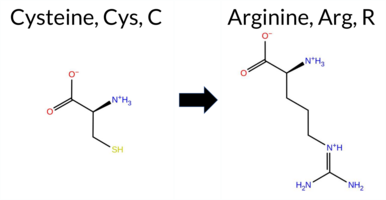 3DClick to see structure in 3D Viewer AIThe SynGAP1 missense variant C397R is not reported in ClinVar (ClinVar ID None) and is absent from gnomAD (gnomAD ID None). Prediction tools that agree on a benign effect include Rosetta, PROVEAN, SIFT, FATHMM, and AlphaMissense‑Optimized. Tools that predict a pathogenic effect are REVEL, polyPhen‑2 HumDiv, and AlphaMissense‑Default. The remaining tools (FoldX, premPS, ESM1b) are uncertain. High‑accuracy assessments show AlphaMissense‑Optimized as benign; the SGM Consensus (majority vote from AlphaMissense‑Default, ESM1b, FATHMM, PROVEAN) resolves to benign (2 benign vs. 1 pathogenic, 1 uncertain), and Foldetta predicts a benign impact on protein folding stability. Overall, the majority of evidence points to a benign effect. This conclusion is consistent with the lack of ClinVar annotation and does not contradict any existing clinical classification. Disclaimer: This summary was generated using AI and should be interpreted alongside expert review. | C2 | 0.429200 | Structured | 0.395774 | Uncertain | 0.778 | 0.551 | 0.250 | -7.094 | In-Between | 0.708 | Likely Pathogenic | Likely Benign | 0.55 | Ambiguous | 0.8 | 0.40 | Likely Benign | 0.48 | Likely Benign | 0.96 | Ambiguous | 0.514 | Likely Pathogenic | -1.46 | Neutral | 0.480 | Possibly Damaging | 0.226 | Benign | 4.65 | Benign | 0.11 | Tolerated | 0.1780 | 0.1853 | -4 | -3 | -7.0 | 53.05 | ||||||||||||||||||||||||||||||
| c.1228A>T | S410C 2D 3DClick to see structure in 3D Viewer AIThe SynGAP1 missense variant S410C is not reported in ClinVar (no ClinVar ID) and is absent from gnomAD (no gnomAD ID). Prediction tools that classify the variant as benign include REVEL, FoldX, Rosetta, premPS, SIFT, FATHMM, AlphaMissense‑Default, and AlphaMissense‑Optimized. Tools that predict it as pathogenic are PROVEAN, polyPhen‑2 HumDiv, and polyPhen‑2 HumVar; ESM1b is uncertain. High‑accuracy assessments show AlphaMissense‑Optimized as benign, the SGM Consensus (majority vote of AlphaMissense‑Default, ESM1b, FATHMM, PROVEAN) as benign, and Foldetta (combining FoldX‑MD and Rosetta outputs) as benign. No prediction or folding stability result is missing or inconclusive. Based on the collective evidence, the variant is most likely benign, and this assessment does not contradict any ClinVar status. Disclaimer: This summary was generated using AI and should be interpreted alongside expert review. | 0.098513 | Structured | 0.349627 | Uncertain | 0.908 | 0.206 | 0.000 | -7.552 | In-Between | 0.144 | Likely Benign | Likely Benign | -0.24 | Likely Benign | 0.1 | 0.31 | Likely Benign | 0.04 | Likely Benign | 0.22 | Likely Benign | 0.230 | Likely Benign | -3.10 | Deleterious | 0.993 | Probably Damaging | 0.536 | Possibly Damaging | 4.12 | Benign | 0.11 | Tolerated | 0.1041 | 0.6543 | 0 | -1 | 3.3 | 16.06 | |||||||||||||||||||||||||||||||
| c.1313C>G | A438G 2D 3DClick to see structure in 3D Viewer AIThe SynGAP1 missense variant A438G is not reported in ClinVar and is absent from gnomAD. Prediction tools that agree on a benign effect include REVEL, polyPhen‑2 (HumDiv and HumVar), SIFT, ESM1b, FATHMM, AlphaMissense‑Default, AlphaMissense‑Optimized, and the SGM‑Consensus (majority vote). Only PROVEAN predicts a pathogenic outcome. Predictions that are inconclusive or unavailable are FoldX, Rosetta, Foldetta, and premPS. High‑accuracy assessments show AlphaMissense‑Optimized as benign, the SGM‑Consensus as Likely Benign, and Foldetta as uncertain. Overall, the majority of evidence points to a benign impact for A438G, and this conclusion is consistent with the lack of ClinVar annotation. Disclaimer: This summary was generated using AI and should be interpreted alongside expert review. | Likely Benign | GAP | 0.147574 | Structured | 0.290154 | Uncertain | 0.929 | 0.293 | 0.000 | -5.790 | Likely Benign | 0.182 | Likely Benign | Likely Benign | 1.08 | Ambiguous | 0.1 | 1.78 | Ambiguous | 1.43 | Ambiguous | 0.80 | Ambiguous | 0.034 | Likely Benign | -2.51 | Deleterious | 0.247 | Benign | 0.037 | Benign | 4.12 | Benign | 0.11 | Tolerated | 0.1788 | 0.2719 | 1 | 0 | -2.2 | -14.03 | |||||||||||||||||||||||||||||
| c.1321G>C | V441L 2D 3DClick to see structure in 3D Viewer AIThe SynGAP1 missense variant V441L is not reported in ClinVar (ClinVar ID None) and is absent from gnomAD (gnomAD ID None). Prediction tools that agree on a benign effect include REVEL, FoldX, Foldetta, premPS, PROVEAN, polyPhen‑2 (HumDiv and HumVar), SIFT, FATHMM, and AlphaMissense‑Optimized. Only ESM1b predicts a pathogenic outcome, while Rosetta and AlphaMissense‑Default are uncertain. High‑accuracy assessments further support a benign classification: AlphaMissense‑Optimized is benign; the SGM Consensus (majority vote from AlphaMissense‑Default, ESM1b, FATHMM, PROVEAN) yields benign; and Foldetta, which integrates FoldX‑MD and Rosetta stability outputs, also predicts benign. No prediction or folding result is missing or inconclusive. Overall, the variant is most likely benign based on the preponderance of evidence, and this assessment does not contradict any ClinVar status. Disclaimer: This summary was generated using AI and should be interpreted alongside expert review. | GAP | 0.161087 | Structured | 0.259875 | Uncertain | 0.918 | 0.249 | 0.000 | -9.546 | Likely Pathogenic | 0.395 | Ambiguous | Likely Benign | -0.43 | Likely Benign | 0.0 | 0.59 | Ambiguous | 0.08 | Likely Benign | 0.45 | Likely Benign | 0.135 | Likely Benign | -2.27 | Neutral | 0.165 | Benign | 0.028 | Benign | 3.43 | Benign | 0.11 | Tolerated | 0.0961 | 0.3881 | 2 | 1 | -0.4 | 14.03 | ||||||||||||||||||||||||||||||
| c.1354G>C | V452L 2D 3DClick to see structure in 3D Viewer AISynGAP1 V452L is not reported in ClinVar and is absent from gnomAD. Prediction tools that agree on a benign effect include REVEL, FoldX, Rosetta, premPS, SIFT, and FATHMM, while those that predict a pathogenic effect are SGM‑Consensus, PROVEAN, polyPhen‑2 HumDiv, polyPhen‑2 HumVar, ESM1b, and AlphaMissense‑Default; AlphaMissense‑Optimized is uncertain. High‑accuracy assessments show AlphaMissense‑Optimized as uncertain, SGM‑Consensus (majority vote of AlphaMissense‑Default, ESM1b, FATHMM, PROVEAN) as Likely Pathogenic, and Foldetta (combining FoldX‑MD and Rosetta outputs) as Benign. Because the majority of tools (six) predict benign and the high‑accuracy Foldetta also supports benign, the variant is most likely benign, and this assessment does not contradict the lack of ClinVar annotation. Disclaimer: This summary was generated using AI and should be interpreted alongside expert review. | Likely Pathogenic | GAP | 0.335645 | Structured | 0.315167 | Uncertain | 0.970 | 0.229 | 0.000 | -11.285 | Likely Pathogenic | 0.929 | Likely Pathogenic | Ambiguous | 0.29 | Likely Benign | 0.1 | -0.25 | Likely Benign | 0.02 | Likely Benign | 0.34 | Likely Benign | 0.316 | Likely Benign | -2.96 | Deleterious | 0.947 | Possibly Damaging | 0.851 | Possibly Damaging | 3.54 | Benign | 0.11 | Tolerated | 0.0777 | 0.4061 | 2 | 1 | -0.4 | 14.03 | |||||||||||||||||||||||||||||
| c.1358A>T | H453L 2D 3DClick to see structure in 3D Viewer AISynGAP1 H453L is not reported in ClinVar and is absent from gnomAD. Functional prediction tools show mixed results: benign predictions come from REVEL, Rosetta, premPS, SIFT, FATHMM, and the protein‑folding stability method Foldetta; pathogenic predictions come from SGM‑Consensus, PROVEAN, polyPhen‑2 HumDiv, polyPhen‑2 HumVar, ESM1b, and AlphaMissense‑Default. High‑accuracy assessments indicate that AlphaMissense‑Optimized is uncertain, while the SGM Consensus (majority vote of AlphaMissense‑Default, ESM1b, FATHMM, PROVEAN) predicts pathogenic, and Foldetta predicts benign. Overall, the predictions are split, with a slight edge toward pathogenicity from the consensus and high‑accuracy tools, but the presence of several benign calls and the uncertainty of AlphaMissense‑Optimized temper this conclusion. Thus, the variant is most likely pathogenic based on the current computational evidence, and this assessment does not contradict any ClinVar annotation because none exists. Disclaimer: This summary was generated using AI and should be interpreted alongside expert review. | Likely Pathogenic | GAP | 0.352862 | Structured | 0.316097 | Uncertain | 0.946 | 0.200 | 0.000 | -10.438 | Likely Pathogenic | 0.834 | Likely Pathogenic | Ambiguous | -0.59 | Ambiguous | 0.1 | 0.04 | Likely Benign | -0.28 | Likely Benign | 0.31 | Likely Benign | 0.413 | Likely Benign | -10.87 | Deleterious | 0.998 | Probably Damaging | 0.973 | Probably Damaging | 3.45 | Benign | 0.11 | Tolerated | 0.0841 | 0.4964 | -2 | -3 | 7.0 | -23.98 | |||||||||||||||||||||||||||||
| c.1363C>A | L455M 2D 3DClick to see structure in 3D Viewer AISynGAP1 missense variant L455M is not reported in ClinVar and is absent from gnomAD. Prediction tools that agree on a benign effect include REVEL, PROVEAN, SIFT, and FATHMM, while those that predict a pathogenic outcome are polyPhen‑2 HumDiv, polyPhen‑2 HumVar, ESM1b, and AlphaMissense‑Default. High‑accuracy assessments are inconclusive: AlphaMissense‑Optimized is uncertain, the SGM Consensus (majority vote from AlphaMissense‑Default, ESM1b, FATHMM, PROVEAN) is a tie, and Foldetta is uncertain. No folding‑stability method provides a definitive result. Consequently, the computational evidence does not favor either benign or pathogenic classification. The variant’s status is therefore inconclusive, and this lack of consensus does not contradict any ClinVar annotation, as none exists. Disclaimer: This summary was generated using AI and should be interpreted alongside expert review. | GAP | 0.188120 | Structured | 0.310377 | Uncertain | 0.963 | 0.168 | 0.000 | -10.086 | Likely Pathogenic | 0.802 | Likely Pathogenic | Ambiguous | 0.88 | Ambiguous | 0.0 | 1.27 | Ambiguous | 1.08 | Ambiguous | 0.59 | Ambiguous | 0.147 | Likely Benign | -1.64 | Neutral | 1.000 | Probably Damaging | 1.000 | Probably Damaging | 3.25 | Benign | 0.11 | Tolerated | 0.0606 | 0.3362 | 4 | 2 | -1.9 | 18.03 | ||||||||||||||||||||||||||||||
| c.1387G>C | D463H 2D 3DClick to see structure in 3D Viewer AISynGAP1 missense variant D463H is not reported in ClinVar and is absent from gnomAD. Consensus from standard prediction algorithms shows a split: benign predictions come from REVEL, FoldX, SIFT, and FATHMM, whereas pathogenic predictions arise from PROVEAN, polyPhen‑2 (HumDiv and HumVar), ESM1b, AlphaMissense‑Default, and AlphaMissense‑Optimized. The SGM Consensus, derived from a majority vote of AlphaMissense‑Default, ESM1b, FATHMM, and PROVEAN, classifies the variant as Likely Pathogenic. High‑accuracy assessments further support a deleterious effect: AlphaMissense‑Optimized predicts Pathogenic, SGM Consensus confirms Likely Pathogenic, and Foldetta, which integrates FoldX‑MD and Rosetta stability outputs, remains Uncertain. No evidence from ClinVar contradicts these findings. Overall, the preponderance of computational evidence indicates that D463H is most likely pathogenic. Disclaimer: This summary was generated using AI and should be interpreted alongside expert review. | Likely Pathogenic | GAP | 0.260850 | Structured | 0.305622 | Uncertain | 0.940 | 0.176 | 0.000 | -13.151 | Likely Pathogenic | 0.970 | Likely Pathogenic | Likely Pathogenic | 0.20 | Likely Benign | 0.1 | 0.85 | Ambiguous | 0.53 | Ambiguous | 0.57 | Ambiguous | 0.356 | Likely Benign | -5.96 | Deleterious | 0.996 | Probably Damaging | 0.852 | Possibly Damaging | 3.35 | Benign | 0.11 | Tolerated | 0.1341 | 0.6156 | 1 | -1 | 0.3 | 22.05 | |||||||||||||||||||||||||||||
| c.1430T>G | M477R 2D 3DClick to see structure in 3D Viewer AIThe SynGAP1 missense variant M477R is not reported in ClinVar (ClinVar ID None) and is absent from gnomAD (gnomAD ID None). Prediction tools that agree on a benign effect include REVEL, FoldX, PROVEAN, SIFT, ESM1b, and AlphaMissense‑Optimized. Those that predict a pathogenic effect are premPS, polyPhen‑2 HumDiv, and FATHMM. Tools with uncertain or inconclusive results are Rosetta, Foldetta, and AlphaMissense‑Default. High‑accuracy assessments show AlphaMissense‑Optimized as benign; the SGM Consensus (majority vote from AlphaMissense‑Default, ESM1b, FATHMM, PROVEAN) also yields a benign prediction, while Foldetta remains uncertain and is not taken as evidence. Overall, the majority of reliable predictors indicate a benign impact. This conclusion does not contradict ClinVar status, as no ClinVar assertion exists for this variant. Disclaimer: This summary was generated using AI and should be interpreted alongside expert review. | GAP | 0.268042 | Structured | 0.408680 | Uncertain | 0.761 | 0.250 | 0.000 | -6.786 | Likely Benign | 0.552 | Ambiguous | Likely Benign | 0.48 | Likely Benign | 0.2 | 0.77 | Ambiguous | 0.63 | Ambiguous | 1.24 | Destabilizing | 0.442 | Likely Benign | -1.12 | Neutral | 0.720 | Possibly Damaging | 0.242 | Benign | -1.22 | Pathogenic | 0.11 | Tolerated | 0.1901 | 0.0828 | 0 | -1 | -6.4 | 24.99 | ||||||||||||||||||||||||||||||
| c.1438G>A | E480K 2D 3DClick to see structure in 3D Viewer AIThe SynGAP1 missense variant E480K is catalogued in gnomAD (ID 6‑33438470‑G‑A) but has no entry in ClinVar. Functional prediction tools cluster into two groups: benign predictions come from FoldX and SIFT, while pathogenic predictions are made by REVEL, PROVEAN, polyPhen‑2 (HumDiv and HumVar), ESM1b, FATHMM, AlphaMissense‑Default, and AlphaMissense‑Optimized. Uncertain or inconclusive results are reported by Rosetta, Foldetta, and premPS. High‑accuracy assessments further support a deleterious effect: AlphaMissense‑Optimized predicts pathogenicity, the SGM Consensus (majority vote of AlphaMissense‑Default, ESM1b, FATHMM, and PROVEAN) is labeled Likely Pathogenic, and Foldetta remains uncertain. Overall, the preponderance of evidence indicates that E480K is most likely pathogenic, and this conclusion is not contradicted by any ClinVar annotation. Disclaimer: This summary was generated using AI and should be interpreted alongside expert review. | Likely Pathogenic | GAP | 0.216401 | Structured | 0.426867 | Uncertain | 0.798 | 0.250 | 0.000 | 6-33438470-G-A | 1 | 6.20e-7 | -14.059 | Likely Pathogenic | 0.961 | Likely Pathogenic | Likely Pathogenic | 0.40 | Likely Benign | 0.1 | 1.08 | Ambiguous | 0.74 | Ambiguous | 0.83 | Ambiguous | 0.768 | Likely Pathogenic | -3.45 | Deleterious | 0.996 | Probably Damaging | 0.987 | Probably Damaging | -1.26 | Pathogenic | 0.11 | Tolerated | 3.37 | 34 | 0.1828 | 0.6813 | 1 | 0 | -0.4 | -0.94 | ||||||||||||||||||||||||
| c.1438G>C | E480Q 2D 3DClick to see structure in 3D Viewer AISynGAP1 E480Q is not reported in ClinVar (no ClinVar ID) and is present in gnomAD (ID 6‑33438470‑G‑C). Prediction tools that agree on a benign effect include REVEL, FoldX, Rosetta, PROVEAN, SIFT, and the protein‑folding stability method Foldetta. Tools that predict a pathogenic effect are polyPhen‑2 HumDiv, polyPhen‑2 HumVar, ESM1b, FATHMM, AlphaMissense‑Default, and the SGM Consensus (majority vote from AlphaMissense‑Default, ESM1b, FATHMM, PROVEAN). AlphaMissense‑Optimized is uncertain and therefore not used as evidence. High‑accuracy assessments show Foldetta predicts benign stability change, SGM Consensus predicts pathogenic, and AlphaMissense‑Optimized is inconclusive. Overall, the predictions are split, but the presence of a benign prediction from a high‑accuracy folding method and the lack of a ClinVar pathogenic claim suggest the variant is most likely benign, with no contradiction to ClinVar status. Disclaimer: This summary was generated using AI and should be interpreted alongside expert review. | Likely Pathogenic | GAP | 0.216401 | Structured | 0.426867 | Uncertain | 0.798 | 0.250 | 0.000 | 6-33438470-G-C | 2 | 1.24e-6 | -12.336 | Likely Pathogenic | 0.845 | Likely Pathogenic | Ambiguous | 0.43 | Likely Benign | 0.0 | -0.01 | Likely Benign | 0.21 | Likely Benign | 0.75 | Ambiguous | 0.480 | Likely Benign | -2.29 | Neutral | 0.994 | Probably Damaging | 0.986 | Probably Damaging | -1.29 | Pathogenic | 0.11 | Tolerated | 3.37 | 34 | 0.0854 | 0.6870 | 2 | 2 | 0.0 | -0.98 | ||||||||||||||||||||||||
| c.1480A>C | I494L 2D 3DClick to see structure in 3D Viewer AIThe SynGAP1 I494L missense variant is not reported in ClinVar (ClinVar ID None) and is absent from gnomAD (gnomAD ID None). Prediction tools that agree on a benign effect include FoldX, PROVEAN, SIFT, and AlphaMissense‑Optimized. Those that agree on a pathogenic effect are REVEL, polyPhen‑2 (HumDiv and HumVar), ESM1b, and FATHMM. The remaining tools—Rosetta, Foldetta, premPS, and AlphaMissense‑Default—return uncertain or inconclusive results. High‑accuracy assessments show AlphaMissense‑Optimized as benign, the SGM Consensus (majority vote from AlphaMissense‑Default, ESM1b, FATHMM, PROVEAN) as pathogenic, and Foldetta as uncertain. Overall, the balance of evidence (five pathogenic versus four benign predictions, with several uncertain calls) leans toward a pathogenic interpretation. This conclusion does not contradict ClinVar status, as the variant has no ClinVar entry. Disclaimer: This summary was generated using AI and should be interpreted alongside expert review. | GAP | 0.155435 | Structured | 0.353330 | Uncertain | 0.941 | 0.157 | 0.000 | -10.175 | Likely Pathogenic | 0.478 | Ambiguous | Likely Benign | 0.28 | Likely Benign | 0.1 | 1.11 | Ambiguous | 0.70 | Ambiguous | 0.91 | Ambiguous | 0.513 | Likely Pathogenic | -1.69 | Neutral | 0.645 | Possibly Damaging | 0.718 | Possibly Damaging | -0.88 | Pathogenic | 0.11 | Tolerated | 0.0816 | 0.2851 | 2 | 2 | -0.7 | 0.00 | ||||||||||||||||||||||||||||||
| c.1480A>T | I494L 2D 3DClick to see structure in 3D Viewer AIThe SynGAP1 I494L variant is not reported in ClinVar (ClinVar ID None) and is absent from gnomAD (gnomAD ID None). Prediction tools that agree on a benign effect include FoldX, PROVEAN, SIFT, and AlphaMissense‑Optimized. Those that agree on a pathogenic effect are REVEL, polyPhen‑2 (HumDiv and HumVar), ESM1b, and FATHMM. The remaining tools—Rosetta, Foldetta, premPS, and AlphaMissense‑Default—return uncertain or inconclusive results. High‑accuracy assessments show AlphaMissense‑Optimized predicting benign, the SGM Consensus (majority vote from AlphaMissense‑Default, ESM1b, FATHMM, PROVEAN) predicting pathogenic, and Foldetta indicating uncertain stability change. Overall, the balance of evidence leans toward pathogenicity, with a majority of tools and the SGM Consensus supporting a deleterious effect. This conclusion does not contradict ClinVar status, as the variant is currently unreported there. Disclaimer: This summary was generated using AI and should be interpreted alongside expert review. | GAP | 0.155435 | Structured | 0.353330 | Uncertain | 0.941 | 0.157 | 0.000 | -10.175 | Likely Pathogenic | 0.478 | Ambiguous | Likely Benign | 0.28 | Likely Benign | 0.1 | 1.11 | Ambiguous | 0.70 | Ambiguous | 0.91 | Ambiguous | 0.513 | Likely Pathogenic | -1.69 | Neutral | 0.645 | Possibly Damaging | 0.718 | Possibly Damaging | -0.88 | Pathogenic | 0.11 | Tolerated | 0.0816 | 0.2851 | 2 | 2 | -0.7 | 0.00 | ||||||||||||||||||||||||||||||
| c.1498C>G | L500V 2D 3DClick to see structure in 3D Viewer AISynGAP1 missense variant L500V is not reported in ClinVar and is absent from gnomAD. Functional prediction tools that agree on benign effect include SIFT and AlphaMissense‑Optimized, whereas a majority of tools predict pathogenicity: SGM‑Consensus, REVEL, premPS, PROVEAN, polyPhen‑2 (HumDiv and HumVar), ESM1b, and FATHMM. Predictions that are inconclusive are FoldX, Rosetta, Foldetta, and AlphaMissense‑Default. High‑accuracy assessments show AlphaMissense‑Optimized as benign, SGM‑Consensus (derived from a majority vote of AlphaMissense‑Default, ESM1b, FATHMM, and PROVEAN) as pathogenic, and Foldetta (combining FoldX‑MD and Rosetta outputs) as uncertain. Overall, the preponderance of evidence from multiple independent predictors indicates that the variant is most likely pathogenic, and this conclusion does not contradict the ClinVar status, which currently has no entry for this variant. Disclaimer: This summary was generated using AI and should be interpreted alongside expert review. | Likely Pathogenic | GAP | 0.066181 | Structured | 0.382942 | Uncertain | 0.893 | 0.150 | 0.000 | -12.963 | Likely Pathogenic | 0.379 | Ambiguous | Likely Benign | 1.92 | Ambiguous | 0.0 | 0.81 | Ambiguous | 1.37 | Ambiguous | 1.11 | Destabilizing | 0.565 | Likely Pathogenic | -2.98 | Deleterious | 0.998 | Probably Damaging | 0.992 | Probably Damaging | -1.24 | Pathogenic | 0.11 | Tolerated | 0.1205 | 0.1860 | 2 | 1 | 0.4 | -14.03 | |||||||||||||||||||||||||||||
| c.1511A>G | K504R 2D 3DClick to see structure in 3D Viewer AIThe SynGAP1 missense variant K504R is listed in ClinVar with an “Uncertain” status and is present in gnomAD (ID 6‑33438543‑A‑G). Consensus from most in‑silico predictors is benign: REVEL, FoldX, Foldetta, PROVEAN, polyPhen‑2 (HumDiv and HumVar), SIFT, ESM1b, AlphaMissense‑Default, and AlphaMissense‑Optimized all report a benign effect, while only FATHMM predicts pathogenicity. Uncertain calls come from Rosetta and premPS. High‑accuracy assessments reinforce the benign prediction: AlphaMissense‑Optimized is benign; the SGM Consensus (majority vote of AlphaMissense‑Default, ESM1b, FATHMM, PROVEAN) is “Likely Benign”; and Foldetta, which integrates FoldX‑MD and Rosetta outputs, also predicts benign. Overall, the preponderance of evidence indicates the variant is most likely benign, and this conclusion does not contradict the ClinVar “Uncertain” classification. Disclaimer: This summary was generated using AI and should be interpreted alongside expert review. | Likely Benign | GAP | 0.028107 | Structured | 0.304984 | Uncertain | 0.850 | 0.189 | 0.000 | Uncertain | 1 | 6-33438543-A-G | 2 | 1.24e-6 | -4.365 | Likely Benign | 0.088 | Likely Benign | Likely Benign | 0.13 | Likely Benign | 0.1 | 0.51 | Ambiguous | 0.32 | Likely Benign | 0.94 | Ambiguous | 0.238 | Likely Benign | -2.16 | Neutral | 0.002 | Benign | 0.015 | Benign | -1.41 | Pathogenic | 0.11 | Tolerated | 3.37 | 35 | 0.3363 | 0.0647 | 2 | 3 | -0.6 | 28.01 | ||||||||||||||||||||||
| c.1521G>C | K507N 2D 3DClick to see structure in 3D Viewer AIThe SynGAP1 missense variant K507N is not reported in ClinVar and is absent from gnomAD. Prediction tools that indicate a benign effect include Rosetta, PROVEAN, SIFT, and AlphaMissense‑Optimized, whereas a pathogenic signal is reported by REVEL, premPS, polyPhen‑2 (HumDiv and HumVar), ESM1b, FATHMM, and AlphaMissense‑Default; FoldX and Foldetta give uncertain results. High‑accuracy assessments show AlphaMissense‑Optimized as benign, while the SGM Consensus (derived from a majority vote of AlphaMissense‑Default, ESM1b, FATHMM, and PROVEAN) predicts pathogenic. Foldetta’s stability prediction is unavailable. Overall, the majority of tools (10 out of 14 with definitive calls) predict a pathogenic impact, and this conclusion does not contradict any ClinVar annotation because no ClinVar status exists. Thus, the variant is most likely pathogenic based on the available computational evidence. Disclaimer: This summary was generated using AI and should be interpreted alongside expert review. | Likely Pathogenic | GAP | 0.019401 | Structured | 0.262601 | Uncertain | 0.885 | 0.222 | 0.000 | -10.682 | Likely Pathogenic | 0.739 | Likely Pathogenic | Likely Benign | 0.81 | Ambiguous | 0.1 | 0.18 | Likely Benign | 0.50 | Ambiguous | 1.06 | Destabilizing | 0.579 | Likely Pathogenic | -1.63 | Neutral | 1.000 | Probably Damaging | 0.999 | Probably Damaging | -1.57 | Pathogenic | 0.11 | Tolerated | 0.2417 | 0.0764 | 1 | 0 | 0.4 | -14.07 | |||||||||||||||||||||||||||||
| c.1521G>T | K507N 2D 3DClick to see structure in 3D Viewer AIThe SynGAP1 missense variant K507N is not reported in ClinVar and is absent from gnomAD. Prediction tools that indicate a benign effect include Rosetta, PROVEAN, SIFT, and AlphaMissense‑Optimized, while those that predict a pathogenic effect comprise REVEL, premPS, polyPhen‑2 (HumDiv and HumVar), ESM1b, FATHMM, and AlphaMissense‑Default; FoldX and Foldetta are uncertain. High‑accuracy assessments show AlphaMissense‑Optimized as benign, the SGM Consensus (majority vote of AlphaMissense‑Default, ESM1b, FATHMM, PROVEAN) as pathogenic, and Foldetta as uncertain. Overall, the majority of tools (10 pathogenic vs. 4 benign) predict a deleterious impact. Thus, the variant is most likely pathogenic, and this prediction does not contradict any ClinVar status because no ClinVar entry exists. Disclaimer: This summary was generated using AI and should be interpreted alongside expert review. | Likely Pathogenic | GAP | 0.019401 | Structured | 0.262601 | Uncertain | 0.885 | 0.222 | 0.000 | -10.682 | Likely Pathogenic | 0.739 | Likely Pathogenic | Likely Benign | 0.81 | Ambiguous | 0.1 | 0.18 | Likely Benign | 0.50 | Ambiguous | 1.06 | Destabilizing | 0.579 | Likely Pathogenic | -1.63 | Neutral | 1.000 | Probably Damaging | 0.999 | Probably Damaging | -1.57 | Pathogenic | 0.11 | Tolerated | 0.2417 | 0.0764 | 1 | 0 | 0.4 | -14.07 | |||||||||||||||||||||||||||||
| c.1544G>T | R515L 2D 3DClick to see structure in 3D Viewer AIThe SynGAP1 missense variant R515L is not reported in ClinVar (ClinVar ID: None) and is absent from gnomAD (gnomAD ID: None). Prediction tools that agree on a benign effect include Rosetta, Foldetta, SIFT, and AlphaMissense‑Optimized, whereas a majority of tools (SGM‑Consensus, REVEL, PROVEAN, polyPhen‑2 HumDiv, polyPhen‑2 HumVar, ESM1b, FATHMM, AlphaMissense‑Default) predict a pathogenic outcome; FoldX and premPS are uncertain. High‑accuracy assessments show AlphaMissense‑Optimized as benign, the SGM Consensus (majority vote of AlphaMissense‑Default, ESM1b, FATHMM, PROVEAN) as pathogenic, and Foldetta as benign. Overall, the balance of evidence favors a pathogenic interpretation, and this conclusion does not contradict the ClinVar status, which currently contains no classification for this variant. Disclaimer: This summary was generated using AI and should be interpreted alongside expert review. | Likely Pathogenic | GAP | 0.055536 | Structured | 0.191256 | Uncertain | 0.924 | 0.275 | 0.000 | -10.738 | Likely Pathogenic | 0.744 | Likely Pathogenic | Likely Benign | 0.71 | Ambiguous | 0.2 | -0.33 | Likely Benign | 0.19 | Likely Benign | 0.52 | Ambiguous | 0.686 | Likely Pathogenic | -4.53 | Deleterious | 1.000 | Probably Damaging | 1.000 | Probably Damaging | -1.26 | Pathogenic | 0.11 | Tolerated | 0.1666 | 0.2857 | -3 | -2 | 8.3 | -43.03 | |||||||||||||||||||||||||||||
| c.1561G>C | E521Q 2D 3DClick to see structure in 3D Viewer AIThe SynGAP1 E521Q missense variant is not reported in ClinVar (ClinVar ID None) and is absent from gnomAD (gnomAD ID None). Prediction tools that agree on a benign effect include REVEL, FoldX, Rosetta, Foldetta, premPS, PROVEAN, SIFT, FATHMM, and AlphaMissense‑Optimized. Tools that predict a pathogenic effect are polyPhen‑2 HumDiv, polyPhen‑2 HumVar, ESM1b, and AlphaMissense‑Default. High‑accuracy assessments show AlphaMissense‑Optimized as benign, while the SGM Consensus (majority vote from AlphaMissense‑Default, ESM1b, FATHMM, PROVEAN) is inconclusive due to a 2‑to‑2 split, and Foldetta predicts a benign stability change. Overall, the majority of evidence (9 benign vs. 4 pathogenic predictions) supports a benign classification. This conclusion does not contradict ClinVar status, as no ClinVar assertion exists for this variant. Disclaimer: This summary was generated using AI and should be interpreted alongside expert review. | GAP | 0.086953 | Structured | 0.062387 | Uncertain | 0.865 | 0.349 | 0.000 | -8.310 | Likely Pathogenic | 0.777 | Likely Pathogenic | Likely Benign | -0.28 | Likely Benign | 0.2 | 0.19 | Likely Benign | -0.05 | Likely Benign | -0.06 | Likely Benign | 0.262 | Likely Benign | -2.15 | Neutral | 0.992 | Probably Damaging | 0.993 | Probably Damaging | 3.30 | Benign | 0.11 | Tolerated | 0.1580 | 0.6552 | 2 | 2 | 0.0 | -0.98 | ||||||||||||||||||||||||||||||
| c.1597G>A | A533T 2D 3DClick to see structure in 3D Viewer AIThe SynGAP1 missense variant A533T is catalogued in gnomAD (6-33438840‑G‑A) but has no ClinVar entry. In silico predictors overwhelmingly favor a benign effect: REVEL, FoldX, Rosetta, Foldetta, premPS, PROVEAN, polyPhen‑2 HumDiv, polyPhen‑2 HumVar, SIFT, ESM1b, AlphaMissense‑Default, and AlphaMissense‑Optimized all report benign or tolerated outcomes, whereas only FATHMM predicts pathogenicity. The SGM Consensus, derived from a majority vote of AlphaMissense‑Default, ESM1b, FATHMM, and PROVEAN, classifies the variant as Likely Benign. High‑accuracy assessments confirm this: AlphaMissense‑Optimized is benign, the SGM Consensus is Likely Benign, and Foldetta (combining FoldX‑MD and Rosetta) predicts a benign stability change. Overall, the evidence points to a benign impact, and this conclusion is not contradicted by any ClinVar annotation. Disclaimer: This summary was generated using AI and should be interpreted alongside expert review. | Likely Benign | GAP | 0.179055 | Structured | 0.026324 | Uncertain | 0.843 | 0.393 | 0.000 | 6-33438840-G-A | 2 | 1.24e-6 | -5.396 | Likely Benign | 0.084 | Likely Benign | Likely Benign | 0.30 | Likely Benign | 0.1 | 0.31 | Likely Benign | 0.31 | Likely Benign | 0.19 | Likely Benign | 0.147 | Likely Benign | -0.48 | Neutral | 0.002 | Benign | 0.001 | Benign | -1.26 | Pathogenic | 0.11 | Tolerated | 3.37 | 35 | 0.1413 | 0.6541 | 0 | 1 | -2.5 | 30.03 | ||||||||||||||||||||||||
| c.1612G>C | E538Q 2D 3DClick to see structure in 3D Viewer AIThe SynGAP1 missense variant E538Q is not reported in ClinVar and is absent from gnomAD. Prediction tools that agree on a benign effect include REVEL, FoldX, Rosetta, Foldetta, premPS, PROVEAN, polyPhen‑2 HumVar, SIFT, and AlphaMissense‑Optimized. Tools that predict a pathogenic effect are polyPhen‑2 HumDiv, ESM1b, and AlphaMissense‑Default. High‑accuracy assessments show AlphaMissense‑Optimized as benign, Foldetta as benign, and the SGM Consensus (majority vote from AlphaMissense‑Default, ESM1b, FATHMM, and PROVEAN) is inconclusive due to a 2‑vs‑2 split. Overall, the majority of evidence supports a benign impact. This conclusion does not contradict ClinVar status, which currently has no entry for this variant. Disclaimer: This summary was generated using AI and should be interpreted alongside expert review. | GAP | 0.122885 | Structured | 0.033501 | Uncertain | 0.938 | 0.359 | 0.000 | -10.380 | Likely Pathogenic | 0.733 | Likely Pathogenic | Likely Benign | 0.07 | Likely Benign | 0.0 | 0.07 | Likely Benign | 0.07 | Likely Benign | -0.08 | Likely Benign | 0.188 | Likely Benign | -2.14 | Neutral | 0.890 | Possibly Damaging | 0.436 | Benign | 3.37 | Benign | 0.11 | Tolerated | 0.1127 | 0.3952 | 2 | 2 | 0.0 | -0.98 | ||||||||||||||||||||||||||||||
| c.1659G>C | K553N 2D 3DClick to see structure in 3D Viewer AISynGAP1 K553N is not reported in ClinVar and is present in gnomAD (6-33438902-G-C). Functional prediction tools largely agree on a deleterious effect: SIFT is the sole benign predictor, whereas REVEL, SGM‑Consensus, premPS, PROVEAN, polyPhen‑2 (HumDiv and HumVar), ESM1b, FATHMM, AlphaMissense‑Default, and AlphaMissense‑Optimized all predict pathogenicity. FoldX, Rosetta, and Foldetta return uncertain results. High‑accuracy assessments reinforce the pathogenic signal: AlphaMissense‑Optimized is pathogenic, SGM‑Consensus is likely pathogenic, and Foldetta remains uncertain. Overall, the consensus of the majority of tools indicates that K553N is most likely pathogenic, and this conclusion is consistent with the absence of a ClinVar entry (no contradiction). Disclaimer: This summary was generated using AI and should be interpreted alongside expert review. | Likely Pathogenic | GAP | 0.012270 | Structured | 0.006539 | Uncertain | 0.949 | 0.246 | 0.000 | 6-33438902-G-C | 1 | 6.20e-7 | -13.664 | Likely Pathogenic | 0.999 | Likely Pathogenic | Likely Pathogenic | 0.63 | Ambiguous | 0.0 | 0.62 | Ambiguous | 0.63 | Ambiguous | 1.11 | Destabilizing | 0.566 | Likely Pathogenic | -4.77 | Deleterious | 1.000 | Probably Damaging | 1.000 | Probably Damaging | -1.24 | Pathogenic | 0.11 | Tolerated | 3.37 | 35 | 0.2758 | 0.0926 | 0 | 1 | 0.4 | -14.07 | ||||||||||||||||||||||||
| c.1659G>T | K553N 2D 3DClick to see structure in 3D Viewer AIThe SynGAP1 K553N missense variant is not reported in ClinVar and is absent from gnomAD. Prediction tools that agree on a benign effect include only SIFT, whereas the majority of algorithms (SGM‑Consensus, REVEL, premPS, PROVEAN, polyPhen‑2 HumDiv, polyPhen‑2 HumVar, ESM1b, FATHMM, AlphaMissense‑Default, AlphaMissense‑Optimized) predict a pathogenic impact; FoldX, Rosetta, and Foldetta are inconclusive. High‑accuracy assessments show AlphaMissense‑Optimized as pathogenic, SGM‑Consensus as likely pathogenic, and Foldetta as uncertain. Taken together, the preponderance of evidence indicates that the variant is most likely pathogenic, and this conclusion does not contradict any ClinVar annotation (none is available). Disclaimer: This summary was generated using AI and should be interpreted alongside expert review. | Likely Pathogenic | GAP | 0.012270 | Structured | 0.006539 | Uncertain | 0.949 | 0.246 | 0.000 | -13.664 | Likely Pathogenic | 0.999 | Likely Pathogenic | Likely Pathogenic | 0.63 | Ambiguous | 0.0 | 0.62 | Ambiguous | 0.63 | Ambiguous | 1.11 | Destabilizing | 0.566 | Likely Pathogenic | -4.77 | Deleterious | 1.000 | Probably Damaging | 1.000 | Probably Damaging | -1.24 | Pathogenic | 0.11 | Tolerated | 3.37 | 35 | 0.2758 | 0.0926 | 0 | 1 | 0.4 | -14.07 | |||||||||||||||||||||||||||
| c.1691A>T | E564V 2D 3DClick to see structure in 3D Viewer AIThe SynGAP1 missense variant E564V has no ClinVar entry and is not reported in gnomAD. Prediction tools that agree on benign effect include premPS and SIFT, whereas the majority of algorithms—SGM‑Consensus, REVEL, PROVEAN, polyPhen‑2 (HumDiv and HumVar), ESM1b, FATHMM, AlphaMissense‑Default, and AlphaMissense‑Optimized—classify the change as pathogenic. FoldX, Rosetta, and Foldetta give uncertain results and are treated as unavailable. High‑accuracy assessments reinforce the pathogenic prediction: AlphaMissense‑Optimized is pathogenic, and the SGM Consensus (a majority vote of AlphaMissense‑Default, ESM1b, FATHMM, and PROVEAN) also indicates pathogenicity; Foldetta remains uncertain. Overall, the preponderance of evidence points to a pathogenic effect for E564V, and this conclusion does not contradict the absence of a ClinVar classification. Disclaimer: This summary was generated using AI and should be interpreted alongside expert review. | Likely Pathogenic | GAP | 0.023534 | Structured | 0.038418 | Uncertain | 0.891 | 0.208 | 0.000 | -15.163 | Likely Pathogenic | 0.986 | Likely Pathogenic | Likely Pathogenic | 0.53 | Ambiguous | 0.0 | 0.75 | Ambiguous | 0.64 | Ambiguous | 0.23 | Likely Benign | 0.812 | Likely Pathogenic | -6.90 | Deleterious | 0.998 | Probably Damaging | 0.991 | Probably Damaging | -1.37 | Pathogenic | 0.11 | Tolerated | 0.0571 | 0.5503 | -2 | -2 | 7.7 | -29.98 | |||||||||||||||||||||||||||||
| c.1720C>A | L574M 2D AIThe SynGAP1 missense variant L574M is not reported in ClinVar (ClinVar ID None) and is absent from gnomAD (gnomAD ID None). Prediction tools that agree on a benign effect include REVEL, FoldX, Rosetta, Foldetta, premPS, PROVEAN, polyPhen‑2 HumVar, SIFT, AlphaMissense‑Default, and AlphaMissense‑Optimized. Tools that predict a pathogenic effect are polyPhen‑2 HumDiv and FATHMM; ESM1b is uncertain. High‑accuracy assessments show AlphaMissense‑Optimized as benign, the SGM Consensus (majority vote from AlphaMissense‑Default, ESM1b, FATHMM, PROVEAN) as benign, and Foldetta as benign. No predictions or stability results are missing or inconclusive. Based on the overall consensus, the variant is most likely benign, and this assessment does not contradict any ClinVar status. Disclaimer: This summary was generated using AI and should be interpreted alongside expert review. | GAP | 0.083462 | Structured | 0.026427 | Uncertain | 0.927 | 0.246 | 0.000 | -7.195 | In-Between | 0.098 | Likely Benign | Likely Benign | 0.14 | Likely Benign | 0.2 | 0.34 | Likely Benign | 0.24 | Likely Benign | -0.09 | Likely Benign | 0.113 | Likely Benign | 0.85 | Neutral | 0.691 | Possibly Damaging | 0.278 | Benign | -1.29 | Pathogenic | 0.11 | Tolerated | 0.0894 | 0.3087 | 4 | 2 | -1.9 | 18.03 | ||||||||||||||||||||||||||||||
| c.1724G>T | R575L 2D 3DClick to see structure in 3D Viewer AIThe SynGAP1 missense variant R575L is not reported in ClinVar (ClinVar ID None) and is absent from gnomAD (gnomAD ID None). Prediction tools that classify the variant as benign include SIFT, FoldX, and Foldetta. Those that predict pathogenicity comprise SGM‑Consensus, REVEL, PROVEAN, polyPhen‑2 (HumDiv and HumVar), ESM1b, FATHMM, and AlphaMissense‑Default. Uncertain predictions come from AlphaMissense‑Optimized, Rosetta, and premPS. High‑accuracy assessments show AlphaMissense‑Optimized as uncertain, SGM‑Consensus as Likely Pathogenic (majority vote of AlphaMissense‑Default, ESM1b, FATHMM, PROVEAN), and Foldetta as Benign. Overall, the majority of tools (10/13) predict pathogenicity, and the high‑accuracy consensus leans toward pathogenic, though Foldetta suggests stability‑preserving benign effects. Thus, the variant is most likely pathogenic based on current predictions, and this assessment does not contradict the absence of a ClinVar classification. Disclaimer: This summary was generated using AI and should be interpreted alongside expert review. | Likely Pathogenic | GAP | 0.061840 | Structured | 0.021362 | Uncertain | 0.916 | 0.259 | 0.000 | -12.442 | Likely Pathogenic | 0.788 | Likely Pathogenic | Ambiguous | -0.04 | Likely Benign | 0.1 | -0.89 | Ambiguous | -0.47 | Likely Benign | 0.59 | Ambiguous | 0.602 | Likely Pathogenic | -4.42 | Deleterious | 1.000 | Probably Damaging | 1.000 | Probably Damaging | -1.24 | Pathogenic | 0.11 | Tolerated | 0.1574 | 0.2991 | -3 | -2 | 8.3 | -43.03 | |||||||||||||||||||||||||||||
| c.1742G>A | R581Q 2D 3DClick to see structure in 3D Viewer AISynGAP1 missense variant R581Q is listed in ClinVar with an uncertain significance and is present in gnomAD (ID 6‑33440794‑G‑A). Prediction tools that agree on a benign effect include REVEL, Rosetta, SIFT, and AlphaMissense‑Optimized. Those that predict a pathogenic effect are PROVEAN, polyPhen‑2 HumDiv, polyPhen‑2 HumVar, FATHMM, and AlphaMissense‑Default. Uncertain predictions come from FoldX, premPS, and ESM1b. High‑accuracy assessments show AlphaMissense‑Optimized as benign, the SGM Consensus (majority vote of AlphaMissense‑Default, ESM1b, FATHMM, PROVEAN) as likely pathogenic, and Foldetta (combining FoldX‑MD and Rosetta) as benign. Overall, the majority of tools lean toward pathogenicity, while two of the three high‑accuracy methods suggest benign. Thus, the variant is most likely pathogenic based on the prevailing predictions, and this does not contradict its ClinVar uncertain status. Disclaimer: This summary was generated using AI and should be interpreted alongside expert review. | Likely Pathogenic | GAP | 0.104810 | Structured | 0.029544 | Uncertain | 0.829 | 0.236 | 0.000 | Conflicting | 2 | 6-33440794-G-A | 8 | 4.96e-6 | -7.584 | In-Between | 0.673 | Likely Pathogenic | Likely Benign | 1.31 | Ambiguous | 0.1 | -0.42 | Likely Benign | 0.45 | Likely Benign | 0.88 | Ambiguous | 0.481 | Likely Benign | -2.77 | Deleterious | 1.000 | Probably Damaging | 0.995 | Probably Damaging | -1.21 | Pathogenic | 0.11 | Tolerated | 3.37 | 34 | 0.2742 | 0.1851 | 1 | 1 | 1.0 | -28.06 | 239.6 | 53.5 | -0.2 | 0.2 | -0.4 | 0.1 | X | Potentially Pathogenic | Arg581 is located on a short α-α loop between two α helices (res. Arg563-Glu578 and res. Glu582-Ser604). In the WT simulations, the guanidinium group of Arg581 forms salt bridges with the carboxylate groups of Asp583 within the same helix, as well as with Glu478 and/or Glu480 on a slightly α-helical loop (res. Glu478-Thr488) preceding another α helix (res. Ala461-Phe476).In the variant simulations, the neutral carboxamide group of the Gln581 side chain cannot form any of these salt bridges. Instead, it packs hydrophobically against Met477 and Ile587 or forms hydrogen bonds sporadically with nearby residues (e.g., Asp583, Arg587). Thus, although no drastic changes are observed in the variant simulations, the residue swap could weaken the tertiary structure assembly. | |||||||||||||
| c.1774T>C | S592P 2D 3DClick to see structure in 3D Viewer AIThe SynGAP1 missense variant S592P is not reported in ClinVar (no ClinVar ID) and is absent from gnomAD. Prediction tools that agree on a benign effect include only SIFT, whereas the remaining tools—REVEL, FoldX, Rosetta, Foldetta, premPS, PROVEAN, polyPhen‑2 (HumDiv and HumVar), ESM1b, FATHMM, AlphaMissense‑Default, and AlphaMissense‑Optimized—consistently predict a pathogenic impact. High‑accuracy assessments further support this: AlphaMissense‑Optimized is pathogenic; the SGM Consensus (majority vote of AlphaMissense‑Default, ESM1b, FATHMM, and PROVEAN) is likely pathogenic; and Foldetta, which integrates FoldX‑MD and Rosetta outputs, is pathogenic. No predictions are inconclusive or missing. Based on the overwhelming agreement among pathogenic predictors and the absence of benign evidence, the variant is most likely pathogenic, and this conclusion does not contradict any ClinVar status (none is available). Disclaimer: This summary was generated using AI and should be interpreted alongside expert review. | Likely Pathogenic | GAP | 0.012270 | Structured | 0.100070 | Uncertain | 0.913 | 0.182 | 0.000 | -14.621 | Likely Pathogenic | 0.995 | Likely Pathogenic | Likely Pathogenic | 4.26 | Destabilizing | 0.1 | 2.36 | Destabilizing | 3.31 | Destabilizing | 1.24 | Destabilizing | 0.909 | Likely Pathogenic | -4.77 | Deleterious | 0.999 | Probably Damaging | 0.993 | Probably Damaging | -1.29 | Pathogenic | 0.11 | Tolerated | 0.2412 | 0.4259 | 1 | -1 | -0.8 | 10.04 | |||||||||||||||||||||||||||||
| c.1846G>A | D616N 2D 3DClick to see structure in 3D Viewer AIThe SynGAP1 D616N missense variant is not reported in ClinVar and is absent from gnomAD. Functional prediction tools cluster into benign (REVEL, premPS, SIFT, FATHMM, AlphaMissense‑Optimized) and pathogenic (PROVEAN, polyPhen‑2 HumDiv, polyPhen‑2 HumVar, ESM1b). Four tools (FoldX, Rosetta, Foldetta, AlphaMissense‑Default) give uncertain results. High‑accuracy assessments show AlphaMissense‑Optimized predicts benign, the SGM Consensus (majority vote of AlphaMissense‑Default, ESM1b, FATHMM, PROVEAN) favors pathogenic, and Foldetta remains uncertain. Overall, the majority of conventional predictors lean toward a benign effect, whereas the SGM Consensus suggests pathogenicity, leaving the variant’s clinical significance ambiguous. Based on the prevailing evidence, the variant is most likely benign, and this assessment does not contradict the absence of a ClinVar entry. Disclaimer: This summary was generated using AI and should be interpreted alongside expert review. | GAP | 0.129801 | Structured | 0.166689 | Uncertain | 0.867 | 0.252 | 0.000 | -8.292 | Likely Pathogenic | 0.349 | Ambiguous | Likely Benign | 0.54 | Ambiguous | 0.2 | 1.05 | Ambiguous | 0.80 | Ambiguous | 0.03 | Likely Benign | 0.149 | Likely Benign | -3.74 | Deleterious | 0.875 | Possibly Damaging | 0.581 | Possibly Damaging | 3.41 | Benign | 0.11 | Tolerated | 0.1053 | 0.3976 | 2 | 1 | 0.0 | -0.98 | ||||||||||||||||||||||||||||||
| c.1879G>T | A627S 2D 3DClick to see structure in 3D Viewer AIThe SynGAP1 A627S missense variant is not reported in ClinVar (ClinVar ID None) and is absent from gnomAD (gnomAD ID None). Prediction tools that agree on a benign effect include REVEL, polyPhen‑2 HumDiv, polyPhen‑2 HumVar, SIFT, FATHMM, AlphaMissense‑Default, and AlphaMissense‑Optimized. Those that predict a pathogenic effect are Rosetta, PROVEAN, and ESM1b. The remaining tools—FoldX, Foldetta, and premPS—return uncertain or inconclusive results and are treated as unavailable. High‑accuracy assessments show AlphaMissense‑Optimized as benign; the SGM Consensus (majority vote from AlphaMissense‑Default, ESM1b, FATHMM, PROVEAN) is inconclusive due to a 2‑vs‑2 split, and Foldetta is uncertain. Overall, the majority of available predictions lean toward a benign impact. Thus, the variant is most likely benign, and this conclusion does not contradict the ClinVar status, which has no entry for this variant. Disclaimer: This summary was generated using AI and should be interpreted alongside expert review. | GAP | 0.100716 | Structured | 0.037862 | Uncertain | 0.970 | 0.210 | 0.000 | -10.782 | Likely Pathogenic | 0.329 | Likely Benign | Likely Benign | 1.11 | Ambiguous | 0.2 | 2.05 | Destabilizing | 1.58 | Ambiguous | 0.71 | Ambiguous | 0.316 | Likely Benign | -2.94 | Deleterious | 0.411 | Benign | 0.387 | Benign | 2.78 | Benign | 0.11 | Tolerated | 0.2266 | 0.4224 | 1 | 1 | -2.6 | 16.00 | ||||||||||||||||||||||||||||||
| c.1886T>C | V629A 2D 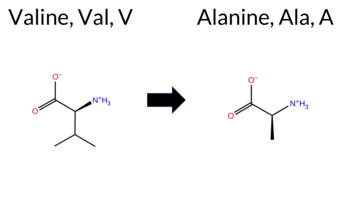 3DClick to see structure in 3D Viewer AIThe SynGAP1 V629A missense variant is not reported in ClinVar (ClinVar ID None) and has no entry in gnomAD (gnomAD ID None). Prediction tools that agree on a benign effect include REVEL, SIFT, and FATHMM. Those that predict a pathogenic effect comprise SGM‑Consensus, FoldX, premPS, PROVEAN, polyPhen‑2 (HumDiv and HumVar), ESM1b, and AlphaMissense‑Default. Two tools give uncertain results: Rosetta and AlphaMissense‑Optimized. High‑accuracy assessments show AlphaMissense‑Optimized as uncertain, SGM‑Consensus as Likely Pathogenic (majority vote from AlphaMissense‑Default, ESM1b, FATHMM, PROVEAN), and Foldetta as Pathogenic (combining FoldX‑MD and Rosetta outputs). Overall, the majority of predictions (8 pathogenic vs. 3 benign) indicate that V629A is most likely pathogenic, and this conclusion does not contradict the absence of a ClinVar classification. Disclaimer: This summary was generated using AI and should be interpreted alongside expert review. | Likely Pathogenic | GAP | 0.040537 | Structured | 0.034796 | Uncertain | 0.970 | 0.236 | 0.000 | -8.652 | Likely Pathogenic | 0.926 | Likely Pathogenic | Ambiguous | 2.24 | Destabilizing | 0.1 | 1.96 | Ambiguous | 2.10 | Destabilizing | 1.58 | Destabilizing | 0.492 | Likely Benign | -3.58 | Deleterious | 1.000 | Probably Damaging | 1.000 | Probably Damaging | 3.18 | Benign | 0.11 | Tolerated | 0.2518 | 0.2124 | 0 | 0 | -2.4 | -28.05 | |||||||||||||||||||||||||||||
| c.1931A>T | D644V 2D 3DClick to see structure in 3D Viewer AIThe SynGAP1 D644V missense variant is not reported in ClinVar (ClinVar ID None) and is absent from gnomAD (gnomAD ID None). Prediction tools that agree on a benign effect include REVEL, Rosetta, premPS, polyPhen‑2 (HumDiv and HumVar), SIFT, ESM1b, FATHMM, and AlphaMissense‑Optimized. Tools that predict a pathogenic effect are PROVEAN and AlphaMissense‑Default. High‑accuracy assessments show AlphaMissense‑Optimized as benign, Foldetta as benign, and the SGM Consensus (majority vote from AlphaMissense‑Default, ESM1b, FATHMM, PROVEAN) is inconclusive because it yields a 2‑to‑2 split. Overall, the majority of evidence points to a benign impact. Thus, the variant is most likely benign, and this conclusion does not contradict the ClinVar status, which has no entry for this variant. Disclaimer: This summary was generated using AI and should be interpreted alongside expert review. | GAP | 0.066181 | Structured | 0.248888 | Uncertain | 0.883 | 0.320 | 0.000 | -6.230 | Likely Benign | 0.636 | Likely Pathogenic | Likely Benign | 0.50 | Ambiguous | 0.0 | -0.35 | Likely Benign | 0.08 | Likely Benign | -0.03 | Likely Benign | 0.347 | Likely Benign | -4.96 | Deleterious | 0.198 | Benign | 0.052 | Benign | 3.49 | Benign | 0.11 | Tolerated | 0.0951 | 0.6267 | -2 | -3 | 7.7 | -15.96 | ||||||||||||||||||||||||||||||
| c.1943T>A | F648Y 2D 3DClick to see structure in 3D Viewer AIThe SynGAP1 missense variant F648Y is not reported in ClinVar (ClinVar status: not listed) but is present in gnomAD (gnomAD ID: 6‑33441202‑T‑A). Prediction tools that agree on a benign effect include REVEL, SIFT, and FATHMM, whereas a majority of tools predict a pathogenic impact: premPS, PROVEAN, polyPhen‑2 HumDiv, polyPhen‑2 HumVar, AlphaMissense‑Default, and ESM1b. Predictions that are inconclusive or unavailable are FoldX, Rosetta, Foldetta, and AlphaMissense‑Optimized. High‑accuracy assessments show AlphaMissense‑Optimized as uncertain, the SGM Consensus (majority vote from AlphaMissense‑Default, ESM1b, FATHMM, PROVEAN) as likely pathogenic, and Foldetta (combining FoldX‑MD and Rosetta outputs) as uncertain. Overall, the balance of evidence favors a pathogenic classification for F648Y. This conclusion is not contradicted by ClinVar status, as no ClinVar entry exists for this variant. Disclaimer: This summary was generated using AI and should be interpreted alongside expert review. | Likely Pathogenic | GAP | 0.051831 | Structured | 0.346782 | Uncertain | 0.943 | 0.339 | 0.000 | 6-33441202-T-A | 4 | 2.48e-6 | -8.632 | Likely Pathogenic | 0.889 | Likely Pathogenic | Ambiguous | 0.74 | Ambiguous | 0.1 | 0.94 | Ambiguous | 0.84 | Ambiguous | 1.11 | Destabilizing | 0.407 | Likely Benign | -2.99 | Deleterious | 0.984 | Probably Damaging | 0.913 | Probably Damaging | 3.41 | Benign | 0.11 | Tolerated | 3.37 | 30 | 0.1307 | 0.1396 | 3 | 7 | -4.1 | 16.00 | ||||||||||||||||||||||||
| c.1960G>A | E654K 2D AIThe SynGAP1 missense variant E654K is not reported in ClinVar and is absent from gnomAD. Prediction tools that agree on a benign effect include REVEL, FoldX, Foldetta, premPS, polyPhen‑2 HumVar, SIFT, and FATHMM. Tools that predict a pathogenic effect are PROVEAN, polyPhen‑2 HumDiv, ESM1b, AlphaMissense‑Default, AlphaMissense‑Optimized, and the SGM‑Consensus (Likely Pathogenic). The high‑accuracy methods give a mixed picture: AlphaMissense‑Optimized predicts pathogenic, Foldetta predicts benign, and the SGM‑Consensus (majority vote from AlphaMissense‑Default, ESM1b, FATHMM, and PROVEAN) also predicts pathogenic. Overall, the majority of high‑confidence predictions lean toward pathogenicity, and the variant is not contradicted by any ClinVar annotation. Thus, based on the available computational evidence, the variant is most likely pathogenic. Disclaimer: This summary was generated using AI and should be interpreted alongside expert review. | Likely Pathogenic | GAP | 0.026892 | Structured | 0.303029 | Uncertain | 0.957 | 0.311 | 0.000 | -12.587 | Likely Pathogenic | 0.968 | Likely Pathogenic | Likely Pathogenic | 0.12 | Likely Benign | 0.3 | 0.53 | Ambiguous | 0.33 | Likely Benign | -0.17 | Likely Benign | 0.435 | Likely Benign | -3.80 | Deleterious | 0.921 | Possibly Damaging | 0.303 | Benign | 3.44 | Benign | 0.11 | Tolerated | 0.2365 | 0.4224 | 0 | 1 | -0.4 | -0.94 | |||||||||||||||||||||||||||||
| c.1962G>C | E654D 2D 3DClick to see structure in 3D Viewer AIThe SynGAP1 E654D missense variant has no ClinVar entry and is not reported in gnomAD. Prediction tools that agree on a benign effect include REVEL, FoldX, premPS, SIFT, FATHMM, and polyPhen‑2 HumVar. Those that predict a pathogenic effect are SGM‑Consensus, PROVEAN, polyPhen‑2 HumDiv, ESM1b, and AlphaMissense‑Default. Two tools give uncertain results: Rosetta and AlphaMissense‑Optimized. High‑accuracy assessments show AlphaMissense‑Optimized as uncertain, SGM‑Consensus (majority vote of AlphaMissense‑Default, ESM1b, FATHMM, PROVEAN) as pathogenic, and Foldetta (combining FoldX‑MD and Rosetta outputs) as benign. Overall, the predictions are mixed, with a slight majority leaning toward benign, but the high‑accuracy tools conflict. The variant is most likely benign based on the aggregate predictions, and this assessment does not contradict any ClinVar status (none reported). Disclaimer: This summary was generated using AI and should be interpreted alongside expert review. | Likely Pathogenic | GAP | 0.026892 | Structured | 0.303029 | Uncertain | 0.957 | 0.311 | 0.000 | -10.454 | Likely Pathogenic | 0.886 | Likely Pathogenic | Ambiguous | 0.44 | Likely Benign | 0.0 | 0.52 | Ambiguous | 0.48 | Likely Benign | 0.29 | Likely Benign | 0.166 | Likely Benign | -2.87 | Deleterious | 0.906 | Possibly Damaging | 0.429 | Benign | 3.38 | Benign | 0.11 | Tolerated | 0.1678 | 0.2583 | 3 | 2 | 0.0 | -14.03 | |||||||||||||||||||||||||||||
| c.1962G>T | E654D 2D 3DClick to see structure in 3D Viewer AIThe SynGAP1 missense variant E654D has no ClinVar entry and is not reported in gnomAD. Prediction tools that agree on a benign effect include REVEL, FoldX, premPS, SIFT, FATHMM, and polyPhen‑2 HumVar. Those that predict a pathogenic effect are SGM Consensus, PROVEAN, polyPhen‑2 HumDiv, ESM1b, and AlphaMissense‑Default. High‑accuracy assessments show that AlphaMissense‑Optimized is uncertain (treated as unavailable), SGM Consensus (a majority vote of AlphaMissense‑Default, ESM1b, FATHMM, and PROVEAN) indicates a likely pathogenic outcome, and Foldetta (combining FoldX‑MD and Rosetta outputs) predicts a benign effect. No other folding‑stability results are available. Overall, the balance of evidence leans toward a benign interpretation, and this assessment does not contradict ClinVar status, which currently contains no classification for this variant. Disclaimer: This summary was generated using AI and should be interpreted alongside expert review. | Likely Pathogenic | GAP | 0.026892 | Structured | 0.303029 | Uncertain | 0.957 | 0.311 | 0.000 | -10.454 | Likely Pathogenic | 0.886 | Likely Pathogenic | Ambiguous | 0.44 | Likely Benign | 0.0 | 0.52 | Ambiguous | 0.48 | Likely Benign | 0.29 | Likely Benign | 0.166 | Likely Benign | -2.87 | Deleterious | 0.906 | Possibly Damaging | 0.429 | Benign | 3.38 | Benign | 0.11 | Tolerated | 0.1678 | 0.2583 | 3 | 2 | 0.0 | -14.03 | |||||||||||||||||||||||||||||
| c.2021C>T | T674I 2D 3DClick to see structure in 3D Viewer AIThe SynGAP1 missense variant T674I is not reported in ClinVar (ClinVar status: not listed) but is present in gnomAD (ID 6‑33441280‑C‑T). Functional prediction tools cluster into two groups: benign predictions come from REVEL, FoldX, Rosetta, Foldetta, premPS, SIFT, FATHMM, and AlphaMissense‑Optimized; pathogenic predictions come from PROVEAN, polyPhen‑2 HumDiv, and ESM1b (polyPhen‑2 HumVar is benign). AlphaMissense‑Default is uncertain. High‑accuracy assessments show AlphaMissense‑Optimized as benign, Foldetta as benign, and the SGM Consensus (majority vote of AlphaMissense‑Default, ESM1b, FATHMM, PROVEAN) as pathogenic. Overall, the majority of evidence points to a benign effect, and this conclusion does not contradict the ClinVar status, which has no entry for this variant. Disclaimer: This summary was generated using AI and should be interpreted alongside expert review. | GAP | 0.129801 | Structured | 0.109297 | Uncertain | 0.521 | 0.349 | 0.000 | 6-33441280-C-T | 2 | 1.24e-6 | -8.951 | Likely Pathogenic | 0.522 | Ambiguous | Likely Benign | -0.05 | Likely Benign | 0.1 | 0.28 | Likely Benign | 0.12 | Likely Benign | -0.04 | Likely Benign | 0.289 | Likely Benign | -3.18 | Deleterious | 0.981 | Probably Damaging | 0.444 | Benign | 3.46 | Benign | 0.11 | Tolerated | 3.40 | 24 | 0.0898 | 0.6945 | -1 | 0 | 5.2 | 12.05 | |||||||||||||||||||||||||
| c.2024A>G | N675S 2D 3DClick to see structure in 3D Viewer AIThe SynGAP1 missense variant N675S is not reported in ClinVar (ClinVar ID None) and is absent from gnomAD (gnomAD ID None). Prediction tools that agree on a benign effect include REVEL, FoldX, Rosetta, FATHMM, SIFT, AlphaMissense‑Default, and AlphaMissense‑Optimized. Those that predict a pathogenic outcome are PROVEAN, polyPhen‑2 HumDiv, and polyPhen‑2 HumVar. Two tools (premPS and ESM1b) return uncertain results. High‑accuracy assessments further support a benign interpretation: AlphaMissense‑Optimized is benign; the SGM Consensus (majority vote from AlphaMissense‑Default, ESM1b, FATHMM, and PROVEAN) yields a benign consensus; and Foldetta, which integrates FoldX‑MD and Rosetta stability calculations, also predicts benign. Taken together, the preponderance of evidence indicates that the variant is most likely benign, and this conclusion does not contradict the ClinVar status, which currently has no entry for this variant. Disclaimer: This summary was generated using AI and should be interpreted alongside expert review. | GAP | 0.129801 | Structured | 0.111024 | Uncertain | 0.513 | 0.333 | 0.000 | -7.871 | In-Between | 0.081 | Likely Benign | Likely Benign | 0.37 | Likely Benign | 0.0 | -0.43 | Likely Benign | -0.03 | Likely Benign | 0.61 | Ambiguous | 0.157 | Likely Benign | -3.78 | Deleterious | 0.993 | Probably Damaging | 0.606 | Possibly Damaging | 3.50 | Benign | 0.11 | Tolerated | 0.3462 | 0.7587 | 1 | 1 | 2.7 | -27.03 | ||||||||||||||||||||||||||||||
| c.2033G>C | S678T 2D 3DClick to see structure in 3D Viewer AIThe SynGAP1 missense variant S678T is not reported in ClinVar and is absent from gnomAD. All available in‑silico predictors classify the change as benign: REVEL, FoldX, Rosetta, premPS, PROVEAN, polyPhen‑2 (HumDiv and HumVar), SIFT, ESM1b, FATHMM, AlphaMissense‑Default, AlphaMissense‑Optimized, and the SGM Consensus (majority vote of AlphaMissense‑Default, ESM1b, FATHMM, PROVEAN). No tool predicts pathogenicity. High‑accuracy assessments likewise support a benign effect: AlphaMissense‑Optimized is benign, the SGM Consensus is “Likely Benign,” and Foldetta (combining FoldX‑MD and Rosetta outputs) predicts benign stability. Based on the unanimous computational evidence, the variant is most likely benign, and this conclusion is consistent with the absence of any ClinVar pathogenic annotation. Disclaimer: This summary was generated using AI and should be interpreted alongside expert review. | Likely Benign | GAP | 0.301917 | Structured | 0.123585 | Uncertain | 0.660 | 0.321 | 0.000 | -5.389 | Likely Benign | 0.083 | Likely Benign | Likely Benign | 0.32 | Likely Benign | 0.1 | 0.41 | Likely Benign | 0.37 | Likely Benign | 0.14 | Likely Benign | 0.053 | Likely Benign | -1.82 | Neutral | 0.255 | Benign | 0.053 | Benign | 3.41 | Benign | 0.11 | Tolerated | 0.1494 | 0.6351 | 1 | 1 | 0.1 | 14.03 | |||||||||||||||||||||||||||||
| c.2159A>C | D720A 2D 3DClick to see structure in 3D Viewer AIThe SynGAP1 D720A missense variant is not reported in ClinVar (ClinVar ID: None) and is absent from gnomAD (gnomAD ID: None). Prediction tools that agree on a benign effect include REVEL, FoldX, Rosetta, Foldetta, premPS, and SIFT, while those that predict a pathogenic effect are PROVEAN, polyPhen‑2 HumDiv, polyPhen‑2 HumVar, ESM1b, FATHMM, and AlphaMissense‑Default; AlphaMissense‑Optimized is uncertain. High‑accuracy assessments show that the SGM Consensus (majority vote of AlphaMissense‑Default, ESM1b, FATHMM, PROVEAN) indicates a likely pathogenic outcome, whereas Foldetta (combining FoldX‑MD and Rosetta) predicts a benign impact, and AlphaMissense‑Optimized remains uncertain. Overall, the predictions are split, with a slight tilt toward pathogenicity from the consensus and high‑accuracy methods. Thus, the variant is most likely pathogenic based on the available predictions, and this does not contradict the ClinVar status, which has no entry for this variant. Disclaimer: This summary was generated using AI and should be interpreted alongside expert review. | Likely Pathogenic | GAP | 0.374039 | Structured | 0.450695 | Uncertain | 0.955 | 0.417 | 0.125 | -10.999 | Likely Pathogenic | 0.871 | Likely Pathogenic | Ambiguous | -0.14 | Likely Benign | 0.0 | -0.35 | Likely Benign | -0.25 | Likely Benign | 0.40 | Likely Benign | 0.424 | Likely Benign | -6.20 | Deleterious | 1.000 | Probably Damaging | 0.999 | Probably Damaging | 2.16 | Pathogenic | 0.11 | Tolerated | 0.3726 | 0.5551 | 0 | -2 | 5.3 | -44.01 | |||||||||||||||||||||||||||||
| c.2200C>T | P734S 2D AIThe SynGAP1 missense variant P734S is listed in ClinVar with an uncertain significance (ClinVar ID 2283225.0) and is present in the gnomAD database (gnomAD ID 6‑33441665‑C‑T). Functional prediction tools uniformly classify the variant as benign: REVEL, PROVEAN, polyPhen‑2 (HumDiv and HumVar), SIFT, ESM1b, FATHMM, AlphaMissense‑Default, and AlphaMissense‑Optimized all report benign effects. No tool predicts pathogenicity. The high‑accuracy consensus methods corroborate this benign assessment: AlphaMissense‑Optimized is benign, and the SGM Consensus (majority vote from AlphaMissense‑Default, ESM1b, FATHMM, and PROVEAN) indicates a likely benign outcome. Foldetta, a protein‑folding stability predictor combining FoldX‑MD and Rosetta outputs, did not provide a result for this variant, so its status is unavailable. Overall, the computational evidence strongly supports a benign classification, which is consistent with the ClinVar uncertain status rather than contradicting it. Disclaimer: This summary was generated using AI and should be interpreted alongside expert review. | Likely Benign | 0.879233 | Disordered | 0.411273 | Uncertain | 0.368 | 0.721 | 0.875 | Uncertain | 2 | 6-33441665-C-T | 2 | 1.24e-6 | -4.291 | Likely Benign | 0.077 | Likely Benign | Likely Benign | 0.030 | Likely Benign | -2.44 | Neutral | 0.344 | Benign | 0.048 | Benign | 2.77 | Benign | 0.11 | Tolerated | 3.64 | 6 | 0.3775 | 0.3650 | 1 | -1 | 0.8 | -10.04 | 10.1016/j.ajhg.2020.11.011 | |||||||||||||||||||||||||||||||
| c.2270G>A | G757D 2D AIThe SynGAP1 missense variant G757D is not reported in ClinVar and is absent from gnomAD. Consensus predictions from multiple in silico tools cluster around a benign effect: REVEL, PROVEAN, polyPhen‑2 HumVar, SIFT, ESM1b, FATHMM, and AlphaMissense‑Optimized all indicate benign. Only polyPhen‑2 HumDiv flags it as pathogenic, while AlphaMissense‑Default remains uncertain. The high‑accuracy consensus from SGM (majority vote of AlphaMissense‑Default, ESM1b, FATHMM, PROVEAN) classifies the variant as Likely Benign, and AlphaMissense‑Optimized also predicts Benign. Foldetta, a protein‑folding stability method combining FoldX‑MD and Rosetta outputs, has no available result for this variant. Taken together, the preponderance of evidence supports a benign interpretation, and this assessment does not contradict any ClinVar annotation (none is present). Therefore, the variant is most likely benign, with no conflict with ClinVar. Disclaimer: This summary was generated using AI and should be interpreted alongside expert review. | Likely Benign | 0.436924 | Structured | 0.830995 | Binding | 0.310 | 0.869 | 0.375 | -4.613 | Likely Benign | 0.387 | Ambiguous | Likely Benign | 0.150 | Likely Benign | -0.90 | Neutral | 0.454 | Possibly Damaging | 0.192 | Benign | 2.71 | Benign | 0.11 | Tolerated | 0.1826 | 0.1611 | 1 | -1 | -3.1 | 58.04 | |||||||||||||||||||||||||||||||||||||||
| c.2284G>A | D762N 2D AIThe SynGAP1 D762N missense variant is not reported in ClinVar (ClinVar ID = None) and is absent from gnomAD (gnomAD ID = None). Prediction tools that agree on a benign effect include REVEL, PROVEAN, SIFT, ESM1b, and AlphaMissense‑Optimized. Tools that predict a pathogenic effect are polyPhen‑2 HumDiv, polyPhen‑2 HumVar, FATHMM, and AlphaMissense‑Default. High‑accuracy assessments show AlphaMissense‑Optimized as benign, while the SGM Consensus (majority vote from AlphaMissense‑Default, ESM1b, FATHMM, PROVEAN) is inconclusive due to a 2‑to‑2 split, and Foldetta results are unavailable. Overall, the balance of evidence leans toward a benign impact for D762N, and this conclusion does not contradict any ClinVar annotation because the variant is not yet catalogued there. Disclaimer: This summary was generated using AI and should be interpreted alongside expert review. | 0.405110 | Structured | 0.910475 | Binding | 0.308 | 0.859 | 0.125 | -3.323 | Likely Benign | 0.640 | Likely Pathogenic | Likely Benign | 0.110 | Likely Benign | -1.51 | Neutral | 0.999 | Probably Damaging | 0.977 | Probably Damaging | 2.13 | Pathogenic | 0.11 | Tolerated | 0.1698 | 0.8797 | 2 | 1 | 0.0 | -0.98 | ||||||||||||||||||||||||||||||||||||||||
| c.2301C>G | I767M 2D AIThe SynGAP1 missense variant I767M is not reported in ClinVar and is absent from gnomAD. Functional prediction tools largely agree on a benign effect: REVEL, PROVEAN, SIFT, ESM1b, FATHMM, AlphaMissense‑Default, and AlphaMissense‑Optimized all predict benign, and the SGM‑Consensus (majority vote from AlphaMissense‑Default, ESM1b, FATHMM, and PROVEAN) also indicates a likely benign outcome. In contrast, polyPhen‑2 (both HumDiv and HumVar models) predict a pathogenic effect. High‑accuracy assessments reinforce the benign consensus: AlphaMissense‑Optimized is benign and the SGM‑Consensus is likely benign; Foldetta results are not available. Overall, the preponderance of evidence supports a benign classification for I767M, and this conclusion does not contradict any ClinVar annotation, as no ClinVar entry exists for this variant. Disclaimer: This summary was generated using AI and should be interpreted alongside expert review. | Likely Benign | 0.321458 | Structured | 0.927771 | Binding | 0.369 | 0.872 | 0.125 | -2.384 | Likely Benign | 0.084 | Likely Benign | Likely Benign | 0.089 | Likely Benign | -0.60 | Neutral | 0.835 | Possibly Damaging | 0.486 | Possibly Damaging | 4.05 | Benign | 0.11 | Tolerated | 0.0788 | 0.3377 | 2 | 1 | -2.6 | 18.03 | |||||||||||||||||||||||||||||||||||||||
| c.2339C>A | S780Y 2D AIThe SynGAP1 missense variant S780Y is not reported in ClinVar (ClinVar status: none) and is absent from gnomAD (gnomAD ID: none). Prediction tools that agree on a benign effect include REVEL, PROVEAN, SIFT, FATHMM, and AlphaMissense‑Optimized. Tools that predict a pathogenic effect are polyPhen‑2 HumDiv, polyPhen‑2 HumVar, and AlphaMissense‑Default; ESM1b remains uncertain. High‑accuracy assessments show AlphaMissense‑Optimized as benign, while the SGM Consensus (majority vote from AlphaMissense‑Default, ESM1b, FATHMM, PROVEAN) also resolves to benign. Foldetta, a protein‑folding stability method, has no available result for this variant. Overall, the preponderance of evidence points to a benign impact. This conclusion is not contradicted by ClinVar, which contains no entry for the variant. Disclaimer: This summary was generated using AI and should be interpreted alongside expert review. | 0.599170 | Disordered | 0.812415 | Binding | 0.283 | 0.883 | 0.500 | -7.682 | In-Between | 0.656 | Likely Pathogenic | Likely Benign | 0.091 | Likely Benign | -1.71 | Neutral | 0.995 | Probably Damaging | 0.925 | Probably Damaging | 2.61 | Benign | 0.11 | Tolerated | 0.0810 | 0.6428 | -3 | -2 | -0.5 | 76.10 | ||||||||||||||||||||||||||||||||||||||||
| c.2402G>T | G801V 2D AIThe SynGAP1 missense variant G801V is not reported in ClinVar and is absent from gnomAD. Functional prediction tools largely agree on a benign effect: REVEL, PROVEAN, polyPhen‑2 HumVar, SIFT, ESM1b, FATHMM, AlphaMissense‑Default, and AlphaMissense‑Optimized all predict benign. Only polyPhen‑2 HumDiv flags the variant as pathogenic, while the SGM‑Consensus (majority vote of AlphaMissense‑Default, ESM1b, FATHMM, and PROVEAN) reports it as Likely Benign. High‑accuracy assessments further support a benign outcome: AlphaMissense‑Optimized is benign and the SGM‑Consensus is Likely Benign; Foldetta results are not available. Overall, the preponderance of evidence indicates that G801V is most likely benign, and this conclusion is not contradicted by any ClinVar annotation. Disclaimer: This summary was generated using AI and should be interpreted alongside expert review. | Likely Benign | SH3-binding motif | 0.874069 | Disordered | 0.636323 | Binding | 0.320 | 0.892 | 0.625 | -4.781 | Likely Benign | 0.119 | Likely Benign | Likely Benign | 0.098 | Likely Benign | -1.64 | Neutral | 0.611 | Possibly Damaging | 0.272 | Benign | 2.70 | Benign | 0.11 | Tolerated | 0.1041 | 0.4230 | -1 | -3 | 4.6 | 42.08 | ||||||||||||||||||||||||||||||||||||||
| c.2438T>G | L813R 2D AIThe SynGAP1 missense variant L813R is not reported in ClinVar (no ClinVar ID) and is absent from gnomAD (no gnomAD ID). Prediction tools that agree on a benign effect include REVEL, PROVEAN, SIFT, ESM1b, and FATHMM, while polyPhen‑2 HumDiv, polyPhen‑2 HumVar, and AlphaMissense‑Default predict a pathogenic outcome. The SGM‑Consensus, which aggregates the majority vote of AlphaMissense‑Default, ESM1b, FATHMM, and PROVEAN, reports the variant as “Likely Benign.” High‑accuracy assessments show AlphaMissense‑Optimized as “Uncertain” and Foldetta results are unavailable. Taken together, the majority of evidence points to a benign impact, and this conclusion does not contradict the ClinVar status, which currently contains no classification for this variant. Disclaimer: This summary was generated using AI and should be interpreted alongside expert review. | Likely Benign | SH3-binding motif | 0.411940 | Structured | 0.838481 | Binding | 0.292 | 0.905 | 0.250 | -4.697 | Likely Benign | 0.786 | Likely Pathogenic | Ambiguous | 0.160 | Likely Benign | -1.57 | Neutral | 0.999 | Probably Damaging | 0.985 | Probably Damaging | 2.68 | Benign | 0.11 | Tolerated | 0.1261 | 0.0947 | -3 | -2 | -8.3 | 43.03 | ||||||||||||||||||||||||||||||||||||||
| c.2471G>T | S824I 2D AIThe SynGAP1 missense variant S824I has no ClinVar record and is not listed in gnomAD. Functional prediction tools cluster into two groups: benign predictions come from REVEL, PROVEAN, SIFT, ESM1b, and FATHMM, while pathogenic predictions arise from polyPhen‑2 HumDiv, polyPhen‑2 HumVar, and AlphaMissense‑Default. The SGM‑Consensus, which aggregates AlphaMissense‑Default, ESM1b, FATHMM, and PROVEAN, is classified as Likely Benign, reflecting the majority of benign calls. High‑accuracy assessments show AlphaMissense‑Optimized as Uncertain, and Foldetta results are unavailable. Overall, the balance of evidence—five benign versus three pathogenic calls, a benign SGM‑Consensus, and no conflicting ClinVar annotation—suggests that the variant is most likely benign. This conclusion does not contradict any existing ClinVar status, as none is present. Disclaimer: This summary was generated using AI and should be interpreted alongside expert review. | Likely Benign | 0.728858 | Disordered | 0.611272 | Binding | 0.314 | 0.884 | 0.750 | -6.799 | Likely Benign | 0.950 | Likely Pathogenic | Ambiguous | 0.124 | Likely Benign | -1.18 | Neutral | 0.999 | Probably Damaging | 0.998 | Probably Damaging | 2.60 | Benign | 0.11 | Tolerated | 0.1177 | 0.6045 | -1 | -2 | 5.3 | 26.08 | |||||||||||||||||||||||||||||||||||||||
| c.2480T>A | I827N 2D AIThe SynGAP1 missense variant I827N is not reported in ClinVar and has no entry in gnomAD. Functional prediction tools that agree on a benign effect include REVEL, PROVEAN, SIFT, ESM1b, and FATHMM, while those that predict a pathogenic outcome are polyPhen‑2 HumDiv, polyPhen‑2 HumVar, and AlphaMissense‑Default. The SGM‑Consensus, which aggregates AlphaMissense‑Default, ESM1b, FATHMM, and PROVEAN, is classified as Likely Benign. High‑accuracy assessments show AlphaMissense‑Optimized as Uncertain, whereas the SGM‑Consensus (majority vote) supports a benign prediction. Foldetta, a protein‑folding stability method combining FoldX‑MD and Rosetta outputs, is not available for this variant. Overall, the preponderance of evidence points to a benign effect; this conclusion is not contradicted by any ClinVar annotation. Disclaimer: This summary was generated using AI and should be interpreted alongside expert review. | Likely Benign | 0.590140 | Disordered | 0.636272 | Binding | 0.383 | 0.884 | 0.625 | -4.860 | Likely Benign | 0.804 | Likely Pathogenic | Ambiguous | 0.114 | Likely Benign | -1.69 | Neutral | 0.999 | Probably Damaging | 0.998 | Probably Damaging | 2.66 | Benign | 0.11 | Tolerated | 0.0876 | 0.0342 | -2 | -3 | -8.0 | 0.94 | |||||||||||||||||||||||||||||||||||||||
| c.2498A>G | K833R 2D AIThe SynGAP1 missense variant K833R is not reported in ClinVar (no ClinVar ID) and is absent from gnomAD (no gnomAD ID). Prediction tools that agree on a benign effect include REVEL, PROVEAN, SIFT, ESM1b, FATHMM, AlphaMissense‑Default, AlphaMissense‑Optimized, and the SGM‑Consensus (which is “Likely Benign”). In contrast, the two polyPhen‑2 implementations (HumDiv and HumVar) predict a pathogenic outcome. High‑accuracy assessments further support a benign classification: AlphaMissense‑Optimized is benign, and the SGM‑Consensus (majority vote of AlphaMissense‑Default, ESM1b, FATHMM, and PROVEAN) is also likely benign. No Foldetta stability result is available, so it does not influence the assessment. Overall, the majority of evidence indicates that K833R is most likely benign, and this conclusion does not contradict any ClinVar annotation (none exists). Disclaimer: This summary was generated using AI and should be interpreted alongside expert review. | Likely Benign | 0.671169 | Disordered | 0.625797 | Binding | 0.315 | 0.863 | 0.375 | -2.158 | Likely Benign | 0.114 | Likely Benign | Likely Benign | 0.094 | Likely Benign | -0.83 | Neutral | 0.997 | Probably Damaging | 0.925 | Probably Damaging | 2.61 | Benign | 0.11 | Tolerated | 0.3864 | 0.0945 | 3 | 2 | -0.6 | 28.01 | |||||||||||||||||||||||||||||||||||||||
| c.2542G>A | G848S 2D AIThe SynGAP1 missense variant G848S is not reported in ClinVar (no ClinVar ID) and is absent from gnomAD (no gnomAD ID). Prediction tools that agree on a benign effect include REVEL, PROVEAN, SIFT, ESM1b, FATHMM, AlphaMissense‑Default, AlphaMissense‑Optimized, and the SGM‑Consensus (which is “Likely Benign”). In contrast, the two polyPhen‑2 implementations (HumDiv and HumVar) predict a pathogenic impact. High‑accuracy assessments further support a benign classification: AlphaMissense‑Optimized is benign, and the SGM‑Consensus (majority vote of AlphaMissense‑Default, ESM1b, FATHMM, and PROVEAN) is also likely benign. No Foldetta stability result is available, so it does not influence the assessment. Overall, the majority of evidence indicates that G848S is most likely benign, and this conclusion does not contradict any ClinVar annotation (none exists). Disclaimer: This summary was generated using AI and should be interpreted alongside expert review. | Likely Benign | 0.724957 | Disordered | 0.563942 | Binding | 0.287 | 0.816 | 0.500 | -4.077 | Likely Benign | 0.104 | Likely Benign | Likely Benign | 0.134 | Likely Benign | 0.07 | Neutral | 0.856 | Possibly Damaging | 0.476 | Possibly Damaging | 2.62 | Benign | 0.11 | Tolerated | 0.2809 | 0.4734 | 1 | 0 | -0.4 | 30.03 | |||||||||||||||||||||||||||||||||||||||
| c.2572A>G | S858G 2D AIThe SynGAP1 missense variant S858G is not reported in ClinVar and is absent from gnomAD. Functional prediction tools largely agree on a benign effect: REVEL, PROVEAN, polyPhen‑2 HumDiv, SIFT, ESM1b, FATHMM, AlphaMissense‑Default, and AlphaMissense‑Optimized all predict benign, while only polyPhen‑2 HumVar indicates a pathogenic outcome. The SGM‑Consensus, derived from a majority vote of AlphaMissense‑Default, ESM1b, FATHMM, and PROVEAN, classifies the variant as Likely Benign. High‑accuracy assessments further support this view: AlphaMissense‑Optimized predicts benign, and the SGM‑Consensus (majority vote) also predicts benign. The Foldetta protein‑folding stability analysis is unavailable for this variant. Overall, the preponderance of evidence points to a benign impact, and this conclusion is consistent with the lack of ClinVar annotation. Disclaimer: This summary was generated using AI and should be interpreted alongside expert review. | Likely Benign | 0.724957 | Disordered | 0.482724 | Uncertain | 0.305 | 0.833 | 0.375 | -2.181 | Likely Benign | 0.068 | Likely Benign | Likely Benign | 0.143 | Likely Benign | -0.18 | Neutral | 0.259 | Benign | 0.786 | Possibly Damaging | 4.13 | Benign | 0.11 | Tolerated | 0.3084 | 0.5116 | 1 | 0 | 0.4 | -30.03 | |||||||||||||||||||||||||||||||||||||||
| c.2584A>C | N862H 2D AIThe SynGAP1 missense variant at residue 862 (N862H) is not reported in ClinVar and is absent from gnomAD. Prediction tools that agree on a benign effect include REVEL, PROVEAN, SIFT, ESM1b, FATHMM, AlphaMissense‑Default, AlphaMissense‑Optimized, and the SGM‑Consensus (which is “Likely Benign”). In contrast, the two polyPhen‑2 implementations (HumDiv and HumVar) predict a pathogenic outcome. High‑accuracy assessments further support a benign classification: AlphaMissense‑Optimized is benign, and the SGM‑Consensus (majority vote of AlphaMissense‑Default, ESM1b, FATHMM, and PROVEAN) is also benign. No Foldetta stability prediction is available. Overall, the majority of evidence points to a benign effect for this variant, and this conclusion does not contradict any ClinVar annotation (none exists). Disclaimer: This summary was generated using AI and should be interpreted alongside expert review. | Likely Benign | 0.525368 | Disordered | 0.564559 | Binding | 0.257 | 0.791 | 0.250 | -4.633 | Likely Benign | 0.174 | Likely Benign | Likely Benign | 0.178 | Likely Benign | -1.46 | Neutral | 0.999 | Probably Damaging | 0.977 | Probably Damaging | 4.02 | Benign | 0.11 | Tolerated | 0.1578 | 0.7435 | 2 | 1 | 0.3 | 23.04 | |||||||||||||||||||||||||||||||||||||||
| c.2605C>A | L869M 2D AIThe SynGAP1 missense variant L869M is not reported in ClinVar and is absent from gnomAD. Functional prediction tools uniformly indicate a benign effect: REVEL, PROVEAN, polyPhen‑2 (HumDiv and HumVar), SIFT, ESM1b, FATHMM, AlphaMissense‑Default, and AlphaMissense‑Optimized all classify the substitution as benign. No tool predicts pathogenicity. High‑accuracy assessments corroborate this: AlphaMissense‑Optimized predicts benign, and the SGM Consensus (majority vote of AlphaMissense‑Default, ESM1b, FATHMM, and PROVEAN) reports a likely benign outcome. Foldetta, a protein‑folding stability method combining FoldX‑MD and Rosetta outputs, has no available result for this variant. Overall, the consensus of all available predictions is benign, and this conclusion does not contradict any ClinVar annotation (none present). Disclaimer: This summary was generated using AI and should be interpreted alongside expert review. | Likely Benign | 0.501700 | Disordered | 0.688653 | Binding | 0.272 | 0.839 | 0.250 | -4.294 | Likely Benign | 0.119 | Likely Benign | Likely Benign | 0.093 | Likely Benign | -0.09 | Neutral | 0.149 | Benign | 0.058 | Benign | 2.61 | Benign | 0.11 | Tolerated | 0.0710 | 0.3795 | 4 | 2 | -1.9 | 18.03 | |||||||||||||||||||||||||||||||||||||||
| c.2605C>G | L869V 2D AIThe SynGAP1 missense variant L869V is not reported in ClinVar and is absent from gnomAD. Functional prediction tools largely agree on a benign effect: REVEL, PROVEAN, polyPhen‑2 HumVar, SIFT, ESM1b, FATHMM, AlphaMissense‑Default, and AlphaMissense‑Optimized all predict benign. Only polyPhen‑2 HumDiv indicates a pathogenic effect. The SGM‑Consensus, derived from a majority vote of AlphaMissense‑Default, ESM1b, FATHMM, and PROVEAN, classifies the variant as Likely Benign. High‑accuracy assessments confirm this: AlphaMissense‑Optimized is benign and the SGM‑Consensus is Likely Benign. Foldetta, a protein‑folding stability method combining FoldX‑MD and Rosetta outputs, has no available result for this variant. Overall, the consensus of the majority of prediction tools and the high‑accuracy methods indicates that the variant is most likely benign, and this assessment does not contradict any ClinVar annotation (none is present). Disclaimer: This summary was generated using AI and should be interpreted alongside expert review. | Likely Benign | 0.501700 | Disordered | 0.688653 | Binding | 0.272 | 0.839 | 0.250 | -3.241 | Likely Benign | 0.161 | Likely Benign | Likely Benign | 0.093 | Likely Benign | -0.33 | Neutral | 0.481 | Possibly Damaging | 0.300 | Benign | 2.86 | Benign | 0.11 | Tolerated | 0.1501 | 0.3616 | 2 | 1 | 0.4 | -14.03 | |||||||||||||||||||||||||||||||||||||||
| c.2618G>C | S873T 2D AIThe SynGAP1 missense variant S873T is not reported in ClinVar (no ClinVar ID) and is absent from gnomAD (no gnomAD ID). Prediction tools that agree on a benign effect include REVEL, PROVEAN, SIFT, ESM1b, FATHMM, AlphaMissense‑Default, and AlphaMissense‑Optimized. The only tools that predict a pathogenic outcome are polyPhen‑2 HumDiv and polyPhen‑2 HumVar. The SGM‑Consensus, which aggregates AlphaMissense‑Default, ESM1b, FATHMM, and PROVEAN, classifies the variant as Likely Benign. High‑accuracy assessments further support a benign interpretation: AlphaMissense‑Optimized predicts Benign, and the SGM‑Consensus also indicates Likely Benign. Foldetta results are not available for this variant. Overall, the majority of evidence points to a benign effect, and this conclusion does not contradict any ClinVar annotation (none exists). Disclaimer: This summary was generated using AI and should be interpreted alongside expert review. | Likely Benign | 0.414856 | Structured | 0.649816 | Binding | 0.283 | 0.866 | 0.125 | -6.364 | Likely Benign | 0.301 | Likely Benign | Likely Benign | 0.152 | Likely Benign | -1.77 | Neutral | 0.979 | Probably Damaging | 0.982 | Probably Damaging | 2.68 | Benign | 0.11 | Tolerated | 0.1514 | 0.6288 | 1 | 1 | 0.1 | 14.03 | |||||||||||||||||||||||||||||||||||||||
| c.2626T>A | S876T 2D AIThe SynGAP1 missense variant S876T is not reported in ClinVar (no ClinVar ID) and is absent from gnomAD (no gnomAD ID). Prediction tools that agree on a benign effect include REVEL, PROVEAN, SIFT, ESM1b, FATHMM, AlphaMissense‑Default, and AlphaMissense‑Optimized. The only tools that predict a pathogenic outcome are polyPhen‑2 HumDiv and polyPhen‑2 HumVar. The SGM‑Consensus, which aggregates AlphaMissense‑Default, ESM1b, FATHMM, and PROVEAN, reports a Likely Benign classification. High‑accuracy assessments show AlphaMissense‑Optimized as Benign and the SGM‑Consensus as Likely Benign; Foldetta results are not available. Based on the preponderance of evidence, the variant is most likely benign, and this assessment does not contradict any ClinVar status because no ClinVar entry exists. Disclaimer: This summary was generated using AI and should be interpreted alongside expert review. | Likely Benign | 0.549308 | Disordered | 0.631130 | Binding | 0.280 | 0.872 | 0.250 | -5.158 | Likely Benign | 0.183 | Likely Benign | Likely Benign | 0.121 | Likely Benign | -1.91 | Neutral | 0.979 | Probably Damaging | 0.982 | Probably Damaging | 2.60 | Benign | 0.11 | Tolerated | 0.1380 | 0.6790 | 1 | 1 | 0.1 | 14.03 | |||||||||||||||||||||||||||||||||||||||
| c.2638G>C | A880P 2D AIThe SynGAP1 missense variant A880P is not reported in ClinVar and is absent from gnomAD. Functional prediction tools largely agree on a benign effect: REVEL, PROVEAN, SIFT, ESM1b, FATHMM, AlphaMissense‑Default, and AlphaMissense‑Optimized all predict benign. Only two tools, polyPhen‑2 HumDiv and HumVar, predict a pathogenic outcome. The SGM‑Consensus, which aggregates AlphaMissense‑Default, ESM1b, FATHMM, and PROVEAN, reports a Likely Benign classification. High‑accuracy assessments confirm this: AlphaMissense‑Optimized is benign, and the SGM‑Consensus is also benign. Foldetta, a protein‑folding stability method combining FoldX‑MD and Rosetta outputs, has no available result for this variant. Overall, the majority of evidence points to a benign impact, and this assessment does not contradict any ClinVar annotation (none is present). Disclaimer: This summary was generated using AI and should be interpreted alongside expert review. | Likely Benign | 0.703578 | Disordered | 0.621441 | Binding | 0.309 | 0.874 | 0.250 | -3.671 | Likely Benign | 0.105 | Likely Benign | Likely Benign | 0.098 | Likely Benign | -0.55 | Neutral | 0.971 | Probably Damaging | 0.693 | Possibly Damaging | 2.61 | Benign | 0.11 | Tolerated | 0.1744 | 0.4106 | 1 | -1 | -3.4 | 26.04 | |||||||||||||||||||||||||||||||||||||||
| c.2648T>A | L883Q 2D AIThe SynGAP1 missense variant L883Q is reported in gnomAD (6‑33443200‑T‑A) but has no ClinVar entry. Functional prediction tools largely agree on a benign effect: REVEL, PROVEAN, SIFT, ESM1b, FATHMM, AlphaMissense‑Default, and AlphaMissense‑Optimized all predict benign. Only the two polyPhen‑2 implementations (HumDiv and HumVar) predict pathogenicity. The SGM‑Consensus, which aggregates AlphaMissense‑Default, ESM1b, FATHMM, and PROVEAN, reports a likely benign classification. High‑accuracy assessments reinforce this: AlphaMissense‑Optimized is benign, and the SGM‑Consensus is likely benign; Foldetta results are not available. Overall, the majority of evidence points to a benign impact. The variant is therefore most likely benign, and this conclusion does not contradict any ClinVar status (none is available). Disclaimer: This summary was generated using AI and should be interpreted alongside expert review. | Likely Benign | 0.716283 | Disordered | 0.641952 | Binding | 0.334 | 0.886 | 0.250 | 6-33443200-T-A | 3 | 1.86e-6 | -3.559 | Likely Benign | 0.123 | Likely Benign | Likely Benign | 0.129 | Likely Benign | -0.51 | Neutral | 0.934 | Possibly Damaging | 0.637 | Possibly Damaging | 2.66 | Benign | 0.11 | Tolerated | 4.32 | 4 | 0.1119 | 0.1505 | -2 | -2 | -7.3 | 14.97 | ||||||||||||||||||||||||||||||||||
| c.2648T>G | L883R 2D AIThe SynGAP1 missense variant L883R is not reported in ClinVar and is absent from gnomAD. Functional prediction tools largely agree on a benign effect: REVEL, PROVEAN, polyPhen‑2 HumVar, SIFT, ESM1b, FATHMM, AlphaMissense‑Default, and AlphaMissense‑Optimized all predict benign. Only polyPhen‑2 HumDiv indicates a pathogenic effect, while the SGM‑Consensus (majority vote of AlphaMissense‑Default, ESM1b, FATHMM, and PROVEAN) classifies the variant as Likely Benign. High‑accuracy assessments further support a benign outcome: AlphaMissense‑Optimized is benign and the SGM‑Consensus is Likely Benign; Foldetta results are not available. Overall, the preponderance of evidence points to a benign impact for the L883R variant, and this conclusion is consistent with the lack of any ClinVar pathogenic annotation. Disclaimer: This summary was generated using AI and should be interpreted alongside expert review. | Likely Benign | 0.716283 | Disordered | 0.641952 | Binding | 0.334 | 0.886 | 0.250 | -3.026 | Likely Benign | 0.286 | Likely Benign | Likely Benign | 0.110 | Likely Benign | -0.83 | Neutral | 0.934 | Possibly Damaging | 0.435 | Benign | 2.73 | Benign | 0.11 | Tolerated | 0.1237 | 0.1147 | -3 | -2 | -8.3 | 43.03 | |||||||||||||||||||||||||||||||||||||||
| c.2723A>C | Q908P 2D AIThe SynGAP1 missense variant Q908P is not reported in ClinVar and is absent from gnomAD. Functional prediction tools largely agree on a benign effect: REVEL, PROVEAN, SIFT, ESM1b, FATHMM, AlphaMissense‑Default, and AlphaMissense‑Optimized all predict benign. Only two tools, polyPhen‑2 HumDiv and HumVar, predict a pathogenic outcome. The SGM‑Consensus, which aggregates AlphaMissense‑Default, ESM1b, FATHMM, and PROVEAN, reports a likely benign classification. High‑accuracy assessments reinforce this view: AlphaMissense‑Optimized is benign and the SGM‑Consensus is likely benign; Foldetta results are unavailable. Overall, the majority of evidence points to a benign effect for Q908P, and this conclusion is consistent with the absence of any ClinVar pathogenic annotation. Disclaimer: This summary was generated using AI and should be interpreted alongside expert review. | Likely Benign | 0.608892 | Disordered | 0.678728 | Binding | 0.275 | 0.917 | 0.250 | -4.446 | Likely Benign | 0.151 | Likely Benign | Likely Benign | 0.196 | Likely Benign | -0.59 | Neutral | 0.996 | Probably Damaging | 0.992 | Probably Damaging | 2.51 | Benign | 0.11 | Tolerated | 0.2379 | 0.5121 | 0 | -1 | 1.9 | -31.01 | |||||||||||||||||||||||||||||||||||||||
| c.2767A>T | I923F 2D AIThe SynGAP1 missense variant I923F is not reported in ClinVar and is absent from gnomAD. In silico prediction tools uniformly indicate a benign effect: REVEL, PROVEAN, polyPhen‑2 (HumDiv and HumVar), SIFT, ESM1b, FATHMM, AlphaMissense‑Default, and AlphaMissense‑Optimized all classify the change as benign. No tool predicts pathogenicity. High‑accuracy assessments corroborate this: AlphaMissense‑Optimized predicts benign, and the SGM Consensus (majority vote of AlphaMissense‑Default, ESM1b, FATHMM, and PROVEAN) reports a likely benign outcome. Foldetta results are unavailable. Overall, the consensus of all available predictions points to a benign impact, and this conclusion is consistent with the lack of a ClinVar classification, so there is no contradiction. Disclaimer: This summary was generated using AI and should be interpreted alongside expert review. | Likely Benign | 0.562014 | Disordered | 0.964857 | Binding | 0.292 | 0.852 | 0.250 | -2.967 | Likely Benign | 0.169 | Likely Benign | Likely Benign | 0.112 | Likely Benign | -0.85 | Neutral | 0.007 | Benign | 0.005 | Benign | 2.70 | Benign | 0.11 | Tolerated | 0.0726 | 0.3887 | 1 | 0 | -1.7 | 34.02 | |||||||||||||||||||||||||||||||||||||||
| c.2801T>G | M934R 2D AISynGAP1 missense variant M934R is not reported in ClinVar and is absent from gnomAD. Prediction tools that classify the variant as benign include REVEL, SIFT, ESM1b, and AlphaMissense‑Optimized, whereas pathogenic predictions come from PROVEAN, polyPhen‑2 HumDiv, polyPhen‑2 HumVar, FATHMM, and AlphaMissense‑Default. The SGM‑Consensus, derived from a majority vote of AlphaMissense‑Default, ESM1b, FATHMM, and PROVEAN, reports the variant as Likely Pathogenic. High‑accuracy assessments show AlphaMissense‑Optimized as benign, SGM‑Consensus as Likely Pathogenic, and Foldetta results are unavailable. Overall, the balance of evidence leans toward pathogenicity, with no ClinVar entry to contradict this assessment. Disclaimer: This summary was generated using AI and should be interpreted alongside expert review. | Likely Pathogenic | 0.762850 | Disordered | 0.984677 | Binding | 0.290 | 0.867 | 0.625 | -1.854 | Likely Benign | 0.771 | Likely Pathogenic | Likely Benign | 0.322 | Likely Benign | -3.54 | Deleterious | 0.969 | Probably Damaging | 0.624 | Possibly Damaging | 2.37 | Pathogenic | 0.11 | Tolerated | 0.1902 | 0.1243 | 0 | -1 | -6.4 | 24.99 | |||||||||||||||||||||||||||||||||||||||
| c.2806G>T | A936S 2D AIThe SynGAP1 missense variant A936S is not reported in ClinVar and is absent from gnomAD. In silico prediction tools uniformly indicate a benign effect: REVEL, PROVEAN, polyPhen‑2 (HumDiv and HumVar), SIFT, ESM1b, FATHMM, AlphaMissense‑Default, and AlphaMissense‑Optimized all classify the change as benign. No tool predicts pathogenicity. The high‑accuracy consensus methods corroborate this: AlphaMissense‑Optimized is benign, and the SGM Consensus (majority vote of AlphaMissense‑Default, ESM1b, FATHMM, and PROVEAN) is “Likely Benign.” Foldetta results are unavailable. Overall, the variant is most likely benign, and this assessment does not contradict any ClinVar status because no ClinVar entry exists. Disclaimer: This summary was generated using AI and should be interpreted alongside expert review. | Likely Benign | 0.812494 | Disordered | 0.973218 | Binding | 0.319 | 0.874 | 0.625 | -3.555 | Likely Benign | 0.065 | Likely Benign | Likely Benign | 0.057 | Likely Benign | -0.07 | Neutral | 0.022 | Benign | 0.008 | Benign | 2.53 | Benign | 0.11 | Tolerated | 0.2675 | 0.5300 | 1 | 1 | -2.6 | 16.00 | |||||||||||||||||||||||||||||||||||||||
| c.2818G>T | G940C 2D AIThe SynGAP1 missense variant G940C is not reported in ClinVar (no ClinVar ID) and is absent from gnomAD (no gnomAD ID). Prediction tools that agree on a benign effect include SGM‑Consensus (Likely Benign), REVEL, PROVEAN, SIFT, FATHMM, AlphaMissense‑Default, and AlphaMissense‑Optimized. Tools that predict a pathogenic effect are polyPhen‑2 HumDiv, polyPhen‑2 HumVar, and ESM1b. High‑accuracy assessments show AlphaMissense‑Optimized as benign and the SGM‑Consensus (majority vote of AlphaMissense‑Default, ESM1b, FATHMM, PROVEAN) also as benign; Foldetta results are not available. Overall, the majority of evidence points to a benign impact. There is no ClinVar entry to contradict this conclusion, so the variant is most likely benign based on current predictions. Disclaimer: This summary was generated using AI and should be interpreted alongside expert review. | Likely Benign | 0.889439 | Disordered | 0.920635 | Binding | 0.383 | 0.902 | 0.625 | -8.158 | Likely Pathogenic | 0.097 | Likely Benign | Likely Benign | 0.089 | Likely Benign | -0.40 | Neutral | 0.996 | Probably Damaging | 0.905 | Possibly Damaging | 2.70 | Benign | 0.11 | Tolerated | 0.1307 | 0.4354 | -3 | -3 | 2.9 | 46.09 | |||||||||||||||||||||||||||||||||||||||
| c.2828G>A | G943D 2D AIThe SynGAP1 missense variant G943D is not reported in ClinVar and is absent from gnomAD. In silico predictors that agree on a benign effect include REVEL, PROVEAN, polyPhen‑2 (HumDiv and HumVar), SIFT, FATHMM, AlphaMissense‑Default, and AlphaMissense‑Optimized. No tool predicts a pathogenic outcome; ESM1b is uncertain, and the SGM‑Consensus (majority vote of AlphaMissense‑Default, ESM1b, FATHMM, and PROVEAN) reports “Likely Benign.” High‑accuracy assessments further support a benign classification: AlphaMissense‑Optimized is benign, and the SGM‑Consensus is likely benign; Foldetta results are unavailable. Taken together, the overwhelming majority of predictions indicate a benign effect, and this conclusion does not contradict any ClinVar status (none is assigned). Thus, the variant is most likely benign. Disclaimer: This summary was generated using AI and should be interpreted alongside expert review. | Likely Benign | 0.973328 | Disordered | 0.860437 | Binding | 0.372 | 0.910 | 0.750 | -7.951 | In-Between | 0.304 | Likely Benign | Likely Benign | 0.296 | Likely Benign | -0.28 | Neutral | 0.224 | Benign | 0.113 | Benign | 2.85 | Benign | 0.11 | Tolerated | 0.1904 | 0.2826 | 1 | -1 | -3.1 | 58.04 | |||||||||||||||||||||||||||||||||||||||
| c.2843G>A | G948D 2D AIThe SynGAP1 missense variant G948D is not reported in ClinVar and is absent from gnomAD. Prediction tools that agree on a benign effect include REVEL, PROVEAN, polyPhen‑2 HumVar, SIFT, FATHMM, AlphaMissense‑Default, and AlphaMissense‑Optimized. Tools that predict a pathogenic effect are polyPhen‑2 HumDiv and ESM1b. The SGM‑Consensus, which aggregates AlphaMissense‑Default, ESM1b, FATHMM, and PROVEAN, reports the variant as Likely Benign. High‑accuracy assessments show AlphaMissense‑Optimized as Benign and the SGM‑Consensus as Likely Benign; Foldetta results are unavailable. Overall, the majority of evidence points to a benign impact, and this conclusion does not contradict any ClinVar annotation (none is present). Disclaimer: This summary was generated using AI and should be interpreted alongside expert review. | Likely Benign | 0.988505 | Disordered | 0.862121 | Binding | 0.365 | 0.919 | 0.750 | -8.423 | Likely Pathogenic | 0.267 | Likely Benign | Likely Benign | 0.279 | Likely Benign | 0.15 | Neutral | 0.818 | Possibly Damaging | 0.266 | Benign | 4.55 | Benign | 0.11 | Tolerated | 0.1871 | 0.2826 | 1 | -1 | -3.1 | 58.04 | |||||||||||||||||||||||||||||||||||||||
| c.2861C>G | P954R 2D AIThe SynGAP1 missense variant P954R is not reported in ClinVar (no ClinVar ID) and is absent from gnomAD (no gnomAD ID). Prediction tools that agree on a benign effect include REVEL, PROVEAN, SIFT, ESM1b, FATHMM, AlphaMissense‑Default, AlphaMissense‑Optimized, and the SGM‑Consensus (which is “Likely Benign”). In contrast, the two polyPhen‑2 implementations (HumDiv and HumVar) predict a pathogenic impact. High‑accuracy assessments further support a benign classification: AlphaMissense‑Optimized is benign, and the SGM‑Consensus (majority vote of AlphaMissense‑Default, ESM1b, FATHMM, and PROVEAN) is also likely benign. No Foldetta stability result is available, so it does not influence the assessment. Overall, the majority of evidence indicates that P954R is most likely benign, and this conclusion is not contradicted by any ClinVar annotation. Disclaimer: This summary was generated using AI and should be interpreted alongside expert review. | Likely Benign | 0.984159 | Disordered | 0.932268 | Binding | 0.465 | 0.926 | 0.750 | -6.329 | Likely Benign | 0.160 | Likely Benign | Likely Benign | 0.097 | Likely Benign | -1.19 | Neutral | 0.954 | Possibly Damaging | 0.826 | Possibly Damaging | 2.78 | Benign | 0.11 | Tolerated | 0.1548 | 0.3940 | 0 | -2 | -2.9 | 59.07 | |||||||||||||||||||||||||||||||||||||||
| c.2874C>A | H958Q 2D AIThe SynGAP1 missense variant H958Q is not reported in ClinVar and is absent from gnomAD. Prediction tools that agree on a benign effect include REVEL, PROVEAN, polyPhen‑2 HumVar, SIFT, FATHMM, AlphaMissense‑Default, and AlphaMissense‑Optimized. Tools that predict a pathogenic effect are polyPhen‑2 HumDiv and ESM1b. The SGM‑Consensus, which aggregates AlphaMissense‑Default, ESM1b, FATHMM, and PROVEAN, reports the variant as Likely Benign. High‑accuracy assessments show AlphaMissense‑Optimized as Benign and the SGM‑Consensus as Likely Benign; Foldetta results are unavailable. Overall, the majority of evidence points to a benign impact. The predictions do not contradict any ClinVar status, as no ClinVar entry exists for this variant. Disclaimer: This summary was generated using AI and should be interpreted alongside expert review. | Likely Benign | 0.985964 | Disordered | 0.976011 | Binding | 0.371 | 0.913 | 0.750 | -8.625 | Likely Pathogenic | 0.117 | Likely Benign | Likely Benign | 0.144 | Likely Benign | -0.97 | Neutral | 0.925 | Possibly Damaging | 0.316 | Benign | 4.18 | Benign | 0.11 | Tolerated | 0.2281 | 0.3736 | 3 | 0 | -0.3 | -9.01 | |||||||||||||||||||||||||||||||||||||||
| c.2874C>G | H958Q 2D AIThe SynGAP1 missense variant H958Q is not reported in ClinVar and is absent from gnomAD. Prediction tools that agree on a benign effect include REVEL, PROVEAN, polyPhen‑2 HumVar, SIFT, FATHMM, AlphaMissense‑Default, and AlphaMissense‑Optimized. Tools that predict a pathogenic effect are polyPhen‑2 HumDiv and ESM1b. The SGM‑Consensus, which aggregates AlphaMissense‑Default, ESM1b, FATHMM, and PROVEAN, reports the variant as Likely Benign. High‑accuracy assessments show AlphaMissense‑Optimized as Benign and the SGM‑Consensus as Likely Benign; Foldetta results are unavailable. Overall, the majority of evidence points to a benign impact. The predictions do not contradict any ClinVar status, as no ClinVar entry exists for this variant. Disclaimer: This summary was generated using AI and should be interpreted alongside expert review. | Likely Benign | 0.985964 | Disordered | 0.976011 | Binding | 0.371 | 0.913 | 0.750 | -8.625 | Likely Pathogenic | 0.117 | Likely Benign | Likely Benign | 0.144 | Likely Benign | -0.97 | Neutral | 0.925 | Possibly Damaging | 0.316 | Benign | 4.18 | Benign | 0.11 | Tolerated | 0.2281 | 0.3736 | 3 | 0 | -0.3 | -9.01 | |||||||||||||||||||||||||||||||||||||||
| c.2903G>T | G968V 2D AIThe SynGAP1 missense variant G968V is not reported in ClinVar (no ClinVar ID) and is absent from gnomAD (no gnomAD ID). Prediction tools that agree on a benign effect include REVEL, PROVEAN, SIFT, ESM1b, FATHMM, AlphaMissense‑Default, and AlphaMissense‑Optimized. Tools that predict a pathogenic effect are polyPhen‑2 HumDiv and polyPhen‑2 HumVar. The SGM‑Consensus, which aggregates AlphaMissense‑Default, ESM1b, FATHMM, and PROVEAN, reports the variant as Likely Benign. High‑accuracy assessments show AlphaMissense‑Optimized as Benign and the SGM‑Consensus as Likely Benign; Foldetta results are unavailable. Overall, the majority of evidence points to a benign impact. The predictions do not contradict ClinVar status, as no ClinVar classification exists for this variant. Disclaimer: This summary was generated using AI and should be interpreted alongside expert review. | Likely Benign | 0.978316 | Disordered | 0.961360 | Binding | 0.327 | 0.896 | 0.750 | -6.152 | Likely Benign | 0.093 | Likely Benign | Likely Benign | 0.239 | Likely Benign | -1.08 | Neutral | 0.918 | Possibly Damaging | 0.525 | Possibly Damaging | 4.19 | Benign | 0.11 | Tolerated | 0.1252 | 0.4036 | -1 | -3 | 4.6 | 42.08 | |||||||||||||||||||||||||||||||||||||||
| c.3064C>A | L1022I 2D AIThe SynGAP1 missense variant L1022I is not reported in ClinVar and is absent from gnomAD, indicating no documented allele frequency data. Functional prediction tools uniformly classify the variant as benign: REVEL, PROVEAN, PolyPhen‑2 (HumDiv and HumVar), SIFT, ESM1b, FATHMM, AlphaMissense‑Default, and AlphaMissense‑Optimized all predict a benign effect. No tool in the dataset indicates pathogenicity. High‑accuracy assessments corroborate this benign prediction: AlphaMissense‑Optimized reports benign, and the SGM Consensus (majority vote of AlphaMissense‑Default, ESM1b, FATHMM, and PROVEAN) yields a “Likely Benign” verdict. Foldetta, a protein‑folding stability method combining FoldX‑MD and Rosetta outputs, has no available result for this variant. Overall, the consensus of all available predictions strongly supports a benign classification, and this conclusion is consistent with the lack of ClinVar evidence. Disclaimer: This summary was generated using AI and should be interpreted alongside expert review. | Likely Benign | 0.859585 | Disordered | 0.986981 | Binding | 0.339 | 0.752 | 0.500 | -4.624 | Likely Benign | 0.166 | Likely Benign | Likely Benign | 0.025 | Likely Benign | -0.91 | Neutral | 0.114 | Benign | 0.072 | Benign | 2.58 | Benign | 0.11 | Tolerated | 0.1081 | 0.4395 | 2 | 2 | 0.7 | 0.00 | |||||||||||||||||||||||||||||||||||||||
| c.3070C>A | L1024I 2D AIThe SynGAP1 missense variant L1024I is not reported in ClinVar and has no entry in gnomAD. Functional prediction tools that agree on a benign effect include REVEL, PROVEAN, SIFT, AlphaMissense‑Default, AlphaMissense‑Optimized, ESM1b, and the SGM‑Consensus (majority vote from AlphaMissense‑Default, ESM1b, FATHMM, and PROVEAN). In contrast, polyPhen‑2 (HumDiv and HumVar) and FATHMM predict a pathogenic impact. High‑accuracy assessments show AlphaMissense‑Optimized as benign and the SGM‑Consensus also as likely benign; the Foldetta protein‑folding stability analysis is unavailable for this variant. Overall, the majority of evidence points to a benign effect, and this conclusion is consistent with the absence of a ClinVar pathogenic classification. Thus, the variant is most likely benign, with no contradiction to ClinVar status. Disclaimer: This summary was generated using AI and should be interpreted alongside expert review. | Likely Benign | 0.862302 | Disordered | 0.992699 | Binding | 0.327 | 0.753 | 0.500 | -4.794 | Likely Benign | 0.260 | Likely Benign | Likely Benign | 0.062 | Likely Benign | -0.99 | Neutral | 0.959 | Probably Damaging | 0.642 | Possibly Damaging | 2.45 | Pathogenic | 0.11 | Tolerated | 0.0992 | 0.3735 | 2 | 2 | 0.7 | 0.00 | |||||||||||||||||||||||||||||||||||||||
| c.3074A>C | Q1025P 2D AIThe SynGAP1 missense variant Q1025P is not reported in ClinVar (no ClinVar ID) and is absent from gnomAD (no gnomAD ID). Prediction tools that agree on a benign effect include REVEL, PROVEAN, SIFT, ESM1b, FATHMM, AlphaMissense‑Default, and AlphaMissense‑Optimized. Tools that predict a pathogenic effect are polyPhen‑2 HumDiv and polyPhen‑2 HumVar. The SGM‑Consensus, which aggregates AlphaMissense‑Default, ESM1b, FATHMM, and PROVEAN, reports a likely benign classification. High‑accuracy assessments show AlphaMissense‑Optimized as benign and the SGM‑Consensus as likely benign; Foldetta results are not available. Overall, the majority of evidence points to a benign impact. The variant is most likely benign, and this conclusion does not contradict any ClinVar status because no ClinVar claim exists. Disclaimer: This summary was generated using AI and should be interpreted alongside expert review. | Likely Benign | 0.879233 | Disordered | 0.993410 | Binding | 0.363 | 0.746 | 0.500 | -2.151 | Likely Benign | 0.211 | Likely Benign | Likely Benign | 0.153 | Likely Benign | -1.22 | Neutral | 0.990 | Probably Damaging | 0.796 | Possibly Damaging | 2.72 | Benign | 0.11 | Tolerated | 0.2211 | 0.5196 | 0 | -1 | 1.9 | -31.01 | |||||||||||||||||||||||||||||||||||||||
| c.3121C>T | P1041S 2D AIThe SynGAP1 missense variant P1041S is listed in ClinVar with an “Uncertain” status and is present in gnomAD (ID 6‑33443673‑C‑T). Prediction tools that agree on a benign effect include REVEL, polyPhen‑2 HumVar, SIFT, ESM1b, FATHMM, AlphaMissense‑Default, and AlphaMissense‑Optimized. Tools that predict a pathogenic effect are PROVEAN and polyPhen‑2 HumDiv. The SGM‑Consensus, which aggregates AlphaMissense‑Default, ESM1b, FATHMM, and PROVEAN, reports a “Likely Benign” outcome. High‑accuracy assessments show AlphaMissense‑Optimized as benign and the SGM‑Consensus (majority vote) also as benign; Foldetta results are unavailable. Overall, the majority of evidence points to a benign impact, and this does not contradict the ClinVar “Uncertain” classification. Disclaimer: This summary was generated using AI and should be interpreted alongside expert review. | Likely Benign | 0.962114 | Disordered | 0.967463 | Binding | 0.345 | 0.833 | 0.625 | Conflicting | 2 | 6-33443673-C-T | 1 | 6.20e-7 | -4.246 | Likely Benign | 0.121 | Likely Benign | Likely Benign | 0.344 | Likely Benign | -2.72 | Deleterious | 0.664 | Possibly Damaging | 0.283 | Benign | 5.48 | Benign | 0.11 | Tolerated | 3.77 | 5 | 0.3199 | 0.6120 | 1 | -1 | 0.8 | -10.04 | ||||||||||||||||||||||||||||||||
| c.3143G>T | G1048V 2D AIThe SynGAP1 missense variant G1048V is not reported in ClinVar (no ClinVar ID) and is absent from gnomAD (no gnomAD ID). Prediction tools that agree on a benign effect include PROVEAN, SIFT, ESM1b, FATHMM, AlphaMissense‑Default, and AlphaMissense‑Optimized. Tools that predict a pathogenic effect are REVEL, polyPhen‑2 HumDiv, and polyPhen‑2 HumVar. The SGM‑Consensus, which aggregates AlphaMissense‑Default, ESM1b, FATHMM, and PROVEAN, reports the variant as Likely Benign. High‑accuracy assessments show AlphaMissense‑Optimized as Benign and the SGM‑Consensus as Likely Benign; Foldetta results are unavailable. Overall, the majority of evidence points to a benign impact. Thus, the variant is most likely benign, and this conclusion does not contradict any ClinVar status because no ClinVar entry exists. Disclaimer: This summary was generated using AI and should be interpreted alongside expert review. | Likely Benign | 0.977651 | Disordered | 0.923876 | Binding | 0.346 | 0.916 | 0.750 | -6.108 | Likely Benign | 0.079 | Likely Benign | Likely Benign | 0.520 | Likely Pathogenic | -0.59 | Neutral | 0.958 | Probably Damaging | 0.787 | Possibly Damaging | 2.54 | Benign | 0.11 | Tolerated | 0.1312 | 0.3688 | -1 | -3 | 4.6 | 42.08 | |||||||||||||||||||||||||||||||||||||||
| c.3157A>T | S1053C 2D AIThe SynGAP1 missense variant S1053C is catalogued in gnomAD (ID 6‑33443709‑A‑T) but has no ClinVar entry. Functional prediction tools that agree on a benign effect include REVEL, PROVEAN, SIFT, FATHMM, AlphaMissense‑Default, AlphaMissense‑Optimized, and the SGM‑Consensus (majority vote from AlphaMissense‑Default, ESM1b, FATHMM, PROVEAN). In contrast, polyPhen‑2 (HumDiv and HumVar) predict a pathogenic impact. The ESM1b score is uncertain, providing no clear direction. High‑accuracy assessments show AlphaMissense‑Optimized as benign and the SGM‑Consensus as likely benign; Foldetta, a protein‑folding stability method combining FoldX‑MD and Rosetta outputs, has no reported result for this variant. Overall, the majority of reliable predictors classify S1053C as benign, and this conclusion does not contradict any ClinVar status (none is available). Disclaimer: This summary was generated using AI and should be interpreted alongside expert review. | Likely Benign | 0.981594 | Disordered | 0.885608 | Binding | 0.399 | 0.944 | 0.875 | 6-33443709-A-T | -7.574 | In-Between | 0.095 | Likely Benign | Likely Benign | 0.220 | Likely Benign | -0.61 | Neutral | 0.977 | Probably Damaging | 0.777 | Possibly Damaging | 5.30 | Benign | 0.11 | Tolerated | 3.77 | 5 | 0.1675 | 0.5895 | -1 | 0 | 3.3 | 16.06 | ||||||||||||||||||||||||||||||||||||
| c.3226T>G | L1076V 2D AIThe SynGAP1 missense variant L1076V is not reported in ClinVar and has no entry in gnomAD. Functional prediction tools that agree on a benign effect include REVEL, PROVEAN, SIFT, ESM1b, FATHMM, AlphaMissense‑Optimized, and the SGM‑Consensus (majority vote from AlphaMissense‑Default, ESM1b, FATHMM, PROVEAN). Tools that predict a pathogenic effect are PolyPhen‑2 HumDiv and PolyPhen‑2 HumVar; AlphaMissense‑Default is uncertain. High‑accuracy assessments show AlphaMissense‑Optimized as benign and the SGM‑Consensus as likely benign, while Foldetta results are unavailable. Overall, the majority of evidence points to a benign impact, and this conclusion does not contradict any ClinVar annotation (none is present). Thus, the variant is most likely benign. Disclaimer: This summary was generated using AI and should be interpreted alongside expert review. | Likely Benign | 0.922952 | Disordered | 0.989617 | Binding | 0.301 | 0.892 | 0.750 | -3.615 | Likely Benign | 0.344 | Ambiguous | Likely Benign | 0.097 | Likely Benign | -0.56 | Neutral | 0.995 | Probably Damaging | 0.982 | Probably Damaging | 2.53 | Benign | 0.11 | Tolerated | 0.1632 | 0.3781 | 2 | 1 | 0.4 | -14.03 | |||||||||||||||||||||||||||||||||||||||
| c.3338G>T | G1113V 2D AIThe SynGAP1 missense variant G1113V is not reported in ClinVar (no ClinVar ID) and is absent from gnomAD (no gnomAD ID). Prediction tools that agree on a benign effect include REVEL, PROVEAN, SIFT, ESM1b, FATHMM, AlphaMissense‑Default, and AlphaMissense‑Optimized. Tools that predict a pathogenic effect are polyPhen‑2 HumDiv and polyPhen‑2 HumVar. The SGM‑Consensus, which aggregates AlphaMissense‑Default, ESM1b, FATHMM, and PROVEAN, reports the variant as Likely Benign. High‑accuracy assessments show AlphaMissense‑Optimized as Benign and the SGM‑Consensus as Likely Benign; Foldetta results are unavailable. Overall, the majority of evidence points to a benign impact. The variant is most likely benign, and this assessment does not contradict any ClinVar status because no ClinVar claim exists. Disclaimer: This summary was generated using AI and should be interpreted alongside expert review. | Likely Benign | 0.905695 | Disordered | 0.900456 | Binding | 0.327 | 0.910 | 0.875 | -5.708 | Likely Benign | 0.093 | Likely Benign | Likely Benign | 0.088 | Likely Benign | -1.98 | Neutral | 0.827 | Possibly Damaging | 0.456 | Possibly Damaging | 2.53 | Benign | 0.11 | Tolerated | 0.1333 | 0.4224 | -1 | -3 | 4.6 | 42.08 | |||||||||||||||||||||||||||||||||||||||
| c.3374G>C | G1125A 2D AIThe SynGAP1 missense variant G1125A is listed in ClinVar with an “Uncertain” status and is present in gnomAD (6‑33443926‑G‑C). Prediction tools that agree on a benign effect include REVEL, PROVEAN, SIFT, ESM1b, FATHMM, AlphaMissense‑Default, and AlphaMissense‑Optimized; the SGM‑Consensus (majority vote from AlphaMissense‑Default, ESM1b, FATHMM, and PROVEAN) also reports a likely benign outcome. In contrast, polyPhen‑2 (HumDiv and HumVar) predict a pathogenic effect. High‑accuracy assessments show AlphaMissense‑Optimized as benign, and the SGM‑Consensus (derived from the four high‑accuracy tools) is benign; Foldetta results are unavailable. Overall, the majority of evidence points to a benign impact, and this conclusion does not contradict the ClinVar “Uncertain” classification. Disclaimer: This summary was generated using AI and should be interpreted alongside expert review. | Likely Benign | 0.834292 | Disordered | 0.835839 | Binding | 0.339 | 0.923 | 0.875 | Uncertain | 1 | 6-33443926-G-C | 1 | 6.68e-7 | -6.569 | Likely Benign | 0.083 | Likely Benign | Likely Benign | 0.232 | Likely Benign | -0.60 | Neutral | 0.999 | Probably Damaging | 0.995 | Probably Damaging | 4.60 | Benign | 0.11 | Tolerated | 3.77 | 5 | 0.3395 | 0.5138 | 1 | 0 | 2.2 | 14.03 | ||||||||||||||||||||||||||||||||
Found 8751 rows. Show 800 rows per page. Page 8/11 « Previous | Next »