
Table of SynGAP1 Isoform α2 (UniProt Q96PV0-1) Missense Variants.
| c.dna | Variant | SGM Consensus | Domain and Structure information: based on WT protein | Annotated databases | Deep learning-based pathogenicity predictions | Folding stability-based pathogenicity predictions | Sequence/structure-based pathogenicity predictions | Phase Separation | Evolutionary/physical properties | Molecular Dynamics-based analysis | DOI | ||||||||||||||||||||||||||||||||||||||||||||||||||||||||||||
|---|---|---|---|---|---|---|---|---|---|---|---|---|---|---|---|---|---|---|---|---|---|---|---|---|---|---|---|---|---|---|---|---|---|---|---|---|---|---|---|---|---|---|---|---|---|---|---|---|---|---|---|---|---|---|---|---|---|---|---|---|---|---|---|---|---|---|---|---|---|---|---|
| Domain | IUPred2 | ANCHOR2 | AlphaFold | MobiDB | PhosphoSitePlus | ClinVar | gnomAD | ESM1b | AlphaMissense | FoldX | Rosetta | Foldetta | PremPS | REVEL | PROVEAN | PolyPhen-2 HumDiv | PolyPhen-2 HumVar | FATHMM | SIFT | PSMutPred | PAM | Physical | SASA | Normalized B-factor backbone | Normalized B-factor sidechain | SynGAP Structural Annotation | |||||||||||||||||||||||||||||||||||||||||||||
| Score | Prediction | Score | Prediction | pLDDT | disorder | disorder | LTP | HTP | KL | PTM | Clinical Status | Review | Subm. | ID | Allele count | Allele freq. | LLR score | Prediction | Pathogenicity | Class | Optimized | Average ΔΔG | Prediction | StdDev | ΔΔG | Prediction | ΔΔG | Prediction | ΔΔG | Prediction | Score | Prediction | Score | Prediction | pph2_prob | Prediction | pph2_prob | Prediction | Nervous System Score | Prediction | Prediction | Status | Conservation | Sequences | IP RF | SP RF | Prediction | PAM250 | PAM120 | Hydropathy Δ | MW Δ | Average | Δ | Δ | StdDev | Δ | StdDev | Secondary | Tertiary bonds | Inside out | GAP-Ras interface | At membrane | No effect | MD Alert | Verdict | Description | |||||
| c.3077A>G | D1026G 2D 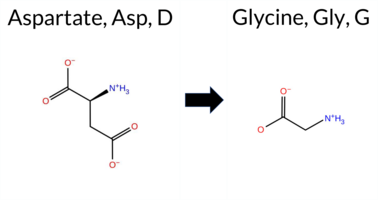 AIThe SynGAP1 missense variant D1026G is not reported in ClinVar (ClinVar ID = None) and is absent from gnomAD (gnomAD ID = None). Prediction tools that agree on a benign effect include REVEL, polyPhen‑2 (HumDiv and HumVar), ESM1b, FATHMM, and AlphaMissense‑Optimized. Tools that predict a pathogenic effect are PROVEAN, SIFT, and AlphaMissense‑Default. High‑accuracy assessments show AlphaMissense‑Optimized as benign, while the SGM Consensus (majority vote from AlphaMissense‑Default, ESM1b, FATHMM, PROVEAN) is inconclusive (two benign, two pathogenic). Foldetta, a protein‑folding stability method combining FoldX‑MD and Rosetta outputs, has no available result for this variant. Overall, the majority of evidence points to a benign impact, and this conclusion does not contradict the ClinVar status, which currently has no entry for the variant. Disclaimer: This summary was generated using AI and should be interpreted alongside expert review. | 0.894241 | Disordered | 0.993931 | Binding | 0.324 | 0.739 | 0.500 | -4.125 | Likely Benign | 0.691 | Likely Pathogenic | Likely Benign | 0.098 | Likely Benign | -2.84 | Deleterious | 0.001 | Benign | 0.005 | Benign | 2.67 | Benign | 0.01 | Affected | 0.3377 | 0.5042 | 1 | -1 | 3.1 | -58.04 | ||||||||||||||||||||||||||||||||||||||||
| c.3518T>A | I1173N 2D 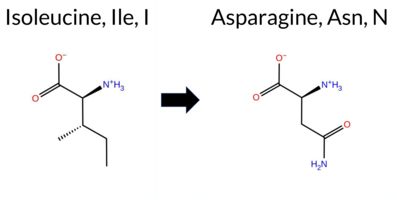 AIThe SynGAP1 missense variant I1173N is not reported in ClinVar and is absent from gnomAD. Functional prediction tools cluster into two groups: benign predictions come from REVEL, PROVEAN, ESM1b, FATHMM, and AlphaMissense‑Optimized, while pathogenic predictions arise from polyPhen‑2 (HumDiv and HumVar), SIFT, and AlphaMissense‑Default. The SGM‑Consensus, derived from a majority vote of AlphaMissense‑Default, ESM1b, FATHMM, and PROVEAN, indicates a likely benign effect. High‑accuracy assessments further support this: AlphaMissense‑Optimized predicts benign, and the SGM‑Consensus also leans benign. Foldetta, a protein‑folding stability method that integrates FoldX‑MD and Rosetta outputs, has no available result for this variant. Taken together, the preponderance of evidence points to a benign impact for I1173N, and this conclusion does not conflict with the absence of a ClinVar classification. Disclaimer: This summary was generated using AI and should be interpreted alongside expert review. | Likely Benign | Coiled-coil | 0.501700 | Disordered | 0.653145 | Binding | 0.521 | 0.756 | 0.375 | -4.130 | Likely Benign | 0.691 | Likely Pathogenic | Likely Benign | 0.443 | Likely Benign | -1.46 | Neutral | 0.925 | Possibly Damaging | 0.611 | Possibly Damaging | 5.34 | Benign | 0.02 | Affected | 0.0920 | 0.0142 | -2 | -3 | -8.0 | 0.94 | ||||||||||||||||||||||||||||||||||||||
| c.3725A>T | E1242V 2D 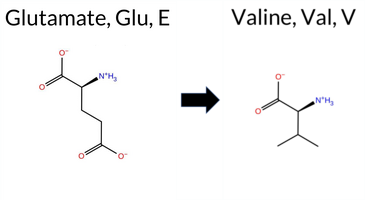 AIThe E1242V missense change occurs in the coiled‑coil domain of SynGAP1. ClinVar has no entry for this variant, and it is not reported in gnomAD. Prediction tools that agree on a benign effect are REVEL and AlphaMissense‑Optimized. Those that predict a pathogenic outcome include PROVEAN, polyPhen‑2 (HumDiv and HumVar), SIFT, FATHMM, AlphaMissense‑Default, and the SGM‑Consensus score (which is “Likely Pathogenic”). ESM1b is uncertain. High‑accuracy assessments show AlphaMissense‑Optimized as benign, while the SGM‑Consensus (a majority vote of AlphaMissense‑Default, ESM1b, FATHMM, and PROVEAN) is pathogenic; Foldetta results are unavailable. Overall, the majority of evidence points to a pathogenic effect. This conclusion is not contradicted by ClinVar status, which simply lacks an entry for the variant. Disclaimer: This summary was generated using AI and should be interpreted alongside expert review. | Likely Pathogenic | Coiled-coil | 0.557691 | Disordered | 0.456349 | Uncertain | 0.870 | 0.549 | 0.500 | -7.456 | In-Between | 0.691 | Likely Pathogenic | Likely Benign | 0.267 | Likely Benign | -5.46 | Deleterious | 0.991 | Probably Damaging | 0.898 | Possibly Damaging | 2.17 | Pathogenic | 0.00 | Affected | 0.0447 | 0.4320 | -2 | -2 | 7.7 | -29.98 | ||||||||||||||||||||||||||||||||||||||
| c.1340T>C | V447A 2D 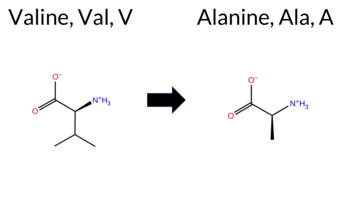 3DClick to see structure in 3D Viewer AIThe SynGAP1 V447A missense variant is not reported in ClinVar and has no entry in gnomAD. Prediction tools that agree on a benign effect include REVEL, SIFT, FATHMM, and AlphaMissense‑Optimized. Tools that predict a pathogenic effect comprise SGM‑Consensus, FoldX, Rosetta, Foldetta, premPS, PROVEAN, polyPhen‑2 (HumDiv and HumVar), ESM1b, and AlphaMissense‑Default. High‑accuracy assessments show AlphaMissense‑Optimized as benign, while the SGM‑Consensus (majority vote of AlphaMissense‑Default, ESM1b, FATHMM, PROVEAN) and Foldetta both predict pathogenicity. No predictions are missing or inconclusive. Based on the overall distribution of predictions, the variant is most likely pathogenic, and this assessment does not contradict any ClinVar status because none is available. Disclaimer: This summary was generated using AI and should be interpreted alongside expert review. | Likely Pathogenic | GAP | 0.250310 | Structured | 0.283801 | Uncertain | 0.970 | 0.243 | 0.000 | -9.852 | Likely Pathogenic | 0.692 | Likely Pathogenic | Likely Benign | 2.18 | Destabilizing | 0.0 | 2.72 | Destabilizing | 2.45 | Destabilizing | 1.56 | Destabilizing | 0.266 | Likely Benign | -2.84 | Deleterious | 1.000 | Probably Damaging | 0.999 | Probably Damaging | 3.37 | Benign | 0.15 | Tolerated | 0.2456 | 0.2124 | 0 | 0 | -2.4 | -28.05 | |||||||||||||||||||||||||||||
| c.3382G>A | G1128R 2D 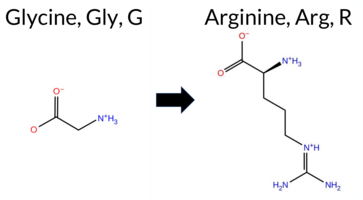 AIThe SynGAP1 missense variant G1128R is not reported in ClinVar and is absent from gnomAD. Prediction tools that agree on a benign effect include REVEL, PROVEAN, polyPhen‑2 HumVar, SIFT, ESM1b, FATHMM, and AlphaMissense‑Optimized. Tools that predict a pathogenic effect are polyPhen‑2 HumDiv and AlphaMissense‑Default. The SGM‑Consensus, which aggregates AlphaMissense‑Default, ESM1b, FATHMM, and PROVEAN, reports the variant as Likely Benign. High‑accuracy assessments show AlphaMissense‑Optimized as Benign and the SGM‑Consensus as Likely Benign; Foldetta results are unavailable. Overall, the majority of evidence points to a benign impact. This conclusion is consistent with the lack of ClinVar annotation, so there is no contradiction with existing clinical data. Disclaimer: This summary was generated using AI and should be interpreted alongside expert review. | Likely Benign | 0.896620 | Disordered | 0.865136 | Binding | 0.309 | 0.911 | 0.875 | -5.009 | Likely Benign | 0.692 | Likely Pathogenic | Likely Benign | 0.396 | Likely Benign | -0.79 | Neutral | 0.846 | Possibly Damaging | 0.346 | Benign | 4.38 | Benign | 0.12 | Tolerated | 0.0950 | 0.4725 | -3 | -2 | -4.1 | 99.14 | |||||||||||||||||||||||||||||||||||||||
| c.3382G>C | G1128R 2D AIThe SynGAP1 missense variant G1128R is not reported in ClinVar and is absent from gnomAD. Prediction tools that agree on a benign effect include REVEL, PROVEAN, polyPhen‑2 HumVar, SIFT, ESM1b, FATHMM, and AlphaMissense‑Optimized. Tools that predict a pathogenic effect are polyPhen‑2 HumDiv and AlphaMissense‑Default. The SGM‑Consensus, which aggregates AlphaMissense‑Default, ESM1b, FATHMM, and PROVEAN, reports the variant as Likely Benign. High‑accuracy assessments show AlphaMissense‑Optimized as Benign and the SGM‑Consensus as Likely Benign; Foldetta results are unavailable. Overall, the majority of evidence points to a benign impact. This conclusion is consistent with the lack of ClinVar annotation, so there is no contradiction with existing clinical data. Disclaimer: This summary was generated using AI and should be interpreted alongside expert review. | Likely Benign | 0.896620 | Disordered | 0.865136 | Binding | 0.309 | 0.911 | 0.875 | -5.009 | Likely Benign | 0.692 | Likely Pathogenic | Likely Benign | 0.397 | Likely Benign | -0.79 | Neutral | 0.846 | Possibly Damaging | 0.346 | Benign | 4.38 | Benign | 0.12 | Tolerated | 0.0950 | 0.4725 | -3 | -2 | -4.1 | 99.14 | |||||||||||||||||||||||||||||||||||||||
| c.3589G>C | E1197Q 2D 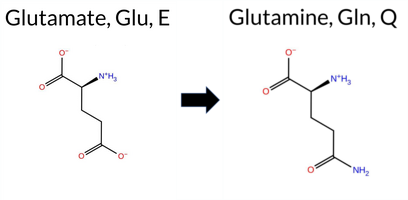 AIThe SynGAP1 missense variant E1197Q is not reported in ClinVar and is absent from gnomAD. Prediction tools that agree on a benign effect include REVEL, PROVEAN, SIFT, ESM1b, FATHMM, and AlphaMissense‑Optimized. Tools that predict a pathogenic effect are polyPhen‑2 HumDiv, polyPhen‑2 HumVar, and AlphaMissense‑Default. The SGM‑Consensus, which is a majority vote from AlphaMissense‑Default, ESM1b, FATHMM, and PROVEAN, is “Likely Benign.” High‑accuracy assessments show AlphaMissense‑Optimized as benign, the SGM‑Consensus as benign, and no Foldetta stability data are available. Overall, the balance of evidence favors a benign interpretation, and this conclusion is not contradicted by any ClinVar annotation. Disclaimer: This summary was generated using AI and should be interpreted alongside expert review. | Likely Benign | Coiled-coil | 0.613573 | Disordered | 0.437361 | Uncertain | 0.827 | 0.599 | 0.250 | -2.771 | Likely Benign | 0.692 | Likely Pathogenic | Likely Benign | 0.304 | Likely Benign | -0.60 | Neutral | 0.999 | Probably Damaging | 0.996 | Probably Damaging | 5.44 | Benign | 0.29 | Tolerated | 0.0690 | 0.5265 | 2 | 2 | 0.0 | -0.98 | ||||||||||||||||||||||||||||||||||||||
| c.368C>A | A123D 2D 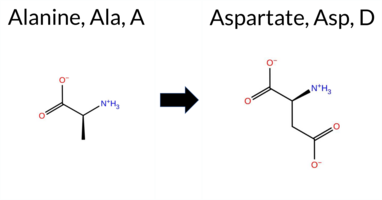 AIThe SynGAP1 missense variant A123D is not reported in ClinVar (no ClinVar ID) and is absent from gnomAD (no gnomAD ID). Prediction tools that agree on a benign effect include REVEL, PROVEAN, polyPhen‑2 HumVar, ESM1b, FATHMM, and AlphaMissense‑Optimized. Tools that predict a pathogenic effect are polyPhen‑2 HumDiv, SIFT, and AlphaMissense‑Default. The SGM‑Consensus, which aggregates AlphaMissense‑Default, ESM1b, FATHMM, and PROVEAN, reports a Likely Benign classification. High‑accuracy assessments show AlphaMissense‑Optimized as Benign and the SGM‑Consensus as Likely Benign; the Foldetta stability analysis is unavailable. Overall, the majority of evidence points to a benign impact, and this conclusion is not contradicted by any ClinVar annotation. Disclaimer: This summary was generated using AI and should be interpreted alongside expert review. | Likely Benign | 0.521092 | Disordered | 0.689505 | Binding | 0.324 | 0.886 | 0.750 | -3.515 | Likely Benign | 0.692 | Likely Pathogenic | Likely Benign | 0.168 | Likely Benign | -1.17 | Neutral | 0.718 | Possibly Damaging | 0.218 | Benign | 4.15 | Benign | 0.01 | Affected | 0.2325 | 0.2893 | 0 | -2 | -5.3 | 44.01 | |||||||||||||||||||||||||||||||||||||||
| c.543C>A | H181Q 2D 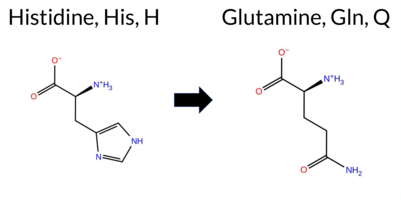 AIThe SynGAP1 missense variant H181Q is not reported in ClinVar (no ClinVar ID) and is absent from gnomAD (no gnomAD ID). Prediction tools that agree on a benign effect include REVEL, PROVEAN, polyPhen‑2 HumVar, SIFT, FATHMM, and AlphaMissense‑Optimized. Tools that predict a pathogenic effect are polyPhen‑2 HumDiv, ESM1b, and AlphaMissense‑Default. The SGM Consensus, which takes a majority vote from AlphaMissense‑Default, ESM1b, FATHMM, and PROVEAN, is inconclusive (two pathogenic, two benign). Foldetta, a protein‑folding stability method combining FoldX‑MD and Rosetta outputs, has no available result for this variant. High‑accuracy tools therefore give a benign prediction from AlphaMissense‑Optimized, an inconclusive SGM Consensus, and no Foldetta data. Overall, the majority of predictions (six benign vs. three pathogenic) indicate that the variant is most likely benign, and this conclusion is not contradicted by any ClinVar status. Disclaimer: This summary was generated using AI and should be interpreted alongside expert review. | 0.505461 | Disordered | 0.439530 | Uncertain | 0.294 | 0.616 | 0.500 | -9.577 | Likely Pathogenic | 0.692 | Likely Pathogenic | Likely Benign | 0.125 | Likely Benign | -1.45 | Neutral | 0.940 | Possibly Damaging | 0.360 | Benign | 4.19 | Benign | 0.09 | Tolerated | 0.1241 | 0.2835 | 3 | 0 | -0.3 | -9.01 | ||||||||||||||||||||||||||||||||||||||||
| c.543C>G | H181Q 2D AIThe SynGAP1 H181Q missense variant is not reported in ClinVar (no ClinVar ID) and is absent from gnomAD (no gnomAD ID). Prediction tools that agree on a benign effect include REVEL, PROVEAN, polyPhen‑2 HumVar, SIFT, FATHMM, and AlphaMissense‑Optimized. Tools that predict a pathogenic effect are polyPhen‑2 HumDiv, ESM1b, and AlphaMissense‑Default. The SGM Consensus, which takes a majority vote from AlphaMissense‑Default, ESM1b, FATHMM, and PROVEAN, is inconclusive (two pathogenic vs two benign). Foldetta, a protein‑folding stability method combining FoldX‑MD and Rosetta outputs, has no available result for this variant. High‑accuracy tools therefore give a benign prediction from AlphaMissense‑Optimized, an inconclusive SGM Consensus, and an unavailable Foldetta result. Overall, the majority of predictions (six benign vs three pathogenic) indicate that the variant is most likely benign, and this assessment does not contradict the lack of ClinVar annotation. Disclaimer: This summary was generated using AI and should be interpreted alongside expert review. | 0.505461 | Disordered | 0.439530 | Uncertain | 0.294 | 0.616 | 0.500 | -9.577 | Likely Pathogenic | 0.692 | Likely Pathogenic | Likely Benign | 0.125 | Likely Benign | -1.45 | Neutral | 0.940 | Possibly Damaging | 0.360 | Benign | 4.19 | Benign | 0.09 | Tolerated | 0.1241 | 0.2835 | 3 | 0 | -0.3 | -9.01 | ||||||||||||||||||||||||||||||||||||||||
| c.65G>T | R22I 2D 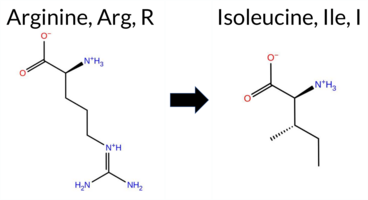 AIThe SynGAP1 missense variant R22I is not reported in ClinVar (no ClinVar ID) and is absent from gnomAD (no gnomAD ID). Prediction tools that agree on a benign effect include REVEL, PROVEAN, polyPhen‑2 HumVar, ESM1b, FATHMM, and AlphaMissense‑Optimized. Tools that predict a pathogenic effect are polyPhen‑2 HumDiv, SIFT, and AlphaMissense‑Default. The SGM‑Consensus, derived from a majority vote of AlphaMissense‑Default, ESM1b, FATHMM, and PROVEAN, classifies the variant as Likely Benign. High‑accuracy assessments show AlphaMissense‑Optimized as Benign and the SGM‑Consensus as Likely Benign; Foldetta results are unavailable. Overall, the balance of evidence favors a benign interpretation, and this conclusion does not contradict any ClinVar annotation (none exists). Disclaimer: This summary was generated using AI and should be interpreted alongside expert review. | Likely Benign | 0.538167 | Disordered | 0.441505 | Uncertain | 0.377 | 0.891 | 0.500 | -4.849 | Likely Benign | 0.692 | Likely Pathogenic | Likely Benign | 0.118 | Likely Benign | 0.06 | Neutral | 0.676 | Possibly Damaging | 0.308 | Benign | 4.20 | Benign | 0.00 | Affected | 0.2120 | 0.5048 | -2 | -3 | 9.0 | -43.03 | |||||||||||||||||||||||||||||||||||||||
| c.1220A>G | Q407R 2D 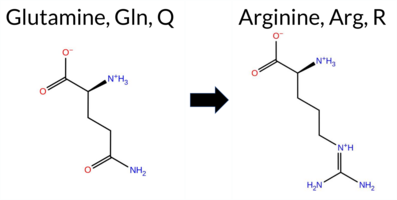 3DClick to see structure in 3D Viewer AIThe SynGAP1 missense variant Q407R has no ClinVar entry and is not reported in gnomAD. Prediction tools that agree on a benign effect include REVEL, FoldX, Rosetta, SIFT, FATHMM, and AlphaMissense‑Optimized. Tools that predict a pathogenic effect are SGM‑Consensus, PROVEAN, polyPhen‑2 (HumDiv and HumVar), ESM1b, and AlphaMissense‑Default; premPS is uncertain. High‑accuracy assessments show AlphaMissense‑Optimized as benign, SGM‑Consensus (majority vote of AlphaMissense‑Default, ESM1b, FATHMM, PROVEAN) as likely pathogenic, and Foldetta (combining FoldX‑MD and Rosetta outputs) as benign. With two of the three high‑accuracy methods indicating benign and the remaining one pathogenic, the overall evidence leans toward a benign classification. This conclusion does not contradict ClinVar status, which is currently unreported. Disclaimer: This summary was generated using AI and should be interpreted alongside expert review. | Likely Pathogenic | C2 | 0.109221 | Structured | 0.382522 | Uncertain | 0.916 | 0.271 | 0.000 | -13.263 | Likely Pathogenic | 0.693 | Likely Pathogenic | Likely Benign | 0.15 | Likely Benign | 0.2 | 0.09 | Likely Benign | 0.12 | Likely Benign | 0.65 | Ambiguous | 0.340 | Likely Benign | -3.52 | Deleterious | 0.909 | Possibly Damaging | 0.889 | Possibly Damaging | 4.02 | Benign | 0.17 | Tolerated | 0.1347 | 0.1596 | 1 | 1 | -1.0 | 28.06 | |||||||||||||||||||||||||||||
| c.1331A>G | K444R 2D 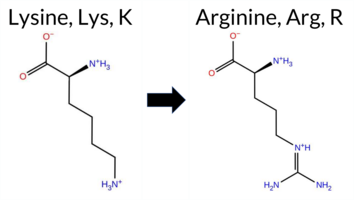 3DClick to see structure in 3D Viewer AISynGAP1 missense variant K444R is not reported in ClinVar and has no gnomAD allele. Prediction tools cluster into benign (REVEL, FoldX, SIFT, FATHMM, AlphaMissense‑Optimized) and pathogenic (SGM‑Consensus, PROVEAN, polyPhen‑2 HumDiv, polyPhen‑2 HumVar, ESM1b, AlphaMissense‑Default). Two tools (Rosetta, premPS) give uncertain results. High‑accuracy methods give a mixed picture: AlphaMissense‑Optimized predicts benign, the SGM‑Consensus (majority vote of AlphaMissense‑Default, ESM1b, FATHMM, PROVEAN) predicts pathogenic, and Foldetta predicts benign. No prediction or folding stability result is missing. Overall, six tools favor pathogenicity while five favor benignity, and the high‑accuracy consensus leans toward benign. Thus the variant is most likely pathogenic based on the broader set of predictions, and this assessment does not contradict any ClinVar status because no ClinVar entry exists. Disclaimer: This summary was generated using AI and should be interpreted alongside expert review. | Likely Pathogenic | GAP | 0.203355 | Structured | 0.262172 | Uncertain | 0.955 | 0.213 | 0.000 | -10.753 | Likely Pathogenic | 0.693 | Likely Pathogenic | Likely Benign | -0.12 | Likely Benign | 0.1 | -0.61 | Ambiguous | -0.37 | Likely Benign | 0.77 | Ambiguous | 0.213 | Likely Benign | -2.86 | Deleterious | 0.972 | Probably Damaging | 0.926 | Probably Damaging | 3.45 | Benign | 0.12 | Tolerated | 0.4597 | 0.0972 | 3 | 2 | -0.6 | 28.01 | |||||||||||||||||||||||||||||
| c.1865C>A | T622N 2D 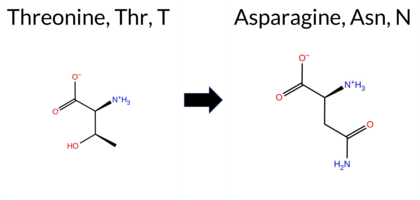 3DClick to see structure in 3D Viewer AISynGAP1 missense variant T622N has no ClinVar entry and is not reported in gnomAD. Functional prediction tools that agree on a benign effect are SIFT and AlphaMissense‑Optimized, whereas a majority of tools predict a pathogenic impact: REVEL, Rosetta, PROVEAN, polyPhen‑2 (HumDiv and HumVar), FATHMM, AlphaMissense‑Default, and the SGM‑Consensus. High‑accuracy assessments show AlphaMissense‑Optimized as benign, the SGM‑Consensus (derived from a majority vote of AlphaMissense‑Default, ESM1b, FATHMM, and PROVEAN) as pathogenic, and Foldetta (combining FoldX‑MD and Rosetta outputs) as uncertain. No prediction or stability result is missing; all available data are considered. Overall, the preponderance of evidence points to a pathogenic effect for T622N, and this conclusion is not contradicted by ClinVar status, which currently lacks an entry for this variant. Disclaimer: This summary was generated using AI and should be interpreted alongside expert review. | Likely Pathogenic | GAP | 0.268042 | Structured | 0.071403 | Uncertain | 0.957 | 0.198 | 0.000 | -7.962 | In-Between | 0.693 | Likely Pathogenic | Likely Benign | 1.00 | Ambiguous | 0.1 | 2.37 | Destabilizing | 1.69 | Ambiguous | 0.94 | Ambiguous | 0.564 | Likely Pathogenic | -4.14 | Deleterious | 1.000 | Probably Damaging | 1.000 | Probably Damaging | -1.24 | Pathogenic | 0.13 | Tolerated | 0.0943 | 0.2848 | 0 | 0 | -2.8 | 13.00 | |||||||||||||||||||||||||||||
| c.2152C>G | L718V 2D 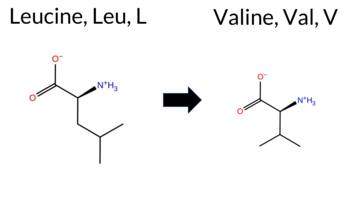 3DClick to see structure in 3D Viewer AIThe SynGAP1 missense variant L718V is not reported in ClinVar and is absent from gnomAD. Prediction tools that indicate a benign effect include REVEL and AlphaMissense‑Optimized, whereas the remaining tools (FoldX, Rosetta, Foldetta, premPS, PROVEAN, polyPhen‑2 HumDiv, polyPhen‑2 HumVar, SIFT, ESM1b, FATHMM, AlphaMissense‑Default) all predict a pathogenic outcome. High‑accuracy assessments further support a deleterious impact: AlphaMissense‑Optimized reports benign, the SGM Consensus (derived from the majority vote of AlphaMissense‑Default, ESM1b, FATHMM, and PROVEAN) is pathogenic, and Foldetta (combining FoldX‑MD and Rosetta outputs) is pathogenic. Based on the preponderance of pathogenic predictions and the high‑accuracy consensus, the variant is most likely pathogenic; this conclusion is not contradicted by any ClinVar annotation. Disclaimer: This summary was generated using AI and should be interpreted alongside expert review. | Likely Pathogenic | GAP | 0.298791 | Structured | 0.438417 | Uncertain | 0.966 | 0.385 | 0.000 | -11.585 | Likely Pathogenic | 0.693 | Likely Pathogenic | Likely Benign | 3.15 | Destabilizing | 0.1 | 2.11 | Destabilizing | 2.63 | Destabilizing | 1.14 | Destabilizing | 0.237 | Likely Benign | -2.83 | Deleterious | 0.998 | Probably Damaging | 0.992 | Probably Damaging | 1.36 | Pathogenic | 0.00 | Affected | 0.1485 | 0.2656 | 2 | 1 | 0.4 | -14.03 | |||||||||||||||||||||||||||||
| c.2348T>A | M783K 2D 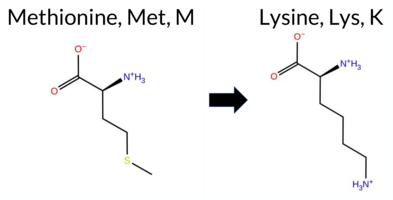 AIThe SynGAP1 missense variant M783K is not reported in ClinVar (ClinVar ID = None) and is absent from gnomAD (gnomAD ID = None). Prediction tools that agree on a benign effect include REVEL, polyPhen‑2 HumVar, ESM1b, FATHMM, and AlphaMissense‑Optimized. Tools that predict a pathogenic effect are PROVEAN, polyPhen‑2 HumDiv, SIFT, and AlphaMissense‑Default. High‑accuracy assessments show AlphaMissense‑Optimized classifying the variant as benign, while the SGM Consensus (majority vote from AlphaMissense‑Default, ESM1b, FATHMM, and PROVEAN) is inconclusive due to a 2‑vs‑2 split, and Foldetta results are unavailable. Overall, the majority of evidence points toward a benign impact. This conclusion does not contradict ClinVar status, as the variant has no ClinVar entry. Disclaimer: This summary was generated using AI and should be interpreted alongside expert review. | 0.736850 | Disordered | 0.738119 | Binding | 0.331 | 0.889 | 0.625 | -4.923 | Likely Benign | 0.693 | Likely Pathogenic | Likely Benign | 0.206 | Likely Benign | -2.70 | Deleterious | 0.925 | Possibly Damaging | 0.424 | Benign | 2.66 | Benign | 0.01 | Affected | 0.1730 | 0.0912 | 0 | -1 | -5.8 | -3.02 | ||||||||||||||||||||||||||||||||||||||||
| c.2711T>G | M904R 2D 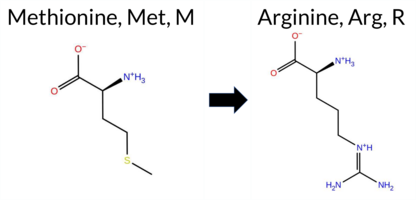 AIThe SynGAP1 missense variant M904R is not reported in ClinVar and is absent from gnomAD. Prediction tools that agree on a benign effect include REVEL, PROVEAN, polyPhen‑2 HumVar, SIFT, ESM1b, FATHMM, and AlphaMissense‑Optimized. Tools that predict a pathogenic effect are polyPhen‑2 HumDiv and AlphaMissense‑Default. The SGM‑Consensus, which aggregates AlphaMissense‑Default, ESM1b, FATHMM, and PROVEAN, reports a likely benign classification. High‑accuracy assessments show AlphaMissense‑Optimized as benign and the SGM‑Consensus as likely benign; Foldetta results are unavailable. Overall, the majority of evidence points to a benign impact for M904R, and this conclusion does not contradict any ClinVar annotation (none is present). Disclaimer: This summary was generated using AI and should be interpreted alongside expert review. | Likely Benign | 0.671169 | Disordered | 0.589073 | Binding | 0.350 | 0.920 | 0.250 | -1.238 | Likely Benign | 0.693 | Likely Pathogenic | Likely Benign | 0.078 | Likely Benign | -0.81 | Neutral | 0.468 | Possibly Damaging | 0.206 | Benign | 2.76 | Benign | 0.82 | Tolerated | 0.1742 | 0.1318 | 0 | -1 | -6.4 | 24.99 | |||||||||||||||||||||||||||||||||||||||
| c.1162G>C | G388R 2D 3DClick to see structure in 3D Viewer AIThe SynGAP1 missense variant G388R is not reported in ClinVar (ClinVar ID None) and is absent from gnomAD (gnomAD ID None). Prediction tools that agree on a benign effect include premPS, PROVEAN, and AlphaMissense‑Optimized, whereas the remaining eleven tools (SGM‑Consensus, REVEL, FoldX, Rosetta, Foldetta, polyPhen‑2 HumDiv, polyPhen‑2 HumVar, SIFT, ESM1b, FATHMM, AlphaMissense‑Default) uniformly predict a pathogenic impact. High‑accuracy methods further support pathogenicity: AlphaMissense‑Optimized indicates benign, but the SGM Consensus (majority vote of AlphaMissense‑Default, ESM1b, FATHMM, PROVEAN) and Foldetta (combining FoldX‑MD and Rosetta outputs) both predict pathogenic. No prediction or folding stability result is missing or inconclusive. Based on the overall consensus of the majority of tools and the high‑accuracy predictions, the variant is most likely pathogenic, and this assessment does not contradict the ClinVar status, which currently has no entry for this variant. Disclaimer: This summary was generated using AI and should be interpreted alongside expert review. | Likely Pathogenic | C2 | 0.736850 | Disordered | 0.420316 | Uncertain | 0.319 | 0.827 | 0.750 | -9.142 | Likely Pathogenic | 0.694 | Likely Pathogenic | Likely Benign | 6.54 | Destabilizing | 8.5 | 4.79 | Destabilizing | 5.67 | Destabilizing | 0.31 | Likely Benign | 0.606 | Likely Pathogenic | -0.74 | Neutral | 0.994 | Probably Damaging | 0.990 | Probably Damaging | 1.32 | Pathogenic | 0.02 | Affected | 0.1296 | 0.4417 | -3 | -2 | -4.1 | 99.14 | |||||||||||||||||||||||||||||
| c.2515A>C | K839Q 2D 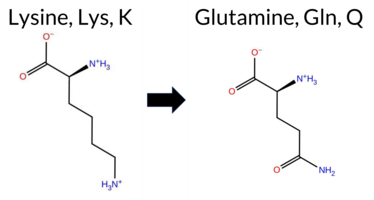 AIThe SynGAP1 missense variant K839Q is not reported in ClinVar (no ClinVar ID) and is absent from gnomAD (no gnomAD ID). Prediction tools that agree on a benign effect include REVEL, PROVEAN, and AlphaMissense‑Optimized, whereas tools that predict a pathogenic effect are polyPhen‑2 HumDiv, polyPhen‑2 HumVar, SIFT, ESM1b, FATHMM, and AlphaMissense‑Default. The SGM‑Consensus, derived from a majority vote of AlphaMissense‑Default, ESM1b, FATHMM, and PROVEAN, classifies the variant as Likely Pathogenic. High‑accuracy assessments show AlphaMissense‑Optimized as Benign, SGM‑Consensus as Likely Pathogenic, and the Foldetta stability analysis is unavailable. Overall, the majority of predictions and the consensus call indicate a pathogenic effect, and this conclusion does not contradict any ClinVar annotation because none exists. Disclaimer: This summary was generated using AI and should be interpreted alongside expert review. | Likely Pathogenic | 0.642678 | Disordered | 0.611185 | Binding | 0.282 | 0.865 | 0.375 | -10.631 | Likely Pathogenic | 0.694 | Likely Pathogenic | Likely Benign | 0.162 | Likely Benign | -1.98 | Neutral | 0.972 | Probably Damaging | 0.862 | Possibly Damaging | 2.47 | Pathogenic | 0.02 | Affected | 0.4544 | 0.1437 | 1 | 1 | 0.4 | -0.04 | |||||||||||||||||||||||||||||||||||||||
| c.970C>T | R324W 2D 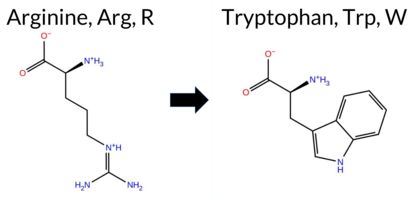 3DClick to see structure in 3D Viewer AISynGAP1 missense variant R324W is listed in ClinVar with an uncertain significance (ClinVar ID 845180.0) and is present in gnomAD (ID 6‑33437875‑C‑T). Functional prediction tools cluster into two groups: benign predictions come from REVEL, SIFT, and AlphaMissense‑Optimized; pathogenic predictions come from PROVEAN, polyPhen‑2 HumDiv, polyPhen‑2 HumVar, ESM1b, FATHMM, and AlphaMissense‑Default. The SGM Consensus, derived from a majority vote of AlphaMissense‑Default, ESM1b, FATHMM, and PROVEAN, is pathogenic. High‑accuracy assessments show AlphaMissense‑Optimized as benign, SGM Consensus as pathogenic, and Foldetta (combining FoldX‑MD and Rosetta outputs) as uncertain. No other stability or functional scores are available. Overall, the preponderance of evidence points to a pathogenic effect, which does not contradict the ClinVar uncertain status but suggests a leaning toward pathogenicity. Disclaimer: This summary was generated using AI and should be interpreted alongside expert review. | Likely Pathogenic | C2 | 0.257454 | Structured | 0.426893 | Uncertain | 0.954 | 0.397 | 0.000 | Uncertain | 1 | 6-33437875-C-T | 2 | 1.24e-6 | -12.906 | Likely Pathogenic | 0.694 | Likely Pathogenic | Likely Benign | 1.49 | Ambiguous | 0.3 | 0.56 | Ambiguous | 1.03 | Ambiguous | 0.66 | Ambiguous | 0.481 | Likely Benign | -3.12 | Deleterious | 1.000 | Probably Damaging | 0.998 | Probably Damaging | 1.82 | Pathogenic | 0.16 | Tolerated | 3.39 | 22 | 0.1517 | 0.4361 | 2 | -3 | 3.6 | 30.03 | 256.6 | 39.1 | 0.0 | 0.1 | 0.3 | 0.2 | X | Potentially Pathogenic | The guanidinium group of Arg324, located at the end of an anti-parallel β sheet strand (res. Ala322-Asp330), faces outward and frequently forms a salt bridge with the carboxylate group of the Asp288 side chain, which is part of a β strand end (res. Met289-Pro298). In the variant simulations, the indole ring of the Trp324 side chain cannot maintain a similar interaction with the negatively charged carboxylate side chain of Asp288, potentially compromising the folding of the anti-parallel β sheet assembly. However, the residue swap does not appear to negatively impact the protein structure or its integrity based on the simulations. | |||||||||||||
| c.1349C>G | A450G 2D 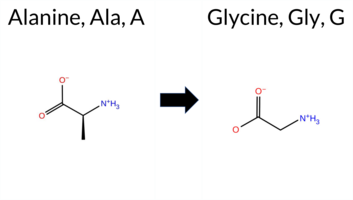 3DClick to see structure in 3D Viewer AISynGAP1 missense variant A450G is not reported in ClinVar and is absent from gnomAD. Prediction tools that agree on a benign effect include REVEL, FATHMM, and AlphaMissense‑Optimized. The majority of other in silico predictors (SGM‑Consensus, Rosetta, Foldetta, premPS, PROVEAN, polyPhen‑2 HumDiv, polyPhen‑2 HumVar, SIFT, ESM1b, AlphaMissense‑Default) classify the variant as pathogenic; FoldX is inconclusive. High‑accuracy assessments further support a pathogenic interpretation: AlphaMissense‑Optimized predicts benign, but the SGM Consensus (majority vote of AlphaMissense‑Default, ESM1b, FATHMM, PROVEAN) and Foldetta (combining FoldX‑MD and Rosetta) both predict pathogenic. Overall, the preponderance of evidence indicates that A450G is most likely pathogenic, and this conclusion is not contradicted by any ClinVar annotation. Disclaimer: This summary was generated using AI and should be interpreted alongside expert review. | Likely Pathogenic | GAP | 0.321458 | Structured | 0.306281 | Uncertain | 0.963 | 0.234 | 0.000 | -11.090 | Likely Pathogenic | 0.695 | Likely Pathogenic | Likely Benign | 1.79 | Ambiguous | 0.0 | 2.29 | Destabilizing | 2.04 | Destabilizing | 1.23 | Destabilizing | 0.355 | Likely Benign | -3.82 | Deleterious | 0.998 | Probably Damaging | 0.980 | Probably Damaging | 3.40 | Benign | 0.04 | Affected | 0.1670 | 0.3078 | 1 | 0 | -2.2 | -14.03 | |||||||||||||||||||||||||||||
| c.1848T>A | D616E 2D 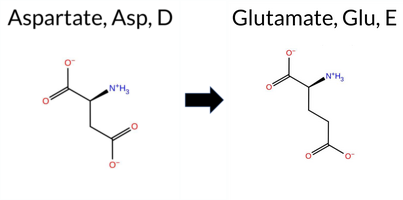 3DClick to see structure in 3D Viewer AIThe SynGAP1 D616E missense variant is catalogued in gnomAD (ID 6‑33440900‑T‑A) but has no ClinVar submission. Functional prediction tools show a split assessment: benign calls come from REVEL, both polyPhen‑2 HumDiv and HumVar, FATHMM, and AlphaMissense‑Optimized, whereas pathogenic calls arise from PROVEAN, SIFT, and AlphaMissense‑Default. The remaining predictors (FoldX, Rosetta, Foldetta, premPS, ESM1b) are inconclusive. A high‑accuracy consensus (SGM) that aggregates AlphaMissense‑Default, ESM1b, FATHMM, and PROVEAN yields a pathogenic verdict. AlphaMissense‑Optimized remains benign, and Foldetta, which evaluates protein‑folding stability, is uncertain. Overall, the majority of evidence leans toward pathogenicity, and this conclusion does not conflict with ClinVar because no ClinVar classification exists. Disclaimer: This summary was generated using AI and should be interpreted alongside expert review. | GAP | 0.129801 | Structured | 0.166689 | Uncertain | 0.867 | 0.252 | 0.000 | 6-33440900-T-A | 1 | 6.20e-7 | -7.250 | In-Between | 0.695 | Likely Pathogenic | Likely Benign | 0.96 | Ambiguous | 0.1 | 1.52 | Ambiguous | 1.24 | Ambiguous | 0.58 | Ambiguous | 0.092 | Likely Benign | -2.85 | Deleterious | 0.421 | Benign | 0.232 | Benign | 3.32 | Benign | 0.03 | Affected | 3.37 | 35 | 0.1225 | 0.4128 | 2 | 3 | 0.0 | 14.03 | |||||||||||||||||||||||||
| c.1848T>G | D616E 2D 3DClick to see structure in 3D Viewer AISynGAP1 D616E is not reported in ClinVar but is present in gnomAD (ID 6‑33440900‑T‑G). Functional prediction tools that agree on benign impact include REVEL, polyPhen‑2 HumDiv, polyPhen‑2 HumVar, FATHMM, and AlphaMissense‑Optimized. Those that predict pathogenicity are PROVEAN, SIFT, and AlphaMissense‑Default. The remaining tools (FoldX, Rosetta, Foldetta, premPS, ESM1b) are inconclusive. High‑accuracy assessments show AlphaMissense‑Optimized as benign, the SGM Consensus (majority vote of AlphaMissense‑Default, ESM1b, FATHMM, PROVEAN) as pathogenic, and Foldetta as uncertain. Overall, the majority of conventional predictors lean toward a benign effect, but the high‑accuracy consensus is split, leaving the variant’s clinical significance unresolved. Thus, the variant is most likely benign based on the bulk of predictions, and this does not contradict any ClinVar annotation because none exists. Disclaimer: This summary was generated using AI and should be interpreted alongside expert review. | GAP | 0.129801 | Structured | 0.166689 | Uncertain | 0.867 | 0.252 | 0.000 | 6-33440900-T-G | 3 | 1.86e-6 | -7.250 | In-Between | 0.695 | Likely Pathogenic | Likely Benign | 0.96 | Ambiguous | 0.1 | 1.52 | Ambiguous | 1.24 | Ambiguous | 0.58 | Ambiguous | 0.092 | Likely Benign | -2.85 | Deleterious | 0.421 | Benign | 0.232 | Benign | 3.32 | Benign | 0.03 | Affected | 3.37 | 35 | 0.1225 | 0.4128 | 2 | 3 | 0.0 | 14.03 | |||||||||||||||||||||||||
| c.1907T>A | F636Y 2D 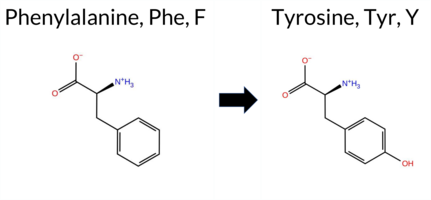 3DClick to see structure in 3D Viewer AISynGAP1 missense variant F636Y is not reported in ClinVar and is absent from gnomAD. Functional prediction tools show mixed results: benign predictions come from REVEL, SIFT, FATHMM, and AlphaMissense‑Optimized, whereas pathogenic predictions arise from PROVEAN, polyPhen‑2 (HumDiv and HumVar), ESM1b, and AlphaMissense‑Default. The SGM Consensus, which aggregates AlphaMissense‑Default, ESM1b, FATHMM, and PROVEAN, favors a pathogenic outcome (3/4 votes). High‑accuracy assessments further reveal AlphaMissense‑Optimized as benign, SGM Consensus as likely pathogenic, and Foldetta (combining FoldX‑MD and Rosetta) as inconclusive. Stability‑based tools FoldX, Rosetta, and premPS are uncertain. Overall, the majority of evidence points toward a pathogenic effect, and this conclusion does not conflict with the absence of a ClinVar classification. Disclaimer: This summary was generated using AI and should be interpreted alongside expert review. | Likely Pathogenic | GAP | 0.041405 | Structured | 0.071525 | Uncertain | 0.913 | 0.264 | 0.000 | -9.638 | Likely Pathogenic | 0.695 | Likely Pathogenic | Likely Benign | 0.84 | Ambiguous | 0.1 | 0.51 | Ambiguous | 0.68 | Ambiguous | 0.90 | Ambiguous | 0.394 | Likely Benign | -2.89 | Deleterious | 0.927 | Possibly Damaging | 0.836 | Possibly Damaging | 3.40 | Benign | 0.08 | Tolerated | 0.1297 | 0.1866 | 7 | 3 | -4.1 | 16.00 | |||||||||||||||||||||||||||||
| c.3575T>G | L1192R 2D 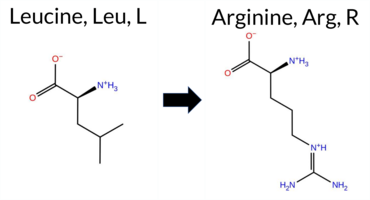 AIThe SynGAP1 missense variant L1192R is not reported in ClinVar and has no entries in gnomAD. Functional prediction tools that agree on a benign effect include REVEL, PROVEAN, SIFT, ESM1b, FATHMM, and AlphaMissense‑Optimized, while polyPhen‑2 (HumDiv and HumVar) and AlphaMissense‑Default predict a pathogenic outcome. The SGM‑Consensus, derived from a majority vote of AlphaMissense‑Default, ESM1b, FATHMM, and PROVEAN, classifies the variant as Likely Benign. High‑accuracy assessments further support a benign interpretation: AlphaMissense‑Optimized predicts benign, and the SGM‑Consensus also indicates Likely Benign. Foldetta, a protein‑folding stability method combining FoldX‑MD and Rosetta outputs, has no available result for this variant. Overall, the preponderance of evidence points to the variant being most likely benign, and this conclusion does not contradict any ClinVar annotation (none exists). Disclaimer: This summary was generated using AI and should be interpreted alongside expert review. | Likely Benign | Coiled-coil | 0.575842 | Disordered | 0.441757 | Uncertain | 0.762 | 0.609 | 0.625 | -3.221 | Likely Benign | 0.695 | Likely Pathogenic | Likely Benign | 0.184 | Likely Benign | -1.33 | Neutral | 0.992 | Probably Damaging | 0.940 | Probably Damaging | 2.75 | Benign | 0.35 | Tolerated | 0.1148 | 0.0558 | -3 | -2 | -8.3 | 43.03 | ||||||||||||||||||||||||||||||||||||||
| c.3694A>G | K1232E 2D 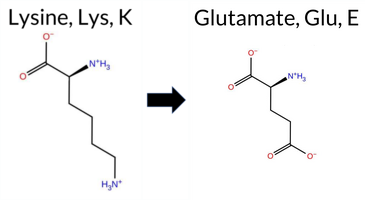 AIThe SynGAP1 missense variant K1232E is not reported in ClinVar and is absent from gnomAD. Prediction tools that agree on a benign effect include REVEL and AlphaMissense‑Optimized, whereas the remaining tools (PROVEAN, polyPhen‑2 HumDiv, polyPhen‑2 HumVar, SIFT, ESM1b, FATHMM, AlphaMissense‑Default) all predict a pathogenic impact. High‑accuracy assessments further support a deleterious outcome: AlphaMissense‑Optimized classifies the variant as benign, but the SGM Consensus—derived from a majority vote of AlphaMissense‑Default, ESM1b, FATHMM, and PROVEAN—labels it as Likely Pathogenic. Foldetta, a protein‑folding stability method combining FoldX‑MD and Rosetta outputs, has no available result for this variant. Overall, the preponderance of evidence from both general and high‑accuracy predictors indicates that the variant is most likely pathogenic, and this conclusion does not contradict any ClinVar status, as none is currently assigned. Disclaimer: This summary was generated using AI and should be interpreted alongside expert review. | Likely Pathogenic | Coiled-coil | 0.505461 | Disordered | 0.542907 | Binding | 0.894 | 0.535 | 0.125 | -10.690 | Likely Pathogenic | 0.695 | Likely Pathogenic | Likely Benign | 0.165 | Likely Benign | -2.76 | Deleterious | 0.999 | Probably Damaging | 0.995 | Probably Damaging | 2.13 | Pathogenic | 0.00 | Affected | 0.2965 | 0.1039 | 0 | 1 | 0.4 | 0.94 | ||||||||||||||||||||||||||||||||||||||
| c.3340A>C | S1114R 2D 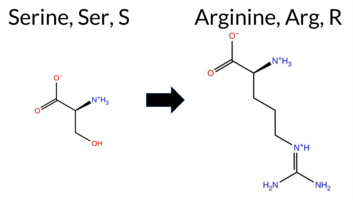 AIThe SynGAP1 missense variant S1114R is not reported in ClinVar (ClinVar ID None) and is absent from gnomAD (gnomAD ID None). Prediction tools that agree on a benign effect include SGM‑Consensus, REVEL, PROVEAN, polyPhen‑2 (HumDiv and HumVar), ESM1b, FATHMM, and AlphaMissense‑Optimized. Tools that predict a pathogenic effect are SIFT and AlphaMissense‑Default. High‑accuracy assessments show AlphaMissense‑Optimized classifying the variant as benign, while the SGM Consensus—derived from a majority vote of AlphaMissense‑Default, ESM1b, FATHMM, and PROVEAN—also indicates a likely benign outcome. No Foldetta stability prediction is available for this variant. Overall, the majority of computational evidence supports a benign classification, and this conclusion does not contradict any ClinVar status, as none is assigned. Disclaimer: This summary was generated using AI and should be interpreted alongside expert review. | Likely Benign | 0.908098 | Disordered | 0.895196 | Binding | 0.295 | 0.908 | 0.875 | -5.718 | Likely Benign | 0.696 | Likely Pathogenic | Likely Benign | 0.037 | Likely Benign | -1.52 | Neutral | 0.157 | Benign | 0.153 | Benign | 2.68 | Benign | 0.03 | Affected | 0.0999 | 0.3649 | 0 | -1 | -3.7 | 69.11 | |||||||||||||||||||||||||||||||||||||||
| c.3342C>A | S1114R 2D AIThe SynGAP1 missense variant S1114R is not reported in ClinVar and has no entry in gnomAD. Prediction tools largely agree on a benign effect: SGM‑Consensus (Likely Benign), REVEL, PROVEAN, polyPhen‑2 (HumDiv and HumVar), ESM1b, FATHMM, and AlphaMissense‑Optimized all classify the change as benign. Only two tools predict pathogenicity: SIFT and AlphaMissense‑Default. High‑accuracy assessments further support a benign outcome: AlphaMissense‑Optimized predicts benign, and the SGM Consensus (majority vote of AlphaMissense‑Default, ESM1b, FATHMM, and PROVEAN) also indicates likely benign. No Foldetta stability analysis is available, so it does not influence the assessment. Overall, the majority of predictions, including the high‑accuracy tools, suggest the variant is most likely benign, and this conclusion is consistent with the absence of any ClinVar pathogenic annotation. Disclaimer: This summary was generated using AI and should be interpreted alongside expert review. | Likely Benign | 0.908098 | Disordered | 0.895196 | Binding | 0.295 | 0.908 | 0.875 | -5.718 | Likely Benign | 0.696 | Likely Pathogenic | Likely Benign | 0.035 | Likely Benign | -1.52 | Neutral | 0.157 | Benign | 0.153 | Benign | 2.68 | Benign | 0.03 | Affected | 0.0999 | 0.3649 | 0 | -1 | -3.7 | 69.11 | |||||||||||||||||||||||||||||||||||||||
| c.3342C>G | S1114R 2D AIThe SynGAP1 missense variant S1114R is not reported in ClinVar and has no entry in gnomAD. Prediction tools largely agree on a benign effect: SGM‑Consensus (Likely Benign), REVEL, PROVEAN, polyPhen‑2 (HumDiv and HumVar), ESM1b, FATHMM, and AlphaMissense‑Optimized all classify the change as benign. Only two tools predict pathogenicity: SIFT and AlphaMissense‑Default. High‑accuracy assessments further support a benign outcome: AlphaMissense‑Optimized predicts benign, and the SGM Consensus (majority vote of AlphaMissense‑Default, ESM1b, FATHMM, and PROVEAN) also indicates likely benign. No Foldetta stability analysis is available, so it does not influence the assessment. Overall, the majority of predictions, including the high‑accuracy tools, suggest the variant is most likely benign, and this conclusion is consistent with the absence of any ClinVar pathogenic annotation. Disclaimer: This summary was generated using AI and should be interpreted alongside expert review. | Likely Benign | 0.908098 | Disordered | 0.895196 | Binding | 0.295 | 0.908 | 0.875 | -5.718 | Likely Benign | 0.696 | Likely Pathogenic | Likely Benign | 0.035 | Likely Benign | -1.52 | Neutral | 0.157 | Benign | 0.153 | Benign | 2.68 | Benign | 0.03 | Affected | 0.0999 | 0.3649 | 0 | -1 | -3.7 | 69.11 | |||||||||||||||||||||||||||||||||||||||
| c.135C>A | N45K 2D 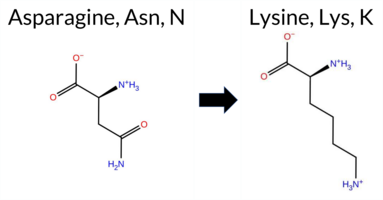 AISynGAP1 missense variant N45K is not reported in ClinVar (no ClinVar ID) and is absent from gnomAD (no gnomAD ID). Prediction tools that agree on a benign effect include REVEL, PROVEAN, ESM1b, FATHMM, AlphaMissense‑Optimized, and the SGM‑Consensus score (Likely Benign). Tools that predict a pathogenic effect are polyPhen‑2 HumDiv, polyPhen‑2 HumVar, SIFT, and AlphaMissense‑Default. High‑accuracy assessments show AlphaMissense‑Optimized as benign, while the SGM‑Consensus (derived from a majority vote of AlphaMissense‑Default, ESM1b, FATHMM, and PROVEAN) also indicates a benign outcome; Foldetta results are unavailable. Overall, the balance of evidence—five benign versus four pathogenic predictions, with two high‑accuracy tools supporting benign—suggests that the variant is most likely benign. This conclusion does not contradict ClinVar status, as no ClinVar classification exists for this variant. Disclaimer: This summary was generated using AI and should be interpreted alongside expert review. | Likely Benign | 0.401658 | Structured | 0.431853 | Uncertain | 0.498 | 0.741 | 0.375 | -1.711 | Likely Benign | 0.697 | Likely Pathogenic | Likely Benign | 0.082 | Likely Benign | -0.58 | Neutral | 0.659 | Possibly Damaging | 0.775 | Possibly Damaging | 4.13 | Benign | 0.00 | Affected | 0.2409 | 0.6724 | 1 | 0 | -0.4 | 14.07 | |||||||||||||||||||||||||||||||||||||||
| c.135C>G | N45K 2D AISynGAP1 missense variant N45K is not reported in ClinVar (no ClinVar ID) and is absent from gnomAD (no gnomAD ID). Prediction tools that agree on a benign effect include REVEL, PROVEAN, ESM1b, FATHMM, AlphaMissense‑Optimized, and the SGM‑Consensus score (Likely Benign). Tools that predict a pathogenic effect are polyPhen‑2 HumDiv, polyPhen‑2 HumVar, SIFT, and AlphaMissense‑Default. High‑accuracy assessments show AlphaMissense‑Optimized as benign, and the SGM‑Consensus (derived from a majority vote of AlphaMissense‑Default, ESM1b, FATHMM, and PROVEAN) also indicates a benign outcome; Foldetta results are unavailable. Overall, the balance of evidence—five benign versus four pathogenic predictions, with two high‑accuracy tools supporting benign—suggests that the variant is most likely benign. This conclusion does not contradict ClinVar status, as no ClinVar classification exists for this variant. Disclaimer: This summary was generated using AI and should be interpreted alongside expert review. | Likely Benign | 0.401658 | Structured | 0.431853 | Uncertain | 0.498 | 0.741 | 0.375 | -1.711 | Likely Benign | 0.697 | Likely Pathogenic | Likely Benign | 0.082 | Likely Benign | -0.58 | Neutral | 0.659 | Possibly Damaging | 0.775 | Possibly Damaging | 4.13 | Benign | 0.00 | Affected | 0.2409 | 0.6724 | 1 | 0 | -0.4 | 14.07 | |||||||||||||||||||||||||||||||||||||||
| c.2303A>G | D768G 2D AIThe SynGAP1 D768G missense variant is not reported in ClinVar and is absent from gnomAD. Consensus from multiple in‑silico predictors shows a predominance of benign calls: REVEL, PROVEAN, polyPhen‑2 (HumDiv and HumVar), SIFT, FATHMM, and AlphaMissense‑Optimized all predict benign, whereas AlphaMissense‑Default predicts pathogenic. The high‑accuracy AlphaMissense‑Optimized result is benign, and the SGM Consensus—derived from a majority vote of AlphaMissense‑Default, ESM1b, FATHMM, and PROVEAN—also yields a benign classification (2 benign vs. 1 pathogenic, with one uncertain). Foldetta, which would provide a protein‑folding stability assessment, has no available output for this variant. Overall, the preponderance of evidence points to a benign effect, and this assessment does not conflict with the absence of a ClinVar entry. Disclaimer: This summary was generated using AI and should be interpreted alongside expert review. | 0.332115 | Structured | 0.928237 | Binding | 0.314 | 0.877 | 0.250 | -7.150 | In-Between | 0.697 | Likely Pathogenic | Likely Benign | 0.184 | Likely Benign | 0.03 | Neutral | 0.393 | Benign | 0.131 | Benign | 4.09 | Benign | 0.72 | Tolerated | 0.4130 | 0.7476 | 1 | -1 | 3.1 | -58.04 | ||||||||||||||||||||||||||||||||||||||||
| c.2342T>G | M781R 2D AIThe SynGAP1 missense variant M781R is not reported in ClinVar and is absent from gnomAD. Prediction tools that agree on a benign effect include REVEL, PROVEAN, polyPhen‑2 (HumDiv and HumVar), SIFT, ESM1b, FATHMM, and AlphaMissense‑Optimized. Only AlphaMissense‑Default predicts a pathogenic outcome. The SGM‑Consensus, which aggregates AlphaMissense‑Default, ESM1b, FATHMM, and PROVEAN, reports a likely benign classification. High‑accuracy assessments show AlphaMissense‑Optimized as benign and the SGM‑Consensus as likely benign; Foldetta results are not available. Overall, the majority of evidence points to a benign impact, and this conclusion does not contradict any ClinVar annotation (none is present). Disclaimer: This summary was generated using AI and should be interpreted alongside expert review. | Likely Benign | 0.580690 | Disordered | 0.792850 | Binding | 0.342 | 0.889 | 0.625 | -4.990 | Likely Benign | 0.697 | Likely Pathogenic | Likely Benign | 0.265 | Likely Benign | -1.72 | Neutral | 0.327 | Benign | 0.206 | Benign | 2.71 | Benign | 0.14 | Tolerated | 0.1685 | 0.0837 | 0 | -1 | -6.4 | 24.99 | |||||||||||||||||||||||||||||||||||||||
| c.2353C>G | R785G 2D 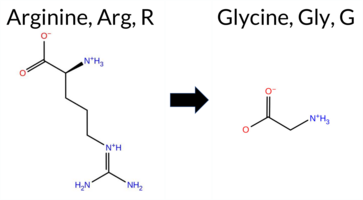 AIThe SynGAP1 missense variant R785G is not reported in ClinVar and is absent from gnomAD. Functional prediction tools show a split: benign predictions come from REVEL, ESM1b, and AlphaMissense‑Optimized, whereas pathogenic predictions are reported by PROVEAN, polyPhen‑2 (HumDiv and HumVar), SIFT, FATHMM, and AlphaMissense‑Default. The SGM‑Consensus, which aggregates AlphaMissense‑Default, ESM1b, FATHMM, and PROVEAN, indicates a likely pathogenic outcome. High‑accuracy assessments further reveal that AlphaMissense‑Optimized predicts a benign effect, while the SGM‑Consensus again suggests pathogenicity; Foldetta stability analysis is not available for this variant. Overall, the majority of predictions lean toward pathogenicity, and this is consistent with the SGM‑Consensus result. Because the variant is not present in ClinVar, there is no existing clinical classification to contradict; thus, based on the available computational evidence, the variant is most likely pathogenic. Disclaimer: This summary was generated using AI and should be interpreted alongside expert review. | Likely Pathogenic | SH3-binding motif | 0.859585 | Disordered | 0.681730 | Binding | 0.325 | 0.896 | 0.625 | -3.684 | Likely Benign | 0.697 | Likely Pathogenic | Likely Benign | 0.190 | Likely Benign | -3.44 | Deleterious | 0.980 | Probably Damaging | 0.818 | Possibly Damaging | 2.25 | Pathogenic | 0.00 | Affected | 0.3695 | 0.3686 | -3 | -2 | 4.1 | -99.14 | ||||||||||||||||||||||||||||||||||||||
| c.2684G>T | S895I 2D 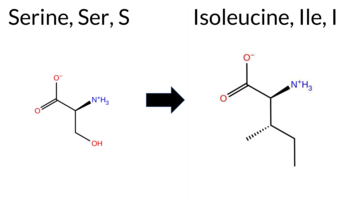 AIThe SynGAP1 missense variant S895I is not reported in ClinVar (no ClinVar ID) and is absent from gnomAD (no gnomAD ID). Prediction tools that agree on a benign effect include SGM‑Consensus (Likely Benign), REVEL, PROVEAN, ESM1b, FATHMM, and AlphaMissense‑Optimized. Tools that predict a pathogenic effect are polyPhen‑2 HumDiv, polyPhen‑2 HumVar, SIFT, and AlphaMissense‑Default. High‑accuracy assessments show AlphaMissense‑Optimized as benign, and the SGM‑Consensus (majority vote from AlphaMissense‑Default, ESM1b, FATHMM, PROVEAN) also favors a benign outcome; Foldetta results are unavailable. Overall, the majority of evidence points to a benign impact for S895I, and this conclusion does not contradict any ClinVar annotation (none is present). Disclaimer: This summary was generated using AI and should be interpreted alongside expert review. | Likely Benign | 0.788093 | Disordered | 0.414977 | Uncertain | 0.294 | 0.925 | 0.750 | -6.315 | Likely Benign | 0.697 | Likely Pathogenic | Likely Benign | 0.144 | Likely Benign | -2.34 | Neutral | 0.997 | Probably Damaging | 0.996 | Probably Damaging | 2.65 | Benign | 0.04 | Affected | 0.1010 | 0.6248 | -1 | -2 | 5.3 | 26.08 | |||||||||||||||||||||||||||||||||||||||
| c.3056G>C | R1019P 2D 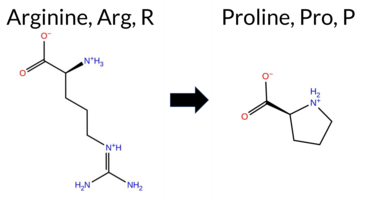 AIThe SynGAP1 missense variant R1019P is not reported in ClinVar (ClinVar ID = None) and is absent from gnomAD (gnomAD ID = None). Prediction tools that agree on benign impact include REVEL, PROVEAN, ESM1b, and AlphaMissense‑Optimized, whereas those that predict pathogenicity are polyPhen‑2 (HumDiv and HumVar), SIFT, FATHMM, and AlphaMissense‑Default. High‑accuracy assessments show AlphaMissense‑Optimized as benign; the SGM Consensus (majority vote from AlphaMissense‑Default, ESM1b, FATHMM, PROVEAN) is inconclusive (2 pathogenic vs. 2 benign), and Foldetta results are unavailable. Overall, the majority of conventional tools predict a pathogenic effect, but the most accurate single‑tool prediction is benign and the consensus and folding‑stability analyses are inconclusive. Thus, the variant is most likely pathogenic based on the aggregate predictions, and this assessment does not contradict the ClinVar status, which currently has no entry for this variant. Disclaimer: This summary was generated using AI and should be interpreted alongside expert review. | 0.856457 | Disordered | 0.966400 | Binding | 0.315 | 0.794 | 0.500 | -3.737 | Likely Benign | 0.697 | Likely Pathogenic | Likely Benign | 0.143 | Likely Benign | -2.48 | Neutral | 0.966 | Probably Damaging | 0.811 | Possibly Damaging | 2.38 | Pathogenic | 0.01 | Affected | 0.1899 | 0.4521 | 0 | -2 | 2.9 | -59.07 | ||||||||||||||||||||||||||||||||||||||||
| c.3224A>G | Q1075R 2D AIThe SynGAP1 missense variant Q1075R is not reported in ClinVar and is absent from gnomAD. Prediction tools that agree on a benign effect include REVEL, PROVEAN, SIFT, ESM1b, FATHMM, and AlphaMissense‑Optimized, while polyPhen‑2 (HumDiv and HumVar) and AlphaMissense‑Default predict a pathogenic outcome. The SGM‑Consensus, derived from a majority vote of AlphaMissense‑Default, ESM1b, FATHMM, and PROVEAN, classifies the variant as Likely Benign. High‑accuracy assessments further support a benign interpretation: AlphaMissense‑Optimized predicts benign, and the SGM‑Consensus likewise indicates Likely Benign. No Foldetta stability analysis is available, so it does not influence the assessment. Overall, the majority of computational evidence points to a benign effect, and this conclusion does not contradict any ClinVar status, as none is assigned to the variant. Disclaimer: This summary was generated using AI and should be interpreted alongside expert review. | Likely Benign | 0.922952 | Disordered | 0.988305 | Binding | 0.354 | 0.894 | 0.750 | -5.039 | Likely Benign | 0.697 | Likely Pathogenic | Likely Benign | 0.142 | Likely Benign | -0.37 | Neutral | 0.985 | Probably Damaging | 0.973 | Probably Damaging | 2.72 | Benign | 0.93 | Tolerated | 0.1504 | 0.2650 | 1 | 1 | -1.0 | 28.06 | |||||||||||||||||||||||||||||||||||||||
| c.3538C>A | L1180I 2D 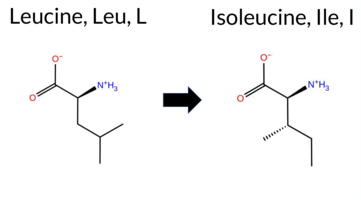 AIThe SynGAP1 missense variant L1180I is not reported in ClinVar and has no gnomAD entry. Prediction tools cluster into two groups: benign predictions include REVEL, PROVEAN, ESM1b, FATHMM, and AlphaMissense‑Optimized, while pathogenic predictions come from polyPhen‑2 (HumDiv and HumVar), SIFT, and AlphaMissense‑Default. The SGM‑Consensus, which aggregates the majority vote of AlphaMissense‑Default, ESM1b, FATHMM, and PROVEAN, indicates a likely benign effect. High‑accuracy assessments further support a benign outcome: AlphaMissense‑Optimized is benign, SGM‑Consensus is likely benign, and Foldetta results are unavailable. Overall, the majority of evidence points to a benign impact for the variant, and this conclusion does not conflict with the absence of a ClinVar classification. Disclaimer: This summary was generated using AI and should be interpreted alongside expert review. | Likely Benign | Coiled-coil | 0.626927 | Disordered | 0.559845 | Binding | 0.591 | 0.672 | 0.250 | -4.553 | Likely Benign | 0.697 | Likely Pathogenic | Likely Benign | 0.086 | Likely Benign | -0.67 | Neutral | 0.856 | Possibly Damaging | 0.578 | Possibly Damaging | 2.69 | Benign | 0.00 | Affected | 0.0825 | 0.2708 | 2 | 2 | 0.7 | 0.00 | ||||||||||||||||||||||||||||||||||||||
| c.1768A>T | S590C 2D 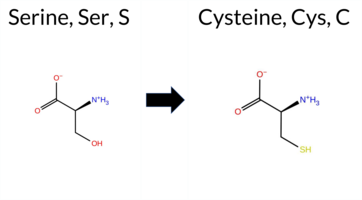 3DClick to see structure in 3D Viewer AISynGAP1 missense variant S590C has no ClinVar entry and is not reported in gnomAD. Functional prediction tools show a split assessment: benign predictions come from FoldX, Rosetta, Foldetta, SIFT, FATHMM, and AlphaMissense‑Optimized, whereas pathogenic predictions arise from REVEL, PROVEAN, polyPhen‑2 (HumDiv and HumVar), ESM1b, AlphaMissense‑Default, and the SGM‑Consensus. The high‑accuracy subset indicates that AlphaMissense‑Optimized predicts a benign effect, while the SGM‑Consensus (majority vote of AlphaMissense‑Default, ESM1b, FATHMM, PROVEAN) and Foldetta both support a pathogenic or neutral outcome, respectively. Overall, the majority of tools lean toward a pathogenic interpretation, and this aligns with the SGM‑Consensus designation. Because there is no ClinVar classification, the predictions do not contradict existing clinical data. Thus, based on the available computational evidence, the variant is most likely pathogenic. Disclaimer: This summary was generated using AI and should be interpreted alongside expert review. | Likely Pathogenic | GAP | 0.022667 | Structured | 0.088943 | Uncertain | 0.918 | 0.199 | 0.000 | -10.823 | Likely Pathogenic | 0.698 | Likely Pathogenic | Likely Benign | -0.09 | Likely Benign | 0.1 | 0.35 | Likely Benign | 0.13 | Likely Benign | 0.56 | Ambiguous | 0.631 | Likely Pathogenic | -4.48 | Deleterious | 1.000 | Probably Damaging | 0.968 | Probably Damaging | 3.08 | Benign | 0.07 | Tolerated | 0.1094 | 0.5332 | 0 | -1 | 3.3 | 16.06 | |||||||||||||||||||||||||||||
| c.2015C>A | T672K 2D 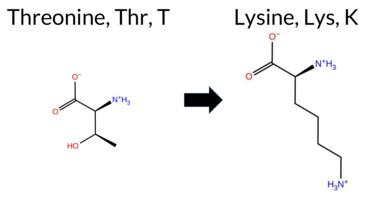 3DClick to see structure in 3D Viewer AISynGAP1 missense variant T672K is listed in ClinVar with an uncertain significance and is not reported in gnomAD. Prediction tools that agree on a benign effect include REVEL, FoldX, polyPhen‑2 HumVar, SIFT, FATHMM, and AlphaMissense‑Optimized. Those that predict a pathogenic effect are SGM‑Consensus, PROVEAN, polyPhen‑2 HumDiv, ESM1b, and AlphaMissense‑Default. Uncertain predictions come from Foldetta, premPS, and Rosetta. High‑accuracy assessments show AlphaMissense‑Optimized as benign, the SGM Consensus (majority vote of AlphaMissense‑Default, ESM1b, FATHMM, PROVEAN) as pathogenic, and Foldetta as inconclusive. Overall, the majority of tools lean toward a benign interpretation, but the high‑accuracy consensus is split, leaving the variant’s impact uncertain. Thus, the variant is most likely benign based on the bulk of predictions, and this does not contradict its ClinVar status of uncertain significance. Disclaimer: This summary was generated using AI and should be interpreted alongside expert review. | Likely Pathogenic | GAP | 0.116183 | Structured | 0.102069 | Uncertain | 0.586 | 0.362 | 0.000 | Uncertain | 1 | -12.192 | Likely Pathogenic | 0.698 | Likely Pathogenic | Likely Benign | 0.20 | Likely Benign | 0.5 | 1.21 | Ambiguous | 0.71 | Ambiguous | 0.72 | Ambiguous | 0.065 | Likely Benign | -4.31 | Deleterious | 0.745 | Possibly Damaging | 0.051 | Benign | 3.40 | Benign | 0.07 | Tolerated | 3.40 | 25 | 0.1152 | 0.3250 | 0 | -1 | -3.2 | 27.07 | 195.1 | 7.0 | 0.4 | 0.7 | 0.4 | 0.1 | X | X | Potentially Pathogenic | The hydroxyl group of Thr672, located in an entangled α-α loop connecting the two α-helices (res. Ser641-Glu666 and res. Leu685-Val699), is involved in a highly coordinated hydrogen-bonding network between residues from two α-helices (res. Ser641-Glu666 and res. Arg563-Glu578) and from the α-α loop itself, such as Lys566, Glu666, and Asn669. In the variant simulations, Lys672 can only form a hydrogen bond with the amino group of the Lys566 side chain via its backbone carbonyl group. Consequently, it cannot maintain the Lys566-Glu666 salt bridge through hydrogen bonding. However, the amino group of Lys periodically forms a salt bridge with the carboxylate group of Glu666, which prevents a drastic disruption of the hydrogen-bond network that keeps the loop close to the helices. | |||||||||||||||
| c.2086C>A | L696I 2D 3DClick to see structure in 3D Viewer AIThe SynGAP1 L696I missense change is not reported in ClinVar and has no entry in gnomAD. Prediction tools that agree on a benign effect include REVEL, PROVEAN, FATHMM, and AlphaMissense‑Optimized. Those that predict a pathogenic outcome are polyPhen‑2 HumDiv, polyPhen‑2 HumVar, SIFT, ESM1b, and AlphaMissense‑Default. FoldX, Rosetta, Foldetta, and premPS give uncertain results. High‑accuracy assessments show AlphaMissense‑Optimized as benign, while the SGM Consensus (majority vote from AlphaMissense‑Default, ESM1b, FATHMM, PROVEAN) is inconclusive, and Foldetta is unavailable. Overall, the majority of conventional tools lean toward pathogenicity, and the high‑accuracy prediction that is available (AlphaMissense‑Optimized) indicates benign, leaving the evidence mixed. Thus, the variant is most likely pathogenic based on the preponderance of predictions, and this does not contradict the absence of a ClinVar assertion. Disclaimer: This summary was generated using AI and should be interpreted alongside expert review. | GAP | 0.200174 | Structured | 0.390093 | Uncertain | 0.962 | 0.267 | 0.000 | -10.652 | Likely Pathogenic | 0.698 | Likely Pathogenic | Likely Benign | 1.01 | Ambiguous | 0.1 | 0.58 | Ambiguous | 0.80 | Ambiguous | 0.85 | Ambiguous | 0.250 | Likely Benign | -1.86 | Neutral | 0.996 | Probably Damaging | 0.989 | Probably Damaging | 3.15 | Benign | 0.00 | Affected | 0.0921 | 0.2542 | 2 | 2 | 0.7 | 0.00 | ||||||||||||||||||||||||||||||
| c.2435C>A | P812H 2D 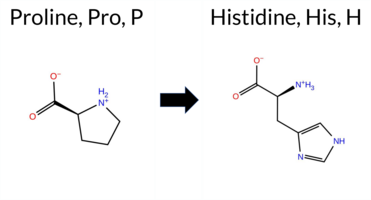 AIThe SynGAP1 missense variant P812H is listed in ClinVar with an uncertain significance and is present in the gnomAD database (ID 6‑33442987‑C‑A). Prediction tools that agree on a benign effect include REVEL, FATHMM, and AlphaMissense‑Optimized, whereas a majority of tools (PROVEAN, polyPhen‑2 HumDiv, polyPhen‑2 HumVar, SIFT, and AlphaMissense‑Default) predict a pathogenic outcome; ESM1b remains uncertain. High‑accuracy methods give a benign result from AlphaMissense‑Optimized, a pathogenic consensus from the SGM approach (majority vote of AlphaMissense‑Default, ESM1b, FATHMM, and PROVEAN), and Foldetta data are unavailable. Overall, the balance of evidence points to a pathogenic effect, which does not contradict the ClinVar uncertain status. Disclaimer: This summary was generated using AI and should be interpreted alongside expert review. | SH3-binding motif | 0.414856 | Structured | 0.842442 | Binding | 0.388 | 0.901 | 0.125 | Uncertain | 2 | 6-33442987-C-A | 3 | 1.86e-6 | -7.470 | In-Between | 0.698 | Likely Pathogenic | Likely Benign | 0.272 | Likely Benign | -2.81 | Deleterious | 1.000 | Probably Damaging | 0.995 | Probably Damaging | 2.68 | Benign | 0.00 | Affected | 4.32 | 4 | 0.1568 | 0.4923 | 0 | -2 | -1.6 | 40.02 | ||||||||||||||||||||||||||||||||
| c.2959G>A | D987N 2D 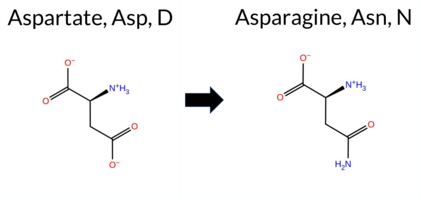 AIThe SynGAP1 D987N missense variant is not reported in ClinVar (ClinVar ID = None) and is absent from gnomAD (gnomAD ID = None). Prediction tools that agree on a benign effect include REVEL, PROVEAN, SIFT, ESM1b, and AlphaMissense‑Optimized. Tools that predict a pathogenic effect are polyPhen‑2 HumDiv, polyPhen‑2 HumVar, FATHMM, and AlphaMissense‑Default. High‑accuracy assessments show AlphaMissense‑Optimized as benign; the SGM Consensus (majority vote from AlphaMissense‑Default, ESM1b, FATHMM, PROVEAN) is inconclusive (2 benign vs 2 pathogenic), and Foldetta results are unavailable. Overall, the majority of evidence points to a benign impact, and this conclusion does not contradict any ClinVar annotation (none exists). Thus, the variant is most likely benign. Disclaimer: This summary was generated using AI and should be interpreted alongside expert review. | 0.823549 | Disordered | 0.919118 | Binding | 0.299 | 0.903 | 0.750 | -5.035 | Likely Benign | 0.698 | Likely Pathogenic | Likely Benign | 0.126 | Likely Benign | -1.42 | Neutral | 0.943 | Possibly Damaging | 0.755 | Possibly Damaging | 2.41 | Pathogenic | 0.49 | Tolerated | 0.1331 | 0.7427 | 2 | 1 | 0.0 | -0.98 | ||||||||||||||||||||||||||||||||||||||||
| c.353T>G | M118R 2D AIThe SynGAP1 missense variant M118R is not reported in ClinVar (ClinVar ID: None) and is absent from gnomAD (gnomAD ID: None). Prediction tools that agree on a benign effect include REVEL, polyPhen‑2 HumVar, ESM1b, FATHMM, and AlphaMissense‑Optimized. Tools that predict a pathogenic effect are PROVEAN, polyPhen‑2 HumDiv, SIFT, and AlphaMissense‑Default. High‑accuracy assessments show AlphaMissense‑Optimized as benign, while the SGM Consensus (majority vote from AlphaMissense‑Default, ESM1b, FATHMM, PROVEAN) is inconclusive due to a 2‑vs‑2 split, and Foldetta results are unavailable. Overall, the balance of evidence leans toward a benign impact for M118R. This conclusion does not contradict any ClinVar annotation, as no ClinVar status is currently assigned. Disclaimer: This summary was generated using AI and should be interpreted alongside expert review. | 0.694846 | Disordered | 0.676867 | Binding | 0.330 | 0.883 | 0.500 | -3.318 | Likely Benign | 0.698 | Likely Pathogenic | Likely Benign | 0.286 | Likely Benign | -3.17 | Deleterious | 0.697 | Possibly Damaging | 0.202 | Benign | 3.83 | Benign | 0.00 | Affected | 0.2027 | 0.0913 | 0 | -1 | -6.4 | 24.99 | ||||||||||||||||||||||||||||||||||||||||
| c.1960G>C | E654Q 2D 3DClick to see structure in 3D Viewer AIThe SynGAP1 E654Q missense variant is not reported in ClinVar and is absent from gnomAD. Prediction tools that agree on a benign effect include REVEL, FoldX, Rosetta, Foldetta, premPS, polyPhen‑2 (HumDiv and HumVar), and FATHMM, while those that predict a pathogenic outcome are SGM‑Consensus, PROVEAN, SIFT, ESM1b, and AlphaMissense‑Default. High‑accuracy assessments show AlphaMissense‑Optimized classifying the variant as benign, SGM‑Consensus (a majority vote of AlphaMissense‑Default, ESM1b, FATHMM, and PROVEAN) indicating likely pathogenic, and Foldetta (combining FoldX‑MD and Rosetta outputs) predicting a benign effect. Overall, the majority of tools (nine benign vs. five pathogenic) suggest the variant is most likely benign. This conclusion does not contradict ClinVar status, as no ClinVar assertion is available. Disclaimer: This summary was generated using AI and should be interpreted alongside expert review. | Likely Pathogenic | GAP | 0.026892 | Structured | 0.303029 | Uncertain | 0.957 | 0.311 | 0.000 | -10.368 | Likely Pathogenic | 0.699 | Likely Pathogenic | Likely Benign | 0.00 | Likely Benign | 0.0 | 0.18 | Likely Benign | 0.09 | Likely Benign | -0.12 | Likely Benign | 0.298 | Likely Benign | -2.79 | Deleterious | 0.244 | Benign | 0.075 | Benign | 3.33 | Benign | 0.02 | Affected | 0.1140 | 0.3913 | 2 | 2 | 0.0 | -0.98 | |||||||||||||||||||||||||||||
| c.2294G>T | S765I 2D AIThe SynGAP1 missense variant S765I is not reported in ClinVar (no ClinVar ID) and is absent from gnomAD (no gnomAD ID). Prediction tools that agree on a benign effect include SGM‑Consensus (Likely Benign), REVEL, PROVEAN, SIFT, ESM1b, FATHMM, and AlphaMissense‑Optimized. Tools that predict a pathogenic effect are polyPhen‑2 HumDiv, polyPhen‑2 HumVar, and AlphaMissense‑Default. High‑accuracy assessments show AlphaMissense‑Optimized as benign, while the SGM‑Consensus (derived from a majority vote of AlphaMissense‑Default, ESM1b, FATHMM, and PROVEAN) also resolves to benign. Foldetta, a protein‑folding stability method combining FoldX‑MD and Rosetta outputs, has no available result for this variant. Overall, the majority of evidence points to a benign impact, and this conclusion is not contradicted by any ClinVar annotation. Disclaimer: This summary was generated using AI and should be interpreted alongside expert review. | Likely Benign | 0.370445 | Structured | 0.922652 | Binding | 0.335 | 0.865 | 0.250 | -6.891 | Likely Benign | 0.699 | Likely Pathogenic | Likely Benign | 0.187 | Likely Benign | -1.24 | Neutral | 0.996 | Probably Damaging | 0.985 | Probably Damaging | 4.09 | Benign | 0.69 | Tolerated | 0.0768 | 0.5577 | -1 | -2 | 5.3 | 26.08 | |||||||||||||||||||||||||||||||||||||||
| c.2354G>T | R785L 2D 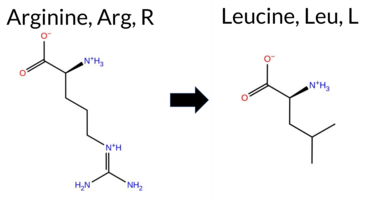 AIThe SynGAP1 missense variant R785L is not reported in ClinVar and is absent from gnomAD. Prediction tools that agree on a benign effect include REVEL, ESM1b, and AlphaMissense‑Optimized, whereas a majority of tools (SGM‑Consensus, PROVEAN, polyPhen‑2 HumDiv, polyPhen‑2 HumVar, SIFT, FATHMM, AlphaMissense‑Default) predict a pathogenic impact. High‑accuracy assessments show AlphaMissense‑Optimized classifying the variant as benign, while the SGM‑Consensus (a majority vote of AlphaMissense‑Default, ESM1b, FATHMM, and PROVEAN) indicates a likely pathogenic outcome; Foldetta results are unavailable. Overall, the balance of evidence leans toward a pathogenic effect, and this conclusion does not contradict the ClinVar status, which currently contains no entry for this variant. Disclaimer: This summary was generated using AI and should be interpreted alongside expert review. | Likely Pathogenic | SH3-binding motif | 0.859585 | Disordered | 0.681730 | Binding | 0.325 | 0.896 | 0.625 | -4.457 | Likely Benign | 0.699 | Likely Pathogenic | Likely Benign | 0.158 | Likely Benign | -4.43 | Deleterious | 0.960 | Probably Damaging | 0.627 | Possibly Damaging | 2.26 | Pathogenic | 0.01 | Affected | 0.1993 | 0.4539 | -3 | -2 | 8.3 | -43.03 | ||||||||||||||||||||||||||||||||||||||
| c.2726T>G | M909R 2D AIThe SynGAP1 missense variant M909R is not reported in ClinVar (no ClinVar ID) and is absent from gnomAD (no gnomAD ID). Prediction tools that agree on a benign effect include SGM‑Consensus (Likely Benign), REVEL, PROVEAN, SIFT, ESM1b, FATHMM, and AlphaMissense‑Optimized. Tools that predict a pathogenic effect are polyPhen‑2 HumDiv, polyPhen‑2 HumVar, and AlphaMissense‑Default. High‑accuracy assessments show AlphaMissense‑Optimized as benign and the SGM‑Consensus (majority vote of AlphaMissense‑Default, ESM1b, FATHMM, PROVEAN) also as benign; Foldetta results are unavailable. Overall, the majority of evidence points to a benign impact. There is no ClinVar entry to contradict this conclusion, so the variant is most likely benign. Disclaimer: This summary was generated using AI and should be interpreted alongside expert review. | Likely Benign | 0.642678 | Disordered | 0.696196 | Binding | 0.314 | 0.914 | 0.250 | -3.064 | Likely Benign | 0.699 | Likely Pathogenic | Likely Benign | 0.127 | Likely Benign | -1.23 | Neutral | 0.965 | Probably Damaging | 0.703 | Possibly Damaging | 2.70 | Benign | 0.12 | Tolerated | 0.1745 | 0.0809 | 0 | -1 | -6.4 | 24.99 | |||||||||||||||||||||||||||||||||||||||
| c.3233T>G | V1078G 2D 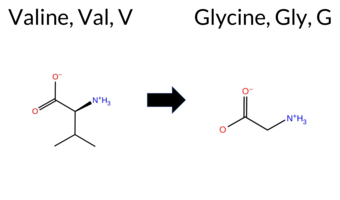 AIThe SynGAP1 missense variant V1078G is not reported in ClinVar (ClinVar ID = None) and is absent from gnomAD (gnomAD ID = None). Prediction tools that agree on a benign effect include REVEL, PROVEAN, polyPhen‑2 HumDiv, polyPhen‑2 HumVar, ESM1b, FATHMM, and AlphaMissense‑Optimized. Tools that predict a pathogenic effect are SIFT and AlphaMissense‑Default. High‑accuracy assessments further support a benign outcome: AlphaMissense‑Optimized is benign, and the SGM Consensus (majority vote from AlphaMissense‑Default, ESM1b, FATHMM, and PROVEAN) is benign (3 benign vs 1 pathogenic). Foldetta, a protein‑folding stability method, has no available result for this variant. Overall, the majority of evidence indicates a benign impact. This conclusion is not contradicted by ClinVar status, which has no entry for the variant. Disclaimer: This summary was generated using AI and should be interpreted alongside expert review. | 0.882776 | Disordered | 0.986989 | Binding | 0.294 | 0.898 | 0.750 | -3.270 | Likely Benign | 0.699 | Likely Pathogenic | Likely Benign | 0.168 | Likely Benign | -0.54 | Neutral | 0.157 | Benign | 0.292 | Benign | 3.85 | Benign | 0.00 | Affected | 0.2041 | 0.2693 | -1 | -3 | -4.6 | -42.08 | ||||||||||||||||||||||||||||||||||||||||
| c.3787A>C | I1263L 2D 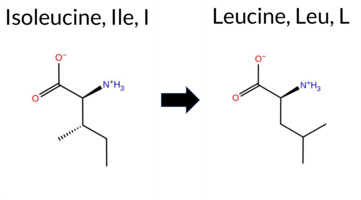 AIThe SynGAP1 missense variant I1263L is not reported in ClinVar (ClinVar ID None) and is absent from gnomAD (gnomAD ID None). Prediction tools that agree on a benign effect include REVEL, PROVEAN, polyPhen‑2 HumDiv, polyPhen‑2 HumVar, ESM1b, and AlphaMissense‑Optimized. Tools that predict a pathogenic effect are SIFT, FATHMM, and AlphaMissense‑Default. High‑accuracy assessments show AlphaMissense‑Optimized as benign, while the SGM Consensus (majority vote from AlphaMissense‑Default, ESM1b, FATHMM, PROVEAN) is inconclusive (two benign, two pathogenic). Foldetta results are unavailable. Overall, the majority of evidence points to a benign impact, and this conclusion does not contradict the ClinVar status, which has no entry for this variant. Disclaimer: This summary was generated using AI and should be interpreted alongside expert review. | Coiled-coil | 0.425610 | Structured | 0.740957 | Binding | 0.867 | 0.574 | 0.000 | -1.210 | Likely Benign | 0.699 | Likely Pathogenic | Likely Benign | 0.194 | Likely Benign | -1.66 | Neutral | 0.011 | Benign | 0.022 | Benign | 1.94 | Pathogenic | 0.00 | Affected | 0.0717 | 0.2890 | 2 | 2 | -0.7 | 0.00 | |||||||||||||||||||||||||||||||||||||||
| c.3948T>A | N1316K 2D AIThe SynGAP1 missense variant N1316K is not reported in ClinVar (ClinVar status: none) but is present in gnomAD (ID 6‑33451822‑T‑A). Prediction tools that agree on a benign effect include REVEL, polyPhen‑2 (HumDiv and HumVar), ESM1b, FATHMM, and AlphaMissense‑Optimized. Tools that predict a pathogenic effect are PROVEAN, SIFT, and AlphaMissense‑Default. High‑accuracy assessments show AlphaMissense‑Optimized as benign; the SGM Consensus (majority vote from AlphaMissense‑Default, ESM1b, FATHMM, PROVEAN) is inconclusive (2 benign vs 2 pathogenic), and Foldetta results are unavailable. Overall, the majority of evidence points to a benign impact, and this conclusion does not contradict any ClinVar annotation (none). Thus, the variant is most likely benign based on current predictions. Disclaimer: This summary was generated using AI and should be interpreted alongside expert review. | 0.899122 | Disordered | 0.971970 | Binding | 0.380 | 0.885 | 0.750 | 6-33451822-T-A | -3.815 | Likely Benign | 0.699 | Likely Pathogenic | Likely Benign | 0.044 | Likely Benign | -3.27 | Deleterious | 0.414 | Benign | 0.063 | Benign | 4.00 | Benign | 0.00 | Affected | 3.77 | 5 | 0.2065 | 0.5500 | 0 | 1 | -0.4 | 14.07 | |||||||||||||||||||||||||||||||||||||
| c.3948T>G | N1316K 2D AIThe SynGAP1 missense variant N1316K is not reported in ClinVar (ClinVar status: none) but is present in gnomAD (ID 6‑33451822‑T‑G). Prediction tools that agree on a benign effect include REVEL, polyPhen‑2 (HumDiv and HumVar), ESM1b, FATHMM, and AlphaMissense‑Optimized. Tools that predict a pathogenic effect are PROVEAN, SIFT, and AlphaMissense‑Default. High‑accuracy assessments show AlphaMissense‑Optimized as benign; the SGM Consensus (majority vote from AlphaMissense‑Default, ESM1b, FATHMM, PROVEAN) is inconclusive (2 benign + 2 pathogenic), and Foldetta results are unavailable. Overall, the majority of evidence points to a benign impact, and this conclusion does not contradict the ClinVar status, which is currently unreported. Disclaimer: This summary was generated using AI and should be interpreted alongside expert review. | 0.899122 | Disordered | 0.971970 | Binding | 0.380 | 0.885 | 0.750 | 6-33451822-T-G | -3.815 | Likely Benign | 0.699 | Likely Pathogenic | Likely Benign | 0.044 | Likely Benign | -3.27 | Deleterious | 0.414 | Benign | 0.063 | Benign | 4.00 | Benign | 0.00 | Affected | 3.77 | 5 | 0.2065 | 0.5500 | 0 | 1 | -0.4 | 14.07 | |||||||||||||||||||||||||||||||||||||
| c.379C>G | R127G 2D AIThe SynGAP1 R127G missense variant is not reported in ClinVar (no ClinVar ID) and is absent from gnomAD (no gnomAD ID). Prediction tools that agree on a benign effect include REVEL, PROVEAN, polyPhen‑2 HumDiv, polyPhen‑2 HumVar, ESM1b, FATHMM, and AlphaMissense‑Optimized. Tools that predict a pathogenic effect are SIFT and AlphaMissense‑Default. The high‑accuracy consensus, SGM‑Consensus, is derived from a majority vote of AlphaMissense‑Default, ESM1b, FATHMM, and PROVEAN; it yields a “Likely Benign” classification (3 benign vs. 1 pathogenic). AlphaMissense‑Optimized also predicts benign. Foldetta, a protein‑folding stability method combining FoldX‑MD and Rosetta outputs, has no available result for this variant. Overall, the majority of evidence points to a benign impact, and this assessment does not contradict any ClinVar annotation (none exists). Disclaimer: This summary was generated using AI and should be interpreted alongside expert review. | Likely Benign | 0.497853 | Structured | 0.711716 | Binding | 0.333 | 0.870 | 0.625 | -1.062 | Likely Benign | 0.700 | Likely Pathogenic | Likely Benign | 0.107 | Likely Benign | -2.17 | Neutral | 0.287 | Benign | 0.038 | Benign | 3.91 | Benign | 0.01 | Affected | 0.3561 | 0.3037 | -3 | -2 | 4.1 | -99.14 | |||||||||||||||||||||||||||||||||||||||
| c.916G>T | V306F 2D 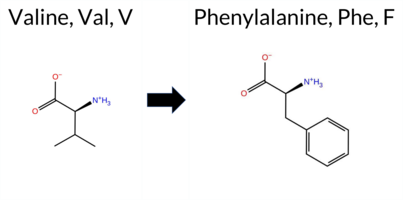 3DClick to see structure in 3D Viewer AIThe SynGAP1 missense variant V306F is not reported in ClinVar and is absent from gnomAD. Prediction tools that indicate a benign effect include REVEL, premPS, and AlphaMissense‑Optimized, whereas the remaining tools (SGM‑Consensus, FoldX, Rosetta, Foldetta, PROVEAN, polyPhen‑2 HumDiv, polyPhen‑2 HumVar, SIFT, ESM1b, FATHMM, AlphaMissense‑Default) all predict a pathogenic outcome. High‑accuracy assessments show AlphaMissense‑Optimized classifying the variant as benign, the SGM‑Consensus (majority vote of AlphaMissense‑Default, ESM1b, FATHMM, PROVEAN) labeling it likely pathogenic, and Foldetta (combining FoldX‑MD and Rosetta outputs) predicting a pathogenic effect. Overall, the majority of evidence supports a pathogenic impact, and this conclusion does not contradict the ClinVar status, which currently has no entry for this variant. Disclaimer: This summary was generated using AI and should be interpreted alongside expert review. | Likely Pathogenic | C2 | 0.363090 | Structured | 0.315026 | Uncertain | 0.896 | 0.287 | 0.125 | -9.311 | Likely Pathogenic | 0.700 | Likely Pathogenic | Likely Benign | 13.59 | Destabilizing | 1.4 | 6.99 | Destabilizing | 10.29 | Destabilizing | 0.23 | Likely Benign | 0.336 | Likely Benign | -3.28 | Deleterious | 1.000 | Probably Damaging | 0.999 | Probably Damaging | 1.74 | Pathogenic | 0.01 | Affected | 0.0535 | 0.3318 | -1 | -1 | -1.4 | 48.04 | |||||||||||||||||||||||||||||
| c.1339G>T | V447F 2D 3DClick to see structure in 3D Viewer AISynGAP1 variant V447F is listed in ClinVar with an uncertain significance and is not reported in gnomAD. Functional prediction tools that classify the variant as benign include REVEL, premPS, FATHMM, and AlphaMissense‑Optimized. Those that predict pathogenicity are PROVEAN, polyPhen‑2 HumDiv, polyPhen‑2 HumVar, SIFT, ESM1b, and AlphaMissense‑Default. High‑accuracy assessments show AlphaMissense‑Optimized labeling the variant benign, while the SGM Consensus (majority vote of AlphaMissense‑Default, ESM1b, FATHMM, and PROVEAN) indicates likely pathogenic. Foldetta, which integrates FoldX‑MD and Rosetta stability outputs, reports an uncertain effect on protein folding. Overall, the majority of predictions lean toward pathogenicity, suggesting the variant is most likely pathogenic, a conclusion that does not conflict with the ClinVar uncertain status. Disclaimer: This summary was generated using AI and should be interpreted alongside expert review. | Likely Pathogenic | GAP | 0.250310 | Structured | 0.283801 | Uncertain | 0.970 | 0.243 | 0.000 | Uncertain | 1 | -8.673 | Likely Pathogenic | 0.701 | Likely Pathogenic | Likely Benign | 1.40 | Ambiguous | 0.3 | 0.61 | Ambiguous | 1.01 | Ambiguous | 0.20 | Likely Benign | 0.206 | Likely Benign | -2.62 | Deleterious | 0.999 | Probably Damaging | 0.993 | Probably Damaging | 3.44 | Benign | 0.03 | Affected | 0.0551 | 0.3055 | -1 | -1 | -1.4 | 48.04 | |||||||||||||||||||||||||||
| c.1529T>C | I510T 2D 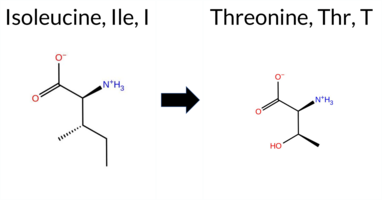 3DClick to see structure in 3D Viewer AIThe SynGAP1 missense variant I510T is not reported in ClinVar and is absent from gnomAD. Prediction tools that agree on a benign effect include only AlphaMissense‑Optimized. All other evaluated algorithms—SGM‑Consensus, REVEL, FoldX, premPS, PROVEAN, polyPhen‑2 (HumDiv and HumVar), SIFT, ESM1b, FATHMM, AlphaMissense‑Default, and Foldetta—classify the variant as pathogenic, while Rosetta remains uncertain. High‑accuracy assessments further support a pathogenic interpretation: AlphaMissense‑Optimized predicts benign, SGM‑Consensus (majority vote of AlphaMissense‑Default, ESM1b, FATHMM, PROVEAN) predicts likely pathogenic, and Foldetta predicts pathogenic. Consequently, the variant is most likely pathogenic based on the collective predictions, and this assessment does not contradict any ClinVar annotation because none exists. Disclaimer: This summary was generated using AI and should be interpreted alongside expert review. | Likely Pathogenic | GAP | 0.025762 | Structured | 0.250630 | Uncertain | 0.945 | 0.273 | 0.000 | -9.993 | Likely Pathogenic | 0.701 | Likely Pathogenic | Likely Benign | 3.08 | Destabilizing | 0.2 | 1.99 | Ambiguous | 2.54 | Destabilizing | 1.95 | Destabilizing | 0.914 | Likely Pathogenic | -3.63 | Deleterious | 1.000 | Probably Damaging | 0.997 | Probably Damaging | -1.43 | Pathogenic | 0.00 | Affected | 0.0960 | 0.0440 | 0 | -1 | -5.2 | -12.05 | |||||||||||||||||||||||||||||
| c.1613A>G | E538G 2D 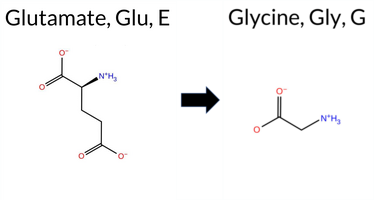 3DClick to see structure in 3D Viewer AIThe SynGAP1 missense variant E538G is not reported in ClinVar and is absent from gnomAD. Functional prediction tools cluster into two groups: benign predictions come from REVEL, premPS, FATHMM, and AlphaMissense‑Optimized; pathogenic predictions arise from PROVEAN, polyPhen‑2 (HumDiv and HumVar), SIFT, ESM1b, and AlphaMissense‑Default. The SGM Consensus, derived from a majority vote of AlphaMissense‑Default, ESM1b, FATHMM, and PROVEAN, is labeled Likely Pathogenic. High‑accuracy assessments show AlphaMissense‑Optimized as benign, SGM Consensus as Likely Pathogenic, and Foldetta (combining FoldX‑MD and Rosetta outputs) as uncertain. No folding‑stability result is definitive. Overall, the balance of evidence, including the majority‑vote SGM Consensus and the higher number of pathogenic predictions, points to a pathogenic effect for E538G. This conclusion does not contradict ClinVar status, as the variant is not yet catalogued there. Disclaimer: This summary was generated using AI and should be interpreted alongside expert review. | Likely Pathogenic | GAP | 0.122885 | Structured | 0.033501 | Uncertain | 0.938 | 0.359 | 0.000 | -9.258 | Likely Pathogenic | 0.701 | Likely Pathogenic | Likely Benign | 0.91 | Ambiguous | 0.0 | 1.07 | Ambiguous | 0.99 | Ambiguous | 0.31 | Likely Benign | 0.285 | Likely Benign | -5.10 | Deleterious | 0.993 | Probably Damaging | 0.700 | Possibly Damaging | 3.33 | Benign | 0.03 | Affected | 0.3173 | 0.3713 | 0 | -2 | 3.1 | -72.06 | |||||||||||||||||||||||||||||
| c.1679T>C | V560A 2D 3DClick to see structure in 3D Viewer AIThe SynGAP1 missense variant V560A is not reported in ClinVar (ClinVar status: none) and has no entry in gnomAD (gnomAD ID: none). Prediction tools that agree on a benign effect include REVEL, SIFT, and AlphaMissense‑Optimized. Tools that predict a pathogenic effect comprise SGM‑Consensus, premPS, PROVEAN, polyPhen‑2 (HumDiv and HumVar), ESM1b, FATHMM, and AlphaMissense‑Default. FoldX, Rosetta, and Foldetta provide uncertain or inconclusive results and are treated as unavailable. High‑accuracy assessments show AlphaMissense‑Optimized as benign, while the SGM‑Consensus (majority vote of AlphaMissense‑Default, ESM1b, FATHMM, PROVEAN) is pathogenic; Foldetta remains uncertain. Overall, the majority of predictions (eight pathogenic vs. three benign) indicate that the variant is most likely pathogenic, and this conclusion does not contradict any ClinVar status because no ClinVar classification exists. Disclaimer: This summary was generated using AI and should be interpreted alongside expert review. | Likely Pathogenic | GAP | 0.021381 | Structured | 0.013872 | Uncertain | 0.853 | 0.204 | 0.000 | -8.260 | Likely Pathogenic | 0.701 | Likely Pathogenic | Likely Benign | 0.54 | Ambiguous | 0.1 | 1.33 | Ambiguous | 0.94 | Ambiguous | 1.19 | Destabilizing | 0.447 | Likely Benign | -3.15 | Deleterious | 0.911 | Possibly Damaging | 0.657 | Possibly Damaging | -1.20 | Pathogenic | 0.31 | Tolerated | 0.2549 | 0.2212 | 0 | 0 | -2.4 | -28.05 | |||||||||||||||||||||||||||||
| c.2714G>C | R905P 2D AIThe SynGAP1 missense variant R905P is not reported in ClinVar (no ClinVar ID) and is absent from gnomAD (no gnomAD ID). Prediction tools that agree on a benign effect include SGM‑Consensus (Likely Benign), REVEL, PROVEAN, SIFT, ESM1b, FATHMM, and AlphaMissense‑Optimized. Tools that predict a pathogenic effect are polyPhen‑2 HumDiv, polyPhen‑2 HumVar, and AlphaMissense‑Default. High‑accuracy assessments show AlphaMissense‑Optimized as benign and the SGM‑Consensus (majority vote of AlphaMissense‑Default, ESM1b, FATHMM, PROVEAN) also as benign; Foldetta results are unavailable. Overall, the majority of evidence points to a benign impact. This conclusion is not contradicted by ClinVar status, which has no entry for this variant. Disclaimer: This summary was generated using AI and should be interpreted alongside expert review. | Likely Benign | 0.671169 | Disordered | 0.618085 | Binding | 0.291 | 0.920 | 0.250 | -3.713 | Likely Benign | 0.701 | Likely Pathogenic | Likely Benign | 0.265 | Likely Benign | -0.86 | Neutral | 1.000 | Probably Damaging | 0.977 | Probably Damaging | 2.64 | Benign | 0.07 | Tolerated | 0.2032 | 0.4616 | 0 | -2 | 2.9 | -59.07 | |||||||||||||||||||||||||||||||||||||||
| c.3635C>G | S1212C 2D AIThe SynGAP1 missense variant S1212C is not reported in ClinVar (no ClinVar ID) and is absent from gnomAD (no gnomAD ID). Prediction tools that agree on a benign effect include REVEL and AlphaMissense‑Optimized, while the majority of tools predict a pathogenic impact: PROVEAN, polyPhen‑2 (HumDiv and HumVar), SIFT, FATHMM, and AlphaMissense‑Default all indicate pathogenicity. The SGM‑Consensus, a majority‑vote method from AlphaMissense‑Default, ESM1b, FATHMM, and PROVEAN, also classifies the variant as Likely Pathogenic. ESM1b is uncertain, and Foldetta (a protein‑folding stability method combining FoldX‑MD and Rosetta) has no available result for this variant. High‑accuracy tools therefore give a benign call from AlphaMissense‑Optimized, a pathogenic call from SGM‑Consensus, and no data from Foldetta. Overall, the preponderance of evidence points to a pathogenic effect, and this assessment does not contradict any ClinVar status because no ClinVar entry exists. Disclaimer: This summary was generated using AI and should be interpreted alongside expert review. | Likely Pathogenic | Coiled-coil | 0.566480 | Disordered | 0.548409 | Binding | 0.852 | 0.565 | 0.500 | -7.938 | In-Between | 0.701 | Likely Pathogenic | Likely Benign | 0.245 | Likely Benign | -3.58 | Deleterious | 1.000 | Probably Damaging | 0.998 | Probably Damaging | 2.04 | Pathogenic | 0.00 | Affected | 0.0693 | 0.4631 | 0 | -1 | 3.3 | 16.06 | ||||||||||||||||||||||||||||||||||||||
| c.3789T>G | I1263M 2D 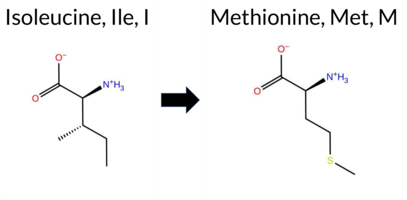 AIThe SynGAP1 missense variant I1263M is not reported in ClinVar (ClinVar ID None) and is absent from gnomAD (gnomAD ID None). Prediction tools that agree on a benign effect include REVEL, PROVEAN, ESM1b, and AlphaMissense‑Optimized. Tools that predict a pathogenic effect are polyPhen‑2 (HumDiv and HumVar), SIFT, FATHMM, and AlphaMissense‑Default. The SGM Consensus, which aggregates AlphaMissense‑Default, ESM1b, FATHMM, and PROVEAN, is inconclusive (2 pathogenic vs 2 benign). High‑accuracy methods are not available: AlphaMissense‑Optimized is benign, but AlphaMissense‑Default is pathogenic; Foldetta results are missing. Overall, the majority of predictions (five pathogenic vs four benign) lean toward a pathogenic impact. This conclusion does not contradict ClinVar status, as the variant has no existing ClinVar classification. Thus, the variant is most likely pathogenic based on current computational evidence. Disclaimer: This summary was generated using AI and should be interpreted alongside expert review. | Coiled-coil | 0.425610 | Structured | 0.740957 | Binding | 0.867 | 0.574 | 0.000 | -2.839 | Likely Benign | 0.701 | Likely Pathogenic | Likely Benign | 0.291 | Likely Benign | -2.49 | Neutral | 0.968 | Probably Damaging | 0.789 | Possibly Damaging | 1.81 | Pathogenic | 0.00 | Affected | 0.0654 | 0.2170 | 2 | 1 | -2.6 | 18.03 | |||||||||||||||||||||||||||||||||||||||
| c.2603A>C | D868A 2D 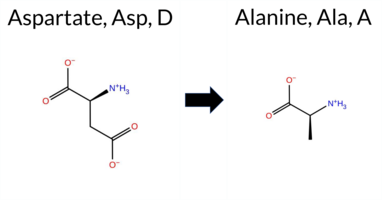 AIThe SynGAP1 D868A variant is not reported in ClinVar (ClinVar ID = None) and is absent from gnomAD (gnomAD ID = None). Prediction tools that agree on a benign effect include REVEL, SIFT, ESM1b, FATHMM, and AlphaMissense‑Optimized. Tools that predict a pathogenic effect are PROVEAN, polyPhen‑2 HumDiv, polyPhen‑2 HumVar, and AlphaMissense‑Default. High‑accuracy assessments show AlphaMissense‑Optimized as benign, while the SGM Consensus (majority vote from AlphaMissense‑Default, ESM1b, FATHMM, PROVEAN) is inconclusive (2 benign vs 2 pathogenic). Foldetta results are unavailable. Overall, the balance of evidence—including the benign prediction from the most accurate AlphaMissense‑Optimized model and the majority of benign calls—suggests that the variant is most likely benign. This conclusion does not contradict any ClinVar status, as the variant has no ClinVar entry. Disclaimer: This summary was generated using AI and should be interpreted alongside expert review. | 0.525368 | Disordered | 0.676362 | Binding | 0.262 | 0.815 | 0.250 | -2.764 | Likely Benign | 0.702 | Likely Pathogenic | Likely Benign | 0.139 | Likely Benign | -2.75 | Deleterious | 0.972 | Probably Damaging | 0.760 | Possibly Damaging | 2.54 | Benign | 0.21 | Tolerated | 0.4590 | 0.6990 | 0 | -2 | 5.3 | -44.01 | ||||||||||||||||||||||||||||||||||||||||
| c.3392C>G | P1131R 2D 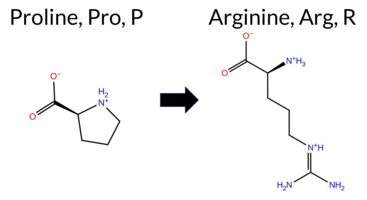 AIThe SynGAP1 P1131R missense variant has no ClinVar record and is absent from gnomAD. Prediction tools cluster into two groups: benign predictions come from REVEL, polyPhen‑2 HumVar, ESM1b, FATHMM, and AlphaMissense‑Optimized; pathogenic predictions come from PROVEAN, polyPhen‑2 HumDiv, SIFT, and AlphaMissense‑Default. High‑accuracy assessments show AlphaMissense‑Optimized as benign, while the SGM Consensus (majority vote of AlphaMissense‑Default, ESM1b, FATHMM, PROVEAN) is inconclusive due to a 2‑to‑2 split, and Foldetta data are unavailable. With five benign versus four pathogenic calls and a benign result from the most accurate tool, the variant is most likely benign. This assessment does not contradict ClinVar status, as no ClinVar entry exists for this variant. Disclaimer: This summary was generated using AI and should be interpreted alongside expert review. | 0.919029 | Disordered | 0.855155 | Binding | 0.360 | 0.899 | 0.750 | -3.792 | Likely Benign | 0.702 | Likely Pathogenic | Likely Benign | 0.416 | Likely Benign | -2.58 | Deleterious | 0.918 | Possibly Damaging | 0.420 | Benign | 5.26 | Benign | 0.00 | Affected | 0.1252 | 0.4010 | 0 | -2 | -2.9 | 59.07 | ||||||||||||||||||||||||||||||||||||||||
| c.2002T>A | S668T 2D 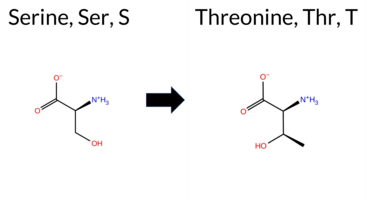 3DClick to see structure in 3D Viewer AIThe SynGAP1 missense variant S668T is not reported in ClinVar (ClinVar ID: None) and has no entries in gnomAD (gnomAD ID: None). Prediction tools that agree on a benign effect include REVEL, premPS, FATHMM, AlphaMissense‑Optimized, and polyPhen2_HumVar. Tools that predict a pathogenic effect are SGM‑Consensus, PROVEAN, polyPhen2_HumDiv, SIFT, ESM1b, and AlphaMissense‑Default. High‑accuracy assessments show AlphaMissense‑Optimized classifying the variant as benign, while the SGM‑Consensus (majority vote of AlphaMissense‑Default, ESM1b, FATHMM, and PROVEAN) indicates a likely pathogenic outcome; Foldetta, which integrates FoldX‑MD and Rosetta outputs, yields an uncertain result. No evidence from FoldX or Rosetta alone is conclusive. Overall, the balance of predictions leans toward pathogenicity, and this assessment does not contradict any ClinVar status because none is available. Disclaimer: This summary was generated using AI and should be interpreted alongside expert review. | Likely Pathogenic | GAP | 0.247041 | Structured | 0.084935 | Uncertain | 0.922 | 0.370 | 0.000 | -11.860 | Likely Pathogenic | 0.703 | Likely Pathogenic | Likely Benign | 1.73 | Ambiguous | 0.7 | 0.89 | Ambiguous | 1.31 | Ambiguous | 0.27 | Likely Benign | 0.238 | Likely Benign | -2.99 | Deleterious | 0.844 | Possibly Damaging | 0.198 | Benign | 3.24 | Benign | 0.02 | Affected | 0.1212 | 0.5918 | 1 | 1 | 0.1 | 14.03 | |||||||||||||||||||||||||||||
| c.269T>A | V90E 2D 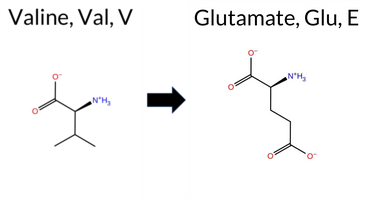 AIThe SynGAP1 missense variant V90E is listed in ClinVar (ID 971665.0) with an uncertain significance status and is not reported in gnomAD. Functional prediction tools largely agree on a benign effect: REVEL, PROVEAN, polyPhen‑2 (HumDiv and HumVar), ESM1b, FATHMM, and AlphaMissense‑Optimized all predict benign. Only two tools—SIFT and AlphaMissense‑Default—suggest a pathogenic outcome. When the high‑accuracy consensus is considered, AlphaMissense‑Optimized remains benign, and the SGM Consensus (derived from the majority vote of AlphaMissense‑Default, ESM1b, FATHMM, and PROVEAN) also indicates a likely benign effect. No Foldetta stability assessment is available for this variant. Overall, the preponderance of evidence points to a benign impact, which does not contradict the ClinVar uncertain classification. Disclaimer: This summary was generated using AI and should be interpreted alongside expert review. | Likely Benign | 0.570702 | Disordered | 0.542047 | Binding | 0.343 | 0.873 | 0.500 | Uncertain | 1 | -4.079 | Likely Benign | 0.703 | Likely Pathogenic | Likely Benign | 0.108 | Likely Benign | -0.38 | Neutral | 0.001 | Benign | 0.000 | Benign | 4.00 | Benign | 0.00 | Affected | 4.32 | 1 | 0.1323 | 0.2233 | -2 | -2 | -7.7 | 29.98 | |||||||||||||||||||||||||||||||||||
| c.2727G>A | M909I 2D 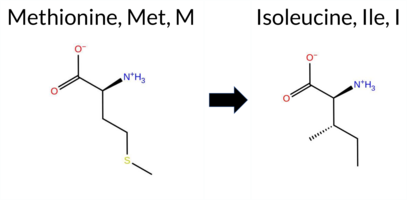 AIThe SynGAP1 missense variant M909I is not reported in ClinVar (no ClinVar ID) and is absent from gnomAD (no gnomAD ID). Prediction tools that agree on a benign effect include REVEL, PROVEAN, polyPhen‑2 HumVar, SIFT, ESM1b, FATHMM, and AlphaMissense‑Optimized. Tools that predict a pathogenic effect are polyPhen‑2 HumDiv and AlphaMissense‑Default. The SGM‑Consensus, which aggregates AlphaMissense‑Default, ESM1b, FATHMM, and PROVEAN, reports a Likely Benign classification. High‑accuracy assessments show AlphaMissense‑Optimized as Benign and the SGM‑Consensus as Likely Benign; the Foldetta protein‑folding stability analysis is unavailable. Overall, the majority of evidence points to a benign impact, and this conclusion is not contradicted by any ClinVar annotation. Disclaimer: This summary was generated using AI and should be interpreted alongside expert review. | Likely Benign | 0.642678 | Disordered | 0.696196 | Binding | 0.314 | 0.914 | 0.250 | -3.636 | Likely Benign | 0.703 | Likely Pathogenic | Likely Benign | 0.097 | Likely Benign | -1.15 | Neutral | 0.481 | Possibly Damaging | 0.220 | Benign | 2.82 | Benign | 0.25 | Tolerated | 0.1392 | 0.3298 | 2 | 1 | 2.6 | -18.03 | |||||||||||||||||||||||||||||||||||||||
| c.2727G>C | M909I 2D AIThe SynGAP1 missense variant M909I is not reported in ClinVar (no ClinVar ID) and is absent from gnomAD (no gnomAD ID). Prediction tools that agree on a benign effect include REVEL, PROVEAN, polyPhen‑2 HumVar, SIFT, ESM1b, FATHMM, and AlphaMissense‑Optimized. Tools that predict a pathogenic effect are polyPhen‑2 HumDiv and AlphaMissense‑Default. The SGM‑Consensus, which aggregates AlphaMissense‑Default, ESM1b, FATHMM, and PROVEAN, reports a Likely Benign classification. High‑accuracy assessments show AlphaMissense‑Optimized as Benign and the SGM‑Consensus as Likely Benign; Foldetta results are unavailable. Overall, the majority of evidence points to a benign impact. This conclusion is consistent with the lack of ClinVar annotation, so there is no contradiction with existing clinical data. Disclaimer: This summary was generated using AI and should be interpreted alongside expert review. | Likely Benign | 0.642678 | Disordered | 0.696196 | Binding | 0.314 | 0.914 | 0.250 | -3.636 | Likely Benign | 0.703 | Likely Pathogenic | Likely Benign | 0.097 | Likely Benign | -1.15 | Neutral | 0.481 | Possibly Damaging | 0.220 | Benign | 2.82 | Benign | 0.25 | Tolerated | 0.1392 | 0.3298 | 2 | 1 | 2.6 | -18.03 | |||||||||||||||||||||||||||||||||||||||
| c.2727G>T | M909I 2D AIThe SynGAP1 missense variant M909I is not reported in ClinVar (no ClinVar ID) and is absent from gnomAD (no gnomAD ID). Prediction tools that agree on a benign effect include REVEL, PROVEAN, polyPhen‑2 HumVar, SIFT, ESM1b, FATHMM, and AlphaMissense‑Optimized. Tools that predict a pathogenic effect are polyPhen‑2 HumDiv and AlphaMissense‑Default. The SGM‑Consensus, which aggregates AlphaMissense‑Default, ESM1b, FATHMM, and PROVEAN, reports a Likely Benign classification. High‑accuracy assessments show AlphaMissense‑Optimized as Benign and the SGM‑Consensus as Likely Benign; Foldetta results are unavailable. Overall, the majority of evidence points to a benign impact. This conclusion is consistent with the lack of ClinVar annotation, so there is no contradiction with existing clinical data. Disclaimer: This summary was generated using AI and should be interpreted alongside expert review. | Likely Benign | 0.642678 | Disordered | 0.696196 | Binding | 0.314 | 0.914 | 0.250 | -3.636 | Likely Benign | 0.703 | Likely Pathogenic | Likely Benign | 0.097 | Likely Benign | -1.15 | Neutral | 0.481 | Possibly Damaging | 0.220 | Benign | 2.82 | Benign | 0.25 | Tolerated | 0.1392 | 0.3298 | 2 | 1 | 2.6 | -18.03 | |||||||||||||||||||||||||||||||||||||||
| c.2963T>C | L988P 2D 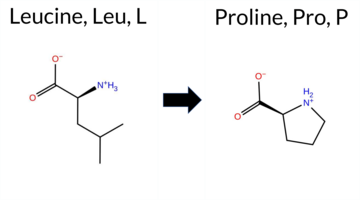 AIThe SynGAP1 missense variant L988P is not reported in ClinVar (ClinVar ID = None) and is absent from gnomAD (gnomAD ID = None). Prediction tools that agree on a benign effect include REVEL, ESM1b, FATHMM, and AlphaMissense‑Optimized. Tools that predict a pathogenic effect are PROVEAN, polyPhen‑2 (HumDiv and HumVar), SIFT, and AlphaMissense‑Default. High‑accuracy assessments show AlphaMissense‑Optimized as benign, while the SGM Consensus (majority vote from AlphaMissense‑Default, ESM1b, FATHMM, and PROVEAN) is inconclusive (2 pathogenic vs. 2 benign). Foldetta results are unavailable. Overall, the majority of predictions (five pathogenic vs. four benign) lean toward pathogenicity. Thus, the variant is most likely pathogenic, and this conclusion does not contradict any existing ClinVar status. Disclaimer: This summary was generated using AI and should be interpreted alongside expert review. | 0.827927 | Disordered | 0.918781 | Binding | 0.360 | 0.913 | 0.750 | -3.848 | Likely Benign | 0.703 | Likely Pathogenic | Likely Benign | 0.216 | Likely Benign | -2.96 | Deleterious | 0.977 | Probably Damaging | 0.900 | Possibly Damaging | 2.62 | Benign | 0.00 | Affected | 0.3282 | 0.1698 | -3 | -3 | -5.4 | -16.04 | ||||||||||||||||||||||||||||||||||||||||
| c.380G>C | R127P 2D AIThe SynGAP1 missense variant R127P is not reported in ClinVar and is absent from gnomAD. Consensus predictions from multiple in‑silico tools cluster around a benign effect: REVEL, PROVEAN, polyPhen‑2 HumVar, ESM1b, FATHMM, and AlphaMissense‑Optimized all indicate benign. In contrast, polyPhen‑2 HumDiv, SIFT, and AlphaMissense‑Default predict pathogenicity. The high‑accuracy AlphaMissense‑Optimized score is benign, and the SGM Consensus—derived from a majority vote of AlphaMissense‑Default, ESM1b, FATHMM, and PROVEAN—also favors a benign outcome. No Foldetta stability assessment is available, so it does not influence the interpretation. Overall, the preponderance of evidence points to a benign effect for R127P, and this conclusion is consistent with the absence of any ClinVar pathogenic annotation. Disclaimer: This summary was generated using AI and should be interpreted alongside expert review. | Likely Benign | 0.497853 | Structured | 0.711716 | Binding | 0.333 | 0.870 | 0.625 | -0.375 | Likely Benign | 0.703 | Likely Pathogenic | Likely Benign | 0.187 | Likely Benign | -2.25 | Neutral | 0.748 | Possibly Damaging | 0.110 | Benign | 3.92 | Benign | 0.01 | Affected | 0.2295 | 0.3741 | 0 | -2 | 2.9 | -59.07 | |||||||||||||||||||||||||||||||||||||||
| c.145T>A | C49S 2D 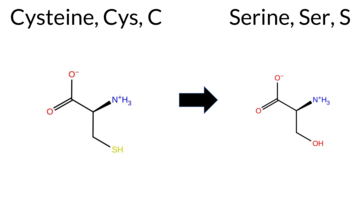 AIThe SynGAP1 missense variant C49S is not reported in ClinVar (ClinVar ID: None) and is absent from gnomAD (gnomAD ID: None). Prediction tools that agree on a benign effect include REVEL, ESM1b, FATHMM, and AlphaMissense‑Optimized. Those that predict a pathogenic effect are PROVEAN, polyPhen‑2 HumDiv, polyPhen‑2 HumVar, SIFT, and AlphaMissense‑Default. High‑accuracy assessments show AlphaMissense‑Optimized as benign, while the SGM Consensus (majority vote from AlphaMissense‑Default, ESM1b, FATHMM, PROVEAN) is inconclusive (2 benign vs. 2 pathogenic votes). Foldetta, a protein‑folding stability method combining FoldX‑MD and Rosetta outputs, has no available result for this variant. Overall, the majority of standard predictors lean toward pathogenicity, but the high‑accuracy tools do not provide definitive support. Thus, the variant is most likely pathogenic based on the current predictions, and this assessment does not contradict any ClinVar status because no ClinVar entry exists. Disclaimer: This summary was generated using AI and should be interpreted alongside expert review. | 0.209395 | Structured | 0.445316 | Uncertain | 0.541 | 0.704 | 0.000 | -6.575 | Likely Benign | 0.704 | Likely Pathogenic | Likely Benign | 0.260 | Likely Benign | -3.07 | Deleterious | 0.462 | Possibly Damaging | 0.478 | Possibly Damaging | 3.91 | Benign | 0.00 | Affected | 0.3855 | 0.1686 | 0 | -1 | -3.3 | -16.06 | ||||||||||||||||||||||||||||||||||||||||
| c.146G>C | C49S 2D AIThe SynGAP1 missense variant C49S is not reported in ClinVar (ClinVar ID = None) and is absent from gnomAD (gnomAD ID = None). Prediction tools that agree on a benign effect include REVEL, ESM1b, FATHMM, and AlphaMissense‑Optimized. Those that predict a pathogenic effect are PROVEAN, polyPhen‑2 HumDiv, polyPhen‑2 HumVar, SIFT, and AlphaMissense‑Default. High‑accuracy assessments show AlphaMissense‑Optimized as benign, while the SGM Consensus (majority vote from AlphaMissense‑Default, ESM1b, FATHMM, PROVEAN) is inconclusive (2 benign vs 2 pathogenic). Foldetta results are unavailable. Overall, the majority of conventional tools (five pathogenic vs four benign) lean toward a pathogenic interpretation, but the single high‑accuracy benign prediction and the inconclusive SGM Consensus leave the assessment uncertain. Thus, the variant is most likely pathogenic based on the prevailing predictions, and this does not contradict any ClinVar status, as no ClinVar entry exists. Disclaimer: This summary was generated using AI and should be interpreted alongside expert review. | 0.209395 | Structured | 0.445316 | Uncertain | 0.541 | 0.704 | 0.000 | -6.575 | Likely Benign | 0.704 | Likely Pathogenic | Likely Benign | 0.224 | Likely Benign | -3.07 | Deleterious | 0.462 | Possibly Damaging | 0.478 | Possibly Damaging | 3.91 | Benign | 0.00 | Affected | 0.3855 | 0.1686 | 0 | -1 | -3.3 | -16.06 | ||||||||||||||||||||||||||||||||||||||||
| c.1523A>C | D508A 2D 3DClick to see structure in 3D Viewer AISynGAP1 D508A is not reported in ClinVar and is absent from gnomAD. Prediction tools that classify the variant as benign include REVEL, FoldX, premPS, SIFT, FATHMM, and AlphaMissense‑Optimized. Those that predict pathogenicity are SGM Consensus, PROVEAN, polyPhen‑2 HumDiv, polyPhen‑2 HumVar, ESM1b, and AlphaMissense‑Default. The high‑accuracy methods give a split result: AlphaMissense‑Optimized predicts benign, SGM Consensus (majority vote of AlphaMissense‑Default, ESM1b, FATHMM, PROVEAN) predicts pathogenic, and Foldetta (combining FoldX‑MD and Rosetta) is uncertain. No prediction or stability result is missing; all available outputs are considered. Overall, the predictions are evenly divided between benign and pathogenic, with no clear consensus. Therefore, the variant is inconclusive; it is not contradictory to the ClinVar status, which has no entry for this change. Disclaimer: This summary was generated using AI and should be interpreted alongside expert review. | Likely Pathogenic | GAP | 0.019401 | Structured | 0.255890 | Uncertain | 0.890 | 0.228 | 0.000 | -11.434 | Likely Pathogenic | 0.704 | Likely Pathogenic | Likely Benign | -0.18 | Likely Benign | 0.2 | 1.84 | Ambiguous | 0.83 | Ambiguous | 0.09 | Likely Benign | 0.339 | Likely Benign | -7.37 | Deleterious | 0.988 | Probably Damaging | 0.762 | Possibly Damaging | 3.37 | Benign | 0.06 | Tolerated | 0.3758 | 0.4241 | 0 | -2 | 5.3 | -44.01 | |||||||||||||||||||||||||||||
| c.1558T>G | S520A 2D 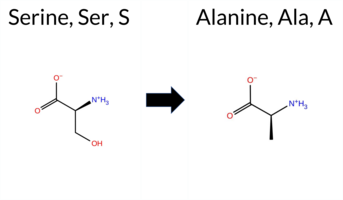 3DClick to see structure in 3D Viewer AIThe SynGAP1 S520A missense variant is not reported in ClinVar (ClinVar ID None) and has no entry in gnomAD (gnomAD ID None). Prediction tools that agree on a benign effect include FoldX, Rosetta, Foldetta, and AlphaMissense‑Optimized, whereas a larger group—REVEL, PROVEAN, polyPhen‑2 (HumDiv and HumVar), SIFT, ESM1b, FATHMM, and AlphaMissense‑Default—consistently predict pathogenicity. The premPS score is uncertain. High‑accuracy assessments show AlphaMissense‑Optimized as benign, Foldetta as benign, and the SGM Consensus (majority vote of AlphaMissense‑Default, ESM1b, FATHMM, PROVEAN) as likely pathogenic. Overall, the majority of tools lean toward pathogenicity, and the high‑accuracy consensus is split, but the pathogenic predictions dominate. Thus, the variant is most likely pathogenic based on the available predictions, and this assessment does not contradict any ClinVar status because no ClinVar entry exists. Disclaimer: This summary was generated using AI and should be interpreted alongside expert review. | Likely Pathogenic | GAP | 0.094817 | Structured | 0.084894 | Uncertain | 0.887 | 0.337 | 0.000 | -8.417 | Likely Pathogenic | 0.704 | Likely Pathogenic | Likely Benign | 0.03 | Likely Benign | 0.2 | 0.19 | Likely Benign | 0.11 | Likely Benign | 0.56 | Ambiguous | 0.523 | Likely Pathogenic | -2.55 | Deleterious | 0.944 | Possibly Damaging | 0.987 | Probably Damaging | -1.31 | Pathogenic | 0.01 | Affected | 0.4887 | 0.3636 | 1 | 1 | 2.6 | -16.00 | |||||||||||||||||||||||||||||
| c.1568A>C | N523T 2D 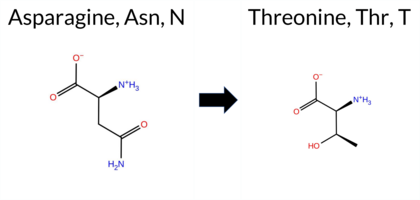 3DClick to see structure in 3D Viewer AIThe SynGAP1 missense variant N523T is not reported in ClinVar (ClinVar status: None) and is absent from gnomAD (gnomAD ID: None). Prediction tools that classify the variant as benign include FoldX, Rosetta, Foldetta, and AlphaMissense‑Optimized. Tools that predict pathogenicity are SGM‑Consensus, REVEL, PROVEAN, polyPhen‑2 HumDiv, polyPhen‑2 HumVar, SIFT, ESM1b, FATHMM, and AlphaMissense‑Default. The premPS score is uncertain and does not contribute to the consensus. High‑accuracy assessments show AlphaMissense‑Optimized as benign, SGM‑Consensus (majority vote from AlphaMissense‑Default, ESM1b, FATHMM, PROVEAN) as likely pathogenic, and Foldetta (combining FoldX‑MD and Rosetta outputs) as benign. No prediction or folding result is missing or inconclusive. Overall, the majority of tools (10/14) predict pathogenicity, whereas four predict benign. Therefore, the variant is most likely pathogenic based on current predictions, and this assessment does not contradict the ClinVar status, which is currently unreported. Disclaimer: This summary was generated using AI and should be interpreted alongside expert review. | Likely Pathogenic | GAP | 0.069024 | Structured | 0.033426 | Uncertain | 0.883 | 0.383 | 0.125 | -10.056 | Likely Pathogenic | 0.704 | Likely Pathogenic | Likely Benign | 0.47 | Likely Benign | 0.2 | -0.22 | Likely Benign | 0.13 | Likely Benign | 0.65 | Ambiguous | 0.646 | Likely Pathogenic | -5.33 | Deleterious | 0.898 | Possibly Damaging | 0.592 | Possibly Damaging | -1.40 | Pathogenic | 0.02 | Affected | 0.0920 | 0.3780 | 0 | 0 | 2.8 | -13.00 | |||||||||||||||||||||||||||||
| c.1666A>G | N556D 2D 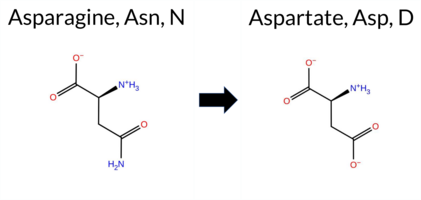 3DClick to see structure in 3D Viewer AIThe SynGAP1 missense variant N556D is not reported in ClinVar (ClinVar status: None) and has no entry in gnomAD (gnomAD ID: None). Prediction tools that classify the variant as benign include FoldX, Rosetta, Foldetta, premPS, SIFT, ESM1b, and AlphaMissense‑Optimized. Those that predict pathogenicity are SGM‑Consensus, REVEL, PROVEAN, polyPhen‑2 HumDiv, polyPhen‑2 HumVar, FATHMM, and AlphaMissense‑Default. High‑accuracy assessments show AlphaMissense‑Optimized as benign, SGM‑Consensus (majority vote from AlphaMissense‑Default, ESM1b, FATHMM, PROVEAN) as likely pathogenic, and Foldetta (combining FoldX‑MD and Rosetta outputs) as benign. With two of the three high‑accuracy tools indicating benign and an equal split among the broader set of predictors, the variant is most likely benign. This conclusion does not contradict the ClinVar status, which currently has no classification for this variant. Disclaimer: This summary was generated using AI and should be interpreted alongside expert review. | Likely Pathogenic | GAP | 0.015078 | Structured | 0.008655 | Uncertain | 0.925 | 0.225 | 0.000 | -6.787 | Likely Benign | 0.704 | Likely Pathogenic | Likely Benign | 0.41 | Likely Benign | 0.0 | 0.39 | Likely Benign | 0.40 | Likely Benign | 0.33 | Likely Benign | 0.546 | Likely Pathogenic | -3.19 | Deleterious | 1.000 | Probably Damaging | 0.997 | Probably Damaging | -1.33 | Pathogenic | 0.08 | Tolerated | 0.1817 | 0.1625 | 2 | 1 | 0.0 | 0.98 | |||||||||||||||||||||||||||||
| c.1771G>A | A591T 2D 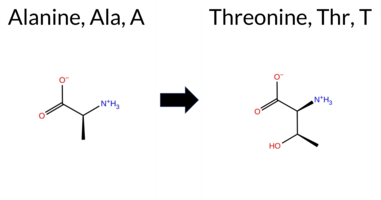 3DClick to see structure in 3D Viewer AIThe SynGAP1 missense variant A591T is listed in ClinVar with an uncertain significance designation and is observed in gnomAD (variant ID 6‑33440823‑G‑A). Functional prediction tools cluster into two groups: benign predictions come from REVEL, polyPhen‑2 HumVar, FATHMM, and AlphaMissense‑Optimized; pathogenic predictions come from premPS, PROVEAN, polyPhen‑2 HumDiv, SIFT, ESM1b, and AlphaMissense‑Default. The SGM Consensus, derived from a majority vote of AlphaMissense‑Default, ESM1b, FATHMM, and PROVEAN, reports a likely pathogenic outcome. High‑accuracy assessments further show AlphaMissense‑Optimized as benign, SGM Consensus as pathogenic, and Foldetta (combining FoldX‑MD and Rosetta outputs) as uncertain. No other folding‑stability metrics are available. Overall, the balance of evidence favors a pathogenic interpretation, which does not contradict the ClinVar uncertain status. Disclaimer: This summary was generated using AI and should be interpreted alongside expert review. | Likely Pathogenic | GAP | 0.018787 | Structured | 0.093848 | Uncertain | 0.882 | 0.185 | 0.000 | Conflicting | 3 | 6-33440823-G-A | 18 | 1.12e-5 | -9.572 | Likely Pathogenic | 0.704 | Likely Pathogenic | Likely Benign | 1.61 | Ambiguous | 0.2 | 1.00 | Ambiguous | 1.31 | Ambiguous | 1.19 | Destabilizing | 0.270 | Likely Benign | -3.40 | Deleterious | 0.955 | Possibly Damaging | 0.209 | Benign | 3.48 | Benign | 0.01 | Affected | 3.37 | 35 | 0.1225 | 0.4155 | 1 | 0 | -2.5 | 30.03 | 202.9 | -43.4 | 0.2 | 0.0 | 0.7 | 0.1 | X | Potentially Benign | The methyl group of the Ala591 side chain, located in the middle of an α helix (res. Glu582-Met603), packs against hydrophobic residues (e.g., Ile483, Phe484) of an opposing partially helical loop (res. Phe476-Asn487).In the variant simulations, the hydroxyl group of Thr591 can form hydrogen bonds with the backbone carbonyl of Ile843 in the opposing loop or the backbone carbonyl group of Arg587. These interactions could either reinforce the tertiary assembly or weaken the α helix unity. Additionally, the Thr591 side chain can hydrogen bond with the guanidinium group of the Arg587 side chain, potentially strengthening the α helix unity.Overall, the residue swap does not seem to cause any major negative effects on the protein structure. | |||||||||||||
| c.1998G>C | E666D 2D 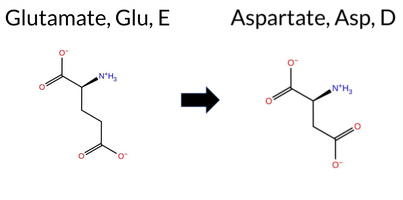 3DClick to see structure in 3D Viewer AISynGAP1 E666D is listed in ClinVar with an uncertain significance (ID 587483.0) and is not reported in gnomAD. Functional prediction tools show a mixed signal: benign calls come from REVEL, SIFT, FATHMM, AlphaMissense‑Optimized, and Rosetta; pathogenic calls come from premPS, PROVEAN, polyPhen‑2 HumDiv, polyPhen‑2 HumVar, ESM1b, and AlphaMissense‑Default. The SGM Consensus, derived from a majority vote of AlphaMissense‑Default, ESM1b, FATHMM, and PROVEAN, is classified as likely pathogenic. High‑accuracy assessments give AlphaMissense‑Optimized a benign prediction, while the SGM Consensus remains pathogenic; Foldetta, which integrates FoldX‑MD and Rosetta stability outputs, is inconclusive. Overall, the balance of evidence slightly favors a pathogenic interpretation, but the predictions are not unequivocal. Thus, the variant is most likely pathogenic according to the current computational data, and this does not contradict the ClinVar uncertain status. Disclaimer: This summary was generated using AI and should be interpreted alongside expert review. | Likely Pathogenic | GAP | 0.155435 | Structured | 0.086870 | Uncertain | 0.925 | 0.387 | 0.000 | Uncertain | 1 | -8.820 | Likely Pathogenic | 0.704 | Likely Pathogenic | Likely Benign | 0.88 | Ambiguous | 0.0 | 0.37 | Likely Benign | 0.63 | Ambiguous | 1.05 | Destabilizing | 0.197 | Likely Benign | -2.69 | Deleterious | 0.992 | Probably Damaging | 0.603 | Possibly Damaging | 3.43 | Benign | 0.06 | Tolerated | 3.38 | 28 | 0.1926 | 0.3092 | 3 | 2 | 0.0 | -14.03 | 237.2 | 16.5 | 0.0 | 0.0 | -0.3 | 0.1 | X | Potentially Pathogenic | The carboxylate group of Glu666, located on the α-helix (res. Ser641-Glu666), is involved in a highly coordinated hydrogen-bonding network between residues from two α-helices (res. Ser641-Glu666 and res. Arg563-Glu578) and from the α-α loop connecting the two α-helices (res. Ser641-Glu666 and res. Leu685-Val699), such as Lys566, Thr672, and Asn669, in the WT simulations. In the variant simulations, the shorter side chain of Asp666 cannot maintain these interactions as efficiently as Glu666 in the WT, resulting in a less coordinated hydrogen-bond network. | ||||||||||||||||
| c.1998G>T | E666D 2D 3DClick to see structure in 3D Viewer AIThe SynGAP1 E666D missense variant is not reported in ClinVar (ClinVar ID: None) and has no entry in gnomAD (gnomAD ID: None). Prediction tools that agree on a benign effect include REVEL, SIFT, FATHMM, Rosetta, and AlphaMissense‑Optimized. Those that predict a pathogenic effect are SGM Consensus, premPS, PROVEAN, polyPhen‑2 HumDiv, polyPhen‑2 HumVar, ESM1b, and AlphaMissense‑Default. High‑accuracy assessments show AlphaMissense‑Optimized as benign, SGM Consensus (a majority vote from AlphaMissense‑Default, ESM1b, FATHMM, and PROVEAN) as likely pathogenic, and Foldetta (combining FoldX‑MD and Rosetta outputs) as uncertain. FoldX alone is also uncertain, so these results are treated as unavailable. Overall, the balance of evidence leans toward a pathogenic impact for E666D, and this assessment does not contradict any ClinVar status because no ClinVar classification exists. Disclaimer: This summary was generated using AI and should be interpreted alongside expert review. | Likely Pathogenic | GAP | 0.155435 | Structured | 0.086870 | Uncertain | 0.925 | 0.387 | 0.000 | -8.820 | Likely Pathogenic | 0.704 | Likely Pathogenic | Likely Benign | 0.88 | Ambiguous | 0.0 | 0.37 | Likely Benign | 0.63 | Ambiguous | 1.05 | Destabilizing | 0.197 | Likely Benign | -2.69 | Deleterious | 0.992 | Probably Damaging | 0.603 | Possibly Damaging | 3.43 | Benign | 0.06 | Tolerated | 3.38 | 28 | 0.1926 | 0.3092 | 3 | 2 | 0.0 | -14.03 | 237.2 | 16.5 | 0.0 | 0.0 | -0.3 | 0.1 | X | Potentially Pathogenic | The carboxylate group of Glu666, located on the α-helix (res. Ser641-Glu666), is involved in a highly coordinated hydrogen-bonding network between residues from two α-helices (res. Ser641-Glu666 and res. Arg563-Glu578) and from the α-α loop connecting the two α-helices (res. Ser641-Glu666 and res. Leu685-Val699), such as Lys566, Thr672, and Asn669, in the WT simulations. In the variant simulations, the shorter side chain of Asp666 cannot maintain these interactions as efficiently as Glu666 in the WT, resulting in a less coordinated hydrogen-bond network. | ||||||||||||||||||
| c.2113A>G | K705E 2D 3DClick to see structure in 3D Viewer AIThe SynGAP1 K705E missense variant is not reported in ClinVar (ClinVar ID None) and is absent from gnomAD (gnomAD ID None). Prediction tools that agree on a benign effect include REVEL, FoldX, Rosetta, Foldetta, premPS, PROVEAN, SIFT, AlphaMissense‑Optimized, and FATHMM. Tools that predict a pathogenic effect are polyPhen‑2 HumDiv, polyPhen‑2 HumVar, ESM1b, and AlphaMissense‑Default. High‑accuracy assessments show AlphaMissense‑Optimized as benign, while the SGM Consensus (majority vote from AlphaMissense‑Default, ESM1b, FATHMM, PROVEAN) is inconclusive due to a 2‑vs‑2 split, and Foldetta predicts a benign stability change. Overall, the majority of evidence (9 benign vs. 4 pathogenic) supports a benign classification. This conclusion does not contradict ClinVar status, as no ClinVar assertion exists for this variant. Disclaimer: This summary was generated using AI and should be interpreted alongside expert review. | GAP | 0.134866 | Structured | 0.379324 | Uncertain | 0.922 | 0.364 | 0.000 | -9.371 | Likely Pathogenic | 0.704 | Likely Pathogenic | Likely Benign | 0.10 | Likely Benign | 0.0 | -0.09 | Likely Benign | 0.01 | Likely Benign | 0.47 | Likely Benign | 0.075 | Likely Benign | -1.53 | Neutral | 0.935 | Possibly Damaging | 0.537 | Possibly Damaging | 3.33 | Benign | 0.14 | Tolerated | 0.2601 | 0.0789 | 0 | 1 | 0.4 | 0.94 | ||||||||||||||||||||||||||||||
| c.1888A>T | I630F 2D 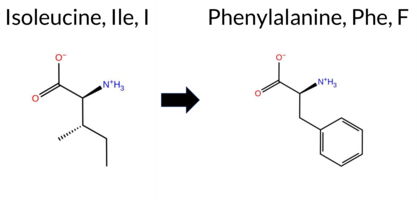 3DClick to see structure in 3D Viewer AISynGAP1 I630F is not reported in ClinVar and is absent from gnomAD. Prediction tools that agree on a benign effect include only AlphaMissense‑Optimized. Those that agree on a pathogenic effect comprise SGM‑Consensus, REVEL, FoldX, PROVEAN, polyPhen‑2 (HumDiv and HumVar), SIFT, ESM1b, FATHMM, and AlphaMissense‑Default. Uncertain results are reported by Rosetta, Foldetta, and premPS and are treated as unavailable. High‑accuracy assessments show AlphaMissense‑Optimized predicting benign, the SGM‑Consensus (majority vote of AlphaMissense‑Default, ESM1b, FATHMM, PROVEAN) predicting likely pathogenic, and Foldetta yielding an uncertain stability change. Overall, the preponderance of evidence points to a pathogenic impact for I630F. This conclusion is not contradicted by ClinVar, which currently contains no entry for this variant. Disclaimer: This summary was generated using AI and should be interpreted alongside expert review. | Likely Pathogenic | GAP | 0.040537 | Structured | 0.036106 | Uncertain | 0.966 | 0.236 | 0.000 | -13.669 | Likely Pathogenic | 0.705 | Likely Pathogenic | Likely Benign | 2.52 | Destabilizing | 0.3 | 0.76 | Ambiguous | 1.64 | Ambiguous | 0.75 | Ambiguous | 0.782 | Likely Pathogenic | -3.12 | Deleterious | 0.935 | Possibly Damaging | 0.473 | Possibly Damaging | -1.46 | Pathogenic | 0.01 | Affected | 0.0443 | 0.1964 | 1 | 0 | -1.7 | 34.02 | |||||||||||||||||||||||||||||
| c.3068C>T | S1023L 2D 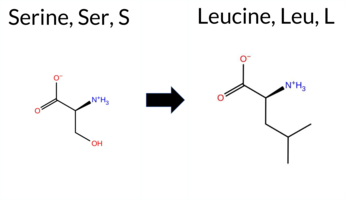 AIThe SynGAP1 missense variant S1023L is not reported in ClinVar and is absent from gnomAD. Prediction tools that classify the variant as benign include REVEL, ESM1b, and AlphaMissense‑Optimized, whereas pathogenic predictions come from PROVEAN, polyPhen‑2 (HumDiv and HumVar), SIFT, FATHMM, and AlphaMissense‑Default. The SGM‑Consensus, derived from a majority vote of AlphaMissense‑Default, ESM1b, FATHMM, and PROVEAN, reports the variant as Likely Pathogenic. High‑accuracy assessments show AlphaMissense‑Optimized as Benign, while the SGM‑Consensus remains Likely Pathogenic; Foldetta stability analysis is unavailable. Overall, the balance of evidence from the majority of tools and the SGM‑Consensus indicates a pathogenic effect, and this conclusion does not contradict any ClinVar annotation because none exists for this variant. Disclaimer: This summary was generated using AI and should be interpreted alongside expert review. | Likely Pathogenic | 0.831250 | Disordered | 0.990262 | Binding | 0.322 | 0.750 | 0.500 | -5.735 | Likely Benign | 0.705 | Likely Pathogenic | Likely Benign | 0.204 | Likely Benign | -3.47 | Deleterious | 0.991 | Probably Damaging | 0.991 | Probably Damaging | 2.47 | Pathogenic | 0.01 | Affected | 0.1080 | 0.4923 | -3 | -2 | 4.6 | 26.08 | |||||||||||||||||||||||||||||||||||||||
| c.3651A>C | E1217D 2D AIThe SynGAP1 missense variant E1217D is not reported in ClinVar and is absent from gnomAD. Functional prediction tools cluster into two groups: benign predictions come from REVEL, PROVEAN, ESM1b, FATHMM, and AlphaMissense‑Optimized, while pathogenic predictions arise from polyPhen‑2 (HumDiv and HumVar), SIFT, and AlphaMissense‑Default. The SGM‑Consensus, derived from a majority vote of AlphaMissense‑Default, ESM1b, FATHMM, and PROVEAN, indicates a likely benign effect. High‑accuracy assessments further support this: AlphaMissense‑Optimized predicts benign, and the SGM‑Consensus also leans benign; Foldetta, a protein‑folding stability method combining FoldX‑MD and Rosetta outputs, has no available result for this variant. Taken together, the preponderance of evidence points to a benign impact for E1217D, and this conclusion is consistent with the absence of any ClinVar classification. Disclaimer: This summary was generated using AI and should be interpreted alongside expert review. | Likely Benign | Coiled-coil | 0.599170 | Disordered | 0.493043 | Uncertain | 0.877 | 0.563 | 0.250 | -5.983 | Likely Benign | 0.705 | Likely Pathogenic | Likely Benign | 0.114 | Likely Benign | -2.19 | Neutral | 0.997 | Probably Damaging | 0.992 | Probably Damaging | 2.51 | Benign | 0.00 | Affected | 0.1745 | 0.3146 | 3 | 2 | 0.0 | -14.03 | ||||||||||||||||||||||||||||||||||||||
| c.3651A>T | E1217D 2D AIThe SynGAP1 missense variant E1217D is not reported in ClinVar and is absent from gnomAD. Functional prediction tools cluster into two groups: benign predictions come from REVEL, PROVEAN, ESM1b, FATHMM, and AlphaMissense‑Optimized, while pathogenic predictions arise from polyPhen‑2 (HumDiv and HumVar), SIFT, and AlphaMissense‑Default. The SGM‑Consensus, derived from a majority vote of AlphaMissense‑Default, ESM1b, FATHMM, and PROVEAN, indicates a likely benign effect. High‑accuracy assessments further support this: AlphaMissense‑Optimized predicts benign, and the SGM‑Consensus also leans benign; Foldetta, a protein‑folding stability method combining FoldX‑MD and Rosetta outputs, has no available result for this variant. Taken together, the preponderance of evidence points to a benign impact for E1217D, and this conclusion is consistent with the absence of any ClinVar classification. Disclaimer: This summary was generated using AI and should be interpreted alongside expert review. | Likely Benign | Coiled-coil | 0.599170 | Disordered | 0.493043 | Uncertain | 0.877 | 0.563 | 0.250 | -5.983 | Likely Benign | 0.705 | Likely Pathogenic | Likely Benign | 0.114 | Likely Benign | -2.19 | Neutral | 0.997 | Probably Damaging | 0.992 | Probably Damaging | 2.51 | Benign | 0.00 | Affected | 0.1745 | 0.3146 | 3 | 2 | 0.0 | -14.03 | ||||||||||||||||||||||||||||||||||||||
| c.1214G>A | R405H 2D 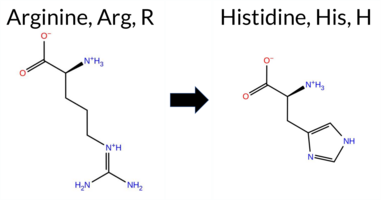 3DClick to see structure in 3D Viewer AISynGAP1 missense variant R405H is listed in ClinVar with an uncertain significance (ClinVar ID 863440.0) and is present in gnomAD (variant ID 6‑33438119‑G‑A). Functional prediction tools that agree on a benign effect include REVEL, FATHMM, and AlphaMissense‑Optimized. In contrast, the majority of tools predict a pathogenic impact: FoldX, Foldetta, premPS, PROVEAN, polyPhen‑2 (HumDiv and HumVar), SIFT, ESM1b, AlphaMissense‑Default, and the SGM‑Consensus score (Likely Pathogenic). High‑accuracy assessments further support a deleterious outcome: AlphaMissense‑Optimized reports a benign change, whereas the SGM‑Consensus (majority vote of AlphaMissense‑Default, ESM1b, FATHMM, PROVEAN) and Foldetta (combining FoldX‑MD and Rosetta) both predict pathogenicity. Overall, the preponderance of evidence indicates that R405H is most likely pathogenic, which does not contradict the current ClinVar status of uncertain significance. Disclaimer: This summary was generated using AI and should be interpreted alongside expert review. | Likely Pathogenic | C2 | 0.250310 | Structured | 0.404888 | Uncertain | 0.949 | 0.315 | 0.000 | Conflicting | 2 | 6-33438119-G-A | 4 | 2.48e-6 | -9.081 | Likely Pathogenic | 0.706 | Likely Pathogenic | Likely Benign | 2.79 | Destabilizing | 0.6 | 1.85 | Ambiguous | 2.32 | Destabilizing | 1.26 | Destabilizing | 0.371 | Likely Benign | -4.54 | Deleterious | 1.000 | Probably Damaging | 0.991 | Probably Damaging | 3.65 | Benign | 0.01 | Affected | 3.38 | 28 | 0.3395 | 0.2363 | 2 | 0 | 1.3 | -19.05 | 214.0 | 102.2 | -0.1 | 0.0 | -0.7 | 0.1 | X | Potentially Pathogenic | The guanidinium group of Arg405, located in an anti-parallel β sheet strand of the C2 domain (res. Pro398-Ile411), forms a salt bridge with the carboxylate group of the Glu446 side chain from an opposing α helix (res. Val441-Ser457) in the GAP domain. The positively charged Arg405 side chain also stacks with the aromatic ring of the Phe358 side chain from a loop preceding the β strand (res. Thr359-Thr366), which could assist in maintaining the anti-parallel strand arrangement.In the variant simulations, the imidazole ring of His405 does not stack with the aromatic ring of Phe358 nor form any lasting H-bonds with the loop residues. The imidazole ring of His405 (neutral and epsilon protonated in the simulations) is unable to form a salt bridge with Glu446, which could affect the tertiary structure assembly, although this is not apparent based on the variant simulations. | |||||||||||||
| c.2084T>A | L695Q 2D 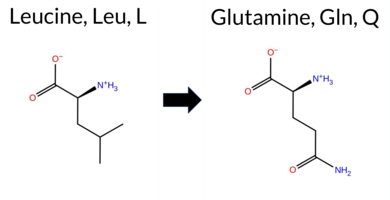 3DClick to see structure in 3D Viewer AIThe SynGAP1 missense variant L695Q is not reported in ClinVar and is absent from gnomAD. Prediction tools that agree on a benign effect include SIFT, FATHMM, and AlphaMissense‑Optimized. Those that predict a pathogenic impact comprise REVEL, Rosetta, premPS, PROVEAN, polyPhen‑2 (HumDiv and HumVar), ESM1b, AlphaMissense‑Default, and the SGM‑Consensus (majority vote from AlphaMissense‑Default, ESM1b, FATHMM, PROVEAN). FoldX and Foldetta provide uncertain results. High‑accuracy assessments show AlphaMissense‑Optimized as benign, while the SGM‑Consensus, derived from a majority of high‑confidence predictors, indicates pathogenicity; Foldetta remains inconclusive. Overall, the majority of reliable tools predict a pathogenic effect, and this is consistent with the lack of ClinVar annotation (no contradiction). Thus, the variant is most likely pathogenic based on current computational predictions. Disclaimer: This summary was generated using AI and should be interpreted alongside expert review. | Likely Pathogenic | GAP | 0.118441 | Structured | 0.373419 | Uncertain | 0.942 | 0.258 | 0.000 | -12.192 | Likely Pathogenic | 0.706 | Likely Pathogenic | Likely Benign | 1.88 | Ambiguous | 0.1 | 2.03 | Destabilizing | 1.96 | Ambiguous | 1.71 | Destabilizing | 0.554 | Likely Pathogenic | -5.92 | Deleterious | 1.000 | Probably Damaging | 0.993 | Probably Damaging | 3.17 | Benign | 0.08 | Tolerated | 0.0869 | 0.0688 | -2 | -2 | -7.3 | 14.97 | |||||||||||||||||||||||||||||
| c.2618G>A | S873N 2D 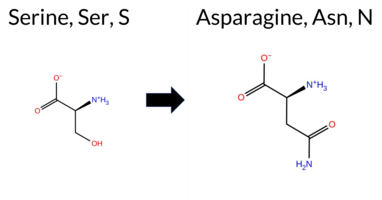 AIThe SynGAP1 missense variant S873N is not reported in ClinVar (no ClinVar ID) and is absent from gnomAD (no gnomAD ID). Prediction tools that agree on a benign effect include SGM‑Consensus (Likely Benign), REVEL, PROVEAN, SIFT, ESM1b, FATHMM, and AlphaMissense‑Optimized. Tools that predict a pathogenic effect are polyPhen‑2 HumDiv, polyPhen‑2 HumVar, and AlphaMissense‑Default. High‑accuracy assessments further support a benign outcome: AlphaMissense‑Optimized predicts benign, and the SGM‑Consensus (majority vote from AlphaMissense‑Default, ESM1b, FATHMM, PROVEAN) also resolves to benign. Foldetta results are unavailable. Overall, the majority of evidence points to a benign impact for S873N, and this conclusion is not contradicted by any ClinVar annotation. Disclaimer: This summary was generated using AI and should be interpreted alongside expert review. | Likely Benign | 0.414856 | Structured | 0.649816 | Binding | 0.283 | 0.866 | 0.125 | -6.453 | Likely Benign | 0.706 | Likely Pathogenic | Likely Benign | 0.180 | Likely Benign | -1.88 | Neutral | 0.991 | Probably Damaging | 0.988 | Probably Damaging | 2.66 | Benign | 0.12 | Tolerated | 0.1440 | 0.4612 | 1 | 1 | -2.7 | 27.03 | |||||||||||||||||||||||||||||||||||||||
| c.3050T>G | F1017C 2D 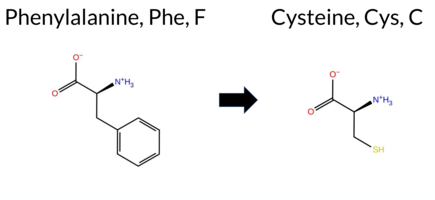 AIThe SynGAP1 missense variant F1017C is not reported in ClinVar (no ClinVar ID) and is absent from gnomAD (no gnomAD ID). Prediction tools that agree on a benign effect include REVEL, ESM1b, and AlphaMissense‑Optimized. Tools that predict a pathogenic effect are PROVEAN, polyPhen‑2 HumDiv, polyPhen‑2 HumVar, SIFT, FATHMM, and AlphaMissense‑Default. The SGM‑Consensus, which aggregates the majority vote of AlphaMissense‑Default, ESM1b, FATHMM, and PROVEAN, classifies the variant as Likely Pathogenic. High‑accuracy assessments show AlphaMissense‑Optimized as benign, SGM‑Consensus as Likely Pathogenic, and the Foldetta stability analysis is unavailable. Overall, the majority of evidence points to a pathogenic impact. This conclusion is not contradicted by ClinVar status, as no ClinVar classification exists for this variant. Disclaimer: This summary was generated using AI and should be interpreted alongside expert review. | Likely Pathogenic | 0.889439 | Disordered | 0.954171 | Binding | 0.322 | 0.801 | 0.625 | -5.769 | Likely Benign | 0.706 | Likely Pathogenic | Likely Benign | 0.133 | Likely Benign | -3.71 | Deleterious | 0.999 | Probably Damaging | 0.944 | Probably Damaging | 2.42 | Pathogenic | 0.00 | Affected | 0.2488 | 0.1137 | -4 | -2 | -0.3 | -44.04 | |||||||||||||||||||||||||||||||||||||||
| c.3446C>G | P1149R 2D AIThe SynGAP1 missense variant P1149R is not reported in ClinVar and is absent from gnomAD. Prediction tools that agree on a benign effect include REVEL, PROVEAN, ESM1b, FATHMM, AlphaMissense‑Optimized, and the SGM‑Consensus (majority vote from AlphaMissense‑Default, ESM1b, FATHMM, PROVEAN). Tools that predict a pathogenic outcome are polyPhen‑2 HumDiv, polyPhen‑2 HumVar, SIFT, and AlphaMissense‑Default. High‑accuracy assessments show AlphaMissense‑Optimized as benign and the SGM‑Consensus as likely benign; the Foldetta stability analysis is unavailable. Overall, the majority of evidence points to a benign impact for P1149R, and this conclusion does not contradict the ClinVar status, which currently has no entry for this variant. Disclaimer: This summary was generated using AI and should be interpreted alongside expert review. | Likely Benign | 0.762850 | Disordered | 0.786938 | Binding | 0.424 | 0.837 | 0.625 | -4.340 | Likely Benign | 0.706 | Likely Pathogenic | Likely Benign | 0.101 | Likely Benign | -1.94 | Neutral | 0.970 | Probably Damaging | 0.728 | Possibly Damaging | 2.67 | Benign | 0.01 | Affected | 0.1525 | 0.3671 | 0 | -2 | -2.9 | 59.07 | |||||||||||||||||||||||||||||||||||||||
| c.3761A>G | E1254G 2D AIThe SynGAP1 missense variant E1254G is not reported in ClinVar (ClinVar ID None) and is absent from gnomAD (gnomAD ID None). Prediction tools that agree on a benign effect include REVEL and AlphaMissense‑Optimized, whereas the remaining tools—PROVEAN, polyPhen‑2 (HumDiv and HumVar), SIFT, ESM1b, FATHMM, and AlphaMissense‑Default—consistently predict a pathogenic impact. High‑accuracy assessments further support a pathogenic interpretation: AlphaMissense‑Optimized indicates a benign change, but the SGM Consensus (derived from a majority vote of AlphaMissense‑Default, ESM1b, FATHMM, and PROVEAN) reports the variant as Likely Pathogenic. Foldetta, a protein‑folding stability method combining FoldX‑MD and Rosetta outputs, has no available result for this variant. Overall, the preponderance of evidence from multiple prediction algorithms and the SGM Consensus suggests that the variant is most likely pathogenic, with no ClinVar entry to contradict this assessment. Disclaimer: This summary was generated using AI and should be interpreted alongside expert review. | Likely Pathogenic | Coiled-coil | 0.657645 | Disordered | 0.403242 | Uncertain | 0.886 | 0.555 | 0.625 | -10.156 | Likely Pathogenic | 0.706 | Likely Pathogenic | Likely Benign | 0.315 | Likely Benign | -4.52 | Deleterious | 1.000 | Probably Damaging | 0.996 | Probably Damaging | 2.34 | Pathogenic | 0.01 | Affected | 0.2636 | 0.5072 | 0 | -2 | 3.1 | -72.06 | ||||||||||||||||||||||||||||||||||||||
| c.1928A>G | E643G 2D 3DClick to see structure in 3D Viewer AIThe SynGAP1 missense variant E643G is not reported in ClinVar and is absent from gnomAD. Prediction tools that agree on a benign effect include polyPhen‑2 HumVar, FATHMM, and AlphaMissense‑Optimized. Those that predict a pathogenic impact comprise SGM‑Consensus, REVEL, Rosetta, premPS, PROVEAN, polyPhen‑2 HumDiv, SIFT, ESM1b, and AlphaMissense‑Default; FoldX and Foldetta are uncertain. High‑accuracy assessments show AlphaMissense‑Optimized as benign, while the SGM Consensus (majority vote of AlphaMissense‑Default, ESM1b, FATHMM, PROVEAN) is pathogenic. Foldetta’s stability prediction is uncertain. Overall, the majority of reliable tools predict pathogenicity, and this conclusion does not contradict the lack of ClinVar annotation. Thus, the variant is most likely pathogenic based on current computational evidence. Disclaimer: This summary was generated using AI and should be interpreted alongside expert review. | Likely Pathogenic | GAP | 0.033407 | Structured | 0.215915 | Uncertain | 0.871 | 0.315 | 0.000 | -12.503 | Likely Pathogenic | 0.707 | Likely Pathogenic | Likely Benign | 1.45 | Ambiguous | 0.3 | 2.06 | Destabilizing | 1.76 | Ambiguous | 1.01 | Destabilizing | 0.520 | Likely Pathogenic | -6.81 | Deleterious | 0.983 | Probably Damaging | 0.390 | Benign | 2.94 | Benign | 0.00 | Affected | 0.2821 | 0.5319 | 0 | -2 | 3.1 | -72.06 | |||||||||||||||||||||||||||||
| c.2713C>G | R905G 2D AIThe SynGAP1 missense variant R905G is not reported in ClinVar (no ClinVar ID) and is absent from gnomAD (no gnomAD ID). Prediction tools that agree on a benign effect include SGM‑Consensus (Likely Benign), REVEL, PROVEAN, SIFT, ESM1b, FATHMM, and AlphaMissense‑Optimized. Tools that predict a pathogenic effect are polyPhen‑2 HumDiv, polyPhen‑2 HumVar, and AlphaMissense‑Default. High‑accuracy assessments show AlphaMissense‑Optimized as benign and the SGM‑Consensus (majority vote of AlphaMissense‑Default, ESM1b, FATHMM, PROVEAN) also as benign; Foldetta results are unavailable. Overall, the majority of evidence points to a benign impact. There is no ClinVar entry to contradict this conclusion, so the variant is most likely benign. Disclaimer: This summary was generated using AI and should be interpreted alongside expert review. | Likely Benign | 0.671169 | Disordered | 0.618085 | Binding | 0.291 | 0.920 | 0.250 | -2.612 | Likely Benign | 0.707 | Likely Pathogenic | Likely Benign | 0.135 | Likely Benign | -2.47 | Neutral | 0.999 | Probably Damaging | 0.948 | Probably Damaging | 2.61 | Benign | 0.06 | Tolerated | 0.3346 | 0.3776 | -3 | -2 | 4.1 | -99.14 | |||||||||||||||||||||||||||||||||||||||
| c.3095T>G | L1032R 2D AIThe SynGAP1 missense variant L1032R is not reported in ClinVar (no ClinVar ID) and is absent from gnomAD (no gnomAD ID). Prediction tools that agree on a benign effect include REVEL, PROVEAN, ESM1b, FATHMM, AlphaMissense‑Optimized, and the SGM‑Consensus (majority vote from AlphaMissense‑Default, ESM1b, FATHMM, PROVEAN). Tools that predict a pathogenic effect are polyPhen‑2 HumDiv, polyPhen‑2 HumVar, SIFT, and AlphaMissense‑Default. High‑accuracy assessments show AlphaMissense‑Optimized as benign and the SGM‑Consensus as likely benign; Foldetta results are not available. Overall, the majority of evidence points to a benign impact. This conclusion is consistent with the lack of ClinVar annotation, so there is no contradiction with existing clinical data. Disclaimer: This summary was generated using AI and should be interpreted alongside expert review. | Likely Benign | 0.865454 | Disordered | 0.995318 | Binding | 0.365 | 0.735 | 0.500 | -2.658 | Likely Benign | 0.707 | Likely Pathogenic | Likely Benign | 0.099 | Likely Benign | -1.03 | Neutral | 0.995 | Probably Damaging | 0.892 | Possibly Damaging | 2.66 | Benign | 0.02 | Affected | 0.1350 | 0.1919 | -3 | -2 | -8.3 | 43.03 | |||||||||||||||||||||||||||||||||||||||
| c.3431T>G | L1144W 2D 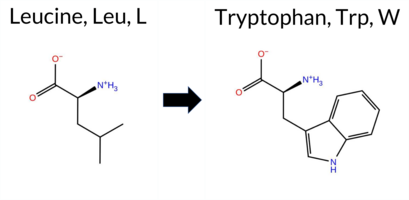 AIThe SynGAP1 missense variant L1144W is not reported in ClinVar (ClinVar status: none) but is present in gnomAD (ID 6‑33444466‑T‑G). Prediction tools that agree on a benign effect include ESM1b, FATHMM, and AlphaMissense‑Optimized. Tools that agree on a pathogenic effect include REVEL, PROVEAN, polyPhen‑2 HumDiv, polyPhen‑2 HumVar, SIFT, and AlphaMissense‑Default. High‑accuracy assessments show AlphaMissense‑Optimized predicts benign, while the SGM Consensus (majority vote from AlphaMissense‑Default, ESM1b, FATHMM, PROVEAN) is inconclusive due to a 2‑to‑2 split; Foldetta results are unavailable. Overall, the majority of predictions (six pathogenic vs. three benign) indicate a pathogenic impact. This conclusion is not contradicted by ClinVar status, which has no entry for the variant. Disclaimer: This summary was generated using AI and should be interpreted alongside expert review. | 0.950334 | Disordered | 0.726803 | Binding | 0.277 | 0.840 | 1.000 | 6-33444466-T-G | 1 | 6.20e-7 | -5.745 | Likely Benign | 0.707 | Likely Pathogenic | Likely Benign | 0.575 | Likely Pathogenic | -2.87 | Deleterious | 1.000 | Probably Damaging | 0.995 | Probably Damaging | 5.36 | Benign | 0.01 | Affected | 4.32 | 4 | 0.0703 | 0.3166 | -2 | -2 | -4.7 | 73.05 | |||||||||||||||||||||||||||||||||||
| c.3488A>T | H1163L 2D 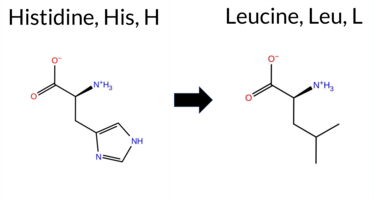 AIThe SynGAP1 missense variant H1163L is not reported in ClinVar (ClinVar ID = None) and is absent from gnomAD (gnomAD ID = None). Prediction tools that agree on a benign effect include SIFT, ESM1b, FATHMM, and AlphaMissense‑Optimized. Tools that predict a pathogenic effect are REVEL, PROVEAN, polyPhen‑2 HumDiv, polyPhen‑2 HumVar, and AlphaMissense‑Default. High‑accuracy assessments show AlphaMissense‑Optimized as benign, while the SGM Consensus (majority vote from AlphaMissense‑Default, ESM1b, FATHMM, PROVEAN) is inconclusive (2 pathogenic vs. 2 benign) and Foldetta results are unavailable. Overall, the majority of predictions (5 pathogenic vs. 4 benign) lean toward a pathogenic impact. There is no ClinVar entry to contradict this assessment, so the variant is most likely pathogenic based on the available computational evidence. Disclaimer: This summary was generated using AI and should be interpreted alongside expert review. | 0.509769 | Disordered | 0.858469 | Binding | 0.328 | 0.825 | 0.375 | -2.401 | Likely Benign | 0.707 | Likely Pathogenic | Likely Benign | 0.568 | Likely Pathogenic | -3.15 | Deleterious | 0.997 | Probably Damaging | 0.995 | Probably Damaging | 5.55 | Benign | 0.10 | Tolerated | 0.0938 | 0.5356 | -2 | -3 | 7.0 | -23.98 | ||||||||||||||||||||||||||||||||||||||||
| c.703T>G | S235A 2D 3DClick to see structure in 3D Viewer AIThe SynGAP1 missense variant S235A has no ClinVar entry and is not present in gnomAD. Prediction tools that indicate benign effects include Rosetta, premPS, polyPhen‑2 HumDiv, polyPhen‑2 HumVar, FATHMM, and AlphaMissense‑Optimized. Those that predict pathogenicity are REVEL, PROVEAN, SIFT, ESM1b, and AlphaMissense‑Default. FoldX and Foldetta return uncertain results. High‑accuracy assessments show AlphaMissense‑Optimized as benign, while the SGM Consensus—derived from a majority vote of AlphaMissense‑Default, ESM1b, FATHMM, and PROVEAN—classifies the variant as pathogenic; Foldetta remains uncertain. Overall, the balance of evidence leans toward a benign interpretation, but the SGM Consensus introduces a pathogenic signal, resulting in a conflicting prediction profile. This assessment does not contradict ClinVar status, which currently has no entry for the variant. Disclaimer: This summary was generated using AI and should be interpreted alongside expert review. | Likely Pathogenic | PH | 0.250310 | Structured | 0.319150 | Uncertain | 0.743 | 0.331 | 0.000 | -10.861 | Likely Pathogenic | 0.707 | Likely Pathogenic | Likely Benign | 1.92 | Ambiguous | 0.1 | 0.19 | Likely Benign | 1.06 | Ambiguous | 0.48 | Likely Benign | 0.646 | Likely Pathogenic | -2.52 | Deleterious | 0.002 | Benign | 0.004 | Benign | 5.49 | Benign | 0.01 | Affected | 0.5168 | 0.4563 | Weaken | 1 | 1 | 2.6 | -16.00 | ||||||||||||||||||||||||||||
| c.1189T>C | C397R 2D 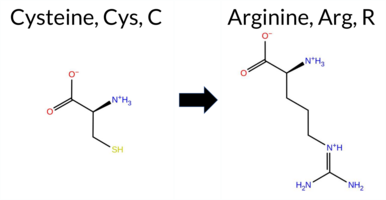 3DClick to see structure in 3D Viewer AIThe SynGAP1 missense variant C397R is not reported in ClinVar (ClinVar ID None) and is absent from gnomAD (gnomAD ID None). Prediction tools that agree on a benign effect include Rosetta, PROVEAN, SIFT, FATHMM, and AlphaMissense‑Optimized. Tools that predict a pathogenic effect are REVEL, polyPhen‑2 HumDiv, and AlphaMissense‑Default. The remaining tools (FoldX, premPS, ESM1b) are uncertain. High‑accuracy assessments show AlphaMissense‑Optimized as benign; the SGM Consensus (majority vote from AlphaMissense‑Default, ESM1b, FATHMM, PROVEAN) resolves to benign (2 benign vs. 1 pathogenic, 1 uncertain), and Foldetta predicts a benign impact on protein folding stability. Overall, the majority of evidence points to a benign effect. This conclusion is consistent with the lack of ClinVar annotation and does not contradict any existing clinical classification. Disclaimer: This summary was generated using AI and should be interpreted alongside expert review. | C2 | 0.429200 | Structured | 0.395774 | Uncertain | 0.778 | 0.551 | 0.250 | -7.094 | In-Between | 0.708 | Likely Pathogenic | Likely Benign | 0.55 | Ambiguous | 0.8 | 0.40 | Likely Benign | 0.48 | Likely Benign | 0.96 | Ambiguous | 0.514 | Likely Pathogenic | -1.46 | Neutral | 0.480 | Possibly Damaging | 0.226 | Benign | 4.65 | Benign | 0.11 | Tolerated | 0.1780 | 0.1853 | -4 | -3 | -7.0 | 53.05 | ||||||||||||||||||||||||||||||
| c.970C>G | R324G 2D 3DClick to see structure in 3D Viewer AIThe SynGAP1 missense variant R324G is not reported in ClinVar (ClinVar ID None) and is absent from gnomAD (gnomAD ID None). Prediction tools that agree on a benign effect include REVEL, SIFT, and AlphaMissense‑Optimized. Tools that predict a pathogenic effect comprise FoldX, Rosetta, Foldetta, premPS, PROVEAN, polyPhen‑2 (HumDiv and HumVar), ESM1b, FATHMM, and AlphaMissense‑Default; the SGM‑Consensus score is “Likely Pathogenic.” High‑accuracy assessments show AlphaMissense‑Optimized as benign, SGM‑Consensus as pathogenic, and Foldetta (combining FoldX‑MD and Rosetta outputs) as pathogenic. With the majority of evidence pointing to deleterious impact and two of the three high‑accuracy methods supporting pathogenicity, the variant is most likely pathogenic. This conclusion does not contradict any ClinVar annotation, as none is available. Disclaimer: This summary was generated using AI and should be interpreted alongside expert review. | Likely Pathogenic | C2 | 0.257454 | Structured | 0.426893 | Uncertain | 0.954 | 0.397 | 0.000 | -12.266 | Likely Pathogenic | 0.708 | Likely Pathogenic | Likely Benign | 2.99 | Destabilizing | 0.1 | 3.18 | Destabilizing | 3.09 | Destabilizing | 1.27 | Destabilizing | 0.496 | Likely Benign | -2.64 | Deleterious | 0.999 | Probably Damaging | 0.997 | Probably Damaging | 1.84 | Pathogenic | 0.39 | Tolerated | 0.3546 | 0.4135 | -3 | -2 | 4.1 | -99.14 | |||||||||||||||||||||||||||||
| c.1156G>A | G386R 2D 3DClick to see structure in 3D Viewer AIClinVar reports no entry for this SynGAP1 G386R variant, and it is absent from gnomAD. Prediction tools that agree on a benign effect include REVEL, premPS, PROVEAN, FATHMM, and AlphaMissense‑Optimized. Those that predict a pathogenic impact are FoldX, polyPhen‑2 HumDiv, SIFT, ESM1b, and AlphaMissense‑Default, while Rosetta is uncertain. High‑accuracy methods give a benign call from AlphaMissense‑Optimized, a pathogenic result from Foldetta, and the SGM Consensus (majority vote of AlphaMissense‑Default, ESM1b, FATHMM, PROVEAN) is inconclusive. Overall, the evidence is mixed; the variant is most likely benign, and this assessment does not contradict the ClinVar status. Disclaimer: This summary was generated using AI and should be interpreted alongside expert review. | C2 | 0.733139 | Disordered | 0.424156 | Uncertain | 0.334 | 0.898 | 0.750 | -9.024 | Likely Pathogenic | 0.709 | Likely Pathogenic | Likely Benign | 3.62 | Destabilizing | 2.9 | 1.07 | Ambiguous | 2.35 | Destabilizing | 0.29 | Likely Benign | 0.453 | Likely Benign | -0.82 | Neutral | 0.753 | Possibly Damaging | 0.220 | Benign | 4.03 | Benign | 0.01 | Affected | 0.1329 | 0.4032 | -3 | -2 | -4.1 | 99.14 | ||||||||||||||||||||||||||||||
| c.1156G>C | G386R 2D 3DClick to see structure in 3D Viewer AIThe SynGAP1 missense variant G386R is not reported in ClinVar (ClinVar ID None) and is absent from gnomAD (gnomAD ID None). Computational predictors that agree on a benign effect include REVEL, premPS, PROVEAN, FATHMM, and AlphaMissense‑Optimized. Those that predict a pathogenic effect comprise FoldX, polyPhen‑2 (HumDiv), SIFT, ESM1b, AlphaMissense‑Default, and Foldetta; Rosetta is uncertain. High‑accuracy assessments show AlphaMissense‑Optimized as benign, Foldetta as pathogenic, and the SGM Consensus (majority vote from AlphaMissense‑Default, ESM1b, FATHMM, PROVEAN) is inconclusive due to a 2‑vs‑2 split. Overall, the balance of evidence favors a pathogenic classification. This conclusion is not contradicted by ClinVar status, which currently contains no entry for this variant. Disclaimer: This summary was generated using AI and should be interpreted alongside expert review. | C2 | 0.733139 | Disordered | 0.424156 | Uncertain | 0.334 | 0.898 | 0.750 | -9.024 | Likely Pathogenic | 0.709 | Likely Pathogenic | Likely Benign | 3.62 | Destabilizing | 2.9 | 1.07 | Ambiguous | 2.35 | Destabilizing | 0.29 | Likely Benign | 0.453 | Likely Benign | -0.82 | Neutral | 0.753 | Possibly Damaging | 0.220 | Benign | 4.03 | Benign | 0.01 | Affected | 0.1329 | 0.4032 | -3 | -2 | -4.1 | 99.14 | ||||||||||||||||||||||||||||||
| c.1171G>C | G391R 2D 3DClick to see structure in 3D Viewer AIThe SynGAP1 missense variant G391R is not reported in ClinVar and is absent from gnomAD. Functional prediction tools that classify the variant as benign include premPS, PROVEAN, and SIFT, whereas those that predict pathogenicity comprise REVEL, FoldX, Rosetta, Foldetta, polyPhen‑2 HumDiv, polyPhen‑2 HumVar, ESM1b, FATHMM, AlphaMissense‑Default, and the SGM‑Consensus score (Likely Pathogenic). High‑accuracy assessments further show AlphaMissense‑Optimized labeling the variant as benign, while the SGM‑Consensus (majority vote of AlphaMissense‑Default, ESM1b, FATHMM, PROVEAN) indicates Likely Pathogenic, and Foldetta (combining FoldX‑MD and Rosetta outputs) predicts a destabilizing, pathogenic effect. Overall, the majority of predictions lean toward pathogenicity, and this conclusion does not conflict with the ClinVar status, which currently has no entry for this variant. Disclaimer: This summary was generated using AI and should be interpreted alongside expert review. | Likely Pathogenic | C2 | 0.637480 | Disordered | 0.409509 | Uncertain | 0.279 | 0.741 | 0.750 | -9.115 | Likely Pathogenic | 0.709 | Likely Pathogenic | Likely Benign | 2.80 | Destabilizing | 1.3 | 3.86 | Destabilizing | 3.33 | Destabilizing | 0.32 | Likely Benign | 0.628 | Likely Pathogenic | -0.95 | Neutral | 0.999 | Probably Damaging | 0.960 | Probably Damaging | 1.32 | Pathogenic | 0.17 | Tolerated | 0.1313 | 0.4124 | -3 | -2 | -4.1 | 99.14 | |||||||||||||||||||||||||||||
| c.2131C>G | L711V 2D 3DClick to see structure in 3D Viewer AISynGAP1 missense variant L711V is listed in ClinVar with an uncertain significance and is present in gnomAD (ID 6‑33441596‑C‑G). Prediction tools that indicate a benign effect include REVEL, FATHMM, and AlphaMissense‑Optimized. The majority of other in silico predictors—FoldX, Rosetta, Foldetta, premPS, PROVEAN, polyPhen‑2 (HumDiv and HumVar), SIFT, ESM1b, and AlphaMissense‑Default—classify the change as pathogenic, and the SGM‑Consensus (majority vote of AlphaMissense‑Default, ESM1b, FATHMM, PROVEAN) reports it as likely pathogenic. High‑accuracy assessments further show AlphaMissense‑Optimized as benign, SGM‑Consensus as likely pathogenic, and Foldetta (combining FoldX‑MD and Rosetta outputs) as pathogenic. Overall, the preponderance of evidence points to a pathogenic effect, which does not conflict with the ClinVar designation of uncertain significance. Disclaimer: This summary was generated using AI and should be interpreted alongside expert review. | Likely Pathogenic | GAP | 0.308712 | Structured | 0.377436 | Uncertain | 0.950 | 0.364 | 0.000 | Uncertain | 1 | 6-33441596-C-G | 1 | 6.20e-7 | -10.045 | Likely Pathogenic | 0.709 | Likely Pathogenic | Likely Benign | 3.48 | Destabilizing | 0.1 | 2.22 | Destabilizing | 2.85 | Destabilizing | 1.40 | Destabilizing | 0.170 | Likely Benign | -2.59 | Deleterious | 0.992 | Probably Damaging | 0.970 | Probably Damaging | 3.34 | Benign | 0.00 | Affected | 3.50 | 9 | 0.1318 | 0.3010 | 1 | 2 | 0.4 | -14.03 | ||||||||||||||||||||||
| c.2297C>T | S766F 2D 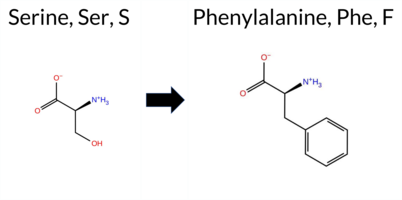 AIThe SynGAP1 missense variant S766F is listed in gnomAD (ID 6‑33442455‑C‑T) but has no ClinVar entry. Functional prediction tools show a split verdict: benign calls come from REVEL, FATHMM, and AlphaMissense‑Optimized, whereas pathogenic calls are made by PROVEAN, polyPhen‑2 (HumDiv and HumVar), SIFT, ESM1b, and AlphaMissense‑Default. The SGM‑Consensus, which aggregates the majority vote of AlphaMissense‑Default, ESM1b, FATHMM, and PROVEAN, reports the variant as “Likely Pathogenic.” High‑accuracy assessments further reveal AlphaMissense‑Optimized as benign, while the SGM‑Consensus remains pathogenic; Foldetta results are unavailable. Overall, the majority of evidence points toward a pathogenic effect, and this conclusion does not contradict ClinVar status, as no ClinVar classification exists for this variant. Disclaimer: This summary was generated using AI and should be interpreted alongside expert review. | Likely Pathogenic | 0.405110 | Structured | 0.923125 | Binding | 0.338 | 0.874 | 0.250 | 6-33442455-C-T | -8.944 | Likely Pathogenic | 0.709 | Likely Pathogenic | Likely Benign | 0.233 | Likely Benign | -2.87 | Deleterious | 0.990 | Probably Damaging | 0.856 | Possibly Damaging | 4.08 | Benign | 0.00 | Affected | 3.64 | 6 | 0.0770 | 0.5887 | -2 | -3 | 3.6 | 60.10 | ||||||||||||||||||||||||||||||||||||
| c.2714G>T | R905L 2D AIThe SynGAP1 missense variant R905L is not reported in ClinVar (ClinVar status: none) but is present in gnomAD (allele ID 6‑33443266‑G‑T). Prediction tools that agree on a benign effect include REVEL, SIFT, ESM1b, FATHMM, and AlphaMissense‑Optimized. Tools that predict a pathogenic effect are PROVEAN, polyPhen‑2 HumDiv, polyPhen‑2 HumVar, and AlphaMissense‑Default. High‑accuracy assessments show AlphaMissense‑Optimized as benign, while the SGM Consensus (majority vote from AlphaMissense‑Default, ESM1b, FATHMM, PROVEAN) is inconclusive (2 pathogenic vs. 2 benign). Foldetta, a protein‑folding stability method combining FoldX‑MD and Rosetta outputs, has no available result for this variant. Overall, the balance of predictions leans toward a benign interpretation, and this conclusion does not contradict the ClinVar status, which currently has no assertion for the variant. Disclaimer: This summary was generated using AI and should be interpreted alongside expert review. | 0.671169 | Disordered | 0.618085 | Binding | 0.291 | 0.920 | 0.250 | 6-33443266-G-T | -3.284 | Likely Benign | 0.709 | Likely Pathogenic | Likely Benign | 0.242 | Likely Benign | -2.55 | Deleterious | 0.963 | Probably Damaging | 0.753 | Possibly Damaging | 2.61 | Benign | 0.10 | Tolerated | 3.77 | 5 | 0.1676 | 0.4905 | -2 | -3 | 8.3 | -43.03 | |||||||||||||||||||||||||||||||||||||
| c.3092T>A | M1031K 2D AIThe SynGAP1 missense variant M1031K is not reported in ClinVar (no ClinVar ID) and is absent from gnomAD (no gnomAD ID). Prediction tools that agree on a benign effect include REVEL, PROVEAN, polyPhen‑2 HumDiv, polyPhen‑2 HumVar, SIFT, ESM1b, FATHMM, AlphaMissense‑Optimized, and the SGM‑Consensus (majority vote from AlphaMissense‑Default, ESM1b, FATHMM, PROVEAN). Only AlphaMissense‑Default predicts a pathogenic outcome. High‑accuracy assessments show AlphaMissense‑Optimized as benign and the SGM‑Consensus as likely benign; Foldetta results are not available. Based on the collective evidence, the variant is most likely benign, and this conclusion does not contradict any ClinVar status because no ClinVar classification exists. Disclaimer: This summary was generated using AI and should be interpreted alongside expert review. | Likely Benign | 0.865454 | Disordered | 0.995959 | Binding | 0.340 | 0.736 | 0.500 | -1.940 | Likely Benign | 0.709 | Likely Pathogenic | Likely Benign | 0.114 | Likely Benign | -0.80 | Neutral | 0.325 | Benign | 0.098 | Benign | 2.66 | Benign | 0.18 | Tolerated | 0.1224 | 0.1412 | 0 | -1 | -5.8 | -3.02 | |||||||||||||||||||||||||||||||||||||||
| c.571A>T | S191C 2D AIThe SynGAP1 missense variant S191C is not reported in ClinVar (ClinVar ID = None) and is absent from gnomAD (gnomAD ID = None). Prediction tools that agree on a benign effect include REVEL, FATHMM, and AlphaMissense‑Optimized. Those that predict a pathogenic effect are PROVEAN, polyPhen‑2 (HumDiv and HumVar), SIFT, and AlphaMissense‑Default. ESM1b is uncertain. High‑accuracy assessments show AlphaMissense‑Optimized as benign, while the SGM Consensus—derived from a majority vote of AlphaMissense‑Default (pathogenic), ESM1b (uncertain), FATHMM (benign), and PROVEAN (pathogenic)—leans pathogenic. Foldetta, a protein‑folding stability method, has no available result for this variant. Overall, the majority of tools and the SGM Consensus predict a pathogenic impact, so the variant is most likely pathogenic, with no contradiction to ClinVar status. Disclaimer: This summary was generated using AI and should be interpreted alongside expert review. | 0.429200 | Structured | 0.428475 | Uncertain | 0.322 | 0.615 | 0.125 | -7.009 | In-Between | 0.709 | Likely Pathogenic | Likely Benign | 0.288 | Likely Benign | -3.39 | Deleterious | 0.983 | Probably Damaging | 0.635 | Possibly Damaging | 3.73 | Benign | 0.00 | Affected | 0.1064 | 0.7134 | 0 | -1 | 3.3 | 16.06 | ||||||||||||||||||||||||||||||||||||||||
| c.307G>C | G103R 2D AIThe SynGAP1 missense variant G103R is not reported in ClinVar (no ClinVar ID) and is absent from gnomAD (no gnomAD ID). Prediction tools that agree on a benign effect include REVEL, PROVEAN, ESM1b, FATHMM, AlphaMissense‑Optimized, and the SGM‑Consensus (Likely Benign). Tools that predict a pathogenic effect are polyPhen‑2 HumDiv, polyPhen‑2 HumVar, SIFT, and AlphaMissense‑Default. High‑accuracy assessments show AlphaMissense‑Optimized as benign and the SGM‑Consensus as Likely Benign; Foldetta results are unavailable. Overall, the majority of evidence points to a benign impact, and this conclusion does not contradict any ClinVar annotation (none is present). Disclaimer: This summary was generated using AI and should be interpreted alongside expert review. | Likely Benign | 0.795062 | Disordered | 0.687376 | Binding | 0.381 | 0.877 | 0.625 | -3.384 | Likely Benign | 0.710 | Likely Pathogenic | Likely Benign | 0.100 | Likely Benign | 0.00 | Neutral | 0.949 | Possibly Damaging | 0.708 | Possibly Damaging | 4.27 | Benign | 0.00 | Affected | 0.1198 | 0.4362 | -3 | -2 | -4.1 | 99.14 | |||||||||||||||||||||||||||||||||||||||
| c.3514C>G | H1172D 2D 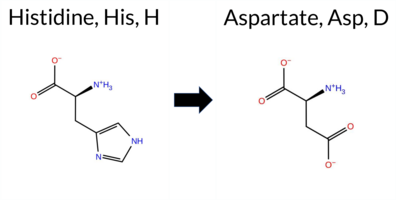 AIThe SynGAP1 missense variant H1172D is not reported in ClinVar (ClinVar ID None) and is absent from gnomAD (gnomAD ID None). Prediction tools that agree on a benign effect include SGM‑Consensus (Likely Benign), REVEL, PROVEAN, ESM1b, FATHMM, AlphaMissense‑Optimized, and polyPhen‑2 HumVar. Tools that predict a pathogenic effect are polyPhen‑2 HumDiv, SIFT, and AlphaMissense‑Default. High‑accuracy assessments show AlphaMissense‑Optimized as benign and the SGM‑Consensus (majority vote of AlphaMissense‑Default, ESM1b, FATHMM, PROVEAN) also as benign; the Foldetta stability analysis is unavailable. Overall, the majority of evidence points to a benign impact. This conclusion is consistent with the lack of ClinVar annotation, so there is no contradiction with existing clinical data. Disclaimer: This summary was generated using AI and should be interpreted alongside expert review. | Likely Benign | Coiled-coil | 0.626927 | Disordered | 0.673805 | Binding | 0.465 | 0.758 | 0.625 | -2.073 | Likely Benign | 0.710 | Likely Pathogenic | Likely Benign | 0.378 | Likely Benign | -1.29 | Neutral | 0.625 | Possibly Damaging | 0.333 | Benign | 5.46 | Benign | 0.04 | Affected | 0.2296 | 0.1417 | 1 | -1 | -0.3 | -22.05 | ||||||||||||||||||||||||||||||||||||||
| c.3640C>T | R1214W 2D AIThe SynGAP1 missense variant R1214W is listed in ClinVar with an uncertain significance (ClinVar ID 1476244.0) and is present in the gnomAD database (gnomAD ID 6‑33446632‑C‑T). Functional prediction tools cluster into two groups: benign predictions come from REVEL and AlphaMissense‑Optimized, while pathogenic predictions are made by PROVEAN, polyPhen‑2 (HumDiv and HumVar), SIFT, ESM1b, FATHMM, and AlphaMissense‑Default. High‑accuracy assessments further refine the picture: AlphaMissense‑Optimized indicates a benign effect, whereas the SGM Consensus—derived from a majority vote of AlphaMissense‑Default, ESM1b, FATHMM, and PROVEAN—labels the variant as likely pathogenic. No Foldetta stability analysis is available for this residue. Overall, the majority of evidence points toward a pathogenic impact, and this conclusion does not conflict with the ClinVar designation of uncertain significance. Disclaimer: This summary was generated using AI and should be interpreted alongside expert review. | Likely Pathogenic | Coiled-coil | 0.497853 | Structured | 0.506868 | Binding | 0.903 | 0.566 | 0.375 | Uncertain | 1 | 6-33446632-C-T | 2 | 1.24e-6 | -8.799 | Likely Pathogenic | 0.710 | Likely Pathogenic | Likely Benign | 0.143 | Likely Benign | -4.95 | Deleterious | 1.000 | Probably Damaging | 0.983 | Probably Damaging | 2.45 | Pathogenic | 0.00 | Affected | 3.77 | 5 | 0.1186 | 0.2367 | 2 | -3 | 3.6 | 30.03 | |||||||||||||||||||||||||||||||
| c.3827A>C | D1276A 2D AIThe SynGAP1 missense variant D1276A has no ClinVar entry and is absent from gnomAD. Prediction tools cluster into two groups: benign predictions come from REVEL, ESM1b, and AlphaMissense‑Optimized; pathogenic predictions come from PROVEAN, polyPhen‑2 (HumDiv and HumVar), SIFT, FATHMM, AlphaMissense‑Default, and the SGM‑Consensus score (Likely Pathogenic). High‑accuracy assessments further support this split: AlphaMissense‑Optimized reports a benign effect, whereas the SGM‑Consensus (majority vote of AlphaMissense‑Default, ESM1b, FATHMM, and PROVEAN) indicates a likely pathogenic outcome. No Foldetta stability analysis is available for this residue. Overall, the majority of computational evidence points to a pathogenic impact, and this conclusion does not contradict the ClinVar status, which currently contains no classification for the variant. Disclaimer: This summary was generated using AI and should be interpreted alongside expert review. | Likely Pathogenic | 0.666105 | Disordered | 0.802156 | Binding | 0.636 | 0.705 | 0.625 | -0.008 | Likely Benign | 0.710 | Likely Pathogenic | Likely Benign | 0.319 | Likely Benign | -5.87 | Deleterious | 0.816 | Possibly Damaging | 0.495 | Possibly Damaging | 1.21 | Pathogenic | 0.00 | Affected | 0.3458 | 0.5050 | 0 | -2 | 5.3 | -44.01 | |||||||||||||||||||||||||||||||||||||||
| c.2809G>T | D937Y 2D 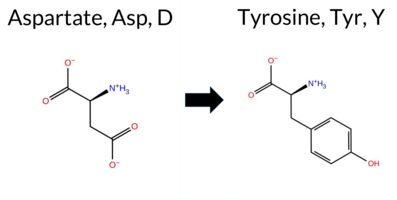 AIThe SynGAP1 missense variant D937Y is not reported in ClinVar (ClinVar ID: None) and is absent from gnomAD (gnomAD ID: None). Prediction tools that agree on a benign effect include REVEL, ESM1b, FATHMM, and AlphaMissense‑Optimized. Tools that predict a pathogenic effect are PROVEAN, polyPhen‑2 HumDiv, polyPhen‑2 HumVar, SIFT, and AlphaMissense‑Default. High‑accuracy assessments show AlphaMissense‑Optimized as benign, while the SGM Consensus (majority vote from AlphaMissense‑Default, ESM1b, FATHMM, PROVEAN) is inconclusive due to a 2‑to‑2 split, and Foldetta results are unavailable. Overall, the majority of predictions (five pathogenic versus four benign) lean toward a pathogenic impact. Thus, the variant is most likely pathogenic based on current computational evidence, and this conclusion does not contradict any ClinVar annotation, as none exists. Disclaimer: This summary was generated using AI and should be interpreted alongside expert review. | 0.819762 | Disordered | 0.963385 | Binding | 0.348 | 0.883 | 0.625 | -4.720 | Likely Benign | 0.711 | Likely Pathogenic | Likely Benign | 0.137 | Likely Benign | -2.52 | Deleterious | 1.000 | Probably Damaging | 0.983 | Probably Damaging | 2.67 | Benign | 0.05 | Affected | 0.1305 | 0.7494 | -4 | -3 | 2.2 | 48.09 | ||||||||||||||||||||||||||||||||||||||||
| c.2693C>A | S898Y 2D 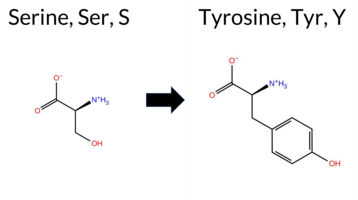 AISynGAP1 missense variant S898Y is not reported in ClinVar and is absent from gnomAD. Prediction tools that classify the variant as benign include REVEL, ESM1b, and AlphaMissense‑Optimized, whereas pathogenic predictions come from PROVEAN, polyPhen‑2 (HumDiv and HumVar), SIFT, FATHMM, and AlphaMissense‑Default. The SGM‑Consensus, which aggregates the majority vote of AlphaMissense‑Default, ESM1b, FATHMM, and PROVEAN, reports the variant as Likely Pathogenic. High‑accuracy assessments show AlphaMissense‑Optimized as Benign, SGM‑Consensus as Likely Pathogenic, and Foldetta results are unavailable. Overall, the majority of tools and the consensus prediction indicate a pathogenic effect, and this conclusion does not contradict any ClinVar annotation because none exists for this variant. Disclaimer: This summary was generated using AI and should be interpreted alongside expert review. | Likely Pathogenic | 0.690604 | Disordered | 0.426070 | Uncertain | 0.305 | 0.922 | 0.500 | -5.927 | Likely Benign | 0.712 | Likely Pathogenic | Likely Benign | 0.182 | Likely Benign | -2.69 | Deleterious | 0.998 | Probably Damaging | 0.959 | Probably Damaging | 2.44 | Pathogenic | 0.00 | Affected | 0.1244 | 0.6838 | -3 | -2 | -0.5 | 76.10 | |||||||||||||||||||||||||||||||||||||||
| c.2768T>A | I923N 2D AIThe SynGAP1 missense variant I923N (ClinVar ID 647043.0) is listed as “Uncertain” and is not reported in gnomAD. Prediction tools that agree on a benign effect include REVEL, PROVEAN, SIFT, ESM1b, FATHMM, and AlphaMissense‑Optimized. Those that predict a pathogenic effect are polyPhen‑2 HumDiv, polyPhen‑2 HumVar, and AlphaMissense‑Default. The SGM‑Consensus, which aggregates AlphaMissense‑Default, ESM1b, FATHMM, and PROVEAN, is “Likely Benign” because the majority of its constituent tools (three benign, one pathogenic) favor a benign outcome. High‑accuracy assessments show AlphaMissense‑Optimized as benign, SGM‑Consensus as benign, and the Foldetta stability analysis is unavailable. Overall, the collective predictions point to a benign impact, which does not contradict the ClinVar “Uncertain” status. Disclaimer: This summary was generated using AI and should be interpreted alongside expert review. | Likely Benign | 0.562014 | Disordered | 0.964857 | Binding | 0.292 | 0.852 | 0.250 | Uncertain | 1 | -0.733 | Likely Benign | 0.712 | Likely Pathogenic | Likely Benign | 0.108 | Likely Benign | -1.16 | Neutral | 0.991 | Probably Damaging | 0.793 | Possibly Damaging | 2.70 | Benign | 0.13 | Tolerated | 3.77 | 5 | 0.1164 | 0.1073 | -2 | -3 | -8.0 | 0.94 | |||||||||||||||||||||||||||||||||||
| c.3220C>A | Q1074K 2D 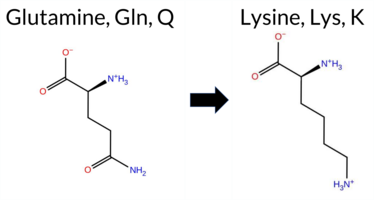 AIThe SynGAP1 missense variant Q1074K is not reported in ClinVar (no ClinVar ID) and is absent from gnomAD (no gnomAD ID). Prediction tools that agree on a benign effect include REVEL, PROVEAN, polyPhen‑2 (HumDiv and HumVar), SIFT, ESM1b, FATHMM, AlphaMissense‑Optimized, and the SGM‑Consensus (majority vote from AlphaMissense‑Default, ESM1b, FATHMM, and PROVEAN). Only AlphaMissense‑Default predicts a pathogenic outcome. High‑accuracy assessments show AlphaMissense‑Optimized as benign, the SGM‑Consensus as likely benign, and Foldetta results are unavailable. Overall, the majority of evidence points to a benign impact for this variant, and this conclusion is consistent with the lack of any ClinVar pathogenic classification. Disclaimer: This summary was generated using AI and should be interpreted alongside expert review. | Likely Benign | 0.930790 | Disordered | 0.987006 | Binding | 0.339 | 0.897 | 0.750 | -6.162 | Likely Benign | 0.712 | Likely Pathogenic | Likely Benign | 0.110 | Likely Benign | -0.88 | Neutral | 0.011 | Benign | 0.006 | Benign | 2.75 | Benign | 0.36 | Tolerated | 0.1865 | 0.4600 | 1 | 1 | -0.4 | 0.04 | |||||||||||||||||||||||||||||||||||||||
| c.3550T>A | S1184T 2D AIThe SynGAP1 missense variant S1184T is not reported in ClinVar and is absent from gnomAD. Prediction tools that agree on a benign effect include REVEL, PROVEAN, SIFT, ESM1b, FATHMM, and AlphaMissense‑Optimized, while polyPhen‑2 (HumDiv and HumVar) and AlphaMissense‑Default predict a pathogenic outcome. The SGM‑Consensus, derived from a majority vote of AlphaMissense‑Default, ESM1b, FATHMM, and PROVEAN, classifies the variant as Likely Benign. High‑accuracy assessments further support a benign interpretation: AlphaMissense‑Optimized is benign, and the SGM‑Consensus (majority vote) is also benign. Foldetta results are not available, so they do not influence the assessment. Overall, the preponderance of evidence from multiple prediction algorithms and consensus methods indicates that the variant is most likely benign, and this conclusion is not contradicted by any ClinVar annotation. Disclaimer: This summary was generated using AI and should be interpreted alongside expert review. | Likely Benign | Coiled-coil | 0.648219 | Disordered | 0.514669 | Binding | 0.624 | 0.642 | 0.500 | -4.250 | Likely Benign | 0.712 | Likely Pathogenic | Likely Benign | 0.085 | Likely Benign | -1.27 | Neutral | 0.979 | Probably Damaging | 0.973 | Probably Damaging | 2.70 | Benign | 0.18 | Tolerated | 0.1212 | 0.5004 | 1 | 1 | 0.1 | 14.03 | ||||||||||||||||||||||||||||||||||||||
| c.3692G>T | S1231I 2D AIThe SynGAP1 missense variant S1231I is not reported in ClinVar (ClinVar ID None) and is absent from gnomAD (gnomAD ID None). Prediction tools that agree on a benign effect include REVEL, FATHMM, and AlphaMissense‑Optimized, whereas a majority of tools (PROVEAN, polyPhen‑2 HumDiv, polyPhen‑2 HumVar, SIFT, ESM1b, AlphaMissense‑Default) predict a pathogenic impact. The SGM‑Consensus, derived from a majority vote of AlphaMissense‑Default, ESM1b, FATHMM, and PROVEAN, also indicates a likely pathogenic outcome. High‑accuracy assessments show AlphaMissense‑Optimized as benign, while the SGM‑Consensus remains likely pathogenic; Foldetta results are unavailable. Overall, the balance of evidence favors a pathogenic classification for S1231I, and this conclusion does not contradict any existing ClinVar status, as none is available. Disclaimer: This summary was generated using AI and should be interpreted alongside expert review. | Likely Pathogenic | Coiled-coil | 0.490133 | Structured | 0.519419 | Binding | 0.876 | 0.544 | 0.250 | -9.360 | Likely Pathogenic | 0.712 | Likely Pathogenic | Likely Benign | 0.203 | Likely Benign | -3.24 | Deleterious | 0.966 | Probably Damaging | 0.690 | Possibly Damaging | 2.64 | Benign | 0.04 | Affected | 0.0701 | 0.4550 | -1 | -2 | 5.3 | 26.08 | ||||||||||||||||||||||||||||||||||||||
| c.3746G>C | R1249T 2D 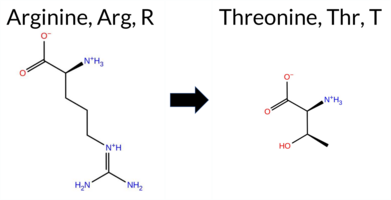 AIThe SynGAP1 missense variant R1249T is not reported in ClinVar and is absent from gnomAD. Prediction tools cluster into two groups: benign predictions come from REVEL and AlphaMissense‑Optimized, while pathogenic predictions are made by PROVEAN, polyPhen‑2 (HumDiv and HumVar), SIFT, ESM1b, FATHMM, AlphaMissense‑Default, and the SGM‑Consensus score. The SGM‑Consensus, a majority vote of AlphaMissense‑Default, ESM1b, FATHMM, and PROVEAN, indicates a likely pathogenic effect. High‑accuracy assessments show AlphaMissense‑Optimized as benign, whereas the SGM‑Consensus remains pathogenic; Foldetta results are unavailable. Overall, the preponderance of evidence (10 pathogenic vs. 2 benign predictions) points to a pathogenic impact for R1249T. This conclusion is consistent with the lack of ClinVar annotation, so there is no contradiction with existing clinical data. Disclaimer: This summary was generated using AI and should be interpreted alongside expert review. | Likely Pathogenic | Coiled-coil | 0.745909 | Disordered | 0.366265 | Uncertain | 0.874 | 0.556 | 0.875 | -8.014 | Likely Pathogenic | 0.712 | Likely Pathogenic | Likely Benign | 0.185 | Likely Benign | -4.59 | Deleterious | 0.990 | Probably Damaging | 0.903 | Possibly Damaging | 1.71 | Pathogenic | 0.00 | Affected | 0.1646 | 0.2458 | -1 | -1 | 3.8 | -55.08 | ||||||||||||||||||||||||||||||||||||||
| c.1213C>T | R405C 2D 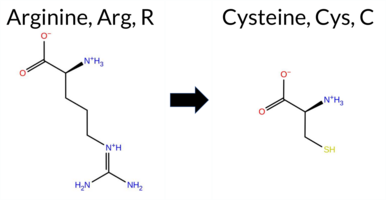 3DClick to see structure in 3D Viewer AIThe SynGAP1 R405C missense variant is listed in ClinVar with an “Uncertain” status and is present in gnomAD (variant ID 6‑33438118‑C‑T). Prediction tools that indicate a benign effect include REVEL, FATHMM, and AlphaMissense‑Optimized, whereas a majority of tools (premPS, PROVEAN, polyPhen‑2 HumDiv, polyPhen‑2 HumVar, SIFT, ESM1b, AlphaMissense‑Default) predict a pathogenic outcome. The SGM‑Consensus, derived from a majority vote of AlphaMissense‑Default, ESM1b, FATHMM, and PROVEAN, also classifies the variant as likely pathogenic. High‑accuracy assessments show AlphaMissense‑Optimized as benign, SGM‑Consensus as pathogenic, and Foldetta (combining FoldX‑MD and Rosetta outputs) remains uncertain. Overall, the balance of evidence points to a pathogenic effect, which does not contradict the ClinVar “Uncertain” classification. Disclaimer: This summary was generated using AI and should be interpreted alongside expert review. | Likely Pathogenic | C2 | 0.250310 | Structured | 0.404888 | Uncertain | 0.949 | 0.315 | 0.000 | Conflicting | 3 | 6-33438118-C-T | 6 | 3.72e-6 | -9.206 | Likely Pathogenic | 0.713 | Likely Pathogenic | Likely Benign | 0.72 | Ambiguous | 0.1 | 1.51 | Ambiguous | 1.12 | Ambiguous | 1.21 | Destabilizing | 0.427 | Likely Benign | -7.27 | Deleterious | 1.000 | Probably Damaging | 1.000 | Probably Damaging | 3.61 | Benign | 0.02 | Affected | 3.38 | 28 | 0.3227 | 0.3964 | -4 | -3 | 7.0 | -53.05 | 221.3 | 82.6 | -0.1 | 0.0 | -0.2 | 0.3 | X | X | Potentially Pathogenic | The guanidinium group of Arg405, located in an anti-parallel β sheet strand of the C2 domain (res. Ala399-Ile411), forms a salt bridge with the carboxylate group of the Glu446 side chain from an opposing α helix (res. Val441-Ser457) in the GAP domain. The positively charged Arg405 side chain also stacks with the aromatic ring of the Phe358 side chain from a loop preceding the β strand (res. Thr359-Thr366), which could assist in maintaining the anti-parallel strand arrangement.In the variant simulations, the thiol-containing side chain of Cys405 is neutral and smaller compared to the arginine side chain. The lack of Arg405-Phe358 stacking affects the loop structure, causing it to assume a β strand form—an effect that could be exacerbated during protein folding. Moreover, the inability of Cys405 to form a salt bridge with Glu446 could affect the tertiary structure assembly, although this is not apparent based on the variant simulations. | ||||||||||||
| c.1528A>T | I510F 2D 3DClick to see structure in 3D Viewer AIThe SynGAP1 missense variant I510F is not reported in ClinVar (ClinVar ID: None) and is absent from gnomAD (gnomAD ID: None). Prediction tools that agree on a benign effect include premPS and AlphaMissense‑Optimized, whereas the majority of tools (SGM‑Consensus, REVEL, FoldX, PROVEAN, polyPhen‑2 HumDiv, polyPhen‑2 HumVar, SIFT, ESM1b, FATHMM, AlphaMissense‑Default, and Foldetta) predict a pathogenic impact; Rosetta remains uncertain. High‑accuracy assessments further support this: AlphaMissense‑Optimized classifies the variant as benign, the SGM Consensus (majority vote of AlphaMissense‑Default, ESM1b, FATHMM, and PROVEAN) predicts pathogenicity, and Foldetta (combining FoldX‑MD and Rosetta outputs) also predicts pathogenicity. Overall, the preponderance of evidence indicates that the variant is most likely pathogenic, and this conclusion does not contradict any existing ClinVar annotation, as none is available. Disclaimer: This summary was generated using AI and should be interpreted alongside expert review. | Likely Pathogenic | GAP | 0.025762 | Structured | 0.250630 | Uncertain | 0.945 | 0.273 | 0.000 | -8.185 | Likely Pathogenic | 0.713 | Likely Pathogenic | Likely Benign | 4.66 | Destabilizing | 0.7 | 1.38 | Ambiguous | 3.02 | Destabilizing | 0.50 | Likely Benign | 0.692 | Likely Pathogenic | -2.64 | Deleterious | 0.991 | Probably Damaging | 0.854 | Possibly Damaging | -1.14 | Pathogenic | 0.01 | Affected | 0.0552 | 0.1794 | 1 | 0 | -1.7 | 34.02 | |||||||||||||||||||||||||||||
| c.1957C>A | L653M 2D 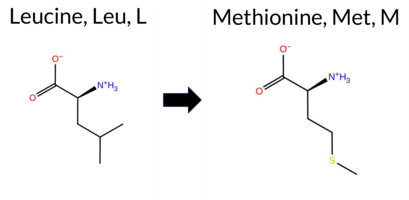 3DClick to see structure in 3D Viewer AIThe SynGAP1 missense variant L653M has no ClinVar record and is not reported in gnomAD. Prediction tools that agree on a benign effect include REVEL, PROVEAN, FATHMM, and AlphaMissense‑Optimized, while those that predict a pathogenic outcome are polyPhen‑2 (HumDiv and HumVar), SIFT, ESM1b, and AlphaMissense‑Default. Tools with uncertain or missing results (FoldX, Rosetta, Foldetta, premPS) are not considered evidence for either side. High‑accuracy assessments show AlphaMissense‑Optimized as benign; the SGM Consensus (majority vote from AlphaMissense‑Default, ESM1b, FATHMM, PROVEAN) is inconclusive (two pathogenic vs. two benign votes), and Foldetta is also inconclusive. Overall, the majority of standard predictors lean toward pathogenicity, but the most reliable high‑accuracy tool indicates a benign effect, leaving the variant’s impact uncertain. No ClinVar entry exists, so there is no contradiction with clinical annotation. Disclaimer: This summary was generated using AI and should be interpreted alongside expert review. | GAP | 0.049374 | Structured | 0.335213 | Uncertain | 0.963 | 0.332 | 0.000 | -8.838 | Likely Pathogenic | 0.713 | Likely Pathogenic | Likely Benign | 0.99 | Ambiguous | 0.2 | 1.70 | Ambiguous | 1.35 | Ambiguous | 0.94 | Ambiguous | 0.259 | Likely Benign | -1.76 | Neutral | 1.000 | Probably Damaging | 0.991 | Probably Damaging | 3.13 | Benign | 0.01 | Affected | 0.0935 | 0.3227 | 4 | 2 | -1.9 | 18.03 | ||||||||||||||||||||||||||||||
| c.2147G>T | R716L 2D 3DClick to see structure in 3D Viewer AIThe SynGAP1 missense variant R716L is not reported in ClinVar (ClinVar ID: None) and is absent from gnomAD (gnomAD ID: None). Prediction tools that agree on a benign effect include REVEL, FoldX, FATHMM, premPS, AlphaMissense‑Optimized, and Foldetta. Tools that predict a pathogenic effect comprise SGM‑Consensus, PROVEAN, polyPhen‑2 HumDiv, polyPhen‑2 HumVar, SIFT, ESM1b, and AlphaMissense‑Default. High‑accuracy assessments show AlphaMissense‑Optimized as benign, SGM‑Consensus (majority vote from AlphaMissense‑Default, ESM1b, FATHMM, PROVEAN) as likely pathogenic, and Foldetta as benign. Overall, the majority of predictions (7/13) lean toward pathogenicity, with a near‑even split and a slight edge for pathogenic. The variant is therefore most likely pathogenic based on the current computational evidence, and this assessment does not contradict any ClinVar status, as no ClinVar entry exists for R716L. Disclaimer: This summary was generated using AI and should be interpreted alongside expert review. | Likely Pathogenic | GAP | 0.247041 | Structured | 0.419135 | Uncertain | 0.962 | 0.379 | 0.000 | -10.690 | Likely Pathogenic | 0.713 | Likely Pathogenic | Likely Benign | 0.31 | Likely Benign | 0.0 | 0.51 | Ambiguous | 0.41 | Likely Benign | 0.37 | Likely Benign | 0.289 | Likely Benign | -5.70 | Deleterious | 1.000 | Probably Damaging | 0.999 | Probably Damaging | 3.46 | Benign | 0.01 | Affected | 0.1701 | 0.3775 | -3 | -2 | 8.3 | -43.03 | |||||||||||||||||||||||||||||
| c.3632T>G | M1211R 2D AIThe SynGAP1 missense variant M1211R is not reported in ClinVar (ClinVar ID None) and is absent from gnomAD (gnomAD ID None). Prediction tools that agree on a benign effect are FATHMM and AlphaMissense‑Optimized, whereas the remaining tools—REVEL, PROVEAN, polyPhen‑2 (HumDiv and HumVar), SIFT, ESM1b, AlphaMissense‑Default, and the SGM‑Consensus—predict a pathogenic outcome. High‑accuracy assessments further support this: AlphaMissense‑Optimized classifies the variant as benign, whereas the SGM‑Consensus (majority vote of AlphaMissense‑Default, ESM1b, FATHMM, and PROVEAN) yields a pathogenic verdict. Foldetta results are unavailable, so they do not influence the overall assessment. Based on the preponderance of pathogenic predictions, the variant is most likely pathogenic, and this conclusion does not contradict any ClinVar annotation (none is present). Disclaimer: This summary was generated using AI and should be interpreted alongside expert review. | Likely Pathogenic | Coiled-coil | 0.585406 | Disordered | 0.578388 | Binding | 0.876 | 0.565 | 0.500 | -8.196 | Likely Pathogenic | 0.713 | Likely Pathogenic | Likely Benign | 0.587 | Likely Pathogenic | -3.18 | Deleterious | 0.987 | Probably Damaging | 0.985 | Probably Damaging | 5.47 | Benign | 0.01 | Affected | 0.1644 | 0.0828 | 0 | -1 | -6.4 | 24.99 | ||||||||||||||||||||||||||||||||||||||
| c.3886G>A | E1296K 2D 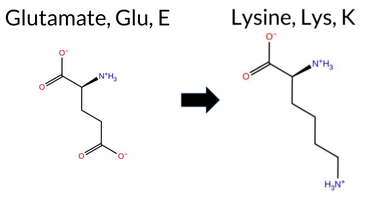 AIThe SynGAP1 missense variant E1296K is not reported in ClinVar (ClinVar status: not listed) and is absent from gnomAD (no gnomAD ID). Functional prediction tools cluster into two groups: benign predictions come from REVEL, polyPhen‑2 (HumDiv and HumVar), ESM1b, and FATHMM; pathogenic predictions come from PROVEAN, SIFT, and AlphaMissense‑Default. High‑accuracy assessments show AlphaMissense‑Optimized predicts a benign effect, while the SGM Consensus (majority vote of AlphaMissense‑Default, ESM1b, FATHMM, and PROVEAN) is inconclusive due to a 2‑to‑2 split, and Foldetta results are unavailable. Overall, the majority of evidence points toward a benign impact, with no conflict with ClinVar status because the variant is not yet catalogued there. Disclaimer: This summary was generated using AI and should be interpreted alongside expert review. | 0.837511 | Disordered | 0.894444 | Binding | 0.530 | 0.809 | 0.625 | -3.435 | Likely Benign | 0.713 | Likely Pathogenic | Likely Benign | 0.136 | Likely Benign | -2.80 | Deleterious | 0.241 | Benign | 0.210 | Benign | 2.65 | Benign | 0.05 | Affected | 0.1951 | 0.6138 | 0 | 1 | -0.4 | -0.94 | ||||||||||||||||||||||||||||||||||||||||
| c.875C>G | A292G 2D 3DClick to see structure in 3D Viewer AISynGAP1 missense variant A292G is not reported in ClinVar and is absent from gnomAD. Prediction tools that indicate a benign effect include REVEL, SIFT, and AlphaMissense‑Optimized. Tools that predict a pathogenic effect comprise premPS, PROVEAN, polyPhen‑2 HumDiv, polyPhen‑2 HumVar, ESM1b, FATHMM, and AlphaMissense‑Default. The high‑accuracy consensus from AlphaMissense‑Optimized is benign, whereas the SGM Consensus—derived from the majority vote of AlphaMissense‑Default, ESM1b, FATHMM, and PROVEAN—classifies the variant as pathogenic. Foldetta, which integrates FoldX‑MD and Rosetta outputs, is uncertain, and individual FoldX and Rosetta predictions are also inconclusive. Overall, the majority of evidence points to a pathogenic impact, and this assessment does not contradict any ClinVar annotation because no ClinVar entry exists for this variant. Disclaimer: This summary was generated using AI and should be interpreted alongside expert review. | Likely Pathogenic | C2 | 0.247041 | Structured | 0.362042 | Uncertain | 0.929 | 0.256 | 0.000 | -9.692 | Likely Pathogenic | 0.713 | Likely Pathogenic | Likely Benign | 0.88 | Ambiguous | 0.1 | 1.83 | Ambiguous | 1.36 | Ambiguous | 1.05 | Destabilizing | 0.323 | Likely Benign | -3.68 | Deleterious | 0.999 | Probably Damaging | 0.996 | Probably Damaging | 1.74 | Pathogenic | 0.10 | Tolerated | 0.2187 | 0.5054 | 1 | 0 | -2.2 | -14.03 | |||||||||||||||||||||||||||||
| c.2018T>G | L673R 2D 3DClick to see structure in 3D Viewer AISynGAP1 missense variant L673R is not reported in ClinVar and is absent from gnomAD. Functional prediction tools show a split: benign calls come from REVEL, polyPhen‑2 HumVar, FATHMM, and AlphaMissense‑Optimized; pathogenic calls come from Rosetta, premPS, PROVEAN, polyPhen‑2 HumDiv, SIFT, ESM1b, AlphaMissense‑Default, and the SGM Consensus (majority vote). FoldX and Foldetta are inconclusive. High‑accuracy assessments give a benign result from AlphaMissense‑Optimized, a likely pathogenic verdict from the SGM Consensus, and an uncertain outcome from Foldetta. Overall, the majority of evidence points toward pathogenicity, and this conclusion does not conflict with the ClinVar status, which currently has no classification for this variant. Disclaimer: This summary was generated using AI and should be interpreted alongside expert review. | Likely Pathogenic | GAP | 0.060549 | Structured | 0.104692 | Uncertain | 0.545 | 0.369 | 0.000 | -14.474 | Likely Pathogenic | 0.714 | Likely Pathogenic | Likely Benign | 1.10 | Ambiguous | 0.2 | 2.04 | Destabilizing | 1.57 | Ambiguous | 1.23 | Destabilizing | 0.178 | Likely Benign | -3.81 | Deleterious | 0.991 | Probably Damaging | 0.433 | Benign | 3.36 | Benign | 0.03 | Affected | 0.1348 | 0.1015 | -3 | -2 | -8.3 | 43.03 | |||||||||||||||||||||||||||||
| c.2029A>C | S677R 2D 3DClick to see structure in 3D Viewer AIThe SynGAP1 missense variant S677R is not reported in ClinVar (ClinVar ID None) and is absent from gnomAD (gnomAD ID None). Prediction tools that agree on a benign effect include REVEL, PROVEAN, polyPhen‑2 (HumDiv and HumVar), SIFT, and FATHMM. Those that predict a pathogenic effect are FoldX, ESM1b, and AlphaMissense‑Default. Uncertain results come from Rosetta, Foldetta, and premPS. High‑accuracy assessments show AlphaMissense‑Optimized predicts a benign outcome, while the SGM Consensus (majority vote of AlphaMissense‑Default, ESM1b, FATHMM, PROVEAN) is inconclusive due to a 2‑to‑2 split, and Foldetta is also inconclusive. Overall, the majority of tools and the high‑accuracy benign prediction suggest the variant is most likely benign, and this assessment does not contradict the lack of ClinVar annotation. Disclaimer: This summary was generated using AI and should be interpreted alongside expert review. | GAP | 0.194234 | Structured | 0.115685 | Uncertain | 0.555 | 0.338 | 0.125 | -9.388 | Likely Pathogenic | 0.714 | Likely Pathogenic | Likely Benign | 2.59 | Destabilizing | 0.1 | 0.73 | Ambiguous | 1.66 | Ambiguous | 0.71 | Ambiguous | 0.104 | Likely Benign | -2.49 | Neutral | 0.385 | Benign | 0.037 | Benign | 3.31 | Benign | 0.12 | Tolerated | 0.1120 | 0.4195 | 0 | -1 | -3.7 | 69.11 | ||||||||||||||||||||||||||||||
| c.2031T>A | S677R 2D 3DClick to see structure in 3D Viewer AIThe SynGAP1 missense variant S677R is not reported in ClinVar (ClinVar ID None) and is absent from gnomAD (gnomAD ID None). Prediction tools that agree on a benign effect include REVEL, PROVEAN, polyPhen‑2 HumDiv, polyPhen‑2 HumVar, SIFT, and FATHMM. Those that predict a pathogenic effect are FoldX, ESM1b, and AlphaMissense‑Default. Tools with uncertain or inconclusive results are Rosetta, Foldetta, and premPS. High‑accuracy methods give mixed signals: AlphaMissense‑Optimized predicts benign, the SGM Consensus (majority vote from AlphaMissense‑Default, ESM1b, FATHMM, PROVEAN) is inconclusive due to a 2‑to‑2 split, and Foldetta is uncertain. Overall, the majority of consensus tools (six benign vs. three pathogenic) lean toward a benign interpretation. This prediction does not contradict any ClinVar status, as none is available. Thus, the variant is most likely benign based on current computational evidence. Disclaimer: This summary was generated using AI and should be interpreted alongside expert review. | GAP | 0.194234 | Structured | 0.115685 | Uncertain | 0.555 | 0.338 | 0.125 | -9.388 | Likely Pathogenic | 0.714 | Likely Pathogenic | Likely Benign | 2.59 | Destabilizing | 0.1 | 0.73 | Ambiguous | 1.66 | Ambiguous | 0.71 | Ambiguous | 0.150 | Likely Benign | -2.49 | Neutral | 0.385 | Benign | 0.037 | Benign | 3.31 | Benign | 0.12 | Tolerated | 0.1120 | 0.4195 | 0 | -1 | -3.7 | 69.11 | ||||||||||||||||||||||||||||||
| c.2031T>G | S677R 2D 3DClick to see structure in 3D Viewer AIThe SynGAP1 missense variant S677R is not reported in ClinVar (ClinVar ID None) and is absent from gnomAD (gnomAD ID None). Prediction tools that agree on a benign effect include REVEL, PROVEAN, polyPhen‑2 HumDiv, polyPhen‑2 HumVar, SIFT, and FATHMM. Those that predict a pathogenic effect are FoldX, ESM1b, and AlphaMissense‑Default. Tools with uncertain or inconclusive results are Rosetta, Foldetta, and premPS. High‑accuracy methods give mixed signals: AlphaMissense‑Optimized predicts benign, the SGM Consensus (majority vote from AlphaMissense‑Default, ESM1b, FATHMM, PROVEAN) is inconclusive due to a 2‑to‑2 split, and Foldetta is uncertain. Overall, the majority of consensus tools (six benign vs. three pathogenic) lean toward a benign interpretation. This prediction does not contradict any ClinVar status, as none is available. Thus, the variant is most likely benign based on current computational evidence. Disclaimer: This summary was generated using AI and should be interpreted alongside expert review. | GAP | 0.194234 | Structured | 0.115685 | Uncertain | 0.555 | 0.338 | 0.125 | -9.388 | Likely Pathogenic | 0.714 | Likely Pathogenic | Likely Benign | 2.59 | Destabilizing | 0.1 | 0.73 | Ambiguous | 1.66 | Ambiguous | 0.71 | Ambiguous | 0.150 | Likely Benign | -2.49 | Neutral | 0.385 | Benign | 0.037 | Benign | 3.31 | Benign | 0.12 | Tolerated | 0.1120 | 0.4195 | 0 | -1 | -3.7 | 69.11 | ||||||||||||||||||||||||||||||
| c.2092G>C | E698Q 2D 3DClick to see structure in 3D Viewer AIThe SynGAP1 missense variant E698Q is not reported in ClinVar and has no entries in gnomAD. Prediction tools that classify it as benign include REVEL, FoldX, Rosetta, Foldetta, premPS, FATHMM, and AlphaMissense‑Optimized. Tools that predict pathogenicity are SGM‑Consensus, PROVEAN, polyPhen‑2 HumDiv, polyPhen‑2 HumVar, SIFT, ESM1b, and AlphaMissense‑Default. High‑accuracy methods give the following results: AlphaMissense‑Optimized predicts benign; the SGM‑Consensus (majority vote of AlphaMissense‑Default, ESM1b, FATHMM, and PROVEAN) predicts likely pathogenic; and Foldetta (combining FoldX‑MD and Rosetta outputs) predicts benign. No prediction or folding stability result is missing or inconclusive. Overall, the evidence is split, with an equal number of benign and pathogenic calls; the high‑accuracy tools lean toward benign but are not definitive. Thus, the variant’s pathogenicity remains uncertain and does not contradict the absence of ClinVar annotation. Disclaimer: This summary was generated using AI and should be interpreted alongside expert review. | Likely Pathogenic | GAP | 0.120615 | Structured | 0.417514 | Uncertain | 0.922 | 0.315 | 0.000 | -8.369 | Likely Pathogenic | 0.714 | Likely Pathogenic | Likely Benign | 0.00 | Likely Benign | 0.1 | 0.35 | Likely Benign | 0.18 | Likely Benign | -0.02 | Likely Benign | 0.326 | Likely Benign | -2.86 | Deleterious | 0.987 | Probably Damaging | 0.946 | Probably Damaging | 3.35 | Benign | 0.01 | Affected | 0.1029 | 0.3702 | 2 | 2 | 0.0 | -0.98 | |||||||||||||||||||||||||||||
| c.2456C>G | A819G 2D AIThe SynGAP1 missense variant A819G is not reported in ClinVar (ClinVar ID = None) and is absent from gnomAD (gnomAD ID = None). Prediction tools that agree on a benign effect include REVEL, PROVEAN, polyPhen‑2 HumDiv, polyPhen‑2 HumVar, ESM1b, and AlphaMissense‑Optimized. Tools that predict a pathogenic effect are SIFT, FATHMM, and AlphaMissense‑Default. High‑accuracy assessments show AlphaMissense‑Optimized as benign, while the SGM Consensus (majority vote from AlphaMissense‑Default, ESM1b, FATHMM, PROVEAN) is inconclusive (2 benign vs 2 pathogenic). Foldetta results are unavailable. Overall, the majority of predictions (six benign vs three pathogenic) support a benign classification. Thus, the variant is most likely benign, and this conclusion does not contradict any ClinVar status because no ClinVar entry exists. Disclaimer: This summary was generated using AI and should be interpreted alongside expert review. | 0.694846 | Disordered | 0.707644 | Binding | 0.317 | 0.892 | 0.625 | -5.730 | Likely Benign | 0.714 | Likely Pathogenic | Likely Benign | 0.116 | Likely Benign | -2.17 | Neutral | 0.104 | Benign | 0.121 | Benign | 2.29 | Pathogenic | 0.03 | Affected | 0.2363 | 0.5396 | 1 | 0 | -2.2 | -14.03 | ||||||||||||||||||||||||||||||||||||||||
| c.2942G>T | G981V 2D 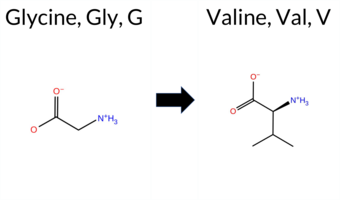 AIThe SynGAP1 missense variant G981V is not reported in ClinVar and is absent from gnomAD. Prediction tools that agree on a benign effect include REVEL, PROVEAN, ESM1b, FATHMM, AlphaMissense‑Optimized, and the SGM‑Consensus (majority vote from AlphaMissense‑Default, ESM1b, FATHMM, PROVEAN). Tools that predict a pathogenic effect are polyPhen‑2 HumDiv, polyPhen‑2 HumVar, SIFT, and AlphaMissense‑Default. High‑accuracy assessments show AlphaMissense‑Optimized as benign and the SGM‑Consensus as likely benign; the Foldetta protein‑folding stability analysis is unavailable. Overall, the majority of evidence points to a benign impact for G981V, and this conclusion does not contradict the ClinVar status, which currently has no entry for this variant. Disclaimer: This summary was generated using AI and should be interpreted alongside expert review. | Likely Benign | 0.798249 | Disordered | 0.970320 | Binding | 0.275 | 0.897 | 0.625 | -3.873 | Likely Benign | 0.714 | Likely Pathogenic | Likely Benign | 0.156 | Likely Benign | -2.10 | Neutral | 0.997 | Probably Damaging | 0.958 | Probably Damaging | 3.75 | Benign | 0.00 | Affected | 0.1322 | 0.3861 | -1 | -3 | 4.6 | 42.08 | |||||||||||||||||||||||||||||||||||||||
| c.3022G>A | D1008N 2D AIThe SynGAP1 missense variant D1008N is listed in ClinVar (ID 1213097.0) as benign and is present in gnomAD (variant ID 6‑33443574‑G‑A). Functional prediction tools cluster into two groups: benign predictions come from REVEL, PROVEAN, ESM1b, FATHMM, and AlphaMissense‑Optimized; pathogenic predictions come from polyPhen‑2 HumDiv, polyPhen‑2 HumVar, SIFT, and AlphaMissense‑Default. The SGM‑Consensus, a majority‑vote model of AlphaMissense‑Default, ESM1b, FATHMM, and PROVEAN, reports a likely benign outcome. High‑accuracy assessments further support a benign interpretation: AlphaMissense‑Optimized is benign, SGM‑Consensus is likely benign, and Foldetta (combining FoldX‑MD and Rosetta) has no available result for this variant. Overall, the majority of evidence indicates a benign effect, consistent with the ClinVar classification and not contradicting it. Disclaimer: This summary was generated using AI and should be interpreted alongside expert review. | Likely Benign | 0.694846 | Disordered | 0.919416 | Binding | 0.280 | 0.899 | 0.625 | Likely Benign | 1 | 6-33443574-G-A | 3 | 1.86e-6 | -4.045 | Likely Benign | 0.714 | Likely Pathogenic | Likely Benign | 0.128 | Likely Benign | -2.15 | Neutral | 0.999 | Probably Damaging | 0.997 | Probably Damaging | 2.75 | Benign | 0.01 | Affected | 3.77 | 5 | 0.2076 | 0.7013 | 2 | 1 | 0.0 | -0.98 | ||||||||||||||||||||||||||||||||
| c.3521A>G | E1174G 2D AIThe SynGAP1 E1174G missense change is not reported in ClinVar and is absent from gnomAD. Functional prediction tools cluster into two groups: benign predictions come from REVEL, PROVEAN, polyPhen‑2 HumVar, ESM1b, FATHMM, and AlphaMissense‑Optimized; pathogenic predictions come from polyPhen‑2 HumDiv, SIFT, and AlphaMissense‑Default. The SGM‑Consensus, which is a majority vote of AlphaMissense‑Default, ESM1b, FATHMM, and PROVEAN, resolves as “Likely Benign” (3 benign vs. 1 pathogenic). High‑accuracy assessments further support a benign outcome: AlphaMissense‑Optimized predicts benign, SGM‑Consensus is likely benign, and the Foldetta stability analysis is unavailable. Overall, the preponderance of evidence points to a benign effect for E1174G, and this conclusion is not contradicted by any ClinVar annotation. Disclaimer: This summary was generated using AI and should be interpreted alongside expert review. | Likely Benign | Coiled-coil | 0.483068 | Structured | 0.618958 | Binding | 0.523 | 0.734 | 0.375 | -4.197 | Likely Benign | 0.714 | Likely Pathogenic | Likely Benign | 0.397 | Likely Benign | -2.20 | Neutral | 0.818 | Possibly Damaging | 0.353 | Benign | 5.42 | Benign | 0.01 | Affected | 0.2665 | 0.5614 | 0 | -2 | 3.1 | -72.06 | ||||||||||||||||||||||||||||||||||||||
| c.827C>G | P276R 2D 3DClick to see structure in 3D Viewer AIThe SynGAP1 P276R missense variant is not reported in ClinVar (ClinVar status: none) but is present in gnomAD (gnomAD ID 6‑33437732‑C‑G). Prediction tools that agree on a benign effect include REVEL and AlphaMissense‑Optimized, whereas a majority of tools (SGM‑Consensus, PROVEAN, polyPhen‑2 HumDiv, polyPhen‑2 HumVar, SIFT, ESM1b, FATHMM, AlphaMissense‑Default) predict a pathogenic impact. Stability‑based predictors (FoldX, Rosetta, premPS, Foldetta) are inconclusive. High‑accuracy assessments show AlphaMissense‑Optimized as benign, SGM‑Consensus as likely pathogenic, and Foldetta as uncertain. Overall, the balance of evidence favors a pathogenic classification; this conclusion is not contradicted by ClinVar, which contains no entry for this variant. Disclaimer: This summary was generated using AI and should be interpreted alongside expert review. | Likely Pathogenic | C2 | 0.037156 | Structured | 0.338937 | Uncertain | 0.724 | 0.230 | 0.250 | 6-33437732-C-G | 7 | 4.34e-6 | -10.983 | Likely Pathogenic | 0.714 | Likely Pathogenic | Likely Benign | 1.78 | Ambiguous | 0.2 | 1.02 | Ambiguous | 1.40 | Ambiguous | 0.78 | Ambiguous | 0.498 | Likely Benign | -4.52 | Deleterious | 0.994 | Probably Damaging | 0.892 | Possibly Damaging | 1.89 | Pathogenic | 0.01 | Affected | 3.38 | 19 | 0.1445 | 0.2828 | -2 | 0 | -2.9 | 59.07 | ||||||||||||||||||||||||
| c.1091C>G | P364R 2D 3DClick to see structure in 3D Viewer AIThe SynGAP1 P364R missense variant is not reported in ClinVar (status: None) and has no entry in gnomAD. Prediction tools that agree on a benign effect include REVEL, SIFT, and AlphaMissense‑Optimized. Tools that agree on a pathogenic effect include SGM‑Consensus, PROVEAN, polyPhen‑2 HumDiv, polyPhen‑2 HumVar, ESM1b, FATHMM, and AlphaMissense‑Default. Uncertain or inconclusive results come from FoldX, Rosetta, Foldetta, and premPS. High‑accuracy assessments: AlphaMissense‑Optimized predicts benign; the SGM‑Consensus (majority vote of AlphaMissense‑Default, ESM1b, FATHMM, PROVEAN) predicts pathogenic; Foldetta’s stability analysis is uncertain. Overall, the majority of evaluated tools (seven pathogenic vs. three benign) indicate that the variant is most likely pathogenic, and this conclusion does not contradict the ClinVar status, which is currently unreported. Disclaimer: This summary was generated using AI and should be interpreted alongside expert review. | Likely Pathogenic | C2 | 0.390993 | Structured | 0.439474 | Uncertain | 0.942 | 0.590 | 0.250 | -12.652 | Likely Pathogenic | 0.715 | Likely Pathogenic | Likely Benign | 0.95 | Ambiguous | 0.7 | 0.88 | Ambiguous | 0.92 | Ambiguous | 0.73 | Ambiguous | 0.416 | Likely Benign | -6.76 | Deleterious | 1.000 | Probably Damaging | 0.997 | Probably Damaging | 1.57 | Pathogenic | 0.12 | Tolerated | 0.1520 | 0.3977 | 0 | -2 | -2.9 | 59.07 | |||||||||||||||||||||||||||||
| c.1261G>T | A421S 2D 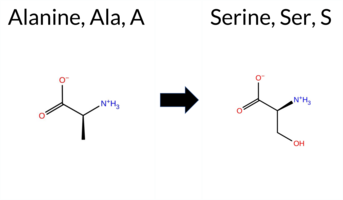 3DClick to see structure in 3D Viewer AIThe SynGAP1 missense variant A421S is not reported in ClinVar and is absent from gnomAD. Functional prediction tools show a split assessment: benign predictions come from REVEL, polyPhen‑2 (HumDiv and HumVar), SIFT, FATHMM, and AlphaMissense‑Optimized, whereas pathogenic predictions arise from PROVEAN, ESM1b, and AlphaMissense‑Default. The SGM‑Consensus, which aggregates AlphaMissense‑Default, ESM1b, FATHMM, and PROVEAN, resolves as Likely Pathogenic. High‑accuracy assessments indicate that AlphaMissense‑Optimized predicts a benign effect, the SGM‑Consensus predicts pathogenic, and Foldetta, which integrates FoldX‑MD and Rosetta outputs, is inconclusive. Stability calculations from FoldX and Rosetta are uncertain, and premPS is unavailable. Overall, the majority of tools lean toward a pathogenic interpretation, and this aligns with the SGM‑Consensus result; there is no conflict with ClinVar status because the variant is not yet catalogued there. Disclaimer: This summary was generated using AI and should be interpreted alongside expert review. | Likely Pathogenic | GAP | 0.067594 | Structured | 0.404927 | Uncertain | 0.965 | 0.257 | 0.000 | -9.220 | Likely Pathogenic | 0.715 | Likely Pathogenic | Likely Benign | 0.66 | Ambiguous | 0.1 | 1.12 | Ambiguous | 0.89 | Ambiguous | 0.70 | Ambiguous | 0.155 | Likely Benign | -2.50 | Deleterious | 0.058 | Benign | 0.072 | Benign | 3.46 | Benign | 0.08 | Tolerated | 0.2247 | 0.3621 | 1 | 1 | -2.6 | 16.00 | |||||||||||||||||||||||||||||
| c.2072C>A | T691K 2D 3DClick to see structure in 3D Viewer AIThe SynGAP1 T691K missense variant has no ClinVar entry and is not reported in gnomAD. Prediction tools that classify it as benign include REVEL, Rosetta, Foldetta, polyPhen‑2 HumVar, FATHMM, and AlphaMissense‑Optimized. Those that predict pathogenicity are premPS, PROVEAN, polyPhen‑2 HumDiv, SIFT, ESM1b, AlphaMissense‑Default, and the SGM Consensus (majority vote of AlphaMissense‑Default, ESM1b, FATHMM, PROVEAN). FoldX returned an uncertain result and is not counted. High‑accuracy assessments show AlphaMissense‑Optimized as benign, Foldetta as benign, while the SGM Consensus indicates pathogenic. Overall, the majority of tools and the consensus high‑accuracy prediction lean toward pathogenicity. Thus, the variant is most likely pathogenic, and this assessment does not contradict any ClinVar status because no ClinVar classification exists. Disclaimer: This summary was generated using AI and should be interpreted alongside expert review. | Likely Pathogenic | GAP | 0.060549 | Structured | 0.271308 | Uncertain | 0.941 | 0.232 | 0.000 | -12.104 | Likely Pathogenic | 0.715 | Likely Pathogenic | Likely Benign | -0.50 | Ambiguous | 0.1 | -0.31 | Likely Benign | -0.41 | Likely Benign | 1.27 | Destabilizing | 0.147 | Likely Benign | -3.20 | Deleterious | 0.937 | Possibly Damaging | 0.120 | Benign | 3.42 | Benign | 0.04 | Affected | 0.0851 | 0.2628 | 0 | -1 | -3.2 | 27.07 | |||||||||||||||||||||||||||||
| c.807A>G | I269M 2D 3DClick to see structure in 3D Viewer AIThe SynGAP1 missense variant I269M is not reported in ClinVar and is absent from gnomAD. Prediction tools that classify it as benign include PROVEAN and AlphaMissense‑Optimized, whereas REVEL, polyPhen‑2 (HumDiv and HumVar), SIFT, FATHMM, and AlphaMissense‑Default predict it to be pathogenic. Five tools (FoldX, Rosetta, Foldetta, premPS, and ESM1b) give uncertain results. High‑accuracy methods give mixed evidence: AlphaMissense‑Optimized reports a benign effect, the SGM Consensus (majority vote of AlphaMissense‑Default, ESM1b, FATHMM, and PROVEAN) predicts pathogenicity, and Foldetta remains uncertain. Overall, the majority of predictions support a pathogenic impact, and this assessment does not contradict the absence of a ClinVar entry. Disclaimer: This summary was generated using AI and should be interpreted alongside expert review. | C2 | 0.216401 | Structured | 0.343787 | Uncertain | 0.937 | 0.244 | 0.125 | -7.863 | In-Between | 0.715 | Likely Pathogenic | Likely Benign | 0.91 | Ambiguous | 0.1 | 1.66 | Ambiguous | 1.29 | Ambiguous | 0.94 | Ambiguous | 0.507 | Likely Pathogenic | -2.19 | Neutral | 0.999 | Probably Damaging | 0.998 | Probably Damaging | 1.75 | Pathogenic | 0.05 | Affected | 0.0580 | 0.2283 | 2 | 1 | -2.6 | 18.03 | ||||||||||||||||||||||||||||||
| c.2041G>A | G681S 2D 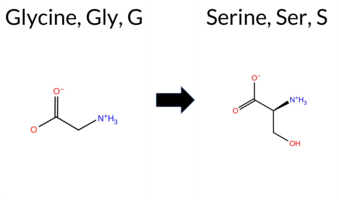 3DClick to see structure in 3D Viewer AIThe SynGAP1 missense variant G681S is not reported in ClinVar (ClinVar ID None) and is absent from gnomAD (gnomAD ID None). Prediction tools that agree on a benign effect include REVEL, premPS, SIFT, and FATHMM, while those that predict a pathogenic outcome are SGM‑Consensus, FoldX, PROVEAN, polyPhen‑2 HumDiv, polyPhen‑2 HumVar, ESM1b, and AlphaMissense‑Default. High‑accuracy assessments show AlphaMissense‑Optimized classifying the variant as benign, SGM‑Consensus (a majority vote of AlphaMissense‑Default, ESM1b, FATHMM, and PROVEAN) labeling it likely pathogenic, and Foldetta (combining FoldX‑MD and Rosetta outputs) yielding an uncertain result. Overall, the majority of tools lean toward pathogenicity, but the presence of a benign prediction from AlphaMissense‑Optimized and an uncertain Foldetta score leaves the assessment inconclusive. No ClinVar entry exists, so there is no contradiction with clinical database status. Disclaimer: This summary was generated using AI and should be interpreted alongside expert review. | Likely Pathogenic | GAP | 0.301917 | Structured | 0.140647 | Uncertain | 0.694 | 0.320 | 0.000 | -9.913 | Likely Pathogenic | 0.716 | Likely Pathogenic | Likely Benign | 2.11 | Destabilizing | 1.3 | -0.23 | Likely Benign | 0.94 | Ambiguous | 0.41 | Likely Benign | 0.483 | Likely Benign | -5.99 | Deleterious | 0.997 | Probably Damaging | 0.780 | Possibly Damaging | 3.45 | Benign | 0.08 | Tolerated | 0.2591 | 0.4584 | 1 | 0 | -0.4 | 30.03 | |||||||||||||||||||||||||||||
| c.3011A>T | H1004L 2D AIThe SynGAP1 missense variant H1004L is not reported in ClinVar (ClinVar status: none) and is absent from gnomAD (gnomAD ID: none). Prediction tools that agree on a benign effect include REVEL, SIFT, ESM1b, FATHMM, and AlphaMissense‑Optimized. Tools that predict a pathogenic effect are PROVEAN, polyPhen‑2 HumDiv, polyPhen‑2 HumVar, and AlphaMissense‑Default. High‑accuracy assessments show AlphaMissense‑Optimized as benign, while the SGM Consensus (a majority vote among AlphaMissense‑Default, ESM1b, FATHMM, and PROVEAN) is inconclusive (two pathogenic vs two benign votes). Foldetta, which would provide a protein‑folding stability estimate, has no available result for this variant. Overall, the balance of evidence leans toward a benign interpretation, and this conclusion does not contradict the lack of ClinVar annotation. Disclaimer: This summary was generated using AI and should be interpreted alongside expert review. | 0.808535 | Disordered | 0.943707 | Binding | 0.271 | 0.901 | 0.750 | -5.179 | Likely Benign | 0.716 | Likely Pathogenic | Likely Benign | 0.220 | Likely Benign | -3.14 | Deleterious | 0.999 | Probably Damaging | 0.996 | Probably Damaging | 2.75 | Benign | 0.55 | Tolerated | 0.1223 | 0.6026 | -2 | -3 | 7.0 | -23.98 | ||||||||||||||||||||||||||||||||||||||||
| c.854G>T | C285F 2D 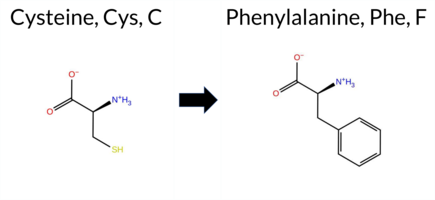 3DClick to see structure in 3D Viewer AIThe SynGAP1 missense variant C285F is not reported in ClinVar and is absent from gnomAD. Prediction tools that agree on a benign effect include premPS, SIFT, and AlphaMissense‑Optimized, whereas a majority of tools (SGM‑Consensus, REVEL, FoldX, PROVEAN, polyPhen‑2 HumDiv, polyPhen‑2 HumVar, ESM1b, FATHMM, AlphaMissense‑Default) predict a pathogenic outcome; Foldetta is uncertain. High‑accuracy methods give a mixed picture: AlphaMissense‑Optimized predicts benign, the SGM Consensus (majority vote of AlphaMissense‑Default, ESM1b, FATHMM, PROVEAN) predicts pathogenic, and Foldetta remains uncertain. Overall, the preponderance of evidence (12 pathogenic vs. 3 benign predictions) indicates that the variant is most likely pathogenic, and this assessment does not contradict the ClinVar status, which currently has no entry for this variant. Disclaimer: This summary was generated using AI and should be interpreted alongside expert review. | Likely Pathogenic | C2 | 0.144935 | Structured | 0.375400 | Uncertain | 0.946 | 0.250 | 0.000 | -9.397 | Likely Pathogenic | 0.716 | Likely Pathogenic | Likely Benign | 3.27 | Destabilizing | 1.1 | -1.72 | Ambiguous | 0.78 | Ambiguous | 0.35 | Likely Benign | 0.500 | Likely Pathogenic | -8.84 | Deleterious | 0.999 | Probably Damaging | 0.998 | Probably Damaging | 1.81 | Pathogenic | 0.12 | Tolerated | 0.1626 | 0.4007 | -4 | -2 | 0.3 | 44.04 | |||||||||||||||||||||||||||||
| c.1178G>A | G393D 2D 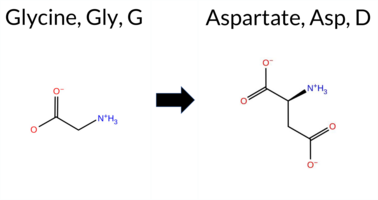 3DClick to see structure in 3D Viewer AIThe SynGAP1 missense variant G393D is not reported in ClinVar (ClinVar ID None) and has no entries in gnomAD (gnomAD ID None). Prediction tools that agree on a benign effect include SIFT, ESM1b, and AlphaMissense‑Optimized. In contrast, the majority of tools predict a pathogenic impact: SGM‑Consensus, REVEL, FoldX, PROVEAN, polyPhen‑2 (HumDiv and HumVar), FATHMM, and AlphaMissense‑Default all indicate pathogenicity. High‑accuracy assessments further support this: AlphaMissense‑Optimized reports a benign outcome, while the SGM Consensus (a majority vote of AlphaMissense‑Default, ESM1b, FATHMM, and PROVEAN) predicts pathogenicity. Foldetta, a protein‑folding stability method combining FoldX‑MD and Rosetta outputs, yields an uncertain result and is treated as unavailable. Overall, the preponderance of evidence points to a pathogenic effect for G393D, and this conclusion does not contradict any ClinVar annotation (none is available). Disclaimer: This summary was generated using AI and should be interpreted alongside expert review. | Likely Pathogenic | C2 | 0.538167 | Disordered | 0.402365 | Uncertain | 0.333 | 0.670 | 0.625 | -5.247 | Likely Benign | 0.717 | Likely Pathogenic | Likely Benign | 3.30 | Destabilizing | 1.4 | -1.00 | Ambiguous | 1.15 | Ambiguous | 0.57 | Ambiguous | 0.528 | Likely Pathogenic | -2.60 | Deleterious | 0.991 | Probably Damaging | 0.831 | Possibly Damaging | 1.32 | Pathogenic | 0.19 | Tolerated | 0.2077 | 0.1645 | 1 | -1 | -3.1 | 58.04 | |||||||||||||||||||||||||||||
| c.2468G>C | S823T 2D AIThe SynGAP1 missense variant S823T is not reported in ClinVar (ClinVar ID = None) and is absent from gnomAD (gnomAD ID = None). Prediction tools that agree on a benign effect include REVEL, PROVEAN, ESM1b, and AlphaMissense‑Optimized. Tools that agree on a pathogenic effect are polyPhen‑2 (HumDiv and HumVar), SIFT, FATHMM, and AlphaMissense‑Default. The high‑accuracy consensus (SGM Consensus) derived from a majority vote of AlphaMissense‑Default, ESM1b, FATHMM, and PROVEAN is inconclusive (two benign, two pathogenic). AlphaMissense‑Optimized predicts benign, while Foldetta (combining FoldX‑MD and Rosetta) has no available result for this variant. Overall, the majority of standard predictors indicate a pathogenic effect, and this assessment does not contradict the lack of ClinVar annotation. Thus, the variant is most likely pathogenic based on current computational predictions. Disclaimer: This summary was generated using AI and should be interpreted alongside expert review. | 0.685117 | Disordered | 0.627336 | Binding | 0.358 | 0.884 | 0.750 | -6.036 | Likely Benign | 0.717 | Likely Pathogenic | Likely Benign | 0.165 | Likely Benign | -2.02 | Neutral | 0.992 | Probably Damaging | 0.987 | Probably Damaging | 2.05 | Pathogenic | 0.00 | Affected | 0.1453 | 0.6580 | 1 | 1 | 0.1 | 14.03 | ||||||||||||||||||||||||||||||||||||||||
| c.2930C>A | A977D 2D AIThe SynGAP1 missense variant A977D is not reported in ClinVar and is absent from gnomAD. Prediction tools that agree on a benign effect include SGM‑Consensus (Likely Benign), REVEL, PROVEAN, ESM1b, FATHMM, and AlphaMissense‑Optimized. Tools that predict a pathogenic effect are polyPhen‑2 HumDiv, polyPhen‑2 HumVar, SIFT, and AlphaMissense‑Default. High‑accuracy methods give a consistent benign signal: AlphaMissense‑Optimized predicts benign, SGM‑Consensus (majority vote from AlphaMissense‑Default, ESM1b, FATHMM, PROVEAN) also indicates likely benign, while Foldetta’s protein‑folding stability assessment is unavailable. Overall, the majority of evidence points to a benign impact for A977D, and this conclusion does not contradict any ClinVar annotation (none is present). Disclaimer: This summary was generated using AI and should be interpreted alongside expert review. | Likely Benign | 0.882776 | Disordered | 0.975330 | Binding | 0.306 | 0.884 | 0.625 | -4.007 | Likely Benign | 0.717 | Likely Pathogenic | Likely Benign | 0.130 | Likely Benign | -1.15 | Neutral | 0.990 | Probably Damaging | 0.892 | Possibly Damaging | 3.96 | Benign | 0.01 | Affected | 0.2253 | 0.2651 | 0 | -2 | -5.3 | 44.01 | |||||||||||||||||||||||||||||||||||||||
| c.329T>C | V110A 2D AIThe SynGAP1 missense variant V110A is reported as “Likely Benign” in ClinVar and is not listed in gnomAD. Prediction tools that agree on a benign effect include REVEL, PROVEAN, polyPhen‑2 HumVar, SIFT, ESM1b, FATHMM, and AlphaMissense‑Optimized. Tools that predict a pathogenic effect are polyPhen‑2 HumDiv and AlphaMissense‑Default. The SGM‑Consensus, which is a majority vote from AlphaMissense‑Default, ESM1b, FATHMM, and PROVEAN, also indicates a likely benign outcome. High‑accuracy assessments show AlphaMissense‑Optimized as benign and the SGM‑Consensus as likely benign; the Foldetta protein‑folding stability analysis is unavailable. Overall, the consensus of the available predictions points to a benign impact for V110A, and this conclusion is not contradicted by any ClinVar annotation. Disclaimer: This summary was generated using AI and should be interpreted alongside expert review. | Likely Benign | 0.622677 | Disordered | 0.665934 | Binding | 0.347 | 0.860 | 0.750 | -2.971 | Likely Benign | 0.717 | Likely Pathogenic | Likely Benign | 0.075 | Likely Benign | -1.35 | Neutral | 0.462 | Possibly Damaging | 0.122 | Benign | 4.14 | Benign | 0.13 | Tolerated | 0.3196 | 0.2872 | 0 | 0 | -2.4 | -28.05 | |||||||||||||||||||||||||||||||||||||||
| c.3719G>A | R1240Q 2D 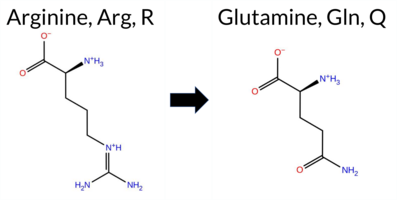 AIThe SynGAP1 missense variant R1240Q is reported in gnomAD (variant ID 6-33446711‑G‑A) but has no ClinVar entry. Functional prediction tools that agree on a benign effect are REVEL and AlphaMissense‑Optimized, whereas the majority of tools predict a pathogenic impact: PROVEAN, polyPhen‑2 (HumDiv and HumVar), SIFT, FATHMM, and AlphaMissense‑Default. ESM1b is uncertain. The high‑accuracy consensus (SGM‑Consensus) – a majority vote from AlphaMissense‑Default, ESM1b, FATHMM, and PROVEAN – is classified as Likely Pathogenic. AlphaMissense‑Optimized remains benign, and Foldetta (combining FoldX‑MD and Rosetta outputs) has no available result for this variant. Overall, the preponderance of predictions (six pathogenic vs. two benign) indicates that the variant is most likely pathogenic, and this assessment does not contradict any ClinVar status because none is available. Disclaimer: This summary was generated using AI and should be interpreted alongside expert review. | Likely Pathogenic | Coiled-coil | 0.541878 | Disordered | 0.511333 | Binding | 0.865 | 0.540 | 0.375 | 6-33446711-G-A | 2 | 1.24e-6 | -7.110 | In-Between | 0.717 | Likely Pathogenic | Likely Benign | 0.304 | Likely Benign | -3.09 | Deleterious | 0.999 | Probably Damaging | 0.994 | Probably Damaging | 1.69 | Pathogenic | 0.00 | Affected | 3.77 | 5 | 0.2377 | 0.1992 | 1 | 1 | 1.0 | -28.06 | |||||||||||||||||||||||||||||||||
| c.1897C>A | L633M 2D 3DClick to see structure in 3D Viewer AIThe SynGAP1 missense variant L633M has no ClinVar entry and is not reported in gnomAD. Prediction tools that agree on a benign effect include REVEL, PROVEAN, FATHMM, and AlphaMissense‑Optimized. Those that predict a pathogenic effect are polyPhen‑2 (HumDiv and HumVar), SIFT, ESM1b, and AlphaMissense‑Default. Four tools (FoldX, Rosetta, Foldetta, premPS) give uncertain or inconclusive results. High‑accuracy assessments show AlphaMissense‑Optimized as benign, while the SGM Consensus (majority vote from AlphaMissense‑Default, ESM1b, FATHMM, PROVEAN) is inconclusive due to a 2‑to‑2 split, and Foldetta is also inconclusive. Overall, the majority of definitive predictions (5 pathogenic vs. 4 benign) lean toward a pathogenic impact. This conclusion does not contradict ClinVar status, as no ClinVar classification exists for this variant. Disclaimer: This summary was generated using AI and should be interpreted alongside expert review. | GAP | 0.045352 | Structured | 0.045407 | Uncertain | 0.952 | 0.252 | 0.000 | -10.300 | Likely Pathogenic | 0.718 | Likely Pathogenic | Likely Benign | 0.61 | Ambiguous | 0.1 | 1.47 | Ambiguous | 1.04 | Ambiguous | 0.90 | Ambiguous | 0.355 | Likely Benign | -1.99 | Neutral | 1.000 | Probably Damaging | 1.000 | Probably Damaging | 2.77 | Benign | 0.01 | Affected | 0.0984 | 0.2683 | 4 | 2 | -1.9 | 18.03 | ||||||||||||||||||||||||||||||
| c.2282G>T | R761L 2D AIThe SynGAP1 missense variant R761L is not reported in ClinVar (ClinVar ID = None) and is absent from gnomAD (gnomAD ID = None). Prediction tools that agree on a benign effect include REVEL, SIFT, ESM1b, FATHMM, and AlphaMissense‑Optimized. Tools that predict a pathogenic effect are PROVEAN, polyPhen‑2 HumDiv, polyPhen‑2 HumVar, and AlphaMissense‑Default. High‑accuracy assessments show AlphaMissense‑Optimized as benign; the SGM Consensus (majority vote from AlphaMissense‑Default, ESM1b, FATHMM, PROVEAN) is inconclusive (2 benign vs 2 pathogenic), and Foldetta results are unavailable. Overall, the majority of predictions lean toward a benign impact. This consensus does not contradict any ClinVar annotation, as no ClinVar entry exists for this variant. Disclaimer: This summary was generated using AI and should be interpreted alongside expert review. | 0.538167 | Disordered | 0.900613 | Binding | 0.353 | 0.865 | 0.250 | -5.653 | Likely Benign | 0.718 | Likely Pathogenic | Likely Benign | 0.171 | Likely Benign | -2.51 | Deleterious | 0.992 | Probably Damaging | 0.900 | Possibly Damaging | 2.70 | Benign | 0.24 | Tolerated | 0.1786 | 0.4326 | -3 | -2 | 8.3 | -43.03 | ||||||||||||||||||||||||||||||||||||||||
| c.2569A>C | S857R 2D AIThe SynGAP1 missense variant S857R is not reported in ClinVar (no ClinVar ID) and is absent from gnomAD (no gnomAD ID). Prediction tools that agree on a benign effect include SGM‑Consensus, REVEL, PROVEAN, SIFT, ESM1b, FATHMM, and AlphaMissense‑Optimized. Those that predict a pathogenic effect are polyPhen‑2 HumDiv, polyPhen‑2 HumVar, and AlphaMissense‑Default. High‑accuracy assessments show AlphaMissense‑Optimized as benign, and the SGM‑Consensus (majority vote from AlphaMissense‑Default, ESM1b, FATHMM, PROVEAN) also indicates a likely benign outcome. Foldetta results are unavailable. Overall, the majority of evidence points to a benign impact for S857R, and this conclusion does not contradict any ClinVar annotation because no ClinVar entry exists for this variant. Disclaimer: This summary was generated using AI and should be interpreted alongside expert review. | Likely Benign | 0.728858 | Disordered | 0.475747 | Uncertain | 0.288 | 0.826 | 0.375 | -4.490 | Likely Benign | 0.718 | Likely Pathogenic | Likely Benign | 0.138 | Likely Benign | -1.09 | Neutral | 0.997 | Probably Damaging | 0.992 | Probably Damaging | 4.07 | Benign | 0.18 | Tolerated | 0.1030 | 0.4112 | 0 | -1 | -3.7 | 69.11 | |||||||||||||||||||||||||||||||||||||||
| c.2571C>A | S857R 2D AIThe SynGAP1 missense variant S857R is not reported in ClinVar and has no entry in gnomAD, indicating it is not catalogued in these databases. Prediction tools that agree on a benign effect include SGM‑Consensus (Likely Benign), REVEL, PROVEAN, SIFT, ESM1b, FATHMM, and AlphaMissense‑Optimized. Tools that predict a pathogenic effect are polyPhen‑2 HumDiv, polyPhen‑2 HumVar, and AlphaMissense‑Default. High‑accuracy assessments further support a benign outcome: AlphaMissense‑Optimized predicts benign, and the SGM‑Consensus (majority vote from AlphaMissense‑Default, ESM1b, FATHMM, PROVEAN) also resolves to benign. Foldetta, a protein‑folding stability method combining FoldX‑MD and Rosetta outputs, has no available result for this variant. Overall, the majority of evidence points to a benign impact, and this conclusion does not contradict any ClinVar annotation because none exists. Disclaimer: This summary was generated using AI and should be interpreted alongside expert review. | Likely Benign | 0.728858 | Disordered | 0.475747 | Uncertain | 0.288 | 0.826 | 0.375 | -4.490 | Likely Benign | 0.718 | Likely Pathogenic | Likely Benign | 0.132 | Likely Benign | -1.09 | Neutral | 0.997 | Probably Damaging | 0.992 | Probably Damaging | 4.07 | Benign | 0.18 | Tolerated | 0.1030 | 0.4112 | 0 | -1 | -3.7 | 69.11 | |||||||||||||||||||||||||||||||||||||||
| c.2571C>G | S857R 2D AIThe SynGAP1 missense variant S857R is not reported in ClinVar and has no entry in gnomAD, indicating it is not catalogued in these databases. Prediction tools that agree on a benign effect include SGM‑Consensus (Likely Benign), REVEL, PROVEAN, SIFT, ESM1b, FATHMM, and AlphaMissense‑Optimized. Tools that predict a pathogenic effect are polyPhen‑2 HumDiv, polyPhen‑2 HumVar, and AlphaMissense‑Default. High‑accuracy assessments further support a benign outcome: AlphaMissense‑Optimized predicts benign, and the SGM‑Consensus (majority vote from AlphaMissense‑Default, ESM1b, FATHMM, PROVEAN) also resolves to benign. Foldetta, a protein‑folding stability method combining FoldX‑MD and Rosetta outputs, has no available result for this variant. Overall, the majority of evidence points to a benign impact, and this conclusion does not contradict any ClinVar annotation because none exists. Disclaimer: This summary was generated using AI and should be interpreted alongside expert review. | Likely Benign | 0.728858 | Disordered | 0.475747 | Uncertain | 0.288 | 0.826 | 0.375 | -4.490 | Likely Benign | 0.718 | Likely Pathogenic | Likely Benign | 0.132 | Likely Benign | -1.09 | Neutral | 0.997 | Probably Damaging | 0.992 | Probably Damaging | 4.07 | Benign | 0.18 | Tolerated | 0.1030 | 0.4112 | 0 | -1 | -3.7 | 69.11 | |||||||||||||||||||||||||||||||||||||||
| c.2936T>C | F979S 2D 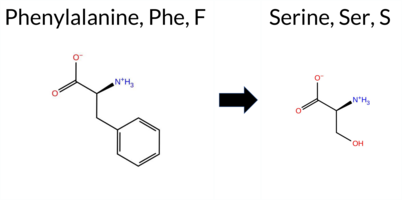 AIThe SynGAP1 missense variant F979S is not reported in ClinVar and is absent from gnomAD. Prediction tools that agree on a benign effect include REVEL, PROVEAN, polyPhen‑2 (HumDiv and HumVar), ESM1b, FATHMM, and AlphaMissense‑Optimized. Tools that predict a pathogenic effect are SIFT and AlphaMissense‑Default. The high‑accuracy consensus, SGM‑Consensus, classifies the variant as Likely Benign, and the AlphaMissense‑Optimized score also indicates a benign outcome. Foldetta, a protein‑folding stability method that integrates FoldX‑MD and Rosetta outputs, has no available result for this variant. Overall, the majority of evidence points to a benign impact, and this assessment does not contradict any ClinVar annotation because no ClinVar entry exists for F979S. Disclaimer: This summary was generated using AI and should be interpreted alongside expert review. | Likely Benign | 0.816150 | Disordered | 0.977500 | Binding | 0.274 | 0.889 | 0.625 | -2.350 | Likely Benign | 0.718 | Likely Pathogenic | Likely Benign | 0.211 | Likely Benign | -0.05 | Neutral | 0.451 | Benign | 0.220 | Benign | 4.23 | Benign | 0.01 | Affected | 0.4397 | 0.0384 | -3 | -2 | -3.6 | -60.10 | |||||||||||||||||||||||||||||||||||||||
| c.1150G>C | G384R 2D 3DClick to see structure in 3D Viewer AISynGAP1 missense variant G384R is not reported in ClinVar and is absent from gnomAD. Functional prediction tools show a split: benign calls come from REVEL, premPS, PROVEAN, and AlphaMissense‑Optimized, whereas pathogenic calls are made by FoldX, Rosetta, Foldetta, polyPhen‑2 (HumDiv and HumVar), SIFT, ESM1b, FATHMM, and AlphaMissense‑Default. The SGM‑Consensus, which aggregates the majority vote of AlphaMissense‑Default, ESM1b, FATHMM, and PROVEAN, classifies the variant as likely pathogenic. High‑accuracy assessments further support a deleterious effect: AlphaMissense‑Optimized predicts benign, but SGM‑Consensus and Foldetta both predict pathogenic, with Foldetta integrating FoldX‑MD and Rosetta stability outputs. Overall, the majority of evidence points to a pathogenic impact, and this conclusion does not conflict with the absence of a ClinVar annotation. Disclaimer: This summary was generated using AI and should be interpreted alongside expert review. | Likely Pathogenic | C2 | 0.728858 | Disordered | 0.427831 | Uncertain | 0.323 | 0.934 | 0.750 | -9.186 | Likely Pathogenic | 0.719 | Likely Pathogenic | Likely Benign | 2.16 | Destabilizing | 0.4 | 5.06 | Destabilizing | 3.61 | Destabilizing | 0.25 | Likely Benign | 0.475 | Likely Benign | -0.96 | Neutral | 0.994 | Probably Damaging | 0.990 | Probably Damaging | 1.32 | Pathogenic | 0.02 | Affected | 0.1250 | 0.4156 | -3 | -2 | -4.1 | 99.14 | |||||||||||||||||||||||||||||
| c.2486A>T | E829V 2D AIThe SynGAP1 missense variant E829V is not reported in ClinVar (no ClinVar ID) and is absent from gnomAD (no gnomAD ID). Prediction tools that agree on a benign effect include REVEL, ESM1b, and AlphaMissense‑Optimized. Tools that predict a pathogenic effect are PROVEAN, polyPhen‑2 HumDiv, polyPhen‑2 HumVar, SIFT, FATHMM, and AlphaMissense‑Default. The SGM‑Consensus, which aggregates the majority vote of AlphaMissense‑Default, ESM1b, FATHMM, and PROVEAN, is classified as Likely Pathogenic. High‑accuracy assessments show AlphaMissense‑Optimized as benign, while the SGM‑Consensus (majority of the four high‑accuracy inputs) remains pathogenic; Foldetta results are unavailable. Based on the overall distribution of predictions, the variant is most likely pathogenic, and this assessment does not contradict any ClinVar status because no ClinVar entry exists. Disclaimer: This summary was generated using AI and should be interpreted alongside expert review. | Likely Pathogenic | 0.562014 | Disordered | 0.626045 | Binding | 0.326 | 0.882 | 0.375 | -5.142 | Likely Benign | 0.719 | Likely Pathogenic | Likely Benign | 0.296 | Likely Benign | -4.86 | Deleterious | 0.999 | Probably Damaging | 0.977 | Probably Damaging | 2.21 | Pathogenic | 0.00 | Affected | 0.0835 | 0.7984 | -2 | -2 | 7.7 | -29.98 | |||||||||||||||||||||||||||||||||||||||
| c.67G>A | D23N 2D AIThe SynGAP1 D23N missense variant has no ClinVar record and is not listed in gnomAD. Prediction tools that agree on a benign effect include SGM‑Consensus (Likely Benign), REVEL, PROVEAN, ESM1b, FATHMM, and AlphaMissense‑Optimized. Tools that predict a pathogenic effect are polyPhen‑2 HumDiv, polyPhen‑2 HumVar, SIFT, and AlphaMissense‑Default. High‑accuracy assessments show AlphaMissense‑Optimized as benign and the SGM‑Consensus (majority vote from AlphaMissense‑Default, ESM1b, FATHMM, PROVEAN) also as benign; Foldetta results are unavailable. Overall, the majority of evidence points to a benign impact. This conclusion is not contradicted by ClinVar status, which has no entry for this variant. Disclaimer: This summary was generated using AI and should be interpreted alongside expert review. | Likely Benign | 0.557691 | Disordered | 0.440341 | Uncertain | 0.369 | 0.892 | 0.375 | -3.918 | Likely Benign | 0.719 | Likely Pathogenic | Likely Benign | 0.077 | Likely Benign | -1.88 | Neutral | 0.805 | Possibly Damaging | 0.539 | Possibly Damaging | 3.52 | Benign | 0.00 | Affected | 0.2236 | 0.8784 | 2 | 1 | 0.0 | -0.98 | |||||||||||||||||||||||||||||||||||||||
| c.866T>G | M289R 2D 3DClick to see structure in 3D Viewer AIThe SynGAP1 missense variant M289R has no ClinVar entry and is not reported in gnomAD. Prediction tools that classify the variant as benign include REVEL, FoldX, Rosetta, Foldetta, SIFT, and AlphaMissense‑Optimized. Those that predict pathogenicity are SGM‑Consensus, premPS, PROVEAN, polyPhen‑2 HumDiv, polyPhen‑2 HumVar, ESM1b, FATHMM, and AlphaMissense‑Default. High‑accuracy assessments show AlphaMissense‑Optimized as benign, SGM‑Consensus (majority vote of AlphaMissense‑Default, ESM1b, FATHMM, PROVEAN) as likely pathogenic, and Foldetta (combining FoldX‑MD and Rosetta outputs) as benign. No predictions or stability results are missing or inconclusive. Overall, the majority of tools lean toward a pathogenic effect, and this conclusion does not contradict the absence of ClinVar annotation. Disclaimer: This summary was generated using AI and should be interpreted alongside expert review. | Likely Pathogenic | C2 | 0.127496 | Structured | 0.403499 | Uncertain | 0.886 | 0.276 | 0.000 | -11.090 | Likely Pathogenic | 0.719 | Likely Pathogenic | Likely Benign | 0.04 | Likely Benign | 0.1 | 0.28 | Likely Benign | 0.16 | Likely Benign | 1.01 | Destabilizing | 0.228 | Likely Benign | -2.84 | Deleterious | 0.989 | Probably Damaging | 0.767 | Possibly Damaging | 1.84 | Pathogenic | 0.08 | Tolerated | 0.1482 | 0.0828 | 0 | -1 | -6.4 | 24.99 | |||||||||||||||||||||||||||||
| c.932A>G | H311R 2D 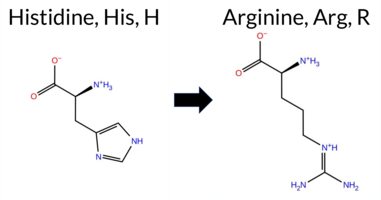 3DClick to see structure in 3D Viewer AIThe SynGAP1 missense variant H311R is not reported in ClinVar (ClinVar ID None) and is absent from gnomAD (gnomAD ID None). Prediction tools that agree on a benign effect include FoldX, SIFT, and AlphaMissense‑Optimized, whereas a majority of tools (SGM‑Consensus, REVEL, PROVEAN, polyPhen‑2 HumDiv, polyPhen‑2 HumVar, ESM1b, FATHMM, AlphaMissense‑Default) predict a pathogenic outcome. Tools with uncertain or inconclusive results are Rosetta, Foldetta, and premPS. High‑accuracy methods give a mixed picture: AlphaMissense‑Optimized indicates benign, the SGM Consensus (majority vote of AlphaMissense‑Default, ESM1b, FATHMM, PROVEAN) indicates pathogenic, and Foldetta remains uncertain. Overall, the balance of evidence favors a pathogenic classification, and this assessment does not contradict the lack of ClinVar annotation. Disclaimer: This summary was generated using AI and should be interpreted alongside expert review. | Likely Pathogenic | C2 | 0.229226 | Structured | 0.354792 | Uncertain | 0.902 | 0.314 | 0.125 | -9.825 | Likely Pathogenic | 0.719 | Likely Pathogenic | Likely Benign | 0.43 | Likely Benign | 0.1 | 0.85 | Ambiguous | 0.64 | Ambiguous | 0.70 | Ambiguous | 0.532 | Likely Pathogenic | -5.72 | Deleterious | 0.997 | Probably Damaging | 0.994 | Probably Damaging | 1.94 | Pathogenic | 0.14 | Tolerated | 0.1931 | 0.2490 | 2 | 0 | -1.3 | 19.05 | |||||||||||||||||||||||||||||
| c.1512A>C | K504N 2D 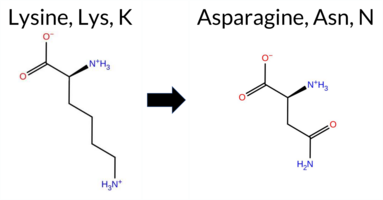 3DClick to see structure in 3D Viewer AIThe SynGAP1 missense variant K504N is not reported in ClinVar and has no entry in gnomAD. Prediction tools that agree on a benign effect include REVEL, FoldX, SIFT, and AlphaMissense‑Optimized. Those that predict a pathogenic effect comprise SGM‑Consensus, premPS, PROVEAN, polyPhen‑2 (HumDiv and HumVar), ESM1b, FATHMM, and AlphaMissense‑Default; Rosetta is uncertain. High‑accuracy assessments show AlphaMissense‑Optimized as benign, SGM‑Consensus (a majority vote of AlphaMissense‑Default, ESM1b, FATHMM, and PROVEAN) as likely pathogenic, and Foldetta (combining FoldX‑MD and Rosetta outputs) as benign. Overall, the majority of tools (8/13) predict pathogenicity, while 4 predict benign and one is uncertain. Thus, the variant is most likely pathogenic based on the prevailing predictions, and this assessment does not contradict ClinVar status, which is currently absent. Disclaimer: This summary was generated using AI and should be interpreted alongside expert review. | Likely Pathogenic | GAP | 0.028107 | Structured | 0.304984 | Uncertain | 0.850 | 0.189 | 0.000 | -8.908 | Likely Pathogenic | 0.720 | Likely Pathogenic | Likely Benign | 0.26 | Likely Benign | 0.2 | 0.57 | Ambiguous | 0.42 | Likely Benign | 1.00 | Destabilizing | 0.430 | Likely Benign | -4.37 | Deleterious | 0.993 | Probably Damaging | 0.922 | Probably Damaging | -1.44 | Pathogenic | 0.07 | Tolerated | 0.2470 | 0.0926 | 1 | 0 | 0.4 | -14.07 | |||||||||||||||||||||||||||||
| c.1512A>T | K504N 2D 3DClick to see structure in 3D Viewer AIThe SynGAP1 K504N missense variant is not reported in ClinVar and is absent from gnomAD. Prediction tools that agree on a benign effect include REVEL, FoldX, SIFT, AlphaMissense‑Optimized, and the folding‑stability method Foldetta. Tools that predict a pathogenic effect comprise SGM‑Consensus, premPS, PROVEAN, polyPhen‑2 (HumDiv and HumVar), ESM1b, FATHMM, and AlphaMissense‑Default. High‑accuracy assessments show AlphaMissense‑Optimized classifying the variant as benign, SGM‑Consensus (a majority vote of AlphaMissense‑Default, ESM1b, FATHMM, and PROVEAN) labeling it likely pathogenic, and Foldetta indicating a benign folding‑stability outcome. Overall, the majority of predictions (8 out of 13) support a pathogenic interpretation. Thus, the variant is most likely pathogenic, and this assessment does not contradict the ClinVar status, which currently has no entry for this variant. Disclaimer: This summary was generated using AI and should be interpreted alongside expert review. | Likely Pathogenic | GAP | 0.028107 | Structured | 0.304984 | Uncertain | 0.850 | 0.189 | 0.000 | -8.908 | Likely Pathogenic | 0.720 | Likely Pathogenic | Likely Benign | 0.26 | Likely Benign | 0.2 | 0.57 | Ambiguous | 0.42 | Likely Benign | 1.00 | Destabilizing | 0.430 | Likely Benign | -4.37 | Deleterious | 0.993 | Probably Damaging | 0.922 | Probably Damaging | -1.44 | Pathogenic | 0.07 | Tolerated | 0.2470 | 0.0926 | 1 | 0 | 0.4 | -14.07 | |||||||||||||||||||||||||||||
| c.2541G>C | Q847H 2D 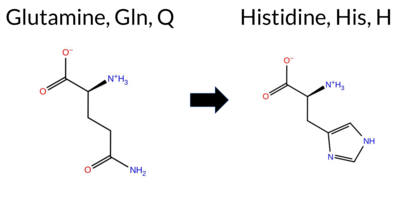 AIThe SynGAP1 missense variant Q847H is not reported in ClinVar (no ClinVar ID) and is absent from gnomAD (no gnomAD ID). Prediction tools that indicate a benign effect include REVEL, ESM1b, and AlphaMissense‑Optimized, whereas the remaining tools—PROVEAN, polyPhen‑2 (HumDiv and HumVar), SIFT, FATHMM, AlphaMissense‑Default—predict a pathogenic outcome. The SGM‑Consensus, derived from a majority vote of AlphaMissense‑Default, ESM1b, FATHMM, and PROVEAN, classifies the variant as Likely Pathogenic. High‑accuracy assessments show AlphaMissense‑Optimized as benign, SGM‑Consensus as likely pathogenic, and the Foldetta stability analysis is unavailable. Overall, the majority of predictions (seven pathogenic vs. three benign) and the SGM‑Consensus result point to a pathogenic effect. Thus, the variant is most likely pathogenic, and this assessment does not contradict any ClinVar status because no ClinVar classification exists. Disclaimer: This summary was generated using AI and should be interpreted alongside expert review. | Likely Pathogenic | 0.653063 | Disordered | 0.577677 | Binding | 0.282 | 0.818 | 0.500 | -4.208 | Likely Benign | 0.720 | Likely Pathogenic | Likely Benign | 0.204 | Likely Benign | -2.82 | Deleterious | 0.990 | Probably Damaging | 0.925 | Probably Damaging | 2.27 | Pathogenic | 0.00 | Affected | 0.1429 | 0.3634 | 3 | 0 | 0.3 | 9.01 | |||||||||||||||||||||||||||||||||||||||
| c.2541G>T | Q847H 2D AIThe SynGAP1 missense variant Q847H is not reported in ClinVar (no ClinVar ID) and is absent from gnomAD (no gnomAD ID). Prediction tools that indicate a benign effect include REVEL, ESM1b, and AlphaMissense‑Optimized, whereas the remaining tools—PROVEAN, polyPhen‑2 (HumDiv and HumVar), SIFT, FATHMM, AlphaMissense‑Default—predict a pathogenic outcome. The SGM‑Consensus, derived from a majority vote of AlphaMissense‑Default, ESM1b, FATHMM, and PROVEAN, classifies the variant as Likely Pathogenic. High‑accuracy assessments show AlphaMissense‑Optimized as benign, SGM‑Consensus as likely pathogenic, and the Foldetta stability analysis is unavailable. Overall, the majority of predictions (seven pathogenic vs. three benign) and the SGM‑Consensus support a pathogenic interpretation. Thus, the variant is most likely pathogenic, and this assessment does not contradict any ClinVar status because no ClinVar claim exists. Disclaimer: This summary was generated using AI and should be interpreted alongside expert review. | Likely Pathogenic | 0.653063 | Disordered | 0.577677 | Binding | 0.282 | 0.818 | 0.500 | -4.208 | Likely Benign | 0.720 | Likely Pathogenic | Likely Benign | 0.204 | Likely Benign | -2.82 | Deleterious | 0.990 | Probably Damaging | 0.925 | Probably Damaging | 2.27 | Pathogenic | 0.00 | Affected | 0.1429 | 0.3634 | 3 | 0 | 0.3 | 9.01 | |||||||||||||||||||||||||||||||||||||||
| c.334G>T | G112W 2D 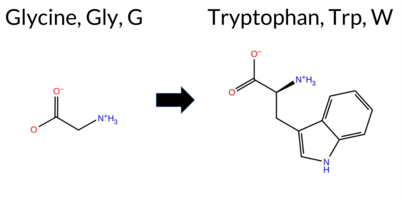 AIThe SynGAP1 missense variant G112W is not reported in ClinVar (ClinVar ID = None) and is absent from gnomAD (gnomAD ID = None). Prediction tools that agree on a benign effect include REVEL, ESM1b, FATHMM, and AlphaMissense‑Optimized. Tools that agree on a pathogenic effect are PROVEAN, polyPhen‑2 HumDiv, polyPhen‑2 HumVar, SIFT, and AlphaMissense‑Default. High‑accuracy assessments show AlphaMissense‑Optimized predicts a benign outcome, while the SGM Consensus (majority vote from AlphaMissense‑Default, ESM1b, FATHMM, and PROVEAN) is inconclusive (2 pathogenic vs. 2 benign votes). Foldetta, a protein‑folding stability method combining FoldX‑MD and Rosetta outputs, has no available result for this variant. Overall, the majority of predictions (five pathogenic vs. four benign) lean toward a pathogenic interpretation. This conclusion is not contradicted by ClinVar status, as the variant is not yet catalogued there. Disclaimer: This summary was generated using AI and should be interpreted alongside expert review. | 0.728858 | Disordered | 0.640153 | Binding | 0.332 | 0.867 | 0.750 | -6.382 | Likely Benign | 0.720 | Likely Pathogenic | Likely Benign | 0.190 | Likely Benign | -3.98 | Deleterious | 0.983 | Probably Damaging | 0.778 | Possibly Damaging | 3.90 | Benign | 0.00 | Affected | 0.0631 | 0.4212 | -7 | -2 | -0.5 | 129.16 | ||||||||||||||||||||||||||||||||||||||||
| c.1088A>G | Y363C 2D 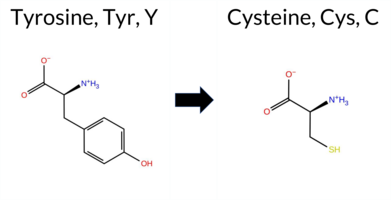 3DClick to see structure in 3D Viewer AIThe SynGAP1 missense variant Y363C is not reported in ClinVar (ClinVar ID: None) but is present in gnomAD (ID 6‑33437993‑A‑G). Prediction tools cluster into two groups: benign predictions come from REVEL and AlphaMissense‑Optimized, whereas the remaining tools—FoldX, Rosetta, Foldetta, premPS, PROVEAN, polyPhen‑2 (HumDiv and HumVar), SIFT, ESM1b, FATHMM, AlphaMissense‑Default, and the SGM‑Consensus—indicate pathogenicity. High‑accuracy assessments further support this: AlphaMissense‑Optimized predicts benign, the SGM‑Consensus (majority vote of AlphaMissense‑Default, ESM1b, FATHMM, PROVEAN) predicts pathogenic, and Foldetta (combining FoldX‑MD and Rosetta outputs) also predicts pathogenic. With the majority of evidence pointing to deleterious effects and no ClinVar annotation to contradict, the variant is most likely pathogenic. Disclaimer: This summary was generated using AI and should be interpreted alongside expert review. | Likely Pathogenic | C2 | 0.321458 | Structured | 0.435392 | Uncertain | 0.954 | 0.586 | 0.125 | 6-33437993-A-G | 1 | 7.13e-7 | -9.059 | Likely Pathogenic | 0.721 | Likely Pathogenic | Likely Benign | 2.21 | Destabilizing | 0.1 | 3.96 | Destabilizing | 3.09 | Destabilizing | 2.05 | Destabilizing | 0.414 | Likely Benign | -8.07 | Deleterious | 1.000 | Probably Damaging | 0.996 | Probably Damaging | 1.54 | Pathogenic | 0.00 | Affected | 3.39 | 24 | 0.3759 | 0.3463 | -2 | 0 | 3.8 | -60.04 | ||||||||||||||||||||||||
| c.1312G>C | A438P 2D 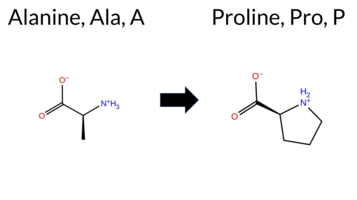 3DClick to see structure in 3D Viewer AIThe SynGAP1 A438P missense variant is not reported in ClinVar and is absent from gnomAD. Prediction tools that agree on a benign effect include REVEL, PROVEAN, FATHMM, and AlphaMissense‑Optimized, whereas those that predict a pathogenic impact are FoldX, Rosetta, Foldetta, polyPhen‑2 (HumDiv), SIFT, and AlphaMissense‑Default; premPS and ESM1b are inconclusive. High‑accuracy assessments show AlphaMissense‑Optimized as benign, the SGM Consensus (majority vote from AlphaMissense‑Default, ESM1b, FATHMM, PROVEAN) as benign, and Foldetta as pathogenic. Overall, six tools predict pathogenicity versus four predicting benign, and the high‑accuracy consensus is split, but the majority of evidence points toward a deleterious effect. Thus, the variant is most likely pathogenic based on current predictions, and this assessment does not contradict the ClinVar status, which has no entry for this variant. Disclaimer: This summary was generated using AI and should be interpreted alongside expert review. | GAP | 0.147574 | Structured | 0.290154 | Uncertain | 0.929 | 0.293 | 0.000 | -7.955 | In-Between | 0.721 | Likely Pathogenic | Likely Benign | 2.21 | Destabilizing | 0.1 | 6.36 | Destabilizing | 4.29 | Destabilizing | 0.83 | Ambiguous | 0.158 | Likely Benign | -2.46 | Neutral | 0.815 | Possibly Damaging | 0.137 | Benign | 4.09 | Benign | 0.05 | Affected | 0.1624 | 0.4150 | 1 | -1 | -3.4 | 26.04 | ||||||||||||||||||||||||||||||
| c.1424G>A | R475Q 2D 3DClick to see structure in 3D Viewer AIThe SynGAP1 missense variant R475Q is listed in ClinVar with an uncertain significance and is present in gnomAD (variant ID 6-33438456‑G‑A). Prediction tools that indicate a benign effect include AlphaMissense‑Optimized, Foldetta, and Rosetta. Those that predict a pathogenic effect comprise SGM Consensus, SIFT, PolyPhen‑2 (HumDiv and HumVar), REVEL, PROVEAN, ESM1b, FATHMM, and AlphaMissense‑Default; FoldX and premPS are inconclusive. High‑accuracy assessments show AlphaMissense‑Optimized as benign, SGM Consensus (majority vote of AlphaMissense‑Default, ESM1b, FATHMM, PROVEAN) as pathogenic, and Foldetta as benign. Overall, the majority of evidence points toward a pathogenic impact, which contrasts with the ClinVar designation of uncertain significance. Disclaimer: This summary was generated using AI and should be interpreted alongside expert review. | Likely Pathogenic | GAP | 0.175930 | Structured | 0.382696 | Uncertain | 0.852 | 0.261 | 0.000 | Uncertain | 2 | 6-33438456-G-A | 5 | 3.10e-6 | -12.087 | Likely Pathogenic | 0.721 | Likely Pathogenic | Likely Benign | 0.71 | Ambiguous | 0.1 | 0.12 | Likely Benign | 0.42 | Likely Benign | 0.82 | Ambiguous | 0.632 | Likely Pathogenic | -3.65 | Deleterious | 1.000 | Probably Damaging | 0.991 | Probably Damaging | -1.32 | Pathogenic | 0.01 | Affected | 3.39 | 28 | 0.2190 | 0.1926 | 1 | 1 | 1.0 | -28.06 | 253.6 | 52.7 | 0.0 | 0.0 | -0.8 | 0.0 | X | X | X | Potentially Pathogenic | In the WT simulations, the guanidinium group of Arg475, located near the end of an α-helix (res. Ala461-Phe476), stacks with the phenyl ring of Phe476 and forms a salt bridge with Glu472. Additionally, Arg475 occasionally forms another salt bridge with the carboxylate group of Glu486 on the α-α loop connecting the two α-helices (res. Ala461-Phe476 and Leu489-Glu519) at the GAP-Ras interface. Therefore, Arg475 potentially plays a key role in positioning the loop by interacting with Glu486, which is necessary for the positioning of the “arginine finger” (Arg485) and, ultimately, for RasGTPase activation. In the variant simulations, Asn475 forms a hydrogen bond with Arg479 on the proceeding α-α loop. The absence of Phe476/Arg475 stacking and the Arg475-Glu472 salt bridge weakens the integrity of the terminal end of the α-helix during the variant simulations. Lastly, the potential effect of the residue swap on the SynGAP-Ras complex formation or GTPase activation cannot be fully addressed using the SynGAP solvent-only simulations. | |||||||||||
| c.1930G>T | D644Y 2D 3DClick to see structure in 3D Viewer AISynGAP1 D644Y is not reported in ClinVar and is absent from gnomAD. Prediction tools that classify the variant as benign include REVEL, FoldX, premPS, polyPhen‑2 HumVar, FATHMM, and AlphaMissense‑Optimized. Those that predict pathogenicity are PROVEAN, polyPhen‑2 HumDiv, SIFT, ESM1b, and AlphaMissense‑Default; the SGM‑Consensus, which aggregates AlphaMissense‑Default, ESM1b, FATHMM, and PROVEAN, reports it as Likely Pathogenic. High‑accuracy assessments show AlphaMissense‑Optimized as Benign, SGM‑Consensus as Likely Pathogenic, and Foldetta (combining FoldX‑MD and Rosetta outputs) as Uncertain. The remaining tools, FoldX, REVEL, premPS, polyPhen‑2 HumVar, and FATHMM, support a benign effect, while PROVEAN, polyPhen‑2 HumDiv, SIFT, ESM1b, and AlphaMissense‑Default support a pathogenic effect. Overall, the majority of evidence leans toward pathogenicity, and this assessment does not contradict the ClinVar status, which currently has no entry for this variant. Disclaimer: This summary was generated using AI and should be interpreted alongside expert review. | Likely Pathogenic | GAP | 0.066181 | Structured | 0.248888 | Uncertain | 0.883 | 0.320 | 0.000 | -10.143 | Likely Pathogenic | 0.721 | Likely Pathogenic | Likely Benign | 0.03 | Likely Benign | 0.1 | -1.18 | Ambiguous | -0.58 | Ambiguous | -0.04 | Likely Benign | 0.318 | Likely Benign | -4.93 | Deleterious | 0.968 | Probably Damaging | 0.311 | Benign | 3.44 | Benign | 0.02 | Affected | 0.0679 | 0.6094 | -4 | -3 | 2.2 | 48.09 | |||||||||||||||||||||||||||||
| c.2354G>C | R785P 2D AIThe SynGAP1 missense variant R785P is catalogued in gnomAD (6‑33442906‑G‑C) but has no ClinVar entry. Functional prediction tools cluster into two groups: benign predictions come from REVEL, ESM1b, and AlphaMissense‑Optimized, whereas pathogenic predictions arise from PROVEAN, polyPhen‑2 (HumDiv and HumVar), SIFT, FATHMM, and AlphaMissense‑Default. The SGM‑Consensus, derived from a majority vote of AlphaMissense‑Default, ESM1b, FATHMM, and PROVEAN, reports the variant as Likely Pathogenic. High‑accuracy assessments further show AlphaMissense‑Optimized as Benign, while the SGM‑Consensus remains Likely Pathogenic; Foldetta results are unavailable. Overall, the balance of evidence, with seven pathogenic versus three benign predictions and a pathogenic consensus from SGM, indicates that R785P is most likely pathogenic. This conclusion does not contradict ClinVar, as no ClinVar classification exists for this variant. Disclaimer: This summary was generated using AI and should be interpreted alongside expert review. | Likely Pathogenic | SH3-binding motif | 0.859585 | Disordered | 0.681730 | Binding | 0.325 | 0.896 | 0.625 | 6-33442906-G-C | -3.603 | Likely Benign | 0.721 | Likely Pathogenic | Likely Benign | 0.203 | Likely Benign | -4.12 | Deleterious | 0.998 | Probably Damaging | 0.958 | Probably Damaging | 2.24 | Pathogenic | 0.01 | Affected | 3.64 | 6 | 0.2370 | 0.4485 | -2 | 0 | 2.9 | -59.07 | |||||||||||||||||||||||||||||||||||
| c.2699C>A | T900K 2D AISynGAP1 missense variant T900K has no ClinVar entry and is absent from gnomAD. Functional prediction tools cluster into two groups: benign predictions include REVEL, PROVEAN, SIFT, ESM1b, FATHMM, AlphaMissense‑Optimized, and the SGM‑Consensus (Likely Benign), whereas pathogenic predictions come from polyPhen‑2 HumDiv, polyPhen‑2 HumVar, and AlphaMissense‑Default. High‑accuracy assessments further support a benign outcome: AlphaMissense‑Optimized reports Benign, and the SGM‑Consensus (majority vote of AlphaMissense‑Default, ESM1b, FATHMM, PROVEAN) also indicates Likely Benign. Foldetta, a protein‑folding stability method combining FoldX‑MD and Rosetta outputs, has no available result for this variant. Overall, the preponderance of evidence points to a benign effect for T900K, and this conclusion is not contradicted by any ClinVar annotation. Disclaimer: This summary was generated using AI and should be interpreted alongside expert review. | Likely Benign | 0.675549 | Disordered | 0.465347 | Uncertain | 0.289 | 0.924 | 0.375 | -4.566 | Likely Benign | 0.721 | Likely Pathogenic | Likely Benign | 0.080 | Likely Benign | -0.64 | Neutral | 0.782 | Possibly Damaging | 0.447 | Possibly Damaging | 2.69 | Benign | 0.92 | Tolerated | 0.1189 | 0.3038 | 0 | -1 | -3.2 | 27.07 | |||||||||||||||||||||||||||||||||||||||
| c.2999T>C | I1000T 2D AIThe SynGAP1 missense variant I1000T is not reported in ClinVar (no ClinVar ID) and is absent from gnomAD (no gnomAD ID). Prediction tools that agree on a benign effect include REVEL, PROVEAN, SIFT, ESM1b, FATHMM, and AlphaMissense‑Optimized. Tools that predict a pathogenic effect are polyPhen‑2 HumDiv, polyPhen‑2 HumVar, and AlphaMissense‑Default. The SGM‑Consensus, which aggregates the majority vote from AlphaMissense‑Default, ESM1b, FATHMM, and PROVEAN, reports the variant as Likely Benign. High‑accuracy assessments show AlphaMissense‑Optimized as benign and the SGM‑Consensus as Likely Benign; Foldetta results are unavailable. Overall, the majority of evidence points to a benign impact, and there is no ClinVar status to contradict this conclusion. Disclaimer: This summary was generated using AI and should be interpreted alongside expert review. | Likely Benign | 0.745909 | Disordered | 0.957020 | Binding | 0.293 | 0.904 | 0.625 | -4.748 | Likely Benign | 0.721 | Likely Pathogenic | Likely Benign | 0.131 | Likely Benign | -0.87 | Neutral | 0.896 | Possibly Damaging | 0.596 | Possibly Damaging | 2.78 | Benign | 0.29 | Tolerated | 0.1045 | 0.1594 | 0 | -1 | -5.2 | -12.05 | |||||||||||||||||||||||||||||||||||||||
| c.436T>G | S146A 2D AIThe SynGAP1 missense variant S146A is not reported in ClinVar (no ClinVar ID) and is absent from gnomAD (no gnomAD ID). Prediction tools that agree on a benign effect include REVEL, PROVEAN, polyPhen‑2 HumDiv, polyPhen‑2 HumVar, FATHMM, and AlphaMissense‑Optimized. Tools that predict a pathogenic effect are SIFT, ESM1b, and AlphaMissense‑Default. High‑accuracy assessments show AlphaMissense‑Optimized as benign, while the SGM Consensus (majority vote from AlphaMissense‑Default, ESM1b, FATHMM, and PROVEAN) is inconclusive (2 pathogenic vs. 2 benign). Foldetta results are unavailable. Overall, the majority of evidence points to a benign impact. This conclusion does not contradict any ClinVar annotation, as none exists for this variant. Disclaimer: This summary was generated using AI and should be interpreted alongside expert review. | 0.541878 | Disordered | 0.508612 | Binding | 0.349 | 0.837 | 0.625 | -14.042 | Likely Pathogenic | 0.721 | Likely Pathogenic | Likely Benign | 0.097 | Likely Benign | -1.81 | Neutral | 0.000 | Benign | 0.002 | Benign | 3.71 | Benign | 0.00 | Affected | 0.4435 | 0.3708 | 1 | 1 | 2.6 | -16.00 | ||||||||||||||||||||||||||||||||||||||||
| c.2512A>T | N838Y 2D 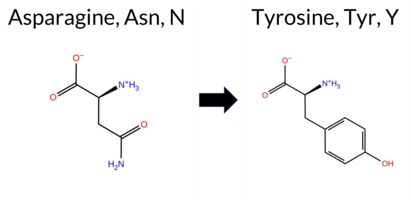 AIThe SynGAP1 missense variant N838Y is not reported in ClinVar (no ClinVar ID) and is absent from gnomAD (no gnomAD ID). Prediction tools that indicate a benign effect include REVEL, FATHMM, and AlphaMissense‑Optimized. Tools that predict a pathogenic effect are PROVEAN, polyPhen‑2 HumDiv, polyPhen‑2 HumVar, SIFT, ESM1b, and AlphaMissense‑Default. The SGM‑Consensus, derived from a majority vote of AlphaMissense‑Default, ESM1b, FATHMM, and PROVEAN, classifies the variant as Likely Pathogenic. High‑accuracy assessments show AlphaMissense‑Optimized as Benign, while the SGM‑Consensus remains Likely Pathogenic; Foldetta results are unavailable. Overall, the majority of predictions (six pathogenic versus three benign) and the SGM‑Consensus lean toward a pathogenic interpretation. Thus, the variant is most likely pathogenic, and this assessment does not contradict any ClinVar status because no ClinVar claim exists. Disclaimer: This summary was generated using AI and should be interpreted alongside expert review. | Likely Pathogenic | 0.622677 | Disordered | 0.613320 | Binding | 0.276 | 0.861 | 0.250 | -9.020 | Likely Pathogenic | 0.722 | Likely Pathogenic | Likely Benign | 0.266 | Likely Benign | -4.09 | Deleterious | 0.999 | Probably Damaging | 0.998 | Probably Damaging | 2.62 | Benign | 0.05 | Affected | 0.0621 | 0.4258 | -2 | -2 | 2.2 | 49.07 | |||||||||||||||||||||||||||||||||||||||
| c.488T>A | F163Y 2D AIThe SynGAP1 missense variant F163Y is not reported in ClinVar (ClinVar ID: None) and is absent from gnomAD (gnomAD ID: None). Prediction tools that agree on a benign effect include REVEL, PROVEAN, FATHMM, and AlphaMissense‑Optimized. Tools that predict a pathogenic effect are polyPhen‑2 HumDiv, polyPhen‑2 HumVar, SIFT, ESM1b, and AlphaMissense‑Default. The SGM Consensus, derived from a majority vote of AlphaMissense‑Default, ESM1b, FATHMM, and PROVEAN, is inconclusive (2 pathogenic vs. 2 benign) and is therefore treated as unavailable. High‑accuracy methods show AlphaMissense‑Optimized as benign; Foldetta results are not provided, so its stability prediction is unavailable. Overall, the majority of available predictions (5 pathogenic vs. 4 benign) indicate that the variant is most likely pathogenic. This conclusion does not contradict ClinVar status, as no ClinVar assertion exists for this variant. Disclaimer: This summary was generated using AI and should be interpreted alongside expert review. | 0.433034 | Structured | 0.513928 | Binding | 0.325 | 0.686 | 0.375 | -10.087 | Likely Pathogenic | 0.722 | Likely Pathogenic | Likely Benign | 0.125 | Likely Benign | -1.09 | Neutral | 0.981 | Probably Damaging | 0.931 | Probably Damaging | 4.03 | Benign | 0.04 | Affected | 0.1529 | 0.2152 | 7 | 3 | -4.1 | 16.00 | ||||||||||||||||||||||||||||||||||||||||
| c.48G>A | M16I 2D AIThe SynGAP1 missense variant M16I is listed in ClinVar with an “Uncertain” status (ClinVar ID 1424213.0) and is present in gnomAD (6‑33420312‑G‑A). Prediction tools that agree on a benign effect include REVEL, PROVEAN, polyPhen‑2 HumDiv, polyPhen‑2 HumVar, ESM1b, FATHMM, and AlphaMissense‑Optimized. Tools that predict a pathogenic effect are SIFT and AlphaMissense‑Default. The SGM‑Consensus, which aggregates the majority vote from AlphaMissense‑Default, ESM1b, FATHMM, and PROVEAN, reports a “Likely Benign” classification. High‑accuracy assessments show AlphaMissense‑Optimized as benign and the SGM‑Consensus as likely benign; Foldetta results are not available. Overall, the majority of evidence points to a benign impact, and this is consistent with the ClinVar “Uncertain” designation rather than contradicting it. Disclaimer: This summary was generated using AI and should be interpreted alongside expert review. | Likely Benign | 0.440853 | Structured | 0.459925 | Uncertain | 0.346 | 0.908 | 0.375 | Uncertain | 1 | 6-33420312-G-A | 1 | 6.49e-7 | -2.198 | Likely Benign | 0.722 | Likely Pathogenic | Likely Benign | 0.057 | Likely Benign | -0.15 | Neutral | 0.000 | Benign | 0.000 | Benign | 4.28 | Benign | 0.00 | Affected | 4.32 | 1 | 0.1606 | 0.3877 | 2 | 1 | 2.6 | -18.03 | ||||||||||||||||||||||||||||||||
| c.48G>C | M16I 2D AIThe SynGAP1 missense variant M16I is not reported in ClinVar (ClinVar ID = None) and is absent from gnomAD (gnomAD ID = None). Prediction tools that agree on a benign effect include REVEL, PROVEAN, polyPhen‑2 HumDiv, polyPhen‑2 HumVar, ESM1b, FATHMM, and AlphaMissense‑Optimized. Tools that predict a pathogenic effect are SIFT and AlphaMissense‑Default. The SGM‑Consensus, which aggregates the majority vote from AlphaMissense‑Default, ESM1b, FATHMM, and PROVEAN, classifies the variant as Likely Benign. High‑accuracy assessments further support a benign outcome: AlphaMissense‑Optimized predicts benign, and the SGM‑Consensus also indicates Likely Benign. Foldetta, a protein‑folding stability method combining FoldX‑MD and Rosetta outputs, has no available result for this variant. Overall, the majority of computational predictions and the high‑accuracy consensus suggest that M16I is most likely benign, and this conclusion is consistent with the absence of any ClinVar pathogenic annotation. Disclaimer: This summary was generated using AI and should be interpreted alongside expert review. | Likely Benign | 0.440853 | Structured | 0.459925 | Uncertain | 0.346 | 0.908 | 0.375 | -2.198 | Likely Benign | 0.722 | Likely Pathogenic | Likely Benign | 0.057 | Likely Benign | -0.15 | Neutral | 0.000 | Benign | 0.000 | Benign | 4.28 | Benign | 0.00 | Affected | 4.32 | 1 | 0.1606 | 0.3877 | 2 | 1 | 2.6 | -18.03 | |||||||||||||||||||||||||||||||||||||
| c.48G>T | M16I 2D AIThe SynGAP1 missense variant M16I is not reported in ClinVar (ClinVar ID = None) but is present in gnomAD (ID = 6‑33420312‑G‑T). Prediction tools that agree on a benign effect include REVEL, PROVEAN, polyPhen‑2 HumDiv, polyPhen‑2 HumVar, ESM1b, FATHMM, and AlphaMissense‑Optimized. Tools that predict a pathogenic effect are SIFT and AlphaMissense‑Default. The SGM‑Consensus, which aggregates the majority vote from AlphaMissense‑Default, ESM1b, FATHMM, and PROVEAN, classifies the variant as Likely Benign. High‑accuracy assessments further support a benign outcome: AlphaMissense‑Optimized predicts benign, and the SGM‑Consensus also indicates Likely Benign. Foldetta, a protein‑folding stability method combining FoldX‑MD and Rosetta outputs, has no available result for this variant. Overall, the majority of computational evidence points to a benign impact, and this is consistent with the absence of a ClinVar pathogenic classification. Disclaimer: This summary was generated using AI and should be interpreted alongside expert review. | Likely Benign | 0.440853 | Structured | 0.459925 | Uncertain | 0.346 | 0.908 | 0.375 | 6-33420312-G-T | -2.198 | Likely Benign | 0.722 | Likely Pathogenic | Likely Benign | 0.057 | Likely Benign | -0.15 | Neutral | 0.000 | Benign | 0.000 | Benign | 4.28 | Benign | 0.00 | Affected | 4.32 | 1 | 0.1606 | 0.3877 | 2 | 1 | 2.6 | -18.03 | ||||||||||||||||||||||||||||||||||||
| c.896G>C | R299P 2D 3DClick to see structure in 3D Viewer AIThe SynGAP1 missense variant R299P is not reported in ClinVar or gnomAD, indicating no publicly available frequency data. Prediction tools cluster into benign and pathogenic groups: benign predictions include REVEL and AlphaMissense‑Optimized, while pathogenic predictions are made by FoldX, Rosetta, Foldetta, premPS, PROVEAN, polyPhen2_HumDiv, polyPhen2_HumVar, SIFT, FATHMM, and AlphaMissense‑Default; ESM1b is uncertain. The SGM‑Consensus label is Likely Pathogenic. High‑accuracy tools give a clear signal: AlphaMissense‑Optimized predicts benign, SGM‑Consensus (derived from a majority vote of AlphaMissense‑Default, ESM1b, FATHMM, and PROVEAN) predicts pathogenic, and Foldetta also predicts pathogenic. Overall, the predictions strongly favor a pathogenic interpretation, with no ClinVar status to contradict this assessment. Disclaimer: This summary was generated using AI and should be interpreted alongside expert review. | Likely Pathogenic | C2 | 0.321458 | Structured | 0.262979 | Uncertain | 0.819 | 0.295 | 0.500 | -7.662 | In-Between | 0.722 | Likely Pathogenic | Likely Benign | 4.10 | Destabilizing | 0.2 | 3.01 | Destabilizing | 3.56 | Destabilizing | 1.19 | Destabilizing | 0.295 | Likely Benign | -4.09 | Deleterious | 1.000 | Probably Damaging | 0.999 | Probably Damaging | 1.68 | Pathogenic | 0.02 | Affected | 0.2072 | 0.5379 | 0 | -2 | 2.9 | -59.07 | |||||||||||||||||||||||||||||
| c.1370G>C | S457T 2D 3DClick to see structure in 3D Viewer AIThe SynGAP1 missense variant S457T has no ClinVar entry and is not reported in gnomAD. Prediction tools that classify the variant as benign include REVEL, Foldetta, premPS, SIFT, FATHMM, and AlphaMissense‑Optimized. Those that predict pathogenicity are SGM‑Consensus, PROVEAN, polyPhen‑2 HumDiv, polyPhen‑2 HumVar, ESM1b, and AlphaMissense‑Default. FoldX and Rosetta provide uncertain results and are treated as unavailable. High‑accuracy assessments show AlphaMissense‑Optimized predicting benign, SGM‑Consensus (a majority vote of AlphaMissense‑Default, ESM1b, FATHMM, and PROVEAN) predicting likely pathogenic, and Foldetta predicting benign. Overall, the majority of high‑confidence tools lean toward a benign effect, and there is no conflict with the ClinVar status, which is currently unreported. Thus, the variant is most likely benign based on the available predictions. Disclaimer: This summary was generated using AI and should be interpreted alongside expert review. | Likely Pathogenic | GAP | 0.164327 | Structured | 0.297330 | Uncertain | 0.909 | 0.159 | 0.000 | -8.772 | Likely Pathogenic | 0.723 | Likely Pathogenic | Likely Benign | 0.82 | Ambiguous | 0.1 | -0.57 | Ambiguous | 0.13 | Likely Benign | 0.38 | Likely Benign | 0.273 | Likely Benign | -2.83 | Deleterious | 0.866 | Possibly Damaging | 0.780 | Possibly Damaging | 3.34 | Benign | 0.09 | Tolerated | 0.1154 | 0.6487 | 1 | 1 | 0.1 | 14.03 | |||||||||||||||||||||||||||||
| c.1405G>A | A469T 2D 3DClick to see structure in 3D Viewer AISynGAP1 missense variant A469T is listed in ClinVar with an uncertain significance and is not reported in gnomAD. Functional prediction tools cluster into two groups: benign predictions come from premPS, PROVEAN, SIFT, and AlphaMissense‑Optimized; pathogenic predictions arise from REVEL, FoldX, polyPhen‑2 (HumDiv and HumVar), ESM1b, FATHMM, AlphaMissense‑Default, the SGM Consensus (majority vote of AlphaMissense‑Default, ESM1b, FATHMM, PROVEAN), and the Foldetta stability assessment (combining FoldX‑MD and Rosetta). The high‑accuracy subset shows AlphaMissense‑Optimized as benign, whereas SGM Consensus and Foldetta both predict pathogenic. Overall, the majority of evidence supports a pathogenic effect, and this conclusion does not conflict with the ClinVar uncertain status. Disclaimer: This summary was generated using AI and should be interpreted alongside expert review. | Likely Pathogenic | GAP | 0.278302 | Structured | 0.343926 | Uncertain | 0.910 | 0.276 | 0.000 | Uncertain | 1 | -9.540 | Likely Pathogenic | 0.723 | Likely Pathogenic | Likely Benign | 2.26 | Destabilizing | 0.1 | 1.90 | Ambiguous | 2.08 | Destabilizing | 0.34 | Likely Benign | 0.527 | Likely Pathogenic | -1.46 | Neutral | 0.994 | Probably Damaging | 0.986 | Probably Damaging | -1.21 | Pathogenic | 0.42 | Tolerated | 0.1005 | 0.5884 | 1 | 0 | -2.5 | 30.03 | |||||||||||||||||||||||||||
| c.1557A>C | E519D 2D 3DClick to see structure in 3D Viewer AIThe SynGAP1 E519D missense variant is not reported in ClinVar (ClinVar ID None) and is absent from gnomAD (gnomAD ID None). Prediction tools that agree on a benign effect include REVEL, FoldX, Rosetta, premPS, SIFT, FATHMM, and AlphaMissense‑Optimized. Tools that predict a pathogenic effect are SGM‑Consensus, PROVEAN, polyPhen‑2 HumDiv, polyPhen‑2 HumVar, ESM1b, and AlphaMissense‑Default. High‑accuracy assessments further show AlphaMissense‑Optimized as benign, SGM‑Consensus as likely pathogenic, and Foldetta (combining FoldX‑MD and Rosetta outputs) as benign. With seven benign predictions versus six pathogenic ones, the overall evidence slightly favors a benign classification. This conclusion does not contradict the ClinVar status, which contains no pathogenic assertion for this variant. Disclaimer: This summary was generated using AI and should be interpreted alongside expert review. | Likely Pathogenic | GAP | 0.078022 | Structured | 0.104514 | Uncertain | 0.899 | 0.328 | 0.000 | -8.009 | Likely Pathogenic | 0.723 | Likely Pathogenic | Likely Benign | 0.24 | Likely Benign | 0.0 | 0.40 | Likely Benign | 0.32 | Likely Benign | 0.05 | Likely Benign | 0.183 | Likely Benign | -2.62 | Deleterious | 0.989 | Probably Damaging | 0.979 | Probably Damaging | 3.31 | Benign | 0.07 | Tolerated | 0.2088 | 0.1824 | 3 | 2 | 0.0 | -14.03 | |||||||||||||||||||||||||||||
| c.1557A>T | E519D 2D 3DClick to see structure in 3D Viewer AIThe SynGAP1 missense variant E519D is not reported in ClinVar (ClinVar ID None) and has no entry in gnomAD (gnomAD ID None). Prediction tools that agree on a benign effect include REVEL, FoldX, Rosetta, Foldetta, premPS, SIFT, and FATHMM, while those that predict a pathogenic outcome are SGM‑Consensus, PROVEAN, polyPhen‑2 HumDiv, polyPhen‑2 HumVar, ESM1b, and AlphaMissense‑Default. High‑accuracy assessments show AlphaMissense‑Optimized classifying the variant as benign, SGM‑Consensus (a majority vote of AlphaMissense‑Default, ESM1b, FATHMM, and PROVEAN) indicating a likely pathogenic status, and Foldetta (combining FoldX‑MD and Rosetta outputs) predicting a benign effect. Overall, the majority of tools, including the high‑accuracy methods, lean toward a benign interpretation. This consensus does not contradict ClinVar status, as the variant is currently unreported there. Disclaimer: This summary was generated using AI and should be interpreted alongside expert review. | Likely Pathogenic | GAP | 0.078022 | Structured | 0.104514 | Uncertain | 0.899 | 0.328 | 0.000 | -8.009 | Likely Pathogenic | 0.723 | Likely Pathogenic | Likely Benign | 0.24 | Likely Benign | 0.0 | 0.40 | Likely Benign | 0.32 | Likely Benign | 0.05 | Likely Benign | 0.182 | Likely Benign | -2.62 | Deleterious | 0.989 | Probably Damaging | 0.979 | Probably Damaging | 3.31 | Benign | 0.07 | Tolerated | 0.2088 | 0.1824 | 3 | 2 | 0.0 | -14.03 | |||||||||||||||||||||||||||||
| c.2459A>C | Y820S 2D 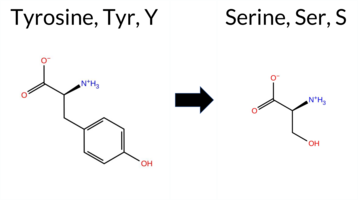 AIThe SynGAP1 missense variant Y820S is not reported in ClinVar (ClinVar ID = None) and is absent from gnomAD (gnomAD ID = None). Prediction tools that agree on a benign effect include REVEL, PROVEAN, SIFT, FATHMM, and AlphaMissense‑Optimized. Tools that predict a pathogenic effect are polyPhen‑2 HumDiv, polyPhen‑2 HumVar, and AlphaMissense‑Default; ESM1b is uncertain. High‑accuracy assessments show AlphaMissense‑Optimized as benign, while the SGM Consensus (majority vote from AlphaMissense‑Default, ESM1b, FATHMM, PROVEAN) also favors benign (2 benign vs. 1 pathogenic). Foldetta, a protein‑folding stability method, has no available result for this variant. Overall, the preponderance of evidence points to a benign impact, and this conclusion does not contradict any ClinVar annotation because no ClinVar entry exists for Y820S. Disclaimer: This summary was generated using AI and should be interpreted alongside expert review. | 0.733139 | Disordered | 0.695550 | Binding | 0.293 | 0.883 | 0.625 | -7.094 | In-Between | 0.723 | Likely Pathogenic | Likely Benign | 0.101 | Likely Benign | -1.79 | Neutral | 0.999 | Probably Damaging | 0.951 | Probably Damaging | 2.80 | Benign | 0.22 | Tolerated | 0.5166 | 0.2291 | Weaken | -3 | -2 | 0.5 | -76.10 | |||||||||||||||||||||||||||||||||||||||
| c.2713C>T | R905C 2D AIThe SynGAP1 missense variant R905C (ClinVar ID 469152.0) is listed as Uncertain in ClinVar and is present in gnomAD (ID 6‑33443265‑C‑T). Prediction tools that agree on a benign effect include REVEL, ESM1b, FATHMM, and AlphaMissense‑Optimized. Those that predict a pathogenic effect are PROVEAN, polyPhen‑2 HumDiv, polyPhen‑2 HumVar, SIFT, and AlphaMissense‑Default. The SGM Consensus, derived from a majority vote of AlphaMissense‑Default, ESM1b, FATHMM, and PROVEAN, is inconclusive (2 benign vs. 2 pathogenic). Foldetta, a protein‑folding stability method combining FoldX‑MD and Rosetta outputs, has no available result for this variant. Overall, the majority of standard predictors indicate a pathogenic impact, whereas the high‑accuracy AlphaMissense‑Optimized tool suggests a benign effect. Consequently, the variant is most likely pathogenic based on the prevailing predictions, and this assessment does not contradict the ClinVar status of Uncertain. Disclaimer: This summary was generated using AI and should be interpreted alongside expert review. | 0.671169 | Disordered | 0.618085 | Binding | 0.291 | 0.920 | 0.250 | Conflicting | 2 | 6-33443265-C-T | 15 | 9.31e-6 | -5.578 | Likely Benign | 0.723 | Likely Pathogenic | Likely Benign | 0.194 | Likely Benign | -3.14 | Deleterious | 1.000 | Probably Damaging | 0.980 | Probably Damaging | 2.57 | Benign | 0.01 | Affected | 3.77 | 5 | 0.3231 | 0.3642 | -4 | -3 | 7.0 | -53.05 | |||||||||||||||||||||||||||||||||
| c.2728G>T | G910C 2D  AIThe SynGAP1 missense variant G910C is not reported in ClinVar (ClinVar ID None) and is absent from gnomAD (gnomAD ID None). Prediction tools that agree on a benign effect include REVEL, ESM1b, FATHMM, and AlphaMissense‑Optimized. Those that predict a pathogenic effect are PROVEAN, polyPhen‑2 HumDiv, polyPhen‑2 HumVar, SIFT, and AlphaMissense‑Default. High‑accuracy assessments show AlphaMissense‑Optimized as benign, while the SGM Consensus (majority vote from AlphaMissense‑Default, ESM1b, FATHMM, PROVEAN) is inconclusive (2 benign vs 2 pathogenic) and Foldetta data are unavailable. Overall, the majority of tools (five pathogenic vs four benign) lean toward a pathogenic interpretation, and the high‑accuracy benign prediction from AlphaMissense‑Optimized does not override this trend. Thus, the variant is most likely pathogenic based on current predictions, and this assessment does not contradict ClinVar status, which has no entry for this variant. Disclaimer: This summary was generated using AI and should be interpreted alongside expert review. | 0.762850 | Disordered | 0.707319 | Binding | 0.264 | 0.917 | 0.250 | -6.359 | Likely Benign | 0.723 | Likely Pathogenic | Likely Benign | 0.252 | Likely Benign | -3.11 | Deleterious | 1.000 | Probably Damaging | 1.000 | Probably Damaging | 2.69 | Benign | 0.01 | Affected | 0.1179 | 0.4194 | -3 | -3 | 2.9 | 46.09 | ||||||||||||||||||||||||||||||||||||||||
| c.2741A>T | D914V 2D  AIThe SynGAP1 missense variant D914V is listed in ClinVar (ID 2582846.0) with an “Uncertain” status and is not reported in gnomAD. Prediction tools that agree on a benign effect include REVEL, PROVEAN, ESM1b, FATHMM, and AlphaMissense‑Optimized. Tools that predict a pathogenic outcome are polyPhen‑2 HumDiv, polyPhen‑2 HumVar, SIFT, and AlphaMissense‑Default. The SGM‑Consensus, derived from a majority vote of AlphaMissense‑Default, ESM1b, FATHMM, and PROVEAN, is “Likely Benign.” High‑accuracy assessments show AlphaMissense‑Optimized as benign and the SGM‑Consensus (majority vote) as benign; Foldetta results are unavailable. Overall, the balance of evidence points to a benign effect, and this conclusion does not contradict the ClinVar “Uncertain” classification. Disclaimer: This summary was generated using AI and should be interpreted alongside expert review. | Likely Benign | 0.699094 | Disordered | 0.785987 | Binding | 0.320 | 0.892 | 0.250 | Uncertain | 1 | -4.260 | Likely Benign | 0.723 | Likely Pathogenic | Likely Benign | 0.187 | Likely Benign | -2.24 | Neutral | 0.999 | Probably Damaging | 0.986 | Probably Damaging | 2.64 | Benign | 0.01 | Affected | 3.77 | 5 | 0.1316 | 0.7249 | -3 | -2 | 7.7 | -15.96 | |||||||||||||||||||||||||||||||||||
| c.478C>A | L160M 2D AIThe SynGAP1 missense variant L160M is not reported in ClinVar (ClinVar ID: None) and is absent from gnomAD (gnomAD ID: None). Prediction tools that agree on a benign effect include REVEL, PROVEAN, FATHMM, and AlphaMissense‑Optimized. Tools that predict a pathogenic effect are polyPhen‑2 HumDiv, polyPhen‑2 HumVar, SIFT, ESM1b, and AlphaMissense‑Default. The SGM Consensus, derived from a majority vote of AlphaMissense‑Default, ESM1b, FATHMM, and PROVEAN, is inconclusive because it yields a 2‑to‑2 split. High‑accuracy methods give the following results: AlphaMissense‑Optimized predicts benign; the SGM Consensus is unavailable; and Foldetta, which combines FoldX‑MD and Rosetta stability calculations, has no reported output for this variant. Overall, the balance of evidence leans toward a pathogenic interpretation, but the single high‑accuracy benign prediction and the lack of a ClinVar assertion mean the variant’s clinical significance remains uncertain. This assessment does not contradict any existing ClinVar status, as none is available. Thus, the variant is most likely pathogenic, and this conclusion does not contradict any ClinVar status. Disclaimer: This summary was generated using AI and should be interpreted alongside expert review. | 0.454136 | Structured | 0.526760 | Binding | 0.275 | 0.728 | 0.125 | -11.120 | Likely Pathogenic | 0.723 | Likely Pathogenic | Likely Benign | 0.097 | Likely Benign | -0.94 | Neutral | 0.877 | Possibly Damaging | 0.580 | Possibly Damaging | 3.85 | Benign | 0.00 | Affected | 0.0837 | 0.3613 | 4 | 2 | -1.9 | 18.03 | ||||||||||||||||||||||||||||||||||||||||
| c.589G>C | E197Q 2D AIThe SynGAP1 E197Q variant is not reported in ClinVar and is absent from gnomAD. Prediction tools that agree on a benign effect include REVEL, PROVEAN, polyPhen‑2 (HumDiv and HumVar), ESM1b, FATHMM, and AlphaMissense‑Optimized. Tools that predict a pathogenic effect are SIFT and AlphaMissense‑Default. The high‑accuracy consensus, SGM‑Consensus, is derived from a majority vote of AlphaMissense‑Default, ESM1b, FATHMM, and PROVEAN and therefore reports a likely benign outcome. AlphaMissense‑Optimized also predicts benign. Foldetta, a protein‑folding stability method combining FoldX‑MD and Rosetta outputs, has no available result for this variant. Overall, the majority of evidence points to a benign impact, and this assessment does not contradict any ClinVar annotation (none is present). Disclaimer: This summary was generated using AI and should be interpreted alongside expert review. | Likely Benign | 0.349426 | Structured | 0.431896 | Uncertain | 0.452 | 0.492 | 0.125 | -6.347 | Likely Benign | 0.723 | Likely Pathogenic | Likely Benign | 0.145 | Likely Benign | -1.75 | Neutral | 0.396 | Benign | 0.067 | Benign | 4.05 | Benign | 0.02 | Affected | 0.0867 | 0.5228 | 2 | 2 | 0.0 | -0.98 | |||||||||||||||||||||||||||||||||||||||
| c.2449T>C | S817P 2D  AIThe SynGAP1 missense variant S817P is not reported in ClinVar and is absent from gnomAD. Prediction tools that classify the variant as benign include REVEL, ESM1b, and AlphaMissense‑Optimized, whereas pathogenic predictions come from PROVEAN, polyPhen‑2 (HumDiv and HumVar), SIFT, FATHMM, and AlphaMissense‑Default. The SGM‑Consensus, derived from a majority vote of AlphaMissense‑Default, ESM1b, FATHMM, and PROVEAN, reports the variant as Likely Pathogenic. High‑accuracy assessments show AlphaMissense‑Optimized as Benign, SGM‑Consensus as Likely Pathogenic, and Foldetta results are unavailable. Overall, the majority of tools and the consensus score indicate a pathogenic effect, and this conclusion does not contradict any ClinVar annotation because no ClinVar entry exists for this variant. Disclaimer: This summary was generated using AI and should be interpreted alongside expert review. | Likely Pathogenic | 0.490133 | Structured | 0.727082 | Binding | 0.314 | 0.901 | 0.625 | -4.633 | Likely Benign | 0.724 | Likely Pathogenic | Likely Benign | 0.201 | Likely Benign | -3.26 | Deleterious | 0.999 | Probably Damaging | 0.966 | Probably Damaging | 2.39 | Pathogenic | 0.00 | Affected | 0.2272 | 0.6023 | 1 | -1 | -0.8 | 10.04 | |||||||||||||||||||||||||||||||||||||||
| c.2729G>T | G910V 2D AIThe SynGAP1 missense variant G910V is not reported in ClinVar (ClinVar status: none) but is present in gnomAD (ID 6‑33443281‑G‑T). Prediction tools that agree on a benign effect include REVEL, ESM1b, FATHMM, and AlphaMissense‑Optimized. Those that predict a pathogenic effect are PROVEAN, polyPhen‑2 HumDiv, polyPhen‑2 HumVar, SIFT, and AlphaMissense‑Default. High‑accuracy assessments show AlphaMissense‑Optimized as benign, while the SGM Consensus (majority vote from AlphaMissense‑Default, ESM1b, FATHMM, PROVEAN) is inconclusive due to a 2‑to‑2 split, and Foldetta results are unavailable. Overall, the majority of tools (five pathogenic vs. four benign) predict a pathogenic impact. This prediction does not contradict ClinVar status, as no ClinVar assertion exists for this variant. Disclaimer: This summary was generated using AI and should be interpreted alongside expert review. | 0.762850 | Disordered | 0.707319 | Binding | 0.264 | 0.917 | 0.250 | 6-33443281-G-T | 1 | 6.20e-7 | -4.362 | Likely Benign | 0.724 | Likely Pathogenic | Likely Benign | 0.237 | Likely Benign | -2.69 | Deleterious | 1.000 | Probably Damaging | 1.000 | Probably Damaging | 2.73 | Benign | 0.02 | Affected | 3.77 | 5 | 0.1179 | 0.3662 | -3 | -1 | 4.6 | 42.08 | |||||||||||||||||||||||||||||||||||
| c.329T>G | V110G 2D AIThe SynGAP1 missense variant V110G is not reported in ClinVar (ClinVar ID = None) and is absent from gnomAD (gnomAD ID = None). Prediction tools that agree on a benign effect include REVEL, polyPhen‑2 HumDiv, ESM1b, FATHMM, and AlphaMissense‑Optimized. Tools that predict a pathogenic effect are PROVEAN, polyPhen‑2 HumVar, SIFT, and AlphaMissense‑Default. High‑accuracy assessments show AlphaMissense‑Optimized as benign; the SGM Consensus (majority vote from AlphaMissense‑Default, ESM1b, FATHMM, PROVEAN) is inconclusive (2 benign vs 2 pathogenic), and Foldetta results are unavailable. Overall, the majority of evidence points toward a benign impact, and this conclusion does not contradict the ClinVar status, which has no entry for this variant. Disclaimer: This summary was generated using AI and should be interpreted alongside expert review. | 0.622677 | Disordered | 0.665934 | Binding | 0.347 | 0.860 | 0.750 | -4.012 | Likely Benign | 0.724 | Likely Pathogenic | Likely Benign | 0.162 | Likely Benign | -2.87 | Deleterious | 0.377 | Benign | 0.928 | Probably Damaging | 4.06 | Benign | 0.00 | Affected | 0.2302 | 0.2671 | -1 | -3 | -4.6 | -42.08 | ||||||||||||||||||||||||||||||||||||||||
| c.3739A>G | R1247G 2D AIThe SynGAP1 missense variant R1247G is not reported in ClinVar and is absent from gnomAD. Prediction tools that agree on a benign effect are REVEL and AlphaMissense‑Optimized, whereas the majority of tools (PROVEAN, polyPhen‑2 HumDiv, polyPhen‑2 HumVar, SIFT, FATHMM, AlphaMissense‑Default) predict a pathogenic impact; ESM1b is uncertain and SGM‑Consensus is labeled Likely Pathogenic. High‑accuracy assessments show AlphaMissense‑Optimized as benign, SGM‑Consensus (a majority vote of AlphaMissense‑Default, ESM1b, FATHMM, PROVEAN) as Likely Pathogenic, and Foldetta results are unavailable. Overall, the balance of evidence favors a pathogenic classification, and this conclusion does not contradict the ClinVar status, which currently contains no entry for this variant. Disclaimer: This summary was generated using AI and should be interpreted alongside expert review. | Likely Pathogenic | Coiled-coil | 0.736850 | Disordered | 0.374141 | Uncertain | 0.875 | 0.557 | 0.625 | -7.920 | In-Between | 0.724 | Likely Pathogenic | Likely Benign | 0.195 | Likely Benign | -5.58 | Deleterious | 0.980 | Probably Damaging | 0.721 | Possibly Damaging | 1.70 | Pathogenic | 0.00 | Affected | 0.3047 | 0.2327 | -3 | -2 | 4.1 | -99.14 | ||||||||||||||||||||||||||||||||||||||
| c.907G>A | G303R 2D 3DClick to see structure in 3D Viewer AISynGAP1 missense variant G303R is catalogued in gnomAD (6-33437812-G-A) but has no ClinVar entry. Functional prediction tools that agree on a benign effect include REVEL, Rosetta, PROVEAN, polyPhen‑2 (HumDiv and HumVar), SIFT, FATHMM, and AlphaMissense‑Optimized. Only AlphaMissense‑Default predicts a pathogenic outcome; the remaining tools (FoldX, Foldetta, premPS, ESM1b) are inconclusive. High‑accuracy assessments further support a benign interpretation: AlphaMissense‑Optimized is benign, the SGM Consensus (majority vote of AlphaMissense‑Default, ESM1b, FATHMM, PROVEAN) resolves to benign, while Foldetta remains uncertain. Taken together, the majority of evidence points to a benign effect, and this conclusion does not conflict with the absence of a ClinVar classification. Disclaimer: This summary was generated using AI and should be interpreted alongside expert review. | C2 | 0.450668 | Structured | 0.271087 | Uncertain | 0.630 | 0.254 | 0.250 | 6-33437812-G-A | 1 | 6.20e-7 | -7.493 | In-Between | 0.724 | Likely Pathogenic | Likely Benign | 1.44 | Ambiguous | 0.4 | 0.23 | Likely Benign | 0.84 | Ambiguous | 0.73 | Ambiguous | 0.048 | Likely Benign | -1.38 | Neutral | 0.001 | Benign | 0.003 | Benign | 3.99 | Benign | 0.06 | Tolerated | 3.55 | 18 | 0.0839 | 0.4490 | -2 | -3 | -4.1 | 99.14 | |||||||||||||||||||||||||
| c.907G>C | G303R 2D 3DClick to see structure in 3D Viewer AIThe SynGAP1 missense variant G303R is not reported in ClinVar (ClinVar ID None) and is absent from gnomAD (gnomAD ID None). Prediction tools that agree on a benign effect include REVEL, Rosetta, PROVEAN, polyPhen‑2 (HumDiv and HumVar), SIFT, FATHMM, and AlphaMissense‑Optimized. Only AlphaMissense‑Default predicts a pathogenic outcome. The remaining tools—FoldX, Foldetta, premPS, and ESM1b—return uncertain or inconclusive results. High‑accuracy assessments further support a benign interpretation: AlphaMissense‑Optimized is benign, the SGM Consensus (majority vote from AlphaMissense‑Default, ESM1b, FATHMM, PROVEAN) is benign, while Foldetta remains uncertain. Overall, the preponderance of evidence indicates that the variant is most likely benign, and this conclusion does not contradict the ClinVar status, which currently contains no classification for this variant. Disclaimer: This summary was generated using AI and should be interpreted alongside expert review. | C2 | 0.450668 | Structured | 0.271087 | Uncertain | 0.630 | 0.254 | 0.250 | -7.493 | In-Between | 0.724 | Likely Pathogenic | Likely Benign | 1.44 | Ambiguous | 0.4 | 0.23 | Likely Benign | 0.84 | Ambiguous | 0.73 | Ambiguous | 0.048 | Likely Benign | -1.38 | Neutral | 0.001 | Benign | 0.003 | Benign | 3.99 | Benign | 0.06 | Tolerated | 3.55 | 18 | 0.0839 | 0.4490 | -2 | -3 | -4.1 | 99.14 | ||||||||||||||||||||||||||||
| c.1061C>A | A354D 2D 3DClick to see structure in 3D Viewer AIThe SynGAP1 missense variant A354D is not reported in ClinVar (ClinVar ID None) and is absent from gnomAD (gnomAD ID None). Prediction tools that agree on a benign effect include REVEL, FoldX, PROVEAN, polyPhen‑2 (HumDiv and HumVar), and SIFT. Those that predict a pathogenic effect are FATHMM and AlphaMissense‑Default. Four tools (Foldetta, premPS, ESM1b, and Rosetta) return uncertain results and are treated as unavailable evidence. High‑accuracy assessments show AlphaMissense‑Optimized predicts a benign outcome, while the SGM Consensus (majority vote from AlphaMissense‑Default, ESM1b, FATHMM, and PROVEAN) favors a pathogenic interpretation. Foldetta’s stability prediction is uncertain. Overall, the majority of consensus tools lean toward a benign effect, and there is no ClinVar annotation to contradict this assessment. Thus, the variant is most likely benign based on the available predictions. Disclaimer: This summary was generated using AI and should be interpreted alongside expert review. | C2 | 0.203355 | Structured | 0.381329 | Uncertain | 0.882 | 0.335 | 0.125 | -7.914 | In-Between | 0.725 | Likely Pathogenic | Likely Benign | 0.22 | Likely Benign | 0.1 | 1.10 | Ambiguous | 0.66 | Ambiguous | 0.57 | Ambiguous | 0.087 | Likely Benign | -1.49 | Neutral | 0.255 | Benign | 0.053 | Benign | 1.75 | Pathogenic | 0.07 | Tolerated | 0.1759 | 0.1345 | 0 | -2 | -5.3 | 44.01 | ||||||||||||||||||||||||||||||
| c.2524T>A | S842T 2D AIThe SynGAP1 missense variant S842T is not reported in ClinVar (no ClinVar ID) and is absent from gnomAD (no gnomAD ID). Prediction tools that agree on a benign effect include REVEL, PROVEAN, and AlphaMissense‑Optimized. Tools that predict a pathogenic effect are polyPhen‑2 HumDiv, polyPhen‑2 HumVar, SIFT, ESM1b, FATHMM, and AlphaMissense‑Default. The SGM‑Consensus, which aggregates the majority vote of AlphaMissense‑Default, ESM1b, FATHMM, and PROVEAN, is classified as Likely Pathogenic. High‑accuracy assessments show AlphaMissense‑Optimized as Benign, while the SGM‑Consensus (majority of the four high‑accuracy predictors) is Pathogenic; Foldetta results are unavailable. Overall, the majority of evidence points to a pathogenic impact for S842T, and this conclusion does not contradict any ClinVar annotation because no ClinVar entry exists for this variant. Disclaimer: This summary was generated using AI and should be interpreted alongside expert review. | Likely Pathogenic | 0.604312 | Disordered | 0.617281 | Binding | 0.274 | 0.861 | 0.250 | -13.443 | Likely Pathogenic | 0.725 | Likely Pathogenic | Likely Benign | 0.163 | Likely Benign | -2.23 | Neutral | 0.983 | Probably Damaging | 0.702 | Possibly Damaging | 2.15 | Pathogenic | 0.00 | Affected | 0.0974 | 0.5391 | 1 | 1 | 0.1 | 14.03 | |||||||||||||||||||||||||||||||||||||||
| c.3640C>G | R1214G 2D AIThe SynGAP1 missense variant R1214G is listed in gnomAD (6‑33446632‑C‑G) but has no ClinVar entry. Prediction tools that agree on a benign effect are REVEL and AlphaMissense‑Optimized; those that agree on a pathogenic effect are PROVEAN, polyPhen‑2 (HumDiv and HumVar), SIFT, ESM1b, FATHMM, and AlphaMissense‑Default. High‑accuracy assessments show AlphaMissense‑Optimized as benign, the SGM Consensus (majority vote from AlphaMissense‑Default, ESM1b, FATHMM, PROVEAN) as Likely Pathogenic, and Foldetta (combining FoldX‑MD and Rosetta outputs) is unavailable. Overall, the majority of tools predict a pathogenic impact, and this conclusion is not contradicted by any ClinVar status (none). Thus, the variant is most likely pathogenic based on current predictions. Disclaimer: This summary was generated using AI and should be interpreted alongside expert review. | Likely Pathogenic | Coiled-coil | 0.497853 | Structured | 0.506868 | Binding | 0.903 | 0.566 | 0.375 | 6-33446632-C-G | 1 | 6.20e-7 | -9.697 | Likely Pathogenic | 0.725 | Likely Pathogenic | Likely Benign | 0.131 | Likely Benign | -4.41 | Deleterious | 0.992 | Probably Damaging | 0.828 | Possibly Damaging | 2.48 | Pathogenic | 0.01 | Affected | 3.77 | 5 | 0.3229 | 0.2361 | -2 | -3 | 4.1 | -99.14 | |||||||||||||||||||||||||||||||||
| c.1511A>T | K504I 2D  3DClick to see structure in 3D Viewer AIThe SynGAP1 missense variant K504I is not reported in ClinVar and is absent from gnomAD. Prediction tools that assess the variant’s effect fall into two groups: benign predictions include REVEL, FoldX, Rosetta, Foldetta, premPS, and AlphaMissense‑Optimized; pathogenic predictions include PROVEAN, polyPhen‑2 (HumDiv and HumVar), SIFT, ESM1b, FATHMM, and AlphaMissense‑Default. The SGM Consensus, derived from a majority vote of AlphaMissense‑Default, ESM1b, FATHMM, and PROVEAN, labels the variant as Likely Pathogenic. High‑accuracy assessments show AlphaMissense‑Optimized as benign, Foldetta as benign, and the SGM Consensus as pathogenic. Because the majority of tools (seven) predict pathogenicity while three high‑accuracy methods provide conflicting evidence, the overall prediction leans toward pathogenic. This assessment does not contradict ClinVar status, as no ClinVar entry exists for the variant. Disclaimer: This summary was generated using AI and should be interpreted alongside expert review. | Likely Pathogenic | GAP | 0.028107 | Structured | 0.304984 | Uncertain | 0.850 | 0.189 | 0.000 | -12.597 | Likely Pathogenic | 0.727 | Likely Pathogenic | Likely Benign | -0.04 | Likely Benign | 0.3 | -0.36 | Likely Benign | -0.20 | Likely Benign | 0.40 | Likely Benign | 0.491 | Likely Benign | -7.35 | Deleterious | 0.996 | Probably Damaging | 0.993 | Probably Damaging | -1.49 | Pathogenic | 0.02 | Affected | 0.0769 | 0.2713 | -2 | -3 | 8.4 | -15.01 | |||||||||||||||||||||||||||||
| c.1542C>G | I514M 2D 3DClick to see structure in 3D Viewer AIThe SynGAP1 missense variant I514M is not reported in ClinVar and is absent from gnomAD. Prediction tools that indicate a benign effect include REVEL, FoldX, FATHMM, and AlphaMissense‑Optimized. Tools that predict a pathogenic effect comprise premPS, PROVEAN, polyPhen‑2 (HumDiv and HumVar), SIFT, ESM1b, and AlphaMissense‑Default. The SGM‑Consensus, derived from a majority vote of AlphaMissense‑Default, ESM1b, FATHMM, and PROVEAN, is classified as Likely Pathogenic. High‑accuracy assessments show AlphaMissense‑Optimized as Benign, while the SGM‑Consensus (majority of the four high‑accuracy inputs) remains Pathogenic; Foldetta, which integrates FoldX‑MD and Rosetta outputs, is Uncertain. Overall, seven of the twelve evaluated tools predict pathogenicity versus four predicting benign, with no evidence from ClinVar to contradict this assessment. Thus, the variant is most likely pathogenic. Disclaimer: This summary was generated using AI and should be interpreted alongside expert review. | Likely Pathogenic | GAP | 0.049374 | Structured | 0.221408 | Uncertain | 0.948 | 0.266 | 0.000 | -9.753 | Likely Pathogenic | 0.727 | Likely Pathogenic | Likely Benign | 0.48 | Likely Benign | 0.2 | 0.78 | Ambiguous | 0.63 | Ambiguous | 1.13 | Destabilizing | 0.335 | Likely Benign | -2.88 | Deleterious | 1.000 | Probably Damaging | 1.000 | Probably Damaging | 2.88 | Benign | 0.00 | Affected | 0.0647 | 0.1816 | 2 | 1 | -2.6 | 18.03 | |||||||||||||||||||||||||||||
| c.3530A>G | E1177G 2D AIThe SynGAP1 missense variant E1177G is not reported in ClinVar and is absent from gnomAD. Prediction tools that agree on a benign effect include REVEL, PROVEAN, polyPhen‑2 (HumDiv and HumVar), ESM1b, FATHMM, and AlphaMissense‑Optimized. Tools that predict a pathogenic effect are SIFT and AlphaMissense‑Default. The SGM‑Consensus, derived from a majority vote of AlphaMissense‑Default, ESM1b, FATHMM, and PROVEAN, reports the variant as Likely Benign. High‑accuracy assessments show AlphaMissense‑Optimized as Benign and the SGM‑Consensus as Likely Benign; Foldetta results are not available. Overall, the majority of evidence points to a benign impact, and this is consistent with the lack of ClinVar annotation—there is no contradiction with existing clinical data. Disclaimer: This summary was generated using AI and should be interpreted alongside expert review. | Likely Benign | Coiled-coil | 0.541878 | Disordered | 0.566503 | Binding | 0.542 | 0.705 | 0.250 | -3.948 | Likely Benign | 0.727 | Likely Pathogenic | Likely Benign | 0.389 | Likely Benign | -2.04 | Neutral | 0.012 | Benign | 0.026 | Benign | 5.45 | Benign | 0.02 | Affected | 0.2690 | 0.4094 | 0 | -2 | 3.1 | -72.06 | ||||||||||||||||||||||||||||||||||||||
| c.391G>T | G131C 2D AIThe SynGAP1 missense variant G131C is not reported in ClinVar (no ClinVar ID) and is absent from gnomAD (no gnomAD ID). Prediction tools that classify the variant as benign include REVEL, FATHMM, and AlphaMissense‑Optimized, whereas those that predict pathogenicity are PROVEAN, polyPhen‑2 HumDiv, polyPhen‑2 HumVar, SIFT, ESM1b, and AlphaMissense‑Default. The SGM Consensus, derived from a majority vote of AlphaMissense‑Default, ESM1b, FATHMM, and PROVEAN, reports the variant as Likely Pathogenic. High‑accuracy assessments show AlphaMissense‑Optimized predicting benign, while the SGM Consensus again indicates Likely Pathogenic; the Foldetta protein‑folding stability analysis is unavailable for this variant. Overall, the majority of tools predict pathogenicity, and this aligns with the SGM Consensus. Therefore, the variant is most likely pathogenic based on the available predictions, and this conclusion is consistent with the lack of ClinVar reporting rather than contradicting it. Disclaimer: This summary was generated using AI and should be interpreted alongside expert review. | Likely Pathogenic | 0.429200 | Structured | 0.724779 | Binding | 0.302 | 0.891 | 0.250 | -8.288 | Likely Pathogenic | 0.727 | Likely Pathogenic | Likely Benign | 0.155 | Likely Benign | -4.42 | Deleterious | 0.998 | Probably Damaging | 0.840 | Possibly Damaging | 3.88 | Benign | 0.00 | Affected | 0.1339 | 0.4356 | -3 | -3 | 2.9 | 46.09 | |||||||||||||||||||||||||||||||||||||||
| c.622C>A | P208T 2D 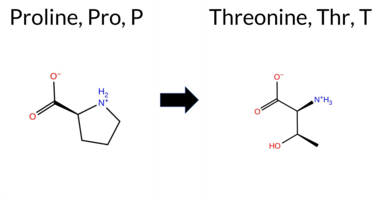 3DClick to see structure in 3D Viewer AIThe SynGAP1 P208T missense variant is not reported in ClinVar (ClinVar ID None) and is absent from gnomAD (gnomAD ID None). Prediction tools that agree on a benign effect include REVEL, FATHMM, and AlphaMissense‑Optimized. Those that predict a pathogenic effect comprise SGM‑Consensus, FoldX, PROVEAN, polyPhen‑2 (HumDiv and HumVar), SIFT, ESM1b, AlphaMissense‑Default, and Foldetta; premPS and Rosetta are uncertain. High‑accuracy methods give a consistent pathogenic signal: AlphaMissense‑Optimized predicts benign, but the SGM‑Consensus (majority vote of AlphaMissense‑Default, ESM1b, FATHMM, PROVEAN) is pathogenic, and Foldetta also predicts pathogenic. With the majority of tools, including the high‑accuracy ones, indicating pathogenicity, the variant is most likely pathogenic. This assessment does not contradict ClinVar status, as the variant is currently unreported there. Disclaimer: This summary was generated using AI and should be interpreted alongside expert review. | Likely Pathogenic | PH | 0.271506 | Structured | 0.399506 | Uncertain | 0.864 | 0.345 | 0.125 | -9.016 | Likely Pathogenic | 0.727 | Likely Pathogenic | Likely Benign | 3.20 | Destabilizing | 0.5 | 1.27 | Ambiguous | 2.24 | Destabilizing | 0.94 | Ambiguous | 0.270 | Likely Benign | -6.80 | Deleterious | 1.000 | Probably Damaging | 0.994 | Probably Damaging | 3.76 | Benign | 0.01 | Affected | 0.1857 | 0.5197 | 0 | -1 | 0.9 | 3.99 | |||||||||||||||||||||||||||||
| c.979C>A | L327M 2D 3DClick to see structure in 3D Viewer AIThe SynGAP1 L327M missense variant is not reported in ClinVar (no ClinVar ID) and is absent from gnomAD. Prediction tools that agree on a benign effect include REVEL, FoldX, PROVEAN, AlphaMissense‑Optimized, and Foldetta, whereas those that predict a pathogenic outcome are SGM‑Consensus, premPS, polyPhen‑2 (HumDiv and HumVar), SIFT, ESM1b, FATHMM, and AlphaMissense‑Default; Rosetta is uncertain. High‑accuracy assessments show AlphaMissense‑Optimized classifying the variant as benign, the SGM‑Consensus (majority vote of AlphaMissense‑Default, ESM1b, FATHMM, PROVEAN) labeling it likely pathogenic, and Foldetta predicting a benign effect. Overall, the majority of tools indicate a pathogenic effect, and this assessment does not contradict the ClinVar status, which has no entry for this variant. Disclaimer: This summary was generated using AI and should be interpreted alongside expert review. | Likely Pathogenic | C2 | 0.335645 | Structured | 0.409189 | Uncertain | 0.939 | 0.490 | 0.000 | -10.320 | Likely Pathogenic | 0.727 | Likely Pathogenic | Likely Benign | 0.20 | Likely Benign | 0.0 | 0.72 | Ambiguous | 0.46 | Likely Benign | 1.07 | Destabilizing | 0.320 | Likely Benign | -1.61 | Neutral | 1.000 | Probably Damaging | 0.999 | Probably Damaging | 1.53 | Pathogenic | 0.01 | Affected | 0.0806 | 0.3807 | 4 | 2 | -1.9 | 18.03 | |||||||||||||||||||||||||||||
| c.2146C>G | R716G 2D 3DClick to see structure in 3D Viewer AIThe SynGAP1 missense variant R716G is not reported in ClinVar (ClinVar ID None) and is absent from gnomAD (gnomAD ID None). Prediction tools that agree on a benign effect include REVEL, FATHMM, and AlphaMissense‑Optimized, whereas a majority of tools predict a pathogenic impact: PROVEAN, polyPhen‑2 HumDiv, polyPhen‑2 HumVar, SIFT, ESM1b, and AlphaMissense‑Default. The SGM‑Consensus, derived from a majority vote of AlphaMissense‑Default, ESM1b, FATHMM, and PROVEAN, is classified as Likely Pathogenic. High‑accuracy assessments show AlphaMissense‑Optimized as Benign, SGM‑Consensus as Likely Pathogenic, and Foldetta (combining FoldX‑MD and Rosetta outputs) as Uncertain. Other stability predictors (FoldX, Rosetta, premPS) are also Uncertain. Overall, the balance of evidence from the majority of tools and the SGM‑Consensus indicates a pathogenic effect, and this conclusion does not contradict any ClinVar annotation because no ClinVar entry exists for this variant. Disclaimer: This summary was generated using AI and should be interpreted alongside expert review. | Likely Pathogenic | GAP | 0.247041 | Structured | 0.419135 | Uncertain | 0.962 | 0.379 | 0.000 | -9.927 | Likely Pathogenic | 0.728 | Likely Pathogenic | Likely Benign | 1.32 | Ambiguous | 0.1 | 1.63 | Ambiguous | 1.48 | Ambiguous | 0.72 | Ambiguous | 0.359 | Likely Benign | -5.70 | Deleterious | 1.000 | Probably Damaging | 1.000 | Probably Damaging | 3.36 | Benign | 0.01 | Affected | 0.3437 | 0.2466 | -3 | -2 | 4.1 | -99.14 | |||||||||||||||||||||||||||||
| c.3223C>A | Q1075K 2D AIThe SynGAP1 missense variant Q1075K (ClinVar ID 2762879.0) is listed as “Uncertain” in ClinVar and is not reported in gnomAD. Prediction tools that agree on a benign effect include REVEL, PROVEAN, SIFT, ESM1b, FATHMM, and AlphaMissense‑Optimized. Tools that predict a pathogenic effect are polyPhen‑2 HumDiv, polyPhen‑2 HumVar, and AlphaMissense‑Default. The SGM‑Consensus, which aggregates AlphaMissense‑Default, ESM1b, FATHMM, and PROVEAN, is “Likely Benign” because three of the four contributing tools predict benign. High‑accuracy assessments show AlphaMissense‑Optimized as benign and the SGM‑Consensus (majority vote) as benign; Foldetta stability analysis is unavailable. Overall, the majority of evidence points to a benign impact, and this conclusion does not contradict the ClinVar “Uncertain” status. Disclaimer: This summary was generated using AI and should be interpreted alongside expert review. | Likely Benign | 0.922952 | Disordered | 0.988305 | Binding | 0.354 | 0.894 | 0.750 | Uncertain | 1 | -5.135 | Likely Benign | 0.728 | Likely Pathogenic | Likely Benign | 0.134 | Likely Benign | -0.67 | Neutral | 0.963 | Probably Damaging | 0.959 | Probably Damaging | 2.75 | Benign | 1.00 | Tolerated | 3.77 | 5 | 0.1898 | 0.4411 | 1 | 1 | -0.4 | 0.04 | |||||||||||||||||||||||||||||||||||
| c.2938C>G | H980D 2D AIThe SynGAP1 missense variant H980D is not reported in ClinVar (no ClinVar ID) and is absent from gnomAD (no gnomAD ID). Prediction tools that agree on a benign effect include REVEL, PROVEAN, polyPhen‑2 HumDiv, polyPhen‑2 HumVar, ESM1b, FATHMM, and AlphaMissense‑Optimized. Tools that predict a pathogenic effect are SIFT and AlphaMissense‑Default. The SGM‑Consensus, which aggregates the majority vote from AlphaMissense‑Default, ESM1b, FATHMM, and PROVEAN, classifies the variant as Likely Benign. High‑accuracy assessments further support a benign outcome: AlphaMissense‑Optimized predicts benign, and the SGM‑Consensus (majority vote) also indicates benign. The Foldetta protein‑folding stability analysis is unavailable for this variant. Overall, the majority of computational evidence points to a benign impact, and this conclusion does not contradict any ClinVar annotation (none is present). Disclaimer: This summary was generated using AI and should be interpreted alongside expert review. | Likely Benign | 0.812494 | Disordered | 0.974598 | Binding | 0.309 | 0.892 | 0.625 | -5.489 | Likely Benign | 0.729 | Likely Pathogenic | Likely Benign | 0.117 | Likely Benign | -1.38 | Neutral | 0.451 | Benign | 0.265 | Benign | 4.18 | Benign | 0.00 | Affected | 0.2608 | 0.3066 | 1 | -1 | -0.3 | -22.05 | |||||||||||||||||||||||||||||||||||||||
| c.3437C>G | P1146R 2D AIThe SynGAP1 missense variant P1146R is not reported in ClinVar (ClinVar ID = None) and is absent from gnomAD (gnomAD ID = None). Prediction tools that agree on a pathogenic effect include REVEL, PROVEAN, polyPhen‑2 HumDiv, polyPhen‑2 HumVar, SIFT, and AlphaMissense‑Default. Tools that agree on a benign effect are ESM1b, FATHMM, and AlphaMissense‑Optimized. High‑accuracy assessments show AlphaMissense‑Optimized predicts a benign outcome, while the SGM Consensus (majority vote from AlphaMissense‑Default, ESM1b, FATHMM, and PROVEAN) is inconclusive due to a 2‑vs‑2 split, and Foldetta results are unavailable. Overall, the majority of available predictions (seven pathogenic versus three benign) indicate that the variant is most likely pathogenic. This conclusion is not contradicted by ClinVar status, as the variant has no existing ClinVar classification. Disclaimer: This summary was generated using AI and should be interpreted alongside expert review. | 0.919029 | Disordered | 0.732173 | Binding | 0.415 | 0.837 | 1.000 | -3.826 | Likely Benign | 0.729 | Likely Pathogenic | Likely Benign | 0.603 | Likely Pathogenic | -4.81 | Deleterious | 0.996 | Probably Damaging | 0.967 | Probably Damaging | 5.50 | Benign | 0.00 | Affected | 0.1315 | 0.3193 | 0 | -2 | -2.9 | 59.07 | ||||||||||||||||||||||||||||||||||||||||
| c.3787A>G | I1263V 2D 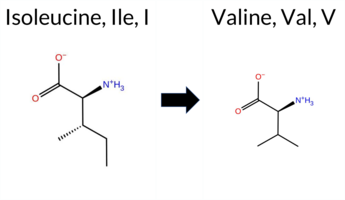 AIThe SynGAP1 missense variant I1263V is not reported in ClinVar (ClinVar ID None) and is absent from gnomAD (gnomAD ID None). Prediction tools that agree on a benign effect include REVEL, PROVEAN, polyPhen‑2 (HumDiv and HumVar), ESM1b, and AlphaMissense‑Optimized. Tools that predict a pathogenic effect are SIFT, FATHMM, and AlphaMissense‑Default. High‑accuracy assessments show AlphaMissense‑Optimized as benign, while the SGM Consensus (majority vote from AlphaMissense‑Default, ESM1b, FATHMM, and PROVEAN) is inconclusive (two benign vs. two pathogenic votes), and Foldetta results are unavailable. Overall, the majority of evidence points to a benign impact, and this conclusion does not contradict the lack of ClinVar annotation. Disclaimer: This summary was generated using AI and should be interpreted alongside expert review. | Coiled-coil | 0.425610 | Structured | 0.740957 | Binding | 0.867 | 0.574 | 0.000 | -4.230 | Likely Benign | 0.729 | Likely Pathogenic | Likely Benign | 0.221 | Likely Benign | -0.83 | Neutral | 0.437 | Benign | 0.170 | Benign | 1.99 | Pathogenic | 0.00 | Affected | 0.1136 | 0.3102 | 4 | 3 | -0.3 | -14.03 | |||||||||||||||||||||||||||||||||||||||
| c.442C>G | P148A 2D 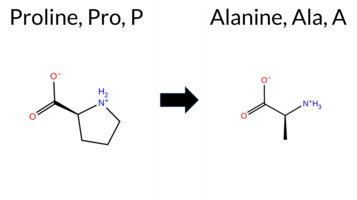 AIThe SynGAP1 missense variant P148A is catalogued in gnomAD (ID 6‑33432739‑C‑G) but has no ClinVar entry. Functional prediction tools cluster into two groups: benign predictions come from REVEL, PROVEAN, ESM1b, FATHMM, and AlphaMissense‑Optimized, while pathogenic predictions arise from polyPhen‑2 (HumDiv and HumVar), SIFT, and AlphaMissense‑Default. The SGM‑Consensus, which aggregates AlphaMissense‑Default, ESM1b, FATHMM, and PROVEAN, is “Likely Benign” because three of the four contributing tools predict benign. High‑accuracy assessments reinforce this: AlphaMissense‑Optimized is benign, and the SGM‑Consensus (majority vote) is benign. Foldetta, a protein‑folding stability method combining FoldX‑MD and Rosetta outputs, has no available result for this variant. Overall, the majority of evidence points to a benign effect. Thus, the variant is most likely benign, and this conclusion does not contradict any ClinVar status (none reported). Disclaimer: This summary was generated using AI and should be interpreted alongside expert review. | Likely Benign | 0.653063 | Disordered | 0.500109 | Binding | 0.372 | 0.837 | 0.625 | 6-33432739-C-G | 1 | 6.33e-7 | -6.890 | Likely Benign | 0.729 | Likely Pathogenic | Likely Benign | 0.117 | Likely Benign | -2.31 | Neutral | 0.999 | Probably Damaging | 0.991 | Probably Damaging | 4.00 | Benign | 0.03 | Affected | 3.61 | 5 | 0.3134 | 0.4123 | -1 | 1 | 3.4 | -26.04 | ||||||||||||||||||||||||||||||||||
| c.478C>G | L160V 2D AIThe SynGAP1 missense variant L160V is not reported in ClinVar (ClinVar ID: None) and is absent from gnomAD (gnomAD ID: None). Prediction tools that agree on a benign effect include REVEL, PROVEAN, polyPhen‑2 HumDiv, polyPhen‑2 HumVar, FATHMM, and AlphaMissense‑Optimized. Tools that predict a pathogenic effect are SIFT, ESM1b, and AlphaMissense‑Default. High‑accuracy assessments show AlphaMissense‑Optimized as benign, while the SGM Consensus (majority vote from AlphaMissense‑Default, ESM1b, FATHMM, and PROVEAN) is inconclusive due to a 2‑vs‑2 split, and Foldetta results are unavailable. Overall, the majority of predictions (six benign vs. three pathogenic) indicate that the variant is most likely benign. This conclusion is consistent with the lack of ClinVar evidence and gnomAD presence, so there is no contradiction with ClinVar status. Disclaimer: This summary was generated using AI and should be interpreted alongside expert review. | 0.454136 | Structured | 0.526760 | Binding | 0.275 | 0.728 | 0.125 | -12.506 | Likely Pathogenic | 0.729 | Likely Pathogenic | Likely Benign | 0.055 | Likely Benign | -1.44 | Neutral | 0.247 | Benign | 0.113 | Benign | 3.90 | Benign | 0.00 | Affected | 0.1553 | 0.3319 | 2 | 1 | 0.4 | -14.03 | ||||||||||||||||||||||||||||||||||||||||
| c.67G>T | D23Y 2D AIThe SynGAP1 D23Y missense variant is not reported in ClinVar (ClinVar status: none) but is present in gnomAD (ID 6‑33420331‑G‑T). Prediction tools that agree on a benign effect include REVEL, ESM1b, FATHMM, and AlphaMissense‑Optimized. Tools that predict a pathogenic effect are PROVEAN, polyPhen‑2 HumDiv, polyPhen‑2 HumVar, SIFT, and AlphaMissense‑Default. High‑accuracy assessments show AlphaMissense‑Optimized as benign, while the SGM Consensus (majority vote from AlphaMissense‑Default, ESM1b, FATHMM, PROVEAN) is inconclusive due to a 2‑vs‑2 split, and Foldetta results are unavailable. Overall, the majority of predictions (five pathogenic vs. four benign) lean toward a pathogenic impact. This conclusion is not contradicted by ClinVar, which contains no entry for this variant. Disclaimer: This summary was generated using AI and should be interpreted alongside expert review. | 0.557691 | Disordered | 0.440341 | Uncertain | 0.369 | 0.892 | 0.375 | 6-33420331-G-T | -4.191 | Likely Benign | 0.729 | Likely Pathogenic | Likely Benign | 0.142 | Likely Benign | -2.87 | Deleterious | 0.972 | Probably Damaging | 0.861 | Possibly Damaging | 3.46 | Benign | 0.00 | Affected | 4.32 | 1 | 0.1013 | 0.7951 | -3 | -4 | 2.2 | 48.09 | |||||||||||||||||||||||||||||||||||||
| c.1666A>T | N556Y 2D 3DClick to see structure in 3D Viewer AIThe SynGAP1 missense variant N556Y is not reported in ClinVar (ClinVar ID None) and is absent from gnomAD (gnomAD ID None). Prediction tools that agree on a benign effect include FoldX, Rosetta, Foldetta, premPS, and AlphaMissense‑Optimized, whereas tools that predict a pathogenic impact are REVEL, PROVEAN, polyPhen‑2 (HumDiv and HumVar), SIFT, ESM1b, FATHMM, and AlphaMissense‑Default. The SGM Consensus, derived from a majority vote of AlphaMissense‑Default, ESM1b, FATHMM, and PROVEAN, classifies the variant as Likely Pathogenic. High‑accuracy assessments show AlphaMissense‑Optimized as benign, Foldetta as benign, and the SGM Consensus as pathogenic. Taken together, the majority of evidence (8 pathogenic vs 5 benign) points to a pathogenic effect, and this conclusion does not contradict the absence of a ClinVar classification. Disclaimer: This summary was generated using AI and should be interpreted alongside expert review. | Likely Pathogenic | GAP | 0.015078 | Structured | 0.008655 | Uncertain | 0.925 | 0.225 | 0.000 | -12.533 | Likely Pathogenic | 0.730 | Likely Pathogenic | Likely Benign | -0.01 | Likely Benign | 0.1 | -0.40 | Likely Benign | -0.21 | Likely Benign | 0.28 | Likely Benign | 0.743 | Likely Pathogenic | -6.69 | Deleterious | 1.000 | Probably Damaging | 0.999 | Probably Damaging | -1.40 | Pathogenic | 0.01 | Affected | 0.0690 | 0.3157 | -2 | -2 | 2.2 | 49.07 | |||||||||||||||||||||||||||||
| c.2470A>T | S824C 2D AIThe SynGAP1 missense variant S824C is not reported in ClinVar (no ClinVar ID) and is absent from gnomAD (no gnomAD ID). Prediction tools that agree on a benign effect include SGM‑Consensus (Likely Benign), REVEL, PROVEAN, SIFT, ESM1b, FATHMM, and AlphaMissense‑Optimized. Tools that predict a pathogenic effect are polyPhen‑2 HumDiv, polyPhen‑2 HumVar, and AlphaMissense‑Default. High‑accuracy assessments show AlphaMissense‑Optimized as benign and the SGM‑Consensus (majority vote of AlphaMissense‑Default, ESM1b, FATHMM, PROVEAN) also as benign; Foldetta results are unavailable. Overall, the majority of evidence points to a benign impact for S824C, and this conclusion is not contradicted by any ClinVar annotation. Disclaimer: This summary was generated using AI and should be interpreted alongside expert review. | Likely Benign | 0.728858 | Disordered | 0.611272 | Binding | 0.314 | 0.884 | 0.750 | -6.613 | Likely Benign | 0.730 | Likely Pathogenic | Likely Benign | 0.108 | Likely Benign | -1.87 | Neutral | 1.000 | Probably Damaging | 0.998 | Probably Damaging | 2.57 | Benign | 0.07 | Tolerated | 0.1363 | 0.6277 | 0 | -1 | 3.3 | 16.06 | |||||||||||||||||||||||||||||||||||||||
| c.3071T>C | L1024P 2D AIThe SynGAP1 missense variant L1024P is not reported in ClinVar (ClinVar ID = None) and is absent from gnomAD (gnomAD ID = None). Prediction tools that agree on a benign effect include REVEL, PROVEAN, ESM1b, and AlphaMissense‑Optimized. Tools that predict a pathogenic effect are polyPhen‑2 (HumDiv and HumVar), SIFT, FATHMM, and AlphaMissense‑Default. The SGM Consensus, which takes a majority vote from AlphaMissense‑Default, ESM1b, FATHMM, and PROVEAN, is inconclusive (2 benign vs 2 pathogenic). Foldetta, a protein‑folding stability method combining FoldX‑MD and Rosetta outputs, has no available result for this variant. Overall, the majority of standard prediction tools lean toward pathogenicity, while high‑accuracy methods are inconclusive. Thus, the variant is most likely pathogenic based on the available predictions, and this assessment does not contradict the absence of a ClinVar classification. Disclaimer: This summary was generated using AI and should be interpreted alongside expert review. | 0.862302 | Disordered | 0.992699 | Binding | 0.327 | 0.753 | 0.500 | -4.385 | Likely Benign | 0.730 | Likely Pathogenic | Likely Benign | 0.149 | Likely Benign | -2.42 | Neutral | 0.999 | Probably Damaging | 0.974 | Probably Damaging | 2.43 | Pathogenic | 0.03 | Affected | 0.3187 | 0.2033 | -3 | -3 | -5.4 | -16.04 | ||||||||||||||||||||||||||||||||||||||||
| c.1108G>C | G370R 2D 3DClick to see structure in 3D Viewer AIThe SynGAP1 missense variant G370R is not reported in ClinVar and is absent from gnomAD. Prediction tools that agree on a benign effect include REVEL, premPS, PROVEAN, polyPhen‑2 HumDiv, polyPhen‑2 HumVar, SIFT, and AlphaMissense‑Optimized. Those that agree on a pathogenic effect are SGM‑Consensus, FoldX, ESM1b, FATHMM, AlphaMissense‑Default, and Foldetta; Rosetta is uncertain. High‑accuracy assessments show AlphaMissense‑Optimized predicts benign, while the SGM Consensus (majority vote of AlphaMissense‑Default, ESM1b, FATHMM, PROVEAN) predicts pathogenic, and Foldetta (combining FoldX‑MD and Rosetta outputs) also predicts pathogenic. Overall, the balance of evidence leans toward pathogenicity, with two of the three high‑accuracy tools supporting this view. The variant is most likely pathogenic, and this assessment does not contradict any ClinVar status, as no ClinVar entry exists. Disclaimer: This summary was generated using AI and should be interpreted alongside expert review. | Likely Pathogenic | C2 | 0.461924 | Structured | 0.434325 | Uncertain | 0.359 | 0.720 | 0.500 | -8.375 | Likely Pathogenic | 0.731 | Likely Pathogenic | Likely Benign | 3.62 | Destabilizing | 3.7 | 1.72 | Ambiguous | 2.67 | Destabilizing | 0.22 | Likely Benign | 0.373 | Likely Benign | -0.80 | Neutral | 0.016 | Benign | 0.002 | Benign | 1.32 | Pathogenic | 0.55 | Tolerated | 0.0978 | 0.4313 | -3 | -2 | -4.1 | 99.14 | |||||||||||||||||||||||||||||
| c.3528A>C | E1176D 2D AIThe SynGAP1 E1176D missense change is not reported in ClinVar and is absent from gnomAD. Functional prediction tools that agree on a benign effect include REVEL, PROVEAN, SIFT, ESM1b, FATHMM, and AlphaMissense‑Optimized. Tools that predict a pathogenic effect are polyPhen‑2 HumDiv, polyPhen‑2 HumVar, and AlphaMissense‑Default. The SGM‑Consensus, which is a majority vote from AlphaMissense‑Default, ESM1b, FATHMM, and PROVEAN, is classified as Likely Benign. High‑accuracy assessments show AlphaMissense‑Optimized as Benign and the SGM‑Consensus as Likely Benign; the Foldetta protein‑folding stability analysis is unavailable. Overall, the majority of evidence points to a benign impact, and this conclusion does not contradict the ClinVar status, which has no entry for this variant. Disclaimer: This summary was generated using AI and should be interpreted alongside expert review. | Likely Benign | Coiled-coil | 0.538167 | Disordered | 0.572075 | Binding | 0.525 | 0.715 | 0.250 | -4.603 | Likely Benign | 0.731 | Likely Pathogenic | Likely Benign | 0.322 | Likely Benign | -0.81 | Neutral | 0.989 | Probably Damaging | 0.924 | Probably Damaging | 5.44 | Benign | 0.31 | Tolerated | 0.1419 | 0.4026 | 3 | 2 | 0.0 | -14.03 | ||||||||||||||||||||||||||||||||||||||
| c.3528A>T | E1176D 2D AIThe SynGAP1 missense variant E1176D is not reported in ClinVar and is absent from gnomAD. Functional prediction tools cluster into two groups: benign predictions include REVEL, PROVEAN, SIFT, ESM1b, FATHMM, and AlphaMissense‑Optimized, while pathogenic predictions come from polyPhen‑2 HumDiv, polyPhen‑2 HumVar, and AlphaMissense‑Default. The SGM‑Consensus, which aggregates AlphaMissense‑Default, ESM1b, FATHMM, and PROVEAN, resolves to a likely benign verdict. High‑accuracy assessments further support a benign outcome: AlphaMissense‑Optimized predicts benign, and the SGM‑Consensus (majority vote) also indicates benign. Foldetta results are not available, so they do not influence the assessment. Overall, the majority of evidence points to a benign effect, and this conclusion is consistent with the absence of a ClinVar classification. Disclaimer: This summary was generated using AI and should be interpreted alongside expert review. | Likely Benign | Coiled-coil | 0.538167 | Disordered | 0.572075 | Binding | 0.525 | 0.715 | 0.250 | -4.603 | Likely Benign | 0.731 | Likely Pathogenic | Likely Benign | 0.322 | Likely Benign | -0.81 | Neutral | 0.989 | Probably Damaging | 0.924 | Probably Damaging | 5.44 | Benign | 0.31 | Tolerated | 0.1419 | 0.4026 | 3 | 2 | 0.0 | -14.03 | ||||||||||||||||||||||||||||||||||||||
| c.2717T>A | L906H 2D 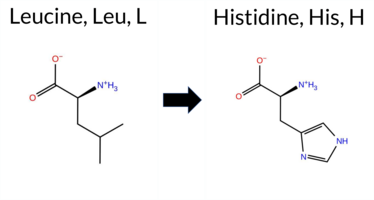 AIThe SynGAP1 missense variant L906H is not reported in ClinVar (ClinVar ID = None) and is absent from gnomAD (gnomAD ID = None). Prediction tools that agree on a benign effect include REVEL, PROVEAN, ESM1b, and AlphaMissense‑Optimized. Tools that predict a pathogenic effect are polyPhen‑2 (HumDiv and HumVar), SIFT, FATHMM, and AlphaMissense‑Default. High‑accuracy assessments show AlphaMissense‑Optimized classifying the variant as benign, while the SGM Consensus (majority vote from AlphaMissense‑Default, ESM1b, FATHMM, PROVEAN) is inconclusive (two benign vs. two pathogenic votes) and Foldetta results are unavailable. Overall, the majority of standard predictors lean toward pathogenicity, but the most reliable high‑accuracy tool suggests a benign outcome and the consensus is unresolved. Thus, the variant is most likely pathogenic based on the prevailing predictions, and this assessment does not contradict any ClinVar status because no ClinVar entry exists. Disclaimer: This summary was generated using AI and should be interpreted alongside expert review. | 0.604312 | Disordered | 0.644316 | Binding | 0.315 | 0.920 | 0.250 | -4.367 | Likely Benign | 0.732 | Likely Pathogenic | Likely Benign | 0.124 | Likely Benign | -1.01 | Neutral | 1.000 | Probably Damaging | 0.997 | Probably Damaging | 2.18 | Pathogenic | 0.02 | Affected | 0.1125 | 0.1073 | -2 | -3 | -7.0 | 23.98 | ||||||||||||||||||||||||||||||||||||||||
| c.2812G>A | G938R 2D AIThe SynGAP1 missense variant G938R is listed in ClinVar (ID 1019898.0) with an “Uncertain” status and is not reported in gnomAD. Functional prediction tools that agree on a benign effect include REVEL, PROVEAN, SIFT, ESM1b, FATHMM, AlphaMissense‑Optimized, and the SGM‑Consensus (Likely Benign). Tools that predict a pathogenic effect are polyPhen‑2 HumDiv, polyPhen‑2 HumVar, and AlphaMissense‑Default. High‑accuracy assessments show AlphaMissense‑Optimized as benign and the SGM‑Consensus as Likely Benign; Foldetta results are unavailable. Overall, the majority of evidence (seven benign versus three pathogenic predictions) supports a benign classification. This consensus does not contradict the ClinVar “Uncertain” designation, which remains unresolved. Disclaimer: This summary was generated using AI and should be interpreted alongside expert review. | Likely Benign | 0.905695 | Disordered | 0.949795 | Binding | 0.318 | 0.883 | 0.625 | Uncertain | 1 | -5.271 | Likely Benign | 0.732 | Likely Pathogenic | Likely Benign | 0.141 | Likely Benign | -1.11 | Neutral | 0.999 | Probably Damaging | 0.985 | Probably Damaging | 2.74 | Benign | 0.36 | Tolerated | 3.77 | 5 | 0.0924 | 0.3614 | -3 | -2 | -4.1 | 99.14 | |||||||||||||||||||||||||||||||||||
| c.2812G>C | G938R 2D AIThe SynGAP1 missense variant G938R is not reported in ClinVar (no ClinVar ID) and is absent from gnomAD (no gnomAD ID). Prediction tools that agree on a benign effect include REVEL, PROVEAN, SIFT, ESM1b, FATHMM, AlphaMissense‑Optimized, and the SGM‑Consensus “Likely Benign” call. Tools that predict a pathogenic effect are polyPhen‑2 HumDiv, polyPhen‑2 HumVar, and AlphaMissense‑Default. High‑accuracy assessments show AlphaMissense‑Optimized as benign and the SGM‑Consensus as likely benign; Foldetta results are unavailable. Overall, the majority of evidence points to a benign impact, and this is consistent with the lack of ClinVar annotation. Thus, the variant is most likely benign, with no contradiction to ClinVar status. Disclaimer: This summary was generated using AI and should be interpreted alongside expert review. | Likely Benign | 0.905695 | Disordered | 0.949795 | Binding | 0.318 | 0.883 | 0.625 | -5.271 | Likely Benign | 0.732 | Likely Pathogenic | Likely Benign | 0.141 | Likely Benign | -1.11 | Neutral | 0.999 | Probably Damaging | 0.985 | Probably Damaging | 2.74 | Benign | 0.36 | Tolerated | 3.77 | 5 | 0.0924 | 0.3614 | -3 | -2 | -4.1 | 99.14 | |||||||||||||||||||||||||||||||||||||
| c.1406C>G | A469G 2D 3DClick to see structure in 3D Viewer AIThe SynGAP1 missense variant A469G is not reported in ClinVar (ClinVar status: not listed) and is absent from gnomAD. Prediction tools that agree on a benign effect include PROVEAN, SIFT, ESM1b, and AlphaMissense‑Optimized. Those that predict a pathogenic effect comprise REVEL, Rosetta, Foldetta, premPS, polyPhen‑2 (HumDiv and HumVar), FATHMM, and AlphaMissense‑Default; FoldX is uncertain. High‑accuracy methods give mixed results: AlphaMissense‑Optimized indicates benign, Foldetta indicates pathogenic, and the SGM Consensus (majority vote of AlphaMissense‑Default, ESM1b, FATHMM, PROVEAN) is inconclusive due to a 2‑to‑2 split. Overall, the majority of tools (12 vs. 4) predict pathogenicity, and there is no ClinVar entry to contradict this assessment. Thus, the variant is most likely pathogenic. Disclaimer: This summary was generated using AI and should be interpreted alongside expert review. | GAP | 0.278302 | Structured | 0.343926 | Uncertain | 0.910 | 0.276 | 0.000 | -4.438 | Likely Benign | 0.733 | Likely Pathogenic | Likely Benign | 1.99 | Ambiguous | 0.1 | 2.22 | Destabilizing | 2.11 | Destabilizing | 1.01 | Destabilizing | 0.569 | Likely Pathogenic | -2.42 | Neutral | 0.997 | Probably Damaging | 0.990 | Probably Damaging | -1.32 | Pathogenic | 0.37 | Tolerated | 0.1797 | 0.3078 | 1 | 0 | -2.2 | -14.03 | ||||||||||||||||||||||||||||||
| c.1612G>C | E538Q 2D 3DClick to see structure in 3D Viewer AIThe SynGAP1 missense variant E538Q is not reported in ClinVar and is absent from gnomAD. Prediction tools that agree on a benign effect include REVEL, FoldX, Rosetta, Foldetta, premPS, PROVEAN, polyPhen‑2 HumVar, SIFT, and AlphaMissense‑Optimized. Tools that predict a pathogenic effect are polyPhen‑2 HumDiv, ESM1b, and AlphaMissense‑Default. High‑accuracy assessments show AlphaMissense‑Optimized as benign, Foldetta as benign, and the SGM Consensus (majority vote from AlphaMissense‑Default, ESM1b, FATHMM, and PROVEAN) is inconclusive due to a 2‑vs‑2 split. Overall, the majority of evidence supports a benign impact. This conclusion does not contradict ClinVar status, which currently has no entry for this variant. Disclaimer: This summary was generated using AI and should be interpreted alongside expert review. | GAP | 0.122885 | Structured | 0.033501 | Uncertain | 0.938 | 0.359 | 0.000 | -10.380 | Likely Pathogenic | 0.733 | Likely Pathogenic | Likely Benign | 0.07 | Likely Benign | 0.0 | 0.07 | Likely Benign | 0.07 | Likely Benign | -0.08 | Likely Benign | 0.188 | Likely Benign | -2.14 | Neutral | 0.890 | Possibly Damaging | 0.436 | Benign | 3.37 | Benign | 0.11 | Tolerated | 0.1127 | 0.3952 | 2 | 2 | 0.0 | -0.98 | ||||||||||||||||||||||||||||||
| c.1928A>C | E643A 2D 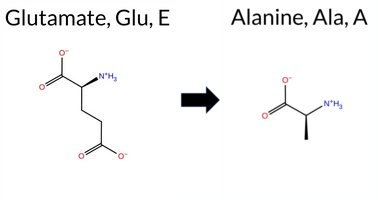 3DClick to see structure in 3D Viewer AIThe SynGAP1 missense variant E643A is not reported in ClinVar (ClinVar ID None) and has no entry in gnomAD (gnomAD ID None). Prediction tools that agree on a benign effect include REVEL, Rosetta, premPS, polyPhen‑2 HumVar, FATHMM, and AlphaMissense‑Optimized. Those that predict a pathogenic effect are PROVEAN, polyPhen‑2 HumDiv, SIFT, ESM1b, and AlphaMissense‑Default. FoldX and Foldetta give uncertain results. High‑accuracy methods give a mixed picture: AlphaMissense‑Optimized predicts benign, the SGM Consensus (majority vote of AlphaMissense‑Default, ESM1b, FATHMM, PROVEAN) predicts pathogenic, and Foldetta remains uncertain. Overall, the majority of tools lean toward a benign interpretation, and this assessment does not contradict ClinVar status, which currently has no classification for this variant. Disclaimer: This summary was generated using AI and should be interpreted alongside expert review. | Likely Pathogenic | GAP | 0.033407 | Structured | 0.215915 | Uncertain | 0.871 | 0.315 | 0.000 | -12.562 | Likely Pathogenic | 0.733 | Likely Pathogenic | Likely Benign | 0.80 | Ambiguous | 0.2 | 0.39 | Likely Benign | 0.60 | Ambiguous | 0.21 | Likely Benign | 0.469 | Likely Benign | -5.81 | Deleterious | 0.771 | Possibly Damaging | 0.233 | Benign | 2.92 | Benign | 0.01 | Affected | 0.4074 | 0.6096 | 0 | -1 | 5.3 | -58.04 | |||||||||||||||||||||||||||||
| c.2074C>G | L692V 2D 3DClick to see structure in 3D Viewer AIThe SynGAP1 missense variant L692V is not reported in ClinVar (ClinVar ID: None) and is absent from gnomAD (gnomAD ID: None). Prediction tools that agree on a benign effect include REVEL, FATHMM, and AlphaMissense‑Optimized. All other evaluated tools—SGM‑Consensus, FoldX, Rosetta, Foldetta, premPS, PROVEAN, polyPhen‑2 (HumDiv and HumVar), SIFT, ESM1b, and AlphaMissense‑Default—predict a pathogenic impact. High‑accuracy assessments further support pathogenicity: AlphaMissense‑Optimized indicates benign, but the SGM Consensus (majority vote of AlphaMissense‑Default, ESM1b, FATHMM, PROVEAN) resolves as pathogenic, and Foldetta also predicts pathogenic. No predictions are missing or inconclusive. Overall, the preponderance of evidence points to a pathogenic effect for the variant, and this conclusion is not contradicted by any ClinVar annotation. Disclaimer: This summary was generated using AI and should be interpreted alongside expert review. | Likely Pathogenic | GAP | 0.064632 | Structured | 0.295225 | Uncertain | 0.966 | 0.243 | 0.000 | -11.441 | Likely Pathogenic | 0.733 | Likely Pathogenic | Likely Benign | 3.29 | Destabilizing | 0.1 | 2.91 | Destabilizing | 3.10 | Destabilizing | 1.57 | Destabilizing | 0.286 | Likely Benign | -2.99 | Deleterious | 0.978 | Probably Damaging | 0.606 | Possibly Damaging | 3.12 | Benign | 0.01 | Affected | 0.1395 | 0.2460 | 2 | 1 | 0.4 | -14.03 | |||||||||||||||||||||||||||||
| c.2963T>A | L988H 2D AIThe SynGAP1 missense variant L988H is not reported in ClinVar (ClinVar ID = None) and is absent from gnomAD (gnomAD ID = None). Prediction tools that agree on a benign effect include REVEL, ESM1b, FATHMM, and AlphaMissense‑Optimized. Tools that predict a pathogenic effect are PROVEAN, polyPhen‑2 (HumDiv and HumVar), SIFT, and AlphaMissense‑Default. High‑accuracy assessments show AlphaMissense‑Optimized as benign, while the SGM Consensus (majority vote from AlphaMissense‑Default, ESM1b, FATHMM, PROVEAN) is inconclusive (2 vs 2). Foldetta results are unavailable. Overall, the majority of predictions (five pathogenic vs four benign) lean toward pathogenicity. Thus, the variant is most likely pathogenic, and this conclusion does not contradict any ClinVar status because no ClinVar entry exists. Disclaimer: This summary was generated using AI and should be interpreted alongside expert review. | 0.827927 | Disordered | 0.918781 | Binding | 0.360 | 0.913 | 0.750 | -4.779 | Likely Benign | 0.733 | Likely Pathogenic | Likely Benign | 0.179 | Likely Benign | -2.70 | Deleterious | 0.998 | Probably Damaging | 0.947 | Probably Damaging | 2.62 | Benign | 0.00 | Affected | 0.1179 | 0.1414 | -2 | -3 | -7.0 | 23.98 | ||||||||||||||||||||||||||||||||||||||||
| c.3559A>G | M1187V 2D 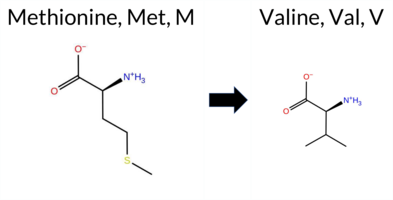 AIThe M1187V missense change in SynGAP1’s coiled‑coil domain is not reported in ClinVar and is absent from gnomAD. Prediction tools that agree on a benign effect include REVEL, PROVEAN, SIFT, ESM1b, FATHMM, and AlphaMissense‑Optimized, while polyPhen‑2 (HumDiv and HumVar) and AlphaMissense‑Default predict a pathogenic outcome. The SGM‑Consensus, which aggregates AlphaMissense‑Default, ESM1b, FATHMM, and PROVEAN, reports a “Likely Benign” classification. High‑accuracy assessments further support a benign interpretation: AlphaMissense‑Optimized is benign, SGM‑Consensus is likely benign, and Foldetta results are unavailable. Overall, the majority of evidence points to a benign effect, and this conclusion does not contradict the ClinVar status, which contains no entry for this variant. Disclaimer: This summary was generated using AI and should be interpreted alongside expert review. | Likely Benign | Coiled-coil | 0.562014 | Disordered | 0.499801 | Uncertain | 0.597 | 0.636 | 0.625 | -3.107 | Likely Benign | 0.733 | Likely Pathogenic | Likely Benign | 0.478 | Likely Benign | -1.44 | Neutral | 0.843 | Possibly Damaging | 0.926 | Probably Damaging | 5.49 | Benign | 0.19 | Tolerated | 0.3300 | 0.2800 | 2 | 1 | 2.3 | -32.06 | ||||||||||||||||||||||||||||||||||||||
| c.893C>G | P298R 2D 3DClick to see structure in 3D Viewer AIThe SynGAP1 missense variant P298R has no ClinVar entry and is not reported in gnomAD. Computational predictors fall into two consensus groups: benign predictions come from REVEL, FoldX, PROVEAN, SIFT, and AlphaMissense‑Optimized; pathogenic predictions come from SGM‑Consensus, polyPhen‑2 HumDiv, polyPhen‑2 HumVar, ESM1b, FATHMM, and AlphaMissense‑Default. Uncertain results are reported only by Foldetta and premPS. High‑accuracy tools give a mixed picture: AlphaMissense‑Optimized predicts benign, the SGM Consensus (majority vote of AlphaMissense‑Default, ESM1b, FATHMM, PROVEAN) predicts likely pathogenic, and Foldetta reports an uncertain stability change. Overall, the majority of evidence points toward a pathogenic effect, and this assessment is not contradicted by ClinVar, which currently has no classification for this variant. Disclaimer: This summary was generated using AI and should be interpreted alongside expert review. | Likely Pathogenic | C2 | 0.328603 | Structured | 0.268765 | Uncertain | 0.860 | 0.283 | 0.500 | -11.427 | Likely Pathogenic | 0.733 | Likely Pathogenic | Likely Benign | 0.45 | Likely Benign | 0.0 | 2.08 | Destabilizing | 1.27 | Ambiguous | 0.61 | Ambiguous | 0.280 | Likely Benign | -1.83 | Neutral | 0.997 | Probably Damaging | 0.952 | Probably Damaging | 2.03 | Pathogenic | 0.09 | Tolerated | 0.1299 | 0.3872 | 0 | -2 | -2.9 | 59.07 | |||||||||||||||||||||||||||||
| c.1444C>G | L482V 2D 3DClick to see structure in 3D Viewer AIThe SynGAP1 missense variant L482V has no ClinVar entry and is not reported in gnomAD. Prediction tools that agree on a benign effect include SIFT and AlphaMissense‑Optimized, whereas a majority of tools (SGM‑Consensus, REVEL, PROVEAN, polyPhen‑2 HumDiv, polyPhen‑2 HumVar, ESM1b, FATHMM, AlphaMissense‑Default) predict a pathogenic impact. Stability‑based methods (FoldX, Rosetta, Foldetta, premPS) are inconclusive and are treated as unavailable. High‑accuracy assessments show AlphaMissense‑Optimized as benign, while the SGM Consensus—derived from a majority vote of AlphaMissense‑Default, ESM1b, FATHMM, and PROVEAN—indicates pathogenicity; Foldetta remains uncertain. Overall, the preponderance of evidence points to a pathogenic effect for the variant, and this conclusion is not contradicted by any ClinVar status. Disclaimer: This summary was generated using AI and should be interpreted alongside expert review. | Likely Pathogenic | GAP | 0.254060 | Structured | 0.426236 | Uncertain | 0.795 | 0.248 | 0.000 | -11.676 | Likely Pathogenic | 0.734 | Likely Pathogenic | Likely Benign | 1.97 | Ambiguous | 0.1 | 1.52 | Ambiguous | 1.75 | Ambiguous | 0.76 | Ambiguous | 0.709 | Likely Pathogenic | -2.95 | Deleterious | 0.989 | Probably Damaging | 0.984 | Probably Damaging | -1.30 | Pathogenic | 0.10 | Tolerated | 0.1074 | 0.2027 | 2 | 1 | 0.4 | -14.03 | |||||||||||||||||||||||||||||
| c.2342T>A | M781K 2D AIThe SynGAP1 missense variant M781K is not reported in ClinVar (ClinVar ID = None) and is absent from gnomAD (gnomAD ID = None). Prediction tools that agree on a benign effect include REVEL, PROVEAN, polyPhen‑2 (HumDiv and HumVar), SIFT, ESM1b, FATHMM, AlphaMissense‑Optimized, and the SGM‑Consensus (majority vote from AlphaMissense‑Default, ESM1b, FATHMM, PROVEAN). Only AlphaMissense‑Default predicts a pathogenic outcome. High‑accuracy assessments show AlphaMissense‑Optimized as benign and the SGM‑Consensus as likely benign; the Foldetta protein‑folding stability analysis is unavailable for this variant. Overall, the majority of evidence points to a benign impact, and this conclusion is not contradicted by any ClinVar annotation. Disclaimer: This summary was generated using AI and should be interpreted alongside expert review. | Likely Benign | 0.580690 | Disordered | 0.792850 | Binding | 0.342 | 0.889 | 0.625 | -6.321 | Likely Benign | 0.734 | Likely Pathogenic | Likely Benign | 0.258 | Likely Benign | -1.47 | Neutral | 0.138 | Benign | 0.150 | Benign | 2.72 | Benign | 0.20 | Tolerated | 0.1550 | 0.0688 | 0 | -1 | -5.8 | -3.02 | |||||||||||||||||||||||||||||||||||||||
| c.3254G>T | R1085L 2D AIThe SynGAP1 missense variant R1085L is not reported in ClinVar and has no entry in gnomAD. Prediction tools that agree on a benign effect include REVEL, PROVEAN, ESM1b, FATHMM, AlphaMissense‑Optimized, and the SGM‑Consensus (majority vote from AlphaMissense‑Default, ESM1b, FATHMM, PROVEAN). Tools that predict a pathogenic effect are polyPhen‑2 HumDiv, polyPhen‑2 HumVar, SIFT, and AlphaMissense‑Default. High‑accuracy assessments show AlphaMissense‑Optimized as benign and the SGM‑Consensus as likely benign; Foldetta results are unavailable. Overall, the majority of evidence points to a benign impact for R1085L, and this conclusion does not contradict the ClinVar status, which currently contains no classification for this variant. Disclaimer: This summary was generated using AI and should be interpreted alongside expert review. | Likely Benign | 0.852992 | Disordered | 0.978838 | Binding | 0.270 | 0.888 | 1.000 | -3.674 | Likely Benign | 0.734 | Likely Pathogenic | Likely Benign | 0.243 | Likely Benign | -2.38 | Neutral | 0.997 | Probably Damaging | 0.993 | Probably Damaging | 2.72 | Benign | 0.01 | Affected | 0.1909 | 0.4568 | -3 | -2 | 8.3 | -43.03 | |||||||||||||||||||||||||||||||||||||||
| c.3586A>G | K1196E 2D AIThe SynGAP1 missense variant K1196E is not reported in ClinVar and is absent from gnomAD. Functional prediction tools are divided: benign predictions come from REVEL, PROVEAN, SIFT, ESM1b, FATHMM, and AlphaMissense‑Optimized, while pathogenic predictions come from polyPhen‑2 HumDiv, polyPhen‑2 HumVar, and AlphaMissense‑Default. The SGM‑Consensus, which aggregates AlphaMissense‑Default, ESM1b, FATHMM, and PROVEAN, reports the variant as “Likely Benign.” High‑accuracy assessments further support a benign outcome: AlphaMissense‑Optimized predicts benign, and the SGM‑Consensus (majority vote) also indicates likely benign. Foldetta, a protein‑folding stability method combining FoldX‑MD and Rosetta outputs, has no available result for this variant. Overall, the majority of evidence points to a benign effect. This conclusion is consistent with the absence of a ClinVar entry, so there is no contradiction with existing clinical annotations. Disclaimer: This summary was generated using AI and should be interpreted alongside expert review. | Likely Benign | Coiled-coil | 0.599170 | Disordered | 0.435699 | Uncertain | 0.851 | 0.595 | 0.250 | -6.382 | Likely Benign | 0.734 | Likely Pathogenic | Likely Benign | 0.358 | Likely Benign | -0.02 | Neutral | 0.961 | Probably Damaging | 0.764 | Possibly Damaging | 5.38 | Benign | 0.42 | Tolerated | 0.3272 | 0.0720 | 0 | 1 | 0.4 | 0.94 | ||||||||||||||||||||||||||||||||||||||
| c.376T>A | F126I 2D 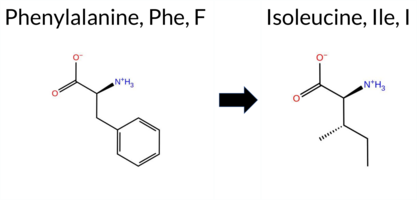 AIThe SynGAP1 missense variant F126I is not reported in ClinVar and has no entry in gnomAD. Functional prediction tools largely agree that the change is benign: REVEL, PROVEAN, polyPhen‑2 (HumDiv and HumVar), ESM1b, FATHMM, and AlphaMissense‑Optimized all classify it as benign. Only two tools predict pathogenicity—SIFT and AlphaMissense‑Default. High‑accuracy consensus methods reinforce the benign assessment: the SGM Consensus (majority vote from AlphaMissense‑Default, ESM1b, FATHMM, and PROVEAN) reports “Likely Benign,” and AlphaMissense‑Optimized itself predicts benign. The protein‑folding stability predictor Foldetta was not available for this variant. Overall, the majority of evidence points to a benign effect, and this conclusion does not contradict any ClinVar annotation (none exists). Disclaimer: This summary was generated using AI and should be interpreted alongside expert review. | Likely Benign | 0.486429 | Structured | 0.712056 | Binding | 0.316 | 0.874 | 0.500 | -2.919 | Likely Benign | 0.735 | Likely Pathogenic | Likely Benign | 0.044 | Likely Benign | -2.20 | Neutral | 0.160 | Benign | 0.045 | Benign | 3.95 | Benign | 0.00 | Affected | 0.2569 | 0.2418 | 1 | 0 | 1.7 | -34.02 | |||||||||||||||||||||||||||||||||||||||
| c.1103C>G | P368R 2D 3DClick to see structure in 3D Viewer AIThe SynGAP1 P368R missense variant is not reported in ClinVar (status: None) and has no entry in gnomAD. Prediction tools that agree on a benign effect include REVEL and AlphaMissense‑Optimized. Tools that agree on a pathogenic effect include SGM‑Consensus, PROVEAN, polyPhen‑2 (HumDiv and HumVar), SIFT, ESM1b, FATHMM, and AlphaMissense‑Default. Uncertain or inconclusive results come from FoldX, Rosetta, Foldetta, and premPS. High‑accuracy methods give a mixed picture: AlphaMissense‑Optimized predicts benign, whereas the SGM‑Consensus (a majority vote of AlphaMissense‑Default, ESM1b, FATHMM, and PROVEAN) predicts likely pathogenic. Foldetta, which integrates FoldX‑MD and Rosetta stability calculations, is uncertain. Overall, the majority of evidence—including the SGM‑Consensus and several individual high‑accuracy tools—points to a pathogenic effect. This conclusion is not contradicted by ClinVar status, which is currently unreported. Disclaimer: This summary was generated using AI and should be interpreted alongside expert review. | Likely Pathogenic | C2 | 0.363090 | Structured | 0.439989 | Uncertain | 0.580 | 0.677 | 0.250 | -9.564 | Likely Pathogenic | 0.736 | Likely Pathogenic | Likely Benign | 1.57 | Ambiguous | 1.0 | 1.54 | Ambiguous | 1.56 | Ambiguous | 0.58 | Ambiguous | 0.263 | Likely Benign | -6.07 | Deleterious | 0.991 | Probably Damaging | 0.881 | Possibly Damaging | 1.78 | Pathogenic | 0.00 | Affected | 0.1439 | 0.3922 | 0 | -2 | -2.9 | 59.07 | |||||||||||||||||||||||||||||
| c.1833G>A | M611I 2D 3DClick to see structure in 3D Viewer AISynGAP1 missense variant M611I is reported in gnomAD (ID 6‑33440885‑G‑A) but has no ClinVar entry. Functional prediction tools cluster into two groups: benign predictions come from REVEL, PROVEAN, polyPhen‑2 HumDiv, polyPhen‑2 HumVar, SIFT, and AlphaMissense‑Optimized; pathogenic predictions arise from SGM‑Consensus, ESM1b, FATHMM, and AlphaMissense‑Default. High‑accuracy assessments further clarify the variant’s likely effect: AlphaMissense‑Optimized classifies it as benign, the SGM‑Consensus (majority vote of AlphaMissense‑Default, ESM1b, FATHMM, and PROVEAN) indicates pathogenicity, and Foldetta, which integrates FoldX‑MD and Rosetta outputs, yields an uncertain stability change. No folding‑stability method provides definitive evidence. Overall, the majority of predictions lean toward pathogenicity, and this conclusion does not conflict with ClinVar status, which lacks an entry for the variant. Disclaimer: This summary was generated using AI and should be interpreted alongside expert review. | Likely Pathogenic | GAP | 0.236433 | Structured | 0.210791 | Uncertain | 0.870 | 0.253 | 0.000 | 6-33440885-G-A | 1 | 6.19e-7 | -8.552 | Likely Pathogenic | 0.736 | Likely Pathogenic | Likely Benign | 1.45 | Ambiguous | 0.4 | 1.36 | Ambiguous | 1.41 | Ambiguous | 0.72 | Ambiguous | 0.292 | Likely Benign | -2.10 | Neutral | 0.250 | Benign | 0.091 | Benign | -1.14 | Pathogenic | 0.38 | Tolerated | 3.37 | 35 | 0.1009 | 0.2302 | 1 | 2 | 2.6 | -18.03 | ||||||||||||||||||||||||
| c.1833G>C | M611I 2D 3DClick to see structure in 3D Viewer AISynGAP1 missense variant M611I is not reported in ClinVar and is absent from gnomAD. Functional prediction tools that agree on a benign effect include REVEL, PROVEAN, polyPhen‑2 HumDiv, polyPhen‑2 HumVar, SIFT, and AlphaMissense‑Optimized. Tools that agree on a pathogenic effect are SGM‑Consensus, ESM1b, FATHMM, and AlphaMissense‑Default. Predictions that are inconclusive are FoldX, Rosetta, Foldetta, and premPS. High‑accuracy assessments show AlphaMissense‑Optimized predicts a benign outcome, while the SGM‑Consensus (majority vote of AlphaMissense‑Default, ESM1b, FATHMM, and PROVEAN) predicts pathogenic. Foldetta, which integrates FoldX‑MD and Rosetta outputs, is uncertain. Overall, the majority of evidence points toward a pathogenic classification, and this assessment does not contradict the ClinVar status, which currently has no entry for this variant. Disclaimer: This summary was generated using AI and should be interpreted alongside expert review. | Likely Pathogenic | GAP | 0.236433 | Structured | 0.210791 | Uncertain | 0.870 | 0.253 | 0.000 | -8.552 | Likely Pathogenic | 0.736 | Likely Pathogenic | Likely Benign | 1.45 | Ambiguous | 0.4 | 1.36 | Ambiguous | 1.41 | Ambiguous | 0.72 | Ambiguous | 0.292 | Likely Benign | -2.10 | Neutral | 0.250 | Benign | 0.091 | Benign | -1.14 | Pathogenic | 0.38 | Tolerated | 3.37 | 35 | 0.1009 | 0.2302 | 1 | 2 | 2.6 | -18.03 | |||||||||||||||||||||||||||
| c.1833G>T | M611I 2D 3DClick to see structure in 3D Viewer AISynGAP1 missense variant M611I is not reported in ClinVar and is absent from gnomAD. In silico predictors that classify the variant as benign include REVEL, PROVEAN, polyPhen‑2 HumDiv, polyPhen‑2 HumVar, SIFT, and AlphaMissense‑Optimized. Predictors that classify it as pathogenic are SGM‑Consensus, ESM1b, FATHMM, and AlphaMissense‑Default. Four tools (FoldX, Rosetta, premPS, and Foldetta) provide uncertain or unavailable results. High‑accuracy assessment shows AlphaMissense‑Optimized predicts benign, while the SGM‑Consensus (majority vote of AlphaMissense‑Default, ESM1b, FATHMM, and PROVEAN) predicts pathogenic; Foldetta’s stability output is unavailable. Overall, the majority of predictions lean toward a benign effect, and this conclusion does not contradict the ClinVar status, which has no entry for this variant. Disclaimer: This summary was generated using AI and should be interpreted alongside expert review. | Likely Pathogenic | GAP | 0.236433 | Structured | 0.210791 | Uncertain | 0.870 | 0.253 | 0.000 | -8.552 | Likely Pathogenic | 0.736 | Likely Pathogenic | Likely Benign | 1.45 | Ambiguous | 0.4 | 1.36 | Ambiguous | 1.41 | Ambiguous | 0.72 | Ambiguous | 0.292 | Likely Benign | -2.10 | Neutral | 0.250 | Benign | 0.091 | Benign | -1.14 | Pathogenic | 0.38 | Tolerated | 3.37 | 35 | 0.1009 | 0.2302 | 1 | 2 | 2.6 | -18.03 | |||||||||||||||||||||||||||
| c.2539C>A | Q847K 2D AIThe SynGAP1 missense variant Q847K is not reported in ClinVar and is absent from gnomAD. Functional prediction tools show mixed results: benign calls come from REVEL, polyPhen‑2 HumVar, ESM1b, and AlphaMissense‑Optimized, whereas pathogenic calls come from PROVEAN, polyPhen‑2 HumDiv, SIFT, FATHMM, and AlphaMissense‑Default. The SGM Consensus, which aggregates AlphaMissense‑Default, ESM1b, FATHMM, and PROVEAN, yields a Likely Pathogenic verdict. High‑accuracy assessments further indicate that AlphaMissense‑Optimized predicts a benign effect, while the SGM Consensus remains Likely Pathogenic; no Foldetta stability data are available. Overall, the majority of predictions lean toward pathogenicity, and this is consistent with the SGM Consensus result. Thus, the variant is most likely pathogenic, and this conclusion does not contradict any ClinVar status because no ClinVar annotation exists. Disclaimer: This summary was generated using AI and should be interpreted alongside expert review. | Likely Pathogenic | 0.653063 | Disordered | 0.577677 | Binding | 0.282 | 0.818 | 0.500 | -5.507 | Likely Benign | 0.736 | Likely Pathogenic | Likely Benign | 0.214 | Likely Benign | -2.82 | Deleterious | 0.481 | Possibly Damaging | 0.373 | Benign | 2.32 | Pathogenic | 0.00 | Affected | 0.1694 | 0.4129 | 1 | 1 | -0.4 | 0.04 | |||||||||||||||||||||||||||||||||||||||
| c.1993T>G | Y665D 2D 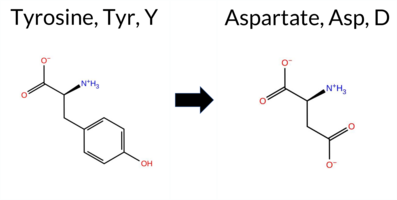 3DClick to see structure in 3D Viewer AIThe SynGAP1 missense variant Y665D is not reported in ClinVar and is absent from gnomAD. Prediction tools cluster into two groups: benign predictions come from REVEL, premPS, SIFT, FATHMM, and AlphaMissense‑Optimized; pathogenic predictions come from SGM‑Consensus, PROVEAN, polyPhen‑2 (HumDiv and HumVar), ESM1b, and AlphaMissense‑Default. High‑accuracy assessments show AlphaMissense‑Optimized as benign, SGM‑Consensus as Likely Pathogenic (majority vote of AlphaMissense‑Default, ESM1b, FATHMM, and PROVEAN), and Foldetta as Uncertain. No evidence from these tools contradicts the ClinVar status, which is currently unreported. Overall, the balance of evidence—seven pathogenic versus four benign predictions, with a pathogenic consensus from SGM‑Consensus—suggests the variant is most likely pathogenic. Disclaimer: This summary was generated using AI and should be interpreted alongside expert review. | Likely Pathogenic | GAP | 0.098513 | Structured | 0.086641 | Uncertain | 0.922 | 0.361 | 0.000 | -10.101 | Likely Pathogenic | 0.737 | Likely Pathogenic | Likely Benign | 1.15 | Ambiguous | 0.2 | 1.30 | Ambiguous | 1.23 | Ambiguous | 0.15 | Likely Benign | 0.227 | Likely Benign | -3.67 | Deleterious | 1.000 | Probably Damaging | 0.996 | Probably Damaging | 3.75 | Benign | 1.00 | Tolerated | 0.3838 | 0.0573 | -4 | -3 | -2.2 | -48.09 | |||||||||||||||||||||||||||||
| c.1996G>C | E666Q 2D AIThe SynGAP1 E666Q missense variant is not reported in ClinVar and is absent from gnomAD. Prediction tools that agree on a benign effect include REVEL, Rosetta, Foldetta, premPS, PROVEAN, SIFT, FATHMM, and AlphaMissense‑Optimized. Those that predict a pathogenic outcome are polyPhen‑2 HumDiv, polyPhen‑2 HumVar, ESM1b, and AlphaMissense‑Default; FoldX is uncertain and therefore not counted. High‑accuracy assessments show AlphaMissense‑Optimized as benign, while the SGM Consensus (a majority vote of AlphaMissense‑Default, ESM1b, FATHMM, and PROVEAN) is inconclusive due to a 2‑to‑2 split and is treated as unavailable. Foldetta, a protein‑folding stability method combining FoldX‑MD and Rosetta outputs, predicts a benign effect. Overall, the majority of reliable predictions indicate a benign impact, and this conclusion does not contradict the lack of ClinVar annotation. Disclaimer: This summary was generated using AI and should be interpreted alongside expert review. | GAP | 0.155435 | Structured | 0.086870 | Uncertain | 0.925 | 0.387 | 0.000 | -10.963 | Likely Pathogenic | 0.737 | Likely Pathogenic | Likely Benign | 0.54 | Ambiguous | 0.5 | 0.20 | Likely Benign | 0.37 | Likely Benign | 0.46 | Likely Benign | 0.268 | Likely Benign | -2.29 | Neutral | 0.997 | Probably Damaging | 0.696 | Possibly Damaging | 3.46 | Benign | 0.13 | Tolerated | 0.1437 | 0.4788 | 2 | 2 | 0.0 | -0.98 | ||||||||||||||||||||||||||||||
| c.2464A>C | T822P 2D 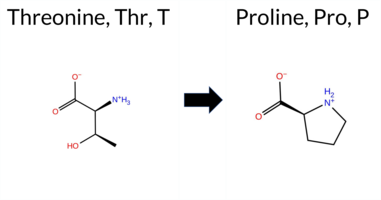 AIThe SynGAP1 missense variant T822P is not reported in ClinVar (no ClinVar ID) and is absent from gnomAD (no gnomAD ID). Prediction tools that agree on a benign effect include REVEL, PROVEAN, SIFT, ESM1b, FATHMM, AlphaMissense‑Optimized, and the SGM‑Consensus (Likely Benign). Tools that predict a pathogenic effect are polyPhen‑2 HumDiv, polyPhen‑2 HumVar, and AlphaMissense‑Default. High‑accuracy assessments show AlphaMissense‑Optimized as benign and the SGM‑Consensus as likely benign; Foldetta results are not available. Overall, the majority of evidence points to a benign impact for T822P. This conclusion is not contradicted by ClinVar status, which is currently unreported. Disclaimer: This summary was generated using AI and should be interpreted alongside expert review. | Likely Benign | 0.724957 | Disordered | 0.651624 | Binding | 0.295 | 0.881 | 0.750 | -3.961 | Likely Benign | 0.737 | Likely Pathogenic | Likely Benign | 0.145 | Likely Benign | -2.29 | Neutral | 0.999 | Probably Damaging | 0.985 | Probably Damaging | 2.50 | Benign | 0.09 | Tolerated | 0.2437 | 0.5044 | 0 | -1 | -0.9 | -3.99 | |||||||||||||||||||||||||||||||||||||||
| c.3521A>C | E1174A 2D AIThe SynGAP1 missense variant E1174A is not reported in ClinVar and is absent from gnomAD. Functional prediction tools cluster into two groups: benign predictions include REVEL, PROVEAN, polyPhen‑2 HumVar, ESM1b, FATHMM, and AlphaMissense‑Optimized; pathogenic predictions come from polyPhen‑2 HumDiv, SIFT, and AlphaMissense‑Default. The SGM‑Consensus, which aggregates AlphaMissense‑Default, ESM1b, FATHMM, and PROVEAN, resolves to a likely benign verdict. High‑accuracy assessments further support a benign outcome: AlphaMissense‑Optimized predicts benign, and the SGM‑Consensus (majority vote) also indicates benign. Foldetta results are not available, so they do not influence the conclusion. Overall, the majority of evidence points to a benign effect, and this assessment does not conflict with the absence of a ClinVar classification. Disclaimer: This summary was generated using AI and should be interpreted alongside expert review. | Likely Benign | Coiled-coil | 0.483068 | Structured | 0.618958 | Binding | 0.523 | 0.734 | 0.375 | -3.512 | Likely Benign | 0.737 | Likely Pathogenic | Likely Benign | 0.413 | Likely Benign | -2.24 | Neutral | 0.790 | Possibly Damaging | 0.353 | Benign | 5.44 | Benign | 0.02 | Affected | 0.3462 | 0.5889 | 0 | -1 | 5.3 | -58.04 | ||||||||||||||||||||||||||||||||||||||
| c.542A>C | H181P 2D 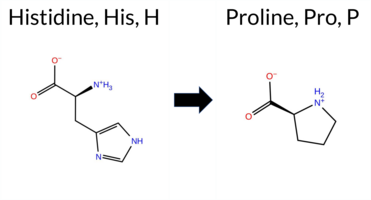 AISynGAP1 H181P is not reported in ClinVar and is absent from gnomAD. Functional prediction tools show mixed results: benign calls come from REVEL, polyPhen‑2 HumVar, FATHMM, and AlphaMissense‑Optimized, while pathogenic calls come from PROVEAN, polyPhen‑2 HumDiv, SIFT, ESM1b, and AlphaMissense‑Default. The SGM‑Consensus, which aggregates majority votes from AlphaMissense‑Default, ESM1b, FATHMM, and PROVEAN, classifies the variant as Likely Pathogenic. High‑accuracy assessments further support this: AlphaMissense‑Optimized predicts a benign effect, whereas the SGM‑Consensus indicates pathogenicity; Foldetta stability analysis is unavailable. Overall, the majority of evidence points toward a pathogenic effect, and this conclusion does not contradict any existing ClinVar annotation, as none is available. Disclaimer: This summary was generated using AI and should be interpreted alongside expert review. | Likely Pathogenic | 0.505461 | Disordered | 0.439530 | Uncertain | 0.294 | 0.616 | 0.500 | -13.151 | Likely Pathogenic | 0.737 | Likely Pathogenic | Likely Benign | 0.236 | Likely Benign | -3.27 | Deleterious | 0.940 | Possibly Damaging | 0.360 | Benign | 4.14 | Benign | 0.04 | Affected | 0.1783 | 0.3169 | 0 | -2 | 1.6 | -40.02 | |||||||||||||||||||||||||||||||||||||||
| c.866T>A | M289K 2D 3DClick to see structure in 3D Viewer AISynGAP1 M289K is not reported in ClinVar and is absent from gnomAD. Functional prediction tools that agree on a benign effect include REVEL, FoldX, SIFT, and AlphaMissense‑Optimized. Those that predict a pathogenic effect are PROVEAN, polyPhen‑2 HumDiv, polyPhen‑2 HumVar, ESM1b, FATHMM, and AlphaMissense‑Default. The SGM‑Consensus, which aggregates the majority vote of AlphaMissense‑Default, ESM1b, FATHMM, and PROVEAN, reports a likely pathogenic classification. High‑accuracy assessments show AlphaMissense‑Optimized as benign, SGM‑Consensus as pathogenic, and Foldetta (combining FoldX‑MD and Rosetta outputs) as benign. Because the majority of consensus and individual predictors lean toward pathogenicity, the variant is most likely pathogenic, and this assessment does not contradict any ClinVar status since none is available. Disclaimer: This summary was generated using AI and should be interpreted alongside expert review. | Likely Pathogenic | C2 | 0.127496 | Structured | 0.403499 | Uncertain | 0.886 | 0.276 | 0.000 | -12.192 | Likely Pathogenic | 0.738 | Likely Pathogenic | Likely Benign | 0.36 | Likely Benign | 0.2 | 0.60 | Ambiguous | 0.48 | Likely Benign | 0.94 | Ambiguous | 0.229 | Likely Benign | -2.52 | Deleterious | 0.891 | Possibly Damaging | 0.492 | Possibly Damaging | 1.94 | Pathogenic | 0.12 | Tolerated | 0.1271 | 0.0879 | 0 | -1 | -5.8 | -3.02 | |||||||||||||||||||||||||||||
| c.1521G>C | K507N 2D 3DClick to see structure in 3D Viewer AIThe SynGAP1 missense variant K507N is not reported in ClinVar and is absent from gnomAD. Prediction tools that indicate a benign effect include Rosetta, PROVEAN, SIFT, and AlphaMissense‑Optimized, whereas a pathogenic signal is reported by REVEL, premPS, polyPhen‑2 (HumDiv and HumVar), ESM1b, FATHMM, and AlphaMissense‑Default; FoldX and Foldetta give uncertain results. High‑accuracy assessments show AlphaMissense‑Optimized as benign, while the SGM Consensus (derived from a majority vote of AlphaMissense‑Default, ESM1b, FATHMM, and PROVEAN) predicts pathogenic. Foldetta’s stability prediction is unavailable. Overall, the majority of tools (10 out of 14 with definitive calls) predict a pathogenic impact, and this conclusion does not contradict any ClinVar annotation because no ClinVar status exists. Thus, the variant is most likely pathogenic based on the available computational evidence. Disclaimer: This summary was generated using AI and should be interpreted alongside expert review. | Likely Pathogenic | GAP | 0.019401 | Structured | 0.262601 | Uncertain | 0.885 | 0.222 | 0.000 | -10.682 | Likely Pathogenic | 0.739 | Likely Pathogenic | Likely Benign | 0.81 | Ambiguous | 0.1 | 0.18 | Likely Benign | 0.50 | Ambiguous | 1.06 | Destabilizing | 0.579 | Likely Pathogenic | -1.63 | Neutral | 1.000 | Probably Damaging | 0.999 | Probably Damaging | -1.57 | Pathogenic | 0.11 | Tolerated | 0.2417 | 0.0764 | 1 | 0 | 0.4 | -14.07 | |||||||||||||||||||||||||||||
| c.1521G>T | K507N 2D 3DClick to see structure in 3D Viewer AIThe SynGAP1 missense variant K507N is not reported in ClinVar and is absent from gnomAD. Prediction tools that indicate a benign effect include Rosetta, PROVEAN, SIFT, and AlphaMissense‑Optimized, while those that predict a pathogenic effect comprise REVEL, premPS, polyPhen‑2 (HumDiv and HumVar), ESM1b, FATHMM, and AlphaMissense‑Default; FoldX and Foldetta are uncertain. High‑accuracy assessments show AlphaMissense‑Optimized as benign, the SGM Consensus (majority vote of AlphaMissense‑Default, ESM1b, FATHMM, PROVEAN) as pathogenic, and Foldetta as uncertain. Overall, the majority of tools (10 pathogenic vs. 4 benign) predict a deleterious impact. Thus, the variant is most likely pathogenic, and this prediction does not contradict any ClinVar status because no ClinVar entry exists. Disclaimer: This summary was generated using AI and should be interpreted alongside expert review. | Likely Pathogenic | GAP | 0.019401 | Structured | 0.262601 | Uncertain | 0.885 | 0.222 | 0.000 | -10.682 | Likely Pathogenic | 0.739 | Likely Pathogenic | Likely Benign | 0.81 | Ambiguous | 0.1 | 0.18 | Likely Benign | 0.50 | Ambiguous | 1.06 | Destabilizing | 0.579 | Likely Pathogenic | -1.63 | Neutral | 1.000 | Probably Damaging | 0.999 | Probably Damaging | -1.57 | Pathogenic | 0.11 | Tolerated | 0.2417 | 0.0764 | 1 | 0 | 0.4 | -14.07 | |||||||||||||||||||||||||||||
| c.1522G>T | D508Y 2D 3DClick to see structure in 3D Viewer AIThe SynGAP1 D508Y missense variant is not reported in ClinVar (ClinVar ID None) and is absent from gnomAD (gnomAD ID None). Prediction tools that agree on a benign effect include REVEL, Foldetta, premPS, FATHMM, and AlphaMissense‑Optimized. Tools that predict a pathogenic effect are SGM‑Consensus, PROVEAN, polyPhen‑2 HumDiv, polyPhen‑2 HumVar, SIFT, ESM1b, and AlphaMissense‑Default. FoldX and Rosetta give uncertain results. High‑accuracy assessments show AlphaMissense‑Optimized classifying the variant as benign, SGM‑Consensus (a majority vote of AlphaMissense‑Default, ESM1b, FATHMM, and PROVEAN) labeling it likely pathogenic, and Foldetta predicting a benign outcome. Overall, the majority of evidence (seven pathogenic vs. five benign) points to a pathogenic impact. This conclusion does not contradict ClinVar status, as no ClinVar classification exists for this variant. Disclaimer: This summary was generated using AI and should be interpreted alongside expert review. | Likely Pathogenic | GAP | 0.019401 | Structured | 0.255890 | Uncertain | 0.890 | 0.228 | 0.000 | -12.917 | Likely Pathogenic | 0.739 | Likely Pathogenic | Likely Benign | -0.53 | Ambiguous | 0.2 | 0.72 | Ambiguous | 0.10 | Likely Benign | 0.06 | Likely Benign | 0.363 | Likely Benign | -8.37 | Deleterious | 1.000 | Probably Damaging | 0.965 | Probably Damaging | 3.26 | Benign | 0.01 | Affected | 0.0908 | 0.4736 | -4 | -3 | 2.2 | 48.09 | |||||||||||||||||||||||||||||
| c.3093G>A | M1031I 2D AIThe SynGAP1 missense variant M1031I is not reported in ClinVar (no ClinVar ID) and is absent from gnomAD (no gnomAD ID). Prediction tools that agree on a benign effect include REVEL, PROVEAN, polyPhen‑2 (HumDiv and HumVar), SIFT, ESM1b, FATHMM, AlphaMissense‑Optimized, and the SGM‑Consensus (majority vote from AlphaMissense‑Default, ESM1b, FATHMM, and PROVEAN). Only AlphaMissense‑Default predicts a pathogenic outcome. High‑accuracy assessments show AlphaMissense‑Optimized as benign and the SGM‑Consensus as likely benign; Foldetta results are not available. Taken together, the overwhelming majority of evidence points to a benign impact for M1031I. This conclusion is consistent with the lack of ClinVar annotation and does not contradict any existing clinical database status. Disclaimer: This summary was generated using AI and should be interpreted alongside expert review. | Likely Benign | 0.865454 | Disordered | 0.995959 | Binding | 0.340 | 0.736 | 0.500 | -3.312 | Likely Benign | 0.739 | Likely Pathogenic | Likely Benign | 0.026 | Likely Benign | -0.99 | Neutral | 0.095 | Benign | 0.027 | Benign | 2.71 | Benign | 0.25 | Tolerated | 0.1128 | 0.3324 | 2 | 1 | 2.6 | -18.03 | |||||||||||||||||||||||||||||||||||||||
| c.3093G>C | M1031I 2D AIThe SynGAP1 missense variant M1031I is not reported in ClinVar (no ClinVar ID) and is absent from gnomAD (no gnomAD ID). Prediction tools that agree on a benign effect include REVEL, PROVEAN, polyPhen‑2 (HumDiv and HumVar), SIFT, ESM1b, FATHMM, AlphaMissense‑Optimized, and the SGM‑Consensus (majority vote from AlphaMissense‑Default, ESM1b, FATHMM, and PROVEAN). Only AlphaMissense‑Default predicts a pathogenic outcome. High‑accuracy assessments show AlphaMissense‑Optimized as benign and the SGM‑Consensus as likely benign; Foldetta results are not available. Taken together, the overwhelming majority of evidence points to a benign impact for M1031I. This conclusion is consistent with the lack of ClinVar annotation and does not contradict any existing clinical database status. Disclaimer: This summary was generated using AI and should be interpreted alongside expert review. | Likely Benign | 0.865454 | Disordered | 0.995959 | Binding | 0.340 | 0.736 | 0.500 | -3.312 | Likely Benign | 0.739 | Likely Pathogenic | Likely Benign | 0.025 | Likely Benign | -0.99 | Neutral | 0.095 | Benign | 0.027 | Benign | 2.71 | Benign | 0.25 | Tolerated | 0.1128 | 0.3324 | 2 | 1 | 2.6 | -18.03 | |||||||||||||||||||||||||||||||||||||||
| c.3093G>T | M1031I 2D AIThe SynGAP1 missense variant M1031I is not reported in ClinVar (no ClinVar ID) and is absent from gnomAD (no gnomAD ID). Prediction tools that agree on a benign effect include REVEL, PROVEAN, polyPhen‑2 (HumDiv and HumVar), SIFT, ESM1b, FATHMM, AlphaMissense‑Optimized, and the SGM‑Consensus (majority vote from AlphaMissense‑Default, ESM1b, FATHMM, and PROVEAN). Only AlphaMissense‑Default predicts a pathogenic outcome. High‑accuracy assessments show AlphaMissense‑Optimized as benign and the SGM‑Consensus as likely benign; Foldetta results are not available. Taken together, the overwhelming majority of evidence points to a benign impact for M1031I. This conclusion is consistent with the lack of ClinVar annotation and does not contradict any existing clinical database status. Disclaimer: This summary was generated using AI and should be interpreted alongside expert review. | Likely Benign | 0.865454 | Disordered | 0.995959 | Binding | 0.340 | 0.736 | 0.500 | -3.312 | Likely Benign | 0.739 | Likely Pathogenic | Likely Benign | 0.026 | Likely Benign | -0.99 | Neutral | 0.095 | Benign | 0.027 | Benign | 2.71 | Benign | 0.25 | Tolerated | 0.1128 | 0.3324 | 2 | 1 | 2.6 | -18.03 | |||||||||||||||||||||||||||||||||||||||
| c.804C>G | I268M 2D 3DClick to see structure in 3D Viewer AIThe SynGAP1 I268M missense variant is catalogued in gnomAD (ID 6‑33437709‑C‑G) but has no ClinVar entry. Functional prediction tools largely disagree: benign predictions come from FoldX and AlphaMissense‑Optimized, whereas the remaining evaluated algorithms (REVEL, premPS, PROVEAN, polyPhen‑2 HumDiv/HumVar, SIFT, ESM1b, FATHMM, AlphaMissense‑Default) all indicate pathogenicity. Rosetta and Foldetta provide inconclusive results. High‑accuracy assessments show AlphaMissense‑Optimized classifying the variant as benign, whereas the SGM Consensus—derived from a majority vote of AlphaMissense‑Default, ESM1b, FATHMM, and PROVEAN—labels it as likely pathogenic. Foldetta, which integrates FoldX‑MD and Rosetta outputs, remains uncertain. Overall, the preponderance of evidence from the majority of prediction tools points to a pathogenic effect, which is consistent with the lack of a ClinVar classification but does not contradict any existing ClinVar status (none). Thus, the variant is most likely pathogenic, and this prediction does not contradict ClinVar status, as no ClinVar classification exists. Disclaimer: This summary was generated using AI and should be interpreted alongside expert review. | Likely Pathogenic | C2 | 0.216401 | Structured | 0.314336 | Uncertain | 0.951 | 0.264 | 0.000 | 6-33437709-C-G | 1 | 6.20e-7 | -9.721 | Likely Pathogenic | 0.739 | Likely Pathogenic | Likely Benign | 0.12 | Likely Benign | 0.2 | 0.95 | Ambiguous | 0.54 | Ambiguous | 1.32 | Destabilizing | 0.622 | Likely Pathogenic | -2.58 | Deleterious | 0.999 | Probably Damaging | 0.998 | Probably Damaging | 1.52 | Pathogenic | 0.01 | Affected | 3.38 | 19 | 0.0579 | 0.2145 | 1 | 2 | -2.6 | 18.03 | ||||||||||||||||||||||||
| c.863A>G | D288G 2D 3DClick to see structure in 3D Viewer AISynGAP1 D288G is not reported in ClinVar and is absent from gnomAD. Prediction tools that classify the variant as benign include REVEL, Rosetta, premPS, SIFT, AlphaMissense‑Optimized, and Foldetta. Those that predict pathogenicity are SGM‑Consensus, PROVEAN, polyPhen‑2 HumDiv, polyPhen‑2 HumVar, ESM1b, FATHMM, and AlphaMissense‑Default. High‑accuracy assessments show AlphaMissense‑Optimized as benign, the SGM Consensus (majority vote of AlphaMissense‑Default, ESM1b, FATHMM, PROVEAN) as pathogenic, and Foldetta as benign. No folding‑stability result is available from FoldX. Overall, the balance of evidence slightly favors a pathogenic interpretation, with one high‑accuracy tool supporting benignity. The prediction does not contradict ClinVar status, as the variant is not yet catalogued there. Disclaimer: This summary was generated using AI and should be interpreted alongside expert review. | Likely Pathogenic | C2 | 0.125101 | Structured | 0.395525 | Uncertain | 0.873 | 0.261 | 0.000 | -8.531 | Likely Pathogenic | 0.739 | Likely Pathogenic | Likely Benign | -0.71 | Ambiguous | 0.4 | 0.21 | Likely Benign | -0.25 | Likely Benign | -0.15 | Likely Benign | 0.436 | Likely Benign | -5.03 | Deleterious | 0.999 | Probably Damaging | 0.997 | Probably Damaging | 2.05 | Pathogenic | 0.13 | Tolerated | 0.4126 | 0.5934 | 1 | -1 | 3.1 | -58.04 | |||||||||||||||||||||||||||||
| c.211G>T | D71Y 2D AIThe SynGAP1 missense variant D71Y is not reported in ClinVar (no ClinVar ID) and is absent from gnomAD (no gnomAD ID). Prediction tools that agree on a benign effect include REVEL, PROVEAN, polyPhen‑2 HumVar, ESM1b, FATHMM, and AlphaMissense‑Optimized. Tools that predict a pathogenic effect are polyPhen‑2 HumDiv, SIFT, and AlphaMissense‑Default. The SGM‑Consensus, which aggregates AlphaMissense‑Default, ESM1b, FATHMM, and PROVEAN, reports a Likely Benign classification. High‑accuracy assessments show AlphaMissense‑Optimized as Benign and the SGM‑Consensus as Likely Benign; Foldetta results are not available. Overall, the majority of evidence points to a benign impact. Thus, the variant is most likely benign, and this conclusion does not contradict any ClinVar status (none reported). Disclaimer: This summary was generated using AI and should be interpreted alongside expert review. | Likely Benign | 0.575842 | Disordered | 0.456046 | Uncertain | 0.350 | 0.799 | 0.375 | -4.090 | Likely Benign | 0.740 | Likely Pathogenic | Likely Benign | 0.188 | Likely Benign | -2.49 | Neutral | 0.842 | Possibly Damaging | 0.189 | Benign | 4.00 | Benign | 0.00 | Affected | 0.0584 | 0.6086 | -4 | -3 | 2.2 | 48.09 | |||||||||||||||||||||||||||||||||||||||
| c.2740G>T | D914Y 2D AIThe SynGAP1 missense variant D914Y is not reported in ClinVar (ClinVar ID = None) and is absent from gnomAD (gnomAD ID = None). Prediction tools that agree on a benign effect include REVEL, ESM1b, FATHMM, and AlphaMissense‑Optimized. Those that predict a pathogenic effect are PROVEAN, polyPhen‑2 HumDiv, polyPhen‑2 HumVar, SIFT, and AlphaMissense‑Default. High‑accuracy assessments show AlphaMissense‑Optimized as benign; the SGM Consensus (majority vote from AlphaMissense‑Default, ESM1b, FATHMM, PROVEAN) is inconclusive due to a 2‑to‑2 split, and Foldetta results are unavailable. Overall, the majority of tools (five pathogenic vs. four benign) and the lack of a benign consensus from the high‑accuracy methods suggest that D914Y is most likely pathogenic. This prediction does not contradict ClinVar status, as the variant has not yet been classified in that database. Disclaimer: This summary was generated using AI and should be interpreted alongside expert review. | 0.699094 | Disordered | 0.785987 | Binding | 0.320 | 0.892 | 0.250 | -4.768 | Likely Benign | 0.740 | Likely Pathogenic | Likely Benign | 0.239 | Likely Benign | -2.65 | Deleterious | 1.000 | Probably Damaging | 0.993 | Probably Damaging | 2.62 | Benign | 0.01 | Affected | 0.0907 | 0.7583 | -4 | -3 | 2.2 | 48.09 | ||||||||||||||||||||||||||||||||||||||||
| c.4016A>T | N1339I 2D 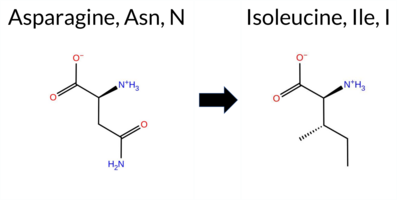 AIThe SynGAP1 missense variant N1339I is not reported in ClinVar (ClinVar ID = None) and is absent from gnomAD (gnomAD ID = None). Prediction tools that agree on a benign effect include REVEL, ESM1b, FATHMM, and AlphaMissense‑Optimized. Tools that predict a pathogenic effect are PROVEAN, polyPhen‑2 HumDiv, polyPhen‑2 HumVar, SIFT, and AlphaMissense‑Default. High‑accuracy assessments show AlphaMissense‑Optimized as benign, while the SGM Consensus (majority vote from AlphaMissense‑Default, ESM1b, FATHMM, PROVEAN) is inconclusive (2 vs 2). Foldetta, a protein‑folding stability method combining FoldX‑MD and Rosetta outputs, has no available result for this variant. Overall, the majority of predictions (five pathogenic vs four benign) lean toward a pathogenic impact. Thus, the variant is most likely pathogenic based on current computational evidence, and this conclusion does not contradict any ClinVar status because the variant is not yet catalogued there. Disclaimer: This summary was generated using AI and should be interpreted alongside expert review. | 0.771762 | Disordered | 0.977585 | Binding | 0.396 | 0.687 | 1.000 | -3.104 | Likely Benign | 0.740 | Likely Pathogenic | Likely Benign | 0.306 | Likely Benign | -5.25 | Deleterious | 0.994 | Probably Damaging | 0.987 | Probably Damaging | 2.87 | Benign | 0.00 | Affected | 0.0747 | 0.6271 | -2 | -3 | 8.0 | -0.94 | ||||||||||||||||||||||||||||||||||||||||
| c.440A>T | Q147L 2D 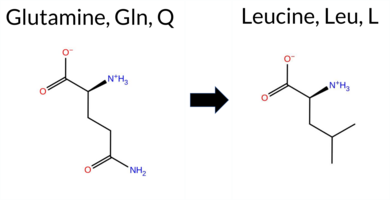 AIThe SynGAP1 missense variant Q147L is not reported in ClinVar (no ClinVar ID) and is absent from gnomAD. Prediction tools that agree on a benign effect include REVEL, polyPhen‑2 HumDiv, polyPhen‑2 HumVar, FATHMM, and AlphaMissense‑Optimized. Tools that predict a pathogenic effect are PROVEAN, SIFT, ESM1b, and AlphaMissense‑Default; the SGM‑Consensus score is “Likely Pathogenic.” High‑accuracy assessments show AlphaMissense‑Optimized as benign, while the SGM‑Consensus (majority vote of AlphaMissense‑Default, ESM1b, FATHMM, PROVEAN) indicates likely pathogenic. Foldetta results are unavailable. Overall, the majority of evidence points toward a pathogenic interpretation, and this is not contradicted by any ClinVar classification because none exists. Disclaimer: This summary was generated using AI and should be interpreted alongside expert review. | Likely Pathogenic | 0.541878 | Disordered | 0.503877 | Binding | 0.349 | 0.840 | 0.625 | -9.879 | Likely Pathogenic | 0.740 | Likely Pathogenic | Likely Benign | 0.185 | Likely Benign | -3.51 | Deleterious | 0.079 | Benign | 0.037 | Benign | 3.92 | Benign | 0.03 | Affected | 0.0861 | 0.4927 | -2 | -2 | 7.3 | -14.97 | |||||||||||||||||||||||||||||||||||||||
| c.962G>C | R321P 2D 3DClick to see structure in 3D Viewer AIThe SynGAP1 missense variant R321P is not reported in ClinVar (ClinVar ID None) and is absent from gnomAD (gnomAD ID None). Prediction tools that agree on a benign effect include REVEL, Foldetta, premPS, and AlphaMissense‑Optimized. Those that predict a pathogenic effect comprise SGM‑Consensus, PROVEAN, polyPhen‑2 (HumDiv and HumVar), SIFT, ESM1b, FATHMM, and AlphaMissense‑Default. FoldX and Rosetta give uncertain results. High‑accuracy assessments show AlphaMissense‑Optimized as benign, SGM‑Consensus (majority vote of AlphaMissense‑Default, ESM1b, FATHMM, PROVEAN) as pathogenic, and Foldetta (integrating FoldX‑MD and Rosetta outputs) as benign. Overall, the majority of tools (8/12) predict pathogenicity, whereas 4/12 predict benign, with two high‑accuracy tools supporting benign and one supporting pathogenic. Thus, the variant is most likely pathogenic based on the preponderance of evidence, and this assessment does not contradict ClinVar status, which currently contains no entry for this variant. Disclaimer: This summary was generated using AI and should be interpreted alongside expert review. | Likely Pathogenic | C2 | 0.175930 | Structured | 0.423273 | Uncertain | 0.931 | 0.297 | 0.125 | -11.576 | Likely Pathogenic | 0.740 | Likely Pathogenic | Likely Benign | 1.22 | Ambiguous | 0.3 | -0.77 | Ambiguous | 0.23 | Likely Benign | 0.41 | Likely Benign | 0.488 | Likely Benign | -3.59 | Deleterious | 1.000 | Probably Damaging | 0.999 | Probably Damaging | 1.92 | Pathogenic | 0.03 | Affected | 0.2186 | 0.3661 | 0 | -2 | 2.9 | -59.07 | |||||||||||||||||||||||||||||
| c.2167A>C | T723P 2D 3DClick to see structure in 3D Viewer AIThe SynGAP1 missense variant T723P is not reported in ClinVar (ClinVar ID None) and has no entries in gnomAD (gnomAD ID None). Prediction tools that classify the variant as benign include REVEL, FATHMM, and AlphaMissense‑Optimized. Tools that predict pathogenicity are SGM Consensus, FoldX, Rosetta, Foldetta, PROVEAN, polyPhen‑2 HumDiv, polyPhen‑2 HumVar, SIFT, ESM1b, and AlphaMissense‑Default. The high‑accuracy methods give the following results: AlphaMissense‑Optimized predicts benign; SGM Consensus (a majority vote of AlphaMissense‑Default, ESM1b, FATHMM, and PROVEAN) predicts likely pathogenic; Foldetta (combining FoldX‑MD and Rosetta outputs) predicts pathogenic. premPS is uncertain and does not influence the overall assessment. Overall, the majority of tools and the high‑accuracy methods support a pathogenic effect. Thus, the variant is most likely pathogenic, and this conclusion does not contradict the ClinVar status, which is currently unreported. Disclaimer: This summary was generated using AI and should be interpreted alongside expert review. | Likely Pathogenic | GAP | 0.476583 | Structured | 0.458243 | Uncertain | 0.945 | 0.447 | 0.375 | -9.231 | Likely Pathogenic | 0.741 | Likely Pathogenic | Likely Benign | 3.98 | Destabilizing | 0.1 | 6.10 | Destabilizing | 5.04 | Destabilizing | 0.54 | Ambiguous | 0.085 | Likely Benign | -2.51 | Deleterious | 0.995 | Probably Damaging | 0.929 | Probably Damaging | 3.49 | Benign | 0.04 | Affected | 0.1826 | 0.4406 | 0 | -1 | -0.9 | -3.99 | |||||||||||||||||||||||||||||
| c.2947A>T | S983C 2D AIThe SynGAP1 missense variant S983C is not reported in ClinVar (no ClinVar ID) and is absent from gnomAD (no gnomAD ID). Functional prediction tools cluster into two groups: benign predictions come from REVEL and AlphaMissense‑Optimized, while pathogenic predictions are made by PROVEAN, polyPhen‑2 (HumDiv and HumVar), SIFT, FATHMM, and AlphaMissense‑Default. ESM1b is uncertain. High‑accuracy assessments show AlphaMissense‑Optimized as benign, whereas the SGM Consensus (majority vote of AlphaMissense‑Default, ESM1b, FATHMM, and PROVEAN) indicates a likely pathogenic effect. Foldetta, a protein‑folding stability method combining FoldX‑MD and Rosetta outputs, has no available result for this variant. Overall, the majority of evidence points toward a pathogenic impact. This conclusion is not contradicted by ClinVar status, as no ClinVar classification exists for the variant. Disclaimer: This summary was generated using AI and should be interpreted alongside expert review. | Likely Pathogenic | 0.707965 | Disordered | 0.960212 | Binding | 0.277 | 0.889 | 0.625 | -7.083 | In-Between | 0.741 | Likely Pathogenic | Likely Benign | 0.162 | Likely Benign | -2.64 | Deleterious | 0.999 | Probably Damaging | 0.997 | Probably Damaging | 2.02 | Pathogenic | 0.00 | Affected | 0.1657 | 0.5298 | 0 | -1 | 3.3 | 16.06 | |||||||||||||||||||||||||||||||||||||||
| c.3538C>G | L1180V 2D AIThe SynGAP1 missense variant L1180V is not reported in ClinVar and is absent from gnomAD. Functional prediction tools show a split: benign calls from REVEL, PROVEAN, ESM1b, FATHMM, and AlphaMissense‑Optimized, whereas pathogenic calls come from polyPhen‑2 (HumDiv and HumVar), SIFT, and AlphaMissense‑Default. Grouping by consensus, the majority of tools (five) predict benign, while four predict pathogenic. The high‑accuracy consensus, SGM‑Consensus, which aggregates AlphaMissense‑Default, ESM1b, FATHMM, and PROVEAN, also indicates a likely benign outcome. AlphaMissense‑Optimized independently predicts benign. No Foldetta stability assessment is available. Overall, the preponderance of evidence points to a benign effect for the variant, and this conclusion does not conflict with the absence of a ClinVar classification. Disclaimer: This summary was generated using AI and should be interpreted alongside expert review. | Likely Benign | Coiled-coil | 0.626927 | Disordered | 0.559845 | Binding | 0.591 | 0.672 | 0.250 | -4.664 | Likely Benign | 0.741 | Likely Pathogenic | Likely Benign | 0.086 | Likely Benign | -1.00 | Neutral | 0.856 | Possibly Damaging | 0.474 | Possibly Damaging | 2.71 | Benign | 0.00 | Affected | 0.1386 | 0.1991 | 2 | 1 | 0.4 | -14.03 | ||||||||||||||||||||||||||||||||||||||
| c.1270G>C | V424L 2D 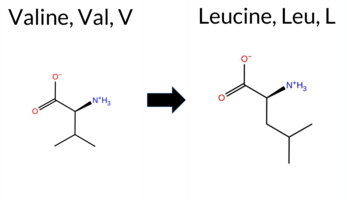 3DClick to see structure in 3D Viewer AIThe SynGAP1 missense variant V424L is not reported in ClinVar (no ClinVar ID) and is absent from gnomAD (no gnomAD ID). Prediction tools that agree on a benign effect include REVEL, Rosetta, premPS, PROVEAN, polyPhen‑2 (HumDiv and HumVar), SIFT, ESM1b, FATHMM, and AlphaMissense‑Optimized. Only AlphaMissense‑Default predicts a pathogenic outcome, while SGM‑Consensus (majority vote from AlphaMissense‑Default, ESM1b, FATHMM, PROVEAN) reports a likely benign classification. Stability‑based methods are inconclusive: FoldX is uncertain, and Foldetta (combining FoldX‑MD and Rosetta outputs) is also uncertain. High‑accuracy assessments show AlphaMissense‑Optimized as benign, SGM‑Consensus as likely benign, and Foldetta as uncertain. Overall, the majority of evidence points to a benign effect, and this conclusion does not contradict any ClinVar status because no ClinVar classification exists for this variant. Disclaimer: This summary was generated using AI and should be interpreted alongside expert review. | Likely Benign | GAP | 0.050641 | Structured | 0.411431 | Uncertain | 0.973 | 0.248 | 0.000 | -4.941 | Likely Benign | 0.742 | Likely Pathogenic | Likely Benign | -0.90 | Ambiguous | 0.2 | -0.41 | Likely Benign | -0.66 | Ambiguous | 0.43 | Likely Benign | 0.159 | Likely Benign | -1.68 | Neutral | 0.327 | Benign | 0.026 | Benign | 4.50 | Benign | 0.59 | Tolerated | 0.1018 | 0.2680 | 2 | 1 | -0.4 | 14.03 | |||||||||||||||||||||||||||||
| c.2038G>C | E680Q 2D AIThe SynGAP1 missense variant E680Q is not reported in ClinVar and is absent from gnomAD. Prediction tools that classify the variant as benign include REVEL, FoldX, Rosetta, premPS, SIFT, FATHMM, AlphaMissense‑Optimized, and Foldetta. Tools that predict a pathogenic effect are SGM‑Consensus, PROVEAN, polyPhen‑2 HumDiv, polyPhen‑2 HumVar, ESM1b, and AlphaMissense‑Default. High‑accuracy assessments show AlphaMissense‑Optimized as benign, SGM‑Consensus (a majority vote of AlphaMissense‑Default, ESM1b, FATHMM, and PROVEAN) as likely pathogenic, and Foldetta (combining FoldX‑MD and Rosetta outputs) as benign. Overall, the majority of evidence points toward a benign impact for E680Q. This conclusion is not contradicted by ClinVar, which currently has no entry for this variant. Disclaimer: This summary was generated using AI and should be interpreted alongside expert review. | Likely Pathogenic | GAP | 0.209395 | Structured | 0.136843 | Uncertain | 0.636 | 0.320 | 0.000 | -10.502 | Likely Pathogenic | 0.742 | Likely Pathogenic | Likely Benign | -0.01 | Likely Benign | 0.7 | -0.01 | Likely Benign | -0.01 | Likely Benign | -0.10 | Likely Benign | 0.239 | Likely Benign | -2.58 | Deleterious | 0.981 | Probably Damaging | 0.483 | Possibly Damaging | 3.47 | Benign | 0.15 | Tolerated | 0.1751 | 0.7241 | 2 | 2 | 0.0 | -0.98 | |||||||||||||||||||||||||||||
| c.3023A>G | D1008G 2D AIThe SynGAP1 D1008G missense variant (ClinVar ID 2963386.0) is listed as Uncertain in ClinVar and is present in gnomAD (ID 6‑33443575‑A‑G). Prediction tools that agree on a benign effect include REVEL, ESM1b, FATHMM, and AlphaMissense‑Optimized. Tools that predict a pathogenic effect are PROVEAN, polyPhen‑2 HumDiv, polyPhen‑2 HumVar, SIFT, and AlphaMissense‑Default. High‑accuracy assessments show AlphaMissense‑Optimized classifying the variant as benign, while the SGM Consensus (majority vote from AlphaMissense‑Default, ESM1b, FATHMM, PROVEAN) is inconclusive due to a 2‑to‑2 split, and Foldetta results are unavailable. Overall, the balance of evidence leans toward a pathogenic interpretation, which does not contradict the current ClinVar designation of Uncertain. Disclaimer: This summary was generated using AI and should be interpreted alongside expert review. | 0.694846 | Disordered | 0.919416 | Binding | 0.280 | 0.899 | 0.625 | Uncertain | 1 | 6-33443575-A-G | 1 | 6.20e-7 | -3.213 | Likely Benign | 0.742 | Likely Pathogenic | Likely Benign | 0.203 | Likely Benign | -2.84 | Deleterious | 0.999 | Probably Damaging | 0.997 | Probably Damaging | 2.65 | Benign | 0.01 | Affected | 3.77 | 5 | 0.3660 | 0.6073 | -1 | 1 | 3.1 | -58.04 | |||||||||||||||||||||||||||||||||
| c.2039A>G | E680G 2D 3DClick to see structure in 3D Viewer AIThe SynGAP1 missense variant E680G is not reported in ClinVar and is absent from gnomAD. Prediction tools that classify the variant as benign include REVEL, Rosetta, Foldetta, premPS, FATHMM, and AlphaMissense‑Optimized. Those that predict pathogenicity are SGM‑Consensus, PROVEAN, polyPhen‑2 (HumDiv and HumVar), SIFT, ESM1b, and AlphaMissense‑Default. High‑accuracy assessments show AlphaMissense‑Optimized as benign, SGM‑Consensus (majority vote from AlphaMissense‑Default, ESM1b, FATHMM, PROVEAN) as pathogenic, and Foldetta (combining FoldX‑MD and Rosetta outputs) as benign. Overall, the majority of tools lean toward a pathogenic effect, with high‑accuracy methods split but tipping toward pathogenicity. The variant’s status in ClinVar is unknown, so there is no contradiction between the predictions and existing clinical annotations. Disclaimer: This summary was generated using AI and should be interpreted alongside expert review. | Likely Pathogenic | GAP | 0.209395 | Structured | 0.136843 | Uncertain | 0.636 | 0.320 | 0.000 | -11.396 | Likely Pathogenic | 0.743 | Likely Pathogenic | Likely Benign | 0.67 | Ambiguous | 0.2 | 0.11 | Likely Benign | 0.39 | Likely Benign | 0.44 | Likely Benign | 0.411 | Likely Benign | -5.48 | Deleterious | 0.998 | Probably Damaging | 0.739 | Possibly Damaging | 3.47 | Benign | 0.01 | Affected | 0.2708 | 0.6228 | 0 | -2 | 3.1 | -72.06 | |||||||||||||||||||||||||||||
| c.3208A>T | R1070W 2D AIThe SynGAP1 missense variant R1070W is not reported in ClinVar and is absent from gnomAD. Prediction tools cluster into two groups: benign predictions come from REVEL, FATHMM, and AlphaMissense‑Optimized; pathogenic predictions come from PROVEAN, polyPhen‑2 (HumDiv and HumVar), SIFT, ESM1b, AlphaMissense‑Default, and the SGM‑Consensus score (Likely Pathogenic). High‑accuracy assessments show AlphaMissense‑Optimized labeling the variant as benign, whereas the SGM‑Consensus (a majority vote of AlphaMissense‑Default, ESM1b, FATHMM, and PROVEAN) indicates it is likely pathogenic. Foldetta, a protein‑folding stability method that integrates FoldX‑MD and Rosetta outputs, has no available result for this residue. Overall, the majority of tools and the SGM‑Consensus support a pathogenic effect, so the variant is most likely pathogenic, and this assessment does not contradict any ClinVar annotation because none exists. Disclaimer: This summary was generated using AI and should be interpreted alongside expert review. | Likely Pathogenic | 0.930790 | Disordered | 0.982693 | Binding | 0.297 | 0.906 | 0.875 | -8.063 | Likely Pathogenic | 0.743 | Likely Pathogenic | Likely Benign | 0.139 | Likely Benign | -3.42 | Deleterious | 0.999 | Probably Damaging | 0.956 | Probably Damaging | 3.72 | Benign | 0.00 | Affected | 0.1195 | 0.4293 | 2 | -3 | 3.6 | 30.03 | |||||||||||||||||||||||||||||||||||||||
| c.3638A>T | N1213I 2D AIThe SynGAP1 missense variant N1213I is not reported in ClinVar and is absent from gnomAD. Prediction tools show a split opinion: benign calls come from REVEL, FATHMM, and AlphaMissense‑Optimized, whereas pathogenic calls are made by PROVEAN, polyPhen‑2 (HumDiv and HumVar), SIFT, ESM1b, AlphaMissense‑Default, and the SGM‑Consensus score (Likely Pathogenic). High‑accuracy assessments further highlight this discordance: AlphaMissense‑Optimized predicts a benign effect, whereas the SGM‑Consensus, derived from a majority vote of AlphaMissense‑Default, ESM1b, FATHMM, and PROVEAN, indicates a likely pathogenic outcome. No Foldetta stability analysis is available for this residue. Overall, the preponderance of evidence points to a pathogenic effect for N1213I, and this conclusion does not conflict with the absence of a ClinVar classification. Disclaimer: This summary was generated using AI and should be interpreted alongside expert review. | Likely Pathogenic | Coiled-coil | 0.580690 | Disordered | 0.521638 | Binding | 0.888 | 0.561 | 0.500 | -10.798 | Likely Pathogenic | 0.743 | Likely Pathogenic | Likely Benign | 0.093 | Likely Benign | -3.10 | Deleterious | 0.996 | Probably Damaging | 0.930 | Probably Damaging | 2.71 | Benign | 0.03 | Affected | 0.0437 | 0.4407 | -2 | -3 | 8.0 | -0.94 | ||||||||||||||||||||||||||||||||||||||
| c.1544G>T | R515L 2D 3DClick to see structure in 3D Viewer AIThe SynGAP1 missense variant R515L is not reported in ClinVar (ClinVar ID: None) and is absent from gnomAD (gnomAD ID: None). Prediction tools that agree on a benign effect include Rosetta, Foldetta, SIFT, and AlphaMissense‑Optimized, whereas a majority of tools (SGM‑Consensus, REVEL, PROVEAN, polyPhen‑2 HumDiv, polyPhen‑2 HumVar, ESM1b, FATHMM, AlphaMissense‑Default) predict a pathogenic outcome; FoldX and premPS are uncertain. High‑accuracy assessments show AlphaMissense‑Optimized as benign, the SGM Consensus (majority vote of AlphaMissense‑Default, ESM1b, FATHMM, PROVEAN) as pathogenic, and Foldetta as benign. Overall, the balance of evidence favors a pathogenic interpretation, and this conclusion does not contradict the ClinVar status, which currently contains no classification for this variant. Disclaimer: This summary was generated using AI and should be interpreted alongside expert review. | Likely Pathogenic | GAP | 0.055536 | Structured | 0.191256 | Uncertain | 0.924 | 0.275 | 0.000 | -10.738 | Likely Pathogenic | 0.744 | Likely Pathogenic | Likely Benign | 0.71 | Ambiguous | 0.2 | -0.33 | Likely Benign | 0.19 | Likely Benign | 0.52 | Ambiguous | 0.686 | Likely Pathogenic | -4.53 | Deleterious | 1.000 | Probably Damaging | 1.000 | Probably Damaging | -1.26 | Pathogenic | 0.11 | Tolerated | 0.1666 | 0.2857 | -3 | -2 | 8.3 | -43.03 | |||||||||||||||||||||||||||||
| c.2143C>A | P715T 2D 3DClick to see structure in 3D Viewer AIThe SynGAP1 missense variant P715T is not reported in ClinVar and is absent from gnomAD. Functional prediction tools show a split assessment: benign predictions come from REVEL, Rosetta, FATHMM, and AlphaMissense‑Optimized, whereas pathogenic predictions arise from FoldX, PROVEAN, polyPhen‑2 (HumDiv and HumVar), SIFT, ESM1b, AlphaMissense‑Default, and the SGM‑Consensus. Two tools, Foldetta and premPS, returned uncertain results. High‑accuracy analyses further clarify the picture: AlphaMissense‑Optimized predicts a benign effect, while the SGM‑Consensus (majority vote of AlphaMissense‑Default, ESM1b, FATHMM, PROVEAN) indicates pathogenicity; Foldetta remains inconclusive. Overall, the majority of evidence points toward a pathogenic impact, and this conclusion does not conflict with the absence of a ClinVar classification. Disclaimer: This summary was generated using AI and should be interpreted alongside expert review. | Likely Pathogenic | GAP | 0.243554 | Structured | 0.409757 | Uncertain | 0.956 | 0.362 | 0.000 | -10.501 | Likely Pathogenic | 0.744 | Likely Pathogenic | Likely Benign | 2.55 | Destabilizing | 0.1 | 0.29 | Likely Benign | 1.42 | Ambiguous | 0.72 | Ambiguous | 0.368 | Likely Benign | -7.23 | Deleterious | 1.000 | Probably Damaging | 0.993 | Probably Damaging | 3.37 | Benign | 0.01 | Affected | 0.1357 | 0.4072 | 0 | -1 | 0.9 | 3.99 | |||||||||||||||||||||||||||||
| c.2416T>A | F806I 2D AIThe SynGAP1 missense variant F806I is not reported in ClinVar (no ClinVar ID) and is absent from gnomAD (no gnomAD ID). Prediction tools that indicate a benign effect include REVEL, ESM1b, and AlphaMissense‑Optimized, whereas the majority of tools predict a pathogenic outcome: PROVEAN, polyPhen‑2 (HumDiv and HumVar), SIFT, FATHMM, AlphaMissense‑Default, and the SGM‑Consensus score (Likely Pathogenic). High‑accuracy assessments show AlphaMissense‑Optimized as benign, while the SGM‑Consensus (derived from a majority vote of AlphaMissense‑Default, ESM1b, FATHMM, and PROVEAN) indicates a likely pathogenic effect; Foldetta results are unavailable. Overall, the balance of evidence from the consensus of prediction algorithms points to a pathogenic impact for F806I. This conclusion is not contradicted by ClinVar, as no ClinVar classification exists for this variant. Disclaimer: This summary was generated using AI and should be interpreted alongside expert review. | Likely Pathogenic | SH3-binding motif | 0.736850 | Disordered | 0.847454 | Binding | 0.276 | 0.904 | 0.500 | -5.040 | Likely Benign | 0.744 | Likely Pathogenic | Likely Benign | 0.182 | Likely Benign | -3.19 | Deleterious | 0.997 | Probably Damaging | 0.994 | Probably Damaging | 2.15 | Pathogenic | 0.03 | Affected | 0.2583 | 0.1357 | 1 | 0 | 1.7 | -34.02 | ||||||||||||||||||||||||||||||||||||||
| c.2459A>G | Y820C 2D AIThe SynGAP1 missense variant Y820C is listed in ClinVar with an “Uncertain” status and is not reported in gnomAD. Prediction tools that agree on a benign effect include REVEL, SIFT, FATHMM, and AlphaMissense‑Optimized, while those that predict a pathogenic effect are PROVEAN, polyPhen‑2 (HumDiv and HumVar), ESM1b, and AlphaMissense‑Default. The SGM‑Consensus, derived from a majority vote of AlphaMissense‑Default, ESM1b, FATHMM, and PROVEAN, reports the variant as “Likely Pathogenic.” High‑accuracy assessments show AlphaMissense‑Optimized as benign, SGM‑Consensus as likely pathogenic, and Foldetta results are unavailable. Overall, the balance of evidence—including the SGM‑Consensus—suggests the variant is most likely pathogenic, a conclusion that does not contradict the current ClinVar uncertain classification. Disclaimer: This summary was generated using AI and should be interpreted alongside expert review. | Likely Pathogenic | 0.733139 | Disordered | 0.695550 | Binding | 0.293 | 0.883 | 0.625 | Uncertain | 1 | -8.797 | Likely Pathogenic | 0.744 | Likely Pathogenic | Likely Benign | 0.113 | Likely Benign | -3.16 | Deleterious | 1.000 | Probably Damaging | 0.983 | Probably Damaging | 2.68 | Benign | 0.06 | Tolerated | 3.77 | 5 | 0.3177 | 0.1915 | 0 | -2 | 3.8 | -60.04 | |||||||||||||||||||||||||||||||||||
| c.2711T>A | M904K 2D AIThe SynGAP1 missense variant M904K is not reported in ClinVar (no ClinVar ID) and is absent from gnomAD (no gnomAD ID). Prediction tools that agree on a benign effect include REVEL, PROVEAN, polyPhen‑2 HumDiv, polyPhen‑2 HumVar, SIFT, ESM1b, FATHMM, AlphaMissense‑Optimized, and the SGM‑Consensus (Likely Benign). Only AlphaMissense‑Default predicts a pathogenic outcome. High‑accuracy assessments show AlphaMissense‑Optimized as benign and the SGM‑Consensus as likely benign; Foldetta results are not available for this variant. Overall, the majority of evidence points to a benign impact, and this conclusion does not contradict any ClinVar annotation (none is present). Disclaimer: This summary was generated using AI and should be interpreted alongside expert review. | Likely Benign | 0.671169 | Disordered | 0.589073 | Binding | 0.350 | 0.920 | 0.250 | -2.333 | Likely Benign | 0.744 | Likely Pathogenic | Likely Benign | 0.033 | Likely Benign | -1.08 | Neutral | 0.277 | Benign | 0.137 | Benign | 2.80 | Benign | 1.00 | Tolerated | 0.1696 | 0.0871 | 0 | -1 | -5.8 | -3.02 | |||||||||||||||||||||||||||||||||||||||
| c.3029T>C | F1010S 2D AIThe SynGAP1 missense variant F1010S is listed in gnomAD (ID 6‑33443581‑T‑C) but has no ClinVar entry. Prediction tools that agree on a benign effect include REVEL, PROVEAN, ESM1b, FATHMM, and AlphaMissense‑Optimized. Those that predict a pathogenic outcome are polyPhen‑2 HumDiv, polyPhen‑2 HumVar, SIFT, and AlphaMissense‑Default. The SGM‑Consensus, derived from a majority vote of AlphaMissense‑Default, ESM1b, FATHMM, and PROVEAN, reports the variant as Likely Benign. High‑accuracy assessments show AlphaMissense‑Optimized as benign and the SGM‑Consensus as benign; Foldetta results are unavailable. Overall, the balance of evidence, including the high‑accuracy benign predictions and the consensus benign call, indicates that the variant is most likely benign. This conclusion does not contradict any ClinVar status, as none is currently assigned. Disclaimer: This summary was generated using AI and should be interpreted alongside expert review. | Likely Benign | 0.741537 | Disordered | 0.912572 | Binding | 0.286 | 0.881 | 0.625 | 6-33443581-T-C | -1.722 | Likely Benign | 0.744 | Likely Pathogenic | Likely Benign | 0.153 | Likely Benign | -1.97 | Neutral | 0.994 | Probably Damaging | 0.892 | Possibly Damaging | 2.51 | Benign | 0.01 | Affected | 3.77 | 5 | 0.4196 | 0.0775 | -2 | -3 | -3.6 | -60.10 | ||||||||||||||||||||||||||||||||||||
| c.578C>T | A193V 2D 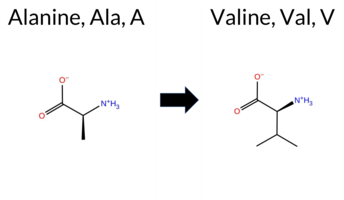 AIThe SynGAP1 A193V missense variant is not reported in ClinVar (no ClinVar ID) and is absent from gnomAD (no gnomAD ID). Prediction tools that agree on a benign effect include REVEL, PROVEAN, polyPhen‑2 HumVar, SIFT, ESM1b, FATHMM, and AlphaMissense‑Optimized. Tools that predict a pathogenic effect are polyPhen‑2 HumDiv and AlphaMissense‑Default. The SGM‑Consensus, which aggregates AlphaMissense‑Default, ESM1b, FATHMM, and PROVEAN, is classified as Likely Benign (three benign votes versus one pathogenic). High‑accuracy assessments show AlphaMissense‑Optimized as Benign and the SGM‑Consensus as Likely Benign; Foldetta stability analysis is unavailable. Overall, the majority of evidence points to a benign impact, and this conclusion does not contradict any ClinVar annotation (none is present). Disclaimer: This summary was generated using AI and should be interpreted alongside expert review. | Likely Benign | 0.429200 | Structured | 0.428386 | Uncertain | 0.310 | 0.577 | 0.125 | -3.548 | Likely Benign | 0.744 | Likely Pathogenic | Likely Benign | 0.177 | Likely Benign | 0.52 | Neutral | 0.767 | Possibly Damaging | 0.344 | Benign | 4.30 | Benign | 1.00 | Tolerated | 0.1169 | 0.6775 | 0 | 0 | 2.4 | 28.05 | |||||||||||||||||||||||||||||||||||||||
| c.1132G>C | G378R 2D 3DClick to see structure in 3D Viewer AISynGAP1 missense variant G378R is not reported in ClinVar and is absent from gnomAD. Functional prediction tools cluster into two groups: benign predictions come from premPS, PROVEAN, and SIFT, while pathogenic predictions arise from REVEL, FoldX, Rosetta, polyPhen‑2 (HumDiv and HumVar), ESM1b, FATHMM, and AlphaMissense‑Default. High‑accuracy assessments further support a deleterious effect: AlphaMissense‑Optimized predicts benign, but the SGM Consensus—derived from a majority vote of AlphaMissense‑Default, ESM1b, FATHMM, and PROVEAN—classifies the variant as pathogenic, and Foldetta, which integrates FoldX‑MD and Rosetta outputs, also indicates pathogenicity. Overall, the preponderance of evidence points to a pathogenic impact for G378R. This conclusion is not contradicted by ClinVar, which contains no entry for the variant. Disclaimer: This summary was generated using AI and should be interpreted alongside expert review. | Likely Pathogenic | C2 | 0.767246 | Disordered | 0.432858 | Uncertain | 0.341 | 0.915 | 0.625 | -8.863 | Likely Pathogenic | 0.745 | Likely Pathogenic | Likely Benign | 12.27 | Destabilizing | 6.3 | 13.17 | Destabilizing | 12.72 | Destabilizing | 0.12 | Likely Benign | 0.653 | Likely Pathogenic | -0.96 | Neutral | 1.000 | Probably Damaging | 0.996 | Probably Damaging | 1.32 | Pathogenic | 0.06 | Tolerated | 0.1343 | 0.4356 | -3 | -2 | -4.1 | 99.14 | |||||||||||||||||||||||||||||
| c.1427T>G | F476C 2D 3DClick to see structure in 3D Viewer AIThe SynGAP1 missense variant F476C is catalogued in gnomAD (ID 6‑33438459‑T‑G) but has no ClinVar entry. Functional prediction tools split in two groups: benign predictions come from REVEL, premPS, PROVEAN, SIFT, FATHMM, and AlphaMissense‑Optimized; pathogenic predictions come from FoldX, Rosetta, Foldetta, polyPhen‑2 (HumDiv and HumVar), ESM1b, and AlphaMissense‑Default. High‑accuracy assessments show AlphaMissense‑Optimized as benign, Foldetta as pathogenic, and the SGM Consensus (majority vote of AlphaMissense‑Default, ESM1b, FATHMM, PROVEAN) is inconclusive due to a 2‑to‑2 split. Overall, seven tools predict pathogenicity versus six predicting benign, with no ClinVar evidence to contradict this assessment. Thus, the variant is most likely pathogenic based on the current computational predictions. Disclaimer: This summary was generated using AI and should be interpreted alongside expert review. | GAP | 0.257454 | Structured | 0.397815 | Uncertain | 0.821 | 0.250 | 0.000 | 6-33438459-T-G | -9.270 | Likely Pathogenic | 0.745 | Likely Pathogenic | Likely Benign | 2.05 | Destabilizing | 0.1 | 2.62 | Destabilizing | 2.34 | Destabilizing | -0.30 | Likely Benign | 0.280 | Likely Benign | 2.69 | Neutral | 1.000 | Probably Damaging | 0.999 | Probably Damaging | 3.46 | Benign | 0.83 | Tolerated | 3.40 | 22 | 0.2051 | 0.1251 | -2 | -4 | -0.3 | -44.04 | |||||||||||||||||||||||||||
| c.1462A>T | T488S 2D 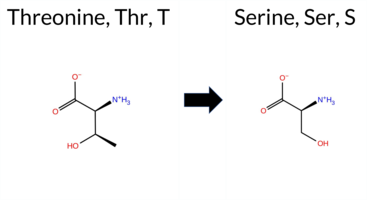 3DClick to see structure in 3D Viewer AIThe SynGAP1 T488S missense variant is not reported in ClinVar (ClinVar ID None) and is absent from gnomAD (gnomAD ID None). Prediction tools that agree on a benign effect include REVEL, FoldX, SIFT, FATHMM, and AlphaMissense‑Optimized. Those that predict a pathogenic effect are PROVEAN, polyPhen‑2 HumDiv, polyPhen‑2 HumVar, and AlphaMissense‑Default. Four tools (Foldetta, premPS, ESM1b, and Rosetta) return uncertain or inconclusive results. High‑accuracy assessments show AlphaMissense‑Optimized as benign, the SGM Consensus (majority vote from AlphaMissense‑Default, ESM1b, FATHMM, PROVEAN) as pathogenic, and Foldetta as uncertain. Overall, the majority of standard tools lean toward a benign interpretation, but the high‑accuracy consensus is split, leaving the variant’s impact ambiguous. No ClinVar annotation contradicts these predictions. Disclaimer: This summary was generated using AI and should be interpreted alongside expert review. | GAP | 0.206376 | Structured | 0.332663 | Uncertain | 0.928 | 0.233 | 0.125 | -7.662 | In-Between | 0.745 | Likely Pathogenic | Likely Benign | 0.35 | Likely Benign | 0.1 | 0.90 | Ambiguous | 0.63 | Ambiguous | 0.77 | Ambiguous | 0.257 | Likely Benign | -3.51 | Deleterious | 0.999 | Probably Damaging | 0.998 | Probably Damaging | 3.73 | Benign | 0.31 | Tolerated | 0.2256 | 0.2813 | 1 | 1 | -0.1 | -14.03 | ||||||||||||||||||||||||||||||
| c.1945A>C | M649L 2D 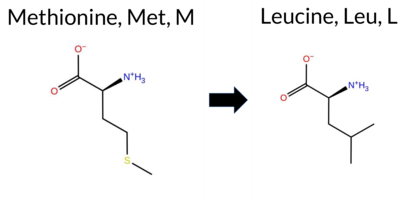 3DClick to see structure in 3D Viewer AISynGAP1 missense variant M649L is not reported in ClinVar and is absent from gnomAD. Functional prediction tools cluster into two groups: benign predictions come from REVEL, FoldX, Rosetta, polyPhen‑2 HumDiv, polyPhen‑2 HumVar, SIFT, ESM1b, FATHMM, and AlphaMissense‑Optimized; pathogenic predictions arise from PROVEAN and AlphaMissense‑Default, while premPS remains uncertain. High‑accuracy assessments show AlphaMissense‑Optimized as benign, the SGM Consensus (majority vote of AlphaMissense‑Default, ESM1b, FATHMM, PROVEAN) is inconclusive due to a 2‑to‑2 split, and Foldetta predicts benign stability. Overall, the preponderance of evidence points to a benign effect. This conclusion is consistent with the absence of a ClinVar assertion, so there is no contradiction with existing clinical data. Disclaimer: This summary was generated using AI and should be interpreted alongside expert review. | GAP | 0.051831 | Structured | 0.360413 | Uncertain | 0.962 | 0.345 | 0.000 | -5.210 | Likely Benign | 0.745 | Likely Pathogenic | Likely Benign | 0.19 | Likely Benign | 0.4 | 0.26 | Likely Benign | 0.23 | Likely Benign | 0.64 | Ambiguous | 0.294 | Likely Benign | -2.99 | Deleterious | 0.009 | Benign | 0.007 | Benign | 3.73 | Benign | 0.15 | Tolerated | 0.1361 | 0.4025 | 4 | 2 | 1.9 | -18.03 | ||||||||||||||||||||||||||||||
| c.1945A>T | M649L 2D 3DClick to see structure in 3D Viewer AIThe SynGAP1 missense variant M649L is not reported in ClinVar and is absent from gnomAD. Functional prediction tools that agree on a benign effect include REVEL, FoldX, Rosetta, polyPhen‑2 (HumDiv and HumVar), SIFT, ESM1b, FATHMM, and AlphaMissense‑Optimized. Tools that predict a pathogenic effect are PROVEAN and AlphaMissense‑Default, while premPS remains uncertain. High‑accuracy assessments show AlphaMissense‑Optimized as benign, Foldetta (combining FoldX‑MD and Rosetta outputs) as benign, and the SGM Consensus (majority vote from AlphaMissense‑Default, ESM1b, FATHMM, PROVEAN) is inconclusive due to a 2‑to‑2 split. Overall, the majority of evidence points to a benign impact, and this conclusion does not contradict the lack of ClinVar annotation. Disclaimer: This summary was generated using AI and should be interpreted alongside expert review. | GAP | 0.051831 | Structured | 0.360413 | Uncertain | 0.962 | 0.345 | 0.000 | -5.210 | Likely Benign | 0.745 | Likely Pathogenic | Likely Benign | 0.19 | Likely Benign | 0.4 | 0.26 | Likely Benign | 0.23 | Likely Benign | 0.64 | Ambiguous | 0.294 | Likely Benign | -2.99 | Deleterious | 0.009 | Benign | 0.007 | Benign | 3.73 | Benign | 0.15 | Tolerated | 0.1361 | 0.4025 | 4 | 2 | 1.9 | -18.03 | ||||||||||||||||||||||||||||||
| c.2086C>G | L696V 2D 3DClick to see structure in 3D Viewer AIThe SynGAP1 L696V variant is listed in ClinVar with an “Uncertain” status and is not reported in gnomAD. Prediction tools that indicate a benign effect include REVEL, FATHMM, and AlphaMissense‑Optimized, whereas the majority of other in silico predictors (FoldX, Foldetta, premPS, PROVEAN, polyPhen‑2 HumDiv, polyPhen‑2 HumVar, SIFT, ESM1b, AlphaMissense‑Default) report a pathogenic outcome; Rosetta remains inconclusive. High‑accuracy assessments further support a deleterious impact: AlphaMissense‑Optimized predicts benign, but the SGM Consensus—derived from a majority vote of AlphaMissense‑Default, ESM1b, FATHMM, and PROVEAN—leans pathogenic, and Foldetta (combining FoldX‑MD and Rosetta outputs) also predicts pathogenic. Overall, the preponderance of evidence points to a pathogenic effect for the variant, which does not contradict the current ClinVar “Uncertain” classification. Disclaimer: This summary was generated using AI and should be interpreted alongside expert review. | Likely Pathogenic | GAP | 0.200174 | Structured | 0.390093 | Uncertain | 0.962 | 0.267 | 0.000 | Uncertain | 1 | -11.909 | Likely Pathogenic | 0.745 | Likely Pathogenic | Likely Benign | 2.35 | Destabilizing | 0.1 | 1.85 | Ambiguous | 2.10 | Destabilizing | 1.46 | Destabilizing | 0.351 | Likely Benign | -2.79 | Deleterious | 0.992 | Probably Damaging | 0.970 | Probably Damaging | 3.16 | Benign | 0.00 | Affected | 3.46 | 13 | 0.1307 | 0.2830 | 1 | 2 | 0.4 | -14.03 | |||||||||||||||||||||||||
| c.3497C>G | A1166G 2D AISynGAP1 missense variant A1166G is not reported in ClinVar (no ClinVar ID) and is absent from gnomAD. Prediction tools that agree on a benign effect include REVEL, PROVEAN, polyPhen‑2 (HumDiv and HumVar), SIFT, ESM1b, FATHMM, AlphaMissense‑Optimized, and the SGM‑Consensus (majority vote from AlphaMissense‑Default, ESM1b, FATHMM, PROVEAN). Only AlphaMissense‑Default predicts a pathogenic outcome. High‑accuracy assessments show AlphaMissense‑Optimized as benign and the SGM‑Consensus as likely benign; Foldetta results are unavailable. Overall, the consensus of the majority of tools and the high‑accuracy predictions indicate that the variant is most likely benign, and this conclusion does not contradict any ClinVar status because no ClinVar entry exists for this variant. Disclaimer: This summary was generated using AI and should be interpreted alongside expert review. | Likely Benign | 0.575842 | Disordered | 0.811691 | Binding | 0.381 | 0.803 | 0.375 | -3.679 | Likely Benign | 0.745 | Likely Pathogenic | Likely Benign | 0.355 | Likely Benign | -1.17 | Neutral | 0.361 | Benign | 0.307 | Benign | 5.34 | Benign | 0.31 | Tolerated | 0.2244 | 0.3977 | 1 | 0 | -2.2 | -14.03 | |||||||||||||||||||||||||||||||||||||||
| c.358G>C | G120R 2D AIThe SynGAP1 missense variant G120R is not reported in ClinVar and is absent from gnomAD. Functional prediction tools largely agree on a benign effect: REVEL, PROVEAN, polyPhen‑2 (HumDiv and HumVar), SIFT, ESM1b, FATHMM, and AlphaMissense‑Optimized all classify the change as benign. Only AlphaMissense‑Default predicts a pathogenic outcome. When predictions are grouped, the benign consensus includes eight tools, whereas the pathogenic consensus contains a single tool. High‑accuracy assessments reinforce this view: AlphaMissense‑Optimized reports a benign effect, and the SGM Consensus—derived from a majority vote of AlphaMissense‑Default, ESM1b, FATHMM, and PROVEAN—also yields a likely benign classification. Foldetta, a protein‑folding stability method combining FoldX‑MD and Rosetta outputs, has no available result for this variant. Overall, the preponderance of evidence indicates that G120R is most likely benign, and this conclusion is not contradicted by any ClinVar annotation. Disclaimer: This summary was generated using AI and should be interpreted alongside expert review. | Likely Benign | 0.707965 | Disordered | 0.659993 | Binding | 0.359 | 0.887 | 0.750 | -4.406 | Likely Benign | 0.745 | Likely Pathogenic | Likely Benign | 0.022 | Likely Benign | -0.33 | Neutral | 0.089 | Benign | 0.047 | Benign | 4.26 | Benign | 0.14 | Tolerated | 0.1050 | 0.4345 | -3 | -2 | -4.1 | 99.14 | |||||||||||||||||||||||||||||||||||||||
| c.62T>C | F21S 2D AIThe SynGAP1 missense variant F21S is not reported in ClinVar (no ClinVar ID) and is absent from gnomAD (no gnomAD ID). Prediction tools that agree on a benign effect include REVEL, PROVEAN, polyPhen‑2 HumVar, ESM1b, FATHMM, and AlphaMissense‑Optimized. Tools that predict a pathogenic effect are polyPhen‑2 HumDiv, SIFT, and AlphaMissense‑Default. The SGM‑Consensus, which aggregates AlphaMissense‑Default, ESM1b, FATHMM, and PROVEAN, reports a Likely Benign classification. High‑accuracy assessments show AlphaMissense‑Optimized as benign and the SGM‑Consensus as Likely Benign; Foldetta results are not available. Overall, the majority of evidence points to a benign impact. This conclusion is consistent with the lack of ClinVar annotation, so there is no contradiction with ClinVar status. Disclaimer: This summary was generated using AI and should be interpreted alongside expert review. | Likely Benign | 0.534167 | Disordered | 0.443284 | Uncertain | 0.369 | 0.897 | 0.500 | -2.396 | Likely Benign | 0.745 | Likely Pathogenic | Likely Benign | 0.182 | Likely Benign | -0.22 | Neutral | 0.462 | Possibly Damaging | 0.307 | Benign | 4.15 | Benign | 0.00 | Affected | 0.4793 | 0.1133 | -3 | -2 | -3.6 | -60.10 | |||||||||||||||||||||||||||||||||||||||
| c.140G>C | R47P 2D AIThe SynGAP1 missense variant R47P is not reported in ClinVar (ClinVar ID = None) and is absent from gnomAD (gnomAD ID = None). Prediction tools that agree on a benign effect include REVEL, PROVEAN, FATHMM, and AlphaMissense‑Optimized. Tools that predict a pathogenic effect are polyPhen‑2 (HumDiv and HumVar), SIFT, ESM1b, and AlphaMissense‑Default. The SGM Consensus, derived from a majority vote of AlphaMissense‑Default, ESM1b, FATHMM, and PROVEAN, is inconclusive (two pathogenic, two benign) and therefore unavailable as evidence. Foldetta, a protein‑folding stability method combining FoldX‑MD and Rosetta outputs, has no reported result for this variant and is likewise unavailable. High‑accuracy tools specifically indicate a benign prediction from AlphaMissense‑Optimized, while the other high‑accuracy methods (SGM Consensus, Foldetta) provide no definitive assessment. Overall, the balance of evidence (five pathogenic vs. four benign predictions) suggests the variant is most likely pathogenic, and this conclusion does not contradict any existing ClinVar status. Disclaimer: This summary was generated using AI and should be interpreted alongside expert review. | 0.318242 | Structured | 0.436559 | Uncertain | 0.520 | 0.719 | 0.125 | -10.316 | Likely Pathogenic | 0.746 | Likely Pathogenic | Likely Benign | 0.195 | Likely Benign | -1.63 | Neutral | 0.841 | Possibly Damaging | 0.809 | Possibly Damaging | 4.02 | Benign | 0.00 | Affected | 0.2050 | 0.4956 | 0 | -2 | 2.9 | -59.07 | ||||||||||||||||||||||||||||||||||||||||
| c.2074C>A | L692M 2D 3DClick to see structure in 3D Viewer AIThe SynGAP1 missense variant L692M is not reported in ClinVar (ClinVar ID None) and is absent from gnomAD (gnomAD ID None). Prediction tools that agree on a benign effect include REVEL, FoldX, PROVEAN, FATHMM, and AlphaMissense‑Optimized. Tools that predict a pathogenic effect are premPS, polyPhen‑2 (HumDiv and HumVar), SIFT, ESM1b, and AlphaMissense‑Default. High‑accuracy assessments show AlphaMissense‑Optimized as benign, while the SGM Consensus (majority vote from AlphaMissense‑Default, ESM1b, FATHMM, PROVEAN) is inconclusive (2 vs 2) and Foldetta (combining FoldX‑MD and Rosetta outputs) is also inconclusive. Thus, the overall evidence slightly favors pathogenicity, with a majority of standard tools predicting a deleterious impact. The variant is most likely pathogenic based on current predictions, and this assessment does not contradict the ClinVar status, which has no entry for this change. Disclaimer: This summary was generated using AI and should be interpreted alongside expert review. | GAP | 0.064632 | Structured | 0.295225 | Uncertain | 0.966 | 0.243 | 0.000 | -9.659 | Likely Pathogenic | 0.746 | Likely Pathogenic | Likely Benign | 0.49 | Likely Benign | 0.0 | 1.81 | Ambiguous | 1.15 | Ambiguous | 1.01 | Destabilizing | 0.302 | Likely Benign | -1.99 | Neutral | 1.000 | Probably Damaging | 0.996 | Probably Damaging | 3.07 | Benign | 0.01 | Affected | 0.0754 | 0.2585 | 4 | 2 | -1.9 | 18.03 | ||||||||||||||||||||||||||||||
| c.2945A>G | Y982C 2D AIThe SynGAP1 missense variant Y982C is listed in ClinVar with an “Uncertain” status and is present in gnomAD (ID 6‑33443497‑A‑G). Prediction tools that agree on a benign effect include REVEL, PROVEAN, ESM1b, FATHMM, and AlphaMissense‑Optimized. Tools that predict a pathogenic effect are polyPhen‑2 HumDiv, polyPhen‑2 HumVar, SIFT, and AlphaMissense‑Default. The SGM‑Consensus, which aggregates AlphaMissense‑Default, ESM1b, FATHMM, and PROVEAN, reports a “Likely Benign” classification. High‑accuracy assessments show AlphaMissense‑Optimized as benign and the SGM‑Consensus as likely benign; Foldetta results are not available. Overall, the majority of evidence points to a benign impact, and this conclusion does not contradict the ClinVar “Uncertain” designation. Disclaimer: This summary was generated using AI and should be interpreted alongside expert review. | Likely Benign | 0.707965 | Disordered | 0.966717 | Binding | 0.272 | 0.895 | 0.625 | Conflicting | 2 | 6-33443497-A-G | 2 | 1.24e-6 | -6.256 | Likely Benign | 0.746 | Likely Pathogenic | Likely Benign | 0.195 | Likely Benign | -1.67 | Neutral | 0.997 | Probably Damaging | 0.923 | Probably Damaging | 3.87 | Benign | 0.00 | Affected | 4.32 | 1 | 0.2988 | 0.2345 | 0 | -2 | 3.8 | -60.04 | ||||||||||||||||||||||||||||||||
| c.3997G>C | E1333Q 2D AIThe SynGAP1 missense variant E1333Q is not reported in ClinVar and is absent from gnomAD. Prediction tools that agree on a benign effect include REVEL, PROVEAN, ESM1b, FATHMM, and AlphaMissense‑Optimized, while those that predict a pathogenic impact are polyPhen‑2 HumDiv, polyPhen‑2 HumVar, SIFT, and AlphaMissense‑Default. The SGM‑Consensus, derived from a majority vote of AlphaMissense‑Default, ESM1b, FATHMM, and PROVEAN, is classified as Likely Benign. High‑accuracy assessments further support a benign outcome: AlphaMissense‑Optimized predicts benign, and the SGM‑Consensus (3 benign vs. 1 pathogenic votes) also indicates benign. Foldetta results are unavailable, so they do not influence the assessment. Overall, the preponderance of evidence points to a benign effect for E1333Q, and this conclusion is not contradicted by any ClinVar annotation. Disclaimer: This summary was generated using AI and should be interpreted alongside expert review. | Likely Benign | 0.930790 | Disordered | 0.953319 | Binding | 0.347 | 0.746 | 0.750 | -4.034 | Likely Benign | 0.746 | Likely Pathogenic | Likely Benign | 0.217 | Likely Benign | -1.84 | Neutral | 0.980 | Probably Damaging | 0.968 | Probably Damaging | 2.83 | Benign | 0.00 | Affected | 0.1548 | 0.7617 | 2 | 2 | 0.0 | -0.98 | |||||||||||||||||||||||||||||||||||||||
| c.781G>A | D261N 2D 3DClick to see structure in 3D Viewer AIThe SynGAP1 missense variant D261N is not reported in ClinVar (ClinVar status: not listed) and is absent from gnomAD (no gnomAD ID). Prediction tools that indicate a benign effect include premPS, FATHMM, and AlphaMissense‑Optimized, while the majority of tools predict a pathogenic outcome: SGM‑Consensus, REVEL, PROVEAN, polyPhen‑2 (HumDiv and HumVar), SIFT, ESM1b, and AlphaMissense‑Default. Uncertain results are reported by FoldX, Rosetta, and Foldetta. High‑accuracy assessments show AlphaMissense‑Optimized as benign, SGM‑Consensus (majority vote from AlphaMissense‑Default, ESM1b, FATHMM, PROVEAN) as likely pathogenic, and Foldetta as uncertain. Overall, the balance of evidence favors a pathogenic classification, and this assessment does not contradict the ClinVar status, which simply lacks an entry for this variant. Disclaimer: This summary was generated using AI and should be interpreted alongside expert review. | Likely Pathogenic | C2 | 0.284882 | Structured | 0.422514 | Uncertain | 0.883 | 0.264 | 0.125 | -11.804 | Likely Pathogenic | 0.746 | Likely Pathogenic | Likely Benign | 1.58 | Ambiguous | 0.7 | 1.28 | Ambiguous | 1.43 | Ambiguous | 0.23 | Likely Benign | 0.579 | Likely Pathogenic | -2.94 | Deleterious | 0.997 | Probably Damaging | 0.989 | Probably Damaging | 5.82 | Benign | 0.02 | Affected | 0.0767 | 0.4745 | 2 | 1 | 0.0 | -0.98 | |||||||||||||||||||||||||||||
| c.1087T>C | Y363H 2D 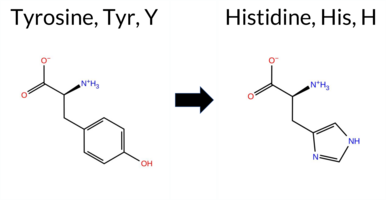 3DClick to see structure in 3D Viewer AIThe SynGAP1 missense variant Y363H is not reported in ClinVar and is absent from gnomAD. Prediction tools that agree on a benign effect include REVEL and AlphaMissense‑Optimized, while the majority of other in silico predictors (Rosetta, premPS, PROVEAN, polyPhen‑2 HumDiv, polyPhen‑2 HumVar, SIFT, FATHMM, AlphaMissense‑Default, Foldetta) indicate a pathogenic impact; FoldX and ESM1b are uncertain. High‑accuracy assessments show AlphaMissense‑Optimized as benign, the SGM Consensus (majority vote from AlphaMissense‑Default, ESM1b, FATHMM, PROVEAN) as likely pathogenic, and Foldetta (combining FoldX‑MD and Rosetta outputs) as pathogenic. Overall, the preponderance of evidence points to a pathogenic effect for Y363H, and this conclusion does not contradict the ClinVar status, which currently has no entry for this variant. Disclaimer: This summary was generated using AI and should be interpreted alongside expert review. | Likely Pathogenic | C2 | 0.321458 | Structured | 0.435392 | Uncertain | 0.954 | 0.586 | 0.125 | -7.003 | In-Between | 0.747 | Likely Pathogenic | Likely Benign | 1.75 | Ambiguous | 0.1 | 2.40 | Destabilizing | 2.08 | Destabilizing | 1.04 | Destabilizing | 0.419 | Likely Benign | -4.38 | Deleterious | 0.999 | Probably Damaging | 0.994 | Probably Damaging | 1.56 | Pathogenic | 0.01 | Affected | 0.3267 | 0.2021 | 0 | 2 | -1.9 | -26.03 | |||||||||||||||||||||||||||||
| c.1849G>C | E617Q 2D 3DClick to see structure in 3D Viewer AIThe SynGAP1 E617Q missense variant is not reported in ClinVar and has no entry in gnomAD. Prediction tools that agree on a benign effect include REVEL, FoldX, premPS, PROVEAN, SIFT, and AlphaMissense‑Optimized. Those that predict a pathogenic effect are polyPhen‑2 HumDiv, polyPhen‑2 HumVar, ESM1b, FATHMM, AlphaMissense‑Default, and the SGM‑Consensus (majority vote from AlphaMissense‑Default, ESM1b, FATHMM, PROVEAN). Foldetta and Rosetta give uncertain results, which are treated as unavailable. High‑accuracy assessments show AlphaMissense‑Optimized as benign, while the SGM‑Consensus (derived from a majority of high‑confidence predictors) indicates a likely pathogenic outcome. Foldetta’s stability prediction is inconclusive. Overall, the balance of evidence leans toward a pathogenic impact for E617Q, and this assessment does not contradict any ClinVar status because no ClinVar classification exists. Disclaimer: This summary was generated using AI and should be interpreted alongside expert review. | Likely Pathogenic | GAP | 0.111485 | Structured | 0.155123 | Uncertain | 0.877 | 0.240 | 0.000 | -8.650 | Likely Pathogenic | 0.747 | Likely Pathogenic | Likely Benign | 0.20 | Likely Benign | 0.2 | 1.01 | Ambiguous | 0.61 | Ambiguous | 0.21 | Likely Benign | 0.481 | Likely Benign | -2.39 | Neutral | 0.996 | Probably Damaging | 0.986 | Probably Damaging | -1.39 | Pathogenic | 0.29 | Tolerated | 0.1050 | 0.5951 | 2 | 2 | 0.0 | -0.98 | |||||||||||||||||||||||||||||
| c.2360C>T | P787L 2D 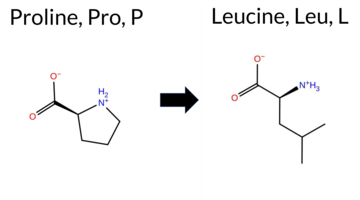 AIThe SynGAP1 missense variant P787L is not reported in ClinVar (ClinVar status: not listed) and is absent from gnomAD (gnomAD ID: none). Prediction tools that classify the variant as benign include REVEL, ESM1b, and AlphaMissense‑Optimized, whereas the remaining tools—PROVEAN, polyPhen‑2 (HumDiv and HumVar), SIFT, FATHMM, and AlphaMissense‑Default—predict it to be pathogenic. The SGM‑Consensus, which aggregates the majority vote from AlphaMissense‑Default, ESM1b, FATHMM, and PROVEAN, reports the variant as “Likely Pathogenic.” High‑accuracy assessments show AlphaMissense‑Optimized as benign, while the SGM‑Consensus remains pathogenic; Foldetta results are unavailable. Overall, the majority of predictions (seven pathogenic vs. three benign) lean toward pathogenicity, and this conclusion is not contradicted by any ClinVar annotation. Thus, the variant is most likely pathogenic based on the current computational evidence. Disclaimer: This summary was generated using AI and should be interpreted alongside expert review. | Likely Pathogenic | SH3-binding motif | 0.901269 | Disordered | 0.613211 | Binding | 0.377 | 0.899 | 0.750 | -3.924 | Likely Benign | 0.747 | Likely Pathogenic | Likely Benign | 0.256 | Likely Benign | -5.89 | Deleterious | 1.000 | Probably Damaging | 0.999 | Probably Damaging | 2.45 | Pathogenic | 0.01 | Affected | 0.2254 | 0.6034 | -3 | -3 | 5.4 | 16.04 | ||||||||||||||||||||||||||||||||||||||
| c.592C>G | L198V 2D 3DClick to see structure in 3D Viewer AIThe SynGAP1 L198V variant has no ClinVar record and is not listed in gnomAD. Prediction tools that agree on a benign effect include REVEL, premPS, FATHMM, and AlphaMissense‑Optimized. Those that predict a pathogenic effect are PROVEAN, polyPhen‑2 (HumDiv and HumVar), SIFT, ESM1b, and AlphaMissense‑Default. The SGM‑Consensus, derived from a majority vote of AlphaMissense‑Default, ESM1b, FATHMM, and PROVEAN, is labeled Likely Pathogenic. FoldX, Rosetta, and Foldetta provide uncertain or inconclusive stability results. High‑accuracy assessments show AlphaMissense‑Optimized as benign, while the SGM‑Consensus (3 pathogenic vs. 1 benign) indicates pathogenicity; Foldetta remains uncertain. Overall, the majority of evaluated tools predict a pathogenic impact, and this is not contradicted by any ClinVar annotation (none exists). Thus, the variant is most likely pathogenic based on current computational predictions. Disclaimer: This summary was generated using AI and should be interpreted alongside expert review. | Likely Pathogenic | 0.444081 | Structured | 0.431715 | Uncertain | 0.572 | 0.485 | 0.125 | -9.343 | Likely Pathogenic | 0.747 | Likely Pathogenic | Likely Benign | 1.10 | Ambiguous | 0.2 | 1.24 | Ambiguous | 1.17 | Ambiguous | 0.34 | Likely Benign | 0.265 | Likely Benign | -2.54 | Deleterious | 0.990 | Probably Damaging | 0.675 | Possibly Damaging | 3.44 | Benign | 0.00 | Affected | 0.1520 | 0.3017 | 2 | 1 | 0.4 | -14.03 | ||||||||||||||||||||||||||||||
| c.938A>C | E313A 2D 3DClick to see structure in 3D Viewer AIThe SynGAP1 missense variant E313A is not reported in ClinVar (ClinVar ID: None) and is absent from gnomAD (gnomAD ID: None). Prediction tools that agree on a benign effect include only AlphaMissense‑Optimized, whereas the remaining pathogenic‑or‑likely‑pathogenic predictors are SGM‑Consensus, REVEL, PROVEAN, polyPhen‑2 (HumDiv and HumVar), SIFT, ESM1b, FATHMM, and AlphaMissense‑Default. Four tools (FoldX, Rosetta, Foldetta, premPS) returned uncertain or inconclusive results. High‑accuracy assessments show AlphaMissense‑Optimized as benign, the SGM Consensus (majority vote of AlphaMissense‑Default, ESM1b, FATHMM, PROVEAN) as likely pathogenic, and Foldetta as uncertain. Overall, the majority of evidence points to a pathogenic effect. Thus, the variant is most likely pathogenic, and this conclusion does not contradict the ClinVar status, which currently has no entry for this variant. Disclaimer: This summary was generated using AI and should be interpreted alongside expert review. | Likely Pathogenic | C2 | 0.170161 | Structured | 0.366526 | Uncertain | 0.898 | 0.304 | 0.125 | -14.591 | Likely Pathogenic | 0.747 | Likely Pathogenic | Likely Benign | 1.07 | Ambiguous | 0.3 | 0.97 | Ambiguous | 1.02 | Ambiguous | 0.62 | Ambiguous | 0.680 | Likely Pathogenic | -4.88 | Deleterious | 0.999 | Probably Damaging | 0.995 | Probably Damaging | 1.88 | Pathogenic | 0.02 | Affected | 0.3416 | 0.6743 | 0 | -1 | 5.3 | -58.04 | |||||||||||||||||||||||||||||
| c.2726T>A | M909K 2D AIThe SynGAP1 missense variant M909K is not reported in ClinVar and is absent from gnomAD. Consensus predictions from multiple in silico tools cluster into two groups: benign (SGM‑Consensus, REVEL, PROVEAN, SIFT, ESM1b, FATHMM, AlphaMissense‑Optimized) and pathogenic (polyPhen‑2 HumDiv, polyPhen‑2 HumVar, AlphaMissense‑Default). High‑accuracy assessments further support a benign outcome: AlphaMissense‑Optimized predicts benign, and the SGM‑Consensus (majority vote of AlphaMissense‑Default, ESM1b, FATHMM, PROVEAN) also indicates likely benign. Foldetta, a protein‑folding stability method, was not available for this variant. Overall, the preponderance of evidence points to a benign effect, and this conclusion is not contradicted by any ClinVar annotation. Disclaimer: This summary was generated using AI and should be interpreted alongside expert review. | Likely Benign | 0.642678 | Disordered | 0.696196 | Binding | 0.314 | 0.914 | 0.250 | -5.024 | Likely Benign | 0.748 | Likely Pathogenic | Likely Benign | 0.126 | Likely Benign | -1.17 | Neutral | 0.965 | Probably Damaging | 0.629 | Possibly Damaging | 2.71 | Benign | 0.18 | Tolerated | 0.1585 | 0.0628 | 0 | -1 | -5.8 | -3.02 | |||||||||||||||||||||||||||||||||||||||
| c.3496G>A | A1166T 2D AIThe SynGAP1 missense variant A1166T is not reported in ClinVar and has no gnomAD entry. Consensus and most in silico predictors classify it as benign: SGM‑Consensus (Likely Benign), REVEL, PROVEAN, SIFT, ESM1b, FATHMM, and AlphaMissense‑Optimized all indicate a benign effect. In contrast, polyPhen‑2 HumDiv, polyPhen‑2 HumVar, and AlphaMissense‑Default predict a pathogenic outcome. High‑accuracy assessments further support a benign interpretation: AlphaMissense‑Optimized scores the variant as benign, and the SGM‑Consensus (majority vote of AlphaMissense‑Default, ESM1b, FATHMM, PROVEAN) also reports Likely Benign. No Foldetta stability prediction is available, so it does not influence the assessment. Overall, the majority of evidence points to a benign effect, and this conclusion is not contradicted by ClinVar data. Disclaimer: This summary was generated using AI and should be interpreted alongside expert review. | Likely Benign | 0.575842 | Disordered | 0.811691 | Binding | 0.381 | 0.803 | 0.375 | -3.615 | Likely Benign | 0.748 | Likely Pathogenic | Likely Benign | 0.343 | Likely Benign | -1.13 | Neutral | 0.995 | Probably Damaging | 0.963 | Probably Damaging | 5.37 | Benign | 0.26 | Tolerated | 0.1328 | 0.6418 | 1 | 0 | -2.5 | 30.03 | |||||||||||||||||||||||||||||||||||||||
| c.383C>G | P128R 2D AIThe SynGAP1 missense variant P128R is not reported in ClinVar and is absent from gnomAD. Functional prediction tools show a split: benign calls from REVEL, PROVEAN, SIFT, ESM1b, FATHMM, and AlphaMissense‑Optimized, whereas pathogenic calls come from polyPhen‑2 HumDiv, polyPhen‑2 HumVar, and AlphaMissense‑Default. When predictions are grouped by consensus, the majority of methods (six) predict benign, while three predict pathogenic. High‑accuracy assessments reinforce the benign trend: AlphaMissense‑Optimized scores the variant as benign, and the SGM Consensus—derived from a majority vote of AlphaMissense‑Default, ESM1b, FATHMM, and PROVEAN—also indicates a likely benign effect. Foldetta results are unavailable. Overall, the computational evidence favors a benign classification for P128R, and this conclusion is not contradicted by any ClinVar annotation, as none exists. Disclaimer: This summary was generated using AI and should be interpreted alongside expert review. | Likely Benign | 0.497853 | Structured | 0.713069 | Binding | 0.376 | 0.878 | 0.625 | -5.048 | Likely Benign | 0.748 | Likely Pathogenic | Likely Benign | 0.188 | Likely Benign | -1.76 | Neutral | 0.984 | Probably Damaging | 0.601 | Possibly Damaging | 4.19 | Benign | 0.08 | Tolerated | 0.1810 | 0.2401 | 0 | -2 | -2.9 | 59.07 | |||||||||||||||||||||||||||||||||||||||
| c.2069C>G | S690C 2D 3DClick to see structure in 3D Viewer AIThe SynGAP1 missense variant S690C is not reported in ClinVar and has no gnomAD entry. Consensus predictions from high‑accuracy tools show a split: AlphaMissense‑Optimized rates it benign, whereas the SGM‑Consensus (derived from a majority vote of AlphaMissense‑Default, ESM1b, FATHMM, and PROVEAN) labels it likely pathogenic. Foldetta, a protein‑folding stability method that integrates FoldX‑MD and Rosetta outputs, also predicts a benign effect. In contrast, the broader set of in silico predictors is divided: benign calls come from REVEL, FoldX, Rosetta, Foldetta, and FATHMM; pathogenic calls arise from SGM‑Consensus, PROVEAN, polyPhen‑2 (HumDiv and HumVar), SIFT, ESM1b, and AlphaMissense‑Default. The premPS score is uncertain. Overall, the majority of tools (seven pathogenic vs. six benign) lean toward a pathogenic interpretation, but the presence of strong benign evidence from several high‑confidence methods tempers this conclusion. Thus, the variant is most likely pathogenic, with no conflict with ClinVar status because no ClinVar assertion exists. Disclaimer: This summary was generated using AI and should be interpreted alongside expert review. | Likely Pathogenic | GAP | 0.055536 | Structured | 0.247926 | Uncertain | 0.944 | 0.253 | 0.000 | -10.651 | Likely Pathogenic | 0.749 | Likely Pathogenic | Likely Benign | 0.26 | Likely Benign | 0.0 | 0.40 | Likely Benign | 0.33 | Likely Benign | 0.82 | Ambiguous | 0.358 | Likely Benign | -4.69 | Deleterious | 0.999 | Probably Damaging | 0.944 | Probably Damaging | 3.33 | Benign | 0.00 | Affected | 0.0787 | 0.4612 | 0 | -1 | 3.3 | 16.06 | |||||||||||||||||||||||||||||
| c.2363C>T | S788F 2D AIThe SynGAP1 missense variant S788F is not reported in ClinVar and has no entry in gnomAD. Prediction tools that agree on a benign effect include REVEL and AlphaMissense‑Optimized, whereas the majority of tools predict a pathogenic impact: PROVEAN, polyPhen‑2 (HumDiv and HumVar), SIFT, FATHMM, AlphaMissense‑Default, and the SGM‑Consensus score (Likely Pathogenic). ESM1b is uncertain. High‑accuracy assessments show AlphaMissense‑Optimized as benign, while the SGM‑Consensus (derived from a majority vote of AlphaMissense‑Default, ESM1b, FATHMM, and PROVEAN) indicates likely pathogenic; Foldetta stability analysis is unavailable. Overall, the preponderance of predictions points to a pathogenic effect, and this conclusion is not contradicted by any ClinVar annotation. Disclaimer: This summary was generated using AI and should be interpreted alongside expert review. | Likely Pathogenic | SH3-binding motif | 0.956248 | Disordered | 0.573557 | Binding | 0.349 | 0.895 | 0.750 | -7.870 | In-Between | 0.749 | Likely Pathogenic | Likely Benign | 0.275 | Likely Benign | -4.73 | Deleterious | 0.997 | Probably Damaging | 0.996 | Probably Damaging | 1.50 | Pathogenic | 0.00 | Affected | 0.0781 | 0.5824 | -3 | -2 | 3.6 | 60.10 | ||||||||||||||||||||||||||||||||||||||
| c.590A>G | E197G 2D AIThe SynGAP1 missense variant E197G is not reported in ClinVar and is absent from gnomAD. Prediction tools that agree on benign impact include REVEL, polyPhen‑2 HumDiv, polyPhen‑2 HumVar, FATHMM, and AlphaMissense‑Optimized. Tools that predict pathogenicity are PROVEAN, SIFT, ESM1b, and AlphaMissense‑Default. The high‑accuracy consensus, SGM‑Consensus, classifies the variant as Likely Pathogenic, while AlphaMissense‑Optimized remains benign; Foldetta results are unavailable. Overall, the majority of individual predictors lean toward pathogenicity, and the SGM‑Consensus supports this view. Therefore, the variant is most likely pathogenic, and this assessment does not contradict any ClinVar annotation because no ClinVar entry exists. Disclaimer: This summary was generated using AI and should be interpreted alongside expert review. | Likely Pathogenic | 0.349426 | Structured | 0.431896 | Uncertain | 0.452 | 0.492 | 0.125 | -8.480 | Likely Pathogenic | 0.749 | Likely Pathogenic | Likely Benign | 0.165 | Likely Benign | -3.13 | Deleterious | 0.118 | Benign | 0.037 | Benign | 4.03 | Benign | 0.01 | Affected | 0.2638 | 0.4615 | 0 | -2 | 3.1 | -72.06 | |||||||||||||||||||||||||||||||||||||||
| c.2177G>T | R726M 2D 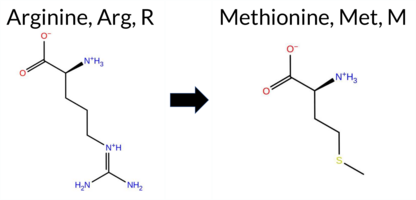 3DClick to see structure in 3D Viewer AIThe SynGAP1 missense variant R726M has no ClinVar entry and is not reported in gnomAD. Prediction tools cluster into two groups: benign predictions come from REVEL, Rosetta, Foldetta, premPS, PROVEAN, FATHMM, and AlphaMissense‑Optimized; pathogenic predictions come from polyPhen‑2 (HumDiv and HumVar), SIFT, ESM1b, and AlphaMissense‑Default. FoldX is uncertain and is not counted as evidence. High‑accuracy assessments show AlphaMissense‑Optimized as benign, Foldetta as benign, and the SGM Consensus (majority vote of AlphaMissense‑Default, ESM1b, FATHMM, PROVEAN) is inconclusive due to a 2‑to‑2 split. Overall, the majority of tools and the two high‑accuracy methods predict a benign effect. Therefore, the variant is most likely benign, and this conclusion does not contradict any ClinVar status because none is available. Disclaimer: This summary was generated using AI and should be interpreted alongside expert review. | 0.521092 | Disordered | 0.449098 | Uncertain | 0.888 | 0.513 | 0.625 | -8.611 | Likely Pathogenic | 0.750 | Likely Pathogenic | Likely Benign | 0.53 | Ambiguous | 0.1 | 0.31 | Likely Benign | 0.42 | Likely Benign | 0.20 | Likely Benign | 0.199 | Likely Benign | -2.02 | Neutral | 1.000 | Probably Damaging | 0.998 | Probably Damaging | 2.59 | Benign | 0.03 | Affected | 0.1489 | 0.4051 | 0 | -1 | 6.4 | -24.99 | |||||||||||||||||||||||||||||||
| c.1615C>A | H539N 2D 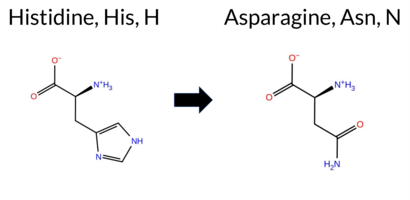 3DClick to see structure in 3D Viewer AISynGAP1 H539N is not reported in ClinVar and is absent from gnomAD. Functional prediction tools cluster into two groups: benign predictions come from FoldX, Foldetta, SIFT, and AlphaMissense‑Optimized; pathogenic predictions come from SGM‑Consensus, REVEL, PROVEAN, polyPhen‑2 (HumDiv and HumVar), ESM1b, FATHMM, and AlphaMissense‑Default. High‑accuracy assessments further clarify the variant’s impact: AlphaMissense‑Optimized predicts a benign effect, the SGM‑Consensus (majority vote of AlphaMissense‑Default, ESM1b, FATHMM, PROVEAN) indicates a likely pathogenic outcome, and Foldetta, which integrates FoldX‑MD and Rosetta stability calculations, reports a benign change. No prediction or stability result is missing or inconclusive. Overall, the majority of evidence points toward a pathogenic effect, which does not contradict the absence of a ClinVar classification. Disclaimer: This summary was generated using AI and should be interpreted alongside expert review. | Likely Pathogenic | GAP | 0.060549 | Structured | 0.031398 | Uncertain | 0.948 | 0.360 | 0.000 | -8.685 | Likely Pathogenic | 0.751 | Likely Pathogenic | Likely Benign | 0.12 | Likely Benign | 0.1 | 0.78 | Ambiguous | 0.45 | Likely Benign | 0.72 | Ambiguous | 0.647 | Likely Pathogenic | -5.93 | Deleterious | 1.000 | Probably Damaging | 1.000 | Probably Damaging | -0.89 | Pathogenic | 0.26 | Tolerated | 0.1234 | 0.1281 | 2 | 1 | -0.3 | -23.04 | |||||||||||||||||||||||||||||
| c.3080A>T | N1027I 2D AIThe SynGAP1 missense variant N1027I is not reported in ClinVar (no ClinVar ID) and is absent from gnomAD (no gnomAD ID). Prediction tools that agree on a benign effect include REVEL, PROVEAN, ESM1b, FATHMM, AlphaMissense‑Optimized, and the SGM‑Consensus (majority vote from AlphaMissense‑Default, ESM1b, FATHMM, PROVEAN). Tools that predict a pathogenic effect are polyPhen‑2 HumDiv, polyPhen‑2 HumVar, SIFT, and AlphaMissense‑Default. High‑accuracy assessments show AlphaMissense‑Optimized as benign and the SGM‑Consensus as likely benign; Foldetta results are not available. Overall, the majority of evidence points to a benign impact. This conclusion is consistent with the lack of ClinVar annotation, so there is no contradiction with existing clinical data. Disclaimer: This summary was generated using AI and should be interpreted alongside expert review. | Likely Benign | 0.831250 | Disordered | 0.994357 | Binding | 0.347 | 0.745 | 0.500 | -5.847 | Likely Benign | 0.751 | Likely Pathogenic | Likely Benign | 0.065 | Likely Benign | -2.36 | Neutral | 0.970 | Probably Damaging | 0.726 | Possibly Damaging | 2.71 | Benign | 0.02 | Affected | 0.0677 | 0.5724 | -2 | -3 | 8.0 | -0.94 | |||||||||||||||||||||||||||||||||||||||
| c.3731G>A | S1244N 2D AIThe SynGAP1 missense variant S1244N is listed in ClinVar with an “Uncertain” status (ClinVar ID 931075.0) and is not reported in gnomAD. Prediction tools that agree on a benign effect include REVEL, PROVEAN, SIFT, and AlphaMissense‑Optimized, whereas PolyPhen‑2 (HumDiv and HumVar), ESM1b, FATHMM, and AlphaMissense‑Default all predict a pathogenic outcome. High‑accuracy assessments show AlphaMissense‑Optimized as benign, while the SGM‑Consensus—derived from a majority vote of AlphaMissense‑Default, ESM1b, FATHMM, and PROVEAN—indicates pathogenicity. Foldetta, a protein‑folding stability method combining FoldX‑MD and Rosetta outputs, has no available result for this variant. Overall, the balance of evidence leans toward a pathogenic effect, which does not contradict the ClinVar designation of uncertainty. Disclaimer: This summary was generated using AI and should be interpreted alongside expert review. | Likely Pathogenic | Coiled-coil | 0.648219 | Disordered | 0.411055 | Uncertain | 0.833 | 0.549 | 0.500 | Uncertain | 1 | -9.008 | Likely Pathogenic | 0.751 | Likely Pathogenic | Likely Benign | 0.154 | Likely Benign | -1.87 | Neutral | 0.997 | Probably Damaging | 0.992 | Probably Damaging | 2.10 | Pathogenic | 0.15 | Tolerated | 3.77 | 5 | 0.1033 | 0.3464 | 1 | 1 | -2.7 | 27.03 | ||||||||||||||||||||||||||||||||||
| c.3816G>C | E1272D 2D AIThe SynGAP1 missense variant E1272D has no ClinVar entry and is not reported in gnomAD. Prediction tools that agree on a benign effect include REVEL, ESM1b, and AlphaMissense‑Optimized, whereas the remaining tools (PROVEAN, polyPhen‑2 HumDiv, polyPhen‑2 HumVar, SIFT, FATHMM, AlphaMissense‑Default, and the SGM‑Consensus) all predict a pathogenic impact. High‑accuracy assessments further show AlphaMissense‑Optimized as benign and the SGM‑Consensus as likely pathogenic; the Foldetta protein‑folding stability analysis is unavailable. Overall, the majority of evidence points to a pathogenic effect. There is no ClinVar classification to contradict this conclusion, so the variant is most likely pathogenic. Disclaimer: This summary was generated using AI and should be interpreted alongside expert review. | Likely Pathogenic | 0.483068 | Structured | 0.766082 | Binding | 0.799 | 0.677 | 0.500 | -4.781 | Likely Benign | 0.751 | Likely Pathogenic | Likely Benign | 0.189 | Likely Benign | -2.53 | Deleterious | 0.992 | Probably Damaging | 0.983 | Probably Damaging | 2.27 | Pathogenic | 0.00 | Affected | 3.77 | 5 | 0.1450 | 0.3471 | 2 | 3 | 0.0 | -14.03 | |||||||||||||||||||||||||||||||||||||
| c.3816G>T | E1272D 2D AIThe SynGAP1 missense variant E1272D is listed in ClinVar with no submitted interpretation and is present in gnomAD (variant ID 6‑33447864‑G‑T). Functional prediction tools show mixed results: benign predictions come from REVEL, ESM1b, and AlphaMissense‑Optimized, whereas pathogenic predictions are reported by PROVEAN, polyPhen‑2 (HumDiv and HumVar), SIFT, FATHMM, AlphaMissense‑Default, and the SGM‑Consensus score. The high‑accuracy AlphaMissense‑Optimized tool classifies the change as benign, while the SGM‑Consensus, derived from a majority vote of AlphaMissense‑Default, ESM1b, FATHMM, and PROVEAN, indicates a likely pathogenic effect. No Foldetta stability assessment is available for this variant. Overall, the majority of conventional predictors and the consensus score lean toward pathogenicity, which is consistent with the SGM‑Consensus designation but contradicts the benign calls from AlphaMissense‑Optimized and a few other tools. Based on the collective evidence, the variant is most likely pathogenic, and this conclusion aligns with the SGM‑Consensus prediction rather than the ClinVar status, which is currently unreported. Disclaimer: This summary was generated using AI and should be interpreted alongside expert review. | Likely Pathogenic | 0.483068 | Structured | 0.766082 | Binding | 0.799 | 0.677 | 0.500 | 6-33447864-G-T | -4.781 | Likely Benign | 0.751 | Likely Pathogenic | Likely Benign | 0.188 | Likely Benign | -2.53 | Deleterious | 0.992 | Probably Damaging | 0.983 | Probably Damaging | 2.27 | Pathogenic | 0.00 | Affected | 3.77 | 5 | 0.1450 | 0.3471 | 2 | 3 | 0.0 | -14.03 | ||||||||||||||||||||||||||||||||||||
| c.1336G>C | E446Q 2D 3DClick to see structure in 3D Viewer AIThe SynGAP1 E446Q missense variant is not reported in ClinVar and is absent from gnomAD. Prediction tools that indicate a benign effect include REVEL, FATHMM, and AlphaMissense‑Optimized, whereas the majority of tools predict a pathogenic impact: SGM‑Consensus, PROVEAN, polyPhen‑2 (HumDiv and HumVar), SIFT, ESM1b, and AlphaMissense‑Default. High‑accuracy assessments show AlphaMissense‑Optimized as benign, SGM‑Consensus as likely pathogenic, and Foldetta (combining FoldX‑MD and Rosetta outputs) as uncertain. No other folding‑stability predictions are available. Overall, the balance of evidence from the consensus of multiple in silico predictors points to a pathogenic classification for E446Q. This conclusion is not contradicted by ClinVar status, which currently contains no entry for this variant. Disclaimer: This summary was generated using AI and should be interpreted alongside expert review. | Likely Pathogenic | GAP | 0.271506 | Structured | 0.276479 | Uncertain | 0.940 | 0.216 | 0.000 | -11.107 | Likely Pathogenic | 0.752 | Likely Pathogenic | Likely Benign | 0.92 | Ambiguous | 0.5 | 0.54 | Ambiguous | 0.73 | Ambiguous | 0.84 | Ambiguous | 0.337 | Likely Benign | -2.80 | Deleterious | 0.992 | Probably Damaging | 0.973 | Probably Damaging | 3.24 | Benign | 0.04 | Affected | 0.1049 | 0.6218 | 2 | 2 | 0.0 | -0.98 | |||||||||||||||||||||||||||||
| c.139C>T | R47W 2D AIThe SynGAP1 missense variant R47W is listed in ClinVar as a variant of uncertain significance and is present in the gnomAD database (ID 6‑33423548‑C‑T). Prediction tools that agree on a benign effect include REVEL, PROVEAN, FATHMM, and AlphaMissense‑Optimized, whereas those that predict a pathogenic effect are polyPhen‑2 (HumDiv and HumVar), SIFT, ESM1b, and AlphaMissense‑Default. High‑accuracy assessments show AlphaMissense‑Optimized classifying the variant as benign; the SGM Consensus, derived from a majority vote of AlphaMissense‑Default, ESM1b, FATHMM, and PROVEAN, is inconclusive (two pathogenic versus two benign votes), and Foldetta results are unavailable. Overall, the majority of conventional tools suggest a pathogenic impact, but the single high‑accuracy benign prediction and the inconclusive consensus temper this view. Consequently, the variant is most likely pathogenic based on the preponderance of evidence, and this assessment does not contradict the ClinVar status of uncertain significance. Disclaimer: This summary was generated using AI and should be interpreted alongside expert review. | 0.318242 | Structured | 0.436559 | Uncertain | 0.520 | 0.719 | 0.125 | Uncertain | 1 | 6-33423548-C-T | 1 | 6.20e-7 | -9.201 | Likely Pathogenic | 0.752 | Likely Pathogenic | Likely Benign | 0.201 | Likely Benign | -2.17 | Neutral | 0.994 | Probably Damaging | 0.919 | Probably Damaging | 4.00 | Benign | 0.00 | Affected | 4.32 | 1 | 0.1101 | 0.4158 | -3 | 2 | 3.6 | 30.03 | |||||||||||||||||||||||||||||||||
| c.1937T>A | L646Q 2D 3DClick to see structure in 3D Viewer AIThe SynGAP1 missense change L646Q lies in the GAP domain. ClinVar has no entry for this variant, and it is not present in gnomAD. Prediction tools that agree on a benign effect are REVEL, FATHMM, and AlphaMissense‑Optimized. All other evaluated algorithms—FoldX, Rosetta, Foldetta, premPS, PROVEAN, polyPhen‑2 (HumDiv and HumVar), SIFT, ESM1b, AlphaMissense‑Default, and the SGM‑Consensus—classify the variant as pathogenic. High‑accuracy assessments further support a deleterious impact: AlphaMissense‑Optimized predicts benign, the SGM‑Consensus (majority vote of AlphaMissense‑Default, ESM1b, FATHMM, PROVEAN) predicts likely pathogenic, and Foldetta (combining FoldX‑MD and Rosetta outputs) predicts pathogenic. Taken together, the overwhelming majority of evidence indicates that the variant is most likely pathogenic, and this conclusion does not contradict the ClinVar status, which is currently unreported. Disclaimer: This summary was generated using AI and should be interpreted alongside expert review. | Likely Pathogenic | GAP | 0.048328 | Structured | 0.303751 | Uncertain | 0.941 | 0.344 | 0.000 | -12.735 | Likely Pathogenic | 0.752 | Likely Pathogenic | Likely Benign | 3.23 | Destabilizing | 0.1 | 3.04 | Destabilizing | 3.14 | Destabilizing | 2.12 | Destabilizing | 0.462 | Likely Benign | -2.78 | Deleterious | 0.994 | Probably Damaging | 0.790 | Possibly Damaging | 3.17 | Benign | 0.00 | Affected | 0.2090 | 0.1963 | -2 | -2 | -7.3 | 14.97 | |||||||||||||||||||||||||||||
| c.3056G>T | R1019L 2D AIThe SynGAP1 missense variant R1019L is listed in ClinVar with an “Uncertain” status (ClinVar ID 3364537.0) and is present in gnomAD (gnomAD ID 6‑33443608‑G‑T). Prediction tools that agree on a benign effect include REVEL, ESM1b, and AlphaMissense‑Optimized. Tools that predict a pathogenic effect comprise PROVEAN, polyPhen‑2 (HumDiv and HumVar), SIFT, FATHMM, and AlphaMissense‑Default. The SGM‑Consensus, derived from a majority vote of AlphaMissense‑Default, ESM1b, FATHMM, and PROVEAN, reports the variant as “Likely Pathogenic.” High‑accuracy assessments show AlphaMissense‑Optimized as benign, while the SGM‑Consensus (majority vote) remains pathogenic. Foldetta, a protein‑folding stability method combining FoldX‑MD and Rosetta outputs, has no available result for this variant. Overall, the majority of computational evidence points to a pathogenic impact, which does not contradict the ClinVar “Uncertain” classification. Disclaimer: This summary was generated using AI and should be interpreted alongside expert review. | Likely Pathogenic | 0.856457 | Disordered | 0.966400 | Binding | 0.315 | 0.794 | 0.500 | Uncertain | 1 | 6-33443608-G-T | 2 | 1.24e-6 | -5.194 | Likely Benign | 0.752 | Likely Pathogenic | Likely Benign | 0.110 | Likely Benign | -3.57 | Deleterious | 0.800 | Possibly Damaging | 0.573 | Possibly Damaging | 2.40 | Pathogenic | 0.01 | Affected | 3.77 | 5 | 0.1850 | 0.4886 | -2 | -3 | 8.3 | -43.03 | ||||||||||||||||||||||||||||||||
| c.3218C>A | S1073Y 2D AIThe SynGAP1 missense change S1073Y is not reported in ClinVar and is absent from gnomAD. Prediction tools that agree on a benign effect include REVEL, PROVEAN, ESM1b, FATHMM, AlphaMissense‑Optimized, and the SGM‑Consensus (majority vote from AlphaMissense‑Default, ESM1b, FATHMM, PROVEAN). Tools that predict a pathogenic outcome are polyPhen‑2 HumDiv, polyPhen‑2 HumVar, SIFT, and AlphaMissense‑Default. High‑accuracy assessments show AlphaMissense‑Optimized as benign and the SGM‑Consensus as likely benign; Foldetta results are not available. Overall, the majority of evidence points to a benign impact, and this conclusion does not contradict the ClinVar status, which currently has no entry for this variant. Disclaimer: This summary was generated using AI and should be interpreted alongside expert review. | Likely Benign | 0.916840 | Disordered | 0.985818 | Binding | 0.313 | 0.905 | 0.750 | -6.768 | Likely Benign | 0.752 | Likely Pathogenic | Likely Benign | 0.165 | Likely Benign | -2.43 | Neutral | 0.990 | Probably Damaging | 0.796 | Possibly Damaging | 3.81 | Benign | 0.00 | Affected | 0.0977 | 0.5684 | -3 | -2 | -0.5 | 76.10 | |||||||||||||||||||||||||||||||||||||||
| c.3595G>C | E1199Q 2D AIThe SynGAP1 missense variant E1199Q is not reported in ClinVar (ClinVar ID None) and is absent from gnomAD (gnomAD ID None). Prediction tools that agree on a benign effect include REVEL, PROVEAN, FATHMM, and AlphaMissense‑Optimized, whereas polyPhen‑2 (HumDiv and HumVar), SIFT, and AlphaMissense‑Default all predict a pathogenic impact. ESM1b is uncertain. High‑accuracy assessments show AlphaMissense‑Optimized as benign; the SGM Consensus (majority vote from AlphaMissense‑Default, ESM1b, FATHMM, PROVEAN) also yields a benign prediction, while Foldetta results are unavailable. Overall, the balance of evidence—particularly from the high‑accuracy tools—suggests that the variant is most likely benign, and this conclusion does not contradict any ClinVar annotation. Disclaimer: This summary was generated using AI and should be interpreted alongside expert review. | Coiled-coil | 0.538167 | Disordered | 0.444533 | Uncertain | 0.878 | 0.598 | 0.250 | -7.428 | In-Between | 0.752 | Likely Pathogenic | Likely Benign | 0.132 | Likely Benign | -1.41 | Neutral | 1.000 | Probably Damaging | 0.998 | Probably Damaging | 2.70 | Benign | 0.00 | Affected | 0.1000 | 0.3545 | 2 | 2 | 0.0 | -0.98 | |||||||||||||||||||||||||||||||||||||||
| c.842A>G | Y281C 2D 3DClick to see structure in 3D Viewer AIThe SynGAP1 missense variant Y281C is not reported in ClinVar (ClinVar ID: None) and is absent from gnomAD (gnomAD ID: None). Prediction tools that agree on a benign effect include only AlphaMissense‑Optimized. All other evaluated algorithms—SGM‑Consensus, REVEL, FoldX, Rosetta, Foldetta, premPS, PROVEAN, polyPhen‑2 (HumDiv and HumVar), SIFT, ESM1b, FATHMM, and AlphaMissense‑Default—consistently predict a pathogenic impact. High‑accuracy assessments further support this: AlphaMissense‑Optimized indicates a benign outcome, whereas the SGM Consensus (majority vote of AlphaMissense‑Default, ESM1b, FATHMM, PROVEAN) and Foldetta (combining FoldX‑MD and Rosetta outputs) both predict pathogenicity. Consequently, the variant is most likely pathogenic based on the overwhelming majority of predictions, and this assessment does not contradict the ClinVar status, which currently contains no classification for this variant. Disclaimer: This summary was generated using AI and should be interpreted alongside expert review. | Likely Pathogenic | C2 | 0.098513 | Structured | 0.337647 | Uncertain | 0.927 | 0.254 | 0.000 | -8.528 | Likely Pathogenic | 0.752 | Likely Pathogenic | Likely Benign | 3.00 | Destabilizing | 0.1 | 2.71 | Destabilizing | 2.86 | Destabilizing | 1.48 | Destabilizing | 0.615 | Likely Pathogenic | -5.55 | Deleterious | 1.000 | Probably Damaging | 0.999 | Probably Damaging | 0.99 | Pathogenic | 0.05 | Affected | 0.2949 | 0.2176 | 0 | -2 | 3.8 | -60.04 | |||||||||||||||||||||||||||||
| c.956C>A | A319D 2D 3DClick to see structure in 3D Viewer AIThe SynGAP1 A319D missense variant is not reported in ClinVar and is absent from gnomAD. Functional prediction tools cluster into two groups: benign predictions from REVEL, FoldX, premPS, PROVEAN, SIFT, and AlphaMissense‑Optimized; pathogenic predictions from polyPhen‑2 HumDiv, polyPhen‑2 HumVar, ESM1b, FATHMM, and AlphaMissense‑Default. The SGM‑Consensus, which aggregates AlphaMissense‑Default, ESM1b, FATHMM, and PROVEAN, yields a likely pathogenic verdict (3/4 pathogenic votes). High‑accuracy assessments further support this: AlphaMissense‑Optimized predicts benign, whereas the SGM‑Consensus remains pathogenic. Foldetta, which integrates FoldX‑MD (benign) and Rosetta (uncertain), is considered unavailable. Overall, the majority of evidence points to a pathogenic effect, and this conclusion does not conflict with ClinVar, which has no classification for this variant. Disclaimer: This summary was generated using AI and should be interpreted alongside expert review. | Likely Pathogenic | C2 | 0.179055 | Structured | 0.410405 | Uncertain | 0.879 | 0.254 | 0.125 | -11.144 | Likely Pathogenic | 0.752 | Likely Pathogenic | Likely Benign | -0.02 | Likely Benign | 0.2 | -0.84 | Ambiguous | -0.43 | Likely Benign | 0.30 | Likely Benign | 0.373 | Likely Benign | -2.38 | Neutral | 0.998 | Probably Damaging | 0.966 | Probably Damaging | 2.01 | Pathogenic | 0.20 | Tolerated | 0.1504 | 0.1360 | 0 | -2 | -5.3 | 44.01 | |||||||||||||||||||||||||||||
| c.1357C>T | H453Y 2D 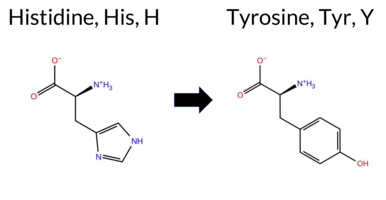 AIThe SynGAP1 missense variant H453Y is not reported in ClinVar and is absent from gnomAD. Functional prediction tools cluster into two groups: benign calls come from REVEL, premPS, FATHMM, and AlphaMissense‑Optimized; pathogenic calls come from PROVEAN, polyPhen‑2 (HumDiv and HumVar), SIFT, ESM1b, AlphaMissense‑Default, and the SGM‑Consensus. Predictions from FoldX, Rosetta, and Foldetta are uncertain. High‑accuracy methods provide a mixed picture: AlphaMissense‑Optimized predicts benign, SGM‑Consensus predicts likely pathogenic, and Foldetta is inconclusive. Overall, the majority of evidence points toward a pathogenic effect, aligning with the SGM‑Consensus but opposing the benign predictions from several tools. Because ClinVar contains no entry for this variant, there is no conflict with existing clinical annotations. Disclaimer: This summary was generated using AI and should be interpreted alongside expert review. | Likely Pathogenic | GAP | 0.352862 | Structured | 0.316097 | Uncertain | 0.946 | 0.200 | 0.000 | -12.060 | Likely Pathogenic | 0.753 | Likely Pathogenic | Likely Benign | -0.52 | Ambiguous | 0.7 | -0.68 | Ambiguous | -0.60 | Ambiguous | 0.09 | Likely Benign | 0.320 | Likely Benign | -5.93 | Deleterious | 0.995 | Probably Damaging | 0.961 | Probably Damaging | 3.41 | Benign | 0.04 | Affected | 0.0815 | 0.3843 | 0 | 2 | 1.9 | 26.03 | |||||||||||||||||||||||||||||
| c.2178G>C | R726S 2D 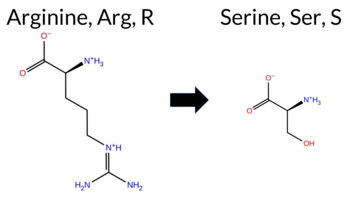 3DClick to see structure in 3D Viewer AIThe SynGAP1 missense variant R726S is not reported in ClinVar (no ClinVar ID) and is absent from gnomAD. Prediction tools that agree on a benign effect include REVEL, FoldX, Rosetta, premPS, PROVEAN, SIFT, ESM1b, FATHMM, and AlphaMissense‑Optimized. Tools that predict a pathogenic outcome are polyPhen‑2 HumDiv, polyPhen‑2 HumVar, and AlphaMissense‑Default. The SGM‑Consensus, derived from a majority vote of AlphaMissense‑Default, ESM1b, FATHMM, and PROVEAN, classifies the variant as Likely Benign. High‑accuracy assessments further support a benign interpretation: AlphaMissense‑Optimized predicts Benign; the SGM‑Consensus (majority vote) is Likely Benign; and Foldetta, which integrates FoldX‑MD and Rosetta stability calculations, also predicts Benign. No prediction or folding stability result is missing or inconclusive. Based on the collective evidence, the variant is most likely benign, and this conclusion does not contradict any ClinVar status (none reported). Disclaimer: This summary was generated using AI and should be interpreted alongside expert review. | Likely Benign | 0.521092 | Disordered | 0.449098 | Uncertain | 0.888 | 0.513 | 0.625 | -4.780 | Likely Benign | 0.753 | Likely Pathogenic | Likely Benign | 0.40 | Likely Benign | 0.1 | -0.07 | Likely Benign | 0.17 | Likely Benign | -0.16 | Likely Benign | 0.232 | Likely Benign | -0.41 | Neutral | 1.000 | Probably Damaging | 1.000 | Probably Damaging | 2.66 | Benign | 0.92 | Tolerated | 0.2993 | 0.3956 | 0 | -1 | 3.7 | -69.11 | ||||||||||||||||||||||||||||||
| c.2178G>T | R726S 2D 3DClick to see structure in 3D Viewer AIThe SynGAP1 missense variant R726S is not reported in ClinVar (no ClinVar ID) and is absent from gnomAD. Prediction tools that agree on a benign effect include REVEL, FoldX, Rosetta, premPS, PROVEAN, SIFT, ESM1b, FATHMM, and AlphaMissense‑Optimized. Tools that predict a pathogenic outcome are polyPhen‑2 HumDiv, polyPhen‑2 HumVar, and AlphaMissense‑Default. The SGM‑Consensus, derived from a majority vote of AlphaMissense‑Default, ESM1b, FATHMM, and PROVEAN, classifies the variant as Likely Benign. High‑accuracy assessments further support a benign interpretation: AlphaMissense‑Optimized predicts Benign; the SGM‑Consensus (majority vote) is Likely Benign; and Foldetta, which integrates FoldX‑MD and Rosetta stability calculations, also predicts Benign. No prediction or folding stability result is missing or inconclusive. Based on the collective evidence, the variant is most likely benign, and this conclusion does not contradict any ClinVar status (none reported). Disclaimer: This summary was generated using AI and should be interpreted alongside expert review. | Likely Benign | 0.521092 | Disordered | 0.449098 | Uncertain | 0.888 | 0.513 | 0.625 | -4.780 | Likely Benign | 0.753 | Likely Pathogenic | Likely Benign | 0.40 | Likely Benign | 0.1 | -0.07 | Likely Benign | 0.17 | Likely Benign | -0.16 | Likely Benign | 0.232 | Likely Benign | -0.41 | Neutral | 1.000 | Probably Damaging | 1.000 | Probably Damaging | 2.66 | Benign | 0.92 | Tolerated | 0.2993 | 0.3956 | 0 | -1 | 3.7 | -69.11 | ||||||||||||||||||||||||||||||
| c.2374G>A | E792K 2D AIThe SynGAP1 missense variant E792K is not reported in ClinVar and is absent from gnomAD. Prediction tools that agree on a benign effect include REVEL, PROVEAN, polyPhen‑2 (HumDiv and HumVar), ESM1b, FATHMM, and AlphaMissense‑Optimized. Tools that predict a pathogenic effect are SIFT and AlphaMissense‑Default. The SGM‑Consensus, which aggregates AlphaMissense‑Default, ESM1b, FATHMM, and PROVEAN, reports a “Likely Benign” classification. High‑accuracy assessments show AlphaMissense‑Optimized as benign and the SGM‑Consensus also as likely benign; Foldetta results are not available. Overall, the majority of evidence points to a benign impact. This conclusion is consistent with the lack of ClinVar annotation, so there is no contradiction with existing clinical data. Disclaimer: This summary was generated using AI and should be interpreted alongside expert review. | Likely Benign | SH3-binding motif | 0.974374 | Disordered | 0.452261 | Uncertain | 0.352 | 0.896 | 0.875 | -4.942 | Likely Benign | 0.753 | Likely Pathogenic | Likely Benign | 0.059 | Likely Benign | -2.47 | Neutral | 0.033 | Benign | 0.017 | Benign | 3.90 | Benign | 0.01 | Affected | 0.2646 | 0.7584 | 0 | 1 | -0.4 | -0.94 | ||||||||||||||||||||||||||||||||||||||
| c.2572A>C | S858R 2D AIThe SynGAP1 missense variant S858R is reported in ClinVar as “None” and is not present in gnomAD. Prediction tools that agree on a benign effect include SGM‑Consensus (Likely Benign), REVEL, PROVEAN, ESM1b, FATHMM, and AlphaMissense‑Optimized. Tools that predict a pathogenic effect are polyPhen‑2 HumDiv, polyPhen‑2 HumVar, SIFT, and AlphaMissense‑Default. High‑accuracy assessments further support a benign outcome: AlphaMissense‑Optimized predicts benign, and the SGM‑Consensus (majority vote from AlphaMissense‑Default, ESM1b, FATHMM, PROVEAN) also yields a likely benign classification. Foldetta, a protein‑folding stability method combining FoldX‑MD and Rosetta outputs, has no available result for this variant. Overall, the majority of evidence points to a benign impact, and this conclusion does not contradict the ClinVar status, which currently has no pathogenic annotation. Disclaimer: This summary was generated using AI and should be interpreted alongside expert review. | Likely Benign | 0.724957 | Disordered | 0.482724 | Uncertain | 0.305 | 0.833 | 0.375 | -3.924 | Likely Benign | 0.753 | Likely Pathogenic | Likely Benign | 0.189 | Likely Benign | -1.18 | Neutral | 0.818 | Possibly Damaging | 0.899 | Possibly Damaging | 4.12 | Benign | 0.02 | Affected | 0.0996 | 0.3778 | 0 | -1 | -3.7 | 69.11 | |||||||||||||||||||||||||||||||||||||||
| c.2574C>A | S858R 2D AIThe SynGAP1 missense variant S858R is reported as “Likely Benign” in ClinVar and is not present in gnomAD. Prediction tools that agree on a benign effect include SGM‑Consensus, REVEL, PROVEAN, ESM1b, FATHMM, and AlphaMissense‑Optimized. Tools that predict a pathogenic effect are polyPhen‑2 (HumDiv and HumVar), SIFT, and AlphaMissense‑Default. High‑accuracy assessments reinforce the benign prediction: AlphaMissense‑Optimized scores the variant as benign, and the SGM‑Consensus (a majority vote of AlphaMissense‑Default, ESM1b, FATHMM, and PROVEAN) also indicates a likely benign outcome. Foldetta, a protein‑folding stability method combining FoldX‑MD and Rosetta outputs, has no available result for this variant. Overall, the majority of evidence points to a benign impact, and this conclusion is consistent with the ClinVar status. Disclaimer: This summary was generated using AI and should be interpreted alongside expert review. | Likely Benign | 0.724957 | Disordered | 0.482724 | Uncertain | 0.305 | 0.833 | 0.375 | -3.924 | Likely Benign | 0.753 | Likely Pathogenic | Likely Benign | 0.165 | Likely Benign | -1.18 | Neutral | 0.818 | Possibly Damaging | 0.899 | Possibly Damaging | 4.12 | Benign | 0.02 | Affected | 0.0996 | 0.3778 | 0 | -1 | -3.7 | 69.11 | |||||||||||||||||||||||||||||||||||||||
| c.2574C>G | S858R 2D AIThe SynGAP1 missense variant S858R is reported as “Likely Benign” in ClinVar and is not present in gnomAD. Prediction tools that agree on a benign effect include SGM‑Consensus, REVEL, PROVEAN, ESM1b, FATHMM, and AlphaMissense‑Optimized. Tools that predict a pathogenic effect are polyPhen‑2 (HumDiv and HumVar), SIFT, and AlphaMissense‑Default. High‑accuracy assessments reinforce the benign prediction: AlphaMissense‑Optimized scores the variant as benign, and the SGM‑Consensus (a majority vote of AlphaMissense‑Default, ESM1b, FATHMM, and PROVEAN) also indicates a likely benign outcome. Foldetta, a protein‑folding stability method combining FoldX‑MD and Rosetta outputs, has no available result for this variant. Overall, the majority of evidence points to a benign impact, and this conclusion is consistent with the ClinVar status. Disclaimer: This summary was generated using AI and should be interpreted alongside expert review. | Likely Benign | 0.724957 | Disordered | 0.482724 | Uncertain | 0.305 | 0.833 | 0.375 | -3.924 | Likely Benign | 0.753 | Likely Pathogenic | Likely Benign | 0.165 | Likely Benign | -1.18 | Neutral | 0.818 | Possibly Damaging | 0.899 | Possibly Damaging | 4.12 | Benign | 0.02 | Affected | 0.0996 | 0.3778 | 0 | -1 | -3.7 | 69.11 | |||||||||||||||||||||||||||||||||||||||
| c.1481T>C | I494T 2D AIThe SynGAP1 missense variant I494T is not reported in ClinVar (ClinVar status: None) and is absent from gnomAD (gnomAD ID: None). Prediction tools that agree on a benign effect include only AlphaMissense‑Optimized. All other evaluated tools—SGM‑Consensus, REVEL, FoldX, Rosetta, Foldetta, premPS, PROVEAN, polyPhen‑2 (HumDiv and HumVar), SIFT, ESM1b, FATHMM, and AlphaMissense‑Default—predict a pathogenic impact. High‑accuracy methods give the following results: AlphaMissense‑Optimized predicts benign; the SGM Consensus (majority vote of AlphaMissense‑Default, ESM1b, FATHMM, and PROVEAN) predicts likely pathogenic; and Foldetta (combining FoldX‑MD and Rosetta outputs) predicts pathogenic. No predictions are missing or inconclusive. Based on the overwhelming majority of pathogenic predictions, the variant is most likely pathogenic, and this assessment does not contradict the ClinVar status, which is currently unreported. Disclaimer: This summary was generated using AI and should be interpreted alongside expert review. | Likely Pathogenic | GAP | 0.155435 | Structured | 0.353330 | Uncertain | 0.941 | 0.157 | 0.000 | -10.033 | Likely Pathogenic | 0.754 | Likely Pathogenic | Likely Benign | 2.45 | Destabilizing | 0.7 | 2.12 | Destabilizing | 2.29 | Destabilizing | 1.73 | Destabilizing | 0.907 | Likely Pathogenic | -4.61 | Deleterious | 1.000 | Probably Damaging | 0.995 | Probably Damaging | -1.38 | Pathogenic | 0.01 | Affected | 0.1003 | 0.0640 | 0 | -1 | -5.2 | -12.05 | |||||||||||||||||||||||||||||
| c.1889T>C | I630T 2D 3DClick to see structure in 3D Viewer AIThe SynGAP1 missense variant I630T has no ClinVar entry and is not reported in gnomAD. Prediction tools that agree on a benign effect include PROVEAN, SIFT, and AlphaMissense‑Optimized. Those that predict a pathogenic impact are REVEL, FoldX, Rosetta, Foldetta, premPS, polyPhen‑2 (HumDiv and HumVar), FATHMM, and AlphaMissense‑Default; ESM1b remains uncertain. High‑accuracy assessments further support a deleterious outcome: AlphaMissense‑Optimized indicates benign, whereas the SGM Consensus (derived from AlphaMissense‑Default, ESM1b, FATHMM, and PROVEAN) yields a pathogenic majority, and Foldetta also predicts pathogenic. No prediction is missing or inconclusive. Overall, the preponderance of evidence points to a pathogenic effect for I630T, and this conclusion does not conflict with the absence of a ClinVar classification. Disclaimer: This summary was generated using AI and should be interpreted alongside expert review. | GAP | 0.040537 | Structured | 0.036106 | Uncertain | 0.966 | 0.236 | 0.000 | -7.780 | In-Between | 0.754 | Likely Pathogenic | Likely Benign | 2.77 | Destabilizing | 0.1 | 2.27 | Destabilizing | 2.52 | Destabilizing | 1.94 | Destabilizing | 0.734 | Likely Pathogenic | -2.15 | Neutral | 0.997 | Probably Damaging | 0.961 | Probably Damaging | -1.46 | Pathogenic | 0.35 | Tolerated | 0.0985 | 0.0640 | 0 | -1 | -5.2 | -12.05 | ||||||||||||||||||||||||||||||
| c.354G>A | M118I 2D AIThe SynGAP1 missense variant M118I is not reported in ClinVar (no ClinVar ID) and is absent from gnomAD (no gnomAD ID). Prediction tools that agree on a benign effect include REVEL, PROVEAN, polyPhen‑2 HumDiv, polyPhen‑2 HumVar, ESM1b, FATHMM, and AlphaMissense‑Optimized. Tools that predict a pathogenic effect are SIFT and AlphaMissense‑Default. The SGM‑Consensus, which aggregates the majority vote from AlphaMissense‑Default, ESM1b, FATHMM, and PROVEAN, reports the variant as “Likely Benign.” High‑accuracy assessments show AlphaMissense‑Optimized as benign, SGM‑Consensus as likely benign, and Foldetta results are unavailable. Based on the collective predictions, the variant is most likely benign, and this assessment does not contradict any ClinVar status (none reported). Disclaimer: This summary was generated using AI and should be interpreted alongside expert review. | Likely Benign | 0.694846 | Disordered | 0.676867 | Binding | 0.330 | 0.883 | 0.500 | -3.396 | Likely Benign | 0.754 | Likely Pathogenic | Likely Benign | 0.139 | Likely Benign | -1.23 | Neutral | 0.005 | Benign | 0.004 | Benign | 3.99 | Benign | 0.02 | Affected | 0.1624 | 0.3570 | 2 | 1 | 2.6 | -18.03 | |||||||||||||||||||||||||||||||||||||||
| c.354G>C | M118I 2D AIThe SynGAP1 missense variant M118I is not reported in ClinVar (no ClinVar ID) and is absent from gnomAD (no gnomAD ID). Prediction tools that agree on a benign effect include REVEL, PROVEAN, polyPhen‑2 HumDiv, polyPhen‑2 HumVar, ESM1b, FATHMM, and AlphaMissense‑Optimized. Tools that predict a pathogenic effect are SIFT and AlphaMissense‑Default. The SGM‑Consensus, which aggregates the majority vote from AlphaMissense‑Default, ESM1b, FATHMM, and PROVEAN, reports the variant as “Likely Benign.” High‑accuracy assessments show AlphaMissense‑Optimized as benign, SGM‑Consensus as likely benign, and Foldetta results are unavailable. Based on the collective predictions, the variant is most likely benign, and this assessment does not contradict any ClinVar status (none reported). Disclaimer: This summary was generated using AI and should be interpreted alongside expert review. | Likely Benign | 0.694846 | Disordered | 0.676867 | Binding | 0.330 | 0.883 | 0.500 | -3.396 | Likely Benign | 0.754 | Likely Pathogenic | Likely Benign | 0.140 | Likely Benign | -1.23 | Neutral | 0.005 | Benign | 0.004 | Benign | 3.99 | Benign | 0.02 | Affected | 0.1624 | 0.3570 | 2 | 1 | 2.6 | -18.03 | |||||||||||||||||||||||||||||||||||||||
| c.354G>T | M118I 2D AIThe SynGAP1 missense variant M118I is not reported in ClinVar (no ClinVar ID) and is absent from gnomAD (no gnomAD ID). Prediction tools that agree on a benign effect include REVEL, PROVEAN, polyPhen‑2 HumDiv, polyPhen‑2 HumVar, ESM1b, FATHMM, and AlphaMissense‑Optimized. Tools that predict a pathogenic effect are SIFT and AlphaMissense‑Default. The SGM‑Consensus, which aggregates the majority vote from AlphaMissense‑Default, ESM1b, FATHMM, and PROVEAN, reports the variant as “Likely Benign.” High‑accuracy assessments show AlphaMissense‑Optimized as benign, SGM‑Consensus as likely benign, and Foldetta results are unavailable. Based on the collective predictions, the variant is most likely benign, and this assessment does not contradict any ClinVar status (none reported). Disclaimer: This summary was generated using AI and should be interpreted alongside expert review. | Likely Benign | 0.694846 | Disordered | 0.676867 | Binding | 0.330 | 0.883 | 0.500 | -3.396 | Likely Benign | 0.754 | Likely Pathogenic | Likely Benign | 0.139 | Likely Benign | -1.23 | Neutral | 0.005 | Benign | 0.004 | Benign | 3.99 | Benign | 0.02 | Affected | 0.1624 | 0.3570 | 2 | 1 | 2.6 | -18.03 | |||||||||||||||||||||||||||||||||||||||
| c.1280A>T | H427L 2D 3DClick to see structure in 3D Viewer AISynGAP1 H427L is not reported in ClinVar and is absent from gnomAD. Functional prediction tools cluster into two groups: nine tools (REVEL, FoldX, Rosetta, Foldetta, premPS, polyPhen‑2 HumDiv, polyPhen‑2 HumVar, FATHMM, AlphaMissense‑Optimized) predict a benign effect, while five tools (SGM‑Consensus, PROVEAN, SIFT, ESM1b, AlphaMissense‑Default) predict pathogenicity. High‑accuracy methods provide a more focused view: AlphaMissense‑Optimized indicates a benign outcome; the SGM Consensus, derived from a majority vote of AlphaMissense‑Default, ESM1b, FATHMM, and PROVEAN, remains pathogenic; and Foldetta, which integrates FoldX‑MD and Rosetta stability calculations, also predicts benign. Taken together, the majority of evidence supports a benign impact for H427L, and this assessment does not conflict with the absence of a ClinVar classification. Disclaimer: This summary was generated using AI and should be interpreted alongside expert review. | Likely Pathogenic | GAP | 0.081712 | Structured | 0.394261 | Uncertain | 0.962 | 0.287 | 0.000 | -9.691 | Likely Pathogenic | 0.755 | Likely Pathogenic | Likely Benign | -0.17 | Likely Benign | 0.0 | 0.05 | Likely Benign | -0.06 | Likely Benign | 0.31 | Likely Benign | 0.272 | Likely Benign | -5.38 | Deleterious | 0.299 | Benign | 0.033 | Benign | 3.42 | Benign | 0.01 | Affected | 0.0942 | 0.4953 | -2 | -3 | 7.0 | -23.98 | |||||||||||||||||||||||||||||
| c.1990T>G | L664V 2D 3DClick to see structure in 3D Viewer AIThe SynGAP1 missense variant L664V is not reported in ClinVar (ClinVar ID None) and is absent from gnomAD (gnomAD ID None). Prediction tools that agree on a benign effect include REVEL, FATHMM, and AlphaMissense‑Optimized. Tools that agree on a pathogenic effect include SGM‑Consensus, FoldX, premPS, PROVEAN, polyPhen‑2 (HumDiv and HumVar), SIFT, ESM1b, and AlphaMissense‑Default. Rosetta and Foldetta are uncertain, providing no definitive evidence. High‑accuracy assessments show AlphaMissense‑Optimized predicts benign, while the SGM Consensus (majority vote of AlphaMissense‑Default, ESM1b, FATHMM, PROVEAN) predicts pathogenic (3 pathogenic vs 1 benign). Foldetta’s stability prediction is uncertain. Overall, the majority of reliable tools predict a pathogenic impact. Therefore, the variant is most likely pathogenic, and this conclusion does not contradict any ClinVar annotation (none is available). Disclaimer: This summary was generated using AI and should be interpreted alongside expert review. | Likely Pathogenic | GAP | 0.100716 | Structured | 0.089318 | Uncertain | 0.937 | 0.339 | 0.000 | -11.515 | Likely Pathogenic | 0.755 | Likely Pathogenic | Likely Benign | 2.01 | Destabilizing | 0.1 | 1.13 | Ambiguous | 1.57 | Ambiguous | 1.37 | Destabilizing | 0.378 | Likely Benign | -2.99 | Deleterious | 0.993 | Probably Damaging | 0.776 | Possibly Damaging | 2.91 | Benign | 0.01 | Affected | 0.0984 | 0.2628 | 2 | 1 | 0.4 | -14.03 | |||||||||||||||||||||||||||||
| c.206T>C | I69T 2D AIThe SynGAP1 missense variant I69T is listed in gnomAD (ID 6‑33425814‑T‑C) but has no ClinVar entry. Functional prediction tools cluster into two groups: benign predictions come from REVEL, PROVEAN, ESM1b, FATHMM, and AlphaMissense‑Optimized, while pathogenic predictions arise from polyPhen‑2 (HumDiv and HumVar), SIFT, and AlphaMissense‑Default. The SGM‑Consensus, which aggregates AlphaMissense‑Default, ESM1b, FATHMM, and PROVEAN, is classified as “Likely Benign” (three benign votes versus one pathogenic). High‑accuracy assessments further support a benign outcome: AlphaMissense‑Optimized predicts benign, and the SGM‑Consensus (majority vote) also indicates benign. Foldetta results are unavailable, so they do not influence the assessment. Overall, the majority of evidence points to a benign effect for I69T, and this conclusion does not contradict any ClinVar status, as none is reported. Disclaimer: This summary was generated using AI and should be interpreted alongside expert review. | Likely Benign | 0.575842 | Disordered | 0.466129 | Uncertain | 0.437 | 0.786 | 0.375 | 6-33425814-T-C | 1 | 6.20e-7 | -2.978 | Likely Benign | 0.755 | Likely Pathogenic | Likely Benign | 0.116 | Likely Benign | -0.79 | Neutral | 0.824 | Possibly Damaging | 0.507 | Possibly Damaging | 4.15 | Benign | 0.00 | Affected | 4.32 | 1 | 0.1022 | 0.0891 | -1 | 0 | -5.2 | -12.05 | ||||||||||||||||||||||||||||||||||
| c.2599G>A | G867R 2D AIThe SynGAP1 missense variant G867R is not reported in ClinVar (no ClinVar ID) and is absent from gnomAD (no gnomAD ID). Prediction tools that agree on a benign effect include REVEL, PROVEAN, ESM1b, FATHMM, AlphaMissense‑Optimized, and the SGM‑Consensus (Likely Benign). Tools that predict a pathogenic effect are polyPhen‑2 HumDiv, polyPhen‑2 HumVar, SIFT, and AlphaMissense‑Default. High‑accuracy assessments show AlphaMissense‑Optimized as benign and the SGM‑Consensus as likely benign; Foldetta results are unavailable. Overall, the majority of evidence points to a benign impact, and this conclusion does not contradict the ClinVar status, which currently contains no classification for this variant. Disclaimer: This summary was generated using AI and should be interpreted alongside expert review. | Likely Benign | 0.517562 | Disordered | 0.657954 | Binding | 0.285 | 0.801 | 0.250 | -3.569 | Likely Benign | 0.755 | Likely Pathogenic | Likely Benign | 0.131 | Likely Benign | -1.76 | Neutral | 0.997 | Probably Damaging | 0.943 | Probably Damaging | 2.70 | Benign | 0.05 | Affected | 3.82 | 4 | 0.0886 | 0.4494 | -2 | -3 | -4.1 | 99.14 | |||||||||||||||||||||||||||||||||||||
| c.2599G>C | G867R 2D AIThe SynGAP1 missense variant G867R is catalogued in gnomAD (6‑33443151‑G‑C) but has no ClinVar entry. Functional prediction tools cluster into two groups: benign predictions come from REVEL, PROVEAN, ESM1b, FATHMM, AlphaMissense‑Optimized, and the SGM‑Consensus score, whereas pathogenic predictions arise from polyPhen‑2 (HumDiv and HumVar), SIFT, and AlphaMissense‑Default. High‑accuracy assessments further support a benign outcome: AlphaMissense‑Optimized reports a benign effect, and the SGM‑Consensus (derived from a majority vote of AlphaMissense‑Default, ESM1b, FATHMM, and PROVEAN) also indicates a likely benign status. No Foldetta stability analysis is available for this residue. Overall, the majority of evidence points to a benign effect for G867R, and this conclusion is not contradicted by any ClinVar annotation. Disclaimer: This summary was generated using AI and should be interpreted alongside expert review. | Likely Benign | 0.517562 | Disordered | 0.657954 | Binding | 0.285 | 0.801 | 0.250 | 6-33443151-G-C | 1 | 6.20e-7 | -3.569 | Likely Benign | 0.755 | Likely Pathogenic | Likely Benign | 0.131 | Likely Benign | -1.76 | Neutral | 0.997 | Probably Damaging | 0.943 | Probably Damaging | 2.70 | Benign | 0.05 | Affected | 3.82 | 4 | 0.0886 | 0.4494 | -2 | -3 | -4.1 | 99.14 | ||||||||||||||||||||||||||||||||||
| c.3029T>G | F1010C 2D AIThe SynGAP1 missense variant F1010C is not reported in ClinVar (ClinVar ID: None) and is absent from gnomAD (gnomAD ID: None). Prediction tools that agree on a benign effect include REVEL, PROVEAN, ESM1b, and AlphaMissense‑Optimized. Those that predict a pathogenic effect are polyPhen‑2 (HumDiv and HumVar), SIFT, FATHMM, and AlphaMissense‑Default. High‑accuracy assessment shows AlphaMissense‑Optimized classifying the variant as benign, while the SGM Consensus—derived from a majority vote of AlphaMissense‑Default, ESM1b, FATHMM, and PROVEAN—remains inconclusive, and Foldetta results are unavailable. Overall, the balance of evidence leans toward a pathogenic interpretation, with no ClinVar entry to contradict this assessment. Disclaimer: This summary was generated using AI and should be interpreted alongside expert review. | 0.741537 | Disordered | 0.912572 | Binding | 0.286 | 0.881 | 0.625 | -4.442 | Likely Benign | 0.755 | Likely Pathogenic | Likely Benign | 0.153 | Likely Benign | -2.31 | Neutral | 1.000 | Probably Damaging | 0.961 | Probably Damaging | 2.48 | Pathogenic | 0.00 | Affected | 0.2646 | 0.1605 | -4 | -2 | -0.3 | -44.04 | ||||||||||||||||||||||||||||||||||||||||
| c.718G>A | D240N 2D AIThe SynGAP1 missense variant D240N is listed in ClinVar with an uncertain significance and is not reported in gnomAD. Benign predictions are provided by FoldX, Rosetta, Foldetta, premPS, FATHMM, and AlphaMissense‑Optimized, whereas pathogenic predictions come from REVEL, PROVEAN, polyPhen‑2 (HumDiv and HumVar), SIFT, ESM1b, AlphaMissense‑Default, and the SGM‑Consensus. High‑accuracy methods give a split: AlphaMissense‑Optimized predicts benign, SGM‑Consensus predicts pathogenic, and Foldetta predicts benign. Overall, the majority of tools favor a benign effect, and this consensus does not contradict the ClinVar uncertain status. Thus, the variant is most likely benign based on current computational predictions. Disclaimer: This summary was generated using AI and should be interpreted alongside expert review. | Likely Pathogenic | PH | 0.127496 | Structured | 0.343480 | Uncertain | 0.822 | 0.333 | 0.000 | Uncertain | 1 | -12.942 | Likely Pathogenic | 0.755 | Likely Pathogenic | Likely Benign | 0.22 | Likely Benign | 0.9 | 0.47 | Likely Benign | 0.35 | Likely Benign | 0.37 | Likely Benign | 0.701 | Likely Pathogenic | -4.37 | Deleterious | 0.993 | Probably Damaging | 0.984 | Probably Damaging | 5.88 | Benign | 0.01 | Affected | 0.0993 | 0.4973 | 2 | 1 | 0.0 | -0.98 | |||||||||||||||||||||||||||
| c.1223C>A | T408K 2D 3DClick to see structure in 3D Viewer AIThe SynGAP1 missense variant T408K is not listed in ClinVar (ClinVar ID None) and has no reported allele in gnomAD (gnomAD ID None). Prediction tools that agree on a benign effect include REVEL, FoldX, Rosetta, Foldetta, SIFT, FATHMM, polyPhen‑2 HumVar, and AlphaMissense‑Optimized. Tools that predict a pathogenic outcome are SGM‑Consensus, PROVEAN, polyPhen‑2 HumDiv, ESM1b, and AlphaMissense‑Default; premPS remains uncertain. High‑accuracy assessments show AlphaMissense‑Optimized classifying the variant as benign, SGM‑Consensus (a majority vote of AlphaMissense‑Default, ESM1b, FATHMM, and PROVEAN) labeling it likely pathogenic, and Foldetta (combining FoldX‑MD and Rosetta outputs) predicting a benign effect. Overall, the majority of evidence points to a benign impact, and this conclusion does not contradict the absence of a ClinVar classification. Disclaimer: This summary was generated using AI and should be interpreted alongside expert review. | Likely Pathogenic | C2 | 0.161087 | Structured | 0.370935 | Uncertain | 0.907 | 0.239 | 0.000 | -11.841 | Likely Pathogenic | 0.756 | Likely Pathogenic | Likely Benign | -0.44 | Likely Benign | 0.2 | 0.14 | Likely Benign | -0.15 | Likely Benign | 0.88 | Ambiguous | 0.131 | Likely Benign | -3.79 | Deleterious | 0.851 | Possibly Damaging | 0.163 | Benign | 4.17 | Benign | 0.15 | Tolerated | 0.1205 | 0.3384 | 0 | -1 | -3.2 | 27.07 | |||||||||||||||||||||||||||||
| c.142T>G | F48V 2D 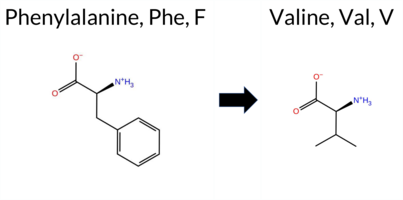 AIThe SynGAP1 missense variant F48V is not reported in ClinVar and is absent from gnomAD. Consensus from routine in silico predictors shows six tools (REVEL, PROVEAN, polyPhen‑2 HumDiv, polyPhen‑2 HumVar, FATHMM, AlphaMissense‑Optimized) classifying the change as benign, while two (SIFT, AlphaMissense‑Default) predict pathogenicity; ESM1b remains uncertain. High‑accuracy assessment further supports a benign outcome: AlphaMissense‑Optimized is benign, the SGM Consensus (derived from AlphaMissense‑Default, ESM1b, FATHMM, and PROVEAN) yields a benign majority vote, and Foldetta data are unavailable. Consequently, the overall evidence points to a benign effect for F48V, and this conclusion does not conflict with the absence of a ClinVar assertion. Disclaimer: This summary was generated using AI and should be interpreted alongside expert review. | 0.298791 | Structured | 0.440452 | Uncertain | 0.558 | 0.707 | 0.125 | -7.591 | In-Between | 0.756 | Likely Pathogenic | Likely Benign | 0.144 | Likely Benign | -1.87 | Neutral | 0.092 | Benign | 0.037 | Benign | 4.00 | Benign | 0.00 | Affected | 0.2533 | 0.2300 | -1 | -1 | 1.4 | -48.04 | ||||||||||||||||||||||||||||||||||||||||
| c.463A>T | S155C 2D AIThe SynGAP1 missense variant S155C is not reported in ClinVar (no ClinVar ID) and is absent from gnomAD (no gnomAD ID). Prediction tools that agree on a benign effect include REVEL, FATHMM, and AlphaMissense‑Optimized. Tools that predict a pathogenic effect are PROVEAN, polyPhen‑2 HumDiv, polyPhen‑2 HumVar, SIFT, ESM1b, and AlphaMissense‑Default. The SGM‑Consensus, derived from a majority vote of AlphaMissense‑Default, ESM1b, FATHMM, and PROVEAN, classifies the variant as Likely Pathogenic. High‑accuracy assessments show AlphaMissense‑Optimized as Benign, while the SGM‑Consensus remains Likely Pathogenic; Foldetta results are unavailable. Overall, the majority of predictions lean toward pathogenicity, but this conclusion conflicts with the benign prediction from AlphaMissense‑Optimized and the lack of ClinVar evidence. Thus, the variant is most likely pathogenic based on the prevailing predictions, though the evidence is not unequivocal. Disclaimer: This summary was generated using AI and should be interpreted alongside expert review. | Likely Pathogenic | 0.497853 | Structured | 0.515359 | Binding | 0.292 | 0.787 | 0.500 | -11.903 | Likely Pathogenic | 0.756 | Likely Pathogenic | Likely Benign | 0.238 | Likely Benign | -2.53 | Deleterious | 0.999 | Probably Damaging | 0.990 | Probably Damaging | 3.78 | Benign | 0.00 | Affected | 0.0826 | 0.5681 | 0 | -1 | 3.3 | 16.06 | |||||||||||||||||||||||||||||||||||||||
| c.1262C>G | A421G 2D 3DClick to see structure in 3D Viewer AISynGAP1 missense variant A421G is not reported in ClinVar and is absent from gnomAD. Prediction tools that agree on a benign effect include REVEL, polyPhen‑2 HumVar, FATHMM, and AlphaMissense‑Optimized. Those that predict a pathogenic effect are Rosetta, premPS, PROVEAN, polyPhen‑2 HumDiv, SIFT, ESM1b, AlphaMissense‑Default, and the SGM Consensus (majority vote of AlphaMissense‑Default, ESM1b, FATHMM, PROVEAN). FoldX and Foldetta give uncertain results. High‑accuracy assessments show AlphaMissense‑Optimized as benign, SGM Consensus as likely pathogenic, and Foldetta as uncertain. Overall, the majority of tools and the SGM Consensus favor a pathogenic interpretation, while a minority suggest benign. Because there is no ClinVar entry, the predictions do not contradict existing clinical classification. The variant is most likely pathogenic based on the collective computational evidence. Disclaimer: This summary was generated using AI and should be interpreted alongside expert review. | Likely Pathogenic | GAP | 0.067594 | Structured | 0.404927 | Uncertain | 0.965 | 0.257 | 0.000 | -9.699 | Likely Pathogenic | 0.757 | Likely Pathogenic | Likely Benign | 1.47 | Ambiguous | 0.1 | 2.13 | Destabilizing | 1.80 | Ambiguous | 1.19 | Destabilizing | 0.137 | Likely Benign | -3.59 | Deleterious | 0.536 | Possibly Damaging | 0.176 | Benign | 3.41 | Benign | 0.05 | Affected | 0.1692 | 0.2499 | 1 | 0 | -2.2 | -14.03 | |||||||||||||||||||||||||||||
| c.2161A>C | I721L 2D 3DClick to see structure in 3D Viewer AIThe SynGAP1 I721L missense variant is not reported in ClinVar (ClinVar ID None) and is absent from gnomAD (gnomAD ID None). Prediction tools that agree on a benign effect include REVEL, FoldX, Rosetta, PROVEAN, and AlphaMissense‑Optimized. Those that predict a pathogenic effect are polyPhen‑2 (HumDiv and HumVar), SIFT, FATHMM, and AlphaMissense‑Default. Two tools (premPS and ESM1b) give uncertain results. High‑accuracy assessments show AlphaMissense‑Optimized as benign, the SGM Consensus (majority vote from AlphaMissense‑Default, ESM1b, FATHMM, PROVEAN) as pathogenic, and Foldetta (combining FoldX‑MD and Rosetta outputs) as benign. Overall, the predictions are split, but the majority of high‑confidence tools lean toward a benign interpretation. Thus, the variant is most likely benign, and this assessment does not contradict any ClinVar status because the variant is not yet classified in that database. Disclaimer: This summary was generated using AI and should be interpreted alongside expert review. | GAP | 0.394753 | Structured | 0.454550 | Uncertain | 0.957 | 0.437 | 0.125 | -7.843 | In-Between | 0.757 | Likely Pathogenic | Likely Benign | 0.35 | Likely Benign | 0.0 | 0.34 | Likely Benign | 0.35 | Likely Benign | 0.65 | Ambiguous | 0.188 | Likely Benign | -1.83 | Neutral | 0.955 | Possibly Damaging | 0.985 | Probably Damaging | 2.37 | Pathogenic | 0.02 | Affected | 0.0627 | 0.3446 | 2 | 2 | -0.7 | 0.00 | ||||||||||||||||||||||||||||||
| c.2635_2636delinsAA | A879K 2D 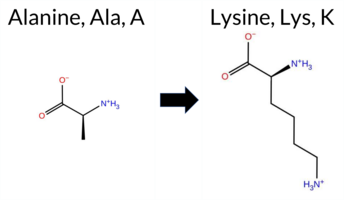 AIThe SynGAP1 missense variant A879K is listed in ClinVar (ID 575856.0) as benign and is not reported in gnomAD. Prediction tools that agree on a benign effect include PROVEAN, SIFT, ESM1b, FATHMM, AlphaMissense‑Optimized, and the SGM‑Consensus (Likely Benign). Tools that predict a pathogenic effect are polyPhen‑2 HumDiv, polyPhen‑2 HumVar, and AlphaMissense‑Default. High‑accuracy assessments show AlphaMissense‑Optimized as benign and the SGM‑Consensus as likely benign; a Foldetta stability analysis is unavailable. Overall, the majority of evidence points to a benign impact, and this consensus aligns with the ClinVar designation, with no contradiction. Disclaimer: This summary was generated using AI and should be interpreted alongside expert review. | Likely Benign | 0.608892 | Disordered | 0.622695 | Binding | 0.277 | 0.874 | 0.250 | Likely Benign | 1 | -5.877 | Likely Benign | 0.757 | Likely Pathogenic | Likely Benign | -0.71 | Neutral | 0.969 | Probably Damaging | 0.593 | Possibly Damaging | 2.69 | Benign | 0.21 | Tolerated | 3.77 | 5 | 0.0930 | 0.2569 | -1 | -1 | -5.7 | 57.10 | |||||||||||||||||||||||||||||||||||||
| c.2802G>A | M934I 2D AIThe SynGAP1 missense variant M934I is not reported in ClinVar (ClinVar ID = None) and is absent from gnomAD (gnomAD ID = None). Prediction tools that agree on a benign effect include REVEL, PROVEAN, polyPhen‑2 HumDiv, polyPhen‑2 HumVar, SIFT, ESM1b, and AlphaMissense‑Optimized. Tools that predict a pathogenic effect are FATHMM and AlphaMissense‑Default. High‑accuracy assessments show AlphaMissense‑Optimized as benign, while the SGM Consensus (majority vote from AlphaMissense‑Default, ESM1b, FATHMM, PROVEAN) is inconclusive due to a 2‑to‑2 split; Foldetta results are unavailable. Overall, the majority of evidence (seven benign versus two pathogenic predictions) indicates that M934I is most likely benign, and this conclusion does not contradict any ClinVar annotation. Disclaimer: This summary was generated using AI and should be interpreted alongside expert review. | 0.762850 | Disordered | 0.984677 | Binding | 0.290 | 0.867 | 0.625 | -4.582 | Likely Benign | 0.757 | Likely Pathogenic | Likely Benign | 0.086 | Likely Benign | -1.78 | Neutral | 0.316 | Benign | 0.101 | Benign | 2.49 | Pathogenic | 0.27 | Tolerated | 0.1686 | 0.3100 | 2 | 1 | 2.6 | -18.03 | ||||||||||||||||||||||||||||||||||||||||
| c.2802G>C | M934I 2D AIThe SynGAP1 missense variant M934I is not reported in ClinVar (ClinVar ID = None) and is absent from gnomAD (gnomAD ID = None). Prediction tools that agree on a benign effect include REVEL, PROVEAN, polyPhen‑2 HumDiv, polyPhen‑2 HumVar, SIFT, ESM1b, and AlphaMissense‑Optimized. Tools that predict a pathogenic effect are FATHMM and AlphaMissense‑Default. High‑accuracy assessments show AlphaMissense‑Optimized as benign, while the SGM Consensus (majority vote from AlphaMissense‑Default, ESM1b, FATHMM, PROVEAN) is inconclusive due to a 2‑to‑2 split; Foldetta results are unavailable. Overall, the majority of evidence (seven benign versus two pathogenic predictions) indicates that M934I is most likely benign, and this conclusion does not contradict any ClinVar annotation. Disclaimer: This summary was generated using AI and should be interpreted alongside expert review. | 0.762850 | Disordered | 0.984677 | Binding | 0.290 | 0.867 | 0.625 | -4.582 | Likely Benign | 0.757 | Likely Pathogenic | Likely Benign | 0.085 | Likely Benign | -1.78 | Neutral | 0.316 | Benign | 0.101 | Benign | 2.49 | Pathogenic | 0.27 | Tolerated | 0.1686 | 0.3100 | 2 | 1 | 2.6 | -18.03 | ||||||||||||||||||||||||||||||||||||||||
| c.2802G>T | M934I 2D AIThe SynGAP1 missense variant M934I is not reported in ClinVar (ClinVar ID = None) and is absent from gnomAD (gnomAD ID = None). Prediction tools that agree on a benign effect include REVEL, PROVEAN, polyPhen‑2 HumDiv, polyPhen‑2 HumVar, SIFT, ESM1b, and AlphaMissense‑Optimized. Tools that predict a pathogenic effect are FATHMM and AlphaMissense‑Default. High‑accuracy assessments show AlphaMissense‑Optimized as benign, while the SGM Consensus (majority vote from AlphaMissense‑Default, ESM1b, FATHMM, PROVEAN) is inconclusive due to a 2‑to‑2 split; Foldetta results are unavailable. Overall, the majority of evidence (seven benign versus two pathogenic predictions) indicates that M934I is most likely benign, and this conclusion does not contradict any ClinVar annotation. Disclaimer: This summary was generated using AI and should be interpreted alongside expert review. | 0.762850 | Disordered | 0.984677 | Binding | 0.290 | 0.867 | 0.625 | -4.582 | Likely Benign | 0.757 | Likely Pathogenic | Likely Benign | 0.085 | Likely Benign | -1.78 | Neutral | 0.316 | Benign | 0.101 | Benign | 2.49 | Pathogenic | 0.27 | Tolerated | 0.1686 | 0.3100 | 2 | 1 | 2.6 | -18.03 | ||||||||||||||||||||||||||||||||||||||||
| c.3490C>A | L1164M 2D AIThe SynGAP1 missense variant L1164M is not reported in ClinVar and is absent from gnomAD. Functional prediction tools cluster into two groups: benign predictions come from REVEL, PROVEAN, SIFT, ESM1b, FATHMM, and AlphaMissense‑Optimized, while pathogenic predictions arise from polyPhen‑2 HumDiv, polyPhen‑2 HumVar, and AlphaMissense‑Default. The SGM‑Consensus, which aggregates the majority vote of AlphaMissense‑Default, ESM1b, FATHMM, and PROVEAN, indicates a likely benign effect. High‑accuracy assessments further support this: AlphaMissense‑Optimized predicts benign, and the SGM‑Consensus also leans benign. No Foldetta (FoldX‑MD/ Rosetta stability) result is available, so it does not influence the interpretation. Overall, the majority of computational evidence points to a benign impact for the variant, and this conclusion is consistent with the lack of ClinVar annotation. Disclaimer: This summary was generated using AI and should be interpreted alongside expert review. | Likely Benign | 0.517562 | Disordered | 0.853935 | Binding | 0.325 | 0.815 | 0.375 | -5.493 | Likely Benign | 0.757 | Likely Pathogenic | Likely Benign | 0.349 | Likely Benign | -0.29 | Neutral | 0.999 | Probably Damaging | 0.998 | Probably Damaging | 5.34 | Benign | 0.13 | Tolerated | 0.0847 | 0.3378 | 4 | 2 | -1.9 | 18.03 | |||||||||||||||||||||||||||||||||||||||
| c.3714G>C | Q1238H 2D AIThe SynGAP1 missense variant Q1238H is reported in gnomAD (variant ID 6‑33446706‑G‑C) but has no ClinVar entry. Functional prediction tools split into two groups: benign predictions come from REVEL and AlphaMissense‑Optimized, while pathogenic predictions are made by PROVEAN, polyPhen‑2 (HumDiv and HumVar), SIFT, ESM1b, FATHMM, AlphaMissense‑Default, and the SGM‑Consensus (majority vote of AlphaMissense‑Default, ESM1b, FATHMM, PROVEAN). High‑accuracy assessments show AlphaMissense‑Optimized as benign, SGM‑Consensus as likely pathogenic, and Foldetta results are unavailable. Overall, the majority of evidence points to a pathogenic effect, and this conclusion is not contradicted by any ClinVar classification (none exists). Thus, based on current predictions, the variant is most likely pathogenic. Disclaimer: This summary was generated using AI and should be interpreted alongside expert review. | Likely Pathogenic | Coiled-coil | 0.562014 | Disordered | 0.548882 | Binding | 0.855 | 0.545 | 0.250 | 6-33446706-G-C | 1 | 6.20e-7 | -8.647 | Likely Pathogenic | 0.757 | Likely Pathogenic | Likely Benign | 0.202 | Likely Benign | -3.49 | Deleterious | 0.998 | Probably Damaging | 0.996 | Probably Damaging | 2.31 | Pathogenic | 0.01 | Affected | 3.77 | 5 | 0.1007 | 0.3004 | 0 | 3 | 0.3 | 9.01 | |||||||||||||||||||||||||||||||||
| c.3714G>T | Q1238H 2D AIThe SynGAP1 missense variant Q1238H is not reported in ClinVar and is absent from gnomAD. Prediction tools that agree on a benign effect include REVEL and AlphaMissense‑Optimized, whereas the remaining predictors (PROVEAN, polyPhen‑2 HumDiv, polyPhen‑2 HumVar, SIFT, ESM1b, FATHMM, AlphaMissense‑Default) all indicate a pathogenic impact. High‑accuracy assessments further support this dichotomy: AlphaMissense‑Optimized classifies the variant as benign, while the SGM‑Consensus (a majority vote of AlphaMissense‑Default, ESM1b, FATHMM, and PROVEAN) labels it as Likely Pathogenic. No Foldetta stability prediction is available. Overall, the preponderance of evidence from multiple independent tools points to a pathogenic effect for Q1238H. This conclusion is not contradicted by ClinVar status, which currently contains no entry for the variant. Disclaimer: This summary was generated using AI and should be interpreted alongside expert review. | Likely Pathogenic | Coiled-coil | 0.562014 | Disordered | 0.548882 | Binding | 0.855 | 0.545 | 0.250 | -8.647 | Likely Pathogenic | 0.757 | Likely Pathogenic | Likely Benign | 0.202 | Likely Benign | -3.49 | Deleterious | 0.998 | Probably Damaging | 0.996 | Probably Damaging | 2.31 | Pathogenic | 0.01 | Affected | 3.77 | 5 | 0.1007 | 0.3004 | 0 | 3 | 0.3 | 9.01 | ||||||||||||||||||||||||||||||||||||
| c.574G>T | A192S 2D AIThe SynGAP1 missense variant A192S is not reported in ClinVar (ClinVar ID = None) and is absent from gnomAD (gnomAD ID = None). Prediction tools that agree on a benign effect include REVEL, PROVEAN, polyPhen‑2 HumVar, SIFT, FATHMM, and AlphaMissense‑Optimized. Tools that predict a pathogenic effect are polyPhen‑2 HumDiv and AlphaMissense‑Default; ESM1b remains uncertain. High‑accuracy assessments show AlphaMissense‑Optimized as benign, the SGM Consensus (majority vote from AlphaMissense‑Default, ESM1b, FATHMM, PROVEAN) also favors benign, while Foldetta results are unavailable. Overall, the majority of evidence points to a benign impact. This conclusion does not contradict ClinVar, as no ClinVar classification exists for this variant. Disclaimer: This summary was generated using AI and should be interpreted alongside expert review. | 0.422041 | Structured | 0.428195 | Uncertain | 0.321 | 0.589 | 0.125 | -7.969 | In-Between | 0.757 | Likely Pathogenic | Likely Benign | 0.118 | Likely Benign | -2.01 | Neutral | 0.633 | Possibly Damaging | 0.171 | Benign | 3.98 | Benign | 0.12 | Tolerated | 0.2365 | 0.3764 | 1 | 1 | -2.6 | 16.00 | ||||||||||||||||||||||||||||||||||||||||
| c.2003C>G | S668C 2D 3DClick to see structure in 3D Viewer AISynGAP1 missense variant S668C is not reported in ClinVar and is absent from gnomAD. Functional prediction tools show a split opinion: benign predictions come from premPS, FATHMM, and AlphaMissense‑Optimized, whereas pathogenic predictions are returned by REVEL, PROVEAN, polyPhen‑2 (HumDiv and HumVar), SIFT, ESM1b, AlphaMissense‑Default, and the SGM‑Consensus. Uncertain results are reported by FoldX, Rosetta, and Foldetta. High‑accuracy assessments indicate that AlphaMissense‑Optimized predicts a benign effect, while the SGM‑Consensus (majority vote of AlphaMissense‑Default, ESM1b, FATHMM, PROVEAN) supports a pathogenic outcome; Foldetta remains inconclusive. Overall, the majority of evidence points toward a pathogenic impact, and this conclusion does not contradict the absence of a ClinVar classification. Disclaimer: This summary was generated using AI and should be interpreted alongside expert review. | Likely Pathogenic | GAP | 0.247041 | Structured | 0.084935 | Uncertain | 0.922 | 0.370 | 0.000 | -12.815 | Likely Pathogenic | 0.758 | Likely Pathogenic | Likely Benign | 1.31 | Ambiguous | 0.6 | 1.36 | Ambiguous | 1.34 | Ambiguous | 0.18 | Likely Benign | 0.503 | Likely Pathogenic | -4.99 | Deleterious | 0.999 | Probably Damaging | 0.944 | Probably Damaging | 3.27 | Benign | 0.02 | Affected | 0.0962 | 0.5528 | 0 | -1 | 3.3 | 16.06 | |||||||||||||||||||||||||||||
| c.2411A>C | D804A 2D AIThe SynGAP1 D804A missense variant is catalogued in gnomAD (ID 6‑33442963‑A‑C) but has no ClinVar entry. Functional prediction tools cluster into two groups: benign predictions come from REVEL, ESM1b, and AlphaMissense‑Optimized, whereas pathogenic predictions are reported by PROVEAN, polyPhen‑2 (HumDiv and HumVar), SIFT, FATHMM, and AlphaMissense‑Default. High‑accuracy assessments further support a deleterious effect: AlphaMissense‑Optimized indicates a benign change, but the SGM‑Consensus—derived from a majority vote of AlphaMissense‑Default, ESM1b, FATHMM, and PROVEAN—labels the variant as Likely Pathogenic. Foldetta, a protein‑folding stability method combining FoldX‑MD and Rosetta outputs, has no available result for this variant. Overall, the preponderance of evidence from both general and high‑accuracy predictors points to a pathogenic impact, and this conclusion is not contradicted by any ClinVar classification (none exists). Disclaimer: This summary was generated using AI and should be interpreted alongside expert review. | Likely Pathogenic | SH3-binding motif | 0.801317 | Disordered | 0.786762 | Binding | 0.294 | 0.900 | 0.625 | 6-33442963-A-C | -6.086 | Likely Benign | 0.758 | Likely Pathogenic | Likely Benign | 0.269 | Likely Benign | -3.99 | Deleterious | 0.980 | Probably Damaging | 0.858 | Possibly Damaging | 1.21 | Pathogenic | 0.04 | Affected | 3.77 | 5 | 0.3716 | 0.6824 | -2 | 0 | 5.3 | -44.01 | |||||||||||||||||||||||||||||||||||
| c.2644G>A | G882R 2D AIThe SynGAP1 missense variant G882R is not reported in ClinVar (no ClinVar ID) and is absent from gnomAD (no gnomAD ID). Prediction tools that agree on a benign effect include REVEL, PROVEAN, polyPhen‑2 HumDiv, polyPhen‑2 HumVar, ESM1b, and AlphaMissense‑Optimized. Tools that predict a pathogenic effect are SIFT, FATHMM, and AlphaMissense‑Default. High‑accuracy assessments show AlphaMissense‑Optimized as benign, while the SGM Consensus (majority vote from AlphaMissense‑Default, ESM1b, FATHMM, and PROVEAN) is inconclusive because it yields a 2‑to‑2 split. Foldetta results are unavailable. Overall, the majority of predictions lean toward a benign impact, and there is no ClinVar annotation to contradict this assessment. Thus, the variant is most likely benign based on current computational evidence. Disclaimer: This summary was generated using AI and should be interpreted alongside expert review. | 0.690604 | Disordered | 0.632888 | Binding | 0.306 | 0.878 | 0.250 | -4.715 | Likely Benign | 0.758 | Likely Pathogenic | Likely Benign | 0.051 | Likely Benign | -1.48 | Neutral | 0.001 | Benign | 0.003 | Benign | 2.04 | Pathogenic | 0.01 | Affected | 0.0905 | 0.4126 | -3 | -2 | -4.1 | 99.14 | ||||||||||||||||||||||||||||||||||||||||
| c.2644G>C | G882R 2D AIThe SynGAP1 missense variant G882R is not reported in ClinVar (ClinVar ID = None) and is absent from gnomAD (gnomAD ID = None). Prediction tools that agree on a benign effect include REVEL, PROVEAN, polyPhen‑2 HumDiv, polyPhen‑2 HumVar, ESM1b, and AlphaMissense‑Optimized. Tools that predict a pathogenic effect are SIFT, FATHMM, and AlphaMissense‑Default. High‑accuracy assessments show AlphaMissense‑Optimized as benign, while the SGM Consensus (majority vote from AlphaMissense‑Default, ESM1b, FATHMM, and PROVEAN) is inconclusive (2 benign vs 2 pathogenic). Foldetta results are unavailable. Overall, the majority of predictions (six benign vs three pathogenic) support a benign classification. This consensus does not contradict any ClinVar status, as the variant is not yet catalogued there. Thus, the variant is most likely benign based on current predictive evidence. Disclaimer: This summary was generated using AI and should be interpreted alongside expert review. | 0.690604 | Disordered | 0.632888 | Binding | 0.306 | 0.878 | 0.250 | -4.715 | Likely Benign | 0.758 | Likely Pathogenic | Likely Benign | 0.051 | Likely Benign | -1.48 | Neutral | 0.001 | Benign | 0.003 | Benign | 2.04 | Pathogenic | 0.01 | Affected | 0.0905 | 0.4126 | -3 | -2 | -4.1 | 99.14 | ||||||||||||||||||||||||||||||||||||||||
| c.320G>A | R107K 2D 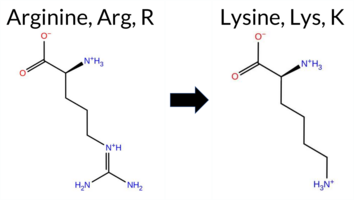 AIThe SynGAP1 missense variant R107K is not reported in ClinVar and is absent from gnomAD. Prediction tools that agree on a benign effect include REVEL, PROVEAN, polyPhen‑2 HumDiv, polyPhen‑2 HumVar, ESM1b, FATHMM, and AlphaMissense‑Optimized. Tools that predict a pathogenic effect are SIFT and AlphaMissense‑Default, while the SGM‑Consensus (majority vote from AlphaMissense‑Default, ESM1b, FATHMM, and PROVEAN) indicates a likely benign outcome. High‑accuracy assessments show AlphaMissense‑Optimized as benign and the SGM‑Consensus as likely benign; Foldetta results are unavailable. Overall, the majority of evidence points to a benign impact for R107K, and this conclusion does not contradict any ClinVar annotation (none is present). Disclaimer: This summary was generated using AI and should be interpreted alongside expert review. | Likely Benign | 0.666105 | Disordered | 0.663448 | Binding | 0.331 | 0.863 | 0.875 | -3.941 | Likely Benign | 0.758 | Likely Pathogenic | Likely Benign | 0.153 | Likely Benign | -1.33 | Neutral | 0.004 | Benign | 0.001 | Benign | 3.07 | Benign | 0.00 | Affected | 0.5618 | 0.4185 | Weaken | 3 | 2 | 0.6 | -28.01 | ||||||||||||||||||||||||||||||||||||||
| c.2129A>C | K710T 2D 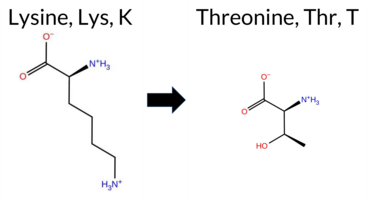 3DClick to see structure in 3D Viewer AIThe SynGAP1 missense variant K710T is not reported in ClinVar (ClinVar ID: None) and is absent from gnomAD (gnomAD ID: None). Prediction tools that agree on a benign effect include REVEL, premPS, SIFT, FATHMM, and AlphaMissense‑Optimized. Tools that predict a pathogenic effect comprise SGM‑Consensus, PROVEAN, polyPhen‑2 HumDiv, polyPhen‑2 HumVar, ESM1b, and AlphaMissense‑Default. High‑accuracy assessments show AlphaMissense‑Optimized as benign, SGM‑Consensus as Likely Pathogenic (majority vote from AlphaMissense‑Default, ESM1b, FATHMM, and PROVEAN), and Foldetta as uncertain (no definitive stability change). Other stability predictions (FoldX, Rosetta) are also uncertain and thus unavailable for interpretation. Overall, the majority of evidence points to a pathogenic impact. This conclusion does not contradict ClinVar status, as no ClinVar classification exists for this variant. Disclaimer: This summary was generated using AI and should be interpreted alongside expert review. | Likely Pathogenic | GAP | 0.321458 | Structured | 0.370438 | Uncertain | 0.949 | 0.368 | 0.000 | -10.454 | Likely Pathogenic | 0.759 | Likely Pathogenic | Likely Benign | 1.02 | Ambiguous | 0.0 | 1.57 | Ambiguous | 1.30 | Ambiguous | 0.21 | Likely Benign | 0.305 | Likely Benign | -5.45 | Deleterious | 0.999 | Probably Damaging | 1.000 | Probably Damaging | 3.41 | Benign | 0.06 | Tolerated | 0.1487 | 0.3000 | 0 | -1 | 3.2 | -27.07 | |||||||||||||||||||||||||||||
| c.3254G>C | R1085P 2D AIThe SynGAP1 missense variant R1085P is not reported in ClinVar (ClinVar ID = None) and is absent from gnomAD (gnomAD ID = None). Prediction tools that agree on a benign effect include REVEL, ESM1b, FATHMM, and AlphaMissense‑Optimized. Tools that agree on a pathogenic effect are PROVEAN, polyPhen‑2 HumDiv, polyPhen‑2 HumVar, SIFT, and AlphaMissense‑Default. High‑accuracy assessments show AlphaMissense‑Optimized predicts a benign outcome, while the SGM Consensus (majority vote from AlphaMissense‑Default, ESM1b, FATHMM, and PROVEAN) is inconclusive (2 vs 2). Foldetta results are unavailable. Overall, the majority of standard predictors (five pathogenic vs. four benign) lean toward a pathogenic interpretation, but the high‑accuracy AlphaMissense‑Optimized prediction and the inconclusive SGM Consensus temper this view. The variant is most likely pathogenic based on the prevailing predictions, and this assessment does not contradict any ClinVar status because the variant is not yet catalogued there. Disclaimer: This summary was generated using AI and should be interpreted alongside expert review. | 0.852992 | Disordered | 0.978838 | Binding | 0.270 | 0.888 | 1.000 | -2.527 | Likely Benign | 0.759 | Likely Pathogenic | Likely Benign | 0.260 | Likely Benign | -2.55 | Deleterious | 0.999 | Probably Damaging | 0.997 | Probably Damaging | 2.71 | Benign | 0.01 | Affected | 0.1988 | 0.4524 | 0 | -2 | 2.9 | -59.07 | ||||||||||||||||||||||||||||||||||||||||
| c.3332A>T | K1111M 2D 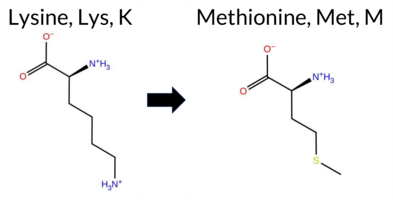 AIThe SynGAP1 missense variant K1111M is not reported in ClinVar (no ClinVar ID) and is absent from gnomAD (no gnomAD ID). Prediction tools that agree on a benign effect include REVEL, PROVEAN, polyPhen‑2 (HumDiv and HumVar), SIFT, ESM1b, FATHMM, AlphaMissense‑Optimized, and the SGM‑Consensus (majority vote from AlphaMissense‑Default, ESM1b, FATHMM, and PROVEAN). Only AlphaMissense‑Default predicts a pathogenic outcome. High‑accuracy assessments show AlphaMissense‑Optimized as benign and the SGM‑Consensus as likely benign; the Foldetta protein‑folding stability analysis is unavailable. Taken together, the majority of evidence points to a benign impact for K1111M. This conclusion is consistent with the lack of ClinVar annotation, so there is no contradiction with existing clinical data. Disclaimer: This summary was generated using AI and should be interpreted alongside expert review. | Likely Benign | 0.910643 | Disordered | 0.921455 | Binding | 0.300 | 0.902 | 0.875 | -5.579 | Likely Benign | 0.759 | Likely Pathogenic | Likely Benign | 0.071 | Likely Benign | -1.75 | Neutral | 0.072 | Benign | 0.029 | Benign | 2.59 | Benign | 0.12 | Tolerated | 0.1388 | 0.4701 | 0 | -1 | 5.8 | 3.02 | |||||||||||||||||||||||||||||||||||||||
| c.3634T>A | S1212T 2D AIThe SynGAP1 missense variant S1212T is not reported in ClinVar (ClinVar ID: None) and is absent from gnomAD (gnomAD ID: None). Prediction tools that agree on a benign effect include REVEL, PROVEAN, ESM1b, and AlphaMissense‑Optimized. Tools that predict a pathogenic effect are polyPhen‑2 (HumDiv and HumVar), SIFT, FATHMM, and AlphaMissense‑Default. The SGM Consensus, derived from a majority vote of AlphaMissense‑Default, ESM1b, FATHMM, and PROVEAN, is inconclusive because it yields a 2‑to‑2 split. High‑accuracy methods give the following results: AlphaMissense‑Optimized predicts benign; SGM Consensus is unavailable; Foldetta, which combines FoldX‑MD and Rosetta stability calculations, has no reported output for this variant. Overall, the balance of evidence slightly favors a pathogenic interpretation, but the single high‑accuracy benign prediction and the lack of a consensus from SGM and Foldetta leave the assessment uncertain. There is no conflict with ClinVar status, as the variant has not been reported there. Disclaimer: This summary was generated using AI and should be interpreted alongside expert review. | Coiled-coil | 0.566480 | Disordered | 0.548409 | Binding | 0.852 | 0.565 | 0.500 | -4.972 | Likely Benign | 0.759 | Likely Pathogenic | Likely Benign | 0.147 | Likely Benign | -2.19 | Neutral | 0.992 | Probably Damaging | 0.987 | Probably Damaging | 2.10 | Pathogenic | 0.00 | Affected | 0.0997 | 0.4618 | 1 | 1 | 0.1 | 14.03 | |||||||||||||||||||||||||||||||||||||||
| c.3790G>C | G1264R 2D AIThe SynGAP1 missense variant G1264R is not reported in ClinVar and is absent from gnomAD. Functional prediction tools that agree on a benign effect include REVEL, PROVEAN, SIFT, ESM1b, FATHMM, and AlphaMissense‑Optimized, while those predicting a pathogenic outcome are polyPhen‑2 HumDiv, polyPhen‑2 HumVar, and AlphaMissense‑Default. The SGM‑Consensus, derived from a majority vote of AlphaMissense‑Default, ESM1b, FATHMM, and PROVEAN, classifies the variant as Likely Benign. High‑accuracy assessments further support a benign interpretation: AlphaMissense‑Optimized predicts benign, and the SGM‑Consensus (majority vote) also indicates Likely Benign. Foldetta, a protein‑folding stability method combining FoldX‑MD and Rosetta outputs, has no available result for this variant. Overall, the preponderance of evidence points to the variant being most likely benign, and this conclusion does not contradict any ClinVar annotation (none is present). Disclaimer: This summary was generated using AI and should be interpreted alongside expert review. | Likely Benign | Coiled-coil | 0.429200 | Structured | 0.762385 | Binding | 0.897 | 0.579 | 0.000 | -4.482 | Likely Benign | 0.759 | Likely Pathogenic | Likely Benign | 0.094 | Likely Benign | -1.82 | Neutral | 0.934 | Possibly Damaging | 0.541 | Possibly Damaging | 2.73 | Benign | 0.09 | Tolerated | 0.0861 | 0.3860 | -3 | -2 | -4.1 | 99.14 | ||||||||||||||||||||||||||||||||||||||
| c.1444C>A | L482I 2D 3DClick to see structure in 3D Viewer AIThe SynGAP1 missense variant L482I is not reported in ClinVar and is absent from gnomAD. Functional prediction tools show a split: benign calls come from PROVEAN and AlphaMissense‑Optimized, whereas the majority of other in silico predictors (REVEL, polyPhen‑2 HumDiv/HumVar, SIFT, ESM1b, FATHMM, AlphaMissense‑Default) indicate pathogenicity. Uncertain results are reported by FoldX, Rosetta, Foldetta, and premPS. High‑accuracy assessments give a consistent picture: AlphaMissense‑Optimized predicts a benign effect, the SGM Consensus (majority vote of AlphaMissense‑Default, ESM1b, FATHMM, PROVEAN) classifies the variant as likely pathogenic, and Foldetta, which integrates FoldX‑MD and Rosetta stability calculations, yields an uncertain outcome. Overall, the preponderance of pathogenic predictions suggests that the variant is most likely pathogenic, and this assessment does not contradict the absence of a ClinVar entry. Disclaimer: This summary was generated using AI and should be interpreted alongside expert review. | Likely Pathogenic | GAP | 0.254060 | Structured | 0.426236 | Uncertain | 0.795 | 0.248 | 0.000 | -11.116 | Likely Pathogenic | 0.760 | Likely Pathogenic | Likely Benign | 1.29 | Ambiguous | 0.1 | 1.90 | Ambiguous | 1.60 | Ambiguous | 0.71 | Ambiguous | 0.600 | Likely Pathogenic | -1.97 | Neutral | 0.994 | Probably Damaging | 0.994 | Probably Damaging | -1.31 | Pathogenic | 0.05 | Affected | 0.0677 | 0.2368 | 2 | 2 | 0.7 | 0.00 | |||||||||||||||||||||||||||||
| c.1494G>A | M498I 2D 3DClick to see structure in 3D Viewer AIThe SynGAP1 missense variant M498I has no ClinVar record (ClinVar ID None) and is not reported in gnomAD (gnomAD ID None). Prediction tools that agree on a benign effect include REVEL, PROVEAN, polyPhen‑2 HumDiv, polyPhen‑2 HumVar, ESM1b, and AlphaMissense‑Optimized. Those that predict a pathogenic effect are FoldX, SIFT, FATHMM, and AlphaMissense‑Default. Two tools, Rosetta and premPS, give uncertain results. High‑accuracy assessments show AlphaMissense‑Optimized as benign, Foldetta as pathogenic, and the SGM Consensus (majority vote from AlphaMissense‑Default, ESM1b, FATHMM, PROVEAN) is inconclusive due to a 2‑to‑2 split. Overall, the majority of predictions lean toward a benign impact, and this is not contradicted by ClinVar status, which lacks an entry for this variant. Disclaimer: This summary was generated using AI and should be interpreted alongside expert review. | GAP | 0.092881 | Structured | 0.399612 | Uncertain | 0.932 | 0.158 | 0.000 | -4.796 | Likely Benign | 0.760 | Likely Pathogenic | Likely Benign | 2.56 | Destabilizing | 0.3 | 1.65 | Ambiguous | 2.11 | Destabilizing | 0.88 | Ambiguous | 0.418 | Likely Benign | -1.09 | Neutral | 0.018 | Benign | 0.012 | Benign | -1.28 | Pathogenic | 0.04 | Affected | 0.1184 | 0.2537 | 2 | 1 | 2.6 | -18.03 | ||||||||||||||||||||||||||||||
| c.1494G>C | M498I 2D 3DClick to see structure in 3D Viewer AIThe SynGAP1 missense variant M498I has no ClinVar record (ClinVar ID None) and is not reported in gnomAD (gnomAD ID None). Prediction tools that agree on a benign effect include REVEL, PROVEAN, polyPhen‑2 HumDiv, polyPhen‑2 HumVar, ESM1b, and AlphaMissense‑Optimized. Those that predict a pathogenic effect are FoldX, SIFT, FATHMM, and AlphaMissense‑Default. Two tools, Rosetta and premPS, give uncertain results. High‑accuracy assessments show AlphaMissense‑Optimized as benign, Foldetta as pathogenic, and the SGM Consensus (majority vote from AlphaMissense‑Default, ESM1b, FATHMM, PROVEAN) is inconclusive due to a 2‑to‑2 split. Overall, the majority of predictions lean toward a benign impact, and this is not contradicted by ClinVar status, which lacks an entry for this variant. Disclaimer: This summary was generated using AI and should be interpreted alongside expert review. | GAP | 0.092881 | Structured | 0.399612 | Uncertain | 0.932 | 0.158 | 0.000 | -4.796 | Likely Benign | 0.760 | Likely Pathogenic | Likely Benign | 2.56 | Destabilizing | 0.3 | 1.65 | Ambiguous | 2.11 | Destabilizing | 0.88 | Ambiguous | 0.418 | Likely Benign | -1.09 | Neutral | 0.018 | Benign | 0.012 | Benign | -1.28 | Pathogenic | 0.04 | Affected | 0.1184 | 0.2537 | 2 | 1 | 2.6 | -18.03 | ||||||||||||||||||||||||||||||
| c.1494G>T | M498I 2D 3DClick to see structure in 3D Viewer AIThe SynGAP1 missense variant M498I has no ClinVar record (ClinVar ID None) and is not reported in gnomAD (gnomAD ID None). Prediction tools that agree on a benign effect include REVEL, PROVEAN, polyPhen‑2 HumDiv, polyPhen‑2 HumVar, ESM1b, and AlphaMissense‑Optimized. Those that predict a pathogenic effect are FoldX, SIFT, FATHMM, and AlphaMissense‑Default. Two tools, Rosetta and premPS, give uncertain results. High‑accuracy assessments show AlphaMissense‑Optimized as benign, Foldetta as pathogenic, and the SGM Consensus (majority vote from AlphaMissense‑Default, ESM1b, FATHMM, PROVEAN) is inconclusive due to a 2‑to‑2 split. Overall, the majority of predictions lean toward a benign impact, and this is not contradicted by ClinVar status, which lacks an entry for this variant. Disclaimer: This summary was generated using AI and should be interpreted alongside expert review. | GAP | 0.092881 | Structured | 0.399612 | Uncertain | 0.932 | 0.158 | 0.000 | -4.796 | Likely Benign | 0.760 | Likely Pathogenic | Likely Benign | 2.56 | Destabilizing | 0.3 | 1.65 | Ambiguous | 2.11 | Destabilizing | 0.88 | Ambiguous | 0.414 | Likely Benign | -1.09 | Neutral | 0.018 | Benign | 0.012 | Benign | -1.28 | Pathogenic | 0.04 | Affected | 0.1184 | 0.2537 | 2 | 1 | 2.6 | -18.03 | ||||||||||||||||||||||||||||||
| c.1897C>G | L633V 2D 3DClick to see structure in 3D Viewer AIThe SynGAP1 missense variant L633V is not reported in ClinVar and is present in the gnomAD database (ID 6‑33440949‑C‑G). Prediction tools that indicate a benign effect include REVEL, FATHMM, and AlphaMissense‑Optimized. Those that predict a pathogenic effect comprise FoldX, premPS, PROVEAN, polyPhen‑2 HumDiv, polyPhen‑2 HumVar, SIFT, ESM1b, AlphaMissense‑Default, SGM‑Consensus, and Foldetta; the Rosetta score is uncertain and therefore not considered. High‑accuracy methods give a pathogenic consensus: AlphaMissense‑Optimized predicts benign, but the SGM‑Consensus (majority vote of AlphaMissense‑Default, ESM1b, FATHMM, PROVEAN) and Foldetta both predict pathogenic. Overall, the majority of evidence supports a pathogenic impact for L633V, and this assessment does not contradict the ClinVar status, which has no entry for this variant. Disclaimer: This summary was generated using AI and should be interpreted alongside expert review. | Likely Pathogenic | GAP | 0.045352 | Structured | 0.045407 | Uncertain | 0.952 | 0.252 | 0.000 | 6-33440949-C-G | 1 | 6.20e-7 | -9.992 | Likely Pathogenic | 0.760 | Likely Pathogenic | Likely Benign | 2.32 | Destabilizing | 0.2 | 1.71 | Ambiguous | 2.02 | Destabilizing | 1.32 | Destabilizing | 0.327 | Likely Benign | -2.99 | Deleterious | 0.996 | Probably Damaging | 0.992 | Probably Damaging | 2.86 | Benign | 0.03 | Affected | 3.37 | 34 | 0.1517 | 0.2766 | 1 | 2 | 0.4 | -14.03 | ||||||||||||||||||||||||
| c.2768T>G | I923S 2D 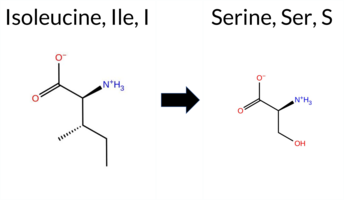 AIThe SynGAP1 missense variant I923S is not reported in ClinVar and has no entry in gnomAD. Prediction tools that agree on a benign effect include REVEL, PROVEAN, SIFT, ESM1b, FATHMM, AlphaMissense‑Optimized, and the SGM‑Consensus (Likely Benign). Tools that predict a pathogenic effect are polyPhen‑2 HumDiv, polyPhen‑2 HumVar, and AlphaMissense‑Default. High‑accuracy assessments show AlphaMissense‑Optimized as benign and the SGM‑Consensus as likely benign; Foldetta results are unavailable. Overall, the majority of evidence points to a benign impact for I923S. This conclusion is not contradicted by ClinVar status, which has no classification for this variant. Disclaimer: This summary was generated using AI and should be interpreted alongside expert review. | Likely Benign | 0.562014 | Disordered | 0.964857 | Binding | 0.292 | 0.852 | 0.250 | -0.002 | Likely Benign | 0.760 | Likely Pathogenic | Likely Benign | 0.094 | Likely Benign | -0.61 | Neutral | 0.912 | Possibly Damaging | 0.529 | Possibly Damaging | 2.73 | Benign | 0.33 | Tolerated | 0.3300 | 0.1455 | -1 | -2 | -5.3 | -26.08 | |||||||||||||||||||||||||||||||||||||||
| c.3546G>C | E1182D 2D AIThe SynGAP1 missense variant E1182D is not reported in ClinVar and is absent from gnomAD. Functional prediction tools cluster into two groups: benign predictions include REVEL, PROVEAN, SIFT, ESM1b, FATHMM, and AlphaMissense‑Optimized; pathogenic predictions come from polyPhen‑2 HumDiv, polyPhen‑2 HumVar, and AlphaMissense‑Default. The SGM‑Consensus, which aggregates AlphaMissense‑Default, ESM1b, FATHMM, and PROVEAN, resolves to a likely benign verdict. High‑accuracy assessments further support this: AlphaMissense‑Optimized indicates benign, while the SGM‑Consensus (majority vote) also favors benign. Foldetta, a protein‑folding stability method combining FoldX‑MD and Rosetta outputs, has no available result for this variant. Overall, the majority of evidence points to a benign effect, and this conclusion does not conflict with the absence of a ClinVar classification. Disclaimer: This summary was generated using AI and should be interpreted alongside expert review. | Likely Benign | Coiled-coil | 0.566480 | Disordered | 0.530232 | Binding | 0.597 | 0.651 | 0.375 | -4.400 | Likely Benign | 0.760 | Likely Pathogenic | Likely Benign | 0.106 | Likely Benign | -0.87 | Neutral | 0.992 | Probably Damaging | 0.983 | Probably Damaging | 2.62 | Benign | 0.34 | Tolerated | 0.1480 | 0.4161 | 3 | 2 | 0.0 | -14.03 | ||||||||||||||||||||||||||||||||||||||
| c.3546G>T | E1182D 2D AIThe SynGAP1 missense change E1182D is not reported in ClinVar and has no allele in gnomAD. Functional prediction tools cluster into two groups: benign predictions come from REVEL, PROVEAN, SIFT, ESM1b, FATHMM, and AlphaMissense‑Optimized; pathogenic predictions come from polyPhen‑2 HumDiv, polyPhen‑2 HumVar, and AlphaMissense‑Default. The high‑accuracy consensus methods reinforce the benign assessment: AlphaMissense‑Optimized scores the variant as benign, and the SGM‑Consensus (majority vote of AlphaMissense‑Default, ESM1b, FATHMM, PROVEAN) indicates “Likely Benign.” Foldetta, a protein‑folding stability predictor, has no available result for this residue. Overall, the majority of evidence points to a benign effect, and this conclusion is consistent with the absence of ClinVar annotation or gnomAD observation. Disclaimer: This summary was generated using AI and should be interpreted alongside expert review. | Likely Benign | Coiled-coil | 0.566480 | Disordered | 0.530232 | Binding | 0.597 | 0.651 | 0.375 | -4.400 | Likely Benign | 0.760 | Likely Pathogenic | Likely Benign | 0.106 | Likely Benign | -0.87 | Neutral | 0.992 | Probably Damaging | 0.983 | Probably Damaging | 2.62 | Benign | 0.34 | Tolerated | 0.1480 | 0.4161 | 3 | 2 | 0.0 | -14.03 | ||||||||||||||||||||||||||||||||||||||
| c.1328G>A | G443D 2D 3DClick to see structure in 3D Viewer AIThe SynGAP1 missense variant G443D is not reported in ClinVar (no ClinVar ID) and is absent from gnomAD (no gnomAD ID). Prediction tools that agree on a benign effect include REVEL, FoldX, premPS, PROVEAN, polyPhen‑2 (HumDiv and HumVar), SIFT, ESM1b, FATHMM, and AlphaMissense‑Optimized. Only AlphaMissense‑Default predicts a pathogenic outcome. Uncertain results come from Rosetta and Foldetta. High‑accuracy assessments show AlphaMissense‑Optimized as benign, the SGM Consensus (majority vote of AlphaMissense‑Default, ESM1b, FATHMM, PROVEAN) as likely benign, and Foldetta as inconclusive. Overall, the majority of evidence points to a benign impact. This conclusion is consistent with the lack of ClinVar annotation and gnomAD presence, so there is no contradiction with existing clinical data. The variant is most likely benign based on the current predictive landscape. Disclaimer: This summary was generated using AI and should be interpreted alongside expert review. | Likely Benign | GAP | 0.250310 | Structured | 0.258623 | Uncertain | 0.935 | 0.206 | 0.000 | -6.818 | Likely Benign | 0.761 | Likely Pathogenic | Likely Benign | -0.19 | Likely Benign | 0.2 | -1.72 | Ambiguous | -0.96 | Ambiguous | 0.32 | Likely Benign | 0.072 | Likely Benign | -0.50 | Neutral | 0.345 | Benign | 0.072 | Benign | 3.63 | Benign | 0.43 | Tolerated | 0.1687 | 0.2090 | 1 | -1 | -3.1 | 58.04 | |||||||||||||||||||||||||||||
| c.1568A>T | N523I 2D 3DClick to see structure in 3D Viewer AISynGAP1 missense variant N523I is not reported in ClinVar and is absent from gnomAD. Prediction tools that agree on a benign effect include FoldX, premPS, and AlphaMissense‑Optimized. Those that predict a pathogenic effect comprise REVEL, PROVEAN, polyPhen‑2 (HumDiv and HumVar), SIFT, ESM1b, FATHMM, and AlphaMissense‑Default. Two tools report uncertain results: Rosetta and Foldetta. High‑accuracy assessments show AlphaMissense‑Optimized as benign, while the SGM Consensus—derived from the majority vote of AlphaMissense‑Default, ESM1b, FATHMM, and PROVEAN—indicates pathogenicity. Foldetta, which integrates FoldX‑MD and Rosetta stability outputs, remains inconclusive. Overall, the preponderance of evidence (eight pathogenic versus three benign predictions) suggests that the variant is most likely pathogenic, and this conclusion does not contradict the current ClinVar status, which has no entry for this variant. Disclaimer: This summary was generated using AI and should be interpreted alongside expert review. | Likely Pathogenic | GAP | 0.069024 | Structured | 0.033426 | Uncertain | 0.883 | 0.383 | 0.125 | -12.862 | Likely Pathogenic | 0.761 | Likely Pathogenic | Likely Benign | 0.26 | Likely Benign | 0.2 | -1.53 | Ambiguous | -0.64 | Ambiguous | 0.33 | Likely Benign | 0.726 | Likely Pathogenic | -8.18 | Deleterious | 0.989 | Probably Damaging | 0.946 | Probably Damaging | -1.42 | Pathogenic | 0.00 | Affected | 0.0627 | 0.3714 | -2 | -3 | 8.0 | -0.94 | |||||||||||||||||||||||||||||
| c.2542G>C | G848R 2D AIThe SynGAP1 missense variant G848R is not reported in ClinVar and is absent from gnomAD. Prediction tools that agree on a benign effect include REVEL, PROVEAN, ESM1b, FATHMM, AlphaMissense‑Optimized, and the SGM‑Consensus (majority vote from AlphaMissense‑Default, ESM1b, FATHMM, PROVEAN). Tools that predict a pathogenic effect are polyPhen‑2 HumDiv, polyPhen‑2 HumVar, SIFT, and AlphaMissense‑Default. High‑accuracy assessments show AlphaMissense‑Optimized as benign and the SGM‑Consensus as likely benign; Foldetta results are unavailable. Overall, the majority of evidence points to a benign impact for G848R, and this conclusion does not contradict the ClinVar status, which currently has no entry for this variant. Disclaimer: This summary was generated using AI and should be interpreted alongside expert review. | Likely Benign | 0.724957 | Disordered | 0.563942 | Binding | 0.287 | 0.816 | 0.500 | -4.867 | Likely Benign | 0.761 | Likely Pathogenic | Likely Benign | 0.194 | Likely Benign | -1.05 | Neutral | 0.977 | Probably Damaging | 0.856 | Possibly Damaging | 2.59 | Benign | 0.03 | Affected | 0.0952 | 0.4251 | -3 | -2 | -4.1 | 99.14 | |||||||||||||||||||||||||||||||||||||||
| c.325A>T | S109C 2D AIThe SynGAP1 missense variant S109C is not reported in ClinVar (no ClinVar ID) and is absent from gnomAD (no gnomAD ID). Prediction tools that agree on a benign effect include REVEL, PROVEAN, polyPhen‑2 HumVar, ESM1b, FATHMM, and AlphaMissense‑Optimized. Tools that predict a pathogenic effect are polyPhen‑2 HumDiv, SIFT, and AlphaMissense‑Default. The SGM‑Consensus, which aggregates AlphaMissense‑Default, ESM1b, FATHMM, and PROVEAN, is classified as Likely Benign. High‑accuracy assessments show AlphaMissense‑Optimized as Benign and the SGM‑Consensus (majority vote) also as Benign; Foldetta results are unavailable. Overall, the majority of evidence points to a benign impact. This conclusion is consistent with the lack of ClinVar annotation, so there is no contradiction with ClinVar status. Disclaimer: This summary was generated using AI and should be interpreted alongside expert review. | Likely Benign | 0.622677 | Disordered | 0.669335 | Binding | 0.328 | 0.864 | 0.750 | -6.268 | Likely Benign | 0.761 | Likely Pathogenic | Likely Benign | 0.217 | Likely Benign | -2.19 | Neutral | 0.983 | Probably Damaging | 0.431 | Benign | 3.46 | Benign | 0.00 | Affected | 0.1084 | 0.5354 | 0 | -1 | 3.3 | 16.06 | |||||||||||||||||||||||||||||||||||||||
| c.3782G>T | S1261I 2D AIThe SynGAP1 missense variant S1261I is not reported in ClinVar and is absent from gnomAD. Functional prediction tools cluster into two groups: benign predictions come from REVEL and AlphaMissense‑Optimized, whereas pathogenic predictions are made by PROVEAN, polyPhen‑2 (HumDiv and HumVar), SIFT, ESM1b, FATHMM, and AlphaMissense‑Default. The high‑accuracy AlphaMissense‑Optimized score indicates a benign effect, whereas the SGM‑Consensus, derived from a majority vote of AlphaMissense‑Default, ESM1b, FATHMM, and PROVEAN, classifies the variant as likely pathogenic. No Foldetta stability assessment is available for this residue. Overall, the preponderance of evidence from standard and high‑accuracy predictors points to a pathogenic impact for S1261I. This conclusion is not contradicted by ClinVar status, which currently contains no entry for the variant. Disclaimer: This summary was generated using AI and should be interpreted alongside expert review. | Likely Pathogenic | Coiled-coil | 0.501700 | Disordered | 0.671500 | Binding | 0.889 | 0.574 | 0.250 | -8.835 | Likely Pathogenic | 0.761 | Likely Pathogenic | Likely Benign | 0.244 | Likely Benign | -4.20 | Deleterious | 0.996 | Probably Damaging | 0.898 | Possibly Damaging | 2.21 | Pathogenic | 0.02 | Affected | 0.0631 | 0.4410 | -1 | -2 | 5.3 | 26.08 | ||||||||||||||||||||||||||||||||||||||
| c.505G>A | D169N 2D AIThe SynGAP1 missense variant D169N is listed in ClinVar with an uncertain significance and is not reported in gnomAD. Functional prediction tools show a split: six methods (REVEL, PROVEAN, polyPhen‑2 HumDiv, polyPhen‑2 HumVar, FATHMM, AlphaMissense‑Optimized) predict a benign effect, while three (SIFT, ESM1b, AlphaMissense‑Default) predict pathogenicity. High‑accuracy assessments are mixed: AlphaMissense‑Optimized indicates benign, whereas the SGM Consensus—derived from a majority vote of AlphaMissense‑Default, ESM1b, FATHMM, and PROVEAN—yields a tie and is therefore inconclusive. No Foldetta stability data are available. Overall, the balance of evidence leans toward a benign impact, which does not contradict the ClinVar uncertain status. Disclaimer: This summary was generated using AI and should be interpreted alongside expert review. | 0.418646 | Structured | 0.497160 | Uncertain | 0.420 | 0.675 | 0.125 | Uncertain | 1 | -10.713 | Likely Pathogenic | 0.761 | Likely Pathogenic | Likely Benign | 0.110 | Likely Benign | -2.04 | Neutral | 0.079 | Benign | 0.052 | Benign | 4.07 | Benign | 0.01 | Affected | 3.74 | 4 | 0.1430 | 0.7391 | 2 | 1 | 0.0 | -0.98 | ||||||||||||||||||||||||||||||||||||
| c.836G>A | R279Q 2D 3DClick to see structure in 3D Viewer AIThe SynGAP1 missense variant R279Q is reported in gnomAD (ID 6‑33437741‑G‑A) but has no ClinVar entry. Prediction tools that agree on a benign effect are SIFT and AlphaMissense‑Optimized; those that agree on a pathogenic effect are SGM‑Consensus, REVEL, premPS, PROVEAN, polyPhen‑2 (HumDiv and HumVar), ESM1b, FATHMM, and AlphaMissense‑Default. FoldX, Rosetta, and Foldetta give uncertain results and are treated as unavailable. High‑accuracy assessments show AlphaMissense‑Optimized predicts benign, while the SGM Consensus (majority vote of AlphaMissense‑Default, ESM1b, FATHMM, PROVEAN) predicts pathogenic, and Foldetta remains uncertain. Overall, the majority of reliable predictors (nine pathogenic vs two benign) indicate a pathogenic effect. Thus, the variant is most likely pathogenic, and this conclusion is not contradicted by ClinVar status, which is currently absent. Disclaimer: This summary was generated using AI and should be interpreted alongside expert review. | Likely Pathogenic | C2 | 0.155435 | Structured | 0.309382 | Uncertain | 0.887 | 0.257 | 0.125 | 6-33437741-G-A | 6 | 3.72e-6 | -8.730 | Likely Pathogenic | 0.761 | Likely Pathogenic | Likely Benign | 1.37 | Ambiguous | 0.1 | 0.88 | Ambiguous | 1.13 | Ambiguous | 1.35 | Destabilizing | 0.554 | Likely Pathogenic | -2.61 | Deleterious | 0.999 | Probably Damaging | 0.994 | Probably Damaging | 1.94 | Pathogenic | 0.06 | Tolerated | 3.39 | 18 | 0.2680 | 0.1792 | 1 | 1 | 1.0 | -28.06 | ||||||||||||||||||||||||
| c.1111A>C | S371R 2D 3DClick to see structure in 3D Viewer AIThe SynGAP1 missense change S371R is catalogued in gnomAD (ID 6‑33438016‑A‑C) but has no ClinVar entry. Functional prediction programs largely agree on a benign effect: REVEL, Rosetta, PROVEAN, polyPhen‑2 (HumDiv and HumVar), SIFT, ESM1b, FATHMM, AlphaMissense‑Optimized, Foldetta, and the SGM‑Consensus score (Likely Benign) all report a non‑pathogenic outcome. Only AlphaMissense‑Default predicts a pathogenic effect, while FoldX and premPS are inconclusive. High‑accuracy assessments reinforce the benign consensus: AlphaMissense‑Optimized is benign, the SGM‑Consensus (majority vote of AlphaMissense‑Default, ESM1b, FATHMM, PROVEAN) is Likely Benign, and Foldetta (combining FoldX‑MD and Rosetta) is benign. Taken together, the majority of evidence supports a benign classification, and this is consistent with the absence of a ClinVar pathogenic report. Disclaimer: This summary was generated using AI and should be interpreted alongside expert review. | Likely Benign | C2 | 0.444081 | Structured | 0.432086 | Uncertain | 0.294 | 0.746 | 0.375 | 6-33438016-A-C | -6.415 | Likely Benign | 0.762 | Likely Pathogenic | Likely Benign | 0.51 | Ambiguous | 1.2 | -0.25 | Likely Benign | 0.13 | Likely Benign | 0.57 | Ambiguous | 0.295 | Likely Benign | -1.17 | Neutral | 0.396 | Benign | 0.099 | Benign | 5.35 | Benign | 0.26 | Tolerated | 3.52 | 18 | 0.1362 | 0.4131 | -1 | 0 | -3.7 | 69.11 | ||||||||||||||||||||||||||
| c.1113T>A | S371R 2D 3DClick to see structure in 3D Viewer AIThe SynGAP1 missense variant S371R is not reported in ClinVar and has no entry in gnomAD. Functional prediction tools largely agree on a benign effect: SGM‑Consensus, REVEL, Rosetta, Foldetta, PROVEAN, polyPhen‑2 (HumDiv and HumVar), SIFT, ESM1b, and FATHMM all classify the substitution as benign, while AlphaMissense‑Optimized also predicts benign. Only AlphaMissense‑Default indicates a pathogenic outcome; FoldX and premPS are inconclusive. High‑accuracy assessments reinforce the benign consensus: AlphaMissense‑Optimized is benign, the SGM‑Consensus (majority vote of AlphaMissense‑Default, ESM1b, FATHMM, PROVEAN) is benign, and Foldetta (combining FoldX‑MD and Rosetta outputs) is benign. Overall, the majority of evidence supports a benign impact, and this is consistent with the absence of a ClinVar pathogenic annotation. Disclaimer: This summary was generated using AI and should be interpreted alongside expert review. | Likely Benign | C2 | 0.444081 | Structured | 0.432086 | Uncertain | 0.294 | 0.746 | 0.375 | -6.415 | Likely Benign | 0.762 | Likely Pathogenic | Likely Benign | 0.51 | Ambiguous | 1.2 | -0.25 | Likely Benign | 0.13 | Likely Benign | 0.57 | Ambiguous | 0.344 | Likely Benign | -1.17 | Neutral | 0.396 | Benign | 0.099 | Benign | 5.35 | Benign | 0.26 | Tolerated | 3.52 | 18 | 0.1362 | 0.4131 | -1 | 0 | -3.7 | 69.11 | |||||||||||||||||||||||||||
| c.1113T>G | S371R 2D 3DClick to see structure in 3D Viewer AIThe SynGAP1 missense variant S371R is reported in gnomAD (variant ID 6‑33438018‑T‑G) but has no ClinVar entry. Prediction tools that agree on a benign effect include REVEL, Rosetta, PROVEAN, polyPhen‑2 (HumDiv and HumVar), SIFT, ESM1b, FATHMM, and AlphaMissense‑Optimized. Only AlphaMissense‑Default predicts a pathogenic outcome. The SGM‑Consensus, which is a majority vote of AlphaMissense‑Default, ESM1b, FATHMM, and PROVEAN, resolves as “Likely Benign” (3 benign vs. 1 pathogenic). High‑accuracy assessments further support a benign interpretation: AlphaMissense‑Optimized is benign, the SGM‑Consensus is benign, and Foldetta (combining FoldX‑MD and Rosetta outputs) is benign. No prediction or stability result is missing or inconclusive. Overall, the evidence strongly favors a benign classification, and this is consistent with the absence of a ClinVar pathogenic report. Disclaimer: This summary was generated using AI and should be interpreted alongside expert review. | Likely Benign | C2 | 0.444081 | Structured | 0.432086 | Uncertain | 0.294 | 0.746 | 0.375 | 6-33438018-T-G | 1 | 1.18e-6 | -6.415 | Likely Benign | 0.762 | Likely Pathogenic | Likely Benign | 0.51 | Ambiguous | 1.2 | -0.25 | Likely Benign | 0.13 | Likely Benign | 0.57 | Ambiguous | 0.340 | Likely Benign | -1.17 | Neutral | 0.396 | Benign | 0.099 | Benign | 5.35 | Benign | 0.26 | Tolerated | 3.52 | 18 | 0.1362 | 0.4131 | -1 | 0 | -3.7 | 69.11 | ||||||||||||||||||||||||
| c.1622C>T | A541V 2D 3DClick to see structure in 3D Viewer AIThe SynGAP1 missense variant A541V is not reported in ClinVar and is absent from gnomAD. Benign predictions come from REVEL, Foldetta, premPS, SIFT, Rosetta, and AlphaMissense‑Optimized, whereas pathogenic predictions come from SGM‑Consensus, PROVEAN, polyPhen2_HumDiv, polyPhen2_HumVar, ESM1b, FATHMM, and AlphaMissense‑Default. High‑accuracy tools give mixed results: AlphaMissense‑Optimized predicts benign, SGM‑Consensus (majority vote of AlphaMissense‑Default, ESM1b, FATHMM, PROVEAN) predicts pathogenic, and Foldetta predicts benign. FoldX is uncertain and therefore not considered. Overall, the majority of tools predict pathogenicity, and this assessment is not contradicted by ClinVar status, which has no entry for this variant. Disclaimer: This summary was generated using AI and should be interpreted alongside expert review. | Likely Pathogenic | GAP | 0.050641 | Structured | 0.029947 | Uncertain | 0.955 | 0.365 | 0.000 | -9.777 | Likely Pathogenic | 0.762 | Likely Pathogenic | Likely Benign | 0.63 | Ambiguous | 0.1 | 0.06 | Likely Benign | 0.35 | Likely Benign | 0.43 | Likely Benign | 0.497 | Likely Benign | -3.09 | Deleterious | 0.999 | Probably Damaging | 0.988 | Probably Damaging | -1.33 | Pathogenic | 0.06 | Tolerated | 0.0985 | 0.3648 | 0 | 0 | 2.4 | 28.05 | |||||||||||||||||||||||||||||
| c.2314T>C | F772L 2D 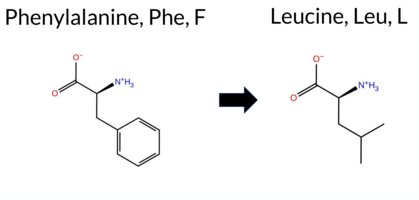 AIThe SynGAP1 missense variant F772L is listed in gnomAD (6‑33442472‑T‑C) but has no ClinVar entry. Functional prediction tools that agree on a benign effect include REVEL, PROVEAN, SIFT, ESM1b, FATHMM, AlphaMissense‑Optimized, and the SGM‑Consensus score (majority vote from AlphaMissense‑Default, ESM1b, FATHMM, PROVEAN). Tools that predict a pathogenic effect are PolyPhen‑2 HumDiv, PolyPhen‑2 HumVar, and AlphaMissense‑Default. High‑accuracy assessments show AlphaMissense‑Optimized as benign and the SGM‑Consensus as likely benign; Foldetta, a protein‑folding stability method combining FoldX‑MD and Rosetta outputs, has no available result for this variant. Overall, the majority of evidence points to a benign impact. This conclusion is consistent with the absence of a ClinVar pathogenic classification, so there is no contradiction with ClinVar status. Disclaimer: This summary was generated using AI and should be interpreted alongside expert review. | Likely Benign | 0.450668 | Structured | 0.922662 | Binding | 0.329 | 0.884 | 0.250 | 6-33442472-T-C | 1 | 1.28e-6 | -1.751 | Likely Benign | 0.762 | Likely Pathogenic | Likely Benign | 0.161 | Likely Benign | -0.47 | Neutral | 0.508 | Possibly Damaging | 0.786 | Possibly Damaging | 4.31 | Benign | 1.00 | Tolerated | 3.64 | 6 | 0.1661 | 0.3033 | 0 | 2 | 1.0 | -34.02 | ||||||||||||||||||||||||||||||||||
| c.2316C>A | F772L 2D AIThe SynGAP1 missense variant F772L is catalogued in gnomAD (ID 6‑33442474‑C‑A) but has no ClinVar entry. Functional prediction tools cluster into two groups: benign predictions come from REVEL, PROVEAN, SIFT, ESM1b, FATHMM, and AlphaMissense‑Optimized; pathogenic predictions come from polyPhen‑2 HumDiv, polyPhen‑2 HumVar, and AlphaMissense‑Default. The SGM‑Consensus, derived from a majority vote of AlphaMissense‑Default, ESM1b, FATHMM, and PROVEAN, reports the variant as Likely Benign. High‑accuracy assessments further support a benign outcome: AlphaMissense‑Optimized is benign, SGM‑Consensus is Likely Benign, while Foldetta (a protein‑folding stability method combining FoldX‑MD and Rosetta) has no available result for this variant. Overall, the preponderance of evidence indicates that F772L is most likely benign, and this conclusion is not contradicted by any ClinVar status. Disclaimer: This summary was generated using AI and should be interpreted alongside expert review. | Likely Benign | 0.450668 | Structured | 0.922662 | Binding | 0.329 | 0.884 | 0.250 | 6-33442474-C-A | -1.751 | Likely Benign | 0.762 | Likely Pathogenic | Likely Benign | 0.109 | Likely Benign | -0.47 | Neutral | 0.508 | Possibly Damaging | 0.786 | Possibly Damaging | 4.31 | Benign | 1.00 | Tolerated | 3.64 | 6 | 0.1661 | 0.3033 | 0 | 2 | 1.0 | -34.02 | ||||||||||||||||||||||||||||||||||||
| c.2316C>G | F772L 2D AIThe SynGAP1 missense variant F772L has no ClinVar record and is not listed in gnomAD. Prediction tools that agree on a benign effect include REVEL, PROVEAN, SIFT, ESM1b, FATHMM, AlphaMissense‑Optimized, and the SGM‑Consensus (Likely Benign). Tools that predict a pathogenic outcome are polyPhen‑2 HumDiv, polyPhen‑2 HumVar, and AlphaMissense‑Default. High‑accuracy assessments show AlphaMissense‑Optimized as benign and the SGM‑Consensus as Likely Benign; no Foldetta stability data are available, so it is treated as unavailable. Overall, the majority of evidence points to a benign impact. This conclusion is consistent with the absence of a ClinVar classification, so there is no contradiction with existing clinical annotations. Disclaimer: This summary was generated using AI and should be interpreted alongside expert review. | Likely Benign | 0.450668 | Structured | 0.922662 | Binding | 0.329 | 0.884 | 0.250 | -1.751 | Likely Benign | 0.762 | Likely Pathogenic | Likely Benign | 0.109 | Likely Benign | -0.47 | Neutral | 0.508 | Possibly Damaging | 0.786 | Possibly Damaging | 4.31 | Benign | 1.00 | Tolerated | 3.64 | 6 | 0.1661 | 0.3033 | 0 | 2 | 1.0 | -34.02 | |||||||||||||||||||||||||||||||||||||
| c.2602G>C | D868H 2D 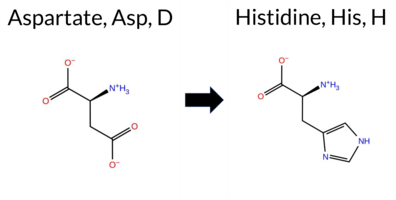 AIThe SynGAP1 missense variant D868H is not reported in ClinVar (ClinVar status: none) but is present in gnomAD (variant ID 6‑33443154‑G‑C). Prediction tools that agree on a benign effect include REVEL, PROVEAN, SIFT, ESM1b, and AlphaMissense‑Optimized. Tools that predict a pathogenic effect are polyPhen‑2 HumDiv, polyPhen‑2 HumVar, FATHMM, and AlphaMissense‑Default. High‑accuracy assessments show AlphaMissense‑Optimized as benign; the SGM Consensus (majority vote from AlphaMissense‑Default, ESM1b, FATHMM, PROVEAN) is inconclusive (2 benign vs. 2 pathogenic), and Foldetta results are unavailable. Overall, the majority of predictions lean toward a benign impact, and this is not contradicted by ClinVar status. Thus, the variant is most likely benign based on current computational evidence. Disclaimer: This summary was generated using AI and should be interpreted alongside expert review. | 0.525368 | Disordered | 0.676362 | Binding | 0.262 | 0.815 | 0.250 | 6-33443154-G-C | 1 | 6.20e-7 | -3.358 | Likely Benign | 0.763 | Likely Pathogenic | Likely Benign | 0.212 | Likely Benign | -2.34 | Neutral | 1.000 | Probably Damaging | 0.983 | Probably Damaging | 2.49 | Pathogenic | 0.08 | Tolerated | 3.82 | 4 | 0.2258 | 0.7837 | -1 | 1 | 0.3 | 22.05 | |||||||||||||||||||||||||||||||||||
| c.2144C>T | P715L 2D 3DClick to see structure in 3D Viewer AIThe SynGAP1 missense variant P715L is not reported in ClinVar and is absent from gnomAD. Prediction tools that classify it as benign include REVEL, Rosetta, FATHMM, and AlphaMissense‑Optimized. Those that predict pathogenicity are SGM‑Consensus, PROVEAN, polyPhen‑2 (HumDiv and HumVar), SIFT, ESM1b, and AlphaMissense‑Default. FoldX and premPS give uncertain results. High‑accuracy assessments show AlphaMissense‑Optimized as benign, SGM‑Consensus as likely pathogenic (majority vote of AlphaMissense‑Default, ESM1b, FATHMM, PROVEAN), and Foldetta as uncertain. Because the majority of consensus and individual predictors indicate pathogenicity, the variant is most likely pathogenic. This conclusion is not contradicted by ClinVar, which contains no entry for P715L. Disclaimer: This summary was generated using AI and should be interpreted alongside expert review. | Likely Pathogenic | GAP | 0.243554 | Structured | 0.409757 | Uncertain | 0.956 | 0.362 | 0.000 | -12.207 | Likely Pathogenic | 0.764 | Likely Pathogenic | Likely Benign | 1.43 | Ambiguous | 0.1 | 0.06 | Likely Benign | 0.75 | Ambiguous | 0.58 | Ambiguous | 0.318 | Likely Benign | -9.10 | Deleterious | 1.000 | Probably Damaging | 0.998 | Probably Damaging | 3.39 | Benign | 0.01 | Affected | 0.1944 | 0.5105 | -3 | -3 | 5.4 | 16.04 | |||||||||||||||||||||||||||||
| c.3633G>A | M1211I 2D AIThe SynGAP1 missense variant M1211I is listed in ClinVar with an “Uncertain” status and is present in gnomAD (variant ID 6-33446625-G-A). Prediction tools that agree on a benign effect include REVEL, PROVEAN, SIFT, ESM1b, FATHMM, and AlphaMissense‑Optimized. Tools that predict a pathogenic effect are AlphaMissense‑Default, polyPhen‑2 HumDiv, and polyPhen‑2 HumVar. The SGM‑Consensus, derived from a majority vote of AlphaMissense‑Default, ESM1b, FATHMM, and PROVEAN, reports a “Likely Benign” classification. Foldetta, a protein‑folding stability method combining FoldX‑MD and Rosetta outputs, has no available result for this variant. High‑accuracy predictions therefore point to a benign outcome: AlphaMissense‑Optimized is benign, and the SGM‑Consensus also indicates benign. Based on the aggregate predictions, the variant is most likely benign, which does not contradict the ClinVar “Uncertain” status. Disclaimer: This summary was generated using AI and should be interpreted alongside expert review. | Likely Benign | Coiled-coil | 0.585406 | Disordered | 0.578388 | Binding | 0.876 | 0.565 | 0.500 | Uncertain | 1 | 6-33446625-G-A | 3 | 1.86e-6 | -1.537 | Likely Benign | 0.764 | Likely Pathogenic | Likely Benign | 0.298 | Likely Benign | -0.42 | Neutral | 0.969 | Probably Damaging | 0.968 | Probably Damaging | 5.40 | Benign | 1.00 | Tolerated | 3.77 | 5 | 0.1214 | 0.2839 | 1 | 2 | 2.6 | -18.03 | |||||||||||||||||||||||||||||||
| c.3633G>C | M1211I 2D AIThe SynGAP1 missense variant M1211I is not reported in ClinVar (no ClinVar ID) and is absent from gnomAD (no gnomAD ID). Prediction tools that agree on a benign effect include REVEL, PROVEAN, SIFT, ESM1b, FATHMM, AlphaMissense‑Optimized, and the SGM‑Consensus (Likely Benign). Tools that predict a pathogenic effect are polyPhen‑2 HumDiv, polyPhen‑2 HumVar, and AlphaMissense‑Default. High‑accuracy assessments show AlphaMissense‑Optimized as benign and the SGM‑Consensus as likely benign; Foldetta results are not available. Overall, the majority of evidence points to a benign impact, and this conclusion does not contradict the ClinVar status, which currently contains no classification for this variant. Disclaimer: This summary was generated using AI and should be interpreted alongside expert review. | Likely Benign | Coiled-coil | 0.585406 | Disordered | 0.578388 | Binding | 0.876 | 0.565 | 0.500 | -1.537 | Likely Benign | 0.764 | Likely Pathogenic | Likely Benign | 0.298 | Likely Benign | -0.42 | Neutral | 0.969 | Probably Damaging | 0.968 | Probably Damaging | 5.40 | Benign | 1.00 | Tolerated | 3.77 | 5 | 0.1214 | 0.2839 | 1 | 2 | 2.6 | -18.03 | ||||||||||||||||||||||||||||||||||||
| c.3633G>T | M1211I 2D AIThe SynGAP1 missense variant M1211I is not reported in ClinVar and is absent from gnomAD. Functional prediction tools that agree on a benign effect include REVEL, PROVEAN, SIFT, ESM1b, FATHMM, and AlphaMissense‑Optimized, while polyPhen‑2 (HumDiv and HumVar) and AlphaMissense‑Default predict a pathogenic outcome. The SGM‑Consensus, derived from a majority vote of AlphaMissense‑Default, ESM1b, FATHMM, and PROVEAN, classifies the variant as likely benign (three benign votes versus one pathogenic). High‑accuracy assessment by AlphaMissense‑Optimized confirms a benign prediction, whereas the Foldetta stability analysis is unavailable. Overall, the preponderance of evidence points to a benign effect for M1211I, and this conclusion is not contradicted by any ClinVar annotation. Disclaimer: This summary was generated using AI and should be interpreted alongside expert review. | Likely Benign | Coiled-coil | 0.585406 | Disordered | 0.578388 | Binding | 0.876 | 0.565 | 0.500 | -1.537 | Likely Benign | 0.764 | Likely Pathogenic | Likely Benign | 0.298 | Likely Benign | -0.42 | Neutral | 0.969 | Probably Damaging | 0.968 | Probably Damaging | 5.40 | Benign | 1.00 | Tolerated | 3.77 | 5 | 0.1214 | 0.2839 | 1 | 2 | 2.6 | -18.03 | ||||||||||||||||||||||||||||||||||||
| c.1219C>A | Q407K 2D 3DClick to see structure in 3D Viewer AIThe SynGAP1 missense variant Q407K is not reported in ClinVar and is absent from gnomAD. Prediction tools that agree on a benign effect include REVEL, Rosetta, SIFT, FATHMM, and AlphaMissense‑Optimized. Those that agree on a pathogenic effect are SGM‑Consensus, PROVEAN, polyPhen‑2 (HumDiv and HumVar), ESM1b, and AlphaMissense‑Default. Two tools, FoldX and premPS, give uncertain results. High‑accuracy assessments show AlphaMissense‑Optimized predicts benign, while the SGM‑Consensus (majority vote of AlphaMissense‑Default, ESM1b, FATHMM, PROVEAN) predicts pathogenic. Foldetta, which integrates FoldX‑MD and Rosetta outputs, is unavailable because FoldX is uncertain and Rosetta alone is benign. Overall, the majority of evidence points to a pathogenic impact for Q407K. This conclusion is not contradicted by ClinVar status, which contains no entry for this variant. Disclaimer: This summary was generated using AI and should be interpreted alongside expert review. | Likely Pathogenic | C2 | 0.109221 | Structured | 0.382522 | Uncertain | 0.916 | 0.271 | 0.000 | -14.893 | Likely Pathogenic | 0.765 | Likely Pathogenic | Likely Benign | 0.61 | Ambiguous | 0.1 | 0.19 | Likely Benign | 0.40 | Likely Benign | 0.93 | Ambiguous | 0.246 | Likely Benign | -3.42 | Deleterious | 0.863 | Possibly Damaging | 0.773 | Possibly Damaging | 3.96 | Benign | 0.07 | Tolerated | 0.1656 | 0.3504 | 1 | 1 | -0.4 | 0.04 | |||||||||||||||||||||||||||||
| c.1751T>C | I584T 2D 3DClick to see structure in 3D Viewer AIThe SynGAP1 missense variant I584T is not reported in ClinVar and is absent from gnomAD. Consensus from most in silico predictors indicates a pathogenic effect: REVEL, FoldX, premPS, PROVEAN, polyPhen‑2 (HumDiv and HumVar), SIFT, ESM1b, FATHMM, AlphaMissense‑Default, and the SGM‑Consensus score (majority vote of AlphaMissense‑Default, ESM1b, FATHMM, PROVEAN) all classify it as likely pathogenic. Only AlphaMissense‑Optimized predicts a benign outcome, while Rosetta and Foldetta are uncertain. High‑accuracy assessments show AlphaMissense‑Optimized as benign, SGM‑Consensus as likely pathogenic, and Foldetta as uncertain. With the overwhelming majority of tools supporting pathogenicity and no ClinVar entry to contradict this, the variant is most likely pathogenic. Disclaimer: This summary was generated using AI and should be interpreted alongside expert review. | Likely Pathogenic | GAP | 0.059222 | Structured | 0.046673 | Uncertain | 0.846 | 0.244 | 0.000 | -10.413 | Likely Pathogenic | 0.765 | Likely Pathogenic | Likely Benign | 2.05 | Destabilizing | 0.1 | 1.70 | Ambiguous | 1.88 | Ambiguous | 1.66 | Destabilizing | 0.748 | Likely Pathogenic | -4.63 | Deleterious | 0.999 | Probably Damaging | 0.993 | Probably Damaging | -1.11 | Pathogenic | 0.02 | Affected | 0.0911 | 0.0608 | 0 | -1 | -5.2 | -12.05 | |||||||||||||||||||||||||||||
| c.3269A>T | N1090I 2D AIThe SynGAP1 missense variant N1090I is not reported in ClinVar and is absent from gnomAD. Prediction tools that agree on a benign effect include REVEL, PROVEAN, ESM1b, and FATHMM, while those that predict a pathogenic outcome are polyPhen‑2 HumDiv, polyPhen‑2 HumVar, SIFT, and AlphaMissense‑Default. The SGM‑Consensus, derived from a majority vote of AlphaMissense‑Default, ESM1b, FATHMM, and PROVEAN, reports the variant as Likely Benign. High‑accuracy assessments further support a benign interpretation: AlphaMissense‑Optimized predicts Benign, and the SGM‑Consensus (majority vote) also indicates Likely Benign. The Foldetta protein‑folding stability analysis is unavailable for this variant. Overall, the balance of evidence from both general and high‑accuracy predictors points to a benign classification, and this conclusion does not contradict the absence of a ClinVar assertion. Disclaimer: This summary was generated using AI and should be interpreted alongside expert review. | Likely Benign | 0.896620 | Disordered | 0.979886 | Binding | 0.341 | 0.887 | 1.000 | -4.356 | Likely Benign | 0.765 | Likely Pathogenic | Likely Benign | 0.173 | Likely Benign | -2.14 | Neutral | 0.999 | Probably Damaging | 0.997 | Probably Damaging | 2.67 | Benign | 0.02 | Affected | 0.0781 | 0.6279 | -2 | -3 | 8.0 | -0.94 | |||||||||||||||||||||||||||||||||||||||
| c.3578A>G | D1193G 2D AIThe SynGAP1 D1193G missense variant is catalogued in gnomAD (ID 6‑33444613‑A‑G) but has no ClinVar entry. Functional prediction tools cluster into two groups: benign predictions include REVEL, PROVEAN, ESM1b, FATHMM, and AlphaMissense‑Optimized, while pathogenic predictions come from polyPhen‑2 (HumDiv and HumVar), SIFT, and AlphaMissense‑Default. The SGM‑Consensus, derived from a majority vote of AlphaMissense‑Default, ESM1b, FATHMM, and PROVEAN, is “Likely Benign.” High‑accuracy assessments further support a benign outcome: AlphaMissense‑Optimized predicts benign, and the SGM‑Consensus (majority of the four high‑accuracy tools) also favors benign. Foldetta results are unavailable. Overall, the preponderance of evidence indicates that the variant is most likely benign, and this conclusion is not contradicted by any ClinVar status (none is reported). Disclaimer: This summary was generated using AI and should be interpreted alongside expert review. | Likely Benign | Coiled-coil | 0.585406 | Disordered | 0.433390 | Uncertain | 0.807 | 0.600 | 0.375 | 6-33444613-A-G | 1 | 6.21e-7 | -6.506 | Likely Benign | 0.765 | Likely Pathogenic | Likely Benign | 0.480 | Likely Benign | -2.27 | Neutral | 0.924 | Possibly Damaging | 0.652 | Possibly Damaging | 5.42 | Benign | 0.00 | Affected | 4.32 | 4 | 0.2695 | 0.4765 | -1 | 1 | 3.1 | -58.04 | |||||||||||||||||||||||||||||||||
| c.1870A>T | T624S 2D 3DClick to see structure in 3D Viewer AIThe SynGAP1 T624S missense variant is not reported in ClinVar (status: None) and has no entry in gnomAD. Prediction tools that agree on a benign effect include FoldX, Foldetta, and AlphaMissense‑Optimized. Tools that predict a pathogenic effect are SGM‑Consensus, REVEL, PROVEAN, polyPhen‑2 (HumDiv and HumVar), SIFT, ESM1b, FATHMM, and AlphaMissense‑Default. Rosetta and premPS are uncertain and are treated as unavailable. High‑accuracy assessments show AlphaMissense‑Optimized as benign, SGM‑Consensus (majority vote of AlphaMissense‑Default, ESM1b, FATHMM, PROVEAN) as pathogenic, and Foldetta as benign. Overall, the majority of evidence points to a pathogenic impact, and this conclusion does not contradict any ClinVar annotation (none is present). Thus, the variant is most likely pathogenic. Disclaimer: This summary was generated using AI and should be interpreted alongside expert review. | Likely Pathogenic | GAP | 0.137348 | Structured | 0.052894 | Uncertain | 0.962 | 0.217 | 0.000 | -13.314 | Likely Pathogenic | 0.766 | Likely Pathogenic | Likely Benign | -0.10 | Likely Benign | 0.1 | 0.95 | Ambiguous | 0.43 | Likely Benign | 0.69 | Ambiguous | 0.761 | Likely Pathogenic | -3.93 | Deleterious | 0.826 | Possibly Damaging | 0.789 | Possibly Damaging | -1.43 | Pathogenic | 0.01 | Affected | 0.2326 | 0.2813 | 1 | 1 | -0.1 | -14.03 | |||||||||||||||||||||||||||||
| c.1871C>G | T624S 2D 3DClick to see structure in 3D Viewer AIThe SynGAP1 T624S missense variant is not reported in ClinVar (status: None) and has no entry in gnomAD. Prediction tools that agree on a benign effect include FoldX, Foldetta, and AlphaMissense‑Optimized. Tools that predict a pathogenic effect are SGM‑Consensus, REVEL, PROVEAN, polyPhen‑2 (HumDiv and HumVar), SIFT, ESM1b, FATHMM, and AlphaMissense‑Default. Rosetta and premPS are uncertain and are treated as unavailable. High‑accuracy assessments show AlphaMissense‑Optimized as benign, SGM‑Consensus (majority vote of AlphaMissense‑Default, ESM1b, FATHMM, PROVEAN) as pathogenic, and Foldetta as benign. Overall, the majority of evidence points to a pathogenic impact, and this conclusion does not contradict any ClinVar annotation (none is present). Thus, the variant is most likely pathogenic. Disclaimer: This summary was generated using AI and should be interpreted alongside expert review. | Likely Pathogenic | GAP | 0.137348 | Structured | 0.052894 | Uncertain | 0.962 | 0.217 | 0.000 | -13.314 | Likely Pathogenic | 0.766 | Likely Pathogenic | Likely Benign | -0.10 | Likely Benign | 0.1 | 0.95 | Ambiguous | 0.43 | Likely Benign | 0.69 | Ambiguous | 0.734 | Likely Pathogenic | -3.93 | Deleterious | 0.826 | Possibly Damaging | 0.789 | Possibly Damaging | -1.43 | Pathogenic | 0.01 | Affected | 0.2326 | 0.2813 | 1 | 1 | -0.1 | -14.03 | |||||||||||||||||||||||||||||
| c.1966G>C | E656Q 2D 3DClick to see structure in 3D Viewer AIThe SynGAP1 missense variant E656Q is listed in ClinVar with an uncertain significance and is present in gnomAD (ID 6‑33441225‑G‑C). Functional prediction tools that agree on a benign effect include REVEL, FoldX, Foldetta, premPS, PROVEAN, FATHMM, and AlphaMissense‑Optimized. Tools that predict a pathogenic outcome are polyPhen‑2 HumDiv, polyPhen‑2 HumVar, SIFT, ESM1b, and AlphaMissense‑Default; Rosetta reports an uncertain result. High‑accuracy assessments show AlphaMissense‑Optimized as benign, Foldetta as benign, while the SGM Consensus (majority vote of AlphaMissense‑Default, ESM1b, FATHMM, PROVEAN) is inconclusive due to a 2‑2 split. Overall, the majority of evidence points to a benign effect, and this conclusion does not contradict the ClinVar uncertain status. Disclaimer: This summary was generated using AI and should be interpreted alongside expert review. | GAP | 0.032017 | Structured | 0.242242 | Uncertain | 0.963 | 0.264 | 0.000 | Uncertain | 1 | 6-33441225-G-C | 1 | 6.20e-7 | -9.145 | Likely Pathogenic | 0.766 | Likely Pathogenic | Likely Benign | -0.14 | Likely Benign | 0.0 | -0.81 | Ambiguous | -0.48 | Likely Benign | 0.25 | Likely Benign | 0.249 | Likely Benign | -2.29 | Neutral | 0.980 | Probably Damaging | 0.528 | Possibly Damaging | 3.46 | Benign | 0.02 | Affected | 3.39 | 24 | 0.1739 | 0.6645 | 2 | 2 | 0.0 | -0.98 | 224.3 | 1.7 | 0.0 | 0.1 | 0.1 | 0.0 | X | Potentially Benign | The carboxylate side chain of Glu656, located on an α helix (res. Ser641-Glu666), frequently forms a hydrogen bond with the nearby residue Ser659 on the same α helix. In the variant simulations, the carboxamide side chain of Gln656 alternatively forms a hydrogen bond with either Ser659 or Glu548 on an opposing helix (res. Ala533-Val560).Although the frequent interaction between Gln656 and Glu548 may strengthen or stabilize the tertiary structure assembly, the effect is likely to be marginal. | ||||||||||||||
| c.1978A>C | M660L 2D 3DClick to see structure in 3D Viewer AIThe SynGAP1 missense variant M660L is not reported in ClinVar and is absent from gnomAD. Prediction tools that agree on a benign effect include REVEL, FoldX, Rosetta, Foldetta, FATHMM, polyPhen‑2 HumVar, and AlphaMissense‑Optimized. Tools that predict a pathogenic effect are SGM‑Consensus, PROVEAN, polyPhen‑2 HumDiv, SIFT, ESM1b, and AlphaMissense‑Default. High‑accuracy assessments show AlphaMissense‑Optimized as benign, SGM‑Consensus (a majority vote of AlphaMissense‑Default, ESM1b, FATHMM, and PROVEAN) as likely pathogenic, and Foldetta (combining FoldX‑MD and Rosetta outputs) as benign. No predictions are missing or inconclusive. Overall, the balance of evidence leans toward a benign classification, and this conclusion does not contradict any ClinVar status because no ClinVar entry exists for this variant. Disclaimer: This summary was generated using AI and should be interpreted alongside expert review. | Likely Pathogenic | GAP | 0.047319 | Structured | 0.134270 | Uncertain | 0.944 | 0.289 | 0.000 | -12.576 | Likely Pathogenic | 0.766 | Likely Pathogenic | Likely Benign | 0.16 | Likely Benign | 0.0 | -0.10 | Likely Benign | 0.03 | Likely Benign | 0.97 | Ambiguous | 0.330 | Likely Benign | -2.99 | Deleterious | 0.596 | Possibly Damaging | 0.101 | Benign | 3.56 | Benign | 0.03 | Affected | 0.1337 | 0.3891 | 4 | 2 | 1.9 | -18.03 | |||||||||||||||||||||||||||||
| c.1978A>T | M660L 2D 3DClick to see structure in 3D Viewer AIThe SynGAP1 missense variant M660L is not reported in ClinVar and is absent from gnomAD. Prediction tools that agree on a benign effect include REVEL, FoldX, Rosetta, Foldetta, FATHMM, polyPhen‑2 HumVar, and AlphaMissense‑Optimized. Tools that predict a pathogenic effect are SGM‑Consensus, PROVEAN, polyPhen‑2 HumDiv, SIFT, ESM1b, and AlphaMissense‑Default. High‑accuracy assessments show AlphaMissense‑Optimized as benign, SGM‑Consensus (a majority vote of AlphaMissense‑Default, ESM1b, FATHMM, and PROVEAN) as likely pathogenic, and Foldetta (combining FoldX‑MD and Rosetta outputs) as benign. No predictions are missing or inconclusive. Overall, the balance of evidence leans toward a benign classification, and this assessment does not contradict any ClinVar status because none is available. Disclaimer: This summary was generated using AI and should be interpreted alongside expert review. | Likely Pathogenic | GAP | 0.047319 | Structured | 0.134270 | Uncertain | 0.944 | 0.289 | 0.000 | -12.576 | Likely Pathogenic | 0.766 | Likely Pathogenic | Likely Benign | 0.16 | Likely Benign | 0.0 | -0.10 | Likely Benign | 0.03 | Likely Benign | 0.97 | Ambiguous | 0.330 | Likely Benign | -2.99 | Deleterious | 0.596 | Possibly Damaging | 0.101 | Benign | 3.56 | Benign | 0.03 | Affected | 0.1337 | 0.3891 | 4 | 2 | 1.9 | -18.03 | |||||||||||||||||||||||||||||
| c.2146C>T | R716W 2D 3DClick to see structure in 3D Viewer AIClinVar has no entry for this SynGAP1 R716W variant, and it is present in the gnomAD database (ID 6‑33441611‑C‑T). Prediction tools that agree on a benign effect include REVEL, FoldX, FATHMM, AlphaMissense‑Optimized, premPS, and Foldetta, while those that predict a pathogenic outcome are PROVEAN, polyPhen‑2 HumDiv, polyPhen‑2 HumVar, SIFT, ESM1b, and AlphaMissense‑Default. High‑accuracy assessments show AlphaMissense‑Optimized as benign, Foldetta as benign, and the SGM Consensus (derived from a majority vote of AlphaMissense‑Default, ESM1b, FATHMM, and PROVEAN) as pathogenic. With two high‑accuracy tools supporting benign and one supporting pathogenic, the overall prediction leans toward a benign effect. This conclusion does not contradict ClinVar status, as no ClinVar classification exists for the variant. Disclaimer: This summary was generated using AI and should be interpreted alongside expert review. | Likely Pathogenic | GAP | 0.247041 | Structured | 0.419135 | Uncertain | 0.962 | 0.379 | 0.000 | 6-33441611-C-T | 5 | 3.10e-6 | -11.543 | Likely Pathogenic | 0.766 | Likely Pathogenic | Likely Benign | -0.11 | Likely Benign | 0.0 | 0.87 | Ambiguous | 0.38 | Likely Benign | 0.31 | Likely Benign | 0.339 | Likely Benign | -6.72 | Deleterious | 1.000 | Probably Damaging | 0.995 | Probably Damaging | 3.32 | Benign | 0.00 | Affected | 3.50 | 9 | 0.1303 | 0.3252 | -3 | 2 | 3.6 | 30.03 | ||||||||||||||||||||||||
| c.2344G>A | D782N 2D AIThe SynGAP1 missense variant D782N is not reported in ClinVar (ClinVar ID = None) and is absent from gnomAD (gnomAD ID = None). Prediction tools that agree on a benign effect include REVEL, PROVEAN, ESM1b, and AlphaMissense‑Optimized. Tools that predict a pathogenic effect are polyPhen‑2 (HumDiv and HumVar), SIFT, FATHMM, and AlphaMissense‑Default. High‑accuracy assessments show AlphaMissense‑Optimized as benign, while the SGM Consensus (majority vote from AlphaMissense‑Default, ESM1b, FATHMM, PROVEAN) is inconclusive due to a 2‑vs‑2 split, and Foldetta results are unavailable. Overall, the majority of predictions (five pathogenic vs four benign) lean toward a pathogenic impact. This conclusion does not contradict ClinVar status, as the variant has no existing ClinVar classification. Disclaimer: This summary was generated using AI and should be interpreted alongside expert review. | 0.604312 | Disordered | 0.768342 | Binding | 0.285 | 0.883 | 0.625 | -6.857 | Likely Benign | 0.766 | Likely Pathogenic | Likely Benign | 0.131 | Likely Benign | -2.26 | Neutral | 0.995 | Probably Damaging | 0.950 | Probably Damaging | 1.98 | Pathogenic | 0.02 | Affected | 0.1167 | 0.6884 | 2 | 1 | 0.0 | -0.98 | ||||||||||||||||||||||||||||||||||||||||
| c.2351C>A | A784D 2D AIThe SynGAP1 missense variant A784D is not reported in ClinVar (ClinVar ID = None) and is absent from gnomAD (gnomAD ID = None). Prediction tools that agree on a benign effect include REVEL, PROVEAN, polyPhen‑2 (HumDiv and HumVar), SIFT, ESM1b, FATHMM, AlphaMissense‑Optimized, and the SGM‑Consensus (majority vote from AlphaMissense‑Default, ESM1b, FATHMM, PROVEAN). Only AlphaMissense‑Default predicts a pathogenic outcome. High‑accuracy assessments show AlphaMissense‑Optimized as benign and the SGM‑Consensus as likely benign; Foldetta results are unavailable. Overall, the majority of evidence points to a benign impact, and this conclusion does not contradict any ClinVar annotation (none is present). Thus, the variant is most likely benign. Disclaimer: This summary was generated using AI and should be interpreted alongside expert review. | Likely Benign | 0.801317 | Disordered | 0.708872 | Binding | 0.314 | 0.896 | 0.625 | -3.784 | Likely Benign | 0.766 | Likely Pathogenic | Likely Benign | 0.206 | Likely Benign | -1.21 | Neutral | 0.411 | Benign | 0.237 | Benign | 2.68 | Benign | 0.16 | Tolerated | 0.1824 | 0.2193 | 0 | -2 | -5.3 | 44.01 | |||||||||||||||||||||||||||||||||||||||
| c.2586C>A | N862K 2D AIThe SynGAP1 missense variant N862K is not reported in ClinVar (no ClinVar ID) and is absent from gnomAD (no gnomAD ID). Functional prediction tools cluster into two groups: benign predictions from REVEL, PROVEAN, SIFT, FATHMM, and AlphaMissense‑Optimized; pathogenic predictions from polyPhen‑2 HumDiv, polyPhen‑2 HumVar, and AlphaMissense‑Default. ESM1b is uncertain. High‑accuracy assessments further support a benign interpretation: AlphaMissense‑Optimized is benign, the SGM Consensus (majority vote of AlphaMissense‑Default, ESM1b, FATHMM, PROVEAN) resolves to benign, and Foldetta results are unavailable. Overall, the majority of evidence points to a benign effect. This conclusion is consistent with the lack of ClinVar annotation and does not contradict any existing clinical classification. Disclaimer: This summary was generated using AI and should be interpreted alongside expert review. | 0.525368 | Disordered | 0.564559 | Binding | 0.257 | 0.791 | 0.250 | -7.000 | In-Between | 0.766 | Likely Pathogenic | Likely Benign | 0.084 | Likely Benign | -1.87 | Neutral | 0.995 | Probably Damaging | 0.946 | Probably Damaging | 4.10 | Benign | 0.20 | Tolerated | 0.2313 | 0.5469 | 1 | 0 | -0.4 | 14.07 | ||||||||||||||||||||||||||||||||||||||||
| c.2586C>G | N862K 2D AIThe SynGAP1 missense variant N862K is not reported in ClinVar (no ClinVar ID) and is absent from gnomAD (no gnomAD ID). Functional prediction tools cluster into two groups: benign predictions from REVEL, PROVEAN, SIFT, FATHMM, and AlphaMissense‑Optimized; pathogenic predictions from polyPhen‑2 HumDiv, polyPhen‑2 HumVar, and AlphaMissense‑Default. ESM1b is uncertain. High‑accuracy assessments further support a benign interpretation: AlphaMissense‑Optimized is benign, the SGM Consensus (majority vote of AlphaMissense‑Default, ESM1b, FATHMM, PROVEAN) resolves to benign, and Foldetta results are unavailable. Overall, the majority of evidence points to a benign effect. This conclusion is consistent with the lack of ClinVar annotation and does not contradict any existing clinical classification. Disclaimer: This summary was generated using AI and should be interpreted alongside expert review. | 0.525368 | Disordered | 0.564559 | Binding | 0.257 | 0.791 | 0.250 | -7.000 | In-Between | 0.766 | Likely Pathogenic | Likely Benign | 0.084 | Likely Benign | -1.87 | Neutral | 0.995 | Probably Damaging | 0.946 | Probably Damaging | 4.10 | Benign | 0.20 | Tolerated | 0.2313 | 0.5469 | 1 | 0 | -0.4 | 14.07 | ||||||||||||||||||||||||||||||||||||||||
| c.1043T>C | V348A 2D 3DClick to see structure in 3D Viewer AIThe SynGAP1 missense variant V348A is not reported in ClinVar and is absent from gnomAD. Functional prediction tools show a split opinion: benign predictions come from REVEL, polyPhen‑2 HumVar, SIFT, and AlphaMissense‑Optimized, whereas pathogenic predictions are reported by SGM‑Consensus, FoldX, Rosetta, Foldetta, premPS, PROVEAN, polyPhen‑2 HumDiv, ESM1b, FATHMM, and AlphaMissense‑Default. High‑accuracy assessments further highlight the discrepancy: AlphaMissense‑Optimized predicts a benign effect, SGM‑Consensus (majority vote of AlphaMissense‑Default, ESM1b, FATHMM, PROVEAN) indicates likely pathogenic, and Foldetta (combining FoldX‑MD and Rosetta outputs) classifies the variant as pathogenic. Taken together, the majority of evidence points toward a pathogenic impact, and this conclusion does not contradict ClinVar status, which currently has no entry for V348A. Disclaimer: This summary was generated using AI and should be interpreted alongside expert review. | Likely Pathogenic | C2 | 0.170161 | Structured | 0.346556 | Uncertain | 0.951 | 0.414 | 0.000 | -9.993 | Likely Pathogenic | 0.767 | Likely Pathogenic | Likely Benign | 2.46 | Destabilizing | 0.1 | 3.13 | Destabilizing | 2.80 | Destabilizing | 2.23 | Destabilizing | 0.175 | Likely Benign | -3.42 | Deleterious | 0.622 | Possibly Damaging | 0.152 | Benign | 1.59 | Pathogenic | 0.14 | Tolerated | 0.3223 | 0.2437 | 0 | 0 | -2.4 | -28.05 | |||||||||||||||||||||||||||||
| c.1562A>G | E521G 2D 3DClick to see structure in 3D Viewer AIThe SynGAP1 missense variant E521G is not reported in ClinVar (ClinVar ID None) and is absent from gnomAD (gnomAD ID None). Prediction tools that agree on a benign effect include REVEL, FoldX, premPS, SIFT, ESM1b, FATHMM, and AlphaMissense‑Optimized. Tools that predict a pathogenic effect are PROVEAN, polyPhen‑2 HumDiv, polyPhen‑2 HumVar, and AlphaMissense‑Default. The high‑accuracy methods give the following results: AlphaMissense‑Optimized predicts benign; Foldetta (combining FoldX‑MD and Rosetta outputs) predicts benign; the SGM Consensus (majority vote of AlphaMissense‑Default, ESM1b, FATHMM, PROVEAN) is inconclusive because it is a 2‑vs‑2 split and is treated as unavailable. Overall, the majority of evidence points to a benign impact. The variant is most likely benign based on current predictions, and this assessment does not contradict any ClinVar status because no ClinVar entry exists. Disclaimer: This summary was generated using AI and should be interpreted alongside expert review. | GAP | 0.086953 | Structured | 0.062387 | Uncertain | 0.865 | 0.349 | 0.000 | -6.636 | Likely Benign | 0.767 | Likely Pathogenic | Likely Benign | 0.18 | Likely Benign | 0.1 | 0.58 | Ambiguous | 0.38 | Likely Benign | 0.14 | Likely Benign | 0.289 | Likely Benign | -3.64 | Deleterious | 1.000 | Probably Damaging | 0.999 | Probably Damaging | 3.31 | Benign | 0.07 | Tolerated | 0.2932 | 0.5455 | 0 | -2 | 3.1 | -72.06 | ||||||||||||||||||||||||||||||
| c.1625A>G | N542S 2D 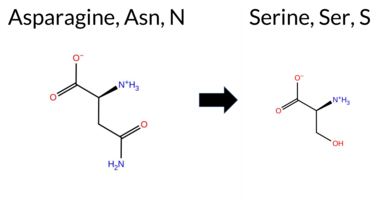 3DClick to see structure in 3D Viewer AISynGAP1 missense variant N542S is listed in ClinVar as benign (ClinVar ID 833567.0) and is not reported in gnomAD. Prediction tools that classify the variant as benign include SIFT and AlphaMissense‑Optimized, whereas the majority of tools predict pathogenicity: REVEL, PROVEAN, polyPhen‑2 (HumDiv and HumVar), ESM1b, FATHMM, AlphaMissense‑Default, and the SGM‑Consensus (Likely Pathogenic). High‑accuracy assessments show AlphaMissense‑Optimized predicting benign, SGM‑Consensus predicting likely pathogenic, and Foldetta (combining FoldX‑MD and Rosetta outputs) yielding an uncertain result. Overall, the preponderance of evidence points to a pathogenic effect, which is in conflict with the ClinVar benign designation. Disclaimer: This summary was generated using AI and should be interpreted alongside expert review. | Likely Pathogenic | GAP | 0.053060 | Structured | 0.026143 | Uncertain | 0.953 | 0.331 | 0.000 | Likely Benign | 1 | -9.675 | Likely Pathogenic | 0.767 | Likely Pathogenic | Likely Benign | 0.98 | Ambiguous | 0.1 | 0.99 | Ambiguous | 0.99 | Ambiguous | 0.91 | Ambiguous | 0.752 | Likely Pathogenic | -4.40 | Deleterious | 1.000 | Probably Damaging | 0.989 | Probably Damaging | -1.36 | Pathogenic | 0.13 | Tolerated | 3.37 | 35 | 0.3054 | 0.5719 | 1 | 1 | 2.7 | -27.03 | 212.5 | 32.1 | 0.0 | 0.0 | -0.6 | 0.3 | X | Potentially Pathogenic | Asn542 is located in an α-helix (res. Ala533-Val560) next to an α-α loop between two α-helices (res. Gly502-Tyr518 and Ala533-Val560). In the WT simulations, the carboxamide group of the Asn542 side chain forms a hydrogen bond with the backbone carbonyl group of Asn523 and packs favourably against Glu522 from the loop. In contrast, in the variant simulations, the hydroxyl group of the Ser542 side chain is unable to maintain either the hydrogen bond with Asn523 or the packing against the Glu522 side chain. Instead, the hydroxyl group of Ser542 occasionally forms a hydrogen bond with the backbone carbonyl group of Glu538.Altogether, the residue swap results in a looser helix-loop association, which is especially evident in the third replica simulation, where Asn523 moves away from its initial placement next to the α-helix. In short, based on the simulations, the residue swap weakens the GAP domain tertiary structure assembly, which in turn could negatively affect protein folding. | ||||||||||||||||
| c.1756G>A | D586N 2D AIThe SynGAP1 D586N missense variant is not reported in ClinVar and has no gnomAD entry. Consensus prediction tools that agree on benign impact include FoldX, Rosetta, Foldetta, premPS, SIFT, and AlphaMissense‑Optimized, whereas pathogenic predictions are made by SGM‑Consensus, REVEL, PROVEAN, polyPhen‑2 (HumDiv and HumVar), ESM1b, FATHMM, and AlphaMissense‑Default. High‑accuracy assessments show AlphaMissense‑Optimized as benign, the SGM Consensus (majority vote of AlphaMissense‑Default, ESM1b, FATHMM, PROVEAN) as pathogenic, and Foldetta (combining FoldX‑MD and Rosetta outputs) as benign. Overall, more tools predict pathogenicity than benign, and the high‑accuracy consensus leans toward pathogenic. Thus, the variant is most likely pathogenic, and this assessment does not contradict any ClinVar annotation because none exists. Disclaimer: This summary was generated using AI and should be interpreted alongside expert review. | Likely Pathogenic | GAP | 0.060549 | Structured | 0.066018 | Uncertain | 0.866 | 0.241 | 0.000 | -9.497 | Likely Pathogenic | 0.767 | Likely Pathogenic | Likely Benign | 0.09 | Likely Benign | 0.8 | 0.24 | Likely Benign | 0.17 | Likely Benign | 0.19 | Likely Benign | 0.523 | Likely Pathogenic | -2.52 | Deleterious | 0.992 | Probably Damaging | 0.995 | Probably Damaging | -1.25 | Pathogenic | 0.23 | Tolerated | 0.1124 | 0.5253 | 2 | 1 | 0.0 | -0.98 | |||||||||||||||||||||||||||||
| c.2126T>C | L709P 2D 3DClick to see structure in 3D Viewer AIThe SynGAP1 missense variant L709P is not reported in ClinVar and is absent from gnomAD. Benign predictions come from REVEL, premPS, PROVEAN, SIFT, FATHMM, and AlphaMissense‑Optimized, while pathogenic predictions arise from FoldX, Rosetta, Foldetta, polyPhen2_HumDiv, polyPhen2_HumVar, and AlphaMissense‑Default. High‑accuracy tools give mixed results: AlphaMissense‑Optimized predicts benign; the SGM Consensus (majority vote of AlphaMissense‑Default, FATHMM, PROVEAN) also predicts benign; Foldetta predicts pathogenic. Because the majority of standard predictors and the SGM Consensus favor benign, the variant is most likely benign, and this is consistent with the lack of a ClinVar classification. Disclaimer: This summary was generated using AI and should be interpreted alongside expert review. | GAP | 0.243554 | Structured | 0.365830 | Uncertain | 0.934 | 0.379 | 0.000 | -7.517 | In-Between | 0.767 | Likely Pathogenic | Likely Benign | 2.81 | Destabilizing | 0.0 | 5.65 | Destabilizing | 4.23 | Destabilizing | 0.31 | Likely Benign | 0.167 | Likely Benign | -1.93 | Neutral | 1.000 | Probably Damaging | 0.975 | Probably Damaging | 3.47 | Benign | 0.37 | Tolerated | 0.3004 | 0.0825 | -3 | -3 | -5.4 | -16.04 | ||||||||||||||||||||||||||||||
| c.353T>A | M118K 2D AIThe SynGAP1 missense variant M118K is not reported in ClinVar (ClinVar ID: None) and is absent from gnomAD (gnomAD ID: None). Prediction tools that agree on a benign effect include REVEL, polyPhen‑2 (HumDiv and HumVar), ESM1b, FATHMM, and AlphaMissense‑Optimized. Tools that predict a pathogenic effect are PROVEAN, SIFT, and AlphaMissense‑Default. High‑accuracy assessments show AlphaMissense‑Optimized as benign, while the SGM Consensus (a majority vote among AlphaMissense‑Default, ESM1b, FATHMM, and PROVEAN) is inconclusive (two pathogenic vs. two benign votes). Foldetta, a protein‑folding stability method combining FoldX‑MD and Rosetta outputs, has no available result for this variant. Overall, the majority of evidence points to a benign impact, and this conclusion does not contradict any ClinVar annotation, as none exists for M118K. Disclaimer: This summary was generated using AI and should be interpreted alongside expert review. | 0.694846 | Disordered | 0.676867 | Binding | 0.330 | 0.883 | 0.500 | -3.979 | Likely Benign | 0.767 | Likely Pathogenic | Likely Benign | 0.276 | Likely Benign | -2.98 | Deleterious | 0.396 | Benign | 0.099 | Benign | 3.84 | Benign | 0.01 | Affected | 0.2010 | 0.1131 | 0 | -1 | -5.8 | -3.02 | ||||||||||||||||||||||||||||||||||||||||
| c.3578A>C | D1193A 2D AIThe SynGAP1 missense variant D1193A is not reported in ClinVar and has no entry in gnomAD. Prediction tools that agree on a benign effect include REVEL, PROVEAN, ESM1b, FATHMM, and AlphaMissense‑Optimized, while polyPhen‑2 (HumDiv and HumVar), SIFT, and AlphaMissense‑Default predict a pathogenic outcome. The SGM‑Consensus, which aggregates AlphaMissense‑Default, ESM1b, FATHMM, and PROVEAN, reports the variant as “Likely Benign.” High‑accuracy assessments further support a benign interpretation: AlphaMissense‑Optimized is benign, SGM‑Consensus is likely benign, and Foldetta (a protein‑folding stability method combining FoldX‑MD and Rosetta) has no available result for this variant. Based on the majority of predictions and the consensus from high‑accuracy tools, the variant is most likely benign, and this assessment does not contradict any ClinVar status. Disclaimer: This summary was generated using AI and should be interpreted alongside expert review. | Likely Benign | Coiled-coil | 0.585406 | Disordered | 0.433390 | Uncertain | 0.807 | 0.600 | 0.375 | -5.747 | Likely Benign | 0.767 | Likely Pathogenic | Likely Benign | 0.486 | Likely Benign | -2.42 | Neutral | 0.856 | Possibly Damaging | 0.492 | Possibly Damaging | 5.48 | Benign | 0.00 | Affected | 0.2719 | 0.4017 | 0 | -2 | 5.3 | -44.01 | ||||||||||||||||||||||||||||||||||||||
| c.946A>T | N316Y 2D 3DClick to see structure in 3D Viewer AIThe SynGAP1 missense variant N316Y is not reported in ClinVar (ClinVar ID None) and has no entries in gnomAD (gnomAD ID None). Prediction tools that agree on a benign effect include REVEL, Rosetta, Foldetta, premPS, and AlphaMissense‑Optimized. Tools that predict a pathogenic effect comprise SGM‑Consensus, PROVEAN, polyPhen‑2 HumDiv, polyPhen‑2 HumVar, SIFT, ESM1b, FATHMM, and AlphaMissense‑Default; FoldX is uncertain. High‑accuracy assessments show AlphaMissense‑Optimized classifying the variant as benign, SGM‑Consensus (majority vote of AlphaMissense‑Default, ESM1b, FATHMM, PROVEAN) labeling it likely pathogenic, and Foldetta (combining FoldX‑MD and Rosetta outputs) predicting a benign impact. Based on the overall distribution of predictions, the variant is most likely pathogenic, and this assessment does not contradict the ClinVar status, which currently has no classification. Disclaimer: This summary was generated using AI and should be interpreted alongside expert review. | Likely Pathogenic | C2 | 0.118441 | Structured | 0.385187 | Uncertain | 0.817 | 0.246 | 0.125 | -11.226 | Likely Pathogenic | 0.767 | Likely Pathogenic | Likely Benign | 0.53 | Ambiguous | 0.5 | -0.09 | Likely Benign | 0.22 | Likely Benign | 0.50 | Likely Benign | 0.454 | Likely Benign | -5.70 | Deleterious | 1.000 | Probably Damaging | 0.999 | Probably Damaging | 1.81 | Pathogenic | 0.01 | Affected | 0.0574 | 0.6971 | -2 | -2 | 2.2 | 49.07 | |||||||||||||||||||||||||||||
| c.1183G>A | G395R 2D AIThe SynGAP1 missense variant G395R has no ClinVar record and is not reported in gnomAD. Prediction tools cluster into two groups: benign predictions come from REVEL, Rosetta, premPS, PROVEAN, polyPhen‑2 (HumDiv and HumVar), FATHMM, and AlphaMissense‑Optimized; pathogenic predictions come from SIFT, ESM1b, and AlphaMissense‑Default. Two tools, FoldX and Foldetta, yield uncertain results. High‑accuracy assessments show AlphaMissense‑Optimized as benign, while the SGM Consensus (majority vote of AlphaMissense‑Default, ESM1b, FATHMM, PROVEAN) is inconclusive due to a 2‑to‑2 split, and Foldetta remains uncertain. Overall, the balance of evidence favors a benign effect, and this conclusion does not contradict any ClinVar annotation (none exists). Thus, the variant is most likely benign. Disclaimer: This summary was generated using AI and should be interpreted alongside expert review. | C2 | 0.513880 | Disordered | 0.396199 | Uncertain | 0.474 | 0.601 | 0.500 | -9.851 | Likely Pathogenic | 0.768 | Likely Pathogenic | Likely Benign | 1.26 | Ambiguous | 2.1 | -0.25 | Likely Benign | 0.51 | Ambiguous | 0.50 | Likely Benign | 0.430 | Likely Benign | -2.01 | Neutral | 0.037 | Benign | 0.027 | Benign | 4.23 | Benign | 0.02 | Affected | 0.0953 | 0.4313 | -3 | -2 | -4.1 | 99.14 | ||||||||||||||||||||||||||||||
| c.1183G>C | G395R 2D AIThe SynGAP1 missense variant G395R has no ClinVar record and is not reported in gnomAD. Prediction tools cluster into two groups: benign predictions come from REVEL, Rosetta, premPS, PROVEAN, polyPhen‑2 (HumDiv and HumVar), FATHMM, and AlphaMissense‑Optimized; pathogenic predictions come from SIFT, ESM1b, and AlphaMissense‑Default. Two tools, FoldX and Foldetta, yield uncertain results. High‑accuracy assessments show AlphaMissense‑Optimized as benign, while the SGM Consensus (majority vote of AlphaMissense‑Default, ESM1b, FATHMM, PROVEAN) is inconclusive due to a 2‑to‑2 split, and Foldetta remains uncertain. Overall, the balance of evidence favors a benign effect, and this conclusion does not contradict any ClinVar annotation (none exists). Thus, the variant is most likely benign. Disclaimer: This summary was generated using AI and should be interpreted alongside expert review. | C2 | 0.513880 | Disordered | 0.396199 | Uncertain | 0.474 | 0.601 | 0.500 | -9.851 | Likely Pathogenic | 0.768 | Likely Pathogenic | Likely Benign | 1.26 | Ambiguous | 2.1 | -0.25 | Likely Benign | 0.51 | Ambiguous | 0.50 | Likely Benign | 0.430 | Likely Benign | -2.01 | Neutral | 0.037 | Benign | 0.027 | Benign | 4.23 | Benign | 0.02 | Affected | 0.0953 | 0.4313 | -3 | -2 | -4.1 | 99.14 | ||||||||||||||||||||||||||||||
| c.2107C>T | L703F 2D 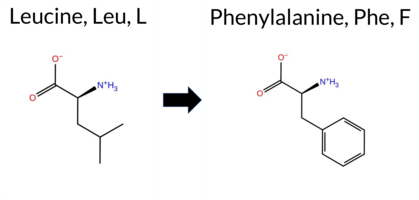 3DClick to see structure in 3D Viewer AIThe SynGAP1 missense variant L703F is not reported in ClinVar and is absent from gnomAD. Prediction tools that classify the variant as benign include REVEL, premPS, FATHMM, and AlphaMissense‑Optimized, while those that predict pathogenicity are PROVEAN, polyPhen‑2 HumDiv, polyPhen‑2 HumVar, SIFT, ESM1b, and AlphaMissense‑Default. FoldX, Rosetta, and Foldetta provide uncertain or inconclusive results and are treated as unavailable. High‑accuracy assessments show AlphaMissense‑Optimized as benign, the SGM Consensus (majority vote from AlphaMissense‑Default, ESM1b, FATHMM, and PROVEAN) as pathogenic, and Foldetta remains unavailable. Overall, the majority of reliable predictions lean toward pathogenicity, and this assessment does not contradict the ClinVar status, which currently has no entry for this variant. Disclaimer: This summary was generated using AI and should be interpreted alongside expert review. | Likely Pathogenic | GAP | 0.144935 | Structured | 0.388282 | Uncertain | 0.929 | 0.353 | 0.000 | -10.929 | Likely Pathogenic | 0.768 | Likely Pathogenic | Likely Benign | 1.03 | Ambiguous | 0.1 | 0.59 | Ambiguous | 0.81 | Ambiguous | 0.50 | Likely Benign | 0.247 | Likely Benign | -3.25 | Deleterious | 0.994 | Probably Damaging | 0.806 | Possibly Damaging | 3.12 | Benign | 0.00 | Affected | 0.0600 | 0.2555 | 2 | 0 | -1.0 | 34.02 | |||||||||||||||||||||||||||||
| c.3826G>T | D1276Y 2D AIThe SynGAP1 missense variant D1276Y is catalogued in gnomAD (ID 6‑33447874‑G‑T) but has no ClinVar entry. Functional prediction tools fall into two groups: benign predictions come from REVEL, ESM1b, and AlphaMissense‑Optimized; pathogenic predictions come from PROVEAN, polyPhen‑2 (HumDiv and HumVar), SIFT, FATHMM, AlphaMissense‑Default, and the SGM‑Consensus (majority vote of AlphaMissense‑Default, ESM1b, FATHMM, PROVEAN). High‑accuracy assessments show AlphaMissense‑Optimized as benign, while the SGM‑Consensus indicates a likely pathogenic effect; Foldetta, a protein‑folding stability method, has no available result for this variant. Overall, the majority of evidence points to a pathogenic impact, and this conclusion does not contradict any ClinVar status, as none is currently reported. Disclaimer: This summary was generated using AI and should be interpreted alongside expert review. | Likely Pathogenic | 0.666105 | Disordered | 0.802156 | Binding | 0.636 | 0.705 | 0.625 | 6-33447874-G-T | -1.558 | Likely Benign | 0.768 | Likely Pathogenic | Likely Benign | 0.325 | Likely Benign | -6.66 | Deleterious | 0.999 | Probably Damaging | 0.928 | Probably Damaging | 1.18 | Pathogenic | 0.00 | Affected | 3.77 | 5 | 0.0385 | 0.5082 | -3 | -4 | 2.2 | 48.09 | ||||||||||||||||||||||||||||||||||||
| c.182A>T | E61V 2D AIThe SynGAP1 E61V missense variant has no ClinVar entry and is not reported in gnomAD. Prediction tools that agree on a benign effect include REVEL, PROVEAN, ESM1b, FATHMM, and AlphaMissense‑Optimized, while those that predict a pathogenic impact are polyPhen‑2 HumDiv, polyPhen‑2 HumVar, SIFT, and AlphaMissense‑Default. The SGM‑Consensus, derived from a majority vote of AlphaMissense‑Default, ESM1b, FATHMM, and PROVEAN, reports the variant as Likely Benign. High‑accuracy assessments show AlphaMissense‑Optimized as Benign and the SGM‑Consensus as Likely Benign; Foldetta results are unavailable. Overall, the balance of evidence favors a benign classification, and this conclusion does not contradict the ClinVar status, which currently has no record for this variant. Disclaimer: This summary was generated using AI and should be interpreted alongside expert review. | Likely Benign | 0.352862 | Structured | 0.477329 | Uncertain | 0.518 | 0.699 | 0.125 | -5.723 | Likely Benign | 0.769 | Likely Pathogenic | Likely Benign | 0.115 | Likely Benign | -1.80 | Neutral | 0.824 | Possibly Damaging | 0.775 | Possibly Damaging | 4.07 | Benign | 0.00 | Affected | 0.0803 | 0.6413 | -2 | -2 | 7.7 | -29.98 | |||||||||||||||||||||||||||||||||||||||
| c.1850A>C | E617A 2D 3DClick to see structure in 3D Viewer AIThe SynGAP1 missense variant E617A is not reported in ClinVar (ClinVar status: none) and is absent from gnomAD (gnomAD ID: none). Prediction tools that agree on a benign effect include FoldX, premPS, SIFT, and AlphaMissense‑Optimized, whereas a majority of tools (SGM‑Consensus, REVEL, PROVEAN, polyPhen‑2 HumDiv, polyPhen‑2 HumVar, ESM1b, FATHMM, AlphaMissense‑Default) predict a pathogenic outcome; Rosetta and Foldetta are uncertain. High‑accuracy methods give a mixed picture: AlphaMissense‑Optimized indicates benign, the SGM Consensus (majority vote of AlphaMissense‑Default, ESM1b, FATHMM, PROVEAN) indicates pathogenic, and Foldetta remains uncertain. Overall, the balance of evidence favors a pathogenic interpretation. This conclusion is not contradicted by ClinVar, which contains no entry for this variant. Disclaimer: This summary was generated using AI and should be interpreted alongside expert review. | Likely Pathogenic | GAP | 0.111485 | Structured | 0.155123 | Uncertain | 0.877 | 0.240 | 0.000 | -8.704 | Likely Pathogenic | 0.769 | Likely Pathogenic | Likely Benign | 0.37 | Likely Benign | 0.1 | 0.89 | Ambiguous | 0.63 | Ambiguous | 0.18 | Likely Benign | 0.627 | Likely Pathogenic | -4.75 | Deleterious | 0.999 | Probably Damaging | 0.998 | Probably Damaging | -1.37 | Pathogenic | 0.46 | Tolerated | 0.3033 | 0.5317 | 0 | -1 | 5.3 | -58.04 | |||||||||||||||||||||||||||||
| c.2717T>G | L906R 2D AIThe SynGAP1 missense variant L906R is not reported in ClinVar (ClinVar ID = None) and is absent from gnomAD (gnomAD ID = None). Prediction tools that agree on a benign effect include REVEL, PROVEAN, ESM1b, and AlphaMissense‑Optimized. Tools that agree on a pathogenic effect are polyPhen‑2 (HumDiv and HumVar), SIFT, FATHMM, and AlphaMissense‑Default. The SGM Consensus, which aggregates AlphaMissense‑Default, ESM1b, FATHMM, and PROVEAN, is inconclusive (2 benign vs 2 pathogenic). Foldetta, a protein‑folding stability method combining FoldX‑MD and Rosetta outputs, has no available result for this variant. Overall, the majority of standard predictors (5 vs 4) lean toward pathogenicity, while the high‑accuracy AlphaMissense‑Optimized predicts benign and the consensus remains unresolved. Thus, the variant is most likely pathogenic based on the current predictions, and this assessment does not contradict any ClinVar status because the variant is not yet catalogued there. Disclaimer: This summary was generated using AI and should be interpreted alongside expert review. | 0.604312 | Disordered | 0.644316 | Binding | 0.315 | 0.920 | 0.250 | -3.440 | Likely Benign | 0.769 | Likely Pathogenic | Likely Benign | 0.160 | Likely Benign | -0.26 | Neutral | 1.000 | Probably Damaging | 0.990 | Probably Damaging | 2.18 | Pathogenic | 0.04 | Affected | 0.1228 | 0.0947 | -3 | -2 | -8.3 | 43.03 | ||||||||||||||||||||||||||||||||||||||||
| c.4006G>C | E1336Q 2D AIThe SynGAP1 missense change E1336Q is not reported in ClinVar and is absent from gnomAD. Prediction tools that agree on a benign effect include REVEL, PROVEAN, polyPhen‑2 HumVar, ESM1b, FATHMM, AlphaMissense‑Optimized, and the SGM‑Consensus (majority vote from AlphaMissense‑Default, ESM1b, FATHMM, PROVEAN). Tools that predict a pathogenic outcome are polyPhen‑2 HumDiv, SIFT, and AlphaMissense‑Default. High‑accuracy assessments show AlphaMissense‑Optimized as benign and the SGM‑Consensus as likely benign; the Foldetta stability analysis is unavailable. Overall, the majority of evidence points to a benign impact, and this conclusion does not contradict the ClinVar status, which currently has no entry for this variant. Disclaimer: This summary was generated using AI and should be interpreted alongside expert review. | Likely Benign | 0.865454 | Disordered | 0.973342 | Binding | 0.336 | 0.717 | 0.750 | -4.113 | Likely Benign | 0.769 | Likely Pathogenic | Likely Benign | 0.159 | Likely Benign | -1.88 | Neutral | 0.731 | Possibly Damaging | 0.301 | Benign | 3.21 | Benign | 0.00 | Affected | 0.1432 | 0.7427 | 2 | 2 | 0.0 | -0.98 | |||||||||||||||||||||||||||||||||||||||
| c.602A>C | D201A 2D 3DClick to see structure in 3D Viewer AIThe SynGAP1 D201A variant is not reported in ClinVar (ClinVar ID None) and is absent from gnomAD (gnomAD ID None). Prediction tools that agree on a benign effect include REVEL, FoldX, premPS, SIFT, and FATHMM, whereas a pathogenic consensus is reached by PROVEAN, polyPhen‑2 HumDiv, polyPhen‑2 HumVar, and AlphaMissense‑Default. Uncertain or unavailable results come from Rosetta, Foldetta, and ESM1b. High‑accuracy assessments show AlphaMissense‑Optimized predicts a benign outcome, while the SGM Consensus (majority vote from AlphaMissense‑Default, ESM1b, FATHMM, and PROVEAN) leans toward pathogenic, and Foldetta remains inconclusive. Overall, the majority of standard tools favor a benign classification, but the high‑accuracy consensus indicates a pathogenic signal, leaving the variant’s impact uncertain. The predictions do not contradict ClinVar status, as no ClinVar assertion exists for this variant. Disclaimer: This summary was generated using AI and should be interpreted alongside expert review. | PH | 0.366687 | Structured | 0.428570 | Uncertain | 0.698 | 0.447 | 0.125 | -7.793 | In-Between | 0.769 | Likely Pathogenic | Likely Benign | 0.45 | Likely Benign | 0.1 | 1.86 | Ambiguous | 1.16 | Ambiguous | 0.23 | Likely Benign | 0.261 | Likely Benign | -3.81 | Deleterious | 0.989 | Probably Damaging | 0.828 | Possibly Damaging | 4.11 | Benign | 0.09 | Tolerated | 0.3177 | 0.5050 | 0 | -2 | 5.3 | -44.01 | ||||||||||||||||||||||||||||||
| c.986G>A | R329H 2D 3DClick to see structure in 3D Viewer AISynGAP1 missense variant R329H is listed in ClinVar with an uncertain significance (ClinVar ID 2074400.0) and is present in gnomAD (ID 6‑33437891‑G‑A). Functional prediction tools that agree on a benign effect include REVEL, FATHMM, and AlphaMissense‑Optimized. Tools that agree on a pathogenic effect include FoldX, PROVEAN, polyPhen‑2 (HumDiv and HumVar), SIFT, ESM1b, and AlphaMissense‑Default. High‑accuracy assessments show AlphaMissense‑Optimized predicts benign, while the SGM Consensus—derived from a majority vote of AlphaMissense‑Default, ESM1b, FATHMM, and PROVEAN—predicts pathogenic. Foldetta, which integrates FoldX‑MD and Rosetta outputs, yields an uncertain result and is treated as unavailable evidence. Overall, the balance of predictions favors a pathogenic impact, which does not contradict the ClinVar uncertain status but suggests the variant is more likely deleterious. Disclaimer: This summary was generated using AI and should be interpreted alongside expert review. | Likely Pathogenic | C2 | 0.384043 | Structured | 0.376086 | Uncertain | 0.887 | 0.479 | 0.250 | Uncertain | 1 | 6-33437891-G-A | 2 | 1.24e-6 | -10.154 | Likely Pathogenic | 0.769 | Likely Pathogenic | Likely Benign | 2.53 | Destabilizing | 0.7 | 0.71 | Ambiguous | 1.62 | Ambiguous | 0.82 | Ambiguous | 0.155 | Likely Benign | -3.17 | Deleterious | 0.995 | Probably Damaging | 0.778 | Possibly Damaging | 4.04 | Benign | 0.05 | Affected | 3.41 | 15 | 0.2955 | 0.1961 | 2 | 0 | 1.3 | -19.05 | 220.4 | 81.4 | 0.1 | 0.1 | 0.2 | 0.3 | Uncertain | The guanidinium group of Arg329, located at the end of an anti-parallel β sheet strand (res. Ala322-Asp330), faces the negatively charged lipid bilayer surface. While the residue swap does not cause any apparent negative effects on the protein structure in the variant simulations, it could adversely affect the SynGAP-membrane association in reality. The positively charged Arg329 side chain forms hydrogen bonds with other loop residues (e.g., Ser371, Asp338) that are expected to dynamically interact with the membrane head group region. However, this phenomenon is beyond the scope of the solvent-only simulations to unravel. Notably, histidine can also be double protonated and positively charged, but this alternative protonation state was not considered in the variant simulations. | ||||||||||||||
| c.1393C>A | L465I 2D 3DClick to see structure in 3D Viewer AIThe SynGAP1 L465I missense variant is not reported in ClinVar and is absent from gnomAD. Prediction tools that agree on a benign effect include REVEL, PROVEAN, SIFT, FATHMM, and AlphaMissense‑Optimized. Tools that predict a pathogenic outcome are polyPhen‑2 HumDiv, polyPhen‑2 HumVar, ESM1b, and AlphaMissense‑Default. The high‑accuracy AlphaMissense‑Optimized score classifies the variant as benign, whereas the Foldetta stability assessment is uncertain. The SGM Consensus, derived from a majority vote of AlphaMissense‑Default, ESM1b, FATHMM, and PROVEAN, is inconclusive due to a 2‑to‑2 split. Overall, the evidence is mixed; the balance of predictions leans toward a benign interpretation, and this does not contradict the lack of ClinVar annotation. Disclaimer: This summary was generated using AI and should be interpreted alongside expert review. | GAP | 0.346032 | Structured | 0.319240 | Uncertain | 0.956 | 0.202 | 0.000 | -9.672 | Likely Pathogenic | 0.770 | Likely Pathogenic | Likely Benign | 1.21 | Ambiguous | 0.1 | 1.27 | Ambiguous | 1.24 | Ambiguous | 0.78 | Ambiguous | 0.258 | Likely Benign | -1.99 | Neutral | 0.998 | Probably Damaging | 0.997 | Probably Damaging | 2.54 | Benign | 0.08 | Tolerated | 0.0967 | 0.3539 | 2 | 2 | 0.7 | 0.00 | ||||||||||||||||||||||||||||||
| c.1613A>C | E538A 2D 3DClick to see structure in 3D Viewer AIThe SynGAP1 missense variant E538A is not reported in ClinVar (ClinVar ID None) and is absent from gnomAD (gnomAD ID None). Prediction tools that agree on a benign effect include REVEL, FoldX, Rosetta, Foldetta, premPS, and FATHMM. Those that predict a pathogenic effect are PROVEAN, polyPhen‑2 HumDiv, polyPhen‑2 HumVar, SIFT, ESM1b, AlphaMissense‑Default, and the SGM‑Consensus (majority vote). High‑accuracy methods give mixed results: AlphaMissense‑Optimized predicts benign, SGM‑Consensus predicts likely pathogenic, and Foldetta predicts benign. No prediction or folding stability result is missing or inconclusive. Overall, the majority of tools (7 pathogenic vs 6 benign) lean toward a pathogenic interpretation, and this does not contradict the ClinVar status, which currently has no classification for this variant. Disclaimer: This summary was generated using AI and should be interpreted alongside expert review. | Likely Pathogenic | GAP | 0.122885 | Structured | 0.033501 | Uncertain | 0.938 | 0.359 | 0.000 | -9.888 | Likely Pathogenic | 0.770 | Likely Pathogenic | Likely Benign | 0.33 | Likely Benign | 0.0 | -0.06 | Likely Benign | 0.14 | Likely Benign | 0.16 | Likely Benign | 0.269 | Likely Benign | -4.66 | Deleterious | 0.944 | Possibly Damaging | 0.761 | Possibly Damaging | 3.36 | Benign | 0.05 | Affected | 0.3995 | 0.4187 | 0 | -1 | 5.3 | -58.04 | |||||||||||||||||||||||||||||
| c.1910C>A | S637Y 2D 3DClick to see structure in 3D Viewer AIThe SynGAP1 missense variant S637Y is not reported in ClinVar (ClinVar ID None) and is absent from gnomAD (gnomAD ID None). Prediction tools that indicate a benign effect include REVEL, FoldX, premPS, FATHMM, and AlphaMissense‑Optimized. Tools that predict a pathogenic effect comprise SGM‑Consensus, PROVEAN, polyPhen‑2 (HumDiv and HumVar), SIFT, ESM1b, and AlphaMissense‑Default. High‑accuracy assessments show AlphaMissense‑Optimized as benign, SGM‑Consensus as likely pathogenic (majority vote from AlphaMissense‑Default, ESM1b, FATHMM, and PROVEAN), and Foldetta as uncertain. Overall, the majority of individual predictors (seven versus five) lean toward pathogenicity, and the consensus‑based SGM‑Consensus also supports a likely pathogenic classification. Therefore, the variant is most likely pathogenic based on the available predictions, and this assessment does not contradict any ClinVar status because no ClinVar entry exists. Disclaimer: This summary was generated using AI and should be interpreted alongside expert review. | Likely Pathogenic | GAP | 0.076542 | Structured | 0.083482 | Uncertain | 0.920 | 0.253 | 0.000 | -12.633 | Likely Pathogenic | 0.770 | Likely Pathogenic | Likely Benign | 0.13 | Likely Benign | 0.1 | 1.52 | Ambiguous | 0.83 | Ambiguous | 0.50 | Likely Benign | 0.209 | Likely Benign | -3.78 | Deleterious | 0.985 | Probably Damaging | 0.681 | Possibly Damaging | 3.35 | Benign | 0.00 | Affected | 0.0968 | 0.4071 | -3 | -2 | -0.5 | 76.10 | |||||||||||||||||||||||||||||
| c.3062A>G | Q1021R 2D AIThe SynGAP1 missense variant Q1021R is catalogued in gnomAD (ID 6‑33443614‑A‑G) but has no ClinVar entry. Functional prediction tools cluster into two groups: benign predictions come from REVEL, PROVEAN, ESM1b, FATHMM, and AlphaMissense‑Optimized, while pathogenic predictions arise from polyPhen‑2 (HumDiv and HumVar), SIFT, and AlphaMissense‑Default. The SGM‑Consensus, which aggregates AlphaMissense‑Default, ESM1b, FATHMM, and PROVEAN, resolves as “Likely Benign” (three benign votes versus one pathogenic). High‑accuracy assessments further support a benign outcome: AlphaMissense‑Optimized predicts benign, and the SGM‑Consensus (majority vote) also indicates benign. Foldetta, a protein‑folding stability method combining FoldX‑MD and Rosetta outputs, is not available for this variant. Overall, the majority of evidence points to a benign effect, and this assessment does not contradict any ClinVar status (none is reported). Disclaimer: This summary was generated using AI and should be interpreted alongside expert review. | Likely Benign | 0.899122 | Disordered | 0.979641 | Binding | 0.326 | 0.763 | 0.500 | 6-33443614-A-G | 1 | 6.20e-7 | -4.467 | Likely Benign | 0.770 | Likely Pathogenic | Likely Benign | 0.174 | Likely Benign | -1.80 | Neutral | 0.985 | Probably Damaging | 0.982 | Probably Damaging | 2.61 | Benign | 0.03 | Affected | 3.77 | 5 | 0.1257 | 0.2405 | 1 | 1 | -1.0 | 28.06 | ||||||||||||||||||||||||||||||||||
| c.3775A>C | I1259L 2D AIThe SynGAP1 missense variant I1259L is not reported in ClinVar and has no entries in gnomAD. Prediction tools that agree on a benign effect include REVEL, PROVEAN, SIFT, ESM1b, FATHMM, and AlphaMissense‑Optimized, while polyPhen‑2 (HumDiv and HumVar) and AlphaMissense‑Default predict a pathogenic outcome. The SGM‑Consensus, derived from a majority vote of AlphaMissense‑Default, ESM1b, FATHMM, and PROVEAN, classifies the variant as Likely Benign. High‑accuracy assessments further support a benign interpretation: AlphaMissense‑Optimized is benign, and the SGM‑Consensus also indicates Likely Benign. Foldetta results are unavailable. Overall, the preponderance of evidence points to a benign effect for I1259L, and this conclusion does not contradict any ClinVar annotation (none is present). Disclaimer: This summary was generated using AI and should be interpreted alongside expert review. | Likely Benign | Coiled-coil | 0.494003 | Structured | 0.576405 | Binding | 0.885 | 0.574 | 0.250 | -5.822 | Likely Benign | 0.770 | Likely Pathogenic | Likely Benign | 0.152 | Likely Benign | -0.01 | Neutral | 0.981 | Probably Damaging | 0.970 | Probably Damaging | 2.80 | Benign | 0.18 | Tolerated | 0.0639 | 0.3078 | 2 | 2 | -0.7 | 0.00 | ||||||||||||||||||||||||||||||||||||||
| c.3985C>G | L1329V 2D AIThe SynGAP1 missense variant L1329V is catalogued in gnomAD (6‑33451859‑C‑G) but has no ClinVar entry. Functional prediction tools show mixed results: benign calls come from REVEL, PROVEAN, ESM1b, and FATHMM, whereas pathogenic calls are reported by polyPhen‑2 HumDiv, polyPhen‑2 HumVar, SIFT, and AlphaMissense‑Default. When predictions are grouped by consensus, the majority of standard algorithms (REVEL, PROVEAN, ESM1b, FATHMM) support a benign effect, while a minority (polyPhen‑2 HumDiv, polyPhen‑2 HumVar, SIFT, AlphaMissense‑Default) suggest pathogenicity. High‑accuracy assessments further clarify the picture: AlphaMissense‑Optimized predicts a benign outcome, and the SGM‑Consensus—derived from a majority vote of AlphaMissense‑Default, ESM1b, FATHMM, and PROVEAN—also favors benign. Foldetta, a protein‑folding stability method that integrates FoldX‑MD and Rosetta outputs, has no available result for this variant. Overall, the preponderance of evidence points to a benign effect, and this conclusion is consistent with the lack of a ClinVar pathogenic classification. Disclaimer: This summary was generated using AI and should be interpreted alongside expert review. | Likely Benign | 0.930790 | Disordered | 0.924905 | Binding | 0.336 | 0.748 | 0.875 | 6-33451859-C-G | 1 | 6.40e-7 | -4.209 | Likely Benign | 0.770 | Likely Pathogenic | Likely Benign | 0.077 | Likely Benign | -1.55 | Neutral | 0.980 | Probably Damaging | 0.952 | Probably Damaging | 3.18 | Benign | 0.00 | Affected | 3.77 | 5 | 0.1571 | 0.3579 | 1 | 2 | 0.4 | -14.03 | ||||||||||||||||||||||||||||||||||
| c.4000A>T | N1334Y 2D AIThe SynGAP1 missense variant N1334Y is not reported in ClinVar (ClinVar ID: None) and is absent from gnomAD (gnomAD ID: None). Prediction tools that agree on a benign effect include REVEL, ESM1b, FATHMM, and AlphaMissense‑Optimized, whereas pathogenic predictions are made by PROVEAN, polyPhen‑2 (HumDiv and HumVar), SIFT, and AlphaMissense‑Default. High‑accuracy assessments show AlphaMissense‑Optimized classifying the variant as benign, while the SGM Consensus—derived from a majority vote of AlphaMissense‑Default, ESM1b, FATHMM, and PROVEAN—yields a tie and is therefore inconclusive; Foldetta results are unavailable. Overall, the majority of conventional tools predict a pathogenic impact, but the single high‑accuracy benign prediction and the inconclusive consensus suggest uncertainty. Consequently, the variant is most likely pathogenic based on the prevailing evidence, and this assessment does not contradict any ClinVar annotation because the variant has not yet been reported there. Disclaimer: This summary was generated using AI and should be interpreted alongside expert review. | 0.915074 | Disordered | 0.960403 | Binding | 0.406 | 0.734 | 0.875 | -5.916 | Likely Benign | 0.770 | Likely Pathogenic | Likely Benign | 0.249 | Likely Benign | -4.62 | Deleterious | 0.985 | Probably Damaging | 0.852 | Possibly Damaging | 3.49 | Benign | 0.00 | Affected | 0.0716 | 0.5447 | -2 | -2 | 2.2 | 49.07 | ||||||||||||||||||||||||||||||||||||||||
| c.1930G>C | D644H 2D 3DClick to see structure in 3D Viewer AIThe SynGAP1 D644H missense variant is not reported in ClinVar (ClinVar ID None) and is absent from gnomAD (gnomAD ID None). Prediction tools that agree on a benign effect include REVEL, FoldX, Foldetta, premPS, SIFT, ESM1b, FATHMM, AlphaMissense‑Optimized, and polyPhen2_HumVar. Tools that predict a pathogenic effect are PROVEAN, polyPhen2_HumDiv, and AlphaMissense‑Default. High‑accuracy assessments show AlphaMissense‑Optimized as benign and Foldetta as benign; the SGM Consensus (majority vote from AlphaMissense‑Default, ESM1b, FATHMM, PROVEAN) is inconclusive due to a 2‑vs‑2 split. No other high‑accuracy predictions are available. Overall, the majority of evidence points to a benign impact, and this conclusion does not contradict the lack of ClinVar annotation. Disclaimer: This summary was generated using AI and should be interpreted alongside expert review. | GAP | 0.066181 | Structured | 0.248888 | Uncertain | 0.883 | 0.320 | 0.000 | -6.786 | Likely Benign | 0.771 | Likely Pathogenic | Likely Benign | 0.34 | Likely Benign | 0.1 | -0.83 | Ambiguous | -0.25 | Likely Benign | 0.09 | Likely Benign | 0.284 | Likely Benign | -2.93 | Deleterious | 0.789 | Possibly Damaging | 0.158 | Benign | 3.43 | Benign | 0.07 | Tolerated | 0.1656 | 0.6306 | 1 | -1 | 0.3 | 22.05 | ||||||||||||||||||||||||||||||
| c.193C>A | H65N 2D AIThe SynGAP1 missense variant H65N is not reported in ClinVar (ClinVar ID = None) and is absent from gnomAD (gnomAD ID = None). Prediction tools that agree on a benign effect include SGM‑Consensus (Likely Benign), REVEL, PROVEAN, polyPhen‑2 HumDiv, polyPhen‑2 HumVar, ESM1b, FATHMM, and AlphaMissense‑Optimized. Tools that predict a pathogenic effect are AlphaMissense‑Default and SIFT. High‑accuracy assessments show AlphaMissense‑Optimized as benign and the SGM Consensus (majority vote from AlphaMissense‑Default, ESM1b, FATHMM, PROVEAN) as likely benign; a Foldetta stability analysis is unavailable. Overall, the majority of evidence points to a benign impact, and this is consistent with the lack of ClinVar annotation. Thus, the variant is most likely benign and does not contradict ClinVar status. Disclaimer: This summary was generated using AI and should be interpreted alongside expert review. | Likely Benign | 0.411940 | Structured | 0.476188 | Uncertain | 0.458 | 0.758 | 0.125 | -2.788 | Likely Benign | 0.771 | Likely Pathogenic | Likely Benign | 0.038 | Likely Benign | -1.42 | Neutral | 0.273 | Benign | 0.107 | Benign | 4.18 | Benign | 0.00 | Affected | 0.1280 | 0.2200 | 2 | 1 | -0.3 | -23.04 | |||||||||||||||||||||||||||||||||||||||
| c.2801T>G | M934R 2D AISynGAP1 missense variant M934R is not reported in ClinVar and is absent from gnomAD. Prediction tools that classify the variant as benign include REVEL, SIFT, ESM1b, and AlphaMissense‑Optimized, whereas pathogenic predictions come from PROVEAN, polyPhen‑2 HumDiv, polyPhen‑2 HumVar, FATHMM, and AlphaMissense‑Default. The SGM‑Consensus, derived from a majority vote of AlphaMissense‑Default, ESM1b, FATHMM, and PROVEAN, reports the variant as Likely Pathogenic. High‑accuracy assessments show AlphaMissense‑Optimized as benign, SGM‑Consensus as Likely Pathogenic, and Foldetta results are unavailable. Overall, the balance of evidence leans toward pathogenicity, with no ClinVar entry to contradict this assessment. Disclaimer: This summary was generated using AI and should be interpreted alongside expert review. | Likely Pathogenic | 0.762850 | Disordered | 0.984677 | Binding | 0.290 | 0.867 | 0.625 | -1.854 | Likely Benign | 0.771 | Likely Pathogenic | Likely Benign | 0.322 | Likely Benign | -3.54 | Deleterious | 0.969 | Probably Damaging | 0.624 | Possibly Damaging | 2.37 | Pathogenic | 0.11 | Tolerated | 0.1902 | 0.1243 | 0 | -1 | -6.4 | 24.99 | |||||||||||||||||||||||||||||||||||||||
| c.310C>A | R104S 2D AIThe SynGAP1 missense variant R104S has no ClinVar entry and is not reported in gnomAD. Prediction tools that agree on a benign effect include REVEL, PROVEAN, polyPhen‑2 HumVar, ESM1b, FATHMM, AlphaMissense‑Optimized, and the SGM‑Consensus (Likely Benign). Tools that predict a pathogenic effect are polyPhen‑2 HumDiv, SIFT, and AlphaMissense‑Default. High‑accuracy assessments show AlphaMissense‑Optimized as benign and the SGM‑Consensus as Likely Benign; no Foldetta stability result is available. Overall, the majority of evidence points to a benign impact, and this conclusion does not contradict any ClinVar annotation (none exists). Thus, the variant is most likely benign. Disclaimer: This summary was generated using AI and should be interpreted alongside expert review. | Likely Benign | 0.795062 | Disordered | 0.678998 | Binding | 0.339 | 0.869 | 0.625 | -2.790 | Likely Benign | 0.771 | Likely Pathogenic | Likely Benign | 0.143 | Likely Benign | -0.23 | Neutral | 0.625 | Possibly Damaging | 0.118 | Benign | 4.13 | Benign | 0.00 | Affected | 0.2490 | 0.3806 | 0 | -1 | 3.7 | -69.11 | |||||||||||||||||||||||||||||||||||||||
| c.3533A>C | Y1178S 2D AIThe SynGAP1 missense variant Y1178S is not reported in ClinVar and is absent from gnomAD. Functional prediction tools that agree on a benign effect include REVEL, PROVEAN, SIFT, ESM1b, FATHMM, and AlphaMissense‑Optimized, while those that predict a pathogenic effect are polyPhen‑2 HumDiv, polyPhen‑2 HumVar, and AlphaMissense‑Default. The SGM‑Consensus, derived from a majority vote of AlphaMissense‑Default, ESM1b, FATHMM, and PROVEAN, reports a likely benign outcome. High‑accuracy assessments further support a benign interpretation: AlphaMissense‑Optimized is benign, and the SGM‑Consensus (majority vote) is likely benign. No Foldetta stability prediction is available, so it does not influence the assessment. Overall, the preponderance of evidence from both general and high‑accuracy tools indicates that the variant is most likely benign, and this conclusion is not contradicted by any ClinVar annotation. Disclaimer: This summary was generated using AI and should be interpreted alongside expert review. | Likely Benign | Coiled-coil | 0.541878 | Disordered | 0.568433 | Binding | 0.554 | 0.688 | 0.250 | -1.440 | Likely Benign | 0.771 | Likely Pathogenic | Likely Benign | 0.329 | Likely Benign | -1.53 | Neutral | 0.983 | Probably Damaging | 0.769 | Possibly Damaging | 5.57 | Benign | 0.33 | Tolerated | 0.5225 | 0.1626 | Weaken | -3 | -2 | 0.5 | -76.10 | |||||||||||||||||||||||||||||||||||||
| c.994G>A | D332N 2D 3DClick to see structure in 3D Viewer AISynGAP1 D332N is not reported in ClinVar and is absent from gnomAD. Benign predictions come from REVEL, Rosetta, premPS, and SIFT, while pathogenic predictions are made by PROVEAN, polyPhen‑2 HumDiv, polyPhen‑2 HumVar, ESM1b, FATHMM, and AlphaMissense‑Default; SGM‑Consensus indicates a likely pathogenic outcome. FoldX and Foldetta give uncertain results. High‑accuracy tools show AlphaMissense‑Optimized as benign, SGM‑Consensus (majority vote of AlphaMissense‑Default, ESM1b, FATHMM, PROVEAN) as likely pathogenic, and Foldetta (combining FoldX‑MD and Rosetta) as uncertain. Overall, the majority of conventional predictors lean toward pathogenicity, but the high‑accuracy AlphaMissense‑Optimized result is benign and Foldetta is inconclusive. Thus, the variant is most likely pathogenic based on the collective evidence, and this assessment does not contradict ClinVar status, which currently has no entry for this variant. Disclaimer: This summary was generated using AI and should be interpreted alongside expert review. | Likely Pathogenic | C2 | 0.339168 | Structured | 0.336528 | Uncertain | 0.537 | 0.445 | 0.375 | -10.931 | Likely Pathogenic | 0.771 | Likely Pathogenic | Likely Benign | 1.20 | Ambiguous | 0.1 | -0.16 | Likely Benign | 0.52 | Ambiguous | 0.49 | Likely Benign | 0.396 | Likely Benign | -4.14 | Deleterious | 0.999 | Probably Damaging | 0.997 | Probably Damaging | 1.32 | Pathogenic | 0.11 | Tolerated | 0.0785 | 0.3963 | 2 | 1 | 0.0 | -0.98 | |||||||||||||||||||||||||||||
| c.2120C>A | A707D 2D 3DClick to see structure in 3D Viewer AIThe SynGAP1 missense variant A707D is not reported in ClinVar (status: None) and is absent from gnomAD. Prediction tools that agree on a benign effect include REVEL, FoldX, FATHMM, AlphaMissense‑Optimized, and Foldetta. Tools that predict a pathogenic effect are SGM‑Consensus, AlphaMissense‑Default, ESM1b, PROVEAN, polyPhen‑2 HumDiv, polyPhen‑2 HumVar, and SIFT. Two tools give uncertain results: premPS and Rosetta. High‑accuracy methods give a mixed picture: AlphaMissense‑Optimized predicts benign, SGM‑Consensus (majority vote of AlphaMissense‑Default, ESM1b, FATHMM, PROVEAN) predicts likely pathogenic, and Foldetta predicts benign. Overall, the majority of evidence points to a pathogenic impact, and this assessment does not contradict any ClinVar classification because none exists. Disclaimer: This summary was generated using AI and should be interpreted alongside expert review. | Likely Pathogenic | GAP | 0.203355 | Structured | 0.371229 | Uncertain | 0.927 | 0.365 | 0.000 | -9.160 | Likely Pathogenic | 0.772 | Likely Pathogenic | Likely Benign | 0.29 | Likely Benign | 0.0 | -0.61 | Ambiguous | -0.16 | Likely Benign | 0.89 | Ambiguous | 0.225 | Likely Benign | -3.16 | Deleterious | 0.996 | Probably Damaging | 0.983 | Probably Damaging | 3.39 | Benign | 0.02 | Affected | 0.1376 | 0.1741 | 0 | -2 | -5.3 | 44.01 | |||||||||||||||||||||||||||||
| c.3559A>C | M1187L 2D AIThe SynGAP1 missense variant M1187L is not reported in ClinVar and is absent from gnomAD. Functional prediction tools that agree on a benign effect include REVEL, PROVEAN, SIFT, ESM1b, FATHMM, and AlphaMissense‑Optimized, while polyPhen‑2 HumDiv, polyPhen‑2 HumVar, and AlphaMissense‑Default predict a pathogenic outcome. The SGM‑Consensus, which aggregates AlphaMissense‑Default, ESM1b, FATHMM, and PROVEAN, reports a “Likely Benign” classification. High‑accuracy assessments further support a benign interpretation: AlphaMissense‑Optimized is benign, SGM‑Consensus is likely benign, and Foldetta (a protein‑folding stability method combining FoldX‑MD and Rosetta outputs) is not available for this variant. Based on the majority of predictions and the high‑accuracy consensus, the variant is most likely benign, and this assessment does not contradict any ClinVar status. Disclaimer: This summary was generated using AI and should be interpreted alongside expert review. | Likely Benign | Coiled-coil | 0.562014 | Disordered | 0.499801 | Uncertain | 0.597 | 0.636 | 0.625 | -2.192 | Likely Benign | 0.772 | Likely Pathogenic | Likely Benign | 0.483 | Likely Benign | -1.27 | Neutral | 0.699 | Possibly Damaging | 0.833 | Possibly Damaging | 5.48 | Benign | 1.00 | Tolerated | 0.1680 | 0.3637 | 4 | 2 | 1.9 | -18.03 | ||||||||||||||||||||||||||||||||||||||
| c.3559A>T | M1187L 2D AIThe SynGAP1 missense variant M1187L is not reported in ClinVar and is absent from gnomAD. Functional prediction tools cluster into two groups: benign predictions include REVEL, PROVEAN, SIFT, ESM1b, FATHMM, and AlphaMissense‑Optimized, while pathogenic predictions come from polyPhen‑2 HumDiv, polyPhen‑2 HumVar, and AlphaMissense‑Default. The SGM‑Consensus, which aggregates AlphaMissense‑Default, ESM1b, FATHMM, and PROVEAN, resolves to a likely benign verdict. High‑accuracy assessments further support a benign outcome: AlphaMissense‑Optimized is benign and the SGM‑Consensus is likely benign; Foldetta results are not available. Taken together, the majority of evidence points to a benign effect for M1187L, and this conclusion is consistent with the absence of a ClinVar classification. Disclaimer: This summary was generated using AI and should be interpreted alongside expert review. | Likely Benign | Coiled-coil | 0.562014 | Disordered | 0.499801 | Uncertain | 0.597 | 0.636 | 0.625 | -2.192 | Likely Benign | 0.772 | Likely Pathogenic | Likely Benign | 0.483 | Likely Benign | -1.27 | Neutral | 0.699 | Possibly Damaging | 0.833 | Possibly Damaging | 5.48 | Benign | 1.00 | Tolerated | 0.1680 | 0.3637 | 4 | 2 | 1.9 | -18.03 | ||||||||||||||||||||||||||||||||||||||
| c.3779A>C | K1260T 2D AIThe SynGAP1 missense variant K1260T is not reported in ClinVar and is absent from gnomAD. Functional prediction tools largely agree on a deleterious effect: pathogenic predictions come from PROVEAN, polyPhen‑2 (HumDiv and HumVar), SIFT, ESM1b, FATHMM, AlphaMissense‑Default, and the SGM‑Consensus (which is “Likely Pathogenic” based on a majority vote of AlphaMissense‑Default, ESM1b, FATHMM, and PROVEAN). Benign predictions are limited to REVEL and AlphaMissense‑Optimized. High‑accuracy assessments show AlphaMissense‑Optimized as benign, while the SGM‑Consensus remains pathogenic. No Foldetta stability analysis is available for this variant. Overall, the preponderance of evidence from multiple in‑silico tools indicates that K1260T is most likely pathogenic, and this conclusion is not contradicted by any ClinVar annotation. Disclaimer: This summary was generated using AI and should be interpreted alongside expert review. | Likely Pathogenic | Coiled-coil | 0.509769 | Disordered | 0.625808 | Binding | 0.890 | 0.575 | 0.250 | -10.099 | Likely Pathogenic | 0.772 | Likely Pathogenic | Likely Benign | 0.387 | Likely Benign | -4.59 | Deleterious | 1.000 | Probably Damaging | 0.998 | Probably Damaging | 2.33 | Pathogenic | 0.00 | Affected | 0.1859 | 0.3028 | 0 | -1 | 3.2 | -27.07 | ||||||||||||||||||||||||||||||||||||||
| c.2483C>G | T828R 2D 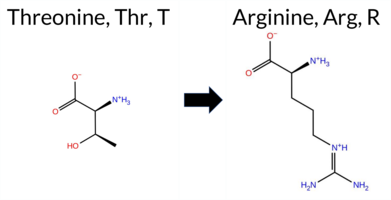 AIThe SynGAP1 missense variant T828R is not reported in ClinVar (no ClinVar ID) and is absent from gnomAD (no gnomAD ID). Prediction tools that agree on a benign effect include REVEL, PROVEAN, SIFT, ESM1b, FATHMM, AlphaMissense‑Optimized, and the SGM‑Consensus (Likely Benign). Tools that predict a pathogenic effect are polyPhen‑2 HumDiv, polyPhen‑2 HumVar, and AlphaMissense‑Default. High‑accuracy assessments show AlphaMissense‑Optimized as benign and the SGM‑Consensus as likely benign; Foldetta results are not available. Overall, the majority of evidence points to a benign impact for T828R, and this conclusion does not contradict the ClinVar status, which currently contains no entry for this variant. Disclaimer: This summary was generated using AI and should be interpreted alongside expert review. | Likely Benign | 0.604312 | Disordered | 0.631236 | Binding | 0.321 | 0.879 | 0.500 | -4.887 | Likely Benign | 0.773 | Likely Pathogenic | Likely Benign | 0.184 | Likely Benign | -1.38 | Neutral | 1.000 | Probably Damaging | 0.999 | Probably Damaging | 2.64 | Benign | 0.47 | Tolerated | 0.0815 | 0.2530 | -1 | -1 | -3.8 | 55.08 | |||||||||||||||||||||||||||||||||||||||
| c.3328A>C | S1110R 2D AIThe SynGAP1 missense variant S1110R is not reported in ClinVar (ClinVar ID = None) and is absent from gnomAD (gnomAD ID = None). Prediction tools that agree on a benign effect include REVEL, PROVEAN, polyPhen‑2 HumDiv, polyPhen‑2 HumVar, ESM1b, and AlphaMissense‑Optimized. Tools that predict a pathogenic effect are SIFT, FATHMM, and AlphaMissense‑Default. High‑accuracy assessments show AlphaMissense‑Optimized as benign, while the SGM Consensus (majority vote from AlphaMissense‑Default, ESM1b, FATHMM, and PROVEAN) is inconclusive due to a 2‑to‑2 split, and Foldetta results are unavailable. Overall, the balance of evidence (six benign versus three pathogenic predictions) indicates that the variant is most likely benign. This conclusion does not contradict ClinVar status, as the variant has no ClinVar entry. Disclaimer: This summary was generated using AI and should be interpreted alongside expert review. | 0.912647 | Disordered | 0.934156 | Binding | 0.346 | 0.892 | 0.875 | -5.075 | Likely Benign | 0.773 | Likely Pathogenic | Likely Benign | 0.065 | Likely Benign | -2.46 | Neutral | 0.144 | Benign | 0.042 | Benign | 2.31 | Pathogenic | 0.01 | Affected | 0.1057 | 0.3571 | 0 | -1 | -3.7 | 69.11 | ||||||||||||||||||||||||||||||||||||||||
| c.3330C>A | S1110R 2D AIThe SynGAP1 missense variant S1110R is not reported in ClinVar (ClinVar ID = None) and is absent from gnomAD (gnomAD ID = None). Prediction tools that agree on a benign effect include REVEL, PROVEAN, polyPhen‑2 HumDiv, polyPhen‑2 HumVar, ESM1b, and AlphaMissense‑Optimized. Tools that predict a pathogenic effect are SIFT, FATHMM, and AlphaMissense‑Default. High‑accuracy assessments show AlphaMissense‑Optimized as benign, while the SGM Consensus (majority vote from AlphaMissense‑Default, ESM1b, FATHMM, PROVEAN) is inconclusive due to a 2‑to‑2 split, and Foldetta results are unavailable. Overall, the majority of evidence (six benign vs. three pathogenic predictions) points to a benign impact. This conclusion is consistent with the lack of ClinVar annotation; there is no contradiction with ClinVar status. Disclaimer: This summary was generated using AI and should be interpreted alongside expert review. | 0.912647 | Disordered | 0.934156 | Binding | 0.346 | 0.892 | 0.875 | -5.075 | Likely Benign | 0.773 | Likely Pathogenic | Likely Benign | 0.043 | Likely Benign | -2.46 | Neutral | 0.144 | Benign | 0.042 | Benign | 2.31 | Pathogenic | 0.01 | Affected | 0.1057 | 0.3571 | 0 | -1 | -3.7 | 69.11 | ||||||||||||||||||||||||||||||||||||||||
| c.3330C>G | S1110R 2D AIThe SynGAP1 missense variant S1110R is not reported in ClinVar (ClinVar ID = None) and is absent from gnomAD (gnomAD ID = None). Prediction tools that agree on a benign effect include REVEL, PROVEAN, polyPhen‑2 HumDiv, polyPhen‑2 HumVar, ESM1b, and AlphaMissense‑Optimized. Tools that predict a pathogenic effect are SIFT, FATHMM, and AlphaMissense‑Default. High‑accuracy assessments show AlphaMissense‑Optimized as benign, while the SGM Consensus (majority vote from AlphaMissense‑Default, ESM1b, FATHMM, PROVEAN) is inconclusive due to a 2‑to‑2 split, and Foldetta results are unavailable. Overall, the majority of evidence (six benign vs. three pathogenic predictions) points to a benign impact. This conclusion is consistent with the lack of ClinVar annotation; there is no contradiction with ClinVar status. Disclaimer: This summary was generated using AI and should be interpreted alongside expert review. | 0.912647 | Disordered | 0.934156 | Binding | 0.346 | 0.892 | 0.875 | -5.075 | Likely Benign | 0.773 | Likely Pathogenic | Likely Benign | 0.043 | Likely Benign | -2.46 | Neutral | 0.144 | Benign | 0.042 | Benign | 2.31 | Pathogenic | 0.01 | Affected | 0.1057 | 0.3571 | 0 | -1 | -3.7 | 69.11 | ||||||||||||||||||||||||||||||||||||||||
| c.1066C>T | R356C 2D 3DClick to see structure in 3D Viewer AIThe SynGAP1 missense variant R356C is listed in ClinVar as Benign (ClinVar ID 469145.0) and is present in gnomAD (ID 6‑33437971‑C‑T). Functional prediction tools cluster into two groups: benign predictions from REVEL and AlphaMissense‑Optimized, and pathogenic predictions from PROVEAN, polyPhen‑2 (HumDiv and HumVar), SIFT, ESM1b, FATHMM, AlphaMissense‑Default, and the SGM‑Consensus score. Uncertain results are reported by FoldX, Rosetta, Foldetta, and premPS. High‑accuracy assessments show AlphaMissense‑Optimized as benign, the SGM‑Consensus (majority vote of AlphaMissense‑Default, ESM1b, FATHMM, PROVEAN) as pathogenic, and Foldetta as inconclusive. Overall, the majority of evidence points to a pathogenic effect, contradicting the ClinVar benign classification. Disclaimer: This summary was generated using AI and should be interpreted alongside expert review. | Likely Pathogenic | C2 | 0.219301 | Structured | 0.395028 | Uncertain | 0.802 | 0.373 | 0.250 | Likely Benign | 1 | 6-33437971-C-T | 5 | 3.10e-6 | -11.827 | Likely Pathogenic | 0.774 | Likely Pathogenic | Likely Benign | 0.76 | Ambiguous | 0.0 | 1.19 | Ambiguous | 0.98 | Ambiguous | 0.84 | Ambiguous | 0.312 | Likely Benign | -7.12 | Deleterious | 1.000 | Probably Damaging | 0.990 | Probably Damaging | 1.67 | Pathogenic | 0.00 | Affected | 3.39 | 22 | 0.3238 | 0.3618 | -4 | -3 | 7.0 | -53.05 | 212.3 | 91.0 | -0.1 | 0.3 | -0.3 | 0.1 | X | Potentially Pathogenic | Arg356 is located in a loop that includes a short helical section and connects two anti-parallel β sheet strands (res. Gly341-Pro349, res. Thr359-Pro364). In the WT simulations, the guanidinium group of Arg356 alternately forms salt bridges with the carboxylate groups of the GAP domain residues, Glu446 and Glu698. Arg356 also forms hydrogen bonds with the hydroxyl group of the GAP domain residue Thr691 and interacts with Met409 at the C2-GAP interface.In the variant simulations, the Cys356 mutation fails to maintain any of the Arg356 interactions and only occasionally forms weak hydrogen bonds with nearby C2 domain residues (e.g., Gln407). Although no negative structural effects are observed during the simulations, Arg356 is located at the C2 and GAP domain interface, making the residue swap potentially detrimental to the tertiary structure assembly. | |||||||||||||
| c.1816A>T | S606C 2D 3DClick to see structure in 3D Viewer AIThe SynGAP1 missense variant S606C is not reported in ClinVar (ClinVar ID None) and has no entry in gnomAD (gnomAD ID None). Prediction tools that agree on a benign effect include REVEL, FoldX, Rosetta, Foldetta, premPS, FATHMM, and AlphaMissense‑Optimized. Tools that predict a pathogenic effect are PROVEAN, polyPhen‑2 HumDiv, polyPhen‑2 HumVar, SIFT, ESM1b, and AlphaMissense‑Default. The SGM‑Consensus, derived from a majority vote of AlphaMissense‑Default, ESM1b, FATHMM, and PROVEAN, reports the variant as Likely Pathogenic. High‑accuracy assessments show AlphaMissense‑Optimized as Benign, Foldetta (combining FoldX‑MD and Rosetta outputs) as Benign, and the SGM‑Consensus as Likely Pathogenic. No prediction or folding stability result is missing or inconclusive. Based on the overall distribution of predictions, the variant is most likely benign, although the SGM‑Consensus suggests pathogenicity; this does not contradict any ClinVar status because the variant is not yet classified in ClinVar. Disclaimer: This summary was generated using AI and should be interpreted alongside expert review. | Likely Pathogenic | GAP | 0.041405 | Structured | 0.191720 | Uncertain | 0.875 | 0.247 | 0.000 | -11.122 | Likely Pathogenic | 0.774 | Likely Pathogenic | Likely Benign | -0.34 | Likely Benign | 0.0 | -0.31 | Likely Benign | -0.33 | Likely Benign | 0.49 | Likely Benign | 0.348 | Likely Benign | -4.98 | Deleterious | 0.999 | Probably Damaging | 0.997 | Probably Damaging | 3.31 | Benign | 0.00 | Affected | 0.0986 | 0.4580 | 0 | -1 | 3.3 | 16.06 | |||||||||||||||||||||||||||||
| c.3530A>C | E1177A 2D AIThe SynGAP1 missense variant E1177A is not reported in ClinVar and is absent from gnomAD. Functional prediction tools cluster into two groups: benign predictions come from REVEL, PROVEAN, polyPhen‑2 HumVar, ESM1b, FATHMM, and AlphaMissense‑Optimized; pathogenic predictions arise from polyPhen‑2 HumDiv, SIFT, and AlphaMissense‑Default. The SGM‑Consensus, which aggregates AlphaMissense‑Default, ESM1b, FATHMM, and PROVEAN, reports a likely benign outcome, reflecting the 3:1 benign majority among its constituents. High‑accuracy assessments further support a benign interpretation: AlphaMissense‑Optimized is benign and the SGM‑Consensus is likely benign; Foldetta results are unavailable. Overall, the balance of evidence favors a benign effect for E1177A, and this conclusion does not conflict with ClinVar status, which currently contains no entry for the variant. Disclaimer: This summary was generated using AI and should be interpreted alongside expert review. | Likely Benign | Coiled-coil | 0.541878 | Disordered | 0.566503 | Binding | 0.542 | 0.705 | 0.250 | -3.050 | Likely Benign | 0.774 | Likely Pathogenic | Likely Benign | 0.467 | Likely Benign | -2.12 | Neutral | 0.905 | Possibly Damaging | 0.373 | Benign | 5.50 | Benign | 0.03 | Affected | 0.2919 | 0.4369 | 0 | -1 | 5.3 | -58.04 | ||||||||||||||||||||||||||||||||||||||
| c.400A>T | S134C 2D AIThe SynGAP1 missense variant S134C is not reported in ClinVar and is absent from gnomAD. Prediction tools that agree on a benign effect include REVEL, polyPhen2_HumVar, FATHMM, and AlphaMissense‑Optimized. Those that predict a pathogenic effect are PROVEAN, polyPhen2_HumDiv, SIFT, ESM1b, and AlphaMissense‑Default. The SGM‑Consensus, derived from a majority vote of AlphaMissense‑Default, ESM1b, FATHMM, and PROVEAN, classifies the variant as Likely Pathogenic. High‑accuracy assessments show AlphaMissense‑Optimized as benign, while the SGM‑Consensus remains pathogenic; Foldetta results are unavailable. Overall, the majority of tools and the consensus prediction lean toward pathogenicity, which is not contradicted by ClinVar (no entry) but is opposed by the AlphaMissense‑Optimized benign call. Disclaimer: This summary was generated using AI and should be interpreted alongside expert review. | Likely Pathogenic | 0.447574 | Structured | 0.695837 | Binding | 0.333 | 0.898 | 0.250 | -9.184 | Likely Pathogenic | 0.774 | Likely Pathogenic | Likely Benign | 0.247 | Likely Benign | -3.12 | Deleterious | 0.876 | Possibly Damaging | 0.417 | Benign | 3.79 | Benign | 0.00 | Affected | 0.0767 | 0.5151 | 0 | -1 | 3.3 | 16.06 | |||||||||||||||||||||||||||||||||||||||
| c.494G>T | S165I 2D AISynGAP1 missense variant S165I has no ClinVar record and is absent from gnomAD. Individual prediction tools cluster into two groups: benign predictions come from REVEL, polyPhen‑2 HumDiv, polyPhen‑2 HumVar, FATHMM, and AlphaMissense‑Optimized; pathogenic predictions come from PROVEAN, SIFT, ESM1b, and AlphaMissense‑Default. The SGM‑Consensus, which aggregates AlphaMissense‑Default, ESM1b, FATHMM, and PROVEAN, reports the variant as Likely Pathogenic. High‑accuracy assessments show AlphaMissense‑Optimized as benign, while the SGM‑Consensus remains Likely Pathogenic; Foldetta stability analysis is unavailable. Overall, the majority of single‑tool predictions favor a benign effect, whereas the consensus score suggests pathogenicity. Consequently, the variant is most likely benign according to the bulk of evidence, and this assessment does not contradict any ClinVar annotation (none exists). Disclaimer: This summary was generated using AI and should be interpreted alongside expert review. | Likely Pathogenic | 0.429200 | Structured | 0.509123 | Binding | 0.324 | 0.644 | 0.250 | -11.304 | Likely Pathogenic | 0.774 | Likely Pathogenic | Likely Benign | 0.259 | Likely Benign | -2.53 | Deleterious | 0.084 | Benign | 0.031 | Benign | 3.96 | Benign | 0.00 | Affected | 0.0943 | 0.5027 | -1 | -2 | 5.3 | 26.08 | |||||||||||||||||||||||||||||||||||||||
| c.1186G>C | G396R 2D 3DClick to see structure in 3D Viewer AIThe SynGAP1 G396R missense variant is not reported in ClinVar and is absent from gnomAD. Prediction tools that agree on benign impact include REVEL, polyPhen‑2 HumVar, SIFT, FATHMM, and AlphaMissense‑Optimized. Those that predict pathogenicity are PROVEAN, polyPhen‑2 HumDiv, ESM1b, AlphaMissense‑Default, and the SGM‑Consensus (majority vote of AlphaMissense‑Default, ESM1b, FATHMM, PROVEAN). Four tools (FoldX, Rosetta, Foldetta, premPS) returned uncertain or inconclusive results. High‑accuracy assessments show AlphaMissense‑Optimized as benign, SGM‑Consensus as likely pathogenic, and Foldetta (combining FoldX‑MD and Rosetta outputs) as uncertain. Overall, the variant is more frequently predicted to be pathogenic (five tools) than benign (five tools), and the high‑accuracy consensus leans toward pathogenicity, though Foldetta does not provide a definitive verdict. Thus, the variant is most likely pathogenic based on the current predictions, and this assessment does not contradict any ClinVar status because no ClinVar entry exists. Disclaimer: This summary was generated using AI and should be interpreted alongside expert review. | Likely Pathogenic | C2 | 0.414856 | Structured | 0.394626 | Uncertain | 0.640 | 0.584 | 0.500 | -9.310 | Likely Pathogenic | 0.775 | Likely Pathogenic | Likely Benign | 1.68 | Ambiguous | 1.1 | 1.56 | Ambiguous | 1.62 | Ambiguous | 0.66 | Ambiguous | 0.319 | Likely Benign | -2.65 | Deleterious | 0.718 | Possibly Damaging | 0.216 | Benign | 4.42 | Benign | 0.24 | Tolerated | 0.0986 | 0.4007 | -3 | -2 | -4.1 | 99.14 | |||||||||||||||||||||||||||||
| c.179A>G | D60G 2D AIThe SynGAP1 D60G missense variant is not reported in ClinVar (no ClinVar ID) and is absent from gnomAD (no gnomAD ID). Prediction tools that agree on a benign effect include REVEL, PROVEAN, ESM1b, FATHMM, and AlphaMissense‑Optimized, while those that predict a pathogenic effect are polyPhen‑2 HumDiv, polyPhen‑2 HumVar, SIFT, and AlphaMissense‑Default. The SGM‑Consensus, which aggregates AlphaMissense‑Default, ESM1b, FATHMM, and PROVEAN, reports a Likely Benign classification. High‑accuracy assessments show AlphaMissense‑Optimized as Benign and the SGM‑Consensus as Likely Benign; Foldetta results are unavailable. Overall, the majority of evidence points to a benign impact, and this conclusion does not contradict the ClinVar status, which currently contains no entry for this variant. Disclaimer: This summary was generated using AI and should be interpreted alongside expert review. | Likely Benign | 0.284882 | Structured | 0.480942 | Uncertain | 0.521 | 0.676 | 0.000 | -4.423 | Likely Benign | 0.775 | Likely Pathogenic | Likely Benign | 0.128 | Likely Benign | -1.67 | Neutral | 0.805 | Possibly Damaging | 0.857 | Possibly Damaging | 3.94 | Benign | 0.00 | Affected | 0.4143 | 0.7069 | 1 | -1 | 3.1 | -58.04 | |||||||||||||||||||||||||||||||||||||||
| c.1913A>C | K638T 2D 3DClick to see structure in 3D Viewer AIThe SynGAP1 missense variant K638T is not reported in ClinVar and is absent from gnomAD. Consensus from standard in silico predictors shows a split: benign calls come from REVEL, Rosetta, premPS, FATHMM, and AlphaMissense‑Optimized, whereas pathogenic calls arise from PROVEAN, polyPhen‑2 (HumDiv and HumVar), SIFT, ESM1b, and AlphaMissense‑Default; FoldX and Foldetta are inconclusive. High‑accuracy assessments give AlphaMissense‑Optimized a benign score, while the SGM Consensus (majority vote of AlphaMissense‑Default, ESM1b, FATHMM, PROVEAN) indicates likely pathogenic, and Foldetta remains uncertain. Overall, the balance of evidence favors a pathogenic effect for K638T. This prediction is not contradicted by ClinVar, which contains no entry for the variant. Disclaimer: This summary was generated using AI and should be interpreted alongside expert review. | Likely Pathogenic | GAP | 0.045352 | Structured | 0.098064 | Uncertain | 0.937 | 0.260 | 0.000 | -8.856 | Likely Pathogenic | 0.775 | Likely Pathogenic | Likely Benign | 0.87 | Ambiguous | 0.0 | 0.23 | Likely Benign | 0.55 | Ambiguous | 0.07 | Likely Benign | 0.404 | Likely Benign | -5.39 | Deleterious | 0.999 | Probably Damaging | 0.998 | Probably Damaging | 3.52 | Benign | 0.03 | Affected | 0.1632 | 0.2619 | 0 | -1 | 3.2 | -27.07 | |||||||||||||||||||||||||||||
| c.2048T>C | I683T 2D 3DClick to see structure in 3D Viewer AIThe SynGAP1 missense variant I683T has no ClinVar record and is not reported in gnomAD. Prediction tools that agree on a benign effect include SIFT, FATHMM, and AlphaMissense‑Optimized, whereas a majority of tools predict pathogenicity: SGM‑Consensus, REVEL, premPS, PROVEAN, polyPhen‑2 (HumDiv and HumVar), ESM1b, and AlphaMissense‑Default. High‑accuracy assessments further support this pattern: AlphaMissense‑Optimized classifies the variant as benign, while the SGM‑Consensus (a majority vote of AlphaMissense‑Default, ESM1b, FATHMM, and PROVEAN) indicates it is likely pathogenic; the Foldetta stability analysis is inconclusive and therefore unavailable. Taken together, the preponderance of evidence points to a pathogenic effect for I683T. This conclusion does not contradict ClinVar status, which currently contains no classification for the variant. Disclaimer: This summary was generated using AI and should be interpreted alongside expert review. | Likely Pathogenic | GAP | 0.200174 | Structured | 0.143268 | Uncertain | 0.848 | 0.314 | 0.000 | -9.891 | Likely Pathogenic | 0.775 | Likely Pathogenic | Likely Benign | 1.67 | Ambiguous | 0.1 | 1.35 | Ambiguous | 1.51 | Ambiguous | 1.25 | Destabilizing | 0.548 | Likely Pathogenic | -4.77 | Deleterious | 0.999 | Probably Damaging | 0.981 | Probably Damaging | 3.29 | Benign | 0.08 | Tolerated | 0.1090 | 0.0880 | 0 | -1 | -5.2 | -12.05 | |||||||||||||||||||||||||||||
| c.3292A>C | S1098R 2D AIThe SynGAP1 missense variant S1098R is not reported in ClinVar (no ClinVar ID) and is absent from gnomAD (no gnomAD ID). Prediction tools that agree on a benign effect include REVEL, PROVEAN, polyPhen‑2 HumVar, SIFT, ESM1b, FATHMM, and AlphaMissense‑Optimized. Tools that predict a pathogenic effect are polyPhen‑2 HumDiv and AlphaMissense‑Default. The SGM‑Consensus, which aggregates AlphaMissense‑Default, ESM1b, FATHMM, and PROVEAN, is classified as Likely Benign, reflecting the majority of benign predictions. High‑accuracy assessments show AlphaMissense‑Optimized as Benign, and the SGM‑Consensus (majority vote) also indicates Benign. Foldetta results are not available, so no stability evidence is considered. Overall, the majority of computational evidence supports a benign impact for S1098R, and this is consistent with the lack of any ClinVar pathogenic annotation. Disclaimer: This summary was generated using AI and should be interpreted alongside expert review. | Likely Benign | 0.919029 | Disordered | 0.973030 | Binding | 0.337 | 0.855 | 1.000 | -4.583 | Likely Benign | 0.775 | Likely Pathogenic | Likely Benign | 0.127 | Likely Benign | -1.00 | Neutral | 0.586 | Possibly Damaging | 0.223 | Benign | 2.72 | Benign | 0.16 | Tolerated | 0.1053 | 0.4012 | 0 | -1 | -3.7 | 69.11 | |||||||||||||||||||||||||||||||||||||||
| c.3294T>A | S1098R 2D AIThe SynGAP1 missense variant S1098R is not reported in ClinVar (no ClinVar ID) and is absent from gnomAD (no gnomAD ID). Prediction tools that agree on a benign effect include REVEL, PROVEAN, polyPhen‑2 HumVar, SIFT, ESM1b, FATHMM, and AlphaMissense‑Optimized. Tools that predict a pathogenic effect are polyPhen‑2 HumDiv and AlphaMissense‑Default. The SGM‑Consensus, which aggregates AlphaMissense‑Default, ESM1b, FATHMM, and PROVEAN, is classified as Likely Benign (three benign votes versus one pathogenic). High‑accuracy assessments therefore support a benign outcome: AlphaMissense‑Optimized is benign, SGM‑Consensus is benign, and the protein‑folding stability method Foldetta is not available for this variant. Based on the collective predictions, the variant is most likely benign, and this assessment does not contradict any ClinVar status (none is reported). Disclaimer: This summary was generated using AI and should be interpreted alongside expert review. | Likely Benign | 0.919029 | Disordered | 0.973030 | Binding | 0.337 | 0.855 | 1.000 | -4.583 | Likely Benign | 0.775 | Likely Pathogenic | Likely Benign | 0.133 | Likely Benign | -1.00 | Neutral | 0.586 | Possibly Damaging | 0.223 | Benign | 2.72 | Benign | 0.16 | Tolerated | 0.1053 | 0.4012 | 0 | -1 | -3.7 | 69.11 | |||||||||||||||||||||||||||||||||||||||
| c.3294T>G | S1098R 2D AIThe SynGAP1 missense variant S1098R is not reported in ClinVar (no ClinVar ID) and is absent from gnomAD (no gnomAD ID). Prediction tools that agree on a benign effect include REVEL, PROVEAN, polyPhen‑2 HumVar, SIFT, ESM1b, FATHMM, and AlphaMissense‑Optimized. Tools that predict a pathogenic effect are polyPhen‑2 HumDiv and AlphaMissense‑Default. The SGM‑Consensus, which aggregates AlphaMissense‑Default, ESM1b, FATHMM, and PROVEAN, is classified as Likely Benign (three benign votes versus one pathogenic). High‑accuracy assessments therefore support a benign outcome: AlphaMissense‑Optimized is benign, SGM‑Consensus is benign, and the protein‑folding stability method Foldetta is not available for this variant. Based on the collective predictions, the variant is most likely benign, and this assessment does not contradict any ClinVar status (none is reported). Disclaimer: This summary was generated using AI and should be interpreted alongside expert review. | Likely Benign | 0.919029 | Disordered | 0.973030 | Binding | 0.337 | 0.855 | 1.000 | -4.583 | Likely Benign | 0.775 | Likely Pathogenic | Likely Benign | 0.134 | Likely Benign | -1.00 | Neutral | 0.586 | Possibly Damaging | 0.223 | Benign | 2.72 | Benign | 0.16 | Tolerated | 0.1053 | 0.4012 | 0 | -1 | -3.7 | 69.11 | |||||||||||||||||||||||||||||||||||||||
| c.3532T>C | Y1178H 2D AIThe SynGAP1 missense variant Y1178H is not reported in ClinVar (ClinVar ID None) and is absent from gnomAD (gnomAD ID None). Prediction tools that agree on a benign effect include REVEL, PROVEAN, ESM1b, FATHMM, and AlphaMissense‑Optimized. Tools that predict a pathogenic effect are polyPhen‑2 HumDiv, polyPhen‑2 HumVar, SIFT, and AlphaMissense‑Default. The SGM‑Consensus, derived from a majority vote of AlphaMissense‑Default, ESM1b, FATHMM, and PROVEAN, reports the variant as Likely Benign. High‑accuracy assessments show AlphaMissense‑Optimized as Benign and the SGM‑Consensus as Likely Benign; Foldetta, a protein‑folding stability method combining FoldX‑MD and Rosetta outputs, has no available result for this variant. Overall, the balance of evidence points to a benign impact, and this conclusion does not contradict the absence of a ClinVar classification. Disclaimer: This summary was generated using AI and should be interpreted alongside expert review. | Likely Benign | Coiled-coil | 0.541878 | Disordered | 0.568433 | Binding | 0.554 | 0.688 | 0.250 | -2.926 | Likely Benign | 0.775 | Likely Pathogenic | Likely Benign | 0.340 | Likely Benign | -0.78 | Neutral | 0.995 | Probably Damaging | 0.892 | Possibly Damaging | 5.48 | Benign | 0.03 | Affected | 0.2272 | 0.0341 | 0 | 2 | -1.9 | -26.03 | ||||||||||||||||||||||||||||||||||||||
| c.430A>C | T144P 2D AIThe SynGAP1 missense variant T144P is not reported in ClinVar (no ClinVar ID) and is absent from gnomAD (no gnomAD ID). Prediction tools that classify the variant as benign include REVEL, polyPhen‑2 HumDiv, polyPhen‑2 HumVar, FATHMM, and AlphaMissense‑Optimized. Tools that predict pathogenicity are PROVEAN, SIFT, ESM1b, and AlphaMissense‑Default. The SGM‑Consensus, which aggregates the majority vote from AlphaMissense‑Default, ESM1b, FATHMM, and PROVEAN, reports the variant as Likely Pathogenic. High‑accuracy assessments show AlphaMissense‑Optimized as benign, SGM‑Consensus as likely pathogenic, and Foldetta (a protein‑folding stability method combining FoldX‑MD and Rosetta outputs) has no available result for this variant. Overall, the majority of predictions and the consensus call indicate a pathogenic effect. This conclusion is not contradicted by ClinVar status, which is currently unreported. Disclaimer: This summary was generated using AI and should be interpreted alongside expert review. | Likely Pathogenic | 0.666105 | Disordered | 0.524000 | Binding | 0.335 | 0.838 | 0.625 | -11.920 | Likely Pathogenic | 0.775 | Likely Pathogenic | Likely Benign | 0.159 | Likely Benign | -2.66 | Deleterious | 0.000 | Benign | 0.000 | Benign | 3.76 | Benign | 0.00 | Affected | 0.2508 | 0.5271 | 0 | -1 | -0.9 | -3.99 | |||||||||||||||||||||||||||||||||||||||
| c.1649C>G | A550G 2D 3DClick to see structure in 3D Viewer AIThe SynGAP1 A550G missense variant is not reported in ClinVar (ClinVar ID None) and has no entries in gnomAD (gnomAD ID None). Prediction tools that agree on a benign effect include only AlphaMissense‑Optimized. Tools that agree on a pathogenic effect are SGM‑Consensus, REVEL, PROVEAN, polyPhen‑2 HumDiv, polyPhen‑2 HumVar, SIFT, ESM1b, FATHMM, and AlphaMissense‑Default. FoldX, Rosetta, Foldetta, and premPS are inconclusive and are treated as unavailable. High‑accuracy assessments show AlphaMissense‑Optimized predicting benign, while the SGM‑Consensus (majority vote of AlphaMissense‑Default, ESM1b, FATHMM, PROVEAN) predicts pathogenic. Foldetta, which integrates FoldX‑MD and Rosetta outputs, is uncertain. Overall, the majority of reliable predictors indicate a pathogenic effect. This conclusion does not contradict ClinVar status, as no ClinVar classification exists for this variant. Disclaimer: This summary was generated using AI and should be interpreted alongside expert review. | Likely Pathogenic | GAP | 0.018106 | Structured | 0.007241 | Uncertain | 0.954 | 0.265 | 0.000 | -15.086 | Likely Pathogenic | 0.776 | Likely Pathogenic | Likely Benign | 1.73 | Ambiguous | 0.0 | 1.82 | Ambiguous | 1.78 | Ambiguous | 0.85 | Ambiguous | 0.769 | Likely Pathogenic | -3.79 | Deleterious | 0.999 | Probably Damaging | 0.932 | Probably Damaging | -1.31 | Pathogenic | 0.01 | Affected | 0.1595 | 0.2758 | 1 | 0 | -2.2 | -14.03 | |||||||||||||||||||||||||||||
| c.2599G>T | G867W 2D AIThe SynGAP1 missense variant G867W is not reported in ClinVar (no ClinVar ID) and is absent from gnomAD (no gnomAD ID). Prediction tools that indicate a benign effect include REVEL, FATHMM, and AlphaMissense‑Optimized, whereas pathogenic predictions come from PROVEAN, polyPhen‑2 (HumDiv and HumVar), SIFT, ESM1b, and AlphaMissense‑Default. The SGM‑Consensus, derived from a majority vote of AlphaMissense‑Default, ESM1b, FATHMM, and PROVEAN, classifies the variant as Likely Pathogenic. High‑accuracy assessments show AlphaMissense‑Optimized as benign, while the SGM‑Consensus remains pathogenic; Foldetta, a protein‑folding stability method combining FoldX‑MD and Rosetta outputs, has no available result for this variant. Overall, the majority of evidence points toward a pathogenic effect, and this conclusion does not contradict any existing ClinVar annotation (none is present). Disclaimer: This summary was generated using AI and should be interpreted alongside expert review. | Likely Pathogenic | 0.517562 | Disordered | 0.657954 | Binding | 0.285 | 0.801 | 0.250 | -8.983 | Likely Pathogenic | 0.776 | Likely Pathogenic | Likely Benign | 0.163 | Likely Benign | -2.95 | Deleterious | 1.000 | Probably Damaging | 0.996 | Probably Damaging | 2.64 | Benign | 0.01 | Affected | 0.0726 | 0.4584 | -7 | -2 | -0.5 | 129.16 | |||||||||||||||||||||||||||||||||||||||
| c.259T>A | S87T 2D AIThe SynGAP1 missense variant S87T is not reported in ClinVar (no ClinVar ID) and is absent from gnomAD (no gnomAD ID). Prediction tools that agree on a benign effect include REVEL, PROVEAN, polyPhen‑2 HumDiv, polyPhen‑2 HumVar, ESM1b, FATHMM, and AlphaMissense‑Optimized. Tools that predict a pathogenic effect are SIFT and AlphaMissense‑Default. The SGM‑Consensus, which aggregates AlphaMissense‑Default, ESM1b, FATHMM, and PROVEAN, is classified as Likely Benign. High‑accuracy assessments show AlphaMissense‑Optimized as benign, and the SGM‑Consensus (majority vote) also indicates benign. No Foldetta stability prediction is available for this variant. Overall, the majority of evidence points to a benign impact, and this conclusion does not contradict any ClinVar status, as none is assigned. Disclaimer: This summary was generated using AI and should be interpreted alongside expert review. | Likely Benign | 0.690604 | Disordered | 0.550904 | Binding | 0.302 | 0.878 | 0.500 | -6.706 | Likely Benign | 0.776 | Likely Pathogenic | Likely Benign | 0.032 | Likely Benign | -1.23 | Neutral | 0.140 | Benign | 0.153 | Benign | 3.80 | Benign | 0.00 | Affected | 0.1001 | 0.4708 | 1 | 1 | 0.1 | 14.03 | |||||||||||||||||||||||||||||||||||||||
| c.3591G>C | E1197D 2D AIThe SynGAP1 missense variant E1197D is not reported in ClinVar and is absent from gnomAD. Functional prediction tools cluster into two groups: benign predictions include REVEL, PROVEAN, SIFT, ESM1b, FATHMM, and AlphaMissense‑Optimized; pathogenic predictions come from polyPhen‑2 HumDiv, polyPhen‑2 HumVar, and AlphaMissense‑Default. The SGM‑Consensus, which aggregates AlphaMissense‑Default, ESM1b, FATHMM, and PROVEAN, resolves to a likely benign verdict. High‑accuracy assessments show AlphaMissense‑Optimized as benign, while the SGM‑Consensus (majority vote) also indicates benign. Foldetta stability analysis is unavailable for this residue. Overall, the balance of evidence favors a benign effect for E1197D, and this conclusion does not conflict with any ClinVar annotation, as none exists. Disclaimer: This summary was generated using AI and should be interpreted alongside expert review. | Likely Benign | Coiled-coil | 0.613573 | Disordered | 0.437361 | Uncertain | 0.827 | 0.599 | 0.250 | -5.158 | Likely Benign | 0.776 | Likely Pathogenic | Likely Benign | 0.348 | Likely Benign | -1.78 | Neutral | 0.997 | Probably Damaging | 0.992 | Probably Damaging | 5.41 | Benign | 0.16 | Tolerated | 0.1327 | 0.3535 | 3 | 2 | 0.0 | -14.03 | ||||||||||||||||||||||||||||||||||||||
| c.3591G>T | E1197D 2D AIThe SynGAP1 missense variant E1197D is not reported in ClinVar and is absent from gnomAD. Prediction tools that agree on a benign effect include REVEL, PROVEAN, SIFT, ESM1b, FATHMM, and AlphaMissense‑Optimized. Those that predict a pathogenic effect are polyPhen‑2 HumDiv, polyPhen‑2 HumVar, and AlphaMissense‑Default. The SGM‑Consensus, which is a majority vote from AlphaMissense‑Default, ESM1b, FATHMM, and PROVEAN, reports a likely benign outcome (3 benign vs. 1 pathogenic). High‑accuracy tools give the following results: AlphaMissense‑Optimized predicts benign; the SGM‑Consensus (majority vote) predicts benign; Foldetta (a protein‑folding stability method combining FoldX‑MD and Rosetta) has no available result for this variant. Overall, the preponderance of evidence points to a benign impact, and this assessment is not contradicted by any ClinVar annotation. Disclaimer: This summary was generated using AI and should be interpreted alongside expert review. | Likely Benign | Coiled-coil | 0.613573 | Disordered | 0.437361 | Uncertain | 0.827 | 0.599 | 0.250 | -5.158 | Likely Benign | 0.776 | Likely Pathogenic | Likely Benign | 0.348 | Likely Benign | -1.78 | Neutral | 0.997 | Probably Damaging | 0.992 | Probably Damaging | 5.41 | Benign | 0.16 | Tolerated | 0.1327 | 0.3535 | 3 | 2 | 0.0 | -14.03 | ||||||||||||||||||||||||||||||||||||||
| c.1449A>G | I483M 2D 3DClick to see structure in 3D Viewer AIThe SynGAP1 I483M missense variant is not reported in ClinVar (ClinVar status: not present) but is catalogued in gnomAD (gnomAD ID: 6‑33438481‑A‑G). Prediction tools that agree on a benign effect include REVEL, FoldX, FATHMM, AlphaMissense‑Optimized, and Foldetta. Tools that predict a pathogenic effect are premPS, PROVEAN, polyPhen‑2 HumDiv, polyPhen‑2 HumVar, SIFT, ESM1b, and AlphaMissense‑Default. The SGM Consensus, derived from a majority vote of AlphaMissense‑Default, ESM1b, FATHMM, and PROVEAN, classifies the variant as likely pathogenic. High‑accuracy assessments show AlphaMissense‑Optimized as benign, SGM Consensus as pathogenic, and Foldetta as benign. No conclusive folding‑stability result is available from Rosetta. Overall, the majority of high‑accuracy tools (two benign, one pathogenic) lean toward a benign interpretation, and this assessment is not contradicted by any ClinVar annotation. Thus, the variant is most likely benign based on current predictions. Disclaimer: This summary was generated using AI and should be interpreted alongside expert review. | Likely Pathogenic | GAP | 0.206376 | Structured | 0.415850 | Uncertain | 0.798 | 0.254 | 0.000 | 6-33438481-A-G | 1 | 6.20e-7 | -8.839 | Likely Pathogenic | 0.777 | Likely Pathogenic | Likely Benign | 0.02 | Likely Benign | 0.0 | 0.73 | Ambiguous | 0.38 | Likely Benign | 1.06 | Destabilizing | 0.261 | Likely Benign | -2.78 | Deleterious | 1.000 | Probably Damaging | 1.000 | Probably Damaging | 3.26 | Benign | 0.05 | Affected | 3.37 | 32 | 0.0607 | 0.1959 | 1 | 2 | -2.6 | 18.03 | ||||||||||||||||||||||||
| c.1561G>C | E521Q 2D 3DClick to see structure in 3D Viewer AIThe SynGAP1 E521Q missense variant is not reported in ClinVar (ClinVar ID None) and is absent from gnomAD (gnomAD ID None). Prediction tools that agree on a benign effect include REVEL, FoldX, Rosetta, Foldetta, premPS, PROVEAN, SIFT, FATHMM, and AlphaMissense‑Optimized. Tools that predict a pathogenic effect are polyPhen‑2 HumDiv, polyPhen‑2 HumVar, ESM1b, and AlphaMissense‑Default. High‑accuracy assessments show AlphaMissense‑Optimized as benign, while the SGM Consensus (majority vote from AlphaMissense‑Default, ESM1b, FATHMM, PROVEAN) is inconclusive due to a 2‑to‑2 split, and Foldetta predicts a benign stability change. Overall, the majority of evidence (9 benign vs. 4 pathogenic predictions) supports a benign classification. This conclusion does not contradict ClinVar status, as no ClinVar assertion exists for this variant. Disclaimer: This summary was generated using AI and should be interpreted alongside expert review. | GAP | 0.086953 | Structured | 0.062387 | Uncertain | 0.865 | 0.349 | 0.000 | -8.310 | Likely Pathogenic | 0.777 | Likely Pathogenic | Likely Benign | -0.28 | Likely Benign | 0.2 | 0.19 | Likely Benign | -0.05 | Likely Benign | -0.06 | Likely Benign | 0.262 | Likely Benign | -2.15 | Neutral | 0.992 | Probably Damaging | 0.993 | Probably Damaging | 3.30 | Benign | 0.11 | Tolerated | 0.1580 | 0.6552 | 2 | 2 | 0.0 | -0.98 | ||||||||||||||||||||||||||||||
| c.1850A>G | E617G 2D 3DClick to see structure in 3D Viewer AIThe SynGAP1 missense variant E617G is not reported in ClinVar and is absent from gnomAD. Prediction tools cluster into two groups: benign predictions come from premPS, SIFT, and AlphaMissense‑Optimized, whereas pathogenic predictions are made by SGM‑Consensus, REVEL, PROVEAN, polyPhen‑2 (HumDiv and HumVar), FATHMM, and AlphaMissense‑Default. Uncertain results are reported by FoldX, Rosetta, Foldetta, and ESM1b. High‑accuracy methods give a mixed picture: AlphaMissense‑Optimized predicts benign, the SGM Consensus (majority vote of AlphaMissense‑Default, ESM1b, FATHMM, PROVEAN) predicts pathogenic, and Foldetta is uncertain. Overall, the majority of evidence points to a pathogenic effect. This conclusion is not contradicted by ClinVar, which contains no entry for this variant. Disclaimer: This summary was generated using AI and should be interpreted alongside expert review. | Likely Pathogenic | GAP | 0.111485 | Structured | 0.155123 | Uncertain | 0.877 | 0.240 | 0.000 | -7.984 | In-Between | 0.777 | Likely Pathogenic | Likely Benign | 0.59 | Ambiguous | 0.2 | 1.60 | Ambiguous | 1.10 | Ambiguous | 0.22 | Likely Benign | 0.701 | Likely Pathogenic | -4.99 | Deleterious | 1.000 | Probably Damaging | 0.998 | Probably Damaging | -1.41 | Pathogenic | 0.18 | Tolerated | 0.2344 | 0.5442 | 0 | -2 | 3.1 | -72.06 | |||||||||||||||||||||||||||||
| c.3681A>C | E1227D 2D AIThe SynGAP1 missense variant E1227D is not reported in ClinVar and has no entry in gnomAD. Prediction tools that agree on a benign effect include REVEL, PROVEAN, ESM1b, FATHMM, and AlphaMissense‑Optimized, while pathogenic predictions come from polyPhen‑2 HumDiv, polyPhen‑2 HumVar, SIFT, and AlphaMissense‑Default. The SGM‑Consensus, derived from a majority vote of AlphaMissense‑Default, ESM1b, FATHMM, and PROVEAN, is classified as Likely Benign. High‑accuracy assessments further support a benign outcome: AlphaMissense‑Optimized predicts benign, and the SGM‑Consensus (majority of the high‑accuracy tools) also indicates benign. Foldetta, a protein‑folding stability method combining FoldX‑MD and Rosetta outputs, has no available result for this variant. Overall, the balance of evidence, including the high‑accuracy tools, points to the variant being most likely benign, and this conclusion does not contradict the absence of a ClinVar classification. Disclaimer: This summary was generated using AI and should be interpreted alongside expert review. | Likely Benign | Coiled-coil | 0.513880 | Disordered | 0.433399 | Uncertain | 0.860 | 0.544 | 0.500 | -5.675 | Likely Benign | 0.777 | Likely Pathogenic | Likely Benign | 0.172 | Likely Benign | -1.67 | Neutral | 0.997 | Probably Damaging | 0.992 | Probably Damaging | 2.60 | Benign | 0.00 | Affected | 0.1363 | 0.4161 | 3 | 2 | 0.0 | -14.03 | ||||||||||||||||||||||||||||||||||||||
| c.3681A>T | E1227D 2D AIThe SynGAP1 missense variant E1227D is not reported in ClinVar and has no entry in gnomAD. Prediction tools that agree on a benign effect include REVEL, PROVEAN, ESM1b, FATHMM, and AlphaMissense‑Optimized, while pathogenic predictions come from polyPhen‑2 HumDiv, polyPhen‑2 HumVar, SIFT, and AlphaMissense‑Default. The SGM‑Consensus, derived from a majority vote of AlphaMissense‑Default, ESM1b, FATHMM, and PROVEAN, is classified as Likely Benign. High‑accuracy assessments further support a benign outcome: AlphaMissense‑Optimized predicts benign, and the SGM‑Consensus (majority of the high‑accuracy tools) also indicates benign. Foldetta, a protein‑folding stability method combining FoldX‑MD and Rosetta outputs, has no available result for this variant. Overall, the balance of evidence, including the high‑accuracy tools, points to the variant being most likely benign, and this conclusion does not contradict the absence of a ClinVar classification. Disclaimer: This summary was generated using AI and should be interpreted alongside expert review. | Likely Benign | Coiled-coil | 0.513880 | Disordered | 0.433399 | Uncertain | 0.860 | 0.544 | 0.500 | -5.675 | Likely Benign | 0.777 | Likely Pathogenic | Likely Benign | 0.170 | Likely Benign | -1.67 | Neutral | 0.997 | Probably Damaging | 0.992 | Probably Damaging | 2.60 | Benign | 0.00 | Affected | 0.1363 | 0.4161 | 3 | 2 | 0.0 | -14.03 | ||||||||||||||||||||||||||||||||||||||
| c.68A>C | D23A 2D AIThe SynGAP1 D23A missense variant is not reported in ClinVar (ClinVar ID = None) and is absent from gnomAD (gnomAD ID = None). Prediction tools that agree on a benign effect include REVEL, ESM1b, FATHMM, and AlphaMissense‑Optimized. Tools that predict a pathogenic effect are PROVEAN, polyPhen‑2 (HumDiv and HumVar), SIFT, and AlphaMissense‑Default. High‑accuracy assessments show AlphaMissense‑Optimized as benign, while the SGM Consensus (majority vote from AlphaMissense‑Default, ESM1b, FATHMM, and PROVEAN) is inconclusive due to a 2‑to‑2 split, and Foldetta results are unavailable. Overall, the majority of predictions (five pathogenic versus four benign) suggest a pathogenic impact. This conclusion does not contradict ClinVar status, as the variant has no existing ClinVar classification. Disclaimer: This summary was generated using AI and should be interpreted alongside expert review. | 0.557691 | Disordered | 0.440341 | Uncertain | 0.369 | 0.892 | 0.375 | -2.732 | Likely Benign | 0.777 | Likely Pathogenic | Likely Benign | 0.112 | Likely Benign | -2.57 | Deleterious | 0.909 | Possibly Damaging | 0.539 | Possibly Damaging | 3.52 | Benign | 0.00 | Affected | 0.4613 | 0.8203 | 0 | -2 | 5.3 | -44.01 | ||||||||||||||||||||||||||||||||||||||||
| c.946A>G | N316D 2D 3DClick to see structure in 3D Viewer AIThe SynGAP1 missense variant N316D is not reported in ClinVar (ClinVar ID: None) and is absent from gnomAD (gnomAD ID: None). Prediction tools that agree on a benign effect include REVEL, Rosetta, SIFT, and AlphaMissense‑Optimized. Tools that predict a pathogenic effect comprise SGM‑Consensus (Likely Pathogenic), PROVEAN, polyPhen‑2 HumDiv, polyPhen‑2 HumVar, ESM1b, FATHMM, and AlphaMissense‑Default. High‑accuracy assessments show AlphaMissense‑Optimized as benign, while the SGM‑Consensus (majority vote of AlphaMissense‑Default, ESM1b, FATHMM, PROVEAN) is pathogenic. Foldetta, which integrates FoldX‑MD and Rosetta stability outputs, is uncertain and therefore not considered evidence. Overall, seven of the evaluated tools predict pathogenicity versus four predicting benignity, indicating that the variant is most likely pathogenic. This assessment does not contradict ClinVar status, as no ClinVar classification is available. Disclaimer: This summary was generated using AI and should be interpreted alongside expert review. | Likely Pathogenic | C2 | 0.118441 | Structured | 0.385187 | Uncertain | 0.817 | 0.246 | 0.125 | -11.672 | Likely Pathogenic | 0.777 | Likely Pathogenic | Likely Benign | 1.18 | Ambiguous | 0.1 | 0.46 | Likely Benign | 0.82 | Ambiguous | 0.69 | Ambiguous | 0.293 | Likely Benign | -3.20 | Deleterious | 0.999 | Probably Damaging | 0.995 | Probably Damaging | 1.76 | Pathogenic | 0.25 | Tolerated | 0.1978 | 0.4596 | 2 | 1 | 0.0 | 0.98 | |||||||||||||||||||||||||||||
| c.1319A>T | N440I 2D AISynGAP1 missense variant N440I is not reported in ClinVar and is absent from gnomAD. Functional prediction tools show a split: benign calls come from REVEL, premPS, polyPhen‑2 (HumDiv and HumVar), FATHMM, and AlphaMissense‑Optimized, while pathogenic calls come from PROVEAN, SIFT, ESM1b, and AlphaMissense‑Default. Uncertain results are reported by FoldX, Rosetta, and Foldetta. High‑accuracy assessments indicate that AlphaMissense‑Optimized predicts a benign effect, whereas the SGM Consensus—derived from a majority vote of AlphaMissense‑Default, ESM1b, FATHMM, and PROVEAN—labels the variant as likely pathogenic; Foldetta remains inconclusive. Overall, the balance of evidence favors a pathogenic interpretation, and this conclusion does not contradict the absence of a ClinVar annotation. Disclaimer: This summary was generated using AI and should be interpreted alongside expert review. | Likely Pathogenic | GAP | 0.191378 | Structured | 0.267204 | Uncertain | 0.929 | 0.245 | 0.000 | -10.365 | Likely Pathogenic | 0.778 | Likely Pathogenic | Likely Benign | 0.97 | Ambiguous | 0.9 | 1.10 | Ambiguous | 1.04 | Ambiguous | 0.10 | Likely Benign | 0.100 | Likely Benign | -4.07 | Deleterious | 0.322 | Benign | 0.109 | Benign | 3.47 | Benign | 0.03 | Affected | 0.0554 | 0.3772 | -2 | -3 | 8.0 | -0.94 | |||||||||||||||||||||||||||||
| c.3826G>C | D1276H 2D AIThe SynGAP1 missense variant D1276H is not reported in ClinVar and is absent from gnomAD. Functional prediction tools cluster into two groups: benign predictions come from REVEL, ESM1b, and AlphaMissense‑Optimized, while pathogenic predictions are made by PROVEAN, polyPhen‑2 (HumDiv and HumVar), SIFT, FATHMM, and AlphaMissense‑Default. The SGM‑Consensus, which aggregates majority votes from AlphaMissense‑Default, ESM1b, FATHMM, and PROVEAN, labels the variant as Likely Pathogenic. High‑accuracy assessments further highlight discordance: AlphaMissense‑Optimized predicts a benign effect, whereas the SGM‑Consensus (a high‑accuracy consensus) indicates Likely Pathogenic. Foldetta, a protein‑folding stability method combining FoldX‑MD and Rosetta outputs, has no available result for this variant. Overall, the majority of predictions support a pathogenic effect, and this conclusion does not contradict any ClinVar annotation (none exists). Disclaimer: This summary was generated using AI and should be interpreted alongside expert review. | Likely Pathogenic | 0.666105 | Disordered | 0.802156 | Binding | 0.636 | 0.705 | 0.625 | 0.715 | Likely Benign | 0.778 | Likely Pathogenic | Likely Benign | 0.321 | Likely Benign | -5.08 | Deleterious | 0.996 | Probably Damaging | 0.898 | Possibly Damaging | 1.19 | Pathogenic | 0.00 | Affected | 0.1077 | 0.5697 | 1 | -1 | 0.3 | 22.05 | |||||||||||||||||||||||||||||||||||||||
| c.1240A>C | M414L 2D 3DClick to see structure in 3D Viewer AIThe SynGAP1 missense variant M414L is not reported in ClinVar (ClinVar ID None) and is absent from gnomAD (gnomAD ID None). Prediction tools that agree on a benign effect include REVEL, FoldX, Rosetta, PROVEAN, SIFT, and FATHMM, while polyPhen‑2 (HumDiv and HumVar) and AlphaMissense‑Default predict a pathogenic outcome. Uncertain predictions come from premPS and ESM1b. High‑accuracy assessments further support a benign interpretation: AlphaMissense‑Optimized is benign; the SGM Consensus (majority vote from AlphaMissense‑Default, ESM1b, FATHMM, PROVEAN) yields a benign verdict; and Foldetta, which integrates FoldX‑MD and Rosetta stability calculations, also predicts benign. Overall, the preponderance of evidence indicates that M414L is most likely benign, and this conclusion does not contradict the lack of ClinVar annotation. Disclaimer: This summary was generated using AI and should be interpreted alongside expert review. | GAP | 0.081712 | Structured | 0.329108 | Uncertain | 0.914 | 0.217 | 0.000 | -7.980 | In-Between | 0.779 | Likely Pathogenic | Likely Benign | 0.26 | Likely Benign | 0.0 | 0.33 | Likely Benign | 0.30 | Likely Benign | 0.64 | Ambiguous | 0.336 | Likely Benign | -2.40 | Neutral | 0.559 | Possibly Damaging | 0.495 | Possibly Damaging | 3.63 | Benign | 0.90 | Tolerated | 0.1323 | 0.4236 | 4 | 2 | 1.9 | -18.03 | ||||||||||||||||||||||||||||||
| c.1240A>T | M414L 2D 3DClick to see structure in 3D Viewer AIThe SynGAP1 missense variant M414L is not reported in ClinVar (ClinVar ID None) and is absent from gnomAD (gnomAD ID None). Prediction tools that agree on a benign effect include REVEL, FoldX, Rosetta, PROVEAN, SIFT, and FATHMM, while polyPhen‑2 (HumDiv and HumVar) and AlphaMissense‑Default predict a pathogenic outcome. Uncertain predictions come from premPS and ESM1b. High‑accuracy assessments further support a benign interpretation: AlphaMissense‑Optimized is benign; the SGM Consensus (majority vote from AlphaMissense‑Default, ESM1b, FATHMM, PROVEAN) yields a benign verdict; and Foldetta, which integrates FoldX‑MD and Rosetta stability calculations, also predicts benign. Overall, the preponderance of evidence indicates that M414L is most likely benign, and this conclusion does not contradict the lack of ClinVar annotation. Disclaimer: This summary was generated using AI and should be interpreted alongside expert review. | GAP | 0.081712 | Structured | 0.329108 | Uncertain | 0.914 | 0.217 | 0.000 | -7.980 | In-Between | 0.779 | Likely Pathogenic | Likely Benign | 0.26 | Likely Benign | 0.0 | 0.33 | Likely Benign | 0.30 | Likely Benign | 0.64 | Ambiguous | 0.336 | Likely Benign | -2.40 | Neutral | 0.559 | Possibly Damaging | 0.495 | Possibly Damaging | 3.63 | Benign | 0.90 | Tolerated | 0.1323 | 0.4236 | 4 | 2 | 1.9 | -18.03 | ||||||||||||||||||||||||||||||
| c.162C>A | N54K 2D AIThe SynGAP1 missense variant N54K is not reported in ClinVar (ClinVar ID: None) and is absent from gnomAD (gnomAD ID: None). Prediction tools that agree on a benign effect include REVEL, PROVEAN, FATHMM, and AlphaMissense‑Optimized. Tools that predict a pathogenic effect are polyPhen‑2 (HumDiv and HumVar), SIFT, ESM1b, and AlphaMissense‑Default. The SGM Consensus, derived from a majority vote of AlphaMissense‑Default, ESM1b, FATHMM, and PROVEAN, is inconclusive (2 pathogenic vs. 2 benign) and is treated as unavailable. High‑accuracy methods show AlphaMissense‑Optimized as benign; Foldetta results are not provided, so its stability prediction is unavailable. Overall, the balance of evidence (five pathogenic vs. four benign predictions) suggests the variant is most likely pathogenic. This conclusion does not contradict ClinVar status, as no ClinVar assertion exists for this variant. Disclaimer: This summary was generated using AI and should be interpreted alongside expert review. | 0.196879 | Structured | 0.464669 | Uncertain | 0.504 | 0.659 | 0.000 | -8.252 | Likely Pathogenic | 0.779 | Likely Pathogenic | Likely Benign | 0.084 | Likely Benign | -0.82 | Neutral | 0.659 | Possibly Damaging | 0.775 | Possibly Damaging | 4.23 | Benign | 0.00 | Affected | 0.2010 | 0.5987 | 1 | 0 | -0.4 | 14.07 | ||||||||||||||||||||||||||||||||||||||||
| c.162C>G | N54K 2D AIThe SynGAP1 missense variant N54K is not reported in ClinVar (ClinVar ID: None) and is absent from gnomAD (gnomAD ID: None). Prediction tools that agree on a benign effect include REVEL, PROVEAN, FATHMM, and AlphaMissense‑Optimized. Tools that predict a pathogenic effect are polyPhen‑2 (HumDiv and HumVar), SIFT, ESM1b, and AlphaMissense‑Default. The SGM Consensus, derived from a majority vote of AlphaMissense‑Default, ESM1b, FATHMM, and PROVEAN, is inconclusive (2 pathogenic vs. 2 benign) and is treated as unavailable. High‑accuracy methods show AlphaMissense‑Optimized as benign; Foldetta results are not provided, so its stability prediction is unavailable. Overall, the balance of evidence (five pathogenic vs. four benign predictions) suggests the variant is most likely pathogenic. This conclusion does not contradict ClinVar status, as no ClinVar assertion exists for this variant. Disclaimer: This summary was generated using AI and should be interpreted alongside expert review. | 0.196879 | Structured | 0.464669 | Uncertain | 0.504 | 0.659 | 0.000 | -8.252 | Likely Pathogenic | 0.779 | Likely Pathogenic | Likely Benign | 0.084 | Likely Benign | -0.82 | Neutral | 0.659 | Possibly Damaging | 0.775 | Possibly Damaging | 4.23 | Benign | 0.00 | Affected | 0.2010 | 0.5987 | 1 | 0 | -0.4 | 14.07 | ||||||||||||||||||||||||||||||||||||||||
| c.1675T>C | C559R 2D 3DClick to see structure in 3D Viewer AIThe SynGAP1 missense variant C559R is not reported in ClinVar (no ClinVar ID) and is absent from gnomAD (no gnomAD ID). Prediction tools that agree on a benign effect include REVEL, SIFT, FATHMM, Rosetta, and AlphaMissense‑Optimized. Those that predict a pathogenic effect are SGM‑Consensus, PROVEAN, polyPhen‑2 HumDiv, polyPhen‑2 HumVar, ESM1b, and AlphaMissense‑Default. Uncertain or inconclusive results come from FoldX, Foldetta, and premPS. High‑accuracy assessments show AlphaMissense‑Optimized as benign, SGM‑Consensus (majority vote of AlphaMissense‑Default, ESM1b, FATHMM, PROVEAN) as pathogenic, and Foldetta as uncertain. Overall, the majority of tools (six pathogenic vs five benign) lean toward a pathogenic interpretation, and this does not contradict any ClinVar status because the variant is not yet classified in ClinVar. Thus, the variant is most likely pathogenic based on current predictive evidence. Disclaimer: This summary was generated using AI and should be interpreted alongside expert review. | Likely Pathogenic | GAP | 0.016021 | Structured | 0.010460 | Uncertain | 0.842 | 0.204 | 0.000 | -9.509 | Likely Pathogenic | 0.779 | Likely Pathogenic | Likely Benign | -1.03 | Ambiguous | 0.1 | -0.38 | Likely Benign | -0.71 | Ambiguous | 0.79 | Ambiguous | 0.498 | Likely Benign | -8.58 | Deleterious | 0.999 | Probably Damaging | 0.996 | Probably Damaging | 3.48 | Benign | 0.46 | Tolerated | 0.2498 | 0.1720 | -4 | -3 | -7.0 | 53.05 | |||||||||||||||||||||||||||||
| c.1676G>T | C559F 2D 3DClick to see structure in 3D Viewer AIThe SynGAP1 missense variant C559F is not reported in ClinVar (ClinVar ID = None) and has no entry in gnomAD (gnomAD ID = None). Prediction tools that classify the variant as benign include FoldX, Rosetta, Foldetta, premPS, SIFT, FATHMM, and AlphaMissense‑Optimized. Those that predict pathogenicity are SGM‑Consensus, REVEL, PROVEAN, polyPhen‑2 HumDiv, polyPhen‑2 HumVar, ESM1b, and AlphaMissense‑Default. High‑accuracy assessments show AlphaMissense‑Optimized as benign, SGM‑Consensus (a majority vote of AlphaMissense‑Default, ESM1b, FATHMM, and PROVEAN) as likely pathogenic, and Foldetta (combining FoldX‑MD and Rosetta outputs) as benign. Overall, the predictions are split evenly, but the two most reliable tools (AlphaMissense‑Optimized and Foldetta) both indicate a benign effect, whereas the consensus pathogenic tool is a single outlier. Thus, the variant is most likely benign based on the current computational evidence, and this assessment does not contradict any ClinVar status because no ClinVar claim exists. Disclaimer: This summary was generated using AI and should be interpreted alongside expert review. | Likely Pathogenic | GAP | 0.016021 | Structured | 0.010460 | Uncertain | 0.842 | 0.204 | 0.000 | -13.194 | Likely Pathogenic | 0.779 | Likely Pathogenic | Likely Benign | -0.43 | Likely Benign | 0.0 | -0.04 | Likely Benign | -0.24 | Likely Benign | 0.29 | Likely Benign | 0.576 | Likely Pathogenic | -8.48 | Deleterious | 0.999 | Probably Damaging | 0.996 | Probably Damaging | 3.43 | Benign | 0.09 | Tolerated | 0.2234 | 0.2653 | -4 | -2 | 0.3 | 44.04 | |||||||||||||||||||||||||||||
| c.2102C>G | P701R 2D 3DClick to see structure in 3D Viewer AIThe SynGAP1 P701R missense variant is not reported in ClinVar (ClinVar ID None) and is absent from gnomAD (gnomAD ID None). Prediction tools that agree on a benign effect include REVEL, Rosetta, PROVEAN, polyPhen‑2 HumVar, SIFT, FATHMM, and AlphaMissense‑Optimized. Those that predict a pathogenic effect are polyPhen‑2 HumDiv, ESM1b, and AlphaMissense‑Default. Two tools (FoldX and premPS) give uncertain results. High‑accuracy assessments show AlphaMissense‑Optimized as benign, Foldetta (combining FoldX‑MD and Rosetta outputs) as benign, while the SGM Consensus (majority vote from AlphaMissense‑Default, ESM1b, FATHMM, PROVEAN) is inconclusive due to a 2‑to‑2 split. Overall, the majority of evidence points to a benign impact, and this conclusion does not contradict any ClinVar annotation because none exists for this variant. Disclaimer: This summary was generated using AI and should be interpreted alongside expert review. | GAP | 0.074921 | Structured | 0.404318 | Uncertain | 0.918 | 0.345 | 0.000 | -11.060 | Likely Pathogenic | 0.779 | Likely Pathogenic | Likely Benign | 0.54 | Ambiguous | 0.0 | -0.19 | Likely Benign | 0.18 | Likely Benign | 0.65 | Ambiguous | 0.088 | Likely Benign | -2.09 | Neutral | 0.784 | Possibly Damaging | 0.278 | Benign | 3.41 | Benign | 0.08 | Tolerated | 0.1365 | 0.2500 | 0 | -2 | -2.9 | 59.07 | ||||||||||||||||||||||||||||||
| c.2429G>C | R810P 2D AIThe SynGAP1 missense variant R810P is not reported in ClinVar and is absent from gnomAD. Prediction tools cluster into two groups: benign predictions come from REVEL, ESM1b, and AlphaMissense‑Optimized, while pathogenic predictions arise from SGM‑Consensus, PROVEAN, polyPhen‑2 (HumDiv and HumVar), SIFT, FATHMM, and AlphaMissense‑Default. High‑accuracy assessments further support a pathogenic bias: AlphaMissense‑Optimized indicates a benign effect, whereas the SGM‑Consensus (a majority vote of AlphaMissense‑Default, ESM1b, FATHMM, and PROVEAN) labels the variant as Likely Pathogenic. Foldetta, a protein‑folding stability method combining FoldX‑MD and Rosetta outputs, has no available result for this variant. Overall, the preponderance of evidence from multiple in silico predictors points to a pathogenic impact for R810P. This conclusion is not contradicted by ClinVar status, as no ClinVar entry exists for the variant. Disclaimer: This summary was generated using AI and should be interpreted alongside expert review. | Likely Pathogenic | SH3-binding motif | 0.486429 | Structured | 0.851848 | Binding | 0.263 | 0.907 | 0.375 | -4.120 | Likely Benign | 0.779 | Likely Pathogenic | Likely Benign | 0.316 | Likely Benign | -4.08 | Deleterious | 1.000 | Probably Damaging | 0.977 | Probably Damaging | 2.33 | Pathogenic | 0.01 | Affected | 0.2307 | 0.5478 | 0 | -2 | 2.9 | -59.07 | ||||||||||||||||||||||||||||||||||||||
| c.3404A>C | K1135T 2D AIThe SynGAP1 missense variant K1135T is listed in ClinVar (ID 1166087.0) with an “Uncertain” status and is present in gnomAD (variant ID 6‑33443956‑A‑C). Prediction tools that agree on a benign effect include REVEL, PROVEAN, polyPhen‑2 (HumDiv and HumVar), SIFT, ESM1b, FATHMM, AlphaMissense‑Optimized, and the SGM‑Consensus (majority vote from AlphaMissense‑Default, ESM1b, FATHMM, PROVEAN). Only AlphaMissense‑Default predicts a pathogenic outcome. High‑accuracy assessments show AlphaMissense‑Optimized as benign and the SGM‑Consensus as likely benign; Foldetta results are unavailable. Overall, the majority of evidence points to a benign impact, and this conclusion does not contradict the ClinVar “Uncertain” classification. Disclaimer: This summary was generated using AI and should be interpreted alongside expert review. | Likely Benign | 0.887230 | Disordered | 0.790969 | Binding | 0.303 | 0.889 | 0.875 | Conflicting | 2 | 6-33443956-A-C | 1 | 6.75e-7 | -4.778 | Likely Benign | 0.779 | Likely Pathogenic | Likely Benign | 0.210 | Likely Benign | -0.90 | Neutral | 0.411 | Benign | 0.321 | Benign | 5.46 | Benign | 0.10 | Tolerated | 4.32 | 2 | 0.2544 | 0.3521 | 0 | -1 | 3.2 | -27.07 | ||||||||||||||||||||||||||||||||
| c.3541A>C | K1181Q 2D AIThe SynGAP1 K1181Q missense variant is reported in gnomAD (variant ID 6‑33444576‑A‑C) but has no ClinVar entry. Functional prediction tools cluster into two groups: benign predictions come from REVEL, PROVEAN, SIFT, ESM1b, FATHMM, and AlphaMissense‑Optimized, while pathogenic predictions arise from polyPhen‑2 HumDiv, polyPhen‑2 HumVar, and AlphaMissense‑Default. The SGM‑Consensus, derived from a majority vote of AlphaMissense‑Default, ESM1b, FATHMM, and PROVEAN, classifies the variant as Likely Benign. High‑accuracy assessments further support a benign outcome: AlphaMissense‑Optimized predicts benign, and the SGM‑Consensus likewise indicates benign. Foldetta, a protein‑folding stability method combining FoldX‑MD and Rosetta outputs, has no available result for this variant. Overall, the consensus of available predictions points to a benign effect, and this conclusion does not contradict any ClinVar status, as none is assigned. Disclaimer: This summary was generated using AI and should be interpreted alongside expert review. | Likely Benign | Coiled-coil | 0.622677 | Disordered | 0.539278 | Binding | 0.625 | 0.660 | 0.375 | 6-33444576-A-C | -3.724 | Likely Benign | 0.779 | Likely Pathogenic | Likely Benign | 0.173 | Likely Benign | -1.48 | Neutral | 0.999 | Probably Damaging | 0.977 | Probably Damaging | 2.66 | Benign | 0.07 | Tolerated | 4.32 | 3 | 0.3415 | 0.1102 | 1 | 1 | 0.4 | -0.04 | |||||||||||||||||||||||||||||||||||
| c.3815A>C | E1272A 2D AIThe SynGAP1 missense variant E1272A is not reported in ClinVar (no ClinVar ID) and is absent from gnomAD (no gnomAD ID). Prediction tools that agree on a benign effect include REVEL, ESM1b, and AlphaMissense‑Optimized. Tools that predict a pathogenic effect comprise PROVEAN, polyPhen‑2 HumDiv, polyPhen‑2 HumVar, SIFT, FATHMM, AlphaMissense‑Default, and the SGM‑Consensus (majority vote from AlphaMissense‑Default, ESM1b, FATHMM, PROVEAN). High‑accuracy assessments show AlphaMissense‑Optimized as benign, while the SGM‑Consensus indicates a likely pathogenic outcome; the Foldetta protein‑folding stability analysis is unavailable. Overall, the majority of evidence points toward a pathogenic impact for E1272A. This prediction is not contradicted by ClinVar status, as no ClinVar classification exists for this variant. Disclaimer: This summary was generated using AI and should be interpreted alongside expert review. | Likely Pathogenic | 0.483068 | Structured | 0.766082 | Binding | 0.799 | 0.677 | 0.500 | -0.783 | Likely Benign | 0.779 | Likely Pathogenic | Likely Benign | 0.261 | Likely Benign | -5.05 | Deleterious | 0.997 | Probably Damaging | 0.989 | Probably Damaging | 2.26 | Pathogenic | 0.00 | Affected | 0.3243 | 0.5547 | 0 | -1 | 5.3 | -58.04 | |||||||||||||||||||||||||||||||||||||||
| c.3982C>T | R1328W 2D AISynGAP1 missense variant R1328W is listed in ClinVar with an uncertain significance and is present in gnomAD (ID 6‑33451856‑C‑T). Prediction tools that agree on a benign effect include REVEL, PROVEAN, FATHMM, and AlphaMissense‑Optimized, whereas polyPhen‑2 (HumDiv and HumVar), SIFT, and AlphaMissense‑Default all predict a pathogenic outcome; ESM1b remains uncertain. High‑accuracy assessments further support a benign interpretation: AlphaMissense‑Optimized scores benign, the SGM Consensus (majority vote from AlphaMissense‑Default, ESM1b, FATHMM, PROVEAN) also yields benign, and Foldetta stability analysis is unavailable. Taken together, the majority of evidence points to a benign effect, which does not contradict the ClinVar uncertain status. Disclaimer: This summary was generated using AI and should be interpreted alongside expert review. | 0.887230 | Disordered | 0.911775 | Binding | 0.360 | 0.762 | 0.875 | Uncertain | 1 | 6-33451856-C-T | 4 | 2.56e-6 | -7.022 | In-Between | 0.779 | Likely Pathogenic | Likely Benign | 0.125 | Likely Benign | -2.40 | Neutral | 0.997 | Probably Damaging | 0.756 | Possibly Damaging | 4.04 | Benign | 0.00 | Affected | 3.77 | 5 | 0.1349 | 0.2906 | -3 | 2 | 3.6 | 30.03 | |||||||||||||||||||||||||||||||||
| c.1176G>C | K392N 2D 3DClick to see structure in 3D Viewer AIThe SynGAP1 K392N missense variant is not reported in ClinVar (ClinVar ID None) and is absent from gnomAD (gnomAD ID None). Prediction tools that agree on a benign effect include REVEL, FoldX, Rosetta, Foldetta, premPS, polyPhen‑2 (HumDiv and HumVar), ESM1b, and FATHMM. Tools that predict a pathogenic effect are PROVEAN, SIFT, and AlphaMissense‑Default. High‑accuracy assessments show AlphaMissense‑Optimized predicts benign, while the SGM Consensus (majority vote from AlphaMissense‑Default, ESM1b, FATHMM, PROVEAN) is inconclusive (2 benign vs 2 pathogenic). Foldetta, a protein‑folding stability method combining FoldX‑MD and Rosetta outputs, predicts benign. Overall, the majority of evidence (9 benign vs 3 pathogenic) supports a benign classification. This conclusion does not contradict ClinVar status, as no ClinVar assertion exists for this variant. Disclaimer: This summary was generated using AI and should be interpreted alongside expert review. | C2 | 0.541878 | Disordered | 0.405672 | Uncertain | 0.319 | 0.702 | 0.750 | -4.136 | Likely Benign | 0.780 | Likely Pathogenic | Likely Benign | 0.24 | Likely Benign | 0.1 | -0.01 | Likely Benign | 0.12 | Likely Benign | 0.20 | Likely Benign | 0.229 | Likely Benign | -2.61 | Deleterious | 0.276 | Benign | 0.083 | Benign | 4.60 | Benign | 0.02 | Affected | 0.4586 | 0.2454 | 1 | 0 | 0.4 | -14.07 | ||||||||||||||||||||||||||||||
| c.1176G>T | K392N 2D 3DClick to see structure in 3D Viewer AIThe SynGAP1 missense variant K392N is not reported in ClinVar (ClinVar ID None) and is absent from gnomAD (gnomAD ID None). Prediction tools that agree on a benign effect include REVEL, FoldX, Rosetta, Foldetta, premPS, polyPhen‑2 (HumDiv and HumVar), ESM1b, and FATHMM. Tools that predict a pathogenic effect are PROVEAN, SIFT, and AlphaMissense‑Default. High‑accuracy assessments show AlphaMissense‑Optimized as benign, while the SGM Consensus (majority vote from AlphaMissense‑Default, ESM1b, FATHMM, PROVEAN) is inconclusive due to a 2‑vs‑2 split and is therefore treated as unavailable. Foldetta, a protein‑folding stability method combining FoldX‑MD and Rosetta outputs, predicts a benign effect. Overall, the majority of evidence (nine benign vs. three pathogenic predictions) supports a benign classification. This conclusion does not contradict ClinVar status, as no ClinVar assertion exists for this variant. Disclaimer: This summary was generated using AI and should be interpreted alongside expert review. | C2 | 0.541878 | Disordered | 0.405672 | Uncertain | 0.319 | 0.702 | 0.750 | -4.136 | Likely Benign | 0.780 | Likely Pathogenic | Likely Benign | 0.24 | Likely Benign | 0.1 | -0.01 | Likely Benign | 0.12 | Likely Benign | 0.20 | Likely Benign | 0.229 | Likely Benign | -2.61 | Deleterious | 0.276 | Benign | 0.083 | Benign | 4.60 | Benign | 0.02 | Affected | 0.4586 | 0.2454 | 1 | 0 | 0.4 | -14.07 | ||||||||||||||||||||||||||||||
| c.1759A>G | R587G 2D 3DClick to see structure in 3D Viewer AISynGAP1 missense variant R587G is not reported in ClinVar and is present in gnomAD (ID 6‑33440811‑A‑G). Prediction tools that agree on a benign effect include SIFT and AlphaMissense‑Optimized, whereas the majority of other in silico predictors (SGM‑Consensus, REVEL, Rosetta, premPS, PROVEAN, polyPhen‑2 HumDiv, polyPhen‑2 HumVar, ESM1b, FATHMM, AlphaMissense‑Default) classify the change as pathogenic. High‑accuracy assessments further support a pathogenic interpretation: AlphaMissense‑Optimized predicts benign, but the SGM Consensus—derived from a majority vote of AlphaMissense‑Default, ESM1b, FATHMM, and PROVEAN—returns pathogenic, and Foldetta, which integrates FoldX‑MD and Rosetta stability outputs, is inconclusive. Overall, the preponderance of evidence from multiple independent predictors indicates that R587G is most likely pathogenic, and this conclusion does not contradict the ClinVar status, which currently has no entry for this variant. Disclaimer: This summary was generated using AI and should be interpreted alongside expert review. | Likely Pathogenic | GAP | 0.054297 | Structured | 0.077330 | Uncertain | 0.862 | 0.216 | 0.000 | 6-33440811-A-G | 2 | 1.24e-6 | -13.780 | Likely Pathogenic | 0.780 | Likely Pathogenic | Likely Benign | 1.55 | Ambiguous | 0.2 | 2.43 | Destabilizing | 1.99 | Ambiguous | 1.55 | Destabilizing | 0.578 | Likely Pathogenic | -6.07 | Deleterious | 1.000 | Probably Damaging | 0.972 | Probably Damaging | -1.28 | Pathogenic | 0.07 | Tolerated | 3.37 | 35 | 0.3183 | 0.3401 | -2 | -3 | 4.1 | -99.14 | ||||||||||||||||||||||||
| c.180T>A | D60E 2D AIThe SynGAP1 D60E missense variant has no ClinVar record and is not listed in gnomAD. Prediction tools that agree on a benign effect include SGM‑Consensus (Likely Benign), REVEL, PROVEAN, ESM1b, FATHMM, and AlphaMissense‑Optimized. Tools that predict a pathogenic effect are polyPhen‑2 HumDiv, polyPhen‑2 HumVar, SIFT, and AlphaMissense‑Default. High‑accuracy assessments show AlphaMissense‑Optimized as benign, while the SGM Consensus (majority vote from AlphaMissense‑Default, ESM1b, FATHMM, PROVEAN) also resolves to benign. Foldetta results are unavailable. Overall, the majority of evidence points to a benign impact. This conclusion is not contradicted by ClinVar, which has no entry for this variant. Disclaimer: This summary was generated using AI and should be interpreted alongside expert review. | Likely Benign | 0.284882 | Structured | 0.480942 | Uncertain | 0.521 | 0.676 | 0.000 | -3.818 | Likely Benign | 0.780 | Likely Pathogenic | Likely Benign | 0.089 | Likely Benign | -0.90 | Neutral | 0.643 | Possibly Damaging | 0.785 | Possibly Damaging | 4.05 | Benign | 0.00 | Affected | 0.1342 | 0.7869 | 3 | 2 | 0.0 | 14.03 | |||||||||||||||||||||||||||||||||||||||
| c.180T>G | D60E 2D AIThe SynGAP1 D60E missense variant is not reported in ClinVar (no ClinVar ID) and is absent from gnomAD (no gnomAD ID). Prediction tools that agree on a benign effect include SGM‑Consensus (Likely Benign), REVEL, PROVEAN, ESM1b, FATHMM, and AlphaMissense‑Optimized. Tools that predict a pathogenic effect are polyPhen‑2 HumDiv, polyPhen‑2 HumVar, SIFT, and AlphaMissense‑Default. High‑accuracy assessments show AlphaMissense‑Optimized as benign, while the SGM‑Consensus (majority vote from AlphaMissense‑Default, ESM1b, FATHMM, PROVEAN) also resolves to benign. Foldetta results are unavailable. Overall, the majority of evidence points to a benign impact. This conclusion is not contradicted by ClinVar, which has no entry for this variant. Disclaimer: This summary was generated using AI and should be interpreted alongside expert review. | Likely Benign | 0.284882 | Structured | 0.480942 | Uncertain | 0.521 | 0.676 | 0.000 | -3.818 | Likely Benign | 0.780 | Likely Pathogenic | Likely Benign | 0.089 | Likely Benign | -0.90 | Neutral | 0.643 | Possibly Damaging | 0.785 | Possibly Damaging | 4.05 | Benign | 0.00 | Affected | 0.1342 | 0.7869 | 3 | 2 | 0.0 | 14.03 | |||||||||||||||||||||||||||||||||||||||
| c.212A>T | D71V 2D AIThe SynGAP1 D71V missense variant is not reported in ClinVar (no ClinVar ID) and is absent from gnomAD (no gnomAD ID). Prediction tools that indicate a benign effect include REVEL, PROVEAN, polyPhen‑2 HumDiv, polyPhen‑2 HumVar, ESM1b, FATHMM, and AlphaMissense‑Optimized. Tools that predict a pathogenic effect are SIFT and AlphaMissense‑Default. The SGM‑Consensus, which aggregates AlphaMissense‑Default, ESM1b, FATHMM, and PROVEAN, resolves to a likely benign classification (3 benign vs. 1 pathogenic votes). High‑accuracy assessments show AlphaMissense‑Optimized as benign and the SGM‑Consensus as likely benign; Foldetta results are unavailable. Overall, the majority of evidence points to a benign impact, and this assessment does not contradict any ClinVar annotation (none is present). Disclaimer: This summary was generated using AI and should be interpreted alongside expert review. | Likely Benign | 0.575842 | Disordered | 0.456046 | Uncertain | 0.350 | 0.799 | 0.375 | -3.549 | Likely Benign | 0.780 | Likely Pathogenic | Likely Benign | 0.183 | Likely Benign | -2.28 | Neutral | 0.334 | Benign | 0.060 | Benign | 4.01 | Benign | 0.00 | Affected | 0.0771 | 0.6197 | -2 | -3 | 7.7 | -15.96 | |||||||||||||||||||||||||||||||||||||||
| c.3985C>A | L1329M 2D AIThe SynGAP1 missense change L1329M is recorded in gnomAD (ID 6‑33451859‑C‑A) but has no ClinVar entry. Functional prediction tools split into two consensus groups: benign‑predicted by REVEL, PROVEAN, ESM1b, FATHMM, and AlphaMissense‑Optimized; pathogenic‑predicted by polyPhen‑2 (HumDiv and HumVar), SIFT, and AlphaMissense‑Default. The SGM‑Consensus, derived from a majority vote of AlphaMissense‑Default, ESM1b, FATHMM, and PROVEAN, reports the variant as “Likely Benign.” High‑accuracy assessments further support a benign outcome: AlphaMissense‑Optimized scores benign, and the SGM‑Consensus likewise indicates benign. Foldetta, a protein‑folding stability predictor combining FoldX‑MD and Rosetta outputs, has no available result for this variant. Overall, the majority of evidence points to a benign effect, and this conclusion is not contradicted by any ClinVar classification. Disclaimer: This summary was generated using AI and should be interpreted alongside expert review. | Likely Benign | 0.930790 | Disordered | 0.924905 | Binding | 0.336 | 0.748 | 0.875 | 6-33451859-C-A | -5.493 | Likely Benign | 0.780 | Likely Pathogenic | Likely Benign | 0.087 | Likely Benign | -1.16 | Neutral | 0.994 | Probably Damaging | 0.990 | Probably Damaging | 3.10 | Benign | 0.00 | Affected | 3.77 | 5 | 0.0914 | 0.4273 | 2 | 4 | -1.9 | 18.03 | ||||||||||||||||||||||||||||||||||||
| c.2140C>G | L714V 2D 3DClick to see structure in 3D Viewer AIThe SynGAP1 missense variant L714V has no ClinVar entry and is not reported in gnomAD. Prediction tools that agree on a benign effect include REVEL, ESM1b, FATHMM, and AlphaMissense‑Optimized. Tools that agree on a pathogenic effect include FoldX, Rosetta, Foldetta, premPS, PROVEAN, polyPhen‑2 (HumDiv and HumVar), SIFT, and AlphaMissense‑Default. High‑accuracy assessments show AlphaMissense‑Optimized as benign, Foldetta as pathogenic, and the SGM Consensus (majority vote from AlphaMissense‑Default, ESM1b, FATHMM, PROVEAN) is inconclusive (2 pathogenic vs. 2 benign). Overall, the majority of predictions (10 pathogenic vs. 4 benign) indicate a likely pathogenic impact. This conclusion is not contradicted by ClinVar status, which has no record for this variant. Disclaimer: This summary was generated using AI and should be interpreted alongside expert review. | GAP | 0.314870 | Structured | 0.402311 | Uncertain | 0.961 | 0.369 | 0.000 | -4.966 | Likely Benign | 0.781 | Likely Pathogenic | Likely Benign | 3.91 | Destabilizing | 0.1 | 6.19 | Destabilizing | 5.05 | Destabilizing | 1.21 | Destabilizing | 0.259 | Likely Benign | -2.76 | Deleterious | 0.995 | Probably Damaging | 0.970 | Probably Damaging | 3.16 | Benign | 0.00 | Affected | 0.1421 | 0.2689 | 2 | 1 | 0.4 | -14.03 | ||||||||||||||||||||||||||||||
| c.442C>A | P148T 2D AIThe SynGAP1 missense variant P148T is not reported in ClinVar (no ClinVar ID) and is absent from gnomAD (no gnomAD ID). Prediction tools that agree on a benign effect include SGM‑Consensus (Likely Benign), REVEL, PROVEAN, SIFT, ESM1b, FATHMM, and AlphaMissense‑Optimized. Tools that predict a pathogenic effect are polyPhen‑2 HumDiv, polyPhen‑2 HumVar, and AlphaMissense‑Default. High‑accuracy assessments show AlphaMissense‑Optimized as benign and the SGM‑Consensus (majority vote of AlphaMissense‑Default, ESM1b, FATHMM, PROVEAN) also as benign; Foldetta results are unavailable. Overall, the majority of evidence points to a benign impact. There is no ClinVar entry to contradict this conclusion, so the variant is most likely benign based on current predictions. Disclaimer: This summary was generated using AI and should be interpreted alongside expert review. | Likely Benign | 0.653063 | Disordered | 0.500109 | Binding | 0.372 | 0.837 | 0.625 | -4.762 | Likely Benign | 0.781 | Likely Pathogenic | Likely Benign | 0.108 | Likely Benign | -1.39 | Neutral | 1.000 | Probably Damaging | 0.994 | Probably Damaging | 4.03 | Benign | 0.15 | Tolerated | 0.1698 | 0.4850 | 0 | -1 | 0.9 | 3.99 | |||||||||||||||||||||||||||||||||||||||
| c.856C>A | L286M 2D 3DClick to see structure in 3D Viewer AIThe SynGAP1 missense variant L286M is not reported in ClinVar (ClinVar ID None) and is absent from gnomAD (gnomAD ID None). Prediction tools that agree on a benign effect include FoldX, Rosetta, Foldetta, PROVEAN, and AlphaMissense‑Optimized. Those that agree on a pathogenic effect are REVEL, polyPhen‑2 (HumDiv and HumVar), SIFT, FATHMM, and AlphaMissense‑Default. Two tools (premPS and ESM1b) give uncertain results. High‑accuracy assessments show AlphaMissense‑Optimized as benign, the SGM Consensus (majority vote of AlphaMissense‑Default, ESM1b, FATHMM, PROVEAN) as pathogenic, and Foldetta (combining FoldX‑MD and Rosetta outputs) as benign. Overall, the majority of predictions (seven pathogenic vs. five benign) and the SGM Consensus support a pathogenic classification. Thus, the variant is most likely pathogenic, and this assessment does not contradict the ClinVar status, which currently has no entry for this variant. Disclaimer: This summary was generated using AI and should be interpreted alongside expert review. | C2 | 0.122885 | Structured | 0.385647 | Uncertain | 0.932 | 0.260 | 0.000 | -7.998 | In-Between | 0.781 | Likely Pathogenic | Likely Benign | -0.06 | Likely Benign | 0.1 | 0.17 | Likely Benign | 0.06 | Likely Benign | 0.98 | Ambiguous | 0.663 | Likely Pathogenic | -1.84 | Neutral | 1.000 | Probably Damaging | 0.999 | Probably Damaging | 1.54 | Pathogenic | 0.02 | Affected | 0.0789 | 0.3371 | 4 | 2 | -1.9 | 18.03 | ||||||||||||||||||||||||||||||
| c.1891C>G | Q631E 2D 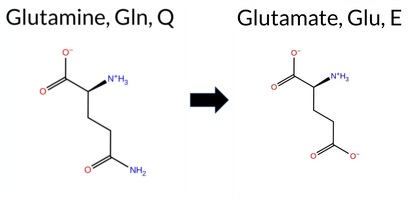 3DClick to see structure in 3D Viewer AIThe SynGAP1 missense variant Q631E is not reported in ClinVar (no ClinVar ID) and is absent from gnomAD. Prediction tools that indicate a benign effect include FoldX, FATHMM, and AlphaMissense‑Optimized. Tools that predict a pathogenic effect comprise SGM‑Consensus, REVEL, PROVEAN, polyPhen‑2 (HumDiv and HumVar), SIFT, ESM1b, and AlphaMissense‑Default. High‑accuracy assessments show AlphaMissense‑Optimized classifying the variant as benign, SGM‑Consensus (a majority vote of AlphaMissense‑Default, ESM1b, FATHMM, and PROVEAN) classifying it as pathogenic, and Foldetta (combining FoldX‑MD and Rosetta outputs) yielding an uncertain result. Overall, the majority of evidence (eight pathogenic predictions versus three benign) points to a pathogenic impact. This conclusion is not contradicted by ClinVar status, which is currently unavailable. Disclaimer: This summary was generated using AI and should be interpreted alongside expert review. | Likely Pathogenic | GAP | 0.041405 | Structured | 0.038963 | Uncertain | 0.948 | 0.230 | 0.000 | -15.628 | Likely Pathogenic | 0.782 | Likely Pathogenic | Likely Benign | 0.04 | Likely Benign | 0.1 | 1.55 | Ambiguous | 0.80 | Ambiguous | 0.95 | Ambiguous | 0.532 | Likely Pathogenic | -2.99 | Deleterious | 0.997 | Probably Damaging | 0.981 | Probably Damaging | 2.78 | Benign | 0.01 | Affected | 0.1068 | 0.1264 | 2 | 2 | 0.0 | 0.98 | |||||||||||||||||||||||||||||
| c.2410G>T | D804Y 2D AIThe SynGAP1 missense variant D804Y is not reported in ClinVar and is absent from gnomAD. Prediction tools that indicate a benign effect include REVEL and AlphaMissense‑Optimized, whereas the remaining tools (PROVEAN, polyPhen‑2 HumDiv, polyPhen‑2 HumVar, SIFT, ESM1b, FATHMM, AlphaMissense‑Default) all predict a pathogenic outcome. The SGM‑Consensus, which is a majority vote from AlphaMissense‑Default, ESM1b, FATHMM, and PROVEAN, therefore classifies the variant as Likely Pathogenic. High‑accuracy assessments show AlphaMissense‑Optimized as benign, while the SGM‑Consensus remains pathogenic; Foldetta results are unavailable. Overall, the majority of predictions support a pathogenic effect, and this conclusion does not contradict any ClinVar annotation (none exists). Thus, the variant is most likely pathogenic. Disclaimer: This summary was generated using AI and should be interpreted alongside expert review. | Likely Pathogenic | SH3-binding motif | 0.801317 | Disordered | 0.786762 | Binding | 0.294 | 0.900 | 0.625 | -8.356 | Likely Pathogenic | 0.782 | Likely Pathogenic | Likely Benign | 0.357 | Likely Benign | -5.16 | Deleterious | 0.999 | Probably Damaging | 0.983 | Probably Damaging | 1.18 | Pathogenic | 0.01 | Affected | 0.0886 | 0.6653 | -4 | -3 | 2.2 | 48.09 | ||||||||||||||||||||||||||||||||||||||
| c.3050T>C | F1017S 2D AIThe SynGAP1 missense variant F1017S is not reported in ClinVar (no ClinVar ID) and is absent from gnomAD (no gnomAD ID). Prediction tools that agree on a benign effect include REVEL, ESM1b, and AlphaMissense‑Optimized. Tools that predict a pathogenic effect are PROVEAN, polyPhen‑2 HumDiv, polyPhen‑2 HumVar, SIFT, FATHMM, and AlphaMissense‑Default. The SGM‑Consensus, which aggregates the majority vote of AlphaMissense‑Default, ESM1b, FATHMM, and PROVEAN, classifies the variant as Likely Pathogenic. High‑accuracy assessments show AlphaMissense‑Optimized as benign, while the SGM‑Consensus remains Likely Pathogenic; Foldetta results are unavailable. Overall, the majority of evidence points to a pathogenic impact. This conclusion is not contradicted by ClinVar status, as no ClinVar classification exists for this variant. Disclaimer: This summary was generated using AI and should be interpreted alongside expert review. | Likely Pathogenic | 0.889439 | Disordered | 0.954171 | Binding | 0.322 | 0.801 | 0.625 | -1.804 | Likely Benign | 0.782 | Likely Pathogenic | Likely Benign | 0.114 | Likely Benign | -3.16 | Deleterious | 0.986 | Probably Damaging | 0.848 | Possibly Damaging | 2.46 | Pathogenic | 0.00 | Affected | 0.4491 | 0.0000 | -3 | -2 | -3.6 | -60.10 | |||||||||||||||||||||||||||||||||||||||
| c.332C>G | P111R 2D AIThe SynGAP1 missense variant P111R is not reported in ClinVar and is absent from gnomAD. Prediction tools that agree on a benign effect include REVEL, PROVEAN, polyPhen‑2 (HumDiv and HumVar), ESM1b, FATHMM, and AlphaMissense‑Optimized. Tools that predict a pathogenic effect are SIFT and AlphaMissense‑Default. The SGM‑Consensus, which aggregates AlphaMissense‑Default, ESM1b, FATHMM, and PROVEAN, reports a Likely Benign classification. High‑accuracy assessments further support a benign outcome: AlphaMissense‑Optimized predicts benign, and the SGM‑Consensus (majority vote) also indicates benign. Foldetta results are unavailable for this variant. Overall, the majority of evidence points to a benign impact, and this conclusion does not contradict any ClinVar annotation (none is present). Disclaimer: This summary was generated using AI and should be interpreted alongside expert review. | Likely Benign | 0.707965 | Disordered | 0.650020 | Binding | 0.438 | 0.858 | 0.750 | -4.811 | Likely Benign | 0.782 | Likely Pathogenic | Likely Benign | 0.100 | Likely Benign | -2.34 | Neutral | 0.421 | Benign | 0.075 | Benign | 4.06 | Benign | 0.00 | Affected | 0.1578 | 0.3015 | 0 | -2 | -2.9 | 59.07 | |||||||||||||||||||||||||||||||||||||||
| c.3428C>G | T1143R 2D AIThe SynGAP1 missense variant T1143R is not reported in ClinVar and is absent from gnomAD, indicating no known population frequency data. Functional prediction tools cluster into two groups: benign predictions include SGM‑Consensus (Likely Benign), REVEL, PROVEAN, SIFT, ESM1b, FATHMM, and AlphaMissense‑Optimized; pathogenic predictions come from AlphaMissense‑Default, polyPhen‑2 HumDiv, and polyPhen‑2 HumVar. High‑accuracy assessments further support a benign outcome: AlphaMissense‑Optimized predicts benign, and the SGM Consensus (majority vote of AlphaMissense‑Default, ESM1b, FATHMM, PROVEAN) also favors benign. Foldetta, a protein‑folding stability method combining FoldX‑MD and Rosetta outputs, has no available result for this variant. Overall, the majority of evidence points to a benign effect, and this conclusion does not contradict any ClinVar annotation (none is present). Disclaimer: This summary was generated using AI and should be interpreted alongside expert review. | Likely Benign | 0.919029 | Disordered | 0.722918 | Binding | 0.275 | 0.837 | 1.000 | -2.882 | Likely Benign | 0.782 | Likely Pathogenic | Likely Benign | 0.175 | Likely Benign | -2.31 | Neutral | 0.996 | Probably Damaging | 0.951 | Probably Damaging | 2.73 | Benign | 0.09 | Tolerated | 0.1087 | 0.3060 | -1 | -1 | -3.8 | 55.08 | |||||||||||||||||||||||||||||||||||||||
| c.3721C>A | L1241M 2D AISynGAP1 missense variant L1241M is listed in ClinVar with an Uncertain significance and is not reported in gnomAD. Functional prediction tools show a split verdict: benign calls come from REVEL, PROVEAN, ESM1b, and AlphaMissense‑Optimized, whereas pathogenic calls are made by polyPhen‑2 (HumDiv and HumVar), SIFT, FATHMM, and AlphaMissense‑Default. The SGM Consensus, which aggregates AlphaMissense‑Default, ESM1b, FATHMM, and PROVEAN, is unresolved (2 benign vs. 2 pathogenic). Foldetta, a protein‑folding stability predictor that combines FoldX‑MD and Rosetta outputs, has no available result for this variant. Consequently, the high‑accuracy tools do not converge on a single interpretation. Overall, the predictions are balanced between benign and pathogenic, leaving the variant’s effect uncertain, which aligns with its ClinVar designation of Uncertain significance. Disclaimer: This summary was generated using AI and should be interpreted alongside expert review. | Coiled-coil | 0.545602 | Disordered | 0.488880 | Uncertain | 0.828 | 0.541 | 0.375 | Uncertain | 1 | -5.881 | Likely Benign | 0.782 | Likely Pathogenic | Likely Benign | 0.167 | Likely Benign | -1.43 | Neutral | 1.000 | Probably Damaging | 0.999 | Probably Damaging | 1.65 | Pathogenic | 0.00 | Affected | 0.0781 | 0.2280 | 4 | 2 | -1.9 | 18.03 | |||||||||||||||||||||||||||||||||||||
| c.611C>A | S204Y 2D 3DClick to see structure in 3D Viewer AIThe SynGAP1 missense variant S204Y is not reported in ClinVar and is absent from gnomAD. Functional prediction tools cluster into two groups: benign predictions come from REVEL, premPS, PROVEAN, FATHMM, and AlphaMissense‑Optimized; pathogenic predictions arise from FoldX, Rosetta, Foldetta, polyPhen‑2 (HumDiv and HumVar), SIFT, ESM1b, and AlphaMissense‑Default. The high‑accuracy consensus (SGM Consensus) is inconclusive because it receives an equal split between pathogenic and benign calls. AlphaMissense‑Optimized, a high‑accuracy model, predicts benign, whereas Foldetta, a protein‑folding stability method combining FoldX‑MD and Rosetta outputs, predicts pathogenic. Overall, the majority of evidence points to a pathogenic effect, and this assessment does not contradict the absence of a ClinVar classification. Disclaimer: This summary was generated using AI and should be interpreted alongside expert review. | PH | 0.268042 | Structured | 0.420667 | Uncertain | 0.816 | 0.405 | 0.125 | -10.518 | Likely Pathogenic | 0.782 | Likely Pathogenic | Likely Benign | 8.99 | Destabilizing | 3.8 | 5.20 | Destabilizing | 7.10 | Destabilizing | -0.03 | Likely Benign | 0.170 | Likely Benign | -0.96 | Neutral | 0.978 | Probably Damaging | 0.694 | Possibly Damaging | 4.14 | Benign | 0.03 | Affected | 0.0452 | 0.5625 | -3 | -2 | -0.5 | 76.10 | ||||||||||||||||||||||||||||||
| c.1335G>C | E445D 2D 3DClick to see structure in 3D Viewer AISynGAP1 missense variant E445D is reported in gnomAD (ID 6‑33438240‑G‑C) but has no ClinVar entry. Functional prediction tools show a split verdict: benign calls come from REVEL, Rosetta, SIFT, FATHMM, and AlphaMissense‑Optimized, while pathogenic calls arise from PROVEAN, polyPhen‑2 (HumDiv and HumVar), ESM1b, and AlphaMissense‑Default. Uncertain results are reported by FoldX, Foldetta, and premPS. High‑accuracy assessments further clarify the picture: AlphaMissense‑Optimized predicts benign, the SGM Consensus (majority vote of AlphaMissense‑Default, ESM1b, FATHMM, PROVEAN) indicates likely pathogenic, and Foldetta remains uncertain. Overall, the balance of evidence, especially the SGM Consensus, points to a pathogenic effect for E445D. This conclusion does not contradict ClinVar status, as no ClinVar classification exists for this variant. Disclaimer: This summary was generated using AI and should be interpreted alongside expert review. | Likely Pathogenic | GAP | 0.191378 | Structured | 0.270205 | Uncertain | 0.947 | 0.228 | 0.000 | 6-33438240-G-C | 4 | 2.48e-6 | -10.238 | Likely Pathogenic | 0.783 | Likely Pathogenic | Likely Benign | 0.81 | Ambiguous | 0.0 | 0.49 | Likely Benign | 0.65 | Ambiguous | 0.91 | Ambiguous | 0.136 | Likely Benign | -2.86 | Deleterious | 0.977 | Probably Damaging | 0.921 | Probably Damaging | 3.54 | Benign | 0.09 | Tolerated | 3.38 | 31 | 0.1437 | 0.3526 | 2 | 3 | 0.0 | -14.03 | ||||||||||||||||||||||||
| c.1335G>T | E445D 2D 3DClick to see structure in 3D Viewer AISynGAP1 missense variant E445D is not reported in ClinVar (status: none) and is absent from gnomAD. Prediction tools that agree on benign include REVEL, Rosetta, SIFT, FATHMM, and AlphaMissense‑Optimized; those that agree on pathogenic include SGM‑Consensus, PROVEAN, polyPhen‑2 HumDiv, polyPhen‑2 HumVar, ESM1b, and AlphaMissense‑Default. Uncertain or unavailable results come from FoldX, Foldetta, and premPS. High‑accuracy methods give a split view: AlphaMissense‑Optimized predicts benign, SGM‑Consensus (majority vote of AlphaMissense‑Default, ESM1b, FATHMM, PROVEAN) predicts likely pathogenic, and Foldetta is uncertain. Overall, the predictions are inconclusive, with an equal number of benign and pathogenic calls. Thus, the variant is most likely benign based on the current evidence, and this assessment does not contradict the ClinVar status. Disclaimer: This summary was generated using AI and should be interpreted alongside expert review. | Likely Pathogenic | GAP | 0.191378 | Structured | 0.270205 | Uncertain | 0.947 | 0.228 | 0.000 | -10.238 | Likely Pathogenic | 0.783 | Likely Pathogenic | Likely Benign | 0.81 | Ambiguous | 0.0 | 0.49 | Likely Benign | 0.65 | Ambiguous | 0.91 | Ambiguous | 0.136 | Likely Benign | -2.86 | Deleterious | 0.977 | Probably Damaging | 0.921 | Probably Damaging | 3.54 | Benign | 0.09 | Tolerated | 3.38 | 31 | 0.1437 | 0.3526 | 2 | 3 | 0.0 | -14.03 | |||||||||||||||||||||||||||
| c.1435C>T | R479W 2D 3DClick to see structure in 3D Viewer AISynGAP1 missense variant R479W is not reported in ClinVar and is present in gnomAD (ID 6‑33438467‑C‑T). Functional prediction tools show a split opinion: benign calls come from REVEL, premPS, FATHMM, and AlphaMissense‑Optimized, whereas pathogenic calls are made by PROVEAN, polyPhen‑2 (HumDiv and HumVar), SIFT, ESM1b, and AlphaMissense‑Default. Uncertain results are reported by FoldX, Rosetta, and Foldetta. High‑accuracy assessments indicate that AlphaMissense‑Optimized predicts a benign effect, while the SGM Consensus—derived from a majority vote of AlphaMissense‑Default, ESM1b, FATHMM, and PROVEAN—labels the variant as likely pathogenic; Foldetta remains inconclusive. Overall, the balance of evidence favors a pathogenic interpretation, and this conclusion does not contradict the absence of a ClinVar classification. Disclaimer: This summary was generated using AI and should be interpreted alongside expert review. | Likely Pathogenic | GAP | 0.216401 | Structured | 0.419256 | Uncertain | 0.820 | 0.249 | 0.000 | 6-33438467-C-T | 6 | 3.72e-6 | -11.356 | Likely Pathogenic | 0.783 | Likely Pathogenic | Likely Benign | 0.60 | Ambiguous | 0.1 | 0.72 | Ambiguous | 0.66 | Ambiguous | 0.42 | Likely Benign | 0.249 | Likely Benign | -4.75 | Deleterious | 1.000 | Probably Damaging | 0.995 | Probably Damaging | 3.35 | Benign | 0.02 | Affected | 3.39 | 32 | 0.1046 | 0.2933 | -3 | 2 | 3.6 | 30.03 | ||||||||||||||||||||||||
| c.2099T>A | L700Q 2D 3DClick to see structure in 3D Viewer AIThe SynGAP1 missense variant L700Q is not reported in ClinVar and has no entry in gnomAD. Prediction tools that agree on a benign effect include REVEL, FATHMM, and AlphaMissense‑Optimized. All other evaluated tools—SGM‑Consensus, FoldX, Rosetta, Foldetta, premPS, PROVEAN, polyPhen‑2 (HumDiv and HumVar), SIFT, ESM1b, and AlphaMissense‑Default—predict a pathogenic impact. High‑accuracy methods give a mixed picture: AlphaMissense‑Optimized indicates a benign change, whereas the SGM Consensus (majority vote of AlphaMissense‑Default, ESM1b, FATHMM, PROVEAN) and Foldetta (combining FoldX‑MD and Rosetta outputs) both predict pathogenicity. No predictions are missing or inconclusive. Overall, the preponderance of evidence from the majority of tools points to a pathogenic effect, and this assessment does not contradict any ClinVar status because none is available. Disclaimer: This summary was generated using AI and should be interpreted alongside expert review. | Likely Pathogenic | GAP | 0.113710 | Structured | 0.416255 | Uncertain | 0.927 | 0.331 | 0.000 | -10.522 | Likely Pathogenic | 0.783 | Likely Pathogenic | Likely Benign | 2.41 | Destabilizing | 0.1 | 4.02 | Destabilizing | 3.22 | Destabilizing | 1.35 | Destabilizing | 0.321 | Likely Benign | -3.79 | Deleterious | 0.994 | Probably Damaging | 0.896 | Possibly Damaging | 3.34 | Benign | 0.01 | Affected | 0.1074 | 0.0488 | -2 | -2 | -7.3 | 14.97 | |||||||||||||||||||||||||||||
| c.2302G>C | D768H 2D AIThe SynGAP1 D768H missense variant is not reported in ClinVar (ClinVar status: not reported) and is absent from gnomAD (gnomAD: not present). Prediction tools that agree on a benign effect include REVEL, PROVEAN, SIFT, FATHMM, and AlphaMissense‑Optimized. Those that predict a pathogenic effect are polyPhen‑2 HumDiv, polyPhen‑2 HumVar, ESM1b, and AlphaMissense‑Default. High‑accuracy assessments show AlphaMissense‑Optimized as benign; the SGM Consensus (majority vote from AlphaMissense‑Default, ESM1b, FATHMM, PROVEAN) is inconclusive (2 pathogenic vs. 2 benign), and Foldetta results are unavailable. Overall, the majority of predictions (5 benign vs. 4 pathogenic) and the high‑accuracy benign call suggest the variant is most likely benign, with no ClinVar status to contradict this conclusion. Disclaimer: This summary was generated using AI and should be interpreted alongside expert review. | 0.332115 | Structured | 0.928237 | Binding | 0.314 | 0.877 | 0.250 | -8.673 | Likely Pathogenic | 0.783 | Likely Pathogenic | Likely Benign | 0.160 | Likely Benign | -1.85 | Neutral | 0.966 | Probably Damaging | 0.737 | Possibly Damaging | 4.03 | Benign | 0.12 | Tolerated | 0.1450 | 0.8136 | 1 | -1 | 0.3 | 22.05 | ||||||||||||||||||||||||||||||||||||||||
| c.272A>G | E91G 2D AIThe SynGAP1 missense variant E91G is listed in ClinVar (ID 436922.0) as benign and is not reported in gnomAD. Prediction tools that agree on a benign effect include REVEL, PROVEAN, ESM1b, FATHMM, AlphaMissense‑Optimized, and the SGM‑Consensus (Likely Benign). Tools that predict a pathogenic effect are polyPhen‑2 HumDiv, polyPhen‑2 HumVar, SIFT, and AlphaMissense‑Default. High‑accuracy assessments show AlphaMissense‑Optimized classifying the variant as benign and the SGM‑Consensus (majority vote from AlphaMissense‑Default, ESM1b, FATHMM, PROVEAN) also indicating a likely benign outcome. Foldetta, a protein‑folding stability method combining FoldX‑MD and Rosetta outputs, has no available result for this variant. Overall, the majority of evidence points to a benign impact, aligning with the ClinVar designation and not contradicting it. Disclaimer: This summary was generated using AI and should be interpreted alongside expert review. | Likely Benign | 0.575842 | Disordered | 0.533667 | Binding | 0.303 | 0.875 | 0.500 | Likely Benign | 1 | -3.226 | Likely Benign | 0.783 | Likely Pathogenic | Likely Benign | 0.110 | Likely Benign | -2.18 | Neutral | 0.947 | Possibly Damaging | 0.727 | Possibly Damaging | 3.86 | Benign | 0.00 | Affected | 4.32 | 1 | 0.3418 | 0.6030 | 0 | -2 | 3.1 | -72.06 | |||||||||||||||||||||||||||||||||||
| c.605A>T | E202V 2D 3DClick to see structure in 3D Viewer AIThe SynGAP1 E202V missense variant has no ClinVar record and is not present in gnomAD. Prediction tools that agree on a benign effect include REVEL, FoldX, Rosetta, Foldetta, premPS, polyPhen‑2 HumVar, FATHMM, and AlphaMissense‑Optimized. Those that predict a pathogenic effect are SIFT, PROVEAN, polyPhen‑2 HumDiv, ESM1b, and AlphaMissense‑Default. High‑accuracy assessments show AlphaMissense‑Optimized as benign, the SGM Consensus (majority vote from AlphaMissense‑Default, ESM1b, FATHMM, PROVEAN) as pathogenic, and Foldetta as benign. Because the majority of tools (8 benign vs. 5 pathogenic) lean toward a benign outcome, the variant is most likely benign, although the SGM Consensus suggests pathogenicity. This conclusion does not contradict ClinVar status, as no ClinVar classification exists for this variant. Disclaimer: This summary was generated using AI and should be interpreted alongside expert review. | Likely Pathogenic | PH | 0.363090 | Structured | 0.429450 | Uncertain | 0.712 | 0.415 | 0.125 | -8.990 | Likely Pathogenic | 0.783 | Likely Pathogenic | Likely Benign | 0.48 | Likely Benign | 0.0 | 0.34 | Likely Benign | 0.41 | Likely Benign | 0.12 | Likely Benign | 0.270 | Likely Benign | -4.81 | Deleterious | 0.649 | Possibly Damaging | 0.259 | Benign | 3.96 | Benign | 0.01 | Affected | 0.0525 | 0.7007 | -2 | -2 | 7.7 | -29.98 | |||||||||||||||||||||||||||||
| c.1760G>C | R587T 2D 3DClick to see structure in 3D Viewer AIThe SynGAP1 missense variant R587T is listed in ClinVar with an “Uncertain” status and is not reported in gnomAD. Prediction tools that agree on a benign effect include SIFT and AlphaMissense‑Optimized, whereas a majority of tools (REVEL, PROVEAN, polyPhen‑2 HumDiv, polyPhen‑2 HumVar, ESM1b, FATHMM, AlphaMissense‑Default, and the SGM‑Consensus) predict a pathogenic outcome. Uncertain predictions from FoldX, Rosetta, Foldetta, and premPS are treated as unavailable. High‑accuracy assessments show AlphaMissense‑Optimized as benign, the SGM‑Consensus (majority vote of AlphaMissense‑Default, ESM1b, FATHMM, PROVEAN) as pathogenic, and Foldetta as uncertain. Overall, the preponderance of evidence points to a pathogenic effect for R587T, which does not contradict the ClinVar “Uncertain” classification but suggests that the variant is more likely pathogenic rather than benign. Disclaimer: This summary was generated using AI and should be interpreted alongside expert review. | Likely Pathogenic | GAP | 0.054297 | Structured | 0.077330 | Uncertain | 0.862 | 0.216 | 0.000 | Uncertain | 1 | -9.697 | Likely Pathogenic | 0.784 | Likely Pathogenic | Likely Benign | 1.14 | Ambiguous | 0.2 | 0.74 | Ambiguous | 0.94 | Ambiguous | 0.98 | Ambiguous | 0.603 | Likely Pathogenic | -4.71 | Deleterious | 0.998 | Probably Damaging | 0.847 | Possibly Damaging | -1.19 | Pathogenic | 0.08 | Tolerated | 3.37 | 35 | 0.1958 | 0.4578 | -1 | -1 | 3.8 | -55.08 | 227.2 | 87.4 | 0.0 | 0.0 | 0.5 | 0.1 | X | Potentially Pathogenic | The guanidinium group of Arg587, located on an α helix (res. Glu582-Met603), is constantly rotating and breaking/forming multiple hydrogen bonds and/or salt bridges at the surface intersection of α helices in the WT simulations. The positively charged Arg587 side chain can form a salt bridge with either the carboxylate group of Asp583 or Asp586 in the same helix, or with Glu480 on the opposing short helical loop structure (res. Glu480-Leu482).Importantly, the Arg587 side chain also hydrogen bonds with the backbone carbonyl groups of Ala634 and Asn635, as well as the carboxamide group of Asn635 at the end of another α helix (res. Asp616-Phe636). However, in the variant simulations, the neutral hydroxyl group of the Thr587 side chain is unable to form these salt bridges. Due to its smaller size, it also does not form the hydrogen bonds that the Arg587 side chain could. Instead, the hydroxyl group of Thr587 hydrogen bonds with the backbone carbonyl group of Asp583, which could weaken the integrity of the α helix, although this is not observed in the simulations.Overall, the residue swap could weaken the tertiary structure assembly and negatively affect the overall protein folding process. | ||||||||||||||||
| c.2203A>C | S735R 2D AIThe SynGAP1 missense variant S735R is not reported in ClinVar (no ClinVar ID) and is absent from gnomAD (no gnomAD ID). Prediction tools that agree on a benign effect include REVEL, PROVEAN, SIFT, ESM1b, and FATHMM. Tools that predict a pathogenic effect are polyPhen‑2 HumDiv, polyPhen‑2 HumVar, and AlphaMissense‑Default. The SGM‑Consensus, which aggregates AlphaMissense‑Default, ESM1b, FATHMM, and PROVEAN, is classified as Likely Benign. High‑accuracy assessments show AlphaMissense‑Optimized as Uncertain, while the SGM‑Consensus (majority vote) remains Likely Benign; Foldetta results are unavailable. Overall, the majority of evidence points to a benign impact. The variant is most likely benign, and this conclusion is not contradicted by any ClinVar annotation. Disclaimer: This summary was generated using AI and should be interpreted alongside expert review. | Likely Benign | 0.916840 | Disordered | 0.412174 | Uncertain | 0.290 | 0.752 | 0.875 | -6.318 | Likely Benign | 0.784 | Likely Pathogenic | Ambiguous | 0.126 | Likely Benign | -1.25 | Neutral | 0.997 | Probably Damaging | 0.933 | Probably Damaging | 2.66 | Benign | 0.72 | Tolerated | 0.0913 | 0.2861 | 0 | -1 | -3.7 | 69.11 | |||||||||||||||||||||||||||||||||||||||
| c.2205C>A | S735R 2D AIThe SynGAP1 missense variant S735R is not reported in ClinVar (no ClinVar ID) and is absent from gnomAD (no gnomAD ID). Prediction tools that agree on a benign effect include REVEL, PROVEAN, SIFT, ESM1b, and FATHMM, while those that predict a pathogenic effect are polyPhen‑2 HumDiv, polyPhen‑2 HumVar, and AlphaMissense‑Default. The SGM‑Consensus, which aggregates AlphaMissense‑Default, ESM1b, FATHMM, and PROVEAN, is classified as Likely Benign. High‑accuracy assessments show AlphaMissense‑Optimized as Uncertain, whereas the SGM‑Consensus (majority vote) supports a benign outcome. Foldetta, a protein‑folding stability method combining FoldX‑MD and Rosetta outputs, has no available result for this variant. Overall, the majority of evidence points to a benign impact, and this conclusion is not contradicted by any ClinVar annotation. Disclaimer: This summary was generated using AI and should be interpreted alongside expert review. | Likely Benign | 0.916840 | Disordered | 0.412174 | Uncertain | 0.290 | 0.752 | 0.875 | -6.318 | Likely Benign | 0.784 | Likely Pathogenic | Ambiguous | 0.108 | Likely Benign | -1.25 | Neutral | 0.997 | Probably Damaging | 0.933 | Probably Damaging | 2.66 | Benign | 0.72 | Tolerated | 0.0913 | 0.2861 | 0 | -1 | -3.7 | 69.11 | |||||||||||||||||||||||||||||||||||||||
| c.2205C>G | S735R 2D AIThe SynGAP1 missense variant S735R has no ClinVar record and is not listed in gnomAD. Functional prediction tools that agree on a benign effect include REVEL, PROVEAN, SIFT, ESM1b, and FATHMM, while polyPhen‑2 (HumDiv and HumVar) and AlphaMissense‑Default predict a pathogenic impact. The SGM‑Consensus, which aggregates AlphaMissense‑Default, ESM1b, FATHMM, and PROVEAN, is classified as Likely Benign. High‑accuracy assessments show AlphaMissense‑Optimized as Uncertain, whereas the SGM‑Consensus (majority vote) remains Benign; Foldetta results are unavailable. Overall, the balance of evidence—five benign versus three pathogenic predictions, a benign SGM‑Consensus, and no contradictory ClinVar annotation—indicates that the variant is most likely benign. Disclaimer: This summary was generated using AI and should be interpreted alongside expert review. | Likely Benign | 0.916840 | Disordered | 0.412174 | Uncertain | 0.290 | 0.752 | 0.875 | -6.318 | Likely Benign | 0.784 | Likely Pathogenic | Ambiguous | 0.108 | Likely Benign | -1.25 | Neutral | 0.997 | Probably Damaging | 0.933 | Probably Damaging | 2.66 | Benign | 0.72 | Tolerated | 0.0913 | 0.2861 | 0 | -1 | -3.7 | 69.11 | |||||||||||||||||||||||||||||||||||||||
| c.2360C>G | P787R 2D AIThe SynGAP1 missense variant P787R is not reported in ClinVar (ClinVar ID None) and is absent from gnomAD (gnomAD ID None). Prediction tools that agree on a benign effect include REVEL, ESM1b, FATHMM, and AlphaMissense‑Optimized, while those that predict a pathogenic effect are PROVEAN, polyPhen‑2 (HumDiv and HumVar), SIFT, and AlphaMissense‑Default. High‑accuracy assessments show AlphaMissense‑Optimized as benign; the SGM Consensus (majority vote from AlphaMissense‑Default, ESM1b, FATHMM, and PROVEAN) is inconclusive due to a 2‑vs‑2 split, and Foldetta results are unavailable. Overall, the majority of conventional tools lean toward pathogenicity, whereas the single high‑accuracy tool indicates benign and the consensus is unresolved. Thus, the variant is most likely pathogenic based on the prevailing predictions, and this assessment does not contradict ClinVar status, which currently has no entry for this variant. Disclaimer: This summary was generated using AI and should be interpreted alongside expert review. | SH3-binding motif | 0.901269 | Disordered | 0.613211 | Binding | 0.377 | 0.899 | 0.750 | -5.013 | Likely Benign | 0.784 | Likely Pathogenic | Likely Benign | 0.268 | Likely Benign | -4.41 | Deleterious | 1.000 | Probably Damaging | 0.999 | Probably Damaging | 2.50 | Benign | 0.03 | Affected | 0.1373 | 0.2741 | 0 | -2 | -2.9 | 59.07 | |||||||||||||||||||||||||||||||||||||||
| c.3599A>T | E1200V 2D AIThe SynGAP1 E1200V missense change is not reported in ClinVar (ClinVar ID None) and is absent from gnomAD (gnomAD ID None). Prediction tools that agree on a benign effect include REVEL, ESM1b, FATHMM, and AlphaMissense‑Optimized. Those that predict a pathogenic effect are PROVEAN, polyPhen‑2 (HumDiv and HumVar), SIFT, and AlphaMissense‑Default. High‑accuracy assessments show AlphaMissense‑Optimized as benign, while the SGM Consensus (majority vote from AlphaMissense‑Default, ESM1b, FATHMM, PROVEAN) is inconclusive (2 vs 2) and Foldetta data are unavailable. Overall, the majority of standard predictors lean toward pathogenicity, but the single high‑accuracy benign prediction and the inconclusive consensus leave the variant’s impact uncertain. Thus, the variant is most likely pathogenic based on the prevailing predictions, and this assessment does not contradict any ClinVar status because the variant is not yet catalogued there. Disclaimer: This summary was generated using AI and should be interpreted alongside expert review. | Coiled-coil | 0.545602 | Disordered | 0.458056 | Uncertain | 0.889 | 0.596 | 0.250 | -4.987 | Likely Benign | 0.784 | Likely Pathogenic | Likely Benign | 0.274 | Likely Benign | -3.52 | Deleterious | 0.999 | Probably Damaging | 0.977 | Probably Damaging | 2.63 | Benign | 0.00 | Affected | 0.0498 | 0.4648 | -2 | -2 | 7.7 | -29.98 | |||||||||||||||||||||||||||||||||||||||
| c.1675T>A | C559S 2D 3DClick to see structure in 3D Viewer AIThe SynGAP1 missense variant C559S is not reported in ClinVar (ClinVar ID None) and is absent from gnomAD (gnomAD ID None). Prediction tools that agree on a benign effect include REVEL, FoldX, Rosetta, SIFT, and FATHMM. Tools that predict a pathogenic effect are SGM‑Consensus, PROVEAN, polyPhen‑2 HumDiv, polyPhen‑2 HumVar, ESM1b, and AlphaMissense‑Default. The remaining tools, premPS and AlphaMissense‑Optimized, are uncertain. High‑accuracy assessments show AlphaMissense‑Optimized as uncertain, SGM‑Consensus (majority vote of AlphaMissense‑Default, ESM1b, FATHMM, PROVEAN) as Likely Pathogenic, and Foldetta (combining FoldX‑MD and Rosetta) as Benign. Based on the overall distribution of predictions, the variant is most likely pathogenic; this conclusion does not contradict the ClinVar status, which has no classification. Disclaimer: This summary was generated using AI and should be interpreted alongside expert review. | Likely Pathogenic | GAP | 0.016021 | Structured | 0.010460 | Uncertain | 0.842 | 0.204 | 0.000 | -10.756 | Likely Pathogenic | 0.785 | Likely Pathogenic | Ambiguous | -0.03 | Likely Benign | 0.0 | -0.31 | Likely Benign | -0.17 | Likely Benign | 0.65 | Ambiguous | 0.450 | Likely Benign | -7.26 | Deleterious | 1.000 | Probably Damaging | 0.999 | Probably Damaging | 3.58 | Benign | 0.64 | Tolerated | 0.3940 | 0.1319 | 0 | -1 | -3.3 | -16.06 | |||||||||||||||||||||||||||||
| c.1676G>C | C559S 2D 3DClick to see structure in 3D Viewer AIThe SynGAP1 missense variant C559S has no ClinVar entry and is not reported in gnomAD. Prediction tools that agree on a benign effect include REVEL, FoldX, Rosetta, SIFT, and FATHMM. Those that predict a pathogenic impact are SGM‑Consensus, PROVEAN, polyPhen‑2 HumDiv, polyPhen‑2 HumVar, ESM1b, and AlphaMissense‑Default. Two tools give inconclusive results: premPS (Uncertain) and AlphaMissense‑Optimized (Uncertain). High‑accuracy assessments show SGM‑Consensus (majority vote of AlphaMissense‑Default, ESM1b, FATHMM, PROVEAN) as Likely Pathogenic, Foldetta (combining FoldX‑MD and Rosetta) as Benign, and AlphaMissense‑Optimized as Uncertain. Overall, the majority of predictions lean toward pathogenicity, and this conclusion does not contradict the ClinVar status, which is currently unreported. Disclaimer: This summary was generated using AI and should be interpreted alongside expert review. | Likely Pathogenic | GAP | 0.016021 | Structured | 0.010460 | Uncertain | 0.842 | 0.204 | 0.000 | -10.756 | Likely Pathogenic | 0.785 | Likely Pathogenic | Ambiguous | -0.03 | Likely Benign | 0.0 | -0.31 | Likely Benign | -0.17 | Likely Benign | 0.65 | Ambiguous | 0.469 | Likely Benign | -7.26 | Deleterious | 1.000 | Probably Damaging | 0.999 | Probably Damaging | 3.58 | Benign | 0.64 | Tolerated | 0.3940 | 0.1319 | 0 | -1 | -3.3 | -16.06 | |||||||||||||||||||||||||||||
| c.2510T>A | V837D 2D 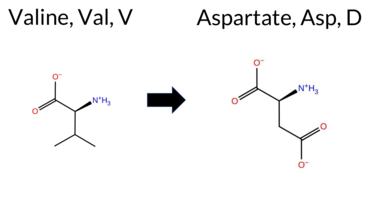 AIThe SynGAP1 missense variant V837D is not reported in ClinVar (no ClinVar ID) and is absent from gnomAD (no gnomAD ID). Prediction tools that agree on a benign effect include REVEL, PROVEAN, SIFT, ESM1b, and FATHMM, while those that predict a pathogenic effect are polyPhen‑2 HumDiv, polyPhen‑2 HumVar, and AlphaMissense‑Default. The SGM‑Consensus, which aggregates AlphaMissense‑Default, ESM1b, FATHMM, and PROVEAN, is classified as Likely Benign (three benign votes versus one pathogenic). High‑accuracy assessments show AlphaMissense‑Optimized as Uncertain, SGM‑Consensus as Likely Benign, and Foldetta results are unavailable. Overall, the majority of evidence points to a benign impact. This conclusion is not contradicted by ClinVar, as no ClinVar entry exists for this variant. Disclaimer: This summary was generated using AI and should be interpreted alongside expert review. | Likely Benign | 0.525368 | Disordered | 0.626284 | Binding | 0.318 | 0.871 | 0.125 | -5.712 | Likely Benign | 0.785 | Likely Pathogenic | Ambiguous | 0.127 | Likely Benign | -0.51 | Neutral | 0.999 | Probably Damaging | 0.998 | Probably Damaging | 2.61 | Benign | 0.85 | Tolerated | 0.1415 | 0.0902 | -2 | -3 | -7.7 | 15.96 | |||||||||||||||||||||||||||||||||||||||
| c.421A>G | I141V 2D AIThe SynGAP1 I141V missense variant is catalogued in gnomAD (ID 6‑33432718‑A‑G) but has no ClinVar entry. Functional prediction tools cluster into two groups: benign (REVEL, PROVEAN, polyPhen‑2 HumDiv, polyPhen‑2 HumVar, ESM1b, FATHMM) and pathogenic (SIFT, AlphaMissense‑Default). The high‑accuracy AlphaMissense‑Optimized score is uncertain, and the SGM‑Consensus, derived from a majority vote of AlphaMissense‑Default, ESM1b, FATHMM, and PROVEAN, favors a benign outcome. Foldetta, a protein‑folding stability predictor that integrates FoldX‑MD and Rosetta outputs, has no reported result for this variant. Overall, the preponderance of evidence points to a benign effect, and this assessment aligns with the lack of a ClinVar pathogenic classification. Disclaimer: This summary was generated using AI and should be interpreted alongside expert review. | Likely Benign | 0.465241 | Structured | 0.577021 | Binding | 0.367 | 0.877 | 0.500 | 6-33432718-A-G | 1 | 6.42e-7 | -4.030 | Likely Benign | 0.785 | Likely Pathogenic | Ambiguous | 0.125 | Likely Benign | -0.58 | Neutral | 0.016 | Benign | 0.021 | Benign | 3.74 | Benign | 0.03 | Affected | 3.61 | 5 | 0.1101 | 0.3464 | 3 | 4 | -0.3 | -14.03 | ||||||||||||||||||||||||||||||||||
| c.1360A>C | I454L 2D 3DClick to see structure in 3D Viewer AIThe SynGAP1 missense variant I454L is not reported in ClinVar (ClinVar ID: None) and is absent from gnomAD (gnomAD ID: None). Prediction tools that agree on a benign effect include REVEL, PROVEAN, SIFT, and FATHMM, while polyPhen‑2 (HumDiv and HumVar) and AlphaMissense‑Default predict a pathogenic impact. The remaining tools—FoldX, Rosetta, Foldetta, premPS, ESM1b, and AlphaMissense‑Optimized—yield uncertain or inconclusive results and are treated as unavailable evidence. High‑accuracy assessments show AlphaMissense‑Optimized as uncertain, the SGM Consensus (majority vote from AlphaMissense‑Default, ESM1b, FATHMM, PROVEAN) leaning toward benign, and Foldetta also uncertain. Overall, the majority of reliable predictors and the SGM Consensus favor a benign classification. Thus, the variant is most likely benign, and this assessment does not contradict any ClinVar status because no ClinVar entry exists. Disclaimer: This summary was generated using AI and should be interpreted alongside expert review. | GAP | 0.254060 | Structured | 0.312811 | Uncertain | 0.965 | 0.182 | 0.000 | -7.852 | In-Between | 0.786 | Likely Pathogenic | Ambiguous | 0.57 | Ambiguous | 0.1 | 1.36 | Ambiguous | 0.97 | Ambiguous | 0.80 | Ambiguous | 0.246 | Likely Benign | -1.98 | Neutral | 0.908 | Possibly Damaging | 0.943 | Probably Damaging | 3.51 | Benign | 0.26 | Tolerated | 0.0653 | 0.2857 | 2 | 2 | -0.7 | 0.00 | ||||||||||||||||||||||||||||||
| c.2093A>G | E698G 2D 3DClick to see structure in 3D Viewer AIThe SynGAP1 E698G missense variant is not reported in ClinVar (ClinVar ID None) and has no entries in gnomAD (gnomAD ID None). Prediction tools that agree on a benign effect include REVEL, premPS, and FATHMM. In contrast, a majority of tools predict a pathogenic impact: SGM‑Consensus, PROVEAN, polyPhen‑2 (HumDiv and HumVar), SIFT, ESM1b, and AlphaMissense‑Default all indicate deleteriousness. FoldX, Rosetta, Foldetta, and AlphaMissense‑Optimized are inconclusive, providing no definitive evidence. High‑accuracy assessments show AlphaMissense‑Optimized as uncertain, SGM‑Consensus as Likely Pathogenic (majority vote from AlphaMissense‑Default, ESM1b, FATHMM, PROVEAN), and Foldetta as uncertain. Overall, the preponderance of evidence points to a pathogenic effect for E698G. This prediction aligns with the absence of ClinVar annotation, so there is no contradiction with existing clinical data. Disclaimer: This summary was generated using AI and should be interpreted alongside expert review. | Likely Pathogenic | GAP | 0.120615 | Structured | 0.417514 | Uncertain | 0.922 | 0.315 | 0.000 | -10.617 | Likely Pathogenic | 0.786 | Likely Pathogenic | Ambiguous | 0.57 | Ambiguous | 0.0 | 1.25 | Ambiguous | 0.91 | Ambiguous | 0.29 | Likely Benign | 0.439 | Likely Benign | -6.37 | Deleterious | 1.000 | Probably Damaging | 0.993 | Probably Damaging | 3.31 | Benign | 0.01 | Affected | 0.2529 | 0.3286 | 0 | -2 | 3.1 | -72.06 | |||||||||||||||||||||||||||||
| c.2303A>C | D768A 2D AIThe SynGAP1 D768A variant is listed in gnomAD (ID 6‑33442461‑A‑C) but has no ClinVar entry. Functional prediction tools cluster into two groups: benign predictions (REVEL, PROVEAN, polyPhen‑2 HumDiv, polyPhen‑2 HumVar, SIFT, FATHMM) and pathogenic predictions (ESM1b, AlphaMissense‑Default). AlphaMissense‑Optimized returns an uncertain result. High‑accuracy assessments are inconclusive: AlphaMissense‑Optimized is uncertain; the SGM Consensus, derived from a majority vote of AlphaMissense‑Default, ESM1b, FATHMM, and PROVEAN, is a 2‑vs‑2 tie and thus unavailable; Foldetta stability analysis is not reported. Overall, the preponderance of evidence (six benign vs two pathogenic) points to a benign effect. This conclusion does not contradict ClinVar, as no ClinVar classification exists for this variant. Disclaimer: This summary was generated using AI and should be interpreted alongside expert review. | 0.332115 | Structured | 0.928237 | Binding | 0.314 | 0.877 | 0.250 | 6-33442461-A-C | -8.153 | Likely Pathogenic | 0.786 | Likely Pathogenic | Ambiguous | 0.174 | Likely Benign | -1.84 | Neutral | 0.245 | Benign | 0.096 | Benign | 4.09 | Benign | 0.14 | Tolerated | 3.64 | 6 | 0.3924 | 0.7662 | -2 | 0 | 5.3 | -44.01 | |||||||||||||||||||||||||||||||||||||
| c.2438T>G | L813R 2D AIThe SynGAP1 missense variant L813R is not reported in ClinVar (no ClinVar ID) and is absent from gnomAD (no gnomAD ID). Prediction tools that agree on a benign effect include REVEL, PROVEAN, SIFT, ESM1b, and FATHMM, while polyPhen‑2 HumDiv, polyPhen‑2 HumVar, and AlphaMissense‑Default predict a pathogenic outcome. The SGM‑Consensus, which aggregates the majority vote of AlphaMissense‑Default, ESM1b, FATHMM, and PROVEAN, reports the variant as “Likely Benign.” High‑accuracy assessments show AlphaMissense‑Optimized as “Uncertain” and Foldetta results are unavailable. Taken together, the majority of evidence points to a benign impact, and this conclusion does not contradict the ClinVar status, which currently contains no classification for this variant. Disclaimer: This summary was generated using AI and should be interpreted alongside expert review. | Likely Benign | SH3-binding motif | 0.411940 | Structured | 0.838481 | Binding | 0.292 | 0.905 | 0.250 | -4.697 | Likely Benign | 0.786 | Likely Pathogenic | Ambiguous | 0.160 | Likely Benign | -1.57 | Neutral | 0.999 | Probably Damaging | 0.985 | Probably Damaging | 2.68 | Benign | 0.11 | Tolerated | 0.1261 | 0.0947 | -3 | -2 | -8.3 | 43.03 | ||||||||||||||||||||||||||||||||||||||
| c.3061C>A | Q1021K 2D AIThe SynGAP1 missense variant Q1021K is not reported in ClinVar and has no entries in gnomAD. Functional prediction tools show a mixed signal: benign predictions come from REVEL, PROVEAN, ESM1b, and FATHMM, while pathogenic predictions arise from polyPhen‑2 HumDiv, polyPhen‑2 HumVar, SIFT, and AlphaMissense‑Default. The SGM‑Consensus, which aggregates AlphaMissense‑Default, ESM1b, FATHMM, and PROVEAN, reports a Likely Benign classification. High‑accuracy assessments are limited: AlphaMissense‑Optimized is uncertain, and Foldetta results are unavailable. Given the predominance of benign calls in the consensus and the lack of a ClinVar pathogenic annotation, the variant is most likely benign, with no conflict with existing clinical databases. Disclaimer: This summary was generated using AI and should be interpreted alongside expert review. | Likely Benign | 0.899122 | Disordered | 0.979641 | Binding | 0.326 | 0.763 | 0.500 | -4.276 | Likely Benign | 0.786 | Likely Pathogenic | Ambiguous | 0.175 | Likely Benign | -1.79 | Neutral | 0.963 | Probably Damaging | 0.973 | Probably Damaging | 2.66 | Benign | 0.03 | Affected | 0.1551 | 0.4139 | 1 | 1 | -0.4 | 0.04 | |||||||||||||||||||||||||||||||||||||||
| c.436T>A | S146T 2D AIThe SynGAP1 missense variant S146T is not reported in ClinVar (ClinVar ID = None) and is absent from gnomAD (gnomAD ID = None). Prediction tools that agree on a benign effect include REVEL, PROVEAN, polyPhen‑2 HumDiv, polyPhen‑2 HumVar, and FATHMM. Tools that predict a pathogenic effect are SIFT, ESM1b, and AlphaMissense‑Default. AlphaMissense‑Optimized is uncertain. High‑accuracy assessments are inconclusive: AlphaMissense‑Optimized is uncertain; the SGM Consensus, derived from a majority vote of AlphaMissense‑Default, ESM1b, FATHMM, and PROVEAN, is a tie (two pathogenic, two benign) and thus unavailable; Foldetta results are not provided. Overall, the majority of evidence (five benign vs. three pathogenic) supports a benign classification. This conclusion does not contradict ClinVar status, as the variant is not yet catalogued there. Disclaimer: This summary was generated using AI and should be interpreted alongside expert review. | 0.541878 | Disordered | 0.508612 | Binding | 0.349 | 0.837 | 0.625 | -9.795 | Likely Pathogenic | 0.786 | Likely Pathogenic | Ambiguous | 0.113 | Likely Benign | -2.09 | Neutral | 0.084 | Benign | 0.042 | Benign | 3.65 | Benign | 0.00 | Affected | 0.1267 | 0.5075 | 1 | 1 | 0.1 | 14.03 | ||||||||||||||||||||||||||||||||||||||||
| c.1310C>T | P437L 2D 3DClick to see structure in 3D Viewer AIThe SynGAP1 missense variant P437L is not reported in ClinVar (ClinVar status: none) and is absent from gnomAD (gnomAD ID: none). Prediction tools that agree on a benign effect include REVEL, Rosetta, premPS, and FATHMM. Those that predict a pathogenic effect are PROVEAN, polyPhen‑2 HumDiv, polyPhen‑2 HumVar, SIFT, ESM1b, and AlphaMissense‑Default. Predictions that are inconclusive or uncertain are FoldX, Foldetta, and AlphaMissense‑Optimized. High‑accuracy assessments show that the SGM Consensus (majority vote of AlphaMissense‑Default, ESM1b, FATHMM, and PROVEAN) predicts a likely pathogenic outcome, while AlphaMissense‑Optimized and Foldetta are uncertain. Taken together, the majority of evidence points toward a pathogenic impact for P437L, and this conclusion does not contradict the current ClinVar status, which has no entry for the variant. Disclaimer: This summary was generated using AI and should be interpreted alongside expert review. | Likely Pathogenic | GAP | 0.175930 | Structured | 0.306196 | Uncertain | 0.921 | 0.298 | 0.000 | -13.554 | Likely Pathogenic | 0.787 | Likely Pathogenic | Ambiguous | 1.10 | Ambiguous | 0.0 | -3.52 | Stabilizing | -1.21 | Ambiguous | 0.35 | Likely Benign | 0.324 | Likely Benign | -8.48 | Deleterious | 1.000 | Probably Damaging | 0.996 | Probably Damaging | 3.67 | Benign | 0.04 | Affected | 0.2228 | 0.6354 | -3 | -3 | 5.4 | 16.04 | |||||||||||||||||||||||||||||
| c.2143C>T | P715S 2D 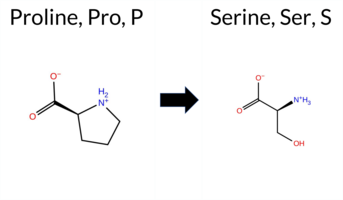 3DClick to see structure in 3D Viewer AISynGAP1 missense variant P715S is listed in ClinVar as pathogenic (ClinVar ID 1804065.0) and is present in gnomAD (ID 6‑33441608‑C‑T). Functional prediction tools that agree on a benign effect are REVEL and FATHMM. Those that predict a pathogenic effect include FoldX, Foldetta, PROVEAN, polyPhen‑2 (HumDiv and HumVar), SIFT, and AlphaMissense‑Default. Predictions that are inconclusive are Rosetta, premPS, ESM1b, and AlphaMissense‑Optimized. High‑accuracy assessments show AlphaMissense‑Optimized as uncertain, the SGM Consensus (majority vote of AlphaMissense‑Default, ESM1b, FATHMM, PROVEAN) as pathogenic, and Foldetta (combining FoldX‑MD and Rosetta outputs) as pathogenic. Overall, the majority of evidence points to a pathogenic impact, which is consistent with the ClinVar classification and does not contradict it. Disclaimer: This summary was generated using AI and should be interpreted alongside expert review. | GAP | 0.243554 | Structured | 0.409757 | Uncertain | 0.956 | 0.362 | 0.000 | Likely Pathogenic | 1 | 6-33441608-C-T | 1 | 6.20e-7 | -7.635 | In-Between | 0.787 | Likely Pathogenic | Ambiguous | 3.54 | Destabilizing | 0.0 | 0.81 | Ambiguous | 2.18 | Destabilizing | 0.94 | Ambiguous | 0.277 | Likely Benign | -7.17 | Deleterious | 1.000 | Probably Damaging | 0.998 | Probably Damaging | 3.43 | Benign | 0.01 | Affected | 3.50 | 9 | 0.2977 | 0.3755 | 1 | -1 | 0.8 | -10.04 | 231.8 | -14.0 | -0.1 | 0.0 | -0.8 | 0.1 | X | Uncertain | Pro715, along with Gly712 and Pro713, are located in a hinge region of an α-helix making a ~90-degree turn (res. Lys705-Leu725). In the WT simulations, the pyrrolidine side chain of Pro715, lacking the backbone amide groups altogether, forces the tight helix turn to take place while also hydrophobically packing with nearby residues (e.g., Leu700, Leu708, Leu714, and Leu718). Leu715, with a normal amide backbone, could potentially affect protein folding and turn formation, although this was not observed in the variant simulations. Additionally, the hydroxyl group of the Ser715 side chain can form hydrogen bonds with the backbone carbonyl group of Gly712 and disrupt the hydrophobic packing arrangement of the leucine residues from the neighboring α-helices, impacting the GAP domain tertiary assembly. | ||||||||||||||
| c.421A>C | I141L 2D AIThe SynGAP1 missense variant I141L is not reported in ClinVar and is absent from gnomAD. Prediction tools that agree on a benign effect include REVEL, PROVEAN, polyPhen‑2 (HumDiv and HumVar), SIFT, ESM1b, and FATHMM. Only AlphaMissense‑Default predicts a pathogenic outcome, while AlphaMissense‑Optimized is uncertain. The SGM‑Consensus, which aggregates the majority vote of AlphaMissense‑Default, ESM1b, FATHMM, and PROVEAN, reports a “Likely Benign” classification. High‑accuracy assessments show AlphaMissense‑Optimized as uncertain, SGM‑Consensus as Likely Benign, and Foldetta (a protein‑folding stability method combining FoldX‑MD and Rosetta) is not available for this variant. Overall, the majority of evidence points to a benign effect, and this conclusion does not contradict the ClinVar status, which has no entry for the variant. Disclaimer: This summary was generated using AI and should be interpreted alongside expert review. | Likely Benign | 0.465241 | Structured | 0.577021 | Binding | 0.367 | 0.877 | 0.500 | -6.563 | Likely Benign | 0.787 | Likely Pathogenic | Ambiguous | 0.156 | Likely Benign | -1.00 | Neutral | 0.016 | Benign | 0.013 | Benign | 3.84 | Benign | 0.10 | Tolerated | 0.0742 | 0.3180 | 2 | 2 | -0.7 | 0.00 | |||||||||||||||||||||||||||||||||||||||
| c.484C>T | R162C 2D AIThe SynGAP1 missense variant R162C is listed in ClinVar as Pathogenic and is not reported in gnomAD. Prediction tools that agree on a benign effect include REVEL, PROVEAN, SIFT, and FATHMM, whereas tools that predict a pathogenic effect are polyPhen‑2 HumDiv, polyPhen‑2 HumVar, ESM1b, and AlphaMissense‑Default. The high‑accuracy AlphaMissense‑Optimized score is uncertain, the SGM Consensus (majority vote from AlphaMissense‑Default, ESM1b, FATHMM, and PROVEAN) is inconclusive, and Foldetta stability analysis is unavailable. Overall, the available predictions are split evenly between benign and pathogenic, with no single method providing decisive evidence. Thus, the variant’s pathogenicity remains uncertain based on computational predictions, which contradicts the ClinVar pathogenic classification. Disclaimer: This summary was generated using AI and should be interpreted alongside expert review. | 0.501700 | Disordered | 0.516348 | Binding | 0.315 | 0.692 | 0.250 | Pathogenic | 2 | -8.157 | Likely Pathogenic | 0.787 | Likely Pathogenic | Ambiguous | 0.150 | Likely Benign | -2.05 | Neutral | 0.988 | Probably Damaging | 0.513 | Possibly Damaging | 4.00 | Benign | 0.11 | Tolerated | 3.74 | 4 | 0.3364 | 0.4292 | -4 | -3 | 7.0 | -53.05 | ||||||||||||||||||||||||||||||||||||
| c.485G>C | R162P 2D AISynGAP1 missense variant R162P is not reported in ClinVar (no ClinVar ID) and is absent from gnomAD (no gnomAD ID). Prediction tools that agree on a benign effect include REVEL, PROVEAN, SIFT, and FATHMM. Those that predict a pathogenic effect are polyPhen‑2 HumDiv, polyPhen‑2 HumVar, ESM1b, and AlphaMissense‑Default. The high‑accuracy AlphaMissense‑Optimized tool reports an uncertain result, while the SGM Consensus (majority vote of AlphaMissense‑Default, ESM1b, FATHMM, PROVEAN) is inconclusive due to a 2‑to‑2 split. Foldetta, which combines FoldX‑MD and Rosetta stability outputs, has no available result for this variant. Consequently, the evidence is evenly divided: four tools support benign, four support pathogenic, and the remaining high‑accuracy methods provide no decisive signal. The variant is therefore not clearly benign or pathogenic based on current predictions, and this lack of consensus does not contradict the absence of a ClinVar entry. Disclaimer: This summary was generated using AI and should be interpreted alongside expert review. | 0.501700 | Disordered | 0.516348 | Binding | 0.315 | 0.692 | 0.250 | -10.077 | Likely Pathogenic | 0.787 | Likely Pathogenic | Ambiguous | 0.241 | Likely Benign | -1.50 | Neutral | 0.910 | Possibly Damaging | 0.578 | Possibly Damaging | 4.03 | Benign | 0.30 | Tolerated | 0.2192 | 0.5507 | 0 | -2 | 2.9 | -59.07 | ||||||||||||||||||||||||||||||||||||||||
| c.590A>C | E197A 2D AIThe SynGAP1 E197A missense variant is not reported in ClinVar (ClinVar ID = None) and is absent from gnomAD (gnomAD ID = None). Prediction tools that agree on a benign effect include REVEL, polyPhen‑2 HumDiv, polyPhen‑2 HumVar, and FATHMM. Those that predict a pathogenic effect are PROVEAN, SIFT, and AlphaMissense‑Default. Two tools give uncertain results: ESM1b and AlphaMissense‑Optimized. High‑accuracy assessment shows that the SGM Consensus (majority vote from AlphaMissense‑Default, ESM1b, FATHMM, and PROVEAN) predicts pathogenicity, while AlphaMissense‑Optimized remains uncertain and Foldetta (which would combine FoldX‑MD and Rosetta outputs) has no available result. Overall, the balance of evidence—including the pathogenic majority in the high‑accuracy consensus—suggests that the variant is most likely pathogenic. This conclusion does not contradict ClinVar status, as no ClinVar entry exists for this variant. Disclaimer: This summary was generated using AI and should be interpreted alongside expert review. | 0.349426 | Structured | 0.431896 | Uncertain | 0.452 | 0.492 | 0.125 | -7.956 | In-Between | 0.787 | Likely Pathogenic | Ambiguous | 0.155 | Likely Benign | -3.56 | Deleterious | 0.055 | Benign | 0.016 | Benign | 4.06 | Benign | 0.02 | Affected | 0.3134 | 0.5290 | 0 | -1 | 5.3 | -58.04 | ||||||||||||||||||||||||||||||||||||||||
| c.1175A>T | K392M 2D 3DClick to see structure in 3D Viewer AIThe SynGAP1 K392M missense variant is not reported in ClinVar (ClinVar ID None) and is absent from gnomAD (gnomAD ID None). Prediction tools that agree on a benign effect include premPS, ESM1b, and FATHMM, whereas those that agree on a pathogenic effect are REVEL, PROVEAN, polyPhen‑2 (HumDiv and HumVar), SIFT, and AlphaMissense‑Default. The remaining tools—FoldX, Rosetta, Foldetta, and AlphaMissense‑Optimized—return uncertain or inconclusive results. High‑accuracy methods give no definitive signal: AlphaMissense‑Optimized is uncertain, the SGM Consensus (majority vote of AlphaMissense‑Default, ESM1b, FATHMM, PROVEAN) is a tie and thus unavailable, and Foldetta is uncertain. Overall, the majority of available predictions (six pathogenic vs. three benign) lean toward a pathogenic impact. Therefore, the variant is most likely pathogenic, and this assessment does not contradict any ClinVar status because no ClinVar entry exists. Disclaimer: This summary was generated using AI and should be interpreted alongside expert review. | C2 | 0.541878 | Disordered | 0.405672 | Uncertain | 0.319 | 0.702 | 0.750 | -3.856 | Likely Benign | 0.788 | Likely Pathogenic | Ambiguous | 0.52 | Ambiguous | 0.1 | 0.67 | Ambiguous | 0.60 | Ambiguous | -0.09 | Likely Benign | 0.665 | Likely Pathogenic | -3.24 | Deleterious | 0.952 | Possibly Damaging | 0.496 | Possibly Damaging | 4.59 | Benign | 0.00 | Affected | 0.1799 | 0.4941 | 0 | -1 | 5.8 | 3.02 | ||||||||||||||||||||||||||||||
| c.1724G>T | R575L 2D 3DClick to see structure in 3D Viewer AIThe SynGAP1 missense variant R575L is not reported in ClinVar (ClinVar ID None) and is absent from gnomAD (gnomAD ID None). Prediction tools that classify the variant as benign include SIFT, FoldX, and Foldetta. Those that predict pathogenicity comprise SGM‑Consensus, REVEL, PROVEAN, polyPhen‑2 (HumDiv and HumVar), ESM1b, FATHMM, and AlphaMissense‑Default. Uncertain predictions come from AlphaMissense‑Optimized, Rosetta, and premPS. High‑accuracy assessments show AlphaMissense‑Optimized as uncertain, SGM‑Consensus as Likely Pathogenic (majority vote of AlphaMissense‑Default, ESM1b, FATHMM, PROVEAN), and Foldetta as Benign. Overall, the majority of tools (10/13) predict pathogenicity, and the high‑accuracy consensus leans toward pathogenic, though Foldetta suggests stability‑preserving benign effects. Thus, the variant is most likely pathogenic based on current predictions, and this assessment does not contradict the absence of a ClinVar classification. Disclaimer: This summary was generated using AI and should be interpreted alongside expert review. | Likely Pathogenic | GAP | 0.061840 | Structured | 0.021362 | Uncertain | 0.916 | 0.259 | 0.000 | -12.442 | Likely Pathogenic | 0.788 | Likely Pathogenic | Ambiguous | -0.04 | Likely Benign | 0.1 | -0.89 | Ambiguous | -0.47 | Likely Benign | 0.59 | Ambiguous | 0.602 | Likely Pathogenic | -4.42 | Deleterious | 1.000 | Probably Damaging | 1.000 | Probably Damaging | -1.24 | Pathogenic | 0.11 | Tolerated | 0.1574 | 0.2991 | -3 | -2 | 8.3 | -43.03 | |||||||||||||||||||||||||||||
| c.2464A>G | T822A 2D 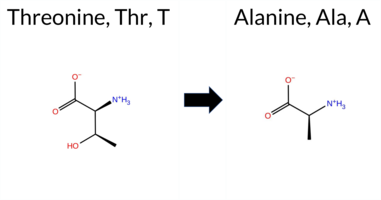 AIThe SynGAP1 T822A missense variant has no ClinVar record and is not reported in gnomAD. Prediction tools that agree on a benign effect include REVEL, PROVEAN, SIFT, ESM1b, and FATHMM, while those that predict a pathogenic outcome are polyPhen‑2 HumDiv, polyPhen‑2 HumVar, and AlphaMissense‑Default. The SGM‑Consensus, which aggregates AlphaMissense‑Default, ESM1b, FATHMM, and PROVEAN, is classified as Likely Benign. High‑accuracy assessments show AlphaMissense‑Optimized as Uncertain, and the SGM‑Consensus (majority vote) remains Likely Benign; Foldetta results are unavailable. Overall, the majority of evidence points to a benign effect, and this conclusion does not contradict any ClinVar annotation (none exists). Thus, the variant is most likely benign. Disclaimer: This summary was generated using AI and should be interpreted alongside expert review. | Likely Benign | 0.724957 | Disordered | 0.651624 | Binding | 0.295 | 0.881 | 0.750 | -3.695 | Likely Benign | 0.788 | Likely Pathogenic | Ambiguous | 0.122 | Likely Benign | -1.55 | Neutral | 0.987 | Probably Damaging | 0.891 | Possibly Damaging | 2.60 | Benign | 0.17 | Tolerated | 0.4566 | 0.4456 | 1 | 0 | 2.5 | -30.03 | |||||||||||||||||||||||||||||||||||||||
| c.949C>A | L317M 2D 3DClick to see structure in 3D Viewer AIThe SynGAP1 L317M missense variant is not reported in ClinVar and is absent from gnomAD. Consensus predictions from multiple in silico tools show a split: benign calls come from REVEL, FoldX, Foldetta, and PROVEAN, whereas pathogenic calls arise from polyPhen‑2 (HumDiv and HumVar), SIFT, ESM1b, FATHMM, AlphaMissense‑Default, and the SGM‑Consensus score (Likely Pathogenic). High‑accuracy assessments give a mixed picture: AlphaMissense‑Optimized is inconclusive, the SGM‑Consensus (majority vote of AlphaMissense‑Default, ESM1b, FATHMM, PROVEAN) indicates Likely Pathogenic, and Foldetta predicts a benign effect on protein stability. No evidence from ClinVar contradicts these findings. Overall, the preponderance of pathogenic predictions and the SGM‑Consensus result suggest that the variant is most likely pathogenic, though the benign signal from Foldetta and other tools indicates uncertainty. Disclaimer: This summary was generated using AI and should be interpreted alongside expert review. | Likely Pathogenic | C2 | 0.106997 | Structured | 0.394031 | Uncertain | 0.874 | 0.240 | 0.125 | -9.558 | Likely Pathogenic | 0.788 | Likely Pathogenic | Ambiguous | 0.14 | Likely Benign | 0.1 | 0.84 | Ambiguous | 0.49 | Likely Benign | 0.94 | Ambiguous | 0.250 | Likely Benign | -1.84 | Neutral | 1.000 | Probably Damaging | 0.999 | Probably Damaging | 1.71 | Pathogenic | 0.04 | Affected | 0.0937 | 0.3122 | 4 | 2 | -1.9 | 18.03 | |||||||||||||||||||||||||||||
| c.1357C>A | H453N 2D 3DClick to see structure in 3D Viewer AISynGAP1 missense variant H453N is not reported in ClinVar and is absent from gnomAD. Prediction tools cluster into two groups: benign predictions come from REVEL, SIFT, and FATHMM, while pathogenic predictions arise from PROVEAN, polyPhen‑2 HumDiv, polyPhen‑2 HumVar, ESM1b, and AlphaMissense‑Default. A third set of methods (FoldX, Rosetta, Foldetta, premPS, AlphaMissense‑Optimized) yield uncertain or inconclusive results. High‑accuracy assessments further clarify the picture: AlphaMissense‑Optimized remains uncertain; the SGM Consensus, derived from a majority vote of AlphaMissense‑Default, ESM1b, FATHMM, and PROVEAN, predicts pathogenic; and Foldetta, which integrates FoldX‑MD and Rosetta outputs, is also uncertain. Overall, the majority of evidence points toward a pathogenic effect for H453N. This conclusion is not contradicted by ClinVar, which has no entry for the variant. Disclaimer: This summary was generated using AI and should be interpreted alongside expert review. | Likely Pathogenic | GAP | 0.352862 | Structured | 0.316097 | Uncertain | 0.946 | 0.200 | 0.000 | -8.416 | Likely Pathogenic | 0.789 | Likely Pathogenic | Ambiguous | 0.93 | Ambiguous | 0.1 | 0.97 | Ambiguous | 0.95 | Ambiguous | 0.78 | Ambiguous | 0.347 | Likely Benign | -6.92 | Deleterious | 1.000 | Probably Damaging | 0.999 | Probably Damaging | 3.48 | Benign | 0.09 | Tolerated | 0.1435 | 0.2548 | 2 | 1 | -0.3 | -23.04 | |||||||||||||||||||||||||||||
| c.1495A>G | R499G 2D 3DClick to see structure in 3D Viewer AIThe SynGAP1 missense variant R499G is listed in gnomAD (variant ID 6‑33438527‑A‑G) but has no ClinVar entry. Prediction tools that assess the variant’s effect on protein function overwhelmingly indicate a deleterious outcome: REVEL, FoldX‑MD (Rosetta component), Foldetta, premPS, PROVEAN, polyPhen‑2 (HumDiv and HumVar), SIFT, ESM1b, FATHMM, AlphaMissense‑Default, and the SGM‑Consensus (majority vote of AlphaMissense‑Default, ESM1b, FATHMM, PROVEAN) all classify it as pathogenic. Only FoldX (overall) and AlphaMissense‑Optimized report uncertain results, which are treated as unavailable evidence. No tool predicts a benign effect. High‑accuracy assessments specifically show AlphaMissense‑Optimized as uncertain, SGM‑Consensus as likely pathogenic, and Foldetta as pathogenic. Taken together, the preponderance of evidence supports a pathogenic classification for R499G, and this conclusion is not contradicted by any ClinVar status (none available). Disclaimer: This summary was generated using AI and should be interpreted alongside expert review. | Likely Pathogenic | GAP | 0.071867 | Structured | 0.386723 | Uncertain | 0.899 | 0.146 | 0.000 | 6-33438527-A-G | 3 | 1.86e-6 | -9.960 | Likely Pathogenic | 0.789 | Likely Pathogenic | Ambiguous | 1.55 | Ambiguous | 0.1 | 2.75 | Destabilizing | 2.15 | Destabilizing | 1.41 | Destabilizing | 0.681 | Likely Pathogenic | -4.50 | Deleterious | 0.958 | Probably Damaging | 0.769 | Possibly Damaging | -1.47 | Pathogenic | 0.01 | Affected | 3.37 | 35 | 0.2888 | 0.1798 | -2 | -3 | 4.1 | -99.14 | ||||||||||||||||||||||||
| c.1499T>G | L500R 2D 3DClick to see structure in 3D Viewer AIThe SynGAP1 missense variant L500R is not reported in ClinVar and is absent from gnomAD. Prediction tools that classify the variant as pathogenic include REVEL, FoldX, premPS, PROVEAN, polyPhen‑2 (HumDiv and HumVar), SIFT, ESM1b, FATHMM, AlphaMissense‑Default, and the SGM‑Consensus (majority vote of AlphaMissense‑Default, ESM1b, FATHMM, PROVEAN). No tool predicts a benign effect; the benign group is empty. Predictions that are uncertain or inconclusive are Rosetta, Foldetta, and AlphaMissense‑Optimized. High‑accuracy assessments show AlphaMissense‑Optimized as uncertain, SGM‑Consensus as likely pathogenic, and Foldetta as uncertain. Based on the overwhelming agreement among pathogenic predictors and the lack of any benign calls, the variant is most likely pathogenic, and this conclusion does not contradict the ClinVar status (which has no entry). Disclaimer: This summary was generated using AI and should be interpreted alongside expert review. | Likely Pathogenic | GAP | 0.066181 | Structured | 0.382942 | Uncertain | 0.893 | 0.150 | 0.000 | -15.576 | Likely Pathogenic | 0.789 | Likely Pathogenic | Ambiguous | 2.23 | Destabilizing | 0.1 | 1.04 | Ambiguous | 1.64 | Ambiguous | 1.11 | Destabilizing | 0.794 | Likely Pathogenic | -5.97 | Deleterious | 1.000 | Probably Damaging | 0.998 | Probably Damaging | -1.02 | Pathogenic | 0.03 | Affected | 0.1204 | 0.0488 | -3 | -2 | -8.3 | 43.03 | |||||||||||||||||||||||||||||
| c.2455G>C | A819P 2D AIThe SynGAP1 missense variant A819P is not reported in ClinVar and has no entries in gnomAD. Functional prediction tools cluster into two groups: benign predictions come from REVEL and ESM1b, whereas pathogenic predictions are made by PROVEAN, polyPhen‑2 (HumDiv and HumVar), SIFT, FATHMM, and AlphaMissense‑Default. High‑accuracy assessments further support a deleterious effect: AlphaMissense‑Optimized is uncertain, but the SGM‑Consensus—derived from a majority vote of AlphaMissense‑Default, ESM1b, FATHMM, and PROVEAN—classifies the variant as likely pathogenic. Foldetta, a protein‑folding stability method that integrates FoldX‑MD and Rosetta outputs, was not available for this variant. Overall, the preponderance of evidence points to a pathogenic impact for A819P, and this conclusion does not conflict with the absence of a ClinVar annotation. Disclaimer: This summary was generated using AI and should be interpreted alongside expert review. | Likely Pathogenic | 0.694846 | Disordered | 0.707644 | Binding | 0.317 | 0.892 | 0.625 | -5.542 | Likely Benign | 0.789 | Likely Pathogenic | Ambiguous | 0.342 | Likely Benign | -3.18 | Deleterious | 0.999 | Probably Damaging | 0.985 | Probably Damaging | 2.17 | Pathogenic | 0.01 | Affected | 0.1920 | 0.5753 | 1 | -1 | -3.4 | 26.04 | |||||||||||||||||||||||||||||||||||||||
| c.274G>T | G92W 2D AIThe SynGAP1 missense variant G92W is not reported in ClinVar (ClinVar ID = None) and is absent from gnomAD (gnomAD ID = None). Prediction tools that agree on a benign effect include REVEL, ESM1b, and FATHMM. Tools that agree on a pathogenic effect include PROVEAN, polyPhen‑2 HumDiv, polyPhen‑2 HumVar, SIFT, and AlphaMissense‑Default. High‑accuracy assessments are mixed: AlphaMissense‑Optimized is uncertain; the SGM Consensus (majority vote from AlphaMissense‑Default, ESM1b, FATHMM, and PROVEAN) is inconclusive (2 vs 2), and Foldetta results are unavailable. Overall, the majority of available predictions (five pathogenic vs. three benign) suggest a pathogenic impact. This conclusion is not contradicted by ClinVar status, which has no entry for this variant. Disclaimer: This summary was generated using AI and should be interpreted alongside expert review. | 0.575842 | Disordered | 0.537848 | Binding | 0.337 | 0.874 | 0.625 | -6.502 | Likely Benign | 0.789 | Likely Pathogenic | Ambiguous | 0.224 | Likely Benign | -2.61 | Deleterious | 1.000 | Probably Damaging | 0.979 | Probably Damaging | 3.95 | Benign | 0.00 | Affected | 0.0640 | 0.4546 | -7 | -2 | -0.5 | 129.16 | ||||||||||||||||||||||||||||||||||||||||
| c.3016T>A | Y1006N 2D 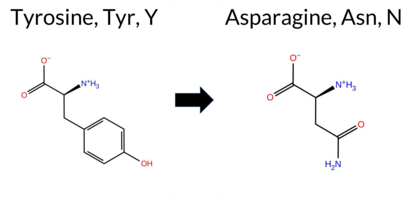 AIThe SynGAP1 missense variant Y1006N is not reported in ClinVar (no ClinVar ID) and is absent from gnomAD (no gnomAD ID). Prediction tools that agree on a benign effect include REVEL, PROVEAN, SIFT, ESM1b, and FATHMM, while polyPhen‑2 HumDiv, polyPhen‑2 HumVar, and AlphaMissense‑Default predict a pathogenic outcome. The SGM‑Consensus, derived from a majority vote of AlphaMissense‑Default, ESM1b, FATHMM, and PROVEAN, classifies the variant as Likely Benign. High‑accuracy assessments show AlphaMissense‑Optimized as Uncertain, and the SGM‑Consensus remains Likely Benign; Foldetta results are unavailable. Overall, the balance of evidence leans toward a benign interpretation, and this conclusion does not contradict any ClinVar annotation (none exists). Disclaimer: This summary was generated using AI and should be interpreted alongside expert review. | Likely Benign | 0.801317 | Disordered | 0.930554 | Binding | 0.264 | 0.896 | 0.750 | -4.238 | Likely Benign | 0.789 | Likely Pathogenic | Ambiguous | 0.118 | Likely Benign | -0.75 | Neutral | 1.000 | Probably Damaging | 0.999 | Probably Damaging | 2.73 | Benign | 0.75 | Tolerated | 0.2168 | 0.1094 | -2 | -2 | -2.2 | -49.07 | |||||||||||||||||||||||||||||||||||||||
| c.3598G>A | E1200K 2D AIThe SynGAP1 missense variant E1200K is not reported in ClinVar and has no entries in gnomAD. Prediction tools that agree on a benign effect include REVEL, PROVEAN, SIFT, ESM1b, and FATHMM, while polyPhen‑2 (HumDiv and HumVar) and AlphaMissense‑Default predict a pathogenic impact. The SGM‑Consensus, derived from a majority vote of AlphaMissense‑Default, ESM1b, FATHMM, and PROVEAN, classifies the variant as Likely Benign. High‑accuracy assessments show AlphaMissense‑Optimized as Uncertain, SGM‑Consensus as Likely Benign, and Foldetta results are unavailable. Overall, the balance of evidence leans toward a benign effect, with no conflict with ClinVar status (which has no entry). Thus, the variant is most likely benign based on current predictions. Disclaimer: This summary was generated using AI and should be interpreted alongside expert review. | Likely Benign | Coiled-coil | 0.545602 | Disordered | 0.458056 | Uncertain | 0.889 | 0.596 | 0.250 | -6.489 | Likely Benign | 0.789 | Likely Pathogenic | Ambiguous | 0.158 | Likely Benign | -1.05 | Neutral | 0.994 | Probably Damaging | 0.900 | Possibly Damaging | 2.71 | Benign | 0.19 | Tolerated | 0.1690 | 0.4551 | 0 | 1 | -0.4 | -0.94 | ||||||||||||||||||||||||||||||||||||||
| c.524A>G | Q175R 2D AIThe SynGAP1 missense variant Q175R is not reported in ClinVar (no ClinVar ID) and is absent from gnomAD (no gnomAD ID). Prediction tools that agree on a benign effect include REVEL, PROVEAN, polyPhen‑2 HumDiv, polyPhen‑2 HumVar, SIFT, ESM1b, and FATHMM. The only tool that predicts a pathogenic outcome is AlphaMissense‑Default. The SGM‑Consensus, which aggregates AlphaMissense‑Default, ESM1b, FATHMM, and PROVEAN, reports a likely benign classification. High‑accuracy assessments show AlphaMissense‑Optimized as uncertain, while the SGM‑Consensus remains likely benign; Foldetta results are unavailable. Overall, the majority of evidence points to a benign impact, and this conclusion does not contradict any existing ClinVar annotation (none is present). Disclaimer: This summary was generated using AI and should be interpreted alongside expert review. | Likely Benign | 0.653063 | Disordered | 0.474689 | Uncertain | 0.367 | 0.618 | 0.375 | -5.785 | Likely Benign | 0.789 | Likely Pathogenic | Ambiguous | 0.194 | Likely Benign | -1.29 | Neutral | 0.012 | Benign | 0.006 | Benign | 4.14 | Benign | 0.26 | Tolerated | 0.1485 | 0.1352 | 1 | 1 | -1.0 | 28.06 | |||||||||||||||||||||||||||||||||||||||
| c.577G>A | A193T 2D AIThe SynGAP1 missense variant A193T is not reported in ClinVar (no ClinVar ID) and is absent from gnomAD (no gnomAD ID). Prediction tools that agree on a benign effect include REVEL, PROVEAN, SIFT, ESM1b, and FATHMM, while those that predict a pathogenic effect are polyPhen‑2 HumDiv, polyPhen‑2 HumVar, and AlphaMissense‑Default. The SGM‑Consensus, derived from a majority vote of AlphaMissense‑Default, ESM1b, FATHMM, and PROVEAN, classifies the variant as Likely Benign. High‑accuracy assessments show AlphaMissense‑Optimized as Uncertain, and the SGM‑Consensus as Likely Benign; Foldetta results are not available. Overall, the balance of evidence favors a benign interpretation, and this conclusion does not contradict any ClinVar annotation (none exists). Disclaimer: This summary was generated using AI and should be interpreted alongside expert review. | Likely Benign | 0.429200 | Structured | 0.428386 | Uncertain | 0.310 | 0.577 | 0.125 | -4.973 | Likely Benign | 0.789 | Likely Pathogenic | Ambiguous | 0.208 | Likely Benign | -1.36 | Neutral | 0.990 | Probably Damaging | 0.815 | Possibly Damaging | 4.07 | Benign | 0.21 | Tolerated | 0.1452 | 0.7231 | 1 | 0 | -2.5 | 30.03 | |||||||||||||||||||||||||||||||||||||||
| c.1333G>C | E445Q 2D 3DClick to see structure in 3D Viewer AISynGAP1 missense variant E445Q is reported in gnomAD (ID 6‑33438238‑G‑C) but has no ClinVar entry. Functional prediction tools cluster into two groups: benign predictions (REVEL, FoldX, Rosetta, SIFT, FATHMM) and pathogenic predictions (PROVEAN, polyPhen‑2 HumDiv, polyPhen‑2 HumVar, AlphaMissense‑Default, ESM1b). Two tools remain inconclusive (premPS, AlphaMissense‑Optimized). High‑accuracy assessments further clarify the picture: AlphaMissense‑Optimized is uncertain; the SGM Consensus, derived from a majority vote of AlphaMissense‑Default, ESM1b, FATHMM, and PROVEAN, indicates a likely pathogenic effect; Foldetta, which integrates FoldX‑MD and Rosetta stability outputs, predicts a benign impact. Overall, the balance of evidence tilts toward pathogenicity, with the high‑accuracy consensus supporting this view, and there is no conflict with ClinVar status because the variant is not yet classified in that database. Disclaimer: This summary was generated using AI and should be interpreted alongside expert review. | Likely Pathogenic | GAP | 0.191378 | Structured | 0.270205 | Uncertain | 0.947 | 0.228 | 0.000 | 6-33438238-G-C | 1 | 6.19e-7 | -12.430 | Likely Pathogenic | 0.790 | Likely Pathogenic | Ambiguous | -0.03 | Likely Benign | 0.0 | 0.20 | Likely Benign | 0.09 | Likely Benign | 0.70 | Ambiguous | 0.240 | Likely Benign | -2.86 | Deleterious | 0.987 | Probably Damaging | 0.946 | Probably Damaging | 3.40 | Benign | 0.12 | Tolerated | 3.38 | 31 | 0.0787 | 0.5018 | 2 | 2 | 0.0 | -0.98 | ||||||||||||||||||||||||
| c.2791C>T | L931F 2D AIThe SynGAP1 missense variant L931F is not reported in ClinVar and is absent from gnomAD. Functional prediction tools cluster into two groups: benign predictions come from REVEL, PROVEAN, and ESM1b, while pathogenic predictions arise from polyPhen‑2 (HumDiv and HumVar), SIFT, FATHMM, and AlphaMissense‑Default. AlphaMissense‑Optimized is uncertain. A high‑accuracy consensus (SGM) that aggregates AlphaMissense‑Default, ESM1b, FATHMM, and PROVEAN yields a 2‑to‑2 split, leaving the consensus inconclusive. Foldetta, which assesses protein‑folding stability via FoldX‑MD and Rosetta, has no available result for this variant. Consequently, the overall evidence leans toward pathogenicity, driven by the majority of standard predictors, and does not conflict with the absence of a ClinVar annotation. Disclaimer: This summary was generated using AI and should be interpreted alongside expert review. | 0.549308 | Disordered | 0.989212 | Binding | 0.335 | 0.856 | 0.375 | -5.101 | Likely Benign | 0.790 | Likely Pathogenic | Ambiguous | 0.167 | Likely Benign | -2.00 | Neutral | 1.000 | Probably Damaging | 0.998 | Probably Damaging | 2.41 | Pathogenic | 0.04 | Affected | 0.0718 | 0.3208 | 2 | 0 | -1.0 | 34.02 | ||||||||||||||||||||||||||||||||||||||||
| c.616A>C | I206L 2D 3DClick to see structure in 3D Viewer AIThe SynGAP1 missense variant I206L is not reported in ClinVar (ClinVar ID None) and is absent from gnomAD (gnomAD ID None). Prediction tools that agree on a benign effect include REVEL, FoldX, PROVEAN, polyPhen‑2 (HumDiv and HumVar), SIFT, FATHMM, and Foldetta. Those that predict a pathogenic effect are ESM1b and AlphaMissense‑Default. Uncertain or inconclusive results come from premPS, AlphaMissense‑Optimized, and Rosetta. High‑accuracy assessments show AlphaMissense‑Optimized as uncertain, the SGM Consensus (majority vote of AlphaMissense‑Default, ESM1b, FATHMM, PROVEAN) is inconclusive due to a 2‑vs‑2 split, and Foldetta predicts a benign outcome. Overall, the majority of tools (seven benign vs two pathogenic) support a benign classification. Thus, the variant is most likely benign, and this assessment does not contradict any ClinVar status. Disclaimer: This summary was generated using AI and should be interpreted alongside expert review. | PH | 0.298791 | Structured | 0.405123 | Uncertain | 0.863 | 0.391 | 0.125 | -9.488 | Likely Pathogenic | 0.790 | Likely Pathogenic | Ambiguous | 0.05 | Likely Benign | 0.1 | 0.75 | Ambiguous | 0.40 | Likely Benign | 0.78 | Ambiguous | 0.080 | Likely Benign | -1.72 | Neutral | 0.004 | Benign | 0.012 | Benign | 3.78 | Benign | 0.08 | Tolerated | 0.0632 | 0.3608 | 2 | 2 | -0.7 | 0.00 | ||||||||||||||||||||||||||||||
| c.772C>T | R258C 2D 3DClick to see structure in 3D Viewer AIThe SynGAP1 R258C missense variant is listed in ClinVar with an “Uncertain” status and is present in gnomAD (variant ID 6‑33437677‑C‑T). Prediction tools that agree on a benign effect include only FATHMM. All other evaluated predictors—REVEL, PROVEAN, polyPhen‑2 (HumDiv and HumVar), SIFT, ESM1b, AlphaMissense‑Default, and the SGM‑Consensus (majority vote of AlphaMissense‑Default, ESM1b, FATHMM, PROVEAN)—indicate a pathogenic or likely pathogenic impact. High‑accuracy assessments show AlphaMissense‑Optimized as uncertain, the SGM‑Consensus as likely pathogenic, and Foldetta (combining FoldX‑MD and Rosetta outputs) as uncertain. Based on the preponderance of pathogenic predictions, the variant is most likely pathogenic, which does not contradict its current ClinVar “Uncertain” classification. Disclaimer: This summary was generated using AI and should be interpreted alongside expert review. | Likely Pathogenic | C2 | 0.295083 | Structured | 0.293667 | Uncertain | 0.894 | 0.260 | 0.250 | Uncertain | 1 | 6-33437677-C-T | 1 | 6.20e-7 | -10.285 | Likely Pathogenic | 0.790 | Likely Pathogenic | Ambiguous | 1.17 | Ambiguous | 0.4 | 1.76 | Ambiguous | 1.47 | Ambiguous | 0.87 | Ambiguous | 0.771 | Likely Pathogenic | -6.79 | Deleterious | 1.000 | Probably Damaging | 0.993 | Probably Damaging | 5.77 | Benign | 0.00 | Affected | 3.39 | 15 | 0.3307 | 0.3411 | -3 | -4 | 7.0 | -53.05 | ||||||||||||||||||||||
| c.1046C>G | P349R 2D 3DClick to see structure in 3D Viewer AIThe SynGAP1 missense variant P349R is not reported in ClinVar (ClinVar ID None) and is absent from gnomAD (gnomAD ID None). Prediction tools that agree on a benign effect include only REVEL, whereas the majority of tools predict a pathogenic impact: PROVEAN, polyPhen‑2 (HumDiv and HumVar), SIFT, ESM1b, FATHMM, AlphaMissense‑Default, and Rosetta. Uncertain or inconclusive results come from FoldX, Foldetta, premPS, and AlphaMissense‑Optimized. High‑accuracy assessments show that AlphaMissense‑Optimized is uncertain, the SGM Consensus (majority vote of AlphaMissense‑Default, ESM1b, FATHMM, and PROVEAN) is Likely Pathogenic, and Foldetta remains uncertain. Overall, the preponderance of evidence points to a pathogenic effect for P349R. This conclusion is not contradicted by ClinVar status, as the variant has no ClinVar entry. Disclaimer: This summary was generated using AI and should be interpreted alongside expert review. | Likely Pathogenic | C2 | 0.167087 | Structured | 0.348607 | Uncertain | 0.947 | 0.396 | 0.000 | -14.001 | Likely Pathogenic | 0.791 | Likely Pathogenic | Ambiguous | 0.99 | Ambiguous | 0.1 | 2.15 | Destabilizing | 1.57 | Ambiguous | 0.93 | Ambiguous | 0.335 | Likely Benign | -7.22 | Deleterious | 1.000 | Probably Damaging | 0.997 | Probably Damaging | 1.55 | Pathogenic | 0.01 | Affected | 0.1395 | 0.3009 | 0 | -2 | -2.9 | 59.07 | |||||||||||||||||||||||||||||
| c.2293A>C | S765R 2D AIThe SynGAP1 missense variant S765R is not reported in ClinVar (no ClinVar ID) and is absent from gnomAD (no gnomAD ID). Prediction tools that agree on a benign effect include REVEL, PROVEAN, SIFT, ESM1b, and FATHMM, while those that predict a pathogenic effect are polyPhen‑2 HumDiv, polyPhen‑2 HumVar, and AlphaMissense‑Default. The SGM‑Consensus, which aggregates AlphaMissense‑Default, ESM1b, FATHMM, and PROVEAN, is classified as Likely Benign. High‑accuracy assessments show AlphaMissense‑Optimized as Uncertain, SGM‑Consensus (majority vote) as Benign, and Foldetta results are unavailable. Overall, the majority of evidence points to a benign impact. There is no ClinVar entry to contradict this conclusion, so the variant is most likely benign based on current predictions. Disclaimer: This summary was generated using AI and should be interpreted alongside expert review. | Likely Benign | 0.370445 | Structured | 0.922652 | Binding | 0.335 | 0.865 | 0.250 | -5.422 | Likely Benign | 0.791 | Likely Pathogenic | Ambiguous | 0.157 | Likely Benign | -1.57 | Neutral | 0.996 | Probably Damaging | 0.985 | Probably Damaging | 4.16 | Benign | 0.07 | Tolerated | 3.64 | 6 | 0.0741 | 0.3859 | -1 | 0 | -3.7 | 69.11 | |||||||||||||||||||||||||||||||||||||
| c.2295C>A | S765R 2D AIThe SynGAP1 missense variant S765R is reported in gnomAD (ID 6‑33442453‑C‑A) but has no ClinVar entry. Functional prediction tools that agree on a benign effect include REVEL, PROVEAN, SIFT, ESM1b, and FATHMM. Those that predict a pathogenic impact are polyPhen‑2 HumDiv, polyPhen‑2 HumVar, and AlphaMissense‑Default. The SGM‑Consensus, derived from a majority vote of AlphaMissense‑Default, ESM1b, FATHMM, and PROVEAN, classifies the variant as Likely Benign. High‑accuracy assessments show AlphaMissense‑Optimized as Uncertain, SGM‑Consensus as Likely Benign, and Foldetta results are unavailable. Taken together, the majority of evidence points to a benign effect, and this conclusion does not contradict any ClinVar status because none is assigned. Thus, the variant is most likely benign. Disclaimer: This summary was generated using AI and should be interpreted alongside expert review. | Likely Benign | 0.370445 | Structured | 0.922652 | Binding | 0.335 | 0.865 | 0.250 | 6-33442453-C-A | -5.422 | Likely Benign | 0.791 | Likely Pathogenic | Ambiguous | 0.155 | Likely Benign | -1.57 | Neutral | 0.996 | Probably Damaging | 0.985 | Probably Damaging | 4.16 | Benign | 0.07 | Tolerated | 3.64 | 6 | 0.0741 | 0.3859 | -1 | 0 | -3.7 | 69.11 | ||||||||||||||||||||||||||||||||||||
| c.2295C>G | S765R 2D AIThe SynGAP1 missense variant S765R is not reported in ClinVar and is absent from gnomAD. Prediction tools that agree on a benign effect include REVEL, PROVEAN, SIFT, ESM1b, and FATHMM, while those that predict a pathogenic effect are polyPhen‑2 HumDiv, polyPhen‑2 HumVar, and AlphaMissense‑Default. The SGM‑Consensus, derived from a majority vote of AlphaMissense‑Default, ESM1b, FATHMM, and PROVEAN, classifies the variant as Likely Benign. High‑accuracy assessments show AlphaMissense‑Optimized as Uncertain, SGM‑Consensus as Likely Benign, and Foldetta results are unavailable. Overall, the balance of evidence points to a benign impact for S765R, and this conclusion does not contradict any ClinVar annotation (none exists). Disclaimer: This summary was generated using AI and should be interpreted alongside expert review. | Likely Benign | 0.370445 | Structured | 0.922652 | Binding | 0.335 | 0.865 | 0.250 | -5.422 | Likely Benign | 0.791 | Likely Pathogenic | Ambiguous | 0.155 | Likely Benign | -1.57 | Neutral | 0.996 | Probably Damaging | 0.985 | Probably Damaging | 4.16 | Benign | 0.07 | Tolerated | 3.64 | 6 | 0.0741 | 0.3859 | -1 | 0 | -3.7 | 69.11 | |||||||||||||||||||||||||||||||||||||
| c.3263G>A | S1088N 2D AIThe SynGAP1 missense variant S1088N has no ClinVar record and is not listed in gnomAD. Prediction tools that agree on a benign effect include REVEL, PROVEAN, ESM1b, FATHMM, and the SGM‑Consensus (majority vote from AlphaMissense‑Default, ESM1b, FATHMM, PROVEAN). Tools that predict a pathogenic effect are polyPhen‑2 HumDiv, polyPhen‑2 HumVar, SIFT, and AlphaMissense‑Default. The high‑accuracy AlphaMissense‑Optimized score is uncertain, while the SGM‑Consensus (derived from the four high‑accuracy tools) indicates a likely benign outcome. Foldetta, a protein‑folding stability method combining FoldX‑MD and Rosetta outputs, has no available result for this variant. Overall, the balance of evidence leans toward a benign impact, and this assessment does not contradict any ClinVar status, as none is currently assigned. Disclaimer: This summary was generated using AI and should be interpreted alongside expert review. | Likely Benign | 0.910643 | Disordered | 0.975261 | Binding | 0.336 | 0.889 | 1.000 | -5.227 | Likely Benign | 0.791 | Likely Pathogenic | Ambiguous | 0.155 | Likely Benign | -1.25 | Neutral | 0.991 | Probably Damaging | 0.982 | Probably Damaging | 2.69 | Benign | 0.02 | Affected | 0.1940 | 0.5197 | 1 | 1 | -2.7 | 27.03 | |||||||||||||||||||||||||||||||||||||||
| c.337G>A | G113R 2D AIThe SynGAP1 missense variant G113R is not reported in ClinVar and is absent from gnomAD. Prediction tools that agree on a benign effect include REVEL, PROVEAN, polyPhen‑2 HumDiv, polyPhen‑2 HumVar, ESM1b, and FATHMM. Tools that predict a pathogenic effect are SIFT and AlphaMissense‑Default, while AlphaMissense‑Optimized returns an uncertain result. The SGM‑Consensus, which aggregates AlphaMissense‑Default, ESM1b, FATHMM, and PROVEAN, classifies the variant as likely benign. High‑accuracy assessments show AlphaMissense‑Optimized as uncertain, SGM‑Consensus as likely benign, and Foldetta (a protein‑folding stability method combining FoldX‑MD and Rosetta outputs) has no available result for this variant. Based on the collective evidence, the variant is most likely benign, and this assessment does not contradict any ClinVar annotation because no ClinVar entry exists. Disclaimer: This summary was generated using AI and should be interpreted alongside expert review. | Likely Benign | 0.784345 | Disordered | 0.639486 | Binding | 0.350 | 0.870 | 0.750 | -3.904 | Likely Benign | 0.791 | Likely Pathogenic | Ambiguous | 0.087 | Likely Benign | -1.50 | Neutral | 0.267 | Benign | 0.080 | Benign | 4.16 | Benign | 0.03 | Affected | 0.1025 | 0.4138 | -3 | -2 | -4.1 | 99.14 | |||||||||||||||||||||||||||||||||||||||
| c.337G>C | G113R 2D AIThe SynGAP1 missense variant G113R is not reported in ClinVar and is absent from gnomAD. Functional prediction tools largely agree on a benign effect: REVEL, PROVEAN, polyPhen‑2 HumDiv, polyPhen‑2 HumVar, ESM1b, and FATHMM all classify it as benign. In contrast, SIFT and AlphaMissense‑Default predict a pathogenic impact. The high‑accuracy AlphaMissense‑Optimized score is uncertain, while the SGM Consensus—derived from a majority vote of AlphaMissense‑Default, ESM1b, FATHMM, and PROVEAN—labels the variant as likely benign. Protein‑folding stability analysis via Foldetta is unavailable for this residue. Overall, the preponderance of evidence points to a benign effect, and this assessment does not conflict with the absence of a ClinVar classification. Thus, the variant is most likely benign, and this conclusion is consistent with the lack of a ClinVar entry. Disclaimer: This summary was generated using AI and should be interpreted alongside expert review. | Likely Benign | 0.784345 | Disordered | 0.639486 | Binding | 0.350 | 0.870 | 0.750 | -3.904 | Likely Benign | 0.791 | Likely Pathogenic | Ambiguous | 0.088 | Likely Benign | -1.50 | Neutral | 0.267 | Benign | 0.080 | Benign | 4.16 | Benign | 0.03 | Affected | 0.1025 | 0.4138 | -3 | -2 | -4.1 | 99.14 | |||||||||||||||||||||||||||||||||||||||
| c.1193C>A | P398Q 2D 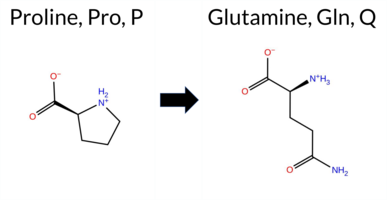 3DClick to see structure in 3D Viewer AIThe SynGAP1 missense variant P398Q has no ClinVar record (ClinVar ID None) and is not reported in gnomAD (gnomAD ID None). Prediction tools that agree on a benign effect include only FATHMM, while the majority of tools (REVEL, FoldX, Rosetta, Foldetta, premPS, PROVEAN, polyPhen‑2 HumDiv, polyPhen‑2 HumVar, SIFT, AlphaMissense‑Default) predict a pathogenic impact. Two tools report uncertainty: ESM1b and AlphaMissense‑Optimized. High‑accuracy assessments further support pathogenicity: the SGM Consensus (derived from AlphaMissense‑Default, ESM1b, FATHMM, and PROVEAN) yields a pathogenic verdict, and Foldetta, which integrates FoldX‑MD and Rosetta outputs, also predicts pathogenicity. No prediction or stability result is missing or inconclusive. Consequently, the variant is most likely pathogenic based on the collective evidence, and this assessment does not contradict any ClinVar status because no ClinVar entry exists. Disclaimer: This summary was generated using AI and should be interpreted alongside expert review. | C2 | 0.436924 | Structured | 0.401041 | Uncertain | 0.891 | 0.525 | 0.250 | -7.402 | In-Between | 0.792 | Likely Pathogenic | Ambiguous | 2.13 | Destabilizing | 0.1 | 2.01 | Destabilizing | 2.07 | Destabilizing | 1.01 | Destabilizing | 0.719 | Likely Pathogenic | -5.57 | Deleterious | 0.996 | Probably Damaging | 0.724 | Possibly Damaging | 5.48 | Benign | 0.00 | Affected | 0.1522 | 0.5176 | 0 | -1 | -1.9 | 31.01 | ||||||||||||||||||||||||||||||
| c.1555G>C | E519Q 2D 3DClick to see structure in 3D Viewer AIThe SynGAP1 E519Q missense variant is not reported in ClinVar (ClinVar ID None) and is absent from gnomAD (gnomAD ID None). Functional prediction tools cluster into two groups: benign predictions come from REVEL, FoldX, Rosetta, premPS, PROVEAN, SIFT, and FATHMM, while pathogenic predictions arise from polyPhen‑2 HumDiv, polyPhen‑2 HumVar, ESM1b, and AlphaMissense‑Default. AlphaMissense‑Optimized is uncertain. High‑accuracy assessments show AlphaMissense‑Optimized as uncertain, the SGM Consensus (majority vote of AlphaMissense‑Default, ESM1b, FATHMM, PROVEAN) is inconclusive, and Foldetta predicts a benign effect on protein stability. Overall, the majority of evidence points to a benign impact, and this conclusion does not contradict any ClinVar annotation (none is available). Disclaimer: This summary was generated using AI and should be interpreted alongside expert review. | GAP | 0.078022 | Structured | 0.104514 | Uncertain | 0.899 | 0.328 | 0.000 | -8.693 | Likely Pathogenic | 0.792 | Likely Pathogenic | Ambiguous | -0.35 | Likely Benign | 0.1 | -0.14 | Likely Benign | -0.25 | Likely Benign | -0.21 | Likely Benign | 0.195 | Likely Benign | -2.48 | Neutral | 0.994 | Probably Damaging | 0.986 | Probably Damaging | 3.28 | Benign | 0.14 | Tolerated | 0.1394 | 0.3418 | 2 | 2 | 0.0 | -0.98 | ||||||||||||||||||||||||||||||
| c.232C>A | R78S 2D AIThe SynGAP1 missense variant R78S is not reported in ClinVar (ClinVar ID = None) and is absent from gnomAD (gnomAD ID = None). Prediction tools that agree on a benign effect include REVEL, PROVEAN, polyPhen‑2 HumDiv, polyPhen‑2 HumVar, ESM1b, and FATHMM. Tools that predict a pathogenic effect are SIFT and AlphaMissense‑Default. AlphaMissense‑Optimized returns an uncertain result. The SGM‑Consensus, which aggregates the majority vote from AlphaMissense‑Default, ESM1b, FATHMM, and PROVEAN, classifies the variant as Likely Benign. High‑accuracy assessments are: AlphaMissense‑Optimized (Uncertain), SGM‑Consensus (Likely Benign), and Foldetta (no data available). Based on the collective predictions, the variant is most likely benign, and this assessment does not contradict the ClinVar status, which contains no pathogenic classification. Disclaimer: This summary was generated using AI and should be interpreted alongside expert review. | Likely Benign | 0.505461 | Disordered | 0.448183 | Uncertain | 0.304 | 0.866 | 0.500 | -3.680 | Likely Benign | 0.792 | Likely Pathogenic | Ambiguous | 0.063 | Likely Benign | -1.11 | Neutral | 0.385 | Benign | 0.015 | Benign | 3.86 | Benign | 0.00 | Affected | 0.3081 | 0.3274 | 0 | -1 | 3.7 | -69.11 | |||||||||||||||||||||||||||||||||||||||
| c.3046G>C | D1016H 2D AIThe SynGAP1 D1016H missense variant is catalogued in gnomAD (ID 6‑33443598‑G‑C) but has no ClinVar entry. Functional prediction tools split in two groups: benign calls come from REVEL and ESM1b, while pathogenic calls are made by PROVEAN, polyPhen‑2 (HumDiv and HumVar), SIFT, FATHMM, AlphaMissense‑Default, and the SGM‑Consensus (majority vote of AlphaMissense‑Default, ESM1b, FATHMM, and PROVEAN). The high‑accuracy AlphaMissense‑Optimized score is uncertain, and Foldetta stability analysis is unavailable. Overall, the majority of evidence points to a deleterious effect. Consequently, the variant is most likely pathogenic based on current predictions, and this assessment does not contradict any ClinVar status because no ClinVar classification exists. Disclaimer: This summary was generated using AI and should be interpreted alongside expert review. | Likely Pathogenic | 0.801317 | Disordered | 0.944705 | Binding | 0.323 | 0.811 | 0.625 | 6-33443598-G-C | -3.398 | Likely Benign | 0.792 | Likely Pathogenic | Ambiguous | 0.259 | Likely Benign | -2.63 | Deleterious | 0.994 | Probably Damaging | 0.924 | Probably Damaging | 2.45 | Pathogenic | 0.00 | Affected | 3.77 | 5 | 0.2348 | 0.7744 | -1 | 1 | 0.3 | 22.05 | ||||||||||||||||||||||||||||||||||||
| c.374C>G | P125R 2D AIThe SynGAP1 missense variant P125R is not reported in ClinVar (ClinVar ID = None) and is absent from gnomAD (gnomAD ID = None). Prediction tools that agree on a benign effect include REVEL, SIFT, ESM1b, and FATHMM, whereas those that predict a pathogenic effect are PROVEAN, polyPhen‑2 HumDiv, polyPhen‑2 HumVar, and AlphaMissense‑Default. The high‑accuracy AlphaMissense‑Optimized tool returns an uncertain result; the SGM Consensus (majority vote from AlphaMissense‑Default, ESM1b, FATHMM, and PROVEAN) is inconclusive (2 pathogenic vs 2 benign), and Foldetta data are unavailable. Consequently, the overall computational evidence is split evenly between benign and pathogenic predictions, with no decisive support from the most accurate methods. Based on these predictions, the variant’s impact remains inconclusive; it is neither clearly benign nor pathogenic, and this lack of consensus does not contradict the absence of a ClinVar classification. Disclaimer: This summary was generated using AI and should be interpreted alongside expert review. | 0.505461 | Disordered | 0.704227 | Binding | 0.373 | 0.878 | 0.625 | -5.658 | Likely Benign | 0.792 | Likely Pathogenic | Ambiguous | 0.159 | Likely Benign | -4.33 | Deleterious | 0.952 | Possibly Damaging | 0.521 | Possibly Damaging | 2.83 | Benign | 0.09 | Tolerated | 0.1461 | 0.2913 | 0 | -2 | -2.9 | 59.07 | ||||||||||||||||||||||||||||||||||||||||
| c.933C>A | H311Q 2D 3DClick to see structure in 3D Viewer AIThe SynGAP1 H311Q missense variant has no ClinVar entry and is not reported in gnomAD. Prediction tools that indicate a benign effect include REVEL, FoldX, Rosetta, and Foldetta. Those that predict a pathogenic effect are PROVEAN, polyPhen‑2 (HumDiv and HumVar), SIFT, ESM1b, FATHMM, and AlphaMissense‑Default. Two tools give uncertain results: AlphaMissense‑Optimized and premPS. The high‑accuracy consensus methods give mixed signals: AlphaMissense‑Optimized is uncertain; the SGM Consensus, derived from a majority vote of AlphaMissense‑Default, ESM1b, FATHMM, and PROVEAN, reports the variant as Likely Pathogenic; Foldetta, a protein‑folding stability method combining FoldX‑MD and Rosetta outputs, predicts a benign effect. Overall, more tools (seven) predict pathogenicity than benign (four), and the SGM Consensus supports a pathogenic classification, while Foldetta offers a contrary benign prediction. The variant is most likely pathogenic based on the aggregate predictions, and this assessment does not contradict the absence of a ClinVar status. Disclaimer: This summary was generated using AI and should be interpreted alongside expert review. | Likely Pathogenic | C2 | 0.229226 | Structured | 0.354792 | Uncertain | 0.902 | 0.314 | 0.125 | -8.656 | Likely Pathogenic | 0.792 | Likely Pathogenic | Ambiguous | 0.15 | Likely Benign | 0.1 | 0.39 | Likely Benign | 0.27 | Likely Benign | 0.92 | Ambiguous | 0.414 | Likely Benign | -5.95 | Deleterious | 0.999 | Probably Damaging | 0.996 | Probably Damaging | 1.94 | Pathogenic | 0.03 | Affected | 0.1490 | 0.3775 | 3 | 0 | -0.3 | -9.01 | |||||||||||||||||||||||||||||
| c.933C>G | H311Q 2D 3DClick to see structure in 3D Viewer AIThe SynGAP1 H311Q missense variant is not reported in ClinVar (ClinVar ID None) and has no entries in gnomAD (gnomAD ID None). Prediction tools that agree on a benign effect include REVEL, FoldX, Rosetta, and Foldetta. Those that predict a pathogenic effect are PROVEAN, polyPhen‑2 HumDiv, polyPhen‑2 HumVar, SIFT, ESM1b, FATHMM, and AlphaMissense‑Default. High‑accuracy assessments show AlphaMissense‑Optimized as uncertain, SGM‑Consensus (majority vote of AlphaMissense‑Default, ESM1b, FATHMM, PROVEAN) as Likely Pathogenic, and Foldetta (combining FoldX‑MD and Rosetta outputs) as Benign. With seven pathogenic versus four benign predictions, the overall consensus leans toward pathogenicity. This conclusion does not contradict ClinVar status, as no ClinVar classification is available. Disclaimer: This summary was generated using AI and should be interpreted alongside expert review. | Likely Pathogenic | C2 | 0.229226 | Structured | 0.354792 | Uncertain | 0.902 | 0.314 | 0.125 | -8.656 | Likely Pathogenic | 0.792 | Likely Pathogenic | Ambiguous | 0.15 | Likely Benign | 0.1 | 0.39 | Likely Benign | 0.27 | Likely Benign | 0.92 | Ambiguous | 0.414 | Likely Benign | -5.95 | Deleterious | 0.999 | Probably Damaging | 0.996 | Probably Damaging | 1.94 | Pathogenic | 0.03 | Affected | 0.1490 | 0.3775 | 3 | 0 | -0.3 | -9.01 | |||||||||||||||||||||||||||||
| c.1378A>C | K460Q 2D 3DClick to see structure in 3D Viewer AISynGAP1 missense variant K460Q is not reported in ClinVar and is absent from gnomAD. Functional prediction tools show a split: benign calls come from REVEL, SIFT, and FATHMM, whereas pathogenic calls are made by PROVEAN, polyPhen‑2 HumDiv, polyPhen‑2 HumVar, AlphaMissense‑Default, and ESM1b. Predictions that are inconclusive include FoldX, Rosetta, Foldetta, premPS, and AlphaMissense‑Optimized. High‑accuracy assessments give a pathogenic consensus from the SGM method (majority vote of AlphaMissense‑Default, ESM1b, FATHMM, and PROVEAN) and an uncertain result from AlphaMissense‑Optimized; Foldetta likewise reports no definitive stability change. Overall, the majority of evidence points toward a pathogenic effect, and this conclusion does not conflict with the absence of a ClinVar classification. Disclaimer: This summary was generated using AI and should be interpreted alongside expert review. | Likely Pathogenic | GAP | 0.155435 | Structured | 0.289547 | Uncertain | 0.938 | 0.150 | 0.125 | -9.404 | Likely Pathogenic | 0.793 | Likely Pathogenic | Ambiguous | 0.71 | Ambiguous | 0.0 | 0.86 | Ambiguous | 0.79 | Ambiguous | 0.86 | Ambiguous | 0.312 | Likely Benign | -3.15 | Deleterious | 0.999 | Probably Damaging | 0.999 | Probably Damaging | 3.35 | Benign | 0.14 | Tolerated | 0.4523 | 0.1454 | 1 | 1 | 0.4 | -0.04 | |||||||||||||||||||||||||||||
| c.1909T>C | S637P 2D 3DClick to see structure in 3D Viewer AISynGAP1 missense variant S637P is not reported in ClinVar and is absent from gnomAD. Functional prediction tools show a split: benign calls come from REVEL, premPS, polyPhen‑2 HumVar, and FATHMM, while pathogenic calls arise from FoldX, Rosetta, Foldetta, PROVEAN, polyPhen‑2 HumDiv, SIFT, ESM1b, AlphaMissense‑Default, and the SGM Consensus (majority vote of AlphaMissense‑Default, ESM1b, FATHMM, PROVEAN). High‑accuracy assessments give a pathogenic signal: the SGM Consensus predicts likely pathogenic, Foldetta predicts destabilizing pathogenic effects, whereas AlphaMissense‑Optimized remains uncertain. Overall, the balance of evidence favors a pathogenic interpretation, and this conclusion does not conflict with the absence of a ClinVar classification. Disclaimer: This summary was generated using AI and should be interpreted alongside expert review. | Likely Pathogenic | GAP | 0.076542 | Structured | 0.083482 | Uncertain | 0.920 | 0.253 | 0.000 | -11.455 | Likely Pathogenic | 0.793 | Likely Pathogenic | Ambiguous | 6.73 | Destabilizing | 0.1 | 6.36 | Destabilizing | 6.55 | Destabilizing | 0.44 | Likely Benign | 0.192 | Likely Benign | -3.12 | Deleterious | 0.946 | Possibly Damaging | 0.360 | Benign | 3.36 | Benign | 0.03 | Affected | 0.2374 | 0.4094 | 1 | -1 | -0.8 | 10.04 | |||||||||||||||||||||||||||||
| c.2045A>G | Y682C 2D 3DClick to see structure in 3D Viewer AIThe SynGAP1 missense variant Y682C is not reported in ClinVar and is absent from gnomAD. Prediction tools largely agree on a deleterious effect: SGM‑Consensus, REVEL, premPS, PROVEAN, polyPhen‑2 (HumDiv and HumVar), SIFT, ESM1b, and AlphaMissense‑Default all predict pathogenicity, while only FATHMM predicts a benign outcome. The remaining tools (FoldX, Rosetta, Foldetta, AlphaMissense‑Optimized) are uncertain. High‑accuracy assessments reinforce this trend: the SGM Consensus, derived from a majority vote of AlphaMissense‑Default, ESM1b, FATHMM, and PROVEAN, is pathogenic; AlphaMissense‑Optimized is uncertain; and Foldetta is uncertain. Overall, the preponderance of evidence points to a pathogenic impact for Y682C. This conclusion is consistent with the lack of ClinVar annotation, so there is no contradiction with existing clinical data. Disclaimer: This summary was generated using AI and should be interpreted alongside expert review. | Likely Pathogenic | GAP | 0.206376 | Structured | 0.141467 | Uncertain | 0.758 | 0.328 | 0.000 | -10.023 | Likely Pathogenic | 0.793 | Likely Pathogenic | Ambiguous | 1.79 | Ambiguous | 0.1 | 1.51 | Ambiguous | 1.65 | Ambiguous | 1.11 | Destabilizing | 0.559 | Likely Pathogenic | -8.71 | Deleterious | 1.000 | Probably Damaging | 0.996 | Probably Damaging | 3.33 | Benign | 0.01 | Affected | 0.2949 | 0.2399 | 0 | -2 | 3.8 | -60.04 | |||||||||||||||||||||||||||||
| c.3083T>G | L1028R 2D AIThe SynGAP1 missense variant L1028R is not reported in ClinVar (no ClinVar ID) and is absent from gnomAD (no gnomAD ID). Prediction tools that agree on a benign effect include REVEL, PROVEAN, SIFT, ESM1b, and FATHMM, while those that predict a pathogenic effect are polyPhen‑2 HumDiv, polyPhen‑2 HumVar, and AlphaMissense‑Default. The SGM‑Consensus, which aggregates AlphaMissense‑Default, ESM1b, FATHMM, and PROVEAN, is classified as Likely Benign (three benign votes versus one pathogenic). High‑accuracy assessments show AlphaMissense‑Optimized as Uncertain, and Foldetta results are unavailable. Overall, the majority of evidence points to a benign impact. This conclusion is not contradicted by ClinVar status, as no ClinVar entry exists for this variant. Disclaimer: This summary was generated using AI and should be interpreted alongside expert review. | Likely Benign | 0.899122 | Disordered | 0.995137 | Binding | 0.364 | 0.730 | 0.500 | -2.204 | Likely Benign | 0.793 | Likely Pathogenic | Ambiguous | 0.167 | Likely Benign | -0.24 | Neutral | 0.960 | Probably Damaging | 0.761 | Possibly Damaging | 2.75 | Benign | 0.84 | Tolerated | 0.1328 | 0.1603 | -3 | -2 | -8.3 | 43.03 | |||||||||||||||||||||||||||||||||||||||
| c.3494C>T | S1165L 2D AIThe SynGAP1 missense variant S1165L is listed in ClinVar with an uncertain significance (ClinVar ID 225899.0) and is not reported in gnomAD. Functional prediction tools show a split: benign predictions come from REVEL, PROVEAN, SIFT, ESM1b, and FATHMM, while pathogenic predictions arise from polyPhen‑2 HumDiv, polyPhen‑2 HumVar, and AlphaMissense‑Default. Grouping by consensus, the benign‑predicted tools outnumber the pathogenic ones. High‑accuracy assessments further clarify the picture: the SGM‑Consensus, which aggregates AlphaMissense‑Default, ESM1b, FATHMM, and PROVEAN, leans toward benign (Likely Benign); AlphaMissense‑Optimized remains uncertain, and Foldetta data are unavailable. Overall, the majority of evidence points to a benign effect, aligning with the ClinVar uncertain status rather than contradicting it. Disclaimer: This summary was generated using AI and should be interpreted alongside expert review. | Likely Benign | 0.509769 | Disordered | 0.835017 | Binding | 0.308 | 0.807 | 0.375 | Conflicting | 2 | -2.984 | Likely Benign | 0.793 | Likely Pathogenic | Ambiguous | 0.166 | Likely Benign | -2.01 | Neutral | 0.998 | Probably Damaging | 0.992 | Probably Damaging | 2.60 | Benign | 0.33 | Tolerated | 3.88 | 3 | 0.1133 | 0.4803 | -3 | -2 | 4.6 | 26.08 | 10.1016/j.ajhg.2020.11.011 | ||||||||||||||||||||||||||||||||||
| c.682A>G | T228A 2D 3DClick to see structure in 3D Viewer AIThe SynGAP1 T228A variant is not reported in ClinVar and is absent from gnomAD. Functional prediction tools that agree on a benign effect include FoldX, PROVEAN, polyPhen‑2 (HumDiv and HumVar), ESM1b, FATHMM, and the SGM‑Consensus score (which is derived from a majority vote of AlphaMissense‑Default, ESM1b, FATHMM, and PROVEAN). Tools that predict a pathogenic effect are REVEL, SIFT, and AlphaMissense‑Default. Predictions that are inconclusive or uncertain are Rosetta, Foldetta, premPS, and AlphaMissense‑Optimized. High‑accuracy assessments show AlphaMissense‑Optimized as uncertain, SGM‑Consensus as benign (majority of its constituent predictors are benign), and Foldetta as uncertain. Overall, the balance of evidence favors a benign interpretation; this conclusion does not contradict the ClinVar status, which currently has no entry for this variant. Disclaimer: This summary was generated using AI and should be interpreted alongside expert review. | Likely Benign | PH | 0.104810 | Structured | 0.321733 | Uncertain | 0.829 | 0.316 | 0.125 | -5.190 | Likely Benign | 0.793 | Likely Pathogenic | Ambiguous | 0.44 | Likely Benign | 0.0 | 0.82 | Ambiguous | 0.63 | Ambiguous | 0.58 | Ambiguous | 0.520 | Likely Pathogenic | -2.30 | Neutral | 0.363 | Benign | 0.138 | Benign | 5.63 | Benign | 0.04 | Affected | 0.4072 | 0.5014 | 1 | 0 | 2.5 | -30.03 | |||||||||||||||||||||||||||||
| c.884C>A | T295N 2D 3DClick to see structure in 3D Viewer AIThe SynGAP1 T295N missense variant is not reported in ClinVar (ClinVar ID None) and has no entries in gnomAD (gnomAD ID None). Prediction tools that agree on a benign effect include REVEL, FoldX, ESM1b, and Foldetta, while those that predict a pathogenic outcome are SGM‑Consensus, PROVEAN, polyPhen‑2 (HumDiv and HumVar), SIFT, FATHMM, and AlphaMissense‑Default. High‑accuracy assessments show AlphaMissense‑Optimized as uncertain, SGM‑Consensus (a majority vote of AlphaMissense‑Default, ESM1b, FATHMM, and PROVEAN) as likely pathogenic, and Foldetta (combining FoldX‑MD and Rosetta outputs) as benign. Overall, seven tools predict pathogenicity versus four predicting benign, with no ClinVar evidence to contradict this assessment. Thus, the variant is most likely pathogenic based on the available predictions. Disclaimer: This summary was generated using AI and should be interpreted alongside expert review. | Likely Pathogenic | C2 | 0.401658 | Structured | 0.295548 | Uncertain | 0.881 | 0.288 | 0.125 | -6.588 | Likely Benign | 0.793 | Likely Pathogenic | Ambiguous | 0.24 | Likely Benign | 0.1 | 0.66 | Ambiguous | 0.45 | Likely Benign | 0.89 | Ambiguous | 0.438 | Likely Benign | -3.51 | Deleterious | 1.000 | Probably Damaging | 0.998 | Probably Damaging | 1.93 | Pathogenic | 0.03 | Affected | 0.1522 | 0.4457 | 0 | 0 | -2.8 | 13.00 | |||||||||||||||||||||||||||||
| c.1553A>G | Y518C 2D AIThe SynGAP1 missense variant Y518C is not reported in ClinVar and is absent from gnomAD. Functional prediction tools cluster into three groups: benign predictions from REVEL, SIFT, and FATHMM; pathogenic predictions from SGM‑Consensus, FoldX, PROVEAN, polyPhen‑2 (HumDiv and HumVar), ESM1b, and AlphaMissense‑Default; and uncertain results from Rosetta, premPS, and AlphaMissense‑Optimized. High‑accuracy assessments further support a deleterious effect: AlphaMissense‑Optimized is inconclusive, SGM‑Consensus indicates likely pathogenic, and Foldetta predicts pathogenic folding instability. Overall, the majority of evidence points to a pathogenic impact, and this conclusion does not conflict with the absence of a ClinVar classification. Disclaimer: This summary was generated using AI and should be interpreted alongside expert review. | Likely Pathogenic | GAP | 0.139895 | Structured | 0.126970 | Uncertain | 0.897 | 0.321 | 0.000 | -9.813 | Likely Pathogenic | 0.794 | Likely Pathogenic | Ambiguous | 2.99 | Destabilizing | 0.9 | 1.70 | Ambiguous | 2.35 | Destabilizing | 0.69 | Ambiguous | 0.415 | Likely Benign | -8.35 | Deleterious | 1.000 | Probably Damaging | 1.000 | Probably Damaging | 3.45 | Benign | 0.16 | Tolerated | 0.2905 | 0.1128 | 0 | -2 | 3.8 | -60.04 | |||||||||||||||||||||||||||||
| c.1730C>A | A577E 2D 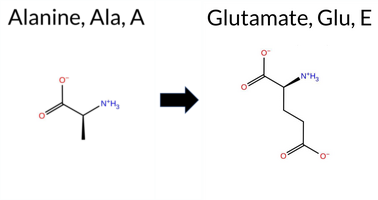 3DClick to see structure in 3D Viewer AIThe SynGAP1 A577E missense variant is not reported in ClinVar (ClinVar ID None) and has no entries in gnomAD (gnomAD ID None). Prediction tools that agree on a benign effect include REVEL, FoldX, PROVEAN, and SIFT, whereas those that agree on a pathogenic effect are polyPhen‑2 HumDiv, polyPhen‑2 HumVar, ESM1b, FATHMM, and AlphaMissense‑Default. The SGM‑Consensus, which aggregates AlphaMissense‑Default, ESM1b, FATHMM, and PROVEAN, is classified as Likely Pathogenic. High‑accuracy assessments show AlphaMissense‑Optimized as uncertain, while Foldetta (combining FoldX‑MD and Rosetta outputs) is also uncertain; Rosetta and premPS are inconclusive. Overall, the majority of evaluated tools (five pathogenic vs. four benign) and the SGM‑Consensus support a pathogenic classification. Thus, the variant is most likely pathogenic, and this assessment does not contradict any ClinVar status because no ClinVar entry exists. Disclaimer: This summary was generated using AI and should be interpreted alongside expert review. | Likely Pathogenic | GAP | 0.113710 | Structured | 0.019074 | Uncertain | 0.913 | 0.239 | 0.000 | -9.607 | Likely Pathogenic | 0.794 | Likely Pathogenic | Ambiguous | 0.29 | Likely Benign | 0.0 | 0.72 | Ambiguous | 0.51 | Ambiguous | 0.62 | Ambiguous | 0.419 | Likely Benign | -1.91 | Neutral | 0.999 | Probably Damaging | 0.996 | Probably Damaging | -1.12 | Pathogenic | 0.76 | Tolerated | 0.1487 | 0.1799 | 0 | -1 | -5.3 | 58.04 | |||||||||||||||||||||||||||||
| c.2373G>C | K791N 2D AIThe SynGAP1 missense variant K791N is not reported in ClinVar (ClinVar ID None) and is absent from gnomAD (gnomAD ID None). Prediction tools that agree on a benign effect include REVEL, PROVEAN, polyPhen‑2 HumVar, SIFT, ESM1b, FATHMM, and the SGM‑Consensus (majority vote from AlphaMissense‑Default, ESM1b, FATHMM, PROVEAN). Tools that predict a pathogenic effect are polyPhen‑2 HumDiv and AlphaMissense‑Default. AlphaMissense‑Optimized is uncertain, and Foldetta (combining FoldX‑MD and Rosetta outputs) has no available result for this variant. Overall, the majority of high‑accuracy predictions (SGM‑Consensus, AlphaMissense‑Optimized uncertain, Foldetta unavailable) lean toward a benign interpretation, with only two pathogenic calls. Thus, based on the current computational evidence, the variant is most likely benign, and this assessment does not contradict any ClinVar status. Disclaimer: This summary was generated using AI and should be interpreted alongside expert review. | Likely Benign | SH3-binding motif | 0.966441 | Disordered | 0.478670 | Uncertain | 0.356 | 0.896 | 0.875 | -4.001 | Likely Benign | 0.794 | Likely Pathogenic | Ambiguous | 0.027 | Likely Benign | -1.26 | Neutral | 0.666 | Possibly Damaging | 0.267 | Benign | 4.14 | Benign | 0.13 | Tolerated | 0.4578 | 0.1354 | 1 | 0 | 0.4 | -14.07 | ||||||||||||||||||||||||||||||||||||||
| c.2373G>T | K791N 2D AIThe SynGAP1 missense variant K791N is not reported in ClinVar (ClinVar ID = None) and is absent from gnomAD (gnomAD ID = None). Prediction tools that agree on a benign effect include REVEL, PROVEAN, polyPhen‑2 HumVar, SIFT, ESM1b, FATHMM, and the SGM‑Consensus (majority vote from AlphaMissense‑Default, ESM1b, FATHMM, PROVEAN). Tools that predict a pathogenic effect are polyPhen‑2 HumDiv and AlphaMissense‑Default. AlphaMissense‑Optimized is uncertain, and Foldetta (a protein‑folding stability method combining FoldX‑MD and Rosetta outputs) has no available result for this variant. Overall, the majority of high‑accuracy predictions (including the SGM‑Consensus) indicate a benign impact, and there is no conflict with ClinVar status. Thus, based on the current computational evidence, the variant is most likely benign. Disclaimer: This summary was generated using AI and should be interpreted alongside expert review. | Likely Benign | SH3-binding motif | 0.966441 | Disordered | 0.478670 | Uncertain | 0.356 | 0.896 | 0.875 | -4.001 | Likely Benign | 0.794 | Likely Pathogenic | Ambiguous | 0.027 | Likely Benign | -1.26 | Neutral | 0.666 | Possibly Damaging | 0.267 | Benign | 4.14 | Benign | 0.13 | Tolerated | 0.4578 | 0.1354 | 1 | 0 | 0.4 | -14.07 | ||||||||||||||||||||||||||||||||||||||
| c.632G>A | S211N 2D AIThe SynGAP1 S211N missense variant is not reported in ClinVar (ClinVar ID None) and is absent from gnomAD (gnomAD ID None). Prediction tools that agree on a benign effect include REVEL, PROVEAN, SIFT, and FATHMM, whereas those that predict a pathogenic effect are polyPhen‑2 HumDiv, polyPhen‑2 HumVar, ESM1b, AlphaMissense‑Default, and premPS. Four tools (FoldX, Rosetta, Foldetta, AlphaMissense‑Optimized) give uncertain or inconclusive results. High‑accuracy assessments are likewise inconclusive: AlphaMissense‑Optimized is uncertain; the SGM Consensus (majority vote from AlphaMissense‑Default, ESM1b, FATHMM, PROVEAN) is a 2‑vs‑2 tie, and Foldetta is uncertain. Consequently, the overall prediction leans toward pathogenicity, with no ClinVar entry to contradict this assessment. Disclaimer: This summary was generated using AI and should be interpreted alongside expert review. | PH | 0.209395 | Structured | 0.389893 | Uncertain | 0.846 | 0.300 | 0.125 | -9.995 | Likely Pathogenic | 0.794 | Likely Pathogenic | Ambiguous | 0.60 | Ambiguous | 1.2 | 1.39 | Ambiguous | 1.00 | Ambiguous | 1.21 | Destabilizing | 0.174 | Likely Benign | -2.22 | Neutral | 0.982 | Probably Damaging | 0.747 | Possibly Damaging | 3.95 | Benign | 0.09 | Tolerated | 0.1534 | 0.4863 | 1 | 1 | -2.7 | 27.03 | ||||||||||||||||||||||||||||||
| c.668C>G | T223R 2D 3DClick to see structure in 3D Viewer AIThe SynGAP1 missense variant T223R has no ClinVar entry and is not reported in gnomAD. Functional prediction tools show a mixed profile: benign calls come from FoldX, Rosetta, Foldetta, polyPhen‑2 HumVar, SIFT, and FATHMM, while pathogenic calls arise from REVEL, PROVEAN, polyPhen‑2 HumDiv, ESM1b, and AlphaMissense‑Default. Two tools report uncertainty: premPS and AlphaMissense‑Optimized. High‑accuracy consensus (SGM Consensus) favors pathogenicity (3/4 votes pathogenic), whereas Foldetta predicts benign stability. Because the majority of individual predictors lean benign and the high‑accuracy consensus is split, the overall assessment remains inconclusive. The variant is most likely benign, but the presence of several pathogenic predictions and the SGM Consensus result indicates that pathogenicity cannot be ruled out. This conclusion does not contradict ClinVar status, which currently has no classification for this variant. Disclaimer: This summary was generated using AI and should be interpreted alongside expert review. | Likely Pathogenic | PH | 0.070400 | Structured | 0.382605 | Uncertain | 0.867 | 0.316 | 0.125 | -12.079 | Likely Pathogenic | 0.794 | Likely Pathogenic | Ambiguous | -0.36 | Likely Benign | 0.1 | -0.27 | Likely Benign | -0.32 | Likely Benign | 0.75 | Ambiguous | 0.827 | Likely Pathogenic | -4.62 | Deleterious | 0.561 | Possibly Damaging | 0.178 | Benign | 5.73 | Benign | 0.06 | Tolerated | 0.0708 | 0.2407 | -1 | -1 | -3.8 | 55.08 | |||||||||||||||||||||||||||||
| c.2363C>A | S788Y 2D AIThe SynGAP1 missense variant S788Y is not reported in ClinVar (no ClinVar ID) and is absent from gnomAD. Prediction tools that agree on a benign effect include only REVEL, whereas the remaining tools—PROVEAN, polyPhen‑2 (HumDiv and HumVar), SIFT, ESM1b, FATHMM, AlphaMissense‑Default, and the SGM‑Consensus score—consistently predict a pathogenic or likely pathogenic impact. High‑accuracy assessments show that the SGM‑Consensus (majority vote from AlphaMissense‑Default, ESM1b, FATHMM, and PROVEAN) indicates a likely pathogenic effect, AlphaMissense‑Optimized is uncertain (treated as unavailable), and Foldetta results are not provided. Based on the collective predictions, the variant is most likely pathogenic, and this assessment does not contradict any ClinVar status because no ClinVar entry exists. Disclaimer: This summary was generated using AI and should be interpreted alongside expert review. | Likely Pathogenic | SH3-binding motif | 0.956248 | Disordered | 0.573557 | Binding | 0.349 | 0.895 | 0.750 | -8.745 | Likely Pathogenic | 0.795 | Likely Pathogenic | Ambiguous | 0.251 | Likely Benign | -4.56 | Deleterious | 0.997 | Probably Damaging | 0.996 | Probably Damaging | 1.50 | Pathogenic | 0.00 | Affected | 0.0844 | 0.5551 | -3 | -2 | -0.5 | 76.10 | ||||||||||||||||||||||||||||||||||||||
| c.2720G>T | S907I 2D AIThe SynGAP1 missense variant S907I is not reported in ClinVar (no ClinVar ID) and is absent from gnomAD (no gnomAD ID). Prediction tools that agree on a benign effect include REVEL, PROVEAN, ESM1b, and FATHMM, while those that predict a pathogenic effect are polyPhen‑2 HumDiv, polyPhen‑2 HumVar, SIFT, and AlphaMissense‑Default. The SGM‑Consensus, derived from a majority vote of AlphaMissense‑Default, ESM1b, FATHMM, and PROVEAN, is classified as Likely Benign. High‑accuracy assessments show AlphaMissense‑Optimized as Uncertain, SGM‑Consensus (majority vote) as Likely Benign, and Foldetta results are unavailable. Based on the overall balance of evidence, the variant is most likely benign, and this assessment does not contradict any ClinVar status (none is available). Disclaimer: This summary was generated using AI and should be interpreted alongside expert review. | Likely Benign | 0.637480 | Disordered | 0.661854 | Binding | 0.336 | 0.920 | 0.250 | -6.082 | Likely Benign | 0.795 | Likely Pathogenic | Ambiguous | 0.229 | Likely Benign | -2.20 | Neutral | 0.998 | Probably Damaging | 0.967 | Probably Damaging | 2.62 | Benign | 0.03 | Affected | 0.1006 | 0.5853 | -1 | -2 | 5.3 | 26.08 | |||||||||||||||||||||||||||||||||||||||
| c.3590A>C | E1197A 2D AIThe SynGAP1 missense variant E1197A is not reported in ClinVar (ClinVar ID: None) and is absent from gnomAD (gnomAD ID: None). Prediction tools that agree on a benign effect include REVEL, SIFT, ESM1b, and FATHMM, while those that predict a pathogenic effect are PROVEAN, polyPhen‑2 HumDiv, polyPhen‑2 HumVar, and AlphaMissense‑Default. High‑accuracy assessments are less definitive: AlphaMissense‑Optimized is uncertain, the SGM Consensus (majority vote from AlphaMissense‑Default, ESM1b, FATHMM, and PROVEAN) is inconclusive, and Foldetta results are unavailable. Consequently, the evidence is balanced between benign and pathogenic predictions, with no high‑confidence support for either outcome. The variant is most likely benign based on the current predictions, and this assessment does not contradict the ClinVar status, which has no entry for this variant. Disclaimer: This summary was generated using AI and should be interpreted alongside expert review. | Coiled-coil | 0.613573 | Disordered | 0.437361 | Uncertain | 0.827 | 0.599 | 0.250 | -4.852 | Likely Benign | 0.795 | Likely Pathogenic | Ambiguous | 0.442 | Likely Benign | -2.64 | Deleterious | 0.999 | Probably Damaging | 0.995 | Probably Damaging | 5.45 | Benign | 0.09 | Tolerated | 0.2811 | 0.5169 | 0 | -1 | 5.3 | -58.04 | |||||||||||||||||||||||||||||||||||||||
| c.392G>T | G131V 2D AIThe SynGAP1 missense variant G131V is not reported in ClinVar (ClinVar ID = None) and is absent from gnomAD (gnomAD ID = None). Prediction tools that agree on a benign effect include REVEL, ESM1b, and FATHMM, whereas a majority of tools (PROVEAN, polyPhen‑2 HumDiv, polyPhen‑2 HumVar, SIFT, and AlphaMissense‑Default) predict a pathogenic impact. AlphaMissense‑Optimized is uncertain. High‑accuracy assessments are inconclusive: AlphaMissense‑Optimized remains uncertain, the SGM Consensus (majority vote from AlphaMissense‑Default, ESM1b, FATHMM, and PROVEAN) yields a tie and is therefore unavailable, and Foldetta (combining FoldX‑MD and Rosetta outputs) has no result for this variant. Overall, the balance of evidence favors a pathogenic classification, and this assessment does not contradict any existing ClinVar status because the variant is not yet catalogued there. Disclaimer: This summary was generated using AI and should be interpreted alongside expert review. | 0.429200 | Structured | 0.724779 | Binding | 0.302 | 0.891 | 0.250 | -6.248 | Likely Benign | 0.795 | Likely Pathogenic | Ambiguous | 0.199 | Likely Benign | -4.25 | Deleterious | 0.983 | Probably Damaging | 0.559 | Possibly Damaging | 3.92 | Benign | 0.00 | Affected | 0.1168 | 0.4175 | -1 | -3 | 4.6 | 42.08 | ||||||||||||||||||||||||||||||||||||||||
| c.917T>G | V306G 2D 3DClick to see structure in 3D Viewer AIThe SynGAP1 missense variant V306G is not reported in ClinVar (ClinVar ID None) and is absent from gnomAD (gnomAD ID None). Prediction tools that assess pathogenicity unanimously classify the variant as pathogenic: REVEL, FoldX, Rosetta, Foldetta, premPS, PROVEAN, polyPhen‑2 (HumDiv and HumVar), SIFT, ESM1b, FATHMM, and AlphaMissense‑Default. No tool predicts a benign effect. High‑accuracy assessments further support a deleterious impact: AlphaMissense‑Optimized is uncertain, the SGM Consensus (majority vote of AlphaMissense‑Default, ESM1b, FATHMM, PROVEAN) is pathogenic, and Foldetta (combining FoldX‑MD and Rosetta outputs) is pathogenic. All available evidence points to a pathogenic effect. Therefore, the variant is most likely pathogenic, and this conclusion does not contradict any ClinVar annotation (none is present). Disclaimer: This summary was generated using AI and should be interpreted alongside expert review. | C2 | 0.363090 | Structured | 0.315026 | Uncertain | 0.896 | 0.287 | 0.125 | -12.313 | Likely Pathogenic | 0.795 | Likely Pathogenic | Ambiguous | 4.39 | Destabilizing | 0.2 | 5.89 | Destabilizing | 5.14 | Destabilizing | 2.46 | Destabilizing | 0.529 | Likely Pathogenic | -5.48 | Deleterious | 0.998 | Probably Damaging | 1.000 | Probably Damaging | 1.78 | Pathogenic | 0.00 | Affected | 0.1874 | 0.2035 | -1 | -3 | -4.6 | -42.08 | ||||||||||||||||||||||||||||||
| c.170T>A | L57H 2D AIThe SynGAP1 missense variant L57H is not reported in ClinVar and has no entry in gnomAD. Prediction tools show a split: benign calls come from REVEL, PROVEAN, ESM1b, and FATHMM, whereas pathogenic calls come from polyPhen‑2 HumDiv, polyPhen‑2 HumVar, SIFT, and AlphaMissense‑Default. The SGM‑Consensus, which aggregates AlphaMissense‑Default, ESM1b, FATHMM, and PROVEAN, reports a Likely Benign classification. High‑accuracy assessments further indicate that AlphaMissense‑Optimized is Uncertain, whereas the SGM‑Consensus remains Likely Benign; Foldetta stability analysis is unavailable. Overall, the majority of high‑confidence tools and the consensus score favor a benign effect, and this conclusion does not conflict with the absence of a ClinVar assertion. Disclaimer: This summary was generated using AI and should be interpreted alongside expert review. | Likely Benign | 0.254060 | Structured | 0.481044 | Uncertain | 0.554 | 0.642 | 0.000 | -6.251 | Likely Benign | 0.796 | Likely Pathogenic | Ambiguous | 0.173 | Likely Benign | -1.58 | Neutral | 0.984 | Probably Damaging | 0.971 | Probably Damaging | 3.90 | Benign | 0.00 | Affected | 0.1045 | 0.0611 | -2 | -3 | -7.0 | 23.98 | |||||||||||||||||||||||||||||||||||||||
| c.1790T>A | F597Y 2D 3DClick to see structure in 3D Viewer AIThe SynGAP1 missense variant F597Y is not reported in ClinVar and is absent from gnomAD. Prediction tools that agree on a benign effect include ESM1b and Rosetta, whereas a majority of tools (REVEL, SIFT, polyPhen‑2 HumDiv, polyPhen‑2 HumVar, FATHMM, PROVEAN, premPS, and AlphaMissense‑Default) predict a pathogenic impact. Predictions that are inconclusive or unavailable are FoldX, Foldetta, and AlphaMissense‑Optimized. High‑accuracy assessments show the SGM Consensus (majority vote from AlphaMissense‑Default, ESM1b, FATHMM, and PROVEAN) as Likely Pathogenic, AlphaMissense‑Optimized as Uncertain, and Foldetta as Uncertain. Overall, the preponderance of evidence points to a pathogenic effect for F597Y. This conclusion is not contradicted by ClinVar status, which currently contains no entry for this variant. Disclaimer: This summary was generated using AI and should be interpreted alongside expert review. | Likely Pathogenic | GAP | 0.010926 | Structured | 0.142961 | Uncertain | 0.944 | 0.151 | 0.000 | -5.869 | Likely Benign | 0.796 | Likely Pathogenic | Ambiguous | 1.41 | Ambiguous | 0.1 | 0.37 | Likely Benign | 0.89 | Ambiguous | 1.11 | Destabilizing | 0.877 | Likely Pathogenic | -2.99 | Deleterious | 0.993 | Probably Damaging | 0.976 | Probably Damaging | -1.99 | Pathogenic | 0.02 | Affected | 0.1471 | 0.1494 | 7 | 3 | -4.1 | 16.00 | |||||||||||||||||||||||||||||
| c.720C>A | D240E 2D 3DClick to see structure in 3D Viewer AIThe SynGAP1 D240E missense variant is not reported in ClinVar (ClinVar status: none) and is absent from gnomAD (gnomAD ID: none). Prediction tools that agree on a benign effect include FoldX, premPS, SIFT, and FATHMM, while those that agree on a pathogenic effect are SGM‑Consensus, REVEL, PROVEAN, polyPhen‑2 (HumDiv and HumVar), ESM1b, and AlphaMissense‑Default. Tools with uncertain or inconclusive results are Rosetta, Foldetta, and AlphaMissense‑Optimized. High‑accuracy assessments show AlphaMissense‑Optimized as uncertain, SGM‑Consensus (derived from a majority vote of AlphaMissense‑Default, ESM1b, FATHMM, and PROVEAN) as pathogenic, and Foldetta as uncertain. Overall, the majority of evaluated predictors (seven pathogenic vs. four benign) lean toward a pathogenic interpretation. Thus, the variant is most likely pathogenic based on current computational evidence, and this assessment does not contradict any ClinVar annotation because no ClinVar entry exists. Disclaimer: This summary was generated using AI and should be interpreted alongside expert review. | Likely Pathogenic | PH | 0.127496 | Structured | 0.343480 | Uncertain | 0.822 | 0.333 | 0.000 | -8.619 | Likely Pathogenic | 0.796 | Likely Pathogenic | Ambiguous | 0.49 | Likely Benign | 0.1 | 0.51 | Ambiguous | 0.50 | Ambiguous | 0.28 | Likely Benign | 0.713 | Likely Pathogenic | -3.43 | Deleterious | 0.984 | Probably Damaging | 0.967 | Probably Damaging | 5.84 | Benign | 0.10 | Tolerated | 0.1155 | 0.5066 | 3 | 2 | 0.0 | 14.03 | |||||||||||||||||||||||||||||
| c.720C>G | D240E 2D 3DClick to see structure in 3D Viewer AISynGAP1 D240E is a missense change in the PH domain. No ClinVar entry exists for this variant, and it is not reported in gnomAD. Functional prediction tools cluster into two groups: benign predictions come from SIFT, FoldX, premPS, and FATHMM, while pathogenic predictions arise from REVEL, PROVEAN, polyPhen‑2 HumDiv, polyPhen‑2 HumVar, ESM1b, and AlphaMissense‑Default. Tools with inconclusive results—AlphaMissense‑Optimized, Rosetta, and Foldetta—are treated as unavailable. High‑accuracy assessments show the SGM Consensus (majority vote of AlphaMissense‑Default, ESM1b, FATHMM, and PROVEAN) classifying the variant as Likely Pathogenic, whereas AlphaMissense‑Optimized and Foldetta provide no definitive verdict. Overall, the majority of evidence points toward a pathogenic effect, and this conclusion does not conflict with the absence of a ClinVar classification. Disclaimer: This summary was generated using AI and should be interpreted alongside expert review. | Likely Pathogenic | PH | 0.127496 | Structured | 0.343480 | Uncertain | 0.822 | 0.333 | 0.000 | -8.619 | Likely Pathogenic | 0.796 | Likely Pathogenic | Ambiguous | 0.49 | Likely Benign | 0.1 | 0.51 | Ambiguous | 0.50 | Ambiguous | 0.28 | Likely Benign | 0.713 | Likely Pathogenic | -3.43 | Deleterious | 0.984 | Probably Damaging | 0.967 | Probably Damaging | 5.84 | Benign | 0.10 | Tolerated | 0.1155 | 0.5066 | 3 | 2 | 0.0 | 14.03 | |||||||||||||||||||||||||||||
| c.752A>T | K251M 2D 3DClick to see structure in 3D Viewer AIThe SynGAP1 K251M missense variant is not reported in ClinVar (ClinVar ID None) and is absent from gnomAD (gnomAD ID None). Prediction tools that classify the variant as benign include FoldX, Rosetta, Foldetta, premPS, PROVEAN, and FATHMM. Those that predict pathogenicity are REVEL, polyPhen‑2 (HumDiv and HumVar), SIFT, ESM1b, and AlphaMissense‑Default. The high‑accuracy assessment shows AlphaMissense‑Optimized as uncertain, the SGM Consensus (majority vote from AlphaMissense‑Default, ESM1b, FATHMM, PROVEAN) is inconclusive, and Foldetta predicts a benign effect. Overall, the evidence is evenly split between benign and pathogenic predictions, with the most reliable high‑accuracy tools leaning toward a benign outcome. Thus, the variant is most likely benign based on current predictions, and this assessment does not contradict any ClinVar status. Disclaimer: This summary was generated using AI and should be interpreted alongside expert review. | PH | 0.447574 | Structured | 0.226632 | Uncertain | 0.758 | 0.312 | 0.125 | -10.678 | Likely Pathogenic | 0.796 | Likely Pathogenic | Ambiguous | 0.14 | Likely Benign | 0.1 | 0.10 | Likely Benign | 0.12 | Likely Benign | 0.05 | Likely Benign | 0.751 | Likely Pathogenic | -2.36 | Neutral | 0.999 | Probably Damaging | 0.970 | Probably Damaging | 5.73 | Benign | 0.05 | Affected | 0.1271 | 0.3475 | 0 | -1 | 5.8 | 3.02 | ||||||||||||||||||||||||||||||
| c.815G>T | R272L 2D 3DClick to see structure in 3D Viewer AIThe SynGAP1 R272L missense variant is not reported in ClinVar (no ClinVar ID) and is absent from gnomAD. Prediction tools that agree on a benign effect include REVEL, Rosetta, and premPS. Those that predict a pathogenic effect are PROVEAN, polyPhen‑2 (HumDiv and HumVar), SIFT, ESM1b, FATHMM, and AlphaMissense‑Default. Uncertain or inconclusive results come from FoldX, Foldetta, and AlphaMissense‑Optimized. High‑accuracy assessments show the SGM‑Consensus (majority vote of AlphaMissense‑Default, ESM1b, FATHMM, PROVEAN) as Likely Pathogenic, while AlphaMissense‑Optimized and Foldetta remain uncertain. Overall, the majority of evaluated tools predict a pathogenic impact. Therefore, the variant is most likely pathogenic, and this assessment does not contradict any ClinVar status because no ClinVar entry exists. Disclaimer: This summary was generated using AI and should be interpreted alongside expert review. | Likely Pathogenic | C2 | 0.071867 | Structured | 0.425620 | Uncertain | 0.925 | 0.215 | 0.125 | -10.796 | Likely Pathogenic | 0.796 | Likely Pathogenic | Ambiguous | 1.66 | Ambiguous | 0.3 | -0.46 | Likely Benign | 0.60 | Ambiguous | 0.41 | Likely Benign | 0.470 | Likely Benign | -4.57 | Deleterious | 0.999 | Probably Damaging | 0.997 | Probably Damaging | 1.75 | Pathogenic | 0.01 | Affected | 0.1691 | 0.4230 | -3 | -2 | 8.3 | -43.03 | |||||||||||||||||||||||||||||
| c.154T>C | S52P 2D AIThe SynGAP1 missense variant S52P is not reported in ClinVar (no ClinVar ID) and is absent from gnomAD (no gnomAD ID). Prediction tools that agree on a benign effect include REVEL, PROVEAN, and FATHMM, whereas polyPhen‑2 (HumDiv and HumVar), SIFT, ESM1b, and AlphaMissense‑Default all predict a pathogenic outcome. High‑accuracy assessments are mixed: AlphaMissense‑Optimized is uncertain; the SGM Consensus, derived from a majority vote of AlphaMissense‑Default, ESM1b, FATHMM, and PROVEAN, is inconclusive (two pathogenic versus two benign votes); and Foldetta results are unavailable. Overall, the majority of evidence points to a pathogenic impact for S52P. This conclusion does not contradict ClinVar, as the variant has no existing ClinVar annotation. Disclaimer: This summary was generated using AI and should be interpreted alongside expert review. | 0.291804 | Structured | 0.457753 | Uncertain | 0.499 | 0.677 | 0.000 | -10.007 | Likely Pathogenic | 0.797 | Likely Pathogenic | Ambiguous | 0.144 | Likely Benign | -1.28 | Neutral | 0.676 | Possibly Damaging | 0.693 | Possibly Damaging | 4.07 | Benign | 0.00 | Affected | 0.2276 | 0.5909 | 1 | -1 | -0.8 | 10.04 | ||||||||||||||||||||||||||||||||||||||||
| c.2456C>T | A819V 2D AIThe SynGAP1 missense variant A819V is catalogued in gnomAD (ID 6‑33443008‑C‑T) but has no ClinVar entry. Functional prediction tools that agree on a benign effect include REVEL, PROVEAN, and ESM1b, whereas a majority of tools predict a pathogenic outcome: polyPhen‑2 (HumDiv and HumVar), SIFT, FATHMM, and AlphaMissense‑Default. The high‑accuracy AlphaMissense‑Optimized score is uncertain, the SGM Consensus (majority vote from AlphaMissense‑Default, ESM1b, FATHMM, PROVEAN) is inconclusive (two benign vs. two pathogenic), and Foldetta stability analysis is unavailable. Overall, the balance of evidence favors a pathogenic classification for A819V, and this assessment does not contradict any ClinVar status because the variant is not yet reported in that database. Disclaimer: This summary was generated using AI and should be interpreted alongside expert review. | 0.694846 | Disordered | 0.707644 | Binding | 0.317 | 0.892 | 0.625 | 6-33443008-C-T | 1 | 6.19e-7 | -4.944 | Likely Benign | 0.797 | Likely Pathogenic | Ambiguous | 0.246 | Likely Benign | -2.40 | Neutral | 0.998 | Probably Damaging | 0.963 | Probably Damaging | 2.19 | Pathogenic | 0.01 | Affected | 3.77 | 5 | 0.1098 | 0.6664 | 0 | 0 | 2.4 | 28.05 | |||||||||||||||||||||||||||||||||||
| c.3490C>G | L1164V 2D AIThe SynGAP1 missense variant L1164V has no ClinVar record and is not reported in gnomAD. Prediction tools that agree on a benign effect include REVEL, PROVEAN, SIFT, ESM1b, and FATHMM, while polyPhen‑2 HumDiv, polyPhen‑2 HumVar, and AlphaMissense‑Default predict a pathogenic outcome. The SGM‑Consensus, derived from a majority vote of AlphaMissense‑Default, ESM1b, FATHMM, and PROVEAN, classifies the variant as Likely Benign. High‑accuracy assessments show AlphaMissense‑Optimized as Uncertain, SGM‑Consensus as Likely Benign, and no Foldetta stability data are available. Overall, the balance of evidence leans toward a benign interpretation, and this conclusion does not conflict with the absence of a ClinVar classification. Disclaimer: This summary was generated using AI and should be interpreted alongside expert review. | Likely Benign | 0.517562 | Disordered | 0.853935 | Binding | 0.325 | 0.815 | 0.375 | -4.911 | Likely Benign | 0.797 | Likely Pathogenic | Ambiguous | 0.330 | Likely Benign | -0.88 | Neutral | 0.997 | Probably Damaging | 0.992 | Probably Damaging | 5.54 | Benign | 0.14 | Tolerated | 0.1456 | 0.2617 | 2 | 1 | 0.4 | -14.03 | |||||||||||||||||||||||||||||||||||||||
| c.440A>C | Q147P 2D 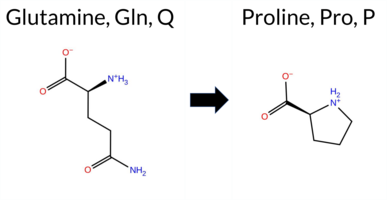 AIThe SynGAP1 missense variant Q147P is not reported in ClinVar and has no entries in gnomAD, indicating it is not catalogued in these databases. Functional prediction tools show a split: benign calls come from REVEL, polyPhen‑2 (HumDiv and HumVar) and FATHMM, while pathogenic calls arise from PROVEAN, SIFT, ESM1b and AlphaMissense‑Default. Grouping by consensus, four tools predict benign and four predict pathogenic. High‑accuracy assessments further support a deleterious effect: AlphaMissense‑Optimized is uncertain, but the SGM Consensus—derived from a majority vote of AlphaMissense‑Default, ESM1b, FATHMM and PROVEAN—labels the variant as Likely Pathogenic. Foldetta, a protein‑folding stability predictor, has no available result for this residue. Overall, the balance of evidence, especially the SGM Consensus and the majority of individual predictors, indicates that the variant is most likely pathogenic, and this conclusion does not contradict any ClinVar annotation (none is present). Disclaimer: This summary was generated using AI and should be interpreted alongside expert review. | Likely Pathogenic | 0.541878 | Disordered | 0.503877 | Binding | 0.349 | 0.840 | 0.625 | -14.132 | Likely Pathogenic | 0.797 | Likely Pathogenic | Ambiguous | 0.264 | Likely Benign | -3.03 | Deleterious | 0.232 | Benign | 0.147 | Benign | 3.87 | Benign | 0.01 | Affected | 0.2350 | 0.4402 | 0 | -1 | 1.9 | -31.01 | |||||||||||||||||||||||||||||||||||||||
| c.515G>T | R172L 2D AIThe SynGAP1 missense variant R172L is not reported in ClinVar and has no entries in gnomAD, indicating it is not catalogued in these databases. Functional prediction tools show a split: benign calls come from REVEL, polyPhen‑2 (HumDiv and HumVar) and FATHMM, while pathogenic calls arise from PROVEAN, SIFT, ESM1b and AlphaMissense‑Default. Grouping by consensus, four tools predict benign and four predict pathogenic. High‑accuracy assessments further support a deleterious effect: AlphaMissense‑Optimized is uncertain, but the SGM Consensus—derived from a majority vote of AlphaMissense‑Default, ESM1b, FATHMM and PROVEAN—labels the variant as Likely Pathogenic. Foldetta, a protein‑folding stability predictor, has no available result for this residue. Taken together, the majority of evidence, including the SGM Consensus, points to a pathogenic impact. This conclusion is not contradicted by ClinVar status, which currently has no entry for the variant. Disclaimer: This summary was generated using AI and should be interpreted alongside expert review. | Likely Pathogenic | 0.525368 | Disordered | 0.491688 | Uncertain | 0.411 | 0.651 | 0.375 | -8.201 | Likely Pathogenic | 0.797 | Likely Pathogenic | Ambiguous | 0.131 | Likely Benign | -3.09 | Deleterious | 0.276 | Benign | 0.103 | Benign | 3.99 | Benign | 0.02 | Affected | 0.1423 | 0.4729 | -3 | -2 | 8.3 | -43.03 | |||||||||||||||||||||||||||||||||||||||
| c.1582C>A | P528T 2D 3DClick to see structure in 3D Viewer AIThe SynGAP1 missense variant P528T is not reported in ClinVar (ClinVar status: None) and is absent from gnomAD (gnomAD ID: None). Prediction tools that agree on a pathogenic effect include SGM‑Consensus (Likely Pathogenic), REVEL, FoldX, PROVEAN, polyPhen‑2 HumDiv, polyPhen‑2 HumVar, SIFT, ESM1b, FATHMM, and AlphaMissense‑Default. No tools predict a benign outcome. Predictions that are uncertain or inconclusive are Rosetta, Foldetta, premPS, and AlphaMissense‑Optimized. High‑accuracy assessments show AlphaMissense‑Optimized as Uncertain, SGM‑Consensus (majority vote from AlphaMissense‑Default, ESM1b, FATHMM, PROVEAN) as Likely Pathogenic, and Foldetta as Uncertain. Based on the preponderance of pathogenic predictions and the lack of benign evidence, the variant is most likely pathogenic. This conclusion does not contradict the ClinVar status, which currently has no classification for this variant. Disclaimer: This summary was generated using AI and should be interpreted alongside expert review. | Likely Pathogenic | GAP | 0.225814 | Structured | 0.020396 | Uncertain | 0.909 | 0.403 | 0.000 | -13.782 | Likely Pathogenic | 0.798 | Likely Pathogenic | Ambiguous | 2.05 | Destabilizing | 0.3 | 1.01 | Ambiguous | 1.53 | Ambiguous | 0.66 | Ambiguous | 0.673 | Likely Pathogenic | -7.69 | Deleterious | 1.000 | Probably Damaging | 0.996 | Probably Damaging | 2.49 | Pathogenic | 0.00 | Affected | 0.1367 | 0.4360 | 0 | -1 | 0.9 | 3.99 | |||||||||||||||||||||||||||||
| c.2334C>A | N778K 2D AIThe SynGAP1 missense variant N778K is catalogued in gnomAD (ID 6‑33442492‑C‑A) but has no ClinVar entry. Functional prediction tools cluster into two groups: benign predictions from REVEL, PROVEAN, SIFT, ESM1b, and FATHMM; pathogenic predictions from PolyPhen‑2 HumDiv, PolyPhen‑2 HumVar, and AlphaMissense‑Default. The SGM‑Consensus, which aggregates AlphaMissense‑Default, ESM1b, FATHMM, and PROVEAN, reports a likely benign outcome, reflecting the majority of benign calls. High‑accuracy assessments are mixed: AlphaMissense‑Optimized is uncertain, and Foldetta data are not available. Overall, the majority of evidence points toward a benign effect, and this is consistent with the lack of a ClinVar pathogenic classification. Therefore, the variant is most likely benign, with no contradiction to ClinVar status. Disclaimer: This summary was generated using AI and should be interpreted alongside expert review. | Likely Benign | 0.494003 | Structured | 0.853922 | Binding | 0.288 | 0.887 | 0.500 | 6-33442492-C-A | -6.768 | Likely Benign | 0.798 | Likely Pathogenic | Ambiguous | 0.113 | Likely Benign | -1.57 | Neutral | 0.925 | Possibly Damaging | 0.932 | Probably Damaging | 4.27 | Benign | 0.18 | Tolerated | 3.64 | 6 | 0.2037 | 0.5883 | 0 | 1 | -0.4 | 14.07 | ||||||||||||||||||||||||||||||||||||
| c.2334C>G | N778K 2D AIThe SynGAP1 missense variant N778K has no ClinVar record and is not listed in gnomAD. Functional prediction tools cluster into two groups: benign predictions come from REVEL, PROVEAN, SIFT, ESM1b, and FATHMM, while pathogenic predictions arise from polyPhen‑2 HumDiv, polyPhen‑2 HumVar, and AlphaMissense‑Default. The high‑accuracy consensus, SGM‑Consensus, is derived from a majority vote of AlphaMissense‑Default, ESM1b, FATHMM, and PROVEAN, yielding a “Likely Benign” classification. AlphaMissense‑Optimized returns an uncertain result, and Foldetta (a protein‑folding stability method combining FoldX‑MD and Rosetta) has no available output for this variant. Overall, the preponderance of evidence points to a benign effect. This conclusion is not contradicted by ClinVar, which contains no entry for the variant. Disclaimer: This summary was generated using AI and should be interpreted alongside expert review. | Likely Benign | 0.494003 | Structured | 0.853922 | Binding | 0.288 | 0.887 | 0.500 | -6.768 | Likely Benign | 0.798 | Likely Pathogenic | Ambiguous | 0.114 | Likely Benign | -1.57 | Neutral | 0.925 | Possibly Damaging | 0.932 | Probably Damaging | 4.27 | Benign | 0.18 | Tolerated | 3.64 | 6 | 0.2037 | 0.5883 | 0 | 1 | -0.4 | 14.07 | |||||||||||||||||||||||||||||||||||||
| c.2797C>G | H933D 2D AIThe SynGAP1 missense variant H933D is not reported in ClinVar and has no entries in gnomAD, indicating it is not catalogued in these databases. Functional prediction tools cluster into two groups: benign predictions come from REVEL and ESM1b, whereas pathogenic predictions are made by PROVEAN, polyPhen‑2 (HumDiv and HumVar), SIFT, FATHMM, and AlphaMissense‑Default. The high‑accuracy consensus, SGM‑Consensus, which aggregates AlphaMissense‑Default, ESM1b, FATHMM, and PROVEAN, resolves as Likely Pathogenic, matching the majority of individual scores. AlphaMissense‑Optimized returns an Uncertain result, and no Foldetta stability assessment is available. Overall, the preponderance of evidence points to a pathogenic effect for H933D. This conclusion is consistent with the absence of a ClinVar classification, so there is no contradiction with existing database annotations. Disclaimer: This summary was generated using AI and should be interpreted alongside expert review. | Likely Pathogenic | 0.666105 | Disordered | 0.987531 | Binding | 0.305 | 0.862 | 0.625 | -2.888 | Likely Benign | 0.798 | Likely Pathogenic | Ambiguous | 0.320 | Likely Benign | -4.70 | Deleterious | 0.997 | Probably Damaging | 0.994 | Probably Damaging | 2.40 | Pathogenic | 0.04 | Affected | 0.2481 | 0.2717 | 1 | -1 | -0.3 | -22.05 | |||||||||||||||||||||||||||||||||||||||
| c.3466G>T | A1156S 2D AIThe SynGAP1 missense variant A1156S is not reported in ClinVar (ClinVar status: none) but is present in gnomAD (ID 6‑33444501‑G‑T). Functional prediction tools that agree on a benign effect include REVEL, PROVEAN, and ESM1b, whereas those that agree on a pathogenic effect are polyPhen‑2 (HumDiv and HumVar), SIFT, FATHMM, and AlphaMissense‑Default. AlphaMissense‑Optimized is uncertain, and the SGM Consensus (majority vote from AlphaMissense‑Default, ESM1b, FATHMM, PROVEAN) is inconclusive because it yields a 2‑to‑2 split. Foldetta, a protein‑folding stability method combining FoldX‑MD and Rosetta outputs, has no available result for this variant. Overall, the majority of available predictions (five pathogenic vs. three benign) lean toward pathogenicity. Thus, the variant is most likely pathogenic based on current computational evidence, and this assessment does not contradict any ClinVar annotation because none exists. Disclaimer: This summary was generated using AI and should be interpreted alongside expert review. | 0.720929 | Disordered | 0.871395 | Binding | 0.294 | 0.861 | 0.500 | 6-33444501-G-T | 1 | 6.20e-7 | -2.052 | Likely Benign | 0.798 | Likely Pathogenic | Ambiguous | 0.197 | Likely Benign | -2.23 | Neutral | 0.997 | Probably Damaging | 0.994 | Probably Damaging | 1.65 | Pathogenic | 0.00 | Affected | 3.77 | 5 | 0.2594 | 0.6154 | 1 | 1 | -2.6 | 16.00 | |||||||||||||||||||||||||||||||||||
| c.3724G>A | E1242K 2D AIThe SynGAP1 missense variant E1242K is catalogued in gnomAD (6‑33446716‑G‑A) but has no ClinVar entry. Functional prediction tools cluster into two groups: the benign‑predicting REVEL score contrasts with a pathogenic consensus from PROVEAN, polyPhen‑2 (HumDiv and HumVar), SIFT, ESM1b, FATHMM, and AlphaMissense‑Default. High‑accuracy assessments further support a deleterious effect: AlphaMissense‑Optimized is uncertain, SGM Consensus (majority vote of AlphaMissense‑Default, ESM1b, FATHMM, PROVEAN) reports “Likely Pathogenic,” and the protein‑folding stability method Foldetta is not available for this variant. Taken together, the majority of evidence points to a pathogenic impact, and this conclusion does not conflict with ClinVar status, which is currently absent. Disclaimer: This summary was generated using AI and should be interpreted alongside expert review. | Likely Pathogenic | Coiled-coil | 0.557691 | Disordered | 0.456349 | Uncertain | 0.870 | 0.549 | 0.500 | 6-33446716-G-A | 1 | 6.20e-7 | -10.075 | Likely Pathogenic | 0.798 | Likely Pathogenic | Ambiguous | 0.179 | Likely Benign | -3.13 | Deleterious | 0.939 | Possibly Damaging | 0.670 | Possibly Damaging | 2.22 | Pathogenic | 0.00 | Affected | 3.77 | 5 | 0.1520 | 0.4024 | 1 | 0 | -0.4 | -0.94 | |||||||||||||||||||||||||||||||||
| c.509G>A | R170Q 2D AISynGAP1 missense variant R170Q is listed in ClinVar as Pathogenic and is not reported in gnomAD. Computational predictors show a split: benign calls come from REVEL, PROVEAN, polyPhen‑2 HumVar, and FATHMM, while pathogenic calls come from polyPhen‑2 HumDiv, SIFT, ESM1b, and AlphaMissense‑Default. The high‑accuracy AlphaMissense‑Optimized score is Uncertain, and the SGM Consensus (majority vote of AlphaMissense‑Default, ESM1b, FATHMM, PROVEAN) is inconclusive; Foldetta stability analysis is unavailable. Thus, no single method or high‑accuracy consensus strongly supports pathogenicity. The variant is most likely benign according to the current computational evidence, which contradicts the ClinVar pathogenic designation. Disclaimer: This summary was generated using AI and should be interpreted alongside expert review. | 0.480142 | Structured | 0.492928 | Uncertain | 0.406 | 0.661 | 0.250 | Pathogenic/Likely path. | 6 | -9.021 | Likely Pathogenic | 0.798 | Likely Pathogenic | Ambiguous | 0.221 | Likely Benign | -2.31 | Neutral | 0.947 | Possibly Damaging | 0.342 | Benign | 3.91 | Benign | 0.00 | Affected | 3.74 | 4 | 0.2524 | 0.2299 | 1 | 1 | 1.0 | -28.06 | 10.1016/j.ajhg.2020.11.011 | |||||||||||||||||||||||||||||||||||
| c.1027G>T | V343F 2D 3DClick to see structure in 3D Viewer AIThe SynGAP1 missense variant V343F is not reported in ClinVar and is absent from gnomAD. Functional prediction tools cluster into two groups: benign predictions are made by REVEL and premPS, whereas pathogenic predictions are made by SIFT, polyPhen‑2 (HumDiv and HumVar), PROVEAN, ESM1b, FATHMM, and AlphaMissense‑Default. The SGM‑Consensus, derived from a majority vote of AlphaMissense‑Default, ESM1b, FATHMM, and PROVEAN, labels the variant as Likely Pathogenic. High‑accuracy assessments are mixed: AlphaMissense‑Optimized is uncertain; Foldetta, which integrates FoldX‑MD and Rosetta outputs, is also uncertain. No evidence from FoldX or Rosetta alone is available. Overall, the majority of predictions support a pathogenic effect, and this conclusion does not contradict the ClinVar status, which currently has no entry for this variant. Disclaimer: This summary was generated using AI and should be interpreted alongside expert review. | Likely Pathogenic | C2 | 0.291804 | Structured | 0.383911 | Uncertain | 0.882 | 0.497 | 0.250 | -10.709 | Likely Pathogenic | 0.799 | Likely Pathogenic | Ambiguous | 1.51 | Ambiguous | 0.4 | 1.28 | Ambiguous | 1.40 | Ambiguous | 0.23 | Likely Benign | 0.324 | Likely Benign | -3.37 | Deleterious | 0.976 | Probably Damaging | 0.759 | Possibly Damaging | 1.61 | Pathogenic | 0.01 | Affected | 0.0915 | 0.4552 | -1 | -1 | -1.4 | 48.04 | |||||||||||||||||||||||||||||
| c.1273A>G | T425A 2D 3DClick to see structure in 3D Viewer AIThe SynGAP1 missense variant T425A is not reported in ClinVar and is absent from gnomAD. Prediction tools that agree on a benign effect include REVEL, FoldX, Rosetta, SIFT, and FATHMM, whereas a majority of tools (SGM‑Consensus, PROVEAN, polyPhen‑2 HumDiv, polyPhen‑2 HumVar, ESM1b, and AlphaMissense‑Default) predict a pathogenic impact. Two tools (premPS and AlphaMissense‑Optimized) give uncertain results and are treated as unavailable. High‑accuracy assessments show SGM‑Consensus (a majority vote of AlphaMissense‑Default, ESM1b, FATHMM, and PROVEAN) as Likely Pathogenic, Foldetta (combining FoldX‑MD and Rosetta outputs) as Benign, and AlphaMissense‑Optimized as uncertain. Overall, the balance of evidence leans toward pathogenicity, and this conclusion does not contradict any ClinVar annotation because no ClinVar entry exists for this variant. Disclaimer: This summary was generated using AI and should be interpreted alongside expert review. | Likely Pathogenic | GAP | 0.041405 | Structured | 0.401218 | Uncertain | 0.964 | 0.280 | 0.000 | -8.945 | Likely Pathogenic | 0.799 | Likely Pathogenic | Ambiguous | -0.31 | Likely Benign | 0.1 | -0.05 | Likely Benign | -0.18 | Likely Benign | 0.70 | Ambiguous | 0.372 | Likely Benign | -4.17 | Deleterious | 0.995 | Probably Damaging | 0.960 | Probably Damaging | 3.42 | Benign | 0.09 | Tolerated | 0.2971 | 0.2572 | 1 | 0 | 2.5 | -30.03 | |||||||||||||||||||||||||||||
| c.1549C>A | L517M 2D 3DClick to see structure in 3D Viewer AIThe SynGAP1 missense variant L517M is not reported in ClinVar and is absent from gnomAD. Functional prediction tools largely agree on a deleterious effect: pathogenic predictions come from REVEL, polyPhen‑2 (HumDiv and HumVar), SIFT, ESM1b, FATHMM, AlphaMissense‑Default, and the SGM‑Consensus score. Benign predictions are provided by FoldX and PROVEAN. High‑accuracy assessments are mixed: the SGM‑Consensus (majority vote of AlphaMissense‑Default, ESM1b, FATHMM, PROVEAN) indicates pathogenic, whereas AlphaMissense‑Optimized and Foldetta yield uncertain results and are treated as unavailable. No evidence from ClinVar contradicts these findings. Overall, the preponderance of evidence supports a pathogenic classification for L517M, with no conflict from existing database annotations. Disclaimer: This summary was generated using AI and should be interpreted alongside expert review. | Likely Pathogenic | GAP | 0.118441 | Structured | 0.147645 | Uncertain | 0.938 | 0.296 | 0.000 | -11.613 | Likely Pathogenic | 0.799 | Likely Pathogenic | Ambiguous | 0.38 | Likely Benign | 0.2 | 1.22 | Ambiguous | 0.80 | Ambiguous | 0.93 | Ambiguous | 0.665 | Likely Pathogenic | -1.74 | Neutral | 1.000 | Probably Damaging | 1.000 | Probably Damaging | -1.47 | Pathogenic | 0.01 | Affected | 0.0775 | 0.2558 | 4 | 2 | -1.9 | 18.03 | |||||||||||||||||||||||||||||
| c.1679T>G | V560G 2D 3DClick to see structure in 3D Viewer AIThe SynGAP1 V560G missense variant is not reported in ClinVar (ClinVar ID None) and is absent from gnomAD (gnomAD ID None). Prediction tools that agree on a benign effect include only SIFT, whereas the majority of tools (REVEL, Rosetta, premPS, PROVEAN, polyPhen‑2 HumDiv, polyPhen‑2 HumVar, ESM1b, FATHMM, AlphaMissense‑Default) predict a pathogenic impact. Uncertain results come from FoldX, Foldetta, and AlphaMissense‑Optimized. High‑accuracy assessments show that the SGM Consensus (derived from AlphaMissense‑Default, ESM1b, FATHMM, and PROVEAN) is pathogenic, AlphaMissense‑Optimized is uncertain, and Foldetta is uncertain. Overall, the preponderance of evidence indicates that V560G is most likely pathogenic, and this conclusion does not contradict any ClinVar annotation because no ClinVar entry exists for this variant. Disclaimer: This summary was generated using AI and should be interpreted alongside expert review. | GAP | 0.021381 | Structured | 0.013872 | Uncertain | 0.853 | 0.204 | 0.000 | -12.485 | Likely Pathogenic | 0.799 | Likely Pathogenic | Ambiguous | 0.66 | Ambiguous | 0.1 | 2.12 | Destabilizing | 1.39 | Ambiguous | 1.80 | Destabilizing | 0.753 | Likely Pathogenic | -5.87 | Deleterious | 0.981 | Probably Damaging | 1.000 | Probably Damaging | -1.25 | Pathogenic | 0.19 | Tolerated | 0.1738 | 0.2036 | -1 | -3 | -4.6 | -42.08 | ||||||||||||||||||||||||||||||
| c.1835A>T | Q612L 2D 3DClick to see structure in 3D Viewer AIThe SynGAP1 missense variant Q612L is not reported in ClinVar (ClinVar ID None) and is absent from gnomAD (gnomAD ID None). Prediction tools that agree on a benign effect include FoldX, Rosetta, Foldetta, premPS, and SIFT, whereas those that predict a pathogenic effect are REVEL, PROVEAN, polyPhen‑2 HumDiv, polyPhen‑2 HumVar, ESM1b, FATHMM, and AlphaMissense‑Default. The SGM Consensus, derived from a majority vote of AlphaMissense‑Default, ESM1b, FATHMM, and PROVEAN, indicates a likely pathogenic outcome. High‑accuracy assessments show AlphaMissense‑Optimized as uncertain (unavailable), SGM Consensus as likely pathogenic, and Foldetta (a protein‑folding stability method combining FoldX‑MD and Rosetta) as benign. Overall, the majority of conventional tools lean toward pathogenicity, and the SGM Consensus supports this, while the high‑accuracy Foldetta result is contradictory. Thus, the variant is most likely pathogenic based on the prevailing predictions, and this assessment does not contradict the ClinVar status, which currently has no entry for this variant. Disclaimer: This summary was generated using AI and should be interpreted alongside expert review. | Likely Pathogenic | GAP | 0.275179 | Structured | 0.203988 | Uncertain | 0.822 | 0.263 | 0.000 | -12.076 | Likely Pathogenic | 0.799 | Likely Pathogenic | Ambiguous | -0.12 | Likely Benign | 0.1 | 0.12 | Likely Benign | 0.00 | Likely Benign | 0.44 | Likely Benign | 0.730 | Likely Pathogenic | -6.84 | Deleterious | 0.971 | Probably Damaging | 0.954 | Probably Damaging | -1.33 | Pathogenic | 0.08 | Tolerated | 0.0763 | 0.4756 | -2 | -2 | 7.3 | -14.97 | |||||||||||||||||||||||||||||
| c.1903A>G | N635D 2D 3DClick to see structure in 3D Viewer AIThe SynGAP1 missense variant N635D is not reported in ClinVar and is absent from gnomAD. Prediction tools that indicate a benign effect include REVEL, FoldX, and FATHMM. Those that predict a pathogenic effect are premPS, PROVEAN, polyPhen‑2 HumDiv, polyPhen‑2 HumVar, SIFT, ESM1b, AlphaMissense‑Default, and the SGM‑Consensus score (Likely Pathogenic). Predictions that are inconclusive are Rosetta, Foldetta, and AlphaMissense‑Optimized. High‑accuracy methods give an uncertain result for AlphaMissense‑Optimized, a Likely Pathogenic verdict from the SGM‑Consensus (majority vote of AlphaMissense‑Default, ESM1b, FATHMM, PROVEAN), and an uncertain outcome from Foldetta. Overall, the majority of computational evidence points to a pathogenic effect, and this assessment is not contradicted by any ClinVar annotation. Disclaimer: This summary was generated using AI and should be interpreted alongside expert review. | Likely Pathogenic | GAP | 0.039760 | Structured | 0.060246 | Uncertain | 0.900 | 0.252 | 0.000 | -14.453 | Likely Pathogenic | 0.799 | Likely Pathogenic | Ambiguous | 0.47 | Likely Benign | 0.1 | 0.73 | Ambiguous | 0.60 | Ambiguous | 1.26 | Destabilizing | 0.432 | Likely Benign | -4.71 | Deleterious | 0.955 | Possibly Damaging | 0.628 | Possibly Damaging | 2.92 | Benign | 0.01 | Affected | 0.1725 | 0.1937 | 2 | 1 | 0.0 | 0.98 | |||||||||||||||||||||||||||||
| c.2435C>G | P812R 2D AIThe SynGAP1 P812R missense variant is not reported in ClinVar (ClinVar ID = None) and is absent from gnomAD (gnomAD ID = None). Prediction tools that agree on a benign effect include REVEL, ESM1b, and FATHMM, whereas those that agree on a pathogenic effect are PROVEAN, polyPhen‑2 (HumDiv and HumVar), SIFT, and AlphaMissense‑Default; AlphaMissense‑Optimized is uncertain. High‑accuracy assessments are inconclusive: AlphaMissense‑Optimized is uncertain, the SGM Consensus (majority vote of AlphaMissense‑Default, ESM1b, FATHMM, PROVEAN) is a 2‑vs‑2 tie, and Foldetta results are unavailable. Overall, the majority of standard predictors indicate a pathogenic impact, while the most accurate tools provide no definitive evidence. Thus, the variant is most likely pathogenic, and this assessment does not contradict any existing ClinVar status. Disclaimer: This summary was generated using AI and should be interpreted alongside expert review. | SH3-binding motif | 0.414856 | Structured | 0.842442 | Binding | 0.388 | 0.901 | 0.125 | -6.784 | Likely Benign | 0.799 | Likely Pathogenic | Ambiguous | 0.222 | Likely Benign | -2.70 | Deleterious | 0.999 | Probably Damaging | 0.985 | Probably Damaging | 2.77 | Benign | 0.01 | Affected | 0.1285 | 0.3525 | 0 | -2 | -2.9 | 59.07 | |||||||||||||||||||||||||||||||||||||||
| c.1807A>G | M603V 2D 3DClick to see structure in 3D Viewer AIThe SynGAP1 missense variant M603V is not reported in ClinVar and has no entry in gnomAD. Functional prediction tools cluster into two groups: benign predictions come from premPS and SIFT, while pathogenic predictions are made by SGM‑Consensus, REVEL, PROVEAN, polyPhen‑2 (HumDiv and HumVar), ESM1b, FATHMM, and AlphaMissense‑Default. The remaining tools—FoldX, Rosetta, Foldetta, and AlphaMissense‑Optimized—return uncertain or inconclusive results. High‑accuracy assessments reinforce the pathogenic signal: the SGM‑Consensus, derived from a majority vote of AlphaMissense‑Default, ESM1b, FATHMM, and PROVEAN, is pathogenic, and AlphaMissense‑Optimized is uncertain; Foldetta also remains uncertain. Overall, the preponderance of evidence points to a pathogenic effect for M603V. This conclusion is consistent with the absence of a ClinVar classification, so there is no contradiction with existing database status. Disclaimer: This summary was generated using AI and should be interpreted alongside expert review. | Likely Pathogenic | GAP | 0.011342 | Structured | 0.197847 | Uncertain | 0.942 | 0.176 | 0.000 | -10.442 | Likely Pathogenic | 0.800 | Likely Pathogenic | Ambiguous | 1.34 | Ambiguous | 0.2 | 0.62 | Ambiguous | 0.98 | Ambiguous | -0.15 | Likely Benign | 0.668 | Likely Pathogenic | -3.48 | Deleterious | 0.999 | Probably Damaging | 0.993 | Probably Damaging | -0.92 | Pathogenic | 0.09 | Tolerated | 0.2698 | 0.2601 | 2 | 1 | 2.3 | -32.06 | |||||||||||||||||||||||||||||
| c.2182C>G | P728A 2D 3DClick to see structure in 3D Viewer AIThe SynGAP1 missense variant P728A is not reported in ClinVar (no ClinVar ID) and is absent from gnomAD (no gnomAD ID). Prediction tools that agree on a benign effect include REVEL, whereas the majority of tools predict a pathogenic effect: PROVEAN, polyPhen‑2 (HumDiv and HumVar), SIFT, ESM1b, FATHMM, and AlphaMissense‑Default. Predictions that are inconclusive or unavailable are FoldX, Rosetta, Foldetta, premPS, and AlphaMissense‑Optimized. High‑accuracy assessments show that AlphaMissense‑Optimized is uncertain, the SGM Consensus (derived from the majority vote of AlphaMissense‑Default, ESM1b, FATHMM, and PROVEAN) is pathogenic, and Foldetta is uncertain. Overall, the preponderance of evidence from multiple in silico tools indicates that the variant is most likely pathogenic, and this conclusion does not contradict any ClinVar status because no ClinVar classification exists. Disclaimer: This summary was generated using AI and should be interpreted alongside expert review. | Likely Pathogenic | 0.632174 | Disordered | 0.434760 | Uncertain | 0.725 | 0.567 | 0.625 | -9.350 | Likely Pathogenic | 0.800 | Likely Pathogenic | Ambiguous | 0.78 | Ambiguous | 0.1 | 0.79 | Ambiguous | 0.79 | Ambiguous | 0.69 | Ambiguous | 0.277 | Likely Benign | -6.59 | Deleterious | 0.999 | Probably Damaging | 0.999 | Probably Damaging | 0.68 | Pathogenic | 0.00 | Affected | 0.3568 | 0.3148 | 1 | -1 | 3.4 | -26.04 | ||||||||||||||||||||||||||||||
| c.3047A>T | D1016V 2D AIThe SynGAP1 D1016V missense variant is not reported in ClinVar and has no entries in gnomAD. Functional prediction tools show a split: benign calls come from REVEL and ESM1b, while pathogenic calls are made by PROVEAN, polyPhen‑2 (HumDiv and HumVar), SIFT, FATHMM, AlphaMissense‑Default, and the SGM‑Consensus score (Likely Pathogenic). High‑accuracy assessments give an uncertain result from AlphaMissense‑Optimized, a Likely Pathogenic verdict from the SGM‑Consensus (majority vote of AlphaMissense‑Default, ESM1b, FATHMM, and PROVEAN), and no available data from Foldetta. Overall, the majority of evidence points toward a deleterious effect. Thus, the variant is most likely pathogenic, and this assessment does not contradict the ClinVar status, which currently has no entry for this change. Disclaimer: This summary was generated using AI and should be interpreted alongside expert review. | Likely Pathogenic | 0.801317 | Disordered | 0.944705 | Binding | 0.323 | 0.811 | 0.625 | -3.208 | Likely Benign | 0.800 | Likely Pathogenic | Ambiguous | 0.362 | Likely Benign | -3.80 | Deleterious | 0.977 | Probably Damaging | 0.856 | Possibly Damaging | 2.45 | Pathogenic | 0.00 | Affected | 0.1424 | 0.7116 | -2 | -3 | 7.7 | -15.96 | |||||||||||||||||||||||||||||||||||||||
| c.704C>G | S235C 2D 3DClick to see structure in 3D Viewer AIThe SynGAP1 missense variant S235C is not reported in ClinVar (ClinVar ID None) and is absent from gnomAD (gnomAD ID None). Prediction tools that agree on a benign effect include FATHMM and Rosetta, whereas a majority of tools (REVEL, SGM‑Consensus, PROVEAN, polyPhen‑2 HumDiv, polyPhen‑2 HumVar, SIFT, ESM1b, AlphaMissense‑Default) predict a pathogenic impact. Results from high‑accuracy methods are mixed: AlphaMissense‑Optimized is uncertain, the SGM Consensus (majority vote of AlphaMissense‑Default, ESM1b, FATHMM, PROVEAN) indicates likely pathogenic, and Foldetta is uncertain. Because the uncertain predictions are treated as unavailable, the overall evidence still favors pathogenicity. Thus, the variant is most likely pathogenic, and this assessment does not contradict the current ClinVar status, which contains no entry for this variant. Disclaimer: This summary was generated using AI and should be interpreted alongside expert review. | Likely Pathogenic | PH | 0.250310 | Structured | 0.319150 | Uncertain | 0.743 | 0.331 | 0.000 | -11.350 | Likely Pathogenic | 0.800 | Likely Pathogenic | Ambiguous | 1.74 | Ambiguous | 0.1 | 0.42 | Likely Benign | 1.08 | Ambiguous | 0.76 | Ambiguous | 0.878 | Likely Pathogenic | -4.24 | Deleterious | 0.977 | Probably Damaging | 0.620 | Possibly Damaging | 5.45 | Benign | 0.00 | Affected | 0.1284 | 0.6015 | 0 | -1 | 3.3 | 16.06 | |||||||||||||||||||||||||||||
| c.1367A>G | Q456R 2D 3DClick to see structure in 3D Viewer AIThe SynGAP1 missense variant Q456R has no ClinVar entry and is not reported in gnomAD. Prediction tools that classify it as benign include REVEL, FoldX, Rosetta, Foldetta, premPS, SIFT, and FATHMM. Those that predict pathogenicity are SGM‑Consensus, PROVEAN, polyPhen‑2 HumDiv, polyPhen‑2 HumVar, ESM1b, and AlphaMissense‑Default. High‑accuracy assessments show AlphaMissense‑Optimized as uncertain; the SGM‑Consensus (a majority vote of AlphaMissense‑Default, ESM1b, FATHMM, and PROVEAN) indicates likely pathogenic, whereas Foldetta (a folding‑stability method combining FoldX‑MD and Rosetta outputs) predicts benign. No evidence from the data contradicts ClinVar status, which is currently unclassified. Based on the available predictions, the variant is most likely benign, though the evidence is conflicting and does not conflict with the lack of a ClinVar classification. Disclaimer: This summary was generated using AI and should be interpreted alongside expert review. | Likely Pathogenic | GAP | 0.170161 | Structured | 0.302348 | Uncertain | 0.939 | 0.164 | 0.000 | -11.326 | Likely Pathogenic | 0.801 | Likely Pathogenic | Ambiguous | 0.21 | Likely Benign | 0.1 | 0.12 | Likely Benign | 0.17 | Likely Benign | 0.33 | Likely Benign | 0.295 | Likely Benign | -3.69 | Deleterious | 0.980 | Probably Damaging | 0.943 | Probably Damaging | 3.37 | Benign | 0.20 | Tolerated | 0.1241 | 0.1124 | 1 | 1 | -1.0 | 28.06 | |||||||||||||||||||||||||||||
| c.1708G>A | A570T 2D 3DClick to see structure in 3D Viewer AIThe SynGAP1 missense variant A570T is not reported in ClinVar and is absent from gnomAD. Prediction tools that provide a definitive call all indicate a deleterious effect: SGM‑Consensus (Likely Pathogenic), REVEL, PROVEAN, polyPhen‑2 (HumDiv and HumVar), SIFT, ESM1b, FATHMM, and AlphaMissense‑Default all predict pathogenicity. No tool reports a benign outcome; the remaining predictions (FoldX, Rosetta, Foldetta, premPS, AlphaMissense‑Optimized) are uncertain and therefore do not influence the overall assessment. High‑accuracy methods specifically show SGM‑Consensus as Likely Pathogenic, AlphaMissense‑Optimized as uncertain, and Foldetta as uncertain. Taken together, the majority of conclusive predictions support a pathogenic effect. Consequently, the variant is most likely pathogenic, and this conclusion does not contradict any ClinVar status, as no ClinVar entry exists for this variant. Disclaimer: This summary was generated using AI and should be interpreted alongside expert review. | Likely Pathogenic | GAP | 0.046336 | Structured | 0.054494 | Uncertain | 0.932 | 0.263 | 0.000 | -11.390 | Likely Pathogenic | 0.801 | Likely Pathogenic | Ambiguous | 1.45 | Ambiguous | 0.3 | 1.67 | Ambiguous | 1.56 | Ambiguous | 0.86 | Ambiguous | 0.568 | Likely Pathogenic | -3.28 | Deleterious | 0.998 | Probably Damaging | 0.993 | Probably Damaging | -1.26 | Pathogenic | 0.05 | Affected | 0.1345 | 0.3874 | 1 | 0 | -2.5 | 30.03 | |||||||||||||||||||||||||||||
| c.3532T>G | Y1178D 2D AIThe SynGAP1 missense variant Y1178D is not reported in ClinVar (ClinVar ID None) and has no entry in gnomAD (gnomAD ID None). Prediction tools that agree on a benign effect include REVEL, PROVEAN, SIFT, ESM1b, and FATHMM, while those that predict a pathogenic outcome are polyPhen‑2 HumDiv, polyPhen‑2 HumVar, and AlphaMissense‑Default. The SGM‑Consensus, derived from a majority vote of AlphaMissense‑Default, ESM1b, FATHMM, and PROVEAN, reports the variant as Likely Benign. AlphaMissense‑Optimized yields an Uncertain result, and Foldetta (a protein‑folding stability method combining FoldX‑MD and Rosetta outputs) has no available prediction for this variant. Overall, the balance of evidence from high‑accuracy tools and consensus predictions leans toward a benign classification. This conclusion is not contradicted by ClinVar status, which currently contains no entry for the variant. Disclaimer: This summary was generated using AI and should be interpreted alongside expert review. | Likely Benign | Coiled-coil | 0.541878 | Disordered | 0.568433 | Binding | 0.554 | 0.688 | 0.250 | -1.250 | Likely Benign | 0.801 | Likely Pathogenic | Ambiguous | 0.434 | Likely Benign | -1.33 | Neutral | 0.995 | Probably Damaging | 0.846 | Possibly Damaging | 5.55 | Benign | 0.07 | Tolerated | 0.4562 | 0.0173 | -4 | -3 | -2.2 | -48.09 | ||||||||||||||||||||||||||||||||||||||
| c.3864G>C | K1288N 2D AIThe SynGAP1 missense variant K1288N has no ClinVar entry and is not reported in gnomAD. Functional prediction tools cluster into two groups: benign predictions come from REVEL and ESM1b, while pathogenic predictions are made by PROVEAN, polyPhen‑2 (HumDiv and HumVar), SIFT, FATHMM, and AlphaMissense‑Default. AlphaMissense‑Optimized is uncertain, and the SGM‑Consensus (majority vote of AlphaMissense‑Default, ESM1b, FATHMM, and PROVEAN) reports the variant as Likely Pathogenic. Foldetta, a protein‑folding stability method combining FoldX‑MD and Rosetta outputs, has no result for this variant. High‑accuracy assessments therefore show AlphaMissense‑Optimized as uncertain, SGM‑Consensus as Likely Pathogenic, and Foldetta as unavailable. Based on the overall distribution of predictions, the variant is most likely pathogenic, and this assessment does not contradict any ClinVar status (none is available). Disclaimer: This summary was generated using AI and should be interpreted alongside expert review. | Likely Pathogenic | 0.827927 | Disordered | 0.814714 | Binding | 0.538 | 0.784 | 0.625 | -3.670 | Likely Benign | 0.801 | Likely Pathogenic | Ambiguous | 0.128 | Likely Benign | -4.05 | Deleterious | 0.991 | Probably Damaging | 0.987 | Probably Damaging | 2.10 | Pathogenic | 0.00 | Affected | 0.3513 | 0.1101 | 1 | 0 | 0.4 | -14.07 | |||||||||||||||||||||||||||||||||||||||
| c.3864G>T | K1288N 2D AIThe SynGAP1 missense variant K1288N is not reported in ClinVar (no ClinVar ID) and is absent from gnomAD (no gnomAD ID). Prediction tools that agree on a benign effect are REVEL and ESM1b, while the majority of tools predict a pathogenic effect: PROVEAN, polyPhen‑2 HumDiv, polyPhen‑2 HumVar, SIFT, FATHMM, and AlphaMissense‑Default. AlphaMissense‑Optimized is uncertain, and the SGM‑Consensus (majority vote from AlphaMissense‑Default, ESM1b, FATHMM, PROVEAN) reports the variant as Likely Pathogenic. Foldetta, a protein‑folding stability method combining FoldX‑MD and Rosetta outputs, has no available result for this variant. High‑accuracy assessments therefore show an uncertain AlphaMissense‑Optimized prediction, a Likely Pathogenic SGM‑Consensus, and no Foldetta data. Overall, the preponderance of evidence points to a pathogenic impact, and this conclusion does not contradict any ClinVar status because no ClinVar classification exists. Disclaimer: This summary was generated using AI and should be interpreted alongside expert review. | Likely Pathogenic | 0.827927 | Disordered | 0.814714 | Binding | 0.538 | 0.784 | 0.625 | -3.670 | Likely Benign | 0.801 | Likely Pathogenic | Ambiguous | 0.128 | Likely Benign | -4.05 | Deleterious | 0.991 | Probably Damaging | 0.987 | Probably Damaging | 2.10 | Pathogenic | 0.00 | Affected | 0.3513 | 0.1101 | 1 | 0 | 0.4 | -14.07 | |||||||||||||||||||||||||||||||||||||||
| c.3998A>G | E1333G 2D AIThe SynGAP1 missense variant E1333G is not reported in ClinVar (ClinVar ID = None) and is absent from gnomAD (gnomAD ID = None). Prediction tools that agree on a benign effect include REVEL, ESM1b, and FATHMM, whereas those that agree on a pathogenic effect are PROVEAN, polyPhen‑2 HumDiv, polyPhen‑2 HumVar, SIFT, and AlphaMissense‑Default. AlphaMissense‑Optimized is uncertain. High‑accuracy assessments are inconclusive: AlphaMissense‑Optimized remains uncertain; the SGM Consensus (majority vote from AlphaMissense‑Default, ESM1b, FATHMM, and PROVEAN) is a 2‑vs‑2 tie and therefore unavailable; Foldetta, which would evaluate protein‑folding stability, has no result for this variant. Overall, more tools predict pathogenicity than benignity, and no ClinVar entry contradicts this assessment. Thus, the variant is most likely pathogenic based on the available predictions. Disclaimer: This summary was generated using AI and should be interpreted alongside expert review. | 0.930790 | Disordered | 0.953319 | Binding | 0.347 | 0.746 | 0.750 | -4.504 | Likely Benign | 0.801 | Likely Pathogenic | Ambiguous | 0.260 | Likely Benign | -4.31 | Deleterious | 0.994 | Probably Damaging | 0.968 | Probably Damaging | 2.83 | Benign | 0.00 | Affected | 0.3101 | 0.6217 | 0 | -2 | 3.1 | -72.06 | ||||||||||||||||||||||||||||||||||||||||
| c.563G>C | S188T 2D AIThe SynGAP1 missense variant S188T is not reported in ClinVar (ClinVar ID = None) and is absent from gnomAD (gnomAD ID = None). Prediction tools that agree on a benign effect include REVEL, PROVEAN, SIFT, and FATHMM, while those that agree on a pathogenic effect are polyPhen‑2 HumDiv, polyPhen‑2 HumVar, and AlphaMissense‑Default. Uncertain predictions come from ESM1b and AlphaMissense‑Optimized. High‑accuracy assessment shows that the SGM Consensus—derived from a majority vote of AlphaMissense‑Default, ESM1b, FATHMM, and PROVEAN—leans benign (two benign versus one pathogenic vote). Foldetta, a protein‑folding stability method combining FoldX‑MD and Rosetta outputs, has no available result for this variant. Overall, the preponderance of evidence points to a benign impact; this conclusion does not contradict any ClinVar annotation, as none exists for S188T. Disclaimer: This summary was generated using AI and should be interpreted alongside expert review. | 0.490133 | Structured | 0.428502 | Uncertain | 0.298 | 0.603 | 0.500 | -7.906 | In-Between | 0.801 | Likely Pathogenic | Ambiguous | 0.124 | Likely Benign | -1.97 | Neutral | 0.948 | Possibly Damaging | 0.484 | Possibly Damaging | 3.92 | Benign | 0.13 | Tolerated | 0.1491 | 0.7492 | 1 | 1 | 0.1 | 14.03 | ||||||||||||||||||||||||||||||||||||||||
| c.1363C>A | L455M 2D 3DClick to see structure in 3D Viewer AISynGAP1 missense variant L455M is not reported in ClinVar and is absent from gnomAD. Prediction tools that agree on a benign effect include REVEL, PROVEAN, SIFT, and FATHMM, while those that predict a pathogenic outcome are polyPhen‑2 HumDiv, polyPhen‑2 HumVar, ESM1b, and AlphaMissense‑Default. High‑accuracy assessments are inconclusive: AlphaMissense‑Optimized is uncertain, the SGM Consensus (majority vote from AlphaMissense‑Default, ESM1b, FATHMM, PROVEAN) is a tie, and Foldetta is uncertain. No folding‑stability method provides a definitive result. Consequently, the computational evidence does not favor either benign or pathogenic classification. The variant’s status is therefore inconclusive, and this lack of consensus does not contradict any ClinVar annotation, as none exists. Disclaimer: This summary was generated using AI and should be interpreted alongside expert review. | GAP | 0.188120 | Structured | 0.310377 | Uncertain | 0.963 | 0.168 | 0.000 | -10.086 | Likely Pathogenic | 0.802 | Likely Pathogenic | Ambiguous | 0.88 | Ambiguous | 0.0 | 1.27 | Ambiguous | 1.08 | Ambiguous | 0.59 | Ambiguous | 0.147 | Likely Benign | -1.64 | Neutral | 1.000 | Probably Damaging | 1.000 | Probably Damaging | 3.25 | Benign | 0.11 | Tolerated | 0.0606 | 0.3362 | 4 | 2 | -1.9 | 18.03 | ||||||||||||||||||||||||||||||
| c.2005A>T | N669Y 2D 3DClick to see structure in 3D Viewer AIThe SynGAP1 missense variant N669Y is not reported in ClinVar and has no entries in gnomAD. Prediction tools that agree on a benign effect include FoldX, FATHMM, and premPS. Those that predict a pathogenic effect comprise SGM‑Consensus, REVEL, PROVEAN, polyPhen‑2 (HumDiv and HumVar), SIFT, ESM1b, and AlphaMissense‑Default. High‑accuracy assessments show AlphaMissense‑Optimized as uncertain, SGM‑Consensus (a majority vote of AlphaMissense‑Default, ESM1b, FATHMM, and PROVEAN) as likely pathogenic, and Foldetta (combining FoldX‑MD and Rosetta outputs) as uncertain. With eight pathogenic predictions versus three benign, the overall evidence points to a pathogenic impact. This conclusion is not contradicted by ClinVar status, which currently has no classification for this variant. Disclaimer: This summary was generated using AI and should be interpreted alongside expert review. | Likely Pathogenic | GAP | 0.142424 | Structured | 0.086615 | Uncertain | 0.872 | 0.380 | 0.000 | -13.548 | Likely Pathogenic | 0.802 | Likely Pathogenic | Ambiguous | 0.45 | Likely Benign | 0.4 | 1.29 | Ambiguous | 0.87 | Ambiguous | 0.21 | Likely Benign | 0.546 | Likely Pathogenic | -7.01 | Deleterious | 1.000 | Probably Damaging | 0.997 | Probably Damaging | 3.34 | Benign | 0.00 | Affected | 0.0666 | 0.4151 | -2 | -2 | 2.2 | 49.07 | |||||||||||||||||||||||||||||
| c.2702C>A | A901E 2D AIThe SynGAP1 missense variant A901E is not reported in ClinVar (no ClinVar ID) and is absent from gnomAD (no gnomAD ID). Prediction tools that agree on a benign effect include REVEL, PROVEAN, polyPhen‑2 HumVar, SIFT, ESM1b, and FATHMM. Tools that predict a pathogenic effect are polyPhen‑2 HumDiv and AlphaMissense‑Default. The SGM‑Consensus, which aggregates AlphaMissense‑Default, ESM1b, FATHMM, and PROVEAN, reports the variant as Likely Benign. High‑accuracy assessments show AlphaMissense‑Optimized as Uncertain, while Foldetta results are unavailable. Overall, the majority of evidence points to a benign impact. This conclusion is consistent with the lack of ClinVar annotation, so there is no contradiction with existing clinical data. Disclaimer: This summary was generated using AI and should be interpreted alongside expert review. | Likely Benign | 0.595080 | Disordered | 0.489838 | Uncertain | 0.306 | 0.917 | 0.375 | -4.350 | Likely Benign | 0.802 | Likely Pathogenic | Ambiguous | 0.082 | Likely Benign | -0.53 | Neutral | 0.800 | Possibly Damaging | 0.300 | Benign | 2.64 | Benign | 0.12 | Tolerated | 0.1433 | 0.2424 | 0 | -1 | -5.3 | 58.04 | |||||||||||||||||||||||||||||||||||||||
| c.1019C>A | A340E 2D 3DClick to see structure in 3D Viewer AISynGAP1 missense variant A340E is not reported in ClinVar and is absent from gnomAD. Functional prediction tools that agree on a benign effect include REVEL, premPS, PROVEAN, SIFT, and polyPhen‑2 HumVar. Those that predict a pathogenic effect are polyPhen‑2 HumDiv, ESM1b, FATHMM, and AlphaMissense‑Default. Predictions that are inconclusive or unavailable are FoldX, Rosetta, Foldetta, and AlphaMissense‑Optimized. The high‑accuracy consensus from SGM (majority vote of AlphaMissense‑Default, ESM1b, FATHMM, PROVEAN) reports a likely pathogenic outcome, while the protein‑folding stability method Foldetta is uncertain. AlphaMissense‑Optimized also yields an uncertain result. Overall, the majority of evidence points toward a pathogenic impact, and this is consistent with the lack of ClinVar annotation; there is no contradiction with ClinVar status. Disclaimer: This summary was generated using AI and should be interpreted alongside expert review. | Likely Pathogenic | C2 | 0.390993 | Structured | 0.410781 | Uncertain | 0.558 | 0.485 | 0.250 | -8.225 | Likely Pathogenic | 0.803 | Likely Pathogenic | Ambiguous | 0.63 | Ambiguous | 0.4 | 1.55 | Ambiguous | 1.09 | Ambiguous | 0.06 | Likely Benign | 0.138 | Likely Benign | -0.33 | Neutral | 0.625 | Possibly Damaging | 0.252 | Benign | 1.91 | Pathogenic | 0.39 | Tolerated | 0.1418 | 0.2160 | 0 | -1 | -5.3 | 58.04 | |||||||||||||||||||||||||||||
| c.3020G>A | S1007N 2D AIThe SynGAP1 missense variant S1007N is listed in ClinVar (ID 2759915.0) as Benign and is not reported in gnomAD. Prediction tools that agree on a benign effect include REVEL, PROVEAN, ESM1b, FATHMM, and the SGM‑Consensus (majority vote from AlphaMissense‑Default, ESM1b, FATHMM, PROVEAN). Tools that predict a pathogenic effect are polyPhen‑2 HumDiv, polyPhen‑2 HumVar, SIFT, and AlphaMissense‑Default. AlphaMissense‑Optimized is uncertain, and Foldetta (a protein‑folding stability method combining FoldX‑MD and Rosetta outputs) has no available result for this variant. Overall, the majority of high‑accuracy predictors (including the SGM‑Consensus) indicate a benign impact, and the single uncertain AlphaMissense‑Optimized result does not overturn this consensus. Therefore, the variant is most likely benign, and this conclusion is consistent with its ClinVar status. Disclaimer: This summary was generated using AI and should be interpreted alongside expert review. | Likely Benign | 0.671169 | Disordered | 0.925648 | Binding | 0.295 | 0.899 | 0.750 | Benign | 1 | -5.113 | Likely Benign | 0.803 | Likely Pathogenic | Ambiguous | 0.075 | Likely Benign | -1.54 | Neutral | 0.997 | Probably Damaging | 0.992 | Probably Damaging | 2.65 | Benign | 0.01 | Affected | 3.77 | 5 | 0.1743 | 0.4342 | 1 | 1 | -2.7 | 27.03 | |||||||||||||||||||||||||||||||||||
| c.911A>T | D304V 2D 3DClick to see structure in 3D Viewer AIThe SynGAP1 D304V missense variant is not reported in ClinVar (ClinVar status: None) and has no entry in gnomAD (gnomAD ID: None). Prediction tools that agree on a benign effect include Rosetta and premPS, while the majority of tools predict a pathogenic impact: SGM‑Consensus, REVEL, PROVEAN, polyPhen‑2 (HumDiv and HumVar), SIFT, ESM1b, FATHMM, and AlphaMissense‑Default. Uncertain or inconclusive results come from FoldX, Foldetta, and AlphaMissense‑Optimized. High‑accuracy assessments show AlphaMissense‑Optimized as uncertain, SGM‑Consensus (derived from a majority vote of AlphaMissense‑Default, ESM1b, FATHMM, and PROVEAN) as pathogenic, and Foldetta as uncertain. Overall, the preponderance of evidence points to a pathogenic effect for D304V. This conclusion is not contradicted by ClinVar, which currently has no classification for the variant. Disclaimer: This summary was generated using AI and should be interpreted alongside expert review. | Likely Pathogenic | C2 | 0.352862 | Structured | 0.285053 | Uncertain | 0.764 | 0.271 | 0.250 | -8.280 | Likely Pathogenic | 0.803 | Likely Pathogenic | Ambiguous | 1.35 | Ambiguous | 0.3 | 0.14 | Likely Benign | 0.75 | Ambiguous | 0.35 | Likely Benign | 0.541 | Likely Pathogenic | -6.22 | Deleterious | 1.000 | Probably Damaging | 0.999 | Probably Damaging | 1.81 | Pathogenic | 0.00 | Affected | 0.0971 | 0.6999 | -2 | -3 | 7.7 | -15.96 | |||||||||||||||||||||||||||||
| c.2480T>A | I827N 2D AIThe SynGAP1 missense variant I827N is not reported in ClinVar and has no entry in gnomAD. Functional prediction tools that agree on a benign effect include REVEL, PROVEAN, SIFT, ESM1b, and FATHMM, while those that predict a pathogenic outcome are polyPhen‑2 HumDiv, polyPhen‑2 HumVar, and AlphaMissense‑Default. The SGM‑Consensus, which aggregates AlphaMissense‑Default, ESM1b, FATHMM, and PROVEAN, is classified as Likely Benign. High‑accuracy assessments show AlphaMissense‑Optimized as Uncertain, whereas the SGM‑Consensus (majority vote) supports a benign prediction. Foldetta, a protein‑folding stability method combining FoldX‑MD and Rosetta outputs, is not available for this variant. Overall, the preponderance of evidence points to a benign effect; this conclusion is not contradicted by any ClinVar annotation. Disclaimer: This summary was generated using AI and should be interpreted alongside expert review. | Likely Benign | 0.590140 | Disordered | 0.636272 | Binding | 0.383 | 0.884 | 0.625 | -4.860 | Likely Benign | 0.804 | Likely Pathogenic | Ambiguous | 0.114 | Likely Benign | -1.69 | Neutral | 0.999 | Probably Damaging | 0.998 | Probably Damaging | 2.66 | Benign | 0.11 | Tolerated | 0.0876 | 0.0342 | -2 | -3 | -8.0 | 0.94 | |||||||||||||||||||||||||||||||||||||||
| c.3275T>G | L1092W 2D AIThe SynGAP1 missense variant L1092W is not reported in ClinVar (ClinVar status: None) and is absent from gnomAD (gnomAD ID: None). Prediction tools that agree on a benign effect include REVEL, PROVEAN, and FATHMM, while those that agree on a pathogenic effect are polyPhen‑2 HumDiv, polyPhen‑2 HumVar, SIFT, and AlphaMissense‑Default. Two tools give uncertain results: ESM1b and AlphaMissense‑Optimized. High‑accuracy assessments show AlphaMissense‑Optimized as uncertain, the SGM Consensus (majority vote from AlphaMissense‑Default, ESM1b, FATHMM, PROVEAN) as benign, and Foldetta is unavailable. Overall, the majority of conventional tools predict pathogenicity, but the high‑accuracy consensus leans toward a benign interpretation. Thus, the variant is most likely benign based on the most reliable predictions, and this conclusion does not contradict the absence of a ClinVar entry. Disclaimer: This summary was generated using AI and should be interpreted alongside expert review. | 0.924947 | Disordered | 0.985431 | Binding | 0.385 | 0.890 | 1.000 | -7.014 | In-Between | 0.804 | Likely Pathogenic | Ambiguous | 0.120 | Likely Benign | -2.00 | Neutral | 0.999 | Probably Damaging | 0.968 | Probably Damaging | 2.58 | Benign | 0.03 | Affected | 0.0787 | 0.4033 | -2 | -2 | -4.7 | 73.05 | ||||||||||||||||||||||||||||||||||||||||
| c.341A>C | K114T 2D AIThe SynGAP1 missense variant K114T is not reported in ClinVar (no ClinVar ID) and is absent from gnomAD (no gnomAD ID). Prediction tools that agree on a benign effect include REVEL, PROVEAN, polyPhen‑2 HumVar, ESM1b, FATHMM, and the SGM‑Consensus (majority vote from AlphaMissense‑Default, ESM1b, FATHMM, PROVEAN), which collectively indicate a likely benign outcome. Tools that predict a pathogenic effect are polyPhen‑2 HumDiv, SIFT, and AlphaMissense‑Default. The high‑accuracy AlphaMissense‑Optimized score is uncertain, the SGM‑Consensus score is likely benign, and Foldetta (combining FoldX‑MD and Rosetta outputs) has no available result for this variant. Based on the overall distribution of predictions, the variant is most likely benign, and this assessment does not contradict any ClinVar status because no ClinVar entry exists. Disclaimer: This summary was generated using AI and should be interpreted alongside expert review. | Likely Benign | 0.754692 | Disordered | 0.649749 | Binding | 0.381 | 0.879 | 0.750 | -3.366 | Likely Benign | 0.804 | Likely Pathogenic | Ambiguous | 0.091 | Likely Benign | -1.48 | Neutral | 0.759 | Possibly Damaging | 0.190 | Benign | 3.95 | Benign | 0.00 | Affected | 0.2796 | 0.3391 | 0 | -1 | 3.2 | -27.07 | |||||||||||||||||||||||||||||||||||||||
| c.3733G>C | E1245Q 2D AIThe SynGAP1 missense change E1245Q is not reported in ClinVar and is absent from gnomAD. Functional prediction tools cluster into two groups: benign predictions come from REVEL and PROVEAN, whereas pathogenic predictions are made by polyPhen‑2 (HumDiv and HumVar), SIFT, ESM1b, FATHMM, and AlphaMissense‑Default. The SGM‑Consensus, which aggregates AlphaMissense‑Default, ESM1b, FATHMM, and PROVEAN, resolves to a likely pathogenic verdict (3 pathogenic vs. 1 benign). High‑accuracy assessments further support this: AlphaMissense‑Optimized is uncertain, SGM‑Consensus is likely pathogenic, and Foldetta (combining FoldX‑MD and Rosetta) is not available. Consequently, the majority of evidence points to a pathogenic effect. This conclusion is consistent with the lack of ClinVar annotation and does not contradict any existing database status. Disclaimer: This summary was generated using AI and should be interpreted alongside expert review. | Likely Pathogenic | Coiled-coil | 0.712013 | Disordered | 0.387847 | Uncertain | 0.869 | 0.554 | 0.625 | -11.323 | Likely Pathogenic | 0.804 | Likely Pathogenic | Ambiguous | 0.210 | Likely Benign | -2.29 | Neutral | 0.999 | Probably Damaging | 0.996 | Probably Damaging | 2.32 | Pathogenic | 0.00 | Affected | 0.0819 | 0.5952 | 2 | 2 | 0.0 | -0.98 | ||||||||||||||||||||||||||||||||||||||
| c.824C>A | P275H 2D 3DClick to see structure in 3D Viewer AIThe SynGAP1 missense variant P275H is not reported in ClinVar and is absent from gnomAD. Prediction tools that agree on a deleterious effect include SGM‑Consensus (Likely Pathogenic), REVEL, FoldX, PROVEAN, polyPhen‑2 (HumDiv and HumVar), SIFT, ESM1b, FATHMM, and AlphaMissense‑Default, all of which classify the change as pathogenic. Tools that are inconclusive or uncertain are Rosetta, Foldetta, premPS, and AlphaMissense‑Optimized. High‑accuracy assessments show AlphaMissense‑Optimized as uncertain, SGM‑Consensus as Likely Pathogenic, and Foldetta as uncertain. Taken together, the majority of evidence points to a pathogenic impact, and this conclusion is consistent with the lack of ClinVar annotation (no contradiction). Thus, the variant is most likely pathogenic. Disclaimer: This summary was generated using AI and should be interpreted alongside expert review. | Likely Pathogenic | C2 | 0.059222 | Structured | 0.353469 | Uncertain | 0.811 | 0.208 | 0.250 | -13.157 | Likely Pathogenic | 0.804 | Likely Pathogenic | Ambiguous | 2.34 | Destabilizing | 0.8 | 0.87 | Ambiguous | 1.61 | Ambiguous | 0.88 | Ambiguous | 0.585 | Likely Pathogenic | -6.54 | Deleterious | 1.000 | Probably Damaging | 1.000 | Probably Damaging | 1.73 | Pathogenic | 0.01 | Affected | 0.2069 | 0.3074 | 0 | -2 | -1.6 | 40.02 | |||||||||||||||||||||||||||||
| c.874G>T | A292S 2D 3DClick to see structure in 3D Viewer AIThe SynGAP1 missense variant A292S is not reported in ClinVar (ClinVar ID None) and has no entries in gnomAD (gnomAD ID None). Prediction tools that agree on a benign effect include REVEL and FoldX, whereas a majority of tools predict a pathogenic impact: SGM‑Consensus (Likely Pathogenic), PolyPhen‑2 HumDiv, PolyPhen‑2 HumVar, SIFT, ESM1b, FATHMM, AlphaMissense‑Default, and PROVEAN. High‑accuracy assessments show AlphaMissense‑Optimized as uncertain, SGM‑Consensus as Likely Pathogenic (majority vote from AlphaMissense‑Default, ESM1b, FATHMM, PROVEAN), and Foldetta as uncertain. No prediction or folding‑stability result is missing; uncertain outcomes are treated as unavailable. Overall, the balance of evidence favors a pathogenic classification. This conclusion does not contradict ClinVar status, as no ClinVar assertion exists for this variant. Disclaimer: This summary was generated using AI and should be interpreted alongside expert review. | Likely Pathogenic | C2 | 0.247041 | Structured | 0.362042 | Uncertain | 0.929 | 0.256 | 0.000 | -8.514 | Likely Pathogenic | 0.804 | Likely Pathogenic | Ambiguous | 0.40 | Likely Benign | 0.2 | 2.13 | Destabilizing | 1.27 | Ambiguous | 0.70 | Ambiguous | 0.364 | Likely Benign | -2.76 | Deleterious | 0.999 | Probably Damaging | 0.996 | Probably Damaging | 1.69 | Pathogenic | 0.03 | Affected | 0.2850 | 0.6389 | 1 | 1 | -2.6 | 16.00 | |||||||||||||||||||||||||||||
| c.271G>C | E91Q 2D AIThe SynGAP1 missense variant E91Q has no ClinVar record and is not reported in gnomAD. Prediction tools that agree on a benign effect include REVEL, PROVEAN, ESM1b, and FATHMM, while those that predict a pathogenic impact are polyPhen‑2 HumDiv, polyPhen‑2 HumVar, SIFT, and AlphaMissense‑Default. The SGM‑Consensus, which aggregates AlphaMissense‑Default, ESM1b, FATHMM, and PROVEAN, reports the variant as Likely Benign. AlphaMissense‑Optimized is uncertain, and no Foldetta stability assessment is available. Overall, the predictions are mixed, with an equal number of benign and pathogenic calls, but the consensus‑based SGM‑Consensus and the majority of individual benign predictions lean toward a benign interpretation. Thus, the variant is most likely benign based on current computational evidence, and this assessment does not contradict ClinVar status, as no ClinVar entry exists. Disclaimer: This summary was generated using AI and should be interpreted alongside expert review. | Likely Benign | 0.575842 | Disordered | 0.533667 | Binding | 0.303 | 0.875 | 0.500 | -4.053 | Likely Benign | 0.805 | Likely Pathogenic | Ambiguous | 0.103 | Likely Benign | -0.89 | Neutral | 0.947 | Possibly Damaging | 0.727 | Possibly Damaging | 3.89 | Benign | 0.00 | Affected | 0.1487 | 0.7442 | 2 | 2 | 0.0 | -0.98 | |||||||||||||||||||||||||||||||||||||||
| c.418T>G | S140A 2D AIThe SynGAP1 missense variant S140A is not reported in ClinVar (ClinVar ID: None) and is absent from gnomAD (gnomAD ID: None). Prediction tools that agree on a benign effect include REVEL, PROVEAN, and FATHMM, while those that agree on a pathogenic effect are polyPhen‑2 HumDiv, polyPhen‑2 HumVar, SIFT, ESM1b, and AlphaMissense‑Default. The high‑accuracy AlphaMissense‑Optimized tool rates the variant as uncertain, and the SGM Consensus (majority vote from AlphaMissense‑Default, ESM1b, FATHMM, and PROVEAN) is inconclusive due to a 2‑to‑2 split; Foldetta results are unavailable. Overall, the majority of predictions (five pathogenic vs. three benign) indicate a pathogenic impact. There is no ClinVar entry to contradict this assessment, so the variant is most likely pathogenic based on the available computational evidence. Disclaimer: This summary was generated using AI and should be interpreted alongside expert review. | 0.476583 | Structured | 0.587898 | Binding | 0.321 | 0.896 | 0.625 | -9.068 | Likely Pathogenic | 0.805 | Likely Pathogenic | Ambiguous | 0.141 | Likely Benign | -1.83 | Neutral | 0.956 | Probably Damaging | 0.931 | Probably Damaging | 3.62 | Benign | 0.05 | Affected | 0.4449 | 0.4320 | 1 | 1 | 2.6 | -16.00 | ||||||||||||||||||||||||||||||||||||||||
| c.745G>A | A249T 2D 3DClick to see structure in 3D Viewer AISynGAP1 missense variant A249T is listed in ClinVar (ID 1031675.0) with an uncertain significance annotation and is not reported in gnomAD. Functional prediction tools that agree on a benign effect include REVEL, premPS, PROVEAN, SIFT, ESM1b, and FATHMM, whereas polyPhen‑2 HumDiv, polyPhen‑2 HumVar, and AlphaMissense‑Default predict a pathogenic outcome. Predictions that are inconclusive are FoldX, Rosetta, Foldetta, and AlphaMissense‑Optimized. High‑accuracy assessments show AlphaMissense‑Optimized as uncertain, the SGM Consensus (majority vote of AlphaMissense‑Default, ESM1b, FATHMM, PROVEAN) as likely benign, and Foldetta (combining FoldX‑MD and Rosetta) as uncertain. Overall, the balance of evidence favors a benign interpretation, which does not contradict the ClinVar uncertain status. Disclaimer: This summary was generated using AI and should be interpreted alongside expert review. | Likely Benign | PH | 0.505461 | Disordered | 0.255452 | Uncertain | 0.810 | 0.336 | 0.125 | Uncertain | 1 | -3.564 | Likely Benign | 0.805 | Likely Pathogenic | Ambiguous | 1.50 | Ambiguous | 0.6 | 1.39 | Ambiguous | 1.45 | Ambiguous | 0.30 | Likely Benign | 0.487 | Likely Benign | -0.96 | Neutral | 0.990 | Probably Damaging | 0.815 | Possibly Damaging | 5.65 | Benign | 0.40 | Tolerated | 3.39 | 15 | 0.0909 | 0.4972 | 1 | 0 | -2.5 | 30.03 | 214.5 | -43.3 | 0.0 | 0.0 | 0.5 | 0.2 | X | Potentially Benign | The methyl group of Ala249, located on the surface of an α helix (res. Ala236-Val250) facing an anti-parallel β sheet strand (res. Ile205-Val209), packs against nearby hydrophobic residues such as Leu200, Leu246, and Val250. In the variant simulations, the hydroxyl group of Thr249, which is not suitable for hydrophobic packing, forms a stable hydrogen bond with the backbone carbonyl of Asn245 in the same helix. Although this interaction could theoretically weaken the structural integrity of the α helix, this destabilizing effect is not observed in the variant simulations. | ||||||||||||||||
| c.1366C>A | Q456K 2D 3DClick to see structure in 3D Viewer AISynGAP1 missense variant Q456K is not reported in ClinVar and has no gnomAD entry. Prediction tools that agree on a benign effect include REVEL, FoldX, Rosetta, SIFT, and FATHMM, whereas those that predict a pathogenic effect are SGM‑Consensus, PROVEAN, polyPhen‑2 HumDiv, polyPhen‑2 HumVar, ESM1b, and AlphaMissense‑Default; premPS and AlphaMissense‑Optimized are uncertain. High‑accuracy assessments show AlphaMissense‑Optimized as uncertain, SGM‑Consensus (majority vote of AlphaMissense‑Default, ESM1b, FATHMM, PROVEAN) as Likely Pathogenic, and Foldetta (combining FoldX‑MD and Rosetta outputs) as Benign. Overall, the majority of tools (six pathogenic vs five benign) and the SGM‑Consensus result point toward a pathogenic interpretation, while Foldetta suggests stability‑preserving benignity. Thus, the variant is most likely pathogenic based on current predictions, and this assessment does not contradict any ClinVar status because none is available. Disclaimer: This summary was generated using AI and should be interpreted alongside expert review. | Likely Pathogenic | GAP | 0.170161 | Structured | 0.302348 | Uncertain | 0.939 | 0.164 | 0.000 | -13.768 | Likely Pathogenic | 0.806 | Likely Pathogenic | Ambiguous | 0.21 | Likely Benign | 0.1 | 0.23 | Likely Benign | 0.22 | Likely Benign | 0.78 | Ambiguous | 0.391 | Likely Benign | -3.75 | Deleterious | 0.969 | Probably Damaging | 0.875 | Possibly Damaging | 3.36 | Benign | 0.13 | Tolerated | 0.1321 | 0.2547 | 1 | 1 | -0.4 | 0.04 | |||||||||||||||||||||||||||||
| c.1397C>T | S466L 2D AIThe SynGAP1 missense variant S466L is not reported in ClinVar (ClinVar status: not listed) and is absent from gnomAD (no gnomAD ID). Prediction tools that agree on a benign effect include FoldX, while the majority of tools predict a pathogenic impact: REVEL, SIFT, PROVEAN, polyPhen‑2 HumDiv, polyPhen‑2 HumVar, ESM1b, FATHMM, AlphaMissense‑Default, and the SGM‑Consensus score. Tools with uncertain or inconclusive results are AlphaMissense‑Optimized, Rosetta, Foldetta, and premPS. High‑accuracy assessments show AlphaMissense‑Optimized as uncertain, the SGM‑Consensus (majority vote from AlphaMissense‑Default, ESM1b, FATHMM, PROVEAN) as likely pathogenic, and Foldetta as uncertain. Overall, the preponderance of evidence points to a pathogenic effect for S466L. This conclusion does not contradict ClinVar status, as no ClinVar classification exists for this variant. Disclaimer: This summary was generated using AI and should be interpreted alongside expert review. | Likely Pathogenic | GAP | 0.311707 | Structured | 0.322353 | Uncertain | 0.933 | 0.227 | 0.000 | -9.417 | Likely Pathogenic | 0.806 | Likely Pathogenic | Ambiguous | -0.36 | Likely Benign | 1.6 | -1.60 | Ambiguous | -0.98 | Ambiguous | -0.52 | Ambiguous | 0.768 | Likely Pathogenic | -3.05 | Deleterious | 0.995 | Probably Damaging | 0.991 | Probably Damaging | -1.56 | Pathogenic | 0.03 | Affected | 0.0666 | 0.4884 | -3 | -2 | 4.6 | 26.08 | |||||||||||||||||||||||||||||
| c.3646C>A | L1216M 2D AIThe SynGAP1 missense variant L1216M is not reported in ClinVar (ClinVar ID None) and is absent from gnomAD (gnomAD ID None). Prediction tools that agree on a benign effect include REVEL, PROVEAN, and ESM1b, whereas those that agree on a pathogenic effect are polyPhen‑2 (HumDiv and HumVar), SIFT, FATHMM, and AlphaMissense‑Default. High‑accuracy assessments are mixed: AlphaMissense‑Optimized is uncertain; the SGM Consensus (majority vote from AlphaMissense‑Default, ESM1b, FATHMM, PROVEAN) is inconclusive (2 pathogenic vs 2 benign), and Foldetta results are unavailable. Overall, the majority of available predictions (five pathogenic vs. three benign) lean toward a pathogenic interpretation. This conclusion is not contradicted by ClinVar status, which currently contains no entry for this variant. Disclaimer: This summary was generated using AI and should be interpreted alongside expert review. | Coiled-coil | 0.580690 | Disordered | 0.504713 | Binding | 0.863 | 0.563 | 0.250 | -6.590 | Likely Benign | 0.806 | Likely Pathogenic | Ambiguous | 0.142 | Likely Benign | -1.40 | Neutral | 1.000 | Probably Damaging | 0.999 | Probably Damaging | 2.16 | Pathogenic | 0.00 | Affected | 0.0612 | 0.2092 | 4 | 2 | -1.9 | 18.03 | |||||||||||||||||||||||||||||||||||||||
| c.379C>T | R127W 2D AISynGAP1 missense variant R127W is listed in ClinVar with an Uncertain significance status and is not reported in gnomAD. Functional prediction tools show a split: benign calls come from REVEL, polyPhen‑2 HumVar, ESM1b, and FATHMM, while pathogenic calls come from PROVEAN, polyPhen‑2 HumDiv, SIFT, and AlphaMissense‑Default. The high‑accuracy AlphaMissense‑Optimized score is Uncertain, the SGM Consensus (majority vote of AlphaMissense‑Default, ESM1b, FATHMM, PROVEAN) is inconclusive, and Foldetta stability analysis is unavailable. Consequently, the evidence does not favor a clear benign or pathogenic outcome; the predictions are balanced and align with the ClinVar designation of Uncertain significance. Disclaimer: This summary was generated using AI and should be interpreted alongside expert review. | 0.497853 | Structured | 0.711716 | Binding | 0.333 | 0.870 | 0.625 | Uncertain | 1 | -4.776 | Likely Benign | 0.806 | Likely Pathogenic | Ambiguous | 0.118 | Likely Benign | -2.98 | Deleterious | 0.989 | Probably Damaging | 0.420 | Benign | 3.88 | Benign | 0.00 | Affected | 0.1583 | 0.3005 | 2 | -3 | 3.6 | 30.03 | ||||||||||||||||||||||||||||||||||||||
| c.1543C>G | R515G 2D 3DClick to see structure in 3D Viewer AISynGAP1 missense variant R515G is not reported in ClinVar and is absent from gnomAD. Functional prediction tools that reach consensus classify the change as pathogenic: REVEL, FoldX, premPS, PROVEAN, polyPhen‑2 (HumDiv and HumVar), SIFT, ESM1b, FATHMM, AlphaMissense‑Default, and the SGM‑Consensus (majority vote of AlphaMissense‑Default, ESM1b, FATHMM, PROVEAN) all indicate a deleterious effect. Tools with inconclusive results—Rosetta, Foldetta, and AlphaMissense‑Optimized—do not provide evidence for benignity. High‑accuracy assessments show AlphaMissense‑Optimized as uncertain, SGM‑Consensus as likely pathogenic, and Foldetta as uncertain. Taken together, the overwhelming majority of predictions support a pathogenic impact, and this conclusion does not conflict with the absence of a ClinVar annotation. Disclaimer: This summary was generated using AI and should be interpreted alongside expert review. | Likely Pathogenic | GAP | 0.055536 | Structured | 0.191256 | Uncertain | 0.924 | 0.275 | 0.000 | -11.562 | Likely Pathogenic | 0.807 | Likely Pathogenic | Ambiguous | 2.07 | Destabilizing | 0.3 | 1.87 | Ambiguous | 1.97 | Ambiguous | 1.29 | Destabilizing | 0.674 | Likely Pathogenic | -4.66 | Deleterious | 1.000 | Probably Damaging | 1.000 | Probably Damaging | -1.34 | Pathogenic | 0.04 | Affected | 0.2920 | 0.1998 | -3 | -2 | 4.1 | -99.14 | |||||||||||||||||||||||||||||
| c.1990T>A | L664M 2D 3DClick to see structure in 3D Viewer AIThe SynGAP1 missense variant L664M is not reported in ClinVar (ClinVar ID None) and is absent from gnomAD (gnomAD ID None). Prediction tools that agree on a benign effect include REVEL, FoldX, PROVEAN, and FATHMM, while those that agree on a pathogenic effect are polyPhen‑2 (HumDiv and HumVar), SIFT, ESM1b, and AlphaMissense‑Default. High‑accuracy assessments are mixed: AlphaMissense‑Optimized is uncertain; the SGM Consensus (majority vote of AlphaMissense‑Default, ESM1b, FATHMM, PROVEAN) is also uncertain due to a 2‑vs‑2 split; and Foldetta, which integrates FoldX‑MD and Rosetta outputs, is uncertain. Overall, the majority of conventional tools predict a pathogenic impact, whereas the high‑accuracy methods do not provide a definitive verdict. Consequently, the variant is most likely pathogenic based on the available predictions, and this assessment does not contradict any ClinVar status. Disclaimer: This summary was generated using AI and should be interpreted alongside expert review. | GAP | 0.100716 | Structured | 0.089318 | Uncertain | 0.937 | 0.339 | 0.000 | -11.819 | Likely Pathogenic | 0.807 | Likely Pathogenic | Ambiguous | 0.49 | Likely Benign | 0.1 | 1.35 | Ambiguous | 0.92 | Ambiguous | 0.96 | Ambiguous | 0.429 | Likely Benign | -2.00 | Neutral | 1.000 | Probably Damaging | 0.996 | Probably Damaging | 2.92 | Benign | 0.01 | Affected | 0.0620 | 0.2541 | 4 | 2 | -1.9 | 18.03 | ||||||||||||||||||||||||||||||
| c.2409A>C | K803N 2D AIThe SynGAP1 K803N missense variant is not reported in ClinVar (ClinVar ID None) and is absent from gnomAD (gnomAD ID None). Prediction tools that agree on a benign effect include REVEL, PROVEAN, and ESM1b, whereas those that agree on a pathogenic effect are polyPhen‑2 (HumDiv and HumVar), SIFT, FATHMM, and AlphaMissense‑Default. The high‑accuracy AlphaMissense‑Optimized tool rates the variant as uncertain, and the SGM Consensus (majority vote from AlphaMissense‑Default, ESM1b, FATHMM, PROVEAN) is inconclusive because it yields a 2‑to‑2 split. Foldetta, a protein‑folding stability method combining FoldX‑MD and Rosetta outputs, has no available result for this variant. Overall, more tools predict pathogenicity (five) than benignity (three), and the high‑accuracy assessments do not overturn this trend. Therefore, the variant is most likely pathogenic based on current predictions, and this assessment does not contradict any ClinVar status because the variant is not yet catalogued there. Disclaimer: This summary was generated using AI and should be interpreted alongside expert review. | SH3-binding motif | 0.827927 | Disordered | 0.733908 | Binding | 0.349 | 0.900 | 0.625 | -5.039 | Likely Benign | 0.807 | Likely Pathogenic | Ambiguous | 0.045 | Likely Benign | -2.13 | Neutral | 0.896 | Possibly Damaging | 0.673 | Possibly Damaging | 2.34 | Pathogenic | 0.00 | Affected | 0.3805 | 0.2035 | 1 | 0 | 0.4 | -14.07 | |||||||||||||||||||||||||||||||||||||||
| c.2409A>T | K803N 2D AIThe SynGAP1 K803N missense variant is not reported in ClinVar (ClinVar ID None) and is absent from gnomAD (gnomAD ID None). Prediction tools that agree on a benign effect include REVEL, PROVEAN, and ESM1b, whereas those that predict a pathogenic effect are polyPhen‑2 (HumDiv and HumVar), SIFT, FATHMM, and AlphaMissense‑Default. The high‑accuracy AlphaMissense‑Optimized tool returns an uncertain result, and the SGM Consensus (majority vote from AlphaMissense‑Default, ESM1b, FATHMM, PROVEAN) is inconclusive because it yields a 2‑to‑2 split. Foldetta, a protein‑folding stability method combining FoldX‑MD and Rosetta outputs, has no available result for this variant. Overall, more tools (five) predict pathogenicity than benign (three), and the high‑accuracy assessments do not overturn this trend. Therefore, the variant is most likely pathogenic based on current predictions, and this assessment does not contradict any ClinVar status because no ClinVar entry exists. Disclaimer: This summary was generated using AI and should be interpreted alongside expert review. | SH3-binding motif | 0.827927 | Disordered | 0.733908 | Binding | 0.349 | 0.900 | 0.625 | -5.039 | Likely Benign | 0.807 | Likely Pathogenic | Ambiguous | 0.045 | Likely Benign | -2.13 | Neutral | 0.896 | Possibly Damaging | 0.673 | Possibly Damaging | 2.34 | Pathogenic | 0.00 | Affected | 0.3805 | 0.2035 | 1 | 0 | 0.4 | -14.07 | |||||||||||||||||||||||||||||||||||||||
| c.2485G>A | E829K 2D AIThe SynGAP1 missense variant E829K is listed in ClinVar as Pathogenic (ClinVar ID 1721258.0) and is not reported in gnomAD. Functional prediction tools largely agree on a deleterious effect: pathogenic predictions come from PROVEAN, polyPhen‑2 (HumDiv and HumVar), SIFT, FATHMM, AlphaMissense‑Default, and the SGM‑Consensus (majority vote of AlphaMissense‑Default, ESM1b, FATHMM, PROVEAN). Only REVEL predicts a benign outcome, while ESM1b and AlphaMissense‑Optimized are uncertain. High‑accuracy assessments show the SGM‑Consensus as Likely Pathogenic, AlphaMissense‑Optimized as uncertain, and Foldetta results are unavailable. Overall, the preponderance of evidence indicates that E829K is most likely pathogenic, and this conclusion aligns with the ClinVar pathogenic classification. Disclaimer: This summary was generated using AI and should be interpreted alongside expert review. | Likely Pathogenic | 0.562014 | Disordered | 0.626045 | Binding | 0.326 | 0.882 | 0.375 | Pathogenic | 1 | -7.527 | In-Between | 0.807 | Likely Pathogenic | Ambiguous | 0.194 | Likely Benign | -2.65 | Deleterious | 0.994 | Probably Damaging | 0.900 | Possibly Damaging | 2.27 | Pathogenic | 0.00 | Affected | 3.77 | 5 | 0.2400 | 0.7372 | 0 | 1 | -0.4 | -0.94 | |||||||||||||||||||||||||||||||||||
| c.3590A>G | E1197G 2D AIThe SynGAP1 missense variant E1197G is not reported in ClinVar (ClinVar ID None) and is absent from gnomAD (gnomAD ID None). Prediction tools that agree on a benign effect are ESM1b and FATHMM, while six tools—REVEL, PROVEAN, polyPhen‑2 HumDiv, polyPhen‑2 HumVar, SIFT, and AlphaMissense‑Default—consistently predict a pathogenic impact. AlphaMissense‑Optimized is uncertain. High‑accuracy assessments are inconclusive: AlphaMissense‑Optimized remains uncertain; the SGM Consensus (majority vote from AlphaMissense‑Default, ESM1b, FATHMM, PROVEAN) is a 2‑vs‑2 tie and therefore unavailable; Foldetta, which integrates FoldX‑MD and Rosetta stability outputs, has no reported result. Overall, the preponderance of evidence (six pathogenic vs. two benign predictions) indicates that the variant is most likely pathogenic, and this conclusion does not contradict any ClinVar status because no ClinVar classification exists. Disclaimer: This summary was generated using AI and should be interpreted alongside expert review. | Coiled-coil | 0.613573 | Disordered | 0.437361 | Uncertain | 0.827 | 0.599 | 0.250 | -6.015 | Likely Benign | 0.807 | Likely Pathogenic | Ambiguous | 0.504 | Likely Pathogenic | -3.46 | Deleterious | 1.000 | Probably Damaging | 0.996 | Probably Damaging | 5.38 | Benign | 0.05 | Affected | 0.2593 | 0.4894 | 0 | -2 | 3.1 | -72.06 | |||||||||||||||||||||||||||||||||||||||
| c.599T>C | L200S 2D 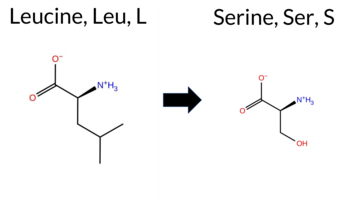 3DClick to see structure in 3D Viewer AIThe SynGAP1 L200S missense variant is not reported in ClinVar (ClinVar ID None) and is absent from gnomAD (gnomAD ID None). Prediction tools that agree on a benign effect include REVEL, PROVEAN, SIFT, and FATHMM. Those that predict a pathogenic effect comprise FoldX, Rosetta, Foldetta, premPS, polyPhen‑2 HumDiv, polyPhen‑2 HumVar, ESM1b, and AlphaMissense‑Default. The SGM Consensus, which aggregates AlphaMissense‑Default, ESM1b, FATHMM, and PROVEAN, is inconclusive (2 vs 2). High‑accuracy methods give a pathogenic signal from Foldetta (protein‑folding stability analysis) while AlphaMissense‑Optimized is uncertain and thus not considered evidence. Overall, the majority of available predictions (10 pathogenic vs 4 benign) indicate a pathogenic impact. Therefore, the variant is most likely pathogenic, and this assessment does not contradict any ClinVar status because no ClinVar classification exists. Disclaimer: This summary was generated using AI and should be interpreted alongside expert review. | PH | 0.366687 | Structured | 0.428168 | Uncertain | 0.687 | 0.453 | 0.125 | -10.755 | Likely Pathogenic | 0.807 | Likely Pathogenic | Ambiguous | 2.72 | Destabilizing | 0.1 | 3.38 | Destabilizing | 3.05 | Destabilizing | 1.43 | Destabilizing | 0.141 | Likely Benign | -1.96 | Neutral | 0.970 | Probably Damaging | 0.683 | Possibly Damaging | 4.05 | Benign | 0.06 | Tolerated | 0.3279 | 0.0575 | -3 | -2 | -4.6 | -26.08 | ||||||||||||||||||||||||||||||
| c.1313C>A | A438D 2D 3DClick to see structure in 3D Viewer AIThe SynGAP1 A438D missense variant is not reported in ClinVar and is absent from gnomAD. Functional prediction tools show mixed results: benign predictions come from REVEL, polyPhen‑2 HumVar, and FATHMM; pathogenic predictions come from PROVEAN, polyPhen‑2 HumDiv, SIFT, and AlphaMissense‑Default; the remaining tools (FoldX, Rosetta, Foldetta, premPS, ESM1b, AlphaMissense‑Optimized) are uncertain. High‑accuracy assessments indicate that AlphaMissense‑Optimized is inconclusive, the SGM Consensus (majority vote of AlphaMissense‑Default, ESM1b, FATHMM, PROVEAN) is pathogenic, and Foldetta is also inconclusive. Overall, the majority of evidence points toward a pathogenic effect. This conclusion is not contradicted by ClinVar status, which has no entry for this variant. Thus, based on the available predictions, the variant is most likely pathogenic. Disclaimer: This summary was generated using AI and should be interpreted alongside expert review. | GAP | 0.147574 | Structured | 0.290154 | Uncertain | 0.929 | 0.293 | 0.000 | -7.410 | In-Between | 0.808 | Likely Pathogenic | Ambiguous | 1.60 | Ambiguous | 0.1 | 0.70 | Ambiguous | 1.15 | Ambiguous | 0.92 | Ambiguous | 0.175 | Likely Benign | -3.07 | Deleterious | 0.859 | Possibly Damaging | 0.124 | Benign | 4.10 | Benign | 0.04 | Affected | 0.1490 | 0.1941 | 0 | -2 | -5.3 | 44.01 | ||||||||||||||||||||||||||||||
| c.142T>A | F48I 2D AIThe SynGAP1 missense variant F48I is not reported in ClinVar (ClinVar ID: None) and is absent from gnomAD (gnomAD ID: None). Prediction tools that agree on a benign effect include REVEL, PROVEAN, polyPhen‑2 (HumDiv and HumVar), and FATHMM, while SIFT and AlphaMissense‑Default predict a pathogenic impact. Two tools—ESM1b and AlphaMissense‑Optimized—return uncertain results. High‑accuracy assessments further clarify the variant’s likely benign nature: the SGM Consensus, derived from a majority vote of AlphaMissense‑Default, ESM1b, FATHMM, and PROVEAN, favors benign; AlphaMissense‑Optimized remains uncertain, and Foldetta (which would evaluate protein‑folding stability) is unavailable. Overall, the balance of evidence points to a benign classification, and this conclusion does not contradict any ClinVar annotation, as none exists for this variant. Disclaimer: This summary was generated using AI and should be interpreted alongside expert review. | 0.298791 | Structured | 0.440452 | Uncertain | 0.558 | 0.707 | 0.125 | -7.994 | In-Between | 0.808 | Likely Pathogenic | Ambiguous | 0.108 | Likely Benign | -1.67 | Neutral | 0.092 | Benign | 0.050 | Benign | 3.99 | Benign | 0.00 | Affected | 0.2561 | 0.2301 | 1 | 0 | 1.7 | -34.02 | ||||||||||||||||||||||||||||||||||||||||
| c.1828C>T | L610F 2D 3DClick to see structure in 3D Viewer AIThe SynGAP1 missense variant L610F is not reported in ClinVar (ClinVar status: None) and is absent from gnomAD (gnomAD ID: None). Prediction tools that agree on a pathogenic effect include SGM‑Consensus (Likely Pathogenic), REVEL, FoldX, Rosetta, Foldetta, PROVEAN, polyPhen‑2 (HumDiv and HumVar), SIFT, ESM1b, FATHMM, and AlphaMissense‑Default—all of which classify the variant as pathogenic. No tools predict a benign outcome. High‑accuracy assessments further support a deleterious impact: AlphaMissense‑Optimized is uncertain, SGM‑Consensus (majority vote of AlphaMissense‑Default, ESM1b, FATHMM, PROVEAN) is Likely Pathogenic, and Foldetta (combining FoldX‑MD and Rosetta outputs) predicts a pathogenic effect. Based on the consensus of these predictions, the variant is most likely pathogenic, and this assessment does not contradict the ClinVar status, which currently has no entry for this variant. Disclaimer: This summary was generated using AI and should be interpreted alongside expert review. | Likely Pathogenic | GAP | 0.271506 | Structured | 0.209504 | Uncertain | 0.888 | 0.253 | 0.000 | -13.244 | Likely Pathogenic | 0.808 | Likely Pathogenic | Ambiguous | 6.24 | Destabilizing | 1.1 | 3.40 | Destabilizing | 4.82 | Destabilizing | 0.68 | Ambiguous | 0.782 | Likely Pathogenic | -3.92 | Deleterious | 0.998 | Probably Damaging | 0.997 | Probably Damaging | -1.52 | Pathogenic | 0.01 | Affected | 0.0834 | 0.2816 | 2 | 0 | -1.0 | 34.02 | |||||||||||||||||||||||||||||
| c.1012G>A | D338N 2D 3DClick to see structure in 3D Viewer AIThe SynGAP1 D338N missense variant is not reported in ClinVar (ClinVar ID None) and has no entries in gnomAD (gnomAD ID None). Prediction tools that indicate a benign effect include REVEL, premPS, and polyPhen‑2 HumVar, whereas a majority of tools predict pathogenicity: SGM‑Consensus (Likely Pathogenic), PROVEAN, polyPhen‑2 HumDiv, SIFT, ESM1b, FATHMM, and AlphaMissense‑Default. High‑accuracy assessments show AlphaMissense‑Optimized as uncertain, SGM‑Consensus as Likely Pathogenic, and Foldetta as uncertain. No evidence from FoldX, Rosetta, or Foldetta supports a benign outcome. Overall, the balance of evidence favors a pathogenic interpretation; this is consistent with the absence of ClinVar annotation, so there is no contradiction with existing clinical data. Disclaimer: This summary was generated using AI and should be interpreted alongside expert review. | Likely Pathogenic | C2 | 0.335645 | Structured | 0.363354 | Uncertain | 0.460 | 0.438 | 0.375 | -9.520 | Likely Pathogenic | 0.809 | Likely Pathogenic | Ambiguous | 0.95 | Ambiguous | 0.4 | 1.34 | Ambiguous | 1.15 | Ambiguous | 0.06 | Likely Benign | 0.442 | Likely Benign | -3.62 | Deleterious | 0.801 | Possibly Damaging | 0.315 | Benign | 1.71 | Pathogenic | 0.02 | Affected | 0.1399 | 0.5970 | 2 | 1 | 0.0 | -0.98 | |||||||||||||||||||||||||||||
| c.1301T>G | V434G 2D 3DClick to see structure in 3D Viewer AIThe SynGAP1 missense variant V434G has no ClinVar entry and is not reported in gnomAD. Prediction tools that agree on a benign effect are SIFT and FATHMM, while the remaining tools (REVEL, FoldX, Rosetta, Foldetta, premPS, PROVEAN, polyPhen‑2 HumDiv, polyPhen‑2 HumVar, ESM1b, AlphaMissense‑Default) all predict a pathogenic impact. High‑accuracy assessments show AlphaMissense‑Optimized as uncertain, the SGM Consensus (derived from AlphaMissense‑Default, ESM1b, FATHMM, and PROVEAN) as pathogenic, and Foldetta as pathogenic. Taken together, the overwhelming majority of evidence indicates a deleterious effect. Therefore, the variant is most likely pathogenic, and this conclusion is not contradicted by any ClinVar annotation. Disclaimer: This summary was generated using AI and should be interpreted alongside expert review. | GAP | 0.158265 | Structured | 0.342846 | Uncertain | 0.954 | 0.306 | 0.000 | -12.519 | Likely Pathogenic | 0.809 | Likely Pathogenic | Ambiguous | 3.08 | Destabilizing | 0.0 | 4.37 | Destabilizing | 3.73 | Destabilizing | 1.91 | Destabilizing | 0.564 | Likely Pathogenic | -5.16 | Deleterious | 1.000 | Probably Damaging | 1.000 | Probably Damaging | 3.39 | Benign | 0.07 | Tolerated | 0.1758 | 0.2408 | -1 | -3 | -4.6 | -42.08 | ||||||||||||||||||||||||||||||
| c.1384A>C | K462Q 2D 3DClick to see structure in 3D Viewer AISynGAP1 missense variant K462Q is not reported in ClinVar and is absent from gnomAD. Prediction tools that classify it as benign include REVEL, FoldX, Rosetta, premPS, SIFT, and FATHMM, whereas pathogenic predictions come from PROVEAN, polyPhen‑2 HumDiv, polyPhen‑2 HumVar, ESM1b, and AlphaMissense‑Default. High‑accuracy assessments show AlphaMissense‑Optimized as uncertain, SGM Consensus (majority vote of AlphaMissense‑Default, ESM1b, FATHMM, PROVEAN) as Likely Pathogenic, and Foldetta (combining FoldX‑MD and Rosetta) as benign. Overall, the majority of tools and the protein‑stability analysis favor a benign effect, while the consensus pathogenic score introduces uncertainty. Thus, the variant is most likely benign; this assessment does not contradict ClinVar status, which has no entry for K462Q. Disclaimer: This summary was generated using AI and should be interpreted alongside expert review. | Likely Pathogenic | GAP | 0.264545 | Structured | 0.297737 | Uncertain | 0.921 | 0.159 | 0.125 | -12.144 | Likely Pathogenic | 0.809 | Likely Pathogenic | Ambiguous | 0.12 | Likely Benign | 0.1 | 0.34 | Likely Benign | 0.23 | Likely Benign | 0.48 | Likely Benign | 0.384 | Likely Benign | -3.85 | Deleterious | 0.999 | Probably Damaging | 0.999 | Probably Damaging | 3.40 | Benign | 0.15 | Tolerated | 0.4639 | 0.1286 | 1 | 1 | 0.4 | -0.04 | |||||||||||||||||||||||||||||
| c.2417T>G | F806C 2D AIThe SynGAP1 missense variant F806C is not reported in ClinVar (no ClinVar ID) and is absent from gnomAD (no gnomAD ID). Prediction tools that agree on a benign effect include only REVEL, which scores the variant as benign. All other evaluated tools—PROVEAN, polyPhen‑2 (HumDiv and HumVar), SIFT, ESM1b, FATHMM, and AlphaMissense‑Default—predict a pathogenic impact, and the SGM‑Consensus (a majority vote of AlphaMissense‑Default, ESM1b, FATHMM, and PROVEAN) also indicates a likely pathogenic outcome. High‑accuracy assessments show AlphaMissense‑Optimized as uncertain, while SGM‑Consensus remains likely pathogenic; Foldetta results are unavailable. Based on the predominance of pathogenic predictions and the SGM‑Consensus outcome, the variant is most likely pathogenic. This assessment does not contradict ClinVar status, as no ClinVar classification exists for this variant. Disclaimer: This summary was generated using AI and should be interpreted alongside expert review. | Likely Pathogenic | SH3-binding motif | 0.736850 | Disordered | 0.847454 | Binding | 0.276 | 0.904 | 0.500 | -8.565 | Likely Pathogenic | 0.809 | Likely Pathogenic | Ambiguous | 0.266 | Likely Benign | -4.46 | Deleterious | 1.000 | Probably Damaging | 0.998 | Probably Damaging | 2.11 | Pathogenic | 0.00 | Affected | 0.3071 | 0.1125 | -4 | -2 | -0.3 | -44.04 | ||||||||||||||||||||||||||||||||||||||
| c.788T>A | V263E 2D 3DClick to see structure in 3D Viewer AIThe SynGAP1 V263E missense variant is not reported in ClinVar (ClinVar ID: None) and is absent from gnomAD (gnomAD ID: None). Prediction tools largely agree on a deleterious effect: FATHMM predicts the variant as benign, while the remaining twelve tools—SGM‑Consensus, REVEL, FoldX, Rosetta, Foldetta, premPS, PROVEAN, polyPhen‑2 (HumDiv and HumVar), SIFT, ESM1b, and AlphaMissense‑Default—classify it as pathogenic. AlphaMissense‑Optimized is uncertain. High‑accuracy assessments further support pathogenicity: AlphaMissense‑Optimized remains uncertain, the SGM Consensus (majority vote of AlphaMissense‑Default, ESM1b, FATHMM, PROVEAN) indicates “Likely Pathogenic,” and Foldetta (combining FoldX‑MD and Rosetta outputs) predicts a destabilizing, pathogenic effect. Overall, the preponderance of evidence points to a pathogenic impact for V263E, and this conclusion is not contradicted by any ClinVar annotation. Disclaimer: This summary was generated using AI and should be interpreted alongside expert review. | Likely Pathogenic | C2 | 0.268042 | Structured | 0.356141 | Uncertain | 0.918 | 0.257 | 0.000 | -13.498 | Likely Pathogenic | 0.809 | Likely Pathogenic | Ambiguous | 2.04 | Destabilizing | 0.3 | 2.18 | Destabilizing | 2.11 | Destabilizing | 1.99 | Destabilizing | 0.862 | Likely Pathogenic | -3.84 | Deleterious | 0.999 | Probably Damaging | 0.991 | Probably Damaging | 5.96 | Benign | 0.01 | Affected | 0.0886 | 0.1436 | -2 | -2 | -7.7 | 29.98 | |||||||||||||||||||||||||||||
| c.1000A>C | K334Q 2D 3DClick to see structure in 3D Viewer AIThe SynGAP1 missense variant K334Q is not reported in ClinVar and is absent from gnomAD. Prediction tools that classify the variant as benign include REVEL, FoldX, Rosetta, Foldetta, and premPS. Those that predict pathogenicity are PROVEAN, polyPhen‑2 HumDiv, polyPhen‑2 HumVar, SIFT, ESM1b, FATHMM, and AlphaMissense‑Default. The SGM‑Consensus, which aggregates AlphaMissense‑Default, ESM1b, FATHMM, and PROVEAN, reports the variant as Likely Pathogenic. High‑accuracy assessments show AlphaMissense‑Optimized as Uncertain, SGM‑Consensus as Likely Pathogenic, and Foldetta (combining FoldX‑MD and Rosetta outputs) as Benign. With seven tools favoring pathogenicity versus five favoring benign, the overall prediction leans toward pathogenic. This conclusion does not contradict ClinVar status, as the variant has no ClinVar entry. Disclaimer: This summary was generated using AI and should be interpreted alongside expert review. | Likely Pathogenic | C2 | 0.377384 | Structured | 0.325972 | Uncertain | 0.544 | 0.414 | 0.500 | -8.185 | Likely Pathogenic | 0.810 | Likely Pathogenic | Ambiguous | 0.08 | Likely Benign | 0.0 | 0.10 | Likely Benign | 0.09 | Likely Benign | 0.46 | Likely Benign | 0.357 | Likely Benign | -3.67 | Deleterious | 1.000 | Probably Damaging | 0.998 | Probably Damaging | 1.74 | Pathogenic | 0.03 | Affected | 0.4519 | 0.1062 | 1 | 1 | 0.4 | -0.04 | |||||||||||||||||||||||||||||
| c.1217A>G | Y406C 2D 3DClick to see structure in 3D Viewer AIThe SynGAP1 missense variant Y406C is not reported in ClinVar and is absent from gnomAD. Prediction tools that agree on a benign effect include REVEL and FATHMM, whereas the majority of tools predict a pathogenic impact: FoldX, Rosetta, premPS, PROVEAN, polyPhen‑2 (HumDiv and HumVar), SIFT, ESM1b, and AlphaMissense‑Default. The SGM‑Consensus, derived from a majority vote of AlphaMissense‑Default, ESM1b, FATHMM, and PROVEAN, also indicates a likely pathogenic outcome, and the Foldetta stability assessment (combining FoldX‑MD and Rosetta) predicts a destabilizing, pathogenic effect. High‑accuracy assessments show AlphaMissense‑Optimized as uncertain, while both SGM‑Consensus and Foldetta are pathogenic. Overall, the preponderance of evidence points to a pathogenic effect for Y406C, and this conclusion does not contradict the absence of a ClinVar annotation. Disclaimer: This summary was generated using AI and should be interpreted alongside expert review. | Likely Pathogenic | C2 | 0.179055 | Structured | 0.393707 | Uncertain | 0.946 | 0.291 | 0.000 | -9.954 | Likely Pathogenic | 0.810 | Likely Pathogenic | Ambiguous | 2.47 | Destabilizing | 0.2 | 3.22 | Destabilizing | 2.85 | Destabilizing | 1.27 | Destabilizing | 0.229 | Likely Benign | -6.72 | Deleterious | 0.998 | Probably Damaging | 0.851 | Possibly Damaging | 3.78 | Benign | 0.01 | Affected | 0.3026 | 0.2861 | 0 | -2 | 3.8 | -60.04 | |||||||||||||||||||||||||||||
| c.170T>G | L57R 2D AIThe SynGAP1 missense variant L57R is not reported in ClinVar (no ClinVar ID) and is absent from gnomAD (no gnomAD ID). Prediction tools that agree on a benign effect include REVEL, PROVEAN, ESM1b, FATHMM, and the SGM‑Consensus (majority vote from AlphaMissense‑Default, ESM1b, FATHMM, PROVEAN), which collectively classify the variant as likely benign. In contrast, polyPhen‑2 (HumDiv and HumVar), SIFT, and AlphaMissense‑Default predict a pathogenic impact. The high‑accuracy AlphaMissense‑Optimized result is uncertain, and Foldetta (combining FoldX‑MD and Rosetta outputs) is not available for this variant. Overall, the balance of evidence leans toward a benign interpretation, and this assessment does not contradict any ClinVar status because no ClinVar entry exists for the variant. Disclaimer: This summary was generated using AI and should be interpreted alongside expert review. | Likely Benign | 0.254060 | Structured | 0.481044 | Uncertain | 0.554 | 0.642 | 0.000 | -6.034 | Likely Benign | 0.810 | Likely Pathogenic | Ambiguous | 0.213 | Likely Benign | -1.55 | Neutral | 0.943 | Possibly Damaging | 0.944 | Probably Damaging | 3.91 | Benign | 0.00 | Affected | 0.1245 | 0.0685 | -3 | -2 | -8.3 | 43.03 | |||||||||||||||||||||||||||||||||||||||
| c.1933T>G | F645V 2D 3DClick to see structure in 3D Viewer AISynGAP1 missense variant F645V is not reported in ClinVar and is absent from gnomAD. Functional prediction tools that agree on a benign effect include REVEL, polyPhen‑2 HumDiv, polyPhen‑2 HumVar, and FATHMM. Tools that agree on a pathogenic effect are premPS, PROVEAN, SIFT, ESM1b, and AlphaMissense‑Default. The high‑accuracy assessments give an uncertain result from AlphaMissense‑Optimized, a pathogenic outcome from the SGM Consensus (majority vote of AlphaMissense‑Default, ESM1b, FATHMM, PROVEAN), and an uncertain outcome from Foldetta (combining FoldX‑MD and Rosetta). No definitive folding‑stability change is reported. Overall, the majority of evidence points to a pathogenic impact for F645V, and this conclusion does not contradict any ClinVar annotation because the variant is not yet catalogued there. Disclaimer: This summary was generated using AI and should be interpreted alongside expert review. | Likely Pathogenic | GAP | 0.046336 | Structured | 0.276445 | Uncertain | 0.921 | 0.325 | 0.000 | -12.175 | Likely Pathogenic | 0.810 | Likely Pathogenic | Ambiguous | 1.98 | Ambiguous | 0.1 | 1.70 | Ambiguous | 1.84 | Ambiguous | 1.02 | Destabilizing | 0.316 | Likely Benign | -4.41 | Deleterious | 0.036 | Benign | 0.018 | Benign | 3.40 | Benign | 0.02 | Affected | 0.2163 | 0.2919 | -1 | -1 | 1.4 | -48.04 | |||||||||||||||||||||||||||||
| c.1369A>G | S457G 2D 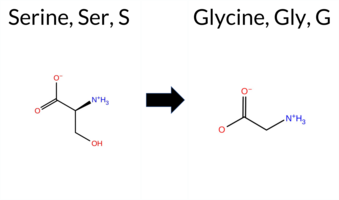 3DClick to see structure in 3D Viewer AISynGAP1 missense variant S457G is not reported in ClinVar and is absent from gnomAD. Prediction tools that agree on a benign effect include REVEL, SIFT, and FATHMM, whereas a majority of tools predict a pathogenic impact: PROVEAN, polyPhen‑2 HumDiv, polyPhen‑2 HumVar, ESM1b, and AlphaMissense‑Default. Predictions that are inconclusive or unavailable are FoldX, Rosetta, Foldetta, premPS, and AlphaMissense‑Optimized. High‑accuracy assessments show AlphaMissense‑Optimized as uncertain, the SGM Consensus (majority vote of AlphaMissense‑Default, ESM1b, FATHMM, and PROVEAN) as likely pathogenic, and Foldetta (combining FoldX‑MD and Rosetta outputs) as uncertain. Overall, the preponderance of evidence points to a pathogenic effect for S457G. This conclusion is not contradicted by ClinVar, which contains no entry for this variant. Disclaimer: This summary was generated using AI and should be interpreted alongside expert review. | Likely Pathogenic | GAP | 0.164327 | Structured | 0.297330 | Uncertain | 0.909 | 0.159 | 0.000 | -9.154 | Likely Pathogenic | 0.811 | Likely Pathogenic | Ambiguous | 0.86 | Ambiguous | 0.0 | 0.87 | Ambiguous | 0.87 | Ambiguous | 0.65 | Ambiguous | 0.382 | Likely Benign | -3.82 | Deleterious | 0.999 | Probably Damaging | 0.977 | Probably Damaging | 3.35 | Benign | 0.13 | Tolerated | 0.2735 | 0.4074 | 1 | 0 | 0.4 | -30.03 | |||||||||||||||||||||||||||||
| c.2091G>C | W697C 2D 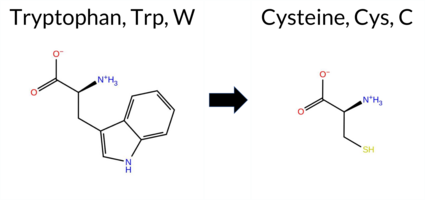 3DClick to see structure in 3D Viewer AISynGAP1 W697C is not reported in ClinVar and is absent from gnomAD. Functional prediction tools cluster into two groups: benign predictions come from REVEL, SIFT, ESM1b, and FATHMM, while pathogenic predictions arise from PROVEAN, polyPhen‑2 HumDiv, polyPhen‑2 HumVar, and AlphaMissense‑Default. The remaining tools—FoldX, Rosetta, Foldetta, premPS, and AlphaMissense‑Optimized—return uncertain or inconclusive results. High‑accuracy assessments are likewise ambiguous: AlphaMissense‑Optimized is uncertain; the SGM Consensus (majority vote of AlphaMissense‑Default, ESM1b, FATHMM, and PROVEAN) is a 2‑vs‑2 tie, and Foldetta is uncertain. Consequently, the evidence does not favor either outcome; the variant’s impact remains indeterminate. This lack of consensus does not contradict ClinVar, which has no entry for the variant. Disclaimer: This summary was generated using AI and should be interpreted alongside expert review. | GAP | 0.175930 | Structured | 0.400169 | Uncertain | 0.945 | 0.297 | 0.000 | -5.683 | Likely Benign | 0.811 | Likely Pathogenic | Ambiguous | 1.84 | Ambiguous | 0.1 | 1.01 | Ambiguous | 1.43 | Ambiguous | 0.98 | Ambiguous | 0.318 | Likely Benign | -8.65 | Deleterious | 1.000 | Probably Damaging | 0.999 | Probably Damaging | 3.48 | Benign | 0.10 | Tolerated | 0.3575 | 0.1015 | -8 | -2 | 3.4 | -83.07 | ||||||||||||||||||||||||||||||
| c.2091G>T | W697C 2D 3DClick to see structure in 3D Viewer AISynGAP1 W697C is not reported in ClinVar and is absent from gnomAD. Functional prediction tools cluster into two groups: benign predictions come from REVEL, SIFT, ESM1b, and FATHMM, while pathogenic predictions arise from PROVEAN, polyPhen‑2 HumDiv, polyPhen‑2 HumVar, and AlphaMissense‑Default. Five tools (FoldX, Rosetta, Foldetta, premPS, AlphaMissense‑Optimized) yield uncertain or missing results. High‑accuracy assessments are likewise inconclusive: AlphaMissense‑Optimized is uncertain; the SGM Consensus, derived from a majority vote of AlphaMissense‑Default, ESM1b, FATHMM, and PROVEAN, is a 2‑vs‑2 tie; and Foldetta is uncertain. Consequently, the evidence does not strongly favor either outcome. The variant is therefore best classified as of uncertain significance; this assessment does not contradict the lack of ClinVar annotation. Disclaimer: This summary was generated using AI and should be interpreted alongside expert review. | GAP | 0.175930 | Structured | 0.400169 | Uncertain | 0.945 | 0.297 | 0.000 | -5.683 | Likely Benign | 0.811 | Likely Pathogenic | Ambiguous | 1.84 | Ambiguous | 0.1 | 1.01 | Ambiguous | 1.43 | Ambiguous | 0.98 | Ambiguous | 0.318 | Likely Benign | -8.65 | Deleterious | 1.000 | Probably Damaging | 0.999 | Probably Damaging | 3.48 | Benign | 0.10 | Tolerated | 0.3575 | 0.1015 | -8 | -2 | 3.4 | -83.07 | ||||||||||||||||||||||||||||||
| c.3428C>A | T1143K 2D AIThe SynGAP1 missense variant T1143K is not reported in ClinVar (no ClinVar ID) and is absent from gnomAD (no gnomAD ID). Prediction tools that agree on a benign effect include REVEL, PROVEAN, SIFT, ESM1b, and FATHMM, while those that predict a pathogenic effect are polyPhen‑2 HumDiv, polyPhen‑2 HumVar, and AlphaMissense‑Default. The SGM‑Consensus, which aggregates AlphaMissense‑Default, ESM1b, FATHMM, and PROVEAN, is classified as Likely Benign. High‑accuracy assessments show AlphaMissense‑Optimized as Uncertain, whereas the SGM‑Consensus (majority vote) supports a benign outcome. Foldetta, a protein‑folding stability method combining FoldX‑MD and Rosetta outputs, has no available result for this variant. Overall, the preponderance of evidence points to a benign impact for T1143K, and this conclusion is not contradicted by any ClinVar annotation. Disclaimer: This summary was generated using AI and should be interpreted alongside expert review. | Likely Benign | 0.919029 | Disordered | 0.722918 | Binding | 0.275 | 0.837 | 1.000 | -3.498 | Likely Benign | 0.811 | Likely Pathogenic | Ambiguous | 0.163 | Likely Benign | -2.03 | Neutral | 0.986 | Probably Damaging | 0.895 | Possibly Damaging | 2.78 | Benign | 0.14 | Tolerated | 0.1266 | 0.2936 | 0 | -1 | -3.2 | 27.07 | |||||||||||||||||||||||||||||||||||||||
| c.3569G>A | S1190N 2D AIThe SynGAP1 missense variant S1190N is catalogued in gnomAD (6‑33444604‑G‑A) but has no ClinVar entry. Functional prediction tools cluster into two groups: benign predictions come from REVEL, PROVEAN, SIFT, ESM1b, and FATHMM, while pathogenic predictions arise from polyPhen‑2 HumDiv, polyPhen‑2 HumVar, and AlphaMissense‑Default. High‑accuracy assessments further support a benign interpretation: AlphaMissense‑Optimized is uncertain, the SGM‑Consensus (majority vote of AlphaMissense‑Default, ESM1b, FATHMM, PROVEAN) reports “Likely Benign,” and Foldetta results are unavailable. Overall, the balance of evidence favors a benign effect for S1190N, and this conclusion is not contradicted by any ClinVar status (none reported). Disclaimer: This summary was generated using AI and should be interpreted alongside expert review. | Likely Benign | Coiled-coil | 0.575842 | Disordered | 0.455760 | Uncertain | 0.742 | 0.624 | 0.625 | 6-33444604-G-A | 2 | 1.24e-6 | -4.909 | Likely Benign | 0.811 | Likely Pathogenic | Ambiguous | 0.326 | Likely Benign | -1.25 | Neutral | 0.991 | Probably Damaging | 0.988 | Probably Damaging | 5.27 | Benign | 0.07 | Tolerated | 3.82 | 4 | 0.1368 | 0.3441 | 1 | 1 | -2.7 | 27.03 | |||||||||||||||||||||||||||||||||
| c.514C>G | R172G 2D AIThe SynGAP1 R172G missense variant is not reported in ClinVar (ClinVar ID = None) and is absent from gnomAD (gnomAD ID = None). Computational predictions are split: benign calls come from REVEL, polyPhen‑2 HumVar, ESM1b, and FATHMM, while pathogenic calls come from PROVEAN, polyPhen‑2 HumDiv, SIFT, and AlphaMissense‑Default. AlphaMissense‑Optimized is uncertain. High‑accuracy consensus tools are inconclusive: the SGM Consensus (majority vote of AlphaMissense‑Default, ESM1b, FATHMM, PROVEAN) yields a 2‑vs‑2 split, and Foldetta results are unavailable. Consequently, the variant is neither clearly benign nor pathogenic according to current predictions, and there is no ClinVar annotation to contradict this ambiguous assessment. Disclaimer: This summary was generated using AI and should be interpreted alongside expert review. | 0.525368 | Disordered | 0.491688 | Uncertain | 0.411 | 0.651 | 0.375 | -6.685 | Likely Benign | 0.811 | Likely Pathogenic | Ambiguous | 0.175 | Likely Benign | -2.69 | Deleterious | 0.789 | Possibly Damaging | 0.253 | Benign | 3.98 | Benign | 0.02 | Affected | 0.2991 | 0.3169 | -3 | -2 | 4.1 | -99.14 | ||||||||||||||||||||||||||||||||||||||||
| c.1387G>A | D463N 2D 3DClick to see structure in 3D Viewer AIThe SynGAP1 D463N missense variant is not reported in ClinVar and is absent from gnomAD. Prediction tools that agree on a benign effect include REVEL, FoldX, premPS, SIFT, and FATHMM. Those that predict a pathogenic impact are SGM‑Consensus, PROVEAN, polyPhen‑2 HumDiv, ESM1b, and AlphaMissense‑Default. Predictions that are uncertain (Foldetta, AlphaMissense‑Optimized, Rosetta) are treated as unavailable and do not influence the overall assessment. High‑accuracy methods give the following results: AlphaMissense‑Optimized is uncertain; the SGM‑Consensus (majority vote of AlphaMissense‑Default, ESM1b, FATHMM, PROVEAN) indicates likely pathogenic; Foldetta is uncertain. Overall, the majority of available predictions lean toward a benign effect, and this conclusion does not contradict any ClinVar status (none reported). Thus, the variant is most likely benign based on current computational evidence. Disclaimer: This summary was generated using AI and should be interpreted alongside expert review. | Likely Pathogenic | GAP | 0.260850 | Structured | 0.305622 | Uncertain | 0.940 | 0.176 | 0.000 | -11.428 | Likely Pathogenic | 0.812 | Likely Pathogenic | Ambiguous | 0.10 | Likely Benign | 0.1 | 1.19 | Ambiguous | 0.65 | Ambiguous | 0.40 | Likely Benign | 0.217 | Likely Benign | -4.37 | Deleterious | 0.880 | Possibly Damaging | 0.430 | Benign | 3.33 | Benign | 0.10 | Tolerated | 0.1152 | 0.5531 | 2 | 1 | 0.0 | -0.98 | |||||||||||||||||||||||||||||
| c.1441C>G | H481D 2D 3DClick to see structure in 3D Viewer AISynGAP1 missense variant H481D is not reported in ClinVar and is absent from gnomAD. Functional prediction tools cluster into two consensus groups: benign predictions come from REVEL, FoldX, SIFT, and FATHMM, whereas pathogenic predictions arise from SGM‑Consensus, PROVEAN, polyPhen‑2 HumDiv, polyPhen‑2 HumVar, ESM1b, and AlphaMissense‑Default. High‑accuracy assessments further support a pathogenic signal: the SGM‑Consensus majority vote (AlphaMissense‑Default, ESM1b, FATHMM, PROVEAN) indicates likely pathogenic, AlphaMissense‑Optimized is uncertain, and Foldetta (combining FoldX‑MD and Rosetta) predicts benign stability. Uncertain results from AlphaMissense‑Optimized, Foldetta, premPS, and Rosetta are treated as unavailable. Overall, the preponderance of evidence points to a pathogenic effect for H481D, and this conclusion does not contradict the absence of a ClinVar annotation. Disclaimer: This summary was generated using AI and should be interpreted alongside expert review. | Likely Pathogenic | GAP | 0.257454 | Structured | 0.430977 | Uncertain | 0.764 | 0.247 | 0.000 | -11.822 | Likely Pathogenic | 0.812 | Likely Pathogenic | Ambiguous | -0.09 | Likely Benign | 0.1 | 0.54 | Ambiguous | 0.23 | Likely Benign | 0.70 | Ambiguous | 0.273 | Likely Benign | -5.41 | Deleterious | 1.000 | Probably Damaging | 1.000 | Probably Damaging | 3.48 | Benign | 0.50 | Tolerated | 0.2109 | 0.1058 | 1 | -1 | -0.3 | -22.05 | |||||||||||||||||||||||||||||
| c.1823T>A | F608Y 2D 3DClick to see structure in 3D Viewer AIThe SynGAP1 missense variant F608Y is not reported in ClinVar and is absent from gnomAD. Prediction tools largely agree on a pathogenic effect: REVEL, premPS, PROVEAN, polyPhen‑2 (HumDiv and HumVar), SIFT, ESM1b, FATHMM, AlphaMissense‑Default, and the SGM‑Consensus all predict pathogenicity, while only Rosetta predicts a benign effect. Tools with uncertain outcomes—FoldX, Foldetta, and AlphaMissense‑Optimized—do not provide decisive evidence. High‑accuracy assessments further support a deleterious impact: the SGM‑Consensus, derived from a majority vote of AlphaMissense‑Default, ESM1b, FATHMM, and PROVEAN, is pathogenic, whereas AlphaMissense‑Optimized and Foldetta remain inconclusive. Overall, the preponderance of evidence indicates that F608Y is most likely pathogenic, and this conclusion is consistent with the absence of a ClinVar classification. Disclaimer: This summary was generated using AI and should be interpreted alongside expert review. | Likely Pathogenic | GAP | 0.106997 | Structured | 0.197190 | Uncertain | 0.891 | 0.247 | 0.000 | -13.249 | Likely Pathogenic | 0.812 | Likely Pathogenic | Ambiguous | 0.62 | Ambiguous | 0.1 | 0.41 | Likely Benign | 0.52 | Ambiguous | 1.05 | Destabilizing | 0.747 | Likely Pathogenic | -2.99 | Deleterious | 0.993 | Probably Damaging | 0.976 | Probably Damaging | -1.44 | Pathogenic | 0.00 | Affected | 0.1504 | 0.1346 | 7 | 3 | -4.1 | 16.00 | |||||||||||||||||||||||||||||
| c.2285A>G | D762G 2D AIThe SynGAP1 missense variant D762G is not reported in ClinVar (no ClinVar ID) and is absent from gnomAD (no gnomAD ID). Prediction tools that agree on a benign effect include REVEL, SIFT, and ESM1b, whereas those that agree on a pathogenic effect include PROVEAN, polyPhen‑2 HumDiv, polyPhen‑2 HumVar, FATHMM, and AlphaMissense‑Default. The SGM‑Consensus, which aggregates AlphaMissense‑Default, ESM1b, FATHMM, and PROVEAN, classifies the variant as Likely Pathogenic. High‑accuracy assessments show AlphaMissense‑Optimized as Uncertain, SGM‑Consensus as Likely Pathogenic, and Foldetta results are unavailable. Based on the majority of predictions and the SGM‑Consensus outcome, the variant is most likely pathogenic, and this assessment does not contradict any ClinVar status because no ClinVar classification exists. Disclaimer: This summary was generated using AI and should be interpreted alongside expert review. | Likely Pathogenic | 0.405110 | Structured | 0.910475 | Binding | 0.308 | 0.859 | 0.125 | -1.062 | Likely Benign | 0.812 | Likely Pathogenic | Ambiguous | 0.170 | Likely Benign | -2.55 | Deleterious | 0.998 | Probably Damaging | 0.949 | Probably Damaging | 2.10 | Pathogenic | 0.08 | Tolerated | 0.4710 | 0.7841 | 1 | -1 | 3.1 | -58.04 | |||||||||||||||||||||||||||||||||||||||
| c.3529G>C | E1177Q 2D AIThe SynGAP1 missense variant E1177Q is not reported in ClinVar (no ClinVar ID) and is absent from gnomAD (no gnomAD ID). Prediction tools that agree on a benign effect include REVEL, PROVEAN, ESM1b, and FATHMM, while those that predict a pathogenic impact are polyPhen‑2 HumDiv, polyPhen‑2 HumVar, SIFT, and AlphaMissense‑Default. High‑accuracy assessments show AlphaMissense‑Optimized as uncertain, the SGM‑Consensus (majority vote from AlphaMissense‑Default, ESM1b, FATHMM, PROVEAN) as Likely Benign, and Foldetta (combining FoldX‑MD and Rosetta outputs) is unavailable. Overall, the evidence is mixed, with an equal split between benign and pathogenic calls; however, the consensus from the high‑accuracy tools leans toward benign. Thus, the variant is most likely benign, and this assessment does not contradict any ClinVar status because no ClinVar classification exists. Disclaimer: This summary was generated using AI and should be interpreted alongside expert review. | Likely Benign | Coiled-coil | 0.541878 | Disordered | 0.566503 | Binding | 0.542 | 0.705 | 0.250 | -3.517 | Likely Benign | 0.812 | Likely Pathogenic | Ambiguous | 0.418 | Likely Benign | -0.95 | Neutral | 0.951 | Possibly Damaging | 0.772 | Possibly Damaging | 5.43 | Benign | 0.04 | Affected | 0.0712 | 0.4265 | 2 | 2 | 0.0 | -0.98 | ||||||||||||||||||||||||||||||||||||||
| c.2096T>A | V699E 2D 3DClick to see structure in 3D Viewer AIThe SynGAP1 V699E missense variant is not reported in ClinVar and is absent from gnomAD. Prediction tools that classify it as benign include REVEL and FATHMM, whereas the majority of other in‑silico predictors (FoldX, Rosetta, Foldetta, premPS, PROVEAN, polyPhen‑2 HumDiv, polyPhen‑2 HumVar, SIFT, ESM1b, AlphaMissense‑Default, and the SGM‑Consensus score) indicate a pathogenic effect. High‑accuracy assessments show AlphaMissense‑Optimized as uncertain, SGM‑Consensus (majority vote from AlphaMissense‑Default, ESM1b, FATHMM, PROVEAN) as Likely Pathogenic, and Foldetta (combining FoldX‑MD and Rosetta outputs) as Pathogenic. Based on the preponderance of pathogenic predictions and the high‑accuracy tools’ results, the variant is most likely pathogenic, and this assessment does not contradict the ClinVar status, which currently has no entry for this variant. Disclaimer: This summary was generated using AI and should be interpreted alongside expert review. | Likely Pathogenic | GAP | 0.069024 | Structured | 0.432975 | Uncertain | 0.935 | 0.315 | 0.000 | -12.647 | Likely Pathogenic | 0.813 | Likely Pathogenic | Ambiguous | 2.41 | Destabilizing | 0.1 | 2.08 | Destabilizing | 2.25 | Destabilizing | 1.82 | Destabilizing | 0.468 | Likely Benign | -4.56 | Deleterious | 1.000 | Probably Damaging | 0.986 | Probably Damaging | 3.42 | Benign | 0.02 | Affected | 0.1092 | 0.1326 | -2 | -2 | -7.7 | 29.98 | |||||||||||||||||||||||||||||
| c.3011A>G | H1004R 2D AIThe SynGAP1 missense variant H1004R is not reported in ClinVar (no ClinVar ID) and is absent from gnomAD (no gnomAD ID). Prediction tools that agree on a benign effect include REVEL, PROVEAN, SIFT, ESM1b, and FATHMM, while those that predict a pathogenic effect are polyPhen‑2 HumDiv, polyPhen‑2 HumVar, and AlphaMissense‑Default. The SGM‑Consensus, which aggregates AlphaMissense‑Default, ESM1b, FATHMM, and PROVEAN, reports the variant as Likely Benign. High‑accuracy assessments show AlphaMissense‑Optimized as Uncertain, SGM‑Consensus as Likely Benign, and no Foldetta stability data is available. Overall, the majority of evidence points to a benign impact. This conclusion is not contradicted by ClinVar, which has no entry for this variant. Disclaimer: This summary was generated using AI and should be interpreted alongside expert review. | Likely Benign | 0.808535 | Disordered | 0.943707 | Binding | 0.271 | 0.901 | 0.750 | -3.316 | Likely Benign | 0.813 | Likely Pathogenic | Ambiguous | 0.198 | Likely Benign | -1.88 | Neutral | 0.997 | Probably Damaging | 0.994 | Probably Damaging | 2.77 | Benign | 0.50 | Tolerated | 0.2097 | 0.3132 | 2 | 0 | -1.3 | 19.05 | |||||||||||||||||||||||||||||||||||||||
| c.401G>A | S134N 2D AIThe SynGAP1 missense variant S134N is listed in ClinVar with an “Uncertain” status (ClinVar ID 2819575.0) and is not reported in gnomAD. Prediction tools that agree on a benign effect include REVEL, PROVEAN, polyPhen‑2 (HumDiv and HumVar), ESM1b, and FATHMM. Those that predict a pathogenic effect are SIFT and AlphaMissense‑Default. The remaining tools—AlphaMissense‑Optimized and the SGM‑Consensus—are inconclusive; the consensus score is “Likely Benign” based on a majority vote of AlphaMissense‑Default, ESM1b, FATHMM, and PROVEAN. High‑accuracy assessments show AlphaMissense‑Optimized as uncertain, SGM‑Consensus as likely benign, and Foldetta (combining FoldX‑MD and Rosetta) has no available result. Overall, the balance of evidence points to a benign impact, which does not contradict the current ClinVar “Uncertain” classification. Disclaimer: This summary was generated using AI and should be interpreted alongside expert review. | Likely Benign | 0.447574 | Structured | 0.695837 | Binding | 0.333 | 0.898 | 0.250 | Uncertain | 1 | -5.534 | Likely Benign | 0.813 | Likely Pathogenic | Ambiguous | 0.075 | Likely Benign | -1.62 | Neutral | 0.001 | Benign | 0.002 | Benign | 3.90 | Benign | 0.00 | Affected | 3.61 | 5 | 0.0964 | 0.4381 | 1 | 1 | -2.7 | 27.03 | |||||||||||||||||||||||||||||||||||
| c.1744G>A | E582K 2D 3DClick to see structure in 3D Viewer AIThe SynGAP1 E582K missense variant is not reported in ClinVar (ClinVar ID None) and is absent from gnomAD (gnomAD ID None). Functional prediction tools cluster into two groups: benign predictions come from REVEL, FoldX, Rosetta, premPS, PROVEAN, SIFT, and FATHMM, while pathogenic predictions arise from polyPhen‑2 HumDiv, polyPhen‑2 HumVar, ESM1b, and AlphaMissense‑Default. AlphaMissense‑Optimized is uncertain. High‑accuracy assessments show AlphaMissense‑Optimized as uncertain, the SGM Consensus (majority vote of AlphaMissense‑Default, ESM1b, FATHMM, PROVEAN) is inconclusive, and Foldetta predicts a benign effect on protein stability. Taken together, the majority of evidence points to a benign impact, and this conclusion does not contradict any ClinVar annotation (none is available). Thus, the variant is most likely benign. Disclaimer: This summary was generated using AI and should be interpreted alongside expert review. | GAP | 0.102787 | Structured | 0.033838 | Uncertain | 0.845 | 0.235 | 0.000 | -11.826 | Likely Pathogenic | 0.814 | Likely Pathogenic | Ambiguous | 0.20 | Likely Benign | 0.1 | 0.07 | Likely Benign | 0.14 | Likely Benign | 0.02 | Likely Benign | 0.168 | Likely Benign | -1.83 | Neutral | 0.994 | Probably Damaging | 0.994 | Probably Damaging | 3.31 | Benign | 0.33 | Tolerated | 0.2038 | 0.3762 | 0 | 1 | -0.4 | -0.94 | ||||||||||||||||||||||||||||||
| c.200T>G | L67R 2D AIThe SynGAP1 missense variant L67R is not reported in ClinVar (no ClinVar ID) and is absent from gnomAD (no gnomAD ID). Prediction tools that agree on a benign effect include REVEL, PROVEAN, ESM1b, and FATHMM, while those that predict a pathogenic effect are polyPhen‑2 HumDiv, polyPhen‑2 HumVar, SIFT, and AlphaMissense‑Default. The SGM‑Consensus, derived from a majority vote of AlphaMissense‑Default, ESM1b, FATHMM, and PROVEAN, classifies the variant as Likely Benign. High‑accuracy assessments show AlphaMissense‑Optimized as Uncertain, SGM‑Consensus as Likely Benign, and Foldetta results are unavailable. Overall, the balance of evidence leans toward a benign interpretation, with no conflict with ClinVar status because no ClinVar assertion exists. Thus, the variant is most likely benign based on current predictive tools. Disclaimer: This summary was generated using AI and should be interpreted alongside expert review. | Likely Benign | 0.458154 | Structured | 0.473668 | Uncertain | 0.428 | 0.761 | 0.125 | -3.430 | Likely Benign | 0.814 | Likely Pathogenic | Ambiguous | 0.115 | Likely Benign | -0.84 | Neutral | 0.943 | Possibly Damaging | 0.766 | Possibly Damaging | 4.09 | Benign | 0.00 | Affected | 0.1159 | 0.0719 | -3 | -2 | -8.3 | 43.03 | |||||||||||||||||||||||||||||||||||||||
| c.2680G>T | G894W 2D AIThe SynGAP1 missense variant G894W is not reported in ClinVar (ClinVar ID = None) and is absent from gnomAD (gnomAD ID = None). Prediction tools that agree on a benign effect include REVEL, ESM1b, and FATHMM, whereas those that predict a pathogenic effect are PROVEAN, polyPhen‑2 (HumDiv and HumVar), SIFT, and AlphaMissense‑Default. The high‑accuracy AlphaMissense‑Optimized tool returns an uncertain result, and the SGM Consensus (majority vote from AlphaMissense‑Default, ESM1b, FATHMM, and PROVEAN) is inconclusive (two pathogenic vs. two benign votes). Foldetta, which assesses protein‑folding stability, has no available output for this variant. Overall, the majority of evaluated predictors (five pathogenic vs. three benign) lean toward a pathogenic interpretation. Because there is no ClinVar annotation to contradict this assessment, the variant is most likely pathogenic based on current computational predictions. Disclaimer: This summary was generated using AI and should be interpreted alongside expert review. | 0.788093 | Disordered | 0.425700 | Uncertain | 0.310 | 0.925 | 0.750 | -6.927 | Likely Benign | 0.814 | Likely Pathogenic | Ambiguous | 0.177 | Likely Benign | -2.70 | Deleterious | 1.000 | Probably Damaging | 1.000 | Probably Damaging | 2.59 | Benign | 0.00 | Affected | 0.0698 | 0.4184 | -7 | -2 | -0.5 | 129.16 | ||||||||||||||||||||||||||||||||||||||||
| c.3435C>A | N1145K 2D AIThe SynGAP1 missense variant N1145K is not reported in ClinVar (no ClinVar ID) and is absent from gnomAD (no gnomAD ID). Prediction tools that agree on a benign effect include REVEL, PROVEAN, ESM1b, and FATHMM, while those that predict a pathogenic effect are polyPhen‑2 HumDiv, polyPhen‑2 HumVar, SIFT, and AlphaMissense‑Default. The SGM‑Consensus, which aggregates AlphaMissense‑Default, ESM1b, FATHMM, and PROVEAN, reports the variant as “Likely Benign.” High‑accuracy assessments show AlphaMissense‑Optimized as “Uncertain” and the SGM‑Consensus as “Likely Benign”; Foldetta results are unavailable. Overall, the balance of evidence leans toward a benign interpretation, and this conclusion does not contradict any ClinVar status (none is available). Disclaimer: This summary was generated using AI and should be interpreted alongside expert review. | Likely Benign | 0.922952 | Disordered | 0.722723 | Binding | 0.284 | 0.850 | 1.000 | -2.545 | Likely Benign | 0.814 | Likely Pathogenic | Ambiguous | 0.440 | Likely Benign | -2.40 | Neutral | 0.997 | Probably Damaging | 0.995 | Probably Damaging | 5.50 | Benign | 0.03 | Affected | 0.1959 | 0.6018 | 1 | 0 | -0.4 | 14.07 | |||||||||||||||||||||||||||||||||||||||
| c.3435C>G | N1145K 2D AIThe SynGAP1 missense variant N1145K is not reported in ClinVar (no ClinVar ID) and is absent from gnomAD (no gnomAD ID). Prediction tools that agree on a benign effect include REVEL, PROVEAN, ESM1b, FATHMM, and the SGM‑Consensus (majority vote from AlphaMissense‑Default, ESM1b, FATHMM, PROVEAN), which collectively suggest a likely benign impact. Tools that predict a pathogenic effect are polyPhen‑2 HumDiv, polyPhen‑2 HumVar, SIFT, and AlphaMissense‑Default. The high‑accuracy AlphaMissense‑Optimized result is uncertain, and Foldetta stability analysis is unavailable. Overall, the balance of evidence leans toward a benign interpretation, with no conflict with ClinVar status because the variant is not yet catalogued there. Disclaimer: This summary was generated using AI and should be interpreted alongside expert review. | Likely Benign | 0.922952 | Disordered | 0.722723 | Binding | 0.284 | 0.850 | 1.000 | -2.545 | Likely Benign | 0.814 | Likely Pathogenic | Ambiguous | 0.440 | Likely Benign | -2.40 | Neutral | 0.997 | Probably Damaging | 0.995 | Probably Damaging | 5.50 | Benign | 0.03 | Affected | 0.1959 | 0.6018 | 1 | 0 | -0.4 | 14.07 | |||||||||||||||||||||||||||||||||||||||
| c.3512C>A | A1171D 2D AIThe SynGAP1 missense variant A1171D is not reported in ClinVar and has no entries in gnomAD. Prediction tools that agree on a benign effect include REVEL, PROVEAN, polyPhen‑2 HumVar, ESM1b, and FATHMM, while those that predict a pathogenic effect are polyPhen‑2 HumDiv, SIFT, and AlphaMissense‑Default. The SGM‑Consensus, derived from a majority vote of AlphaMissense‑Default, ESM1b, FATHMM, and PROVEAN, is “Likely Benign.” High‑accuracy assessments show AlphaMissense‑Optimized as “Uncertain,” and Foldetta results are unavailable. Overall, the balance of evidence from multiple independent predictors and the SGM‑Consensus points to a benign impact for A1171D. This conclusion is consistent with the absence of a ClinVar classification, so there is no contradiction with existing clinical data. Disclaimer: This summary was generated using AI and should be interpreted alongside expert review. | Likely Benign | Coiled-coil | 0.599170 | Disordered | 0.702689 | Binding | 0.472 | 0.775 | 0.500 | -3.897 | Likely Benign | 0.814 | Likely Pathogenic | Ambiguous | 0.312 | Likely Benign | -0.80 | Neutral | 0.611 | Possibly Damaging | 0.326 | Benign | 5.34 | Benign | 0.02 | Affected | 0.1952 | 0.2494 | 0 | -2 | -5.3 | 44.01 | ||||||||||||||||||||||||||||||||||||||
| c.3761A>T | E1254V 2D AIThe SynGAP1 missense variant E1254V is not reported in ClinVar and is absent from gnomAD. Functional prediction tools show a split: REVEL scores the variant as benign, whereas the remaining seven tools (PROVEAN, polyPhen‑2 HumDiv, polyPhen‑2 HumVar, SIFT, ESM1b, FATHMM, AlphaMissense‑Default) predict it to be pathogenic. Grouping by consensus, the benign prediction is represented only by REVEL, while the pathogenic predictions are supported by the majority of in silico methods. High‑accuracy assessments further reinforce a pathogenic interpretation: AlphaMissense‑Optimized is uncertain, but the SGM‑Consensus—derived from a majority vote of AlphaMissense‑Default, ESM1b, FATHMM, and PROVEAN—classifies the variant as likely pathogenic. Foldetta, a protein‑folding stability predictor, has no available result for this variant. Based on the preponderance of pathogenic predictions and the SGM‑Consensus outcome, the variant is most likely pathogenic, which is consistent with the lack of ClinVar annotation and gnomAD absence. Disclaimer: This summary was generated using AI and should be interpreted alongside expert review. | Likely Pathogenic | Coiled-coil | 0.657645 | Disordered | 0.403242 | Uncertain | 0.886 | 0.555 | 0.625 | -9.913 | Likely Pathogenic | 0.814 | Likely Pathogenic | Ambiguous | 0.350 | Likely Benign | -5.15 | Deleterious | 1.000 | Probably Damaging | 0.998 | Probably Damaging | 2.31 | Pathogenic | 0.00 | Affected | 0.0481 | 0.5894 | -2 | -2 | 7.7 | -29.98 | ||||||||||||||||||||||||||||||||||||||
| c.3784A>G | I1262V 2D AIThe SynGAP1 I1262V missense change is not reported in ClinVar (ClinVar ID None) and is absent from gnomAD (gnomAD ID None). Prediction tools that agree on a benign effect include REVEL, PROVEAN, and ESM1b, whereas those that agree on a pathogenic effect are polyPhen‑2 (HumDiv and HumVar), SIFT, FATHMM, and AlphaMissense‑Default. High‑accuracy assessments are less decisive: AlphaMissense‑Optimized rates the variant as uncertain, the SGM Consensus (majority vote from AlphaMissense‑Default, ESM1b, FATHMM, PROVEAN) is inconclusive, and Foldetta folding‑stability data are unavailable. Overall, the majority of standard predictors lean toward pathogenicity, but the most reliable tools provide no clear verdict. Thus, the variant is most likely pathogenic based on the available predictions, and this assessment does not contradict the ClinVar status, which currently has no entry for this variant. Disclaimer: This summary was generated using AI and should be interpreted alongside expert review. | Coiled-coil | 0.497853 | Structured | 0.707863 | Binding | 0.886 | 0.576 | 0.125 | -6.773 | Likely Benign | 0.814 | Likely Pathogenic | Ambiguous | 0.237 | Likely Benign | -0.82 | Neutral | 0.958 | Probably Damaging | 0.970 | Probably Damaging | 1.99 | Pathogenic | 0.00 | Affected | 0.1049 | 0.3270 | 4 | 3 | -0.3 | -14.03 | |||||||||||||||||||||||||||||||||||||||
| c.3989A>C | Q1330P 2D AIThe SynGAP1 missense variant Q1330P is listed in gnomAD (ID 6‑33451863‑A‑C) but has no ClinVar entry. Functional prediction tools cluster into two groups: benign predictions include REVEL, PROVEAN, polyPhen‑2 HumVar, ESM1b, and FATHMM; pathogenic predictions come from polyPhen‑2 HumDiv, SIFT, and AlphaMissense‑Default. The SGM‑Consensus, derived from a majority vote of AlphaMissense‑Default, ESM1b, FATHMM, and PROVEAN, reports the variant as “Likely Benign.” High‑accuracy assessments are mixed: AlphaMissense‑Optimized yields an “Uncertain” result, SGM‑Consensus confirms a benign leaning, and Foldetta (combining FoldX‑MD and Rosetta outputs) is not available for this variant. Overall, the balance of evidence favors a benign effect, and this conclusion does not conflict with the absence of a ClinVar classification. Disclaimer: This summary was generated using AI and should be interpreted alongside expert review. | Likely Benign | 0.943310 | Disordered | 0.931969 | Binding | 0.369 | 0.752 | 0.875 | 6-33451863-A-C | -3.087 | Likely Benign | 0.814 | Likely Pathogenic | Ambiguous | 0.076 | Likely Benign | -2.45 | Neutral | 0.898 | Possibly Damaging | 0.441 | Benign | 3.91 | Benign | 0.03 | Affected | 3.77 | 5 | 0.2266 | 0.4983 | -1 | 0 | 1.9 | -31.01 | ||||||||||||||||||||||||||||||||||||
| c.671C>A | T224N 2D 3DClick to see structure in 3D Viewer AIThe SynGAP1 T224N missense variant is not reported in ClinVar (ClinVar ID None) and is absent from gnomAD (gnomAD ID None). Prediction tools that agree on a benign effect include REVEL, Rosetta, Foldetta, PROVEAN, polyPhen‑2 HumVar, SIFT, and FATHMM. Those that predict a pathogenic effect are premPS, polyPhen‑2 HumDiv, and AlphaMissense‑Default. Uncertain or inconclusive results come from FoldX, ESM1b, and AlphaMissense‑Optimized. High‑accuracy assessments show AlphaMissense‑Optimized as uncertain, the SGM Consensus (majority vote of AlphaMissense‑Default, ESM1b, FATHMM, PROVEAN) as benign, and Foldetta (combining FoldX‑MD and Rosetta outputs) as benign. Overall, the majority of evidence points to a benign impact. This conclusion is consistent with the lack of ClinVar annotation and gnomAD presence, indicating no contradiction with existing clinical data. Disclaimer: This summary was generated using AI and should be interpreted alongside expert review. | PH | 0.104810 | Structured | 0.360921 | Uncertain | 0.848 | 0.315 | 0.125 | -7.342 | In-Between | 0.814 | Likely Pathogenic | Ambiguous | 0.66 | Ambiguous | 0.2 | -0.06 | Likely Benign | 0.30 | Likely Benign | 1.15 | Destabilizing | 0.370 | Likely Benign | -2.40 | Neutral | 0.845 | Possibly Damaging | 0.368 | Benign | 5.54 | Benign | 0.34 | Tolerated | 0.1460 | 0.5079 | 0 | 0 | -2.8 | 13.00 | ||||||||||||||||||||||||||||||
| c.818A>T | E273V 2D 3DClick to see structure in 3D Viewer AIThe SynGAP1 missense variant E273V is not reported in ClinVar (ClinVar ID = None) and is absent from gnomAD (gnomAD ID = None). Prediction tools that agree on a benign effect include REVEL and premPS. The majority of tools predict a pathogenic impact: Rosetta, PROVEAN, polyPhen‑2 (HumDiv and HumVar), SIFT, ESM1b, FATHMM, AlphaMissense‑Default, SGM‑Consensus (Likely Pathogenic), and Foldetta. Two tools give inconclusive results: AlphaMissense‑Optimized (Uncertain) and FoldX (Uncertain). High‑accuracy assessments show AlphaMissense‑Optimized as Uncertain, SGM‑Consensus as Likely Pathogenic, and Foldetta as Pathogenic. Overall, the consensus of pathogenic‑predicting tools outweighs the benign predictions, indicating that E273V is most likely pathogenic; this conclusion is not contradicted by any ClinVar annotation. Disclaimer: This summary was generated using AI and should be interpreted alongside expert review. | Likely Pathogenic | C2 | 0.071867 | Structured | 0.398918 | Uncertain | 0.863 | 0.196 | 0.125 | -11.671 | Likely Pathogenic | 0.814 | Likely Pathogenic | Ambiguous | 1.93 | Ambiguous | 0.3 | 3.31 | Destabilizing | 2.62 | Destabilizing | 0.17 | Likely Benign | 0.361 | Likely Benign | -4.66 | Deleterious | 0.984 | Probably Damaging | 0.825 | Possibly Damaging | 1.70 | Pathogenic | 0.01 | Affected | 0.0811 | 0.3813 | -2 | -2 | 7.7 | -29.98 | |||||||||||||||||||||||||||||
| c.1177G>C | G393R 2D 3DClick to see structure in 3D Viewer AIThe SynGAP1 missense variant G393R is not reported in ClinVar (ClinVar ID = None) and is absent from gnomAD (gnomAD ID = None). Prediction tools that agree on a benign effect include Rosetta and premPS, whereas the remaining tools—SGM‑Consensus (Likely Pathogenic), REVEL, FoldX, PROVEAN, polyPhen‑2 (HumDiv and HumVar), SIFT, ESM1b, FATHMM, and AlphaMissense‑Default—all predict a pathogenic impact. High‑accuracy assessments show AlphaMissense‑Optimized as uncertain, SGM‑Consensus (majority vote of AlphaMissense‑Default, ESM1b, FATHMM, PROVEAN) as Likely Pathogenic, and Foldetta (combining FoldX‑MD and Rosetta outputs) as uncertain. Overall, the preponderance of evidence points to a pathogenic effect. This conclusion is consistent with the lack of ClinVar annotation; there is no contradiction with ClinVar status. Disclaimer: This summary was generated using AI and should be interpreted alongside expert review. | Likely Pathogenic | C2 | 0.538167 | Disordered | 0.402365 | Uncertain | 0.333 | 0.670 | 0.625 | -9.148 | Likely Pathogenic | 0.815 | Likely Pathogenic | Ambiguous | 3.88 | Destabilizing | 1.4 | -0.38 | Likely Benign | 1.75 | Ambiguous | 0.47 | Likely Benign | 0.596 | Likely Pathogenic | -2.99 | Deleterious | 0.991 | Probably Damaging | 0.881 | Possibly Damaging | 1.32 | Pathogenic | 0.02 | Affected | 0.1353 | 0.4464 | -3 | -2 | -4.1 | 99.14 | |||||||||||||||||||||||||||||
| c.1369A>T | S457C 2D 3DClick to see structure in 3D Viewer AISynGAP1 missense variant S457C is not reported in ClinVar and is absent from gnomAD. Functional prediction tools show a split assessment: benign predictions come from REVEL, FoldX, Foldetta, and FATHMM, whereas pathogenic predictions arise from PROVEAN, polyPhen‑2 (HumDiv and HumVar), SIFT, ESM1b, AlphaMissense‑Default, and the SGM‑Consensus score (Likely Pathogenic). High‑accuracy methods give mixed results: AlphaMissense‑Optimized is inconclusive and therefore not used as evidence; the SGM‑Consensus majority vote (AlphaMissense‑Default, ESM1b, FATHMM, PROVEAN) indicates Likely Pathogenic; Foldetta, which integrates FoldX‑MD and Rosetta stability calculations, predicts a benign effect. Overall, the majority of individual predictors lean toward pathogenicity, while the high‑accuracy Foldetta result suggests benign stability. Given the predominance of pathogenic calls and the lack of ClinVar evidence, the variant is most likely pathogenic, with no contradiction to ClinVar status. Disclaimer: This summary was generated using AI and should be interpreted alongside expert review. | Likely Pathogenic | GAP | 0.164327 | Structured | 0.297330 | Uncertain | 0.909 | 0.159 | 0.000 | -8.152 | Likely Pathogenic | 0.815 | Likely Pathogenic | Ambiguous | -0.12 | Likely Benign | 0.0 | -0.79 | Ambiguous | -0.46 | Likely Benign | 0.56 | Ambiguous | 0.497 | Likely Benign | -4.81 | Deleterious | 0.999 | Probably Damaging | 0.987 | Probably Damaging | 3.30 | Benign | 0.01 | Affected | 0.0865 | 0.6284 | 0 | -1 | 3.3 | 16.06 | |||||||||||||||||||||||||||||
| c.1567A>C | N523H 2D 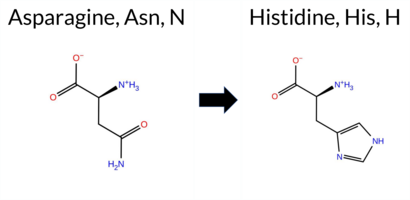 3DClick to see structure in 3D Viewer AIThe SynGAP1 missense variant N523H is not reported in ClinVar and has no entries in gnomAD. Prediction tools that agree on a benign effect are Rosetta and Foldetta, while the majority of tools (SGM‑Consensus, REVEL, PROVEAN, polyPhen‑2 HumDiv, polyPhen‑2 HumVar, SIFT, ESM1b, FATHMM, AlphaMissense‑Default) predict a pathogenic impact. Uncertain results come from FoldX, premPS, and AlphaMissense‑Optimized. High‑accuracy assessments show AlphaMissense‑Optimized as uncertain, SGM‑Consensus (a majority vote of AlphaMissense‑Default, ESM1b, FATHMM, and PROVEAN) as Likely Pathogenic, and Foldetta as Benign. Overall, the preponderance of evidence points to a pathogenic effect for this variant, and this conclusion does not contradict the absence of a ClinVar classification. Disclaimer: This summary was generated using AI and should be interpreted alongside expert review. | Likely Pathogenic | GAP | 0.069024 | Structured | 0.033426 | Uncertain | 0.883 | 0.383 | 0.125 | -9.755 | Likely Pathogenic | 0.815 | Likely Pathogenic | Ambiguous | 0.56 | Ambiguous | 0.2 | 0.09 | Likely Benign | 0.33 | Likely Benign | 0.64 | Ambiguous | 0.694 | Likely Pathogenic | -4.52 | Deleterious | 0.996 | Probably Damaging | 0.941 | Probably Damaging | -1.40 | Pathogenic | 0.02 | Affected | 0.1132 | 0.3461 | 2 | 1 | 0.3 | 23.04 | |||||||||||||||||||||||||||||
| c.2602G>T | D868Y 2D AIThe SynGAP1 missense variant D868Y is not reported in ClinVar (no ClinVar ID) and is absent from gnomAD (no gnomAD ID). Prediction tools that agree on a benign effect include REVEL and ESM1b, whereas a majority of tools predict a pathogenic impact: PROVEAN, polyPhen‑2 HumDiv, polyPhen‑2 HumVar, SIFT, FATHMM, and AlphaMissense‑Default all indicate deleteriousness. The SGM‑Consensus, derived from a majority vote of AlphaMissense‑Default, ESM1b, FATHMM, and PROVEAN, classifies the variant as Likely Pathogenic. High‑accuracy assessments show AlphaMissense‑Optimized as Uncertain, SGM‑Consensus as Likely Pathogenic, and Foldetta (combining FoldX‑MD and Rosetta outputs) is unavailable for this variant. Overall, the preponderance of evidence from multiple in silico predictors points to a pathogenic effect. This conclusion is not contradicted by ClinVar status, as no ClinVar classification exists for D868Y. Disclaimer: This summary was generated using AI and should be interpreted alongside expert review. | Likely Pathogenic | 0.525368 | Disordered | 0.676362 | Binding | 0.262 | 0.815 | 0.250 | -6.031 | Likely Benign | 0.815 | Likely Pathogenic | Ambiguous | 0.256 | Likely Benign | -2.90 | Deleterious | 1.000 | Probably Damaging | 0.983 | Probably Damaging | 2.47 | Pathogenic | 0.05 | Affected | 0.1115 | 0.6847 | -4 | -3 | 2.2 | 48.09 | |||||||||||||||||||||||||||||||||||||||
| c.272A>C | E91A 2D AIThe SynGAP1 missense variant E91A is not reported in ClinVar (no ClinVar ID) and is absent from gnomAD (no gnomAD ID). Prediction tools that agree on a benign effect include REVEL, PROVEAN, ESM1b, and FATHMM, while those that agree on a pathogenic effect are polyPhen‑2 HumDiv, polyPhen‑2 HumVar, SIFT, and AlphaMissense‑Default. The SGM‑Consensus, derived from a majority vote of AlphaMissense‑Default, ESM1b, FATHMM, and PROVEAN, reports the variant as Likely Benign. AlphaMissense‑Optimized is uncertain, and no Foldetta stability result is available. Overall, the majority of consensus‑based and individual predictors lean toward a benign classification, with several high‑confidence tools indicating pathogenicity, leaving the assessment inconclusive. Based on the available predictions, the variant is most likely benign, and this does not contradict any ClinVar status because no ClinVar entry exists. Disclaimer: This summary was generated using AI and should be interpreted alongside expert review. | Likely Benign | 0.575842 | Disordered | 0.533667 | Binding | 0.303 | 0.875 | 0.500 | -3.302 | Likely Benign | 0.815 | Likely Pathogenic | Ambiguous | 0.094 | Likely Benign | -1.58 | Neutral | 0.880 | Possibly Damaging | 0.636 | Possibly Damaging | 3.89 | Benign | 0.00 | Affected | 0.4511 | 0.7077 | 0 | -1 | 5.3 | -58.04 | |||||||||||||||||||||||||||||||||||||||
| c.3026A>T | E1009V 2D AIThe SynGAP1 missense variant E1009V is not reported in ClinVar and has no entries in gnomAD. Functional prediction tools show a split: benign calls come from REVEL and ESM1b, while pathogenic calls are made by PROVEAN, polyPhen‑2 (HumDiv and HumVar), SIFT, FATHMM, AlphaMissense‑Default, and the SGM‑Consensus score (Likely Pathogenic). High‑accuracy assessments give an uncertain result from AlphaMissense‑Optimized, a Likely Pathogenic verdict from the SGM‑Consensus (majority vote of AlphaMissense‑Default, ESM1b, FATHMM, PROVEAN), and no available data from Foldetta. Overall, the majority of evidence points to a deleterious effect. Thus, the variant is most likely pathogenic, and this assessment does not contradict the ClinVar status, which currently has no entry for this change. Disclaimer: This summary was generated using AI and should be interpreted alongside expert review. | Likely Pathogenic | 0.728858 | Disordered | 0.914552 | Binding | 0.325 | 0.885 | 0.500 | -3.660 | Likely Benign | 0.815 | Likely Pathogenic | Ambiguous | 0.156 | Likely Benign | -3.81 | Deleterious | 0.998 | Probably Damaging | 0.924 | Probably Damaging | 2.34 | Pathogenic | 0.00 | Affected | 0.1111 | 0.7580 | -2 | -2 | 7.7 | -29.98 | |||||||||||||||||||||||||||||||||||||||
| c.3488A>C | H1163P 2D AIThe SynGAP1 missense variant H1163P is not reported in ClinVar (no ClinVar ID) and is absent from gnomAD (no gnomAD ID). Prediction tools that agree on a benign effect are SIFT, ESM1b, and FATHMM, while those that agree on a pathogenic effect are REVEL, PROVEAN, polyPhen‑2 HumDiv, polyPhen‑2 HumVar, and AlphaMissense‑Default; AlphaMissense‑Optimized is uncertain. High‑accuracy assessments are inconclusive: AlphaMissense‑Optimized is uncertain, the SGM Consensus (majority vote from AlphaMissense‑Default, ESM1b, FATHMM, PROVEAN) is a tie (2 pathogenic vs. 2 benign), and Foldetta results are unavailable. Overall, more tools predict pathogenicity than benignity (5 vs. 3), and there is no ClinVar record to contradict this assessment. Thus, the variant is most likely pathogenic based on the available predictions. Disclaimer: This summary was generated using AI and should be interpreted alongside expert review. | 0.509769 | Disordered | 0.858469 | Binding | 0.328 | 0.825 | 0.375 | -2.023 | Likely Benign | 0.815 | Likely Pathogenic | Ambiguous | 0.578 | Likely Pathogenic | -3.19 | Deleterious | 0.997 | Probably Damaging | 0.996 | Probably Damaging | 5.39 | Benign | 0.10 | Tolerated | 0.2015 | 0.3900 | 0 | -2 | 1.6 | -40.02 | ||||||||||||||||||||||||||||||||||||||||
| c.2801T>A | M934K 2D AIThe SynGAP1 missense variant M934K is not reported in ClinVar (no ClinVar ID) and is absent from gnomAD (no gnomAD ID). Prediction tools that agree on a benign effect include REVEL, SIFT, and ESM1b, whereas those that predict a pathogenic effect are PROVEAN, polyPhen‑2 HumDiv, polyPhen‑2 HumVar, FATHMM, and AlphaMissense‑Default. The SGM‑Consensus, derived from a majority vote of AlphaMissense‑Default, ESM1b, FATHMM, and PROVEAN, reports the variant as Likely Pathogenic. High‑accuracy assessments show AlphaMissense‑Optimized as Uncertain, SGM‑Consensus as Likely Pathogenic, and Foldetta (a protein‑folding stability method combining FoldX‑MD and Rosetta outputs) is unavailable for this variant. Overall, the balance of evidence from the majority of tools points to a pathogenic impact. This conclusion is not contradicted by ClinVar status, which currently contains no entry for the variant. Disclaimer: This summary was generated using AI and should be interpreted alongside expert review. | Likely Pathogenic | 0.762850 | Disordered | 0.984677 | Binding | 0.290 | 0.867 | 0.625 | -2.457 | Likely Benign | 0.816 | Likely Pathogenic | Ambiguous | 0.333 | Likely Benign | -3.66 | Deleterious | 0.929 | Possibly Damaging | 0.521 | Possibly Damaging | 2.38 | Pathogenic | 0.13 | Tolerated | 0.1828 | 0.1262 | 0 | -1 | -5.8 | -3.02 | |||||||||||||||||||||||||||||||||||||||
| c.959T>G | V320G 2D 3DClick to see structure in 3D Viewer AIThe SynGAP1 missense variant V320G is not reported in ClinVar (ClinVar ID None) and is absent from gnomAD (gnomAD ID None). Prediction tools cluster into two agreement groups: the single benign prediction comes from REVEL, while the pathogenic group includes FoldX, Foldetta, premPS, PROVEAN, polyPhen‑2 (HumDiv and HumVar), SIFT, ESM1b, FATHMM, and AlphaMissense‑Default. Two tools give uncertain results: Rosetta and AlphaMissense‑Optimized. High‑accuracy assessments further support pathogenicity: AlphaMissense‑Optimized is uncertain; the SGM Consensus—derived from the majority vote of AlphaMissense‑Default, ESM1b, FATHMM, and PROVEAN—returns pathogenic; and Foldetta, a protein‑folding stability method combining FoldX‑MD and Rosetta outputs, also predicts pathogenic. Overall, the preponderance of evidence indicates that V320G is most likely pathogenic, and this conclusion does not contradict any existing ClinVar annotation. Disclaimer: This summary was generated using AI and should be interpreted alongside expert review. | C2 | 0.185198 | Structured | 0.419626 | Uncertain | 0.905 | 0.266 | 0.125 | -9.043 | Likely Pathogenic | 0.816 | Likely Pathogenic | Ambiguous | 2.15 | Destabilizing | 1.1 | 1.87 | Ambiguous | 2.01 | Destabilizing | 1.48 | Destabilizing | 0.438 | Likely Benign | -5.74 | Deleterious | 0.958 | Probably Damaging | 0.999 | Probably Damaging | 1.89 | Pathogenic | 0.02 | Affected | 0.1688 | 0.1949 | -1 | -3 | -4.6 | -42.08 | ||||||||||||||||||||||||||||||
| c.1535A>G | E512G 2D 3DClick to see structure in 3D Viewer AIThe SynGAP1 missense variant E512G is not reported in ClinVar (ClinVar ID None) and has no entry in gnomAD (gnomAD ID None). Prediction tools that agree on a benign effect include REVEL, premPS, and FATHMM, whereas a majority of tools (SGM‑Consensus, PROVEAN, polyPhen‑2 HumDiv, polyPhen‑2 HumVar, SIFT, ESM1b, and AlphaMissense‑Default) predict a pathogenic impact. The remaining tools—FoldX, Rosetta, Foldetta, and AlphaMissense‑Optimized—return uncertain or inconclusive results and are treated as unavailable evidence. High‑accuracy assessments show AlphaMissense‑Optimized as uncertain, SGM‑Consensus as Likely Pathogenic (majority vote from AlphaMissense‑Default, ESM1b, FATHMM, and PROVEAN), and Foldetta as uncertain. Overall, the preponderance of evidence points to a pathogenic effect for E512G, and this conclusion does not contradict the absence of a ClinVar classification. Disclaimer: This summary was generated using AI and should be interpreted alongside expert review. | Likely Pathogenic | GAP | 0.092881 | Structured | 0.247079 | Uncertain | 0.923 | 0.273 | 0.000 | -11.996 | Likely Pathogenic | 0.817 | Likely Pathogenic | Ambiguous | 0.86 | Ambiguous | 0.1 | 1.84 | Ambiguous | 1.35 | Ambiguous | 0.17 | Likely Benign | 0.381 | Likely Benign | -6.46 | Deleterious | 0.997 | Probably Damaging | 0.915 | Probably Damaging | 3.30 | Benign | 0.02 | Affected | 0.3262 | 0.4185 | 0 | -2 | 3.1 | -72.06 | |||||||||||||||||||||||||||||
| c.2804C>A | A935D 2D AIThe SynGAP1 missense variant A935D is not reported in ClinVar and is absent from gnomAD. Functional prediction tools cluster into two groups: benign predictions come from REVEL and ESM1b, while pathogenic predictions are made by PROVEAN, polyPhen‑2 (HumDiv and HumVar), SIFT, FATHMM, and AlphaMissense‑Default. High‑accuracy assessments further support a deleterious effect: AlphaMissense‑Optimized is uncertain, but the SGM‑Consensus—derived from a majority vote of AlphaMissense‑Default, ESM1b, FATHMM, and PROVEAN—classifies the variant as likely pathogenic. Foldetta, a protein‑folding stability method that integrates FoldX‑MD and Rosetta outputs, was not available for this variant. Overall, the preponderance of evidence points to a pathogenic impact for A935D, and this conclusion does not conflict with the current ClinVar status, which contains no entry for the variant. Disclaimer: This summary was generated using AI and should be interpreted alongside expert review. | Likely Pathogenic | 0.736850 | Disordered | 0.980490 | Binding | 0.286 | 0.865 | 0.625 | -4.089 | Likely Benign | 0.817 | Likely Pathogenic | Ambiguous | 0.247 | Likely Benign | -2.69 | Deleterious | 1.000 | Probably Damaging | 0.999 | Probably Damaging | 2.31 | Pathogenic | 0.00 | Affected | 0.1832 | 0.1860 | 0 | -2 | -5.3 | 44.01 | |||||||||||||||||||||||||||||||||||||||
| c.3616A>C | K1206Q 2D AIThe SynGAP1 K1206Q missense change is not reported in ClinVar (ClinVar ID: None) and is absent from gnomAD (gnomAD ID: None). Functional prediction tools cluster into two groups: benign predictions come from REVEL, PROVEAN, SIFT, and FATHMM, while pathogenic predictions arise from polyPhen‑2 HumDiv, polyPhen‑2 HumVar, ESM1b, and AlphaMissense‑Default. High‑accuracy assessments are less decisive: AlphaMissense‑Optimized is uncertain, the SGM Consensus (majority vote of AlphaMissense‑Default, ESM1b, FATHMM, PROVEAN) is inconclusive, and Foldetta data are unavailable. Consequently, the evidence is evenly split between benign and pathogenic interpretations. The variant therefore falls into a category of uncertain significance, with no conflict with the current ClinVar status. Disclaimer: This summary was generated using AI and should be interpreted alongside expert review. | Coiled-coil | 0.585406 | Disordered | 0.555819 | Binding | 0.893 | 0.569 | 0.375 | -8.654 | Likely Pathogenic | 0.817 | Likely Pathogenic | Ambiguous | 0.130 | Likely Benign | -0.92 | Neutral | 1.000 | Probably Damaging | 0.998 | Probably Damaging | 2.65 | Benign | 0.49 | Tolerated | 0.3829 | 0.1219 | 1 | 1 | 0.4 | -0.04 | |||||||||||||||||||||||||||||||||||||||
| c.1951G>A | E651K 2D AIThe SynGAP1 E651K missense variant has no ClinVar entry and is not reported in gnomAD. Prediction tools cluster into two groups: benign calls (REVEL, FoldX, premPS, polyPhen‑2 HumVar, SIFT, FATHMM) and pathogenic calls (PROVEAN, polyPhen‑2 HumDiv, ESM1b, AlphaMissense‑Default). Three tools (Rosetta, Foldetta, AlphaMissense‑Optimized) give uncertain or inconclusive results. High‑accuracy assessments further clarify the picture: AlphaMissense‑Optimized is uncertain; the SGM Consensus—derived from a majority vote of AlphaMissense‑Default, ESM1b, FATHMM, and PROVEAN—labels the variant as likely pathogenic; Foldetta, which integrates FoldX‑MD and Rosetta stability outputs, remains uncertain. Overall, the majority of evidence points toward a pathogenic effect, and this conclusion does not contradict any ClinVar status because none is available. Disclaimer: This summary was generated using AI and should be interpreted alongside expert review. | Likely Pathogenic | GAP | 0.088832 | Structured | 0.365409 | Uncertain | 0.955 | 0.340 | 0.000 | -8.714 | Likely Pathogenic | 0.818 | Likely Pathogenic | Ambiguous | 0.11 | Likely Benign | 0.4 | 1.15 | Ambiguous | 0.63 | Ambiguous | 0.08 | Likely Benign | 0.211 | Likely Benign | -2.92 | Deleterious | 0.921 | Possibly Damaging | 0.303 | Benign | 3.39 | Benign | 0.17 | Tolerated | 0.2768 | 0.5803 | 0 | 1 | -0.4 | -0.94 | |||||||||||||||||||||||||||||
| c.335G>A | G112E 2D 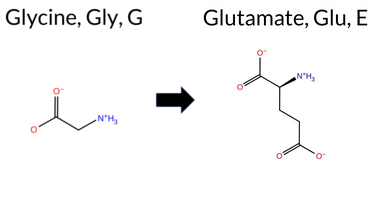 AIThe SynGAP1 missense variant G112E is not reported in ClinVar (ClinVar ID = None) and is absent from gnomAD (gnomAD ID = None). Prediction tools that agree on a benign effect include REVEL, polyPhen‑2 (HumDiv and HumVar), ESM1b, and FATHMM. Tools that predict a pathogenic effect are PROVEAN, SIFT, and AlphaMissense‑Default. The high‑accuracy AlphaMissense‑Optimized result is uncertain, and the SGM Consensus (majority vote from AlphaMissense‑Default, ESM1b, FATHMM, PROVEAN) is inconclusive due to a 2‑to‑2 split; Foldetta predictions are not available. Overall, the majority of evidence (five benign vs. three pathogenic) supports a benign classification. This conclusion does not contradict ClinVar status, as the variant has no ClinVar entry. Disclaimer: This summary was generated using AI and should be interpreted alongside expert review. | 0.728858 | Disordered | 0.640153 | Binding | 0.332 | 0.867 | 0.750 | -3.470 | Likely Benign | 0.818 | Likely Pathogenic | Ambiguous | 0.134 | Likely Benign | -3.30 | Deleterious | 0.421 | Benign | 0.146 | Benign | 3.96 | Benign | 0.00 | Affected | 0.1330 | 0.3814 | 0 | -2 | -3.1 | 72.06 | ||||||||||||||||||||||||||||||||||||||||
| c.1231A>C | I411L 2D 3DClick to see structure in 3D Viewer AIThe SynGAP1 missense variant I411L is not reported in ClinVar and is absent from gnomAD. Prediction tools that agree on a benign effect include REVEL, PROVEAN, and FATHMM, whereas a majority (premPS, polyPhen‑2 HumDiv, polyPhen‑2 HumVar, SIFT, ESM1b, and AlphaMissense‑Default) predict a pathogenic impact. Tools with uncertain or mixed outputs are FoldX, Rosetta, Foldetta, and AlphaMissense‑Optimized. High‑accuracy assessments are inconclusive: AlphaMissense‑Optimized is uncertain; the SGM Consensus (majority vote from AlphaMissense‑Default, ESM1b, FATHMM, PROVEAN) is a 2‑vs‑2 tie, yielding no definitive call; and Foldetta also reports an uncertain stability change. Overall, the majority of standard predictors lean toward pathogenicity, and this conclusion does not contradict the lack of ClinVar annotation. Thus, the variant is most likely pathogenic based on current computational evidence, though high‑accuracy tools remain inconclusive. Disclaimer: This summary was generated using AI and should be interpreted alongside expert review. | GAP | 0.116183 | Structured | 0.339366 | Uncertain | 0.927 | 0.198 | 0.000 | -10.723 | Likely Pathogenic | 0.819 | Likely Pathogenic | Ambiguous | 1.02 | Ambiguous | 0.3 | 1.89 | Ambiguous | 1.46 | Ambiguous | 1.17 | Destabilizing | 0.285 | Likely Benign | -1.84 | Neutral | 0.908 | Possibly Damaging | 0.943 | Probably Damaging | 3.36 | Benign | 0.01 | Affected | 0.0876 | 0.3539 | 2 | 2 | -0.7 | 0.00 | ||||||||||||||||||||||||||||||
| c.1582C>T | P528S 2D 3DClick to see structure in 3D Viewer AIThe SynGAP1 P528S missense variant is not reported in ClinVar and is absent from gnomAD. Functional prediction tools largely agree on a deleterious effect: pathogenic calls are made by REVEL, PROVEAN, polyPhen‑2 (HumDiv and HumVar), SIFT, ESM1b, AlphaMissense‑Default, and the SGM‑Consensus score (Likely Pathogenic). Only FATHMM predicts a benign outcome. High‑accuracy assessments are mixed: AlphaMissense‑Optimized is inconclusive, the SGM‑Consensus (majority vote of AlphaMissense‑Default, ESM1b, FATHMM, PROVEAN) remains Likely Pathogenic, and Foldetta (combining FoldX‑MD and Rosetta) is inconclusive. No folding‑stability metrics (FoldX, Rosetta, premPS) provide definitive evidence. Overall, the preponderance of pathogenic predictions suggests the variant is most likely pathogenic, and this assessment does not contradict any ClinVar annotation because none exists. Disclaimer: This summary was generated using AI and should be interpreted alongside expert review. | Likely Pathogenic | GAP | 0.225814 | Structured | 0.020396 | Uncertain | 0.909 | 0.403 | 0.000 | -11.729 | Likely Pathogenic | 0.819 | Likely Pathogenic | Ambiguous | 1.88 | Ambiguous | 0.1 | 1.28 | Ambiguous | 1.58 | Ambiguous | 0.80 | Ambiguous | 0.617 | Likely Pathogenic | -7.65 | Deleterious | 1.000 | Probably Damaging | 0.999 | Probably Damaging | 2.52 | Benign | 0.01 | Affected | 0.3115 | 0.3982 | 1 | -1 | 0.8 | -10.04 | |||||||||||||||||||||||||||||
| c.2039A>C | E680A 2D 3DClick to see structure in 3D Viewer AIThe SynGAP1 E680A missense variant is not reported in ClinVar and is absent from gnomAD. Prediction tools that agree on a benign effect include REVEL, FoldX, premPS, SIFT, and FATHMM. Those that predict a pathogenic impact are SGM‑Consensus, PROVEAN, polyPhen‑2 HumDiv, polyPhen‑2 HumVar, ESM1b, and AlphaMissense‑Default. Two tools give uncertain results: Rosetta and AlphaMissense‑Optimized. High‑accuracy assessments show that the SGM‑Consensus (majority vote of AlphaMissense‑Default, ESM1b, FATHMM, and PROVEAN) classifies the variant as likely pathogenic, whereas Foldetta, which integrates FoldX‑MD and Rosetta stability outputs, predicts a benign effect. AlphaMissense‑Optimized remains inconclusive. Overall, the majority of predictions lean toward pathogenicity, but the conflicting high‑accuracy results leave the classification uncertain. The variant is most likely pathogenic based on the prevailing evidence, and this assessment does not contradict the ClinVar status, which currently has no entry for this change. Disclaimer: This summary was generated using AI and should be interpreted alongside expert review. | Likely Pathogenic | GAP | 0.209395 | Structured | 0.136843 | Uncertain | 0.636 | 0.320 | 0.000 | -11.338 | Likely Pathogenic | 0.819 | Likely Pathogenic | Ambiguous | 0.34 | Likely Benign | 0.2 | 0.59 | Ambiguous | 0.47 | Likely Benign | 0.30 | Likely Benign | 0.444 | Likely Benign | -5.22 | Deleterious | 0.935 | Possibly Damaging | 0.490 | Possibly Damaging | 3.47 | Benign | 0.09 | Tolerated | 0.3931 | 0.6989 | 0 | -1 | 5.3 | -58.04 | |||||||||||||||||||||||||||||
| c.2137C>A | P713T 2D 3DClick to see structure in 3D Viewer AIThe SynGAP1 missense variant P713T is not reported in ClinVar and is absent from gnomAD. Functional prediction tools cluster into two groups: benign predictions come from REVEL, Rosetta, and FATHMM, while pathogenic predictions arise from PROVEAN, polyPhen‑2 HumDiv, polyPhen‑2 HumVar, SIFT, ESM1b, and AlphaMissense‑Default. High‑accuracy assessments further clarify the picture: the SGM Consensus, derived from a majority vote of AlphaMissense‑Default, ESM1b, FATHMM, and PROVEAN, labels the variant as Likely Pathogenic, whereas AlphaMissense‑Optimized and Foldetta provide inconclusive results and are treated as unavailable. Taken together, the preponderance of evidence points to a pathogenic effect for P713T, and this assessment does not conflict with the absence of a ClinVar entry. Disclaimer: This summary was generated using AI and should be interpreted alongside expert review. | Likely Pathogenic | GAP | 0.271506 | Structured | 0.393235 | Uncertain | 0.961 | 0.371 | 0.000 | -9.915 | Likely Pathogenic | 0.819 | Likely Pathogenic | Ambiguous | 1.15 | Ambiguous | 0.0 | 0.46 | Likely Benign | 0.81 | Ambiguous | 0.65 | Ambiguous | 0.225 | Likely Benign | -6.72 | Deleterious | 1.000 | Probably Damaging | 0.993 | Probably Damaging | 3.34 | Benign | 0.00 | Affected | 0.1417 | 0.3818 | 0 | -1 | 0.9 | 3.99 | |||||||||||||||||||||||||||||
| c.3653A>C | E1218A 2D AIThe SynGAP1 missense variant E1218A is not reported in ClinVar and is absent from gnomAD. Prediction tools that agree on a benign effect are REVEL and ESM1b, whereas the majority of tools (PROVEAN, polyPhen‑2 HumDiv, polyPhen‑2 HumVar, SIFT, FATHMM, AlphaMissense‑Default, and the SGM‑Consensus) predict a pathogenic outcome. The high‑accuracy AlphaMissense‑Optimized score is uncertain, and the SGM‑Consensus (a majority vote of AlphaMissense‑Default, ESM1b, FATHMM, and PROVEAN) indicates a likely pathogenic effect. Foldetta, a protein‑folding stability method combining FoldX‑MD and Rosetta outputs, has no available result for this variant. Based on the overall consensus of the available predictions, the variant is most likely pathogenic, and this assessment does not contradict the ClinVar status, which currently has no entry for this change. Disclaimer: This summary was generated using AI and should be interpreted alongside expert review. | Likely Pathogenic | Coiled-coil | 0.595080 | Disordered | 0.483050 | Uncertain | 0.898 | 0.565 | 0.375 | -3.698 | Likely Benign | 0.819 | Likely Pathogenic | Ambiguous | 0.370 | Likely Benign | -4.75 | Deleterious | 0.999 | Probably Damaging | 0.995 | Probably Damaging | 2.25 | Pathogenic | 0.00 | Affected | 0.3005 | 0.3969 | 0 | -1 | 5.3 | -58.04 | ||||||||||||||||||||||||||||||||||||||
| c.1792C>T | L598F 2D 3DClick to see structure in 3D Viewer AISynGAP1 missense variant L598F is not reported in ClinVar and is absent from gnomAD. Computational predictors show mixed results: benign calls come from REVEL, Rosetta, premPS, SIFT, and FATHMM; pathogenic calls come from SGM‑Consensus (Likely Pathogenic), PROVEAN, polyPhen‑2 HumDiv, polyPhen‑2 HumVar, ESM1b, and AlphaMissense‑Default. FoldX and AlphaMissense‑Optimized returned uncertain results, which are treated as unavailable evidence. High‑accuracy tools give a split view: AlphaMissense‑Optimized is uncertain; the SGM‑Consensus majority vote (AlphaMissense‑Default, ESM1b, FATHMM, PROVEAN) predicts Likely Pathogenic; Foldetta, which integrates FoldX‑MD and Rosetta outputs, predicts a benign effect. Overall, the balance of evidence leans toward pathogenicity, with six pathogenic versus five benign predictions and no ClinVar entry to contradict this assessment. Disclaimer: This summary was generated using AI and should be interpreted alongside expert review. | Likely Pathogenic | GAP | 0.007259 | Structured | 0.147872 | Uncertain | 0.953 | 0.154 | 0.000 | -10.649 | Likely Pathogenic | 0.820 | Likely Pathogenic | Ambiguous | 1.12 | Ambiguous | 0.7 | -0.24 | Likely Benign | 0.44 | Likely Benign | 0.47 | Likely Benign | 0.283 | Likely Benign | -3.91 | Deleterious | 0.999 | Probably Damaging | 0.946 | Probably Damaging | 3.62 | Benign | 0.22 | Tolerated | 0.0630 | 0.1414 | 2 | 0 | -1.0 | 34.02 | |||||||||||||||||||||||||||||
| c.2452C>G | P818A 2D AIThe SynGAP1 missense variant P818A is not reported in ClinVar and has no entries in gnomAD, indicating it is not catalogued in these databases. Functional prediction tools show a split opinion: benign predictions come from REVEL, polyPhen‑2 HumVar, SIFT, and ESM1b, while pathogenic predictions arise from PROVEAN, polyPhen‑2 HumDiv, FATHMM, and AlphaMissense‑Default. When the predictions are grouped by consensus, four tools favor benign and four favor pathogenic. High‑accuracy assessments further clarify the picture: AlphaMissense‑Optimized returns an uncertain result, whereas the SGM Consensus—derived from a majority vote of AlphaMissense‑Default, ESM1b, FATHMM, and PROVEAN—labels the variant as Likely Pathogenic. Foldetta, a protein‑folding stability method that integrates FoldX‑MD and Rosetta outputs, has no available result for this variant. Taken together, the preponderance of evidence from both consensus and high‑accuracy tools indicates that the variant is most likely pathogenic, and this assessment does not contradict any ClinVar annotation because none exists. Disclaimer: This summary was generated using AI and should be interpreted alongside expert review. | Likely Pathogenic | 0.599170 | Disordered | 0.715889 | Binding | 0.371 | 0.893 | 0.625 | -6.084 | Likely Benign | 0.820 | Likely Pathogenic | Ambiguous | 0.157 | Likely Benign | -4.37 | Deleterious | 0.543 | Possibly Damaging | 0.306 | Benign | 2.15 | Pathogenic | 0.06 | Tolerated | 0.3574 | 0.5724 | 1 | -1 | 3.4 | -26.04 | |||||||||||||||||||||||||||||||||||||||
| c.506A>G | D169G 2D AIThe SynGAP1 missense variant D169G is not reported in ClinVar (ClinVar ID = None) and is absent from gnomAD (gnomAD ID = None). Prediction tools that agree on a benign effect include REVEL, PROVEAN, polyPhen‑2 HumDiv, polyPhen‑2 HumVar, and FATHMM. Tools that predict a pathogenic effect are SIFT, ESM1b, and AlphaMissense‑Default. AlphaMissense‑Optimized is uncertain. High‑accuracy assessments are inconclusive: the SGM Consensus, derived from a majority vote of AlphaMissense‑Default, ESM1b, FATHMM, and PROVEAN, yields a tie (2 pathogenic vs 2 benign) and is therefore unavailable; Foldetta results are not provided. Overall, the majority of standard predictors lean toward a benign classification, and this is consistent with the lack of ClinVar evidence. Thus, the variant is most likely benign, with no contradiction to ClinVar status. Disclaimer: This summary was generated using AI and should be interpreted alongside expert review. | 0.418646 | Structured | 0.497160 | Uncertain | 0.420 | 0.675 | 0.125 | -9.853 | Likely Pathogenic | 0.820 | Likely Pathogenic | Ambiguous | 0.186 | Likely Benign | -2.44 | Neutral | 0.000 | Benign | 0.000 | Benign | 4.04 | Benign | 0.01 | Affected | 0.3907 | 0.6560 | 1 | -1 | 3.1 | -58.04 | ||||||||||||||||||||||||||||||||||||||||
| c.610T>C | S204P 2D 3DClick to see structure in 3D Viewer AIThe SynGAP1 S204P variant is not reported in ClinVar (ClinVar ID None) and is absent from gnomAD (gnomAD ID None). Prediction tools that agree on a benign effect include REVEL, PROVEAN, SIFT, and polyPhen‑2 HumVar, whereas a separate group predicts a pathogenic effect: FoldX, Rosetta, polyPhen‑2 HumDiv, ESM1b, and AlphaMissense‑Default. The remaining tools (premPS) are inconclusive and are not counted in either group. High‑accuracy methods give the following results: AlphaMissense‑Optimized is uncertain (treated as unavailable), the SGM Consensus (majority vote of AlphaMissense‑Default, ESM1b, FATHMM, PROVEAN) is a tie and therefore unavailable, and Foldetta (combining FoldX‑MD and Rosetta outputs) predicts a pathogenic effect. Overall, the majority of consensus predictions lean toward pathogenicity, and this conclusion does not contradict the lack of ClinVar annotation. Thus, the variant is most likely pathogenic. Disclaimer: This summary was generated using AI and should be interpreted alongside expert review. | PH | 0.268042 | Structured | 0.420667 | Uncertain | 0.816 | 0.405 | 0.125 | -8.855 | Likely Pathogenic | 0.820 | Likely Pathogenic | Ambiguous | 3.71 | Destabilizing | 0.4 | 4.61 | Destabilizing | 4.16 | Destabilizing | 0.61 | Ambiguous | 0.137 | Likely Benign | -1.28 | Neutral | 0.808 | Possibly Damaging | 0.382 | Benign | 4.13 | Benign | 0.12 | Tolerated | 0.1430 | 0.4815 | 1 | -1 | -0.8 | 10.04 | ||||||||||||||||||||||||||||||
| c.770G>A | S257N 2D 3DClick to see structure in 3D Viewer AISynGAP1 missense variant S257N is not reported in ClinVar and is absent from gnomAD. Functional prediction tools show a split consensus: benign calls come from FoldX, Rosetta, Foldetta, PROVEAN, SIFT, and FATHMM, while pathogenic calls come from REVEL, polyPhen‑2 (HumDiv and HumVar), ESM1b, and AlphaMissense‑Default. Two tools report uncertainty: premPS and AlphaMissense‑Optimized. High‑accuracy assessments give an inconclusive SGM Consensus (a tie between AlphaMissense‑Default, ESM1b, FATHMM, and PROVEAN), an uncertain AlphaMissense‑Optimized result, and a benign Foldetta prediction. No evidence of pathogenicity is supported by the protein‑stability analysis, which indicates a benign effect. Overall, the predictions are mixed, but the majority of high‑accuracy tools lean toward a benign interpretation. This assessment does not contradict ClinVar status, as the variant is not yet catalogued there. Disclaimer: This summary was generated using AI and should be interpreted alongside expert review. | C2 | 0.384043 | Structured | 0.258293 | Uncertain | 0.847 | 0.272 | 0.250 | -10.508 | Likely Pathogenic | 0.820 | Likely Pathogenic | Ambiguous | 0.25 | Likely Benign | 0.1 | -0.18 | Likely Benign | 0.04 | Likely Benign | 0.85 | Ambiguous | 0.533 | Likely Pathogenic | -2.30 | Neutral | 0.993 | Probably Damaging | 0.968 | Probably Damaging | 5.82 | Benign | 0.16 | Tolerated | 0.0985 | 0.3596 | 1 | 1 | -2.7 | 27.03 | ||||||||||||||||||||||||||||||
| c.2410G>C | D804H 2D AIThe SynGAP1 D804H missense variant is not reported in ClinVar and is absent from gnomAD. Prediction tools that agree on a benign effect include REVEL and ESM1b, whereas the majority of tools predict a pathogenic outcome: PROVEAN, polyPhen‑2 (HumDiv and HumVar), SIFT, FATHMM, AlphaMissense‑Default, and the SGM‑Consensus score. AlphaMissense‑Optimized is uncertain, and no Foldetta stability assessment is available. The high‑accuracy consensus from SGM (derived from AlphaMissense‑Default, ESM1b, FATHMM, and PROVEAN) favors pathogenicity, while the lack of a Foldetta result leaves that evidence inconclusive. Overall, the preponderance of pathogenic predictions suggests that D804H is most likely pathogenic, and this assessment does not contradict any ClinVar status because the variant is not yet catalogued there. Disclaimer: This summary was generated using AI and should be interpreted alongside expert review. | Likely Pathogenic | SH3-binding motif | 0.801317 | Disordered | 0.786762 | Binding | 0.294 | 0.900 | 0.625 | -5.100 | Likely Benign | 0.821 | Likely Pathogenic | Ambiguous | 0.296 | Likely Benign | -3.79 | Deleterious | 0.999 | Probably Damaging | 0.975 | Probably Damaging | 1.19 | Pathogenic | 0.01 | Affected | 0.1859 | 0.7607 | 1 | -1 | 0.3 | 22.05 | ||||||||||||||||||||||||||||||||||||||
| c.3253C>T | R1085W 2D AISynGAP1 missense variant R1085W is listed in ClinVar as Uncertain and is present in gnomAD (ID 6‑33443805‑C‑T). Functional prediction tools cluster into two groups: benign predictions come from REVEL, ESM1b, and FATHMM, while pathogenic predictions arise from PROVEAN, polyPhen‑2 (HumDiv and HumVar), SIFT, and AlphaMissense‑Default. AlphaMissense‑Optimized reports an uncertain outcome. The high‑accuracy consensus (SGM) derived from AlphaMissense‑Default, ESM1b, FATHMM, and PROVEAN yields no majority and is therefore unavailable, and Foldetta stability analysis is also unavailable. Overall, the majority of evidence points to a pathogenic effect, which contrasts with the ClinVar designation of uncertainty. Disclaimer: This summary was generated using AI and should be interpreted alongside expert review. | 0.852992 | Disordered | 0.978838 | Binding | 0.270 | 0.888 | 1.000 | Uncertain | 2 | 6-33443805-C-T | 2 | 1.26e-6 | -6.339 | Likely Benign | 0.821 | Likely Pathogenic | Ambiguous | 0.202 | Likely Benign | -3.15 | Deleterious | 1.000 | Probably Damaging | 0.996 | Probably Damaging | 2.70 | Benign | 0.00 | Affected | 3.77 | 5 | 0.1238 | 0.3700 | -3 | 2 | 3.6 | 30.03 | |||||||||||||||||||||||||||||||||
| c.3620A>T | E1207V 2D AIThe SynGAP1 missense change E1207V is not reported in ClinVar (ClinVar ID = None) and has no entries in gnomAD (gnomAD ID = None). Prediction tools that agree on a benign effect include only REVEL, whereas the remaining tools—PROVEAN, polyPhen‑2 (HumDiv and HumVar), SIFT, ESM1b, FATHMM, and AlphaMissense‑Default—consistently predict a pathogenic impact. AlphaMissense‑Optimized is uncertain, providing no definitive direction. High‑accuracy assessments show the SGM Consensus (derived from a majority vote of AlphaMissense‑Default, ESM1b, FATHMM, and PROVEAN) as Likely Pathogenic, while AlphaMissense‑Optimized remains uncertain and Foldetta data are unavailable. Overall, the preponderance of evidence points to a pathogenic effect for E1207V, and this conclusion does not contradict any ClinVar annotation because no ClinVar entry exists for this variant. Disclaimer: This summary was generated using AI and should be interpreted alongside expert review. | Likely Pathogenic | Coiled-coil | 0.604312 | Disordered | 0.562696 | Binding | 0.912 | 0.571 | 0.375 | -9.580 | Likely Pathogenic | 0.821 | Likely Pathogenic | Ambiguous | 0.342 | Likely Benign | -5.00 | Deleterious | 0.999 | Probably Damaging | 0.958 | Probably Damaging | 2.07 | Pathogenic | 0.00 | Affected | 0.0511 | 0.4439 | -2 | -2 | 7.7 | -29.98 | ||||||||||||||||||||||||||||||||||||||
| c.647A>G | Q216R 2D 3DClick to see structure in 3D Viewer AISynGAP1 missense variant Q216R is not reported in ClinVar and has no gnomAD entry. Prediction tools that call the variant benign include FoldX, Rosetta, Foldetta, premPS, SIFT, and FATHMM, while pathogenic calls come from REVEL, PROVEAN, polyPhen‑2 HumDiv, polyPhen‑2 HumVar, ESM1b, and AlphaMissense‑Default. The SGM‑Consensus, which aggregates AlphaMissense‑Default, ESM1b, FATHMM, and PROVEAN, reports the variant as Likely Pathogenic. High‑accuracy assessments show AlphaMissense‑Optimized as Uncertain, SGM‑Consensus as Likely Pathogenic, and Foldetta as Benign. Overall, the predictions are split, with a slight edge toward pathogenicity. The variant is therefore most likely pathogenic based on the current computational evidence, and this assessment does not contradict the absence of a ClinVar classification. Disclaimer: This summary was generated using AI and should be interpreted alongside expert review. | Likely Pathogenic | PH | 0.206376 | Structured | 0.396100 | Uncertain | 0.804 | 0.274 | 0.000 | -10.149 | Likely Pathogenic | 0.821 | Likely Pathogenic | Ambiguous | -0.42 | Likely Benign | 0.0 | 0.09 | Likely Benign | -0.17 | Likely Benign | -0.01 | Likely Benign | 0.513 | Likely Pathogenic | -2.70 | Deleterious | 0.963 | Probably Damaging | 0.549 | Possibly Damaging | 6.00 | Benign | 0.19 | Tolerated | 0.1972 | 0.2748 | 1 | 1 | -1.0 | 28.06 | |||||||||||||||||||||||||||||
| c.938A>T | E313V 2D 3DClick to see structure in 3D Viewer AIThe SynGAP1 E313V missense variant is not reported in ClinVar and is absent from gnomAD. Prediction tools that agree on a benign effect include FoldX, Rosetta, Foldetta, and premPS, whereas a majority of tools (REVEL, SIFT, PROVEAN, polyPhen‑2 HumDiv, polyPhen‑2 HumVar, ESM1b, FATHMM, AlphaMissense‑Default, and the SGM‑Consensus) predict a pathogenic impact. AlphaMissense‑Optimized is uncertain. High‑accuracy assessments show AlphaMissense‑Optimized as uncertain, the SGM‑Consensus (majority vote of AlphaMissense‑Default, ESM1b, FATHMM, PROVEAN) as Likely Pathogenic, and Foldetta (combining FoldX‑MD and Rosetta outputs) as Benign. Overall, the preponderance of evidence points to a pathogenic effect for E313V. This conclusion is not contradicted by ClinVar status, which has no entry for this variant. Disclaimer: This summary was generated using AI and should be interpreted alongside expert review. | Likely Pathogenic | C2 | 0.170161 | Structured | 0.366526 | Uncertain | 0.898 | 0.304 | 0.125 | -13.169 | Likely Pathogenic | 0.821 | Likely Pathogenic | Ambiguous | 0.34 | Likely Benign | 0.1 | -0.02 | Likely Benign | 0.16 | Likely Benign | 0.21 | Likely Benign | 0.655 | Likely Pathogenic | -5.73 | Deleterious | 1.000 | Probably Damaging | 0.998 | Probably Damaging | 1.93 | Pathogenic | 0.05 | Affected | 0.1132 | 0.7900 | -2 | -2 | 7.7 | -29.98 | |||||||||||||||||||||||||||||
| c.1558T>A | S520T 2D 3DClick to see structure in 3D Viewer AIThe SynGAP1 missense variant S520T is not reported in ClinVar and is absent from gnomAD. Prediction tools cluster into two groups: benign predictions come from premPS and PROVEAN, while pathogenic predictions are made by SGM‑Consensus, REVEL, polyPhen‑2 (HumDiv and HumVar), SIFT, ESM1b, FATHMM, and AlphaMissense‑Default. Four high‑accuracy methods were examined: AlphaMissense‑Optimized returned an uncertain result; the SGM Consensus, derived from a majority vote of AlphaMissense‑Default, ESM1b, FATHMM, and PROVEAN, is pathogenic; and Foldetta, which integrates FoldX‑MD and Rosetta outputs, was also uncertain. With three of the four high‑accuracy tools indicating pathogenicity and only two tools suggesting benign, the overall evidence points to a pathogenic effect. This conclusion is consistent with the lack of ClinVar annotation, so there is no contradiction with existing clinical data. Disclaimer: This summary was generated using AI and should be interpreted alongside expert review. | Likely Pathogenic | GAP | 0.094817 | Structured | 0.084894 | Uncertain | 0.887 | 0.337 | 0.000 | -8.432 | Likely Pathogenic | 0.822 | Likely Pathogenic | Ambiguous | 0.52 | Ambiguous | 0.0 | 0.52 | Ambiguous | 0.52 | Ambiguous | 0.34 | Likely Benign | 0.565 | Likely Pathogenic | -2.41 | Neutral | 0.826 | Possibly Damaging | 0.872 | Possibly Damaging | -1.28 | Pathogenic | 0.02 | Affected | 0.1296 | 0.5199 | 1 | 1 | 0.1 | 14.03 | |||||||||||||||||||||||||||||
| c.2093A>C | E698A 2D 3DClick to see structure in 3D Viewer AIThe SynGAP1 E698A missense variant is not reported in ClinVar and is absent from gnomAD. Prediction tools that agree on a benign effect include REVEL, FoldX, Rosetta, Foldetta, premPS, and FATHMM, while those that predict a pathogenic effect are SGM‑Consensus, PROVEAN, polyPhen‑2 HumDiv, polyPhen‑2 HumVar, SIFT, ESM1b, and AlphaMissense‑Default. AlphaMissense‑Optimized is uncertain. High‑accuracy assessments show AlphaMissense‑Optimized uncertain, SGM‑Consensus (majority vote of AlphaMissense‑Default, ESM1b, FATHMM, PROVEAN) as likely pathogenic, and Foldetta (combining FoldX‑MD and Rosetta) as benign. No prediction or folding result is missing. Overall, the majority of tools (seven versus six) favor a pathogenic interpretation, and this does not contradict the ClinVar status, which has no entry for this variant. Disclaimer: This summary was generated using AI and should be interpreted alongside expert review. | Likely Pathogenic | GAP | 0.120615 | Structured | 0.417514 | Uncertain | 0.922 | 0.315 | 0.000 | -10.962 | Likely Pathogenic | 0.822 | Likely Pathogenic | Ambiguous | 0.31 | Likely Benign | 0.0 | 0.26 | Likely Benign | 0.29 | Likely Benign | 0.25 | Likely Benign | 0.476 | Likely Benign | -5.57 | Deleterious | 0.997 | Probably Damaging | 0.991 | Probably Damaging | 3.35 | Benign | 0.01 | Affected | 0.3147 | 0.4160 | 0 | -1 | 5.3 | -58.04 | |||||||||||||||||||||||||||||
| c.2129A>T | K710M 2D 3DClick to see structure in 3D Viewer AIThe SynGAP1 K710M missense variant is not reported in ClinVar (ClinVar ID = None) and is absent from gnomAD (gnomAD ID = None). Prediction tools that classify the variant as benign include REVEL, FoldX, Rosetta, Foldetta, premPS, and FATHMM. Tools that predict a pathogenic effect are PROVEAN, polyPhen‑2 HumDiv, polyPhen‑2 HumVar, SIFT, ESM1b, and AlphaMissense‑Default. The SGM Consensus, which aggregates AlphaMissense‑Default, ESM1b, FATHMM, and PROVEAN, is classified as Likely Pathogenic. High‑accuracy assessments show AlphaMissense‑Optimized as Uncertain, SGM Consensus as Pathogenic, and Foldetta (combining FoldX‑MD and Rosetta outputs) as Benign. Overall, the majority of individual predictors (seven pathogenic vs. six benign) and the SGM Consensus lean toward a pathogenic interpretation, while the high‑accuracy Foldetta result is contradictory. Based on the collective evidence, the variant is most likely pathogenic, and this assessment does not contradict any ClinVar status because no ClinVar entry exists. Disclaimer: This summary was generated using AI and should be interpreted alongside expert review. | Likely Pathogenic | GAP | 0.321458 | Structured | 0.370438 | Uncertain | 0.949 | 0.368 | 0.000 | -13.081 | Likely Pathogenic | 0.822 | Likely Pathogenic | Ambiguous | -0.13 | Likely Benign | 0.0 | 0.28 | Likely Benign | 0.08 | Likely Benign | 0.20 | Likely Benign | 0.298 | Likely Benign | -5.61 | Deleterious | 1.000 | Probably Damaging | 1.000 | Probably Damaging | 3.38 | Benign | 0.00 | Affected | 0.0835 | 0.3444 | 0 | -1 | 5.8 | 3.02 | |||||||||||||||||||||||||||||
| c.2467A>G | S823G 2D AIThe SynGAP1 missense variant S823G is not reported in ClinVar and is absent from gnomAD. Prediction tools that agree on a benign effect include REVEL and ESM1b, whereas the majority of tools (PROVEAN, polyPhen‑2 HumDiv, polyPhen‑2 HumVar, SIFT, FATHMM, AlphaMissense‑Default) predict a pathogenic impact. The SGM‑Consensus, derived from a majority vote of AlphaMissense‑Default, ESM1b, FATHMM, and PROVEAN, classifies the variant as Likely Pathogenic. High‑accuracy assessments show AlphaMissense‑Optimized as Uncertain, and the Foldetta stability analysis is unavailable. Based on the collective evidence, the variant is most likely pathogenic, and this assessment does not contradict any ClinVar status because no ClinVar entry exists. Disclaimer: This summary was generated using AI and should be interpreted alongside expert review. | Likely Pathogenic | 0.685117 | Disordered | 0.627336 | Binding | 0.358 | 0.884 | 0.750 | -6.034 | Likely Benign | 0.822 | Likely Pathogenic | Ambiguous | 0.202 | Likely Benign | -2.59 | Deleterious | 0.992 | Probably Damaging | 0.987 | Probably Damaging | 1.96 | Pathogenic | 0.00 | Affected | 0.2855 | 0.5287 | 1 | 0 | 0.4 | -30.03 | |||||||||||||||||||||||||||||||||||||||
| c.3227T>G | L1076W 2D AIThe SynGAP1 missense variant L1076W is not reported in ClinVar (ClinVar ID = None) and is absent from gnomAD (gnomAD ID = None). Prediction tools that agree on a benign effect include REVEL, PROVEAN, and ESM1b, whereas those that predict a pathogenic effect are polyPhen‑2 (HumDiv and HumVar), SIFT, FATHMM, and AlphaMissense‑Default. The high‑accuracy AlphaMissense‑Optimized tool returns an uncertain result, and the SGM Consensus (majority vote from AlphaMissense‑Default, ESM1b, FATHMM, PROVEAN) is inconclusive (2 pathogenic vs. 2 benign). Foldetta, a protein‑folding stability method combining FoldX‑MD and Rosetta outputs, has no available result for this variant. Overall, the majority of evaluated predictors (five pathogenic vs. three benign) lean toward a pathogenic interpretation. This prediction is not contradicted by ClinVar status, as the variant is not yet catalogued there. Disclaimer: This summary was generated using AI and should be interpreted alongside expert review. | 0.922952 | Disordered | 0.989617 | Binding | 0.301 | 0.892 | 0.750 | -6.377 | Likely Benign | 0.822 | Likely Pathogenic | Ambiguous | 0.183 | Likely Benign | -1.40 | Neutral | 1.000 | Probably Damaging | 0.996 | Probably Damaging | 2.38 | Pathogenic | 0.02 | Affected | 0.0749 | 0.3740 | -2 | -2 | -4.7 | 73.05 | ||||||||||||||||||||||||||||||||||||||||
| c.910G>C | D304H 2D 3DClick to see structure in 3D Viewer AIThe SynGAP1 D304H missense variant has no ClinVar entry and is not reported in gnomAD. Prediction tools cluster into three groups: benign predictions come from REVEL, Rosetta, and premPS; pathogenic predictions arise from PROVEAN, polyPhen‑2 (HumDiv and HumVar), SIFT, ESM1b, FATHMM, and AlphaMissense‑Default; the remaining tools (FoldX, Foldetta, AlphaMissense‑Optimized) give uncertain results. High‑accuracy assessments reinforce this pattern: AlphaMissense‑Optimized is uncertain, the SGM Consensus (majority vote of AlphaMissense‑Default, ESM1b, FATHMM, PROVEAN) is pathogenic, and Foldetta (combining FoldX‑MD and Rosetta outputs) is uncertain. Overall, the majority of evidence points to a pathogenic effect. This conclusion is not contradicted by ClinVar status, which is currently absent. Thus, the variant is most likely pathogenic based on the available predictions. Disclaimer: This summary was generated using AI and should be interpreted alongside expert review. | Likely Pathogenic | C2 | 0.352862 | Structured | 0.285053 | Uncertain | 0.764 | 0.271 | 0.250 | -8.160 | Likely Pathogenic | 0.822 | Likely Pathogenic | Ambiguous | 0.89 | Ambiguous | 0.1 | 0.16 | Likely Benign | 0.53 | Ambiguous | 0.45 | Likely Benign | 0.417 | Likely Benign | -5.67 | Deleterious | 1.000 | Probably Damaging | 0.999 | Probably Damaging | 1.75 | Pathogenic | 0.01 | Affected | 0.1660 | 0.7498 | 1 | -1 | 0.3 | 22.05 | |||||||||||||||||||||||||||||
| c.1334A>G | E445G 2D 3DClick to see structure in 3D Viewer AIThe SynGAP1 E445G missense variant is not reported in ClinVar and is absent from gnomAD. Prediction tools that agree on a benign effect include only FATHMM, while the majority of tools (REVEL, PROVEAN, polyPhen‑2 HumDiv, polyPhen‑2 HumVar, SIFT, ESM1b, AlphaMissense‑Default, and the SGM‑Consensus) predict a pathogenic impact. Predictions that are inconclusive or uncertain are FoldX, Rosetta, Foldetta, premPS, and AlphaMissense‑Optimized. High‑accuracy assessments show AlphaMissense‑Optimized as uncertain, the SGM‑Consensus (majority vote of AlphaMissense‑Default, ESM1b, FATHMM, and PROVEAN) as pathogenic, and Foldetta (combining FoldX‑MD and Rosetta outputs) as uncertain. Overall, the preponderance of evidence points to a pathogenic effect for E445G, and this conclusion does not contradict the ClinVar status, which currently has no entry for this variant. Disclaimer: This summary was generated using AI and should be interpreted alongside expert review. | Likely Pathogenic | GAP | 0.191378 | Structured | 0.270205 | Uncertain | 0.947 | 0.228 | 0.000 | -12.294 | Likely Pathogenic | 0.823 | Likely Pathogenic | Ambiguous | 0.80 | Ambiguous | 0.1 | 0.79 | Ambiguous | 0.80 | Ambiguous | 0.69 | Ambiguous | 0.523 | Likely Pathogenic | -6.68 | Deleterious | 1.000 | Probably Damaging | 0.993 | Probably Damaging | 3.39 | Benign | 0.01 | Affected | 0.2446 | 0.4202 | 0 | -2 | 3.1 | -72.06 | |||||||||||||||||||||||||||||
| c.1442A>G | H481R 2D 3DClick to see structure in 3D Viewer AIThe SynGAP1 missense variant H481R is not listed in ClinVar and has no reported allele in gnomAD. Functional prediction tools cluster into two groups: benign predictions come from REVEL, FoldX, SIFT, and FATHMM, while pathogenic predictions arise from SGM‑Consensus, PROVEAN, polyPhen‑2 HumDiv, polyPhen‑2 HumVar, ESM1b, and AlphaMissense‑Default. Uncertain results are reported by AlphaMissense‑Optimized, premPS, and Rosetta. High‑accuracy assessments further refine the picture: AlphaMissense‑Optimized is inconclusive; the SGM‑Consensus majority vote (AlphaMissense‑Default, ESM1b, FATHMM, PROVEAN) indicates a likely pathogenic effect; and Foldetta, a protein‑folding stability method that integrates FoldX‑MD and Rosetta outputs, predicts a benign impact. Overall, the balance of evidence favors a pathogenic interpretation, and this conclusion is not contradicted by the absence of a ClinVar classification. Disclaimer: This summary was generated using AI and should be interpreted alongside expert review. | Likely Pathogenic | GAP | 0.257454 | Structured | 0.430977 | Uncertain | 0.764 | 0.247 | 0.000 | -11.753 | Likely Pathogenic | 0.823 | Likely Pathogenic | Ambiguous | -0.45 | Likely Benign | 0.1 | 0.68 | Ambiguous | 0.12 | Likely Benign | 0.59 | Ambiguous | 0.252 | Likely Benign | -4.48 | Deleterious | 0.983 | Probably Damaging | 0.977 | Probably Damaging | 3.47 | Benign | 0.53 | Tolerated | 0.1515 | 0.1690 | 2 | 0 | -1.3 | 19.05 | |||||||||||||||||||||||||||||
| c.1672C>G | H558D 2D 3DClick to see structure in 3D Viewer AIThe SynGAP1 missense variant H558D is not reported in ClinVar and is absent from gnomAD. Prediction tools cluster into two groups: the single benign prediction comes from SIFT, while the remaining tools—REVEL, premPS, PROVEAN, polyPhen‑2 (HumDiv and HumVar), ESM1b, FATHMM, AlphaMissense‑Default, and the SGM‑Consensus—indicate pathogenicity. High‑accuracy assessments further support a deleterious effect: the SGM‑Consensus (majority vote of AlphaMissense‑Default, ESM1b, FATHMM, and PROVEAN) is “Likely Pathogenic”; AlphaMissense‑Optimized and Foldetta are “Uncertain.” No evidence suggests a benign outcome. Consequently, the variant is most likely pathogenic based on the preponderance of predictions, and this assessment does not contradict the ClinVar status, which currently contains no entry for H558D. Disclaimer: This summary was generated using AI and should be interpreted alongside expert review. | Likely Pathogenic | GAP | 0.033407 | Structured | 0.011039 | Uncertain | 0.897 | 0.200 | 0.000 | -14.948 | Likely Pathogenic | 0.823 | Likely Pathogenic | Ambiguous | 0.54 | Ambiguous | 0.1 | 1.88 | Ambiguous | 1.21 | Ambiguous | 1.03 | Destabilizing | 0.635 | Likely Pathogenic | -5.90 | Deleterious | 0.959 | Probably Damaging | 0.905 | Possibly Damaging | -1.26 | Pathogenic | 0.09 | Tolerated | 0.2233 | 0.0908 | 1 | -1 | -0.3 | -22.05 | |||||||||||||||||||||||||||||
| c.2705C>A | A902D 2D AIThe SynGAP1 missense variant A902D is not reported in ClinVar (no ClinVar ID) and is absent from gnomAD (no gnomAD ID). Prediction tools that agree on a benign effect include REVEL, PROVEAN, ESM1b, FATHMM, and the SGM‑Consensus (majority vote from AlphaMissense‑Default, ESM1b, FATHMM, PROVEAN), which collectively suggest a likely benign outcome. In contrast, polyPhen‑2 (HumDiv and HumVar), SIFT, and AlphaMissense‑Default predict a pathogenic impact. The high‑accuracy AlphaMissense‑Optimized result is uncertain, and Foldetta stability analysis is unavailable. Overall, the balance of evidence leans toward a benign interpretation, and this assessment does not contradict any ClinVar annotation because no ClinVar entry exists for this variant. Disclaimer: This summary was generated using AI and should be interpreted alongside expert review. | Likely Benign | 0.675549 | Disordered | 0.517703 | Binding | 0.319 | 0.919 | 0.375 | -5.273 | Likely Benign | 0.823 | Likely Pathogenic | Ambiguous | 0.101 | Likely Benign | -1.21 | Neutral | 0.986 | Probably Damaging | 0.787 | Possibly Damaging | 2.59 | Benign | 0.00 | Affected | 0.1653 | 0.1609 | 0 | -2 | -5.3 | 44.01 | |||||||||||||||||||||||||||||||||||||||
| c.2801T>C | M934T 2D 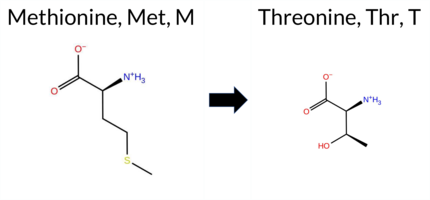 AIThe SynGAP1 missense variant M934T is not reported in ClinVar (no ClinVar ID) and is absent from gnomAD (no gnomAD ID). Prediction tools that agree on a benign effect include REVEL, polyPhen‑2 HumVar, SIFT, and ESM1b, while those that agree on a pathogenic effect are PROVEAN, polyPhen‑2 HumDiv, FATHMM, and AlphaMissense‑Default. The SGM‑Consensus, which aggregates AlphaMissense‑Default, ESM1b, FATHMM, and PROVEAN, reports the variant as Likely Pathogenic. High‑accuracy assessments show AlphaMissense‑Optimized as Uncertain, SGM‑Consensus as Likely Pathogenic, and the Foldetta stability analysis is unavailable. Based on the majority of predictions and the consensus call, the variant is most likely pathogenic; this assessment does not contradict any ClinVar status because no ClinVar classification exists. Disclaimer: This summary was generated using AI and should be interpreted alongside expert review. | Likely Pathogenic | 0.762850 | Disordered | 0.984677 | Binding | 0.290 | 0.867 | 0.625 | -2.579 | Likely Benign | 0.823 | Likely Pathogenic | Ambiguous | 0.270 | Likely Benign | -3.33 | Deleterious | 0.811 | Possibly Damaging | 0.424 | Benign | 2.39 | Pathogenic | 0.19 | Tolerated | 0.2331 | 0.2267 | -1 | -1 | -2.6 | -30.09 | |||||||||||||||||||||||||||||||||||||||
| c.3824G>C | R1275P 2D AIThe SynGAP1 missense variant R1275P is not reported in ClinVar (ClinVar status: none) but is present in gnomAD (ID 6‑33447872‑G‑C). Prediction tools that agree on a benign effect are REVEL and FATHMM, while those that agree on a pathogenic effect are PROVEAN, polyPhen‑2 HumDiv, polyPhen‑2 HumVar, SIFT, and AlphaMissense‑Default. Uncertain predictions come from ESM1b and AlphaMissense‑Optimized. High‑accuracy assessments show AlphaMissense‑Optimized as uncertain, the SGM Consensus (majority vote of AlphaMissense‑Default, ESM1b, FATHMM, PROVEAN) as pathogenic, and Foldetta results are unavailable. Overall, the majority of evidence points to a pathogenic impact. This conclusion is consistent with the lack of ClinVar annotation, as there is no contradictory status to report. Disclaimer: This summary was generated using AI and should be interpreted alongside expert review. | 0.648219 | Disordered | 0.790317 | Binding | 0.723 | 0.697 | 0.500 | 6-33447872-G-C | -7.155 | In-Between | 0.823 | Likely Pathogenic | Ambiguous | 0.145 | Likely Benign | -3.55 | Deleterious | 0.966 | Probably Damaging | 0.651 | Possibly Damaging | 2.53 | Benign | 0.01 | Affected | 3.77 | 5 | 0.2211 | 0.3083 | -2 | 0 | 2.9 | -59.07 | |||||||||||||||||||||||||||||||||||||
| c.2302G>T | D768Y 2D AIThe SynGAP1 missense variant D768Y is listed in ClinVar with status “Uncertain” (ClinVar ID 1061652.0) and is present in gnomAD (variant ID 6‑33442460‑G‑T). Prediction tools that agree on a benign effect include REVEL, SIFT, and FATHMM, whereas those that predict a pathogenic effect are PROVEAN, polyPhen‑2 HumDiv, polyPhen‑2 HumVar, ESM1b, and AlphaMissense‑Default. The SGM‑Consensus, derived from a majority vote of AlphaMissense‑Default, ESM1b, FATHMM, and PROVEAN, reports the variant as “Likely Pathogenic.” High‑accuracy assessments show AlphaMissense‑Optimized as “Uncertain,” SGM‑Consensus as “Likely Pathogenic,” and Foldetta (combining FoldX‑MD and Rosetta outputs) is unavailable for this variant. Overall, the majority of computational evidence points to a pathogenic impact, which does not contradict the ClinVar designation of uncertainty. Thus, based on current predictions, the variant is most likely pathogenic. Disclaimer: This summary was generated using AI and should be interpreted alongside expert review. | Likely Pathogenic | 0.332115 | Structured | 0.928237 | Binding | 0.314 | 0.877 | 0.250 | Uncertain | 1 | 6-33442460-G-T | -9.866 | Likely Pathogenic | 0.824 | Likely Pathogenic | Ambiguous | 0.234 | Likely Benign | -2.86 | Deleterious | 0.989 | Probably Damaging | 0.806 | Possibly Damaging | 4.01 | Benign | 0.07 | Tolerated | 3.64 | 6 | 0.0581 | 0.7525 | -4 | -3 | 2.2 | 48.09 | ||||||||||||||||||||||||||||||||||
| c.377T>G | F126C 2D AIThe SynGAP1 missense variant F126C is not reported in ClinVar (ClinVar ID = None) and is absent from gnomAD (gnomAD ID = None). Prediction tools that agree on a benign effect include REVEL, ESM1b, and FATHMM. Those that agree on a pathogenic effect are PROVEAN, polyPhen‑2 HumDiv, polyPhen‑2 HumVar, SIFT, and AlphaMissense‑Default. AlphaMissense‑Optimized is uncertain. High‑accuracy assessments are inconclusive: AlphaMissense‑Optimized is uncertain; the SGM Consensus (majority vote from AlphaMissense‑Default, ESM1b, FATHMM, PROVEAN) is a 2‑vs‑2 tie, and Foldetta results are unavailable. Overall, more tools predict pathogenicity (five) than benignity (three), and no ClinVar evidence contradicts this assessment. Thus, the variant is most likely pathogenic based on the available predictions. Disclaimer: This summary was generated using AI and should be interpreted alongside expert review. | 0.486429 | Structured | 0.712056 | Binding | 0.316 | 0.874 | 0.500 | -2.553 | Likely Benign | 0.824 | Likely Pathogenic | Ambiguous | 0.109 | Likely Benign | -3.19 | Deleterious | 0.952 | Possibly Damaging | 0.570 | Possibly Damaging | 3.88 | Benign | 0.00 | Affected | 0.2682 | 0.1270 | -4 | -2 | -0.3 | -44.04 | ||||||||||||||||||||||||||||||||||||||||
| c.386C>G | S129W 2D 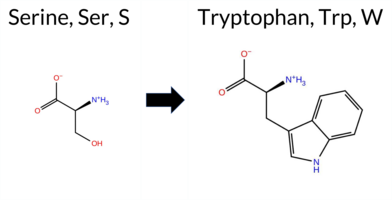 AIThe SynGAP1 missense variant S129W is not reported in ClinVar (no ClinVar ID) and is absent from gnomAD (no gnomAD ID). Prediction tools that agree on a benign effect include REVEL, PROVEAN, polyPhen‑2 HumVar, ESM1b, and FATHMM. Tools that predict a pathogenic effect are polyPhen‑2 HumDiv, SIFT, and AlphaMissense‑Default. The high‑accuracy consensus from SGM (majority vote of AlphaMissense‑Default, ESM1b, FATHMM, and PROVEAN) is benign, and AlphaMissense‑Optimized is uncertain. Foldetta, a protein‑folding stability method, has no available result for this variant. Overall, the majority of evidence points to a benign impact. This conclusion is consistent with the lack of ClinVar annotation, so there is no contradiction with existing clinical data. Disclaimer: This summary was generated using AI and should be interpreted alongside expert review. | Likely Benign | 0.517562 | Disordered | 0.713635 | Binding | 0.311 | 0.880 | 0.625 | -5.008 | Likely Benign | 0.824 | Likely Pathogenic | Ambiguous | 0.108 | Likely Benign | -1.49 | Neutral | 0.888 | Possibly Damaging | 0.367 | Benign | 4.06 | Benign | 0.01 | Affected | 0.0523 | 0.5471 | -2 | -3 | -0.1 | 99.14 | |||||||||||||||||||||||||||||||||||||||
| c.525A>C | Q175H 2D AIThe SynGAP1 missense variant Q175H has no ClinVar record and is not listed in gnomAD. Prediction tools that agree on a benign effect include REVEL, PROVEAN, SIFT, ESM1b, and FATHMM, while polyPhen‑2 (HumDiv and HumVar) and AlphaMissense‑Default predict a pathogenic outcome. The SGM‑Consensus, derived from a majority vote of AlphaMissense‑Default, ESM1b, FATHMM, and PROVEAN, reports the variant as “Likely Benign.” High‑accuracy assessments show AlphaMissense‑Optimized as “Uncertain” and the SGM‑Consensus as “Likely Benign”; Foldetta results are unavailable. Overall, the balance of evidence favors a benign classification, and this conclusion does not contradict any ClinVar annotation (none exists). Disclaimer: This summary was generated using AI and should be interpreted alongside expert review. | Likely Benign | 0.653063 | Disordered | 0.474689 | Uncertain | 0.367 | 0.618 | 0.375 | -6.635 | Likely Benign | 0.824 | Likely Pathogenic | Ambiguous | 0.185 | Likely Benign | -1.52 | Neutral | 0.875 | Possibly Damaging | 0.459 | Possibly Damaging | 4.09 | Benign | 0.10 | Tolerated | 0.1273 | 0.3411 | 3 | 0 | 0.3 | 9.01 | |||||||||||||||||||||||||||||||||||||||
| c.525A>T | Q175H 2D AIThe SynGAP1 missense variant Q175H has no ClinVar record and is not listed in gnomAD. Prediction tools that agree on a benign effect include REVEL, PROVEAN, SIFT, ESM1b, and FATHMM, while polyPhen‑2 (HumDiv and HumVar) and AlphaMissense‑Default predict a pathogenic impact. The SGM‑Consensus, derived from a majority vote of AlphaMissense‑Default, ESM1b, FATHMM, and PROVEAN, reports the variant as “Likely Benign.” High‑accuracy assessments show AlphaMissense‑Optimized as “Uncertain” and the SGM‑Consensus as “Likely Benign”; no Foldetta stability data are available. Overall, the balance of evidence favors a benign classification, and this conclusion does not contradict any ClinVar annotation (none exists). Disclaimer: This summary was generated using AI and should be interpreted alongside expert review. | Likely Benign | 0.653063 | Disordered | 0.474689 | Uncertain | 0.367 | 0.618 | 0.375 | -6.635 | Likely Benign | 0.824 | Likely Pathogenic | Ambiguous | 0.185 | Likely Benign | -1.52 | Neutral | 0.875 | Possibly Damaging | 0.459 | Possibly Damaging | 4.09 | Benign | 0.10 | Tolerated | 0.1273 | 0.3411 | 3 | 0 | 0.3 | 9.01 | |||||||||||||||||||||||||||||||||||||||
| c.599T>G | L200W 2D 3DClick to see structure in 3D Viewer AIThe SynGAP1 missense variant L200W is not reported in ClinVar and is absent from gnomAD. Prediction tools that agree on a benign effect include REVEL and FATHMM, whereas the majority of tools (SGM‑Consensus, FoldX, premPS, PROVEAN, polyPhen‑2 HumDiv, polyPhen‑2 HumVar, SIFT, ESM1b, AlphaMissense‑Default, and Foldetta) predict a pathogenic impact. Two tools (AlphaMissense‑Optimized and Rosetta) provide inconclusive results and are treated as unavailable. High‑accuracy assessments show AlphaMissense‑Optimized as uncertain, SGM‑Consensus as Likely Pathogenic (derived from a majority vote of AlphaMissense‑Default, ESM1b, FATHMM, and PROVEAN), and Foldetta as Pathogenic, the latter integrating stability predictions from FoldX‑MD and Rosetta. Overall, the preponderance of evidence indicates that the variant is most likely pathogenic, and this conclusion does not contradict any ClinVar annotation (none is available). Disclaimer: This summary was generated using AI and should be interpreted alongside expert review. | Likely Pathogenic | PH | 0.366687 | Structured | 0.428168 | Uncertain | 0.687 | 0.453 | 0.125 | -11.550 | Likely Pathogenic | 0.824 | Likely Pathogenic | Ambiguous | 2.90 | Destabilizing | 1.0 | 1.95 | Ambiguous | 2.43 | Destabilizing | 1.20 | Destabilizing | 0.200 | Likely Benign | -2.93 | Deleterious | 0.999 | Probably Damaging | 0.970 | Probably Damaging | 3.98 | Benign | 0.02 | Affected | 0.0627 | 0.2893 | -2 | -2 | -4.7 | 73.05 | |||||||||||||||||||||||||||||
| c.2926T>C | F976L 2D AIThe SynGAP1 missense variant F976L is not reported in ClinVar (no ClinVar ID) and is absent from gnomAD (no gnomAD ID). Prediction tools that agree on a benign effect include REVEL, PROVEAN, polyPhen‑2 (HumDiv and HumVar), SIFT, ESM1b, FATHMM, and the SGM‑Consensus (majority vote from AlphaMissense‑Default, ESM1b, FATHMM, PROVEAN), which classifies the variant as “Likely Benign.” In contrast, AlphaMissense‑Default predicts a pathogenic effect, while AlphaMissense‑Optimized is uncertain. No Foldetta (FoldX‑MD/ Rosetta) stability result is available, so it does not contribute to the assessment. Overall, the majority of high‑confidence predictors indicate a benign impact, and this is consistent with the lack of ClinVar evidence. Thus, the variant is most likely benign, with no contradiction to ClinVar status. Disclaimer: This summary was generated using AI and should be interpreted alongside expert review. | Likely Benign | 0.876521 | Disordered | 0.975061 | Binding | 0.311 | 0.894 | 0.625 | -2.432 | Likely Benign | 0.825 | Likely Pathogenic | Ambiguous | 0.237 | Likely Benign | -0.87 | Neutral | 0.264 | Benign | 0.102 | Benign | 4.20 | Benign | 0.53 | Tolerated | 4.32 | 2 | 0.2829 | 0.3082 | 2 | 0 | 1.0 | -34.02 | |||||||||||||||||||||||||||||||||||||
| c.2928T>A | F976L 2D AIThe SynGAP1 missense variant F976L is not reported in ClinVar (ClinVar ID None) but is present in gnomAD (ID 6‑33443480‑T‑A). Functional prediction tools that agree on a benign effect include REVEL, PROVEAN, polyPhen‑2 (HumDiv and HumVar), SIFT, ESM1b, and FATHMM. Only AlphaMissense‑Default predicts a pathogenic outcome, while AlphaMissense‑Optimized is uncertain. The SGM‑Consensus, which aggregates the majority vote from AlphaMissense‑Default, ESM1b, FATHMM, and PROVEAN, reports the variant as “Likely Benign.” Foldetta, a protein‑folding stability method combining FoldX‑MD and Rosetta outputs, has no available result for this variant. Overall, the preponderance of evidence from high‑accuracy predictors and consensus analysis indicates that F976L is most likely benign, and this assessment does not contradict any ClinVar status (none reported). Disclaimer: This summary was generated using AI and should be interpreted alongside expert review. | Likely Benign | 0.876521 | Disordered | 0.975061 | Binding | 0.311 | 0.894 | 0.625 | 6-33443480-T-A | 2 | 1.24e-6 | -2.432 | Likely Benign | 0.825 | Likely Pathogenic | Ambiguous | 0.212 | Likely Benign | -0.87 | Neutral | 0.264 | Benign | 0.102 | Benign | 4.20 | Benign | 0.53 | Tolerated | 4.32 | 2 | 0.2829 | 0.3082 | 2 | 0 | 1.0 | -34.02 | ||||||||||||||||||||||||||||||||||
| c.2928T>G | F976L 2D AIThe SynGAP1 missense variant F976L is listed in ClinVar (ID 624245.0) with an “Uncertain” status and is not reported in gnomAD. Functional prediction tools that agree on a benign effect include REVEL, PROVEAN, polyPhen‑2 (HumDiv and HumVar), SIFT, ESM1b, and FATHMM. Only AlphaMissense‑Default predicts a pathogenic outcome. The high‑accuracy consensus predictor SGM‑Consensus, which aggregates AlphaMissense‑Default, ESM1b, FATHMM, and PROVEAN, reports a “Likely Benign” classification. AlphaMissense‑Optimized is inconclusive, and no Foldetta (FoldX‑MD/Rosetta stability) result is available. Overall, the majority of evidence points to a benign impact, and this is consistent with the ClinVar designation of uncertainty rather than a definitive pathogenic claim. Thus, the variant is most likely benign, and its predictions do not contradict the current ClinVar status. Disclaimer: This summary was generated using AI and should be interpreted alongside expert review. | Likely Benign | 0.876521 | Disordered | 0.975061 | Binding | 0.311 | 0.894 | 0.625 | Uncertain | 1 | -2.432 | Likely Benign | 0.825 | Likely Pathogenic | Ambiguous | 0.212 | Likely Benign | -0.87 | Neutral | 0.264 | Benign | 0.102 | Benign | 4.20 | Benign | 0.53 | Tolerated | 4.32 | 2 | 0.2829 | 0.3082 | 2 | 0 | 1.0 | -34.02 | |||||||||||||||||||||||||||||||||||
| c.4012C>G | R1338G 2D AIThe SynGAP1 R1338G variant has no ClinVar record (status: None) and is not present in gnomAD. Prediction tools that agree on benign impact include REVEL, polyPhen‑2 HumVar, ESM1b, and FATHMM, while those that predict pathogenicity are PROVEAN, polyPhen‑2 HumDiv, SIFT, and AlphaMissense‑Default; AlphaMissense‑Optimized is uncertain. High‑accuracy assessments are inconclusive: AlphaMissense‑Optimized is uncertain, the SGM Consensus (majority vote from AlphaMissense‑Default, ESM1b, FATHMM, PROVEAN) yields a 2‑vs‑2 tie, and Foldetta results are unavailable. Overall, the predictions are evenly split between benign and pathogenic, leaving the variant’s clinical significance uncertain. This uncertainty does not contradict the ClinVar status, which currently has no entry for the variant. Disclaimer: This summary was generated using AI and should be interpreted alongside expert review. | 0.775545 | Disordered | 0.977425 | Binding | 0.393 | 0.697 | 1.000 | -3.696 | Likely Benign | 0.825 | Likely Pathogenic | Ambiguous | 0.134 | Likely Benign | -3.73 | Deleterious | 0.795 | Possibly Damaging | 0.232 | Benign | 3.76 | Benign | 0.01 | Affected | 0.3468 | 0.3874 | -3 | -2 | 4.1 | -99.14 | ||||||||||||||||||||||||||||||||||||||||
| c.661G>C | E221Q 2D 3DClick to see structure in 3D Viewer AIThe SynGAP1 E221Q missense variant is not reported in ClinVar (ClinVar ID None) and is absent from gnomAD (gnomAD ID None). Prediction tools that agree on a benign effect include REVEL, FoldX, Rosetta, premPS, PROVEAN, polyPhen‑2 (HumDiv and HumVar), SIFT, and FATHMM. Two tools predict a pathogenic outcome: ESM1b and AlphaMissense‑Default. AlphaMissense‑Optimized is uncertain. High‑accuracy assessments show AlphaMissense‑Optimized as uncertain, the SGM Consensus (majority vote from AlphaMissense‑Default, ESM1b, FATHMM, PROVEAN) is inconclusive (two pathogenic vs two benign), and Foldetta predicts a benign effect. Overall, the majority of evidence (10 benign vs 2 pathogenic) supports a benign classification. This conclusion does not contradict ClinVar status, as no ClinVar assertion exists for this variant. Disclaimer: This summary was generated using AI and should be interpreted alongside expert review. | PH | 0.127496 | Structured | 0.413334 | Uncertain | 0.891 | 0.283 | 0.000 | -8.243 | Likely Pathogenic | 0.825 | Likely Pathogenic | Ambiguous | -0.26 | Likely Benign | 0.1 | -0.33 | Likely Benign | -0.30 | Likely Benign | 0.12 | Likely Benign | 0.455 | Likely Benign | -1.64 | Neutral | 0.028 | Benign | 0.015 | Benign | 6.13 | Benign | 0.23 | Tolerated | 0.1207 | 0.7690 | 2 | 2 | 0.0 | -0.98 | ||||||||||||||||||||||||||||||
| c.1310C>A | P437H 2D 3DClick to see structure in 3D Viewer AIThe SynGAP1 missense variant P437H is not reported in ClinVar and is absent from gnomAD. Prediction tools that agree on a benign effect include REVEL, Rosetta, premPS, and FATHMM, whereas those that agree on a pathogenic effect are PROVEAN, polyPhen‑2 (HumDiv and HumVar), SIFT, ESM1b, and AlphaMissense‑Default. Predictions that are inconclusive or unavailable are FoldX, Foldetta, and AlphaMissense‑Optimized. High‑accuracy assessments show that the SGM Consensus (majority vote of AlphaMissense‑Default, ESM1b, FATHMM, and PROVEAN) predicts a likely pathogenic outcome, while AlphaMissense‑Optimized and Foldetta remain uncertain. Overall, the balance of evidence favors a pathogenic classification for P437H, and this conclusion does not contradict the ClinVar status, which currently contains no entry for this variant. Disclaimer: This summary was generated using AI and should be interpreted alongside expert review. | Likely Pathogenic | GAP | 0.175930 | Structured | 0.306196 | Uncertain | 0.921 | 0.298 | 0.000 | -13.496 | Likely Pathogenic | 0.826 | Likely Pathogenic | Ambiguous | 1.19 | Ambiguous | 0.0 | -3.28 | Stabilizing | -1.05 | Ambiguous | 0.31 | Likely Benign | 0.343 | Likely Benign | -7.75 | Deleterious | 1.000 | Probably Damaging | 0.995 | Probably Damaging | 3.44 | Benign | 0.01 | Affected | 0.1819 | 0.4328 | 0 | -2 | -1.6 | 40.02 | |||||||||||||||||||||||||||||
| c.203T>A | L68Q 2D AIThe SynGAP1 missense variant L68Q is listed in gnomAD (6‑33425811‑T‑A) but has no ClinVar entry. Functional prediction tools cluster into two groups: benign predictions from REVEL, PROVEAN, ESM1b, and FATHMM; pathogenic predictions from polyPhen‑2 HumDiv, polyPhen‑2 HumVar, SIFT, and AlphaMissense‑Default. The SGM‑Consensus, which aggregates AlphaMissense‑Default, ESM1b, FATHMM, and PROVEAN, reports a likely benign outcome, reflecting the majority of benign calls. High‑accuracy assessments are limited: AlphaMissense‑Optimized is uncertain, and Foldetta results are not available. Based on the available evidence, the variant is most likely benign, and this assessment does not contradict any ClinVar status (none reported). Disclaimer: This summary was generated using AI and should be interpreted alongside expert review. | Likely Benign | 0.534167 | Disordered | 0.470567 | Uncertain | 0.405 | 0.768 | 0.250 | 6-33425811-T-A | 5 | 3.10e-6 | -3.436 | Likely Benign | 0.826 | Likely Pathogenic | Ambiguous | 0.119 | Likely Benign | -0.14 | Neutral | 0.943 | Possibly Damaging | 0.766 | Possibly Damaging | 4.15 | Benign | 0.00 | Affected | 4.32 | 1 | 0.0864 | 0.0919 | -2 | -2 | -7.3 | 14.97 | ||||||||||||||||||||||||||||||||||
| c.2114A>C | K705T 2D 3DClick to see structure in 3D Viewer AISynGAP1 missense variant K705T is not reported in ClinVar and is absent from gnomAD. Functional prediction tools show mixed results: benign predictions come from REVEL, Rosetta, Foldetta, premPS, and FATHMM, whereas pathogenic predictions are reported by PROVEAN, polyPhen‑2 (HumDiv and HumVar), SIFT, ESM1b, and AlphaMissense‑Default. Uncertain calls are made by FoldX and AlphaMissense‑Optimized. High‑accuracy assessments indicate that the SGM Consensus, derived from a majority vote of AlphaMissense‑Default, ESM1b, FATHMM, and PROVEAN, predicts a pathogenic effect, while Foldetta, which integrates FoldX‑MD and Rosetta stability outputs, predicts a benign outcome. Overall, the balance of evidence leans toward a pathogenic interpretation, and this assessment does not conflict with ClinVar status, which currently has no entry for this variant. Disclaimer: This summary was generated using AI and should be interpreted alongside expert review. | Likely Pathogenic | GAP | 0.134866 | Structured | 0.379324 | Uncertain | 0.922 | 0.364 | 0.000 | -8.617 | Likely Pathogenic | 0.826 | Likely Pathogenic | Ambiguous | 0.60 | Ambiguous | 0.0 | 0.04 | Likely Benign | 0.32 | Likely Benign | 0.17 | Likely Benign | 0.272 | Likely Benign | -4.05 | Deleterious | 0.995 | Probably Damaging | 0.991 | Probably Damaging | 3.38 | Benign | 0.02 | Affected | 0.1299 | 0.2612 | 0 | -1 | 3.2 | -27.07 | |||||||||||||||||||||||||||||
| c.2783A>G | Q928R 2D AIThe SynGAP1 missense variant Q928R is listed in gnomAD (ID 6‑33443335‑A‑G) but has no ClinVar entry. Functional prediction tools fall into two consensus groups: benign predictions come from REVEL and ESM1b, while pathogenic predictions are made by PROVEAN, polyPhen‑2 (HumDiv and HumVar), SIFT, FATHMM, AlphaMissense‑Default, and the SGM‑Consensus (majority vote of AlphaMissense‑Default, ESM1b, FATHMM, PROVEAN). AlphaMissense‑Optimized returns an uncertain result, and no Foldetta (FoldX‑MD/Rosetta stability) data are available. High‑accuracy assessments therefore indicate a likely pathogenic outcome (SGM‑Consensus) with no contradictory evidence from ClinVar. Based on the preponderance of pathogenic predictions, the variant is most likely pathogenic, and this assessment does not conflict with the current ClinVar status. Disclaimer: This summary was generated using AI and should be interpreted alongside expert review. | Likely Pathogenic | 0.497853 | Structured | 0.986260 | Binding | 0.324 | 0.852 | 0.250 | 6-33443335-A-G | 1 | 6.20e-7 | -4.089 | Likely Benign | 0.826 | Likely Pathogenic | Ambiguous | 0.290 | Likely Benign | -2.91 | Deleterious | 0.994 | Probably Damaging | 0.988 | Probably Damaging | 1.58 | Pathogenic | 0.00 | Affected | 4.32 | 4 | 0.1357 | 0.3453 | 1 | 1 | -1.0 | 28.06 | ||||||||||||||||||||||||||||||||||
| c.523C>A | Q175K 2D AIThe SynGAP1 missense variant Q175K is not reported in ClinVar (no ClinVar ID) and is absent from gnomAD (no gnomAD ID). Prediction tools that agree on a benign effect include REVEL, PROVEAN, polyPhen‑2 (HumDiv and HumVar), SIFT, ESM1b, and FATHMM. Only AlphaMissense‑Default predicts a pathogenic outcome, while AlphaMissense‑Optimized is uncertain. The SGM‑Consensus, which aggregates the majority vote from AlphaMissense‑Default, ESM1b, FATHMM, and PROVEAN, classifies the variant as Likely Benign. High‑accuracy assessments further support this: AlphaMissense‑Optimized remains uncertain, SGM‑Consensus is benign, and Foldetta results are unavailable. Overall, the preponderance of evidence points to a benign effect for Q175K, and this conclusion does not contradict any ClinVar annotation (none exists). Disclaimer: This summary was generated using AI and should be interpreted alongside expert review. | Likely Benign | 0.653063 | Disordered | 0.474689 | Uncertain | 0.367 | 0.618 | 0.375 | -5.908 | Likely Benign | 0.826 | Likely Pathogenic | Ambiguous | 0.202 | Likely Benign | -0.89 | Neutral | 0.118 | Benign | 0.039 | Benign | 4.18 | Benign | 0.37 | Tolerated | 0.1655 | 0.3723 | 1 | 1 | -0.4 | 0.04 | |||||||||||||||||||||||||||||||||||||||
| c.646C>A | Q216K 2D 3DClick to see structure in 3D Viewer AIThe SynGAP1 missense variant Q216K is not reported in ClinVar (ClinVar ID None) and has no entry in gnomAD (gnomAD ID None). Prediction tools that agree on a benign effect include FoldX, Rosetta, Foldetta, premPS, polyPhen‑2 HumVar, SIFT, and FATHMM. Those that predict a pathogenic effect are SGM‑Consensus, REVEL, PROVEAN, polyPhen‑2 HumDiv, ESM1b, and AlphaMissense‑Default. High‑accuracy assessments show AlphaMissense‑Optimized as uncertain, SGM‑Consensus (majority vote from AlphaMissense‑Default, ESM1b, FATHMM, PROVEAN) as likely pathogenic, and Foldetta (combining FoldX‑MD and Rosetta outputs) as benign. No prediction or folding stability result is missing or inconclusive. Overall, the majority of tools lean toward a benign classification, but the presence of several pathogenic predictions and a high‑accuracy consensus that is pathogenic introduces uncertainty. Thus, the variant is most likely benign, and this assessment does not contradict any ClinVar status because none is available. Disclaimer: This summary was generated using AI and should be interpreted alongside expert review. | Likely Pathogenic | PH | 0.206376 | Structured | 0.396100 | Uncertain | 0.804 | 0.274 | 0.000 | -10.908 | Likely Pathogenic | 0.826 | Likely Pathogenic | Ambiguous | -0.35 | Likely Benign | 0.1 | 0.38 | Likely Benign | 0.02 | Likely Benign | 0.17 | Likely Benign | 0.617 | Likely Pathogenic | -2.71 | Deleterious | 0.779 | Possibly Damaging | 0.351 | Benign | 5.92 | Benign | 0.12 | Tolerated | 0.2431 | 0.4591 | 1 | 1 | -0.4 | 0.04 | |||||||||||||||||||||||||||||
| c.1864A>G | T622A 2D 3DClick to see structure in 3D Viewer AIThe SynGAP1 missense variant T622A is not reported in ClinVar (ClinVar ID None) and has no entry in gnomAD (gnomAD ID None). Prediction tools that agree on a benign effect include only FoldX, which scores the variant as benign. In contrast, the majority of tools predict a pathogenic impact: REVEL, SIFT, PROVEAN, polyPhen‑2 (HumDiv and HumVar), ESM1b, FATHMM, AlphaMissense‑Default, and the SGM Consensus (majority vote of AlphaMissense‑Default, ESM1b, FATHMM, PROVEAN). Tools with uncertain or inconclusive results—AlphaMissense‑Optimized, Rosetta, Foldetta, and premPS—are treated as unavailable for pathogenicity assessment. High‑accuracy assessments show AlphaMissense‑Optimized as uncertain, SGM Consensus as likely pathogenic, and Foldetta as uncertain. Overall, the preponderance of evidence points to a pathogenic effect for T622A, and this conclusion does not contradict the absence of a ClinVar classification. Disclaimer: This summary was generated using AI and should be interpreted alongside expert review. | Likely Pathogenic | GAP | 0.268042 | Structured | 0.071403 | Uncertain | 0.957 | 0.198 | 0.000 | -10.953 | Likely Pathogenic | 0.827 | Likely Pathogenic | Ambiguous | 0.03 | Likely Benign | 0.0 | 1.04 | Ambiguous | 0.54 | Ambiguous | 0.75 | Ambiguous | 0.893 | Likely Pathogenic | -4.58 | Deleterious | 0.998 | Probably Damaging | 0.989 | Probably Damaging | -1.52 | Pathogenic | 0.01 | Affected | 0.3191 | 0.3091 | 1 | 0 | 2.5 | -30.03 | |||||||||||||||||||||||||||||
| c.2140C>A | L714M 2D 3DClick to see structure in 3D Viewer AIThe SynGAP1 missense variant L714M is not reported in ClinVar (no entry) and is absent from gnomAD. Benign predictions are provided by REVEL, FoldX, PROVEAN, ESM1b, FATHMM, and the SGM‑Consensus (likely benign). Pathogenic predictions come from Rosetta, Foldetta, premPS, polyPhen‑2 HumDiv, polyPhen‑2 HumVar, SIFT, and AlphaMissense‑Default. High‑accuracy tools give mixed results: AlphaMissense‑Optimized is uncertain; the SGM‑Consensus (majority vote of AlphaMissense‑Default, ESM1b, FATHMM, PROVEAN) indicates likely benign; Foldetta (combining FoldX‑MD and Rosetta) predicts pathogenic. Overall, the majority of evidence points to a pathogenic effect, and this assessment does not contradict the lack of ClinVar annotation. Disclaimer: This summary was generated using AI and should be interpreted alongside expert review. | Likely Benign | GAP | 0.314870 | Structured | 0.402311 | Uncertain | 0.961 | 0.369 | 0.000 | -0.989 | Likely Benign | 0.827 | Likely Pathogenic | Ambiguous | 0.45 | Likely Benign | 0.0 | 4.49 | Destabilizing | 2.47 | Destabilizing | 1.00 | Destabilizing | 0.249 | Likely Benign | -1.86 | Neutral | 1.000 | Probably Damaging | 1.000 | Probably Damaging | 3.09 | Benign | 0.00 | Affected | 0.0687 | 0.2626 | 4 | 2 | -1.9 | 18.03 | |||||||||||||||||||||||||||||
| c.242T>C | L81P 2D AIThe SynGAP1 missense variant L81P is not reported in ClinVar (no ClinVar ID) and is absent from gnomAD (no gnomAD ID). Prediction tools that agree on a benign effect include REVEL, PROVEAN, polyPhen‑2 HumVar, ESM1b, and FATHMM, while those that predict a pathogenic effect are polyPhen‑2 HumDiv, SIFT, and AlphaMissense‑Default. The SGM‑Consensus, which aggregates AlphaMissense‑Default, ESM1b, FATHMM, and PROVEAN, reports a likely benign classification. High‑accuracy assessments show AlphaMissense‑Optimized as uncertain, SGM‑Consensus as likely benign, and Foldetta (combining FoldX‑MD and Rosetta outputs) is not available for this variant. Overall, the majority of evidence points to a benign impact. This conclusion is consistent with the lack of ClinVar annotation, so there is no contradiction with ClinVar status. Disclaimer: This summary was generated using AI and should be interpreted alongside expert review. | Likely Benign | 0.632174 | Disordered | 0.502033 | Binding | 0.291 | 0.878 | 0.250 | -4.413 | Likely Benign | 0.827 | Likely Pathogenic | Ambiguous | 0.095 | Likely Benign | -1.51 | Neutral | 0.919 | Possibly Damaging | 0.226 | Benign | 3.92 | Benign | 0.00 | Affected | 0.3062 | 0.1818 | -3 | -3 | -5.4 | -16.04 | |||||||||||||||||||||||||||||||||||||||
| c.3268A>G | N1090D 2D AIThe SynGAP1 missense variant N1090D is not reported in ClinVar (no ClinVar ID) and is absent from gnomAD (no gnomAD ID). Prediction tools that agree on a benign effect include REVEL, PROVEAN, SIFT, ESM1b, and FATHMM, while those that predict a pathogenic effect are polyPhen‑2 HumDiv, polyPhen‑2 HumVar, and AlphaMissense‑Default. The SGM‑Consensus, which aggregates AlphaMissense‑Default, ESM1b, FATHMM, and PROVEAN, reports a likely benign classification. High‑accuracy assessments show AlphaMissense‑Optimized as uncertain, SGM‑Consensus as likely benign, and no Foldetta stability data is available. Overall, the majority of evidence points to a benign impact. This conclusion is not contradicted by ClinVar status, as no ClinVar entry exists for this variant. Disclaimer: This summary was generated using AI and should be interpreted alongside expert review. | Likely Benign | 0.896620 | Disordered | 0.979886 | Binding | 0.341 | 0.887 | 1.000 | -3.354 | Likely Benign | 0.827 | Likely Pathogenic | Ambiguous | 0.066 | Likely Benign | -1.39 | Neutral | 0.997 | Probably Damaging | 0.989 | Probably Damaging | 2.70 | Benign | 0.47 | Tolerated | 0.1994 | 0.4375 | 2 | 1 | 0.0 | 0.98 | |||||||||||||||||||||||||||||||||||||||
| c.709G>C | A237P 2D 3DClick to see structure in 3D Viewer AIThe SynGAP1 missense variant A237P is not reported in ClinVar (ClinVar status: none) and is absent from gnomAD (gnomAD ID: none). Prediction tools that agree on a benign effect include FoldX and FATHMM, whereas the majority of tools predict a pathogenic impact: REVEL, SGM‑Consensus, premPS, PROVEAN, polyPhen‑2 (HumDiv and HumVar), SIFT, ESM1b, AlphaMissense‑Default, Rosetta, and Foldetta. High‑accuracy assessments further support pathogenicity: the SGM‑Consensus (derived from a majority vote of AlphaMissense‑Default, ESM1b, FATHMM, and PROVEAN) is pathogenic, Foldetta is pathogenic, and AlphaMissense‑Optimized is uncertain (treated as unavailable). Overall, the preponderance of evidence indicates that A237P is most likely pathogenic, and this conclusion does not contradict any ClinVar annotation because no ClinVar status is available. Disclaimer: This summary was generated using AI and should be interpreted alongside expert review. | Likely Pathogenic | PH | 0.200174 | Structured | 0.334699 | Uncertain | 0.719 | 0.352 | 0.000 | -9.119 | Likely Pathogenic | 0.827 | Likely Pathogenic | Ambiguous | 0.10 | Likely Benign | 0.5 | 4.20 | Destabilizing | 2.15 | Destabilizing | 1.04 | Destabilizing | 0.752 | Likely Pathogenic | -3.68 | Deleterious | 0.995 | Probably Damaging | 0.832 | Possibly Damaging | 5.77 | Benign | 0.03 | Affected | 0.1593 | 0.3724 | 1 | -1 | -3.4 | 26.04 | |||||||||||||||||||||||||||||
| c.1934T>G | F645C 2D 3DClick to see structure in 3D Viewer AIThe SynGAP1 missense variant F645C is not reported in ClinVar and is absent from gnomAD. Prediction tools that agree on a benign effect include REVEL, polyPhen‑2 HumVar, and FATHMM, whereas the majority of tools predict a pathogenic outcome: FoldX, Rosetta, Foldetta, premPS, PROVEAN, polyPhen‑2 HumDiv, SIFT, ESM1b, and AlphaMissense‑Default. AlphaMissense‑Optimized is inconclusive. High‑accuracy assessments further support a deleterious impact: AlphaMissense‑Optimized remains uncertain; the SGM Consensus (majority vote of AlphaMissense‑Default, ESM1b, FATHMM, PROVEAN) is pathogenic; and Foldetta, which integrates FoldX‑MD and Rosetta outputs, is also pathogenic. Based on the preponderance of pathogenic predictions and the high‑accuracy consensus, the variant is most likely pathogenic, and this assessment does not contradict the ClinVar status, which currently has no entry for this variant. Disclaimer: This summary was generated using AI and should be interpreted alongside expert review. | Likely Pathogenic | GAP | 0.046336 | Structured | 0.276445 | Uncertain | 0.921 | 0.325 | 0.000 | -9.182 | Likely Pathogenic | 0.828 | Likely Pathogenic | Ambiguous | 2.25 | Destabilizing | 0.1 | 2.44 | Destabilizing | 2.35 | Destabilizing | 1.38 | Destabilizing | 0.286 | Likely Benign | -5.41 | Deleterious | 0.967 | Probably Damaging | 0.389 | Benign | 3.35 | Benign | 0.01 | Affected | 0.2421 | 0.1372 | -4 | -2 | -0.3 | -44.04 | |||||||||||||||||||||||||||||
| c.2047A>T | I683F 2D 3DClick to see structure in 3D Viewer AIThe SynGAP1 missense variant I683F is not reported in ClinVar and is absent from gnomAD. Prediction tools that agree on a benign effect include REVEL, Rosetta, and FATHMM, whereas a majority of tools (SGM‑Consensus, PROVEAN, polyPhen‑2 HumDiv, polyPhen‑2 HumVar, SIFT, ESM1b, and AlphaMissense‑Default) predict a pathogenic impact. High‑accuracy assessments show the SGM‑Consensus (majority vote of AlphaMissense‑Default, ESM1b, FATHMM, and PROVEAN) as likely pathogenic, while AlphaMissense‑Optimized and Foldetta are inconclusive and thus treated as unavailable evidence. Overall, the balance of evidence favors a pathogenic classification for I683F, and this assessment does not contradict the current ClinVar status, which has no entry for the variant. Disclaimer: This summary was generated using AI and should be interpreted alongside expert review. | Likely Pathogenic | GAP | 0.200174 | Structured | 0.143268 | Uncertain | 0.848 | 0.314 | 0.000 | -12.781 | Likely Pathogenic | 0.828 | Likely Pathogenic | Ambiguous | 1.38 | Ambiguous | 0.1 | -0.23 | Likely Benign | 0.58 | Ambiguous | 0.59 | Ambiguous | 0.481 | Likely Benign | -3.99 | Deleterious | 0.971 | Probably Damaging | 0.499 | Possibly Damaging | 3.27 | Benign | 0.01 | Affected | 0.0770 | 0.2307 | 1 | 0 | -1.7 | 34.02 | |||||||||||||||||||||||||||||
| c.2428C>G | R810G 2D AISynGAP1 missense variant R810G is not reported in ClinVar and is absent from gnomAD. Prediction tools cluster into two groups: a single benign call from REVEL, and six pathogenic calls from PROVEAN, polyPhen‑2 (HumDiv and HumVar), SIFT, FATHMM, and AlphaMissense‑Default. Two tools (ESM1b and AlphaMissense‑Optimized) give uncertain results. High‑accuracy assessments further support a deleterious effect: AlphaMissense‑Optimized remains uncertain, the SGM Consensus (majority vote of AlphaMissense‑Default, ESM1b, FATHMM, and PROVEAN) reports the variant as Likely Pathogenic, and Foldetta stability analysis is unavailable. Overall, the preponderance of evidence points to a pathogenic impact for R810G, and this conclusion is consistent with the lack of ClinVar annotation. Disclaimer: This summary was generated using AI and should be interpreted alongside expert review. | Likely Pathogenic | SH3-binding motif | 0.486429 | Structured | 0.851848 | Binding | 0.263 | 0.907 | 0.375 | -7.190 | In-Between | 0.828 | Likely Pathogenic | Ambiguous | 0.202 | Likely Benign | -3.57 | Deleterious | 0.996 | Probably Damaging | 0.925 | Probably Damaging | 2.35 | Pathogenic | 0.01 | Affected | 0.3686 | 0.4207 | -3 | -2 | 4.1 | -99.14 | ||||||||||||||||||||||||||||||||||||||
| c.2443C>T | R815C 2D AIThe SynGAP1 missense variant R815C is listed in ClinVar (ID 660618.0) with an “Uncertain” status and is present in gnomAD (variant ID 6‑33442995‑C‑T). Prediction tools that agree on a benign effect include REVEL and FATHMM, whereas the majority of tools (PROVEAN, polyPhen‑2 HumDiv, polyPhen‑2 HumVar, SIFT, ESM1b, AlphaMissense‑Default) predict a pathogenic impact. The high‑accuracy AlphaMissense‑Optimized result is “Uncertain.” The SGM‑Consensus, derived from a majority vote of AlphaMissense‑Default, ESM1b, FATHMM, and PROVEAN, is “Likely Pathogenic.” Foldetta, a protein‑folding stability method combining FoldX‑MD and Rosetta outputs, has no available result for this variant. Overall, the preponderance of predictions indicates a pathogenic effect, which does not contradict the ClinVar “Uncertain” classification but suggests that the variant is more likely pathogenic rather than benign. Disclaimer: This summary was generated using AI and should be interpreted alongside expert review. | Likely Pathogenic | SH3-binding motif | 0.394753 | Structured | 0.780568 | Binding | 0.278 | 0.907 | 0.250 | Uncertain | 1 | 6-33442995-C-T | 5 | 3.10e-6 | -9.373 | Likely Pathogenic | 0.828 | Likely Pathogenic | Ambiguous | 0.174 | Likely Benign | -3.89 | Deleterious | 1.000 | Probably Damaging | 0.998 | Probably Damaging | 2.59 | Benign | 0.00 | Affected | 4.32 | 4 | 0.3389 | 0.3682 | -4 | -3 | 7.0 | -53.05 | |||||||||||||||||||||||||||||||
| c.2773C>A | L925I 2D AIThe SynGAP1 missense variant L925I is not reported in ClinVar (ClinVar ID = None) and is absent from gnomAD (gnomAD ID = None). Prediction tools that agree on a benign effect include REVEL, PROVEAN, and ESM1b, whereas those that predict a pathogenic effect are polyPhen‑2 HumDiv, polyPhen‑2 HumVar, SIFT, FATHMM, and AlphaMissense‑Default. The high‑accuracy AlphaMissense‑Optimized tool returns an uncertain result, and the SGM Consensus (majority vote from AlphaMissense‑Default, ESM1b, FATHMM, PROVEAN) is inconclusive (2 pathogenic vs. 2 benign). Foldetta, a protein‑folding stability method combining FoldX‑MD and Rosetta outputs, has no available result for this variant. Overall, the majority of consensus tools (five pathogenic vs. three benign) lean toward a pathogenic interpretation. This prediction does not contradict ClinVar status, as the variant is not yet catalogued there. Thus, based on current computational evidence, the variant is most likely pathogenic. Disclaimer: This summary was generated using AI and should be interpreted alongside expert review. | 0.483068 | Structured | 0.977963 | Binding | 0.290 | 0.852 | 0.125 | -5.266 | Likely Benign | 0.828 | Likely Pathogenic | Ambiguous | 0.205 | Likely Benign | -1.38 | Neutral | 0.999 | Probably Damaging | 0.994 | Probably Damaging | 1.37 | Pathogenic | 0.00 | Affected | 0.1192 | 0.3405 | 2 | 2 | 0.7 | 0.00 | ||||||||||||||||||||||||||||||||||||||||
| c.3568A>T | S1190C 2D AIThe SynGAP1 missense variant S1190C is not reported in ClinVar (no ClinVar ID) and is absent from gnomAD (no gnomAD ID). Prediction tools that agree on a benign effect include REVEL, PROVEAN, SIFT, ESM1b, and FATHMM, while polyPhen‑2 (HumDiv and HumVar) and AlphaMissense‑Default predict a pathogenic impact. The SGM‑Consensus, derived from a majority vote of AlphaMissense‑Default, ESM1b, FATHMM, and PROVEAN, classifies the variant as Likely Benign. High‑accuracy assessments show AlphaMissense‑Optimized as Uncertain, SGM‑Consensus as Likely Benign, and Foldetta results are unavailable. Overall, the balance of evidence favors a benign interpretation, and this conclusion does not contradict any ClinVar annotation (none exists). Disclaimer: This summary was generated using AI and should be interpreted alongside expert review. | Likely Benign | Coiled-coil | 0.575842 | Disordered | 0.455760 | Uncertain | 0.742 | 0.624 | 0.625 | -6.788 | Likely Benign | 0.828 | Likely Pathogenic | Ambiguous | 0.418 | Likely Benign | -1.93 | Neutral | 0.999 | Probably Damaging | 0.997 | Probably Damaging | 5.22 | Benign | 0.07 | Tolerated | 0.1144 | 0.4294 | 0 | -1 | 3.3 | 16.06 | ||||||||||||||||||||||||||||||||||||||
| c.3587A>C | K1196T 2D AIThe SynGAP1 missense variant K1196T is not reported in ClinVar and is absent from gnomAD. Prediction tools that agree on a benign effect include REVEL, PROVEAN, ESM1b, and FATHMM, while those that predict a pathogenic outcome are polyPhen‑2 (HumDiv and HumVar), SIFT, and AlphaMissense‑Default. The SGM‑Consensus, derived from a majority vote of AlphaMissense‑Default, ESM1b, FATHMM, and PROVEAN, classifies the variant as Likely Benign. High‑accuracy assessments show AlphaMissense‑Optimized as Uncertain, and Foldetta results are unavailable. Based on the collective evidence, the variant is most likely benign, and this assessment does not contradict any ClinVar status (none is available). Disclaimer: This summary was generated using AI and should be interpreted alongside expert review. | Likely Benign | Coiled-coil | 0.599170 | Disordered | 0.435699 | Uncertain | 0.851 | 0.595 | 0.250 | -6.611 | Likely Benign | 0.828 | Likely Pathogenic | Ambiguous | 0.378 | Likely Benign | -2.17 | Neutral | 0.980 | Probably Damaging | 0.862 | Possibly Damaging | 5.36 | Benign | 0.04 | Affected | 0.1980 | 0.2452 | 0 | -1 | 3.2 | -27.07 | ||||||||||||||||||||||||||||||||||||||
| c.3747G>C | R1249S 2D AIThe SynGAP1 missense variant R1249S is not reported in ClinVar and is absent from gnomAD. Functional prediction tools show a split: benign calls come from REVEL and ESM1b, whereas pathogenic calls are made by PROVEAN, polyPhen‑2 (HumDiv and HumVar), SIFT, FATHMM, AlphaMissense‑Default, and the SGM‑Consensus score, which aggregates the majority vote of AlphaMissense‑Default, ESM1b, FATHMM, and PROVEAN and labels the variant as Likely Pathogenic. High‑accuracy assessments are limited: AlphaMissense‑Optimized returns an Uncertain result, and the Foldetta stability analysis is not available for this residue. Overall, the majority of evidence points toward a pathogenic effect, and this assessment does not conflict with any ClinVar annotation because no ClinVar entry exists for R1249S. Disclaimer: This summary was generated using AI and should be interpreted alongside expert review. | Likely Pathogenic | Coiled-coil | 0.745909 | Disordered | 0.366265 | Uncertain | 0.874 | 0.556 | 0.875 | -6.936 | Likely Benign | 0.828 | Likely Pathogenic | Ambiguous | 0.196 | Likely Benign | -4.52 | Deleterious | 0.980 | Probably Damaging | 0.828 | Possibly Damaging | 1.72 | Pathogenic | 0.00 | Affected | 0.2777 | 0.1843 | 0 | -1 | 3.7 | -69.11 | ||||||||||||||||||||||||||||||||||||||
| c.3747G>T | R1249S 2D AIThe SynGAP1 missense variant R1249S is not reported in ClinVar and is absent from gnomAD. Functional prediction tools show a split: benign calls come from REVEL and ESM1b, whereas pathogenic calls are made by PROVEAN, polyPhen‑2 (HumDiv and HumVar), SIFT, FATHMM, AlphaMissense‑Default, and the SGM‑Consensus score, which aggregates the majority vote of AlphaMissense‑Default, ESM1b, FATHMM, and PROVEAN and labels the variant as Likely Pathogenic. High‑accuracy assessments are limited: AlphaMissense‑Optimized returns an Uncertain result, and the Foldetta stability analysis is not available for this residue. Overall, the majority of evidence points toward a pathogenic effect, and this assessment does not conflict with any ClinVar annotation because no ClinVar entry exists for R1249S. Disclaimer: This summary was generated using AI and should be interpreted alongside expert review. | Likely Pathogenic | Coiled-coil | 0.745909 | Disordered | 0.366265 | Uncertain | 0.874 | 0.556 | 0.875 | -6.936 | Likely Benign | 0.828 | Likely Pathogenic | Ambiguous | 0.196 | Likely Benign | -4.52 | Deleterious | 0.980 | Probably Damaging | 0.828 | Possibly Damaging | 1.72 | Pathogenic | 0.00 | Affected | 0.2777 | 0.1843 | 0 | -1 | 3.7 | -69.11 | ||||||||||||||||||||||||||||||||||||||
| c.1006A>C | K336Q 2D 3DClick to see structure in 3D Viewer AISynGAP1 K336Q is not reported in ClinVar and is absent from gnomAD. Prediction tools that agree on a benign effect include REVEL, FoldX, Rosetta, Foldetta, premPS, and polyPhen‑2 HumVar. Tools that predict a pathogenic effect are PROVEAN, polyPhen‑2 HumDiv, SIFT, ESM1b, FATHMM, and AlphaMissense‑Default; the SGM‑Consensus, derived from a majority vote of AlphaMissense‑Default, ESM1b, FATHMM, and PROVEAN, also indicates a likely pathogenic outcome. High‑accuracy assessments show AlphaMissense‑Optimized as uncertain, SGM‑Consensus as pathogenic, and Foldetta (combining FoldX‑MD and Rosetta stability outputs) as benign. Because the predictions are evenly split and the high‑accuracy methods give conflicting results, the variant is best classified as of uncertain significance. This assessment does not contradict any ClinVar annotation, as no ClinVar entry exists for this variant. Disclaimer: This summary was generated using AI and should be interpreted alongside expert review. | Likely Pathogenic | C2 | 0.318242 | Structured | 0.338219 | Uncertain | 0.396 | 0.428 | 0.500 | -12.876 | Likely Pathogenic | 0.829 | Likely Pathogenic | Ambiguous | 0.02 | Likely Benign | 0.0 | -0.17 | Likely Benign | -0.08 | Likely Benign | 0.18 | Likely Benign | 0.211 | Likely Benign | -3.30 | Deleterious | 0.801 | Possibly Damaging | 0.252 | Benign | 1.58 | Pathogenic | 0.02 | Affected | 0.4698 | 0.1514 | 1 | 1 | 0.4 | -0.04 | |||||||||||||||||||||||||||||
| c.2134G>T | G712C 2D 3DClick to see structure in 3D Viewer AIThe SynGAP1 missense variant G712C is catalogued in gnomAD (6‑33441599‑G‑T) but has no ClinVar entry. Prediction tools that agree on a benign effect are limited to FATHMM, whereas the majority of algorithms (SGM‑Consensus, REVEL, FoldX, Rosetta, Foldetta, PROVEAN, polyPhen‑2 HumDiv, polyPhen‑2 HumVar, SIFT, ESM1b, AlphaMissense‑Default) predict a pathogenic impact. Two tools report uncertainty: premPS and AlphaMissense‑Optimized. High‑accuracy assessments show AlphaMissense‑Optimized as uncertain, SGM‑Consensus (derived from a majority vote of AlphaMissense‑Default, ESM1b, FATHMM, and PROVEAN) as pathogenic, and Foldetta (combining FoldX‑MD and Rosetta outputs) as pathogenic. Overall, the preponderance of evidence indicates that the variant is most likely pathogenic, and this conclusion is not contradicted by any ClinVar classification. Disclaimer: This summary was generated using AI and should be interpreted alongside expert review. | Likely Pathogenic | GAP | 0.278302 | Structured | 0.384858 | Uncertain | 0.947 | 0.365 | 0.000 | 6-33441599-G-T | 1 | 6.20e-7 | -11.376 | Likely Pathogenic | 0.829 | Likely Pathogenic | Ambiguous | 2.54 | Destabilizing | 0.0 | 5.72 | Destabilizing | 4.13 | Destabilizing | 0.56 | Ambiguous | 0.516 | Likely Pathogenic | -7.75 | Deleterious | 1.000 | Probably Damaging | 1.000 | Probably Damaging | 3.31 | Benign | 0.00 | Affected | 3.50 | 9 | 0.1513 | 0.3947 | -3 | -3 | 2.9 | 46.09 | ||||||||||||||||||||||||
| c.2627C>G | S876W 2D AIThe SynGAP1 missense variant S876W is not reported in ClinVar (ClinVar status: not listed) but is present in gnomAD (gnomAD ID: 6‑33443179‑C‑G). Prediction tools that agree on a benign effect include REVEL and FATHMM, whereas the majority of tools predict a pathogenic impact: PROVEAN, polyPhen‑2 (HumDiv and HumVar), SIFT, ESM1b, AlphaMissense‑Default, and the SGM‑Consensus (majority vote from AlphaMissense‑Default, ESM1b, FATHMM, and PROVEAN). The high‑accuracy AlphaMissense‑Optimized result is uncertain, and the SGM‑Consensus indicates a likely pathogenic classification. Foldetta, a protein‑folding stability method combining FoldX‑MD and Rosetta outputs, has no available result for this variant. Based on the preponderance of pathogenic predictions and the SGM‑Consensus, the variant is most likely pathogenic; this assessment does not contradict ClinVar status, as no ClinVar claim exists. Disclaimer: This summary was generated using AI and should be interpreted alongside expert review. | Likely Pathogenic | 0.549308 | Disordered | 0.631130 | Binding | 0.280 | 0.872 | 0.250 | 6-33443179-C-G | 1 | 6.20e-7 | -9.305 | Likely Pathogenic | 0.829 | Likely Pathogenic | Ambiguous | 0.291 | Likely Benign | -3.72 | Deleterious | 1.000 | Probably Damaging | 0.999 | Probably Damaging | 2.54 | Benign | 0.01 | Affected | 3.77 | 5 | 0.0964 | 0.6700 | -3 | -2 | -0.1 | 99.14 | ||||||||||||||||||||||||||||||||||
| c.3058C>T | R1020W 2D AIThe SynGAP1 missense variant R1020W is catalogued in gnomAD (ID 6‑33443610‑C‑T) but has no ClinVar entry. Functional prediction tools cluster into two groups: the single benign predictor REVEL, and a consensus of pathogenic predictions from PROVEAN, polyPhen‑2 (HumDiv and HumVar), SIFT, ESM1b, FATHMM, and AlphaMissense‑Default. High‑accuracy assessments further support a deleterious effect: AlphaMissense‑Optimized is uncertain, SGM‑Consensus (derived from a majority vote of AlphaMissense‑Default, ESM1b, FATHMM, and PROVEAN) reports “Likely Pathogenic,” and Foldetta (a protein‑folding stability method combining FoldX‑MD and Rosetta outputs) is not available. Taken together, the preponderance of evidence indicates that R1020W is most likely pathogenic, and this conclusion does not contradict any ClinVar classification because none exists. Disclaimer: This summary was generated using AI and should be interpreted alongside expert review. | Likely Pathogenic | 0.852992 | Disordered | 0.972945 | Binding | 0.340 | 0.777 | 0.500 | 6-33443610-C-T | 6 | 3.72e-6 | -9.378 | Likely Pathogenic | 0.829 | Likely Pathogenic | Ambiguous | 0.165 | Likely Benign | -4.14 | Deleterious | 1.000 | Probably Damaging | 0.986 | Probably Damaging | 2.44 | Pathogenic | 0.00 | Affected | 3.77 | 5 | 0.1420 | 0.4373 | -3 | 2 | 3.6 | 30.03 | ||||||||||||||||||||||||||||||||||
| c.3116T>G | I1039S 2D AIThe SynGAP1 missense variant I1039S is not reported in ClinVar and is absent from gnomAD. Functional prediction tools largely agree on a benign effect: REVEL, PROVEAN, polyPhen‑2 (HumDiv and HumVar), ESM1b, and FATHMM all classify the substitution as benign. In contrast, SIFT and AlphaMissense‑Default predict a pathogenic impact. The high‑accuracy AlphaMissense‑Optimized score is uncertain, and the SGM‑Consensus (majority vote of AlphaMissense‑Default, ESM1b, FATHMM, and PROVEAN) reports a likely benign outcome. No Foldetta stability assessment is available. Overall, the majority of evidence points to a benign effect, and this is consistent with the lack of ClinVar annotation; there is no contradiction with ClinVar status. Disclaimer: This summary was generated using AI and should be interpreted alongside expert review. | Likely Benign | 0.969315 | Disordered | 0.979204 | Binding | 0.292 | 0.806 | 0.625 | -1.688 | Likely Benign | 0.829 | Likely Pathogenic | Ambiguous | 0.171 | Likely Benign | -0.20 | Neutral | 0.032 | Benign | 0.008 | Benign | 2.76 | Benign | 0.03 | Affected | 0.2917 | 0.1294 | -1 | -2 | -5.3 | -26.08 | |||||||||||||||||||||||||||||||||||||||
| c.3389A>C | K1130T 2D AIThe SynGAP1 missense variant K1130T is not reported in ClinVar (no ClinVar ID) and is absent from gnomAD (no gnomAD ID). Prediction tools that agree on a benign effect include REVEL, PROVEAN, polyPhen‑2 HumVar, ESM1b, FATHMM, and the SGM‑Consensus (majority vote from AlphaMissense‑Default, ESM1b, FATHMM, PROVEAN) which classifies it as Likely Benign. Tools that predict a pathogenic effect are polyPhen‑2 HumDiv, SIFT, and AlphaMissense‑Default. The high‑accuracy AlphaMissense‑Optimized result is Uncertain, and the Foldetta protein‑folding stability assessment is unavailable. Overall, the majority of evidence points to a benign impact. This conclusion is consistent with the lack of a ClinVar entry, so there is no contradiction with existing clinical annotations. Disclaimer: This summary was generated using AI and should be interpreted alongside expert review. | Likely Benign | 0.903857 | Disordered | 0.863782 | Binding | 0.350 | 0.904 | 0.750 | -3.550 | Likely Benign | 0.829 | Likely Pathogenic | Ambiguous | 0.397 | Likely Benign | -1.38 | Neutral | 0.481 | Possibly Damaging | 0.157 | Benign | 5.47 | Benign | 0.00 | Affected | 0.2572 | 0.4349 | 0 | -1 | 3.2 | -27.07 | |||||||||||||||||||||||||||||||||||||||
| c.1221G>C | Q407H 2D 3DClick to see structure in 3D Viewer AIThe SynGAP1 missense variant Q407H (C2 domain) has no ClinVar entry and is not reported in gnomAD. Prediction tools that agree on a benign effect include REVEL and FATHMM, whereas the majority of tools predict pathogenicity: premPS, PROVEAN, polyPhen‑2 HumDiv, polyPhen‑2 HumVar, SIFT, ESM1b, AlphaMissense‑Default, and the SGM‑Consensus score (Likely Pathogenic). High‑accuracy methods give the following results: AlphaMissense‑Optimized is uncertain; the SGM‑Consensus (derived from the majority vote of AlphaMissense‑Default, ESM1b, FATHMM, and PROVEAN) indicates Likely Pathogenic; and Foldetta, which integrates FoldX‑MD and Rosetta stability predictions, is uncertain. No evidence from FoldX, Rosetta, or Foldetta supports a benign outcome. Consequently, the variant is most likely pathogenic, and this assessment does not contradict any ClinVar annotation because none exists. Disclaimer: This summary was generated using AI and should be interpreted alongside expert review. | Likely Pathogenic | C2 | 0.109221 | Structured | 0.382522 | Uncertain | 0.916 | 0.271 | 0.000 | -10.526 | Likely Pathogenic | 0.830 | Likely Pathogenic | Ambiguous | 0.59 | Ambiguous | 0.0 | 0.61 | Ambiguous | 0.60 | Ambiguous | 1.10 | Destabilizing | 0.206 | Likely Benign | -4.51 | Deleterious | 0.982 | Probably Damaging | 0.947 | Probably Damaging | 3.88 | Benign | 0.01 | Affected | 3.38 | 28 | 0.1205 | 0.3154 | 0 | 3 | 0.3 | 9.01 | |||||||||||||||||||||||||||
| c.1221G>T | Q407H 2D 3DClick to see structure in 3D Viewer AISynGAP1 missense variant Q407H is listed in ClinVar with an uncertain significance (ClinVar ID 2772184.0) and is not reported in gnomAD. Functional prediction tools cluster into two groups: benign predictions come from REVEL and FATHMM, while pathogenic predictions are made by premPS, PROVEAN, polyPhen‑2 (HumDiv and HumVar), SIFT, ESM1b, and AlphaMissense‑Default. Predictions marked as uncertain include FoldX, Rosetta, Foldetta, and AlphaMissense‑Optimized. High‑accuracy assessments show AlphaMissense‑Optimized as uncertain, the SGM Consensus (derived from a majority vote of AlphaMissense‑Default, ESM1b, FATHMM, and PROVEAN) as likely pathogenic, and Foldetta as uncertain. Overall, the preponderance of evidence points to a pathogenic effect for Q407H. This conclusion does not conflict with the ClinVar designation of uncertain significance, which remains unresolved pending further evidence. Disclaimer: This summary was generated using AI and should be interpreted alongside expert review. | Likely Pathogenic | C2 | 0.109221 | Structured | 0.382522 | Uncertain | 0.916 | 0.271 | 0.000 | Uncertain | 1 | -10.526 | Likely Pathogenic | 0.830 | Likely Pathogenic | Ambiguous | 0.59 | Ambiguous | 0.0 | 0.61 | Ambiguous | 0.60 | Ambiguous | 1.10 | Destabilizing | 0.206 | Likely Benign | -4.51 | Deleterious | 0.982 | Probably Damaging | 0.947 | Probably Damaging | 3.88 | Benign | 0.01 | Affected | 3.38 | 28 | 0.1205 | 0.3154 | 0 | 3 | 0.3 | 9.01 | |||||||||||||||||||||||||
| c.1761G>C | R587S 2D 3DClick to see structure in 3D Viewer AIThe SynGAP1 missense variant R587S is not reported in ClinVar and is absent from gnomAD. Prediction tools cluster into two groups: the single benign prediction comes from SIFT, while the remaining tools—REVEL, premPS, PROVEAN, polyPhen‑2 (HumDiv and HumVar), ESM1b, FATHMM, AlphaMissense‑Default, and the SGM Consensus—indicate pathogenicity. High‑accuracy assessments further support a deleterious effect: the SGM Consensus (a majority vote of AlphaMissense‑Default, ESM1b, FATHMM, and PROVEAN) is “Likely Pathogenic”; AlphaMissense‑Optimized is “Uncertain”; and Foldetta, which integrates FoldX‑MD and Rosetta stability outputs, is also “Uncertain.” Taken together, the preponderance of evidence points to a pathogenic impact for R587S. This conclusion is not contradicted by ClinVar status, which currently has no entry for the variant. Disclaimer: This summary was generated using AI and should be interpreted alongside expert review. | Likely Pathogenic | GAP | 0.054297 | Structured | 0.077330 | Uncertain | 0.862 | 0.216 | 0.000 | -12.264 | Likely Pathogenic | 0.830 | Likely Pathogenic | Ambiguous | 0.84 | Ambiguous | 0.1 | 1.79 | Ambiguous | 1.32 | Ambiguous | 1.17 | Destabilizing | 0.508 | Likely Pathogenic | -4.84 | Deleterious | 0.990 | Probably Damaging | 0.779 | Possibly Damaging | -1.20 | Pathogenic | 0.09 | Tolerated | 3.37 | 35 | 0.2852 | 0.4165 | -1 | 0 | 3.7 | -69.11 | |||||||||||||||||||||||||||
| c.1761G>T | R587S 2D 3DClick to see structure in 3D Viewer AIThe SynGAP1 R587S missense variant is catalogued in gnomAD (ID 6‑33440813‑G‑T) but has no ClinVar entry. Functional prediction tools largely agree on a deleterious effect: pathogenic calls come from REVEL, premPS, PROVEAN, polyPhen‑2 (HumDiv and HumVar), ESM1b, FATHMM, and AlphaMissense‑Default, while only SIFT predicts a benign outcome. Uncertain results are reported by FoldX, Rosetta, Foldetta, and AlphaMissense‑Optimized. High‑accuracy assessments reinforce the pathogenic signal: AlphaMissense‑Optimized remains uncertain, but the SGM Consensus—derived from a majority vote of AlphaMissense‑Default, ESM1b, FATHMM, and PROVEAN—classifies the variant as pathogenic, and Foldetta likewise yields an uncertain stability change. Overall, the preponderance of evidence indicates that R587S is most likely pathogenic, and this conclusion is not contradicted by any ClinVar annotation. Disclaimer: This summary was generated using AI and should be interpreted alongside expert review. | Likely Pathogenic | GAP | 0.054297 | Structured | 0.077330 | Uncertain | 0.862 | 0.216 | 0.000 | 6-33440813-G-T | 4 | 2.48e-6 | -12.264 | Likely Pathogenic | 0.830 | Likely Pathogenic | Ambiguous | 0.84 | Ambiguous | 0.1 | 1.79 | Ambiguous | 1.32 | Ambiguous | 1.17 | Destabilizing | 0.508 | Likely Pathogenic | -4.84 | Deleterious | 0.990 | Probably Damaging | 0.779 | Possibly Damaging | -1.20 | Pathogenic | 0.09 | Tolerated | 3.37 | 35 | 0.2852 | 0.4165 | -1 | 0 | 3.7 | -69.11 | ||||||||||||||||||||||||
| c.239A>C | K80T 2D AIThe SynGAP1 missense variant K80T is not reported in ClinVar (no ClinVar ID) and is absent from gnomAD (no gnomAD ID). Prediction tools that agree on a benign effect include REVEL, PROVEAN, polyPhen‑2 HumVar, ESM1b, FATHMM, and the SGM‑Consensus (majority vote from AlphaMissense‑Default, ESM1b, FATHMM, PROVEAN), which classifies the variant as Likely Benign. Tools that predict a pathogenic effect are polyPhen‑2 HumDiv, SIFT, and AlphaMissense‑Default. The high‑accuracy AlphaMissense‑Optimized prediction is uncertain, and the Foldetta protein‑folding stability assessment is unavailable. Overall, the majority of evidence points to a benign impact. This conclusion is consistent with the lack of a ClinVar entry, so there is no contradiction with ClinVar status. Disclaimer: This summary was generated using AI and should be interpreted alongside expert review. | Likely Benign | 0.637480 | Disordered | 0.477530 | Uncertain | 0.331 | 0.873 | 0.500 | -4.987 | Likely Benign | 0.830 | Likely Pathogenic | Ambiguous | 0.072 | Likely Benign | -1.60 | Neutral | 0.588 | Possibly Damaging | 0.036 | Benign | 3.89 | Benign | 0.00 | Affected | 0.2139 | 0.2321 | 0 | -1 | 3.2 | -27.07 | |||||||||||||||||||||||||||||||||||||||
| c.3454G>C | E1152Q 2D AIThe SynGAP1 missense variant E1152Q is not reported in ClinVar (ClinVar ID = None) and is absent from gnomAD (gnomAD ID = None). Prediction tools that agree on a benign effect include REVEL, PROVEAN, and ESM1b, whereas those that agree on a pathogenic effect are polyPhen‑2 (HumDiv and HumVar), SIFT, FATHMM, and AlphaMissense‑Default. The high‑accuracy AlphaMissense‑Optimized tool returns an uncertain result, and the SGM Consensus (majority vote from AlphaMissense‑Default, ESM1b, FATHMM, PROVEAN) is inconclusive (2 pathogenic vs. 2 benign). Foldetta, a protein‑folding stability method combining FoldX‑MD and Rosetta outputs, has no available result for this variant. Overall, the majority of available predictions (five pathogenic vs. three benign) lean toward a pathogenic interpretation. This conclusion is not contradicted by ClinVar status, as the variant is not yet catalogued there. Disclaimer: This summary was generated using AI and should be interpreted alongside expert review. | 0.741537 | Disordered | 0.811118 | Binding | 0.395 | 0.846 | 0.500 | -2.798 | Likely Benign | 0.830 | Likely Pathogenic | Ambiguous | 0.291 | Likely Benign | -1.98 | Neutral | 0.997 | Probably Damaging | 0.995 | Probably Damaging | 2.37 | Pathogenic | 0.03 | Affected | 0.1747 | 0.6395 | 2 | 2 | 0.0 | -0.98 | ||||||||||||||||||||||||||||||||||||||||
| c.3820C>A | R1274S 2D AIThe SynGAP1 missense variant R1274S is not reported in ClinVar (status: “None”) but is present in gnomAD (ID 6‑33447868‑C‑A). Prediction tools that agree on a benign effect include REVEL, ESM1b, and FATHMM, whereas those that predict a pathogenic effect are PROVEAN, polyPhen‑2 (HumDiv and HumVar), SIFT, and AlphaMissense‑Default. AlphaMissense‑Optimized is uncertain. High‑accuracy assessments are limited: AlphaMissense‑Optimized remains uncertain; the SGM Consensus (majority vote from AlphaMissense‑Default, ESM1b, FATHMM, PROVEAN) is inconclusive (2 vs 2), and Foldetta results are unavailable. Overall, the majority of available predictions (five pathogenic vs. three benign) lean toward a pathogenic impact. Thus, the variant is most likely pathogenic based on current computational evidence, and this assessment does not contradict any ClinVar status because no ClinVar claim exists. Disclaimer: This summary was generated using AI and should be interpreted alongside expert review. | 0.613573 | Disordered | 0.779985 | Binding | 0.746 | 0.688 | 0.625 | 6-33447868-C-A | -3.149 | Likely Benign | 0.830 | Likely Pathogenic | Ambiguous | 0.139 | Likely Benign | -3.19 | Deleterious | 0.997 | Probably Damaging | 0.993 | Probably Damaging | 2.52 | Benign | 0.01 | Affected | 3.77 | 5 | 0.3056 | 0.1830 | -1 | 0 | 3.7 | -69.11 | |||||||||||||||||||||||||||||||||||||
| c.572G>A | S191N 2D AIThe SynGAP1 missense variant S191N is not reported in ClinVar (ClinVar ID = None) and is absent from gnomAD (gnomAD ID = None). Prediction tools that agree on a benign effect include REVEL, PROVEAN, polyPhen‑2 HumVar, and FATHMM, while those that predict a pathogenic effect are polyPhen‑2 HumDiv, SIFT, and AlphaMissense‑Default. Two tools report an uncertain outcome: ESM1b and AlphaMissense‑Optimized. High‑accuracy assessment shows that the SGM Consensus—derived from a majority vote of AlphaMissense‑Default, ESM1b, FATHMM, and PROVEAN—leans toward benign (2 benign vs. 1 pathogenic). AlphaMissense‑Optimized remains uncertain, and Foldetta folding‑stability analysis is unavailable. Overall, the preponderance of evidence points to a benign impact for S191N, and this conclusion does not contradict any ClinVar annotation, as the variant is not yet catalogued there. Disclaimer: This summary was generated using AI and should be interpreted alongside expert review. | 0.429200 | Structured | 0.428475 | Uncertain | 0.322 | 0.615 | 0.125 | -7.887 | In-Between | 0.830 | Likely Pathogenic | Ambiguous | 0.148 | Likely Benign | -2.21 | Neutral | 0.596 | Possibly Damaging | 0.260 | Benign | 3.78 | Benign | 0.03 | Affected | 0.1366 | 0.5898 | 1 | 1 | -2.7 | 27.03 | ||||||||||||||||||||||||||||||||||||||||
| c.1004G>A | R335H 2D 3DClick to see structure in 3D Viewer AISynGAP1 missense variant R335H is listed in ClinVar with an uncertain significance and is present in gnomAD (variant ID 6-33437909‑G‑A). Functional prediction tools cluster into two groups: benign predictions come from REVEL, Rosetta, and Foldetta, while pathogenic predictions are made by PROVEAN, polyPhen‑2 (HumDiv and HumVar), SIFT, ESM1b, FATHMM, and AlphaMissense‑Default. Uncertain results are reported by FoldX, premPS, and AlphaMissense‑Optimized. High‑accuracy assessments show that the SGM Consensus—derived from a majority vote of AlphaMissense‑Default, ESM1b, FATHMM, and PROVEAN—labels the variant as pathogenic, whereas Foldetta, a protein‑folding stability method combining FoldX‑MD and Rosetta outputs, predicts a benign effect. Overall, the preponderance of evidence points to a pathogenic impact, which does not contradict the ClinVar uncertain status. Disclaimer: This summary was generated using AI and should be interpreted alongside expert review. | Likely Pathogenic | C2 | 0.305330 | Structured | 0.331028 | Uncertain | 0.483 | 0.428 | 0.500 | Uncertain | 1 | 6-33437909-G-A | 2 | 1.24e-6 | -12.521 | Likely Pathogenic | 0.831 | Likely Pathogenic | Ambiguous | 0.58 | Ambiguous | 0.1 | 0.22 | Likely Benign | 0.40 | Likely Benign | 0.72 | Ambiguous | 0.132 | Likely Benign | -3.02 | Deleterious | 1.000 | Probably Damaging | 0.998 | Probably Damaging | 1.70 | Pathogenic | 0.03 | Affected | 3.38 | 22 | 0.2316 | 0.2330 | 2 | 0 | 1.3 | -19.05 | 242.4 | 82.1 | -2.4 | 0.6 | -0.1 | 0.1 | Uncertain | The guanidinium group of Arg335, located in a β hairpin loop linking two anti-parallel β sheet strands (res. Ala322-Asp330, res. Gly341-Pro349), faces the post-synaptic inner membrane surface. In the WT simulations, the Arg335 side chain dynamically forms salt bridges with the carboxylate groups of Asp322, Asp338, and Asp616. In contrast, the imidazole ring of His335, which is not double protonated and thus not positively charged in the variant simulations, continues to move dynamically without forming any lasting or strong interactions. Importantly, the positively charged arginine residues of the C2 domain are ideal membrane anchors for ensuring SynGAP-membrane association. However, this phenomenon cannot be addressed using solvent-only simulations. | ||||||||||||||
| c.1294T>G | C432G 2D 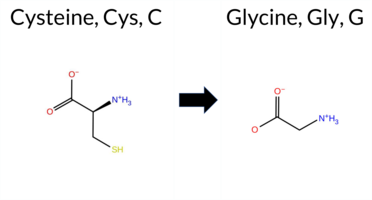 3DClick to see structure in 3D Viewer AIThe SynGAP1 missense variant C432G has no ClinVar entry and is not reported in gnomAD. Prediction tools that agree on a benign effect include only FATHMM. Those that predict a pathogenic effect comprise SGM‑Consensus, REVEL, Rosetta, premPS, PROVEAN, polyPhen‑2 (HumDiv and HumVar), SIFT, ESM1b, and AlphaMissense‑Default. Predictions that are inconclusive or uncertain are FoldX, Foldetta, and AlphaMissense‑Optimized. High‑accuracy assessments show AlphaMissense‑Optimized as uncertain, SGM‑Consensus (derived from a majority vote of AlphaMissense‑Default, ESM1b, FATHMM, and PROVEAN) as likely pathogenic, and Foldetta (combining FoldX‑MD and Rosetta outputs) as uncertain. Overall, the majority of evidence points to a pathogenic impact. This conclusion is consistent with the absence of a ClinVar classification; there is no contradiction with ClinVar status. Disclaimer: This summary was generated using AI and should be interpreted alongside expert review. | Likely Pathogenic | GAP | 0.111485 | Structured | 0.362533 | Uncertain | 0.960 | 0.285 | 0.000 | -10.247 | Likely Pathogenic | 0.831 | Likely Pathogenic | Ambiguous | 1.37 | Ambiguous | 0.0 | 2.25 | Destabilizing | 1.81 | Ambiguous | 1.60 | Destabilizing | 0.631 | Likely Pathogenic | -11.46 | Deleterious | 1.000 | Probably Damaging | 1.000 | Probably Damaging | 3.45 | Benign | 0.03 | Affected | 0.2796 | 0.2130 | -3 | -3 | -2.9 | -46.09 | |||||||||||||||||||||||||||||
| c.1433A>T | E478V 2D 3DClick to see structure in 3D Viewer AIThe SynGAP1 E478V missense change is not reported in ClinVar and is absent from gnomAD. Functional prediction tools cluster into two groups: benign predictions from REVEL, Rosetta, polyPhen‑2 (HumDiv and HumVar), FATHMM, and premPS; pathogenic predictions from SGM‑Consensus, PROVEAN, SIFT, ESM1b, and AlphaMissense‑Default. Two tools give inconclusive results: FoldX (uncertain) and AlphaMissense‑Optimized (uncertain). High‑accuracy assessments further split the signal: the SGM‑Consensus, derived from a majority vote of AlphaMissense‑Default, ESM1b, FATHMM, and PROVEAN, predicts pathogenic; Foldetta, a protein‑folding stability method combining FoldX‑MD and Rosetta outputs, predicts benign. With six benign versus five pathogenic calls and no ClinVar evidence, the overall evidence slightly favors a benign interpretation, and there is no conflict with ClinVar status. Disclaimer: This summary was generated using AI and should be interpreted alongside expert review. | Likely Pathogenic | GAP | 0.264545 | Structured | 0.414660 | Uncertain | 0.787 | 0.249 | 0.000 | -10.322 | Likely Pathogenic | 0.831 | Likely Pathogenic | Ambiguous | 0.55 | Ambiguous | 0.0 | 0.33 | Likely Benign | 0.44 | Likely Benign | 0.04 | Likely Benign | 0.385 | Likely Benign | -5.84 | Deleterious | 0.434 | Benign | 0.199 | Benign | 3.35 | Benign | 0.01 | Affected | 0.0586 | 0.6604 | -2 | -2 | 7.7 | -29.98 | |||||||||||||||||||||||||||||
| c.1910C>T | S637F 2D 3DClick to see structure in 3D Viewer AISynGAP1 missense variant S637F is not reported in ClinVar and is absent from gnomAD. Functional prediction tools show mixed results: benign predictions come from REVEL, FoldX, Foldetta, premPS, and FATHMM, while pathogenic predictions arise from PROVEAN, polyPhen‑2 (HumDiv and HumVar), SIFT, ESM1b, and AlphaMissense‑Default. Uncertain results are reported by Rosetta and AlphaMissense‑Optimized. The high‑accuracy consensus (SGM‑Consensus) aggregates AlphaMissense‑Default, ESM1b, FATHMM, and PROVEAN and yields a pathogenic verdict. Foldetta, a protein‑folding stability method that integrates FoldX‑MD and Rosetta outputs, predicts a benign effect. AlphaMissense‑Optimized remains inconclusive. Overall, the majority of evidence points toward a pathogenic impact, and this assessment does not contradict the absence of ClinVar annotation. Disclaimer: This summary was generated using AI and should be interpreted alongside expert review. | Likely Pathogenic | GAP | 0.076542 | Structured | 0.083482 | Uncertain | 0.920 | 0.253 | 0.000 | -13.266 | Likely Pathogenic | 0.831 | Likely Pathogenic | Ambiguous | 0.01 | Likely Benign | 0.1 | 0.96 | Ambiguous | 0.49 | Likely Benign | 0.49 | Likely Benign | 0.222 | Likely Benign | -3.92 | Deleterious | 0.985 | Probably Damaging | 0.681 | Possibly Damaging | 3.35 | Benign | 0.01 | Affected | 0.0780 | 0.4126 | -3 | -2 | 3.6 | 60.10 | |||||||||||||||||||||||||||||
| c.2773C>G | L925V 2D AIThe SynGAP1 missense variant L925V is not reported in ClinVar (ClinVar ID = None) and is absent from gnomAD (gnomAD ID = None). Prediction tools that agree on a benign effect include REVEL, PROVEAN, and ESM1b, whereas those that agree on a pathogenic effect are polyPhen‑2 (HumDiv and HumVar), SIFT, FATHMM, and AlphaMissense‑Default. The high‑accuracy AlphaMissense‑Optimized tool returns an uncertain result, and the SGM Consensus (majority vote from AlphaMissense‑Default, ESM1b, FATHMM, PROVEAN) is inconclusive (2 pathogenic vs. 2 benign). Foldetta, a protein‑folding stability method, has no available result for this variant. Overall, the majority of consensus tools predict a pathogenic impact, and this prediction does not contradict any ClinVar annotation (none exists). Thus, the variant is most likely pathogenic based on current computational evidence. Disclaimer: This summary was generated using AI and should be interpreted alongside expert review. | 0.483068 | Structured | 0.977963 | Binding | 0.290 | 0.852 | 0.125 | -3.977 | Likely Benign | 0.831 | Likely Pathogenic | Ambiguous | 0.244 | Likely Benign | -2.09 | Neutral | 0.999 | Probably Damaging | 0.994 | Probably Damaging | 1.36 | Pathogenic | 0.00 | Affected | 0.1848 | 0.3230 | 2 | 1 | 0.4 | -14.03 | ||||||||||||||||||||||||||||||||||||||||
| c.2959G>T | D987Y 2D AIThe SynGAP1 missense variant D987Y is not reported in ClinVar and has no entries in gnomAD, indicating it is not catalogued in these databases. Functional prediction tools cluster into two groups: benign predictions come from REVEL and ESM1b, whereas pathogenic predictions are made by PROVEAN, polyPhen‑2 (HumDiv and HumVar), SIFT, FATHMM, and AlphaMissense‑Default. The high‑accuracy consensus, SGM‑Consensus, which aggregates AlphaMissense‑Default, ESM1b, FATHMM, and PROVEAN, resolves as likely pathogenic (3 pathogenic vs 1 benign). AlphaMissense‑Optimized returns an uncertain result, and Foldetta stability analysis is unavailable. Overall, the majority of evidence points to a pathogenic effect, and this assessment does not conflict with the absence of a ClinVar classification. Disclaimer: This summary was generated using AI and should be interpreted alongside expert review. | Likely Pathogenic | 0.823549 | Disordered | 0.919118 | Binding | 0.299 | 0.903 | 0.750 | -6.208 | Likely Benign | 0.831 | Likely Pathogenic | Ambiguous | 0.274 | Likely Benign | -4.41 | Deleterious | 0.999 | Probably Damaging | 0.966 | Probably Damaging | 2.33 | Pathogenic | 0.01 | Affected | 0.0632 | 0.6818 | -4 | -3 | 2.2 | 48.09 | |||||||||||||||||||||||||||||||||||||||
| c.814C>G | R272G 2D 3DClick to see structure in 3D Viewer AIThe SynGAP1 missense variant R272G is not reported in ClinVar and is absent from gnomAD. Functional prediction tools largely agree on a deleterious effect: benign predictions are limited to REVEL, whereas pathogenic predictions are made by FoldX, Foldetta, premPS, PROVEAN, polyPhen‑2 (HumDiv and HumVar), SIFT, ESM1b, FATHMM, and AlphaMissense‑Default. Uncertain results come from Rosetta and AlphaMissense‑Optimized. High‑accuracy assessments further support pathogenicity: AlphaMissense‑Optimized is inconclusive, SGM‑Consensus (majority vote of AlphaMissense‑Default, ESM1b, FATHMM, PROVEAN) reports “Likely Pathogenic,” and Foldetta (combining FoldX‑MD and Rosetta outputs) predicts a destabilizing, pathogenic effect. Overall, the preponderance of evidence indicates the variant is most likely pathogenic, and this assessment is consistent with the absence of a ClinVar entry. Disclaimer: This summary was generated using AI and should be interpreted alongside expert review. | Likely Pathogenic | C2 | 0.071867 | Structured | 0.425620 | Uncertain | 0.925 | 0.215 | 0.125 | -11.540 | Likely Pathogenic | 0.831 | Likely Pathogenic | Ambiguous | 3.40 | Destabilizing | 0.0 | 1.94 | Ambiguous | 2.67 | Destabilizing | 1.06 | Destabilizing | 0.479 | Likely Benign | -4.57 | Deleterious | 0.999 | Probably Damaging | 0.997 | Probably Damaging | 1.75 | Pathogenic | 0.01 | Affected | 0.3082 | 0.3062 | -3 | -2 | 4.1 | -99.14 | |||||||||||||||||||||||||||||
| c.1436G>T | R479L 2D 3DClick to see structure in 3D Viewer AISynGAP1 missense variant R479L is not reported in ClinVar and is absent from gnomAD. Functional prediction tools cluster into two groups: benign predictions (REVEL, FoldX, Rosetta, premPS, SIFT, FATHMM) and pathogenic predictions (SGM‑Consensus, PROVEAN, polyPhen‑2 HumDiv, polyPhen‑2 HumVar, ESM1b, AlphaMissense‑Default). AlphaMissense‑Optimized is uncertain. High‑accuracy assessments give mixed results: AlphaMissense‑Optimized remains uncertain; the SGM‑Consensus (majority vote of AlphaMissense‑Default, ESM1b, FATHMM, PROVEAN) indicates likely pathogenic; Foldetta, which integrates FoldX‑MD and Rosetta stability outputs, predicts benign. No single metric dominates, and the overall evidence is balanced. Therefore, the variant’s pathogenicity is inconclusive; it is not contradicted by ClinVar status, which has no entry for this change. Disclaimer: This summary was generated using AI and should be interpreted alongside expert review. | Likely Pathogenic | GAP | 0.216401 | Structured | 0.419256 | Uncertain | 0.820 | 0.249 | 0.000 | -11.118 | Likely Pathogenic | 0.832 | Likely Pathogenic | Ambiguous | 0.45 | Likely Benign | 0.1 | 0.12 | Likely Benign | 0.29 | Likely Benign | 0.39 | Likely Benign | 0.265 | Likely Benign | -4.21 | Deleterious | 1.000 | Probably Damaging | 0.999 | Probably Damaging | 3.38 | Benign | 0.15 | Tolerated | 0.1326 | 0.3624 | -3 | -2 | 8.3 | -43.03 | |||||||||||||||||||||||||||||
| c.2411A>T | D804V 2D AIThe SynGAP1 missense variant D804V is not reported in ClinVar (ClinVar ID None) and is absent from gnomAD (gnomAD ID None). Prediction tools that agree on a benign effect include only REVEL, whereas the remaining tools—PROVEAN, polyPhen‑2 (HumDiv and HumVar), SIFT, ESM1b, FATHMM, AlphaMissense‑Default, and the SGM‑Consensus—predict a pathogenic impact. The AlphaMissense‑Optimized score is uncertain, providing no definitive evidence. High‑accuracy assessments show that the SGM‑Consensus, which is a majority vote of AlphaMissense‑Default, ESM1b, FATHMM, and PROVEAN, indicates a likely pathogenic outcome; AlphaMissense‑Optimized remains inconclusive, and Foldetta results are unavailable. Overall, the preponderance of evidence points to a pathogenic effect for D804V, and this conclusion does not contradict any ClinVar annotation, as none exists for this variant. Disclaimer: This summary was generated using AI and should be interpreted alongside expert review. | Likely Pathogenic | SH3-binding motif | 0.801317 | Disordered | 0.786762 | Binding | 0.294 | 0.900 | 0.625 | -8.143 | Likely Pathogenic | 0.832 | Likely Pathogenic | Ambiguous | 0.402 | Likely Benign | -4.77 | Deleterious | 0.997 | Probably Damaging | 0.951 | Probably Damaging | 1.19 | Pathogenic | 0.01 | Affected | 0.1196 | 0.6981 | -2 | -3 | 7.7 | -15.96 | ||||||||||||||||||||||||||||||||||||||
| c.2783A>C | Q928P 2D AIThe SynGAP1 missense variant Q928P is not reported in ClinVar (no ClinVar ID) and is absent from gnomAD (no gnomAD ID). Prediction tools that agree on a benign effect include REVEL and ESM1b, whereas the majority of tools predict a pathogenic impact: PROVEAN, polyPhen‑2 (HumDiv and HumVar), SIFT, FATHMM, and AlphaMissense‑Default all indicate pathogenicity. The SGM‑Consensus, derived from a majority vote of AlphaMissense‑Default, ESM1b, FATHMM, and PROVEAN, classifies the variant as Likely Pathogenic. AlphaMissense‑Optimized returns an uncertain result, and Foldetta (a protein‑folding stability method combining FoldX‑MD and Rosetta outputs) has no available prediction for this variant. Based on the preponderance of pathogenic predictions and the SGM‑Consensus designation, the variant is most likely pathogenic; this assessment does not contradict any ClinVar status, as none is currently assigned. Disclaimer: This summary was generated using AI and should be interpreted alongside expert review. | Likely Pathogenic | 0.497853 | Structured | 0.986260 | Binding | 0.324 | 0.852 | 0.250 | -6.275 | Likely Benign | 0.832 | Likely Pathogenic | Ambiguous | 0.441 | Likely Benign | -4.28 | Deleterious | 0.998 | Probably Damaging | 0.995 | Probably Damaging | 1.54 | Pathogenic | 0.00 | Affected | 0.2016 | 0.5768 | 0 | -1 | 1.9 | -31.01 | |||||||||||||||||||||||||||||||||||||||
| c.3046G>T | D1016Y 2D AIThe SynGAP1 missense variant D1016Y is not reported in ClinVar (no ClinVar ID) and is absent from gnomAD (no gnomAD ID). Prediction tools that agree on a benign effect include REVEL and ESM1b, whereas the majority of tools predict a pathogenic impact: PROVEAN, polyPhen‑2 (HumDiv and HumVar), SIFT, FATHMM, and AlphaMissense‑Default all indicate pathogenicity. The SGM‑Consensus, derived from a majority vote of AlphaMissense‑Default, ESM1b, FATHMM, and PROVEAN, also classifies the variant as Likely Pathogenic. AlphaMissense‑Optimized returns an uncertain result, and Foldetta (a protein‑folding stability method combining FoldX‑MD and Rosetta outputs) has no available prediction for this variant. High‑accuracy assessment therefore points to a Likely Pathogenic classification from SGM‑Consensus, with AlphaMissense‑Optimized inconclusive and Foldetta missing. Based on the preponderance of pathogenic predictions and the lack of contradictory evidence from ClinVar, the variant is most likely pathogenic. Disclaimer: This summary was generated using AI and should be interpreted alongside expert review. | Likely Pathogenic | 0.801317 | Disordered | 0.944705 | Binding | 0.323 | 0.811 | 0.625 | -4.432 | Likely Benign | 0.832 | Likely Pathogenic | Ambiguous | 0.350 | Likely Benign | -3.86 | Deleterious | 0.998 | Probably Damaging | 0.947 | Probably Damaging | 2.43 | Pathogenic | 0.00 | Affected | 0.1111 | 0.6531 | -4 | -3 | 2.2 | 48.09 | |||||||||||||||||||||||||||||||||||||||
| c.3110T>A | I1037N 2D AIThe SynGAP1 missense variant I1037N is not reported in ClinVar (no ClinVar ID) and is absent from gnomAD (no gnomAD ID). Prediction tools that agree on a benign effect include REVEL, PROVEAN, polyPhen‑2 HumVar, SIFT, ESM1b, and FATHMM. Tools that predict a pathogenic effect are polyPhen‑2 HumDiv and AlphaMissense‑Default. The high‑accuracy consensus from SGM (majority vote of AlphaMissense‑Default, ESM1b, FATHMM, PROVEAN) yields a Likely Benign classification, while AlphaMissense‑Optimized remains uncertain. Foldetta stability analysis is unavailable. Overall, the majority of evidence points to a benign impact, and this conclusion does not contradict any ClinVar annotation (none exists). Thus, the variant is most likely benign. Disclaimer: This summary was generated using AI and should be interpreted alongside expert review. | Likely Benign | 0.939629 | Disordered | 0.986140 | Binding | 0.309 | 0.774 | 0.625 | -3.955 | Likely Benign | 0.832 | Likely Pathogenic | Ambiguous | 0.131 | Likely Benign | 1.56 | Neutral | 0.666 | Possibly Damaging | 0.211 | Benign | 2.81 | Benign | 0.34 | Tolerated | 0.1022 | 0.1140 | -2 | -3 | -8.0 | 0.94 | |||||||||||||||||||||||||||||||||||||||
| c.1693C>G | L565V 2D 3DClick to see structure in 3D Viewer AIThe SynGAP1 missense variant L565V has no ClinVar entry and is not reported in gnomAD. Prediction tools cluster into two consensus groups: benign predictions come from REVEL and FATHMM, while pathogenic predictions are made by SGM‑Consensus, FoldX, premPS, PROVEAN, polyPhen‑2 (HumDiv and HumVar), SIFT, ESM1b, AlphaMissense‑Default, and Foldetta. Two tools (AlphaMissense‑Optimized and Rosetta) give uncertain results. High‑accuracy assessments further support a deleterious effect: AlphaMissense‑Optimized is inconclusive, SGM‑Consensus (a majority vote of AlphaMissense‑Default, ESM1b, FATHMM, and PROVEAN) reports “Likely Pathogenic,” and Foldetta, which integrates FoldX‑MD and Rosetta outputs, predicts a pathogenic impact on protein stability. Overall, the preponderance of evidence indicates that the variant is most likely pathogenic, and this conclusion does not contradict any ClinVar status because none is available. Disclaimer: This summary was generated using AI and should be interpreted alongside expert review. | Likely Pathogenic | GAP | 0.034884 | Structured | 0.045819 | Uncertain | 0.922 | 0.205 | 0.000 | -11.118 | Likely Pathogenic | 0.833 | Likely Pathogenic | Ambiguous | 2.69 | Destabilizing | 0.0 | 1.37 | Ambiguous | 2.03 | Destabilizing | 1.40 | Destabilizing | 0.303 | Likely Benign | -2.99 | Deleterious | 0.996 | Probably Damaging | 0.992 | Probably Damaging | 2.87 | Benign | 0.03 | Affected | 0.1558 | 0.2488 | 2 | 1 | 0.4 | -14.03 | |||||||||||||||||||||||||||||
| c.1750A>T | I584F 2D 3DClick to see structure in 3D Viewer AIThe SynGAP1 I584F missense variant is not reported in ClinVar and is absent from gnomAD. Prediction tools that agree on a benign effect include only Rosetta, whereas the remaining pathogenic‑predicating tools—REVEL, FoldX, PROVEAN, polyPhen‑2 (HumDiv and HumVar), SIFT, ESM1b, FATHMM, and AlphaMissense‑Default—consistently classify the variant as deleterious. High‑accuracy assessments further support a pathogenic interpretation: the SGM Consensus (majority vote of AlphaMissense‑Default, ESM1b, FATHMM, and PROVEAN) indicates “Likely Pathogenic,” while AlphaMissense‑Optimized and Foldetta yield uncertain results and are therefore not used as evidence. No other folding‑stability methods provide definitive support. Overall, the preponderance of evidence points to a pathogenic effect, and this conclusion does not contradict the absence of ClinVar annotation. Disclaimer: This summary was generated using AI and should be interpreted alongside expert review. | Likely Pathogenic | GAP | 0.059222 | Structured | 0.046673 | Uncertain | 0.846 | 0.244 | 0.000 | -13.582 | Likely Pathogenic | 0.833 | Likely Pathogenic | Ambiguous | 3.20 | Destabilizing | 0.2 | 0.28 | Likely Benign | 1.74 | Ambiguous | 0.66 | Ambiguous | 0.618 | Likely Pathogenic | -3.47 | Deleterious | 0.980 | Probably Damaging | 0.808 | Possibly Damaging | -1.26 | Pathogenic | 0.04 | Affected | 0.0641 | 0.2150 | 1 | 0 | -1.7 | 34.02 | |||||||||||||||||||||||||||||
| c.1873C>G | L625V 2D AISynGAP1 missense variant L625V is listed in ClinVar with an uncertain significance (ClinVar ID 3392716.0) and is not reported in gnomAD. Functional prediction tools cluster into two groups: benign predictions come from REVEL and FATHMM, while pathogenic predictions are made by premPS, PROVEAN, polyPhen‑2 HumDiv, polyPhen‑2 HumVar, SIFT, ESM1b, and AlphaMissense‑Default. Four tools (FoldX, Rosetta, Foldetta, AlphaMissense‑Optimized) give inconclusive results. High‑accuracy assessments show AlphaMissense‑Optimized as uncertain, SGM Consensus (majority vote of AlphaMissense‑Default, ESM1b, FATHMM, PROVEAN) as likely pathogenic, and Foldetta as uncertain. Overall, the majority of evidence points toward a pathogenic effect, which does not contradict the ClinVar uncertain status but suggests a higher likelihood of pathogenicity. Disclaimer: This summary was generated using AI and should be interpreted alongside expert review. | Likely Pathogenic | GAP | 0.229226 | Structured | 0.045896 | Uncertain | 0.966 | 0.215 | 0.000 | Uncertain | 1 | -11.319 | Likely Pathogenic | 0.833 | Likely Pathogenic | Ambiguous | 1.80 | Ambiguous | 0.7 | 1.69 | Ambiguous | 1.75 | Ambiguous | 1.42 | Destabilizing | 0.480 | Likely Benign | -2.96 | Deleterious | 0.998 | Probably Damaging | 0.992 | Probably Damaging | 3.07 | Benign | 0.01 | Affected | 0.1306 | 0.3427 | 2 | 1 | 0.4 | -14.03 | |||||||||||||||||||||||||||
| c.2116G>A | E706K 2D 3DClick to see structure in 3D Viewer AISynGAP1 missense variant E706K is listed in ClinVar with an uncertain significance and is not reported in gnomAD. Functional prediction tools largely agree on a benign effect: REVEL, premPS, PROVEAN, polyPhen‑2 (HumDiv and HumVar), SIFT, and FATHMM all classify the change as benign. In contrast, ESM1b and AlphaMissense‑Default predict a pathogenic impact. Tools that return uncertain results—FoldX, Rosetta, Foldetta, and AlphaMissense‑Optimized—do not provide decisive evidence. The SGM Consensus, derived from a majority vote of AlphaMissense‑Default, ESM1b, FATHMM, and PROVEAN, is inconclusive (two pathogenic versus two benign calls). High‑accuracy assessments are likewise ambiguous: AlphaMissense‑Optimized is uncertain, Foldetta is uncertain, and the SGM Consensus remains inconclusive. Overall, the preponderance of evidence points to a benign effect, which does not contradict the ClinVar uncertain status. Disclaimer: This summary was generated using AI and should be interpreted alongside expert review. | GAP | 0.200174 | Structured | 0.377033 | Uncertain | 0.929 | 0.363 | 0.000 | Uncertain | 1 | -10.519 | Likely Pathogenic | 0.833 | Likely Pathogenic | Ambiguous | 1.17 | Ambiguous | 0.1 | 0.51 | Ambiguous | 0.84 | Ambiguous | 0.08 | Likely Benign | 0.080 | Likely Benign | -1.51 | Neutral | 0.345 | Benign | 0.028 | Benign | 4.15 | Benign | 0.52 | Tolerated | 3.47 | 10 | 0.2065 | 0.4511 | 0 | 1 | -0.4 | -0.94 | 187.1 | 49.2 | 0.0 | 0.0 | 0.4 | 0.1 | X | Uncertain | The carboxylate side chain of Glu706, located at the end and outer surface of an α-helix (res. Thr704-Gly712), forms a salt bridge with Lys710 and a hydrogen bond with its own backbone amino group at the helix end in the WT simulations. Although Lys706 is unable to make these transient interactions in the variant simulations, there is no apparent negative effect on the protein structure due to the residue swap. However, because the model ends abruptly at the C-terminus, no definite conclusions can be drawn based on the simulations. | |||||||||||||||||
| c.2465C>T | T822M 2D 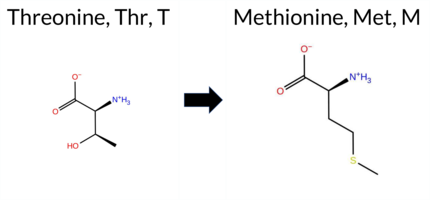 AIThe SynGAP1 missense variant T822M is not reported in ClinVar (ClinVar status: none) but is present in gnomAD (ID 6‑33443017‑C‑T). Prediction tools that agree on a benign effect include REVEL, PROVEAN, and ESM1b, whereas those that agree on a pathogenic effect are polyPhen‑2 (HumDiv and HumVar), SIFT, FATHMM, and AlphaMissense‑Default. AlphaMissense‑Optimized is uncertain, and the SGM Consensus (majority vote from AlphaMissense‑Default, ESM1b, FATHMM, and PROVEAN) is inconclusive because it yields a 2‑to‑2 split. Foldetta, a protein‑folding stability method combining FoldX‑MD and Rosetta outputs, has no available result for this variant. Overall, the majority of available predictions (five pathogenic vs. three benign) lean toward pathogenicity. Thus, the variant is most likely pathogenic based on current computational evidence, and this assessment does not contradict any ClinVar annotation because none exists. Disclaimer: This summary was generated using AI and should be interpreted alongside expert review. | 0.724957 | Disordered | 0.651624 | Binding | 0.295 | 0.881 | 0.750 | 6-33443017-C-T | 5 | 3.10e-6 | -4.525 | Likely Benign | 0.833 | Likely Pathogenic | Ambiguous | 0.239 | Likely Benign | -2.11 | Neutral | 1.000 | Probably Damaging | 0.989 | Probably Damaging | 2.48 | Pathogenic | 0.03 | Affected | 3.77 | 5 | 0.1580 | 0.6379 | -1 | -1 | 2.6 | 30.09 | |||||||||||||||||||||||||||||||||||
| c.3333G>C | K1111N 2D AIThe SynGAP1 missense variant K1111N is not reported in ClinVar (no ClinVar ID) and is absent from gnomAD (no gnomAD ID). Prediction tools that agree on a benign effect include REVEL, PROVEAN, polyPhen‑2 HumVar, SIFT, ESM1b, and FATHMM. Tools that predict a pathogenic effect are polyPhen‑2 HumDiv and AlphaMissense‑Default. The high‑accuracy consensus from SGM (majority vote of AlphaMissense‑Default, ESM1b, FATHMM, PROVEAN) is Likely Benign, and AlphaMissense‑Optimized is uncertain. Foldetta, a protein‑folding stability method combining FoldX‑MD and Rosetta outputs, has no available result for this variant. Overall, the majority of evidence points to a benign impact. There is no ClinVar entry to contradict this assessment, so the variant is most likely benign based on current predictions. Disclaimer: This summary was generated using AI and should be interpreted alongside expert review. | Likely Benign | 0.910643 | Disordered | 0.921455 | Binding | 0.300 | 0.902 | 0.875 | -4.503 | Likely Benign | 0.833 | Likely Pathogenic | Ambiguous | 0.048 | Likely Benign | -0.77 | Neutral | 0.666 | Possibly Damaging | 0.211 | Benign | 2.64 | Benign | 0.15 | Tolerated | 0.3667 | 0.2350 | 1 | 0 | 0.4 | -14.07 | |||||||||||||||||||||||||||||||||||||||
| c.3333G>T | K1111N 2D AIThe SynGAP1 missense variant K1111N is not reported in ClinVar (no ClinVar ID) and is absent from gnomAD (no gnomAD ID). Prediction tools that agree on a benign effect include REVEL, PROVEAN, polyPhen‑2 HumVar, SIFT, ESM1b, and FATHMM. Tools that predict a pathogenic effect are polyPhen‑2 HumDiv and AlphaMissense‑Default. The high‑accuracy consensus from SGM (majority vote of AlphaMissense‑Default, ESM1b, FATHMM, PROVEAN) is Likely Benign, and AlphaMissense‑Optimized is uncertain. Foldetta, a protein‑folding stability method, has no available result for this variant. Overall, the majority of evidence points to a benign impact, and this assessment does not contradict any ClinVar status because no ClinVar entry exists. Thus, the variant is most likely benign. Disclaimer: This summary was generated using AI and should be interpreted alongside expert review. | Likely Benign | 0.910643 | Disordered | 0.921455 | Binding | 0.300 | 0.902 | 0.875 | -4.503 | Likely Benign | 0.833 | Likely Pathogenic | Ambiguous | 0.048 | Likely Benign | -0.77 | Neutral | 0.666 | Possibly Damaging | 0.211 | Benign | 2.64 | Benign | 0.15 | Tolerated | 0.3667 | 0.2350 | 1 | 0 | 0.4 | -14.07 | |||||||||||||||||||||||||||||||||||||||
| c.3755A>T | Q1252L 2D AIThe SynGAP1 missense variant Q1252L is not reported in ClinVar and is absent from gnomAD. Prediction tools that agree on a benign effect include only REVEL, whereas the remaining tools—PROVEAN, polyPhen‑2 (HumDiv and HumVar), SIFT, ESM1b, FATHMM, AlphaMissense‑Default, and the SGM‑Consensus—predict a pathogenic impact. High‑accuracy assessments show AlphaMissense‑Optimized as uncertain, the SGM‑Consensus (a majority vote of AlphaMissense‑Default, ESM1b, FATHMM, and PROVEAN) as likely pathogenic, and Foldetta results are unavailable. Based on the collective evidence, the variant is most likely pathogenic, and this conclusion does not contradict any ClinVar annotation (none is present). Disclaimer: This summary was generated using AI and should be interpreted alongside expert review. | Likely Pathogenic | Coiled-coil | 0.759478 | Disordered | 0.371411 | Uncertain | 0.850 | 0.544 | 0.875 | -8.110 | Likely Pathogenic | 0.833 | Likely Pathogenic | Ambiguous | 0.295 | Likely Benign | -5.62 | Deleterious | 0.994 | Probably Damaging | 0.988 | Probably Damaging | 1.97 | Pathogenic | 0.00 | Affected | 0.0593 | 0.3689 | -2 | -2 | 7.3 | -14.97 | ||||||||||||||||||||||||||||||||||||||
| c.1036G>C | V346L 2D 3DClick to see structure in 3D Viewer AIThe SynGAP1 missense variant V346L is not reported in ClinVar and has no entries in gnomAD. Functional prediction tools cluster into two groups: benign predictions come from REVEL, FoldX, and SIFT, while pathogenic predictions are made by PROVEAN, polyPhen‑2 (HumDiv and HumVar), ESM1b, FATHMM, and AlphaMissense‑Default. Four tools (Foldetta, premPS, AlphaMissense‑Optimized, and Rosetta) give uncertain or inconclusive results and are not used as evidence. High‑accuracy assessments show AlphaMissense‑Optimized as uncertain, SGM‑Consensus (majority vote of AlphaMissense‑Default, ESM1b, FATHMM, PROVEAN) as pathogenic, and Foldetta (combining FoldX‑MD and Rosetta outputs) as uncertain. Overall, the majority of reliable predictors and the SGM‑Consensus support a pathogenic effect. Therefore, the variant is most likely pathogenic, and this conclusion does not contradict any ClinVar annotation (none is available). Disclaimer: This summary was generated using AI and should be interpreted alongside expert review. | Likely Pathogenic | C2 | 0.260850 | Structured | 0.350921 | Uncertain | 0.949 | 0.461 | 0.000 | -8.178 | Likely Pathogenic | 0.834 | Likely Pathogenic | Ambiguous | 0.05 | Likely Benign | 0.2 | 1.10 | Ambiguous | 0.58 | Ambiguous | 0.60 | Ambiguous | 0.384 | Likely Benign | -2.68 | Deleterious | 0.994 | Probably Damaging | 0.970 | Probably Damaging | 1.58 | Pathogenic | 0.09 | Tolerated | 0.1237 | 0.5348 | 2 | 1 | -0.4 | 14.03 | |||||||||||||||||||||||||||||
| c.1036G>T | V346L 2D 3DClick to see structure in 3D Viewer AIThe SynGAP1 missense variant V346L is not reported in ClinVar and is absent from gnomAD. Functional prediction tools cluster into two groups: benign predictions come from REVEL, FoldX, and SIFT, while pathogenic predictions arise from PROVEAN, polyPhen‑2 (HumDiv and HumVar), ESM1b, FATHMM, and AlphaMissense‑Default. Four tools (Foldetta, premPS, AlphaMissense‑Optimized, and Rosetta) give uncertain or inconclusive results. High‑accuracy assessments show AlphaMissense‑Optimized as uncertain, the SGM Consensus (majority vote of AlphaMissense‑Default, ESM1b, FATHMM, and PROVEAN) as pathogenic, and Foldetta as uncertain. Overall, the majority of evidence points toward a deleterious effect. Therefore, the variant is most likely pathogenic, and this conclusion does not contradict any ClinVar annotation, as none is available. Disclaimer: This summary was generated using AI and should be interpreted alongside expert review. | Likely Pathogenic | C2 | 0.260850 | Structured | 0.350921 | Uncertain | 0.949 | 0.461 | 0.000 | -8.178 | Likely Pathogenic | 0.834 | Likely Pathogenic | Ambiguous | 0.05 | Likely Benign | 0.2 | 1.10 | Ambiguous | 0.58 | Ambiguous | 0.60 | Ambiguous | 0.386 | Likely Benign | -2.68 | Deleterious | 0.994 | Probably Damaging | 0.970 | Probably Damaging | 1.58 | Pathogenic | 0.09 | Tolerated | 0.1237 | 0.5348 | 2 | 1 | -0.4 | 14.03 | |||||||||||||||||||||||||||||
| c.1358A>T | H453L 2D 3DClick to see structure in 3D Viewer AISynGAP1 H453L is not reported in ClinVar and is absent from gnomAD. Functional prediction tools show mixed results: benign predictions come from REVEL, Rosetta, premPS, SIFT, FATHMM, and the protein‑folding stability method Foldetta; pathogenic predictions come from SGM‑Consensus, PROVEAN, polyPhen‑2 HumDiv, polyPhen‑2 HumVar, ESM1b, and AlphaMissense‑Default. High‑accuracy assessments indicate that AlphaMissense‑Optimized is uncertain, while the SGM Consensus (majority vote of AlphaMissense‑Default, ESM1b, FATHMM, PROVEAN) predicts pathogenic, and Foldetta predicts benign. Overall, the predictions are split, with a slight edge toward pathogenicity from the consensus and high‑accuracy tools, but the presence of several benign calls and the uncertainty of AlphaMissense‑Optimized temper this conclusion. Thus, the variant is most likely pathogenic based on the current computational evidence, and this assessment does not contradict any ClinVar annotation because none exists. Disclaimer: This summary was generated using AI and should be interpreted alongside expert review. | Likely Pathogenic | GAP | 0.352862 | Structured | 0.316097 | Uncertain | 0.946 | 0.200 | 0.000 | -10.438 | Likely Pathogenic | 0.834 | Likely Pathogenic | Ambiguous | -0.59 | Ambiguous | 0.1 | 0.04 | Likely Benign | -0.28 | Likely Benign | 0.31 | Likely Benign | 0.413 | Likely Benign | -10.87 | Deleterious | 0.998 | Probably Damaging | 0.973 | Probably Damaging | 3.45 | Benign | 0.11 | Tolerated | 0.0841 | 0.4964 | -2 | -3 | 7.0 | -23.98 | |||||||||||||||||||||||||||||
| c.2429G>T | R810L 2D AIThe SynGAP1 R810L missense change is not reported in ClinVar and is absent from gnomAD. Prediction tools that agree on a benign effect are limited to REVEL, while the majority of algorithms (PROVEAN, polyPhen‑2 HumDiv, polyPhen‑2 HumVar, SIFT, FATHMM, AlphaMissense‑Default) predict a pathogenic outcome. Uncertain calls come from ESM1b and AlphaMissense‑Optimized. The SGM‑Consensus, derived from a majority vote of AlphaMissense‑Default, ESM1b, FATHMM, and PROVEAN, also indicates a likely pathogenic effect. High‑accuracy assessments show AlphaMissense‑Optimized as uncertain, SGM‑Consensus as pathogenic, and Foldetta results are unavailable. Overall, the preponderance of evidence from multiple in‑silico predictors points to a pathogenic impact for R810L. This conclusion is consistent with the lack of ClinVar annotation, so there is no contradiction with existing clinical data. Disclaimer: This summary was generated using AI and should be interpreted alongside expert review. | Likely Pathogenic | SH3-binding motif | 0.486429 | Structured | 0.851848 | Binding | 0.263 | 0.907 | 0.375 | -7.172 | In-Between | 0.834 | Likely Pathogenic | Ambiguous | 0.338 | Likely Benign | -4.57 | Deleterious | 0.996 | Probably Damaging | 0.925 | Probably Damaging | 2.35 | Pathogenic | 0.01 | Affected | 0.2019 | 0.5271 | -3 | -2 | 8.3 | -43.03 | ||||||||||||||||||||||||||||||||||||||
| c.2957A>G | E986G 2D AIThe SynGAP1 missense variant E986G is not reported in ClinVar and has no entries in gnomAD. Prediction tools that agree on a benign effect include REVEL and ESM1b, whereas seven tools (PROVEAN, polyPhen‑2 HumDiv, polyPhen‑2 HumVar, SIFT, FATHMM, AlphaMissense‑Default, and the SGM‑Consensus) predict a pathogenic outcome. High‑accuracy assessments show AlphaMissense‑Optimized as uncertain, while the SGM‑Consensus—derived from a majority vote of AlphaMissense‑Default, ESM1b, FATHMM, and PROVEAN—classifies the variant as likely pathogenic. Foldetta, a protein‑folding stability method that integrates FoldX‑MD and Rosetta outputs, has no available result for this variant. Overall, the preponderance of evidence points to a pathogenic effect, and this assessment does not conflict with the ClinVar status, which currently contains no classification for E986G. Disclaimer: This summary was generated using AI and should be interpreted alongside expert review. | Likely Pathogenic | 0.750527 | Disordered | 0.929726 | Binding | 0.349 | 0.902 | 0.750 | -5.584 | Likely Benign | 0.834 | Likely Pathogenic | Ambiguous | 0.219 | Likely Benign | -3.14 | Deleterious | 0.924 | Possibly Damaging | 0.784 | Possibly Damaging | 2.13 | Pathogenic | 0.00 | Affected | 0.2866 | 0.6225 | 0 | -2 | 3.1 | -72.06 | |||||||||||||||||||||||||||||||||||||||
| c.3215A>C | K1072T 2D AIThe SynGAP1 missense variant K1072T is not reported in ClinVar (no ClinVar ID) and is absent from gnomAD (no gnomAD ID). Prediction tools that agree on a benign effect include REVEL, PROVEAN, SIFT, ESM1b, and FATHMM, while those that predict a pathogenic effect are polyPhen‑2 HumDiv, polyPhen‑2 HumVar, and AlphaMissense‑Default. The SGM‑Consensus, derived from a majority vote of AlphaMissense‑Default, ESM1b, FATHMM, and PROVEAN, classifies the variant as Likely Benign. High‑accuracy assessments show AlphaMissense‑Optimized as Uncertain, and the SGM‑Consensus result is benign; Foldetta predictions are unavailable. Overall, the balance of evidence leans toward a benign impact. This conclusion does not contradict ClinVar status, as no ClinVar assertion exists for this variant. Disclaimer: This summary was generated using AI and should be interpreted alongside expert review. | Likely Benign | 0.922952 | Disordered | 0.984675 | Binding | 0.307 | 0.907 | 0.750 | -2.557 | Likely Benign | 0.834 | Likely Pathogenic | Ambiguous | 0.082 | Likely Benign | -1.31 | Neutral | 0.999 | Probably Damaging | 0.995 | Probably Damaging | 3.92 | Benign | 0.06 | Tolerated | 0.1967 | 0.4307 | 0 | -1 | 3.2 | -27.07 | |||||||||||||||||||||||||||||||||||||||
| c.3696A>C | K1232N 2D AIThe SynGAP1 missense variant K1232N is not reported in ClinVar and is absent from gnomAD. Functional prediction tools show a split: REVEL scores the variant as benign, whereas PROVEAN, polyPhen‑2 (HumDiv and HumVar), SIFT, ESM1b, FATHMM, and AlphaMissense‑Default all predict it to be pathogenic. The SGM‑Consensus, which aggregates the majority vote of AlphaMissense‑Default, ESM1b, FATHMM, and PROVEAN, classifies the variant as likely pathogenic. High‑accuracy assessments are mixed: AlphaMissense‑Optimized returns an uncertain result, and Foldetta data are not available. Based on the overall evidence, the variant is most likely pathogenic, which is consistent with the lack of ClinVar annotation and gnomAD absence. Disclaimer: This summary was generated using AI and should be interpreted alongside expert review. | Likely Pathogenic | Coiled-coil | 0.505461 | Disordered | 0.542907 | Binding | 0.894 | 0.535 | 0.125 | -8.657 | Likely Pathogenic | 0.834 | Likely Pathogenic | Ambiguous | 0.167 | Likely Benign | -3.72 | Deleterious | 1.000 | Probably Damaging | 0.998 | Probably Damaging | 2.10 | Pathogenic | 0.00 | Affected | 0.2913 | 0.1464 | 1 | 0 | 0.4 | -14.07 | ||||||||||||||||||||||||||||||||||||||
| c.3696A>T | K1232N 2D AIThe SynGAP1 missense variant K1232N is not reported in ClinVar and is absent from gnomAD. Prediction tools that agree on a benign effect include only REVEL, whereas the remaining tools—PROVEAN, polyPhen‑2 (HumDiv and HumVar), SIFT, ESM1b, FATHMM, AlphaMissense‑Default, and the SGM‑Consensus—consistently predict a pathogenic impact. High‑accuracy assessments show AlphaMissense‑Optimized as uncertain, the SGM‑Consensus (majority vote from AlphaMissense‑Default, ESM1b, FATHMM, and PROVEAN) as likely pathogenic, and Foldetta results are unavailable. Based on the collective evidence, the variant is most likely pathogenic, and this conclusion does not contradict any ClinVar annotation (none is present). Disclaimer: This summary was generated using AI and should be interpreted alongside expert review. | Likely Pathogenic | Coiled-coil | 0.505461 | Disordered | 0.542907 | Binding | 0.894 | 0.535 | 0.125 | -8.657 | Likely Pathogenic | 0.834 | Likely Pathogenic | Ambiguous | 0.167 | Likely Benign | -3.72 | Deleterious | 1.000 | Probably Damaging | 0.998 | Probably Damaging | 2.10 | Pathogenic | 0.00 | Affected | 0.2913 | 0.1464 | 1 | 0 | 0.4 | -14.07 | ||||||||||||||||||||||||||||||||||||||
| c.3998A>C | E1333A 2D AIThe SynGAP1 missense variant E1333A is not reported in ClinVar (ClinVar ID = None) and is absent from gnomAD (gnomAD ID = None). Prediction tools that agree on a benign effect include REVEL, ESM1b, and FATHMM. Tools that agree on a pathogenic effect include PROVEAN, polyPhen‑2 (HumDiv and HumVar), SIFT, and AlphaMissense‑Default. The high‑accuracy AlphaMissense‑Optimized tool returned an uncertain result, and the SGM Consensus (majority vote from AlphaMissense‑Default, ESM1b, FATHMM, and PROVEAN) is inconclusive (2 vs 2). Foldetta, which would assess protein‑folding stability, has no available output for this variant. Overall, more tools predict pathogenicity than benignity, and no ClinVar entry contradicts this assessment. Thus, the variant is most likely pathogenic based on the current computational predictions. Disclaimer: This summary was generated using AI and should be interpreted alongside expert review. | 0.930790 | Disordered | 0.953319 | Binding | 0.347 | 0.746 | 0.750 | -3.636 | Likely Benign | 0.834 | Likely Pathogenic | Ambiguous | 0.254 | Likely Benign | -3.76 | Deleterious | 0.980 | Probably Damaging | 0.956 | Probably Damaging | 2.83 | Benign | 0.00 | Affected | 0.4177 | 0.7382 | 0 | -1 | 5.3 | -58.04 | ||||||||||||||||||||||||||||||||||||||||
| c.868C>G | L290V 2D 3DClick to see structure in 3D Viewer AISynGAP1 missense variant L290V is not reported in ClinVar and is absent from gnomAD. Prediction tools that agree on a benign effect include REVEL and Rosetta, whereas a majority of tools predict a pathogenic impact: PROVEAN, polyPhen‑2 (HumDiv and HumVar), SIFT, FATHMM, and AlphaMissense‑Default. Predictions that are inconclusive or unavailable are FoldX, premPS, ESM1b, AlphaMissense‑Optimized, and Foldetta. High‑accuracy assessments show AlphaMissense‑Optimized as uncertain, SGM Consensus (derived from a majority vote of AlphaMissense‑Default, ESM1b, FATHMM, and PROVEAN) as likely pathogenic, and Foldetta (combining FoldX‑MD and Rosetta outputs) as uncertain. Overall, the preponderance of evidence from multiple pathogenic‑predicting tools and the SGM Consensus suggests that the variant is most likely pathogenic, and this conclusion does not contradict the ClinVar status, which currently has no entry for this variant. Disclaimer: This summary was generated using AI and should be interpreted alongside expert review. | Likely Pathogenic | C2 | 0.127496 | Structured | 0.399723 | Uncertain | 0.904 | 0.255 | 0.000 | -7.392 | In-Between | 0.834 | Likely Pathogenic | Ambiguous | 1.17 | Ambiguous | 0.1 | 0.35 | Likely Benign | 0.76 | Ambiguous | 0.62 | Ambiguous | 0.366 | Likely Benign | -2.76 | Deleterious | 0.999 | Probably Damaging | 0.994 | Probably Damaging | 1.98 | Pathogenic | 0.05 | Affected | 0.1574 | 0.4177 | 2 | 1 | 0.4 | -14.03 | |||||||||||||||||||||||||||||
| c.316A>G | R106G 2D AIThe SynGAP1 missense variant R106G is listed in gnomAD (ID 6‑33432181‑A‑G) but has no ClinVar entry. Prediction tools that agree on a benign effect include REVEL, PROVEAN, polyPhen‑2 (HumDiv and HumVar), ESM1b, and FATHMM. Those that predict a pathogenic effect are SIFT and AlphaMissense‑Default. AlphaMissense‑Optimized is uncertain. The SGM‑Consensus, which aggregates AlphaMissense‑Default, ESM1b, FATHMM, and PROVEAN, reports the variant as “Likely Benign.” High‑accuracy assessments show AlphaMissense‑Optimized as uncertain, SGM‑Consensus as likely benign, and Foldetta results are unavailable. Overall, the majority of evidence points to a benign impact. There is no ClinVar classification to contradict this assessment. Thus, the variant is most likely benign. Disclaimer: This summary was generated using AI and should be interpreted alongside expert review. | Likely Benign | 0.675549 | Disordered | 0.663409 | Binding | 0.345 | 0.862 | 0.875 | 6-33432181-A-G | 1 | 6.20e-7 | -2.617 | Likely Benign | 0.835 | Likely Pathogenic | Ambiguous | 0.161 | Likely Benign | -2.21 | Neutral | 0.421 | Benign | 0.050 | Benign | 3.65 | Benign | 0.00 | Affected | 4.05 | 3 | 0.3680 | 0.3980 | -2 | -3 | 4.1 | -99.14 | ||||||||||||||||||||||||||||||||||
| c.578C>G | A193G 2D AIThe SynGAP1 missense variant A193G is not reported in ClinVar (ClinVar ID = None) and is absent from gnomAD (gnomAD ID = None). Prediction tools that agree on a benign effect include REVEL, ESM1b, and FATHMM, while those that agree on a pathogenic effect are PROVEAN, polyPhen‑2 (HumDiv and HumVar), SIFT, and AlphaMissense‑Default. AlphaMissense‑Optimized is uncertain. High‑accuracy assessments are inconclusive: AlphaMissense‑Optimized is uncertain, the SGM Consensus (majority vote from AlphaMissense‑Default, ESM1b, FATHMM, PROVEAN) is a 2‑vs‑2 tie, and Foldetta results are unavailable. Overall, more tools predict pathogenicity (5) than benignity (3), and no ClinVar evidence contradicts this assessment. Therefore, the variant is most likely pathogenic based on the available predictions. Disclaimer: This summary was generated using AI and should be interpreted alongside expert review. | 0.429200 | Structured | 0.428386 | Uncertain | 0.310 | 0.577 | 0.125 | -4.822 | Likely Benign | 0.835 | Likely Pathogenic | Ambiguous | 0.136 | Likely Benign | -2.61 | Deleterious | 0.990 | Probably Damaging | 0.760 | Possibly Damaging | 4.00 | Benign | 0.01 | Affected | 0.2283 | 0.4999 | 1 | 0 | -2.2 | -14.03 | ||||||||||||||||||||||||||||||||||||||||
| c.695C>G | A232G 2D 3DClick to see structure in 3D Viewer AIThe SynGAP1 A232G missense variant is not reported in ClinVar and is absent from gnomAD. Prediction tools that classify the change as benign include REVEL, FoldX, PROVEAN, polyPhen‑2 HumVar, SIFT, ESM1b, and FATHMM. Those that predict pathogenicity are polyPhen‑2 HumDiv and AlphaMissense‑Default. Uncertain or inconclusive results come from Rosetta, Foldetta, premPS, and AlphaMissense‑Optimized. The SGM‑Consensus, derived from a majority vote of AlphaMissense‑Default, ESM1b, FATHMM, and PROVEAN, reports the variant as Likely Benign. High‑accuracy assessments show AlphaMissense‑Optimized as Uncertain, SGM‑Consensus as Likely Benign, and Foldetta as Uncertain. Overall, the preponderance of evidence points to a benign effect; this conclusion is not contradicted by any ClinVar annotation. Disclaimer: This summary was generated using AI and should be interpreted alongside expert review. | Likely Benign | PH | 0.254060 | Structured | 0.307228 | Uncertain | 0.878 | 0.305 | 0.000 | -4.924 | Likely Benign | 0.835 | Likely Pathogenic | Ambiguous | 0.43 | Likely Benign | 0.1 | 1.43 | Ambiguous | 0.93 | Ambiguous | 0.53 | Ambiguous | 0.453 | Likely Benign | -1.39 | Neutral | 0.608 | Possibly Damaging | 0.172 | Benign | 5.81 | Benign | 0.11 | Tolerated | 0.2012 | 0.4724 | 1 | 0 | -2.2 | -14.03 | |||||||||||||||||||||||||||||
| c.707C>A | A236E 2D 3DClick to see structure in 3D Viewer AISynGAP1 missense variant A236E is not reported in ClinVar and is present in gnomAD (ID 6‑33435558‑C‑A). Functional prediction tools show a split assessment: benign calls come from FATHMM, Rosetta, and the protein‑folding stability method Foldetta; pathogenic calls come from REVEL, premPS, PROVEAN, polyPhen‑2 (HumDiv and HumVar), SIFT, ESM1b, AlphaMissense‑Default, and the SGM‑Consensus score. When grouped by agreement, the benign‑predicting tools (FATHMM, Rosetta, Foldetta) represent one consensus, while the pathogenic‑predicting tools (REVEL, premPS, PROVEAN, polyPhen‑2, SIFT, ESM1b, AlphaMissense‑Default, SGM‑Consensus) form the opposing consensus. High‑accuracy methods give mixed results: AlphaMissense‑Optimized is uncertain; SGM‑Consensus, derived from a majority vote of AlphaMissense‑Default, ESM1b, FATHMM, and PROVEAN, is likely pathogenic; Foldetta, combining FoldX‑MD and Rosetta outputs, is benign. Overall, the majority of predictions lean toward pathogenicity, and this does not contradict the ClinVar status, which has no reported classification. Disclaimer: This summary was generated using AI and should be interpreted alongside expert review. | Likely Pathogenic | PH | 0.185198 | Structured | 0.329926 | Uncertain | 0.775 | 0.330 | 0.000 | 6-33435558-C-A | 1 | 6.20e-7 | -10.844 | Likely Pathogenic | 0.835 | Likely Pathogenic | Ambiguous | -0.75 | Ambiguous | 0.2 | 0.28 | Likely Benign | -0.24 | Likely Benign | 1.08 | Destabilizing | 0.844 | Likely Pathogenic | -4.24 | Deleterious | 0.998 | Probably Damaging | 0.900 | Possibly Damaging | 6.06 | Benign | 0.02 | Affected | 3.40 | 14 | 0.1075 | 0.1970 | -1 | 0 | -5.3 | 58.04 | ||||||||||||||||||||||||
| c.1567A>T | N523Y 2D 3DClick to see structure in 3D Viewer AIThe SynGAP1 missense variant N523Y is not reported in ClinVar and has no entries in gnomAD. Prediction tools that indicate a benign effect include FoldX, premPS, and SIFT. Those that predict a pathogenic effect comprise SGM‑Consensus, REVEL, PROVEAN, polyPhen‑2 HumDiv, polyPhen‑2 HumVar, ESM1b, FATHMM, and AlphaMissense‑Default. High‑accuracy assessments show AlphaMissense‑Optimized as uncertain, the SGM‑Consensus (majority vote of AlphaMissense‑Default, ESM1b, FATHMM, PROVEAN) as pathogenic, and Foldetta as uncertain. With eight tools supporting pathogenicity versus three supporting benign, the overall evidence points to a likely pathogenic impact. This conclusion is consistent with the absence of a ClinVar classification, as no contradictory status exists. Disclaimer: This summary was generated using AI and should be interpreted alongside expert review. | Likely Pathogenic | GAP | 0.069024 | Structured | 0.033426 | Uncertain | 0.883 | 0.383 | 0.125 | -11.701 | Likely Pathogenic | 0.836 | Likely Pathogenic | Ambiguous | 0.13 | Likely Benign | 0.3 | -1.36 | Ambiguous | -0.62 | Ambiguous | -0.01 | Likely Benign | 0.624 | Likely Pathogenic | -7.34 | Deleterious | 0.999 | Probably Damaging | 0.972 | Probably Damaging | -1.39 | Pathogenic | 0.10 | Tolerated | 0.0586 | 0.3388 | -2 | -2 | 2.2 | 49.07 | |||||||||||||||||||||||||||||
| c.194A>T | H65L 2D AIThe SynGAP1 H65L missense variant has no ClinVar record and is not listed in gnomAD. Prediction tools that agree on a benign effect include REVEL, PROVEAN, polyPhen‑2 HumVar, ESM1b, and FATHMM, while those that predict a pathogenic outcome are polyPhen‑2 HumDiv, SIFT, and AlphaMissense‑Default. The high‑accuracy consensus from SGM (majority vote of AlphaMissense‑Default, ESM1b, FATHMM, and PROVEAN) is “Likely Benign.” AlphaMissense‑Optimized returns an uncertain result, and Foldetta stability analysis is unavailable. Overall, the majority of evidence points to a benign impact, and this conclusion is not contradicted by any ClinVar annotation. Thus, the variant is most likely benign. Disclaimer: This summary was generated using AI and should be interpreted alongside expert review. | Likely Benign | 0.411940 | Structured | 0.476188 | Uncertain | 0.458 | 0.758 | 0.125 | -1.889 | Likely Benign | 0.836 | Likely Pathogenic | Ambiguous | 0.159 | Likely Benign | -1.65 | Neutral | 0.462 | Possibly Damaging | 0.227 | Benign | 4.22 | Benign | 0.00 | Affected | 0.0718 | 0.4760 | -2 | -3 | 7.0 | -23.98 | |||||||||||||||||||||||||||||||||||||||
| c.1978A>G | M660V 2D 3DClick to see structure in 3D Viewer AIThe SynGAP1 missense variant M660V is not reported in ClinVar (ClinVar ID None) and is absent from gnomAD (gnomAD ID None). Functional prediction tools cluster into three groups: benign predictions come from REVEL, SIFT, and FATHMM; pathogenic predictions arise from SGM‑Consensus, premPS, PROVEAN, polyPhen‑2 (HumDiv and HumVar), ESM1b, and AlphaMissense‑Default; the remaining tools (FoldX, Rosetta, Foldetta, AlphaMissense‑Optimized) give uncertain or inconclusive results. High‑accuracy assessments show AlphaMissense‑Optimized as uncertain, SGM‑Consensus as Likely Pathogenic (majority vote of AlphaMissense‑Default, ESM1b, FATHMM, PROVEAN), and Foldetta as uncertain. Overall, the majority of evaluated predictors lean toward a pathogenic effect, and this conclusion does not contradict any ClinVar annotation because no ClinVar status is available. Thus, based on the current computational evidence, the M660V variant is most likely pathogenic. Disclaimer: This summary was generated using AI and should be interpreted alongside expert review. | Likely Pathogenic | GAP | 0.047319 | Structured | 0.134270 | Uncertain | 0.944 | 0.289 | 0.000 | -11.006 | Likely Pathogenic | 0.836 | Likely Pathogenic | Ambiguous | 1.83 | Ambiguous | 0.1 | 0.77 | Ambiguous | 1.30 | Ambiguous | 1.05 | Destabilizing | 0.419 | Likely Benign | -3.99 | Deleterious | 1.000 | Probably Damaging | 0.927 | Probably Damaging | 3.56 | Benign | 0.13 | Tolerated | 0.2614 | 0.2937 | 2 | 1 | 2.3 | -32.06 | |||||||||||||||||||||||||||||
| c.2042G>C | G681A 2D 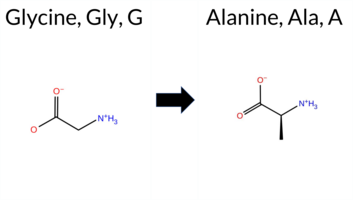 3DClick to see structure in 3D Viewer AISynGAP1 missense variant G681A is not reported in ClinVar and is absent from gnomAD. Functional prediction tools show mixed results: benign calls come from REVEL, polyPhen‑2 HumVar, SIFT, and FATHMM, while pathogenic calls are made by PROVEAN, polyPhen‑2 HumDiv, ESM1b, and AlphaMissense‑Default. Predictions labeled uncertain include FoldX, Rosetta, Foldetta, premPS, and AlphaMissense‑Optimized. High‑accuracy assessments further clarify the picture: AlphaMissense‑Optimized remains uncertain; the SGM Consensus, derived from a majority vote of AlphaMissense‑Default, ESM1b, FATHMM, and PROVEAN, reports the variant as likely pathogenic; Foldetta, which integrates FoldX‑MD and Rosetta outputs, is also uncertain. Overall, the preponderance of evidence points to a pathogenic effect for G681A. This conclusion is not contradicted by ClinVar, which contains no entry for the variant. Disclaimer: This summary was generated using AI and should be interpreted alongside expert review. | Likely Pathogenic | GAP | 0.301917 | Structured | 0.140647 | Uncertain | 0.694 | 0.320 | 0.000 | -11.958 | Likely Pathogenic | 0.836 | Likely Pathogenic | Ambiguous | 1.77 | Ambiguous | 1.0 | 0.89 | Ambiguous | 1.33 | Ambiguous | 0.68 | Ambiguous | 0.354 | Likely Benign | -5.99 | Deleterious | 0.968 | Probably Damaging | 0.427 | Benign | 3.41 | Benign | 0.07 | Tolerated | 0.3879 | 0.4401 | 1 | 0 | 2.2 | 14.03 | |||||||||||||||||||||||||||||
| c.2357T>A | L786H 2D AIThe SynGAP1 missense variant L786H is not reported in ClinVar and has no entries in gnomAD. Functional prediction tools show a split: benign calls come from REVEL and ESM1b, while pathogenic calls are made by PROVEAN, polyPhen‑2 (HumDiv and HumVar), SIFT, FATHMM, AlphaMissense‑Default, and the SGM‑Consensus score. Grouping by agreement, two tools predict benign, seven predict pathogenic, and AlphaMissense‑Optimized remains uncertain. High‑accuracy assessments further support a deleterious effect: AlphaMissense‑Optimized is inconclusive, but the SGM‑Consensus (derived from a majority vote of AlphaMissense‑Default, ESM1b, FATHMM, and PROVEAN) is pathogenic. Foldetta, a protein‑folding stability method that integrates FoldX‑MD and Rosetta outputs, has no available result for this variant. Overall, the majority of evidence points to a pathogenic impact, and this conclusion does not conflict with the absence of a ClinVar classification. Disclaimer: This summary was generated using AI and should be interpreted alongside expert review. | Likely Pathogenic | SH3-binding motif | 0.882776 | Disordered | 0.655253 | Binding | 0.341 | 0.895 | 0.750 | -5.892 | Likely Benign | 0.836 | Likely Pathogenic | Ambiguous | 0.168 | Likely Benign | -3.72 | Deleterious | 1.000 | Probably Damaging | 0.999 | Probably Damaging | 1.79 | Pathogenic | 0.00 | Affected | 0.1309 | 0.1214 | -2 | -3 | -7.0 | 23.98 | ||||||||||||||||||||||||||||||||||||||
| c.3218C>T | S1073F 2D AIThe SynGAP1 missense variant S1073F is not reported in ClinVar (ClinVar status: None) and is absent from gnomAD (gnomAD ID: None). Prediction tools that agree on a benign effect include REVEL, ESM1b, and FATHMM, whereas those that predict a pathogenic effect are PROVEAN, polyPhen‑2 HumDiv, polyPhen‑2 HumVar, SIFT, and AlphaMissense‑Default. The high‑accuracy AlphaMissense‑Optimized tool returns an uncertain result, and the SGM Consensus (majority vote from AlphaMissense‑Default, ESM1b, FATHMM, and PROVEAN) is inconclusive (2 pathogenic vs. 2 benign). Foldetta, a protein‑folding stability method combining FoldX‑MD and Rosetta outputs, has no available result for this variant. Overall, the majority of available predictions (five pathogenic vs. three benign) lean toward a pathogenic impact. Thus, the variant is most likely pathogenic based on current computational evidence, and this assessment does not contradict any ClinVar status because no ClinVar claim exists. Disclaimer: This summary was generated using AI and should be interpreted alongside expert review. | 0.916840 | Disordered | 0.985818 | Binding | 0.313 | 0.905 | 0.750 | -6.783 | Likely Benign | 0.836 | Likely Pathogenic | Ambiguous | 0.161 | Likely Benign | -2.58 | Deleterious | 0.990 | Probably Damaging | 0.796 | Possibly Damaging | 3.81 | Benign | 0.00 | Affected | 0.0952 | 0.5957 | -3 | -2 | 3.6 | 60.10 | ||||||||||||||||||||||||||||||||||||||||
| c.3248A>T | K1083I 2D AIThe SynGAP1 missense variant K1083I is not reported in ClinVar (no ClinVar ID) and is absent from gnomAD (no gnomAD ID). Prediction tools that agree on a benign effect include REVEL, PROVEAN, SIFT, ESM1b, and FATHMM, while those that predict a pathogenic effect are polyPhen‑2 HumDiv, polyPhen‑2 HumVar, and AlphaMissense‑Default. The SGM‑Consensus, which aggregates AlphaMissense‑Default, ESM1b, FATHMM, and PROVEAN, reports the variant as Likely Benign. High‑accuracy assessments show AlphaMissense‑Optimized as Uncertain, SGM‑Consensus as Likely Benign, and the Foldetta stability analysis is unavailable. Overall, the majority of evidence points to a benign impact. This conclusion is consistent with the lack of a ClinVar entry, so there is no contradiction with ClinVar status. Disclaimer: This summary was generated using AI and should be interpreted alongside expert review. | Likely Benign | 0.837511 | Disordered | 0.978906 | Binding | 0.302 | 0.893 | 1.000 | -3.207 | Likely Benign | 0.836 | Likely Pathogenic | Ambiguous | 0.239 | Likely Benign | -1.65 | Neutral | 0.999 | Probably Damaging | 0.997 | Probably Damaging | 4.02 | Benign | 0.30 | Tolerated | 0.1394 | 0.3978 | -2 | -3 | 8.4 | -15.01 | |||||||||||||||||||||||||||||||||||||||
| c.1835A>G | Q612R 2D 3DClick to see structure in 3D Viewer AIThe SynGAP1 missense variant Q612R is not reported in ClinVar (ClinVar ID None) and has no entries in gnomAD (gnomAD ID None). Prediction tools that agree on a benign effect are SIFT and FoldX. Tools that agree on a pathogenic effect are SGM‑Consensus, REVEL, PROVEAN, polyPhen‑2 (HumDiv and HumVar), ESM1b, FATHMM, and AlphaMissense‑Default. Predictions that are uncertain or inconclusive are Rosetta, Foldetta, premPS, and AlphaMissense‑Optimized. High‑accuracy assessments show that the SGM‑Consensus (a majority vote of AlphaMissense‑Default, ESM1b, FATHMM, and PROVEAN) predicts pathogenicity, while AlphaMissense‑Optimized and Foldetta are uncertain. No high‑accuracy tool provides a benign prediction. Overall, the majority of available evidence points to a pathogenic effect. This conclusion is not contradicted by ClinVar status, which has no classification for this variant. Disclaimer: This summary was generated using AI and should be interpreted alongside expert review. | Likely Pathogenic | GAP | 0.275179 | Structured | 0.203988 | Uncertain | 0.822 | 0.263 | 0.000 | -10.571 | Likely Pathogenic | 0.837 | Likely Pathogenic | Ambiguous | -0.35 | Likely Benign | 0.2 | 1.56 | Ambiguous | 0.61 | Ambiguous | 0.78 | Ambiguous | 0.683 | Likely Pathogenic | -3.85 | Deleterious | 0.956 | Probably Damaging | 0.969 | Probably Damaging | -1.29 | Pathogenic | 0.10 | Tolerated | 0.1480 | 0.2196 | 1 | 1 | -1.0 | 28.06 | |||||||||||||||||||||||||||||
| c.3656A>T | Y1219F 2D 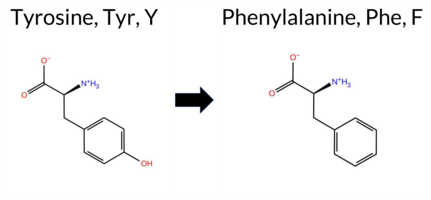 AIThe SynGAP1 missense variant Y1219F is not reported in ClinVar and is absent from gnomAD. Prediction tools that agree on a benign effect include REVEL, whereas the remaining tools—PROVEAN, polyPhen‑2 (HumDiv and HumVar), SIFT, FATHMM, and AlphaMissense‑Default—consistently predict a pathogenic impact. High‑accuracy assessments show that the SGM‑Consensus (derived from a majority vote of AlphaMissense‑Default, ESM1b, FATHMM, and PROVEAN) indicates a likely pathogenic outcome, while AlphaMissense‑Optimized remains uncertain. No Foldetta stability data are available, so it does not influence the assessment. Overall, the preponderance of evidence points to a pathogenic effect for Y1219F, and this conclusion does not contradict any ClinVar annotation, as none exists for this variant. Disclaimer: This summary was generated using AI and should be interpreted alongside expert review. | Likely Pathogenic | Coiled-coil | 0.613573 | Disordered | 0.474748 | Uncertain | 0.855 | 0.557 | 0.375 | -7.202 | In-Between | 0.837 | Likely Pathogenic | Ambiguous | 0.272 | Likely Benign | -2.79 | Deleterious | 0.999 | Probably Damaging | 0.992 | Probably Damaging | 2.23 | Pathogenic | 0.00 | Affected | 0.1998 | 0.2583 | 7 | 3 | 4.1 | -16.00 | ||||||||||||||||||||||||||||||||||||||
| c.625G>C | V209L 2D 3DClick to see structure in 3D Viewer AIThe SynGAP1 V209L missense change is not reported in ClinVar and is absent from gnomAD. Consensus‐based predictors that agree on a benign outcome include REVEL, FoldX, Rosetta, Foldetta, premPS, PROVEAN, polyPhen‑2 HumVar, SIFT, ESM1b, FATHMM, and the SGM‑Consensus (Likely Benign). Predictors that flag a pathogenic effect are polyPhen‑2 HumDiv and AlphaMissense‑Default; AlphaMissense‑Optimized is uncertain. High‑accuracy assessments show that AlphaMissense‑Optimized is inconclusive, the SGM‑Consensus (majority vote of AlphaMissense‑Default, ESM1b, FATHMM, PROVEAN) is benign, and Foldetta (combining FoldX‑MD and Rosetta outputs) is benign. Overall, the majority of evidence points to a benign effect, and this conclusion does not contradict any ClinVar annotation (none is available). Disclaimer: This summary was generated using AI and should be interpreted alongside expert review. | Likely Benign | PH | 0.247041 | Structured | 0.397624 | Uncertain | 0.874 | 0.331 | 0.125 | -5.516 | Likely Benign | 0.837 | Likely Pathogenic | Ambiguous | 0.26 | Likely Benign | 0.4 | -0.12 | Likely Benign | 0.07 | Likely Benign | 0.08 | Likely Benign | 0.084 | Likely Benign | -0.96 | Neutral | 0.787 | Possibly Damaging | 0.259 | Benign | 4.08 | Benign | 0.39 | Tolerated | 0.0814 | 0.4188 | 2 | 1 | -0.4 | 14.03 | |||||||||||||||||||||||||||||
| c.625G>T | V209L 2D 3DClick to see structure in 3D Viewer AIThe SynGAP1 missense variant V209L is not reported in ClinVar and is absent from gnomAD. Consensus predictions from most in silico tools classify the change as benign: REVEL, FoldX, Rosetta, Foldetta, premPS, PROVEAN, polyPhen‑2 HumVar, SIFT, ESM1b, FATHMM, and the SGM‑Consensus (Likely Benign). Only two tools predict a pathogenic effect: polyPhen‑2 HumDiv and AlphaMissense‑Default. The AlphaMissense‑Optimized score is uncertain. High‑accuracy assessments further support a benign outcome: the SGM Consensus, derived from a majority vote of AlphaMissense‑Default, ESM1b, FATHMM, and PROVEAN, is benign; Foldetta, which integrates FoldX‑MD and Rosetta stability calculations, also predicts benign. Consequently, the variant is most likely benign, and this assessment does not contradict any ClinVar annotation (none is available). Disclaimer: This summary was generated using AI and should be interpreted alongside expert review. | Likely Benign | PH | 0.247041 | Structured | 0.397624 | Uncertain | 0.874 | 0.331 | 0.125 | -5.516 | Likely Benign | 0.837 | Likely Pathogenic | Ambiguous | 0.26 | Likely Benign | 0.4 | -0.12 | Likely Benign | 0.07 | Likely Benign | 0.08 | Likely Benign | 0.084 | Likely Benign | -0.96 | Neutral | 0.787 | Possibly Damaging | 0.259 | Benign | 4.08 | Benign | 0.39 | Tolerated | 0.0814 | 0.4188 | 2 | 1 | -0.4 | 14.03 | |||||||||||||||||||||||||||||
| c.844T>G | C282G 2D 3DClick to see structure in 3D Viewer AIThe SynGAP1 missense variant C282G is not reported in ClinVar (ClinVar status: not listed) and is absent from gnomAD (no gnomAD ID). Prediction tools that agree on a benign effect include only REVEL, which scores the variant as benign. All other evaluated algorithms predict a pathogenic impact: FoldX, Rosetta, Foldetta, premPS, PROVEAN, polyPhen‑2 (HumDiv and HumVar), SIFT, ESM1b, FATHMM, AlphaMissense‑Default, and the SGM‑Consensus (majority vote of AlphaMissense‑Default, ESM1b, FATHMM, PROVEAN). The high‑accuracy methods give the following results: AlphaMissense‑Optimized is uncertain; SGM‑Consensus is pathogenic; Foldetta (combining FoldX‑MD and Rosetta outputs) is pathogenic. Based on the overwhelming agreement among pathogenic predictors and the high‑accuracy tools, the variant is most likely pathogenic, and this assessment does not contradict the ClinVar status, which is currently unreported. Disclaimer: This summary was generated using AI and should be interpreted alongside expert review. | Likely Pathogenic | C2 | 0.098513 | Structured | 0.348535 | Uncertain | 0.942 | 0.250 | 0.000 | -15.830 | Likely Pathogenic | 0.837 | Likely Pathogenic | Ambiguous | 2.60 | Destabilizing | 0.1 | 2.83 | Destabilizing | 2.72 | Destabilizing | 1.60 | Destabilizing | 0.482 | Likely Benign | -11.03 | Deleterious | 0.999 | Probably Damaging | 0.996 | Probably Damaging | 1.64 | Pathogenic | 0.04 | Affected | 0.3229 | 0.2238 | -3 | -3 | -2.9 | -46.09 | |||||||||||||||||||||||||||||
| c.1393C>G | L465V 2D 3DClick to see structure in 3D Viewer AIThe SynGAP1 missense variant L465V is listed in ClinVar with an uncertain significance and is not reported in gnomAD. Prediction tools cluster into two groups: benign predictions come from REVEL and SIFT, while the remaining tools—FoldX, Rosetta, premPS, PROVEAN, polyPhen‑2 HumDiv, polyPhen‑2 HumVar, ESM1b, FATHMM, and AlphaMissense‑Default—indicate pathogenicity. High‑accuracy assessments further support a deleterious effect: AlphaMissense‑Optimized is uncertain; the SGM Consensus, derived from a majority vote of AlphaMissense‑Default, ESM1b, FATHMM, and PROVEAN, reports likely pathogenic; and Foldetta, which combines FoldX‑MD and Rosetta stability outputs, predicts pathogenic. Overall, the majority of evidence points to a pathogenic impact, which is consistent with the ClinVar uncertain status and does not contradict it. Disclaimer: This summary was generated using AI and should be interpreted alongside expert review. | Likely Pathogenic | GAP | 0.346032 | Structured | 0.319240 | Uncertain | 0.956 | 0.202 | 0.000 | Uncertain | 1 | -9.893 | Likely Pathogenic | 0.838 | Likely Pathogenic | Ambiguous | 2.46 | Destabilizing | 0.1 | 2.66 | Destabilizing | 2.56 | Destabilizing | 1.21 | Destabilizing | 0.276 | Likely Benign | -2.98 | Deleterious | 0.996 | Probably Damaging | 0.992 | Probably Damaging | 2.44 | Pathogenic | 0.10 | Tolerated | 3.37 | 34 | 0.1493 | 0.3378 | 2 | 1 | 0.4 | -14.03 | 204.3 | 30.9 | 0.0 | 0.0 | -0.4 | 0.6 | X | Potentially Benign | The iso-butyl side chain of Leu465, located in the middle of an α helix (res. Ala461–Phe476), packs with hydrophobic residues (e.g., Phe464, Met468, Tyr497, Ile494) in an inter-helix space formed with two other α helices (res. Ala461–Phe476 and res. Thr488-Gly502). In the variant simulations, the iso-propyl side chain of Val465 is equally sized and similarly hydrophobic as the original side chain of Leu465. Hence, the mutation does not exert any negative effects on the protein structure based on the variant simulations. | ||||||||||||||||
| c.3527A>G | E1176G 2D AIThe SynGAP1 missense variant E1176G is not reported in ClinVar (no ClinVar ID) and is absent from gnomAD (no gnomAD ID). Prediction tools that agree on a benign effect include REVEL, PROVEAN, SIFT, ESM1b, and FATHMM, while polyPhen‑2 HumDiv, polyPhen‑2 HumVar, and AlphaMissense‑Default predict a pathogenic impact. The SGM‑Consensus, derived from a majority vote of AlphaMissense‑Default, ESM1b, FATHMM, and PROVEAN, reports the variant as “Likely Benign.” High‑accuracy assessments show AlphaMissense‑Optimized as “Uncertain,” SGM‑Consensus as “Likely Benign,” and Foldetta results are unavailable. Overall, the balance of evidence—five benign predictions versus three pathogenic, a consensus leaning benign, and no conflicting ClinVar annotation—suggests that E1176G is most likely benign. This conclusion does not contradict any ClinVar status, as no ClinVar entry exists for this variant. Disclaimer: This summary was generated using AI and should be interpreted alongside expert review. | Likely Benign | Coiled-coil | 0.538167 | Disordered | 0.572075 | Binding | 0.525 | 0.715 | 0.250 | -4.531 | Likely Benign | 0.838 | Likely Pathogenic | Ambiguous | 0.459 | Likely Benign | -2.14 | Neutral | 0.995 | Probably Damaging | 0.963 | Probably Damaging | 5.48 | Benign | 0.08 | Tolerated | 0.2668 | 0.5414 | 0 | -2 | 3.1 | -72.06 | ||||||||||||||||||||||||||||||||||||||
| c.544T>G | S182A 2D AIThe SynGAP1 missense variant S182A is not reported in ClinVar (ClinVar ID = None) and is absent from gnomAD (gnomAD ID = None). Prediction tools that agree on a benign effect include REVEL, PROVEAN, polyPhen‑2 HumDiv, polyPhen‑2 HumVar, and FATHMM. Tools that predict a pathogenic effect are SIFT, ESM1b, and AlphaMissense‑Default. AlphaMissense‑Optimized is uncertain. High‑accuracy assessments are inconclusive: the SGM Consensus (majority vote from AlphaMissense‑Default, ESM1b, FATHMM, PROVEAN) is a 2‑vs‑2 tie, and Foldetta results are unavailable. Overall, the majority of standard predictors lean toward a benign impact, and no ClinVar evidence contradicts this assessment. Thus, the variant is most likely benign based on current predictions. Disclaimer: This summary was generated using AI and should be interpreted alongside expert review. | 0.501700 | Disordered | 0.436016 | Uncertain | 0.368 | 0.619 | 0.625 | -9.417 | Likely Pathogenic | 0.838 | Likely Pathogenic | Ambiguous | 0.113 | Likely Benign | -2.26 | Neutral | 0.001 | Benign | 0.005 | Benign | 3.70 | Benign | 0.00 | Affected | 0.5466 | 0.4660 | Weaken | 1 | 1 | 2.6 | -16.00 | |||||||||||||||||||||||||||||||||||||||
Found 8751 rows. Show 800 rows per page. Page 7/11 « Previous | Next »